EP2975036A1 - Novel pi polyamide - Google Patents
Novel pi polyamide Download PDFInfo
- Publication number
- EP2975036A1 EP2975036A1 EP14764893.5A EP14764893A EP2975036A1 EP 2975036 A1 EP2975036 A1 EP 2975036A1 EP 14764893 A EP14764893 A EP 14764893A EP 2975036 A1 EP2975036 A1 EP 2975036A1
- Authority
- EP
- European Patent Office
- Prior art keywords
- polyamide
- gene
- prostate cancer
- acsl3
- oct1
- Prior art date
- Legal status (The legal status is an assumption and is not a legal conclusion. Google has not performed a legal analysis and makes no representation as to the accuracy of the status listed.)
- Granted
Links
Images
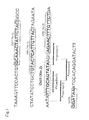


Classifications
-
- C—CHEMISTRY; METALLURGY
- C08—ORGANIC MACROMOLECULAR COMPOUNDS; THEIR PREPARATION OR CHEMICAL WORKING-UP; COMPOSITIONS BASED THEREON
- C08G—MACROMOLECULAR COMPOUNDS OBTAINED OTHERWISE THAN BY REACTIONS ONLY INVOLVING UNSATURATED CARBON-TO-CARBON BONDS
- C08G73/00—Macromolecular compounds obtained by reactions forming a linkage containing nitrogen with or without oxygen or carbon in the main chain of the macromolecule, not provided for in groups C08G12/00 - C08G71/00
- C08G73/06—Polycondensates having nitrogen-containing heterocyclic rings in the main chain of the macromolecule
- C08G73/20—Pyrrones
-
- A—HUMAN NECESSITIES
- A61—MEDICAL OR VETERINARY SCIENCE; HYGIENE
- A61P—SPECIFIC THERAPEUTIC ACTIVITY OF CHEMICAL COMPOUNDS OR MEDICINAL PREPARATIONS
- A61P13/00—Drugs for disorders of the urinary system
- A61P13/08—Drugs for disorders of the urinary system of the prostate
-
- A—HUMAN NECESSITIES
- A61—MEDICAL OR VETERINARY SCIENCE; HYGIENE
- A61P—SPECIFIC THERAPEUTIC ACTIVITY OF CHEMICAL COMPOUNDS OR MEDICINAL PREPARATIONS
- A61P35/00—Antineoplastic agents
-
- A—HUMAN NECESSITIES
- A61—MEDICAL OR VETERINARY SCIENCE; HYGIENE
- A61P—SPECIFIC THERAPEUTIC ACTIVITY OF CHEMICAL COMPOUNDS OR MEDICINAL PREPARATIONS
- A61P43/00—Drugs for specific purposes, not provided for in groups A61P1/00-A61P41/00
-
- C—CHEMISTRY; METALLURGY
- C07—ORGANIC CHEMISTRY
- C07D—HETEROCYCLIC COMPOUNDS
- C07D403/00—Heterocyclic compounds containing two or more hetero rings, having nitrogen atoms as the only ring hetero atoms, not provided for by group C07D401/00
- C07D403/14—Heterocyclic compounds containing two or more hetero rings, having nitrogen atoms as the only ring hetero atoms, not provided for by group C07D401/00 containing three or more hetero rings
-
- C—CHEMISTRY; METALLURGY
- C07—ORGANIC CHEMISTRY
- C07D—HETEROCYCLIC COMPOUNDS
- C07D405/00—Heterocyclic compounds containing both one or more hetero rings having oxygen atoms as the only ring hetero atoms, and one or more rings having nitrogen as the only ring hetero atom
- C07D405/14—Heterocyclic compounds containing both one or more hetero rings having oxygen atoms as the only ring hetero atoms, and one or more rings having nitrogen as the only ring hetero atom containing three or more hetero rings
-
- C—CHEMISTRY; METALLURGY
- C07—ORGANIC CHEMISTRY
- C07D—HETEROCYCLIC COMPOUNDS
- C07D519/00—Heterocyclic compounds containing more than one system of two or more relevant hetero rings condensed among themselves or condensed with a common carbocyclic ring system not provided for in groups C07D453/00 or C07D455/00
-
- C—CHEMISTRY; METALLURGY
- C12—BIOCHEMISTRY; BEER; SPIRITS; WINE; VINEGAR; MICROBIOLOGY; ENZYMOLOGY; MUTATION OR GENETIC ENGINEERING
- C12Q—MEASURING OR TESTING PROCESSES INVOLVING ENZYMES, NUCLEIC ACIDS OR MICROORGANISMS; COMPOSITIONS OR TEST PAPERS THEREFOR; PROCESSES OF PREPARING SUCH COMPOSITIONS; CONDITION-RESPONSIVE CONTROL IN MICROBIOLOGICAL OR ENZYMOLOGICAL PROCESSES
- C12Q2525/00—Reactions involving modified oligonucleotides, nucleic acids, or nucleotides
- C12Q2525/10—Modifications characterised by
- C12Q2525/113—Modifications characterised by incorporating modified backbone
Definitions
- the present invention relates to a novel pyrrole-imidazole polyamide (hereinafter also referred to as PI polyamide).
- PI polyamide novel pyrrole-imidazole polyamide
- the present invention more particularly relates to a novel PI polyamide recognizing and binding to a transcriptional regulatory region (AR response region) of an ACSL3 gene that is an androgen response gene and thereby inhibiting the expression of this gene.
- AR an androgen receptor
- an androgen ablation therapy inhibiting the activity of AR to suppress progression of prostate cancer has been performed as one of the treatment methods of prostate cancer.
- this treatment has a problem that the effect disappears as the treatment proceeds due to a change in characteristics of the prostate cancer cells, making the subsequent treatment difficult.
- prostate cancer cells expressing AR show the enhanced expression of androgen response genes
- methods such as administering interfering RNA and antisense nucleic acids to the androgen response genes to destabilize the expression of these genes to treat prostate cancer, and administrating an expression vector containing a polynucleotide coding a cytotoxic gene product to cancer cells to treat prostate cancer has been disclosed (Patent Documents 1 to 4).
- the interfering RNA and the antisense nucleic acids are easily degraded and less stable in a living body.
- the method including the expression of the cytotoxic gene product in a living body is not considered safe. Therefore, these treatment methods are not considered as adequate methods for treatment of prostate cancer.
- Non-Patent Document 1 PI polyamide is a substance composed of aromatic amino acids N-methylpyrrole (hereinafter also referred to as Py) and N-methylimidazole (hereinafter also referred to as Im).
- the present inventors developed a PI polyamide inhibiting expression of a fusion gene between an androgen response gene TMPRSS2 and an ERG gene belonging to the ETS family that is one of the largest families of transcriptional factors ( Japanese Patent Application No. 2012-106382 ).
- This PI polyamide developed by the present inventors inhibits the expression of the fusion gene between the TMPRSS2 gene and the ERG gene and is also capable of inhibiting the expression of EZH2 gene occurring in association with the expression of this fusion gene.
- the present inventors attempted in the present invention to develop a useful PI polyimide for an ACSL3 gene that is one of the androgen response genes. While the ACSL3 gene is an androgen response gene related to metabolism of long-chain fatty acid and is known as being highly expressed in prostate cancer, the present inventors have found that the gene enhances the proliferation and the migration ability of prostate cancer cells.
- the present inventors found that a transcriptional regulatory region (AR response region) is located 63 kb upstream of the transcription start point of the ACSL3 gene and that two Oct1 gene binding sequences and a GATA gene binding sequence are located as transcription factors in the vicinity of a site at which AR binds to a gene (AR response element, hereinafter also referred to as ARE).
- AR response element hereinafter also referred to as ARE
- the present inventors also found that one of this Oct1 gene binding sequence is a poor-prognosis factor of prostate cancer positively enhancing the transcription activity of AR (Non-Patent Document 2).
- the present inventors developed a PI polyamide specifically binding to this Oct1 gene binding sequence in an attempt to develop a PI polyamide inhibiting the expression of the ACSL3 gene and therefore useful for prevention, treatment, etc. of prostate cancer.
- the present inventors acquired a novel PI polyamide recognizing and binding to a specific base sequence of an Oct1 gene binding sequence present in a transcriptional regulatory region (AR response region) of an ACSL3 gene and regulating the transcription activity of AR.
- this PI polyamide inhibits the expression of the ACSL3 gene and the AR activity in the transcriptional regulatory region (AR response region) of the ACSL3 gene, and is useful for prevention, treatment, etc. of prostate cancer, thereby completing the present invention.
- the present invention relates to a PI polyamide, an ACSL3 gene expression inhibitor containing the PI polyamide as an active ingredient, and a preventive or therapeutic agent of prostate cancer, as indicated from (1) to (4) below.
- the provision of the PI polyamide of the present invention facilitates development of a safe and stable medicine useful for prevention and treatment of prostate cancer.
- the medicine contains as an active ingredient the PI polyamide of the present invention having high in-vivo stability and high transferability to tissues and cells and therefore may be an effective medicine for prevention and treatment of prostate cancer.
- the PI polyamide By combining with the PI polyamide developed by the present inventors inhibiting expression of a fusion gene between an androgen response gene TMPRSS2 and an ERG gene in an ETS family that is a transcriptional regulator ( Japanese Patent Application No. 2012-106382 ), the PI polyamide also enables the comprehensive treatment etc. of prostate cancer.
- a "PI polyamide” of the present invention includes any PI polyamide recognizing and binding to the whole or a portion of a base sequence indicated by SEQ ID NO:1.
- portion refers to recognition of at least one or more bases, preferably two or more bases, more preferably three or more bases in the base sequence indicated by SEQ ID NO:1 and a larger number of recognized bases is more preferable. If a plurality of bases is recognized, the recognized bases may be contiguous or may not be contiguous.
- the PI polyamide preferably recognizes and binds to the whole or a portion of a base sequence of an Oct1 gene binding sequence (OCT1(No.2)) between ARE (ARE(No. 1)) and ARE (ARE(No. 2)) in a transcriptional regulatory region (AR response region) of an ACSL3 gene.
- OCT1(No.2) Oct1 gene binding sequence
- the PI polyamide of the present invention may be any PI polyamide recognizing and binding to the whole or a portion of the base sequence indicated by SEQ ID NO:1 or may be a PI polyamide recognizing and binding to the whole or a portion of a base sequence complementary to the base sequence indicated by SEQ ID NO:1.
- the PI polyamide of the present invention may recognize and bind to the whole or a portion of a base sequence having G and C interchanged with each other at one or more locations or a base sequence having T and A interchanged with each other at one or more locations in the base sequence indicated by SEQ ID NO:1.
- Such a "PI polyamide” of the present invention can be a PI polyamide (1), a PI polyamide (2), and a PI polyamide (3) represented by the following Formula 1, Formula 2, and Formula 3, respectively.
- Fig. 1 schematically depicts binding sites to the whole or a portion of the base sequence of the Oct1 gene binding sequence in these PI polyamides.
- the "PI polyamide” of the present invention is not limited to these PI polyamides represented by Formulas 1 to 3, may be any "PI polyamide” having the characteristics as described above, and includes a "PI polyamide” uniquely designed and produced with a conventionally known method.
- An "ACSL3 gene expression inhibitor” of the present invention refers to an agent containing the PI polyamide of the present invention as an active ingredient and binding to the whole or a portion of the Oct1 gene binding sequence to inhibit the expression of the ACSL3 gene.
- the "expression inhibition” refers to a state of a reduced degree of the expression of the ACSL3 gene when the expression inhibitor of the present invention is applied to a cell in which the "expression of the ACSL3 gene” occurs such as a prostate cancer cell, as compared to when the expression inhibitor of the present invention is not applied.
- the reduced degree of the expression of the ACSL3 gene includes no expression of the ACSL3 gene.
- Such an "ACSL3 gene expression inhibitor" of the present invention may be any agent containing the PI polyamide of the present invention as an active ingredient and may be an agent composed only of the PI polyamide of the present invention or an agent additionally containing a pharmaceutically acceptable component etc.
- a “preventive and/or therapeutic agent of prostate cancer” of the present invention refers to an agent containing the PI polyamide of the present invention as an active ingredient and useful for prevention of prostate cancer, for treatment of prostate cancer, or for prevention and treatment of prostate cancer.
- Such a "preventive and/or therapeutic agent of prostate cancer" of the present invention may be any agent containing the PI polyamide of the present invention as an active ingredient and may be an agent composed only of the PI polyamide of the present invention or an agent additionally containing a pharmaceutically acceptable component etc.
- Such an agent of the present invention can be administered to a human likely to develop prostate cancer or can be administered after development of prostate cancer for the purpose of inhibiting the progression of the cancer or achieving the remission of the cancer.
- the "preventive and/or therapeutic agent of prostate cancer" of the present invention can be used in combination with conventionally known medicines for prevention, treatment, etc. of prostate cancer or the PI polyamide developed by the present inventors inhibiting expression of a fusion gene between an androgen response gene TMPRSS2 and an ERG gene in an ETS family that is a transcriptional regulator ( Japanese Patent Application No. 2012-106382 ).
- PI polyamide (1) PI polyamide (2), and PI polyamide (3) were designed such that each binds to the whole or a portion of the Oct1 gene binding sequence (SEQ ID NO:1).
- PI polyamide (2) PI polyamide (3) was also designed that does not bind to the whole or a portion of the Oct1 gene binding sequence (SEQ ID NO:1).
- Fig. 1 depicts the binding sites of the PI polyamide (1), the PI polyamide (2), and the PI polyamide (3). Although the two binding sites of the PI polyamide (1) are depicted in Fig. 1 , the PI polyamides (1) do not bind to the two sites at the same time since polyamides binding to the same gene must be separated by four or more bases from each other.
- a PI polyamide of AcPyPy ⁇ ImPyPy ⁇ PyImPy ⁇ ImPy ⁇ Dp was designed to recognize the base sequence indicated by polyamide(1) in F1g. 1 (PI polyamide (1), Table 1) as a target base sequence.
- This PI polyamide is represented by the following formula (Formula 1) and has the chemical formula C 77 H 96 N 29 O 15 + and the molecular weight of 1667.77.
- a PI polyamide of AcImPy ⁇ PyPyPy ⁇ PyPyPy ⁇ ImPy ⁇ Dp was designed to recognize the base sequence indicated by polyamide(2) in F1g. 1 (PI polyamide (2), Table 1) as a target base sequence.
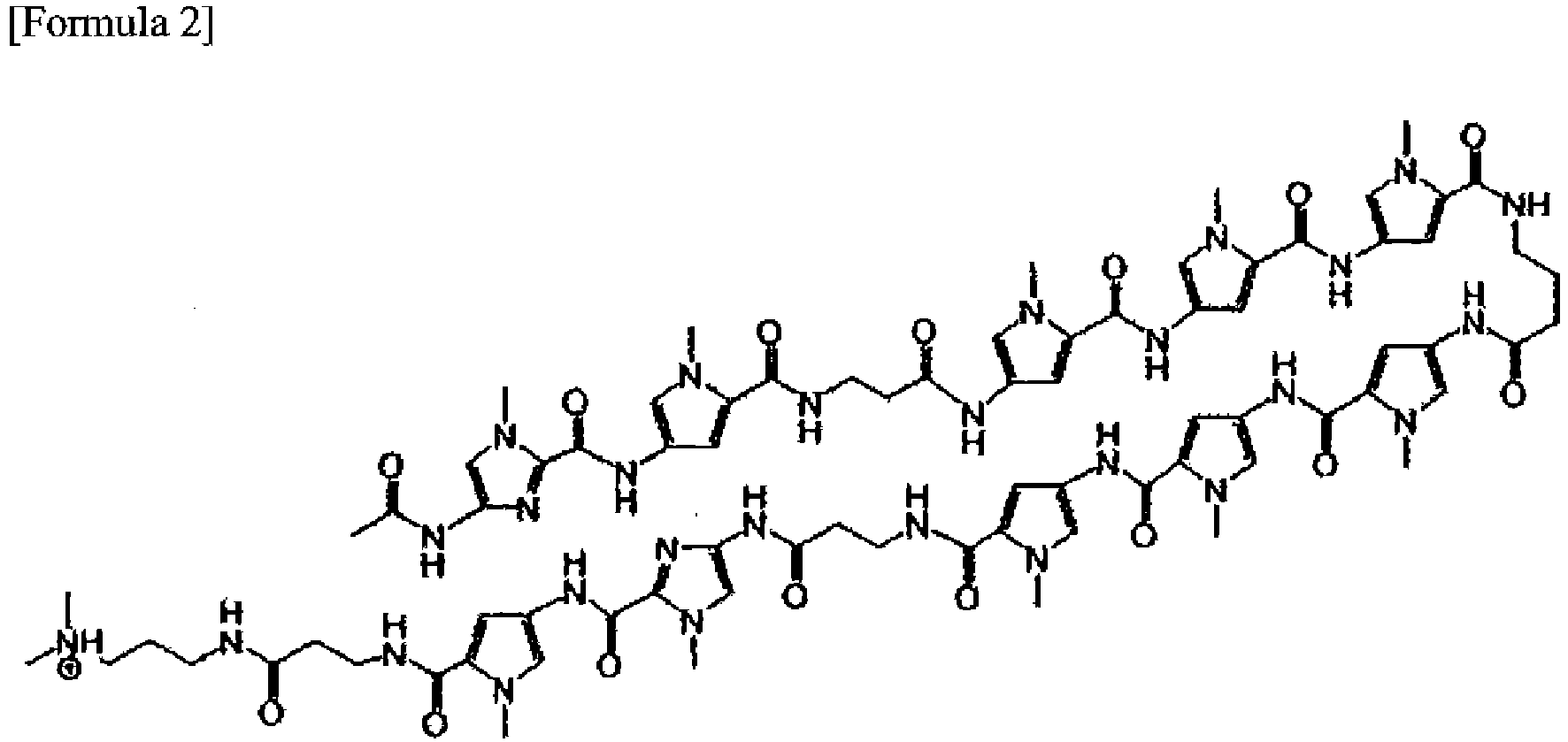
- This PI polyamide is represented by the following formula (Formula 2) and has the chemical formula C 78 H 97 N 28 O 15 + and the molecular weight of 1666.78.
- API polyamide of AcPyPy ⁇ PyPyPy ⁇ ImPyPy ⁇ PyPy ⁇ Dp was designed to recognize the base sequence indicated by polyamide(3) in F1g. 1 (PI polyamide (3), Table 1) as a target base sequence.
- This PI polyamide is represented by the following formula (Formula 3) and has the chemical formula C 79 H 98 N 27 O 15 + and the molecular weight of 1665.79.
- PI polyamide For the PI polyamide (control) not binding to the whole or a portion of the Oct1 gene binding sequence (SEQ ID NO:1), a PI polyamide of AcPyPyPyIm ⁇ Im ⁇ Py ⁇ PyIm ⁇ Im ⁇ Dp was designed to recognize a base sequence indicated by PI polyamide (control) in Table 1 as a target base sequence.
- This PI polyamide is represented by the following formula (Formula 4) and has the chemical formula C 73 H 94 N 29 O 15 + and the molecular weight of 1617.71.
- HCTU manufactured by Peptide Institute, Inc.
- HCTU was used as a condensation activating agent to synthesize each of the PI polyamides (1) to (3) (three types) and the PI polyamide (control) designed in 1.
- FmocPyCOOH (20 mg, Wako), FmocImCOOH (40 mg, Wako), Fmoc- ⁇ -Abu-OH (17.5 mg, Nova Biochem), and Fmoc- ⁇ -Ala-OH (17.5 mg, Nova Biochem) were prepared in an amount necessary for coupling of each of the PI polyamides to be synthesized, and 2 equivalents of FmocImCOOH and 4 equivalents of each of the others to resin were weighed and each transferred to a 1.5 mL Eppendorf tube. Additionally, 45 mg and 22.5 mg of HCTU were added to the tube of FmocImCOOH and each of the other tubes, respectively.
- Fmoc- ⁇ -Ala-Wang-Resin manufactured by Peptide Institute
- a Small Libra Tube manufactured by HiPep Laboratories
- Addition of 1 mL of NMP was followed by 20 minutes of swelling.
- DIEA prepared in 1. was installed as a condensation activating agent in the synthesizer (PSSM-8 manufactured by Shimadzu Corporation).
- PSSM-8 manufactured by Shimadzu Corporation
- the tubes containing the monomers prepared earlier were arranged in a rack in the synthesizer in the order from the C-terminal.
- the synthesizer was started to perform automatic synthesis by repeating the following reaction cycle from (1) to (4) until H 2 NAcPyPy ⁇ ImPyPy ⁇ PyImPy ⁇ ImPy ⁇ -Resin, H 2 NAcImPypPyPyPy ⁇ PyPyPy ⁇ ImPy ⁇ -Resin, H 2 NAcPyPy ⁇ PyPyPy ⁇ ImPyPy ⁇ PyPy ⁇ -Resin, or H 2 NAcPyPyPyIm ⁇ Im ⁇ Py ⁇ PyIm ⁇ Im ⁇ -Resin.
- the resin was taken out form the synthesizer, washed, dried and then transferred to an Eppendorf tube with a screw cap. After 500 ⁇ L of N,N-dimethylpropanediamine (2mL, manufactured by Nacalai tesque) was added, the resin was heated by a heat block at 55 °C overnight to cut out a polyamide from the resin. The reaction solution was transferred to a Libra tube to remove the resin through filtration, and a remaining reaction solution adhering to the resin was collected with 1 mL of NMP and 1 mL of methanol.
- a DNA Binding Assay of the following steps 1) and 2) was performed to confirm binding to the Oct1 gene binding sequence (SEQ ID NO:1).
- the PI polyamide (control) was also examined in terms of the presence/absence of binding to the Oct1 gene binding sequence (SEQ ID NO:1).
- test examples 1 to 6 were used for confirming the effect of the PI polyamide of the present invention to a prostate cancer cell (LNCaP) and a tumor.
- LNCaP prostate cancer cell
- the following samples were prepared in the same way and used.
- the PI polyamides (1) to (3) (tree types) and the PI polyamide (control) synthesized in the same way as the example were used.
- PI polyamides are dissolved in distilled water and added to a cell culturing medium for introduction into cells.
- Phenol-Red-containing medium used was 500mL of Phenol-Red-containing RPMI-1640 medium (manufactured by SIGMA-Aldrich, catalogue No. R7509) to which 50 ml of charcoal-treated fetal bovine serum (FBS) was added.
- FBS charcoal-treated fetal bovine serum
- Phenol-Red-free medium used was 500mL of Phenol-Red-free RPMI-1640 medium (manufactured by SIGMA-Aldrich, catalogue No. R8758) to which 12.5 ml of charcoal-treated fetal bovine serum (FBS) was added.
- FBS charcoal-treated fetal bovine serum
- AR response region An influence on AR activity was examined in the case of mutation or deletion in each of the following base sequences in the ACSL3 transcriptional regulatory region (AR response region):
- ARBS AR binding site
- the mutated ARBSs were acquired through the following procedures.
- Each of the mutant ARBSs of (1) to (5) was inserted into a luciferase vector (pGL3 promoter vector: Promega, Madison, WI) and used for transfection of a prostate cancer cell (LNCaP) cultured for about 60 hours in the Phenol-Red-free medium of 3.
- LNCaP prostate cancer cell
- FuGENE registered trademark
- HD Fugene Applied Science
- R1881 NNK Life Science Products
- R1881 NNK Life Science Products
- a luciferase assay was performed.
- a prostate cancer cell (LNCaP) incorporated with the ARBS without deletion or mutation template DNA, SEQ ID NO:10) was used as a positive control for the luciferase vector.
- ARBS with OCT1(No.1) deleted (Oct1(No.1) deletion of Fig. 2 )
- ARBS with GATA deleted (GATA deletion, Fig. 2 )
- ARBS with OCT1(No.2) deleted (Oct1(No.2) deletion, Fig. 2 ) had significantly reduced AR activity.
- ACSL3 Gene was examined by RT-PCR in a cell into which each of the PI polyamides (1) to (3) was introduced. For comparison, the same examination was conducted for a cell into which the PI polyamide (control) was introduced.
- the LNCaP cells were cultured for 3 days in the Phenol-Red-free medium of 3.(2) to which each of the PI polyamides was added at 5 ⁇ M. Subsequently, DHT (100 nM) of 4. was added into the medium to apply androgen stimulation.
- RNA is extracted from the cells by using Isogen (Nippon Gene) in accordance with a manual
- cDNA was prepared by using PrimeScript (registered trademark) Reverse Transcriptase (manufactured by TaKaRa).
- Each of the cDNAs prepared in 1) was used as a template DNA to examine with primers listed in Table 4 the presence/absence of expression of a fusion gene or an ERG gene in the prostate cancer cell into which each of the PI polyamides was introduced.
- Power SYBR registered trademark
- Green PCR Master Mix manufactured by Applied Biosystems
- primer amplification object base sequence of primer (5'-3') sequence number ACSL3 gene GCACAGGCGTGTTTTATGTATAATTT 18 CAATGGCTGGACCTCCTAGAGT 19 GAPDH gene (internal standard) GGTGGTCTCCTCTGACTTCAACA 20 GTGGTCGTTGAGGGCAATG 21
- Fig. 5 depicts a result of ACSL3 gene expression inhibition in the cell treatment with 1 ⁇ M or 5 ⁇ M of the PI polyamide (1), and it was confirmed that the expression of the ACSL3 gene was particularly inhibited in the cells treatment with 5 ⁇ M of the PI polyamide (1), when the androgen stimulation was applied.
- ARBS AR binding site located 63 kb upstream of the ACSL3 transcription start point
- SEQ ID NO:10 a luciferase vector located 63 kb upstream of the ACSL3 transcription start point
- This vector was used for transfection of a prostate cancer cell (LNCaP) cultured for about 60 hours in the Phenol-Red-free medium of 3.(2) by using FuGENE (registered trademark) HD (Roche Applied Science) as a transection reagent in accordance with the protocol thereof.
- the LNCaP cells were seeded on a 96-well plate to 5 ⁇ 10 3 cells in total and cultured for 3 days in the Phenol-Red-free medium of 3.(2) to which each of the PI polyamides was added at 1 ⁇ M or 5 ⁇ M. Subsequently, DHT (100 nM) of 4. was added into the medium to apply androgen stimulation. After the stimulation, each of the cells were cultured for 24, 48, or 96 hours.
- an MTS reagent Cell Titer 96 AQueous One Solution Cell Proliferation Assay, Promega, Madison WI
- 10 ⁇ l of an MTS reagent Cell Titer 96 AQueous One Solution Cell Proliferation Assay, Promega, Madison WI
- Fig. 8 it was confirmed that the proliferation was significantly inhibited in the cell treatment with 5 ⁇ M of the PI polyamide (1) ( Fig. 8 ) after 48 hours of incubation as compared to the cell treatment with PI polyamide (control, 5 ⁇ M, Fig. 8 ) and that the proliferation was further significantly inhibited after 96 hours of incubation.
- the cell proliferation was suppressed in the same way when the PI polyamide (2) and the PI polyamide (3) were used.
- the migration ability of the cells was examined by a cell migration assay using a cell culture insert and a 8.0 ⁇ m pore size PET filter (manufactured by Becton Dickinson).
- the LNCaP cells were cultured for 3 days in the Phenol-Red-containing medium of 3.(1) to which each of the PI polyamides was added at 5 ⁇ M and divided into units of 5 ⁇ 10 4 cells, and each unit of cells was suspended in 300 ⁇ l of the Phenol-Red-containing medium of 3.(1) and added to the upper chamber. After the cells were cultured at 37 °C under the condition of 5 % CO 2 , the filter was peeled off.
- the cells on the lower filter were fixed by methanol for 30 minutes and then incubated for 30 seconds in Gimsa's stain solution (manufactured by Muto Pure Chemicals). Subsequently, the cells were observed by a microscope of 200 magnifications to count the number of cells, thereby evaluating the cell migration ability.
- Fig. 9 depicts the numbers of migrated cells to which the PI polyamides were added.
- Fig. 10 depicts microscope photographs of the cells to which the PI polyamides were added.
- the injection was performed once per week for 4 weeks and the tumor size was measured every week. After one week from the last injection, the nude mice were dissected to excise the tumors.
- Fig. 12 depicts a result of western blotting with an ACSL3 antibody of protein extracted using a lysis buffer (NP40 buffer) from the excised tumors (two individuals #1 and #2) (upper portion of Fig. 12 ; lower portion indicates expression of ⁇ -actin protein).
- the provision of the PI polyamide of the present invention facilitates the development of a safe and stable medicine useful for prevention and treatment of prostate cancer.
- the PI polyamide developed by the present inventors inhibiting expression of a fusion gene between an androgen response gene TMPRSS2 and an ERG gene in an ETS family that is a transcriptional regulator ( Japanese Patent Application No. 2012-106382 )
- the PI polyamide also enables the comprehensive treatment etc. of prostate cancer.
Landscapes
- Chemical & Material Sciences (AREA)
- Organic Chemistry (AREA)
- Health & Medical Sciences (AREA)
- Medicinal Chemistry (AREA)
- Chemical Kinetics & Catalysis (AREA)
- Life Sciences & Earth Sciences (AREA)
- General Health & Medical Sciences (AREA)
- Nuclear Medicine, Radiotherapy & Molecular Imaging (AREA)
- Veterinary Medicine (AREA)
- Pharmacology & Pharmacy (AREA)
- Public Health (AREA)
- Animal Behavior & Ethology (AREA)
- General Chemical & Material Sciences (AREA)
- Engineering & Computer Science (AREA)
- Bioinformatics & Cheminformatics (AREA)
- Polymers & Plastics (AREA)
- Urology & Nephrology (AREA)
- Pharmaceuticals Containing Other Organic And Inorganic Compounds (AREA)
- Plural Heterocyclic Compounds (AREA)
- Polyamides (AREA)
Abstract
Description
- The present invention relates to a novel pyrrole-imidazole polyamide (hereinafter also referred to as PI polyamide). The present invention more particularly relates to a novel PI polyamide recognizing and binding to a transcriptional regulatory region (AR response region) of an ACSL3 gene that is an androgen response gene and thereby inhibiting the expression of this gene.
- One of steroid hormones, androgen, and a receptor thereof, i.e., an androgen receptor (AR, hereinafter also referred to as AR), are known as being closely involved with proliferation and even canceration of prostate cells.
- Therefore, an androgen ablation therapy inhibiting the activity of AR to suppress progression of prostate cancer has been performed as one of the treatment methods of prostate cancer. However, this treatment has a problem that the effect disappears as the treatment proceeds due to a change in characteristics of the prostate cancer cells, making the subsequent treatment difficult.
- Since the prostate cancer cells expressing AR show the enhanced expression of androgen response genes, methods such as administering interfering RNA and antisense nucleic acids to the androgen response genes to destabilize the expression of these genes to treat prostate cancer, and administrating an expression vector containing a polynucleotide coding a cytotoxic gene product to cancer cells to treat prostate cancer has been disclosed (
Patent Documents 1 to 4). - However the interfering RNA and the antisense nucleic acids are easily degraded and less stable in a living body. In addition, the method including the expression of the cytotoxic gene product in a living body is not considered safe. Therefore, these treatment methods are not considered as adequate methods for treatment of prostate cancer.
- Thus, to acquire a stable and safe substance effective for treatment of prostate cancer, the present inventors focused on a PI polyamide sequence-specifically binding to DNA and having high in-vivo stability and high transferability to tissues and cells (Non-Patent Document 1). PI polyamide is a substance composed of aromatic amino acids N-methylpyrrole (hereinafter also referred to as Py) and N-methylimidazole (hereinafter also referred to as Im).
- The present inventors developed a PI polyamide inhibiting expression of a fusion gene between an androgen response gene TMPRSS2 and an ERG gene belonging to the ETS family that is one of the largest families of transcriptional factors (
Japanese Patent Application No. 2012-106382 - Additionally, for the purpose of enabling comprehensive prevention, treatment, etc. of prostate cancer, the present inventors attempted in the present invention to develop a useful PI polyimide for an ACSL3 gene that is one of the androgen response genes. While the ACSL3 gene is an androgen response gene related to metabolism of long-chain fatty acid and is known as being highly expressed in prostate cancer, the present inventors have found that the gene enhances the proliferation and the migration ability of prostate cancer cells.
- The present inventors found that a transcriptional regulatory region (AR response region) is located 63 kb upstream of the transcription start point of the ACSL3 gene and that two Oct1 gene binding sequences and a GATA gene binding sequence are located as transcription factors in the vicinity of a site at which AR binds to a gene (AR response element, hereinafter also referred to as ARE). The present inventors also found that one of this Oct1 gene binding sequence is a poor-prognosis factor of prostate cancer positively enhancing the transcription activity of AR (Non-Patent Document 2).
- Therefore, in the present invention, the present inventors developed a PI polyamide specifically binding to this Oct1 gene binding sequence in an attempt to develop a PI polyamide inhibiting the expression of the ACSL3 gene and therefore useful for prevention, treatment, etc. of prostate cancer.
-
- Patent Document 1:
Japanese Unexamined Patent Application Publication (Translation of PCT Application) No. 2010-505446 - Patent Document 2:
Japanese Unexamined Patent Application Publication (Translation of PCT Application) No. 2011-518552 - Patent Document 3:
Japanese Unexamined Patent Application Publication (Translation of PCT Application) No. 2009-507492 - Patent Document 4:
Japanese Unexamined Patent Application Publication (Translation of PCT Application) No. 2010-532663 -
- Non-Patent Document 1: Tomlins SA et al., Science 310: 644-648, 2005
- Non-Patent Document 2: Daisuke Obinata, et al., International Journal of Cancer 130: 1021-1028, 2012
- It is a problem of the present invention to provide a safe and stable medicine useful for prevention and treatment of prostate cancer.
- As a result of intensive studies for solving the problem, the present inventors acquired a novel PI polyamide recognizing and binding to a specific base sequence of an Oct1 gene binding sequence present in a transcriptional regulatory region (AR response region) of an ACSL3 gene and regulating the transcription activity of AR.
- In the present invention, the present inventors found that this PI polyamide inhibits the expression of the ACSL3 gene and the AR activity in the transcriptional regulatory region (AR response region) of the ACSL3 gene, and is useful for prevention, treatment, etc. of prostate cancer, thereby completing the present invention.
- Thus, the present invention relates to a PI polyamide, an ACSL3 gene expression inhibitor containing the PI polyamide as an active ingredient, and a preventive or therapeutic agent of prostate cancer, as indicated from (1) to (4) below.
- (1) Apyrrole-imidazole polyamide binding to the whole or a part of a base sequence indicated by SEQ ID NO:1.
- (2) The pyrrole-imidazole polyamide of (1) represented by any of following
Formulas 1 to 3.


- (3) An ACSL3 gene expression inhibitor containing the pyrrole-imidazole polyamide of (1) or (2) as an active ingredient.
- (4) A preventive or therapeutic agent of prostate cancer containing the pyrrole-imidazole polyamide of (1) or (2) as an active ingredient.
- The provision of the PI polyamide of the present invention facilitates development of a safe and stable medicine useful for prevention and treatment of prostate cancer. The medicine contains as an active ingredient the PI polyamide of the present invention having high in-vivo stability and high transferability to tissues and cells and therefore may be an effective medicine for prevention and treatment of prostate cancer.
- By combining with the PI polyamide developed by the present inventors inhibiting expression of a fusion gene between an androgen response gene TMPRSS2 and an ERG gene in an ETS family that is a transcriptional regulator (
Japanese Patent Application No. 2012-106382 -
- [
Fig. 1] Fig. 1 is a schematic of base sequences of Oct1 gene binding sequences (OCT1(No.1), OCT1(No.2)), AREs (ARE(No. 1), ARE(No. 2)), and a GATA gene binding sequence (GATA) in a transcriptional regulatory region (AR response region) of an ACSL3 gene and PI polyamide binding sites (Polyamide(1) to Polyamide(3)) for the whole or a part of the base sequence of the Oct1 gene binding sequence (OCT1(No.2)). - [
Fig. 2] Fig. 2 is a diagram of an evaluation result of AR activity in the ACSL3 transcriptional regulatory region (AR response region) (test example 1). - [
Fig. 3] Fig. 3 is a diagram of an evaluation result of AR activity in the ACSL3 transcriptional regulatory region (AR response region) (test example 1). - [
Fig. 4] Fig. 4 is a diagram of a result of expression of the ACSL3 genes in prostate cancer cells treatment with these PI polyamides (test example 2). - [
Fig. 5] Fig. 5 is a diagram of a result of expression of the ACSL3 gene in prostate cancer cells treatment with1 µM or 5 µM of the PI polyamide (1) (test example 2). - [
Fig. 6] Fig. 6 is a diagram of a result of AR activity in the ACSL3 transcriptional regulatory region (AR response region) for prostate cancer cells treatment with these PI polyamides (test example 3). - [
Fig. 7] Fig. 7 is a diagram of a result of AR activity in the PSA promoter region (AR response region) as a positive control) for prostate cancer cells treatment with these PI polyamides (test example 3). - [
Fig. 8] Fig. 8 is a diagram of the result of cell proliferation ability of prostate cancer cells treatment with these PI polyamides (test example 4). - [
Fig. 9] Fig. 9 is a diagram of confirmation of the result of cell migration ability for prostate cancer cells treatment with these PI polyamides (test example 5). - [
Fig. 10] Fig. 10 is a diagram of microscope photographs of cells treatment with the PI polyamides which was introduced in the evaluation of cell migration ability (test example 5). - [
Fig. 11] Fig. 11 is a diagram of an effect of the PI polyamide to a tumor (test example 6). - [
Fig. 12] Fig. 12 is a diagram of an expression inhibition effect of the PI polyamide to an ACSL3 protein derived from LNCaP cells injected into nude mice (test example 6). - A "PI polyamide" of the present invention includes any PI polyamide recognizing and binding to the whole or a portion of a base sequence indicated by SEQ ID NO:1.
- The "portion" or "a part of" refers to recognition of at least one or more bases, preferably two or more bases, more preferably three or more bases in the base sequence indicated by SEQ ID NO:1 and a larger number of recognized bases is more preferable. If a plurality of bases is recognized, the recognized bases may be contiguous or may not be contiguous.
- With regard to the base sequence indicated by SEQ ID NO:1, as depicted in
Fig. 1 , the PI polyamide preferably recognizes and binds to the whole or a portion of a base sequence of an Oct1 gene binding sequence (OCT1(No.2)) between ARE (ARE(No. 1)) and ARE (ARE(No. 2)) in a transcriptional regulatory region (AR response region) of an ACSL3 gene. - The PI polyamide of the present invention may be any PI polyamide recognizing and binding to the whole or a portion of the base sequence indicated by SEQ ID NO:1 or may be a PI polyamide recognizing and binding to the whole or a portion of a base sequence complementary to the base sequence indicated by SEQ ID NO:1.
- Moreover, since the PI polyamide has an Im/Py pair recognizing G-C in DNA, a Py/Im pair recognizing G-C, and a Py/Py pair recognizing T-A andA-T, the PI polyamide of the present invention may recognize and bind to the whole or a portion of a base sequence having G and C interchanged with each other at one or more locations or a base sequence having T and A interchanged with each other at one or more locations in the base sequence indicated by SEQ ID NO:1.
- Such a "PI polyamide" of the present invention can be a PI polyamide (1), a PI polyamide (2), and a PI polyamide (3) represented by the following
Formula 1,Formula 2, andFormula 3, respectively.Fig. 1 schematically depicts binding sites to the whole or a portion of the base sequence of the Oct1 gene binding sequence in these PI polyamides. The "PI polyamide" of the present invention is not limited to these PI polyamides represented byFormulas 1 to 3, may be any "PI polyamide" having the characteristics as described above, and includes a "PI polyamide" uniquely designed and produced with a conventionally known method.


- An "ACSL3 gene expression inhibitor" of the present invention refers to an agent containing the PI polyamide of the present invention as an active ingredient and binding to the whole or a portion of the Oct1 gene binding sequence to inhibit the expression of the ACSL3 gene.
- The "expression inhibition" refers to a state of a reduced degree of the expression of the ACSL3 gene when the expression inhibitor of the present invention is applied to a cell in which the "expression of the ACSL3 gene" occurs such as a prostate cancer cell, as compared to when the expression inhibitor of the present invention is not applied. The reduced degree of the expression of the ACSL3 gene includes no expression of the ACSL3 gene.
- Such an "ACSL3 gene expression inhibitor" of the present invention may be any agent containing the PI polyamide of the present invention as an active ingredient and may be an agent composed only of the PI polyamide of the present invention or an agent additionally containing a pharmaceutically acceptable component etc.
- A "preventive and/or therapeutic agent of prostate cancer" of the present invention refers to an agent containing the PI polyamide of the present invention as an active ingredient and useful for prevention of prostate cancer, for treatment of prostate cancer, or for prevention and treatment of prostate cancer.
- Such a "preventive and/or therapeutic agent of prostate cancer" of the present invention may be any agent containing the PI polyamide of the present invention as an active ingredient and may be an agent composed only of the PI polyamide of the present invention or an agent additionally containing a pharmaceutically acceptable component etc.
- Such an agent of the present invention can be administered to a human likely to develop prostate cancer or can be administered after development of prostate cancer for the purpose of inhibiting the progression of the cancer or achieving the remission of the cancer.
- The "preventive and/or therapeutic agent of prostate cancer" of the present invention can be used in combination with conventionally known medicines for prevention, treatment, etc. of prostate cancer or the PI polyamide developed by the present inventors inhibiting expression of a fusion gene between an androgen response gene TMPRSS2 and an ERG gene in an ETS family that is a transcriptional regulator (
Japanese Patent Application No. 2012-106382 - Although the present invention will hereinafter be described in more detail by using an example and test examples, the present invention is not limited thereto. Example
- The following PI polyamide (1), PI polyamide (2), and PI polyamide (3) were designed such that each binds to the whole or a portion of the Oct1 gene binding sequence (SEQ ID NO:1). For comparison, a PI polyamide (control) was also designed that does not bind to the whole or a portion of the Oct1 gene binding sequence (SEQ ID NO:1).
-
Fig. 1 depicts the binding sites of the PI polyamide (1), the PI polyamide (2), and the PI polyamide (3). Although the two binding sites of the PI polyamide (1) are depicted inFig. 1 , the PI polyamides (1) do not bind to the two sites at the same time since polyamides binding to the same gene must be separated by four or more bases from each other. - The letters in the following formulas have the following meaning:
- Ac: acetyl, Py: pyrrole, Im: imidazole, β: β-alanine, γ: γ-butyrate, and Dp: N,N-dimethyl-1,3-propanediamine.
- A PI polyamide of AcPyPyβImPyPyγPyImPyβImPyβDp was designed to recognize the base sequence indicated by polyamide(1) in F1g. 1 (PI polyamide (1), Table 1) as a target base sequence. This PI polyamide is represented by the following formula (Formula 1) and has the chemical formula C77H96N29O15 + and the molecular weight of 1667.77.

- A PI polyamide of AcImPyβPyPyPyγPyPyPyβImPyβDp was designed to recognize the base sequence indicated by polyamide(2) in F1g. 1 (PI polyamide (2), Table 1) as a target base sequence. This PI polyamide is represented by the following formula (Formula 2) and has the chemical formula C78H97N28O15 + and the molecular weight of 1666.78.

- API polyamide of AcPyPyβPyPyPyγImPyPyβPyPyβDp was designed to recognize the base sequence indicated by polyamide(3) in F1g. 1 (PI polyamide (3), Table 1) as a target base sequence. This PI polyamide is represented by the following formula (Formula 3) and has the chemical formula C79H98N27O15 + and the molecular weight of 1665.79.


- For the PI polyamide (control) not binding to the whole or a portion of the Oct1 gene binding sequence (SEQ ID NO:1), a PI polyamide of AcPyPyPyImβImγPyβPyImβImβDp was designed to recognize a base sequence indicated by PI polyamide (control) in Table 1 as a target base sequence. This PI polyamide is represented by the following formula (Formula 4) and has the chemical formula C73H94N29O15 + and the molecular weight of 1617.71.

[Table 1] PI polyamide Target base sequence Sequence number PI polyamide (1) 5'-wwgcwgw-3' 2 3'-wwcgwcw-5' 3 PI polyamide (2) 5'-wwwwwgc-3' 4 3'-wwwwwcg-5' 5 PI polyamide (3) 5'-wgwwwww-3' 6 3'-wcwwwww-5' 7 PI polyamide (control) 5'-wcwcgwgw-3' 8 3'-wgwgcwcw-5' 9 w=A or T - HCTU (manufactured by Peptide Institute, Inc.) was used as a condensation activating agent to synthesize each of the PI polyamides (1) to (3) (three types) and the PI polyamide (control) designed in 1.
- FmocPyCOOH (20 mg, Wako), FmocImCOOH (40 mg, Wako), Fmoc-γ-Abu-OH (17.5 mg, Nova Biochem), and Fmoc-β-Ala-OH (17.5 mg, Nova Biochem) were prepared in an amount necessary for coupling of each of the PI polyamides to be synthesized, and 2 equivalents of FmocImCOOH and 4 equivalents of each of the others to resin were weighed and each transferred to a 1.5 mL Eppendorf tube. Additionally, 45 mg and 22.5 mg of HCTU were added to the tube of FmocImCOOH and each of the other tubes, respectively. Moreover, 500 µL and 250 µL of NMP (manufactured by Nacalai tesque) were added to the tube of FmocImCOOH and each of the other tubes, respectively, and vortexed and allowed to stand still for 1 hour for complete dissolution.
- Reagents listed in Table 2 were prepared and used for synthesis by a synthesizer.
[Table 2] Necessary Reagents for Synthesizer per Sample Activater
(condensing reagent)DIEA(N,N-diisopropylethylamine) 3mL Deblock
(for Fmoc group deprotection)30%Piperidine/DMF Piperidine 7.5mL NMP 17.5mL Wash
(solvent for washing)NMP 200mL - Forty mg (0.04 mmol) of Fmoc-β-Ala-Wang-Resin (manufactured by Peptide Institute) was put into a Small Libra Tube (manufactured by HiPep Laboratories) and set in a peptide synthesizer. Addition of 1 mL of NMP was followed by 20 minutes of swelling.
- DIEA prepared in 1. was installed as a condensation activating agent in the synthesizer (PSSM-8 manufactured by Shimadzu Corporation). The tubes containing the monomers prepared earlier were arranged in a rack in the synthesizer in the order from the C-terminal. After setting a synthesis program of PSSM-8, the synthesizer was started to perform automatic synthesis by repeating the following reaction cycle from (1) to (4) until H2NAcPyPyβImPyPyγPyImPyβImPyβ-Resin,
H2NAcImPypPyPyPyγPyPyPyβImPyβ-Resin,
H2NAcPyPyβPyPyPyγImPyPyβPyPyβ-Resin, or
H2NAcPyPyPyImβImγPyβPyImβImβ-Resin. -
- (1) A coupling process was performed by using the activating agent in NMP for 30 minutes.
- (2) To remove excessive monomers and activating agent, the resin was repeatedly washed five times with 1mL of NMP
- (3) 1 ml of an Fmoc deprotection solution (30% Piperidine/NMP) was added and reacted for 3 minutes and the same cycle was repeated again after removing the solution.
- (4) To remove the Fmoc deprotection solution, the resin was repeatedly washed five times with 1mL of NMP before returning to (1). This cycle was repeated until a target product was acquired.
- The resin was taken out form the synthesizer, washed, dried and then transferred to an Eppendorf tube with a screw cap. After 500 µL of N,N-dimethylpropanediamine (2mL, manufactured by Nacalai tesque) was added, the resin was heated by a heat block at 55 °C overnight to cut out a polyamide from the resin. The reaction solution was transferred to a Libra tube to remove the resin through filtration, and a remaining reaction solution adhering to the resin was collected with 1 mL of NMP and 1 mL of methanol.
- After solvent was distilled away, fractionation and purification were performed by HPLC (0.1 % AcOH:CH3CN=100:0 to 0:100, 30 min). After the fractionation and purification, each of the PI polyamides (1) to (3) (three types) and the PI polyamide (control) designed in 1. was acquired through freeze dehydration.
- For each of the PI polyamides (1) to (3) (three types) generated in 5, a DNA Binding Assay of the following steps 1) and 2) was performed to confirm binding to the Oct1 gene binding sequence (SEQ ID NO:1). The PI polyamide (control) was also examined in terms of the presence/absence of binding to the Oct1 gene binding sequence (SEQ ID NO:1).
-
- 1) Molecules (50-base) were created that have Oct1 oligo DNA including the same base sequence as the Oct1 gene binding sequence (SEQ ID NO:1) labelled with FITC, and the oligo at a final concentration of 1 µM was heated to 100 °C in an annealing buffer (20 mM Tris-HCl, 2 mM EDTA, 200 mM NaCl). The oligo was cooled for 2 hours in stages to 30 °C. As a result, the Oct1 oligo DNA underwent self-annealing and forms a double strand in a hairpin shape.
- 2) 15 µl of solution containing the hairpin-shaped double strand DNA of 1) was mixed with 5 µl of each of the 0.2 mM PI polyamides (1) to (3) and PI polyamide (control) and incubated at 37 °C for 1 hour to acquire a mixed solution.
- 3) The mixed solution of 2) was electrophoresed in 5-20 % acrylamide gel (TBE buffer) and an electrophoretic pattern was monitored with LAS 4000 (manufactured by GE Healthcare Japan) to determine the presence/absence of binding from a difference in the electrophoretic pattern.
- 4) As a result, it was confirmed that all the PI polyamides (1) to (3) of the present invention bind to the Oct1 oligo DNA, while no binding occurs in the case of the PI polyamide (control) or only a solvent without the PI polyamide.
- The following test examples 1 to 6 were used for confirming the effect of the PI polyamide of the present invention to a prostate cancer cell (LNCaP) and a tumor. For common samples in the test examples, the following samples were prepared in the same way and used.
- The PI polyamides (1) to (3) (tree types) and the PI polyamide (control) synthesized in the same way as the example were used.
- These PI polyamides are dissolved in distilled water and added to a cell culturing medium for introduction into cells.
- Human prostate cancer cells LNCaP (ATCC No. CRL-174) acquired from ATCC (American Type Culture Collection) were used.
- A Phenol-Red-containing medium used was 500mL of Phenol-Red-containing RPMI-1640 medium (manufactured by SIGMA-Aldrich, catalogue No. R7509) to which 50 ml of charcoal-treated fetal bovine serum (FBS) was added.
- A Phenol-Red-free medium used was 500mL of Phenol-Red-free RPMI-1640 medium (manufactured by SIGMA-Aldrich, catalogue No. R8758) to which 12.5 ml of charcoal-treated fetal bovine serum (FBS) was added.
- DHT dissolved in ethanol (EtOH) to 100 nM was used for androgen stimulation.
- An influence on AR activity was examined in the case of mutation or deletion in each of the following base sequences in the ACSL3 transcriptional regulatory region (AR response region):
- 1) Oct1 gene binding sequences (OCT1(No.1), OCT1(No.2),
Fig. 1 ), - 2) AREs (ARE(No.1), ARE(No.2),
Fig. 1 ), and - 3) GATA gene binding sequence (GATA,
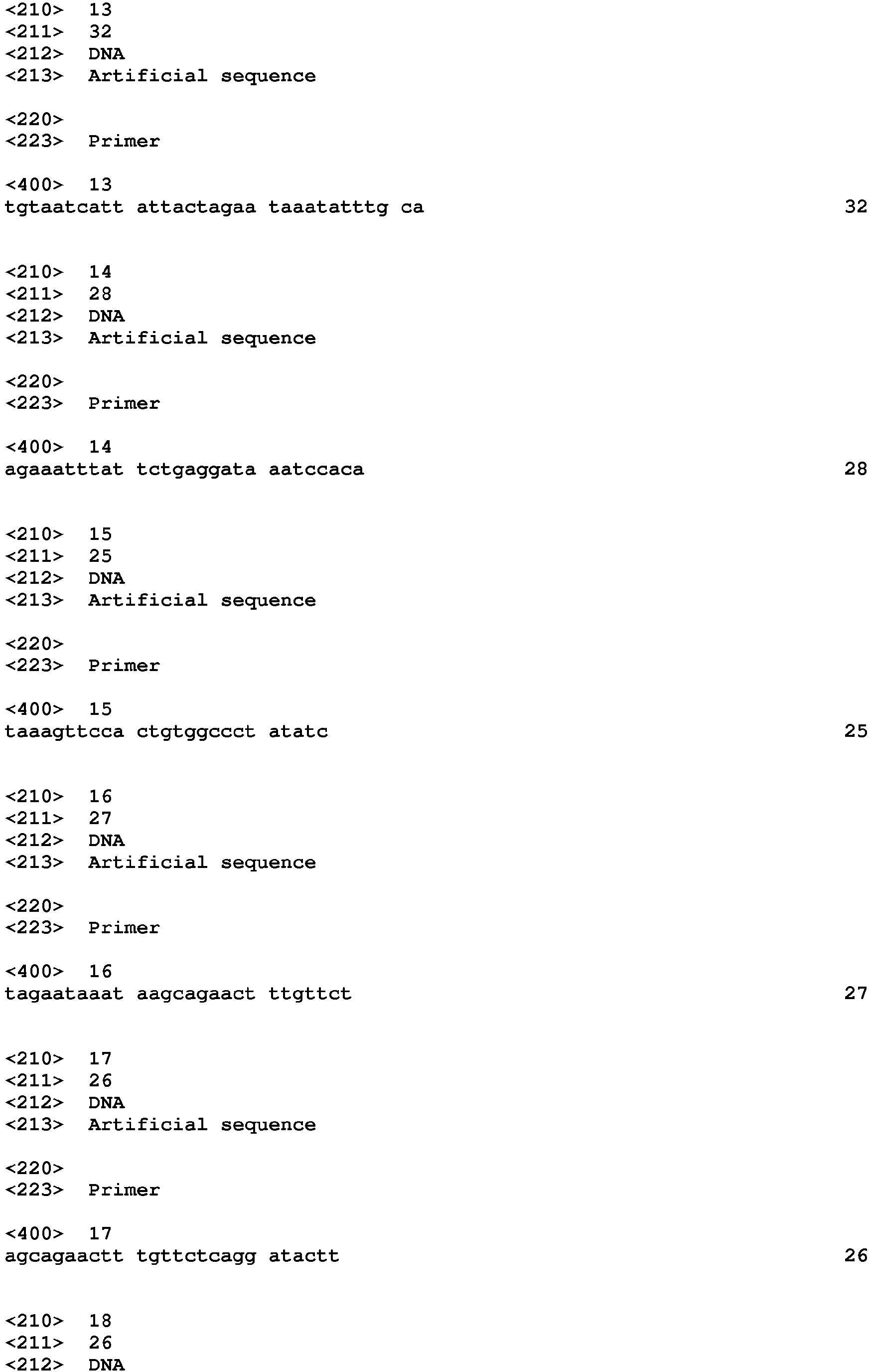
Fig. 1 ). - About 1 kb of AR binding site (ARBS) located 63 kb upstream of the ACSL3 transcription start point was extracted (SEQ ID NO:10) and used as template DNA to amplify the following mutated ARBSs (1) to (5) with PCR:
- (1) ARBS with OCT1(No.1) deleted (by using a primer
Mut Oct # 1 of Table 3); - (2) ARBS with OCT1(No.2) deleted (by using a primer
Mut Oct # 2 of Table 3); - (3) ARBS with GATA deleted (by using a primer Mut GATA of Table 3);
- (4) ARBS with OCT1(No.2) deleted and ARE(No.1) mutated (by using primers
Mut Oct # 2 and Mut ARE 1 of Table 3); and - (5) ARBS with Oct1(No.2) deleted and ARE(No.1) and ARE(No.2) mutated (by using primers
Mut Oct # 2, Mut ARE 1, and Mut ARE 2 of Table 3). - The mutated ARBSs were acquired through the following procedures.
- (1) To the template DNA (SEQ ID NO:10), PCR was performed by using a primer for a gene desired to be mutated or deleted as a forward primer and a primer for the terminal end of the template DNA (ACSL3 ARBS rv primer of Table 3) as a reverse primer to acquire an amplified construct.
- (2) To the template DNA (SEQ ID NO:10), PCR was performed by using a primer for the leading end of the template DNA (ACSL3 ARBS fw primer of Table 3) as a forward primer and a primer for a gene desired to be mutated or deleted as a reverse primer to acquire an amplified construct.
- (3) To a template DNA acquired by mixing the constructs acquired at (1) and (2), PCR was performed by using the primer for the leading end of the template DNA (ACSL3 ARBS fw primer of Table 3) as a forward primer and the primer for the terminal end of the template DNA (ACSL3 ARBS rv primer of Table 3) as a reverse primer to acquire the mutated ARBSs.
- Each of the mutant ARBSs of (1) to (5) was inserted into a luciferase vector (pGL3 promoter vector: Promega, Madison, WI) and used for transfection of a prostate cancer cell (LNCaP) cultured for about 60 hours in the Phenol-Red-free medium of 3. (2) Using FuGENE (registered trademark) HD (Roche Applied Science) as a transection reagent in accordance with the protocol thereof.
- After about 12 hours, R1881 (NEN Life Science Products) was used for applying androgen stimulation and, after another 24 hours, a luciferase assay was performed. In this test, a prostate cancer cell (LNCaP) incorporated with the ARBS without deletion or mutation (template DNA, SEQ ID NO:10) was used as a positive control for the luciferase vector.
- As a result, as depicted in
Fig. 2 , it was confirmed that (1) ARBS with OCT1(No.1) deleted (Oct1(No.1) deletion ofFig. 2 ) and (3 ) ARBS with GATA deleted (GATA deletion,Fig. 2 ) exhibited the AR activity similar to the positive control (ACSL3 Enhancer,Fig. 2 ) while (2) ARBS with OCT1(No.2) deleted (Oct1(No.2) deletion,Fig. 2 ) had significantly reduced AR activity. - As depicted in
Fig. 3 , it was confirmed that the AR activity was significantly reduced as compared to the positive control (ACSL3 Enhancer,Fig. 3 ) in each of the cases of (2) ARBS with OCT1(No.2) deleted (Oct1(No.2) deletion,Fig. 3 ), (4) ARBS with OCT1(No.2) deleted and ARE(No.1) mutated (Oct1(No.2)del. ARE(No.1)mut.,Fig. 3 ), and (5 ) ARBS with Oct1(No.2) deleted and ARE(No.1) and ARE(No.2) mutated (Oct1(No.2)del. ARE(No.1)mut. ARE(No.2)mut.,Fig. 3 ). - Therefore, this result indicated that the action of Oct1(No.2) in the Oct1 gene binding sequence is important for the AR activity in the ACSL3 transcriptional regulatory region (AR response region).
- The expression of ACSL3 Gene was examined by RT-PCR in a cell into which each of the PI polyamides (1) to (3) was introduced. For comparison, the same examination was conducted for a cell into which the PI polyamide (control) was introduced.
- The LNCaP cells were cultured for 3 days in the Phenol-Red-free medium of 3.(2) to which each of the PI polyamides was added at 5 µM. Subsequently, DHT (100 nM) of 4. was added into the medium to apply androgen stimulation.
- After RNA is extracted from the cells by using Isogen (Nippon Gene) in accordance with a manual, cDNA was prepared by using PrimeScript (registered trademark) Reverse Transcriptase (manufactured by TaKaRa).
- Each of the cDNAs prepared in 1) was used as a template DNA to examine with primers listed in Table 4 the presence/absence of expression of a fusion gene or an ERG gene in the prostate cancer cell into which each of the PI polyamides was introduced. In this RT-qPCR, Power SYBR (registered trademark) Green PCR Master Mix (manufactured by Applied Biosystems) was used.
[Table 4] primer amplification object base sequence of primer (5'-3') sequence number ACSL3 gene GCACAGGCGTGTTTTATGTATAATTT 18 CAATGGCTGGACCTCCTAGAGT 19 GAPDH gene
(internal standard)GGTGGTCTCCTCTGACTTCAACA 20 GTGGTCGTTGAGGGCAATG 21 - As a result, as depicted in
Fig. 4 , it was confirmed that the expression of the ACSL3 gene was inhibited in the cells treatment with the PI polyamide (1), PI polyamide (2), or PI polyamide (3) even when the androgen stimulation was applied. In contrast, the expression of the ACSL3 gene was not inhibited in the cell treatment with the PI polyamide (control) (Polyamide (Control),Fig. 4 ). -
Fig. 5 depicts a result of ACSL3 gene expression inhibition in the cell treatment with 1 µM or 5 µM of the PI polyamide (1), and it was confirmed that the expression of the ACSL3 gene was particularly inhibited in the cells treatment with 5 µM of the PI polyamide (1), when the androgen stimulation was applied. - About 1 kb of AR binding site (ARBS) located 63 kb upstream of the ACSL3 transcription start point was extracted (SEQ ID NO:10) and insert into a luciferase vector (pGL3 promoter vector: Promega, Madison, WI). This vector was used for transfection of a prostate cancer cell (LNCaP) cultured for about 60 hours in the Phenol-Red-free medium of 3.(2) by using FuGENE (registered trademark) HD (Roche Applied Science) as a transection reagent in accordance with the protocol thereof.
- After about 12 hours, androgen stimulation using 100 nM of DHT and introduction of the PI polyamide (1) or PI polyamide (control) (1 µM or 5 µM) were performed and followed by a luciferase assay. This test was conducted by using prostate cancer cells (LNCaP) incorporated with a PSA promoter region (SEQ ID NO:22) known to have AR response activity as a positive control for the luciferase vector.
- As a result, as depicted in
Fig. 6 , it was confirmed that the introduction of the PI polyamide (1) significantly reduces the AR activity in the ACSL3 transcriptional regulatory region (AR response region) as compared to the introduction of the same amount of the PI polyamide (control). The same applied to the cases of using the PI polyamide (2) and the PI polyamide (3). - As depicted in
Fig. 7 , it was confirmed that when the prostate cancer cells (LNCaP) incorporated with the PSA promoter region as the positive control were used, no significant difference existed between the introduction of the PI polyamide (1) and the introduction of the same amount of the PI polyamide (control). - After treatment with the PI polyamide (1) or the PI polyamide (control) for comparison, the proliferation ability of these cells were examined by MTS assay.
- In particular, the LNCaP cells were seeded on a 96-well plate to 5×10³ cells in total and cultured for 3 days in the Phenol-Red-free medium of 3.(2) to which each of the PI polyamides was added at 1 µM or 5 µM. Subsequently, DHT (100 nM) of 4. was added into the medium to apply androgen stimulation. After the stimulation, each of the cells were cultured for 24, 48, or 96 hours.
- After the specified stimulation time, 10 µl of an MTS reagent (Cell Titer 96 AQueous One Solution Cell Proliferation Assay, Promega, Madison WI) was added to the cells before incubation for 1 hour. Subsequently, the absorbance (490nm) of the cells was measured and the numbers of the cultured cells were examined to evaluate the cell proliferation ability.
- As a result, as depicted in
Fig. 8 , it was confirmed that the proliferation was significantly inhibited in the cell treatment with 5 µM of the PI polyamide (1) (Fig. 8 ) after 48 hours of incubation as compared to the cell treatment with PI polyamide (control, 5 µM,Fig. 8 ) and that the proliferation was further significantly inhibited after 96 hours of incubation. The cell proliferation was suppressed in the same way when the PI polyamide (2) and the PI polyamide (3) were used. - After culturing cells into which the PI polyamide (1) was introduced and cells into which the PI polyamide (control) was introduced for comparison, the migration ability of the cells was examined by a cell migration assay using a cell culture insert and a 8.0 µm pore size PET filter (manufactured by Becton Dickinson).
- In particular, after fibronectin (manufactured by Sigma) diluted with PBS to 10 µg/ml was allowed to act on a culture dish for 30 minutes to form a lower filter, 700 µl of the Phenol-Red-containing RPMI 1640 medium of 3.(1) was added to a lower chamber.
- The LNCaP cells were cultured for 3 days in the Phenol-Red-containing medium of 3.(1) to which each of the PI polyamides was added at 5 µM and divided into units of 5×10⁴ cells, and each unit of cells was suspended in 300 µl of the Phenol-Red-containing medium of 3.(1) and added to the upper chamber. After the cells were cultured at 37 °C under the condition of 5 % CO2, the filter was peeled off.
- The cells on the lower filter were fixed by methanol for 30 minutes and then incubated for 30 seconds in Gimsa's stain solution (manufactured by Muto Pure Chemicals). Subsequently, the cells were observed by a microscope of 200 magnifications to count the number of cells, thereby evaluating the cell migration ability.
-
Fig. 9 depicts the numbers of migrated cells to which the PI polyamides were added.Fig. 10 depicts microscope photographs of the cells to which the PI polyamides were added. - As a result, as depicted in
Figs. 9 and10 , it was confirmed that the cell migration ability (invasive potential) was significantly inhibited in the cell into which the PI polyamide (1) of the present invention was introduced (Polyamide(1),Figs. 9 and10 ) as compared to the cell into which the PI polyamide (control) was introduced (Polyamide(control),Figs. 9 and10 ). The cell migration ability (invasive potential) was suppressed in the same way with respect to the PI polyamide (2) and the PI polyamide (3). - The effect of the PI polyamide on a tumor was confirmed.
- To 7-week-old male nude mice (n=10), 3×10⁶ prostate cancer cells (LNCaP) were subcutaneously injected at the right flank. A tumor size was monitored by caliper measurement every 3 days. When the tumor size reaches 100 cm2, the PI polyamide (1) or the PI polyamide (control) dissolved in dH2O was injected from a tail vein at 6 mg/kg bodyweight (PI polyamide (1): n=4, PI polyamide (control): n=6).
- The injection was performed once per week for 4 weeks and the tumor size was measured every week. After one week from the last injection, the nude mice were dissected to excise the tumors.
- As a result, as depicted in
Fig. 11 , it was confirmed that the formation of tumor was remarkably inhibited in the nude mice subjected to the injection of the PI polyamide (1) as compared to the nude mice subjected to the injection of the PI polyamide (control). -
Fig. 12 depicts a result of western blotting with an ACSL3 antibody of protein extracted using a lysis buffer (NP40 buffer) from the excised tumors (twoindividuals # 1 and #2) (upper portion ofFig. 12 ; lower portion indicates expression of β-actin protein). As a result, it was confirmed that the ACSL3 protein was expressed in the nude mice subjected to the injection of the PI polyamide (control) while the expression of the ACSL3 protein was remarkably inhibited in each of the nude mice subjected to the injection of the PI polyamide (1). - The provision of the PI polyamide of the present invention facilitates the development of a safe and stable medicine useful for prevention and treatment of prostate cancer. By combining with the PI polyamide developed by the present inventors inhibiting expression of a fusion gene between an androgen response gene TMPRSS2 and an ERG gene in an ETS family that is a transcriptional regulator (
Japanese Patent Application No. 2012-106382 




| primer name | base sequence of primer (5'-3') | sequence number |
| ACSL3 ARBSfw | AAAACGCGTGGCATAGTATATCTGTGGGACATTC | 11 |
| ACSL3 ARBSrv | TGAAGATCTTGATTATTGGGTATTGTGGGAGCAG | 12 |
| Mut ARE 1 | TGTAATCATTATTACTAGAATAAATATTTGCA | 13 |
| Mut ARE 2 | AGAAATTTATTCTGAGGATAAATCCACA | 14 |
| | TAAAGTTCCACTGTGGCCCTATATC | 15 |
| | TAGAATAAATAAGCAGAACTTTGTTCT | 16 |
| Mut GATA | AGCAGAACTTTGTTCTCAGGATACTT | 17 |
Claims (4)
- A pyrrole-imidazole polyamide binding to the whole or a part of a base sequence indicated by SEQ ID NO:1.
- The pyrrole-imidazole polyamide of claim 1 represented by any of following Formulas 1 to 3.


- An ACSL3 gene expression inhibitor containing the pyrrole-imidazole polyamide of claim 1 or 2 as an active ingredient.
- A preventive or therapeutic agent of prostate cancer containing the pyrrole-imidazole polyamide of claim 1 or 2 as an active ingredient.
Applications Claiming Priority (2)
| Application Number | Priority Date | Filing Date | Title |
|---|---|---|---|
| JP2013048126A JP6044935B2 (en) | 2013-03-11 | 2013-03-11 | New PI polyamide |
| PCT/JP2014/056251 WO2014142092A1 (en) | 2013-03-11 | 2014-03-11 | Novel pi polyamide |
Publications (3)
| Publication Number | Publication Date |
|---|---|
| EP2975036A1 true EP2975036A1 (en) | 2016-01-20 |
| EP2975036A4 EP2975036A4 (en) | 2016-12-14 |
| EP2975036B1 EP2975036B1 (en) | 2018-04-18 |
Family
ID=51536747
Family Applications (1)
| Application Number | Title | Priority Date | Filing Date |
|---|---|---|---|
| EP14764893.5A Not-in-force EP2975036B1 (en) | 2013-03-11 | 2014-03-11 | Novel pi polyamide |
Country Status (4)
| Country | Link |
|---|---|
| US (1) | US9522978B2 (en) |
| EP (1) | EP2975036B1 (en) |
| JP (1) | JP6044935B2 (en) |
| WO (1) | WO2014142092A1 (en) |
Families Citing this family (4)
| Publication number | Priority date | Publication date | Assignee | Title |
|---|---|---|---|---|
| JP6710354B2 (en) * | 2015-03-23 | 2020-06-17 | 国立大学法人 宮崎大学 | Compound or salt thereof and pharmaceutical composition |
| CN106866635B (en) * | 2015-12-10 | 2020-06-05 | 深圳先进技术研究院 | PLK1 inhibitor and preparation method and application thereof |
| WO2018044817A1 (en) * | 2016-08-29 | 2018-03-08 | California Institute Of Technology | Compositions and methods for treatment of prostate cancer |
| JP7750839B2 (en) * | 2020-07-20 | 2025-10-07 | 昇 福田 | Pyrrole-imidazole polyamide, TGF-β gene expression inhibitor, and pharmaceutical composition |
Family Cites Families (9)
| Publication number | Priority date | Publication date | Assignee | Title |
|---|---|---|---|---|
| JP5512125B2 (en) | 2005-09-12 | 2014-06-04 | ザ リージェンツ オブ ザ ユニバーシティ オブ ミシガン | Recurrent gene fusion in prostate cancer |
| EP2074225B1 (en) | 2006-10-10 | 2014-12-03 | The Henry M. Jackson Foundation for the Advancement of Military Medicine, Inc. | Prostate cancer-specific alterations in erg gene expression and detection and treatment methods based on those alterations |
| WO2008133877A1 (en) * | 2007-04-23 | 2008-11-06 | California Institute Of Technology | Inhibitors for steroid response elements and related methods |
| CA2814246A1 (en) | 2007-07-06 | 2009-01-15 | The Regents Of The University Of Michigan | Solute carrier family 45 member 3 (slc45a3) and erg family gene fusions in prostate cancer |
| JP2011026203A (en) * | 2007-11-22 | 2011-02-10 | Nihon Univ | Selective expression-inhibiting agent for aurora kinase a gene and aurora kinase b gene |
| EP2288722B1 (en) | 2008-04-10 | 2014-11-05 | The Henry M. Jackson Foundation for the Advancement of Military Medicine, Inc. | Prostate cancer-specific alterations in erg gene expression and detection and treatment methods based on those alterations |
| EP2266583A4 (en) * | 2008-04-17 | 2012-09-19 | Univ Nihon | SELECTIVE GENE EXPRESSION INHIBITOR FOR THE MATRIX METALLOPROTEINASE-9 GENE |
| JP5750871B2 (en) | 2010-11-16 | 2015-07-22 | カシオ電子工業株式会社 | Printing system |
| JP6044923B2 (en) * | 2012-05-08 | 2016-12-14 | 学校法人日本大学 | New PI polyamide |
-
2013
- 2013-03-11 JP JP2013048126A patent/JP6044935B2/en not_active Expired - Fee Related
-
2014
- 2014-03-11 WO PCT/JP2014/056251 patent/WO2014142092A1/en not_active Ceased
- 2014-03-11 US US14/773,631 patent/US9522978B2/en not_active Expired - Fee Related
- 2014-03-11 EP EP14764893.5A patent/EP2975036B1/en not_active Not-in-force
Also Published As
| Publication number | Publication date |
|---|---|
| US20160032057A1 (en) | 2016-02-04 |
| EP2975036A4 (en) | 2016-12-14 |
| WO2014142092A1 (en) | 2014-09-18 |
| JP6044935B2 (en) | 2016-12-14 |
| JP2014173032A (en) | 2014-09-22 |
| EP2975036B1 (en) | 2018-04-18 |
| US9522978B2 (en) | 2016-12-20 |
Similar Documents
| Publication | Publication Date | Title |
|---|---|---|
| Rué et al. | Targeting CAG repeat RNAs reduces Huntington’s disease phenotype independently of huntingtin levels | |
| Raza et al. | RNA-Seq reveals the potential molecular mechanisms of bovine KLF6 gene in the regulation of adipogenesis | |
| RU2748834C2 (en) | Antisense oligonucleotides against scn9a | |
| Li et al. | Altered long non-coding RNA expression profile in rabbit atria with atrial fibrillation: TCONS_00075467 modulates atrial electrical remodeling by sponging miR-328 to regulate CACNA1C | |
| WO2014205555A1 (en) | Methods and uses for diagnosis and treatment of prostate cancer | |
| EP2975036B1 (en) | Novel pi polyamide | |
| US20100151470A1 (en) | Methods and compositions for locating snp heterozygosity for allele specific diagnosis and therapy | |
| Li et al. | Small RNA-big impact: exosomal miRNAs in mitochondrial dysfunction in various diseases | |
| Yin et al. | circMIRIAF aggravates myocardial ischemia-reperfusion injury via targeting miR-544/WDR12 axis | |
| Jambaldorj et al. | Sustained expression of a neuron-specific isoform of the Taf1 gene in development stages and aging in mice | |
| US20190153446A1 (en) | Mir-149-3p and method for treating metabolic disease using the same | |
| Laverrière et al. | Epigenetic regulation of alternative promoters and enhancers in progenitor, immature, and mature gonadotrope cell lines | |
| Weiss et al. | The nuclear matrix protein Matr3 regulates processing of the synaptic microRNA-138-5p | |
| Wu et al. | LncRNA GAS5 promotes spermidine-induced autophagy through the miRNA-31-5p/NAT8L axis in pulmonary artery endothelial cells of patients with CTEPH | |
| Murakami | Non-coding RNAs and hypertension–unveiling unexpected mechanisms of hypertension by the dark matter of the genome | |
| Chen et al. | Extracellular vesicles as carriers for noncoding RNA-based regulation of macrophage/microglia polarization: an emerging candidate regulator for lung and traumatic brain injuries | |
| JP6044923B2 (en) | New PI polyamide | |
| US8796240B2 (en) | Cell growth inhibitor and screening method thereof | |
| Ghafouri-Fard et al. | shRNA mediated RHOXF1 silencing influences expression of BCL2 but not CASP8 in MCF-7 and MDA-MB-231 cell lines | |
| Jacobs et al. | RNA-based logic for selective protein expression in senescent cells | |
| KR20180092378A (en) | COMPOSITION FOR ENHANCING RADIATION SENSITIVITY COMPRISING miR-130a AS AN ACTIVE INGREDIENT | |
| RU2852106C2 (en) | Gene silencing mediators | |
| Panagopoulos et al. | Several fusion genes identified in a spermatic cord leiomyoma with rearrangements of chromosome arms 3p and 21q | |
| Li et al. | Identification Of Exosomal LncRNAs From Peripheral Blood In Spinal Cord Injury Mouse Model | |
| Mao et al. | Fatostatin delayed lip sensory recovery after inferior alveolar nerve transection by inhibiting sterol regulatory element-binding protein 1 |
Legal Events
| Date | Code | Title | Description |
|---|---|---|---|
| PUAI | Public reference made under article 153(3) epc to a published international application that has entered the european phase |
Free format text: ORIGINAL CODE: 0009012 |
|
| 17P | Request for examination filed |
Effective date: 20151012 |
|
| AK | Designated contracting states |
Kind code of ref document: A1 Designated state(s): AL AT BE BG CH CY CZ DE DK EE ES FI FR GB GR HR HU IE IS IT LI LT LU LV MC MK MT NL NO PL PT RO RS SE SI SK SM TR |
|
| AX | Request for extension of the european patent |
Extension state: BA ME |
|
| DAX | Request for extension of the european patent (deleted) | ||
| A4 | Supplementary search report drawn up and despatched |
Effective date: 20161116 |
|
| RIC1 | Information provided on ipc code assigned before grant |
Ipc: C12N 15/09 20060101ALI20161110BHEP Ipc: A61K 31/787 20060101ALI20161110BHEP Ipc: C07D 403/14 20060101AFI20161110BHEP Ipc: C08G 73/20 20060101ALI20161110BHEP Ipc: C07D 519/00 20060101ALI20161110BHEP Ipc: A61P 35/00 20060101ALI20161110BHEP Ipc: C07D 405/14 20060101ALI20161110BHEP Ipc: A61P 13/08 20060101ALI20161110BHEP |
|
| GRAP | Despatch of communication of intention to grant a patent |
Free format text: ORIGINAL CODE: EPIDOSNIGR1 |
|
| STAA | Information on the status of an ep patent application or granted ep patent |
Free format text: STATUS: GRANT OF PATENT IS INTENDED |
|
| INTG | Intention to grant announced |
Effective date: 20171024 |
|
| GRAS | Grant fee paid |
Free format text: ORIGINAL CODE: EPIDOSNIGR3 |
|
| GRAA | (expected) grant |
Free format text: ORIGINAL CODE: 0009210 |
|
| STAA | Information on the status of an ep patent application or granted ep patent |
Free format text: STATUS: THE PATENT HAS BEEN GRANTED |
|
| AK | Designated contracting states |
Kind code of ref document: B1 Designated state(s): AL AT BE BG CH CY CZ DE DK EE ES FI FR GB GR HR HU IE IS IT LI LT LU LV MC MK MT NL NO PL PT RO RS SE SI SK SM TR |
|
| REG | Reference to a national code |
Ref country code: GB Ref legal event code: FG4D |
|
| REG | Reference to a national code |
Ref country code: CH Ref legal event code: EP |
|
| REG | Reference to a national code |
Ref country code: DE Ref legal event code: R096 Ref document number: 602014024135 Country of ref document: DE |
|
| REG | Reference to a national code |
Ref country code: AT Ref legal event code: REF Ref document number: 990318 Country of ref document: AT Kind code of ref document: T Effective date: 20180515 |
|
| REG | Reference to a national code |
Ref country code: IE Ref legal event code: FG4D |
|
| REG | Reference to a national code |
Ref country code: NL Ref legal event code: MP Effective date: 20180418 |
|
| REG | Reference to a national code |
Ref country code: LT Ref legal event code: MG4D |
|
| PG25 | Lapsed in a contracting state [announced via postgrant information from national office to epo] |
Ref country code: NL Free format text: LAPSE BECAUSE OF FAILURE TO SUBMIT A TRANSLATION OF THE DESCRIPTION OR TO PAY THE FEE WITHIN THE PRESCRIBED TIME-LIMIT Effective date: 20180418 |
|
| PG25 | Lapsed in a contracting state [announced via postgrant information from national office to epo] |
Ref country code: FI Free format text: LAPSE BECAUSE OF FAILURE TO SUBMIT A TRANSLATION OF THE DESCRIPTION OR TO PAY THE FEE WITHIN THE PRESCRIBED TIME-LIMIT Effective date: 20180418 Ref country code: BG Free format text: LAPSE BECAUSE OF FAILURE TO SUBMIT A TRANSLATION OF THE DESCRIPTION OR TO PAY THE FEE WITHIN THE PRESCRIBED TIME-LIMIT Effective date: 20180718 Ref country code: NO Free format text: LAPSE BECAUSE OF FAILURE TO SUBMIT A TRANSLATION OF THE DESCRIPTION OR TO PAY THE FEE WITHIN THE PRESCRIBED TIME-LIMIT Effective date: 20180718 Ref country code: LT Free format text: LAPSE BECAUSE OF FAILURE TO SUBMIT A TRANSLATION OF THE DESCRIPTION OR TO PAY THE FEE WITHIN THE PRESCRIBED TIME-LIMIT Effective date: 20180418 Ref country code: PL Free format text: LAPSE BECAUSE OF FAILURE TO SUBMIT A TRANSLATION OF THE DESCRIPTION OR TO PAY THE FEE WITHIN THE PRESCRIBED TIME-LIMIT Effective date: 20180418 Ref country code: ES Free format text: LAPSE BECAUSE OF FAILURE TO SUBMIT A TRANSLATION OF THE DESCRIPTION OR TO PAY THE FEE WITHIN THE PRESCRIBED TIME-LIMIT Effective date: 20180418 Ref country code: SE Free format text: LAPSE BECAUSE OF FAILURE TO SUBMIT A TRANSLATION OF THE DESCRIPTION OR TO PAY THE FEE WITHIN THE PRESCRIBED TIME-LIMIT Effective date: 20180418 Ref country code: AL Free format text: LAPSE BECAUSE OF FAILURE TO SUBMIT A TRANSLATION OF THE DESCRIPTION OR TO PAY THE FEE WITHIN THE PRESCRIBED TIME-LIMIT Effective date: 20180418 |
|
| PG25 | Lapsed in a contracting state [announced via postgrant information from national office to epo] |
Ref country code: LV Free format text: LAPSE BECAUSE OF FAILURE TO SUBMIT A TRANSLATION OF THE DESCRIPTION OR TO PAY THE FEE WITHIN THE PRESCRIBED TIME-LIMIT Effective date: 20180418 Ref country code: RS Free format text: LAPSE BECAUSE OF FAILURE TO SUBMIT A TRANSLATION OF THE DESCRIPTION OR TO PAY THE FEE WITHIN THE PRESCRIBED TIME-LIMIT Effective date: 20180418 Ref country code: GR Free format text: LAPSE BECAUSE OF FAILURE TO SUBMIT A TRANSLATION OF THE DESCRIPTION OR TO PAY THE FEE WITHIN THE PRESCRIBED TIME-LIMIT Effective date: 20180719 Ref country code: HR Free format text: LAPSE BECAUSE OF FAILURE TO SUBMIT A TRANSLATION OF THE DESCRIPTION OR TO PAY THE FEE WITHIN THE PRESCRIBED TIME-LIMIT Effective date: 20180418 |
|
| REG | Reference to a national code |
Ref country code: AT Ref legal event code: MK05 Ref document number: 990318 Country of ref document: AT Kind code of ref document: T Effective date: 20180418 |
|
| PG25 | Lapsed in a contracting state [announced via postgrant information from national office to epo] |
Ref country code: PT Free format text: LAPSE BECAUSE OF FAILURE TO SUBMIT A TRANSLATION OF THE DESCRIPTION OR TO PAY THE FEE WITHIN THE PRESCRIBED TIME-LIMIT Effective date: 20180820 |
|
| REG | Reference to a national code |
Ref country code: DE Ref legal event code: R097 Ref document number: 602014024135 Country of ref document: DE |
|
| PG25 | Lapsed in a contracting state [announced via postgrant information from national office to epo] |
Ref country code: EE Free format text: LAPSE BECAUSE OF FAILURE TO SUBMIT A TRANSLATION OF THE DESCRIPTION OR TO PAY THE FEE WITHIN THE PRESCRIBED TIME-LIMIT Effective date: 20180418 Ref country code: AT Free format text: LAPSE BECAUSE OF FAILURE TO SUBMIT A TRANSLATION OF THE DESCRIPTION OR TO PAY THE FEE WITHIN THE PRESCRIBED TIME-LIMIT Effective date: 20180418 Ref country code: SK Free format text: LAPSE BECAUSE OF FAILURE TO SUBMIT A TRANSLATION OF THE DESCRIPTION OR TO PAY THE FEE WITHIN THE PRESCRIBED TIME-LIMIT Effective date: 20180418 Ref country code: DK Free format text: LAPSE BECAUSE OF FAILURE TO SUBMIT A TRANSLATION OF THE DESCRIPTION OR TO PAY THE FEE WITHIN THE PRESCRIBED TIME-LIMIT Effective date: 20180418 Ref country code: RO Free format text: LAPSE BECAUSE OF FAILURE TO SUBMIT A TRANSLATION OF THE DESCRIPTION OR TO PAY THE FEE WITHIN THE PRESCRIBED TIME-LIMIT Effective date: 20180418 Ref country code: CZ Free format text: LAPSE BECAUSE OF FAILURE TO SUBMIT A TRANSLATION OF THE DESCRIPTION OR TO PAY THE FEE WITHIN THE PRESCRIBED TIME-LIMIT Effective date: 20180418 |
|
| PLBE | No opposition filed within time limit |
Free format text: ORIGINAL CODE: 0009261 |
|
| STAA | Information on the status of an ep patent application or granted ep patent |
Free format text: STATUS: NO OPPOSITION FILED WITHIN TIME LIMIT |
|
| PG25 | Lapsed in a contracting state [announced via postgrant information from national office to epo] |
Ref country code: SM Free format text: LAPSE BECAUSE OF FAILURE TO SUBMIT A TRANSLATION OF THE DESCRIPTION OR TO PAY THE FEE WITHIN THE PRESCRIBED TIME-LIMIT Effective date: 20180418 Ref country code: IT Free format text: LAPSE BECAUSE OF FAILURE TO SUBMIT A TRANSLATION OF THE DESCRIPTION OR TO PAY THE FEE WITHIN THE PRESCRIBED TIME-LIMIT Effective date: 20180418 |
|
| 26N | No opposition filed |
Effective date: 20190121 |
|
| PG25 | Lapsed in a contracting state [announced via postgrant information from national office to epo] |
Ref country code: SI Free format text: LAPSE BECAUSE OF FAILURE TO SUBMIT A TRANSLATION OF THE DESCRIPTION OR TO PAY THE FEE WITHIN THE PRESCRIBED TIME-LIMIT Effective date: 20180418 |
|
| PG25 | Lapsed in a contracting state [announced via postgrant information from national office to epo] |
Ref country code: MC Free format text: LAPSE BECAUSE OF FAILURE TO SUBMIT A TRANSLATION OF THE DESCRIPTION OR TO PAY THE FEE WITHIN THE PRESCRIBED TIME-LIMIT Effective date: 20180418 |
|
| REG | Reference to a national code |
Ref country code: CH Ref legal event code: PL |
|
| GBPC | Gb: european patent ceased through non-payment of renewal fee |
Effective date: 20190311 |
|
| PG25 | Lapsed in a contracting state [announced via postgrant information from national office to epo] |
Ref country code: LU Free format text: LAPSE BECAUSE OF NON-PAYMENT OF DUE FEES Effective date: 20190311 |
|
| REG | Reference to a national code |
Ref country code: BE Ref legal event code: MM Effective date: 20190331 |
|
| PG25 | Lapsed in a contracting state [announced via postgrant information from national office to epo] |
Ref country code: LI Free format text: LAPSE BECAUSE OF NON-PAYMENT OF DUE FEES Effective date: 20190331 Ref country code: IE Free format text: LAPSE BECAUSE OF NON-PAYMENT OF DUE FEES Effective date: 20190311 Ref country code: GB Free format text: LAPSE BECAUSE OF NON-PAYMENT OF DUE FEES Effective date: 20190311 Ref country code: CH Free format text: LAPSE BECAUSE OF NON-PAYMENT OF DUE FEES Effective date: 20190331 |
|
| PG25 | Lapsed in a contracting state [announced via postgrant information from national office to epo] |
Ref country code: BE Free format text: LAPSE BECAUSE OF NON-PAYMENT OF DUE FEES Effective date: 20190331 Ref country code: FR Free format text: LAPSE BECAUSE OF NON-PAYMENT OF DUE FEES Effective date: 20190331 |
|
| PG25 | Lapsed in a contracting state [announced via postgrant information from national office to epo] |
Ref country code: TR Free format text: LAPSE BECAUSE OF FAILURE TO SUBMIT A TRANSLATION OF THE DESCRIPTION OR TO PAY THE FEE WITHIN THE PRESCRIBED TIME-LIMIT Effective date: 20180418 |
|
| PG25 | Lapsed in a contracting state [announced via postgrant information from national office to epo] |
Ref country code: MT Free format text: LAPSE BECAUSE OF NON-PAYMENT OF DUE FEES Effective date: 20190311 |
|
| PG25 | Lapsed in a contracting state [announced via postgrant information from national office to epo] |
Ref country code: CY Free format text: LAPSE BECAUSE OF FAILURE TO SUBMIT A TRANSLATION OF THE DESCRIPTION OR TO PAY THE FEE WITHIN THE PRESCRIBED TIME-LIMIT Effective date: 20180418 |
|
| PG25 | Lapsed in a contracting state [announced via postgrant information from national office to epo] |
Ref country code: IS Free format text: LAPSE BECAUSE OF FAILURE TO SUBMIT A TRANSLATION OF THE DESCRIPTION OR TO PAY THE FEE WITHIN THE PRESCRIBED TIME-LIMIT Effective date: 20180818 |
|
| PG25 | Lapsed in a contracting state [announced via postgrant information from national office to epo] |
Ref country code: HU Free format text: LAPSE BECAUSE OF FAILURE TO SUBMIT A TRANSLATION OF THE DESCRIPTION OR TO PAY THE FEE WITHIN THE PRESCRIBED TIME-LIMIT; INVALID AB INITIO Effective date: 20140311 |
|
| PGFP | Annual fee paid to national office [announced via postgrant information from national office to epo] |
Ref country code: DE Payment date: 20220322 Year of fee payment: 9 |
|
| PG25 | Lapsed in a contracting state [announced via postgrant information from national office to epo] |
Ref country code: MK Free format text: LAPSE BECAUSE OF FAILURE TO SUBMIT A TRANSLATION OF THE DESCRIPTION OR TO PAY THE FEE WITHIN THE PRESCRIBED TIME-LIMIT Effective date: 20180418 |
|
| REG | Reference to a national code |
Ref country code: DE Ref legal event code: R119 Ref document number: 602014024135 Country of ref document: DE |
|
| PG25 | Lapsed in a contracting state [announced via postgrant information from national office to epo] |
Ref country code: DE Free format text: LAPSE BECAUSE OF NON-PAYMENT OF DUE FEES Effective date: 20231003 |