EP2974459B1 - Adaptive wireless access point discovery - Google Patents
Adaptive wireless access point discovery Download PDFInfo
- Publication number
- EP2974459B1 EP2974459B1 EP14714038.8A EP14714038A EP2974459B1 EP 2974459 B1 EP2974459 B1 EP 2974459B1 EP 14714038 A EP14714038 A EP 14714038A EP 2974459 B1 EP2974459 B1 EP 2974459B1
- Authority
- EP
- European Patent Office
- Prior art keywords
- channels
- subset
- scan
- discovery
- wireless access
- Prior art date
- Legal status (The legal status is an assumption and is not a legal conclusion. Google has not performed a legal analysis and makes no representation as to the accuracy of the status listed.)
- Not-in-force
Links
- 230000003044 adaptive effect Effects 0.000 title description 6
- 238000000034 method Methods 0.000 claims description 28
- 238000004891 communication Methods 0.000 description 22
- 230000015654 memory Effects 0.000 description 17
- 230000006870 function Effects 0.000 description 14
- 230000033001 locomotion Effects 0.000 description 11
- 238000010586 diagram Methods 0.000 description 9
- 230000007246 mechanism Effects 0.000 description 8
- 238000012545 processing Methods 0.000 description 7
- 238000012360 testing method Methods 0.000 description 7
- 230000009471 action Effects 0.000 description 5
- 230000005540 biological transmission Effects 0.000 description 4
- 230000001413 cellular effect Effects 0.000 description 3
- 230000003287 optical effect Effects 0.000 description 3
- 230000008901 benefit Effects 0.000 description 2
- 238000004364 calculation method Methods 0.000 description 2
- 238000005516 engineering process Methods 0.000 description 2
- 238000013507 mapping Methods 0.000 description 2
- 239000002245 particle Substances 0.000 description 2
- 238000003491 array Methods 0.000 description 1
- 238000004422 calculation algorithm Methods 0.000 description 1
- 230000008859 change Effects 0.000 description 1
- 238000004590 computer program Methods 0.000 description 1
- 238000012790 confirmation Methods 0.000 description 1
- 230000001934 delay Effects 0.000 description 1
- 230000001419 dependent effect Effects 0.000 description 1
- 238000013461 design Methods 0.000 description 1
- 238000001514 detection method Methods 0.000 description 1
- 230000001627 detrimental effect Effects 0.000 description 1
- 230000003292 diminished effect Effects 0.000 description 1
- 238000002546 full scan Methods 0.000 description 1
- 238000009434 installation Methods 0.000 description 1
- 230000003993 interaction Effects 0.000 description 1
- 230000002452 interceptive effect Effects 0.000 description 1
- 230000007774 longterm Effects 0.000 description 1
- 238000012986 modification Methods 0.000 description 1
- 230000004048 modification Effects 0.000 description 1
- 230000006855 networking Effects 0.000 description 1
- 230000008520 organization Effects 0.000 description 1
- 230000008569 process Effects 0.000 description 1
- 238000000926 separation method Methods 0.000 description 1
- 238000001228 spectrum Methods 0.000 description 1
- 230000000153 supplemental effect Effects 0.000 description 1
- 239000002699 waste material Substances 0.000 description 1
Images

Classifications
-
- H—ELECTRICITY
- H04—ELECTRIC COMMUNICATION TECHNIQUE
- H04W—WIRELESS COMMUNICATION NETWORKS
- H04W48/00—Access restriction; Network selection; Access point selection
- H04W48/16—Discovering, processing access restriction or access information
-
- H—ELECTRICITY
- H04—ELECTRIC COMMUNICATION TECHNIQUE
- H04W—WIRELESS COMMUNICATION NETWORKS
- H04W8/00—Network data management
- H04W8/18—Processing of user or subscriber data, e.g. subscribed services, user preferences or user profiles; Transfer of user or subscriber data
-
- H—ELECTRICITY
- H04—ELECTRIC COMMUNICATION TECHNIQUE
- H04W—WIRELESS COMMUNICATION NETWORKS
- H04W84/00—Network topologies
- H04W84/02—Hierarchically pre-organised networks, e.g. paging networks, cellular networks, WLAN [Wireless Local Area Network] or WLL [Wireless Local Loop]
- H04W84/10—Small scale networks; Flat hierarchical networks
- H04W84/12—WLAN [Wireless Local Area Networks]
Definitions
- the subject matter disclosed herein relates generally to wireless access point discovery and initialization.
- WiFi may operate in distinct frequency ranges (e.g., 2.4 GHz, 3.6 GHz, and 4.9/5.0 GHz). Each range may be divided into a multitude of channels. Individual countries may regulate the allowable channels, allowed users, and maximum power levels within frequency ranges. However, regulations may not be consistent from country to country. Accordingly, spectrum assignments and operational limitations are not consistent worldwide. For example, the United States 2.4 GHz band may allow use of channels 1 through 11, while much of Europe allows for an additional two channels (e.g., channels 12, and 13) beyond those permitted in the United States. Japan further allows communication on channel 14.
- 2.4 GHz band may allow use of channels 1 through 11, while much of Europe allows for an additional two channels (e.g., channels 12, and 13) beyond those permitted in the United States. Japan further allows communication on channel 14.
- a WiFi signal can occupy five channels in the 2.4 GHz band and the protocol can require 25 MHz of channel separation, with adjacent channels overlapping and possibly interfering with each other. Therefore spacing of at least 5 channels (or more) between each WiFi network is desirable to avoid interference.
- Channels 1, 6, and 11 are three non-overlapping channels in the United States and popular choices for use in WiFi stations. In other counties, other channels may be designated as non-overlapping channels. In parts of Europe and Japan for example, channels 1, 5, 9, and 13 may be designated as non-overlapping channels. In contrast, the 5 GHz range may have 23 non-overlapping channels.
- WiFi access points or stations traditionally requires scanning all channels (e.g., channels 1 through 13 or 14). Devices are typically agnostic to geographic location. Especially in the case of WiFi based positioning systems (WPS), discovery channel scans can occur frequently. Each WPS discovery scan uses power and CPU cycles, which may be detrimental to battery life for mobile devices.
- WPS WiFi based positioning systems
- Said document relates to an apparatus and method for automatically adapting a mobile unit to communication requirements of a particular country or geographic region.
- a method for operating a wireless data communications network including a mobile unit and one or more access points, wherein the method includes the steps of: receiving in the mobile unit announcement messages broadcast by one or more of the access points, each of said messages having a unique frequency characteristic associated with the geographic location of the access point from which it was sent; determining, in said mobile unit, an allowable frequency set in the geographic region associated with the access point from which each of said messages was sent; and adjusting the frequency set of the mobile unit to send messages on said allowable frequency set.
- Embodiments disclosed herein may relate to a method to optimize wireless access point channel discovery.
- the method may include scanning a set of channels in a first scan iteration to discover one or more wireless access points and determining a discovery profile based on one or more discovered wireless access points.
- the method may further include scanning a subset of the set of channels in a second scan iteration, wherein the subset of the set of channels consists of non-overlapping channels selected according to the discovery profile.
- Embodiments disclosed herein may also relate to a machine readable storage medium containing executable code for wireless access point discovery, which, when executed by a processor, may cause the processor to scan a set of channels in a first scan iteration to discover one or more wireless access points.
- the code may further determine a discovery profile based on one or more discovered wireless access points and scan a subset of the set of channels in a second scan iteration, wherein the subset of the set of channels consists of non-overlapping channels selected according to the discovery profile.
- Embodiments disclosed herein may further relate to a data processing system including a processor and a storage device storing instructions for wireless access point discovery.
- the instructions may cause the processor to scan a set of channels in a first scan iteration to discover one or more wireless access points and determine a discovery profile based on one or more discovered wireless access points.
- the instructions may further cause the processor to scan a subset of the set of channels in a second scan iteration, wherein the subset of the set of channels consists of non-overlapping channels selected according to the discovery profile.
- Embodiments disclosed herein may also relate to an apparatus for wireless access point discovery that may include means for scanning a set of channels in a first scan iteration to discover one or more wireless access points.
- the apparatus may further include means for determining a discovery profile based on one or more discovered wireless access points and means for scanning a subset of the set of channels in a second scan iteration, wherein the subset of the set of channels consists of non-overlapping channels selected according to the discovery profile.
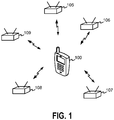
- FIG. 1 is a diagram of an exemplary operating environment for a mobile station (e.g., the mobile station 100).
- the mobile station may utilize the discovery techniques disclosed herein to determine the position of the mobile station and/or establish a data communication connection.
- the operating environment of the mobile station may include Wireless Access Points (e.g., WAPs 105-109).
- the WAPs may be used by the mobile station for wireless voice and/or data communication, as well a source of position data.
- the WAPs can be part of a Wireless Network (e.g., Wireless Local Area Network, Wide Area Network, etc.), which may operate in buildings and perform communications over a relatively small geographic region compared to a Cellular or Wide Area Network.
- Such WAPs may be part of, for example, WiFi networks (802.1 Ix).
- each WAP may be, for example, a WiFi wireless access point, which is not necessarily set in a fixed position and can change location.
- the position of the mobile station may be determined by having the mobile station receive signals from each WAP. Each signal may be associated with its originating WAP based upon some form of identifying information that may be included in the received signal (such as, for example, a MAC address). The mobile station may then derive the time delays associated with each of the received signals.
- FIG. 2 is a block diagram illustrating various components of the exemplary mobile station 100, in one embodiment.
- the various features and functions illustrated in the box diagram of FIG. 2 are connected together using a common bus meant to represent that these various features and functions are operatively coupled together.
- a common bus meant to represent that these various features and functions are operatively coupled together.
- Those skilled in the art will recognize that other connections, mechanisms, features, functions, or the like, may be provided and adapted as necessary to operatively couple and configure an actual portable wireless device. Further, it is also recognized that one or more of the features or functions illustrated may be further subdivided or combined.
- the mobile station may include one or more local area network transceivers 206 connected to one or more antennas 202.
- the local area network transceiver 206 comprises suitable devices, hardware, and/or software for communicating with and/or detecting signals to/from WAPs, and/or directly with other wireless devices within a network.
- the local area network transceiver 206 may comprise a WiFi (802.11x) communication system suitable for communicating with one or more wireless access points.
- the mobile station may also include one or more wide area network transceiver(s) 204 that may be connected to one or more antennas 202.
- the wide area network transceiver 204 comprises suitable devices, hardware, and/or software for communicating with and/or detecting signals to/from other wireless devices within a network.
- the wide area network transceiver 204 may comprise a CDMA communication system suitable for communicating with a CDMA network of wireless base stations; however in other aspects, the wireless communication system may comprise another type of cellular telephony network or femtocells, such as, for example, TDMA, LTE, WCDMA, UMTS, or GSM. Additionally, any other type of wireless networking technologies may be used, for example, WiMax (802.16), Ultra Wide Band, ZigBee, wireless USB, etc.
- a motion sensor 212 may be coupled to processor 210 to provide relative movement and/or orientation information which is independent of motion data derived from signals received by the local area network transceiver 206.
- motion sensor 212 may utilize an accelerometer (e.g., a MEMS device), a gyroscope, a geomagnetic sensor (e.g., a compass), an altimeter (e.g., a barometric pressure altimeter), and/or any other type of movement detection sensor.
- motion sensor 212 may include a plurality of different types of devices and combine their outputs in order to provide motion information.
- a processor 210 may be connected to the local area network transceiver 206, and the motion sensor 212.
- the processor may include one or more microprocessors, microcontrollers, and/or digital signal processors that provide processing functions, as well as other calculation and control functionality.
- the processor 210 may also include memory 214 for storing data and software instructions for executing programmed functionality within the mobile station.
- the memory 214 may be on-board the processor 210 (e.g., within the same IC package), and/or the memory may be external memory to the processor and functionally coupled over a data bus.
- a number of software modules or data tables may reside in memory 214 and be utilized by the processor 210 in order to manage both communications and positioning determination functionality.
- memory 214 may include and/or otherwise receive subset profiles 226, discovery profiles 224, and the ASM 216.
- FIG. 2 the organization of the memory contents as shown in FIG. 2 is merely exemplary, and as such the functionality of the modules and/or data structures may be combined, separated, and/or be structured in different ways depending upon the implementation of the mobile station.
- an Adaptive Scan Mechanism may be a process running on the processor 210 of the mobile station 100, which provides for enhanced WAP discovery scanning.
- the ASM may read or access Subset Profiles 226 and Discovery Profiles 224 as described in greater detail below.
- the ASM may be implemented in areas where precise indoor positioning is required, such as shopping malls, and offices. Shopping malls and offices may have well defined WiFi access configuration to provide a majority of access point communication over non-overlapping channels.
- the mobile device may optionally store auxiliary position/motion data in memory that may be derived from information received from other sources as described below.
- supplemental information may include, but not be limited to, information that can be derived or based upon Bluetooth signals, beacons, RFID tags, and/or information derived from a map (e.g., receiving coordinates from a digital representation of a geographical map by, for example, a user interacting with a digital map).
- modules or features shown in FIG. 2 are illustrated in the example as being contained in memory 214, it is recognized that in certain implementations such procedures may be provided for or otherwise operatively arranged using other or additional mechanisms.
- all or part of ASM, Subset Profiles and/or Discovery Profile may be provided in firmware.
- ASM, Subset Profiles, and/or Discovery Profile are illustrated as being separate features, it is recognized, for example, that such procedures may be combined together as one procedure or perhaps with other procedures, or otherwise further divided into a plurality of sub-procedures.
- the ASM, Subset Profiles, and Discovery Profiles may also be implemented as modules or engines in some embodiments.
- Processor 210 may include any form of logic suitable for performing at least the techniques provided herein.
- processor 210 may be operatively configurable based on instructions in memory 214 to selectively initiate one or more routines that exploit motion data for use in other portions of the mobile device.
- the mobile station may include a user interface 250 to provide any suitable interface systems, such as a microphone/speaker 252, keypad 254, and display 256 that allows user interaction with the mobile station.
- the microphone/speaker 252 provides for voice communication services using the wide area network transceiver 204 and/or the local area network transceiver 206.
- the keypad 254 comprises any suitable buttons for user input.
- the display 256 comprises any suitable display, such as, for example, a backlit LCD display, and may further include a touch screen display for additional user input modes.
- the mobile station may be any portable, mobile, or movable device or machine that is configurable to acquire wireless signals transmitted from, and transmit wireless signals to, one or more wireless communication devices or networks. As shown in FIG. 1 and FIG. 2 , the mobile station is representative of such a portable wireless device. Thus, by way of example but not limitation, the mobile station may include a radio device, a cellular telephone device, a computing device, a personal communication system (PCS) device, or other like movable wireless communication equipped device, appliance, or machine.
- PCS personal communication system
- mobile station is also intended to include devices which communicate with a personal navigation device (PND), such as by short-range wireless, infrared, wire line connection, or other connection - regardless of whether satellite signal reception, assistance data reception, and/or position-related processing occurs at the device or at the PND.
- PND personal navigation device
- mobile station is intended to include all devices, including wireless communication devices, computers, laptops, etc. which are capable of communication with a server, such as via the Internet, WiFi, or other network, and regardless of whether satellite signal reception, assistance data reception, and/or position-related processing occurs at the device, at a server, or at another device associated with the network. Any operable combination of the above are also considered a “mobile station.”
- the mobile station may communicate wirelessly with a plurality of WAPs using RF signals (e.g., 2.4 GHz, 3.6 GHz, and 4.9/5.0 GHz bands) and standardized protocols for the modulation of the RF signals and the exchanging of information packets (e.g., IEEE 802.11x).
- RF signals e.g., 2.4 GHz, 3.6 GHz, and 4.9/5.0 GHz bands
- standardized protocols for the modulation of the RF signals and the exchanging of information packets e.g., IEEE 802.11x.
- a device may poll nearby access points repeatedly as location determination is tracked and updated. Furthermore, devices may regularly poll nearby access points to establish a network connection.
- an ASM can reduce the scan time for AP discovery, reduce overall device power consumption, and be implemented wherever access point discovery is used (e.g., positioning determination and establishing data connections).
- the ASM can refer to one or more predetermined subset channels stored as Subset Profiles 226.
- the Subset Profiles specify non-overlapping channels for particular geographical locations. For example, in the United States 2.4Ghz band, the non-overlapping channels may be 1, 6, 11 and stored as a U.S. Subset Profile.
- the ASM can save the results of one or more initial discovery scans into a Discovery Profile.
- the Discovery Profile may contain a map, list, or other representation of currently discovered channels for comparison to the one or more predetermined non-overlapping channel maps (e.g., Subset Profiles).
- the non-overlapping subset of channels described by the matching Subset Profile can be used to determine which channels to scan in subsequent (e.g., occurring at a later point in time) discovery scans.
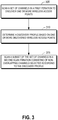
- FIG. 3 illustrates a flow diagram of the ASM, in one embodiment.
- the ASM can scan (e.g., a passive or active WAP channel scan) a set of channels in a first scan iteration to discover one or more wireless access points.
- the ASM may scan all possible channels (e.g., 1-14 for 2.4Ghz band) to discover WAPs.
- the ASM can determine a Discovery Profile based on the one or more discovered channels or wireless access points from block 305.
- the ASM stores results from the initial scan as a Discovery Profile.
- the Discovery Profile may contain a list or count of WAPs discovered as well as a detailed account of each discovered WAP broadcast channel.
- the Discovery Profile may also include information related to the WAP country of origin. In the United States 2.4Ghz band, channels 1, 6, and 11 are non-overlapping channels. Other countries, such as Japan where 14 channels may be available, can have non-overlapping channels on 1, 5, 9, and 13. Persons of skill in the art will recognize that non-overlapping channels as used herein may apply to any country or frequency band and the exemplary embodiments for the 2.4Ghz band are described merely for ease of discussion.
- the ASM can scan a subset of the channels in a second scan iteration, the subset of the set of channels consisting of non-overlapping channels selected according to the discovery profile. For example, instead of performing a scan on all available channels (e.g., channels 1-13/14 for the 2.4Ghz band), the ASM can determine that a subset of channels are more likely to be used and limit future scans to the subset of channels.
- the Discovery Profile is a grouping of current data associated with discovered WAPs.
- a Discovery Profile includes a "sign" or indication of whether the results from an initial scan or series of initial scans are deterministic.
- the Discovery Profile may be used to estimate whether the discovered channels can accurately predict/infer the types of nearby WAP channels.
- a Subset Profile is a predetermined subset (e.g., non-overlapping channels) of all possible discoverable WAP broadcast channels.
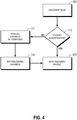
- FIG. 4 illustrates one embodiment of Discovery Profile generation.
- the ASM can perform an initial discovery scan.
- the initial scan may discover one or more WAPs and associated broadcast channels, as well as identify a beacon frame containing a country identifier or code.
- the ASM can attempt to determine a geographic location associated with the WAPs.
- ASM can extract the country identifier available from the standard frames received from WAPs (e.g., the country identifier present in a beacon frame). If the ASM can positively identify a country classification from one or more of the WAPs, a representation of the geographic location can be saved to the Discovery Profile at block 415.
- the ASM may not have been able to determine a geographic location based on country identifier or other affirmative data. Therefore, the ASM can scan all channels (e.g., channels 1-13/14 for the 2.4Ghz band) for "M" iterations at block 410. "M” may be any number of iterations determined to provide an adequate balance of performance and power efficiency.
- the ASM can use the discovered channels to create a channel map (e.g., for storage into the Discovery Profile) at block 425.
- the ASM can match discovered channels (e.g., in a channel map of the Discovery Profile) to one or more Subset Profiles (e.g., predetermined subsets of non-overlapping channels), each Subset Profile associated with a geographical location.
- a predetermined channel map e.g., a Subset Profile
- a country classification can be inferred. For example, if the channels discovered are 6, and 11, there may be a high likelihood that the WAPs are geographically located in the United States, where 1, 6, and 11 are non-overlapping channels used for many WAP installations.
- the Discovery Profile may be flagged or otherwise updated for later reference by the ASM.
- the ASM can read a flagged Discovery Profile and be alerted of the recommendation to continue scanning a superset of possible channels until a high confidence or deterministic Discovery Profile is created.
- a Discovery Profile with high confidence indicators infers the Discovery Profile is likely to accurately infer the correct broadcast channels for future discovery scans. For example, if initially WAP discovery results in a channel map of 1, 6, and 11, (i.e. United States non-overlapping channels on 2.4Ghz), the Discovery Profile, may be considered to have high confidence indicators. Alternatively, if the Discovery Profile contains overlapping channels and no country was determined, the Discovery Profile contains low confidence indicators.
- the Discovery Profile may contain geographic location information and/or channel mapping as described above.
- the ASM may use the location information and mapping information to determine whether future discovery scans can accurately be limited to a particular subset of non-overlapping channels. For example, a country identifier may be used to determine which subset of non-overlapping channels may be used based on the particular geographic location. For example, if the country identifier indicated by the Discovery Profile is associated with the United States, the subset of non-overlapping channels may be 1, 6, and 11. If the Discovery Profile indicates with a high likelihood that the mobile station is operating within the United States, subsequent discovery scans may be limited to channels 1-13 for full scans, and 1, 6, and 11 for non-overlapping (e.g., subset) scans.
- the subset of non-overlapping channels may be 1, 5, 9, and 13.
- a Discovery Profile that indicates a low country confidence or no high likelihood country classification may not limit subsequent scans to any subset of channels and perform discovery scans across all channels (e.g., channels 1 through 14 for 2.4Ghz).
- the Discovery Profile may contain a channel map of discovered channels.
- the ASM can attempt to match the channel map from the Discovery Profile to one of a number of predetermined non-overlapping channel subsets (e.g., the Subset Profiles). If a Subset Profile matches the discovered channel map of the Discovery Profile, there may be a high confidence that the matching subset will provide for accurate channel discovery for subsequent scans. Subsequent scans may be limited to the subset of channels in the matching Subset Profile.
- the Discovery Profile map may include discovered channels 6, and 11, which partially match with the non-overlapping U.S. subset of 1, 6, and 11 and provide a high confidence in the Discovery Profile.
- the likelihood of discovering WAPs in subsequent channel scans may be diminished. For example, if Discovery Profile map includes only channel 1, wherein channel 1 is part of the non-overlapping subsets of Europe, the United States, and Japan. In another example, if the Discovery Profile does not partially match any Subset Profile, there is a low confidence that the Discovery Profile can predict a subset of non-overlapping channels to use for subsequent discovery scans.
- the Discovery Profile may be flagged as currently non-deterministic. For example, if the Discovery Profile contains discovered channels 4, and 8, and channels 4 and 8 are overlapping channels in all profiled geographic locations, then the Discovery Profile may be considered non-deterministic or containing low confidence indicators.
- a Discovery Profile with a country identifier may provide the ASM with a higher confidence than a Discovery Profile without a country identifier. For example, receiving a positive confirmation of a specific geographic location may narrow the possible non-overlapping channels to one Subset Profile. Once the possible non-overlapping channels are known, the ASM can then determine whether nearby WAPs are broadcasting primarily on the non-overlapping channels.
- the ASM may shift to scanning a subset of non-overlapping channels for a specified duration and then switch back to scanning all channels. This is to recognize the case where a high confidence in a subset of channels may be temporary as the mobile station may be moving and changing location to a different WAP environment. If the new WAP environment happens to generate the same Discovery Profile, the ASM can continue with scanning just the non-overlapping subset of channels. Otherwise, if the Discovery Profile changed, the ASM may have to revisit the confidence calculations and revert to rescanning the complete set of channels for a number of scan iterations.
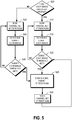
- FIG. 5 illustrates one embodiment of an ASM Weighted Scan.
- the ASM can check the Discovery Profile for deterministic or high confidence indicators. For example, the ASM can check the scan pattern recorded in the Discovery Profile to decide whether it is likely that a majority of nearby WAPs are broadcasting on non-overlapping channels. Also, a geographic location (e.g., country of origin for the WAPs) associated with the Discovery Profile may be deterministic in deciding whether to narrow the possible non-overlapping subset to the non-overlapping channels associated with the particular country.
- a geographic location e.g., country of origin for the WAPs
- the ASM determines the Discovery Profile contains one or more deterministic indicators or has a high confidence in a Subset Profile and scans all channels for "N" iterations. For example, the ASM may have determined with a high confidence that nearby WAPs are communicating predominantly over a defined subset of non-overlapping channels (e.g., U.S. non-overlapping channels 1, 6, and 11), and begins scanning all channels for "N” iterations.
- the ASM may have determined with a high confidence that nearby WAPs are communicating predominantly over a defined subset of non-overlapping channels (e.g., U.S. non-overlapping channels 1, 6, and 11), and begins scanning all channels for "N” iterations.
- the ASM can determine a subset confidence after the scanning "N” iterations.
- the subset confidence determines whether the ASM should rescan all channels again for "N” iterations, or whether the confidence is high enough to limit future scans to a subset of channels.
- the ASM determines subset confidence by determining if a test ratio of all scanned channels divided by the discovered non-overlapping channels is greater than or equal to a predetermined acceptable limit of non-overlapping discovered channels.
- the subset confidence may be a separate determination from Discovery Profile confidence determined at block 505. For example, a high Discovery Profile confidence is achieved if a country indicator is present in a frame, or if a scan pattern is deterministic.
- the ASM can determine if a subset confidence threshold is met.
- the confidence threshold is met if the test ratio (e.g., the test ratio disclosed above) is greater than or equal to the predetermined acceptable limit and the confidence threshold is not met if the ratio is less than the predetermined acceptable limit. If the threshold is not met, all channels are rescanned for "N" iterations at block 510. If the threshold is met, the ASM continues to block 525 to scan a subset of channels for "Z" iterations as disclosed in greater detail below.
- the ASM scans all channels "M” iterations.
- "M” is a greater number of scan iterations than "N.”
- the ASM may have a low confidence that nearby WAPs broadcast on a limited subset of non-overlapping channels (e.g., channels other than 1, 6, and 11 in the United States).
- the ASM can determine a subset confidence upon scanning the "M" iterations. In one embodiment, the ASM determines subset confidence by the test ratio disclosed above in relation to block 520. The ASM can determine if a subset confidence threshold is met at block 545. If the ratio is less than the predetermined acceptable limit, the confidence threshold may not be met, and all channels are rescanned for "M" iterations at block 535.
- the confidence threshold is met and the ASM continues to block 525 to scan a subset of channels for "Z" iterations.
- the subset of channels are determined by the Subset Profile, and the particular Subset Profile is chosen based on an initial match to the Discovery Profile as disclosed above.
- the number of "Z" iterations may depend on the movement of the mobile station. For example, when the mobile station moves out of range of known/discovered WAPs into an unknown/undiscovered set of WAPs, the previously scanned channels may no longer be relevant to the environment of the mobile station and the Discovery Profile may be updated. In one embodiment, the mobile station can set or adjust "Z" based on passage of time, number of new discovered WAPs, or actual distance traveled by the mobile station.
- the ASM upon determining that the scanning of the subset for "Z” iterations (i.e., subset scan iterations) is complete, can scan all channels (e.g., the superset of channels) for "O" iterations.
- "O" is a numerical value less than complete channel set scan iteration values "M" and "N” described above.
- the ASM can determine a confidence in the subset of channels based on channels discovered in the "O” iterations. In one embodiment, if the confidence is high (e.g., only or mostly non-overlapping channels were discovered or the test ratio greater than equal to the limit), the ASM can return to scanning a subset of channels (e.g., indicated by the Subset Profile).
- the ASM can rescan all channels for "N" iterations and assess the confidence again before limiting rescanning to the subset of channels.
- the scan iteration variables described above can be predetermined values to provide the best performance of the mobile station.
- the scan iterations of the complete scan of all channels can be adjusted down (e.g., less scan iterations) for greater power savings, or adjusted up (e.g., more scan iterations) when discovering every channel is important.
- the "O" scan iterations of the subset scan can be adjusted up (e.g., more scan iterations) for greater power savings, or adjusted down (e.g., less scan iterations) when discovering every channel is important.
- the ASM can continue to iterate through scanning all channels and scanning a subset of non-overlapping channels until receiving an exit trigger or command.
- ASM can be used in mobile station positioning as well as for WAP data or establishing network connections, although persons skilled in the art will recognize the embodiments described herein are not limited to these embodiments.
- the methodologies described herein may be implemented by various means depending upon the application. For example, these methodologies may be implemented in hardware, firmware, software, or any combination thereof.
- the processing units may be implemented within one or more application specific integrated circuits (ASICs), digital signal processors (DSPs), digital signal processing devices (DSPDs), programmable logic devices (PLDs), field programmable gate arrays (FPGAs), processors, controllers, micro-controllers, microprocessors, electronic devices, other electronic units designed to perform the functions described herein, or a combination thereof.
- ASICs application specific integrated circuits
- DSPs digital signal processors
- DSPDs digital signal processing devices
- PLDs programmable logic devices
- FPGAs field programmable gate arrays
- processors controllers, micro-controllers, microprocessors, electronic devices, other electronic units designed to perform the functions described herein, or a combination thereof.
- the methodologies may be implemented with modules (e.g., procedures, functions, and so on) that perform the functions described herein.
- Any machine-readable medium tangibly embodying instructions may be used in implementing the methodologies described herein.
- software codes may be stored in a memory and executed by a processor unit.
- Memory may be implemented within the processor unit or external to the processor unit.
- memory refers to any type of long term, short term, volatile, nonvolatile, or other memory and is not to be limited to any particular type of memory or number of memories, or type of media upon which memory is stored.
- the functions may be stored as one or more instructions or code on a computer-readable medium. Examples include computer-readable media encoded with a data structure and computer-readable media encoded with a computer program. Computer-readable media includes physical computer storage media. A storage medium may be any available medium that can be accessed by a computer.
- such computer-readable media can comprise RAM, ROM, EEPROM, CD-ROM or other optical disk storage, magnetic disk storage or other magnetic storage devices, or any other medium that can be used to store desired program code in the form of instructions or data structures and that can be accessed by a computer; disk and disc, as used herein, includes compact disc (CD), laser disc, optical disc, digital versatile disc (DVD), floppy disk and blu-ray disc where disks usually reproduce data magnetically, while discs reproduce data optically with lasers. Combinations of the above should also be included within the scope of computer-readable media.
- a communication apparatus may include a transceiver having signals indicative of instructions and data.
- the instructions and data are configured to cause one or more processors to implement the functions outlined in the claims. That is, the communication apparatus includes transmission media with signals indicative of information to perform disclosed functions. At a first time, the transmission media included in the communication apparatus may include a first portion of the information to perform the disclosed functions, while at a second time the transmission media included in the communication apparatus may include a second portion of the information to perform the disclosed functions.
Landscapes
- Engineering & Computer Science (AREA)
- Computer Networks & Wireless Communication (AREA)
- Signal Processing (AREA)
- Computer Security & Cryptography (AREA)
- Mobile Radio Communication Systems (AREA)
Applications Claiming Priority (2)
| Application Number | Priority Date | Filing Date | Title |
|---|---|---|---|
| US13/797,168 US9357473B2 (en) | 2013-03-12 | 2013-03-12 | Adaptive wireless access point discovery |
| PCT/US2014/021379 WO2014182366A1 (en) | 2013-03-12 | 2014-03-06 | Adaptive wireless access point discovery |
Publications (2)
| Publication Number | Publication Date |
|---|---|
| EP2974459A1 EP2974459A1 (en) | 2016-01-20 |
| EP2974459B1 true EP2974459B1 (en) | 2016-12-28 |
Family
ID=50391447
Family Applications (1)
| Application Number | Title | Priority Date | Filing Date |
|---|---|---|---|
| EP14714038.8A Not-in-force EP2974459B1 (en) | 2013-03-12 | 2014-03-06 | Adaptive wireless access point discovery |
Country Status (6)
| Country | Link |
|---|---|
| US (1) | US9357473B2 (enExample) |
| EP (1) | EP2974459B1 (enExample) |
| JP (1) | JP6430477B2 (enExample) |
| KR (1) | KR20150132277A (enExample) |
| CN (1) | CN105027632B (enExample) |
| WO (1) | WO2014182366A1 (enExample) |
Families Citing this family (14)
| Publication number | Priority date | Publication date | Assignee | Title |
|---|---|---|---|---|
| JPWO2014061663A1 (ja) * | 2012-10-16 | 2016-09-05 | 京セラ株式会社 | 通信機器、制御方法、プロセッサ及びプログラム |
| US9591557B2 (en) * | 2013-06-09 | 2017-03-07 | Apple Inc. | Reducing network service scan time by a wireless communication device |
| KR101508843B1 (ko) * | 2013-09-10 | 2015-04-07 | 삼성에스디에스 주식회사 | 무선 랜에서 지역에 따라 상이한 사용 주파수 대역을 검색하기 위한 기법 |
| US9655119B2 (en) * | 2013-11-07 | 2017-05-16 | Qualcomm Incorporated | Primary channel determination in wireless networks |
| JP6118457B2 (ja) * | 2014-05-05 | 2017-04-19 | ▲華▼▲為▼終端有限公司Huawei Device Co., Ltd. | Wi−Fiネットワーク接続方法、Wi−Fiコントローラ及びWi−Fi装置 |
| US20160088441A1 (en) * | 2014-09-23 | 2016-03-24 | Qualcomm Incorporated | Wireless local area network channel scanning |
| US20160183113A1 (en) * | 2014-12-23 | 2016-06-23 | Qualcomm Incorporated | Efficient pairwise ranging to nodes in a large cluster |
| KR20160077992A (ko) * | 2014-12-24 | 2016-07-04 | 삼성전자주식회사 | 통신 채널 제어 방법 및 이를 지원하는 전자 장치 |
| CN105246131A (zh) * | 2015-09-29 | 2016-01-13 | 东软集团股份有限公司 | 用于终端连接ap的方法及装置 |
| CN106851777A (zh) * | 2015-12-07 | 2017-06-13 | 南京物联传感技术有限公司 | WiFi与Zigbee信号相互共存的方法 |
| CN105516904B (zh) * | 2015-12-24 | 2019-04-12 | 三维通信股份有限公司 | 一种基于小基站和蓝牙的室内融合定位方法及系统 |
| KR102112261B1 (ko) | 2017-06-21 | 2020-05-18 | 구글 엘엘씨 | 클러스터링 기술을 사용하여 무선 네트워크 액세스 포인트 모델 생성 |
| CN109195204B (zh) * | 2018-11-12 | 2021-02-12 | Oppo广东移动通信有限公司 | 无线网络接入方法及装置、计算机可读介质、通信终端 |
| CN110225573A (zh) * | 2019-06-03 | 2019-09-10 | Oppo广东移动通信有限公司 | WiFi信道扫描方法和装置、电子设备、计算机可读存储介质 |
Family Cites Families (19)
| Publication number | Priority date | Publication date | Assignee | Title |
|---|---|---|---|---|
| US6484029B2 (en) | 1998-10-13 | 2002-11-19 | Symbol Technologies, Inc. | Apparatus and methods for adapting mobile unit to wireless LAN |
| US20040214539A1 (en) | 2003-04-24 | 2004-10-28 | Krishnan Rajamani | Wireless communication device supporting multiple regulatory domains |
| JP2005151435A (ja) * | 2003-11-19 | 2005-06-09 | Alps Electric Co Ltd | 無線lanのアクセスポイントへのアクセス方法及びステーション |
| US7466678B2 (en) | 2003-12-29 | 2008-12-16 | Lenovo (Singapore) Pte. Ltd. | System and method for passive scanning of authorized wireless channels |
| CN101208974B (zh) * | 2005-05-04 | 2012-09-12 | 意大利电信股份公司 | 在用于移动终端的电信网络中优化信道扫描功能的方法 |
| US8185129B2 (en) * | 2006-07-07 | 2012-05-22 | Skyhook Wireless, Inc. | System and method of passive and active scanning of WLAN-enabled access points to estimate position of a WLAN positioning device |
| US8467784B2 (en) * | 2006-07-14 | 2013-06-18 | Qualcomm Incorporated | WLAN system scanning and selection |
| US8467785B2 (en) | 2006-10-24 | 2013-06-18 | Research In Motion Limited | WLAN scanning by prevalence of access point deployment on certain channels |
| CN104955131A (zh) * | 2006-10-24 | 2015-09-30 | 捷讯研究有限公司 | 利用接入点部署在特定信道上的流行度来扫描无线局域网 |
| EP1950987A1 (en) | 2007-01-23 | 2008-07-30 | Research In Motion Limited | Passively scanning according to WLAN regulatory domain |
| US8811349B2 (en) * | 2007-02-21 | 2014-08-19 | Qualcomm Incorporated | Wireless node search procedure |
| WO2009016800A1 (ja) * | 2007-07-31 | 2009-02-05 | Nec Corporation | 無線lan端末およびアクセスポイント探索方法 |
| US8121091B2 (en) * | 2008-09-09 | 2012-02-21 | Symbol Technologies, Inc. | Method and system for the reduction of scanning time while roaming |
| US8363630B2 (en) | 2009-08-11 | 2013-01-29 | Intel Corporation | Device, system and method of scanning a wireless communication frequency band |
| US20120127955A1 (en) | 2010-02-10 | 2012-05-24 | Gandham Shashidhar R | Method for energy-efficient scanning to enable seamless layer-2 vertical handofffs between wireless broadband networks |
| US8924155B2 (en) | 2010-09-13 | 2014-12-30 | Texas Instruments Incorporated | System and method for access point based positioning |
| US8451733B2 (en) | 2011-08-08 | 2013-05-28 | Amtran Technology Co., Ltd | Methods of optimizing scanning parameters for a plurality of channels in a wireless band |
| US9204378B2 (en) * | 2012-02-17 | 2015-12-01 | Intel Corporation | Wireless network connectivity enhancements |
| CA2864775A1 (en) * | 2012-02-17 | 2013-08-22 | Nokia Technologies Oy | Scanning in wireless networks |
-
2013
- 2013-03-12 US US13/797,168 patent/US9357473B2/en not_active Expired - Fee Related
-
2014
- 2014-03-06 KR KR1020157028299A patent/KR20150132277A/ko not_active Ceased
- 2014-03-06 EP EP14714038.8A patent/EP2974459B1/en not_active Not-in-force
- 2014-03-06 WO PCT/US2014/021379 patent/WO2014182366A1/en not_active Ceased
- 2014-03-06 JP JP2016500756A patent/JP6430477B2/ja not_active Expired - Fee Related
- 2014-03-06 CN CN201480010829.8A patent/CN105027632B/zh not_active Expired - Fee Related
Also Published As
| Publication number | Publication date |
|---|---|
| CN105027632B (zh) | 2019-03-01 |
| JP2016514437A (ja) | 2016-05-19 |
| WO2014182366A8 (en) | 2015-04-02 |
| WO2014182366A1 (en) | 2014-11-13 |
| EP2974459A1 (en) | 2016-01-20 |
| JP6430477B2 (ja) | 2018-11-28 |
| US9357473B2 (en) | 2016-05-31 |
| US20140274039A1 (en) | 2014-09-18 |
| CN105027632A (zh) | 2015-11-04 |
| KR20150132277A (ko) | 2015-11-25 |
Similar Documents
| Publication | Publication Date | Title |
|---|---|---|
| EP2974459B1 (en) | Adaptive wireless access point discovery | |
| CN102714889B (zh) | 移动计算设备和根据网络密度管理移动计算设备的方法 | |
| Wang et al. | RSSI-based bluetooth indoor localization | |
| US10299078B2 (en) | BLE-based positioning method and apparatus | |
| EP3030004B1 (en) | Storing wi-fi and cellular tower location database to optimize cellular network selection | |
| EP2406973B1 (en) | Wireless access point beacon messaging | |
| US8233910B2 (en) | Wireless communication device, wireless communication method and program | |
| CN102844672B (zh) | 定位装置以及定位方法 | |
| EP2506642B1 (en) | Position information processing device, position information processing method, program, and position information processing system | |
| US20220279315A1 (en) | Movement track recording method and apparatus | |
| Pei et al. | The evaluation of WiFi positioning in a Bluetooth and WiFi coexistence environment | |
| WO2014025465A1 (en) | Systems and methods for service set identifier-based location detection | |
| US9265024B2 (en) | Determining location of mobile device | |
| WO2012137908A1 (ja) | 無線通信装置、通信方法およびプログラム | |
| US20220060987A1 (en) | Information processing device, information processing method, and program | |
| CN104144492A (zh) | 终端位置获取方法、系统和移动终端 | |
| KR20150041113A (ko) | Bssid 및 mcc의 조합에 의해 고유하게 식별되는 액세스 포인트를 갖는 wlan 무선맵 | |
| EP3557890A1 (en) | Establishing a wireless connection to a cellular network | |
| JP2016092450A (ja) | プログラム、無線端末、情報収集装置及び情報収集システム | |
| CN103415070A (zh) | 基于可移动路径的定位方法及装置 | |
| KR20140097789A (ko) | 와이파이 장치의 위치 추적을 위한 효과적인 채널 검색 장치 및 방법 | |
| US20180332526A1 (en) | Optimizing MuLTEfire Network Discovery | |
| JP6251337B1 (ja) | 携帯端末、制御方法及び制御プログラム | |
| JP2012191548A (ja) | 移動端末、制御方法、及びプログラム | |
| US10432267B1 (en) | Scanning performance |
Legal Events
| Date | Code | Title | Description |
|---|---|---|---|
| PUAI | Public reference made under article 153(3) epc to a published international application that has entered the european phase |
Free format text: ORIGINAL CODE: 0009012 |
|
| 17P | Request for examination filed |
Effective date: 20150818 |
|
| AK | Designated contracting states |
Kind code of ref document: A1 Designated state(s): AL AT BE BG CH CY CZ DE DK EE ES FI FR GB GR HR HU IE IS IT LI LT LU LV MC MK MT NL NO PL PT RO RS SE SI SK SM TR |
|
| AX | Request for extension of the european patent |
Extension state: BA ME |
|
| DAX | Request for extension of the european patent (deleted) | ||
| GRAP | Despatch of communication of intention to grant a patent |
Free format text: ORIGINAL CODE: EPIDOSNIGR1 |
|
| INTG | Intention to grant announced |
Effective date: 20160718 |
|
| GRAS | Grant fee paid |
Free format text: ORIGINAL CODE: EPIDOSNIGR3 |
|
| GRAA | (expected) grant |
Free format text: ORIGINAL CODE: 0009210 |
|
| AK | Designated contracting states |
Kind code of ref document: B1 Designated state(s): AL AT BE BG CH CY CZ DE DK EE ES FI FR GB GR HR HU IE IS IT LI LT LU LV MC MK MT NL NO PL PT RO RS SE SI SK SM TR |
|
| REG | Reference to a national code |
Ref country code: GB Ref legal event code: FG4D |
|
| REG | Reference to a national code |
Ref country code: CH Ref legal event code: EP Ref country code: FR Ref legal event code: PLFP Year of fee payment: 4 |
|
| REG | Reference to a national code |
Ref country code: AT Ref legal event code: REF Ref document number: 858234 Country of ref document: AT Kind code of ref document: T Effective date: 20170115 |
|
| REG | Reference to a national code |
Ref country code: IE Ref legal event code: FG4D |
|
| REG | Reference to a national code |
Ref country code: DE Ref legal event code: R096 Ref document number: 602014005864 Country of ref document: DE |
|
| PG25 | Lapsed in a contracting state [announced via postgrant information from national office to epo] |
Ref country code: LV Free format text: LAPSE BECAUSE OF FAILURE TO SUBMIT A TRANSLATION OF THE DESCRIPTION OR TO PAY THE FEE WITHIN THE PRESCRIBED TIME-LIMIT Effective date: 20161228 |
|
| REG | Reference to a national code |
Ref country code: LT Ref legal event code: MG4D |
|
| PG25 | Lapsed in a contracting state [announced via postgrant information from national office to epo] |
Ref country code: LT Free format text: LAPSE BECAUSE OF FAILURE TO SUBMIT A TRANSLATION OF THE DESCRIPTION OR TO PAY THE FEE WITHIN THE PRESCRIBED TIME-LIMIT Effective date: 20161228 Ref country code: NO Free format text: LAPSE BECAUSE OF FAILURE TO SUBMIT A TRANSLATION OF THE DESCRIPTION OR TO PAY THE FEE WITHIN THE PRESCRIBED TIME-LIMIT Effective date: 20170328 Ref country code: SE Free format text: LAPSE BECAUSE OF FAILURE TO SUBMIT A TRANSLATION OF THE DESCRIPTION OR TO PAY THE FEE WITHIN THE PRESCRIBED TIME-LIMIT Effective date: 20161228 Ref country code: GR Free format text: LAPSE BECAUSE OF FAILURE TO SUBMIT A TRANSLATION OF THE DESCRIPTION OR TO PAY THE FEE WITHIN THE PRESCRIBED TIME-LIMIT Effective date: 20170329 |
|
| REG | Reference to a national code |
Ref country code: NL Ref legal event code: MP Effective date: 20161228 |
|
| REG | Reference to a national code |
Ref country code: AT Ref legal event code: MK05 Ref document number: 858234 Country of ref document: AT Kind code of ref document: T Effective date: 20161228 |
|
| PG25 | Lapsed in a contracting state [announced via postgrant information from national office to epo] |
Ref country code: RS Free format text: LAPSE BECAUSE OF FAILURE TO SUBMIT A TRANSLATION OF THE DESCRIPTION OR TO PAY THE FEE WITHIN THE PRESCRIBED TIME-LIMIT Effective date: 20161228 Ref country code: HR Free format text: LAPSE BECAUSE OF FAILURE TO SUBMIT A TRANSLATION OF THE DESCRIPTION OR TO PAY THE FEE WITHIN THE PRESCRIBED TIME-LIMIT Effective date: 20161228 Ref country code: FI Free format text: LAPSE BECAUSE OF FAILURE TO SUBMIT A TRANSLATION OF THE DESCRIPTION OR TO PAY THE FEE WITHIN THE PRESCRIBED TIME-LIMIT Effective date: 20161228 |
|
| PG25 | Lapsed in a contracting state [announced via postgrant information from national office to epo] |
Ref country code: NL Free format text: LAPSE BECAUSE OF FAILURE TO SUBMIT A TRANSLATION OF THE DESCRIPTION OR TO PAY THE FEE WITHIN THE PRESCRIBED TIME-LIMIT Effective date: 20161228 |
|
| PG25 | Lapsed in a contracting state [announced via postgrant information from national office to epo] |
Ref country code: SK Free format text: LAPSE BECAUSE OF FAILURE TO SUBMIT A TRANSLATION OF THE DESCRIPTION OR TO PAY THE FEE WITHIN THE PRESCRIBED TIME-LIMIT Effective date: 20161228 Ref country code: IS Free format text: LAPSE BECAUSE OF FAILURE TO SUBMIT A TRANSLATION OF THE DESCRIPTION OR TO PAY THE FEE WITHIN THE PRESCRIBED TIME-LIMIT Effective date: 20170428 Ref country code: RO Free format text: LAPSE BECAUSE OF FAILURE TO SUBMIT A TRANSLATION OF THE DESCRIPTION OR TO PAY THE FEE WITHIN THE PRESCRIBED TIME-LIMIT Effective date: 20161228 Ref country code: CZ Free format text: LAPSE BECAUSE OF FAILURE TO SUBMIT A TRANSLATION OF THE DESCRIPTION OR TO PAY THE FEE WITHIN THE PRESCRIBED TIME-LIMIT Effective date: 20161228 Ref country code: EE Free format text: LAPSE BECAUSE OF FAILURE TO SUBMIT A TRANSLATION OF THE DESCRIPTION OR TO PAY THE FEE WITHIN THE PRESCRIBED TIME-LIMIT Effective date: 20161228 |
|
| PG25 | Lapsed in a contracting state [announced via postgrant information from national office to epo] |
Ref country code: BE Free format text: LAPSE BECAUSE OF FAILURE TO SUBMIT A TRANSLATION OF THE DESCRIPTION OR TO PAY THE FEE WITHIN THE PRESCRIBED TIME-LIMIT Effective date: 20161228 Ref country code: SM Free format text: LAPSE BECAUSE OF FAILURE TO SUBMIT A TRANSLATION OF THE DESCRIPTION OR TO PAY THE FEE WITHIN THE PRESCRIBED TIME-LIMIT Effective date: 20161228 Ref country code: ES Free format text: LAPSE BECAUSE OF FAILURE TO SUBMIT A TRANSLATION OF THE DESCRIPTION OR TO PAY THE FEE WITHIN THE PRESCRIBED TIME-LIMIT Effective date: 20161228 Ref country code: AT Free format text: LAPSE BECAUSE OF FAILURE TO SUBMIT A TRANSLATION OF THE DESCRIPTION OR TO PAY THE FEE WITHIN THE PRESCRIBED TIME-LIMIT Effective date: 20161228 Ref country code: PT Free format text: LAPSE BECAUSE OF FAILURE TO SUBMIT A TRANSLATION OF THE DESCRIPTION OR TO PAY THE FEE WITHIN THE PRESCRIBED TIME-LIMIT Effective date: 20170428 Ref country code: IT Free format text: LAPSE BECAUSE OF FAILURE TO SUBMIT A TRANSLATION OF THE DESCRIPTION OR TO PAY THE FEE WITHIN THE PRESCRIBED TIME-LIMIT Effective date: 20161228 Ref country code: PL Free format text: LAPSE BECAUSE OF FAILURE TO SUBMIT A TRANSLATION OF THE DESCRIPTION OR TO PAY THE FEE WITHIN THE PRESCRIBED TIME-LIMIT Effective date: 20161228 Ref country code: BG Free format text: LAPSE BECAUSE OF FAILURE TO SUBMIT A TRANSLATION OF THE DESCRIPTION OR TO PAY THE FEE WITHIN THE PRESCRIBED TIME-LIMIT Effective date: 20170328 |
|
| REG | Reference to a national code |
Ref country code: DE Ref legal event code: R097 Ref document number: 602014005864 Country of ref document: DE |
|
| REG | Reference to a national code |
Ref country code: CH Ref legal event code: PL |
|
| PLBE | No opposition filed within time limit |
Free format text: ORIGINAL CODE: 0009261 |
|
| STAA | Information on the status of an ep patent application or granted ep patent |
Free format text: STATUS: NO OPPOSITION FILED WITHIN TIME LIMIT |
|
| PG25 | Lapsed in a contracting state [announced via postgrant information from national office to epo] |
Ref country code: DK Free format text: LAPSE BECAUSE OF FAILURE TO SUBMIT A TRANSLATION OF THE DESCRIPTION OR TO PAY THE FEE WITHIN THE PRESCRIBED TIME-LIMIT Effective date: 20161228 Ref country code: MC Free format text: LAPSE BECAUSE OF FAILURE TO SUBMIT A TRANSLATION OF THE DESCRIPTION OR TO PAY THE FEE WITHIN THE PRESCRIBED TIME-LIMIT Effective date: 20161228 |
|
| 26N | No opposition filed |
Effective date: 20170929 |
|
| REG | Reference to a national code |
Ref country code: IE Ref legal event code: MM4A |
|
| PG25 | Lapsed in a contracting state [announced via postgrant information from national office to epo] |
Ref country code: LU Free format text: LAPSE BECAUSE OF NON-PAYMENT OF DUE FEES Effective date: 20170306 |
|
| REG | Reference to a national code |
Ref country code: FR Ref legal event code: PLFP Year of fee payment: 5 |
|
| PG25 | Lapsed in a contracting state [announced via postgrant information from national office to epo] |
Ref country code: IE Free format text: LAPSE BECAUSE OF NON-PAYMENT OF DUE FEES Effective date: 20170306 Ref country code: CH Free format text: LAPSE BECAUSE OF NON-PAYMENT OF DUE FEES Effective date: 20170331 Ref country code: SI Free format text: LAPSE BECAUSE OF FAILURE TO SUBMIT A TRANSLATION OF THE DESCRIPTION OR TO PAY THE FEE WITHIN THE PRESCRIBED TIME-LIMIT Effective date: 20161228 Ref country code: LI Free format text: LAPSE BECAUSE OF NON-PAYMENT OF DUE FEES Effective date: 20170331 |
|
| PG25 | Lapsed in a contracting state [announced via postgrant information from national office to epo] |
Ref country code: MT Free format text: LAPSE BECAUSE OF NON-PAYMENT OF DUE FEES Effective date: 20170306 |
|
| PGFP | Annual fee paid to national office [announced via postgrant information from national office to epo] |
Ref country code: DE Payment date: 20190215 Year of fee payment: 6 Ref country code: GB Payment date: 20190227 Year of fee payment: 6 |
|
| PGFP | Annual fee paid to national office [announced via postgrant information from national office to epo] |
Ref country code: FR Payment date: 20190220 Year of fee payment: 6 |
|
| PG25 | Lapsed in a contracting state [announced via postgrant information from national office to epo] |
Ref country code: HU Free format text: LAPSE BECAUSE OF FAILURE TO SUBMIT A TRANSLATION OF THE DESCRIPTION OR TO PAY THE FEE WITHIN THE PRESCRIBED TIME-LIMIT; INVALID AB INITIO Effective date: 20140306 |
|
| PG25 | Lapsed in a contracting state [announced via postgrant information from national office to epo] |
Ref country code: CY Free format text: LAPSE BECAUSE OF FAILURE TO SUBMIT A TRANSLATION OF THE DESCRIPTION OR TO PAY THE FEE WITHIN THE PRESCRIBED TIME-LIMIT Effective date: 20161228 |
|
| PG25 | Lapsed in a contracting state [announced via postgrant information from national office to epo] |
Ref country code: MK Free format text: LAPSE BECAUSE OF FAILURE TO SUBMIT A TRANSLATION OF THE DESCRIPTION OR TO PAY THE FEE WITHIN THE PRESCRIBED TIME-LIMIT Effective date: 20161228 |
|
| PG25 | Lapsed in a contracting state [announced via postgrant information from national office to epo] |
Ref country code: TR Free format text: LAPSE BECAUSE OF FAILURE TO SUBMIT A TRANSLATION OF THE DESCRIPTION OR TO PAY THE FEE WITHIN THE PRESCRIBED TIME-LIMIT Effective date: 20161228 |
|
| PG25 | Lapsed in a contracting state [announced via postgrant information from national office to epo] |
Ref country code: AL Free format text: LAPSE BECAUSE OF FAILURE TO SUBMIT A TRANSLATION OF THE DESCRIPTION OR TO PAY THE FEE WITHIN THE PRESCRIBED TIME-LIMIT Effective date: 20161228 |
|
| REG | Reference to a national code |
Ref country code: DE Ref legal event code: R119 Ref document number: 602014005864 Country of ref document: DE |
|
| PG25 | Lapsed in a contracting state [announced via postgrant information from national office to epo] |
Ref country code: DE Free format text: LAPSE BECAUSE OF NON-PAYMENT OF DUE FEES Effective date: 20201001 Ref country code: FR Free format text: LAPSE BECAUSE OF NON-PAYMENT OF DUE FEES Effective date: 20200331 |
|
| GBPC | Gb: european patent ceased through non-payment of renewal fee |
Effective date: 20200306 |
|
| PG25 | Lapsed in a contracting state [announced via postgrant information from national office to epo] |
Ref country code: GB Free format text: LAPSE BECAUSE OF NON-PAYMENT OF DUE FEES Effective date: 20200306 |