EP2970651B1 - Multi-function epoxy casting resin system - Google Patents
Multi-function epoxy casting resin system Download PDFInfo
- Publication number
- EP2970651B1 EP2970651B1 EP14767704.1A EP14767704A EP2970651B1 EP 2970651 B1 EP2970651 B1 EP 2970651B1 EP 14767704 A EP14767704 A EP 14767704A EP 2970651 B1 EP2970651 B1 EP 2970651B1
- Authority
- EP
- European Patent Office
- Prior art keywords
- epoxy resin
- resin
- uncured
- epoxy
- cured
- Prior art date
- Legal status (The legal status is an assumption and is not a legal conclusion. Google has not performed a legal analysis and makes no representation as to the accuracy of the status listed.)
- Active
Links
Images

Classifications
-
- H—ELECTRICITY
- H05—ELECTRIC TECHNIQUES NOT OTHERWISE PROVIDED FOR
- H05K—PRINTED CIRCUITS; CASINGS OR CONSTRUCTIONAL DETAILS OF ELECTRIC APPARATUS; MANUFACTURE OF ASSEMBLAGES OF ELECTRICAL COMPONENTS
- H05K3/00—Apparatus or processes for manufacturing printed circuits
- H05K3/22—Secondary treatment of printed circuits
- H05K3/28—Applying non-metallic protective coatings
- H05K3/285—Permanent coating compositions
-
- C—CHEMISTRY; METALLURGY
- C08—ORGANIC MACROMOLECULAR COMPOUNDS; THEIR PREPARATION OR CHEMICAL WORKING-UP; COMPOSITIONS BASED THEREON
- C08G—MACROMOLECULAR COMPOUNDS OBTAINED OTHERWISE THAN BY REACTIONS ONLY INVOLVING UNSATURATED CARBON-TO-CARBON BONDS
- C08G59/00—Polycondensates containing more than one epoxy group per molecule; Macromolecules obtained by polymerising compounds containing more than one epoxy group per molecule using curing agents or catalysts which react with the epoxy groups
- C08G59/18—Macromolecules obtained by polymerising compounds containing more than one epoxy group per molecule using curing agents or catalysts which react with the epoxy groups ; e.g. general methods of curing
- C08G59/68—Macromolecules obtained by polymerising compounds containing more than one epoxy group per molecule using curing agents or catalysts which react with the epoxy groups ; e.g. general methods of curing characterised by the catalysts used
- C08G59/686—Macromolecules obtained by polymerising compounds containing more than one epoxy group per molecule using curing agents or catalysts which react with the epoxy groups ; e.g. general methods of curing characterised by the catalysts used containing nitrogen
-
- H—ELECTRICITY
- H05—ELECTRIC TECHNIQUES NOT OTHERWISE PROVIDED FOR
- H05K—PRINTED CIRCUITS; CASINGS OR CONSTRUCTIONAL DETAILS OF ELECTRIC APPARATUS; MANUFACTURE OF ASSEMBLAGES OF ELECTRICAL COMPONENTS
- H05K1/00—Printed circuits
- H05K1/02—Details
- H05K1/03—Use of materials for the substrate
- H05K1/0313—Organic insulating material
- H05K1/032—Organic insulating material consisting of one material
- H05K1/0326—Organic insulating material consisting of one material containing O
-
- H—ELECTRICITY
- H05—ELECTRIC TECHNIQUES NOT OTHERWISE PROVIDED FOR
- H05K—PRINTED CIRCUITS; CASINGS OR CONSTRUCTIONAL DETAILS OF ELECTRIC APPARATUS; MANUFACTURE OF ASSEMBLAGES OF ELECTRICAL COMPONENTS
- H05K2201/00—Indexing scheme relating to printed circuits covered by H05K1/00
- H05K2201/01—Dielectrics
- H05K2201/0104—Properties and characteristics in general
- H05K2201/012—Flame-retardant; Preventing of inflammation
-
- H—ELECTRICITY
- H05—ELECTRIC TECHNIQUES NOT OTHERWISE PROVIDED FOR
- H05K—PRINTED CIRCUITS; CASINGS OR CONSTRUCTIONAL DETAILS OF ELECTRIC APPARATUS; MANUFACTURE OF ASSEMBLAGES OF ELECTRICAL COMPONENTS
- H05K2201/00—Indexing scheme relating to printed circuits covered by H05K1/00
- H05K2201/02—Fillers; Particles; Fibers; Reinforcement materials
- H05K2201/0203—Fillers and particles
- H05K2201/0206—Materials
- H05K2201/0209—Inorganic, non-metallic particles
-
- Y—GENERAL TAGGING OF NEW TECHNOLOGICAL DEVELOPMENTS; GENERAL TAGGING OF CROSS-SECTIONAL TECHNOLOGIES SPANNING OVER SEVERAL SECTIONS OF THE IPC; TECHNICAL SUBJECTS COVERED BY FORMER USPC CROSS-REFERENCE ART COLLECTIONS [XRACs] AND DIGESTS
- Y10—TECHNICAL SUBJECTS COVERED BY FORMER USPC
- Y10T—TECHNICAL SUBJECTS COVERED BY FORMER US CLASSIFICATION
- Y10T428/00—Stock material or miscellaneous articles
- Y10T428/24—Structurally defined web or sheet [e.g., overall dimension, etc.]
- Y10T428/24802—Discontinuous or differential coating, impregnation or bond [e.g., artwork, printing, retouched photograph, etc.]
Definitions
- the present disclosure generally relates to materials for potting and encapsulating electronic components, and more particularly, relates to a multi-function and highly adaptable epoxy casting resin system designed for various applications in both indoor and outdoor environments.
- US 2012/010329A1 discloses curable epoxy resin compositions, cured epoxy resin compositions, and processes of forming the same, including at least one epoxy resin, at least one sterically hindered amine curing agent and at least one non-sterically hindered amine curing agent which provides toughness properties to the curable composition and resultant cured product made from the curable composition.
- WO 2012/158292A1 discloses a curable epoxy resin formulation composition useful as insulation for an electrical apparatus including at least one liquid epoxy resin; at least one liquid cyclic anhydride hardener; at least one thermally conducting and electrically insulating filler, wherein the filler includes an epoxy-silane treated filler; and at least one cure catalyst with no amine hydrogens; wherein the epoxy resin formulation composition upon curing provides a cured product with a requisite balance of electrical, mechanical, thermal properties and volume resistivity such that the cured product can be used in applications operated at a temperature of greater than or equal to 120 °C.
- the bisphenol F epoxy resin can have a purity of at least 95%.
- the bisphenol F epoxy resin can have a purity of at least 99%.
- Embodiments of the present invention provide a multi-function, highly adaptable material that can be used in various potting and encapsulation applications for both indoor and outdoor environments.
- the material is an epoxy resin, cured epoxy, and/or epoxy casting resin system/epoxy resin system.
- the epoxy resin system can describe both the epoxy resin and/or the cured epoxy.
- the composition of the epoxy casting resin system can be formulated to achieve a combination of different desired properties without adversely affecting material performance.
- embodiments of the disclosed epoxy resin system can have a high quantity of thermal conductive filler such as aluminum oxide and yet, still exhibit low mix viscosity and good physical strength.
- the epoxy resin system can provide a filled, medium viscosity, self-extinguishing flame retardant, low stress, thermally conductive material.
- the reaction that takes place in an epoxy resin can form cross-links, thereby solidifying the epoxy resin into a final product, known as an epoxy or cured epoxy.
- the cross-linking reaction can also be known as curing.
- the final epoxy can have improved physical properties, such as high temperature and chemical resistance.
- composition of an epoxy casting resin system includes many different components.
- the disclosed epoxy resin also contains thermally conductive filler.
- thermally conductive filler In the invention 40%-60% by weight of aluminum oxide is used as the thermally conductive filler.
- the aluminum oxide can have a purity of at least about 95%, 98%, or 99%.
- the aluminum oxide can have an average particle size of less than about 297 ⁇ m (50 Mesh), 105 ⁇ m (150 Mesh), 44 ⁇ m (325 Mesh) or 37 ⁇ m (400 Mesh).
- the use of such a high percentage of thermally conductive filler can lead to an epoxy resin that is so thick that it cannot be used.
- embodiments of the disclosed epoxy resin can be well filled with the thermally conductive filler, thereby maintaining high thermal conductance, while still having acceptable viscosity levels, as further discussed below.
- a reactive agent 5%-10% by weight of a reactive agent is used.
- Polyglycol diamine is used as the reactive agent.
- the polyglycol diamine can be high performance/high purity grade.
- the polyglycol diamine can have a purity of greater than 95%, 98%, or 99%.
- the polyglycol diamine can have low viscosity.
- the polyglycol diamine can be used as a curative agent (reactant) so as to bring about the reactive process which can result in the curing and cross-linking of the epoxy resin.
- a reactive agent/catalyst 1%-3% by weight of a reactive agent/catalyst is used.
- a polyamine blend is used.
- the polyamine blend can be used as a curative agent (reactant) so as to bring about the reactive process which can result in the curing and cross-linking of the epoxy resin.
- the polyamine blend can be a reactive agent utilized primarily as a catalyst to initiate and promote the curing of the epoxy resin.
- the polyamine blend can allow for the resin to be cured at room temperature and can improve short thermal cure cycles.
- Moderate/High Mesh (smaller particle size) High Density Phosphorous Salt High Purity Reactive Constituent 3.4% +/- 1% by wt.
- Alumina Trihydrate Moderate/High Purity Flame Retardant 9% +/- 2% by wt.
- Moderate/High Mesh (smaller particle size) Ammonium Polyphosphate Moderate/High Purity Flame Retardant 2.3% +/- 1% by wt.
- Moderate/High Mesh Polyglycol Diamine Low Viscosity Reactive Agent 6.8% +/- 2% by wt.
- the final cured resin is formed by the mixing of two parts including different materials. These parts are a resin part (Part A) and a hardener part (Part B). These parts are mixed together to begin the reaction process.
- Part A the bisphenol F epoxy resin, butyl glycidyl ether, epoxy carbon black dispersion, aluminum oxide, phosphorous salt, alumina trihydrate, and ammonium poly phosphate are Part A
- polyglycol diamine and polyamine blend are Part B.
- the disclosed epoxy resin system can have numerous advantageous properties.
- embodiments of the disclosed epoxy resin system can be a medium viscosity, self-extinguishing flame retardant, low stress, thermally conductive epoxy resin system.
- embodiments of the disclosed epoxy resin system can be RoHS compliant.
- embodiments of the disclosed epoxy resin system can be UL 94V0 rated, and can meet the physical security requirements of FIPS 140-2, and FIPS 140-3 for encapsulating material.
- FIG. 1 illustrates an embodiment of a method for making a cured epoxy.
- the bisphenol F resin, the butyl glycidyl ether diluent, and the carbon black dispersion pigment can be blended together at low and high speeds to shear.
- This blending can be done for high speeds of shear.
- the high blending speed of this step may be approximately 60% faster than the high blending speed of the first step.
- This blending can be done for approximately 5 minutes.
- the aluminum trihydrate flame retardant can be added to the mixture. This can then be blended together at low and high speeds of shear. This blending can be done for approximately 5 minutes.
- the ammonium poly phosphate flame retardant can be added to the mixture. This can then be blended together at low and high speeds of shear. This blending can be done for approximately 5 minutes.
- a different method for forming Part A can be used. Instead of waiting until the end to add the thermal filler, a portion of the thermal filler can be blended along with the resin, diluent, and pigment in the first step. For example, approximately 70, 75, or 80% of the total thermal filler can be added. The remaining thermal filler is added at the end as describe above.
- This method can be advantageous as it can provide for better dispersion and wetting of the thermal filler in the epoxy resin. Further, it can reduce the likelihood of soft settling. In addition, this method can use less diluent (a solvent), thus allowing for a greener material.
- Part B is formed by mixing together the polyglycol diamine reactive agent and the polyamine blend catalyst.
- These reactive agents and catalysts can be in liquid form. In some embodiments, the reactive agents and catalysts can be blended at medium speeds for about 10 minutes.
- mix ratio of Part A to B can be, by weight, 10.00 to 1 (variable up to 12:1). In some embodiments, mix ratio of Part A to B can be, by volume, 5.00 to 1 (variable up to 6:1).
- the resin can reach a state of "cure-to-handle" at room temperature within about 24 hours. However, the time can change depending on mass and ambient temperature. Embodiments of the resin can cure within about 36 to 72 hours, though this can be accelerated by the application of heat. Times and temperatures from 3 hours at 60°C to 60 minutes at 100°C can be achieved. In some embodiments, the resin can cure at room temperature. Upon curing, embodiments of the resin can form a tough, semirigid polymer that exhibits good wetting and adhesion to most surfaces. Further, the resin can be free flowing to penetrate voids and provide good air release, while offering good resistance to hard settling. Table 7 illustrates some of the cure schedule of embodiments of the resin.
- Table 7 Cure Schedule Pot Life, 200 grams @ 25°C (77°F) 1 to 2 hours Gel Time @ 25°C (77°F) 8 to 10 hours Handle Time @ 25°C (77°F) 24 hours Cure Time @ 25°C (77°F) 36 to 72 hours (greater than or equal to 95% of full properties) Heat Cure Time @ 60°C (140°F) 2 to 4 hours Heat Cure Time @ 100°C (212°F) 60 - 90 minutes
- An epoxy resin was prepared by mixing together 19.2 wt. % bisphenol F epoxy resin, 3.4 wt. % butyl glycidyl ether, 0.75 wt. % epoxy carbon black dispersion, 54 wt. % aluminum oxide, 3.4 wt. % phosphorous salt, 9 wt. % alumina trihydrate, and 2.3 wt. % ammonium poly phosphate.
- a curative/hardener was prepared by mixing together 6.8 wt. % polyglycol diamine and 1.4 wt. % polyamine blend.
- the disclosed resin can be used in the potting and or encapsulation of electronics.
- the resin can fill an electronic component or assembly, thus reducing shock and vibration.
- the potted resin can also prevent moisture, dust, particles, and other corrosive elements from entering the electronic assembly.
- Embodiments of the disclosed resin can also have a high thermal conduction, and can have a higher thermal conduction than air. Accordingly, embodiments of the disclosed resin can be used for potting transformers and inductors, thereby reducing and/or eliminating hot spots, giving the transformers and inductors a stable and longer life than unspotted components.
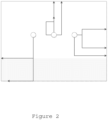
- the disclosed resin can be used for potting or encapsulating electronic components in a printed circuit board, such as shown in Figure 2 .
- the potted or encapsulated electrical components on the printed circuit board can withstand both indoor and outdoor environments without degradation.
- the resin can be used for casting.
- the resin can be used for filling, sealing, covering, or soaking technical parts.
- the resin can be used in casting electronic components, for example transformers and liquid crystal displays.
- Embodiments of the disclosed resin can be used in many fields of interest.
- embodiments of the disclosed epoxy resin system can be used in the fields of:
- the disclosed fields are not limiting, and the disclosed epoxy resin system can be used in other fields as well.
Landscapes
- Engineering & Computer Science (AREA)
- Chemical & Material Sciences (AREA)
- Microelectronics & Electronic Packaging (AREA)
- Health & Medical Sciences (AREA)
- Chemical Kinetics & Catalysis (AREA)
- Medicinal Chemistry (AREA)
- Polymers & Plastics (AREA)
- Organic Chemistry (AREA)
- Manufacturing & Machinery (AREA)
- Compositions Of Macromolecular Compounds (AREA)
- Epoxy Resins (AREA)
- Organic Insulating Materials (AREA)
Description
- This application claims priority from
U.S. Provisional Patent Application No. 61/799,248, filed March 15, 2013 - The present disclosure generally relates to materials for potting and encapsulating electronic components, and more particularly, relates to a multi-function and highly adaptable epoxy casting resin system designed for various applications in both indoor and outdoor environments.
- A wide range of materials have been developed for potting and encapsulating electronic components. For example, materials made of epoxy resin are commonly used as potting compound in printed circuit board applications. While there is a variety of commercially available potting and encapsulation systems, there are drawbacks associated with each. For example, many currently used epoxies do not have sufficient thermal conductivity for use with electrical components which achieve high temperatures. Further, the epoxies that do achieve high thermal conductivity do so at the expense of other properties, such as strength, toughness, or electrical permittivity. Accordingly, there is a need for an improved epoxy casting resin system with desired properties.
-
US 2012/010329A1 discloses curable epoxy resin compositions, cured epoxy resin compositions, and processes of forming the same, including at least one epoxy resin, at least one sterically hindered amine curing agent and at least one non-sterically hindered amine curing agent which provides toughness properties to the curable composition and resultant cured product made from the curable composition. -
WO 2012/158292A1 discloses a curable epoxy resin formulation composition useful as insulation for an electrical apparatus including at least one liquid epoxy resin; at least one liquid cyclic anhydride hardener; at least one thermally conducting and electrically insulating filler, wherein the filler includes an epoxy-silane treated filler; and at least one cure catalyst with no amine hydrogens; wherein the epoxy resin formulation composition upon curing provides a cured product with a requisite balance of electrical, mechanical, thermal properties and volume resistivity such that the cured product can be used in applications operated at a temperature of greater than or equal to 120 °C. - Disclosed herein is an uncured epoxy resin according to claim 1 of the appended claims.
- The bisphenol F epoxy resin can have a purity of at least 95%. The bisphenol F epoxy resin can have a purity of at least 99%.
- Also disclosed herein is a method of producing a casting epoxy according to claim 10 of the appended claims.
-
-
Figure 1 shows an embodiment of a method for forming a cured epoxy. -
Figure 2 shows an embodiment of a printed circuit board incorporating a cured epoxy. - Embodiments of the present invention provide a multi-function, highly adaptable material that can be used in various potting and encapsulation applications for both indoor and outdoor environments. In various embodiments, the material is an epoxy resin, cured epoxy, and/or epoxy casting resin system/epoxy resin system. The epoxy resin system can describe both the epoxy resin and/or the cured epoxy. The composition of the epoxy casting resin system can be formulated to achieve a combination of different desired properties without adversely affecting material performance. Specifically, embodiments of the disclosed epoxy resin system can have a high quantity of thermal conductive filler such as aluminum oxide and yet, still exhibit low mix viscosity and good physical strength. In certain embodiments, the epoxy resin system can provide a filled, medium viscosity, self-extinguishing flame retardant, low stress, thermally conductive material.
- Embodiments of the disclosed epoxy resin system can be advantageous over other currently commercially available epoxies. For example, currently used epoxies can have insufficient thermal conductivity, electrical performance, and physical performance. If one of these properties were improved to sufficient levels, the other properties tend to decrease, thus making the commonly used epoxies not as desirable. However, as further described below, embodiments of the disclosed material can have about 24% better thermal conductivity than current aluminum oxide based epoxies on the market. Further, embodiments of the disclosed cured epoxy can have about 9.5% better electrical conductivity than current aluminum oxide based epoxies on the market. In addition, embodiments of the disclosed cured epoxy can have about 10-20% better physical performance than current aluminum oxide based epoxies on the market.
- While advantageous properties, such as thermal conductivity, achieved by the disclosed material can be obtained through the use of non-aluminum oxide filled epoxies, such as through the use of boron nitride, these are significantly more expensive. Accordingly, the disclosed material is a cost effective approach that has improved properties advantageous over other epoxies in its class.
- The disclosed material may be an epoxy resin and/or cured epoxy with a full balance of enhanced material properties while maintaining adequate viscosity, thereby avoiding sacrificing ease of application which can happen to other resins on the market. For example, the disclosed material can have a low mixed viscosity, and is among the lowest commercially available for such a heavily thermally filled epoxy. Further, as discussed in detail below, embodiments of the disclosed material can have high thermal conductivity, increased strength (adhesive, physical, tensile, compressive, cohesive, etc.), low stress, and long pot life. In addition, embodiments of the disclosed material can have flexible ambient and thermal cure schedules. Further, embodiments of the disclosed material can have adjustable physical properties. Many of the current epoxies on the market cannot produce an cured epoxy and/or epoxy resin with the same properties as embodiments of the disclosed material.
- Embodiments of the disclosed material can also have advantageous electrical properties, such as a low dielectric constant for such a heavily filled thermal management epoxy resin system, a high dielectric strength especially for a heavily filled thermal management epoxy resin system, and great electrical resistance.
- Epoxide functional groups, or epoxy resins, can be cured to form epoxies or cured epoxies. These epoxy resins, or polyepoxides, are a class of reactive prepolymers and polymers which contain epoxide groups. Typically, these epoxy resins react, thereby forming cross links, through a number of different processes. For example, catalytic homopolymerization can be used to react an epoxy resin with itself. Further, co-reactants (known as hardeners or curatives), such as polyfunctional amines, acids, acid anhydrides, phenols, alcohols, and thiols can all be used to react epoxy resins.
- The reaction that takes place in an epoxy resin can form cross-links, thereby solidifying the epoxy resin into a final product, known as an epoxy or cured epoxy. The cross-linking reaction can also be known as curing. In some embodiments, the final epoxy can have improved physical properties, such as high temperature and chemical resistance.
- In the invention, the composition of an epoxy casting resin system includes many different components.
- In the invention, the epoxy resin contains 15%-26% by weight of bisphenol F epoxy resin as an epoxy resin base reactive constituent. In one embodiment, the bisphenol F epoxy resin can be high performance/high purity grade. In some implementations, the bisphenol F epoxy can have a dimer content of greater than about 95%, 98%, or 99%.
- In the invention, a diluent is also used in the epoxy resin. The diluent acts a diluting agent, which can decrease the viscosity of the substance, such as fluid, that the diluent is incorporated into. In some embodiments, the diluent can also be used in the process of solvent extraction. In the invention, 2%-5% by weight of diluent is used. In the invention, the diluent is butyl glycidyl ether.
- The disclosed epoxy resin is also colored. In the invention, color pigments are added into the resin to change or modify the color of the resin. In some embodiments, the color pigment does not affect the physical properties of the resin or final cured epoxy. In some embodiments, the color pigment can affect the physical properties of the resin or final cured epoxy. In the invention, 0.5%-1.5% by weight of color pigments is used. In the invention, an epoxy carbon black dispersion is used. However, other types of coloring can be used, such as liquid dyes, and the type of coloring is not limiting. Further, other colors can be used, and the type of color used is not limiting.
- The disclosed epoxy resin also contains thermally conductive filler. In the invention 40%-60% by weight of aluminum oxide is used as the thermally conductive filler. In some embodiments, the aluminum oxide can have a purity of at least about 95%, 98%, or 99%. In some embodiments, the aluminum oxide can have an average particle size of less than about 297 µm (50 Mesh), 105 µm (150 Mesh), 44 µm (325 Mesh) or 37 µm (400 Mesh). Typically, the use of such a high percentage of thermally conductive filler can lead to an epoxy resin that is so thick that it cannot be used. Advantageously, embodiments of the disclosed epoxy resin can be well filled with the thermally conductive filler, thereby maintaining high thermal conductance, while still having acceptable viscosity levels, as further discussed below.
- In the invention, 2.5%-4% by weight of a reactive constituent is also used. The reactive constituent is a phosphorous salt. An organophosphorous salt can be used as the phosphorous salt. The phosphorous salt can be used as a flame retardant, which can allow the resin to have self-extinguishing characteristics. Further, the use of the salt can lend to thermal conductivity and structural integrity of the cured resin.
- In the invention, 8.5%-16% by weight of flame retardant is used as well. Alumina trihydrate and ammonium polyphosphate are used in combination. In some embodiments, the alumina trihydrate can have a purity of at least about 95%, 98%, or 99%. In some embodiments, the ammonium polyphosphate can have a purity of at least about 95%, 98%, or 99%. However, other flame retardants can be used and the type of flame retardant is not limiting. In the invention, 7-12 wt. % alumina trihydrate is used, and 1.5-4 wt. % ammonium polyphosphate is used. In some embodiments, the alumina trihydrate and ammonium polyphosphate can have low particle size and low viscosity.
- In the invention, 5%-10% by weight of a reactive agent is used. Polyglycol diamine is used as the reactive agent. In some embodiment, the polyglycol diamine can be high performance/high purity grade. For example, in some embodiments the polyglycol diamine can have a purity of greater than 95%, 98%, or 99%. In some embodiments, the polyglycol diamine can have low viscosity. The polyglycol diamine can be used as a curative agent (reactant) so as to bring about the reactive process which can result in the curing and cross-linking of the epoxy resin.
- In the invention, 1%-3% by weight of a reactive agent/catalyst is used. A polyamine blend is used. The polyamine blend can be used as a curative agent (reactant) so as to bring about the reactive process which can result in the curing and cross-linking of the epoxy resin. Specifically, the polyamine blend can be a reactive agent utilized primarily as a catalyst to initiate and promote the curing of the epoxy resin. Further, the polyamine blend can allow for the resin to be cured at room temperature and can improve short thermal cure cycles.
- An embodiment of a composition of the disclosed epoxy resin and/or cured epoxy is listed below in table 1.
Table 1: Epoxy Resin Composition Material (Generic Name) Grade (Generic) Description Primary Function Material Percentage Bisphenol F Epoxy Resin High Performance Epoxy Resin Base Reactive Constituent 19.2% +/-2% by wt. High Purity Aerospace Grade Butyl Glycidyl Ether Low Viscosity Reactive Diluent 3.4% +/- 1% by wt. Epoxy Carbon Black Dispersion High Dispersion Color Pigment 0.75% +/-0.25% by wt. Aluminum Oxide Moderate/High Purity Thermally Conductive Filler 54% +/- 3% by wt. Moderate/High Mesh (smaller particle size) High Density Phosphorous Salt High Purity Reactive Constituent 3.4% +/- 1% by wt. Alumina Trihydrate Moderate/High Purity Flame Retardant 9% +/- 2% by wt. Moderate/High Mesh (smaller particle size) Ammonium Polyphosphate Moderate/High Purity Flame Retardant 2.3% +/- 1% by wt. Moderate/High Mesh Polyglycol Diamine Low Viscosity Reactive Agent 6.8% +/- 2% by wt. High Performance High Purity Aerospace Grade Polyamine Blend High Performance Reactive Agent/Catalyst 1.4% +/-0.5% by wt. - In the invention, as described below, the final cured resin is formed by the mixing of two parts including different materials. These parts are a resin part (Part A) and a hardener part (Part B). These parts are mixed together to begin the reaction process. In the invention, the bisphenol F epoxy resin, butyl glycidyl ether, epoxy carbon black dispersion, aluminum oxide, phosphorous salt, alumina trihydrate, and ammonium poly phosphate are Part A, and polyglycol diamine and polyamine blend are Part B.
- The disclosed epoxy resin system can have numerous advantageous properties. For example, embodiments of the disclosed epoxy resin system can be a medium viscosity, self-extinguishing flame retardant, low stress, thermally conductive epoxy resin system.
- Further, embodiments of the disclosed epoxy resin system can be RoHS compliant. In addition, embodiments of the disclosed epoxy resin system can be UL 94V0 rated, and can meet the physical security requirements of FIPS 140-2, and FIPS 140-3 for encapsulating material.
- In some embodiments, the disclosed epoxy resin system can provide for good whisker, such as tin-whisker, mitigation properties. In some embodiments, the disclosed epoxy resin system can have good resistance to water, salt spray, inorganic acids, bases, and most organic solvents. Accordingly, embodiments of the epoxy resin system can be used both indoors and outdoors.
- In some embodiments, the resin can exhibit good wetting and adhesion to most surfaces. Further, the resin can be free flowing to penetrate voids and provide good air release.
- In some embodiments, the resin can contain a flame retardant package and thermal conductive fillers which can settle over time. In some embodiments, the resin has good resistance to hard settling.
- Further described are some properties of embodiments of the resin system. All properties are at 25°C unless noted otherwise. Table 2 illustrates some of the physical properties of the uncured resin. Table 3 illustrates some of the physical properties of embodiments of the cured resin. Table 4 illustrates some of the thermal properties of embodiments of the cured resin. Table 5 illustrates some of the electrical properties of embodiments of the cured resin. In all of the below tables, the numeric values should be understood to include the term about or approximately.
Table 2: Uncured Properties Specific Gravity Part A 2.16 Part B 0.97 Mixed 1.97 Viscosity, cP (mixed measured at 24°C) 3,500-4,500 (3500-4500 mPa·s) Color (standard mixed color) Black Shelf Life 12-18 months Table 3: Physical Properties Hardness, Shore D (ASTM D2240-05) 86-92 Service Temperature, °C Continuous -55 to 200 Intermittent -65-260 Tensile Strength, psi @ 25°C (ASTM D 638-10) Ambient cure, 7 days @ 20°C 6000 (nominal) (41 MPa) Heat Cure, 2 hours @ 60°C 6750 (nominal) (46.5 MPa) Tensile Elongation % @ break (ASTM D 638-10) Ambient cure, 7 days @ 20°C 0.70 - 2.00 Heat Cure, 2 hours @ 60°C 0.70 - 2.00 Tensile Modulus, psi @ 25°C (ASTM D 638-10) Ambient cure, 7 days @ 20°C 1098000 (nominal) (7.57 GPa) Heat Cure, 2 hours @ 60°C 1167000 (nominal) (8.05 GPa) Compressive Strength, psi @ 25°C Ambient cure, 7 days @ 20°C 23,500 (nominal) (162 MPa) Heat Cure, 2 hours @ 60°C 24,000 (nominal) (165 MPa) Shear Strength, psi @ 25°C (ASTM D 638-10) Ambient cure, 7 days @ 20°C 4500 (nominal) (31 MPa) Heat Cure, 2 hours @ 60°C 5160 (nominal (36 MPa) Izod Impact, ft. lbs./in. of notch 1.2 (64 J/m) Heat Distortion, °C 160 - 170 Water Absorption, % (ASTM D 570-98) 0.3 - 0.4 Linear Shrinkage, in/in Less than or equal to 0.002 Relative Temperature Index (RTI) Impact °C 130 Relative Temperature Index (RTI) Strength °C 130 Table 4: Thermal Properties Thermal Conductivity, W/(m·K) (ASTM E 1530-11) 0.70 @ 60°C Coefficient of Thermal Expansion, in/in/°C x 10-6 40* * Asterisk denotes values considered typical to associated resin systems or extrapolated from other test results. Table 5: Electrical Properties Volume Resistivity, ohm·cm (ASTM D 257-07) 3.95 × 10¹⁵ (3.95 × 10¹³ ohm.m) Relative Temperature Index (RTI) Electrical °C 130 Comparative Tracking Index (CTI) 0 Dielectric Constant @100kHz 4.69 @1 MHz 4.80 Dissipation Factor @100 kHz 0.017 @ 1 MHz 0.018 Dielectric Strength, V/mil (V/m) 525-575 (nominal) (2.07-2.26 × 10⁷) (76 µm) 0.003" thickness, V/mil (V/m) 1,000-1,500 (3.9-5.9 × 10⁷) (3.2 mm) 0.125" thickness, V/mil (V/m) 535-670 (2.11-2.64 × 10⁷) - As embodiments of the disclosed epoxy resin system can be considered heavily filled (e.g. having high amounts of thermal fillers), it is unexpected that the disclosed resin achieves lower permittivity than comparably filled resins. Typically, adding thermal fillers into an epoxy resin system causes the electrical permittivity to increase, sometimes drastically. Advantageously, the disclosed cured epoxy does not have this negative effect.
- Further, embodiments of the disclosed resin may impact strength, and electrical RTIs of 130°C. The RTI temperature indicates the maximum service temperature for a material where specific properties are not unacceptably compromised, generally defined as having greater than 50% of its typical properties. Most epoxies currently in use have a RTI of 90°C. Accordingly, embodiments of the disclosed resin have an advantageously high RTI, which allows the resin to hold its properties for longer at higher temperatures.
- In some embodiments, the disclosed epoxy resin system can have a flammability of V-0 (BK) under IEC 60695-11-10. Further, the resin can have a high-voltage arc tracking rate of 0 and a dimension stability % of 0. The 0 results indicate that the material passed the tests at the top level.
- In the invention, Part A and Part B of the disclosed epoxy resin are formed separately.
Figure 1 illustrates an embodiment of a method for making a cured epoxy. - For Part A, the bisphenol F resin, the butyl glycidyl ether diluent, and the carbon black dispersion pigment can be blended together at low and high speeds to shear. This blending can be done for high speeds of shear. The high blending speed of this step may be approximately 60% faster than the high blending speed of the first step. This blending can be done for approximately 5 minutes. After blending, the aluminum trihydrate flame retardant can be added to the mixture. This can then be blended together at low and high speeds of shear. This blending can be done for approximately 5 minutes. Following, the ammonium poly phosphate flame retardant can be added to the mixture. This can then be blended together at low and high speeds of shear. This blending can be done for approximately 5 minutes. After blending, portions of the aluminium oxide thermal filler can be added. In some embodiments, only a portion of the thermal filler may be added, then blended, and then another portion of thermal filler is added, and then blended, until all thermal filler is added. For example, the portions can be about 10, 20, 30, 40, or 50% of the thermal filler. This can then be blended together at low and high speeds of shear. This blending can be done for approximately 5 minutes. Afterwards, the entire mixture can be blended under low and high speed shear under vacuum. This vacuum blending can be done for approximately 15 minutes. A machine used for blending can be cleaned after each step. A person having skill in the art would understand that other basic methods of producing the resin could be used, and the method is not limiting.
- In some embodiments, a different method for forming Part A can be used. Instead of waiting until the end to add the thermal filler, a portion of the thermal filler can be blended along with the resin, diluent, and pigment in the first step. For example, approximately 70, 75, or 80% of the total thermal filler can be added. The remaining thermal filler is added at the end as describe above. This method can be advantageous as it can provide for better dispersion and wetting of the thermal filler in the epoxy resin. Further, it can reduce the likelihood of soft settling. In addition, this method can use less diluent (a solvent), thus allowing for a greener material.
- In the invention, Part B is formed by mixing together the polyglycol diamine reactive agent and the polyamine blend catalyst. These reactive agents and catalysts can be in liquid form. In some embodiments, the reactive agents and catalysts can be blended at medium speeds for about 10 minutes.
- To begin the curing process, in invention, Part A and Part B are mixed together. In some embodiments, mix ratio of Part A to B can be, by weight, 10.00 to 1 (variable up to 12:1). In some embodiments, mix ratio of Part A to B can be, by volume, 5.00 to 1 (variable up to 6:1).
- In some embodiments, the resin can reach a state of "cure-to-handle" at room temperature within about 24 hours. However, the time can change depending on mass and ambient temperature. Embodiments of the resin can cure within about 36 to 72 hours, though this can be accelerated by the application of heat. Times and temperatures from 3 hours at 60°C to 60 minutes at 100°C can be achieved. In some embodiments, the resin can cure at room temperature. Upon curing, embodiments of the resin can form a tough, semirigid polymer that exhibits good wetting and adhesion to most surfaces. Further, the resin can be free flowing to penetrate voids and provide good air release, while offering good resistance to hard settling. Table 7 illustrates some of the cure schedule of embodiments of the resin.
Table 7: Cure Schedule Pot Life, 200 grams @ 25°C (77°F) 1 to 2 hours Gel Time @ 25°C (77°F) 8 to 10 hours Handle Time @ 25°C (77°F) 24 hours Cure Time @ 25°C (77°F) 36 to 72 hours (greater than or equal to 95% of full properties) Heat Cure Time @ 60°C (140°F) 2 to 4 hours Heat Cure Time @ 100°C (212°F) 60 - 90 minutes - An epoxy resin was prepared by mixing together 19.2 wt. % bisphenol F epoxy resin, 3.4 wt. % butyl glycidyl ether, 0.75 wt. % epoxy carbon black dispersion, 54 wt. % aluminum oxide, 3.4 wt. % phosphorous salt, 9 wt. % alumina trihydrate, and 2.3 wt. % ammonium poly phosphate. A curative/hardener was prepared by mixing together 6.8 wt. % polyglycol diamine and 1.4 wt. % polyamine blend. The epoxy resin and the hardener were then mixed together at a 10.00 to 1 weight mix ratio (or a 5:00 to 1 volume mix ratio) to form a resin which was poured in a container for curing. The mixed resin was then cured for 2 hours at 60°C. The cured epoxy had physical properties of a tensile strength of 46.5 MPa (6750 psi), a tensile modulus of 804.6 MPa (116700 psi), a compressive strength of 165 MPa (24000 psi), a shear strength of 35.6 MPa (5160 psi), an Izod impact of 64 J/m (1.2 ft. lbs./in), a relative temperature index for both impact and strength of 130 °C. Further, the cured epoxy had thermal properties of a thermal conductivity of 0.70 W/(m·K) at 60°C and an extrapolated coefficient of thermal expansion of 40 in/in/°C × 10-6 (below Tg). In addition, the cured epoxy had electrical properties of a volume resistivity of 3.95 × 10¹³ ohm·m (3.95 × 10¹⁵ ohm·cm), a relative temperature index for electrical of 130 °C, a dielectric constant of 4.69 at 100kHz and 4.80 at 1MHz, and a dissipation factor of 0.017 at 100 kHz and 0.018 at 1MHz. The properties achieved by an embodiment of the disclosed resin indicates that the disclosed resin has improved and advantageous physical, thermal, and electrical properties over other epoxies in the same class.
- Embodiments of the disclosed epoxy resin system can have many different uses. For example, the disclosed epoxy resin system can be used in:
- Adhesives
- Anti-Tampers
- Coatings
- Encapsulations
- Environmental Protections
- Intellectual Property Protections
- Potting
- Physical Security
- Shock Management
- Structural Reinforcement
- Thermal Management
- Tin Whisker Mitigation
- Vibration Management
- The disclosed uses are not limiting, and the disclosed epoxy resin system can have other uses.
- In some embodiments, the disclosed epoxy resin system can be used in:
- Physical security of FIPS 140-2 Encrypted Devices
- ∘ Banking/ATM Terminals
- ∘ Entertainment devices
- ∘ Hard Drives
- ∘ Military Communication devices
- ∘ Telecommunication devices
- ∘ USB Flash Drives
- ∘ Secure Data Networks
- Environmental Protection of Electronics subjected to:
- ∘ Waste Water
- ∘ Salt
- ∘ Humidity
- ∘ Shock
- ∘ Vibration
- ∘ Chemicals
- ∘ Temperature
- ∘ UV
- Transformers: Thermal Management and protection from harsh environments
- Thermal Management and Fire Protection of Lithium Ion Battery packs
- Automotive
- ∘ Sensors
- ∘ Control Circuitry
- Marine Electronics
- The disclosed uses are not limiting, and the disclosed epoxy resin system can have other uses.
- In some embodiments, the disclosed resin can be used with electronics and other electric systems. For example, the resin can be incorporated into motors, generators, transformers, switchgears, bushings, and insulators. As embodiments of the disclosed epoxy resin system can have excellent electrical resistance, the resin can be advantageous for covering electrical components to prevent shorting, and to keep particles like dust and moisture, out of the electrical components. Further, embodiments of the epoxy resin system can be used in the overmolding of integrated circuits, transistors, and hybrid circuits.
- The disclosed resin can be used in the potting and or encapsulation of electronics. In the potting process, the resin can fill an electronic component or assembly, thus reducing shock and vibration. The potted resin can also prevent moisture, dust, particles, and other corrosive elements from entering the electronic assembly. Embodiments of the disclosed resin can also have a high thermal conduction, and can have a higher thermal conduction than air. Accordingly, embodiments of the disclosed resin can be used for potting transformers and inductors, thereby reducing and/or eliminating hot spots, giving the transformers and inductors a stable and longer life than unspotted components. In some embodiments, the disclosed resin can be used for potting or encapsulating electronic components in a printed circuit board, such as shown in
Figure 2 . The potted or encapsulated electrical components on the printed circuit board can withstand both indoor and outdoor environments without degradation. - In some embodiments, the resin can be used for casting. For example, the resin can be used for filling, sealing, covering, or soaking technical parts. In some embodiments, the resin can be used in casting electronic components, for example transformers and liquid crystal displays.
- Embodiments of the disclosed resin can be used in many fields of interest. For example, embodiments of the disclosed epoxy resin system can be used in the fields of:
- Telecommunications
- Entertainment
- Military
- Advanced Physical Sciences
- Nuclear Sciences
- Consumer Products
- Banking
- Medical
- Data Management
- Commercial/Industrial Cargo Management
- International Trade & Commerce
- The disclosed fields are not limiting, and the disclosed epoxy resin system can be used in other fields as well.
- Conditional language, such as "can," "could," "might," or "may," unless specifically stated otherwise, or otherwise understood within the context as used, is generally intended to convey that certain embodiments include or do not include certain features, elements, and/or steps. Thus, such conditional language is not generally intended to imply that features, elements, and/or steps are in any way required for one or more embodiments.
- Conjunctive language such as the phrase "at least one of X, Y, and Z," unless specifically stated otherwise, is otherwise understood with the context as used in general to convey that an item, term, etc. may be either X, Y, or Z. Thus, such conjunctive language is not generally intended to imply that certain embodiments require the presence of at least one of X, at least one of Y, and at least one of Z.
- Language of degree used herein, such as the terms "approximately," "about," "generally," and "substantially" as used herein represent a value, amount, or characteristic close to the stated value, amount, or characteristic that still performs a desired function or achieves a desired result. For example, the terms "approximately", "about", "generally," and "substantially" may refer to an amount that is within less than or equal to 10% of, within less than or equal to 5% of, within less than or equal to 1% of, within less than or equal to 0.1% of, and within less than or equal to 0.01% of the stated amount.
- While a number of embodiments and variations thereof have been described in detail, other modifications and methods for the same will be apparent to those of skill in the within the scope of the appended claims.
Claims (11)
- An uncured epoxy resin comprising:15-26 wt. % of at least one epoxy resin base reactive constituent, wherein the at least one epoxy resin base reactive constituent comprises bisphenol F epoxy resin;2-5 wt. % of diluent, wherein the diluent comprises butyl glycidyl ether;0.5-1.5 wt. % of at least one color pigment, wherein the at least one color pigment comprises epoxy carbon black dispersion;40-60 wt. % of at least one thermally conductive filler, wherein the at least one thermally conductive filler comprises aluminum oxide;2.5-4.0 wt. % of at least one reactive constituent, wherein the at least one reactive constituent comprises phosphorous salt;8.5-16 wt. % of at least one flame retardant, wherein the at least one flame retardant comprises 7-12% alumina trihydrate and 1.5-4% ammonium poly phosphate;5-10 wt. % of at least one reactive agent, wherein the at least one reactive agent comprises polyglycol diamine; and1-3 wt. % catalyst, wherein the at least one catalyst comprises polyamine blend.
- The uncured epoxy resin of Claim 1, wherein the viscosity of the resin is 3,500-4500 mPa·s mixed measured at 24°C.
- The uncured epoxy resin of Claim 1, wherein the aluminum oxide has an average particle size of less than 297 µm (50 Mesh).
- The uncured epoxy resin of Claim 1 comprising:17.2%-21.2% bisphenol F epoxy resin;2.4%-4.4% butyl glycidyl ether;0.5% - 1.0% epoxy carbon black dispersion;51% - 57% aluminum oxide;2.5%-4% phosphorous salt;7% - 11% alumina trihydrate;1.5% - 3.3% ammonium poly phosphate;5% - 8.8% polyglycol diamine; and1% - 1.9% of polyamine blend.
- The uncured epoxy resin of Claim 4 comprising:about 19.2% bisphenol F epoxy resin;about 3.4% butyl glycidyl ether;about 0.75% epoxy carbon black dispersion;about 54% aluminum oxide;about 3.4% phosphorous salt;about 9% alumina trihydrate;about 2.3% ammonium poly phosphate;about 6.8% polyglycol diamine; andabout 1.4% of polyamine blend,wherein the total amount does not exceed 100%.
- The uncured epoxy resin of Claim 1, the uncured epoxy resin consisting of:15%-26% bisphenol F epoxy resin;2%-5% butyl glycidyl ether;0.5%-1.5% epoxy carbon black dispersion;40%-60% aluminum oxide;2.5%-4% phosphorous salt;7%-12% alumina trihydrate;1.5%-4% ammonium poly phosphate;5%-10% polyglycol diamine; and1%-3% of polyamine blend.
- The uncured epoxy resin of Claim 6, the uncured epoxy resin consisting of:about 19.2% bisphenol F epoxy resin;about 3.4% butyl glycidyl ether;about 0.75% epoxy carbon black dispersion;about 54% aluminum oxide;about 3.4% phosphorous salt;about 9% alumina trihydrate;about 2.3% ammonium poly phosphate;about 6.8% polyglycol diamine; andabout 1.4% of polyamine blend,wherein the total amount does not exceed 100%.
- A cured epoxy resin formed from the uncured epoxy resin of Claim 1; preferably wherein the cured epoxy resin has a thermal conductivity of 0.70 W/(m·K) at 60°C; or wherein the cured epoxy resin has a volume resistivity of 3.95 × 10¹³ ohm-m (3.95 x 10¹⁵ ohm·cm); orwherein the cured epoxy resin has a relative temperature index for impact, strength, and electrical of 130 °C; orwherein the cured epoxy resin has a 200 g. pot life of 1 to 2 hours at 25°C.
- A printed circuit board, the printed circuit board comprising:
at least one electronic component, the electronic component being at least partially covered by an uncured epoxy resin of claims 1, 4, or 5 and/or covered by a cured epoxy resin formed from the uncured epoxy resin of claims 1, 4, or 5. - A method of producing a casting epoxy comprising:
producing component A by combining:15-26% wt.% bisphenol F epoxy resin;2-5% wt.% butyl glycidyl ether;0.5-1.5% wt.% epoxy carbon black dispersion;40-60% wt.% aluminum oxide;2.5-4% wt.% phosphorous salt;7-12% wt.% alumina trihydrate; and1.5-4% wt.% ammonium poly phosphate;
producing component B by combining:5-10% wt.% polyglycol diamine; and1-3% wt.% of polyamine blend;
combining component A with component B to form an uncured resin; and curing the uncured resin to form a cured resin. - The method of Claim 10,wherein the cured resin has greater than or equal to 95% of full properties after 36 hours at 25°C; orwherein the cured resin has greater than or equal to 95% of full properties after 2 hours at 60°C; orwherein the uncured resin has a viscosity of 3,500-4,500 mPa·s prior to curing.
Applications Claiming Priority (2)
| Application Number | Priority Date | Filing Date | Title |
|---|---|---|---|
| US201361799248P | 2013-03-15 | 2013-03-15 | |
| PCT/US2014/025503 WO2014151337A1 (en) | 2013-03-15 | 2014-03-13 | Multi-function epoxy casting resin system |
Publications (4)
| Publication Number | Publication Date |
|---|---|
| EP2970651A1 EP2970651A1 (en) | 2016-01-20 |
| EP2970651A4 EP2970651A4 (en) | 2016-09-21 |
| EP2970651B1 true EP2970651B1 (en) | 2025-02-26 |
| EP2970651C0 EP2970651C0 (en) | 2025-02-26 |
Family
ID=51528343
Family Applications (1)
| Application Number | Title | Priority Date | Filing Date |
|---|---|---|---|
| EP14767704.1A Active EP2970651B1 (en) | 2013-03-15 | 2014-03-13 | Multi-function epoxy casting resin system |
Country Status (6)
| Country | Link |
|---|---|
| US (1) | US9629254B2 (en) |
| EP (1) | EP2970651B1 (en) |
| CN (1) | CN105229078A (en) |
| CA (1) | CA2902617C (en) |
| MX (1) | MX385404B (en) |
| WO (1) | WO2014151337A1 (en) |
Families Citing this family (4)
| Publication number | Priority date | Publication date | Assignee | Title |
|---|---|---|---|---|
| JP6030126B2 (en) * | 2011-05-13 | 2016-11-24 | ダウ グローバル テクノロジーズ エルエルシー | Insulation compound |
| WO2016175789A1 (en) * | 2015-04-29 | 2016-11-03 | Hewlett Packard Enterprise Development Lp | Physical barrier to inhibit a penetration attack |
| CN113573525B (en) * | 2021-07-28 | 2023-02-28 | Oppo广东移动通信有限公司 | Shell assembly, preparation method thereof and electronic equipment |
| US12299369B2 (en) * | 2021-10-18 | 2025-05-13 | Taiwan Semiconductor Manufacturing Company, Ltd. | Systems and methods of estimating thermal properties of semiconductor devices |
Family Cites Families (17)
| Publication number | Priority date | Publication date | Assignee | Title |
|---|---|---|---|---|
| EP0459951A3 (en) | 1990-05-30 | 1993-09-15 | Ciba-Geigy Ag | Char forming nonhalogenated flame retardant epoxy composition |
| ES2203643T3 (en) | 1994-07-01 | 2004-04-16 | Vantico Ag | EPOXI RESIN BASED COLADA COMPOSITION. |
| US20040143079A1 (en) * | 2003-01-21 | 2004-07-22 | Simion Coca | Compositions containing copolymers of isobutylene type monomers |
| US6946503B2 (en) | 2002-04-12 | 2005-09-20 | Huntsman Petrochemical Corporation | Amine blend accelerators for polyoxyalkylenepolyamine cured epoxy resins |
| EP1810985A1 (en) | 2006-01-24 | 2007-07-25 | Huntsman Advanced Materials (Switzerland) GmbH | Curable composition |
| EP2133381A1 (en) * | 2008-06-13 | 2009-12-16 | Sika Technology AG | Water soluble amine and its application |
| JP2012518707A (en) * | 2009-02-24 | 2012-08-16 | ダウ グローバル テクノロジーズ エルエルシー | Curable epoxy resin composition and cured product thereof |
| EP2295487A1 (en) | 2009-09-11 | 2011-03-16 | Elantas GMBH | Epoxy resin curing indicator composition |
| ES2388809T3 (en) * | 2009-12-08 | 2012-10-18 | Sika Technology Ag | Low viscous epoxy resin composition with low "blushing" |
| US9840588B2 (en) | 2009-12-18 | 2017-12-12 | Hexion Inc. | Epoxy resin curing compositions and epoxy resin systems including same |
| EP2465842A1 (en) * | 2010-12-17 | 2012-06-20 | Sika Technology AG | Amines with secondary aliphatic amines |
| JP6030126B2 (en) | 2011-05-13 | 2016-11-24 | ダウ グローバル テクノロジーズ エルエルシー | Insulation compound |
| US9145488B2 (en) | 2011-05-19 | 2015-09-29 | Chemtura Corporation | Aluminum phosphorus acid salts as epoxy resin cure inhibitors |
| EP2592100A1 (en) * | 2011-11-10 | 2013-05-15 | Sika Technology AG | Curing agent for epoxy resin coatings |
| EP2592101A1 (en) * | 2011-11-10 | 2013-05-15 | Sika Technology AG | Curing agent for epoxy resin coatings |
| CN102533192A (en) | 2011-12-28 | 2012-07-04 | 烟台德邦电子材料有限公司 | Flame retardant high-heat-conductivity epoxy resin electronic adhesive glue |
| CN102863936B (en) * | 2012-10-09 | 2014-07-02 | 株洲时代新材料科技股份有限公司 | Heating solidification type dual-component epoxy pouring sealant and preparation method thereof |
-
2014
- 2014-03-13 MX MX2015010995A patent/MX385404B/en unknown
- 2014-03-13 CN CN201480027451.2A patent/CN105229078A/en active Pending
- 2014-03-13 EP EP14767704.1A patent/EP2970651B1/en active Active
- 2014-03-13 CA CA2902617A patent/CA2902617C/en active Active
- 2014-03-13 US US14/208,144 patent/US9629254B2/en active Active
- 2014-03-13 WO PCT/US2014/025503 patent/WO2014151337A1/en not_active Ceased
Also Published As
| Publication number | Publication date |
|---|---|
| MX2015010995A (en) | 2016-06-02 |
| US20140272328A1 (en) | 2014-09-18 |
| WO2014151337A1 (en) | 2014-09-25 |
| EP2970651A1 (en) | 2016-01-20 |
| CA2902617A1 (en) | 2014-09-25 |
| EP2970651A4 (en) | 2016-09-21 |
| EP2970651C0 (en) | 2025-02-26 |
| MX385404B (en) | 2025-03-18 |
| CA2902617C (en) | 2021-03-02 |
| US9629254B2 (en) | 2017-04-18 |
| CN105229078A (en) | 2016-01-06 |
Similar Documents
| Publication | Publication Date | Title |
|---|---|---|
| EP2707411B1 (en) | Insulation formulations | |
| EP1389631B1 (en) | Epoxy resin compositions | |
| CA2902617C (en) | Multi-function epoxy casting resin system | |
| KR20230114270A (en) | paste | |
| CN115948097A (en) | Humidity-heat-resistant epoxy powder composition for magnetic ring and preparation method and application thereof | |
| JPS6230215B2 (en) | ||
| US12503586B2 (en) | Thermal conductive potting composition | |
| CN116004008B (en) | Resin Compositions and Their Applications | |
| US20240166844A1 (en) | Resin composition and use thereof | |
| JPH0959349A (en) | Epoxy resin composition for casting | |
| JP5691833B2 (en) | Thermosetting resin composition, prepreg and laminate | |
| US20040214005A1 (en) | Resin film and multilayer printed wiring board using thereof | |
| US9018282B2 (en) | Homogenous dispensing process for an epoxy-composition with high filler content | |
| EP2123712A1 (en) | Epoxy resin composition and electronic part | |
| JPH08323916A (en) | Copper-clad resin composite material | |
| KR100463498B1 (en) | A paint composition for electric parts | |
| WO2026054937A1 (en) | Multicomponent self-leveling thermally-conductive potting composition and uses thereof | |
| JP2016121258A (en) | Epoxy resin composition, and cured article using the same, electric power equipment and vacuum circuit breaker | |
| JP3647514B2 (en) | Casting epoxy resin composition | |
| JP3336304B2 (en) | Flame-retardant epoxy resin composition for casting and coil casting | |
| EP2488566B1 (en) | Homogenous dispensing process for an epoxy-composition with high filler content | |
| JP2004359792A (en) | Casting resin composition for high pressure part and high pressure part | |
| JPH11322895A (en) | Epoxy resin, epoxy resin composition | |
| JPS6030346B2 (en) | Epoxy resin composition for flyback transformer casting | |
| JP2004323581A (en) | Resin composition for printed wiring board and its use |
Legal Events
| Date | Code | Title | Description |
|---|---|---|---|
| PUAI | Public reference made under article 153(3) epc to a published international application that has entered the european phase |
Free format text: ORIGINAL CODE: 0009012 |
|
| 17P | Request for examination filed |
Effective date: 20150824 |
|
| AK | Designated contracting states |
Kind code of ref document: A1 Designated state(s): AL AT BE BG CH CY CZ DE DK EE ES FI FR GB GR HR HU IE IS IT LI LT LU LV MC MK MT NL NO PL PT RO RS SE SI SK SM TR |
|
| AX | Request for extension of the european patent |
Extension state: BA ME |
|
| DAX | Request for extension of the european patent (deleted) | ||
| A4 | Supplementary search report drawn up and despatched |
Effective date: 20160823 |
|
| RIC1 | Information provided on ipc code assigned before grant |
Ipc: H05K 1/03 20060101ALN20160817BHEP Ipc: C08K 5/5317 20060101ALI20160817BHEP Ipc: H05K 3/28 20060101ALI20160817BHEP Ipc: C08K 3/04 20060101ALI20160817BHEP Ipc: C08G 59/68 20060101ALI20160817BHEP Ipc: C08L 63/00 20060101AFI20160817BHEP Ipc: C08G 59/06 20060101ALI20160817BHEP Ipc: C08K 3/22 20060101ALI20160817BHEP Ipc: C08G 59/64 20060101ALI20160817BHEP |
|
| STAA | Information on the status of an ep patent application or granted ep patent |
Free format text: STATUS: EXAMINATION IS IN PROGRESS |
|
| 17Q | First examination report despatched |
Effective date: 20190923 |
|
| GRAP | Despatch of communication of intention to grant a patent |
Free format text: ORIGINAL CODE: EPIDOSNIGR1 |
|
| STAA | Information on the status of an ep patent application or granted ep patent |
Free format text: STATUS: GRANT OF PATENT IS INTENDED |
|
| RIC1 | Information provided on ipc code assigned before grant |
Ipc: H05K 1/03 20060101ALN20240926BHEP Ipc: H05K 3/28 20060101ALI20240926BHEP Ipc: C08G 59/68 20060101ALI20240926BHEP Ipc: C08K 5/5317 20060101ALI20240926BHEP Ipc: C08K 3/22 20060101ALI20240926BHEP Ipc: C08K 3/04 20060101ALI20240926BHEP Ipc: C08G 59/64 20060101ALI20240926BHEP Ipc: C08G 59/06 20060101ALI20240926BHEP Ipc: C08L 63/00 20060101AFI20240926BHEP |
|
| INTG | Intention to grant announced |
Effective date: 20241016 |
|
| GRAS | Grant fee paid |
Free format text: ORIGINAL CODE: EPIDOSNIGR3 |
|
| GRAA | (expected) grant |
Free format text: ORIGINAL CODE: 0009210 |
|
| STAA | Information on the status of an ep patent application or granted ep patent |
Free format text: STATUS: THE PATENT HAS BEEN GRANTED |
|
| AK | Designated contracting states |
Kind code of ref document: B1 Designated state(s): AL AT BE BG CH CY CZ DE DK EE ES FI FR GB GR HR HU IE IS IT LI LT LU LV MC MK MT NL NO PL PT RO RS SE SI SK SM TR |
|
| REG | Reference to a national code |
Ref country code: GB Ref legal event code: FG4D |
|
| REG | Reference to a national code |
Ref country code: CH Ref legal event code: EP |
|
| REG | Reference to a national code |
Ref country code: DE Ref legal event code: R096 Ref document number: 602014091615 Country of ref document: DE |
|
| REG | Reference to a national code |
Ref country code: IE Ref legal event code: FG4D |
|
| U01 | Request for unitary effect filed |
Effective date: 20250325 |
|
| U07 | Unitary effect registered |
Designated state(s): AT BE BG DE DK EE FI FR IT LT LU LV MT NL PT RO SE SI Effective date: 20250328 |
|
| U20 | Renewal fee for the european patent with unitary effect paid |
Year of fee payment: 12 Effective date: 20250331 |
|
| PG25 | Lapsed in a contracting state [announced via postgrant information from national office to epo] |
Ref country code: RS Free format text: LAPSE BECAUSE OF FAILURE TO SUBMIT A TRANSLATION OF THE DESCRIPTION OR TO PAY THE FEE WITHIN THE PRESCRIBED TIME-LIMIT Effective date: 20250526 |
|
| PG25 | Lapsed in a contracting state [announced via postgrant information from national office to epo] |
Ref country code: PL Free format text: LAPSE BECAUSE OF FAILURE TO SUBMIT A TRANSLATION OF THE DESCRIPTION OR TO PAY THE FEE WITHIN THE PRESCRIBED TIME-LIMIT Effective date: 20250226 |
|
| PG25 | Lapsed in a contracting state [announced via postgrant information from national office to epo] |
Ref country code: ES Free format text: LAPSE BECAUSE OF FAILURE TO SUBMIT A TRANSLATION OF THE DESCRIPTION OR TO PAY THE FEE WITHIN THE PRESCRIBED TIME-LIMIT Effective date: 20250226 |
|
| PG25 | Lapsed in a contracting state [announced via postgrant information from national office to epo] |
Ref country code: IS Free format text: LAPSE BECAUSE OF FAILURE TO SUBMIT A TRANSLATION OF THE DESCRIPTION OR TO PAY THE FEE WITHIN THE PRESCRIBED TIME-LIMIT Effective date: 20250626 Ref country code: NO Free format text: LAPSE BECAUSE OF FAILURE TO SUBMIT A TRANSLATION OF THE DESCRIPTION OR TO PAY THE FEE WITHIN THE PRESCRIBED TIME-LIMIT Effective date: 20250526 |
|
| PG25 | Lapsed in a contracting state [announced via postgrant information from national office to epo] |
Ref country code: HR Free format text: LAPSE BECAUSE OF FAILURE TO SUBMIT A TRANSLATION OF THE DESCRIPTION OR TO PAY THE FEE WITHIN THE PRESCRIBED TIME-LIMIT Effective date: 20250226 |
|
| PG25 | Lapsed in a contracting state [announced via postgrant information from national office to epo] |
Ref country code: GR Free format text: LAPSE BECAUSE OF FAILURE TO SUBMIT A TRANSLATION OF THE DESCRIPTION OR TO PAY THE FEE WITHIN THE PRESCRIBED TIME-LIMIT Effective date: 20250527 |
|
| PG25 | Lapsed in a contracting state [announced via postgrant information from national office to epo] |
Ref country code: SM Free format text: LAPSE BECAUSE OF FAILURE TO SUBMIT A TRANSLATION OF THE DESCRIPTION OR TO PAY THE FEE WITHIN THE PRESCRIBED TIME-LIMIT Effective date: 20250226 |
|
| PG25 | Lapsed in a contracting state [announced via postgrant information from national office to epo] |
Ref country code: CZ Free format text: LAPSE BECAUSE OF FAILURE TO SUBMIT A TRANSLATION OF THE DESCRIPTION OR TO PAY THE FEE WITHIN THE PRESCRIBED TIME-LIMIT Effective date: 20250226 |
|
| REG | Reference to a national code |
Ref country code: CH Ref legal event code: H13 Free format text: ST27 STATUS EVENT CODE: U-0-0-H10-H13 (AS PROVIDED BY THE NATIONAL OFFICE) Effective date: 20251023 |
|
| PG25 | Lapsed in a contracting state [announced via postgrant information from national office to epo] |
Ref country code: SK Free format text: LAPSE BECAUSE OF FAILURE TO SUBMIT A TRANSLATION OF THE DESCRIPTION OR TO PAY THE FEE WITHIN THE PRESCRIBED TIME-LIMIT Effective date: 20250226 |
|
| PG25 | Lapsed in a contracting state [announced via postgrant information from national office to epo] |
Ref country code: MC Free format text: LAPSE BECAUSE OF FAILURE TO SUBMIT A TRANSLATION OF THE DESCRIPTION OR TO PAY THE FEE WITHIN THE PRESCRIBED TIME-LIMIT Effective date: 20250226 |
|
| PLBE | No opposition filed within time limit |
Free format text: ORIGINAL CODE: 0009261 |
|
| STAA | Information on the status of an ep patent application or granted ep patent |
Free format text: STATUS: NO OPPOSITION FILED WITHIN TIME LIMIT |
|
| PG25 | Lapsed in a contracting state [announced via postgrant information from national office to epo] |
Ref country code: CH Free format text: LAPSE BECAUSE OF NON-PAYMENT OF DUE FEES Effective date: 20250331 |
|
| 26N | No opposition filed |
Effective date: 20251127 |
|
| U20 | Renewal fee for the european patent with unitary effect paid |
Year of fee payment: 13 Effective date: 20260209 |
|
| PGFP | Annual fee paid to national office [announced via postgrant information from national office to epo] |
Ref country code: GB Payment date: 20260106 Year of fee payment: 13 |
|
| PGFP | Annual fee paid to national office [announced via postgrant information from national office to epo] |
Ref country code: IE Payment date: 20260102 Year of fee payment: 13 |