EP2968218B1 - Combination for the treatment of parkinson's disease - Google Patents
Combination for the treatment of parkinson's disease Download PDFInfo
- Publication number
- EP2968218B1 EP2968218B1 EP14718177.0A EP14718177A EP2968218B1 EP 2968218 B1 EP2968218 B1 EP 2968218B1 EP 14718177 A EP14718177 A EP 14718177A EP 2968218 B1 EP2968218 B1 EP 2968218B1
- Authority
- EP
- European Patent Office
- Prior art keywords
- levodopa
- carbidopa
- entacapone
- arginine
- arg
- Prior art date
- Legal status (The legal status is an assumption and is not a legal conclusion. Google has not performed a legal analysis and makes no representation as to the accuracy of the status listed.)
- Active
Links
Images


Classifications
-
- A—HUMAN NECESSITIES
- A61—MEDICAL OR VETERINARY SCIENCE; HYGIENE
- A61K—PREPARATIONS FOR MEDICAL, DENTAL OR TOILETRY PURPOSES
- A61K31/00—Medicinal preparations containing organic active ingredients
- A61K31/12—Ketones
- A61K31/121—Ketones acyclic
-
- A—HUMAN NECESSITIES
- A61—MEDICAL OR VETERINARY SCIENCE; HYGIENE
- A61K—PREPARATIONS FOR MEDICAL, DENTAL OR TOILETRY PURPOSES
- A61K31/00—Medicinal preparations containing organic active ingredients
- A61K31/185—Acids; Anhydrides, halides or salts thereof, e.g. sulfur acids, imidic, hydrazonic or hydroximic acids
- A61K31/19—Carboxylic acids, e.g. valproic acid
- A61K31/195—Carboxylic acids, e.g. valproic acid having an amino group
-
- A—HUMAN NECESSITIES
- A61—MEDICAL OR VETERINARY SCIENCE; HYGIENE
- A61K—PREPARATIONS FOR MEDICAL, DENTAL OR TOILETRY PURPOSES
- A61K31/00—Medicinal preparations containing organic active ingredients
- A61K31/185—Acids; Anhydrides, halides or salts thereof, e.g. sulfur acids, imidic, hydrazonic or hydroximic acids
- A61K31/19—Carboxylic acids, e.g. valproic acid
- A61K31/195—Carboxylic acids, e.g. valproic acid having an amino group
- A61K31/197—Carboxylic acids, e.g. valproic acid having an amino group the amino and the carboxyl groups being attached to the same acyclic carbon chain, e.g. gamma-aminobutyric acid [GABA], beta-alanine, epsilon-aminocaproic acid or pantothenic acid
- A61K31/198—Alpha-amino acids, e.g. alanine or edetic acid [EDTA]
-
- A—HUMAN NECESSITIES
- A61—MEDICAL OR VETERINARY SCIENCE; HYGIENE
- A61K—PREPARATIONS FOR MEDICAL, DENTAL OR TOILETRY PURPOSES
- A61K31/00—Medicinal preparations containing organic active ingredients
- A61K31/275—Nitriles; Isonitriles
- A61K31/277—Nitriles; Isonitriles having a ring, e.g. verapamil
-
- A—HUMAN NECESSITIES
- A61—MEDICAL OR VETERINARY SCIENCE; HYGIENE
- A61K—PREPARATIONS FOR MEDICAL, DENTAL OR TOILETRY PURPOSES
- A61K9/00—Medicinal preparations characterised by special physical form
- A61K9/0012—Galenical forms characterised by the site of application
- A61K9/0019—Injectable compositions; Intramuscular, intravenous, arterial, subcutaneous administration; Compositions to be administered through the skin in an invasive manner
-
- A—HUMAN NECESSITIES
- A61—MEDICAL OR VETERINARY SCIENCE; HYGIENE
- A61K—PREPARATIONS FOR MEDICAL, DENTAL OR TOILETRY PURPOSES
- A61K9/00—Medicinal preparations characterised by special physical form
- A61K9/0012—Galenical forms characterised by the site of application
- A61K9/0053—Mouth and digestive tract, i.e. intraoral and peroral administration
-
- A—HUMAN NECESSITIES
- A61—MEDICAL OR VETERINARY SCIENCE; HYGIENE
- A61P—SPECIFIC THERAPEUTIC ACTIVITY OF CHEMICAL COMPOUNDS OR MEDICINAL PREPARATIONS
- A61P25/00—Drugs for disorders of the nervous system
- A61P25/14—Drugs for disorders of the nervous system for treating abnormal movements, e.g. chorea, dyskinesia
- A61P25/16—Anti-Parkinson drugs
-
- A—HUMAN NECESSITIES
- A61—MEDICAL OR VETERINARY SCIENCE; HYGIENE
- A61P—SPECIFIC THERAPEUTIC ACTIVITY OF CHEMICAL COMPOUNDS OR MEDICINAL PREPARATIONS
- A61P43/00—Drugs for specific purposes, not provided for in groups A61P1/00-A61P41/00
Definitions
- the present invention provides a combination for the treatment of Parkinson's disease by subcutaneous administration of levodopa and carbidopa, concomitantly with oral administration of entacapone.
- Parkinson's disease is a degenerative condition characterized by reduced concentration of the neurotransmitter dopamine in the brain.
- Levodopa (L-dopa or L-3,4-dihydroxyphenylalanine) is an immediate metabolic precursor of dopamine that, unlike dopamine, is able to cross the blood-brain barrier, and is most commonly used for restoring the dopamine concentration in the brain. For the past 40 years, levodopa has been remained the most effective therapy for treatment of Parkinson's disease.
- levodopa has a short half-life in plasma that, even under best common current standard of care, results in pulsatile dopaminergic stimulation. Long-term therapy is therefore complicated by motor fluctuations and dyskinesia that can represent a source of significant disability for some patients.
- a therapeutic strategy that could ultimately deliver levodopa/dopamine to the brain in a more continuous and physiologic manner would provide the benefits of standard levodopa with reduced motor complications and is much needed by patients suffering from Parkinson's disease and other neurological or movement disorders ( Olanow, Mov. Dis., 2008, 23(Suppl. 3), S613-S622 ).
- levodopa The metabolic transformation of levodopa to dopamine is catalyzed by the aromatic L-amino acid decarboxylase enzyme, a ubiquitous enzyme with particularly high concentrations in the intestinal mucosa, liver, brain and brain capillaries. Due to the extracerebral metabolism of levodopa, it is necessary to administer large doses of levodopa leading to high extracerebral concentrations of dopamine that cause unwanted side effects in some of the patients.
- levodopa is usually administered concurrently with oral administration of a dopa decarboxylase inhibitor, such as carbidopa or benserazide, which reduces by 60-80% the levodopa dose required for a clinical response, and thus prevents certain of its side effects by inhibiting the conversion of levodopa to dopamine outside of the brain.
- a dopa decarboxylase inhibitor such as carbidopa or benserazide
- MAO monoamine oxidase
- COMP catechol-O-methyl transferase
- COMT inhibition by, e.g., entacapone or tolcapone, improves the efficacy of levodopa.
- Entacapone exhibits short biphasic elimination, with a ⁇ -phase half-life of about 0.4 to about 0.7 hours and a ⁇ -phase half-life of about 2.4 hours and is therefore typically administered six to eight times per day.
- Tolcapone binds to the catalytic center of COMT in both peripheral and central nervous systems with greater affinity than any of the three catecholamine, including levodopa, and consequently prevents the 3-O-methylation of levodopa by COMT. Tolcapone thus improves the bioavailability and reduces the clearance of levodopa and subsequently dopamine from the central nervous system.
- levodopa's metabolic pathways inhibitors when concomitantly administered with levodopa, in increasing the level of the latter in the blood is well documented, and various formulations of levodopa together with such inhibitors have been disclosed.
- currently available oral drugs include SINEMET® and sustained-release SINEMET® CR tablets that include levodopa and carbidopa, as well as MADOPAR® tablets containing levodopa and benserazide.
- Additional formulations of levodopa and carbidopa for subcutaneous, preferably continuous, administration are disclosed in International Publication Nos. WO 2010/134074 and WO 2012/066538 .
- An additional oral drug is STALEVO® tablets containing levodopa, carbidopa and entacapone, and formulations of these ingredients, e.g., for subcutaneous administration, are disclosed in the aforesaid WO 2012/066538 , which further discloses oral administration of SINEMET® and concomitant continuous subcutaneous administration of either entacapone or entacapone and carbidopa.
- Nyholm et al. European Journal of Neurology, 2012, 19, 820-826 shows that oral administration of 200 mg entacapone and concomitant intraintestinal infusion of levodopa and carbidopa at a dosage equal to 80% of the optimized dose of a patient, allows maintaining a blood level of levodopa that is substantially the same as that achieved by administration of the optimized dose of levodopa and carbidopa, without entacapone.
- Nyholm et al. shows that oral administration of entacapone allows reducing the initial dose of levodopa and carbidopa administered by 20% and still maintain the desired blood level of levodopa.
- the various formulations disclosed do not provide the optimal treatment of Parkinson's disease due to still relatively high level of side effects and levodopa blood level fluctuations. There is thus an ongoing and urgent need for methods for treatment of movement disorders such as Parkinson's, that will provide patients with a constant blood levodopa level that will lead to constant dopaminergic stimulation in the brain, and at the same time limit the side effects caused by high peripheral levodopa concentration resulting from high dose levodopa administration.
- the present invention provides carbidopa, levodopa and entacapone for use as a combination in the treatment of Parkinson's disease, wherein the carbidopa and the levodopa are formulated as a sole parenteral composition for continuous subcutaneous administration, and said entacapone is formulated as an oral composition and is administered at a dose of 400, 450, 500, 550 or 600 mg twice or three times a day.
- the concomitant administration of levodopa and an active agent capable of inhibiting a metabolic pathway of levodopa is well known, and one of the commercially available drugs for treatment of Parkinson's disease is STALEVO® that, in fact, comprises a combination of levodopa, carbidopa and entacapone.
- STALEVO® one of the commercially available drugs for treatment of Parkinson's disease
- this specific route of administration has several drawbacks because oral administration results in fluctuations of blood levodopa level; and entacapone, when present in one solution with carbidopa, e.g., after dissolution of a tablet in the gastrointestinal tract), reduces carbidopa's bioavailability.
- entacapone is orally administered while a combination of levodopa and carbidopa is administered concomitantly by intraintestinal infusion, and as shown, oral administration of entacapone allows reducing the initial dose of levodopa and carbidopa administered by 20% while maintaining the desired blood level of levodopa.
- the administration route disclosed may allow an increase of up to 33% in the level of levodopa.
- the experimental data provided herein show that the subcutaneous administration of a sole composition comprising levodopa and carbidopa have additional benefits compared with separate administrations thereof due to reduced local side effects caused by levodopa when administered together with carbidopa.
- the present invention thus provides a strategy for treatment of Parkinson's disease, comprising continuous subcutaneous administration of a combination of levodopa and carbidopa concomitantly with oral administration of entacapone.
- a strategy for treatment of Parkinson's disease comprising continuous subcutaneous administration of a combination of levodopa and carbidopa concomitantly with oral administration of entacapone.
- Such a strategy allows providing high plasma levodopa level thereby continuous stimulation of the dopaminergic system in the brain, and may allow decreasing the entacapone oral dosing regimen from 5-8 times/day to 2-3 times/day, and/or reduce daily dose of levodopa and/or entacapone.
- the neurological disease to be treated according to this strategy is Parkinson's disease.
- the dopa decarboxylase inhibitor used according to the treatment strategy disclosed herein is carbidopa.
- catechol-O-methyl transferase (COMT) inhibitor refers to an agent capable of inhibiting the degradation of levodopa to 3-O-methyldopa (3-OMD) by catechol-O-methyl transferase and thus prolonging the half-life of levodopa in the circulation.
- COMT inhibitor is entacapone.
- the combination of levodopa and carbidopa is formulated as a sole pharmaceutical composition that is continuously subcutaneously administered to the treated individual; and entacapone is formulated as a pharmaceutical composition orally administered to said individual (herein “the oral composition ").
- composition refers to a composition comprising at least one active component as disclosed herein formulated together with one or more pharmaceutically acceptable carriers or pharmaceutically acceptable excipients.
- pharmaceutically acceptable carrier and “pharmaceutically acceptable excipient” as used herein refer to any and all solvents, dispersion media, preservatives, antioxidants, coatings, isotonic and absorption delaying agents, and the like, that are compatible with pharmaceutical administration. The use of such media and agents for pharmaceutically active substances is well known in the art.
- the compositions may also contain other active compounds providing supplemental, additional, or enhanced therapeutic functions.
- “Pharmaceutically or pharmacologically acceptable” include molecular entities and compositions that do not produce an adverse, allergic or other untoward reaction when administered to an animal, or a human, as appropriate.
- preparations should meet sterility, pyrogenicity, safety and purity standards as required by, e.g., the U.S. FDA Office of Biologics standards.
- the parenteral composition is administered continuously subcutaneously.
- Continuous administration of the parenteral composition may be accomplished using, e.g., an infusion pump, or a dermal patch, namely, a device suitable for transdermal or subcutaneous administration of the parenteral composition, i.e., capable of delivering said composition through the skin or mucous membrane into the bloodstream of a patient.
- Dermal patches suitable for use according to the method of the invention may have one or more compartments containing the parenteral composition or compositions to be administered, and are described, e.g., in the aforesaid WO 2012/066538 .
- the weight ratio between the levodopa and carbidopa, administered according to the method of the present invention may be any weight ratio that, together with entacapone concomitantly administered, would be sufficient to maintain therapeutic plasma levels of levodopa, when said levodopa and carbidopa are formulated as a sole parenteral composition.
- the levodopa: carbidopa weight ratio is in a range of 20:1 to 1:1.
- the parenteral composition further comprises arginine.
- the parenteral composition comprises carbidopa and levodopa in an overall molar ratio to arginine of 1:2 to 1:3.5.
- such compositions are significantly more stable than compositions where no arginine is used, or compositions where basic amino acid other than arginine, e.g., lysine or histidine, are used.
- the parenteral composition according to the method of the invention comprises (i) arginine, 0.1% to 2% by weight carbidopa, and 4% to 8% by weight levodopa; or (ii) arginine, 0.6% to 1.5% by weight carbidopa, and 6% by weight levodopa.
- compositions may be administered at a rate of 0.1 to 1000 ⁇ l/hour/site; or at a volume of 2 to 10 ml/24hour/site, e.g., 4 to 6 ml/24hour/site; or at a dose of 80 to 800 mg levodopa/day and 20 to 200 mg carbidopa/day; or at a rate of 240 to 360 mg levodopa and 60 to 90 mg carbidopa/day/site. More specific such parenteral compositions are administered subcutaneously.
- the parenteral composition comprises (i) arginine, 1% to 4% by weight carbidopa, and 6% to 16% by weight levodopa; or (ii) arginine, 1.5% to 2.5% by weight carbidopa, and 12% by weight levodopa.
- compositions may be administered at a rate of 0.2 to 2000 ⁇ l/hour/site; or at a volume of 10 to 24 ml/24hour/site, e.g., 12 to 16 ml/24hour/site; or at a dose of 600 to 4000 mg levodopa/day and 60 to 500 mg carbidopa/day; or at a rate of 800 to 1600 mg levodopa and 200 to 400 mg carbidopa/day/site.
- the parenteral composition according to the method of the invention comprises arginine, levodopa and carbidopa, wherein the parenteral composition has levodopa:arginine molar ratio selected from 1:1.5 to 1:2.5, respectively, and a pH of 8.5 to 10, i.e., 8.5, 8.6, 8.7, 8.8, 8.9, 9.0, 9.1, 9.2, 9.3, 9.4, 9.5, 9.6, 9.7, 9.8, 9.9 or 10, at 25°C.
- compositions may comprise, e.g., 1% to 20% or more, by weight, carbidopa, preferably at least 1%, 2%, 4% or 6% by weight carbidopa; or at least 1%, preferably 2%, 3%, 4%, 5% or 6%, by weight levodopa. More particular such compositions may further comprise a pharmaceutically acceptable excipient such as N-methylpyrrolidone, polyvinylpyrrolidone, propylene glycol, or a combination thereof, and may still further comprise water. In specific embodiments, such parenteral compositions have a pH of 8.5 to 9.8 at 25°C.
- the parenteral composition according to the method of the invention comprises arginine, carbidopa, at least about 4% by weight levodopa, and optionally meglumine, wherein the parenteral composition has a pH of 9.1 to 9.8, i.e., 9.1, 9.2, 9.3, 9.4, 9.5, 9.6, 9.7 or 9.8, at 25°C.
- Such compositions may have a molar ratio of active components, i.e., carbidopa and levodopa, to arginine of 1:1.8 to 1:3.5, or 1:2.2 to 1:2.5. More particular such compositions comprise 4% to 12%, or 5% to 30%, by weight levodopa, and/or 1% to 6%, or 1% to 2%, by weight carbidopa.
- the parenteral composition comprises arginine, carbidopa, and at least about 4% by weight levodopa, as defined hereinabove, and further comprises meglumine.
- Certain particular such compositions are those wherein the molar ratio of active components to the arginine is 1:1.1 to 1:1.9, and/or the molar ratio of active components to the meglumine is 1:0.3 to 1:1.2, 1:0.3 to 1:1.5, 1:0.4, or 1:1.1.
- Other particular such compositions are those comprising 2.0% to 11% by weight meglumine, and/or 10% to 35% by weight arginine.
- the parenteral composition comprises arginine, carbidopa, at least 4% by weight levodopa, and optionally meglumine, as defined in any one of the embodiments above, and further comprises at least one agent capable of inhibiting the formation of oxidation products, e.g., ascorbic acid or a pharmaceutically acceptable salt thereof such as sodium ascorbate, calcium ascorbate, potassium ascorbate, ascorbyl palmitate, or ascorbyl stearate, L-cysteine, N-acetylcysteine (NAC), gluthatione (GSH), Na 2 -EDTA, Na 2 -EDTA-Ca, or a combination thereof.
- ascorbic acid or a pharmaceutically acceptable salt thereof such as sodium ascorbate, calcium ascorbate, potassium ascorbate, ascorbyl palmitate, or ascorbyl stearate, L-cysteine, N-acetylcysteine (NAC), gluthatione (GSH),
- parenteral compositions comprising arginine, carbidopa, at least 4% by weight levodopa, and optionally meglumine, as defined in any one of the embodiments above, may further comprise sodium bisulfite.
- the parenteral composition according to the method of the present invention comprises 6% by weight levodopa, 0.6% to 1.4% by weight carbidopa, 15% to 16% by weight arginine, and 0.5% by weight ascorbic acid; may further comprise 0.4% by weight L-cysteine and/or 0.5% by weight NAC; and has a pH of 9.4 to 9.6.
- the parenteral composition comprises about 12% to about 15% by weight levodopa, about 1.2% to 4% by weight carbidopa, 32% to 42% by weight of either arginine or meglumine; and 1.0% to 1.3% by weight sodium ascorbate; may further comprise 0.1% to 0.5% by weight L-cysteine and/or NAC and/or cysteine-HCl; and has a pH of 9.6 to 9.8.
- a parenteral composition having any one of the various compositions defined above is administered concomitantly with an oral composition comprising entacapone.
- Entacapone may be administered at a dosage of, e.g., 10 to 1600 mg per day, 50 to 400 mg per day, 100 to 600 mg per day, 400 to 1200 mg per day, 1000 to 1400 mg per day, or 1200 mg to 1600 mg per day.
- the oral composition may be administered 1, 2, 3, 4 or 5 times a day.
- entacapone is administered at a lower frequency than presently recommended, e.g., two to three times per day, or in a lower daily dosage amount.
- the oral composition comprises entacapone, and it is administered concomitantly with the parenteral composition at a dose 400, 450, 500, 550 or 600 mg, twice or three times a day. In more particular such embodiments, the oral composition is administered at a dose of 400 mg, twice a day.
- Oral compositions of entacapone may be in any suitable form.
- the oral composition may be formulated as a pill, hard or soft capsule, tablet, troches, lozenges, aqueous or oily suspensions, dispersible powders or granules, emulsions, syrups or elixirs.
- the oral formulation may comprise, e.g., 200 mg to 600 mg, 50 mg to 200 mg, or 100 mg, of entacapone per dose.
- the oral formulation may be a controlled release formulation, i.e., formulated for controlled (sustained, extended, or prolonged) or delayed release of entacapone.
- compositions utilized according to the method of the invention may be prepared by conventional techniques, e.g., as described in Remington: The Science and Practice of Pharmacy, 19th Ed., 1995 .
- the compositions can be prepared, e.g., by uniformly and intimately bringing the active component/components into association with a liquid carrier, a finely divided solid carrier, or both, and then, if necessary, shaping the product into the desired formulation.
- the compositions may be in liquid, solid or semisolid form and may further include pharmaceutically acceptable fillers, carriers, diluents or adjuvants, and other inert ingredients and excipients.
- the pharmaceutical composition of the present invention is formulated as nanoparticles.
- the parenteral compositions utilized may be prepared by mixing levodopa and carbidopa optionally together with arginine and/or meglumine and/or one or more antioxidants, in amounts as disclosed above, to form a powder mixture.
- Water may be added to the mixture to form a suspension.
- the suspension may be heated, e.g., to about 60-90°C, more particularly to about 72 ⁇ 5°C, e.g., by adding pre-heated water and/or by placing the mixture in a hot (e.g., 72 ⁇ 5°C) water bath for a sufficient time period, e.g., for about 3 minutes, about 5 minutes, about 10 minutes or more, to form a solution, with optional stirring, and cooling the solution to form the composition.
- a hot (e.g., 72 ⁇ 5°C) water bath for a sufficient time period, e.g., for about 3 minutes, about 5 minutes, about 10 minutes or more, to form a solution, with optional stirring, and cooling the solution to
- N 2 may be provided the head space of the container.
- the mixture can be removed from the hot water bath and cooled to room temperature (RT), and an antioxidant may then be added under N 2 atmosphere and subsequent stirring.
- RT room temperature
- a preparation such as that above, e.g., where levodopa, carbidopa, and arginine are mixed together as powders first, and a suspension with water is then formed and heated, may result in a more stable solution as compared to a preparation that includes a step wise preparation of individual water suspensions of ingredients and later combination.
- the parenteral compositions may be sterilized, e.g., using 0.2 ⁇ M filters such as filters with nylon or polyvinylidene difluoride (PVDF) membranes.
- the compositions have fewer undesirable by-products, e.g., toxic by-products, or contaminants, e.g., hydrazine, when carbidopa and levodopa are present at the same time, and when prepared using certain antioxidants, e.g., ascorbic acid or salts thereof, rather than others, e.g., sodium bisulfite.
- compositions have fewer undesirable by-products when pre-heated water is added as disclosed above, as compared to formulations prepared without the addition of pre-heated water.
- the levodopa and/or carbidopa may not dissolve unless the preparation procedure described above is used. Such preparations as described above may provide more stable formulations as compared to formulations prepared without adding hot water or heating.
- Oral compositions of entacapone may be prepared according to any method known in the art for the manufacture of pharmaceutical compositions and may further comprise one or more ingredients selected from sweetening agents, flavoring agents, coloring agents and preserving agents in order to provide pharmaceutically elegant and palatable preparations.
- Tablets contain the active component, i.e., the COMT inhibitor, in admixture with non-toxic pharmaceutically acceptable excipients, which are suitable for the manufacture of tablets.
- excipients may be, e.g., inert diluents such as calcium carbonate, sodium carbonate, lactose, calcium phosphate, or sodium phosphate; granulating and disintegrating agents, e.g., corn starch or alginic acid; binding agents, e.g., starch, gelatin or acacia; and lubricating agents, e.g., magnesium stearate, stearic acid, or talc.
- the tablets may be either uncoated or coated utilizing known techniques to delay disintegration and absorption in the gastrointestinal tract and thereby provide a sustained action over a longer period.
- a time delay material such as glyceryl monostearate or glyceryl distearate may be employed. They may also be coated using the techniques described in the US Patent Nos. 4,256,108 , 4,166,452 and 4,265,874 to form osmotic therapeutic tablets for control release.
- the oral compositions may also be in the form of oil-in-water emulsion.
- the oral compositions may be formulated for either immediate or controlled release of entacapone.
- Such controlled release compositions may be formulated as controlled-release matrix, e.g., as controlled-release matrix tablets in which the release of a soluble active agent is controlled by having the active diffuse through a gel formed after the swelling of a hydrophilic polymer brought into contact with dissolving liquid ( in vitro ) or gastro-intestinal fluid ( in vivo ).
- compositions comprise the active component formulated for controlled release in microencapsulated dosage form, in which small droplets of entacapone are surrounded by a coating or a membrane to form particles in the range of a few micrometers to a few millimeters.
- biodegradable polymers wherein as the polymer degrades, the active component is slowly released.
- the most common class of biodegradable polymers is the hydrolytically labile polyesters prepared from lactic acid, glycolic acid, or combinations of these two molecules.
- Polymers prepared from these individual monomers include poly (D,L-lactide) (PLA), poly (glycolide) (PGA), and the copolymer poly (D,L-lactide-co-glycolide) (PLG).
- the treatment strategy disclosed herein is aimed at increasing the half-life of administered levodopa and substantially reducing the pulsatility of plasma levels thereof, by co-administering levodopa and carbidopa, and substantially constantly inhibiting COMT activity, thus providing the individual treated with a constant plasma levodopa level that will lead to constant dopaminergic stimulation in the brain, and at the same time limiting the side effects caused by high plasma levodopa levels resulting from high dose levodopa administration.
- Contemplated administration of levodopa, carbidopa and entacapone according to the method of the present invention can typically be carried out over a defined time period, e.g., days, weeks, months and even years, depending on the state of the patient, and as deemed appropriate by the practitioner.
- the present invention relates to carbidopa levodopa or a pharmaceutically acceptable salt thereof, and entacapone for use as a combination in treatment of Parkinson's disease, wherein carbidopa and levodopa are formulated, as a combination, as a continuous subcutaneous composition(s), and said entacapone is formulated as an oral composition.
- the invention relates to carbidopa, levodopa and entacapone for use as a combination in the treatment of Parkinson's disease, wherein the carbidopa and the levodopa are formulated as a sole parenteral composition as defined above, and said entacapone is formulated as an oral composition as defined above.
- compositions are suitable for continuous administration.
- kits comprising: (i) a parenteral composition as defined above, preferably continuous parenteral administration, said parenteral composition comprising carbidopa, levodopa, and arginine; (ii) an oral composition as defined above, i.e., a pharmaceutical composition formulated for oral administration, said oral composition comprising entacapone; and (iii) instructions for concomitant administration of the pharmaceutical compositions for the treatment of Parkinson's disease.
- the parenteral composition included in the kit disclosed may be liquid or a lyophilized powder that can be reconstituted into a liquid formulation, or may form part of a dermal patch, and/or may be designed for continuous administration by subcutaneous administration.
- the oral composition included in the kit may be formulated for either immediate or controlled release of entacapone and may be in any one of the forms described above.
- either the parenteral or oral composition included in the kit disclosed, or both may be provided in a container(s), i.e., a pre-filled cartridge(s), suitable for use by a patient or a physician.
- a container(s) i.e., a pre-filled cartridge(s)
- a prefilled cartridge containing a parenteral liquid composition comprising carbidopa, levodopa and arginine
- an oral composition e.g., one or more tablets or pills, of entacapone; and optionally instructions for use.
- Levodopa (LD) and carbidopa (CD) formulations can be prepared as follows. However, as shown in Table A, the method of preparation has significant impact on the resulting physical and chemical stability of the composition.
- Method 1 L-Ars solution
- L-Arg and Na-Bis Na-bisulfate were dissolved in water.
- the solution was added to the LD and CD powders.
- the mixture was heated with stirring for 13 min at 75°C until fully dissolved.
- LD/CD solution was kept at RT for 10 min to cool down.
- Method 2 (all powders together) . All powders (LD, CD and L-Arg) were weighed and water with Na-Bis was added. Suspension was heated with stirring for 13 min at 75°C until fully dissolved. LD/CD solution was kept at RT for 10 min to cool down.
- Method 3 (same as 2 without Na-Bis pre-heating) . All powders (LD, CD and L-Arg) were weighed together and water was added. Suspension was heated with stirring for 13 min at 75°C until fully dissolved. LD/CD solution was kept at RT for 10 min to cool down.
- Method 4 preparation in steps. LD and the respective amount of L-Arg were weighed; water and Na-Bis solution were added. The suspension was heated for 7 min at 75°C until fully dissolved followed by 7 min at RT. CD and the respective amount of L-Arg were weighed, and added to the LD/Arg solution at 60°C until fully dissolved. Finally, extra L-Arg was added.
- Method 5 (same as 4 without Na-Bis pre-heating) .
- LD and the respective amount of L-Arg were weighed; water was added. The suspension was heated for 7 min at 75°C until fully dissolved followed by 7 min at RT. CD and the respective amount of L-Arg were weighed, and added to the LD/Arg solution at 60°C until fully dissolved. Finally, extra L-Arg was added.
- Table A1 and A2 clearly show that the method of formulation preparation has a significant impact on its physical and chemical stability.
- the formulation of Method 3 shows significantly more stability.
- Table A2 Chemical stability Method First test Second test LD recovery after 5 days (%) CD recovery after 5 days (%) LD recovery after 5 days (%) CD recovery after 5 days (%) 1 Water 90.6 98.0 89.5 100.4 Na-Bis solution 90.6 98.6 87.0 101.3 Na-Bis solution titrated with L-Arg 90.8 98.0 88.9 99.9 2 Water 98.4 98.2 99.1 100.1 Na-Bis solution 98.2 98.1 99.4 100.5 Na-Bis solution titrated with L-Arg 99.0 98.5 98.9 99.5 3 Water 99.7 97.5 95.5 [a] 96.5 Na-Bis solution 99.2 97.7 97.7 [b] 99.1 Na-Bis solution titrated with L-Arg 99.5 98.1 94.9 [b] 96.2 4 Water 97.7 97.5 96.3
- Liquid formulations with levodopa, carbidopa and arginine were prepared using the procedure outlined in Example 2, and comparative studies on formulations with a different concentration of arginine and/or an amino sugar (e.g., meglumine), and /or a sugar (e.g. dextrose), and/or a base (NaOH), or another basic amino acid (e.g., lysine, histidine) were prepared.
- the results are shown in Table B.
- Table B LD/CD Conc. (%) Amino Acid (AA) Other Dissolution Physical stability at RT Name Conc. (%) Molar ratio (API:Arg) Name Conc.
- Table B indicates that arginine forms stable solutions with high concentrations of levodopa and carbidopa (>2.5%) at molar ratios ⁇ 1:2.5, whereas with other basic amino acids LD does not even dissolve under these conditions.
- the solutions do not have long term stability, unless meglumine or another counterion is used, and meglumine may be used to reduce the molar ratio of arginine to LD/CD.
- Liquid formulations were prepared by weighing all powders (LD, CD and L-Arg) and the addition of water pre-heated to 73 ⁇ 3°C. Suspension was put in a water bath at 73 ⁇ 3°C and stirred for 10 min until fully dissolved. LD/CD solution was kept at RT for 10 min to cool down. Then, ascorbic acid was added. Solutions were divided into glass vials and kept at +25°C and at -20°C for the indicated period of time. Prior to analyses, frozen vials were placed at RT until fully thawed. Formulations were then mixed and subjected to stability analyses.
- Tables C1-C6 indicate the effect of L-Arg on physical and chemical long term stability at +25°C and at -20°C.
- these Tables show that there is a correlation between the molar ratio of arginine to LD/CD and stability where generally compositions having more arginine, have longer stability: LD/CD:arginine solutions (at molar ratios of 1: ⁇ 2.1) are stable for at least 1 month at RT and at -20 ⁇ 5°C. The solutions are stable even at very high solid concentrations (total of >45%).
- Formulations containing 6/1.5% and 5.4/1.5% LD/CD and varying L-Arg concentrations were titrated with acetic acid (100%) or lactic acid (85%), to study the effect of pH and L-Arg concentration on the physical stability of the solutions (Table D).
- Table D indicates that ascorbic acid reduces the pH by 0.1-0.15 units as compared to Na-ascorbate and that other organic acids can further reduce the pH of the formulations. But the physical stability test results indicate that formulations are not generally stable at pH ⁇ 9.15 ⁇ 0.5. Formulations with Na-ascorbate appear more stable than formulations with ascorbic acid at a given L-argininc concentration. Thus, it is suggested that excess of acid may cause precipitation in the absence of adequate amount of L-Arg.
- Table E shows the physical and chemical stability 3 weeks post-preparation of the 6/1.5/14.8% LD/CD/Arg formulation used for the stability tests shown in Table D.
- Table E Formulation Asc/Na-Asc (1%) Physical stability (at RT) Stability (% of To) LD CD 6/1.5% LD/CD, 14.8% L-Arg Asc ⁇ 3 weeks 103.1 98.9 Na-Asc 101.1 97.4
- Example 4 Stability of levodopa formulations with carbidopa in-vitro and ex-vivo
- Levodopa (LD) formulations were prepared with 0, 0.5, 1, 1.5 and 2% by weight carbidopa (CD) and a constant concentration of arginine. Physical and chemical stabilities were evaluated, as shown in Table F.
- LD formulations were prepared with 0, 0.5, 1 and 2% CD and respective concentrations of arginine. Physical and chemical stability were evaluated, and results are shown in Table G.
- Table G Formulation L-Arg (%) Chemical stability at RT (% of t 0 ) Physical stability at RT 1 month after thawing LD 3 days 1 month after thawing LD CD LD CD 6% LD / 0% CD 13.5 102.3 - 6%LD / 0%CD 13.5 102.3 6% LD / 0.5% CD 14.2 103.3 100.4 6%LD / 0.5%CD 14.2 103.3 6% LD/ 1% CD 14.8 103.5 101.3 6%LD / 1%CD 14.8 103.5 6% LD / 2% CD 16.5 103.3 101.6 6%LD / 2%CD 16.5 103.3
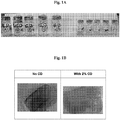
- Fig. 1 The effect of carbidopa on the stability of levodopa formulations is shown in Fig. 1 .
- the right hand side of Fig. 1 indicates the lack of black by-products formation, suggesting that CD inhibits oxidation of LD ex vivo and may also inhibit the formation of o-quinones and melanin.
- Table H indicates that CD was less sensitive to oxidation and degradation and was more stable in the presence of LD: the area of impurities at retention time (R.T.) 4.82, 5.65, 12.7, 13.53 and 14.55 were significantly increased under aerobic conditions when LD was not present, and the area of impurities at R.T. at 4.82 and 13.53 were increased even in the absence of oxygen. It appears that LD may protect CD from degradation.
- Example 7 Plasma levels of levodopa following subcutaneous administration
- the purpose was to determine the plasma levels of LD (levodopa) following continuous subcutaneous administration of carbidopa, levodopa or entacapone and combinations thereof with oral LD/CD in pigs.
- Landrace ⁇ Large White female pigs weighing about 22 kg were treated, starting on Day 1 at 15:00 as per Table I, with oral LD/CD 100/25 and with the respective test formulations, containing carbidopa, levodopa or entacapone and combinations thereof, formulated with arginine, as described above, and administered continuously subcutaneously via a dermal patch (Omnipod®) at a rate of 0.08 ml/h.
- a dermal patch Omnipod®
- Table I indicates the treatment protocol of each group.
- the formulations were prepared as in Example 1 and 2.
- Table I Treatment group None CD CD+E E LD+CD LD n 3 3 3 2 2 1 SC route of administration No SC treatment 2% carbidopa 2% carbidopa + 10% entacapone 10% entacapone 7% levodopa + 2% carbidopa 7% levodopa Oral treatment 100/25 levodopa/carbidopa
- Plasma samples were collected following the 3 rd oral dose at pre-determined time points and plasma levels of levodopa, carbidopa and 3-OMD were analyzed by HPLC-ECD.
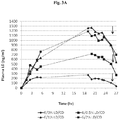
- Fig. 4 indicates the mean levodopa plasma concentrations following oral administration of Sinemet (oral 100/25 LD/CD) with continuous SC administration of entacapone (200 mg/24h) ⁇ CD (40mg/24h), as two separate compositions ( Fig. 4A ); or LD (140 mg/24h) ⁇ CD (40mg/24h) in pigs ( Fig. 4B ) (all subcutaneous formulations included arginine, as above).
- Results show that there is a synergistic effect between entacapone (200 mg/24h) and CD (40mg/24h) on the plasma pharmacokinetics (PK) of levodopa (ng/ml) when co-administered continuously subcutaneously, as compared to the calculated LD plasma PK obtained after adding the plasma concentrations of LD following the continuous SC administration of CD and entacapone each alone ( Fig. 1A and Table 2, C vs. B+D).
- results show that there is an additive effect between levodopa (140 mg/24h) and CD (40mg/24h) on the plasma PK of levodopa (ng/ml) when co-administered continuously subcutaneously, as compared to the calculated LD plasma PK obtained after adding the plasma concentrations of LD following the continuous SC administration of CD and LD each alone ( Fig. 1B and Table 2, E vs. D+F).
- the results suggest that continuous SC administration of LD and CD may be sufficient to maintain constant, continuous levodopa plasma concentrations even in the absence of oral LD/CD administration ( Fig. 4B dotted line and Table J 'E minus A').
- Table J presents concentrations of plasma levodopa 61 ⁇ 2 and 8h post-oral LD/CD administration.
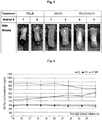
- Fig. 5 shows tissue biopsies from the application site of the levodopa-carbidopa arginine combination formulation and the levodopa/arginine formulation.
- No visible tissue irritation or damage was apparent in the levodopa-carbidopa arginine formulation.
- the site administered with levodopa-arginine formulation appears to have some blackening of tissue. Without being limited by any theory, it is thought that having carbidopa and arginine together with levodopa (arginine) formulation protects the local tissue from local damage of levodopa by preventing oxidation of levodopa into irritant by products, and that carbidopa is a potent anti-oxidant.
- Example 8 Additional exemplary carbidopa and levodopa/carbidopa formulations
- Example 9 Plasma levels of levodopa, carbidopa, and 3-O-methyldopa following continuous subcutaneous administration of carbidopa and levodopa and oral administration of entacapone
- the purpose was to determine the plasma levels of levodopa (LD), carbidopa (CD), and 3-O-methyldopa (3-OMD) following continuous subcutaneous administration of carbidopa and levodopa, and oral administration of entacapone in human volunteers.
- LD levodopa
- CD carbidopa
- 3-O-methyldopa 3-O-methyldopa
Landscapes
- Health & Medical Sciences (AREA)
- Chemical & Material Sciences (AREA)
- Medicinal Chemistry (AREA)
- Pharmacology & Pharmacy (AREA)
- Life Sciences & Earth Sciences (AREA)
- Animal Behavior & Ethology (AREA)
- General Health & Medical Sciences (AREA)
- Public Health (AREA)
- Veterinary Medicine (AREA)
- Epidemiology (AREA)
- Engineering & Computer Science (AREA)
- Bioinformatics & Cheminformatics (AREA)
- Biomedical Technology (AREA)
- Neurology (AREA)
- Neurosurgery (AREA)
- Chemical Kinetics & Catalysis (AREA)
- General Chemical & Material Sciences (AREA)
- Nuclear Medicine, Radiotherapy & Molecular Imaging (AREA)
- Organic Chemistry (AREA)
- Dermatology (AREA)
- Nutrition Science (AREA)
- Physiology (AREA)
- Psychology (AREA)
- Acyclic And Carbocyclic Compounds In Medicinal Compositions (AREA)
- Medicinal Preparation (AREA)
- Medicines That Contain Protein Lipid Enzymes And Other Medicines (AREA)
- Otolaryngology (AREA)
- Medicines Containing Plant Substances (AREA)
- Pharmaceuticals Containing Other Organic And Inorganic Compounds (AREA)
Priority Applications (3)
| Application Number | Priority Date | Filing Date | Title |
|---|---|---|---|
| HRP20211442TT HRP20211442T1 (hr) | 2013-03-13 | 2014-03-13 | Kombinacija za liječenje parkinsonove bolesti |
| EP21176202.6A EP3892266A1 (en) | 2013-03-13 | 2014-03-13 | Method for treatment of parkinson's disease |
| PL14718177T PL2968218T3 (pl) | 2013-03-13 | 2014-03-13 | Skojarzenie do leczenia choroby parkinsona |
Applications Claiming Priority (2)
| Application Number | Priority Date | Filing Date | Title |
|---|---|---|---|
| US201361779357P | 2013-03-13 | 2013-03-13 | |
| PCT/IL2014/050261 WO2014141261A1 (en) | 2013-03-13 | 2014-03-13 | Method for treatment of parkinson's disease |
Related Child Applications (2)
| Application Number | Title | Priority Date | Filing Date |
|---|---|---|---|
| EP21176202.6A Division-Into EP3892266A1 (en) | 2013-03-13 | 2014-03-13 | Method for treatment of parkinson's disease |
| EP21176202.6A Division EP3892266A1 (en) | 2013-03-13 | 2014-03-13 | Method for treatment of parkinson's disease |
Publications (2)
| Publication Number | Publication Date |
|---|---|
| EP2968218A1 EP2968218A1 (en) | 2016-01-20 |
| EP2968218B1 true EP2968218B1 (en) | 2021-07-07 |
Family
ID=50513395
Family Applications (2)
| Application Number | Title | Priority Date | Filing Date |
|---|---|---|---|
| EP14718177.0A Active EP2968218B1 (en) | 2013-03-13 | 2014-03-13 | Combination for the treatment of parkinson's disease |
| EP21176202.6A Withdrawn EP3892266A1 (en) | 2013-03-13 | 2014-03-13 | Method for treatment of parkinson's disease |
Family Applications After (1)
| Application Number | Title | Priority Date | Filing Date |
|---|---|---|---|
| EP21176202.6A Withdrawn EP3892266A1 (en) | 2013-03-13 | 2014-03-13 | Method for treatment of parkinson's disease |
Country Status (21)
| Country | Link |
|---|---|
| US (4) | US20160022573A1 (enExample) |
| EP (2) | EP2968218B1 (enExample) |
| JP (2) | JP6472391B2 (enExample) |
| KR (1) | KR102209353B1 (enExample) |
| CN (2) | CN105209029A (enExample) |
| AU (1) | AU2014229127B2 (enExample) |
| BR (1) | BR112015022390A8 (enExample) |
| CA (1) | CA2904838C (enExample) |
| CL (1) | CL2015002641A1 (enExample) |
| DK (1) | DK2968218T3 (enExample) |
| ES (1) | ES2889626T3 (enExample) |
| HR (1) | HRP20211442T1 (enExample) |
| HU (1) | HUE056006T2 (enExample) |
| IL (1) | IL266648B (enExample) |
| MX (1) | MX365206B (enExample) |
| PL (1) | PL2968218T3 (enExample) |
| PT (1) | PT2968218T (enExample) |
| RU (2) | RU2677278C2 (enExample) |
| SG (2) | SG10201911731YA (enExample) |
| WO (1) | WO2014141261A1 (enExample) |
| ZA (1) | ZA201507621B (enExample) |
Families Citing this family (23)
| Publication number | Priority date | Publication date | Assignee | Title |
|---|---|---|---|---|
| PL2432454T3 (pl) | 2009-05-19 | 2017-10-31 | Neuroderm Ltd | Kompozycje do ciągłego podawania inhibitorów dopa-dekarboksylazy |
| PT2640358T (pt) | 2010-11-15 | 2018-02-23 | Neuroderm Ltd | Administração contínua de l-dopa, inibidores de dopa descarboxilase, inibidores de catecol-o-metil transferase e composições para os mesmos |
| TR201808178T4 (tr) | 2010-11-15 | 2018-07-23 | Neuroderm Ltd | Aktif ajanların transdermal dağıtımı için bileşimler. |
| US10258585B2 (en) | 2014-03-13 | 2019-04-16 | Neuroderm, Ltd. | DOPA decarboxylase inhibitor compositions |
| DK3116475T3 (da) * | 2014-03-13 | 2020-12-07 | Neuroderm Ltd | Dopa-decarboxylasehæmmersammensætninger |
| JP6622310B2 (ja) | 2014-09-04 | 2019-12-18 | ロブソル・ファーマシューティカルズ・アクチボラグLobsor Pharmaceuticals Aktiebolag | レボドパ、ドーパミン脱炭酸酵素阻害薬およびcomt阻害薬を含む医薬組成物ならびにその投与方法 |
| RU2021103000A (ru) | 2014-10-21 | 2021-03-01 | Эббви Инк. | Пролекарства карбидопа и l-dopa и их применение для лечения болезни паркинсона |
| MA41377A (fr) | 2015-01-20 | 2017-11-28 | Abbvie Inc | Gel intestinal de lévodopa et de carbidona et procédés d'utilisation |
| US10555922B2 (en) | 2015-09-04 | 2020-02-11 | Lobsor Pharmaceuticals Aktiebolag | Method of treating a dopamine related disorder in a subject by administering levodopa, in combination with a dopamine decarboxylase inhibitor and a catechol-o-methyltransferase inhibitor |
| WO2017070293A1 (en) * | 2015-10-20 | 2017-04-27 | Ironwood Pharmaceuticals, Inc. | Phosphodiesterase 9 inhibitor and levodopa therapy |
| EP3275433A1 (en) * | 2016-07-29 | 2018-01-31 | Som Innovation Biotech S.L. | Sustained release composition comprising micronized tolcapone |
| CA3065990A1 (en) * | 2017-06-05 | 2018-12-13 | Dizlin Pharmaceuticals Ab | Levodopa infusion solution |
| WO2019097120A1 (en) * | 2017-11-16 | 2019-05-23 | Orion Corporation | New use and pharmaceutical dosage forms |
| US11806326B2 (en) | 2018-01-29 | 2023-11-07 | Jonathan Sackner-Bernstein | Methods for dopamine modulation in human neurologic diseases |
| BR112020017422A2 (pt) * | 2018-03-29 | 2020-12-22 | Avion Pharmaceuticals , Llc | Composição de dose fracionada de levodopa e uso |
| BR112021009353A2 (pt) | 2018-11-15 | 2021-11-23 | Abbvie Inc | Formulações farmacêuticas para administração subcutânea |
| CN111701024B (zh) * | 2020-05-26 | 2022-05-24 | 上海京新生物医药有限公司 | 一种左旋多巴制剂及其制备方法及其应用 |
| WO2022047298A1 (en) * | 2020-08-31 | 2022-03-03 | Purdue Pharma L.P. | Compositions and methods for levodopa delivery |
| US11331293B1 (en) | 2020-11-17 | 2022-05-17 | Neuroderm, Ltd. | Method for treatment of Parkinson's disease |
| US11844754B2 (en) | 2020-11-17 | 2023-12-19 | Neuroderm, Ltd. | Methods for treatment of Parkinson's disease |
| US11213502B1 (en) | 2020-11-17 | 2022-01-04 | Neuroderm, Ltd. | Method for treatment of parkinson's disease |
| WO2023282900A1 (en) * | 2021-07-08 | 2023-01-12 | Morehouse School Of Medicine | Method and system of diagnosing and treating neurodegenerative disease and seizures |
| US12161612B2 (en) | 2023-04-14 | 2024-12-10 | Neuroderm, Ltd. | Methods and compositions for reducing symptoms of Parkinson's disease |
Family Cites Families (9)
| Publication number | Priority date | Publication date | Assignee | Title |
|---|---|---|---|---|
| US4166452A (en) | 1976-05-03 | 1979-09-04 | Generales Constantine D J Jr | Apparatus for testing human responses to stimuli |
| US4256108A (en) | 1977-04-07 | 1981-03-17 | Alza Corporation | Microporous-semipermeable laminated osmotic system |
| US4265874A (en) | 1980-04-25 | 1981-05-05 | Alza Corporation | Method of delivering drug with aid of effervescent activity generated in environment of use |
| US4832957A (en) * | 1987-12-11 | 1989-05-23 | Merck & Co., Inc. | Controlled release combination of carbidopa/levodopa |
| FI109453B (fi) * | 1999-06-30 | 2002-08-15 | Orion Yhtymae Oyj | Farmaseuttinen koostumus |
| PL1896006T3 (pl) * | 2005-06-08 | 2010-03-31 | Orion Corp | Sposób wytwarzania granulek zawierających entakapon do postaci dawkowania doustnego |
| TR200806646A2 (tr) * | 2008-09-03 | 2009-06-22 | Dr. F. Fri̇k İlaç San. Ve Ti̇c. A.Ş. | Entakapon, levodopa ve karbidoba içeren farmasötik kombinasyonlar |
| PL2432454T3 (pl) * | 2009-05-19 | 2017-10-31 | Neuroderm Ltd | Kompozycje do ciągłego podawania inhibitorów dopa-dekarboksylazy |
| PT2640358T (pt) | 2010-11-15 | 2018-02-23 | Neuroderm Ltd | Administração contínua de l-dopa, inibidores de dopa descarboxilase, inibidores de catecol-o-metil transferase e composições para os mesmos |
-
2014
- 2014-03-13 AU AU2014229127A patent/AU2014229127B2/en active Active
- 2014-03-13 CN CN201480027268.2A patent/CN105209029A/zh active Pending
- 2014-03-13 EP EP14718177.0A patent/EP2968218B1/en active Active
- 2014-03-13 KR KR1020157028984A patent/KR102209353B1/ko active Active
- 2014-03-13 RU RU2015143112A patent/RU2677278C2/ru active
- 2014-03-13 US US14/774,938 patent/US20160022573A1/en not_active Abandoned
- 2014-03-13 JP JP2015562555A patent/JP6472391B2/ja active Active
- 2014-03-13 SG SG10201911731YA patent/SG10201911731YA/en unknown
- 2014-03-13 EP EP21176202.6A patent/EP3892266A1/en not_active Withdrawn
- 2014-03-13 DK DK14718177.0T patent/DK2968218T3/da active
- 2014-03-13 PL PL14718177T patent/PL2968218T3/pl unknown
- 2014-03-13 BR BR112015022390A patent/BR112015022390A8/pt not_active Application Discontinuation
- 2014-03-13 CN CN201911315631.1A patent/CN110935026A/zh active Pending
- 2014-03-13 ES ES14718177T patent/ES2889626T3/es active Active
- 2014-03-13 CA CA2904838A patent/CA2904838C/en active Active
- 2014-03-13 RU RU2018144700A patent/RU2018144700A/ru not_active Application Discontinuation
- 2014-03-13 WO PCT/IL2014/050261 patent/WO2014141261A1/en not_active Ceased
- 2014-03-13 PT PT147181770T patent/PT2968218T/pt unknown
- 2014-03-13 SG SG11201507538UA patent/SG11201507538UA/en unknown
- 2014-03-13 HR HRP20211442TT patent/HRP20211442T1/hr unknown
- 2014-03-13 MX MX2015012561A patent/MX365206B/es active IP Right Grant
- 2014-03-13 HU HUE14718177A patent/HUE056006T2/hu unknown
-
2015
- 2015-09-11 CL CL2015002641A patent/CL2015002641A1/es unknown
- 2015-10-13 ZA ZA2015/07621A patent/ZA201507621B/en unknown
-
2019
- 2019-01-22 JP JP2019008215A patent/JP6625773B2/ja active Active
- 2019-05-15 IL IL266648A patent/IL266648B/en active IP Right Grant
-
2020
- 2020-05-18 US US16/876,911 patent/US20210093560A1/en not_active Abandoned
-
2022
- 2022-03-18 US US17/698,189 patent/US20230047847A1/en not_active Abandoned
-
2024
- 2024-07-05 US US18/764,647 patent/US20250177292A1/en active Pending
Non-Patent Citations (1)
| Title |
|---|
| None * |
Also Published As
Similar Documents
| Publication | Publication Date | Title |
|---|---|---|
| US20250177292A1 (en) | Method for treatment of parkinson's disease | |
| US20250114315A1 (en) | Continuous administration of l-dopa, dopa decarboxylase inhibitors, catechol-o-methyl transferase inhibitors and compositions for same | |
| HK40012262A (zh) | L-多巴、多巴脱羧酶抑制剂、儿茶酚-0-甲基转移酶抑制剂及其组合物的连续施用 |
Legal Events
| Date | Code | Title | Description |
|---|---|---|---|
| PUAI | Public reference made under article 153(3) epc to a published international application that has entered the european phase |
Free format text: ORIGINAL CODE: 0009012 |
|
| 17P | Request for examination filed |
Effective date: 20151012 |
|
| AK | Designated contracting states |
Kind code of ref document: A1 Designated state(s): AL AT BE BG CH CY CZ DE DK EE ES FI FR GB GR HR HU IE IS IT LI LT LU LV MC MK MT NL NO PL PT RO RS SE SI SK SM TR |
|
| AX | Request for extension of the european patent |
Extension state: BA ME |
|
| DAX | Request for extension of the european patent (deleted) | ||
| STAA | Information on the status of an ep patent application or granted ep patent |
Free format text: STATUS: EXAMINATION IS IN PROGRESS |
|
| 17Q | First examination report despatched |
Effective date: 20181030 |
|
| RIC1 | Information provided on ipc code assigned before grant |
Ipc: A61K 31/277 20060101ALI20201207BHEP Ipc: A61K 31/198 20060101ALI20201207BHEP Ipc: A61P 25/16 20060101ALI20201207BHEP Ipc: A61K 31/121 20060101AFI20201207BHEP |
|
| GRAP | Despatch of communication of intention to grant a patent |
Free format text: ORIGINAL CODE: EPIDOSNIGR1 |
|
| STAA | Information on the status of an ep patent application or granted ep patent |
Free format text: STATUS: GRANT OF PATENT IS INTENDED |
|
| RIC1 | Information provided on ipc code assigned before grant |
Ipc: A61P 43/00 20060101ALI20210126BHEP Ipc: A61K 31/277 20060101ALI20210126BHEP Ipc: A61K 9/00 20060101ALI20210126BHEP Ipc: A61K 9/08 20060101ALI20210126BHEP Ipc: A61K 31/198 20060101ALI20210126BHEP Ipc: A61P 25/16 20060101ALI20210126BHEP Ipc: A61K 31/121 20060101AFI20210126BHEP |
|
| INTG | Intention to grant announced |
Effective date: 20210223 |
|
| GRAS | Grant fee paid |
Free format text: ORIGINAL CODE: EPIDOSNIGR3 |
|
| GRAA | (expected) grant |
Free format text: ORIGINAL CODE: 0009210 |
|
| STAA | Information on the status of an ep patent application or granted ep patent |
Free format text: STATUS: THE PATENT HAS BEEN GRANTED |
|
| AK | Designated contracting states |
Kind code of ref document: B1 Designated state(s): AL AT BE BG CH CY CZ DE DK EE ES FI FR GB GR HR HU IE IS IT LI LT LU LV MC MK MT NL NO PL PT RO RS SE SI SK SM TR |
|
| REG | Reference to a national code |
Ref country code: GB Ref legal event code: FG4D |
|
| REG | Reference to a national code |
Ref country code: AT Ref legal event code: REF Ref document number: 1407887 Country of ref document: AT Kind code of ref document: T Effective date: 20210715 |
|
| REG | Reference to a national code |
Ref country code: DE Ref legal event code: R096 Ref document number: 602014078585 Country of ref document: DE |
|
| REG | Reference to a national code |
Ref country code: IE Ref legal event code: FG4D |
|
| REG | Reference to a national code |
Ref country code: RO Ref legal event code: EPE |
|
| REG | Reference to a national code |
Ref country code: FI Ref legal event code: FGE |
|
| REG | Reference to a national code |
Ref country code: DK Ref legal event code: T3 Effective date: 20210914 |
|
| REG | Reference to a national code |
Ref country code: NL Ref legal event code: FP |
|
| REG | Reference to a national code |
Ref country code: PT Ref legal event code: SC4A Ref document number: 2968218 Country of ref document: PT Date of ref document: 20210924 Kind code of ref document: T Free format text: AVAILABILITY OF NATIONAL TRANSLATION Effective date: 20210913 |
|
| REG | Reference to a national code |
Ref country code: SE Ref legal event code: TRGR |
|
| REG | Reference to a national code |
Ref country code: LT Ref legal event code: MG9D |
|
| REG | Reference to a national code |
Ref country code: GR Ref legal event code: EP Ref document number: 20210402611 Country of ref document: GR Effective date: 20211111 |
|
| REG | Reference to a national code |
Ref country code: ES Ref legal event code: FG2A Ref document number: 2889626 Country of ref document: ES Kind code of ref document: T3 Effective date: 20220112 |
|
| REG | Reference to a national code |
Ref country code: NO Ref legal event code: T2 Effective date: 20210707 |
|
| REG | Reference to a national code |
Ref country code: HU Ref legal event code: AG4A Ref document number: E056006 Country of ref document: HU |
|
| PG25 | Lapsed in a contracting state [announced via postgrant information from national office to epo] |
Ref country code: BG Free format text: LAPSE BECAUSE OF FAILURE TO SUBMIT A TRANSLATION OF THE DESCRIPTION OR TO PAY THE FEE WITHIN THE PRESCRIBED TIME-LIMIT Effective date: 20211007 Ref country code: LT Free format text: LAPSE BECAUSE OF FAILURE TO SUBMIT A TRANSLATION OF THE DESCRIPTION OR TO PAY THE FEE WITHIN THE PRESCRIBED TIME-LIMIT Effective date: 20210707 Ref country code: RS Free format text: LAPSE BECAUSE OF FAILURE TO SUBMIT A TRANSLATION OF THE DESCRIPTION OR TO PAY THE FEE WITHIN THE PRESCRIBED TIME-LIMIT Effective date: 20210707 |
|
| REG | Reference to a national code |
Ref country code: HR Ref legal event code: T1PR Ref document number: P20211442 Country of ref document: HR |
|
| PG25 | Lapsed in a contracting state [announced via postgrant information from national office to epo] |
Ref country code: LV Free format text: LAPSE BECAUSE OF FAILURE TO SUBMIT A TRANSLATION OF THE DESCRIPTION OR TO PAY THE FEE WITHIN THE PRESCRIBED TIME-LIMIT Effective date: 20210707 |
|
| REG | Reference to a national code |
Ref country code: HR Ref legal event code: ODRP Ref document number: P20211442 Country of ref document: HR Payment date: 20220221 Year of fee payment: 9 |
|
| REG | Reference to a national code |
Ref country code: DE Ref legal event code: R097 Ref document number: 602014078585 Country of ref document: DE |
|
| PLBE | No opposition filed within time limit |
Free format text: ORIGINAL CODE: 0009261 |
|
| STAA | Information on the status of an ep patent application or granted ep patent |
Free format text: STATUS: NO OPPOSITION FILED WITHIN TIME LIMIT |
|
| PG25 | Lapsed in a contracting state [announced via postgrant information from national office to epo] |
Ref country code: SM Free format text: LAPSE BECAUSE OF FAILURE TO SUBMIT A TRANSLATION OF THE DESCRIPTION OR TO PAY THE FEE WITHIN THE PRESCRIBED TIME-LIMIT Effective date: 20210707 Ref country code: SK Free format text: LAPSE BECAUSE OF FAILURE TO SUBMIT A TRANSLATION OF THE DESCRIPTION OR TO PAY THE FEE WITHIN THE PRESCRIBED TIME-LIMIT Effective date: 20210707 Ref country code: EE Free format text: LAPSE BECAUSE OF FAILURE TO SUBMIT A TRANSLATION OF THE DESCRIPTION OR TO PAY THE FEE WITHIN THE PRESCRIBED TIME-LIMIT Effective date: 20210707 Ref country code: AL Free format text: LAPSE BECAUSE OF FAILURE TO SUBMIT A TRANSLATION OF THE DESCRIPTION OR TO PAY THE FEE WITHIN THE PRESCRIBED TIME-LIMIT Effective date: 20210707 |
|
| 26N | No opposition filed |
Effective date: 20220408 |
|
| PG25 | Lapsed in a contracting state [announced via postgrant information from national office to epo] |
Ref country code: MC Free format text: LAPSE BECAUSE OF FAILURE TO SUBMIT A TRANSLATION OF THE DESCRIPTION OR TO PAY THE FEE WITHIN THE PRESCRIBED TIME-LIMIT Effective date: 20210707 |
|
| PG25 | Lapsed in a contracting state [announced via postgrant information from national office to epo] |
Ref country code: LU Free format text: LAPSE BECAUSE OF NON-PAYMENT OF DUE FEES Effective date: 20220313 |
|
| REG | Reference to a national code |
Ref country code: AT Ref legal event code: UEP Ref document number: 1407887 Country of ref document: AT Kind code of ref document: T Effective date: 20210707 |
|
| REG | Reference to a national code |
Ref country code: HR Ref legal event code: ODRP Ref document number: P20211442 Country of ref document: HR Payment date: 20230221 Year of fee payment: 10 |
|
| P01 | Opt-out of the competence of the unified patent court (upc) registered |
Effective date: 20230418 |
|
| REG | Reference to a national code |
Ref country code: HR Ref legal event code: ODRP Ref document number: P20211442 Country of ref document: HR Payment date: 20240221 Year of fee payment: 11 |
|
| PG25 | Lapsed in a contracting state [announced via postgrant information from national office to epo] |
Ref country code: MK Free format text: LAPSE BECAUSE OF FAILURE TO SUBMIT A TRANSLATION OF THE DESCRIPTION OR TO PAY THE FEE WITHIN THE PRESCRIBED TIME-LIMIT Effective date: 20210707 Ref country code: CY Free format text: LAPSE BECAUSE OF FAILURE TO SUBMIT A TRANSLATION OF THE DESCRIPTION OR TO PAY THE FEE WITHIN THE PRESCRIBED TIME-LIMIT Effective date: 20210707 |
|
| PG25 | Lapsed in a contracting state [announced via postgrant information from national office to epo] |
Ref country code: MT Free format text: LAPSE BECAUSE OF FAILURE TO SUBMIT A TRANSLATION OF THE DESCRIPTION OR TO PAY THE FEE WITHIN THE PRESCRIBED TIME-LIMIT Effective date: 20210707 |
|
| REG | Reference to a national code |
Ref country code: HR Ref legal event code: ODRP Ref document number: P20211442 Country of ref document: HR Payment date: 20250220 Year of fee payment: 12 |
|
| PGFP | Annual fee paid to national office [announced via postgrant information from national office to epo] |
Ref country code: ES Payment date: 20250401 Year of fee payment: 12 |
|
| PGFP | Annual fee paid to national office [announced via postgrant information from national office to epo] |
Ref country code: CH Payment date: 20250401 Year of fee payment: 12 |
|
| REG | Reference to a national code |
Ref country code: CH Ref legal event code: U11 Free format text: ST27 STATUS EVENT CODE: U-0-0-U10-U11 (AS PROVIDED BY THE NATIONAL OFFICE) Effective date: 20260401 |
|
| PGFP | Annual fee paid to national office [announced via postgrant information from national office to epo] |
Ref country code: SE Payment date: 20260327 Year of fee payment: 13 |
|
| PGFP | Annual fee paid to national office [announced via postgrant information from national office to epo] |
Ref country code: GB Payment date: 20260327 Year of fee payment: 13 |
|
| REG | Reference to a national code |
Ref country code: HR Ref legal event code: ODRP Ref document number: P20211442 Country of ref document: HR Payment date: 20260304 Year of fee payment: 13 |
|
| PGFP | Annual fee paid to national office [announced via postgrant information from national office to epo] |
Ref country code: NO Payment date: 20260327 Year of fee payment: 13 Ref country code: DK Payment date: 20260325 Year of fee payment: 13 Ref country code: IE Payment date: 20260327 Year of fee payment: 13 Ref country code: DE Payment date: 20260327 Year of fee payment: 13 |
|
| PGFP | Annual fee paid to national office [announced via postgrant information from national office to epo] |
Ref country code: HR Payment date: 20260304 Year of fee payment: 13 Ref country code: AT Payment date: 20260327 Year of fee payment: 13 |
|
| PGFP | Annual fee paid to national office [announced via postgrant information from national office to epo] |
Ref country code: RO Payment date: 20260225 Year of fee payment: 13 Ref country code: BE Payment date: 20260327 Year of fee payment: 13 Ref country code: FI Payment date: 20260325 Year of fee payment: 13 Ref country code: IT Payment date: 20260319 Year of fee payment: 13 |
|
| PGFP | Annual fee paid to national office [announced via postgrant information from national office to epo] |
Ref country code: HU Payment date: 20260225 Year of fee payment: 13 Ref country code: NL Payment date: 20260326 Year of fee payment: 13 |
|
| PGFP | Annual fee paid to national office [announced via postgrant information from national office to epo] |
Ref country code: FR Payment date: 20260325 Year of fee payment: 13 Ref country code: IS Payment date: 20260312 Year of fee payment: 13 |
|
| PGFP | Annual fee paid to national office [announced via postgrant information from national office to epo] |
Ref country code: TR Payment date: 20260220 Year of fee payment: 13 |
|
| PGFP | Annual fee paid to national office [announced via postgrant information from national office to epo] |
Ref country code: CZ Payment date: 20260224 Year of fee payment: 13 Ref country code: PT Payment date: 20260224 Year of fee payment: 13 |
|
| PGFP | Annual fee paid to national office [announced via postgrant information from national office to epo] |
Ref country code: GR Payment date: 20260326 Year of fee payment: 13 Ref country code: PL Payment date: 20260220 Year of fee payment: 13 |