EP2958905B1 - Carbohydrate phosphonate derivate als modulatoren der glycosylierung - Google Patents
Carbohydrate phosphonate derivate als modulatoren der glycosylierung Download PDFInfo
- Publication number
- EP2958905B1 EP2958905B1 EP14708738.1A EP14708738A EP2958905B1 EP 2958905 B1 EP2958905 B1 EP 2958905B1 EP 14708738 A EP14708738 A EP 14708738A EP 2958905 B1 EP2958905 B1 EP 2958905B1
- Authority
- EP
- European Patent Office
- Prior art keywords
- compound
- methyl
- benzyloxy
- pyran
- bis
- Prior art date
- Legal status (The legal status is an assumption and is not a legal conclusion. Google has not performed a legal analysis and makes no representation as to the accuracy of the status listed.)
- Active
Links
- 0 *C(O*)OP(C[C@]([C@@]([C@]1O*)O*)O[C@](*)[C@]1O*)(OC(*)O*)=O Chemical compound *C(O*)OP(C[C@]([C@@]([C@]1O*)O*)O[C@](*)[C@]1O*)(OC(*)O*)=O 0.000 description 5
- PPEMCVDSOGFYEN-ZGBADFCZSA-N C[C@@H]([C@H]([C@H]1OC(C)=O)OC(C)=O)O[C@H](CP(OCOC(C)=O)(OCOC(C)=O)=O)[C@H]1OC(C)=O Chemical compound C[C@@H]([C@H]([C@H]1OC(C)=O)OC(C)=O)O[C@H](CP(OCOC(C)=O)(OCOC(C)=O)=O)[C@H]1OC(C)=O PPEMCVDSOGFYEN-ZGBADFCZSA-N 0.000 description 1
- JXTMYUIBPIFPCR-QCUOIJEPSA-N C[C@@H]([C@H]1OC(C)=O)O[C@H](CP(OCOC(C(C)(C)C)=O)(/[O]=C/OC(C(C)(C)C)=O)=O)C(OC(C)=O)=C1OC(C)=O Chemical compound C[C@@H]([C@H]1OC(C)=O)O[C@H](CP(OCOC(C(C)(C)C)=O)(/[O]=C/OC(C(C)(C)C)=O)=O)C(OC(C)=O)=C1OC(C)=O JXTMYUIBPIFPCR-QCUOIJEPSA-N 0.000 description 1
Images
Classifications
-
- C—CHEMISTRY; METALLURGY
- C07—ORGANIC CHEMISTRY
- C07H—SUGARS; DERIVATIVES THEREOF; NUCLEOSIDES; NUCLEOTIDES; NUCLEIC ACIDS
- C07H7/00—Compounds containing non-saccharide radicals linked to saccharide radicals by a carbon-to-carbon bond
- C07H7/02—Acyclic radicals
-
- C—CHEMISTRY; METALLURGY
- C07—ORGANIC CHEMISTRY
- C07D—HETEROCYCLIC COMPOUNDS
- C07D309/00—Heterocyclic compounds containing six-membered rings having one oxygen atom as the only ring hetero atom, not condensed with other rings
- C07D309/02—Heterocyclic compounds containing six-membered rings having one oxygen atom as the only ring hetero atom, not condensed with other rings having no double bonds between ring members or between ring members and non-ring members
- C07D309/08—Heterocyclic compounds containing six-membered rings having one oxygen atom as the only ring hetero atom, not condensed with other rings having no double bonds between ring members or between ring members and non-ring members with hetero atoms or with carbon atoms having three bonds to hetero atoms with at the most one bond to halogen, e.g. ester or nitrile radicals, directly attached to ring carbon atoms
- C07D309/10—Oxygen atoms
-
- C—CHEMISTRY; METALLURGY
- C07—ORGANIC CHEMISTRY
- C07D—HETEROCYCLIC COMPOUNDS
- C07D309/00—Heterocyclic compounds containing six-membered rings having one oxygen atom as the only ring hetero atom, not condensed with other rings
- C07D309/02—Heterocyclic compounds containing six-membered rings having one oxygen atom as the only ring hetero atom, not condensed with other rings having no double bonds between ring members or between ring members and non-ring members
- C07D309/08—Heterocyclic compounds containing six-membered rings having one oxygen atom as the only ring hetero atom, not condensed with other rings having no double bonds between ring members or between ring members and non-ring members with hetero atoms or with carbon atoms having three bonds to hetero atoms with at the most one bond to halogen, e.g. ester or nitrile radicals, directly attached to ring carbon atoms
- C07D309/14—Nitrogen atoms not forming part of a nitro radical
-
- C—CHEMISTRY; METALLURGY
- C07—ORGANIC CHEMISTRY
- C07K—PEPTIDES
- C07K16/00—Immunoglobulins [IG], e.g. monoclonal or polyclonal antibodies
- C07K16/18—Immunoglobulins [IG], e.g. monoclonal or polyclonal antibodies against material from animals or humans
- C07K16/28—Immunoglobulins [IG], e.g. monoclonal or polyclonal antibodies against material from animals or humans against receptors, cell surface antigens or cell surface determinants
- C07K16/2875—Immunoglobulins [IG], e.g. monoclonal or polyclonal antibodies against material from animals or humans against receptors, cell surface antigens or cell surface determinants against the NGF/TNF superfamily, e.g. CD70, CD95L, CD153, CD154
-
- C—CHEMISTRY; METALLURGY
- C12—BIOCHEMISTRY; BEER; SPIRITS; WINE; VINEGAR; MICROBIOLOGY; ENZYMOLOGY; MUTATION OR GENETIC ENGINEERING
- C12N—MICROORGANISMS OR ENZYMES; COMPOSITIONS THEREOF; PROPAGATING, PRESERVING, OR MAINTAINING MICROORGANISMS; MUTATION OR GENETIC ENGINEERING; CULTURE MEDIA
- C12N5/00—Undifferentiated human, animal or plant cells, e.g. cell lines; Tissues; Cultivation or maintenance thereof; Culture media therefor
- C12N5/06—Animal cells or tissues; Human cells or tissues
- C12N5/0602—Vertebrate cells
- C12N5/0603—Embryonic cells ; Embryoid bodies
-
- C—CHEMISTRY; METALLURGY
- C07—ORGANIC CHEMISTRY
- C07K—PEPTIDES
- C07K2317/00—Immunoglobulins specific features
- C07K2317/10—Immunoglobulins specific features characterized by their source of isolation or production
- C07K2317/14—Specific host cells or culture conditions, e.g. components, pH or temperature
-
- C—CHEMISTRY; METALLURGY
- C07—ORGANIC CHEMISTRY
- C07K—PEPTIDES
- C07K2317/00—Immunoglobulins specific features
- C07K2317/40—Immunoglobulins specific features characterized by post-translational modification
- C07K2317/41—Glycosylation, sialylation, or fucosylation
-
- C—CHEMISTRY; METALLURGY
- C12—BIOCHEMISTRY; BEER; SPIRITS; WINE; VINEGAR; MICROBIOLOGY; ENZYMOLOGY; MUTATION OR GENETIC ENGINEERING
- C12N—MICROORGANISMS OR ENZYMES; COMPOSITIONS THEREOF; PROPAGATING, PRESERVING, OR MAINTAINING MICROORGANISMS; MUTATION OR GENETIC ENGINEERING; CULTURE MEDIA
- C12N2501/00—Active agents used in cell culture processes, e.g. differentation
- C12N2501/999—Small molecules not provided for elsewhere
-
- C—CHEMISTRY; METALLURGY
- C12—BIOCHEMISTRY; BEER; SPIRITS; WINE; VINEGAR; MICROBIOLOGY; ENZYMOLOGY; MUTATION OR GENETIC ENGINEERING
- C12N—MICROORGANISMS OR ENZYMES; COMPOSITIONS THEREOF; PROPAGATING, PRESERVING, OR MAINTAINING MICROORGANISMS; MUTATION OR GENETIC ENGINEERING; CULTURE MEDIA
- C12N2510/00—Genetically modified cells
Definitions
- the present invention relates to carbohydrate derivatives that are useful for modifying carbohydrate incorporation into proteins such as antibodies during the production of such proteins in eukaryotic cell cultures. More specifically, the invention relates to compounds that are useful in inhibiting fucosylation of proteins such as antibodies during production from eukaryotic cell cultures. The invention also relates to carbohydrate phosphonate derivatives that are useful in modulating the amount of mannose incorporation into proteins during production from eukaryotic cell lines.
- ADCC antibody-dependent cellular cytotoxicity
- Antibody fucosylation may be reduced by use of cell lines in which one or more of the key enzymes involved in protein fucosylation (GDP-mannose dehydratase (GMD), GDP-fucose synthase (GFS), or alpha-(1,6)-fucosytransferase 8 (FUT8) are either genetically knocked out or through chemical inhibition or inactivation of these enzymes.
- GDP-mannose dehydratase (GMD), GDP-fucose synthase (GFS), or alpha-(1,6)-fucosytransferase 8 (FUT8) are either genetically knocked out or through chemical inhibition or inactivation of these enzymes.
- the use of knockout cell lines often requires optimization of manufacturing processes in these cell lines. Even so, cell growth characteristics, product yields, and product attribute qualities may be sub-optimal.
- a small molecule inhibitor or inactivator of enzymes involved in fucosylation may be used to reduce antibody fucosylation without resort to use of engineered cell lines
- Described herein are novel small molecules designed to reduce antibody fucosylation efficiently without undesirable effects on cell growth or viability, modification of high mannose structures, or, in some cases, being incorporated into antibody glycans.
- the invention provides a compound of Formula I: wherein V is O or NH; and further wherein the compound of Formula I is selected from a compound of Formula IA, IB, or IC: wherein:
- the compound of Formula I is a compound of Formula IA. In other embodiments, the compound of Formula I is a compound of Formula IB. In other embodiments, the compound of Formula I is a compound of Formula IC.
- the compound is a compound of Formula IA'
- the compound is a compound of Formula IA"
- the compound is a compound of Formula IB'
- the compound is a compound of Formula IC'
- the compound is N-(2-aminoethyl)-2-aminoethyl-N-(2-aminoethyl)-2-aminoethyl-N-(2-aminoethyl)-2-aminoethyl-N-(2-aminoethyl)-2-aminoethyl-N-(2-aminoethyl)-2-aminoethyl-N-N-phenyl-N-(2-aminoethyl)-2-aminoethyl-N-(2-aminoethyl)-2-aminoethyl-N-(2-aminoethyl)-2-aminoethyl-N-(2-aminoethyl)-2-aminoethyl-N-(2-aminoethyl)-2-aminoethyl-N-(2-aminoethyl)-2-aminoethyl-N
- the compound is N-(2-aminoethyl)-2-aminoethyl-N-(2-aminoethyl)-2-aminoethyl-N-(2-aminoethyl)-2-aminoethyl-N-(2-aminoethyl)-2-aminoethyl-N-(2-aminoethyl)-2-aminoethyl-N-N-phenyl-N-(2-aminoethyl)-2-aminoethyl-N-(2-aminoethyl)-2-aminoethyl-N-(2-aminoethyl)-2-aminoethyl-N-(2-aminoethyl)-2-aminoethyl-N-(2-aminoethyl)-2-aminoethyl-N-(2-aminoethyl)-2-aminoethyl-N
- the compound is N-(2-aminoethyl)-2-aminoethyl-N-(2-aminoethyl)-2-aminoethyl-N-(2-aminoethyl)-2-aminoethyl-N-(2-aminoethyl)-2-aminoethyl-N-(2-aminoethyl)-2-aminoethyl-N-N-phenyl-N-(2-aminoethyl)-2-aminoethyl-N-(2-aminoethyl)-2-aminoethyl-N-(2-aminoethyl)-2-aminoethyl-N-(2-aminoethyl)-2-aminoethyl-N-(2-aminoethyl)-2-aminoethyl-N-(2-aminoethyl)-2-aminoethyl-N
- the compound is N-(2-aminoethyl)-2-aminoethyl-N-(2-aminoethyl)-2-aminoethyl-N-(2-aminoethyl)-2-aminoethyl-N-(2-aminoethyl)-2-aminoethyl-N-(2-aminoethyl)-2-aminoethyl-N-N-phenyl-N-(2-aminoethyl)-2-aminoethyl-N-(2-aminoethyl)-2-aminoethyl-N-(2-aminoethyl)-2-aminoethyl-N-(2-aminoethyl)-2-aminoethyl-N-(2-aminoethyl)-2-aminoethyl-N-(2-aminoethyl)-2-aminoethyl-N
- the compound is N-(2-aminoethyl)-2-aminoethyl-N-(2-aminoethyl)-2-aminoethyl-N-(2-aminoethyl)-2-aminoethyl-N-(2-aminoethyl)-2-aminoethyl-N-(2-aminoethyl)-2-aminoethyl-N-N-phenyl-N-(2-aminoethyl)-2-aminoethyl-N-(2-aminoethyl)-2-aminoethyl-N-(2-aminoethyl)-2-aminoethyl-N-(2-aminoethyl)-2-aminoethyl-N-(2-aminoethyl)-2-aminoethyl-N-(2-aminoethyl)-2-aminoethyl-N
- R 4 is H in both instances, whereas in other embodiments of the compounds of Formula I, R 4 is CH 3 in both instances.
- the invention includes a method for culturing eukaryotic cells, the method typically includes culturing the cells in a cell culture media that includes the compound of any of the embodiments.
- the invention includes a method for preparing a protein such as one having modified glycan content.
- Such methods typically include culturing eukaryotic host cells in a cell culture media that includes a compound of any one of the embodiments, and isolating the protein.
- the methods of the invention may be used to produce various proteins.
- the protein is a therapeutic protein.
- the protein may be fully human.
- the protein may be an antibody.
- an antibody produced using the methods of the invention may be a fully human antibody, a chimeric antibody, or a humanized antibody.
- the methods using the compounds of any of the embodiments may be used to produce an anti TRAIL antibody.
- the cells may be mammalian cells such as, in some embodiments, Chinese Hamster Ovary (CHO) cells.
- yeast cells may be used.
- the compounds of the invention may be present in the cell culture media at various concentrations.
- the compound may be present in the cell culture media at a concentration that ranges from 1mM to 100 nM. In some such embodiments, the concentration ranges from 500 uM to 1 uM. In still other such embodiments, the concentration ranges from 320 uM to 5 uM. In yet other such embodiments, the concentration ranges from 200 uM to 50 uM.
- the compound may be added to the cell culture media in a single dose, once a day, twice a day, three times a day, four times a day, once every two days, once every three days, or continuously. Adding the compound to the cell culture media on a daily basis has been found to be highly advantageous.
- Certain compounds of the invention may possess asymmetric carbon atoms (optical centers) or double bonds; the racemates, enantiomers, diastereomers, geometric isomers and individual isomers are all intended to be encompassed within the scope of the invention. Furthermore, atropisomers and mixtures thereof such as those resulting from restricted rotation about two aromatic or heteroaromatic rings bonded to one another are intended to be encompassed within the scope of the invention. As noted above, various compounds of the invention may contain one or more chiral centers, and can exist as racemic mixtures of enantiomers, mixtures of diastereomers or enantiomerically or optically pure compounds.
- This invention encompasses the use of stereomerically pure forms of such compounds, as well as the use of mixtures of those forms.
- mixtures comprising equal or unequal amounts of the enantiomers of a particular compound of the invention may be used in methods and compositions of the invention.
- These isomers may be asymmetrically synthesized or resolved using standard techniques such as chiral columns or chiral resolving agents. See, e.g., Jacques, J., et al., Enantiomers, Racemates and Resolutions (Wiley-Interscience, New York, 1981 ); Wilen, S. H., et al. (1997) Tetrahedron 33:2725 ; Eliel, E.
- certain compounds of the invention may exist in one or more tautomeric forms. Because one chemical structure may only be used to represent one tautomeric form, it will be understood that for convenience, referral to a compound of a given structural formula includes tautomers of the structure represented by the structural formula. The same is true with respect to stereoisomers unless a specific stereochemistry is shown or noted. For example, a compound of a specific formula includes all stereoisomers or mixtures thereof. Similarly, a pharmaceutically acceptable salt of the compound includes pharmaceutically acceptable salts of all individual stereoisomers or mixtures thereof.
- the compounds of the invention may also contain unnatural proportions of atomic isotopes at one or more of the atoms that constitute such compounds.
- the compounds may be radiolabeled with radioactive isotopes, such as for example tritium ( 3 H), iodine-125 ( 125 I) or carbon-14 ( 14 C).
- Radiolabeled compounds are useful as therapeutic or prophylactic agents, research reagents, e.g., assay reagents such as the 14 C thymidine incorporation assay, and diagnostic agents, e.g., in vivo imaging agents. All isotopic variations of the compounds of the invention, whether radioactive or not, are intended to be encompassed within the scope of the invention. For example, if a variable is said to be H or -H, this means that the variable may also be deuterium (D) or tritium (T).
- D deuterium
- T tritium
- compositions are said to comprise A, B, and C, then A, B, and C are in the composition, but D, E, and/or F may be in the composition as well.
- alkyl refers to a saturated, branched, straight-chain, or cyclic monovalent hydrocarbon group or combination thereof derived by the removal of one hydrogen atom from a single carbon atom of a parent alkane or cycloalkane.
- Typical alkyl groups include, but are not limited to, methyl (-CH 3 ); ethyl (-CH 2 CH 3 ); propyls such as propan-1-yl (-CH 2 CH 2 CH 3 ), propan-2-yl (-CH(CH 2 ) 2 ), and cyclopropyl; and butyls such as butan-1-yl (-CH 2 CH 2 CH 2 CH 3 ), butan-2-yl, -CH(CH 3 )CH 2 CH 3 2-methyl-propan-l-yl (-CH 2 CH(CH 3 ) 2 , tert-butyl (-C(CH 3 ) 3 ), methylcyclopropyl, and cyclobutyl, and the like.
- an alkyl group comprises 1 to 10 carbon atoms. In some embodiments, alkyl groups include 1 to 6 carbon atoms whereas in other embodiments, alkyl groups include 1 to 4 or 1 to 3 carbon atoms. In still other embodiments, an alkyl group includes 1 or 2 carbon atoms. Branched chain alkyl groups include at least 3 carbon atoms and typically include 3 to 7, or in some embodiments, 3 to 6 carbon atoms.
- An alkyl group having 1 to 10 carbon atoms may be referred to as a -(C 1 -C 10 )alkyl or -(C 1 -C 10 ) alkyl group
- an alkyl group having 1 to 6 carbon atoms may be referred to as a -(C 1 -C 6 )alkyl or -(C 1 -C 6 ) alkyl group
- an alkyl group having 1 to 4 carbon atoms may be referred to as a -(C 1 -C 4 )alkyl or -(C 1 -C 4 ) alkyl
- an alkyl group having 1 to 3 carbon atoms may be referred to as a -(C 1 -C 3 )alkyl or -(C 1 -C 3 ) alkyl.
- Alkyl groups may be substituted or may be unsubstituted. In some embodiments, alkyl groups are unsubstituted. In other embodiments, an alkyl group may be substituted with one or more substituents. For example, in some embodiments, an alkyl group may be substituted with 1, 2 or 3 substituents whereas in another embodiment, an alkyl group may, where permitted by valence, be substituted with 1 to 5 substituents.
- cycloalkyl refers to a saturated cyclic alkyl group derived by the removal of one hydrogen atom from a single carbon atom of a parent cycloalkane.
- Typical cycloalkyl groups include, but are not limited to, cyclopropyl, cyclobutyl, cyclopentyl, cyclohexyl, methylcyclopropyl, methylcyclobutyl, and the like.
- the cycloalkyl group can be C 3 -C 6 cycloalkyl, such as, for example, C 3 -C 5 cycloalkyl.
- Cycloalkyl groups may be substituted or unsubstituted.
- halo or halogen refers to a fluoro (-F), chloro (-Cl), bromo (-Br), or iodo (-I) group.
- haloalkyl refers to an alkyl group as defined above in which at least one hydrogen atom is replaced with a halogen.
- haloalkyl includes “monohaloalkyl” (an alkyl substituted with one halogen atom), “dihaloalkyl” (an alkyl substituted with two halogen atoms which may be the same or different), and “trihaloalkyl” (an alkyl substituted with three halogen atoms which may be the same or different).
- polyhaloalkyl refers to an alkyl group that is substituted with two or more halogen atoms.
- perhaloalkyl means, unless otherwise stated, an alkyl group in which each of the hydrogen atoms is replaced with a halogen atom.
- perhaloalkyl includes, but is not limited to, trifluoromethyl (-CF 3 ), pentachloroethyl, 1,1,1-trifluoro-2-bromo-2-chloroethyl, and the like.
- aryl means, unless otherwise stated, a polyunsaturated, aromatic, carbocyclic hydrocarbon substituent which can be a single ring or multiple rings (up to two rings) which are fused together or linked covalently.
- an aryl group refers to an aromatic group that includes from 6- 12 or 6-10 ring members such that it is a (C 6 -C 12 )aryl or a (C 6 -C 10 )aryl group.
- Aryl groups may be substituted or unsubstituted and include such groups as phenyl, naphthyl, biphenyl, and the like. In some preferred embodiments, aryl refers to phenyl.
- cell culture or “culture” is meant the growth and propagation of cells outside of a multicellular organism or tissue. Suitable culture conditions for mammalian cells are known in the art. See e.g. Animal cell culture: A Practical Approach, D. Rickwood, ed., Oxford University Press, New York (1992 ). Mammalian cells may be cultured in suspension or while attached to a solid substrate. Fluidized bed bioreactors, hollow fiber bioreactors, alternating flow bioreactors, roller bottles, shake flasks, or stirred tank bioreactors, with or without microcarriers, can be used. In one embodiment 500L to 2000L bioreactors are used. In one embodiment, 1000L to 2000L bioreactors are used
- a culture medium is used interchangeably and mean a solution containing nutrients that nourish growing cells.
- a culture medium is useful for growing mammalian cells.
- Cell culture media formulations are well known in the art; typically, a culture medium provides essential and non-essential amino acids, vitamins, energy sources, lipids, and trace elements required by the cell for minimal growth and/or survival, as well as buffers, and salts.
- a culture medium may also contain supplementary components that enhance growth and/or survival above the minimal rate, including, but not limited to, hormones and/or other growth factors, particular ions (such as sodium, chloride, calcium, magnesium, and phosphate), buffers, vitamins, nucleosides or nucleotides, trace elements (inorganic compounds usually present at very low final concentrations), amino acids, lipids, and/or glucose or other energy source; as described herein, cell-cycle inhibitors can be added to a culture medium.
- a medium is advantageously formulated to a pH and salt concentration optimal for cell survival and proliferation.
- the medium is a culture medium (for example, a feed medium) that is added after the beginning of the cell culture.
- the cell culture medium is a mixture of a starting nutrient solution and any culture medium that is added after the beginning of the cell culture.
- tissue culture media that does not contain animal sera, such as fetal bovine serum.
- tissue culture media including defined culture media, are commercially available, for example, any one or a combination of the following cell culture media can be used: RPMI-1640 Medium, RPMI-1641 Medium, Dulbecco's Modified Eagle's Medium (DMEM), Minimum Essential Medium Eagle, F-12K Medium, Ham's F12 Medium, Iscove's Modified Dulbecco's Medium, McCoy's 5A Medium, Leibovitz's L-15 Medium, and serum-free media such as EX-CELL TM 300 Series (JRH Biosciences, Lenexa, Kansas), among others.
- DMEM Dulbecco's Modified Eagle's Medium
- F-12K Minimum Essential Medium Eagle
- Ham's F12 Medium Ham's F12 Medium
- Iscove's Modified Dulbecco's Medium McCoy's 5A Medium
- Leibovitz's L-15 Medium and serum-
- Cell culture media may be supplemented with additional or increased concentrations of components such as amino acids, salts, sugars, vitamins, hormones, growth factors, buffers, antibiotics, lipids, trace elements and the like, depending on the requirements of the cells to be cultured and/or the desired cell culture parameters.
- components such as amino acids, salts, sugars, vitamins, hormones, growth factors, buffers, antibiotics, lipids, trace elements and the like, depending on the requirements of the cells to be cultured and/or the desired cell culture parameters.
- Eukaryotic cell lines are derived from cells whose progenitors were derived from a multi-cellular animal.
- One type of animal cell line is a mammalian cell line.
- a wide variety of mammalian cell lines suitable for growth in culture are available from the American Type Culture Collection (Manassas, Va.) and commercial vendors. Examples of cell lines commonly used in the industry include VERO, BHK, HeLa, CV1 (including Cos), MDCK, 293, 3T3, myeloma cell lines (e.g., NSO, NS1), PC12, WI38 cells, and Chinese hamster ovary (CHO) cells. CHO cells are widely used for the production of complex recombinant proteins, e.g.
- cytokines, clotting factors, and antibodies Brasel et al. (1996), Blood 88:2004-2012 ; Kaufman et al. (1988), J. Biol Chem 263:6352-6362 ; McKinnon et al. (1991), J Mol Endocrinol 6:231-239 ; Wood et al. (1990), J. Immunol. 145:3011-3016 ).
- DHFR dihydrofolate reductase
- the cells used in the methods of the invention are typically, cells that express a recombinant protein.
- the compounds of any of the embodiments may be added to cell culture media to modify the proteins that would be produced by the cells in the absence of the compounds of the invention. These proteins thus have a modified glycan content meaning that the proteins include a different amount of, and/or type of, carbohydrate than they would if they were produced in cell culture media that did not include the compounds of the present invention.
- some of the compounds of Formula I are not expected to be incorporated into the protein.
- the compounds of Formula IA are novel derivatives of fucose and have the stereochemistry associated with fucose. These compounds may be added to cell culture media to inhibit fucosylation in the proteins produced by cells. Thus, addition of compounds of Formula IA such as Example 1 to cell culture media results in proteins with reduced amounts of fucose compared to proteins produced in the absence of the compounds.
- the compounds of Formula IB are novel derivatives of mannose and have the stereochemistry associated with mannose. These compounds may be added to cell culture media to decrease the amount of mannose incorporated into the proteins produced by cells. Thus, addition of compounds of Formula IB to cell culture media will be found to result in proteins with reduced amounts of mannose compared to proteins produced in the absence of the compounds.
- the compounds of Formula IC are novel derivatives of N-acetylglucosamine and have the stereochemistry associated with N-acetylglucosamine. These compounds may be added to cell culture media to increase the amount of mannose in the proteins produced by cells. Thus, addition of compounds of Formula IC to cell culture media results in proteins with increased amounts of mannose compared to proteins produced in the absence of the compounds.
- the disclosed methods are applicable to any method for growing cells including adherent culture or suspension cultures grown in stirred tank reactors (including traditional batch and fed-batch cell cultures, which may, but need not comprise a spin filter), perfusion systems (including alternating tangential flow (“ATF") cultures, acoustic perfusion systems, depth filter perfusion systems, and other systems), hollow fiber bioreactors (HFB, which in some cases may be employed in perfusion processes) as well as various other cell culture methods (see, e.g., Tao et al., (2003) Biotechnol. Bioeng.
- ATF alternating tangential flow
- HFB hollow fiber bioreactors
- Some embodiments of the present inventive methods further comprise a step of harvesting a recombinant protein produced by the cell culture.
- the recombinant protein produced by the cell culture is purified and formulated in a pharmaceutically acceptable formulation.
- the methods of the invention can be used to culture cells that express recombinant proteins of interest.
- the expressed recombinant proteins may be secreted into the culture medium from which they can be recovered and/or collected.
- the proteins can be purified, or partially purified, from such culture or component (e.g., from culture medium) using known processes and products available from commercial vendors.
- the purified proteins can then be "formulated", meaning buffer exchanged, sterilized, bulk-packaged, and/or packaged for a final user. Suitable formulations for pharmaceutical compositions include those described in Remington's Pharmaceutical Science, 18th ed. 1995, Mack Publishing Company, Easton, PA .
- TNF tumor necrosis factor
- flt3 ligand WO 94/28391
- erythropoeitin erythropoeitin
- thrombopoeitin thrombopoeitin
- calcitonin IL-2
- angiopoietin-2 Maisonpierre et al.
- ligand for receptor activator of NF-kappa B RANK, WO 01/36637
- TNF tumor necrosis factor
- TRAIL tumor necrosis factor-related apoptosis-inducing ligand
- GM-CSF granulocyte-macrophage colony stimulating factor
- mast cell growth factor keratinocyte growth factor
- stem cell growth factor US Patent No.6,204,363
- epidermal growth factor keratinocyte growth factor, megakaryote growth and development factor
- RANTES human fibrinogen-like 2 protein
- FGL2 NCBI accession no. NMR_00682; Rüegg and Pytela (1995), Gene 160:257-62
- growth hormone insulin, insulinotropin, insulin-like growth factors, parathyroid hormone, interferons including ⁇ -interferons, ⁇ -interferon, and consensus interferons
- interferons including ⁇ -interferons, ⁇ -interferon, and consensus interferons
- the methods of the invention would be useful to produce proteins comprising all or part of the amino acid sequence of a receptor for any of the above-mentioned proteins, an antagonist to such a receptor or any of the above-mentioned proteins, and/or proteins substantially similar to such receptors or antagonists.
- receptors and antagonists include: both forms of tumor necrosis factor receptor (TNFR, referred to as p55 and p75, US Patent No. 5,395,760 and US Patent No. 5,610,279 ), Interleukin-1 (IL-1) receptors (types I and II; EP Patent No. 0460846 , US Patent No. 4,968,607 , and US Patent No. 5,767,064 ,), IL-1 receptor antagonists ( US Patent No.
- IL-1 antagonists or inhibitors US Patent Nos. 5,981,713 , 6,096,728 , and 5,075,222 ) IL-2 receptors, IL-4 receptors ( EP Patent No. 0 367 566 and US Patent No. 5,856,296 ), IL-15 receptors, IL-17 receptors, IL-18 receptors, Fc receptors, granulocyte-macrophage colony stimulating factor receptor, granulocyte colony stimulating factor receptor, receptors for oncostatin-M and leukemia inhibitory factor, receptor activator of NF-kappa B (RANK, WO 01/36637 and US Patent No. 6,271,349 ), osteoprotegerin ( US. Patent No. 6,015,938 ), receptors for TRAIL (including TRAIL receptors 1, 2, 3, and 4), and receptors that comprise death domains, such as Fas or Apoptosis-Inducing Receptor (AIR).
- TRAIL including TRAIL receptors 1, 2, 3, and 4
- AIR A
- CD proteins proteins comprising all or part of the amino acid sequences of differentiation antigens (referred to as CD proteins) or their ligands or proteins substantially similar to either of these.
- CD proteins are disclosed in Leukocyte Typing VI (Proceedings of the VIth International Workshop and Conference, Kishirnota, Kikutani et al., eds., Kobe, Japan, 1996 ). Similar CD proteins are disclosed in subsequent workshops. Examples of such antigens include CD22, CD27, CD30, CD39, CD40, and ligands thereto (CD27 ligand, CD30 ligand, etc.).
- CD antigens are members of the TNF receptor family, which also includes 41BB and OX40.
- the ligands are often members of the TNF family, as are 41BB ligand and OX40 ligand.
- Enzymatically active proteins or their ligands can also be produced using the invention.
- proteins comprising all or part of one of the following proteins or their ligands or a protein substantially similar to one of these: a disintegrin and metalloproteinase domain family members including TNF-alpha Converting Enzyme, various kinases, glucocerebrosidase, superoxide dismutase, tissue plasminogen activator, Factor VIII, Factor IX, apalipaprotein E, apolipoprotein A-I, globins, an IL-2 antagonist, alpha-1 antitrypsin, ligands for any of the above-mentioned enzymes, and numerous other enzymes and their ligands.
- a disintegrin and metalloproteinase domain family members including TNF-alpha Converting Enzyme, various kinases, glucocerebrosidase, superoxide dismutase, tissue plasminogen activator, Fact
- antibodies that can be produced include, but are not limited to, those that recognize any one or a combination of proteins including, but not limited to, the above-mentioned proteins and/or the following antigens: CD2, CD3, CD4, CD8, CD11a CD14, CD18, CD20, CD22, CD23, CD25, CD33, CD40, CD44, CD52, CD80 (B7.1), CD86 (B7.2), CD147, IL-1 ⁇ , IL-1 ⁇ , IL-2, IL-3, IL-7, IL-4, IL-5, IL-8, IL-10, IL-2 receptor, IL-4 receptor, IL-6 receptor, IL-13 receptor, IL-18 receptor subunits, FGL2, PDGF- ⁇ and analogs thereof ( see US Patent Nos.
- VEGF vascular endothelial growth factor
- TGF THF- ⁇ 2, TGF- ⁇ 1, EGF receptor
- B lymphocyte stimulator BlyS, also known as BAFF, THANK, TALL-1, and zTNF4; see Do and Chen-Kiang (2002), Cytokine Growth Factor Rev.
- the invention can also be used to produce recombinant fusion proteins comprising, for example, any of the above-mentioned proteins.
- recombinant fusion proteins comprising one of the above-mentioned proteins plus a multimerization domain, such as a leucine zipper, a coiled coil, an Fc portion of an immunoglobulin, or a substantially similar protein, can be produced using the methods of the invention. See e.g. WO94/10308 ; Lovejoy et al. (1993), Science 259:1288-1293 ; Harbury et al. (1993), Science 262:1401-05 ; Harbury et al.
- fusion proteins proteins in which a portion of a receptor is fused to an Fc portion of an antibody such as etanercept (a p75 TNFR:Fc), abatacept and belatacept (CTLA4:Fc).
- 1 H-NMR spectra were typically acquired on a Varian MR-400 spectrometer system (Varian, Palo Alto, CA) operating at a 1 H frequency of 399.79 MHz, equipped with DUAL BB PFG and ATB probe 5 mm PFG probes with a z-axis gradient; or on a Bruker Avance II 400 spectrometer operating at a 1 H frequency of 400.23 MHz, equipped with a Bruker 5 mm PABBO probe with a z-axis gradient. Samples were typically dissolved in 500 ⁇ L DMSO-d 6 , CD 3 OD, CDCl 3 , or another deuterated NMR solvent for NMR analysis.
- Electron Ionization (EI) mass spectra were typically recorded on an Agilent Technologies 1100 LC/MSD SL Quadrupole LC/MS, Shimadzu LCMS-2020 Quadrupole, or Applied Biosystems API-2000 LC/MS/MS Triple Quadrupole mass spectrometer. Mass spectrometry results are reported as the ratio of mass over charge.
- Example 1 was synthesized as shown in Scheme 1.
- Diethyl (((2S,3S,4R,5R,6S)-3,4,5-tris(benzyloxy)-2-hydroxy-6-methyltetrahydro-2H-pyran-2-yl)methyl)phosphonate n-Butyllithium (2.5 M in hexanes, 0.64 mL, 1.59 mmol, commercially available from Sigma Aldrich) was added to a stirred solution of diethyl methylphosphonate (0.23 mL, 1.59 mmol, commercially available from Sigma Aldrich) in THF (1.5 mL) at -78°C under an argon atmosphere.
- Diethyl (((2S,3S,4R,5R,6S)-3,4,5-tris(benzyloxy)-6-methyltetrahydro-2H-pyran-2-yl)methyl)phosphonate Boron trifluoride diethyl etherate (0.079 mL, 0.644 mmol, commercially available from Sigma Aldrich) and triethylsilane (0.103 mL, 0.644 mmol, Sigma Aldrich) were added to a stirred solution of diethyl (((2S,3S,4R,5R,6S)-3,4,5-tris(benzyloxy)-2-hydroxy-6-methyltetrahydro-2H-pyran-2-yl)methyl)phosphonate (0.251 g, 0.429 mmol) in acetonitrile (2 mL) at 0°C under an argon atmosphere.
- reaction mixture was then stirred at 0 °C for 5 h.
- the reaction mixture was next partitioned between EtOAc and saturated aqueous sodium bicarbonate.
- the organic layer was separated, dried over anhydrous magnesium sulfate, filtered, and concentrated in vacuo.
- the resulting oil was purified by silica gel chromatography (30 to 100% EtOAc/hexanes gradient) to give diethyl (((2S,3S,4R,5R,6S)-3,4,5-tris(benzyloxy)-6-methyltetrahydro-2H-pyran-2-yl)methyl)phosphonate as a colorless oil (0.220 g, 90% yield).
- N,N-Diisopropylethylamine (0.168 mL, 0.966 mmol) and iodomethyl pivalate (0.468 g, 1.93 mmol) were added to a stirred solution of (((2S,3S,4R,5R,6S)-3,4,5-tris(benzyloxy)-6-methyltetrahydro-2H-pyran-2-yl)methyl)phosphonic acid (0.099 g, 0.193 mmol) in acetonitrile (5 mL).
- the reaction mixture was stirred at room temperature for 20 h.
- the reaction mixture was then concentrated in vacuo.
- Example 3 was synthesized as shown in Scheme 2.
- the resulting mixture was stirred for 15 minutes and treated with t-BuOH (14.16 g, 191.4 mmol, Rankem, India) at rt.
- the resulting reaction mixture was stirred at rt for 3 days under an argon atmosphere.
- the reaction mixture was quenched with aqueous Na 2 S 2 O 3 (1000 mL) and extracted with DCM (4 x 250 mL). The combined organic extracts were washed with saturated NaHCO 3 (500 mL), brine (200 mL), and then dried over anhydrous Na 2 SO 4 .
- reaction mixture was stirred at rt for 30 minutes and additional TEAF (24.8 g, 232.4 mmol, Apollo scientific, UK) was added to the reaction mixture.
- the resulting reaction mixture was stirred at rt for 12h under a nitrogen atmosphere.
- TLC 30% EtOAc-hexanes, R f 0.6
- the reaction mixture was diluted with water (1000 mL), and it was then extracted with EtOAc (500 mL X 2).
- EtOAc 500 mL X 2).
- the combined organic extracts were washed with water (250 mL), brine (250 mL) and dried over anhydrous Na 2 SO 4 .
- the solution was concentrated under reduced pressure.
- TBSOTf (2.4 g, 9.09 mmol, commercially available from Sigma Aldrich, India) was added to the above reaction mixture at the same temperature under a nitrogen atmosphere. The reaction mixture was stirred for 30 min at 0°C and then the temperature was slowly raised to rt and the mixture stirred at rt for 3 h. Upon completion of the reaction (TLC, 20 % EtOAc in hexane R f 0.5), the reaction mixture was quenched with saturated NaHCO 3 solution and extracted with EtOAc (3 x 20 mL). The combined organic extracts were washed with water (20 mL) and brine (20 mL), and were then concentrated under reduced pressure.
- reaction mixture was stirred at rt for 2 h. Upon completion of the reaction (TLC, 10 % EtOAc in hexane R f 0.4), the reaction mixture was diluted with saturated NaHCO 3 solution (5mL), water (10 mL) and extracted with EtOAc (2 x 20 mL). The combined organic extracts were washed with brine solution (20 mL) and concentrated under reduced pressure.
- reaction mixture was stirred at 0°C for 30 min under a nitrogen atmosphere and treated with tetramethyl methylenebis(phosphonate) (800 mg, 3.22 mmol, Alfa Asear, India) in THF (8mL) at the same temperature.
- THF tetramethyl methylenebis(phosphonate)
- the resulting reaction mixture was stirred at rt for 36h.
- the reaction mixture was quenched with saturated NaHCO 3 solution at 0°C and stirred for 5 min.
- the mixture was diluted with water (40 mL) and extracted with EtOAc (2x20mL). The organic extract was washed with water, brine (20 mL), dried over anhydrous Na 2 SO 4 and concentrated under reduced pressure.
- (2R,3S,4R,5S,6R)-2-((dimethoxyphosphoryl)methyl)-6-(trifluoromethyl)tetrahydro-2H-pyran-3,4,5-triyl triacetate In a 25mL round bottom flask, dimethyl (((2R,3S,4R,5S,6R)-3,4,5-trihydroxy-6-(trifluoro methyl)tetrahydro-2H-pyran-2-yl)methyl)phosphonate (50 mg, 0.112mmol) was taken up in pyridine (1.5 mL, Rankem, Inida) under a nitrogen atmosphere, and the resulting solution was cooled to 0°C.
- Acetic anhydride (0.8 mL, 8.48 mmol, Rankem, India) was added at the same temperature. The reaction mixture was warmed to rt and stirred at rt for 16 h under a nitrogen atmosphere. Upon completion of the reaction (TLC, 10% MeOH-CHCl 3 , R f 0.4), the reaction mixture was concentrated under reduced pressure.
- (2R,3S,4R,5S,6R)-2-((dimethoxyphosphoryl) methyl)-6-(trifluoromethyl)tetrahydro-2H-pyran-3,4,5-triyl triacetate 50 mg, 0.35 mmol
- Example 4 was synthesized as shown in Scheme 3.
- (2R,3R,4S,5S,6S)-3,4,5-tris(benzyloxy)-2-((benzyloxy)methyl)-6-methoxytetrahydro-2H-pyran To a stirred solution of (2R,3S,4S,5S,6S)-2-(hydroxymethyl)-6-methoxytetrahydro-2H-pyran-3,4,5-triol (15.0 g, 77.2 mmol, 1.0 equiv., commercially available Sigma Aldrich) in dry DMF (250 mL) was added sodium hydride (14.8 g, 309 mmol, 4.0 equiv) at 0°C under nitrogen atmosphere.
- reaction mixture was stirred at the same temperature for 2 hours and then slowly warmed to room temperature and stirred for 16 hours.
- the reaction was then quenched with saturated aqueous ammonium chloride solution (40 mL) and then extracted with EtOAc (2 x 250 mL).
- EtOAc 2 x 250 mL
- the combined organic layers were washed with saturated aqueous sodium chloride solution (80 mL), dried over anhydrous sodium sulfate, filtered, and concentrated in vacuo.
- reaction was stirred at room temperature for 16 hours and then a saturated aqueous solution of potassium chloride (0.50 g, 4.5 mmol, 1.6 equiv) was added. After 30 minutes, the reaction mixture was diluted with EtOAc (80 mL), washed with water (20 mL), dried over anhydrous sodium sulfate, filtered, and concentrated in vacuo.
- reaction mixture was stirred at room temperature for 16 hours and then quenched with saturated aqueous sodium thiosulfate solution (50 mL).
- saturated aqueous sodium thiosulfate solution 50 mL.
- the biphasic mixture was separated and then the organic layer was washed with saturated aqueous sodium chloride solution (10 mL) and then with water (10 mL).
- the organic layer was then dried over anhydrous sodium sulfate, filtered, and concentrated in vacuo.
- the material thus obtained was purified by silica gel chromatography, eluting with 30% EtOAc in petroleum ether, to give (((((2S,3S,4S,5R,6R)-3,4,5-tris(benzyloxy)-6-((benzyloxy)methyl)tetrahydro-2H-pyran-2-yl)methyl)phosphoryl)bis(oxy))bis(methylene) bis(2,2-dimethylpropanoate) as a pale yellow oil. (0.38 g, 55% ).
- Example 5 was prepared as shown in Scheme 4 .
- Diethyl (((2S,3R,4R,5R,6R)-4,5-Bis(benzyloxy)-6-((benzyloxy)methyl)-3-hydroxytetrahydro-2H-pyran-2-yl)methyl)phosphonate A solution of diethyl (((2S,3R,4S,5R,6R)-4,5-bis(benzyloxy)-6-((benzyloxy)methyl)-3-((tert-butyldimethylsilyl)oxy)tetrahydro-2H-pyran-2-yl)methyl)phosphonate (3.3 g, 4.72 mmol, 1.0 equiv) in DCM (50 mL) was cooled to 0 °C, and a mixture of trifluoroacetic acid and water (3.3 mL/0.33 mL) was added.
- reaction was quenched by adding ice-cold water (135 mL) and extracted with DCM (2 x 100 mL). The organic layer was washed with saturated aqueous sodium bicarbonate solution (90 mL) and water to neutrality, dried over sodium sulfate, filtered, and concentrated in vacuo to give the product.
- POM-Cl (1.14 mL, 7.9 mmol, 10.0 equiv) was added to the reaction mixture, and the reaction was heated at 70 °C for 2 hours. Additional DIPEA (0.2 mL, 1.19 mmol, 1.5 eq) and POM-Cl (0.57 mL, 3.95 mmol, 5.0 equiv) were added at 70 °C after 2 hours and 4 hours. After heating at 70 °C for a total of 6 hours, the reaction mixture was cooled to room temperature and stirred for 16 hours. Diethyl ether (10 mL) was added, and the reaction mixture was washed with water (5 mL), saturated aqueous sodium bicarbonate solution (5 mL) and again with water (5 mL).
- the effect of the example compounds on cell surface protein fucosylation was measured in CS-9 CHO cells.
- a range of amounts of example compound was added to produce various concentrations (100 ⁇ M- 0.005 uM). These were added to cells grown in batch production CHO cell media in Costar 96-well clear round bottom polypropylene plates and incubated at 37°C in the presence of 5% CO 2 .
- Commercially available standard batch production serum free CHO media such as CD OptiCHO (Invitrogen), Power CHO (Lonza), or ExCell 325 PF CHO (commercially available from Sigma Aldrich) may be used in accordance with the assay.
- FITC-LCA FITC- Lens culinaris agglutinin
- FACS fluorescence-activated cell sorting
- 50 uL of FITC-LCA 3 ug/mL was added to columns 1-11 and plates were incubated for 30 minutes. Plates were then centrifuged briefly (2,000 rpm), and the medium was aspirated away. Cells were washed three times with PBS with 1% BSA, resuspended in the same buffer, and analyzed on the BD LSRii instrument. Cells were simultaneously assayed for viability using propidium iodide.
- the following table includes IC 50 values obtained using the procedures set forth above for the Example compounds described herein. T able of IC 50 Values For Example Compounds in Cell Surface Protein Fucosylation Assay Example Structure a Cell Surface Protein Fucosylation Assay IC 50 ( ⁇ M) Cell Viability IC 50 ( ⁇ M)/max activity at 100 ⁇ M 1 21 >100/94 2 44 >100/103 3 7 >100/90
- the effect of the example compounds on cell surface protein high mannose was measured in CS-9 CHO cells.
- a range of amounts of example compound was added to produce various concentrations (100 ⁇ M- 0.005 uM). These were added to cells grown in batch production CHO cell media in Costar 96-well clear round bottom polypropylene plates and incubated at 37°C in the presence of 5% CO 2 .
- Commercially available standard batch production serum free CHO media such as CD OptiCHO (Invitrogen), Power CHO (Lonza), or ExCell 325 PF CHO (commercially available from Sigma Aldrich) may be used in accordance with the assay.
- FITC-LCA fluorescence-activated cell sorting
- Example Structure a Cell Surface High Mannose Assay IC 50 ( ⁇ M) Cell Viability IC 50 ( ⁇ M)/max activity at 100 ⁇ M 4 33.1 >100/92 5 3.4 >100/88
- CHO cells expressing anti-TRAIL IgG1 antibody were seeded into serum-free growth medium in deep 24-well plates via 1:5 dilution. Any medium suitable for growth of CHO cells (i.e. PowerCHO by Lonza or OptiCHO by Invitrogen) can be used.
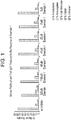
- the fucosylation inhibitor Example 1 compound was added to the cultures at inoculation at 5, 10, 20, 40, 80, 160 and 320 uM via 1:1000 dilution of stock solutions in DMSO.
- the cultures were placed into a shaking incubator (50 mm orbital diameter, 36°C, 5% CO 2 , 220 rpm). The growth and viability of the cultures were monitored throughout the length of the production assay.
- the cells were fed with feed medium and an amino acid supplement on days 3, 6 and 8.
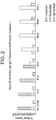
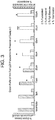
- Example 1 fucosylation inhibitor To test whether daily doses of the Example 1 fucosylation inhibitor would result in higher inhibition profile, CHO cells expressing anti TRAIL IgG1 antibody were seeded into serum-free growth medium in deep 24-well plates via 1:5 dilution.
- the fucosylation inhibitor compound Example 1 ( FIG.2 ) and compound Example 3 ( FIG.3 ) were added to the cultures on a daily basis at 5, 10, 20, 40, 60, 80, and 100 uM levels via 1:1000 dilution of stock solutions in DMSO.
- the cultures were placed into a shaking incubator (50 mm orbital diameter, 36°C, 5% CO 2 , 220 rpm). The growth and viability of cultures were monitored throughout the length of the production assay.
- the PNGase F (New England Biolabs) enzymatically-released N-linked glycans from protein-purified anti-TRAIL IgG1 antibody were labeled with 2-aminobenzoic acid (2-AA) and separated by HILIC (hydrophilic interaction liquid chromatography) in-line with a fluorescence detector. The separation was performed using a Waters Acquity UPLC (Waters, Milford, MA). In-line MS, using an ion trap mass spectrometer (LTQ; Thermo Scientific, Waltham, MA) in positive mode, was incorporated to accommodate mass determination of species.
- LTQ ion trap mass spectrometer
- Glycans were injected and bound to the column in high organic conditions and were then eluted with an increasing gradient of an aqueous ammonium formate buffer. Fast separation times were achieved using a 1.7 ⁇ M small particle column format (Acquity UPLC BEH Glycan Column, 2.1 x 100 mm; Waters, Milford, MA). Total runtime including column re-equilibration for the MS compatible separation was 30 minutes.
- Glycan from cells treated with 320 uM Example 1 compound was 64% fucosylated vs. 77% for DMSO control, and contained 13% high mannose vs. 12% for DMSO control. No trace of the inhibitor molecule was detectable in the glycan. Due to limited stability of the Example 1 fucosylation inhibitor in the medium, we expect that significantly greater inhibition of fucosylation will result when the inhibitor is dosed every day.
Landscapes
- Chemical & Material Sciences (AREA)
- Organic Chemistry (AREA)
- Health & Medical Sciences (AREA)
- Life Sciences & Earth Sciences (AREA)
- Engineering & Computer Science (AREA)
- Genetics & Genomics (AREA)
- Biotechnology (AREA)
- General Health & Medical Sciences (AREA)
- Biochemistry (AREA)
- Biomedical Technology (AREA)
- Molecular Biology (AREA)
- Immunology (AREA)
- Zoology (AREA)
- Wood Science & Technology (AREA)
- Bioinformatics & Cheminformatics (AREA)
- Cell Biology (AREA)
- Microbiology (AREA)
- Reproductive Health (AREA)
- Gynecology & Obstetrics (AREA)
- General Engineering & Computer Science (AREA)
- Developmental Biology & Embryology (AREA)
- Biophysics (AREA)
- Medicinal Chemistry (AREA)
- Proteomics, Peptides & Aminoacids (AREA)
- Preparation Of Compounds By Using Micro-Organisms (AREA)
- Micro-Organisms Or Cultivation Processes Thereof (AREA)
- Pharmaceuticals Containing Other Organic And Inorganic Compounds (AREA)
- Saccharide Compounds (AREA)
Claims (21)
- Verbindung der Formel (I):


 R1a und R1b unabhängig aus -C(=O)-(C1-10-Alkyl) oder -C(=O)-(C6-10-Aryl) ausgewählt sind;R2a, R2b und R2c -C(=O)CH3 sind;R3 -CH2O-C(=O)CH3 ist, wenn die Verbindung der Formel (I) eine Verbindung der Formel (IB) ist;R3 aus (C1-6)Alkyl, Perhalogen(C1-6)alkyl, Halogen(C1-6)alkyl, -CH2O-C(=O)-(C1-6-Alkyl) oder (C2-6)Alkinyl ausgewählt ist; undR4 unabhängig aus H oder -CH3 ausgewählt ist.
 - Verbindung gemäss Anspruch 1, wobei die Verbindung der Formel (I) eine Verbindung der Formel (IA) ist, die eine Verbindung der Formel (IA') ist:

- Verbindung gemäss Anspruch 2, worin R3 CH3 oder CF3 ist.
- Verbindung gemäss Anspruch 2 oder Anspruch 3, worin R1a und R1b -C(=O)-(C1-6-Alkyl) sind und vorzugsweise aus -C(=O)CH3 oder -C(=O)-C(CH3)3 ausgewählt sind.
- Verbindung gemäss Anspruch 1, wobei die Verbindung


- Verbindung gemäss Anspruch 1, Formel (IA), wobei die Verbindung der Formel (IA) eine Verbindung der Formel (IA") ist:

- Verbindung gemäss Anspruch 6, worin R3 CF3 ist.
- Verbindung gemäss Anspruch 6 oder Anspruch 7, worin R1a und R1b -C(=O)-(C1-6-Alkyl) sind und vorzugsweise aus -C(=O)CH3 oder -C(=O)-C(CH3)3 ausgewählt sind.
- Verbindung gemäss Anspruch 1, wobei die Verbindung der Formel (I) eine Verbindung der Formel (IB) ist, die eine Verbindung der Formel (IB') ist:

- Verbindung gemäss Anspruch 9, worin R1a und R1b -C(=O)-(C1-6-Alkyl) sind und vorzugsweise aus -C(=O)CH3 oder -C(=O)-C(CH3)3 ausgewählt sind.
- Verbindung gemäss Anspruch 1, wobei die Verbindung der Formel (I) eine Verbindung der Formel (IC) ist, die eine Verbindung der Formel (IC') ist:
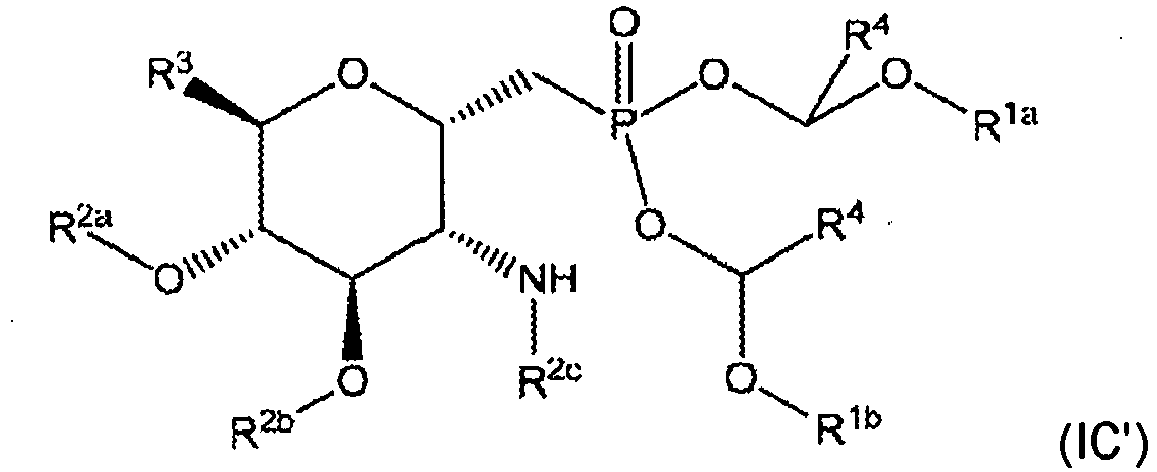
- Verbindung gemäss Anspruch 11, worin R3 CH3, CF3 oder -CH2O-C(=O)-(C1-6-Alkyl) ist, das vorzugsweise -CH2O-C(=O)CH3 ist.
- Verbindung gemäss irgendeinem der Ansprüche 11 und 12, worin R1a und R1b -C(=O)-(C1-6-Alkyl) sind und vorzugsweise aus -C(=O)CH3 oder -C(=O)C(CH3)3 ausgewählt sind.
- Verbindung gemäss Anspruch 1, worin R1a und R1b beide -C(=O)-(C1-6-Alkyl) sind und wobei ferner das -C(=O)-(C1-6-Alkyl) unabhängig aus -C(=O)CH3, -C(=O)CH2CH3, -C(=O)CH2CH2CH3, -C(=O)CH2CH2CH2CH3, -C(=O)CH(CH3)2, -C(=O)C(CH3)3 oder -C(=O)CH(CH3)(CH2CH3) ausgewählt ist.
- Verbindung gemäss Anspruch 1, worin R1a und R1b beide -C(=O)CH3 sind, beide -C(=O)C(CH3)3 sind oder beide -C(=O)-(C6-10-Aryl) sind und das -C(=O)-(C6-10-Aryl) C(=O)-Phenyl ist.
- Verbindung gemäss irgendeinem der Ansprüche 1, 14 und 15, worin R3 aus (C1-6)Alkyl, Perhalogen(C1-6)alkyl oder -CH2O-C(=O)-(C1-6-Alkyl) ausgewählt ist und vorzugsweise aus CF3, CH3 oder -CH2O-C(=O)CH3 ausgewählt ist.
- Verbindung gemäss irgendeinem der Ansprüche 1 bis 13, 15 und 16, worin in beiden Fällen R4 -H ist oder worin R4 in beiden Fällen -CH3 ist.
- Verfahren zum Kultivieren von eukaryotischen Zellen, wobei das Verfahren umfasst:Kultivieren der Zellen in einem Zellkulturmedium, wobei das Zellkulturmedium eine Verbindung gemäss irgendeinem der Ansprüche 1 bis 17 umfasst.
- Verfahren zur Herstellung eines Proteins mit einem modifizierten Glycangehalt, wobei das Verfahren umfasst:Kultivieren der eukaryotischen Wirtszellen in einem Zellkulturmedium, das eine Verbindung gemäss irgendeinem der Ansprüche 1 bis 17 umfasst, und Isolieren des Proteins.
- Verfahren gemäss irgendeinem der Ansprüche 18 und 19, wobei die Verbindung in einer Einzeldosis zu dem Zellkulturmedium zugegeben wird.
- Verfahren gemäss irgendeinem der Ansprüche 18 bis 20, wobei die Verbindung einmal pro Tag zu dem Zellkulturmedium zugegeben wird.
Applications Claiming Priority (2)
| Application Number | Priority Date | Filing Date | Title |
|---|---|---|---|
| US201361768175P | 2013-02-22 | 2013-02-22 | |
| PCT/US2014/017271 WO2014130613A2 (en) | 2013-02-22 | 2014-02-20 | Carbohydrate phosphonate derivatives as modulators of glycosylation |
Publications (2)
| Publication Number | Publication Date |
|---|---|
| EP2958905A2 EP2958905A2 (de) | 2015-12-30 |
| EP2958905B1 true EP2958905B1 (de) | 2017-03-29 |
Family
ID=50238475
Family Applications (1)
| Application Number | Title | Priority Date | Filing Date |
|---|---|---|---|
| EP14708738.1A Active EP2958905B1 (de) | 2013-02-22 | 2014-02-20 | Carbohydrate phosphonate derivate als modulatoren der glycosylierung |
Country Status (3)
| Country | Link |
|---|---|
| US (1) | US9328134B2 (de) |
| EP (1) | EP2958905B1 (de) |
| WO (1) | WO2014130613A2 (de) |
Cited By (1)
| Publication number | Priority date | Publication date | Assignee | Title |
|---|---|---|---|---|
| WO2021127414A1 (en) | 2019-12-20 | 2021-06-24 | Bristol-Myers Squibb Company | Use of fucosylation inhibitor for producing afucosylated antibody |
Families Citing this family (4)
| Publication number | Priority date | Publication date | Assignee | Title |
|---|---|---|---|---|
| MX2021005949A (es) * | 2018-11-22 | 2021-07-06 | Idorsia Pharmaceuticals Ltd | Vacuna estable contra clostridium difficile. |
| US20230022796A1 (en) * | 2019-12-19 | 2023-01-26 | Merck Patent Gmbh | Methods and compositions for modulating the glycosylation profile of proteins |
| EP4211124A1 (de) * | 2020-09-09 | 2023-07-19 | Stichting Radboud Universiteit | Neue fluorierte hexosen |
| CN112645915B (zh) * | 2021-01-13 | 2021-10-08 | 广州安岩仁医药科技有限公司 | 一种sglt2抑制剂中间体的合成方法 |
Family Cites Families (7)
| Publication number | Priority date | Publication date | Assignee | Title |
|---|---|---|---|---|
| US5210078A (en) | 1991-04-30 | 1993-05-11 | The Biomembrane Institute | Trifluoromethyl analogs of fucose and uses thereof |
| EP2275540B1 (de) | 1999-04-09 | 2016-03-23 | Kyowa Hakko Kirin Co., Ltd. | Verfahren zur Steuerung der Aktivität von immunologisch funktionellen Molekülen |
| PL1885734T3 (pl) | 2005-05-06 | 2015-08-31 | Novartis Ag | Immunogeny dla szczepionek przeciwko Meningitidis-A |
| PL2282773T3 (pl) | 2008-05-02 | 2014-08-29 | Seattle Genetics Inc | Sposoby i kompozycje do wytwarzania przeciwciał i pochodnych przeciwciał o obniżonej fukozylacji rdzeniowej |
| WO2010141855A1 (en) * | 2009-06-05 | 2010-12-09 | Momenta Pharmaceuticals, Inc. | Methods of modulating fucosylation of glycoproteins |
| EP3513794A3 (de) | 2010-08-05 | 2019-10-16 | Seattle Genetics, Inc. | Fucose-analoga für in-vivo-hemmung einer protein-fucosylierung |
| EP2887947B1 (de) | 2012-08-23 | 2019-06-05 | Seattle Genetics, Inc. | Fukoseanaloga zur behandlung der sichelzellenanämie |
-
2014
- 2014-02-20 EP EP14708738.1A patent/EP2958905B1/de active Active
- 2014-02-20 US US14/767,737 patent/US9328134B2/en active Active
- 2014-02-20 WO PCT/US2014/017271 patent/WO2014130613A2/en not_active Ceased
Non-Patent Citations (1)
| Title |
|---|
| None * |
Cited By (1)
| Publication number | Priority date | Publication date | Assignee | Title |
|---|---|---|---|---|
| WO2021127414A1 (en) | 2019-12-20 | 2021-06-24 | Bristol-Myers Squibb Company | Use of fucosylation inhibitor for producing afucosylated antibody |
Also Published As
| Publication number | Publication date |
|---|---|
| EP2958905A2 (de) | 2015-12-30 |
| WO2014130613A2 (en) | 2014-08-28 |
| US20150376221A1 (en) | 2015-12-31 |
| WO2014130613A3 (en) | 2014-11-06 |
| US9328134B2 (en) | 2016-05-03 |
Similar Documents
| Publication | Publication Date | Title |
|---|---|---|
| US20180087079A1 (en) | Methods of using cell-cycle inhibitors to modulate one or more properties of a cell culture | |
| JP7034236B2 (ja) | 組換えタンパク質のグリコシル化を調節するためのn-グリコシル化経路制御因子の過剰発現 | |
| US9328134B2 (en) | Carbohydrate phosphonate derivatives as modulators of glycosylation | |
| US11434514B2 (en) | Methods for increasing mannose content of recombinant proteins | |
| US11299760B2 (en) | Use of monensin to regulate glycosylation of recombinant proteins | |
| JP6882339B2 (ja) | ペルアセチルガラクトースを使った組換えタンパク質のタンパク質ガラクトシル化プロファイルを改変する方法 | |
| US20130096283A1 (en) | Method of Supplementing Culture Media to Prevent Undesirable Amino Acid Substitutions | |
| KR20260011202A (ko) | 세포 배양에서 생산된 항체의 총 비푸코실화 당형태 | |
| US10106829B2 (en) | Overexpression of N-glycosylation pathway regulators to modulate glycosylation of recombinant proteins | |
| HK40089653A (en) | Fab high mannose glycoforms | |
| HK1231928B (en) | Overexpression of n-glycosylation pathway regulators to modulate glycosylation of recombinant proteins |
Legal Events
| Date | Code | Title | Description |
|---|---|---|---|
| PUAI | Public reference made under article 153(3) epc to a published international application that has entered the european phase |
Free format text: ORIGINAL CODE: 0009012 |
|
| 17P | Request for examination filed |
Effective date: 20150921 |
|
| AK | Designated contracting states |
Kind code of ref document: A2 Designated state(s): AL AT BE BG CH CY CZ DE DK EE ES FI FR GB GR HR HU IE IS IT LI LT LU LV MC MK MT NL NO PL PT RO RS SE SI SK SM TR |
|
| AX | Request for extension of the european patent |
Extension state: BA ME |
|
| GRAP | Despatch of communication of intention to grant a patent |
Free format text: ORIGINAL CODE: EPIDOSNIGR1 |
|
| INTG | Intention to grant announced |
Effective date: 20161014 |
|
| GRAJ | Information related to disapproval of communication of intention to grant by the applicant or resumption of examination proceedings by the epo deleted |
Free format text: ORIGINAL CODE: EPIDOSDIGR1 |
|
| GRAR | Information related to intention to grant a patent recorded |
Free format text: ORIGINAL CODE: EPIDOSNIGR71 |
|
| GRAS | Grant fee paid |
Free format text: ORIGINAL CODE: EPIDOSNIGR3 |
|
| INTC | Intention to grant announced (deleted) | ||
| GRAA | (expected) grant |
Free format text: ORIGINAL CODE: 0009210 |
|
| INTG | Intention to grant announced |
Effective date: 20170126 |
|
| AK | Designated contracting states |
Kind code of ref document: B1 Designated state(s): AL AT BE BG CH CY CZ DE DK EE ES FI FR GB GR HR HU IE IS IT LI LT LU LV MC MK MT NL NO PL PT RO RS SE SI SK SM TR |
|
| AX | Request for extension of the european patent |
Extension state: BA ME |
|
| REG | Reference to a national code |
Ref country code: GB Ref legal event code: FG4D |
|
| REG | Reference to a national code |
Ref country code: CH Ref legal event code: EP |
|
| REG | Reference to a national code |
Ref country code: AT Ref legal event code: REF Ref document number: 879627 Country of ref document: AT Kind code of ref document: T Effective date: 20170415 |
|
| REG | Reference to a national code |
Ref country code: IE Ref legal event code: FG4D |
|
| REG | Reference to a national code |
Ref country code: DE Ref legal event code: R096 Ref document number: 602014008087 Country of ref document: DE |
|
| PG25 | Lapsed in a contracting state [announced via postgrant information from national office to epo] |
Ref country code: LT Free format text: LAPSE BECAUSE OF FAILURE TO SUBMIT A TRANSLATION OF THE DESCRIPTION OR TO PAY THE FEE WITHIN THE PRESCRIBED TIME-LIMIT Effective date: 20170329 Ref country code: GR Free format text: LAPSE BECAUSE OF FAILURE TO SUBMIT A TRANSLATION OF THE DESCRIPTION OR TO PAY THE FEE WITHIN THE PRESCRIBED TIME-LIMIT Effective date: 20170630 Ref country code: HR Free format text: LAPSE BECAUSE OF FAILURE TO SUBMIT A TRANSLATION OF THE DESCRIPTION OR TO PAY THE FEE WITHIN THE PRESCRIBED TIME-LIMIT Effective date: 20170329 Ref country code: FI Free format text: LAPSE BECAUSE OF FAILURE TO SUBMIT A TRANSLATION OF THE DESCRIPTION OR TO PAY THE FEE WITHIN THE PRESCRIBED TIME-LIMIT Effective date: 20170329 Ref country code: NO Free format text: LAPSE BECAUSE OF FAILURE TO SUBMIT A TRANSLATION OF THE DESCRIPTION OR TO PAY THE FEE WITHIN THE PRESCRIBED TIME-LIMIT Effective date: 20170629 |
|
| REG | Reference to a national code |
Ref country code: NL Ref legal event code: MP Effective date: 20170329 |
|
| REG | Reference to a national code |
Ref country code: AT Ref legal event code: MK05 Ref document number: 879627 Country of ref document: AT Kind code of ref document: T Effective date: 20170329 |
|
| PG25 | Lapsed in a contracting state [announced via postgrant information from national office to epo] |
Ref country code: LV Free format text: LAPSE BECAUSE OF FAILURE TO SUBMIT A TRANSLATION OF THE DESCRIPTION OR TO PAY THE FEE WITHIN THE PRESCRIBED TIME-LIMIT Effective date: 20170329 Ref country code: SE Free format text: LAPSE BECAUSE OF FAILURE TO SUBMIT A TRANSLATION OF THE DESCRIPTION OR TO PAY THE FEE WITHIN THE PRESCRIBED TIME-LIMIT Effective date: 20170329 Ref country code: BG Free format text: LAPSE BECAUSE OF FAILURE TO SUBMIT A TRANSLATION OF THE DESCRIPTION OR TO PAY THE FEE WITHIN THE PRESCRIBED TIME-LIMIT Effective date: 20170629 Ref country code: RS Free format text: LAPSE BECAUSE OF FAILURE TO SUBMIT A TRANSLATION OF THE DESCRIPTION OR TO PAY THE FEE WITHIN THE PRESCRIBED TIME-LIMIT Effective date: 20170329 |
|
| PG25 | Lapsed in a contracting state [announced via postgrant information from national office to epo] |
Ref country code: NL Free format text: LAPSE BECAUSE OF FAILURE TO SUBMIT A TRANSLATION OF THE DESCRIPTION OR TO PAY THE FEE WITHIN THE PRESCRIBED TIME-LIMIT Effective date: 20170329 |
|
| PG25 | Lapsed in a contracting state [announced via postgrant information from national office to epo] |
Ref country code: SK Free format text: LAPSE BECAUSE OF FAILURE TO SUBMIT A TRANSLATION OF THE DESCRIPTION OR TO PAY THE FEE WITHIN THE PRESCRIBED TIME-LIMIT Effective date: 20170329 Ref country code: RO Free format text: LAPSE BECAUSE OF FAILURE TO SUBMIT A TRANSLATION OF THE DESCRIPTION OR TO PAY THE FEE WITHIN THE PRESCRIBED TIME-LIMIT Effective date: 20170329 Ref country code: ES Free format text: LAPSE BECAUSE OF FAILURE TO SUBMIT A TRANSLATION OF THE DESCRIPTION OR TO PAY THE FEE WITHIN THE PRESCRIBED TIME-LIMIT Effective date: 20170329 Ref country code: AT Free format text: LAPSE BECAUSE OF FAILURE TO SUBMIT A TRANSLATION OF THE DESCRIPTION OR TO PAY THE FEE WITHIN THE PRESCRIBED TIME-LIMIT Effective date: 20170329 Ref country code: CZ Free format text: LAPSE BECAUSE OF FAILURE TO SUBMIT A TRANSLATION OF THE DESCRIPTION OR TO PAY THE FEE WITHIN THE PRESCRIBED TIME-LIMIT Effective date: 20170329 Ref country code: EE Free format text: LAPSE BECAUSE OF FAILURE TO SUBMIT A TRANSLATION OF THE DESCRIPTION OR TO PAY THE FEE WITHIN THE PRESCRIBED TIME-LIMIT Effective date: 20170329 |
|
| PG25 | Lapsed in a contracting state [announced via postgrant information from national office to epo] |
Ref country code: PL Free format text: LAPSE BECAUSE OF FAILURE TO SUBMIT A TRANSLATION OF THE DESCRIPTION OR TO PAY THE FEE WITHIN THE PRESCRIBED TIME-LIMIT Effective date: 20170329 Ref country code: IS Free format text: LAPSE BECAUSE OF FAILURE TO SUBMIT A TRANSLATION OF THE DESCRIPTION OR TO PAY THE FEE WITHIN THE PRESCRIBED TIME-LIMIT Effective date: 20170729 Ref country code: SM Free format text: LAPSE BECAUSE OF FAILURE TO SUBMIT A TRANSLATION OF THE DESCRIPTION OR TO PAY THE FEE WITHIN THE PRESCRIBED TIME-LIMIT Effective date: 20170329 |
|
| REG | Reference to a national code |
Ref country code: DE Ref legal event code: R097 Ref document number: 602014008087 Country of ref document: DE |
|
| REG | Reference to a national code |
Ref country code: FR Ref legal event code: PLFP Year of fee payment: 5 |
|
| PG25 | Lapsed in a contracting state [announced via postgrant information from national office to epo] |
Ref country code: DK Free format text: LAPSE BECAUSE OF FAILURE TO SUBMIT A TRANSLATION OF THE DESCRIPTION OR TO PAY THE FEE WITHIN THE PRESCRIBED TIME-LIMIT Effective date: 20170329 |
|
| PLBE | No opposition filed within time limit |
Free format text: ORIGINAL CODE: 0009261 |
|
| STAA | Information on the status of an ep patent application or granted ep patent |
Free format text: STATUS: NO OPPOSITION FILED WITHIN TIME LIMIT |
|
| PG25 | Lapsed in a contracting state [announced via postgrant information from national office to epo] |
Ref country code: IT Free format text: LAPSE BECAUSE OF FAILURE TO SUBMIT A TRANSLATION OF THE DESCRIPTION OR TO PAY THE FEE WITHIN THE PRESCRIBED TIME-LIMIT Effective date: 20170329 |
|
| 26N | No opposition filed |
Effective date: 20180103 |
|
| PG25 | Lapsed in a contracting state [announced via postgrant information from national office to epo] |
Ref country code: SI Free format text: LAPSE BECAUSE OF FAILURE TO SUBMIT A TRANSLATION OF THE DESCRIPTION OR TO PAY THE FEE WITHIN THE PRESCRIBED TIME-LIMIT Effective date: 20170329 |
|
| PG25 | Lapsed in a contracting state [announced via postgrant information from national office to epo] |
Ref country code: MC Free format text: LAPSE BECAUSE OF FAILURE TO SUBMIT A TRANSLATION OF THE DESCRIPTION OR TO PAY THE FEE WITHIN THE PRESCRIBED TIME-LIMIT Effective date: 20170329 |
|
| REG | Reference to a national code |
Ref country code: IE Ref legal event code: MM4A |
|
| REG | Reference to a national code |
Ref country code: BE Ref legal event code: MM Effective date: 20180228 |
|
| PG25 | Lapsed in a contracting state [announced via postgrant information from national office to epo] |
Ref country code: LU Free format text: LAPSE BECAUSE OF NON-PAYMENT OF DUE FEES Effective date: 20180220 |
|
| PG25 | Lapsed in a contracting state [announced via postgrant information from national office to epo] |
Ref country code: IE Free format text: LAPSE BECAUSE OF NON-PAYMENT OF DUE FEES Effective date: 20180220 |
|
| PG25 | Lapsed in a contracting state [announced via postgrant information from national office to epo] |
Ref country code: BE Free format text: LAPSE BECAUSE OF NON-PAYMENT OF DUE FEES Effective date: 20180228 |
|
| PG25 | Lapsed in a contracting state [announced via postgrant information from national office to epo] |
Ref country code: MT Free format text: LAPSE BECAUSE OF NON-PAYMENT OF DUE FEES Effective date: 20180220 |
|
| PG25 | Lapsed in a contracting state [announced via postgrant information from national office to epo] |
Ref country code: TR Free format text: LAPSE BECAUSE OF FAILURE TO SUBMIT A TRANSLATION OF THE DESCRIPTION OR TO PAY THE FEE WITHIN THE PRESCRIBED TIME-LIMIT Effective date: 20170329 |
|
| PG25 | Lapsed in a contracting state [announced via postgrant information from national office to epo] |
Ref country code: PT Free format text: LAPSE BECAUSE OF FAILURE TO SUBMIT A TRANSLATION OF THE DESCRIPTION OR TO PAY THE FEE WITHIN THE PRESCRIBED TIME-LIMIT Effective date: 20170329 |
|
| PG25 | Lapsed in a contracting state [announced via postgrant information from national office to epo] |
Ref country code: CY Free format text: LAPSE BECAUSE OF FAILURE TO SUBMIT A TRANSLATION OF THE DESCRIPTION OR TO PAY THE FEE WITHIN THE PRESCRIBED TIME-LIMIT Effective date: 20170329 Ref country code: HU Free format text: LAPSE BECAUSE OF FAILURE TO SUBMIT A TRANSLATION OF THE DESCRIPTION OR TO PAY THE FEE WITHIN THE PRESCRIBED TIME-LIMIT; INVALID AB INITIO Effective date: 20140220 Ref country code: MK Free format text: LAPSE BECAUSE OF NON-PAYMENT OF DUE FEES Effective date: 20170329 |
|
| PG25 | Lapsed in a contracting state [announced via postgrant information from national office to epo] |
Ref country code: AL Free format text: LAPSE BECAUSE OF FAILURE TO SUBMIT A TRANSLATION OF THE DESCRIPTION OR TO PAY THE FEE WITHIN THE PRESCRIBED TIME-LIMIT Effective date: 20170329 |
|
| P01 | Opt-out of the competence of the unified patent court (upc) registered |
Effective date: 20230428 |
|
| REG | Reference to a national code |
Ref country code: CH Ref legal event code: U11 Free format text: ST27 STATUS EVENT CODE: U-0-0-U10-U11 (AS PROVIDED BY THE NATIONAL OFFICE) Effective date: 20260301 |
|
| PGFP | Annual fee paid to national office [announced via postgrant information from national office to epo] |
Ref country code: GB Payment date: 20260121 Year of fee payment: 13 |
|
| PGFP | Annual fee paid to national office [announced via postgrant information from national office to epo] |
Ref country code: DE Payment date: 20260121 Year of fee payment: 13 |
|
| PGFP | Annual fee paid to national office [announced via postgrant information from national office to epo] |
Ref country code: FR Payment date: 20260121 Year of fee payment: 13 |
|
| PGFP | Annual fee paid to national office [announced via postgrant information from national office to epo] |
Ref country code: CH Payment date: 20260301 Year of fee payment: 13 |