EP2951195B1 - Antifouling materials - Google Patents
Antifouling materials Download PDFInfo
- Publication number
- EP2951195B1 EP2951195B1 EP14706129.5A EP14706129A EP2951195B1 EP 2951195 B1 EP2951195 B1 EP 2951195B1 EP 14706129 A EP14706129 A EP 14706129A EP 2951195 B1 EP2951195 B1 EP 2951195B1
- Authority
- EP
- European Patent Office
- Prior art keywords
- phenylalanine
- peptide
- phe
- dopa
- alanine
- Prior art date
- Legal status (The legal status is an assumption and is not a legal conclusion. Google has not performed a legal analysis and makes no representation as to the accuracy of the status listed.)
- Active
Links
- 0 Bc1c(C)c(*)c(*)c(CC(*2CCC2)NC(C(Cc2c(*)c(B)c(C)c(*)c2*)NC(I(C2)([C@]2c(cc2N=O)ccc2O)N)=O)=O)c1* Chemical compound Bc1c(C)c(*)c(*)c(CC(*2CCC2)NC(C(Cc2c(*)c(B)c(C)c(*)c2*)NC(I(C2)([C@]2c(cc2N=O)ccc2O)N)=O)=O)c1* 0.000 description 3
- LVFPKQQABNZUFI-XMUARHPNSA-N C/C=C\C(\CC(C(NC(Cc(cc1O)ccc1O)C(N)=O)=O)NC(C(Cc(cccc1)c1F)N)=O)=C(/C)\F Chemical compound C/C=C\C(\CC(C(NC(Cc(cc1O)ccc1O)C(N)=O)=O)NC(C(Cc(cccc1)c1F)N)=O)=C(/C)\F LVFPKQQABNZUFI-XMUARHPNSA-N 0.000 description 1
- PAXASGGVYAXISA-UHFFFAOYSA-N COC(C(Cc(cc1)ccc1F)NC(C(Cc(cc1)ccc1F)NC(C(Cc(cc1)cc(O)c1O)N)=O)=O)=O Chemical compound COC(C(Cc(cc1)ccc1F)NC(C(Cc(cc1)ccc1F)NC(C(Cc(cc1)cc(O)c1O)N)=O)=O)=O PAXASGGVYAXISA-UHFFFAOYSA-N 0.000 description 1
- HPVJIOLQAJPXJY-UHFFFAOYSA-N NC(Cc(cc1)cc(O)c1O)C(NC(Cc(cc1)cc(O)c1O)C(NC(Cc(cccc1)c1F)C(N)=O)=O)=O Chemical compound NC(Cc(cc1)cc(O)c1O)C(NC(Cc(cc1)cc(O)c1O)C(NC(Cc(cccc1)c1F)C(N)=O)=O)=O HPVJIOLQAJPXJY-UHFFFAOYSA-N 0.000 description 1
- KFMDYDMGMKIAOF-UHFFFAOYSA-N NC(Cc(cc1)cc(O)c1O)C([N]C(Cc(cc1)cc(O)c1O)C(NC(Cc(cccc1)c1F)C(N)=O)=O)=O Chemical compound NC(Cc(cc1)cc(O)c1O)C([N]C(Cc(cc1)cc(O)c1O)C(NC(Cc(cccc1)c1F)C(N)=O)=O)=O KFMDYDMGMKIAOF-UHFFFAOYSA-N 0.000 description 1
- RFDGDISRSXZPHM-UHFFFAOYSA-N NC(Cc(cccc1)c1F)C(NC(Cc(cccc1)c1F)C(NC(Cc(cc1O)ccc1O)C(N)=O)=O)=O Chemical compound NC(Cc(cccc1)c1F)C(NC(Cc(cccc1)c1F)C(NC(Cc(cc1O)ccc1O)C(N)=O)=O)=O RFDGDISRSXZPHM-UHFFFAOYSA-N 0.000 description 1
Images





Classifications
-
- C—CHEMISTRY; METALLURGY
- C09—DYES; PAINTS; POLISHES; NATURAL RESINS; ADHESIVES; COMPOSITIONS NOT OTHERWISE PROVIDED FOR; APPLICATIONS OF MATERIALS NOT OTHERWISE PROVIDED FOR
- C09D—COATING COMPOSITIONS, e.g. PAINTS, VARNISHES OR LACQUERS; FILLING PASTES; CHEMICAL PAINT OR INK REMOVERS; INKS; CORRECTING FLUIDS; WOODSTAINS; PASTES OR SOLIDS FOR COLOURING OR PRINTING; USE OF MATERIALS THEREFOR
- C09D5/00—Coating compositions, e.g. paints, varnishes or lacquers, characterised by their physical nature or the effects produced; Filling pastes
- C09D5/16—Antifouling paints; Underwater paints
- C09D5/1606—Antifouling paints; Underwater paints characterised by the anti-fouling agent
- C09D5/1612—Non-macromolecular compounds
- C09D5/1625—Non-macromolecular compounds organic
-
- C—CHEMISTRY; METALLURGY
- C07—ORGANIC CHEMISTRY
- C07K—PEPTIDES
- C07K5/00—Peptides containing up to four amino acids in a fully defined sequence; Derivatives thereof
- C07K5/04—Peptides containing up to four amino acids in a fully defined sequence; Derivatives thereof containing only normal peptide links
- C07K5/06—Dipeptides
- C07K5/06008—Dipeptides with the first amino acid being neutral
- C07K5/06078—Dipeptides with the first amino acid being neutral and aromatic or cycloaliphatic
-
- C—CHEMISTRY; METALLURGY
- C07—ORGANIC CHEMISTRY
- C07K—PEPTIDES
- C07K5/00—Peptides containing up to four amino acids in a fully defined sequence; Derivatives thereof
- C07K5/04—Peptides containing up to four amino acids in a fully defined sequence; Derivatives thereof containing only normal peptide links
- C07K5/06—Dipeptides
- C07K5/06191—Dipeptides containing heteroatoms different from O, S, or N
-
- C—CHEMISTRY; METALLURGY
- C07—ORGANIC CHEMISTRY
- C07K—PEPTIDES
- C07K5/00—Peptides containing up to four amino acids in a fully defined sequence; Derivatives thereof
- C07K5/04—Peptides containing up to four amino acids in a fully defined sequence; Derivatives thereof containing only normal peptide links
- C07K5/08—Tripeptides
- C07K5/0802—Tripeptides with the first amino acid being neutral
- C07K5/0812—Tripeptides with the first amino acid being neutral and aromatic or cycloaliphatic
-
- C—CHEMISTRY; METALLURGY
- C07—ORGANIC CHEMISTRY
- C07K—PEPTIDES
- C07K5/00—Peptides containing up to four amino acids in a fully defined sequence; Derivatives thereof
- C07K5/04—Peptides containing up to four amino acids in a fully defined sequence; Derivatives thereof containing only normal peptide links
- C07K5/08—Tripeptides
- C07K5/0827—Tripeptides containing heteroatoms different from O, S, or N
-
- C—CHEMISTRY; METALLURGY
- C07—ORGANIC CHEMISTRY
- C07K—PEPTIDES
- C07K7/00—Peptides having 5 to 20 amino acids in a fully defined sequence; Derivatives thereof
- C07K7/04—Linear peptides containing only normal peptide links
- C07K7/06—Linear peptides containing only normal peptide links having 5 to 11 amino acids
-
- C—CHEMISTRY; METALLURGY
- C09—DYES; PAINTS; POLISHES; NATURAL RESINS; ADHESIVES; COMPOSITIONS NOT OTHERWISE PROVIDED FOR; APPLICATIONS OF MATERIALS NOT OTHERWISE PROVIDED FOR
- C09D—COATING COMPOSITIONS, e.g. PAINTS, VARNISHES OR LACQUERS; FILLING PASTES; CHEMICAL PAINT OR INK REMOVERS; INKS; CORRECTING FLUIDS; WOODSTAINS; PASTES OR SOLIDS FOR COLOURING OR PRINTING; USE OF MATERIALS THEREFOR
- C09D5/00—Coating compositions, e.g. paints, varnishes or lacquers, characterised by their physical nature or the effects produced; Filling pastes
Definitions
- the present invention is generally concerned with antifouling agents and uses thereof.
- Biofouling is a process in which organisms and their by-products encrust a surface. In the case of bacteria, this process leads to the formation of a well-defined bacterial network, termed biofilm. Biofilms provide the bacteria with superior survival properties under exposure to antibiotics. Biofilm formation on medical devices and implants leads to severe infection which may result in patient death.
- Biofouling initiates with the adsorption of proteins and polysaccharides onto a substrate, therefore many antifouling approaches aim to avoid biofouling by preventing protein adsorption or its degradation. These approaches include both chemical and topographical modification of a surface.
- Antifouling materials prevent organisms from attaching to a surface.
- the challenges in designing such materials are in the ability to synthesize a material that prevents the attachment of the organism to the surface, performing in an authentic environment, and meanwhile does not have an effect on its surrounding environment by releasing toxic molecules.
- Antifouling materials such as paints and metal nanoparticles prevent the attachment of these organisms to a substrate, but they are toxic and harmful to the environment.
- Immobilizing PEG is one of the most commonly used approaches to impart protein resistance to a surface.
- the antifouling properties of PEG-based coatings have been widely known.
- the physical adsorption or covalent attachment of PEG chains cannot usually reduce protein adsorption below a certain limit because of steric factors that limit the density of the attached polymer chains.
- PEG has a high tendency to undergo autoxidation.
- US patent application 2006/0241281 describes peptidomimetic polymers comprising derivatives based on dihydroxyphenyl derivatives such as 3,4-dihydroxyphenyl alanine (DOPA) and lysine moieties.
- DOPA 3,4-dihydroxyphenyl alanine
- the peptidomimetic polymers can be included in antifouling resistant coating.
- High quality antifouling materials are desirable as they provide a good solution to biofouling processes and formation of biofilms on a surface.
- Conventional antifouling materials present several drawbacks, as many of these antifouling materials are toxic (or release of toxic materials to the environment), instable, inefficient or are limited in preventing (or complete diminishing) biofouling, expensive and produced via complicated manufacturing processes which at times require expensive equipment for their manufacture.
- the inventors of the present invention have developed a family of novel and highly improved antifouling materials which spontaneously self-assemble on a surface, and which effectively prevent, diminish or decrease fouling of the surface.
- the self assembly which enables the formation of an ordered film or as active particulate materials, is made possible by the bifunctional nature of the materials.
- This directed self assembly permits formation of an ordered film or layer of the bifunctional materials which possesses a high density of antifouling moieties extending outwards from the surface of the material.
- the invention relates to compounds as defined in the claims and their use as antifouling agent as well as antifouling formulations and antifouling films comprising at least one of these compounds.
- the invention also relates to an article or a device comprising at least one surface region coated with an antifouling film of the invention.
- the invention relates to a peptide having from 2 to 12 amino acids in length, wherein each amino acid is selected among aromatic amino acids, at least one of said amino acids is 3,4-dihydroxy-L-phenylalanin (DOPA) and at least another of said amino acids is fluorinated, said DOPA and said at least one fluorinated amino acid being directly bonded or linked via an amino acid linker.
- DOPA 3,4-dihydroxy-L-phenylalanin
- a compound comprising at least one antifouling moiety (or group) and at least one surface-adsorbing moiety (or group), wherein the at least one antifouling moiety is selected amongst fluorine (-F) and a group comprising a fluorine atom and said at least one surface-adsorbing moiety is selected amongst 3,4-dihydroxy-L-phenylalanin (DOPA) and DOPA containing groups.
- the at least one antifouling moiety is selected amongst fluorine (-F) and a group comprising a fluorine atom
- said at least one surface-adsorbing moiety is selected amongst 3,4-dihydroxy-L-phenylalanin (DOPA) and DOPA containing groups.
- a bifunctional compound comprising at least one antifouling moiety (or group) and at least one surface-adsorbing moiety (or group), wherein the at least one antifouling moiety is selected amongst fluorine (-F) and a group comprising a fluorine atom and said at least one surface-adsorbing moiety is selected amongst dihydroxy-amino acid and dihydroxy-amino acid containing groups, said at least one antifouling moiety and said at least one surface-adsorbing moiety being associated to each other via a covalent bond or via a linker group, as defined hereinbelow.
- a bifunctional compound comprising at least one antifouling moiety (or group) and at least one surface-adsorbing moiety (or group), wherein the at least one antifouling moiety is selected amongst fluorine (-F) and a group comprising a fluorine atom and said at least one surface-adsorbing moiety is selected amongst 3,4-dihydroxy-L-phenylalanin (DOPA) and DOPA containing groups, said at least one antifouling moiety and said at least one surface-adsorbing moiety being associated to each other via a covalent bond or via a linker group, as defined hereinbelow.
- the at least one antifouling moiety is selected amongst fluorine (-F) and a group comprising a fluorine atom and said at least one surface-adsorbing moiety is selected amongst 3,4-dihydroxy-L-phenylalanin (DOPA) and DOPA containing groups, said at least one antifouling mo
- an antifouling material comprising at least one antifouling moiety (or group) and at least one surface-adsorbing moiety (or group), wherein the at least one antifouling moiety is selected amongst fluorine (-F) and a group comprising a fluorine atom and said at least one surface-adsorbing moiety is selected amongst 3,4-dihydroxy-L-phenylalanin (DOPA) and DOPA containing groups, said at least one antifouling moiety and said at least one surface-adsorbing moiety being associated to each other via a covalent bond or via a linker group, as defined hereinbelow.
- the at least one antifouling moiety is selected amongst fluorine (-F) and a group comprising a fluorine atom and said at least one surface-adsorbing moiety is selected amongst 3,4-dihydroxy-L-phenylalanin (DOPA) and DOPA containing groups, said at least one antifouling
- a compound of the general formula A-L-F wherein A is a surface-adsorbing moiety, L is a covalent bond or a linker moiety linking A and F, and F is an antifouling moiety, and wherein each of A, L and F are associated to each other as provided in the above formula via a non-hydrolysable bond.
- the non-hydrolysable bond is a covalent bond.
- the compound of the invention is an antifouling agent capable of preventing or arresting adsorption of organic and/or bio-organic materials (polymers) to a surface (an article's surface).
- the compound of the invention is an antifouling agent capable of preventing or arresting adsorption of proteins and/or (poly)saccharides and/or (poly)lipids to a surface.
- the compound of the invention is an antifouling agent capable of preventing or arresting adsorption of secretion products of cells of multi-cellular organisms or of microorganisms to a surface.
- the compound of the invention is an antifouling agent capable of preventing or arresting adsorption of cells of multi-cellular organisms or of micro-organisms to a surface, as further detailed hereinbelow.
- the surface-adsorbing moiety being DOPA or a DOPA containing moiety is selected to adhere to or associate with a surface or a region of a surface which protection against fouling is desired.
- the term "associate " or “adhere” as used herein refers to any physical or chemical interaction to be formed between the DOPA group or any atom thereof, or any DOPA containing moiety or any atom thereof, and a surface region. The association may be via Van-der-Walls, coordinative, covalent, ionic, electrostatic, dipole-dipole, or hydrogen association (bond or interaction).
- the surface-adsorbing moiety is capable of adhering and/or capable of maintaining the surface adherence to any surface material as defined hereinbelow.
- the surface adherence may be maintained even under non-dry conditions such as under aquatic environment, and also under harsher conditions such as high salt concentrations.
- DOPA comprises two hydroxyl (-OH) groups. Without wishing to be bound by theory, it is believed that surface adsorption occurs via one or both of said hydroxyl groups.
- the DOPA group or a moiety comprising said DOPA may be modified to comprise one or more additional hydroxyl groups.
- the surface-adsorbing moiety is DOPA or a moiety comprising DOPA.
- the moiety comprising DOPA is an organic material selected from amino acids and aliphatic materials.
- the organic material is an amino acid.
- the material is a peptide.
- the surface-adsorbing moiety is DOPA being linked, associated or bonded to an atom along the linker moiety L, as further defined herein.
- the compound comprising a DOPA unit as well as at least one additional hydroxylated moiety.
- the hydroxylated moiety may be selected amongst mono-, di-, tri-, tetra- or multiply-hydroxylated alkyls and aryl groups and hydroxylated amino acids.
- the linker moiety L associating the surface adsorbing moiety and the antifouling moiety may have a backbone structure to which both functional moieties are bonded or with which they are associated.
- the backbone structure is further substituted by pendent groups as explained hereinbelow.
- the backbone structure may be composed of carbon atoms and may include one or more heteroatoms such as N, O, S, and P atoms.
- the linker moiety may not be necessary as the two functional moieties may be associated or bonded directly to each other.
- the linker moiety is absent or is a bond associating the two functional moieties (the bond being selected from covalent and ionic bonds).
- linker moiety where the linker moiety is present its backbone may comprise one or more carbon atoms.
- the shortest backbone may be a one-carbon chain.
- the linker backbone may be selected from substituted or unsubstituted carbon chain which may be saturated or unsaturated, having only single bonds, hydrocarbons comprising one or more double bonds, or one or more triple bonds, or comprising any one or more functional groups which may be pendent to the backbone moiety or as an interrupting group (being part of the backbone).
- the backbone comprises one or more inner-chain aryl groups.
- the linker moiety is an organic backbone moiety selected from substituted or unsusbtituted oligomer (having between 2 and 11 repeating units) or polymer (having at least 12 repeating units).
- the linker moiety is an organic backbone moiety selected from amino acids and peptides.
- the backbone may comprise between 1 to 40 carbon atoms or hydrocarbon groups or any heteroatom which is positioned along the backbone (in the main chain). In some embodiments, the backbone comprises between 1 to 20 carbon atoms. In some embodiments, the backbone comprises between 1 to 12 carbon atoms. In some embodiments, the backbone comprises between 1 to 8 carbon atoms. In some embodiments, the backbone comprises 1 or 2 or 3 or 4 or 5 or 6 or 7 or 8 or 9 or 10 or 11 or 12 or 13 or 14 or 15 or 16 or 17 or 18 or 19 or 20 or 21 or 22 or 23 or 24 or 25 or 26 or 27 or 28 or 29 or 30 or 31 or 32 or 33 or 34 or 35 or 36 or 37 or 38 or 39 or 40 carbon atoms.
- the linker moiety is constructed of a predetermined number of repeating units which may or may not be randomly structured along the backbone.
- the linker moiety may be substituted by one or more functional groups such as substituted or unsubstituted alkyl, substituted or unsubstituted alkenyl, substituted or unsubstituted alkynyl, substituted or unsubstituted cycloalkyl, substituted or unsubstituted cycloalkenyl, substituted or unsubstituted cycloalkynyl, substituted or unsubstituted aryl, substituted or unsubstituted heteroaryl, substituted or unsubstituted heterocyclyl, substituted or unsubstituted -NR 1 R 2 , substituted or unsubstituted -OR 3 , substituted or unsubstituted -SR 4 , substituted or unsubstituted -S(O)R 5 , substituted or unsubsti
- variable group denoted by " R " refers to one or more group selected from hydrogen, alkyl, alkenyl, alkynyl, cycloalkyl, cycloalkenyl, cycloalkynyl, aryl, heteroaryl, heterocyclyl, halogen, alkylene-COOH, ester,-OH, -SH, and -NH 2 , as defined herein or any combination thereof.
- Each of the abovementioned groups, as indicated, may be substituted or unsubstituted.
- the substitution may also be by one or more R, selected from hydrogen, alkyl, alkenyl, alkynyl, cycloalkyl, cycloalkenyl, cycloalkynyl, aryl, heteroaryl, heterocyclyl, halogen, alkylene-COOH, ester, -OH, -SH, and -NH 2 .
- the number of R groups may be 0 or 1 or 2 or 3 or 4 or 5 or 6 or 7 or 8 or 9 or 20.
- backbone chain comprises one or more heteroatom (e.g., N, O, S and P). In some embodiments, backbone chain comprises inner-chain ester and/or carbonyl and/or amine group and/or amide group.
- the backbone chain is of the general structure wherein
- n is between 1 and 12. In some embodiments, n is between 1 and 8. In some embodiments, n is between 1 and 6.
- m is between 1 and 20. In some embodiments, m is between 1 and 12. In some embodiments, m is between 1 and 8. In some embodiments, m is between 1 and 6.
- one or more of the (CH 2 ) n groups are substituted.
- the substitution group is a substituted or unsubstituted phenyl.
- the substitution group is hydroxylated or fluorinated phenyl.
- the backbone chain comprises an amino acid groups, and thus in the above general formula of a representative linker backbone, the repeating unit is an ⁇ - or ⁇ -amino acid (wherein n is 1, or n is 2, respectively).
- the linker moiety L is an amino acid or a peptide comprising 2 or 3 or 4 or 5 or 6 or 7 or 8 or 9 or 10 amino acids. In some aspects, the linker moiety L is a peptide comprising 11 or 12 or 13 or 14 or 15 or 16 or 17 or 18 or 19 or 20 or 21 or 22 or 23 or 24 or 25 or 26 or 27 or 28 or 29 or 30 or 31 or 32 or 33 or 34 or 35 or 36 or 37 or 38 or 39 or 40 amino acids.
- the compounds of the invention are constructed of two amino acids bonded to each other via an amide bond (constituting the linker L), wherein one amino acid is DOPA and the other is a fluorinated amino acid, as described herein.
- the compounds are constructed of two amino acids: DOPA and a fluorinated amino acid, said two amino acids being associated to each other via a linker moiety as described herein.
- the linker moiety is one or more amino acids.
- the backbone comprises one or more surface adsorbing moieties and one or more antifouling moieties.
- the backbone comprises 1 or 2 or 3 or 4 or 5 or 6 or 7 or 8 or 9 or 10 or 11 or 12 or 13 or 14 or 15 or 16 or 17 or 18 or 19 or 20 surface-adsorbing moieties. In some aspects, the backbone comprises 1 or 2 or 3 or 4 or 5 or 6 or 7 or 8 or 9 or 10 or 11 or 12 or 13 or 14 or 15 or 16 or 17 or 18 or 19 or 20 antifouling moieties.
- the antifouling moieties are bonded to the backbone at one end and the surface-adsorbing moieties at the other end of the backbone. In other embodiments, the antifouling moieties and the surface-adsorbing moieties are at alternating positions along the backbone. In other embodiments, the antifouling moieties and the surface-adsorbing moieties are randomly positioned along the backbone.
- the backbone comprises one or more amino acids units or hydrocarbon units, the backbone having a plurality of surface-adsorbing moieties and a plurality of antifouling moieties, wherein the distance between two moieties, either surface-adsorbing or antifouling moieties, does not exceed 12 units, 6 units, 3 units or 1 to 5 units.
- the backbone comprises or consists a peptide of two or more amino acids.
- the compounds of the invention are peptides having at least two amino acids, at least one DOPA and at least fluorinated amino acid.
- the peptide comprises between 2 and 40 amino acids. In some embodiments, the peptide comprises between 2 and 20 amino acids.
- the peptide of the invention comprises between 2 and 12 amino acids. In some embodiments of the invention, the peptide comprises between 2 and 8 amino acids. In other embodiments of the invention, the peptide comprises between 2 and 6 amino acids, or between 2 and 4 amino acids, or has 2 or 3 amino acids. In some embodiments of the invention, the peptide comprises 2, or 3, or 4, or 5, or 6, or 7, or 8 or 9 or 10 or 11 or 12 amino acids.
- the compounds of the invention are peptides, as defined, having at least one surface-adsorbing amino acid and at least one antifouling amino acid.
- the peptide is constructed of two amino acids, one of which is an antifouling amino acid and the other is a surface-adsorbing amino acid.
- the number of amino acids in the peptide is greater than 2, the number of each type of amino acids may be varied in accordance with the target final use.
- a "peptide” comprises amino acids, typically between 2 and 40, or between 2 and 20, or between 2 and 12 or between 2 and 8; each amino acid being bonded to a neighboring amino acid via a peptide (amide) bond.
- the peptidic backbone may be modified such that the bond between the N- of one amino acid residue to the C- of the next amino acid residue is altered to non-naturally occurring bonds by reduction (to -CH 2 -NH-), alkylation (e.g., methylation) on the nitrogen atom, or the bonds replaced by amidic bond, urea bonds, sulfonamide bond, etheric bond (-CH 2 -O-), thioetheric bond (-CH 2 -S-), or -CS-NH.
- the peptide may further comprise one or more non-amino acid group.
- amino acid may be any natural or unnatural amino acid, an amino acid analog, ⁇ - or ⁇ -forms, or may be in either L- or D configurations.
- Amino acid analogs which may be used in a compound of the invention be chemically modified at either or both of their C-terminal and/or N-terminal; or chemically modified at a side-chain functional group (e.g., positioned at the ⁇ -position or any other pendant group).
- the amino acid may be selected amongst alanine, arginine, asparagine, aspartic acid, cysteine, glutamic acid, glutamine, glycine, histidine, isoleucine, leucine, lysine, methionine, phenylalanine, proline, serine, threonine, tryptophan, tyrosine valine, pyrrolysine and selnocysteine; and amino acid analogs such as homo-amino acids, N-alkyl amino acids, dehydroamino acids, aromatic amino acids and ⁇ , ⁇ -disubstituted amino acids, e.g., cystine, 5-hydroxylysine, 4-hydroxyproline, a-aminoadipic acid, a-amino-n-butyric acid, 3,4-dihydroxyphenylalanine, homoserine, ⁇ -methylserine, ornithine, pipecolic acid, ortho, meta or para-amin
- amino acids present in the compounds of the invention are selected amongst aromatic amino acids.
- aromatic amino acids include tryptophan, tyrosine, naphthylalanine, and phenylalanine.
- the amino acids are phenylalanine or derivatives thereof.
- the phenylalanine derivatives is 4-methoxy-phenylalanine, 4-carbamimidoyl-1-phenylalanine, 4-chloro-phenylalanine, 3-cyano-phenylalanine, 4-bromo-phenylalanine, 4-cyano-phenylalanine, 4-hydroxymethyl-phenylalanine, 4-methyl-phenylalanine, 1-naphthyl-alanine, 3-(9-anthryl)-alanine, 3-methyl-phenylalanine, m-amidinophenyl-3-alanine, phenylserine, benzylcysteine, 4,4-biphenylalanine, 2-cyano-phenylalanine, 2,4-dichloro-phenylalanine, 3,4-dichloro-phenylalanine, 2-chloro-penylalanine, 3,4-dihydroxy-phenylalanine, 3,5-dibromotyrosine
- the compounds are peptides having one or more surface-adsorbing amino acids grouped at the C-terminal of the peptide, and one or more antifouling amino acids grouped at the N-terminal of the peptide.
- the surface-adsorbing amino acids are grouped at the N-terminal of the peptide
- the antifouling amino acids are grouped at the C-terminal of the peptide.
- At least one surface-adsorbing amino acids is positioned at one of the peptide termini (either the C-terminal or the N-terminal), and at least one antifouling amino acids is positioned at the other of the peptide termini.
- the at least one surface-adsorbing amino acids is positioned at a midpoint position between the C-terminal of the peptide and the N-terminal of the peptide, and one or more antifouling amino acids are positioned each at each of the peptide termini.
- the peptide may comprise any one or more amino acids along the chain, e.g., positioned between the termini functional amino acids, positioned randomly along the peptide or at specific positions thereof in order to affect one or more additional structural or functional attributes.
- the one or more amino acids may or may not be aromatic amino acids.
- the end C- or N-termini of the peptide may be modified to affect or modulate (increase or decrease or generally change) one or more property of the peptide, e.g., a structural change, hydrophobicity/hydrophilicity, charge, solubility, surface adhesion, toxicity to organisms, biocompetability, resistance to degradation in general and enzymatic degradation in particular and others.
- a structural change e.g., hydrophobicity/hydrophilicity, charge, solubility, surface adhesion, toxicity to organisms, biocompetability, resistance to degradation in general and enzymatic degradation in particular and others.
- the C- or N-termini of the peptide may be chemically modified by forming an ester, an amide, or any other functional group at the desired position; such that the peptides may have an amine at one end thereof (the N-terminal) and a carboxyl group (the C-terminal) at the other end, or may have others groups at either of the termini.
- the antifouling moiety renders compounds of the invention with the antifouling and anti-biofilms properties discussed herein.
- the antifouling moiety in a compound of the invention, is a fluorine atom.
- the antifouling moiety is a fluorinated moiety or substituent (a group comprising a fluorine atom).
- the antifouling moiety comprises a C-F group.
- the antifouling moiety comprises one or more fluorine atoms and/or fluorinated moieties. In some embodiments, the antifouling moiety comprises 1 or 2 or 3 or 4 or 5 or 6 or 7 or 8 or 9 or 10 fluorine atoms and/or fluorinated moieties.
- the antifouling element is a fluorinated organic group.
- the fluorinated organic group is F-substituted carbon group having a C-F bond, wherein the number of C-F bonds in the group may be one or more.
- the antifouling moiety comprises 1 or 2 or 3 or 4 or 5 fluorine atoms.
- the fluorinated carbon group comprises or consists -CF, -CF 2 , and -CF 3 .
- the fluorinated carbon group is a substituted or unsubstituted alkyl.
- the antifouling moiety is an alkyl comprising 1 or 2 or 3 or 4 or 5 or 6 fluorine atoms. In some embodiments, the antifouling moiety is an alkyl having at least one fluorine atom on each carbon atom.
- the antifouling moiety is a fluorinated substituted or unsubstituted aryl.
- the aryl comprises 1 or 2 or 3 or 4 or 5 fluorine atoms. In some embodiments, the aryl is perfluorinated.
- the aryl is a phenyl group. In other embodiments, the aryl is a heteroaryl group.
- the antifouling moiety in the compounds of the invention comprises or consists one or more fluorinated amino acid moieties.
- the fluorinated amino acid is a fluorinated phenylalanine derivative, wherein the fluoride atom substitutes one or more phenyl ring positions.
- the substitution on the phenyl ring may be at the ortho, meta and/or para positions.
- the number of fluoride atoms may be 1, 2, 3, 4, or 5.
- the fluorinated phenylalanine is selected from o-fluorophenylalanine, m-fluorophenylalanine and p-fluorophenylalanine.
- the compound of the invention is a peptide which comprises between 2 and 12 or between 2 and 8 amino acids, each amino acid being selected from aromatic amino acids.
- the peptide of the invention comprises DOPA.
- the peptide comprises a fluorinated aromatic amino acid selected from o-fluorophenylalanine, m-fluorophenylalanine and p-fluorophenylalanine.
- the compound of the invention is a peptide comprising DOPA at one termini and a fluorinated aromatic amino acid selected from o-fluorophenylalanine, m-fluorophenylalanine and p-fluorophenylalanine at the other termini.
- the compound of the invention is a peptide comprising DOPA at a mid-point amino acid along the peptide and a fluorinated aromatic amino acid selected from o-fluorophenylalanine, m-fluorophenylalanine and p-fluorophenylalanine at the each of the peptide termini.
- the antifouling moiety of compounds of the invention constitute two antifouling amino acid residues, optionally bonded to each other. In some embodiments, the antifouling moiety constitutes two fluorinated amino acid residues, optionally bonded to each other. In some embodiments, the antifouling moiety constitutes at least two fluorinated amino acid residues, each being optionally bonded to the other.
- compounds of the invention are generally bifunctional compounds which in some embodiments are used as antifouling agents for achieving inter alia one or more of the following:
- the compounds of the invention are capable of endowing a surface with which they are associated with the above attributes as they are capable of associating intimately with said surface region, and at the same time capable of forming a dense layer of exposed antifouling moieties which coat or film the surface region, thereby forming a protective coat, layer or film thereon.
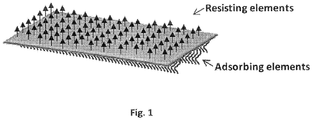
- the peptides of the invention comprise elements, in particular aromatic groups or aromatic amino acids which enable self-assembly of the compounds into ordered structures having specific directionality. Without wishing to be bound by theory, an ideal configuration for the self-assembled peptides result in a film as exemplary depicted in Fig. 1 .
- the linker L may be a linear or substantially linear structure having at one end a surface-adsorbing moiety A and at the other end an antifouling moiety F, wherein L may optionally be substituted.
- L may be a long or short linker moiety.
- L may be absent. Where L is present, it comprises at least one carbon atom.
- the linker L associates a single surface-adsorbing moiety A with two antifouling moieties F. There may be in some embodiments, more than two antifouling moieties, each of which extending outwards away from the surface. While in Structure II the linker is bifurcated to provide two linking points, one for each antifouling moiety, the connectivity of the plurality of antifouling moieties may alternatively be along the backbone chain of the linker. In other words, the two antifouling moieties need not have a common bonding atom or group.
- the linker L associates two surface-adsorbing moieties A with an antifouling moiety F. There may be in some embodiments, more than one antifouling moiety. While in Structure III the linker is bifurcated to provide two linking points, one for each surface-adsorbing moiety, the connectivity of the plurality of surface-binding moieties may alternatively be along the backbone chain of the linker. In other words, the two surface-binding moieties need not have a common bonding atom or group.
- a surface-adsorbing moiety A is positioned substantially mid-way on the backbone of the linker L with two linker arms extending therefrom, at the end of which an antifouling moiety is provided.
- two surface-adsorbing moieties are provided to link a single antifouling moiety.
- the compounds of the invention may also be constructed to have longer linker backbones, with a plurality of surface-binding moieties and antifouling moieties positioned along the backbone to provide a more compact covering of a surface region.
- One such exemplary embodiments of compounds of the invention is depicted in Structure IV of Scheme 1.
- the compounds depicted in the Structures of Scheme 1 are each aliphatic compounds (L being an aliphatic backbone) having one or more antifouling (F) and surface-adsorbing (A) moieties.
- the linker backbone is a peptide
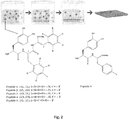
- Exemplary, non-limiting examples of compounds according to the invention are Peptides herein designated Peptide 1-18.
- Peptides of Group I are exemplified in non-limiting compounds of the invention designated Peptides 1-4.
- a perfluorinated derivative is designated Peptide 5.
- a dipeptide derivative is designated Peptide 6.
- Peptides of Group II are exemplified in non-limiting compounds of the invention designated Peptides 7-10.
- Peptides of Group III are similarly encompassed by the present invention. Exemplary compounds are designated Peptides 11-14:
- Peptides 1 to 14 depicted above other peptides of the invention may comprise surface binding amino acids in a greater number (amount) as compared to the number of antifouling amino acids, e.g., fluorinated aromatic amino acids; such compounds having the structure depicted below for Group Peptide IV and V:
- Additional non-limiting peptides according to the invention include: NH 2 -L-DOPA-L-(4-F)-Phe-COOH Peptide 15 NH 2 -L-DOPA-D-(4-F)-Phe-COOH Peptide 16 NH 2 -L-DOPA-L-(4-F)-Phe-L-(4-F)-Phe-COOMe Peptide 17.
- the compounds of the invention may have one or more substituents on any of the atom thereof.
- substituents on any of the atom thereof.
- substituted refers to any group or any ligand as defined herein above having (further substituted) one or more substituent, wherein the substituent is a ligand as defined herein above.
- the substituent is selected from alkyl, alkenyl, alkynyl, cycloalkyl, cycloalkenyl, cycloalkynyl, aryl, heteroaryl, heterocyclyl, halogen, alkylene-COOH, ester, -OH, -SH, and -NH.
- the number of substituents on a certain ligand is 0 or 1 or 2 or 3 or 4 or 5 or 6 or 7 or 8 or 9 or 20 substituents.
- the compounds of the invention (e.g., peptide) have been manufactured according to known methods in the art. In some embodiments, the compounds have been synthesized using solid or solution phase synthesis.
- the antifouling compounds of the invention may be formulated as ready-for-use products or as concentrates.
- the ready-for-use products may be in the form of powders, oil preparations (or dispersions), emulsions or aerosol formulations.
- the formulations comprising one or more compounds of the invention, in particular peptides of the invention may comprise additional components, such as fixatives, co-solvents, plasticizers, dyes, color pigments, corrosion inhibitors, chemical stabilizers or any other additive.
- the formulation and/or compounds may be applied by any method known in the art including brushing, spraying, roll coating, dipping, spin coating, dispensing, printing, inkjet printing, stamping, drop casting and any combination thereof.
- the invention provides a film comprising a compound according to the present invention.
- the film is obtainable by self-assembly of the compounds onto a surface, as discussed herein.
- the film comprises a peptide according to the invention.
- the film is antifouling and/or anti-biofilm.
- the film may be a continuous film or comprise separate regions or domains.
- the number of different antifouling compounds in the film may be determined inter alia by the physical limit of the number of materials that may be put on a desired area, the chemical or physical nature of the compounds, and others.
- the invention also provides use of at least one compound according to the invention for forming a film according to the invention.
- the invention also provides a surface or an article (or device), wherein at least a region thereof is coated with an antifouling film according to the present invention.
- the article or device may be any article, wherein antifouling properties are desired. Typically, the article is an article which experiences humidity or aquatic environments.
- the article or device may be any surface region of a marine vessel and/or a hull of a marine vessel and/or a medical device and/or a contact lens and/or a food processing apparatus and/or a drinking water dispensing apparatus and/or a pipeline and/or a cable and/or a fishing net and/or a pillar of a bridge and/or a surface region of a water immersed article, and/or others.
- the adsorption properties of compounds of the invention are exceptionally improved and therefore, a film thereof may be formed on any surface material.
- the substrate may be of a flexible or rigid substrate, which may be substantially two-dimensional (a thin flat article) or three-dimensional.
- the surface of the article can be of any smoothness.
- the surface may be selected, in a non-limiting fashion, from outdoor wood work, external surface of a central heating or cooling system, bathroom walls, hull of a marine vessel or any off-shore installations, surfaces in food production/packaging, surfaces in any industrial facility, surfaces in any medical facility, surfaces in any water facility and others.
- the surface material (of the article) may be any material selected from wood, glass, mica, plastics, ceramics, cement, metals, semiconductors, silicon surfaces (e.g., silicon wafer, a silicon wafer with a 100 nm titanium layer), carbon, hybrid materials (e.g., 400 mesh Copper-formvar®/carbon grids), stainless steel, metal oxides, alumina and others.
- the antifouling properties endowed by compounds of the invention are best appreciated by the observed prevention of accumulation of organisms or organism's secretion on a variety of surfaces.
- the organisms that participate in the fouling of surfaces in humid, salt water and fresh water environments include, for example, bacteria, diatoms, hydroids, algae, bryozoans, protozoans, ascidians, tube worms, asiatic clams, zebra mussels and barnacles.
- the compounds of the invention are capable of preventing both micro- and macrofouling, e.g., prevention of bacterial and viral adhesion as well as attachment of larger organisms or cells shed from bodies of multi cellular organisms.
- the compound of the invention is an antifouling agent capable of preventing or arresting adsorption of secretion products of cells of muli-cellular organism or of microorganisms to a surface dialysis units to prevent adherence of blood cells or of proteins secreted from blood cells from a patient being treated by the unit.
- the organisms are bacteria.
- the bacteria being selected, in some embodiments from Bordetella pertussis, Borrelia burgdorferi, Brucella abortus, Brucella canis, Brucella melitensis, Brucella suis, Campylobacter jejuni, Chlamydia pneumonia, Chlamydia psittaci, Chlamydia trachomatis, Clostridium botulinum, Clostridium difficile, Clostridium perfringens, Clostridium tetani, Corynebacterium diphtheria, Enterococcus faecalis, Enterococcus faecium, Escherichia coli (E.
- ETEC Enterotoxigenic Escherichia coli
- ETEC Enteropathogenic E. coli
- Francisella tularensis Haemophilus influenza, Helicobacter pylori, Legionella pneumophila, Leptospira interrogans, Listeria monocytogenes, Mycobacterium leprae, Mycobacterium tuberculosis, Mycoplasma pneumonia, Neisseria gonorrhoeae, Neisseria meningitidis, Pseudomonas aeruginosa, Rickettsia rickettsii, Salmonella typhi, Salmonella typhimurium, Shigella sonnei, Staphylococcus epidermidis, Staphylococcus saprophyticus, Streptococcus agalactiae, Streptococcus mutans Streptococcus pneumonia, Streptococcus pyogenes, Treponema pallidum,
- the bacterium is Escherichia coli (E. Coli). In some embodiments of the invention, the bacterium is P. aeruginosa.
- prevention refers to the arresting, limiting or overall controlling settling, attachment, accumulation and dispersion of organisms and/or organism's secretion and/or organic and/or bio-organic material (e.g., proteins and/or (poly)saccharides and/or (poly)lipids) on a surface, prevention of biofilm formation and to affecting its integrity (e.g., degrading it) and further growth.
- bio-organic material e.g., proteins and/or (poly)saccharides and/or (poly)lipids
- the compounds and/or films of the invention have the ability to prevent and control fouling of a surface by minimizing, diminishing or arresting fouling adhesion, by foul release.
- the compounds and/or films of the invention may similarly be regarded as antimicrobial, antiviral, antifungal and cytostatic materials.
- a method for inhibiting settling, attachment, accumulation and dispersion of organisms and/or organism's secretion and/or organic and/or bio-organic material e.g., proteins and/or (poly)saccharides and/or (poly)lipids
- organic and/or bio-organic material e.g., proteins and/or (poly)saccharides and/or (poly)lipids
- the method comprising contacting the surface with an effective amount of a formulation comprising a compound according to the invention (e.g., the peptide).
- the invention provides a further method for inhibiting settling, attachment, accumulation and dispersion of organisms and/or organism's secretion and/or organic and/or bio-organic material (e.g., proteins and/or (poly)saccharides and/or (poly)lipids) on a surface, the method comprising forming a film or coat or layer of a compound according to the invention on said surface.
- organic and/or bio-organic material e.g., proteins and/or (poly)saccharides and/or (poly)lipids
- the invention further provides a kit comprising a compound according to the invention and at least one solvent for dissolving or formulating said compound into a deliverable form, and instructions of use.
- Biofouling is a process in which organisms and their by-products encrust a surface. It is one of the main concerns today in the health care system as the adsorption of pathogenic bacteria to medical devices causes hospital acquired infections. In addition, it is a major problem in the marine industry since the adsorption of marine organisms on ships hull leads to an increase in the consumption of fuel and delays in transportation. Many approaches to prevent biofouling have been suggested, however, they suffer from drawbacks such as release of toxic materials to the surroundings, low stability that limits their long-term application or complex and expensive synthesis.
- the invention disclosed herein is based on the inventors development of antifouling coatings that are spontaneously formed by the self-assembly of a compounds such as peptides.
- the results presented clearly show that the coatings completely prevented the first stage of biofouling and abolished the adsorption of proteins to a substrate.
- the coating reduced significantly the amount of bacteria on the substrate.
- the invention provides a peptide having from 2 to 12 amino acids in length, wherein each amino acid is selected among aromatic amino acids, at least one of said amino acids being 3,4-dihydroxy-L-phenylalanin (DOPA) and at least another of said amino acids being fluorinated, said DOPA and said at least one fluorinated amino acid being directly bonded or linker via an amino acid linker.
- DOPA 3,4-dihydroxy-L-phenylalanin
- said peptide is antifouling.
- said fluorinated amino acid is bonded to said at least one DOPA.
- the peptide comprising between 3 and 8 amino acids. In some embodiments, the peptide comprising between 2 and 8 amino acids, between 3 and 6 amino acids or between 3 and 5 amino acids.
- each amino acid is bonded to said another amino acid via a peptidic bond. In some embodiments, at least two of said amino acids are bonded to each other through a covalent linker.
- the peptide of the invention having the general formula A-L-F, wherein A is DOPA, L is a covalent bond or a linker moiety linking A and F, and F is a fluorinated amino acid moiety.
- said bond or linker associating A to L, or L to F is a non-hydrolysable bond or linker group.
- the linker is selected from substituted or unsubstituted carbon chain.
- the linker is composed of two or more amino acids.
- the linker comprises between 1 to 40 carbon atoms.
- the linker is of the general structure wherein
- two or more moieties are DOPA moieties.
- the peptide comprises two or more fluorinated amino acids. In some embodiments of the invention, the peptide comprises two or more DOPA and two or more fluorinated amino acids moieties.
- the peptide comprises one or more DOPA and two or more fluorinated amino acids moieties. In some embodiments, the peptide comprises two or more DOPA and one or more fluorinated amino acids moieties. In some embodiments, said amino acid being fluorinated is selected amongst natural or unnatural amino acid, an amino acid analog, ⁇ - or ⁇ -forms, and L- or D amino acids.
- the amino acid is selected amongst alanine, arginine, asparagine, aspartic acid, cysteine, glutamic acid, glutamine, glycine, histidine, isoleucine, leucine, lysine, methionine, phenylalanine, proline, serine, threonine, tryptophan, tyrosine valine, pyrrolysine and selnocysteine; and amino acid analogs such as homo-amino acids, N-alkyl amino acids, dehydroamino acids, aromatic amino acids and ⁇ , ⁇ -disubstituted amino acids, cystine, 5-hydroxylysine, 4-hydroxyproline, a-aminoadipic acid, a-amino-n-butyric acid, 3,4-dihydroxyphenylalanine, homoserine, ⁇ -methylserine, ornithine, pipecolic acid, ortho, meta or para-aminobenzoic
- the amino acid is selected amongst aromatic amino acids.
- the aromatic amino acids are selected from tryptophan, tyrosine, naphthylalanine, and phenylalanine.
- the amino acids are selected from phenylalanine and/or derivatives thereof.
- the phenylalanine derivatives are selected from 4-methoxy-phenylalanine, 4-carbamimidoyl-1-phenylalanine, 4-chloro-phenylalanine, 3-cyano-phenylalanine, 4-bromo-phenylalanine, 4-cyano-phenylalanine, 4-hydroxymethyl-phenylalanine, 4-methyl-phenylalanine, 1-naphthyl-alanine, 3-(9-anthryl)-alanine, 3-methyl-phenylalanine, m-amidinophenyl-3-alanine, phenylserine, benzylcysteine, 4,4-biphenylalanine, 2-cyano-phenylalanine, 2,4-dichloro-phenylalanine, 3,4-dichloro-phenylalanine, 2-chloro-penylalanine, 3,4-dihydroxy-phenylalanine, 3,5-dibromoty
- said fluorinated amino acid are selected from o-fluorophenylalanine, m-fluorophenylalanine and p-fluorophenylalanine.
- the peptide of the invention comprises between 2 and 12 amino acids, each amino acid being selected from aromatic amino acids.
- the peptide comprises DOPA at one termini and a fluorinated aromatic amino acid selected from o-fluorophenylalanine, m-fluorophenylalanine and p-fluorophenylalanine at the other termini.
- the peptide comprises DOPA at a mid-point amino acid along the peptide and a fluorinated aromatic amino acid selected from o-fluorophenylalanine, m-fluorophenylalanine and p-fluorophenylalanine at each of the peptide termini.
- the peptide is for use as an antifouling agent; e.g., for preventing or arresting or minimizing or diminishing one or more of the following:
- the specific compounds of the invention are selected from:
- the invention also contemplates formulations comprising peptide compounds as described herein.
- the formulation may be a ready-for-use antifouling formulation.
- the invention also provides a film or a coat comprising at least one peptide of the invention.
- the film is preferably antifouling and/or anti-biofilm.
- the film may be part of an article or a device comprising at least one surface region coated with a film according to the invention.
- the article or device may be selected from a marine vessel, a hull of a marine vessel, a medical device, a contact lens, a food processing apparatus, a drinking water dispensing apparatus, a pipeline, a cable, a fishing net, a pillar of a bridge and a surface region of a water immersed article.
- the film in such devices or articles are for preventing biofouling caused by an organism selected from bacteria, diatoms, hydroids, algae, bryozoans, protozoans, ascidians, tube worms, asiatic clams, zebra mussels and barnacles.
- the organisms are bacteria.
- the bacteria is selected from Bordetella pertussis, Borrelia burgdorferi, Brucella abortus, Brucella canis, Brucella melitensis, Brucella suis, Campylobacter jejuni, Chlamydia pneumonia, Chlamydia psittaci, Chlamydia trachomatis, Clostridium botulinum, Clostridium difficile, Clostridium perfringens, Clostridium tetani, Corynebacterium diphtheria, Enterococcus faecalis, Enterococcus faecium, Escherichia coli (E.
- ETEC Enterotoxigenic Escherichia coli
- ETEC Enteropathogenic E. coli
- Francisella tularensis Haemophilus influenza, Helicobacter pylori, Legionella pneumophila, Leptospira interrogans, Listeria monocytogenes, Mycobacterium leprae, Mycobacterium tuberculosis, Mycoplasma pneumonia, Neisseria gonorrhoeae, Neisseria meningitidis, Pseudomonas aeruginosa, Rickettsia rickettsii, Salmonella typhi, Salmonella typhimurium, Shigella sonnei, Staphylococcus epidermidis, Staphylococcus saprophyticus, Streptococcus agalactiae, Streptococcus mutans Streptococcus pneumonia, Streptococcus pyogenes, Treponema pallidum,
- bacteria are Escherichia coli (E. Coli). In some embodiments, the bacteria are P. aeruginosa.
- the invention also provide use of a peptide according the invention for preventing or arresting adsorption of secretion products of cells of muli-cellular organism or of microorganisms to a surface of a dialysis unit to prevent adherence of blood cells or of proteins secreted from blood cells from a patient being treated by the unit.
- the invention further provides a method for inhibiting settling, attachment, accumulation and dispersion of organisms, organism's secretion of an organic and/or bio-organic material on a surface, the method comprising contacting the surface with an effective amount of a formulation comprising a peptide according to the invention.
- the invention provides a film or a coat comprising a compound having at least one antifouling moiety and at least one surface-adsorbing moiety, wherein the at least one antifouling moiety is selected amongst fluorine (-F) and a group comprising at least one fluorine atom and said at least one surface-adsorbing moiety being selected amongst 3,4-dihydroxy-L-phenylalanin (DOPA) and DOPA containing groups.
- the film or coat is formed on a surface region of a device or an article.
- the invention also provides a film or a coat comprising a bifunctional compound comprising at least one antifouling moiety and at least one surface-adsorbing moiety (or group), wherein the at least one antifouling moiety is selected amongst fluorine (-F) and at least one group comprising a fluorine atom and said at least one surface-adsorbing moiety being selected amongst dihydroxy-amino acids and dihydroxy-amino acid containing groups, said at least one antifouling moiety and said at least one surface-adsorbing moiety being associated to each other via a covalent bond or via a linker moiety.
- a bifunctional compound comprising at least one antifouling moiety and at least one surface-adsorbing moiety (or group), wherein the at least one antifouling moiety is selected amongst fluorine (-F) and at least one group comprising a fluorine atom and said at least one surface-adsorbing moiety being selected amongst di
- the film or coat may comprise at least one antifouling moiety and at least one surface-adsorbing moiety, wherein the at least one antifouling moiety being selected amongst fluorine (-F) and at least one group comprising a fluorine atom and said at least one surface-adsorbing moiety is selected amongst 3,4-dihydroxy-L-phenylalanin (DOPA) and DOPA containing groups, and wherein said at least one antifouling moiety and said at least one surface-adsorbing moiety being associated to each other via a covalent bond or via a linker moiety.
- the at least one antifouling moiety being selected amongst fluorine (-F) and at least one group comprising a fluorine atom and said at least one surface-adsorbing moiety is selected amongst 3,4-dihydroxy-L-phenylalanin (DOPA) and DOPA containing groups, and wherein said at least one antifouling moiety and said at least one
- said compound being of the general formula A-L-F, wherein A is a surface-adsorbing moiety, L is a covalent bond or a linker moiety linking A and F, and F is an antifouling moiety, and wherein each of A, L and F are associated to each other via a non-hydrolysable bond.
- the film or coat is antifouling for preventing or arresting adsorption of organic and/or bio-organic materials to said surface, or for preventing or arresting adsorption of secretion products of cells of multi-cellular organisms or of microorganisms to a surface.
- the surface-adsorbing moiety is DOPA being linked, associated or bonded to an atom on said linker moiety.
- said linker moiety is a one-carbon chain.
- the linker moiety is selected from substituted or unsubstituted carbon chain.
- the linker moiety is selected from amino acids and peptides.
- the linker moiety comprises between 1 to 40 carbon atoms.
- the linker moiety is substituted by one or more functional groups selected from substituted or unsubstituted alkyl, substituted or unsubstituted alkenyl, substituted or unsubstituted alkynyl, substituted or unsubstituted cycloalkyl, substituted or unsubstituted cycloalkenyl, substituted or unsubstituted cycloalkynyl, substituted or unsubstituted aryl, substituted or unsubstituted heteroaryl, substituted or unsubstituted heterocyclyl, substituted or unsubstituted -NR 1 R 2 , substituted or unsubstituted -OR 3 , substituted or unsubstituted -SR 4 , substituted or unsubstituted-S(O)R 5 , substituted or unsubstituted alkylene-COOH, and substituted or unsubstituted ester.
- n is between 1 and 12. In some embodiments, n is between 1 and 8. In some aspects, n is between 1 and 6. In some embodiments, m is between 1 and 20. In some aspects, m is between 1 and 12. In some embodiments, m is between 1 and 8. In some aspects, m is between 1 and 6.
- one or more of the (CH 2 ) n groups are substituted.
- the linker moiety is an amino acid or a peptide comprising 2 or 3 or 4 or 5 or 6 or 7 or 8 or 9 or 10. In some aspects, the linker moiety is a peptide 11 or 12 or 13 or 14 or 15 or 16 or 17 or 18 or 19 or 20 or 21 or 22 or 23 or 24 or 25 or 26 or 27 or 28 or 29 or 30 or 31 or 32 or 33 or 34 or 35 or 36 or 37 or 38 or 39 or 40 amino acids.
- the compound of the invention is constructed of two amino acids bonded to each other via an amide bond, wherein one amino acid is DOPA and the other being a fluorinated amino acid.
- the antifouling moieties are bonded to the linker at one end and the surface-adsorbing moieties at the other end of the linker moiety. In some embodiments, the antifouling moieties and the surface-adsorbing moieties are at alternating positions along the linker moiety.
- the linker moiety comprises or consists a peptide of two or more amino acids.
- the compound is a peptide having at least two amino acids, at least one DOPA and at least fluorinated group, which is a fluorinated amino acid.
- the peptide of the invention comprises 2, or 3, or 4, or 5, or 6, or 7, or 8 or 9 or 10 or 11 or 12 amino acids.
- said antifouling moiety is a fluorinated amino acid selected amongst natural or unnatural amino acid, an amino acid analog, ⁇ - or ⁇ -forms, and L- or D amino acids.
- the amino acid is selected amongst alanine, arginine, asparagine, aspartic acid, cysteine, glutamic acid, glutamine, glycine, histidine, isoleucine, leucine, lysine, methionine, phenylalanine, proline, serine, threonine, tryptophan, tyrosine valine, pyrrolysine and selnocysteine; and amino acid analogs such as homo-amino acids, N-alkyl amino acids, dehydroamino acids, aromatic amino acids and ⁇ , ⁇ -disubstituted amino acids, cystine, 5-hydroxylysine, 4-hydroxyproline, a-aminoadipic acid, a-amino-
- the amino acid is selected amongst aromatic amino acids.
- said aromatic amino acids are selected from tryptophan, tyrosine, naphthylalanine, and phenylalanine.
- the amino acids are selected from phenylalanine and derivatives thereof.
- the phenylalanine derivatives are selected from 4-methoxy-phenylalanine, 4-carbamimidoyl-1-phenylalanine, 4-chloro-phenylalanine, 3-cyano-phenylalanine, 4-bromo-phenylalanine, 4-cyano-phenylalanine, 4-hydroxymethyl-phenylalanine, 4-methyl-phenylalanine, 1-naphthyl-alanine, 3-(9-anthryl)-alanine, 3-methyl-phenylalanine, m-amidinophenyl-3-alanine, phenylserine, benzylcysteine, 4,4-biphenylalanine, 2-cyano-phenylalanine, 2,4-dichloro-phenylalanine, 3,4-dichloro-phenylalanine, 2-chloro-penylalanine, 3,
- said fluorinated amino acids are selected from o-fluorophenylalanine, m-fluorophenylalanine and p-fluorophenylalanine.
- the compound comprising DOPA at one termini and a fluorinated aromatic amino acid selected from o-fluorophenylalanine, m-fluorophenylalanine and p-fluorophenylalanine at the other termini.
- the compound comprising DOPA at a mid-point amino acid along the peptide and a fluorinated aromatic amino acid selected from o-fluorophenylalanine, m-fluorophenylalanine and p-fluorophenylalanine at each of the peptide termini.
- the film or coat is provided for preventing or arresting or minimizing or diminishing one or more of the following:
- the compound has the structure:
- the compound is selected from NH 2 -L-DOPA-L-(4-F)-Phe-COOH Peptide 15 NH 2 -L-DOPA-D-(4-F)-Phe-COOH Peptide 16 NH 2 -L-DOPA-L-(4-F)-Phe-L-(4-F)-Phe-COOMe Peptide 17.
- the invention also provides an article or a device comprising at least one surface region coated with a film or coat according to the invention.
- the article or device is selected from a marine vessel, a hull of a marine vessel, a medical device, a contact lens, a food processing apparatus, a drinking water dispensing apparatus, a pipeline, a cable, a fishing net, a pillar of a bridge and a surface region of a water immersed article.
- the film or coat is provided for preventing biofouling caused by an organism selected from bacteria, diatoms, hydroids, algae, bryozoans, protozoans, ascidians, tube worms, asiatic clams, zebra mussels and barnacles.
- the organisms are bacteria.
- the bacteria are selected from Bordetella pertussis, Borrelia burgdorferi, Brucella abortus, Brucella canis, Brucella melitensis, Brucella suis, Campylobacter jejuni, Chlamydia pneumonia, Chlamydia psittaci, Chlamydia trachomatis, Clostridium botulinum, Clostridium difficile, Clostridium perfringens, Clostridium tetani, Corynebacterium diphtheria, Enterococcus faecalis, Enterococcus faecium, Escherichia coli (E.
- ETEC Enterotoxigenic Escherichia coli
- ETEC Enteropathogenic E. coli
- Francisella tularensis Haemophilus influenza, Helicobacter pylori, Legionella pneumophila, Leptospira interrogans, Listeria monocytogenes, Mycobacterium leprae, Mycobacterium tuberculosis, Mycoplasma pneumonia, Neisseria gonorrhoeae, Neisseria meningitidis, Pseudomonas aeruginosa, Rickettsia rickettsii, Salmonella typhi, Salmonella typhimurium, Shigella sonnei, Staphylococcus epidermidis, Staphylococcus saprophyticus, Streptococcus agalactiae, Streptococcus mutans Streptococcus pneumonia, Streptococcus pyogenes, Treponema pallidum,
- the bacteria are Escherichia coli (E. Coli). In some embodiments, the bacteria are P. aeruginosa.
- the invention also provides a composition
- a composition comprising a compound having at least one antifouling moiety and at least one surface-adsorbing moiety, wherein the at least one antifouling moiety is selected amongst fluorine (-F) and a group comprising at least one fluorine atom and said at least one surface-adsorbing moiety being selected amongst 3,4-dihydroxy-L-phenylalanin (DOPA) and DOPA containing groups, for use in forming a self-assembled antifouling film or coat on a surface region of a device or an article.
- -F fluorine
- DOPA 3,4-dihydroxy-L-phenylalanin
- the invention also a composition
- a bifunctional compound comprising at least one antifouling moiety and at least one surface-adsorbing moiety (or group), wherein the at least one antifouling moiety is selected amongst fluorine (-F) and at least one group comprising a fluorine atom and said at least one surface-adsorbing moiety being selected amongst dihydroxy-amino acids and dihydroxy-amino acid containing groups, said at least one antifouling moiety and said at least one surface-adsorbing moiety being associated to each other via a covalent bond or via a linker moiety.
- a bifunctional compound comprising at least one antifouling moiety and at least one surface-adsorbing moiety (or group), wherein the at least one antifouling moiety is selected amongst fluorine (-F) and at least one group comprising a fluorine atom and said at least one surface-adsorbing moiety being selected amongst dihydroxy-amino
- the composition comprises at least one antifouling moiety and at least one surface-adsorbing moiety, wherein the at least one antifouling moiety being selected amongst fluorine (-F) and at least one group comprising a fluorine atom and said at least one surface-adsorbing moiety is selected amongst 3,4-dihydroxy-L-phenylalanin (DOPA) and DOPA containing groups, and wherein said at least one antifouling moiety and said at least one surface-adsorbing moiety being associated to each other via a covalent bond or via a linker moiety.
- the at least one antifouling moiety being selected amongst fluorine (-F) and at least one group comprising a fluorine atom and said at least one surface-adsorbing moiety is selected amongst 3,4-dihydroxy-L-phenylalanin (DOPA) and DOPA containing groups, and wherein said at least one antifouling moiety and said at least one surface-a
- the compound is of the general formula A-L-F, wherein A is a surface-adsorbing moiety, L is a covalent bond or a linker moiety linking A and F, and F is an antifouling moiety, and wherein each of A, L and F are associated to each other via a non-hydrolysable bond.
- composition is antifouling for preventing or arresting adsorption of organic and/or bio-organic materials to said surface, or for preventing or arresting adsorption of secretion products of cells of multi-cellular organisms or of microorganisms to a surface.
- the surface-adsorbing moiety is DOPA being linked, associated or bonded to an atom on said linker moiety.
- said linker moiety is a one-carbon chain.
- the linker moiety is selected from substituted or unsubstituted carbon chain.
- the linker moiety is selected from amino acids and peptides.
- the linker moiety comprises between 1 to 40 carbon atoms.
- the linker moiety is substituted by one or more functional groups selected from substituted or unsubstituted alkyl, substituted or unsubstituted alkenyl, substituted or unsubstituted alkynyl, substituted or unsubstituted cycloalkyl, substituted or unsubstituted cycloalkenyl, substituted or unsubstituted cycloalkynyl, substituted or unsubstituted aryl, substituted or unsubstituted heteroaryl, substituted or unsubstituted heterocyclyl, substituted or unsubstituted -NR 1 R 2 , substituted or unsubstituted -OR 3 , substituted or unsubstituted -SR 4 , substituted or unsubstituted-S(O)R 5 , substituted or unsubstituted alkylene-COOH, and substituted or unsubstituted ester.
- the linker moiety is of the general structure wherein
- n is between 1 and 12. In some aspects, n is between 1 and 8. In some aspects, n is between 1 and 6. In some aspects, m is between 1 and 20. In some aspects, m is between 1 and 12. In some aspects, m is between 1 and 8. In some aspects, m is between 1 and 6.
- one or more of the (CH 2 ) n groups are substituted.
- the linker moiety is an amino acid or a peptide comprising 2 or 3 or 4 or 5 or 6 or 7 or 8 or 9 or 10.
- the linker moiety is a peptide comprises 11 or 12 or 13 or 14 or 15 or 16 or 17 or 18 or 19 or 20 or 21 or 22 or 23 or 24 or 25 or 26 or 27 or 28 or 29 or 30 or 31 or 32 or 33 or 34 or 35 or 36 or 37 or 38 or 39 or 40 amino acids.
- the compound is constructed of two amino acids bonded to each other via an amide bond, wherein one amino acid is DOPA and the other being a fluorinated amino acid.
- the antifouling moieties are bonded to the linker at one end and the surface-adsorbing moieties at the other end of the linker moiety. In some embodiments, the antifouling moieties and the surface-adsorbing moieties are at alternating positions along the linker moiety.
- the linker moiety comprises or consists a peptide of two or more amino acids.
- the compound is a peptide having at least two amino acids, at least one DOPA and at least fluorinated group, which is a fluorinated amino acid.
- the peptide comprises between 2 and 40 amino acids.
- the peptide comprises 2, or 3, or 4, or 5, or 6, or 7, or 8 or 9 or 10 or 11 or 12 amino acids.
- said antifouling moiety is a fluorinated amino acid selected amongst natural or unnatural amino acid, an amino acid analog, ⁇ - or ⁇ -forms, and L- or D amino acids.
- the amino acid is selected amongst alanine, arginine, asparagine, aspartic acid, cysteine, glutamic acid, glutamine, glycine, histidine, isoleucine, leucine, lysine, methionine, phenylalanine, proline, serine, threonine, tryptophan, tyrosine valine, pyrrolysine and selnocysteine; and amino acid analogs such as homo-amino acids, N-alkyl amino acids, dehydroamino acids, aromatic amino acids and ⁇ , ⁇ -disubstituted amino acids, cystine, 5-hydroxylysine, 4-hydroxyproline, a-aminoadipic acid, a-amino-
- the amino acid is selected amongst aromatic amino acids.
- said aromatic amino acids are selected from tryptophan, tyrosine, naphthylalanine, and phenylalanine.
- the amino acids are selected from phenylalanine and derivatives thereof.
- the phenylalanine derivatives are selected from 4-methoxy-phenylalanine, 4-carbamimidoyl-1-phenylalanine, 4-chloro-phenylalanine, 3-cyano-phenylalanine, 4-bromo-phenylalanine, 4-cyano-phenylalanine, 4-hydroxymethyl-phenylalanine, 4-methyl-phenylalanine, 1-naphthyl-alanine, 3-(9-anthryl)-alanine, 3-methyl-phenylalanine, m-amidinophenyl-3-alanine, phenylserine, benzylcysteine, 4,4-biphenylalanine, 2-cyano-phenylalanine, 2,4-dichloro-phenylalanine, 3,4-dichloro-phenylalanine, 2-chloro-penylalanine, 3,
- said fluorinated amino acid are selected from o-fluorophenylalanine, m-fluorophenylalanine and p-fluorophenylalanine.
- the compound comprising DOPA at one termini and a fluorinated aromatic amino acid selected from o-fluorophenylalanine, m-fluorophenylalanine and p-fluorophenylalanine at the other termini.
- the compound comprising DOPA at a mid-point amino acid along the peptide and a fluorinated aromatic amino acid selected from o-fluorophenylalanine, m-fluorophenylalanine and p-fluorophenylalanine at each of the peptide termini.
- the film or coat is provided for preventing or arresting or minimizing or diminishing one or more of the following:
- the compound has the structure:
- the compound is selected from NH 2 -L-DOPA-L-(4-F)-Phe-COOH Peptide 15 NH 2 -L-DOPA-D-(4-F)-Phe-COOH Peptide 16 NH 2 -L-DOPA-L-(4-F)-Phe-L-(4-F)-Phe-COOMe Peptide 17.
- the composition is provided for preventing biofouling caused by an organism selected from bacteria, diatoms, hydroids, algae, bryozoans, protozoans, ascidians, tube worms, asiatic clams, zebra mussels and barnacles.
- the organisms are bacteria.
- the bacteria are selected from Bordetella pertussis, Borrelia burgdorferi, Brucella abortus, Brucella canis, Brucella melitensis, Brucella suis, Campylobacter jejuni, Chlamydia pneumonia, Chlamydia psittaci, Chlamydia trachomatis, Clostridium botulinum, Clostridium difficile, Clostridium perfringens, Clostridium tetani, Corynebacterium diphtheria, Enterococcus faecalis, Enterococcus faecium, Escherichia coli (E.
- ETEC Enterotoxigenic Escherichia coli
- ETEC Enteropathogenic E. coli
- Francisella tularensis Haemophilus influenza, Helicobacter pylori, Legionella pneumophila, Leptospira interrogans, Listeria monocytogenes, Mycobacterium leprae, Mycobacterium tuberculosis, Mycoplasma pneumonia, Neisseria gonorrhoeae, Neisseria meningitidis, Pseudomonas aeruginosa, Rickettsia rickettsii, Salmonella typhi, Salmonella typhimurium, Shigella sonnei, Staphylococcus epidermidis, Staphylococcus saprophyticus, Streptococcus agalactiae, Streptococcus mutans Streptococcus pneumonia, Streptococcus pyogenes, Treponema pallidum,
- the bacteria are Escherichia coli (E. Coli). In some embodiments, the bacteria are P . aeruginosa.
- the invention further provides an antifouling formulation comprising a composition according to the invention. Also provided is an antimicrobial formulation comprising a composition of the invention. Further provided is an antibacterial formulation comprising a composition of the invention.
- the invention further provides a kit comprising a composition according to the invention and instructions of use.
- the invention also provides the use of a composition according to the invention for making an antifouling formulation or antimicrobial formulation or antibacterial formulation.
- the invention also provides a method for forming a film or a coat of a plurality of compounds on a surface region, the compounds each comprising at least one antifouling moiety and at least one surface-adsorbing moiety, wherein the at least one antifouling moiety is selected amongst fluorine (-F) and a group comprising at least one fluorine atom and said at least one surface-adsorbing moiety being selected amongst 3,4-dihydroxy-L-phenylalanin (DOPA) and DOPA containing groups, the method comprising contacting said said surface region with said compounds and permitting self assembly thereof on said surface region.
- -F fluorine
- DOPA 3,4-dihydroxy-L-phenylalanin
- said surface region is of a device or article.
- the compound is provided as a formulation.
- said film or coat having a property selected from antifouling, antimicrobial and antibacterial.
- Fmoc-DOPA(ac)-COOH was obtained from Novabiochem/EMD chemicals (San-Diego, USA).
- L and D-4-fluoro phenylalanine, Boc-penta Fluoro phe-COOH were purchased from chem-impex Inc. (Wood Dale, USA).
- Solvents and TFA were purchased from Bio-lab(Jerusalem, Israel).
- NMR solvents (CDCl 3 and DMSO- d 6 ) were supplied by Sigma-Aldrich (Jerusalem, Israel). Piperidine used for deprotection of Fmoc group was obtained from Alfa-Aesar (UK).
- the proteins BSA, fibrinogen and lysozyme were obtained from Sigma-Aldrich (Jerusalem, Israel), Chem impex INC. (Wood Dale, USA) and Merck (Darmstadt, Germany) respectively.
- Pseudomonas aeruginosa (ATCC 27853) and Eschrichia coli (ATCC 1655) were purchased from ATCC (Virginia,USA). Crystal violet was obtained from Merck (Germany).
- NMR spectra were obtained at 400.13 MHz ( 1 H) using a Bruker DRX 400 spectrometer.
- the mass of the peptides was measured using Applied Biosystem Voyager-DE pro MALDI TOF mass spectrometer.
- the peptides were synthesized by a conventional solution-phase method using a racemization free strategy.
- the Boc group and Fmoc group were used for N-terminal protection and the C-terminus was protected as a methyl ester. Couplings were mediated by dicyclohexylcarbodiimide/1-hydroxybenzotriazole (DCC/HOBt).
- the intermediate compounds were characterized by 1 H NMR and MALDI-TOF mass spectroscopy and final peptides were fully characterized by 1 H NMR, 13 C NMR, 19 F NMR, MALDI-TOF.
- Boc-L-(F5)Phe-COOH We have purchased Boc-L-(F5)Phe-COOH. We first deprotected the Boc group by treatment of TFA/DCM, then evaporate all the solvents and esterification of NH 2 -Phe(F5)-COOH was done by treating with thionyl chloride and methanol. Then the compound 8e was synthesized by coupling of Boc-L-(F5)Phe -COOH with NH 2 - L-(F5)Phe -COOMe as described for compound 8a.
- the compound 9e was prepared as described for compound 9a.
- the compound 10e was prepared as described for compound 10a.
- the compound 11e was prepared as described for compound 11a.
- the compound 5 was prepared as described for compound 1.
- Another two exemplary peptide derivatives have been synthesized using solid or solution phase synthesis. The purity and identify of the peptides was determined using HPLC and MS spectrometer.
- the following substrates were coated with the peptides in the course of the research: a silicon wafer, a silicon wafer with a 100 nm titanium layer, a 400 mesh Copper-formvar®/carbon grids.
- the desired substrate was cut into a 1 cm 2 square and cleaned by sonication (5 min in acetone and 5 min in isopropanol). Then, the substrate was immersed in a peptide solution at a concentration of 0.1 mg/ml and incubated over night at room temperature.
- the substrate was rinsed by immersion in water, dried and store in a dissector until use.
- ATR spectra were recorded using FT-IR (Thermo scientific, Model Nicolet 6700) with Ge-ATR arrangement (Harrick Scientific's VariGATR). For all the surfaces spectra were collected with applied force of 350 N, at 4 cm -1 resolution with 3000 scans averaged signal and an incident angle of 65°.
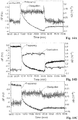
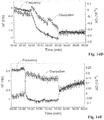
- QCM-D Q-sense, Biolin Scientific was used for the study of peptide adhesion onto Ti surface. Measurements were performed in a flow module E1 system. Ti sensors with a fundamental resonant frequency of 5MHz were also purchased from Q-sense and used as supplied. Prior to each experiment Ti sensors were cleaned with Oxygen/Plasma (Atto, Diener Electronic), followed by rinsing with 2% SDS and TDW and finally dried under N 2 . All QCM-D experiments were performed under flow-through conditions using a digital peristaltic pump (IsmaTec Peristaltic Pump, IDEX) operating in pushing mode. The studied solutions were injected to the sensor crystal chamber at a rate of 0.1 mL/min. Organic solvent compatible tube and O-ring were used for the flow system. Peptides were dissolved in MeOH to a concentration of 0.5 mg/mL.
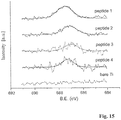
- XPS X-ray photoelectron spectroscopy
- XPS X-ray Photoelectron Spectroscopy
- IMFPs inelastic mean free paths
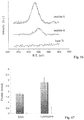
- the thickness of the peptide-based coating was measured using ⁇ -SE spectroscopic ellipsometer (J.A. Woollam, Lincoln, California, USA). Measurements were performed at wavelengths from 380 to 900 nm, at a 70° angle of incidence.
- the optical properties of the substrate were fitted using standard Si with a 50 nm Ti.
- the thickness of the layers and refractive indices were fitted according to the Cauchy model.
- Protein concentrations in the SDS solution were determined using the Non-interfering protein assay (Calbiochem, USA) according to the instructions of the manufacturer, using a microplate reader (Synergy 2, BioTek) at 480 nm. All measurements were performed in triplicates and averaged.
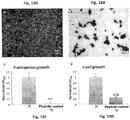
- each of the examined substrates was incubated with a fluorescently-labeled protein (FITC-BSA) for 1 hour. After incubation, the substrate was rinsed exhaustively to wash access protein and the fluorescent signal was recorded using a fluorescent microscope.
- FITC-BSA fluorescently-labeled protein
- Pseudomonas aeruginosa and Eschrichia coli were grown in TSB medium (Fluka) and LB medium (BD Difco) respectively overnight at 37°C in loosely capped tubes with agitation (120 rpm) to the stationary phase. Then, cultures were diluted to 10 8 CFU/mL with TSB, and 3 mL of each culture were transferred to a Petri dish. Substrates were placed horizontally in the plate and incubated at 37°C for 9 hours for the formation of biofilm by P.aeruginosa and 96 hours for the formation of biofilm by E.coli. Every 4.5 hours the medium was replaced with a fresh one to ensure sufficient supply of nutrients.
- BL21 E. Coli strain was grown in LB broth to a steady state.
- the examined surfaces were immersed in the bacterial growth culture. After 1 hour of incubation the substrates were thoroughly rinsed with sterile PBS buffer (at least 20 ml for 1cm 2 surface), in order to get rid of non adherent cells, and placed in test tube containing a clean buffer.
- the test tube was placed in an ultrasonic bath for 5 min. The buffer was then diluted x10 and x100, spread on LB agar plates and incubate over night at 37°C. The number of cell forming units (CFU)/colonies was counted.
- the molecular structure of the studied peptides 1 to 6 is presented below. We chose to explore two variation of the peptide: one contains only one fluorine atom on each of the benzene rings and the other contains five. In addition, we studied peptides with either L or D amino acids, since L amino acids are more abundant in natural systems and D amino acid resist common proteases and can present an additional stability.
- the third amino acid of the peptide is 3,4-dihydroxy-L-phenylalanin (DOPA) ( Fig. 2 ).
- a substrate e.g. gold, silicon, titanium, glass or polystyrene
- An informative IR frequency range is 3500-3200 cm -1 as it corresponds to the N-H stretching vibrations and can indicate on the formation of a peptide film on the substrate.
- the N-H stretching frequency occurred at 3330 cm -1 .
- This IR frequency suggests the binding of the peptide to the substrate ( Fig. 10 ).
- the N-H stretching band occurred between 3305cm -1 to 3322cm -1 for surfaces modified with the additional studied peptides ( Fig. 11 and 12 ).
- Another informative region is characteristic of the C-F stretching band.
- Peptide 1 showed a peak at 1315 cm -1 , 1245 cm -1 and 1093 cm -1 , while the spectra of the other peptides had a peak between 1310-1000 cm -1 ( Fig. 11 and 12 ).
- the IR region between 1800 cm -1 and 1500 cm -1 is related to the stretching band of amide I and can indicate on the secondary structure of the peptides.
- the ATR-FTIR spectra of a substrate coated with peptide 1 appeared at 1685 cm -1 and 1629 cm -1 indicating an anti parallel ⁇ sheet secondary structure.
- the amide I peak appeared at (1687 cm - 1,1616 cm -1 ), (1687 cm -1 , 1612 cm -1 ) (1686 cm -1 , 1619 cm -1 ) and (1679 cm -1 , 1605 cm -1 ) respectively indicating the same type of peptide secondary structures on the substrates ( Fig. 11 ).
- the IR spectrum of peptide 6 had a peak at 1620 cm -1 ( Fig. 12 ), however, the higher peak shifted to 1696 cm -1 , and another peak at 1655 cm -1 appeared, indicating alpha helical structure. These may imply on less organized assembly of peptide 6 on the substrate. This can be supported by the intensity of peaks, and signal to noise ratio of the spectrum. When compared to the other spectra, the spectrum differs, and some of the titanium peaks seem to appear.
- the average thickness of the peptide layer evaluated by XPS was 3.9 ⁇ 0.1 nm, 4.3 ⁇ 0.1 nm, 3.9 ⁇ 0.1 nm , 4.41 ⁇ 0.03 nm, 4.2 ⁇ 0.1 nm and 3.82 ⁇ 0.04 nm for peptides 1-6 respectively.
- the process of biofouling initiates by the adsorption of bioorganic molecules, in the form of polysaccharides or proteins, onto a substrate. These bioorganic molecules mediate the subsequent attachment of organisms.
- We investigated the resistance of the peptide-based coating to protein adsorption.
- a bare Ti surface and a coated Ti substrate were incubated in a protein (either Bovine Serum Albumin (BSA), or lysozyme) solution at a concentration of 150 ⁇ M for 2 hours at 37°C.
- BSA Bovine Serum Albumin
- lysozyme lysozyme
- bare and peptide coated substrates were incubated in inoculums of P.aeruginosa and E.coli for 9 and 96 hours respectively. These incubation times allowed the formation a biofilm by the different bacterial strains. After incubation, we washed and dried the substrates, and stained them with 2%(w/w) crystal violet. Crystal violet dye is part of the gram staining of bacteria and stains bacteria in purple. Using an optical microscope we observed a thick and dense purple layer on the bare titanium surface which indicated a thick bacterial coverage of the substrate, while on the coated titanium we only detected sparse bacteria ( Fig. 18 ).
- the peptide films were prepared by the dip-coating. Unless noted otherwise, all experiments were carried out with a peptide concentration of 0.01 mg/mL.
- the films were deposited on either silicon wafers, silicon wafers coated with a 100 nm of titanium layer or 400 mesh copper-formvar®/carbon grids. Using electron microscopy, the folds and defects in the film were identified, indicating the formation of a film on the substrate ( Fig. 19 ).
- the modified surfaces were incubated with FITC-BSA (a fluorescently-labeled protein). After a thorough washing, the presence of the adsorb protein to the surface was analyzed using fluorescence microscopy. Results from this experiment clearly showed a strong fluorescence signal indicating on an extensive protein adsorption on the bare silicon substrate when compared to the weaker signal from the modified surface.
- FITC-BSA fluorescently-labeled protein
- the modified silicon surfaces were placed in BL21 E. Coli bacterial culture. The surfaces were then rinsed, sonicated in a buffer and the buffer was spread on agar plates and cultivated. The colonies were counted and the number of colonies forming units (CFUs) was calculated.
- CFUs colonies forming units
- peptide 8 was synthesized in such a fusion that an amine group would be located in a non-adjacent position to DOPA. Then, the peptide was conjugated to Fluorescein through its amine termini and deposited on a titanium substrate by dip coating. Results indicated the absence of florescent signal from a bare titanium substrate and a strong signal from the modified surface. This indicated that the peptide indeed coat the substrate.
Landscapes
- Chemical & Material Sciences (AREA)
- Organic Chemistry (AREA)
- Life Sciences & Earth Sciences (AREA)
- Genetics & Genomics (AREA)
- Molecular Biology (AREA)
- Proteomics, Peptides & Aminoacids (AREA)
- Health & Medical Sciences (AREA)
- Biochemistry (AREA)
- Biophysics (AREA)
- General Health & Medical Sciences (AREA)
- Medicinal Chemistry (AREA)
- Engineering & Computer Science (AREA)
- Wood Science & Technology (AREA)
- Materials Engineering (AREA)
- Peptides Or Proteins (AREA)
- Paints Or Removers (AREA)
- Application Of Or Painting With Fluid Materials (AREA)
- Farming Of Fish And Shellfish (AREA)
- Eyeglasses (AREA)
- Apparatus For Disinfection Or Sterilisation (AREA)
- Agricultural Chemicals And Associated Chemicals (AREA)
Applications Claiming Priority (2)
| Application Number | Priority Date | Filing Date | Title |
|---|---|---|---|
| US201361758875P | 2013-01-31 | 2013-01-31 | |
| PCT/IL2014/050106 WO2014118779A1 (en) | 2013-01-31 | 2014-01-30 | Antifouling materials |
Publications (2)
| Publication Number | Publication Date |
|---|---|
| EP2951195A1 EP2951195A1 (en) | 2015-12-09 |
| EP2951195B1 true EP2951195B1 (en) | 2020-02-19 |
Family
ID=50156824
Family Applications (1)
| Application Number | Title | Priority Date | Filing Date |
|---|---|---|---|
| EP14706129.5A Active EP2951195B1 (en) | 2013-01-31 | 2014-01-30 | Antifouling materials |
Country Status (7)
| Country | Link |
|---|---|
| US (1) | US9631100B2 (enExample) |
| EP (1) | EP2951195B1 (enExample) |
| JP (1) | JP2016515999A (enExample) |
| KR (1) | KR20150139828A (enExample) |
| CN (1) | CN105143245B (enExample) |
| CA (1) | CA2899384A1 (enExample) |
| WO (1) | WO2014118779A1 (enExample) |
Families Citing this family (11)
| Publication number | Priority date | Publication date | Assignee | Title |
|---|---|---|---|---|
| CN101801521B (zh) | 2007-05-14 | 2015-06-17 | 纽约州立大学研究基金会 | 生物膜中细菌细胞内的生理学分散响应诱导 |
| US20170044097A1 (en) * | 2015-08-14 | 2017-02-16 | Indiana University Research And Technology Corporation | Antibacterials and/or modulators of biofilm formation and methods of using the same |
| WO2017042805A1 (en) | 2015-09-08 | 2017-03-16 | Yissum Research Development Company Of The Hebrew University Of Jerusalem Ltd | Novel compounds with dual activity |
| WO2017072759A1 (en) | 2015-10-26 | 2017-05-04 | Yissum Research Development Company Of The Hebrew University Of Jerusalem Ltd | Capsules and particles and uses thereof |
| CN109346236A (zh) * | 2016-03-20 | 2019-02-15 | 李忠波 | 一种输电用防霉防菌抗腐蚀电缆 |
| CN111669969B (zh) * | 2018-02-01 | 2022-02-25 | Agc株式会社 | 基材及共聚物 |
| US11541105B2 (en) | 2018-06-01 | 2023-01-03 | The Research Foundation For The State University Of New York | Compositions and methods for disrupting biofilm formation and maintenance |
| WO2021152121A1 (en) * | 2020-01-30 | 2021-08-05 | Leukocare Ag | Reduction of adsorption |
| US20240206465A1 (en) | 2021-04-21 | 2024-06-27 | Yissum Research Development Company Of The Hebrew University Of Jerusalem Ltd. | Active polymeric films and polymeric compositions |
| WO2022229951A1 (en) * | 2021-04-26 | 2022-11-03 | Yissum Research Development Company Of The Hebrew University Of Jerusalem Ltd. | Antimicrobial agents and films made therefrom |
| FR3147567A1 (fr) | 2023-04-04 | 2024-10-11 | Genepep | Procédé de fonctionnalisation d’un support solide avec un conjugué peptidique |
Family Cites Families (5)
| Publication number | Priority date | Publication date | Assignee | Title |
|---|---|---|---|---|
| US7618937B2 (en) * | 2001-07-20 | 2009-11-17 | Northwestern University | Peptidomimetic polymers for antifouling surfaces |
| US20080171012A1 (en) * | 2007-01-11 | 2008-07-17 | Phillip Messersmith | Fouling Resistant Coatings and Methods of Making Same |
| AU2005250314A1 (en) * | 2004-02-27 | 2005-12-15 | Northwestern University | Polymeric compositions and related methods of use |
| US7447039B2 (en) | 2006-10-17 | 2008-11-04 | Hon Hai Precision Industry Co., Ltd. | Motherboard configured to minimize or prevent damage to a chip thereon |
| WO2011122392A1 (ja) * | 2010-03-31 | 2011-10-06 | Dic株式会社 | 含フッ素スチレン化合物及びそれを用いた活性エネルギー線硬化性組成物 |
-
2014
- 2014-01-30 CA CA2899384A patent/CA2899384A1/en not_active Abandoned
- 2014-01-30 JP JP2015555850A patent/JP2016515999A/ja active Pending
- 2014-01-30 EP EP14706129.5A patent/EP2951195B1/en active Active
- 2014-01-30 WO PCT/IL2014/050106 patent/WO2014118779A1/en not_active Ceased
- 2014-01-30 CN CN201480019858.0A patent/CN105143245B/zh active Active
- 2014-01-30 US US14/764,765 patent/US9631100B2/en active Active
- 2014-01-30 KR KR1020157022875A patent/KR20150139828A/ko not_active Withdrawn
Non-Patent Citations (1)
| Title |
|---|
| None * |
Also Published As
| Publication number | Publication date |
|---|---|
| EP2951195A1 (en) | 2015-12-09 |
| CA2899384A1 (en) | 2014-08-07 |
| JP2016515999A (ja) | 2016-06-02 |
| US9631100B2 (en) | 2017-04-25 |
| KR20150139828A (ko) | 2015-12-14 |
| CN105143245B (zh) | 2021-02-05 |
| WO2014118779A1 (en) | 2014-08-07 |
| CN105143245A (zh) | 2015-12-09 |
| US20150368480A1 (en) | 2015-12-24 |
Similar Documents
| Publication | Publication Date | Title |
|---|---|---|
| EP2951195B1 (en) | Antifouling materials | |
| US20180079912A1 (en) | Antifouling materials | |
| EP2350116B1 (en) | Treatment of biofilms | |
| US10676509B2 (en) | Surface-immobilized antimicrobial peptoids | |
| Maity et al. | Self-assembly of a tripeptide into a functional coating that resists fouling | |
| ES2576685T3 (es) | Compuestos antimicrobianos | |
| Stillger et al. | Peptide-coating combating antimicrobial contaminations: a review of covalent immobilization strategies for industrial applications | |
| US20240301218A1 (en) | Polymeric Antifouling Coating with Antimicrobial Peptides | |
| EP3347369B1 (en) | Novel compounds with dual activity | |
| US20240298636A1 (en) | Antimicrobial agents and films made therefrom | |
| Dolid et al. | The effect of end‐group substitution on surface self‐assembly of peptides | |
| US7462686B2 (en) | On-growth inhibiting compounds | |
| Dalsin et al. | Versatile mussel adhesive-inspired biomimetic antifouling polymers | |
| KR20250167674A (ko) | 고체 기판을 펩티드 접합체로 관능화하는 방법 | |
| Saxer | Ultrathin, non-fouling coatings exploiting biomimetic surface anchorage concepts |
Legal Events
| Date | Code | Title | Description |
|---|---|---|---|
| PUAI | Public reference made under article 153(3) epc to a published international application that has entered the european phase |
Free format text: ORIGINAL CODE: 0009012 |
|
| 17P | Request for examination filed |
Effective date: 20150827 |
|
| AK | Designated contracting states |
Kind code of ref document: A1 Designated state(s): AL AT BE BG CH CY CZ DE DK EE ES FI FR GB GR HR HU IE IS IT LI LT LU LV MC MK MT NL NO PL PT RO RS SE SI SK SM TR |
|
| AX | Request for extension of the european patent |
Extension state: BA ME |
|
| DAX | Request for extension of the european patent (deleted) | ||
| STAA | Information on the status of an ep patent application or granted ep patent |
Free format text: STATUS: EXAMINATION IS IN PROGRESS |
|
| 17Q | First examination report despatched |
Effective date: 20171107 |
|
| GRAP | Despatch of communication of intention to grant a patent |
Free format text: ORIGINAL CODE: EPIDOSNIGR1 |
|
| STAA | Information on the status of an ep patent application or granted ep patent |
Free format text: STATUS: GRANT OF PATENT IS INTENDED |
|
| INTG | Intention to grant announced |
Effective date: 20190816 |
|
| GRAJ | Information related to disapproval of communication of intention to grant by the applicant or resumption of examination proceedings by the epo deleted |
Free format text: ORIGINAL CODE: EPIDOSDIGR1 |
|
| STAA | Information on the status of an ep patent application or granted ep patent |
Free format text: STATUS: EXAMINATION IS IN PROGRESS |
|
| GRAR | Information related to intention to grant a patent recorded |
Free format text: ORIGINAL CODE: EPIDOSNIGR71 |
|
| GRAS | Grant fee paid |
Free format text: ORIGINAL CODE: EPIDOSNIGR3 |
|
| STAA | Information on the status of an ep patent application or granted ep patent |
Free format text: STATUS: GRANT OF PATENT IS INTENDED |
|
| GRAA | (expected) grant |
Free format text: ORIGINAL CODE: 0009210 |
|
| STAA | Information on the status of an ep patent application or granted ep patent |
Free format text: STATUS: THE PATENT HAS BEEN GRANTED |
|
| INTC | Intention to grant announced (deleted) | ||
| AK | Designated contracting states |
Kind code of ref document: B1 Designated state(s): AL AT BE BG CH CY CZ DE DK EE ES FI FR GB GR HR HU IE IS IT LI LT LU LV MC MK MT NL NO PL PT RO RS SE SI SK SM TR |
|
| INTG | Intention to grant announced |
Effective date: 20200113 |
|
| REG | Reference to a national code |
Ref country code: CH Ref legal event code: EP |
|
| REG | Reference to a national code |
Ref country code: DE Ref legal event code: R096 Ref document number: 602014061165 Country of ref document: DE |
|
| REG | Reference to a national code |
Ref country code: AT Ref legal event code: REF Ref document number: 1234867 Country of ref document: AT Kind code of ref document: T Effective date: 20200315 |
|
| REG | Reference to a national code |
Ref country code: IE Ref legal event code: FG4D |
|
| REG | Reference to a national code |
Ref country code: NL Ref legal event code: MP Effective date: 20200219 |
|
| PG25 | Lapsed in a contracting state [announced via postgrant information from national office to epo] |
Ref country code: NO Free format text: LAPSE BECAUSE OF FAILURE TO SUBMIT A TRANSLATION OF THE DESCRIPTION OR TO PAY THE FEE WITHIN THE PRESCRIBED TIME-LIMIT Effective date: 20200519 Ref country code: FI Free format text: LAPSE BECAUSE OF FAILURE TO SUBMIT A TRANSLATION OF THE DESCRIPTION OR TO PAY THE FEE WITHIN THE PRESCRIBED TIME-LIMIT Effective date: 20200219 Ref country code: RS Free format text: LAPSE BECAUSE OF FAILURE TO SUBMIT A TRANSLATION OF THE DESCRIPTION OR TO PAY THE FEE WITHIN THE PRESCRIBED TIME-LIMIT Effective date: 20200219 |
|
| REG | Reference to a national code |
Ref country code: LT Ref legal event code: MG4D |
|
| PG25 | Lapsed in a contracting state [announced via postgrant information from national office to epo] |
Ref country code: LV Free format text: LAPSE BECAUSE OF FAILURE TO SUBMIT A TRANSLATION OF THE DESCRIPTION OR TO PAY THE FEE WITHIN THE PRESCRIBED TIME-LIMIT Effective date: 20200219 Ref country code: SE Free format text: LAPSE BECAUSE OF FAILURE TO SUBMIT A TRANSLATION OF THE DESCRIPTION OR TO PAY THE FEE WITHIN THE PRESCRIBED TIME-LIMIT Effective date: 20200219 Ref country code: BG Free format text: LAPSE BECAUSE OF FAILURE TO SUBMIT A TRANSLATION OF THE DESCRIPTION OR TO PAY THE FEE WITHIN THE PRESCRIBED TIME-LIMIT Effective date: 20200519 Ref country code: IS Free format text: LAPSE BECAUSE OF FAILURE TO SUBMIT A TRANSLATION OF THE DESCRIPTION OR TO PAY THE FEE WITHIN THE PRESCRIBED TIME-LIMIT Effective date: 20200619 Ref country code: GR Free format text: LAPSE BECAUSE OF FAILURE TO SUBMIT A TRANSLATION OF THE DESCRIPTION OR TO PAY THE FEE WITHIN THE PRESCRIBED TIME-LIMIT Effective date: 20200520 Ref country code: HR Free format text: LAPSE BECAUSE OF FAILURE TO SUBMIT A TRANSLATION OF THE DESCRIPTION OR TO PAY THE FEE WITHIN THE PRESCRIBED TIME-LIMIT Effective date: 20200219 |
|
| PG25 | Lapsed in a contracting state [announced via postgrant information from national office to epo] |
Ref country code: NL Free format text: LAPSE BECAUSE OF FAILURE TO SUBMIT A TRANSLATION OF THE DESCRIPTION OR TO PAY THE FEE WITHIN THE PRESCRIBED TIME-LIMIT Effective date: 20200219 |
|
| PG25 | Lapsed in a contracting state [announced via postgrant information from national office to epo] |
Ref country code: LT Free format text: LAPSE BECAUSE OF FAILURE TO SUBMIT A TRANSLATION OF THE DESCRIPTION OR TO PAY THE FEE WITHIN THE PRESCRIBED TIME-LIMIT Effective date: 20200219 Ref country code: ES Free format text: LAPSE BECAUSE OF FAILURE TO SUBMIT A TRANSLATION OF THE DESCRIPTION OR TO PAY THE FEE WITHIN THE PRESCRIBED TIME-LIMIT Effective date: 20200219 Ref country code: DK Free format text: LAPSE BECAUSE OF FAILURE TO SUBMIT A TRANSLATION OF THE DESCRIPTION OR TO PAY THE FEE WITHIN THE PRESCRIBED TIME-LIMIT Effective date: 20200219 Ref country code: SM Free format text: LAPSE BECAUSE OF FAILURE TO SUBMIT A TRANSLATION OF THE DESCRIPTION OR TO PAY THE FEE WITHIN THE PRESCRIBED TIME-LIMIT Effective date: 20200219 Ref country code: EE Free format text: LAPSE BECAUSE OF FAILURE TO SUBMIT A TRANSLATION OF THE DESCRIPTION OR TO PAY THE FEE WITHIN THE PRESCRIBED TIME-LIMIT Effective date: 20200219 Ref country code: RO Free format text: LAPSE BECAUSE OF FAILURE TO SUBMIT A TRANSLATION OF THE DESCRIPTION OR TO PAY THE FEE WITHIN THE PRESCRIBED TIME-LIMIT Effective date: 20200219 Ref country code: CZ Free format text: LAPSE BECAUSE OF FAILURE TO SUBMIT A TRANSLATION OF THE DESCRIPTION OR TO PAY THE FEE WITHIN THE PRESCRIBED TIME-LIMIT Effective date: 20200219 Ref country code: PT Free format text: LAPSE BECAUSE OF FAILURE TO SUBMIT A TRANSLATION OF THE DESCRIPTION OR TO PAY THE FEE WITHIN THE PRESCRIBED TIME-LIMIT Effective date: 20200712 Ref country code: SK Free format text: LAPSE BECAUSE OF FAILURE TO SUBMIT A TRANSLATION OF THE DESCRIPTION OR TO PAY THE FEE WITHIN THE PRESCRIBED TIME-LIMIT Effective date: 20200219 |
|
| REG | Reference to a national code |
Ref country code: AT Ref legal event code: MK05 Ref document number: 1234867 Country of ref document: AT Kind code of ref document: T Effective date: 20200219 |
|
| REG | Reference to a national code |
Ref country code: DE Ref legal event code: R097 Ref document number: 602014061165 Country of ref document: DE |
|
| PLBE | No opposition filed within time limit |
Free format text: ORIGINAL CODE: 0009261 |
|
| STAA | Information on the status of an ep patent application or granted ep patent |
Free format text: STATUS: NO OPPOSITION FILED WITHIN TIME LIMIT |
|
| 26N | No opposition filed |
Effective date: 20201120 |
|
| PG25 | Lapsed in a contracting state [announced via postgrant information from national office to epo] |
Ref country code: IT Free format text: LAPSE BECAUSE OF FAILURE TO SUBMIT A TRANSLATION OF THE DESCRIPTION OR TO PAY THE FEE WITHIN THE PRESCRIBED TIME-LIMIT Effective date: 20200219 Ref country code: AT Free format text: LAPSE BECAUSE OF FAILURE TO SUBMIT A TRANSLATION OF THE DESCRIPTION OR TO PAY THE FEE WITHIN THE PRESCRIBED TIME-LIMIT Effective date: 20200219 |
|
| PG25 | Lapsed in a contracting state [announced via postgrant information from national office to epo] |
Ref country code: SI Free format text: LAPSE BECAUSE OF FAILURE TO SUBMIT A TRANSLATION OF THE DESCRIPTION OR TO PAY THE FEE WITHIN THE PRESCRIBED TIME-LIMIT Effective date: 20200219 Ref country code: PL Free format text: LAPSE BECAUSE OF FAILURE TO SUBMIT A TRANSLATION OF THE DESCRIPTION OR TO PAY THE FEE WITHIN THE PRESCRIBED TIME-LIMIT Effective date: 20200219 |
|
| PG25 | Lapsed in a contracting state [announced via postgrant information from national office to epo] |
Ref country code: MC Free format text: LAPSE BECAUSE OF FAILURE TO SUBMIT A TRANSLATION OF THE DESCRIPTION OR TO PAY THE FEE WITHIN THE PRESCRIBED TIME-LIMIT Effective date: 20200219 |
|
| REG | Reference to a national code |
Ref country code: CH Ref legal event code: PL |
|
| PG25 | Lapsed in a contracting state [announced via postgrant information from national office to epo] |
Ref country code: LU Free format text: LAPSE BECAUSE OF NON-PAYMENT OF DUE FEES Effective date: 20210130 |
|
| REG | Reference to a national code |
Ref country code: BE Ref legal event code: MM Effective date: 20210131 |
|
| PG25 | Lapsed in a contracting state [announced via postgrant information from national office to epo] |
Ref country code: CH Free format text: LAPSE BECAUSE OF NON-PAYMENT OF DUE FEES Effective date: 20210131 Ref country code: LI Free format text: LAPSE BECAUSE OF NON-PAYMENT OF DUE FEES Effective date: 20210131 |
|
| PG25 | Lapsed in a contracting state [announced via postgrant information from national office to epo] |
Ref country code: IE Free format text: LAPSE BECAUSE OF NON-PAYMENT OF DUE FEES Effective date: 20210130 |
|
| PG25 | Lapsed in a contracting state [announced via postgrant information from national office to epo] |
Ref country code: BE Free format text: LAPSE BECAUSE OF NON-PAYMENT OF DUE FEES Effective date: 20210131 |
|
| PG25 | Lapsed in a contracting state [announced via postgrant information from national office to epo] |
Ref country code: HU Free format text: LAPSE BECAUSE OF FAILURE TO SUBMIT A TRANSLATION OF THE DESCRIPTION OR TO PAY THE FEE WITHIN THE PRESCRIBED TIME-LIMIT; INVALID AB INITIO Effective date: 20140130 |
|
| PG25 | Lapsed in a contracting state [announced via postgrant information from national office to epo] |
Ref country code: CY Free format text: LAPSE BECAUSE OF FAILURE TO SUBMIT A TRANSLATION OF THE DESCRIPTION OR TO PAY THE FEE WITHIN THE PRESCRIBED TIME-LIMIT Effective date: 20200219 |
|
| PG25 | Lapsed in a contracting state [announced via postgrant information from national office to epo] |
Ref country code: MK Free format text: LAPSE BECAUSE OF FAILURE TO SUBMIT A TRANSLATION OF THE DESCRIPTION OR TO PAY THE FEE WITHIN THE PRESCRIBED TIME-LIMIT Effective date: 20200219 |
|
| PG25 | Lapsed in a contracting state [announced via postgrant information from national office to epo] |
Ref country code: MT Free format text: LAPSE BECAUSE OF FAILURE TO SUBMIT A TRANSLATION OF THE DESCRIPTION OR TO PAY THE FEE WITHIN THE PRESCRIBED TIME-LIMIT Effective date: 20200219 |
|
| PGFP | Annual fee paid to national office [announced via postgrant information from national office to epo] |
Ref country code: DE Payment date: 20250121 Year of fee payment: 12 |
|
| PGFP | Annual fee paid to national office [announced via postgrant information from national office to epo] |
Ref country code: FR Payment date: 20250127 Year of fee payment: 12 |
|
| PGFP | Annual fee paid to national office [announced via postgrant information from national office to epo] |
Ref country code: GB Payment date: 20250128 Year of fee payment: 12 |
|
| PG25 | Lapsed in a contracting state [announced via postgrant information from national office to epo] |
Ref country code: TR Free format text: LAPSE BECAUSE OF FAILURE TO SUBMIT A TRANSLATION OF THE DESCRIPTION OR TO PAY THE FEE WITHIN THE PRESCRIBED TIME-LIMIT Effective date: 20200219 |