EP2950605A1 - System level information for random access operations - Google Patents
System level information for random access operations Download PDFInfo
- Publication number
- EP2950605A1 EP2950605A1 EP15168991.6A EP15168991A EP2950605A1 EP 2950605 A1 EP2950605 A1 EP 2950605A1 EP 15168991 A EP15168991 A EP 15168991A EP 2950605 A1 EP2950605 A1 EP 2950605A1
- Authority
- EP
- European Patent Office
- Prior art keywords
- information
- wtru
- prach
- rach
- parameters
- Prior art date
- Legal status (The legal status is an assumption and is not a legal conclusion. Google has not performed a legal analysis and makes no representation as to the accuracy of the status listed.)
- Granted
Links
Images
Classifications
-
- H—ELECTRICITY
- H04—ELECTRIC COMMUNICATION TECHNIQUE
- H04W—WIRELESS COMMUNICATION NETWORKS
- H04W74/00—Wireless channel access
- H04W74/08—Non-scheduled access, e.g. ALOHA
-
- H—ELECTRICITY
- H04—ELECTRIC COMMUNICATION TECHNIQUE
- H04J—MULTIPLEX COMMUNICATION
- H04J11/00—Orthogonal multiplex systems, e.g. using WALSH codes
- H04J11/0069—Cell search, i.e. determining cell identity [cell-ID]
-
- H—ELECTRICITY
- H04—ELECTRIC COMMUNICATION TECHNIQUE
- H04W—WIRELESS COMMUNICATION NETWORKS
- H04W36/00—Hand-off or reselection arrangements
- H04W36/0005—Control or signalling for completing the hand-off
-
- H—ELECTRICITY
- H04—ELECTRIC COMMUNICATION TECHNIQUE
- H04W—WIRELESS COMMUNICATION NETWORKS
- H04W36/00—Hand-off or reselection arrangements
- H04W36/04—Reselecting a cell layer in multi-layered cells
-
- H—ELECTRICITY
- H04—ELECTRIC COMMUNICATION TECHNIQUE
- H04W—WIRELESS COMMUNICATION NETWORKS
- H04W48/00—Access restriction; Network selection; Access point selection
- H04W48/08—Access restriction or access information delivery, e.g. discovery data delivery
-
- H—ELECTRICITY
- H04—ELECTRIC COMMUNICATION TECHNIQUE
- H04W—WIRELESS COMMUNICATION NETWORKS
- H04W52/00—Power management, e.g. Transmission Power Control [TPC] or power classes
- H04W52/02—Power saving arrangements
- H04W52/0209—Power saving arrangements in terminal devices
- H04W52/0212—Power saving arrangements in terminal devices managed by the network, e.g. network or access point is leader and terminal is follower
- H04W52/0216—Power saving arrangements in terminal devices managed by the network, e.g. network or access point is leader and terminal is follower using a pre-established activity schedule, e.g. traffic indication frame
-
- H—ELECTRICITY
- H04—ELECTRIC COMMUNICATION TECHNIQUE
- H04W—WIRELESS COMMUNICATION NETWORKS
- H04W52/00—Power management, e.g. Transmission Power Control [TPC] or power classes
- H04W52/02—Power saving arrangements
- H04W52/0209—Power saving arrangements in terminal devices
- H04W52/0225—Power saving arrangements in terminal devices using monitoring of external events, e.g. the presence of a signal
-
- H—ELECTRICITY
- H04—ELECTRIC COMMUNICATION TECHNIQUE
- H04W—WIRELESS COMMUNICATION NETWORKS
- H04W72/00—Local resource management
- H04W72/04—Wireless resource allocation
- H04W72/044—Wireless resource allocation based on the type of the allocated resource
- H04W72/0446—Resources in time domain, e.g. slots or frames
-
- H—ELECTRICITY
- H04—ELECTRIC COMMUNICATION TECHNIQUE
- H04W—WIRELESS COMMUNICATION NETWORKS
- H04W72/00—Local resource management
- H04W72/20—Control channels or signalling for resource management
- H04W72/23—Control channels or signalling for resource management in the downlink direction of a wireless link, i.e. towards a terminal
-
- H—ELECTRICITY
- H04—ELECTRIC COMMUNICATION TECHNIQUE
- H04W—WIRELESS COMMUNICATION NETWORKS
- H04W74/00—Wireless channel access
- H04W74/002—Transmission of channel access control information
-
- H—ELECTRICITY
- H04—ELECTRIC COMMUNICATION TECHNIQUE
- H04W—WIRELESS COMMUNICATION NETWORKS
- H04W74/00—Wireless channel access
- H04W74/08—Non-scheduled access, e.g. ALOHA
- H04W74/0833—Random access procedures, e.g. with 4-step access
-
- H—ELECTRICITY
- H04—ELECTRIC COMMUNICATION TECHNIQUE
- H04W—WIRELESS COMMUNICATION NETWORKS
- H04W76/00—Connection management
- H04W76/20—Manipulation of established connections
- H04W76/28—Discontinuous transmission [DTX]; Discontinuous reception [DRX]
-
- H—ELECTRICITY
- H04—ELECTRIC COMMUNICATION TECHNIQUE
- H04W—WIRELESS COMMUNICATION NETWORKS
- H04W48/00—Access restriction; Network selection; Access point selection
- H04W48/16—Discovering, processing access restriction or access information
-
- Y—GENERAL TAGGING OF NEW TECHNOLOGICAL DEVELOPMENTS; GENERAL TAGGING OF CROSS-SECTIONAL TECHNOLOGIES SPANNING OVER SEVERAL SECTIONS OF THE IPC; TECHNICAL SUBJECTS COVERED BY FORMER USPC CROSS-REFERENCE ART COLLECTIONS [XRACs] AND DIGESTS
- Y02—TECHNOLOGIES OR APPLICATIONS FOR MITIGATION OR ADAPTATION AGAINST CLIMATE CHANGE
- Y02D—CLIMATE CHANGE MITIGATION TECHNOLOGIES IN INFORMATION AND COMMUNICATION TECHNOLOGIES [ICT], I.E. INFORMATION AND COMMUNICATION TECHNOLOGIES AIMING AT THE REDUCTION OF THEIR OWN ENERGY USE
- Y02D30/00—Reducing energy consumption in communication networks
- Y02D30/70—Reducing energy consumption in communication networks in wireless communication networks
Definitions
- the present application is related to wireless communications.
- LTE Long Term Evolution
- a network In order for a wireless transmit receive unit (WTRU) to perform various procedures related to sleep, monitoring the paging cycles, cell reselection or using a random access channel (RACH), a network would typically signal a number of parameters to the WTRU in system information messages. Some of these parameters can also be used when the WTRU is in an active state, including, but not limited to, reduced neighbor cell lists, measurement reporting and handover parameters. There is a need to put all necessary parameters together and group them into system information messages for use by the WTRU in procedures and methods for sleep, reselection or RACH procedures.
- WTRU wireless transmit receive unit
- RACH random access channel
- DRX discontinuous reception
- IE information element
- a WTRU When a WTRU is camped on a cell, it regularly searches for a better cell according to a set of criteria. If a better cell is found, that cell is selected. In an LTE system with only two states LTE_Idle and LTE_active, the WTRU can perform cell reselection only in the LTE_Idle state.
- the WTRU uses parameters broadcasted from the system, including, but not limited to the following parameters that are transmitted in a system information block (SIB), such as SIB 3, SIB 4 and/or SIB 11:
- SIB system information block
- a wireless transmit/receive unit is configured to receive system level information, such as discontinuous reception (DRX) information, cell reselection information and random access channel (RACH) information, in the form of system information blocks (SIBs) or dedicated radio resource control (RRC) message signaling.
- DRX discontinuous reception
- RACH random access channel
- SIBs system information blocks
- RRC dedicated radio resource control
- wireless transmit/receive unit includes but is not limited to a user equipment (UE), a mobile station, a fixed or mobile subscriber unit, a pager, a cellular telephone, a personal digital assistant (PDA), a computer, or any other type of user device capable of operating in a wireless environment.
- base station includes but is not limited to a Node-B, a site controller, an access point (AP), or any other type of interfacing device capable of operating in a wireless environment.
- FIG. 1 shows a WTRU 101 comprising a protocol layer stack that includes the following layers: radio resource control RRC 102, radio link control (RLC) 103, medium access control (MAC) 104, packet data convergence protocol (PDCP) 105, and a physical (PHY) layer 106. These layer entities may be implemented as a single processor or separate processors.
- the WTRU 101 receives system level information from an evolved NodeB (eNB) 121 in a wireless downlink signal 111.
- the system level information may be defined in units of system information blocks (SIBs) and parameters within each of the SIBs may be used by the WTRU 101 for various processes which will be explained in further detail.
- SIB system information blocks
- the parameters may be defined into groups of information elements (IEs), which can be processed, for example, by the RRC 102 for controlling operation of the other layer entities.
- IEs information elements
- One example includes the RRC 102 receiving DRX parameters and then instructing the PHY 106 to sleep during the designated DRX cycle parameters.
- the WTRU 101 receives and processes the system level information, and autonomously performs the corresponding operations.
- SIB1 system information block 1
- Table 1 Each of the IEs shown in Table 1, as well as all tables shown herein, may be defined and provided to the WTRU 101 on a need basis that includes, but is not limited to, the following: mandatory, mandatory with a default value available, conditional on a value, or optional.
- the core network (CN) IEs include common GSM-mobile application part (MAP) non-access stratum (NAS) system information and domain system information for the packet switched (PS) domain. These IEs inform the WTRU 101 about the serving CN and domain system.
- MAP GSM-mobile application part
- NAS non-access stratum
- PS packet switched domain
- DRX operates in both explicit and implicit modes.
- DRX parameters may be signaled by two IEs that can carry specific DRX parameters for each mode of operation.
- the IE can carry both DRX explicit mode parameters and DRX implicit mode parameters.
- These IEs can be signaled with the domain system information or may be transmitted with another message, such as a RRC_Connection_Command message for example.
- Figure 2 shows a set of sequential DRX signal cycles, in which the WTRU 101 has an active period and a sleep period for the remainder of the DRX cycle, allowing the WTRU 101 to reduce battery consumption.
- the variable DRX parameters for defining the DRX cycle are the DRX cycle start time, the active period length and the DRX cycle length.
- the WTRU 101 monitors system paging only during the active period.
- LTE active mode or RRC connected mode
- the WTRU 101 only receives data during the active period. Adjustments to DRX parameters may become necessary, for example, to overcome poor channel conditions or to increase the amount of data reception upon the transition from LTE idle mode to LTE active mode.
- the network can signal the same or different parameters as for the WTRU 101 in LTE idle mode. Also, the network may group the parameters and identify the group with a DRX profile identifier (ID). This may enable the network to signal the WTRU 101 to use a particular profile.
- ID DRX profile identifier
- the signaling received by the WTRU 101 may be through RRC or MAC signaling and may provide the DRX cycle start time, as shown in Figure 2 .
- Table 2 shows an example of LTE idle mode and LTE active mode DRX configuration IEs and associated parameters for this embodiment, for which the WTRU 101 is configured to receive and process.
- An IE for CN DRX cycle period length in LTE idle mode indicates the length of the entire DRX cycle for the WTRU 101 to use while receiving paging in idle mode.
- An IE for LTE active mode parameters indicates to the WTRU 101 whether LTE active mode parameters are to be the same as the idle mode parameters, or different than the idle mode parameters. If different, the network may then specify a different set of active mode parameters.
- an IE for DRX cycle start time is defined.
- the cell system frame number (SFN) is used as a reference for the DRX cycle start time.
- a choice IE Choice Signaling Method, is defined by the network and received by the WTRU 101 to indicate the type of DRX signaling method being employed, which is either explicit type or implicit type, explained later in further detail with respect to Tables 3 and 4.
- TABLE 2 - LTE Active mode and LTE Idle mode Information Element / Group name Type and reference Semantics description CN DRX cycle period length In LTE Idle Mode Integer(1...x) Refers to the length of the entire DRX cycle in WTRU Idle mode for paging.
- LTE_Active Mode DRX parameters Enumerated (same as Idle, different) Network specifies whether the Active mode DRX parameters are the same as or different than the Idle mode parameters. If specified that the Active mode DRX parameters are different, network may specify a different set of values for the Active mode parameters.
- DRX Cycle Start Time Integer (0...4093) Configured DRX Cycle in LTE_Active starts on an SFN >CHOICE Signaling method >> Explicit >>> Explicit DRX Configuration Explicit DRX Configuration Info (Table 3) >> Implicit >>> Implicit DRX Configuration Implicit DRX Configuration Info (Table 4)
- the DRX configuration mode may indicate either a Full Configuration or a Predefined Configuration mode.
- the network provides all of the DRX parameters to the WTRU 101.
- the Predefined Configuration mode the WTRU 101 uses default DRX parameters that are predefined by the network.
- the DRX profile ID information element can be used for defining different DRX profiles which can be used for changing the DRX lengths and other parameters during various procedures, including 3GPP to non-3GPP handovers.
- Table 4 shows a summary of an exemplary configuration for information elements used in implicit DRX signaling.
- the IE for Implicit DRX State and Transition List may have multiple instances in the signaling to the WTRU 101, one per maximum number of DRX states. Similar to the Explicit DRX explained above, there is a choice IE for DRX configuration mode, for either a Predefined configuration or a Full Configuration. Under a Full configuration mode, trigger mechanism IEs Trigger-UP-1, Trigger-Down-1 and Trigger-Down-2 are defined. The Trigger-UP-1 IE indicates the WTRU 101 is to move to the next upper level DRX state (i.e., a longer DRX cycle).
- the Trigger-Down-1 IE is a trigger mechanism for the WTRU 101 to move the next lower level DRX state (i.e., a shorter DRX cycle).
- the WTRU 101 receives a trigger mechanism to move to the shortest DRX cycle, Level-1.
- a choice IE for Triggering Mechanism includes either a timer or a measurement event, as summarized in Table 5. If a timer trigger mechanism is applied, a timer value IE, Implicit-DRX-triggering-timer, may be included.
- Implicit DRX triggering event IE maybe included, based on traffic volume and/or inter-frequency, intra-frequency, inter-RAT, intra-RAT measurement events, and an IE for threshold value to be used for the measurement event may also be included.
- Additional IEs provided to the WTRU 101 for defining the DRX cycle may include DRX Cycle length, the active period length, the active period position and the active period start subframe.
- the parameter indicates the DRX cycle length for LTE active mode in units of system frames and indicating if this DRX parameter is different than the LTE idle mode parameter.
- the active period length IE indicates the active duty cycle length in sub-frames for LTE active mode, and whether the parameter is different than the LTE idle mode parameter.
- the active period position IE indicates whether the active duty period is at the beginning or at the end of the DRX cycle whether the parameter is different than the LTE idle mode parameter. If the active period does not start at a frame boundary, then the active period start sub-frame IE provides the sub-frame number at which the active period starts.
- parameters for cell selection and reselection are defined and transmitted in a SIB 3, for example, or one of the other SIBs defined in the 3GPP specifications.
- the WTRU 101 autonomously performs cell selection/reselection operations.
- Tables 6 and 7 show a summary of an example configuration of IEs containing cell selection and reselection parameters.
- TABLE 6 Cell Selection and Reselection Information Element / Group name Type and reference Semantics description SIB4 Indicator Boolean TRUE indicates that SIB4 is broadcast in the cell.
- UTRAN mobility information elements Cell identity Cell identity Cell selection and re-selection info Cell selection and re-selection info for SIB3/4 Cell Access Restriction Cell Access Restriction Access Restriction Parameters For PLMN Of MIB Access Restriction Parameters
- This IE specifies the Access Restriction Parameters for WTRUs which have chosen the PLMN in the IE "PLMN identity" of the Master Information Block.
- This IE specifies the Access Restriction Parameters for WTRUs which have chosen the fifth PLMN in the IE "multiplePLMNs" in the IE “Multiple PLMN List” of the Master Information Block.
- Access Restriction Parameters For All >>> Access Restriction Parameters
- PS Domain Specific Access Restriction Parameters This IE specifies the common Access Restriction Parameters applied to all PLMNs in the IE "multiplePLMNs" in the IE “Multiple PLMN List" of the Master Information Block.
- an IE “Access restriction parameter list” IE or an “Access restriction parameter for all” IE is selected. If the "Access restriction parameter list” IE is applied, then multiple IEs are available for specifying access restriction parameters for WTRUs assigned to a respective public land mobile network (PLMN), which is identified in an IE “multiplePLMNs" in the IE “Multiple PLMN List” in the master information block (MIB). When the "Alternative access restriction parameters for all" IE is chosen, then a set of common access restriction parameters is indicated to the WTRU 101, which is applied to all PLMNs in the IE “multiple PLMNs". As there is one PS domain, the parameters for the CS domain are not specified.
- PLMN public land mobile network
- the WTRU 101 may receive an IE for Cell selection and reselection quality measure based on RSRP and/or RSRQ, an IE for radio access technology (RAT) of the candidate cell for selection, and a Treslection IE that indicates the reselection time parameter.
- the WTRU 101 may receive the following scaling factors: an IE that indicates a Speed dependent scaling factor, an Inter-frequency Speed dependent scaling factor, and an Inter RAT Speed dependent scaling factor.
- a Neighbor cell blacklist IE may be received by the WTRU 101 to indicate a list of neighbor cells forbidden by the network for reselection.
- the WTRU 101 may receive and process an UTRAN_min IE or GERAN_Min which indicate the minimum signal power for a UTRAN or GERAN cell, respectively.
- the IEs Qoffset1 and Qoffset2 may be received by the WTRU 101 to indicate biasing cell measurements
- This IE is also sent to the WTRU in SIB11/12.
- Both occurrences of the IE should be set to the same value.
- CHOICE mode >FDD >>S intrasearch Integer (-32..20 by step of 2) If a negative value is received the WTRU considers the value to be 0. [dB] >>S intersearch Integer (-32..20 by step of 2) If a negative value is received the WTRU considers the value to be 0. [dB] >>S searchHCS Integer (-105..91 by step of 2) If a negative value is received the WTRU considers the value to be 0.
- [dB] RAT List 1 to ⁇ maxOther RAT> >>>RAT identifier Enumerated (GSM, CDMA2000, UTRAN, any other non 3GPP RAT like WiFi, WiMAx, UMA etc) >>QSearch_TH Integer (-32..20 by step of 2) In case the value 20 is received the WTRU considers this IE as if it was absent. If a negative value is received the WTRU considers the value to be 0. [dB] >>>S HCS,RAT Integer (-105..91 by step of 2) If a negative value is received the WTRU considers the value to be 0.
- [dB] >>>S limit,SearchRAT Integer (-32..20 by step of 2) If a negative value is received the WTRU considers the value to be 0.
- Information Element / Group name Multiple Type and reference Semantics description [dB] >>Qqualmin Integer (-24..0) RSRP, [dB] >>Qrxlevmin Integer (-115..-25 by step of 2) RSRQ, [dBm] >> Delta Qrxlevmin Integer(-4..-2 by step of 2) If present, the actual value of Qrxlevmin Qrxlevmin + Delta Qrxlevmin >TDD >>S intrasearch Integer (-105..91 by step of 2) If a negative value is received the WTRU considers the value to be 0.
- [dB] S intersearch integer (-105..91 by step of 2) If a negative value is received the WTRU considers the value to be 0. [dB] >>S searchHCS Integer (-105..91 by step of 2) If a negative value is received the WTRU considers the value to be 0. [dB] >>RAT List 1 to ⁇ max OtherRAT > >>>S search,RAT Integer (-105..91 by step of 2) In case the value 91 is received the WTRU considers this IE as if it was absent. If a negative value is received the WTRU considers the value to be 0.
- system level information for a PHY random access channel is defined by parameters in IEs and included into an SIB 5, or another 3GPP specified SIB, to be received and processed by the WTRU 101 for autonomously performing RACH operations.
- Tables 8-10 show a summary of example configurations of such IEs and related information.
- a PRACH system information IE may be included with multiple instances from 1 to maxPRACH.
- a PRACH-info IE for RACH comprises several IEs that are summarized in Table 9.
- a RACH non-dedicated signature IE indicates dedicated and non-dedicated signatures allocated to the WTRU 101, and comprises several IEs that are summarized in Table 10.
- a RACH Response Window IE informs the WTRU 101 as to a number of sub-frames over which multiple RACH responses sent to the WTRU 101 are to be received.
- a PHY downlink control channel (PDCCH) information IE, "PDCCH-Info” provides PDCCH parameters for the PRACH to the WTRU 101, comprising IEs summarized in Table 12.
- a routing area-radio network temporary identification (RA-RNTI) List IE comprising IEs summarized in Table 11, provides RNTI information to the WTRU 101 for the routing area.
- Table 8 PRACH system information Information element Multiple Type and reference Semantics description PRACH system information 1 .. ⁇ max PRACH> >PRACH info PRACH info (for RACH), see Table 9 >CHOICE mode >>FDD >>>Primary CPICH TX power Primary TX power Default value is the value of "Primary Reference Symbol TX power" for the previous PRACH in the list. (The first occurrence is then mandatory) >>>Constant value Constant value Default value is the value of "Constant value" for the previous PRACH in the list.
- PDCCH info See Table 12 Default value is the value of "PDCCH info" for the previous PRACH in the list. (The first occurrence is then mandatory) >>> RA-RNTI List RA-RNTI Info See Table 11 Default value is the value of "RA-RNTI List” for the previous PRACH in the list. (The first occurrence is then mandatory)
- WTRU 101 receives PRACH information parameters for frequency division duplex (FDD) and time division duplex (TDD) operation.
- FDD frequency division duplex
- TDD time division duplex
- the WTRU 101 may receive a PRACH frequency position IE indicating an integer value within a range starting from the lowest frequency edge of the carrier bandwidth. Alternatively, the integer value may range between negative and positive values centered in the middle of the carrier frequency.
- Additional parameters received by the WTRU 101 include a PRACH burst type IE (e.g., normal, extended or repeated burst type) and a Channel Coding parameter IE for identifying the turbo code in use.
- the WTRU 101 may receive a PRACH Frame structure type IE and a PRACH Burst Type IE to indicate, for example, a normal or extended burst type.
- Table 9 - PRACH information Information Element / Group name Type and reference Semantics description CHOICE mode >FDD >>PRACH Frequency Position (on begining RB number of the PRACH) Integer (0, ..., 105) Resource Block number scale starts from the lowest frequency edge of the carrier bandwidth OR >>PRACH Frequency Position (on beginning RB number of the PRACH) Integer (-52, ..., 0, ...
- the WTRU 101 may receive a set of RACH parameters defined according to a group G1 for dedicated RACH signatures, a group G2 for consecutive or bit-mapped non-dedicated RACH signatures, or a group G3 for small message consecutive or bit-mapped non-dedicated RACH signatures.
- Each RACH channel typically has 64 random access signatures of cyclical Z-C codes whose generation/derivation is specified in 3GPP Standards. For system information, the signatures can be identified by their indexes (0, ..., 63).
- a random access signature group When a random access signature group whose signatures are all consecutive in terms of the signature index, it can be defined by [start-index-a, range].
- the WTRU 101 then knows and selects the signatures within the defined group since they are consecutive. For example, WTRU 101 receives the Available Dedicated Signatures G1 IE, the Number of Signatures IE with a value 8, and a Begin Signature Index IE with value 8, then WTRU 101 can derive that its RACH signature group is [8 - 15].
- the WTRU 101 receives a bit string which indicates a set of available signatures in the random access signature group according to a predefined signature map.
- the Signature map IE use a bitmap with 64 bits, or with a first start-index-a, and a subsequent bitmap in a range.
- Table 10 RACH Non-dedicated Preamble/signatures Information Element / Group name Type and reference Semantics description CHOICE mode >FDD Available Dedicated Signatures G1 >>> Number of signatures Integer (0, 4, 8, 16, 24) consecutive signatures in the group >>> Begin Signature Index Integer (0, ..., 63) Index number of the first signature, present only if the number of signatures of the group is not zero >>Available Non-dedicated Signatures G2 >>> Number of signatures Integer (0, 4, 8, 16, 24, 32. 48.
- the LTE network could also transmit a SIB 16 message which could carry some configuration parameters that the WTRU 101 could read and use when entering the LTE system during a handover from another RAT (3GPP or non-3GPP) to LTE.
- the LTE system could transmit a SIB 16 message or some other analogous dedicated RRC message which would carry parameters applicable for the non 3GPP RAT during a handover from LTE to other RAT (3GPP or non-3GPP).
- This SIB 16 could contain a combination of parameters like some of the DRX parameters mentioned, some RACH and reselection parameters and any other physical layer parameters which might give the WTRU 101 some knowledge of the system.
- ROM read only memory
- RAM random access memory
- register cache memory
- semiconductor memory devices magnetic media such as internal hard disks and removable disks, magneto-optical media, and optical media such as CD-ROM disks, and digital versatile disks (DVDs).
- Suitable processors include, by way of example, a general purpose processor, a special purpose processor, a conventional processor, a digital signal processor (DSP), a plurality of microprocessors, one or more microprocessors in association with a DSP core, a controller, a microcontroller, Application Specific Integrated Circuits (ASICs), Field Programmable Gate Arrays (FPGAs) circuits, any other type of integrated circuit (IC), and/or a state machine.
- DSP digital signal processor
- ASICs Application Specific Integrated Circuits
- FPGAs Field Programmable Gate Arrays
- a processor in association with software may be used to implement a radio frequency transceiver for use in a wireless transmit receive unit (WTRU), user equipment (UE), terminal, base station, radio network controller (RNC), or any host computer.
- the WTRU may be used in conjunction with modules, implemented in hardware and/or software, such as a camera, a video camera module, a videophone, a speakerphone, a vibration device, a speaker, a microphone, a television transceiver, a hands free headset, a keyboard, a Bluetooth® module, a frequency modulated (FM) radio unit, a liquid crystal display (LCD) display unit, an organic light-emitting diode (OLED) display unit, a digital music player, a media player, a video game player module, an Internet browser, and/or any wireless local area network (WLAN) or Ultra Wide Band (UWB) module.
- WLAN wireless local area network
- UWB Ultra Wide Band
Landscapes
- Engineering & Computer Science (AREA)
- Computer Networks & Wireless Communication (AREA)
- Signal Processing (AREA)
- Computer Security & Cryptography (AREA)
- Databases & Information Systems (AREA)
- Mobile Radio Communication Systems (AREA)
Abstract
Description
- The present application is related to wireless communications.
- The Third Generation Partnership Project (3GPP) has initiated the Long Term Evolution (LTE) program to bring new technology, new network architecture, new configurations and new applications and services to wireless cellular networks in order to provide improved spectral efficiency and faster user experiences.
- In order for a wireless transmit receive unit (WTRU) to perform various procedures related to sleep, monitoring the paging cycles, cell reselection or using a random access channel (RACH), a network would typically signal a number of parameters to the WTRU in system information messages. Some of these parameters can also be used when the WTRU is in an active state, including, but not limited to, reduced neighbor cell lists, measurement reporting and handover parameters. There is a need to put all necessary parameters together and group them into system information messages for use by the WTRU in procedures and methods for sleep, reselection or RACH procedures.
- Within a core network (CN) domain system information, information for a discontinuous reception (DRX) would typically be signaled to a WTRU in idle mode in an information element (IE) (e.g., CN_DRX_cycle_length_coefficient). However, DRX exists in active mode as well as idle mode. Therefore, it would be beneficial to signal a DRX cycle length for the active mode.
- When a WTRU is camped on a cell, it regularly searches for a better cell according to a set of criteria. If a better cell is found, that cell is selected. In an LTE system with only two states LTE_Idle and LTE_active, the WTRU can perform cell reselection only in the LTE_Idle state. The WTRU uses parameters broadcasted from the system, including, but not limited to the following parameters that are transmitted in a system information block (SIB), such as SIB 3, SIB 4 and/or SIB 11:
- Qhyst1s: Used in ranking serving cell based on RSCP.
- Qhyst2s: Used in ranking serving cell based on Ec/Io.
- Qqualmin: Minimum required quality measure based on Ec/Io.
- Qrxlevmin: Minimum required quality measure based on a received signal power measurement (e.g., received signal code power (RSCP)).
- DeltaQrxlevmin: (conditional on value Delta) If present, the actual value of Qrxlevmin + DeltaQrxlevmin.
- UE_TXPWR_MAX_RACH: Maximum allowed uplink (UL) TX power
- Sintrasrch (optional): Measure intra-frequency neighbor cells when squal ≤ Sintrasearch, where Squal is based on measured signal to interference ration of a corresponding cell measured by the WTRU minus Qqualmin.
- Sintersrch (optional): Measure inter-frequency neighbor cells when Squal ≤ Sintersearch.
- SsearchHCS (optional): Measure inter-Hierarchal Cell Structure (HCS) /inter-frequency neighbor cells when Squal ≤ SsearchHCS.
- SHCS,RAT (optional): Measure inter-Hierarchal Cell Structure (HCS)/RAT neighbor cells when Squal ≤ SHCS,RAT.
- S limit,SearchRAT (optional): This threshold is used in the measurement rules for cell re-selection when HCS is used. It specifies the RAT specific threshold (in dB) in the serving UTRA cell above which the UE may choose to not perform any inter-RAT measurements in RAT "m".
- A wireless transmit/receive unit (WTRU) is configured to receive system level information, such as discontinuous reception (DRX) information, cell reselection information and random access channel (RACH) information, in the form of system information blocks (SIBs) or dedicated radio resource control (RRC) message signaling. The WTRU autonomously processes the received parameters and alters its behavior with respect to sleep mode, cell reselection and using RACH signatures.
- A more detailed understanding may be had from the following description, given by way of example in conjunction with the accompanying drawings wherein:
-
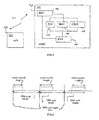
Figure 1 shows a discontinuous reception (DRX) cycle; and -
Figure 2 shows a protocol layer stack configuration for a wireless transmit/receive unit receiving system level information from an evolved Node-B. - When referred to hereafter, the terminology "wireless transmit/receive unit (WTRU)" includes but is not limited to a user equipment (UE), a mobile station, a fixed or mobile subscriber unit, a pager, a cellular telephone, a personal digital assistant (PDA), a computer, or any other type of user device capable of operating in a wireless environment. When referred to hereafter, the terminology "base station" includes but is not limited to a Node-B, a site controller, an access point (AP), or any other type of interfacing device capable of operating in a wireless environment.
-
Figure 1 shows a WTRU 101 comprising a protocol layer stack that includes the following layers: radio resource control RRC 102, radio link control (RLC) 103, medium access control (MAC) 104, packet data convergence protocol (PDCP) 105, and a physical (PHY)layer 106. These layer entities may be implemented as a single processor or separate processors. The WTRU 101 receives system level information from an evolved NodeB (eNB) 121 in awireless downlink signal 111. The system level information may be defined in units of system information blocks (SIBs) and parameters within each of the SIBs may be used by the WTRU 101 for various processes which will be explained in further detail. The parameters may be defined into groups of information elements (IEs), which can be processed, for example, by theRRC 102 for controlling operation of the other layer entities. One example includes theRRC 102 receiving DRX parameters and then instructing thePHY 106 to sleep during the designated DRX cycle parameters. In general, the WTRU 101 receives and processes the system level information, and autonomously performs the corresponding operations. - In a first example of defining SIBs with system level information, a system information block 1 (SIB1) may be defined by information elements and related information as shown in Table 1. Each of the IEs shown in Table 1, as well as all tables shown herein, may be defined and provided to the WTRU 101 on a need basis that includes, but is not limited to, the following: mandatory, mandatory with a default value available, conditional on a value, or optional.
TABLE 1 Group Name Information Element Type and reference Semantics description CN information elements ON common GSM-MAP NAS system information NAS system information (GSM-MAP) >Domain system information Domain system information (for PS domain) WTRU information WTRU Timers and constants in idle mode WTRU Timers and constants in idle mode The WTRU behaviour is unspecified if this IE is absent. WTRU Timers and constants in active (connected) mode WTRU Timers and constants in active (connected) mode - As shown in Table 1, the core network (CN) IEs include common GSM-mobile application part (MAP) non-access stratum (NAS) system information and domain system information for the packet switched (PS) domain. These IEs inform the WTRU 101 about the serving CN and domain system. The LTE network operates only in a packet switched (PS) domain. Therefore, there is no need to maintain any other domain information. Only PS domain information is required to be signaled.
- In the LTE specification, DRX operates in both explicit and implicit modes. DRX parameters may be signaled by two IEs that can carry specific DRX parameters for each mode of operation. The IE can carry both DRX explicit mode parameters and DRX implicit mode parameters. These IEs can be signaled with the domain system information or may be transmitted with another message, such as a RRC_Connection_Command message for example.
-
Figure 2 shows a set of sequential DRX signal cycles, in which the WTRU 101 has an active period and a sleep period for the remainder of the DRX cycle, allowing theWTRU 101 to reduce battery consumption. The variable DRX parameters for defining the DRX cycle are the DRX cycle start time, the active period length and the DRX cycle length. For LTE idle mode, the WTRU 101 monitors system paging only during the active period. For LTE active mode, or RRC connected mode, the WTRU 101 only receives data during the active period. Adjustments to DRX parameters may become necessary, for example, to overcome poor channel conditions or to increase the amount of data reception upon the transition from LTE idle mode to LTE active mode. For DRX configuration, if the WTRU 101 is in LTE active mode, the network can signal the same or different parameters as for the WTRU 101 in LTE idle mode. Also, the network may group the parameters and identify the group with a DRX profile identifier (ID). This may enable the network to signal the WTRU 101 to use a particular profile. The signaling received by the WTRU 101 may be through RRC or MAC signaling and may provide the DRX cycle start time, as shown inFigure 2 . - Table 2 shows an example of LTE idle mode and LTE active mode DRX configuration IEs and associated parameters for this embodiment, for which the
WTRU 101 is configured to receive and process. An IE for CN DRX cycle period length in LTE idle mode indicates the length of the entire DRX cycle for theWTRU 101 to use while receiving paging in idle mode. An IE for LTE active mode parameters indicates to theWTRU 101 whether LTE active mode parameters are to be the same as the idle mode parameters, or different than the idle mode parameters. If different, the network may then specify a different set of active mode parameters. In order to allow theWTRU 101 to synchronize to the DRX cycle, an IE for DRX cycle start time is defined. In this example, the cell system frame number (SFN) is used as a reference for the DRX cycle start time. A choice IE, Choice Signaling Method, is defined by the network and received by theWTRU 101 to indicate the type of DRX signaling method being employed, which is either explicit type or implicit type, explained later in further detail with respect to Tables 3 and 4.TABLE 2 - LTE Active mode and LTE Idle mode Information Element/Group name Type and reference Semantics description CN DRX cycle period length In LTE Idle Mode Integer(1...x) Refers to the length of the entire DRX cycle in WTRU Idle mode for paging. LTE_Active Mode DRX parameters Enumerated (same as Idle, different) Network specifies whether the Active mode DRX parameters are the same as or different than the Idle mode parameters. If specified that the Active mode DRX parameters are different, network may specify a different set of values for the Active mode parameters. >DRX Cycle Start Time Integer (0...4093) Configured DRX Cycle in LTE_Active starts on an SFN >CHOICE Signaling method >> Explicit >>> Explicit DRX Configuration Explicit DRX Configuration Info (Table 3) >> Implicit >>> Implicit DRX Configuration Implicit DRX Configuration Info (Table 4) - Table 3 shows a summary of an exemplary configuration for information elements used in explicit DRX signaling. As a choice IE, the DRX configuration mode may indicate either a Full Configuration or a Predefined Configuration mode. For the Full Configuration mode, the network provides all of the DRX parameters to the
WTRU 101. In the Predefined Configuration mode, theWTRU 101 uses default DRX parameters that are predefined by the network. The DRX profile ID information element can be used for defining different DRX profiles which can be used for changing the DRX lengths and other parameters during various procedures, including 3GPP to non-3GPP handovers.Table 3 - Explicit DRX Information Element/ Group Name Type and reference Semantics description Choice DRX Configuration Mode > Full Configuration >>DRX Cycle length in LTE Active mode Integer (1...X) DRX Cycle Length in unit of the number of system frames >>Active period length in LTE Active mode Integer (1...10) Active duty cycle length in unit of sub-frames >>Active period position Enumerated (first, last) indicating the active duty period is in the beginning or the end of the cycle >> Active period start subframe Integer (1, ..., 9) The sub-frame number at which the active period starts in its first frame, if it is not on the frame boundary > Predefined Configuration >> DRX profile ID Integer (1...X) Network signals a profile ID with the set of already defined parameters when it wants the WTRU to use a predefined configuration - Table 4 shows a summary of an exemplary configuration for information elements used in implicit DRX signaling. As shown, the IE for Implicit DRX State and Transition List may have multiple instances in the signaling to the
WTRU 101, one per maximum number of DRX states. Similar to the Explicit DRX explained above, there is a choice IE for DRX configuration mode, for either a Predefined configuration or a Full Configuration. Under a Full configuration mode, trigger mechanism IEs Trigger-UP-1, Trigger-Down-1 and Trigger-Down-2 are defined. The Trigger-UP-1 IE indicates theWTRU 101 is to move to the next upper level DRX state (i.e., a longer DRX cycle). The Trigger-Down-1 IE is a trigger mechanism for theWTRU 101 to move the next lower level DRX state (i.e., a shorter DRX cycle). For the Trigger-Down-2 IE, theWTRU 101 receives a trigger mechanism to move to the shortest DRX cycle, Level-1. For each of these trigger IEs, a choice IE for Triggering Mechanism includes either a timer or a measurement event, as summarized in Table 5. If a timer trigger mechanism is applied, a timer value IE, Implicit-DRX-triggering-timer, may be included. For a measurement event trigger, an Implicit DRX triggering event IE maybe included, based on traffic volume and/or inter-frequency, intra-frequency, inter-RAT, intra-RAT measurement events, and an IE for threshold value to be used for the measurement event may also be included.Table 4 - Implicit DRX Information Element/Group name Multiple Type and reference Semantics description Initial DRX state Implicit DRX Transition configured life span Time in seconds Implicit DRX State and Transition List <1, .., maxDRX states > CHOICE DRX-Config-Mode > Predefined Configuration CN DRX profile ID Integer (1...X) Network could signal a profile ID with each of the parameters and so the network could signal the WTRU to use a particular DRX profile ID when it wants the WTRU to use a predefined configuration > Full Configuration >>DRX Cycle Length Integer >>Trigger-UP-1 Trigger Mechanism (Table 5) To next upper level DRX State >>Trigger-Down-1 Trigger Mechanism (Table 5) To next lower level DRX state >>Trigger-Down-2 Trigger Mechanism (Table 5) To Level-1 (shortest DRX cycle) trigger >>>DRX Cycle length in LTE Active mode Integer (1...X) DRX Cycle Length in unit of the number of system frames >>>Active period length in LTE Active mode Integer (1...10) Active duty cycle length in unit of sub-frames >>>Active period position Enumerated (first, last) Indicating the active duty period is in the beginning or the end of the cycle [this may not be needed if we have the system define that the active period always starts in the first frame of the DRX cycle] >>> Active period start sub-frame Integer (1, ...,9) The sub-frame number at which the active period starts in its first frame, if it is not on the frame boundary Table 5 - Triggering mechanisms Information Element/ Group name Type and reference Semantics description CHOICE triggering-mechanism > Timer >>Implicit-DRX-triggering-timer Integer (10, 20, 50, 100, 200, 500, 1000, ...X) Timer value in unit of milli-seconds > Measurement-event Integer (1...10) >>Implicit-DRX-triggering-event Measurement Event ID Traffic volume measurement events & inter/intra F/R measurement events >> Event-associated threshold value - Additional IEs provided to the
WTRU 101 for defining the DRX cycle may include DRX Cycle length, the active period length, the active period position and the active period start subframe. For the DRX cycle length IE, the parameter indicates the DRX cycle length for LTE active mode in units of system frames and indicating if this DRX parameter is different than the LTE idle mode parameter. The active period length IE indicates the active duty cycle length in sub-frames for LTE active mode, and whether the parameter is different than the LTE idle mode parameter. The active period position IE indicates whether the active duty period is at the beginning or at the end of the DRX cycle whether the parameter is different than the LTE idle mode parameter. If the active period does not start at a frame boundary, then the active period start sub-frame IE provides the sub-frame number at which the active period starts. - In another embodiment, parameters for cell selection and reselection are defined and transmitted in a SIB 3, for example, or one of the other SIBs defined in the 3GPP specifications. Upon receiving and processing these parameters, the
WTRU 101 autonomously performs cell selection/reselection operations. Tables 6 and 7 show a summary of an example configuration of IEs containing cell selection and reselection parameters.TABLE 6 - Cell Selection and Reselection Information Element/Group name Type and reference Semantics description SIB4 Indicator Boolean TRUE indicates that SIB4 is broadcast in the cell. UTRAN mobility information elements Cell identity Cell identity Cell selection and re-selection info Cell selection and re-selection info for SIB3/4 Cell Access Restriction Cell Access Restriction Access Restriction Parameters For PLMN Of MIB Access Restriction Parameters This IE specifies the Access Restriction Parameters for WTRUs which have chosen the PLMN in the IE "PLMN identity" of the Master Information Block. Domain Specific Access Restriction For Shared Network >CHOICE barring representation >> Access Restriction Parameter List >>> Access Restriction Parameters For Operator1 PS Domain Specific Access Restriction Parameters This IE specifies the Access Restriction Parameters for WTRUs which have chosen the first PLMN in the IE "multiplePLMNs" in the IE "Multiple PLMN List" of the Master Information Block. >>> Access Restriction Parameters For Operator2 PS Domain Specific Access Restriction Parameters This IE specifies the Access Restriction Parameters for WTRUs which have chosen the second PLMN in the IE "multiplePLMNs" in the IE "Multiple PLMN List" of the Master Information Block. >>> Access Restriction Parameters For Operator3 PS Domain Specific Access Restriction Parameters This IE specifies the Access Restriction Parameters for WTRUs which have chosen the third PLMN in the IE "multiplePLMNs" in the IE "Multiple PLMN List" of the Master Information Block. >>> Access Restriction Parameters For Operator4 PS Domain Specific Access Restriction Parameters This IE specifies Access Restriction Parameters for WTRUs which have chosen the fourth PLMN in the IE "multiplePLMNs" in the IE "Multiple PLMN List" of the Master Information Block. >>> Access Restriction Parameters For Operator5 PS Domain Specific Access Restriction Parameters This IE specifies the Access Restriction Parameters for WTRUs which have chosen the fifth PLMN in the IE "multiplePLMNs" in the IE "Multiple PLMN List" of the Master Information Block. >> Access Restriction Parameters For All >>> Access Restriction Parameters PS Domain Specific Access Restriction Parameters This IE specifies the common Access Restriction Parameters applied to all PLMNs in the IE "multiplePLMNs" in the IE "Multiple PLMN List" of the Master Information Block. - As seen in Table 6, for a choice IE for barring representation, either an IE "Access restriction parameter list" IE or an "Access restriction parameter for all" IE is selected. If the "Access restriction parameter list" IE is applied, then multiple IEs are available for specifying access restriction parameters for WTRUs assigned to a respective public land mobile network (PLMN), which is identified in an IE "multiplePLMNs" in the IE "Multiple PLMN List" in the master information block (MIB). When the "Alternative access restriction parameters for all" IE is chosen, then a set of common access restriction parameters is indicated to the
WTRU 101, which is applied to all PLMNs in the IE "multiple PLMNs". As there is one PS domain, the parameters for the CS domain are not specified. - As shown in Table 7, the
WTRU 101 may receive an IE for Cell selection and reselection quality measure based on RSRP and/or RSRQ, an IE for radio access technology (RAT) of the candidate cell for selection, and a Treslection IE that indicates the reselection time parameter. With respect to the Qhyst IE, theWTRU 101 may receive the following scaling factors: an IE that indicates a Speed dependent scaling factor, an Inter-frequency Speed dependent scaling factor, and an Inter RAT Speed dependent scaling factor. A Neighbor cell blacklist IE may be received by theWTRU 101 to indicate a list of neighbor cells forbidden by the network for reselection. - Before the
WTRU 101 makes received signal measurements for cell selection/reselection, theWTRU 101 may receive and process an UTRAN_min IE or GERAN_Min which indicate the minimum signal power for a UTRAN or GERAN cell, respectively. The IEs Qoffset1 and Qoffset2 may be received by theWTRU 101 to indicate biasing cell measurementsTable 7 - Cell selection and reselection Information Element / Group name Multiple Type and reference Semantics description Cell selection and reselection quality measure Enumerated (RSRP, RSRQ) Choice of measurement (RSRP or RSRQ) to use as quality measure Q for FDD cells. This IE is also sent to the WTRU in SIB11/12. Both occurrences of the IE should be set to the same value. CHOICE mode >FDD >>Sintrasearch Integer (-32..20 by step of 2) If a negative value is received the WTRU considers the value to be 0. [dB] >>Sintersearch Integer (-32..20 by step of 2) If a negative value is received the WTRU considers the value to be 0. [dB] >>SsearchHCS Integer (-105..91 by step of 2) If a negative value is received the WTRU considers the value to be 0. [dB] >>RAT List 1 to <maxOther RAT> >>>RAT identifier Enumerated (GSM, CDMA2000, UTRAN, any other non 3GPP RAT like WiFi, WiMAx, UMA etc) >>QSearch_TH Integer (-32..20 by step of 2) In case the value 20 is received the WTRU considers this IE as if it was absent. If a negative value is received the WTRU considers the value to be 0. [dB] >>>SHCS,RAT Integer (-105..91 by step of 2) If a negative value is received the WTRU considers the value to be 0. [dB] >>>Slimit,SearchRAT Integer (-32..20 by step of 2) If a negative value is received the WTRU considers the value to be 0. Information Element/ Group name Multiple Type and reference Semantics description [dB] >>Qqualmin Integer (-24..0) RSRP, [dB] >>Qrxlevmin Integer (-115..-25 by step of 2) RSRQ, [dBm] >> DeltaQrxlevmin Integer(-4..-2 by step of 2) If present, the actual value of Qrxlevmin = Qrxlevmin + DeltaQrxlevmin >TDD >>Sintrasearch Integer (-105..91 by step of 2) If a negative value is received the WTRU considers the value to be 0. [dB] >>Sintersearch integer (-105..91 by step of 2) If a negative value is received the WTRU considers the value to be 0. [dB] >>SsearchHCS Integer (-105..91 by step of 2) If a negative value is received the WTRU considers the value to be 0. [dB] >>RAT List 1 to <max OtherRAT > >>>Ssearch,RAT Integer (-105..91 by step of 2) In case the value 91 is received the WTRU considers this IE as if it was absent. If a negative value is received the WTRU considers the value to be 0. [dB] >>>SHCS,RAT integer (-105..91 by step of 2) If a negative value is received the WTRU considers the value to be 0. [dB] >>>Slimit,SearchRAT Integer (-105..91 by step of 2) If a negative value is received the WTRU considers the value to be 0. [dB] >>Qrxlevmin Integer (-115..-25 by step of 2) RSCP, [dBm] >>DeltaQrxlevmin Integer(-4..-2 by step of 2) If present, the actual value of Qrxlevmin = Qrxlevmin + DeltaQrxlevmin Qhyst1s Integer (0..40 by step of 2) [dB] Qhyst2s Integer (0..40 by step of 2) Default value is Qhyst1s [dB] Treselections Integer (0..31) [s] Speed dependent ScalingFactor for Treselection Real (0..1 by step of 0.1) This IE is used by the WTRU in high mobility state as scaling factor for Treselections Inter-frequency ScalingFactor for Treselection Real (1..4.75 by step of 0.25) If present, it is used by the WTRU as scaling factor for Treselections for inter-frequency cell reselection evaluation Inter-RAT ScalingFactor for Treselection Real (1..4.75 by step of 0.25) If present, it is used by the WTRU as scaling factor for Treselections for inter-RAT cell reselection evaluation Speed dependent Scaling factor for Qhyst Real (0..1 by step of 0.1) If present, it is used by the WTRU as scaling factor for Qhyst for inter-RAT cell reselection evaluation Inter-frequency Speed dependent Scaling factor for Qhyst Real (1..4.75 by step of 0.25) If present, it is used by the WTRU as scaling factor for Qhysts for inter-RAT cell reselection evaluation Inter-RAT Speed dependent Scaling factor for Qhyst Real (1..4.75 by step of 0.25) If present, it is used by the WTRU as scaling factor for Qhyst for inter-RAT cell reselection evaluation Neighbour cell blacklist Integer(neighbour cell IDs) Network can specify the list of cells it does not want the WTRU to reselect to if it so desires Non-HCS_TCRmax Enumerated (not used, 30, 60, 120, 180, 240) [s] Default value is 'not used'. Non-RCS_NCR Integer (1..16) Default value = 8 Non-HCS_TCRmaxHyst Enumerated (not used, 10, 20, 30, 40, 50, 60, 70) [s] HCS Serving cell Information HCS Serving cell information Maximum allowed UL TX power Maximum allowed UL TX power [dBm] UE_TXPWR_MAX_RACH UTRAN_Min/ Minimum value above which the UTRAN cell should be to start measurements. [dBm] GERAN_Min Minimum value above which the GERAN cell should be to start measurements. [dBm] Qoffset1 Value used for biasing the cells for measurement [dBm] Qoffset2 Another offset value used based on [dBm] cell loading or any other parameter Tmeas Number of seconds between two consecutive measurements in Idle for Inter-RAT [s] Priority of Inter-RAT reselection Priority of RAT selection during the Inter-RAT reselection process. WTRU would follow this list in order. Enumerated (GSM, cdma2000, UTRAN, any other non 3GPP RAT like WiFi, WiMAx, etc) - In another embodiment, system level information for a PHY random access channel (PRACH) is defined by parameters in IEs and included into an SIB 5, or another 3GPP specified SIB, to be received and processed by the
WTRU 101 for autonomously performing RACH operations. Tables 8-10 show a summary of example configurations of such IEs and related information. - As shown in Table 8, a PRACH system information IE may be included with multiple instances from 1 to maxPRACH. A PRACH-info IE for RACH comprises several IEs that are summarized in Table 9. A RACH non-dedicated signature IE indicates dedicated and non-dedicated signatures allocated to the
WTRU 101, and comprises several IEs that are summarized in Table 10. A RACH Response Window IE informs theWTRU 101 as to a number of sub-frames over which multiple RACH responses sent to theWTRU 101 are to be received. A PHY downlink control channel (PDCCH) information IE, "PDCCH-Info", provides PDCCH parameters for the PRACH to theWTRU 101, comprising IEs summarized in Table 12. A routing area-radio network temporary identification (RA-RNTI) List IE, comprising IEs summarized in Table 11, provides RNTI information to theWTRU 101 for the routing area.Table 8 - PRACH system information Information element Multiple Type and reference Semantics description PRACH system information 1 .. <max PRACH> >PRACH info PRACH info (for RACH), see Table 9 >CHOICE mode >>FDD >>>Primary CPICH TX power Primary TX power Default value is the value of "Primary Reference Symbol TX power" for the previous PRACH in the list. (The first occurrence is then mandatory) >>>Constant value Constant value Default value is the value of "Constant value" for the previous PRACH in the list. (The first occurrence is then mandatory) >>>PRACH power offset PRACH power offset Default value is the value of "PRACH power offset" for the previous PRACH in the list. (The first occurrence is then mandatory) >>>RACH transmission parameters RACH transmission parameters Default value is the value of "RACH transmission parameters" for the previous PRACH in the list. (The first occurrence is then mandatory) >>>RACH non-dedicated-signature RACH non-dedicated-signature parameters See Table 10 Dedicated and Non dedicated signatures allocated to the WTRU >>> RACH Response Window Integer(1, ..., 10) RACH window (in number of sub-frames) over which multiple responses sent to the WTRU are received. >>>PDCCH Info PDCCH info See Table 12 Default value is the value of "PDCCH info" for the previous PRACH in the list. (The first occurrence is then mandatory) >>> RA-RNTI List RA-RNTI Info See Table 11 Default value is the value of "RA-RNTI List" for the previous PRACH in the list. (The first occurrence is then mandatory) - As shown in Table 9,
WTRU 101 receives PRACH information parameters for frequency division duplex (FDD) and time division duplex (TDD) operation. For FDD, theWTRU 101 may receive a PRACH frequency position IE indicating an integer value within a range starting from the lowest frequency edge of the carrier bandwidth. Alternatively, the integer value may range between negative and positive values centered in the middle of the carrier frequency. Additional parameters received by theWTRU 101 include a PRACH burst type IE (e.g., normal, extended or repeated burst type) and a Channel Coding parameter IE for identifying the turbo code in use. For TDD, theWTRU 101 may receive a PRACH Frame structure type IE and a PRACH Burst Type IE to indicate, for example, a normal or extended burst type.Table 9 - PRACH information Information Element/Group name Type and reference Semantics description CHOICE mode >FDD >>PRACH Frequency Position (on begining RB number of the PRACH) Integer (0, ..., 105) Resource Block number scale starts from the lowest frequency edge of the carrier bandwidth OR >>PRACH Frequency Position (on beginning RB number of the PRACH) Integer (-52, ..., 0, ... +52) RB number scale for 105 RBs with center in the middle of the carrier frequency >>PRACH Burst Type Enumerated (Normal, Extended, Repeated) >> Channel Coding Parameter Integer (0, .. xx) Identification of the turbo code >>Preamble scrambling code number Integer (0 .. 15) Identification of scrambling code >>Puncturing Limit Real(0.40..1.00 by step of 0.04) >TDD >>PRACH Frame Structure Enumerated (Type-1, Type-2) >>PRACH Burst Type Enumerated (Normal, Extended) >> TBD - As shown in Table 10, the
WTRU 101 may receive a set of RACH parameters defined according to a group G1 for dedicated RACH signatures, a group G2 for consecutive or bit-mapped non-dedicated RACH signatures, or a group G3 for small message consecutive or bit-mapped non-dedicated RACH signatures. Each RACH channel typically has 64 random access signatures of cyclical Z-C codes whose generation/derivation is specified in 3GPP Standards. For system information, the signatures can be identified by their indexes (0, ..., 63). - When a random access signature group whose signatures are all consecutive in terms of the signature index, it can be defined by [start-index-a, range]. The
WTRU 101 then knows and selects the signatures within the defined group since they are consecutive. For example,WTRU 101 receives the Available Dedicated Signatures G1 IE, the Number of Signatures IE with a value 8, and a Begin Signature Index IE with value 8, then WTRU 101 can derive that its RACH signature group is [8 - 15]. - But if the random access signatures in a group is not consecutive, then the above described signature index mapping IE is replaced by the alternative bit-mapped signature index, shown in Table 10 as the Signature Map IE. For the bit-mapped signature mapping, the
WTRU 101 receives a bit string which indicates a set of available signatures in the random access signature group according to a predefined signature map. The Signature map IE use a bitmap with 64 bits, or with a first start-index-a, and a subsequent bitmap in a range.Table 10 - RACH Non-dedicated Preamble/signatures Information Element/Group name Type and reference Semantics description CHOICE mode >FDD Available Dedicated Signatures G1 >>> Number of signatures Integer (0, 4, 8, 16, 24) consecutive signatures in the group >>> Begin Signature Index Integer (0, ..., 63) Index number of the first signature, present only if the number of signatures of the group is not zero >>Available Non-dedicated Signatures G2 >>> Number of signatures Integer (0, 4, 8, 16, 24, 32. 48. 64) Number of consecutive signatures in the group >>> Begin Signature Index Integer (0, ..., 63) Index number of the first signature, present only if the number of signatures of the group is not zero OR If signatures not consecutive >>> Signature map Bit string (64) Set bit positions in the map indicate the indexes of available signatures in the group >>Available Non-dedicated Signatures G3 >>> Number of signatures Integer (0, 4,8,16,24, 32. 48, 64) Number of consecutive signatures in the group >>> Begin Signature Index Integer (0, ..., 63) Index number of the first signature, present only if the number of signatures of the group is not zero OR If signatures not consecutive >>> Signature map Bit string (64) Set bit positions in the map indicating the indexes of available signatures in the group Table 11 - RACH RA-RNTI Information Information Element/Group name Multi Type and reference Semantics description RACH RA-RNTI Info <1, ..., maxRA-RNTI At least 2 for a RACH, 3 or more for better decoding >RA-RNTI Code Bit String (12 or 16 or ?) >Burst Start subframe number Integer (0, ..., 9) A burst is a sub-frame >Next Burst Distance Integer (4, ...,20) N sub-frames, equivalent to the RACH response window size Table 12 - PDCCH Information Information Element/Group name Need Type and reference Semantics description PDUCCH Info MP >PDCCH Format MP Enumerated (0, 1, 2, 3) >PDCCH Scrambling OP Integer (0, ..., x) Index to the scrambling code tree - Other than the SIBs mentioned above, the LTE network could also transmit a SIB 16 message which could carry some configuration parameters that the
WTRU 101 could read and use when entering the LTE system during a handover from another RAT (3GPP or non-3GPP) to LTE. Alternatively, the LTE system could transmit a SIB 16 message or some other analogous dedicated RRC message which would carry parameters applicable for the non 3GPP RAT during a handover from LTE to other RAT (3GPP or non-3GPP). Such a message could have been possibly conveyed to the LTE system just before the handover procedure. This SIB 16 could contain a combination of parameters like some of the DRX parameters mentioned, some RACH and reselection parameters and any other physical layer parameters which might give theWTRU 101 some knowledge of the system. -
- 1. A method of processing system level information for implementation by a wireless transmit/receive unit (WTRU), the method comprising:
- receiving the system level information as a plurality of parameters defined as information elements (IEs) for a discontinuous reception (DRX) operation mode of the WTRU; and
- processing the received parameters to autonomously perform DRX operations.
- 2. The method as in embodiment 1, further comprising receiving IEs having DRX implicit mode information.
- 3. The method as in any preceding embodiment, further comprising receiving IEs having DRX explicit mode information.
- 4. The method as in any preceding embodiment, further comprising receiving a domain system IE.
- 5. The method as in any preceding embodiment, further comprising receiving a DRX profile identifier IE.
- 6. The method as in any preceding embodiment, further comprising receiving a core network (CN) cycle period length IE.
- 7. The method as in any preceding embodiment, further comprising receiving a DRX cycle time IE.
- 8. The method as in any preceding embodiment, further comprising receiving a DRX cycle length IE.
- 9. The method as in any preceding embodiment, further comprising receiving an active duty cycle length IE.
- 10. The method as in any preceding embodiment, further comprising receiving a DRX cycle position for an active duty period IE.
- 11. The method as in any preceding embodiment, further comprising receiving a sub-frame number IE for a start of the DRX active period.
- 12. The method as in any preceding embodiment, further comprising receiving a DRX profile ID IE.
- 13. The method as in any preceding embodiment, wherein the DRX information comprises implicit DRX transition life span.
- 14. The method as in any preceding embodiment, wherein the DRX information comprises a core network DRX profile ID.
- 15. The method as in any preceding embodiment, wherein the DRX information comprises a trigger up mechanism.
- 16. The method as in any preceding embodiment, wherein the DRX information comprises a trigger down mechanism.
- 17. The method as in any preceding embodiment, wherein the DRX information comprises DRX cycle length and active duty cycle length measured by sub-frames.
- 18. The method as in any preceding embodiment, further comprising receiving the IE within a system information block.
- 19. The as in any preceding embodiment wherein the SIB comprises packet switched domain specific access restriction parameters.
- 20. A method of processing system level information for implementation by a wireless transmit/receive unit (WTRU), the method comprising:
- receiving the system level information as a plurality of parameters defined as information elements (IEs) for a cell selection operation mode of the WTRU; and
- processing the received parameters to autonomously perform cell selection operations.
- 21. The method as in embodiment 20, wherein the IEs comprise cell selection quality measurements.
- 22. The method as in any of embodiments 20-21, wherein the IEs comprise RAT identification information.
- 23. The method as in any of embodiments 20-22 wherein the IEs comprise information about a minimum received signal power as a threshold for the WTRU to start cell measurements.
- 24. The method as in any of embodiments 20-23, wherein the IEs comprise bias value information for performing cell measurement.
- 25. The method as in any of embodiments 20-24, wherein the bias value information is based on cell loading.
- 26. The method as in any of embodiments 20-25, wherein the IEs comprise a time value parameter for which the WTRU is to maintain between two consecutive measurements in Idle mode.
- 27. The method as in any of embodiments 20-26 wherein the IEs comprise priority information for a preferred RAT selection.
- 28. A method of processing system level information for implementation by a wireless transmit/receive unit (WTRU), the method comprising:
- receiving the system level information as a plurality of parameters defined as information elements (IEs) for a physical random access channel (PRACH) operation mode of the WTRU; and
- processing the received parameters to autonomously perform PRACH operations.
- 29. The method as in embodiment 28, wherein the IEs comprise PRACH system information.
- 30. The method as in any of embodiments 28-29, wherein the PRACH system information comprises a RACH response window value over which multiple responses sent to the WTRU are to be received by the non-dedicated signature.
- 31. The as in any of embodiments 28-30, wherein the PRACH system information comprises PDCCH information and RA-RNTI information.
- 32. The method as in any of embodiments 28-31, wherein the PRACH system information comprises at least one of the following: PRACH frequency position information; PRACH burst type information; and a channel coding parameter.
- 33. The method as in any of embodiments 28-32, wherein the PRACH system information comprises at least one of the following: a PRACH burst type parameter; and a PRACH frame structure parameter.
- 34. A method as in any of embodiments 28-33, wherein the IEs include RACH non-dedicated preamble and signature information.
- 35. The method as in any of embodiments 28-34, wherein the RACH non-dedicated preamble and signature information includes at least one of the following parameters: a number of signatures, a begin signature index, a signature map.
- 36. A method as in any of embodiments 28-35, wherein the IEs include RACH dedicated preamble and signature information.
- 37. The method as in any of embodiments 28-36, wherein the RACH dedicated preamble and signature information includes at least one of the following parameters: a number of signatures, a begin signature index.
- 38. The method as in embodiment 31 wherein RA-RNTI information includes at least one of the following parameters: a RA-RNTI code, a burst start sub-frame number and a next burst distance.
- 39. The method as in embodiment 31 wherein the PDCCH information includes at least one of the following parameters: a PDCCH format and a PDCCH scrambling code.
- 40. A wireless transmit/receive unit (WTRU) comprising:
- a processor configured to receive system level information as a plurality of parameters defined as information elements (IEs) for a discontinuous reception (DRX) operation mode of the WTRU; and further configured to process the received parameters to autonomously perform DRX operations.
- 41. A wireless transmit/receive unit (WTRU) comprising:
- a processor configured to receive system level information as a plurality of parameters defined as information elements (IEs) for a cell selection operation mode of the WTRU; and further configured to process the received parameters to autonomously perform cell selection operations.
- 42. A wireless transmit/receive unit (WTRU) comprising:
- a processor configured to receive system level information as a plurality of parameters defined as information elements (IEs) for a PRACH operation mode of the WTRU; and further configured to process the received parameters to autonomously perform PRACH operations.
- Although features and elements are described above in particular combinations, each feature or element can be used alone without the other features and elements or in various combinations with or without other features and elements. The methods or flow charts provided herein may be implemented in a computer program, software, or firmware incorporated in a computer-readable storage medium for execution by a general purpose computer or a processor. Examples of computer-readable storage mediums include a read only memory (ROM), a random access memory (RAM), a register, cache memory, semiconductor memory devices, magnetic media such as internal hard disks and removable disks, magneto-optical media, and optical media such as CD-ROM disks, and digital versatile disks (DVDs).
- Suitable processors include, by way of example, a general purpose processor, a special purpose processor, a conventional processor, a digital signal processor (DSP), a plurality of microprocessors, one or more microprocessors in association with a DSP core, a controller, a microcontroller, Application Specific Integrated Circuits (ASICs), Field Programmable Gate Arrays (FPGAs) circuits, any other type of integrated circuit (IC), and/or a state machine.
- A processor in association with software may be used to implement a radio frequency transceiver for use in a wireless transmit receive unit (WTRU), user equipment (UE), terminal, base station, radio network controller (RNC), or any host computer. The WTRU may be used in conjunction with modules, implemented in hardware and/or software, such as a camera, a video camera module, a videophone, a speakerphone, a vibration device, a speaker, a microphone, a television transceiver, a hands free headset, a keyboard, a Bluetooth® module, a frequency modulated (FM) radio unit, a liquid crystal display (LCD) display unit, an organic light-emitting diode (OLED) display unit, a digital music player, a media player, a video game player module, an Internet browser, and/or any wireless local area network (WLAN) or Ultra Wide Band (UWB) module.
Claims (15)
- A method of processing information for a wireless transmit/receive unit, WTRU, the method comprising:receiving the information as a plurality of parameters defined as information elements, IEs, for a physical random access channel, PRACH, operation of the WTRU; andprocessing the received parameters to perform PRACH operations by the WTRU, the IEs including PRACH system information, the PRACH system information including a random access channel, RACH, response window size and PRACH frequency position information, the RACH response window size provided as a number of subframes, and one or more RACH responses sent to the WTRU being received by the WTRU over the RACH response window.
- The method as in claim 1, wherein the PRACH system information further comprises at least one of PRACH burst type information, a PRACH frame structure parameter, Physical Downlink Control Channel, PDCCH, information, Random Access Radio Network Temporary Identifier, RA-RNTI, information, or a channel coding parameter.
- The method as in claim 1, wherein the IEs include RACH non-dedicated preamble and signature information, and the RACH non-dedicated preamble and signature information includes at least one of the following parameters: a number of signatures, a begin signature index, or a signature map.
- The method as in claim 1, wherein the IEs include RACH dedicated preamble and signature information, and the RACH dedicated preamble and signature information includes at least one of the following parameters: a number of signatures or a begin signature index.
- The method as in claim 2 wherein the RA-RNTI information includes at least one of the following parameters: a RA-RNTI code, a burst start sub-frame number or a next burst distance, and the PDCCH information includes at least one of the following parameters: a PDCCH format or a PDCCH scrambling code.
- A wireless transmit/receive unit, WTRU, comprising:a receiver configured to receive information as a plurality of parameters defined as information elements, IEs, for a physical random access channel, PRACH, operation of the WTRU; anda processor configured to process the received parameters to perform PRACH operations, the IEs including PRACH system information, the PRACH system information including a random access channel, RACH, response window size and PRACH frequency position information, the RACH response window size provided as a number of subframes, and one or more RACH responses sent to the WTRU being received by the WTRU over the RACH response window.
- The WTRU of claim 6, wherein the PRACH system information further includes at least one of: a Physical Downlink Control Channel, PDCCH, information, or a Random Access Radio Network Temporary Identifier, RA-RNTI, information, the RA-RNTI information including at least one of the following parameters: a RA-RNTI code, a burst start sub-frame number or a next burst distance, and the PDCCH information including at least one of the following parameters: a PDCCH format or a PDCCH scrambling code.
- The WTRU of claim 6, wherein the PRACH system information further includes at least one of: PRACH burst type information, a channel coding parameter, or a PRACH frame structure parameter.
- The WTRU of claim 6, wherein the IEs include RACH non-dedicated preamble and signature information, the RACH non-dedicated preamble and signature information including at least one of the following parameters: a number of signatures, a begin signature index, or a signature map.
- The WTRU of claim 6, wherein the IEs include RACH dedicated preamble and signature information, the RACH dedicated preamble and signature information including at least one of the following parameters: a number of signatures or a begin signature index.
- An evolved NodeB, eNB, the eNB comprising:a processor, the processor configured to determine a plurality of parameters for physical random access channel, PRACH, operations, the plurality of parameters including PRACH system information, the PRACH system information including a random access channel, RACH, response window size and PRACH frequency position information, the RACH response window size provided as a number of subframes, and one or more RACH responses sent from the eNB being received by a wireless transmit/receive unit, WTRU, over the RACH response window; anda transmitter, the transmitter configured to transmit the plurality of parameters defined as information elements, IEs, for a PRACH operation of the WTRU.
- The eNB of claim 11, wherein the PRACH system information further includes at least one of a Physical Downlink Control Channel, PDCCH, information, or a Random Access Radio Network Temporary Identifier, RA-RNTI, information, the RA-RNTI information including at least one of the following parameters: a RA-RNTI code, a burst start sub-frame number or a next burst distance, and the PDCCH information including at least one of the following parameters: a PDCCH format or a PDCCH scrambling code.
- The eNB of claim 11, wherein the PRACH system information further includes at least one of: PRACH burst type information, a channel coding parameter, or a PRACH frame structure parameter.
- The eNB of claim 11, wherein the IEs include RACH non-dedicated preamble and signature information, the RACH non-dedicated preamble and signature information including at least one of the following parameters: a number of signatures, a begin signature index, or a signature map.
- The eNB of claim 11, wherein the IEs include RACH dedicated preamble and signature information, the RACH dedicated preamble and signature information including at least one of the following parameters: a number of signatures or a begin signature index.
Applications Claiming Priority (3)
| Application Number | Priority Date | Filing Date | Title |
|---|---|---|---|
| US95381607P | 2007-08-03 | 2007-08-03 | |
| EP08797135.4A EP2186269B1 (en) | 2007-08-03 | 2008-08-04 | System level information for discontinuous reception, cell reselection and rach |
| EP12185648.8A EP2549798B1 (en) | 2007-08-03 | 2008-08-04 | System level information processing method |
Related Parent Applications (3)
| Application Number | Title | Priority Date | Filing Date |
|---|---|---|---|
| EP12185648.8A Division-Into EP2549798B1 (en) | 2007-08-03 | 2008-08-04 | System level information processing method |
| EP12185648.8A Division EP2549798B1 (en) | 2007-08-03 | 2008-08-04 | System level information processing method |
| EP08797135.4A Division EP2186269B1 (en) | 2007-08-03 | 2008-08-04 | System level information for discontinuous reception, cell reselection and rach |
Publications (2)
| Publication Number | Publication Date |
|---|---|
| EP2950605A1 true EP2950605A1 (en) | 2015-12-02 |
| EP2950605B1 EP2950605B1 (en) | 2016-05-25 |
Family
ID=40090402
Family Applications (3)
| Application Number | Title | Priority Date | Filing Date |
|---|---|---|---|
| EP12185648.8A Active EP2549798B1 (en) | 2007-08-03 | 2008-08-04 | System level information processing method |
| EP15168991.6A Active EP2950605B1 (en) | 2007-08-03 | 2008-08-04 | System level information for random access operations |
| EP08797135.4A Active EP2186269B1 (en) | 2007-08-03 | 2008-08-04 | System level information for discontinuous reception, cell reselection and rach |
Family Applications Before (1)
| Application Number | Title | Priority Date | Filing Date |
|---|---|---|---|
| EP12185648.8A Active EP2549798B1 (en) | 2007-08-03 | 2008-08-04 | System level information processing method |
Family Applications After (1)
| Application Number | Title | Priority Date | Filing Date |
|---|---|---|---|
| EP08797135.4A Active EP2186269B1 (en) | 2007-08-03 | 2008-08-04 | System level information for discontinuous reception, cell reselection and rach |
Country Status (12)
| Country | Link |
|---|---|
| US (4) | US9173167B2 (en) |
| EP (3) | EP2549798B1 (en) |
| JP (5) | JP5481378B2 (en) |
| KR (3) | KR101172959B1 (en) |
| CN (5) | CN105578542B (en) |
| AR (1) | AR067801A1 (en) |
| DK (3) | DK2950605T3 (en) |
| ES (3) | ES2762246T3 (en) |
| HU (1) | HUE047332T2 (en) |
| PL (3) | PL2549798T3 (en) |
| TW (3) | TW201543857A (en) |
| WO (1) | WO2009020926A1 (en) |
Cited By (1)
| Publication number | Priority date | Publication date | Assignee | Title |
|---|---|---|---|---|
| KR20180133809A (en) * | 2017-06-07 | 2018-12-17 | 삼성전자주식회사 | System and mehtod of identifying random access response |
Families Citing this family (107)
| Publication number | Priority date | Publication date | Assignee | Title |
|---|---|---|---|---|
| US8942713B2 (en) * | 2005-02-08 | 2015-01-27 | Qualcomm Incorporated | Method and apparatus for allocating resources in a multicast/broadcast communications system |
| PL2153680T3 (en) * | 2007-04-27 | 2012-08-31 | Ericsson Telefon Ab L M | A method and a device for saving power in a wireless user terminal |
| US20080267168A1 (en) * | 2007-04-27 | 2008-10-30 | Zhijun Cai | Slow Adaptation of Modulation and Coding for Packet Transmission |
| WO2008151411A1 (en) * | 2007-06-15 | 2008-12-18 | Research In Motion Limited | System and method for large packet delivery during semi persistently allocated session |
| CA2690430A1 (en) * | 2007-06-15 | 2008-12-18 | Research In Motion Limited | System and method for link adaptation overhead reduction |
| EP2160918B1 (en) | 2007-06-15 | 2012-07-18 | Research In Motion Limited | System and method for semi-persistent and dynamic scheduling and discontinuous reception control |
| KR101520683B1 (en) * | 2007-09-13 | 2015-05-15 | 엘지전자 주식회사 | A method for providing control information using the paging procedure |
| KR101455982B1 (en) * | 2007-09-13 | 2014-11-03 | 엘지전자 주식회사 | Methods for data communication in mobile communication |
| EP2632210A1 (en) | 2007-09-14 | 2013-08-28 | Research In Motion Limited | System and method for discontinuous reception control start time |
| US8451803B2 (en) * | 2007-10-05 | 2013-05-28 | Qualcomm Incorporated | Methods and apparatus for managing measurement behavior of DRX mode UE |
| KR101473010B1 (en) | 2007-10-17 | 2014-12-15 | 엘지전자 주식회사 | How to provide circuit services using packet network |
| KR101519345B1 (en) | 2008-01-01 | 2015-05-21 | 주식회사 팬택 | A method for transmitting and receiving random access request and transmitting and receiving random access response |
| KR101532789B1 (en) * | 2008-01-04 | 2015-07-09 | 엘지전자 주식회사 | HARQ operation method for processing retransmission data |
| KR101514079B1 (en) * | 2008-01-07 | 2015-04-21 | 엘지전자 주식회사 | Reconfiguration method of uplink time synchronization timer |
| WO2009129144A2 (en) * | 2008-04-18 | 2009-10-22 | Interdigital Patent Holdings, Inc. | Method and apparatus for broadcast of system information transmission window |
| US20100034160A1 (en) * | 2008-08-08 | 2010-02-11 | Qualcomm Incorporated | Updating frequency priority lists in wireless communications |
| WO2010018818A1 (en) * | 2008-08-11 | 2010-02-18 | 株式会社エヌ・ティ・ティ・ドコモ | User device and method for determining downlink synchronization for user device |
| US8457049B2 (en) * | 2008-09-19 | 2013-06-04 | Interdigital Patent Holdings, Inc. | Method and apparatus for handling system information change |
| KR101503842B1 (en) * | 2008-11-03 | 2015-03-18 | 삼성전자주식회사 | Method and apparatus for controlling discontinuous reception at mobile communication system |
| US9480003B2 (en) * | 2009-02-01 | 2016-10-25 | Qualcomm Incorporated | Apparatus and method for determining cell suitability for a wireless device in a communication system |
| GB2469800A (en) * | 2009-04-27 | 2010-11-03 | Nec Corp | Communications system |
| WO2010134182A1 (en) | 2009-05-21 | 2010-11-25 | キヤノン株式会社 | Communication device, communication device control method and program |
| US9106378B2 (en) | 2009-06-10 | 2015-08-11 | Qualcomm Incorporated | Systems, apparatus and methods for communicating downlink information |
| EP2890209B1 (en) | 2009-06-18 | 2021-05-12 | Interdigital Patent Holdings, Inc. | Operating in a discontinuous reception mode employing carrier aggregation |
| US8611277B2 (en) * | 2009-06-22 | 2013-12-17 | Motorola Mobility Llc | Reselection in a wireless communication system |
| CN102461321A (en) * | 2009-06-26 | 2012-05-16 | 皇家飞利浦电子股份有限公司 | Method for communicating in a mobile network implementing discontinuous reception |
| US9179499B1 (en) * | 2009-07-08 | 2015-11-03 | Zte (Usa) Inc. | Network selection at a wireless communication device in wireless communications based on two or more radio access technologies |
| US9144037B2 (en) | 2009-08-11 | 2015-09-22 | Qualcomm Incorporated | Interference mitigation by puncturing transmission of interfering cells |
| US9277566B2 (en) | 2009-09-14 | 2016-03-01 | Qualcomm Incorporated | Cross-subframe control channel design |
| US8942192B2 (en) | 2009-09-15 | 2015-01-27 | Qualcomm Incorporated | Methods and apparatus for subframe interlacing in heterogeneous networks |
| US9125211B2 (en) * | 2009-10-06 | 2015-09-01 | Qualcomm Incorporated | System and methods for traffic volume reporting during radio access network connection setup |
| EP2339883B1 (en) * | 2009-12-22 | 2013-03-20 | Telefonaktiebolaget L M Ericsson (Publ) | Method and arrangement for a terminal of a wireless communication network |
| WO2011079210A1 (en) | 2009-12-23 | 2011-06-30 | Interdigital Patent Holdings, Inc. | Ferforming measurements in wireless communications using multiple carriers |
| US9265083B2 (en) * | 2009-12-29 | 2016-02-16 | Qualcomm Incorporated | System and method for radio link recovery |
| US20110189989A1 (en) * | 2010-02-04 | 2011-08-04 | Nokia Corporation | Method and Apparatus for Cross Mode Mobility Optimization |
| US9699718B2 (en) * | 2010-04-12 | 2017-07-04 | Qualcomm Incorporated | System, apparatus, and method to enable domain selection in a multimode device |
| US9271167B2 (en) | 2010-04-13 | 2016-02-23 | Qualcomm Incorporated | Determination of radio link failure with enhanced interference coordination and cancellation |
| US9226288B2 (en) | 2010-04-13 | 2015-12-29 | Qualcomm Incorporated | Method and apparatus for supporting communications in a heterogeneous network |
| US9125072B2 (en) | 2010-04-13 | 2015-09-01 | Qualcomm Incorporated | Heterogeneous network (HetNet) user equipment (UE) radio resource management (RRM) measurements |
| US9392608B2 (en) | 2010-04-13 | 2016-07-12 | Qualcomm Incorporated | Resource partitioning information for enhanced interference coordination |
| US8886190B2 (en) | 2010-10-08 | 2014-11-11 | Qualcomm Incorporated | Method and apparatus for measuring cells in the presence of interference |
| EP2630770A4 (en) | 2010-10-20 | 2017-08-16 | Nokia Technologies Oy | Method and apparatus for facilitating machine gateway operation |
| US9357418B2 (en) | 2011-02-11 | 2016-05-31 | Lg Electronics Inc. | Measurement reporting method of terminal in wireless communication system and apparatus therefor |
| WO2012115553A1 (en) * | 2011-02-25 | 2012-08-30 | Telefonaktiebolaget L M Ericsson (Publ) | Method and arrangement for reducing power consumption in a communication device |
| US9137733B2 (en) | 2011-03-15 | 2015-09-15 | At&T Mobility Ii Llc | Dynamic control of cell reselection parameters |
| US8849215B2 (en) * | 2011-03-30 | 2014-09-30 | Amazon Technologies, Inc. | Reducing rate of detection cycles and measurement cycles in a discontinuous reception (DRX) mode |
| CN102158934A (en) * | 2011-04-01 | 2011-08-17 | 华为技术有限公司 | Network selection method and equipment |
| US9648657B2 (en) | 2011-04-01 | 2017-05-09 | Interdigital Patent Holdings, Inc. | Method and apparatus for controlling connectivity to a network |
| US8705467B2 (en) * | 2011-04-29 | 2014-04-22 | Nokia Corporation | Cross-carrier preamble responses |
| US8989742B2 (en) | 2011-06-17 | 2015-03-24 | Qualcomm Incorporated | Methods and apparatus for inter-rat cell reselection |
| US9241302B2 (en) | 2011-06-17 | 2016-01-19 | Qualcomm Incorporated | Methods and apparatus for radio access technology search |
| KR102247818B1 (en) | 2011-08-10 | 2021-05-04 | 삼성전자 주식회사 | Method and apparatus for transmitting data in mobile communication system with multiple carrier |
| EP3429307B1 (en) | 2011-08-10 | 2022-06-15 | Samsung Electronics Co., Ltd. | Method and apparatus for transmitting data using a multi-carrier in a mobile communication system |
| US10321419B2 (en) | 2011-08-10 | 2019-06-11 | Samsung Electronics Co., Ltd. | Method and apparatus for transmitting data using a multi-carrier in a mobile communication system |
| KR101990134B1 (en) | 2011-08-10 | 2019-06-17 | 삼성전자주식회사 | Method and apparatus for reporting capability information of dual mode user equipment |
| EP2749081B1 (en) | 2011-08-22 | 2019-03-27 | Samsung Electronics Co., Ltd. | Method and apparatus for supporting multiple frequency bands in mobile communication system |
| KR102092579B1 (en) | 2011-08-22 | 2020-03-24 | 삼성전자 주식회사 | Method and apparatus for support multiple frequency band in a mobile communication system |
| EP2749072B1 (en) * | 2011-09-30 | 2018-05-30 | SCA IPLA Holdings Inc. | Communications terminal and method of communicating |
| EP2761955B1 (en) * | 2011-09-30 | 2017-07-26 | Interdigital Patent Holdings, Inc. | Device communication using a reduced channel bandwidth |
| EP2765806B1 (en) * | 2011-10-05 | 2020-09-23 | Samsung Electronics Co., Ltd. | Method and apparatus for reselecting a cell in heterogeneous networks in a wireless communication system |
| IN2014KN00783A (en) | 2011-10-10 | 2015-10-02 | Samsung Electronics Co Ltd | |
| US9237485B2 (en) * | 2011-11-18 | 2016-01-12 | Qualcomm Incorporated | Deferred measurement control reading of system information block (SIB) messages |
| CN103179654B (en) * | 2011-12-26 | 2017-07-18 | 中兴通讯股份有限公司 | PRACH determining method of launch power and device |
| KR102049794B1 (en) | 2012-01-09 | 2019-11-28 | 삼성전자 주식회사 | Method and apparatus for logging |
| CN107682848B (en) | 2012-01-27 | 2022-01-11 | 三星电子株式会社 | Base station and terminal in wireless communication system and data communication method thereof |
| US20140334371A1 (en) | 2012-01-27 | 2014-11-13 | Samsung Electronics Co., Ltd. | Method and apparatus for transmitting and receiving data by using plurality of carriers in mobile communication systems |
| US9363812B2 (en) * | 2012-02-01 | 2016-06-07 | Qualcomm Incorporated | Method and apparatus for white space operation by a mobile entity |
| US9414409B2 (en) | 2012-02-06 | 2016-08-09 | Samsung Electronics Co., Ltd. | Method and apparatus for transmitting/receiving data on multiple carriers in mobile communication system |
| US8983448B2 (en) | 2012-02-06 | 2015-03-17 | Samsung Electronics Co., Ltd. | In-device coexistence interference report control method and apparatus of network in mobile communication system |
| US10051458B2 (en) | 2012-02-06 | 2018-08-14 | Samsung Electronics Co., Ltd. | Method and apparatus for efficiently transmitting small amounts of data in wireless communication systems |
| WO2013119021A1 (en) | 2012-02-06 | 2013-08-15 | 삼성전자 주식회사 | Method and apparatus for activating sleep mode of terminal |
| EP3429259A1 (en) | 2012-03-19 | 2019-01-16 | Samsung Electronics Co., Ltd. | Method and device for reporting power headroom in mobile communication system for carrier aggregation |
| US20130337814A1 (en) * | 2012-06-13 | 2013-12-19 | Nokia Siemens Networks Oy | Load balancing in a network and between networks |
| WO2014017966A1 (en) * | 2012-07-24 | 2014-01-30 | Telefonaktiebolaget L M Ericsson (Publ) | Apparatus and method for dynamically selecting a random access response window value for use with random access procedures in a network |
| KR20140022711A (en) | 2012-08-14 | 2014-02-25 | 삼성전자주식회사 | Method and apparatus for performing handover in mobile communication system with multiple carrier |
| US9155004B2 (en) * | 2012-08-31 | 2015-10-06 | Apple Inc. | Fast reselection from a current cell to a higher-priority cell in wireless communication |
| US10231247B2 (en) | 2012-09-26 | 2019-03-12 | Futurewei Technologies, Inc. | System and method for random access in heterogeneous communications systems |
| WO2014051475A1 (en) * | 2012-09-26 | 2014-04-03 | Telefonaktiebolaget L M Ericsson (Publ) | Device and method for improved drx for use with tcp |
| IN2015DN02606A (en) * | 2012-11-05 | 2015-09-18 | Ericsson Telefon Ab L M | |
| GB2509946B (en) | 2013-01-18 | 2015-04-22 | Broadcom Corp | Apparatus, method and computer program for communicating via a plurality of networks |
| WO2014171882A2 (en) * | 2013-04-15 | 2014-10-23 | Telefonaktiebolaget L M Ericsson (Publ) | Application of a discontinous reception (drx) cycle |
| WO2015020590A1 (en) * | 2013-08-09 | 2015-02-12 | Telefonaktiebolaget L M Ericsson (Publ) | A network node and mobile device for use in a communication network, methods of operating the same and computer program products |
| EP4040875B1 (en) | 2013-08-09 | 2025-07-02 | Telefonaktiebolaget LM Ericsson (publ) | System information broadcast for machine-type communication |
| CN105099605B (en) * | 2014-05-08 | 2018-06-15 | 上海诺基亚贝尔股份有限公司 | The method and device changed for main plot in doubly-linked welding system |
| US9596646B2 (en) * | 2014-05-08 | 2017-03-14 | Intel IP Corporation | Blacklisting techniques for detected set event evaluation |
| US20160014619A1 (en) * | 2014-07-09 | 2016-01-14 | Qualcomm Incorporated | Multiple cell joint detection and interference cancellation |
| MX367251B (en) * | 2014-08-07 | 2019-08-12 | Ericsson Telefon Ab L M | Aligning measurement gaps and discovery signals. |
| US9648554B2 (en) | 2014-08-18 | 2017-05-09 | Samsung Electronics Co., Ltd | Mobile terminal for cell reselection in cellular mobile communication system and methods therefor |
| US9967838B2 (en) | 2014-11-21 | 2018-05-08 | Apple Inc. | Network synchronization for system configuration exchanges |
| JP6520144B2 (en) * | 2015-01-23 | 2019-05-29 | 富士通株式会社 | Base station and communication system |
| CN106454974A (en) * | 2015-08-13 | 2017-02-22 | 中国移动通信集团江苏有限公司 | Communication method and communication terminal |
| US20170064764A1 (en) * | 2015-08-27 | 2017-03-02 | Qualcomm Incorporated | Concurrent decoding of one or more system information blocks (sibs) |
| CN105392147A (en) * | 2015-11-19 | 2016-03-09 | 电子科技大学 | Small base station dynamic sleep method based on multi-cell cooperation |
| CN107105473A (en) * | 2016-02-23 | 2017-08-29 | 中兴通讯股份有限公司 | A kind of method and terminal of selection cell |
| CN109274459A (en) * | 2016-05-13 | 2019-01-25 | 华为技术有限公司 | Method and device for transmitting downlink control information |
| WO2018045092A1 (en) * | 2016-08-31 | 2018-03-08 | Intel IP Corporation | On-demand system information block (sib) transmission |
| US12309831B2 (en) | 2017-06-16 | 2025-05-20 | Qualcomm Incorporated | Differentiated random access in new radio |
| EP3625990B1 (en) * | 2017-09-21 | 2021-07-07 | Guangdong Oppo Mobile Telecommunications Corp., Ltd. | Resource selection method, device and computer storage medium |
| US11218966B2 (en) * | 2017-10-27 | 2022-01-04 | Wilus Institute Of Standards And Technology Inc. | Wireless communication method and wireless communication terminal using wake-up radio |
| CN110475377B (en) | 2018-05-10 | 2021-06-15 | 维沃移动通信有限公司 | RACH resource selection, configuration method, user equipment and network side equipment |
| WO2021205628A1 (en) * | 2020-04-09 | 2021-10-14 | 富士通株式会社 | Radio communication device, radio communication system, and power control method |
| CN121814183A (en) * | 2020-08-05 | 2026-04-07 | 苹果公司 | RACH procedure for non-terrestrial networks of user equipment |
| EP4233342A4 (en) | 2020-10-22 | 2024-10-09 | Apple Inc. | IMPROVEMENT OF INTRA-FREQUENCY MEASUREMENT IN A HIGH-SPEED TRAIN NEW RADIO |
| EP4239962A4 (en) * | 2020-10-29 | 2024-08-07 | LG Electronics Inc. | METHOD AND APPARATUS FOR MITIGATING TRANSMISSION POWER LIMITATION BY OVERLAPPING TRANSMISSION |
| CN117223311A (en) * | 2021-04-02 | 2023-12-12 | 苹果公司 | Enhancements to high-speed train measurement and signaling |
| US12677176B2 (en) * | 2022-12-02 | 2026-07-07 | Qualcomm Incorporated | Aligning time durations for signaling and measurement |
| KR20240118504A (en) * | 2023-01-27 | 2024-08-05 | 삼성전자주식회사 | METHOD AND APPARATUS OF ACCESSING CELL SUPPORTING Cell DTX/DRX IN A NEXT MOBILE COMMUNICATION SYSTEM |
Citations (1)
| Publication number | Priority date | Publication date | Assignee | Title |
|---|---|---|---|---|
| US20020041578A1 (en) * | 2000-06-02 | 2002-04-11 | Samsung Electronics Co., Ltd. | Method for selecting RACH in a CDMA mobile communication system |
Family Cites Families (40)
| Publication number | Priority date | Publication date | Assignee | Title |
|---|---|---|---|---|
| JP3270926B2 (en) | 1998-02-02 | 2002-04-02 | 富士通株式会社 | Mobile communication system and mobile communication device |
| DE69834639T2 (en) | 1998-10-05 | 2006-12-14 | Sony Deutschland Gmbh | Automatic determination of the point for random access channel splitting method |
| EP2919548A1 (en) | 1998-10-05 | 2015-09-16 | Sony Deutschland Gmbh | Random access channel prioritization scheme |
| FI106498B (en) | 1999-03-16 | 2001-02-15 | Nokia Mobile Phones Ltd | Procedure for selecting a transfer window and mobile station |
| JP2003153325A (en) | 2001-11-08 | 2003-05-23 | Toshiba Corp | Mobile communication terminal device and system capturing method thereof |
| US20040198221A1 (en) * | 2002-03-06 | 2004-10-07 | Samsung Electronics Co., Ltd. | Wireless communication module capable of waking up a wireless communication device in park mode based on connectionless broadcast and method thereof |
| DE60332461D1 (en) | 2002-08-01 | 2010-06-17 | Interdigital Tech Corp | METHOD FOR COORDINATING RETRIEVAL EVENTS ON A COMMON RADIO CHANNEL |
| TWI259731B (en) * | 2002-09-26 | 2006-08-01 | Interdigital Tech Corp | Method for providing fast feedback information for random access channel in a wireless communication system |
| US20040224684A1 (en) * | 2003-05-07 | 2004-11-11 | Dorsey Donald A. | Method for a radiotelephone to search for higher priority networks |
| US6961569B2 (en) * | 2003-05-07 | 2005-11-01 | Motorola Inc | Method for a radiotelephone to scan for higher priority public land mobile network |
| JP2005039471A (en) | 2003-07-18 | 2005-02-10 | Toshiba Corp | Mobile communication terminal and intermittent reception control method therefor |
| US7330732B2 (en) | 2003-08-07 | 2008-02-12 | Qualcomm Incorporated | Scheduling neighbor cell measurements for multiple wireless communication systems |
| BRPI0413816B1 (en) | 2003-08-22 | 2018-04-10 | Samsung Electronics Co., Ltd. | CELL SELECTION METHOD FOR RECEIVING PACKAGE DATA IN A MBMS SUPPORT MOBILE COMMUNICATION SYSTEM |
| US20050143107A1 (en) * | 2003-12-01 | 2005-06-30 | Interdigital Technology Corporation | Method and apparatus for notifying unavailability of broadcast/multicast services |
| JP4599128B2 (en) | 2004-03-08 | 2010-12-15 | 株式会社東芝 | Mobile communication terminal and intermittent reception method thereof |
| US7643454B2 (en) * | 2004-06-07 | 2010-01-05 | Alcatel-Lucent Usa Inc. | Methods of avoiding multiple detections of random access channel preamble in wireless communication systems |
| JP2006121172A (en) | 2004-10-19 | 2006-05-11 | Matsushita Electric Ind Co Ltd | Mobile terminal device |
| US7187934B2 (en) | 2004-12-14 | 2007-03-06 | Telefonaktiebolaget Lm Ericsson (Publ) | Method and apparatus for steering idle mobile stations |
| JP4693845B2 (en) | 2005-01-05 | 2011-06-01 | エルジー エレクトロニクス インコーポレイティド | Channel configuration information management in wireless communication systems |
| KR101084131B1 (en) | 2005-03-28 | 2011-11-17 | 엘지전자 주식회사 | Control Channel Resetting Method for Multimedia Broadcasting / Multicast Service |
| EP1884042B1 (en) * | 2005-05-03 | 2014-01-22 | LG Electronics, Inc. | Changing a radio access configuration between a terminal and a network |
| US8385878B2 (en) * | 2005-06-28 | 2013-02-26 | Qualcomm Incorporated | Systems, methods, and apparatus for activity control in a wireless communications device |
| US20070004445A1 (en) * | 2005-06-29 | 2007-01-04 | Dorsey Donald A | Apparatus and method for cell selection in a wireless network |
| EP2007155B1 (en) * | 2005-07-01 | 2012-01-11 | Research In Motion Limited | System and method for managing forbidden network lists on a wireless user equipment (UE) device |
| US7904055B2 (en) | 2005-08-23 | 2011-03-08 | Lg Electronics Inc. | Communicating message in mobile communication system |
| RU2411660C2 (en) * | 2005-10-31 | 2011-02-10 | Эл Джи Электроникс Инк. | Method to transfer and receive information on radio access in system of wireless mobile communication |
| KR100981811B1 (en) | 2005-10-31 | 2010-09-13 | 엘지전자 주식회사 | Wireless access information delivery method in mobile communication system |
| EP2384066B1 (en) | 2005-12-22 | 2013-04-24 | Electronics and Telecommunications Research Institute | Method for discontinuous transmission/reception operation for reducing power consumption in cellular system |
| CN100461956C (en) * | 2006-01-12 | 2009-02-11 | 华为技术有限公司 | Method and device for accessing wireless communication system using different random access test data packets |
| CN101411095B (en) | 2006-03-28 | 2013-06-19 | 三星电子株式会社 | Method and device for discontinuous reception of a connected terminal in a mobile communication system |
| US8818321B2 (en) | 2006-06-20 | 2014-08-26 | Nokia Corporation | Method and system for providing reply-controlled discontinuous reception |
| US8379646B2 (en) * | 2006-07-31 | 2013-02-19 | Lg Electronics Inc. | Method of processing control information in a mobile communication system |
| KR101420953B1 (en) * | 2006-10-27 | 2014-07-17 | 인터디지탈 테크날러지 코포레이션 | Method and apparatus for enhancing discontinuous reception in wireless systems |
| WO2008094681A1 (en) * | 2007-01-30 | 2008-08-07 | Interdigital Technology Corporation | Implicit drx cycle length adjustment control in lte_active mode |
| TW200841756A (en) * | 2007-03-13 | 2008-10-16 | Interdigital Tech Corp | Cell reselection process for wireless communications |
| US8315214B2 (en) | 2007-05-18 | 2012-11-20 | Research In Motion Limited | Method and system for discontinuous reception de-synchronization detection |
| US8451741B2 (en) | 2007-05-30 | 2013-05-28 | Telefonaktiebolaget Lm Ericsson (Publ) | Jitter-based media layer adaptation in real-time communication systems |
| TW201540097A (en) * | 2007-06-18 | 2015-10-16 | 內數位科技公司 | Shanghai Shanghai wireless access technology cell re-selection method |
| WO2009018164A2 (en) * | 2007-07-27 | 2009-02-05 | Interdigital Patent Holdings, Inc. | Method and apparatus for handling mobility between non-3gpp to 3gpp networks |
| US8705461B2 (en) * | 2008-10-20 | 2014-04-22 | Interdigital Patent Holdings, Inc. | Control channel signaling and acquisition for carrier aggregation |
-
2008
- 2008-08-04 CN CN201510958071.7A patent/CN105578542B/en active Active
- 2008-08-04 KR KR1020107004545A patent/KR101172959B1/en active Active
- 2008-08-04 EP EP12185648.8A patent/EP2549798B1/en active Active
- 2008-08-04 JP JP2010520248A patent/JP5481378B2/en active Active
- 2008-08-04 WO PCT/US2008/072129 patent/WO2009020926A1/en not_active Ceased
- 2008-08-04 PL PL12185648T patent/PL2549798T3/en unknown
- 2008-08-04 CN CN201310012732.8A patent/CN103167584B/en not_active Ceased
- 2008-08-04 PL PL15168991.6T patent/PL2950605T3/en unknown
- 2008-08-04 CN CN200880101783.5A patent/CN101772928B/en active Active
- 2008-08-04 KR KR1020137020701A patent/KR101614998B1/en active Active
- 2008-08-04 TW TW104105126A patent/TW201543857A/en unknown
- 2008-08-04 TW TW100142790A patent/TWI510037B/en active
- 2008-08-04 ES ES12185648T patent/ES2762246T3/en active Active
- 2008-08-04 HU HUE12185648A patent/HUE047332T2/en unknown
- 2008-08-04 KR KR1020107006780A patent/KR101614957B1/en active Active
- 2008-08-04 CN CN201610596569.8A patent/CN106028407B/en active Active
- 2008-08-04 TW TW097129579A patent/TWI486031B/en active
- 2008-08-04 EP EP15168991.6A patent/EP2950605B1/en active Active
- 2008-08-04 AR ARP080103389A patent/AR067801A1/en active IP Right Grant
- 2008-08-04 US US12/185,546 patent/US9173167B2/en active Active
- 2008-08-04 CN CN201510450845.5A patent/CN105072668B/en active Active
- 2008-08-04 DK DK15168991.6T patent/DK2950605T3/en active
- 2008-08-04 DK DK08797135.4T patent/DK2186269T3/en active
- 2008-08-04 EP EP08797135.4A patent/EP2186269B1/en active Active
- 2008-08-04 ES ES15168991.6T patent/ES2585740T3/en active Active
- 2008-08-04 PL PL08797135T patent/PL2186269T3/en unknown
- 2008-08-04 DK DK12185648T patent/DK2549798T3/en active
- 2008-08-04 ES ES08797135.4T patent/ES2529195T3/en active Active
-
2013
- 2013-09-09 US US14/022,173 patent/US9351249B2/en active Active
-
2014
- 2014-02-17 JP JP2014027735A patent/JP5762583B2/en active Active
-
2015
- 2015-01-21 JP JP2015009472A patent/JP5856320B2/en active Active
- 2015-10-21 US US14/918,960 patent/US9532377B2/en active Active
- 2015-12-10 JP JP2015241326A patent/JP6042964B2/en active Active
-
2016
- 2016-11-08 US US15/346,294 patent/US9992799B2/en active Active
- 2016-11-10 JP JP2016219606A patent/JP6322687B2/en active Active
Patent Citations (1)
| Publication number | Priority date | Publication date | Assignee | Title |
|---|---|---|---|---|
| US20020041578A1 (en) * | 2000-06-02 | 2002-04-11 | Samsung Electronics Co., Ltd. | Method for selecting RACH in a CDMA mobile communication system |
Non-Patent Citations (2)
| Title |
|---|
| "Universal Mobile Telecommunications System (UMTS); Evolved Universal Terrestrial Radio Access (E-UTRA) and Evolved Universal Terrestrial Radio Access (E-UTRAN); Overall description; Stage 2 (3GPP TS 36.300 version 8.1.0 Release 8); ETSI TS 136 300", IEEE, LIS, SOPHIA ANTIPOLIS CEDEX, FRANCE, vol. 3-R2, no. V8.1.0, 1 June 2007 (2007-06-01), XP014038500, ISSN: 0000-0001 * |
| NOKIA ET AL: "Stage 3 topics of Random Access Procedure", 3GPP DRAFT; R2-072409 RANDOM ACCESS PROCEDURE, 3RD GENERATION PARTNERSHIP PROJECT (3GPP), MOBILE COMPETENCE CENTRE ; 650, ROUTE DES LUCIOLES ; F-06921 SOPHIA-ANTIPOLIS CEDEX ; FRANCE, vol. RAN WG2, no. Orlando, USA; 20070622, 22 June 2007 (2007-06-22), XP050135247 * |
Cited By (2)
| Publication number | Priority date | Publication date | Assignee | Title |
|---|---|---|---|---|
| KR20180133809A (en) * | 2017-06-07 | 2018-12-17 | 삼성전자주식회사 | System and mehtod of identifying random access response |
| US12457646B2 (en) | 2017-06-07 | 2025-10-28 | Samsung Electronics Co., Ltd. | System and method of identifying random access response |
Also Published As
Similar Documents
| Publication | Publication Date | Title |
|---|---|---|
| US9992799B2 (en) | System level information for discontinuous reception, cell reselection and RACH | |
| EP2168388B1 (en) | Method for inter-radio access technology cell reselection | |
| US20090181676A1 (en) | Method of reselecting a cell based on priorities | |
| US20140036874A1 (en) | Inter-frequency/inter-rat cell reselection method and apparatus of ue in lte mobile communication system | |
| HK1217855B (en) | System level information for random access operations | |
| HK1180881A (en) | Method of processing information for implementation by a wireless transmit/receive unit (wtru) and wtru |
Legal Events
| Date | Code | Title | Description |
|---|---|---|---|
| 17P | Request for examination filed |
Effective date: 20150522 |
|
| AC | Divisional application: reference to earlier application |
Ref document number: 2549798 Country of ref document: EP Kind code of ref document: P Ref document number: 2186269 Country of ref document: EP Kind code of ref document: P |
|
| AK | Designated contracting states |
Kind code of ref document: A1 Designated state(s): AT BE BG CH CY CZ DE DK EE ES FI FR GB GR HR HU IE IS IT LI LT LU LV MC MT NL NO PL PT RO SE SI SK TR |
|
| PUAI | Public reference made under article 153(3) epc to a published international application that has entered the european phase |
Free format text: ORIGINAL CODE: 0009012 |
|
| GRAP | Despatch of communication of intention to grant a patent |
Free format text: ORIGINAL CODE: EPIDOSNIGR1 |
|
| INTG | Intention to grant announced |
Effective date: 20160203 |
|
| GRAS | Grant fee paid |
Free format text: ORIGINAL CODE: EPIDOSNIGR3 |
|
| GRAA | (expected) grant |
Free format text: ORIGINAL CODE: 0009210 |
|
| AC | Divisional application: reference to earlier application |
Ref document number: 2186269 Country of ref document: EP Kind code of ref document: P Ref document number: 2549798 Country of ref document: EP Kind code of ref document: P |
|
| AK | Designated contracting states |
Kind code of ref document: B1 Designated state(s): AT BE BG CH CY CZ DE DK EE ES FI FR GB GR HR HU IE IS IT LI LT LU LV MC MT NL NO PL PT RO SE SI SK TR |
|
| REG | Reference to a national code |
Ref country code: GB Ref legal event code: FG4D |
|
| REG | Reference to a national code |
Ref country code: CH Ref legal event code: EP |
|
| REG | Reference to a national code |
Ref country code: AT Ref legal event code: REF Ref document number: 803236 Country of ref document: AT Kind code of ref document: T Effective date: 20160615 Ref country code: IE Ref legal event code: FG4D |
|
| REG | Reference to a national code |
Ref country code: SE Ref legal event code: TRGR |
|
| REG | Reference to a national code |
Ref country code: DE Ref legal event code: R096 Ref document number: 602008044490 Country of ref document: DE |
|
| REG | Reference to a national code |
Ref country code: FR Ref legal event code: PLFP Year of fee payment: 9 |
|
| REG | Reference to a national code |
Ref country code: NL Ref legal event code: FP |
|
| REG | Reference to a national code |
Ref country code: DK Ref legal event code: T3 Effective date: 20160816 |
|
| REG | Reference to a national code |
Ref country code: LT Ref legal event code: MG4D |
|
| REG | Reference to a national code |
Ref country code: NO Ref legal event code: T2 Effective date: 20160525 |
|
| REG | Reference to a national code |
Ref country code: ES Ref legal event code: FG2A Ref document number: 2585740 Country of ref document: ES Kind code of ref document: T3 Effective date: 20161007 |
|
| PG25 | Lapsed in a contracting state [announced via postgrant information from national office to epo] |
Ref country code: LT Free format text: LAPSE BECAUSE OF FAILURE TO SUBMIT A TRANSLATION OF THE DESCRIPTION OR TO PAY THE FEE WITHIN THE PRESCRIBED TIME-LIMIT Effective date: 20160525 |
|
| REG | Reference to a national code |
Ref country code: AT Ref legal event code: MK05 Ref document number: 803236 Country of ref document: AT Kind code of ref document: T Effective date: 20160525 |
|
| PG25 | Lapsed in a contracting state [announced via postgrant information from national office to epo] |
Ref country code: GR Free format text: LAPSE BECAUSE OF FAILURE TO SUBMIT A TRANSLATION OF THE DESCRIPTION OR TO PAY THE FEE WITHIN THE PRESCRIBED TIME-LIMIT Effective date: 20160826 Ref country code: LV Free format text: LAPSE BECAUSE OF FAILURE TO SUBMIT A TRANSLATION OF THE DESCRIPTION OR TO PAY THE FEE WITHIN THE PRESCRIBED TIME-LIMIT Effective date: 20160525 Ref country code: PT Free format text: LAPSE BECAUSE OF FAILURE TO SUBMIT A TRANSLATION OF THE DESCRIPTION OR TO PAY THE FEE WITHIN THE PRESCRIBED TIME-LIMIT Effective date: 20160926 |
|
| PG25 | Lapsed in a contracting state [announced via postgrant information from national office to epo] |
Ref country code: BE Free format text: LAPSE BECAUSE OF NON-PAYMENT OF DUE FEES Effective date: 20160831 |
|
| REG | Reference to a national code |
Ref country code: HK Ref legal event code: DE Ref document number: 1217855 Country of ref document: HK |
|
| PG25 | Lapsed in a contracting state [announced via postgrant information from national office to epo] |
Ref country code: SK Free format text: LAPSE BECAUSE OF FAILURE TO SUBMIT A TRANSLATION OF THE DESCRIPTION OR TO PAY THE FEE WITHIN THE PRESCRIBED TIME-LIMIT Effective date: 20160525 Ref country code: RO Free format text: LAPSE BECAUSE OF FAILURE TO SUBMIT A TRANSLATION OF THE DESCRIPTION OR TO PAY THE FEE WITHIN THE PRESCRIBED TIME-LIMIT Effective date: 20160525 Ref country code: EE Free format text: LAPSE BECAUSE OF FAILURE TO SUBMIT A TRANSLATION OF THE DESCRIPTION OR TO PAY THE FEE WITHIN THE PRESCRIBED TIME-LIMIT Effective date: 20160525 Ref country code: CZ Free format text: LAPSE BECAUSE OF FAILURE TO SUBMIT A TRANSLATION OF THE DESCRIPTION OR TO PAY THE FEE WITHIN THE PRESCRIBED TIME-LIMIT Effective date: 20160525 |
|
| PG25 | Lapsed in a contracting state [announced via postgrant information from national office to epo] |
Ref country code: BE Free format text: LAPSE BECAUSE OF FAILURE TO SUBMIT A TRANSLATION OF THE DESCRIPTION OR TO PAY THE FEE WITHIN THE PRESCRIBED TIME-LIMIT Effective date: 20160525 Ref country code: AT Free format text: LAPSE BECAUSE OF FAILURE TO SUBMIT A TRANSLATION OF THE DESCRIPTION OR TO PAY THE FEE WITHIN THE PRESCRIBED TIME-LIMIT Effective date: 20160525 |
|
| REG | Reference to a national code |
Ref country code: DE Ref legal event code: R097 Ref document number: 602008044490 Country of ref document: DE |
|
| PG25 | Lapsed in a contracting state [announced via postgrant information from national office to epo] |
Ref country code: MC Free format text: LAPSE BECAUSE OF FAILURE TO SUBMIT A TRANSLATION OF THE DESCRIPTION OR TO PAY THE FEE WITHIN THE PRESCRIBED TIME-LIMIT Effective date: 20160525 |
|
| PLBE | No opposition filed within time limit |
Free format text: ORIGINAL CODE: 0009261 |
|
| REG | Reference to a national code |
Ref country code: CH Ref legal event code: PL |
|
| STAA | Information on the status of an ep patent application or granted ep patent |
Free format text: STATUS: NO OPPOSITION FILED WITHIN TIME LIMIT |
|
| PG25 | Lapsed in a contracting state [announced via postgrant information from national office to epo] |
Ref country code: LI Free format text: LAPSE BECAUSE OF NON-PAYMENT OF DUE FEES Effective date: 20160831 Ref country code: CH Free format text: LAPSE BECAUSE OF NON-PAYMENT OF DUE FEES Effective date: 20160831 |
|
| 26N | No opposition filed |
Effective date: 20170228 |
|
| PG25 | Lapsed in a contracting state [announced via postgrant information from national office to epo] |
Ref country code: SI Free format text: LAPSE BECAUSE OF FAILURE TO SUBMIT A TRANSLATION OF THE DESCRIPTION OR TO PAY THE FEE WITHIN THE PRESCRIBED TIME-LIMIT Effective date: 20160525 |
|
| REG | Reference to a national code |
Ref country code: FR Ref legal event code: PLFP Year of fee payment: 10 |
|
| PG25 | Lapsed in a contracting state [announced via postgrant information from national office to epo] |
Ref country code: LU Free format text: LAPSE BECAUSE OF NON-PAYMENT OF DUE FEES Effective date: 20160804 |
|
| REG | Reference to a national code |
Ref country code: HK Ref legal event code: GR Ref document number: 1217855 Country of ref document: HK |
|
| PG25 | Lapsed in a contracting state [announced via postgrant information from national office to epo] |
Ref country code: HU Free format text: LAPSE BECAUSE OF FAILURE TO SUBMIT A TRANSLATION OF THE DESCRIPTION OR TO PAY THE FEE WITHIN THE PRESCRIBED TIME-LIMIT; INVALID AB INITIO Effective date: 20080804 |
|
| PG25 | Lapsed in a contracting state [announced via postgrant information from national office to epo] |
Ref country code: IS Free format text: LAPSE BECAUSE OF FAILURE TO SUBMIT A TRANSLATION OF THE DESCRIPTION OR TO PAY THE FEE WITHIN THE PRESCRIBED TIME-LIMIT Effective date: 20160525 Ref country code: CY Free format text: LAPSE BECAUSE OF FAILURE TO SUBMIT A TRANSLATION OF THE DESCRIPTION OR TO PAY THE FEE WITHIN THE PRESCRIBED TIME-LIMIT Effective date: 20160525 Ref country code: HR Free format text: LAPSE BECAUSE OF FAILURE TO SUBMIT A TRANSLATION OF THE DESCRIPTION OR TO PAY THE FEE WITHIN THE PRESCRIBED TIME-LIMIT Effective date: 20160525 Ref country code: MT Free format text: LAPSE BECAUSE OF NON-PAYMENT OF DUE FEES Effective date: 20160831 |
|
| REG | Reference to a national code |
Ref country code: FR Ref legal event code: PLFP Year of fee payment: 11 |
|
| PG25 | Lapsed in a contracting state [announced via postgrant information from national office to epo] |
Ref country code: BG Free format text: LAPSE BECAUSE OF FAILURE TO SUBMIT A TRANSLATION OF THE DESCRIPTION OR TO PAY THE FEE WITHIN THE PRESCRIBED TIME-LIMIT Effective date: 20160525 |
|
| PG25 | Lapsed in a contracting state [announced via postgrant information from national office to epo] |
Ref country code: TR Free format text: LAPSE BECAUSE OF FAILURE TO SUBMIT A TRANSLATION OF THE DESCRIPTION OR TO PAY THE FEE WITHIN THE PRESCRIBED TIME-LIMIT Effective date: 20160525 |
|
| P01 | Opt-out of the competence of the unified patent court (upc) registered |
Effective date: 20230512 |
|
| PGFP | Annual fee paid to national office [announced via postgrant information from national office to epo] |
Ref country code: NL Payment date: 20250825 Year of fee payment: 18 |
|
| PGFP | Annual fee paid to national office [announced via postgrant information from national office to epo] |
Ref country code: ES Payment date: 20250916 Year of fee payment: 18 Ref country code: FI Payment date: 20250825 Year of fee payment: 18 |
|
| PGFP | Annual fee paid to national office [announced via postgrant information from national office to epo] |
Ref country code: DK Payment date: 20250825 Year of fee payment: 18 Ref country code: DE Payment date: 20250827 Year of fee payment: 18 |
|
| PGFP | Annual fee paid to national office [announced via postgrant information from national office to epo] |
Ref country code: NO Payment date: 20250819 Year of fee payment: 18 |
|
| PGFP | Annual fee paid to national office [announced via postgrant information from national office to epo] |
Ref country code: IT Payment date: 20250825 Year of fee payment: 18 Ref country code: PL Payment date: 20250728 Year of fee payment: 18 |
|
| PGFP | Annual fee paid to national office [announced via postgrant information from national office to epo] |
Ref country code: GB Payment date: 20250826 Year of fee payment: 18 |
|
| PGFP | Annual fee paid to national office [announced via postgrant information from national office to epo] |
Ref country code: FR Payment date: 20250825 Year of fee payment: 18 |
|
| PGFP | Annual fee paid to national office [announced via postgrant information from national office to epo] |
Ref country code: SE Payment date: 20250825 Year of fee payment: 18 |
|
| PGFP | Annual fee paid to national office [announced via postgrant information from national office to epo] |
Ref country code: IE Payment date: 20250819 Year of fee payment: 18 |