EP2941748B1 - Ausführung von konvertierungen mobiler apps - Google Patents
Ausführung von konvertierungen mobiler apps Download PDFInfo
- Publication number
- EP2941748B1 EP2941748B1 EP13826707.5A EP13826707A EP2941748B1 EP 2941748 B1 EP2941748 B1 EP 2941748B1 EP 13826707 A EP13826707 A EP 13826707A EP 2941748 B1 EP2941748 B1 EP 2941748B1
- Authority
- EP
- European Patent Office
- Prior art keywords
- app
- protocol
- computing device
- mobile computing
- mobile
- Prior art date
- Legal status (The legal status is an assumption and is not a legal conclusion. Google has not performed a legal analysis and makes no representation as to the accuracy of the status listed.)
- Active
Links
Images



Classifications
-
- G—PHYSICS
- G06—COMPUTING OR CALCULATING; COUNTING
- G06Q—INFORMATION AND COMMUNICATION TECHNOLOGY [ICT] SPECIALLY ADAPTED FOR ADMINISTRATIVE, COMMERCIAL, FINANCIAL, MANAGERIAL OR SUPERVISORY PURPOSES; SYSTEMS OR METHODS SPECIALLY ADAPTED FOR ADMINISTRATIVE, COMMERCIAL, FINANCIAL, MANAGERIAL OR SUPERVISORY PURPOSES, NOT OTHERWISE PROVIDED FOR
- G06Q30/00—Commerce
- G06Q30/02—Marketing; Price estimation or determination; Fundraising
- G06Q30/0207—Discounts or incentives, e.g. coupons or rebates
- G06Q30/0239—Online discounts or incentives
-
- G—PHYSICS
- G06—COMPUTING OR CALCULATING; COUNTING
- G06F—ELECTRIC DIGITAL DATA PROCESSING
- G06F9/00—Arrangements for program control, e.g. control units
- G06F9/06—Arrangements for program control, e.g. control units using stored programs, i.e. using an internal store of processing equipment to receive or retain programs
- G06F9/44—Arrangements for executing specific programs
-
- G—PHYSICS
- G06—COMPUTING OR CALCULATING; COUNTING
- G06Q—INFORMATION AND COMMUNICATION TECHNOLOGY [ICT] SPECIALLY ADAPTED FOR ADMINISTRATIVE, COMMERCIAL, FINANCIAL, MANAGERIAL OR SUPERVISORY PURPOSES; SYSTEMS OR METHODS SPECIALLY ADAPTED FOR ADMINISTRATIVE, COMMERCIAL, FINANCIAL, MANAGERIAL OR SUPERVISORY PURPOSES, NOT OTHERWISE PROVIDED FOR
- G06Q30/00—Commerce
- G06Q30/02—Marketing; Price estimation or determination; Fundraising
- G06Q30/0241—Advertisements
- G06Q30/0242—Determining effectiveness of advertisements
- G06Q30/0246—Traffic
-
- G—PHYSICS
- G06—COMPUTING OR CALCULATING; COUNTING
- G06Q—INFORMATION AND COMMUNICATION TECHNOLOGY [ICT] SPECIALLY ADAPTED FOR ADMINISTRATIVE, COMMERCIAL, FINANCIAL, MANAGERIAL OR SUPERVISORY PURPOSES; SYSTEMS OR METHODS SPECIALLY ADAPTED FOR ADMINISTRATIVE, COMMERCIAL, FINANCIAL, MANAGERIAL OR SUPERVISORY PURPOSES, NOT OTHERWISE PROVIDED FOR
- G06Q30/00—Commerce
- G06Q30/02—Marketing; Price estimation or determination; Fundraising
- G06Q30/0241—Advertisements
- G06Q30/0277—Online advertisement
-
- H—ELECTRICITY
- H04—ELECTRIC COMMUNICATION TECHNIQUE
- H04L—TRANSMISSION OF DIGITAL INFORMATION, e.g. TELEGRAPHIC COMMUNICATION
- H04L67/00—Network arrangements or protocols for supporting network services or applications
- H04L67/01—Protocols
-
- H—ELECTRICITY
- H04—ELECTRIC COMMUNICATION TECHNIQUE
- H04L—TRANSMISSION OF DIGITAL INFORMATION, e.g. TELEGRAPHIC COMMUNICATION
- H04L67/00—Network arrangements or protocols for supporting network services or applications
- H04L67/01—Protocols
- H04L67/02—Protocols based on web technology, e.g. hypertext transfer protocol [HTTP]
-
- H—ELECTRICITY
- H04—ELECTRIC COMMUNICATION TECHNIQUE
- H04L—TRANSMISSION OF DIGITAL INFORMATION, e.g. TELEGRAPHIC COMMUNICATION
- H04L67/00—Network arrangements or protocols for supporting network services or applications
- H04L67/34—Network arrangements or protocols for supporting network services or applications involving the movement of software or configuration parameters
-
- H—ELECTRICITY
- H04—ELECTRIC COMMUNICATION TECHNIQUE
- H04W—WIRELESS COMMUNICATION NETWORKS
- H04W4/00—Services specially adapted for wireless communication networks; Facilities therefor
- H04W4/20—Services signaling; Auxiliary data signalling, i.e. transmitting data via a non-traffic channel
- H04W4/21—Services signaling; Auxiliary data signalling, i.e. transmitting data via a non-traffic channel for social networking applications
-
- H—ELECTRICITY
- H04—ELECTRIC COMMUNICATION TECHNIQUE
- H04W—WIRELESS COMMUNICATION NETWORKS
- H04W4/00—Services specially adapted for wireless communication networks; Facilities therefor
- H04W4/60—Subscription-based services using application servers or record carriers, e.g. SIM application toolkits
-
- G—PHYSICS
- G06—COMPUTING OR CALCULATING; COUNTING
- G06F—ELECTRIC DIGITAL DATA PROCESSING
- G06F8/00—Arrangements for software engineering
- G06F8/60—Software deployment
- G06F8/61—Installation
Definitions
- the present disclosure generally relates to data processing techniques for connecting data associated with mobile web browser activities and data associated with native mobile device application activities.
- the unique device identifiers in the context of APPLE IPHONE devices running APPLE's iOS operating system take a variety of forms, including UDID, MAC Address, advertisingldentifier, Vendor ID, and other equivalent values or fields that are sufficiently unique to identify individual devices (collectively, "UIDs").
- UIDs user names
- server computers that are in contact with Apple iOS based apps are able to request and obtain any of these UID values from mobile computing devices, however, only the UDID is accessible by mobile browsers on Apple iOS based devices. Therefore, on Apple iOS devices, the ability to associate app-based activities with browser-based activities for individual users is hindered whenever app-based activities do not have access to the UDID of a given device.
- a protocol handler provides communication services allowing one computing device to send data to other devices under specific communication rules specified by the protocol.
- Simple Mail Transfer Protocol (SMTP) and File Transfer Protocol (FTP) are examples of protocols that may be associated with protocol handlers, which interpret messages or requests that conform to those protocols.
- Protocol handlers have been used for the purpose of launching apps on mobile computing devices or other devices. For example, it has been possible for a first app to invoke a function of a second app by using an inter-app messaging facility to send a request, formatted according to the second app's protocol. However, these mechanisms are not always practical in particular contexts.
- US2012/035990 describes a system and method for monitoring application installations, in which a reference to download an application is transmitted to a client device. Communication between the client device and an application server providing the application downloadable by the client device is facilitated. Execution of the application by the client device is detected, and a determination of the installation history of the application on the client device is performed. Reward data is associated with the client device for a first installation of the application on the client device.
- US2012/265595 describes a method for tracking downloads to a computer system.
- Digital media content such as music, games and applications (apps) are widely available with the popularity of mobile computing. Suppliers of such digital media content would appreciate it if their works were more widely disseminated and used.
- Users or customers may receive an incentive to purchase or to download an application.
- the incentive may be, for example, a free application, rewards points or a virtual currency.
- the user downloads digital media content in two stages. In the first stage, the user activates a first web-based link to download the digital media content. In the second stage, after downloading, the user activates a second web-based link to activate the application or other digital media content.
- the web-based links include user identifiers that are matched for the user to subsequently receive the incentive.
- US2003/084439 describes a computer network that is used to distribute software and a user is provided with non-monetary incentive to download and install the software.
- Electronic content is offered as an incentive for installing software on a client device.
- the electronic content may be offered using a Web page that includes a hyperlink that a user can select to request the content.
- a server device receives a request from a client device to download the content from to the client device, the server device verifies that the software is installed on the client device. The server device then downloads the requested content to the client device if the software is installed on the client device.
- a data processing method comprises receiving, at a mobile computing device, a request comprising a protocol identifier, a label value, and a data value, wherein the protocol identifier is associated with a protocol implemented in a first mobile app; using a protocol handler in the mobile computing device associated with the protocol, initiating processing of the request; using a native code element in the mobile computing device: intercepting the request when the label value matches a particular expression, and in response to the intercepting, providing the data value to other than the first mobile app, the protocol handler or the native code element; wherein the method is performed by one or more computing devices.
- a data processing method comprises causing a first app, linked with the native code element as part of a software development kit (SDK), to be installed and registered on a mobile computing device; accessing a web page associated with a service provider, wherein the web page contains a link comprising a first protocol identifier, a label value, and a data value, wherein the first protocol identifier is associated with a protocol implemented in a first mobile app; receiving a request based on the link that includes the first protocol identifier, the label value, and the data value; matching the first protocol identifier to using a protocol handler in the mobile computing device associated with the protocol; using a native code element in the mobile computing device: intercepting the request when the label value matches a particular expression and processing the request on behalf of the protocol handler; obtaining a UID from the mobile computing device; providing the UID to any of: a server computer via a callback that includes the UID and the data; or a second app; wherein the method is performed by one or more special
- a data processing method comprises determining that a mobile computing device does not have a protocol handler-enabled app installed on the mobile computing device; causing or instructing the mobile computing device to install one or more protocol handler-enabled apps, linked with the native code element as part of a software development kit (SDK), on the mobile computing device; storing data identifying a particular protocol handler-enabled app; receiving a request to access a web page associated with a service provider, wherein the web page contains a link comprising a first protocol identifier, a label value, and a data value, wherein the first protocol identifier is associated with a protocol implemented in the particular protocol handler-enabled app; receiving a request based on the link that includes the first protocol identifier, the label value, and the data value; matching the first protocol identifier to using a protocol handler in the mobile computing device associated with the protocol; using a native code element in the mobile computing device: intercepting the request when the label value matches a particular expression and processing the
- a data processing method comprises receiving, at a mobile computing device, a request comprising a protocol identifier, a label value, and a data value, wherein the protocol identifier is associated with a protocol implemented in a first mobile app; using a protocol handler in the mobile computing device associated with the protocol, initiating processing of the request; using a native code element in the mobile computing device: intercepting the request when the label value matches a particular expression, and in response to the intercepting, providing the data value to other than the first mobile app, the protocol handler or the native code element; wherein the method is performed by one or more computing devices.
- a data processing method comprises causing a first app, linked with the native code element as part of a software development kit (SDK), to be installed and registered on a mobile computing device; accessing a web page associated with a service provider, wherein the web page contains a link comprising a first protocol identifier, a label value, and a data value, wherein the first protocol identifier is associated with a protocol implemented in a first mobile app; receiving a request based on the link that includes the first protocol identifier, the label value, and the data value; matching the first protocol identifier to using a protocol handler in the mobile computing device associated with the protocol; using a native code element in the mobile computing device: intercepting the request when the label value matches a particular expression and processing the request on behalf of the protocol handler; obtaining a UID from the mobile computing device; providing the UID to any of: a server computer via a callback that includes the UID and the data; or a second app; wherein the method is performed by one or more special
- a data processing method comprises determining that a mobile computing device does not have a protocol handler-enabled app installed on the mobile computing device; causing or instructing the mobile computing device to install one or more protocol handler-enabled apps, linked with the native code element as part of a software development kit (SDK), on the mobile computing device; storing data identifying a particular protocol handler-enabled app; receiving a request to access a web page associated with a service provider, wherein the web page contains a link comprising a first protocol identifier, a label value, and a data value, wherein the first protocol identifier is associated with a protocol implemented in the particular protocol handler-enabled app; receiving a request based on the link that includes the first protocol identifier, the label value, and the data value; matching the first protocol identifier to using a protocol handler in the mobile computing device associated with the protocol; using a native code element in the mobile computing device: intercepting the request when the label value matches a particular expression and processing
- SDK
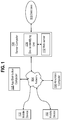
- FIG. 1 illustrates a networked computer system arrangement that may be used to implement an embodiment.
- the computer system generally comprises one or more mobile computing devices 102, a network 104, at least one server computer 106 coupled to a database 110, one or more app distribution computers 105 and one or more advertiser computers 108.
- Each of the mobile computing devices 102 comprises a smartphone, tablet computer, netbook computer, laptop computer, or other movable computer. Examples include APPLE IPHONE and IPAD devices, ANDROID devices, etc.
- wireless links couple the mobile devices 102 to network 104, which broadly represents one or more local area networks, wide area networks, internetworks, global interconnected internetworks such as the public internet, or a combination thereof.
- network 104 broadly represents one or more local area networks, wide area networks, internetworks, global interconnected internetworks such as the public internet, or a combination thereof.
- network 104 which broadly represents one or more local area networks, wide area networks, internetworks, global interconnected internetworks such as the public internet, or a combination thereof.
- two (2) mobile devices 102 are shown in FIG. 1 and one cloud symbol representing network 104 is shown, but practical implementations may use thousands or millions of mobile devices and any number of interconnected networks.
- App distribution computer 105 is associated with a developer, author or publisher of a mobile device application computer program or app, or a distribution channel such as a centralized app downloading service; examples include the APPLE APP STORE and GOOGLE PLAY service.
- the app may be a game app, utility app, product-related app, or other app.
- the app developer, author or publisher desires to provide advertising within the graphical user interface displays of the app, or is willing to enable certain functions, options or features in the app in exchange for display of advertising within the app.
- the app developer, author or publisher does not have direct contract or compensation relationships with advertisers but relies on server computer 106, and/or an advertising network or advertising service with which it generally does have a contractual relationship with which is supported by the server computer, to provide advertisements on the apps.
- the advertiser computer 108 may serve ads to apps installed on mobile devices 102 directly or the server computer 106 may serve the ads.
- Server computer 106 may be owned and operated by an app vendor, advertising network operator, or other party other than users who own or operate the mobile devices 102.
- server computer 106 hosts at least a web server 112 and a device identifying unit 114, which is configured to perform the processes herein associated with obtaining device identifying information from the mobile devices 102.
- server computer 106 is associated with an advertising network service that directs advertisements to apps that comply with an application programming interface (API) or software development kit (SDK) defined by the advertising network service operator.
- the operator is Tapjoy, Inc., San Francisco, California.
- Advertisers associated with computer such as advertiser computer 108 place advertisements with the service provider.
- Publishers such as software developers, game developers, or vendors of products or services, cause authoring and publication of apps that may provide non-advertising functions, such as games.
- the apps implement the API or SDK defined by the service provider.
- the service provider routes advertisements from advertiser computer 108, or other sources, to the apps via the API or SDK. Compensation flows between the advertiser, service provider, and publishers according to known advertising compensation models. Users of mobile devices 102 benefit from use of the apps and exposure to products or services that may interest them. They also interact with ads served from Network 104.
- Server computer 106 may be coupled to a database 110 that is configured to store data obtained from the mobile devices 102.
- FIG. 2 illustrates further details of an embodiment of the system of FIG. 1 .
- one of the mobile devices 102 hosts, executes or otherwise comprises a first app 202, second app 206, and mobile web browser 210.
- First app 202 registers a protocol handler 204 with the mobile operating system.
- the registered protocol handler 204 is configured to respond to messages or requests that are tagged with a protocol identifier prefix that uniquely identifies the first app 202 or its registered protocol handler 204.
- the first app 202 also comprises SDK code 205 that is configured to perform special processing, further described herein, when messages or requests in the protocol also include a label or namespace value that signifies a request for special processing.
- Second app 206 has a registered second protocol handler 208 that is configured to respond to messages or requests that are tagged with a protocol identifier that uniquely identifies the second app or its protocol handler 208. Second app 206 further comprises SDK code 207 that is configured to perform special processing for requests in the second protocol that include the label or namespace value that signifies special processing, as further described.
- FIG. 2 shows two apps 202, 206, protocol handlers 204, 208, and instances of SDK code 205, 207, but other embodiments may include any number of apps based upon the amount of memory or other storage that is available in the mobile device 102.
- FIG. 2 does not show distribution platforms that may be used to assign the protocol handlers to the OS installations.
- SDK code 205, 207 typically is statically linked or dynamically linked to the rest of the code of the first app 202 and second app 206, respectively, at the time that a developer prepares production versions of executables of the first app and second app. Consequently, at runtime, the SDK code 205, 207 runs as native code in the mobile device 102.
- the source code for SDK code 205, 207 typically is defined by the owner or operator of the server computer 106 and is not always known to the app developer, author or publisher, except possibly with respect to public interfaces or APIs that the owner or operator of the server computer elects to publish or disclose.
- Browser 210 may comprise a program, application, or script configured to send and receive HTTP requests and responses and to render HTML documents in a display unit of the mobile computing device 102.
- browser 210 may request a web page 212, such as a home page or other page of the domain www.tapjoy.com, commercially available from Tapjoy, Inc., San Francisco, California, which may contain one or more links 214, which are configured and used as further described herein.
- server computer 106 comprises a web server 112 that is configured in the server computers of the public Domain Name System (DNS) as responsive to HTTP requests that include the domain name tapjoy.com, or the equivalent.
- Web server 112 may operate under the control or direction of a device identifying unit 114, which may comprise logic or program code that is configured to perform the server-side operations that are further described herein with respect to FIG. 3A .
- device identifying unit 114 is configured to generate web page 212 as described below and to generate one or more links 214, dynamically if necessary, as further described herein for FIG. 3A .
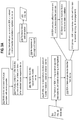
- FIG. 3A , FIG. 3B illustrate embodiments of a computer-implemented process that may be used to implement an embodiment.
- the process of FIG. 3A , FIG. 3B is described herein with reference to the system of FIG. 1 , FIG. 2 , but other embodiments may be used in connection with different computer arrangements that yield equivalent or similar functional results.
- a mobile device accesses a web page associated with a service provider.
- mobile device 102 of FIG. 1 , FIG. 2 accesses the web server 112 of the server computer 106.
- an IPHONE device user might use the SAFARI browser built into the IPHONE device to access the website www.tapjoy.com.
- the mobile device 102 accesses the web page associated with the service provider for purposes of confirming an app that the mobile device previously downloaded.
- Block 303 indicates that at least one mobile app, which has been linked with the service provider's SDK, and has a protocol handler, has been installed on the device. For example, at any time prior to execution of block 304 and subsequent functional blocks, a user of the mobile device selects, downloads and installs a mobile app that has been linked with the service provider's SDK by the app publisher, and that includes a related protocol handler.
- the protocol handler associated with the mobile app is configured to use or respond to messages, requests or calls that identify a particular protocol associated with the mobile app
- the SDK is configured to process certain kinds of requests that carry a particular label or namespace value that has been defined by the service provider, owner or operator of server computer 106.
- the app publisher authors and/or registers a protocol handler for the app's protocol, and also statically or dynamically links the app with executable code representing the API or SDK, so that the resulting app executable is integrated with executable code for functions of the API or SDK.
- the following description refers to performing certain functions using an SDK that is integrated with the protocol handler and/or app.
- other embodiments may use native code in the app that implements an API, or other native code, to achieve functionally equivalent operations and the use of an SDK linked to the app is not always required.
- the protocol handler comprises a program, set of routines, or other program code that can respond to requests that carry protocol identifiers associated with that particular handler.
- the owner or operator of server computer 106 or the services it provides, requests or requires publishers of apps to use or register a protocol handler that is designated within their app before the publishers are able to use services, such as an advertising network, that are offered through the server computer.
- the app publisher provides a copy of the designated app or protocol handler to the owner or operator of the server computer 106 for reference, validation or other purposes. Consequently, the server computer 106 is aware of the identity of all apps and their protocol handlers that are configured to use services of the service provider that owns or operates the server computer, and can seek to address the app as needed.
- protocol handler For a protocol handler associated with a mobile app named Appl, is "app1://". Other examples are described in other sections of this document.
- the protocol handler registers with the operating system of the mobile device using registration function calls that are defined by the operating system. Through registration, the operating system creates a record of the existence of the protocol handler and the protocol identifier with which it is associated. Thereafter, when an inbound request arrives that specifies a particular protocol identifier, the operating system is capable of passing the request to a protocol handler that matches the specified protocol identifier.
- the web page that was accessed at block 302 contains a request link that includes a particular protocol identifier, a label, and data.
- a user of the mobile device invokes the request link by selecting a function, button or other GUI widget associated with completing a designated process.
- the user may have directed the browser 210 to contact a web page 212 hosted by the server computer 106 that guides the user through a process of registering with a service provided by the server computer.
- the registration process might involve collecting, among other things, a username and/or email address for purposes of identifying the holder of an account or the user of a device.
- the web page 212 might contain a prompt such as, "To complete registration, click here to continue.” In response to selecting the prompt, the link 214 is invoked.
- the data in link 214 may be any data that is necessary for performance of any of the other functions that have been previously described.
- the data may comprise a click key value that indicates a location within the web page, a function that the user invoked by making a selection, or other information about what the user was doing or attempting to do.
- the data may represent any other available information about the device or the user such as user e-mail address or username, or other values. The data need not identify the device; for example, the data could be an advertiser identifier.
- links or requests are communicated from the mobile device to the server computer 106 using a protocol that is stateless in the manner that HTTP is stateless, and consequently the data value carried in a request may be highly useful in communicating what function or action the user or device was seeking to perform.
- Data values used for this purpose may be arbitrary in content, provided that each particular data value that is used in an implementation is recognizable by the server computer 106 as indicating a particular operation, action or function.
- the label may be any signaling value, within a namespace recognizable at server computer 106, which enables the protocol handler to recognize that the server computer is attempting to perform a specific operation or related communication with the mobile device. Examples are described in other sections herein.
- the protocol identifier is recognizable to the protocol handler that was designated at block 303, or is among a plurality of possible protocol handlers that could have been designated.
- the web page 212 contains a plurality of links 214, each of which identifies a different possible protocol handler that could be present on the mobile device.
- the web page 212 may be structured using client-side browser-executable script code, or the server computer 106 may have server-side code, which is configured to iteratively generate a series of different links 214 or requests, each of which identifies a different protocol handler, for the purpose of iteratively testing whether that particular protocol handler is supported on the device - in which case the app that registered such protocol handler is still installed on the device.
- server computer 106 and web page 212 hosted at the server computer cannot be configured in advance with data indicating which protocols are supported on any arbitrary mobile device
- the server computer can receive prior notification from app publisher computers 105 about which protocols they have defined for apps that will use services of the server computer, and therefore the server computer can test whether or not each unique protocol handler is resident on a particular mobile device.
- Operators of advertiser computer 108 also can register protocols and their apps can issue callbacks with data.
- the server computer 106 upon receiving communications from an arbitrary mobile device 102 over an open network 104 such as the internet, the server computer 106 is configured to provide a web page 212 that is capable of generating a succession of links 214, each identifying a different possible protocol handler previously registered with the mobile device by an app publisher, until the mobile device is able to invoke a corresponding installed and designated protocol handler. Any number of links may be created and used and in a practical embodiment dozens of apps and protocols might need to be tested.
- Blocks 306, 308, 310, 312, 304 represent a loop that corresponds to the iterative protocol testing process outlined above.
- the web page configured as seen at block 304 issues a request by providing a link that is formatted according to a particular protocol.
- requests or links have the format of a uniform resource identifier (URI).
- URI uniform resource identifier
- An example link is: app1://tapjoy_register /100423b44cd3387a33 where "appl" is a protocol identifier, "tapjoy_register” is a label or signaling string or namespace, and "100423b44cd3387a33" is a data value that is useful in performing some kind of server side operation.
- the data value may comprise any information that is available or obtainable during operation of the mobile browser on the mobile device, such as an indication of a location in the web page that the user selected or clicked.
- next request might have the form "app2://tapjoy_register/100423b44cd3387a33", in which "app2" identifies a different app and related protocol that also has been prepared using the SDK or API defined by the owner or operator of server computer 106.
- Blocks 304, 306, 308, 310, 312 are iteratively performed in the foregoing manner until a match occurs and a protocol handler can be invoked at block 312, or until all protocols defined by the server computer 106 have been attempted. If all protocols for apps designated at the server computer 106 have been attempted, and none responds, then as seen at block 311, control transfers to the process of FIG. 3B , which is further described below.
- the mobile computing device can be recognized as associated with a particular user account, and the subsequent experience provided with the service provider's service can be customized for that user.
- an app on a smartphone that is enabled with a protocol handler known to a particular service provider can enable the service provider to identify the smartphone as associated with an account holder, and attributes of the account (or the mere fact that an account holder is using the service) can be used to provide a relevant experience.
- Invocation of the protocol handler for a designated protocol may occur, at the mobile device, automatically or in response to user action.
- the mobile device or app may be configured, at block 312, to prompt the user to open an app that matches a designated protocol.
- prompts are not required and invocation may occur in response to launching the app.
- a function of the SDK running as native app code, intercepts the link 214 by matching the label or, optionally, a value in a particular namespace, which is "tapjoy_register" in the examples above.
- apps denoted appl or app2 may implement a protocol handler that matches "app1" or "app2" and permits many kinds of links or requests, when a particular label or signal value is present in a link or request
- a function of the SDK interrupts normal protocol handler processing and invokes a processing routine or branches to particular configured program code based on the label for the purpose of confirming any data value, such as a UID, as further described herein.
- the SDK provides code that implements a special-purpose function for the protocol handler when the request or link contains a specified label value or signaling value.
- the SDK may also perform the intercepting by matching the label value to a regular expression, rather than matching a single literal value.
- the SDK function confirms one or more UIDs from the device.
- the SDK function calls an operating system call, API function call, or other service on device 102, to confirm one or more UID values.
- the unique device identifier value may comprise any other equivalent value or field that is sufficient to confirm or identify the device 102 in a way that is useful for the server computer 106 or the service provider.
- the advertisingIdentifier is a UID value that the operating system exposes that the user is capable of resetting at any time.
- the Vendor ID may be a unique device identifier that is determined on a per-vendor basis in association with app or service vendors. For example, the owner or operator of server computer 106 could establish a Vendor ID for a particular mobile device 102 and could consider that value as a unique device identifier, but that value would have no meaning to another vendor of different services or products.
- the SDK function may invoke an operating system API function call that is available for use by installed code such as native apps, but not capable of invocation by scripts in a browser or other sandboxed code, or not capable of delivery in response to an external request from a server, such as a request from server computer 106 arriving at the mobile device over HTTP via the public internet.
- the SDK function executes a callback to the server computer and provides the UID value and, optionally, the data value that was received in the request.
- the server computer receives the UID value or the data value via the callback.
- the server computer may use the UID and / or data as appropriate for a particular server computer application or function, such as supporting a conversion of the mobile device or its user.
- FIG. 3B illustrates another embodiment of a computer-implemented process that may be used to implement an embodiment.
- the process of FIG. 3B is invoked when no protocol handler is found on the mobile device.
- the server computer may be configured to cause the user of the mobile device to download a specified free app and then re-attempt the operation that the user previously attempted to perform.
- the user is essentially asked to download and install an app that is designated at the server computer 106 and has a compatible protocol handler, for the purpose of installing into the mobile device the capability of obtaining the device's advertiser-based identifier via native code and providing it back to the server computer.
- the process of FIG. 3B initiates when no compatible protocol handler has been found on the mobile device using the process of FIG. 3A .
- the process causes or instructs the user to install a specified app that is enabled with a compatible protocol handler.
- Any of several alternatives may be used to implement block 332. For example, since the process of FIG. 3A began when the user accessed a web site of the service provider using a discovery app or mobile browser on the mobile device, block 332 can comprise redirecting the browser to a specified page that instructs the user to pick and open or download one protocol handler-enabled app from among one or more such apps.
- a discovery app that the user is currently running may be used to prompt the user to select from among one or more protocol handler-enabled apps.
- an advertisement-based mechanism may be used as seen at blocks 340, 342, which are described further below.
- the process stores data indicating which app was selected, assuming that multiple protocol handler-enabled apps were offered. If the mobile device is then currently running a browser, then one option is that a local cookie may be stored on the device cookie indicating which app was clicked on. Alternatively, the browser or the discovery app may communicate a message back to the service provider's server computer, which can store an identifier of the clicked-on app in association with an account of the mobile device user.
- the user installs the specified app and in block 338 the user re-visits the site of the service provider. Processing then continues at block 302 of FIG. 3A . Since the server computer interacts with the mobile device using a stateless protocol such as HTTP, each visit at block 302 is processed in generally the same way and the server computer will not have advance knowledge that a particular visit is a re-visit after FIG. 3B . However, upon a re-visit, if the mobile device provides login credentials for an existing account at the server computer, the server computer can inspect its database to determine if a record for the user account contains an identifier of the specified app that was just downloaded. If so, then the server computer can expedite the process of FIG. 3A by issuing a protocol request in only the protocol that is handled by the specified app at block 306, rather than iterating through all supported protocols via the loop of block 304, 306, 308, 310.
- a stateless protocol such as HTTP
- the service provider could provide access to an app recommendation facility, or other limited services, while blocking the mobile device from accessing other services.
- an advertisement-based approach may be used in which the process causes installation of a protocol handler-enabled app via an advertisement.
- certain using operating system and web server infrastructure may automatically cause app installation and provide useful protocol invocation data.
- a protocol handler-enabled app that should be installed could be provided to the mobile device using the APPLE Smart App Banner (sometimes termed Smart Ads) feature.
- an advertisement is configured on the server computer of the service provider and is delivered typically as a banner advertisement when computer users browse the web site of the service provider.
- the advertisement references a specified protocol handler-enabled app of the service provider.
- the referenced protocol handler-enabled app is automatically downloaded to and installed on the mobile computing device if the mobile computing device does not already have the app installed.
- the process provides a URL specifying a protocol known to the service provider, and identifying a registration function, to the app that was installed via the advertisement.
- the advertisement configuration may specify an "app-argument" value that identifies the service provider's protocol which is recognized by the protocol handler, and specifies a registration or connection function of the app that can cause the app to complete an association of the mobile computing device's UID with an account at the service provider.
- the "app-argument" value is passed to the app automatically from the advertisement when the associated app opens. If the mobile computing device did not have the app installed at the time the advertisement was clicked on, then the "app-argument" is automatically passed to the device after the app downloads, installs and opens. If the app was already on the device when the advertisement was clicked, then the advertisement automatically changes behavior and causes the app to open, then passes the "app-argument" to the app.
- the "app-argument" is a URL that reflects context within a website that contains the ad, or a session ID to download web session state into an app so that the user can have a seamless experience by transitioning to an equivalent or related state in the app.
- the "app-argument” may specify a protocol recognized by the app and a registration function of the app that causes association of the UID with an account at the service provider's web site.
- the automatic installation of the app with a known protocol in combination with passing an "app-argument" tagged with the protocol and that specifies what the app should do next to assist in registering the UID to an account of the service provider, can be used to efficiently skip over some of the processing illustrated in FIG. 3A that requires testing for a known protocol handler. Instead, control jumps to block 314 where the registration process can continue without delay.
- the approach of various embodiments effectively signals the server computer 106 to perform a particular function indicated in the data value, or using the data value, with respect to the UID received in the callback.
- Either a name of the callback itself, or the data value may indicate the function to be performed.
- new users of mobile devices 102 that are seeking the use of services at the server computer 106 or a domain that it manages will be able to register with the server computer and reconcile activities that may originate or conclude in 212 with other activities that may conclude or apply to user experiences in 202 or other applications.
- a UID may be obtained, to fulfill a user request or app request, from the device using internally operating code rather than through direct requests of external code. Further, the UID may be received at the server computer 106 together with other data indicating what operation or request the mobile device or user had attempted.
- the data delivered in the callback also may comprise one or more values that are accessible only via native code.
- the UID and other data may be passed from the SDK of the first app 202 to the SDK of the second app 206.
- the second app 206 may issue a callback to the server computer 106 and provide the UID and other data, or consume the UID and other data locally for other purposes.
- One example use of these techniques is re-engagement of users into the second app.
- the user might have interacted with an ad in the first app 202 resulting in obtaining a reward; through callbacks from the first app to the server computer 106, the server might supply the ad or data about the interaction to the second app 206, and the server then could direct the user into a particular location in the second app, by passing data as described herein, in an attempt to re-engage the user with the second app.
- the content of the ad in the first app 202 could be configured to help induce engagement with the second app 206.
- the device may maintain other unique identifier values for the use of advertisers, vendors of apps, or other parties that are provided by the operating system only for other purposes or to other kinds of apps or systems.
- UID value may be expired; a short term, a short term, a short term, a short term, or a short term.
- the techniques described herein are implemented by one or more special-purpose computing devices.
- the special-purpose computing devices may be hard-wired to perform the techniques, or may include digital electronic devices such as one or more application-specific integrated circuits (ASICs) or field programmable gate arrays (FPGAs) that are persistently programmed to perform the techniques, or may include one or more general purpose hardware processors programmed to perform the techniques pursuant to program instructions in firmware, memory, other storage, or a combination.
- ASICs application-specific integrated circuits
- FPGAs field programmable gate arrays
- Such special-purpose computing devices may also combine custom hard-wired logic, ASICs, or FPGAs with custom programming to accomplish the techniques.
- the special-purpose computing devices may be desktop computer systems, portable computer systems, handheld devices, networking devices or any other device that incorporates hard-wired and/or program logic to implement the techniques.
- FIG. 4 is a block diagram that illustrates a computer system 400 upon which an embodiment of the invention may be implemented.
- Computer system 400 includes a bus 402 or other communication mechanism for communicating information, and a hardware processor 404 coupled with bus 402 for processing information.
- Hardware processor 404 may be, for example, a general purpose microprocessor.
- Computer system 400 also includes a main memory 406, such as a random access memory (RAM) or other dynamic storage device, coupled to bus 402 for storing information and instructions to be executed by processor 404.
- Main memory 406 also may be used for storing temporary variables or other intermediate information during execution of instructions to be executed by processor 404.
- Such instructions when stored in non-transitory storage media accessible to processor 404, render computer system 400 into a special-purpose machine that is customized to perform the operations specified in the instructions.
- Computer system 400 further includes a read only memory (ROM) 408 or other static storage device coupled to bus 402 for storing static information and instructions for processor 404.
- ROM read only memory
- a storage device 410 such as a magnetic disk or optical disk, is provided and coupled to bus 402 for storing information and instructions.
- Computer system 400 may be coupled via bus 402 to a display 412, such as a cathode ray tube (CRT), for displaying information to a computer user.
- a display 412 such as a cathode ray tube (CRT)
- An input device 414 is coupled to bus 402 for communicating information and command selections to processor 404.
- cursor control 416 is Another type of user input device
- cursor control 416 such as a mouse, a trackball, or cursor direction keys for communicating direction information and command selections to processor 404 and for controlling cursor movement on display 412.
- This input device typically has two degrees of freedom in two axes, a first axis (e.g., x) and a second axis (e.g., y), that allows the device to specify positions in a plane.
- Computer system 400 may implement the techniques described herein using customized hard-wired logic, one or more ASICs or FPGAs, firmware and/or program logic which in combination with the computer system causes or programs computer system 400 to be a special-purpose machine. According to one embodiment, the techniques herein are performed by computer system 400 in response to processor 404 executing one or more sequences of one or more instructions contained in main memory 406. Such instructions may be read into main memory 406 from another storage medium, such as storage device 410. Execution of the sequences of instructions contained in main memory 406 causes processor 404 to perform the process steps described herein. In alternative embodiments, hard-wired circuitry may be used in place of or in combination with software instructions.
- Non-volatile media includes, for example, optical or magnetic disks, such as storage device 410.
- Volatile media includes dynamic memory, such as main memory 406.
- Common forms of storage media include, for example, a floppy disk, a flexible disk, hard disk, solid state drive, magnetic tape, or any other magnetic data storage medium, a CD-ROM, any other optical data storage medium, any physical medium with patterns of holes, a RAM, a PROM, and EPROM, a FLASH-EPROM, NVRAM, any other memory chip or cartridge.
- Storage media is distinct from but may be used in conjunction with transmission media.
- Transmission media participates in transferring information between storage media.
- transmission media includes coaxial cables, copper wire and fiber optics, including the wires that comprise bus 402.
- transmission media can also take the form of acoustic or light waves, such as those generated during radio-wave and infra-red data communications.
- Various forms of media may be involved in carrying one or more sequences of one or more instructions to processor 404 for execution.
- the instructions may initially be carried on a magnetic disk or solid state drive of a remote computer.
- the remote computer can load the instructions into its dynamic memory and send the instructions over a telephone line using a modem.
- a modem local to computer system 400 can receive the data on the telephone line and use an infra-red transmitter to convert the data to an infra-red signal.
- An infra-red detector can receive the data carried in the infra-red signal and appropriate circuitry can place the data on bus 402.
- Bus 402 carries the data to main memory 406, from which processor 404 retrieves and executes the instructions.
- the instructions received by main memory 406 may optionally be stored on storage device 410 either before or after execution by processor 404.
- Computer system 400 also includes a communication interface 418 coupled to bus 402.
- Communication interface 418 provides a two-way data communication coupling to a network link 420 that is connected to a local network 422.
- communication interface 418 may be an integrated services digital network (ISDN) card, cable modem, satellite modem, or a modem to provide a data communication connection to a corresponding type of telephone line.
- ISDN integrated services digital network
- communication interface 418 may be a local area network (LAN) card to provide a data communication connection to a compatible LAN.
- LAN local area network
- Wireless links may also be implemented.
- communication interface 418 sends and receives electrical, electromagnetic or optical signals that carry digital data streams representing various types of information.
- Network link 420 typically provides data communication through one or more networks to other data devices.
- network link 420 may provide a connection through local network 422 to a host computer 424 or to data equipment operated by an Internet Service Provider (ISP) 426.
- ISP 426 in turn provides data communication services through the world wide packet data communication network now commonly referred to as the "Internet" 428.
- Internet 428 uses electrical, electromagnetic or optical signals that carry digital data streams.
- the signals through the various networks and the signals on network link 420 and through communication interface 418, which carry the digital data to and from computer system 400, are example forms of transmission media.
- Computer system 400 can send messages and receive data, including program code, through the network(s), network link 420 and communication interface 418.
- a server 430 might transmit a requested code for an application program through Internet 428, ISP 426, local network 422 and communication interface 418.
- the received code may be executed by processor 404 as it is received, and/or stored in storage device 410, or other non-volatile storage for later execution.
Landscapes
- Engineering & Computer Science (AREA)
- Business, Economics & Management (AREA)
- Accounting & Taxation (AREA)
- Development Economics (AREA)
- Finance (AREA)
- Strategic Management (AREA)
- Theoretical Computer Science (AREA)
- General Physics & Mathematics (AREA)
- Physics & Mathematics (AREA)
- Signal Processing (AREA)
- Computer Networks & Wireless Communication (AREA)
- Entrepreneurship & Innovation (AREA)
- General Business, Economics & Management (AREA)
- Marketing (AREA)
- Economics (AREA)
- Game Theory and Decision Science (AREA)
- Software Systems (AREA)
- General Engineering & Computer Science (AREA)
- Information Transfer Between Computers (AREA)
Claims (15)
- Datenverarbeitungsverfahren, das Folgendes umfasst:Empfangen an einer mobilen Rechenvorrichtung (102) einer Anforderung von einem mobilen Browser (210) als Reaktion auf das Auswählen eines Link (214) in einer Web-Seite (212), die von einem Server-Computer (106) bedient wird, wobei die Anforderung eine Protokollkennung, einen Etikettwert und einen Datenwert umfasst, wobei die Protokollkennung einem Protokoll zugeordnet ist, das in einer ersten mobilen App (202) implementiert ist;Verwenden eines Protokoll-Handler (204, 208) in der mobilen Rechenvorrichtung (102), der dem Protokoll zugeordnet ist und der eine Verarbeitung der Anforderung einleitet;Verwenden eines nativen Codeelements in der mobilen Rechenvorrichtung: Abfangen der Anforderung, wenn der Etikettwert mit einem bestimmten Ausdruck übereinstimmt, und als Reaktion auf das Abfangen Liefern des Datenwerts an andere als die erste mobile App (202), den Protokoll-Handler (204, 208) oder das native Codeelement;wobei die erste mobile App (20) mit dem nativen Codeelement als Teil eines Softwareentwicklungskits, SDK, (205, 207), das einem Dienstanbieter zugeordnet ist, verbunden ist;wobei das Verfahren durch eine oder mehrere Rechenvorrichtungen ausgeführt wird.
- Verfahren nach Anspruch 1, wobei das Liefern umfasst, den Datenwert an eine zweite mobile App (206) in der mobilen Rechenvorrichtung (102) zu liefern.
- Verfahren nach Anspruch 1, wobei das Liefern umfasst, den Datenwert an einen Server-Computer (106) unter Verwendung eines Callback zu liefern.
- Verfahren nach Anspruch 1, das ferner Folgendes umfasst, mehrere andere Anforderungen zu empfangen, die jeweils eine andere Protokollkennung, den Etikettwert und den Datenwert umfassen; Bestimmen, ob die Protokollkennung mit einem in der mobilen Rechenvorrichtung (102) registrierten Protokoll-Handler übereinstimmt; Ausführen des Verarbeitens, des Abfangens, des Erhaltens und Lieferns als Reaktion auf das Bestimmen einer ersten Übereinstimmung der Protokollkennung mit dem Protokoll-Handler (204, 208) aus allen Protokollkennungen.
- Verfahren nach Anspruch 3, das ferner Folgendes umfasst:Empfangen bei der mobilen Rechenvorrichtung mehrerer Anforderungen von dem Server-Computer (106), wobei jede Anforderung der mehreren Anforderungen eine andere Protokollkennung, den Etikettwert und den Datenwert umfasst;Bestimmen, ob die andere Protokollkennung in jeder Anforderung mit einem in der mobilen Rechenvorrichtung (102) registrierten Protokoll-Handler (204, 208) übereinstimmt; undAusführen der Verarbeitung, des Abfangens, des Erhaltens und Lieferns als Reaktion auf das Bestimmen einer ersten Übereinstimmung einer der verschiedenen Protokollkennungen mit dem Protokoll-Handler (204, 208) .
- Verfahren nach Anspruch 3, wobei der Server-Computer (106) einem Werbungsnetz zugeordnet ist.
- Verfahren nach Anspruch 1:das ferner umfasst, zu bewirken, dass die erste mobile App (202), die mit dem nativen Codeelement als Teil des Softwareentwicklungskits, SDK, (205, 207) verbunden ist, auf der mobilen Rechenvorrichtung (102) installiert wird; oderwobei der Datenwert einen Klickschlüssel umfasst, der eine Funktion in der Web-Seite angibt, die ausgewählt wurde; oderwobei der bestimmte Ausdruck ein regulärer Ausdruck ist, der mit Funktionen eines Dienstanbieters übereinstimmt, die zumindest teilweise mit dem Registrieren, um Werbungen zu erhalten, verbunden sind.
- Verfahren nach Anspruch 1, wobei das Liefern umfasst, den Datenwert an eine zweite mobile App (206) in der mobilen Rechenvorrichtung (102) zu liefern; das ferner umfasst, zu bewirken, dass die zweite mobile App (206) einen Neuverpflichtungsvorgang ausführt.
- Verfahren nach Anspruch 1, das ferner umfasst:
Erhalten einer eindeutigen Vorrichtungskennung, UID, von der mobilen Rechenvorrichtung (102); und Liefern der UID an eines der Folgenden: den Server-Computer (106) über einen Callback, der die UID und die Daten enthält; oder eine zweite App. - Verfahren nach Anspruch 1, das ferner Folgendes umfasst:Bestimmen, dass die mobile Rechenvorrichtung (102) keine durch Protokoll-Handler aktivierte App auf der mobilen Rechenvorrichtung installiert hat;Bewirken oder Anweisen, dass die mobile Rechenvorrichtung, eine oder mehrere durch Protokoll-Handler aktivierte Apps, die mit dem nativen Codeelement als Teil des Softwareentwicklungskits, SDK, (205, 207) verbunden sind, auf der mobilen Rechenvorrichtung (102) installiert.
- Verfahren nach Anspruch 10, wobei das Bewirken umfasst, einen mobilen Browser (210) auf der mobilen Rechenvorrichtung (102) zu einer Web-Seite umzuleiten, die eine oder mehrere durch Protokoll-Handler aktivierte Apps anbietet.
- Verfahren nach Anspruch 10, wobei das Bewirken umfasst, zu bewirken, dass eine Auffindungs-App auf der mobilen Rechenvorrichtung (102) eine oder mehrere durch Protokoll-Handler aktivierte Apps anbietet.
- Verfahren nach Anspruch 10, wobei das Speichern umfasst, eine Kennung der bestimmten durch Protokoll-Handler aktivierten App in einer Kontoaufzeichnung eines Anwenderkontos, das der mobilen Rechenvorrichtung (102) zugeordnet ist, zu speichern.
- Verfahren nach Anspruch 10, wobei das Bewirken umfasst, eine Werbung anzuzeigen, die einen Link zu einer oder mehreren durch einen Protokoll-Handler aktivierten Apps enthält, eine Auswahl der Werbung zu empfangen und automatisch das Herunterladen und Installieren der bestimmten durch einen Protokoll-Handler aktivierten App zu bewirken.
- Ein oder mehrere nicht transitorische Speichermedien, die Anweisungen speichern, die dann, wenn sie durch eine oder mehrere Rechenvorrichtung ausgeführt werden, das Ausführen des Verfahrens nach einem der Ansprüche 1 bis 14 bewirken.
Applications Claiming Priority (2)
| Application Number | Priority Date | Filing Date | Title |
|---|---|---|---|
| US13/733,743 US9477483B2 (en) | 2013-01-03 | 2013-01-03 | Tracking mobile app installations |
| PCT/US2013/078452 WO2014107450A1 (en) | 2013-01-03 | 2013-12-31 | Completing mobile app conversions |
Publications (2)
| Publication Number | Publication Date |
|---|---|
| EP2941748A1 EP2941748A1 (de) | 2015-11-11 |
| EP2941748B1 true EP2941748B1 (de) | 2019-04-24 |
Family
ID=50030472
Family Applications (1)
| Application Number | Title | Priority Date | Filing Date |
|---|---|---|---|
| EP13826707.5A Active EP2941748B1 (de) | 2013-01-03 | 2013-12-31 | Ausführung von konvertierungen mobiler apps |
Country Status (3)
| Country | Link |
|---|---|
| US (2) | US9477483B2 (de) |
| EP (1) | EP2941748B1 (de) |
| WO (1) | WO2014107450A1 (de) |
Families Citing this family (25)
| Publication number | Priority date | Publication date | Assignee | Title |
|---|---|---|---|---|
| US8769048B2 (en) * | 2008-06-18 | 2014-07-01 | Commvault Systems, Inc. | Data protection scheduling, such as providing a flexible backup window in a data protection system |
| US20140040070A1 (en) * | 2012-02-23 | 2014-02-06 | Arsen Pereymer | Publishing on mobile devices with app building |
| US9690759B2 (en) | 2013-01-03 | 2017-06-27 | Cable Television Laboratories, Inc. | Content linking |
| US9477483B2 (en) * | 2013-01-03 | 2016-10-25 | Tapjoy, Inc. | Tracking mobile app installations |
| US9135090B2 (en) * | 2013-02-26 | 2015-09-15 | Red Hat, Inc. | Messaging bus residing on a mobile device |
| US9348572B2 (en) * | 2013-03-15 | 2016-05-24 | Tapjoy, Inc. | Rewarding mobile app installations without a software development kit in the mobile app |
| US20140351041A1 (en) * | 2013-05-24 | 2014-11-27 | HasOffers, Inc. | Methods of tracking downloads and usage of software applications |
| US20140357375A1 (en) * | 2013-05-31 | 2014-12-04 | Sudhir Kumar Rama Rao | Modifying online game functionality based on mobile user acquisition |
| US10055754B2 (en) | 2014-03-13 | 2018-08-21 | Tune, Inc. | Systems and methods for tracking application installs that distinguish new users from existing users without directly accessing user account records |
| US10761835B1 (en) * | 2014-05-30 | 2020-09-01 | Apptimize Llc | Run-time application modification |
| CN104579751B (zh) * | 2014-12-11 | 2018-03-23 | 百度在线网络技术(北京)有限公司 | 应用的功能调起协议管理方法、装置及设备 |
| CN104461251A (zh) * | 2014-12-18 | 2015-03-25 | 百度在线网络技术(北京)有限公司 | 应用程序标签的展示方法和装置 |
| CN106649417A (zh) * | 2015-11-04 | 2017-05-10 | 珠海市君天电子科技有限公司 | 一种窗口拦截方法及装置 |
| CN105468674A (zh) * | 2015-11-12 | 2016-04-06 | 珠海市君天电子科技有限公司 | 窗口拦截方法、装置和终端设备 |
| US20170287012A1 (en) * | 2016-03-31 | 2017-10-05 | Criteo, SA | Application Customization Based on User Data |
| CN105979498B (zh) * | 2016-04-18 | 2019-06-04 | 醇钱科技发展(北京)有限公司 | 移动互联网大规模准实时数据分级订阅发布系统及方法 |
| US20170345056A1 (en) * | 2016-05-27 | 2017-11-30 | App Annie Inc. | Advertisement data metric determination within mobile applications |
| US20180084392A1 (en) * | 2016-09-19 | 2018-03-22 | Ebay Inc. | Text messaging hub system providing access to local and remote service applications |
| US10277688B2 (en) | 2017-01-04 | 2019-04-30 | Microsoft Technology Licensing, Llc | Automatic installation activation selection for hosted services |
| CN107066616B (zh) * | 2017-05-09 | 2020-12-22 | 京东数字科技控股有限公司 | 用于账号处理的方法、装置及电子设备 |
| WO2019040044A1 (en) * | 2017-08-21 | 2019-02-28 | Google Llc | PRESERVING SESSION IDENTIFIERS IN MULTIPLE WEB PAGES FOR CONTENT SELECTION |
| CN107798495B (zh) * | 2017-09-12 | 2020-12-04 | 中科富创(北京)科技有限公司 | 快递件存取方法、系统及装置 |
| CN109375929A (zh) * | 2018-11-22 | 2019-02-22 | 东软集团股份有限公司 | Java web应用的安装包生成方法、装置、存储介质和设备 |
| US11722900B2 (en) * | 2021-08-31 | 2023-08-08 | Visa International Service Association | Mobile device data security using shared security values |
| CN120768886B (zh) * | 2024-08-30 | 2026-04-07 | 荣耀终端股份有限公司 | 应用的处理方法、电子设备、芯片系统、及存储介质 |
Family Cites Families (27)
| Publication number | Priority date | Publication date | Assignee | Title |
|---|---|---|---|---|
| US7899710B1 (en) | 1998-05-27 | 2011-03-01 | Walker Digital, Llc | Determination and presentation of package pricing offers in response to customer interest in a product |
| US6564261B1 (en) * | 1999-05-10 | 2003-05-13 | Telefonaktiebolaget Lm Ericsson (Publ) | Distributed system to intelligently establish sessions between anonymous users over various networks |
| ATE266296T1 (de) * | 2000-08-02 | 2004-05-15 | Aepona Ltd | Gateway zum zugriff auf netzressourcen |
| US6968359B1 (en) * | 2000-08-14 | 2005-11-22 | International Business Machines Corporation | Merge protocol for clustered computer system |
| US7010609B1 (en) * | 2000-12-21 | 2006-03-07 | Borland Software Corporation | System and method for adding transport protocols in distributed middleware applications |
| US7343317B2 (en) | 2001-01-18 | 2008-03-11 | Nokia Corporation | Real-time wireless e-coupon (promotion) definition based on available segment |
| EP1377349A4 (de) | 2001-04-11 | 2009-05-13 | Walker Digital Llc | Verfahren und systeme zum fördern des spielens an einem spielgerät mittels angeboten von dritten |
| US7373349B2 (en) * | 2001-04-18 | 2008-05-13 | International Business Machines Corporation | Process for data driven application integration for B2B |
| US6816865B2 (en) * | 2001-04-18 | 2004-11-09 | International Business Machines Corporation | Process for data driven application integration for B2B |
| CA2357165A1 (en) * | 2001-09-10 | 2003-03-10 | Ibm Canada Limited-Ibm Canada Limitee | Configurable connector |
| WO2003029971A1 (en) | 2001-10-04 | 2003-04-10 | Accretive Technology Group, Inc. | Incentive system for distributing software over a computer network |
| US20050114469A1 (en) * | 2003-09-16 | 2005-05-26 | Manabu Nakamura | Information processing apparatus with a network service function and method of providing network services |
| KR20050122354A (ko) | 2004-06-24 | 2005-12-29 | 엘지전자 주식회사 | 식기 세척기의 히터 장착구조 |
| US20070197260A1 (en) * | 2006-02-22 | 2007-08-23 | Joshua Randall | Interface for mobile devices and methods |
| US20080091528A1 (en) | 2006-07-28 | 2008-04-17 | Alastair Rampell | Methods and systems for an alternative payment platform |
| US7698171B2 (en) | 2006-07-28 | 2010-04-13 | Trialpay, Inc. | Methods and system for facilitating bids for placement of offers in an alternative payment platform |
| US20090292599A1 (en) | 2006-07-28 | 2009-11-26 | Alastair Rampell | Transactional advertising |
| US20080077506A1 (en) | 2006-07-28 | 2008-03-27 | Alastair Rampell | Methods and systems for providing a user interface for an alternative payment platform |
| US8700789B2 (en) * | 2009-03-16 | 2014-04-15 | Apple Inc. | Accessory and mobile computing device communication using an application communication protocol |
| CN103270527B (zh) | 2010-08-06 | 2017-05-10 | Tapjoy公司 | 用于奖励应用程序安装的系统及方法 |
| US8694988B2 (en) * | 2010-10-22 | 2014-04-08 | Adobe Systems Incorporated | Runtime extensions |
| US20120209668A1 (en) | 2011-02-15 | 2012-08-16 | Terry Angelos | Dynamically serving content to social network members |
| US20120209908A1 (en) | 2011-02-15 | 2012-08-16 | Terry Angelos | Dynamically serving content to social network members |
| US20120265595A1 (en) | 2011-04-14 | 2012-10-18 | Fiksu, Inc. | Mobile digital media download incentive management through multiple user action tracking |
| US9165312B2 (en) * | 2012-06-26 | 2015-10-20 | Tapjoy, Inc. | Mobile device advertising chains |
| US9477483B2 (en) * | 2013-01-03 | 2016-10-25 | Tapjoy, Inc. | Tracking mobile app installations |
| US9348572B2 (en) * | 2013-03-15 | 2016-05-24 | Tapjoy, Inc. | Rewarding mobile app installations without a software development kit in the mobile app |
-
2013
- 2013-01-03 US US13/733,743 patent/US9477483B2/en active Active
- 2013-12-31 EP EP13826707.5A patent/EP2941748B1/de active Active
- 2013-12-31 WO PCT/US2013/078452 patent/WO2014107450A1/en not_active Ceased
-
2016
- 2016-09-13 US US15/264,165 patent/US10200442B2/en active Active
Non-Patent Citations (1)
| Title |
|---|
| None * |
Also Published As
| Publication number | Publication date |
|---|---|
| US9477483B2 (en) | 2016-10-25 |
| US20140188980A1 (en) | 2014-07-03 |
| US10200442B2 (en) | 2019-02-05 |
| US20160379280A1 (en) | 2016-12-29 |
| EP2941748A1 (de) | 2015-11-11 |
| WO2014107450A1 (en) | 2014-07-10 |
Similar Documents
| Publication | Publication Date | Title |
|---|---|---|
| US10200442B2 (en) | Tracking mobile app installations | |
| US9348572B2 (en) | Rewarding mobile app installations without a software development kit in the mobile app | |
| US20250148036A1 (en) | Matching and attribution of user device events | |
| US10430487B2 (en) | System and method to share content utilizing universal link format | |
| US10516722B2 (en) | Mobile application system | |
| US9936330B2 (en) | Methods for exchanging data amongst mobile applications using superlinks | |
| US8554190B2 (en) | Mobile application system | |
| CN103270527B (zh) | 用于奖励应用程序安装的系统及方法 | |
| US20140351041A1 (en) | Methods of tracking downloads and usage of software applications | |
| US9367371B2 (en) | Widget framework, real-time service orchestration, and real-time resource aggregation | |
| US20110185354A1 (en) | Mobile Application Delivery Management System | |
| CN109074263B (zh) | 移动应用活动检测器 | |
| US20230334239A1 (en) | Generating custom application links | |
| US10055754B2 (en) | Systems and methods for tracking application installs that distinguish new users from existing users without directly accessing user account records | |
| US20150310485A1 (en) | Systems and methods for attribution of actions without utilizing persistent client-side storage or cross-process communication | |
| US20150073892A1 (en) | Systems and methods for opening an application associated with an advertisement | |
| US20140379925A1 (en) | Apparatus and method for interworking between app store servers to share application information | |
| AU2017331599A1 (en) | Mobile service applications | |
| US10067752B1 (en) | Application install notification | |
| US10489119B2 (en) | Connection between app and web site | |
| CN112083982B (zh) | 信息处理方法和装置 | |
| JP6683835B2 (ja) | 複数のスレッドを使って電子リソースをダウンロードする際の待ち時間の削減 | |
| US10755321B1 (en) | Techniques for dynamic utilization of advertising capabilities by applications on user devices | |
| KR20170078011A (ko) | 휴대 단말의 잠금 화면에 금융 정보를 제공하는 애플리케이션 실행방법 및 장치 | |
| JP2024509894A (ja) | コンバージョンイベント追跡及び帰属のための方法、システム及びコンピュータプログラム製品 |
Legal Events
| Date | Code | Title | Description |
|---|---|---|---|
| PUAI | Public reference made under article 153(3) epc to a published international application that has entered the european phase |
Free format text: ORIGINAL CODE: 0009012 |
|
| 17P | Request for examination filed |
Effective date: 20150803 |
|
| AK | Designated contracting states |
Kind code of ref document: A1 Designated state(s): AL AT BE BG CH CY CZ DE DK EE ES FI FR GB GR HR HU IE IS IT LI LT LU LV MC MK MT NL NO PL PT RO RS SE SI SK SM TR |
|
| AX | Request for extension of the european patent |
Extension state: BA ME |
|
| DAX | Request for extension of the european patent (deleted) | ||
| STAA | Information on the status of an ep patent application or granted ep patent |
Free format text: STATUS: EXAMINATION IS IN PROGRESS |
|
| 17Q | First examination report despatched |
Effective date: 20180223 |
|
| REG | Reference to a national code |
Ref country code: DE Ref legal event code: R079 Ref document number: 602013054421 Country of ref document: DE Free format text: PREVIOUS MAIN CLASS: G06Q0030020000 Ipc: H04W0004000000 |
|
| GRAP | Despatch of communication of intention to grant a patent |
Free format text: ORIGINAL CODE: EPIDOSNIGR1 |
|
| STAA | Information on the status of an ep patent application or granted ep patent |
Free format text: STATUS: GRANT OF PATENT IS INTENDED |
|
| RIC1 | Information provided on ipc code assigned before grant |
Ipc: H04W 4/20 20090101ALI20181024BHEP Ipc: H04W 4/21 20151111ALI20181024BHEP Ipc: H04L 29/06 20060101ALI20181024BHEP Ipc: G06Q 30/02 20120101ALI20181024BHEP Ipc: G06F 9/445 20060101ALI20181024BHEP Ipc: G06F 8/61 20151111ALI20181024BHEP Ipc: H04W 4/60 20151111ALI20181024BHEP Ipc: H04W 4/00 20090101AFI20181024BHEP Ipc: H04L 29/08 20060101ALI20181024BHEP Ipc: G06F 9/44 20060101ALI20181024BHEP |
|
| INTG | Intention to grant announced |
Effective date: 20181115 |
|
| RIC1 | Information provided on ipc code assigned before grant |
Ipc: H04L 29/08 20060101ALI20181024BHEP Ipc: G06F 8/61 20180101ALI20181024BHEP Ipc: H04W 4/60 20180101ALI20181024BHEP Ipc: G06Q 30/02 20120101ALI20181024BHEP Ipc: H04W 4/00 20180101AFI20181024BHEP Ipc: H04L 29/06 20060101ALI20181024BHEP Ipc: G06F 9/44 20180101ALI20181024BHEP Ipc: H04W 4/21 20180101ALI20181024BHEP Ipc: G06F 9/445 20180101ALI20181024BHEP Ipc: H04W 4/20 20180101ALI20181024BHEP |
|
| RIC1 | Information provided on ipc code assigned before grant |
Ipc: G06F 9/445 20180101ALI20181024BHEP Ipc: G06F 9/44 20180101ALI20181024BHEP Ipc: H04W 4/20 20180101ALI20181024BHEP Ipc: H04W 4/21 20180101ALI20181024BHEP Ipc: H04W 4/60 20180101ALI20181024BHEP Ipc: G06Q 30/02 20120101ALI20181024BHEP Ipc: G06F 8/61 20180101ALI20181024BHEP Ipc: H04W 4/00 20180101AFI20181024BHEP Ipc: H04L 29/08 20060101ALI20181024BHEP Ipc: H04L 29/06 20060101ALI20181024BHEP |
|
| GRAS | Grant fee paid |
Free format text: ORIGINAL CODE: EPIDOSNIGR3 |
|
| GRAA | (expected) grant |
Free format text: ORIGINAL CODE: 0009210 |
|
| STAA | Information on the status of an ep patent application or granted ep patent |
Free format text: STATUS: THE PATENT HAS BEEN GRANTED |
|
| AK | Designated contracting states |
Kind code of ref document: B1 Designated state(s): AL AT BE BG CH CY CZ DE DK EE ES FI FR GB GR HR HU IE IS IT LI LT LU LV MC MK MT NL NO PL PT RO RS SE SI SK SM TR |
|
| REG | Reference to a national code |
Ref country code: GB Ref legal event code: FG4D |
|
| REG | Reference to a national code |
Ref country code: CH Ref legal event code: EP |
|
| REG | Reference to a national code |
Ref country code: AT Ref legal event code: REF Ref document number: 1125562 Country of ref document: AT Kind code of ref document: T Effective date: 20190515 Ref country code: IE Ref legal event code: FG4D |
|
| REG | Reference to a national code |
Ref country code: DE Ref legal event code: R096 Ref document number: 602013054421 Country of ref document: DE |
|
| REG | Reference to a national code |
Ref country code: NL Ref legal event code: MP Effective date: 20190424 |
|
| REG | Reference to a national code |
Ref country code: LT Ref legal event code: MG4D |
|
| PG25 | Lapsed in a contracting state [announced via postgrant information from national office to epo] |
Ref country code: NL Free format text: LAPSE BECAUSE OF FAILURE TO SUBMIT A TRANSLATION OF THE DESCRIPTION OR TO PAY THE FEE WITHIN THE PRESCRIBED TIME-LIMIT Effective date: 20190424 |
|
| PG25 | Lapsed in a contracting state [announced via postgrant information from national office to epo] |
Ref country code: SE Free format text: LAPSE BECAUSE OF FAILURE TO SUBMIT A TRANSLATION OF THE DESCRIPTION OR TO PAY THE FEE WITHIN THE PRESCRIBED TIME-LIMIT Effective date: 20190424 Ref country code: PT Free format text: LAPSE BECAUSE OF FAILURE TO SUBMIT A TRANSLATION OF THE DESCRIPTION OR TO PAY THE FEE WITHIN THE PRESCRIBED TIME-LIMIT Effective date: 20190824 Ref country code: HR Free format text: LAPSE BECAUSE OF FAILURE TO SUBMIT A TRANSLATION OF THE DESCRIPTION OR TO PAY THE FEE WITHIN THE PRESCRIBED TIME-LIMIT Effective date: 20190424 Ref country code: ES Free format text: LAPSE BECAUSE OF FAILURE TO SUBMIT A TRANSLATION OF THE DESCRIPTION OR TO PAY THE FEE WITHIN THE PRESCRIBED TIME-LIMIT Effective date: 20190424 Ref country code: LT Free format text: LAPSE BECAUSE OF FAILURE TO SUBMIT A TRANSLATION OF THE DESCRIPTION OR TO PAY THE FEE WITHIN THE PRESCRIBED TIME-LIMIT Effective date: 20190424 Ref country code: NO Free format text: LAPSE BECAUSE OF FAILURE TO SUBMIT A TRANSLATION OF THE DESCRIPTION OR TO PAY THE FEE WITHIN THE PRESCRIBED TIME-LIMIT Effective date: 20190724 Ref country code: AL Free format text: LAPSE BECAUSE OF FAILURE TO SUBMIT A TRANSLATION OF THE DESCRIPTION OR TO PAY THE FEE WITHIN THE PRESCRIBED TIME-LIMIT Effective date: 20190424 Ref country code: FI Free format text: LAPSE BECAUSE OF FAILURE TO SUBMIT A TRANSLATION OF THE DESCRIPTION OR TO PAY THE FEE WITHIN THE PRESCRIBED TIME-LIMIT Effective date: 20190424 |
|
| PG25 | Lapsed in a contracting state [announced via postgrant information from national office to epo] |
Ref country code: PL Free format text: LAPSE BECAUSE OF FAILURE TO SUBMIT A TRANSLATION OF THE DESCRIPTION OR TO PAY THE FEE WITHIN THE PRESCRIBED TIME-LIMIT Effective date: 20190424 Ref country code: RS Free format text: LAPSE BECAUSE OF FAILURE TO SUBMIT A TRANSLATION OF THE DESCRIPTION OR TO PAY THE FEE WITHIN THE PRESCRIBED TIME-LIMIT Effective date: 20190424 Ref country code: BG Free format text: LAPSE BECAUSE OF FAILURE TO SUBMIT A TRANSLATION OF THE DESCRIPTION OR TO PAY THE FEE WITHIN THE PRESCRIBED TIME-LIMIT Effective date: 20190724 Ref country code: LV Free format text: LAPSE BECAUSE OF FAILURE TO SUBMIT A TRANSLATION OF THE DESCRIPTION OR TO PAY THE FEE WITHIN THE PRESCRIBED TIME-LIMIT Effective date: 20190424 Ref country code: GR Free format text: LAPSE BECAUSE OF FAILURE TO SUBMIT A TRANSLATION OF THE DESCRIPTION OR TO PAY THE FEE WITHIN THE PRESCRIBED TIME-LIMIT Effective date: 20190725 |
|
| REG | Reference to a national code |
Ref country code: AT Ref legal event code: MK05 Ref document number: 1125562 Country of ref document: AT Kind code of ref document: T Effective date: 20190424 |
|
| PG25 | Lapsed in a contracting state [announced via postgrant information from national office to epo] |
Ref country code: IS Free format text: LAPSE BECAUSE OF FAILURE TO SUBMIT A TRANSLATION OF THE DESCRIPTION OR TO PAY THE FEE WITHIN THE PRESCRIBED TIME-LIMIT Effective date: 20190824 |
|
| REG | Reference to a national code |
Ref country code: DE Ref legal event code: R097 Ref document number: 602013054421 Country of ref document: DE |
|
| PG25 | Lapsed in a contracting state [announced via postgrant information from national office to epo] |
Ref country code: AT Free format text: LAPSE BECAUSE OF FAILURE TO SUBMIT A TRANSLATION OF THE DESCRIPTION OR TO PAY THE FEE WITHIN THE PRESCRIBED TIME-LIMIT Effective date: 20190424 Ref country code: DK Free format text: LAPSE BECAUSE OF FAILURE TO SUBMIT A TRANSLATION OF THE DESCRIPTION OR TO PAY THE FEE WITHIN THE PRESCRIBED TIME-LIMIT Effective date: 20190424 Ref country code: RO Free format text: LAPSE BECAUSE OF FAILURE TO SUBMIT A TRANSLATION OF THE DESCRIPTION OR TO PAY THE FEE WITHIN THE PRESCRIBED TIME-LIMIT Effective date: 20190424 Ref country code: SK Free format text: LAPSE BECAUSE OF FAILURE TO SUBMIT A TRANSLATION OF THE DESCRIPTION OR TO PAY THE FEE WITHIN THE PRESCRIBED TIME-LIMIT Effective date: 20190424 Ref country code: CZ Free format text: LAPSE BECAUSE OF FAILURE TO SUBMIT A TRANSLATION OF THE DESCRIPTION OR TO PAY THE FEE WITHIN THE PRESCRIBED TIME-LIMIT Effective date: 20190424 Ref country code: EE Free format text: LAPSE BECAUSE OF FAILURE TO SUBMIT A TRANSLATION OF THE DESCRIPTION OR TO PAY THE FEE WITHIN THE PRESCRIBED TIME-LIMIT Effective date: 20190424 |
|
| PG25 | Lapsed in a contracting state [announced via postgrant information from national office to epo] |
Ref country code: IT Free format text: LAPSE BECAUSE OF FAILURE TO SUBMIT A TRANSLATION OF THE DESCRIPTION OR TO PAY THE FEE WITHIN THE PRESCRIBED TIME-LIMIT Effective date: 20190424 Ref country code: SM Free format text: LAPSE BECAUSE OF FAILURE TO SUBMIT A TRANSLATION OF THE DESCRIPTION OR TO PAY THE FEE WITHIN THE PRESCRIBED TIME-LIMIT Effective date: 20190424 |
|
| PLBE | No opposition filed within time limit |
Free format text: ORIGINAL CODE: 0009261 |
|
| STAA | Information on the status of an ep patent application or granted ep patent |
Free format text: STATUS: NO OPPOSITION FILED WITHIN TIME LIMIT |
|
| PG25 | Lapsed in a contracting state [announced via postgrant information from national office to epo] |
Ref country code: TR Free format text: LAPSE BECAUSE OF FAILURE TO SUBMIT A TRANSLATION OF THE DESCRIPTION OR TO PAY THE FEE WITHIN THE PRESCRIBED TIME-LIMIT Effective date: 20190424 |
|
| 26N | No opposition filed |
Effective date: 20200127 |
|
| PG25 | Lapsed in a contracting state [announced via postgrant information from national office to epo] |
Ref country code: SI Free format text: LAPSE BECAUSE OF FAILURE TO SUBMIT A TRANSLATION OF THE DESCRIPTION OR TO PAY THE FEE WITHIN THE PRESCRIBED TIME-LIMIT Effective date: 20190424 |
|
| REG | Reference to a national code |
Ref country code: CH Ref legal event code: PL |
|
| REG | Reference to a national code |
Ref country code: BE Ref legal event code: MM Effective date: 20191231 |
|
| PG25 | Lapsed in a contracting state [announced via postgrant information from national office to epo] |
Ref country code: MC Free format text: LAPSE BECAUSE OF FAILURE TO SUBMIT A TRANSLATION OF THE DESCRIPTION OR TO PAY THE FEE WITHIN THE PRESCRIBED TIME-LIMIT Effective date: 20190424 |
|
| PG25 | Lapsed in a contracting state [announced via postgrant information from national office to epo] |
Ref country code: FR Free format text: LAPSE BECAUSE OF NON-PAYMENT OF DUE FEES Effective date: 20191231 Ref country code: IE Free format text: LAPSE BECAUSE OF NON-PAYMENT OF DUE FEES Effective date: 20191231 Ref country code: LU Free format text: LAPSE BECAUSE OF NON-PAYMENT OF DUE FEES Effective date: 20191231 |
|
| PG25 | Lapsed in a contracting state [announced via postgrant information from national office to epo] |
Ref country code: LI Free format text: LAPSE BECAUSE OF NON-PAYMENT OF DUE FEES Effective date: 20191231 Ref country code: CH Free format text: LAPSE BECAUSE OF NON-PAYMENT OF DUE FEES Effective date: 20191231 Ref country code: BE Free format text: LAPSE BECAUSE OF NON-PAYMENT OF DUE FEES Effective date: 20191231 |
|
| PG25 | Lapsed in a contracting state [announced via postgrant information from national office to epo] |
Ref country code: CY Free format text: LAPSE BECAUSE OF FAILURE TO SUBMIT A TRANSLATION OF THE DESCRIPTION OR TO PAY THE FEE WITHIN THE PRESCRIBED TIME-LIMIT Effective date: 20190424 |
|
| PG25 | Lapsed in a contracting state [announced via postgrant information from national office to epo] |
Ref country code: HU Free format text: LAPSE BECAUSE OF FAILURE TO SUBMIT A TRANSLATION OF THE DESCRIPTION OR TO PAY THE FEE WITHIN THE PRESCRIBED TIME-LIMIT; INVALID AB INITIO Effective date: 20131231 Ref country code: MT Free format text: LAPSE BECAUSE OF FAILURE TO SUBMIT A TRANSLATION OF THE DESCRIPTION OR TO PAY THE FEE WITHIN THE PRESCRIBED TIME-LIMIT Effective date: 20190424 |
|
| PG25 | Lapsed in a contracting state [announced via postgrant information from national office to epo] |
Ref country code: MK Free format text: LAPSE BECAUSE OF FAILURE TO SUBMIT A TRANSLATION OF THE DESCRIPTION OR TO PAY THE FEE WITHIN THE PRESCRIBED TIME-LIMIT Effective date: 20190424 |
|
| REG | Reference to a national code |
Ref country code: DE Ref legal event code: R081 Ref document number: 602013054421 Country of ref document: DE Owner name: UNITY TECHNOLOGIES SF, SAN FRANCISCO, US Free format text: FORMER OWNER: TAPJOY, INC., SAN FRANCISCO, CA, US |
|
| REG | Reference to a national code |
Ref country code: GB Ref legal event code: 732E Free format text: REGISTERED BETWEEN 20240704 AND 20240710 |
|
| PGFP | Annual fee paid to national office [announced via postgrant information from national office to epo] |
Ref country code: DE Payment date: 20251112 Year of fee payment: 13 |
|
| PGFP | Annual fee paid to national office [announced via postgrant information from national office to epo] |
Ref country code: GB Payment date: 20251114 Year of fee payment: 13 |