EP2939161B1 - Monitor defibrillator telemedicine server - Google Patents
Monitor defibrillator telemedicine server Download PDFInfo
- Publication number
- EP2939161B1 EP2939161B1 EP13834374.4A EP13834374A EP2939161B1 EP 2939161 B1 EP2939161 B1 EP 2939161B1 EP 13834374 A EP13834374 A EP 13834374A EP 2939161 B1 EP2939161 B1 EP 2939161B1
- Authority
- EP
- European Patent Office
- Prior art keywords
- patient data
- memory
- data
- patient
- telemedicine server
- Prior art date
- Legal status (The legal status is an assumption and is not a legal conclusion. Google has not performed a legal analysis and makes no representation as to the accuracy of the status listed.)
- Active
Links
- 238000004891 communication Methods 0.000 claims description 64
- 238000012544 monitoring process Methods 0.000 claims description 30
- 230000006870 function Effects 0.000 claims description 29
- 238000002560 therapeutic procedure Methods 0.000 claims description 27
- 238000000034 method Methods 0.000 claims description 24
- 230000004044 response Effects 0.000 claims description 8
- 230000009471 action Effects 0.000 claims description 5
- 230000001413 cellular effect Effects 0.000 claims description 2
- 230000005540 biological transmission Effects 0.000 description 15
- YWHLKYXPLRWGSE-UHFFFAOYSA-N Dimethyl trisulfide Chemical compound CSSSC YWHLKYXPLRWGSE-UHFFFAOYSA-N 0.000 description 6
- 238000010586 diagram Methods 0.000 description 6
- 230000008901 benefit Effects 0.000 description 4
- 238000007726 management method Methods 0.000 description 4
- 230000008569 process Effects 0.000 description 4
- 238000013461 design Methods 0.000 description 3
- 230000003287 optical effect Effects 0.000 description 3
- CURLTUGMZLYLDI-UHFFFAOYSA-N Carbon dioxide Chemical compound O=C=O CURLTUGMZLYLDI-UHFFFAOYSA-N 0.000 description 2
- 238000004458 analytical method Methods 0.000 description 2
- 230000000747 cardiac effect Effects 0.000 description 2
- 238000004519 manufacturing process Methods 0.000 description 2
- 238000012986 modification Methods 0.000 description 2
- 230000004048 modification Effects 0.000 description 2
- 238000006213 oxygenation reaction Methods 0.000 description 2
- 238000005192 partition Methods 0.000 description 2
- 238000012552 review Methods 0.000 description 2
- 239000004065 semiconductor Substances 0.000 description 2
- 208000028399 Critical Illness Diseases 0.000 description 1
- RWSOTUBLDIXVET-UHFFFAOYSA-N Dihydrogen sulfide Chemical compound S RWSOTUBLDIXVET-UHFFFAOYSA-N 0.000 description 1
- 208000027418 Wounds and injury Diseases 0.000 description 1
- 230000002457 bidirectional effect Effects 0.000 description 1
- 239000008280 blood Substances 0.000 description 1
- 210000004369 blood Anatomy 0.000 description 1
- 230000036772 blood pressure Effects 0.000 description 1
- 229910002092 carbon dioxide Inorganic materials 0.000 description 1
- 239000001569 carbon dioxide Substances 0.000 description 1
- 230000008859 change Effects 0.000 description 1
- 238000004590 computer program Methods 0.000 description 1
- 230000006378 damage Effects 0.000 description 1
- 238000013500 data storage Methods 0.000 description 1
- 230000001419 dependent effect Effects 0.000 description 1
- 238000012938 design process Methods 0.000 description 1
- 230000036541 health Effects 0.000 description 1
- 208000014674 injury Diseases 0.000 description 1
- 230000007246 mechanism Effects 0.000 description 1
- 230000005055 memory storage Effects 0.000 description 1
- 238000012806 monitoring device Methods 0.000 description 1
- 230000002093 peripheral effect Effects 0.000 description 1
- 238000012545 processing Methods 0.000 description 1
- 230000029058 respiratory gaseous exchange Effects 0.000 description 1
- 238000012419 revalidation Methods 0.000 description 1
- 238000000926 separation method Methods 0.000 description 1
- 239000007787 solid Substances 0.000 description 1
- 238000001228 spectrum Methods 0.000 description 1
- 238000010200 validation analysis Methods 0.000 description 1
- 238000012795 verification Methods 0.000 description 1
Images




Classifications
-
- G—PHYSICS
- G16—INFORMATION AND COMMUNICATION TECHNOLOGY [ICT] SPECIALLY ADAPTED FOR SPECIFIC APPLICATION FIELDS
- G16Z—INFORMATION AND COMMUNICATION TECHNOLOGY [ICT] SPECIALLY ADAPTED FOR SPECIFIC APPLICATION FIELDS, NOT OTHERWISE PROVIDED FOR
- G16Z99/00—Subject matter not provided for in other main groups of this subclass
-
- G—PHYSICS
- G16—INFORMATION AND COMMUNICATION TECHNOLOGY [ICT] SPECIALLY ADAPTED FOR SPECIFIC APPLICATION FIELDS
- G16H—HEALTHCARE INFORMATICS, i.e. INFORMATION AND COMMUNICATION TECHNOLOGY [ICT] SPECIALLY ADAPTED FOR THE HANDLING OR PROCESSING OF MEDICAL OR HEALTHCARE DATA
- G16H20/00—ICT specially adapted for therapies or health-improving plans, e.g. for handling prescriptions, for steering therapy or for monitoring patient compliance
- G16H20/30—ICT specially adapted for therapies or health-improving plans, e.g. for handling prescriptions, for steering therapy or for monitoring patient compliance relating to physical therapies or activities, e.g. physiotherapy, acupressure or exercising
-
- A—HUMAN NECESSITIES
- A61—MEDICAL OR VETERINARY SCIENCE; HYGIENE
- A61B—DIAGNOSIS; SURGERY; IDENTIFICATION
- A61B5/00—Measuring for diagnostic purposes; Identification of persons
- A61B5/0002—Remote monitoring of patients using telemetry, e.g. transmission of vital signals via a communication network
- A61B5/0004—Remote monitoring of patients using telemetry, e.g. transmission of vital signals via a communication network characterised by the type of physiological signal transmitted
- A61B5/0006—ECG or EEG signals
-
- A—HUMAN NECESSITIES
- A61—MEDICAL OR VETERINARY SCIENCE; HYGIENE
- A61B—DIAGNOSIS; SURGERY; IDENTIFICATION
- A61B5/00—Measuring for diagnostic purposes; Identification of persons
- A61B5/0002—Remote monitoring of patients using telemetry, e.g. transmission of vital signals via a communication network
- A61B5/0015—Remote monitoring of patients using telemetry, e.g. transmission of vital signals via a communication network characterised by features of the telemetry system
- A61B5/0022—Monitoring a patient using a global network, e.g. telephone networks, internet
-
- A—HUMAN NECESSITIES
- A61—MEDICAL OR VETERINARY SCIENCE; HYGIENE
- A61B—DIAGNOSIS; SURGERY; IDENTIFICATION
- A61B5/00—Measuring for diagnostic purposes; Identification of persons
- A61B5/68—Arrangements of detecting, measuring or recording means, e.g. sensors, in relation to patient
- A61B5/6846—Arrangements of detecting, measuring or recording means, e.g. sensors, in relation to patient specially adapted to be brought in contact with an internal body part, i.e. invasive
- A61B5/6847—Arrangements of detecting, measuring or recording means, e.g. sensors, in relation to patient specially adapted to be brought in contact with an internal body part, i.e. invasive mounted on an invasive device
- A61B5/686—Permanently implanted devices, e.g. pacemakers, other stimulators, biochips
-
- G—PHYSICS
- G16—INFORMATION AND COMMUNICATION TECHNOLOGY [ICT] SPECIALLY ADAPTED FOR SPECIFIC APPLICATION FIELDS
- G16H—HEALTHCARE INFORMATICS, i.e. INFORMATION AND COMMUNICATION TECHNOLOGY [ICT] SPECIALLY ADAPTED FOR THE HANDLING OR PROCESSING OF MEDICAL OR HEALTHCARE DATA
- G16H40/00—ICT specially adapted for the management or administration of healthcare resources or facilities; ICT specially adapted for the management or operation of medical equipment or devices
- G16H40/60—ICT specially adapted for the management or administration of healthcare resources or facilities; ICT specially adapted for the management or operation of medical equipment or devices for the operation of medical equipment or devices
- G16H40/67—ICT specially adapted for the management or administration of healthcare resources or facilities; ICT specially adapted for the management or operation of medical equipment or devices for the operation of medical equipment or devices for remote operation
-
- H—ELECTRICITY
- H04—ELECTRIC COMMUNICATION TECHNIQUE
- H04L—TRANSMISSION OF DIGITAL INFORMATION, e.g. TELEGRAPHIC COMMUNICATION
- H04L63/00—Network architectures or network communication protocols for network security
- H04L63/02—Network architectures or network communication protocols for network security for separating internal from external traffic, e.g. firewalls
- H04L63/0227—Filtering policies
- H04L63/0245—Filtering by information in the payload
-
- H—ELECTRICITY
- H04—ELECTRIC COMMUNICATION TECHNIQUE
- H04L—TRANSMISSION OF DIGITAL INFORMATION, e.g. TELEGRAPHIC COMMUNICATION
- H04L67/00—Network arrangements or protocols for supporting network services or applications
- H04L67/01—Protocols
- H04L67/06—Protocols specially adapted for file transfer, e.g. file transfer protocol [FTP]
Definitions
- the invention relates to an improved apparatus and method for obtaining patient data from a monitor defibrillator for use at a remote station.
- the monitor defibrillator is integrated with a telemedicine server, such that external systems may use a standard communications interface and a read-only communications protocol to obtain the data.
- Monitor defibrillators collect clinical data from a wide spectrum of patients that span the range from healthy to critically ill. Many such monitor defibrillators are employed by emergency medical system (EMS) caregivers at locations away from healthcare facilities. It is widely acknowledged that patient outcomes are improved when the clinical data collected by EMS is transmitted to the healthcare facility before the arrival of the patient.
- EMS emergency medical system
- Transmission of clinical data from monitor defibrillators to healthcare facilities serves multiple purposes.
- the transmission alerts the care facility to the clinical condition of the incoming patient. Sharing of the data allows consultation between the field medic and the caregiver at the care facility. Also, routine transmission of clinical data to a central location enables the assembly and archival storage of electronic patient care records (ePCRs).
- ePCRs electronic patient care records
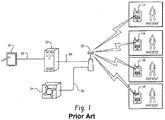
- Portable telemetry devices 12-18 communicate with devices, e.g., tablet PC 26 on the wired network, e.g., via connection 28, through an access point 20.
- An optional access point controller 34 controls and directs the signals through access point 20 via a connection 32.
- a patient monitoring system is comprised of patient monitors 2 which are in wireless communication with a centralized application server 1, which stores the patient data for access by multiple workstations 4.
- the patient monitor could be associated with a defibrillator.
- US 2006/030904 discloses a defibrillator monitor telemedicine device with control of access rights.
- Each of the afore-described references operates in a similar manner.
- Each offers a circuit design and associated user interface which is relatively complicated and therefore suboptimal.
- the user of each medical monitoring device must take specific action to set-up and/or configure the device to "push" data from the device to the remote station.
- Each referenced device requires the operator to either set up the monitor defibrillator circuitry to transmit to a chosen location in a chosen format, or must initiate the transmission itself via the user interface.
- Actions necessary to collect and transmit patient data may divert attention away from the immediate patient care steps, and can introduce a potential for error in either the transmission or the rescue.
- the recited references each require custom interface software residing both at the device and at the remote station in order to reconcile both sides of the data link and to decode the clinical data from the patient medical device.
- the interface is expensive to develop and certify for medical use, which must be repeated each time that the interface is modified to meet evolving communications standards.
- the custom interface software also holds patient data in a customized format which is optimized to the system. Unless the external system contains the same software, the data cannot be read.
- an improved medical device apparatus which consists of a medical monitor defibrillator having an integrated telemedicine server.
- the apparatus includes a patient monitoring circuit and defibrillation therapy circuit which collect patient data and convey it to a clinical processor.
- a memory receives the patient data from the clinical processor and stores the received patient data in a generic file format.
- a communications interface is disposed in read-only communication with the memory and transmits the patient data to a remote station.
- a firewall circuit prevents the writing of any data received from the communications interface to the memory.
- Each of the circuit elements is contained in a unitary housing.
- a system which comprises a monitor defibrillator having an integrated telemedicine server in communications with a transceiver located at a remote station.
- the system is disposed such that the telemedicine server transmits the patient data to the remote station in response to a request for data from the remote station, i.e. in a "pull" method of data flow.
- the system thus enables the transmission of data without the need for the operator's action or intervention.
- the data stored in the isolated telemedicine server memory via a standard communications interface and in a generic format, the need for customized software to interface with the device and decode the data is eliminated. Lower cost and greater reliability are thus realized.
- Also in accordance with the principles of the present invention is an improved method for transferring patient data from a monitor defibrillator telemedicine server having a patient monitoring circuit and a defibrillation therapy circuit to a remote station using a system similar to that described above.
- the method includes a step of transmitting the patient data from the telemedicine server to the remote station automatically in response to a request from the remote station.
- the scope of the invention encompasses medical devices having communications capabilities.
- devices such as in-hospital monitor defibrillators used by hospital personnel but separated from a central server and pre-hospital monitor defibrillators used by emergency medical services (EMS) personnel at locations remote from the hospital may benefit from the inventive features.
- EMS emergency medical services
- Another object of the invention is to describe generally a defibrillator monitor which performs non-safety-critical applications and safety-critical applications together, without affecting the safety, reliability and performance of the safety critical functions.
- Safety critical functions of a defibrillator monitor device include providing critical therapy to a patient (e.g., pacing, CPR and defibrillation therapy) and/or monitoring of a patient (e.g., ECG, blood monitoring such as oxygenation, carbon dioxide and pressure).
- Non-safety-critical functions and applications include electronic patient care record (ePCR) applications, event summary review and post event analysis.
- the invention employs a multi-core processor which runs both functions.
- RTOS real time operating system
- MMU memory management unit
- FIGURE 2 is a functional block diagram of an exemplary defibrillator monitor telemedicine server 200 of the present invention.
- Certain functional portions of the defibrillator monitor telemedicine server 200 are defined as safety-critical, which generally consists of hardware and software that relate directly to patient care.
- Safety-critical features include those circuits used directly for sensing and monitoring a patient's condition. Electrocardiogram (ECG), heart rate, blood pressure and oxygenation, and respiration monitoring are such examples.
- Safety-critical features also include those circuits used to provide therapy to the patient. Cardiac defibrillation and pacing circuits are such example. Because the failure of a safety-critical circuit can lead to a patient's injury or death, safety-critical circuits must comply with heightened standards of reliability, performance, and security in their design and manufacture.
- Defibrillator monitor telemedicine server 200 also includes functional portions that are non-safety critical. Functions such as electronic patient care record applications, event summary review data storage, and post event analysis circuits do not directly affect patient care. Non-safety critical functions generally require a lessened rigor in their design performance and manufacture.
- the main elements of the defibrillator monitor telemedicine server 200 shown in FIGURE 2 include a clinical processor 210 which obtains patient and event data from a patient monitoring circuit 202 and a defibrillation therapy circuit 204, an isolable memory 220, a firewall circuit 240, and a communications interface 230 that provides read-only access for external systems to read clinical data stored in memory 220.
- FIGURE 2 is not intended to depict or preclude any specific hardware or software implementation.
- the safety-critical portions of defibrillator monitor telemedicine server 200 include a patient monitoring circuit 202, a defibrillation therapy circuit 204, and a clinical processor circuit 210.
- the patient monitoring circuit 202 includes sensors which obtain patient medical parameters, generally in real time, and communicate the obtained data to the clinical processor 210 via a patient monitoring data path 206.
- the defibrillation therapy circuit 204 provides defibrillation and/or pacing therapy to the patient.
- Defibrillation therapy circuit 204 conveys data regarding sensed patient parameters and defibrillation/pacing operations that are related to the event to clinical processor 210 via defibrillation therapy data path 208.
- clinical processor 210 controls all of the monitoring and therapy functions of DMTS 200. In this embodiment, all functions of clinical processor 210, patient monitoring circuit 201 and defibrillator therapy circuit 204 may be performed by a single processor.
- the clinical processor 210 may also be operable to capture a record of a rescue event by means of a microphone and/or camera input, not shown in FIGURE 2 , to the clinical processor.
- clinical processor 210 is each separate physical processors.
- patient monitoring circuit 201 and defibrillator therapy circuit 204 operate independently from clinical processor 210.
- Clinical processor 210 thus has two primary functions.
- Clinical processor 210 may be operable to calculate and deliver therapy.
- clinical processor 210 is operable to collect and process data from the circuits into clinical data, and then to store that processed clinical data for further use.
- Clinical processor 210 preferably processes the data from the patient monitoring circuit 201 and defibrillator therapy circuit 204 into processed clinical data that is arranged in generic file formats.
- the generic file formats are ones that are readable by widely-available software programs. Current examples of such generic file formats include, but are not limited to, extensible mark-up language (.xml), portable document format (.pdf), and/or postscript (.ps). External systems may thus access the clinical data so arranged without requiring any special software.
- a less preferred embodiment arranges the clinical data into a custom file format.
- any system external to the DMTS 200 will require special software to decode the file information.
- Clinical processor 210 saves the processed clinical data to an isolable memory space 220 via a read-write communications path 216. It is noted that clinical processor 210 may require read-access to the clinical data from memory 220 for use with functions, e.g. displays and user indications, internal to the DMTS 200.
- FIGURE 3 illustrates a preferred arrangement for the processed clinical data files as stored in isolable memory 220.
- the data files that are intended for external system access preferably conform to an established standard for patient clinical data records, such as the National EMS Information System (NEMSIS).
- NEMSIS National EMS Information System
- patient data records 300 are stored in patient data files 320 with a patient data file name that identifies the nature of the data.
- the patient data files 320 are in turn arranged in a patient data folder 310, which may be identified by the event name, date and time.
- the directory of patient data folders 310 in memory 220 is preferably read-only accessible to external systems as long as the DMTS 200 is powered on and active.
- Clinical processor 210 may be enabled to anonymize patient data prior to storage in memory 220. Passwords and other appropriate security methods may also be employed to restrict access to the patient data folders 310 by external systems.
- the clinical patient data which resides in isolable memory 220 may be accessed by external systems 260 via a communications interface 230.
- communications interface 230 is a wireless interface of a type which includes but is not limited to Bluetooth.TM, Wi-Fi, or cellular telephone interfaces.
- Communications interface 230 may also be a wired interface of a type which includes but is not limited to Universal Serial Bus (USB) and Ethernet.
- the transmission path between the communications interface 230 and the external system 260 is preferably read-only, i.e. transmitted from the communications interface 230 to external system 260 in response to the requesting of patient data from the external system.
- a firewall circuit 240 is disposed along a firewalled communications path 250 between isolable memory 220 and communications interface 230.
- the firewall circuit 240 is operable to allow read-only access at the communications interface 230 to the patient clinical data residing in memory 220.
- Firewall circuit 240 is further operable to block the writing of any data received from communications interface 230 to memory 220.
- the firewall circuit 240 thus eliminates any externally-originated avenue for corrupting safety-critical software programs and data. Firewall circuit 240 thus separates the safety critical and non-safety-critical functions of DMTS 200.
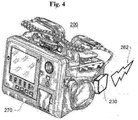
- FIGURE 4 illustrates one external view of a DMTS 200.
- a unitary housing 270 contains each of the patient monitoring circuit 202, the defibrillation therapy circuit 204, the clinical processor 210, the memory 220, and the firewall circuit 240. Shown mounted on the external surface of the housing 270 is the communications interface 230. This is for illustration only, as it is understood that the communications interface circuitry 230 is contained within the housing, and that only the antennae or communications port is disposed externally. Preferably, all components of communications interface 230 are contained inside housing 270. In the illustrated embodiment, the read-only transmission path from the device is a wireless transmission.
- FIGURE 5 illustrates a block diagram of a defibrillator monitor telemedicine server and remote station system 500 according to another embodiment of the invention.
- System 500 includes a telemedicine server 510 which is integrated in a common unitary housing with a monitor defibrillator, and a transceiver 520 which is disposed at a central monitoring station at a remote location.
- the internal arrangement and components of the telemedicine server 510 may be similar to the FIGURE 2 embodiment as previously described.
- telemedicine server 510 may include isolable memory 220 protected by a firewall circuit 240.
- the patient data is stored in the server memory 220.
- the patient data is stored in a generic file format as previously discussed.
- Telemedicine server 510 and transceiver 520 are communicatively linked via a read-only transmission path 262.
- telemedicine server 510 transmits patient data to the remote station transceiver 520 in response to a request for data from the remote station.
- the telemedicine server 510 is preferably disposed to require nothing more than the request, without any need for a previous setup or local user action, to perform the data transmission.
- the communications interface 230 in the telemedicine server 510 and the transceiver 520 may each be wireless or may be wired together.
- Telemedicine server 510 is also operable to block, or prevent, external data including that corresponding to the request from the remote station from being written to the internal server memory 220.
- the firewall circuit 240 prevents the corruption of the safety-critical portions of the system, including for example, the patient monitoring circuit 202 and the defibrillation therapy circuit 204. Circuits 202 and 204 in turn are operable to generate the patient data.
- the benefits resulting from the telemedicine server system 500 become clear by description of its operation.
- the operator By co-locating the non-safety critical communications portions and the safety-critical patient monitoring and therapy portions within the telemedicine server housing 270, the operator has instant telecommunications capability with a remote station as soon as the device is turned on.
- the server requires no setup prior to operation for transmitting data, because it can obtain an internet identifier automatically from any available network each time it is turned on. At that time, the server can automatically transmit its identifier to a predetermined website fixed within the server memory. Then the server merely awaits an authorized request that initiates the transmission of data stored in memory.
- the telemedicine server 510 may also be disposed to transmit the patient data to a previously authorized remote transceiver 520 as soon as the patient data is obtained.
- the inventive system is also easier to modify as telecommunications protocols change over time. It is well known that safety-critical medical systems require heightened rigor in the design process and are subject to rigorous verification and validation processes in order to be cleared for use. By separating the safety-critical medical systems portions from the telecommunications portions with a firewall 240, the inventors have created a medical device whose communications circuits may be modified with little or no re-validation required of the safety-critical portions, even if all circuits reside in the same unitary housing.
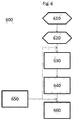
- FIGURE 6 illustrates a flow chart showing a method 600 for transferring patient data from a monitor defibrillator to a remote station.
- the first step 610 includes providing at the patient location a telemedicine server (610) integrated within the housing of the monitor defibrillator.
- the integrated telemedicine server includes a clinical processor operable to collect patient data from a patient monitoring circuit and a defibrillation therapy circuit.
- the server also includes a memory operable to receive the patient data from the clinical processor and to store the received patient data in a generic file format.
- the server interface with external systems includes a communications interface disposed in read-only communication with the memory and further operable to transmit the patient data in the generic file format to the remote station, and a firewall circuit disposed between the memory and the communications interface and operable to prevent the writing of any data received from the communications interface to the memory.
- a second step 620 includes providing a transceiver at a remote station, and establishing a communications path between it and the communications interface. This second step 620 may be automatically completed when the telemedicine server is turned on in the previous providing step, using communications parameters in the server that are either pre-loaded at the factory, or previously established during prior uses of the server.
- the monitor defibrillator is put into use to treat a patient.
- Patient data is automatically collected by the clinical processor at collecting step 630 and stored in the server memory in the generic file format at storing step 640.
- Storing step 640 may optionally include storing the patient data in a format which conforms to an established standard for patient clinical data.
- the method 600 also contemplates that collecting step 630 and storing step 640 are conducted prior to the establishing of a communications path at step 620. This situation may arise in patient locations in which there is no wired or wireless connectivity available between the server and the remote station.
- the remote station transceiver begins the "pull" of patient data from the telemedicine server at requesting step 650.
- the telemedicine server receives the request via the communications path and automatically determines whether the requester is authorized for data sharing.
- the firewall circuit in the server blocks any data from the transceiver to be written in the same memory used to store the patient data.
- the upper dashed line in FIGURE 6 from requesting step 650 to the output of the collecting step 630 indicates an optional method in which the telemedicine is turned on and a communications path is established, but wherein a patient is not yet being treated by the device. In this situation, the collecting step 630 may begin after the requesting step 650 is received from the transceiver.
- the telemedicine server transmits the patient data to the remote station via the established communication path at transmitting step 660.
- Transmitting step 660 preferably occurs automatically and solely in response to the requesting step 650.
- FIGURE 7 illustrates another embodiment of a firewall circuit in which safety-critical and non-safety-critical functions within a device such as a defibrillator monitor telemedicine server are performed by separate processor modules.
- the separate processor modules are physically separated but reside within a single multi-core processor 400.
- a firewall circuit 430 which may be a memory management unit, is disposed on one of the separate sub-processors 408.
- Another of the sub-processors 402 operates a safety-critical clinical processor 420.
- the clinical processor 420 may run on an RTOS in the sub-processor 402.
- Yet another of the sub-processors 404 operates a general purpose, non-safety-critical program 440 such as a communications program.
- the firewall circuit 430 provides read-write capability from the clinical processor 420 to external memory 406. Firewall circuit 430 also blocks any write capability from the non-safety critical program 440 into memory 406. Thus, a secure partition firewall 410 between safety-critical and non-safety critical functions is established.
- the above-described embodiment enables a monitor defibrillator device to run safety-critical applications and ePCR applications simultaneously on a single hardware unit.
- the embodiment may also take advantage of the hardware-assisted virtualization features in a multi-core processor and the secured virtualization support of an RTOS.
- the embodiment indirectly uses the resource management and protection capabilities of the RTOS and the memory management unit (MMU) of the processor to create a secured partition firewall for running safety-critical applications simultaneously and safely alongside non-safety-critical applications.
- MMU memory management unit
- Safety-critical applications run on separate processor modules that are physically separated but reside in a single hardware unit or device.
- Safety-critical applications run on a real time operating system (RTOS) in one of the processors with dedicated CPU, memory and other required devices and peripherals.
- Non-critical applications run on a general purpose operating system in a separate processor, without the permission of affecting the resources of the safety-critical applications.
- Display, recording and memory storage unit/module incorporate outputs from both critical and non-critical applications.
- Safety-critical user interface controls are mapped directly to the safety-critical application in order to be unaffected by reliability, security or performance problems of the non-safety-critical application.
- Safety-critical applications are thus protected from non-safety-critical applications even though they reside in the same device. Hence the safety-critical applications will function normally even if a non-critical application fails to function correctly.
- the safety-critical applications run directly on an RTOS mapped to one or more dedicated cores of a multi-core processor.
- the non-safety-critical applications run alongside but on the other cores of the processor mapped to a general purpose operating system, such as Windows.TM, using a secure virtualization technique provided by the RTOS.
- the multi-core processor chosen for the implementation would support hardware-assisted virtualization features so that the RTOS virtualization implementation can take advantage of the resultant efficiency and improved performance.
- Display, recording and storage of data generated from both critical and non-critical applications and the user interface control could also be conducted on separate functional units residing at the patient location. If the display is on a separate unit than where the application is running, then the data and control requests can be transmitted over to/from the display unit over a cable or wirelessly. Regardless of an integrated or separate display, switching between defibrillator/monitor and ePCR applications could be implemented using a single button press or touch of a screen. Defibrillator and monitor functions would be of the highest priority. The device thus retains the capability to automatically switch to defibrillator/monitor functions or alert the user to switch to defibrillator/monitor functions from non-safety related functions if clinical attention is needed.
- processors When provided by a processor, the functions can be provided by a single dedicated processor, by a single shared processor, or by a plurality of individual processors, some of which can be shared and/or multiplexed.
- explicit use of the term "processor” or “controller” should not be construed to refer exclusively to hardware capable of executing software, and can implicitly include, without limitation, digital signal processor ("DSP") hardware, memory (e.g., read only memory (“ROM”) for storing software, random access memory (“RAM”), non volatile storage, etc.) and virtually any means and/or machine (including hardware, software, firmware, combinations thereof, etc.) which is capable of (and/or configurable) to perform and/or control a process.
- DSP digital signal processor
- any block diagrams presented herein can represent conceptual views of illustrative system components and/or circuitry embodying the principles of the invention.
- any flow charts, flow diagrams and the like can represent various processes which can be substantially represented in computer readable storage media and so executed by a computer, processor or other device with processing capabilities, whether or not such computer or processor is explicitly shown.
- exemplary embodiments of the present invention can take the form of a computer program product accessible from a computer-usable and/or computer-readable storage medium providing program code and/or instructions for use by or in connection with, e.g., a computer or any instruction execution system.
- a computer-usable or computer readable storage medium can be any apparatus that can, e.g., include, store, communicate, propagate or transport the program for use by or in connection with the instruction execution system, apparatus or device.
- Such exemplary medium can be, e.g., an electronic, magnetic, optical, electromagnetic, infrared or semiconductor system (or apparatus or device) or a propagation medium.
- Examples of a computer-readable medium include, e.g., a semiconductor or solid state memory, magnetic tape, a removable computer diskette, a random access memory (RAM), a read-only memory (ROM), flash (drive), a rigid magnetic disk and an optical disk.
- Current examples of optical disks include compact disk - read only memory (CD-ROM), compact disk - read/write (CD-R/W) and DVD.
Landscapes
- Health & Medical Sciences (AREA)
- Engineering & Computer Science (AREA)
- Life Sciences & Earth Sciences (AREA)
- Biomedical Technology (AREA)
- Public Health (AREA)
- General Health & Medical Sciences (AREA)
- Medical Informatics (AREA)
- Biophysics (AREA)
- Computer Networks & Wireless Communication (AREA)
- Primary Health Care (AREA)
- Epidemiology (AREA)
- Physics & Mathematics (AREA)
- Veterinary Medicine (AREA)
- Heart & Thoracic Surgery (AREA)
- Pathology (AREA)
- Molecular Biology (AREA)
- Surgery (AREA)
- Animal Behavior & Ethology (AREA)
- Signal Processing (AREA)
- Business, Economics & Management (AREA)
- General Business, Economics & Management (AREA)
- Physical Education & Sports Medicine (AREA)
- General Engineering & Computer Science (AREA)
- Computing Systems (AREA)
- Physiology (AREA)
- Computer Security & Cryptography (AREA)
- Computer Hardware Design (AREA)
- Electrotherapy Devices (AREA)
- Accommodation For Nursing Or Treatment Tables (AREA)
Applications Claiming Priority (2)
| Application Number | Priority Date | Filing Date | Title |
|---|---|---|---|
| US201261745833P | 2012-12-26 | 2012-12-26 | |
| PCT/IB2013/061334 WO2014102726A1 (en) | 2012-12-26 | 2013-12-26 | Monitor defibrillator telemedicine server |
Publications (2)
| Publication Number | Publication Date |
|---|---|
| EP2939161A1 EP2939161A1 (en) | 2015-11-04 |
| EP2939161B1 true EP2939161B1 (en) | 2018-07-25 |
Family
ID=50231459
Family Applications (1)
| Application Number | Title | Priority Date | Filing Date |
|---|---|---|---|
| EP13834374.4A Active EP2939161B1 (en) | 2012-12-26 | 2013-12-26 | Monitor defibrillator telemedicine server |
Country Status (7)
| Country | Link |
|---|---|
| US (1) | US20150335244A1 (enExample) |
| EP (1) | EP2939161B1 (enExample) |
| JP (1) | JP6416112B2 (enExample) |
| CN (1) | CN104885087B (enExample) |
| CA (1) | CA2896417A1 (enExample) |
| RU (1) | RU2672020C2 (enExample) |
| WO (1) | WO2014102726A1 (enExample) |
Families Citing this family (10)
| Publication number | Priority date | Publication date | Assignee | Title |
|---|---|---|---|---|
| BR112015022372A2 (pt) | 2013-03-15 | 2017-07-18 | Koninklijke Philips Nv | dispositivo |
| US10835449B2 (en) * | 2015-03-30 | 2020-11-17 | Zoll Medical Corporation | Modular components for medical devices |
| DE102015117581A1 (de) * | 2015-10-15 | 2017-04-20 | Eugen Kagan | Modulares Intensivtherapiegerät |
| CN105978771B (zh) * | 2016-07-07 | 2019-04-02 | 电子科技大学 | 一种移动管理端与多种家用医疗仪器数据通信的通用方法 |
| ES2737880A1 (es) * | 2018-07-16 | 2020-01-16 | Verisure Sarl | Unidad de control para un sistema de alarma para un edificio y sistema de alarma |
| CN109166617B (zh) * | 2018-08-17 | 2021-12-31 | 深圳市联普医疗科技有限公司 | 一种除颤设备的管理系统、方法及装置 |
| WO2020202042A1 (en) * | 2019-04-01 | 2020-10-08 | Dvir Yossi | Personal wearable medical emergency device |
| US11444919B2 (en) | 2019-05-20 | 2022-09-13 | Woodward, Inc. | Mission critical security zone |
| WO2022072734A1 (en) | 2020-09-30 | 2022-04-07 | Zoll Medical Corporation | Remote monitoring devices and related methods and systems with audible aed signal listening |
| DE102021133253A1 (de) | 2021-12-15 | 2023-06-15 | Vivonic Gmbh | IT-Architektur für Blutbehandlungsanlagen |
Citations (1)
| Publication number | Priority date | Publication date | Assignee | Title |
|---|---|---|---|---|
| US20060030904A1 (en) * | 2004-08-09 | 2006-02-09 | Sylvia Quiles | Secure remote access for an implantable medical device |
Family Cites Families (20)
| Publication number | Priority date | Publication date | Assignee | Title |
|---|---|---|---|---|
| US6364834B1 (en) * | 1996-11-13 | 2002-04-02 | Criticare Systems, Inc. | Method and system for remotely monitoring multiple medical parameters in an integrated medical monitoring system |
| US6248064B1 (en) * | 1998-05-26 | 2001-06-19 | Ineedmd.Com,Inc. | Tele-diagnostic device |
| RU2134931C1 (ru) * | 1999-03-15 | 1999-08-20 | ОАО "Всероссийский научно-исследовательский институт автоматизации управления в непромышленной сфере" | Способ обеспечения доступа к объектам в операционной системе мсвс |
| EP1166222A2 (en) * | 1999-04-01 | 2002-01-02 | ACIST Medical Systems, Inc. | An integrated medical information management and medical device control system and method |
| WO2002041136A2 (en) * | 2000-11-17 | 2002-05-23 | Siemens Medical Solutions Usa, Inc. | Fully integrated critical care workstation |
| US6915167B2 (en) * | 2001-01-05 | 2005-07-05 | Medtronic, Inc. | Method and apparatus for hardware/firmware trap |
| US20080177154A1 (en) | 2001-08-13 | 2008-07-24 | Novo Nordisk A/S | Portable Device and Method Of Communicating Medical Data Information |
| GB0122821D0 (en) * | 2001-09-21 | 2001-11-14 | Care4You As | Health monitoring system |
| CN1427344A (zh) * | 2001-12-20 | 2003-07-02 | 梅捷企业股份有限公司 | 一种计算机防火墙的设置方法及其系统 |
| CN2619581Y (zh) * | 2003-01-30 | 2004-06-09 | 顾菊康 | 移动电话/手机式心电监护装置 |
| US8200775B2 (en) * | 2005-02-01 | 2012-06-12 | Newsilike Media Group, Inc | Enhanced syndication |
| US20060190999A1 (en) | 2004-11-22 | 2006-08-24 | David Chen | Method and apparatus for two-way transmission of medical data |
| DE602005026980D1 (de) | 2004-11-24 | 2011-04-28 | Koninkl Philips Electronics Nv | Internetprotokollbasiertes telemetrie-patientenüberwachungssystem |
| US20060137699A1 (en) | 2004-12-23 | 2006-06-29 | Moore Mark P | Providing data destination information to a medical device |
| JP2007180614A (ja) * | 2005-12-26 | 2007-07-12 | Canon Inc | 送信装置、受信装置及びそれらの制御方法、通信システム、プログラム |
| US20070299317A1 (en) * | 2006-06-13 | 2007-12-27 | Hoyme Kenneth P | System and method for programming customized data collection for an autonomous medical device |
| US7974924B2 (en) * | 2006-07-19 | 2011-07-05 | Mvisum, Inc. | Medical data encryption for communication over a vulnerable system |
| WO2010052613A1 (en) * | 2008-11-07 | 2010-05-14 | Koninklijke Philips Electronics, N.V. | Hospital tv/monitor display control with hierarchical access control |
| US8565871B2 (en) * | 2009-09-07 | 2013-10-22 | Qualcomm Incorporated | Automated external defibrillator device with integrated wireless modem |
| US8983615B2 (en) * | 2011-02-21 | 2015-03-17 | Boston Scientific Neuromodulation Corporation | System for communication with implantable medical devices using a bridge device |
-
2013
- 2013-12-26 CN CN201380068395.2A patent/CN104885087B/zh active Active
- 2013-12-26 JP JP2015550192A patent/JP6416112B2/ja active Active
- 2013-12-26 CA CA2896417A patent/CA2896417A1/en not_active Abandoned
- 2013-12-26 RU RU2015131019A patent/RU2672020C2/ru not_active IP Right Cessation
- 2013-12-26 US US14/655,927 patent/US20150335244A1/en not_active Abandoned
- 2013-12-26 EP EP13834374.4A patent/EP2939161B1/en active Active
- 2013-12-26 WO PCT/IB2013/061334 patent/WO2014102726A1/en not_active Ceased
Patent Citations (1)
| Publication number | Priority date | Publication date | Assignee | Title |
|---|---|---|---|---|
| US20060030904A1 (en) * | 2004-08-09 | 2006-02-09 | Sylvia Quiles | Secure remote access for an implantable medical device |
Also Published As
| Publication number | Publication date |
|---|---|
| CN104885087A (zh) | 2015-09-02 |
| CN104885087B (zh) | 2018-12-11 |
| WO2014102726A1 (en) | 2014-07-03 |
| RU2015131019A (ru) | 2017-02-01 |
| CA2896417A1 (en) | 2014-07-03 |
| RU2672020C2 (ru) | 2018-11-08 |
| EP2939161A1 (en) | 2015-11-04 |
| JP2016505333A (ja) | 2016-02-25 |
| JP6416112B2 (ja) | 2018-10-31 |
| US20150335244A1 (en) | 2015-11-26 |
Similar Documents
| Publication | Publication Date | Title |
|---|---|---|
| EP2939161B1 (en) | Monitor defibrillator telemedicine server | |
| AU2022235534B2 (en) | System, method, and apparatus for electronic patient care | |
| US12250261B2 (en) | System, method, and apparatus for electronic patient care | |
| US20220122002A1 (en) | System, Method, and Apparatus for Electronic Patient Care | |
| US10108785B2 (en) | System, method, and apparatus for electronic patient care | |
| EP2556472B1 (en) | Systems and methods for ems device communications interface | |
| EP3499507B1 (en) | System for providing role-based data feeds for caregivers | |
| EP2795492B1 (en) | System, method, and apparatus for electronic patient care | |
| US20140100879A1 (en) | Systems and Methods for Device and Meter Monitoring | |
| KR20160086123A (ko) | 전자 의무기록 제공 장치 |
Legal Events
| Date | Code | Title | Description |
|---|---|---|---|
| PUAI | Public reference made under article 153(3) epc to a published international application that has entered the european phase |
Free format text: ORIGINAL CODE: 0009012 |
|
| 17P | Request for examination filed |
Effective date: 20150727 |
|
| AK | Designated contracting states |
Kind code of ref document: A1 Designated state(s): AL AT BE BG CH CY CZ DE DK EE ES FI FR GB GR HR HU IE IS IT LI LT LU LV MC MK MT NL NO PL PT RO RS SE SI SK SM TR |
|
| AX | Request for extension of the european patent |
Extension state: BA ME |
|
| DAX | Request for extension of the european patent (deleted) | ||
| GRAP | Despatch of communication of intention to grant a patent |
Free format text: ORIGINAL CODE: EPIDOSNIGR1 |
|
| INTG | Intention to grant announced |
Effective date: 20180219 |
|
| RIN1 | Information on inventor provided before grant (corrected) |
Inventor name: ILLIKKAL, MASHOOD PUTHAN BEETIL Inventor name: GUINEY, PATRICK Inventor name: GRUBE, WILLIAM DOUGLAS Inventor name: LANDER, TODD |
|
| GRAS | Grant fee paid |
Free format text: ORIGINAL CODE: EPIDOSNIGR3 |
|
| GRAA | (expected) grant |
Free format text: ORIGINAL CODE: 0009210 |
|
| AK | Designated contracting states |
Kind code of ref document: B1 Designated state(s): AL AT BE BG CH CY CZ DE DK EE ES FI FR GB GR HR HU IE IS IT LI LT LU LV MC MK MT NL NO PL PT RO RS SE SI SK SM TR |
|
| REG | Reference to a national code |
Ref country code: GB Ref legal event code: FG4D |
|
| REG | Reference to a national code |
Ref country code: CH Ref legal event code: EP |
|
| REG | Reference to a national code |
Ref country code: AT Ref legal event code: REF Ref document number: 1022525 Country of ref document: AT Kind code of ref document: T Effective date: 20180815 |
|
| REG | Reference to a national code |
Ref country code: IE Ref legal event code: FG4D |
|
| REG | Reference to a national code |
Ref country code: DE Ref legal event code: R096 Ref document number: 602013040944 Country of ref document: DE |
|
| REG | Reference to a national code |
Ref country code: DE Ref legal event code: R079 Ref document number: 602013040944 Country of ref document: DE Free format text: PREVIOUS MAIN CLASS: G06F0019000000 Ipc: G16Z0099000000 |
|
| REG | Reference to a national code |
Ref country code: NL Ref legal event code: MP Effective date: 20180725 |
|
| REG | Reference to a national code |
Ref country code: LT Ref legal event code: MG4D |
|
| PG25 | Lapsed in a contracting state [announced via postgrant information from national office to epo] |
Ref country code: NL Free format text: LAPSE BECAUSE OF FAILURE TO SUBMIT A TRANSLATION OF THE DESCRIPTION OR TO PAY THE FEE WITHIN THE PRESCRIBED TIME-LIMIT Effective date: 20180725 |
|
| REG | Reference to a national code |
Ref country code: AT Ref legal event code: MK05 Ref document number: 1022525 Country of ref document: AT Kind code of ref document: T Effective date: 20180725 |
|
| PG25 | Lapsed in a contracting state [announced via postgrant information from national office to epo] |
Ref country code: FI Free format text: LAPSE BECAUSE OF FAILURE TO SUBMIT A TRANSLATION OF THE DESCRIPTION OR TO PAY THE FEE WITHIN THE PRESCRIBED TIME-LIMIT Effective date: 20180725 Ref country code: LT Free format text: LAPSE BECAUSE OF FAILURE TO SUBMIT A TRANSLATION OF THE DESCRIPTION OR TO PAY THE FEE WITHIN THE PRESCRIBED TIME-LIMIT Effective date: 20180725 Ref country code: IS Free format text: LAPSE BECAUSE OF FAILURE TO SUBMIT A TRANSLATION OF THE DESCRIPTION OR TO PAY THE FEE WITHIN THE PRESCRIBED TIME-LIMIT Effective date: 20181125 Ref country code: AT Free format text: LAPSE BECAUSE OF FAILURE TO SUBMIT A TRANSLATION OF THE DESCRIPTION OR TO PAY THE FEE WITHIN THE PRESCRIBED TIME-LIMIT Effective date: 20180725 Ref country code: BG Free format text: LAPSE BECAUSE OF FAILURE TO SUBMIT A TRANSLATION OF THE DESCRIPTION OR TO PAY THE FEE WITHIN THE PRESCRIBED TIME-LIMIT Effective date: 20181025 Ref country code: NO Free format text: LAPSE BECAUSE OF FAILURE TO SUBMIT A TRANSLATION OF THE DESCRIPTION OR TO PAY THE FEE WITHIN THE PRESCRIBED TIME-LIMIT Effective date: 20181025 Ref country code: RS Free format text: LAPSE BECAUSE OF FAILURE TO SUBMIT A TRANSLATION OF THE DESCRIPTION OR TO PAY THE FEE WITHIN THE PRESCRIBED TIME-LIMIT Effective date: 20180725 Ref country code: GR Free format text: LAPSE BECAUSE OF FAILURE TO SUBMIT A TRANSLATION OF THE DESCRIPTION OR TO PAY THE FEE WITHIN THE PRESCRIBED TIME-LIMIT Effective date: 20181026 Ref country code: PL Free format text: LAPSE BECAUSE OF FAILURE TO SUBMIT A TRANSLATION OF THE DESCRIPTION OR TO PAY THE FEE WITHIN THE PRESCRIBED TIME-LIMIT Effective date: 20180725 Ref country code: SE Free format text: LAPSE BECAUSE OF FAILURE TO SUBMIT A TRANSLATION OF THE DESCRIPTION OR TO PAY THE FEE WITHIN THE PRESCRIBED TIME-LIMIT Effective date: 20180725 |
|
| PG25 | Lapsed in a contracting state [announced via postgrant information from national office to epo] |
Ref country code: LV Free format text: LAPSE BECAUSE OF FAILURE TO SUBMIT A TRANSLATION OF THE DESCRIPTION OR TO PAY THE FEE WITHIN THE PRESCRIBED TIME-LIMIT Effective date: 20180725 Ref country code: AL Free format text: LAPSE BECAUSE OF FAILURE TO SUBMIT A TRANSLATION OF THE DESCRIPTION OR TO PAY THE FEE WITHIN THE PRESCRIBED TIME-LIMIT Effective date: 20180725 Ref country code: HR Free format text: LAPSE BECAUSE OF FAILURE TO SUBMIT A TRANSLATION OF THE DESCRIPTION OR TO PAY THE FEE WITHIN THE PRESCRIBED TIME-LIMIT Effective date: 20180725 |
|
| REG | Reference to a national code |
Ref country code: DE Ref legal event code: R097 Ref document number: 602013040944 Country of ref document: DE |
|
| PG25 | Lapsed in a contracting state [announced via postgrant information from national office to epo] |
Ref country code: ES Free format text: LAPSE BECAUSE OF FAILURE TO SUBMIT A TRANSLATION OF THE DESCRIPTION OR TO PAY THE FEE WITHIN THE PRESCRIBED TIME-LIMIT Effective date: 20180725 Ref country code: EE Free format text: LAPSE BECAUSE OF FAILURE TO SUBMIT A TRANSLATION OF THE DESCRIPTION OR TO PAY THE FEE WITHIN THE PRESCRIBED TIME-LIMIT Effective date: 20180725 Ref country code: IT Free format text: LAPSE BECAUSE OF FAILURE TO SUBMIT A TRANSLATION OF THE DESCRIPTION OR TO PAY THE FEE WITHIN THE PRESCRIBED TIME-LIMIT Effective date: 20180725 Ref country code: CZ Free format text: LAPSE BECAUSE OF FAILURE TO SUBMIT A TRANSLATION OF THE DESCRIPTION OR TO PAY THE FEE WITHIN THE PRESCRIBED TIME-LIMIT Effective date: 20180725 Ref country code: RO Free format text: LAPSE BECAUSE OF FAILURE TO SUBMIT A TRANSLATION OF THE DESCRIPTION OR TO PAY THE FEE WITHIN THE PRESCRIBED TIME-LIMIT Effective date: 20180725 |
|
| PG25 | Lapsed in a contracting state [announced via postgrant information from national office to epo] |
Ref country code: DK Free format text: LAPSE BECAUSE OF FAILURE TO SUBMIT A TRANSLATION OF THE DESCRIPTION OR TO PAY THE FEE WITHIN THE PRESCRIBED TIME-LIMIT Effective date: 20180725 Ref country code: SM Free format text: LAPSE BECAUSE OF FAILURE TO SUBMIT A TRANSLATION OF THE DESCRIPTION OR TO PAY THE FEE WITHIN THE PRESCRIBED TIME-LIMIT Effective date: 20180725 Ref country code: SK Free format text: LAPSE BECAUSE OF FAILURE TO SUBMIT A TRANSLATION OF THE DESCRIPTION OR TO PAY THE FEE WITHIN THE PRESCRIBED TIME-LIMIT Effective date: 20180725 |
|
| PLBE | No opposition filed within time limit |
Free format text: ORIGINAL CODE: 0009261 |
|
| STAA | Information on the status of an ep patent application or granted ep patent |
Free format text: STATUS: NO OPPOSITION FILED WITHIN TIME LIMIT |
|
| 26N | No opposition filed |
Effective date: 20190426 |
|
| REG | Reference to a national code |
Ref country code: CH Ref legal event code: PL |
|
| PG25 | Lapsed in a contracting state [announced via postgrant information from national office to epo] |
Ref country code: LU Free format text: LAPSE BECAUSE OF NON-PAYMENT OF DUE FEES Effective date: 20181226 Ref country code: MC Free format text: LAPSE BECAUSE OF FAILURE TO SUBMIT A TRANSLATION OF THE DESCRIPTION OR TO PAY THE FEE WITHIN THE PRESCRIBED TIME-LIMIT Effective date: 20180725 Ref country code: SI Free format text: LAPSE BECAUSE OF FAILURE TO SUBMIT A TRANSLATION OF THE DESCRIPTION OR TO PAY THE FEE WITHIN THE PRESCRIBED TIME-LIMIT Effective date: 20180725 |
|
| REG | Reference to a national code |
Ref country code: IE Ref legal event code: MM4A |
|
| REG | Reference to a national code |
Ref country code: BE Ref legal event code: MM Effective date: 20181231 |
|
| PG25 | Lapsed in a contracting state [announced via postgrant information from national office to epo] |
Ref country code: IE Free format text: LAPSE BECAUSE OF NON-PAYMENT OF DUE FEES Effective date: 20181226 |
|
| PG25 | Lapsed in a contracting state [announced via postgrant information from national office to epo] |
Ref country code: BE Free format text: LAPSE BECAUSE OF NON-PAYMENT OF DUE FEES Effective date: 20181231 |
|
| PG25 | Lapsed in a contracting state [announced via postgrant information from national office to epo] |
Ref country code: LI Free format text: LAPSE BECAUSE OF NON-PAYMENT OF DUE FEES Effective date: 20181231 Ref country code: CH Free format text: LAPSE BECAUSE OF NON-PAYMENT OF DUE FEES Effective date: 20181231 |
|
| PG25 | Lapsed in a contracting state [announced via postgrant information from national office to epo] |
Ref country code: MT Free format text: LAPSE BECAUSE OF NON-PAYMENT OF DUE FEES Effective date: 20181226 |
|
| PG25 | Lapsed in a contracting state [announced via postgrant information from national office to epo] |
Ref country code: TR Free format text: LAPSE BECAUSE OF FAILURE TO SUBMIT A TRANSLATION OF THE DESCRIPTION OR TO PAY THE FEE WITHIN THE PRESCRIBED TIME-LIMIT Effective date: 20180725 |
|
| PG25 | Lapsed in a contracting state [announced via postgrant information from national office to epo] |
Ref country code: PT Free format text: LAPSE BECAUSE OF FAILURE TO SUBMIT A TRANSLATION OF THE DESCRIPTION OR TO PAY THE FEE WITHIN THE PRESCRIBED TIME-LIMIT Effective date: 20180725 |
|
| PG25 | Lapsed in a contracting state [announced via postgrant information from national office to epo] |
Ref country code: HU Free format text: LAPSE BECAUSE OF FAILURE TO SUBMIT A TRANSLATION OF THE DESCRIPTION OR TO PAY THE FEE WITHIN THE PRESCRIBED TIME-LIMIT; INVALID AB INITIO Effective date: 20131226 Ref country code: CY Free format text: LAPSE BECAUSE OF FAILURE TO SUBMIT A TRANSLATION OF THE DESCRIPTION OR TO PAY THE FEE WITHIN THE PRESCRIBED TIME-LIMIT Effective date: 20180725 Ref country code: MK Free format text: LAPSE BECAUSE OF NON-PAYMENT OF DUE FEES Effective date: 20180725 |
|
| REG | Reference to a national code |
Ref country code: DE Ref legal event code: R084 Ref document number: 602013040944 Country of ref document: DE |
|
| REG | Reference to a national code |
Ref country code: GB Ref legal event code: 746 Effective date: 20240722 |
|
| PGFP | Annual fee paid to national office [announced via postgrant information from national office to epo] |
Ref country code: GB Payment date: 20241217 Year of fee payment: 12 |
|
| PGFP | Annual fee paid to national office [announced via postgrant information from national office to epo] |
Ref country code: FR Payment date: 20241227 Year of fee payment: 12 |
|
| PGFP | Annual fee paid to national office [announced via postgrant information from national office to epo] |
Ref country code: DE Payment date: 20241227 Year of fee payment: 12 |