EP2938119A1 - Temperature detection method and device for radio remote unit - Google Patents
Temperature detection method and device for radio remote unit Download PDFInfo
- Publication number
- EP2938119A1 EP2938119A1 EP13872471.1A EP13872471A EP2938119A1 EP 2938119 A1 EP2938119 A1 EP 2938119A1 EP 13872471 A EP13872471 A EP 13872471A EP 2938119 A1 EP2938119 A1 EP 2938119A1
- Authority
- EP
- European Patent Office
- Prior art keywords
- temperature
- remote unit
- temperature data
- data
- limit
- Prior art date
- Legal status (The legal status is an assumption and is not a legal conclusion. Google has not performed a legal analysis and makes no representation as to the accuracy of the status listed.)
- Granted
Links
Images

Classifications
-
- G—PHYSICS
- G05—CONTROLLING; REGULATING
- G05D—SYSTEMS FOR CONTROLLING OR REGULATING NON-ELECTRIC VARIABLES
- G05D23/00—Control of temperature
- G05D23/19—Control of temperature characterised by the use of electric means
- G05D23/1927—Control of temperature characterised by the use of electric means using a plurality of sensors
-
- G—PHYSICS
- G05—CONTROLLING; REGULATING
- G05F—SYSTEMS FOR REGULATING ELECTRIC OR MAGNETIC VARIABLES
- G05F1/00—Automatic systems in which deviations of an electric quantity from one or more predetermined values are detected at the output of the system and fed back to a device within the system to restore the detected quantity to its predetermined value or values, i.e. retroactive systems
- G05F1/66—Regulating electric power
-
- H—ELECTRICITY
- H04—ELECTRIC COMMUNICATION TECHNIQUE
- H04W—WIRELESS COMMUNICATION NETWORKS
- H04W52/00—Power management, e.g. Transmission Power Control [TPC] or power classes
- H04W52/02—Power saving arrangements
- H04W52/0203—Power saving arrangements in the radio access network or backbone network of wireless communication networks
- H04W52/0206—Power saving arrangements in the radio access network or backbone network of wireless communication networks in access points, e.g. base stations
-
- Y—GENERAL TAGGING OF NEW TECHNOLOGICAL DEVELOPMENTS; GENERAL TAGGING OF CROSS-SECTIONAL TECHNOLOGIES SPANNING OVER SEVERAL SECTIONS OF THE IPC; TECHNICAL SUBJECTS COVERED BY FORMER USPC CROSS-REFERENCE ART COLLECTIONS [XRACs] AND DIGESTS
- Y02—TECHNOLOGIES OR APPLICATIONS FOR MITIGATION OR ADAPTATION AGAINST CLIMATE CHANGE
- Y02D—CLIMATE CHANGE MITIGATION TECHNOLOGIES IN INFORMATION AND COMMUNICATION TECHNOLOGIES [ICT], I.E. INFORMATION AND COMMUNICATION TECHNOLOGIES AIMING AT THE REDUCTION OF THEIR OWN ENERGY USE
- Y02D30/00—Reducing energy consumption in communication networks
- Y02D30/70—Reducing energy consumption in communication networks in wireless communication networks
Definitions
- the present application relates to the field of communication technologies, and particularly to a method and a device for detecting temperature of a radio remote unit.
- BBU Building Base band Unit
- RRU Radio Remote Unit
- the RRU is generally installed at top end of an antenna tower where the work environment is harsh and heat is dissipated by the passive cooling. Further, since the RRU is exposed to the outdoor environment, the machine shell is needed to be hermetical.
- Performance and service life of critical components inside the RRU such as power amplifier, power supply and FPGA (Field-Programmable Gate Array) would be greatly influenced by the temperature. In worse conditions, this may cause the components in the RRU to be ineffective (for example, the power amplifier is burnt out, and thermal protective outage of the power supply module occurs (burnt out)), such that the base station where the RRU is installed could be out of service and network coverage may be influenced.
- critical components inside the RRU such as power amplifier, power supply and FPGA (Field-Programmable Gate Array) would be greatly influenced by the temperature. In worse conditions, this may cause the components in the RRU to be ineffective (for example, the power amplifier is burnt out, and thermal protective outage of the power supply module occurs (burnt out)), such that the base station where the RRU is installed could be out of service and network coverage may be influenced.
- the RRU is provided with an over-temperature alarm, that is, a temperature threshold is set up.
- a temperature threshold is set up.
- an over-temperature alarm message may be reported to a main station. No further processing operations are adopted thereafter. Meanwhile, the monitored temperature may be updated every once in a while.
- the RRU will keep working without any other processing operations.
- the temperature in the shell where the RRU is located may increasingly rise up, which may finally cause that the power amplifier or the power supply module is burnt out and the base station is ineffective. Therefore, the above method still may not solve the problem resulted from that the temperature of the RRU is excessively high.
- the embodiments of the present application provide a method and a device for detecting temperature of a radio remote unit, in order to solve the problem that the RRU could be damaged due to an excessively high temperature.
- the embodiment of the present application provides a method for detecting temperature of a radio remote unit, including:
- the method further includes: presetting temperature limits, wherein the temperature limits include: a first limit, a second limit, a third limit and a fourth limit, and in the temperature limits, the fourth limit is more than the third limit, the third limit is more than the second limit, the second limit is more than the first limit; and adopting the temperature limits to set up the temperature threshold to hierarchically detect the temperature data.
- the temperature limits include: a first limit, a second limit, a third limit and a fourth limit, and in the temperature limits, the fourth limit is more than the third limit, the third limit is more than the second limit, the second limit is more than the first limit; and adopting the temperature limits to set up the temperature threshold to hierarchically detect the temperature data.
- the step of configuring power data of the radio remote unit according to the temperature data, when the temperature data is less than the temperature threshold includes: when the temperature data is less than the first limit, determining the temperature data to be less than the temperature threshold; adjusting the power data of the radio remote unit to an initial value.
- the method further includes: if the radio frequency channel(s) of the radio remote unit is closed, then activating the radio frequency channel(s); and if the radio frequency channel(s) of the radio remote unit is activated, then determining that the power data of the radio remote unit is not equal to the initial value.
- the step of configuring power data of the radio remote unit according to the temperature data, when the temperature data is within the temperature threshold includes: when the temperature data is more than or equal to the first limit, and the temperature data is less than the second limit, determining the temperature data to be within the temperature threshold; and continuing to operate the radio remote unit with the power data.
- the step of configuring power data of the radio remote unit according to the temperature data, when the temperature data is within the temperature threshold includes: when the temperature data is more than or equal to the second limit, and the temperature data is less than the third limit, determining the temperature data to be within the temperature threshold; and adjusting the power data of the radio remote unit to a first power value.
- the step of configuring power data of the radio remote unit according to the temperature data, when the temperature data is within the temperature threshold includes: when the temperature data is more than or equal to the third limit, and the temperature data is less than the fourth limit, determining the temperature data to be within the temperature threshold; and adjusting the power data of the radio remote unit to a second power value.
- the step of closing radio frequency channel(s) of the radio remote unit when the temperature data is more than the temperature threshold includes: when the temperature data is more than or equal to the fourth limit, determining the temperature data to be more than the temperature threshold, and then closing the radio frequency channel(s) of the radio remote unit.
- the method further includes: detecting switch status of the radio frequency channel(s) of the radio remote unit; and determining that the radio frequency channel(s) of the radio remote unit is activated.
- the step of acquiring temperature data of a radio remote unit includes: reading the temperatures transmitted from various sensors in the radio remote unit, when an absolute difference between temperatures transmitted from arbitrary two sensors is more than a setting value, re-reading the temperatures transmitted from various sensors; otherwise, constructing the temperatures transmitted from various sensors as the temperature data of the radio remote unit.
- the step of reading the temperatures transmitted from various sensors in the radio remote unit, when an absolute difference between temperatures transmitted from arbitrary two sensors is more than a setting value, re-reading the temperatures transmitted from various sensors; otherwise, constructing the temperatures transmitted from various sensors as the temperature data of the radio remote unit includes: reading temperatures transmitted from sensors at various power amplifiers in the radio remote unit, when an absolute difference between temperatures transmitted from arbitrary two sensors at various power amplifiers is more than a first setting value, re-reading the temperatures transmitted from the sensors at various power amplifiers; when the absolute difference between temperatures transmitted from the sensors at various power amplifiers is less than the first setting value, reading temperatures transmitted from sensors at other regions except various power amplifiers; when an absolute difference between temperatures transmitted from arbitrary two sensors at other regions except various power amplifiers is more than a second setting value, re-reading temperatures transmitted from the sensors at other regions except various power amplifiers; and when the absolute difference between temperatures transmitted from various sensors at other regions except various power amplifiers is less than the second setting value, constructing the temperatures transmitted from various sensors as the temperature data of the
- the embodiment of the present application also provides a device for detecting temperature of a radio remote unit, including:
- the device further includes: a presetting module, configured to preset temperature limits, wherein the temperature limits comprises: a first limit, a second limit, a third limit and a fourth limit, and in the temperature limits, the fourth limit is more than the third limit, the third limit is more than the second limit, and the second limit is more than the first limit; and a threshold setup module, configured to adopt the temperature limits to set up the temperature threshold to hierarchically detect the temperature data.
- a presetting module configured to preset temperature limits, wherein the temperature limits comprises: a first limit, a second limit, a third limit and a fourth limit, and in the temperature limits, the fourth limit is more than the third limit, the third limit is more than the second limit, and the second limit is more than the first limit
- a threshold setup module configured to adopt the temperature limits to set up the temperature threshold to hierarchically detect the temperature data.
- the power adjustment module is configured to, when the temperature data is less than the first limit, determine the temperature data to be less than the temperature threshold; and adjust power data of the radio remote unit to an initial value.
- the power adjustment module is further configured to, before adjusting the power data of the radio remote unit to the initial value, if the radio frequency channel(s) of the radio remote unit is closed, then activate the radio frequency channel(s); and if the radio frequency channel(s) of the radio remote unit is activated, then determine that the power data of the radio remote unit is not equal to the initial value.
- the power adjustment module is configured to, when the temperature data is more than or equal to the first limit, and the temperature data is less than the second limit, determine the temperature data to be within the temperature threshold, continue to operate the radio remote unit with the power data.
- the power adjustment module is configured to, when the temperature data is more than or equal to the second limit, and the temperature data is less than the third limit, determine the temperature data to be within the temperature threshold, and adjust the power data of the radio remote unit to a first power value.
- the power adjustment module is configured to, when the temperature data is more than or equal to the third limit, and the temperature data is less than the fourth limit, determine the temperature data to be within the temperature threshold; and adjust the power data of the radio remote unit to a second power value.
- the channel closing module is configured to, when the temperature data is more than or equal to the fourth limit, determine the temperature data to be more than the temperature threshold, and then close the radio frequency channel(s) of the radio remote unit.
- the power adjustment module is further configured to detect switch status of the radio frequency channel(s) of the radio remote unit; and determine that the radio frequency channel(s) of the radio remote unit is activated.
- the acquisition module is configured to read temperatures transmitted from various sensors in the radio remote unit, when an absolute difference between temperatures transmitted from arbitrary two sensors is more than a setting value, re-read the temperatures transmitted from various sensors; otherwise, construct the temperatures transmitted from various sensors as the temperature data of the radio remote unit.
- the acquisition module is configured to read temperatures transmitted from sensors at various power amplifiers in the radio remote unit, when an absolute difference between temperatures transmitted from arbitrary two sensors at various power amplifiers is more than a first setting value, re-read the temperatures transmitted from the sensors at various power amplifiers; when the absolute difference between temperatures transmitted from the sensors at various power amplifiers is less than the first setting value, read temperatures transmitted from sensors at other regions except various power amplifiers; when the absolute difference between temperatures transmitted from arbitrary two sensors at other regions except various power amplifiers is more than a second setting value, re-read temperatures transmitted from the sensors at other regions except various power amplifiers; and when the absolute difference between temperatures transmitted from various sensors at other regions except various power amplifiers is less than the second setting value, construct the temperatures transmitted from various sensors as the temperature data of the radio remote unit.
- the temperatures may be transmitted through various sensors, and then whether the transmitted temperature is abnormal may be judged by the absolute difference between temperatures transmitted from arbitrary two sensors, thereby keeping out abnormal temperature data, allowing for acquiring exact temperature data, and subsequently adopting correct and effective measures to control the temperature of the RRU.
- the embodiments of the present application provide a method for detecting temperature of a RRU, which can control the temperature of the RRU by configuring power data of the RRU or closing radio frequency channel(s) of the RRU, so as to avoid the problem that parts of the RRU are burnt out due to the excessively temperature, resulting in the base station is ineffective.
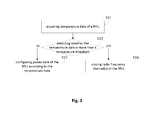
- FIG. 1 shows a flow chart of a method for detecting temperature of a RRU according to a first embodiment of the present application.
- Step 101 acquiring temperature data of a RRU.
- one or more sensors may be provided in a shell of the RRU.
- the sensor(s) is a temperature sensor(s). Therefore, the temperature in the shell of the RRU may be measured by the sensor(s), so as to acquire the temperature data of the RRU.
- Step 102 detecting whether the temperature data is more than a temperature threshold.
- a temperature threshold may be configured.
- the temperature threshold is one of criterions to measure whether the temperature of the RRU is excessively high, wherein the temperature threshold may be a temperature range.
- corresponding operations may be performed dependently on the location where the temperatures of the RRU are, in such a manner that when relatively high temperature of the RRU is detected initially, corresponding processing operations may be performed to protect stable and normal work of the RRU.
- Step 104 If yes, that is the temperature data is more than the temperature threshold, the method may proceed to Step 104; if no, that is the temperature data is not more than the temperature threshold, the method may proceed to Step 105.
- temperature limits may be preset, wherein the temperature limits may include: a first limit, a second limit, a third limit and a fourth limit, and in the temperature limits, the fourth limit is more than the third limit, the third limit is more than the second limit, the second limit is more than the first limit; the temperature limits may be adopted to set up the temperature threshold to hierarchically detect the temperature data.
- Step 103 configuring power data of the RRU according to the temperature data.
- the temperature data is not more than the temperature threshold: one is in that the temperature data is less than the temperature threshold, and the other one is in that the temperature data is within the temperature threshold.
- the power data may be configured when the RRU works. Since the more the power is the more the heat is generated during the same period of time, when it is detected that the temperature data is not more than the temperature threshold, the power data of RRU may be configured according to the temperature data. For example, the power data of the RRU may be reduced by several decibels (db) and etc. In such a manner, an amount of heat dissipating could be controlled by varying the power data, so that the temperature of the RRU may be controlled.
- db decibels
- the step of configuring the power data of the RRU according to the temperature data may comprise: when the temperature data is less than the first limit, determining the temperature data to be less than the temperature threshold; adjusting the power data of the RRU to an initial value.
- the method may further comprise: if the radio frequency channel(s) of the RRU is closed, then activating the radio frequency channel(s); if the radio frequency channel(s) of the RRU is activated, then determining that the power data of the radio remote unit is not equal to the initial value.
- the step of configuring the power data of the RRU according to the temperature data may comprise:
- Step 104 closing radio frequency channel(s) of the RRU.
- the temperature data is more than or equal to the fourth limit, determining the temperature data to be more than the temperature threshold, and then closing the radio frequency channel(s) of the radio remote unit.
- the temperature of the RRU may have been so excessively high that the temperature of the RRU could not possibly be controlled only by varying the power data. Therefore, the radio frequency channel(s) of the RRU may be closed to terminate the operations of the radio frequency channel(s), so as to control the temperature of the RRU and protect the RRU from being damaged due to the excessively high temperature.
- the method may further comprise: detecting switch status of the radio frequency channel(s) of the RRU.
- the power data of the RRU may be configured, and if the temperature data is more than the temperature threshold, then close the radio frequency channel(s) of the RRU.
- different temperature control operations may be performed dependently on the temperatures of the RRU, so as to protect the RRU from being damaged due to excessively high temperature.
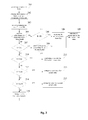
- FIG. 2 shows a flow chart of a method for detecting temperature of a RRU according to a second embodiment of the present application.
- Step 201 presetting temperature limits.
- the temperature limits may include: a first limit TL, a second limit TH, a third limit Tu and a fourth limit Toff, and TL ⁇ TH ⁇ Tu ⁇ Toff. Assuming that temperature data of a RRU is T, the temperature limits may particularly include:
- TL is a temperature limit to restore a normal power, or may be used as a limit to restore the activation of radio frequency channel(s) of the RRU. That is, when T ⁇ TL is reached, the power of the RRU could be restored to normal, which means to restore to an initial value.
- the radio frequency channel(s) of the RRU may be activated and the power of the RRU may be restored to the initial value. If the radio frequency channel(s) of the RRU is in an on-state, then it is necessary to compare the power data of the RRU with the initial value, and when it is determined that the power data of the RRU is the initial value, the RRU may run with the initial value without any other operations; and if it is determined that the power data of the RRU is not the initial value, then the power of the RRU may be restored to the initial value.
- TH is one of the temperature limits to lower the power of the RRU, used to control the temperature of the RRU. That is, when T>TH, the power of the RRU may be possibly lowered.
- Tu is another temperature limit to lower the power of the RRU, used to further control the temperature of the RRU. That is, when T>Tu, the power of the RRU may be further adjusted.
- Toff is a limit to close the radio frequency channel(s). That is, when T>Toff is detected, the radio frequency channel(s) of the RRU may be possibly closed, so as to control the temperature of the RRU and protect the RRU from being damaged due to the excessively high temperature.
- the temperature of the RRU may be detected hierarchically.
- the temperature limit values shall be set based on measured data of various devices in order to guarantee that the device is able to operate within safe temperature range.
- Step 202 adopting the temperature limits to set up a temperature threshold.
- the temperature limits may be adopted to set up a temperature threshold, the hierarchical detection of the temperature data of the RRU may be realized. In accordance with different temperature ranges of the temperature data, corresponding operations may be performed to preferably control the temperatures of the RRU.
- Step 203 acquiring temperature data of the RRU.
- abnormal temperature data may be acquired so that the temperature of the RRU is incorrectly acquired.
- the RRU is configured with a plurality of sensors and setting values, in order to detect whether the temperatures transmitted from the sensors are abnormal.
- the step of acquiring temperature data of the RRU may comprise:
- sensors are provided at various amplifiers (power amplifiers) of the RRU and other regions except the various power amplifiers in the RRU. Therefore, depending on the positions of the sensors, different methods will be taken to measure the transmitted temperatures.
- the process particularly includes the following steps.
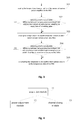
- FIG. 3 shows a flow chart of a method for acquiring temperature of the RRU according to the second embodiment of the present application.
- the process of reading the temperatures transmitted from various sensors in the RRU may comprise the following steps.
- Step 301 reading the temperatures transmitted from the sensors at various power amplifiers in the RRU.
- Step 302 detecting whether an absolute difference between temperatures transmitted from arbitrary two sensors at various power amplifiers is more than a first setting value.
- the first setting value is used to measure whether the temperature transmitted from the power amplifier is correct.
- the first setting value is 10 °C.
- Step 301 If yes, that is the absolute difference between temperatures transmitted from arbitrary two sensors at various power amplifiers is more than the first setting value, then it may be indicated that the transmitted temperature is not correct, and the process may return to Step 301 to re-read the temperatures transmitted from the sensors at various power amplifiers.
- Step 303 If no, that is the absolute difference between temperatures transmitted from the sensors at various power amplifiers is less than the first setting value, or that is the absolute difference between temperatures transmitted from the sensors at all power amplifiers is less than the first setting value, then the process may proceed to Step 303.
- Step 303 reading the temperatures transmitted from the sensors at other regions except various power amplifiers.
- the temperatures transmitted from the sensors at other regions except various power amplifiers may be read.
- Step 304 detecting whether an absolute difference between temperatures transmitted from arbitrary two sensors at other regions except various power amplifiers is more than a second setting value.
- the second setting value is used to measure whether the temperature transmitted from other region except various power amplifier in the RRU is correct.
- the second setting value is 15 °C.
- Step 303 If yes, that is the absolute difference between temperatures transmitted from arbitrary two sensors at other regions except various power amplifiers is more than the second setting value, then it may be indicated that the temperature transmitted from other region except various power amplifier in the RRU is abnormal, and the process may return to Step 303 to re-read temperatures transmitted from sensors at other regions except various power amplifiers.
- Step 305 If no, that is the absolute difference between temperatures transmitted from various sensors at other regions except various power amplifiers is less than the second setting value, or that is the absolute difference between temperatures transmitted from all sensors at other regions except various power amplifiers is less than the second setting value, then the process may proceed to Step 305.
- Step 305 constructing the temperatures transmitted from various sensors as the temperature data of the RRU.
- the temperatures transmitted from various sensors may be constructed as the temperature data of the RRU.
- the exact temperatures transmitted from various sensors may be acquired by the above mentioned method. Then based on the temperatures, the temperature data of the RRU may be determined, for example by calculating an average value of temperatures transmitted from various sensors.
- Step 204 detecting whether the radio frequency channel(s) of the RRU is closed.
- Step 205 If yes, that is the radio frequency channel(s) of the RRU is already closed, then the process may subsequently proceed to Step 205; if no, that is the radio frequency channel(s) of the RRU is not closed, the process may subsequently proceed to Step 207.
- Step 205 detecting whether the temperature data is less than the first limit.
- Step 206 If yes, that is the temperature data is less than the first limit (T ⁇ TL), the process may proceed to Step 206; if no, that is the temperature data is more than or equal to the first limit (T ⁇ TL), the process may return to Step 203.
- Step 206 activating the radio frequency channel(s).
- the radio frequency channel(s) of the RRU When the radio frequency channel(s) of the RRU is already closed and T ⁇ TL, the temperature data is less than the temperature threshold, and then the radio frequency channel(s) of the RRU may be activated.
- Step 207 detecting whether the temperature data is less than the first limit.
- Step 208 If yes, that is the temperature data is less than the first limit (T ⁇ TL), then the process may proceed to Step 208; if no, that is the temperature data is more than or equal to the first limit (T ⁇ TL), the process may proceed to Step 210.
- Step 208 detecting whether the power data of the RRU is the initial value.
- Step 211 If yes, that is the power data of the RRU is the initial value, then the process may proceed to Step 211; if no, that is the power data of the RRU is not the initial value, the process may proceed to Step 209.
- Step 209 adjusting the power data of the RRU to the initial value.
- the power data of the RRU may be adjusted to the initial value.
- the radio frequency channel(s) of the RRU When the radio frequency channel(s) of the RRU is activated, if T ⁇ TL and the power data of the RRU is not the initial value, the power data of the RRU may be adjusted as the initial value.
- Step 210 detecting whether the temperature data is less than the second limit.
- Step 211 If yes, that is the temperature data is less than the second limit (TL ⁇ T ⁇ TH), then the process may proceed to Step 211, if no, that is the temperature data is more than or equal to the second limit (T ⁇ TH), the process may proceed to Step 212.
- Step 211 continuing to operate the RRU with the power data.
- the radio frequency channel(s) of the RRU When the radio frequency channel(s) of the RRU is activated, if T ⁇ TL and the power data of the RRU is the initial value, it is possible to continue to operate the RRU with the initial value as the power data, without adjusting the power data of the RRU. Then the process may return to Step 203 to re-acquire temperature data.
- the temperature data is within the temperature threshold, and it is possible to continue to operate the RRU with the power data. Then the process may return to Step 203 to re-acquire temperature data.
- Step 212 detecting whether the temperature data is less than the third limit.
- Step 213 If yes, that is the temperature data is less than the third limit (TH ⁇ T ⁇ Tu), then the process may proceed to Step 213; if no, that is the temperature data is more than or equal to the third limit (T ⁇ Tu), the process may proceed to Step 214.
- Step 213 adjusting the power data of the RRU to a first power value.
- the first power value is one of adjustment powers to control the temperature of the RRU, for example, which is set to an initial value of -1.5db. Then the process may return to Step 203 to re-acquire the temperature data.
- Step 214 detecting whether the temperature data is less than the fourth limit.
- T If T ⁇ Tu, then it is possible to further detect whether T is less than Toff.
- Step 215 If yes, that is the temperature data is less than the fourth limit (Tu ⁇ T ⁇ Toff), then the process may proceed to Step 215; if no, that is the temperature data is more than or equal to the fourth limit (T ⁇ Toff), the process may proceed to Step 216.
- Step 215 adjusting the power data of the RRU to a second power value.
- the temperature data is within the temperature threshold.
- the second power value is one of adjustment powers to control the temperature of the RRU, for example, which is set to an initial value of -3db.
- Tu ⁇ T ⁇ Toff it is possible to adjust current power data of the RRU to the initial value of -3db.
- Step 216 closing the radio frequency channel(s) of the RRU.
- the temperature data is more than the temperature threshold, and then the radio frequency channel(s) of the RRU is closed. Then the process may return to Step 203 to re-acquire the temperature data.
- the temperature data of the RRU may be hierarchically detected according to the temperature limits, so as to determine various ranges of the temperature data, and to determine the temperature control operations of the RRU according to the on/off status of the radio frequency channel(s), thereby effectively controlling the temperature of the RRU by various methods within various temperature ranges, and protecting the RRU from being damaged due to excessively high temperature.
- the temperatures may be transmitted through various sensors, and then whether the transmitted temperature is abnormal may be judged by the absolute difference between temperatures transmitted from arbitrary two sensors, thereby keeping out abnormal temperature data, allowing for acquiring exact temperature data, and subsequently adopting correct and effective measures to control the temperature of the RRU.
- FIG. 4 shows a block diagram of a device for detecting temperature of a RRU according to a third embodiment of the present application.
- the embodiment of the present application also provides a device for detecting temperature of a RRU, which includes: an acquisition module 11, a power adjustment module 12 and a channel closing module 13.
- the acquisition module 11 is configured to acquire temperature data of a RRU; the power adjustment module 12 is configured to, when the temperature data is less than a temperature threshold or within the temperature threshold, configure power data of the RRU according to the temperature data; and the channel closing module 13 is configured to, when the temperature data is more than the temperature threshold, close radio frequency channel(s) of the RRU.
- the power data of the RRU may be configured, and if the temperature data is more than the temperature threshold, then close the radio frequency channel(s) of the RRU.
- different temperature control operations may be performed dependently on the temperatures of the RRU, so as to protect the RRU from being damaged due to excessively high temperature.
- FIG. 5 shows a block diagram of a device for detecting temperature of a RRU according to a fourth embodiment of the present application.
- the device for detecting temperature of a RRU may include the following modules.
- a presetting module 21 is configured to preset temperature limits.
- the temperature limits comprises: a first limit, a second limit, a third limit and a fourth limit, and in the temperature limits, the fourth limit is more than the third limit, the third limit is more than the second limit, and the second limit is more than the first limit.
- a threshold setup module 22 is configured to adopt the temperature limits to set up a temperature threshold to hierarchically detect the temperature data.
- An acquisition module 23 is configured to acquire temperature data of the RRU.
- a power adjustment module 24 is configured to, when the temperature data is less than the temperature threshold or within the temperature threshold, configures power data of the RRU according to the temperature data.
- a channel closing module 25 is configured to, when the temperature data is more than the temperature threshold, close radio frequency channel(s) of the RRU.
- the power adjustment module 24 is configured to, when the temperature data is less than the first limit, determine the temperature data to be less than the temperature threshold; and adjust power data of the RRU to an initial value.
- the power adjustment module 24 is further configured to, before adjusting the power data of the RRU to the initial value, if the radio frequency channel(s) of the RRU is closed, then activate the radio frequency channel(s); and if the radio frequency channel(s) of the RRU is activated, then determine that the power data of the RRU is not equal to the initial value.
- the power adjustment module 24 is configured to, when the temperature data is more than or equal to the first limit, and the temperature data is less than the second limit, determine the temperature data to be within the temperature threshold, then continue to operate the RRU with the power data.
- the power adjustment module 24 is configured to, when the temperature data is more than or equal to the second limit, and the temperature data is less than the third limit, determine the temperature data to be within the temperature threshold, and adjust the power data of the RRU to a first power value.
- the power adjustment module 24 is configured to, when the temperature data is more than or equal to the third limit, and the temperature data is less than the fourth limit, determine the temperature data to be within the temperature threshold, and adjust the power data of the RRU to a second power value.
- the channel closing module 25 is configured to, when the temperature data is more than or equal to the fourth limit, determine the temperature data to be more than the temperature threshold, and then close the radio frequency channel(s) of the RRU.
- the power adjustment module 24 is further configured to detect switch status of the radio frequency channel(s) of the RRU, and determine that the radio frequency channel(s) of the RRU is activated.
- the acquisition module 23 is configured to read temperatures transmitted from various sensors in the RRU, when an absolute difference between temperatures transmitted from arbitrary two sensors is more than a setting value, re-read the temperatures transmitted from various sensors; otherwise, construct the temperatures transmitted from various sensors as the temperature data of the RRU.
- the acquisition module 23 is configured to read temperatures transmitted from sensors at various power amplifiers in the RRU, when an absolute difference between temperatures transmitted from arbitrary two sensors at various power amplifiers is more than a first setting value, re-read the temperatures transmitted from the sensors at various power amplifiers; when the absolute difference between temperatures transmitted from the sensors at various power amplifiers is less than the first setting value, read temperatures transmitted from sensors at other regions except various power amplifiers; when the absolute difference between temperatures transmitted from arbitrary two sensors at other regions except various power amplifiers is more than a second setting value, re-read temperatures transmitted from the sensors at other regions except various power amplifiers; when the absolute difference between temperatures transmitted from various sensors at other regions except various power amplifiers is less than the second setting value, construct the temperatures transmitted from various sensors as the temperature data of the RRU.
- the temperature data of the RRU may be hierarchically detected according to the temperature limits, so as to determine various ranges of the temperature data, and to determine the temperature control operations of the RRU according to the on/off status of the radio frequency channel(s), thereby effectively controlling the temperature of the RRU by various methods within various temperature ranges, and protecting the RRU from being damaged due to excessively high temperature.
- the temperatures may be transmitted through various sensors, and then whether the transmitted temperature is abnormal may be judged by the absolute difference between temperatures transmitted from arbitrary two sensors, thereby keeping out abnormal temperature data, allowing for acquiring exact temperature data, and subsequently adopting correct and effective measures to control the temperature of the RRU.
- the embodiment of the present application also provides a computer readable recording medium in which a program for executing the method for detecting temperature of the RRU is recorded.
- the computer readable recording medium may comprise any mechanism for storing or transmitting information in a computing device (e.g., a computer) readable form.
- a computing device e.g., a computer
- the machine readable medium includes Read Only Memory (ROM), Random Access Memory (RAM), magnetic disk storage medium, optical storage medium, flash memory medium, and propagation signals (e.g., carrier wave, infrared signals, digital signals, etc.) in the forms of electrics, optics, acoustics or any other forms.
- the description thereof is relatively brief. As for the related parts thereof, reference may be made to the corresponding description of the method embodiments.
- the present application can be described in general context of a computer executable instruction which is executed by a computer, such as a program module.
- the program module may include routine, program, object, component, data structure and the like which can perform particular tasks or implement particular abstract data types.
- the present application can also be practiced in distributed computing environments.
- the program module can be connected to a remote processing device through a communication network to perform the task.
- the program module may be located in local and remote computer storage medium including a memory device.
Landscapes
- Engineering & Computer Science (AREA)
- Physics & Mathematics (AREA)
- General Physics & Mathematics (AREA)
- Automation & Control Theory (AREA)
- Power Engineering (AREA)
- Electromagnetism (AREA)
- Radar, Positioning & Navigation (AREA)
- Computer Networks & Wireless Communication (AREA)
- Signal Processing (AREA)
- Transmitters (AREA)
- Inverter Devices (AREA)
- Arrangements For Transmission Of Measured Signals (AREA)
Abstract
Description
- The present application relates to the field of communication technologies, and particularly to a method and a device for detecting temperature of a radio remote unit.
- At present, most broadband mobile communication adopts distributed base station architecture, that is, Building Base band Unit (BBU) and Radio Remote Unit (RRU) are connected by optical fibre. However, the RRU is generally installed at top end of an antenna tower where the work environment is harsh and heat is dissipated by the passive cooling. Further, since the RRU is exposed to the outdoor environment, the machine shell is needed to be hermetical.
- Therefore, when atmosphere temperature is high, especially at summer noon, the heat dissipation capacity of the RRU is subjected to a serious challenge. Performance and service life of critical components inside the RRU, such as power amplifier, power supply and FPGA (Field-Programmable Gate Array) would be greatly influenced by the temperature. In worse conditions, this may cause the components in the RRU to be ineffective (for example, the power amplifier is burnt out, and thermal protective outage of the power supply module occurs (burnt out)), such that the base station where the RRU is installed could be out of service and network coverage may be influenced.
- Thus, the RRU is provided with an over-temperature alarm, that is, a temperature threshold is set up. When the temperature in the shell monitored by a temperature sensor in the RRU is higher than the temperature threshold, an over-temperature alarm message may be reported to a main station. No further processing operations are adopted thereafter. Meanwhile, the monitored temperature may be updated every once in a while.
- In the above method, however, although the over-temperature alarm is reported when the temperature in the shell exceeds the temperature threshold, the RRU will keep working without any other processing operations. The temperature in the shell where the RRU is located may increasingly rise up, which may finally cause that the power amplifier or the power supply module is burnt out and the base station is ineffective. Therefore, the above method still may not solve the problem resulted from that the temperature of the RRU is excessively high.
- The embodiments of the present application provide a method and a device for detecting temperature of a radio remote unit, in order to solve the problem that the RRU could be damaged due to an excessively high temperature.
- To solve above problem, the embodiment of the present application provides a method for detecting temperature of a radio remote unit, including:
- acquiring temperature data of a radio remote unit;
- configuring power data of the radio remote unit according to the temperature data, when the temperature data is less than a temperature threshold or within the temperature threshold; and
- closing radio frequency channel(s) of the radio remote unit when the temperature data is more than the temperature threshold.
- Optionally, the method further includes: presetting temperature limits, wherein the temperature limits include: a first limit, a second limit, a third limit and a fourth limit, and in the temperature limits, the fourth limit is more than the third limit, the third limit is more than the second limit, the second limit is more than the first limit; and adopting the temperature limits to set up the temperature threshold to hierarchically detect the temperature data.
- Optionally, the step of configuring power data of the radio remote unit according to the temperature data, when the temperature data is less than the temperature threshold, includes: when the temperature data is less than the first limit, determining the temperature data to be less than the temperature threshold; adjusting the power data of the radio remote unit to an initial value.
- Optionally, before the step of adjusting the power data of the radio remote unit to the initial value, the method further includes: if the radio frequency channel(s) of the radio remote unit is closed, then activating the radio frequency channel(s); and if the radio frequency channel(s) of the radio remote unit is activated, then determining that the power data of the radio remote unit is not equal to the initial value.
- Optionally, the step of configuring power data of the radio remote unit according to the temperature data, when the temperature data is within the temperature threshold, includes: when the temperature data is more than or equal to the first limit, and the temperature data is less than the second limit, determining the temperature data to be within the temperature threshold; and continuing to operate the radio remote unit with the power data.
- Optionally, the step of configuring power data of the radio remote unit according to the temperature data, when the temperature data is within the temperature threshold, includes: when the temperature data is more than or equal to the second limit, and the temperature data is less than the third limit, determining the temperature data to be within the temperature threshold; and adjusting the power data of the radio remote unit to a first power value.
- Optionally, the step of configuring power data of the radio remote unit according to the temperature data, when the temperature data is within the temperature threshold, includes: when the temperature data is more than or equal to the third limit, and the temperature data is less than the fourth limit, determining the temperature data to be within the temperature threshold; and adjusting the power data of the radio remote unit to a second power value.
- Optionally, the step of closing radio frequency channel(s) of the radio remote unit when the temperature data is more than the temperature threshold, includes: when the temperature data is more than or equal to the fourth limit, determining the temperature data to be more than the temperature threshold, and then closing the radio frequency channel(s) of the radio remote unit.
- Optionally, after the step of acquiring temperature data of a radio remote unit, the method further includes: detecting switch status of the radio frequency channel(s) of the radio remote unit; and determining that the radio frequency channel(s) of the radio remote unit is activated.
- Optionally, the step of acquiring temperature data of a radio remote unit, includes: reading the temperatures transmitted from various sensors in the radio remote unit, when an absolute difference between temperatures transmitted from arbitrary two sensors is more than a setting value, re-reading the temperatures transmitted from various sensors; otherwise, constructing the temperatures transmitted from various sensors as the temperature data of the radio remote unit.
- Optionally, the step of reading the temperatures transmitted from various sensors in the radio remote unit, when an absolute difference between temperatures transmitted from arbitrary two sensors is more than a setting value, re-reading the temperatures transmitted from various sensors; otherwise, constructing the temperatures transmitted from various sensors as the temperature data of the radio remote unit, includes: reading temperatures transmitted from sensors at various power amplifiers in the radio remote unit, when an absolute difference between temperatures transmitted from arbitrary two sensors at various power amplifiers is more than a first setting value, re-reading the temperatures transmitted from the sensors at various power amplifiers; when the absolute difference between temperatures transmitted from the sensors at various power amplifiers is less than the first setting value, reading temperatures transmitted from sensors at other regions except various power amplifiers; when an absolute difference between temperatures transmitted from arbitrary two sensors at other regions except various power amplifiers is more than a second setting value, re-reading temperatures transmitted from the sensors at other regions except various power amplifiers; and when the absolute difference between temperatures transmitted from various sensors at other regions except various power amplifiers is less than the second setting value, constructing the temperatures transmitted from various sensors as the temperature data of the radio remote unit.
- Accordingly, the embodiment of the present application also provides a device for detecting temperature of a radio remote unit, including:
- an acquisition module, configured to acquire temperature data of a radio remote unit;
- a power adjustment module, configured to, configure power data of the radio remote unit according to the temperature data, when the temperature data is less than a temperature threshold or within the temperature threshold; and
- a channel closing module, configured to, close radio frequency channel(s) of the radio remote unit when the temperature data is more than the temperature threshold.
- Optionally, the device further includes: a presetting module, configured to preset temperature limits, wherein the temperature limits comprises: a first limit, a second limit, a third limit and a fourth limit, and in the temperature limits, the fourth limit is more than the third limit, the third limit is more than the second limit, and the second limit is more than the first limit; and a threshold setup module, configured to adopt the temperature limits to set up the temperature threshold to hierarchically detect the temperature data.
- Optionally, the power adjustment module is configured to, when the temperature data is less than the first limit, determine the temperature data to be less than the temperature threshold; and adjust power data of the radio remote unit to an initial value.
- Optionally, the power adjustment module is further configured to, before adjusting the power data of the radio remote unit to the initial value, if the radio frequency channel(s) of the radio remote unit is closed, then activate the radio frequency channel(s); and if the radio frequency channel(s) of the radio remote unit is activated, then determine that the power data of the radio remote unit is not equal to the initial value.
- Optionally, the power adjustment module is configured to, when the temperature data is more than or equal to the first limit, and the temperature data is less than the second limit, determine the temperature data to be within the temperature threshold, continue to operate the radio remote unit with the power data.
- Optionally, the power adjustment module is configured to, when the temperature data is more than or equal to the second limit, and the temperature data is less than the third limit, determine the temperature data to be within the temperature threshold, and adjust the power data of the radio remote unit to a first power value. Optionally, the power adjustment module is configured to, when the temperature data is more than or equal to the third limit, and the temperature data is less than the fourth limit, determine the temperature data to be within the temperature threshold; and adjust the power data of the radio remote unit to a second power value.
- Optionally, the channel closing module is configured to, when the temperature data is more than or equal to the fourth limit, determine the temperature data to be more than the temperature threshold, and then close the radio frequency channel(s) of the radio remote unit.
- Optionally, the power adjustment module is further configured to detect switch status of the radio frequency channel(s) of the radio remote unit; and determine that the radio frequency channel(s) of the radio remote unit is activated.
- Optionally, the acquisition module is configured to read temperatures transmitted from various sensors in the radio remote unit, when an absolute difference between temperatures transmitted from arbitrary two sensors is more than a setting value, re-read the temperatures transmitted from various sensors; otherwise, construct the temperatures transmitted from various sensors as the temperature data of the radio remote unit.
- Optionally, the acquisition module is configured to read temperatures transmitted from sensors at various power amplifiers in the radio remote unit, when an absolute difference between temperatures transmitted from arbitrary two sensors at various power amplifiers is more than a first setting value, re-read the temperatures transmitted from the sensors at various power amplifiers; when the absolute difference between temperatures transmitted from the sensors at various power amplifiers is less than the first setting value, read temperatures transmitted from sensors at other regions except various power amplifiers; when the absolute difference between temperatures transmitted from arbitrary two sensors at other regions except various power amplifiers is more than a second setting value, re-read temperatures transmitted from the sensors at other regions except various power amplifiers; and when the absolute difference between temperatures transmitted from various sensors at other regions except various power amplifiers is less than the second setting value, construct the temperatures transmitted from various sensors as the temperature data of the radio remote unit.
- Compared with the prior art, the present application has following advantages:
- Firstly, in the embodiments, after acquiring the temperature data of the RRU, if the temperature data is less than or within the temperature threshold, the power data of the RRU may be configured, and if the temperature data is more than the temperature threshold, then close the radio frequency channel(s) of the RRU. In the embodiments, different temperature control operations may be performed dependently on the temperatures of the RRU, so as to protect the RRU from being damaged due to excessively high temperature.
- Secondly, in the embodiments, the temperature data of the RRU may be hierarchically detected according to the temperature limits, so as to determine various ranges of the temperature data, and to determine the temperature control operations of the RRU according to the on/off status of the radio frequency channel(s), thereby effectively controlling the temperature of the RRU by various methods within various temperature ranges, and protecting the RRU from being damaged due to excessively high temperature.
- Again, in the embodiments, the temperatures may be transmitted through various sensors, and then whether the transmitted temperature is abnormal may be judged by the absolute difference between temperatures transmitted from arbitrary two sensors, thereby keeping out abnormal temperature data, allowing for acquiring exact temperature data, and subsequently adopting correct and effective measures to control the temperature of the RRU.
-
-
Figure 1 is a flow chart of a method for detecting temperature of a RRU according to a first embodiment of the present application; -
Figure 2 is a flow chart of a method for detecting temperature of a RRU according to a second embodiment of the present application; -
Figure 3 is a flow chart of a method for acquiring temperature of a RRU according to the second embodiment of the present application; -
Figure 4 is a block diagram of a device for detecting temperature of a RRU according to a third embodiment of the present application; and -
Figure 5 is a block diagram of a device for detecting temperature of a RRU according to a fourth embodiment of the present application. - In order to readily understand above objects, features and advantages of the present application, the present application will be described in detail in conjunction with accompanying drawings and specific embodiments hereinafter.
- The embodiments of the present application provide a method for detecting temperature of a RRU, which can control the temperature of the RRU by configuring power data of the RRU or closing radio frequency channel(s) of the RRU, so as to avoid the problem that parts of the RRU are burnt out due to the excessively temperature, resulting in the base station is ineffective.
- With reference to
Figure 1 , it shows a flow chart of a method for detecting temperature of a RRU according to a first embodiment of the present application. -
Step 101, acquiring temperature data of a RRU. - In this embodiment, one or more sensors may be provided in a shell of the RRU. The sensor(s) is a temperature sensor(s). Therefore, the temperature in the shell of the RRU may be measured by the sensor(s), so as to acquire the temperature data of the RRU.
-
Step 102, detecting whether the temperature data is more than a temperature threshold. - In this embodiment, a temperature threshold may be configured. The temperature threshold is one of criterions to measure whether the temperature of the RRU is excessively high, wherein the temperature threshold may be a temperature range.
- Since temperature variation is usually a continuous process, the temperature variation process of the RRU varies from normal temperature to relatively high temperature then to excessively high temperature. Therefore, in the embodiment, when the temperature data is detected according to the temperature threshold, corresponding operations may be performed dependently on the location where the temperatures of the RRU are, in such a manner that when relatively high temperature of the RRU is detected initially, corresponding processing operations may be performed to protect stable and normal work of the RRU.
- If yes, that is the temperature data is more than the temperature threshold, the method may proceed to Step 104; if no, that is the temperature data is not more than the temperature threshold, the method may proceed to Step 105.
- Optionally, temperature limits may be preset, wherein the temperature limits may include: a first limit, a second limit, a third limit and a fourth limit, and in the temperature limits, the fourth limit is more than the third limit, the third limit is more than the second limit, the second limit is more than the first limit; the temperature limits may be adopted to set up the temperature threshold to hierarchically detect the temperature data.
-
Step 103, configuring power data of the RRU according to the temperature data. - There are two cases where the temperature data is not more than the temperature threshold: one is in that the temperature data is less than the temperature threshold, and the other one is in that the temperature data is within the temperature threshold.
- The power data may be configured when the RRU works. Since the more the power is the more the heat is generated during the same period of time, when it is detected that the temperature data is not more than the temperature threshold, the power data of RRU may be configured according to the temperature data. For example, the power data of the RRU may be reduced by several decibels (db) and etc. In such a manner, an amount of heat dissipating could be controlled by varying the power data, so that the temperature of the RRU may be controlled.
- Optionally, when the temperature data is less than the temperature threshold, the step of configuring the power data of the RRU according to the temperature data may comprise: when the temperature data is less than the first limit, determining the temperature data to be less than the temperature threshold; adjusting the power data of the RRU to an initial value.
- Optionally, before adjusting the power data of the RRU to the initial value, the method may further comprise: if the radio frequency channel(s) of the RRU is closed, then activating the radio frequency channel(s); if the radio frequency channel(s) of the RRU is activated, then determining that the power data of the radio remote unit is not equal to the initial value.
- Optionally, when the temperature data is within the temperature threshold, the step of configuring the power data of the RRU according to the temperature data may comprise:
- 1) when the temperature data is more than or equal to the first limit, and the temperature data is less than the second limit, determining the temperature data to be within the temperature threshold; continuing to operate the RRU with the power data;
- 2) when the temperature data is more than or equal to the second limit, and the temperature data is less than the third limit, determining the temperature data to be within the temperature threshold; adjusting the power data of the RRU to a first power value; and
- 3) when the temperature data is more than or equal to the third limit, and the temperature data is less than the fourth limit, determining the temperature data to be within the temperature threshold; adjusting the power data of the RRU to a second power value.
-
Step 104, closing radio frequency channel(s) of the RRU. - Optionally, when the temperature data is more than or equal to the fourth limit, determining the temperature data to be more than the temperature threshold, and then closing the radio frequency channel(s) of the radio remote unit.
- When the temperature data is more than the temperature threshold, the temperature of the RRU may have been so excessively high that the temperature of the RRU could not possibly be controlled only by varying the power data. Therefore, the radio frequency channel(s) of the RRU may be closed to terminate the operations of the radio frequency channel(s), so as to control the temperature of the RRU and protect the RRU from being damaged due to the excessively high temperature.
- Optionally, after acquiring the temperature data of the RRU, the method may further comprise: detecting switch status of the radio frequency channel(s) of the RRU.
- In conclusion, in this embodiment, after acquiring the temperature data of the RRU, if the temperature data is less than or within the temperature threshold, the power data of the RRU may be configured, and if the temperature data is more than the temperature threshold, then close the radio frequency channel(s) of the RRU. In the embodiment, different temperature control operations may be performed dependently on the temperatures of the RRU, so as to protect the RRU from being damaged due to excessively high temperature.
- With reference to
Figure 2 , it shows a flow chart of a method for detecting temperature of a RRU according to a second embodiment of the present application. -
Step 201, presetting temperature limits. - Herein, the temperature limits may include: a first limit TL, a second limit TH, a third limit Tu and a fourth limit Toff, and TL<TH<Tu<Toff. Assuming that temperature data of a RRU is T, the temperature limits may particularly include:
- TL is a temperature limit to restore a normal power, or may be used as a limit to restore the activation of radio frequency channel(s) of the RRU. That is, when T<TL is reached, the power of the RRU could be restored to normal, which means to restore to an initial value.
- Herein, if the radio frequency channel(s) of the RRU is in an off-state, then the radio frequency channel(s) may be activated and the power of the RRU may be restored to the initial value. If the radio frequency channel(s) of the RRU is in an on-state, then it is necessary to compare the power data of the RRU with the initial value, and when it is determined that the power data of the RRU is the initial value, the RRU may run with the initial value without any other operations; and if it is determined that the power data of the RRU is not the initial value, then the power of the RRU may be restored to the initial value.
- TH is one of the temperature limits to lower the power of the RRU, used to control the temperature of the RRU. That is, when T>TH, the power of the RRU may be possibly lowered.
- Tu is another temperature limit to lower the power of the RRU, used to further control the temperature of the RRU. That is, when T>Tu, the power of the RRU may be further adjusted.
- Toff is a limit to close the radio frequency channel(s). That is, when T>Toff is detected, the radio frequency channel(s) of the RRU may be possibly closed, so as to control the temperature of the RRU and protect the RRU from being damaged due to the excessively high temperature.
- With above temperature limits, the temperature of the RRU may be detected hierarchically.
- Herein, in configuration of the temperature limit, based on a principle that a device is protected from being damaged under extreme conditions, it is possible to depend on statistical data obtained in high-low temperature tests in development phase of the device. Since devices have different tolerances, the temperature limit values shall be set based on measured data of various devices in order to guarantee that the device is able to operate within safe temperature range.
- For example, as it could be seen from experimental data analysis, a temperature in excess of 90°C may cause some critical components in the RRU to be damaged or burnt out, while a temperature below 70°C may keep components in the RRU from damage. Therefore, various temperature limits as mentioned above may be set as follows:
- TL = 70°C, TH = 75°C, Tu = 85°C, Toff = 90°C.
-
Step 202, adopting the temperature limits to set up a temperature threshold. - Since the temperature limits may be adopted to set up a temperature threshold, the hierarchical detection of the temperature data of the RRU may be realized. In accordance with different temperature ranges of the temperature data, corresponding operations may be performed to preferably control the temperatures of the RRU.
-
Step 203, acquiring temperature data of the RRU. - In the acquisition of the temperature data in prior art, sometimes inexact and abnormal values may be acquired. However, since there is no method for detecting the abnormal values, abnormal temperature data may be acquired so that the temperature of the RRU is incorrectly acquired.
- Aiming at above problems, according to this embodiment, the RRU is configured with a plurality of sensors and setting values, in order to detect whether the temperatures transmitted from the sensors are abnormal.
- Optionally, the step of acquiring temperature data of the RRU may comprise:
- reading the temperatures transmitted from various sensors in the RRU, if an absolute difference between temperatures transmitted from arbitrary two sensors is more than a setting value, re-reading the temperatures transmitted from various sensors;
- otherwise, constructing the temperatures transmitted from various sensors as the temperature data of the RRU.
- According to this embodiment, sensors are provided at various amplifiers (power amplifiers) of the RRU and other regions except the various power amplifiers in the RRU. Therefore, depending on the positions of the sensors, different methods will be taken to measure the transmitted temperatures. The process particularly includes the following steps.
- With reference to
Figure 3 , it shows a flow chart of a method for acquiring temperature of the RRU according to the second embodiment of the present application. - Optionally, the process of reading the temperatures transmitted from various sensors in the RRU, if an absolute difference between temperatures transmitted from arbitrary two sensors is more than the setting value, re-reading the temperatures transmitted from various sensors; otherwise, constructing the temperatures transmitted from various sensors as the temperature data of the RRU, may comprise the following steps.
-
Step 301, reading the temperatures transmitted from the sensors at various power amplifiers in the RRU. -
Step 302, detecting whether an absolute difference between temperatures transmitted from arbitrary two sensors at various power amplifiers is more than a first setting value. - The first setting value is used to measure whether the temperature transmitted from the power amplifier is correct. For example, the first setting value is 10 °C.
- If yes, that is the absolute difference between temperatures transmitted from arbitrary two sensors at various power amplifiers is more than the first setting value, then it may be indicated that the transmitted temperature is not correct, and the process may return to
Step 301 to re-read the temperatures transmitted from the sensors at various power amplifiers. - If no, that is the absolute difference between temperatures transmitted from the sensors at various power amplifiers is less than the first setting value, or that is the absolute difference between temperatures transmitted from the sensors at all power amplifiers is less than the first setting value, then the process may proceed to Step 303.
-
Step 303, reading the temperatures transmitted from the sensors at other regions except various power amplifiers. - If the absolute difference between temperatures transmitted from the sensors at various power amplifiers is less than the first setting value, the temperatures transmitted from the sensors at other regions except various power amplifiers may be read.
-
Step 304, detecting whether an absolute difference between temperatures transmitted from arbitrary two sensors at other regions except various power amplifiers is more than a second setting value. - Herein, the second setting value is used to measure whether the temperature transmitted from other region except various power amplifier in the RRU is correct. For example, the second setting value is 15 °C.
- If yes, that is the absolute difference between temperatures transmitted from arbitrary two sensors at other regions except various power amplifiers is more than the second setting value, then it may be indicated that the temperature transmitted from other region except various power amplifier in the RRU is abnormal, and the process may return to
Step 303 to re-read temperatures transmitted from sensors at other regions except various power amplifiers. - If no, that is the absolute difference between temperatures transmitted from various sensors at other regions except various power amplifiers is less than the second setting value, or that is the absolute difference between temperatures transmitted from all sensors at other regions except various power amplifiers is less than the second setting value, then the process may proceed to Step 305.
-
Step 305, constructing the temperatures transmitted from various sensors as the temperature data of the RRU. - If no, that is the absolute difference between temperatures transmitted from various sensors at other regions except various power amplifiers is less than the second setting value, the temperatures transmitted from various sensors may be constructed as the temperature data of the RRU.
- The exact temperatures transmitted from various sensors may be acquired by the above mentioned method. Then based on the temperatures, the temperature data of the RRU may be determined, for example by calculating an average value of temperatures transmitted from various sensors.
-
Step 204, detecting whether the radio frequency channel(s) of the RRU is closed. - After acquiring the temperature data of the RRU, it is possible to detect whether the radio frequency channel(s) of the RRU is closed.
- If yes, that is the radio frequency channel(s) of the RRU is already closed, then the process may subsequently proceed to Step 205; if no, that is the radio frequency channel(s) of the RRU is not closed, the process may subsequently proceed to Step 207.
-
Step 205, detecting whether the temperature data is less than the first limit. - When the radio frequency channel(s) of the RRU is already closed, it is possible to detect whether T is less than TL.
- If yes, that is the temperature data is less than the first limit (T<TL), the process may proceed to Step 206; if no, that is the temperature data is more than or equal to the first limit (T≥TL), the process may return to
Step 203. -
Step 206, activating the radio frequency channel(s). - When the radio frequency channel(s) of the RRU is already closed and T<TL, the temperature data is less than the temperature threshold, and then the radio frequency channel(s) of the RRU may be activated.
-
Step 207, detecting whether the temperature data is less than the first limit. - When the radio frequency channel(s) of the RRU is activated, it is possible to detect whether T is less than TL.
- If yes, that is the temperature data is less than the first limit (T<TL), then the process may proceed to Step 208; if no, that is the temperature data is more than or equal to the first limit (T≥TL), the process may proceed to Step 210.
-
Step 208, detecting whether the power data of the RRU is the initial value. - When the radio frequency channel(s) of the RRU is activated, if T<TL, then it is possible to detect whether the power data of the RRU is the initial value.
- If yes, that is the power data of the RRU is the initial value, then the process may proceed to Step 211; if no, that is the power data of the RRU is not the initial value, the process may proceed to Step 209.
-
Step 209, adjusting the power data of the RRU to the initial value. - When the radio frequency channel(s) of the RRU is already closed and T<TL, after the radio frequency channel(s) of the RRU is activated, the power data of the RRU may be adjusted to the initial value.
- When the radio frequency channel(s) of the RRU is activated, if T<TL and the power data of the RRU is not the initial value, the power data of the RRU may be adjusted as the initial value.
-
Step 210, detecting whether the temperature data is less than the second limit. - If the radio frequency channel(s) of the RRU is not closed, then it is possible to detect whether T is less than TH.
- If yes, that is the temperature data is less than the second limit (TL≤T<TH), then the process may proceed to Step 211, if no, that is the temperature data is more than or equal to the second limit (T≥TH), the process may proceed to Step 212.
-
Step 211, continuing to operate the RRU with the power data. - When the radio frequency channel(s) of the RRU is activated, if T<TL and the power data of the RRU is the initial value, it is possible to continue to operate the RRU with the initial value as the power data, without adjusting the power data of the RRU. Then the process may return to
Step 203 to re-acquire temperature data. - When the radio frequency channel(s) of the RRU is not closed and T<TH, the temperature data is within the temperature threshold, and it is possible to continue to operate the RRU with the power data. Then the process may return to
Step 203 to re-acquire temperature data. -
Step 212, detecting whether the temperature data is less than the third limit. - When T≥TH, it is possible to further detect whether T is less than Tu.
- If yes, that is the temperature data is less than the third limit (TH≤T<Tu), then the process may proceed to Step 213; if no, that is the temperature data is more than or equal to the third limit (T≥Tu), the process may proceed to Step 214.
-
Step 213, adjusting the power data of the RRU to a first power value. - If TH≤T<Tu, then it is possible to adjust the power data of the RRU, in order to further control the temperature of the RRU. In particular, it is possible to adjust the power data of the RRU to the first power value. The first power value is one of adjustment powers to control the temperature of the RRU, for example, which is set to an initial value of -1.5db. Then the process may return to
Step 203 to re-acquire the temperature data. -
Step 214, detecting whether the temperature data is less than the fourth limit. - If T≥Tu, then it is possible to further detect whether T is less than Toff.
- If yes, that is the temperature data is less than the fourth limit (Tu≤T<Toff), then the process may proceed to Step 215; if no, that is the temperature data is more than or equal to the fourth limit (T≥Toff), the process may proceed to Step 216.
-
Step 215, adjusting the power data of the RRU to a second power value. - When Tu≤T<Toff, the temperature data is within the temperature threshold. In order to control the temperature of the RRU, it is possible to adjust the power data of the RRU to the second power value. Then the process may return to
Step 203 to re-acquire the temperature data. - Herein, the second power value is one of adjustment powers to control the temperature of the RRU, for example, which is set to an initial value of -3db. When Tu≤T<Toff, it is possible to adjust current power data of the RRU to the initial value of -3db.
-
Step 216, closing the radio frequency channel(s) of the RRU. - When T≥Toff, the temperature data is more than the temperature threshold, and then the radio frequency channel(s) of the RRU is closed. Then the process may return to
Step 203 to re-acquire the temperature data. - In conclusion, in this embodiment, the temperature data of the RRU may be hierarchically detected according to the temperature limits, so as to determine various ranges of the temperature data, and to determine the temperature control operations of the RRU according to the on/off status of the radio frequency channel(s), thereby effectively controlling the temperature of the RRU by various methods within various temperature ranges, and protecting the RRU from being damaged due to excessively high temperature.
- Secondly, in this embodiment, the temperatures may be transmitted through various sensors, and then whether the transmitted temperature is abnormal may be judged by the absolute difference between temperatures transmitted from arbitrary two sensors, thereby keeping out abnormal temperature data, allowing for acquiring exact temperature data, and subsequently adopting correct and effective measures to control the temperature of the RRU.
- With reference to
Figure 4 , it shows a block diagram of a device for detecting temperature of a RRU according to a third embodiment of the present application. - Accordingly, the embodiment of the present application also provides a device for detecting temperature of a RRU, which includes: an
acquisition module 11, apower adjustment module 12 and achannel closing module 13. - The
acquisition module 11 is configured to acquire temperature data of a RRU;
thepower adjustment module 12 is configured to, when the temperature data is less than a temperature threshold or within the temperature threshold, configure power data of the RRU according to the temperature data; and
thechannel closing module 13 is configured to, when the temperature data is more than the temperature threshold, close radio frequency channel(s) of the RRU. - In conclusion, in the embodiment, after acquiring the temperature data of the RRU, if the temperature data is less than or within the temperature threshold, the power data of the RRU may be configured, and if the temperature data is more than the temperature threshold, then close the radio frequency channel(s) of the RRU. In the embodiment, different temperature control operations may be performed dependently on the temperatures of the RRU, so as to protect the RRU from being damaged due to excessively high temperature.
- With reference to
Figure 5 , it shows a block diagram of a device for detecting temperature of a RRU according to a fourth embodiment of the present application. - The device for detecting temperature of a RRU may include the following modules.
- A
presetting module 21 is configured to preset temperature limits. - Wherein, the temperature limits comprises: a first limit, a second limit, a third limit and a fourth limit, and in the temperature limits, the fourth limit is more than the third limit, the third limit is more than the second limit, and the second limit is more than the first limit.
- A
threshold setup module 22 is configured to adopt the temperature limits to set up a temperature threshold to hierarchically detect the temperature data. - An
acquisition module 23 is configured to acquire temperature data of the RRU. - A
power adjustment module 24 is configured to, when the temperature data is less than the temperature threshold or within the temperature threshold, configures power data of the RRU according to the temperature data. - A
channel closing module 25 is configured to, when the temperature data is more than the temperature threshold, close radio frequency channel(s) of the RRU. - In this embodiment, the
power adjustment module 24 is configured to, when the temperature data is less than the first limit, determine the temperature data to be less than the temperature threshold; and adjust power data of the RRU to an initial value. - In this embodiment, the
power adjustment module 24 is further configured to, before adjusting the power data of the RRU to the initial value, if the radio frequency channel(s) of the RRU is closed, then activate the radio frequency channel(s); and if the radio frequency channel(s) of the RRU is activated, then determine that the power data of the RRU is not equal to the initial value. - In this embodiment, the
power adjustment module 24 is configured to, when the temperature data is more than or equal to the first limit, and the temperature data is less than the second limit, determine the temperature data to be within the temperature threshold, then continue to operate the RRU with the power data. - In this embodiment, the
power adjustment module 24 is configured to, when the temperature data is more than or equal to the second limit, and the temperature data is less than the third limit, determine the temperature data to be within the temperature threshold, and adjust the power data of the RRU to a first power value. - In this embodiment, the
power adjustment module 24 is configured to, when the temperature data is more than or equal to the third limit, and the temperature data is less than the fourth limit, determine the temperature data to be within the temperature threshold, and adjust the power data of the RRU to a second power value. - In this embodiment, the
channel closing module 25 is configured to, when the temperature data is more than or equal to the fourth limit, determine the temperature data to be more than the temperature threshold, and then close the radio frequency channel(s) of the RRU. - In this embodiment, the
power adjustment module 24 is further configured to detect switch status of the radio frequency channel(s) of the RRU, and determine that the radio frequency channel(s) of the RRU is activated. - In this embodiment, the
acquisition module 23 is configured to read temperatures transmitted from various sensors in the RRU, when an absolute difference between temperatures transmitted from arbitrary two sensors is more than a setting value, re-read the temperatures transmitted from various sensors; otherwise, construct the temperatures transmitted from various sensors as the temperature data of the RRU. - In this embodiment, the
acquisition module 23 is configured to read temperatures transmitted from sensors at various power amplifiers in the RRU, when an absolute difference between temperatures transmitted from arbitrary two sensors at various power amplifiers is more than a first setting value, re-read the temperatures transmitted from the sensors at various power amplifiers; when the absolute difference between temperatures transmitted from the sensors at various power amplifiers is less than the first setting value, read temperatures transmitted from sensors at other regions except various power amplifiers; when the absolute difference between temperatures transmitted from arbitrary two sensors at other regions except various power amplifiers is more than a second setting value, re-read temperatures transmitted from the sensors at other regions except various power amplifiers; when the absolute difference between temperatures transmitted from various sensors at other regions except various power amplifiers is less than the second setting value, construct the temperatures transmitted from various sensors as the temperature data of the RRU. - In conclusion, in this embodiment, the temperature data of the RRU may be hierarchically detected according to the temperature limits, so as to determine various ranges of the temperature data, and to determine the temperature control operations of the RRU according to the on/off status of the radio frequency channel(s), thereby effectively controlling the temperature of the RRU by various methods within various temperature ranges, and protecting the RRU from being damaged due to excessively high temperature.
- Secondly, in this embodiment, the temperatures may be transmitted through various sensors, and then whether the transmitted temperature is abnormal may be judged by the absolute difference between temperatures transmitted from arbitrary two sensors, thereby keeping out abnormal temperature data, allowing for acquiring exact temperature data, and subsequently adopting correct and effective measures to control the temperature of the RRU.
- Accordingly, the embodiment of the present application also provides a computer readable recording medium in which a program for executing the method for detecting temperature of the RRU is recorded.
- The computer readable recording medium may comprise any mechanism for storing or transmitting information in a computing device (e.g., a computer) readable form. For example, the machine readable medium includes Read Only Memory (ROM), Random Access Memory (RAM), magnetic disk storage medium, optical storage medium, flash memory medium, and propagation signals (e.g., carrier wave, infrared signals, digital signals, etc.) in the forms of electrics, optics, acoustics or any other forms.
- Since the device embodiment is substantially similar to the method embodiments, the description thereof is relatively brief. As for the related parts thereof, reference may be made to the corresponding description of the method embodiments.
- The various embodiments in the specification have been explained step by step. Each of the embodiments has only emphasized the differences from others, and the same or similar parts between embodiments could be made reference to each other.
- The present application can be described in general context of a computer executable instruction which is executed by a computer, such as a program module. Generally, the program module may include routine, program, object, component, data structure and the like which can perform particular tasks or implement particular abstract data types. The present application can also be practiced in distributed computing environments. In such a distributed computing environment, the program module can be connected to a remote processing device through a communication network to perform the task. In the distributed computing environment, the program module may be located in local and remote computer storage medium including a memory device.
- In the end, it will be explained that, in the specification, the terms "first", "second", etc. are only used herein to distinguish one element or operation from another one, and does not necessarily require or suggest that there are any actual relationship or sequence between these elements or operations. Further, the terms "comprise", "include" and any other variants thereof are intended to cover a non-exclusive "comprise", so that process, method, product or equipment which includes a series of elements may include not only those elements, but also other elements that do not be definitely listed, or also may include the inherent elements of the process, method, product or equipment. In the absence of more restrictions, an element defined by the statement "includes a..." does not mean to exclude other same elements in the process, method, product or equipment including this element.
- The method and device for detecting temperature of a radio remote unit according to the present application have been described in detail. Herein the principles and embodiments of the application are illustrated by way of specific examples. The embodiments described above are only intended to help understand the method and main concept of the present application. Meanwhile, for an ordinary skilled person in the art, variations could be made to the specific embodiments and their application scope in accordance with the concept of the present application. In summary, the disclosure of the specification should not be construed as limiting of the present application.
Claims (23)
- A method for detecting temperature of a radio remote unit, characterized by including:acquiring temperature data of a radio remote unit;configuring power data of the radio remote unit according to the temperature data,when the temperature data is less than a temperature threshold or within the temperature threshold; andclosing radio frequency channel(s) of the radio remote unit when the temperature data is more than the temperature threshold.
- The method according to claim 1, characterized in that, the method further includes:presetting temperature limits, wherein the temperature limits include: a first limit, a second limit, a third limit and a fourth limit, and in the temperature limits, the fourth limit is more than the third limit, the third limit is more than the second limit, the second limit is more than the first limit; andadopting the temperature limits to set up the temperature threshold to hierarchically detect the temperature data.
- The method according to claim 2, characterized in that, the step of configuring power data of the radio remote unit according to the temperature data, when the temperature data is less than the temperature threshold, includes:when the temperature data is less than the first limit, determining the temperature data to be less than the temperature threshold; andadjusting the power data of the radio remote unit to an initial value.
- The method according to claim 2, characterized in that, before the step of adjusting the power data of the radio remote unit to the initial value, the method further includes:if the radio frequency channel(s) of the radio remote unit is closed, then activating the radio frequency channel(s); andif the radio frequency channel(s) of the radio remote unit is activated, then determining that the power data of the radio remote unit is not equal to the initial value.
- The method according to claim 2, characterized in that, the step of configuring power data of the radio remote unit according to the temperature data, when the temperature data is within the temperature threshold, includes:when the temperature data is more than or equal to the first limit, and the temperature data is less than the second limit, determining the temperature data to be within the temperature threshold; andcontinuing to operate the radio remote unit with the power data.
- The method according to claim 2, characterized in that, the step of configuring power data of the radio remote unit according to the temperature data, when the temperature data is within the temperature threshold, includes:when the temperature data is more than or equal to the second limit, and the temperature data is less than the third limit, determining the temperature data to be within the temperature threshold; andadjusting the power data of the radio remote unit to a first power value.
- The method according to claim 2, characterized in that, the step of configuring power data of the radio remote unit according to the temperature data, when the temperature data is within the temperature threshold, includes:when the temperature data is more than or equal to the third limit, and the temperature data is less than the fourth limit, determining the temperature data to be within the temperature threshold; andadjusting the power data of the radio remote unit to a second power value.
- The method according to claim 2, characterized in that, the step of closing radio frequency channel(s) of the radio remote unit when the temperature data is more than the temperature threshold, includes:when the temperature data is more than or equal to the fourth limit, determining the temperature data to be more than the temperature threshold, and then closing the radio frequency channel(s) of the radio remote unit.
- The method according to any one of claims 5-8, characterized in that, after the step of acquiring temperature data of a radio remote unit, the method further includes:detecting switch status of the radio frequency channel(s) of the radio remote unit; anddetermining that the radio frequency channel(s) of the radio remote unit is activated.
- The method according to claim 1, characterized in that, the step of acquiring temperature data of a radio remote unit, includes:reading the temperatures transmitted from various sensors in the radio remote unit, when an absolute difference between temperatures transmitted from arbitrary two sensors is more than a setting value, re-reading the temperatures transmitted from various sensors; otherwise, constructing the temperatures transmitted from various sensors as the temperature data of the radio remote unit.
- The method according to claim 10, characterized in that, the step of reading the temperatures transmitted from various sensors in the radio remote unit, when an absolute difference between temperatures transmitted from arbitrary two sensors is more than a setting value, re-reading the temperatures transmitted from various sensors; otherwise, constructing the temperatures transmitted from various sensors as the temperature data of the radio remote unit, includes:reading temperatures transmitted from sensors at various power amplifiers in the radio remote unit, when an absolute difference between temperatures transmitted from arbitrary two sensors at various power amplifiers is more than a first setting value, re-reading the temperatures transmitted from the sensors at various power amplifiers;when the absolute difference between temperatures transmitted from the sensors at various power amplifiers is less than the first setting value, reading temperatures transmitted from sensors at other regions except various power amplifiers;when an absolute difference between temperatures transmitted from arbitrary two sensors at other regions except various power amplifiers is more than a second setting value, re-reading temperatures transmitted from the sensors at other regions except various power amplifiers; andwhen the absolute difference between temperatures transmitted from various sensors at other regions except various power amplifiers is less than the second setting value, constructing the temperatures transmitted from various sensors as the temperature data of the radio remote unit.
- A device for detecting temperature of a radio remote unit, characterized by including:an acquisition module, configured to acquire temperature data of a radio remote unit;a power adjustment module, configured to configure power data of the radio remote unit according to the temperature data, when the temperature data is less than a temperature threshold or within the temperature threshold; anda channel closing module, configured to close radio frequency channel(s) of the radio remote unit when the temperature data is more than the temperature threshold.
- The device according to claim 11, characterized in that, the device further includes:a presetting module, configured to preset temperature limits, wherein the temperature limits comprises: a first limit, a second limit, a third limit and a fourth limit, and in the temperature limits, the fourth limit is more than the third limit, the third limit is more than the second limit, and the second limit is more than the first limit; anda threshold setup module, configured to adopt the temperature limits to set up the temperature threshold to hierarchically detect the temperature data.
- The device according to claim 13, characterized in that,
the power adjustment module is configured to, when the temperature data is less than the first limit, determine the temperature data to be less than the temperature threshold; and adjust power data of the radio remote unit to an initial value. - The device according to claim 14, characterized in that,
the power adjustment module is further configured to, before adjusting the power data of the radio remote unit to the initial value, if the radio frequency channel(s) of the radio remote unit is closed, then activate the radio frequency channel(s); and if the radio frequency channel(s) of the radio remote unit is activated, then determine that the power data of the radio remote unit is not equal to the initial value. - The device according to claim 13, characterized in that,
the power adjustment module is configured to, when the temperature data is more than or equal to the first limit, and the temperature data is less than the second limit, determine the temperature data to be within the temperature threshold, continue to operate the radio remote unit with the power data. - The device according to claim 13, characterized in that,
the power adjustment module is configured to, when the temperature data is more than or equal to the second limit, and the temperature data is less than the third limit, determine the temperature data to be within the temperature threshold, and adjust the power data of the radio remote unit to a first power value. - The device according to claim 13, characterized in that,
the power adjustment module is configured to, when the temperature data is more than or equal to the third limit, and the temperature data is less than the fourth limit, determine the temperature data to be within the temperature threshold; and adjust the power data of the radio remote unit to a second power value. - The device according to claim 13, characterized in that,
the channel closing module is configured to, when the temperature data is more than or equal to the fourth limit, determine the temperature data to be more than the temperature threshold, and then close the radio frequency channel(s) of the radio remote unit. - The device according to any one of claims 16-19, characterized in that,
the power adjustment module is further configured to detect switch status of the radio frequency channel(s) of the radio remote unit; and determine that the radio frequency channel(s) of the radio remote unit is activated. - The device according to claim 12, characterized in that,
the acquisition module is configured to read temperatures transmitted from various sensors in the radio remote unit, when an absolute difference between temperatures transmitted from arbitrary two sensors is more than a setting value, re-read the temperatures transmitted from various sensors; otherwise, construct the temperatures transmitted from various sensors as the temperature data of the radio remote unit. - The device according to claim 13, characterized in that,
the acquisition module is configured to read temperatures transmitted from sensors at various power amplifiers in the radio remote unit, when an absolute difference between temperatures transmitted from arbitrary two sensors at various power amplifiers is more than a first setting value, re-read the temperatures transmitted from the sensors at various power amplifiers; when the absolute difference between temperatures transmitted from the sensors at various power amplifiers is less than the first setting value, read temperatures transmitted from sensors at other regions except various power amplifiers; when the absolute difference between temperatures transmitted from arbitrary two sensors at other regions except various power amplifiers is more than a second setting value, re-read temperatures transmitted from the sensors at other regions except various power amplifiers; and when the absolute difference between temperatures transmitted from various sensors at other regions except various power amplifiers is less than the second setting value, construct the temperatures transmitted from various sensors as the temperature data of the radio remote unit. - A computer readable recording medium in which a program for executing the method according to claim 1 is recorded.
Applications Claiming Priority (2)
| Application Number | Priority Date | Filing Date | Title |
|---|---|---|---|
| CN201310030381.3A CN103118389B (en) | 2013-01-25 | 2013-01-25 | A kind of temperature checking method of radio frequency remoto module and device |
| PCT/CN2013/090903 WO2014114171A1 (en) | 2013-01-25 | 2013-12-30 | Temperature detection method and device for radio remote unit |
Publications (3)
| Publication Number | Publication Date |
|---|---|
| EP2938119A1 true EP2938119A1 (en) | 2015-10-28 |
| EP2938119A4 EP2938119A4 (en) | 2016-09-14 |
| EP2938119B1 EP2938119B1 (en) | 2019-05-29 |
Family
ID=48416632
Family Applications (1)
| Application Number | Title | Priority Date | Filing Date |
|---|---|---|---|
| EP13872471.1A Active EP2938119B1 (en) | 2013-01-25 | 2013-12-30 | Temperature detection method and device for radio remote unit |
Country Status (4)
| Country | Link |
|---|---|
| US (1) | US10185334B2 (en) |
| EP (1) | EP2938119B1 (en) |
| CN (1) | CN103118389B (en) |
| WO (1) | WO2014114171A1 (en) |
Cited By (3)
| Publication number | Priority date | Publication date | Assignee | Title |
|---|---|---|---|---|
| WO2018052710A1 (en) * | 2016-09-14 | 2018-03-22 | Google Llc | Small cell thermal control |
| WO2021019280A1 (en) * | 2019-07-30 | 2021-02-04 | Telefonaktiebolaget Lm Ericsson (Publ) | Thermal management by systematic network reconfiguration |
| CN114167916A (en) * | 2022-02-11 | 2022-03-11 | 为准(北京)电子科技有限公司 | Circuit board temperature adjusting method and device, electronic equipment and storage medium |
Families Citing this family (13)
| Publication number | Priority date | Publication date | Assignee | Title |
|---|---|---|---|---|
| CN103118389B (en) | 2013-01-25 | 2015-11-18 | 大唐移动通信设备有限公司 | A kind of temperature checking method of radio frequency remoto module and device |
| CN104165701B (en) * | 2014-08-27 | 2017-02-15 | 福建星网锐捷网络有限公司 | Method and device for detecting abnormal heat dissipation of electronic device |
| US10123248B1 (en) * | 2017-05-24 | 2018-11-06 | Sprint Communications Company L.P. | Wireless access point control of power amplifiers based on an enclosure temperature |
| CN107807693A (en) * | 2017-12-01 | 2018-03-16 | 普联技术有限公司 | Temprature control method, device and the computer-readable recording medium of radio-frequency module |
| CN109283953B (en) * | 2018-09-17 | 2021-07-27 | 京信通信系统(中国)有限公司 | A heating method and device for a radio frequency remote unit |
| CN109348310A (en) * | 2018-10-23 | 2019-02-15 | 京信通信系统(中国)有限公司 | Method and device for over-temperature protection of radio frequency remote unit |
| CN109634318B (en) * | 2018-12-13 | 2021-06-22 | 京信通信系统(中国)有限公司 | Digital room sub-coverage unit and temperature monitoring method and device |
| CN111665882B (en) * | 2019-03-05 | 2022-04-22 | 北京北方华创微电子装备有限公司 | Temperature control method and system |
| US11063851B2 (en) | 2019-10-30 | 2021-07-13 | Verizon Patent And Licensing Inc. | Systems and methods for thermal mitigation of user equipment |
| CN114466440B (en) * | 2021-08-31 | 2025-05-02 | 华为技术有限公司 | Method for controlling transmission power and communication device |
| CN114499553B (en) * | 2021-12-06 | 2025-05-06 | 华为技术有限公司 | A method and communication device for ensuring the operating reliability of a radio frequency unit |
| EP4662782A1 (en) * | 2023-02-08 | 2025-12-17 | Telefonaktiebolaget LM Ericsson (publ) | Radio network node and method for avoiding overheating |
| CN119172768A (en) * | 2023-06-13 | 2024-12-20 | 中兴通讯股份有限公司 | Automatic monitoring method, network management device and storage medium of radio frequency board |
Family Cites Families (29)
| Publication number | Priority date | Publication date | Assignee | Title |
|---|---|---|---|---|
| US6463266B1 (en) * | 1999-08-10 | 2002-10-08 | Broadcom Corporation | Radio frequency control for communications systems |
| US7148802B2 (en) * | 2003-10-14 | 2006-12-12 | Paul Abbruscato | Direction finder and locator |
| US7539882B2 (en) * | 2005-05-30 | 2009-05-26 | Rambus Inc. | Self-powered devices and methods |
| US7813451B2 (en) * | 2006-01-11 | 2010-10-12 | Mobileaccess Networks Ltd. | Apparatus and method for frequency shifting of a wireless signal and systems using frequency shifting |
| CN201118575Y (en) | 2007-08-27 | 2008-09-17 | 深圳国人通信有限公司 | Optical terminal host dry hanging monitoring device for mobile communication |
| CN101378262B (en) * | 2008-09-17 | 2012-05-09 | 三维通信股份有限公司 | Power amplifier protection device and method for UHF wide-band transmitter |
| CN101431228B (en) | 2008-12-18 | 2010-10-27 | 华为终端有限公司 | Thermal protection control method and system |
| WO2011071425A1 (en) * | 2009-12-08 | 2011-06-16 | Telefonaktiebolaget L M Ericsson (Publ) | Method and arrangement for energy consumption balancing between base stations in a communication system |
| US8542768B2 (en) * | 2009-12-21 | 2013-09-24 | Dali Systems Co. Ltd. | High efficiency, remotely reconfigurable remote radio head unit system and method for wireless communications |
| CN101834644A (en) * | 2010-02-04 | 2010-09-15 | 华为终端有限公司 | Wireless terminal and auxiliary antenna state control method thereof |
| CN101833342B (en) * | 2010-03-12 | 2013-04-24 | 华为终端有限公司 | Terminal product and thermal control method thereof |
| CN101868021A (en) * | 2010-06-18 | 2010-10-20 | 华为终端有限公司 | Heat protection method and wireless access network equipment |
| US9667280B2 (en) | 2010-09-24 | 2017-05-30 | Qualcomm Incorporated | Methods and apparatus for touch temperature management based on power dissipation history |
| US20130303150A1 (en) * | 2011-02-28 | 2013-11-14 | Telefonaktiebolaget L M Ericsson (Publ) | Apparatus and Method for Saving Power of Base Stations |
| US8928404B2 (en) * | 2011-05-13 | 2015-01-06 | Intel Corporation | Amplifier performance stabilization through preparatory phase |
| CN102281357B (en) | 2011-08-29 | 2014-07-02 | 惠州Tcl移动通信有限公司 | Mobile phone and temperature regulating method thereof |
| EP2764717B1 (en) * | 2011-10-07 | 2017-04-05 | Telefonaktiebolaget LM Ericsson (publ) | Using form factor information in radio network operations |
| US9332505B2 (en) * | 2011-11-11 | 2016-05-03 | Telefonaktiebolaget L M Ericsson (Publ) | Methods and apparatus for performing measurements in adaptive downlink power transmission |
| US9347796B1 (en) * | 2011-12-02 | 2016-05-24 | DaisyRS, Inc. | Wireless remote sensing power meter |
| US10247577B2 (en) * | 2011-12-02 | 2019-04-02 | DaisyRS, Inc. | Wireless remote sensing power meter |
| US9232682B2 (en) * | 2012-03-05 | 2016-01-05 | Telefonaktiebolaget L M Ericsson (Publ) | Base station in a wireless communication system |
| US8855586B2 (en) * | 2012-04-02 | 2014-10-07 | Kathrein-Werke Kg | Active antenna array and method for transmitting radio signal |
| US9294213B2 (en) * | 2012-05-11 | 2016-03-22 | Intel Corporation | Packet data network connections for multi priority wireless devices |
| WO2014014393A1 (en) * | 2012-07-16 | 2014-01-23 | Telefonaktiebolaget L M Ericsson (Publ) | Thermal noise floor estimation robustness via multi-carrier combining |
| US9497798B2 (en) * | 2012-10-01 | 2016-11-15 | Telefonaktiebolaget Lm Ericsson (Publ) | Radio node, a user equipment and methods for managing a transmission |
| US9094868B2 (en) * | 2012-10-15 | 2015-07-28 | Headwater Partners Ii Llc | User equipment link quality estimation based on positioning |
| US9584218B2 (en) * | 2012-11-15 | 2017-02-28 | Telefonaktiebolaget Lm Ericsson (Publ) | Method and arrangement for monitoring optical transmission lines |
| CN103118389B (en) | 2013-01-25 | 2015-11-18 | 大唐移动通信设备有限公司 | A kind of temperature checking method of radio frequency remoto module and device |
| US9832842B2 (en) * | 2013-11-08 | 2017-11-28 | Abl Ip Holding Llc | Multi-mode control device |
-
2013
- 2013-01-25 CN CN201310030381.3A patent/CN103118389B/en active Active
- 2013-12-30 US US14/760,709 patent/US10185334B2/en active Active
- 2013-12-30 EP EP13872471.1A patent/EP2938119B1/en active Active
- 2013-12-30 WO PCT/CN2013/090903 patent/WO2014114171A1/en not_active Ceased
Cited By (6)
| Publication number | Priority date | Publication date | Assignee | Title |
|---|---|---|---|---|
| WO2018052710A1 (en) * | 2016-09-14 | 2018-03-22 | Google Llc | Small cell thermal control |
| US10334520B2 (en) | 2016-09-14 | 2019-06-25 | Google Llc | Small cell thermal control |
| US10517041B2 (en) | 2016-09-14 | 2019-12-24 | Google Llc | Small cell thermal control |
| WO2021019280A1 (en) * | 2019-07-30 | 2021-02-04 | Telefonaktiebolaget Lm Ericsson (Publ) | Thermal management by systematic network reconfiguration |
| CN114167916A (en) * | 2022-02-11 | 2022-03-11 | 为准(北京)电子科技有限公司 | Circuit board temperature adjusting method and device, electronic equipment and storage medium |
| CN114167916B (en) * | 2022-02-11 | 2022-04-22 | 为准(北京)电子科技有限公司 | Circuit board temperature adjusting method and device, electronic equipment and storage medium |
Also Published As
| Publication number | Publication date |
|---|---|
| EP2938119B1 (en) | 2019-05-29 |
| US10185334B2 (en) | 2019-01-22 |
| CN103118389A (en) | 2013-05-22 |
| US20150338859A1 (en) | 2015-11-26 |
| CN103118389B (en) | 2015-11-18 |
| EP2938119A4 (en) | 2016-09-14 |
| WO2014114171A1 (en) | 2014-07-31 |
Similar Documents
| Publication | Publication Date | Title |
|---|---|---|
| EP2938119B1 (en) | Temperature detection method and device for radio remote unit | |
| US20090290625A1 (en) | Thermal management for data modules | |
| EP2907102B1 (en) | Field device having tamper attempt reporting | |
| US20170068261A1 (en) | Adaptive Thermal Slope Control | |
| CN107667470B (en) | Thermal management of systems with electrical components | |
| US10845854B1 (en) | Thermal mass aware thermal management | |
| CN120255609B (en) | Temperature monitoring method and system for motor controller | |
| KR102001595B1 (en) | Fire detector having function preventing the malfunction and method of determining error operation thereof | |
| JP5262883B2 (en) | Base station apparatus and radio communication method | |
| WO2022150778A1 (en) | Systems and methods for adaptive power converters | |
| CN106054979A (en) | Optical module protection methods and devices, and optical modules | |
| WO2021011658A1 (en) | Thermal mitigation within a converged radio device | |
| US10527668B2 (en) | Apparatus and a method for predicting a future state of an electronic component | |
| CN109348310A (en) | Method and device for over-temperature protection of radio frequency remote unit | |
| CN117470568A (en) | Method, device, equipment and storage medium for detecting heat radiation performance | |
| KR101817666B1 (en) | Sensing system having a sensor protecting function, and control method of the sensing system | |
| CN109634318B (en) | Digital room sub-coverage unit and temperature monitoring method and device | |
| KR102502982B1 (en) | Data logging apparatus | |
| JP5769252B2 (en) | Line accommodation apparatus and temperature control method | |
| KR101708225B1 (en) | Crime prevention camera and method of operating monitoring system having the camera | |
| CN115792406A (en) | Method and system for determining alarm threshold of electromagnetic environment early warning of nuclear power plant | |
| CN113497632A (en) | Cable modem, and control device, control apparatus, and control method for cable modem | |
| US12422910B2 (en) | Thermal recovery in multi-protocol devices | |
| JP2008187452A (en) | Radio apparatus, radio communication system, and power control method and program | |
| KR101604746B1 (en) | Method for controlling oscillation of repeater and repeater thereof |
Legal Events
| Date | Code | Title | Description |
|---|---|---|---|
| PUAI | Public reference made under article 153(3) epc to a published international application that has entered the european phase |
Free format text: ORIGINAL CODE: 0009012 |
|
| 17P | Request for examination filed |
Effective date: 20150723 |
|
| AK | Designated contracting states |
Kind code of ref document: A1 Designated state(s): AL AT BE BG CH CY CZ DE DK EE ES FI FR GB GR HR HU IE IS IT LI LT LU LV MC MK MT NL NO PL PT RO RS SE SI SK SM TR |
|
| AX | Request for extension of the european patent |
Extension state: BA ME |
|
| DAX | Request for extension of the european patent (deleted) | ||
| A4 | Supplementary search report drawn up and despatched |
Effective date: 20160812 |
|
| RIC1 | Information provided on ipc code assigned before grant |
Ipc: G05D 23/19 20060101ALI20160808BHEP Ipc: H04W 24/04 20090101AFI20160808BHEP Ipc: H04W 52/02 20090101ALI20160808BHEP Ipc: G05F 1/66 20060101ALI20160808BHEP |
|
| STAA | Information on the status of an ep patent application or granted ep patent |
Free format text: STATUS: EXAMINATION IS IN PROGRESS |
|
| 17Q | First examination report despatched |
Effective date: 20180604 |
|
| GRAP | Despatch of communication of intention to grant a patent |
Free format text: ORIGINAL CODE: EPIDOSNIGR1 |
|
| STAA | Information on the status of an ep patent application or granted ep patent |
Free format text: STATUS: GRANT OF PATENT IS INTENDED |
|
| INTG | Intention to grant announced |
Effective date: 20190215 |
|
| GRAS | Grant fee paid |
Free format text: ORIGINAL CODE: EPIDOSNIGR3 |
|
| GRAA | (expected) grant |
Free format text: ORIGINAL CODE: 0009210 |
|
| STAA | Information on the status of an ep patent application or granted ep patent |
Free format text: STATUS: THE PATENT HAS BEEN GRANTED |
|
| AK | Designated contracting states |
Kind code of ref document: B1 Designated state(s): AL AT BE BG CH CY CZ DE DK EE ES FI FR GB GR HR HU IE IS IT LI LT LU LV MC MK MT NL NO PL PT RO RS SE SI SK SM TR |
|
| REG | Reference to a national code |
Ref country code: GB Ref legal event code: FG4D |
|
| REG | Reference to a national code |
Ref country code: CH Ref legal event code: EP |
|
| REG | Reference to a national code |
Ref country code: AT Ref legal event code: REF Ref document number: 1139005 Country of ref document: AT Kind code of ref document: T Effective date: 20190615 |
|
| REG | Reference to a national code |
Ref country code: DE Ref legal event code: R096 Ref document number: 602013056089 Country of ref document: DE |
|
| REG | Reference to a national code |
Ref country code: IE Ref legal event code: FG4D |
|
| REG | Reference to a national code |
Ref country code: NL Ref legal event code: MP Effective date: 20190529 |
|
| REG | Reference to a national code |
Ref country code: LT Ref legal event code: MG4D |
|
| PG25 | Lapsed in a contracting state [announced via postgrant information from national office to epo] |
Ref country code: SE Free format text: LAPSE BECAUSE OF FAILURE TO SUBMIT A TRANSLATION OF THE DESCRIPTION OR TO PAY THE FEE WITHIN THE PRESCRIBED TIME-LIMIT Effective date: 20190529 Ref country code: AL Free format text: LAPSE BECAUSE OF FAILURE TO SUBMIT A TRANSLATION OF THE DESCRIPTION OR TO PAY THE FEE WITHIN THE PRESCRIBED TIME-LIMIT Effective date: 20190529 Ref country code: FI Free format text: LAPSE BECAUSE OF FAILURE TO SUBMIT A TRANSLATION OF THE DESCRIPTION OR TO PAY THE FEE WITHIN THE PRESCRIBED TIME-LIMIT Effective date: 20190529 Ref country code: NO Free format text: LAPSE BECAUSE OF FAILURE TO SUBMIT A TRANSLATION OF THE DESCRIPTION OR TO PAY THE FEE WITHIN THE PRESCRIBED TIME-LIMIT Effective date: 20190829 Ref country code: LT Free format text: LAPSE BECAUSE OF FAILURE TO SUBMIT A TRANSLATION OF THE DESCRIPTION OR TO PAY THE FEE WITHIN THE PRESCRIBED TIME-LIMIT Effective date: 20190529 Ref country code: HR Free format text: LAPSE BECAUSE OF FAILURE TO SUBMIT A TRANSLATION OF THE DESCRIPTION OR TO PAY THE FEE WITHIN THE PRESCRIBED TIME-LIMIT Effective date: 20190529 Ref country code: ES Free format text: LAPSE BECAUSE OF FAILURE TO SUBMIT A TRANSLATION OF THE DESCRIPTION OR TO PAY THE FEE WITHIN THE PRESCRIBED TIME-LIMIT Effective date: 20190529 Ref country code: PT Free format text: LAPSE BECAUSE OF FAILURE TO SUBMIT A TRANSLATION OF THE DESCRIPTION OR TO PAY THE FEE WITHIN THE PRESCRIBED TIME-LIMIT Effective date: 20190930 |
|
| PG25 | Lapsed in a contracting state [announced via postgrant information from national office to epo] |
Ref country code: BG Free format text: LAPSE BECAUSE OF FAILURE TO SUBMIT A TRANSLATION OF THE DESCRIPTION OR TO PAY THE FEE WITHIN THE PRESCRIBED TIME-LIMIT Effective date: 20190829 Ref country code: RS Free format text: LAPSE BECAUSE OF FAILURE TO SUBMIT A TRANSLATION OF THE DESCRIPTION OR TO PAY THE FEE WITHIN THE PRESCRIBED TIME-LIMIT Effective date: 20190529 Ref country code: GR Free format text: LAPSE BECAUSE OF FAILURE TO SUBMIT A TRANSLATION OF THE DESCRIPTION OR TO PAY THE FEE WITHIN THE PRESCRIBED TIME-LIMIT Effective date: 20190830 Ref country code: LV Free format text: LAPSE BECAUSE OF FAILURE TO SUBMIT A TRANSLATION OF THE DESCRIPTION OR TO PAY THE FEE WITHIN THE PRESCRIBED TIME-LIMIT Effective date: 20190529 |
|
| REG | Reference to a national code |
Ref country code: AT Ref legal event code: MK05 Ref document number: 1139005 Country of ref document: AT Kind code of ref document: T Effective date: 20190529 |
|
| PG25 | Lapsed in a contracting state [announced via postgrant information from national office to epo] |
Ref country code: NL Free format text: LAPSE BECAUSE OF FAILURE TO SUBMIT A TRANSLATION OF THE DESCRIPTION OR TO PAY THE FEE WITHIN THE PRESCRIBED TIME-LIMIT Effective date: 20190529 Ref country code: AT Free format text: LAPSE BECAUSE OF FAILURE TO SUBMIT A TRANSLATION OF THE DESCRIPTION OR TO PAY THE FEE WITHIN THE PRESCRIBED TIME-LIMIT Effective date: 20190529 Ref country code: DK Free format text: LAPSE BECAUSE OF FAILURE TO SUBMIT A TRANSLATION OF THE DESCRIPTION OR TO PAY THE FEE WITHIN THE PRESCRIBED TIME-LIMIT Effective date: 20190529 Ref country code: EE Free format text: LAPSE BECAUSE OF FAILURE TO SUBMIT A TRANSLATION OF THE DESCRIPTION OR TO PAY THE FEE WITHIN THE PRESCRIBED TIME-LIMIT Effective date: 20190529 Ref country code: CZ Free format text: LAPSE BECAUSE OF FAILURE TO SUBMIT A TRANSLATION OF THE DESCRIPTION OR TO PAY THE FEE WITHIN THE PRESCRIBED TIME-LIMIT Effective date: 20190529 Ref country code: RO Free format text: LAPSE BECAUSE OF FAILURE TO SUBMIT A TRANSLATION OF THE DESCRIPTION OR TO PAY THE FEE WITHIN THE PRESCRIBED TIME-LIMIT Effective date: 20190529 Ref country code: SK Free format text: LAPSE BECAUSE OF FAILURE TO SUBMIT A TRANSLATION OF THE DESCRIPTION OR TO PAY THE FEE WITHIN THE PRESCRIBED TIME-LIMIT Effective date: 20190529 |
|
| PG25 | Lapsed in a contracting state [announced via postgrant information from national office to epo] |
Ref country code: SM Free format text: LAPSE BECAUSE OF FAILURE TO SUBMIT A TRANSLATION OF THE DESCRIPTION OR TO PAY THE FEE WITHIN THE PRESCRIBED TIME-LIMIT Effective date: 20190529 Ref country code: IT Free format text: LAPSE BECAUSE OF FAILURE TO SUBMIT A TRANSLATION OF THE DESCRIPTION OR TO PAY THE FEE WITHIN THE PRESCRIBED TIME-LIMIT Effective date: 20190529 |
|
| REG | Reference to a national code |
Ref country code: DE Ref legal event code: R097 Ref document number: 602013056089 Country of ref document: DE |
|
| PG25 | Lapsed in a contracting state [announced via postgrant information from national office to epo] |
Ref country code: TR Free format text: LAPSE BECAUSE OF FAILURE TO SUBMIT A TRANSLATION OF THE DESCRIPTION OR TO PAY THE FEE WITHIN THE PRESCRIBED TIME-LIMIT Effective date: 20190529 |
|
| PLBE | No opposition filed within time limit |
Free format text: ORIGINAL CODE: 0009261 |
|
| STAA | Information on the status of an ep patent application or granted ep patent |
Free format text: STATUS: NO OPPOSITION FILED WITHIN TIME LIMIT |
|
| PG25 | Lapsed in a contracting state [announced via postgrant information from national office to epo] |
Ref country code: PL Free format text: LAPSE BECAUSE OF FAILURE TO SUBMIT A TRANSLATION OF THE DESCRIPTION OR TO PAY THE FEE WITHIN THE PRESCRIBED TIME-LIMIT Effective date: 20190529 |
|
| 26N | No opposition filed |
Effective date: 20200303 |
|
| PG25 | Lapsed in a contracting state [announced via postgrant information from national office to epo] |
Ref country code: SI Free format text: LAPSE BECAUSE OF FAILURE TO SUBMIT A TRANSLATION OF THE DESCRIPTION OR TO PAY THE FEE WITHIN THE PRESCRIBED TIME-LIMIT Effective date: 20190529 |
|
| REG | Reference to a national code |
Ref country code: CH Ref legal event code: PL |
|
| REG | Reference to a national code |
Ref country code: BE Ref legal event code: MM Effective date: 20191231 |
|
| PG25 | Lapsed in a contracting state [announced via postgrant information from national office to epo] |
Ref country code: MC Free format text: LAPSE BECAUSE OF FAILURE TO SUBMIT A TRANSLATION OF THE DESCRIPTION OR TO PAY THE FEE WITHIN THE PRESCRIBED TIME-LIMIT Effective date: 20190529 |
|
| PG25 | Lapsed in a contracting state [announced via postgrant information from national office to epo] |
Ref country code: LU Free format text: LAPSE BECAUSE OF NON-PAYMENT OF DUE FEES Effective date: 20191230 Ref country code: IE Free format text: LAPSE BECAUSE OF NON-PAYMENT OF DUE FEES Effective date: 20191230 |
|
| PG25 | Lapsed in a contracting state [announced via postgrant information from national office to epo] |
Ref country code: BE Free format text: LAPSE BECAUSE OF NON-PAYMENT OF DUE FEES Effective date: 20191231 Ref country code: LI Free format text: LAPSE BECAUSE OF NON-PAYMENT OF DUE FEES Effective date: 20191231 Ref country code: CH Free format text: LAPSE BECAUSE OF NON-PAYMENT OF DUE FEES Effective date: 20191231 |
|
| PG25 | Lapsed in a contracting state [announced via postgrant information from national office to epo] |
Ref country code: CY Free format text: LAPSE BECAUSE OF FAILURE TO SUBMIT A TRANSLATION OF THE DESCRIPTION OR TO PAY THE FEE WITHIN THE PRESCRIBED TIME-LIMIT Effective date: 20190529 |
|
| PG25 | Lapsed in a contracting state [announced via postgrant information from national office to epo] |
Ref country code: IS Free format text: LAPSE BECAUSE OF FAILURE TO SUBMIT A TRANSLATION OF THE DESCRIPTION OR TO PAY THE FEE WITHIN THE PRESCRIBED TIME-LIMIT Effective date: 20190929 |
|
| PG25 | Lapsed in a contracting state [announced via postgrant information from national office to epo] |
Ref country code: MT Free format text: LAPSE BECAUSE OF FAILURE TO SUBMIT A TRANSLATION OF THE DESCRIPTION OR TO PAY THE FEE WITHIN THE PRESCRIBED TIME-LIMIT Effective date: 20190529 Ref country code: HU Free format text: LAPSE BECAUSE OF FAILURE TO SUBMIT A TRANSLATION OF THE DESCRIPTION OR TO PAY THE FEE WITHIN THE PRESCRIBED TIME-LIMIT; INVALID AB INITIO Effective date: 20131230 |
|
| PG25 | Lapsed in a contracting state [announced via postgrant information from national office to epo] |
Ref country code: MK Free format text: LAPSE BECAUSE OF FAILURE TO SUBMIT A TRANSLATION OF THE DESCRIPTION OR TO PAY THE FEE WITHIN THE PRESCRIBED TIME-LIMIT Effective date: 20190529 |
|
| PGFP | Annual fee paid to national office [announced via postgrant information from national office to epo] |
Ref country code: DE Payment date: 20251211 Year of fee payment: 13 |
|
| PGFP | Annual fee paid to national office [announced via postgrant information from national office to epo] |
Ref country code: GB Payment date: 20251219 Year of fee payment: 13 |
|
| PGFP | Annual fee paid to national office [announced via postgrant information from national office to epo] |
Ref country code: FR Payment date: 20251223 Year of fee payment: 13 |