EP2937795A1 - Suchergebnisanzeigeverfahren und Vorrichtung - Google Patents
Suchergebnisanzeigeverfahren und Vorrichtung Download PDFInfo
- Publication number
- EP2937795A1 EP2937795A1 EP14197972.4A EP14197972A EP2937795A1 EP 2937795 A1 EP2937795 A1 EP 2937795A1 EP 14197972 A EP14197972 A EP 14197972A EP 2937795 A1 EP2937795 A1 EP 2937795A1
- Authority
- EP
- European Patent Office
- Prior art keywords
- search result
- entity
- search
- information
- field
- Prior art date
- Legal status (The legal status is an assumption and is not a legal conclusion. Google has not performed a legal analysis and makes no representation as to the accuracy of the status listed.)
- Withdrawn
Links
Images



Classifications
-
- G—PHYSICS
- G06—COMPUTING OR CALCULATING; COUNTING
- G06F—ELECTRIC DIGITAL DATA PROCESSING
- G06F16/00—Information retrieval; Database structures therefor; File system structures therefor
- G06F16/90—Details of database functions independent of the retrieved data types
- G06F16/903—Querying
- G06F16/9038—Presentation of query results
-
- G—PHYSICS
- G06—COMPUTING OR CALCULATING; COUNTING
- G06F—ELECTRIC DIGITAL DATA PROCESSING
- G06F16/00—Information retrieval; Database structures therefor; File system structures therefor
- G06F16/20—Information retrieval; Database structures therefor; File system structures therefor of structured data, e.g. relational data
- G06F16/24—Querying
- G06F16/248—Presentation of query results
-
- G—PHYSICS
- G06—COMPUTING OR CALCULATING; COUNTING
- G06F—ELECTRIC DIGITAL DATA PROCESSING
- G06F16/00—Information retrieval; Database structures therefor; File system structures therefor
- G06F16/90—Details of database functions independent of the retrieved data types
- G06F16/95—Retrieval from the web
- G06F16/951—Indexing; Web crawling techniques
-
- G—PHYSICS
- G06—COMPUTING OR CALCULATING; COUNTING
- G06F—ELECTRIC DIGITAL DATA PROCESSING
- G06F16/00—Information retrieval; Database structures therefor; File system structures therefor
- G06F16/90—Details of database functions independent of the retrieved data types
- G06F16/903—Querying
-
- G—PHYSICS
- G06—COMPUTING OR CALCULATING; COUNTING
- G06F—ELECTRIC DIGITAL DATA PROCESSING
- G06F16/00—Information retrieval; Database structures therefor; File system structures therefor
- G06F16/90—Details of database functions independent of the retrieved data types
- G06F16/95—Retrieval from the web
- G06F16/953—Querying, e.g. by the use of web search engines
- G06F16/9538—Presentation of query results
Definitions
- Embodiments of the present disclosure generally relate to a communication technology field, and more particularly to a search result displaying method and a search result displaying device.
- a search engine becomes an essential tool.
- the user as an individual who is interested in information in one field may focus on only one unilateral point when needing to know information in this field, and therefore it is hard for the user to learn an overall perspective of this field.
- the user may learn knowledge and information in a field according to one unilateral point, however, the user also wishes to get a summary and an overall perspective of this field.
- the search engine can only provide a part of information related to a search point provided by the user in a field, and therefore the obtained searching result is incomplete and cannot satisfy requirements of the user.
- Embodiments of the present disclosure seek to solve at least one of the problems existing in the related art to at least some extent.
- a first objective of the present disclosure is to provide a search result displaying method, which can provide complete information in a field of a search point input by the user and satisfy requirements of the user.
- a second objective of the present disclosure is to provide a search result displaying device.
- inventions of an aspect of the present disclosure provide a search result displaying method.
- the search result displaying method includes: receiving a search word; obtaining a first search result and a second search result according to the search word, in which the first search result includes information of an entity corresponding to the search word, and the second search result includes information of each entity in a field and/or attribution to which the search word belongs; and displaying the first search result and the second search result.
- the search result displaying method by obtaining and displaying the first search result, a main requirement of the user corresponding to the search word may be satisfied; while by obtaining and displaying the second search result, the user may learn total information in the field systematically. Therefore, requirements of the user may be satisfied from point to surface, and the user may learn the entire knowledge and information in a field rapidly, thus avoiding a cost for inputting repeatedly, multiple searching, and pre-learning related knowledge.
- the entire field may be completely learned by the user from point to surface, and relatively complete information in the field related to a search point of the user may be provided, such that requirements of the user may be satisfied, and the search efficiency may be improved.
- Embodiments of another aspect of the present disclosure provide a search result displaying device.
- the search result displaying device includes: a receiving module configured to receive a search word; an obtaining module configured to obtaining a first search result and a second search result according to the search word, in which the first search result includes information of an entity corresponding to the search word, and the second search result includes information of each entity in a field and/or attribution to which the search word belongs; and a displaying module configured to display the first search result and the second search result.
- the search result displaying device by obtaining and displaying the first search result, a main requirement of the user corresponding to the search word may be satisfied; while by obtaining and displaying the second search result, the user may learn total information in the field systematically. Therefore, requirements of the user may be satisfied from point to surface, and the user may learn the entire knowledge and information in a field rapidly, thus avoiding a cost for inputting repeatedly, multiple searching, and pre-learning related knowledge.
- the entire field may be completely learned by the user from point to surface, and relatively complete information in the field related to a search point of the user may be provided, such that requirements of the user may be satisfied, and the search efficiency may be improved.
- Embodiments of a further aspect of the present disclosure provide a client device.
- the client device includes: a shell, a processor, a memory, a circuit board and a power circuit, in which the circuit board is disposed in an interior space enclosed by the shell, the processor and the memory are both disposed on the circuit board, the power circuit is configured to provide power to each circuit and components of the client device, the memory is configured to store an executable program code, and the processor is configured to run a program corresponding to the executable program code by reading the executable program code so as to execute the following steps: receiving a search word; obtaining a first search result and a second search result according to the search word, in which the first search result includes information of an entity corresponding the search word, and the second search result includes information of each entity in a field and/or attribution to which the search word belongs; and displaying the first search result and the second search result.
- the client device by obtaining and displaying the first search result, a main requirement of the user corresponding to the search word may be satisfied; while by obtaining and displaying the second search result, the user may learn total information in the field systematically. Therefore, requirements of the user may be satisfied from point to surface, and the user may learn the entire knowledge and information in a field rapidly, thus avoiding a cost for inputting repeatedly, multiple searching, and pre-learning related knowledge.
- the entire field may be completely learned by the user from point to surface, and relatively complete information in the field related to a search point of the user may be provided, such that requirements of the user may be satisfied, and the search efficiency may be improved.
- Embodiments of a further aspect of the present disclosure provide a computer readable storage medium.
- the computer readable storage medium includes a computer program for executing the search result displaying method according to embodiments of an aspect of the present disclosure, when running on a computer.
- Fig. 1 is a flow chart showing a search result displaying method according to an embodiment of the present disclosure.
- the search result displaying method according to embodiments of the present disclosure includes the following steps.
- a search engine receives a search word.
- the search word input by the user may include "Samoyed IQ".
- the search engine obtains a first search result and a second search result according to the search word, in which the first search result includes information of an entity corresponding to the search word, and the second search result includes information of each entity in a field and/or attribution to which the search word belongs.
- the first search result may be used to satisfy a main requirement of the user, and the information of the entity corresponding to the search word may include search result information of the entity described by the search word.
- the information of the entity corresponding to the search word may be information of Samoyed, for example, rank of Samoyed IQ.
- entity may refer to distinguishable things existing in the objective word.
- the entity may include a person, an object, or an abstract concept.
- the entity may include at least one of "Samoyed” and "Husky”.
- the second search result is configured to provide relatively complete information in the field and/or attribution to which the search word belongs, so as to satisfy potential requirements of the user.
- the information of each entity in the field and/or attribution to which the search word belongs may refer to search result information of each entity in a field and/or attribution to which the entity described by the search word belongs.
- search result information For example, for the above search word "Samoyed IQ", the field to which the search word belongs is dog, and the attribution to which the search word belongs is IQ.
- the second search result may include an IQ rank of each dog in the dog field.
- the second search result may further include an IQ of Husky and an IQ of Vietnamese mastiff.
- the search engine displays the first search result and the second search result.
- the first search result and the second search result may be displayed in different areas. For example, the first search result is displayed above the second search result.
- search word is "Samoyed IQ”
- information related to IQ of Samoyed is displayed, and after this search action, the user may add a search word "Husky IQ”.
- the potential requirement of the user may be which dog has higher IQ and is suitable to keep. The user, however, does not know how to achieve the object. Therefore, the user may give up searching after several searches, without satisfying the requirements.
- the search result displaying method by obtaining and displaying the first search result, a main requirement of the user corresponding to the search word may be satisfied; while by obtaining and displaying the second search result, the user may learn total information in the field systematically. Therefore, requirements of the user may be satisfied from point to surface, and the user may learn the entire knowledge and information in a field rapidly, thus avoiding a cost for inputting repeatedly, multiple searching, and pre-learning related knowledge.
- the entire field may be completely learned by the user from point to surface, and relatively complete information in the field related to a search point of the user may be provided, such that requirements of the user may be satisfied, and the search efficiency may be improved.
- Fig. 2 is a schematic diagram showing a process of a search result displaying method according to another embodiment of the present disclosure.
- the search result displaying method according to embodiments of the present disclosure includes the following steps.
- a search engine receives a search word.
- the search word input by a user may include "Samoyed IQ".
- the search engine is disposed in a client.
- the search engine in the client may interact with a server to obtain a first search result and a second search result.
- the search engine sends the search word to a server.
- the server obtains a first search result from a pre-established data base according to the search word, obtains a field and attribution to which the search word belongs, obtains information of the attribution of each entity in the field, and obtains a second search result.
- the data base may be a structured entity data base, and the data base may record each entity and attribution information corresponding to each entity.
- the attribution information of each pet type may be pre-collected, and the attribution information includes, for example, keeping difficulty, IQ, and price. Then, each pet type and attribution information of the each pet type may be correspondingly stored in the structured entity data base.
- the entities in the structured entity data base may have relations, such as a peering relation and an affiliation relation. For example, Husky and Samoyed are in a peering relation, while Husky and dog are in an affiliation relation.
- the information of the entity may be obtained according to an index searching. Alternatively, the information of the entity may be obtained by searching according to the relation between entities.
- the first search result includes information of the entity corresponding to the search word.
- Each entity may be a species of each pet.
- the entity corresponding to the search word is "Samoyed" in the data base; because the search word includes an IQ attribution, and therefore the information of the entity corresponding to the search word may be IQ information of the corresponding entity, i.e. IQ information of Samoyed, such as IQ rank of Samoyed.
- the second search result includes information of each entity in a field and/or attribution to which the search word belongs.
- a plurality of entities are provided in one field and/or attribution, and therefore the second search result may include information of a plurality of entities.
- the search word is "Samoyed IQ”
- the field and attribution of the search word may be dog field and IQ attribution respectively, and therefore the second search result includes IQ information of each dog species in the dog field.
- all dog species may be sequenced according to the IQ information, such as sequencing according to a descending order of IQ, thus obtaining a finally displayed second search result.
- a field to which Samoyed belongs may be further obtained according to entity information of Samoyed, i.e. Husky is one species of dog.
- IQ is one attribution of a single pet entity, which is a horizontal attribution of an entity in the pet field.
- IQ attribution information that the user would like to know may be extended horizontally, and therefore IQ attribution data of all dog species may be obtained.
- the picture information and title information of all dog entities may be obtained, and may be integrated and sequenced according to IQ, thus showing the user with systematic and complete information, such as structured information of IQ rank of all dog species. In this way, a searching experience of the user may be improved.
- information of the entity corresponding to the first search result and/or the second search result may include a picture and/or title of the entity.
- the server sends the first search result and the second search result to the search engine.
- the search engine displays the first search result and the second search result.
- the first search result and the second search result may be displayed in different areas.
- entities corresponding to the first search result and the second search result include a picture and a title.
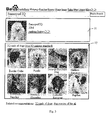
- results shown in Fig. 3 may be displayed, and the results include a first search result 31 and a second search result 32.
- a sequencing basis may be displayed. For example, as shown in Fig. 3 , in addition to the first search result and the second search result, a rank feature, a dog IQ ranking standard and the like are shown.
- a uniform resource locator (URL) link indicating a source of the rank basis may be stored in the attribution of the entity in the data base, thus facilitating the view of the user.
- IQ of dogs have a rank, for example, dogs ranked in top 10 of the IQ rank may have certain features in memory and obedience, and these features may be represented by ranking features.
- related recommendations may be shown, such as IQ rank of dogs, dog species of the all, etc.
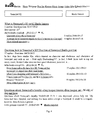
- Fig. 4 is a schematic diagram showing a conventional displayed search result.
- embodiments of Fig. 3 not only display a main requirement such as IQ rank of Samoyed, but also display IQ ranks of other dog species. Therefore, with the method according to embodiments of the present disclosure, more complete information may be provided to the user, thus satisfying requirements of the user.
- a search result webpage may be redirected to after a picture and/or title of an entity in the first search result and/or the second search result is clicked.
- an entity in the second search result is clicked, and the method further includes the following steps.
- the search engine redirects to a search result webpage of an entity in the second search result after a picture and/or title of the entity in the second search result is clicked.
- a search result webpage of the poodle dog may be redirected to.
- a search result in the related art may be displayed.
- contents shown in Fig. 3 contents shown in Fig. 4 may be displayed.
- the search result displaying method by obtaining and displaying the first search result, a main requirement of the user corresponding to the search word may be satisfied; while by obtaining and displaying the second search result, the user may learn total information in the field systematically. Therefore, requirements of the user may be satisfied from point to surface, and the user may learn the entire knowledge and information in a field rapidly, thus avoiding a cost for inputting repeatedly, multiple searching, and pre-learning related knowledge.
- the search result displaying method even in a condition that the user only knows knowledge of one point in a field, with the search result displaying method according to embodiments of the present disclosure, the entire field may be completely learned by the user from point to surface, and relatively complete information in the field related to a search point of the user may be provided, such that requirements of the user may be satisfied. Moreover, with the search result displaying method according to embodiments of the present disclosure, since a corresponding webpage may be redirected to after a picture and/or title of an entity is clicked, more detailed information may be provided to the user, thus improving the experience of the user.
- Fig. 6 is a block diagram of a search result displaying device according to an embodiment of the present disclosure.
- the search result displaying device 60 includes a receiving module 61, an obtaining module 62 and a displaying module 63.
- the receiving module 61 is configured to receive a search word.
- the search word input by the user may include "Samoyed IQ".
- the obtaining module 62 is configured to obtain a first search result and a second search result according to the search word.
- the first search result includes information of an entity corresponding to the search word
- the second search result includes information of each entity in a field and/or attribution to which the search word belongs.
- the first search result may be used to satisfy a main requirement of the user, and the information of the entity corresponding to the search word may include search result information of the entity described by the search word.
- the information of the entity corresponding to the search word may be information of Samoyed, for example, rank of Samoyed IQ.
- entity may refer to distinguishable things existing in the objective word.
- the entity may include a person, an object, or an abstract concept.
- the entity may include at least one of "Samoyed” and "Husky”.
- the second search result is configured to provide relatively complete information in the field and/or attribution to which the search word belongs, so as to satisfy potential requirements of the user.
- the information of each entity in the field and/or attribution to which the search word belongs may refer to search result information of each entity in a field and/or attribution to which the entity described by the search word belongs.
- search result information For example, for the above search word "Samoyed IQ", the field to which the search word belongs is dog, and the attribution to which the search word belongs is IQ.
- the second search result may include an IQ rank of each dog in the dog field.
- the second search result may further include an IQ of Husky and an IQ of Vietnamese mastiff.
- the displaying module 63 is configured to display the first search result and the second search result.
- the first search result and the second search result may be displayed in different areas. For example, the first search result is displayed above the second search result.
- the search result displaying device by obtaining and displaying the first search result, a main requirement of the user corresponding to the search word may be satisfied; while by obtaining and displaying the second search result, the user may learn total information in the field systematically. Therefore, requirements of the user may be satisfied from point to surface, and the user may learn the entire knowledge and information in a field rapidly, thus avoiding a cost for inputting repeatedly, multiple searching, and pre-learning related knowledge.
- the entire field may be completely learned by the user from point to surface, and relatively complete information in the field related to a search point of the user may be provided, such that requirements of the user may be satisfied, and the search efficiency may be improved.
- Fig. 7 is a block diagram of a search result displaying device according to another embodiment of the present disclosure.
- the obtaining module 62 is configured to obtain information of an entity corresponding to the search word from a pre-established database and to determine the information of the entity corresponding to the search word as a first search result, in which information of each entity in at least one field and/or attribution is stored in the data base.
- the data base may be a structured entity data base, and the data base may record each entity and attribution information corresponding to each entity.
- the attribution information of each pet type may be pre-collected, and the attribution information includes, for example, keeping difficulty, IQ, and price. Then, each pet type and attribution information of the each pet type may be correspondingly stored in the structured entity data base.
- the entities in the structured entity data base may have relations, such as a peering relation and an affiliation relation. For example, Husky and Samoyed are in a peering relation, while Husky and dog are in an affiliation relation.
- the information of the entity may be obtained according to an index searching. Alternatively, the information of the entity may be obtained by searching according to the relation between entities.
- the first search result includes information of the entity corresponding to the search word.
- Each entity may be a species of each pet.
- the entity corresponding to the search word is "Samoyed" in the data base; because the search word includes an IQ attribution, and therefore the information of the entity corresponding to the search word may be IQ information of the corresponding entity, i.e. IQ information of Samoyed, such as IQ rank of Samoyed.
- the obtaining module 62 is further configured to obtain a field and/or attribution to which the search word belongs, to obtain information of each entity in the field and/or attribution, to integrate the information of each entity, and to obtain the second search result.
- the second search result includes information of each entity in a field and/or attribution to which the search word belongs.
- a plurality of entities are provided in one field and/or attribution, and therefore the second search result may include information of a plurality of entities.
- the search word is "Samoyed IQ”
- the field and attribution of the search word may be dog field and IQ attribution respectively, and therefore the second search result includes IQ information of each dog species in the dog field.
- the obtaining module 62 is further configured to sequence the information of each entity according to a parameter in the information of each entity.
- all dog species may be sequenced according to the IQ information, such as sequencing according to a descending order of IQ, thus obtaining a finally displayed second search result.
- a field to which Samoyed belongs may be further obtained according to entity information of Samoyed, i.e. Husky is one species of dog.
- IQ is one attribution of a single pet entity, which is a horizontal attribution of an entity in the pet field.
- IQ attribution information that the user would like to know may be extended horizontally, and therefore IQ attribution data of all dog species may be obtained.
- the picture information and title information of all dog entities may be obtained, and may be integrated and sequenced according to IQ, thus showing the user with systematic and complete information, such as structured information of IQ rank of all dog species. In this way, a searching experience of the user may be improved.
- the displaying module 63 is configured to display the first search result and the second search result in different areas. For example, the first search result may be displayed above the second search result.
- the first and/or second search result may include a picture and/or title of a corresponding entity.
- entities corresponding to the first search result and the second search result include a picture and a title.
- results shown in Fig. 3 may be displayed.
- a sequencing basis may be displayed in addition to displaying the first search result and the second search result.
- a rank feature, a dog IQ ranking standard and the like are shown in addition to the first search result and the second search result.
- a URL link indicating a source of the rank basis may be stored in the attribution of the entity in the data base, thus facilitating the view of the user.
- IQ of dogs have a rank, for example, dogs ranked in top 10 of the IQ rank may have certain features in memory and obedience, and these features may be represented by ranking features. In some embodiments, related recommendations may be shown, such as IQ rank of dogs, dog species of the all, etc.
- Fig. 4 is a schematic diagram showing a conventional displayed search result.
- embodiments of Fig. 3 not only display a main requirement such as IQ rank of Samoyed, but also display IQ ranks of other dog species. Therefore, with the device according to embodiments of the present disclosure, more complete information may be provided to the user, thus satisfying requirements of the user.
- a search result webpage may be redirected to after a picture and/or title of an entity in the first search result and/or the second search result is clicked.
- the device further includes a redirecting module 64.
- the redirecting module 64 is configured to redirect to a search result webpage of an entity in the second search result after a picture and/or title of the entity in the second search result is clicked.
- the redirecting module 64 is configured to redirect to a search result webpage of an entity in the first search result after a picture and/or title of the entity in the first search result is clicked.
- a search result webpage of the poodle dog may be redirected to.
- a search result in the related art may be displayed.
- contents shown in Fig. 3 contents shown in Fig.4 may be displayed.
- the search result displaying device by obtaining and displaying the first search result, a main requirement of the user corresponding to the search word may be satisfied; while by obtaining and displaying the second search result, the user may learn total information in the field systematically. Therefore, requirements of the user may be satisfied from point to surface, and the user may learn the entire knowledge and information in a field rapidly, thus avoiding a cost for inputting repeatedly, multiple searching, and pre-learning related knowledge.
- the search result displaying method even in a condition that the user only knows knowledge of one point in a field, with the search result displaying method according to embodiments of the present disclosure, the entire field may be completely learned by the user from point to surface, and relatively complete information in the field related to a search point of the user may be provided, such that requirements of the user may be satisfied. Moreover, with the search result displaying device according to embodiments of the present disclosure, since a corresponding webpage may be redirected to after a picture and/or title of an entity is clicked, more detailed information may be provided to the user, thus improving the experience of the user.
- Embodiments of the present disclosure further provide a client device.
- the client device includes a shell, a processor, a memory, a circuit board and a power circuit.
- the circuit board is disposed in an interior space enclosed by the shell, the processor and the memory are both disposed on the circuit board, the power circuit is configured to provide power to each circuit and components of the client device, the memory is configured to store an executable program code, and the processor is configured to run a program corresponding to the executable program code by reading the executable program code so as to execute the following steps A to C.
- step A a search word is received.
- the search word input by the user may include "Samoyed IQ".
- a first search result and a second search result are obtained according to the search word, in which the first search result includes information of an entity corresponding to the search word, and the second search result includes information of each entity in a field and/or attribution to which the search word belongs.
- the first search result may be used to satisfy a main requirement of the user, and the information of the entity corresponding to the search word may include search result information of the entity described by the search word.
- the information of the entity corresponding to the search word may be information of Samoyed, for example, rank of Samoyed IQ.
- entity may refer to distinguishable things existing in the objective word.
- the entity may include a person, an object, or an abstract concept.
- the entity may include at least one of "Samoyed” and "Husky”.
- the second search result is configured to provide relatively complete information in the field and/or attribution to which the search word belongs, so as to satisfy potential requirements of the user.
- the information of each entity in the field and/or attribution to which the search word belongs may refer to search result information of each entity in a field and/or attribution to which the entity described by the search word belongs.
- search result information For example, for the above search word "Samoyed IQ", the field to which the search word belongs is dog, and the attribution to which the search word belongs is IQ.
- the second search result may include an IQ rank of each dog in the dog field.
- the second search result may further include an IQ of Husky and an IQ of Vietnamese mastiff.
- step C the first search result and the second search result are displayed.
- the first search result and the second search result may be displayed in different areas. For example, the first search result is displayed above the second search result.
- search word is "Samoyed IQ”
- information related to IQ of Samoyed is displayed, and after this search action, the user may add a search word "Husky IQ”.
- the potential requirement of the user may be which dog has higher IQ and is suitable to keep. The user, however, does not know how to achieve the object. Therefore, the user may give up searching after several searches, without satisfying the requirements.
- the client device by obtaining and displaying the first search result, a main requirement of the user corresponding to the search word may be satisfied; while by obtaining and displaying the second search result, the user may learn total information in the field systematically. Therefore, requirements of the user may be satisfied from point to surface, and the user may learn the entire knowledge and information in a field rapidly, thus avoiding a cost for inputting repeatedly, multiple searching, and pre-learning related knowledge.
- the entire field may be completely learned by the user from point to surface, and relatively complete information in the field related to a search point of the user may be provided, such that requirements of the user may be satisfied, and the search efficiency may be improved.
- the processor is configured to run a program corresponding to the executable program code by reading the executable program code so as to execute the following steps D to I.
- step D a search word is received.
- a user inputs a search word "Samoyed IQ".
- the search word is sent to a server.
- the server obtains a first search result from a pre-established data base according to the search word, obtains a field and attribution to which the search word belongs, obtains information of the attribution of each entity in the field, and obtains a second search result.
- the data base may be a structured entity data base, and the data base may record each entity and attribution information corresponding to each entity.
- the attribution information of each pet type may be pre-collected, and the attribution information includes, for example, keeping difficulty, IQ, and price. Then, each pet type and attribution information of the each pet type may be correspondingly stored in the structured entity data base.
- the entities in the structured entity data base may have relations, such as a peering relation and an affiliation relation. For example, Husky and Samoyed are in a peering relation, while Husky and dog are in an affiliation relation.
- the information of the entity may be obtained according to an index searching. Alternatively, the information of the entity may be obtained by searching according to the relation between entities.
- the first search result includes information of the entity corresponding to the search word.
- Each entity may be a species of each pet.
- the entity corresponding to the search word is "Samoyed" in the data base; because the search word includes an IQ attribution, and therefore the information of the entity corresponding to the search word may be IQ information of the corresponding entity, i.e. IQ information of Samoyed, such as IQ rank of Samoyed.
- the second search result includes information of each entity in a field and/or attribution to which the search word belongs.
- a plurality of entities are provided in one field and/or attribution, and therefore the second search result may include information of a plurality of entities.
- the search word is "Samoyed IQ”
- the field and attribution of the search word may be dog field and IQ attribution respectively, and therefore the second search result includes IQ information of each dog species in the dog field.
- all dog species may be sequenced according to the IQ information, such as sequencing according to a descending order of IQ, thus obtaining a finally displayed second search result.
- a field to which Samoyed belongs may be further obtained according to entity information of Samoyed, i.e. Husky is one species of dog.
- IQ is one attribution of a single pet entity, which is a horizontal attribution of an entity in the pet field.
- IQ attribution information that the user would like to know may be extended horizontally, and therefore IQ attribution data of all dog species may be obtained.
- the picture information and title information of all dog entities may be obtained, and may be integrated and sequenced according to IQ, thus showing the user with systematic and complete information, such as structured information of IQ rank of all dog species. In this way, a searching experience of the user may be improved.
- information of the entity corresponding to the first search result and/or the second search result may include a picture and/or title of the entity.
- step G the first search result and the second search result are received.
- step H the first search result and the second search result are displayed.
- the first search result and the second search result may be displayed in different areas.
- entities corresponding to the first search result and the second search result include a picture and a title.
- results shown in Fig. 3 may be displayed.
- a sequencing basis may be displayed in addition to displaying the first search result and the second search result.
- a rank feature, a dog IQ ranking standard and the like are shown in addition to the first search result and the second search result.
- a URL link indicating a source of the rank basis may be stored in the attribution of the entity in the data base, thus facilitating the view of the user.
- IQ of dogs have a rank, for example, dogs ranked in top 10 of the IQ rank may have certain features in memory and obedience, and these features may be represented by ranking features. In some embodiments, related recommendations may be shown, such as IQ rank of dogs, dog species of the all, etc.
- Fig. 4 is a schematic diagram showing a conventional displayed search result.
- embodiments of Fig. 3 not only display a main requirement such as IQ rank of Samoyed, but also display IQ ranks of other dog species. Therefore, with the method according to embodiments of the present disclosure, more complete information may be provided to the user, thus satisfying requirements of the user.
- a search result webpage may be redirected to after a picture and/or title of an entity in the first search result and/or the second search result is clicked.
- an entity in the second search result is clicked, and the method further includes the following steps.
- a search result webpage of an entity in the second search result is redirected to after a picture and/or title of the entity in the second search result is clicked.
- a search result webpage of the poodle dog may be redirected to.
- a search result in the related art may be displayed.
- contents shown in Fig. 3 contents shown in Fig. 4 may be displayed.
- the client device by obtaining and displaying the first search result, a main requirement of the user corresponding to the search word may be satisfied; while by obtaining and displaying the second search result, the user may learn total information in the field systematically. Therefore, requirements of the user may be satisfied from point to surface, and the user may learn the entire knowledge and information in a field rapidly, thus avoiding a cost for inputting repeatedly, multiple searching, and pre-learning related knowledge.
- the search result displaying method even in a condition that the user only knows knowledge of one point in a field, with the search result displaying method according to embodiments of the present disclosure, the entire field may be completely learned by the user from point to surface, and relatively complete information in the field related to a search point of the user may be provided, such that requirements of the user may be satisfied. Moreover, with the client device according to embodiments of the present disclosure, since a corresponding webpage may be redirected to after a picture and/or title of an entity is clicked, more detailed information may be provided to the user, thus improving the experience of the user.
- Embodiments of a further aspect of the present disclosure provide a computer readable storage medium.
- the computer readable storage medium includes a computer program for executing the search result displaying method according to embodiments of an aspect of the present disclosure, when running on a computer.
- first and second are used herein for purposes of description and are not intended to indicate or imply relative importance or significance or impliedly indicate quantity of the technical feature referred to.
- the feature defined with “first” and “second” may comprise one or more this feature.
- a plurality of means two or more than two this features, unless specified otherwise.
- Any procedure or method described in the flow charts or described in any other way herein may be understood to include one or more modules, portions or parts for storing executable codes that realize particular logic functions or procedures.
- advantageous embodiments of the present disclosure includes other implementations in which the order of execution is different from that which is depicted or discussed, including executing functions in a substantially simultaneous manner or in an opposite order according to the related functions. This should be understood by those skilled in the art which embodiments of the present disclosure belong to.
- each part of the present disclosure may be realized by the hardware, software, firmware or their combination.
- a plurality of steps or methods may be realized by the software or firmware stored in the memory and executed by the appropriate instruction execution system.
- the steps or methods may be realized by one or a combination of the following techniques known in the art: a discrete logic circuit having a logic gate circuit for realizing a logic function of a data signal, an application-specific integrated circuit having an appropriate combination logic gate circuit, a programmable gate array (PGA), a field programmable gate array (FPGA), etc.
- each function cell of the embodiments of the present disclosure may be integrated in a processing module, or these cells may be separate physical existence, or two or more cells are integrated in a processing module.
- the integrated module may be realized in a form of hardware or in a form of software function modules. When the integrated module is realized in a form of software function module and is sold or used as a standalone product, the integrated module may be stored in a computer readable storage medium.
- the storage medium mentioned above may be read-only memories, magnetic disks or CD, etc.
Landscapes
- Engineering & Computer Science (AREA)
- Theoretical Computer Science (AREA)
- Databases & Information Systems (AREA)
- Data Mining & Analysis (AREA)
- Physics & Mathematics (AREA)
- General Engineering & Computer Science (AREA)
- General Physics & Mathematics (AREA)
- Computational Linguistics (AREA)
- Information Retrieval, Db Structures And Fs Structures Therefor (AREA)
- Information Transfer Between Computers (AREA)
Applications Claiming Priority (1)
| Application Number | Priority Date | Filing Date | Title |
|---|---|---|---|
| CN201410161129.0A CN103914566A (zh) | 2014-04-22 | 2014-04-22 | 搜索结果的展现方法和装置 |
Publications (1)
| Publication Number | Publication Date |
|---|---|
| EP2937795A1 true EP2937795A1 (de) | 2015-10-28 |
Family
ID=51040246
Family Applications (1)
| Application Number | Title | Priority Date | Filing Date |
|---|---|---|---|
| EP14197972.4A Withdrawn EP2937795A1 (de) | 2014-04-22 | 2014-12-15 | Suchergebnisanzeigeverfahren und Vorrichtung |
Country Status (4)
| Country | Link |
|---|---|
| US (1) | US20150302066A1 (de) |
| EP (1) | EP2937795A1 (de) |
| KR (1) | KR20150122048A (de) |
| CN (1) | CN103914566A (de) |
Families Citing this family (6)
| Publication number | Priority date | Publication date | Assignee | Title |
|---|---|---|---|---|
| CN104199987B (zh) * | 2014-09-28 | 2017-04-12 | 北京奇虎科技有限公司 | 根据用户自定义排序显示搜索结果页的方法及搜索服务器 |
| CN105117400B (zh) * | 2015-07-08 | 2019-05-31 | 百度在线网络技术(北京)有限公司 | 信息搜索方法和系统 |
| CN105677931B (zh) * | 2016-04-07 | 2018-06-19 | 北京百度网讯科技有限公司 | 信息搜索方法和装置 |
| CN107944025A (zh) * | 2017-12-12 | 2018-04-20 | 北京百度网讯科技有限公司 | 信息推送方法和装置 |
| CN113792209B (zh) * | 2021-08-13 | 2024-02-02 | 唯品会(广州)软件有限公司 | 搜索词生成方法、系统及计算机可读存储介质 |
| CN114281963B (zh) * | 2021-11-19 | 2025-10-31 | 北京百度网讯科技有限公司 | 搜索及分组方法、装置、设备和存储介质 |
Citations (3)
| Publication number | Priority date | Publication date | Assignee | Title |
|---|---|---|---|---|
| US20090248662A1 (en) * | 2008-03-31 | 2009-10-01 | Yahoo! Inc. | Ranking Advertisements with Pseudo-Relevance Feedback and Translation Models |
| US20110238491A1 (en) * | 2010-03-26 | 2011-09-29 | Microsoft Corporation | Suggesting keyword expansions for advertisement selection |
| US20120143883A1 (en) * | 2010-12-07 | 2012-06-07 | Alibaba Group Holding Limited | Ranking product information |
Family Cites Families (5)
| Publication number | Priority date | Publication date | Assignee | Title |
|---|---|---|---|---|
| US8612306B1 (en) * | 2009-07-29 | 2013-12-17 | Google Inc. | Method, system, and storage device for recommending products utilizing category attributes |
| CN102262630A (zh) * | 2010-05-31 | 2011-11-30 | 国际商业机器公司 | 进行扩展化搜索的方法和装置 |
| US20120173331A1 (en) * | 2010-12-29 | 2012-07-05 | Microsoft Corporation | Hint-Enabled Search Advertisements |
| CN102346778B (zh) * | 2011-10-11 | 2013-08-21 | 北京百度网讯科技有限公司 | 一种用于提供搜索结果的方法与设备 |
| US9245026B1 (en) * | 2013-06-26 | 2016-01-26 | Amazon Technologies, Inc. | Increasing the relevancy of search results across categories |
-
2014
- 2014-04-22 CN CN201410161129.0A patent/CN103914566A/zh active Pending
- 2014-12-15 EP EP14197972.4A patent/EP2937795A1/de not_active Withdrawn
- 2014-12-15 US US14/570,343 patent/US20150302066A1/en not_active Abandoned
- 2014-12-18 KR KR1020140183345A patent/KR20150122048A/ko not_active Ceased
Patent Citations (3)
| Publication number | Priority date | Publication date | Assignee | Title |
|---|---|---|---|---|
| US20090248662A1 (en) * | 2008-03-31 | 2009-10-01 | Yahoo! Inc. | Ranking Advertisements with Pseudo-Relevance Feedback and Translation Models |
| US20110238491A1 (en) * | 2010-03-26 | 2011-09-29 | Microsoft Corporation | Suggesting keyword expansions for advertisement selection |
| US20120143883A1 (en) * | 2010-12-07 | 2012-06-07 | Alibaba Group Holding Limited | Ranking product information |
Also Published As
| Publication number | Publication date |
|---|---|
| KR20150122048A (ko) | 2015-10-30 |
| CN103914566A (zh) | 2014-07-09 |
| US20150302066A1 (en) | 2015-10-22 |
Similar Documents
| Publication | Publication Date | Title |
|---|---|---|
| Hannila et al. | Data-driven begins with DATA; potential of data assets | |
| US10762150B2 (en) | Searching method and searching apparatus based on neural network and search engine | |
| US20150302066A1 (en) | Search result displaying method and device | |
| US10963293B2 (en) | Interactions with contextual and task-based computing environments | |
| JP6564364B2 (ja) | タグ付き検索結果の維持 | |
| EP2930628A1 (de) | Suchverfahren, Client und Server | |
| US20200097854A1 (en) | Machine learning approach for query resolution via a dynamic determination and allocation of expert resources | |
| US20130031106A1 (en) | Social network powered query suggestions | |
| CN105574045B (zh) | 一种视频推荐方法和服务器 | |
| US20130103692A1 (en) | Predicting User Responses | |
| US9558270B2 (en) | Search result organizing based upon tagging | |
| JP6129149B2 (ja) | 検索方法及び検索エンジン | |
| US10073914B2 (en) | Method and apparatus for transmitting search result | |
| US20170132322A1 (en) | Search recommendation method and device | |
| US20170046405A1 (en) | Method and apparatus for searching for application information | |
| US11093567B1 (en) | Ranking content using sharing attribution | |
| US20140324826A1 (en) | Targeted content provisioning based upon tagged search results | |
| US9547713B2 (en) | Search result tagging | |
| Adams | Surfing the hype cycle to infinity and beyond | |
| US20230005041A1 (en) | Item option identification and search result presentation at a search engine | |
| KR102966776B1 (ko) | 아이템 카테고리 네이게이팅 정보 제공 방법 및 전자 장치 | |
| CN110335108B (zh) | 确定食材名词之间的关联度的方法、装置、设备及介质 | |
| Dudman | Metadata for information management and retrieval: understanding metadata and its use: by David Haynes, London, Facet Publishing, 2018, xiv+ 267 pp.,£ 59.95 (paperback), ISBN 978-1-85604-824-8 | |
| Wheeler | Brand Aid: Shopping Well to Save the World | |
| Kiani | On the construction of optimal designs |
Legal Events
| Date | Code | Title | Description |
|---|---|---|---|
| PUAI | Public reference made under article 153(3) epc to a published international application that has entered the european phase |
Free format text: ORIGINAL CODE: 0009012 |
|
| 17P | Request for examination filed |
Effective date: 20150108 |
|
| AK | Designated contracting states |
Kind code of ref document: A1 Designated state(s): AL AT BE BG CH CY CZ DE DK EE ES FI FR GB GR HR HU IE IS IT LI LT LU LV MC MK MT NL NO PL PT RO RS SE SI SK SM TR |
|
| AX | Request for extension of the european patent |
Extension state: BA ME |
|
| RBV | Designated contracting states (corrected) |
Designated state(s): AL AT BE BG CH CY CZ DE DK EE ES FI FR GB GR HR HU IE IS IT LI LT LU LV MC MK MT NL NO PL PT RO RS SE SI SK SM TR |
|
| STAA | Information on the status of an ep patent application or granted ep patent |
Free format text: STATUS: EXAMINATION IS IN PROGRESS |
|
| 17Q | First examination report despatched |
Effective date: 20180515 |
|
| STAA | Information on the status of an ep patent application or granted ep patent |
Free format text: STATUS: THE APPLICATION HAS BEEN WITHDRAWN |
|
| 18W | Application withdrawn |
Effective date: 20190716 |