EP2937435A1 - Method for manufacturing aluminum alloy molded component for aircraft, and molded component for aircraft - Google Patents
Method for manufacturing aluminum alloy molded component for aircraft, and molded component for aircraft Download PDFInfo
- Publication number
- EP2937435A1 EP2937435A1 EP13864096.6A EP13864096A EP2937435A1 EP 2937435 A1 EP2937435 A1 EP 2937435A1 EP 13864096 A EP13864096 A EP 13864096A EP 2937435 A1 EP2937435 A1 EP 2937435A1
- Authority
- EP
- European Patent Office
- Prior art keywords
- formed component
- strain
- aircraft use
- manufacturing
- imparted
- Prior art date
- Legal status (The legal status is an assumption and is not a legal conclusion. Google has not performed a legal analysis and makes no representation as to the accuracy of the status listed.)
- Granted
Links
Images


Classifications
-
- C—CHEMISTRY; METALLURGY
- C22—METALLURGY; FERROUS OR NON-FERROUS ALLOYS; TREATMENT OF ALLOYS OR NON-FERROUS METALS
- C22F—CHANGING THE PHYSICAL STRUCTURE OF NON-FERROUS METALS AND NON-FERROUS ALLOYS
- C22F1/00—Changing the physical structure of non-ferrous metals or alloys by heat treatment or by hot or cold working
- C22F1/04—Changing the physical structure of non-ferrous metals or alloys by heat treatment or by hot or cold working of aluminium or alloys based thereon
-
- B—PERFORMING OPERATIONS; TRANSPORTING
- B21—MECHANICAL METAL-WORKING WITHOUT ESSENTIALLY REMOVING MATERIAL; PUNCHING METAL
- B21B—ROLLING OF METAL
- B21B1/00—Metal-rolling methods or mills for making semi-finished products of solid or profiled cross-section; Sequence of operations in milling trains; Layout of rolling-mill plant, e.g. grouping of stands; Succession of passes or of sectional pass alternations
-
- B—PERFORMING OPERATIONS; TRANSPORTING
- B64—AIRCRAFT; AVIATION; COSMONAUTICS
- B64F—GROUND OR AIRCRAFT-CARRIER-DECK INSTALLATIONS SPECIALLY ADAPTED FOR USE IN CONNECTION WITH AIRCRAFT; DESIGNING, MANUFACTURING, ASSEMBLING, CLEANING, MAINTAINING OR REPAIRING AIRCRAFT, NOT OTHERWISE PROVIDED FOR; HANDLING, TRANSPORTING, TESTING OR INSPECTING AIRCRAFT COMPONENTS, NOT OTHERWISE PROVIDED FOR
- B64F5/00—Designing, manufacturing, assembling, cleaning, maintaining or repairing aircraft, not otherwise provided for; Handling, transporting, testing or inspecting aircraft components, not otherwise provided for
- B64F5/10—Manufacturing or assembling aircraft, e.g. jigs therefor
-
- C—CHEMISTRY; METALLURGY
- C22—METALLURGY; FERROUS OR NON-FERROUS ALLOYS; TREATMENT OF ALLOYS OR NON-FERROUS METALS
- C22C—ALLOYS
- C22C21/00—Alloys based on aluminium
-
- C—CHEMISTRY; METALLURGY
- C22—METALLURGY; FERROUS OR NON-FERROUS ALLOYS; TREATMENT OF ALLOYS OR NON-FERROUS METALS
- C22C—ALLOYS
- C22C21/00—Alloys based on aluminium
- C22C21/12—Alloys based on aluminium with copper as the next major constituent
-
- C—CHEMISTRY; METALLURGY
- C22—METALLURGY; FERROUS OR NON-FERROUS ALLOYS; TREATMENT OF ALLOYS OR NON-FERROUS METALS
- C22C—ALLOYS
- C22C21/00—Alloys based on aluminium
- C22C21/12—Alloys based on aluminium with copper as the next major constituent
- C22C21/14—Alloys based on aluminium with copper as the next major constituent with silicon
-
- C—CHEMISTRY; METALLURGY
- C22—METALLURGY; FERROUS OR NON-FERROUS ALLOYS; TREATMENT OF ALLOYS OR NON-FERROUS METALS
- C22C—ALLOYS
- C22C21/00—Alloys based on aluminium
- C22C21/12—Alloys based on aluminium with copper as the next major constituent
- C22C21/16—Alloys based on aluminium with copper as the next major constituent with magnesium
-
- C—CHEMISTRY; METALLURGY
- C22—METALLURGY; FERROUS OR NON-FERROUS ALLOYS; TREATMENT OF ALLOYS OR NON-FERROUS METALS
- C22C—ALLOYS
- C22C21/00—Alloys based on aluminium
- C22C21/12—Alloys based on aluminium with copper as the next major constituent
- C22C21/18—Alloys based on aluminium with copper as the next major constituent with zinc
-
- C—CHEMISTRY; METALLURGY
- C22—METALLURGY; FERROUS OR NON-FERROUS ALLOYS; TREATMENT OF ALLOYS OR NON-FERROUS METALS
- C22F—CHANGING THE PHYSICAL STRUCTURE OF NON-FERROUS METALS AND NON-FERROUS ALLOYS
- C22F1/00—Changing the physical structure of non-ferrous metals or alloys by heat treatment or by hot or cold working
- C22F1/04—Changing the physical structure of non-ferrous metals or alloys by heat treatment or by hot or cold working of aluminium or alloys based thereon
- C22F1/057—Changing the physical structure of non-ferrous metals or alloys by heat treatment or by hot or cold working of aluminium or alloys based thereon of alloys with copper as the next major constituent
-
- B—PERFORMING OPERATIONS; TRANSPORTING
- B21—MECHANICAL METAL-WORKING WITHOUT ESSENTIALLY REMOVING MATERIAL; PUNCHING METAL
- B21B—ROLLING OF METAL
- B21B1/00—Metal-rolling methods or mills for making semi-finished products of solid or profiled cross-section; Sequence of operations in milling trains; Layout of rolling-mill plant, e.g. grouping of stands; Succession of passes or of sectional pass alternations
- B21B1/22—Metal-rolling methods or mills for making semi-finished products of solid or profiled cross-section; Sequence of operations in milling trains; Layout of rolling-mill plant, e.g. grouping of stands; Succession of passes or of sectional pass alternations for rolling plates, strips, bands or sheets of indefinite length
-
- B—PERFORMING OPERATIONS; TRANSPORTING
- B21—MECHANICAL METAL-WORKING WITHOUT ESSENTIALLY REMOVING MATERIAL; PUNCHING METAL
- B21B—ROLLING OF METAL
- B21B3/00—Rolling materials of special alloys so far as the composition of the alloy requires or permits special rolling methods or sequences ; Rolling of aluminium, copper, zinc or other non-ferrous metals
- B21B2003/001—Aluminium or its alloys
Definitions
- the present invention relates to a method of manufacturing a formed component for aircraft use made of an aluminum alloy, and to the formed component for aircraft use manufactured by the manufacturing method.
- a typical material used in formed components for aircraft use is an aluminum alloy.
- a lithium-containing aluminum alloy (hereinafter, simply referred to as an "aluminum-lithium alloy”) has a lower density than the other aluminum alloys, and in addition, has excellent strength. Therefore, replacing formed components made of aluminum by formed components made of an aluminum-lithium alloy has been discussed aiming to realize, for example, further reduction of the weight of aircrafts.
- the formed component for aircraft use is manufactured in such a manner that the material fabricated from a sheet material, a plate material, or an extrusion-molded member is mechanically machined into an intended shape, or even if forming of the material is performed, the forming to be performed is significantly limited.
- Patent Literature 1 discloses a method of manufacturing a roll-formed component for aircraft use, the method including: performing a rolling process on a sheet-shaped coil material made of an aluminum alloy; then subjecting the material to solution heat treatment; and thereafter subjecting the material to three-staged aging treatment. By controlling the temperature in the aging treatment, both high strength and excellent corrosion resistance are realized.
- Patent Literature 1 The aluminum alloy adopted in Patent Literature 1 is 7000 series (7xxx series) in the International Alloy Designation System for aluminum alloys. Patent Literature 1 makes no reference to whether or not the aluminum alloy, whose primary alloy components are zinc and magnesium, contains lithium. In addition, the temper of the roll-formed component for aircraft use obtained by the manufacturing method disclosed in Patent Literature 1 is T7. Therefore, it is substantially difficult to apply the manufacturing method disclosed in Patent Literature 1 to manufacturing of a formed component for aircraft use made of an aluminum-lithium alloy and adjust the temper of the formed component to T8. The same is true for the other aluminum alloys.
- An object of the present invention is to provide a technique that makes it possible to manufacture a formed component for aircraft use made of an aluminum alloy at a lower cost than conventional art.
- a method of manufacturing a formed component for aircraft use according to the present invention is a method of manufacturing a formed component for aircraft use made of an aluminum alloy, the method including: subjecting a material made of an aluminum alloy to solution heat treatment; then forming the material into a predetermined shape under cold working conditions; and thereafter subjecting the material to artificial age-hardening treatment. Under the cold working, the material is formed into the predetermined shape while a strain corresponding to a temper T8 is being imparted to the material by a roll forming apparatus.
- the roll forming apparatus may be configured as a multi-stage roll forming apparatus.
- a clearance of at least some of rolls of the multi-stage roll forming apparatus may be adjusted to be less than a thickness of the material to impart a compressive strain to the material.
- the strain imparted to the material when the forming of the material is performed may be a compressive strain or a tensile strain.
- the aluminum alloy may be an aluminum-lithium alloy containing lithium.
- the formed component for aircraft use may be a frame or a stringer.
- the present invention also includes a formed component for aircraft use made of an aluminum alloy, the formed component being obtained by the above-described method of manufacturing a formed component for aircraft use.
- the present invention is configured as described above, and has an advantage of making it possible to manufacture a formed component for aircraft use made of an aluminum alloy at a lower cost than conventional art.
- a formed component for aircraft use according to the present invention is made of an aluminum alloy.
- the formed component is not limited to a particular type, so long as the formed component is for aircraft use.
- Examples of typical formed components for aircraft use include frames and stringers used as aircraft structural members. In general, these structural members are manufactured by a rolling process using a roll forming apparatus (a roller forming apparatus). Therefore, in the present invention, the formed component for aircraft use is preferably a roll-formed component.
- An aluminum alloy used as the material of the formed component for aircraft use according to the present invention is not limited to a particular kind.
- a lithium-containing aluminum alloy i.e., an aluminum-lithium alloy
- the aluminum-lithium alloy is not limited to a particular kind.
- typical aluminum-lithium alloys include, among 8xxx series (8000 series) in the International Alloy Designation System for aluminum alloys, those containing lithium as a primary alloy component, and among 2xxx series (2000 series) in the International Alloy Designation System, those containing lithium as a secondary alloy component.
- the aluminum alloys in 8xxx series are different from those in 1xxx series to 7xxx series.
- one example of aluminum alloy containing lithium as a primary alloy component i.e., Al-Li based alloy
- the aluminum alloys in 2xxx series contain copper as a primary alloy component.
- those containing lithium as a secondary alloy component i.e., Al-Cu-Li based alloys
- aluminum-lithium alloys that contain copper and magnesium as alloy components (i.e., Al-Li-Cu-Mg based alloys), such as 2091 and 8091.
- These known aluminum-lithium alloys may each be used as the material of the formed component for aircraft use according to the present invention.
- the temper of the aluminum-lithium alloy needs to be T8 (equivalent to JIS H0001).
- T8 an aluminum alloy with the temper T8 is defined as "one that has been subjected to solution heat treatment, then subjected to cold working, and further subjected to artificial age-hardening treatment” or "one that has been subjected to solution heat treatment, then subjected to cold working for increasing strength, and further subjected to artificial age-hardening treatment".
- the T8 state of an aluminum alloy is a state where the aluminum alloy has been subjected to solution heat treatment, then imparted with a strain by several percent in a thermally refined intermediate state, and further subjected to artificial age-hardening treatment.
- the aluminum-lithium alloy is in the T8 state, its physical properties such as fracture toughness, strength, and corrosion resistance are excellent, and the aluminum-lithium alloy can be suitably used in the field of aircrafts.
- a method of manufacturing a formed component for aircraft use according to the present invention includes: subjecting a material made of an aluminum alloy, such as an aluminum-lithium alloy, to solution heat treatment; then subjecting the material to cold working to form the material into a predetermined shape; and thereafter subjecting the material to artificial age-hardening treatment. At the time of forming of the material by the cold working, the material is imparted with a strain corresponding to the temper T8.
- a sheet (plate) material made of an aluminum-lithium alloy is prepared, and the sheet material is subjected to solution heat treatment (step S01).
- the temper of the sheet material is initially "O" (JIS H0001), and the sheet material is in a softened state owing to annealing.
- the temper of the sheet material becomes "W” (JIS H0001), i.e., becomes harder than before the solution heat treatment.
- the sheet material in the W state is subjected to a cold working process (step S02).
- the cold working process the sheet material is stretched not in a general manner by a roll forming apparatus but in a manner using a multi-stage roll forming apparatus (a multi-stage roller forming apparatus), such that the sheet material is formed in the shape of the frame. Therefore, the cold working process in the present invention can be considered as a frame-forming process (or a component shape forming process).
- a compressive strain is imparted to the sheet material by first-stage rolls of the multi-stage roll forming apparatus (step S21, first roll compression process).
- the clearance of the first-stage rolls is adjusted to be less than the thickness of the sheet material, and thereby the compressive strain is imparted to the sheet material.
- the amount of compressive strain imparted at the time is substantially equivalent to a dislocation density necessary for realizing the T8 state.
- the compressive strain is imparted by the first-stage rolls, the present invention is not thus limited.
- the compressive strain may be imparted by other rolls at the second or subsequent stage.
- step S22 section roll forming process
- step S23 curving roll forming process
- the frame is subjected to a post-forming process (step S03).
- the post-forming process include rough trimming and strain straightening (strain relieving).
- the post-forming process is not limited to a particular process.
- the frame sheet material is subjected to artificial age-hardening treatment (aging treatment) (step S04).
- aging treatment age-hardening treatment
- the temper of the aluminum-lithium alloy forming the frame becomes T8. In this manner, the frame suitable for aircraft use made of the aluminum-lithium alloy can be obtained.
- Fig. 2 illustrates the above-described manufacturing method in the form of a timing diagram showing temperature changes.
- Fig. 2 in the cold working process of the present invention, not simple stretching but both stretching and frame forming (component forming) are performed at the same time.
- the manufacturing process of the present invention is compared with a general manufacturing process, although the processes and treatments performed on the aluminum-lithium alloy are fundamentally the same between these manufacturing processes, there is a difference in terms of the manner of imparting the strain before the forming.
- the compressive strain which is substantially equivalent to a tensile strain for realizing the T8 state, is imparted to the sheet material made of the aluminum-lithium alloy after the solution heat treatment.
- the formed component for aircraft use made of the aluminum-lithium alloy in the T8 state can be manufactured substantially by a rolling process. This consequently makes it possible to manufacture the formed component for aircraft use made of the aluminum-lithium alloy at a lower cost than conventional art.
- natural age-hardening treatment may be performed between the solution heat treatment (step S01) and the cold working process (step S02).
- the strength of the manufactured formed component for aircraft use can be further improved.
- solution heat treatment and the cold working process may be performed as part of the process of manufacturing the formed component for aircraft use.
- the material that has been subjected to the solution heat treatment and the cold working process in advance may be used to manufacture the formed component for aircraft use.
- the solution heat treatment and the cold working process may be performed by the manufacturer of the material, or may be performed by the manufacturer of the formed component for aircraft use.
- the sheet material is, after being subjected to the solution heat treatment, passed through the multi-stage roll forming apparatus, and thereby a compressive strain is imparted to the sheet material.
- the present invention is not thus limited. Not a compressive strain but a tensile strain may be imparted to the sheet material. That is, in the present invention, the manner of imparting a strain to the sheet material is not particularly limited, so long as a strain for realizing the T8 state can be imparted to the sheet material in the cold working process.
- the multi-stage roll forming apparatus including the section rolls and curving rolls is used as an apparatus for performing the cold working process.
- the present invention is not thus limited. Any known forming apparatus capable of imparting a strain such as a compressive strain to a sheet-shaped aluminum material may be suitably used as the apparatus for performing the cold working process.
- Specific examples of the forming apparatus using multi-stage rolls include a stretcher leveler and a roller leveler.
- the clearance of the first-stage rolls is adjusted to be less than the thickness of the sheet material (i.e., less than the original thickness of the sheet material), and thereby a compressive strain is imparted to the sheet material.
- the degree of the clearance adjustment is not particularly limited.
- the clearance may be suitably set based on conditions, such as the kind of the aluminum-lithium alloy, the thickness of the sheet material, and a necessary degree of strain for realizing the T8 state.
- the formed component for aircraft use is a frame.
- the present invention is of course not limited to this.
- a different formed component for aircraft use such as a stringer, can be manufactured by the present invention.
- a suitable roll-forming process is performed in accordance with the type of the component to be manufactured.
- the material to which the strain is imparted after being subjected to the solution heat treatment is a sheet material
- the present invention is of course not limited to this.
- a material different from the sheet material i.e., a material with a different shape, may be suitably used, so long as a strain for realizing the T8 state can be imparted to the material.
- a sheet material made of an aluminum-lithium alloy whose temper is O is subjected to solution heat treatment, and thereby the temper of the sheet material is adjusted to W.
- the sheet material with the temper W is formed into a predetermined shape.
- the temper of the resultant sheet material (formed sheet material) is T3 or substantially T3.
- the formed sheet material whose temper is T3 or substantially T3 is subjected to artificial age-hardening treatment, and thereby the formed sheet material with a temper T8 is obtained.
- test piece An aluminum-lithium alloy 2198 available from Constellium was used to obtain a strip-shaped test piece whose temper was adjusted to substantially T3 by thermal refining.
- the test piece is hereinafter referred to as a "pre-forming test piece" for the sake of convenience of the description.
- the test piece was rolled by a rolling mill (trade name: two-stage rolling mill DBR 150 available from daito seisakuzyo inc.) at least once. In this manner, a compressive strain was imparted to the test piece.
- the test piece to which the compressive strain has been imparted is hereinafter referred to as a "strain-imparted test piece" for the sake of convenience of the description.
- test pieces were subjected to artificial age-hardening treatment, and thereby test pieces of Reference Example 1 were obtained.
- Each of the obtained test pieces is hereinafter referred to as a "post-forming test piece" for the sake of convenience of the description.
- a test piece for use in a tensile test was obtained from each post-forming test piece.
- a tensile testing machine (universal testing machine 100kN available from Instron) was used to perform the tensile test on the test piece in accordance with ASTM B557. Through the tensile test, data of the tensile strength, yield strength, Young's modulus, and the breaking elongation of each post-forming test piece were obtained. These data were compared with results obtained from Reference Example 2 described below and with the data of a "reference T8 material” having a temper T8, which was provided from a material manufacturer.
- each post-forming test piece was measured by using an X-ray diffraction apparatus (trade name: fully automatic multipurpose X-ray diffraction apparatus PW3050 available from Spectris Co., Ltd.).
- X-ray diffraction apparatus trade name: fully automatic multipurpose X-ray diffraction apparatus PW3050 available from Spectris Co., Ltd.
- Each post-forming test piece was also observed by a transmission electron microscope (TEM), and thereby a T1 phase deposited through the artificial age-hardening treatment was evaluated.
- TEM transmission electron microscope
- the tensile strength was chosen as representative data, and a relationship between the tensile strength and the strain amount was plotted on a graph. Results of the plotting are indicated by white outlined diamond-shaped symbols in Fig. 3 . Further, similar to Reference Example 1, the dislocation density of each post-forming test piece was measured, and the T1 phase deposited thereon was evaluated.
- both the post-forming test pieces of Reference Example 1 and the post-forming test pieces of Reference Example 2 exhibited substantially the same or better results compared to the reference T8 material although specific data are not given herein. Further, it was found that substantially the same degree of dislocation was introduced into each of the post-forming test pieces of Reference Example 1 and the post-forming test pieces of Reference Example 2. Thus, it is understood that, by imparting the strain under cold working conditions, whether the imparted strain is a compressive strain or a tensile strain, substantially the same strength can be obtained, and in addition, the T8 state can be realized.
- a pre-forming test piece with a temper W was obtained in the same manner as in Working Example 1.
- a strain-imparted test piece imparted with a tensile strain and a post-forming test piece resulting from subjecting the strain-imparted test piece to artificial age-hardening treatment were obtained.
- three target amounts of tensile strains of 2%, 5%, and 8% were imparted.
- the present invention is widely and suitably applicable in the field of manufacturing a formed component for aircraft use made of an aluminum alloy.
Landscapes
- Chemical & Material Sciences (AREA)
- Engineering & Computer Science (AREA)
- Mechanical Engineering (AREA)
- Materials Engineering (AREA)
- Metallurgy (AREA)
- Organic Chemistry (AREA)
- Physics & Mathematics (AREA)
- Thermal Sciences (AREA)
- Crystallography & Structural Chemistry (AREA)
- Manufacturing & Machinery (AREA)
- Transportation (AREA)
- Aviation & Aerospace Engineering (AREA)
- Shaping Metal By Deep-Drawing, Or The Like (AREA)
- Bending Of Plates, Rods, And Pipes (AREA)
- Metal Rolling (AREA)
Abstract
Description
- The present invention relates to a method of manufacturing a formed component for aircraft use made of an aluminum alloy, and to the formed component for aircraft use manufactured by the manufacturing method.
- One example of a typical material used in formed components for aircraft use is an aluminum alloy. In particular, a lithium-containing aluminum alloy (hereinafter, simply referred to as an "aluminum-lithium alloy") has a lower density than the other aluminum alloys, and in addition, has excellent strength. Therefore, replacing formed components made of aluminum by formed components made of an aluminum-lithium alloy has been discussed aiming to realize, for example, further reduction of the weight of aircrafts.
- It is known that in order to use an aluminum-lithium alloy in a component for aircraft use, the temper of the aluminum alloy, which is specified by international standards and the like, should be T8. However, an aluminum-lithium alloy in the T8 state has poor ductility and a small work hardening coefficient. Therefore, it is difficult to manufacture a formed component for aircraft use by forming of such an aluminum-lithium alloy. For this reason, for example, in a case where such an aluminum-lithium alloy is used as the material of a formed component for aircraft use other than an aircraft skin, such as an aircraft frame, the formed component for aircraft use is manufactured in such a manner that the material fabricated from a sheet material, a plate material, or an extrusion-molded member is mechanically machined into an intended shape, or even if forming of the material is performed, the forming to be performed is significantly limited.
- In the field of manufacturing roll-formed components for aircraft use from 7000-series aluminum alloys, there is a known method for improving material strength and corrosion resistance by suitably adjusting conditions for aging treatment (artificial age-hardening treatment). For example,
Patent Literature 1 discloses a method of manufacturing a roll-formed component for aircraft use, the method including: performing a rolling process on a sheet-shaped coil material made of an aluminum alloy; then subjecting the material to solution heat treatment; and thereafter subjecting the material to three-staged aging treatment. By controlling the temperature in the aging treatment, both high strength and excellent corrosion resistance are realized. - PTL 1: Japanese Laid-Open Patent Application Publication No.
2003-213387 - In fabricating a formed component for aircraft use from an aluminum-lithium alloy, if the aforementioned mechanical machining is used, it will cause a decrease in material yield, and if extrusion molding is used, it will cause an increase in material cost. As a result, the manufacturing cost will increase significantly. Thus, adopting the mechanical machining or extrusion molding is impractical.
- The aluminum alloy adopted in
Patent Literature 1 is 7000 series (7xxx series) in the International Alloy Designation System for aluminum alloys.Patent Literature 1 makes no reference to whether or not the aluminum alloy, whose primary alloy components are zinc and magnesium, contains lithium. In addition, the temper of the roll-formed component for aircraft use obtained by the manufacturing method disclosed inPatent Literature 1 is T7. Therefore, it is substantially difficult to apply the manufacturing method disclosed inPatent Literature 1 to manufacturing of a formed component for aircraft use made of an aluminum-lithium alloy and adjust the temper of the formed component to T8. The same is true for the other aluminum alloys. - The present invention has been made to solve the above-described problems. An object of the present invention is to provide a technique that makes it possible to manufacture a formed component for aircraft use made of an aluminum alloy at a lower cost than conventional art.
- In order to solve the above-described problems, a method of manufacturing a formed component for aircraft use according to the present invention is a method of manufacturing a formed component for aircraft use made of an aluminum alloy, the method including: subjecting a material made of an aluminum alloy to solution heat treatment; then forming the material into a predetermined shape under cold working conditions; and thereafter subjecting the material to artificial age-hardening treatment. Under the cold working, the material is formed into the predetermined shape while a strain corresponding to a temper T8 is being imparted to the material by a roll forming apparatus.
- According to the above configuration, after subjecting the material made of the aluminum alloy to the solution heat treatment, imparting the strain for realizing a T8 state to the material and forming the material into the predetermined shape are both performed by roll forming at the same time. As a result, the formed component for aircraft use made of the aluminum alloy can be manufactured at a lower cost than conventional art.
- In the above-described method of manufacturing a formed component for aircraft use, the roll forming apparatus may be configured as a multi-stage roll forming apparatus.
- In the above-described method of manufacturing a formed component for aircraft use, a clearance of at least some of rolls of the multi-stage roll forming apparatus may be adjusted to be less than a thickness of the material to impart a compressive strain to the material.
- In the above-described method of manufacturing a formed component for aircraft use, the strain imparted to the material when the forming of the material is performed may be a compressive strain or a tensile strain.
- In the above-described method of manufacturing a formed component for aircraft use, the aluminum alloy may be an aluminum-lithium alloy containing lithium.
- In the above-described method of manufacturing a formed component for aircraft use, the formed component for aircraft use may be a frame or a stringer.
- The present invention also includes a formed component for aircraft use made of an aluminum alloy, the formed component being obtained by the above-described method of manufacturing a formed component for aircraft use.
- The above object, other objects, features, and advantages of the present invention will be made clear by the following detailed description of a preferred embodiment with reference to the accompanying drawings.
- The present invention is configured as described above, and has an advantage of making it possible to manufacture a formed component for aircraft use made of an aluminum alloy at a lower cost than conventional art.
-
-
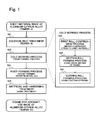
Fig. 1 is a flowchart showing one example of a method of manufacturing a formed component for aircraft use made of an aluminum-lithium alloy according to one embodiment of the present invention. -
Fig. 2 is a timing diagram showing temperature changes in the manufacturing method shown inFig. 1 . -
Fig. 3 is a graph showing results of representative reference examples of the present invention and showing a relationship between a tensile strength and a strain amount for each test piece to which a compressive strain was imparted and each test piece to which a tensile strain was imparted. -
Fig. 4 is a graph showing results of representative working examples of the present invention and showing a relationship between a tensile strength and a strain amount for each test piece to which a compressive strain was imparted and each test piece to which a tensile strain was imparted. - Hereinafter, a preferred embodiment of the present invention is described with reference to the drawings. In the drawings, the same or corresponding elements are denoted by the same reference signs, and repeating the same descriptions is avoided below.
- A formed component for aircraft use according to the present invention is made of an aluminum alloy. The formed component is not limited to a particular type, so long as the formed component is for aircraft use. Examples of typical formed components for aircraft use include frames and stringers used as aircraft structural members. In general, these structural members are manufactured by a rolling process using a roll forming apparatus (a roller forming apparatus). Therefore, in the present invention, the formed component for aircraft use is preferably a roll-formed component.
- An aluminum alloy used as the material of the formed component for aircraft use according to the present invention is not limited to a particular kind. However, a lithium-containing aluminum alloy, i.e., an aluminum-lithium alloy, is particularly preferred. The aluminum-lithium alloy is not limited to a particular kind. Examples of typical aluminum-lithium alloys include, among 8xxx series (8000 series) in the International Alloy Designation System for aluminum alloys, those containing lithium as a primary alloy component, and among 2xxx series (2000 series) in the International Alloy Designation System, those containing lithium as a secondary alloy component.
- The aluminum alloys in 8xxx series are different from those in 1xxx series to 7xxx series. Among the aluminum alloys in 8xxx series, one example of aluminum alloy containing lithium as a primary alloy component (i.e., Al-Li based alloy) is 8090. The aluminum alloys in 2xxx series contain copper as a primary alloy component. Among the aluminum alloys in 2xxx series, those containing lithium as a secondary alloy component (i.e., Al-Cu-Li based alloys) are, for example, 2050 and 2090. Other than these, there are known aluminum-lithium alloys that contain copper and magnesium as alloy components (i.e., Al-Li-Cu-Mg based alloys), such as 2091 and 8091. These known aluminum-lithium alloys may each be used as the material of the formed component for aircraft use according to the present invention.
- In the formed component for aircraft use according to the present invention, the temper of the aluminum-lithium alloy needs to be T8 (equivalent to JIS H0001). For example, in JIS H0001, an aluminum alloy with the temper T8 is defined as "one that has been subjected to solution heat treatment, then subjected to cold working, and further subjected to artificial age-hardening treatment" or "one that has been subjected to solution heat treatment, then subjected to cold working for increasing strength, and further subjected to artificial age-hardening treatment". In other words, the T8 state of an aluminum alloy is a state where the aluminum alloy has been subjected to solution heat treatment, then imparted with a strain by several percent in a thermally refined intermediate state, and further subjected to artificial age-hardening treatment. When the aluminum-lithium alloy is in the T8 state, its physical properties such as fracture toughness, strength, and corrosion resistance are excellent, and the aluminum-lithium alloy can be suitably used in the field of aircrafts.
- A method of manufacturing a formed component for aircraft use according to the present invention includes: subjecting a material made of an aluminum alloy, such as an aluminum-lithium alloy, to solution heat treatment; then subjecting the material to cold working to form the material into a predetermined shape; and thereafter subjecting the material to artificial age-hardening treatment. At the time of forming of the material by the cold working, the material is imparted with a strain corresponding to the temper T8.
- The manufacturing method according to the present invention is specifically described below by taking a frame as one example of the formed component for aircraft use. As shown in
Fig. 1 , first, a sheet (plate) material made of an aluminum-lithium alloy is prepared, and the sheet material is subjected to solution heat treatment (step S01). The temper of the sheet material is initially "O" (JIS H0001), and the sheet material is in a softened state owing to annealing. As a result of the solution heat treatment, the temper of the sheet material becomes "W" (JIS H0001), i.e., becomes harder than before the solution heat treatment. - Next, the sheet material in the W state is subjected to a cold working process (step S02). In the cold working process, the sheet material is stretched not in a general manner by a roll forming apparatus but in a manner using a multi-stage roll forming apparatus (a multi-stage roller forming apparatus), such that the sheet material is formed in the shape of the frame. Therefore, the cold working process in the present invention can be considered as a frame-forming process (or a component shape forming process).
- In the cold working process, first, a compressive strain is imparted to the sheet material by first-stage rolls of the multi-stage roll forming apparatus (step S21, first roll compression process). In this process, the clearance of the first-stage rolls is adjusted to be less than the thickness of the sheet material, and thereby the compressive strain is imparted to the sheet material. The amount of compressive strain imparted at the time is substantially equivalent to a dislocation density necessary for realizing the T8 state. Although in the present embodiment the compressive strain is imparted by the first-stage rolls, the present invention is not thus limited. The compressive strain may be imparted by other rolls at the second or subsequent stage.
- Next, forming of the sheet material, to which the compressive strain has been imparted, is performed by section rolls at the second or subsequent stage, such that a desired cross-sectional shape is imparted to the sheet material (step S22, section roll forming process). When the desired cross-sectional shape has been imparted to the sheet material, the next forming of the sheet material is performed by curving rolls, such that a desired contour (outline) is imparted to the sheet material (step S23, curving roll forming process). By undergoing these processes, the sheet material is formed into the frame.
- Thereafter, the frame is subjected to a post-forming process (step S03). Specific examples of the post-forming process include rough trimming and strain straightening (strain relieving). However, the post-forming process is not limited to a particular process. Following the post-forming process, the frame sheet material is subjected to artificial age-hardening treatment (aging treatment) (step S04). As a result, the temper of the aluminum-lithium alloy forming the frame becomes T8. In this manner, the frame suitable for aircraft use made of the aluminum-lithium alloy can be obtained.
-
Fig. 2 illustrates the above-described manufacturing method in the form of a timing diagram showing temperature changes. As shown inFig. 2 , in the cold working process of the present invention, not simple stretching but both stretching and frame forming (component forming) are performed at the same time. Specifically, when the manufacturing process of the present invention is compared with a general manufacturing process, although the processes and treatments performed on the aluminum-lithium alloy are fundamentally the same between these manufacturing processes, there is a difference in terms of the manner of imparting the strain before the forming. Specifically, in the present invention, the compressive strain, which is substantially equivalent to a tensile strain for realizing the T8 state, is imparted to the sheet material made of the aluminum-lithium alloy after the solution heat treatment. In this manner, the formed component for aircraft use made of the aluminum-lithium alloy in the T8 state can be manufactured substantially by a rolling process. This consequently makes it possible to manufacture the formed component for aircraft use made of the aluminum-lithium alloy at a lower cost than conventional art. - Further, in the present invention, in accordance with requirements to meet for the manufactured formed component for aircraft use, such as strength, natural age-hardening treatment may be performed between the solution heat treatment (step S01) and the cold working process (step S02). By performing the natural age-hardening treatment, the strength of the manufactured formed component for aircraft use can be further improved.
- It should be noted that the solution heat treatment and the cold working process (the imparting of the strain in the thermally refined intermediate state) may be performed as part of the process of manufacturing the formed component for aircraft use. However, as an alternative, the material that has been subjected to the solution heat treatment and the cold working process in advance may be used to manufacture the formed component for aircraft use. In other words, the solution heat treatment and the cold working process may be performed by the manufacturer of the material, or may be performed by the manufacturer of the formed component for aircraft use.
- It should be noted that, as described above in the embodiment, the sheet material is, after being subjected to the solution heat treatment, passed through the multi-stage roll forming apparatus, and thereby a compressive strain is imparted to the sheet material. However, the present invention is not thus limited. Not a compressive strain but a tensile strain may be imparted to the sheet material. That is, in the present invention, the manner of imparting a strain to the sheet material is not particularly limited, so long as a strain for realizing the T8 state can be imparted to the sheet material in the cold working process.
- Further, in the embodiment, the multi-stage roll forming apparatus including the section rolls and curving rolls is used as an apparatus for performing the cold working process. However, the present invention is not thus limited. Any known forming apparatus capable of imparting a strain such as a compressive strain to a sheet-shaped aluminum material may be suitably used as the apparatus for performing the cold working process. Specific examples of the forming apparatus using multi-stage rolls include a stretcher leveler and a roller leveler.
- Further, in the embodiment, the clearance of the first-stage rolls is adjusted to be less than the thickness of the sheet material (i.e., less than the original thickness of the sheet material), and thereby a compressive strain is imparted to the sheet material. However, the degree of the clearance adjustment is not particularly limited. The clearance may be suitably set based on conditions, such as the kind of the aluminum-lithium alloy, the thickness of the sheet material, and a necessary degree of strain for realizing the T8 state.
- In the example shown in
Fig. 1 andFig. 2 , the formed component for aircraft use is a frame. However, the present invention is of course not limited to this. A different formed component for aircraft use, such as a stringer, can be manufactured by the present invention. In this case, during the cold working process shown in step S02 ofFig. 1 , i.e., during the component forming, a suitable roll-forming process is performed in accordance with the type of the component to be manufactured. - Although in the embodiment the material to which the strain is imparted after being subjected to the solution heat treatment is a sheet material, the present invention is of course not limited to this. A material different from the sheet material, i.e., a material with a different shape, may be suitably used, so long as a strain for realizing the T8 state can be imparted to the material.
- It should be noted that the present invention is not limited to the embodiment described above, and various modifications can be made within the scope of Claims. Embodiments obtained by suitably combining technical means that are disclosed in a plurality of variations also fall within the technical scope of the present invention.
- Hereinafter, a more specific description of the present invention is given based on Reference Examples and Working Examples. However, the present invention is not limited by the description below. A person skilled in the art can make various changes, modifications, and alterations without departing from the scope of the present invention.
- In the present invention, first, a sheet material made of an aluminum-lithium alloy whose temper is O is subjected to solution heat treatment, and thereby the temper of the sheet material is adjusted to W. Next, while a strain is being imparted to the sheet material under cold working conditions, the sheet material with the temper W is formed into a predetermined shape. The temper of the resultant sheet material (formed sheet material) is T3 or substantially T3. Thereafter, the formed sheet material whose temper is T3 or substantially T3 is subjected to artificial age-hardening treatment, and thereby the formed sheet material with a temper T8 is obtained.
- As one Reference Example, a compressive strain was imparted to a sheet material whose temper was substantially T3 and then the sheet material was subjected to artificial age-hardening treatment. It was studied whether or not the Reference Example realized the same strength as a material that had been subjected to the artificial age-hardening treatment after being imparted with a tensile strain.
- An aluminum-lithium alloy 2198 available from Constellium was used to obtain a strip-shaped test piece whose temper was adjusted to substantially T3 by thermal refining. The test piece is hereinafter referred to as a "pre-forming test piece" for the sake of convenience of the description. In order to impart a target amount of strain to the pre-forming test piece, the test piece was rolled by a rolling mill (trade name: two-stage rolling mill DBR 150 available from daito seisakuzyo inc.) at least once. In this manner, a compressive strain was imparted to the test piece. The test piece to which the compressive strain has been imparted is hereinafter referred to as a "strain-imparted test piece" for the sake of convenience of the description. It should be noted that four different target amounts of compressive strains of 2%, 5%, 8%, and 15% were imparted to pre-forming test pieces, respectively. An actually imparted strain amount was evaluated by measuring the thickness of each test piece by a micrometer before and after the rolling.
- The strain-imparted test pieces were subjected to artificial age-hardening treatment, and thereby test pieces of Reference Example 1 were obtained. Each of the obtained test pieces is hereinafter referred to as a "post-forming test piece" for the sake of convenience of the description. A test piece for use in a tensile test was obtained from each post-forming test piece. A tensile testing machine (universal testing machine 100kN available from Instron) was used to perform the tensile test on the test piece in accordance with ASTM B557. Through the tensile test, data of the tensile strength, yield strength, Young's modulus, and the breaking elongation of each post-forming test piece were obtained. These data were compared with results obtained from Reference Example 2 described below and with the data of a "reference T8 material" having a temper T8, which was provided from a material manufacturer.
- It should be noted that, among the obtained data, the tensile strength was chosen as representative data, and a relationship between the tensile strength and the strain amount was plotted on a graph. Results of the plotting are indicated by black circular symbols in
Fig. 3 . - In addition, the dislocation density of each post-forming test piece was measured by using an X-ray diffraction apparatus (trade name: fully automatic multipurpose X-ray diffraction apparatus PW3050 available from Spectris Co., Ltd.). Each post-forming test piece was also observed by a transmission electron microscope (TEM), and thereby a T1 phase deposited through the artificial age-hardening treatment was evaluated.
- By using the aforementioned tensile testing machine, four different amounts of tensile strains of 2%, 5%, 8%, and 15% were imparted to pre-forming test pieces, respectively, and thereby strain-imparted test pieces were obtained. Other than this point, post-forming test pieces of Reference Example 2 were obtained in the same manner as the post-forming test pieces of Reference Example 1. From each of the post-forming test pieces, a test piece for use in a tensile test was obtained. Similar to Reference Example 1, data of the tensile strength, yield strength, Young's modulus, and the breaking elongation of each post-forming test piece were obtained. These data were compared with the data of the reference T8 material.
- Similar to Reference Example 1, the tensile strength was chosen as representative data, and a relationship between the tensile strength and the strain amount was plotted on a graph. Results of the plotting are indicated by white outlined diamond-shaped symbols in
Fig. 3 . Further, similar to Reference Example 1, the dislocation density of each post-forming test piece was measured, and the T1 phase deposited thereon was evaluated. - It is clear from the graph of
Fig. 3 that the post-forming test pieces of Reference Example 1 and the post-forming test pieces of Reference Example 2 exhibit similar tensile strengths to each other. A dotted line in the graph ofFig. 3 represents the tensile strength of the reference T8 material. Substantially the same tensile strength as that of the reference T8 material was obtained by imparting a strain of about 2 % whether the imparted strain was a compressive strain (i.e., Reference Example 1) or a tensile strain (i.e., Reference Example 2). - Also regarding the yield strength, Young's modulus, and breaking elongation, both the post-forming test pieces of Reference Example 1 and the post-forming test pieces of Reference Example 2 exhibited substantially the same or better results compared to the reference T8 material although specific data are not given herein. Further, it was found that substantially the same degree of dislocation was introduced into each of the post-forming test pieces of Reference Example 1 and the post-forming test pieces of Reference Example 2. Thus, it is understood that, by imparting the strain under cold working conditions, whether the imparted strain is a compressive strain or a tensile strain, substantially the same strength can be obtained, and in addition, the T8 state can be realized.
- An aluminum-lithium alloy 2198 available from Constellium was used to obtain a pre-forming test piece whose temper was adjusted to W by thermal refining. Other than this point, in the same manner as in Reference Example 1, a strain-imparted test piece imparted with a compressive strain and a post-forming test piece resulting from subjecting the strain-imparted test piece to artificial age-hardening treatment were obtained. From such post-forming test pieces, test pieces for use in a tensile test were obtained. The tensile test was performed in the same manner as in Reference Example 1, and thereby data of the tensile strength, yield strength, and breaking elongation of each post-forming test piece were obtained. These data were compared with the data of the reference T8 material. Also, similar to Reference Example 1, the tensile strength was chosen as representative data, and a relationship between the tensile strength and the strain amount was plotted on a graph. Results of the plotting are indicated by white outlined square symbols in
Fig. 4 . - A pre-forming test piece with a temper W was obtained in the same manner as in Working Example 1. Other than this point, in the same manner as in Reference Example 2, a strain-imparted test piece imparted with a tensile strain and a post-forming test piece resulting from subjecting the strain-imparted test piece to artificial age-hardening treatment were obtained. However, in Working Example 2, three target amounts of tensile strains of 2%, 5%, and 8% were imparted.
- From such post-forming test pieces, in the same manner as in Reference Example 1 (Reference Example 2 or Working Example 1), data of the tensile strength, yield strength, and breaking elongation were obtained. These data were compared with the data of the reference T8 material. Also, similar to Working Example 1, the tensile strength was chosen as representative data, and a relationship between the tensile strength and the strain amount was plotted on a graph. Results of the plotting are indicated by black up-pointing triangular symbols in
Fig. 4 . - It is clear from the graph of
Fig. 4 that the post-forming test pieces of Working Example 1 and the post-forming test pieces of Working Example 2 exhibit similar tensile strengths to each other. A dotted line in the graph ofFig. 4 represents the tensile strength of the reference T8 material. Substantially the same or better tensile strength compared to the reference T8 material was obtained by imparting a strain of about 5 % or more whether the imparted strain was a compressive strain (i.e., Working Example 1) or a tensile strain (i.e., Working Example 2). Also regarding the yield strength and breaking elongation, both the post-forming test pieces of Working Example 1 and the post-forming test pieces of Working Example 2 exhibited substantially the same or better results compared to the reference T8 material although specific data are not given herein. - From the comparison of the results in Working Examples 1 and 2 with the results in Reference Examples 1 and 2, it is understood that, in both Working Examples and Reference Examples, substantially the same or better results were obtained compared to the reference T8 material. Thus, it is understood that, by forming the sheet material whose temper has been adjusted to W (or to substantially T3) by thermal refining through solution heat treatment into a predetermined shape under cold working conditions while imparting a strain to the sheet material, and then subjecting the sheet material to the artificial age-hardening treatment, the T8 state can be realized. It is also understood that, by imparting the strain under cold working conditions, whether the imparted strain is a compressive strain or a tensile strain, substantially the same strength can be obtained, and in addition, the T8 state can be realized.
- From the foregoing description, numerous modifications and other embodiments of the present invention are obvious to one skilled in the art. Therefore, the foregoing description should be interpreted only as an example and is provided for the purpose of teaching the best mode for carrying out the present invention to one skilled in the art. The structural and/or functional details may be substantially altered without departing from the spirit of the present invention.
- The present invention is widely and suitably applicable in the field of manufacturing a formed component for aircraft use made of an aluminum alloy.
Claims (7)
- A method of manufacturing a formed component for aircraft use made of an aluminum alloy, the method comprising:subjecting a material made of an aluminum alloy to solution heat treatment; thenforming the material into a predetermined shape under cold working conditions; and thereaftersubjecting the material to artificial age-hardening treatment, whereinunder the cold working, the material is formed into the predetermined shape while a strain corresponding to a temper T8 is being imparted to the material by a roll forming apparatus.
- The method of manufacturing a formed component for aircraft use according to claim 1, wherein
the roll forming apparatus is a multi-stage roll forming apparatus. - The method of manufacturing a formed component for aircraft use according to claim 2, wherein
a clearance of at least some of rolls of the multi-stage roll forming apparatus is adjusted to be less than a thickness of the material to impart a compressive strain to the material. - The method of manufacturing a formed component for aircraft use according to claim 1 or 2, wherein
the strain imparted to the material when the forming of the material is performed is a compressive strain or a tensile strain. - The method of manufacturing a formed component for aircraft use according to any one of claims 1 to 4, wherein
the aluminum alloy is an aluminum-lithium alloy containing lithium. - The method of manufacturing a formed component for aircraft use according to any one of claims 1 to 5, wherein
the formed component for aircraft use is a frame or a stringer. - A formed component for aircraft use made of an aluminum alloy, the formed component being obtained by the method of manufacturing a formed component for aircraft use according to any one of claims 1 to 6.
Applications Claiming Priority (2)
| Application Number | Priority Date | Filing Date | Title |
|---|---|---|---|
| JP2012279796 | 2012-12-21 | ||
| PCT/JP2013/007463 WO2014097631A1 (en) | 2012-12-21 | 2013-12-19 | Method for manufacturing aluminum alloy molded component for aircraft, and molded component for aircraft |
Publications (3)
| Publication Number | Publication Date |
|---|---|
| EP2937435A1 true EP2937435A1 (en) | 2015-10-28 |
| EP2937435A4 EP2937435A4 (en) | 2016-09-07 |
| EP2937435B1 EP2937435B1 (en) | 2024-06-12 |
Family
ID=50977990
Family Applications (1)
| Application Number | Title | Priority Date | Filing Date |
|---|---|---|---|
| EP13864096.6A Active EP2937435B1 (en) | 2012-12-21 | 2013-12-19 | Method of manufacturing a frame made of aluminum alloy for aircraft use |
Country Status (6)
| Country | Link |
|---|---|
| US (1) | US20150299836A1 (en) |
| EP (1) | EP2937435B1 (en) |
| JP (1) | JP6480733B2 (en) |
| BR (1) | BR112015013992A2 (en) |
| CA (1) | CA2890535C (en) |
| WO (1) | WO2014097631A1 (en) |
Families Citing this family (12)
| Publication number | Priority date | Publication date | Assignee | Title |
|---|---|---|---|---|
| JP6403515B2 (en) * | 2014-09-24 | 2018-10-10 | 三菱重工業株式会社 | Joint processing method and dome member |
| CN105344780A (en) * | 2015-10-12 | 2016-02-24 | 中国航空工业集团公司北京航空材料研究院 | Forming method for artificial aging-state aluminum alloy sheet |
| CN105344786A (en) * | 2015-10-12 | 2016-02-24 | 中国航空工业集团公司北京航空材料研究院 | Forming method for artificial aging-state aluminum alloy sheet |
| CN105215122A (en) * | 2015-10-12 | 2016-01-06 | 中国航空工业集团公司北京航空材料研究院 | A kind of manufacturing process of natrual ageing state aluminium alloy sheet |
| CN105215121A (en) * | 2015-10-12 | 2016-01-06 | 中国航空工业集团公司北京航空材料研究院 | A kind of manufacturing process of artificial aging state aluminium alloy sheet |
| CN105215123B (en) * | 2015-10-12 | 2018-06-05 | 中国航空工业集团公司北京航空材料研究院 | A kind of manufacturing process of natrual ageing state aluminium lithium alloy thin plate |
| CN105344779A (en) * | 2015-10-12 | 2016-02-24 | 中国航空工业集团公司北京航空材料研究院 | Forming method for artificial ageing aluminum alloy thin plate |
| CN105215124B (en) * | 2015-10-12 | 2018-06-05 | 中国航空工业集团公司北京航空材料研究院 | A kind of manufacturing process of artificial aging state aluminium alloy sheet |
| CN105215125A (en) * | 2015-10-12 | 2016-01-06 | 中国航空工业集团公司北京航空材料研究院 | A kind of manufacturing process of natrual ageing state aluminium alloy sheet |
| JP7118688B2 (en) | 2018-03-28 | 2022-08-16 | 三菱重工業株式会社 | Workpiece processing method and processing apparatus |
| KR102494830B1 (en) * | 2022-03-22 | 2023-02-06 | 국방과학연구소 | Fabrication Method of Al-Li Alloy Using Multi-Stage Aging Treatment |
| CN116159944B (en) * | 2022-12-28 | 2025-08-29 | 大连理工大学 | A forming method for aviation aluminum alloy thin-walled structural parts |
Family Cites Families (7)
| Publication number | Priority date | Publication date | Assignee | Title |
|---|---|---|---|---|
| JPH02160134A (en) * | 1988-12-13 | 1990-06-20 | Mitsubishi Heavy Ind Ltd | Manufacture of al-li alloy section |
| US5393357A (en) * | 1992-10-06 | 1995-02-28 | Reynolds Metals Company | Method of minimizing strength anisotropy in aluminum-lithium alloy wrought product by cold rolling, stretching and aging |
| JP2003213387A (en) | 2002-01-22 | 2003-07-30 | Mitsubishi Heavy Ind Ltd | Method of manufacturing roll formed parts for aircraft |
| BRPI0408432B1 (en) * | 2003-03-17 | 2015-07-21 | Corus Aluminium Walzprod Gmbh | Method for producing an integrated monolithic aluminum frame and machined aluminum product from that frame |
| FR2900160B1 (en) * | 2006-04-21 | 2008-05-30 | Alcan Rhenalu Sa | METHOD FOR MANUFACTURING A STRUCTURAL ELEMENT FOR AERONAUTICAL CONSTRUCTION COMPRISING A DIFFERENTIAL NUT |
| DE202008018370U1 (en) * | 2007-09-21 | 2013-04-30 | Aleris Rolled Products Germany Gmbh | Al-Cu-Li alloy product suitable for aircraft application |
| WO2012033954A2 (en) * | 2010-09-08 | 2012-03-15 | Alcoa Inc. | Improved 6xxx aluminum alloys, and methods for producing the same |
-
2013
- 2013-12-19 JP JP2014552940A patent/JP6480733B2/en active Active
- 2013-12-19 EP EP13864096.6A patent/EP2937435B1/en active Active
- 2013-12-19 WO PCT/JP2013/007463 patent/WO2014097631A1/en not_active Ceased
- 2013-12-19 BR BR112015013992A patent/BR112015013992A2/en not_active Application Discontinuation
- 2013-12-19 CA CA2890535A patent/CA2890535C/en active Active
- 2013-12-19 US US14/647,359 patent/US20150299836A1/en not_active Abandoned
Also Published As
| Publication number | Publication date |
|---|---|
| BR112015013992A2 (en) | 2017-07-11 |
| EP2937435A4 (en) | 2016-09-07 |
| JPWO2014097631A1 (en) | 2017-01-12 |
| JP6480733B2 (en) | 2019-03-13 |
| US20150299836A1 (en) | 2015-10-22 |
| EP2937435B1 (en) | 2024-06-12 |
| WO2014097631A1 (en) | 2014-06-26 |
| CA2890535C (en) | 2018-03-06 |
| CA2890535A1 (en) | 2014-06-26 |
Similar Documents
| Publication | Publication Date | Title |
|---|---|---|
| CA2890535C (en) | Method of manufacturing formed component for aircraft use made of aluminum alloy and formed component for aircraft use | |
| CA2592132C (en) | High strength, high toughness al-zn alloy product and method for producing such product | |
| EP3485055B1 (en) | Method of making 6xxx aluminium sheets | |
| RU2716722C2 (en) | Aluminum-lithium alloys with high strength, high deformability and low cost | |
| EP3212818B1 (en) | Aluminum alloy products and a method of preparation | |
| CN113302327A (en) | 7xxx series aluminum alloy products | |
| JP6692803B2 (en) | Aluminum-copper-lithium alloy isotropic sheet metal for aircraft fuselage manufacturing | |
| JP2008516079A5 (en) | ||
| US10501835B2 (en) | Thin sheets made of an aluminium-copper-lithium alloy for producing airplane fuselages | |
| EP2811043B1 (en) | High-strength aluminum alloy extrudate with excellent corrosion resistance, ductility, and hardenability and process for producing same | |
| US7883591B2 (en) | High-strength, high toughness Al-Zn alloy product and method for producing such product | |
| KR101751521B1 (en) | Method of manufacturing magnesium alloy sheet | |
| JP2011231359A (en) | High strength 6000-series aluminum alloy thick plate, and method for producing the same | |
| CN101871084A (en) | Method for producing low ductility anisotropic rolled aluminum alloy sheet | |
| KR101808812B1 (en) | Highly formable, medium-strength aluminum alloy for producing semi-finished products or components of motor vehicles | |
| US3661657A (en) | Method for making aluminum sheet | |
| JPS6339661B2 (en) | ||
| US20230042050A1 (en) | Sheet or strip made of a hardenable aluminum alloy, a vehicle part made therefrom, a use, and a method for producing the sheet or strip | |
| US5292386A (en) | Process for the manufacture of aluminum sheets | |
| WO1998035069A1 (en) | A process of reducing roping in automotive sheet products | |
| JPH10219412A (en) | Manufacture of rolled aluminum alloy sheet excellent in external appearance characteristic after forming | |
| JP5192648B2 (en) | Hard α brass with excellent moldability and method for producing the same | |
| JP2025539857A (en) | New 5xxx aluminum alloy and its manufacturing method | |
| Papazian et al. | Influence of forming in the T3 condition on properties of 2090-T8X, 2091-T8X and 8090-T8X | |
| JPH09241811A (en) | Manufacturing method of aluminum alloy molded parts |
Legal Events
| Date | Code | Title | Description |
|---|---|---|---|
| PUAI | Public reference made under article 153(3) epc to a published international application that has entered the european phase |
Free format text: ORIGINAL CODE: 0009012 |
|
| 17P | Request for examination filed |
Effective date: 20150507 |
|
| AK | Designated contracting states |
Kind code of ref document: A1 Designated state(s): AL AT BE BG CH CY CZ DE DK EE ES FI FR GB GR HR HU IE IS IT LI LT LU LV MC MK MT NL NO PL PT RO RS SE SI SK SM TR |
|
| AX | Request for extension of the european patent |
Extension state: BA ME |
|
| DAX | Request for extension of the european patent (deleted) | ||
| A4 | Supplementary search report drawn up and despatched |
Effective date: 20160805 |
|
| RIC1 | Information provided on ipc code assigned before grant |
Ipc: C22F 1/04 20060101ALI20160801BHEP Ipc: B64F 5/00 20060101ALI20160801BHEP Ipc: C22C 21/14 20060101ALI20160801BHEP Ipc: B21B 3/00 20060101ALI20160801BHEP Ipc: C22C 21/18 20060101ALI20160801BHEP Ipc: C22C 21/12 20060101AFI20160801BHEP Ipc: C22C 21/16 20060101ALI20160801BHEP Ipc: C22F 1/00 20060101ALI20160801BHEP Ipc: C22F 1/057 20060101ALI20160801BHEP |
|
| STAA | Information on the status of an ep patent application or granted ep patent |
Free format text: STATUS: EXAMINATION IS IN PROGRESS |
|
| 17Q | First examination report despatched |
Effective date: 20170420 |
|
| GRAP | Despatch of communication of intention to grant a patent |
Free format text: ORIGINAL CODE: EPIDOSNIGR1 |
|
| STAA | Information on the status of an ep patent application or granted ep patent |
Free format text: STATUS: GRANT OF PATENT IS INTENDED |
|
| INTG | Intention to grant announced |
Effective date: 20240327 |
|
| GRAS | Grant fee paid |
Free format text: ORIGINAL CODE: EPIDOSNIGR3 |
|
| GRAA | (expected) grant |
Free format text: ORIGINAL CODE: 0009210 |
|
| STAA | Information on the status of an ep patent application or granted ep patent |
Free format text: STATUS: THE PATENT HAS BEEN GRANTED |
|
| AK | Designated contracting states |
Kind code of ref document: B1 Designated state(s): AL AT BE BG CH CY CZ DE DK EE ES FI FR GB GR HR HU IE IS IT LI LT LU LV MC MK MT NL NO PL PT RO RS SE SI SK SM TR |
|
| REG | Reference to a national code |
Ref country code: GB Ref legal event code: FG4D |
|
| REG | Reference to a national code |
Ref country code: CH Ref legal event code: EP |
|
| REG | Reference to a national code |
Ref country code: DE Ref legal event code: R096 Ref document number: 602013085802 Country of ref document: DE |
|
| REG | Reference to a national code |
Ref country code: IE Ref legal event code: FG4D |
|
| PG25 | Lapsed in a contracting state [announced via postgrant information from national office to epo] |
Ref country code: BG Free format text: LAPSE BECAUSE OF FAILURE TO SUBMIT A TRANSLATION OF THE DESCRIPTION OR TO PAY THE FEE WITHIN THE PRESCRIBED TIME-LIMIT Effective date: 20240612 |
|
| PG25 | Lapsed in a contracting state [announced via postgrant information from national office to epo] |
Ref country code: FI Free format text: LAPSE BECAUSE OF FAILURE TO SUBMIT A TRANSLATION OF THE DESCRIPTION OR TO PAY THE FEE WITHIN THE PRESCRIBED TIME-LIMIT Effective date: 20240612 Ref country code: HR Free format text: LAPSE BECAUSE OF FAILURE TO SUBMIT A TRANSLATION OF THE DESCRIPTION OR TO PAY THE FEE WITHIN THE PRESCRIBED TIME-LIMIT Effective date: 20240612 |
|
| REG | Reference to a national code |
Ref country code: LT Ref legal event code: MG9D |
|
| PG25 | Lapsed in a contracting state [announced via postgrant information from national office to epo] |
Ref country code: GR Free format text: LAPSE BECAUSE OF FAILURE TO SUBMIT A TRANSLATION OF THE DESCRIPTION OR TO PAY THE FEE WITHIN THE PRESCRIBED TIME-LIMIT Effective date: 20240913 |
|
| REG | Reference to a national code |
Ref country code: NL Ref legal event code: MP Effective date: 20240612 |
|
| PG25 | Lapsed in a contracting state [announced via postgrant information from national office to epo] |
Ref country code: ES Free format text: LAPSE BECAUSE OF FAILURE TO SUBMIT A TRANSLATION OF THE DESCRIPTION OR TO PAY THE FEE WITHIN THE PRESCRIBED TIME-LIMIT Effective date: 20240612 |
|
| PG25 | Lapsed in a contracting state [announced via postgrant information from national office to epo] |
Ref country code: LV Free format text: LAPSE BECAUSE OF FAILURE TO SUBMIT A TRANSLATION OF THE DESCRIPTION OR TO PAY THE FEE WITHIN THE PRESCRIBED TIME-LIMIT Effective date: 20240612 |
|
| PG25 | Lapsed in a contracting state [announced via postgrant information from national office to epo] |
Ref country code: NO Free format text: LAPSE BECAUSE OF FAILURE TO SUBMIT A TRANSLATION OF THE DESCRIPTION OR TO PAY THE FEE WITHIN THE PRESCRIBED TIME-LIMIT Effective date: 20240912 Ref country code: LV Free format text: LAPSE BECAUSE OF FAILURE TO SUBMIT A TRANSLATION OF THE DESCRIPTION OR TO PAY THE FEE WITHIN THE PRESCRIBED TIME-LIMIT Effective date: 20240612 Ref country code: HR Free format text: LAPSE BECAUSE OF FAILURE TO SUBMIT A TRANSLATION OF THE DESCRIPTION OR TO PAY THE FEE WITHIN THE PRESCRIBED TIME-LIMIT Effective date: 20240612 Ref country code: GR Free format text: LAPSE BECAUSE OF FAILURE TO SUBMIT A TRANSLATION OF THE DESCRIPTION OR TO PAY THE FEE WITHIN THE PRESCRIBED TIME-LIMIT Effective date: 20240913 Ref country code: FI Free format text: LAPSE BECAUSE OF FAILURE TO SUBMIT A TRANSLATION OF THE DESCRIPTION OR TO PAY THE FEE WITHIN THE PRESCRIBED TIME-LIMIT Effective date: 20240612 Ref country code: ES Free format text: LAPSE BECAUSE OF FAILURE TO SUBMIT A TRANSLATION OF THE DESCRIPTION OR TO PAY THE FEE WITHIN THE PRESCRIBED TIME-LIMIT Effective date: 20240612 Ref country code: BG Free format text: LAPSE BECAUSE OF FAILURE TO SUBMIT A TRANSLATION OF THE DESCRIPTION OR TO PAY THE FEE WITHIN THE PRESCRIBED TIME-LIMIT Effective date: 20240612 Ref country code: RS Free format text: LAPSE BECAUSE OF FAILURE TO SUBMIT A TRANSLATION OF THE DESCRIPTION OR TO PAY THE FEE WITHIN THE PRESCRIBED TIME-LIMIT Effective date: 20240912 |
|
| PG25 | Lapsed in a contracting state [announced via postgrant information from national office to epo] |
Ref country code: NL Free format text: LAPSE BECAUSE OF FAILURE TO SUBMIT A TRANSLATION OF THE DESCRIPTION OR TO PAY THE FEE WITHIN THE PRESCRIBED TIME-LIMIT Effective date: 20240612 |
|
| REG | Reference to a national code |
Ref country code: AT Ref legal event code: MK05 Ref document number: 1694299 Country of ref document: AT Kind code of ref document: T Effective date: 20240612 |
|
| PG25 | Lapsed in a contracting state [announced via postgrant information from national office to epo] |
Ref country code: NL Free format text: LAPSE BECAUSE OF FAILURE TO SUBMIT A TRANSLATION OF THE DESCRIPTION OR TO PAY THE FEE WITHIN THE PRESCRIBED TIME-LIMIT Effective date: 20240612 |
|
| PG25 | Lapsed in a contracting state [announced via postgrant information from national office to epo] |
Ref country code: PT Free format text: LAPSE BECAUSE OF FAILURE TO SUBMIT A TRANSLATION OF THE DESCRIPTION OR TO PAY THE FEE WITHIN THE PRESCRIBED TIME-LIMIT Effective date: 20241014 |
|
| PG25 | Lapsed in a contracting state [announced via postgrant information from national office to epo] |
Ref country code: PT Free format text: LAPSE BECAUSE OF FAILURE TO SUBMIT A TRANSLATION OF THE DESCRIPTION OR TO PAY THE FEE WITHIN THE PRESCRIBED TIME-LIMIT Effective date: 20241014 |
|
| PG25 | Lapsed in a contracting state [announced via postgrant information from national office to epo] |
Ref country code: PL Free format text: LAPSE BECAUSE OF FAILURE TO SUBMIT A TRANSLATION OF THE DESCRIPTION OR TO PAY THE FEE WITHIN THE PRESCRIBED TIME-LIMIT Effective date: 20240612 |
|
| PG25 | Lapsed in a contracting state [announced via postgrant information from national office to epo] |
Ref country code: EE Free format text: LAPSE BECAUSE OF FAILURE TO SUBMIT A TRANSLATION OF THE DESCRIPTION OR TO PAY THE FEE WITHIN THE PRESCRIBED TIME-LIMIT Effective date: 20240612 |
|
| PG25 | Lapsed in a contracting state [announced via postgrant information from national office to epo] |
Ref country code: AT Free format text: LAPSE BECAUSE OF FAILURE TO SUBMIT A TRANSLATION OF THE DESCRIPTION OR TO PAY THE FEE WITHIN THE PRESCRIBED TIME-LIMIT Effective date: 20240612 Ref country code: IS Free format text: LAPSE BECAUSE OF FAILURE TO SUBMIT A TRANSLATION OF THE DESCRIPTION OR TO PAY THE FEE WITHIN THE PRESCRIBED TIME-LIMIT Effective date: 20241012 |
|
| PG25 | Lapsed in a contracting state [announced via postgrant information from national office to epo] |
Ref country code: CZ Free format text: LAPSE BECAUSE OF FAILURE TO SUBMIT A TRANSLATION OF THE DESCRIPTION OR TO PAY THE FEE WITHIN THE PRESCRIBED TIME-LIMIT Effective date: 20240612 |
|
| PG25 | Lapsed in a contracting state [announced via postgrant information from national office to epo] |
Ref country code: SK Free format text: LAPSE BECAUSE OF FAILURE TO SUBMIT A TRANSLATION OF THE DESCRIPTION OR TO PAY THE FEE WITHIN THE PRESCRIBED TIME-LIMIT Effective date: 20240612 Ref country code: RO Free format text: LAPSE BECAUSE OF FAILURE TO SUBMIT A TRANSLATION OF THE DESCRIPTION OR TO PAY THE FEE WITHIN THE PRESCRIBED TIME-LIMIT Effective date: 20240612 |
|
| PG25 | Lapsed in a contracting state [announced via postgrant information from national office to epo] |
Ref country code: SM Free format text: LAPSE BECAUSE OF FAILURE TO SUBMIT A TRANSLATION OF THE DESCRIPTION OR TO PAY THE FEE WITHIN THE PRESCRIBED TIME-LIMIT Effective date: 20240612 |
|
| PG25 | Lapsed in a contracting state [announced via postgrant information from national office to epo] |
Ref country code: SM Free format text: LAPSE BECAUSE OF FAILURE TO SUBMIT A TRANSLATION OF THE DESCRIPTION OR TO PAY THE FEE WITHIN THE PRESCRIBED TIME-LIMIT Effective date: 20240612 Ref country code: SK Free format text: LAPSE BECAUSE OF FAILURE TO SUBMIT A TRANSLATION OF THE DESCRIPTION OR TO PAY THE FEE WITHIN THE PRESCRIBED TIME-LIMIT Effective date: 20240612 Ref country code: RO Free format text: LAPSE BECAUSE OF FAILURE TO SUBMIT A TRANSLATION OF THE DESCRIPTION OR TO PAY THE FEE WITHIN THE PRESCRIBED TIME-LIMIT Effective date: 20240612 Ref country code: PL Free format text: LAPSE BECAUSE OF FAILURE TO SUBMIT A TRANSLATION OF THE DESCRIPTION OR TO PAY THE FEE WITHIN THE PRESCRIBED TIME-LIMIT Effective date: 20240612 Ref country code: IS Free format text: LAPSE BECAUSE OF FAILURE TO SUBMIT A TRANSLATION OF THE DESCRIPTION OR TO PAY THE FEE WITHIN THE PRESCRIBED TIME-LIMIT Effective date: 20241012 Ref country code: EE Free format text: LAPSE BECAUSE OF FAILURE TO SUBMIT A TRANSLATION OF THE DESCRIPTION OR TO PAY THE FEE WITHIN THE PRESCRIBED TIME-LIMIT Effective date: 20240612 Ref country code: CZ Free format text: LAPSE BECAUSE OF FAILURE TO SUBMIT A TRANSLATION OF THE DESCRIPTION OR TO PAY THE FEE WITHIN THE PRESCRIBED TIME-LIMIT Effective date: 20240612 Ref country code: AT Free format text: LAPSE BECAUSE OF FAILURE TO SUBMIT A TRANSLATION OF THE DESCRIPTION OR TO PAY THE FEE WITHIN THE PRESCRIBED TIME-LIMIT Effective date: 20240612 |
|
| PG25 | Lapsed in a contracting state [announced via postgrant information from national office to epo] |
Ref country code: IT Free format text: LAPSE BECAUSE OF FAILURE TO SUBMIT A TRANSLATION OF THE DESCRIPTION OR TO PAY THE FEE WITHIN THE PRESCRIBED TIME-LIMIT Effective date: 20240612 |
|
| REG | Reference to a national code |
Ref country code: DE Ref legal event code: R097 Ref document number: 602013085802 Country of ref document: DE |
|
| PG25 | Lapsed in a contracting state [announced via postgrant information from national office to epo] |
Ref country code: DK Free format text: LAPSE BECAUSE OF FAILURE TO SUBMIT A TRANSLATION OF THE DESCRIPTION OR TO PAY THE FEE WITHIN THE PRESCRIBED TIME-LIMIT Effective date: 20240612 |
|
| PLBE | No opposition filed within time limit |
Free format text: ORIGINAL CODE: 0009261 |
|
| STAA | Information on the status of an ep patent application or granted ep patent |
Free format text: STATUS: NO OPPOSITION FILED WITHIN TIME LIMIT |
|
| 26N | No opposition filed |
Effective date: 20250313 |
|
| PG25 | Lapsed in a contracting state [announced via postgrant information from national office to epo] |
Ref country code: MC Free format text: LAPSE BECAUSE OF FAILURE TO SUBMIT A TRANSLATION OF THE DESCRIPTION OR TO PAY THE FEE WITHIN THE PRESCRIBED TIME-LIMIT Effective date: 20240612 |
|
| REG | Reference to a national code |
Ref country code: CH Ref legal event code: PL |
|
| PG25 | Lapsed in a contracting state [announced via postgrant information from national office to epo] |
Ref country code: LU Free format text: LAPSE BECAUSE OF NON-PAYMENT OF DUE FEES Effective date: 20241219 |
|
| GBPC | Gb: european patent ceased through non-payment of renewal fee |
Effective date: 20241219 |
|
| PG25 | Lapsed in a contracting state [announced via postgrant information from national office to epo] |
Ref country code: SE Free format text: LAPSE BECAUSE OF FAILURE TO SUBMIT A TRANSLATION OF THE DESCRIPTION OR TO PAY THE FEE WITHIN THE PRESCRIBED TIME-LIMIT Effective date: 20240612 |
|
| REG | Reference to a national code |
Ref country code: BE Ref legal event code: MM Effective date: 20241231 |
|
| PG25 | Lapsed in a contracting state [announced via postgrant information from national office to epo] |
Ref country code: GB Free format text: LAPSE BECAUSE OF NON-PAYMENT OF DUE FEES Effective date: 20241219 Ref country code: BE Free format text: LAPSE BECAUSE OF NON-PAYMENT OF DUE FEES Effective date: 20241231 |
|
| PG25 | Lapsed in a contracting state [announced via postgrant information from national office to epo] |
Ref country code: CH Free format text: LAPSE BECAUSE OF NON-PAYMENT OF DUE FEES Effective date: 20241231 |
|
| PG25 | Lapsed in a contracting state [announced via postgrant information from national office to epo] |
Ref country code: IE Free format text: LAPSE BECAUSE OF NON-PAYMENT OF DUE FEES Effective date: 20241219 |
|
| PGFP | Annual fee paid to national office [announced via postgrant information from national office to epo] |
Ref country code: DE Payment date: 20251028 Year of fee payment: 13 |
|
| PGFP | Annual fee paid to national office [announced via postgrant information from national office to epo] |
Ref country code: FR Payment date: 20251110 Year of fee payment: 13 |
|
| PG25 | Lapsed in a contracting state [announced via postgrant information from national office to epo] |
Ref country code: CY Free format text: LAPSE BECAUSE OF FAILURE TO SUBMIT A TRANSLATION OF THE DESCRIPTION OR TO PAY THE FEE WITHIN THE PRESCRIBED TIME-LIMIT Effective date: 20240612 |
|
| PG25 | Lapsed in a contracting state [announced via postgrant information from national office to epo] |
Ref country code: TR Free format text: LAPSE BECAUSE OF FAILURE TO SUBMIT A TRANSLATION OF THE DESCRIPTION OR TO PAY THE FEE WITHIN THE PRESCRIBED TIME-LIMIT Effective date: 20240612 |
|
| PG25 | Lapsed in a contracting state [announced via postgrant information from national office to epo] |
Ref country code: HU Free format text: LAPSE BECAUSE OF FAILURE TO SUBMIT A TRANSLATION OF THE DESCRIPTION OR TO PAY THE FEE WITHIN THE PRESCRIBED TIME-LIMIT; INVALID AB INITIO Effective date: 20131219 |
|
| PG25 | Lapsed in a contracting state [announced via postgrant information from national office to epo] |
Ref country code: SI Free format text: LAPSE BECAUSE OF FAILURE TO SUBMIT A TRANSLATION OF THE DESCRIPTION OR TO PAY THE FEE WITHIN THE PRESCRIBED TIME-LIMIT Effective date: 20240612 |
|
| PG25 | Lapsed in a contracting state [announced via postgrant information from national office to epo] |
Ref country code: LT Free format text: LAPSE BECAUSE OF FAILURE TO SUBMIT A TRANSLATION OF THE DESCRIPTION OR TO PAY THE FEE WITHIN THE PRESCRIBED TIME-LIMIT Effective date: 20240612 |