EP2935268B2 - Pyrrolobenzodiazepines and conjugates thereof - Google Patents
Pyrrolobenzodiazepines and conjugates thereof Download PDFInfo
- Publication number
- EP2935268B2 EP2935268B2 EP13814939.8A EP13814939A EP2935268B2 EP 2935268 B2 EP2935268 B2 EP 2935268B2 EP 13814939 A EP13814939 A EP 13814939A EP 2935268 B2 EP2935268 B2 EP 2935268B2
- Authority
- EP
- European Patent Office
- Prior art keywords
- group
- antibody
- alkyl
- genbank
- seq
- Prior art date
- Legal status (The legal status is an assumption and is not a legal conclusion. Google has not performed a legal analysis and makes no representation as to the accuracy of the status listed.)
- Not-in-force
Links
- 0 *c(c(O*)c1)cc(C(N2[C@@]3CCC2)=*)c1NC3=* Chemical compound *c(c(O*)c1)cc(C(N2[C@@]3CCC2)=*)c1NC3=* 0.000 description 11
- DISFAKDOAPPWBQ-UHFFFAOYSA-N CC(N(C)CCN(C)N)=O Chemical compound CC(N(C)CCN(C)N)=O DISFAKDOAPPWBQ-UHFFFAOYSA-N 0.000 description 1
Classifications
-
- C—CHEMISTRY; METALLURGY
- C07—ORGANIC CHEMISTRY
- C07D—HETEROCYCLIC COMPOUNDS
- C07D487/00—Heterocyclic compounds containing nitrogen atoms as the only ring hetero atoms in the condensed system, not provided for by groups C07D451/00 - C07D477/00
- C07D487/02—Heterocyclic compounds containing nitrogen atoms as the only ring hetero atoms in the condensed system, not provided for by groups C07D451/00 - C07D477/00 in which the condensed system contains two hetero rings
- C07D487/04—Ortho-condensed systems
-
- A—HUMAN NECESSITIES
- A61—MEDICAL OR VETERINARY SCIENCE; HYGIENE
- A61K—PREPARATIONS FOR MEDICAL, DENTAL OR TOILETRY PURPOSES
- A61K31/00—Medicinal preparations containing organic active ingredients
- A61K31/33—Heterocyclic compounds
- A61K31/395—Heterocyclic compounds having nitrogen as a ring hetero atom, e.g. guanethidine or rifamycins
- A61K31/55—Heterocyclic compounds having nitrogen as a ring hetero atom, e.g. guanethidine or rifamycins having seven-membered rings, e.g. azelastine, pentylenetetrazole
- A61K31/551—Heterocyclic compounds having nitrogen as a ring hetero atom, e.g. guanethidine or rifamycins having seven-membered rings, e.g. azelastine, pentylenetetrazole having two nitrogen atoms, e.g. dilazep
- A61K31/5513—1,4-Benzodiazepines, e.g. diazepam or clozapine
- A61K31/5517—1,4-Benzodiazepines, e.g. diazepam or clozapine condensed with five-membered rings having nitrogen as a ring hetero atom, e.g. imidazobenzodiazepines, triazolam
-
- A—HUMAN NECESSITIES
- A61—MEDICAL OR VETERINARY SCIENCE; HYGIENE
- A61K—PREPARATIONS FOR MEDICAL, DENTAL OR TOILETRY PURPOSES
- A61K47/00—Medicinal preparations characterised by the non-active ingredients used, e.g. carriers or inert additives; Targeting or modifying agents chemically bound to the active ingredient
- A61K47/50—Medicinal preparations characterised by the non-active ingredients used, e.g. carriers or inert additives; Targeting or modifying agents chemically bound to the active ingredient the non-active ingredient being chemically bound to the active ingredient, e.g. polymer-drug conjugates
- A61K47/51—Medicinal preparations characterised by the non-active ingredients used, e.g. carriers or inert additives; Targeting or modifying agents chemically bound to the active ingredient the non-active ingredient being chemically bound to the active ingredient, e.g. polymer-drug conjugates the non-active ingredient being a modifying agent
- A61K47/68—Medicinal preparations characterised by the non-active ingredients used, e.g. carriers or inert additives; Targeting or modifying agents chemically bound to the active ingredient the non-active ingredient being chemically bound to the active ingredient, e.g. polymer-drug conjugates the non-active ingredient being a modifying agent the modifying agent being an antibody, an immunoglobulin or a fragment thereof, e.g. an Fc-fragment
- A61K47/6801—Drug-antibody or immunoglobulin conjugates defined by the pharmacologically or therapeutically active agent
- A61K47/6803—Drugs conjugated to an antibody or immunoglobulin, e.g. cisplatin-antibody conjugates
- A61K47/68035—Drugs conjugated to an antibody or immunoglobulin, e.g. cisplatin-antibody conjugates the drug being a pyrrolobenzodiazepine
-
- A—HUMAN NECESSITIES
- A61—MEDICAL OR VETERINARY SCIENCE; HYGIENE
- A61K—PREPARATIONS FOR MEDICAL, DENTAL OR TOILETRY PURPOSES
- A61K47/00—Medicinal preparations characterised by the non-active ingredients used, e.g. carriers or inert additives; Targeting or modifying agents chemically bound to the active ingredient
- A61K47/50—Medicinal preparations characterised by the non-active ingredients used, e.g. carriers or inert additives; Targeting or modifying agents chemically bound to the active ingredient the non-active ingredient being chemically bound to the active ingredient, e.g. polymer-drug conjugates
- A61K47/51—Medicinal preparations characterised by the non-active ingredients used, e.g. carriers or inert additives; Targeting or modifying agents chemically bound to the active ingredient the non-active ingredient being chemically bound to the active ingredient, e.g. polymer-drug conjugates the non-active ingredient being a modifying agent
- A61K47/68—Medicinal preparations characterised by the non-active ingredients used, e.g. carriers or inert additives; Targeting or modifying agents chemically bound to the active ingredient the non-active ingredient being chemically bound to the active ingredient, e.g. polymer-drug conjugates the non-active ingredient being a modifying agent the modifying agent being an antibody, an immunoglobulin or a fragment thereof, e.g. an Fc-fragment
- A61K47/6835—Medicinal preparations characterised by the non-active ingredients used, e.g. carriers or inert additives; Targeting or modifying agents chemically bound to the active ingredient the non-active ingredient being chemically bound to the active ingredient, e.g. polymer-drug conjugates the non-active ingredient being a modifying agent the modifying agent being an antibody, an immunoglobulin or a fragment thereof, e.g. an Fc-fragment the modifying agent being an antibody or an immunoglobulin bearing at least one antigen-binding site
- A61K47/6851—Medicinal preparations characterised by the non-active ingredients used, e.g. carriers or inert additives; Targeting or modifying agents chemically bound to the active ingredient the non-active ingredient being chemically bound to the active ingredient, e.g. polymer-drug conjugates the non-active ingredient being a modifying agent the modifying agent being an antibody, an immunoglobulin or a fragment thereof, e.g. an Fc-fragment the modifying agent being an antibody or an immunoglobulin bearing at least one antigen-binding site the antibody targeting a determinant of a tumour cell
-
- A—HUMAN NECESSITIES
- A61—MEDICAL OR VETERINARY SCIENCE; HYGIENE
- A61K—PREPARATIONS FOR MEDICAL, DENTAL OR TOILETRY PURPOSES
- A61K47/00—Medicinal preparations characterised by the non-active ingredients used, e.g. carriers or inert additives; Targeting or modifying agents chemically bound to the active ingredient
- A61K47/50—Medicinal preparations characterised by the non-active ingredients used, e.g. carriers or inert additives; Targeting or modifying agents chemically bound to the active ingredient the non-active ingredient being chemically bound to the active ingredient, e.g. polymer-drug conjugates
- A61K47/51—Medicinal preparations characterised by the non-active ingredients used, e.g. carriers or inert additives; Targeting or modifying agents chemically bound to the active ingredient the non-active ingredient being chemically bound to the active ingredient, e.g. polymer-drug conjugates the non-active ingredient being a modifying agent
- A61K47/68—Medicinal preparations characterised by the non-active ingredients used, e.g. carriers or inert additives; Targeting or modifying agents chemically bound to the active ingredient the non-active ingredient being chemically bound to the active ingredient, e.g. polymer-drug conjugates the non-active ingredient being a modifying agent the modifying agent being an antibody, an immunoglobulin or a fragment thereof, e.g. an Fc-fragment
- A61K47/6889—Conjugates wherein the antibody being the modifying agent and wherein the linker, binder or spacer confers particular properties to the conjugates, e.g. peptidic enzyme-labile linkers or acid-labile linkers, providing for an acid-labile immuno conjugate wherein the drug may be released from its antibody conjugated part in an acidic, e.g. tumoural or environment
-
- A—HUMAN NECESSITIES
- A61—MEDICAL OR VETERINARY SCIENCE; HYGIENE
- A61P—SPECIFIC THERAPEUTIC ACTIVITY OF CHEMICAL COMPOUNDS OR MEDICINAL PREPARATIONS
- A61P35/00—Antineoplastic agents
-
- A—HUMAN NECESSITIES
- A61—MEDICAL OR VETERINARY SCIENCE; HYGIENE
- A61P—SPECIFIC THERAPEUTIC ACTIVITY OF CHEMICAL COMPOUNDS OR MEDICINAL PREPARATIONS
- A61P35/00—Antineoplastic agents
- A61P35/02—Antineoplastic agents specific for leukemia
Definitions
- the present invention relates to pyrrolobenzodiazepines (PBDs), and their inclusion in targeted conjugates.
- PBDs pyrrolobenzodiazepines
- the PBDs of the present invention are in a mixed dimer where one PBD moiety compises an imine having a labile N10 group for linking to a cell binding agent and the other moiety comprises either an amine group.
- PBDs pyrrolobenzodiazepines
- Family members include abbeymycin ( Hochlowski, et al., J. Antibiotics, 40, 145-148 (1987 )), chicamycin ( Konishi, et al., J. Antibiotics, 37, 200-206 (1984 )), DC-81 (Japanese Patent 58-180 487 ; Thurston, et al., Chem. Brit., 26, 767-772 (1990 ); Bose, et al., Tetrahedron, 48, 751-758 (1992 )), mazethramycin ( Kuminoto, et al., J. Antibiotics, 33, 665-667 (1980 )), neothramycins A and B ( Takeuchi, et al., J.
- the PBD dimers are thought to form sequence-selective DNA lesions such as the palindromic 5'-Pu-GATC-Py-3' interstrand cross-link ( Smellie, M., et al., Biochemistry, 42, 8232-8239 (2003 ); Martin, C., et al., Biochemistry, 44, 4135-4147 ) which is thought to be mainly responsible for their biological activity.
- sequence-selective DNA lesions such as the palindromic 5'-Pu-GATC-Py-3' interstrand cross-link ( Smellie, M., et al., Biochemistry, 42, 8232-8239 (2003 ); Martin, C., et al., Biochemistry, 44, 4135-4147 ) which is thought to be mainly responsible for their biological activity.
- PBD dimmer, SG2000 SJG-136): has recently entered Phase II clinical trials in the oncology area ( Gregson, S., et al., J. Med.
- WO 2011/130598 discloses conjugates, and in particular, antibody conjugates comprising PBD dimers connected through the N10 position on one PBD moiety via a linker to a cell binding agent.
- Co-pending International application PCT/US2012/59864 filed 12 October 2012 discloses PBD dimers connected through the N10 position on one PBD moiety via a sulphur contatining linker to a cell binding agent.
- a first aspect of the present invention comprises a compound with the formula I: and salts and solvates thereof, wherein:
- Described herein is the use of a compound of the first aspect of the invention in the manufacture of a medicament for treating a proliferative disease.
- Described herein is also a method of making a compound of the first aspect of the invention, comprising at least one of the method steps set out below.
- the present invention relates to Conjugates comprising dimers of PBDs linked to a targeting agent, wherein the PBD dimer is a derivative of formula I, or a pharmaceutically acceptable salt or solvate thereof (supra).
- the Conjugates having the following formula IV: L - (R L' -D) p (IV) or a pharmaceutically acceptable salt or solvate thereof, wherein L is a Ligand unit (i.e., a targeting agent), R L ' is a Linker unit and D is a Drug unit that is a PBD dimer of formula I, except that R L ' replaces R L .
- L is a Ligand unit (i.e., a targeting agent)
- R L ' is a Linker unit
- D is a Drug unit that is a PBD dimer of formula I, except that R L ' replaces R L .
- D is of formula II: where the wavy line indicates the attachment point of R L '.
- the Conjugates comprise a Ligand unit covalently linked to at least one Drug unit by a Linker unit.
- the Ligand unit is a targeting agent that binds to a target moiety.
- the Ligand unit can, for example, specifically bind to a cell component (a Cell Binding Agent) or to other target molecules of interest. Accordingly, described herein are methods for the treatment of, for example, various cancers and autoimmune disease. These methods encompass the use of the Conjugates wherein the Ligand unit is a targeting agent that specifically binds to a target molecule.
- the Ligand unit can be, for example, a protein, polypeptide or peptide, such as an antibody, an antigen-binding fragment of an antibody, or other binding agent, such as an Fc fusion protein.
- the drug loading is represented by p, the number of drug molecules per Ligand unit (e.g., an antibody). Drug loading may range from 1 to 20 Drug units (D) per Ligand unit (e.g., Ab or mAb). For compositions, p represents the average drug loading of the Conjugates in the composition, and p ranges from 1 to 20.
- a further aspect of the invention provides compounds with the formula A: and salts and solvates thereof, where all the substituents are as defined above.
- the pharmaceutically acceptable cation may be inorganic or organic.
- Examples of pharmaceutically acceptable monovalent inorganic cations include, but are not limited to, alkali metal ions such as Na + and K + .
- Examples of pharmaceutically acceptable divalent inorganic cations include, but are not limited to, alkaline earth cations such as Ca 2+ and Mg 2+ .
- Examples of pharmaceutically acceptable organic cations include, but are not limited to, ammonium ion (i.e. NH 4 + ) and substituted ammonium ions (e.g. NH 3 R + , NH 2 R 2 + , NHR 3 + , NR 4 + ).
- Examples of some suitable substituted ammonium ions are those derived from: ethylamine, diethylamine, dicyclohexylamine, triethylamine, butylamine, ethylenediamine, ethanolamine, diethanolamine, piperazine, benzylamine, phenylbenzylamine, choline, meglumine, and tromethamine, as well as amino acids, such as lysine and arginine.
- An example of a common quaternary ammonium ion is N(CH 3 ) 4 + .
- substituted refers to a parent group which bears one or more substituents.
- substituted is used herein in the conventional sense and refers to a chemical moiety which is covalently attached to, or if appropriate, fused to, a parent group.
- substituents are well known, and methods for their formation and introduction into a variety of parent groups are also well known.
- C 1-12 alkyl refers to a monovalent moiety obtained by removing a hydrogen atom from a carbon atom of a hydrocarbon compound having from 1 to 12 carbon atoms, which may be aliphatic or alicyclic, and which may be saturated or unsaturated (e.g. partially unsaturated, fully unsaturated).
- C 1-4 alkyl as used herein, pertains to a monovalent moiety obtained by removing a hydrogen atom from a carbon atom of a hydrocarbon compound having from 1 to 4 carbon atoms, which may be aliphatic or alicyclic, and which may be saturated or unsaturated (e.g. partially unsaturated, fully unsaturated).
- alkyl includes the sub-classes alkenyl, alkynyl, cycloalkyl, etc., discussed below.
- saturated alkyl groups include, but are not limited to, methyl (C 1 ), ethyl (C 2 ), propyl (C 3 ), butyl (C 4 ), pentyl (C 5 ), hexyl (C 6 ) and heptyl (C 7 ).
- saturated linear alkyl groups include, but are not limited to, methyl (C 1 ), ethyl (C 2 ), n-propyl (C 3 ), n-butyl (C 4 ), n-pentyl (amyl) (C 5 ), n-hexyl (C 6 ) and n-heptyl (C 7 ).
- saturated branched alkyl groups include iso-propyl (C 3 ), iso-butyl (C 4 ), sec-butyl (C 4 ), tert-butyl (C 4 ), iso-pentyl (C 5 ), and neo-pentyl (C 5 ).
- C 2-12 Alkenyl The term "C 2-12 alkenyl" as used herein, pertains to an alkyl group having one or more carbon-carbon double bonds.
- C 2-12 alkynyl The term "C 2-12 alkynyl" as used herein, pertains to an alkyl group having one or more carbon-carbon triple bonds.
- unsaturated alkynyl groups include, but are not limited to, ethynyl (-C ⁇ CH) and 2-propynyl (propargyl, -CH 2 -C ⁇ CH).
- C 3-12 cycloalkyl refers to an alkyl group which is also a cyclyl group; that is, a monovalent moiety obtained by removing a hydrogen atom from an alicyclic ring atom of a cyclic hydrocarbon (carbocyclic) compound, which moiety has from 3 to 7 carbon atoms, including from 3 to 7 ring atoms.
- cycloalkyl groups include, but are not limited to, those derived from:
- C 3-20 heterocyclyl refers to a monovalent moiety obtained by removing a hydrogen atom from a ring atom of a heterocyclic compound, which moiety has from 3 to 20 ring atoms, of which from 1 to 10 are ring heteroatoms.
- each ring has from 3 to 7 ring atoms, of which from 1 to 4 are ring heteroatoms.
- the prefixes e.g. C 3-20 , C 3-7 , C 5-6 , etc.
- the term "C 5-6 heterocyclyl”, as used herein, pertains to a heterocyclyl group having 5 or 6 ring atoms.
- monocyclic heterocyclyl groups include, but are not limited to, those derived from:
- substituted monocyclic heterocyclyl groups include those derived from saccharides, in cyclic form, for example, furanoses (C 5 ), such as arabinofuranose, lyxofuranose, ribofuranose, and xylofuranse, and pyranoses (C 6 ), such as allopyranose, altropyranose, glucopyranose, mannopyranose, gulopyranose, idopyranose, galactopyranose, and talopyranose.
- furanoses C 5
- arabinofuranose such as arabinofuranose, lyxofuranose, ribofuranose, and xylofuranse
- pyranoses C 6
- allopyranose altropyranose
- glucopyranose glucopyranose
- mannopyranose gulopyranose
- idopyranose galactopyranose
- C 5-20 aryl refers to a monovalent moiety obtained by removing a hydrogen atom from an aromatic ring atom of an aromatic compound, which moiety has from 3 to 20 ring atoms.
- C 5-7 aryl pertains to a monovalent moiety obtained by removing a hydrogen atom from an aromatic ring atom of an aromatic compound, which moiety has from 5 to 7 ring atoms and the term “C 5-10 aryl”, as used herein, pertains to a monovalent moiety obtained by removing a hydrogen atom from an aromatic ring atom of an aromatic compound, which moiety has from 5 to 10 ring atoms.
- each ring has from 5 to 7 ring atoms.
- the prefixes e.g. C 3-20 , C 5-7 , C 5-6 , C 5-10 , etc.
- the prefixes denote the number of ring atoms, or range of number of ring atoms, whether carbon atoms or heteroatoms.
- the term "C 5-6 aryl” as used herein, pertains to an aryl group having 5 or 6 ring atoms.
- the ring atoms may be all carbon atoms, as in "carboaryl groups".
- carboaryl groups include, but are not limited to, those derived from benzene (i.e. phenyl) (C 6 ), naphthalene (C 10 ), azulene (C 10 ), anthracene (C 14 ), phenanthrene (C 14 ), naphthacene (C 18 ), and pyrene (C 16 ).
- aryl groups which comprise fused rings include, but are not limited to, groups derived from indane (e.g. 2,3-dihydro-1H-indene) (C 9 ), indene (C 9 ), isoindene (C 9 ), tetraline (1,2,3,4-tetrahydronaphthalene (C 10 ), acenaphthene (C 12 ), fluorene (C 13 ), phenalene (C 13 ), acephenanthrene (C 15 ), and aceanthrene (C 16 ).
- indane e.g. 2,3-dihydro-1H-indene
- indene C 9
- isoindene C 9
- tetraline (1,2,3,4-tetrahydronaphthalene C 10
- acenaphthene C 12
- fluorene C 13
- phenalene C 13
- acephenanthrene C 15
- aceanthrene
- the ring atoms may include one or more heteroatoms, as in "heteroaryl groups".
- heteroaryl groups include, but are not limited to, those derived from:
- heteroaryl which comprise fused rings, include, but are not limited to:
- Halo -F, -Cl, -Br, and -I.
- Ether -OR, wherein R is an ether substituent, for example, a C 1-7 alkyl group (also referred to as a C 1-7 alkoxy group, discussed below), a C 3-20 heterocyclyl group (also referred to as a C 3-20 heterocyclyloxy group), or a C 5-20 aryl group (also referred to as a C 5-20 aryloxy group), preferably a C 1-7 alkyl group.
- R is an ether substituent, for example, a C 1-7 alkyl group (also referred to as a C 1-7 alkoxy group, discussed below), a C 3-20 heterocyclyl group (also referred to as a C 3-20 heterocyclyloxy group), or a C 5-20 aryl group (also referred to as a C 5-20 aryloxy group), preferably a C 1-7 alkyl group.
- Alkoxy -OR, wherein R is an alkyl group, for example, a C 1-7 alkyl group.
- C 1-7 alkoxy groups include, but are not limited to, -OMe (methoxy), -OEt (ethoxy), -O(nPr) (n-propoxy), -O(iPr) (isopropoxy), -O(nBu) (n-butoxy), -O(sBu) (sec-butoxy), -O(iBu) (isobutoxy), and -O(tBu) (tert-butoxy).
- Acetal -CH(OR 1 )(OR 2 ), wherein R 1 and R 2 are independently acetal substituents, for example, a C 1-7 alkyl group, a C 3-20 heterocyclyl group, or a C 5-20 aryl group, preferably a C 1-7 alkyl group, or, in the case of a "cyclic" acetal group, R 1 and R 2 , taken together with the two oxygen atoms to which they are attached, and the carbon atoms to which they are attached, form a heterocyclic ring having from 4 to 8 ring atoms.
- acetal groups include, but are not limited to, -CH(OMe) 2 , -CH(OEt) 2 , and -CH(OMe)(OEt).
- Hemiacetal -CH(OH)(OR 1 ), wherein R 1 is a hemiacetal substituent, for example, a C 1-7 alkyl group, a C 3-20 heterocyclyl group, or a C 5-20 aryl group, preferably a C 1-7 alkyl group.
- R 1 is a hemiacetal substituent, for example, a C 1-7 alkyl group, a C 3-20 heterocyclyl group, or a C 5-20 aryl group, preferably a C 1-7 alkyl group.
- hemiacetal groups include, but are not limited to, -CH(OH)(OMe) and - CH(OH)(OEt).
- Ketal -CR(OR 1 )(OR 2 ), where R 1 and R 2 are as defined for acetals, and R is a ketal substituent other than hydrogen, for example, a C 1-7 alkyl group, a C 3-20 heterocyclyl group, or a C 5-20 aryl group, preferably a C 1-7 alkyl group.
- Examples ketal groups include, but are not limited to, -C(Me)(OMe) 2 , -C(Me)(OEt) 2 , -C(Me)(OMe)(OEt), -C(Et)(OMe) 2 , -C(Et)(OEt) 2 , and -C(Et)(OMe)(OEt).
- R 1 is as defined for hemiacetals, and R is a hemiketal substituent other than hydrogen, for example, a C 1-7 alkyl group, a C 3-20 heterocyclyl group, or a C 5-20 aryl group, preferably a C 1-7 alkyl group.
- hemiacetal groups include, but are not limited to, -C(Me)(OH)(OMe), -C(Et)(OH)(OMe), -C(Me)(OH)(OEt), and -C(Et)(OH)(OEt).
- Oxo (keto, -one): O.
- Imino (imine): NR, wherein R is an imino substituent, for example, hydrogen, C 1-7 alkyl group, a C 3-20 heterocyclyl group, or a C 5-20 aryl group, preferably hydrogen or a C 1-7 alkyl group.
- R is an acyl substituent, for example, a C 1-7 alkyl group (also referred to as C 1-7 alkylacyl or C 1-7 alkanoyl), a C 3-20 heterocyclyl group (also referred to as C 3-20 heterocyclylacyl), or a C 5-20 aryl group (also referred to as C 5-20 arylacyl), preferably a C 1-7 alkyl group.
- Carboxy (carboxylic acid): -C( O)OH.
- Acyloxy (reverse ester): -OC( O)R, wherein R is an acyloxy substituent, for example, a C 1-7 alkyl group, a C 3-20 heterocyclyl group, or a C 5-20 aryl group, preferably a C 1-7 alkyl group.
- R is an acyloxy substituent, for example, a C 1-7 alkyl group, a C 3-20 heterocyclyl group, or a C 5-20 aryl group, preferably a C 1-7 alkyl group.
- Oxycarboyloxy: -OC( O)OR, wherein R is an ester substituent, for example, a C 1-7 alkyl group, a C 3-20 heterocyclyl group, or a C 5-20 aryl group, preferably a C 1-7 alkyl group.
- R 1 and R 2 are independently amino substituents, for example, hydrogen, a C 1-7 alkyl group (also referred to as C 1-7 alkylamino or di-C 1-7 alkylamino), a C 3-20 heterocyclyl group, or a C 5-20 aryl group, preferably H or a C 1-7 alkyl group, or, in the case of a "cyclic" amino group, R 1 and R 2 , taken together with the nitrogen atom to which they are attached, form a heterocyclic ring having from 4 to 8 ring atoms.
- R 1 and R 2 are independently amino substituents, for example, hydrogen, a C 1-7 alkyl group (also referred to as C 1-7 alkylamino or di-C 1-7 alkylamino), a C 3-20 heterocyclyl group, or a C 5-20 aryl group, preferably H or a C 1-7 alkyl group, or, in the case of a "cyclic" amino group, R 1 and R 2 ,
- Amino groups may be primary (-NH 2 ), secondary (-NHR 1 ), or tertiary (-NHR 1 R 2 ), and in cationic form, may be quaternary (- + NR 1 R 2 R 3 ).
- Examples of amino groups include, but are not limited to, -NH 2 , -NHCH 3 , -NHC(CH 3 ) 2 , -N(CH 3 ) 2 , -N(CH 2 CH 3 ) 2 , and -NHPh.
- Examples of cyclic amino groups include, but are not limited to, aziridino, azetidino, pyrrolidino, piperidino, piperazino, morpholino, and thiomorpholino.
- Amido (carbamoyl, carbamyl, aminocarbonyl, carboxamide): -C( O)NR 1 R 2 , wherein R 1 and R 2 are independently amino substituents, as defined for amino groups.
- Thioamido (thiocarbamyl): -C( S)NR 1 R 2 , wherein R 1 and R 2 are independently amino substituents, as defined for amino groups.
- R 1 is an amide substituent, for example, hydrogen, a C 1-7 alkyl group, a C 3-20 heterocyclyl group, or a C 5-20 aryl group, preferably hydrogen or a C 1-7 alkyl group
- R 1 is an amide substituent, for example, hydrogen, a C 1-7 alkyl group, a C 3-20 heterocyclyl group, or a C 5-20 aryl group,
- R 1 and R 2 may together form a cyclic structure, as in, for example, succinimidyl, maleimidyl, and phthalimidyl:
- R 2 and R 3 are independently amino substituents, as defined for amino groups, and R 1 is a ureido substituent, for example, hydrogen, a C 1-7 alkyl group, a C 3-20 heterocyclyl group, or a C 5-20 aryl group, preferably hydrogen or a C 1-7 alkyl group.
- ureido groups include, but are not limited to, -NHCONH 2 , -NHCONHMe, -NHCONHEt, -NHCONMe 2 , -NHCONEt 2 , -NMeCONH 2 , -NMeCONHMe, -NMeCONHEt, - NMeCONMe 2 , and -NMeCONEt 2 .
- Tetrazolyl a five membered aromatic ring having four nitrogen atoms and one carbon atom
- Imino: NR, wherein R is an imino substituent, for example, for example, hydrogen, a C 1-7 alkyl group, a C 3-20 heterocyclyl group, or a C 5-20 aryl group, preferably H or a C 1-7 alkyl group.
- C 1-7 alkylthio groups include, but are not limited to, -SCH 3 and -SCH 2 CH 3 .
- Disulfide -SS-R, wherein R is a disulfide substituent, for example, a C 1-7 alkyl group, a C 3-20 heterocyclyl group, or a C 5-20 aryl group, preferably a C 1-7 alkyl group (also referred to herein as C 1-7 alkyl disulfide).
- R is a disulfide substituent, for example, a C 1-7 alkyl group, a C 3-20 heterocyclyl group, or a C 5-20 aryl group, preferably a C 1-7 alkyl group (also referred to herein as C 1-7 alkyl disulfide).
- C 1-7 alkyl disulfide groups include, but are not limited to, -SSCH 3 and -SSCH 2 CH 3 .
- Sulfine (sulfinyl, sulfoxide): -S( O)R, wherein R is a sulfine substituent, for example, a C 1-7 alkyl group, a C 3-20 heterocyclyl group, or a C 5-20 aryl group, preferably a C 1-7 alkyl group.
- R is a sulfine substituent, for example, a C 1-7 alkyl group, a C 3-20 heterocyclyl group, or a C 5-20 aryl group, preferably a C 1-7 alkyl group.
- R is a sulfinate substituent, for example, a C 1-7 alkyl group, a C 3-20 heterocyclyl group, or a C 5-20 aryl group, preferably a C 1-7 alkyl group.
- R is a sulfonate substituent, for example, a C 1-7 alkyl group, a C 3-20 heterocyclyl group, or a C 5-20 aryl group, preferably a C 1-7 alkyl group.
- R is a sulfinyloxy substituent, for example, a C 1-7 alkyl group, a C 3-20 heterocyclyl group, or a C 5-20 aryl group, preferably a C 1-7 alkyl group.
- R is a sulfonyloxy substituent, for example, a C 1-7 alkyl group, a C 3-20 heterocyclyl group, or a C 5-20 aryl group, preferably a C 1-7 alkyl group.
- R is a sulfate substituent, for example, a C 1-7 alkyl group, a C 3-20 heterocyclyl group, or a C 5-20 aryl group, preferably a C 1-7 alkyl group.
- R 1 and R 2 are independently amino substituents, as defined for amino groups.
- R 1 and R 2 are independently amino substituents, as defined for amino groups.
- R 1 is an amino substituent, as defined for amino groups.
- R 1 is an amino substituent, as defined for amino groups
- R is a sulfonamino substituent, for example, a C 1-7 alkyl group, a C 3-20 heterocyclyl group, or a C 5-20 aryl group, preferably a C 1-7 alkyl group.
- R 1 is an amino substituent, as defined for amino groups
- R is a sulfinamino substituent, for example, a C 1-7 alkyl group, a C 3-20 heterocyclyl group, or a C 5-20 aryl group, preferably a C 1-7 alkyl group.
- R is a phosphino substituent, for example, -H, a C 1-7 alkyl group, a C 3-20 heterocyclyl group, or a C 5-20 aryl group, preferably -H, a C 1-7 alkyl group, or a C 5-20 aryl group.
- Examples of phosphino groups include, but are not limited to, -PH 2 , -P(CH 3 ) 2 , -P(CH 2 CH 3 ) 2 , -P(t-Bu) 2 , and -P(Ph) 2 .
- R is a phosphinyl substituent, for example, a C 1-7 alkyl group, a C 3-20 heterocyclyl group, or a C 5-20 aryl group, preferably a C 1-7 alkyl group or a C 5-20 aryl group.
- Phosphate (phosphonooxy ester): -OP( O)(OR) 2 , where R is a phosphate substituent, for example, -H, a C 1-7 alkyl group, a C 3-20 heterocyclyl group, or a C 5-20 aryl group, preferably -H, a C 1-7 alkyl group, or a C 5-20 aryl group.
- Phosphorous acid -OP(OH) 2 .
- Phosphite -OP(OR) 2 , where R is a phosphite substituent, for example, -H, a C 1-7 alkyl group, a C 3-20 heterocyclyl group, or a C 5-20 aryl group, preferably -H, a C 1-7 alkyl group, or a C 5-20 aryl group.
- phosphite groups include, but are not limited to, -OP(OCH 3 ) 2 , -OP(OCH 2 CH 3 ) 2 , -OP(O-t-Bu) 2 , and -OP(OPh) 2 .
- Phosphoramidite -OP(OR 1 )-NR 2 2 , where R 1 and R 2 are phosphoramidite substituents, for example, -H, a (optionally substituted) C 1-7 alkyl group, a C 3-20 heterocyclyl group, or a C 5-20 aryl group, preferably -H, a C 1-7 alkyl group, or a C 5-20 aryl group.
- Examples of phosphoramidite groups include, but are not limited to, -OP(OCH 2 CH 3 )-N(CH 3 ) 2 , -OP(OCH 2 CH 3 )-N(i-Pr) 2 , and -OP(OCH 2 CH 2 CN)-N(i-Pr) 2 .
- C 3-12 alkylene refers to a bidentate moiety obtained by removing two hydrogen atoms, either both from the same carbon atom, or one from each of two different carbon atoms, of a hydrocarbon compound having from 3 to 12 carbon atoms (unless otherwise specified), which may be aliphatic or alicyclic, and which may be saturated, partially unsaturated, or fully unsaturated.
- alkylene includes the sub-classes alkenylene, alkynylene, cycloalkylene, etc., discussed below.
- linear saturated C 3-12 alkylene groups include, but are not limited to, -(CH 2 ) n -where n is an integer from 3 to 12, for example, -CH 2 CH 2 CH 2 - (propylene), -CH 2 CH 2 CH 2 CH 2 - (butylene), -CH 2 CH 2 CH 2 CH 2 CH 2 - (pentylene) and -CH 2 CH 2 CH 2 CH- 2 CH 2 CH 2 CH 2 - (heptylene).
- Examples of branched saturated C 3-12 alkylene groups include, but are not limited to, -CH(CH 3 )CH 2 -, -CH(CH 3 )CH 2 CH 2 -, -CH(CH 3 )CH 2 CH 2 CH 2 -, -CH 2 CH(CH 3 )CH 2 -, -CH 2 CH(CH 3 )CH 2 CH 2 -, -CH(CH 2 CH 3 )-, -CH(CH 2 CH 3 )CH 2 -, and -CH 2 CH(CH 2 CH 3 )CH 2 -.
- C 3-12 cycloalkylenes examples include, but are not limited to, cyclopentylene (e.g. cyclopent-1,3-ylene), and cyclohexylene (e.g. cyclohex-1,4-ylene).
- C 3-12 cycloalkylenes examples include, but are not limited to, cyclopentenylene (e.g. 4-cyclopenten-1,3-ylene), cyclohexenylene (e.g. 2-cyclohexen-1,4-ylene; 3-cyclohexen-1,2-ylene; 2,5-cyclohexadien-1,4-ylene).
- cyclopentenylene e.g. 4-cyclopenten-1,3-ylene
- cyclohexenylene e.g. 2-cyclohexen-1,4-ylene; 3-cyclohexen-1,2-ylene; 2,5-cyclohexadien-1,4-ylene.
- Carbamate nitrogen protecting group pertains to a moiety which masks the nitrogen in the imine bond, and these are well known in the art. These groups have the following structure: wherein R' 10 is R as defined above. A large number of suitable groups are described on pages 503 to 549 of Greene, T.W. and Wuts, G.M., Protective Groups in Organic Synthesis, 3rd Edition, John Wiley & Sons, Inc., 1999 , which is incorporated herein by reference.
- Hemi-aminal nitrogen protecting group pertains to a group having the following structure: wherein R' 10 is R as defined above.
- R' 10 is R as defined above.
- a large number of suitable groups are described on pages 633 to 647 as amide protecting groups of pages 633 to 647 as amide protecting groups of Greene, T.W. and Wuts, G.M., Protective Groups in Organic Synthesis, 3rd Edition, John Wiley & Sons, Inc., 1999 , which is incorporated herein by reference.
- the groups Carbamate nitrogen protecting group and Hemi-aminal nitrogen protecting group may be jointly termed a "nitrogen protecting group for synthesis”.
- the present invention provides a conjugate comprising a PBD compound connected through the N10 position via a linker to a cell binding agent.
- the conjugate comprises a cell binding agent (also termed “ligand unit”) connected to a spacer connecting group, the spacer connected to a trigger, the trigger connected to a self-immolative linker, and the self-immolative linker connected to the N10 position of the PBD compound.
- a cell binding agent also termed "ligand unit”
- PBD is a pyrrolobenzodiazepine compound, as described herein.
- the illustration shows the portions that correspond to R L' , A, L 1 and L 2 in certain embodiments of the invention.
- the present invention is suitable for use in providing a PBD compound to a preferred site in a subject.
- the conjugate allows the release of an active PBD compound that does not retain any part of the linker. There is no stub present that could affect the reactivity of the PBD compound.
- the invention provides conjugates comprising a PBD dimer group having a linker connected to a cell binding agent.
- the present inventors describe herein methods of synthesis that enable such dimer conjugates to be prepared by the use of novel PBD desymmetrisation techniques.
- This application is particularly concerned with those R L groups which have a carbamate link to the N10 position.
- the linker attaches the Cell Binding Agent (CBA/L), e.g. antibody, to the PBD drug moiety D through covalent bond(s).
- CBA/L Cell Binding Agent
- the linker is a bifunctional or multifunctional moiety which can be used to link one or more drug moiety (D) and an antibody unit (Ab) to form antibody-drug conjugates (ADC).
- the linker (R L' ) may be stable outside a cell, i.e. extracellular, or it may be cleavable by enzymatic activity, hydrolysis, or other metabolic conditions.
- Antibody-drug conjugates (ADC) can be conveniently prepared using a linker having reactive functionality for binding to the drug moiety and to the antibody.
- a cysteine thiol, or an amine e.g.
- N-terminus or amino acid side chain such as lysine, of the antibody (Ab) can form a bond with a functional group of a linker or spacer reagent, PBD drug moiety (D) or drug-linker reagent (D-R L ).
- linker attached to the N10 position of the PBD moiety may be useful to react with the cell binding agent.
- ester, thioester, amide, thioamide, carbamate, thiocarbamate, urea, thiourea, ether, thioether, or disulfide linkages may be formed from reaction of the linker-PBD drug intermediates and the cell binding agent.
- the linkers of the ADC preferably prevent aggregation of ADC molecules and keep the ADC freely soluble in aqueous media and in a monomeric state.
- the linkers of the ADC are preferably stable extracellularly.
- the antibody-drug conjugate (ADC) is preferably stable and remains intact, i.e. the antibody remains linked to the drug moiety.
- the linkers are stable outside the target cell and may be cleaved at some efficacious rate inside the cell.
- An effective linker will: (i) maintain the specific binding properties of the antibody; (ii) allow intracellular delivery of the conjugate or drug moiety; (iii) remain stable and intact, i.e. not cleaved, until the conjugate has been delivered or transported to its targetted site; and (iv) maintain a cytotoxic, cell-killing effect or a cytostatic effect of the PBD drug moiety.
- Stability of the ADC may be measured by standard analytical techniques such as mass spectroscopy, HPLC, and the separation/analysis technique LC/MS.
- bivalent linker reagents which are useful to attach two or more functional or biologically active moieties, such as peptides, nucleic acids, drugs, toxins, antibodies, haptens, and reporter groups are known, and methods have been described their resulting conjugates ( Hermanson, G.T. (1996) Bioconjugate Techniques; Academic Press: New York, p 234-242 ).
- the linker may be substituted with groups which modulate aggregation, solubility or reactivity.
- a sulfonate substituent may increase water solubility of the reagent and facilitate the coupling reaction of the linker reagent with the antibody or the drug moiety, or facilitate the coupling reaction of Ab-L with D, or D-L with Ab, depending on the synthetic route employed to prepare the ADC.
- L 1 is preferably the cleavable linker, and may be referred to as a trigger for activation of the linker for cleavage.
- L 1 and L 2 can vary widely. These groups are chosen on the basis of their cleavage characteristics, which may be dictated by the conditions at the site to which the conjugate is delivered. Those linkers that are cleaved by the action of enzymes are preferred, although linkers that are cleavable by changes in pH (e.g. acid or base labile), temperature or upon irradiation (e.g. photolabile) may also be used. Linkers that are cleavable under reducing or oxidising conditions may also find use in the present invention.
- pH e.g. acid or base labile
- temperature or upon irradiation e.g. photolabile
- L 1 may comprise a contiguous sequence of amino acids.
- the amino acid sequence may be the target substrate for enzymatic cleavage, thereby allowing release of L-R L' from the N10 position.
- L 1 is cleavable by the action of an enzyme.
- the enzyme is an esterase or a peptidase.
- the enzyme cleaves the bond between L 1 and L 2 .
- An amino group of L 1 that connects to L 2 may be the N-terminus of an amino acid or may be derived from an amino group of an amino acid side chain, for example a lysine amino acid side chain.
- a carboxyl group of L 1 that connects to L 2 may be the C-terminus of an amino acid or may be derived from a carboxyl group of an amino acid side chain, for example a glutamic acid amino acid side chain.
- a hydroxyl group of L 1 that connects to L 2 may be derived from a hydroxyl group of an amino acid side chain, for example a serine amino acid side chain.
- amino acid side chain includes those groups found in: (i) naturally occurring amino acids such as alanine, arginine, asparagine, aspartic acid, cysteine, glutamine, glutamic acid, glycine, histidine, isoleucine, leucine, lysine, methionine, phenylalanine, proline, serine, threonine, tryptophan, tyrosine, and valine; (ii) minor amino acids such as ornithine and citrulline; (iii) unnatural amino acids, beta-amino acids, synthetic analogs and derivatives of naturally occurring amino acids; and (iv) all enantiomers, diastereomers, isomerically enriched, isotopically labelled (e.g. 2 H, 3 H, 14 C, 15 N), protected forms, and racemic mixtures thereof.
- naturally occurring amino acids such as alanine, arginine, asparagine, aspartic acid, cysteine, glutamine
- the phenylene ring is optionally substituted with one, two or three substituents as described herein. In one embodiment, the phenylene group is optionally substituted with halo, NO 2 , R or OR.
- Y is NH
- n is 0 or 1. Preferably, n is 0.
- the self-immolative linker may be referred to as a p-aminobenzylcarbonyl linker (PABC).
- PABC p-aminobenzylcarbonyl linker
- L * is the activated form of the remaining portion of the linker.
- the group L * is a linker L 1 as described herein, which may include a dipeptide group.
- Each phenylene ring is optionally substituted with one, two or three substituents as described herein.
- the phenylene ring having the Y substituent is optionally substituted and the phenylene ring not having the Y substituent is unsubstituted.
- the phenylene ring having the Y substituent is unsubstituted and the phenylene ring not having the Y substituent is optionally substituted.
- D is N.
- D is CH.
- E is O or S.
- F is CH.
- the linker is a cathepsin labile linker.
- L 1 comprises a dipeptide
- the dipeptide may be represented as -NH-X 1 -X 2 -CO-, where -NH- and -CO- represent the N- and C-terminals of the amino acid groups X 1 and X 2 respectively.
- the amino acids in the dipeptide may be any combination of natural amino acids.
- the linker is a cathepsin labile linker
- the dipeptide may be the site of action for cathepsin-mediated cleavage.
- CO and NH may represent that side chain functionality.
- the group -X 1 -X 2 - in dipeptide, -NH-X 1 -X 2 -CO-, is selected from:
- the group -X 1 -X 2 - in dipeptide, -NH-X 1 -X 2 -CO- is selected from:
- the group -X 1 -X 2 - in dipeptide, -NH-X 1 -X 2 -CO-, is -Phe-Lys- or -Val-Ala-.
- dipeptide combinations may be used, including those described by Dubowchik et al., Bioconjugate Chemistry, 2002, 13,855-869 , which is incorporated herein by reference.
- the amino acid side chain is derivatised, where appropriate.
- an amino group or carboxy group of an amino acid side chain may be derivatised.
- an amino group NH 2 of a side chain amino acid, such as lysine is a derivatised form selected from the group consisting of NHR and NRR'.
- a carboxy group COOH of a side chain amino acid, such as aspartic acid is a derivatised form selected from the group consisting of COOR, CONH 2 , CONHR and CONRR'.
- the amino acid side chain is chemically protected, where appropriate.
- the side chain protecting group may be a group as discussed below in relation to the group R L .
- the present inventors have established that protected amino acid sequences are cleavable by enzymes. For example, it has been established that a dipeptide sequence comprising a Boc side chain-protected Lys residue is cleavable by cathepsin.
- the side chain protection is selected to be orthogonal to a group provided as, or as part of, a capping group, where present.
- the removal of the side chain protecting group does not remove the capping group, or any protecting group functionality that is part of the capping group.
- the amino acids selected are those having no reactive side chain functionality.
- the amino acids may be selected from: Ala, Gly, Ile, Leu, Met, Phe, Pro, and Val.
- the dipeptide is used in combination with a self-immolative linker.
- the self-immolative linker may be connected to -X 2 -.
- -X 2 - is connected directly to the self-immolative linker.
- the group -X 2 -CO- is connected to Y, where Y is NH, thereby forming the group -X 2 -CO-NH-.
- the PABC group is connected directly to the N10 position.
- the self-immolative linker and the dipeptide together form the group -NH-Phe-Lys-CO-NH-PABC-, which is illustrated below: where the asterisk indicates the point of attachment to the N10 position, and the wavy line indicates the point of attachment to the remaining portion of the linker L 1 or the point of attachment to A.
- the wavy line indicates the point of attachment to A.
- the side chain of the Lys amino acid may be protected, for example, with Boc, Fmoc, or Alloc, as described above.
- the self-immolative linker and the dipeptide together form the group -NH-Val-Ala-CO-NH-PABC-, which is illustrated below: where the asterisk and the wavy line are as defined above.
- the self-immolative linker and the dipeptide together form the group -NH-Val-Cit-CO-NH-PABC-, which is illustrated below: where the asterisk and the wavy line are as defined above.
- A is a covalent bond.
- L 1 and the cell binding agent are directly connected.
- L 1 comprises a contiguous amino acid sequence
- the N-terminus of the sequence may connect directly to the cell binding agent.
- An amino group of L 1 that connects to the cell binding agent may be the N-terminus of an amino acid or may be derived from an amino group of an amino acid side chain, for example a lysine amino acid side chain.
- An carboxyl group of L 1 that connects to the cell binding agent may be the C-terminus of an amino acid or may be derived from a carboxyl group of an amino acid side chain, for example a glutamic acid amino acid side chain.
- a hydroxyl group of L 1 that connects to the cell binding agent may be derived from a hydroxyl group of an amino acid side chain, for example a serine amino acid side chain.
- a thiol group of L 1 that connects to the cell binding agent may be derived from a thiol group of an amino acid side chain, for example a serine amino acid side chain.
- the phenylene ring is optionally further substituted with one, two or three substituents as described herein.
- the phenylene group is optionally further substituted with halo, NO 2 , R or OR.
- n is 0 or 1, most preferably 0.
- E is selected such that the group is susceptible to activation, e.g. by light or by the action of an enzyme.
- E may be -NO 2 or glucoronic acid.
- the former may be susceptible to the action of a nitroreductase, the latter to the action of a ⁇ -glucoronidase.
- These groups have the advantage of separating the site of activation from the compound being protected.
- the phenylene group may be optionally further substituted.
- the group Y may be a covalent bond to L 1 .
- L 1 is a dipeptide
- the dipeptide sequence need not be a substrate for an enzymatic activity.
- A is a spacer group.
- L 1 and the cell binding agent are indirectly connected.
- the group A is: where the asterisk indicates the point of attachment to L 1 , the wavy line indicates the point of attachment to the cell binding agent, and n is 0 to 6. In one embodiment, n is 5.
- the group A is: where the asterisk indicates the point of attachment to L 1 , the wavy line indicates the point of attachment to the cell binding agent, and n is 0 to 6. In one embodiment, n is 5.
- the group A is: where the asterisk indicates the point of attachment to L 1 , the wavy line indicates the point of attachment to the cell binding agent, n is 0 or 1, and m is 0 to 30. In a preferred embodiment, n is 1 and m is 0 to 10, 1 to 8, preferably 4 to 8, and most preferably 4 or 8. In another embodiment, m is 10 to 30, and preferably 20 to 30. Alternatively, m is 0 to 50. In this embodiment, m is preferably 10-40 and n is 1.
- the group A is: where the asterisk indicates the point of attachment to L 1 , the wavy line indicates the point of attachment to the cell binding agent, n is 0 or 1, and m is 0 to 30. In a preferred embodiment, n is 1 and m is 0 to 10, 1 to 8, preferably 4 to 8, and most preferably 4 or 8. In another embodiment, m is 10 to 30, and preferably 20 to 30. Alternatively, m is 0 to 50. In this embodiment, m is preferably 10-40 and n is 1.
- connection between the cell binding agent and A is through a thiol residue of the cell binding agent and a maleimide group of A.
- connection between the cell binding agent and A is: where the asterisk indicates the point of attachment to the remaining portion of A and the wavy line indicates the point of attachment to the remaining portion of the cell binding agent.
- the S atom is typically derived from the cell binding agent.
- an alternative functionality may be used in place of the maleimide-derived group shown below: where the wavy line indicates the point of attachment to the cell binding agent as before, and the asterisk indicates the bond to the remaining portion of the A group.
- the maleimide-derived group is replaced with the group: where the wavy line indicates point of attachment to the cell binding agent, and the asterisk indicates the bond to the remaining portion of the A group.
- the maleimide-derived group is replaced with a group, which optionally together with the cell binding agent, is selected from: where the wavy line indicates either the point of attachment to the cell binding agent or the bond to the remaining portion of the A group, and the asterisk indicates the other of the point of attachment to the cell binding agent or the bond to the remaining portion of the A group.
- the group R L' is derivable from the group R L .
- the group R L may be converted to a group R L' by connection of a cell binding agent to a functional group of R L .
- Other steps may be taken to convert R L to R L' . These steps may include the removal of protecting groups, where present, or the installation of an appropriate functional group.
- R L is a linker for connection to a cell binding agent.
- the linker is provided with a functional group to form a connection to a cell binding agent.
- This application is particularly concerned with those R L groups which have a carbamate link to the N10 position.
- the discussion of the linking group in R L' above is also relevant to their immediate precursors here.
- L 1 and L 2 are as defined above in relation to R L' .
- References to connection to A can be construed here as referring to a connection to G 1 .
- L 1 comprises an amino acid
- the side chain of that amino acid may be protected. Any suitable protecting group may be used.
- the side chain protecting groups are removable with other protecting groups in the compound, where present.
- the protecting groups may be orthogonal to other protecting groups in the molecule, where present.
- Suitable protecting groups for amino acid side chains include those groups described in the Novabiochem Catalog 2006/2007. Protecting groups for use in a cathepsin labile linker are also discussed in Dubowchik et al.
- the group L 1 includes a Lys amino acid residue.
- the side chain of this amino acid may be protected with a Boc or Alloc protected group.
- a Boc protecting group is most preferred.
- the functional group G 1 forms a connecting group A upon reaction with a cell binding agent.
- the functional group G 1 is or comprises an amino, carboxylic acid, hydroxyl, thiol, or maleimide group for reaction with an appropriate group on the cell binding agent.
- G 1 comprises a maleimide group.
- the group G 1 is an alkyl maleimide group. This group is suitable for reaction with thiol groups, particularly cysteine thiol groups, present in the cell binding agent, for example present in an antibody.
- the group G 1 is: where the asterisk indicates the point of attachment to L 1 and n is 0 to 6. In one embodiment, n is 5.
- the group G 1 is: where the asterisk indicates the point of attachment to L 1 and n is 0 to 6. In one embodiment, n is 5.
- the group G 1 is: where the asterisk indicates the point of attachment to L 1 , n is 0 or 1, and m is 0 to 30. In a preferred embodiment, n is 1 and m is 0 to 10, 1 to 2, preferably 4 to 8, and most preferably 4 or 8. Alternatively, m is 0 to 50. In this embodiment, m is preferably 10-40 and n is 1.
- the group G 1 is: where the asterisk indicates the point of attachment to L 1 , n is 0 or 1, and m is 0 to 30. In a preferred embodiment, n is 1 and m is 0 to 10, 1 to 8, preferably 4 to 8, and most preferably 4 or 8. Alternatively, m is 0 to 50. In this embodiment, m is preferably 10-40 and n is 1.
- the maleimide-derived group is replaced with the group: where the asterisk indicates the bond to the remaining portion of the G group.
- G 1 is -NH 2 , -NHMe, -COOH, -OH or -SH.
- G 1 is -NH 2 or -NHMe. Either group may be the N-terminal of an L 1 amino acid sequence.
- G 1 is -NH 2
- L 1 is an amino acid sequence -X 1 -X 2 -, as defined above in relation to R 10 .
- G 1 is COOH. This group may be the C-terminal of an L 1 amino acid sequence.
- G 1 is OH. In one embodiment, where L 1 is present, G 1 is SH.
- the group G 1 may be convertable from one functional group to another.
- G 1 is -NH 2 .
- This group is convertable to another group G 1 comprising a maleimide group.
- the group -NH 2 may be reacted with an acids or an activated acid (e.g. N-succinimide forms) of those G 1 groups comprising maleimide shown above.
- the group G 1 may therefore be converted to a functional group that is more appropriate for reaction with a cell binding agent.
- R L is a group that is a precursor to the linker that is provided with a functional group.
- G 1 is -NH 2 , -NHMe, -COOH, -OH or -SH.
- these groups are provided in a chemically protected form.
- the chemically protected form is therefore a precursor to the linker that is provided with a functional group.
- G 1 is -NH 2 in a chemically protected form.
- the group may be protected with a carbamate protecting group.
- the carbamate protecting group may be selected from the group consisting of:
- G 1 is -NH 2 , it is protected with an Fmoc group.
- the chemical protecting group may be removed to provide a functional group to form a connection to a cell binding agent.
- this functional group may then be converted to another functional group as described above.
- the active group is an amine.
- This amine is preferably the N-terminal amine of a peptide, and may be the N-terminal amine of the preferred dipeptides of the invention.
- the active group may be reacted to yield the functional group that is intended to form a connection to a cell binding agent.
- the linker is a precursor to the linker having an active group.
- the linker comprises the active group, which is protected by way of a protecting group. The protecting group may be removed to provide the linker having an active group.
- the protecting group may be an amine protecting group, such as those described in Green and Wuts.
- the protecting group is preferably orthogonal to other protecting groups, where present, in the group R L .
- the linker contains an electrophilic functional group for reaction with a nucleophilic functional group on the cell binding agent.
- Nucleophilic groups on antibodies include, but are not limited to: (i) N-terminal amine groups, (ii) side chain amine groups, e.g. lysine, (iii) side chain thiol groups, e.g. cysteine, and (iv) sugar hydroxyl or amino groups where the antibody is glycosylated.
- Amine, thiol, and hydroxyl groups are nucleophilic and capable of reacting to form covalent bonds with electrophilic groups on linker moieties and linker reagents including: (i) maleimide groups (ii) activated disulfides, (iii) active esters such as NHS (N-hydroxysuccinimide) esters, HOBt (N-hydroxybenzotriazole) esters, haloformates, and acid halides; (iv) alkyl and benzyl halides such as haloacetamides; and (v) aldehydes, ketones, carboxyl, and, some of which are exemplified as follows:
- Certain antibodies have reducible interchain disulfides, i.e. cysteine bridges.
- Antibodies may be made reactive for conjugation with linker reagents by treatment with a reducing agent such as DTT (dithiothreitol).
- a reducing agent such as DTT (dithiothreitol).
- DTT dithiothreitol
- Each cysteine bridge will thus form, theoretically, two reactive thiol nucleophiles.
- Additional nucleophilic groups can be introduced into antibodies through the reaction of lysines with 2-iminothiolane (Traut's reagent) resulting in conversion of an amine into a thiol.
- Reactive thiol groups may be introduced into the antibody (or fragment thereof) by introducing one, two, three, four, or more cysteine residues (e.g., preparing mutant antibodies comprising one or more non-native cysteine amino acid residues).
- US 7521541 teaches engineering antibodies by introduction of reactive cysteine amino acids.
- a Linker has a reactive nucleophilic group which is reactive with an electrophilic group present on an antibody.
- Useful electrophilic groups on an antibody include, but are not limited to, aldehyde and ketone carbonyl groups.
- the heteroatom of a nucleophilic group of a Linker can react with an electrophilic group on an antibody and form a covalent bond to an antibody unit.
- nucleophilic groups on a Linker include, but are not limited to, hydrazide, oxime, amino, hydroxyl, hydrazine, thiosemicarbazone, hydrazine carboxylate, and arylhydrazide.
- the electrophilic group on an antibody provides a convenient site for attachment to a Linker.
- Linkers can include protease-cleavable peptidic moieties comprising one or more amino acid units.
- Peptide linker reagents may be prepared by solid phase or liquid phase synthesis methods ( E. Schröder and K. Lübke, The Peptides, volume 1, pp 76-136 (1965) Academic Press ) that are well known in the field of peptide chemistry, including t-BOC chemistry ( Geiser et al "Automation of solid-phase peptide synthesis" in Macromolecular Sequencing and Synthesis, Alan R. Liss, Inc., 1988, pp. 199-218 ) and Fmoc/HBTU chemistry ( Fields, G. and Noble, R.
- Exemplary amino acid linkers include a dipeptide, a tripeptide, a tetrapeptide or a pentapeptide.
- Exemplary dipeptides include: valine-citrulline (vc or val-cit), alanine-phenylalanine (af or ala-phe).
- Exemplary tripeptides include: glycine-valine-citrulline (gly-val-cit) and glycine-glycine-glycine (gly-gly-gly).
- Amino acid residues which comprise an amino acid linker component include those occurring naturally, as well as minor amino acids and non-naturally occurring amino acid analogs, such as citrulline.
- Amino acid linker components can be designed and optimized in their selectivity for enzymatic cleavage by a particular enzymes, for example, a tumor-associated protease, cathepsin B, C and D, or a plasmin protease.
- Amino acid side chains include those occurring naturally, as well as minor amino acids and non-naturally occurring amino acid analogs, such as citrulline.
- amino acid side chains are selected from those of natural and non-natural amino acids, including alanine, 2-amino-2-cyclohexylacetic acid, 2-amino-2-phenylacetic acid, arginine, asparagine, aspartic acid, cysteine, glutamine, glutamic acid, glycine, histidine, isoleucine, leucine, lysine, methionine, norleucine, phenylalanine, proline, serine, threonine, tryptophan, tyrosine, valine, ⁇ -aminobutyric acid, ⁇ , ⁇ -dimethyl ⁇ -aminobutyric acid, ⁇ , ⁇ -dimethyl ⁇ -aminobutyric acid, ornithine, and citrulline (Cit).
- alanine 2-amino-2-cyclohexylacetic acid
- 2-amino-2-phenylacetic acid arginine, asparagine, aspartic acid
- valine-citrulline (val-cit or vc) dipeptide linker reagent useful for constructing a linker-PBD drug moiety intermediate for conjugation to a cell binding agent, e.g. an antibody, having a para-aminobenzylcarbamoyl (PAB) self-immolative spacer has the structure: where Q is C 1 -C 8 alkyl, -O-(C 1 -C 8 alkyl), -halogen, -NO 2 or -CN; and m is an integer ranging from 0-4.
- An exemplary phe-lys(Mtr) dipeptide linker reagent having a p-aminobenzyl group can be prepared according to Dubowchik, et al. (1997) Tetrahedron Letters, 38:5257-60 , and has the structure: where Mtr is mono-4-methoxytrityl, Q is C 1 -C 8 alkyl, -O-(C 1 -C 8 alkyl), -halogen, -NO 2 or -CN; and m is an integer ranging from 0-4.
- the "self-immolative linker” PAB para-aminobenzyloxycarbonyl
- PAB para-aminobenzyloxycarbonyl
- valine-citrulline dipeptide PAB analog reagent has a 2,6 dimethyl phenyl group and has the structure:
- Linker reagents useful for the antibody drug conjugates of the invention include, but are not limited to: BMPEO, BMPS, EMCS, GMBS, HBVS, LC-SMCC, MBS, MPBH, SBAP, SIA, SIAB, SMCC, SMPB, SMPH, sulfo-EMCS, sulfo-GMBS, sulfo-KMUS, sulfo-MBS, sulfo-SIAB, sulfo-SMCC, and sulfo-SMPB, and SVSB (succinimidyl-(4-vinylsulfone)benzoate), and bis-maleimide reagents: DTME, BMB, BMDB, BMH, BMOE, 1,8-bis-maleimidodiethyleneglycol (BM(PEO) 2 ), and 1,11-bis-maleimidotriethyleneglycol (BM(PEO) 3 ), which are commercially available from Pierce Bio
- Bis-maleimide reagents allow the attachment of a free thiol group of a cysteine residue of an antibody to a thiol-containing drug moiety, label, or linker intermediate, in a sequential or concurrent fashion.
- Other functional groups besides maleimide, which are reactive with a thiol group of an antibody, PBD drug moiety, or linker intermediate include iodoacetamide, bromoacetamide, vinyl pyridine, disulfide, pyridyl disulfide, isocyanate, and isothiocyanate.
- linker reagents are: N-succinimidyl-4-(2-pyridylthio)pentanoate (SPP), N-succinimidyl-3-(2-pyridyldithio) propionate ( SPDP, Carlsson et al (1978) Biochem. J.
- succinimidyl-4-(N-maleimidomethyl) cyclohexane-1-carboxylate SMCC
- iminothiolane IT
- bifunctional derivatives of imidoesters such as dimethyl adipimidate HCl
- active esters such as disuccinimidyl suberate
- aldehydes such as glutaraldehyde
- bis-azido compounds such as bis (p-azidobenzoyl) hexanediamine
- bis-diazonium derivatives such as bis-(p-diazoniumbenzoyl)-ethylenediamine
- diisocyanates such as toluene 2,6-diisocyanate
- bis-active fluorine compounds such as 1,5-difluoro-2,4-dinitrobenzene
- Useful linker reagents can also be obtained via other commercial sources, such as Molecular Biosciences Inc.(Boulder, CO), or synthesized in accordance with procedures described in Toki et al (2002) J. Org. Chem. 67:1866-1872 ; US 6214345 ; WO 02/088172 ; US 2003130189 ; US2003096743 ; WO 03/026577 ; WO 03/043583 ; and WO 04/032828 .
- the Linker may be a dendritic type linker for covalent attachment of more than one drug moiety through a branching, multifunctional linker moiety to an antibody ( US 2006/116422 ; US 2005/271615 ; de Groot et al (2003) Angew. Chem. Int. Ed. 42:4490-4494 ; Amir et al (2003) Angew. Chem. Int. Ed. 42:4494-4499 ; Shamis et al (2004) J. Am. Chem. Soc.
- Dendritic linkers can increase the molar ratio of drug to antibody, i.e. loading, which is related to the potency of the ADC.
- an antibody bears only one reactive cysteine thiol group, a multitude of drug moieties may be attached through a dendritic or branched linker.
- One exemplary embodiment of a dendritic type linker has the structure: where the asterisk indicate the point of attachment to the N10 position of a PBD moiety.
- L-R L' may be of formula X: wherein Q is selected from a single bond, and a group of formulae Q1 or Q2:
- R Q1 and R Q2 are H. In other embodiment, R Q1 and R Q2 are methyl. In further embodiments, one of R Q1 and R Q2 is H and the other is methyl; in these embodiments, the carbon atom to which they are bound is a chiral centre.
- Q is a single bond.
- Conjugates where L-R L' is of formula X may be formed from compounds wherein R L is of formula XI: wherein R Q1 , R Q2 , and Q are as defined for the group of formula X.
- a cell binding agent may be of any kind, and include peptides and non-peptides. These can include antibodies or a fragment of an antibody that contains at least one binding site, lymphokines, hormones, growth factors, nutrient-transport molecules, or any other cell binding molecule or substance.
- the cell binding agent is a linear or cyclic peptide comprising 4-30, preferably 6-20, contiguous amino acid residues. In this embodiment, it is preferred that one cell binding agent is linked to one monomer or dimer pyrrolobenzodiazepine compound.
- the cell binding agent comprises a peptide that binds integrin ⁇ v ⁇ 6 .
- the peptide may be selective for ⁇ v ⁇ 6 over XYS.
- the cell binding agent comprises the A20FMDV-Cys polypeptide.
- the A20FMDV-Cys has the sequence: NAVPNLRGDLQVLAQKVARTC.
- a variant of the A20FMDV-Cys sequence may be used wherein one, two, three, four, five, six, seven, eight, nine or ten amino acid residues are substituted with another amino acid residue.
- the polypeptide may have the sequence NAVXXXXXXXXXXXXXXXXRTC.
- antibody herein is used in the broadest sense and specifically covers monoclonal antibodies, polyclonal antibodies, dimers, multimers, multispecific antibodies (e.g., bispecific antibodies), and antibody fragments, so long as they exhibit the desired biological activity ( Miller et al (2003) Jour. of Immunology 170:4854-4861 ).
- Antibodies may be murine, human, humanized, chimeric, or derived from other species.
- An antibody is a protein generated by the immune system that is capable of recognizing and binding to a specific antigen. ( Janeway, C., Travers, P., Walport, M., Shlomchik (2001) Immuno Biology, 5th Ed., Garland Publishing, New York ).
- a target antigen generally has numerous binding sites, also called epitopes, recognized by CDRs on multiple antibodies. Each antibody that specifically binds to a different epitope has a different structure. Thus, one antigen may have more than one corresponding antibody.
- An antibody includes a full-length immunoglobulin molecule or an immunologically active portion of a full-length immunoglobulin molecule, i.e. , a molecule that contains an antigen binding site that immunospecifically binds an antigen of a target of interest or part thereof, such targets including but not limited to, cancer cell or cells that produce autoimmune antibodies associated with an autoimmune disease.
- the immunoglobulin can be of any type (e.g.
- immunoglobulins can be derived from any species, including human, murine, or rabbit origin.
- Antibody fragments comprise a portion of a full length antibody, generally the antigen binding or variable region thereof.
- Examples of antibody fragments include Fab, Fab', F(ab') 2 , and scFv fragments; diabodies; linear antibodies; fragments produced by a Fab expression library, anti-idiotypic (anti-Id) antibodies, CDR (complementary determining region), and epitope-binding fragments of any of the above which immunospecifically bind to cancer cell antigens, viral antigens or microbial antigens, single-chain antibody molecules; and multispecific antibodies formed from antibody fragments.
- monoclonal antibody refers to an antibody obtained from a population of substantially homogeneous antibodies, i.e. the individual antibodies comprising the population are identical except for possible naturally occurring mutations that may be present in minor amounts. Monoclonal antibodies are highly specific, being directed against a single antigenic site. Furthermore, in contrast to polyclonal antibody preparations which include different antibodies directed against different determinants (epitopes), each monoclonal antibody is directed against a single determinant on the antigen. In addition to their specificity, the monoclonal antibodies are advantageous in that they may be synthesized uncontaminated by other antibodies.
- the modifier "monoclonal” indicates the character of the antibody as being obtained from a substantially homogeneous population of antibodies, and is not to be construed as requiring production of the antibody by any particular method.
- the monoclonal antibodies to be used in accordance with the present invention may be made by the hybridoma method first described by Kohler et al (1975) Nature 256:495 , or may be made by recombinant DNA methods (see, US 4816567 ).
- the monoclonal antibodies may also be isolated from phage antibody libraries using the techniques described in Clackson et al (1991) Nature, 352:624-628 ; Marks et al (1991) J. Mol. Biol., 222:581-597 or from transgenic mice carrying a fully human immunoglobulin system ( Lonberg (2008) Curr. Opinion 20(4):450-459 ).
- the monoclonal antibodies herein specifically include "chimeric" antibodies in which a portion of the heavy and/or light chain is identical with or homologous to corresponding sequences in antibodies derived from a particular species or belonging to a particular antibody class or subclass, while the remainder of the chain(s) is identical with or homologous to corresponding sequences in antibodies derived from another species or belonging to another antibody class or subclass, as well as fragments of such antibodies, so long as they exhibit the desired biological activity ( US 4816567 ; and Morrison et al (1984) Proc. Natl. Acad. Sci. USA, 81:6851-6855 ).
- Chimeric antibodies include "primatized" antibodies comprising variable domain antigen-binding sequences derived from a non-human primate (e.g. Old World Monkey or Ape) and human constant region sequences.
- an “intact antibody” herein is one comprising a VL and VH domains, as well as a light chain constant domain (CL) and heavy chain constant domains, CH1, CH2 and CH3.
- the constant domains may be native sequence constant domains (e.g. human native sequence constant domains) or amino acid sequence variant thereof.
- the intact antibody may have one or more "effector functions" which refer to those biological activities attributable to the Fc region (a native sequence Fc region or amino acid sequence variant Fc region) of an antibody. Examples of antibody effector functions include C1q binding; complement dependent cytotoxicity; Fc receptor binding; antibody-dependent cell-mediated cytotoxicity (ADCC); phagocytosis; and down regulation of cell surface receptors such as B cell receptor and BCR.
- intact antibodies can be assigned to different "classes.” There are five major classes of intact antibodies: IgA, IgD, IgE, IgG, and IgM, and several of these may be further divided into “subclasses” (isotypes), e.g., IgG1, IgG2, IgG3, IgG4, IgA, and IgA2.
- the heavy-chain constant domains that correspond to the different classes of antibodies are called ⁇ , ⁇ , ⁇ , ⁇ , and ⁇ , respectively.
- the subunit structures and three-dimensional configurations of different classes of immunoglobulins are well known.
- a “humanized antibody” refers to a polypeptide comprising at least a portion of a modified variable region of a human antibody wherein a portion of the variable region, preferably a portion substantially less than the intact human variable domain, has been substituted by the corresponding sequence from a non-human species and wherein the modified variable region is linked to at least another part of another protein, preferably the constant region of a human antibody.
- the expression “humanized antibodies” includes human antibodies in which one or more complementarity determining region (“CDR") amino acid residues and/or one or more framework region (“FW” or “FR”) amino acid residues are substituted by amino acid residues from analogous sites in rodent or other non-human antibodies.
- the expression “humanized antibody” also includes an immunoglobulin amino acid sequence variant or fragment thereof that comprises an FR having substantially the amino acid sequence of a human immunoglobulin and a CDR having substantially the amino acid sequence of a non-human immunoglobulin.
- Humanized forms of non-human (e.g., murine) antibodies are chimeric antibodies that contain minimal sequence derived from non-human immunoglobulin. Or, looked at another way, a humanized antibody is a human antibody that also contains selected sequences from non-human (e.g. murine) antibodies in place of the human sequences.
- a humanized antibody can include conservative amino acid substitutions or non-natural residues from the same or different species that do not significantly alter its binding and/or biologic activity.
- Such antibodies are chimeric antibodies that contain minimal sequence derived from non-human immunoglobulins.
- the humanized antibodies are human immunoglobulins (recipient antibody) in which residues from a complementary-determining region (CDR) of the recipient antibody are replaced by residues from a CDR of a non-human species (donor antibody) such as mouse, rat, camel, bovine, goat, or rabbit having the desired properties (in effect, the non-human CDRs are 'grafted' onto the human framework).
- CDR complementary-determining region
- donor antibody such as mouse, rat, camel, bovine, goat, or rabbit having the desired properties (in effect, the non-human CDRs are 'grafted' onto the human framework).
- framework region (FR) residues of the human immunoglobulin are replaced by corresponding non-human residues (this may happen when, for example, a particular FR residue has significant effect on antigen binding).
- humanized antibodies can comprise residues that are found neither in the recipient antibody nor in the imported CDR or framework sequences. These modifications are made to further refine and maximize antibody performance.
- a humanized antibody will comprise all of at least one, and in one aspect two, variable domains, in which all or all of the hypervariable loops correspond to those of a non-human immunoglobulin and all or substantially all of the FR regions are those of a human immunoglobulin sequence.
- the humanized antibody optionally also will comprise at least a portion of an immunoglobulin constant region (Fc), or that of a human immunoglobulin.
- the method consists of combining the V H or V L domain of a given non-human antibody specific for a particular epitope with a human V H or V L library and specific human V domains are selected against the antigen of interest. This selected human VH is then combined with a VL library to generate a completely human VHxVL combination.
- the method is described in Nature Biotechnology (N.Y.) 12, (1994) 899-903 .
- two or more segments of amino acid sequence from a human antibody are combined within the final antibody molecule. They are constructed by combining multiple human VH and VL sequence segments in combinations which limit or avoid human T cell epitopes in the final composite antibody V regions. Where required, T cell epitopes are limited or avoided by, exchanging V region segments contributing to or encoding a T cell epitope with alternative segments which avoid T cell epitopes. This method is described in US 2008/0206239 A1 .
- This method involves the removal of human (or other second species) T-cell epitopes from the V regions of the therapeutic antibody (or other molecule).
- the therapeutic antibodies V-region sequence is analysed for the presence of MHC class II- binding motifs by, for example, comparison with databases of MHC-binding motifs (such as the "motifs" database hosted at www.wehi.edu.au).
- MHC class II- binding motifs may be identified using computational threading methods such as those devised by Altuvia et al. (J. Mol. Biol. 249 244-250 (1995 )); in these methods, consecutive overlapping peptides from the V-region sequences are testing for their binding energies to MHC class II proteins.
- This data can then be combined with information on other sequence features which relate to successfully presented peptides, such as amphipathicity, Rothbard motifs, and cleavage sites for cathepsin B and other processing enzymes.
- T-cell epitopes Once potential second species (e.g. human) T-cell epitopes have been identified, they are eliminated by the alteration of one or more amino acids.
- the modified amino acids are usually within the T-cell epitope itself, but may also be adjacent to the epitope in terms of the primary or secondary structure of the protein (and therefore, may not be adjacent in the primary structure). Most typically, the alteration is by way of substitution but, some circumstances amino acid addition or deletion will be more appropriate.
- This method involves:
- the method compares the non-human sequence with the functional human germline gene repertoire. Those human genes encoding canonical structures identical or closely related to the non-human sequences are selected. Those selected human genes with highest homology within the CDRs are chosen as FR donors. Finally, the non-human CDRs are grafted onto these human FRs. This method is described in patent WO 2005/079479 A2 .
- This method compares the non-human (e.g. mouse) sequence with the repertoire of human germline genes and the differences are scored as Human String Content (HSC) that quantifies a sequence at the level of potential MHC/T-cell epitopes.
- HSC Human String Content
- the target sequence is then humanized by maximizing its HSC rather than using a global identity measure to generate multiple diverse humanized variants (described in Molecular Immunology, 44, (2007) 1986-1998 ).
- the CDRs of the non-human antibody are fused in-frame to cDNA pools encompassing all known heavy and light chain human germline gene frameworks. Humanised antibodies are then selected by e.g. panning of the phage displayed antibody library. This is described in Methods 36, 43-60 (2005 ).
- cell binding agents include those agents described for use in WO 2007/085930 , which is incorporated herein.
- Tumour-associate antigens and cognate antibodies for use in embodiments of the present invention are listed below.
- BMPR1B bone morphogenetic protein receptor-type IB
- Genbank accession no. NM_012449 Genbank version no. NM_012449.2 Gl:22027487 Genbank record update date: Sep 9, 2012 02:57 PM
- MPF MPF, MSLN, SMR, megakaryocyte potentiating factor, mesothelin
- Napi3b (NAPI-3B, NPTIIb, SLC34A2, solute carrier family 34 (sodium phosphate), member 2, type II sodium-dependent phosphate transporter 3b)
- Sema 5b (FLJ10372, KIAA1445, Mm.42015, SEMA5B, SEMAG, Semaphorin 5b Hlog, 25 sema domain, seven thrombospondin repeats (type 1 and type 1-like), transmembrane domain (TM) and short cytoplasmic domain, (semaphorin) 5B)
- PSCA hlg (2700050C12Rik, C530008O16Rik, RIKEN cDNA 2700050C12, RIKEN cDNA 2700050C12 gene)
- WO2003/104275 (Claim 1); WO2004/046342 (Example 2); WO2003/042661 (Claim 12); WO2003/083074 (Claim 14; Page 61); WO2003/018621 (Claim 1); WO2003/024392 (Claim 2; Fig 93); WO2001/66689 (Example 6); LocusID:54894.
- STEAP2 (HGNC_8639, IPCA-1, PCANAP1, STAMP1, STEAP2, STMP, prostate cancer associated gene 1, prostate cancer associated protein 1, six transmembrane epithelial antigen of prostate 2, six transmembrane prostate protein)
- TrpM4 (BR22450, FLJ20041, TRPM4, TRIM48, transient receptor potential cation 5 channel, subfamily M, member 4)
- CD21 (CR2 (Complement receptor 2) or C3DR (C3d / Epstein Barr virus receptor) or Hs. 73792)
- CD79b (CD79B, CD79 ⁇ , IGb (immunoglobulin-associated beta), B29)
- FcRH2 (IFGP4, IRTA4, SPAP1A (SH2 domain containing phosphatase anchor protein 5 1a), SPAP1B, SPAP1C)
- an antibody comprising CDRs having overall at least 80% sequence identity to CDRs having amino acid sequences of SEQ ID NO:3 (CDR-H1), SEQ ID NO:4 (CDR-H2), SEQ ID NO:5 (CDR-H3), SEQ ID NO:104 and/or SEQ ID NO:6 (CDR-L1), SEQ ID NO:7 (CDR-L2), and SEQ ID NO:8 (CDR-L3), wherein the anti-HER2 antibody or anti-HER2 binding fragment has reduced immunogenicity as compared to an antibody having a VH of SEQ ID NO:1 and a VL of SEQ ID NO:2.
- Biogen US20100119511
- a purified antibody molecule that binds to HER2 comprising a all six CDR's from an antibody selected from the group consisting of BIIB71F10 (SEQ ID NOs:11, 13), BIIB69A09 (SEQ ID NOs:15, 17); BIIB67F10 (SEQ ID NOs:19, 21); BIIB67F11 (SEQ.
- Herceptin (Genentech) - US6,054,297; ATCC accession no. CRL-10463 (Genentech)
- Glycotope TrasGEX antibody http://www.glycotope.com/pipeline For example, see International Joint Cancer Institute and Changhai Hospital Cancer Cent: HMTI-Fc Ab - Gao J., et al BMB Rep. 2009 Oct 31;42(10):636-41 .
- EphB2R (DRT, ERK, Hek5, EPHT3, Tyro5)
- Genbank accession no. NP_004433 Genbank version no. NP_004433.2 GI:21396504 Genbank record update date: Sep 8, 2012 04:43 PM
- PSCA Prostate stem cell antigen precursor
- AP14954 lipoma HMGIC fusion-partnerlike protein /pid AAP14954.1 - Homo sapiens (human); WO2003/054152 (Claim 20); WO2003/000842 (Claim 1); WO2003/023013 (Example 3, Claim 20); US2003/194704 (Claim 45); GI:30102449;
- BAFF-R B cell -activating factor receptor, BLyS receptor 3, BR3
- BAFF receptor/pid NP_443177.1 - Homo sapiens: Thompson, J.S., et al Science 293 (5537), 2108-2111 (2001 ); WO2004/058309 ; WO2004/011611 ; WO2003/045422 (Example; Page 32-33); WO2003/014294 (Claim 35; Fig 6B); WO2003/035846 (Claim 70; Page 615-616); WO2002/94852 (Col 136-137); WO2002/38766 25 (Claim 3; Page 133); WO2002/24909 (Example 3; Fig 3); MIM:606269; NP_443177.1; NM_052945_1; AF132600
- CD22 B-cell receptor CD22-B isoform, BL-CAM, Lyb-8, Lyb8, SIGLEC-2, FLJ22814)
- G5/44 DiJoseph JF.,et al Cancer Immunol Immunother. 2005 Jan;54(1):11-24 .
- CD79a (CD79A, CD79alpha), immunoglobulin-associated alpha, a B cell-specific protein that covalently interacts with Ig beta (CD79B) and forms a complex on the surface with Ig M
- Genbank accession no NM_001783 Genbank version no. NM_001783.3 GI:90193587 Genbank record update date: Jun 26, 2012 01:48 PM
- CXCR5 Bokitt's lymphoma receptor 1, a G protein-coupled receptor that is activated by the CXCL 13 chemokine, functions in lymphocyte migration and humoral defense, plays a 10 role in HIV-2 infection and perhaps development of AIDS, lymphoma, myeloma, and leukemia); 372 aa, pI: 8.54 MW: 41959 TM: 7[P] Gene Chromosome: 11q23.3,
- HLA-DO8 Beta subunit of MHC class II molecule (la antigen) that binds peptides and 20 presents them to CD4+ T lymphocytes); 273 aa, pl: 6.56, MW: 30820.
- TM 1 [P] Gene Chromosome: 6p21.3)
- P2X5 Purinergic receptor P2X ligand-gated ion channel 5, an ion channel gated by extracellular A TP, may be involved in synaptic transmission and neurogenesis, deficiency may contribute to the pathophysiology of idiopathic detrusor instability); 422 aa), pl: 7.63, MW: 47206 TM: 1 [P] Gene Chromosome: 17p13.3).
- CD72 B-cell differentiation antigen CD72, Lyb-2
- WO2004042346 (claim 65); WO2003/026493 (pages 51-52, 57-58); WO2000/75655 (pages 105-106); Von Hoegen et al (1990) J. Immunol. 144(12):4870-4877 ; Strausberg et al (2002) Proc. Natl. Acad. Sci USA 99:16899-16903 .
- LY64 Lymphocyte antigen 64 (RP105), type I membrane protein of the leucine rich repeat (LRR) family, regulates B-cell activation and apoptosis, loss of function is associated with increased disease activity in patients with systemic lupus erythematosis); 661 aa, pl: 6.20, MW: 74147 TM: 1 [P] Gene Chromosome: 5q12).
- FcRH1 Fc receptor-like protein 1, a putative receptor for the immunoglobulin Fc domain that contains C2 type Ig-like and ITAM domains, may have a role in B-lymphocyte 20 differentiation); 429 aa, pl: 5.28, MW: 46925 TM: 1 [P] Gene Chromosome: 1q21-1q22)
- IRTA2 Immunoglobulin superfamily receptor translocation associated 2, a putative immunoreceptor with possible roles in B cell development and lymphomagenesis; deregulation of the gene by translocation occurs in some B cell malignancies; 977 aa, pl: 6.88, MW: 106468, TM: 1 [P] Gene Chromosome: 1q21)
- TENB2 (TMEFF2, tomoregulin, TPEF, HPP1, TR, putative transmembrane 35 proteoglycan, related to the EGF / heregulin family of growth factors and follistatin); 374 aa)
- PSMA - FOLH1 Falate hydrolase (prostate-specific membrane antigen) 1
- Mouse anti-PSMA antibodies include the 3F5.4G6, 3D7.1.1, 4E10-1.14, 3E11, 4D8, 3E6, 3C9, 2C7, 1 G3, 3C4, 3C6, 4D4, 1 G9, 5C8B9, 3G6, 4C8B9, and monoclonal antibodies.
- Hybridomas secreting 3F5.4G6, 3D7.1.1, 4E10-1.14, 3E11, 4D8, 3E6, 3C9, 2C7, 1G3, 3C4, 3C6, 4D4, 1 G9, 5C8B9, 3G6 or 4C8B9 have been publicly deposited and are described in U.S. Pat. No. 6,159,508 .
- hybridomas have been publicly deposited and are described in U.S. Pat. No. 6,107,090 .
- humanized anti-PSMA antibodies including a humanized version of J591, are described in further detail in PCT Publication WO 02/098897 .
- mouse anti-human PSMA antibodies have been described in the art, such as mAb 107-1A4 ( Wang, S. et al. (2001) Int. J. Cancer 92:871-876 ) and mAb 2C9 ( Kato, K. et al. (2003) Int. J. Urol. 10:439-444 ).
- human anti-PSMA monoclonal antibodies include the 4A3, 7F12, 8C12, 8A11, 16F9, 2A10, 2C6, 2F5 and 1 C3 antibodies, isolated and structurally characterized as originally described in PCT Publications WO 01/09192 and WO 03/064606 and in U.S. Provisional Application Ser. No. 60/654,125 , entitled “Human Monoclonal Antibodies to Prostate Specific Membrane Antigen (PSMA)", filed on Feb. 18, 2005.
- the V.sub.H amino acid sequences of 4A3, 7F12, 8C12, 8A11, 16F9, 2A10, 2C6, 2F5 and 1C3 are shown in SEQ ID NOs: 1-9, respectively.
- the V.sub.L amino acid sequences of 4A3, 7F12, 8C12, 8A11, 16F9, 2A10, 2C6, 2F5 and 1C3 are shown in SEQ ID NOs: 10-18, respectively.
- human anti-PSMA antibodies include the antibodies disclosed in PCT Publication WO 03/034903 and US Application No. 2004/0033229 .
- Genbank accession no NM_001050 Genbank version no. NM_001050.2 GI:44890054 Genbank record update date: Aug 19, 2012 01:37 PM
- Genbank accession no. NP_001041 Genbank version no. NP_001041.1 GI:4557859 Genbank record update date: Aug 19, 2012 01:37 PM
- Genbank accession no. NP_000879 Genbank version no. NP_000879.2 GI:9625002 Genbank record update date: Jun 27, 2012 12:46 AM
- Biogen US 7,943,742 - Hybridoma clones 6.3G9 and 6.8G6 were deposited with the ATCC, accession numbers ATCC PTA-3649 and -3645, respectively.
- the antibody comprises the same heavy and light chain polypeptide sequences as an antibody produced by hybridoma 6.1A8, 6.3G9, 6.8G6, 6.2B1, 6.2B10, 6.2A1, 6.2E5, 7.1G10, 7.7G5, or 7.1C5.
- US 7,550,142 an antibody having human heavy chain and human light chain variable regions comprising the amino acid sequences shown in SEQ ID NO: 7 and SEQ ID NO: 8.
- CEACAM5 Carcinoembryonic antigen-related cell adhesion molecule 5
- Abgenix/Pfizer US20100040629 for example, the antibody produced by hybridoma 13.3.2 having American Type Culture Collection (ATCC) accession number PTA-5026; the antibody produced by hybridoma 9.1.2 having ATCC accession number PTA-5027; the antibody produced by hybridoma 8.70.2 having ATCC accession number PTA-5028; or the antibody produced by hybridoma 6.90.3 having ATCC accession number PTA-5029.
- ATCC American Type Culture Collection
- Amgen/Pfizer US20050054019 for example, an antibody comprising a heavy chain having the amino acid sequences set forth in SEQ ID NO: 2 where X2 is glutamate and X4 is serine and a light chain having the amino acid sequence set forth in SEQ ID NO: 4 where X8 is alanine, without the signal sequences; an antibody comprising a heavy chain having the amino acid sequences set forth in SEQ ID NO: 6 and a light chain having the amino acid sequence set forth in SEQ ID NO: 8, without the signal sequences; an antibody comprising a heavy chain having the amino acid sequences set forth in SEQ ID NO: 10 and a light chain having the amino acid sequence set forth in SEQ ID NO: 12, without the signal sequences; or an antibody comprising a heavy chain having the amino acid sequences set forth in SEQ ID NO: 14 and a light chain having the amino acid sequence set forth in SEQ ID NO: 16, without the signal sequences.
- MUC1 Other Aliases RP11-263K19.2, CD227, EMA, H23AG, KL-6, MAM6, MUC-1, MUC-1/SEC, MUC-1/X, MUC1/ZD, PEM, PEMT, PUM Other Designations: DF3 antigen; H23 antigen; breast carcinoma-associated antigen DF3; carcinoma-associated mucin; episialin; krebs von den Lept-6; mucin 1, transmembrane; mucin-1; peanut-reactive urinary mucin; polymorphic epithelial mucin; tumor associated epithelial mucin; tumor-associated epithelial membrane antigen; tumor-associated mucin
- AltaRex- Quest Pharma Tech US 6,716,966 - for example an Alt-1 antibody produced by the hybridoma ATCC No PTA-975.
- GT-MAB GT-MAB 2.5-GEX (Website: http://www.glycotope.com/pipeline/pankomab-gex)
- CA9 Other Aliases CAIX, MN Other Designations: CA-IX; P54/58N; RCC-associated antigen G250; RCC-associated protein G250; carbonate dehydratase IX; carbonic anhydrase 9; carbonic dehydratase; membrane antigen MN; pMW1; renal cell carcinoma-associated antigen G250
- Affibody Anti-CAIX Affibody molecules (http://www.affibody.com/en/Product-Portfolio/Pipeline/)
- EGFRvIII Extracellular growth factor receptor (EGFR), transcript variant 3,
- Genbank accession no. NM_201283 Genbank version no. NM_201283.1 GI:41327733 Genbank record update date: Sep 30, 2012 01:47 PM
- an antibody comprising a heavy chain amino acid sequence comprising:
- an antibody having at least one of the heavy or light chain polypeptides comprises an amino acid sequence that is at least 90% identical to the amino acid sequence selected from the group consisting of: SEQ ID NO: 2, SEQ ID NO: 19, SEQ ID NO: 142, SEQ ID NO: 144, and any combination thereof.
- US20090156790 (Amgen) For example, antibody having heavy chain polypeptide and a light chain polypeptide, wherein at least one of the heavy or light chain polypeptides comprises an amino acid sequence that is at least 90% identical to the amino acid sequence selected from the group consisting of: SEQ ID NO: 2, SEQ ID NO: 19, SEQ ID NO: 142, SEQ ID NO: 144, and any combination thereof.
- an antibody heavy chain amino acid sequence selected from the group consisting of the heavy chain amino acid sequence of antibody 13.1.2 (SEQ ID NO: 138), 131 (SEQ ID NO: 2), 170 (SEQ ID NO: 4), 150 (SEQ ID NO: 5), 095 (SEQ ID NO: 7), 250 (SEQ ID NO: 9), 139 (SEQ ID NO: 10), 211 (SEQ ID NO: 12), 124 (SEQ ID NO: 13), 318 (SEQ ID NO: 15), 342 (SEQ ID NO: 16), and 333 (SEQ ID NO: 17).
- MR1-1 ( US7,129,332 ; Duke)
- a variant antibody having the sequence of SEQ ID NO.18 with the substitutions S98P-T99Y in the CDR3 VH, and F92W in CDR3 VL.
- CD33 (CD33 molecule)
- CD33 antigen gp67
- gp67 myeloid cell surface antigen CD33
- sialic acid binding Ig-like lectin 3 sialic acid-binding Ig-like lectin
- mAb E6 Hoogenboom,H.R., et al J Immunol 144, 3211-3217 (1990 )
- an antibody or fragment thereof comprising a heavy chain variable region which comprises three CDRs having the amino acid sequences of SEQ ID NOs:1-3 and a light chain variable region comprising three CDRs having the amino acid sequences of SEQ ID NOs:4-6.
- Genbank accession no. NP_001171569 Genbank version no. NP_001171569.1 GI:296010921 Genbank record update date: Sep 10, 2012 12:43 AM
- an antibody comprising the sequence of hA19Vk (SEQ ID NO:7) and the sequence of hA19VH (SEQ ID NO:10)
- an antibody or antigen-binding fragment thereof that comprises the light chain complementarity determining region CDR sequences CDR1 of SEQ ID NO: 16 (KASQSVDYDGDSYLN); CDR2 of SEQ ID NO: 17 (DASNLVS); and CDR3 of SEQ ID NO: 18 (QQSTEDPWT) and the heavy chain CDR sequences CDR1 of SEQ ID NO: 19 (SYWMN); CDR2 of SEQ ID NO: 20 (QIWPGDGDTNYNGKFKG) and CDR3 of SEQ ID NO: 21 (RETTTVGRYYYAMDY) and also comprises human antibody framework (FR) and constant region sequences with one or more framework region amino acid residues substituted from the corresponding framework region sequences of the parent murine antibody, and wherein said substituted FR residues comprise the substitution of serine for phenylalanine at Kabat residue 91 of the heavy chain variable region.
- FR human antibody framework
- FR constant region sequences with one or more framework region amino acid residues substituted
- Medarex MDX-1342 - Cardarelli PM., et al Cancer Immunol Immunother. 2010 Feb;59(2):257-65 .
- US7,968,687 (Seattle Genetics) An antibody or antigen-binding fragment comprising a heavy chain variable domain comprising the amino acid sequence of SEQ ID NO:9 and a light chain variable domain comprising the amino acid sequence of SEQ ID NO: 24.
- IL2RA Interleukin 2 receptor, alpha
- NCBI Reference Sequence NM_000417.2
- IL2RA Other Aliases: RP11-536K7.1, CD25, IDDM10, IL2R, TCGFR Other Designations: FIL-2 receptor subunit alpha; IL-2-RA; IL-2R subunit alpha; IL2-RA; TAC antigen; interleukin-2 receptor subunit alpha; p55
- an antibody having an antigen binding site comprises at least one domain which comprises CDR1 having the amino acid sequence in SEQ. ID. NO: 7, CDR2 having the amino acid sequence in SEQ. ID. NO: 8, and CDR3 chaving the amino acid sequence in SEQ. ID. NO: 9; or said CDR1, CDR2 and CDR3 taken in sequence as a whole comprise an amino acid sequence which is at least 90% identical to SEQ. ID. NOs: 7, 8 and 9 taken in sequence as a whole.
- AXL AXL receptor tyrosine kinase
- CD30 - TNFRSF8 (Tumor necrosis factor receptor superiamily, member 8)
- TNFRSF8 Other Aliases: CD30, D1S166E, Ki-1 Other Designations: CD30L receptor; Ki-1 antigen; cytokine receptor CD30; lymphocyte activation antigen CD30; tumor necrosis factor receptor superfamily member 8
- BCMA B-cell maturation antigen
- TNFRSF17 Tumor necrosis factor receptor superfamily, member 17
- TNFRSF17 Other Aliases: BCM, BCMA, CD269 Other Designations: B cell maturation antigen; B-cell maturation factor; B-cell maturation protein; tumor necrosis factor receptor superfamily member 17
- CT Ags - CTA Cancer Testis Antigens
- CD174 (Lewis Y) - FUT3 (fucosyltransferase 3 (galactoside 3(4)-L-fucosyltransferase, Lewis blood group)
- CLEC14A C-type lectin domain family 14, member A; Genbank accession no. NM175060
- Genbank accession no. NM175060 Genbank version no. NM175060.2 GI:371123930 Genbank record update date: Apr 01, 2012 03:34 PM
- GRP78 - HSPA5 heat shock 70kDa protein 5 (glucose-regulated protein, 78kDa)
- Genbank accession no. NP_005338 Genbank version no. NP_005338.1 GI:16507237 Genbank record update date: Sep 30, 2012 01:42 PM
- HSPA5 Other Aliases BIP, GRP78, MIF2 Other Designations: 78 kDa glucose-regulated protein; endoplasmic reticulum lumenal Ca(2+)-binding protein grp78; immunoglobulin heavy chain-binding protein
- CD70 Other Aliases: CD27L, CD27LG, TNFSF7 Other Designations: CD27 ligand; CD27-L; CD70 antigen; Ki-24 antigen; surface antigen CD70; tumor necrosis factor (ligand) superfamily, member 7; tumor necrosis factor ligand superfamily member 7
- h1F6 ( Oflazoglu, E., et al, Clin Cancer Res. 2008 Oct 1;14(19):6171-80 ; Seattle Genetics) For example, see US20060083736 SEQ ID NOs: 1, 2, 11 and 12 and Fig. 1.
- Anti-AGS-5 Antibody M6.131 ( Smith, L.M., et.al AACR 2010 Annual Meeting (abstract #2590)
- GCC - GUCY2C guanylate cyclase 2C (heat stable enterotoxin receptor)
- Liv-1- SLC39A6 Solute carrier family 39 (zinc transporter), member 6)
- LIV-1 Other Aliases: LIV-1 Other Designations: LIV-1 protein, estrogen regulated; ZIP-6; estrogen-regulated protein LIV-1; solute carrier family 39 (metal ion transporter), member 6; solute carrier family 39 member 6; zinc transporter ZIP6; zrt- and Irt-like protein 6
- CD56- NCMA1 Neuronal cell adhesion molecule 1
- NCAM1 Other Aliases: CD56, MSK39, NCAM Other Designations: antigen recognized by monoclonal antibody 5.1 H11; neural cell adhesion molecule, NCAM
- GPNMB Glycoprotein (transmembrane) nmb
- GPNMB GPNMB Other Aliases: UNQ1725/PRO9925, HGFIN, NMB Other Designations: glycoprotein NMB; glycoprotein nmb-like protein; osteoactivin; transmembrane glycoprotein HGFIN; transmembrane glycoprotein NMB
- TIM-1-HAVCR1 Hepatitis A virus cellular receptor 1
- HAVCR1 Other Aliases: HAVCR, HAVCR-1, KIM-1, KIM1, TIM, TIM-1, TIM1, TIMD-1, TIMD1 Other Designations: T cell immunoglobin domain and mucin domain protein 1; T-cell membrane protein 1; kidney injury molecule 1
- VTCN1 Other Aliases: RP11-229A19.4, B7-H4, B7H4, B7S1, B7X, B7h.5, PRO1291, VCTN1
- B7 family member, H4 B7 superfamily member 1; T cell costimulatory molecule B7x; T-cell costimulatory molecule B7x; V-set domain-containing T-cell activation inhibitor 1; immune costimulatory protein B7-H4
- PTK7 protein tyrosine kinase
- CD37 CD37 molecule
- Genbank accession no. NM_001040031 Genbank version no. NM_001040031.1 GI:91807109 Genbank record update date: Jul 29, 2012 02:08 PM
- CD37 antigen CD37
- cell differentiation antigen 37 cell differentiation antigen 37
- leukocyte antigen CD37 leukocyte surface antigen CD37
- tetraspanin-26 tspan-26
- CD74 CD74 molecule, major histocompatibility complex, class II invariant chain
- CD74 antigen invariant polypeptide of major histocompatibility complex, class II antigen-associated
- HLA class II histocompatibility antigen gamma chain HLA-DR antigens-associated invariant chain
- HLA-DR-gamma la-associated invariant chain
- MHC HLA-DR gamma chain gamma chain of class II antigens
- p33 CD74 antigen (invariant polypeptide of major histocompatibility complex, class II antigen-associated); HLA class II histocompatibility antigen gamma chain; HLA-DR antigens-associated invariant chain; HLA-DR-gamma; la-associated invariant chain; MHC HLA-DR gamma chain; gamma chain of class II antigens; p33
- EGFR Other Aliases ERBB, ERBB1, HER1, PIG61, mENA Other Designations: avian erythroblastic leukemia viral (v-erb-b) oncogene homolog; cell growth inhibiting protein 40; cell proliferation-inducing protein 61; proto-oncogene c-ErbB-1; receptor tyrosine-protein kinase erbB-1
- BMS Cetuximab (Erbitux) - Broadbridge VT., et al Expert Rev Anticancer Ther. 2012 May;12(5):555-65 .
- Cetuximab (Erbitux) - Broadbridge VT., et al Expert Rev Anticancer Ther. 2012 May;12(5):555-65 .
- US6217866 - ATTC deposit No. 9764 See US6217866 - ATTC deposit No. 9764.
- Genmab Zalutumumab - Rivera F., et al Expert Opin Biol Ther. 2009 May;9(5):667-74 .
- Genbank accession no. M34309 Genbank version no. M34309.1 GI:183990 Genbank record update date: Jun 23, 2010 08:47 PM
- MST1 R Other Aliases: CD136, CDw136, PTK8, RON Other Designations: MSP receptor; MST1 R variant RON30; MST1 R variant RON62; PTK8 protein tyrosine kinase 8; RON variant E2E3; c-met-related tyrosine kinase; macrophage-stimulating protein receptor; p185-Ron; soluble RON variant 1; soluble RON variant 2; soluble RON variant 3; soluble RONvariant 4
- EPHA2 EPH receptor A2
Landscapes
- Health & Medical Sciences (AREA)
- Chemical & Material Sciences (AREA)
- Bioinformatics & Cheminformatics (AREA)
- Engineering & Computer Science (AREA)
- Life Sciences & Earth Sciences (AREA)
- Veterinary Medicine (AREA)
- Pharmacology & Pharmacy (AREA)
- Animal Behavior & Ethology (AREA)
- General Health & Medical Sciences (AREA)
- Public Health (AREA)
- Medicinal Chemistry (AREA)
- Organic Chemistry (AREA)
- Epidemiology (AREA)
- Immunology (AREA)
- General Chemical & Material Sciences (AREA)
- Cell Biology (AREA)
- Nuclear Medicine, Radiotherapy & Molecular Imaging (AREA)
- Chemical Kinetics & Catalysis (AREA)
- Oncology (AREA)
- Hematology (AREA)
- Pharmaceuticals Containing Other Organic And Inorganic Compounds (AREA)
- Medicinal Preparation (AREA)
- Medicines Containing Antibodies Or Antigens For Use As Internal Diagnostic Agents (AREA)
- Nitrogen And Oxygen Or Sulfur-Condensed Heterocyclic Ring Systems (AREA)
- Medicines That Contain Protein Lipid Enzymes And Other Medicines (AREA)
Description
- The present invention relates to pyrrolobenzodiazepines (PBDs), and their inclusion in targeted conjugates. The PBDs of the present invention are in a mixed dimer where one PBD moiety compises an imine having a labile N10 group for linking to a cell binding agent and the other moiety comprises either an amine group.
- Some pyrrolobenzodiazepines (PBDs) have the ability to recognise and bond to specific sequences of DNA; the preferred sequence is PuGPu. The first PBD antitumour antibiotic, anthramycin, was discovered in 1965 (Leimgruber, et al., J. Am. Chem. Soc., 87, 5793-5795 (1965); Leimgruber, et al., J. Am. Chem. Soc., 87, 5791-5793 (1965)). Since then, a number of naturally occurring PBDs have been reported, and over 10 synthetic routes have been developed to a variety of analogues (Thurston, et al., Chem. Rev. 1994, 433-465 (1994)). Family members include abbeymycin (Hochlowski, et al., J. Antibiotics, 40, 145-148 (1987)), chicamycin (Konishi, et al., J. Antibiotics, 37, 200-206 (1984)), DC-81 (Japanese Patent
58-180 487 
- They differ in the number, type and position of substituents, in both their aromatic A rings and pyrrolo C rings, and in the degree of saturation of the C ring. In the B-ring there is either an imine (N=C), a carbinolamine(NH-CH(OH)), or a carbinolamine methyl ether (NH-CH(OMe)) at the N10-C11 position which is the electrophilic centre responsible for alkylating DNA. All of the known natural products have an (S)-configuration at the chiral C11a position which provides them with a right-handed twist when viewed from the C ring towards the A ring. This gives them the appropriate three-dimensional shape for isohelicity with the minor groove of B-form DNA, leading to a snug fit at the binding site (Kohn, In Antibiotics III. Springer-Verlag, New York, pp. 3-11 (1975); Hurley and Needham-VanDevanter, Acc. Chem. Res., 19, 230-237 (1986)). Their ability to form an adduct in the minor groove, enables them to interfere with DNA processing, hence their use as antitumour agents.
- It has been previously disclosed that the biological activity of these molecules can be potentiated by joining two PBD units together through their C8/C'-hydroxyl functionalities via a flexible alkylene linker (Bose, D.S., et al., J. Am. Chem. Soc., 114, 4939-4941 (1992); Thurston, D.E., et al., J. Org. Chem., 61, 8141-8147 (1996)). The PBD dimers are thought to form sequence-selective DNA lesions such as the palindromic 5'-Pu-GATC-Py-3' interstrand cross-link (Smellie, M., et al., Biochemistry, 42, 8232-8239 (2003); Martin, C., et al., Biochemistry, 44, 4135-4147) which is thought to be mainly responsible for their biological activity. One example of a PBD dimmer, SG2000 (SJG-136):

-
WO 2011/130598 discloses conjugates, and in particular, antibody conjugates comprising PBD dimers connected through the N10 position on one PBD moiety via a linker to a cell binding agent. Co-pending International applicationPCT/US2012/59864 filed 12 October 2012 , discloses PBD dimers connected through the N10 position on one PBD moiety via a sulphur contatining linker to a cell binding agent. - In 2002, Kamal described the synthesis and evaluation of PBD dimers having an imine bond in one PBD and an amide group in the other PBD (Kamal, A, et al., J. Med. Chem., 2002, 4679-4688), such as:

- In 2004, he described the synthesis and evaluation of PBD dimers having an imine bond in one PBD and an amine bond in the other PBD (Kamal, A, et al., Bioorg. Med. Chem., 12 (2004) 5427-5436), such as:

- These compounds are unable to cross-link DNA but were shown to possess some cytotoxicity.
- A first aspect of the present invention comprises a compound with the formula I:

- when there is a double bond present between C2 and C3, R2 is selected from the group consisting of:
- (ia) C5-10 aryl group, optionally substituted by one or more substituents selected from the group comprising: halo, nitro, cyano, ether, carboxy, ester, C1-7 alkyl, C3-7 heterocyclyl and bis-oxy-C1-3 alkylene;
- (ib) C1-5 saturated aliphatic alkyl;
- (ic) C3-6 saturated cycloalkyl;
- (id)

- (ie)

- (if)

- (ia) C5-10 aryl group, optionally substituted by one or more substituents selected from the group comprising: halo, nitro, cyano, ether, carboxy, ester, C1-7 alkyl, C3-7 heterocyclyl and bis-oxy-C1-3 alkylene;
- (ib) C1-5 saturated aliphatic alkyl;
- (ic) C3-6 saturated cycloalkyl;
- (id)
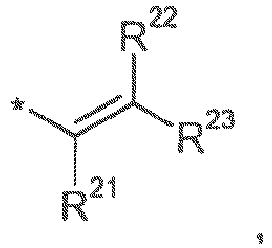
- (ie)
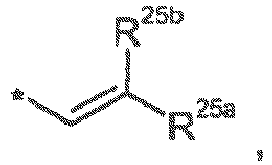
- (if)

- where R24 is selected from: H; C1-3 saturated alkyl; C2-3 alkenyl; C2-3 alkynyl; cyclopropyl; phenyl, which phenyl is optionally substituted by a group selected from halo, methyl, methoxy; pyridyl; and thiophenyl;
- when there is a single bond present between C2' and C3',
- R12 is

- where R26a and R26b are independently selected from H, F, C1-4 saturated alkyl, C2-3 alkenyl, which alkyl and alkenyl groups are optionally substituted by a group selected from C1-4 alkyl amido and C1-4 alkyl ester; or, when one of R26a and R26b is H, the other is selected from nitrile and a C1-4 alkyl ester;
- R6 and R9 are independently selected from H, R, OH, OR, SH, SR, NH2, NHR, NRR', nitro, Me3Sn and halo;
- where R and R' are independently selected from optionally substituted C1-12 alkyl, C3-20 heterocyclyl and C5-20 aryl groups;
- R7 is selected from H, R, OH, OR, SH, SR, NH2, NHR, NHRR', nitro, Me3Sn and halo;
- R" is a C3-12 alkylene group, which chain may be interrupted by one or more heteroatoms, e.g. O, S, NRN2 (where RN2 is H or C1-4 alkyl), and/or aromatic rings, e.g. benzene or pyridine;
- Y and Y' are selected from O, S, or NH;
- R6', R7', R9' are selected from the same groups as R6, R7 and R9 respectively;
- R20 is H or Me and R21a and R21b are both H;
- RL is a linker for connection to a cell binding agent;
- R11b is selected from OH, ORA, where RA is C1-4 alkyl, and SOzM, where z is 2 or 3 and M is a monovalent pharmaceutically acceptable cation.
- Described herein is the use of a compound of the first aspect of the invention in the manufacture of a medicament for treating a proliferative disease.
- One of ordinary skill in the art is readily able to determine whether or not a candidate compound treats a proliferative condition for any particular cell type. For example, assays which may conveniently be used to assess the activity offered by a particular compound are described in the examples below.
- Described herein is also a method of making a compound of the first aspect of the invention, comprising at least one of the method steps set out below.
- In a second aspect, the present invention relates to Conjugates comprising dimers of PBDs linked to a targeting agent, wherein the PBD dimer is a derivative of formula I, or a pharmaceutically acceptable salt or solvate thereof (supra).
- In some embodiments, the Conjugates having the following formula IV:
L - (RL'-D)p (IV)
or a pharmaceutically acceptable salt or solvate thereof, wherein L is a Ligand unit (i.e., a targeting agent), RL' is a Linker unit and D is a Drug unit that is a PBD dimer of formula I, except that RL' replaces RL. Thus D is of formula II:
- The subscript p in the formula IV is an integer of from 1 to 20. Accordingly, the Conjugates comprise a Ligand unit covalently linked to at least one Drug unit by a Linker unit. The Ligand unit, described more fully below, is a targeting agent that binds to a target moiety. The Ligand unit can, for example, specifically bind to a cell component (a Cell Binding Agent) or to other target molecules of interest. Accordingly, described herein are methods for the treatment of, for example, various cancers and autoimmune disease. These methods encompass the use of the Conjugates wherein the Ligand unit is a targeting agent that specifically binds to a target molecule. The Ligand unit can be, for example, a protein, polypeptide or peptide, such as an antibody, an antigen-binding fragment of an antibody, or other binding agent, such as an Fc fusion protein. The drug loading is represented by p, the number of drug molecules per Ligand unit (e.g., an antibody). Drug loading may range from 1 to 20 Drug units (D) per Ligand unit (e.g., Ab or mAb). For compositions, p represents the average drug loading of the Conjugates in the composition, and p ranges from 1 to 20.
- A further aspect of the invention provides compounds with the formula A:

- Examples of pharmaceutically acceptable monovalent and divalent cations are discussed in Berge, et al., J. Pharm. Sci., 66, 1-19 (1977), which is incorporated herein by reference.
- The pharmaceutically acceptable cation may be inorganic or organic.
- Examples of pharmaceutically acceptable monovalent inorganic cations include, but are not limited to, alkali metal ions such as Na+ and K+. Examples of pharmaceutically acceptable divalent inorganic cations include, but are not limited to, alkaline earth cations such as Ca2+ and Mg2+. Examples of pharmaceutically acceptable organic cations include, but are not limited to, ammonium ion (i.e. NH4 +) and substituted ammonium ions (e.g. NH3R+, NH2R2 +, NHR3 +, NR4 +). Examples of some suitable substituted ammonium ions are those derived from: ethylamine, diethylamine, dicyclohexylamine, triethylamine, butylamine, ethylenediamine, ethanolamine, diethanolamine, piperazine, benzylamine, phenylbenzylamine, choline, meglumine, and tromethamine, as well as amino acids, such as lysine and arginine. An example of a common quaternary ammonium ion is N(CH3)4 +.
- The phrase "optionally substituted" as used herein, pertains to a parent group which may be unsubstituted or which may be substituted.
- Unless otherwise specified, the term "substituted" as used herein, pertains to a parent group which bears one or more substituents. The term "substituent" is used herein in the conventional sense and refers to a chemical moiety which is covalently attached to, or if appropriate, fused to, a parent group. A wide variety of substituents are well known, and methods for their formation and introduction into a variety of parent groups are also well known.
- Examples of substituents are described in more detail below.
- C1-12 alkyl: The term "C1-12 alkyl" as used herein, pertains to a monovalent moiety obtained by removing a hydrogen atom from a carbon atom of a hydrocarbon compound having from 1 to 12 carbon atoms, which may be aliphatic or alicyclic, and which may be saturated or unsaturated (e.g. partially unsaturated, fully unsaturated). The term "C1-4 alkyl" as used herein, pertains to a monovalent moiety obtained by removing a hydrogen atom from a carbon atom of a hydrocarbon compound having from 1 to 4 carbon atoms, which may be aliphatic or alicyclic, and which may be saturated or unsaturated (e.g. partially unsaturated, fully unsaturated). Thus, the term "alkyl" includes the sub-classes alkenyl, alkynyl, cycloalkyl, etc., discussed below.
- Examples of saturated alkyl groups include, but are not limited to, methyl (C1), ethyl (C2), propyl (C3), butyl (C4), pentyl (C5), hexyl (C6) and heptyl (C7).
- Examples of saturated linear alkyl groups include, but are not limited to, methyl (C1), ethyl (C2), n-propyl (C3), n-butyl (C4), n-pentyl (amyl) (C5), n-hexyl (C6) and n-heptyl (C7).
- Examples of saturated branched alkyl groups include iso-propyl (C3), iso-butyl (C4), sec-butyl (C4), tert-butyl (C4), iso-pentyl (C5), and neo-pentyl (C5).
- C2-12 Alkenyl: The term "C2-12 alkenyl" as used herein, pertains to an alkyl group having one or more carbon-carbon double bonds.
- Examples of unsaturated alkenyl groups include, but are not limited to, ethenyl (vinyl, - CH=CH2), 1-propenyl (-CH=CH-CH3), 2-propenyl (allyl, -CH-CH=CH2), isopropenyl (1-methylvinyl, -C(CH3)=CH2), butenyl (C4), pentenyl (C5), and hexenyl (C6).
- C2-12 alkynyl: The term "C2-12 alkynyl" as used herein, pertains to an alkyl group having one or more carbon-carbon triple bonds.
- Examples of unsaturated alkynyl groups include, but are not limited to, ethynyl (-C≡CH) and 2-propynyl (propargyl, -CH2-C≡CH).
- C3-12 cycloalkyl: The term "C3-12 cycloalkyl" as used herein, pertains to an alkyl group which is also a cyclyl group; that is, a monovalent moiety obtained by removing a hydrogen atom from an alicyclic ring atom of a cyclic hydrocarbon (carbocyclic) compound, which moiety has from 3 to 7 carbon atoms, including from 3 to 7 ring atoms.
- Examples of cycloalkyl groups include, but are not limited to, those derived from:
- saturated monocyclic hydrocarbon compounds:
- cyclopropane (C3), cyclobutane (C4), cyclopentane (C5), cyclohexane (C6), cycloheptane (C7), methylcyclopropane (C4), dimethylcyclopropane (C5), methylcyclobutane (C5), dimethylcyclobutane (C6), methylcyclopentane (C6), dimethylcyclopentane (C7) and methylcyclohexane (C7);
- unsaturated monocyclic hydrocarbon compounds:
- cyclopropene (C3), cyclobutene (C4), cyclopentene (C5), cyclohexene (C6), methylcyclopropene (C4), dimethylcyclopropene (C5), methylcyclobutene (C5), dimethylcyclobutene (C6), methylcyclopentene (C6), dimethylcyclopentene (C7) and methylcyclohexene (C7); and
- saturated polycyclic hydrocarbon compounds:
- norcarane (C7), norpinane (C7), norbornane (C7).
- C3-20 heterocyclyl: The term "C3-20 heterocyclyl" as used herein, pertains to a monovalent moiety obtained by removing a hydrogen atom from a ring atom of a heterocyclic compound, which moiety has from 3 to 20 ring atoms, of which from 1 to 10 are ring heteroatoms. Preferably, each ring has from 3 to 7 ring atoms, of which from 1 to 4 are ring heteroatoms.
- In this context, the prefixes (e.g. C3-20, C3-7, C5-6, etc.) denote the number of ring atoms, or range of number of ring atoms, whether carbon atoms or heteroatoms. For example, the term "C5-6heterocyclyl", as used herein, pertains to a heterocyclyl group having 5 or 6 ring atoms.
- Examples of monocyclic heterocyclyl groups include, but are not limited to, those derived from:
- N1: aziridine (C3), azetidine (C4), pyrrolidine (tetrahydropyrrole) (C5), pyrroline (e.g., 3-pyrroline, 2,5-dihydropyrrole) (C5), 2H-pyrrole or 3H-pyrrole (isopyrrole, isoazole) (C5), piperidine (C6), dihydropyridine (C6), tetrahydropyridine (C6), azepine (C7);
- O1: oxirane (C3), oxetane (C4), oxolane (tetrahydrofuran) (C5), oxole (dihydrofuran) (C5), oxane (tetrahydropyran) (C6), dihydropyran (C6), pyran (C6), oxepin (C7);
- S1: thiirane (C3), thietane (C4), thiolane (tetrahydrothiophene) (C5), thiane (tetrahydrothiopyran) (C6), thiepane (C7);
- O2: dioxolane (C5), dioxane (C6), and dioxepane (C7);
- O3: trioxane (C6);
- N2: imidazolidine (C5), pyrazolidine (diazolidine) (C5), imidazoline (C5), pyrazoline (dihydropyrazole) (C5), piperazine (C6);
- N1O1: tetrahydrooxazole (C5), dihydrooxazole (C5), tetrahydroisoxazole (C5), dihydroisoxazole (C5), morpholine (C6), tetrahydrooxazine (C6), dihydrooxazine (C6), oxazine (C6);
- N1S1: thiazoline (C5), thiazolidine (C5), thiomorpholine (C6);
- N2O1: oxadiazine (C6);
- O1S1: oxathiole (C5) and oxathiane (thioxane) (C6); and,
- N1O1S1: oxathiazine (C6).
- Examples of substituted monocyclic heterocyclyl groups include those derived from saccharides, in cyclic form, for example, furanoses (C5), such as arabinofuranose, lyxofuranose, ribofuranose, and xylofuranse, and pyranoses (C6), such as allopyranose, altropyranose, glucopyranose, mannopyranose, gulopyranose, idopyranose, galactopyranose, and talopyranose.
- C5-20 aryl: The term "C5-20 aryl", as used herein, pertains to a monovalent moiety obtained by removing a hydrogen atom from an aromatic ring atom of an aromatic compound, which moiety has from 3 to 20 ring atoms. The term "C5-7 aryl", as used herein, pertains to a monovalent moiety obtained by removing a hydrogen atom from an aromatic ring atom of an aromatic compound, which moiety has from 5 to 7 ring atoms and the term "C5-10 aryl", as used herein, pertains to a monovalent moiety obtained by removing a hydrogen atom from an aromatic ring atom of an aromatic compound, which moiety has from 5 to 10 ring atoms. Preferably, each ring has from 5 to 7 ring atoms.
- In this context, the prefixes (e.g. C3-20, C5-7, C5-6, C5-10, etc.) denote the number of ring atoms, or range of number of ring atoms, whether carbon atoms or heteroatoms. For example, the term "C5-6 aryl" as used herein, pertains to an aryl group having 5 or 6 ring atoms.
- The ring atoms may be all carbon atoms, as in "carboaryl groups".
Examples of carboaryl groups include, but are not limited to, those derived from benzene (i.e. phenyl) (C6), naphthalene (C10), azulene (C10), anthracene (C14), phenanthrene (C14), naphthacene (C18), and pyrene (C16). - Examples of aryl groups which comprise fused rings, at least one of which is an aromatic ring, include, but are not limited to, groups derived from indane (e.g. 2,3-dihydro-1H-indene) (C9), indene (C9), isoindene (C9), tetraline (1,2,3,4-tetrahydronaphthalene (C10), acenaphthene (C12), fluorene (C13), phenalene (C13), acephenanthrene (C15), and aceanthrene (C16).
- Alternatively, the ring atoms may include one or more heteroatoms, as in "heteroaryl groups". Examples of monocyclic heteroaryl groups include, but are not limited to, those derived from:
- N1: pyrrole (azole) (C5), pyridine (azine) (C6);
- O1: furan (oxole) (C5);
- S1: thiophene (thiole) (C5);
- N1O1: oxazole (C5), isoxazole (C5), isoxazine (C6);
- N2O1: oxadiazole (furazan) (C5);
- N3O1: oxatriazole (C5);
- N1S1: thiazole (C5), isothiazole (C5);
- N2: imidazole (1,3-diazole) (C5), pyrazole (1,2-diazole) (C5), pyridazine (1,2-diazine) (C6), pyrimidine (1,3-diazine) (C6) (e.g., cytosine, thymine, uracil), pyrazine (1,4-diazine) (C6);
- N3: triazole (C5), triazine (C6); and,
- N4: tetrazole (C5).
- Examples of heteroaryl which comprise fused rings, include, but are not limited to:
- C9 (with 2 fused rings) derived from benzofuran (O1), isobenzofuran (O1), indole (N1), isoindole (N1), indolizine (N1), indoline (N1), isoindoline (N1), purine (N4) (e.g., adenine, guanine), benzimidazole (N2), indazole (N2), benzoxazole (N1O1), benzisoxazole (N1O1), benzodioxole (O2), benzofurazan (N2O1), benzotriazole (N3), benzothiofuran (S1), benzothiazole (N1S1), benzothiadiazole (N2S);
- C10 (with 2 fused rings) derived from chromene (O1), isochromene (O1), chroman (O1), isochroman (O1), benzodioxan (O2), quinoline (N1), isoquinoline (N1), quinolizine (N1), benzoxazine (N1O1), benzodiazine (N2), pyridopyridine (N2), quinoxaline (N2), quinazoline (N2), cinnoline (N2), phthalazine (N2), naphthyridine (N2), pteridine (N4);
- C11 (with 2 fused rings) derived from benzodiazepine (N2);
- C13 (with 3 fused rings) derived from carbazole (N1), dibenzofuran (O1), dibenzothiophene (S1), carboline (N2), perimidine (N2), pyridoindole (N2); and,
- C14 (with 3 fused rings) derived from acridine (N1), xanthene (O1), thioxanthene (S1), oxanthrene (O2), phenoxathiin (O1S1), phenazine (N2), phenoxazine (N1O1), phenothiazine (N1S1), thianthrene (S2), phenanthridine (N1), phenanthroline (N2), phenazine (N2).
- The above groups, whether alone or part of another substituent, may themselves optionally be substituted with one or more groups selected from themselves and the additional substituents listed below.
- Halo: -F, -Cl, -Br, and -I.
- Hydroxy: -OH.
- Ether: -OR, wherein R is an ether substituent, for example, a C1-7 alkyl group (also referred to as a C1-7alkoxy group, discussed below), a C3-20 heterocyclyl group (also referred to as a C3-20 heterocyclyloxy group), or a C5-20 aryl group (also referred to as a C5-20 aryloxy group), preferably a C1-7alkyl group.
- Alkoxy: -OR, wherein R is an alkyl group, for example, a C1-7 alkyl group. Examples of C1-7 alkoxy groups include, but are not limited to, -OMe (methoxy), -OEt (ethoxy), -O(nPr) (n-propoxy), -O(iPr) (isopropoxy), -O(nBu) (n-butoxy), -O(sBu) (sec-butoxy), -O(iBu) (isobutoxy), and -O(tBu) (tert-butoxy).
- Acetal: -CH(OR1)(OR2), wherein R1 and R2 are independently acetal substituents, for example, a C1-7 alkyl group, a C3-20 heterocyclyl group, or a C5-20 aryl group, preferably a C1-7 alkyl group, or, in the case of a "cyclic" acetal group, R1 and R2, taken together with the two oxygen atoms to which they are attached, and the carbon atoms to which they are attached, form a heterocyclic ring having from 4 to 8 ring atoms. Examples of acetal groups include, but are not limited to, -CH(OMe)2, -CH(OEt)2, and -CH(OMe)(OEt).
- Hemiacetal: -CH(OH)(OR1), wherein R1 is a hemiacetal substituent, for example, a C1-7 alkyl group, a C3-20 heterocyclyl group, or a C5-20 aryl group, preferably a C1-7 alkyl group. Examples of hemiacetal groups include, but are not limited to, -CH(OH)(OMe) and - CH(OH)(OEt).
- Ketal: -CR(OR1)(OR2), where R1 and R2 are as defined for acetals, and R is a ketal substituent other than hydrogen, for example, a C1-7 alkyl group, a C3-20 heterocyclyl group, or a C5-20 aryl group, preferably a C1-7 alkyl group. Examples ketal groups include, but are not limited to, -C(Me)(OMe)2, -C(Me)(OEt)2, -C(Me)(OMe)(OEt), -C(Et)(OMe)2, -C(Et)(OEt)2, and -C(Et)(OMe)(OEt).
- Hemiketal: -CR(OH)(OR1), where R1 is as defined for hemiacetals, and R is a hemiketal substituent other than hydrogen, for example, a C1-7 alkyl group, a C3-20 heterocyclyl group, or a C5-20 aryl group, preferably a C1-7 alkyl group. Examples of hemiacetal groups include, but are not limited to, -C(Me)(OH)(OMe), -C(Et)(OH)(OMe), -C(Me)(OH)(OEt), and -C(Et)(OH)(OEt).
- Oxo (keto, -one): =O.
- Thione (thioketone): =S.
- Imino (imine): =NR, wherein R is an imino substituent, for example, hydrogen, C1-7 alkyl group, a C3-20 heterocyclyl group, or a C5-20 aryl group, preferably hydrogen or a C1-7 alkyl group. Examples of ester groups include, but are not limited to, =NH, =NMe, =NEt, and =NPh.
- Formyl (carbaldehyde, carboxaldehyde): -C(=O)H.
- Acyl (keto): -C(=O)R, wherein R is an acyl substituent, for example, a C1-7 alkyl group (also referred to as C1-7 alkylacyl or C1-7 alkanoyl), a C3-20 heterocyclyl group (also referred to as C3-20 heterocyclylacyl), or a C5-20 aryl group (also referred to as C5-20 arylacyl), preferably a C1-7 alkyl group. Examples of acyl groups include, but are not limited to, -C(=O)CH3 (acetyl), -C(=O)CH2CH3 (propionyl), -C(=O)C(CH3)3 (t-butyryl), and -C(=O)Ph (benzoyl, phenone).
- Carboxy (carboxylic acid): -C(=O)OH.
- Thiocarboxy (thiocarboxylic acid): -C(=S)SH.
- Thiolocarboxy (thiolocarboxylic acid): -C(=O)SH.
- Thionocarboxy (thionocarboxylic acid): -C(=S)OH.
- Imidic acid: -C(=NH)OH.
- Hydroxamic acid: -C(=NOH)OH.
- Ester (carboxylate, carboxylic acid ester, oxycarbonyl): -C(=O)OR, wherein R is an ester substituent, for example, a C1-7 alkyl group, a C3-20 heterocyclyl group, or a C5-20 aryl group, preferably a C1-7 alkyl group. Examples of ester groups include, but are not limited to, -C(=O)OCH3, -C(=O)OCH2CH3, -C(=O)OC(CH3)3, and -C(=O)OPh.
- Acyloxy (reverse ester): -OC(=O)R, wherein R is an acyloxy substituent, for example, a C1-7 alkyl group, a C3-20 heterocyclyl group, or a C5-20 aryl group, preferably a C1-7 alkyl group. Examples of acyloxy groups include, but are not limited to, -OC(=O)CH3 (acetoxy), -OC(=O)CH2CH3, -OC(=O)C(CH3)3, -OC(=O)Ph, and -OC(=O)CH2Ph.
- Oxycarboyloxy: -OC(=O)OR, wherein R is an ester substituent, for example, a C1-7 alkyl group, a C3-20 heterocyclyl group, or a C5-20 aryl group, preferably a C1-7 alkyl group. Examples of ester groups include, but are not limited to, -OC(=O)OCH3, -OC(=O)OCH2CH3, -OC(=O)OC(CH3)3, and -OC(=O)OPh.
- Amino: -NR1R2, wherein R1 and R2 are independently amino substituents, for example, hydrogen, a C1-7 alkyl group (also referred to as C1-7 alkylamino or di-C1-7 alkylamino), a C3-20 heterocyclyl group, or a C5-20 aryl group, preferably H or a C1-7 alkyl group, or, in the case of a "cyclic" amino group, R1 and R2, taken together with the nitrogen atom to which they are attached, form a heterocyclic ring having from 4 to 8 ring atoms. Amino groups may be primary (-NH2), secondary (-NHR1), or tertiary (-NHR1R2), and in cationic form, may be quaternary (-+NR1R2R3). Examples of amino groups include, but are not limited to, -NH2, -NHCH3, -NHC(CH3)2, -N(CH3)2, -N(CH2CH3)2, and -NHPh. Examples of cyclic amino groups include, but are not limited to, aziridino, azetidino, pyrrolidino, piperidino, piperazino, morpholino, and thiomorpholino.
- Amido (carbamoyl, carbamyl, aminocarbonyl, carboxamide): -C(=O)NR1R2, wherein R1 and R2 are independently amino substituents, as defined for amino groups. Examples of amido groups include, but are not limited to, -C(=O)NH2, -C(=O)NHCH3, -C(=O)N(CH3)2, -C(=O)NHCH2CH3, and -C(=O)N(CH2CH3)2, as well as amido groups in which R1 and R2, together with the nitrogen atom to which they are attached, form a heterocyclic structure as in, for example, piperidinocarbonyl, morpholinocarbonyl, thiomorpholinocarbonyl, and piperazinocarbonyl.
- Thioamido (thiocarbamyl): -C(=S)NR1R2, wherein R1 and R2 are independently amino substituents, as defined for amino groups. Examples of amido groups include, but are not limited to, -C(=S)NH2, -C(=S)NHCH3, -C(=S)N(CH3)2, and -C(=S)NHCH2CH3.
- Acylamido (acylamino): -NR1C(=O)R2, wherein R1 is an amide substituent, for example, hydrogen, a C1-7 alkyl group, a C3-20 heterocyclyl group, or a C5-20 aryl group, preferably hydrogen or a C1-7 alkyl group, and R2 is an acyl substituent, for example, a C1-7 alkyl group, a C3-20 heterocyclyl group, or a C5-20aryl group, preferably hydrogen or a C1-7 alkyl group. Examples of acylamide groups include, but are not limited to, -NHC(=O)CH3, -NHC(=O)CH2CH3, and -NHC(=O)Ph. R1 and R2 may together form a cyclic structure, as in, for example, succinimidyl, maleimidyl, and phthalimidyl:

- Aminocarbonyloxy: -OC(=O)NR1R2, wherein R1 and R2 are independently amino substituents, as defined for amino groups. Examples of aminocarbonyloxy groups include, but are not limited to, -OC(=O)NH2, -OC(=O)NHMe, -OC(=O)NMe2, and -OC(=O)NEt2.
- Ureido: -N(R1)CONR2R3 wherein R2 and R3 are independently amino substituents, as defined for amino groups, and R1 is a ureido substituent, for example, hydrogen, a C1-7 alkyl group, a C3-20 heterocyclyl group, or a C5-20 aryl group, preferably hydrogen or a C1-7 alkyl group. Examples of ureido groups include, but are not limited to, -NHCONH2, -NHCONHMe, -NHCONHEt, -NHCONMe2, -NHCONEt2, -NMeCONH2, -NMeCONHMe, -NMeCONHEt, - NMeCONMe2, and -NMeCONEt2.
- Guanidino: -NH-C(=NH)NH2.
- Tetrazolyl: a five membered aromatic ring having four nitrogen atoms and one carbon atom,

- Imino: =NR, wherein R is an imino substituent, for example, for example, hydrogen, a C1-7 alkyl group, a C3-20 heterocyclyl group, or a C5-20 aryl group, preferably H or a C1-7alkyl group. Examples of imino groups include, but are not limited to, =NH, =NMe, and =NEt.
- Amidine (amidino): -C(=NR)NR2, wherein each R is an amidine substituent, for example, hydrogen, a C1-7 alkyl group, a C3-20 heterocyclyl group, or a C5-20 aryl group, preferably H or a C1-7 alkyl group. Examples of amidine groups include, but are not limited to, -C(=NH)NH2, -C(=NH)NMe2, and -C(=NMe)NMe2.
- Nitro: -NO2.
- Nitroso: -NO.
- Azido: -N3.
- Cyano (nitrile, carbonitrile): -CN.
- Isocyano: -NC.
- Cyanato: -OCN.
- Isocyanato: -NCO.
- Thiocyano (thiocyanato): -SCN.
- Isothiocyano (isothiocyanato): -NCS.
- Sulfhydryl (thiol, mercapto): -SH.
- Thioether (sulfide): -SR, wherein R is a thioether substituent, for example, a C1-7 alkyl group (also referred to as a C1-7alkylthio group), a C3-20 heterocyclyl group, or a C5-20 aryl group, preferably a C1-7 alkyl group. Examples of C1-7 alkylthio groups include, but are not limited to, -SCH3 and -SCH2CH3.
- Disulfide: -SS-R, wherein R is a disulfide substituent, for example, a C1-7 alkyl group, a C3-20 heterocyclyl group, or a C5-20 aryl group, preferably a C1-7 alkyl group (also referred to herein as C1-7 alkyl disulfide). Examples of C1-7 alkyl disulfide groups include, but are not limited to, -SSCH3 and -SSCH2CH3.
- Sulfine (sulfinyl, sulfoxide): -S(=O)R, wherein R is a sulfine substituent, for example, a C1-7 alkyl group, a C3-20 heterocyclyl group, or a C5-20 aryl group, preferably a C1-7 alkyl group. Examples of sulfine groups include, but are not limited to, -S(=O)CH3 and -S(=O)CH2CH3.
- Sulfone (sulfonyl): -S(=O)2R, wherein R is a sulfone substituent, for example, a C1-7 alkyl group, a C3-20 heterocyclyl group, or a C5-20 aryl group, preferably a C1-7 alkyl group, including, for example, a fluorinated or perfluorinated C1-7 alkyl group. Examples of sulfone groups include, but are not limited to, -S(=O)2CH3 (methanesulfonyl, mesyl), -S(=O)2CF3 (triflyl), -S(=O)2CH2CH3 (esyl), -S(=O)2C4F9 (nonaflyl), -S(=O)2CH2CF3 (tresyl), -S(=O)2CH2CH2NH2 (tauryl), -S(=O)2Ph (phenylsulfonyl, besyl), 4-methylphenylsulfonyl (tosyl), 4-chlorophenylsulfonyl (closyl), 4-bromophenylsulfonyl (brosyl), 4-nitrophenyl (nosyl), 2-naphthalenesulfonate (napsyl), and 5-dimethylamino-naphthalen-1-ylsulfonate (dansyl).
- Sulfinic acid (sulfino): -S(=O)OH, -SO2H.
- Sulfonic acid (sulfo): -S(=O)2OH, -SO3H.
- Sulfinate (sulfinic acid ester): -S(=O)OR; wherein R is a sulfinate substituent, for example, a C1-7 alkyl group, a C3-20 heterocyclyl group, or a C5-20 aryl group, preferably a C1-7 alkyl group. Examples of sulfinate groups include, but are not limited to, -S(=O)OCH3 (methoxysulfinyl; methyl sulfinate) and -S(=O)OCH2CH3 (ethoxysulfinyl; ethyl sulfinate).
- Sulfonate (sulfonic acid ester): -S(=O)2OR, wherein R is a sulfonate substituent, for example, a C1-7 alkyl group, a C3-20 heterocyclyl group, or a C5-20 aryl group, preferably a C1-7 alkyl group. Examples of sulfonate groups include, but are not limited to, -S(=O)2OCH3 (methoxysulfonyl; methyl sulfonate) and -S(=O)2OCH2CH3 (ethoxysulfonyl; ethyl sulfonate).
- Sulfinyloxy: -OS(=O)R, wherein R is a sulfinyloxy substituent, for example, a C1-7 alkyl group, a C3-20 heterocyclyl group, or a C5-20 aryl group, preferably a C1-7 alkyl group. Examples of sulfinyloxy groups include, but are not limited to, -OS(=O)CH3 and -OS(=O)CH2CH3.
- Sulfonyloxy: -OS(=O)2R, wherein R is a sulfonyloxy substituent, for example, a C1-7 alkyl group, a C3-20 heterocyclyl group, or a C5-20 aryl group, preferably a C1-7 alkyl group. Examples of sulfonyloxy groups include, but are not limited to, -OS(=O)2CH3 (mesylate) and -OS(=O)2CH2CH3 (esylate).
- Sulfate: -OS(=O)2OR; wherein R is a sulfate substituent, for example, a C1-7 alkyl group, a C3-20 heterocyclyl group, or a C5-20 aryl group, preferably a C1-7 alkyl group. Examples of sulfate groups include, but are not limited to, -OS(=O)2OCH3 and -SO(=O)2OCH2CH3.
- Sulfamyl (sulfamoyl; sulfinic acid amide; sulfinamide): -S(=O)NR1R2, wherein R1 and R2 are independently amino substituents, as defined for amino groups. Examples of sulfamyl groups include, but are not limited to, -S(=O)NH2, -S(=O)NH(CH3), -S(=O)N(CH3)2, -S(=O)NH(CH2CH3), -S(=O)N(CH2CH3)2, and -S(=O)NHPh.
- Sulfonamido (sulfinamoyl; sulfonic acid amide; sulfonamide): -S(=O)2NR1R2, wherein R1 and R2 are independently amino substituents, as defined for amino groups. Examples of sulfonamido groups include, but are not limited to, -S(=O)2NH2, -S(=O)2NH(CH3), -S(=O)2N(CH3)2, -S(=O)2NH(CH2CH3), -S(=O)2N(CH2CH3)2, and -S(=O)2NHPh.
- Sulfamino: -NR1S(=O)2OH, wherein R1 is an amino substituent, as defined for amino groups. Examples of sulfamino groups include, but are not limited to, -NHS(=O)2OH and -N(CH3)S(=O)2OH.
- Sulfonamino: -NR1S(=O)2R, wherein R1 is an amino substituent, as defined for amino groups, and R is a sulfonamino substituent, for example, a C1-7 alkyl group, a C3-20 heterocyclyl group, or a C5-20 aryl group, preferably a C1-7 alkyl group. Examples of sulfonamino groups include, but are not limited to, -NHS(=O)2CH3 and -N(CH3)S(=O)2C6H5.
- Sulfinamino: -NR1S(=O)R, wherein R1 is an amino substituent, as defined for amino groups, and R is a sulfinamino substituent, for example, a C1-7 alkyl group, a C3-20 heterocyclyl group, or a C5-20 aryl group, preferably a C1-7 alkyl group. Examples of sulfinamino groups include, but are not limited to, -NHS(=O)CH3 and -N(CH3)S(=O)C6H5.
- Phosphino (phosphine): -PR2, wherein R is a phosphino substituent, for example, -H, a C1-7 alkyl group, a C3-20 heterocyclyl group, or a C5-20 aryl group, preferably -H, a C1-7 alkyl group, or a C5-20 aryl group. Examples of phosphino groups include, but are not limited to, -PH2, -P(CH3)2, -P(CH2CH3)2, -P(t-Bu)2, and -P(Ph)2.
- Phospho: -P(=O)2.
- Phosphinyl (phosphine oxide): -P(=O)R2, wherein R is a phosphinyl substituent, for example, a C1-7 alkyl group, a C3-20 heterocyclyl group, or a C5-20 aryl group, preferably a C1-7 alkyl group or a C5-20 aryl group. Examples of phosphinyl groups include, but are not limited to, -P(=O)(CH3)2, -P(=O)(CH2CH3)2, -P(=O)(t-Bu)2, and -P(=O)(Ph)2.
- Phosphonic acid (phosphono): -P(=O)(OH)2.
- Phosphonate (phosphono ester): -P(=O)(OR)2, where R is a phosphonate substituent, for example, -H, a C1-7 alkyl group, a C3-20heterocyclyl group, or a C5-20 aryl group, preferably -H, a C1-7 alkyl group, or a C5-20 aryl group. Examples of phosphonate groups include, but are not limited to, -P(=O)(OCH3)2, -P(=O)(OCH2CH3)2, -P(=O)(O-t-Bu)2, and -P(=O)(OPh)2-Phosphoric acid (phosphonooxy): -OP(=O)(OH)2.
- Phosphate (phosphonooxy ester): -OP(=O)(OR)2, where R is a phosphate substituent, for example, -H, a C1-7 alkyl group, a C3-20 heterocyclyl group, or a C5-20 aryl group, preferably -H, a C1-7 alkyl group, or a C5-20 aryl group. Examples of phosphate groups include, but are not limited to, -OP(=O)(OCH3)2, -OP(=O)(OCH2CH3)2, -OP(=O)(O-t-Bu)2, and -OP(=O)(OPh)2.
- Phosphorous acid: -OP(OH)2.
- Phosphite: -OP(OR)2, where R is a phosphite substituent, for example, -H, a C1-7 alkyl group, a C3-20 heterocyclyl group, or a C5-20 aryl group, preferably -H, a C1-7 alkyl group, or a C5-20 aryl group. Examples of phosphite groups include, but are not limited to, -OP(OCH3)2, -OP(OCH2CH3)2, -OP(O-t-Bu)2, and -OP(OPh)2.
- Phosphoramidite: -OP(OR1)-NR2 2, where R1 and R2 are phosphoramidite substituents, for example, -H, a (optionally substituted) C1-7 alkyl group, a C3-20 heterocyclyl group, or a C5-20 aryl group, preferably -H, a C1-7 alkyl group, or a C5-20 aryl group. Examples of phosphoramidite groups include, but are not limited to, -OP(OCH2CH3)-N(CH3)2, -OP(OCH2CH3)-N(i-Pr)2, and -OP(OCH2CH2CN)-N(i-Pr)2.
- Phosphoramidate: -OP(=O)(OR1)-NR2 2, where R1 and R2 are phosphoramidate substituents, for example, -H, a (optionally substituted) C1-7alkyl group, a C3-20 heterocyclyl group, or a C5-20 aryl group, preferably -H, a C1-7 alkyl group, or a C5-20 aryl group. Examples of phosphoramidate groups include, but are not limited to, -OP(=O)(OCH2CH3)-N(CH3)2, -OP(=O)(OCH2CH3)-N(i-Pr)2, and -OP(=O)(OCH2CH2CN)-N(i-Pr)2.
- C3-12 alkylene: The term "C3-12 alkylene", as used herein, pertains to a bidentate moiety obtained by removing two hydrogen atoms, either both from the same carbon atom, or one from each of two different carbon atoms, of a hydrocarbon compound having from 3 to 12 carbon atoms (unless otherwise specified), which may be aliphatic or alicyclic, and which may be saturated, partially unsaturated, or fully unsaturated. Thus, the term "alkylene" includes the sub-classes alkenylene, alkynylene, cycloalkylene, etc., discussed below.
- Examples of linear saturated C3-12 alkylene groups include, but are not limited to, -(CH2)n-where n is an integer from 3 to 12, for example, -CH2CH2CH2- (propylene), -CH2CH2CH2CH2- (butylene), -CH2CH2CH2CH2CH2- (pentylene) and -CH2CH2CH2CH-2CH2CH2CH2- (heptylene).
- Examples of branched saturated C3-12 alkylene groups include, but are not limited to, -CH(CH3)CH2-, -CH(CH3)CH2CH2-, -CH(CH3)CH2CH2CH2-, -CH2CH(CH3)CH2-, -CH2CH(CH3)CH2CH2-, -CH(CH2CH3)-, -CH(CH2CH3)CH2-, and -CH2CH(CH2CH3)CH2-.
- Examples of linear partially unsaturated C3-12 alkylene groups (C3-12 alkenylene, and alkynylene groups) include, but are not limited to, -CH=CH-CH2-, -CH2-CH=CH2-, -CH=CH-CH2-CH2-, -CH=CH-CH2-CH2-CH2-, -CH=CH-CH=CH-, -CH=CH-CH=CH-CH2-,-CH=CH-CH=CH-CH2-CH2-, -CH=CH-CH2-CH=CH-, -CH=CH-CH2-CH2-CH=CH-, and -CH2-C=C-CH2-.
- Examples of branched partially unsaturated C3-12 alkylene groups (C3-12 alkenylene and alkynylene groups) include, but are not limited to, -C(CH3)=CH-, -C(CH3)=CH-CH2-, -CH=CH-CH(CH3)- and -C=C-CH(CH3)-.
- Examples of alicyclic saturated C3-12 alkylene groups (C3-12 cycloalkylenes) include, but are not limited to, cyclopentylene (e.g. cyclopent-1,3-ylene), and cyclohexylene (e.g. cyclohex-1,4-ylene).
- Examples of alicyclic partially unsaturated C3-12 alkylene groups (C3-12 cycloalkylenes) include, but are not limited to, cyclopentenylene (e.g. 4-cyclopenten-1,3-ylene), cyclohexenylene (e.g. 2-cyclohexen-1,4-ylene; 3-cyclohexen-1,2-ylene; 2,5-cyclohexadien-1,4-ylene).
- Carbamate nitrogen protecting group: the term "carbamate nitrogen protecting group" pertains to a moiety which masks the nitrogen in the imine bond, and these are well known in the art. These groups have the following structure:

- Hemi-aminal nitrogen protecting group: the term "hemi-aminal nitrogen protecting group" pertains to a group having the following structure:

- The groups Carbamate nitrogen protecting group and Hemi-aminal nitrogen protecting group may be jointly termed a "nitrogen protecting group for synthesis".
- The present invention provides a conjugate comprising a PBD compound connected through the N10 position via a linker to a cell binding agent. In one embodiment, the conjugate comprises a cell binding agent (also termed "ligand unit") connected to a spacer connecting group, the spacer connected to a trigger, the trigger connected to a self-immolative linker, and the self-immolative linker connected to the N10 position of the PBD compound. Such a conjugate is illustrated below:


- The present invention is suitable for use in providing a PBD compound to a preferred site in a subject. In the preferred embodiments, the conjugate allows the release of an active PBD compound that does not retain any part of the linker. There is no stub present that could affect the reactivity of the PBD compound.
- In certain embodiments, the invention provides conjugates comprising a PBD dimer group having a linker connected to a cell binding agent. The present inventors describe herein methods of synthesis that enable such dimer conjugates to be prepared by the use of novel PBD desymmetrisation techniques.
- This application is particularly concerned with those RL groups which have a carbamate link to the N10 position.
- The linker attaches the Cell Binding Agent (CBA/L), e.g. antibody, to the PBD drug moiety D through covalent bond(s). The linker is a bifunctional or multifunctional moiety which can be used to link one or more drug moiety (D) and an antibody unit (Ab) to form antibody-drug conjugates (ADC). The linker (RL') may be stable outside a cell, i.e. extracellular, or it may be cleavable by enzymatic activity, hydrolysis, or other metabolic conditions. Antibody-drug conjugates (ADC) can be conveniently prepared using a linker having reactive functionality for binding to the drug moiety and to the antibody. A cysteine thiol, or an amine, e.g. N-terminus or amino acid side chain such as lysine, of the antibody (Ab) can form a bond with a functional group of a linker or spacer reagent, PBD drug moiety (D) or drug-linker reagent (D-RL).
- Many functional groups on the linker attached to the N10 position of the PBD moiety may be useful to react with the cell binding agent. For example, ester, thioester, amide, thioamide, carbamate, thiocarbamate, urea, thiourea, ether, thioether, or disulfide linkages may be formed from reaction of the linker-PBD drug intermediates and the cell binding agent. The linkers of the ADC preferably prevent aggregation of ADC molecules and keep the ADC freely soluble in aqueous media and in a monomeric state.
- The linkers of the ADC are preferably stable extracellularly. Before transport or delivery into a cell, the antibody-drug conjugate (ADC) is preferably stable and remains intact, i.e. the antibody remains linked to the drug moiety. The linkers are stable outside the target cell and may be cleaved at some efficacious rate inside the cell. An effective linker will: (i) maintain the specific binding properties of the antibody; (ii) allow intracellular delivery of the conjugate or drug moiety; (iii) remain stable and intact, i.e. not cleaved, until the conjugate has been delivered or transported to its targetted site; and (iv) maintain a cytotoxic, cell-killing effect or a cytostatic effect of the PBD drug moiety. Stability of the ADC may be measured by standard analytical techniques such as mass spectroscopy, HPLC, and the separation/analysis technique LC/MS.
- Covalent attachment of the antibody and the drug moiety requires the linker to have two reactive functional groups, i.e. bivalency in a reactive sense. Bivalent linker reagents which are useful to attach two or more functional or biologically active moieties, such as peptides, nucleic acids, drugs, toxins, antibodies, haptens, and reporter groups are known, and methods have been described their resulting conjugates (Hermanson, G.T. (1996) Bioconjugate Techniques; Academic Press: New York, p 234-242).
- In another embodiment, the linker may be substituted with groups which modulate aggregation, solubility or reactivity. For example, a sulfonate substituent may increase water solubility of the reagent and facilitate the coupling reaction of the linker reagent with the antibody or the drug moiety, or facilitate the coupling reaction of Ab-L with D, or D-L with Ab, depending on the synthetic route employed to prepare the ADC.
- In one embodiment, L-RL' is a group:

- L1 is preferably the cleavable linker, and may be referred to as a trigger for activation of the linker for cleavage.
- The nature of L1 and L2, where present, can vary widely. These groups are chosen on the basis of their cleavage characteristics, which may be dictated by the conditions at the site to which the conjugate is delivered. Those linkers that are cleaved by the action of enzymes are preferred, although linkers that are cleavable by changes in pH (e.g. acid or base labile), temperature or upon irradiation (e.g. photolabile) may also be used. Linkers that are cleavable under reducing or oxidising conditions may also find use in the present invention.
- L1 may comprise a contiguous sequence of amino acids. The amino acid sequence may be the target substrate for enzymatic cleavage, thereby allowing release of L-RL' from the N10 position.
- In one embodiment, L1 is cleavable by the action of an enzyme. In one embodiment, the enzyme is an esterase or a peptidase.
- In one embodiment, L2 is present and together with -C(=O)O- forms a self-immolative linker. In one embodiment, L2 is a substrate for enzymatic activity, thereby allowing release of L-RL' from the N10 position.
- In one embodiment, where L1 is cleavable by the action of an enzyme and L2 is present, the enzyme cleaves the bond between L1 and L2.
- L1 and L2, where present, may be connected by a bond selected from:
-C(=O)NH-,
-C(=O)O-,
-NHC(=O)-,
-OC(=O)-,
-OC(=O)O-,
-NHC(=O)O-,
-OC(=O)NH-,
and
-NHC(=O)NH-.
- An amino group of L1 that connects to L2 may be the N-terminus of an amino acid or may be derived from an amino group of an amino acid side chain, for example a lysine amino acid side chain.
- A carboxyl group of L1 that connects to L2 may be the C-terminus of an amino acid or may be derived from a carboxyl group of an amino acid side chain, for example a glutamic acid amino acid side chain.
- A hydroxyl group of L1 that connects to L2 may be derived from a hydroxyl group of an amino acid side chain, for example a serine amino acid side chain.
- The term "amino acid side chain" includes those groups found in: (i) naturally occurring amino acids such as alanine, arginine, asparagine, aspartic acid, cysteine, glutamine, glutamic acid, glycine, histidine, isoleucine, leucine, lysine, methionine, phenylalanine, proline, serine, threonine, tryptophan, tyrosine, and valine; (ii) minor amino acids such as ornithine and citrulline; (iii) unnatural amino acids, beta-amino acids, synthetic analogs and derivatives of naturally occurring amino acids; and (iv) all enantiomers, diastereomers, isomerically enriched, isotopically labelled (e.g. 2H, 3H, 14C, 15N), protected forms, and racemic mixtures thereof.
- In one embodiment, -C(=O)O- and L2 together form the group:

- In one embodiment, Y is NH.
- In one embodiment, n is 0 or 1. Preferably, n is 0.
- Where Y is NH and n is 0, the self-immolative linker may be referred to as a p-aminobenzylcarbonyl linker (PABC).
- The self-immolative linker will allow for release of the protected compound when a remote site is activated, proceeding along the lines shown below (for n=0):

- In one embodiment described herein, the group L* is a linker L1 as described herein, which may include a dipeptide group.
- In another embodiment, -C(=O)O- and L2 together form a group selected from:

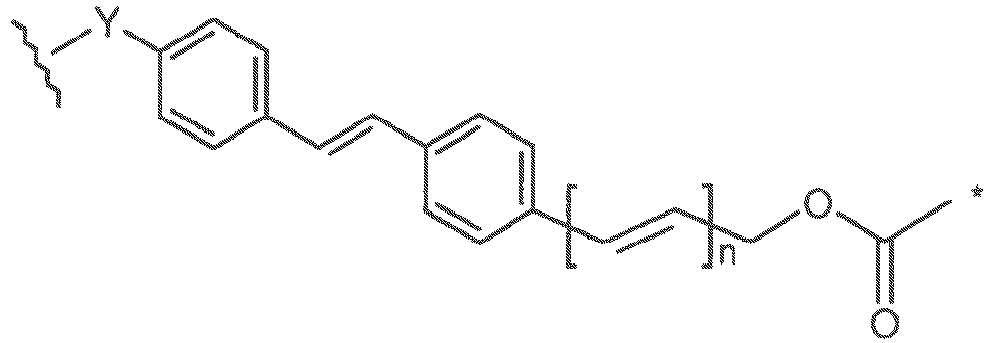
- In another embodiment, -C(=O)O- and L2 together form a group selected from:
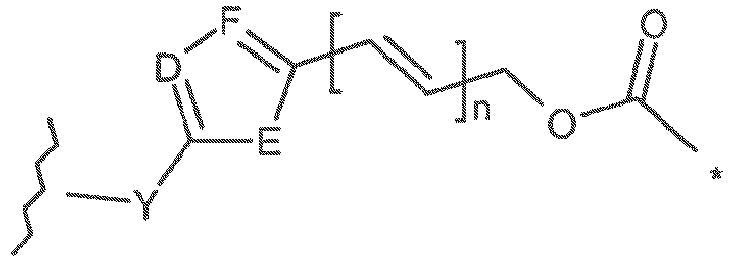
- In one embodiment, D is N.
- In one embodiment, D is CH.
- In one embodiment, E is O or S.
- In one embodiment, F is CH.
- In a preferred embodiment, the linker is a cathepsin labile linker.
- In one embodiment, L1 comprises a dipeptide The dipeptide may be represented as -NH-X1-X2-CO-, where -NH- and -CO- represent the N- and C-terminals of the amino acid groups X1 and X2 respectively. The amino acids in the dipeptide may be any combination of natural amino acids. Where the linker is a cathepsin labile linker, the dipeptide may be the site of action for cathepsin-mediated cleavage.
- Additionally, for those amino acids groups having carboxyl or amino side chain functionality, for example Glu and Lys respectively, CO and NH may represent that side chain functionality.
- In one embodiment, the group -X1-X2- in dipeptide, -NH-X1-X2-CO-, is selected from:
- Phe-Lys-,
- Val-Ala-,
- Val-Lys-,
- Ala-Lys-,
- Val-Cit-,
- Phe-Cit-,
- Leu-Cit-,
- Ile-Cit-,
- Phe-Arg-,
- Trp-Cit-
- Preferably, the group -X1-X2- in dipeptide, -NH-X1-X2-CO-, is selected from:
- Phe-Lys-,
- Val-Ala-,
- Val-Lys-,
- Ala-Lys-,
- Val-Cit-.
- Most preferably, the group -X1-X2- in dipeptide, -NH-X1-X2-CO-, is -Phe-Lys- or -Val-Ala-.
- Other dipeptide combinations may be used, including those described by Dubowchik et al., Bioconjugate Chemistry, 2002, 13,855-869, which is incorporated herein by reference.
- In one embodiment, the amino acid side chain is derivatised, where appropriate. For example, an amino group or carboxy group of an amino acid side chain may be derivatised. In one embodiment, an amino group NH2 of a side chain amino acid, such as lysine, is a derivatised form selected from the group consisting of NHR and NRR'.
In one embodiment, a carboxy group COOH of a side chain amino acid, such as aspartic acid, is a derivatised form selected from the group consisting of COOR, CONH2, CONHR and CONRR'. - In one embodiment, the amino acid side chain is chemically protected, where appropriate. The side chain protecting group may be a group as discussed below in relation to the group RL. The present inventors have established that protected amino acid sequences are cleavable by enzymes. For example, it has been established that a dipeptide sequence comprising a Boc side chain-protected Lys residue is cleavable by cathepsin.
- Protecting groups for the side chains of amino acids are well known in the art and are described in the Novabiochem Catalog. Additional protecting group strategies are set out in Protective Groups in Organic Synthesis, Greene and Wuts.
- Possible side chain protecting groups are shown below for those amino acids having reactive side chain functionality:
- Arg: Z, Mtr, Tos;
- Asn: Trt, Xan;
- Asp: Bzl, t-Bu;
- Cys: Acm, Bzl, Bzl-OMe, Bzl-Me, Trt;
- Glu: Bzl, t-Bu;
- Gln: Trt, Xan;
- His: Boc, Dnp, Tos, Trt;
- Lys: Boc, Z-Cl, Fmoc, Z, Alloc;
- Ser: Bzl, TBDMS, TBDPS;
- Thr: Bz;
- Trp: Boc;
- Tyr: Bzl, Z, Z-Br.
- In one embodiment, the side chain protection is selected to be orthogonal to a group provided as, or as part of, a capping group, where present. Thus, the removal of the side chain protecting group does not remove the capping group, or any protecting group functionality that is part of the capping group.
- In other embodiments of the invention, the amino acids selected are those having no reactive side chain functionality. For example, the amino acids may be selected from: Ala, Gly, Ile, Leu, Met, Phe, Pro, and Val.
In one embodiment, the dipeptide is used in combination with a self-immolative linker. The self-immolative linker may be connected to -X2-. - Where a self-immolative linker is present, -X2- is connected directly to the self-immolative linker. Preferably the group -X2-CO- is connected to Y, where Y is NH, thereby forming the group -X2-CO-NH-.
- -NH-X1- is connected directly to A. A may comprise the functionality -CO- thereby to form an amide link with -X1-.
- In one embodiment, L1 and L2 together with -OC(=O)- comprise the group NH-X1-X2-CO-PABC-. The PABC group is connected directly to the N10 position. Preferably, the self-immolative linker and the dipeptide together form the group -NH-Phe-Lys-CO-NH-PABC-, which is illustrated below:

- Alternatively, the self-immolative linker and the dipeptide together form the group -NH-Val-Ala-CO-NH-PABC-, which is illustrated below:

- Alternatively, the self-immolative linker and the dipeptide together form the group -NH-Val-Cit-CO-NH-PABC-, which is illustrated below:

- In one embodiment, A is a covalent bond. Thus, L1 and the cell binding agent are directly connected. For example, where L1 comprises a contiguous amino acid sequence, the N-terminus of the sequence may connect directly to the cell binding agent.
- Thus, where A is a covalent bond, the connection between the cell binding agent and L1 may be selected from:
-C(=O)NH-,
-C(=O)O-,
-NHC(=O)-,
-OC(=O)-,
-OC(=O)O-,
-NHC(=O)O-,
-OC(=O)NH-,
-NHC(=O)NH-,
-C(=O)NHC(=O)-,
-S-,
-S-S-,
-CH2C(=O)-,
and
=N-NH-.
- An amino group of L1 that connects to the cell binding agent may be the N-terminus of an amino acid or may be derived from an amino group of an amino acid side chain, for example a lysine amino acid side chain.
An carboxyl group of L1 that connects to the cell binding agent may be the C-terminus of an amino acid or may be derived from a carboxyl group of an amino acid side chain, for example a glutamic acid amino acid side chain.
A hydroxyl group of L1 that connects to the cell binding agent may be derived from a hydroxyl group of an amino acid side chain, for example a serine amino acid side chain.
A thiol group of L1 that connects to the cell binding agent may be derived from a thiol group of an amino acid side chain, for example a serine amino acid side chain. - The comments above in relation to the amino, carboxyl, hydroxyl and thiol groups of L1 also apply to the cell binding agent.
- In one embodiment, L2 together with -OC(=O)- represents:

- E is selected such that the group is susceptible to activation, e.g. by light or by the action of an enzyme. E may be -NO2 or glucoronic acid. The former may be susceptible to the action of a nitroreductase, the latter to the action of a β-glucoronidase.
- In this embodiment, the self-immolative linker will allow for release of the protected compound when E is activated, proceeding along the lines shown below (for n=0):

- The group Y may be a covalent bond to L1.
The group Y may be a functional group selected from:
-C(=O)-
-NH-
-O-
-C(=O)NH-,
-C(=O)O-,
-NHC(=O)-,
-OC(=O)-,
-OC(=O)O-,
-NHC(=O)O-,
-OC(=O)NH-,
-NHC(=O)NH-,
-NHC(=O)NH,
-C(=O)NHC(=O)-,
and
-S-.
- Where L1 is a dipeptide, it is preferred that Y is -NH- or -C(=O)-, thereby to form an amide bond between L1 and Y. In this embodiment, the dipeptide sequence need not be a substrate for an enzymatic activity.
- In another embodiment, A is a spacer group. Thus, L1 and the cell binding agent are indirectly connected.
- L1 and A may be connected by a bond selected from:
-C(=O)NH-,
-C(=O)O-,
-NHC(=O)-,
-OC(=O)-,
-OC(=O)O-,
-NHC(=O)O-,
-OC(=O)NH-,
and
-NHC(=O)NH-.
- In one embodiment, the group A is:
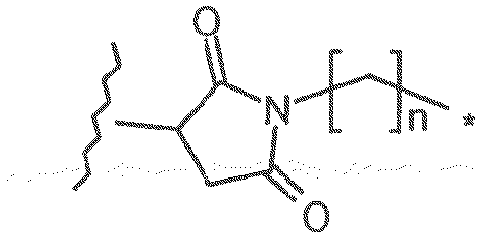
- In one embodiment, the group A is:

- In one embodiment, the group A is:

- In one embodiment, the group A is:
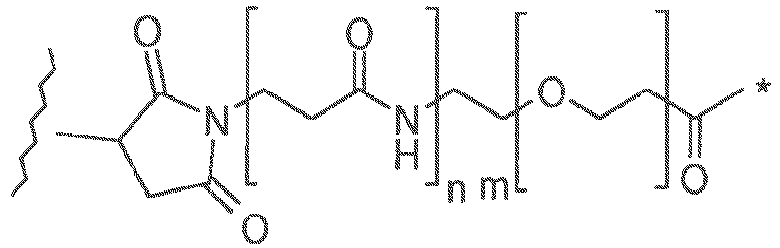
- In one embodiment, the connection between the cell binding agent and A is through a thiol residue of the cell binding agent and a maleimide group of A.
- In one embodiment, the connection between the cell binding agent and A is:

- In each of the embodiments above, an alternative functionality may be used in place of the maleimide-derived group shown below:

- In one embodiment, the maleimide-derived group is replaced with the group:
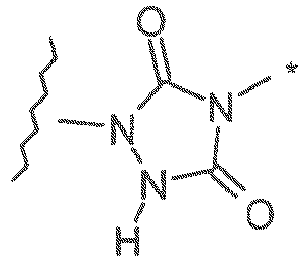
- In one embodiment, the maleimide-derived group is replaced with a group, which optionally together with the cell binding agent, is selected from:
-C(=O)NH-,
-C(=O)O-,
-NHC(=O)-,
-OC(=O)-,
-OC(=O)O-,
-NHC(=O)O-,
-OC(=O)NH-,
-NHC(=O)NH-,
-NHC(=O)NH,
-C(=O)NHC(=O)-,
-S-,
-S-S-,
-CH2C(=O)-
-C(=O)CH2-,
=N-NH-,
and
-NH-N=.
- In one embodiment, the maleimide-derived group is replaced with a group, which optionally together with the cell binding agent, is selected from:

- Other groups suitable for connecting L1 to the cell binding agent are described in
WO 2005/082023 . - The group RL' is derivable from the group RL. The group RL may be converted to a group RL' by connection of a cell binding agent to a functional group of RL. Other steps may be taken to convert RL to RL'. These steps may include the removal of protecting groups, where present, or the installation of an appropriate functional group.
- In one embodiment, RL is a linker for connection to a cell binding agent.
- In one embodiment, the linker is provided with a functional group to form a connection to a cell binding agent. This application is particularly concerned with those RL groups which have a carbamate link to the N10 position. The discussion of the linking group in RL' above is also relevant to their immediate precursors here.
- In one embodiment, RL is a group:

- L1 and L2 are as defined above in relation to RL'. References to connection to A can be construed here as referring to a connection to G1.
- In one embodiment, where L1 comprises an amino acid, the side chain of that amino acid may be protected. Any suitable protecting group may be used. In one embodiment, the side chain protecting groups are removable with other protecting groups in the compound, where present. In other embodiments, the protecting groups may be orthogonal to other protecting groups in the molecule, where present.
- Suitable protecting groups for amino acid side chains include those groups described in the Novabiochem Catalog 2006/2007. Protecting groups for use in a cathepsin labile linker are also discussed in Dubowchik et al.
- In certain embodiments of the invention, the group L1 includes a Lys amino acid residue. The side chain of this amino acid may be protected with a Boc or Alloc protected group. A Boc protecting group is most preferred.
- The functional group G1 forms a connecting group A upon reaction with a cell binding agent.
- In one embodiment, the functional group G1 is or comprises an amino, carboxylic acid, hydroxyl, thiol, or maleimide group for reaction with an appropriate group on the cell binding agent. In a preferred embodiment, G1 comprises a maleimide group.
- In one embodiment, the group G1 is an alkyl maleimide group. This group is suitable for reaction with thiol groups, particularly cysteine thiol groups, present in the cell binding agent, for example present in an antibody.
- In one embodiment, the group G1 is:
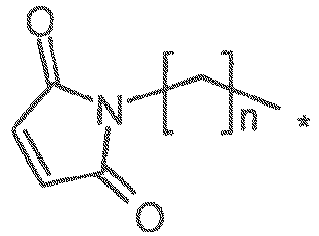
- In one embodiment, the group G1 is:

- In one embodiment, the group G1 is:

- In one embodiment, the group G1 is:

- In each of the embodiments above, an alternative functionality may be used in place of the maleimide group shown below:

- In one embodiment, the maleimide-derived group is replaced with the group:

- In one embodiment, the maleimide group is replaced with a group selected from:
-C(=O)OH,
-OH,
-NH2,
-SH,
-C(=O)CH2D,
where D is Cl, Br or I,
-CHO,
-NHNH2
-C=CH,
and
-N3 (azide).
- In one embodiment, where L1 is present, G1 is -NH2, -NHMe, -COOH, -OH or -SH.
- In one embodiment, where L1 is present, G1 is -NH2 or -NHMe. Either group may be the N-terminal of an L1 amino acid sequence.
- In one embodiment, where L1 is present, G1 is -NH2, and L1 is an amino acid sequence -X1-X2-, as defined above in relation to R10.
- In one embodiment, where L1 is present, G1 is COOH. This group may be the C-terminal of an L1 amino acid sequence.
- In one embodiment, where L1 is present, G1 is OH.
In one embodiment, where L1 is present, G1 is SH. - The group G1 may be convertable from one functional group to another. In one embodiment, where L1 is present, G1 is -NH2. This group is convertable to another group G1 comprising a maleimide group. For example, the group -NH2 may be reacted with an acids or an activated acid (e.g. N-succinimide forms) of those G1 groups comprising maleimide shown above.
- The group G1 may therefore be converted to a functional group that is more appropriate for reaction with a cell binding agent.
- In other embodiments, RL is a group that is a precursor to the linker that is provided with a functional group.
- As noted above, in one embodiment, where L1 is present, G1 is -NH2, -NHMe, -COOH, -OH or -SH. In a further embodiment, these groups are provided in a chemically protected form. The chemically protected form is therefore a precursor to the linker that is provided with a functional group.
- In one embodiment, G1 is -NH2 in a chemically protected form. The group may be protected with a carbamate protecting group. The carbamate protecting group may be selected from the group consisting of:
- Alloc, Fmoc, Boc, Troc, Teoc, Cbz and PNZ.
- In one embodiment, where G1 is -NH2, it is protected with an Fmoc group.
- The chemical protecting group may be removed to provide a functional group to form a connection to a cell binding agent. Optionally, this functional group may then be converted to another functional group as described above.
- In one embodiment, the active group is an amine. This amine is preferably the N-terminal amine of a peptide, and may be the N-terminal amine of the preferred dipeptides of the invention.
- The active group may be reacted to yield the functional group that is intended to form a connection to a cell binding agent.
- In other embodiments, the linker is a precursor to the linker having an active group. In this embodiment, the linker comprises the active group, which is protected by way of a protecting group. The protecting group may be removed to provide the linker having an active group.
- Where the active group is an amine, the protecting group may be an amine protecting group, such as those described in Green and Wuts.
- The protecting group is preferably orthogonal to other protecting groups, where present, in the group RL.
- In some embodiments, the linker contains an electrophilic functional group for reaction with a nucleophilic functional group on the cell binding agent. Nucleophilic groups on antibodies include, but are not limited to: (i) N-terminal amine groups, (ii) side chain amine groups, e.g. lysine, (iii) side chain thiol groups, e.g. cysteine, and (iv) sugar hydroxyl or amino groups where the antibody is glycosylated. Amine, thiol, and hydroxyl groups are nucleophilic and capable of reacting to form covalent bonds with electrophilic groups on linker moieties and linker reagents including: (i) maleimide groups (ii) activated disulfides, (iii) active esters such as NHS (N-hydroxysuccinimide) esters, HOBt (N-hydroxybenzotriazole) esters, haloformates, and acid halides; (iv) alkyl and benzyl halides such as haloacetamides; and (v) aldehydes, ketones, carboxyl, and, some of which are exemplified as follows:


- Certain antibodies have reducible interchain disulfides, i.e. cysteine bridges. Antibodies may be made reactive for conjugation with linker reagents by treatment with a reducing agent such as DTT (dithiothreitol). Each cysteine bridge will thus form, theoretically, two reactive thiol nucleophiles. Additional nucleophilic groups can be introduced into antibodies through the reaction of lysines with 2-iminothiolane (Traut's reagent) resulting in conversion of an amine into a thiol. Reactive thiol groups may be introduced into the antibody (or fragment thereof) by introducing one, two, three, four, or more cysteine residues (e.g., preparing mutant antibodies comprising one or more non-native cysteine amino acid residues).
US 7521541 teaches engineering antibodies by introduction of reactive cysteine amino acids. In some embodiments, a Linker has a reactive nucleophilic group which is reactive with an electrophilic group present on an antibody. Useful electrophilic groups on an antibody include, but are not limited to, aldehyde and ketone carbonyl groups. The heteroatom of a nucleophilic group of a Linker can react with an electrophilic group on an antibody and form a covalent bond to an antibody unit. Useful nucleophilic groups on a Linker include, but are not limited to, hydrazide, oxime, amino, hydroxyl, hydrazine, thiosemicarbazone, hydrazine carboxylate, and arylhydrazide. The electrophilic group on an antibody provides a convenient site for attachment to a Linker. - Other functional groups suitable for use in forming a connection between L1 and the cell binding agent are described in
WO 2005/082023 . - Linkers can include protease-cleavable peptidic moieties comprising one or more amino acid units. Peptide linker reagents may be prepared by solid phase or liquid phase synthesis methods (E. Schröder and K. Lübke, The Peptides, volume 1, pp 76-136 (1965) Academic Press) that are well known in the field of peptide chemistry, including t-BOC chemistry (Geiser et al "Automation of solid-phase peptide synthesis" in Macromolecular Sequencing and Synthesis, Alan R. Liss, Inc., 1988, pp. 199-218) and Fmoc/HBTU chemistry (Fields, G. and Noble, R. (1990) "Solid phase peptide synthesis utilizing 9-fluoroenylmethoxycarbonyl amino acids", Int. J. Peptide Protein Res. 35:161-214), on an automated synthesizer such as the Rainin Symphony Peptide Synthesizer (Protein Technologies, Inc., Tucson, AZ), or Model 433 (Applied Biosystems, Foster City, CA).
- Exemplary amino acid linkers include a dipeptide, a tripeptide, a tetrapeptide or a pentapeptide. Exemplary dipeptides include: valine-citrulline (vc or val-cit), alanine-phenylalanine (af or ala-phe). Exemplary tripeptides include: glycine-valine-citrulline (gly-val-cit) and glycine-glycine-glycine (gly-gly-gly). Amino acid residues which comprise an amino acid linker component include those occurring naturally, as well as minor amino acids and non-naturally occurring amino acid analogs, such as citrulline. Amino acid linker components can be designed and optimized in their selectivity for enzymatic cleavage by a particular enzymes, for example, a tumor-associated protease, cathepsin B, C and D, or a plasmin protease.
- Amino acid side chains include those occurring naturally, as well as minor amino acids and non-naturally occurring amino acid analogs, such as citrulline. Amino acid side chains include hydrogen, methyl, isopropyl, isobutyl, sec-butyl, benzyl, p-hydroxybenzyl, -CH2OH,-CH(OH)CH3, -CH2CH2SCH3, -CH2CONH2, -CH2COOH, -CH2CH2CONH2, -CH2CH2COOH,-(CH2)3NHC(=NH)NH2, -(CH2)3NH2, -(CH2)3NHCOCH3, -(CH2)3NHCHO,-(CH2)4NHC(=NH)NH2, -(CH2)4NH2, -(CH2)4NHCOCH3, -(CH2)4NHCHO, -(CH2)3NHCONH2,-(CH2)4NHCONH2, -CH2CH2CH(OH)CH2NH2, 2-pyridylmethyl-, 3-pyridylmethyl-, 4-pyridylmethyl-, phenyl, cyclohexyl, as well as the following structures:


- In exemplary embodiments, amino acid side chains are selected from those of natural and non-natural amino acids, including alanine, 2-amino-2-cyclohexylacetic acid, 2-amino-2-phenylacetic acid, arginine, asparagine, aspartic acid, cysteine, glutamine, glutamic acid, glycine, histidine, isoleucine, leucine, lysine, methionine, norleucine, phenylalanine, proline, serine, threonine, tryptophan, tyrosine, valine, γ-aminobutyric acid, α,α-dimethyl γ-aminobutyric acid, β,β-dimethyl γ-aminobutyric acid, ornithine, and citrulline (Cit).
- An exemplary valine-citrulline (val-cit or vc) dipeptide linker reagent useful for constructing a linker-PBD drug moiety intermediate for conjugation to a cell binding agent, e.g. an antibody, having a para-aminobenzylcarbamoyl (PAB) self-immolative spacer has the structure:

- An exemplary phe-lys(Mtr) dipeptide linker reagent having a p-aminobenzyl group can be prepared according to Dubowchik, et al. (1997) Tetrahedron Letters, 38:5257-60, and has the structure:

- The "self-immolative linker" PAB (para-aminobenzyloxycarbonyl), attaches the drug moiety to the antibody in the antibody drug conjugate (Carl et al (1981) J. Med. Chem. 24:479-480; Chakravarty et al (1983) J. Med. Chem. 26:638-644;
US 6214345 ;US20030130189 ;US20030096743 ;US6759509 ;US20040052793 ;US6218519 ;US6835807 ;US6268488 ;US20040018194 ;WO98/13059 US20040052793 ;US6677435 ;US5621002 ;US20040121940 ;WO2004/032828 ). Other examples of self-immolative spacers besides PAB include, but are not limited to: (i) aromatic compounds that are electronically similar to the PAB group such as 2-aminoimidazol-5-methanol derivatives (Hay et al. (1999) Bioorg. Med. Chem. Lett. 9:2237), thiazoles (US 7375078 ), multiple, elongated PAB units (de Groot et al (2001) J. Org. Chem. 66:8815-8830); and ortho or para-aminobenzylacetals; and (ii) homologated styryl PAB analogs (US 7223837 ). Spacers can be used that undergo cyclization upon amide bond hydrolysis, such as substituted and unsubstituted 4-aminobutyric acid amides (Rodrigues et al (1995) Chemistry Biology 2:223), appropriately substituted bicyclo[2.2.1] and bicyclo[2.2.2] ring systems (Storm et al (1972) J. Amer. Chem. Soc. 94:5815) and 2-aminophenylpropionic acid amides (Amsberry, et al (1990) J. Org. Chem. 55:5867). Elimination of amine-containing drugs that are substituted at glycine (Kingsbury et al (1984) J. Med. Chem. 27:1447) are also examples of self-immolative spacers useful in ADC. - In one embodiment, a valine-citrulline dipeptide PAB analog reagent has a 2,6 dimethyl phenyl group and has the structure:

- Linker reagents useful for the antibody drug conjugates of the invention include, but are not limited to: BMPEO, BMPS, EMCS, GMBS, HBVS, LC-SMCC, MBS, MPBH, SBAP, SIA, SIAB, SMCC, SMPB, SMPH, sulfo-EMCS, sulfo-GMBS, sulfo-KMUS, sulfo-MBS, sulfo-SIAB, sulfo-SMCC, and sulfo-SMPB, and SVSB (succinimidyl-(4-vinylsulfone)benzoate), and bis-maleimide reagents: DTME, BMB, BMDB, BMH, BMOE, 1,8-bis-maleimidodiethyleneglycol (BM(PEO)2), and 1,11-bis-maleimidotriethyleneglycol (BM(PEO)3), which are commercially available from Pierce Biotechnology, Inc., ThermoScientific, Rockford, IL, and other reagent suppliers. Bis-maleimide reagents allow the attachment of a free thiol group of a cysteine residue of an antibody to a thiol-containing drug moiety, label, or linker intermediate, in a sequential or concurrent fashion. Other functional groups besides maleimide, which are reactive with a thiol group of an antibody, PBD drug moiety, or linker intermediate include iodoacetamide, bromoacetamide, vinyl pyridine, disulfide, pyridyl disulfide, isocyanate, and isothiocyanate.

US 6214345 ;WO 02/088172 US 2003130189 ;US2003096743 ;WO 03/026577 WO 03/043583 WO 04/032828 - The Linker may be a dendritic type linker for covalent attachment of more than one drug moiety through a branching, multifunctional linker moiety to an antibody (
US 2006/116422 ;US 2005/271615 ; de Groot et al (2003) Angew. Chem. Int. Ed. 42:4490-4494; Amir et al (2003) Angew. Chem. Int. Ed. 42:4494-4499; Shamis et al (2004) J. Am. Chem. Soc. 126:1726-1731; Sun et al (2002) Bioorganic & Medicinal Chemistry Letters 12:2213-2215; Sun et al (2003) Bioorganic & Medicinal Chemistry 11:1761-1768; King et al (2002) Tetrahedron Letters 43:1987-1990). Dendritic linkers can increase the molar ratio of drug to antibody, i.e. loading, which is related to the potency of the ADC. Thus, where an antibody bears only one reactive cysteine thiol group, a multitude of drug moieties may be attached through a dendritic or branched linker. - One exemplary embodiment of a dendritic type linker has the structure:

- In certain embodiments of conjugates of the present invention, L-RL' may be of formula X:


- where N shows where the group binds to the N10 of the PBD moiety;
- RQ1 and RQ2 are independently selected from H and methyl, or together with the carbon atom to which they are bound form a cyclopropylene group; and
- CBA represents the cell binding agent.
- Thus the group of formula X is selected from the following formulae X-I, X-II and X-III, depending on Q:
Q X Single bond 


- In some embodiments, RQ1 and RQ2 are H. In other embodiment, RQ1 and RQ2 are methyl. In further embodiments, one of RQ1 and RQ2 is H and the other is methyl; in these embodiments, the carbon atom to which they are bound is a chiral centre.
- In some embodiments, Q is a single bond.
- In other embodiments, Q is
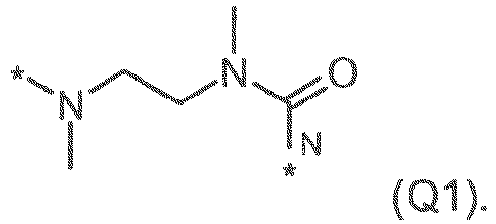
- In further embodiments, Q is
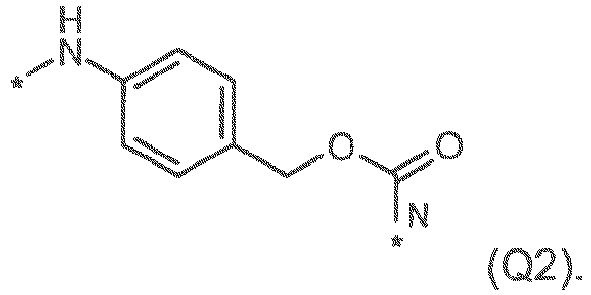
- Conjugates where L-RL' is of formula X may be formed from compounds wherein RL is of formula XI:

- The preferences expressed for the group of formula X apply equally to formula XI.
- A cell binding agent may be of any kind, and include peptides and non-peptides. These can include antibodies or a fragment of an antibody that contains at least one binding site, lymphokines, hormones, growth factors, nutrient-transport molecules, or any other cell binding molecule or substance.
- In one embodiment, the cell binding agent is a linear or cyclic peptide comprising 4-30, preferably 6-20, contiguous amino acid residues. In this embodiment, it is preferred that one cell binding agent is linked to one monomer or dimer pyrrolobenzodiazepine compound.
- In one embodiment the cell binding agent comprises a peptide that binds integrin αvβ6. The peptide may be selective for αvβ6 over XYS.
- In one embodiment the cell binding agent comprises the A20FMDV-Cys polypeptide. The A20FMDV-Cys has the sequence: NAVPNLRGDLQVLAQKVARTC. Alternatively, a variant of the A20FMDV-Cys sequence may be used wherein one, two, three, four, five, six, seven, eight, nine or ten amino acid residues are substituted with another amino acid residue. Furthermore, the polypeptide may have the sequence NAVXXXXXXXXXXXXXXXRTC.
- The term "antibody" herein is used in the broadest sense and specifically covers monoclonal antibodies, polyclonal antibodies, dimers, multimers, multispecific antibodies (e.g., bispecific antibodies), and antibody fragments, so long as they exhibit the desired biological activity (Miller et al (2003) Jour. of Immunology 170:4854-4861). Antibodies may be murine, human, humanized, chimeric, or derived from other species. An antibody is a protein generated by the immune system that is capable of recognizing and binding to a specific antigen. (Janeway, C., Travers, P., Walport, M., Shlomchik (2001) Immuno Biology, 5th Ed., Garland Publishing, New York). A target antigen generally has numerous binding sites, also called epitopes, recognized by CDRs on multiple antibodies. Each antibody that specifically binds to a different epitope has a different structure. Thus, one antigen may have more than one corresponding antibody. An antibody includes a full-length immunoglobulin molecule or an immunologically active portion of a full-length immunoglobulin molecule, i.e., a molecule that contains an antigen binding site that immunospecifically binds an antigen of a target of interest or part thereof, such targets including but not limited to, cancer cell or cells that produce autoimmune antibodies associated with an autoimmune disease. The immunoglobulin can be of any type (e.g. IgG, IgE, IgM, IgD, and IgA), class (e.g. IgG1, IgG2, IgG3, IgG4, IgA1 and IgA2) or subclass of immunoglobulin molecule. The immunoglobulins can be derived from any species, including human, murine, or rabbit origin.
- "Antibody fragments" comprise a portion of a full length antibody, generally the antigen binding or variable region thereof. Examples of antibody fragments include Fab, Fab', F(ab')2, and scFv fragments; diabodies; linear antibodies; fragments produced by a Fab expression library, anti-idiotypic (anti-Id) antibodies, CDR (complementary determining region), and epitope-binding fragments of any of the above which immunospecifically bind to cancer cell antigens, viral antigens or microbial antigens, single-chain antibody molecules; and multispecific antibodies formed from antibody fragments.
- The term "monoclonal antibody" as used herein refers to an antibody obtained from a population of substantially homogeneous antibodies, i.e. the individual antibodies comprising the population are identical except for possible naturally occurring mutations that may be present in minor amounts. Monoclonal antibodies are highly specific, being directed against a single antigenic site. Furthermore, in contrast to polyclonal antibody preparations which include different antibodies directed against different determinants (epitopes), each monoclonal antibody is directed against a single determinant on the antigen. In addition to their specificity, the monoclonal antibodies are advantageous in that they may be synthesized uncontaminated by other antibodies. The modifier "monoclonal" indicates the character of the antibody as being obtained from a substantially homogeneous population of antibodies, and is not to be construed as requiring production of the antibody by any particular method. For example, the monoclonal antibodies to be used in accordance with the present invention may be made by the hybridoma method first described by Kohler et al (1975) Nature 256:495, or may be made by recombinant DNA methods (see,
US 4816567 ). The monoclonal antibodies may also be isolated from phage antibody libraries using the techniques described in Clackson et al (1991) Nature, 352:624-628; Marks et al (1991) J. Mol. Biol., 222:581-597 or from transgenic mice carrying a fully human immunoglobulin system (Lonberg (2008) Curr. Opinion 20(4):450-459). - The monoclonal antibodies herein specifically include "chimeric" antibodies in which a portion of the heavy and/or light chain is identical with or homologous to corresponding sequences in antibodies derived from a particular species or belonging to a particular antibody class or subclass, while the remainder of the chain(s) is identical with or homologous to corresponding sequences in antibodies derived from another species or belonging to another antibody class or subclass, as well as fragments of such antibodies, so long as they exhibit the desired biological activity (
US 4816567 ; and Morrison et al (1984) Proc. Natl. Acad. Sci. USA, 81:6851-6855). Chimeric antibodies include "primatized" antibodies comprising variable domain antigen-binding sequences derived from a non-human primate (e.g. Old World Monkey or Ape) and human constant region sequences. - An "intact antibody" herein is one comprising a VL and VH domains, as well as a light chain constant domain (CL) and heavy chain constant domains, CH1, CH2 and CH3. The constant domains may be native sequence constant domains (e.g. human native sequence constant domains) or amino acid sequence variant thereof. The intact antibody may have one or more "effector functions" which refer to those biological activities attributable to the Fc region (a native sequence Fc region or amino acid sequence variant Fc region) of an antibody. Examples of antibody effector functions include C1q binding; complement dependent cytotoxicity; Fc receptor binding; antibody-dependent cell-mediated cytotoxicity (ADCC); phagocytosis; and down regulation of cell surface receptors such as B cell receptor and BCR.
- Depending on the amino acid sequence of the constant domain of their heavy chains, intact antibodies can be assigned to different "classes." There are five major classes of intact antibodies: IgA, IgD, IgE, IgG, and IgM, and several of these may be further divided into "subclasses" (isotypes), e.g., IgG1, IgG2, IgG3, IgG4, IgA, and IgA2. The heavy-chain constant domains that correspond to the different classes of antibodies are called α, δ, ε, γ, and µ, respectively. The subunit structures and three-dimensional configurations of different classes of immunoglobulins are well known.
- Techniques to reduce the in vivo immunogenicity of a non-human antibody or antibody fragment include those termed "humanisation".
- A "humanized antibody" refers to a polypeptide comprising at least a portion of a modified variable region of a human antibody wherein a portion of the variable region, preferably a portion substantially less than the intact human variable domain, has been substituted by the corresponding sequence from a non-human species and wherein the modified variable region is linked to at least another part of another protein, preferably the constant region of a human antibody. The expression "humanized antibodies" includes human antibodies in which one or more complementarity determining region ("CDR") amino acid residues and/or one or more framework region ("FW" or "FR") amino acid residues are substituted by amino acid residues from analogous sites in rodent or other non-human antibodies. The expression "humanized antibody" also includes an immunoglobulin amino acid sequence variant or fragment thereof that comprises an FR having substantially the amino acid sequence of a human immunoglobulin and a CDR having substantially the amino acid sequence of a non-human immunoglobulin.
- "Humanized" forms of non-human (e.g., murine) antibodies are chimeric antibodies that contain minimal sequence derived from non-human immunoglobulin. Or, looked at another way, a humanized antibody is a human antibody that also contains selected sequences from non-human (e.g. murine) antibodies in place of the human sequences. A humanized antibody can include conservative amino acid substitutions or non-natural residues from the same or different species that do not significantly alter its binding and/or biologic activity. Such antibodies are chimeric antibodies that contain minimal sequence derived from non-human immunoglobulins.
- There are a range of humanisation techniques, including 'CDR grafting', 'guided selection', 'deimmunization', 'resurfacing' (also known as 'veneering'), 'composite antibodies', 'Human String Content Optimisation' and framework shuffling.
- In this technique, the humanized antibodies are human immunoglobulins (recipient antibody) in which residues from a complementary-determining region (CDR) of the recipient antibody are replaced by residues from a CDR of a non-human species (donor antibody) such as mouse, rat, camel, bovine, goat, or rabbit having the desired properties (in effect, the non-human CDRs are 'grafted' onto the human framework). In some instances, framework region (FR) residues of the human immunoglobulin are replaced by corresponding non-human residues (this may happen when, for example, a particular FR residue has significant effect on antigen binding).
- Furthermore, humanized antibodies can comprise residues that are found neither in the recipient antibody nor in the imported CDR or framework sequences. These modifications are made to further refine and maximize antibody performance. Thus, in general, a humanized antibody will comprise all of at least one, and in one aspect two, variable domains, in which all or all of the hypervariable loops correspond to those of a non-human immunoglobulin and all or substantially all of the FR regions are those of a human immunoglobulin sequence. The humanized antibody optionally also will comprise at least a portion of an immunoglobulin constant region (Fc), or that of a human immunoglobulin.
- The method consists of combining the VH or VL domain of a given non-human antibody specific for a particular epitope with a human VH or VL library and specific human V domains are selected against the antigen of interest. This selected human VH is then combined with a VL library to generate a completely human VHxVL combination. The method is described in Nature Biotechnology (N.Y.) 12, (1994) 899-903.
- In this method, two or more segments of amino acid sequence from a human antibody are combined within the final antibody molecule. They are constructed by combining multiple human VH and VL sequence segments in combinations which limit or avoid human T cell epitopes in the final composite antibody V regions. Where required, T cell epitopes are limited or avoided by, exchanging V region segments contributing to or encoding a T cell epitope with alternative segments which avoid T cell epitopes. This method is described in
US 2008/0206239 A1 . - This method involves the removal of human (or other second species) T-cell epitopes from the V regions of the therapeutic antibody (or other molecule). The therapeutic antibodies V-region sequence is analysed for the presence of MHC class II- binding motifs by, for example, comparison with databases of MHC-binding motifs (such as the "motifs" database hosted at www.wehi.edu.au). Alternatively, MHC class II- binding motifs may be identified using computational threading methods such as those devised by Altuvia et al. (J. Mol. Biol. 249 244-250 (1995)); in these methods, consecutive overlapping peptides from the V-region sequences are testing for their binding energies to MHC class II proteins. This data can then be combined with information on other sequence features which relate to successfully presented peptides, such as amphipathicity, Rothbard motifs, and cleavage sites for cathepsin B and other processing enzymes.
- Once potential second species (e.g. human) T-cell epitopes have been identified, they are eliminated by the alteration of one or more amino acids. The modified amino acids are usually within the T-cell epitope itself, but may also be adjacent to the epitope in terms of the primary or secondary structure of the protein (and therefore, may not be adjacent in the primary structure). Most typically, the alteration is by way of substitution but, some circumstances amino acid addition or deletion will be more appropriate.
- All alterations can be accomplished by recombinant DNA technology, so that the final molecule may be prepared by expression from a recombinant host using well established methods such as Site Directed Mutagenesis. However, the use of protein chemistry or any other means of molecular alteration is also possible.
- This method involves:
- (a) determining the conformational structure of the variable region of the non-human (e.g. rodent) antibody (or fragment thereof) by constructing a three-dimensional model of the non-human antibody variable region;
- (b) generating sequence alignments using relative accessibility distributions from x-ray crystallographic structures of a sufficient number of non-human and human antibody variable region heavy and light chains to give a set of heavy and light chain framework positions wherein the alignment positions are identical in 98% of the sufficient number of non-human antibody heavy and light chains;
- (c) defining for the non-human antibody to be humanized, a set of heavy and light chain surface exposed amino acid residues using the set of framework positions generated in step (b);
- (d) identifying from human antibody amino acid sequences a set of heavy and light chain surface exposed amino acid residues that is most closely identical to the set of surface exposed amino acid residues defined in step (c), wherein the heavy and light chain from the human antibody are or are not naturally paired;
- (e) substituting, in the amino acid sequence of the non-human antibody to be humanized, the set of heavy and light chain surface exposed amino acid residues defined in step (c) with the set of heavy and light chain surface exposed amino acid residues identified in step (d);
- (f) constructing a three-dimensional model of the variable region of the non-human antibody resulting from the substituting specified in step (e);
- (g) identifying, by comparing the three-dimensional models constructed in steps (a) and (f), any amino acid residues from the sets identified in steps (c) or (d), that are within 5 Angstroms of any atom of any residue of the complementarity determining regions of the non-human antibodt to be humanized; and
- (h) changing any residues identified in step (g) from the human to the original non-human amino acid residue to thereby define a non-human antibody humanizing set of surface exposed amino acid residues; with the proviso that step (a) need not be conducted first, but must be conducted prior to step (g).
- The method compares the non-human sequence with the functional human germline gene repertoire. Those human genes encoding canonical structures identical or closely related to the non-human sequences are selected. Those selected human genes with highest homology within the CDRs are chosen as FR donors. Finally, the non-human CDRs are grafted onto these human FRs. This method is described in patent
WO 2005/079479 A2 . - This method compares the non-human (e.g. mouse) sequence with the repertoire of human germline genes and the differences are scored as Human String Content (HSC) that quantifies a sequence at the level of potential MHC/T-cell epitopes. The target sequence is then humanized by maximizing its HSC rather than using a global identity measure to generate multiple diverse humanized variants (described in Molecular Immunology, 44, (2007) 1986-1998).
- The CDRs of the non-human antibody are fused in-frame to cDNA pools encompassing all known heavy and light chain human germline gene frameworks. Humanised antibodies are then selected by e.g. panning of the phage displayed antibody library. This is described in Methods 36, 43-60 (2005).
- Examples of cell binding agents include those agents described for use in
WO 2007/085930 , which is incorporated herein. - Tumour-associate antigens and cognate antibodies for use in embodiments of the present invention are listed below.
- Genbank accession no. NM_001203
Genbank version no. NM_001203.2 Gl:169790809
Genbank record update date: Sep 23, 2012 02:06 PM - Genbank accession no. NP_001194
Genbank version no. NP_001194.1 Gl:4502431
Genbank record update date: Sep 23, 2012 02:06 PM - ten Dijke,P., et al Science 264 (5155): 101-104 (1994), Oncogene 14 10 (11):1377-1382 (1997));
WO2004/063362 (Claim 2);WO2003/042661 (Claim 12);
US2003/134790-A1 (Page 38-39);WO2002/102235 (Claim 13; Page 296);WO2003/055443 (Page 91-92);WO2002/99122 WO2003/029421 (Claim 6);WO2003/024392 (Claim 2; Fig 112);WO2002/98358 WO2002/54940 WO2002/59377 WO2002/30268 WO2001/48204 - Genbank accession no. NM_003486
Genbank version no. NM_003486.5 Gl:71979931
Genbank record update date: Jun 27, 2012 12:06 PM - Genbank accession no. NP_003477
Genbank version no. NP_003477.4 Gl:71979932
Genbank record update date: Jun 27, 2012 12:06 PM - Biochem. Biophys. Res.Commun. 255 (2), 283-288 (1999), Nature 395 (6699):288-291 (1998), Gaugitsch, H.W., et 20 al (1992) J. Biol. Chem. 267 (16):11267-11273);
WO2004/048938 (Example 2);WO2004/032842 (Example IV);WO2003/042661 (Claim 12);WO2003/016475 (Claim 1);WO2002/78524 WO2002/99074 WO2002/86443 WO2003/003906 (Claim 10; Page 293);WO2002/64798 WO2000/14228 US2003/224454 (Fig 3); 25WO2003/025138 (Claim 12; Page 150); NP_003477 solute carrier family 7 (cationic amino acid transporter, y+system), member 5 /pid=NP_003477.3 - Homo sapiens; MIM:600182;; NM_015923. - Genbank accession no. NM_012449
Genbank version no. NM_012449.2 Gl:22027487
Genbank record update date: Sep 9, 2012 02:57 PM - Genbank accession no. NP_036581
Genbank version no. NP_036581.1 Gl:9558759
Genbank record update date: Sep 9, 2012 02:57 PM - Cancer Res. 61 (15), 5857-5860 (2001), Hubert, R.S., et al (1999) Proc. Natl. Acad. Sci. U.S.A. 96 (25):14523-14528);
WO2004/065577 (Claim 6);WO2004/027049 (Fig 1L);EP1394274 (Example 11);WO2004/016225 (Claim 2);WO2003/042661 (Claim 12);US2003/157089 (Example 5);US2003/185830 (Example 5);US2003/064397 (Fig 2);WO2002/89747 WO2003/022995 (Example 9; Fig 13A, 35 Example 53; Page 173, Example 2; Fig 2A); six transmembrane epithelial antigen of the prostate; MIM:604415. - Genbank accession no. AF361486
Genbank version no. AF361486.3 Gl:34501466
Genbank record update date: Mar 11, 2010 07:56 AM - Genbank accession no. AAK74120
Genbank version no. AAK74120.3 Gl:34501467
Genbank record update date: Mar 11, 2010 07:56 AM - J. Biol. Chem. 276 (29):27371-27375 (2001));
WO2004/045553 (Claim 14);WO2002/92836 WO2002/83866 US2003/124140 (Example 16); Gl:34501467; - Genbank accession no. NM_005823
Genbank version no. NM_005823.5 Gl:293651528
Genbank record update date: Sep 2, 2012 01:47 PM - Genbank accession no. NP_005814
Genbank version no. NP_005814.2 Gl:53988378
Genbank record update date: Sep 2, 2012 01:47 PM - Yamaguchi, N., et al Biol. Chem. 269 (2), 805-808 (1994), Proc. Natl. Acad. Sci. U.S.A. 96 (20):11531-11536 (1999), Proc. Natl. Acad. Sci. U.S.A. 93 10 (1):136-140 (1996), J. Biol. Chem. 270 (37):21984-21990 (1995));
WO2003/101283 (Claim 14); (WO2002/102235 (Claim 13; Page 287-288);WO2002/101075 (Claim 4; Page 308- 309);WO2002/71928 WO94/10312 - Genbank accession no. NM_006424
Genbank version no. NM_006424.2 Gl:110611905
Genbank record update date: Jul 22, 2012 03:39 PM - Genbank accession no. NP_006415
Genbank version no. NP_006415.2 Gl:110611906
Genbank record update date: Jul 22, 2012 03:39 PM - J. Biol. Chem. 277 (22):19665-19672 (2002), Genomics 62 (2):281-284 (1999), Feild, J.A., et al (1999) Biochem. Biophys. Res. Commun. 258 (3):578-582);
WO2004/022778 (Claim 2);EP1394274 (Example 11);WO2002/102235 (Claim 13; Page 20 326);EP0875569 (Claim 1; Page 17-19);WO2001/57188 WO2004/032842 (Example IV);WO2001/75177 - Genbank accession no. AB040878
Genbank version no. AB040878.1 Gl:7959148
Genbank record update date: Aug 2, 2006 05:40 PM - Genbank accession no. BAA95969
Genbank version no. BAA95969.1 Gl:7959149
Genbank record update date: Aug 2, 2006 05:40 PM - Nagase T., et al (2000) DNA Res. 7 (2):143-150);
WO2004/000997 (Claim 1);WO2003/003984 (Claim 1);WO2002/06339 WO2001/88133 WO2003/054152 (Claim 20);WO2003/101400 (Claim 11); Accession: 30 Q9P283; Genew; HGNC:10737 - Genbank accession no. AY358628
Genbank version no. AY358628.1 Gl:37182377
Genbank record update date: Dec 1, 2009 04:15 AM - Genbank accession no. AAQ88991
Genbank version no. AAQ88991.1 Gl:37182378
Genbank record update date: Dec 1, 2009 04:15 AM - Ross et al (2002) Cancer Res. 62:2546-2553;
US2003/129192 (Claim 2);US2004/044180 (Claim 12);US2004/044179 35 US2003/096961 (Claim 11);US2003/232056 (Example 5);WO2003/105758 16 US2003/206918 (Example 5);EP1347046 (Claim 1);WO2003/025148 (Claim 20); Gl:37182378. - Genbank accession no. AY275463
Genbank version no. AY275463.1 Gl:30526094
Genbank record update date: Mar 11, 2010 02:26 AM - Genbank accession no. AAP32295
Genbank version no. AAP32295.1 Gl:30526095
Genbank record update date: Mar 11, 2010 02:26 AM - Nakamuta M., et al Biochem. Biophys. Res. Commun. 177, 34-39, 1991; Ogawa Y., et al Biochem. Biophys. Res. Commun. 178, 248-255, 1991; Arai H., et al Jpn. Circ. J. 56, 1303-1307, 1992; Arai H., et al J. Biol. Chem. 268, 3463-3470, 1993; Sakamoto A., Yanagisawa M., et al Biochem. Biophys. Res. Commun. 178, 656-663, 1991; Elshourbagy N.A., et al J. Biol. Chem. 268, 3873-3879, 1993; Haendler B., et al J. Cardiovasc. Pharmacol. 20, s1-S4, 1992; Tsutsumi M., et al Gene 228, 43-49, 1999; Strausberg R.L., et al Proc. Natl. Acad. Sci. U.S.A. 99, 16899-16903, 2002; Bourgeois C., et al J. Clin. Endocrinol. Metab. 82, 3116-3123, 1997;
- Okamoto Y., et al Biol. Chem. 272, 21589-21596, 1997; Verheij J.B., et al Am. J. Med. Genet. 108, 223-225, 2002; Hofstra R.M.W., et al Eur. J. Hum. Genet. 5, 180-185, 1997; Puffenberger E.G., et al Cell 79, 1257-1266, 1994; Attie T., et al, Hum. Mol. Genet. 4, 2407-15 2409, 1995; Auricchio A., et al Hum. Mol. Genet. 5:351-354, 1996; Amiel J., et al Hum. Mol. Genet. 5, 355-357, 1996; Hofstra R.M.W., et al Nat. Genet. 12, 445-447, 1996; Svensson P.J., et al Hum. Genet. 103, 145-148, 1998; Fuchs S., et al Mol. Med. 7, 115-124, 2001; Pingault V., et al (2002) Hum. Genet. 111, 198-206;
WO2004/0455 WO2004/048938 (Example 2);WO2004/040000 (Claim 151);WO2003/087768 (Claim 1); 20WO2003/016475 (Claim 1);WO2003/016475 (Claim 1);WO2002/61087 WO2003/016494 (Fig 6);WO2003/025138 (Claim 12; Page 144);WO2001/98351 EP0522868 (Claim 8; Fig 2);WO2001/77172 US2003/109676 ;US6518404 (Fig 3);US5773223 (Claim 1a; Col 31-34);WO2004/001004 . - Genbank accession no. NM_017763
Genbank version no. NM_017763.4 Gl:167830482
Genbank record update date: Jul 22, 2012 12:34 AM - Genbank accession no. NP_060233
Genbank version no. NP_060233.3 Gl:56711322
Genbank record update date: Jul 22, 2012 12:34 AM -
WO2003/104275 (Claim 1);WO2004/046342 (Example 2);WO2003/042661 (Claim 12);WO2003/083074 (Claim 14; Page 61);WO2003/018621 (Claim 1);WO2003/024392 (Claim 2; Fig 93);WO2001/66689 - Genbank accession no. AF455138
Genbank version no. AF455138.1 Gl:22655487
Genbank record update date: Mar 11, 2010 01:54 AM - Genbank accession no. AAN04080
Genbank version no. AAN04080.1 Gl:22655488
Genbank record update date: Mar 11, 2010 01:54 AM - Lab. Invest. 82 (11):1573-1582 (2002));
WO2003/087306 ;US2003/064397 (Claim 1; Fig 1);WO2002/72596 WO2001/72962 WO2003/104270 (Claim 11);WO2003/104270 (Claim 16);US2004/005598 (Claim 22);WO2003/042661 (Claim 12);US2003/060612 (Claim 12; Fig 10);WO2002/26822 WO2002/16429 - Genbank accession no. NM_017636
Genbank version no. NM_017636.3 GI:304766649
Genbank record update date: Jun 29, 2012 11:27 AM - Genbank accession no. NP_060106
Genbank version no. NP_060106.2 GI:21314671
Genbank record update date: Jun 29, 2012 11:27 AM - Xu, X.Z., et al Proc. Natl. Acad. Sci. U.S.A. 98 (19):10692-10697 (2001), Cell 109 (3):397-407 (2002), J. Biol. Chem. 278 (33):30813-30820 (2003));
US2003/143557 (Claim 4);WO2000/40614 WO2002/10382 WO2003/042661 (Claim 12);WO2002/30268 US2003/219806 (Claim 4);WO2001/62794 - Genbank accession no. NM_003212
Genbank version no. NM_003212.3 GI:292494881
Genbank record update date: Sep 23, 2012 02:27 PM - Genbank accession no. NP_003203
Genbank version no. NP_003203.1 GI:4507425
Genbank record update date: Sep 23, 2012 02:27 PM - Ciccodicola, A., et al EMBO J. 8 (7):1987-1991 (1989), Am. J. Hum. Genet. 49 (3):555-565 (1991));
US2003/224411 (Claim 1);WO2003/083041 (Example 1);WO2003/034984 (Claim 12);WO2002/88170 WO2003/024392 (Claim 2; Fig 58);WO2002/16413 WO2002/22808 US5854399 (Example 2; Col 17-18);US5792616 (Fig 2); MIM:187395. - Genbank accession no M26004
Genbank version no. M26004.1 GI:181939
Genbank record update date: Jun 23, 2010 08:47 AM - Genbank accession no. AAA35786
Genbank version no. AAA35786.1 GI:181940
Genbank record update date: Jun 23, 2010 08:47 AM - Fujisaku et al (1989) J. Biol. Chem. 264 (4):2118-2125); Weis J.J., et al J. Exp. Med. 167, 1047-1066, 1988; Moore M., et al Proc. Natl. Acad. Sci. U.S.A. 84, 9194-9198, 1987; Barel M., et al Mol. Immunol. 35, 1025-1031, 1998; Weis J.J., et al Proc. Natl. Acad. Sci. U.S.A. 83, 5639-5643, 1986; Sinha S.K., et al (1993) J. Immunol. 150, 5311-5320;
WO2004/045520 (Example 4);US2004/005538 (Example 1);WO2003/062401 (Claim 9);WO2004/045520 (Example 4);WO91/02536 WO2004/020595 (Claim 1); Accession: P20023; Q13866; Q14212; EMBL; M26004; AAA35786.1. - Genbank accession no NM_000626
Genbank version no. NM_000626.2 GI:90193589
Genbank record update date: Jun 26, 2012 01:53 PM - Genbank accession no. NP_000617
Genbank version no. NP_000617.1 GI:11038674
Genbank record update date: Jun 26, 2012 01:53 PM - Proc. Natl. Acad. Sci. U.S.A. (2003) 100 (7):4126-4131, Blood (2002) 100 (9):3068-3076, Muller et al (1992) Eur. J. Immunol. 22 (6):1621-1625);
WO2004/016225 (claim 2, Fig 140);WO2003/087768 ,US2004/101874 (claim 1, page 102);WO2003/062401 (claim 9);WO2002/78524 US2002/150573 (claim 35 5, page 15);US5644033 ;WO2003/048202 (claim 1, pages 306 and 309);WO 99/58658 US6534482 (claim 13, Fig 17A/B);WO2000/55351 - Genbank accession no NM_030764
Genbank version no. NM_030764.3 GI:227430280
Genbank record update date: Jun 30, 2012 12:30 AM - Genbank accession no. NP_110391
Genbank version no. NP_110391.2 GI:19923629
Genbank record update date: Jun 30, 2012 12:30 AM - AY358130); Genome Res. 13 (10):2265-2270 (2003), Immunogenetics 54 (2):87-95 (2002), Blood 99 (8):2662-2669 (2002), Proc. Natl. Acad. Sci. U.S.A. 98 (17):9772-9777 (2001), Xu, M.J., et al (2001) Biochem. Biophys. Res. Commun. 280 (3):768-775;
WO2004/016225 (Claim 2);WO2003/077836 ;WO2001/38490 WO2003/097803 (Claim 12);
10WO2003/089624 (Claim 25);: MIM:606509. - Genbank accession no M11730
Genbank version no. M11730.1 GI:183986
Genbank record update date: Jun 23, 2010 08:47 AM - Genbank accession no. AAA75493
Genbank version no. AAA75493.1 GI:306840
Genbank record update date: Jun 23, 2010 08:47 AM - Coussens L., et al Science (1985) 230(4730):1132-1139); Yamamoto T., et al Nature 319, 230-234, 1986; Semba K., et al Proc. Natl. Acad. Sci. U.S.A. 82, 6497-6501, 1985; Swiercz J.M., et al J. Cell Biol. 165, 869- 15 880, 2004; Kuhns J.J., et al J. Biol. Chem. 274, 36422-36427, 1999; Cho H.-S., et al Nature 421, 756-760, 2003; Ehsani A., et al (1993) Genomics 15, 426-429;
WO2004/048938 (Example 2);WO2004/027049 (Fig 1I);WO2004/009622 ;WO2003/081210 ;
WO2003/089904 (Claim 9);WO2003/016475 (Claim 1);US2003/118592 ;WO2003/008537 (Claim 1);WO2003/055439 (Claim 29; Fig 1A-B);WO2003/025228 (Claim 37; Fig 5C); 20WO2002/22636 WO2002/12341 WO2002/13847 WO2002/14503 WO2001/53463 WO2001/41787 WO2000/44899 WO2000/20579 US5869445 (Claim 3; Col 31-38);WO9630514 EP1439393 (Claim 7);WO2004/043361 (Claim 7);WO2004/022709 ;WO2001/00244 25 - Abbott:
US20110177095
For example, an antibody comprising CDRs having overall at least 80% sequence identity to CDRs having amino acid sequences of SEQ ID NO:3 (CDR-H1), SEQ ID NO:4 (CDR-H2), SEQ ID NO:5 (CDR-H3), SEQ ID NO:104 and/or SEQ ID NO:6 (CDR-L1), SEQ ID NO:7 (CDR-L2), and SEQ ID NO:8 (CDR-L3), wherein the anti-HER2 antibody or anti-HER2 binding fragment has reduced immunogenicity as compared to an antibody having a VH of SEQ ID NO:1 and a VL of SEQ ID NO:2. - Biogen:
US20100119511 For example, ATCC accession numbers: PTA-10355, PTA-10356, PTA-10357, PTA-10358
For example, a purified antibody molecule that binds to HER2 comprising a all six CDR's from an antibody selected from the group consisting of BIIB71F10 (SEQ ID NOs:11, 13), BIIB69A09 (SEQ ID NOs:15, 17); BIIB67F10 (SEQ ID NOs:19, 21); BIIB67F11 (SEQ. ID NOs:23, 25), BIIB66A12 (SEQ ID NOs:27, 29), BIIB66C01 (SEQ ID NOs:31, 33), BIIB65C10 (SEQ ID NOs:35, 37), BIIB65H09 (SEQ ID NOs:39, 41) and BIIB65B03 (SEQ ID NOs:43, 45), or CDRs which are identical or which have no more than two alterations from said CDRs. - Pertuzumab (Genentech)
-
US20110117097
for example, see SEQ IDs No. 15&16, SEQ IDs No. 17&18, SEQ IDs No. 23&24 & ATCC accession numbers HB-12215, HB-12216, CRL 10463, HB-12697. -
US20090285837 -
US20090202546
for example, ATCC accession numbers: HB-12215, HB-12216, CRL 10463, HB-12698. -
US20060088523 - for example, ATCC accession numbers: HB-12215, HB-12216
- for example, an antibody comprising the variable light and variable heavy amino acid sequences in SEQ ID Nos. 3 and 4, respectively.
- for example, an antibody comprising a light chain amino acid sequence selected from SEQ ID No. 15 and 23, and a heavy chain amino acid sequence selected from SEQ ID No. 16 and 24
-
US20060018899 - for example, ATCC accession numbers: (7C2) HB-12215, (7F3) HB-12216, (4D5) CRL-10463, (2C4) HB-12697.
- for example, an antibody comprising the amino acid sequence in SEQ ID No. 23, or a deamidated and/or oxidized variant thereof.
-
US2011/0159014 - for example, an antibody having a light chain variable domain comprising the hypervariable regions of SEQ ID NO: 1".
- For example, an antibody having a heavy chain variable domain comprising the hypervariable regions of SEQ ID NO: 2.
-
US20090187007 - Glycotope: TrasGEX antibody http://www.glycotope.com/pipeline
For example, see International Joint Cancer Institute and Changhai Hospital Cancer Cent: HMTI-Fc Ab - Gao J., et al BMB Rep. 2009 Oct 31;42(10):636-41. - Union Stem Cell &Gene Engineering, China - Liu HQ., et al Xi Bao Yu Fen Zi Mian Yi Xue Za Zhi. 2010 May;26(5):456-8.
- Genbank accession no M18728
Genbank version no. M18728.1 GI:189084
Genbank record update date: Jun 23, 2010 08:48 AM - Genbank accession no. AAA59907
Genbank version no. AAA59907.1 GI:189085
Genbank record update date: Jun 23, 2010 08:48 AM - Barnett T., et al Genomics 3, 59-66, 1988; Tawaragi Y., et al Biochem. Biophys. Res. Commun. 150, 89-96, 1988; Strausberg R.L., et al Proc. Natl. Acad. Sci. U.S.A. 99:16899-16903, 2002;
WO2004/063709 ;EP1439393 (Claim 7);WO2004/044178 (Example 4);WO2004/031238 ;WO2003/042661 (Claim 12);WO2002/78524 WO2002/86443 WO2002/60317
EMBL; M18728. - Genbank accession no BC017023
Genbank version no. BC017023.1 GI:16877538
Genbank record update date: Mar 6,201201:00 PM - Genbank accession no. AAH17023
Genbank version no. AAH17023.1 GI:16877539
Genbank record update date: Mar 6, 2012 01:00 PM - Proc. Natl. Acad. Sci. U.S.A. 99 (26):16899-16903 (2002));
WO2003/016475 (Claim 1);WO2002/64798 JP05003790 WO99/46284 - Genbank accession no AF184971
Genbank version no. AF184971.1 GI:6013324
Genbank record update date: Mar 10, 2010 10:00 PM - Genbank accession no. AAF01320
Genbank version no. AAF01320.1 GI:6013325
Genbank record update date: Mar 10, 2010 10:00 PM - Clark H.F., et al Genome Res. 13, 2265-2270, 2003; Mungall A.J., et al Nature 425, 805-811, 2003; Blumberg H., et al Cell 104, 9-19, 2001; Dumoutier L., et al J. Immunol. 167, 3545-3549,2001; Parrish-Novak J., et al J. Biol. Chem. 277, 47517-47523, 2002; Pletnev S., et al (2003) 10 Biochemistry 42:12617-12624; Sheikh F., et al (2004) J. Immunol. 172, 2006-2010;
EP1394274 (Example 11);US2004/005320 (Example 5);WO2003/029262 (Page 74-75);WO2003/002717 (Claim 2; Page 63);WO2002/22153 US2002/042366 (Page 20-21);WO2001/46261 WO2001/46232 WO98/37193 - Genbank accession no AF229053
Genbank version no. AF229053.1 GI:10798902
Genbank record update date: Mar 11, 2010 12:58 AM - Genbank accession no. AAG23135
Genbank version no. AAG23135.1 GI:10798903
Genbank record update date: Mar 11, 2010 12:58 AM - Gary S.C., et al Gene 256, 139-147, 2000; Clark H.F., et al Genome Res. 13, 2265-2270, 2003; Strausberg R.L., et al Proc. Natl. Acad. Sci. U.S.A. 99, 16899-16903, 2002;
US2003/186372 (Claim 11);US2003/186373 (Claim 11);US2003/119131 (Claim 1; Fig 52);US2003/119122 (Claim 1; 20 Fig 52);US2003/119126 (Claim 1);US2003/119121 (Claim 1; Fig 52);US2003/119129 (Claim 1);US2003/119130 (Claim 1);US2003/119128 (Claim 1; Fig 52);US2003/119125 (Claim 1);WO2003/016475 (Claim 1);WO2002/02634 - Genbank accession no NM_004442
Genbank version no. NM_004442.6 GI:111118979
Genbank record update date: Sep 8, 2012 04:43 PM - Genbank accession no. NP_004433
Genbank version no. NP_004433.2 GI:21396504
Genbank record update date: Sep 8, 2012 04:43 PM - Chan,J. and Watt, V.M., Oncogene 6 (6), 1057-1061 (1991) Oncogene 10 (5):897-905 (1995), Annu. Rev. Neurosci. 21:309-345 (1998), Int. Rev. Cytol. 196:177-244 (2000));
WO2003042661 (Claim 12);WO200053216 WO2004065576 (Claim 1);WO2004020583 (Claim 9);WO2003004529 (Page 128-132);WO200053216 - Genbank accession no. AX092328
Genbank version no. AX092328.1 GI:13444478
Genbank record update date: Jan 26, 2011 07:37 AM -
US2004/0101899 (Claim 2);WO2003104399 (Claim 11);WO2004000221 (Fig 3);US2003/165504 (Claim 1);US2003/124140 (Example 2);US2003/065143 (Fig 60);WO2002/102235 (Claim 13; Page 299);US2003/091580 (Example 2);WO2002/10187 WO2001/94641 WO2002/02624 US2002/034749 (Claim 54; Page 45-46);WO2002/06317 WO2002/71928 WO2002/02587 WO2001/40269 WO2000/36107 WO2004/053079 (Claim 12);WO2003/004989 (Claim 1);WO2002/71928 WO 01/16318 - Genbank accession no AJ297436
Genbank version no. AJ297436.1 GI:9367211
Genbank record update date: Feb 1, 2011 11:25 AM - Genbank accession no. CAB97347
Genbank version no. CAB97347.1 GI:9367212
Genbank record update date: Feb 1, 2011 11:25 AM - Reiter R.E., et al Proc. Natl. Acad. Sci. U.S.A. 95, 1735-1740, 1998; Gu Z., et al Oncogene 19,1288-1296, 2000; Biochem. Biophys. Res. Commun. (2000) 275(3):783-788;
WO2004/022709 ;EP1394274 (Example 11);US2004/018553 (Claim 17);WO2003/008537 (Claim 1);WO2002/81646 WO2003/003906 (Claim 10; Page 288);WO2001/40309 US2001/055751 (Example 1; Fig 1b);WO2000/32752 WO98/51805 WO98/51824 WO98/40403 - Genbank accession no AY260763
Genbank version no. AY260763.1 GI:30102448
Genbank record update date: Mar 11, 2010 02:24 AM - Genbank accession no. AAP14954
Genbank version no. AAP14954.1 GI:30102449
Genbank record update date: Mar 11, 2010 02:24 AM - AP14954 lipoma HMGIC fusion-partnerlike protein /pid=AAP14954.1 - Homo sapiens (human);
WO2003/054152 (Claim 20);WO2003/000842 (Claim 1);WO2003/023013 (Example 3, Claim 20);US2003/194704 (Claim 45); GI:30102449; - Genbank accession no AF116456
Genbank version no. AF116456.1 GI:4585274
Genbank record update date: Mar 10, 2010 09:44 PM - Genbank accession no. AAD25356
Genbank version no. AAD25356.1 GI:4585275
Genbank record update date: Mar 10, 2010 09:44 PM - BAFF receptor/pid=NP_443177.1 - Homo sapiens: Thompson, J.S., et al Science 293 (5537), 2108-2111 (2001);
WO2004/058309 ;WO2004/011611 ;WO2003/045422 (Example; Page 32-33);WO2003/014294 (Claim 35; Fig 6B);WO2003/035846 (Claim 70; Page 615-616);WO2002/94852 WO2002/38766 25 WO2002/24909 - Genbank accession no AK026467
Genbank version no. AK026467.1 GI:10439337
Genbank record update date: Sep 11, 2006 11:24 PM - Genbank accession no. BAB154B9
Genbank version no. BAB15489.1 GI:10439338
Genbank record update date: Sep 11, 2006 11:24 PM - Wilson et al (1991) J. Exp. Med. 173:137-146; 30
WO2003/072036 (Claim 1; Fig 1); IM:107266; NP_001762.1; NMB_001771_1. - Genbank accession no X52785
Genbank version no. X52785.1 GI:29778
Genbank record update date: Feb 2, 2011 10:09 AM - Genbank accession no. CAA36988
Genbank version no. CAA36988.1 GI:29779
Genbank record update date: Feb 2, 2011 10:09 AM - Stamenkovic I. et al., Nature 345 (6270), 74-77 (1990)??
- Official Symbol: CD22
Other Aliases: SIGLEC-2, SIGLEC2
Other Designations: B-cell receptor CD22; B-lymphocyte cell adhesion molecule; BL-CAM; CD22 antigen; T-cell surface antigen Leu-14; sialic acid binding Ig-like lectin 2; sialic acid-binding Ig-like lectin 2 - G5/44 (Inotuzumab): DiJoseph JF.,et al Cancer Immunol Immunother. 2005 Jan;54(1):11-24.
- Epratuzumab- Epratuzumab-Goldenberg DM., et al Expert Rev Anticancer Ther. 6(10): 1341-53, 2006.
- Genbank accession no NM_001783
Genbank version no. NM_001783.3 GI:90193587
Genbank record update date: Jun 26, 2012 01:48 PM - Genbank accession no. NP_001774
Genbank version no. NP_001774.1 GI:4502685
Genbank record update date: Jun 26, 2012 01:48 PM -
WO2003/088808 ,US2003/0228319 ;WO2003/062401 (claim 9);US2002/150573 (claim 4, pages 13-14);WO99/58658 WO92/07574 US5644033 ; Ha et al (1992) J. Immunol. 148(5):1526-1531; Muller et al (1992) Eur. J. Immunol.. 22:1621-1625; Hashimoto et al (1994) Immunogenetics 40(4):287-295; Preud'homme et al (1992) Clin. Exp. 5 Immunol. 90(1):141-146; Yu et al (1992) J. Immunol. 148(2) 633-637; Sakaguchi et al (1988)EMBO J. 7(11):3457-3464 - Genbank accession no NM_001716
Genbank version no. NM_001716.4 GI:342307092
Genbank record update date: Sep 30, 2012 01:49 PM - Genbank accession no. NP_001707
Genbank version no. NP_001707.1 GI:4502415
Genbank record update date: Sep 30, 2012 01:49 PM -
WO2004/040000 ;WO2004/015426 ;US2003/105292 (Example 2);US6555339 (Example 2);WO2002/61087 WO2001/57188 WO2001/72830 WO2000/22129 WO99/28468 US5440021 (Example 2, col 49-52);WO94/28931 WO92/17497 - Genbank accession no NM_002120
Genbank version no. NM_002120.3 GI:118402587
Genbank record update date: Sep 8, 2012 04:46 PM - Genbank accession no. NP_002111
Genbank version no. NP_002111.1 GI:4504403
Genbank record update date: Sep 8, 2012 04:46 PM - Tonnelle et al (1985) EMBO J. 4(11):2839-2847; Jonsson et al (1989) Immunogenetics 29(6):411-413; Beck et al (1992) J. Mol. Biol. 228:433-441; Strausberg et al (2002) Proc. Natl. Acad. Sci USA 99:16899-16903; Servenius et al (1987) J. Biol. Chem. 262:8759-8766; Beck et al (1996) J. Mol. Biol. 25 255:1-13; Naruse et al (2002) Tissue Antigens 59:512-519;
WO99/58658 US6153408 (Col 35-38);US5976551 (col 168-170);US6011146 (col 145-146); Kasahara et al (1989) Immunogenetics 30(1):66-68; Larhammar et al (1985) J. Biol. Chem. 260(26):14111-14119 - Genbank accession no NM_002561
Genbank version no. NM_002561.3 GI:325197202
Genbank record update date: Jun 27, 2012 12:41 AM - Genbank accession no. NP_002552
Genbank version no. NP_002552.2 GI:28416933
Genbank record update date: Jun 27, 2012 12:41 AM - Le et al (1997) FEBS Lett. 418(1-2):195-199;
WO2004/047749 ;WO2003/072035 (claim 10); Touchman et al (2000) Genome Res. 10:165-173;WO2002/22660 WO2003/093444 (claim 1);WO2003/087768 (claim 1);WO2003/029277 (page 82) - Genbank accession no NM_001782
Genbank version no. NM_001782.2 GI:194018444
Genbank record update date: Jun 26, 2012 01:43 PM - Genbank accession no. NP_001773
Genbank version no. NP_001773.1 GI:4502683
Genbank record update date: Jun 26, 2012 01:43 PM -
WO2004042346 (claim 65);WO2003/026493 (pages 51-52, 57-58);WO2000/75655 - Genbank accession no NM_005582
Genbank version no. NM_005582.2 GI:167555126
Genbank record update date: Sep 2, 2012 01:50 PM - Genbank accession no. NP_005573
Genbank version no. NP_005573.2 GI:167555127
Genbank record update date: Sep 2, 2012 01:50 PM -
US2002/193567 ;WO97/07198 WO2003/083047 ;WO97/44452 WO2000/12130 - Genbank accession no NM_052938
Genbank version no. NM_052938.4 GI:226958543
Genbank record update date: Sep 2, 2012 01:43 PM - Genbank accession no. NP_443170
Genbank version no. NP_443170.1 GI:16418419
Genbank record update date: Sep 2, 2012 01:43 PM -
WO2003/077836 ;WO2001/38490 WO2003/089624 (claim 8);EP1347046 (claim 1);WO2003/089624 (claim 7). - Genbank accession no AF343662
Genbank version no. AF343662.1 GI:13591709
Genbank record update date: Mar 11, 2010 01:16 AM - Genbank accession no. AAK31325
Genbank version no. AAK31325.1 GI:13591710
Genbank record update date: Mar 11, 2010 01:16 AM - AF343663, AF343664, AF343665, AF369794, AF397453, AK090423, AK090475, AL834187, AY358085; Mouse:AK089756, AY158090, AY506558; NP_112571.1;
WO2003/024392 (claim 2, Fig 97); Nakayama et al (2000) Biochem. Biophys. Res. Commun. 277(1):124-127;WO2003/077836 ;WO2001/38490 - Genbank accession no AF179274
Genbank version no. AF179274.2 GI:12280939
Genbank record update date: Mar 11, 2010 01:05 AM - Genbank accession no. AAD55776
Genbank version no. AAD55776.2 GI:12280940
Genbank record update date: Mar 11, 2010 01:05 AM - NCBI Accession: AAD55776, AAF91397, AAG49451, NCBI RefSeq: NP_057276; NCBI Gene: 23671; OMIM: 605734; SwissProt Q9UIK5; AY358907, CAF85723, CQ782436;
WO2004/074320 ;JP2004113151 WO2003/042661 ;WO2003/009814 ;EP1295944 (pages 69-70);WO2002/30268 WO2001/90304 US2004/249130 ;US2004/022727 ;WO2004/063355 ;US2004/197325 ;US2003/232350 ; 5US2004/005563 ;US2003/124579 ; Horie et al (2000) Genomics 67:146-152; Uchida et al (1999) Biochem. Biophys. Res. Commun. 266:593-602; Liang et al (2000) Cancer Res. 60:4907-12; Glynne-Jones et al (2001) Int J Cancer. Oct 15; 94(2):178-84. - Genbank accession no M99487
Genbank version no. M99487.1 GI:190663
Genbank record update date: Jun 23, 2010 08:48 AM - Genbank accession no. AAA60209
Genbank version no. AAA60209.1 GI:190664
Genbank record update date: Jun 23, 2010 08:48 AM - Israeli R.S., et al Cancer Res. 53 (2), 227-230 (1993)
- Official Symbol: FOLH1
Other Aliases: GIG27, FGCP, FOLH, GCP2, GCPII, NAALAD1, NAALAdase, PSM, PSMA, mGCP
Other Designations: N-acetylated alpha-linked acidic dipeptidase 1; N-acetylated-alpha-linked acidic dipeptidase I; NAALADase I; cell growth-inhibiting gene 27 protein; folylpoly-gamma-glutamate carboxypeptidase; glutamate carboxylase II; glutamate carboxypeptidase 2; glutamate carboxypeptidase II; membrane glutamate carboxypeptidase; prostate specific membrane antigen variant F; pteroylpoly-gamma-glutamate carboxypeptidase -
- Antibodies produces by Hybridomas having the following ATCC references:ATCC accession No. HB-12101, ATCC accession No. HB-12109, ATCC accession No. HB-12127 and ATCC accession No. HB-12126.
- Proscan: a monoclonal antibody selected from the group consisting of 8H12, 3E11, 17G1, 29B4, 30C1 and 20F2 (
US 7,811,564 ; Moffett S., et al Hybridoma (Larchmt). 2007 Dec;26(6):363-72). - Cytogen: monoclonal antibodies 7E11-C5 (ATCC accession No. HB 10494) and 9H10-A4 (ATCC accession No. HB11430) -
US 5,763,202 - GlycoMimetics: NUH2 - ATCC accession No. HB 9762 (
US 7,135,301 ) - Human Genome Science: HPRAJ70 - ATCC accession No. 97131 (
US 6,824,993 ); Amino acid sequence encoded by the cDNA clone (HPRAJ70) deposited as American Type Culture Collection ("ATCC") Deposit No. 97131 - Medarex: Anti-PSMA antibodies that lack fucosyl residues -
US 7,875,278 - Mouse anti-PSMA antibodies include the 3F5.4G6, 3D7.1.1, 4E10-1.14, 3E11, 4D8, 3E6, 3C9, 2C7, 1 G3, 3C4, 3C6, 4D4, 1 G9, 5C8B9, 3G6, 4C8B9, and monoclonal antibodies. Hybridomas secreting 3F5.4G6, 3D7.1.1, 4E10-1.14, 3E11, 4D8, 3E6, 3C9, 2C7, 1G3, 3C4, 3C6, 4D4, 1 G9, 5C8B9, 3G6 or 4C8B9 have been publicly deposited and are described in
U.S. Pat. No. 6,159,508 . Relevant hybridomas have been publicly deposited and are described inU.S. Pat. No. 6,107,090 . Moreover, humanized anti-PSMA antibodies, including a humanized version of J591, are described in further detail inPCT Publication WO 02/098897 - Other mouse anti-human PSMA antibodies have been described in the art, such as mAb 107-1A4 (Wang, S. et al. (2001) Int. J. Cancer 92:871-876) and mAb 2C9 (Kato, K. et al. (2003) Int. J. Urol. 10:439-444).
- Examples of human anti-PSMA monoclonal antibodies include the 4A3, 7F12, 8C12, 8A11, 16F9, 2A10, 2C6, 2F5 and 1 C3 antibodies, isolated and structurally characterized as originally described in
PCT Publications WO 01/09192 WO 03/064606 U.S. Provisional Application Ser. No. 60/654,125 - Other human anti-PSMA antibodies include the antibodies disclosed in
PCT Publication WO 03/034903 US Application No. 2004/0033229 . - NW Biotherapeutics: A hybridoma cell line selected from the group consisting of 3F5.4G6 having ATCC accession number HB12060, 3D7.1.I. having ATCC accession number HB12309, 4E10-1.14 having ATCC accession number HB12310, 3E11 (ATCC HB12488), 4D8 (ATCC HB12487), 3E6 (ATCC HB12486), 3C9 (ATCC HB12484), 2C7 (ATCC HB12490), 1G3 (ATCC HB12489), 3C4 (ATCC HB12494), 3C6 (ATCC HB12491), 4D4 (ATCC HB12493), 1G9 (ATCC HB12495), 5C8B9 (ATCC HB12492) and 3G6 (ATCC HB12485) - see
US 6,150,508 - PSMA Development Company / Progenics / Cytogen - Seattle Genetics: mAb 3.9, produced by the hybridoma deposited under ATCC Accession No. PTA-3258 or mAb 10.3, produced by the hybridoma deposited under ATCC Accession No. PTA-3347 -
US 7,850,971 - PSMA Development Company- Compositions of PSMA antibodies (
US 20080286284 , Table 1)
This application is a divisional ofU.S. patent application Ser. No. 10/395,894, filed on Mar. 21, 2003 US 7,850,971 ) - University Hospital Freiburg, Germany - mAbs 3/A12, 3/E7, and 3/F11 (Wolf P., et al Prostate. 2010 Apr 1;70(5):562-9).
- Genbank accession no NM_001050
Genbank version no. NM_001050.2 GI:44890054
Genbank record update date: Aug 19, 2012 01:37 PM - Genbank accession no. NP_001041
Genbank version no. NP_001041.1 GI:4557859
Genbank record update date: Aug 19, 2012 01:37 PM - Yamada Y., et al Proc. Natl. Acad. Sci. U.S.A. 89 (1), 251-255 (1992); Susini C., et al Ann Oncol. 2006 Dec;17(12):1733-42
- Official Symbol: SSTR2
Other Designations: SRIF-1; SS2R; somatostatin receptor type 2 - Genbank accession no D16827
Genbank version no. D16827.1 GI:487683
Genbank record update date: Aug 1, 2006 12:45 PM - Genbank accession no. BAA04107
Genbank version no. BAA04107.1 GI:487684
Genbank record update date: Aug 1, 2006 12:45 PM - Yamada,Y., et al Biochem. Biophys. Res. Commun. 195 (2), 844-852 (1993)
- Official Symbol: SSTR5
Other Aliases: SS-5-R
Other Designations: Somatostatin receptor subtype 5; somatostatin receptor type 5 - (38.3) SSTR1
(38.4)SSTR3
(38.5) SSTR4 - (39) ITGAV (Integrin, alpha V;
- Genbank accession no M14648 J02826 M18365
Genbank version no. M14648.1 GI:340306
Genbank record update date: Jun 23, 2010 08:56 AM - Genbank accession no. AAA36808
Genbank version no. AAA36808.1 GI:340307
Genbank record update date: Jun 23, 2010 08:56 AM - Suzuki S., et al Proc. Natl. Acad. Sci. U.S.A. 83 (22), 8614-8618 (1986)
- Official Symbol: ITGAV
Other Aliases: CD51, MSK8, VNRA, VTNR
Other Designations: antigen identified by monoclonal antibody L230; integrin alpha-V; integrin alphaVbeta3; integrin, alpha V (vitronectin receptor, alpha polypeptide, antigen CD51); vitronectin receptor subunit alpha - Genbank accession no NM_000888
Genbank version no. NM_000888.3 GI:9966771
Genbank record update date: Jun 27, 2012 12:46 AM - Genbank accession no. NP_000879
Genbank version no. NP_000879.2 GI:9625002
Genbank record update date: Jun 27, 2012 12:46 AM - Sheppard D.J., et al Biol. Chem. 265 (20), 11502-11507 (1990)
- Official Symbol: ITGB6
- Other Designations: integrin beta-6
- Biogen:
US 7,943,742 - Hybridoma clones 6.3G9 and 6.8G6 were deposited with the ATCC, accession numbers ATCC PTA-3649 and -3645, respectively. - Biogen:
US7,465,449 - In some embodiments, the antibody comprises the same heavy and light chain polypeptide sequences as an antibody produced by hybridoma 6.1A8, 6.3G9, 6.8G6, 6.2B1, 6.2B10, 6.2A1, 6.2E5, 7.1G10, 7.7G5, or 7.1C5. - Centocor(J&J):
US7,550,142 ;US7,163,681
For example inUS 7,550,142 - an antibody having human heavy chain and human light chain variable regions comprising the amino acid sequences shown in SEQ ID NO: 7 and SEQ ID NO: 8. - Seattle Genetics: 15H3 (Ryan MC., et al Cancer Res April 15, 2012; 72(8Supplement): 4630)
- Genbank accession no M17303
Genbank version no. M17303.1 GI:178676
Genbank record update date: Jun 23, 2010 08:47 AM - Genbank accession no. AAB59513
Genbank version no. AAB59513.1 GI:178677
Genbank record update date: Jun 23, 2010 08:47 AM - Beauchemin N., et al Mol. Cell. Biol. 7 (9), 3221-3230 (1987)
- Official Symbol: CEACAM5
Other Aliases: CD66e, CEA
Other Designations: meconium antigen 100 -
- for example an antibody having complementarity determining regions (CDRs) with the following sequences: heavy chain; CDR1 - DNYMH, CDR2 - WIDPENGDTE YAPKFRG, CDR3 - LIYAGYLAMD Y; and light chain CDR1 - SASSSVTYMH, CDR2 - STSNLAS, CDR3 - QQRSTYPLT.
- Hybridoma 806.077 deposited as European Collection of Cell Cultures (ECACC) deposit no. 96022936.
- Research Corporation Technologies, Inc.:
US5,047,507 - Bayer Corporation:
US6,013,772 - BioAlliance:
US7,982,017 ;US7,674,605 -
US 7,674,605 - an antibody comprising the heavy chain variable region sequence from the amino acid sequence of SEQ ID NO: 1, and the light chain variable region sequence from the amino acid sequence of SEQ ID NO:2.
- an antibody comprising the heavy chain variable region sequence from the amino acid sequence of SEQ ID NO:5, and the light chain variable region sequence from the amino acid sequence of SEQ ID NO:6.
- Celltech Therapeutics Limited:
US5,877,293 -
-
US5,472,693 - for example, ATCC No. CRL-11215 -
US6,417,337 - for example, ATCC CRL-12208 -
US6,333,405 - for example, ATCC CRL-12208 -
-
US20110189085 - an antibody having CDRs of the light chain variable region comprise:
- CDR1 comprises KASQDVGTSVA (SEQ ID NO: 20); CDR2 comprises WTSTRHT (SEQ ID NO: 21); and CDR3 comprises QQYSLYRS (SEQ ID NO: 22);
- and the CDRs of the heavy chain variable region of said anti-CEA antibody comprise: CDR1 comprises TYWMS (SEQ ID NO: 23); CDR2 comprises EIHPDSSTINYAPSLKD (SEQ ID NO: 24); and CDR3 comprises LYFGFPWFAY (SEQ ID NO: 25).
- an antibody having CDRs of the light chain variable region comprise:
-
US20100221175 ;US20090092598 ;US20070202044 ;US20110064653 ; -
US20090185974 ;US20080069775 . - Genbank accession no M35073
Genbank version no. M35073.1 GI:187553
Genbank record update date: Mar 6, 2012 11:12 AM - Genbank accession no. AAA59589
Genbank version no. AAA59589.1 GI:553531
Genbank record update date: Mar 6, 2012 11:12 AM - Dean M., et al Nature 318 (6044), 385-388 (1985)
- Official Symbol: MET
Other Aliases: AUTS9, HGFR, RCCP2, c-Met
Other Designations: HGF receptor; HGF/SF receptor; SF receptor; hepatocyte growth factor receptor; met proto-oncogene tyrosine kinase; proto-oncogene c-Met; scatter factor receptor; tyrosine-protein kinase Met - Abgenix/Pfizer:
US20100040629
for example, the antibody produced by hybridoma 13.3.2 having American Type Culture Collection (ATCC) accession number PTA-5026; the antibody produced by hybridoma 9.1.2 having ATCC accession number PTA-5027; the antibody produced by hybridoma 8.70.2 having ATCC accession number PTA-5028; or the antibody produced by hybridoma 6.90.3 having ATCC accession number PTA-5029. - Amgen/Pfizer:
US20050054019
for example, an antibody comprising a heavy chain having the amino acid sequences set forth in SEQ ID NO: 2 where X2 is glutamate and X4 is serine and a light chain having the amino acid sequence set forth in SEQ ID NO: 4 where X8 is alanine, without the signal sequences; an antibody comprising a heavy chain having the amino acid sequences set forth in SEQ ID NO: 6 and a light chain having the amino acid sequence set forth in SEQ ID NO: 8, without the signal sequences; an antibody comprising a heavy chain having the amino acid sequences set forth in SEQ ID NO: 10 and a light chain having the amino acid sequence set forth in SEQ ID NO: 12, without the signal sequences; or an antibody comprising a heavy chain having the amino acid sequences set forth in SEQ ID NO: 14 and a light chain having the amino acid sequence set forth in SEQ ID NO: 16, without the signal sequences. - Agouron Pharmaceuticals (Now Pfizer):
US20060035907 - Eli Lilly:
US20100129369 - Genentech:
US5,686,292 ;US20100028337 ;US20100016241 ;US20070129301 ;US20070098707 ;US20070092520 ,US20060270594 ;US20060134104 ;US20060035278 ;US20050233960 ;US20050037431 -
US 5,686,292 - for example, ATCC HB-11894 and ATCC HB-11895 -
US 20100016241 - for example, ATCC HB-11894 (hybridoma 1A3.3.13) or HB-11895 (hybridoma 5D5.11.6) - National Defense Medical Center, Taiwan: Lu RM., et al Biomaterials. 2011 Apr;32(12):3265-74.
- Novartis:
US20090175860 - for example, an antibody comprising the sequences of CDR1, CDR2 and CDR3 of heavy chain 4687, wherein the sequences of CDR1, CDR2, and CDR3 of heavy chain 4687 are residues 26-35, 50-65, and 98-102, respectively, of SEQ ID NO: 58; and the sequences of CDR1, CDR2, and CDR3 of light chain 5097, wherein the sequences of CDR1, CDR2, and CDR3 oflight chain 5097 are residues 24-39,55-61, and 94-100 of SEQ ID NO: 37.
- Pharmacia Corporation:
US20040166544 -
- Sumsung:
US 20110129481 - for example a monoclonal antibody produced from a hybridoma cell having accession number KCLRF-BP-00219 or accession number of KCLRF-BP-00223. - Samsung:
US 20110104176 - for example an antibody produced by a hybridoma cell having Accession Number: KCLRF-BP-00220. - University of Turin Medical School: DN-30 Pacchiana G., et al J Biol Chem. 2010 Nov 12;285(46):36149-57
- Van Andel Research Institute: Jiao Y., et al Mol Biotechnol. 2005 Sep;31(1):41-54.
- Genbank accession no J05581
Genbank version no. J05581.1 GI:188869
Genbank record update date: Jun 23, 2010 08:48 AM - Genbank accession no. AAA59876
Genbank version no. AAA59876.1 G1:188870
Genbank record update date: Jun 23, 2010 08:48 AM - Gendler S.J., et al J. Biol. Chem. 265 (25), 15286-15293 (1990)
- Official Symbol: MUC1
Other Aliases: RP11-263K19.2, CD227, EMA, H23AG, KL-6, MAM6, MUC-1, MUC-1/SEC, MUC-1/X, MUC1/ZD, PEM, PEMT, PUM
Other Designations: DF3 antigen; H23 antigen; breast carcinoma-associated antigen DF3; carcinoma-associated mucin; episialin; krebs von den Lungen-6; mucin 1, transmembrane; mucin-1; peanut-reactive urinary mucin; polymorphic epithelial mucin; tumor associated epithelial mucin; tumor-associated epithelial membrane antigen; tumor-associated mucin - AltaRex- Quest Pharma Tech:
US 6,716,966 - for example an Alt-1 antibody produced by the hybridoma ATCC No PTA-975. - AltaRex- Quest Pharma Tech:
US7,147,850 - CRT: 5E5 - Sorensen AL., et al Glycobiology vol. 16 no. 2 pp. 96-107, 2006; HMFG2 - Burchell J., et al Cancer Res., 47, 5476-5482 (1987)
- Glycotope GT-MAB: GT-MAB 2.5-GEX (Website: http://www.glycotope.com/pipeline/pankomab-gex)
- Immunogen:
US7,202,346 - for example, antibody MJ-170: hybridoma cell line MJ-170 ATCC accession no. PTA-5286Monoclonal antibody MJ-171: hybridoma cell line MJ-171 ATCC accession no. PTA-5287; monoclonal antibody MJ-172: hybridoma cell line MJ-172 ATCC accession no. PTA-5288; or monoclonal antibody MJ-173: hybridoma cell line MJ-173 ATCC accession no. PTA-5302
- Immunomedics:
US 6,653,104 - Ramot Tel Aviv Uni:
US7,897,351 -
- Roche GlycArt:
US8,021,856 - Russian National Cancer Research Center: Imuteran-Ivanov PK., et al Biotechnol J. 2007 Jul;2(7):863-70
- Technische Univ Braunschweig: (IIB6, HT186-B7, HT186-D11, HT186-G2, HT200-3A-C1, HT220-M-D1, HT220-M-G8) - Thie H., et al PLoS One. 2011 Jan 14;6(1):e15921
- Genbank accession no . X66839
Genbank version no. X66839.1 GI:1000701
Genbank record update date: Feb 2, 2011 10:15 AM - Genbank accession no. CAA47315
Genbank version no. CAA47315.1 GI:1000702
Genbank record update date: Feb 2, 2011 10:15 AM - Pastorek J., et al Oncogene 9 (10), 2877-2888 (1994)
- Official Symbol: CA9
Other Aliases: CAIX, MN
Other Designations: CA-IX; P54/58N; RCC-associated antigen G250; RCC-associated protein G250; carbonate dehydratase IX; carbonic anhydrase 9; carbonic dehydratase; membrane antigen MN; pMW1; renal cell carcinoma-associated antigen G250 - Abgenix/Amgen:
US20040018198 - Affibody: Anti-CAIX Affibody molecules (http://www.affibody.com/en/Product-Portfolio/Pipeline/)
- Bayer:
US7,462,696 - Bayer/Morphosys: 3ee9 mAb - Petrul HM., et al Mol Cancer Ther. 2012 Feb;11(2):340-9
- Harvard Medical School: Antibodies G10, G36, G37, G39, G45, G57, G106, G119, G6, G27, G40 and G125. Xu C., et al PLoS One. 2010 Mar 10;5(3):e9625
- Institute of Virology, Slovak Academy of Sciences (Bayer) -
US5,955,075 - for example, M75- ATCC Accession No. HB 11128 or MN12 - ATCC Accession No. HB 11647
- Institute of Virology, Slovak Academy of Sciences:
US7,816,493 - for example the M75 monoclonal antibody that is secreted from the hybridoma VU-M75, which was deposited at the American Type Culture Collection under ATCC No. HB 11128; or the V/10 monoclonal antibody secreted from the hybridoma V/10-VU, which was deposited at the International Depository Authority of the Belgian Coordinated Collection of Microorganisms (BCCM) at the Laboratorium voor Moleculaire Bioloqie-Plasmidencollectie (LMBP) at the Universeit Gent in Gent, Belgium, under Accession No. LMBP 6009CB.
- Institute of Virology, Slovak Academy of Sciences
US20080177046 ;US20080176310 ;US20080176258 ;US20050031623 - Novartis:
US20090252738 - Wilex:
US7,691,375 - for example the antibody produced by the hybridoma cell line DSM ASC 2526. - Wilex:
US20110123537 ; Rencarex: Kennett RH., et al Curr Opin Mol Ther. 2003 Feb;5(1):70-5 - Xencor:
US20090162382 - Genbank accession no. NM_201283
Genbank version no. NM_201283.1 GI:41327733
Genbank record update date: Sep 30, 2012 01:47 PM - Genbank accession no. NP_958440
Genbank version no. NP_958440.1 GI:41327734
Genbank record update date: Sep 30, 2012 01:47 PM - Batra SK., et al Cell Growth Differ 1995;6:1251-1259.
-
US7,628,986 andUS7,736,644 (Amgen)
For example, a heavy chain variable region amino acid sequence selected from the group consisting of SEQ ID NO: 142 and variants & a light chain variable region amino acid sequence selected from the group consisting of: SEQ ID NO: 144 and variants. -
US20100111979 (Amgen)
For example, an antibody comprising a heavy chain amino acid sequence comprising: - CDR1 consisting of a sequence selected from the group consisting of the amino acid sequences for the CDR1 region of antibodies 13.1.2 (SEQ ID NO: 138), 131 (SEQ ID NO: 2), 170 (SEQ ID NO: 4), 150 (SEQ ID NO: 5), 095 (SEQ ID NO: 7), 250 (SEQ ID NO: 9), 139 (SEQ ID NO: 10), 211 (SEQ ID NO: 12), 124 (SEQ ID NO: 13), 318 (SEQ ID NO: 15), 342 (SEQ ID NO: 16), and 333 (SEQ ID NO: 17);
- CDR2 consisting of a sequence selected from the group consisting of the amino acid sequences for the CDR2 region of antibodies 13.1.2 (SEQ ID NO: 138), 131 (SEQ ID NO: 2), 170 (SEQ ID NO: 4), 150 (SEQ ID NO: 5), 095 (SEQ ID NO: 7), 250 (SEQ ID NO: 9), 139 (SEQ ID NO: 10), 211 (SEQ ID NO: 12), 124 (SEQ ID NO: 13), 318 (SEQ ID NO: 15), 342 (SEQ ID NO: 16), and 333 (SEQ ID NO: 17); and CDR3 consisting of a sequence selected from the group consisting of the amino acid sequences for the CDR3 region of antibodies 13.1.2 (SEQ ID NO: 138), 131 (SEQ ID NO: 2), 170 (SEQ ID NO: 4), 150 (SEQ ID NO: 5), 095 (SEQ ID NO: 7), 250 (SEQ ID NO: 9), 139 (SEQ ID NO: 10), 211 (SEQ ID NO: 12), 124 (SEQ ID NO: 13), 318 (SEQ ID NO: 15), 342 (SEQ ID NO: 16), and 333 (SEQ ID NO: 17).
-
US20090240038 (Amgen)
For example, an antibody having at least one of the heavy or light chain polypeptides comprises an amino acid sequence that is at least 90% identical to the amino acid sequence selected from the group consisting of: SEQ ID NO: 2, SEQ ID NO: 19, SEQ ID NO: 142, SEQ ID NO: 144, and any combination thereof. -
US20090175887 (Amgen)
For example, an antibody having a heavy chain amino acid sequence selected from the group consisting of the heavy chain amino acid sequence of antibody 13.1.2 (SEQ ID NO: 138), 131 (SEQ ID NO: 2), 170 (SEQ ID NO: 4), 150 (SEQ ID NO: 5), 095 (SEQ ID NO: 7), 250 (SEQ ID NO: 9), 139 (SEQ ID NO: 10), 211 (SEQ ID NO: 12), 124 (SEQ ID NO: 13), 318 (SEQ ID NO: 15), 342 (SEQ ID NO: 16), and 333 (SEQ ID NO: 17). -
US20090156790 (Amgen)
For example, antibody having heavy chain polypeptide and a light chain polypeptide, wherein at least one of the heavy or light chain polypeptides comprises an amino acid sequence that is at least 90% identical to the amino acid sequence selected from the group consisting of: SEQ ID NO: 2, SEQ ID NO: 19, SEQ ID NO: 142, SEQ ID NO: 144, and any combination thereof. -
US20090155282 ,US20050059087 andUS20050053608 (Amgen)
For example, an antibody heavy chain amino acid sequence selected from the group consisting of the heavy chain amino acid sequence of antibody 13.1.2 (SEQ ID NO: 138), 131 (SEQ ID NO: 2), 170 (SEQ ID NO: 4), 150 (SEQ ID NO: 5), 095 (SEQ ID NO: 7), 250 (SEQ ID NO: 9), 139 (SEQ ID NO: 10), 211 (SEQ ID NO: 12), 124 (SEQ ID NO: 13), 318 (SEQ ID NO: 15), 342 (SEQ ID NO: 16), and 333 (SEQ ID NO: 17). - MR1-1 (
US7,129,332 ; Duke)
For example, a variant antibody having the sequence of SEQ ID NO.18 with the substitutions S98P-T99Y in the CDR3 VH, and F92W in CDR3 VL. - L8A4, H10, Y10 (Wikstrand CJ., et al Cancer Res. 1995 Jul 15;55(14):3140-8; Duke)
-
US20090311803 (Harvard University)
For example, SEQ ID NO:9 for antibody heavy chain variable region, and SEQ ID NO: 3 for light chain variable region amino acid sequences -
US20070274991 (EMD72000, also known as matuzumab; Harvard University)
For example, SEQ ID NOs: 3 & 9 for light chain and heavy chain respectively -
US6,129,915 (Schering)
For example, SEQ. ID NOs: 1,2,3,4,5 and 6. - mAb CH12 - Wang H., et al FASEB J. 2012 Jan;26(1):73-80 (Shanghai Cancer Institute).
- RAbDMvIII - Gupta P., et al BMC Biotechnol. 2010 Oct 7;10:72 (Stanford University Medical Center).
- mAb Ua30 - Ohman L., et al Tumour Biol. 2002 Mar-Apr;23(2):61-9 (Uppsala University).
- Han DG., et al Nan Fang Yi Ke Da Xue Xue Bao. 2010 Jan;30(1):25-9 (Xi'an Jiaotong University).
- Genbank accession no. M_23197
Genbank version no. NM_23197.1 GI:180097
Genbank record update date: Jun 23, 2010 08:47 AM - Genbank accession no. AAA51948
Genbank version no. AAA51948.1 GI:188098
Genbank record update date: Jun 23, 2010 08:47 AM - Simmons D., et al J. Immunol. 141 (8), 2797-2800 (1988)
- Official Symbol: CD33
Other Aliases: SIGLEC-3, SIGLEC3, p67
Other Designations: CD33 antigen (gp67); gp67; myeloid cell surface antigen CD33; sialic acid binding Ig-like lectin 3; sialic acid-binding Ig-like lectin - mAb OKT9: Sutherland, D.R. et al. Proc Natl Acad Sci USA 78(7): 4515-4519 1981, Schneider,C., et al J Biol Chem 257, 8516-8522 (1982)
- mAb E6: Hoogenboom,H.R., et al J Immunol 144, 3211-3217 (1990)
-
US6,590,088 (Human Genome Sciences)
For example, SEQ ID NOs: 1 and 2 and ATCC accession no. 97521 -
US7,557,189 (Immunogen)
For example, an antibody or fragment thereof comprising a heavy chain variable region which comprises three CDRs having the amino acid sequences of SEQ ID NOs:1-3 and a light chain variable region comprising three CDRs having the amino acid sequences of SEQ ID NOs:4-6. - Genbank accession no. NM_001178098
Genbank version no. NM_001178098.1 GI:296010920
Genbank record update date: Sep 10, 2012 12:43 AM - Genbank accession no. NP_001171569
Genbank version no. NP_001171569.1 GI:296010921
Genbank record update date: Sep 10, 2012 12:43 AM - Tedder TF., et al J. Immunol. 143 (2): 712-7 (1989)
- Official Symbol: CD19
Other Aliases: B4, CVID3
Other Designations: B-lymphocyte antigen CD19; B-lymphocyte surface antigen B4; T-cell surface antigen Leu-12; differentiation antigen CD19 - Immunogen: HuB4 - AI-Katib AM., et al Clin Cancer Res. 2009 Jun 15;15(12):4038-45.
- 4G7: Kügler M., et al Protein Eng Des Sel. 2009 Mar;22(3):135-47
For example, sequences in Fig. 3 of of Knappik, A. et al. J Mol Biol 2000 Feb;296(1):57-86 - AstraZeneca /MedImmune: MEDI-551 - Herbst R., et al J Pharmacol Exp Ther. 2010 Oct;335(1):213-22
- Glenmark Pharmaceuticals: GBR-401 - Hou S., et al Mol Cancer Ther November 2011 10 (Meeting Abstract Supplement) C164
-
US7,109,304 (Immunomedics)
For example, an antibody comprising the sequence of hA19Vk (SEQ ID NO:7) and the sequence of hA19VH (SEQ ID NO:10) -
US7,902,338 (Immunomedics)
For example, an antibody or antigen-binding fragment thereof that comprises the light chain complementarity determining region CDR sequences CDR1 of SEQ ID NO: 16 (KASQSVDYDGDSYLN); CDR2 of SEQ ID NO: 17 (DASNLVS); and CDR3 of SEQ ID NO: 18 (QQSTEDPWT) and the heavy chain CDR sequences CDR1 of SEQ ID NO: 19 (SYWMN); CDR2 of SEQ ID NO: 20 (QIWPGDGDTNYNGKFKG) and CDR3 of SEQ ID NO: 21 (RETTTVGRYYYAMDY) and also comprises human antibody framework (FR) and constant region sequences with one or more framework region amino acid residues substituted from the corresponding framework region sequences of the parent murine antibody, and wherein said substituted FR residues comprise the substitution of serine for phenylalanine at Kabat residue 91 of the heavy chain variable region. - Medarex: MDX-1342 - Cardarelli PM., et al Cancer Immunol Immunother. 2010 Feb;59(2):257-65.
- MorphoSys /Xencor: MOR-208/XmAb-5574 - Zalevsky J., et al Blood. 2009 Apr 16;113(16):3735-43
-
US7,968,687 (Seattle Genetics)
An antibody or antigen-binding fragment comprising a heavy chain variable domain comprising the amino acid sequence of SEQ ID NO:9 and a light chain variable domain comprising the amino acid sequence of SEQ ID NO: 24. - 4G7 chim - Lang P., et al Blood. 2004 May 15;103(10):3982-5 (University of Tübingen)
For example, fig. 6 and SEQ ID No: 80 ofUS20120082664 - Zhejiang University School of Medicine: 2E8 - Zhang J., et al J Drug Target. 2010 Nov;18(9):675-8
- Genbank accession no. NM_000417
Genbank version no. NM_000417.2 GI:269973860
Genbank record update date: Sep 09, 2012 04:59 PM - Genbank accession no. NP_000408
Genbank version no. NP_000408.1 GI:4557667
Genbank record update date: Sep 09, 2012 04:59 PM - Kuziel W.A., et al J. Invest. Dermatol. 94 (6 SUPPL), 27S-32S (1990)
- Official Symbol: IL2RA
Other Aliases: RP11-536K7.1, CD25, IDDM10, IL2R, TCGFR
Other Designations: FIL-2 receptor subunit alpha; IL-2-RA; IL-2R subunit alpha; IL2-RA; TAC antigen; interleukin-2 receptor subunit alpha; p55 -
US6,383,487 (Novartis/UCL: Baxilisimab [Simulect]) -
US6,521,230 (Novartis/UCL: Baxilisimab [Simulect])
For example, an antibody having an antigen binding site comprises at least one domain which comprises CDR1 having the amino acid sequence in SEQ. ID. NO: 7, CDR2 having the amino acid sequence in SEQ. ID. NO: 8, and CDR3 chaving the amino acid sequence in SEQ. ID. NO: 9; or said CDR1, CDR2 and CDR3 taken in sequence as a whole comprise an amino acid sequence which is at least 90% identical to SEQ. ID. NOs: 7, 8 and 9 taken in sequence as a whole. - Daclizumab - Rech AJ., et al Ann N YAcad Sci. 2009 Sep;1174:99-106 (Roche)
- Genbank accession no. M76125
Genbank version no. M76125.1 GI:292869
Genbank record update date: Jun 23, 2010 08:53 AM - Genbank accession no. AAA61243
Genbank version no. AAA61243.1 GI:29870
Genbank record update date: Jun 23, 2010 08:53 AM - O'Bryan J.P., et al Mol. Cell. Biol. 11 (10), 5016-5031 (1991); Bergsagel P.L., et al J. Immunol. 148 (2), 590-596 (1992)
- Official Symbol: AXL
Other Aliases: JTK11, UFO
Other Designations: AXL oncogene; AXL transforming sequence/gene; oncogene AXL; tyrosine-protein kinase receptor UFO - YW327.6S2 - Ye X., et al Oncogene. 2010 Sep 23;29(38):5254-64. (Genentech)
- BergenBio: BGB324 (http://www.bergenbio.com/BGB324)
- Genbank accession no. M83554
Genbank version no. M83554.1 GI:180095
Genbank record update date: Jun 23, 2010 08:53 AM - Genbank accession no. AAA51947
Genbank version no. AAA51947.1 GI:180096
Genbank record update date: Jun 23, 2010 08:53 AM - Durkop H., et al Cell 68 (3), 421-427 (1992)
- Official Symbol: TNFRSF8
Other Aliases: CD30, D1S166E, Ki-1
Other Designations: CD30L receptor; Ki-1 antigen; cytokine receptor CD30; lymphocyte activation antigen CD30; tumor necrosis factor receptor superfamily member 8 - Genbank accession no. Z29574
Genbank version no. Z29574.1 GI:471244
Genbank record update date: Feb 02, 2011 10:40 AM - Genbank accession no. CAA82690
Genbank version no. CAA82690.1 GI:471245
Genbank record update date: Feb 02, 2011 10:40 AM - Laabi Y., et al Nucleic Acids Res. 22 (7), 1147-1154 (1994)
- Official Symbol: TNFRSF17
Other Aliases: BCM, BCMA, CD269
Other Designations: B cell maturation antigen; B-cell maturation factor; B-cell maturation protein; tumor necrosis factor receptor superfamily member 17 - Fratta E., et al. Mol Oncol. 2011 Apr;5(2):164-82; Lim SH., at al Am J Blood Res. 2012;2(1):29-35.
- Genbank accession no. NM000149
Genbank version no. NM000149.3 GI:148277008
Genbank record update date: Jun 26, 2012 04:49 PM - Genbank accession no. NP_000140
Genbank version no. NP_000140.1 GI:4503809
Genbank record update date: Jun 26, 2012 04:49 PM - Kukowska-Latallo,J.F., et al Genes Dev. 4 (8), 1288-1303 (1990)
- Official Symbol: FUT3
Other Aliases: CD174, FT3B, FucT-III, LE, Les
Other Designations: Lewis FT; alpha-(1,3/1,4)-fucosyltransferase; blood group Lewis alpha-4-fucosyltransferase; fucosyltransferase III; galactoside 3(4)-L-fucosyltransferase - Genbank accession no. NM175060
Genbank version no. NM175060.2 GI:371123930
Genbank record update date: Apr 01, 2012 03:34 PM - Genbank accession no. NP_778230
Genbank version no. NP_778230.1 GI:28269707
Genbank record update date: Apr 01, 2012 03:34 PM - Official Symbol: CLEC14A
Other Aliases: UNQ236/PRO269, C14orf27, CEG1, EGFR-5
Other Designations: C-type lectin domain family 14 member A; CIECT and EGF-like domain containing protein; epidermal growth factor receptor 5 - Genbank accession no. NM005347
Genbank version no. NM005347.4 GI:305855105
Genbank record update date: Sep 30, 2012 01:42 PM - Genbank accession no. NP_005338
Genbank version no. NP_005338.1 GI:16507237
Genbank record update date: Sep 30, 2012 01:42 PM - Ting J., et al DNA 7 (4), 275-286 (1988)
- Official Symbol: HSPA5
Other Aliases: BIP, GRP78, MIF2
Other Designations: 78 kDa glucose-regulated protein; endoplasmic reticulum lumenal Ca(2+)-binding protein grp78; immunoglobulin heavy chain-binding protein - Genbank accession no. L08096
Genbank version no. L08096.1 GI:307127
Genbank record update date: Jun 23, 2012 08:54 AM - Genbank accession no. AAA36175
Genbank version no. AAA36175.1 GI:307128
Genbank record update date: Jun 23, 2012 08:54 AM - Goodwin R.G., et al Cell 73 (3), 447-456 (1993)
- Official Symbol: CD70
Other Aliases: CD27L, CD27LG, TNFSF7
Other Designations: CD27 ligand; CD27-L; CD70 antigen; Ki-24 antigen; surface antigen CD70; tumor necrosis factor (ligand) superfamily, member 7; tumor necrosis factor ligand superfamily member 7 - h1F6 (Oflazoglu, E., et al, Clin Cancer Res. 2008 Oct 1;14(19):6171-80; Seattle Genetics)
For example, seeUS20060083736 SEQ ID NOs: 1, 2, 11 and 12 and Fig. 1. -
- 5T4 (see entry (63) below)
- CD25 (see entry (48) above)
- CD32
- ∘ Polypeptide
- ▪ Genbank accession no. ABK42161
- ▪ Genbank version no. ABK42161.1 GI:117616286
- ▪ Genbank record update date: Jul 25, 2007 03:00 PM
- ∘ Polypeptide
- LGR5/GPR49
- ∘ Nucleotide
- ▪ Genbank accession no. NM_003667
- ▪ Genbank version no. NM_003667.2 GI:24475886
- ▪ Genbank record update date: Jul 22, 2012 03:38 PM
- ∘ Polypeptide
- ▪ Genbank accession no. NP_003658
- ▪ Genbank version no. NP_003658.1 GI:4504379
- ▪ Genbank record update date: Jul 22, 2012 03:38 PM
- ∘ Nucleotide
- Prominin/CD133
- ∘ Nucleotide
- ▪ Genbank accession no. NM_006017
- ▪ Genbank version no. NM_006017.2 GI:224994187
- ▪ Genbank record update date: Sep 30, 2012 01:47 PM
- ∘ Polypeptide
- ▪ Genbank accession no. NP_006008
- ▪ Genbank version no. NP_006008.1 GI:5174387
- ▪ Genbank record update date: Sep 30, 2012 01:47 PM
- ∘ Nucleotide
- (Smith L.M., et. al AACR 2010 Annual Meeting (abstract #2590); Gudas J.M., et.al. AACR 2010 Annual Meeting (abstract #4393)
- Anti-AGS-5 Antibody: M6.131 (Smith, L.M., et.al AACR 2010 Annual Meeting (abstract #2590)
- Genbank accession no. AF005632
Genbank version no. AF005632.2 GI:4432589
Genbank record update date: Mar 10, 2010 09:41 PM - Genbank accession no. AAC51813
Genbank version no. AAC51813.1 GI:2465540
Genbank record update date: Mar 10, 2010 09:41 PM - Jin-Hua P., et al Genomics 45 (2), 412-415 (1997)
- Official Symbol: ENPP3
Other Aliases: RP5-988G15.3, B10, CD203c, NPP3, PD-IBETA, PDNP3
Other Designations: E-NPP 3; dJ1005H11.3 (phosphodiesterase I/nucleotide pyrophosphatase 3); dJ914N13.3 (phosphodiesterase I/nucleotide pyrophosphatase 3); ectonucleotide pyrophosphatase/phosphodiesterase family member 3; gp130RB13-6; phosphodiesterase I beta; phosphodiesterase I/nucleotide pyrophosphatase 3; phosphodiesterase-I beta - Genbank accession no. NM_007244
Genbank version no. NM_007244.2 GI:154448885
Genbank record update date: Jun 28, 2012 12:39 PM - Genbank accession no. NP_009175
Genbank version no. NP_009175.2 GI:154448886
Genbank record update date: Jun 28, 2012 12:39 PM - Dickinson D.P., et al Invest. Ophthalmol. Vis. Sci. 36 (10), 2020-2031 (1995)
- Official Symbol: PRR4
Other Aliases: LPRP, PROL4
Other Designations: lacrimal proline-rich protein; nasopharyngeal carcinoma-associated proline-rich protein 4; proline-rich polypeptide 4; proline-rich protein 4 - Genbank accession no. NM_004963
Genbank version no. NM_004963.3 GI:222080082
Genbank record update date: Sep 02, 2012 01:50 PM - Genbank accession no. NP_004954
Genbank version no. NP_004954.2 GI:222080083
Genbank record update date: Sep 02, 2012 01:50 PM - De Sauvage F.J., et al J. Biol. Chem. 266 (27), 17912-17918 (1991); Singh S., et al Biochem. Biophys. Res. Commun. 179 (3), 1455-1463 (1991)
- Official Symbol: GUCY2C
Other Aliases: DIAR6, GUC2C, MUCIL, STAR
Other Designations: GC-C; STA receptor; guanylyl cyclase C; hSTAR; heat-stable enterotoxin receptor; intestinal guanylate cyclase - Genbank accession no. U41060
Genbank version no. U41060.2 GI:12711792
Genbank record update date: Nov 30, 2009 04:35 PM - Genbank accession no. AAA96258
Genbank version no. AAA96258.2 GI:12711793
Genbank record update date: Nov 30, 2009 04:35 PM - Taylor KM., et al Biochim Biophys Acta. 2003 Apr 1 ; 1611(1-2):16-30
- Official Symbol: SLC39A6
Other Aliases: LIV-1
Other Designations: LIV-1 protein, estrogen regulated; ZIP-6; estrogen-regulated protein LIV-1; solute carrier family 39 (metal ion transporter), member 6; solute carrier family 39 member 6; zinc transporter ZIP6; zrt- and Irt-like protein 6 - Genbank accession no. AJ012159
Genbank version no. AJ012159.1 GI:3805946
Genbank record update date: Feb 01, 2011 10:27 AM - Genbank accession no. CAA09930
Genbank version no. CAA09930.1 GI:3805947
Genbank record update date: Feb 01, 2011 10:27 AM - King K.W., et al Biochim. Biophys. Acta 1445 (3), 257-270 (1999)
-
- Official Symbol: TPBG
- Other Aliases: 5T4, 5T4AG, M6P1
- Other Designations: 5T4 oncofetal antigen; 5T4 oncofetal trophoblast glycoprotein; 5T4 oncotrophoblast glycoprotein
- Genbank accession no. NM_000615
Genbank version no. NM_000615.6 GI:336285433
Genbank record update date: Sep 23, 2012 02:32 PM - Genbank accession no. NP_000606
Genbank version no. NP_000606.3 GI:94420689
Genbank record update date: Sep 23, 2012 02:32 PM - Dickson, G., et al, Cell 50 (7), 1119-1130 (1987)
- Official Symbol: NCAM1
Other Aliases: CD56, MSK39, NCAM
Other Designations: antigen recognized by monoclonal antibody 5.1 H11; neural cell adhesion molecule, NCAM - Immunogen: HuN901 (Smith SV., et al Curr Opin Mol Ther. 2005 Aug;7(4):394-401)
For example, see humanized from murine N901 antibody. See Fig. 1b and 1e of Roguska, M.A., et al. Proc Natl Acad Sci USA Feb 1994;91:969-973. - Haglund C., et al Br J Cancer 60:845-851, 1989;Baeckstrom D., et al J Biol Chem 266:21537-21547, 1991
- huC242 (Tolcher AW et al., J Clin Oncol. 2003 Jan 15;21(2):211-22; Immunogen)
For example, seeUS20080138898A1 SEQ. ID NO: 1 and 2 - Genbank accession no. J05013
Genbank version no. J05013.1 GI:182417
Genbank record update date: Jun 23, 2010 08:47 AM - Genbank accession no. AAA35823
Genbank version no. AAA35823.1 GI:182418
Genbank record update date: Jun 23, 2010 08:47 AM - Elwood P.C., et al J. Biol. Chem. 264 (25), 14893-14901 (1989)
- Official Symbol: FOLR1
Other Aliases: FBP, FOLR
Other Designations: FR-alpha; KB cells FBP; adult folate-binding protein; folate binding protein; folate receptor alpha; folate receptor, adult; ovarian tumor-associated antigen MOv18 - M9346A - Whiteman KR., et al Cancer Res April 15, 2012; 72(8 Supplement): 4628 (Immunogen)
- Genbank accession no. X76534
Genbank version no. X76534.1 GI:666042
Genbank record update date: Feb 02, 2011 10:10 AM - Genbank accession no. CAA54044
Genbank version no. CAA54044.1 GI:666043
Genbank record update date: Feb 02, 2011 10:10 AM - Weterman M.A., et al Int. J. Cancer 60 (1), 73-81 (1995)
- Official Symbol: GPNMB
Other Aliases: UNQ1725/PRO9925, HGFIN, NMB
Other Designations: glycoprotein NMB; glycoprotein nmb-like protein; osteoactivin; transmembrane glycoprotein HGFIN; transmembrane glycoprotein NMB - Celldex Therapeutics: CR011 (Tse KF., et al Clin Cancer Res. 2006 Feb 15;12(4):1373-82)
For example, seeEP1827492B1 SEQ ID NO: 22, 24, 26, 31, 33 and 35 - Genbank accession no. AF043724
Genbank version no. AF043724.1 GI:2827453
Genbank record update date: Mar 10, 2010 06:24 PM - Genbank accession no. AAC39862
Genbank version no. AAC39862.1 GI:2827454
Genbank record update date: Mar 10, 2010 06:24 PM - Feigelstock D., et al J. Virol. 72 (8), 6621-6628 (1998)
- Official Symbol: HAVCR1
Other Aliases: HAVCR, HAVCR-1, KIM-1, KIM1, TIM, TIM-1, TIM1, TIMD-1, TIMD1 Other Designations: T cell immunoglobin domain and mucin domain protein 1; T-cell membrane protein 1; kidney injury molecule 1 - Parry R., et al Cancer Res. 2005 Sep 15;65(18):8397-405
- Genbank accession no. BX648021
Genbank version no. BX648021.1 GI:34367180
Genbank record update date: Feb 02, 2011 08:40 AM - Sica GL., et al Immunity. 2003 Jun;18(6):849-61
- Official Symbol: VTCN1
Other Aliases: RP11-229A19.4, B7-H4, B7H4, B7S1, B7X, B7h.5, PRO1291, VCTN1 Other Designations: B7 family member, H4; B7 superfamily member 1; T cell costimulatory molecule B7x; T-cell costimulatory molecule B7x; V-set domain-containing T-cell activation inhibitor 1; immune costimulatory protein B7-H4 - Genbank accession no. AF447176
Genbank version no. AF447176.1 GI:17432420
Genbank record update date: Nov 28, 2008 01:51 PM - Genbank accession no. AAL39062
Genbank version no. AAL39062.1 GI:17432421
Genbank record update date: Nov 28, 2008 01:51 PM - Park S.K., et al J. Biochem. 119 (2), 235-239 (1996)
- Official Symbol: PTK7
Other Aliases: CCK-4, CCK4
Other Designations: colon carcinoma kinase 4; inactive tyrosine-protein kinase 7; pseudo tyrosine kinase receptor 7; tyrosine-protein kinase-like 7 - Genbank accession no. NM_001040031
Genbank version no. NM_001040031.1 GI:91807109
Genbank record update date: Jul 29, 2012 02:08 PM - Genbank accession no. NP_001035120
Genbank version no. NP_001035120.1 GI:91807110
Genbank record update date: Jul 29, 2012 02:08 PM - Schwartz-Albiez R., et al J. Immunol. 140 (3), 905-914 (1988)
- Official Symbol: CD37
Other Aliases: GP52-40, TSPAN26
Other Designations: CD37 antigen; cell differentiation antigen 37; leukocyte antigen CD37; leukocyte surface antigen CD37; tetraspanin-26; tspan-26 - Boehringer Ingelheim: mAb 37.1 (Heider KH., et al Blood. 2011 Oct 13;118(15):4159-68)
- Trubion: CD37-SMIP (G28-1 scFv-lg) ((Zhao X., et al Blood. 2007;110: 2569-2577)
For example, seeUS20110171208A1 SEQ ID NO: 253 - Immunogen: K7153A (Deckert J., et al Cancer Res April 15, 2012; 72(8 Supplement): 4625)
- Genbank accession no. AJ551176
Genbank version no. AJ551176.1 GI:29243141
Genbank record update date: Feb 01, 2011 12:09 PM - Genbank accession no. CAD80245
Genbank version no. CAD80245.1 GI:29243142
Genbank record update date: Feb 01, 2011 12:09 PM - O'Connell FP., et al Am J Clin Pathol. 2004 Feb;121(2):254-63
- Official Symbol: SDC1
Other Aliases: CD138, SDC, SYND1, syndecan
Other Designations: CD138 antigen; heparan sulfate proteoglycan fibroblast growth factor receptor; syndecan proteoglycan 1; syndecan-1 - Biotest: chimerized MAb (nBT062) - (Jagannath S., et al Poster ASH #3060, 2010; WIPO Patent Application
WO/2010/128087 )
For example, seeUS20090232810 SEQ ID NO: 1 and 2 - Immunogen: B-B4 (Tassone P., et al Blood 104_3688-3696)
For example, seeUS20090175863A1 SEQ ID NO: 1 and 2 - Genbank accession no. NM_004355
Genbank version no. NM_004355.1 GI:343403784
Genbank record update date: Sep 23, 2012 02:30 PM - Genbank accession no. NP_004346
Genbank version no. NP_004346.1 GI:10835071
Genbank record update date: Sep 23, 2012 02:30 PM - Kudo,J., et al Nucleic Acids Res. 13 (24), 8827-8841 (1985)
- Official Symbol: CD74
Other Aliases: DHLAG, HLADG, II, la-GAMMA
Other Designations: CD74 antigen (invariant polypeptide of major histocompatibility complex, class II antigen-associated); HLA class II histocompatibility antigen gamma chain; HLA-DR antigens-associated invariant chain; HLA-DR-gamma; la-associated invariant chain; MHC HLA-DR gamma chain; gamma chain of class II antigens; p33 - Immunomedics: hLL1 (Milatuzumab,) - Berkova Z., et al Expert Opin Investig Drugs. 2010 Jan;19(1):141-9) For example, see
US20040115193 SEQ ID NOs: 19, 20, 21, 22, 23 and 24 - Genmab: HuMax-CD74 (see website)
- Offner S., et al Cancer Immunol Immunother. 2005 May; 54(5):431-45, Suzuki H., et al Ann NY Acad Sci. 2012 Jul;1258:65-70)
- In humans, 24 members of the family have been described - see literature reference.
- Genbank accession no. NM_005228
Genbank version no. NM_005228.3 GI:41927737
Genbank record update date: Sep 30, 2012 01:47 PM - Genbank accession no. NP_005219
Genbank version no. NP_005219.2 GI:29725609
Genbank record update date: Sep 30, 2012 01:47 PM - Dhomen NS., et al Crit Rev Oncog. 2012;17(1):31-50
- Official Symbol: EGFR
Other Aliases: ERBB, ERBB1, HER1, PIG61, mENA
Other Designations: avian erythroblastic leukemia viral (v-erb-b) oncogene homolog; cell growth inhibiting protein 40; cell proliferation-inducing protein 61; proto-oncogene c-ErbB-1; receptor tyrosine-protein kinase erbB-1 - BMS: Cetuximab (Erbitux) - Broadbridge VT., et al Expert Rev Anticancer Ther. 2012 May;12(5):555-65.
For example, seeUS6217866 - ATTC deposit No. 9764. - Amgen: Panitumumab (Vectibix) - Argiles G., et al Future Oncol. 2012 Apr;8(4):373-89
For example, seeUS6235883 SEQ ID NOs: 23-38. - Genmab: Zalutumumab - Rivera F., et al Expert Opin Biol Ther. 2009 May;9(5):667-74.
- YM Biosciences: Nimotuzumab - Ramakrishnan MS., et al MAbs. 2009 Jan-Feb;1(1):41-8.
For example, seeUS5891996 SEQ ID NOs: 27-34. - Genbank accession no. M34309
Genbank version no. M34309.1 GI:183990
Genbank record update date: Jun 23, 2010 08:47 PM - Genbank accession no. AAA35979
Genbank version no. AAA35979.1 GI:306841
Genbank record update date: Jun 23, 2010 08:47 PM - Plowman,G.D., et al., Proc. Natl. Acad. Sci. U.S.A. 87 (13), 4905-4909 (1990)
- Official Symbol: ERBB3
Other Aliases: ErbB-3, HER3, LCCS2, MDA-BF-1, c-erbB-3, c-erbB3, erbB3-S, p180-ErbB3, p45-sErbB3, p85-sErbB3
Other Designations: proto-oncogene-like protein c-ErbB-3; receptor tyrosine-protein kinase erbB-3; tyrosine kinase-type cell surface receptor HER3 - Merimack Pharma : MM-121 (Schoeberl B., et al Cancer Res. 2010 Mar 15;70(6):2485-2494)
For example, seeUS2011028129 SEQ ID NOs: 1, 2, 3, 4, 5, 6, 7 and 8. - Genbank accession no. X70040
Genbank version no. X70040.1 GI:36109
Genbank record update date: Feb 02, 2011 10:17 PM - Genbank accession no. CCA49634
Genbank version no. CCA49634.1 GI:36110
Genbank record update date: Feb 02, 2011 10:17 PM - Ronsin C., et al Oncogene 8 (5), 1195-1202 (1993)
- Official Symbol: MST1 R
Other Aliases: CD136, CDw136, PTK8, RON
Other Designations: MSP receptor; MST1 R variant RON30; MST1 R variant RON62; PTK8 protein tyrosine kinase 8; RON variant E2E3; c-met-related tyrosine kinase; macrophage-stimulating protein receptor; p185-Ron; soluble RON variant 1; soluble RON variant 2; soluble RON variant 3; soluble RONvariant 4 - Genbank accession no. BC037166
Genbank version no. BC037166.2 GI:33879863
Genbank record update date: Mar 06, 2012 01:59 PM - Genbank accession no. AAH37166
Genbank version no. AAH37166.1 GI:22713539
Genbank record update date: Mar 06, 2012 01:59 PM - Strausberg R.L., et al Proc. Natl. Acad. Sci. U.S.A. 99 (26), 16899-16903 (2002)
- Official Symbol: EPHA2
Other Aliases: ARCC2, CTPA, CTPP1, ECK
Other Designations: ephrin type-A receptor 2; epithelial cell receptor protein tyrosine kinase; soluble EPHA2 variant 1; tyrosine-protein kinase receptor ECK - Medimmune: 1C1 (Lee JW., et al Clin Cancer Res. 2010 May 1;16(9):2562-2570)
For example, seeUS20090304721A1 Fig. 7 and 8. - Genbank accession no. M27394
Genbank version no. M27394.1 GI:179307
Genbank record update date: Nov 30, 2009 11:16 AM - Genbank accession no. AAA35581
Genbank version no. AAA35581.1 GI:179308
Genbank record update date: Nov 30, 2009 11:16 AM - Tedder T.F., et al Proc. Natl. Acad. Sci. U.S.A. 85 (1), 208-212 (1988)
- Official Symbol: MS4A1
Other Aliases: B1, Bp35, CD20, CVID5, LEU-16, MS4A2, S7
Other Designations: B-lymphocyte antigen CD20; B-lymphocyte cell-surface antigen B1; CD20 antigen; CD20 receptor; leukocyte surface antigen Leu-16 - Genentech/Roche: Rituximab - Abdulla NE., et al BioDrugs. 2012 Apr 1 ;26(2):71-82.
For example, seeUS5736137 , ATCC deposit No. HB-69119. - GSK/Genmab: Ofatumumab - Nightingale G., et al Ann Pharmacother. 2011 Oct;45(10):1248-55.
For example, seeUS20090169550A1 SEQ ID NOs: 2, 4 and 5. - Immunomedics: Veltuzumab - Goldenberg DM., et al Leuk Lymphoma. 2010 May;51 (5):747-55.
For example, seeUS7919273B2 SEQ ID NOs: 1, 2, 3, 4, 5 and 6. - Genbank accession no. NM_002160
Genbank version no. NM_002160.3 GI:340745336
Genbank record update date: Sep 23, 2012 02:33 PM - Genbank accession no. NP_002151
Genbank version no. NP_002151.2 GI:153946395
Genbank record update date: Sep 23, 2012 02:33 PM - Nies D.E., et al J. Biol. Chem. 266 (5), 2818-2823 (1991); Siri A., et al Nucleic Acids Res. 19 (3), 525-531 (1991)
- Official Symbol: TNC
Other Aliases: 150-225, GMEM, GP, HXB, JI, TN, TN-C
Other Designations: GP 150-225; cytotactin; glioma-associated-extracellular matrix antigen; hexabrachion (tenascin); myotendinous antigen; neuronectin; tenascin; tenascin-C isoform 14/AD1/16 - Philogen : G11 (von Lukowicz T., et al J Nucl Med. 2007 Apr;48(4):582-7) and F16 (Pedretti M., et al Lung Cancer. 2009 Apr;64(1):28-33)
For example, seeUS7968685 SEQ ID NOs: 29, 35, 45 and 47. - Genbank accession no. U09278
Genbank version no. U09278.1 GI:1888315
Genbank record update date: Jun 23, 2010 09:22 AM - Genbank accession no. AAB49652
Genbank version no. AAB49652.1 GI:1888316
Genbank record update date: Jun 23, 2010 09:22 AM - Scanlan,M.J.,et al Proc. Natl. Acad. Sci. U.S.A. 91 (12), 5657-5661 (1994)
- Official Symbol: FAP
Other Aliases: DPPIV, FAPA
Other Designations: 170 kDa melanoma membrane-bound gelatinase; integral membrane serine protease; seprase - Genbank accession no. NM_012242
Genbank version no. NM_012242.2 GI:61676924
Genbank record update date: Sep 30, 2012 01:48 PM - Genbank accession no. NP_036374
Genbank version no. NP_036374.1 GI:7110719
Genbank record update date: Sep 30, 2012 01:48 PM - Fedi P. et al J. Biol. Chem. 274 (27), 19465-19472 (1999)
- Official Symbol: DKK1
Other Aliases: UNQ492/PRO1008, DKK-1, SK
Other Designations: dickkopf related protein-1; dickkopf-1 like; dickkopf-like protein 1; dickkopf-related protein 1; hDkk-1 - Novartis: BHQ880 (Fulciniti M., et al Blood. 2009 Jul 9;114(2):371-379)
For example, seeUS20120052070A1 SEQ ID NOs: 100 and 108. - Genbank accession no. NM_001803
Genbank version no. NM_001803.2 GI:68342029
Genbank record update date: Sep 30, 2012 01:48 PM - Genbank accession no. NP_001794
Genbank version no. NP_001794.2 GI:68342030
Genbank record update date: Sep 30, 2012 01:48 PM - Xia M.Q., et al Eur. J. Immunol. 21 (7), 1677-1684 (1991)
- Official Symbol: CD52
Other Aliases: CDW52
Other Designations: CAMPATH-1 antigen; CD52 antigen (CAMPATH-1 antigen); CDW52 antigen (CAMPATH-1 antigen); cambridge pathology 1 antigen; epididymal secretory protein E5; he5; human epididymis-specific protein 5 - Alemtuzumab (Campath) - Skoetz N., et al Cochrane Database Syst Rev. 2012 Feb 15;2:CD008078.
For example, see Drugbank Acc. No. DB00087 (BIOD00109, BTD00109) - Genbank accession no. NM_021181
Genbank version no. NM_021181.3 GI:1993571
Genbank record update date: Jun 29, 2012 11:24 AM - Genbank accession no. NP_067004
Genbank version no. NP_067004.3 GI:19923572
Genbank record update date: Jun 29, 2012 11:24 AM - Boles K.S., et al Immunogenetics 52 (3-4), 302-307 (2001)
- Official Symbol: SLAMF7
Other Aliases: UNQ576/PRO1138, 19A CD319, CRACC, CS1
Other Designations: 19A24 protein; CD2 subset 1; CD2-like receptor activating cytotoxic cells; CD2-like receptor-activating cytotoxic cells; membrane protein FOAP-12; novel LY9 (lymphocyte antigen 9) like protein; protein 19A - BMS: elotuzumab/HuLuc63 (Benson DM., et al J Clin Oncol. 2012 Jun 1;30(16):2013-2015)
For example, seeUS20110206701 SEQ ID NOs: 9, 10, 11, 12, 13, 14, 15 and 16. - Genbank accession no. AF035753
Genbank version no. AF035753.1 GI:3452260
Genbank record update date: Mar 10, 2010 06:36 PM - Genbank accession no. AAC32802
Genbank version no. AAC32802.1 GI:3452261
Genbank record update date: Mar 10, 2010 06:36 PM - Rius C., et al Blood 92 (12), 4677-4690 (1998)
Official Symbol: ENG - Other Aliases: RP11-228B15.2, CD105, END, HHT1, ORW, ORW1
Other Designations: CD105 antigen - Genbank accession no. X05908
Genbank version no. X05908.1 GI:34387
Genbank record update date: Feb 02, 2011 10:02 AM - Genbank accession no. CCA29338
Genbank version no. CCA29338.1 GI:34388
Genbank record update date: Feb 02, 2011 10:02 AM - Wallner B.P.,et al Nature 320 (6057), 77-81 (1986)
- Official Symbol: ANXA1
Other Aliases: RP11-71A24.1, ANX1, LPC1 - Other Designations: annexin I (lipocortin I); annexin-1; calpactin II; calpactin-2; chromobindin-9; lipocortin I; p35; phospholipase A2 inhibitory protein
- Genbank accession no. M60335
Genbank version no. M60335.1 GI:340193
Genbank record update date: Jun 23, 2010 08:56 AM - Genbank accession no. AAA61269
Genbank version no. AAA61269.1 GI:340194
Genbank record update date: Jun 23, 2010 08:56 AM - Hession C., et al J. Biol. Chem. 266 (11), 6682-6685 (1991)
- Official Symbol VCAM1
Other Aliases: CD106, INCAM-100
Other Designations: CD106 antigen; vascular cell adhesion protein 1 -

-

-

-

-

-

-

-

-

-

-

-

-

-

-

-

-

-

-

-

-

-

-

-

-

-

-

-

-

-

-

-

-

-

-

-

-

-

-

-

-

-

- The parent antibody may also be a fusion protein comprising an albumin-binding peptide (ABP) sequence (Dennis et al. (2002) "Albumin Binding As A General Strategy For Improving The Pharmacokinetics Of Proteins" J Biol Chem. 277:35035-35043;
WO 01/45746 US 2004/0001827 at [0076]; and (iii)WO 01/45746 - In one embodiment, the antibody has been raised to target specific the tumour related antigen αvβ6.
- The cell binding agent may be labelled, for example to aid detection or purification of the agent either prior to incorporation as a conjugate, or as part of the conjugate. The label may be a biotin label. In another embodiment, the cell binding agent may be labelled with a radioisotope.
- The cell binding agent is connected to the linker. In one embodiment, the cell binding agent is connected to A, where present, of the linker.
- In one embodiment, the connection between the cell binding agent and the linker is through a thioether bond.
In one embodiment, the connection between the cell binding agent and the linker is through a disulfide bond.
In one embodiment, the connection between the cell binding agent and the linker is through an amide bond.
In one embodiment, the connection between the cell binding agent and the linker is through an ester bond. - In one embodiment, the connection between the cell binding agent and the linker is formed between a thiol group of a cysteine residue of the cell binding agent and a maleimide group of the linker.
- The cysteine residues of the cell binding agent may be available for reaction with the functional group of RL to form a connection. In other embodiments, for example where the cell binding agent is an antibody, the thiol groups of the antibody may participate in interchain disulfide bonds. These interchain bonds may be converted to free thiol groups by e.g. treatment of the antibody with DTT prior to reaction with the functional group of RL.
- The cell binding agent may be labelled, for example to aid detection or purification of the agent either prior to incorporation as a conjugate, or as part of the conjugate. The label may be a biotin label. In another embodiment, the cell binding agent may be labelled with a radioisotope.
- The drug loading is the average number of PBD drugs per cell binding agent, e.g. antibody. Where the compounds of the invention are bound to cysteines, drug loading may range from 1 to 8 drugs (D) per cell binding agent, i.e. where 1, 2, 3, 4, 5, 6, 7, and 8 drug moieties are covalently attached to the cell binding agent. Compositions of conjgates include collections of cell binding agents, e.g. antibodies, conjugated with a range of drugs, from 1 to 8. Where the compounds of the invention are bound to lysines, drug loading may range from 1 to 80 drugs (D) per cell binding agent, although an upper limit of 40, 20, 10 or 8 may be preferred. Compositions of conjgates include collections of cell binding agents, e.g. antibodies, conjugated with a range of drugs, from 1 to 80, 1 to 40, 1 to 20, 1 to 10 or 1 to 8.
- The average number of drugs per antibody in preparations of ADC from conjugation reactions may be characterized by conventional means such as UV, reverse phase HPLC, HIC, mass spectroscopy, ELISA assay, and electrophoresis. The quantitative distribution of ADC in terms of p may also be determined. By ELISA, the averaged value of p in a particular preparation of ADC may be determined (Hamblett et al (2004) Clin. Cancer Res. 10:7063-7070; Sanderson et al (2005) Clin. Cancer Res. 11:843-852). However, the distribution of p (drug) values is not discernible by the antibody-antigen binding and detection limitation of ELISA. Also, ELISA assay for detection of antibody-drug conjugates does not determine where the drug moieties are attached to the antibody, such as the heavy chain or light chain fragments, or the particular amino acid residues. In some instances, separation, purification, and characterization of homogeneous ADC where p is a certain value from ADC with other drug loadings may be achieved by means such as reverse phase HPLC or electrophoresis. Such techniques are also applicable to other types of conjugates.
- For some antibody-drug conjugates, p may be limited by the number of attachment sites on the antibody. For example, an antibody may have only one or several cysteine thiol groups, or may have only one or several sufficiently reactive thiol groups through which a linker may be attached. Higher drug loading, e.g. p >5, may cause aggregation, insolubility, toxicity, or loss of cellular permeability of certain antibody-drug conjugates.
- Typically, fewer than the theoretical maximum of drug moieties are conjugated to an antibody during a conjugation reaction. An antibody may contain, for example, many lysine residues that do not react with the drug-linker intermediate (D-L) or linker reagent. Only the most reactive lysine groups may react with an amine-reactive linker reagent. Also, only the most reactive cysteine thiol groups may react with a thiol-reactive linker reagent. Generally, antibodies do not contain many, if any, free and reactive cysteine thiol groups which may be linked to a drug moiety. Most cysteine thiol residues in the antibodies of the compounds exist as disulfide bridges and must be reduced with a reducing agent such as dithiothreitol (DTT) or TCEP, under partial or total reducing conditions. The loading (drug/antibody ratio) of an ADC may be controlled in several different manners, including: (i) limiting the molar excess of drug-linker intermediate (D-L) or linker reagent relative to antibody, (ii) limiting the conjugation reaction time or temperature, and (iii) partial or limiting reductive conditions for cysteine thiol modification.
- Certain antibodies have reducible interchain disulfides, i.e. cysteine bridges. Antibodies may be made reactive for conjugation with linker reagents by treatment with a reducing agent such as DTT (dithiothreitol). Each cysteine bridge will thus form, theoretically, two reactive thiol nucleophiles. Additional nucleophilic groups can be introduced into antibodies through the reaction of lysines with 2-iminothiolane (Traut's reagent) resulting in conversion of an amine into a thiol. Reactive thiol groups may be introduced into the antibody (or fragment thereof) by engineering one, two, three, four, or more cysteine residues (e.g., preparing mutant antibodies comprising one or more non-native cysteine amino acid residues).
US 7521541 teaches engineering antibodies by introduction of reactive cysteine amino acids. - Cysteine amino acids may be engineered at reactive sites in an antibody and which do not form intrachain or intermolecular disulfide linkages (Junutula, et al., 2008b Nature Biotech., 26(8):925-932; Dornan et al (2009) Blood 114(13):2721-2729;
US 7521541 ;US 7723485 ;WO2009/052249 ). The engineered cysteine thiols may react with linker reagents or the drug-linker reagents of the present invention which have thiol-reactive, electrophilic groups such as maleimide or alpha-halo amides to form ADC with cysteine engineered antibodies and the PBD drug moieties. The location of the drug moiety can thus be designed, controlled, and known. The drug loading can be controlled since the engineered cysteine thiol groups typically react with thiol-reactive linker reagents or drug-linker reagents in high yield. Engineering an IgG antibody to introduce a cysteine amino acid by substitution at a single site on the heavy or light chain gives two new cysteines on the symmetrical antibody. A drug loading near 2 can be achieved with near homogeneity of the conjugation product ADC. - Where more than one nucleophilic or electrophilic group of the antibody reacts with a drug-linker intermediate, or linker reagent followed by drug moiety reagent, then the resulting product is a mixture of ADC compounds with a distribution of drug moieties attached to an antibody, e.g. 1, 2, 3, etc. Liquid chromatography methods such as polymeric reverse phase (PLRP) and hydrophobic interaction (HIC) may separate compounds in the mixture by drug loading value. Preparations of ADC with a single drug loading value (p) may be isolated, however, these single loading value ADCs may still be heterogeneous mixtures because the drug moieties may be attached, via the linker, at different sites on the antibody.
- Thus the antibody-drug conjugate compositions of the invention include mixtures of antibody-drug conjugate compounds where the antibody has one or more PBD drug moieties and where the drug moieties may be attached to the antibody at various amino acid residues.
- In one embodiment, the average number of dimer pyrrolobenzodiazepine groups per cell binding agent is in the range 1 to 20. In some embodiments the range is selected from 1 to 8, 2 to 8, 2 to 6, 2 to 4, and 4 to 8.
- In some embodiments, there is one dimer pyrrolobenzodiazepine group per cell binding agent.
- Unless otherwise specified, included in the above are the well known ionic, salt, solvate, and protected forms of these substituents. For example, a reference to carboxylic acid (-COOH) also includes the anionic (carboxylate) form (-COO-), a salt or solvate thereof, as well as conventional protected forms. Similarly, a reference to an amino group includes the protonated form (-N+HR1R2), a salt or solvate of the amino group, for example, a hydrochloride salt, as well as conventional protected forms of an amino group. Similarly, a reference to a hydroxyl group also includes the anionic form (-O-), a salt or solvate thereof, as well as conventional protected forms.
- It may be convenient or desirable to prepare, purify, and/or handle a corresponding salt of the active compound, for example, a pharmaceutically-acceptable salt. Examples of pharmaceutically acceptable salts are discussed in Berge, et al., J. Pharm. Sci., 66, 1-19 (1977).
- For example, if the compound is anionic, or has a functional group which may be anionic (e.g. -COOH may be -COO-), then a salt may be formed with a suitable cation. Examples of suitable inorganic cations include, but are not limited to, alkali metal ions such as Na+ and K+, alkaline earth cations such as Ca2+ and Mg2+, and other cations such as Al+3. Examples of suitable organic cations include, but are not limited to, ammonium ion (i.e. NH4 +) and substituted ammonium ions (e.g. NH3R+, NH2R2 +, NHR3 +, NR4 +). Examples of some suitable substituted ammonium ions are those derived from: ethylamine, diethylamine, dicyclohexylamine, triethylamine, butylamine, ethylenediamine, ethanolamine, diethanolamine, piperazine, benzylamine, phenylbenzylamine, choline, meglumine, and tromethamine, as well as amino acids, such as lysine and arginine. An example of a common quaternary ammonium ion is N(CH3)4 +.
- If the compound is cationic, or has a functional group which may be cationic (e.g. -NH2 may be -NH3 +), then a salt may be formed with a suitable anion. Examples of suitable inorganic anions include, but are not limited to, those derived from the following inorganic acids: hydrochloric, hydrobromic, hydroiodic, sulfuric, sulfurous, nitric, nitrous, phosphoric, and phosphorous.
- Examples of suitable organic anions include, but are not limited to, those derived from the following organic acids: 2-acetyoxybenzoic, acetic, ascorbic, aspartic, benzoic, camphorsulfonic, cinnamic, citric, edetic, ethanedisulfonic, ethanesulfonic, fumaric, glucheptonic, gluconic, glutamic, glycolic, hydroxymaleic, hydroxynaphthalene carboxylic, isethionic, lactic, lactobionic, lauric, maleic, malic, methanesulfonic, mucic, oleic, oxalic, palmitic, pamoic, pantothenic, phenylacetic, phenylsulfonic, propionic, pyruvic, salicylic, stearic, succinic, sulfanilic, tartaric, toluenesulfonic, trifluoroacetic acid and valeric. Examples of suitable polymeric organic anions include, but are not limited to, those derived from the following polymeric acids: tannic acid, carboxymethyl cellulose.
- It may be convenient or desirable to prepare, purify, and/or handle a corresponding solvate of the active compound. The term "solvate" is used herein in the conventional sense to refer to a complex of solute (e.g. active compound, salt of active compound) and solvent. If the solvent is water, the solvate may be conveniently referred to as a hydrate, for example, a mono-hydrate, a di-hydrate, a tri-hydrate, etc.
- The invention includes compounds where a solvent adds across the imine bond of the PBD moiety, which is illustrated below where the solvent is water or an alcohol (RAOH, where RA is C1-4 alkyl):

- These forms can be called the carbinolamine and carbinolamine ether forms of the PBD (as described in the section relating to R10 above). The balance of these equilibria depend on the conditions in which the compounds are found, as well as the nature of the moiety itself.
- These particular compounds may be isolated in solid form, for example, by lyophilisation.
- Certain compounds of the invention may exist in one or more particular geometric, optical, enantiomeric, diasteriomeric, epimeric, atropic, stereoisomeric, tautomeric, conformational, or anomeric forms, including but not limited to, cis- and trans-forms; E- and Z-forms; c-, t-, and r- forms; endo- and exo-forms; R-, S-, and meso-forms; D- and L-forms; d- and I-forms; (+) and (-) forms; keto-, enol-, and enolate-forms; syn- and anti-forms; synclinal- and anticlinal-forms; α- and β-formes; axial and equatorial forms; boat-, chair-, twist-, envelope-, and halfchair-forms; and combinations thereof, hereinafter collectively referred to as "isomers" (or "isomeric forms").
- The term "chiral" refers to molecules which have the property of non-superimposability of the mirror image partner, while the term "achiral" refers to molecules which are superimposable on their mirror image partner.
- The term "stereoisomers" refers to compounds which have identical chemical constitution, but differ with regard to the arrangement of the atoms or groups in space.
- "Diastereomer" refers to a stereoisomer with two or more centers of chirality and whose molecules are not mirror images of one another. Diastereomers have different physical properties, e.g. melting points, boiling points, spectral properties, and reactivities. Mixtures of diastereomers may separate under high resolution analytical procedures such as electrophoresis and chromatography.
- "Enantiomers" refer to two stereoisomers of a compound which are non-superimposable mirror images of one another.
- Stereochemical definitions and conventions used herein generally follow S. P. Parker, Ed., McGraw-Hill Dictionary of Chemical Terms (1984) McGraw-Hill Book Company, New York; and Eliel, E. and Wilen, S., "Stereochemistry of Organic Compounds", John Wiley & Sons, Inc., New York, 1994. The compounds of the invention may contain asymmetric or chiral centers, and therefore exist in different stereoisomeric forms. It is intended that all stereoisomeric forms of the compounds of the invention, including but not limited to, diastereomers, enantiomers and atropisomers, as well as mixtures thereof such as racemic mixtures, form part of the present invention. Many organic compounds exist in optically active forms, i.e., they have the ability to rotate the plane of plane-polarized light. In describing an optically active compound, the prefixes D and L, or R and S, are used to denote the absolute configuration of the molecule about its chiral center(s). The prefixes d and I or (+) and (-) are employed to designate the sign of rotation of plane-polarized light by the compound, with (-) or I meaning that the compound is levorotatory. A compound prefixed with (+) or d is dextrorotatory. For a given chemical structure, these stereoisomers are identical except that they are mirror images of one another. A specific stereoisomer may also be referred to as an enantiomer, and a mixture of such isomers is often called an enantiomeric mixture. A 50:50 mixture of enantiomers is referred to as a racemic mixture or a racemate, which may occur where there has been no stereoselection or stereospecificity in a chemical reaction or process. The terms "racemic mixture" and "racemate" refer to an equimolar mixture of two enantiomeric species, devoid of optical activity.
- Note that, except as discussed below for tautomeric forms, specifically excluded from the term "isomers", as used herein, are structural (or constitutional) isomers (i.e. isomers which differ in the connections between atoms rather than merely by the position of atoms in space). For example, a reference to a methoxy group, -OCH3, is not to be construed as a reference to its structural isomer, a hydroxymethyl group, -CH2OH. Similarly, a reference to ortho-chlorophenyl is not to be construed as a reference to its structural isomer, meta-chlorophenyl. However, a reference to a class of structures may well include structurally isomeric forms falling within that class (e.g. C1-7alkyl includes n-propyl and iso-propyl; butyl includes n-, iso-, sec-, and tert-butyl; methoxyphenyl includes ortho-, meta-, and para-methoxyphenyl).
- The above exclusion does not pertain to tautomeric forms, for example, keto-, enol-, and enolate-forms, as in, for example, the following tautomeric pairs: keto/enol (illustrated below), imine/enamine, amide/imino alcohol, amidine/amidine, nitroso/oxime, thioketone/enethiol, N-nitroso/hyroxyazo, and nitro/aci-nitro.

- The term "tautomer" or "tautomeric form" refers to structural isomers of different energies which are interconvertible via a low energy barrier. For example, proton tautomers (also known as prototropic tautomers) include interconversions via migration of a proton, such as keto-enol and imine-enamine isomerizations. Valence tautomers include interconversions by reorganization of some of the bonding electrons.
- Note that specifically included in the term "isomer" are compounds with one or more isotopic substitutions. For example, H may be in any isotopic form, including 1H, 2H (D), and 3H (T); C may be in any isotopic form, including 12C, 13C, and 14C; O may be in any isotopic form, including 16O and 18O; and the like.
- Examples of isotopes that can be incorporated into compounds of the invention include isotopes of hydrogen, carbon, nitrogen, oxygen, phosphorous, fluorine, and chlorine, such as, but not limited to 2H (deuterium, D), 3H (tritium), 11C, 13C, 14C, 15N, 18F, 31P, 32P, 35S, 36Cl, and 125I. Various isotopically labeled compounds of the present invention, for example those into which radioactive isotopes such as 3H, 13C, and 14C are incorporated. Such isotopically labelled compounds may be useful in metabolic studies, reaction kinetic studies, detection or imaging techniques, such as positron emission tomography (PET) or single-photon emission computed tomography (SPECT) including drug or substrate tissue distribution assays, or in radioactive treatment of patients. Deuterium labelled or substituted therapeutic compounds of the invention may have improved DMPK (drug metabolism and pharmacokinetics) properties, relating to distribution, metabolism, and excretion (ADME). Substitution with heavier isotopes such as deuterium may afford certain therapeutic advantages resulting from greater metabolic stability, for example increased in vivo half-life or reduced dosage requirements. An 18F labeled compound may be useful for PET or SPECT studies. Isotopically labeled compounds of this invention and prodrugs thereof can generally be prepared by carrying out the procedures disclosed in the schemes or in the examples and preparations described below by substituting a readily available isotopically labeled reagent for a non-isotopically labeled reagent. Further, substitution with heavier isotopes, particularly deuterium (i.e., 2H or D) may afford certain therapeutic advantages resulting from greater metabolic stability, for example increased in vivo half-life or reduced dosage requirements or an improvement in therapeutic index. It is understood that deuterium in this context is regarded as a substituent. The concentration of such a heavier isotope, specifically deuterium, may be defined by an isotopic enrichment factor. In the compounds of this invention any atom not specifically designated as a particular isotope is meant to represent any stable isotope of that atom.
- Unless otherwise specified, a reference to a particular compound includes all such isomeric forms, including (wholly or partially) racemic and other mixtures thereof. Methods for the preparation (e.g. asymmetric synthesis) and separation (e.g. fractional crystallisation and chromatographic means) of such isomeric forms are either known in the art or are readily obtained by adapting the methods taught herein, or known methods, in a known manner.
- Generally, the cytotoxic or cytostatic activity of an antibody-drug conjugate (ADC) is measured by: exposing mammalian cells having receptor proteins, e.g. HER2, to the antibody of the ADC in a cell culture medium; culturing the cells for a period from about 6 hours to about 5 days; and measuring cell viability. Cell-based in vitro assays are used to measure viability (proliferation), cytotoxicity, and induction of apoptosis (caspase activation) of an ADC of the invention.
- The in vitro potency of antibody-drug conjugates can be measured by a cell proliferation assay. The CellTiter-Glo® Luminescent Cell Viability Assay is a commercially available (Promega Corp., Madison, WI), homogeneous assay method based on the recombinant expression of Coleoptera luciferase (
US Patent Nos. 5583024 ;5674713 and5700670 ). This cell proliferation assay determines the number of viable cells in culture based on quantitation of the ATP present, an indicator of metabolically active cells (Crouch et al (1993) J. Immunol. Meth. 160:81-88;US 6602677 ). The CellTiter-Glo® Assay is conducted in 96 well format, making it amenable to automated high-throughput screening (HTS) (Cree et al (1995) AntiCancer Drugs 6:398-404). The homogeneous assay procedure involves adding the single reagent (CellTiter-Glo® Reagent) directly to cells cultured in serum-supplemented medium. Cell washing, removal of medium and multiple pipetting steps are not required. The system detects as few as 15 cells/well in a 384-well format in 10 minutes after adding reagent and mixing. The cells may be treated continuously with ADC, or they may be treated and separated from ADC. Generally, cells treated briefly, i.e. 3 hours, showed the same potency effects as continuously treated cells. - The homogeneous "add-mix-measure" format results in cell lysis and generation of a luminescent signal proportional to the amount of ATP present. The amount of ATP is directly proportional to the number of cells present in culture. The CellTiter-Glo® Assay generates a "glow-type" luminescent signal, produced by the luciferase reaction, which has a half-life generally greater than five hours, depending on cell type and medium used. Viable cells are reflected in relative luminescence units (RLU). The substrate, Beetle Luciferin, is oxidatively decarboxylated by recombinant firefly luciferase with concomitant conversion of ATP to AMP and generation of photons.
- The in vivo efficacy of antibody-drug conjugates (ADC) of the invention can be measured by tumor xenograft studies in mice. For example, the in vivo efficacy of an anti-HER2 ADC of the invention can be measured by a high expressing HER2 transgenic explant mouse model. An allograft is propagated from the Fo5 mmtv transgenic mouse which does not respond to, or responds poorly to, HERCEPTIN® therapy. Subjects were treated once with ADC at certain dose levels (mg/kg) and PBD drug exposure (µg/m2); and placebo buffer control (Vehicle) and monitored over two weeks or more to measure the time to tumor doubling, log cell kill, and tumor shrinkage.
- The conjugates of the invention may be used to provide a PBD compound at a target location.
- The target location is preferably a proliferative cell population. The antibody is an antibody for an antigen present in a proliferative cell population.
- In one embodiment the antigen is absent or present at a reduced level in a non-proliferative cell population compared to the amount of antigen present in the proliferative cell population, for example a tumour cell population.
- At the target location the linker may be cleaved so as to release a compound of formula (D). Thus, the conjugate may be used to selectively provide a compound of formula (D) to the target location.
- The linker may be cleaved by an enzyme present at the target location.
- The target location may be in vitro, in vivo or ex vivo.
- The antibody-drug conjugate (ADC) compounds of the invention include those with utility for anticancer activity. In particular, the compounds include an antibody conjugated, i.e. covalently attached by a linker, to a PBD drug moiety, i.e. toxin. When the drug is not conjugated to an antibody, the PBD drug has a cytotoxic effect. The biological activity of the PBD drug moiety is thus modulated by conjugation to an antibody. The antibody-drug conjugates (ADC) of the invention selectively deliver an effective dose of a cytotoxic agent to tumor tissue whereby greater selectivity, i.e. a lower efficacious dose, may be achieved.
- A conjugate compound is described herein for use in therapy.
Also described here is the use of a conjugate compound in the manufacture of a medicament for treating a proliferative disease. - One of ordinary skill in the art is readily able to determine whether or not a candidate conjugate treats a proliferative condition for any particular cell type. For example, assays which may conveniently be used to assess the activity offered by a particular compound are described in the examples below.
- The term "proliferative disease" pertains to an unwanted or uncontrolled cellular proliferation of excessive or abnormal cells which is undesired, such as, neoplastic or hyperplastic growth, whether in vitro or in vivo.
- Examples of proliferative conditions include, but are not limited to, benign, pre-malignant, and malignant cellular proliferation, including but not limited to, neoplasms and tumours (e.g. histocytoma, glioma, astrocyoma, osteoma), cancers (e.g. lung cancer, small cell lung cancer, gastrointestinal cancer, bowel cancer, colon cancer, breast carinoma, ovarian carcinoma, prostate cancer, testicular cancer, liver cancer, kidney cancer, bladder cancer, pancreas cancer, brain cancer, sarcoma, osteosarcoma, Kaposi's sarcoma, melanoma), leukemias, psoriasis, bone diseases, fibroproliferative disorders (e.g. of connective tissues), and atherosclerosis. Cancers of particular interest include, but are not limited to, leukemias and ovarian cancers.
- Any type of cell may be treated, including but not limited to, lung, gastrointestinal (including, e.g. bowel, colon), breast (mammary), ovarian, prostate, liver (hepatic), kidney (renal), bladder, pancreas, brain, and skin.
- It is contemplated that the antibody-drug conjugates (ADC) of the present invention may be used to treat various diseases or disorders, e.g. characterized by the overexpression of a tumor antigen. Exemplary conditions or hyperproliferative disorders include benign or malignant tumors; leukemia, haematological, and lymphoid malignancies. Others include neuronal, glial, astrocytal, hypothalamic, glandular, macrophagal, epithelial, stromal, blastocoelic, inflammatory, angiogenic and immunologic, including autoimmune, disorders.
- Generally, the disease or disorder to be treated is a hyperproliferative disease such as cancer. Examples of cancer to be treated herein include, but are not limited to, carcinoma, lymphoma, blastoma, sarcoma, and leukemia or lymphoid malignancies. More particular examples of such cancers include squamous cell cancer (e.g. epithelial squamous cell cancer), lung cancer including small-cell lung cancer, non-small cell lung cancer, adenocarcinoma of the lung and squamous carcinoma of the lung, cancer of the peritoneum, hepatocellular cancer, gastric or stomach cancer including gastrointestinal cancer, pancreatic cancer, glioblastoma, cervical cancer, ovarian cancer, liver cancer, bladder cancer, hepatoma, breast cancer, colon cancer, rectal cancer, colorectal cancer, endometrial or uterine carcinoma, salivary gland carcinoma, kidney or renal cancer, prostate cancer, vulval cancer, thyroid cancer, hepatic carcinoma, anal carcinoma, penile carcinoma, as well as head and neck cancer.
- Autoimmune diseases for which the ADC compounds may be used in treatment include rheumatologic disorders (such as, for example, rheumatoid arthritis, Sjögren's syndrome, scleroderma, lupus such as SLE and lupus nephritis, polymyositis/dermatomyositis, cryoglobulinemia, anti-phospholipid antibody syndrome, and psoriatic arthritis), osteoarthritis, autoimmune gastrointestinal and liver disorders (such as, for example, inflammatory bowel diseases (e.g. ulcerative colitis and Crohn's disease), autoimmune gastritis and pernicious anemia, autoimmune hepatitis, primary biliary cirrhosis, primary sclerosing cholangitis, and celiac disease), vasculitis (such as, for example, ANCA-associated vasculitis, including Churg-Strauss vasculitis, Wegener's granulomatosis, and polyarteriitis), autoimmune neurological disorders (such as, for example, multiple sclerosis, opsoclonus myoclonus syndrome, myasthenia gravis, neuromyelitis optica, Parkinson's disease, Alzheimer's disease, and autoimmune polyneuropathies), renal disorders (such as, for example, glomerulonephritis, Goodpasture's syndrome, and Berger's disease), autoimmune dermatologic disorders (such as, for example, psoriasis, urticaria, hives, pemphigus vulgaris, bullous pemphigoid, and cutaneous lupus erythematosus), hematologic disorders (such as, for example, thrombocytopenic purpura, thrombotic thrombocytopenic purpura, post-transfusion purpura, and autoimmune hemolytic anemia), atherosclerosis, uveitis, autoimmune hearing diseases (such as, for example, inner ear disease and hearing loss), Behcet's disease, Raynaud's syndrome, organ transplant, and autoimmune endocrine disorders (such as, for example, diabetic-related autoimmune diseases such as insulin-dependent diabetes mellitus (IDDM), Addison's disease, and autoimmune thyroid disease (e.g. Graves' disease and thyroiditis)). More preferred such diseases include, for example, rheumatoid arthritis, ulcerative colitis, ANCA-associated vasculitis, lupus, multiple sclerosis, Sjögren's syndrome, Graves' disease, IDDM, pernicious anemia, thyroiditis, and glomerulonephritis.
- The conjugates of the present invention may be used in a method of therapy. Also provided is a method of treatment, comprising administering to a subject in need of treatment a therapeutically-effective amount of a conjugate compound of the invention. The term "therapeutically effective amount" is an amount sufficient to show benefit to a patient. Such benefit may be at least amelioration of at least one symptom. The actual amount administered, and rate and time-course of administration, will depend on the nature and severity of what is being treated. Prescription of treatment, e.g. decisions on dosage, is within the responsibility of general practitioners and other medical doctors.
- A compound of the invention may be administered alone or in combination with other treatments, either simultaneously or sequentially dependent upon the condition to be treated. Examples of treatments and therapies include, but are not limited to, chemotherapy (the administration of active agents, including, e.g. drugs, such as chemotherapeutics); surgery; and radiation therapy.
- A "chemotherapeutic agent" is a chemical compound useful in the treatment of cancer, regardless of mechanism of action. Classes of chemotherapeutic agents include, but are not limited to: alkylating agents, antimetabolites, spindle poison plant alkaloids, cytotoxic/antitumor antibiotics, topoisomerase inhibitors, antibodies, photosensitizers, and kinase inhibitors. Chemotherapeutic agents include compounds used in "targeted therapy" and conventional chemotherapy.
- Examples of chemotherapeutic agents include: erlotinib (TARCEVA®, Genentech/OSI Pharm.), docetaxel (TAXOTERE®, Sanofi-Aventis), 5-FU (fluorouracil, 5-fluorouracil, CAS No. 51-21-8), gemcitabine (GEMZAR®, Lilly), PD-0325901 (CAS No. 391210-10-9, Pfizer), cisplatin (cis-diamine, dichloroplatinum(II), CAS No. 15663-27-1), carboplatin (CAS No. 41575-94-4), paclitaxel (TAXOL®, Bristol-Myers Squibb Oncology, Princeton, N.J.), trastuzumab (HERCEPTIN®, Genentech), temozolomide (4-methyl-5-oxo-2,3,4,6,8-pentazabicyclo [4.3.0] nona-2,7,9-triene-9-carboxamide, CAS No. 85622-93-1, TEMODAR®, TEMODAL®, Schering Plough), tamoxifen ((Z)-2-[4-(1,2-diphenylbut-1-enyl)phenoxy]-N,N-dimethylethanamine, NOLVADEX®, ISTUBAL®, VALODEX®), and doxorubicin (ADRIAMYCIN®), Akti-1/2, HPPD, and rapamycin.
More examples of chemotherapeutic agents include: oxaliplatin (ELOXATIN®, Sanofi), bortezomib (VELCADE®, Millennium Pharm.), sutent (SUNITINIB®, SU11248, Pfizer), letrozole (FEMARA®, Novartis), imatinib mesylate (GLEEVEC®, Novartis), XL-518 (Mek inhibitor, Exelixis,WO 2007/044515 ), ARRY-886 (Mek inhibitor, AZD6244, Array BioPharma, Astra Zeneca), SF-1126 (PI3K inhibitor, Semafore Pharmaceuticals), BEZ-235 (PI3K inhibitor, Novartis), XL-147 (PI3K inhibitor, Exelixis), PTK787/ZK 222584 (Novartis), fulvestrant (FASLODEX®, AstraZeneca), leucovorin (folinic acid), rapamycin (sirolimus, RAPAMUNE®, Wyeth), lapatinib (TYKERB®, GSK572016, Glaxo Smith Kline), lonafarnib (SARASAR™, SCH 66336, Schering Plough), sorafenib (NEXAVAR®, BAY43-9006, Bayer Labs), gefitinib (IRES-SA®, AstraZeneca), irinotecan (CAMPTOSAR®, CPT-11, Pfizer), tipifarnib (ZARNESTRA™, Johnson & Johnson), ABRAXANE™ (Cremophor-free), albumin-engineered nanoparticle formulations of paclitaxel (American Pharmaceutical Partners, Schaumberg, II), vandetanib (rINN, ZD6474, ZACTIMA®, AstraZeneca), chloranmbucil, AG1478, AG1571 (SU 5271; Sugen), temsirolimus (TORISEL®, Wyeth), pazopanib (GlaxoSmithKline), canfosfamide (TELCYTA®, Telik), thiotepa and cyclosphosphamide (CYTOXAN®, NEOSAR®); alkyl sulfonates such as busulfan, improsulfan and piposulfan; aziridines such as benzodopa, carboquone, meturedopa, and uredopa; ethylenimines and methylamelamines including altretamine, triethylenemelamine, triethylenephosphoramide, triethylenethiophosphoramide and trimethylomelamine; acetogenins (especially bullatacin and bullatacinone); a camptothecin (including the synthetic analog topotecan); bryostatin; callystatin; CC-1065 (including its adozelesin, carzelesin and bizelesin synthetic analogs); cryptophycins (particularly cryptophycin 1 and cryptophycin 8); dolastatin; duocarmycin (including the synthetic analogs, KW-2189 and CB1-TM1); eleutherobin; pancratistatin; a sarcodictyin; spongistatin; nitrogen mustards such as chlorambucil, chlornaphazine, chlorophosphamide, estramustine, ifosfamide, mechlorethamine, mechlorethamine oxide hydrochloride, melphalan, novembichin, phenesterine, prednimustine, trofosfamide, uracil mustard; nitrosoureas such as carmustine, chlorozotocin, fotemustine, lomustine, nimustine, and ranimnustine; antibiotics such as the enediyne antibiotics (e.g. calicheamicin, calicheamicin gamma11, calicheamicin omegal1 (Angew Chem. Intl. Ed. Engl. (1994) 33:183-186); dynemicin, dynemicin A; bisphosphonates, such as clodronate; an esperamicin; as well as neocarzinostatin chromophore and related chromoprotein enediyne antibiotic chromophores), aclacinomysins, actinomycin, authramycin, azaserine, bleomycins, cactinomycin, carabicin, carminomycin, carzinophilin, chromomycinis, dactinomycin, daunorubicin, detorubicin, 6-diazo-5-oxo-L-norleucine, morpholino-doxorubicin, cyanomorpholino-doxorubicin, 2-pyrrolino-doxorubicin and deoxydoxorubicin), epirubicin, esorubicin, idarubicin, nemorubicin, marcellomycin, mitomycins such as mitomycin C, mycophenolic acid, nogalamycin, olivomycins, peplomycin, porfiromycin, puromycin, quelamycin, rodorubicin, streptonigrin, streptozocin, tubercidin, ubenimex, zinostatin, zorubicin; anti-metabolites such as methotrexate and 5-fluorouracil (5-FU); folic acid analogs such as denopterin, methotrexate, pteropterin, trimetrexate; purine analogs such as fludarabine, 6-mercaptopurine, thiamiprine, thioguanine; pyrimidine analogs such as ancitabine, azacitidine, 6-azauridine, carmofur, cytarabine, dideoxyuridine, doxifluridine, enocitabine, floxuridine; androgens such as calusterone, dromostanolone propionate, epitiostanol, mepitiostane, testolactone; anti-adrenals such as aminoglutethimide, mitotane, trilostane; folic acid replenisher such as frolinic acid; aceglatone; aldophosphamide glycoside; aminolevulinic acid; eniluracil; amsacrine; bestrabucil; bisantrene; edatraxate; defofamine; demecolcine; diaziquone; elfornithine; elliptinium acetate; an epothilone; etoglucid; gallium nitrate; hydroxyurea; lentinan; lonidainine; maytansinoids such as maytansine and ansamitocins; mitoguazone; mitoxantrone; mopidanmol; nitraerine; pentostatin; phenamet; pirarubicin; losoxantrone; podophyllinic acid; 2-ethylhydrazide; procarbazine; PSK® polysaccharide complex (JHS Natural Products, Eugene, OR); razoxane; rhizoxin; sizofiran; spirogermanium; tenuazonic acid; triaziquone; 2,2',2"-trichlorotriethylamine; trichothecenes (especially T-2 toxin, verracurin A, roridin A and anguidine); urethan; vindesine; dacarbazine; mannomustine; mitobronitol; mitolactol; pipobroman; gacytosine; arabinoside ("Ara-C"); cyclophosphamide; thiotepa; 6-thioguanine; mercaptopurine; methotrexate; platinum analogs such as cisplatin and carboplatin; vinblastine; etoposide (VP-16); ifosfamide; mitoxantrone; vincristine: vinorelbine (NAVELBINE®); novantrone; teniposide; edatrexate; daunomycin; aminopterin; capecitabine (XELODA®, Roche); ibandronate; CPT-11; topoisomerase inhibitor RFS 2000; difluoromethylornithine (DMFO); retinoids such as retinoic acid; and pharmaceutically acceptable salts, acids and derivatives of any of the above. - Also included in the definition of "chemotherapeutic agent" are: (i) anti-hormonal agents that act to regulate or inhibit hormone action on tumors such as anti-estrogens and selective estrogen receptor modulators (SERMs), including, for example, tamoxifen (including NOLVADEX®; tamoxifen citrate), raloxifene, droloxifene, 4-hydroxytamoxifen, trioxifene, keoxifene, LY117018, onapristone, and FARESTON® (toremifine citrate); (ii) aromatase inhibitors that inhibit the enzyme aromatase, which regulates estrogen production in the adrenal glands, such as, for example, 4(5)-imidazoles, aminoglutethimide, MEGASE® (megestrol acetate), AROMASIN® (exemestane; Pfizer), formestanie, fadrozole, RIVI-SOR® (vorozole), FEMARA® (letrozole; Novartis), and ARIMIDEX® (anastrozole; AstraZeneca); (iii) anti-androgens such as flutamide, nilutamide, bicalutamide, leuprolide, and goserelin; as well as troxacitabine (a 1,3-dioxolane nucleoside cytosine analog); (iv) protein kinase inhibitors such as MEK inhibitors (
WO 2007/044515 ); (v) lipid kinase inhibitors; (vi) antisense oligonucleotides, particularly those which inhibit expression of genes in signaling pathways implicated in aberrant cell proliferation, for example, PKC-alpha, Raf and H-Ras, such as oblimersen (GENASENSE®, Genta Inc.); (vii) ribozymes such as VEGF expression inhibitors (e.g., ANGIOZYME®) and HER2 expression inhibitors; (viii) vaccines such as gene therapy vaccines, for example, ALLOVECTIN®, LEUVECTIN®, and VAXID®; PROLEUKIN® rIL-2; topoisomerase 1 inhibitors such as LURTOTECAN®; ABARELIX® rmRH; (ix) anti-angiogenic agents such as bevacizumab (AVASTIN®, Genentech); and pharmaceutically acceptable salts, acids and derivatives of any of the above. Also included in the definition of "chemotherapeutic agent" are therapeutic antibodies such as alemtuzumab (Campath), bevacizumab (AVASTIN®, Genentech); cetuximab (ERBITUX®, Imclone); panitumumab (VECTIBIX®, Amgen), rituximab (RITUXAN®, Genentech/Biogen Idec), pertuzumab (OMNITARG™, 2C4, Genentech), trastuzumab (HERCEPTIN®, Genentech), tositumomab (Bexxar, Corixia), and the antibody drug conjugate, gemtuzumab ozogamicin (MYLOTARG®, Wyeth). - Humanized monoclonal antibodies with therapeutic potential as chemotherapeutic agents in combination with the conjugates of the invention include: alemtuzumab, apolizumab, aselizumab, atlizumab, bapineuzumab, bevacizumab, bivatuzumab mertansine, cantuzumab mertansine, cedelizumab, certolizumab pegol, cidfusituzumab, cidtuzumab, daclizumab, eculizumab, efalizumab, epratuzumab, erlizumab, felvizumab, fontolizumab, gemtuzumab ozogamicin, inotuzumab ozogamicin, ipilimumab, labetuzumab, lintuzumab, matuzumab, mepolizumab, motavizumab, motovizumab, natalizumab, nimotuzumab, nolovizumab, numavizumab, ocrelizumab, omalizumab, palivizumab, pascolizumab, pecfusituzumab, pectuzumab, pertuzumab, pexelizumab, ralivizumab, ranibizumab, reslivizumab, reslizumab, resyvizumab, rovelizumab, ruplizumab, sibrotuzumab, siplizumab, sontuzumab, tacatuzumab tetraxetan, tadocizumab, talizumab, tefibazumab, tocilizumab, toralizumab, trastuzumab, tucotuzumab celmoleukin, tucusituzumab, umavizumab, urtoxazumab, and visilizumab.
- Pharmaceutical compositions according to the present invention, may comprise, in addition to the active ingredient, i.e. a conjugate compound, a pharmaceutically acceptable excipient, carrier, buffer, stabiliser or other materials well known to those skilled in the art. Such materials should be non-toxic and should not interfere with the efficacy of the active ingredient. The precise nature of the carrier or other material will depend on the route of administration, which may be oral, or by injection, e.g. cutaneous, subcutaneous, or intravenous.
- Pharmaceutical compositions for oral administration may be in tablet, capsule, powder or liquid form. A tablet may comprise a solid carrier or an adjuvant. Liquid pharmaceutical compositions generally comprise a liquid carrier such as water, petroleum, animal or vegetable oils, mineral oil or synthetic oil. Physiological saline solution, dextrose or other saccharide solution or glycols such as ethylene glycol, propylene glycol or polyethylene glycol may be included. A capsule may comprise a solid carrier such a gelatin.
- For intravenous, cutaneous or subcutaneous injection, or injection at the site of affliction, the active ingredient will be in the form of a parenterally acceptable aqueous solution which is pyrogen-free and has suitable pH, isotonicity and stability. Those of relevant skill in the art are well able to prepare suitable solutions using, for example, isotonic vehicles such as Sodium Chloride Injection, Ringer's Injection, Lactated Ringer's Injection. Preservatives, stabilisers, buffers, antioxidants and/or other additives may be included, as required.
- While it is possible for the conjugate compound to be used (e.g., administered) alone, it is often preferable to present it as a composition or formulation.
- In one embodiment, the composition is a pharmaceutical composition (e.g., formulation, preparation, medicament) comprising a conjugate compound, as described herein, and a pharmaceutically acceptable carrier, diluent, or excipient.
- In one embodiment, the composition is a pharmaceutical composition comprising at least one conjugate compound, as described herein, together with one or more other pharmaceutically acceptable ingredients well known to those skilled in the art, including, but not limited to, pharmaceutically acceptable carriers, diluents, excipients, adjuvants, fillers, buffers, preservatives, anti-oxidants, lubricants, stabilisers, solubilisers, surfactants (e.g., wetting agents), masking agents, colouring agents, flavouring agents, and sweetening agents.
- In one embodiment, the composition further comprises other active agents, for example, other therapeutic or prophylactic agents.
- Suitable carriers, diluents, excipients, etc. can be found in standard pharmaceutical texts. See, for example, Handbook of Pharmaceutical Additives, 2nd Edition (eds. M. Ash and I. Ash), 2001 (Synapse Information Resources, Inc., Endicott, New York, USA), Remington's Pharmaceutical Sciences, 20th edition, pub. Lippincott, Williams & Wilkins, 2000; and Handbook of Pharmaceutical Excipients, 2nd edition, 1994.
- Described herein are methods of making a pharmaceutical composition comprising admixing at least one [11C]-radiolabelled conjugate or conjugate-like compound, as defined herein, together with one or more other pharmaceutically acceptable ingredients well known to those skilled in the art, e.g., carriers, diluents, excipients, etc. If formulated as discrete units (e.g., tablets, etc.), each unit contains a predetermined amount (dosage) of the active compound.
- The term "pharmaceutically acceptable," as used herein, pertains to compounds, ingredients, materials, compositions, dosage forms, etc., which are, within the scope of sound medical judgment, suitable for use in contact with the tissues of the subject in question (e.g., human) without excessive toxicity, irritation, allergic response, or other problem or complication, commensurate with a reasonable benefit/risk ratio. Each carrier, diluent, excipient, etc. must also be "acceptable" in the sense of being compatible with the other ingredients of the formulation.
- The formulations may be prepared by any methods well known in the art of pharmacy. Such methods include the step of bringing into association the active compound with a carrier which constitutes one or more accessory ingredients. In general, the formulations are prepared by uniformly and intimately bringing into association the active compound with carriers (e.g., liquid carriers, finely divided solid carrier, etc.), and then shaping the product, if necessary.
- The formulation may be prepared to provide for rapid or slow release; immediate, delayed, timed, or sustained release; or a combination thereof.
- Formulations suitable for parenteral administration (e.g., by injection), include aqueous or non-aqueous, isotonic, pyrogen-free, sterile liquids (e.g., solutions, suspensions), in which the active ingredient is dissolved, suspended, or otherwise provided (e.g., in a liposome or other microparticulate). Such liquids may additional contain other pharmaceutically acceptable ingredients, such as anti-oxidants, buffers, preservatives, stabilisers, bacteriostats, suspending agents, thickening agents, and solutes which render the formulation isotonic with the blood (or other relevant bodily fluid) of the intended recipient. Examples of excipients include, for example, water, alcohols, polyols, glycerol, vegetable oils, and the like. Examples of suitable isotonic carriers for use in such formulations include Sodium Chloride Injection, Ringer's Solution, or Lactated Ringer's Injection. Typically, the concentration of the active ingredient in the liquid is from about 1 ng/ml to about 10 µg/ml, for example from about 10 ng/ml to about 1 µg/ml. The formulations may be presented in unit-dose or multi-dose sealed containers, for example, ampoules and vials, and may be stored in a freeze-dried (lyophilised) condition requiring only the addition of the sterile liquid carrier, for example water for injections, immediately prior to use. Extemporaneous injection solutions and suspensions may be prepared from sterile powders, granules, and tablets.
- It will be appreciated by one of skill in the art that appropriate dosages of the conjugate compound, and compositions comprising the conjugate compound, can vary from patient to patient. Determining the optimal dosage will generally involve the balancing of the level of therapeutic benefit against any risk or deleterious side effects. The selected dosage level will depend on a variety of factors including, but not limited to, the activity of the particular compound, the route of administration, the time of administration, the rate of excretion of the compound, the duration of the treatment, other drugs, compounds, and/or materials used in combination, the severity of the condition, and the species, sex, age, weight, condition, general health, and prior medical history of the patient. The amount of compound and route of administration will ultimately be at the discretion of the physician, veterinarian, or clinician, although generally the dosage will be selected to achieve local concentrations at the site of action which achieve the desired effect without causing substantial harmful or deleterious side-effects.
- Administration can be effected in one dose, continuously or intermittently (e.g., in divided doses at appropriate intervals) throughout the course of treatment. Methods of determining the most effective means and dosage of administration are well known to those of skill in the art and will vary with the formulation used for therapy, the purpose of the therapy, the target cell(s) being treated, and the subject being treated. Single or multiple administrations can be carried out with the dose level and pattern being selected by the treating physician, veterinarian, or clinician.
- In general, a suitable dose of the active compound is in the range of about 100 ng to about 25 mg (more typically about 1 µg to about 10 mg) per kilogram body weight of the subject per day. Where the active compound is a salt, an ester, an amide, a prodrug, or the like, the amount administered is calculated on the basis of the parent compound and so the actual weight to be used is increased proportionately.
- In one example the active compound is administered to a human patient according to the following dosage regime: about 100 mg, 3 times daily.
- In one example the active compound is administered to a human patient according to the following dosage regime: about 150 mg, 2 times daily.
- In one example the active compound is administered to a human patient according to the following dosage regime: about 200 mg, 2 times daily.
- However in one example the conjugate compound is administered to a human patient according to the following dosage regime: about 50 or about 75 mg, 3 or 4 times daily.
- In one example the conjugate compound is administered to a human patient according to the following dosage regime: about 100 or about 125 mg, 2 times daily.
- The dosage amounts described above may apply to the conjugate (including the PBD moiety and the linker to the antibody) or to the effective amount of PBD compound provided, for example the amount of compound that is releasable after cleavage of the linker.
- For the prevention or treatment of disease, the appropriate dosage of an ADC of the invention will depend on the type of disease to be treated, as defined above, the severity and course of the disease, whether the molecule is administered for preventive or therapeutic purposes, previous therapy, the patient's clinical history and response to the antibody, and the discretion of the attending physician. The molecule is suitably administered to the patient at one time or over a series of treatments. Depending on the type and severity of the disease, about 1 µg/kg to 15 mg/kg (e.g. 0.1-20 mg/kg) of molecule is an initial candidate dosage for administration to the patient, whether, for example, by one or more separate administrations, or by continuous infusion. A typical daily dosage might range from about 1 µg/kg to 100 mg/kg or more, depending on the factors mentioned above. An exemplary dosage of ADC to be administered to a patient is in the range of about 0.1 to about 10 mg/kg of patient weight. For repeated administrations over several days or longer, depending on the condition, the treatment is sustained until a desired suppression of disease symptoms occurs. An exemplary dosing regimen comprises a course of administering an initial loading dose of about 4 mg/kg, followed by additional doses every week, two weeks, or three weeks of an ADC. Other dosage regimens may be useful. The progress of this therapy is easily monitored by conventional techniques and assays.
- The term "treatment," as used herein in the context of treating a condition, pertains generally to treatment and therapy, whether of a human or an animal (e.g., in veterinary applications), in which some desired therapeutic effect is achieved, for example, the inhibition of the progress of the condition, and includes a reduction in the rate of progress, a halt in the rate of progress, regression of the condition, amelioration of the condition, and cure of the condition. Treatment as a prophylactic measure (i.e., prophylaxis, prevention) is also included.
- The term "therapeutically-effective amount," as used herein, pertains to that amount of an active compound, or a material, composition or dosage from comprising an active compound, which is effective for producing some desired therapeutic effect, commensurate with a reasonable benefit/risk ratio, when administered in accordance with a desired treatment regimen.
- Similarly, the term "prophylactically-effective amount," as used herein, pertains to that amount of an active compound, or a material, composition or dosage from comprising an active compound, which is effective for producing some desired prophylactic effect, commensurate with a reasonable benefit/risk ratio, when administered in accordance with a desired treatment regimen.
- Antibody drug conjugates may be prepared by several routes, employing organic chemistry reactions, conditions, and reagents known to those skilled in the art, including: (1) reaction of a nucleophilic group or an electrophilic group of an antibody with a bivalent linker reagent, to form antibody-linker intermediate Ab-L, via a covalent bond, followed by reaction with an activated drug moiety reagent; and (2) reaction of a drug moiety reagent with a linker reagent, to form drug-linker reagent D-L, via a covalent bond, followed by reaction with the nucleophilic group or an electrophilic group of an antibody. Conjugation methods (1) and (2) may be employed with a variety of antibodies, and linkers to prepare the antibody-drug conjugates of the invention.
- Nucleophilic groups on antibodies include, but are not limited to: (i) N-terminal amine groups, (ii) side chain amine groups, e.g. lysine, (iii) side chain thiol groups, e.g. cysteine, and (iv) sugar hydroxyl or amino groups where the antibody is glycosylated. Amine, thiol, and hydroxyl groups are nucleophilic and capable of reacting to form covalent bonds with electrophilic groups on linker moieties and linker reagents including: (i) active esters such as NHS esters, HOBt esters, haloformates, and acid halides; (ii) alkyl and benzyl halides such as haloacetamides; (iii) aldehydes, ketones, carboxyl, and maleimide groups. Certain antibodies have reducible interchain disulfides, i.e. cysteine bridges. Antibodies may be made reactive for conjugation with linker reagents by treatment with a reducing agent such as DTT (Cleland's reagent, dithiothreitol) or TCEP (tris(2-carboxyethyl)phosphine hydrochloride; Getz et al (1999)Anal. Biochem. Vol 273:73-80; Soltec Ventures, Beverly, MA). Each cysteine disulfide bridge will thus form, theoretically, two reactive thiol nucleophiles. Additional nucleophilic groups can be introduced into antibodies through the reaction of lysines with 2-iminothiolane (Traut's reagent) resulting in conversion of an amine into a thiol.
- The subject/patient may be an animal, mammal, a placental mammal, a marsupial (e.g., kangaroo, wombat), a monotreme (e.g., duckbilled platypus), a rodent (e.g., a guinea pig, a hamster, a rat, a mouse), murine (e.g., a mouse), a lagomorph (e.g., a rabbit), avian (e.g., a bird), canine (e.g., a dog), feline (e.g., a cat), equine (e.g., a horse), porcine (e.g., a pig), ovine (e.g., a sheep), bovine (e.g., a cow), a primate, simian (e.g., a monkey or ape), a monkey (e.g., marmoset, baboon), an ape (e.g., gorilla, chimpanzee, orangutang, gibbon), or a human.
- Furthermore, the subject/patient may be any of its forms of development, for example, a foetus. In one preferred example the subject/patient is a human.
- In one example the patient is a population where each patient has a tumour having αvβ6 integrin on the surface of the cell.
- The synthesis of PBD compounds containing two imine moieties is extensively discussed in the following references, which discussions are incorporated herein by reference:
- a)
WO 00/12508 - b)
WO 2005/023814 (pages 3 to 10); - c)
WO 2004/043963 (pages 28 to 29); - d)
WO 2005/085251 (pages 30 to 39); and - e)
WO 2011/130598 (pages 126 to 150). - The compounds of formula I may be synthesised from compounds of formula IP:

- For example, when RL is a group:

- Compounds of formula IP where R20 is H, R21a and R21b are both H and R11b is OH may be synthesised from compounds of formula 2:

WO 2011/130598 (pages 126 to 150), and also in co-pending PCT applicationPCT/US2012/59864, filed 12 October 2012 , which is herein incorporated by reference. - Alternatively, compounds of formula IP where R20 is H and R21a and R21b are both H may be synthesised by coupling compounds of formulae 3 and 4:
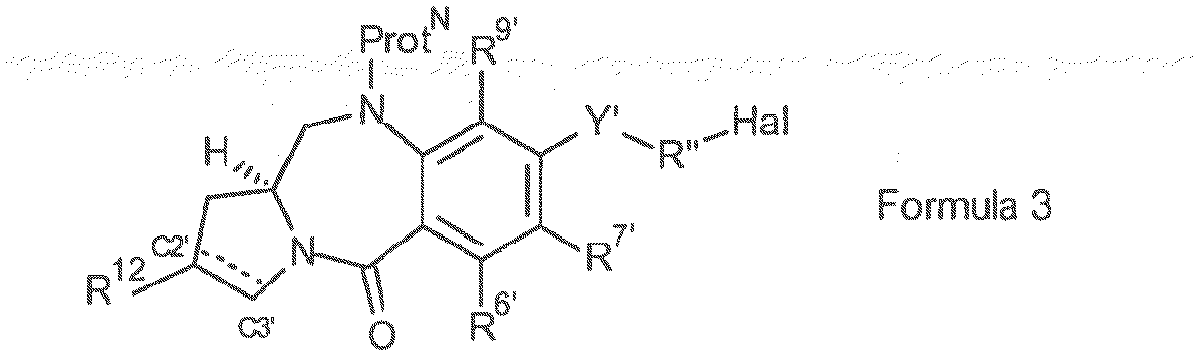
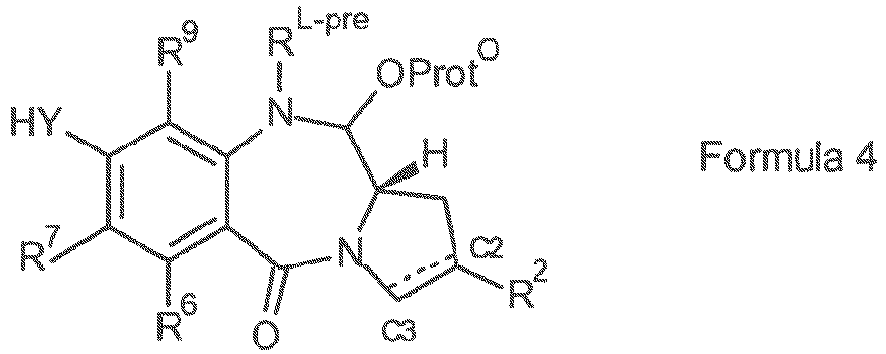
- The coupling can be achieved, for example, in refluxing acetone with a base, such as K2CO3.
- Compounds of formula 3 can be synthesised from compounds of formula 5:
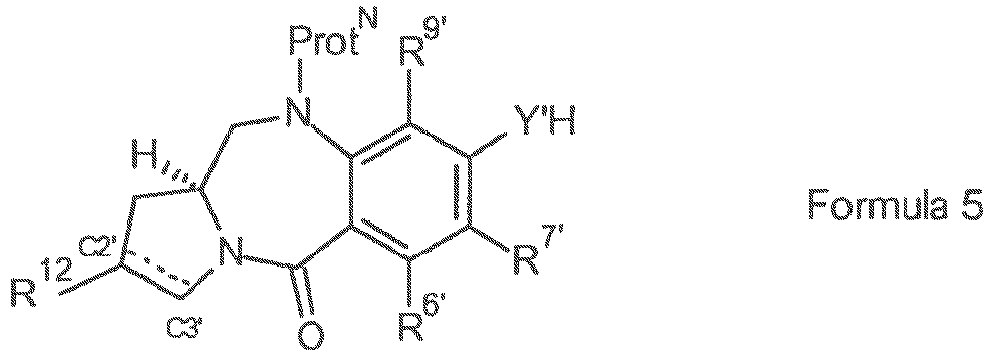
- By coupling a compound of Formula 6:
Hal-R"-Q Formula 6
where Q is selected from I, Cl, and Br, The reaction can be achieved, for example, in refluxing acetone with a base, such as K2CO3. An excess of the compound of Formula 6 is required to achieve the desired product. - The compound of formula 5 may be synthesised from a compound of Formula 7:

- The compound of formula 7 may be synthesised from a compound of Formula 8:

- The compound of formula 8 may be synthesised from a compound of Formula 9:

- The compound of formula 9 may be synthesised from a compound of Formula 10:

- The compound of formula 10 may be synthesised from a compound of Formula 11:

- Compounds of Formula 11 where there is a double bond between C2' and C3' may be synthesised from compounds of formula 12:

- The compound of formula 12 may be synthesised from a compound of Formula 13:

- In the synthesis of compounds of Formula 11 where there is not a double bond between C2' and C3', the relevant R12 may be introduced at this stage.
- Compounds of formula 4 can be synthesised from compounds of formula 14:

- Compounds of formula 14 can be synthesised from compounds of formula 15:

- Compounds of formula 15 can be synthesised from compounds of formula 16:
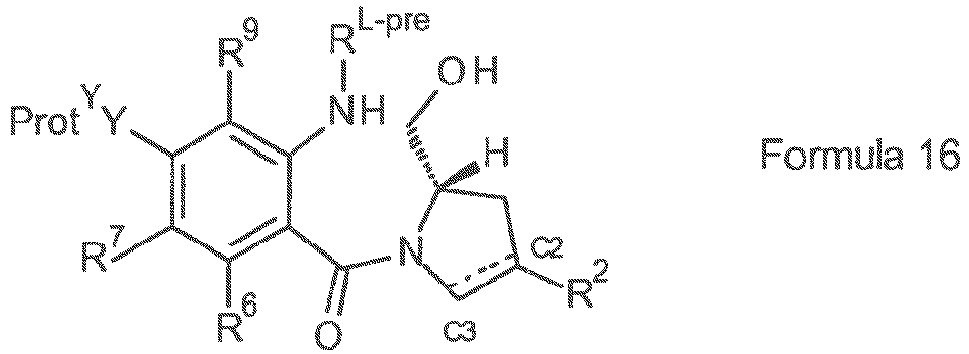
- Compounds of formula 16 can be synthesised from compounds of formula 17:

- Compounds of formula 17 can be synthesised from compounds of formula 18:

WO 2005/023814 . - Compounds of formula 18 can be synthesised from compounds of formula 19:

- Compounds of formula 19 where there is a double bond between C2 and C3 may be synthesised from compounds of formula 20:

- Compounds of formula 20 may be synthesised from compounds of formula 21:

- In the synthesis of compounds of Formula 19 where there is not a double bond between C2' and C3', the relevant R2 may be introduced at this stage.
- The following preferences may apply to all aspects of the invention as described above, or may relate to a single aspect. The preferences may be combined together in any combination.
- In some embodiments, R6', R7', R9', and Y' are preferably the same as R6, R7, R9, and Y respectively.
- Y and Y' are preferably O.
- R" is preferably a C3-7 alkylene group with no substituents. More preferably R" is a C3, C5 or C7 alkylene. Most preferably, R" is a C3 or C5 alkylene.
- R9 is preferably H.
- R6 is preferably selected from H, OH, OR, SH, NH2, nitro and halo, and is more preferably H or halo, and most preferably is H.
- R7 is preferably selected from H, OH, OR, SH, SR, NH2, NHR, NRR', and halo, and more preferably independently selected from H, OH and OR, where R is preferably selected from optionally substituted C1-7 alkyl, C3-10 heterocyclyl and C5-10 aryl groups. R may be more preferably a C1-4 alkyl group, which may or may not be substituted. A substituent of interest is a C5-6 aryl group (e.g. phenyl). Particularly preferred substituents at the 7- positions are OMe and OCH2Ph. Other substituents of particular interest are dimethylamino (i.e. -NMe2); -(OC2H4)qOMe, where q is from 0 to 2; nitrogen-containing C6 heterocyclyls, including morpholino, piperidinyl and N-methyl-piperazinyl.
- These preferences apply to R9', R6' and R7' respectively.
- When there is a double bond present between C2' and C3', R12 is selected from:
- (a) C5-10 aryl group, optionally substituted by one or more substituents selected from the group comprising: halo, nitro, cyano, ether, C1-7 alkyl, C3-7 heterocyclyl and bis-oxy-C1-3 alkylene;
- (b) C1-5 saturated aliphatic alkyl;
- (c) C3-6 saturated cycloalkyl;
- (d)

- (e)

- (f)

- When R12 is a C5-10 aryl group, it may be a C5-7 aryl group. A C5-7 aryl group may be a phenyl group or a C5-7 heteroaryl group, for example furanyl, thiophenyl and pyridyl. In some embodiments, R12 is preferably phenyl. In other embodiments, R12 is preferably thiophenyl, for example, thiophen-2-yl and thiophen-3-yl.
- When R12 is a C5-10 aryl group, it may be a C8-10 aryl, for example a quinolinyl or isoquinolinyl group. The quinolinyl or isoquinolinyl group may be bound to the PBD core through any available ring position. For example, the quinolinyl may be quinolin-2-yl, quinolin-3-yl, quinolin-4yl, quinolin-5-yl, quinolin-6-yl, quinolin-7-yl and quinolin-8-yl. Of these quinolin-3-yl and quinolin-6-yl may be preferred. The isoquinolinyl may be isoquinolin-1-yl, isoquinolin-3-yl, isoquinolin-4yl, isoquinolin-5-yl, isoquinolin-6-yl, isoquinolin-7-yl and isoquinolin-8-yl. Of these isoquinolin-3-yl and isoquinolin-6-yl may be preferred.
- When R12 is a C5-10 aryl group, it may bear any number of substituent groups. It preferably bears from 1 to 3 substituent groups, with 1 and 2 being more preferred, and singly substituted groups being most preferred. The substituents may be any position.
- Where R12 is C5-7 aryl group, a single substituent is preferably on a ring atom that is not adjacent the bond to the remainder of the compound, i.e. it is preferably β or γ to the bond to the remainder of the compound. Therefore, where the C5-7 aryl group is phenyl, the substituent is preferably in the meta- or para- positions, and more preferably is in the para-position.
- Where R12 is a C8-10 aryl group, for example quinolinyl or isoquinolinyl, it may bear any number of substituents at any position of the quinoline or isoquinoline rings. In some embodiments, it bears one, two or three substituents, and these may be on either the proximal and distal rings or both (if more than one substituent).
- If a substituent on R12 when R12 is a C5-10 aryl group is halo, it is preferably F or Cl, more preferably Cl.
- If a substituent on R12 when R12 is a C5-10 aryl group is ether, it may in some embodiments be an alkoxy group, for example, a C1-7 alkoxy group (e.g. methoxy, ethoxy) or it may in some embodiments be a C5-7 aryloxy group (e.g phenoxy, pyridyloxy, furanyloxy). The alkoxy group may itself be further substituted, for example by an amino group (e.g. dimethylamino).
- If a substituent on R12 when R12 is a C5-10 aryl group is C1-7 alkyl, it may preferably be a C1-4 alkyl group (e.g. methyl, ethyl, propryl, butyl).
- If a substituent on R12 when R12 is a C5-10 aryl group is C3-7 heterocyclyl, it may in some embodiments be C6 nitrogen containing heterocyclyl group, e.g. morpholino, thiomorpholino, piperidinyl, piperazinyl. These groups may be bound to the rest of the PBD moiety via the nitrogen atom. These groups may be further substituted, for example, by C1-4 alkyl groups. If the C6 nitrogen containing heterocyclyl group is piperazinyl, the said further substituent may be on the second nitrogen ring atom.
- If a substituent on R12 when R12 is a C5-10 aryl group is bis-oxy-C1-3 alkylene, this is preferably bis-oxy-methylene or bis-oxy-ethylene.
- If a substituent on R12 when R12 is a C5-10 aryl group is ester, this is preferably methyl ester or ethyl ester.
- Particularly preferred substituents when R12 is a C5-10 aryl group include methoxy, ethoxy, fluoro, chloro, cyano, bis-oxy-methylene, methyl-piperazinyl, morpholino and methyl-thiophenyl. Other particularly preferred substituent for R12 are dimethylaminopropyloxy and carboxy.
- Particularly preferred substituted R12 groups when R12 is a C5-10 aryl group include, but are not limited to, 4-methoxy-phenyl, 3-methoxyphenyl, 4-ethoxy-phenyl, 3-ethoxy-phenyl, 4-fluoro-phenyl, 4-chloro-phenyl, 3,4-bisoxymethylene-phenyl, 4-methylthiophenyl, 4-cyanophenyl, 4-phenoxyphenyl, quinolin-3-yl and quinolin-6-yl, isoquinolin-3-yl and isoquinolin-6-yl, 2-thienyl, 2-furanyl, methoxynaphthyl, and naphthyl. Another possible substituted R12 group is 4-nitrophenyl. R12 groups of particular interest include 4-(4-methylpiperazin-1-yl)phenyl and 3,4-bisoxymethylene-phenyl.
- When R12 is C1-5 saturated aliphatic alkyl, it may be methyl, ethyl, propyl, butyl or pentyl. In some embodiments, it may be methyl, ethyl or propyl (n-pentyl or isopropyl). In some of these embodiments, it may be methyl. In other embodiments, it may be butyl or pentyl, which may be linear or branched.
- When R12 is C3-6 saturated cycloalkyl, it may be cyclopropyl, cyclobutyl, cyclopentyl or cyclohexyl. In some embodiments, it may be cyclopropyl.
- When R12 is

- In some embodiments, one of R21, R22 and R23 is H, with the other two groups being selected from H, C1-3 saturated alkyl, C2-3 alkenyl, C2-3 alkynyl and cyclopropyl.
- In other embodiments, two of R21, R22 and R23 are H, with the other group being selected from H, C1-3 saturated alkyl, C2-3 alkenyl, C2-3 alkynyl and cyclopropyl.
- In some embodiments, the groups that are not H are selected from methyl and ethyl. In some of these embodiments, the groups that re not H are methyl.
- In some embodiments, R21 is H.
- In some embodiments, R22 is H.
- In some embodiments, R23 is H.
- In some embodiments, R21 and R22 are H.
- In some embodiments, R21 and R23 are H.
- In some embodiments, R22 and R23 are H.
- An R12 group of particular interest is:

- When R12 is

- When R12 is

In some embodiments, R24 is selected from H, methyl, ethyl, ethenyl and ethynyl. In some of these embodiments, R24 is selected from H and methyl. - When there is a single bond present between C2' and C3', R12 is

- In some embodiments, it is preferred that R26a and R26b are both H.
- In other embodiments, it is preferred that R26a and R26b are both methyl.
- In further embodiments, it is preferred that one of R26a and R26b is H, and the other is selected from C1-4 saturated alkyl, C2-3 alkenyl, which alkyl and alkenyl groups are optionally substituted. In these further embodiment, it may be further preferred that the group which is not H is selected from methyl and ethyl.
- The above preferences for R12 apply equally to R2.
- In some embodiments, R20 is H and R21a and R21b are both H. Alternatively, R20 may be Me and R21a and R21b are both H.
- In some embodiments, R11b is OH.
- In some embodiments, R11b is ORA. In some of these embodiments, RA is methyl.
- In some embodiments, R11b is selected from OH, ORA, where RA is C1-4 alkyl, and SOzM, where z is 2 or 3 and M is a monovalent pharmaceutically acceptable cation.
- It is preferred that M is a monovalent pharmaceutically acceptable cation, and is more preferably Na+.
z is preferably 3. - Particularly preferred compounds of the first aspect of the present invention may be of formula 1a-1:
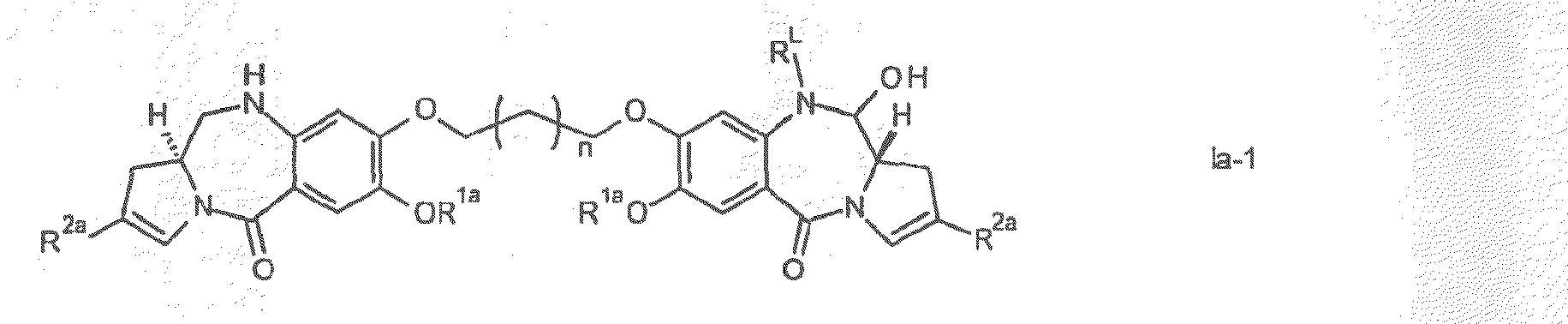
- RL is as defined above;
- n is 1 or 3;
- R1a is methyl or phenyl; and
- R2a is selected from:
- (a)
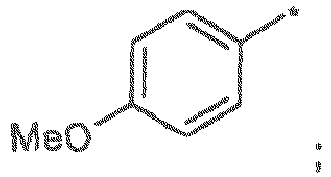
- (b)

- (c)

- (d)

- (e)
- (f)

- (g)

- (h)
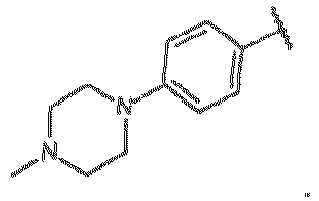
- (a)
- Particularly preferred compounds of the first aspect of the present invention may be of formula 1b-1:

- RL is as defined above;
- n is 1 or 3; and
- R1a is methyl or phenyl.
- The following schemes illustrate a way of making certain compounds of the present invention, in which certain groups are illustrated generically as R, R' and R2. The groups of which these form a part should be interpreted in accordance with the disclosure of the invention. In schemes where protecting groups are explicitly described, these may also be varied within the scope of the present invention.
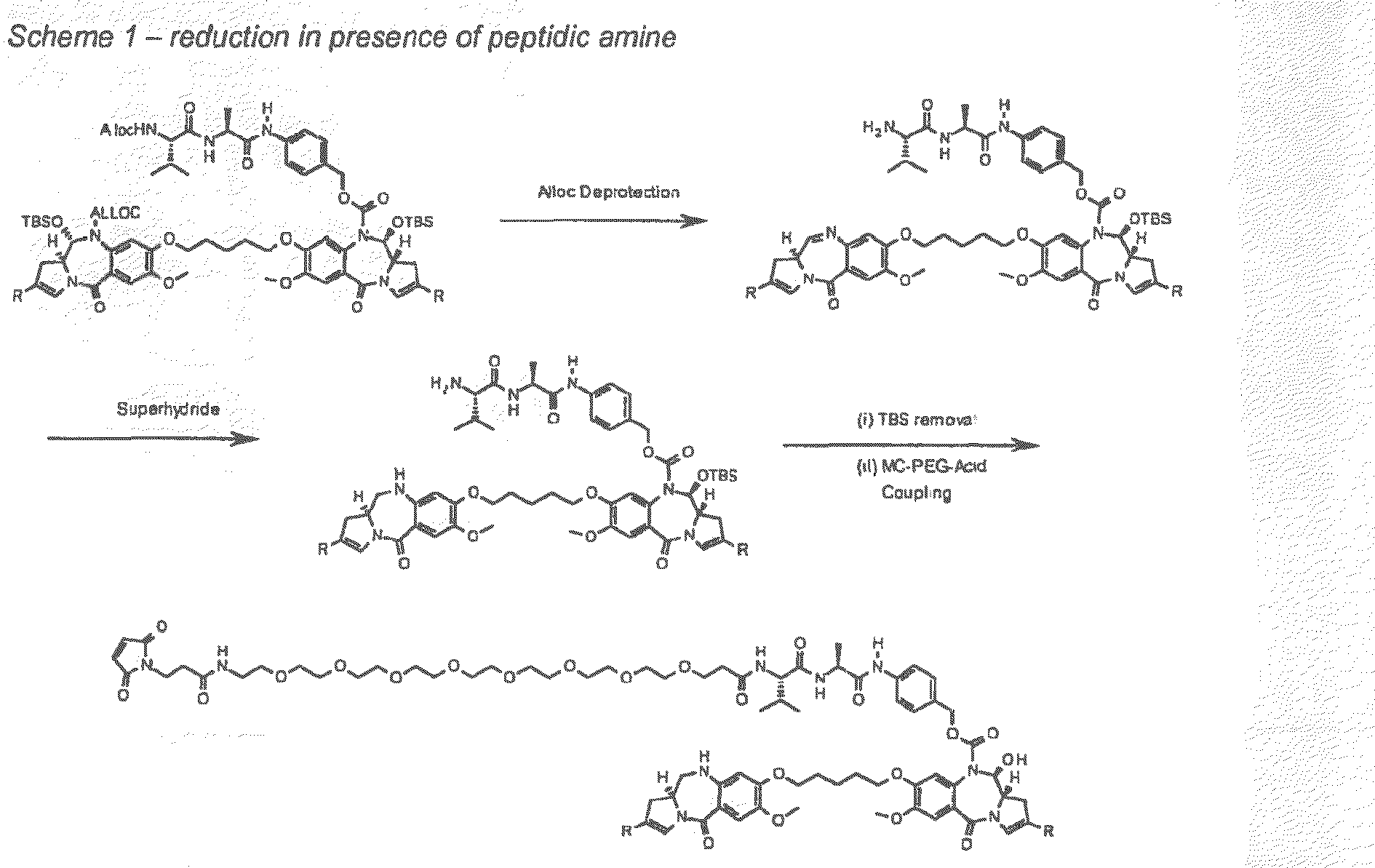
-


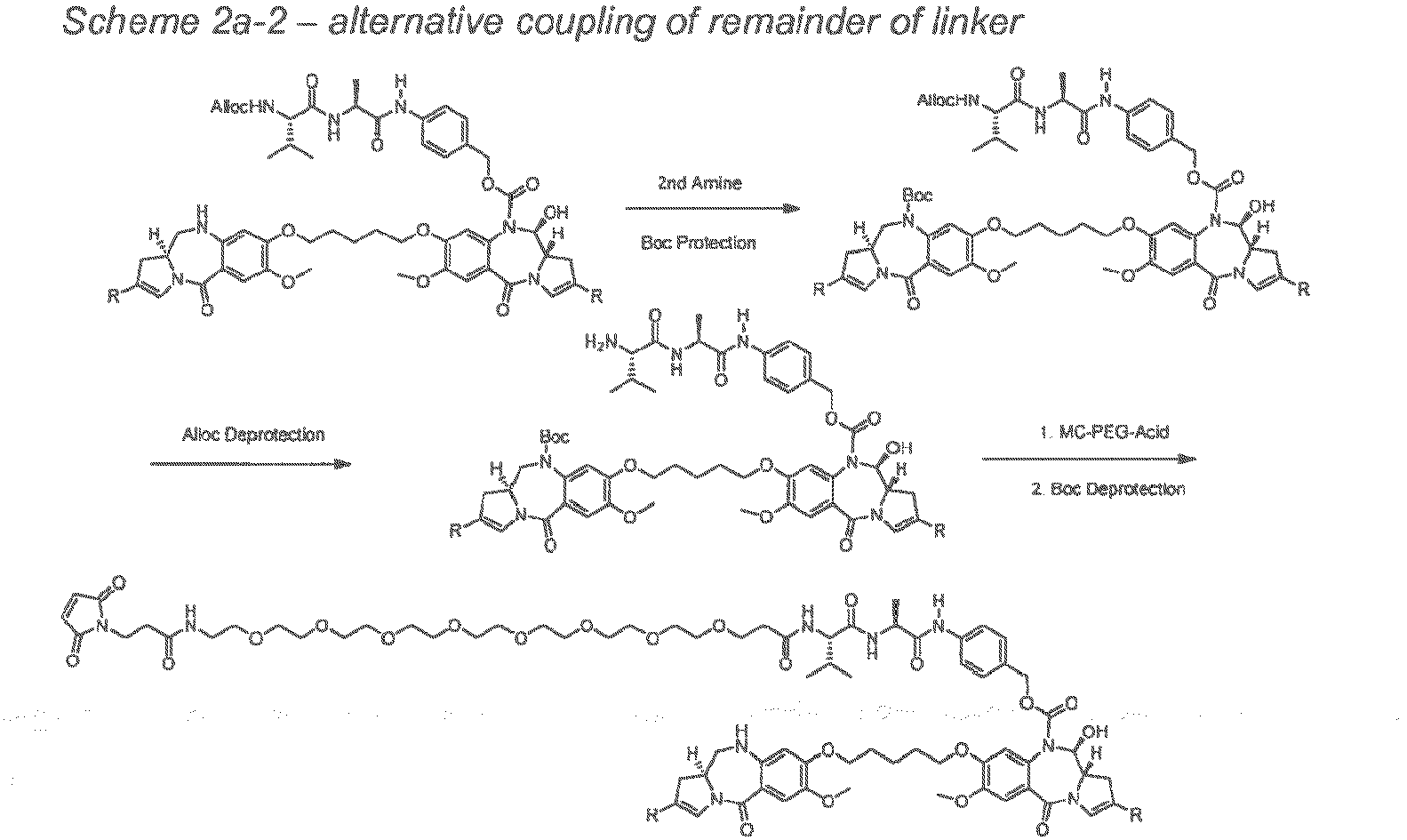
-


-
- Ac
- acetyl
- Acm
- acetamidomethyl
- Alloc
- allyloxycarbonyl
- Boc
- di-tert-butyl dicarbonate
- t-Bu
- tert-butyl
- Bzl
- benzyl, where Bzl-OMe is methoxybenzyl and Bzl-Me is methylbenzene
- Cbz or Z
- benzyloxy-carbonyl, where Z-Cl and Z-Br are chloro- and bromobenzyloxy carbonyl respectively
- DMF
- N,N-dimethylformamide
- Dnp
- dinitrophenyl
- DTT
- dithiothreitol
- Fmoc
- 9H-fluoren-9-ylmethoxycarbonyl
- imp
- N-10 imine protecting group: 3-(2-methoxyethoxy)propanoate-Val-Ala-PAB
- MC-OSu
- maleimidocaproyl-O-N-succinimide
- Moc
- methoxycarbonyl
- MP
- maleimidopropanamide
- Mtr
- 4-methoxy-2,3,6-trimethtylbenzenesulfonyl
- PAB
- para-aminobenzyloxycarbonyl
- PEG
- ethyleneoxy
- PNZ
- p-nitrobenzyl carbamate
- Psec
- 2-(phenylsulfonyl)ethoxycarbonyl
- TBDMS
- tert-butyldimethylsilyl
- TBDPS
- tert-butyldiphenylsilyl
- Teoc
- 2-(trimethylsilyl)ethoxycarbonyl
- Tos
- tosyl
- Troc
- 2,2,2-trichlorethoxycarbonyl chloride
- Trt
- trityl
- Xan
- xanthyl
- The following references are cited:
-
EP 0522868 -
EP 0875569 -
EP 1295944 -
EP 1347046 -
EP 1394274 -
EP 1394274 -
EP 1439393 -
JP 05003790 -
JP 2004113151 -
JP 58180487 -
US 2001/055751 -
US 2002/034749 -
US 2002/042366 -
US 2002/150573 -
US 2002/193567 -
US 2003/0228319 -
US 2003/060612 -
US 2003/064397 -
US 2003/065143 -
US 2003/091580 -
US 2003/096961 -
US 2003/105292 -
US 2003/109676 -
US 2003/118592 -
US 2003/119121 -
US 2003/119122 -
US 2003/119125 -
US 2003/119126 -
US 2003/119128 -
US 2003/119129 -
US 2003/119130 -
US 2003/119131 -
US 2003/124140 -
US 2003/124579 -
US 2003/129192 -
US 2003/134790-A1 -
US 2003/143557 -
US 2003/157089 -
US 2003/165504 -
US 2003/185830 -
US 2003/186372 -
US 2003/186373 -
US 2003/194704 -
US 2003/206918 -
US 2003/219806 -
US 2003/224411 -
US 2003/224454 -
US 2003/232056 -
US 2003/232350 -
US 20030096743 -
US 20030130189 -
US 2003096743 -
US 2003130189 -
US 2004/0001827 -
US 2004/005320 -
US 2004/005538 -
US 2004/005563 -
US 2004/005598 -
US 2004/0101899 -
US 2004/018553 -
US 2004/022727 -
US 2004/044179 -
US 2004/044180 -
US 2004/101874 -
US 2004/197325 -
US 2004/249130 -
US 20040018194 -
US 20040052793 -
US 20040052793 -
US 20040121940 -
US 2005/271615 -
US 2006/116422 -
US 4816567 -
US 5362852 -
US 5440021 -
US 5583024 -
US 5621002 -
US 5644033 -
US 5674713 -
US 5700670 -
US 5773223 -
US 5792616 -
US 5854399 -
US 5869445 -
US 5976551 -
US 6011146 -
US 6153408 -
US 6214345 -
US 6218519 -
US 6268488 -
US 6518404 -
US 6534482 -
US 6555339 -
US 6602677 -
US 6677435 -
US 6759509 -
US 6835807 -
US 7223837 -
US 7375078 -
US 7521541 -
US 7723485 -
WO 00/012508 -
WO 00/12507 -
WO 00/12508 -
WO 01/16318 -
WO 01/45746 -
WO 02/088172 -
WO 03/026577 -
WO 03/043583 -
WO 04/032828 -
WO 2000/12130 -
WO 2000/14228 -
WO 2000/20579 -
WO 2000/22129 -
WO 2000/32752 -
WO 2000/36107 -
WO 2000/40614 -
WO 2000/44899 -
WO 2000/55351 -
WO 2000/75655 -
WO 200053216 -
WO 2001/00244 -
WO 2001/38490 -
WO 2001/40269 -
WO 2001/40309 -
WO 2001/41787 -
WO 2001/46232 -
WO 2001/46261 -
WO 2001/48204 -
WO 2001/53463 -
WO 2001/57188 -
WO 2001/62794 -
WO 2001/66689 -
WO 2001/72830 -
WO 2001/72962 -
WO 2001/75177 -
WO 2001/77172 -
WO 2001/88133 -
WO 2001/90304 -
WO 2001/94641 -
WO 2001/98351 -
WO 2002/02587 -
WO 2002/02624 -
WO 2002/06317 -
WO 2002/06339 -
WO 2002/101075 -
WO 2002/10187 -
WO 2002/102235 -
WO 2002/10382 -
WO 2002/12341 -
WO 2002/13847 -
WO 2002/14503 -
WO 2002/16413 -
WO 2002/16429 -
WO 2002/22153 -
WO 2002/22636 -
WO 2002/22660 -
WO 2002/22808 -
WO 2002/24909 -
WO 2002/26822 -
WO 2002/30268 -
WO 2002/38766 -
WO 2002/54940 -
WO 2002/59377 -
WO 2002/60317 -
WO 2002/61087 -
WO 2002/64798 -
WO 2002/71928 -
WO 2002/72596 -
WO 2002/78524 -
WO 2002/81646 -
WO 2002/83866 -
WO 2002/86443 -
WO 2002/88170 -
WO 2002/89747 -
WO 2002/92836 -
WO 2002/94852 -
WO 2002/98358 -
WO 2002/99074 -
WO 2002/99122 -
WO 2003/000842 -
WO 2003/002717 -
WO 2003/003906 -
WO 2003/003984 -
WO 2003/004989 -
WO 2003/008537 -
WO 2003/009814 -
WO 2003/014294 -
WO 2003/016475 -
WO 2003/016494 -
WO 2003/018621 -
WO 2003/022995 -
WO 2003/023013 -
WO 2003/024392 -
WO 2003/025138 -
WO 2003/025148 -
WO 2003/025228 -
WO 2003/026493 -
WO 2003/029262 -
WO 2003/029277 -
WO 2003/029421 -
WO 2003/034984 -
WO 2003/035846 -
WO 2003/042661 -
WO 2003/045422 -
WO 2003/048202 -
WO 2003/054152 -
WO 2003/055439 -
WO 2003/055443 -
WO 2003/062401 -
WO 2003/062401 -
WO 2003/072035 -
WO 2003/072036 -
WO 2003/077836 -
WO 2003/081210 -
WO 2003/083041 -
WO 2003/083047 -
WO 2003/083074 -
WO 2003/087306 -
WO 2003/087768 -
WO 2003/088808 -
WO 2003/089624 -
WO 2003/089904 -
WO 2003/093444 -
WO 2003/097803 -
WO 2003/101283 -
WO 2003/101400 -
WO 2003/104270 -
WO 2003/104275 -
WO 2003/105758 -
WO 2003004529 -
WO 2003042661 -
WO 2003104399 -
WO 2004/000997 -
WO 2004/001004 -
WO 2004/009622 -
WO 2004/011611 -
WO 2004/015426 -
WO 2004/016225 -
WO 2004/020595 -
WO 2004/022709 -
WO 2004/022778 -
WO 2004/027049 -
WO 2004/031238 -
WO 2004/032828 -
WO 2004/032842 -
WO 2004/040000 -
WO 2004/043361 -
WO 2004/043963 -
WO 2004/044178 -
WO 2004/045516 -
WO 2004/045520 -
WO 2004/045553 -
WO 2004/046342 -
WO 2004/047749 -
WO 2004/048938 -
WO 2004/053079 -
WO 2004/063355 -
WO 2004/063362 -
WO 2004/063709 -
WO 2004/065577 -
WO 2004/074320 -
WO 2004000221 -
WO 2004020583 -
WO 2004042346 -
WO 2004065576 -
WO 2005/023814 -
WO 2005/082023 -
WO 2005/085251 -
WO 2006/111759 -
WO 2007/044515 -
WO 2007/085930 -
WO 2009/052249 -
WO 2010/091150 -
WO 91/02536 -
WO 92/07574 -
WO 92/17497 -
WO 94/10312 -
WO 94/28931 -
WO 9630514 -
WO 97/07198 -
WO 97/44452 -
WO 98/13059 -
WO 98/37193 -
WO 98/40403 -
WO 98/51805 -
WO 98/51824 -
WO 99/28468 -
WO 99/46284 -
WO 99/58658 - Am. J. Hum. Genet. 49 (3):555-565 (1991)
- Amiel J., et al Hum. Mol. Genet. 5, 355-357, 1996
- Amir et al (2003) Angew. Chem. Int. Ed. 42:4494-4499
- Amsberry, et al (1990) J. Org. Chem. 55:5867
- Angew Chem. Intl. Ed. Engl. (1994) 33:183-186
- Annu. Rev. Neurosci. 21:309-345 (1998)
- Arai H., et al J. Biol. Chem. 268, 3463-3470, 1993
- Arai H., et al Jpn. Circ. J. 56, 1303-1307, 1992
- Arima, et al., J. Antibiotics, 25, 437-444 (1972)
- Attie T., et al, Hum. Mol. Genet. 4, 2407-2409, 1995
- Auricchio A., et al Hum. Mol. Genet. 5:351-354, 1996
- Barel M., et al Mol. Immunol. 35, 1025-1031, 1998
- Barella et al (1995) Biochem. J. 309:773-779
- Barnett T., et al Genomics 3, 59-66, 1988
- Beck et al (1992) J. Mol. Biol. 228:433-441
- Beck et al (1996) J. Mol. Biol. 255:1-13
- Berge, et al., J. Pharm. Sci., 66, 1-19 (1977)
- Biochem. Biophys. Res. Commun. (2000) 275(3):783-788
- Biochem. Biophys. Res. Commun. 255 (2), 283-288 (1999)
- Blood (2002) 100 (9):3068-3076
- Blood 99 (8):2662-2669 (2002)
- Blumberg H., et al Cell 104, 9-19, 2001
- Bose, et al., Tetrahedron, 48,751-758 (1992)
- Bourgeois C., et al J. Clin. Endocrinol. Metab. 82, 3116-3123, 1997
- Brinster et al (1988) Proc. Natl. Acad. Sci. USA 85:836
- Buchman and Berg (1988) Mol. Cell. Biol. 8:4395
- Cancer Res. 61 (15), 5857-5860 (2001)
- Carl et al (1981) J. Med. Chem. 24:479-480
- Carlsson et al (1978) Biochem. J. 173:723-737
- Carter, P. (2006) Nature Reviews Immunology 6:343-357
- Cell 109 (3):397-407 (2002)
- CeliTiter Glo Luminescent Cell Viability Assay, Promega Corp. Technical Bulletin TB288
- Chakravarty et al (1983) J. Med. Chem. 26:638-644
- Chan,J. and Watt, V.M., Oncogene 6 (6), 1057-1061 (1991)
- Child et al (1999) J. Biol. Chem. 274: 24335-24341
- Cho H.-S., et al Nature 421, 756-760, 2003
- Ciccodicola, A., et al EMBO J. 8(7):1987-1991 (1989)
- Clackson et al (1991) Nature, 352:624-628
- Clark H.F., et al Genome Res. 13, 2265-2270, 2003
- Corey E, Quinn JE, Buhler KR, et al. LuCap35: a new model of prostate cancer progression to androgen independence. The Prostate 2003;55:239-46
- Coussens L., et al Science (1985) 230(4730):1132-1139
- Cree et al (1995) AntiCancer Drugs 6:398-404
- Crouch et al (1993) J. Immunol. Meth. 160:81-88
- Davis et al (2001) Proc. Natl. Acad. Sci USA 98(17):9772-9777
- de Groot et al (2001) J. Org. Chem. 66:8815-8830
- de Groot et al (2003) Angew. Chem. Int. Ed. 42:4490-4494
- Dennis et al. (2002) "Albumin Binding As A General Strategy For Improving The Pharmacokinetics Of Proteins" J Biol Chem. 277:35035-35043
- Dobner et al (1992) Eur. J. Immunol. 22:2795-2799
- Dornan et al (2009) Blood 114(13):2721-2729
- Doronina et al (2006) Bioconj. Chem. 17:114-124
- Dubowchik et al. Bioconjugate Chemistry, 2002, 13,855-869
- Dubowchik, et al. (1997) Tetrahedron Letters, 38:5257-60
- Dumoutier L., et al J. Immunol. 167, 3545-3549, 2001
- E. Schröder and K. Lübke, The Peptides, volume 1, pp 76-136 (1965) Academic Press
- Ehsani A., et al (1993) Genomics 15, 426-429
- Eliel, E. and Wilen, S., "Stereochemistry of Organic Compounds", John Wiley & Sons, Inc., New York, 1994 Elshourbagy N.A., et al J. Biol. Chem. 268, 3873-3879, 1993
- Erickson et al (2006) Cancer Res. 66(8): 1-8
- Feild, J.A., et al (1999) Biochem. Biophys. Res. Commun. 258 (3):578-582
- Fields, G. and Noble, R. (1990) "Solid phase peptide synthesis utilizing 9-fluoroenylmethoxycarbonyl amino acids", Int. J. Peptide Protein Res. 35:161-214
- Fuchs S., et al Mol. Med. 7, 115-124, 2001
- Fujisaku et al (1989) J. Biol. Chem. 264 (4):2118-2125)
- Gary S.C., et al Gene 256, 139-147, 2000
- Gaugitsch, H.W., et al (1992) J. Biol. Chem. 267 (16):11267-11273)
- Geiser et al "Automation of solid-phase peptide synthesis" in Macromolecular Sequencing and Synthesis, Alan R. Liss, Inc., 1988, pp. 199-218
- Genome Res. 13 (10):2265-2270 (2003)
- Genomics 62 (2):281-284 (1999)
- Geoghegan & Stroh, (1992) Bioconjugate Chem. 3:138-146
- Getz et al (1999) Anal. Biochem. Vol 273:73-80
- Glynne-Jones et al (2001) Int J Cancer. Oct 15; 94(2):178-84
- Gregson et al., Chem. Commun. 1999, 797-798
- Gregson et al., J. Med. Chem. 2001, 44, 1161-1174
- Gu Z., et al Oncogene 19, 1288-1296, 2000
- Ha et al (1992) J. Immunol. 148(5):1526-1531
- Haendler B., et al J. Cardiovasc. Pharmacol. 20, s1-S4, 1992
- Hamann P. (2005) Expert Opin. Ther. Patents 15(9):1087-1103
- Hamblett et al (2004) Clin. Cancer Res. 10:7063-7070
- Handbook of Pharmaceutical Additives, 2nd Edition (eds. M. Ash and I. Ash), 2001 (Synapse Information Resources, Inc., Endicott, New York, USA)
- Handbook of Pharmaceutical Excipients, 2nd edition, 1994
- Hara, et al., J. Antibiotics, 41, 702-704 (1988)
- Hashimoto et al (1994) Immunogenetics 40(4):287-295
- Hay et al. (1999) Bioorg. Med. Chem. Lett. 9:2237
- Herdwijn, P. et al., Canadian Journal of Chemistry. 1982, 60, 2903-7
- Hermanson, G.T. (1996) Bioconjugate Techniques; Academic Press: New York, p 234-242
- Hochlowski, et al., J. Antibiotics, 40, 145-148 (1987)
- Hofstra R.M.W., et al Eur. J. Hum. Genet. 5, 180-185, 1997
- Hofstra R.M.W., et al Nat. Genet. 12, 445-447, 1996
- Horie et al (2000) Genomics 67:146-152
- Hubert, R.S., et al (1999) Proc. Natl. Acad. Sci. U.S.A. 96 (25):14523-14528)
- Hurley and Needham-VanDevanter, Acc. Chem. Res., 19, 230-237 (1986)
- Immunogenetics 54 (2):87-95 (2002)
- Int. Rev. Cytol. 196:177-244 (2000)
- Itoh, et al., J. Antibiotics, 41, 1281-1284 (1988)
- J. Biol. Chem. 270 (37):21984-21990 (1995)
- J. Biol. Chem. 276 (29):27371-27375 (2001)
- J. Biol. Chem. 277 (22):19665-19672 (2002)
- J. Biol. Chem. 278 (33):30813-30820 (2003)
- Janeway, C., Travers, P., Walport, M., Shlomchik (2001) Immuno Biology, 5th Ed., Garland Publishing, New York
- Jeffrey et al (2005) J. Med. Chem. 48:1344-1358
- Jonsson et al (1989) Immunogenetics 29(6):411-413
- Junutula, et al., 2008b Nature Biotech., 26(8):925-932
- Kang, G-D., et al., Chem. Commun., 2003, 1680-1689
- Kasahara et al (1989) Immunogenetics 30(1):66-68
- King et al (2002) Tetrahedron Letters 43:1987-1990
- Kingsbury et al (1984) J. Med. Chem. 27:1447
- Kohler et al (1975) Nature 256:495
- Kohn, in Antibiotics III. Springer-Verlag, New York, pp. 3-11 (1975).
- Konishi, et al., J. Antibiotics, 37, 200-206 (1984)
- Kovtun et al (2006) Cancer Res. 66(6):3214-3121
- Kuhns J.J., et al J. Biol. Chem. 274, 36422-36427, 1999
- Kuminoto, et al., J. Antibiotics, 33, 665-667 (1980)
- Kurebayashi et al (1999) Brit. Jour. Cancer 79(5-6):707-717
- Lab. Invest. 82 (11):1573-1582 (2002)
- Lambert J. (2005) Current Opin. in Pharmacol. 5:543-549
- Langley and Thurston, J. Org. Chem., 52, 91-97 (1987)
- Larhammar et al (1985) J. Biol. Chem. 260(26):14111-14119
- Law et al (2006) Cancer Res. 66(4):2328-2337
- Le et al (1997) FEBS Lett. 418(1-2):195-199
- Leber, et al., J. Am. Chem. Soc., 110, 2992-2993 (1988)
- Leimgruber, et al., J. Am. Chem. Soc., 87, 5791-5793 (1965)
- Leimgruber, et al., J. Am. Chem. Soc., 87, 5793-5795 (1965)
- Levenson et al (1997) Cancer Res. 57(15):3071-3078
- Liang et al (2000) Cancer Res. 60:4907-12
- Manfré, F. et al., J. Org. Chem. 1992, 57, 2060-2065
- Marks et al (1991) J. Mol. Biol., 222:581-597
- McDonagh (2006) Protein Eng. Design & Sel., 19(7): 299-307
- Mendoza et al (2002) Cancer Res. 62:5485-5488
- Miller et al (2003) Jour. of Immunology 170:4854-4861
- Miura et al (1996) Genomics 38(3):299-304
- Miura et al (1998) Blood 92:2815-2822
- Moore M., et al Proc. Natl. Acad. Sci. U.S.A. 84, 9194-9198, 1987
- Morrison et al (1984) Proc. Natl. Acad. Sci. USA, 81:6851-6855
- Muller et al (1992) Eur. J. Immunol. 22 (6):1621-1625
- Mungall A.J., et al Nature 425, 805-811, 2003
- Nagase T., et al (2000) DNA Res. 7 (2):143-150)
- Nakamuta M., et al Biochem. Biophys. Res. Commun. 177, 34-39, 1991
- Nakayama et al (2000) Biochem. Biophys. Res. Commun. 277(1):124-127
- Naruse et al (2002) Tissue Antigens 59:512-519
- Nature 395 (6699):288-291 (1998)
- Neuberger and Williams (1988) Nucleic Acids Res. 16:6713
- Novabiochem Catalog 2006/2007
- Ogawa Y., et al Biochem. Biophys. Res. Commun. 178, 248-255, 1991
- Okamoto Y., et al Biol. Chem. 272, 21589-21596, 1997
- Oncogene 10 (5):897-905 (1995)
- Oncogene 14(11):1377-1382 (1997))
- Parrish-Novak J., et al J. Biol. Chem. 277, 47517-47523, 2002
- Payne, G. (2003) Cancer Cell 3:207-212
- Pingault V., et al (2002) Hum. Genet. 111, 198-206
- Pletnev S., et al (2003) Biochemistry 42:12617-12624
- Preud'homme et al (1992) Clin. Exp. Immunol. 90(1):141-146
- Proc. Natl. Acad. Sci. U.S.A. (2003) 100 (7):4126-4131
- Proc. Natl. Acad. Sci. U.S.A. 93 (1):136-140 (1996)
- Proc. Natl. Acad. Sci. U.S.A. 98 (17):9772-9777 (2001)
- Proc. Natl. Acad. Sci. U.S.A. 99 (26):16899-16903 (2002)
- Proc.Natl. Acad. Sci. U.S.A. 96 (20):11531-11536 (1999)
- Protective Groups in Organic Synthesis, Greene and Wuts, 3rd Edition, 1999, John Wiley & Sons Inc.
- Puffenberger E.G., et al Cell 79, 1257-1266, 1994
- Rao et al (1997) Breast Cancer Res. and Treatment 45:149-158
- Reiter R.E., et al Proc. Natl. Acad. Sci. U.S.A. 95, 1735-1740, 1998
- Remington's Pharmaceutical Sciences, 20th edition, pub. Lippincott, Williams & Wilkins, 2000
- Rodrigues et al (1995) Chemistry Biology 2:223
- Ross et al (2002) Cancer Res. 62:2546-2553
- S. P. Parker, Ed., McGraw-Hill Dictionary of Chemical Terms (1984) McGraw-Hill Book Company, New York
- Sakaguchi et al (1988) EMBO J. 7(11):3457-3464
- Sakamoto A., Yanagisawa M., et al Biochem. Biophys. Res. Commun. 178, 656-663, 1991 Sanderson et al (2005) Clin. Cancer Res. 11:843-852
- Semba K., et al Proc. Natl. Acad. Sci. U.S.A. 82, 6497-6501, 1985
- Servenius et al (1987) J. Biol. Chem. 262:8759-8766
- Shamis et al (2004) J. Am. Chem. Soc. 126:1726-1731
- Sheikh F., et al (2004) J. Immunol. 172, 2006-2010
- Shimizu, et al, J. Antibiotics, 29, 2492-2503 (1982)
- Sinha S.K., et al (1993) J. Immunol. 150, 5311-5320
- Storm et al (1972) J. Amer. Chem. Soc. 94:5815
- Strausberg et al (2002) Proc. Natl. Acad. Sci USA 99:16899-16903
- Sun et al (2002) Bioorganic & Medicinal Chemistry Letters 12:2213-2215
- Sun et al (2003) Bioorganic & Medicinal Chemistry 11:1761-1768
- Svensson P.J., et al Hum. Genet. 103, 145-148, 1998
- Swiercz J.M., et al J. Cell Biol. 165, 869-880, 2004
- Syrigos and Epenetos (1999) Anticancer Research 19:605-614
- Takeuchi, et al., J. Antibiotics, 29, 93-96 (1976)
- Tawaragi Y., et al Biochem. Biophys. Res. Commun. 150, 89-96, 1988
- ten Dijke,P., et al Science 264 (5155):101-104 (1994)
- Thompson, J.S., et al Science 293 (5537), 2108-2111 (2001)
WO 2004/058309 - Thurston, et al., Chem. Brit., 26, 767-772 (1990)
- Thurston, et al., Chem. Rev. 1994, 433-465 (1994)
- Toki et al (2002) J. Org. Chem. 67:1866-1872
- Tonnelle et al (1985) EMBO J. 4(11):2839-2847
- Touchman et al (2000) Genome Res. 10:165-173
- Trail et al (2003) Cancer Immunol. Immunother. 52:328-337
- Tsunakawa, et al., J. Antibiotics, 41, 1366-1373 (1988)
- Tsutsumi M., et al Gene 228, 43-49, 1999
- Uchida et al (1999) Biochem. Biophys. Res. Commun. 266:593-602
- Verheij J.B., et al Am. J. Med. Genet. 108, 223-225, 2002
- Von Hoegen et al (1990) J. Immunol. 144(12):4870-4877
- Webster et al (1994) Semin. Cancer Biol. 5:69-76
- Weis J.J., et al J. Exp. Med. 167, 1047-1066, 1988
- Weis J.J., et al Proc. Natl. Acad. Sci. U.S.A. 83, 5639-5643, 1986
- Wilson et al (1991) J. Exp. Med. 173:137-146
- Wu et al (2005) Nature Biotech. 23(9):1137-1145
- Xie et al (2006) Expert. Opin. Biol. Ther. 6(3):281-291
- Xu, M.J., et al (2001) Biochem. Biophys. Res. Commun. 280 (3):768-775
WO 2004/016225 - Xu, X.Z., et al Proc. Natl. Acad. Sci. U.S.A. 98 (19):10692-10697 (2001)
- Yamaguchi, N., et al Biol. Chem. 269 (2), 805-808 (1994)
- Yamamoto T., et al Nature 319, 230-234, 1986
- Yu et al (1992) J. Immunol. 148(2) 633-637

Claims (21)
- A compound with the formula I:
 when there is a double bond present between C2 and C3, R2 is selected from the group consisting of:(ia) C5-10 aryl group, optionally substituted by one or more substituents selected from the group comprising: halo, nitro, cyano, ether, C1-7 alkyl, C3-7 heterocyclyl and bis-oxy-C1-3 alkylene;(ib) C1-5 saturated aliphatic alkyl;(ic) C3-6 saturated cycloalkyl;(id)
 (ie)
(ie) (if)
(if) when there is a single bond present between C2 and C3,R2 is
 when there is a double bond present between C2' and C3', R12 is selected from the group consisting of:(ia) C5-10 aryl group, optionally substituted by one or more substituents selected from the group comprising: halo, nitro, cyano, ether, carboxy, ester, C1-7 alkyl, C3-7 heterocyclyl and bis-oxy-C1-3 alkylene;(ib) C1-5 saturated aliphatic alkyl;(ic) C3-6 saturated cycloalkyl;(id)
 (ie)
(ie)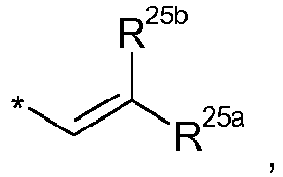 (if)
(if)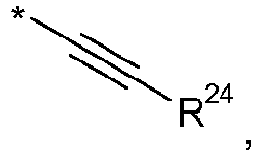 when there is a single bond present between C2' and C3',R12 is
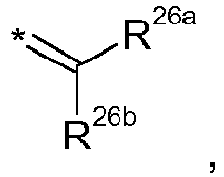 R6 and R9 are independently selected from H, R, OH, OR, SH, SR, NH2, NHR, NRR', nitro, Me3Sn and halo;where R and R' are independently selected from optionally substituted C1-12 alkyl, C3-20 heterocyclyl and C5-20 aryl groups;R7 is selected from H, R, OH, OR, SH, SR, NH2, NHR, NHRR', nitro, Me3Sn and halo;R" is a C3-12 alkylene group, which chain may be interrupted by one or more heteroatoms, e.g. O, S, NRN2 (where RN2 is H or C1-4 alkyl), and/or aromatic rings, e.g. benzene or pyridine;Y and Y' are selected from O, S, or NH;R6', R7, R9' are selected from the same groups as R6, R7 and R9 respectively;R20 is H or Me and R21a and R21b are both H;RL is a linker for connection to a cell binding agent;R11b is selected from OH, ORA, where RA is C1-4 alkyl, and SOzM, where z is 2 or 3 and M is a monovalent pharmaceutically acceptable cation.
 - A compound according to claim 1, wherein R7 is a C1-4 alkyloxy group.
- A compound according to either claim 1 or claim 2, wherein Y is O, and R" is C3-7 alkylene.
- A compound according to any one of claims 1 to 3, wherein R6 and R9 are H.
- A compound according to any one of claims 1 to 4, wherein there is a double bond between C2' and C3', and R12 is:(a) a C5-7 aryl group, which may bear one to three substituent groups selected from methoxy, ethoxy, fluoro, chloro, cyano, bis-oxy-methylene, methyl-piperazinyl, morpholino and methyl-thiophenyl; or(b) methyl, ethyl or propyl; or(c) cyclopropyl;(d) a group of formula:
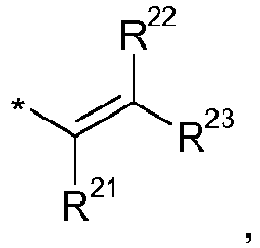 (e) the group:
 (f) a group of formula: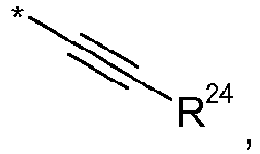
- A compound according to any one of claims 1 to 4, wherein there is a single bond between C2' and C3', R12 is
 (a) R26a and R26b are both H; or(b) R26a and R26b are both methyl; or(c) one of R26a and R26b is H, and the other is selected from C1-4 saturated alkyl, C2-3 alkenyl, which alkyl and alkenyl groups are optionally substituted.
 - A compound according to any one of claims 1 to 6, wherein there is a double bond between C2 and C3, and R2 is(a) a C5-7 aryl group, which may bears one to three substituent groups selected from methoxy, ethoxy, fluoro, chloro, cyano, bis-oxy-methylene, methyl-piperazinyl, morpholino and methyl-thiophenyl; or(b) methyl, ethyl or propyl; or(c) cyclopropyl; or(d) a group of formula:
 (e)
(e) (f)
(f)
- A compound according to any one of claims 1 to 6, wherein there is a single bond between C2 and C3, R2 is
 (a) R16a and R16b are both H; or(b) R16a and R16b are both methyl; or(c) one of R16a and R16b is H, and the other is selected from C1-4 saturated alkyl, C2-3 alkenyl, which alkyl and alkenyl groups are optionally substituted.
 - A compound according to claims 1 to 8, wherein R20 is H.
- A compound according to any one of claims 1 to 9, wherein R11b is OH.
- A compound according to any one of claims 1 to 9, wherein R11b is ORA.
- A compound according to any one of claims 1 to 9, wherein R11b is SOzM.
- A compound according to claim 12, wherein M is Na+ and z is 3.
- A conjugate comprising a compound of formula I according to any one of claims 1 to 13, or a pharmaceutically acceptable salt or solvate thereof, linked to a targeting agent.
- A conjugate of formula IV:
L - (RL'-D)p (IV)
or a pharmaceutically acceptable salt or solvate thereof, wherein L is a Ligand unit, RL' is a Linker unit and D is of formula II:
- The conjugate according to claim 15, wherein L-RL' is a group:
 -Phe-Lys-,-Val-Ala-,-Val-Lys-,-Ala-Lys-,-Val-Cit-,-Phe-Cit-,-Leu-Cit-,-Ile-Cit-,-Phe-Arg-,-Trp-Cit-,A is a connecting group connecting L1 to the cell binding agent, L2 is a covalent bond or together with -OC(=O)- forms a self-immolative linker.
 - The conjugate according to claim 16, wherein C(=O)O and L2 together form the group:

- The conjugate according to either claim 16 or claim 17, wherein A is:(i)
 (ii)
(ii)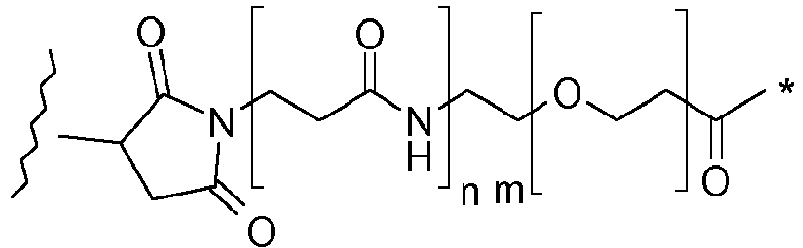
- The conjugate according to any one of claims 15 to 18, wherein the cell binding agent of R10 is an antibody or an active fragment thereof.
- The conjugate according to claim 19, wherein the antibody or antibody fragment is an antibody or antibody fragment for a tumour-associated antigen.
- A compound of formula A:

Applications Claiming Priority (2)
| Application Number | Priority Date | Filing Date | Title |
|---|---|---|---|
| US201261740592P | 2012-12-21 | 2012-12-21 | |
| PCT/EP2013/077705 WO2014096368A1 (en) | 2012-12-21 | 2013-12-20 | Pyrrolobenzodiazepines and conjugates thereof |
Publications (3)
| Publication Number | Publication Date |
|---|---|
| EP2935268A1 EP2935268A1 (en) | 2015-10-28 |
| EP2935268B1 EP2935268B1 (en) | 2017-11-22 |
| EP2935268B2 true EP2935268B2 (en) | 2021-02-17 |
Family
ID=49886925
Family Applications (1)
| Application Number | Title | Priority Date | Filing Date |
|---|---|---|---|
| EP13814939.8A Not-in-force EP2935268B2 (en) | 2012-12-21 | 2013-12-20 | Pyrrolobenzodiazepines and conjugates thereof |
Country Status (10)
| Country | Link |
|---|---|
| US (1) | US9562049B2 (en) |
| EP (1) | EP2935268B2 (en) |
| JP (1) | JP6307519B2 (en) |
| CN (2) | CN105189507A (en) |
| AU (1) | AU2013366493B2 (en) |
| BR (1) | BR112015014669B1 (en) |
| CA (1) | CA2894961C (en) |
| EA (1) | EA031585B1 (en) |
| ES (1) | ES2658888T5 (en) |
| WO (1) | WO2014096368A1 (en) |
Cited By (1)
| Publication number | Priority date | Publication date | Assignee | Title |
|---|---|---|---|---|
| WO2024213113A3 (en) * | 2023-04-13 | 2025-01-02 | Beigene Switzerland Gmbh | Targeted pyrrolobenzodiazapine conjugates |
Families Citing this family (61)
| Publication number | Priority date | Publication date | Assignee | Title |
|---|---|---|---|---|
| GB0819095D0 (en) | 2008-10-17 | 2008-11-26 | Spirogen Ltd | Pyrrolobenzodiazepines |
| ES2623057T3 (en) | 2010-04-15 | 2017-07-10 | Medimmune Limited | Pyrrolobenzodiazepines used to treat proliferative diseases |
| JP5870400B2 (en) | 2010-04-15 | 2016-03-01 | シアトル ジェネティクス,インコーポレーテッド | Targeted pyrrolobenzodiazepine conjugates |
| SG11201400770SA (en) | 2011-09-20 | 2014-04-28 | Spirogen Sarl | Pyrrolobenzodiazepines as unsymmetrical dimeric pbd compounds for inclusion in targeted conjugates |
| MX358757B (en) | 2011-10-14 | 2018-09-03 | Seattle Genetics Inc | Pyrrolobenzodiazepines and targeted conjugates. |
| SG11201401021TA (en) | 2011-10-14 | 2014-08-28 | Spirogen Sarl | Pyrrolobenzodiazepines |
| CN103998449A (en) | 2011-10-14 | 2014-08-20 | 斯皮罗根有限公司 | Pyrrolobenzodiazepines |
| US9526798B2 (en) | 2011-10-14 | 2016-12-27 | Seattle Genetics, Inc. | Pyrrolobenzodiazepines and targeted conjugates |
| US9745303B2 (en) | 2012-10-12 | 2017-08-29 | Medimmune Limited | Synthesis and intermediates of pyrrolobenzodiazepine derivatives for conjugation |
| WO2014057114A1 (en) * | 2012-10-12 | 2014-04-17 | Adc Therapeutics Sàrl | Pyrrolobenzodiazepine-anti-psma antibody conjugates |
| NZ707486A (en) * | 2012-10-12 | 2018-09-28 | Adc Therapeutics Sa | Pyrrolobenzodiazepine - anti-psma antibody conjugates |
| BR112015008251B1 (en) | 2012-10-12 | 2023-09-26 | Medimmune Limited | PYRROLOBENZODIAZEPINES, CONJUGATES THEREOF, COMPOSITION AND PHARMACEUTICAL COMPOSITION COMPRISING THE CONJUGATES, USE OF THE CONJUGATES FOR THE TREATMENT OF A PROLIFERATIVE DISEASE AND METHOD FOR PREPARING THE CONJUGATES |
| WO2014057120A1 (en) * | 2012-10-12 | 2014-04-17 | Adc Therapeutics Sàrl | Pyrrolobenzodiazepine-antibody conjugates |
| ES2738310T3 (en) | 2012-10-12 | 2020-01-21 | Medimmune Ltd | Pyrrolobenzodiazepines and conjugates thereof |
| BR112015014669B1 (en) | 2012-12-21 | 2023-09-26 | Medimmune Limited | PYRROLOBENZODIAZEPINE COMPOUNDS, CONJUGATES COMPRISING THE SAME AND USE THEREOF TO TREAT A PROLIFERATIVE DISEASE |
| HK1216176A1 (en) | 2012-12-21 | 2016-10-21 | Medlmmune Limited | Unsymmetrical pyrrolobenzodiazepines-dimers for use in the treatment of proliferative and autoimmune diseases |
| CN105142674B (en) | 2013-03-13 | 2018-11-13 | 麦迪穆有限责任公司 | Pyrrolobenzodiazepines and their conjugates |
| AU2014244245C1 (en) | 2013-03-13 | 2018-04-19 | Genentech, Inc. | Pyrrolobenzodiazepines and conjugates thereof |
| GB201317982D0 (en) | 2013-10-11 | 2013-11-27 | Spirogen Sarl | Pyrrolobenzodiazepines and conjugates thereof |
| GB201317981D0 (en) | 2013-10-11 | 2013-11-27 | Spirogen Sarl | Pyrrolobenzodiazepines and conjugates thereof |
| US10188746B2 (en) | 2014-09-10 | 2019-01-29 | Medimmune Limited | Pyrrolobenzodiazepines and conjugates thereof |
| MY186334A (en) | 2014-09-12 | 2021-07-12 | Genentech Inc | Anti-her2 antibodies and immunoconjugates |
| GB201416112D0 (en) | 2014-09-12 | 2014-10-29 | Medimmune Ltd | Pyrrolobenzodiazepines and conjugates thereof |
| CN107124870A (en) * | 2014-09-17 | 2017-09-01 | 基因泰克公司 | Immunoconjugates comprising an anti-HER2 antibody and a pyrrolobenzodiazepine* |
| EP3223854A1 (en) | 2014-11-25 | 2017-10-04 | ADC Therapeutics SA | Pyrrolobenzodiazepine-antibody conjugates |
| KR20170102981A (en) | 2015-01-14 | 2017-09-12 | 브리스톨-마이어스 스큅 컴퍼니 | Heteroarylene-crosslinked benzodiazepine dimer, conjugates thereof, and methods of making and using |
| MX2017009145A (en) | 2015-01-14 | 2017-11-22 | Bristol Myers Squibb Co | Benzodiazepine dimers, conjugates thereof, and methods of making and using. |
| CN108391434A (en) | 2015-06-23 | 2018-08-10 | 百时美施贵宝公司 | Macrocyclic benzodiazepine* dimers, their conjugates, preparation and use |
| KR102111338B1 (en) | 2015-10-02 | 2020-05-15 | 제넨테크, 인크. | Pyrrolobenzodiazepine antibody drug conjugates and methods of use thereof |
| US11167040B2 (en) | 2015-11-25 | 2021-11-09 | Legochem Biosciences, Inc. | Conjugates comprising peptide groups and methods related thereto |
| CN107847605B (en) | 2015-11-25 | 2021-12-24 | 乐高化学生物科学股份有限公司 | Antibody-drug conjugates comprising branched linkers and methods related thereto |
| LT3380124T (en) | 2015-11-25 | 2024-06-25 | Ligachem Biosciences Inc. | CONJUGATES CONTAINING SELF-LEAVING GROUPS AND RELATED METHODS |
| GB201601431D0 (en) * | 2016-01-26 | 2016-03-09 | Medimmune Ltd | Pyrrolobenzodiazepines |
| GB201602359D0 (en) | 2016-02-10 | 2016-03-23 | Medimmune Ltd | Pyrrolobenzodiazepine Conjugates |
| GB201602356D0 (en) | 2016-02-10 | 2016-03-23 | Medimmune Ltd | Pyrrolobenzodiazepine Conjugates |
| WO2017160879A1 (en) * | 2016-03-15 | 2017-09-21 | The Board Of Trustees Of The Leland Stanford Junior University | Knottin-drug conjugates and methods of using the same |
| GB201607478D0 (en) | 2016-04-29 | 2016-06-15 | Medimmune Ltd | Pyrrolobenzodiazepine Conjugates |
| EP3458069B1 (en) | 2016-05-18 | 2023-07-05 | Mersana Therapeutics, Inc. | Pyrrolobenzodiazepines and conjugates thereof |
| JP7049276B2 (en) | 2016-06-24 | 2022-04-06 | メルサナ セラピューティクス インコーポレイテッド | Pyrrolobenzodiazepines and their conjugates |
| GB201617466D0 (en) | 2016-10-14 | 2016-11-30 | Medimmune Ltd | Pyrrolobenzodiazepine conjugates |
| GB201702031D0 (en) | 2017-02-08 | 2017-03-22 | Medlmmune Ltd | Pyrrolobenzodiazepine-antibody conjugates |
| US11160872B2 (en) | 2017-02-08 | 2021-11-02 | Adc Therapeutics Sa | Pyrrolobenzodiazepine-antibody conjugates |
| KR101938800B1 (en) * | 2017-03-29 | 2019-04-10 | 주식회사 레고켐 바이오사이언스 | Pyrrolobenzodiazepine dimer prodrug and its ligand-linker conjugate compound |
| EP3612537B1 (en) | 2017-04-18 | 2022-07-13 | Medimmune Limited | Pyrrolobenzodiazepine conjugates |
| UA127900C2 (en) * | 2017-06-14 | 2024-02-07 | Ейдісі Терапьютікс Са | Dosage regimes for the administration of an anti-cd19 adc |
| RS62928B1 (en) | 2017-08-18 | 2022-03-31 | Medimmune Ltd | Pyrrolobenzodiazepine conjugates |
| SG11202001430SA (en) | 2017-09-29 | 2020-04-29 | Daiichi Sankyo Co Ltd | Antibody-pyrrolobenzodiazepine derivative conjugate |
| EP3717021A1 (en) | 2017-11-27 | 2020-10-07 | Mersana Therapeutics, Inc. | Pyrrolobenzodiazepine antibody conjugates |
| JP2021506883A (en) | 2017-12-21 | 2021-02-22 | メルサナ セラピューティクス インコーポレイテッド | Pyrrolobenzodiazepine antibody conjugate |
| GB201803342D0 (en) | 2018-03-01 | 2018-04-18 | Medimmune Ltd | Methods |
| US12060427B2 (en) | 2018-03-28 | 2024-08-13 | Mitsubishi Tanabe Pharma Corporat | Drug conjugates of cMET monoclonal binding agents, and uses thereof |
| GB201806022D0 (en) * | 2018-04-12 | 2018-05-30 | Medimmune Ltd | Pyrrolobenzodiazepines and conjugates thereof |
| IL278480B1 (en) | 2018-05-09 | 2026-04-01 | Ligachem Biosciences Inc | Compositions and methods related to anti-cd19 antibody drug conjugates |
| EP3801630A1 (en) * | 2018-05-25 | 2021-04-14 | Medimmune Limited | Pyrrolobenzodiazepine conjugates |
| WO2020079239A1 (en) | 2018-10-19 | 2020-04-23 | Medimmune Limited | Pyrrolobenzodiazepine conjugates |
| ES2967878T3 (en) | 2019-03-15 | 2024-05-06 | Medimmune Ltd | Azetidobenzodiazepine dimers and conjugates comprising them for use in the treatment of cancer |
| KR20210028544A (en) | 2019-09-04 | 2021-03-12 | 주식회사 레고켐 바이오사이언스 | Antibody-drug conjugate comprising antibody binding to antibody against human ROR1 and its use |
| US20240123081A1 (en) | 2019-10-25 | 2024-04-18 | Medimmune, Llc | Branched moiety for use in conjugates |
| GB202105186D0 (en) | 2021-04-12 | 2021-05-26 | Medimmune Ltd | Pyrrolobenzodiazepine conjugates |
| GB202105187D0 (en) | 2021-04-12 | 2021-05-26 | Medimmune Ltd | Pyrrolobenzodiazepine conjugates |
| AU2023298568A1 (en) | 2022-06-30 | 2025-01-09 | Toray Industries, Inc. | Pharmaceutical composition for cancer treatment and/or prevention |
Citations (1)
| Publication number | Priority date | Publication date | Assignee | Title |
|---|---|---|---|---|
| WO2011130598A1 (en) † | 2010-04-15 | 2011-10-20 | Spirogen Limited | Pyrrolobenzodiazepines and conjugates thereof |
Family Cites Families (328)
| Publication number | Priority date | Publication date | Assignee | Title |
|---|---|---|---|---|
| JPS58180487U (en) | 1982-05-28 | 1983-12-02 | 松下電工株式会社 | Light beam alarm assembly |
| US4816567A (en) | 1983-04-08 | 1989-03-28 | Genentech, Inc. | Recombinant immunoglobin preparations |
| US5583024A (en) | 1985-12-02 | 1996-12-10 | The Regents Of The University Of California | Recombinant expression of Coleoptera luciferase |
| JPH053790Y2 (en) | 1988-08-03 | 1993-01-29 | ||
| AU6355090A (en) | 1989-08-23 | 1991-04-03 | Scripps Clinic And Research Foundation | Compositions and methods for detection and treatment of epstein-barr virus infection and immune disorders |
| US5256643A (en) | 1990-05-29 | 1993-10-26 | The Government Of The United States | Human cripto protein |
| WO1992007574A1 (en) | 1990-10-25 | 1992-05-14 | Tanox Biosystems, Inc. | Glycoproteins associated with membrane-bound immunoglobulins as antibody targets on b cells |
| ES2149772T5 (en) | 1991-03-29 | 2008-02-16 | Genentech, Inc. | HUMAN RECEPTORS PF4A AND ITS USE. |
| US5543503A (en) | 1991-03-29 | 1996-08-06 | Genentech Inc. | Antibodies to human IL-8 type A receptor |
| US5440021A (en) | 1991-03-29 | 1995-08-08 | Chuntharapai; Anan | Antibodies to human IL-8 type B receptor |
| JP3050424B2 (en) | 1991-07-12 | 2000-06-12 | 塩野義製薬株式会社 | Human endothelin receptor |
| US5264557A (en) | 1991-08-23 | 1993-11-23 | The United States Of America As Represented By The Department Of Health And Human Services | Polypeptide of a human cripto-related gene, CR-3 |
| US5362852A (en) | 1991-09-27 | 1994-11-08 | Pfizer Inc. | Modified peptide derivatives conjugated at 2-hydroxyethylamine moieties |
| US6011146A (en) | 1991-11-15 | 2000-01-04 | Institut Pasteur | Altered major histocompatibility complex (MHC) determinant and methods of using the determinant |
| US6153408A (en) | 1991-11-15 | 2000-11-28 | Institut Pasteur And Institut National De La Sante Et De La Recherche Medicale | Altered major histocompatibility complex (MHC) determinant and methods of using the determinant |
| IL107366A (en) | 1992-10-23 | 2003-03-12 | Chugai Pharmaceutical Co Ltd | Genes coding for megakaryocyte potentiator |
| US5644033A (en) | 1992-12-22 | 1997-07-01 | Health Research, Inc. | Monoclonal antibodies that define a unique antigen of human B cell antigen receptor complex and methods of using same for diagnosis and treatment |
| US5869445A (en) | 1993-03-17 | 1999-02-09 | University Of Washington | Methods for eliciting or enhancing reactivity to HER-2/neu protein |
| US5801005A (en) | 1993-03-17 | 1998-09-01 | University Of Washington | Immune reactivity to HER-2/neu protein for diagnosis of malignancies in which the HER-2/neu oncogene is associated |
| US6214345B1 (en) | 1993-05-14 | 2001-04-10 | Bristol-Myers Squibb Co. | Lysosomal enzyme-cleavable antitumor drug conjugates |
| US5773223A (en) | 1993-09-02 | 1998-06-30 | Chiron Corporation | Endothelin B1, (ETB1) receptor polypeptide and its encoding nucleic acid methods, and uses thereof |
| EP0647450A1 (en) | 1993-09-09 | 1995-04-12 | BEHRINGWERKE Aktiengesellschaft | Improved prodrugs for enzyme mediated activation |
| US5750370A (en) | 1995-06-06 | 1998-05-12 | Human Genome Sciences, Inc. | Nucleic acid encoding human endothlein-bombesin receptor and method of producing the receptor |
| JPH08336393A (en) | 1995-04-13 | 1996-12-24 | Mitsubishi Chem Corp | Process for producing optically active γ-substituted-β-hydroxybutyric acid ester |
| US5707829A (en) | 1995-08-11 | 1998-01-13 | Genetics Institute, Inc. | DNA sequences and secreted proteins encoded thereby |
| US20020193567A1 (en) | 1995-08-11 | 2002-12-19 | Genetics Institute, Inc. | Secreted proteins and polynucleotides encoding them |
| JP3646191B2 (en) | 1996-03-19 | 2005-05-11 | 大塚製薬株式会社 | Human gene |
| US6218519B1 (en) | 1996-04-12 | 2001-04-17 | Pro-Neuron, Inc. | Compounds and methods for the selective treatment of cancer and bacterial infections |
| SK157498A3 (en) | 1996-05-17 | 1999-10-08 | Schering Corp | Isolated and recombinant nucleic acid, bas-1 protein or peptide thereof, and agent, antibody, expression vector, host cell and method of their use |
| AU739028B2 (en) | 1996-09-27 | 2001-10-04 | Bristol-Myers Squibb Company | Hydrolyzable prodrugs for delivery of anticancer drugs to metastatic cells |
| US6759509B1 (en) | 1996-11-05 | 2004-07-06 | Bristol-Myers Squibb Company | Branched peptide linkers |
| US5945511A (en) | 1997-02-20 | 1999-08-31 | Zymogenetics, Inc. | Class II cytokine receptor |
| US7033827B2 (en) | 1997-02-25 | 2006-04-25 | Corixa Corporation | Prostate-specific polynucleotide compositions |
| US20030185830A1 (en) | 1997-02-25 | 2003-10-02 | Corixa Corporation | Compositions and methods for the therapy and diagnosis of prostate cancer |
| US6541212B2 (en) | 1997-03-10 | 2003-04-01 | The Regents Of The University Of California | Methods for detecting prostate stem cell antigen protein |
| US6261791B1 (en) | 1997-03-10 | 2001-07-17 | The Regents Of The University Of California | Method for diagnosing cancer using specific PSCA antibodies |
| EP2343085B1 (en) | 1997-03-10 | 2014-12-10 | The Regents of The University of California | Antibody against prostate stem cell antigen (PSCA) |
| US6555339B1 (en) | 1997-04-14 | 2003-04-29 | Arena Pharmaceuticals, Inc. | Non-endogenous, constitutively activated human protein-coupled receptors |
| US6319688B1 (en) | 1997-04-28 | 2001-11-20 | Smithkline Beecham Corporation | Polynucleotide encoding human sodium dependent phosphate transporter (IPT-1) |
| US6890749B2 (en) | 1997-05-15 | 2005-05-10 | Abbott Laboratories | Reagents and methods useful for detecting diseases of the prostate |
| WO1998051824A1 (en) | 1997-05-15 | 1998-11-19 | Abbott Laboratories | Reagents and methods useful for detecting disease of the urinary tract |
| US6602677B1 (en) | 1997-09-19 | 2003-08-05 | Promega Corporation | Thermostable luciferases and methods of production |
| US20030060612A1 (en) | 1997-10-28 | 2003-03-27 | Genentech, Inc. | Compositions and methods for the diagnosis and treatment of tumor |
| US20020034749A1 (en) | 1997-11-18 | 2002-03-21 | Billing-Medel Patricia A. | Reagents and methods useful for detecting diseases of the breast |
| US6110695A (en) | 1997-12-02 | 2000-08-29 | The Regents Of The University Of California | Modulating the interaction of the chemokine, B Lymphocyte Hemoattractant, and its Receptor, BLR1 |
| CA2323071C (en) | 1998-03-13 | 2011-06-21 | The Burnham Institute | Molecules that home to various selected organs or tissues |
| US6534482B1 (en) | 1998-05-13 | 2003-03-18 | Epimmune, Inc. | Expression vectors for stimulating an immune response and methods of using the same |
| HK1040052B (en) | 1998-05-22 | 2006-09-15 | 第一制药株式会社 | Drug composites |
| US20030064397A1 (en) | 1998-05-22 | 2003-04-03 | Incyte Genomics, Inc. | Transmembrane protein differentially expressed in prostate and lung tumors |
| US20020187472A1 (en) | 2001-03-09 | 2002-12-12 | Preeti Lal | Steap-related protein |
| GB9818732D0 (en) | 1998-08-27 | 1998-10-21 | Univ Portsmouth | Collection of compounds |
| GB9818730D0 (en) | 1998-08-27 | 1998-10-21 | Univ Portsmouth | Collections of compounds |
| WO2000012130A1 (en) | 1998-08-27 | 2000-03-09 | Smithkline Beecham Corporation | Rp105 agonists and antagonists |
| GB9818731D0 (en) | 1998-08-27 | 1998-10-21 | Univ Portsmouth | Compounds |
| PT1109812E (en) * | 1998-08-27 | 2005-09-30 | Spirogen Ltd | PYRROLOBENZODIAZEPINAS |
| JP4689781B2 (en) | 1998-09-03 | 2011-05-25 | 独立行政法人科学技術振興機構 | Amino acid transport protein and its gene |
| WO2000020579A1 (en) | 1998-10-02 | 2000-04-13 | Mcmaster University | Spliced form of erbb-2/neu oncogene |
| US6858710B2 (en) | 1998-12-17 | 2005-02-22 | Corixa Corporation | Compositions and methods for the therapy and diagnosis of ovarian cancer |
| US6468546B1 (en) | 1998-12-17 | 2002-10-22 | Corixa Corporation | Compositions and methods for therapy and diagnosis of ovarian cancer |
| US20020119158A1 (en) | 1998-12-17 | 2002-08-29 | Corixa Corporation | Compositions and methods for the therapy and diagnosis of ovarian cancer |
| US20030091580A1 (en) | 2001-06-18 | 2003-05-15 | Mitcham Jennifer L. | Compositions and methods for the therapy and diagnosis of ovarian cancer |
| US6962980B2 (en) | 1999-09-24 | 2005-11-08 | Corixa Corporation | Compositions and methods for the therapy and diagnosis of ovarian cancer |
| US20030190669A1 (en) | 1998-12-30 | 2003-10-09 | Genentech, Inc. | Secreted and transmembrane polypeptides and nucleic acids encoding the same |
| HK1041009B (en) | 1998-12-30 | 2009-05-08 | Beth Israel Deaconess Medical Center, Inc. | Characterization of the soc/crac calcium channel protein family |
| AU780109B2 (en) | 1999-01-29 | 2005-03-03 | Corixa Corporation | HER-2/neu fusion proteins |
| GB9905124D0 (en) | 1999-03-05 | 1999-04-28 | Smithkline Beecham Biolog | Novel compounds |
| AU3395900A (en) | 1999-03-12 | 2000-10-04 | Human Genome Sciences, Inc. | Human lung cancer associated gene sequences and polypeptides |
| US7304126B2 (en) | 1999-05-11 | 2007-12-04 | Genentech, Inc. | Secreted and transmembrane polypeptides and nucleic acids encoding the same |
| US6268488B1 (en) | 1999-05-25 | 2001-07-31 | Barbas, Iii Carlos F. | Prodrug activation using catalytic antibodies |
| WO2000075655A1 (en) | 1999-06-03 | 2000-12-14 | Takeda Chemical Industries, Ltd. | Screening method with the use of cd100 |
| BRPI0012196B8 (en) | 1999-06-25 | 2021-05-25 | Genentech Inc | industrialized article |
| US20030119113A1 (en) | 1999-07-20 | 2003-06-26 | Genentech, Inc. | Secreted and transmembrane polypeptides and nucleic acids encoding the same |
| US7297770B2 (en) | 1999-08-10 | 2007-11-20 | Genentech, Inc. | PRO6496 polypeptides |
| US7294696B2 (en) | 1999-08-17 | 2007-11-13 | Genentech Inc. | PRO7168 polypeptides |
| US6909006B1 (en) | 1999-08-27 | 2005-06-21 | Spirogen Limited | Cyclopropylindole derivatives |
| CA2380355A1 (en) | 1999-09-01 | 2001-03-08 | Genentech, Inc. | Secreted and transmembrane polypeptides and nucleic acids encoding the same |
| US20030206918A1 (en) | 1999-09-10 | 2003-11-06 | Corixa Corporation | Compositions and methods for the therapy and diagnosis of ovarian cancer |
| US20030232056A1 (en) | 1999-09-10 | 2003-12-18 | Corixa Corporation | Compositions and methods for the therapy and diagnosis of ovarian cancer |
| US20030129192A1 (en) | 1999-09-10 | 2003-07-10 | Corixa Corporation | Compositions and methods for the therapy and diagnosis of ovarian cancer |
| US6750054B2 (en) | 2000-05-18 | 2004-06-15 | Lexicon Genetics Incorporated | Human semaphorin homologs and polynucleotides encoding the same |
| BR0015224A (en) | 1999-10-29 | 2002-07-09 | Genentech Inc | Isolated prostatic stem cell (psca) anti-antigen, monoclonal anti-psca antibody, isolated nucleic acid, expression vector, cell, host cell, antibody production method, in vitro method composition to kill a cancer cell that expresses psca , use of an anti-psca monoclonal antibody and industrialized article |
| CA2393126C (en) | 1999-11-29 | 2016-05-24 | The Trustees Of Columbia University In The City Of New York | Isolation of five novel genes coding for new fc receptors-type melanoma involved in the pathogenesis of lymphoma/melanoma |
| AU1807401A (en) | 1999-11-30 | 2001-06-12 | Corixa Corporation | Compositions and methods for therapy and diagnosis of breast cancer |
| AU2087401A (en) | 1999-12-10 | 2001-06-18 | Epimmune, Inc. | Inducing cellular immune responses to her2/neu using peptide and nucleic acid compositions |
| EP2295079A3 (en) | 1999-12-23 | 2011-03-23 | ZymoGenetics, L.L.C. | Method for treating inflammation |
| US6610286B2 (en) | 1999-12-23 | 2003-08-26 | Zymogenetics, Inc. | Method for treating inflammation using soluble receptors to interleukin-20 |
| DE60045139D1 (en) | 1999-12-23 | 2010-12-02 | Zymogenetics Inc | Soluble interleukin-20 receptor |
| NZ502058A (en) | 1999-12-23 | 2003-11-28 | Ovita Ltd | Isolated mutated nucleic acid molecule for regulation of ovulation rate |
| US20040001827A1 (en) | 2002-06-28 | 2004-01-01 | Dennis Mark S. | Serum albumin binding peptides for tumor targeting |
| US7608681B2 (en) | 1999-12-24 | 2009-10-27 | Genentech, Inc. | Methods and compositions for prolonging elimination half-times of bioactive compounds |
| US7297333B2 (en) | 2000-01-20 | 2007-11-20 | Genentech, Inc. | Anti-PRO10268 antibodies |
| US20030224379A1 (en) | 2000-01-21 | 2003-12-04 | Tang Y. Tom | Novel nucleic acids and polypeptides |
| AU2001234493A1 (en) | 2000-01-21 | 2001-07-31 | Corixa Corporation | Compounds and methods for prevention and treatment of her-2/neu associated malignancies |
| AU2001243142A1 (en) | 2000-02-03 | 2001-08-14 | Hyseq, Inc. | Novel nucleic acids and polypeptides |
| US20030104562A1 (en) | 2000-02-11 | 2003-06-05 | Genentech, Inc. | Secreted and transmembrane polypeptides and nucleic acids encoding the same |
| AU2001238596A1 (en) | 2000-02-22 | 2001-09-03 | Millennium Pharmaceuticals, Inc. | 18607, a novel human calcium channel |
| US20030219806A1 (en) | 2000-02-22 | 2003-11-27 | Millennium Pharmaceuticals, Inc. | Novel 18607, 15603, 69318, 12303, 48000, 52920, 5433, 38554, 57301, 58324, 55063, 52991, 59914, 59921 and 33751 molecules and uses therefor |
| US20040052793A1 (en) | 2001-02-22 | 2004-03-18 | Carter Paul J. | Caspase activivated prodrugs therapy |
| US20040002068A1 (en) | 2000-03-01 | 2004-01-01 | Corixa Corporation | Compositions and methods for the detection, diagnosis and therapy of hematological malignancies |
| US20040005561A1 (en) | 2000-03-01 | 2004-01-08 | Corixa Corporation | Compositions and methods for the detection, diagnosis and therapy of hematological malignancies |
| AU2001245280A1 (en) | 2000-03-07 | 2001-09-17 | Hyseq, Inc. | Novel nucleic acids and polypeptides |
| EP1268526A4 (en) | 2000-03-24 | 2004-09-08 | Fahri Saatcioglu | Novel prostate-specific or testis-specific nucleic acid molecules, polypeptides, and diagnostic and therapeutic methods |
| JP2003530325A (en) | 2000-03-31 | 2003-10-14 | イーペーエフ ファルマシューティカルス ゲゼルシャフト ミット ベシュレンクテル ハフツング | Diagnostics and agents for the investigation of cell surface proteomes of tumors and inflammatory cells, and the treatment of tumor and inflammatory diseases, preferably with the aid of specific chemokine receptor analysis and chemokine receptor / ligand interactions |
| AU2001253140A1 (en) | 2000-04-03 | 2001-10-15 | The Government Of The United States Of America, As Represented By The Secretary Of The Department Of Health And Human Services | Tumor markers in ovarian cancer |
| AU2001249885A1 (en) | 2000-04-07 | 2001-10-23 | Arena Pharmaceuticals, Inc. | Non-endogenous, constitutively activated known g protein-coupled receptors |
| AU2001274888A1 (en) | 2000-05-19 | 2001-12-03 | Human Genome Sciences, Inc. | Nucleic acids, proteins, and antibodies |
| WO2001094641A2 (en) | 2000-06-09 | 2001-12-13 | Idec Pharmaceuticals Corporation | Gene targets and ligands that bind thereto for treatment and diagnosis of ovarian carcinomas |
| AU2001268471A1 (en) | 2000-06-16 | 2002-01-02 | Incyte Genomics, Inc. | G-protein coupled receptors |
| WO2002002587A1 (en) | 2000-06-30 | 2002-01-10 | Human Genome Sciences, Inc. | B7-like polynucleotides, polypeptides, and antibodies |
| MXPA02012749A (en) | 2000-06-30 | 2003-10-06 | Amgen Inc | B7-like molecules and uses thereof. |
| AU2002214531A1 (en) | 2000-07-03 | 2002-01-30 | Curagen Corporation | Proteins and nucleic acids encoding same |
| US20040044179A1 (en) | 2000-07-25 | 2004-03-04 | Genentech, Inc. | Secreted and transmembrane polypeptides and nucleic acids encoding the same |
| AU2001283507A1 (en) | 2000-07-27 | 2002-02-13 | Mayo Foundation For Medical Education And Research | B7-h3 and b7-h4, novel immunoregulatory molecules |
| CA2417671A1 (en) | 2000-07-28 | 2002-02-07 | Ulrich Wissenbach | Trp8, trp9 and trp10, novel markers for cancer |
| US7229623B1 (en) | 2000-08-03 | 2007-06-12 | Corixa Corporation | Her-2/neu fusion proteins |
| WO2002013847A2 (en) | 2000-08-14 | 2002-02-21 | Corixa Corporation | Methods for diagnosis and therapy of hematological and virus-associated malignancies |
| PL365789A1 (en) | 2000-08-14 | 2005-01-10 | Corixa Corporation | Compositions and methods of treatment and diagnosis of Her-2 / neu-related cancers |
| GB0020953D0 (en) | 2000-08-24 | 2000-10-11 | Smithkline Beecham Biolog | Vaccine |
| MXPA03001645A (en) | 2000-08-24 | 2004-05-14 | Genentech Inc | Compositions and methods for the diagnosis and treatment of tumor. |
| EP1346040A2 (en) | 2000-09-11 | 2003-09-24 | Nuvelo, Inc. | Novel nucleic acids and polypeptides |
| US6613567B1 (en) | 2000-09-15 | 2003-09-02 | Isis Pharmaceuticals, Inc. | Antisense inhibition of Her-2 expression |
| EP1803733B1 (en) | 2000-09-15 | 2010-03-10 | ZymoGenetics, Inc. | Polypeptides comprising the extracellular domains of IL-20RA and/or IL-20RB |
| US20030119121A1 (en) | 2000-09-15 | 2003-06-26 | Genentech, Inc. | Secreted and transmembrane polypeptides and nucleic acids encoding the same |
| CA2422814A1 (en) | 2000-09-18 | 2002-03-21 | Biogen, Inc. | Cripto mutant and uses thereof |
| UA83458C2 (en) | 2000-09-18 | 2008-07-25 | Байоджен Айдек Ма Інк. | The isolated polypeptide baff-r (the receptor of the factor of activation of b-cells of the family tnf) |
| DK1320522T3 (en) | 2000-09-19 | 2006-04-03 | Moses Lee | Achiral analogs of CC-1065 and of duocarmycins as well as preparations and methods for their use |
| CA2425569A1 (en) | 2000-10-13 | 2002-04-18 | Eos Biotechnology, Inc. | Methods of diagnosis of prostate cancer, compositions and methods of screening for modulators of prostate cancer |
| JP2004516826A (en) | 2000-11-07 | 2004-06-10 | ザイモジェネティクス,インコーポレイティド | Human tumor necrosis factor receptor |
| US20020150573A1 (en) | 2000-11-10 | 2002-10-17 | The Rockefeller University | Anti-Igalpha-Igbeta antibody for lymphoma therapy |
| US20040018194A1 (en) | 2000-11-28 | 2004-01-29 | Francisco Joseph A. | Recombinant anti-CD30 antibodies and uses thereof |
| WO2002061087A2 (en) | 2000-12-19 | 2002-08-08 | Lifespan Biosciences, Inc. | Antigenic peptides, such as for g protein-coupled receptors (gpcrs), antibodies thereto, and systems for identifying such antigenic peptides |
| EP1357828A2 (en) | 2001-01-12 | 2003-11-05 | University of Medicine and Dentistry of New Jersey | Bone morphogenetic protein-2 in the treatment and diagnosis of cancer |
| US20030119119A1 (en) | 2001-01-16 | 2003-06-26 | Genentech, Inc. | Secreted and transmembrane polypeptides and nucleic acids encoding the same |
| US20030119126A1 (en) | 2001-01-16 | 2003-06-26 | Genentech, Inc. | Secreted and transmembrane polypeptides and nucleic acids encoding the same |
| US7754208B2 (en) | 2001-01-17 | 2010-07-13 | Trubion Pharmaceuticals, Inc. | Binding domain-immunoglobulin fusion proteins |
| EP1425302A2 (en) | 2001-01-24 | 2004-06-09 | Protein Design Labs | Methods of diagnosis of breast cancer, compositions and methods of screening for modulators of breast cancer |
| AU2002251841A1 (en) | 2001-01-30 | 2002-08-12 | Corixa Corporation | Compositions and methods for the therapy and diagnosis of pancreatic cancer |
| US20040170994A1 (en) | 2001-02-12 | 2004-09-02 | Callen David Frederick | DNA sequences for human tumour suppressor genes |
| AU2002258518A1 (en) | 2001-03-14 | 2002-09-24 | Millennium Pharmaceuticals, Inc. | Nucleic acid molecules and proteins for the identification, assessment, prevention, and therapy of ovarian cancer |
| EP1243276A1 (en) | 2001-03-23 | 2002-09-25 | Franciscus Marinus Hendrikus De Groot | Elongated and multiple spacers containing activatible prodrugs |
| US20040236091A1 (en) | 2001-03-28 | 2004-11-25 | Chicz Roman M. | Translational profiling |
| US6362331B1 (en) | 2001-03-30 | 2002-03-26 | Council Of Scientific And Industrial Research | Process for the preparation of antitumor agents |
| WO2003008537A2 (en) | 2001-04-06 | 2003-01-30 | Mannkind Corporation | Epitope sequences |
| US6820011B2 (en) | 2001-04-11 | 2004-11-16 | The Regents Of The University Of Colorado | Three-dimensional structure of complement receptor type 2 and uses thereof |
| AU2002254615A1 (en) | 2001-04-17 | 2002-10-28 | The Board Of Trustees Of The University Of Arkansas | Repeat sequences of the ca125 gene and their use for diagnostic and therapeutic interventions |
| JP2005527180A (en) | 2001-04-18 | 2005-09-15 | プロテイン デザイン ラブス, インコーポレイテッド | Lung cancer diagnosis method, composition of lung cancer modifier and screening method |
| AU2002334799B2 (en) | 2001-04-26 | 2009-05-07 | Biogen Ma Inc. | Cripto-specific antibodies |
| ES2321065T3 (en) | 2001-04-26 | 2009-06-02 | Biogen Idec Ma Inc. | BLOCKING ANTIBODIES OF CRYPT AND USES OF THE SAME. |
| US6884869B2 (en) | 2001-04-30 | 2005-04-26 | Seattle Genetics, Inc. | Pentapeptide compounds and uses related thereto |
| CA2446788A1 (en) | 2001-05-09 | 2002-11-14 | Corixa Corporation | Compositions and methods for the therapy and diagnosis of prostate cancer |
| US20030078399A1 (en) | 2001-05-11 | 2003-04-24 | Sloan-Kettering Institute For Cancer Research | Nucleic acid sequence encoding ovarian antigen, CA125, and uses thereof |
| EA010594B1 (en) | 2001-05-24 | 2008-10-30 | Займодженетикс, Инк. | Taci-immunoglobulin fusion proteins |
| US7157558B2 (en) | 2001-06-01 | 2007-01-02 | Genentech, Inc. | Polypeptide encoded by a polynucleotide overexpresses in tumors |
| AU2002314901A1 (en) | 2001-06-04 | 2002-12-16 | Eos Biotechnology, Inc. | Methods of diagnosis and treatment of androgen-dependent prostate cancer, prostate cancer undergoing androgen-withdrawal, and androgen-independent prostate cancer |
| WO2003000842A2 (en) | 2001-06-04 | 2003-01-03 | Curagen Corporation | Novel proteins and nucleic acids encoding same |
| EP1402053A4 (en) | 2001-06-05 | 2005-05-11 | Exelixis Inc | CHDS AS MODULATORS OF THE MECHANISM OF ACTION OF P53 AND USES THEREOF |
| ATE483976T1 (en) | 2001-06-05 | 2010-10-15 | Exelixis Inc | GFATS AS P53 PATHWAY MODIFIERS AND METHODS OF USE |
| US7235358B2 (en) | 2001-06-08 | 2007-06-26 | Expression Diagnostics, Inc. | Methods and compositions for diagnosing and monitoring transplant rejection |
| US7125663B2 (en) | 2001-06-13 | 2006-10-24 | Millenium Pharmaceuticals, Inc. | Genes, compositions, kits and methods for identification, assessment, prevention, and therapy of cervical cancer |
| WO2002102235A2 (en) | 2001-06-18 | 2002-12-27 | Eos Biotechnology Inc. | Methods of diagnosis of ovarian cancer, compositions and methods of screening for modulators of ovarian cancer |
| US7189507B2 (en) | 2001-06-18 | 2007-03-13 | Pdl Biopharma, Inc. | Methods of diagnosis of ovarian cancer, compositions and methods of screening for modulators of ovarian cancer |
| AU2002322280A1 (en) | 2001-06-21 | 2003-01-21 | Millennium Pharmaceuticals, Inc. | Compositions, kits, and methods for identification, assessment, prevention, and therapy of breast cancer |
| WO2003002717A2 (en) | 2001-06-28 | 2003-01-09 | Schering Corporation | Biological activity of ak155 |
| WO2003004529A2 (en) | 2001-07-02 | 2003-01-16 | Licentia Ltd. | Ephrin-tie receptor materials and methods |
| US20040076955A1 (en) | 2001-07-03 | 2004-04-22 | Eos Biotechnology, Inc. | Methods of diagnosis of bladder cancer, compositions and methods of screening for modulators of bladder cancer |
| WO2003003984A2 (en) | 2001-07-05 | 2003-01-16 | Curagen Corporation | Novel proteins and nucleic acids encoding same |
| WO2003055439A2 (en) | 2001-07-18 | 2003-07-10 | The Regents Of The University Of California | Her2/neu target antigen and use of same to stimulate an immune response |
| US20030108963A1 (en) | 2001-07-25 | 2003-06-12 | Millennium Pharmaceuticals, Inc. | Novel genes, compositions, kit, and methods for identification, assessment, prevention and therapy of prostate cancer |
| CA2453995A1 (en) | 2001-08-03 | 2003-02-20 | Genentech, Inc. | Tacis and br3 polypeptides and uses thereof |
| EP1478772A2 (en) | 2001-08-14 | 2004-11-24 | The General Hospital Corporation | Nucleic acid and amino acid sequences involved in pain |
| US20030092013A1 (en) | 2001-08-16 | 2003-05-15 | Vitivity, Inc. | Diagnosis and treatment of vascular disease |
| WO2003018621A2 (en) | 2001-08-23 | 2003-03-06 | Oxford Biomedica (Uk) Limited | Genes |
| US6902930B2 (en) | 2001-08-29 | 2005-06-07 | Vanderbilt University | Human Mob-5 (IL-24) receptors and uses thereof |
| US20030124579A1 (en) | 2001-09-05 | 2003-07-03 | Eos Biotechnology, Inc. | Methods of diagnosis of ovarian cancer, compositions and methods of screening for modulators of ovarian cancer |
| AU2002336446B2 (en) | 2001-09-06 | 2008-03-06 | Agensys, Inc. | Nucleic acid and corresponding protein entitled STEAP-1 useful in treatment and detection of cancer |
| WO2003025138A2 (en) | 2001-09-17 | 2003-03-27 | Protein Design Labs, Inc. | Methods of diagnosis of cancer compositions and methods of screening for modulators of cancer |
| IL160933A0 (en) | 2001-09-18 | 2004-08-31 | Proteologics Inc | Methods and compositions for treating ?cap associated diseases |
| ES2431929T3 (en) | 2001-09-18 | 2013-11-28 | Genentech, Inc. | Compositions and procedures for the diagnosis and treatment of tumors |
| WO2003025148A2 (en) | 2001-09-19 | 2003-03-27 | Nuvelo, Inc. | Novel nucleic acids and polypeptides |
| US7091186B2 (en) | 2001-09-24 | 2006-08-15 | Seattle Genetics, Inc. | p-Amidobenzylethers in drug delivery agents |
| WO2003026577A2 (en) | 2001-09-24 | 2003-04-03 | Seattle Genetics, Inc. | P-amidobenzylethers in drug delivery agents |
| AU2002327792A1 (en) | 2001-09-28 | 2003-04-07 | Bing Yang | Diagnosis and treatment of diseases caused by mutations in cd72 |
| AU2002362436A1 (en) | 2001-10-03 | 2003-04-14 | Rigel Pharmaceuticals, Inc. | Modulators of lymphocyte activation and migration |
| AU2002362454A1 (en) | 2001-10-03 | 2003-04-14 | Origene Technologies, Inc. | Regulated breast cancer genes |
| WO2003034984A2 (en) | 2001-10-19 | 2003-05-01 | Genentech, Inc. | Compositions and methods for the diagnosis and treatment of inflammatory bowel disorders |
| US20050123925A1 (en) | 2002-11-15 | 2005-06-09 | Genentech, Inc. | Compositions and methods for the diagnosis and treatment of tumor |
| CA2465268A1 (en) | 2001-10-24 | 2003-05-01 | National Jewish Medical And Research Center | Three-dimensional structures of tall-1 and its cognate receptors and modified proteins and methods related thereto |
| CA2463143A1 (en) | 2001-10-31 | 2003-07-10 | Alcon, Inc. | Bone morphogenic proteins (bmp), bmp receptors and bmp binding proteins and their use in the diagnosis and treatment of glaucoma |
| US20030232350A1 (en) | 2001-11-13 | 2003-12-18 | Eos Biotechnology, Inc. | Methods of diagnosis of cancer, compositions and methods of screening for modulators of cancer |
| WO2003042661A2 (en) | 2001-11-13 | 2003-05-22 | Protein Design Labs, Inc. | Methods of diagnosis of cancer, compositions and methods of screening for modulators of cancer |
| JP2005511627A (en) | 2001-11-20 | 2005-04-28 | シアトル ジェネティクス,インコーポレーテッド | Treatment of immunological diseases using anti-CD30 antibodies |
| AU2002339691A1 (en) | 2001-11-29 | 2003-06-10 | Genset | Agonists and antagonists of prolixin for the treatment of metabolic disorders |
| WO2003048202A2 (en) | 2001-12-03 | 2003-06-12 | Asahi Kasei Pharma Corporation | Nf-kappab activating genes |
| EP1504099A4 (en) | 2001-12-10 | 2006-05-10 | Nuvelo Inc | NEW NUCLEIC ACIDS AND POLYPEPTIDES |
| US20030134790A1 (en) | 2002-01-11 | 2003-07-17 | University Of Medicine And Dentistry Of New Jersey | Bone Morphogenetic Protein-2 And Bone Morphogenetic Protein-4 In The Treatment And Diagnosis Of Cancer |
| US7452675B2 (en) | 2002-01-25 | 2008-11-18 | The Queen's Medical Center | Methods of screening for TRPM4b modulators |
| DE60334364D1 (en) | 2002-02-21 | 2010-11-11 | Univ California | TREATMENT PROCEDURE USING ANTI-CD22 ANTIBODIES |
| US20040258678A1 (en) | 2002-02-22 | 2004-12-23 | Genentech, Inc. | Compositions and methods for the treatment of immune related diseases |
| WO2003074662A2 (en) | 2002-03-01 | 2003-09-12 | Exelixis, Inc. | SCDs AS MODIFIERS OF THE p53 PATHWAY AND METHODS OF USE |
| US20050220798A1 (en) | 2002-06-04 | 2005-10-06 | Reinhard Ebner | Cancer-linked gene as target for chemotherapy |
| WO2003097803A2 (en) | 2002-05-15 | 2003-11-27 | Avalon Pharmaceuticals | Cancer-linked gene as target for chemotherapy |
| EP2258712A3 (en) | 2002-03-15 | 2011-05-04 | Multicell Immunotherapeutics, Inc. | Compositions and Methods to Initiate or Enhance Antibody and Major-histocompatibility Class I or Class II-restricted T Cell Responses by Using Immunomodulatory, Non-coding RNA Motifs |
| WO2004000997A2 (en) | 2002-03-19 | 2003-12-31 | Curagen Corporation | Therapeutic polypeptides, nucleic acids encoding same, and methods of use |
| JP2005534286A (en) | 2002-03-21 | 2005-11-17 | サネシス ファーマシューティカルズ, インコーポレイテッド | Identification of kinase inhibitors |
| US7193069B2 (en) | 2002-03-22 | 2007-03-20 | Research Association For Biotechnology | Full-length cDNA |
| WO2003089624A2 (en) | 2002-03-25 | 2003-10-30 | Uab Research Foundation | Fc receptor homolog, reagents, and uses thereof |
| AU2003222103A1 (en) | 2002-03-28 | 2003-10-13 | Idec Pharmaceuticals Corporation | Novel gene targets and ligands that bind thereto for treatment and diagnosis of colon carcinomas |
| US20030194704A1 (en) | 2002-04-03 | 2003-10-16 | Penn Sharron Gaynor | Human genome-derived single exon nucleic acid probes useful for gene expression analysis two |
| CA2481503A1 (en) | 2002-04-05 | 2003-10-23 | Agensys, Inc. | Nucleic acid and corresponding protein entitled 98p4b6 useful in treatment and detection of cancer |
| US20040101874A1 (en) | 2002-04-12 | 2004-05-27 | Mitokor Inc. | Targets for therapeutic intervention identified in the mitochondrial proteome |
| CA2481507A1 (en) | 2002-04-16 | 2003-10-30 | Genentech, Inc. | Compositions and methods for the diagnosis and treatment of tumor |
| US20030224467A1 (en) | 2002-04-17 | 2003-12-04 | Osborne C. Kent | AIB1 as a prognostic marker and predictor of resistance to endocrine therapy |
| AU2003228869A1 (en) | 2002-05-03 | 2003-11-17 | Incyte Corporation | Transporters and ion channels |
| AU2003232453A1 (en) | 2002-05-30 | 2003-12-19 | David K. Bol | Human solute carrier family 7 member 11 (hslc7a11) |
| AU2003240495A1 (en) | 2002-06-04 | 2003-12-19 | Incyte Corporation | Diagnostics markers for lung cancer |
| WO2003104270A2 (en) | 2002-06-06 | 2003-12-18 | Ingenium Pharmaceuticals Ag | Dudulin 2 genes, expression products, non-human animal model: uses in human hematological disease |
| SG145559A1 (en) | 2002-06-06 | 2008-09-29 | Oncotherapy Science Inc | Genes and polypeptides relating to human colon cancers |
| AU2003249691A1 (en) | 2002-06-07 | 2003-12-22 | Avalon Pharmaceuticals, Inc | Cancer-linked gene as target for chemotherapy |
| AU2003245441A1 (en) | 2002-06-12 | 2003-12-31 | Avalon Pharmaceuticals, Inc. | Cancer-linked gene as target for chemotherapy |
| US20040022727A1 (en) | 2002-06-18 | 2004-02-05 | Martin Stanton | Aptamer-toxin molecules and methods for using same |
| US20040249130A1 (en) | 2002-06-18 | 2004-12-09 | Martin Stanton | Aptamer-toxin molecules and methods for using same |
| AU2003245615A1 (en) | 2002-06-20 | 2004-01-06 | The Regents Of The University Of California | Compositions and methods for modulating lymphocyte activity |
| EP2365004B1 (en) | 2002-06-21 | 2016-01-06 | Johns Hopkins University School of Medicine | Membrane associated tumor endothelium markers |
| WO2004009622A2 (en) | 2002-07-19 | 2004-01-29 | Cellzome Ag | Protein complexes of cellular networks underlying the development of cancer and other diseases |
| US20050043516A1 (en) | 2002-07-25 | 2005-02-24 | Genentech, Inc. | TACI antibodies and uses thereof |
| EP1575514A2 (en) | 2002-07-31 | 2005-09-21 | Seattle Genetics, Inc. | Anti-cd20 antibody-drug conjugates for the treatment of cancer and immune disorders |
| WO2004015426A1 (en) | 2002-08-06 | 2004-02-19 | Bayer Healthcare Ag | Diagnostics and therapeutics for diseases associated with human cxc chemokine receptor 5(cxcr5) |
| JP2004121218A (en) | 2002-08-06 | 2004-04-22 | Jenokkusu Soyaku Kenkyusho:Kk | Method for testing bronchial asthma or chronic obstructive pulmonary disease |
| AU2003259913A1 (en) | 2002-08-19 | 2004-03-03 | Genentech, Inc. | Compositions and methods for the diagnosis and treatment of tumor |
| US7504211B2 (en) | 2002-08-27 | 2009-03-17 | Bristol-Myers Squibb Company | Methods of using EPHA2 for predicting activity of compounds that interact with and/or modulate protein tyrosine kinases and/or protein tyrosine kinase pathways in breast cells |
| WO2004020595A2 (en) | 2002-08-29 | 2004-03-11 | Five Prime Therapeutics, Inc. | Novel human polypeptides encoded by polynucleotides |
| US20050271615A1 (en) | 2002-08-30 | 2005-12-08 | Doron Shabat | Self-immolative dendrimers releasing many active moieties upon a single activating event |
| AU2002951346A0 (en) | 2002-09-05 | 2002-09-26 | Garvan Institute Of Medical Research | Diagnosis of ovarian cancer |
| US20040180354A1 (en) | 2002-09-06 | 2004-09-16 | Simard John J.L. | Epitope sequences |
| AU2003300776A1 (en) | 2002-09-09 | 2004-05-25 | Omeros Corporation | G protein coupled receptors and uses thereof |
| JP2004113151A (en) | 2002-09-27 | 2004-04-15 | Sankyo Co Ltd | Oncogene and its application |
| CA2500978A1 (en) | 2002-10-03 | 2004-04-15 | Mcgill University | Antibodies and cyclic peptides which bind cea (carcinoembryonic antigen) and their use as cancer therapeutics |
| US20060183120A1 (en) | 2002-10-04 | 2006-08-17 | Teh Bin T | Molecular sub-classification of kidney tumors and the discovery of new diagnostic markers |
| AU2003295401B2 (en) | 2002-11-08 | 2010-04-29 | Genentech, Inc. | Compositions and methods for the treatment of natural killer cell related diseases |
| EP1578940A4 (en) | 2002-11-13 | 2007-12-12 | Genentech Inc | METHODS AND COMPOSITIONS FOR DIAGNOSING DYSPLASIA |
| GB0226593D0 (en) | 2002-11-14 | 2002-12-24 | Consultants Ltd | Compounds |
| US7705045B2 (en) | 2002-11-14 | 2010-04-27 | Syntarga, B.V. | Prodrugs built as multiple self-elimination-release spacers |
| WO2004045553A2 (en) | 2002-11-15 | 2004-06-03 | The Board Of Trustees Of The University Of Arkansas | Ca125 gene and its use for diagnostic and therapeutic interventions |
| CN100594037C (en) | 2002-11-15 | 2010-03-17 | Musc研究发展基金会 | Complement modulator directed through complement receptor 2 |
| WO2004046342A2 (en) | 2002-11-20 | 2004-06-03 | Biogen Idec Inc. | Novel gene targets and ligands that bind thereto for treatment and diagnosis of carcinomas |
| AU2003294462C1 (en) | 2002-11-21 | 2011-06-30 | University Of Utah Research Foundation | Purinergic modulation of smell |
| US20040253606A1 (en) | 2002-11-26 | 2004-12-16 | Protein Design Labs, Inc. | Methods of detecting soft tissue sarcoma, compositions and methods of screening for soft tissue sarcoma modulators |
| US20070154886A1 (en) | 2002-12-06 | 2007-07-05 | Macina Roberto A | Composition, splice variants and methods relating to ovarian specific genes and proteins |
| US20040157278A1 (en) | 2002-12-13 | 2004-08-12 | Bayer Corporation | Detection methods using TIMP 1 |
| ES2388280T3 (en) | 2002-12-20 | 2012-10-11 | Abbott Biotherapeutics Corp. | Antibodies that react to GPR64 and use them |
| WO2004058309A1 (en) | 2002-12-23 | 2004-07-15 | Human Genome Sciences, Inc. | Neutrokine-alpha conjugate, neutrokine-alpha complex, and uses thereof |
| JP2007520995A (en) | 2003-01-08 | 2007-08-02 | ブリストル−マイヤーズ スクイブ カンパニー | Biomarkers and methods for determining susceptibility to epidermal growth factor receptor modulators |
| US20050227301A1 (en) | 2003-01-10 | 2005-10-13 | Polgen | Cell cycle progression proteins |
| US20050181375A1 (en) | 2003-01-10 | 2005-08-18 | Natasha Aziz | Novel methods of diagnosis of metastatic cancer, compositions and methods of screening for modulators of metastatic cancer |
| WO2004065577A2 (en) | 2003-01-14 | 2004-08-05 | Bristol-Myers Squibb Company | Polynucleotides and polypeptides associated with the nf-kb pathway |
| JP2007520996A (en) | 2003-01-15 | 2007-08-02 | ミレニアム・ファーマシューティカルズ・インコーポレイテッド | 44390, 54181, 211, 5687, 884, 1405, 636, 4421, 5410, 30905, 2045, 16405, 18560, 2047, 33751, 52721, 14063, 20739, 32544, 43239, 44373, 51164, 53010, 16852, 1587, 2207, 22245, 2387, 52908, 69112, 14990, 18547, 115, 579, 15985, 15625, 760, 18603, 2395, 2554, 8675, 32720, 4809, 14303, 16816, 17827, 32620, 577, 619, 1423, 2158, 8263, 15402, 16209, 16386, 21165, 30911, 41897, 1643, 2543, 9626, 13 31,32409,84260,2882,8203,32678 or methods and compositions for treating urological disorders using 55,053 |
| CA2516128A1 (en) | 2003-02-14 | 2004-09-02 | Sagres Discovery, Inc. | Therapeutic targets in cancer |
| US20030224411A1 (en) | 2003-03-13 | 2003-12-04 | Stanton Lawrence W. | Genes that are up- or down-regulated during differentiation of human embryonic stem cells |
| EP1608664B1 (en) | 2003-03-31 | 2009-01-28 | Council of Scientific and Industrial Research | Non-cross-linking pyrrolo[2,1-c][1,4]benzodiazepines as potential antitumour agents and process thereof |
| GB0321295D0 (en) | 2003-09-11 | 2003-10-15 | Spirogen Ltd | Synthesis of protected pyrrolobenzodiazepines |
| GB0416511D0 (en) | 2003-10-22 | 2004-08-25 | Spirogen Ltd | Pyrrolobenzodiazepines |
| EP1718667B1 (en) | 2004-02-23 | 2013-01-09 | Genentech, Inc. | Heterocyclic self-immolative linkers and conjugates |
| CA2558195C (en) | 2004-03-01 | 2012-11-06 | Spirogen Limited | 11-hydroxy-5h-pyrrolo[2,1-c][1,4]benzodiazepin-5-one derivatives as key intermediates for the preparation of c2 substituted pyrrolobenzodiazepines |
| GB0404577D0 (en) | 2004-03-01 | 2004-04-07 | Spirogen Ltd | Pyrrolobenzodiazepines |
| GB0404574D0 (en) | 2004-03-01 | 2004-04-07 | Spirogen Ltd | Amino acids |
| GB0404578D0 (en) | 2004-03-01 | 2004-04-07 | Spirogen Ltd | Pyrrolobenzodiazepines |
| EP1723152B1 (en) | 2004-03-09 | 2015-02-11 | Spirogen Sàrl | Pyrrolobenzodiazepines |
| FR2869231B1 (en) | 2004-04-27 | 2008-03-14 | Sod Conseils Rech Applic | THERAPEUTIC COMPOSITION CONTAINING AT LEAST ONE PYRROLOBENZODIAZEPINE DERIVATIVE AND FLUDARABINE |
| GB0410725D0 (en) | 2004-05-13 | 2004-06-16 | Spirogen Ltd | Pyrrolobenzodiazepine therapeutic agents |
| ES2579805T3 (en) | 2004-09-23 | 2016-08-16 | Genentech, Inc. | Antibodies and conjugates engineered with cysteine |
| GB0508084D0 (en) * | 2005-04-21 | 2005-06-01 | Spirogen Ltd | Pyrrolobenzodiazepines |
| EP1879901B1 (en) | 2005-04-21 | 2009-12-23 | Spirogen Limited | Pyrrolobenzodiazepines |
| ATE427949T1 (en) | 2005-10-05 | 2009-04-15 | Spirogen Ltd | 4-A4-(5-OXO-2,3,5,11A-TETRAHYDRO-5H-PYRROLO A2, 1-CUA1,4UBENZODIAZEPINE-8-YLOXY)-BUTYRYLAMINOU-1 - PYRROLE-2-CARBONATE ALKYL ESTER DERIVATIVES AND RELATED COMPOUND FOR THE TREATMENT OF A PROLIFERATIVE DISEASE |
| US20070154906A1 (en) | 2005-10-05 | 2007-07-05 | Spirogen Ltd. | Methods to identify therapeutic candidates |
| CN103524392B (en) | 2005-10-07 | 2018-06-01 | 埃克塞利希斯股份有限公司 | As for treating the azetidine of the MEK inhibitor of proliferative disease |
| ATE527262T1 (en) | 2006-01-25 | 2011-10-15 | Sanofi Sa | NEW CYTOTOXIC AGENTS CONTAINING TOMAYMYCIN DERIVATIVES |
| WO2008050140A2 (en) | 2006-10-27 | 2008-05-02 | Spirogen Limited | Compounds for treatment of parasitic infection |
| TW200902554A (en) | 2007-05-08 | 2009-01-16 | Genentech Inc | Cysteine engineered anti-MUC16 antibodies and antibody drug conjugates |
| AU2008312457B2 (en) | 2007-10-19 | 2014-04-17 | Genentech, Inc. | Cysteine engineered anti-TENB2 antibodies and antibody drug conjugates |
| GB0722088D0 (en) | 2007-11-09 | 2007-12-19 | Spirogen Ltd | Pyrrolobenzodiazepines |
| GB0722087D0 (en) | 2007-11-09 | 2007-12-19 | Spirogen Ltd | Polyamides |
| GB0813432D0 (en) | 2008-07-22 | 2008-08-27 | Spirogen Ltd | Pyrrolobenzodiazepines |
| GB0819095D0 (en) | 2008-10-17 | 2008-11-26 | Spirogen Ltd | Pyrrolobenzodiazepines |
| GB0819097D0 (en) | 2008-10-17 | 2008-11-26 | Spirogen Ltd | Pyrrolobenzodiazepines |
| CN102365021B (en) | 2009-02-05 | 2015-07-15 | 伊缪诺金公司 | Novel benzodiazepine derivatives |
| JP5870400B2 (en) | 2010-04-15 | 2016-03-01 | シアトル ジェネティクス,インコーポレーテッド | Targeted pyrrolobenzodiazepine conjugates |
| ES2623057T3 (en) | 2010-04-15 | 2017-07-10 | Medimmune Limited | Pyrrolobenzodiazepines used to treat proliferative diseases |
| GB201006340D0 (en) | 2010-04-15 | 2010-06-02 | Spirogen Ltd | Synthesis method and intermediates |
| KR20140010076A (en) | 2011-02-15 | 2014-01-23 | 이뮤노젠 아이엔씨 | Cytotoxic benzodiazepine derivatives |
| SG11201400770SA (en) | 2011-09-20 | 2014-04-28 | Spirogen Sarl | Pyrrolobenzodiazepines as unsymmetrical dimeric pbd compounds for inclusion in targeted conjugates |
| MX358757B (en) | 2011-10-14 | 2018-09-03 | Seattle Genetics Inc | Pyrrolobenzodiazepines and targeted conjugates. |
| CN103998449A (en) | 2011-10-14 | 2014-08-20 | 斯皮罗根有限公司 | Pyrrolobenzodiazepines |
| SG11201401021TA (en) | 2011-10-14 | 2014-08-28 | Spirogen Sarl | Pyrrolobenzodiazepines |
| PT2750713E (en) | 2011-10-14 | 2016-01-20 | Genentech Inc | Pyrrolobenzodiazepines and conjugates thereof |
| US9526798B2 (en) | 2011-10-14 | 2016-12-27 | Seattle Genetics, Inc. | Pyrrolobenzodiazepines and targeted conjugates |
| US9102704B2 (en) | 2011-10-14 | 2015-08-11 | Spirogen Sarl | Synthesis method and intermediates useful in the preparation of pyrrolobenzodiazepines |
| IN2014MN02092A (en) | 2012-04-30 | 2015-09-04 | Spirogen Sarl | |
| EP2855481A1 (en) | 2012-04-30 | 2015-04-08 | UCL Business PLC | Pyrrolobenzodiazepines |
| WO2013177481A1 (en) * | 2012-05-25 | 2013-11-28 | Immunogen, Inc. | Benzodiazepines and conjugates thereof |
| AR091700A1 (en) | 2012-07-09 | 2015-02-25 | Genentech Inc | ANTI-CD79B ANTIBODIES AND IMMUNOCATION |
| CN104540524A (en) | 2012-07-09 | 2015-04-22 | 基因泰克公司 | Immunoconjugates comprising anti-CD22 antibodies |
| RU2015106673A (en) | 2012-08-02 | 2016-09-20 | Дженентек, Инк. | ANTIBODIES TO TYPE B ENDOTHELIN RECEPTOR (ETBR) AND IMMUNOCONJUGATES |
| WO2014057114A1 (en) | 2012-10-12 | 2014-04-17 | Adc Therapeutics Sàrl | Pyrrolobenzodiazepine-anti-psma antibody conjugates |
| ES2649990T3 (en) | 2012-10-12 | 2018-01-16 | Medimmune Limited | Anti-CD22-pyrrolobenzodiazepine antibody conjugates |
| WO2014057120A1 (en) | 2012-10-12 | 2014-04-17 | Adc Therapeutics Sàrl | Pyrrolobenzodiazepine-antibody conjugates |
| ES2738310T3 (en) | 2012-10-12 | 2020-01-21 | Medimmune Ltd | Pyrrolobenzodiazepines and conjugates thereof |
| US9931414B2 (en) | 2012-10-12 | 2018-04-03 | Medimmune Limited | Pyrrolobenzodiazepine-antibody conjugates |
| NZ707486A (en) | 2012-10-12 | 2018-09-28 | Adc Therapeutics Sa | Pyrrolobenzodiazepine - anti-psma antibody conjugates |
| US9745303B2 (en) | 2012-10-12 | 2017-08-29 | Medimmune Limited | Synthesis and intermediates of pyrrolobenzodiazepine derivatives for conjugation |
| WO2014057118A1 (en) | 2012-10-12 | 2014-04-17 | Adc Therapeutics Sarl | Pyrrolobenzodiazepine-anti-cd22 antibody conjugates |
| BR112015008251B1 (en) | 2012-10-12 | 2023-09-26 | Medimmune Limited | PYRROLOBENZODIAZEPINES, CONJUGATES THEREOF, COMPOSITION AND PHARMACEUTICAL COMPOSITION COMPRISING THE CONJUGATES, USE OF THE CONJUGATES FOR THE TREATMENT OF A PROLIFERATIVE DISEASE AND METHOD FOR PREPARING THE CONJUGATES |
| EP2906296B1 (en) | 2012-10-12 | 2018-03-21 | ADC Therapeutics SA | Pyrrolobenzodiazepine-antibody conjugates |
| AU2013328621B2 (en) | 2012-10-12 | 2016-12-01 | Adc Therapeutics Sa | Pyrrolobenzodiazepine-anti-HER2 antibody conjugates |
| HK1216176A1 (en) | 2012-12-21 | 2016-10-21 | Medlmmune Limited | Unsymmetrical pyrrolobenzodiazepines-dimers for use in the treatment of proliferative and autoimmune diseases |
| BR112015014669B1 (en) | 2012-12-21 | 2023-09-26 | Medimmune Limited | PYRROLOBENZODIAZEPINE COMPOUNDS, CONJUGATES COMPRISING THE SAME AND USE THEREOF TO TREAT A PROLIFERATIVE DISEASE |
| MX2015010682A (en) | 2013-02-22 | 2016-05-31 | Stemcentrx Inc | Novel antibody conjugates and uses thereof. |
| AU2014244245C1 (en) | 2013-03-13 | 2018-04-19 | Genentech, Inc. | Pyrrolobenzodiazepines and conjugates thereof |
| CN105142674B (en) | 2013-03-13 | 2018-11-13 | 麦迪穆有限责任公司 | Pyrrolobenzodiazepines and their conjugates |
| CA2905181C (en) | 2013-03-13 | 2020-06-02 | Medimmune Limited | Pyrrolobenzodiazepines and conjugates thereof for providing targeted therapy |
| US20160106861A1 (en) | 2013-04-26 | 2016-04-21 | Spirogen Sarl | Axl antibody-drug conjugate and its use for the treatment of cancer |
| GB201317982D0 (en) | 2013-10-11 | 2013-11-27 | Spirogen Sarl | Pyrrolobenzodiazepines and conjugates thereof |
| WO2015052533A1 (en) | 2013-10-11 | 2015-04-16 | Spirogen Sàrl | Pyrrolobenzodiazepine-antibody conjugates |
| EP3054983B1 (en) | 2013-10-11 | 2019-03-20 | Medimmune Limited | Pyrrolobenzodiazepine-antibody conjugates |
| GB201317981D0 (en) | 2013-10-11 | 2013-11-27 | Spirogen Sarl | Pyrrolobenzodiazepines and conjugates thereof |
| EP3054986B1 (en) | 2013-10-11 | 2019-03-20 | Medimmune Limited | Pyrrolobenzodiazepine-antibody conjugates |
| EP3054985B1 (en) | 2013-10-11 | 2018-12-26 | Medimmune Limited | Pyrrolobenzodiazepine-antibody conjugates |
| KR102337414B1 (en) | 2013-12-16 | 2021-12-10 | 제넨테크, 인크. | Peptidomimetic compounds and antibody-drug conjugates thereof |
| GB201406767D0 (en) | 2014-04-15 | 2014-05-28 | Cancer Rec Tech Ltd | Humanized anti-Tn-MUC1 antibodies anf their conjugates |
-
2013
- 2013-12-20 BR BR112015014669-4A patent/BR112015014669B1/en not_active IP Right Cessation
- 2013-12-20 CN CN201380073613.1A patent/CN105189507A/en active Pending
- 2013-12-20 CA CA2894961A patent/CA2894961C/en active Active
- 2013-12-20 JP JP2015548635A patent/JP6307519B2/en not_active Expired - Fee Related
- 2013-12-20 US US14/654,065 patent/US9562049B2/en active Active
- 2013-12-20 EP EP13814939.8A patent/EP2935268B2/en not_active Not-in-force
- 2013-12-20 WO PCT/EP2013/077705 patent/WO2014096368A1/en not_active Ceased
- 2013-12-20 ES ES13814939T patent/ES2658888T5/en active Active
- 2013-12-20 CN CN201910749475.3A patent/CN110452242A/en active Pending
- 2013-12-20 EA EA201590999A patent/EA031585B1/en not_active IP Right Cessation
- 2013-12-20 AU AU2013366493A patent/AU2013366493B2/en not_active Ceased
Patent Citations (1)
| Publication number | Priority date | Publication date | Assignee | Title |
|---|---|---|---|---|
| WO2011130598A1 (en) † | 2010-04-15 | 2011-10-20 | Spirogen Limited | Pyrrolobenzodiazepines and conjugates thereof |
Non-Patent Citations (3)
| Title |
|---|
| HOWARD ET AL.: "Synthesis of a novel C2/C2'-aryl-substituted pyrrolo[2,1-c][1,4]benzodiazepine dimer prodrug with improved water solubility and reduced DNA reaction rate", BIOORG. MED. CHEM. LETT., vol. 19, no. 22, 2009, pages 6463 - 6466 † |
| KAMAL ET AL.: "Design, synthesis, and evaluation of mixed imine-amine pyrrolobenzodiazepine dimers with efficient DNA binding affinity and potent cytotoxicity", BIOORGANIC & MEDICINAL CHEMISTRY, vol. 12, 2004, pages 5427 - 5436 † |
| KAMAL ET AL.: "Design, Synthesis, and Evaluation of New Non-Crosslinking Pyrrolobenzodiazepine Dimers with Efficient DNA Binding Ability and Potent Antitumor Activity", J. MED. CHEM., vol. 45, 2002, pages 4679 - 4688 † |
Cited By (1)
| Publication number | Priority date | Publication date | Assignee | Title |
|---|---|---|---|---|
| WO2024213113A3 (en) * | 2023-04-13 | 2025-01-02 | Beigene Switzerland Gmbh | Targeted pyrrolobenzodiazapine conjugates |
Also Published As
| Publication number | Publication date |
|---|---|
| BR112015014669A2 (en) | 2017-10-10 |
| CN110452242A (en) | 2019-11-15 |
| CA2894961A1 (en) | 2014-06-26 |
| EP2935268B1 (en) | 2017-11-22 |
| US9562049B2 (en) | 2017-02-07 |
| ES2658888T5 (en) | 2021-10-19 |
| ES2658888T3 (en) | 2018-03-12 |
| BR112015014669B1 (en) | 2023-09-26 |
| EP2935268A1 (en) | 2015-10-28 |
| JP2016508130A (en) | 2016-03-17 |
| CA2894961C (en) | 2020-09-15 |
| EA201590999A1 (en) | 2016-01-29 |
| AU2013366493B2 (en) | 2017-08-24 |
| EA031585B1 (en) | 2019-01-31 |
| AU2013366493A1 (en) | 2015-07-09 |
| US20150344482A1 (en) | 2015-12-03 |
| WO2014096368A1 (en) | 2014-06-26 |
| HK1216638A1 (en) | 2016-11-25 |
| CN105189507A (en) | 2015-12-23 |
| JP6307519B2 (en) | 2018-04-04 |
Similar Documents
| Publication | Publication Date | Title |
|---|---|---|
| EP2935268B1 (en) | Pyrrolobenzodiazepines and conjugates thereof | |
| EP2968585B1 (en) | Pyrrolobenzodiazepines and conjugates thereof | |
| EP3191490B1 (en) | Pyrrolobenzodiazepines and conjugates thereof | |
| US10188746B2 (en) | Pyrrolobenzodiazepines and conjugates thereof | |
| AU2013366490B9 (en) | Unsymmetrical pyrrolobenzodiazepines-dimers for use in the treatment of proliferative and autoimmune diseases | |
| EP2528625B1 (en) | Pyrrolobenzodiazepines and conjugates thereof | |
| EP3579882B1 (en) | Pyrrolobenzodiazepine-antibody conjugates | |
| US20180092985A1 (en) | Site-specific antibody-drug conjugates | |
| HK1216638B (en) | Pyrrolobenzodiazepines and conjugates thereof | |
| HK1219651B (en) | Pyrrolobenzodiazepines and conjugates thereof | |
| HK40015149A (en) | Pyrrolobenzodiazepine-antibody conjugates | |
| HK40015149B (en) | Pyrrolobenzodiazepine-antibody conjugates | |
| HK1174543B (en) | Pyrrolobenzodiazepines and conjugates thereof |
Legal Events
| Date | Code | Title | Description |
|---|---|---|---|
| PUAI | Public reference made under article 153(3) epc to a published international application that has entered the european phase |
Free format text: ORIGINAL CODE: 0009012 |
|
| 17P | Request for examination filed |
Effective date: 20150709 |
|
| AK | Designated contracting states |
Kind code of ref document: A1 Designated state(s): AL AT BE BG CH CY CZ DE DK EE ES FI FR GB GR HR HU IE IS IT LI LT LU LV MC MK MT NL NO PL PT RO RS SE SI SK SM TR |
|
| AX | Request for extension of the european patent |
Extension state: BA ME |
|
| DAX | Request for extension of the european patent (deleted) | ||
| 17Q | First examination report despatched |
Effective date: 20160530 |
|
| REG | Reference to a national code |
Ref country code: HK Ref legal event code: DE Ref document number: 1216638 Country of ref document: HK |
|
| GRAP | Despatch of communication of intention to grant a patent |
Free format text: ORIGINAL CODE: EPIDOSNIGR1 |
|
| RIC1 | Information provided on ipc code assigned before grant |
Ipc: A61K 47/22 20060101ALI20170512BHEP Ipc: A61P 35/00 20060101ALI20170512BHEP Ipc: C07D 487/04 20060101AFI20170512BHEP |
|
| INTG | Intention to grant announced |
Effective date: 20170606 |
|
| GRAS | Grant fee paid |
Free format text: ORIGINAL CODE: EPIDOSNIGR3 |
|
| GRAA | (expected) grant |
Free format text: ORIGINAL CODE: 0009210 |
|
| AK | Designated contracting states |
Kind code of ref document: B1 Designated state(s): AL AT BE BG CH CY CZ DE DK EE ES FI FR GB GR HR HU IE IS IT LI LT LU LV MC MK MT NL NO PL PT RO RS SE SI SK SM TR |
|
| REG | Reference to a national code |
Ref country code: GB Ref legal event code: FG4D |
|
| REG | Reference to a national code |
Ref country code: CH Ref legal event code: EP |
|
| REG | Reference to a national code |
Ref country code: IE Ref legal event code: FG4D |
|
| REG | Reference to a national code |
Ref country code: AT Ref legal event code: REF Ref document number: 948246 Country of ref document: AT Kind code of ref document: T Effective date: 20171215 |
|
| REG | Reference to a national code |
Ref country code: FR Ref legal event code: PLFP Year of fee payment: 5 |
|
| REG | Reference to a national code |
Ref country code: DE Ref legal event code: R096 Ref document number: 602013029886 Country of ref document: DE |
|
| REG | Reference to a national code |
Ref country code: SE Ref legal event code: TRGR |
|
| REG | Reference to a national code |
Ref country code: NL Ref legal event code: FP |
|
| REG | Reference to a national code |
Ref country code: ES Ref legal event code: FG2A Ref document number: 2658888 Country of ref document: ES Kind code of ref document: T3 Effective date: 20180312 |
|
| REG | Reference to a national code |
Ref country code: LT Ref legal event code: MG4D |
|
| REG | Reference to a national code |
Ref country code: AT Ref legal event code: MK05 Ref document number: 948246 Country of ref document: AT Kind code of ref document: T Effective date: 20171122 |
|
| PG25 | Lapsed in a contracting state [announced via postgrant information from national office to epo] |
Ref country code: FI Free format text: LAPSE BECAUSE OF FAILURE TO SUBMIT A TRANSLATION OF THE DESCRIPTION OR TO PAY THE FEE WITHIN THE PRESCRIBED TIME-LIMIT Effective date: 20171122 Ref country code: LT Free format text: LAPSE BECAUSE OF FAILURE TO SUBMIT A TRANSLATION OF THE DESCRIPTION OR TO PAY THE FEE WITHIN THE PRESCRIBED TIME-LIMIT Effective date: 20171122 Ref country code: NO Free format text: LAPSE BECAUSE OF FAILURE TO SUBMIT A TRANSLATION OF THE DESCRIPTION OR TO PAY THE FEE WITHIN THE PRESCRIBED TIME-LIMIT Effective date: 20180222 |
|
| PG25 | Lapsed in a contracting state [announced via postgrant information from national office to epo] |
Ref country code: LV Free format text: LAPSE BECAUSE OF FAILURE TO SUBMIT A TRANSLATION OF THE DESCRIPTION OR TO PAY THE FEE WITHIN THE PRESCRIBED TIME-LIMIT Effective date: 20171122 Ref country code: GR Free format text: LAPSE BECAUSE OF FAILURE TO SUBMIT A TRANSLATION OF THE DESCRIPTION OR TO PAY THE FEE WITHIN THE PRESCRIBED TIME-LIMIT Effective date: 20180223 Ref country code: AT Free format text: LAPSE BECAUSE OF FAILURE TO SUBMIT A TRANSLATION OF THE DESCRIPTION OR TO PAY THE FEE WITHIN THE PRESCRIBED TIME-LIMIT Effective date: 20171122 Ref country code: HR Free format text: LAPSE BECAUSE OF FAILURE TO SUBMIT A TRANSLATION OF THE DESCRIPTION OR TO PAY THE FEE WITHIN THE PRESCRIBED TIME-LIMIT Effective date: 20171122 Ref country code: RS Free format text: LAPSE BECAUSE OF FAILURE TO SUBMIT A TRANSLATION OF THE DESCRIPTION OR TO PAY THE FEE WITHIN THE PRESCRIBED TIME-LIMIT Effective date: 20171122 Ref country code: BG Free format text: LAPSE BECAUSE OF FAILURE TO SUBMIT A TRANSLATION OF THE DESCRIPTION OR TO PAY THE FEE WITHIN THE PRESCRIBED TIME-LIMIT Effective date: 20180222 |
|
| PG25 | Lapsed in a contracting state [announced via postgrant information from national office to epo] |
Ref country code: CZ Free format text: LAPSE BECAUSE OF FAILURE TO SUBMIT A TRANSLATION OF THE DESCRIPTION OR TO PAY THE FEE WITHIN THE PRESCRIBED TIME-LIMIT Effective date: 20171122 Ref country code: DK Free format text: LAPSE BECAUSE OF FAILURE TO SUBMIT A TRANSLATION OF THE DESCRIPTION OR TO PAY THE FEE WITHIN THE PRESCRIBED TIME-LIMIT Effective date: 20171122 Ref country code: EE Free format text: LAPSE BECAUSE OF FAILURE TO SUBMIT A TRANSLATION OF THE DESCRIPTION OR TO PAY THE FEE WITHIN THE PRESCRIBED TIME-LIMIT Effective date: 20171122 Ref country code: CY Free format text: LAPSE BECAUSE OF FAILURE TO SUBMIT A TRANSLATION OF THE DESCRIPTION OR TO PAY THE FEE WITHIN THE PRESCRIBED TIME-LIMIT Effective date: 20171122 Ref country code: SK Free format text: LAPSE BECAUSE OF FAILURE TO SUBMIT A TRANSLATION OF THE DESCRIPTION OR TO PAY THE FEE WITHIN THE PRESCRIBED TIME-LIMIT Effective date: 20171122 |
|
| REG | Reference to a national code |
Ref country code: CH Ref legal event code: PL |
|
| REG | Reference to a national code |
Ref country code: DE Ref legal event code: R026 Ref document number: 602013029886 Country of ref document: DE |
|
| PG25 | Lapsed in a contracting state [announced via postgrant information from national office to epo] |
Ref country code: RO Free format text: LAPSE BECAUSE OF FAILURE TO SUBMIT A TRANSLATION OF THE DESCRIPTION OR TO PAY THE FEE WITHIN THE PRESCRIBED TIME-LIMIT Effective date: 20171122 Ref country code: PL Free format text: LAPSE BECAUSE OF FAILURE TO SUBMIT A TRANSLATION OF THE DESCRIPTION OR TO PAY THE FEE WITHIN THE PRESCRIBED TIME-LIMIT Effective date: 20171122 Ref country code: SM Free format text: LAPSE BECAUSE OF FAILURE TO SUBMIT A TRANSLATION OF THE DESCRIPTION OR TO PAY THE FEE WITHIN THE PRESCRIBED TIME-LIMIT Effective date: 20171122 |
|
| PLBI | Opposition filed |
Free format text: ORIGINAL CODE: 0009260 |
|
| PLAX | Notice of opposition and request to file observation + time limit sent |
Free format text: ORIGINAL CODE: EPIDOSNOBS2 |
|
| REG | Reference to a national code |
Ref country code: IE Ref legal event code: MM4A |
|
| PG25 | Lapsed in a contracting state [announced via postgrant information from national office to epo] |
Ref country code: MT Free format text: LAPSE BECAUSE OF NON-PAYMENT OF DUE FEES Effective date: 20171220 Ref country code: LU Free format text: LAPSE BECAUSE OF NON-PAYMENT OF DUE FEES Effective date: 20171220 |
|
| 26 | Opposition filed |
Opponent name: JAMES POOLE LIMITED Effective date: 20180822 |
|
| REG | Reference to a national code |
Ref country code: HK Ref legal event code: GR Ref document number: 1216638 Country of ref document: HK |
|
| REG | Reference to a national code |
Ref country code: BE Ref legal event code: MM Effective date: 20171231 |
|
| PG25 | Lapsed in a contracting state [announced via postgrant information from national office to epo] |
Ref country code: IE Free format text: LAPSE BECAUSE OF NON-PAYMENT OF DUE FEES Effective date: 20171220 |
|
| PG25 | Lapsed in a contracting state [announced via postgrant information from national office to epo] |
Ref country code: BE Free format text: LAPSE BECAUSE OF NON-PAYMENT OF DUE FEES Effective date: 20171231 Ref country code: SI Free format text: LAPSE BECAUSE OF FAILURE TO SUBMIT A TRANSLATION OF THE DESCRIPTION OR TO PAY THE FEE WITHIN THE PRESCRIBED TIME-LIMIT Effective date: 20171122 Ref country code: CH Free format text: LAPSE BECAUSE OF NON-PAYMENT OF DUE FEES Effective date: 20171231 Ref country code: LI Free format text: LAPSE BECAUSE OF NON-PAYMENT OF DUE FEES Effective date: 20171231 |
|
| PLBB | Reply of patent proprietor to notice(s) of opposition received |
Free format text: ORIGINAL CODE: EPIDOSNOBS3 |
|
| PG25 | Lapsed in a contracting state [announced via postgrant information from national office to epo] |
Ref country code: MC Free format text: LAPSE BECAUSE OF FAILURE TO SUBMIT A TRANSLATION OF THE DESCRIPTION OR TO PAY THE FEE WITHIN THE PRESCRIBED TIME-LIMIT Effective date: 20171122 Ref country code: HU Free format text: LAPSE BECAUSE OF FAILURE TO SUBMIT A TRANSLATION OF THE DESCRIPTION OR TO PAY THE FEE WITHIN THE PRESCRIBED TIME-LIMIT; INVALID AB INITIO Effective date: 20131220 |
|
| PG25 | Lapsed in a contracting state [announced via postgrant information from national office to epo] |
Ref country code: MK Free format text: LAPSE BECAUSE OF FAILURE TO SUBMIT A TRANSLATION OF THE DESCRIPTION OR TO PAY THE FEE WITHIN THE PRESCRIBED TIME-LIMIT Effective date: 20171122 |
|
| PG25 | Lapsed in a contracting state [announced via postgrant information from national office to epo] |
Ref country code: TR Free format text: LAPSE BECAUSE OF FAILURE TO SUBMIT A TRANSLATION OF THE DESCRIPTION OR TO PAY THE FEE WITHIN THE PRESCRIBED TIME-LIMIT Effective date: 20171122 |
|
| PG25 | Lapsed in a contracting state [announced via postgrant information from national office to epo] |
Ref country code: PT Free format text: LAPSE BECAUSE OF FAILURE TO SUBMIT A TRANSLATION OF THE DESCRIPTION OR TO PAY THE FEE WITHIN THE PRESCRIBED TIME-LIMIT Effective date: 20171122 |
|
| PG25 | Lapsed in a contracting state [announced via postgrant information from national office to epo] |
Ref country code: AL Free format text: LAPSE BECAUSE OF FAILURE TO SUBMIT A TRANSLATION OF THE DESCRIPTION OR TO PAY THE FEE WITHIN THE PRESCRIBED TIME-LIMIT Effective date: 20171122 Ref country code: IS Free format text: LAPSE BECAUSE OF FAILURE TO SUBMIT A TRANSLATION OF THE DESCRIPTION OR TO PAY THE FEE WITHIN THE PRESCRIBED TIME-LIMIT Effective date: 20180322 |
|
| PUAH | Patent maintained in amended form |
Free format text: ORIGINAL CODE: 0009272 |
|
| STAA | Information on the status of an ep patent application or granted ep patent |
Free format text: STATUS: PATENT MAINTAINED AS AMENDED |
|
| 27A | Patent maintained in amended form |
Effective date: 20210217 |
|
| AK | Designated contracting states |
Kind code of ref document: B2 Designated state(s): AL AT BE BG CH CY CZ DE DK EE ES FI FR GB GR HR HU IE IS IT LI LT LU LV MC MK MT NL NO PL PT RO RS SE SI SK SM TR |
|
| REG | Reference to a national code |
Ref country code: DE Ref legal event code: R102 Ref document number: 602013029886 Country of ref document: DE |
|
| REG | Reference to a national code |
Ref country code: SE Ref legal event code: RPEO |
|
| REG | Reference to a national code |
Ref country code: NL Ref legal event code: FP |
|
| REG | Reference to a national code |
Ref country code: HK Ref legal event code: AM43 Ref document number: 1216638 Country of ref document: HK |
|
| REG | Reference to a national code |
Ref country code: ES Ref legal event code: DC2A Ref document number: 2658888 Country of ref document: ES Kind code of ref document: T5 Effective date: 20211019 |
|
| PGFP | Annual fee paid to national office [announced via postgrant information from national office to epo] |
Ref country code: NL Payment date: 20221216 Year of fee payment: 10 Ref country code: GB Payment date: 20221216 Year of fee payment: 10 Ref country code: FR Payment date: 20221216 Year of fee payment: 10 Ref country code: DE Payment date: 20221216 Year of fee payment: 10 |
|
| PGFP | Annual fee paid to national office [announced via postgrant information from national office to epo] |
Ref country code: ES Payment date: 20230102 Year of fee payment: 10 |
|
| PGFP | Annual fee paid to national office [announced via postgrant information from national office to epo] |
Ref country code: IT Payment date: 20221221 Year of fee payment: 10 |
|
| P01 | Opt-out of the competence of the unified patent court (upc) registered |
Effective date: 20230329 |
|
| REG | Reference to a national code |
Ref country code: DE Ref legal event code: R119 Ref document number: 602013029886 Country of ref document: DE |
|
| REG | Reference to a national code |
Ref country code: SE Ref legal event code: EUG |
|
| REG | Reference to a national code |
Ref country code: NL Ref legal event code: MM Effective date: 20240101 |
|
| GBPC | Gb: european patent ceased through non-payment of renewal fee |
Effective date: 20231220 |
|
| PG25 | Lapsed in a contracting state [announced via postgrant information from national office to epo] |
Ref country code: NL Free format text: LAPSE BECAUSE OF NON-PAYMENT OF DUE FEES Effective date: 20240101 |
|
| PG25 | Lapsed in a contracting state [announced via postgrant information from national office to epo] |
Ref country code: NL Free format text: LAPSE BECAUSE OF NON-PAYMENT OF DUE FEES Effective date: 20240101 |
|
| PG25 | Lapsed in a contracting state [announced via postgrant information from national office to epo] |
Ref country code: DE Free format text: LAPSE BECAUSE OF NON-PAYMENT OF DUE FEES Effective date: 20240702 |
|
| PG25 | Lapsed in a contracting state [announced via postgrant information from national office to epo] |
Ref country code: GB Free format text: LAPSE BECAUSE OF NON-PAYMENT OF DUE FEES Effective date: 20231220 |
|
| PG25 | Lapsed in a contracting state [announced via postgrant information from national office to epo] |
Ref country code: FR Free format text: LAPSE BECAUSE OF NON-PAYMENT OF DUE FEES Effective date: 20231231 |
|
| PG25 | Lapsed in a contracting state [announced via postgrant information from national office to epo] |
Ref country code: GB Free format text: LAPSE BECAUSE OF NON-PAYMENT OF DUE FEES Effective date: 20231220 Ref country code: FR Free format text: LAPSE BECAUSE OF NON-PAYMENT OF DUE FEES Effective date: 20231231 Ref country code: DE Free format text: LAPSE BECAUSE OF NON-PAYMENT OF DUE FEES Effective date: 20240702 |
|
| PGFP | Annual fee paid to national office [announced via postgrant information from national office to epo] |
Ref country code: SE Payment date: 20241010 Year of fee payment: 12 |
|
| REG | Reference to a national code |
Ref country code: ES Ref legal event code: FD2A Effective date: 20250204 |
|
| PG25 | Lapsed in a contracting state [announced via postgrant information from national office to epo] |
Ref country code: ES Free format text: LAPSE BECAUSE OF NON-PAYMENT OF DUE FEES Effective date: 20231221 |
|
| PG25 | Lapsed in a contracting state [announced via postgrant information from national office to epo] |
Ref country code: IT Free format text: LAPSE BECAUSE OF NON-PAYMENT OF DUE FEES Effective date: 20231220 |
|
| PG25 | Lapsed in a contracting state [announced via postgrant information from national office to epo] |
Ref country code: SE Free format text: LAPSE BECAUSE OF NON-PAYMENT OF DUE FEES Effective date: 20231221 |