EP2931798B1 - Reaktionsprodukte mit hydroxyalkylterephthalates sowie verfahren zur herstellung und verwendung davon - Google Patents
Reaktionsprodukte mit hydroxyalkylterephthalates sowie verfahren zur herstellung und verwendung davon Download PDFInfo
- Publication number
- EP2931798B1 EP2931798B1 EP13862619.7A EP13862619A EP2931798B1 EP 2931798 B1 EP2931798 B1 EP 2931798B1 EP 13862619 A EP13862619 A EP 13862619A EP 2931798 B1 EP2931798 B1 EP 2931798B1
- Authority
- EP
- European Patent Office
- Prior art keywords
- reaction
- acrylate
- diisocyanate
- dpet
- temperature
- Prior art date
- Legal status (The legal status is an assumption and is not a legal conclusion. Google has not performed a legal analysis and makes no representation as to the accuracy of the status listed.)
- Not-in-force
Links
- 238000000034 method Methods 0.000 title claims description 104
- 239000007795 chemical reaction product Substances 0.000 title claims description 43
- 239000000203 mixture Substances 0.000 claims description 160
- 238000006243 chemical reaction Methods 0.000 claims description 134
- 229920000139 polyethylene terephthalate Polymers 0.000 claims description 124
- 239000005020 polyethylene terephthalate Substances 0.000 claims description 118
- -1 1,4-methylene Chemical group 0.000 claims description 102
- XLYOFNOQVPJJNP-UHFFFAOYSA-N water Substances O XLYOFNOQVPJJNP-UHFFFAOYSA-N 0.000 claims description 76
- 239000006227 byproduct Substances 0.000 claims description 50
- 229920005862 polyol Polymers 0.000 claims description 50
- 150000003077 polyols Chemical class 0.000 claims description 49
- 125000002887 hydroxy group Chemical group [H]O* 0.000 claims description 30
- 239000005056 polyisocyanate Substances 0.000 claims description 26
- 229920001228 polyisocyanate Polymers 0.000 claims description 25
- MUTNCGKQJGXKEM-UHFFFAOYSA-N tamibarotene Chemical compound C=1C=C2C(C)(C)CCC(C)(C)C2=CC=1NC(=O)C1=CC=C(C(O)=O)C=C1 MUTNCGKQJGXKEM-UHFFFAOYSA-N 0.000 claims description 24
- 230000034659 glycolysis Effects 0.000 claims description 23
- 238000004519 manufacturing process Methods 0.000 claims description 21
- 239000000178 monomer Substances 0.000 claims description 19
- DVKJHBMWWAPEIU-UHFFFAOYSA-N toluene 2,4-diisocyanate Chemical compound CC1=CC=C(N=C=O)C=C1N=C=O DVKJHBMWWAPEIU-UHFFFAOYSA-N 0.000 claims description 19
- 239000003795 chemical substances by application Substances 0.000 claims description 16
- 150000001875 compounds Chemical class 0.000 claims description 16
- 239000002699 waste material Substances 0.000 claims description 15
- NIMLQBUJDJZYEJ-UHFFFAOYSA-N isophorone diisocyanate Chemical compound CC1(C)CC(N=C=O)CC(C)(CN=C=O)C1 NIMLQBUJDJZYEJ-UHFFFAOYSA-N 0.000 claims description 13
- 230000005855 radiation Effects 0.000 claims description 13
- HVVWZTWDBSEWIH-UHFFFAOYSA-N [2-(hydroxymethyl)-3-prop-2-enoyloxy-2-(prop-2-enoyloxymethyl)propyl] prop-2-enoate Chemical compound C=CC(=O)OCC(CO)(COC(=O)C=C)COC(=O)C=C HVVWZTWDBSEWIH-UHFFFAOYSA-N 0.000 claims description 10
- RRAMGCGOFNQTLD-UHFFFAOYSA-N hexamethylene diisocyanate Chemical compound O=C=NCCCCCCN=C=O RRAMGCGOFNQTLD-UHFFFAOYSA-N 0.000 claims description 10
- 239000005058 Isophorone diisocyanate Substances 0.000 claims description 9
- UPMLOUAZCHDJJD-UHFFFAOYSA-N 4,4'-Diphenylmethane Diisocyanate Chemical compound C1=CC(N=C=O)=CC=C1CC1=CC=C(N=C=O)C=C1 UPMLOUAZCHDJJD-UHFFFAOYSA-N 0.000 claims description 8
- 239000005057 Hexamethylene diisocyanate Substances 0.000 claims description 8
- 230000003381 solubilizing effect Effects 0.000 claims description 7
- RTTZISZSHSCFRH-UHFFFAOYSA-N 1,3-bis(isocyanatomethyl)benzene Chemical compound O=C=NCC1=CC=CC(CN=C=O)=C1 RTTZISZSHSCFRH-UHFFFAOYSA-N 0.000 claims description 6
- NIXOWILDQLNWCW-UHFFFAOYSA-M Acrylate Chemical compound [O-]C(=O)C=C NIXOWILDQLNWCW-UHFFFAOYSA-M 0.000 claims description 6
- 239000004721 Polyphenylene oxide Substances 0.000 claims description 6
- 150000002334 glycols Chemical class 0.000 claims description 6
- 229920005906 polyester polyol Polymers 0.000 claims description 6
- 229920000570 polyether Polymers 0.000 claims description 6
- 229920005749 polyurethane resin Polymers 0.000 claims description 6
- NNOZGCICXAYKLW-UHFFFAOYSA-N 1,2-bis(2-isocyanatopropan-2-yl)benzene Chemical compound O=C=NC(C)(C)C1=CC=CC=C1C(C)(C)N=C=O NNOZGCICXAYKLW-UHFFFAOYSA-N 0.000 claims description 5
- 125000003118 aryl group Chemical group 0.000 claims description 5
- FKTHNVSLHLHISI-UHFFFAOYSA-N 1,2-bis(isocyanatomethyl)benzene Chemical compound O=C=NCC1=CC=CC=C1CN=C=O FKTHNVSLHLHISI-UHFFFAOYSA-N 0.000 claims description 4
- SBJCUZQNHOLYMD-UHFFFAOYSA-N 1,5-Naphthalene diisocyanate Chemical compound C1=CC=C2C(N=C=O)=CC=CC2=C1N=C=O SBJCUZQNHOLYMD-UHFFFAOYSA-N 0.000 claims description 4
- KORSJDCBLAPZEQ-UHFFFAOYSA-N dicyclohexylmethane-4,4'-diisocyanate Chemical compound C1CC(N=C=O)CCC1CC1CCC(N=C=O)CC1 KORSJDCBLAPZEQ-UHFFFAOYSA-N 0.000 claims description 4
- 229920000728 polyester Polymers 0.000 claims description 4
- OVBFMUAFNIIQAL-UHFFFAOYSA-N 1,4-diisocyanatobutane Chemical compound O=C=NCCCCN=C=O OVBFMUAFNIIQAL-UHFFFAOYSA-N 0.000 claims description 3
- CDMDQYCEEKCBGR-UHFFFAOYSA-N 1,4-diisocyanatocyclohexane Chemical compound O=C=NC1CCC(N=C=O)CC1 CDMDQYCEEKCBGR-UHFFFAOYSA-N 0.000 claims description 3
- ATOUXIOKEJWULN-UHFFFAOYSA-N 1,6-diisocyanato-2,2,4-trimethylhexane Chemical compound O=C=NCCC(C)CC(C)(C)CN=C=O ATOUXIOKEJWULN-UHFFFAOYSA-N 0.000 claims description 3
- WDQMWEYDKDCEHT-UHFFFAOYSA-N 2-ethylhexyl 2-methylprop-2-enoate Chemical compound CCCCC(CC)COC(=O)C(C)=C WDQMWEYDKDCEHT-UHFFFAOYSA-N 0.000 claims description 3
- GWZMWHWAWHPNHN-UHFFFAOYSA-N 2-hydroxypropyl prop-2-enoate Chemical compound CC(O)COC(=O)C=C GWZMWHWAWHPNHN-UHFFFAOYSA-N 0.000 claims description 3
- HFCUBKYHMMPGBY-UHFFFAOYSA-N 2-methoxyethyl prop-2-enoate Chemical compound COCCOC(=O)C=C HFCUBKYHMMPGBY-UHFFFAOYSA-N 0.000 claims description 3
- RUMACXVDVNRZJZ-UHFFFAOYSA-N 2-methylpropyl 2-methylprop-2-enoate Chemical compound CC(C)COC(=O)C(C)=C RUMACXVDVNRZJZ-UHFFFAOYSA-N 0.000 claims description 3
- RZVINYQDSSQUKO-UHFFFAOYSA-N 2-phenoxyethyl prop-2-enoate Chemical compound C=CC(=O)OCCOC1=CC=CC=C1 RZVINYQDSSQUKO-UHFFFAOYSA-N 0.000 claims description 3
- VVQNEPGJFQJSBK-UHFFFAOYSA-N Methyl methacrylate Chemical compound COC(=O)C(C)=C VVQNEPGJFQJSBK-UHFFFAOYSA-N 0.000 claims description 3
- GCTPMLUUWLLESL-UHFFFAOYSA-N benzyl prop-2-enoate Chemical compound C=CC(=O)OCC1=CC=CC=C1 GCTPMLUUWLLESL-UHFFFAOYSA-N 0.000 claims description 3
- CQEYYJKEWSMYFG-UHFFFAOYSA-N butyl acrylate Chemical compound CCCCOC(=O)C=C CQEYYJKEWSMYFG-UHFFFAOYSA-N 0.000 claims description 3
- SUPCQIBBMFXVTL-UHFFFAOYSA-N ethyl 2-methylprop-2-enoate Chemical compound CCOC(=O)C(C)=C SUPCQIBBMFXVTL-UHFFFAOYSA-N 0.000 claims description 3
- VOZRXNHHFUQHIL-UHFFFAOYSA-N glycidyl methacrylate Chemical compound CC(=C)C(=O)OCC1CO1 VOZRXNHHFUQHIL-UHFFFAOYSA-N 0.000 claims description 3
- RPQRDASANLAFCM-UHFFFAOYSA-N oxiran-2-ylmethyl prop-2-enoate Chemical compound C=CC(=O)OCC1CO1 RPQRDASANLAFCM-UHFFFAOYSA-N 0.000 claims description 3
- MJIHWWDOOSBUEB-UHFFFAOYSA-N 1,2-diisocyanato-1,3-dimethylcyclohexane Chemical compound CC1CCCC(C)(N=C=O)C1N=C=O MJIHWWDOOSBUEB-UHFFFAOYSA-N 0.000 claims description 2
- ZTNJGMFHJYGMDR-UHFFFAOYSA-N 1,2-diisocyanatoethane Chemical compound O=C=NCCN=C=O ZTNJGMFHJYGMDR-UHFFFAOYSA-N 0.000 claims description 2
- ZGDSDWSIFQBAJS-UHFFFAOYSA-N 1,2-diisocyanatopropane Chemical compound O=C=NC(C)CN=C=O ZGDSDWSIFQBAJS-UHFFFAOYSA-N 0.000 claims description 2
- AZYRZNIYJDKRHO-UHFFFAOYSA-N 1,3-bis(2-isocyanatopropan-2-yl)benzene Chemical compound O=C=NC(C)(C)C1=CC=CC(C(C)(C)N=C=O)=C1 AZYRZNIYJDKRHO-UHFFFAOYSA-N 0.000 claims description 2
- XSCLFFBWRKTMTE-UHFFFAOYSA-N 1,3-bis(isocyanatomethyl)cyclohexane Chemical compound O=C=NCC1CCCC(CN=C=O)C1 XSCLFFBWRKTMTE-UHFFFAOYSA-N 0.000 claims description 2
- GNQKHBSIBXSFFD-UHFFFAOYSA-N 1,3-diisocyanatocyclohexane Chemical compound O=C=NC1CCCC(N=C=O)C1 GNQKHBSIBXSFFD-UHFFFAOYSA-N 0.000 claims description 2
- IKYNWXNXXHWHLL-UHFFFAOYSA-N 1,3-diisocyanatopropane Chemical compound O=C=NCCCN=C=O IKYNWXNXXHWHLL-UHFFFAOYSA-N 0.000 claims description 2
- AGJCSCSSMFRMFQ-UHFFFAOYSA-N 1,4-bis(2-isocyanatopropan-2-yl)benzene Chemical compound O=C=NC(C)(C)C1=CC=C(C(C)(C)N=C=O)C=C1 AGJCSCSSMFRMFQ-UHFFFAOYSA-N 0.000 claims description 2
- OHLKMGYGBHFODF-UHFFFAOYSA-N 1,4-bis(isocyanatomethyl)benzene Chemical compound O=C=NCC1=CC=C(CN=C=O)C=C1 OHLKMGYGBHFODF-UHFFFAOYSA-N 0.000 claims description 2
- ROHUXHMNZLHBSF-UHFFFAOYSA-N 1,4-bis(isocyanatomethyl)cyclohexane Chemical compound O=C=NCC1CCC(CN=C=O)CC1 ROHUXHMNZLHBSF-UHFFFAOYSA-N 0.000 claims description 2
- OUJCKESIGPLCRN-UHFFFAOYSA-N 1,5-diisocyanato-2,2-dimethylpentane Chemical compound O=C=NCC(C)(C)CCCN=C=O OUJCKESIGPLCRN-UHFFFAOYSA-N 0.000 claims description 2
- DFPJRUKWEPYFJT-UHFFFAOYSA-N 1,5-diisocyanatopentane Chemical compound O=C=NCCCCCN=C=O DFPJRUKWEPYFJT-UHFFFAOYSA-N 0.000 claims description 2
- QGLRLXLDMZCFBP-UHFFFAOYSA-N 1,6-diisocyanato-2,4,4-trimethylhexane Chemical compound O=C=NCC(C)CC(C)(C)CCN=C=O QGLRLXLDMZCFBP-UHFFFAOYSA-N 0.000 claims description 2
- SZBXTBGNJLZMHB-UHFFFAOYSA-N 1-chloro-2,4-diisocyanatobenzene Chemical compound ClC1=CC=C(N=C=O)C=C1N=C=O SZBXTBGNJLZMHB-UHFFFAOYSA-N 0.000 claims description 2
- LFSYUSUFCBOHGU-UHFFFAOYSA-N 1-isocyanato-2-[(4-isocyanatophenyl)methyl]benzene Chemical compound C1=CC(N=C=O)=CC=C1CC1=CC=CC=C1N=C=O LFSYUSUFCBOHGU-UHFFFAOYSA-N 0.000 claims description 2
- KHXVVWQPIQVNRH-UHFFFAOYSA-N 1-isocyanato-3-(isocyanatomethyl)-1-methylcyclohexane Chemical compound O=C=NC1(C)CCCC(CN=C=O)C1 KHXVVWQPIQVNRH-UHFFFAOYSA-N 0.000 claims description 2
- RLAUGOOVNMKKCB-UHFFFAOYSA-N 1-isocyanato-4-(isocyanatomethyl)-1-methylcyclohexane Chemical compound O=C=NC1(C)CCC(CN=C=O)CC1 RLAUGOOVNMKKCB-UHFFFAOYSA-N 0.000 claims description 2
- ZDKYYMRLZONTFK-UHFFFAOYSA-N 3,4-bis(isocyanatomethyl)bicyclo[2.2.1]heptane Chemical compound C1CC2(CN=C=O)C(CN=C=O)CC1C2 ZDKYYMRLZONTFK-UHFFFAOYSA-N 0.000 claims description 2
- UHOVQNZJYSORNB-UHFFFAOYSA-N benzene Substances C1=CC=CC=C1 UHOVQNZJYSORNB-UHFFFAOYSA-N 0.000 claims description 2
- AYLRODJJLADBOB-QMMMGPOBSA-N methyl (2s)-2,6-diisocyanatohexanoate Chemical compound COC(=O)[C@@H](N=C=O)CCCCN=C=O AYLRODJJLADBOB-QMMMGPOBSA-N 0.000 claims description 2
- RUELTTOHQODFPA-UHFFFAOYSA-N toluene 2,6-diisocyanate Chemical compound CC1=C(N=C=O)C=CC=C1N=C=O RUELTTOHQODFPA-UHFFFAOYSA-N 0.000 claims description 2
- LEJBBGNFPAFPKQ-UHFFFAOYSA-N 2-(2-prop-2-enoyloxyethoxy)ethyl prop-2-enoate Chemical compound C=CC(=O)OCCOCCOC(=O)C=C LEJBBGNFPAFPKQ-UHFFFAOYSA-N 0.000 claims 4
- INQDDHNZXOAFFD-UHFFFAOYSA-N 2-[2-(2-prop-2-enoyloxyethoxy)ethoxy]ethyl prop-2-enoate Chemical compound C=CC(=O)OCCOCCOCCOC(=O)C=C INQDDHNZXOAFFD-UHFFFAOYSA-N 0.000 claims 4
- HCLJOFJIQIJXHS-UHFFFAOYSA-N 2-[2-[2-(2-prop-2-enoyloxyethoxy)ethoxy]ethoxy]ethyl prop-2-enoate Chemical compound C=CC(=O)OCCOCCOCCOCCOC(=O)C=C HCLJOFJIQIJXHS-UHFFFAOYSA-N 0.000 claims 4
- PSGCQDPCAWOCSH-UHFFFAOYSA-N (4,7,7-trimethyl-3-bicyclo[2.2.1]heptanyl) prop-2-enoate Chemical compound C1CC2(C)C(OC(=O)C=C)CC1C2(C)C PSGCQDPCAWOCSH-UHFFFAOYSA-N 0.000 claims 2
- ZDQNWDNMNKSMHI-UHFFFAOYSA-N 1-[2-(2-prop-2-enoyloxypropoxy)propoxy]propan-2-yl prop-2-enoate Chemical compound C=CC(=O)OC(C)COC(C)COCC(C)OC(=O)C=C ZDQNWDNMNKSMHI-UHFFFAOYSA-N 0.000 claims 2
- GOXQRTZXKQZDDN-UHFFFAOYSA-N 2-Ethylhexyl acrylate Chemical compound CCCCC(CC)COC(=O)C=C GOXQRTZXKQZDDN-UHFFFAOYSA-N 0.000 claims 2
- 125000000954 2-hydroxyethyl group Chemical group [H]C([*])([H])C([H])([H])O[H] 0.000 claims 2
- JHWGFJBTMHEZME-UHFFFAOYSA-N 4-prop-2-enoyloxybutyl prop-2-enoate Chemical compound C=CC(=O)OCCCCOC(=O)C=C JHWGFJBTMHEZME-UHFFFAOYSA-N 0.000 claims 2
- FIHBHSQYSYVZQE-UHFFFAOYSA-N 6-prop-2-enoyloxyhexyl prop-2-enoate Chemical compound C=CC(=O)OCCCCCCOC(=O)C=C FIHBHSQYSYVZQE-UHFFFAOYSA-N 0.000 claims 2
- WHNWPMSKXPGLAX-UHFFFAOYSA-N N-Vinyl-2-pyrrolidone Chemical compound C=CN1CCCC1=O WHNWPMSKXPGLAX-UHFFFAOYSA-N 0.000 claims 2
- YDKNBNOOCSNPNS-UHFFFAOYSA-N methyl 1,3-benzoxazole-2-carboxylate Chemical compound C1=CC=C2OC(C(=O)OC)=NC2=C1 YDKNBNOOCSNPNS-UHFFFAOYSA-N 0.000 claims 2
- VNMOIBZLSJDQEO-UHFFFAOYSA-N 1,10-diisocyanatodecane Chemical compound O=C=NCCCCCCCCCCN=C=O VNMOIBZLSJDQEO-UHFFFAOYSA-N 0.000 claims 1
- AHBNSOZREBSAMG-UHFFFAOYSA-N 1,5-diisocyanato-2-methylpentane Chemical compound O=C=NCC(C)CCCN=C=O AHBNSOZREBSAMG-UHFFFAOYSA-N 0.000 claims 1
- 229920003232 aliphatic polyester Polymers 0.000 claims 1
- 239000008130 destillate Substances 0.000 claims 1
- RTZKZFJDLAIYFH-UHFFFAOYSA-N ether Substances CCOCC RTZKZFJDLAIYFH-UHFFFAOYSA-N 0.000 claims 1
- 229920000515 polycarbonate Polymers 0.000 claims 1
- 239000004417 polycarbonate Substances 0.000 claims 1
- LYCAIKOWRPUZTN-UHFFFAOYSA-N Ethylene glycol Chemical compound OCCO LYCAIKOWRPUZTN-UHFFFAOYSA-N 0.000 description 166
- 239000011541 reaction mixture Substances 0.000 description 93
- DNIAPMSPPWPWGF-UHFFFAOYSA-N Propylene glycol Chemical compound CC(O)CO DNIAPMSPPWPWGF-UHFFFAOYSA-N 0.000 description 91
- CSCPPACGZOOCGX-UHFFFAOYSA-N Acetone Chemical compound CC(C)=O CSCPPACGZOOCGX-UHFFFAOYSA-N 0.000 description 82
- 238000000576 coating method Methods 0.000 description 76
- 229920003009 polyurethane dispersion Polymers 0.000 description 70
- 239000000047 product Substances 0.000 description 61
- 230000008569 process Effects 0.000 description 52
- ZMANZCXQSJIPKH-UHFFFAOYSA-N Triethylamine Chemical compound CCN(CC)CC ZMANZCXQSJIPKH-UHFFFAOYSA-N 0.000 description 48
- 239000003054 catalyst Substances 0.000 description 46
- ZWEHNKRNPOVVGH-UHFFFAOYSA-N 2-Butanone Chemical compound CCC(C)=O ZWEHNKRNPOVVGH-UHFFFAOYSA-N 0.000 description 45
- SECXISVLQFMRJM-UHFFFAOYSA-N N-Methylpyrrolidone Chemical compound CN1CCCC1=O SECXISVLQFMRJM-UHFFFAOYSA-N 0.000 description 43
- 238000005227 gel permeation chromatography Methods 0.000 description 43
- WGCNASOHLSPBMP-UHFFFAOYSA-N hydroxyacetaldehyde Natural products OCC=O WGCNASOHLSPBMP-UHFFFAOYSA-N 0.000 description 43
- 239000004814 polyurethane Substances 0.000 description 43
- 238000003756 stirring Methods 0.000 description 43
- UHESRSKEBRADOO-UHFFFAOYSA-N ethyl carbamate;prop-2-enoic acid Chemical compound OC(=O)C=C.CCOC(N)=O UHESRSKEBRADOO-UHFFFAOYSA-N 0.000 description 42
- 229920002635 polyurethane Polymers 0.000 description 42
- 239000011248 coating agent Substances 0.000 description 41
- 229920000642 polymer Polymers 0.000 description 39
- 239000000758 substrate Substances 0.000 description 37
- 208000008469 Peptic Ulcer Diseases 0.000 description 36
- 238000012360 testing method Methods 0.000 description 34
- KKEYFWRCBNTPAC-UHFFFAOYSA-N Terephthalic acid Chemical compound OC(=O)C1=CC=C(C(O)=O)C=C1 KKEYFWRCBNTPAC-UHFFFAOYSA-N 0.000 description 31
- 235000013772 propylene glycol Nutrition 0.000 description 30
- 239000006185 dispersion Substances 0.000 description 28
- 239000000463 material Substances 0.000 description 28
- 239000002904 solvent Substances 0.000 description 28
- MTHSVFCYNBDYFN-UHFFFAOYSA-N diethylene glycol Chemical compound OCCOCCO MTHSVFCYNBDYFN-UHFFFAOYSA-N 0.000 description 25
- 239000002245 particle Substances 0.000 description 19
- 239000000126 substance Substances 0.000 description 19
- WJFKNYWRSNBZNX-UHFFFAOYSA-N 10H-phenothiazine Chemical compound C1=CC=C2NC3=CC=CC=C3SC2=C1 WJFKNYWRSNBZNX-UHFFFAOYSA-N 0.000 description 18
- 229950000688 phenothiazine Drugs 0.000 description 18
- 230000000704 physical effect Effects 0.000 description 17
- 230000015572 biosynthetic process Effects 0.000 description 15
- IJGRMHOSHXDMSA-UHFFFAOYSA-N Atomic nitrogen Chemical compound N#N IJGRMHOSHXDMSA-UHFFFAOYSA-N 0.000 description 14
- WYURNTSHIVDZCO-UHFFFAOYSA-N Tetrahydrofuran Chemical compound C1CCOC1 WYURNTSHIVDZCO-UHFFFAOYSA-N 0.000 description 14
- UKLDJPRMSDWDSL-UHFFFAOYSA-L [dibutyl(dodecanoyloxy)stannyl] dodecanoate Chemical compound CCCCCCCCCCCC(=O)O[Sn](CCCC)(CCCC)OC(=O)CCCCCCCCCCC UKLDJPRMSDWDSL-UHFFFAOYSA-L 0.000 description 14
- 239000012975 dibutyltin dilaurate Substances 0.000 description 14
- 239000012948 isocyanate Substances 0.000 description 14
- 238000012956 testing procedure Methods 0.000 description 14
- 239000012535 impurity Substances 0.000 description 13
- 150000002513 isocyanates Chemical class 0.000 description 13
- 238000004064 recycling Methods 0.000 description 12
- 239000000523 sample Substances 0.000 description 12
- 239000007787 solid Substances 0.000 description 12
- 229920003023 plastic Polymers 0.000 description 11
- 239000004033 plastic Substances 0.000 description 11
- 241000894007 species Species 0.000 description 11
- YZYKBQUWMPUVEN-UHFFFAOYSA-N zafuleptine Chemical compound OC(=O)CCCCCC(C(C)C)NCC1=CC=C(F)C=C1 YZYKBQUWMPUVEN-UHFFFAOYSA-N 0.000 description 11
- PTBDIHRZYDMNKB-UHFFFAOYSA-N 2,2-Bis(hydroxymethyl)propionic acid Chemical compound OCC(C)(CO)C(O)=O PTBDIHRZYDMNKB-UHFFFAOYSA-N 0.000 description 10
- 229910052782 aluminium Inorganic materials 0.000 description 10
- XAGFODPZIPBFFR-UHFFFAOYSA-N aluminium Chemical compound [Al] XAGFODPZIPBFFR-UHFFFAOYSA-N 0.000 description 10
- 239000012736 aqueous medium Substances 0.000 description 10
- QPKOBORKPHRBPS-UHFFFAOYSA-N bis(2-hydroxyethyl) terephthalate Chemical compound OCCOC(=O)C1=CC=C(C(=O)OCCO)C=C1 QPKOBORKPHRBPS-UHFFFAOYSA-N 0.000 description 10
- XBDQKXXYIPTUBI-UHFFFAOYSA-N dimethylselenoniopropionate Natural products CCC(O)=O XBDQKXXYIPTUBI-UHFFFAOYSA-N 0.000 description 10
- 239000003921 oil Substances 0.000 description 10
- 235000019198 oils Nutrition 0.000 description 10
- 239000002023 wood Substances 0.000 description 10
- 238000002360 preparation method Methods 0.000 description 9
- 238000004448 titration Methods 0.000 description 9
- 238000012691 depolymerization reaction Methods 0.000 description 8
- 230000029087 digestion Effects 0.000 description 8
- 239000000539 dimer Substances 0.000 description 8
- WOZVHXUHUFLZGK-UHFFFAOYSA-N dimethyl terephthalate Chemical compound COC(=O)C1=CC=C(C(=O)OC)C=C1 WOZVHXUHUFLZGK-UHFFFAOYSA-N 0.000 description 8
- 239000008240 homogeneous mixture Substances 0.000 description 8
- CRVGTESFCCXCTH-UHFFFAOYSA-N methyl diethanolamine Chemical compound OCCN(C)CCO CRVGTESFCCXCTH-UHFFFAOYSA-N 0.000 description 8
- 238000005809 transesterification reaction Methods 0.000 description 8
- PEDCQBHIVMGVHV-UHFFFAOYSA-N Glycerine Chemical compound OCC(O)CO PEDCQBHIVMGVHV-UHFFFAOYSA-N 0.000 description 7
- 229920001730 Moisture cure polyurethane Polymers 0.000 description 7
- 239000000853 adhesive Substances 0.000 description 7
- 230000001070 adhesive effect Effects 0.000 description 7
- 238000013019 agitation Methods 0.000 description 7
- 238000004458 analytical method Methods 0.000 description 7
- 230000006378 damage Effects 0.000 description 7
- 239000008367 deionised water Substances 0.000 description 7
- 229910021641 deionized water Inorganic materials 0.000 description 7
- 230000007062 hydrolysis Effects 0.000 description 7
- 238000006460 hydrolysis reaction Methods 0.000 description 7
- 239000007788 liquid Substances 0.000 description 7
- 238000005259 measurement Methods 0.000 description 7
- 238000006140 methanolysis reaction Methods 0.000 description 7
- 229910052757 nitrogen Inorganic materials 0.000 description 7
- 239000004094 surface-active agent Substances 0.000 description 7
- YOBOXHGSEJBUPB-MTOQALJVSA-N (z)-4-hydroxypent-3-en-2-one;zirconium Chemical compound [Zr].C\C(O)=C\C(C)=O.C\C(O)=C\C(C)=O.C\C(O)=C\C(C)=O.C\C(O)=C\C(C)=O YOBOXHGSEJBUPB-MTOQALJVSA-N 0.000 description 6
- 239000004970 Chain extender Substances 0.000 description 6
- YMWUJEATGCHHMB-UHFFFAOYSA-N Dichloromethane Chemical compound ClCCl YMWUJEATGCHHMB-UHFFFAOYSA-N 0.000 description 6
- IAYPIBMASNFSPL-UHFFFAOYSA-N Ethylene oxide Chemical compound C1CO1 IAYPIBMASNFSPL-UHFFFAOYSA-N 0.000 description 6
- OKKJLVBELUTLKV-UHFFFAOYSA-N Methanol Chemical compound OC OKKJLVBELUTLKV-UHFFFAOYSA-N 0.000 description 6
- 239000002202 Polyethylene glycol Substances 0.000 description 6
- 238000005299 abrasion Methods 0.000 description 6
- 125000000129 anionic group Chemical group 0.000 description 6
- 230000008901 benefit Effects 0.000 description 6
- 125000002091 cationic group Chemical group 0.000 description 6
- 238000010438 heat treatment Methods 0.000 description 6
- 239000012456 homogeneous solution Substances 0.000 description 6
- 229910052751 metal Inorganic materials 0.000 description 6
- 239000002184 metal Substances 0.000 description 6
- SLCVBVWXLSEKPL-UHFFFAOYSA-N neopentyl glycol Chemical compound OCC(C)(C)CO SLCVBVWXLSEKPL-UHFFFAOYSA-N 0.000 description 6
- 229920001223 polyethylene glycol Polymers 0.000 description 6
- 230000035484 reaction time Effects 0.000 description 6
- YLQBMQCUIZJEEH-UHFFFAOYSA-N tetrahydrofuran Natural products C=1C=COC=1 YLQBMQCUIZJEEH-UHFFFAOYSA-N 0.000 description 6
- 229920002818 (Hydroxyethyl)methacrylate Polymers 0.000 description 5
- PIICEJLVQHRZGT-UHFFFAOYSA-N Ethylenediamine Chemical compound NCCN PIICEJLVQHRZGT-UHFFFAOYSA-N 0.000 description 5
- WOBHKFSMXKNTIM-UHFFFAOYSA-N Hydroxyethyl methacrylate Chemical compound CC(=C)C(=O)OCCO WOBHKFSMXKNTIM-UHFFFAOYSA-N 0.000 description 5
- 150000001412 amines Chemical group 0.000 description 5
- WERYXYBDKMZEQL-UHFFFAOYSA-N butane-1,4-diol Chemical compound OCCCCO WERYXYBDKMZEQL-UHFFFAOYSA-N 0.000 description 5
- 239000003153 chemical reaction reagent Substances 0.000 description 5
- 230000007423 decrease Effects 0.000 description 5
- 238000009472 formulation Methods 0.000 description 5
- 239000011521 glass Substances 0.000 description 5
- 238000002844 melting Methods 0.000 description 5
- 230000008018 melting Effects 0.000 description 5
- 239000008188 pellet Substances 0.000 description 5
- 239000012071 phase Substances 0.000 description 5
- 238000012545 processing Methods 0.000 description 5
- 235000019260 propionic acid Nutrition 0.000 description 5
- IUVKMZGDUIUOCP-BTNSXGMBSA-N quinbolone Chemical compound O([C@H]1CC[C@H]2[C@H]3[C@@H]([C@]4(C=CC(=O)C=C4CC3)C)CC[C@@]21C)C1=CCCC1 IUVKMZGDUIUOCP-BTNSXGMBSA-N 0.000 description 5
- 238000010992 reflux Methods 0.000 description 5
- 239000007858 starting material Substances 0.000 description 5
- 239000013638 trimer Substances 0.000 description 5
- 238000005033 Fourier transform infrared spectroscopy Methods 0.000 description 4
- QCWXUUIWCKQGHC-UHFFFAOYSA-N Zirconium Chemical compound [Zr] QCWXUUIWCKQGHC-UHFFFAOYSA-N 0.000 description 4
- ZOIORXHNWRGPMV-UHFFFAOYSA-N acetic acid;zinc Chemical compound [Zn].CC(O)=O.CC(O)=O ZOIORXHNWRGPMV-UHFFFAOYSA-N 0.000 description 4
- 239000002253 acid Substances 0.000 description 4
- 125000001931 aliphatic group Chemical group 0.000 description 4
- 238000009835 boiling Methods 0.000 description 4
- 229910052799 carbon Inorganic materials 0.000 description 4
- 230000015556 catabolic process Effects 0.000 description 4
- 230000008859 change Effects 0.000 description 4
- 238000012512 characterization method Methods 0.000 description 4
- 239000013522 chelant Substances 0.000 description 4
- 239000011362 coarse particle Substances 0.000 description 4
- 238000001816 cooling Methods 0.000 description 4
- 239000006184 cosolvent Substances 0.000 description 4
- 238000006731 degradation reaction Methods 0.000 description 4
- 238000000113 differential scanning calorimetry Methods 0.000 description 4
- 238000009826 distribution Methods 0.000 description 4
- 238000001035 drying Methods 0.000 description 4
- 150000002170 ethers Chemical class 0.000 description 4
- 239000002736 nonionic surfactant Substances 0.000 description 4
- 239000012038 nucleophile Substances 0.000 description 4
- 239000003960 organic solvent Substances 0.000 description 4
- 239000003209 petroleum derivative Substances 0.000 description 4
- 239000002994 raw material Substances 0.000 description 4
- 229920005989 resin Polymers 0.000 description 4
- 239000011347 resin Substances 0.000 description 4
- 238000007086 side reaction Methods 0.000 description 4
- 238000010186 staining Methods 0.000 description 4
- 229920001059 synthetic polymer Polymers 0.000 description 4
- 239000012855 volatile organic compound Substances 0.000 description 4
- 239000004246 zinc acetate Substances 0.000 description 4
- 229910052726 zirconium Inorganic materials 0.000 description 4
- JZUPYBRYQINNRE-UHFFFAOYSA-N 2,6-dimethyl-1,4-dioxane Chemical compound CC1COCC(C)O1 JZUPYBRYQINNRE-UHFFFAOYSA-N 0.000 description 3
- IRTCJFCIQKNFPP-UHFFFAOYSA-N 2-methyl-1,4-dioxane Chemical compound CC1COCCO1 IRTCJFCIQKNFPP-UHFFFAOYSA-N 0.000 description 3
- NIXOWILDQLNWCW-UHFFFAOYSA-N Acrylic acid Chemical compound OC(=O)C=C NIXOWILDQLNWCW-UHFFFAOYSA-N 0.000 description 3
- 240000001624 Espostoa lanata Species 0.000 description 3
- 235000009161 Espostoa lanata Nutrition 0.000 description 3
- UFHFLCQGNIYNRP-UHFFFAOYSA-N Hydrogen Chemical compound [H][H] UFHFLCQGNIYNRP-UHFFFAOYSA-N 0.000 description 3
- HEMHJVSKTPXQMS-UHFFFAOYSA-M Sodium hydroxide Chemical compound [OH-].[Na+] HEMHJVSKTPXQMS-UHFFFAOYSA-M 0.000 description 3
- 150000001298 alcohols Chemical class 0.000 description 3
- 125000003277 amino group Chemical group 0.000 description 3
- 239000003125 aqueous solvent Substances 0.000 description 3
- 238000010923 batch production Methods 0.000 description 3
- 238000011021 bench scale process Methods 0.000 description 3
- 230000033228 biological regulation Effects 0.000 description 3
- 238000004581 coalescence Methods 0.000 description 3
- 238000009833 condensation Methods 0.000 description 3
- 230000005494 condensation Effects 0.000 description 3
- 238000010924 continuous production Methods 0.000 description 3
- 230000032798 delamination Effects 0.000 description 3
- 238000005516 engineering process Methods 0.000 description 3
- 230000007613 environmental effect Effects 0.000 description 3
- 150000002148 esters Chemical class 0.000 description 3
- 210000003811 finger Anatomy 0.000 description 3
- 230000004927 fusion Effects 0.000 description 3
- 235000011187 glycerol Nutrition 0.000 description 3
- PCHJSUWPFVWCPO-UHFFFAOYSA-N gold Chemical compound [Au] PCHJSUWPFVWCPO-UHFFFAOYSA-N 0.000 description 3
- 229910052737 gold Inorganic materials 0.000 description 3
- 239000010931 gold Substances 0.000 description 3
- XXMIOPMDWAUFGU-UHFFFAOYSA-N hexane-1,6-diol Chemical compound OCCCCCCO XXMIOPMDWAUFGU-UHFFFAOYSA-N 0.000 description 3
- 125000003010 ionic group Chemical group 0.000 description 3
- 238000002156 mixing Methods 0.000 description 3
- 229920001296 polysiloxane Polymers 0.000 description 3
- QQONPFPTGQHPMA-UHFFFAOYSA-N propylene Natural products CC=C QQONPFPTGQHPMA-UHFFFAOYSA-N 0.000 description 3
- 125000004805 propylene group Chemical group [H]C([H])([H])C([H])([*:1])C([H])([H])[*:2] 0.000 description 3
- 238000010926 purge Methods 0.000 description 3
- 238000002390 rotary evaporation Methods 0.000 description 3
- 150000003839 salts Chemical class 0.000 description 3
- 238000005507 spraying Methods 0.000 description 3
- 230000000087 stabilizing effect Effects 0.000 description 3
- 238000003860 storage Methods 0.000 description 3
- 238000006467 substitution reaction Methods 0.000 description 3
- 238000011282 treatment Methods 0.000 description 3
- 239000003643 water by type Substances 0.000 description 3
- DNIAPMSPPWPWGF-VKHMYHEASA-N (+)-propylene glycol Chemical compound C[C@H](O)CO DNIAPMSPPWPWGF-VKHMYHEASA-N 0.000 description 2
- YPFDHNVEDLHUCE-UHFFFAOYSA-N 1,3-propanediol Substances OCCCO YPFDHNVEDLHUCE-UHFFFAOYSA-N 0.000 description 2
- RYHBNJHYFVUHQT-UHFFFAOYSA-N 1,4-Dioxane Chemical compound C1COCCO1 RYHBNJHYFVUHQT-UHFFFAOYSA-N 0.000 description 2
- HZAXFHJVJLSVMW-UHFFFAOYSA-N 2-Aminoethan-1-ol Chemical compound NCCO HZAXFHJVJLSVMW-UHFFFAOYSA-N 0.000 description 2
- OMIGHNLMNHATMP-UHFFFAOYSA-N 2-hydroxyethyl prop-2-enoate Chemical compound OCCOC(=O)C=C OMIGHNLMNHATMP-UHFFFAOYSA-N 0.000 description 2
- QGZKDVFQNNGYKY-UHFFFAOYSA-N Ammonia Chemical compound N QGZKDVFQNNGYKY-UHFFFAOYSA-N 0.000 description 2
- PAYRUJLWNCNPSJ-UHFFFAOYSA-N Aniline Chemical compound NC1=CC=CC=C1 PAYRUJLWNCNPSJ-UHFFFAOYSA-N 0.000 description 2
- OKTJSMMVPCPJKN-UHFFFAOYSA-N Carbon Chemical compound [C] OKTJSMMVPCPJKN-UHFFFAOYSA-N 0.000 description 2
- CURLTUGMZLYLDI-UHFFFAOYSA-N Carbon dioxide Chemical compound O=C=O CURLTUGMZLYLDI-UHFFFAOYSA-N 0.000 description 2
- OKTJSMMVPCPJKN-OUBTZVSYSA-N Carbon-13 Chemical compound [13C] OKTJSMMVPCPJKN-OUBTZVSYSA-N 0.000 description 2
- XDTMQSROBMDMFD-UHFFFAOYSA-N Cyclohexane Chemical compound C1CCCCC1 XDTMQSROBMDMFD-UHFFFAOYSA-N 0.000 description 2
- VGGSQFUCUMXWEO-UHFFFAOYSA-N Ethene Chemical compound C=C VGGSQFUCUMXWEO-UHFFFAOYSA-N 0.000 description 2
- 239000005977 Ethylene Substances 0.000 description 2
- OAKJQQAXSVQMHS-UHFFFAOYSA-N Hydrazine Chemical compound NN OAKJQQAXSVQMHS-UHFFFAOYSA-N 0.000 description 2
- 238000005481 NMR spectroscopy Methods 0.000 description 2
- 229910019142 PO4 Inorganic materials 0.000 description 2
- NBIIXXVUZAFLBC-UHFFFAOYSA-N Phosphoric acid Chemical compound OP(O)(O)=O NBIIXXVUZAFLBC-UHFFFAOYSA-N 0.000 description 2
- GLUUGHFHXGJENI-UHFFFAOYSA-N Piperazine Chemical compound C1CNCCN1 GLUUGHFHXGJENI-UHFFFAOYSA-N 0.000 description 2
- 239000004793 Polystyrene Substances 0.000 description 2
- GOOHAUXETOMSMM-UHFFFAOYSA-N Propylene oxide Chemical compound CC1CO1 GOOHAUXETOMSMM-UHFFFAOYSA-N 0.000 description 2
- FAPWRFPIFSIZLT-UHFFFAOYSA-M Sodium chloride Chemical compound [Na+].[Cl-] FAPWRFPIFSIZLT-UHFFFAOYSA-M 0.000 description 2
- QAOWNCQODCNURD-UHFFFAOYSA-N Sulfuric acid Chemical compound OS(O)(=O)=O QAOWNCQODCNURD-UHFFFAOYSA-N 0.000 description 2
- YIMQCDZDWXUDCA-UHFFFAOYSA-N [4-(hydroxymethyl)cyclohexyl]methanol Chemical compound OCC1CCC(CO)CC1 YIMQCDZDWXUDCA-UHFFFAOYSA-N 0.000 description 2
- 230000002378 acidificating effect Effects 0.000 description 2
- 150000004703 alkoxides Chemical class 0.000 description 2
- 239000003945 anionic surfactant Substances 0.000 description 2
- 239000008346 aqueous phase Substances 0.000 description 2
- 230000000712 assembly Effects 0.000 description 2
- 238000000429 assembly Methods 0.000 description 2
- 235000013361 beverage Nutrition 0.000 description 2
- 230000002051 biphasic effect Effects 0.000 description 2
- 230000001680 brushing effect Effects 0.000 description 2
- 125000004432 carbon atom Chemical group C* 0.000 description 2
- 150000007942 carboxylates Chemical class 0.000 description 2
- 239000003093 cationic surfactant Substances 0.000 description 2
- PMMYEEVYMWASQN-IMJSIDKUSA-N cis-4-Hydroxy-L-proline Chemical compound O[C@@H]1CN[C@H](C(O)=O)C1 PMMYEEVYMWASQN-IMJSIDKUSA-N 0.000 description 2
- 238000010276 construction Methods 0.000 description 2
- 238000004132 cross linking Methods 0.000 description 2
- 238000005520 cutting process Methods 0.000 description 2
- 230000003247 decreasing effect Effects 0.000 description 2
- 230000001419 dependent effect Effects 0.000 description 2
- 238000011161 development Methods 0.000 description 2
- 230000018109 developmental process Effects 0.000 description 2
- 238000010586 diagram Methods 0.000 description 2
- 125000005442 diisocyanate group Chemical group 0.000 description 2
- 150000002009 diols Chemical class 0.000 description 2
- 238000002845 discoloration Methods 0.000 description 2
- 238000004090 dissolution Methods 0.000 description 2
- 239000013536 elastomeric material Substances 0.000 description 2
- 239000003480 eluent Substances 0.000 description 2
- 239000000839 emulsion Substances 0.000 description 2
- 239000004744 fabric Substances 0.000 description 2
- 230000002349 favourable effect Effects 0.000 description 2
- 239000000835 fiber Substances 0.000 description 2
- 239000012467 final product Substances 0.000 description 2
- 238000004817 gas chromatography Methods 0.000 description 2
- NAQMVNRVTILPCV-UHFFFAOYSA-N hexane-1,6-diamine Chemical compound NCCCCCCN NAQMVNRVTILPCV-UHFFFAOYSA-N 0.000 description 2
- 229920006158 high molecular weight polymer Polymers 0.000 description 2
- 238000000265 homogenisation Methods 0.000 description 2
- 239000001257 hydrogen Substances 0.000 description 2
- 229910052739 hydrogen Inorganic materials 0.000 description 2
- XLYOFNOQVPJJNP-UHFFFAOYSA-M hydroxide Chemical compound [OH-] XLYOFNOQVPJJNP-UHFFFAOYSA-M 0.000 description 2
- 230000003116 impacting effect Effects 0.000 description 2
- 238000003780 insertion Methods 0.000 description 2
- 230000037431 insertion Effects 0.000 description 2
- RBTARNINKXHZNM-UHFFFAOYSA-K iron trichloride Chemical compound Cl[Fe](Cl)Cl RBTARNINKXHZNM-UHFFFAOYSA-K 0.000 description 2
- IQPQWNKOIGAROB-UHFFFAOYSA-N isocyanate group Chemical group [N-]=C=O IQPQWNKOIGAROB-UHFFFAOYSA-N 0.000 description 2
- 238000010667 large scale reaction Methods 0.000 description 2
- 239000007791 liquid phase Substances 0.000 description 2
- 238000004949 mass spectrometry Methods 0.000 description 2
- 125000002496 methyl group Chemical group [H]C([H])([H])* 0.000 description 2
- 230000007935 neutral effect Effects 0.000 description 2
- 235000019645 odor Nutrition 0.000 description 2
- 239000000123 paper Substances 0.000 description 2
- 230000037361 pathway Effects 0.000 description 2
- 235000021317 phosphate Nutrition 0.000 description 2
- 150000003013 phosphoric acid derivatives Chemical class 0.000 description 2
- 238000006116 polymerization reaction Methods 0.000 description 2
- 229920002223 polystyrene Polymers 0.000 description 2
- 229920000166 polytrimethylene carbonate Polymers 0.000 description 2
- 239000011527 polyurethane coating Substances 0.000 description 2
- 229920006264 polyurethane film Polymers 0.000 description 2
- SCVFZCLFOSHCOH-UHFFFAOYSA-M potassium acetate Chemical compound [K+].CC([O-])=O SCVFZCLFOSHCOH-UHFFFAOYSA-M 0.000 description 2
- 239000000376 reactant Substances 0.000 description 2
- 230000006798 recombination Effects 0.000 description 2
- 238000005215 recombination Methods 0.000 description 2
- 239000011369 resultant mixture Substances 0.000 description 2
- 239000008159 sesame oil Substances 0.000 description 2
- 235000011803 sesame oil Nutrition 0.000 description 2
- 239000004289 sodium hydrogen sulphite Substances 0.000 description 2
- 238000001228 spectrum Methods 0.000 description 2
- 238000003892 spreading Methods 0.000 description 2
- 230000007480 spreading Effects 0.000 description 2
- KDYFGRWQOYBRFD-UHFFFAOYSA-N succinic acid Chemical compound OC(=O)CCC(O)=O KDYFGRWQOYBRFD-UHFFFAOYSA-N 0.000 description 2
- 238000010998 test method Methods 0.000 description 2
- 239000008096 xylene Substances 0.000 description 2
- JNYAEWCLZODPBN-JGWLITMVSA-N (2r,3r,4s)-2-[(1r)-1,2-dihydroxyethyl]oxolane-3,4-diol Chemical class OC[C@@H](O)[C@H]1OC[C@H](O)[C@H]1O JNYAEWCLZODPBN-JGWLITMVSA-N 0.000 description 1
- HPZJMUBDEAMBFI-WTNAPCKOSA-N (D-Ala(2)-mephe(4)-gly-ol(5))enkephalin Chemical compound C([C@H](N)C(=O)N[C@H](C)C(=O)NCC(=O)N(C)[C@@H](CC=1C=CC=CC=1)C(=O)NCCO)C1=CC=C(O)C=C1 HPZJMUBDEAMBFI-WTNAPCKOSA-N 0.000 description 1
- DNIAPMSPPWPWGF-GSVOUGTGSA-N (R)-(-)-Propylene glycol Chemical compound C[C@@H](O)CO DNIAPMSPPWPWGF-GSVOUGTGSA-N 0.000 description 1
- 229940008841 1,6-hexamethylene diisocyanate Drugs 0.000 description 1
- PWMWNFMRSKOCEY-UHFFFAOYSA-N 1-Phenyl-1,2-ethanediol Chemical compound OCC(O)C1=CC=CC=C1 PWMWNFMRSKOCEY-UHFFFAOYSA-N 0.000 description 1
- 238000001644 13C nuclear magnetic resonance spectroscopy Methods 0.000 description 1
- 238000005160 1H NMR spectroscopy Methods 0.000 description 1
- VILCJCGEZXAXTO-UHFFFAOYSA-N 2,2,2-tetramine Chemical compound NCCNCCNCCN VILCJCGEZXAXTO-UHFFFAOYSA-N 0.000 description 1
- LCZVSXRMYJUNFX-UHFFFAOYSA-N 2-[2-(2-hydroxypropoxy)propoxy]propan-1-ol Chemical compound CC(O)COC(C)COC(C)CO LCZVSXRMYJUNFX-UHFFFAOYSA-N 0.000 description 1
- GTEXIOINCJRBIO-UHFFFAOYSA-N 2-[2-(dimethylamino)ethoxy]-n,n-dimethylethanamine Chemical compound CN(C)CCOCCN(C)C GTEXIOINCJRBIO-UHFFFAOYSA-N 0.000 description 1
- POAOYUHQDCAZBD-UHFFFAOYSA-N 2-butoxyethanol Chemical compound CCCCOCCO POAOYUHQDCAZBD-UHFFFAOYSA-N 0.000 description 1
- XMLYCEVDHLAQEL-UHFFFAOYSA-N 2-hydroxy-2-methyl-1-phenylpropan-1-one Chemical compound CC(C)(O)C(=O)C1=CC=CC=C1 XMLYCEVDHLAQEL-UHFFFAOYSA-N 0.000 description 1
- JOMNTHCQHJPVAZ-UHFFFAOYSA-N 2-methylpiperazine Chemical compound CC1CNCCN1 JOMNTHCQHJPVAZ-UHFFFAOYSA-N 0.000 description 1
- RNLHGQLZWXBQNY-UHFFFAOYSA-N 3-(aminomethyl)-3,5,5-trimethylcyclohexan-1-amine Chemical compound CC1(C)CC(N)CC(C)(CN)C1 RNLHGQLZWXBQNY-UHFFFAOYSA-N 0.000 description 1
- MMHXSWQYDIXYMQ-UHFFFAOYSA-N 3-[dimethoxy(propyl)silyl]oxypropan-1-amine Chemical compound CCC[Si](OC)(OC)OCCCN MMHXSWQYDIXYMQ-UHFFFAOYSA-N 0.000 description 1
- CCTFMNIEFHGTDU-UHFFFAOYSA-N 3-methoxypropyl acetate Chemical compound COCCCOC(C)=O CCTFMNIEFHGTDU-UHFFFAOYSA-N 0.000 description 1
- FJSUFIIJYXMJQO-UHFFFAOYSA-N 3-methylpentane-1,5-diamine Chemical compound NCCC(C)CCN FJSUFIIJYXMJQO-UHFFFAOYSA-N 0.000 description 1
- QCQCHGYLTSGIGX-GHXANHINSA-N 4-[[(3ar,5ar,5br,7ar,9s,11ar,11br,13as)-5a,5b,8,8,11a-pentamethyl-3a-[(5-methylpyridine-3-carbonyl)amino]-2-oxo-1-propan-2-yl-4,5,6,7,7a,9,10,11,11b,12,13,13a-dodecahydro-3h-cyclopenta[a]chrysen-9-yl]oxy]-2,2-dimethyl-4-oxobutanoic acid Chemical compound N([C@@]12CC[C@@]3(C)[C@]4(C)CC[C@H]5C(C)(C)[C@@H](OC(=O)CC(C)(C)C(O)=O)CC[C@]5(C)[C@H]4CC[C@@H]3C1=C(C(C2)=O)C(C)C)C(=O)C1=CN=CC(C)=C1 QCQCHGYLTSGIGX-GHXANHINSA-N 0.000 description 1
- BTQLWKNIJDKIAB-UHFFFAOYSA-N 6-methylidene-n-phenylcyclohexa-2,4-dien-1-amine Chemical compound C=C1C=CC=CC1NC1=CC=CC=C1 BTQLWKNIJDKIAB-UHFFFAOYSA-N 0.000 description 1
- 241000208140 Acer Species 0.000 description 1
- QTBSBXVTEAMEQO-UHFFFAOYSA-M Acetate Chemical compound CC([O-])=O QTBSBXVTEAMEQO-UHFFFAOYSA-M 0.000 description 1
- 229920002799 BoPET Polymers 0.000 description 1
- 244000056139 Brassica cretica Species 0.000 description 1
- 235000003351 Brassica cretica Nutrition 0.000 description 1
- 235000003343 Brassica rupestris Nutrition 0.000 description 1
- GAWIXWVDTYZWAW-UHFFFAOYSA-N C[CH]O Chemical group C[CH]O GAWIXWVDTYZWAW-UHFFFAOYSA-N 0.000 description 1
- 235000005979 Citrus limon Nutrition 0.000 description 1
- 244000131522 Citrus pyriformis Species 0.000 description 1
- 239000004971 Cross linker Substances 0.000 description 1
- 229920004934 Dacron® Polymers 0.000 description 1
- RPNUMPOLZDHAAY-UHFFFAOYSA-N Diethylenetriamine Chemical compound NCCNCCN RPNUMPOLZDHAAY-UHFFFAOYSA-N 0.000 description 1
- XTHFKEDIFFGKHM-UHFFFAOYSA-N Dimethoxyethane Chemical compound COCCOC XTHFKEDIFFGKHM-UHFFFAOYSA-N 0.000 description 1
- BRLQWZUYTZBJKN-UHFFFAOYSA-N Epichlorohydrin Chemical compound ClCC1CO1 BRLQWZUYTZBJKN-UHFFFAOYSA-N 0.000 description 1
- LFQSCWFLJHTTHZ-UHFFFAOYSA-N Ethanol Chemical compound CCO LFQSCWFLJHTTHZ-UHFFFAOYSA-N 0.000 description 1
- JOYRKODLDBILNP-UHFFFAOYSA-N Ethyl urethane Chemical compound CCOC(N)=O JOYRKODLDBILNP-UHFFFAOYSA-N 0.000 description 1
- 239000004606 Fillers/Extenders Substances 0.000 description 1
- 229920006309 Invista Polymers 0.000 description 1
- 229910021578 Iron(III) chloride Inorganic materials 0.000 description 1
- KDXKERNSBIXSRK-YFKPBYRVSA-N L-lysine Chemical compound NCCCC[C@H](N)C(O)=O KDXKERNSBIXSRK-YFKPBYRVSA-N 0.000 description 1
- 239000004166 Lanolin Chemical class 0.000 description 1
- 239000002841 Lewis acid Substances 0.000 description 1
- 239000002879 Lewis base Substances 0.000 description 1
- KDXKERNSBIXSRK-UHFFFAOYSA-N Lysine Natural products NCCCCC(N)C(O)=O KDXKERNSBIXSRK-UHFFFAOYSA-N 0.000 description 1
- 239000004472 Lysine Substances 0.000 description 1
- CSNNHWWHGAXBCP-UHFFFAOYSA-L Magnesium sulfate Chemical compound [Mg+2].[O-][S+2]([O-])([O-])[O-] CSNNHWWHGAXBCP-UHFFFAOYSA-L 0.000 description 1
- 229920003171 Poly (ethylene oxide) Polymers 0.000 description 1
- 229920000604 Polyethylene Glycol 200 Polymers 0.000 description 1
- 229920002396 Polyurea Polymers 0.000 description 1
- 229920005830 Polyurethane Foam Polymers 0.000 description 1
- VYPSYNLAJGMNEJ-UHFFFAOYSA-N Silicium dioxide Chemical compound O=[Si]=O VYPSYNLAJGMNEJ-UHFFFAOYSA-N 0.000 description 1
- 229920002334 Spandex Polymers 0.000 description 1
- 229910000831 Steel Inorganic materials 0.000 description 1
- CZMRCDWAGMRECN-UGDNZRGBSA-N Sucrose Chemical compound O[C@H]1[C@H](O)[C@@H](CO)O[C@@]1(CO)O[C@@H]1[C@H](O)[C@@H](O)[C@H](O)[C@@H](CO)O1 CZMRCDWAGMRECN-UGDNZRGBSA-N 0.000 description 1
- 229930006000 Sucrose Natural products 0.000 description 1
- 239000004809 Teflon Substances 0.000 description 1
- 229920006362 Teflon® Polymers 0.000 description 1
- ATJFFYVFTNAWJD-UHFFFAOYSA-N Tin Chemical compound [Sn] ATJFFYVFTNAWJD-UHFFFAOYSA-N 0.000 description 1
- RTAQQCXQSZGOHL-UHFFFAOYSA-N Titanium Chemical compound [Ti] RTAQQCXQSZGOHL-UHFFFAOYSA-N 0.000 description 1
- ZJCCRDAZUWHFQH-UHFFFAOYSA-N Trimethylolpropane Chemical compound CCC(CO)(CO)CO ZJCCRDAZUWHFQH-UHFFFAOYSA-N 0.000 description 1
- 238000003848 UV Light-Curing Methods 0.000 description 1
- XSQUKJJJFZCRTK-UHFFFAOYSA-N Urea Chemical compound NC(N)=O XSQUKJJJFZCRTK-UHFFFAOYSA-N 0.000 description 1
- HCHKCACWOHOZIP-UHFFFAOYSA-N Zinc Chemical compound [Zn] HCHKCACWOHOZIP-UHFFFAOYSA-N 0.000 description 1
- 238000010521 absorption reaction Methods 0.000 description 1
- 150000001252 acrylic acid derivatives Chemical class 0.000 description 1
- HFBMWMNUJJDEQZ-UHFFFAOYSA-N acryloyl chloride Chemical compound ClC(=O)C=C HFBMWMNUJJDEQZ-UHFFFAOYSA-N 0.000 description 1
- 239000000654 additive Substances 0.000 description 1
- 238000005054 agglomeration Methods 0.000 description 1
- 230000002776 aggregation Effects 0.000 description 1
- 229910052783 alkali metal Inorganic materials 0.000 description 1
- 125000002947 alkylene group Chemical group 0.000 description 1
- 229910000147 aluminium phosphate Inorganic materials 0.000 description 1
- IMUDHTPIFIBORV-UHFFFAOYSA-N aminoethylpiperazine Chemical compound NCCN1CCNCC1 IMUDHTPIFIBORV-UHFFFAOYSA-N 0.000 description 1
- 229910021529 ammonia Inorganic materials 0.000 description 1
- 150000003863 ammonium salts Chemical class 0.000 description 1
- 239000002518 antifoaming agent Substances 0.000 description 1
- 229910052787 antimony Inorganic materials 0.000 description 1
- WATWJIUSRGPENY-UHFFFAOYSA-N antimony atom Chemical compound [Sb] WATWJIUSRGPENY-UHFFFAOYSA-N 0.000 description 1
- 238000013459 approach Methods 0.000 description 1
- 150000008365 aromatic ketones Chemical class 0.000 description 1
- ISAOCJYIOMOJEB-UHFFFAOYSA-N benzoin Chemical class C=1C=CC=CC=1C(O)C(=O)C1=CC=CC=C1 ISAOCJYIOMOJEB-UHFFFAOYSA-N 0.000 description 1
- JGCWKVKYRNXTMD-UHFFFAOYSA-N bicyclo[2.2.1]heptane;isocyanic acid Chemical compound N=C=O.N=C=O.C1CC2CCC1C2 JGCWKVKYRNXTMD-UHFFFAOYSA-N 0.000 description 1
- 230000001588 bifunctional effect Effects 0.000 description 1
- 239000011230 binding agent Substances 0.000 description 1
- 238000006065 biodegradation reaction Methods 0.000 description 1
- QKSKPIVNLNLAAV-UHFFFAOYSA-N bis(2-chloroethyl) sulfide Chemical compound ClCCSCCCl QKSKPIVNLNLAAV-UHFFFAOYSA-N 0.000 description 1
- 229910052797 bismuth Inorganic materials 0.000 description 1
- OHJMTUPIZMNBFR-UHFFFAOYSA-N biuret Chemical compound NC(=O)NC(N)=O OHJMTUPIZMNBFR-UHFFFAOYSA-N 0.000 description 1
- 229920001400 block copolymer Polymers 0.000 description 1
- 150000007516 brønsted-lowry acids Chemical class 0.000 description 1
- GHWVXCQZPNWFRO-UHFFFAOYSA-N butane-2,3-diamine Chemical compound CC(N)C(C)N GHWVXCQZPNWFRO-UHFFFAOYSA-N 0.000 description 1
- 239000004202 carbamide Substances 0.000 description 1
- 239000001569 carbon dioxide Substances 0.000 description 1
- 229910002092 carbon dioxide Inorganic materials 0.000 description 1
- 125000003178 carboxy group Chemical group [H]OC(*)=O 0.000 description 1
- 150000001768 cations Chemical class 0.000 description 1
- 235000013351 cheese Nutrition 0.000 description 1
- 238000004587 chromatography analysis Methods 0.000 description 1
- 238000005345 coagulation Methods 0.000 description 1
- 230000015271 coagulation Effects 0.000 description 1
- 229940011182 cobalt acetate Drugs 0.000 description 1
- QAHREYKOYSIQPH-UHFFFAOYSA-L cobalt(II) acetate Chemical compound [Co+2].CC([O-])=O.CC([O-])=O QAHREYKOYSIQPH-UHFFFAOYSA-L 0.000 description 1
- 239000003086 colorant Substances 0.000 description 1
- 238000010960 commercial process Methods 0.000 description 1
- 239000000470 constituent Substances 0.000 description 1
- 239000000356 contaminant Substances 0.000 description 1
- 230000007797 corrosion Effects 0.000 description 1
- 238000005260 corrosion Methods 0.000 description 1
- 238000005336 cracking Methods 0.000 description 1
- 238000001723 curing Methods 0.000 description 1
- 238000007766 curtain coating Methods 0.000 description 1
- 125000004122 cyclic group Chemical group 0.000 description 1
- 238000013016 damping Methods 0.000 description 1
- 239000013530 defoamer Substances 0.000 description 1
- 239000003599 detergent Substances 0.000 description 1
- 239000012973 diazabicyclooctane Substances 0.000 description 1
- VILAVOFMIJHSJA-UHFFFAOYSA-N dicarbon monoxide Chemical compound [C]=C=O VILAVOFMIJHSJA-UHFFFAOYSA-N 0.000 description 1
- 235000014113 dietary fatty acids Nutrition 0.000 description 1
- HBGGXOJOCNVPFY-UHFFFAOYSA-N diisononyl phthalate Chemical compound CC(C)CCCCCCOC(=O)C1=CC=CC=C1C(=O)OCCCCCCC(C)C HBGGXOJOCNVPFY-UHFFFAOYSA-N 0.000 description 1
- 238000007598 dipping method Methods 0.000 description 1
- 239000002270 dispersing agent Substances 0.000 description 1
- 238000004821 distillation Methods 0.000 description 1
- 239000000975 dye Substances 0.000 description 1
- 230000000694 effects Effects 0.000 description 1
- 229920001971 elastomer Polymers 0.000 description 1
- 239000000806 elastomer Substances 0.000 description 1
- 238000010894 electron beam technology Methods 0.000 description 1
- 239000003995 emulsifying agent Substances 0.000 description 1
- 238000005265 energy consumption Methods 0.000 description 1
- 230000032050 esterification Effects 0.000 description 1
- 238000005886 esterification reaction Methods 0.000 description 1
- 229940031098 ethanolamine Drugs 0.000 description 1
- 125000001033 ether group Chemical group 0.000 description 1
- UPCIBFUJJLCOQG-UHFFFAOYSA-L ethyl-[2-[2-[ethyl(dimethyl)azaniumyl]ethyl-methylamino]ethyl]-dimethylazanium;dibromide Chemical compound [Br-].[Br-].CC[N+](C)(C)CCN(C)CC[N+](C)(C)CC UPCIBFUJJLCOQG-UHFFFAOYSA-L 0.000 description 1
- 238000001704 evaporation Methods 0.000 description 1
- 230000008020 evaporation Effects 0.000 description 1
- 238000002474 experimental method Methods 0.000 description 1
- 239000000194 fatty acid Substances 0.000 description 1
- 229930195729 fatty acid Natural products 0.000 description 1
- 150000004665 fatty acids Chemical class 0.000 description 1
- 239000000945 filler Substances 0.000 description 1
- 239000000706 filtrate Substances 0.000 description 1
- 239000012530 fluid Substances 0.000 description 1
- 239000006260 foam Substances 0.000 description 1
- 238000005187 foaming Methods 0.000 description 1
- 235000013305 food Nutrition 0.000 description 1
- 235000011389 fruit/vegetable juice Nutrition 0.000 description 1
- 230000008570 general process Effects 0.000 description 1
- 229910052732 germanium Inorganic materials 0.000 description 1
- GNPVGFCGXDBREM-UHFFFAOYSA-N germanium atom Chemical compound [Ge] GNPVGFCGXDBREM-UHFFFAOYSA-N 0.000 description 1
- 230000009477 glass transition Effects 0.000 description 1
- 235000019674 grape juice Nutrition 0.000 description 1
- 239000005431 greenhouse gas Substances 0.000 description 1
- 238000000227 grinding Methods 0.000 description 1
- 230000012010 growth Effects 0.000 description 1
- 231100001261 hazardous Toxicity 0.000 description 1
- SYECJBOWSGTPLU-UHFFFAOYSA-N hexane-1,1-diamine Chemical compound CCCCCC(N)N SYECJBOWSGTPLU-UHFFFAOYSA-N 0.000 description 1
- 125000004435 hydrogen atom Chemical group [H]* 0.000 description 1
- 230000006872 improvement Effects 0.000 description 1
- 238000010348 incorporation Methods 0.000 description 1
- 239000006115 industrial coating Substances 0.000 description 1
- 239000003999 initiator Substances 0.000 description 1
- 230000000977 initiatory effect Effects 0.000 description 1
- 229910052500 inorganic mineral Inorganic materials 0.000 description 1
- 239000001023 inorganic pigment Substances 0.000 description 1
- 238000009413 insulation Methods 0.000 description 1
- 230000003993 interaction Effects 0.000 description 1
- 239000002563 ionic surfactant Substances 0.000 description 1
- 150000002500 ions Chemical class 0.000 description 1
- 150000002576 ketones Chemical class 0.000 description 1
- 229940039717 lanolin Drugs 0.000 description 1
- 235000019388 lanolin Nutrition 0.000 description 1
- 239000010985 leather Substances 0.000 description 1
- 150000007517 lewis acids Chemical class 0.000 description 1
- 230000033001 locomotion Effects 0.000 description 1
- UEGPKNKPLBYCNK-UHFFFAOYSA-L magnesium acetate Chemical compound [Mg+2].CC([O-])=O.CC([O-])=O UEGPKNKPLBYCNK-UHFFFAOYSA-L 0.000 description 1
- 239000011654 magnesium acetate Substances 0.000 description 1
- 235000011285 magnesium acetate Nutrition 0.000 description 1
- 229940069446 magnesium acetate Drugs 0.000 description 1
- 230000014759 maintenance of location Effects 0.000 description 1
- 239000011572 manganese Substances 0.000 description 1
- WPBNNNQJVZRUHP-UHFFFAOYSA-L manganese(2+);methyl n-[[2-(methoxycarbonylcarbamothioylamino)phenyl]carbamothioyl]carbamate;n-[2-(sulfidocarbothioylamino)ethyl]carbamodithioate Chemical compound [Mn+2].[S-]C(=S)NCCNC([S-])=S.COC(=O)NC(=S)NC1=CC=CC=C1NC(=S)NC(=O)OC WPBNNNQJVZRUHP-UHFFFAOYSA-L 0.000 description 1
- 239000006224 matting agent Substances 0.000 description 1
- 239000002609 medium Substances 0.000 description 1
- 239000000155 melt Substances 0.000 description 1
- 150000002739 metals Chemical class 0.000 description 1
- 238000003801 milling Methods 0.000 description 1
- 239000011707 mineral Substances 0.000 description 1
- 235000010755 mineral Nutrition 0.000 description 1
- 150000002780 morpholines Chemical class 0.000 description 1
- 238000000465 moulding Methods 0.000 description 1
- 239000010813 municipal solid waste Substances 0.000 description 1
- 235000010460 mustard Nutrition 0.000 description 1
- APVPOHHVBBYQAV-UHFFFAOYSA-N n-(4-aminophenyl)sulfonyloctadecanamide Chemical compound CCCCCCCCCCCCCCCCCC(=O)NS(=O)(=O)C1=CC=C(N)C=C1 APVPOHHVBBYQAV-UHFFFAOYSA-N 0.000 description 1
- 230000003472 neutralizing effect Effects 0.000 description 1
- 239000012454 non-polar solvent Substances 0.000 description 1
- 229920000847 nonoxynol Polymers 0.000 description 1
- SNQQPOLDUKLAAF-UHFFFAOYSA-N nonylphenol Chemical class CCCCCCCCCC1=CC=CC=C1O SNQQPOLDUKLAAF-UHFFFAOYSA-N 0.000 description 1
- 239000004006 olive oil Substances 0.000 description 1
- 235000008390 olive oil Nutrition 0.000 description 1
- 235000015205 orange juice Nutrition 0.000 description 1
- 150000007524 organic acids Chemical class 0.000 description 1
- 239000012860 organic pigment Substances 0.000 description 1
- 229920000620 organic polymer Polymers 0.000 description 1
- 230000010355 oscillation Effects 0.000 description 1
- 150000002924 oxiranes Chemical class 0.000 description 1
- 238000001139 pH measurement Methods 0.000 description 1
- 238000004806 packaging method and process Methods 0.000 description 1
- 238000010422 painting Methods 0.000 description 1
- 239000013618 particulate matter Substances 0.000 description 1
- 239000000049 pigment Substances 0.000 description 1
- 239000013502 plastic waste Substances 0.000 description 1
- 238000009428 plumbing Methods 0.000 description 1
- 229920000768 polyamine Polymers 0.000 description 1
- 229920001451 polypropylene glycol Polymers 0.000 description 1
- ZUFQCVZBBNZMKD-UHFFFAOYSA-M potassium 2-ethylhexanoate Chemical compound [K+].CCCCC(CC)C([O-])=O ZUFQCVZBBNZMKD-UHFFFAOYSA-M 0.000 description 1
- 235000011056 potassium acetate Nutrition 0.000 description 1
- 239000000843 powder Substances 0.000 description 1
- 239000002244 precipitate Substances 0.000 description 1
- 238000000746 purification Methods 0.000 description 1
- 238000009877 rendering Methods 0.000 description 1
- 238000012958 reprocessing Methods 0.000 description 1
- 230000000284 resting effect Effects 0.000 description 1
- 238000007761 roller coating Methods 0.000 description 1
- 238000005070 sampling Methods 0.000 description 1
- 229920006395 saturated elastomer Polymers 0.000 description 1
- 239000000565 sealant Substances 0.000 description 1
- 238000000926 separation method Methods 0.000 description 1
- 238000010008 shearing Methods 0.000 description 1
- 238000005549 size reduction Methods 0.000 description 1
- 238000001542 size-exclusion chromatography Methods 0.000 description 1
- 150000003384 small molecules Chemical class 0.000 description 1
- 238000002791 soaking Methods 0.000 description 1
- 239000011780 sodium chloride Substances 0.000 description 1
- 238000007711 solidification Methods 0.000 description 1
- 230000008023 solidification Effects 0.000 description 1
- 239000004759 spandex Substances 0.000 description 1
- 239000012798 spherical particle Substances 0.000 description 1
- 230000006641 stabilisation Effects 0.000 description 1
- 238000011105 stabilization Methods 0.000 description 1
- 239000010959 steel Substances 0.000 description 1
- 230000001954 sterilising effect Effects 0.000 description 1
- 238000004659 sterilization and disinfection Methods 0.000 description 1
- 239000001384 succinic acid Substances 0.000 description 1
- 239000005720 sucrose Substances 0.000 description 1
- 150000005846 sugar alcohols Polymers 0.000 description 1
- 125000001273 sulfonato group Chemical class [O-]S(*)(=O)=O 0.000 description 1
- 150000003460 sulfonic acids Chemical group 0.000 description 1
- 230000002459 sustained effect Effects 0.000 description 1
- 238000003786 synthesis reaction Methods 0.000 description 1
- 230000009885 systemic effect Effects 0.000 description 1
- 230000008685 targeting Effects 0.000 description 1
- KKEYFWRCBNTPAC-UHFFFAOYSA-L terephthalate(2-) Chemical compound [O-]C(=O)C1=CC=C(C([O-])=O)C=C1 KKEYFWRCBNTPAC-UHFFFAOYSA-L 0.000 description 1
- 150000003512 tertiary amines Chemical class 0.000 description 1
- 239000004753 textile Substances 0.000 description 1
- 239000002562 thickening agent Substances 0.000 description 1
- 210000003813 thumb Anatomy 0.000 description 1
- 229910052718 tin Inorganic materials 0.000 description 1
- KSBAEPSJVUENNK-UHFFFAOYSA-L tin(ii) 2-ethylhexanoate Chemical compound [Sn+2].CCCCC(CC)C([O-])=O.CCCCC(CC)C([O-])=O KSBAEPSJVUENNK-UHFFFAOYSA-L 0.000 description 1
- 239000010936 titanium Substances 0.000 description 1
- 229910052719 titanium Inorganic materials 0.000 description 1
- 150000004998 toluenediamines Chemical class 0.000 description 1
- 238000012546 transfer Methods 0.000 description 1
- 230000007704 transition Effects 0.000 description 1
- 229960001124 trientine Drugs 0.000 description 1
- ZIBGPFATKBEMQZ-UHFFFAOYSA-N triethylene glycol Chemical group OCCOCCOCCO ZIBGPFATKBEMQZ-UHFFFAOYSA-N 0.000 description 1
- IMNIMPAHZVJRPE-UHFFFAOYSA-N triethylenediamine Chemical compound C1CN2CCN1CC2 IMNIMPAHZVJRPE-UHFFFAOYSA-N 0.000 description 1
- QXJQHYBHAIHNGG-UHFFFAOYSA-N trimethylolethane Chemical compound OCC(C)(CO)CO QXJQHYBHAIHNGG-UHFFFAOYSA-N 0.000 description 1
- 238000005292 vacuum distillation Methods 0.000 description 1
- 239000000052 vinegar Substances 0.000 description 1
- 235000021419 vinegar Nutrition 0.000 description 1
- 239000011345 viscous material Substances 0.000 description 1
- 239000003039 volatile agent Substances 0.000 description 1
- 238000005406 washing Methods 0.000 description 1
- 239000001993 wax Substances 0.000 description 1
- 229910052725 zinc Inorganic materials 0.000 description 1
- 239000011701 zinc Substances 0.000 description 1
- 229960000314 zinc acetate Drugs 0.000 description 1
- 239000002888 zwitterionic surfactant Substances 0.000 description 1
Images








Classifications
-
- C—CHEMISTRY; METALLURGY
- C08—ORGANIC MACROMOLECULAR COMPOUNDS; THEIR PREPARATION OR CHEMICAL WORKING-UP; COMPOSITIONS BASED THEREON
- C08G—MACROMOLECULAR COMPOUNDS OBTAINED OTHERWISE THAN BY REACTIONS ONLY INVOLVING UNSATURATED CARBON-TO-CARBON BONDS
- C08G18/00—Polymeric products of isocyanates or isothiocyanates
- C08G18/06—Polymeric products of isocyanates or isothiocyanates with compounds having active hydrogen
- C08G18/28—Polymeric products of isocyanates or isothiocyanates with compounds having active hydrogen characterised by the compounds used containing active hydrogen
- C08G18/40—High-molecular-weight compounds
- C08G18/42—Polycondensates having carboxylic or carbonic ester groups in the main chain
- C08G18/4288—Polycondensates having carboxylic or carbonic ester groups in the main chain modified by higher fatty oils or their acids or by resin acids
-
- C—CHEMISTRY; METALLURGY
- C08—ORGANIC MACROMOLECULAR COMPOUNDS; THEIR PREPARATION OR CHEMICAL WORKING-UP; COMPOSITIONS BASED THEREON
- C08F—MACROMOLECULAR COMPOUNDS OBTAINED BY REACTIONS ONLY INVOLVING CARBON-TO-CARBON UNSATURATED BONDS
- C08F290/00—Macromolecular compounds obtained by polymerising monomers on to polymers modified by introduction of aliphatic unsaturated end or side groups
- C08F290/02—Macromolecular compounds obtained by polymerising monomers on to polymers modified by introduction of aliphatic unsaturated end or side groups on to polymers modified by introduction of unsaturated end groups
- C08F290/06—Polymers provided for in subclass C08G
- C08F290/067—Polyurethanes; Polyureas
-
- C—CHEMISTRY; METALLURGY
- C08—ORGANIC MACROMOLECULAR COMPOUNDS; THEIR PREPARATION OR CHEMICAL WORKING-UP; COMPOSITIONS BASED THEREON
- C08G—MACROMOLECULAR COMPOUNDS OBTAINED OTHERWISE THAN BY REACTIONS ONLY INVOLVING UNSATURATED CARBON-TO-CARBON BONDS
- C08G18/00—Polymeric products of isocyanates or isothiocyanates
- C08G18/06—Polymeric products of isocyanates or isothiocyanates with compounds having active hydrogen
- C08G18/08—Processes
- C08G18/0804—Manufacture of polymers containing ionic or ionogenic groups
- C08G18/0819—Manufacture of polymers containing ionic or ionogenic groups containing anionic or anionogenic groups
- C08G18/0823—Manufacture of polymers containing ionic or ionogenic groups containing anionic or anionogenic groups containing carboxylate salt groups or groups forming them
-
- C—CHEMISTRY; METALLURGY
- C08—ORGANIC MACROMOLECULAR COMPOUNDS; THEIR PREPARATION OR CHEMICAL WORKING-UP; COMPOSITIONS BASED THEREON
- C08G—MACROMOLECULAR COMPOUNDS OBTAINED OTHERWISE THAN BY REACTIONS ONLY INVOLVING UNSATURATED CARBON-TO-CARBON BONDS
- C08G18/00—Polymeric products of isocyanates or isothiocyanates
- C08G18/06—Polymeric products of isocyanates or isothiocyanates with compounds having active hydrogen
- C08G18/08—Processes
- C08G18/16—Catalysts
- C08G18/22—Catalysts containing metal compounds
- C08G18/222—Catalysts containing metal compounds metal compounds not provided for in groups C08G18/225 - C08G18/26
-
- C—CHEMISTRY; METALLURGY
- C08—ORGANIC MACROMOLECULAR COMPOUNDS; THEIR PREPARATION OR CHEMICAL WORKING-UP; COMPOSITIONS BASED THEREON
- C08G—MACROMOLECULAR COMPOUNDS OBTAINED OTHERWISE THAN BY REACTIONS ONLY INVOLVING UNSATURATED CARBON-TO-CARBON BONDS
- C08G18/00—Polymeric products of isocyanates or isothiocyanates
- C08G18/06—Polymeric products of isocyanates or isothiocyanates with compounds having active hydrogen
- C08G18/28—Polymeric products of isocyanates or isothiocyanates with compounds having active hydrogen characterised by the compounds used containing active hydrogen
- C08G18/40—High-molecular-weight compounds
- C08G18/42—Polycondensates having carboxylic or carbonic ester groups in the main chain
- C08G18/4202—Two or more polyesters of different physical or chemical nature
-
- C—CHEMISTRY; METALLURGY
- C08—ORGANIC MACROMOLECULAR COMPOUNDS; THEIR PREPARATION OR CHEMICAL WORKING-UP; COMPOSITIONS BASED THEREON
- C08G—MACROMOLECULAR COMPOUNDS OBTAINED OTHERWISE THAN BY REACTIONS ONLY INVOLVING UNSATURATED CARBON-TO-CARBON BONDS
- C08G18/00—Polymeric products of isocyanates or isothiocyanates
- C08G18/06—Polymeric products of isocyanates or isothiocyanates with compounds having active hydrogen
- C08G18/28—Polymeric products of isocyanates or isothiocyanates with compounds having active hydrogen characterised by the compounds used containing active hydrogen
- C08G18/40—High-molecular-weight compounds
- C08G18/42—Polycondensates having carboxylic or carbonic ester groups in the main chain
- C08G18/4205—Polycondensates having carboxylic or carbonic ester groups in the main chain containing cyclic groups
- C08G18/4208—Polycondensates having carboxylic or carbonic ester groups in the main chain containing cyclic groups containing aromatic groups
- C08G18/4211—Polycondensates having carboxylic or carbonic ester groups in the main chain containing cyclic groups containing aromatic groups derived from aromatic dicarboxylic acids and dialcohols
- C08G18/4213—Polycondensates having carboxylic or carbonic ester groups in the main chain containing cyclic groups containing aromatic groups derived from aromatic dicarboxylic acids and dialcohols from terephthalic acid and dialcohols
-
- C—CHEMISTRY; METALLURGY
- C08—ORGANIC MACROMOLECULAR COMPOUNDS; THEIR PREPARATION OR CHEMICAL WORKING-UP; COMPOSITIONS BASED THEREON
- C08G—MACROMOLECULAR COMPOUNDS OBTAINED OTHERWISE THAN BY REACTIONS ONLY INVOLVING UNSATURATED CARBON-TO-CARBON BONDS
- C08G18/00—Polymeric products of isocyanates or isothiocyanates
- C08G18/06—Polymeric products of isocyanates or isothiocyanates with compounds having active hydrogen
- C08G18/28—Polymeric products of isocyanates or isothiocyanates with compounds having active hydrogen characterised by the compounds used containing active hydrogen
- C08G18/40—High-molecular-weight compounds
- C08G18/42—Polycondensates having carboxylic or carbonic ester groups in the main chain
- C08G18/4205—Polycondensates having carboxylic or carbonic ester groups in the main chain containing cyclic groups
- C08G18/4208—Polycondensates having carboxylic or carbonic ester groups in the main chain containing cyclic groups containing aromatic groups
- C08G18/4225—Polycondensates having carboxylic or carbonic ester groups in the main chain containing cyclic groups containing aromatic groups derived from residues obtained from the manufacture of dimethylterephthalate and from polyhydroxy compounds
-
- C—CHEMISTRY; METALLURGY
- C08—ORGANIC MACROMOLECULAR COMPOUNDS; THEIR PREPARATION OR CHEMICAL WORKING-UP; COMPOSITIONS BASED THEREON
- C08G—MACROMOLECULAR COMPOUNDS OBTAINED OTHERWISE THAN BY REACTIONS ONLY INVOLVING UNSATURATED CARBON-TO-CARBON BONDS
- C08G18/00—Polymeric products of isocyanates or isothiocyanates
- C08G18/06—Polymeric products of isocyanates or isothiocyanates with compounds having active hydrogen
- C08G18/28—Polymeric products of isocyanates or isothiocyanates with compounds having active hydrogen characterised by the compounds used containing active hydrogen
- C08G18/40—High-molecular-weight compounds
- C08G18/48—Polyethers
- C08G18/4833—Polyethers containing oxyethylene units
-
- C—CHEMISTRY; METALLURGY
- C08—ORGANIC MACROMOLECULAR COMPOUNDS; THEIR PREPARATION OR CHEMICAL WORKING-UP; COMPOSITIONS BASED THEREON
- C08G—MACROMOLECULAR COMPOUNDS OBTAINED OTHERWISE THAN BY REACTIONS ONLY INVOLVING UNSATURATED CARBON-TO-CARBON BONDS
- C08G18/00—Polymeric products of isocyanates or isothiocyanates
- C08G18/06—Polymeric products of isocyanates or isothiocyanates with compounds having active hydrogen
- C08G18/28—Polymeric products of isocyanates or isothiocyanates with compounds having active hydrogen characterised by the compounds used containing active hydrogen
- C08G18/65—Low-molecular-weight compounds having active hydrogen with high-molecular-weight compounds having active hydrogen
- C08G18/66—Compounds of groups C08G18/42, C08G18/48, or C08G18/52
- C08G18/6633—Compounds of group C08G18/42
- C08G18/6659—Compounds of group C08G18/42 with compounds of group C08G18/34
-
- C—CHEMISTRY; METALLURGY
- C08—ORGANIC MACROMOLECULAR COMPOUNDS; THEIR PREPARATION OR CHEMICAL WORKING-UP; COMPOSITIONS BASED THEREON
- C08G—MACROMOLECULAR COMPOUNDS OBTAINED OTHERWISE THAN BY REACTIONS ONLY INVOLVING UNSATURATED CARBON-TO-CARBON BONDS
- C08G18/00—Polymeric products of isocyanates or isothiocyanates
- C08G18/06—Polymeric products of isocyanates or isothiocyanates with compounds having active hydrogen
- C08G18/70—Polymeric products of isocyanates or isothiocyanates with compounds having active hydrogen characterised by the isocyanates or isothiocyanates used
- C08G18/72—Polyisocyanates or polyisothiocyanates
- C08G18/73—Polyisocyanates or polyisothiocyanates acyclic
-
- C—CHEMISTRY; METALLURGY
- C08—ORGANIC MACROMOLECULAR COMPOUNDS; THEIR PREPARATION OR CHEMICAL WORKING-UP; COMPOSITIONS BASED THEREON
- C08G—MACROMOLECULAR COMPOUNDS OBTAINED OTHERWISE THAN BY REACTIONS ONLY INVOLVING UNSATURATED CARBON-TO-CARBON BONDS
- C08G18/00—Polymeric products of isocyanates or isothiocyanates
- C08G18/06—Polymeric products of isocyanates or isothiocyanates with compounds having active hydrogen
- C08G18/70—Polymeric products of isocyanates or isothiocyanates with compounds having active hydrogen characterised by the isocyanates or isothiocyanates used
- C08G18/72—Polyisocyanates or polyisothiocyanates
- C08G18/74—Polyisocyanates or polyisothiocyanates cyclic
- C08G18/75—Polyisocyanates or polyisothiocyanates cyclic cycloaliphatic
- C08G18/751—Polyisocyanates or polyisothiocyanates cyclic cycloaliphatic containing only one cycloaliphatic ring
- C08G18/752—Polyisocyanates or polyisothiocyanates cyclic cycloaliphatic containing only one cycloaliphatic ring containing at least one isocyanate or isothiocyanate group linked to the cycloaliphatic ring by means of an aliphatic group
- C08G18/753—Polyisocyanates or polyisothiocyanates cyclic cycloaliphatic containing only one cycloaliphatic ring containing at least one isocyanate or isothiocyanate group linked to the cycloaliphatic ring by means of an aliphatic group containing one isocyanate or isothiocyanate group linked to the cycloaliphatic ring by means of an aliphatic group having a primary carbon atom next to the isocyanate or isothiocyanate group
- C08G18/755—Polyisocyanates or polyisothiocyanates cyclic cycloaliphatic containing only one cycloaliphatic ring containing at least one isocyanate or isothiocyanate group linked to the cycloaliphatic ring by means of an aliphatic group containing one isocyanate or isothiocyanate group linked to the cycloaliphatic ring by means of an aliphatic group having a primary carbon atom next to the isocyanate or isothiocyanate group and at least one isocyanate or isothiocyanate group linked to a secondary carbon atom of the cycloaliphatic ring, e.g. isophorone diisocyanate
-
- C—CHEMISTRY; METALLURGY
- C08—ORGANIC MACROMOLECULAR COMPOUNDS; THEIR PREPARATION OR CHEMICAL WORKING-UP; COMPOSITIONS BASED THEREON
- C08G—MACROMOLECULAR COMPOUNDS OBTAINED OTHERWISE THAN BY REACTIONS ONLY INVOLVING UNSATURATED CARBON-TO-CARBON BONDS
- C08G18/00—Polymeric products of isocyanates or isothiocyanates
- C08G18/06—Polymeric products of isocyanates or isothiocyanates with compounds having active hydrogen
- C08G18/70—Polymeric products of isocyanates or isothiocyanates with compounds having active hydrogen characterised by the isocyanates or isothiocyanates used
- C08G18/72—Polyisocyanates or polyisothiocyanates
- C08G18/74—Polyisocyanates or polyisothiocyanates cyclic
- C08G18/76—Polyisocyanates or polyisothiocyanates cyclic aromatic
- C08G18/7614—Polyisocyanates or polyisothiocyanates cyclic aromatic containing only one aromatic ring
- C08G18/7621—Polyisocyanates or polyisothiocyanates cyclic aromatic containing only one aromatic ring being toluene diisocyanate including isomer mixtures
-
- C—CHEMISTRY; METALLURGY
- C08—ORGANIC MACROMOLECULAR COMPOUNDS; THEIR PREPARATION OR CHEMICAL WORKING-UP; COMPOSITIONS BASED THEREON
- C08G—MACROMOLECULAR COMPOUNDS OBTAINED OTHERWISE THAN BY REACTIONS ONLY INVOLVING UNSATURATED CARBON-TO-CARBON BONDS
- C08G63/00—Macromolecular compounds obtained by reactions forming a carboxylic ester link in the main chain of the macromolecule
- C08G63/91—Polymers modified by chemical after-treatment
- C08G63/914—Polymers modified by chemical after-treatment derived from polycarboxylic acids and polyhydroxy compounds
- C08G63/916—Dicarboxylic acids and dihydroxy compounds
-
- C—CHEMISTRY; METALLURGY
- C08—ORGANIC MACROMOLECULAR COMPOUNDS; THEIR PREPARATION OR CHEMICAL WORKING-UP; COMPOSITIONS BASED THEREON
- C08J—WORKING-UP; GENERAL PROCESSES OF COMPOUNDING; AFTER-TREATMENT NOT COVERED BY SUBCLASSES C08B, C08C, C08F, C08G or C08H
- C08J5/00—Manufacture of articles or shaped materials containing macromolecular substances
- C08J5/18—Manufacture of films or sheets
-
- C—CHEMISTRY; METALLURGY
- C09—DYES; PAINTS; POLISHES; NATURAL RESINS; ADHESIVES; COMPOSITIONS NOT OTHERWISE PROVIDED FOR; APPLICATIONS OF MATERIALS NOT OTHERWISE PROVIDED FOR
- C09D—COATING COMPOSITIONS, e.g. PAINTS, VARNISHES OR LACQUERS; FILLING PASTES; CHEMICAL PAINT OR INK REMOVERS; INKS; CORRECTING FLUIDS; WOODSTAINS; PASTES OR SOLIDS FOR COLOURING OR PRINTING; USE OF MATERIALS THEREFOR
- C09D175/00—Coating compositions based on polyureas or polyurethanes; Coating compositions based on derivatives of such polymers
- C09D175/04—Polyurethanes
-
- C—CHEMISTRY; METALLURGY
- C09—DYES; PAINTS; POLISHES; NATURAL RESINS; ADHESIVES; COMPOSITIONS NOT OTHERWISE PROVIDED FOR; APPLICATIONS OF MATERIALS NOT OTHERWISE PROVIDED FOR
- C09D—COATING COMPOSITIONS, e.g. PAINTS, VARNISHES OR LACQUERS; FILLING PASTES; CHEMICAL PAINT OR INK REMOVERS; INKS; CORRECTING FLUIDS; WOODSTAINS; PASTES OR SOLIDS FOR COLOURING OR PRINTING; USE OF MATERIALS THEREFOR
- C09D175/00—Coating compositions based on polyureas or polyurethanes; Coating compositions based on derivatives of such polymers
- C09D175/04—Polyurethanes
- C09D175/14—Polyurethanes having carbon-to-carbon unsaturated bonds
- C09D175/16—Polyurethanes having carbon-to-carbon unsaturated bonds having terminal carbon-to-carbon unsaturated bonds
-
- C—CHEMISTRY; METALLURGY
- C08—ORGANIC MACROMOLECULAR COMPOUNDS; THEIR PREPARATION OR CHEMICAL WORKING-UP; COMPOSITIONS BASED THEREON
- C08J—WORKING-UP; GENERAL PROCESSES OF COMPOUNDING; AFTER-TREATMENT NOT COVERED BY SUBCLASSES C08B, C08C, C08F, C08G or C08H
- C08J2323/00—Characterised by the use of homopolymers or copolymers of unsaturated aliphatic hydrocarbons having only one carbon-to-carbon double bond; Derivatives of such polymers
- C08J2323/02—Characterised by the use of homopolymers or copolymers of unsaturated aliphatic hydrocarbons having only one carbon-to-carbon double bond; Derivatives of such polymers not modified by chemical after treatment
- C08J2323/04—Homopolymers or copolymers of ethene
- C08J2323/06—Polyethene
Definitions
- the present invention is related to a radiation curable composition
- a radiation curable composition comprising (i) at least one oligomeric form of polyethylene terephtalate containing hydroxyl groups; and (ii) an ethylenically unsaturated photopolymerizable compound.
- the presently disclosed and/or claimed inventive concept(s) relates generally to oligomeric reaction products formed by the depolymerization of polyethylene terephthalate polymers and methods thereof. More specifically, the presently disclosed and/or claimed inventive concept(s) relates to oligomeric reaction products formed by the depolymerization of polyethylene terephthalate polymer obtained from, for example but not by way of limitation, waste products, such as beverage containers made from polyethylene terephthalate (PET). The oligomeric reaction products can, in one embodiment, be used as a starting material for polyurethanes. The presently disclosed and/or claimed inventive concept(s) also relates to processes for producing oligomeric reaction products from the depolymerization of polyethylene terephthalate.
- the presently disclosed and/or claimed inventive concept(s) relates to a process of producing oligomeric reaction products of polyethylene terephthalate capable of controlling the removal of byproducts during the reaction.
- the presently disclosed and/or claimed inventive concept(s) also relates to ultraviolet curable urethane acrylate and polyethylene terephthalate compositions and methods of making and uses thereof.
- Plastics currently represent an ever-increasing portion of the mass of municipal solid waste in North American landfills.
- the conventional opinion regarding the resistance of plastics to degradation has positioned synthetic polymers as threats to the environment.
- synthetic polymers or products made from synthetic polymers
- landfills have become de facto repositories of high value petroleum products.
- Recycling efforts can generally be divided into two types: mechanical and chemical recycling.
- Mechanical recycling promotes physical operations for washing and size reduction (for separating unwanted materials), and for reprocessing the recycled materials into new products.
- chemical treatments may be used in an effort to enhance the physical properties of the final product, mechanical recycling is mainly a physical process.
- Chemical recycling entails the use of chemical reactions to break the bonds of polymeric materials into lower molecular weight products ranging from monomers to intermediate oligomeric compounds.
- Commercial chemical recycling processes convert this plastic waste stream into an important commodity that can be placed within raw material markets.
- PET Polyethylene terephthalate
- TPA terephthalic acid
- EG ethylene glycol
- TPA and EG routinely derived from oil feedstock.
- PET is one of the most commonly recycled polymeric materials. In 1995, for example, 3.5 ⁇ 10 4 tons of PET were recycled in Europe.
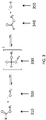
- TPA and EG are heated together they form the reactive monomer bis(hydroxyethyl) terephthalate ('BHET') along with a mixture of low molecular weight oligomers. This mixture of small chain products is permitted to further react and excess EG is removed to form high molecular weight PET, as illustrated in FIG. 2 .
- PET Many companies produce virgin PET globally giving it different trade names.
- some of the common trade names of commercially available PET include: RYNITE®, MYLAR®, and DACRON® (Du Pont de Nemours and Company Corporation, Wilmington, DE) and EASTAPAK® (Eastman Chemical Company, Kingsport, TN).
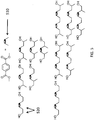
- FIG. 3 Popular pathways for chemical recycling of PET include: hydrolysis, methanolysis, and glycolysis, which are generically depicted in FIG. 3 .
- 310 represents a generic polyethylene terephthalate chain of typical size with R1 being a non-hydrogen molecule;
- 320 represents a nucleophile intended to serve as a model molecule that can attack the ester carbonyl freely (identified as a strong nucleophile in this example as it would bear a charge), which can be generic in structure or species and may or may not be organic in nature, and wherein R2 can be hydrogenic (for hydrolysis), methyl (for methanolysis), or ethyl hydroxyl (for glycolysis);
- 330 represents the quaternary transition state after the nucleophile has attacked the carbonyl carbon and before the leaving group departs;
- 340 represents the new ester formed after the leaving group departs; and 350 represents the leaving group.
- Methanolysis processes depolymerize PET with methanol at high temperature and pressure.
- the reaction products of PET methanolysis are dimethyl terephthalate (DMT) and EG, which can then be used as the raw materials to produce PET polymer.
- DMT dimethyl terephthalate
- EG polyethylene glycol
- Methanolysis employs soluble catalysts (e.g., zinc acetate, magnesium acetate, cobalt acetate, etc.) to improve the reaction rate.
- soluble catalysts e.g., zinc acetate, magnesium acetate, cobalt acetate, etc.
- ethylene glycol is released. Recombination will rapidly begin if the catalyst, methanol, and DMT are not separated.
- DMT is typically obtained as a post reaction precipitate after cooling.
- the driving feature for methanolysis is the insertion of an alkoxide into the ester via transesterification.
- Glycolysis promotes the depolymerization of PET using organic dialcohols along with transesterification catalysts to break the ester linkages and replace them with hydroxyl terminals.
- Preferred agents for such depolymerization are EG, diethylene glycol (DEG), and propylene glycol (PG).
- Such glycolysis agents can be recycled ethylene glycol, recycled diethylene glycol, and recycled propylene glycol, recycled neopentyl glycol, and combinations thereof.
- Glycolysis is conducted in a wide range of temperatures (e.g., 150-250°C) and for a reaction period of from 0.5-8 hours. Usually, 0.5-2% by weight of catalyst (e.g., zinc acetate) in relation to the PET content is added.
- the prior art generally teaches the depolymerization of PET by glycolysis in which the PET is depolymerized all the way to, almost exclusively, bis(hydroxyethyl) terephthalate (BHET), which requires an enormous amount of energy. See, e.g., U.S. Pat. Nos. 4,609,680 , 5,559,159 , and 5,635,584 , British Pat. No. 610,136 , and Japanese Pat. Pub. No. 61447/1973 ,. Additionally, such methods taught in the prior art have significant process limitations resulting from the unwanted solidification of reactants during the reaction processes (which interferes with the agitation of the system) and the formation of unwanted byproducts (which significantly interfere with the critical reaction temperature).
- BHET bis(hydroxyethyl) terephthalate
- the presently disclosed and/or claimed inventive concept(s) is directed to a process for depolymerizing PET into a blend of oligomers rather than a majority of BHET, which greatly reduces the energy necessary for recycling PET. Additionally, in another embodiment, the presently disclosed and/or claimed inventive concept(s) is directed to a process capable of controlling the removal of byproducts and other impurities formed during the depolymerization of PET, which shortens the reaction time while ensuring that the depolymerization reaction goes to completion and that the blend of oligomers produced are of a suitable product quality.
- polyols When constructing polymers, polyols are often used to enhance structural behavior and performance. Polyols are compounds with multiple hydroxyl groups available as nucleophiles for chemical reactions. Polyols can take on several shapes and sizes. From small molecules (e.g., glycerin) to larger and more complex molecules (e.g., sucrose). Polyols are primarily used as the starting point for many polymeric systems. Additionally, they can be reacted with propylene or ethylene oxide, for example, and made into polymers or large oligomers themselves. Such "self-made" polymers can thereafter be further reacted and/or combined with a wide variety of reactive moieties to form polymers of increasing complexity or specificity.
- polyols can be further delineated according to their structure/application as either flexible or rigid. Such physical characteristics come from the particular polyol's functional moieties and molecular weight. Holding all else equal, flexible (SOFT) polyols have molecular weights from 2,000 to 10,000, and rigid (HARD) polyols have molecular weights from 250 to 700.
- SOFT flexible
- HARD rigid
- polyester polyols are rooted in virgin raw materials and manufacture products through replicate esterification of diacids and glycols (e.g., succinic acid and 1,2-propanediol). These polyester polyols are easily distinguished by the structure of the monomers, molecular weight, and steric hindrance. Other polyester polyols originate from reclaimed starting materials and, thereby, produce low molecular weight aromatic polyester polyols that retain enough utility to be carried forward into other polymeric systems. Occasionally, polyols are blends of two or more polyols, each of specific molecular weights, to thereby provide intermediate molecular weight materials.
- Polyols can be made, for example, by reacting epoxides (e.g., ethylene oxide) with an initiating molecule or agent, such as water. Such a process can efficiently make polyether diols like polyethylene glycol, polypropylene glycol, and poly(tetramethylene ether) glycol. Polyether polyols account for about 90% of the polymeric polyols used industrially with the remaining 10% being polyester polyols.
- epoxides e.g., ethylene oxide
- an initiating molecule or agent such as water.
- polyether diols like polyethylene glycol, polypropylene glycol, and poly(tetramethylene ether) glycol.
- Polyether polyols account for about 90% of the polymeric polyols used industrially with the remaining 10% being polyester polyols.
- Polyurethanes are used to make many things including, for example but without limitation, automotive seats, elastomeric shoe soles, fibers (e.g., SPANDEX®, Invista S.a.r.l., Wichita, KS), adhesives, and foams used in, for example, insulation panels, seals, and gaskets.
- fibers e.g., SPANDEX®, Invista S.a.r.l., Wichita, KS
- adhesives e.g., adhesives, and foams used in, for example, insulation panels, seals, and gaskets.
- Polyurethane (PU) polymers since their inception, have proven to be diverse in structure and function.
- the step-by-step growth and synthesis afforded by polyurethanes provided a significant opportunity to build polymers with varied structures and properties.
- polyisocyanates became commercially available, and commercial production of flexible PU foams began thereafter. Building on this technology, spray coating, reaction-in-molding, powder coating, and other techniques that use polyurethane polymers have greatly expanded over the past 60 years.
- Polyurethane polymers have shown their suitability for large surface area coatings and tank liners, and have demonstrated adhesion to concrete and steel, especially when coupled with a primer. Polyurethane polymers provide coatings that are durable, abrasion resistant, and corrosion resistant.
- a polyurethane dispersion is a free-flowing polyphasic system consisting of layers of water and polymer (e.g., a dispersed plastic). PUDs are often white translucent-to-opaque in appearance and are useful as coatings, film forming resins, and/or binders/adhesives, for example.
- the inherent lack of solvents in PUDs, coupled with ever increasing environmental demands, has aided their increased use and application, as well as their reputation as eco-friendly alternatives to more traditional organic solvent-based systems.
- the general advantages of PUDs are flexibile at low temperatures, toughness, customizable mechanical properties, chemical resistance, and ability to be made hydrolytically stable.
- PUDs containing high molecular weight polymers.
- the PUDs are dispersed, even those containing very high molecular weight polymers, their viscosities are determined only by the particle size (i.e., the volume fraction) in the dispersion.
- Emulsions are often confused with PUDs, but emulsions result from a uniform particle size of a liquid media suspended within another immiscible liquid.
- PUDs generally have a fairly broad distribution of different suspended particle sizes.
- Stable PUDs consist of spherical particles having a size in the range of from 30 nm to about 1,000 nm. Particles below 50 nm create a more transparent PUD, while PUDs containing particles above 1,000 nm produce a settleable solid fraction and a PUD having a very short shelf life.
- the contribution of the polymer solids to the total mass of the PUD is typically about 30-60%.
- Dispersions with high solid content have advantages in terms of transport and storage, ease of application, drying and cure times, all of which lead to a decrease of processing energy consumption. Furthermore, high solid content PUDs accentuate their environmental benefits and are becoming increasingly important.
- Polyurethane densities are generally heavier than water thereby creating a tendency for the polymer to try to settle and coagulate. Coalescing forces are resisted by repulsion of the charged solubilizing groups on the particles and the attractive force that creates the systemic viscosity.
- PUDs may contain thickening agents and emulsifiers, which slow down the settling of the particles thereby improving shelf life. Moieties with non-ionic, cationic, and anionic hydrophilic groups can be incorporated into the polyurethane backbone or added as terminal groups in order to provide stabilization.
- PUDs may contain hydrophilic organic solvents (e.g., N-methylpyrrolidone (NMP), glycol ethers, etc.).
- NMP N-methylpyrrolidone
- glycol ethers etc.
- co-solvent enables the formation of hard polyurethane coatings by dissolving and softening the surface of the dispersed particles. After the water in the PUD is evaporated, a subsequently fused film is made (i.e., coalescence occurs). As a low vapor pressure solvent, the co-solvent evaporates gradually, allowing the film to become harder.
- polyurethanes In order to ease the production of high molecular weight polyurethanes while preventing gelling, it is necessary to prepare these molecules maximally linear with a minimum of branching. With the materials of construction being simple bifunctional subunits, the shape, structure, and function of polyurethanes closely mirror the subunits from which the polyurethane is constructed. This creates an opportunity for the isocyanate to distinguish between aliphatic and aromatic polyurethane dispersions. Where aromatics are less expensive, they are known to yellow when exposed to light. Polyols often compose the largest mass fraction of PUDs and are generally seen as soft segments. Correspondingly, the glass transition temperature of the polyol is heavily influenced by the temperature flexibility profile.
- PUDs generally contain the same components, the specific structures of each PUD may vary from product to product depending upon its specific structural components.
- excess diisocyanate may be added, for example but without limitation, in order to provide terminal isocyanates that are further functionalized with difunctional molecules to interconnect the long-chain assemblies.
- the primary component of these chain assemblies is the ionic groups incorporated into the polymer to stabilize its water-dispersed particles.
- Dimethylol propioic acid (DMPA) results in, for example but without limitation, a polymer that is permanently hydrophilic and can be readily dispersed in an appropriate solvent system due to DMPA having carboxy and dihydroxy functionality allowing for its efficient incorporation into the backbone of the polymer while remaining functional as an ionic species.
- cationic functionality can be added by combining quaternary amines such as N-methyl diethanolamine (NMDEA).
- NMDEA N-methyl diethanolamine
- the particle size of the PUD can be controlled by the number of hydrophilic groups per given chain.
- the preparation of a PUD in water requires a high shear force to obtain a correspondingly fine dispersion, as defined above.
- a common problem is the high viscosity of the undispersed isocyanate prepolymer. After chain extension, polyurethanes are practically not dispersible in water.
- the prepolymer may be directly dispersed in water with high shear forces in the presence of the aqueous phase while heating in the presence of co-solvents. The heat may be applied to encourage dissolution or may be hot enough to melt the polyurethane into a liquid phase for dispersion.
- the co-solvent may be added directly to the solution, dispersed with water, and thereafter removed by distillation.
- the resulting film can be dried at room temperature, or at elevated temperatures if required. After the water is evaporated, the gaps between each particle create high capillary forces that drive the particles to merge (i.e., coalescence) to form a homogeneous film.
- Co-solvents used to support the coalescence may remain for some time in the film after the water has evaporated. The co-solvent may also temporarily plasticize the coating and the resulting film may take some time to reach its final hardness.
- VOCs volatile organic compounds
- These regulations have also catalyzed the expansion of PUDs into adhesives in, for example but without limitation, the shoe, automotive, and furniture industries. In many cases, these regulations have created an environment where PUDs are the preferred material because of their inherently low VOC content.
- Waterborne PUDs are, however, at a disadvantage as compared to solvent-based polyurethane solutions. It takes more time and/or energy to evaporate the water as compared to the VOCs used in solvent based polyurethane solutions.
- PUDs are disadvantaged when compared to solvent based polyurethane solutions.
- greenhouse gases are emitted when organic solvents are used and the carbon footprint of solvent system is larger, i.e., many convert to carbon dioxide upon evaporation, the use of PUDs is becoming more routine.
- UV-PUDs waterborne UV-curable polyurethane dispersions
- Ionic, isocyanate-terminated polyurethane prepolymers can be reacted with hydroxy-functional acrylates prior to dispersion into water in the presence of a neutralizing agent. Thereafter, the composition and size of the polymer chain is controlled to create the desired cross-linked content.
- UV-PUDs are among the fastest growing coating type for wood products, for example.
- UV-PUDs when compared with water/solvent free systems, retains the utility of both systems while not grossly suffering from the disadvantages of either.
- the UV-PUDs exhibit a delicate balance of both a strong chemical resistance (due to the UV-crosslinking) and enhanced toughness (due to the polyurethane character). The balance is struck from reduced crosslink density and thereby results in a feature set that very few coatings are able to offer: allowing for the UV-PUD to coalesce on a substrate and dry (through the loss of water) while also allowing the coating to be tack-free before curing.
- such a coating affords the user the opportunity to further process the coated substrate (e.g., cutting, texturing, stamping, retreating, repairing, etc.) or even stack or roll the coated substrates for storage or shipment until subsequent UV treatment.
- balancing the crosslinking content to obtain good chemical resistance can be tipped to lower densities as polyurethane hard domains will provide additional chemical resistance.
- Componentry such as mixed isocyanates and chain extenders, can also be added to the UV-PUDs in order to increase or change functionality of the UV-PUDs.
- the presently disclosed and/or claimed inventive concept(s) relates to a sustainable PUD that incorporates a unique and novel blend or mixture of differing oligomeric polyols (i.e., dPET) obtained from polyethylene terephthalate that directly affects the performance characteristics of a resulting polyurethane film, adhesive, coating, and/or elastomeric material, and methods of producing the same.
- dPET differing oligomeric polyols
- the presently disclosed and/or claimed inventive concept(s) also relates to the novel blend or mixture of differing oligomeric polyols and the methods of producing such.
- the presently disclosed and/or claimed inventive concept(s) is directed to a blend or mixture of functionalized oligomeric forms of polyethylene terephthalate (dPET) and methods of producing the same.
- the composition of the dPET provides a building block for polyurethanes, for example but not by way of limitation, that allows for the customization and targeting of the hard and soft regions of the resulting polymer chains.
- the dPET can be made from an efficient process for recovering oligomeric raw materials from waste products in economical yields.
- the dPET is soluble in various aqueous and organic solvents and can serve, therefore, as a specialized functional backbone for the production of polyurethanes, for example but not by way of limitation, when combined with specific ionic surfactants, non-ionic surfactants, solubilizing groups, dispersing agents, and other moieties to aid in the generation of coatings, sealants, adhesives, and elastomers.
- the presently disclosed and/or claimed inventive concept(s) is also directed to a sustainable PUD that incorporates the blend or mixture of differing oligomeric polyols (i.e., dPET) obtained from polyethylene terephthalate which directly affects the performance characteristics of a resulting polyurethane film, adhesive, coating, and/or elastomeric material.
- dPET differing oligomeric polyols
- the designation value may vary by plus or minus twelve percent, or eleven percent, or ten percent, or nine percent, or eight percent, or seven percent, or six percent, or five percent, or four percent, or three percent, or two percent, or one percent.
- the use of the term "at least one” will be understood to include one as well as any quantity more than one, including but not limited to, 2, 3, 4, 5, 10, 15, 20, 30, 40, 50, 100, etc.
- the term "at least one” may extend up to 100 or 1000 or more, depending on the term to which it is attached; in addition, the quantities of 100/1000 are not to be considered limiting, as lower or higher limits may also produce satisfactory results.
- the words “comprising” (and any form of comprising, such as “comprise” and “comprises”), “having” (and any form of having, such as “have” and “has”), “including” (and any form of including, such as “includes” and “include”) or “containing” (and any form of containing, such as “contains” and “contain”) are inclusive or open-ended and do not exclude additional, unrecited elements or method steps.
- the term “or combinations thereof” as used herein refers to all permutations and combinations of the listed items preceding the term.
- A, B, C, or combinations thereof is intended to include at least one of: A, B, C, AB, AC, BC, or ABC and, if order is important in a particular context, also BA, CA, CB, CBA, BCA, ACB, BAC, or CAB.
- expressly included are combinations that contain repeats of one or more item or term, such as BB, AAA, AB, BBC, AAABCCCC, CBBAAA, CABABB, and so forth.
- BB BB
- AAA AAA
- AB BBC
- AAABCCCCCC CBBAAA
- CABABB CABABB
- the presently disclosed and/or claimed inventive concept(s) encompasses a mixture or blend of oligomers that provide optimal performance for a host of polyurethane dispersions.
- the mixture or blend of oligomers is prepared by the reaction of polyethylene terephthalate with a glycolic molecule, i.e., a polyhydroxy functional, in the presence of a catalyst at elevated temperatures for a sufficient time to decrease the molecular weight of the polyethylene terephthalate to oligomeric species.
- reaction product of this glycolysis reaction comprises a mixture or blend of oligomers of PET (i.e., "dPET") that can be subsequently recovered individually or collectively from the reaction mixture and used to prepare, for example but without limitation, polyurethane dispersions, as illustrated by FIGs. 4 and 5 .
- dPET oligomers of PET
- a reaction product containing a mixture or blend of differing oligomers, as described herein, is particularly well suited to coatings and adhesions made from such polyurethane dispersions.
- 410 represents the structure of the fundamental piece of the polyethylene terephthalate chain to be cleaved and found in the blend or mixture of reaction products (i.e., BHET); 420 represents the structure of a species found within the blend or mixture of the reaction product having 2 TPA and 3 glycol connections making this species a "dimer"; likewise 430, 440, 450, and 460 represent trimer, tetramer, pentamer, and hexamer species, respectively.
- the reaction product comprises a blend or mixture of monomer, dimer, trimer, tetramer, pentamer, and hexamer polyols.
- each of the represented molecules are similar in structural core but are varied on the terminal groups.
- 510 represents the abbreviated structure of the repeated bis-functional terephthalate and 520 represents the two equivalent sites where -CH 3 may be present on a polyethylene glycol molecule.
- FIG. 5 also shows the mixture of sterically favored and unfavored products that result in the formation of the constitutional isomers for the mono- and di-substituted terephthalate groups.
- a glycol other than ethylene glycol can be used to depolymerize the polyethylene terephthalate which results in a statistical mixture of connecting and terminal glycols.
- such a blend or mixture of various forms of oligomeric polyols can be used to create one or more differing PUDs.
- the catalyst is a zinc acetate catalyst capable of increasing the rate of the depolymerization.
- the recovered dPET may thereafter be used as a resin component or resin extender.
- PET beverage containers typically cannot be reused since the elevated temperatures required for sterilization deforms the container.
- PET containers can, however, be ground into small pieces for use as a filler material or remelted for formation of different articles.
- Such recycled material may be referred to interchangeably herein as "recycled PET”, “scrap PET”, “waste PET”, and/or "rPET”.
- the polyethylene terephthalate recovered by such processes contains impurities, such as pigment(s), paper, metal from caps, as well as other undesirable polymers. Consequently, applications for polyethylene terephthalate reclamation by mechanical means are limited to non-food uses and low purity molded products.
- rPET is not limited to and may include whole products made of PET or further processed products made of PET, the form of the rPET when exposed to the depolymerizing conditions is often chipped or shredded to afford the desired products in a reasonable time frame. Further processing may include exotic milling or grinding of some type to the PET products in order to produce rPET material having a sufficient particle size as to aid the dissolution needed to bring the reagents together for the reactions.
- the further processing step may include a multitude of processing steps, all of which would be understood to fall within the broad disclosure presented herein.
- dPET oligomers
- the reaction scheme for depolymerization of the rPET into a reactive lower melting point material can be generally described as being influenced by the following components and procedural steps: (1) the amount and type of glycol used will heavily influence the content of the glycol products, and (2) the oligomers are generated by a recombination of the monomeric BHET into higher molecular weight structures.
- the presently disclosed and/or claimed inventive concept(s) differentiates itself from the prior art which teaches the use of singular or stratified oligomeric species as starting materials. Additionally, the presently disclosed and/or claimed inventive concept(s) can produce oligomers from ethylene oxide or epichlorohydrin and terephthalic acid, unlike previous processes as disclosed in US Patent Nos.
- Non-limiting examples of the depolymerization of rPET into a reactive lower melting point mixture or blend of oligomers (i.e., dPET) that provides optimal performance for a host of polyurethane dispersions, as described above, is exemplified by the following procedures for digesting both virgin and recycled PET with propylene glycol using methods that both require and do not require the removal of byproducts during the reaction.
- a 2 L, 4-neck flask was equipped with a mechanical stirrer, thermocouple, condenser and stopper.
- Propylene glycol (267.6 g, Dow Iot#1D0301N6DA) was added to the flask.
- Zinc acetate dihydrate 14.12 g, Sigma Aldrich
- rPET flakes 750.26 g, Evergreen Plastics lot #43004930
- the temperature was raised to > 190°C and held for 4.0 h. The reaction was deemed complete when a dark translucent fluid, with few pieces of undigested particulate matter, predominantly filled the reactor.
- the flakes dissolved to give a slightly hazy solution.
- the reactor contents were allowed to cool to 120°C.
- the dPET was then filtered to remove undigested PET and contaminants, then stored in a tightly sealed container.
- the resulting dPET was observed to have a hydroxyl number of 357 (over an average of three determinations), while the viscosity was measured to be ⁇ 13,000 centipoise (cP) at 80°C.
- the GPC data indicated that the resulting dPET produced the characteristic distribution of peaks (See FIG. 6 ).
- the dPET reaction product was characterized by differential scanning calorimetry (DSC), gas chromatography with mass spectroscopy (GC-MS), fourier transform infrared spectroscopy (FTIR), viscosity, hydroxyl end-group titration (OH number) and gel permeation chromatography (GPC) to reveal that the resultant was composed of a variety of PET-related oligomers.
- Modulated DSC (mDSC) was used to determine the material's melting point. A melt occurring at 109°C indicated, moreover, that a minor amount of BHET ( FIG. 8 , mDSC heat flow) was also present in the dPET. This melting point is consistent with commercially available BHET material supplied by Sigma Aldrich Co.
- the data demonstrates that an atmospheric pressure based system can be used to depolymerize rPET into dPET.
- the data shows that the reaction product (i.e., dPET) is non-uniform in molecular weight and composition, and comprises a mixture or blend of differing oligomers.
- the manipulation of the reagents has shown that changing the ratio of terephthalic acid to transesterification glycol creates a final product with an equivalently varied average molecular weight (MW).
- MW average molecular weight
- the reactions were designed such that every additional mole of glycol added would be capable of reducing the molecular weight of the polymer through transesterification.
- the starting MW of PET is approximately 20,000-100,000 Daltons ( FIG. 2 )
- the MW of the individual oligomers comprising the dPET is in a range of from about 200 to about 2,000 Daltons.
- the exemplary reactions given above were considered to be complete once the pellets of rPET were completely dissolved and the reaction reached a homogeneous, liquid phase. In each case, this required > 2 hours of reaction time.
- the mixture or blend of recovered oligomeric units of rPET i.e., the dPET
- the dPET primarily comprised incompletely digested oligomers of rPET.
- Chromatography elucidated the molecular weight and distribution of the oligomers of rPET found in the dPET. As is common for GPC analysis of PET, the samples were analyzed in comparison to polystyrene MW calibration standards. Replicate preparations of the dPET were analyzed.
- the dPET contains oligomers of differing size and structure is also confirmed by end group hydroxide titration quantitation of the reaction products (i.e., the dPET) which, when tested, correlates with the GPC data.
- GPC gel permeation/size exclusion chromatography
- the resulting eluent was selectively detected using UV light between about 250 - 300 nm, which was capable of detecting the aromatic groups in the reaction products. Then, by correlating time to molecular weight and using polystyrene standards for calibration purposes, the shape of each peak on the given column set(s) was used to determine the weighted average and number average molecular weights of the reaction products in the eluent.
- the above-described GPC analysis was also carried out on several additional dPETs produced by the procedure set out above, varying the molar ratio of propylene glycol to rPET from 0.45 to 2.5.
- the chromatographic profile for the dPET products is presented in FIG. 10 which plots the percent relative peak area versus the molar equivalence of glycol added to the reaction.
- the intensity of the peaks i.e., the peak area on the x-axis, is indicative of the molecular weights of the components in the reaction product making it possible to determine the terephthalate repeat units of the components in the dPET.
- FIG. 10 illustrates the above-mentioned feature that the molar ratio of glycol to PET heavily impacts the quality of the resultant mixture or blend of oligomers in the dPET.
- the parent PET is cut by the hydroxyl-containing molecules with the aid of the catalyst, the symmetry of the hydroxyl molecule becomes relevant in accounting for the makeup of the products.
- a molecule like ethylene glycol will result in equivalent molecules of monomers, dimers, trimers, etc., regardless of the hydroxyl that reacts.
- a molecule like propylene glycol will have a preference to react at the less hindered side in approximately a 2 to 1 excess, which creates a statistical mix of favored and unfavored products for the monomer, dimer, and all the other oligomers produced.
- the rPET is glycolized by a glycol other than ethylene glycol, only one of the two resulting oligomers will possess the new glycol and the other will be an ethylene glycol terminal from the native PET.
- the composition of the profile presented in FIG. 10 is heavily influenced by the reaction conditions including time, catalyst load, and temperature as well as other factors that may impact the kinetics of the depolymerization.
- the temperature needed to be high enough to homogenize the PET media irrespective of the amount of catalyst present.
- the sustained heating of the reaction mixture encouraged the formation of glycol side reaction products that consumed the glycol and degraded the quality of the product.
- these byproducts are not necessarily impediments to the formation of dPETs at the laboratory scale (primarily due to the favorable ratio of headspace to volume of lab scale reactors), these byproducts can be impediments to the formation of dPETs at larger reaction scales where the ratio of headspace to reactor volume is no longer favorable.
- the presently disclosed and/or claimed inventive concept(s) relates to a process for depolymerizing rPET into a mixture or blend of oligomers wherein the process is capable of controlling the removal of the above-described byproducts and other impurities, as exemplified by the non-limiting example presented in FIG. 11 .
- the process is capable of controlling the removal of byproducts and other impurities formed during the depolymerization of rPET, the overall reaction time for depolymerization of the rPET is shortened, while still ensuring reaction completion and that the dPET produced is of a suitable quality for further uses.
- FIG. 11 represents a general process flow chart for a process of depolymerizing rPET into a mixture or blend of oligomers wherein the process is capable of simultaneously removing the byproducts and other impurities formed by the depolymerization reaction.
- the jacketed reactor 1102 contains a glycol and a catalyst(s) and rPET is supplied to the reactor via pipe 1104.
- the jacketed reactor 1102 is outfitted with a heated/cooled riser pipe 1106 to create a vapor hurdle to assist in controlling the reaction temperature.
- the heated/cooled riser pipe 1106 allows a vapor hurdle to be created by controlling the temperature of the vapor produced by the reaction and the rate at which the vapor is removed.
- the riser pipe 1106 is used to distill any initial moisture out of the system. If the moisture is not removed from the reaction system, the moisture can accumulate in the reaction system and cause depression of the reaction temperature resulting in a longer reaction time and a degradation of the dPET produced. Once the moisture and other miscellaneous low boiling entities have been distilled off, the temperature of the riser pipe 1106 can be increased. The increase in temperature is sufficient to encourage the byproducts to emerge from the head space of the jacketed reactor 1102 and travel through the riser pipe 1106 to a condenser 1108 where the byproducts are cooled to liquid temperatures and collected in the distillate stream 1110 and removed from the system.
- the increase in the temperature of the riser pipe 1106 must be done with care such that it is not done too early or too late in the reaction. If the temperature of the riser pipe 1106 is increased too early, glycol is unnecessarily removed from the reactor and negatively impacts the amount of glycol available to depolymerize the rPET. If the temperature of the riser pipe 1106 is increased too late in the reaction, the dPET may be contaminated with an excessive amount of the byproducts referenced above.
- FIG. 12 illustrates, in a non-limiting example, the temperature trends necessary to run the process, including the reaction stall temperature and relationship of the vapor temperature to the reaction temperature. Additionally, FIG. 12 illustrates the need to have a steady flow of distillate comprising the byproducts.
- the product is filtered through a coarse woven filter in pipe 1112 and transferred via pipe 1112 to another tank reactor 1114 for subsequent reactions and/or processing.
- glycol and rPET are supplied into the reactor 1102 in the presence of a carbonyl-coordinating catalyst to increase the rate of glycolysis.
- the catalyst can be, for example but without limitation, a transesterification catalyst, wherein the transesterification catalyst comprises, consists of, or consists essentially of a salt comprising, consisting of, or consisting essentially of at least one of manganese, zinc, antimony, titanium, tin, germanium, and combinations thereof.
- the glycol can be a hydroxy-containing organic molecule generally comprising a modified glycol having between about 2 to about 10 carbon atoms.
- the glycol can be selected from the group comprising, consisting of, or consisting essentially of at least one of ethylene glycol, propylene glycol, 1,3-propanediol, 1,4-butanediol, 1,6-hexanediol, diethylene glycol, 1,4-cyclohexanediol, and 1,4-cyclohexanedimethanol, and combinations thereof.
- the glycol can be a recycled hydroxyl-containing organic molecule generally comprising a modified glycol between about 2 to about 10 carbon atoms.
- the glycol can be selected from the group comprising, consisting of, or consisting essentially of at least one of recycled ethylene glycol, recycled propylene glycol, recycled 1,3-propanediol, recycled 1,4-butanediol, recycled 1,6-hexanediol, recycled diethylene glycol, recycled 1,4-cyclohexanediol, recycled 1,4-cyclohexanedimethanol, and combinations thereof.
- the form of rPET used in the process can comprise, consist of, or consist essentially of film, lump, fiber, chip, pellet, and combinations thereof.
- the molar ratio of glycol to rPET added to the reactor 1102 can be in the range of from about 0.7 to about 2.0, or from about 0.8 to about 1.5, or from about 0.85 to about 1.0. If the molar ratio of glycol to rPET is less than 0.7, the dPET obtained from the depolymerization reaction can be too low in quality due to a lack of solubility and therefore is unable to be further reacted and used in various applications. If the molar ratio of glycol to rPET is greater than 2.0, the composition of the resultant mixture or blend of oligomers can be negatively affected and the desired properties caused by the variety of molecular weights are lost.
- the glycol, rPET, and carbonyl-coordinating catalyst are depolymerized under agitation in the reactor 1102 at a temperature of about 180°C.
- the riser 1106 and condenser 1108 are initially set at a low enough temperature to allow the reaction temperature to stall at or below 180°C.
- the riser 1106 temperature is then increased to and maintained at a temperature in the range of from about 95°C to about 100°C until the reaction temperature (i.e., the temperature of the reactor 1102) increases to a range of from about 180°C to about 210°C, and is thereafter maintained within that range until material is captured by the condenser.
- the riser 1106 temperature is increased to and maintained at a temperature in the range of from about 100°C to about 110°C in order to increase the reaction temperature to about 210°C and thereafter collect about 5-10 g of condensed vapor for every pound of product produced, wherein the condensed vapor comprises the above-described byproducts of the depolymerization reaction.
- the gauge of 5-10 g of condensed vapor (i.e., the waste stream) per pound of reaction product can be used to set temperatures, but is highly dependent on the manifold and overhead plumbing and construction which heavily influence the retention or release of headspace vapors.
- FIG. 10 is also applicable for the dPET reaction products produced by the above-described process and provides a means for accurately assessing the composition and quality of the resulting product.
- the byproducts in the waste distillate stream 1110 of the above-described process were analyzed using gas chromatography and mass spectrometry.
- Tables 2 and 3 present the byproducts that were continuously removed from the reaction during the depolymerization of rPET with propylene glycol.
- the waste distillate stream 1110 generally comprises two immiscible layers: a less dense clear faint yellow layer and a denser colorless clear layer.
- the faint yellow layer and the dense colorless clear layer were analyzed to determine their compositions; the results of which are presented in Tables 2 and 3, respectively. It was imperative to remove the byproducts at an optimal rate to encourage the reaction to proceed but not so quickly as to significantly decrease the glycol concentration such as to impact the desired oligomers in the dPET.
- Table 2 Composition of Faint Yellow Layer Byproduct Relative % in Waste Stream 2,6-dimethyl-1,4-dioxane and 2,5-methyl-1,4-dioxane > 30 2-methyl-1,4-dioxane > 30 Mixture of Propylene Glycol, Ethylene Glycol, Diethylene Glycol, and Condensation Ethers thereof > 25 Acetone > 5 Mixture of Propylene/Ethylene/Diethylene Glycol-Esters Trace Table 3: Colorless Clear Layer By product Relative % in Waste Stream Water > 70 Mixture of Propylene Glycol, Ethylene Glycol, Diethylene Glycol, and Condensation Ethers thereof > 10 2-methyl-1,4-dioxane > 5 2,6-dimethyl-1,4-dioxane and 2,5-methyl-1,4-dioxane > 5 Mixture of Propylene/Ethylene/Diethylene Glycol-Esters
- the reaction processes may also be performed with virgin PET ("vPET"-i.e., polyethylene terephthalate that has not previously been molded into a product, a previously molded PET product that has not been commercially used, a previously molded PET product that has been used to hold a product or act as packaging but has not been put into commercial streams of commerce, and combinations thereof).
- vPET virgin PET
- rPET should be understood as encompassing polyethylene terephthalate material having a recycled content of from 0% to 100% and still be within the scope of the presently disclosed and/or claimed inventive concept(s).
- a 1 L, 4-neck flask was equipped with a mechanical stirrer, thermocouple, condenser and stopper.
- Neopentyl glycol 129.3 g, Aldrich 538256 lot# 07304DHV
- Zinc acetate dihydrate 3.85 g, Alfa Aesar 11559, lot # C11W013 was added in one portion.
- the temperature was increased to 135°C and virgin PET (i.e., vPET-240 g, Poly Sciences 04301 lot #46418) was added in portions over a 15 min period. The temperature was raised to 200°C and held for 4.5 h.
- the pellets dissolved to give a slightly hazy solution-i.e., dPET obtained from a reaction of vPET.
- the resulting dPET from vPET was observed to have a hydroxyl number of 354 (over an average of three determinations) which corresponds to 6.31 mmol/g while the viscosity was measured to be 1416 cP at 80°C.
- GPC data indicated that the resulting dPET from vPET had an average MW of 1237 g/mol and the resulting chromatograph was similar to dPET from a rPET source that was digested in a similar manner. Overall, the data for virgin digested material was consistent with material prepared from recycled PET using the same stoichiometry.
- FIGs. 11 and 13 The overall process for the manufacture of dPET lends itself to scalability ( FIGs. 11 and 13 ), and can be envisioned as a batch or continuous process to make the resulting dPET.
- One skilled and trained in the art might assemble a process flow chart as described in FIGs. 11 and 13 , which illustrates the full production process.
- dPET based polyurethanes are suitable for commercial applications.
- Polyurethane prepolymers used in making polyurethane dispersions require a polyisocyanate component and an isocyanate reactive component (also known as an active hydrogen containing material or polyols).
- Polyurethanes earned their nomenclature by being polymers that possess interconnects or terminal groups of the functional moieties of urea, polyureas, allophonate, biuret, and others.
- the polyisocyanate component of the prepolymer formulations of the presently disclosed and/or claimed inventive concept(s) can be selected from aliphatic polyisocyanates, modified aliphatic polyisocyanates, and mixtures thereof.
- aliphatic isocyanate compounds include 1,6-hexamethylene-diisocyanate (HDI), isophorone diisocyanate (IPDI), 2,4- and 2,6-hexahydrotoluene-diisocyanate, 4,4'-, 2,2'- and 2,4'-dicyclohexylmethane diisocyanate (H12MDI), tetramethyl xylene diisocyanate, norbornane diisocyanate, 1,3- and 1,4-(bisisocyanatomethyl)cyclohexane (including cis- or trans-isomers thereof), tetramethylene-1,4-diisocyanate (TMXDI), cyclohexane 1,
- the isocyanate component can be selected from 2,4-toluene-diisocyanate, 1,6-toluene-diisocyanate, isophorone diisocyanate (IPDI), and combinations thereof.
- Mixtures of isocyanates may also be used with the polyurethane dispersions of the presently disclosed and claimed inventive concept(s).
- commercially available mixtures of 2,4- and 2,6-isomers of toluene diisocyanates (TDI) may be used.
- TDI 2,4- and 2,6-isomers of toluene diisocyanates
- a "crude" polyisocyanate may also be used in the practice of the presently disclosed and claimed inventive concept(s).
- toluene diisocyanate obtained by the phosgenation of a mixture of toluene diamine isomers or diphenylmethane diisocyanate obtained by the phosgenation of crude methylene diphenylamine may be used as such "crude” polyisocyanates.
- TDI/MDI blends may also be used and one of ordinary skill in the art would appreciate the advantages of using same (See FIG 14 ).
- the isocyanate reactive component referred to herein as the polyol
- the polyol is comprised of the mixture or blend of the oligomers recovered from the glycolysis of rPET (i.e., the dPET).
- the polyols used in polyurethane production are those compounds having at least two hydroxyl groups or amine groups. In one aspect of the presently disclosed and/or claimed inventive concept(s), the active hydrogen groups are hydroxyl groups.
- suitable polyols are generally known and are described in such publications as High Polymers, Vol. XVI, "Polyurethanes, Chemistry and Technology" by Saunders and Frisch, Interscience Publishers, New York , Vol. I, pp. 32-42, 44-54 (1962 ) and Vol. II, pp.
- polyether polyols of the presently disclosed and/or claimed inventive concept(s) include those obtained by the alkoxylation of suitable starting molecules with an alkylene oxide, such as ethylene oxide (EO), propylene oxide (PO), butylene oxide (BO), or mixtures thereof.
- alkylene oxide such as ethylene oxide (EO), propylene oxide (PO), butylene oxide (BO), or mixtures thereof.
- initiator molecules include water, ammonia, aniline or polyhydric alcohols such as dihydric alcohols having a molecular weight of 62 - 399 g/mol, especially the alkane polyols such as ethylene glycol, propylene glycol, hexamethylene diol, glycerol, trimethylol propane or trimethylol ethane, or the low molecular weight alcohols containing ether groups such as diethylene glycol, triethylene glycol, dipropylene glyol, tripropylene glycol or butylene glycols (See FIG. 14 ).
- alkane polyols such as ethylene glycol, propylene glycol, hexamethylene diol, glycerol, trimethylol propane or trimethylol ethane
- the low molecular weight alcohols containing ether groups such as diethylene glycol, triethylene glycol, dipropylene glyol, tripropylene glycol or butylene glycols (
- the dPET contains greater than 15% GPC chromophore peak area having a molecular weight of > 250, greater than 15% GPC chromophore peak area having a molecular weight of > 440, greater than 10% GPC chromophore peak area having a molecular weight of > 630, greater than 5% GPC chromophore peak area having a molecular weight of > 820, greater than 1% GPC chromophore peak area having a molecular weight of > 1000, and greater than 0.5% GPC chromophore peak area having a molecular weight of > 1200.
- the dPET contains greater than 25% GPC chromophore peak area having a molecular weight of > 250, greater than 25% GPC chromophore peak area having a molecular weight of > 440 or greater, greater than 15% GPC chromophore peak area having a molecular weight of > 630, greater than 10% GPC chromophore peak area having a molecular weight of > 820, greater than 5% GPC chromophore peak area having a molecular weight of > 1000, and greater than 5% GPC chromophore peak area having a molecular weight of > 1200. (See FIGs. 4 , 5 and 6 )
- the prepolymers of the presently disclosed and/or claimed inventive concept(s) can be prepared in any way known to one of ordinary skill in the art of preparing polyurethane prepolymers. Often, the polyisocyanate and polyol components are brought together and heated under reaction conditions sufficient to prepare a polyurethane prepolymer, and the stoichiometry of the prepolymer formulations of the presently disclosed and/or claimed inventive concept(s) is such that the polyisocyanate is present in excess.
- the prepolymer may be made in the presence of a solvent and any solvent remaining in the reaction product mixture may be removed before or after the production of the polyurethane dispersion.
- the prepolymers are made in the presence of a non-polar solvent to aid interaction with the dPET.
- a non-polar solvent examples include ketones, such as acetone or methylethyl ketone; ethers such as tetrahydrofuran, dioxane, and dimethoxyethane; and ether esters, such as methoxypropyl acetate. These solvents may be added at any stage of the prepolymer preparation.
- the processes for making polyurethane dispersions are well known in the art.
- the polymer may be dispersed by a batch or continuous process.
- the resulting dispersion should have a particle size sufficient to provide stability to the dispersion-i.e., the dispersion should not flocculate during storage prior to use in subsequent end products.
- An internally stabilized PUD is one that incorporates ionically or nonionically hydrophilic pendant groups into the polymer backbone particles dispersed into water. (See FIG. 14 ).
- Examples of nonionic internally stabilized polyurethane dispersions are described by U.S. Pat. Nos. 3,905,929 and 3,920,598 .
- Ionic internally stabilized polyurethane dispersions are described in U.S. Pat. No. 6,231,926 and 3,412,054 .
- dihydroxyalkylcarboxylic Bronsted-Lowry acids are incorporated into the polyurethane in order to make anionic dispersions.
- a common monomer used to make an anionic internally stabilized polyurethane dispersion is dimethylolpropionic acid (DMPA).
- DMPA dimethylolpropionic acid
- Dihydroxy tertiary amine Lewis bases may be incorporated into the polyurethane in order to promote cationic internal stability.
- a preferred embodiment of the presently disclosed and/or claimed inventive concept(s) is a PUD comprised of a nonionic group (that does not contain a hydrophilic ionizable group) and a hydrophilic ionizable group (that readily ionizes in water such as DMPA).
- ionizable groups that may be incorporated into the polyurethane include, for example but not by way of limitation, anionic groups such as sulfonic acids and alkali metal salts thereof, and cationic groups including ammonium salts prepared by reaction of a tertiary amine with a strong mineral acid such as phosphoric acid, sulfuric acid, a hydrohalic acid, or a strong organic acid.
- anionic groups such as sulfonic acids and alkali metal salts thereof
- cationic groups including ammonium salts prepared by reaction of a tertiary amine with a strong mineral acid such as phosphoric acid, sulfuric acid, a hydrohalic acid, or a strong organic acid.
- Surfactants are deployed into the aqueous phase of the polyurethane dispersion in order to further stabilize the dispersion.
- the surfactants contemplated for use with the presently disclosed and/or claimed inventive concept(s) include, but are not limited to, cationic, anionic, zwitterionic, or non-ionic surfactants.
- anionic surfactants include, but are not limited to, sulfonates, carboxylates, and phosphates.
- cationic surfactants include, but are not limited to, quaternary amines.
- non-ionic surfactants include, but are not limited to, block copolymers containing ethylene oxide and silicone surfactants, such as ethoxylated alcohol, ethoxylated fatty acid, sorbitan derivative, lanolin derivative, ethoxylated nonyl phenol, or an alkoxylated polysiloxane.
- silicone surfactants such as ethoxylated alcohol, ethoxylated fatty acid, sorbitan derivative, lanolin derivative, ethoxylated nonyl phenol, or an alkoxylated polysiloxane.
- the surfactants can be either external or internal surfactants. External surfactants are not chemically reacted into the polymer during preparation. Internal surfactants are incorporated into the polymer backbone during dispersion preparation (See FIG. 14 ).
- Suitable catalysts useful for preparing the prepolymer include, but are not limited to, stannous octoate, dibutyl tin dilaurate, and tertiary amine compounds such as triethylamine and bis-(dimethylaminoethyl) ether, morpholine compounds such as ⁇ '-dimorpholinodiethyl ether, bismuth carboxylates, zinc bismuth carboxylates, iron (III) chloride, potassium octoate, potassium acetate, DABCO®(bicycloamine) (commercially available from Air Products and Chemicals, Inc., Allentown, PA), and FASCAT®2003 (commercially available from Arkema Inc., Philadelphia, PA).
- stannous octoate dibutyl tin dilaurate
- tertiary amine compounds such as triethylamine and bis-(dimethylaminoethyl) ether
- morpholine compounds such as
- the amount of catalyst used may be, but not by way of limitation, from about 5 to 200 parts per million of the total weight of prepolymers.
- a zirconium chelate catalyst such as K-KAT® XC9213 (commercially available from King Industries, Inc., Norwalk, CT) is used.
- water degradable catalysts can be used to form the prepolymer.
- the term "water degradable” means the catalyst deactivates in the presence of water-i.e., the catalyst used in the production of the polyurethane product (which may contain some amount of residual catalyst) is dispersed into the aqueous solvent to thereby create PUD.
- Suitable water degradable catalysts include, but are not limited to, zirconium chelate such as the K-KAT® XC9213 catalyst from King Industries, Inc.
- the amount of water degradable catalyst used can be from about 5 to 200 parts per million.
- any water degradable catalyst for isocyanate reactions could be used.
- the prepolymers are extended with a chain extender to further increase their molecular weight and provide the final PUD with added functionality.
- a chain extender Any chain extender known to be useful to those of ordinary skill in the art of preparing polyurethanes can be used with the presently disclosed and/or claimed inventive concept(s).
- a typical chain extender will have a molecular weight of 30 to 1000 g/mol and have at least two active hydrogen containing groups.
- Polyamines are a common class of chain extenders, but other materials, particularly water, can function to extend chain length and are contemplated for use.
- Common chain extenders include, but are not limited to, water, amino ethyl piperazine, 2-methyl piperazine, 1,5-diamino-3-methyl-pentane, isophorone diamine, ethylene diamine, diamino butane, hexamethylene diamine, tetramethylene tetraamine, aminoethyl propyl trimethoxy silane, diethylene triamine, triethylene tetramine, triethylene pentamine, ethanol amine, lysine in any of its stereoisomeric forms and salts thereof, hexane diamine, hydrazine and piperazine.
- the prepolymer can be dispersed in an aqueous medium using any method known to those skilled in the art. Typically, the prepolymer is simply added to the aqueous medium with stirring, preferably rapid stirring. Sometimes, high speed/high shear stirring is used to obtain a dispersion of good quality. Typically, the prepolymer and the aqueous medium are combined to provide a polyurethane dispersion.
- the dispersions will generally have a solids content of from 20 to 60 wt %. Films will not necessarily be prepared from dispersions having this level of solids, as the dispersions themselves may be stored and shipped at a high solids content to minimize shipping costs. As such, the dispersion may be diluted prior to final use.
- the prepolymer can be dispersed into the aqueous medium at any temperature. Typically, the temperature is below the boiling point of the aqueous medium. By using a closed reactor capable of withstanding elevated pressure it is possible to disperse the prepolymer in the aqueous medium at a temperature higher than the boiling point of the aqueous medium. Generally, in commercial processes for preparing polyurethane dispersions, the prepolymer is dispersed in the aqueous medium at a temperature of less than about 50°C and often less than about 25°C. The relatively low temperature is required since the isocyanate groups of the prepolymer undergo a relatively rapid reaction with water that leads to polymerization rendering the prepolymer non-dispersible in water.
- the rapid reaction of the isocyanate groups of the prepolymer with water leads to the formation of carbon dioxide-thereby resulting in foaming, which renders the process difficult to perform.
- the temperature at which the dispersion is formed By lowering the temperature at which the dispersion is formed, such side reactions are reduced.
- the prepolymer is dispersed in the aqueous medium at a temperature less than about 50°C.
- the prepolymer is dispersed in the aqueous medium at a temperature ranging from about 20°C to about 50°C.
- the polyurethane dispersions may contain further components and additives for example, but not by way of limitation, inorganic and organic pigments, dyes, leveling agents, viscosity regulators, natural and synthetic waxes, anti-foaming agents, matting agents and others.
- the dispersions of the presently disclosed and/or claimed inventive concept(s) are useful in coatings for surfaces, particularly in coatings of metals, glasses, plastics, and cellulosic materials.
- the coatings based on polyurethane dispersions of the presently disclosed and/or claimed inventive concept(s) have a hardness of 4H surface scratch hardness, measured 3 days after application.
- the coatings have a hardness of 3H or greater and, more preferably, have a hardness of 4H or greater.
- the PUDs may be applied to the respective substrates by methods such as painting, spraying, flow-coating, transfer-coating, roller coating, brushing, dipping, spreading, curtain coating, and any other coating method now known or developed in the future.
- the polyurethane dispersions can be pooled on a substrate and then spread over the substrate using a brush or other spreading means.
- Spraying includes atomizing the PUD and ejecting the atomized material onto the substrate.
- the PUDs are preferably applied at ambient temperatures. Drying of the products obtained by the various applications of the PUDs can be carried out at room temperature or at elevated temperature.
- the oligomeric form of polyethylene terephthalate with hydroxyl and/or amine group(s) can be reacted with a polyisocyanate to form a polyurethane prepolymer.
- the polyurethane prepolymer can be formed according to any method known in the art, such as by heating the dPET with hydroxyl and/or amine group(s) with the polyisocyanate until a desired NCO equivalent weight is achieved.
- the polyisocyanate and the dPET are brought together and heated under reaction conditions sufficient to prepare the polyurethane prepolymer.
- the stoichiometry of the prepolymer formulations in one embodiment of the presently disclosed and/or claimed inventive concept(s), is such that the polyisocyanate is present in excess. In other embodiments of the presently disclosed and/or claimed inventive concept(s), the stoichiometry of the prepolymer formulations is such that there is an excess or equivalent amount of dPET to polyisocyanate.
- Dispersion of the prepolymer in an aqueous solvent to produce the exemplary PUDs of the presently disclosed and/or claimed inventive concept(s) may be generally carried out using a variety of stirring blades (e.g., crescent shaped Teflon stirring blades, Cowles stirring blades, etc.), or other techniques used by a person skilled and trained in the art capable of producing enough shear to disperse.
- stirring blades e.g., crescent shaped Teflon stirring blades, Cowles stirring blades, etc.
- Direct observations indicate that a commercially feasible and stable PUD formulation does not require the aggressive shearing force obtainable through the use of the Cowles blade although it is contemplated for use in the methods of the presently disclosed and/or claimed inventive concept(s). Examples of bench scale and pilot plant scale reactions to produce PUDs of the presently disclosed and/or claimed inventive concept(s) are hereinafter described with particularity.
- the polyurethane dispersions can be further characterized to define the MW and functional connections of the materials of the composition. Examples of such PUDs are displayed in FIGs. 15 and 16 .
- the overall process for the manufacture of PUD lends itself to scalability ( FIG. 17 ), and the process is contemplated as being performed as a batch or continuous process as described, for example but not by way of limitation, in US Patent No. 7,345,110 and EP Patent No. 2,094,756 .
- FIG. 17 One skilled and trained in the art would appreciate that the processes shown in FIG. 17 are but one example illustrating a production process of manufacturing polyurethane dispersions from PET.
- the presently disclosed and/or claimed inventive concept(s) also encompasses a radiation curable composition comprising at least one oligomeric form of polyethylene terephthalate containing hydroxyl and at least one ethylenically unsaturated photopolymerizable compound.
- the radiation curable composition comprises a polyurethane resin comprising a reaction product formed by a reaction of a polyisocyanate and at least one oligomeric form of polyethylene terephthalate containing hydroxyl groups and an ethylenically unsaturated photopolymerizable compound.
- the radiation curable composition comprises wherein the polyurethane resin comprises a reaction product formed by a reaction of a polyisocyanate, at least one water solubilizing monomer, and at least one oligomeric form of polyethylene terephthalate containing hydroxyl groups.
- the composition further comprises water, forming a radiation curable polyurethate dispersion.
- the ration curable compositions can be cured by, for example but without limitation, energy in the electromagnetic spectrum including, for example, ultra violet light, electron beams, and other forms of radiant energy.
- the radiation curable compositions further comprise photoinitiator, wherein the photoinitiator can be selected from the group consisting of benzoin esters, halomethyl ketones in combination with amines, aromatic ketones in combination with amines, and combinations thereof.
- the photoinitiator can be at least one of 2-hydroxy-2-methyl-1-phenyl-propan-1-one and 1-[4-(2-Hydroxyethyoxy)-phenyl]-2-hydroxy-2-methyl-1-propane-1-one.
- the at least one oligomeric form of polyethylene terephthalate containing hydroxyl groups comprises a mixture of reaction products formed by a reaction of polyethylene terephthalate with a glycolysis agent, wherein the at least one oligomeric form of polyethylene terephthalate containing hydroxyl groups comprises a mixture of reaction products formed by a reaction of polyethylene terephthalate with a glycolysis agent.
- the glycolysis agent can be selected from the group consisting of ethylene glycol, diethylene glycol, propylene glycol, neopentyl glycol, and combinations thereof.
- the glycolysis agent is selected from the group consisting of recycled ethylene glycol, recycled diethylene glycol, recycled propylene glycol, recycled neopentyl glycol, and combinations thereof.
- a catalyst is used to catalyze the reaction of the polyethylene terephthalate with the glycolysis agent.
- The can be selected from at least one of zinc acetate and zinc acetate dihydrate.
- the reaction products of the reaction of polyethylene terephthalate with a glycolysis agent can comprise greater than 15% GPC chromophore peak area having a molecular weight of > about 250, greater than 15% GPC chromophore peak area having a molecular weight of > about 440, greater than 10% GPC chromophore peak area having a molecular weight of > about 630, greater than 5% GPC chromophore peak area having a molecular weight of > about 820, greater than 1% GPC chromophore peak area having a molecular weight of > about 1000, and greater than 0.5% GPC chromophore peak area having a molecular weight of > about 1200.
- the reaction products of polyethylene terephthalate with a glycolysis agent can comprise comprise greater than 25% GPC chromophore peak area having a molecular weight of > about 250, greater than 25% GPC chromophore peak area having a molecular weight of > about 440, greater than 15% GPC chromophore peak area having a molecular weight of > about 630, greater than 10% GPC chromophore peak area having a molecular weight of > about 820, greater than 5% GPC chromophore peak area having a molecular weight of > about 1000, and greater than 5% GPC chromophore peak area having a molecular weight of > about 1200.
- the polyisocyanate is selected from the group consisting of isophorone diisocyanate (IPDI), methylene bisphenyl isocyanate (MDI), dicyclohexylmethane 4,4'-diisocyanate (H12MDI), cyclohexyl diisocyanate (CHDI), m-tetramethylxylylene diisocyanate (m-TMXDI), tetramethylxylylene diisocyanate (TMXDI), ethylene diisocyanate, 1,2-diisocyanatopropane, 1,3-diisocyanatopropane, 1,6-diisocyanatohexane (hexamethylene diisocyanate or HDI), 1,4-butylene diisocyanate, lysine diisocyanate, 1,4-methylene bis-(cyclohexyl isocyanate), toluene diisocyanate (TDI), m-
- the at least one water solubilizing monomer is selected from the group consisting of carboxylates, phosphates, sulf(on)ates, sorbates, poly(ethylene oxide) oligomeric blocks, quaternary amines, and combinations thereof.
- the polyurethane resin comprises a reaction product formed by a reaction of a polyisocyanate, at least one water solubilizing monomer, at least one oligomeric form of polyethylene terephthalate containing hydroxyl groups, and a catalyst.
- the radiation curable composition comprises a polyurethane resin comprising a reaction product formed by a reaction of a polyisocyanate, at least one oligomeric form of polyethylene terephthalate containing hydroxyl groups, an ethylenically unsaturated photopolymerizable compound, and a catalyst.
- the catalyst is dibutyl tin dilaurate.
- the ethylenically unsaturated photopolymerizable compound is selected from the group consisting of methyl methacrylate, ethyl methacrylate, 2-ethylhexyl methacrylate, isobutyl methacrylate, glycidyl methacrylate, glycidyl acrylate, butyl acrylate, 2-hydroxyethyl acrylate, hydroxyethyl(meth)acrylate, 2-methoxyethyl acrylate, 2-phenoxyethyl acrylate, 2-hydroxypropyl acrylate, benzyl acrylate, tetrahydrofurfuryl acrylate, pentaerythritol triacrylate and combinations thereof.
- the radiation curable composition can also comprise at least one of a stabilizing compound and an additional polyol.
- the stabilizing compound is phenothiazine.
- the additional polyol is a natural oil modified polyol which can be for example, but without limitation, Piothane® S-500 (Pioneer Plastics, Auburn, ME).
- the radiation curable compositions as described above can be used in a variety of application for example, but without limitation, as an article of manufacture, a film, a coating, and a adhesive on a variety of substrates including for example, but without limitation, wood, metal, plastics, and other plastics.
- the radiation curable composition is formed by the steps, comprising: (i) adding at least one oligomeric form of polyethylene terephthalate containing hydroxyl groups (as described above) to reactor and optionally adding an additional polyol to the reactor and mixing with the at least one oligomeric form of polyethylene terephthalate containing hydroxyl groups (as described above), (ii) adding at least one ethylenically unsaturated photopolymerizable compound (as described above) to a separate container and optionally adding a stabilizing compound, and thereafter mixing, (iii) mixing the ethylenically unsaturated photopolymerizable compound and the at least one oligomeric form of polyethylene terephthalate containing hydroxyl groups, (iv) heating the reaction mixture, (v) cooling the reaction mixture while adding an isocyanate (as described above), (vi
- dPET is supplied by Evergreen Plastics, and all other chemical reactants were obtained from Sigma-Aldrich unless otherwise noted.
- the following dPET Examples A-G were carried out under the assumption that the PET repeat unit had a molecular weight of about 192 g/mol. Additionally, dPET Examples A-D were carried out as bench scale reactions as described below without removing byproducts during the reaction.
- dPET Example E was carried out as a large scale reaction intended to simulate industrial conditions, described below, wherein with the above-described byproducts were removed during the reaction.
- dPET Example F was carried out as described below in a similar large scale reaction but without the removal of byproducts. Additionally, Examples 1-10 disclose experimental methods for making polyurethane dispersions using dPETs A-E, Examples 11-18 disclose methods of making UV curable urethane acrylates and coatings thereof, and Examples 19-22 disclose methods of making UV curable polyethylene terephthalates and coatings thereof.
- rPET was depolymerized by using 0.9Eq of propylene glycol in the presence of 1.5 mol% of zinc acetate dihydrate and heated to > 180-210°C for 10 hours or until the reaction mixture became uniphasic in an open vessel equipped with a reflux condenser. Upon completion of the reaction, the mixture was cooled to 120°C and filtered to remove any coarse particle impurities or unreacted PET. The reaction mixture was then allowed to cool to room temperature for characterization and further reaction.
- rPET was depolymerized by using 0.8Eq of propylene glycol in the presence of 1.5 mol% of zinc acetate dihydrate and heated to > 180-210°C for 12 hours or until the reaction mixture became uniphasic in a closed vessel. Upon completion of the reaction, the mixture was cooled to 120°C and filtered to remove any coarse particle impurities or unreacted PET. The reaction mixture was then allowed to cool to room temperature for characterization and further reaction.
- rPET was depolymerized by using 1.2Eq of propylene glycol in the presence of 1.5 mol% of zinc acetate dihydrate and heated to > 180-210°C for 12 hours or until the reaction mixture became uniphasic in a closed vessel. Upon completion of the reaction, the mixture was cooled to 120°C and filtered to remove any coarse particle impurities or unreacted PET. The reaction mixture was then allowed to cool to room temperature for characterization and further reaction.
- rPET was depolymerized by using 399.4lbs of neopentyl glycol in the presence of 11.93lbs of zinc acetate dihydrate and heated to > 180-210°C for 8 hours or until the reaction mixture became uniphasic in a closed vessel. Upon completion of the reaction the mixture, was cooled to 120°C and filtered to remove any coarse particle impurities or unreacted PET. The reaction mixture was then allowed to cool to room temperature for characterization and further reaction.
- rPET was depolymerized using the process illustrated in FIG. 11 and described in detail above under the heading "Process of Digesting rPET with the Removal of Byproducts During the Reaction.”
- 2,593 lbs. of propylene glycol and 139 lbs. of zinc acetate dihydrate were added to a continuous stir tank reactor.
- the mixture was heated then agitated until the propylene glycol and zinc acetate dihydrate reached a homogenized state. After reaching homogenization, the agitation was stopped and 7,268 lbs. of PET (recycled/virgin and/or pellet/flake) was added to the reactor.
- the reaction was then heated by setting the riser pipe (1106 in FIG.11 ) to full cooling.
- the temperature on the riser pipe was increased to a range of about 95-100°C. These conditions were maintained until distillate production waned and the reactor temperature held steady. Then, the riser pipe temperature was increased to a range of about 105-110°C, which caused the reactor temperature to rise above 185°C. The reaction was allowed to continue at temperatures above 185°C until there were no visible signs of PET particle(s) in the reaction mixture and more than 600 g of distillate per 100 lbs. of reaction mixture were collected. During the reaction, a biphasic distillate was observed and collected comprising a dense colorless clear phase and a less dense yellow tinted clear phase having nearly equal volumes.
- the biphasic distillate was analyzed to avoid excess glycol removal and ensure the sufficient removal of the byproduct to avoid compromising the quality of the dPET product.
- the dPET product was then filtered through a coarse woven filter having an opening diameter of about 55 ⁇ m or greater. The resulting filtrate was then transferred to another tank reactor for subsequent reactions.
- PET was depolymerized using the process illustrated in FIG. 11 without the removal of byproducts described in Example E.
- 2,593 lbs. of propylene glycol and 139 lbs. of zinc acetate dihydrate were added to a continuous stir tank reactor.
- the mixture was heated then agitated until the propylene glycol and zinc acetate dihydrate reached a homogenized state. After reaching homogenization, the agitation was stopped and 7,268 lbs. of PET (recycled/virgin and/or pellet/flake) was added to the reactor.
- the reaction was then heated by setting the riser pipe (1106 in FIG.11 ) to full cooling. Once the reaction temperature plateaued, the temperature on the riser pipe was maintained and the reactor temperature was in increased to 195-205°C.
- the dPET product was then filtered through a coarse woven filter having an opening diameter of about 55 ⁇ m or greater.
- the product obtained was not useable as it contained substantial amounts of PET that was undigested.
- Product from dPET Example A was used in the following: 67.7 g of toluene diisocyanate (TDI) and 20 mL of N-methylpyrrolidone (NMP) were heated to 60°C forming a TDI/NMP solution. A solution of 1% dibutyltin dilaurate in NMP (3 drops) was added to the TDI/NMP solution. A mixture comprising 60.4 g of dPET and 13.1 g of 2,2 bis(hydroxymethyl)propionic acid (DMPA in 20 mL of NMP was heated to 100°C and slowly added to the TDI/NMP solution.
- TDI toluene diisocyanate
- NMP N-methylpyrrolidone
- a water bath was used to maintain the temperature at about 50-70°C and an additional 10 mL NMP was used to complete the transfer.
- NMP 10 mL NMP was used to complete the transfer.
- a solution of PEG-2000 in about 50 mL of acetone was added.
- An additional charge of 1% dibutyltin dilaurate in NMP (3 drops) was added.
- the solution was stirred for 30 min at about 55°C. 18 mL of triethylamine was then added.
- the reaction mixture was stirred with 400 mL deionized water and acetone was removed on a rotary evaporator under vacuum.
- the resulting polyurethane dispersion was a green solution with a slight amount of haze.
- Product from dPET Example B was used in the following: 50 g of dPET and 207.5 mL acetone were mixed in a water bath to form a dPET/acetone solution. In a 1 L 4-neck round bottom flask fitted with a mechanical stirrer, thermocouple, and condenser under N 2 , 72.6 g of toluene diisocyanate and 75.8 g of NMP were added. 137.5 mL of acetone was then added. Thereafter, 23.13 g of 2,2 bis(hydroxymethyl)propionic acid (DMPA) was added as the temperature was raised from ambient temperature to about 30°C.
- DMPA 2,2 bis(hydroxymethyl)propionic acid
- Product from dPET Example C was used in the following: 39 g of dPET and 150 mL of acetone were mixed in a water bath to form a dPET/acetone solution. In a 1 L 4-neck round bottom flask fitted with a mechanical stirrer, thermocouple, and condenser under N 2 , 87.06 g of toluene diisocyanate, 90.99 g of N-methylpyrrolidone (NMP), and 100 mL of acetone were added. Then, 27 g of 2,2 bis(hydroxymethyl)propionic acid (DMPA) was added as the temperature was raised from ambient to about 50°C.
- DMPA 2,2 bis(hydroxymethyl)propionic acid
- the dPET/acetone solution was added in the flask. 8 drops of a solution of 4% zirconium (IV) acetylacetonate in NMP was then added at about 35°C. The temperature was raised to about 55°C. After stirring for about 2.5 hours at 55°C, a 2.48 g sample was withdrawn and the NCO was measured at about 265 mmoles. Then, 15.3 g ethylene glycol and 18 drops of the 4% zirconium (IV) acetylacetonate in NMP solution were added. The resulting solution was stirred for about one hour at 55°C. Then, 33 g of triethylamine was added. The reaction mixture was stirred with 300 g deionized water and acetone was removed on a rotary evaporator under vacuum. The resulting polyurethane dispersion was a clear gold solution.
- Product from dPET Example A was used in the following: 83.03 g of dPET, 102.06 g of acetone, and 31.29 g of N-methylpyrrolidone (NMP) were mixed at room temperature.
- NMP N-methylpyrrolidone
- 80.04 g of toluene diisocyanate and the dPET/acetone/NMP mixture were added under nitrogen at room temperature. The temperature was raised to about 50°C.
- Two drops of K-KAT®XC-9213 zirconium chelate catalyst, King Industries Inc., Norwalk, CT) were added.
- the mixture was heated to about 50°C for around one hour at reflux. A pot sample was withdrawn for NCO titration to determine whether the reaction was complete. The NCO value was measured less than 395.8 mmoles and then 46.06 grams n-methyldiethanolamine (NMDEA) was added. The mixture was heated to reflux for about one hour. A pot sample was withdrawn for NCO titration and the NCO value was less than 376.0 mmoles. 33.76 grams propionic acid was then added. 249 g DI water was added for dispersion. Acetone was removed on a rotary evaporator under vacuum. The average solid weight percentage in the resulting PUD was about 34.03 wt %.
- NMDEA n-methyldiethanolamine
- Product from dPET Example B was used in the following: 80.98 g dPET, 105.58 g acetone, and 29.58 g N-methylpyrrolidone (NMP) were mixed at room temperature.
- 80.98 g dPET, 105.58 g acetone, and 29.58 g N-methylpyrrolidone (NMP) were mixed at room temperature.
- 80.01 g of toluene diisocyanate and the above dPET/acetone/NMP mixture were added at room temperature under nitrogen. The temperature was then raised to about 55°C.
- two drops of K-KAT®XC-9213 zirconium chelate catalyst, King Industries Inc., Norwalk, CT
- the mixture was heated to about 50°C for about one hour at reflux. A pot sample was withdrawn for NCO titration to determine whether the reaction was complete. The NCO value was determined to be less than about 384.1 mmoles. 46.06 g of n-methyldiethanolamine NMDEA was then added. The mixture was heated to reflux for about one hour. A pot sample was withdrawn for NCO titration and the NCO value was determined to be less than 366.7 mmoles. Thereafter, 29.76 g of propionic acid was added, followed by the addition of 249 g of DI water for dispersion. Acetone was removed on a rotary evaporator under vacuum. The average solid weight percentage in the resulting PUD was about 34.03 wt%.
- Product from dPET Example C was used in the following: 83.5 g dPET and 95 mL acetone were mixed in a water bath at about 35-40°C to form a dPET/acetone solution.
- 83.5 g dPET and 95 mL acetone were mixed in a water bath at about 35-40°C to form a dPET/acetone solution.
- 80 g of toluene diisocyanate (TDI), 95 mL of acetone, and 29.5 mL of N-methylpyrrolidone (NMP) were added together to form a TDI/actone/NMP solution.
- TDI toluene diisocyanate
- NMP N-methylpyrrolidone
- Approximately 0.03 g of a solution of 4% zirconium (IV) acetylacetonate in NMP was then added to the TDI/acetone/NMP solution at room temperature. Thereafter, the dPET/acetone solution was added in the TDI/acetone/NMP solution and the temperature was increased to about 40°C. 4.45 g sample was withdrawn and the NCO was measured to be about 342.3 mmoles. 46 g of N-methyldietheanolamine (NMDEA)) was then added. The temperature was increased to about 50°C. An additional 0.03 g of the 4% zirconium (IV) acetylacetonate in NMP solution was then added at 50°C.
- NMDEA N-methyldietheanolamine
- the reaction was then catalyzed by addition of 0.23 g of K-KAT®XC-9213 (King Industries Inc., Norwalk, CT). After stirring for two and a half hours at about 60°C, 15 g of polyethylene glycol (MW 4000) were added. After this hold period, 315 g of triethylamine were added. The resulting prepolymer was then dispersed into deionized water, made alkaline with triethylamine. The acetone and an amount of water were then removed by rotary evaporation in vacuum.
- Product from dPET Example A was used in the following: 701 g of dPET Example A, 282.9 g of N-methylpyrrolidinone, and 835 g of acetone were transferred to a 5000 mL reactor kettle and heated to 40°C to solubilize the dPET. This was performed under a nitrogen purge, which continued for duration of the reaction. While stirring, 632.9 g of tolylene diisocyanate were added to the polyol solution. The reaction was then catalyzed by addition of 1.12 g of K-KAT®XC-9213 (King Industries Inc., Norwalk, CT).
- the reaction was then catalyzed by addition of 0.17lbs of K-KAT®XC-9213 (King Industries Inc., Norwalk, CT). After stirring for two and a half hours at about 60°C, 5.69lbs of polyethylene glycol (MW 4000) were added. After this hold period, 119lbs of triethylamine were added. The resulting prepolymer was then dispersed into deionized water, made alkaline with triethylamine. The acetone and an amount of water were then removed by rotary evaporation in vacuum.
- Example D Product from dPET Example D was used in the following: 112.91 lbs. (11.16 gallons) of toluene diisocyanate was charged into an appropriately sized continuous stir tank reactor along with 160 lbs. of reagent grade acetone. 22.12 lbs. of 1-methyl-2-pyrrolidinone (NMP) was then added to the reactor in addition to 21.65 lbs. (2.59 gallons) of 2,2 bis(hydroxymethyl)propionic acid (DMPA), 0.0763 lbs. (0.0089 gallons; 35.02 grams) of 1% dibutyltin dilaurate in NMP, and 106.74 lbs. (16.0 gallons) of dPET from Example D.
- NMP 1-methyl-2-pyrrolidinone
- the reaction mixture was cooled to 40 to 50°C, and thereafter 16.32 lbs. (2.70 gallons) of triethylamine (TEA) was added to the reactor. The temperature was maintained in the range of about 40 to 50°C during TEA addition. 650 lbs. of water was then charged to a dispersion vessel fitted for high shear agitation and heated to 40°C while being stirred. Under nitrogen pressure, the reaction mixture was transferred to the dispersion vessel. Approximately, 95-98% of the acetone was removed from the reaction mixture by vacuum distillation at 25-30°C. The resulting PUD was then packaged into appropriate containers through 100 micron filter bags.
- TEA triethylamine
- the apparatus for Examples 11 to 18 directed to the preparation of urethane acrylates from polyurethane dispersions consisted of (i) a reaction vessel with an overhead mixer, stir bearing, stir shaft, and stir blade for agitation during the reaction, (ii) a water condenser, (iii) a thermal probe, and (iv) a source of dry nitrogen.
- reaction mixture was then removed from heat source and allowed to cool to 25°C while adding isophorone diisocyanate (125.0g) making sure the reactor contents did not exceed 65°C.
- isophorone diisocyanate (125.0g) making sure the reactor contents did not exceed 65°C.
- 0.6 g dibutyltin dilaurate catalyst was added to the reaction mixture.
- the reaction mixture was again heated to a target temperature of 50°C and allowed to remain at 50°C while stirring for approximately one hour. Keeping the reaction mixture at 50°C, 9.5 g of dimethylolpropionic acid was then added to the reaction mixture and allowed to remain at 50°C while stirring until the reaction reached completion.
- a separate dispersion vessel was then prepared comprising approximately 540.4 g water and about 11.0g ethylenediamine (EDA).
- EDA ethylenediamine
- the UV curable polyurethane dispersion was observed to be a continuous phase with a slight haze.
- the UV curable polyurethane dispersion was then coated onto a substrate and UV-cured using one of the methods described below. After which, various physical properties of the UV cured coating were tested using several of the testing procedures outlined below.
- reaction mixture was then removed from heat source and allowed to cool to 25°C while adding isophorone diisocyanate (125.0g) making sure the reactor contents did not exceed 65°C.
- isophorone diisocyanate (125.0g) making sure the reactor contents did not exceed 65°C.
- 0.6 g dibutyltin dilaurate catalyst was added to the reaction mixture.
- the reaction mixture was again heated to a target temperature of 50°C and allowed to remain at 50°C while stirring for approximately one hour. Keeping the reaction mixture at 50°C, 9.5 g of dimethylolpropionic acid was then added to the reaction mixture and allowed to remain at 50°C while stirring until the reaction reached completion.
- a separate dispersion vessel was then prepared comprising approximately 469.4g water and about 10.0g ethylenediamine (EDA).
- EDA ethylenediamine
- the UV curable polyurethane dispersion was observed to be a continuous phase with a slight haze.
- the UV curable polyurethane dispersion was then coated onto a substrate and UV-cured using one of the methods described below. After which, various physical properties of the UV cured coating were tested using several of the testing procedures outlined below.
- reaction mixture was then heated to approximately 50°C and agitated once the mixture softened eventually forming a homogeneous mixture.
- the reaction mixture was then removed from heat source and allowed to cool to 25°C while adding isophorone diisocyanate (125 g) drop wise over the course of approximately 2 minutes making sure the reactor contents did not exceed 65°C.
- isophorone diisocyanate 125 g
- 0.6 g dibutyltin dilaurate catalyst was added to the reaction mixture. Thereafter, once the temperature again stabilized, the reaction mixture was heated to a target temperature of 50°C and allowed to remain at 50°C while stirring for approximately one hour.
- reaction mixture was then heated to approximately 50°C and agitated once the mixture softened eventually forming a homogeneous mixture.
- the reaction mixture was then removed from heat source and allowed to cool to 25°C while adding hexamethylene diisocyanate (94.58g) drop wise over the course of approximately 2 minutes making sure the reactor contents did not exceed 65°C.
- hexamethylene diisocyanate 94.58g
- 0.6 g dibutyltin dilaurate catalyst was added to the reaction mixture. Thereafter, once the temperature again stabilized, the reaction mixture was heated to a target temperature of 50°C and allowed to remain at 50°C while stirring for approximately one hour.
- reaction mixture was then heated to approximately 50°C and agitated once the mixture softened eventually forming a homogeneous mixture.
- the reaction mixture was then removed from heat source and allowed to cool to 25°C while adding isophorone diisocyanate (125g) drop wise over the course of approximately 2 minutes making sure the reactor contents did not exceed 65°C.
- isophorone diisocyanate 125g
- 0.6 g dibutyltin dilaurate catalyst was added to the reaction mixture. Thereafter, once the temperature again stabilized, the reaction mixture was heated to a target temperature of 50°C and allowed to remain at 50°C while stirring for approximately one hour.
- reaction mixture was then heated to approximately 50°C and agitated once the mixture softened eventually forming a homogeneous mixture.
- the reaction mixture was then removed from heat source and allowed to cool to 25°C while adding isophorone diisocyanate (125g) drop wise over the course of approximately 2 minutes making sure the reactor contents did not exceed 65°C.
- isophorone diisocyanate 125g
- 0.6 g dibutyltin dilaurate catalyst was added to the reaction mixture. Thereafter, once the temperature again stabilized, the reaction mixture was heated to a target temperature of 50°C and allowed to remain at 50°C while stirring for approximately one hour.
- reaction mixture was then heated to approximately 50°C and agitated once the mixture softened eventually forming a homogeneous mixture.
- the reaction mixture was then removed from heat source and allowed to cool to 25°C while adding isophorone diisocyanate (125g) drop wise over the course of approximately 2 minutes making sure the reactor contents did not exceed 65°C.
- isophorone diisocyanate 125g
- 0.6 g dibutyltin dilaurate catalyst was added to the reaction mixture. Thereafter, once the temperature again stabilized, the reaction mixture was heated to a target temperature of 50°C and allowed to remain at 50°C while stirring for approximately one hour.
- reaction mixture was then heated to approximately 50°C and agitated once the mixture softened eventually forming a homogeneous mixture.
- the reaction mixture was then removed from heat source and allowed to cool to 25°C while adding hexamethylene diisocyanate (94.58g) drop wise over the course of approximately 2 minutes making sure the reactor contents did not exceed 65°C.
- hexamethylene diisocyanate 94.58g
- 0.6 g dibutyltin dilaurate catalyst was added to the reaction mixture. Thereafter, once the temperature again stabilized, the reaction mixture was heated to a target temperature of 50°C and allowed to remain at 50°C while stirring for approximately one hour.
- the first method used the urethane acrylates disclosed in Examples 11 and 12, wherein 2 wt% Darocur® 1173 photoinitiator (Ciba®, now part of BASF, (Ludwigshafen, Germany)) was individually added to Examples 11 and 12 and mixed thoroughly. Thereafter, the photoinitiator-containing urethane acrylates were coated onto either a glass, aluminum, or wood substrate wherein the initial "wet" coating was between 5 to 10 mil in thickness. Once applied to the substrate, the urethane acrylate coated substrate was allowed to reside uncovered at ambient conditions for about 30 minutes before being placed into an oven at 50°C for about 30 minutes.
- UV-cured coatings had thicknesses of 1 to 2 mil which were thereafter tested using several of the procedures outlined below.
- the second method used the urethane acrylates disclosed in Examples 13, and 17-18 to produce UV-cured urethane acrylate coatings, wherein Examples 13, 17, and 18 were individually mixed with 30 wt% tetrahydrofurfuryl acrylate (Sartomer® SR285 from Sartomer Company (Exton, PA)), 25 wt% methyl ethyl ketone, and 2 wt% Darocur® 1173 photoinitiator (Ciba®, now part of BASF, (Ludwigshafen, Germany)) and cast into 5 mil "wet" films on either a glass, aluminum, or wood substrate using a #50 wire-wound rod.
- t% tetrahydrofurfuryl acrylate Sartomer® SR285 from Sartomer Company (Exton, PA)
- 25 wt% methyl ethyl ketone 25 wt% methyl ethyl ketone
- the resulting films were flash evaporated under ambient conditions for 30 minutes and then placed in a 50°C oven for 4 minutes.
- the cast films were then exposed to ultraviolet light using a Heraeus Noblelight Fusion UV unit equipped with an LC6B benchtop conveyor and a 558432 H+ bulb at a conveyor speed of 4 ft/min.
- the UV-cured coating had a thickness of approximately 2 mil on each of the glass, aluminum, and wood substrates which were thereafter tested using several of the procedures outlined below.
- the main difference between the two methods of preparing a UV-cured urethane acrylate coating is that the second method added a solvent (methyl ethyl ketone) and an additional amount of tetrahydrofurfuryl acrylate in order to decrease the viscosity of the uncured urethane acrylate. Decreasing the viscosity using the MEK solvent and additional tetrahydrofurfuryl acrylate made it easier to apply the urethane acrylate to a substrate without impacting the physical properties of the UV-cured coating.
- a solvent methyl ethyl ketone
- the apparatus for Examples 19 to 22 directed to the preparation of polyethylene terephthalate acrylates from polyethylene terephthalate polyols consisted of (i) a 4 neck, 500 mL reaction vessel with a mechanical stirrer, (ii) a condenser, (iii) a thermocouple, (iv) a heating mantel, and (v) a dropping funnel.
- the resulting product (which appeared to be an opaque pale amber solution with precipitated tryiethylamine hydrochloride salt) was vacuum filtered over a sufficient amount of Celite® 545 (Sigmam Aldrich, St. Louis, MO), stripped of solvent under vacuum, and then re-dissolved in 350 mL of methylene chloride.
- the methylene chloride solution was then washed with 10 wt% sodium hydroxide solution, then with 10 wt% sodium chloride solution, and then dried over anhydrous magnesium sulfate.
- the solvent was thoroughly stripped under vacuum at between about 40 to about 60°C at 70 torr.
- the final polyethylene terephthalate acrylate product was medium amber/grey and opaque in appearance with a very low viscosity and a strong acrylate smell.
- UV curable polyethylene terephthalate acrylate 3 g was mixed with 0.06 g Irgacure® 2959 photoinitiator (Ciba®, now part of BASF, Ludwigshafen, Germany) to form a UV curable polyethylene terephthalate acrylate composition.
- the UV curable polyethylene terephthalate acrylate was then coated as a 5 mil cast on an aluminum substrate using a #50 wire-wound rod and UV-cured using the method described below. After which, various physical properties of the UV cured coating were tested using several of the testing procedures outlined below.
- UV curable polyethylene terephthalate acrylate acrylate 3 g of the polyethylene terephthalate acrylate product described above in Example 19 was mixed with 4.70 g tetrahydrofurfuryl acrylate and 0.06 g Irgacure® 2959 photoinitiator to form a UV curable polyethylene terephthalate acrylate composition.
- the UV curable polyethylene terephthalate acrylate was then coated as a 5 mil cast on an aluminum substrate using a #50 wire-wound rod and UV-cured using the method described below. After which, various physical properties of the UV cured coating were tested using several of the testing procedures outlined below.
- UV curable polyethylene terephthalate acrylate and urethane acrylate composition 3 g of the polyethylene terephthalate acrylate product described above in Example 19 was mixed with 0.8 g tetrahydrofurfuryl acrylate, 6.5 g of the urethane acrylate in Example 1, and 0.20 g Irgacure® 2959 photoinitiator to form a UV curable polyethylene terephthalate acrylate and urethane acrylate composition.
- the UV curable polyethylene terephthalate acrylate and urethane acrylate composition was then coated as a 5 mil cast on an aluminum substrate using a #50 wire-wound rod and UV-cured using the method described below. After which, various physical properties of the UV cured coating were tested using several of the testing procedures outlined below.
- UV curable polyethylene terephthalate acrylate acrylate composition 3 g was mixed with 0.30 g glycol ether EB, 0.03 g of BYK® 028 (a silicone-containing defoamer from Altana, Wesel, Germany), and 0.06 g Irgacure® 2959 photoinitiator to form a UV curable polyethylene terephthalate acrylate composition.
- the UV curable polyethylene terephthalate acrylate composition was then coated as a 5 mil cast on an aluminum substrate using a #50 wire-wound rod and UV-cured using the method described below. After which, various physical properties of the UV cured coating were tested using several of the testing procedures outlined below.
- the polyethylene terephthalate acrylates in Examples 19-22 were individually cast as 5 mil films on separate aluminum substrates using a #50 wire-wound rod.
- the resulting films were flash evaporated under ambient conditions for 30 minutes, then placed in an oven at 50°C for 4 minutes.
- the films were then exposed to ultraviolet light using a Heraeus Noblelight Fusion UV unit equipped with an LC6B benchtop conveyor and a 558432 H+ bulb at a conveyor speed of 4 ft/min.
- the UV-cured coating had a thickness of approximately 2 mil on aluminum substrates which were thereafter tested using several of the procedures outlined below.
- the PUDs of Examples 1-10 were diluted with water to 25-35% non-volatiles (unless the PUDs were prepared at lower concentrations). The 35% solutions and their associated films were used for measuring pH, viscosity, pencil hardness, water soak, spot test, and MEK double rubs. Film properties were determined on metal plates on which up to 10 mil (wet thickness) films were cast from the PUDs of Examples 1-10. Additionally, films produced from the UV cured urethane acrylates of Examples 11-18 and the UV cured polyethylene terephthalate acrylates of Examples 19-22 were about 1 to 2 mil in thickness.
- Pencil hardness was tested using the methods outlined by ASTM D3363, which covers a procedure for the rapid determination of film hardness of an organic coating on a substrate in terms of drawing leads or pencil leads of known hardness using the scale presented below.
- the test was performed by pushing the tip of a pencil across a coated surface at a 45 degree angle. The process is started with a soft lead and continued up the scale of hardness until the pencil cuts into the film. The last pencil grade, which did not cut the film, is reported.
- a film-coated panel was placed into a heated, temperature controlled bath. For Examples 11 and 12, the bath was kept at 38°C for 3 hours. For Examples 13-18, the bath was kept at 100°C for 3 hours. Each test panel was then removed and the performance was measured using the following scale: (i) "4F” was noted for coatings that were completely dissolved in the water bath and nothing remained attached to the panel, (ii) "3F” was noted for coatings that were delaminated and severely damaged but not dissolved in the water bath, (iii) "2F” was noted for coatings that showed significant blistering, discoloration, and initial signs of delamination, (iv) “1F” was noted for coatings that showed very minor signs of damage, blistering, and discoloration, and (v) "OF” was noted for coatings showing no signs of damage or evidence that the film-coated panel was placed in the heated water bath.
- Fully saturated cotton balls with media to be tested e.g., MEK, hot coffee, etc.
- media to be tested e.g., MEK, hot coffee, etc.
- the cap and cotton ball were removed after a set amount of time (1 hour or 24 hours, as defined in the test results below).
- any excess of the testing media was removed and then the test film was analyzed based on the following scale: A "5" corresponds to no damage to the film and no evidence a staining substance was ever placed on the coating; a "4" corresponds to the coating showing very minor signs of damage but the stain did not penetrate through to the substrate; a "3" corresponds to the coating beginning to show some degradation, blistering, and/or coloration, a "2" corresponds to the coatings still being intact but severely damaged, possibly to the point of complete delamination; a "1" corresponds to the coating being completely destroyed and/or dissolved by the staining substance.
- Color was assessed using the Gardner Color scale as set out in ASTM D1544 - 04, wherein the color of transparent liquids was measured by comparing the liquids to glass standards numbered 1 to 18, wherein 1 corresponds to colorless clear and 18 corresponds to dark clear.
- the Konig (Pendulum) Hardness test as set out in ASTM D4366-95 was used to measure hardness before and after the UV curing.
- the Konig (Pendulum) Hardness test is based on the fact that the amplitude of oscillations of a pendulum resting on a sample decreases more rapidly the softer the films. The time in seconds (damping time) for the pendulum deflection to slow down to a specific value is taken as the hardness of the coating.
- the Mandrel Bend test was used to test their ability to resist cracking when elongated.
- the Mandrel Bend test encompassed the steps disclosed in ASTM D522 - 93a (2008). In essence, the Mandrel Bend test bends a coated metal sheet over a conical or cylindrical mandrel and cracks, color change, adhesion etc. of the coating are evaluated. Corresponding results, produced by decreasing mandrel sizes, indicate the degree of elasticity of the coating.
- the Taber Abrasion test was used to determine the wear resistance of the coatings as set out in ASTM D4060 - 10. Test specimens disks are spun on a turntable and are abraded by a pair of abrading wheels for a specified number of cycles under a specified load. Abrasion resistance is reported as the change in mass of the test specimen or change in mass due to material loss from abrasion.
- a Cross Hatch Adhesion test was used to determine the quality of adhesion of the coating to the substrate.
- the Cross Hatch Adhesion test encompassed the steps described in ASTM D3359 - 09e2 consisting of: (i) making a lattice pattern in the film with the appropriate tool, cutting to the substrate, (ii) brushing in diagonal directions 5 times each, using a brush pen or tape over the cut, and removing with PermacelTM tape (Nitto Denko Co., Pleasant Prairie, WI), and (iii) examining the grid area using an illuminated magnifier.
- a "5B” or “0” rating corresponds to a lattice pattern having smooth edges without any of the square of the lattice detached; a “4B” or “1” rating corresponds to detachment of small flakes of the coatings at the intersections of the cuts, wherein less than 5% of the cross-cut area is affected; a "3B” or “2” rating corresponds to a cross-cut area having an affected area greater than 5% but less than 15% , wherein the affected area has flaking along the edges or intersections of the cuts; a “2B” or “3” rating corresponds to a cross-cut area having an affected area greater than 15% but less than 35%, wherein the affected area has flaking along the edges or intersections of the cuts and parts or whole sections of squares in the lattice are flaking; a "1B” or a "4" rating corresponds to a cross-cut area having an affected area greater than 35% but less than 65%, wherein the affected area has flaking along the edges or intersections
- the polyurethane dispersions in Examples 1-10 were subjected to the procedures set out above for measuring pH, viscosity, color, pencil hardness, water soak, and MEK double rub.
- the % solids of the polyurethane dispersions were calculated by measuring the final weight after drying in an elevated temperature oven divided by the total weight .
- the test results are presented in Table 4. The dashed line for some results should be interpreted as a measurement that was not taken rather than one that did not have measurable results.
- Table 4 Example # pH % Solids Viscosity Measurements Color (Gardner) Pencil Hardness Water Soak MEK D.R.
- dPETs A-F were analyzed by observing their colors and odors, and measuring the viscosity of the dPETs at 105°C and at various RPMs and % torques. Additionally, the dPETs A-C and E-F were analyzed using GPC to determine the percentage of the various oligomers in the dPET compositions
- the OH number titration method set out in ASTMs E222 and D4274 were used to determine the mg KOH/g resin ("OH Number"). The acid number titration was also determined using the test methods set out in ASTMs E222 and D4274. The results of the above-referenced analysis are contained in Tables 5 and 6.
- Table 5 illustrates that the the industrial scale-like process that included the removal of byproducts produced a dPET (Example E) with similar properties to the dPETs produced in the lab at a bench scale that did not require the removal of byproducts.
- Table 5 also illustrates, by way of Example F, that the industrial scale-like process will not work correctly without pulling off the byproducts (as described above) during the reaction. The failure to pull of the byproducts in Example F resulted in a dark, viscous material that did not represent an oligomeric mixture of polyethylene terephthalate.
- Table 6 illustrates that dPETs A-F have unique oligomeric profiles ("1" corresponds to monomer, "2" to dimer, etc.), which contribute to the physical properties associated with the various polyurethane dispersions, polyurethanes, urethane acrylates, and polyethylene terephthalate acrylates that can be formed using such dPETs as presently disclosed and/or claimed herein.
- the urethane acrylates in several of Examples 11-18 and their respective UV cured coatings were subjected to several of the procedures set out above including the procedures for measuring pH, viscosity, pencil hardness, water soak, Konig (Pendulum) Hardness (before UV and after UV), cross hatch adhesion, the 1" Mandrel bend test, and MEK double rub. Not all of the urethane acrylate examples were tested using each available test procedure. As such, unless otherwise indicated, the dashes in Tables 7 and 8 below should be interpreted as if the measurement was not taken, rather than a sample that did not have measureable results.
- Table 7 Example pH Dry Film Thickness (mil) Viscosity cP; T(21°C) Color MEK D.R.
- Pencil Hardness Konig Hardness (before UV) (after UV) 11 7.6 - 150
- Table 8 Example Water Soak Taber Abrasion (mg loss/1000 cycles) Cross Hatch Adhesion 1" Mandrel Bend Aluminum Maple Wood Oak Wood 11 - - - - - 12 3F - - - - - 13 0F 36.5 0 1.0 1.3 F 17 0F 29 0 1.3 1.7 F 18 0F 30.2 0 3.7 4.7 F
- UV cured coatings of the urethane acrylates in several of Examples 11-18 were also subject to the stain/spot test (as described above) for numerous different solvents and compositions on a urethane acrylate coated wood substrate.
- the letter "A” next to the rating signifies that the solvent or composition was left on the coated wood substrate for only 1 hour, while the letter “B” next to the rating signifies that the solvent or composition was left on the coated wood substrate for approximately 24 hours.
- a "5" corresponds to no damage to the film and no evidence a staining substance was ever placed on the coating
- a "4" corresponds to the coating showing very minor signs of damage but the stain did not penetrate through to the substrate
- a "3" corresponds to the coating beginning to show some degradation, blistering, and/or coloration
- a "2” corresponds to the coatings still being intact but severely damaged, possibly to the point of complete delamination
- a "1" corresponds to the coating being completely destroyed and/or dissolved by the staining substance.
- Example 12 Example 13
- Example 18 MEK 5A 2A 5A 5A 5A IPA 5A 4A 5A 5A 5A 5A Mustard 5A - 5A 5A 5A Vinegar 4-5B 4B 5B 5B Lemon Juice 5B - 5B 5B 5B Orange Juice 5B - 5B 5B 5B Grape Juice 5B - 5B 5B 5B Catsup 5B - 5B 5B 5B Olive oil 5B - 5B 5B 5B 5B Alcohol 4-5B - 5B 5B 5B 5B Windex® (S.C.
- UV cured coatings of the polyethylene terephthalate acrylates in Examples 19-22 were subjected to several of the procedures set out above including the procedures for measuring pencil hardness, cross hatch adhesion, MEK double rub, the 1" and 1/8" Mandrel bend tests, and water soak and pencil hardness after water soak.
- Table 10 Example # Dry Film Thickness (mil) Pencil Hardness Cross Hatch Adhesion MEK D.R.
Landscapes
- Chemical & Material Sciences (AREA)
- Organic Chemistry (AREA)
- Chemical Kinetics & Catalysis (AREA)
- Medicinal Chemistry (AREA)
- Polymers & Plastics (AREA)
- Health & Medical Sciences (AREA)
- Engineering & Computer Science (AREA)
- Materials Engineering (AREA)
- Manufacturing & Machinery (AREA)
- Life Sciences & Earth Sciences (AREA)
- Wood Science & Technology (AREA)
- Oil, Petroleum & Natural Gas (AREA)
- General Chemical & Material Sciences (AREA)
- Polyurethanes Or Polyureas (AREA)
Claims (10)
- Strahlungshärtbare Zusammensetzung, die Folgendes umfasst:(i) mindestens eine oligomere Form von Polyethylenterephtalat, das Hydroxylgruppen enthält, und(ii) eine ethylenisch ungesättigte photopolymerisierbare Verbindung, ausgewählt aus der Gruppe bestehend aus Butandioldiacrylat, 1,6-Hexandioldiacrylat, Tripropylenglykoldiacrylat, Diethylenglykoldiacrylat, Triethylenglykoldiacrylat, Tetraethylenglykoldiacrylat, N-Vinylpyrrolidon, Neopentylglykoldiacrylat, Isobornylacrylat, 2-Ethylhexylacrylat, Methylmethacrylat, Ethylmethacrylat, 2-Ethylhexylmethacrylat, Isobutylmethacrylat, Glycidylmethacrylat, Glycidylacrylat, Butylacrylat, 2-Hydroxyethyl(meth)acrylat, 2-Methoxyethylacrylat, 2-Phenoxyethylacrylat, 2-Hydroxypropylacrylat, Benzylacrylat, Tetrahydrofurfurylacrylat, Pentaerythrittriacrylat und Kombinationen davon.
- Strahlungshärtbare Zusammensetzung, die Folgendes umfasst:(i) ein Polyurethanharz, das ein Reaktionsprodukt umfasst, das durch Umsetzung eines Polyisocyanats und mindestens einer oligomeren Form eines Polyethylenterephtalats, das Hydroxylgruppen enthält, gebildet wird; und(ii) eine ethylenisch ungesättigte photopolymerisierbare Verbindung, ausgewählt aus der Gruppe bestehend aus Butandioldiacrylat, 1,6-Hexandioldiacrylat, Tripropylenglykoldiacrylat, Diethylenglykoldiacrylat, Triethylenglykoldiacrylat, Tetraethylenglykoldiacrylat, N-Vinylpyrrolidon, Neopentylglykoldiacrylat, Isobornylacrylat, 2-Ethylhexylacrylat, Methylmethacrylat, Ethylmethacrylat, 2-Ethylhexylmethacrylat, Isobutylmethacrylat, Glycidylmethacrylat, Glycidylacrylat, Butylacrylat, 2-Hydroxyethyl(meth)acrylat, 2-Methoxyethylacrylat, 2-Phenoxyethylacrylat, 2-Hydroxypropylacrylat, Benzylacrylat, Tetrahydrofurfurylacrylat, Pentaerythrittriacrylat und Kombinationen davon.
- Zusammensetzung nach Anspruch 2, wobei das Polyurethanharz ein Reaktionsprodukt des Polyisocyanats, mindestens eine oligomere Form von Polyethylenterephtalat, das Hydroxylgruppen enthält, und mindestens ein wasserlösendes Monomer umfasst, wobei die Zusammensetzung ferner vorzugsweise Wasser umfasst.
- Zusammensetzung nach einem der Ansprüche 1 bis 3, die ferner einen Photoinitiator umfasst.
- Zusammensetzung nach Anspruch 2 oder Anspruch 3, wobei das Polyisocyanat ausgewählt ist aus der Gruppe bestehend aus Isophorondiisocyanat (IPDI), Methylenbisphenylisocyanat (MDI), Dicyclohexylmethan-4,4'-diisocyanat (H12MDI), Cyclohexyldiisocyanat (CHDI), m-Tetramethylxylylendiisocyanat (m-TMXDI), Tetramethylxylylendiisocyanat (TMXDI), Ethylendiisocyanat, 1,2-Diisocyanatpropan, 1,3-Diisocyanatpropan, 1,4-Diisocyanatbutan, 1,5-Diisocyanatpentan, Hexamethylendiisocyanat (HDI), Lysindiisocyanat, 1,4-Methylenbis-(cyclohexylisocyanat), Toluoldiisocyanat (TDI), m-Xylylendiisocyanat (MXDI), p-Xylylendiisocyanat, 4-Chlor1,3-phenylendiisocyanat, 1,5-Tetrahydronaphthalindiisocyanat, 4,4'-Dibenzyldiisocyanat, 1,2,4-Benzoltriisocyanat, Xylylendiisocyanat (XDI), 1,6-Diisocyanathexan, 2-Methyl-1,5-diisocyanatpentan, 1,5-Diisocyanat-2,2dimethylpentan, 2,2,4-Trimethyl-1,6-diisocyanathexan, 2,4,4-Trimethyl-1,6-diisocyanathexan, 1,10-Diisocyanatdecan, 1,3-Diisocyanatcyclohexan, 1,4-Diisocyanatcyclohexan, 1,3-Bis-(isocyanatmethyl)cyclohexan, 1,4-Bis-(isocyanatmethyl)cyclohexan, Isophorondiisocyanat, 4,4'-Diisocyanatdicyclohexylmethan, Triisocyanatnonan, Diisocyanat-1,3-dimethylcyclohexan, 1-Isocyanat-1-methyl-3-isocyanatmethylcyclohexan, 1-Isocyanat-1-methyl-4-isocyanatmethylcyclohexan, Bis-(isocyanatmethyl)norbornan, 1,5-Naphthalindiisocyanat, 1,3-Bis-(2-isocyanatprop-2-yl)benzol, 1,4-Bis-(2-isocyanatprop-2-yl)benzol, 2,4-Diisocyanattoluol, 2,6-Diisocyanattoluol, 2,4'-Diisocyanatdiphenylmethan, 4,4'-Diisocyanatdiphenylmethan, 1,5-Diisocyanatnaphthalin, 1,3-Bis(isocyanatmethyl)benzol und Kombinationen davon.
- Zusammensetzung nach Anspruch 5, wobei das Polyisocyanat ausgewählt ist aus der Gruppe bestehend aus Toluoldiisocyanat, Isophorondiisocyanat, Hexamethylendiisocyanat und Kombinationen davon.
- Zusammensetzung nach einem der Ansprüche 1 bis 3, die ferner ein zusätzliches Polyol umfasst, ausgewählt aus der Gruppe bestehend aus Polyetherpolyolen, aliphatischen Polyesterpolyolen, Polycarbonatpolyolen, aromatischen Polyesterpolyolen,
Polyester-/Etherpolyolen und C3-C18-Glykolen, die 2 bis 8 Hydroxylgruppen enthalten. - Herstellungsgegenstand, der die Zusammensetzung nach einem der Ansprüche 1 bis 4 umfasst.
- Folie, die die Zusammensetzung nach einem der Ansprüche 1 bis 4 umfasst.
- Verfahren zum Depolymerisieren von Polyethylenterephtalat, das die folgenden Schritte umfasst:(i) Umsetzen von Polyethylenterephtalat mit einem Glykolysemittel in einem Reaktor, um ein Gemisch zu bilden, das mindestens eine oligomere Form von Polyethylenterephtalat, das Hydroxylgruppen enthält, und mindestens ein Nebenprodukt umfasst, und(ii) Entfernen des mindestens einen Nebenprodukts aus dem Gemisch während des Umsetzungsschritts mittels eines Abfalldestillatstroms, der zwei unmischbare Schichten umfasst;wobei der Schritt des Entfernens des mindestens einen Nebenprodukts aus dem Gemisch während des Umsetzungsschritts ferner die folgenden Schritte umfasst:(a) Umsetzen des Polyethylenterephtalats mit dem Glykolysemittel in dem Reaktor bei einer Temperatur oberhalb von 185 °C in einem Reaktor mit einem doppelten Kondensationszonensystem, das vorzugsweise ein Steigrohr und einen Kondensator umfasst,(b) Abdestillieren von Wasser, das während der Umsetzung des Polyethylenterephtalats mit dem Glykolysemittel erzeugt wurde,(c) Erhöhen der Temperatur einer anfänglichen Kondensationseinheit des doppelten Kondensationszonensystems, vorzugsweise der Temperatur des Steigrohrs, vorzugsweise auf eine Temperatur im Bereich von 100 °C bis etwa 110 °C, um die Temperatur des Reaktors zu erhöhen, und(d) Entfernen und Sammeln des Wasserdestillatstroms aus dem Reaktor, wobei der Wasserdestillatstrom mindestens ein Nebenprodukt umfasst.
Applications Claiming Priority (4)
| Application Number | Priority Date | Filing Date | Title |
|---|---|---|---|
| US201261737485P | 2012-12-14 | 2012-12-14 | |
| US201361891689P | 2013-10-16 | 2013-10-16 | |
| PCT/US2013/075510 WO2014093991A1 (en) | 2012-12-14 | 2013-12-16 | Reaction products containing hydroxyalkylterephthalates and methods of making and using same |
| PCT/US2013/075517 WO2014093995A1 (en) | 2012-12-14 | 2013-12-17 | Reaction products containing hydroxyalkylterephthalates and methods of making and using same |
Publications (3)
| Publication Number | Publication Date |
|---|---|
| EP2931798A1 EP2931798A1 (de) | 2015-10-21 |
| EP2931798A4 EP2931798A4 (de) | 2016-10-12 |
| EP2931798B1 true EP2931798B1 (de) | 2019-10-16 |
Family
ID=50935036
Family Applications (1)
| Application Number | Title | Priority Date | Filing Date |
|---|---|---|---|
| EP13862619.7A Not-in-force EP2931798B1 (de) | 2012-12-14 | 2013-12-17 | Reaktionsprodukte mit hydroxyalkylterephthalates sowie verfahren zur herstellung und verwendung davon |
Country Status (2)
| Country | Link |
|---|---|
| EP (1) | EP2931798B1 (de) |
| WO (1) | WO2014093995A1 (de) |
Cited By (1)
| Publication number | Priority date | Publication date | Assignee | Title |
|---|---|---|---|---|
| WO2023099178A1 (en) * | 2021-11-30 | 2023-06-08 | Solvay Specialty Polymers Usa, Llc | Aromatic oligomers and polymers made therefrom |
Families Citing this family (11)
| Publication number | Priority date | Publication date | Assignee | Title |
|---|---|---|---|---|
| US9458354B2 (en) | 2010-10-06 | 2016-10-04 | Resinate Technologies, Inc. | Polyurethane dispersions and methods of making and using same |
| JP2014520008A (ja) | 2011-06-10 | 2014-08-21 | フェリス、クリストファー、エム. | 透明アクリルコーティング |
| CN104327254B (zh) * | 2014-11-03 | 2016-06-29 | 东华大学 | 一种再生聚酯的制备方法 |
| WO2016153780A1 (en) * | 2015-03-20 | 2016-09-29 | Resinate Materials Group, Inc. | Cycloaliphatic polyester polyols from thermoplastic polyesters |
| US9522976B2 (en) | 2015-03-20 | 2016-12-20 | Resinate Materials Group, Inc. | Cycloaliphatic polyester polyols from thermoplastic polyesters |
| WO2017087752A1 (en) | 2015-11-20 | 2017-05-26 | The University Of North Carolina At Chapel Hill | Chemical recycling of polyethylene terephthalate by microwave irradiation |
| CN105925167B (zh) * | 2016-06-23 | 2018-05-25 | 永春豪田工艺品有限公司 | 一种触感油及使用该触感油的触感膜制备方法 |
| DK3515478T3 (da) | 2016-09-21 | 2024-05-21 | Nextcure Inc | Antistoffer til SIGLEC-15 og fremgangsmåder til anvendelse deraf |
| US10053533B1 (en) | 2017-04-13 | 2018-08-21 | Presidium Usa, Inc. | Oligomeric polyol compositions |
| EP3810672A1 (de) * | 2018-06-19 | 2021-04-28 | Basf Se | Transparente harte thermoplastische polyurethane |
| CN121159832B (zh) * | 2025-11-21 | 2026-02-10 | 湖北国信聚智新材料科技有限公司 | 一种低熔点增韧共聚酯切片及其制备方法 |
Family Cites Families (5)
| Publication number | Priority date | Publication date | Assignee | Title |
|---|---|---|---|---|
| US5635584A (en) * | 1995-12-07 | 1997-06-03 | Eastman Chemical Company | Process including glycolysis and subsequent purification for recycling polyester materials |
| US20050096482A1 (en) * | 2002-02-01 | 2005-05-05 | Ryozo Tamada | Method of depolymerizing polyethylene terephthalate and process for producing polyester resin |
| US7897651B2 (en) * | 2005-12-09 | 2011-03-01 | Kazutoshi Ikenaga | Method for depolymerizing polyester and unsaturated polyester, and method for recovering polyester monomer using the depolymerization |
| KR20080038950A (ko) * | 2006-10-31 | 2008-05-07 | 삼성전자주식회사 | 토너용 수지조성물 제조방법 및 이에 따라 제조된수지조성물을 포함하는 토너 조성물 |
| US9458354B2 (en) * | 2010-10-06 | 2016-10-04 | Resinate Technologies, Inc. | Polyurethane dispersions and methods of making and using same |
-
2013
- 2013-12-17 EP EP13862619.7A patent/EP2931798B1/de not_active Not-in-force
- 2013-12-17 WO PCT/US2013/075517 patent/WO2014093995A1/en not_active Ceased
Non-Patent Citations (1)
| Title |
|---|
| None * |
Cited By (1)
| Publication number | Priority date | Publication date | Assignee | Title |
|---|---|---|---|---|
| WO2023099178A1 (en) * | 2021-11-30 | 2023-06-08 | Solvay Specialty Polymers Usa, Llc | Aromatic oligomers and polymers made therefrom |
Also Published As
| Publication number | Publication date |
|---|---|
| EP2931798A1 (de) | 2015-10-21 |
| EP2931798A4 (de) | 2016-10-12 |
| WO2014093995A1 (en) | 2014-06-19 |
Similar Documents
| Publication | Publication Date | Title |
|---|---|---|
| US9732026B2 (en) | Reaction products containing hydroxyalkylterephthalates and methods of making and using same | |
| WO2014093995A1 (en) | Reaction products containing hydroxyalkylterephthalates and methods of making and using same | |
| EP2945973B1 (de) | Strahlungshärtbare wässrige zusammensetzungen mit umkehrbarer trocknung | |
| US6559225B1 (en) | Polyurethane dispersions | |
| US10344121B2 (en) | Polyester polyols from thermoplastic polyesters and dimer fatty acids | |
| US9458354B2 (en) | Polyurethane dispersions and methods of making and using same | |
| CN104884499B (zh) | 聚碳酸酯二元醇以及使用聚碳酸酯二元醇而得到的聚氨酯 | |
| JP6593290B2 (ja) | ポリカーボネートジオールの製造方法及びポリカーボネートジオール並びにそれを用いたポリウレタン | |
| US11299614B2 (en) | Sustainable, energy-curable polyester polyols and coatings or rigid foams therefrom | |
| US20060148980A1 (en) | Waterborne self-crosslinkable polyurethane dispersions and polyurethane:acrylic hybrid dispersions | |
| KR20110034589A (ko) | 수성 라디에이션 경화성 폴리우레탄 조성물 | |
| KR20060112615A (ko) | 디메틸올프로피온산 기재의 엔-메틸피롤리돈 무함유폴리우레탄 분산액 | |
| CN113825783A (zh) | 聚醚聚碳酸酯二醇及其制造方法 | |
| JP6360377B2 (ja) | ポリイソシアネート組成物 | |
| WO2011163250A1 (en) | Aqueous polyurethane dispersions | |
| WO2014093991A1 (en) | Reaction products containing hydroxyalkylterephthalates and methods of making and using same | |
| JP2023039907A (ja) | ポリカーボネートポリオール組成物 | |
| JP3263935B2 (ja) | 特定のポリイソシアネート硬化剤を用いたポリウレタン塗料 | |
| CA3269255A1 (en) | Aqueous radiation curable composition | |
| Bernquist et al. | Novel acrylated building blocks for UV curable polyurethane dispersions | |
| TW202436410A (zh) | 水性輻射固化組成物 |
Legal Events
| Date | Code | Title | Description |
|---|---|---|---|
| PUAI | Public reference made under article 153(3) epc to a published international application that has entered the european phase |
Free format text: ORIGINAL CODE: 0009012 |
|
| 17P | Request for examination filed |
Effective date: 20150629 |
|
| AK | Designated contracting states |
Kind code of ref document: A1 Designated state(s): AL AT BE BG CH CY CZ DE DK EE ES FI FR GB GR HR HU IE IS IT LI LT LU LV MC MK MT NL NO PL PT RO RS SE SI SK SM TR |
|
| AX | Request for extension of the european patent |
Extension state: BA ME |
|
| RAP1 | Party data changed (applicant data changed or rights of an application transferred) |
Owner name: RESINATE MATERIALS GROUP, INC. |
|
| RIN1 | Information on inventor provided before grant (corrected) |
Inventor name: TABOR, RICK L. Inventor name: SEYER, DANIEL JAMES Inventor name: MCGRATH, KYLE HARRIS Inventor name: KOVSKY, JACK ROGERS Inventor name: ROGERS, KEVIN ANTHONY Inventor name: KELLERMANN, MICKEY Inventor name: FELICE, KRISTOPHER M. Inventor name: BROWN, MATTHEW THOMAS Inventor name: VRABEL, ERIC DAVID Inventor name: EMERSON, ADAM W. Inventor name: BEATTY, MATTHEW JAMES |
|
| RIN1 | Information on inventor provided before grant (corrected) |
Inventor name: SEYER, DANIEL JAMES Inventor name: KOVSKY, JACK ROGERS Inventor name: TABOR, RICK L. Inventor name: FELICE, KRISTOPHER M. Inventor name: EMERSON, ADAM W. Inventor name: KELLERMANN, MICKEY Inventor name: VRABEL, ERIC DAVID Inventor name: ROGERS, KEVIN ANTHONY Inventor name: MCGRATH, KYLE HARRIS Inventor name: BEATTY, MATTHEW JAMES Inventor name: BROWN, MATTHEW THOMAS |
|
| DAX | Request for extension of the european patent (deleted) | ||
| RIN1 | Information on inventor provided before grant (corrected) |
Inventor name: FELICE, KRISTOPHER M. Inventor name: MCGRATH, KYLE HARRIS Inventor name: SEYER, DANIEL JAMES Inventor name: BROWN, MATTHEW THOMAS Inventor name: KOVSKY, JACK ROGERS Inventor name: EMERSON, ADAM W. Inventor name: VRABEL, ERIC DAVID Inventor name: TABOR, RICK L. Inventor name: KELLERMANN, MICKEY Inventor name: BEATTY, MATTHEW JAMES Inventor name: ROGERS, KEVIN ANTHONY |
|
| A4 | Supplementary search report drawn up and despatched |
Effective date: 20160914 |
|
| RIC1 | Information provided on ipc code assigned before grant |
Ipc: C08J 5/18 20060101ALI20160908BHEP Ipc: C08J 11/10 20060101AFI20160908BHEP Ipc: C08G 18/42 20060101ALI20160908BHEP Ipc: C08L 75/04 20060101ALI20160908BHEP Ipc: C08J 11/18 20060101ALI20160908BHEP Ipc: C08G 63/183 20060101ALI20160908BHEP |
|
| STAA | Information on the status of an ep patent application or granted ep patent |
Free format text: STATUS: EXAMINATION IS IN PROGRESS |
|
| 17Q | First examination report despatched |
Effective date: 20180305 |
|
| GRAP | Despatch of communication of intention to grant a patent |
Free format text: ORIGINAL CODE: EPIDOSNIGR1 |
|
| STAA | Information on the status of an ep patent application or granted ep patent |
Free format text: STATUS: GRANT OF PATENT IS INTENDED |
|
| INTG | Intention to grant announced |
Effective date: 20190513 |
|
| GRAS | Grant fee paid |
Free format text: ORIGINAL CODE: EPIDOSNIGR3 |
|
| GRAA | (expected) grant |
Free format text: ORIGINAL CODE: 0009210 |
|
| STAA | Information on the status of an ep patent application or granted ep patent |
Free format text: STATUS: THE PATENT HAS BEEN GRANTED |
|
| AK | Designated contracting states |
Kind code of ref document: B1 Designated state(s): AL AT BE BG CH CY CZ DE DK EE ES FI FR GB GR HR HU IE IS IT LI LT LU LV MC MK MT NL NO PL PT RO RS SE SI SK SM TR |
|
| REG | Reference to a national code |
Ref country code: GB Ref legal event code: FG4D |
|
| REG | Reference to a national code |
Ref country code: CH Ref legal event code: EP |
|
| REG | Reference to a national code |
Ref country code: DE Ref legal event code: R096 Ref document number: 602013061862 Country of ref document: DE |
|
| REG | Reference to a national code |
Ref country code: IE Ref legal event code: FG4D |
|
| REG | Reference to a national code |
Ref country code: AT Ref legal event code: REF Ref document number: 1191208 Country of ref document: AT Kind code of ref document: T Effective date: 20191115 |
|
| PGFP | Annual fee paid to national office [announced via postgrant information from national office to epo] |
Ref country code: DE Payment date: 20191210 Year of fee payment: 7 |
|
| REG | Reference to a national code |
Ref country code: NL Ref legal event code: MP Effective date: 20191016 |
|
| REG | Reference to a national code |
Ref country code: LT Ref legal event code: MG4D |
|
| REG | Reference to a national code |
Ref country code: AT Ref legal event code: MK05 Ref document number: 1191208 Country of ref document: AT Kind code of ref document: T Effective date: 20191016 |
|
| PG25 | Lapsed in a contracting state [announced via postgrant information from national office to epo] |
Ref country code: GR Free format text: LAPSE BECAUSE OF FAILURE TO SUBMIT A TRANSLATION OF THE DESCRIPTION OR TO PAY THE FEE WITHIN THE PRESCRIBED TIME-LIMIT Effective date: 20200117 Ref country code: PT Free format text: LAPSE BECAUSE OF FAILURE TO SUBMIT A TRANSLATION OF THE DESCRIPTION OR TO PAY THE FEE WITHIN THE PRESCRIBED TIME-LIMIT Effective date: 20200217 Ref country code: FI Free format text: LAPSE BECAUSE OF FAILURE TO SUBMIT A TRANSLATION OF THE DESCRIPTION OR TO PAY THE FEE WITHIN THE PRESCRIBED TIME-LIMIT Effective date: 20191016 Ref country code: LT Free format text: LAPSE BECAUSE OF FAILURE TO SUBMIT A TRANSLATION OF THE DESCRIPTION OR TO PAY THE FEE WITHIN THE PRESCRIBED TIME-LIMIT Effective date: 20191016 Ref country code: BG Free format text: LAPSE BECAUSE OF FAILURE TO SUBMIT A TRANSLATION OF THE DESCRIPTION OR TO PAY THE FEE WITHIN THE PRESCRIBED TIME-LIMIT Effective date: 20200116 Ref country code: PL Free format text: LAPSE BECAUSE OF FAILURE TO SUBMIT A TRANSLATION OF THE DESCRIPTION OR TO PAY THE FEE WITHIN THE PRESCRIBED TIME-LIMIT Effective date: 20191016 Ref country code: SE Free format text: LAPSE BECAUSE OF FAILURE TO SUBMIT A TRANSLATION OF THE DESCRIPTION OR TO PAY THE FEE WITHIN THE PRESCRIBED TIME-LIMIT Effective date: 20191016 Ref country code: LV Free format text: LAPSE BECAUSE OF FAILURE TO SUBMIT A TRANSLATION OF THE DESCRIPTION OR TO PAY THE FEE WITHIN THE PRESCRIBED TIME-LIMIT Effective date: 20191016 Ref country code: NO Free format text: LAPSE BECAUSE OF FAILURE TO SUBMIT A TRANSLATION OF THE DESCRIPTION OR TO PAY THE FEE WITHIN THE PRESCRIBED TIME-LIMIT Effective date: 20200116 Ref country code: ES Free format text: LAPSE BECAUSE OF FAILURE TO SUBMIT A TRANSLATION OF THE DESCRIPTION OR TO PAY THE FEE WITHIN THE PRESCRIBED TIME-LIMIT Effective date: 20191016 Ref country code: NL Free format text: LAPSE BECAUSE OF FAILURE TO SUBMIT A TRANSLATION OF THE DESCRIPTION OR TO PAY THE FEE WITHIN THE PRESCRIBED TIME-LIMIT Effective date: 20191016 Ref country code: AT Free format text: LAPSE BECAUSE OF FAILURE TO SUBMIT A TRANSLATION OF THE DESCRIPTION OR TO PAY THE FEE WITHIN THE PRESCRIBED TIME-LIMIT Effective date: 20191016 |
|
| PGFP | Annual fee paid to national office [announced via postgrant information from national office to epo] |
Ref country code: GB Payment date: 20191220 Year of fee payment: 7 |
|
| PG25 | Lapsed in a contracting state [announced via postgrant information from national office to epo] |
Ref country code: IS Free format text: LAPSE BECAUSE OF FAILURE TO SUBMIT A TRANSLATION OF THE DESCRIPTION OR TO PAY THE FEE WITHIN THE PRESCRIBED TIME-LIMIT Effective date: 20200224 Ref country code: RS Free format text: LAPSE BECAUSE OF FAILURE TO SUBMIT A TRANSLATION OF THE DESCRIPTION OR TO PAY THE FEE WITHIN THE PRESCRIBED TIME-LIMIT Effective date: 20191016 Ref country code: HR Free format text: LAPSE BECAUSE OF FAILURE TO SUBMIT A TRANSLATION OF THE DESCRIPTION OR TO PAY THE FEE WITHIN THE PRESCRIBED TIME-LIMIT Effective date: 20191016 |
|
| PG25 | Lapsed in a contracting state [announced via postgrant information from national office to epo] |
Ref country code: AL Free format text: LAPSE BECAUSE OF FAILURE TO SUBMIT A TRANSLATION OF THE DESCRIPTION OR TO PAY THE FEE WITHIN THE PRESCRIBED TIME-LIMIT Effective date: 20191016 |
|
| REG | Reference to a national code |
Ref country code: DE Ref legal event code: R097 Ref document number: 602013061862 Country of ref document: DE |
|
| PG2D | Information on lapse in contracting state deleted |
Ref country code: IS |
|
| PG25 | Lapsed in a contracting state [announced via postgrant information from national office to epo] |
Ref country code: EE Free format text: LAPSE BECAUSE OF FAILURE TO SUBMIT A TRANSLATION OF THE DESCRIPTION OR TO PAY THE FEE WITHIN THE PRESCRIBED TIME-LIMIT Effective date: 20191016 Ref country code: DK Free format text: LAPSE BECAUSE OF FAILURE TO SUBMIT A TRANSLATION OF THE DESCRIPTION OR TO PAY THE FEE WITHIN THE PRESCRIBED TIME-LIMIT Effective date: 20191016 Ref country code: CZ Free format text: LAPSE BECAUSE OF FAILURE TO SUBMIT A TRANSLATION OF THE DESCRIPTION OR TO PAY THE FEE WITHIN THE PRESCRIBED TIME-LIMIT Effective date: 20191016 Ref country code: RO Free format text: LAPSE BECAUSE OF FAILURE TO SUBMIT A TRANSLATION OF THE DESCRIPTION OR TO PAY THE FEE WITHIN THE PRESCRIBED TIME-LIMIT Effective date: 20191016 Ref country code: IS Free format text: LAPSE BECAUSE OF FAILURE TO SUBMIT A TRANSLATION OF THE DESCRIPTION OR TO PAY THE FEE WITHIN THE PRESCRIBED TIME-LIMIT Effective date: 20200216 |
|
| REG | Reference to a national code |
Ref country code: CH Ref legal event code: PL |
|
| PLBE | No opposition filed within time limit |
Free format text: ORIGINAL CODE: 0009261 |
|
| STAA | Information on the status of an ep patent application or granted ep patent |
Free format text: STATUS: NO OPPOSITION FILED WITHIN TIME LIMIT |
|
| REG | Reference to a national code |
Ref country code: BE Ref legal event code: MM Effective date: 20191231 |
|
| PG25 | Lapsed in a contracting state [announced via postgrant information from national office to epo] |
Ref country code: MC Free format text: LAPSE BECAUSE OF FAILURE TO SUBMIT A TRANSLATION OF THE DESCRIPTION OR TO PAY THE FEE WITHIN THE PRESCRIBED TIME-LIMIT Effective date: 20191016 Ref country code: IT Free format text: LAPSE BECAUSE OF FAILURE TO SUBMIT A TRANSLATION OF THE DESCRIPTION OR TO PAY THE FEE WITHIN THE PRESCRIBED TIME-LIMIT Effective date: 20191016 Ref country code: SM Free format text: LAPSE BECAUSE OF FAILURE TO SUBMIT A TRANSLATION OF THE DESCRIPTION OR TO PAY THE FEE WITHIN THE PRESCRIBED TIME-LIMIT Effective date: 20191016 Ref country code: SK Free format text: LAPSE BECAUSE OF FAILURE TO SUBMIT A TRANSLATION OF THE DESCRIPTION OR TO PAY THE FEE WITHIN THE PRESCRIBED TIME-LIMIT Effective date: 20191016 |
|
| 26N | No opposition filed |
Effective date: 20200717 |
|
| PG25 | Lapsed in a contracting state [announced via postgrant information from national office to epo] |
Ref country code: FR Free format text: LAPSE BECAUSE OF NON-PAYMENT OF DUE FEES Effective date: 20191231 Ref country code: LU Free format text: LAPSE BECAUSE OF NON-PAYMENT OF DUE FEES Effective date: 20191217 Ref country code: IE Free format text: LAPSE BECAUSE OF NON-PAYMENT OF DUE FEES Effective date: 20191217 |
|
| PG25 | Lapsed in a contracting state [announced via postgrant information from national office to epo] |
Ref country code: CH Free format text: LAPSE BECAUSE OF NON-PAYMENT OF DUE FEES Effective date: 20191231 Ref country code: LI Free format text: LAPSE BECAUSE OF NON-PAYMENT OF DUE FEES Effective date: 20191231 Ref country code: SI Free format text: LAPSE BECAUSE OF FAILURE TO SUBMIT A TRANSLATION OF THE DESCRIPTION OR TO PAY THE FEE WITHIN THE PRESCRIBED TIME-LIMIT Effective date: 20191016 Ref country code: BE Free format text: LAPSE BECAUSE OF NON-PAYMENT OF DUE FEES Effective date: 20191231 |
|
| PG25 | Lapsed in a contracting state [announced via postgrant information from national office to epo] |
Ref country code: CY Free format text: LAPSE BECAUSE OF FAILURE TO SUBMIT A TRANSLATION OF THE DESCRIPTION OR TO PAY THE FEE WITHIN THE PRESCRIBED TIME-LIMIT Effective date: 20191016 |
|
| REG | Reference to a national code |
Ref country code: DE Ref legal event code: R119 Ref document number: 602013061862 Country of ref document: DE |
|
| PG25 | Lapsed in a contracting state [announced via postgrant information from national office to epo] |
Ref country code: HU Free format text: LAPSE BECAUSE OF FAILURE TO SUBMIT A TRANSLATION OF THE DESCRIPTION OR TO PAY THE FEE WITHIN THE PRESCRIBED TIME-LIMIT; INVALID AB INITIO Effective date: 20131217 Ref country code: MT Free format text: LAPSE BECAUSE OF FAILURE TO SUBMIT A TRANSLATION OF THE DESCRIPTION OR TO PAY THE FEE WITHIN THE PRESCRIBED TIME-LIMIT Effective date: 20191016 |
|
| GBPC | Gb: european patent ceased through non-payment of renewal fee |
Effective date: 20201217 |
|
| PG25 | Lapsed in a contracting state [announced via postgrant information from national office to epo] |
Ref country code: GB Free format text: LAPSE BECAUSE OF NON-PAYMENT OF DUE FEES Effective date: 20201217 Ref country code: DE Free format text: LAPSE BECAUSE OF NON-PAYMENT OF DUE FEES Effective date: 20210701 |
|
| PG25 | Lapsed in a contracting state [announced via postgrant information from national office to epo] |
Ref country code: TR Free format text: LAPSE BECAUSE OF FAILURE TO SUBMIT A TRANSLATION OF THE DESCRIPTION OR TO PAY THE FEE WITHIN THE PRESCRIBED TIME-LIMIT Effective date: 20191016 |
|
| PG25 | Lapsed in a contracting state [announced via postgrant information from national office to epo] |
Ref country code: MK Free format text: LAPSE BECAUSE OF FAILURE TO SUBMIT A TRANSLATION OF THE DESCRIPTION OR TO PAY THE FEE WITHIN THE PRESCRIBED TIME-LIMIT Effective date: 20191016 |