EP2927837A1 - Image forming apparatus and reservation method - Google Patents
Image forming apparatus and reservation method Download PDFInfo
- Publication number
- EP2927837A1 EP2927837A1 EP15160522.7A EP15160522A EP2927837A1 EP 2927837 A1 EP2927837 A1 EP 2927837A1 EP 15160522 A EP15160522 A EP 15160522A EP 2927837 A1 EP2927837 A1 EP 2927837A1
- Authority
- EP
- European Patent Office
- Prior art keywords
- image forming
- user
- forming apparatus
- reservation
- terminal device
- Prior art date
- Legal status (The legal status is an assumption and is not a legal conclusion. Google has not performed a legal analysis and makes no representation as to the accuracy of the status listed.)
- Granted
Links
Images





Classifications
-
- G—PHYSICS
- G06—COMPUTING OR CALCULATING; COUNTING
- G06F—ELECTRIC DIGITAL DATA PROCESSING
- G06F3/00—Input arrangements for transferring data to be processed into a form capable of being handled by the computer; Output arrangements for transferring data from processing unit to output unit, e.g. interface arrangements
- G06F3/12—Digital output to print unit, e.g. line printer, chain printer
- G06F3/1201—Dedicated interfaces to print systems
- G06F3/1202—Dedicated interfaces to print systems specifically adapted to achieve a particular effect
- G06F3/1203—Improving or facilitating administration, e.g. print management
-
- G—PHYSICS
- G06—COMPUTING OR CALCULATING; COUNTING
- G06F—ELECTRIC DIGITAL DATA PROCESSING
- G06F21/00—Security arrangements for protecting computers, components thereof, programs or data against unauthorised activity
- G06F21/30—Authentication, i.e. establishing the identity or authorisation of security principals
- G06F21/31—User authentication
- G06F21/34—User authentication involving the use of external additional devices, e.g. dongles or smart cards
- G06F21/35—User authentication involving the use of external additional devices, e.g. dongles or smart cards communicating wirelessly
-
- G—PHYSICS
- G06—COMPUTING OR CALCULATING; COUNTING
- G06F—ELECTRIC DIGITAL DATA PROCESSING
- G06F21/00—Security arrangements for protecting computers, components thereof, programs or data against unauthorised activity
- G06F21/60—Protecting data
- G06F21/606—Protecting data by securing the transmission between two devices or processes
- G06F21/608—Secure printing
-
- G—PHYSICS
- G06—COMPUTING OR CALCULATING; COUNTING
- G06F—ELECTRIC DIGITAL DATA PROCESSING
- G06F3/00—Input arrangements for transferring data to be processed into a form capable of being handled by the computer; Output arrangements for transferring data from processing unit to output unit, e.g. interface arrangements
- G06F3/12—Digital output to print unit, e.g. line printer, chain printer
- G06F3/1201—Dedicated interfaces to print systems
- G06F3/1223—Dedicated interfaces to print systems specifically adapted to use a particular technique
- G06F3/1237—Print job management
- G06F3/1239—Restricting the usage of resources, e.g. usage or user levels, credit limit, consumables, special fonts
-
- G—PHYSICS
- G06—COMPUTING OR CALCULATING; COUNTING
- G06F—ELECTRIC DIGITAL DATA PROCESSING
- G06F3/00—Input arrangements for transferring data to be processed into a form capable of being handled by the computer; Output arrangements for transferring data from processing unit to output unit, e.g. interface arrangements
- G06F3/12—Digital output to print unit, e.g. line printer, chain printer
- G06F3/1201—Dedicated interfaces to print systems
- G06F3/1223—Dedicated interfaces to print systems specifically adapted to use a particular technique
- G06F3/1237—Print job management
- G06F3/126—Job scheduling, e.g. queuing, determine appropriate device
-
- G—PHYSICS
- G06—COMPUTING OR CALCULATING; COUNTING
- G06F—ELECTRIC DIGITAL DATA PROCESSING
- G06F3/00—Input arrangements for transferring data to be processed into a form capable of being handled by the computer; Output arrangements for transferring data from processing unit to output unit, e.g. interface arrangements
- G06F3/12—Digital output to print unit, e.g. line printer, chain printer
- G06F3/1201—Dedicated interfaces to print systems
- G06F3/1223—Dedicated interfaces to print systems specifically adapted to use a particular technique
- G06F3/1237—Print job management
- G06F3/1268—Job submission, e.g. submitting print job order or request not the print data itself
-
- G—PHYSICS
- G06—COMPUTING OR CALCULATING; COUNTING
- G06F—ELECTRIC DIGITAL DATA PROCESSING
- G06F3/00—Input arrangements for transferring data to be processed into a form capable of being handled by the computer; Output arrangements for transferring data from processing unit to output unit, e.g. interface arrangements
- G06F3/12—Digital output to print unit, e.g. line printer, chain printer
- G06F3/1201—Dedicated interfaces to print systems
- G06F3/1278—Dedicated interfaces to print systems specifically adapted to adopt a particular infrastructure
- G06F3/1285—Remote printer device, e.g. being remote from client or server
-
- G—PHYSICS
- G06—COMPUTING OR CALCULATING; COUNTING
- G06Q—INFORMATION AND COMMUNICATION TECHNOLOGY [ICT] SPECIALLY ADAPTED FOR ADMINISTRATIVE, COMMERCIAL, FINANCIAL, MANAGERIAL OR SUPERVISORY PURPOSES; SYSTEMS OR METHODS SPECIALLY ADAPTED FOR ADMINISTRATIVE, COMMERCIAL, FINANCIAL, MANAGERIAL OR SUPERVISORY PURPOSES, NOT OTHERWISE PROVIDED FOR
- G06Q10/00—Administration; Management
- G06Q10/06—Resources, workflows, human or project management; Enterprise or organisation planning; Enterprise or organisation modelling
- G06Q10/063—Operations research, analysis or management
- G06Q10/0631—Resource planning, allocation, distributing or scheduling for enterprises or organisations
-
- G—PHYSICS
- G06—COMPUTING OR CALCULATING; COUNTING
- G06F—ELECTRIC DIGITAL DATA PROCESSING
- G06F2221/00—Indexing scheme relating to security arrangements for protecting computers, components thereof, programs or data against unauthorised activity
- G06F2221/21—Indexing scheme relating to G06F21/00 and subgroups addressing additional information or applications relating to security arrangements for protecting computers, components thereof, programs or data against unauthorised activity
- G06F2221/2137—Time limited access, e.g. to a computer or data
-
- G—PHYSICS
- G06—COMPUTING OR CALCULATING; COUNTING
- G06F—ELECTRIC DIGITAL DATA PROCESSING
- G06F3/00—Input arrangements for transferring data to be processed into a form capable of being handled by the computer; Output arrangements for transferring data from processing unit to output unit, e.g. interface arrangements
- G06F3/12—Digital output to print unit, e.g. line printer, chain printer
-
- G—PHYSICS
- G06—COMPUTING OR CALCULATING; COUNTING
- G06F—ELECTRIC DIGITAL DATA PROCESSING
- G06F3/00—Input arrangements for transferring data to be processed into a form capable of being handled by the computer; Output arrangements for transferring data from processing unit to output unit, e.g. interface arrangements
- G06F3/12—Digital output to print unit, e.g. line printer, chain printer
- G06F3/1201—Dedicated interfaces to print systems
- G06F3/1202—Dedicated interfaces to print systems specifically adapted to achieve a particular effect
- G06F3/1222—Increasing security of the print job
-
- G—PHYSICS
- G06—COMPUTING OR CALCULATING; COUNTING
- G06Q—INFORMATION AND COMMUNICATION TECHNOLOGY [ICT] SPECIALLY ADAPTED FOR ADMINISTRATIVE, COMMERCIAL, FINANCIAL, MANAGERIAL OR SUPERVISORY PURPOSES; SYSTEMS OR METHODS SPECIALLY ADAPTED FOR ADMINISTRATIVE, COMMERCIAL, FINANCIAL, MANAGERIAL OR SUPERVISORY PURPOSES, NOT OTHERWISE PROVIDED FOR
- G06Q10/00—Administration; Management
- G06Q10/10—Office automation; Time management
Definitions
- This disclosure relates to image forming apparatuses and reservation methods, and more specifically to an image forming apparatus and a reservation method enabling easy reservations of an available image forming apparatus and making the period of time that the use of the image forming apparatus is prohibited for the reservations as short as possible.
- reservation systems for image forming apparatuses such as copiers, facsimiles, and multifunction peripherals, are generally configured to reserve the image forming apparatuses by simply designating a previously slotted time frame.
- the reservation systems of this type have a problem that if a print job is not finished within the reserved time frame or is finished before the estimated time is up, the reserved time frame does not match the actual operating time period.
- a management server communicably connected to a client terminal includes a user operation attribute storing means that stores user information and operation attribute information associated with the user information, the operation attribute information containing actual operation time, which is segmented for every user's operation of an image forming apparatus and is the time duration that the user pertinent to the user information has operated the image forming apparatus in the past, an operation reservation accepting means that accepts from the client terminal the user information and an operation reservation instruction containing desired operation termination time of the image forming apparatus, and an operation attribute extracting means that retrieves user information corresponding to the accepted user information from the user operation attribute storing means and extracts operation attribute information associated with the retrieved user information.
- this management server includes an actual operation time totalizing means that adds up the actual operation time contained in the extracted operation attribute information, an operation start-time calculation means that calculates the time to start operating the image forming apparatus in accordance with the accepted desired operation termination time and the total of the actual operation time, and an operation start-time notifying means that notifies the client terminal, which has accepted the operation reservation instruction, of the calculated operation start time.
- Each user inputs a desired operation termination time of a copier in consideration of the distance to the copier and user's familiarity with the operation of the copier, and is notified of an operation start time in which the user can finish his/her copying job by the desired operation termination time, and therefore the management server can provide a mechanism for presenting an appropriate operation start time to the user in consideration of the distance between the copier and the users and the users' familiarity with the operation of the copier.
- an image forming apparatus accepts a reservation for itself from a terminal device communicably connected to the image forming apparatus via a network.
- the image forming apparatus includes a reservation unit, a prohibiting unit, and a prohibition removing unit.
- the reservation unit determines whether or not the current time is the reservation time. If it is determined that the current time is the reservation time, the prohibiting unit prohibits other users from using the image forming apparatus with the satisfaction of predetermined conditions, including a condition that the terminal device of the reserving user has approached the image forming apparatus.
- the prohibition removing unit determines whether or not a user approaching the image forming apparatus is the reserving user after the use of the image forming apparatus is prohibited, and removes the prohibition on the use of the image forming apparatus if it is determined that the user is the reserving user.
- Another aspect of the present disclosure is directed to a method for reserving an image forming apparatus that accepts a reservation for itself from a terminal device communicably connected to the image forming apparatus via a network.
- the reservation method includes a step of determining whether the current time is a reservation time, a step of prohibiting other users from using the image forming apparatus, and a step of removing the prohibition on the use of the image forming apparatus.
- the step of determining whether the current time is a reservation time upon receiving a reservation containing a reservation time from the terminal device of a user, who is a reserving user, it is determined whether or not the current time is the reservation time.
- step of prohibiting other users from using the image forming apparatus if it is determined that the current time is the reservation time, other users are prohibited from using the image forming apparatus with the satisfaction of predetermined conditions, including a condition that the terminal device of the reserving user has approached the image forming apparatus.
- step of removing the prohibition on the use of the image forming apparatus it is determined whether or not a user approaching the image forming apparatus is the reserving user after the use of the image forming apparatus is prohibited, and the prohibition on the use of the image forming apparatus is removed if it is determined that the user is the reserving user.
- FIG. 1 is a simple schematic diagram of the image forming apparatus according to the embodiment of the disclosure. Note that details of units not directly relating to this disclosure are omitted.
- the image forming apparatus of this disclosure may be, for example, a multifunction peripheral equipped with a copier, a scanner, a printer, etc., which works as an image forming apparatus having a copy function, a facsimile transmission/reception function, a scanner function, a printer function, etc.
- MFP multifunction peripheral
- the user When the user uses the MFP 100, the user firstly places an original document on a document platen 101 provided on an upper side of an MFP body. Subsequently, the user operates an operating unit 102 (operating panel) provided near the document platen 101 to input setting conditions relating to image formation through an initial screen (operation screen) on the operating unit 102. Then, the user selects the copy function for forming images and depresses a start key provided on the operation unit 102 to cause the MFP 100 to start the selected function.
- an operating unit 102 operating panel
- the user selects the copy function for forming images and depresses a start key provided on the operation unit 102 to cause the MFP 100 to start the selected function.
- an image reading unit 103 In an image reading unit 103, light emitted from a light source 104 is reflected on the original document placed on the document platen 101. The reflected light is guided by mirrors 105, 106, 107 to an image pickup device 108. The image pickup device 108 photoelectrically converts the guided light into image data corresponding to the original document.
- An image forming unit 109 forms a toner image based on the image data.
- the image forming unit 109 includes a photoconductive drum 110.
- the photoconductive drum 110 rotates at a constant speed in a preset direction and is surrounded by a charging device 111, an exposure unit 112, a developing device 113, a transferring device 114, a cleaning unit 115 and some other components disposed in this order from the upstream side along the rotating direction.
- the charging device 111 uniformly charges the surface of the photoconductive drum 110.
- the exposure unit 112 irradiates the charged surface of the photoconductive drum 110 with laser light based on the image data to form an electrostatic latent image.
- the developing device 113 applies toner onto the electrostatic latent image to form a toner image.
- the formed toner image is transferred by the transferring device 114 onto a recording medium (ex. a sheet of paper).
- the cleaning unit 115 removes excess toner left on the surface of the photoconductive drum 110. This series of processes is executed by rotating the photoconductive drum 110.
- the sheet of paper is transported from a plurality of paper cassettes 116 provided in the MFP 100. Before being transported, the sheet of paper is pulled out by a pickup roller 117 from any one of the paper cassettes 116.
- the respective paper cassettes 116 accommodate different types of paper sheets and supply the sheets in accordance with the setting conditions for image formation.
- the sheet of paper which was pulled out to a transport path, is inserted between the photoconductive drum 110 and transferring device 114 by transport rollers 118 and resist rollers 119.
- the inserted sheet of paper receives the toner image from the transferring device 114 and is transported to a fuser 120.
- the sheet of paper on which the toner image has been transferred passes between a heating roller and a pressure roller provided in the fuser 120, heat and pressure are applied to the toner image to fix the visible image on the sheet of paper.
- the amount of heat generated by the heating roller is optimally set in accordance with the type of paper to achieve appropriate fixation.
- Fixing the visible image on the sheet of paper completes the image formation, and the sheet of paper is then ejected by the transport rollers 118 through an output port 121 to an inner tray 122 formed in the middle of the MFP body.
- the sheet of paper is stacked and accommodated on the inner tray 122.
- the MFP 100 includes a communication unit 200 capable of communicating with a network 300.
- the communication unit 200 can communicate with other apparatuses via the network 300.
- the network 300 is communicably connected to another MFP 300a (another image forming apparatus), a management server 300b (terminal device) that manages the status of all the image forming apparatuses (MFP 100 and another MFP 300a) connected to the network 300, and a portable terminal device 300c (or a terminal device) that can access the management server 300b to check the status of the respective image forming apparatuses.
- a plurality of image forming apparatuses 300a can be connected to the network 300.
- FIG. 2 is a conceptual diagram illustrating the entire configuration of the operating unit according to the embodiment of the present disclosure.
- a user inputs setting conditions for image formation as described above and confirms the input setting conditions through the operating unit 102.
- the user manipulates a touch panel 201 (operating panel), a stylus pen 202, and operational keys 203 provided on the operating unit 102.
- the touch panel 201 has both a function of inputting setting conditions and a function of displaying the setting conditions. Specifically, depressing a key within a screen displayed on the touch panel 201 enables input of a setting condition associated with the depressed key.
- a display unit (not shown), such as a liquid crystal display (LCD), that displays operation screens including, for example, an initial screen.
- LCD liquid crystal display
- the stylus pen 202 is placed in the vicinity of the touch panel 201. If the user brings the tip of the stylus pen 202 into contact with the touch panel 201, a sensor provided under the touch panel 201 detects the contact point.
- a predetermined number of operational keys 203 in the vicinity of the touch panel 201 such as a numeric keypad 204, a start key 205, a clear key 206, a stop key 207, a reset key 208, and a power key 209.
- FIG. 3 shows the configuration of the control system hardware in the MFP 100 according to the present disclosure. Note that details of units not directly relating to this disclosure are omitted.
- a control circuit of the MFP 100 is composed of a central processing unit (CPU) 301, a read only memory (ROM) 302, a random access memory (RAM) 303, a hard disk drive (HDD) 304, a driver 305 associated with each driving unit, a touch panel 306 (201), operational keys 307 (203), and a communication unit 308 (200), which are connected to one another by an internal bus 309.
- CPU central processing unit
- ROM read only memory
- RAM random access memory
- HDD hard disk drive
- driver 305 associated with each driving unit
- a touch panel 306 201
- operational keys 307 203
- a communication unit 308 200
- the CPU 301 uses the RAM 303 as a work area.
- the CPU 301 executes programs stored in the ROM 302, HDD 304, or other storage devices to control the operation of the respective driving units shown in FIG. 1 by exchanging data and instructions from the driver 305, touch panel 306, and communication unit 308 and signals and commands corresponding to the operational keys based on the execution results.
- the communication unit 308 is communicably connected to another MFP 300a, the management server 300b, and portable terminal device 300c via the network 300, such as a local area network (LAN) and the Internet.
- the network 300 such as a local area network (LAN) and the Internet.
- the MFP 100 includes other units (see FIG. 4 ), which will be described later, and also implements the units by the CPU 301 that executes programs.
- the ROM 302, HDD 304 and other storage devices contain programs and data used to implement the units that will be described later.
- FIG. 4 is a functional block diagram of the MPF of this disclosure.
- FIG. 5 is a flow chart describing the execution procedure of this disclosure.
- an MFP 100 sharable in a convenience store or other types of stores has a control unit 401 that regularly transmits status information about the availability of the MFP 100 (e.g. no reservations have been made for the day) at predetermined intervals via the network 300 to the management server 300b ( FIG. 5 : S101).
- the status information herein may be, for example, information regarding the day's reservations indicating whether or not the MFP 100 is reserved for the day, or may be information regarding the actual occupancy status of the MFP 100 indicating whether or not a user is currently using the MFP 100 and whether or not a user is currently operating the MFP 100.
- the control unit 401 can be configured to transmit status information spontaneously on a regular basis as described above.
- the management server 300b can send a command requesting the transmission of status information to the control unit 401 of the MFP 100 and the control unit 401 can transmit the status information to the management server 300b at the time when the control unit 401 receives the command.
- the management server 300b Upon receiving status information (that no reservations have been made for the day) of the MFP 100, the management server 300b temporarily stores the status information in a predetermined memory. The management server 300b performs this series of processes on all the MFPs (MFP 100 and MFP 300a) communicably connected to the network 300.
- the management server 300b transmits the status information of every MFP temporarily stored in the memory.
- the portable terminal device 300c displays the status information as an MFP status check screen 600 on its own display unit (e.g. touch panel) and accepts a reservation for an MFP ( FIG. 5 : S103).
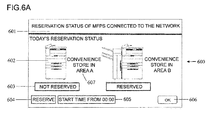
- the MFP status check screen 600 On the MFP status check screen 600, as shown in FIG. 6A , displayed are a predetermined message "Reservation status of MFPs connected to the network" 601, preview images 602 of the MFPs, status information 603 (e.g., "Not reserved”, “Reserved” indicating the reservation status for the day) of the MFPs, a reservation key 604 used to reserve an MFP with the indication "Not reserved” as status information 603, a reservation time key 605 used to input a reservation time, and an OK key 606. It is preferable to display, for example, address information 607, near the preview images 602, to indicate where the MFPs in the form of the preview images 602 are installed. In addition, the reservation time key 605 is configured so that the user can input a desired time through key operations.
- status information 603 e.g., "Not reserved”, “Reserved” indicating the reservation status for the day
- a reservation key 604 used to reserve an MFP with the indication "Not reserved”
- the user can easily check the reservation status (usage) of each MFP connected to the network 300 only by accessing the management server 300b.
- the user depresses the OK key 606 to cause the portable terminal device 300c to cancel the MFP status check screen 600, thereby finishing the reservation process.
- the user depresses the reservation key 604 as well as inputting a specific reservation time (e.g., "10:00") using the reservation time key 605, and depresses the OK key 606.
- the portable terminal device 300c transmits information about the "Not reserved” MFP 100 and the reservation time "10:00” to the management server 300b.
- the management server 300b receives the information about the "Not reserved” MFP 100 and the reservation time "10:00” and then transmits information about the reservation time "10:00” to the "Not reserved” MFP 100.
- the control unit 401 of the MFP 100 Upon receiving the information about the reservation time "10:00", the control unit 401 of the MFP 100 notifies the reservation unit 402 of the reservation time.
- the reservation unit 402 receives the notification and accepts the reservation for the MFP 100 at the reservation time "10:00" ( FIG. 5 : S104).
- the user can easily reserve the "Not reserved” MFP 100 according to the day's reservation status.
- the reservation unit 402 issues a given password (e.g., "ABC") for the reservation for the reservation time "10:00" and transmits the password to the user's portable terminal device 300c via the control unit 401.
- a given password e.g., "ABC”
- the portable terminal device 300c Upon receiving the password, displays the password "ABC" on its own display unit and indicates that the reservation has been successfully made.
- the user can recognize the password necessary to perform the reserved job as a reserving user.
- the reservation unit 402 Upon accepting the reservation, the reservation unit 402 notifies the control unit 401 that the MFP 100 cannot accept reservations from other users for the day.
- the control unit 401 receives the notification and then transmits information that the MFP 100 is reserved for the day, as status information of the MFP 100, to the management server 300b via the network 300.
- the management server 300b After the management server 300b receives the new status information (indicating that the MFP 100 is reserved for the day) from the MFP 100, the management server 300b temporarily stores the status information in a predetermined memory, and deletes the old status information.
- the status information 603 of the MFP 100 indicates "Reserved", thereby preventing the MFP 100 from being double-booked for the day.
- the reservation time key 605 can be input in other ways.
- the portable terminal device 300c acquires its own location information using a GPS function preinstalled therein and also acquires address information 607 of the "Not reserved" MFP 100 to calculate the distance between the portable terminal device 300c and the "Not reserved” MFP 100 based on the location information of the portable terminal device 300c and the address information 607.
- the portable terminal device 300c calculates the travel time in which the user travels from the position of the portable terminal device 300c to the "Not reserved" MFP 100 based on the calculated distance and the traveling speed of the transportation means. It is also possible that the portable terminal device 300c adds the travel time to the current time at which the reservation key 604 was depressed to obtain an added time so as to automatically input (decide) the added time as the reservation time corresponding to a time to start using the MFP 100.
- the reservation unit 402 Upon accepting the information about the reservation time "10:00", the reservation unit 402 notifies a display acceptance unit 403 of the reservation time "10:00".
- the display acceptance unit 403 receives the notification and then displays an initial screen (operation screen) on the touch panel 201 together with reservation information indicating that the MFP 100 has been already reserved.
- a predetermined message "Ready to copy” 609 On the operation screen 608, as shown in FIG. 6B , displayed are a predetermined message "Ready to copy” 609, function item keys 610 used to input setting conditions for a copy function or the like, and reservation information "Reserved for 10:00" 611.
- the user Before another user uses the MFP 100, the user can check the reservation information 611 and understand that the MFP 100 has been reserved. Inclusion of the reservation time "10:00" in the reservation information 611 is preferable because the user can understand the further detailed reservation status.
- the reservation unit 402 compares the current time (e.g., "9:00") with the reservation time "10:00" in response to the accepted reservation to determine whether or not the current time is the reservation time ( FIG. 5 : S105).
- the reservation unit 402 determines that the MFP 100 is still available for other users, and repeats the determination process.
- the display acceptance unit 403 accepts the job and the depression of the start key 205 and then notifies a job execution unit 404 of the acceptance.
- the job execution unit 404 receives the notification and executes the job under the preset setting conditions input by the user ( FIG. 5 : S106).
- the reservation unit 402 determines that the MFP 100 is no longer available for other users and then notifies a prohibiting unit 405 that the MFP 100 is not available.
- the prohibiting unit 405 receives the notification and then prohibits (locks) other users from using the MFP 100 with the satisfaction of predetermined conditions ( FIG. 5 : S107).
- the prohibiting unit 405 can prohibit other users from using the MFP 100 by any methods. In this description, the following method is used as an example.
- the prohibiting unit 405 immediately blocks inputs operated by other users on the condition that the current time is the reservation time, and then displays a prohibition screen 700 through the display acceptance unit 403.
- the prohibition screen 700 On the prohibition screen 700, as shown in FIG. 7A , displayed are a predetermined message "This MFP is currently reserved" 701, a password entry field 702 used by reserving users to input passwords, a keyboard key 703 used to input the passwords, a message 704 saying that the MFP is not available to persons other than the reserving user, and an OK key 705. Even if other users try to use the MFP 100, the prohibition screen 700 can make them aware of the unavailability of the MFP 100.
- the prohibiting unit 405 can be configured to wait for the job execution unit 404 to finish the job for the user and to display the prohibition screen 700 at the moment when the job execution unit 404 completes the job execution for the user.
- the user can leave the MFP 100 after his/her job is finished.
- the prohibiting unit 405 can be configured so as to immediately block inputs operated by the user and displays the prohibition screen 700 on the conditions that the reservation time arrives and the reserving user's portable terminal device 300c approaches the MFP 100.
- any method can be used for the prohibiting unit 405 to determine whether or not the reserving user's portable terminal device 300c is approaching the MFP 100.
- a (well-known) short-distance communicating technology Bluetooth preinstalled in the MFP 100 can be used for such determination.
- Bluetooth short-distance communicating technology
- the reservation unit 402 accepts a reservation for the MFP 100 at reservation time "10:00" ( FIG.
- the reservation unit 402 acquires identification information (e.g., communication information, serial number, ID information, etc) of the reserving user's portable terminal device 300c via the control unit 401 and notifies the prohibiting unit 405 of the identification information.
- the prohibiting unit 405 having received the notification acquires identification information of a terminal device approaching the MFP 100 using the short-distance communication technology (Bluetooth), and compares the acquired identification information of the terminal device with the identification information of the portable terminal device 300c of the reserving user acquired when the reservation was accepted to determine whether or not the identification information of the approaching terminal device matches the identification information of the portable terminal device 300c. If they match, the prohibiting unit 405 determines that the portable terminal device 300c of the reserving user has arrived near the MFP 100.
- Bluetooth short-distance communication technology
- the prohibiting unit 405 allows other users to use the MFP 100 without showing the prohibition screen 700 even though the reservation time arrives, thereby allowing users to execute their jobs as much as possible, and therefore effective use of the MFP 100 can be made.
- the prohibiting unit 405 When the prohibiting unit 405 prohibits the use of the MFP 100, the prohibiting unit 405 notifies a prohibition removing unit 406 of the prohibition.
- the prohibition removing unit 406 receives the notification and then determines whether or not a user approaching the MFP 100 is the reserving user ( FIG. 5 : S108) (authentication).
- the method by which the prohibition removing unit 406 determines whether or not the approaching user is the reserving user can be any methods. In this embodiment, the following method is used as an example.
- the prohibition removing unit 406 utilizes the prohibition screen 700 to prompt the user approaching the MFP 100 to input a given password. If the user inputs the given password through the prohibition screen 700 and depresses the OK key 705, the prohibition removing unit 406 compares the input password with the password "ABC" issued by the reservation unit 402 to determine whether or not their passwords match.
- the prohibition removing unit 406 determines that the approaching user is not the reserving user and further determines whether or not a predetermined prohibited period of time (e.g., one minute, three minutes, five minutes, etc.) has elapsed since the use of the MFP 100 was prohibited ( FIG. 5 : S109).
- a predetermined prohibited period of time e.g., one minute, three minutes, five minutes, etc.
- the process returns to S108 and the prohibition removing unit 406 prompts the approaching user to input the given password again to determine whether or not the input password matches the issued password ( FIG. 5 : S108).
- the prohibition removing unit 406 determines that the user is the reserving user and removes the prohibition on the use of the MFP 100 ( FIG. 5 : S110). In other words, the prohibition removing unit 406 removes the block on inputs operated by users, and displays a regular operation screen 706 through the display acceptance unit 403.
- the display acceptance unit 403 accepts the job and the depression of the start key 205, and the job execution unit 404 executes the job based on the setting conditions input by the reserving user ( FIG. 5 : S111).
- the prohibition removing unit 406 detects the completion of the job and cancels the reservation accepted by the reservation unit 402 ( FIG. 5 : S112). Then, the prohibition removing unit 406 deletes the password "ABC" issued by the reservation unit 402. If the reservation unit 402 accepts the cancellation of the reservation, the reservation unit 402 can accept reservations from other users for the day and therefore notifies the control unit 401 of the availability.
- the control unit 401 receives the notification and then transmits information that the MFP 100 is not reserved for the day, as status information about the reservation status of the MFP 100, to the management server 300b via the network 300. After the management server 300b receives the new status information (indicating that the MFP 100 is not reserved for the day) from the MFP 100, the management server 300b temporarily stores the status information in a predetermined memory, and deletes the old status information.
- This automatic cancellation of the reservation of the reserving user upon completion of the job of the reservation user makes the MFP 100 available to accept new reservations from other users, thereby enabling effective use of the MFP 100.
- the prohibition removing unit 406 determines whether or not a user is a reserving user, in addition to the above described method with password entry.
- the MFP 100 can be configured so as to acquire identification information of a terminal device approaching the MFP 100 by using the short-distance communication technology (Bluetooth) and then to determine whether or not the acquired identification information of the approaching terminal device matches identification information of the portable terminal device 300c of the reserving user acquired when the reservation was accepted.
- the identification information includes the password "ABC" issued by the reservation unit 402. This method can eliminate the necessity for the user to input the password, but can provide automatic authentication, thereby eliminating burdensome processes, such as key operation.
- the prohibition removing unit 406 determines that the prohibited time has elapsed in S109 ( FIG. 5 : YES in S109). Then, the prohibition removing unit 406 determines that the reserving user has canceled the reservation and removes the prohibition on the use of the MFP 100 as with the above-described case ( FIG. 5 : S113) as well as cancels the reservation accepted by the reservation unit 402 as with the above-described case ( FIG. 5 : S111). If the reserving user cannot arrive in time for the reservation time, the MFP permits other users to use the MFP 100, thereby enabling effective use of the MFP 100.
- the present disclosure is characterized by including the reservation unit 402 that, upon receiving a reservation containing a reservation time from the portable terminal device 300c of a user, who is a reserving user, determines whether or not the current time is the reservation time; the prohibiting unit 405 that prohibits other users from using the MFP 100 with the satisfaction of predetermined conditions including a condition that the portable terminal device 300c of the reserving user has approached the MFP 100 when it is determined that the current time is the reservation time; and the prohibition removing unit 406 that determines whether or not a user approaching the MFP 100 is the reserving user after the use of the MFP 100 is prohibited, and removes the prohibition of the use of the MFP 100 if the user is the reserving user.
- This disclosure makes it possible to easily reserve an available image forming apparatus (MFP) and also to make the period of time that the use of the image forming apparatus is prohibited for the reservations as short as possible.
- MFP image forming apparatus
- password entry is employed as a method to make authentication of reserving users in this embodiment of the disclosure, other methods are also applicable.
- user identification information that can identify a reserving user may be available.
- an IC card capable of providing user identification information may be used.
- the prohibition removing unit 406 acquires user identification information from the IC card of a user and determines whether or not the acquired user identification information matches user identification information of a reserving user acquired when a reservation was accepted to determine whether or not the user is the reserving user.
- the prohibition removing unit 406 needs to acquire the user identification information of the reserving user in advance from the portable terminal device 300c or by having the reserving user input the information when the reserving user makes the reservation through the portable terminal device 300c.
- a configuration may include provision of a storage medium that enables storage of a program for implementing the respective units in the storage medium.
- the program is read out by the MFP 100 to thereby implement the respective units by the MFP 100.
- the program itself that is read out of the storage medium may embody the operation and effect of the present disclosure.
- provision is also possible of the steps for realizing each unit as a method stored in a hard disk.
- the image forming apparatus and reservation method according to the present disclosure are useful in copiers, printers, and image forming apparatuses in addition to, of course, MFPs, and also effective in enabling easy reservations of an available image forming apparatus and making the period of time that the use of the image forming apparatus is prohibited for the reservations as short as possible.
Landscapes
- Engineering & Computer Science (AREA)
- Theoretical Computer Science (AREA)
- Physics & Mathematics (AREA)
- General Physics & Mathematics (AREA)
- General Engineering & Computer Science (AREA)
- Business, Economics & Management (AREA)
- Human Computer Interaction (AREA)
- Human Resources & Organizations (AREA)
- Computer Security & Cryptography (AREA)
- Computer Hardware Design (AREA)
- Economics (AREA)
- Entrepreneurship & Innovation (AREA)
- Software Systems (AREA)
- Strategic Management (AREA)
- Operations Research (AREA)
- Development Economics (AREA)
- Quality & Reliability (AREA)
- Tourism & Hospitality (AREA)
- General Business, Economics & Management (AREA)
- Computer Networks & Wireless Communication (AREA)
- Marketing (AREA)
- Educational Administration (AREA)
- Game Theory and Decision Science (AREA)
- Health & Medical Sciences (AREA)
- Bioethics (AREA)
- General Health & Medical Sciences (AREA)
- Accessory Devices And Overall Control Thereof (AREA)
- Facsimiles In General (AREA)
- Control Or Security For Electrophotography (AREA)
- Management, Administration, Business Operations System, And Electronic Commerce (AREA)
Abstract
Description
- This disclosure relates to image forming apparatuses and reservation methods, and more specifically to an image forming apparatus and a reservation method enabling easy reservations of an available image forming apparatus and making the period of time that the use of the image forming apparatus is prohibited for the reservations as short as possible.
- Conventional reservation systems for image forming apparatuses, such as copiers, facsimiles, and multifunction peripherals, are generally configured to reserve the image forming apparatuses by simply designating a previously slotted time frame. However, the reservation systems of this type have a problem that if a print job is not finished within the reserved time frame or is finished before the estimated time is up, the reserved time frame does not match the actual operating time period.
- For the purpose of solving the problem, a management server communicably connected to a client terminal has been disclosed in the past. This management server includes a user operation attribute storing means that stores user information and operation attribute information associated with the user information, the operation attribute information containing actual operation time, which is segmented for every user's operation of an image forming apparatus and is the time duration that the user pertinent to the user information has operated the image forming apparatus in the past, an operation reservation accepting means that accepts from the client terminal the user information and an operation reservation instruction containing desired operation termination time of the image forming apparatus, and an operation attribute extracting means that retrieves user information corresponding to the accepted user information from the user operation attribute storing means and extracts operation attribute information associated with the retrieved user information. Furthermore, this management server includes an actual operation time totalizing means that adds up the actual operation time contained in the extracted operation attribute information, an operation start-time calculation means that calculates the time to start operating the image forming apparatus in accordance with the accepted desired operation termination time and the total of the actual operation time, and an operation start-time notifying means that notifies the client terminal, which has accepted the operation reservation instruction, of the calculated operation start time. Each user inputs a desired operation termination time of a copier in consideration of the distance to the copier and user's familiarity with the operation of the copier, and is notified of an operation start time in which the user can finish his/her copying job by the desired operation termination time, and therefore the management server can provide a mechanism for presenting an appropriate operation start time to the user in consideration of the distance between the copier and the users and the users' familiarity with the operation of the copier.
- In one aspect of the present disclosure, an image forming apparatus accepts a reservation for itself from a terminal device communicably connected to the image forming apparatus via a network. The image forming apparatus includes a reservation unit, a prohibiting unit, and a prohibition removing unit. Upon receiving a reservation containing a reservation time from the terminal device of a user, who is a reserving user, the reservation unit determines whether or not the current time is the reservation time. If it is determined that the current time is the reservation time, the prohibiting unit prohibits other users from using the image forming apparatus with the satisfaction of predetermined conditions, including a condition that the terminal device of the reserving user has approached the image forming apparatus. The prohibition removing unit determines whether or not a user approaching the image forming apparatus is the reserving user after the use of the image forming apparatus is prohibited, and removes the prohibition on the use of the image forming apparatus if it is determined that the user is the reserving user.
- Another aspect of the present disclosure is directed to a method for reserving an image forming apparatus that accepts a reservation for itself from a terminal device communicably connected to the image forming apparatus via a network. The reservation method includes a step of determining whether the current time is a reservation time, a step of prohibiting other users from using the image forming apparatus, and a step of removing the prohibition on the use of the image forming apparatus. In the step of determining whether the current time is a reservation time, upon receiving a reservation containing a reservation time from the terminal device of a user, who is a reserving user, it is determined whether or not the current time is the reservation time. In the step of prohibiting other users from using the image forming apparatus, if it is determined that the current time is the reservation time, other users are prohibited from using the image forming apparatus with the satisfaction of predetermined conditions, including a condition that the terminal device of the reserving user has approached the image forming apparatus. In the step of removing the prohibition on the use of the image forming apparatus, it is determined whether or not a user approaching the image forming apparatus is the reserving user after the use of the image forming apparatus is prohibited, and the prohibition on the use of the image forming apparatus is removed if it is determined that the user is the reserving user.
-
-
FIG. 1 is a conceptual diagram illustrating the entire internal configuration of a multifunction peripheral according to the present disclosure. -
FIG. 2 is a conceptual diagram illustrating the entire configuration of an operating unit according to the disclosure. -
FIG. 3 shows the configuration of control system hardware in the multifunction peripheral according to the disclosure. -
FIG. 4 is a functional block diagram of the multifunction peripheral according to an embodiment of the disclosure. -
FIG. 5 is a flow chart describing an execution procedure according to the embodiment of the disclosure. -
FIG. 6A illustrates an exemplary multifunction peripheral status check screen displayed on a portable terminal device according to the embodiment of the disclosure. -
FIG. 6B illustrates an exemplary operation screen displayed on a touch panel according to the disclosure. -
FIG. 7A illustrates an exemplary prohibition screen displayed on the touch panel according to the disclosure. -
FIG. 7B illustrates an exemplary operation screen displayed on the touch panel according to the disclosure. - With reference to the accompanying drawings, an embodiment of the image forming apparatus according to the present disclosure will be described for further understanding of the disclosure. It should be noted that the embodiment described below is a mere example of implementation of the present disclosure, and in no way restricts the technical scope of the disclosure. The alphabetic script "S" attached before a numeral in the flowchart means "step".
- A description will be made below about an image forming apparatus according to an embodiment of the disclosure.
FIG. 1 is a simple schematic diagram of the image forming apparatus according to the embodiment of the disclosure. Note that details of units not directly relating to this disclosure are omitted. - The image forming apparatus of this disclosure may be, for example, a multifunction peripheral equipped with a copier, a scanner, a printer, etc., which works as an image forming apparatus having a copy function, a facsimile transmission/reception function, a scanner function, a printer function, etc.
- The following is a brief description about the operation of a multifunction peripheral (MFP) 100, for example, when a user uses the copy function.
- When the user uses the
MFP 100, the user firstly places an original document on adocument platen 101 provided on an upper side of an MFP body. Subsequently, the user operates an operating unit 102 (operating panel) provided near thedocument platen 101 to input setting conditions relating to image formation through an initial screen (operation screen) on theoperating unit 102. Then, the user selects the copy function for forming images and depresses a start key provided on theoperation unit 102 to cause theMFP 100 to start the selected function. - In an
image reading unit 103, light emitted from alight source 104 is reflected on the original document placed on thedocument platen 101. The reflected light is guided bymirrors image pickup device 108. Theimage pickup device 108 photoelectrically converts the guided light into image data corresponding to the original document. - An
image forming unit 109 forms a toner image based on the image data. Theimage forming unit 109 includes aphotoconductive drum 110. Thephotoconductive drum 110 rotates at a constant speed in a preset direction and is surrounded by acharging device 111, anexposure unit 112, a developingdevice 113, atransferring device 114, acleaning unit 115 and some other components disposed in this order from the upstream side along the rotating direction. - The
charging device 111 uniformly charges the surface of thephotoconductive drum 110. Theexposure unit 112 irradiates the charged surface of thephotoconductive drum 110 with laser light based on the image data to form an electrostatic latent image. The developingdevice 113 applies toner onto the electrostatic latent image to form a toner image. The formed toner image is transferred by thetransferring device 114 onto a recording medium (ex. a sheet of paper). Thecleaning unit 115 removes excess toner left on the surface of thephotoconductive drum 110. This series of processes is executed by rotating thephotoconductive drum 110. - The sheet of paper is transported from a plurality of
paper cassettes 116 provided in theMFP 100. Before being transported, the sheet of paper is pulled out by apickup roller 117 from any one of thepaper cassettes 116. Therespective paper cassettes 116 accommodate different types of paper sheets and supply the sheets in accordance with the setting conditions for image formation. - The sheet of paper, which was pulled out to a transport path, is inserted between the
photoconductive drum 110 and transferringdevice 114 bytransport rollers 118 andresist rollers 119. The inserted sheet of paper receives the toner image from thetransferring device 114 and is transported to afuser 120. - While the sheet of paper on which the toner image has been transferred passes between a heating roller and a pressure roller provided in the
fuser 120, heat and pressure are applied to the toner image to fix the visible image on the sheet of paper. The amount of heat generated by the heating roller is optimally set in accordance with the type of paper to achieve appropriate fixation. Fixing the visible image on the sheet of paper completes the image formation, and the sheet of paper is then ejected by thetransport rollers 118 through anoutput port 121 to aninner tray 122 formed in the middle of the MFP body. The sheet of paper is stacked and accommodated on theinner tray 122. Through the above-described procedure, theMFP 100 provides its copy function to the user. - In addition, the
MFP 100 includes acommunication unit 200 capable of communicating with anetwork 300. Thecommunication unit 200 can communicate with other apparatuses via thenetwork 300. Thenetwork 300 is communicably connected to anotherMFP 300a (another image forming apparatus), amanagement server 300b (terminal device) that manages the status of all the image forming apparatuses (MFP 100 and anotherMFP 300a) connected to thenetwork 300, and a portableterminal device 300c (or a terminal device) that can access themanagement server 300b to check the status of the respective image forming apparatuses. Although only oneimage forming apparatus 300a is connected to thenetwork 300, a plurality ofimage forming apparatuses 300a can be connected to thenetwork 300. -
FIG. 2 is a conceptual diagram illustrating the entire configuration of the operating unit according to the embodiment of the present disclosure. A user inputs setting conditions for image formation as described above and confirms the input setting conditions through theoperating unit 102. In order to input the setting conditions, the user manipulates a touch panel 201 (operating panel), astylus pen 202, andoperational keys 203 provided on theoperating unit 102. - The
touch panel 201 has both a function of inputting setting conditions and a function of displaying the setting conditions. Specifically, depressing a key within a screen displayed on thetouch panel 201 enables input of a setting condition associated with the depressed key. - On the back side of the
touch panel 201, there is provided a display unit (not shown), such as a liquid crystal display (LCD), that displays operation screens including, for example, an initial screen. Thestylus pen 202 is placed in the vicinity of thetouch panel 201. If the user brings the tip of thestylus pen 202 into contact with thetouch panel 201, a sensor provided under thetouch panel 201 detects the contact point. - In addition, there are a predetermined number of
operational keys 203 in the vicinity of thetouch panel 201, such as anumeric keypad 204, astart key 205, aclear key 206, astop key 207, areset key 208, and apower key 209. - With reference to
FIG. 3 , a description will be made about the configuration of control system hardware in theMFP 100.FIG. 3 shows the configuration of the control system hardware in theMFP 100 according to the present disclosure. Note that details of units not directly relating to this disclosure are omitted. - A control circuit of the
MFP 100 is composed of a central processing unit (CPU) 301, a read only memory (ROM) 302, a random access memory (RAM) 303, a hard disk drive (HDD) 304, adriver 305 associated with each driving unit, a touch panel 306 (201), operational keys 307 (203), and a communication unit 308 (200), which are connected to one another by aninternal bus 309. - The
CPU 301, for example, uses theRAM 303 as a work area. TheCPU 301 executes programs stored in theROM 302,HDD 304, or other storage devices to control the operation of the respective driving units shown inFIG. 1 by exchanging data and instructions from thedriver 305,touch panel 306, andcommunication unit 308 and signals and commands corresponding to the operational keys based on the execution results. - The
communication unit 308 is communicably connected to anotherMFP 300a, themanagement server 300b, and portableterminal device 300c via thenetwork 300, such as a local area network (LAN) and the Internet. - In addition to the aforementioned driving units, the
MFP 100 includes other units (seeFIG. 4 ), which will be described later, and also implements the units by theCPU 301 that executes programs. TheROM 302,HDD 304 and other storage devices contain programs and data used to implement the units that will be described later. - Referring to
FIGS. 4 and5 , a description will be given about the configuration and execution procedure according to the embodiment of the present disclosure.FIG. 4 is a functional block diagram of the MPF of this disclosure.FIG. 5 is a flow chart describing the execution procedure of this disclosure. - First, an
MFP 100 sharable in a convenience store or other types of stores has acontrol unit 401 that regularly transmits status information about the availability of the MFP 100 (e.g. no reservations have been made for the day) at predetermined intervals via thenetwork 300 to themanagement server 300b (FIG. 5 : S101). The status information herein may be, for example, information regarding the day's reservations indicating whether or not theMFP 100 is reserved for the day, or may be information regarding the actual occupancy status of theMFP 100 indicating whether or not a user is currently using theMFP 100 and whether or not a user is currently operating theMFP 100. - The
control unit 401 can be configured to transmit status information spontaneously on a regular basis as described above. Alternatively, themanagement server 300b can send a command requesting the transmission of status information to thecontrol unit 401 of theMFP 100 and thecontrol unit 401 can transmit the status information to themanagement server 300b at the time when thecontrol unit 401 receives the command. - Upon receiving status information (that no reservations have been made for the day) of the
MFP 100, themanagement server 300b temporarily stores the status information in a predetermined memory. Themanagement server 300b performs this series of processes on all the MFPs (MFP 100 andMFP 300a) communicably connected to thenetwork 300. - If a user remote from the
MFP 100 accesses themanagement server 300b via thenetwork 300 from a user's portableterminal device 300c, themanagement server 300b transmits the status information of every MFP temporarily stored in the memory. Upon receiving the status information of every MFP, the portableterminal device 300c displays the status information as an MFPstatus check screen 600 on its own display unit (e.g. touch panel) and accepts a reservation for an MFP (FIG. 5 : S103). - On the MFP
status check screen 600, as shown inFIG. 6A , displayed are a predetermined message "Reservation status of MFPs connected to the network" 601,preview images 602 of the MFPs, status information 603 (e.g., "Not reserved", "Reserved" indicating the reservation status for the day) of the MFPs, areservation key 604 used to reserve an MFP with the indication "Not reserved" asstatus information 603, areservation time key 605 used to input a reservation time, and anOK key 606. It is preferable to display, for example, addressinformation 607, near thepreview images 602, to indicate where the MFPs in the form of thepreview images 602 are installed. In addition, thereservation time key 605 is configured so that the user can input a desired time through key operations. - Thus, the user can easily check the reservation status (usage) of each MFP connected to the
network 300 only by accessing themanagement server 300b. - If the user does not make a reservation of any of the MFPs while viewing the MFP status check screen 600 (
FIG. 5 : NO in S103), the user depresses theOK key 606 to cause the portableterminal device 300c to cancel the MFPstatus check screen 600, thereby finishing the reservation process. - In the case where the user reserves the MFP in the "Not reserved" status while viewing the reservation status (
FIG. 5 : YES in S103), the user depresses thereservation key 604 as well as inputting a specific reservation time (e.g., "10:00") using thereservation time key 605, and depresses theOK key 606. In response to the depression of theOK key 606, the portableterminal device 300c transmits information about the "Not reserved"MFP 100 and the reservation time "10:00" to themanagement server 300b. Themanagement server 300b receives the information about the "Not reserved"MFP 100 and the reservation time "10:00" and then transmits information about the reservation time "10:00" to the "Not reserved"MFP 100. - Upon receiving the information about the reservation time "10:00", the
control unit 401 of theMFP 100 notifies thereservation unit 402 of the reservation time. Thereservation unit 402 receives the notification and accepts the reservation for theMFP 100 at the reservation time "10:00" (FIG. 5 : S104). Thus, the user can easily reserve the "Not reserved"MFP 100 according to the day's reservation status. - The
reservation unit 402 issues a given password (e.g., "ABC") for the reservation for the reservation time "10:00" and transmits the password to the user's portableterminal device 300c via thecontrol unit 401. Upon receiving the password, the portableterminal device 300c displays the password "ABC" on its own display unit and indicates that the reservation has been successfully made. Thus, the user can recognize the password necessary to perform the reserved job as a reserving user. - Upon accepting the reservation, the
reservation unit 402 notifies thecontrol unit 401 that theMFP 100 cannot accept reservations from other users for the day. Thecontrol unit 401 receives the notification and then transmits information that theMFP 100 is reserved for the day, as status information of theMFP 100, to themanagement server 300b via thenetwork 300. After themanagement server 300b receives the new status information (indicating that theMFP 100 is reserved for the day) from theMFP 100, themanagement server 300b temporarily stores the status information in a predetermined memory, and deletes the old status information. - Therefore, if another user checks the MFP
status check screen 600 via themanagement server 300b after the previous user reserved theMFP 100, thestatus information 603 of theMFP 100 indicates "Reserved", thereby preventing theMFP 100 from being double-booked for the day. - Although the user operates the
reservation time key 605 to input the reservation time in the above description, the reservation time can be input in other ways. For example, the portableterminal device 300c acquires its own location information using a GPS function preinstalled therein and also acquiresaddress information 607 of the "Not reserved"MFP 100 to calculate the distance between the portableterminal device 300c and the "Not reserved"MFP 100 based on the location information of the portableterminal device 300c and theaddress information 607. Then, on the assumption that the user travels by a certain transportation means (on foot, by bicycle, by automobile, etc; on foot in this description), the portableterminal device 300c calculates the travel time in which the user travels from the position of the portableterminal device 300c to the "Not reserved"MFP 100 based on the calculated distance and the traveling speed of the transportation means. It is also possible that the portableterminal device 300c adds the travel time to the current time at which thereservation key 604 was depressed to obtain an added time so as to automatically input (decide) the added time as the reservation time corresponding to a time to start using theMFP 100. - Upon accepting the information about the reservation time "10:00", the
reservation unit 402 notifies adisplay acceptance unit 403 of the reservation time "10:00". Thedisplay acceptance unit 403 receives the notification and then displays an initial screen (operation screen) on thetouch panel 201 together with reservation information indicating that theMFP 100 has been already reserved. - On the
operation screen 608, as shown inFIG. 6B , displayed are a predetermined message "Ready to copy" 609,function item keys 610 used to input setting conditions for a copy function or the like, and reservation information "Reserved for 10:00" 611. Before another user uses theMFP 100, the user can check thereservation information 611 and understand that theMFP 100 has been reserved. Inclusion of the reservation time "10:00" in thereservation information 611 is preferable because the user can understand the further detailed reservation status. - After the
display acceptance unit 403 displays theoperation screen 608, thereservation unit 402 compares the current time (e.g., "9:00") with the reservation time "10:00" in response to the accepted reservation to determine whether or not the current time is the reservation time (FIG. 5 : S105). - If it is determined that the current time is not the reservation time (
FIG. 5 : NO in S105), thereservation unit 402 determines that theMFP 100 is still available for other users, and repeats the determination process. - If at this point, for example, another user inputs a given job through the
operation screen 608 and depresses thestart key 205, thedisplay acceptance unit 403 accepts the job and the depression of thestart key 205 and then notifies ajob execution unit 404 of the acceptance. Thejob execution unit 404 receives the notification and executes the job under the preset setting conditions input by the user (FIG. 5 : S106). - Thus, other users can freely use the "reserved"
MFP 100 while the current time is not the reservation time. - On the other hand, if it is determined in S105 that the current time is the reservation time (
FIG. 5 : YES in S105), thereservation unit 402 determines that theMFP 100 is no longer available for other users and then notifies a prohibitingunit 405 that theMFP 100 is not available. The prohibitingunit 405 receives the notification and then prohibits (locks) other users from using theMFP 100 with the satisfaction of predetermined conditions (FIG. 5 : S107). - The prohibiting
unit 405 can prohibit other users from using theMFP 100 by any methods. In this description, the following method is used as an example. - In the typical method, the prohibiting
unit 405 immediately blocks inputs operated by other users on the condition that the current time is the reservation time, and then displays aprohibition screen 700 through thedisplay acceptance unit 403. - On the
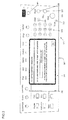
prohibition screen 700, as shown inFIG. 7A , displayed are a predetermined message "This MFP is currently reserved" 701, apassword entry field 702 used by reserving users to input passwords, akeyboard key 703 used to input the passwords, amessage 704 saying that the MFP is not available to persons other than the reserving user, and anOK key 705. Even if other users try to use theMFP 100, theprohibition screen 700 can make them aware of the unavailability of theMFP 100. - For a case where the
job execution unit 404 is still in the middle of job execution for another user when the reservation time arrives, the prohibitingunit 405 can be configured to wait for thejob execution unit 404 to finish the job for the user and to display theprohibition screen 700 at the moment when thejob execution unit 404 completes the job execution for the user. Thus, the user can leave theMFP 100 after his/her job is finished. - Alternatively, the prohibiting
unit 405 can be configured so as to immediately block inputs operated by the user and displays theprohibition screen 700 on the conditions that the reservation time arrives and the reserving user's portableterminal device 300c approaches theMFP 100. - Any method can be used for the prohibiting
unit 405 to determine whether or not the reserving user's portableterminal device 300c is approaching theMFP 100. For example, a (well-known) short-distance communicating technology (Bluetooth) preinstalled in theMFP 100 can be used for such determination. In the case of using the short-distance communication technology (Bluetooth), if thereservation unit 402 accepts a reservation for theMFP 100 at reservation time "10:00" (FIG. 5 : S104) from a user (reserving user), thereservation unit 402 acquires identification information (e.g., communication information, serial number, ID information, etc) of the reserving user's portableterminal device 300c via thecontrol unit 401 and notifies the prohibitingunit 405 of the identification information. The prohibitingunit 405 having received the notification acquires identification information of a terminal device approaching theMFP 100 using the short-distance communication technology (Bluetooth), and compares the acquired identification information of the terminal device with the identification information of the portableterminal device 300c of the reserving user acquired when the reservation was accepted to determine whether or not the identification information of the approaching terminal device matches the identification information of the portableterminal device 300c. If they match, the prohibitingunit 405 determines that the portableterminal device 300c of the reserving user has arrived near theMFP 100. - Thus, the prohibiting
unit 405 allows other users to use theMFP 100 without showing theprohibition screen 700 even though the reservation time arrives, thereby allowing users to execute their jobs as much as possible, and therefore effective use of theMFP 100 can be made. - When the prohibiting
unit 405 prohibits the use of theMFP 100, the prohibitingunit 405 notifies aprohibition removing unit 406 of the prohibition. Theprohibition removing unit 406 receives the notification and then determines whether or not a user approaching theMFP 100 is the reserving user (FIG. 5 : S108) (authentication). - The method by which the
prohibition removing unit 406 determines whether or not the approaching user is the reserving user can be any methods. In this embodiment, the following method is used as an example. - In the typical method, the
prohibition removing unit 406 utilizes theprohibition screen 700 to prompt the user approaching theMFP 100 to input a given password. If the user inputs the given password through theprohibition screen 700 and depresses theOK key 705, theprohibition removing unit 406 compares the input password with the password "ABC" issued by thereservation unit 402 to determine whether or not their passwords match. - If the determination result indicates that the input password does not match the issued password (
FIG. 5 : NO in S108), theprohibition removing unit 406 determines that the approaching user is not the reserving user and further determines whether or not a predetermined prohibited period of time (e.g., one minute, three minutes, five minutes, etc.) has elapsed since the use of theMFP 100 was prohibited (FIG. 5 : S109). - If it is determined that the prohibited period of time has not elapsed yet in S109 (
FIG. 5 : NO in S109), the process returns to S108 and theprohibition removing unit 406 prompts the approaching user to input the given password again to determine whether or not the input password matches the issued password (FIG. 5 : S108). - On the other hand, if the input password matches the issued password in S108 (
FIG. 5 : YES in S108), theprohibition removing unit 406 determines that the user is the reserving user and removes the prohibition on the use of the MFP 100 (FIG. 5 : S110). In other words, theprohibition removing unit 406 removes the block on inputs operated by users, and displays a regular operation screen 706 through thedisplay acceptance unit 403. - On the operation screen 706, as shown in
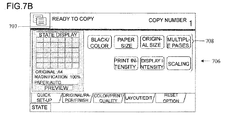
FIG. 7B , displayed are a predetermined message "Ready to copy" 707, andfunctional item keys 708 used for inputting setting conditions of the copy function and other functions. At this point, the reservation information is no longer present in the operation screen 706. Therefore, theMFP 100 is ready for immediate use by the reserving user. - If, for example, the reserving user inputs a given job through the operation screen 706 and depresses the
start key 205, thedisplay acceptance unit 403 accepts the job and the depression of thestart key 205, and thejob execution unit 404 executes the job based on the setting conditions input by the reserving user (FIG. 5 : S111). - After the
job execution unit 404 completely executes the job under the setting conditions input by the reserving user, theprohibition removing unit 406 detects the completion of the job and cancels the reservation accepted by the reservation unit 402 (FIG. 5 : S112). Then, theprohibition removing unit 406 deletes the password "ABC" issued by thereservation unit 402. If thereservation unit 402 accepts the cancellation of the reservation, thereservation unit 402 can accept reservations from other users for the day and therefore notifies thecontrol unit 401 of the availability. Thecontrol unit 401 receives the notification and then transmits information that theMFP 100 is not reserved for the day, as status information about the reservation status of theMFP 100, to themanagement server 300b via thenetwork 300. After themanagement server 300b receives the new status information (indicating that theMFP 100 is not reserved for the day) from theMFP 100, themanagement server 300b temporarily stores the status information in a predetermined memory, and deletes the old status information. - This automatic cancellation of the reservation of the reserving user upon completion of the job of the reservation user makes the
MFP 100 available to accept new reservations from other users, thereby enabling effective use of theMFP 100. - By the way, there are some other methods by which the
prohibition removing unit 406 determines whether or not a user is a reserving user, in addition to the above described method with password entry. For example, theMFP 100 can be configured so as to acquire identification information of a terminal device approaching theMFP 100 by using the short-distance communication technology (Bluetooth) and then to determine whether or not the acquired identification information of the approaching terminal device matches identification information of the portableterminal device 300c of the reserving user acquired when the reservation was accepted. The identification information includes the password "ABC" issued by thereservation unit 402. This method can eliminate the necessity for the user to input the password, but can provide automatic authentication, thereby eliminating burdensome processes, such as key operation. - In a case where a reserving user cannot come to the
MFP 100 for some reasons, theprohibition removing unit 406 determines that the prohibited time has elapsed in S109 (FIG. 5 : YES in S109). Then, theprohibition removing unit 406 determines that the reserving user has canceled the reservation and removes the prohibition on the use of theMFP 100 as with the above-described case (FIG. 5 : S113) as well as cancels the reservation accepted by thereservation unit 402 as with the above-described case (FIG. 5 : S111). If the reserving user cannot arrive in time for the reservation time, the MFP permits other users to use theMFP 100, thereby enabling effective use of theMFP 100. - As described above, the present disclosure is characterized by including the
reservation unit 402 that, upon receiving a reservation containing a reservation time from the portableterminal device 300c of a user, who is a reserving user, determines whether or not the current time is the reservation time; the prohibitingunit 405 that prohibits other users from using theMFP 100 with the satisfaction of predetermined conditions including a condition that the portableterminal device 300c of the reserving user has approached theMFP 100 when it is determined that the current time is the reservation time; and theprohibition removing unit 406 that determines whether or not a user approaching theMFP 100 is the reserving user after the use of theMFP 100 is prohibited, and removes the prohibition of the use of theMFP 100 if the user is the reserving user. - This disclosure makes it possible to easily reserve an available image forming apparatus (MFP) and also to make the period of time that the use of the image forming apparatus is prohibited for the reservations as short as possible.
- Although password entry is employed as a method to make authentication of reserving users in this embodiment of the disclosure, other methods are also applicable. For example, user identification information that can identify a reserving user may be available. In this case, an IC card capable of providing user identification information may be used. The
prohibition removing unit 406 acquires user identification information from the IC card of a user and determines whether or not the acquired user identification information matches user identification information of a reserving user acquired when a reservation was accepted to determine whether or not the user is the reserving user. It is needless to say, in this case, that theprohibition removing unit 406 needs to acquire the user identification information of the reserving user in advance from the portableterminal device 300c or by having the reserving user input the information when the reserving user makes the reservation through the portableterminal device 300c. - Furthermore, although the
MFP 100 is configured to include the various units in the present embodiment, a configuration may include provision of a storage medium that enables storage of a program for implementing the respective units in the storage medium. In this configuration, the program is read out by theMFP 100 to thereby implement the respective units by theMFP 100. In this case, the program itself that is read out of the storage medium may embody the operation and effect of the present disclosure. Furthermore, provision is also possible of the steps for realizing each unit as a method stored in a hard disk. - The image forming apparatus and reservation method according to the present disclosure are useful in copiers, printers, and image forming apparatuses in addition to, of course, MFPs, and also effective in enabling easy reservations of an available image forming apparatus and making the period of time that the use of the image forming apparatus is prohibited for the reservations as short as possible.
Claims (6)
- An image forming apparatus (100) that accepts a reservation for itself from a terminal device (300c) communicably connected to the image forming apparatus (100) via a network (300), comprising:a reservation unit (402) that, upon receiving a reservation containing a reservation time from the terminal device (300c) of a user, who is a reserving user, determines whether or not the current time is the reservation time;a prohibiting unit (405) that prohibits other users from using the image forming apparatus (100) with the satisfaction of predetermined conditions including a condition that the terminal device (300c) of the reserving user has approached the image forming apparatus (100) when it is determined that the current time is the reservation time; anda prohibition removing unit (406) that determines whether or not a user approaching the image forming apparatus (100) is the reserving user after the use of the image forming apparatus (100) is prohibited, and removes the prohibition on the use of the image forming apparatus (100) if the user is the reserving user.
- The image forming apparatus (100) according to claim 1, wherein
the reservation unit (402) issues a given password upon the acceptance of the reservation and transmits the password to the terminal device (300c), and
the prohibition removing unit (406) prompts the user approaching the image forming apparatus (100) to input the password and determines that the user is the reserving user if the input password matches the issued password. - The image forming apparatus (100) according to claim 1 or 2, wherein
the reservation unit (402) acquires identification information of the terminal device (300c) upon the acceptance of the reservation, and
the prohibition removing unit (406) acquires identification information of a terminal device approaching the image forming apparatus (100) and determines that the user of the approaching terminal device is the reserving user if the acquired identification information of the approaching terminal device matches the identification information of the terminal device acquired at the acceptance of the reservation. - The image forming apparatus (100) according to any one of claims 1 to 3, wherein
the prohibition removing unit (406) determines whether or not a predetermined prohibited period of time has elapsed since the prohibition on the use of the image forming apparatus (100) and removes the prohibition on the use of the image forming apparatus (100) if the predetermined prohibited period of time has elapsed. - The image forming apparatus (100) according to any one of claims 1 to 4 further comprising
a management server that is communicably connected to the network (300), wherein
the management server manages status information of each image forming apparatus (100) communicably connected to the network (300) and causes the terminal device to display the status information of each image forming apparatus. - A method for reserving an image forming apparatus (100) that accepts a reservation for itself from a terminal device (300c) communicably connected to the image forming apparatus (100) via a network (300), comprising the steps of:upon receiving a reservation containing a reservation time from the terminal device (300c) of a user, who is a reserving user, determining whether or not the current time is the reservation time;prohibiting other users from using the image forming apparatus (100) with the satisfaction of predetermined conditions, including a condition that the terminal device (300c) of the reserving user has approached the image forming apparatus (100) when it is determined that the current time is the reservation time; anddetermining whether or not a user approaching the image forming apparatus (100) is the reserving user after the use of the image forming apparatus (100) is prohibited, and removing the prohibition on the use of the image forming apparatus (100) if the user is the reserving user.
Applications Claiming Priority (1)
| Application Number | Priority Date | Filing Date | Title |
|---|---|---|---|
| JP2014073743A JP6087314B2 (en) | 2014-03-31 | 2014-03-31 | Image forming apparatus and reservation method |
Publications (2)
| Publication Number | Publication Date |
|---|---|
| EP2927837A1 true EP2927837A1 (en) | 2015-10-07 |
| EP2927837B1 EP2927837B1 (en) | 2016-10-19 |
Family
ID=52824023
Family Applications (1)
| Application Number | Title | Priority Date | Filing Date |
|---|---|---|---|
| EP15160522.7A Not-in-force EP2927837B1 (en) | 2014-03-31 | 2015-03-24 | Image forming apparatus and reservation method |
Country Status (4)
| Country | Link |
|---|---|
| US (1) | US9606751B2 (en) |
| EP (1) | EP2927837B1 (en) |
| JP (1) | JP6087314B2 (en) |
| CN (1) | CN104954617B (en) |
Cited By (1)
| Publication number | Priority date | Publication date | Assignee | Title |
|---|---|---|---|---|
| US9794446B2 (en) * | 2016-03-11 | 2017-10-17 | Fuji Xerox Co., Ltd. | Information processing apparatus, information processing method, and non-transitory computer readable medium |
Families Citing this family (9)
| Publication number | Priority date | Publication date | Assignee | Title |
|---|---|---|---|---|
| JP6344658B2 (en) * | 2015-10-22 | 2018-06-20 | 京セラドキュメントソリューションズ株式会社 | Image forming apparatus, image forming method, and image forming program |
| JP6380360B2 (en) * | 2015-12-10 | 2018-08-29 | コニカミノルタ株式会社 | Image processing system, image output device, terminal device, image output method, and computer program |
| JP6527099B2 (en) * | 2016-04-12 | 2019-06-05 | 株式会社沖データ | Image processing system |
| JP2018001616A (en) * | 2016-07-01 | 2018-01-11 | 京セラドキュメントソリューションズ株式会社 | Image formation apparatus |
| JP6627746B2 (en) * | 2016-12-28 | 2020-01-08 | 京セラドキュメントソリューションズ株式会社 | Image forming apparatus and image forming system |
| JP6780577B2 (en) * | 2017-05-10 | 2020-11-04 | 京セラドキュメントソリューションズ株式会社 | Reservation management system |
| US11176260B2 (en) * | 2017-07-26 | 2021-11-16 | Hewlett-Packard Development Company, L.P. | Print job initiation based upon direction of user movement |
| US10158778B1 (en) * | 2017-07-31 | 2018-12-18 | Kyocera Document Solutions Inc. | Image forming system, terminal, and image forming method that control job by command in terminal |
| JP7102787B2 (en) * | 2018-03-05 | 2022-07-20 | 富士フイルムビジネスイノベーション株式会社 | Reservation adjustment system and reservation adjustment program |
Citations (3)
| Publication number | Priority date | Publication date | Assignee | Title |
|---|---|---|---|---|
| US20030208607A1 (en) * | 1998-12-24 | 2003-11-06 | Canon Kabushiki Kaisha | Image processor for processing reservation and information processor for requesting reservation |
| US20100020355A1 (en) * | 2008-07-25 | 2010-01-28 | Ricoh Company, Ltd., | Print control mechanism based on printing environment |
| US20130057897A1 (en) * | 2011-09-02 | 2013-03-07 | Samsung Electronics Co., Ltd. | Image forming apparatus supporting peer-to-peer connection and method of forming images by authenticating user thereof |
Family Cites Families (17)
| Publication number | Priority date | Publication date | Assignee | Title |
|---|---|---|---|---|
| JPH11150616A (en) * | 1997-11-18 | 1999-06-02 | Canon Inc | Image processing apparatus and reservation processing method in image processing apparatus |
| JP2000174971A (en) * | 1998-12-10 | 2000-06-23 | Canon Inc | Image processing device |
| JP2004193923A (en) * | 2002-12-11 | 2004-07-08 | Ricoh Co Ltd | Image forming device |
| JP4370791B2 (en) * | 2003-03-12 | 2009-11-25 | 富士ゼロックス株式会社 | Printing apparatus and printing system |
| JP2005063401A (en) * | 2003-07-25 | 2005-03-10 | Kyocera Mita Corp | Printing service system and server |
| JP4708906B2 (en) * | 2004-08-31 | 2011-06-22 | キヤノン株式会社 | Information processing apparatus, control method therefor, and control program |
| JP4708987B2 (en) * | 2005-12-05 | 2011-06-22 | キヤノン株式会社 | Information processing apparatus, information processing system, and information processing method |
| JP4795183B2 (en) * | 2006-09-26 | 2011-10-19 | キヤノン株式会社 | Processing apparatus, control method therefor, and program |
| JP4909015B2 (en) * | 2006-11-09 | 2012-04-04 | キヤノン株式会社 | Information processing apparatus, control method therefor, and program |
| US8134724B2 (en) * | 2007-03-13 | 2012-03-13 | International Business Machines Corporation | Policy based system and method for optimizing output device submission, use and wait times |
| JP5286810B2 (en) * | 2008-02-06 | 2013-09-11 | 富士ゼロックス株式会社 | Occupation control device, image processing device, image processing system, and program |
| JP2010026904A (en) * | 2008-07-23 | 2010-02-04 | Canon Inc | Image forming apparatus, image forming system, control method of image forming apparatus, storage medium, and program |
| US8928911B2 (en) * | 2010-03-30 | 2015-01-06 | Hewlett-Packard Development Company, L.P. | Fulfillment utilizing selected negotiation attributes |
| JP4973760B2 (en) * | 2010-05-13 | 2012-07-11 | コニカミノルタビジネステクノロジーズ株式会社 | Document output system, document output apparatus, and control method of document output system |
| CN201773450U (en) * | 2010-08-30 | 2011-03-23 | 陈立军 | Self-service copying machine |
| JP2012146291A (en) | 2010-12-22 | 2012-08-02 | Canon Marketing Japan Inc | Reservation device for image forming apparatus |
| JP5395986B1 (en) * | 2012-03-23 | 2014-01-22 | 大日本印刷株式会社 | Print management apparatus and print management program |
-
2014
- 2014-03-31 JP JP2014073743A patent/JP6087314B2/en not_active Expired - Fee Related
-
2015
- 2015-03-24 EP EP15160522.7A patent/EP2927837B1/en not_active Not-in-force
- 2015-03-27 CN CN201510142227.4A patent/CN104954617B/en not_active Expired - Fee Related
- 2015-03-27 US US14/670,444 patent/US9606751B2/en not_active Expired - Fee Related
Patent Citations (3)
| Publication number | Priority date | Publication date | Assignee | Title |
|---|---|---|---|---|
| US20030208607A1 (en) * | 1998-12-24 | 2003-11-06 | Canon Kabushiki Kaisha | Image processor for processing reservation and information processor for requesting reservation |
| US20100020355A1 (en) * | 2008-07-25 | 2010-01-28 | Ricoh Company, Ltd., | Print control mechanism based on printing environment |
| US20130057897A1 (en) * | 2011-09-02 | 2013-03-07 | Samsung Electronics Co., Ltd. | Image forming apparatus supporting peer-to-peer connection and method of forming images by authenticating user thereof |
Cited By (1)
| Publication number | Priority date | Publication date | Assignee | Title |
|---|---|---|---|---|
| US9794446B2 (en) * | 2016-03-11 | 2017-10-17 | Fuji Xerox Co., Ltd. | Information processing apparatus, information processing method, and non-transitory computer readable medium |
Also Published As
| Publication number | Publication date |
|---|---|
| CN104954617B (en) | 2018-05-25 |
| CN104954617A (en) | 2015-09-30 |
| JP2015196253A (en) | 2015-11-09 |
| US20150277806A1 (en) | 2015-10-01 |
| US9606751B2 (en) | 2017-03-28 |
| EP2927837B1 (en) | 2016-10-19 |
| JP6087314B2 (en) | 2017-03-01 |
Similar Documents
| Publication | Publication Date | Title |
|---|---|---|
| EP2927837B1 (en) | Image forming apparatus and reservation method | |
| CN107483770B (en) | Authentication apparatus for user authentication and image forming apparatus including the same | |
| JP5867780B2 (en) | Printing apparatus, print management system, and user authentication program | |
| JP5885645B2 (en) | Information processing apparatus and authentication method | |
| US8683580B2 (en) | Image forming apparatus, image forming system, and authentication device | |
| JP4883117B2 (en) | Billing apparatus for image processing apparatus, image processing apparatus using the same, control method for billing apparatus for image processing apparatus, and control program for billing apparatus for image processing apparatus | |
| US20130057920A1 (en) | Apparatus that inhibits leaving and forgetting of originals | |
| US9019515B2 (en) | Display input device having a program function, image forming apparatus having a program function, and display method for display input device having a program function | |
| JP4748176B2 (en) | Image forming apparatus | |
| US8582154B2 (en) | Image forming apparatus, image forming system, and server | |
| JP2006015625A (en) | Image processing apparatus | |
| JP6582588B2 (en) | Image forming apparatus | |
| JP2009187276A (en) | Occupancy control device, image processor, image processing system and program | |
| JP2012032883A (en) | Guidance providing apparatus and electronic device | |
| US9117148B2 (en) | Computer-readable non-transitory storage medium with communication program stored thereon, information processing apparatus, image forming system, and image forming apparatus | |
| US8867056B2 (en) | Image forming apparatus and methods of forming images | |
| JP2008152138A (en) | Image forming apparatus, program, computer-readable recording medium, image forming system, and image forming apparatus control method | |
| JP2018056830A (en) | Image processing apparatus and program | |
| JP2014048739A (en) | Image forming device and image forming system | |
| US20250165200A1 (en) | Print system terminal, print system, and print system information processing method | |
| JP6020062B2 (en) | Image forming apparatus and program | |
| JP2013125974A (en) | Information processing system, control panel, and program | |
| JP5094689B2 (en) | Printer driver, program and recording medium | |
| JP6638684B2 (en) | Image processing device | |
| JP2014161006A (en) | Entrance/exit management system and entrance/exit management device |
Legal Events
| Date | Code | Title | Description |
|---|---|---|---|
| PUAI | Public reference made under article 153(3) epc to a published international application that has entered the european phase |
Free format text: ORIGINAL CODE: 0009012 |
|
| AK | Designated contracting states |
Kind code of ref document: A1 Designated state(s): AL AT BE BG CH CY CZ DE DK EE ES FI FR GB GR HR HU IE IS IT LI LT LU LV MC MK MT NL NO PL PT RO RS SE SI SK SM TR |
|
| AX | Request for extension of the european patent |
Extension state: BA ME |
|
| GRAP | Despatch of communication of intention to grant a patent |
Free format text: ORIGINAL CODE: EPIDOSNIGR1 |
|
| 17P | Request for examination filed |
Effective date: 20160405 |
|
| RBV | Designated contracting states (corrected) |
Designated state(s): AL AT BE BG CH CY CZ DE DK EE ES FI FR GB GR HR HU IE IS IT LI LT LU LV MC MK MT NL NO PL PT RO RS SE SI SK SM TR |
|
| RIC1 | Information provided on ipc code assigned before grant |
Ipc: G06Q 10/06 20120101ALI20160421BHEP Ipc: G06F 3/12 20060101ALI20160421BHEP Ipc: G06F 21/35 20130101AFI20160421BHEP Ipc: G06F 21/60 20130101ALI20160421BHEP |
|
| INTG | Intention to grant announced |
Effective date: 20160509 |
|
| GRAS | Grant fee paid |
Free format text: ORIGINAL CODE: EPIDOSNIGR3 |
|
| GRAA | (expected) grant |
Free format text: ORIGINAL CODE: 0009210 |
|
| AK | Designated contracting states |
Kind code of ref document: B1 Designated state(s): AL AT BE BG CH CY CZ DE DK EE ES FI FR GB GR HR HU IE IS IT LI LT LU LV MC MK MT NL NO PL PT RO RS SE SI SK SM TR |
|
| REG | Reference to a national code |
Ref country code: GB Ref legal event code: FG4D |
|
| REG | Reference to a national code |
Ref country code: CH Ref legal event code: EP |
|
| REG | Reference to a national code |
Ref country code: AT Ref legal event code: REF Ref document number: 838887 Country of ref document: AT Kind code of ref document: T Effective date: 20161115 |
|
| REG | Reference to a national code |
Ref country code: IE Ref legal event code: FG4D |
|
| REG | Reference to a national code |
Ref country code: DE Ref legal event code: R096 Ref document number: 602015000494 Country of ref document: DE |
|
| REG | Reference to a national code |
Ref country code: FR Ref legal event code: PLFP Year of fee payment: 3 |
|
| REG | Reference to a national code |
Ref country code: NL Ref legal event code: MP Effective date: 20161019 |
|
| REG | Reference to a national code |
Ref country code: LT Ref legal event code: MG4D |
|
| PG25 | Lapsed in a contracting state [announced via postgrant information from national office to epo] |
Ref country code: LV Free format text: LAPSE BECAUSE OF FAILURE TO SUBMIT A TRANSLATION OF THE DESCRIPTION OR TO PAY THE FEE WITHIN THE PRESCRIBED TIME-LIMIT Effective date: 20161019 |
|
| REG | Reference to a national code |
Ref country code: AT Ref legal event code: MK05 Ref document number: 838887 Country of ref document: AT Kind code of ref document: T Effective date: 20161019 |
|
| PG25 | Lapsed in a contracting state [announced via postgrant information from national office to epo] |
Ref country code: GR Free format text: LAPSE BECAUSE OF FAILURE TO SUBMIT A TRANSLATION OF THE DESCRIPTION OR TO PAY THE FEE WITHIN THE PRESCRIBED TIME-LIMIT Effective date: 20170120 Ref country code: LT Free format text: LAPSE BECAUSE OF FAILURE TO SUBMIT A TRANSLATION OF THE DESCRIPTION OR TO PAY THE FEE WITHIN THE PRESCRIBED TIME-LIMIT Effective date: 20161019 Ref country code: SE Free format text: LAPSE BECAUSE OF FAILURE TO SUBMIT A TRANSLATION OF THE DESCRIPTION OR TO PAY THE FEE WITHIN THE PRESCRIBED TIME-LIMIT Effective date: 20161019 Ref country code: NO Free format text: LAPSE BECAUSE OF FAILURE TO SUBMIT A TRANSLATION OF THE DESCRIPTION OR TO PAY THE FEE WITHIN THE PRESCRIBED TIME-LIMIT Effective date: 20170119 |
|
| PG25 | Lapsed in a contracting state [announced via postgrant information from national office to epo] |
Ref country code: BE Free format text: LAPSE BECAUSE OF FAILURE TO SUBMIT A TRANSLATION OF THE DESCRIPTION OR TO PAY THE FEE WITHIN THE PRESCRIBED TIME-LIMIT Effective date: 20161019 Ref country code: PT Free format text: LAPSE BECAUSE OF FAILURE TO SUBMIT A TRANSLATION OF THE DESCRIPTION OR TO PAY THE FEE WITHIN THE PRESCRIBED TIME-LIMIT Effective date: 20170220 Ref country code: ES Free format text: LAPSE BECAUSE OF FAILURE TO SUBMIT A TRANSLATION OF THE DESCRIPTION OR TO PAY THE FEE WITHIN THE PRESCRIBED TIME-LIMIT Effective date: 20161019 Ref country code: FI Free format text: LAPSE BECAUSE OF FAILURE TO SUBMIT A TRANSLATION OF THE DESCRIPTION OR TO PAY THE FEE WITHIN THE PRESCRIBED TIME-LIMIT Effective date: 20161019 Ref country code: AT Free format text: LAPSE BECAUSE OF FAILURE TO SUBMIT A TRANSLATION OF THE DESCRIPTION OR TO PAY THE FEE WITHIN THE PRESCRIBED TIME-LIMIT Effective date: 20161019 Ref country code: PL Free format text: LAPSE BECAUSE OF FAILURE TO SUBMIT A TRANSLATION OF THE DESCRIPTION OR TO PAY THE FEE WITHIN THE PRESCRIBED TIME-LIMIT Effective date: 20161019 Ref country code: NL Free format text: LAPSE BECAUSE OF FAILURE TO SUBMIT A TRANSLATION OF THE DESCRIPTION OR TO PAY THE FEE WITHIN THE PRESCRIBED TIME-LIMIT Effective date: 20161019 Ref country code: HR Free format text: LAPSE BECAUSE OF FAILURE TO SUBMIT A TRANSLATION OF THE DESCRIPTION OR TO PAY THE FEE WITHIN THE PRESCRIBED TIME-LIMIT Effective date: 20161019 Ref country code: RS Free format text: LAPSE BECAUSE OF FAILURE TO SUBMIT A TRANSLATION OF THE DESCRIPTION OR TO PAY THE FEE WITHIN THE PRESCRIBED TIME-LIMIT Effective date: 20161019 Ref country code: IS Free format text: LAPSE BECAUSE OF FAILURE TO SUBMIT A TRANSLATION OF THE DESCRIPTION OR TO PAY THE FEE WITHIN THE PRESCRIBED TIME-LIMIT Effective date: 20170219 |
|
| REG | Reference to a national code |
Ref country code: DE Ref legal event code: R097 Ref document number: 602015000494 Country of ref document: DE |
|
| PG25 | Lapsed in a contracting state [announced via postgrant information from national office to epo] |
Ref country code: SK Free format text: LAPSE BECAUSE OF FAILURE TO SUBMIT A TRANSLATION OF THE DESCRIPTION OR TO PAY THE FEE WITHIN THE PRESCRIBED TIME-LIMIT Effective date: 20161019 Ref country code: CZ Free format text: LAPSE BECAUSE OF FAILURE TO SUBMIT A TRANSLATION OF THE DESCRIPTION OR TO PAY THE FEE WITHIN THE PRESCRIBED TIME-LIMIT Effective date: 20161019 Ref country code: DK Free format text: LAPSE BECAUSE OF FAILURE TO SUBMIT A TRANSLATION OF THE DESCRIPTION OR TO PAY THE FEE WITHIN THE PRESCRIBED TIME-LIMIT Effective date: 20161019 Ref country code: RO Free format text: LAPSE BECAUSE OF FAILURE TO SUBMIT A TRANSLATION OF THE DESCRIPTION OR TO PAY THE FEE WITHIN THE PRESCRIBED TIME-LIMIT Effective date: 20161019 Ref country code: EE Free format text: LAPSE BECAUSE OF FAILURE TO SUBMIT A TRANSLATION OF THE DESCRIPTION OR TO PAY THE FEE WITHIN THE PRESCRIBED TIME-LIMIT Effective date: 20161019 |
|
| PLBE | No opposition filed within time limit |
Free format text: ORIGINAL CODE: 0009261 |
|
| STAA | Information on the status of an ep patent application or granted ep patent |
Free format text: STATUS: NO OPPOSITION FILED WITHIN TIME LIMIT |
|
| PG25 | Lapsed in a contracting state [announced via postgrant information from national office to epo] |
Ref country code: SM Free format text: LAPSE BECAUSE OF FAILURE TO SUBMIT A TRANSLATION OF THE DESCRIPTION OR TO PAY THE FEE WITHIN THE PRESCRIBED TIME-LIMIT Effective date: 20161019 Ref country code: BG Free format text: LAPSE BECAUSE OF FAILURE TO SUBMIT A TRANSLATION OF THE DESCRIPTION OR TO PAY THE FEE WITHIN THE PRESCRIBED TIME-LIMIT Effective date: 20170119 Ref country code: IT Free format text: LAPSE BECAUSE OF FAILURE TO SUBMIT A TRANSLATION OF THE DESCRIPTION OR TO PAY THE FEE WITHIN THE PRESCRIBED TIME-LIMIT Effective date: 20161019 |
|
| 26N | No opposition filed |
Effective date: 20170720 |
|
| PG25 | Lapsed in a contracting state [announced via postgrant information from national office to epo] |
Ref country code: SI Free format text: LAPSE BECAUSE OF FAILURE TO SUBMIT A TRANSLATION OF THE DESCRIPTION OR TO PAY THE FEE WITHIN THE PRESCRIBED TIME-LIMIT Effective date: 20161019 Ref country code: MC Free format text: LAPSE BECAUSE OF FAILURE TO SUBMIT A TRANSLATION OF THE DESCRIPTION OR TO PAY THE FEE WITHIN THE PRESCRIBED TIME-LIMIT Effective date: 20161019 |
|
| REG | Reference to a national code |
Ref country code: IE Ref legal event code: MM4A |
|
| PG25 | Lapsed in a contracting state [announced via postgrant information from national office to epo] |
Ref country code: LU Free format text: LAPSE BECAUSE OF NON-PAYMENT OF DUE FEES Effective date: 20170324 |
|
| REG | Reference to a national code |
Ref country code: FR Ref legal event code: PLFP Year of fee payment: 4 |
|
| PG25 | Lapsed in a contracting state [announced via postgrant information from national office to epo] |
Ref country code: IE Free format text: LAPSE BECAUSE OF NON-PAYMENT OF DUE FEES Effective date: 20170324 |
|
| PG25 | Lapsed in a contracting state [announced via postgrant information from national office to epo] |
Ref country code: MT Free format text: LAPSE BECAUSE OF NON-PAYMENT OF DUE FEES Effective date: 20170324 |
|
| REG | Reference to a national code |
Ref country code: CH Ref legal event code: PL |
|
| PG25 | Lapsed in a contracting state [announced via postgrant information from national office to epo] |
Ref country code: LI Free format text: LAPSE BECAUSE OF NON-PAYMENT OF DUE FEES Effective date: 20180331 Ref country code: CH Free format text: LAPSE BECAUSE OF NON-PAYMENT OF DUE FEES Effective date: 20180331 |
|
| PG25 | Lapsed in a contracting state [announced via postgrant information from national office to epo] |
Ref country code: HU Free format text: LAPSE BECAUSE OF FAILURE TO SUBMIT A TRANSLATION OF THE DESCRIPTION OR TO PAY THE FEE WITHIN THE PRESCRIBED TIME-LIMIT; INVALID AB INITIO Effective date: 20150324 |
|
| PG25 | Lapsed in a contracting state [announced via postgrant information from national office to epo] |
Ref country code: CY Free format text: LAPSE BECAUSE OF FAILURE TO SUBMIT A TRANSLATION OF THE DESCRIPTION OR TO PAY THE FEE WITHIN THE PRESCRIBED TIME-LIMIT Effective date: 20161019 |
|
| PG25 | Lapsed in a contracting state [announced via postgrant information from national office to epo] |
Ref country code: MK Free format text: LAPSE BECAUSE OF FAILURE TO SUBMIT A TRANSLATION OF THE DESCRIPTION OR TO PAY THE FEE WITHIN THE PRESCRIBED TIME-LIMIT Effective date: 20161019 |
|
| PG25 | Lapsed in a contracting state [announced via postgrant information from national office to epo] |
Ref country code: TR Free format text: LAPSE BECAUSE OF FAILURE TO SUBMIT A TRANSLATION OF THE DESCRIPTION OR TO PAY THE FEE WITHIN THE PRESCRIBED TIME-LIMIT Effective date: 20161019 |
|
| PG25 | Lapsed in a contracting state [announced via postgrant information from national office to epo] |
Ref country code: AL Free format text: LAPSE BECAUSE OF FAILURE TO SUBMIT A TRANSLATION OF THE DESCRIPTION OR TO PAY THE FEE WITHIN THE PRESCRIBED TIME-LIMIT Effective date: 20161019 |
|
| PGFP | Annual fee paid to national office [announced via postgrant information from national office to epo] |
Ref country code: FR Payment date: 20230222 Year of fee payment: 9 |
|
| PGFP | Annual fee paid to national office [announced via postgrant information from national office to epo] |
Ref country code: GB Payment date: 20230222 Year of fee payment: 9 Ref country code: DE Payment date: 20230221 Year of fee payment: 9 |
|
| P01 | Opt-out of the competence of the unified patent court (upc) registered |
Effective date: 20230420 |
|
| REG | Reference to a national code |
Ref country code: DE Ref legal event code: R119 Ref document number: 602015000494 Country of ref document: DE |
|
| GBPC | Gb: european patent ceased through non-payment of renewal fee |
Effective date: 20240324 |
|
| PG25 | Lapsed in a contracting state [announced via postgrant information from national office to epo] |
Ref country code: DE Free format text: LAPSE BECAUSE OF NON-PAYMENT OF DUE FEES Effective date: 20241001 |
|
| PG25 | Lapsed in a contracting state [announced via postgrant information from national office to epo] |
Ref country code: GB Free format text: LAPSE BECAUSE OF NON-PAYMENT OF DUE FEES Effective date: 20240324 |
|
| PG25 | Lapsed in a contracting state [announced via postgrant information from national office to epo] |
Ref country code: FR Free format text: LAPSE BECAUSE OF NON-PAYMENT OF DUE FEES Effective date: 20240331 |
|
| PG25 | Lapsed in a contracting state [announced via postgrant information from national office to epo] |
Ref country code: GB Free format text: LAPSE BECAUSE OF NON-PAYMENT OF DUE FEES Effective date: 20240324 Ref country code: FR Free format text: LAPSE BECAUSE OF NON-PAYMENT OF DUE FEES Effective date: 20240331 Ref country code: DE Free format text: LAPSE BECAUSE OF NON-PAYMENT OF DUE FEES Effective date: 20241001 |