EP2927199B1 - Method for preparing soda-lime-silica glass basic formula and method for extracting aluminum from fly ash for co-production of glass - Google Patents
Method for preparing soda-lime-silica glass basic formula and method for extracting aluminum from fly ash for co-production of glass Download PDFInfo
- Publication number
- EP2927199B1 EP2927199B1 EP12889137.1A EP12889137A EP2927199B1 EP 2927199 B1 EP2927199 B1 EP 2927199B1 EP 12889137 A EP12889137 A EP 12889137A EP 2927199 B1 EP2927199 B1 EP 2927199B1
- Authority
- EP
- European Patent Office
- Prior art keywords
- lime
- glass
- calcium carbonate
- soda
- precipitate
- Prior art date
- Legal status (The legal status is an assumption and is not a legal conclusion. Google has not performed a legal analysis and makes no representation as to the accuracy of the status listed.)
- Active
Links
Images
Classifications
-
- C—CHEMISTRY; METALLURGY
- C03—GLASS; MINERAL OR SLAG WOOL
- C03C—CHEMICAL COMPOSITION OF GLASSES, GLAZES OR VITREOUS ENAMELS; SURFACE TREATMENT OF GLASS; SURFACE TREATMENT OF FIBRES OR FILAMENTS MADE FROM GLASS, MINERALS OR SLAGS; JOINING GLASS TO GLASS OR OTHER MATERIALS
- C03C1/00—Ingredients generally applicable to manufacture of glasses, glazes, or vitreous enamels
- C03C1/002—Use of waste materials, e.g. slags
-
- C—CHEMISTRY; METALLURGY
- C03—GLASS; MINERAL OR SLAG WOOL
- C03C—CHEMICAL COMPOSITION OF GLASSES, GLAZES OR VITREOUS ENAMELS; SURFACE TREATMENT OF GLASS; SURFACE TREATMENT OF FIBRES OR FILAMENTS MADE FROM GLASS, MINERALS OR SLAGS; JOINING GLASS TO GLASS OR OTHER MATERIALS
- C03C1/00—Ingredients generally applicable to manufacture of glasses, glazes, or vitreous enamels
- C03C1/006—Ingredients generally applicable to manufacture of glasses, glazes, or vitreous enamels to produce glass through wet route
-
- C—CHEMISTRY; METALLURGY
- C03—GLASS; MINERAL OR SLAG WOOL
- C03C—CHEMICAL COMPOSITION OF GLASSES, GLAZES OR VITREOUS ENAMELS; SURFACE TREATMENT OF GLASS; SURFACE TREATMENT OF FIBRES OR FILAMENTS MADE FROM GLASS, MINERALS OR SLAGS; JOINING GLASS TO GLASS OR OTHER MATERIALS
- C03C3/00—Glass compositions
- C03C3/04—Glass compositions containing silica
- C03C3/062—Glass compositions containing silica with less than 40% silica by weight
-
- C—CHEMISTRY; METALLURGY
- C03—GLASS; MINERAL OR SLAG WOOL
- C03C—CHEMICAL COMPOSITION OF GLASSES, GLAZES OR VITREOUS ENAMELS; SURFACE TREATMENT OF GLASS; SURFACE TREATMENT OF FIBRES OR FILAMENTS MADE FROM GLASS, MINERALS OR SLAGS; JOINING GLASS TO GLASS OR OTHER MATERIALS
- C03C3/00—Glass compositions
- C03C3/04—Glass compositions containing silica
- C03C3/076—Glass compositions containing silica with 40% to 90% silica, by weight
- C03C3/083—Glass compositions containing silica with 40% to 90% silica, by weight containing aluminium oxide or an iron compound
- C03C3/085—Glass compositions containing silica with 40% to 90% silica, by weight containing aluminium oxide or an iron compound containing an oxide of a divalent metal
- C03C3/087—Glass compositions containing silica with 40% to 90% silica, by weight containing aluminium oxide or an iron compound containing an oxide of a divalent metal containing calcium oxide, e.g. common sheet or container glass
-
- C—CHEMISTRY; METALLURGY
- C03—GLASS; MINERAL OR SLAG WOOL
- C03C—CHEMICAL COMPOSITION OF GLASSES, GLAZES OR VITREOUS ENAMELS; SURFACE TREATMENT OF GLASS; SURFACE TREATMENT OF FIBRES OR FILAMENTS MADE FROM GLASS, MINERALS OR SLAGS; JOINING GLASS TO GLASS OR OTHER MATERIALS
- C03C3/00—Glass compositions
- C03C3/04—Glass compositions containing silica
- C03C3/076—Glass compositions containing silica with 40% to 90% silica, by weight
- C03C3/097—Glass compositions containing silica with 40% to 90% silica, by weight containing phosphorus, niobium or tantalum
Definitions
- coal ash with above composition were reacted for 3h under stirring under the condition of: a NaOH solution concentration of 20%, a mass ratio of ash to alkali of 1:0.6, and a reaction temperature of 120°C.
- a pre-desiliconization mother liquor and coal ash residues were obtained.
- the pre-desiliconization mother liquor mainly consisted of sodium silicate and sodium aluminate, and had a mass ratio of SiO 2 / Al 2 O 3 of 65.23.
- the pre-desiliconized coal ash residues which were subjected to hot-air drying under a temperature of 120°C for 3h, weighed 820.5g, the chemical composition of which was shown in Table 2 (wt%).
Landscapes
- Chemical & Material Sciences (AREA)
- Life Sciences & Earth Sciences (AREA)
- Engineering & Computer Science (AREA)
- Chemical Kinetics & Catalysis (AREA)
- General Chemical & Material Sciences (AREA)
- Geochemistry & Mineralogy (AREA)
- Materials Engineering (AREA)
- Organic Chemistry (AREA)
- Ceramic Engineering (AREA)
- Processing Of Solid Wastes (AREA)
Description
- This invention relates to a method for preparing a soda-lime-silica glass basic formulation and a method for production of soda-lime-silica glass, in particular, a method for producing soda lime glass with silicon-containing powdery industrial waste such as coal ash, as well as a method for extracting aluminum from coal ash for co-production of soda lime glass.
- Soda-lime-silica glass is mostly widely used, mainly for production of flat glass and various glass products. The output of flat glass in China is about 0.74 billion weight case, in the order of 37 million tons. It can be determined according to a Na2O-CaO-SiO2 system phase diagram that the composition range that can form glass is, in % by weight, 12~18wt% of Na2O, 6 ~ 16wt% of CaO, and 68 ~ 82wt% of SiO2. The composition of common glass is, in % by weight, 12 ~ 15wt% of Na2O, 8 ~ 13wt% of CaO, and 69 ~ 73wt% of SiO2. In such glass of ternary system, two types of composition of precipitated crystal can be easily formed, i.e. devitrite (Na2O·CaO·SiO2) and wollastonite (CaO·SiO2). It was found in production practice that the introduction of MgO (which may partially replace CaO) and Al2O3 not only improves crystallizability of the glass, but also increases thermal stability and chemical stability. Moreover, partial replacement of Na2O with K2O has "double alkali effect", and can improve chemical stability and luster of the glass. Except for high-alumina glass, the amount of Al2O3 is generally not exceeding 10wt%, usually between 0.5 and 3wt%,
- As is well known, coal ash is a common high-silicon powdery industrial waste, which is discharged from chimneys and furnace bottoms of coal-fired power plants after finely ground coal powder was burnt in the furnaces. China is rich in coal resources. In recent years, the annual consumption of thermal coal has reached above 1.7 billion tons, while the annual output of coal ash has exceeded 0.4 billion tons. In the previous studies, to make maximum use of respective components of coal ash, coal ash was usually used directly as raw material for production of foam glass and microcrystal glass (Xiaoping FENG: Application of Coal ash in Glass Industry, Coal Ash, 2004, 3, 24-26). However, a modest usage amount of these two glasses restricts a further development of glass manufactured with coal ash. Due to scarcity of bauxite resources in China, and the amount of aluminum oxide generally takes up 16.5 to 35.4wt% of coal ash, or up to above 50wt%, thus, the research and development of the process for extracting aluminum from coal ash has been attached great importance, mainly including the acid process, alkali process, acid and alkali combination method, ammonium sulfate process, etc., among which, the soda lime sintering process based on pre-desiliconization can produce byproducts such as white carbon black, dicalcium silicate, calcium silicate, which is conducive to improving economical efficiency of extracting aluminum from coal ash.
- The method for preparing a soda-lime-silica glass basic formulation, the method for producing soda-lime-silica glass, as well as the process of extracting aluminum from coal ash for co-production of glass as presented by this invention break through the routine process for manufacturing glass, by utilizing silicon-containing powdery industrial waste such as coal ash, and using silicon dioxide obtained from alkali dissolution and desiliconization of an alkaline solution and calcium carbonate resulting from caustification as principal raw materials, which not only produce common glass which is in great demand, but also produce high value-added ultra-white glass. By treating coal ash with an alkaline solution, the present invention enables the glass phase with higher reactivity, which is mainly composed of silicon dioxide, to react with a sodium hydroxide solution, to give a pre-desiliconization mother liquor mainly consisting of sodium silicate, and a few amount of sodium aluminate. After carbonation decomposition, the pre-desiliconization mother liquor is separated to obtain a silicic acid precipitate and a sodium carbonate solution. The silicic acid precipitate is dried to obtain silicon dioxide, which may serve as silicon source and aluminum source for production of soda-lime-silica glass. Moreover, lime milk is added into a sodium carbonate solution for causticization to obtain a calcium carbonate precipitate and a caustic alkali solution. The dried calcium carbonate precipitate can serve as calcium source for production of soda-lime-silica glass. Sodium carbonate and sodium hydroxide are entrained in silicon dioxide and calcium carbonate, and can serve as part of the sodium source for production of soda-lime-silica glass.
- Compared to the traditional process for producing soda-lime-silica glass, the process for producing soda lime glass presented by this invention integrates and optimizes a process of extracting aluminum from the coal ash, realizes comprehensive use of solid waste, has a high material and energy utilization rate and a good product quality, and can greatly improve economical efficiency of extracting aluminum from coal ash.
-
US 2003/0114291 A1 is directed to flat glass having high transmittance. Bai G. et al. (Proceedings of the 2009 4th IEEE International Conference on Nano/Micro Engineered and Molecular Systems, January 5-8, 2009, Shenzen, China) is directed to kinetic and processing studies on a novel technology of producing high purity nano-silicon dioxide from an alumina rich coal fly ash with carbon dioxide.CN 101591 020 A is directed to a method for producing silicon dioxide from an alumina rich cold fly ash. - According to a first aspect of this invention, provided is a method for preparing a soda-lime-silica glass basic formulation, comprising steps of:
- a1) pre-desiliconizing silicon-containing powdery industrial waste with a sodium hydroxide solution, and separating, to obtain a pre-desiliconization mother liquor and residues;
- a2) introducing carbon dioxide to the pre-desiliconization mother liquor for carbonation decomposition, and separating, to obtain a silicic acid precipitate and a sodium carbonate solution;
- a3) drying the silicic acid precipitate to obtain silicon dioxide;
- a4) adding lime milk into the sodium carbonate solution for causticization, and separating, to obtain a calcium carbonate precipitate and a sodium hydroxide solution;
- a5) drying the calcium carbonate precipitate; and
- a6) according to the requirements on the amounts of respective components in the soda-lime-silica glass, using the silicon dioxide prepared in step a3) and part of the dried calcium carbonate from step a5), and adding sodium oxide, to obtain a soda-lime-silica glass basic formulation.
- In the above method, said silicon-containing powdery industrial waste is selected from a group consisting of one or more of pulverized or unpulverized coal ash, stove ash, clay, kaolin, slag and red mud.
- Preferably, the method for producing soda-lime-silica glass according to the invention may further comprise at least one of the following steps:
- a1-1) subjecting the silicon-containing powdery industrial waste to magnetic separation for removing iron prior to the step a1) of pre-desiliconization;
- a4-1) recovering the sodium hydroxide solution obtained from step a), to allow its use in the pre-desiliconization of the silicon-containing powdery industrial waste in step a1);
- a5-1) calcining part of the dried calcium carbonate precipitate from step a5) and preparing lime milk, to allow the addition of the lime milk to the filtered sodium carbonate for causticization in step a4); and
- a5-2) recovering carbon dioxide obtained by calcining the calcium carbonate precipitate, to allow its use in the carbonation decomposition in step a2).
- In the above method, said silicon-containing powdery industrial waste is preferably coal ash.
- In step a4-1), due to the loss of sodium hydroxide caused by sodium carbonate (which is equivalent to sodium hydroxide after causticization) entrained in the silicic acid precipitate in step a2) and sodium hydroxide entrained in the calcium carbonate precipitate in step a4), some sodium hydroxide may be supplemented as needed so as to meet the need for sodium hydroxide in step a1).
- In step a1), preferably, the mass concentration of sodium hydroxide in the solution is 10% to 50%, preferably 15 to 35%, the mass ratio of coal ash to sodium hydroxide is 100:15 to 150, preferably 100:30 to 90, the reaction temperature is between 50°C and 150°C, preferably between 70°C and 130°C, and the reaction time lasts for 0.5h to 10h, preferably 1h to 4h. The SiO2/ Al2O3 mass ratio in the resulting pre-desiliconization mother liquor is generally greater than 6. Instead of pursuing a too high mass ratio, a mass ratio between 30 and 150 is preferred. A proper mass ration is conducive to obtaining of the best glass formulation.
- In step a2), carbon dioxide can be obtained by calcining the calcium carbonate precipitate, or may be purchased. The volume concentration of carbon dioxide in the gas resulting from the calcination shall be over 10%, and impurities in the purchased carbon dioxide shall not impact the carbonation decomposition process. Thus, preferably, the method for producing soda lime glass by using coal ash according to this invention further comprises a step of recycling carbon dioxide obtained by calcining the calcium carbonate precipitate to step a2) for carbonation decomposition. Meanwhile, pH of the solution at the end of carbonation decomposition is required to be at least below 11, preferably below 9, between 8 and 9, for completion of precipitation.
- In step a3), it is unnecessary to repeatedly wash the silicic acid precipitate for preparation of high-purity silicon dioxide. After drying, the sodium carbonate solution entrained in the precipitate may serve as raw material component for soda lime glass.
- In step a4), it is unnecessary to repeatedly wash the calcium carbonate precipitate for preparation of high-purity calcium carbonate. After drying, the sodium hydroxide solution entrained in the precipitate may serve as raw material component for soda lime glass.
- As for the calcium carbonate precipitate dried in step a5), part of it may be used as raw material of step a6). Besides, it can be further subjected to other treatment and application. For example, it may be recycled to step a4) after calcined and prepared into lime milk, or may be used directly as raw material of the process of soda lime sintering and aluminum extraction of the coal ash, or may be used after calcination as raw material of the process of soda lime sintering and aluminum extraction of the coal ash. The specific use in the implementing process can be determined according to the material balance and economic efficiency of the process. For instance, either one or a combination of the following two schemes may be adopted: (1) recycling part or all of the remaining calcium carbonate precipitate to step a4) after calcination for preparation of lime milk; (2) using part or all of the remaining calcium carbonate precipitate directly as raw material of the process of soda lime sintering and aluminum extraction of the coal ash, or using after calcination as raw material of the process of soda lime sintering and aluminum extraction of the coal ash.
- In step a6), silicon dioxide and the calcium carbonate precipitate (including further useful components for glass) obtained respectively in step a3) and a5) amount to 70 to 95% by weight of the basic formulation of the silicate glass. However, to meet the demand of the soda lime glass formulation, relevant substances aside from the above major components need to be added, such as sodium (potassium) oxide/ magnesium oxide and relevant auxiliaries. The corresponding addition amount and type of substance may vary with ingredients of the carbon dioxide and calcium carbonate precipitate obtained according to the method of the present invention, glass process conditions and uses of the glass. Generally, the composition range of the soda lime glass is, in percentage by weight: 12-18% Na2O, 6-16% CaO and 68-82% SiO2, preferably, 12-15% Na2O, 8-13% CaO and 69-73% SiO2, the balance being potassium oxide or aluminum oxide or magnesia and related auxiliaries.
- According to a second aspect of the invention, provided is a method for producing soda-lime-silica glass. According to the soda-lime-silica glass basic formulation of the invention, said method comprises the steps of:
- a7) adding potassium oxide and/or aluminum oxide and/or magnesium oxide, and/or auxiliaries according to the requirements on the amounts of respective components of the soda-lime-silica glass; and
- a8) performing glass melting, forming, and annealing.
- Moreover, in the above method for producing soda-lime-silica glass, reprocessing may be conductede as required to give glass products.
- In step a7), said relevant auxiliaries are auxiliaries commonly used in conventional glass manufacturing, such as one or more of the group consisting of clarifying agent, oxidant, reducing agent, colorant, decolorant, emulsifier, cosolvent and the like. Said clarifying agent is, for example, arsenic trioxide, antimonous oxide, nitrate, sulfate, fluoride, ceria, and ammonium salt, etc; said oxidant is, for example, nitrate, arsenic trioxide, and ceria, etc; said reducing agent is, for example, carbon, potassium tartrate, tin powder and compounds thereof, metal aluminum powder and metal antimony powder, etc; said colorant is, for example, compounds of transition metal elements and rare-earth metal elements, etc; said decolorant is, for example sodium nitrate, potassium nitrate, antimonous oxide, ceria, and manganese oxide, etc; said emulsifier is, for example, fluoride, phosphate, sulfate, and chloride, etc; said cosolvent is, for example, fluoride, boride, barium compound, and nitrate, etc. As aforementioned, a single compound may serve as multiple auxiliaries, such as nitrate and sulfate, during the melting process of glass. Meanwhile, doses of a single auxiliary of different types may vary greatly during the melting process of glass, generally from 0.01wt% to 6~7wt%, which shall be determined according to the process conditions and use.
- The method of production of soda-lime-silica glass in step a8) is a conventional and mature process in the art. The melting process of glass may be described in the following stages: firstly, mixing all the raw materials uniformly, and then heating to 800°C to 1000°C to generate silicate; secondly, heating the above silicate to 1200°C to 1300°C to form molten glass; thirdly, heating the above molten glass to 1400°C to 1500°C for clarification; fourthly, performing homogenization of the molten glass, which may be performed at a temperature of 100°C and 200°C below the clarification temperature of the molten glass; fifthly, finally, lowering the temperature of the molten glass uniformly to 1000°C to 1300°C for cooling, to reach a viscosity required by the forming. In the practical melting process, the above stages usually proceed simultaneously or staggerly, which mainly relies upon the process system of melting and characteristics of the structure of glass melting kiln. For example, in float glass production, formulation materials are directly fed to a pool at a temperature about 1300°C, in which silicate is formed extremely rapidly, and the formation of molten glass depends on complete dissolution of quartz. It is difficult to completely partition these two processes, so that they are generally known as the formulation materials melting stage.
- The forming process in this invention, according to different uses of glass articles, can adopt various processes commonly used in production, for example, a pressing process, a blowing process, a drawing process, a rolling process, casting forming or float forming, etc. Float forming and rolling process are preferred for the production of soda lime flat glass. Meanwhile, in avoidance of cracking caused by rapid cooling, the molded glass is generally preserved under the annealing temperature for a period of time, followed by lowering the temperature according to the cooling temperature profile to a certain temperature, and cutting off the power to stop heating, allowing it to slowly and naturally cool with the furnace to below 100°C, removing the glass out of the furnace, and cooling it in the air to room temperature. If the annealed glass fails to pass the stress examination, then it has to be subjected to annealing again to prevent from cracking under processing.
- Generally, only a few of the formed glasses can meet the user's needs, while most of them shall be subjected to reprocessing to satisfy the requirements for glass articles. Glass reprocessing is generally classified into three categories as of cold working (cutting, grinding, polishing, etc), hot working and surface treatment. Moreover, glass reprocessing also includes glass sealing as well as strengthening processing (thermal tempering and chemical strengthening), etc.
- In particular, according to the method for production of soda lime glass with coal ash provided by this invention, since silicon dioxide and the calcium carbonate precipitate, as the major materials for glass, do not contain coloring matters such as iron, thus they do not impose much demand for decoloration in the manufacturing process of glass, and particularly suitable for the manufacture of ultra-white glass with high added value.
- According to a third aspect of the invention, provided is a method for extracting aluminum from coal ash for co-production of glass, comprising the steps of:
- b1) pre-desiliconizing coal ash with a sodium hydroxide solution, and separating, to obtain a pre-desiliconization mother liquor and residues;
- b2) introducing carbon dioxide to the pre-desiliconization mother liquor for carbonation decomposition, and separating, to obtain a silicic acid precipitate and a sodium carbonate solution;
- b3) drying the silicic acid precipitate to obtain silicon dioxide;
- b4) adding lime milk into the sodium carbonate solution for causticization, and separating, to obtain a calcium carbonate precipitate and a sodium hydroxide solution;
- b5) drying the calcium carbonate precipitate;
- b6) according to the requirements on the amounts of respective components in the soda-lime-silica glass, using the silicon dioxide prepared in step b3) and part of the dried calcium carbonate from step b5), and adding sodium oxide, to obtain a soda-lime-silica glass basic formulation; and
- b7) performing aluminum extraction by using the resulting residues obtained from step b1).
- Preferably, the method for extracting aluminum from coal ash for co-production of glass according to the invention may further comprise:
- b8) adding potassium oxide and/or aluminum oxide and/or magnesium oxide, and/or auxiliaries according to the requirements on the amounts of respective components of the soda-lime-silica glass; and
- b9) performing glass melting, forming, annealing, and reprocessing to obtain a glass product.
- Also preferably, the method for extracting aluminum from coal ash for co-production of glass according to the invention may further comprise at least one of the following steps:
- b1-1) subjecting the silicon-containing powdery industrial waste to magnetic separation for removing iron prior to the step b1) of pre-desiliconization ;
- b4-1) recovering the sodium hydroxide solution obtained in step b4), to allow its use in the pre-desiliconization of the silicon-containing powdery industrial waste in step b1);
- b5-1) calcining part of the dried calcium carbonate precipitate from step b5) and preparing lime milk, to allow the addition of the lime milk to the filtered sodium carbonate for causticization in step b4); and
- b5-2) recovering carbon dioxide obtained by calcining calcium carbonate precipitate, to allow its use in the carbonation decomposition in step b2).
- In the step b1), preferably, the mass concentration of sodium hydroxide in the solution is 10% to 50%, the mass ratio of coal ash to sodium hydroxide is 100:15 to 150, the reaction temperature is between 60°C and 150°C, and the reaction time period is in the range of from 0.5h to 10h. More preferably, the mass concentration of sodium hydroxide in the solution is 15% to 35%, the mass ratio of coal ash to sodium hydroxide is 100:30 to 90, the reaction temperature is between 70°C and 130°C, and the reaction time period is in the range of from 1h to 4h.
- In the method for extracting aluminum from coal ash for co-production of glass according to the invention, as for the treatment and utility method of the dried calcium carbonate precipitate from step b5), reference can be made to the description of the method for production of glasses in the above first aspect.
- Preferably, the method for extracting aluminum from coal ash for co-production of glass according to the invention further comprises a step of recycling the sodium hydroxide solution obtained in step b4) to step b1) for pre-desiliconizing the coal ash. In said step, in view of the loss of sodium hydroxide caused by sodium carbonate (which is equivalent to sodium hydroxide after causticization) entrained in the silicic acid precipitate in step b2) and sodium hydroxide entrained in the calcium carbonate precipitate in step b4), some sodium hydroxide may be supplemented as needed so as to meet the need for sodium hydroxide in step b1).
- In step b7 of the method for extracting aluminum from coal ash for co-production of glass according to this invention, the process for extracting aluminum is not specifically restricted, and thus aluminum extraction can be carried out via various processes, for example, an acid process, alkali process, acid and alkali combination method, ammonium sulfate process, etc. The acid process is, for example, leaching aluminum from the residues resulting from step b1) with hydrochloric acid or sulfuric acid, such as the relevant processes disclosed in
Chinese patent applications 94100813.4 ,200510048274.9 200610048295.5 20071001299.2 200810011311.2 201010601142.5 201010601190.4 201010601611.3 201010103782.8 Chinese patent applications 200410090949.1 200710150915.0 200710017304.9 200710061662.X 200710062534.7 - Preferably, in step b7 of the method for extracting aluminum from coal ash for co-production of glass according to this invention, the remaining calcium carbonate precipitate from step b5) is directly mixed with the residues obtained from step b1); alternatively, the remaining calcium carbonate precipitate from step b5) may be calcined at first to obtain lime and then mixed with the residues obtained in step b1), for preparing clinker by soda lime sintering, so as to carry out aluminum extraction. The calcium carbonate precipitate and the residues are mixed, or the lime and the residues are mixed, according to a molar ratio of [CaO]/([SiO2]+x[TiO2]) between 0.8 and 2.2, wherein 0.5≤x≤1.0, preferably, according to a molar ratio of [CaO]/([SiO2]+[TiO2]) between 0.9 and 1.1, or to a molar ratio of [CaO]/([SiO2]+0.5[TiO2]) between 1.9 and 2.1. Meanwhile, sodium carbonate is supplied with an amount according to a molar ratio of [Na2O]/([Al2O3]+[Fe2O3]+y[SiO2]) between 0.8 and 1.2, wherein 0≤y≤1.0, preferably, according to a molar ratio of [Na2O]/([Al2O3]+[Fe2O3]) between 0.9 and 1.1, or to a molar ratio of ([Al2O3]+[Fe2O3]+[ SiO2]) between 0.9 and 1.1. The process of preparing clinker by soda lime sintering is carried out under a temperature between 800 and 1500°C, preferably, between 1000 and 1300°C.
- A soda lime glass article can be provided, which is prepared by the method for producing glass according to the first or second aspect as mentioned hereinabove.
-
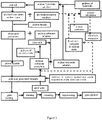
Fig.1 is a process flow scheme of a preferred embodiment of extracting aluminum from coal ash for co-production of glass according to this invention. -
Fig.1 shows a flow scheme of a preferred embodiment of extracting aluminum from coal ash for co-production of glass according to this invention. Coal ash was treated with an alkali liquor, and separated to obtain a pre-desiliconization mother liquor and pre-desiliconization residues. Carbon dioxide was introduced to the pre-desiliconization mother liquor for carbonation decomposition, and separation was performed to obtain a silicic acid precipitate and a sodium carbonate solution. The silicic acid precipitate was further dried to give silicon dioxide, which served directly as raw material for soda lime glass. Lime milk was added into the sodium carbonate solution for causticization, and separation was performed to obtain a calcium carbonate precipitate and a caustic soda solution. Part of the calcium carbonate precipitate could be used directly as raw material for soda lime glass. The remaining calcium carbonate may be recycled after calcined, supplemented with calcium oxide and prepared into lime milk; alternatively, the remaining calcium carbonate may be subjected to calcination together with the pre-desiliconization residues, directly or after calcined, to prepare clinker for aluminum extraction, which corresponds to the dotted portion in the figure. The caustic soda solution could be recycled after supplemented with sodium hydroxide and water, for pre-desiliconization of the coal ash. A further addition of sodium (potassium) oxide/ magnesium oxide may result in a soda lime glass formulation mainly consisting of silicon dioxide, calcium oxide and sodium oxide. Thereafter, a glass product was finally obtained upon the melting, forming, annealing and reprocessing process. - This invention is further illustrated hereinbelow, however, the following examples are merely intended to assist a person skilled in the art to better understand the principles and essences of this invention, and by no means to set any limitation on this invention.
- A type of coal ash from a power plant in Zhunger region of Inner Mongolia was subjected to chemical composition analysis (percentage by weight), and the results thereof were shown in Table 1, wherein the amount of Al2O3 is as high as 50.71 %, and the amount of SiO2 is as high as 40.01%. Hence, it is a typical high-aluminum coal ash, an ideal raw material for producing glass and extracting aluminum.
Table 1 SiO2 Al2O3 FeA FeO MgO CaO Na2O K2O H2O TiO2 P2O5 MnO Ignition loss S Total amount 40.01 50.71 1.41 035 0.47 2.85 0.12 0.5 0.024 157 0.17 0.022 1.41 022 99.81 - 1000g coal ash with above composition were reacted for 3h under stirring under the condition of: a NaOH solution concentration of 20%, a mass ratio of ash to alkali of 1:0.6, and a reaction temperature of 120°C. Upon filtering and washing, a pre-desiliconization mother liquor and coal ash residues were obtained. The pre-desiliconization mother liquor mainly consisted of sodium silicate and sodium aluminate, and had a mass ratio of SiO2/ Al2O3 of 65.23. The pre-desiliconized coal ash residues, which were subjected to hot-air drying under a temperature of 120°C for 3h, weighed 820.5g, the chemical composition of which was shown in Table 2 (wt%). Thus, the amount of Al2O3 in the coal ash residues increased from 50.71% to 60.13%, the mass ratio of Al2O3/SiO2 increased from 1.27 to 2.25, and the extraction rate of SiO2 was 42.5%.
Table 2 SiO2 Al2O3 Fe2O3 FeO MgO CaO Na2O K2O H2O TiO2 P2O5 MnO Ignition loss S Total amount 26.81 60.13 1.81 0.41 0.55 331 095 0.6 0.11 1.81 021 0.031 153 025 98.51 - Carbon dioxide was introduced to the pre-desiliconization mother liquor for carbonation decomposition, and the introduction was stopped when the solution pH was reduced to about 8.5. Upon a further filtration, silicic acid precipitate and a sodium carbonate solution were obtained. The silicic acid precipitate was subjected to hot-air drying under a temperature of 120°C for 12h to give 153g dry silicon dioxide, wherein the amount of Na2O was 3.5%, the mass ratio of SiO2/ Al2O3 was 63.15, close to the composition of the pre-desiliconization mother liquor, and it could be used directly as major material for production of glass. Lime milk was added stoichiometrically to the sodium carbonate solution, and stirred under 60°C to react for 5h, and filtered to give a calcium carbonate precipitate and a sodium hydroxide solution. The calcium carbonate precipitate was subjected to hot-air drying under a temperature of 120°C for 12h to give 275g dry calcium carbonate, wherein the amount of Na2O was 2.5wt%.
- To meet the common glass formulation of 12-15 wt% of Na2O, 8-13 wt% of CaO, and 69-73 wt% of SiO2, in addition to all of the 153 g of the prepared dry silicon dioxide (approximately including 145.3 g of silicon dioxide, 2.3 g of aluminum oxide, and 5.4 g of sodium oxide) as well as 45 g of the dried calcium carbonate (approximately including 24.6 g of calcium oxide, and 1.1 g of sodium oxide), 36.4g of sodium carbonate (equivalent to 21.3 g of sodium oxide) were needed. A glass formulation was obtained after the addition, with the composition of: 13.9 wt% of Na2O ( K2O), 12.3 wt% of CaO ( MgO), 1.2 wt% of Al2O3 and 72.7 wt% of SiO2. The formulation materials of the glass hereinabove totally amounted to 200 g.
- A 300ml crucible was placed in a high temperature muffle furnace, and increased to a temperature of 1300°C. The formulation materials of the glass added therein in three portions. After maintained at the temperature for 15min, the temperature was increased to the clarification temperature of 1500°C, and maintained for 2h. In the course of the maintaining, a stainless steel stick was used for stirring for several times to prevent thick bubbles, and enable homogenization of molten glass. A forming mould was placed on an electrical furnace to be preheated to 1000°C, a piece of 100 mm × 100 mm × 5 mm chunk glass resulting from cast moulding with a crucible was withdrawn and immediately transferred to a low temperature muffle furnace for annealing by maintaining at a temperature of 560°C for about 30min. Subsequently, the power was cut off after the temperature was reduced by 1°C per minute to 200°C. The glass was naturally and slowly cooled to below 100°C with the furnace, and withdrawn out of the furnace, and cooled in the air to room temperature to accomplish annealing. Thereafter, the flat glass was cut into a shape suitable for processing and experimental measurement, and subjected to grinding (emery) and polishing (ceria) treatment.
- Based on the special process of pre-desiliconization of coal ash, the formulation materials of the glass did not contain iron and nickel. Nickel was not detected from the fire-formed glass, while the amount of iron was 53 ppm, which met and surpassed the standard of ultra-white glass (containing less than 150 ppm of iron), and the visible light transmittance with 3 mm in thickness was 93%, which also met and surpassed the standard of ultra-white glass (the visible light transmittance with 3 mm in thickness is 91.5%).
- The stages of obtaining coal ash residues by pre-desiliconization, and the preparation of silicon dioxide and calcium carbonate were completely same as those in Example 1.
- All of the obtained coal ash residues were used, and the dried calcium carbonate precipitate was used, according to a molar ratio of [CaO]/([SiO2]+0.5[TiO2]) of 2, added with sufficient amount of calcium carbonate, and added with sodium carbonate according to a molar ratio of [Na2O]/([ Al2O3]+[Fe2O3]) of 1, mixed uniformly, and calcined under a temperature of 1200°C for 3h to give clinker. A formulation liquid was prepared, comprising 15g/L Na2Ok (caustic alkali) and 5g/L Na2Oc (alkali carbonate). The formulation fluid was withdrawn according to a liquid-solid ratio of 10:1, heated to 85°C, after adding therein said clinker, stirred and leached for 15 min, filtered to obtain a leaching liquid, followed by introducing therein carbon dioxide until the pH reached 8.5, to give an aluminum hydroxide precipitate. The aluminum hydroxide precipitate was filtered, dried with hot air under 120°C for 3h to remove the attached water from aluminum hydroxide, and further calcined under 1050°C for 2h to give 456.7g aluminum oxide. The purity of aluminum oxide was 98.5%, and the aluminum extraction rate was 90.1% according to the formulation process of aluminum extraction of coal ash.
- The stages of obtaining coal ash residues by pre-desiliconization, and the preparation of silicon dioxide and calcium carbonate were completely same as those in Example 1.
- All of the obtained coal ash residues were used, and the dried calcium carbonate precipitate was used, according to a molar ratio of [CaO]/([SiO2]+[TiO2]) of 1, added with sufficient amount of calcium carbonate, and added with sodium carbonate according to a molar ratio of [Na2O]/([Al2O3]+[Fe2O3]+[SiO2]) of 1, mixed uniformly, and calcined under a temperature of 1050°C for 2h to give clinker. A formulation liquid was prepared, comprising 15g/L Na2Ok and 5g/L Na2Oc. The formulation fluid was withdrawn according to a liquid-solid ratio of 10:1, heated to 85°C, after adding therein said clinker, stirred and leached for 15min, filtered to obtain a leaching liquid, followed by introducing therein carbon dioxide until the pH reached 8.3, to give an aluminum hydroxide precipitate. The aluminum hydroxide precipitate was filtered, dried with hot air under 120°C for 3h to remove the attached water from aluminum hydroxide, and further calcined under 1050°C for 2h to give 469.8 g aluminum oxide. The purity of aluminum oxide was 98.9%, and the aluminum extraction rate was 92.6% according to the formulation process of aluminum extraction of coal ash.
- The terms and expressions used in this description are descriptive and nonrestrictive, which are not inclined to rule out any equivalent of the already indicated and described features or component parts.
- Although several embodiments have been indicated and described by this invention, this invention shall not be limited to the described embodiments. On the contrary, the skilled artisan shall realize that any change or improvement can be made to these embodiments without deviating from the principles and essences of this invention. The protection scope of this invention is determined by the appended claims.
Claims (17)
- A method for preparing a soda-lime-silica glass basic formulation, comprising the steps of:a1) pre-desiliconizing silicon-containing powdery industrial waste with a sodium hydroxide solution, and separating, to obtain a pre-desiliconization mother liquor and residues;a2) introducing carbon dioxide to the pre-desiliconization mother liquor for carbonation decomposition, and separating, to obtain a silicic acid precipitate and a sodium carbonate solution;a3) drying the silicic acid precipitate to obtain silicon dioxide;a4) adding lime milk into the sodium carbonate solution for causticization, and separating, to obtain a calcium carbonate precipitate and a sodium hydroxide solution;a5) drying the calcium carbonate precipitate; anda6) according to the requirements on the amounts of respective components in the soda-lime-silica glass, using the silicon dioxide prepared in step a3) and part of the dried calcium carbonate from step a5) and adding sodium oxide thereto, to obtain a soda-lime-silica glass basic formulation.
- The method according to claim 1, wherein said silicon-containing powdery industrial waste is selected from the group consisting of one or more of pulverized or unpulverized coal ash, stove ash, clay, kaolin, slag and red mud.
- The method according to claim 1 or 2, which further comprises at least one of the following steps:a1-1) subjecting the silicon-containing powdery industrial waste to magnetic separation for removing iron prior to the step a1) of pre-desiliconization;a4-1) recovering the sodium hydroxide solution obtained in step a4), to allow its use in the pre-desiliconization of the silicon-containing powdery industrial waste in step a1);a5-1) calcining part of the dried calcium carbonate precipitate from step a5) and preparing lime milk, to allow the addition of the lime milk to the filtered sodium carbonate for causticization in step a4); anda5-2) recovering carbon dioxide obtained by calcining the calcium carbonate precipitate, to allow its use in the carbonation decomposition in step a2).
- The method according to any one of claims 1 to 3, wherein said silicon-containing powdery industrial waste is coal ash.
- The method according to claim 4, wherein in step a1), the mass concentration of sodium hydroxide in the solution is 10% to 50%, the mass ratio of coal ash to sodium hydroxide is 100:15 to 150, the reaction temperature is between 60°C and 150°C, and the reaction time lasts for 0.5h to 10h.
- The method according to claim 5, wherein in step a1), the mass ratio of SiO2 to Al2O3 in the resulting pre-desiliconized mother liquor is greater than 6.
- The method according to any one of claims 1 to 6, wherein in step a6), silicon dioxide and calcium carbonate obtained respectively in steps a3) and a5) comprise 70% to 95% by weight of the glass basic formulation.
- A method for producing soda-lime-silica glass by using the soda-lime-silica glass basic formulation of any one of claims 1 to 7, comprising:a7) adding potassium oxide and/or aluminum oxide and/or magnesium oxide, and/or auxiliaries according to the requirements on the amounts of respective components of the soda-lime-silica glass; anda8) performing glass melting, forming, and annealing.
- A method for extracting aluminum from coal ash for co-production of glass, comprising the steps of:b1) pre-desiliconizing coal ash with a sodium hydroxide solution, and separating, to obtain a pre-desiliconization mother liquor and residues;b2) introducing carbon dioxide to the pre-desiliconization mother liquor for carbonation decomposition, and separating, to obtain a silicic acid precipitate and a sodium carbonate solution;b3) drying the silicic acid precipitate to obtain silicon dioxide;b4) adding lime milk into the sodium carbonate solution for causticization, and separating, to obtain a calcium carbonate precipitate and a sodium hydroxide solution;b5) drying the calcium carbonate precipitate;b6) according to the requirements on the amounts of respective components in the soda-lime-silica glass, using the silicon dioxide prepared in step b3) and part of the dried calcium carbonate from step b5) and adding sodium oxide thereto, to obtain a soda-lime-silica glass basic formulation; andb7) performing aluminum extraction by using the resulting residues obtained in step b1).
- The method according to claim 9, which further comprises:b8) adding potassium oxide and/or aluminum oxide and/or magnesium oxide, and/or auxiliaries according to the requirements on the amounts of respective components of the soda-lime-silica glass; andb9) performing glass melting, forming, annealing, and reprocessing to obtain a glass product.
- The method according to claim 9, which further comprises at least one of the following steps:b1-1) subjecting the silicon-containing powdery industrial waste to magnetic separation for removing iron prior to the step b1) of pre-desiliconization;b4-1) recovering the sodium hydroxide solution obtained in step b4), to allow its use in the pre-desiliconization of the silicon-containing powdery industrial waste in step b1);b5-1) calcining part of the dried calcium carbonate precipitate from step b5) and preparing lime milk, to allow the addition of the lime milk to the filtered sodium carbonate for causticization in step b4); andb5-2) recovering carbon dioxide obtained by calcining the calcium carbonate precipitate, to allow its use in the carbonation decomposition in step b2).
- The method according to any one of claims 9 to 11, wherein in step b1), the mass concentration of sodium hydroxide in the solution is 10% to 50%, the mass ratio of coal ash to sodium hydroxide is 100:15 to 150, the reaction temperature is between 60°C and 150°C, and the reaction time lasts for 0.5h to 10h.
- The method according to claim 12, wherein in step b1), the mass ratio of SiO2 to Al2O3 in the resulting pre-desiliconized mother liquor is greater than 6.
- The method according to any one of claims 9 to 13, wherein in step b6), silicon dioxide and calcium carbonate obtained respectively in steps b3) and b5) comprise 70% to 95% by weight of the glass basic formulation.
- The method according to any one of claims 9 to 13, which further comprises:b5-3) mixing at least part of the dried calcium carbonate precipitate from step b5) directly with the residues obtained from step b1), followed by soda lime sintering to prepare clinker for aluminum extraction; and/orb5-4) calcining part of the dried calcium carbonate precipitate from step b5) at first to obtain lime, which is then mixed with the residues obtained from step b1), followed by soda lime sintering to prepare clinker for aluminum extraction.
- The method according to claim 15, wherein the mixing of the materials during the process of soda lime sintering ensures a molar ratio of [CaO]/([SiO2]+x[TiO2]) between 0.8 and 2.2, wherein 0.5≤x≤1.0; and a molar ratio of [Na2O]/([Al2O3]+[Fe2O3]+y[SiO2]) between 0.8 and 1.2, wherein 0≤y≤1.0.
- The method according to claim 15, wherein the soda lime sintering to prepare clinker is carried out by calcination at a temperature between 800 and 1500°C, preferably between 1000 and 1300°C.
Applications Claiming Priority (1)
| Application Number | Priority Date | Filing Date | Title |
|---|---|---|---|
| PCT/CN2012/085351 WO2014082205A1 (en) | 2012-11-27 | 2012-11-27 | Method for preparing soda-lime-silica glass basic formula and method for extracting aluminum from fly ash for co-production of glass |
Publications (3)
| Publication Number | Publication Date |
|---|---|
| EP2927199A1 EP2927199A1 (en) | 2015-10-07 |
| EP2927199A4 EP2927199A4 (en) | 2016-10-05 |
| EP2927199B1 true EP2927199B1 (en) | 2022-07-20 |
Family
ID=50827017
Family Applications (1)
| Application Number | Title | Priority Date | Filing Date |
|---|---|---|---|
| EP12889137.1A Active EP2927199B1 (en) | 2012-11-27 | 2012-11-27 | Method for preparing soda-lime-silica glass basic formula and method for extracting aluminum from fly ash for co-production of glass |
Country Status (4)
| Country | Link |
|---|---|
| US (1) | US9517965B2 (en) |
| EP (1) | EP2927199B1 (en) |
| AU (1) | AU2012395690B2 (en) |
| WO (1) | WO2014082205A1 (en) |
Families Citing this family (11)
| Publication number | Priority date | Publication date | Assignee | Title |
|---|---|---|---|---|
| CN105670059B (en) * | 2014-11-18 | 2018-05-08 | 神华集团有限责任公司 | Calcium silicate slag and calcium silicate slag base gum filler and preparation method thereof |
| CN105668597B (en) * | 2014-11-21 | 2018-09-14 | 国家能源投资集团有限责任公司 | The method of flyash soda acid combined extracting aluminium base product and silica-based products |
| CN107889300A (en) * | 2016-09-29 | 2018-04-06 | 浙江久康电器有限公司 | The electrical heating stove of plug-in type infrared ray electric heat stove plate and the dress electric heating furnace tray |
| US11753341B2 (en) * | 2018-12-12 | 2023-09-12 | Mflgh Inc. | Engineered stone product and methods of making the same |
| CN110442946B (en) * | 2019-07-30 | 2022-09-30 | 郑州中科新兴产业技术研究院 | Integration optimization method for coal ash aluminum extraction process system |
| TR202010857A1 (en) * | 2020-07-08 | 2022-01-21 | Tuerkiye Sise Ve Cam Fabrikalari Anonim Sirketi | GLASSWARE PRODUCT MADE FROM BROKEN GLASS AND ITS MANUFACTURING METHOD |
| CN112299721A (en) * | 2020-10-30 | 2021-02-02 | 神华准能资源综合开发有限公司 | Method for preparing alumina and co-producing microcrystalline glass based on pulverized coal furnace fly ash and product |
| CN115340391B (en) * | 2021-05-14 | 2023-10-20 | 中国科学院过程工程研究所 | Desilication fly ash and preparation method and application thereof |
| CN113698078A (en) * | 2021-10-08 | 2021-11-26 | 无锡市爱尔德药用玻璃有限公司 | Processing technology for glass bottle production |
| CN114990353B (en) * | 2022-06-23 | 2024-04-26 | 神华准格尔能源有限责任公司 | Screening method for aluminum ash |
| CN116715436B (en) * | 2023-08-07 | 2023-11-24 | 山东天旭特种玻璃有限公司 | Super white glass for solar energy and preparation method thereof |
Family Cites Families (29)
| Publication number | Priority date | Publication date | Assignee | Title |
|---|---|---|---|---|
| US3726697A (en) * | 1967-08-17 | 1973-04-10 | Dow Chemical Co | Glass manufacture from prereacted batch and composition |
| US3573887A (en) * | 1968-02-27 | 1971-04-06 | Dow Chemical Co | Method of making glass from reacted and shaped batch materials |
| US3969122A (en) | 1974-12-16 | 1976-07-13 | Tusco Engineering Co., Inc. | Formulation for producing soda-lime glass including coal ash |
| GB1585801A (en) * | 1977-01-04 | 1981-03-11 | Kroyer K K K | Methods and apparatus for production of cements |
| SU1565815A1 (en) * | 1988-07-29 | 1990-05-23 | Чернятинский стекольный завод | Glass |
| JP2775525B2 (en) * | 1990-12-25 | 1998-07-16 | 月島機械株式会社 | Method for producing crystallized glass |
| CN1095689A (en) | 1994-01-22 | 1994-11-30 | 吉林电力职工大学 | With flyash is the method for raw material production Tai-Ace S 150 |
| US6145343A (en) * | 1998-05-02 | 2000-11-14 | Westinghouse Savannah River Company | Low melting high lithia glass compositions and methods |
| CN1101782C (en) | 2000-02-01 | 2003-02-19 | 刘成长 | Technological process for producing aluminium salt and silicate by using coal gangue |
| EP1281687A4 (en) * | 2000-03-06 | 2006-08-23 | Nippon Sheet Glass Co Ltd | FLAT GLASS WITH HIGH PERMEABILITY |
| GB0020471D0 (en) | 2000-08-19 | 2000-10-11 | Pilkington Plc | Glass compositions |
| CN1296280C (en) | 2004-11-12 | 2007-01-24 | 内蒙古蒙西高新技术集团有限公司 | Method for producing alumina and cement by using coal ash and limestone |
| CN1329301C (en) | 2005-12-31 | 2007-08-01 | 朔州市人民政府 | Process for extracting aluminium hydroxide from flyash |
| CN100404423C (en) | 2006-09-15 | 2008-07-23 | 平朔煤炭工业公司 | Method for preparing alumina from fly ash |
| CN101028936B (en) | 2007-01-26 | 2010-11-17 | 长安大学 | A method of extracting alumina and its waste residue from high-alumina fly ash to produce cement |
| CN101235295A (en) | 2007-01-30 | 2008-08-06 | 邹平铁雄焦化有限公司 | Directly reclaiming device for tamping coke-oven high-oxygen gas and reclaiming technique |
| CN101125656B (en) | 2007-08-07 | 2010-06-09 | 平朔煤炭工业公司 | Method for firstly extracting silicon and secondly extracting aluminum from fly ash |
| CN100491247C (en) | 2007-04-03 | 2009-05-27 | 平朔煤炭工业公司 | Method for producing silicon dioxide and aluminum oxide by using fly ash |
| CN101284668B (en) | 2007-04-12 | 2010-08-04 | 清华大学 | A method for extracting silicon dioxide, aluminum oxide and gallium oxide from high-alumina fly ash |
| CN101200298A (en) | 2007-12-11 | 2008-06-18 | 天津大学 | Method for extracting high-purity ultra-fine alumina from fly ash |
| CN101575112B (en) | 2008-05-08 | 2011-06-29 | 沈阳铝镁设计研究院有限公司 | Method of preparing aluminum sulphate by utilizing fly ash |
| CN101591020A (en) | 2008-05-26 | 2009-12-02 | 同方环境股份有限公司 | A kind of method and system thereof that utilizes aluminous fly-ash to produce white carbon black |
| CN101333074B (en) * | 2008-08-07 | 2011-10-05 | 河南安彩高科股份有限公司 | Sodium-calcium-silicate glass composition, its manufacturing method and use |
| CN101966999B (en) | 2010-11-11 | 2012-11-21 | 中国地质大学(北京) | Method for extracting aluminum oxide and white carbon black through two-step alkaline leaching method by adopting high-alumina fly ash |
| CN102107895B (en) | 2010-12-22 | 2013-05-22 | 昊青薪材(北京)技术有限公司 | Improved soda lime sintering method for processing aluminum-containing raw material |
| CN102101686B (en) | 2010-12-23 | 2012-07-18 | 内蒙古昶泰资源循环再生利用科技开发有限责任公司 | Process method for ultra-high purity alumina preparation by utilizing coal ash and comprehensive utilization of ultra-high purity alumina |
| CN102020303B (en) | 2010-12-23 | 2012-10-24 | 南京航空航天大学 | Method for producing ultra-high purity aluminium sulfate from fly ash |
| CN102101688B (en) | 2010-12-23 | 2012-10-03 | 内蒙古昶泰资源循环再生利用科技开发有限责任公司 | Technological method for producing industrial aluminum sulfate by using coal ash and comprehensively utilizing coal ash |
| CN103819086B (en) | 2012-11-16 | 2016-12-21 | 神华集团有限责任公司 | Method for preparing basic formula of soda-lime silicate glass and method for extracting aluminum from fly ash and co-producing glass |
-
2012
- 2012-11-27 WO PCT/CN2012/085351 patent/WO2014082205A1/en not_active Ceased
- 2012-11-27 EP EP12889137.1A patent/EP2927199B1/en active Active
- 2012-11-27 US US14/647,739 patent/US9517965B2/en active Active
- 2012-11-27 AU AU2012395690A patent/AU2012395690B2/en active Active
Also Published As
| Publication number | Publication date |
|---|---|
| US9517965B2 (en) | 2016-12-13 |
| EP2927199A1 (en) | 2015-10-07 |
| WO2014082205A1 (en) | 2014-06-05 |
| EP2927199A4 (en) | 2016-10-05 |
| AU2012395690B2 (en) | 2015-11-19 |
| US20150321946A1 (en) | 2015-11-12 |
| AU2012395690A1 (en) | 2015-06-11 |
Similar Documents
| Publication | Publication Date | Title |
|---|---|---|
| US9517965B2 (en) | Method for preparing a soda-lime-silica glass basic formulation and a method for extracting aluminum from coal ash for co-production of glass | |
| CN103819086B (en) | Method for preparing basic formula of soda-lime silicate glass and method for extracting aluminum from fly ash and co-producing glass | |
| KR101502592B1 (en) | slag treatment method for extracting silic and magnesia | |
| CN101607725B (en) | Method for reclaiming alumina and sodium oxide in red mud of Bayer process | |
| CN116790911B (en) | A method for extracting lithium from clay-type lithium ore | |
| CN107098365A (en) | A kind of method that lithium carbonate is extracted from lepidolite ore | |
| CN101306819B (en) | Process for abstracting white carbon black from fly ash or slag | |
| CN116240399A (en) | A method for selectively leaching lithium from clay-type lithium ore | |
| CN103232164B (en) | Coffee microcrystal glass plate and production method thereof | |
| CN104649279A (en) | Process for preparing white carbon black from pulverized fuel ash as raw material | |
| CN107840357A (en) | A kind of method that ice crystal is produced using cell cathode carbon block alkaline leaching liquid | |
| CN1648090A (en) | Method for preparing glass-ceramic plate for building from waste glass | |
| CN103936045A (en) | Method for extracting aluminum oxide from coal ash | |
| CN1365948A (en) | Process for preparing industrial beryllium oxide by sulfuric acid method | |
| CN100457621C (en) | Process for preparation of delta-layed crystalline sodium disilicate using attapulgite | |
| CN104341107B (en) | A kind of glass batch and preparation method thereof and a kind of glass and preparation method thereof | |
| CN102173430B (en) | Technique for preparing wollastonite ultrafine powder from calcium silicate hydrate | |
| KR102742479B1 (en) | Method for producing high purity aluminum monohydrate and alpha alumina | |
| CN105236998B (en) | The technique that AZS solid wastes prepare zirconium aluminium composite granule | |
| CN115072776A (en) | Production method of high-purity electrofused zirconia | |
| CN114477772B (en) | High-strength high-permeability glass ceramic structure, preparation method thereof and obtained product | |
| CN116219204A (en) | A kind of lepidolite circulation method for extracting lithium and lithium carbonate produced therefrom | |
| CN104341106B (en) | A kind of glass batch and preparation method thereof and a kind of glass and preparation method thereof | |
| CN108046281A (en) | A kind of production method of the metasilicate pentahydrate sodium of good product quality | |
| CN120136110B (en) | A method for preparing high-purity silica |
Legal Events
| Date | Code | Title | Description |
|---|---|---|---|
| PUAI | Public reference made under article 153(3) epc to a published international application that has entered the european phase |
Free format text: ORIGINAL CODE: 0009012 |
|
| 17P | Request for examination filed |
Effective date: 20150616 |
|
| AK | Designated contracting states |
Kind code of ref document: A1 Designated state(s): AL AT BE BG CH CY CZ DE DK EE ES FI FR GB GR HR HU IE IS IT LI LT LU LV MC MK MT NL NO PL PT RO RS SE SI SK SM TR |
|
| AX | Request for extension of the european patent |
Extension state: BA ME |
|
| DAX | Request for extension of the european patent (deleted) | ||
| REG | Reference to a national code |
Ref country code: DE Ref legal event code: R079 Ref document number: 602012078513 Country of ref document: DE Free format text: PREVIOUS MAIN CLASS: C03C0003000000 Ipc: C03C0003087000 |
|
| RA4 | Supplementary search report drawn up and despatched (corrected) |
Effective date: 20160907 |
|
| RIC1 | Information provided on ipc code assigned before grant |
Ipc: C03C 3/087 20060101AFI20160901BHEP Ipc: C03C 1/00 20060101ALI20160901BHEP |
|
| RAP1 | Party data changed (applicant data changed or rights of an application transferred) |
Owner name: NATIONAL INSTITUTE OF CLEAN-AND-LOW-CARBON ENERGY Owner name: CHINA ENERGY INVESTMENT CORPORATION LIMITED |
|
| STAA | Information on the status of an ep patent application or granted ep patent |
Free format text: STATUS: EXAMINATION IS IN PROGRESS |
|
| 17Q | First examination report despatched |
Effective date: 20200430 |
|
| GRAP | Despatch of communication of intention to grant a patent |
Free format text: ORIGINAL CODE: EPIDOSNIGR1 |
|
| STAA | Information on the status of an ep patent application or granted ep patent |
Free format text: STATUS: GRANT OF PATENT IS INTENDED |
|
| INTG | Intention to grant announced |
Effective date: 20220131 |
|
| GRAJ | Information related to disapproval of communication of intention to grant by the applicant or resumption of examination proceedings by the epo deleted |
Free format text: ORIGINAL CODE: EPIDOSDIGR1 |
|
| STAA | Information on the status of an ep patent application or granted ep patent |
Free format text: STATUS: EXAMINATION IS IN PROGRESS |
|
| GRAP | Despatch of communication of intention to grant a patent |
Free format text: ORIGINAL CODE: EPIDOSNIGR1 |
|
| STAA | Information on the status of an ep patent application or granted ep patent |
Free format text: STATUS: GRANT OF PATENT IS INTENDED |
|
| INTC | Intention to grant announced (deleted) | ||
| INTG | Intention to grant announced |
Effective date: 20220405 |
|
| GRAS | Grant fee paid |
Free format text: ORIGINAL CODE: EPIDOSNIGR3 |
|
| GRAA | (expected) grant |
Free format text: ORIGINAL CODE: 0009210 |
|
| STAA | Information on the status of an ep patent application or granted ep patent |
Free format text: STATUS: THE PATENT HAS BEEN GRANTED |
|
| AK | Designated contracting states |
Kind code of ref document: B1 Designated state(s): AL AT BE BG CH CY CZ DE DK EE ES FI FR GB GR HR HU IE IS IT LI LT LU LV MC MK MT NL NO PL PT RO RS SE SI SK SM TR |
|
| REG | Reference to a national code |
Ref country code: GB Ref legal event code: FG4D |
|
| REG | Reference to a national code |
Ref country code: CH Ref legal event code: EP |
|
| REG | Reference to a national code |
Ref country code: DE Ref legal event code: R096 Ref document number: 602012078513 Country of ref document: DE |
|
| REG | Reference to a national code |
Ref country code: AT Ref legal event code: REF Ref document number: 1505456 Country of ref document: AT Kind code of ref document: T Effective date: 20220815 |
|
| REG | Reference to a national code |
Ref country code: IE Ref legal event code: FG4D |
|
| REG | Reference to a national code |
Ref country code: LT Ref legal event code: MG9D |
|
| REG | Reference to a national code |
Ref country code: NL Ref legal event code: MP Effective date: 20220720 |
|
| PG25 | Lapsed in a contracting state [announced via postgrant information from national office to epo] |
Ref country code: SE Free format text: LAPSE BECAUSE OF FAILURE TO SUBMIT A TRANSLATION OF THE DESCRIPTION OR TO PAY THE FEE WITHIN THE PRESCRIBED TIME-LIMIT Effective date: 20220720 Ref country code: RS Free format text: LAPSE BECAUSE OF FAILURE TO SUBMIT A TRANSLATION OF THE DESCRIPTION OR TO PAY THE FEE WITHIN THE PRESCRIBED TIME-LIMIT Effective date: 20220720 Ref country code: PT Free format text: LAPSE BECAUSE OF FAILURE TO SUBMIT A TRANSLATION OF THE DESCRIPTION OR TO PAY THE FEE WITHIN THE PRESCRIBED TIME-LIMIT Effective date: 20221121 Ref country code: NO Free format text: LAPSE BECAUSE OF FAILURE TO SUBMIT A TRANSLATION OF THE DESCRIPTION OR TO PAY THE FEE WITHIN THE PRESCRIBED TIME-LIMIT Effective date: 20221020 Ref country code: NL Free format text: LAPSE BECAUSE OF FAILURE TO SUBMIT A TRANSLATION OF THE DESCRIPTION OR TO PAY THE FEE WITHIN THE PRESCRIBED TIME-LIMIT Effective date: 20220720 Ref country code: LV Free format text: LAPSE BECAUSE OF FAILURE TO SUBMIT A TRANSLATION OF THE DESCRIPTION OR TO PAY THE FEE WITHIN THE PRESCRIBED TIME-LIMIT Effective date: 20220720 Ref country code: LT Free format text: LAPSE BECAUSE OF FAILURE TO SUBMIT A TRANSLATION OF THE DESCRIPTION OR TO PAY THE FEE WITHIN THE PRESCRIBED TIME-LIMIT Effective date: 20220720 Ref country code: FI Free format text: LAPSE BECAUSE OF FAILURE TO SUBMIT A TRANSLATION OF THE DESCRIPTION OR TO PAY THE FEE WITHIN THE PRESCRIBED TIME-LIMIT Effective date: 20220720 Ref country code: ES Free format text: LAPSE BECAUSE OF FAILURE TO SUBMIT A TRANSLATION OF THE DESCRIPTION OR TO PAY THE FEE WITHIN THE PRESCRIBED TIME-LIMIT Effective date: 20220720 |
|
| REG | Reference to a national code |
Ref country code: AT Ref legal event code: MK05 Ref document number: 1505456 Country of ref document: AT Kind code of ref document: T Effective date: 20220720 |
|
| PG25 | Lapsed in a contracting state [announced via postgrant information from national office to epo] |
Ref country code: PL Free format text: LAPSE BECAUSE OF FAILURE TO SUBMIT A TRANSLATION OF THE DESCRIPTION OR TO PAY THE FEE WITHIN THE PRESCRIBED TIME-LIMIT Effective date: 20220720 Ref country code: IS Free format text: LAPSE BECAUSE OF FAILURE TO SUBMIT A TRANSLATION OF THE DESCRIPTION OR TO PAY THE FEE WITHIN THE PRESCRIBED TIME-LIMIT Effective date: 20221120 Ref country code: HR Free format text: LAPSE BECAUSE OF FAILURE TO SUBMIT A TRANSLATION OF THE DESCRIPTION OR TO PAY THE FEE WITHIN THE PRESCRIBED TIME-LIMIT Effective date: 20220720 Ref country code: GR Free format text: LAPSE BECAUSE OF FAILURE TO SUBMIT A TRANSLATION OF THE DESCRIPTION OR TO PAY THE FEE WITHIN THE PRESCRIBED TIME-LIMIT Effective date: 20221021 |
|
| REG | Reference to a national code |
Ref country code: DE Ref legal event code: R097 Ref document number: 602012078513 Country of ref document: DE |
|
| PG25 | Lapsed in a contracting state [announced via postgrant information from national office to epo] |
Ref country code: SM Free format text: LAPSE BECAUSE OF FAILURE TO SUBMIT A TRANSLATION OF THE DESCRIPTION OR TO PAY THE FEE WITHIN THE PRESCRIBED TIME-LIMIT Effective date: 20220720 Ref country code: RO Free format text: LAPSE BECAUSE OF FAILURE TO SUBMIT A TRANSLATION OF THE DESCRIPTION OR TO PAY THE FEE WITHIN THE PRESCRIBED TIME-LIMIT Effective date: 20220720 Ref country code: DK Free format text: LAPSE BECAUSE OF FAILURE TO SUBMIT A TRANSLATION OF THE DESCRIPTION OR TO PAY THE FEE WITHIN THE PRESCRIBED TIME-LIMIT Effective date: 20220720 Ref country code: AT Free format text: LAPSE BECAUSE OF FAILURE TO SUBMIT A TRANSLATION OF THE DESCRIPTION OR TO PAY THE FEE WITHIN THE PRESCRIBED TIME-LIMIT Effective date: 20220720 |
|
| PLBE | No opposition filed within time limit |
Free format text: ORIGINAL CODE: 0009261 |
|
| STAA | Information on the status of an ep patent application or granted ep patent |
Free format text: STATUS: NO OPPOSITION FILED WITHIN TIME LIMIT |
|
| PG25 | Lapsed in a contracting state [announced via postgrant information from national office to epo] |
Ref country code: SK Free format text: LAPSE BECAUSE OF FAILURE TO SUBMIT A TRANSLATION OF THE DESCRIPTION OR TO PAY THE FEE WITHIN THE PRESCRIBED TIME-LIMIT Effective date: 20220720 Ref country code: EE Free format text: LAPSE BECAUSE OF FAILURE TO SUBMIT A TRANSLATION OF THE DESCRIPTION OR TO PAY THE FEE WITHIN THE PRESCRIBED TIME-LIMIT Effective date: 20220720 |
|
| 26N | No opposition filed |
Effective date: 20230421 |
|
| PG25 | Lapsed in a contracting state [announced via postgrant information from national office to epo] |
Ref country code: MC Free format text: LAPSE BECAUSE OF FAILURE TO SUBMIT A TRANSLATION OF THE DESCRIPTION OR TO PAY THE FEE WITHIN THE PRESCRIBED TIME-LIMIT Effective date: 20220720 Ref country code: AL Free format text: LAPSE BECAUSE OF FAILURE TO SUBMIT A TRANSLATION OF THE DESCRIPTION OR TO PAY THE FEE WITHIN THE PRESCRIBED TIME-LIMIT Effective date: 20220720 |
|
| REG | Reference to a national code |
Ref country code: CH Ref legal event code: PL |
|
| REG | Reference to a national code |
Ref country code: BE Ref legal event code: MM Effective date: 20221130 |
|
| PG25 | Lapsed in a contracting state [announced via postgrant information from national office to epo] |
Ref country code: LI Free format text: LAPSE BECAUSE OF NON-PAYMENT OF DUE FEES Effective date: 20221130 Ref country code: CH Free format text: LAPSE BECAUSE OF NON-PAYMENT OF DUE FEES Effective date: 20221130 |
|
| PG25 | Lapsed in a contracting state [announced via postgrant information from national office to epo] |
Ref country code: SI Free format text: LAPSE BECAUSE OF FAILURE TO SUBMIT A TRANSLATION OF THE DESCRIPTION OR TO PAY THE FEE WITHIN THE PRESCRIBED TIME-LIMIT Effective date: 20220720 Ref country code: LU Free format text: LAPSE BECAUSE OF NON-PAYMENT OF DUE FEES Effective date: 20221127 |
|
| PG25 | Lapsed in a contracting state [announced via postgrant information from national office to epo] |
Ref country code: IE Free format text: LAPSE BECAUSE OF NON-PAYMENT OF DUE FEES Effective date: 20221127 |
|
| PG25 | Lapsed in a contracting state [announced via postgrant information from national office to epo] |
Ref country code: FR Free format text: LAPSE BECAUSE OF NON-PAYMENT OF DUE FEES Effective date: 20221130 Ref country code: BE Free format text: LAPSE BECAUSE OF NON-PAYMENT OF DUE FEES Effective date: 20221130 |
|
| PG25 | Lapsed in a contracting state [announced via postgrant information from national office to epo] |
Ref country code: HU Free format text: LAPSE BECAUSE OF FAILURE TO SUBMIT A TRANSLATION OF THE DESCRIPTION OR TO PAY THE FEE WITHIN THE PRESCRIBED TIME-LIMIT; INVALID AB INITIO Effective date: 20121127 |
|
| PG25 | Lapsed in a contracting state [announced via postgrant information from national office to epo] |
Ref country code: CY Free format text: LAPSE BECAUSE OF FAILURE TO SUBMIT A TRANSLATION OF THE DESCRIPTION OR TO PAY THE FEE WITHIN THE PRESCRIBED TIME-LIMIT Effective date: 20220720 |
|
| PG25 | Lapsed in a contracting state [announced via postgrant information from national office to epo] |
Ref country code: MK Free format text: LAPSE BECAUSE OF FAILURE TO SUBMIT A TRANSLATION OF THE DESCRIPTION OR TO PAY THE FEE WITHIN THE PRESCRIBED TIME-LIMIT Effective date: 20220720 Ref country code: IT Free format text: LAPSE BECAUSE OF FAILURE TO SUBMIT A TRANSLATION OF THE DESCRIPTION OR TO PAY THE FEE WITHIN THE PRESCRIBED TIME-LIMIT Effective date: 20220720 |
|
| PG25 | Lapsed in a contracting state [announced via postgrant information from national office to epo] |
Ref country code: BG Free format text: LAPSE BECAUSE OF FAILURE TO SUBMIT A TRANSLATION OF THE DESCRIPTION OR TO PAY THE FEE WITHIN THE PRESCRIBED TIME-LIMIT Effective date: 20220720 |
|
| PG25 | Lapsed in a contracting state [announced via postgrant information from national office to epo] |
Ref country code: MT Free format text: LAPSE BECAUSE OF FAILURE TO SUBMIT A TRANSLATION OF THE DESCRIPTION OR TO PAY THE FEE WITHIN THE PRESCRIBED TIME-LIMIT Effective date: 20220720 |
|
| PG25 | Lapsed in a contracting state [announced via postgrant information from national office to epo] |
Ref country code: TR Free format text: LAPSE BECAUSE OF FAILURE TO SUBMIT A TRANSLATION OF THE DESCRIPTION OR TO PAY THE FEE WITHIN THE PRESCRIBED TIME-LIMIT Effective date: 20220720 |
|
| PGFP | Annual fee paid to national office [announced via postgrant information from national office to epo] |
Ref country code: DE Payment date: 20251117 Year of fee payment: 14 |
|
| PGFP | Annual fee paid to national office [announced via postgrant information from national office to epo] |
Ref country code: GB Payment date: 20251126 Year of fee payment: 14 |
|
| PGFP | Annual fee paid to national office [announced via postgrant information from national office to epo] |
Ref country code: CZ Payment date: 20251127 Year of fee payment: 14 |