EP2922237A1 - Verfahren, Vorrichtung und System zur Steuerung einer Konferenz - Google Patents
Verfahren, Vorrichtung und System zur Steuerung einer Konferenz Download PDFInfo
- Publication number
- EP2922237A1 EP2922237A1 EP15000584.1A EP15000584A EP2922237A1 EP 2922237 A1 EP2922237 A1 EP 2922237A1 EP 15000584 A EP15000584 A EP 15000584A EP 2922237 A1 EP2922237 A1 EP 2922237A1
- Authority
- EP
- European Patent Office
- Prior art keywords
- conference
- terminal
- mobile terminals
- resources
- terminals
- Prior art date
- Legal status (The legal status is an assumption and is not a legal conclusion. Google has not performed a legal analysis and makes no representation as to the accuracy of the status listed.)
- Granted
Links
Images



Classifications
-
- H—ELECTRICITY
- H04—ELECTRIC COMMUNICATION TECHNIQUE
- H04L—TRANSMISSION OF DIGITAL INFORMATION, e.g. TELEGRAPHIC COMMUNICATION
- H04L12/00—Data switching networks
- H04L12/02—Details
- H04L12/16—Arrangements for providing special services to substations
- H04L12/18—Arrangements for providing special services to substations for broadcast or conference, e.g. multicast
- H04L12/1813—Arrangements for providing special services to substations for broadcast or conference, e.g. multicast for computer conferences, e.g. chat rooms
- H04L12/1827—Network arrangements for conference optimisation or adaptation
-
- H—ELECTRICITY
- H04—ELECTRIC COMMUNICATION TECHNIQUE
- H04M—TELEPHONIC COMMUNICATION
- H04M3/00—Automatic or semi-automatic exchanges
- H04M3/42—Systems providing special services or facilities to subscribers
- H04M3/56—Arrangements for connecting several subscribers to a common circuit, i.e. affording conference facilities
- H04M3/568—Arrangements for connecting several subscribers to a common circuit, i.e. affording conference facilities audio processing specific to telephonic conferencing, e.g. spatial distribution, mixing of participants
-
- H—ELECTRICITY
- H04—ELECTRIC COMMUNICATION TECHNIQUE
- H04W—WIRELESS COMMUNICATION NETWORKS
- H04W12/00—Security arrangements; Authentication; Protecting privacy or anonymity
- H04W12/06—Authentication
- H04W12/068—Authentication using credential vaults, e.g. password manager applications or one time password [OTP] applications
-
- H—ELECTRICITY
- H04—ELECTRIC COMMUNICATION TECHNIQUE
- H04W—WIRELESS COMMUNICATION NETWORKS
- H04W4/00—Services specially adapted for wireless communication networks; Facilities therefor
- H04W4/16—Communication-related supplementary services, e.g. call-transfer or call-hold
Definitions
- the invention relates to a method, a device and a system for controlling a conference.
- Conferences are becoming more and more important in the business environment today. It is often difficult to book prepared conference rooms, and they are often held in different locations around the world. For interlocutors who sit together in a room, the required acoustic and visual equipment is often not physically present in the room or only partially or in insufficient functionality, such as. For example, only a TV without a camera and / or a mono desktop phone, but no additional speakers. It is known that stereophonic sound reproduction significantly increases the intelligibility and acceptance of a conference. It also happens that a camera is placed poorly or their control options are unsatisfactory, so that the room is insufficiently lit and / or individual conference participants are not or not well recorded. Under the conditions described, the productivity of the conference also suffers.
- a video conferencing system with a conference unit which uses mobile terminals in a conference room as peripheral devices in such a way that they are controlled by the microphones and / or cameras of the mobile Received recorded audio and video signals.
- the loudest sound signal is sent to a remote participant.
- the conference unit or the conference can be controlled by the mobile terminals.
- an echo canceller is used. If the conference was originally initiated via the mobile terminal, the participant can then transfer the conference to the conference unit in the conference room. After handing over the conference to the conference unit, the voice output and video output are switched to the speakers and displays of the conference unit.
- Another object of the invention is to enable and facilitate authentication of the device and the user, as well as their unique assignment and to ensure controlled access to resources inside and outside the conference room, including for guest devices.
- a teleconference is understood as meaning a conference in which at least one participant is not in the conference environment.
- this includes a video conference.
- a conference environment is to be understood as a predetermined volume of space, which is defined as belonging to the conference, for example a room or a defined area around a conference unit.
- a mobile terminal is within the meaning of the invention, a terminal, in particular telecommunication-capable terminal, which is provided for entrainment by a person, such as a smartphone, laptop, pad or the like, also referred to in the course of the application as a smart device.
- the connection can be made via any interface (USB, Ethernet, Infrared, FireWire, WLAN, ).
- the log-in process may be initiated by the terminal or by the conference unit, in the latter case the log-in step may include or presuppose an automatic recognition step.
- Acoustic conference information in the sense of the invention is any sound, whether speech, ambient noise, connected audio streams, etc., which are prepared and provided by a conference unit for the conference participants.
- surround sound is created for all subscribers in the room.
- the impression of the surround sound is for a conference participant in the room, ie a given conference environment, the more realistic the closer the conference participant is to the position in the room to which the surround sound is aligned and calculated with regard to its calibration.
- This calibration position can be fixed, for example arranged in the center of space, often defined by a conference unit built on a table, or assigned to the position in the room of a respective speaking conference participant.
- the position of the speaking participant in the conference can be determined, for example, from acoustic triangulation of speech signals of the speaking conference participant received at different mobile terminals, evaluation of one or more camera images of the conference environment of the speaking conference participant, locating eg via GPS, Bluetooth and / or WLAN of the mobile terminal of the speaking subscriber or a combination of these methods.
- these signals can be used to create surround sound in another conference environment, which depends, among other things, on how many and which mobile terminals are available in the other conference environment and if the calibration location is fixed in the other conference environment or is locally variable .
- the method is carried out by a conference unit, a conference server or an additional device for media control (LMC - Local Media Control Unit).
- LMC Local Media Control Unit
- one or more mobile terminals may be excluded in generating the surround sound and / or the 3D microphone field with regard to the inclusion of the resources of these individual or multiple mobile terminals.
- the speaker of either one of these terminals may be "ignored" by the LCI or used merely as a backup solution in the event of the loudspeaker of the other terminal failing.
- its resources may be released by the LCI and relocated to the nearest other mobile terminal by utilizing its resources. The release / redistribution may occur as soon as a mobile terminal is within a sphere of radius R of another mobile terminal located at the center of the sphere.
- R can be 10 cm, 20 cm, 30 cm, or 50 cm, with R being selected to be smaller at mobile terminals R than at low density at mobile terminals.
- the setting of R may be continuous, at timed intervals, when a participant of the conference is leaving / entering the conference environment and / or only at the beginning of a conference.
- Positioning of the mobile terminals may be continuous or continuous to compute the surround sound and / or 3D microphone array be tracked at predetermined intervals.
- a guest license or authorization profile is an individual authorization code that can be assigned by a conference moderator, received via email or SMS, or the like.
- the identification code may be mounted in the room or on a device executing the method or provided by the conference manager.
- the transmission is from the mobile terminal to a local instance.
- the mobile terminals are enabled to access resources within the conference environment after authentication.
- Resources may be, for example, image information from cameras or data from the memory of the mobile devices, as far as released by the owner, and held by the conference system or backend content.
- useful information can be shared and the conference can be enriched.
- access at the end of the conference or when leaving the conference environment is automatically revoked.
- the virtual conference rooms remain secure and isolated, access only takes place when there is a specific conference, "listeners" are excluded.
- the mobile terminal will log off at the end of the conference or when leaving the conference environment enforced.
- Particularly preferred is the withdrawal of access at registration with a permanent authorization profile omitted.
- the acoustic conference information is distributed to the mobile terminals depending on the spatial arrangement of the mobile terminals in the sense of a surround sound method, in particular stereophony, quadrofonie, multichannel channel surround sound, Spatial Audio or the like, with or without low frequency channel.
- a spatial arrangement is understood to mean the location and possibly the orientation in the room.
- a natural sound image can be generated, which also enables the location of sound sources (speakers), especially when remote participants distributed by Spatial Audio or similar technology according to their positions in the displayed on a conference screen or the like virtual visual conference room in the acoustic room become.
- the spatial sound method used can be adapted to the number of mobile terminals or selected accordingly.
- the determination of the spatial arrangement can be made by evaluating image information of a room camera or camera arrangement and / or cameras of the registered terminals.
- calibration includes setting output levels for each terminal, depending on the frequency and (if desired) source of the signal.
- Calibration preferably also includes sending and receiving reference tones, in particular in relation to possibly existing stationary terminals, through loudspeakers and microphones of the respective ones Terminals. Steps c) and d) may be triggered automatically at the beginning of the conference, during the conference, at regular intervals (such as checking the unmodified spatial arrangement), when participants are entering or leaving (ie, terminals), or manually. With this development, an optimization of the surround sound application can be achieved.
- the resources made available by each mobile terminal in particular presence, type and characteristics of cameras, loudspeakers, microphones, monitors, and battery charge of the terminal, are determined.
- the spatial sound method used can be adapted to the properties of the resources of the mobile terminals or selected accordingly.
- each audio component can be tested individually and its position in the adioject correctly leveled or normalized, so that an excellent surround sound experience or a three-dimensional microphone field is created.
- stationary terminals if present, are integrated into the method. This can also be achieved optimal resource utilization.
- the integration includes in the context of the invention registration, calibration and control of the stationary terminals, which may be provided without limiting the generality that a spatial position of the stationary terminals in the conference room is previously known and stored, the calibration together with and in relation to the mobile terminals, the acoustic information in the sense of the selected surround sound method are optimally distributed to the mobile and stationary devices.
- a further aspect of the invention relates to a device for carrying out the method described above, the device in particular comprising a conference server, a local conference unit or a local media control unit, the device preferably providing a bar code or matrix code.
- a matrix code is understood to be a pixel code (QR code).
- QR code pixel code
- a matrix code is also conceivable as a three-dimensional structure such as a hologram. If the device provides such a code, it can be used to authenticate the mobile terminals.
- the code may be provided by attachment to the device or by display on a screen or the like. The code can be regenerated for the device itself or for each conference.
- a further aspect of the invention relates to a system for carrying out the method described above, wherein the system has a media control unit and at least one back-end unit, wherein in particular authentication steps of the method can be carried out by the back-end unit.
- the object of the present invention is solved by this system for the same reasons as stated above for the corresponding method.
- Such an up / distribution has the advantage that the interaction with the media control is minimal and yet a high safety standard can be achieved.
- Backend units can be combined to form a back-end system, and stand for all servers that contain, for example, user data or profiles (such as PKI keys, authentication data, etc. Such servers can be integrated in switching systems, for example.
- the procedure allows an extension for video.
- a local media control or a back-end service that a picture detail is inserted into a virtual conference by each mobile subscriber.
- Cameras as a resource of the mobile terminals can take individual pictures, which are used instead of stationary camera images.
- the cameras of the mobile terminals image information can be generated, which, possibly together with image information of a stationary camera or camera arrangement, are used to calculate a map of the conference room to be transmitted to remote participants and there, together with the pictures of other conference rooms and / or participants, to be presented as a virtual conference room.
- the method also allows the use of microphones as another resource of the mobile terminals. Thereby, for example, a respective short-range sound can be recorded, which is used and mixed instead of or in addition to stationary microphones or microphone arrays.
- Participants can be synchronized through Spatial Audio or similar technology in a virtual acoustic room and a virtual visual space.
- Fig. 1 shows a conference room 100 according to an embodiment of the invention.
- the conference room 100 has stationary facilities Conference table 110, a large screen display 130, a room camera 140, a Local Media Control Unit (LMC) 140 and a stationary terminal 180, which is a desktop computer in the example shown.
- Participants 151-159 are present in the conference room 100, with a participant 151 acting as a conference leader.
- mobile terminals 191-196 are placed, each associated with one or more of the participants 151-159.
- the assignment to actual participants themselves is not essential to the understanding of the invention. It is assumed, however, that the conference leader (subscriber 151) has access to the stationary terminal 180. It is assumed that the terminals 180, 191-196 each have a camera, a microphone and a speaker.
- FIG. 12 shows a representation of a process 200 for processing audio signals according to a per se known surround sound method with five channels plus woofer channel (5.1 surround).
- a 5.1-surround recording 210 provides a total of six channels 211-216.
- a first channel 211 as a left (front) channel L
- a second channel 212 as a middle (center) channel C
- a third channel 213 as a right (front) channel R
- a fourth channel 214 as a right rearward (Surround) channel RS
- a fifth channel 215 as a left rearward (surround) channel LS
- a sixth channel 216 defined as a low-tone (subwoofer) channel.
- the bass channel 216 is first applied to a boost stage 220 to boost the signals of the bass channel 216 by + 10dB.
- the output signals of the boosting stage 221, which are referred to as low frequency effects (LFE) 221, are applied to an adder 230.
- the signals of the other channels 211-215 are fed to a filter stage 240 in which low frequencies are split off.
- the remaining frequencies of the channels 211-215 are fed to high pass outputs 241-245 of the filter stage, the split low frequencies collected to a low pass output 246, which in turn is supplied to the adder 230.
- the high pass outputs 241-245 become respective full range speakers 251-255, and the sum signal 231 of the adder 230 is supplied to a subwoofer (SW) 256.
- SW subwoofer
- Fig. 3 shows a conference system 300 in the form of a circuit diagram according to an embodiment of the invention.
- the conference system 300 includes the conference room 100, of which the large-screen display 120, the room camera 130, the LMC 140 and, representative of all others, the terminal 191 are shown.
- a local area network eg WiFi
- the terminal 191 is connected to the LMC 140 via a WLAN connection 312 which is part of the radio network 312.
- the large screen display 120 is connected to the LMC 140 via an HDMI connection 314.
- the room camera 130 is connected to the LMC 140 via a USB connection 316.
- the LMC 140 provides a QR code 330 that is displayed on the large screen display 120.
- the LMC 140 is also connected to a corporate network (LAN / WAN) 340 via an Ethernet connection 318.
- a router 350 is connected to the LAN / WAN 340 via an Ethernet connection 318.
- the router 350 is further connected to a back-end system 360, exemplified by a web collaboration service 361, a UC application 362, a media service 263, and an OpenScape Voice service 364.
- the terminal 191 has a pairing application 370 that performs or initiates a sign in process 371.
- the login process 371 is performed as a BYOD (bring your own device) pairing process using the QR code 330 and will be discussed below Fig. 5 described in more detail.
- connections 312, 314, 316, 318 is shown by way of example only. For each connection between devices, the most appropriate or one of available types can be selected.
- Fig. 4 shows a representation of a section of the conference system 300 of Fig. 3 to clarify the registration process 371. It is only the local Radio network 310 with two terminals 191, 192 and the LMC 140 and the WLAN connection 312 shown.
- the login process 371 is performed for each of the terminals 191, 192 (the same applies to all other terminals to be involved in the conference).
- a pairing of keys (so-called pairing keys) 372 to registration identities (so-called pairing IDs) 373 takes place, as described below with reference to FIG Fig. 5 will be described in more detail.
- the pairing ID clearly describes the device to be registered or registered.
- the QR code starts the registration process (entry into the pairing process).
- FIG. 12 shows a sequence of a process 500 for registering a terminal according to an embodiment of the invention.
- the process 500 corresponds to the sign up process 371 in FIG FIGS. 3 and 4 ,
- the registration key (pairing keys) 372 is entered into the terminal (eg a smart device).
- this information is sent to the LMC 140 via the WLAN connection 312.
- the LMC 140 assigns an internal login identity 373 to the respective terminal 191-197 and establishes the connection.
- the respective terminal sends 191-197 in step 503a information about its internal resources to the LMC 140, these are a microphone (Mic), a speaker, a camera (Cam), a battery (Battery) or a battery state of charge and auxiliary resources (Auxiliaries).
- the LMC 140 notes this information.
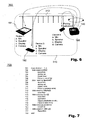
- Fig. 6 shows a section of the conference system 300 of Fig. 3 to illustrate a calibration process that is described in Fig. 7 is shown in more detail.
- Fig. 6 only the local radio network 310 with three terminals 191, 192, 196 and the LMC 140 and the WLAN connection 312 is shown.
- the LMC 140 internally counts the registered devices (Device) as Device 1 to Device n. Accordingly, in the LMC 140 the terminal 191 is counted as device 1, the terminal 192 as device 2 and the terminal 196 as device n. As shown in Fig. 6
- each of the mobile terminals 191-196 (Device 1 to Device n) has as resources at least one microphone a, a speaker b, a display c, and a camera d. Other resources such as battery or other auxiliary resources can be considered.
- the stationary terminal 180, the room camera 130 and the large-screen display 120 can be registered as terminals and integrated accordingly, they can be arbitrarily counted in the range of Device 3 to Device n-1.
- Fig. 7 shows a program line sequence of a process 700 for calibration of terminals according to an embodiment of the invention.
- the process 700 includes program lines 701-723, which are briefly outlined below and otherwise self-explanatory.
- Line 701 initiates a loop that is performed for each device (device) 1 through n and then exits at line 723.
- a command sequence for the microphone Mic [i] of the i-th terminal which extends from line 703 to line 706, is initiated at line 702. Therein, the microphone Mic [i] is first confirmed (line 703), then a normalization (line 704) and a level adjustment (line 705) is made and finally the microphone Mic [i] a place in a microphone array (mic-array) assigned (line 706).
- a command sequence for the loudspeaker Speaker [i] of the i-th terminal is initiated, which extends from line 708 to line 711. It first confirms Speaker Speaker [i] (line 708), then normalizes (line 709) and level adjusts (line 710), and finally becomes loudspeaker Speaker [i] a location in a speaker array. assigned (line 711).
- a command sequence for the display [i] display of the i-th terminal is initiated, which comprises only in line 714 an acknowledgment of the display [i] display.
- a sequence of instructions is initiated for the camera Cam [i] of the i-th terminal, ranging from line 715 to line 718.
- the camera Cam [i] is first confirmed (line 715), then a normalization (line 716) and a white balance adjustment and other settings (line 717) are made, and finally the camera Cam [i] becomes a location in a camera arrangement (cam-array) assigned (line 718).
- a command sequence for auxiliary resources Auxiliaryy [i] of the i-th terminal is introduced, which comprises only in line 720 confirmation of the auxiliary resource Auxiliaryy [i], and in line 721 a command sequence for the battery battery [i] of i -ten terminal device, which includes only in line 722 an acknowledgment of the battery battery [i].
- FIG. 12 is a flowchart of a conference control process 800 according to an embodiment of the invention.
- the stationary terminals are first configured (step 802).
- the configuration of the stationary terminals may include a registration, a determination of location and location (alignment), recognition of basic data of resources such as microphone, speakers, screen, etc.
- step 810 the process passes through a merge point A (step 810) to step 812, in which a mobile terminal is detected, which in subsequent step 814 and then connected in step 816.
- the authorization of the mobile terminal 814 corresponds to a subprocess 900 that is in Fig. 9 is shown in more detail.
- step 818 it is checked whether or not the log-on of mobile terminals is finished (step 818). This means that it is checked whether there are other mobile devices that are recognized, but not yet authorized and connected or their authorization was rejected. As long as the answer is "no" in step 818, the processing returns to the merge point A to register other mobile terminals. If the answer in step 818 is "yes", the process goes to a merge point B (step 820).
- step 822 the process goes to step 822 where resources of the mobile terminals are detected. It should be noted that step 822 in this process 800 corresponds to step 503a in the process described in FIG Fig. 5 shown process 500 corresponds. Thereafter, location and location of the mobile terminals are determined (step 824). This can be done, for example, via an evaluation of the image information of the spatial camera 130.
- step 832 it is checked whether something has changed in resources, location and location of the terminals. It should be noted that this step 832 is repeatedly achieved in the further course of the process, since the resources, location and position of the terminals are repeatedly queried or determined by the end of the conference. The first time this step 832 is reached, the answer will be "yes” since the terminals are first appearing and the situation has apparently changed from the beginning of the process when no terminals were yet logged on. In this case (“yes” in step 832), a suitable surround sound method RKV is selected based on the available terminals and resources (step 834) and the terminals are calibrated in the sense of the selected surround sound method (step 836).
- the calibration is a sub-process that, for example, according to the process 700 in Fig. 7 can correspond. It is understood that even in space already existing, stationary terminals such as the terminal 180 in Fig. 1 can be integrated into the surround sound process.
- step 840 the process goes to a merge point C (step 840).
- the merge point C is also the target point if the answer in step 832 is "no", ie no change has resulted in resources, location and location of the mobile terminals.
- the conference audible information is distributed to the resources, ie the speakers, of the existing and registered terminals according to the selected surround sound method (step 842).
- the selected surround sound method Using the example of a 5.1 surround format, as in Fig. 2 can be shown, for example, the resources in the conference room 100 of Fig.
- Table 1 Assignment of channels in surround format terminal channel role Mobile terminal 191 Left channel L Speaker 251 Mobile terminal 192 Right channel R Speaker 253 Mobile terminal 193 Left surround channel LS Speaker 255 Mobile terminal 194 Right surround channel RS Speaker 254 Mobile terminal 195 Center channel C Speaker 252 Mobile terminal 196 and stationary terminal 180 Subwoofer SW Speaker 256
- microphones and cameras can be assigned.
- a three-dimensional microphone field can be created. This can be useful for locating and spatially separating sound sources in the conference room 100 as well as for further processing and spatial arrangement of the sound signals recorded thereby in a virtual conference room, in particular for remote participants.
- step 852 it is checked whether the conference, for example by the conference manager 151 ( Fig. 1 ) or not (step 852). If the answer in step 852 is yes, all terminals (optionally only the mobile terminals) are disconnected (step 854) and all authorizations (optionally only temporary authorizations) are discarded (step 856), and thereafter the process 800 ends (step 899). If the answer in step 852 is "no", it is further checked whether or not a mobile terminal has been deregistered or not (step 862). This can be z. For example, if a participant leaves the conference early. If the answer in step 862 is "yes", the mobile terminal is disconnected (864) and the authorization discarded (step 866).
- step 870 the process goes to a merge point D (step 870).
- the merge point D is also target point if the answer in step 862 is "no", ie, no logoff occurs.
- step 872 it is still checked whether a new mobile terminal has been added or not (step 872). This can take into account the case that subscribers join the conference later. If the answer is "yes” in step 872, processing of the process returns to the merge point A (step 810) to register the newly-added terminal. If the answer in step 872 is "no", the processing of the process returns to the merge point B (step 820) to again determine the resources, location and location of the mobile terminals and check for changes, etc.
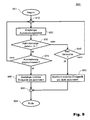
- FIG. 12 shows a flowchart of a sub-process 900 used in the conference control process 800 of FIG Fig. 8 in step 814, for authorizing a terminal according to an embodiment of the invention.
- a merge point E follows (step 910) leading to step 920.
- authorization data is received from the terminal to be authorized. Thereafter, it is checked whether the authorization data is in order or not (step 930). If the answer in step 930 is "no”, it is checked whether or not a predetermined number of attempts have been reached (step 940). If the answer in step 940 is "no”, processing returns to the merge point E to receive authorization data again (step 920) and check (step 930). If the answer in step 940 is "yes”, the terminal is called “unauthorized” is marked (step 950), and the processing leads to a merge point F (step 960), whereupon the sub-process 900 ends (step 999).
- step 930 If the answer in step 930 is "yes”, it is checked whether the authorization is completed or not (step 970). Thus, a multi-level authorization can be realized. If the answer is "no” in step 970, processing returns to the merge point E to again receive and verify authorization data. If the answer is "yes” in step 970, the terminal is marked as “authorized” (step 980), and processing passes to the merge point F (step 960), whereupon the sub-process 900 ends (step 999).
- a local media control unit (LMC) 140 as a stand-alone device in the conference room 100, equipped with standard interfaces (USB, Bluetooth, WLAN,...), Acts as an access point for the terminals in the room, such as smart devices (SD). 191-196.
- LMC local media control unit
- the LMC 140 After logging in or pairing with the mobile terminals 191-196, has information about its resources such as speaker b, video camera d, microphones a, battery level, etc., which are potential candidates for improved media control.
- the in-space resources 180, 130, 120 are configured in the LMC 140 and wired or radio-connected (eg, Bluetooth, Wireless USB, etc.).
- the location (location and location) of the additional mobile devices 191-196 in the conference room 100 is determined.
- the acoustic calibration is performed via a calibration method for a stereo or surround arrangement such. B. with 5.1, 6.1, 7.1 channel surround formats or the like. Similarly, sound sources in the room can be detected according to the surround formats. These signals can then be fed to a "spatial audio" technology, which provides the conditioning for the non-in-room conference participants. With the video cameras, each mobile participant can now be virtually integrated into the conference as a section of the image. The overall picture of the conference is composed virtually from different perspectives.
- the LMC 140 incorporates a pairing of all available resources.
- an evaluation of the available resources and the acoustic and optical calibration and integration of the resources of a video or teleconference takes place.
- the LMC 140 processes for each resource the type of resource, the location of the resource, and assigns the resource the role in surround format (stereo, surround, etc.). Levels and volumes are measured via a calibration procedure at the beginning of the conference.
- the speakers send and the microphones receive the calibration signal.
- the existing cameras deliver the respective video image.
- detection algorithms ensure that each participant has a video image. If such a participant is not or only insufficiently represented, he receives an indication for a better positioning of his camera.
- About one Matching with a pre-stored image can be used to secure the authentication.
- the individual images are used to create a total video conference image, which is offered to any conference participant outside the room.
- the LMC 140 In the authentication process performed at least in part by the LMC 140, all subscribers are registered and allow media streams only to the general resources shared by the moderator 151 (beamer, screen, handsfree, microphones, cameras, etc.) if the moderator authorizes and also allows media streams only to the mobile devices in the room that have been previously identified and authenticated.
- the LMC 140 has a unique identification number that can be read by the mobile devices, for example via a QR code.
- the conference unit initializes an authentication process, and when completed, the LMC 140 sends a secure message to the conferencing system with the data and access permissions of the mobile device, as well as the information about the connected conference participant.
- the participation of internal participants who are known in the enterprise network can be controlled as follows, for example.
- the conference unit locks all resources that are connected in the idle state (projectors, screens, microphones, cameras, telephones, speakers, etc.).
- a user in the room can only gain access after logging in to the LMC 140.
- Authentication occurs in multiple stages as the LMC 140 checks against authentication with the backend services 361-364 of the backend system 360. Basically, you have to authenticate yourself at the conference unit and at the same time (one behind the other) at the LMC 140.
- the cross check is carried out on both sides (LMC and conference unit).
- the conference unit can be arranged in the backend.
- the entire conference traffic can be controlled, for example in the event that two LMCs are involved in a conference process.
- one or more LMCs may be delimited from the conference unit.
- one or more LMCs may be included in the conference unit and / or integrated.
- the Authentication is ultimately done by the conference unit by using the reference information of the LMC. If different authentication results are available, access is denied. Authentication at the LMC via known per se methods such. RFID, bar code, QR tag, NFC, biometric, hand-entered PIN code, camera, etc.
- the persons are identified by means of the data of the mobile terminals 191-196 and / or the data which the LMC 140 generates (Pictures of the person via the connected cameras, voice over the connected microphones, data exchange with the mobile terminal etc., if necessary also with the help of backend services 361-364). Because the LMC 140 itself is connected to the NAC (Network Access Control) system, but in a secure network segment, while the endpoints are located in a different network segment, the secure network segment's data security is ensured at all times. The LMC 140 accordingly secures the two network segments similar to a firewall or a SBC (Session Border Controller), which also allows guest access with reduced profiles.
- NAC Network Access Control
- the advantage of this approach is that the user interaction with the LMC 140 is minimal but the security level is still very high.
- the authentication procedure produces very useful information that enriches the conference and provides useful information to each conference participant.
- Another peculiarity of this concept is that the authorization is limited to the duration of the conference, unless a permanent authorization ("private virtual conference room") has been deposited in the profile of the LMC 140 for the specific participant (eg for moderators who use the room very often). After a respective conference, all formerly connected conference participants are deprived of access authorization to all room resources.
- the participation of participants who attend a conference temporarily or with guest entrances can be controlled, for example, as follows. Based on the underlying concept, they can obtain a temporary individual authorization to use the space resources managed by the LMC 140. In doing so, the moderator can determine certain endpoints, such as those of guest participants, grant individual authorization in conference room 100 for a certain period or for the duration of the conference. For this purpose, he assigns a temporary guest license to the subscriber to be authorized, which is then deposited in the terminal (smart device) of the guest. This can be done by methods known per se, such. Barcode, QR tag, camera or PIN code. The authentication itself is then carried out by methods known per se (RFID, barcode, QR tag, NFC, biometric, manually entered PIN code, camera, etc.) as described above.
- RFID RFID, barcode, QR tag, NFC, biometric, manually entered PIN code, camera, etc.
- AAA data is data that ensures that the specific device is known and permitted on the network to use a service, and that usage can be logged and accounted for by that particular service, such as accessing a terminal to a broadband network.
- Hybrid AAA data is data that includes not only classical authentication data, such as PKI key, password, etc., but also certain user or subscriber profiles and / or histories. That is, the hybrid AAA data include on the one hand already available subscriber credentials, the z. B.
- the backend system 360 of the company for all employees are securely stored (eg PKI key or authentication profiles), and on the other hand temporarily created individual profiles that are stored exclusively locally on the LMC 140 temporarily.
- the LMC 140 ensures that guest authorizations are always limited to room resources and entities shared locally for the meeting room 100, while all other participants 151-159 basically have full access to all resources, including those on any backend servers, according to their respective authorization level.
- a permanent authorization can also be deposited, but this is linked to a "private virtual conference room” and not to a physical LMC, each with associated room resources. This means that even those who can not be locally on-site in the respective conference room are authorized to system resources to access the respective "foreign" room and to control the corresponding LMC.
Landscapes
- Engineering & Computer Science (AREA)
- Signal Processing (AREA)
- Computer Networks & Wireless Communication (AREA)
- Multimedia (AREA)
- Computer Security & Cryptography (AREA)
- General Engineering & Computer Science (AREA)
- Telephonic Communication Services (AREA)
- Two-Way Televisions, Distribution Of Moving Picture Or The Like (AREA)
Abstract
Description
- Die Erfindung betrifft ein Verfahren, eine Vorrichtung und ein System zur Steuerung einer Konferenz.
- Konferenzen gewinnen im betrieblichen Umfeld heutzutage immer mehr an Bedeutung. Oft ist es schwer, vorbereitete Konferenzräume zu buchen, und häufig finden sie auf der Welt in verschiedenen Lokationen statt. Für Gesprächspartner, die zusammen in einem Raum sitzen, ist oft das erforderliche akustische und visuelle Equipment physikalisch nicht im Raum vorhanden oder nur teilweise oder in unzureichender Funktionalität, wie z. B. nur ein Fernseher ohne Kamera und/oder ein Mono-Desktop-Telefon, aber keine zusätzlichen Lautsprecher. Es ist bekannt, dass stereofone Klangwiedergabe die Verständlichkeit und Akzeptanz einer Konferenz deutlich erhöht. Auch kommt es vor, dass eine Kamera schlecht platziert ist oder deren Steuerungsmöglichkeiten unbefriedigend sind, sodass der Raum unzureichend ausgeleuchtet wird und/oder einzelne Konferenzteilnehmer nicht oder nicht gut erfasst werden. Unter den beschriebenen Voraussetzungen leidet auch die Produktivität der Konferenz. Ferner wollen entfernte Teilnehmer, die nicht im Konferenzraum zugegen sind, sondern alleine am eigenen Arbeitsplatz oder im Home Office sitzen oder die mobil unterwegs sind und der Konferenz zugeschaltet sind, wissen, wer an der Konferenz teilnimmt. Heute wird das durch eine kurze Einführung und die verbale Vorstellung der Teilnehmer im Konferenzraum abgewickelt. Man muss sich die Teilnehmer händisch notieren, um die Information präsent zu haben. Im Falle einer Videokonferenz kann man manchmal nur einen Ausschnitt der Beteiligten sehen, so dass die Information nicht für alle Teilnehmer in der Konferenz gleichermaßen vorhanden ist. Teilnehmer, die einzeln teilnehmen und nicht im Konferenzraum sitzen, wählen sich über eine Einwahlnummer ein.
- Aus
US 2013/106976 A1 ist ein Videokonferenzsystem mit einer Konferenzeinheit bekannt, welche mobile Endgeräte in einem Konferenzraum als Peripheriegeräte in der Weise nutzt, dass sie die durch Mikrofone und/oder Kameras der mobilen Endgeräte aufgenommenen Ton- und Bildsignale empfängt. Dabei wird das jeweils lauteste Tonsignal an einen entfernten Teilnehmer gesendet. Die Konferenzeinheit bzw. die Konferenz ist durch die mobilen Endgeräte steuerbar. Zur Vermeidung akustischer Kopplungen zwischen den Mikrofonen der mobilen Endgeräte und der Lautsprechereinheit des Konferenzsystems wird ein Echo-Canceller eingesetzt. Sofern die Konferenz ursprünglich über das mobile Endgerät initiiert war, kann der Teilnehmer danach die Konferenz an die Konferenzeinheit im Konferenzraum übergeben. Nach Übergabe der Konferenz an die Konferenzeinheit werden die Sprachausgabe und Videoausgabe auf die Lautsprecher und Displays der Konferenzeinheit geschaltet. - Es ist eine Aufgabe der vorliegenden Erfindung, ein Verfahren und eine Vorrichtung zur Steuerung in Konferenzen anzugeben, das in der Lage ist, die vorstehenden Nachteile im Stand der Technik wenigstens teilweise zu überwinden. Insbesondere besteht eine Aufgabe der vorliegenden Erfindung darin, ein Verfahren und eine Vorrichtung zur Steuerung einer Telekonferenz anzugeben, das in der Lage ist, die akustische Wiedergabe, insbesondere Sprachverständlichkeit, in einer Telekonferenz zu verbessern, um auch die Effizienz und Produktivität der Konferenz zu steigern. Eine weitere Aufgabe der Erfindung besteht darin, eine Authentifizierung von Gerät und Benutzer, sowie deren eindeutige Zuordnung zu ermöglichen bzw. zu erleichtern und einen kontrollierten Zugriff auf Ressourcen innerhalb und außerhalb des Konferenzraumes, auch für Gast-Geräte, zu gewährleisten.
- Die Aufgabe wird erfindungsgemäß wenigstens in Teilaspekten durch die Merkmale der unabhängigen Ansprüche gelöst. Vorteilhafte Ausführungsformen und Weiterentwicklungen der Erfindung sind in den Unteransprüchen angegeben.
- Gemäß einem Gesichtspunkt der Erfindung wird ein Verfahren vorgeschlagen zur Steuerung einer Konferenz, insbesondere Telekonferenz, mit den Schritten:
- a) Anmelden mobiler Endgeräte von Teilnehmern, die sich in einer für die Teilnehmer gleichen Konferenzumgebung befinden, und
- b) Ansteuern von Ressourcen, insbesondere Lautsprechern, der mobilen Endgeräte in der Weise, dass die Ressourcen mehrerer oder sämtlicher der angemeldeten mobilen Endgeräte als ein Audiosystem kombiniert werden, um akustische Konferenzinformationen im Sinne eines Raumklangverfahrens in der Konferenzumgebung auszugeben.
- Unter einer Telekonferenz wird im Sinne der Erfindung eine Konferenz verstanden, bei der sich mindestens ein Teilnehmer nicht in der Konferenzumgebung befindet. Insbesondere ist damit eine Videokonferenz umfasst. Dabei ist eine Konferenzumgebung als ein vorgegebenes Raumvolumen, das als der Konferenz zugehörig definiert ist, beispielsweise ein Raum oder ein definierter Umkreis um eine Konferenzeinheit, zu verstehen. Ein mobiles Endgerät ist im Sinne der Erfindung ein Endgerät, insbesondere zur Telekommunikation fähiges Endgerät, das zur Mitführung durch eine Person vorgesehen ist, wie etwa ein Smartphone, Laptop, Pad oder dergleichen, im Verlauf der Anmeldung auch als Smart Device bezeichnet. Unter einem Anmelden wird im Sinne der Erfindung ein Erkennen, ggf. Authentifizieren und protokollmäßiges Koppeln (Pairing) mit einer Konferenzinstanz, insbesondere einer lokalen Instanz in der Konferenzumgebung, sodass eine Datenverbindung besteht, verstanden. Die Verbindung kann über eine beliebige Schnittstelle (USB, Ethernet, Infrarot, FireWire, WLAN, ...) hergestellt werden. Der Anmeldevorgang kann von dem Endgerät oder von der Konferenzeinheit ausgehen, im letzteren Fall kann der Anmeldeschritt einen automatischen Erkennungsschritt umfassen oder voraussetzen. Akustische Konferenzinformation ist im Sinne der Erfindung jedweder Klang, ob Sprache, Umgebungsgeräusch, zugeschaltete Audio-Streams etc., die von einer Konferenzeinheit für die Konferenzteilnehmer aufbereitet und bereitgestellt werden. Durch die Wiedergabe der akustischen Konferenzinformation insbesondere von entfernten Konferenzteilnehmern, die sich nicht in der Konferenzumgebung befinden, in der ein Raumklang durch Kombination der angemeldeten mobilen Endgeräte als ein Audiosystem ausgegeben wird, im Sinne eines Raumklangverfahrens wird ein Raumklang für alle im Raum befindlichen Teilnehmer geschaffen. Der Eindruck des Raumklangs ist für einen Konferenzteilnehmer im Raum, also einer gegebenen Konferenzumgebung, umso realistischer, je näher sich der Konferenzteilnehmer an der Position im Raum befindet, auf die der Raumklang hinsichtlich seiner Kalibrierung ausgerichtet und berechnet ist. Diese Kalibrierungsposition kann fix, z.B. im Raumzentrum angeordnet sein, oft definiert durch eine auf einem Tisch aufgebaute Konferenzeinheit, oder der Position im Raum eines jeweils sprechenden Konferenzteilnehmer zugeordnet sein. Die Position des sprechenden Teilnehmers der Konferenz lässt sich beispielsweise aus akustischer Triangulation von an unterschiedlichen mobilen Endgeräten empfangenen Sprachsignalen des sprechenden Konferenzteilnehmers, über eine Auswertung eines oder mehrerer Kamerabilder der Konferenzumgebung des sprechenden Konferenzteilnehmers, Ortung z.B. über GPS, Bluetooth und/oder WLAN des mobilen Endgerätes des sprechenden Teilnehmers oder einer Kombination dieser Verfahren erreichen. In ähnlicher Weise, in der Lautsprecher der mobilen Endgeräte der Konferenzteilnehmer einer gegebenen Konferenzumgebung zu einem Raumklang-Audiosystem zur Ausgabe von Konferenzinformation entfernter Konferenzteilnehmer zusammengeschaltet werden, ist vorgesehen, alternativ oder zusätzlich an den mobilen Endgeräten vorhandene Mikrofone zu einem 3D-Mikrofonfeld derart zusammenzuschalten, dass für von der Konferenzumgebung entfernt platzierte Konferenzteilnehmer einer anderen Konferenzumgebung ein Raumklang der von den Mikrofonen empfangenen Konferenzinformation bereitgestellt werden kann. Bei gegebenen Mikrofonsignalen aus einer Konferenzumgebung kann aus diesen Signalen ein Raumklang in einer anderen Konferenzumgebung erzeugt werden, der u.a. davon abhängt, wieviele und welche mobilen Endgeräte in der anderen Konferenzumgebung zur Verfügung stehen und ob die Kalibrierungsposition in der anderen Konferenzumgebung fixiert ist oder örtlich variable ist. Das Verfahren wird insbesondere durch eine Konferenzeinheit, einen Konferenzserver oder ein Zusatzgerät zur Mediensteuerung (LMC - Local Media Control Unit) ausgeführt. Abhängig von der zur Verfügung stehenden Rechenleistung der LMC und der Nähe der angemeldeten mobilen Endgeräte zueinander können einzelne oder mehrere mobile Endgeräte bei der Erzeugung des Raumklangs und/oder des 3D-Mikrofonfeldes hinsichtlich der Einbeziehung der Ressourcen dieser einzelnen oder mehreren mobile Endgeräte ausgeschlossen sein. Falls beispielsweise zwei mobile Endgeräte unmittelbar nebeneinander angeordnet sind, kann der Lautsprecher eines der beiden dieser Endgeräte von der LCI "ignoriert" oder lediglich als Backup-Lösung im Fall des Ausfallens des Lautsprechers des anderen Endgeräts verwendet werden. Auch können im Fall eines Anrufs auf einem mobilen Endgerät dessen Ressourcen von der LCI freigegeben werden und auf das nächstgelegene andere mobile Endgerät durch Nutzung von dessen Ressourcen verlagert werden. Die Freigabe/Umverteilung kann erfolgen, sobald sich ein mobiles Endgerät innerhalb einer Kugel mit Radius R eines anderen mobilen Endgeräts befindet, das im Mittelpunkt der Kugel angeordnet ist. R kann 10 cm, 20 cm, 30 cm, oder 50 cm sein, wobei bei höherer Dichte an mobilen Endgeräten R kleiner gewählt wird als bei niedriger Dichte an mobilen Endgeräten. Die Einstellung von R kann kontinuierlich, in zeitlichen Intervallen, bei Verlassen/Hinzutreten eines Teilnehmers der Konferenz in die Konferenzumgebung und/oder lediglich zu Beginn einer Konferenz erfolgen Eine Positionierung der mobilen Endgeräte kann zur Berechnung des Raumklangs und/oder des 3D-Mikrofonfeldes kontinuierlich oder in vorgegebenen Intervallen nachgeführt werden. Mit dem erfindungsgemäßen Verfahren können akustische Informationen auch in minimal ausgestatteten Konferenzräumen mit erhöhter Wiedergabequalität für die anwesenden Teilnehmer der Konferenz wiedergegeben werden, da die Ressourcen der anwesenden mobilen Endgeräte zur akustischen Ausgabe (mit-) genutzt werden.
- In einer Weiterbildung des erfindungsgemäßen Verfahrens umfasst das Anmelden ein Authentifizieren des mobilen Endgeräts, wobei das Authentifizieren vorzugsweise wenigstens eine von Maßnahmen umfasst, die aus der Gruppe ausgewählt sind, welche aufweist:
- Verifizieren eines durch das mobile Endgerät aufgenommenen und übermittelten Identifizierungscodes, insbesondere Strich- oder Matrixcodes;
- Abgleichen von Individualdaten, insbesondere im Rahmen einer Bild- und/oder Spracherkennung, Eingabe von Benutzerkennung und/oder Passwort und/oder PIN, einer RFID-Erkennung, eines NFC-Datenaustauschs, einer Erkennung biometrischer Daten, vorzugsweise in Interaktion mit dem mobilen Endgerät;
- Verifizieren einer im Endgerät gespeicherten und durch das Endgerät übermittelten temporären Gastlizenz;
- Aktivieren eines im Endgerät hinterlegten und durch das Endgerät übermittelten permanenten Autorisierungsprofils.
- Eine Gastlizenz oder ein Autorisierungsprofil ist ein individueller Autorisierungscode, der von einem Konferenzmoderator vergeben, per E-Mail oder SMS empfangen werden kann oder dergleichen. Der Identifizierungscode kann im Raum oder an einem das Verfahren ausführenden Gerät angebracht sein oder vom Konferenzleiter zur Verfügung gestellt werden. Die Übertragung erfolgt von dem mobilen Endgerät zu einer lokalen Instanz. Diese Weiterbildung stellt sicher, dass nur authentifizierte Endgeräte angesprochen werden können, eine ungewollte Verwendung wird vermieden. Es sind mehrere Sicherheitsstufen möglich. Durch eine hochwertige Authentifizierungsprozedur können nützliche Informationen entstehen, die die Konferenz anreichern und jedem Teilnehmer zur Verfügung gestellt werden können.
- In einer Weiterbildung des erfindungsgemäßen Verfahrens wird den mobilen Endgeräten nach Authentifizierung ein Zugriff auf Ressourcen innerhalb der Konferenzumgebung ermöglicht. Ressourcen können dabei beispielsweise auch Bildinformationen von Kameras oder Daten aus dem Speicher der mobilen Endgeräte sein, soweit vom Besitzer freigegeben, sowie vom Konferenzsystem bzw. Backend bereitgehaltene Inhalte. Im Rahmen dieser Weiterbildung können nützliche Informationen ausgetauscht werden, und die Konferenz kann dadurch angereichert werden.
- In einer Weiterbildung des erfindungsgemäßen Verfahrens wird der Zugriff am Ende der Konferenz oder bei Verlassen der Konferenzumgebung automatisch entzogen. Dadurch bleiben die virtuellen Konferenzräume sicher und abgeschottet, Zugriff erfolgt nur bei konkreter Teilnahme an einer bestimmten Konferenz, "Mithörer" werden ausgeschlossen. Vorzugsweise wird ein Abmelden des mobilen Endgeräts am Ende der Konferenz oder bei Verlassen der Konferenzumgebung erzwungen. Besonders bevorzugt unterbleibt der Entzug des Zugriffs bei Anmeldung mit einem permanenten Autorisierungsprofil. Dadurch können beispielsweise registrierte Konferenzleiter oder Moderatoren eine Anmelde- und Autorisierungsprozedur bei jeder neuen Konferenz vermeiden.
- In einer Weiterbildung des erfindungsgemäßen Verfahrens werden die akustischen Konferenzinformationen je nach der räumlichen Anordnung der mobilen Endgeräte im Sinne eines Raumklangverfahrens, insbesondere Stereofonie, Quadrofonie, Mehrkanal-Kanal-Surroundklang, Spatial Audio oder dergleichen, mit oder ohne Tieffrequenzkanal, auf die mobilen Endgeräte verteilt. Dabei wird unter einer räumlichen Anordnung der Ort und ggf. die Ausrichtung im Raum verstanden. Gemäß dieser Weiterbildung kann ein natürliches Klangbild erzeugt werden, das auch die Ortung von Schallquellen (Sprechern) ermöglicht, insbesondere wenn entfernte Teilnehmer durch Spatial Audio oder eine ähnliche Technologie entsprechend ihren Positionen in dem auf einer Konferenzleinwand oder dergleichen dargestellten virtuellen visuellen Konferenzraum im akustischen Raum verteilt werden. Das verwendete Raumklangverfahren kann an die Anzahl mobilen Endgeräte angepasst bzw. dementsprechend ausgewählt werden.
- In einer Weiterbildung des erfindungsgemäßen Verfahrens sind ferner die Schritte vorgesehen:
- c) Ermitteln der räumlichen Anordnung der mobilen Endgeräte;
- d) Kalibrieren der mobilen Endgeräte im Sinne des verwendeten Raumklangverfahrens.
- Die Ermittlung der räumlichen Anordnung kann durch Auswertung von Bildinformationen einer Raumkamera oder -Kameraanordnung und/oder von Kameras der angemeldeten Endgeräte erfolgen. Ein Kalibrieren umfasst im Sinne der Erfindung ein Festlegen von Ausgabepegeln für jedes Endgerät, abhängig von Frequenz und (ggf.) Quelle des Signals. Das Kalibrieren umfasst vorzugsweise auch ein Senden und Empfangen von Referenztönen, insbesondere in Relation zu ggf. vorhandenen stationären Endgeräten, durch Lautsprecher und Mikrofone der jeweiligen Endgeräte. Die Schritte c) und d) können zu Beginn der Konferenz, während der Konferenz automatisch in regelmäßigen Abständen (etwa zur Überprüfung der unveränderten räumlichen Anordnung), bei Hinzutreten oder Verlassen von Teilnehmern (d.h., Endgeräten) oder manuell ausgelöst werden. Mit dieser Weiterbildung kann eine Optimierung der Raumklanganwendung erzielt werden.
- In einer Weiterbildung des erfindungsgemäßen Verfahrens werden die durch jedes mobile Endgerät zur Verfügung gestellten Ressourcen, insbesondere Vorhandensein, Art und Eigenschaften von Kameras, Lautsprechern, Mikrofonen, Monitoren, und Batterieladung des Endgeräts, ermittelt. Dadurch kann das verwendete Raumklangverfahren an die Eigenschaften der Ressourcen der mobilen Endgeräte angepasst bzw. dementsprechend ausgewählt werden. Insbesondere kann auch jede Audiokomponente individuell geprüft und ihre Position im Adiobild korrekt ausgepegelt bzw. normiert werden, sodass ein exzellentes Raumklangerlebnis bzw. ein dreidimensionales Mikrofonfeld entsteht.
- In einer Weiterbildung des erfindungsgemäßen Verfahrens werden stationäre Endgeräte, soweit vorhanden, in das Verfahren eingebunden. Dadurch kann auch eine optimale Ressourcenausnutzung erzielt werden. Die Einbindung umfasst im Sinne der Erfindung Anmeldung, Kalibrierung und Ansteuern der stationären Endgeräte, wobei ohne Beschränkung der Allgemeinheit vorgesehen sein kann, dass eine räumliche Position der stationären Endgeräte im Konferenzraum vorab bekannt und gespeichert ist, wobei die Kalibrierung zusammen mit und im Verhältnis zu den mobilen Endgeräten erfolgt, wobei die akustischen Informationen im Sinne des gewählten Raumklangverfahrens optimal auf die mobilen und stationären Endgeräte verteilt werden.
- Ein weiterer Gesichtspunkt der Erfindung betrifft eine Vorrichtung zur Ausführung des vorstehend beschriebenen Verfahrens, wobei die Vorrichtung insbesondere einen Konferenzserver, eine lokale Konferenzeinheit oder eine lokale Mediensteuerungseinheit umfasst, wobei die Vorrichtung vorzugsweise einen Strich- oder Matrixcode zur Verfügung stellt. Die Aufgabe der vorliegenden Erfindung wird durch diese Vorrichtung aus denselben Gründen gelöst, wie diese weiter oben für das entsprechende Verfahren angegeben wurden. Unter einem Matrixcode wird im Sinne der Erfindung ein Pixelcode (QR-Code) verstanden. Ein Matrixcode ist auch als dreidimensionale Struktur wie etwa Hologramm denkbar. Wenn die Vorrichtung einen solchen Code zur Verfügung stellt, kann dieser zur Authentifizierung der mobilen Endgeräte genutzt werden. Der Code kann durch Anbringung auf der Vorrichtung oder durch Anzeige auf einem Bildschirm oder dergleichen zur Verfügung gestellt werden. Der Code kann der Vorrichtung eigen oder für jede Konferenz neu erzeugt werden.
- Ein weiterer Gesichtspunkt der Erfindung betrifft ein System zur Ausführung des vorstehend beschriebenen Verfahrens, wobei das System eine Mediensteuereinheit und wenigstens eine Backend-Einheit aufweist, wobei insbesondere Authentifizierungsschritte des Verfahrens durch Backend-Einheit ausführbar sind. Die Aufgabe der vorliegenden Erfindung wird durch dieses System aus denselben Gründen gelöst, wie diese weiter oben für das entsprechende Verfahren angegeben wurden. Eine solche Auf-/Verteilung hat den Vorteil, dass die Interaktion mit der Mediensteuerung minimal ist und dennoch ein hoher Sicherheitsstandard erreicht werden kann. Backend-Einheiten können zu einem Backend-System zusammengefasst sein, und stehen für alle Server, die beispielsweise Benutzerdaten oder Profile enthalten (etwa PKI-Schlüssel, Authentifizierungsdaten etc. Solche Server können beispielsweise in Vermittlungsanlagen integriert sein.
- Das Verfahren erlaubt eine Erweiterung für Video. So kann durch eine lokale Mediensteuerung oder einen Backend-Service sichergestellt werden, dass von jedem mobilen Teilnehmer ein Bildausschnitt in eine virtuelle Konferenz eingefügt wird. Kameras als Ressource der mobilen Endgeräte können Individualbilder aufnehmen, die anstelle stationärer Kamerabilder verwendet werden. Auch können durch die Kameras der mobilen Endgeräte Bildinformationen erzeugt werden, die, ggf. zusammen mit Bildinformationen einer stationären Kamera oder Kameraanordnung, zur Berechnung einer Abbildung des Konferenzraums verwendet werden, um entfernten Teilnehmern übermittelt zu werden und dort, zusammen mit den Abbildungen anderer Konferenzräume und/oder Teilnehmer, als virtueller Konferenzraum dargestellt zu werden.
- Das Verfahren erlaubt auch die Verwendung von Mikrofonen als weitere Ressource der mobilen Endgeräte. Dadurch kann beispielsweise ein jeweiliger Nahbereichsklang aufgenommen werden, der anstelle oder zusätzlich zu stationären Mikrofonen oder Mikrofonarrays verwendet und abgemischt wird.
- Die Teilnehmer können durch Spatial Audio oder eine vergleichbare Technologie in einem virtuellen akustischen Raum und einem virtuellen visuellen Raum synchronisiert werden.
- Weitere Merkmale, Aufgaben, Vorteile und Einzelheiten der vorliegenden Erfindung werden aus der nachstehenden Beschreibung konkreter Ausführungsbeispiele und ihrer zeichnerischen Darstellung in den beigefügten Figuren noch deutlicher werden. Es versteht sich, dass Merkmale, Aufgaben, Vorteile und Einzelheiten einzelner Ausführungsbeispiele auf andere Ausführungsbeispiele übertragbar sind und auch im Zusammenhang mit den anderen Ausführungsbeispielen als offenbart gelten sollen, soweit dies nicht aus technischen oder naturgesetzlichen Gründen offensichtlich abwegig ist. In diesem Sinne können Merkmale verschiedener Ausführungsbeispiele grundsätzlich stets miteinander kombiniert werden, und die Kombination kann ebenfalls als Ausführungsbeispiel der Erfindung verstanden werden.
- Im Folgenden wird die Erfindung anhand bevorzugter Ausführungsbeispiele und mit Hilfe von Figuren näher beschrieben. Dabei ist bzw. sind
- Fig. 1
- eine Darstellung eines Konferenzraums mit mehreren Teilnehmern und deren mobilen Endgeräten gemäß einem Ausführungsbeispiel der Erfindung;
- Fig. 2
- eine Darstellung eines Prozesses zur Verarbeitung von Audiosignalen gemäß einem Raumklangverfahren;
- Fig. 3
- eine Darstellung eines Konferenzsystems in Form eines Schaltbildes gemäß einem Ausführungsbeispiel der Erfindung;
- Fig. 4
- eine Darstellung eines Ausschnitts des Konferenzsystems von
Fig. 3 ; - Fig. 5
- ein Ablauffolge eines Prozesses zur Anmeldung eines Endgeräts gemäß einem Ausführungsbeispiel der Erfindung;
- Fig. 6
- eine Darstellung eines Ausschnitts des Konferenzsystems von
Fig. 3 ; - Fig. 7
- ein Programmschrittfolge eines Prozesses zur Kalibrierung von Endgeräten gemäß einem Ausführungsbeispiel der Erfindung;
- Fig. 8
- ein Ablaufdiagramm eines Prozesses zur Konferenzsteuerung gemäß einem Ausführungsbeispiel der Erfindung;
- Fig. 9
- ein Ablaufdiagramm eines Autorisierungsschritts in der Konferenzsteuerung von
Fig. 8 gemäß einem Ausführungsbeispiel der Erfindung. - Die Figuren sind rein schematisch und nicht notwendigerweise maßstabsgetreu. Die zeichnerischen Darstellungen und Beschreibungen hiervon sind zur beispielhaften Veranschaulichung des Prinzips der Erfindung gedacht und sollen diese in keiner Weise einschränken.
-
Fig. 1 zeigt einem Konferenzraum 100 gemäß einem Ausführungsbeispiel der Erfindung. Der Konferenzraum 100 verfügt als stationäre Einrichtungen über einen Konferenztisch 110, eine Großbildanzeige 130, eine Raumkamera 140, eine Lokale Mediensteuereinheit (LMC) 140 und ein stationäres Endgerät 180, das im gezeigten Beispiel ein Desktop-Computer ist. In dem Konferenzraum 100 anwesend sind Teilnehmer 151-159, wobei ein Teilnehmer 151 als Konferenzleiter fungiert. Auf dem Konferenztisch 110 sind mobile Endgeräte 191-196 platziert, die jeweils einem oder mehreren der Teilnehmer 151-159 zugeordnet sind. Die Zuordnung zu konkreten Teilnehmern selbst ist für das Verständnis der Erfindung nicht wesentlich. Es sei aber angenommen, dass der Konferenzleiter (Teilnehmer 151) Zugriff auf das stationäre Endgerät 180 hat. Es sei angenommen, dass die Endgeräte 180, 191-196 jeweils über eine Kamera, ein Mikrofon und einen Lautsprecher verfügen. -
Fig. 2 zeigt eine Darstellung eines Prozesses 200 zur Verarbeitung von Audiosignalen gemäß einem an sich bekannten Raumklangverfahren mit fünf Kanälen plus Tieftonkanal (5.1 Surround). - In dem Prozess 200 liefert eine Aufnahme 210 im 5.1-Surround-Format insgesamt sechs Kanäle 211-216. Dabei seien ohne Beschränkung der Allgemeinheit ein erster Kanal 211 als linker (vorderer) Kanal L, ein zweiter Kanal 212 als mittlerer (Center-)Kanal C, ein dritter Kanal 213 als rechter (vorderer) Kanal R, ein vierter Kanal 214 als rechter rückwärtiger (Surround-)Kanal RS, ein fünfter Kanal 215 als linker rückwärtiger (Surround-)Kanal LS und ein sechster Kanal 216 als Tiefklang-(Subwoofer-)Kanal definiert. Der Tiefklangkanal 216 wird zunächst einer Anhebungsstufe 220 zugeführt, um die Signale des Tiefklangkanals 216 um +10dB anzuheben. Die Ausgangssignale der Anhebungsstufe 221, die als Tiefklangeffektsignale (Low Frequency Effects oder LFE) 221 bezeichnet werden, werden einer Addierstufe 230 zugeführt. Die Signale der anderen Kanäle 211-215 werden einer Filterstufe 240 zugeführt, in welcher tiefe Frequenzen abgespalten werden. Die übrig gebliebenen Frequenzen der Kanäle 211-215 werden Hochpassausgängen 241-245 der Filterstufe zugeführt, die abgespaltenen tiefen Frequenzen gesammelt einem Tiefpassausgang 246, der wiederum dem Addierglied 230 zugeführt wird. Die Hochpassausgänge 241-245 werden jeweiligen Breitbandlautsprechern 251-255 zugeführt, und das Summensignal 231 des Addierglieds 230 wird einem Tiefklanglautsprecher (Subwoofer oder SW) 256 zugeführt.
-
Fig. 3 zeigt ein Konferenzsystem 300 in Form eines Schaltbildes gemäß einem Ausführungsbeispiel der Erfindung. - Das Konferenzsystem 300 enthält den Konferenzraum 100, von welchem die Großbildanzeige 120, die Raumkamera 130, die LMC 140 und, stellvertretend für alle anderen, das Endgerät 191 dargestellt sind. Ein lokales Funknetz (z. B. WiFi) ist mit der Bezugsziffer 310 bezeichnet. Das Endgerät 191 ist über eine WLAN-Verbindung 312, die Bestandteil des Funknetzes 312 ist, mit der LMC 140 verbunden. Die Großbildanzeige 120 ist über eine HDMI-Verbindung 314 mit der LMC 140 verbunden. Die Raumkamera 130 ist über eine USB-Verbindung 316 mit der LMC 140 verbunden. Die LMC 140 stellt einen QR-Code 330 zur Verfügung, der auf der Großbildanzeige 120 angezeigt wird. Die LMC 140 ist ferner über eine Ethernet-Verbindung 318 mit einem Firmennetz bzw. Weitbereichsnetz (LAN/WAN) 340 verbunden. Ebenso ist ein Router 350 über eine Ethernet-Verbindung 318 mit dem LAN/WAN 340 verbunden. Der Router 350 ist ferner mit einem Backend-System 360 verbunden, von dem beispielhaft ein Web-Kollaborationsdienst 361, eine UC-Applikation 362, ein Mediendienst 263 und ein OpenScape-Voice-Dienst 364 dargestellt sind. Das Endgerät 191 weist eine Pairing-Applikation 370 auf, die einen Anmeldeprozess 371 durchführt oder anstößt. Der Anmeldeprozess 371 wird als BYOD-(Bring Your Own Device)-Pairing-Prozess unter Verwendung des QR-Codes 330 durchgeführt und wird nachstehend im Zusammenhang mit
Fig. 5 näher beschrieben. - Es versteht sich, dass die Art der Verbindungen 312, 314, 316, 318 nur beispielhaft dargestellt ist. Für jede Verbindung zwischen Geräten kann die geeignetste oder eine von verfügbaren Arten ausgewählt werden.
-
Fig. 4 zeigt eine Darstellung eines Ausschnitts des Konferenzsystems 300 vonFig. 3 zur Verdeutlichung des Anmeldeprozesses 371. Dabei ist nur das Lokale Funknetz 310 mit zwei Endgeräten 191, 192 und der LMC 140 sowie der WLAN-Verbindung 312 gezeigt. - Wie dargestellt, wird der Anmeldeprozess 371 für jedes der Endgeräte 191, 192 durchgeführt (das Gleiche gilt auch für alle anderen Endgeräte, die an der Konferenz beteiligt werden sollen). Im Zuge des BYOD-Pairing-Prozesses 371 erfolgt eine Zuordnung von Anmeldeschlüsseln (sogenannten Pairing Keys) 372 zu Anmeldeidentitäten (sogenannten Pairing IDs) 373, wie es nachstehend anhand der Darstellung in
Fig. 5 genauer beschrieben wird. Die Pairing ID beschreibt das anzumeldende oder angemeldete Gerät eindeutig. Mit dem QR-Code wird der Anmeldevorgang begonnen (Einstieg in den Pairing-Vorgang). -
Fig. 5 zeigt eine Ablauffolge eines Prozesses 500 zur Anmeldung eines Endgeräts gemäß einem Ausführungsbeispiel der Erfindung. - Der Prozess 500 entspricht dem Anmeldeprozess 371 in
Fign. 3 und4 . In einem Schritt 501 erfolgt eine Eingabe des Anmeldeschlüssels (Pairing Keys) 372 in das Endgerät (z. B. eine Smart Device). Im nächsten Schritt 502 wird diese Information über die WLAN-Verbindung 312 an die LMC 140 gesendet. Im darauffolgenden Schritt 503 ordnet die LMC 140 dem jeweiligen Endgerät 191-197 eine interne Anmeldeidentität 373 zu und stellt die Verbindung her. Dabei sendet das jeweilige Endgerät 191-197 in Schritt 503a Informationen über seine internen Ressourcen an die LMC 140, dies sind ein Mikrofon (Mic), ein Lautsprecher (Speaker), eine Kamera (Cam), eine Batterie (Battery) bzw. ein Batterieladezustand sowie Hilfsressourcen (Auxiliaries). Im letzten Schritt 504 vermerkt die LMC 140 diese Information. -
Fig. 6 zeigt einen Ausschnitt des Konferenzsystems 300 vonFig. 3 zur Veranschaulichung eines Kalibrierungsprozesses, der inFig. 7 näher dargestellt ist. InFig. 6 ist nur das Lokale Funknetz 310 mit drei Endgeräten 191, 192, 196 und der LMC 140 sowie der WLAN-Verbindung 312 gezeigt. - Die LMC 140 zählt intern die angemeldeten Endgeräte (engl. Device) als Device 1 bis Device n durch. Demnach wird in der LMC 140 das Endgerät 191 als Device 1, das Endgerät 192 als Device 2 und das Endgerät 196 als Device n gezählt. Gemäß der Darstellung in
Fig. 6 weist jedes der mobilen Endgeräte 191-196 (Device 1 bis Device n) als Ressourcen wenigstens ein Mikrofon a, einen Lautsprecher b, eine Anzeige c und eine Kamera d auf. Es können weitere Ressourcen wie etwa Batterie oder sonstige Hilfsressourcen berücksichtigt werden. Ferner können das stationäre Endgerät 180, die Raumkamera 130 und die Großbildanzeige 120 als Endgeräte angemeldet und entsprechend eingebunden werden, sie können dabei beliebig im Bereich von Device 3 bis Device n-1 gezählt werden. -
Fig. 7 zeigt eine Programmzeilenfolge eines Prozesses 700 zur Kalibrierung von Endgeräten gemäß einem Ausführungsbeispiel der Erfindung. Der Prozess 700 weist Programmzeilen 701-723 auf, die im Folgenden kurz umrissen werden und ansonsten selbsterläuternd sind. - Zeile 701 leitet eine Schleife ein, die für jedes Endgerät (Device) 1 bis n durchgeführt wird und danach in Zeile 723 verlassen wird.
- Wenn sich die Schleife in einem Durchlauf für das i-te Endgerät (Device i) befindet, wird in Zeile 702 eine Befehlsfolge für das Mikrofon Mic[i] des i-ten Endgeräts eingeleitet, die von Zeile 703 bis Zeile 706 reicht. Darin wird zunächst das Mikrofon Mic[i] bestätigt (Zeile 703), wird dann eine Normalisierung (Zeile 704) und eine Pegeleinstellung (Zeile 705) vorgenommen und wird schließlich dem Mikrofon Mic[i] ein Ort in einer Mikrofonanordnung (mic-array) zugewiesen (Zeile 706).
- Sodann wird in Zeile 707 eine Befehlsfolge für den Lautsprecher Speaker[i] des i-ten Endgeräts eingeleitet, die von Zeile 708 bis Zeile 711 reicht. Darin wird zunächst der Lautsprecher Speaker[i] bestätigt (Zeile 708), wird dann eine Normalisierung (Zeile 709) und eine Pegeleinstellung (Zeile 710) vorgenommen und wird schließlich dem Lautsprecher Speaker[i] ein Ort in einer Lautsprecheranordnung (speaker-array) zugewiesen (Zeile 711).
- Danach wird in Zeile 712 eine Befehlsfolge für die Anzeige Display[i] des i-ten Endgeräts eingeleitet, die lediglich in Zeile 714 eine Bestätigung der Anzeige Display[i] umfasst.
- Anschließend wird in Zeile 714 eine Befehlsfolge für die Kamera Cam[i] des i-ten Endgeräts eingeleitet, die von Zeile 715 bis Zeile 718 reicht. Darin wird zunächst die Kamera Cam[i] bestätigt (Zeile 715), wird dann eine Normalisierung (Zeile 716) und eine Einstellung des Weißabgleichs und andere Einstellungen (Zeile 717) vorgenommen und wird schließlich der Kamera Cam[i] ein Ort in einer Kameraanordnung (cam-array) zugewiesen (Zeile 718).
- Schließlich wird in Zeile 719 eine Befehlsfolge für Hilfsressourcen Auxiliaryy[i] des i-ten Endgeräts eingeleitet, die lediglich in Zeile 720 eine Bestätigung der Hilfsressource Auxiliaryy[i] umfasst, und in Zeile 721 eine Befehlsfolge für die Batterie battery[i] des i-ten Endgeräts eingeleitet, die lediglich in Zeile 722 eine Bestätigung der Batterie battery[i] umfasst.
- Die Schleife von Zeilen 702 bis 722 wird so oft durchlaufen, bis i größer als n ist, und dann mit Zeile 723 verlassen.
-
Fig. 8 zeigt ein Ablaufdiagramm eines Prozesses 800 zur Konferenzsteuerung gemäß einem Ausführungsbeispiel der Erfindung. - Nach Beginn oder Aufruf des Prozesses 800 (Schritt 801) werden zunächst die stationären Endgeräte konfiguriert (Schritt 802). Die Konfiguration der stationären Endgeräte kann eine Anmeldung, eine Bestimmung von Ort und Lage (Ausrichtung), Erkennung von Grunddaten der Ressourcen wie Mikrofon, Lautsprecher, Bildschirm etc. umfassen.
- Dann läuft der Prozess über eine Vereinigungsstelle A (Schritt 810) zu Schritt 812, in welchem ein mobiles Endgerät erkannt wird, das im nachfolgenden Schritt 814 autorisiert und danach in Schritt 816 konnektiert wird. Die Autorisierung des mobilen Endgeräts 814 entspricht einem Teilprozess 900, der in
Fig. 9 genauer dargestellt ist. Danach wird geprüft, ob die Anmeldung mobiler Endgeräte beendet ist oder nicht (Schritt 818). Das bedeutet, es wird geprüft, ob es noch weitere mobile Endgeräte gibt, die erkannt, die aber noch nicht autorisiert und konnektiert oder deren Autorisierung abgelehnt wurde. Solange die Antwort in Schritt 818 "nein" ist, springt die Verarbeitung zu der Vereinigungsstelle A zurück, um weitere mobile Endgeräte anzumelden. Wenn die Antwort in Schritt 818 "ja" ist, läuft der Prozess zu einer Vereinigungsstelle B (Schritt 820). - Über die Vereinigungsstelle B läuft der Prozess zu Schritt 822, in welchem Ressourcen der mobilen Endgeräte ermittelt werden. Es ist anzumerken, dass der Schritt 822 in diesem Prozess 800 dem Schritt 503a in dem in
Fig. 5 gezeigten Prozess 500 entspricht. Danach werden Ort und Lage der mobilen Endgeräte ermittelt (Schritt 824). Dies kann beispielsweise über eine Auswertung der Bildinformationen der Raumkamera 130 geschehen. - Sodann wird geprüft, ob sich in Ressourcen, Ort und Lage der Endgeräte etwas geändert hat (Schritt 832). Es ist zu bemerken, dass dieser Schritt 832 im weiteren Prozessverlauf immer wieder erreicht wird, da bis zum Ende der Konferenz Ressourcen, Ort und Lage der Endgeräte immer wieder abgefragt bzw. ermittelt werden. Beim ersten Erreichen dieses Schritts 832 wird die Antwort "ja" sein, da die Endgeräte zum ersten Mal auftreten und sich die Situation gegenüber dem Beginn des Prozesses, als noch keine Endgeräte angemeldet waren, ersichtlich geändert hat. In diesem Fall ("ja" in Schritt 832) wird anhand der vorhandenen Endgeräte und Ressourcen ein geeignetes Raumklangverfahren RKV ausgewählt (Schritt 834) und die Endgeräte im Sinne des gewählten Raumklangverfahrens kalibriert (Schritt 836). Die Kalibrierung ist ein Teilprozess, der beispielsweise gemäß dem Prozess 700 in
Fig. 7 entsprechen kann. Es versteht sich, dass auch im Raum bereits vorhandene, stationäre Endgeräte wie das Endgerät 180 inFig. 1 in das Raumklangverfahren eingebunden werden können. - Danach läuft der Prozess zu einer Vereinigungsstelle C (Schritt 840). Die Vereinigungsstelle C ist auch Zielpunkt ist, wenn die Antwort in Schritt 832 "nein" lautet, d. h., sich in Ressourcen, Ort und Lage der mobilen Endgeräte keine Änderung ergeben hat. Im Anschluss an die Vereinigungsstelle C werden die akustischen Informationen der Konferenz gemäß dem gewählten Raumklangverfahren auf die Ressourcen, d.h., die Lautsprecher, der vorhandenen und angemeldeten Endgeräte verteilt (Schritt 842). Am Beispiel eines 5.1-Surround-Formats, wie es in
Fig. 2 dargestellt ist, können zum Beispiel den Ressourcen im Konferenzraum 100 vonFig. 1 folgende Rollen gemäß nachstehender Tabelle 1 zugewiesen werden:Tabelle 1: Zuweisung von Kanälen im Surround-Format Endgerät Kanal Rolle Mobiles Endgerät 191 Linker Kanal L Lautsprecher 251 Mobiles Endgerät 192 Rechter Kanal R Lautsprecher 253 Mobiles Endgerät 193 Linker Surround-Kanal LS Lautsprecher 255 Mobiles Endgerät 194 Rechter Surround-Kanal RS Lautsprecher 254 Mobiles Endgerät 195 Center-Kanal C Lautsprecher 252 Mobiles Endgerät 196 und Stationäres Endgerät 180 Subwoofer SW Lautsprecher 256 - Entsprechend können Mikrofone und Kameras zugeordnet werden. So kann durch Zusammenschaltung der Ressourcen der Endgeräte auch beispielsweise ein dreidimensionales Mikrofonfeld geschaffen werden. Dies kann zu Ortung und zur räumlichen Trennung von Schallquellen im Konferenzraum 100 sowie zur Weiterverarbeitung und räumlichen Einordnung der hierdurch aufgezeichneten Schallsignale in einem virtuellen Konferenzraum, insbesondere für entfernte Teilnehmer, nützlich sein.
- In vorbestimmten Zeitabständen (Interrupts) wird geprüft, ob die Konferenz, beispielsweise durch den Konferenzleiter 151 (
Fig. 1 ) beendet wurde oder nicht (Schritt 852). Falls die Antwort in Schritt 852 "ja" ist, werden alle Endgeräte (wahlweise nur die mobilen Endgeräte) getrennt (Schritt 854) und werden alle Autorisierungen (wahlweise nur temporäre Autorisierungen) verworfen (Schritt 856), und danach endet der Prozess 800 (Schritt 899). Ist die Antwort in Schritt 852 "nein", wird weiter geprüft, ob ein mobiles Endgerät abgemeldet wurde bzw. eine Abmeldung angefordert wurde oder nicht (Schritt 862). Dies kann z. B. der Fall sein, wenn ein Teilnehmer die Konferenz vorzeitig verlässt. Falls die Antwort in Schritt 862 "ja" ist, wird das mobile Endgerät getrennt (864) und die Autorisierung verworfen (Schritt 866). Danach läuft der Prozess zu einer Vereinigungsstelle D (Schritt 870). Die Vereinigungsstelle D ist auch Zielpunkt ist, wenn die Antwort in Schritt 862 "nein" lautet, d. h., keine Abmeldung erfolgt. Schließlich wird noch geprüft, ob ein neues mobiles Endgerät hinzugekommen ist oder nicht (Schritt 872). Dadurch kann der Fall berücksichtigt werden, dass Teilnehmer später zu der Konferenz hinzutreten. Falls die Antwort in Schritt 872 "ja" ist, läuft die Verarbeitung des Prozesses zur Vereinigungsstelle A zurück (Schritt 810), um das neu hinzugekommene Endgerät anzumelden. Falls die Antwort in Schritt 872 "nein" ist, läuft die Verarbeitung des Prozesses zur Vereinigungsstelle B zurück (Schritt 820), um erneut die Ressourcen, Ort und Lage der mobilen Endgeräte zu ermitteln und auf Änderungen zu prüfen, etc. -
Fig. 9 zeigt ein Ablaufdiagramm eines Teilprozesses 900, der in dem Konferenzsteuerungsprozess 800 vonFig. 8 in Schritt 814 aufgerufen wird, zur Autorisierung eines Endgeräts gemäß einem Ausführungsbeispiel der Erfindung. - Auf den Beginn bzw. Aufruf des Teilprozesses 900 (Schritt 901) folgt zunächst eine Vereinigungsstelle E (Schritt 910), die zu Schritt 920 führt. In Schritt 920 werden Autorisierungsdaten von dem zu autorisierenden Endgerät empfangen. Danach wird geprüft, ob die Autorisierungsdaten in Ordnung sind oder nicht (Schritt 930). Falls die Antwort in Schritt 930 "nein" ist, wird geprüft, ob eine vorab festgelegte Anzahl von Versuchen erreicht wurde oder nicht (Schritt 940). Falls die Antwort in Schritt 940 "nein" ist, springt die Verarbeitung zu der Vereinigungsstelle E zurück, um erneut Autorisierungsdaten zu empfangen (Schritt 920) und zu prüfen (Schritt 930). Falls die Antwort in Schritt 940 "ja" ist, wird das Endgerät als "nicht autorisiert" markiert (Schritt 950), und die Verarbeitung führt zu einer Vereinigungsstelle F (Schritt 960), woraufhin der Teilprozess 900 endet (Schritt 999).
- Falls die Antwort in Schritt 930 "ja" ist, wird geprüft, ob die Autorisierung abgeschlossen ist oder nicht (Schritt 970). Damit kann eine mehrstufige Autorisierung realisiert werden. Falls die Antwort in Schritt 970 "nein" ist, springt die Verarbeitung zu der Vereinigungsstelle E zurück, um erneut Autorisierungsdaten zu empfangen und zu prüfen. Falls die Antwort in Schritt 970 "ja" ist, wird das Endgerät als "autorisiert" markiert (Schritt 980), und die Verarbeitung führt zu der Vereinigungsstelle F (Schritt 960), woraufhin der Teilprozess 900 endet (Schritt 999).
- Es versteht sich, dass alle Prozesse und Teilprozesse dieser Anmeldung als Verfahren im Sinne der Erfindung zu verstehen sind. Vereinigungsstellen A, B, C, D, E, F im Prozessablauf sind virtuelle Prozessschritte, die lediglich als Sprungadresse dienen, aber sonst keine Funktion haben. Die Ausführung der Verfahren kann in der LMC 140 allein, im Dialog mit den jeweiligen Endgeräten 180, 191-196 und/oder unter Einbezug weiterer Dienste wie etwa im Backend-System 360 erfolgen.
- In der vorliegenden Anmeldung wurde anhand der
Fign. 1-9 ein Verfahren zur Steuerung einer Konferenz, eine Vorrichtung und ein System zur Ausführung des Verfahrens beschrieben. Die Erfindung beschreibt demnach ein Verfahren, wie vorhandene Ressourcen wie etwa Smartphones, Laptops, Smartpads etc. so miteinander kombiniert werden und gesteuert werden können, dass ein möglichst perfekter akustischer und optischer Konferenzraum entsteht. Eine lokale Mediensteuereinheit (LMC) 140 als eigenständiges Gerät im Konferenzraum 100, ausgestattet mit Standard- Schnittstellen (USB, Bluetooth, WLAN, ...), fungiert als Access-Point für die im Raum befindlichen Endgeräte wie etwa Smart-Devices (SD) 191-196. Dazu werden die Lautsprecher b, Mikrofone a und Kameras d etc. über die LMC 140 synchronisiert, kalibriert und angesteuert. Es wird ein Pairing zwischen der LMC 140 und den mobilen Endgeräten 191-196 durchgeführt, was z. B. durch die Aufnahme eines auf der LMC 140 angebrachten QR- Codes erfolgen kann. Die LMC 140 hat nach der Anmeldung bzw. nach dem Pairing mit den mobilen Endgeräten 191-196 die Information über deren Ressourcen wie Lautsprecher b, Videokamera d, Mikrofone a, Batteriestand etc., die potentielle Kandidaten für eine verbesserte Medienkontrolle darstellen. Die im Raum stationären Ressourcen 180, 130, 120 sind in der LMC 140 konfiguriert und entsprechend verdrahtet oder über Funk angebunden (z. B. Bluetooth, Wireless USB, etc.). Die Lokation (Ort und Lage) der zusätzlichen mobilen Geräte 191-196 im Konferenzraum 100 wird ermittelt. Dies kann beispielsweise durch einen Algorithmus über Senden und Empfangen von Tönen in Referenz zu den vorhandenen stationären Geräten 180, 130, 120 durchgeführt werden. Die akustische Kalibrierung erfolgt über ein Kalibrierungsverfahren für eine Stereo- oder Surround-Anordnung wie z. B. mit den 5.1-, 6.1-, 7.1-Kanal-Surround-Formaten oder dergleichen. Ähnlich können Schallquellen im Raum gemäß den Surround-Formaten erfasst werden. Diese Signale können dann einer "Spatial-Audio"-Technologie zugeführt werden, die die Aufbereitung für die nicht im Raum befindlichen Konferenzteilnehmer anbietet. Bei den Videokameras kann nun jeder mobile Teilnehmer als Bildausschnitt in die Konferenz virtuell integriert werden. Das Gesamtbild der Konferenz wird virtuell aus den verschiedenen Perspektiven zusammengesetzt. - Somit bindet die LMC 140 über ein Pairing alle vorhandenen Ressourcen ein. Insbesondere erfolgt eine Auswertung der vorhandenen Ressourcen und die akustische wie optische Kalibrierung und Einbeziehung der Ressourcen einer Video- bzw. Telekonferenz. Die LMC 140 verarbeitet für jede einzelne Ressource die Art der Ressource, den Ort der Ressource und ordnet der Ressource die Rolle im Raumklangformat (Stereo, Surround etc.) zu. Pegel und Lautstärken werden über ein Kalibrierungsverfahren am Beginn der Konferenz ausgemessen. Dabei senden die Lautsprecher und empfangen die Mikrofone das Kalibrierungssignal. Die vorhandenen Kameras liefern das jeweilige Videobild. Anhand der kontextuellen Informationen (im Backend und durch die Pairing-Information) wird über Erkennungsalgorithmen sichergestellt, dass von jedem Teilnehmer ein Videobild vorhanden ist. Ist ein solcher Teilnehmer nicht oder nur unzureichend dargestellt, erhält er einen Hinweis für eine bessere Positionierung seiner Kamera. Über einen Abgleich mit einem vorab gespeicherten Bild kann die Authentifizierung gesichert werden. Aus den Einzelbildern wird ein Gesamtvideokonferenzbild erzeugt, das jedem nicht im Raum befindlichen Konferenzteilnehmer angeboten wird.
- In dem Authentifizierungsverfahren, das von der LMC 140 wenigstens teilweise durchgeführt wird, werden alle Teilnehmer registriert und Medienströme nur zu den von dem Moderator 151 freigegebenen allgemeinen Ressourcen zulässt (Beamer, Bildschirm, Freisprecheinrichtung, Mikrofone, Kameras, etc.), wenn der Moderator autorisiert ist und ebenso Medienströme nur zu den mobilen Geräten im Raum erlaubt, die sich vorher identifiziert haben und authentisiert wurden. Die LMC 140 weist eine eindeutige Identifikationsnummer auf, die von den mobilen Geräten, beispielsweise über einen QR-Code, gelesen werden kann. Die Konferenzeinheit initialisiert einen Authentifizierungsvorgang, und wenn diese abgeschlossen ist, sende die LMC 140 eine gesicherte Meldung an das Konferenzsystem mit den Daten und Zugangsberechtigungen des mobilen Geräts, als auch die Information über den zugeschalteten Konferenzteilnehmer.
- Die Teilnahme von internen Teilnehmern, die im Enterprise-Netzwerk bekannt sind (also beispielsweise Mitarbeiter), kann beispielsweise wie folgt gesteuert werden. Die Konferenzeinheit sperrt im Ruhezustand alle Ressourcen, die angeschlossen sind (Beamer, Bildschirme, Mikrofone, Kameras, Telefone, Lautsprecher, etc.). Ein Nutzer im Raum kann nur dann Zugriff erhalten, wenn er sich an der LMC 140 angemeldet hat. Das Authentifizieren erfolgt in mehreren Stufen, da die LMC 140 mit den Backend-Diensten 361-364 des Backend-Systems 360 das Authentifizieren gegenprüft. Grundsätzlich muss man sich an der Konferenzeinheit und gleichzeitig (zeitlich hintereinander) an der LMC 140 authentifizieren. Der Quercheck erfolgt auf beiden Seiten (LMC und Konferenzeinheit). Die Konferenzeinheit kann im Backend angeordnet sein. Im Backend kann der gesamt Konferenzverkehr gesteuert werden, beispielsweise für den Fall, dass zwei LMCs in einen Konferenzvorgang eingebunden sind. Insofern können eine oder mehrere LMCs von der Konferenzeinheit abgegrenzt sein. Alternativ oder zusätzlich können eine oder mehrere LMCs in die Konferenzeinheit aufgenommen und/oder integriert sein. Die Authentifizierung wird letztendlich von der Konferenzeinheit vorgenommen, indem die Referenzinformation der LMC mitverwendet wird. Sollten unterschiedliche Authentifizierungsergebnisse vorliegen, wird der Zugang verweigert. Die Authentifizierung am LMC erfolgt über an sich bekannte Verfahren, wie z. B. RFID, Strichcode, QR-Tag, NFC, Biometrisch, von Hand einzugebender PIN-Code, Kamera, etc. Die Personen werden mittels der Daten der mobilen Endgeräte 191-196 und/oder der Daten, die die LMC 140 erzeugt, identifiziert (Bildmaterial der Person über die angeschlossenen Kameras, Sprache über die angeschlossenen Mikrofone, Datenaustausch mit dem mobilen Endgerät etc., erforderlichenfalls auch unter Zuhilfenahme von Backend-Diensten 361-364). Da die LMC 140 selbst an dem NAC-(Network Access Control)-System angeschlossen ist, jedoch in einem sicheren Netzsegment, während die Endpunkte in einem anderen Netzsegment angeordnet werden, ist jederzeit die Datensicherheit des sicheren Netzsegments gewährleistet. Das LMC 140 schottet entsprechend die beiden Netzsegmente ähnlich wie eine Firewall oder ein SBC (Session Border Controller) ab, wodurch auch Gastzugänge mit reduzierten Profilen möglich werden. Der Vorteil dieses Vorgehens liegt darin, dass die Benutzer-Interaktion mit der LMC 140 minimal, das Sicherheitsniveau trotzdem sehr hoch ist. Durch die Authentifizierungsprozedur entstehen sehr nützliche Informationen, die die Konferenz anreichern und jedem Konferenzteilnehmer nützliche Informationen zur Verfügung stellen. Eine weitere Besonderheit dieses Konzepts ist es, dass die Autorisierung auf die Dauer der Konferenz beschränkt wird, es sei denn, eine Permanent-Autorisierung ("privater virtueller Konferezraum") ist im Profil der LMC 140 für den spezifischen Teilnehmer hinterlegt worden (z. B. für Moderatoren, die den Raum sehr oft nutzen). Nach einer jeweiligen Konferenz wird allen vormals verbundenen Konferenzteilnehmer die Zugriffsautorisierung zu allen Raum-Ressourcen wieder entzogen.
- Die Teilnahme von Teilnehmern, die einer Konferenz temporär bzw. mit Gast-Zugängen beiwohnen, kann beispielsweise wie folgt gesteuert werden. Diese können nach dem zugrundeliegenden Konzept eine temporäre Individualautorisierung zur Nutzung der über die LMC 140 verwalteten Raumressourcen erhalten. Dabei kann der Moderator bestimmten Endpunkten, etwa solchen von Gast-Teilnehmern, im Konferenzraum 100 für einen bestimmten Zeitraum oder für die Dauer der Konferenz eine Individualautorisierung gewähren. Dazu weist er dem zu autorisierenden Teilnehmer eine temporäre Gastlizenz zu, die darauf im Endgerät (Smart Device) des Gastes hinterlegt wird. Dies kann über an sich bekannte Verfahren vorgenommen werden, wie z. B. Strichcode, QR-Tag, Kamera oder PIN-Code. Die Authentifizierung selbst erfolgt danach über an sich bekannte Verfahren (RFID, Strichcode, QR-Tag, NFC, Biometrisch, von Hand einzugebender PIN-Code, Kamera, etc.) wie oben beschrieben.
- Ein Vorteil der beschriebenen Steuerungsverfahren liegt in der schnellen und sicheren Korrelation der "hybriden" AAA-(Authentification Authorization Accounting)-Daten. AAA-Daten sind Daten, die sicherstellen, dass das spezifische Gerät im Netz bekannt und zugelassen ist, um einen Dienst zu nutzen, und dass die Nutzung den jeweiligen Dienst protokolliert und damit abgerechnet werden kann, wie beim Zugang eines Endgeräts zu einem Breitbandnetz. Hybride AAA-Daten sind Daten, die nicht nur klassische Authentifizierungsdaten, wie etwa PKI-Schlüssel, Passwort etc. umfassen, sondern auch bestimmte User- oder Teilnehmerprofile und/oder -historien. D. h., die hybriden AAA-Daten umfassen einerseits bereits verfügbare Teilnehmer-Credentials, die z. B. vom Backend-System 360 der Firma für alle Mitarbeiter sicher hinterlegt sind (z. B. PKI-Schlüssel oder Authentifizierungsprofile), und andererseits temporär angelegte Individualprofile, die ausschließlich lokal auf der LMC 140 temporär hinterlegt werden. Die LMC 140 stellt sicher, dass eine Gastautorisierung jederzeit auf Raumressourcen und lokal für den Besprechungsraum 100 freigegebene Entitäten begrenzt werden, während alle anderen Teilnehmer 151-159 grundsätzlich vollen Zugriff auf alle Ressourcen, auch solche auf eventuellen Backendservern, gemäß ihrem jeweiligen Autorisierungsniveau besitzen. Für alle "Nicht-Gast"-Konferenzteilnehmer kann darüber hinaus eine Permanent-Autorisierung hinterlegt werden, die allerdings an einen "privaten virtuellen Konferenzraum" und nicht an eine physikalische LMC mit jeweils verbundenen Raum-Ressourcen gebunden ist. Damit sind auch die, die nicht im jeweiligen Konferenzraum lokal vor Ort sein können, autorisiert, auf Systemressourcen im jeweiligen "fremden" Raum zuzugreifen und die entsprechende LMC zu steuern.
- Wie bereits vor der detaillierten Figurenbeschreibung ausgeführt, können die unter Bezug auf die dargestellten Ausführungsformen beschriebenen Merkmale der Erfindung auch bei anderen Ausführungsformen der Erfindung vorhanden sein, außer wenn es anders angegeben ist oder sich aus technischen Gründen von selbst verbietet.
-
- 100
- Konferenzraum (Konferenzumgebung)
- 110
- Konferenztisch
- 120
- Großbildanzeige
- 130
- Raumkamera
- 140
- Lokale Mediensteuereinheit (LMC)
- 151-159
- Teilnehmer
- 180
- stationäres Endgerät
- 191-196
- mobile Endgeräte
- 200
- Klangwiedergabeprozess
- 210
- Mehrkanal-Aufnahme (5.1 Surround)
- 211-216
- Kanäle (L, C, R, RS, LS, SW)
- 220
- Tiefanhebungsstufe
- 221
- LFE-Ausgang
- 230
- Addierstufe
- 231
- Ausgang
- 240
- Filterstufe
- 241-245
- Hochpass-Ausgänge
- 246
- Tiefpass-Ausgang
- 251-256
- Lautsprecher (L, C, R, RS, LS, SW)
- 300
- Konferenzsystem
- 310
- Lokales Funknetz
- 312
- WLAN-Verbindung
- 314
- HDMI-Verbindung
- 316
- USB-Verbindung
- 330
- Identifizierungscode (QR-Code)
- 340
- LAN/WAN
- 350
- Router
- 360
- Backend-System
- 361
- Backend-Dienst: Web-Kollaboration
- 362
- Backend-Dienst: UC-Apps
- 363
- Backend-Dienst: Mediendienste
- 364
- Backend-Dienst: OpenSpace-Sprachdienst
- 370
- Pairing-Applikation
- 371
- Anmeldeprozess
- 372
- Anmeldeschlüssel (Pairing Key)
- 373
- Anmelde-Identität (Pairing ID)
- 500
- Anmeldeprozess (Pairing-Prozess)
- 501-504
- Prozessschritte
- 700
- Kalibrierungsprozess
- 701-723
- Prozessschritte
- 800
- Konferenzsteuerungsprozess
- 801-899
- Prozessschritte
- 900
- Authentifizierungsprozess
- 901-999
- Prozessschritte
- a
- Endgerät-Ressource: Mikrofon
- b
- Endgerät-Ressource: Lautsprecher
- c
- Endgerät-Ressource: Anzeige/Bildschirm
- d
- Endgerät-Ressource: Kamera
- A
- Vereinigungsstelle im Prozessablauf
- AAA
- Authentifizierung, Autorisierung und Abrechnung (Authentication Authorization Accounting)
- B
- Vereinigungsstelle im Prozessablauf
- BYOD
- Bring-dein-eigenes-Gerät (Bring Your Own Device)
- C
- Vereinigungsstelle im Prozessablauf
- C
- Mitten-(Center-)Kanal
- D
- Vereinigungsstelle im Prozessablauf
- E
- Vereinigungsstelle im Prozessablauf
- F
- Vereinigungsstelle im Prozessablauf
- L
- Linker Kanal
- LAN
- Nahbereichsnetz bzw. Firmennetz (Local Area Network)
- LFE
- Tiefklangeffekte (Low Frequency Effects)
- LS
- Linker rückwärtiger (Surround-)Kanal
- LMC
- Lokale Mediensteuereinheit (Local Media Control Unit)
- NAC
- Netzwerk-Zuggangssteuerung (Network Access Control)
- NFC
- Nahfeldkommunikation (Near Field Communication)
- PIN
- Persönliche Identifikationsnummer (Personal Identification Number)
- R
- Rechter Kanal
- RFID
- Funkwellen-Identifizierung (adio Frequence Identification)
- RKV
- Raumklangverfahren
- RS
- Rechter rückwärtiger (Surround)-Kanal
- SBC
- Session Border Controller
- SD
- Intelligentes Gerät (Smart Device)
- SMS
- Kurznachricht(-endienst) (Short Message Service)
- SW
- Tieffrequenz-Lautsprecher (Subwoofer)
- USB
- Universeller Serieller Bus (Universal Serial Bus)
- WAN
- Weitbereichsnetz, Internet (Wide Area Network)
- WLAN
- Drahtloses LAN (Wireless LAN)
- Die vorstehende Liste ist integraler Bestandteil der Beschreibung.
Claims (10)
- Verfahren zur Steuerung einer Konferenz, insbesondere Telekonferenz, mit den Schritten:a) Anmelden mobiler Endgeräte (191-196) von Teilnehmern (151-159), die sich in einer für die Teilnehmer (151-159) gleichen Konferenzumgebung (100) befinden, undb) Ansteuern von Ressourcen, insbesondere Lautsprechern (b), der mobilen Endgeräte (191-196), in der Weise, dass die Ressourcen mehrerer oder sämtlicher der angemeldeten mobilen Endgeräte (191-196) als ein Audiosystem kombiniert werden, um akustische Konferenzinformationen im Sinne eines Raumklangverfahrens in der Konferenzumgebung (100) auszugeben.
- Verfahren gemäß Anspruch 1, dadurch gekennzeichnet, dass das Anmelden ein Authentifizieren des mobilen Endgeräts (191-196) umfasst, wobei das Authentifizieren vorzugsweise wenigstens eine von Maßnahmen umfasst, die aus der Gruppe ausgewählt sind, welche aufweist:- Verifizieren eines durch das mobile Endgerät (191-196) aufgenommenen und übermittelten Identifizierungscodes (330), insbesondere Strich- oder Matrixcodes;- Abgleichen von Individualdaten, insbesondere im Rahmen einer Bild- und/oder Spracherkennung, Eingabe von Benutzerkennung und/oder Passwort und/oder PIN, einer RFID-Erkennung, eines NFC-Datenaustauschs, einer Erkennung biometrischer Daten, vorzugsweise in Interaktion mit dem mobilen Endgerät (191-196);- Verifizieren einer im Endgerät (191-196) gespeicherten und durch das Endgerät (191-196) übermittelten temporären Gastlizenz;- Aktivieren eines im Endgerät (191-196) hinterlegten und durch das Endgerät (191-196) übermittelten permanenten Autorisierungsprofils.
- Verfahren gemäß Anspruch 2, dadurch gekennzeichnet, dass den mobilen Endgeräten (191-196) nach Authentifizierung ein Zugriff auf Ressourcen innerhalb der Konferenzumgebung (100) ermöglicht wird.
- Verfahren gemäß Anspruch 3, dadurch gekennzeichnet, dass der Zugriff am Ende der Konferenz oder bei Verlassen der Konferenzumgebung (100) automatisch entzogen wird, wobei vorzugsweise ein Abmelden des mobilen Endgeräts (191-196) erzwungen wird, wobei besonders bevorzugt der Entzug des Zugriffs bei Anmeldung mit einem permanenten Autorisierungsprofil unterbleibt.
- Verfahren gemäß einem der vorstehenden Ansprüche, dadurch gekennzeichnet, dass die akustischen Konferenzinformationen je nach der räumlichen Anordnung der mobilen Endgeräte (191-196) im Sinne des Raumklangverfahrens, insbesondere Stereofonie, Quadrofonie, Mehrkanal-Kanal-Surroundklang, Spatial Audio oder dergleichen, mit oder ohne Tieffrequenzkanal, auf die mobilen Endgeräte (191-196) verteilt werden.
- Verfahren gemäß Anspruch 5, weiter gekennzeichnet durch die Schritte:c) Ermitteln der räumlichen Anordnung der mobilen Endgeräte (191-196);d) Kalibrieren der mobilen Endgeräte (191-196) im Sinne des verwendeten Raumklangverfahrens, wobei das Kalibrieren vorzugsweise ein Senden und Empfangen von Referenztönen, umfasst.
- Verfahren gemäß Anspruch 5 oder 6, dadurch gekennzeichnet, dass die durch jedes mobile Endgerät (191-196) zur Verfügung gestellten Ressourcen, insbesondere Vorhandensein, Art und Eigenschaften von Kameras (d), Lautsprechern (b), Mikrofonen (a), Monitoren (c), und Batterieladung des Endgeräts, ermittelt werden.
- Verfahren gemäß einem der Ansprüche 5 bis 7, dadurch gekennzeichnet, dass stationäre Endgeräte (180, 120, 130), soweit vorhanden, in das Verfahren eingebunden werden.
- Vorrichtung (140) zur Ausführung des Verfahrens nach einem der vorstehenden Ansprüche, wobei die Vorrichtung insbesondere einen Konferenzserver, eine lokale Konferenzeinheit oder eine lokale Mediensteuerungseinheit umfasst, wobei die Vorrichtung vorzugsweise einen Strich- oder Matrixcode zur Verfügung stellt.
- System (300) zur Ausführung des Verfahrens nach einem der Ansprüche 1 bis 8, wobei das System eine Mediensteuereinheit (140) und wenigstens eine Backend-Einheit (361-364) aufweist, wobei insbesondere Authentifizierungsschritte des Verfahrens durch die Backend-Einheit (361-364) ausführbar sind.
Applications Claiming Priority (1)
| Application Number | Priority Date | Filing Date | Title |
|---|---|---|---|
| DE102014004071.2A DE102014004071A1 (de) | 2014-03-20 | 2014-03-20 | Verfahren, Vorrichtung und System zur Steuerung einer Konferenz |
Publications (3)
| Publication Number | Publication Date |
|---|---|
| EP2922237A1 true EP2922237A1 (de) | 2015-09-23 |
| EP2922237B1 EP2922237B1 (de) | 2021-02-17 |
| EP2922237B8 EP2922237B8 (de) | 2021-03-31 |
Family
ID=52629351
Family Applications (1)
| Application Number | Title | Priority Date | Filing Date |
|---|---|---|---|
| EP15000584.1A Not-in-force EP2922237B8 (de) | 2014-03-20 | 2015-03-02 | Verfahren, Vorrichtung und System zur Steuerung einer Konferenz |
Country Status (4)
| Country | Link |
|---|---|
| US (3) | US9866699B2 (de) |
| EP (1) | EP2922237B8 (de) |
| CN (1) | CN104935869B (de) |
| DE (1) | DE102014004071A1 (de) |
Cited By (2)
| Publication number | Priority date | Publication date | Assignee | Title |
|---|---|---|---|---|
| WO2020232865A1 (zh) * | 2019-05-21 | 2020-11-26 | 平安科技(深圳)有限公司 | 会议分角色语音合成方法、装置、计算机设备和存储介质 |
| US20230300251A1 (en) * | 2021-09-07 | 2023-09-21 | Verizon Patent And Licensing Inc. | Systems and methods for videoconferencing with spatial audio |
Families Citing this family (21)
| Publication number | Priority date | Publication date | Assignee | Title |
|---|---|---|---|---|
| US9591049B2 (en) | 2014-09-16 | 2017-03-07 | Inemsoft, Inc. | Systems and methods of managing communication endpoints |
| TWI534634B (zh) * | 2015-01-29 | 2016-05-21 | 台達電子工業股份有限公司 | 主動式資料推送系統及主動式資料推送方法 |
| US11171941B2 (en) * | 2015-02-24 | 2021-11-09 | Nelson A. Cicchitto | Mobile device enabled desktop tethered and tetherless authentication |
| EP3335418A1 (de) | 2015-08-14 | 2018-06-20 | PCMS Holdings, Inc. | System und verfahren für telepräsenz mit mehreren ansichten in der erweiterten realität |
| WO2017172528A1 (en) | 2016-04-01 | 2017-10-05 | Pcms Holdings, Inc. | Apparatus and method for supporting interactive augmented reality functionalities |
| CN106851174B (zh) * | 2016-12-26 | 2020-02-21 | 苏州科达科技股份有限公司 | 虚拟会议室创建方法及装置、召开视频会议的方法及装置 |
| US10074371B1 (en) * | 2017-03-14 | 2018-09-11 | Amazon Technologies, Inc. | Voice control of remote device by disabling wakeword detection |
| EP3635949B1 (de) | 2017-06-09 | 2025-08-27 | InterDigital VC Holdings, Inc. | Räumlich getreue telepräsenz mit unterstützung von unterschiedlichen geometrien und beweglichen benutzern |
| US10757507B2 (en) * | 2018-02-13 | 2020-08-25 | Ppip, Llc | Sound shaping apparatus |
| US10979806B1 (en) * | 2018-05-03 | 2021-04-13 | Apple Inc. | Audio system having audio and ranging components |
| US11539844B2 (en) * | 2018-09-21 | 2022-12-27 | Dolby Laboratories Licensing Corporation | Audio conferencing using a distributed array of smartphones |
| US20220405492A1 (en) * | 2019-07-22 | 2022-12-22 | wordly, Inc. | Systems, methods, and apparatus for switching between and displaying translated text and transcribed text in the original spoken language |
| US11088861B2 (en) | 2019-08-16 | 2021-08-10 | Logitech Europe S.A. | Video conference system |
| US11095467B2 (en) | 2019-08-16 | 2021-08-17 | Logitech Europe S.A. | Video conference system |
| US11038704B2 (en) * | 2019-08-16 | 2021-06-15 | Logitech Europe S.A. | Video conference system |
| US11258982B2 (en) | 2019-08-16 | 2022-02-22 | Logitech Europe S.A. | Video conference system |
| WO2021064784A1 (ja) * | 2019-09-30 | 2021-04-08 | シャープNecディスプレイソリューションズ株式会社 | 設備管理装置、設備管理方法、及びプログラム |
| US11582423B2 (en) * | 2020-05-12 | 2023-02-14 | True Meeting Inc. | Virtual 3D communications with actual to virtual cameras optical axes compensation |
| US12231406B2 (en) | 2022-10-21 | 2025-02-18 | Bank Of America Corporation | System and methods for cloud-based virtual private secured contained communication portal |
| US20250119688A1 (en) * | 2023-10-09 | 2025-04-10 | Dell Products, L.P. | Audio management in a conference room using a video bar |
| US12500786B1 (en) | 2023-12-21 | 2025-12-16 | Zoom Communications, Inc. | Cloud-based audio conference session transfer |
Citations (5)
| Publication number | Priority date | Publication date | Assignee | Title |
|---|---|---|---|---|
| US20040162062A1 (en) * | 2003-02-13 | 2004-08-19 | Samsung Electronics Co., Ltd. | Method of providing Karaoke service to mobile terminals using a wireless connection between the mobile terminals |
| US20090264114A1 (en) * | 2008-04-22 | 2009-10-22 | Jussi Virolainen | Method, apparatus and computer program product for utilizing spatial information for audio signal enhancement in a distributed network environment |
| EP2352290A1 (de) * | 2009-12-04 | 2011-08-03 | Swisscom (Schweiz) AG | Verfahren und Vorrichtung zur Abgleichung von Audio- und Videosignalen während einer Videokonferenz |
| US20130106976A1 (en) | 2011-10-27 | 2013-05-02 | Polycom, Inc. | Portable Devices as Videoconferencing Peripherals |
| US20140047487A1 (en) * | 2012-08-10 | 2014-02-13 | Qualcomm Incorporated | Ad-hoc media presentation based upon dynamic discovery of media output devices that are proximate to one or more users |
Family Cites Families (20)
| Publication number | Priority date | Publication date | Assignee | Title |
|---|---|---|---|---|
| US5844994A (en) * | 1995-08-28 | 1998-12-01 | Intel Corporation | Automatic microphone calibration for video teleconferencing |
| US5991385A (en) | 1997-07-16 | 1999-11-23 | International Business Machines Corporation | Enhanced audio teleconferencing with sound field effect |
| US6148149A (en) * | 1998-05-26 | 2000-11-14 | Microsoft Corporation | Automatic image rotation in digital cameras |
| EP1036787B1 (de) * | 1999-03-16 | 2003-06-04 | Urea Casale S.A. | Verfahren zur Modernisierung einer Harnstoffanlage |
| FI109742B (fi) * | 1999-10-26 | 2002-09-30 | Nokia Corp | Matkaviestin |
| US6952471B1 (en) * | 2000-06-09 | 2005-10-04 | Agere Systems Inc. | Handset proximity muting |
| US20060013446A1 (en) * | 2004-07-16 | 2006-01-19 | Stephens Debra K | Mobile communication device with real-time biometric identification |
| US7460493B1 (en) * | 2004-07-22 | 2008-12-02 | Sprint Communications Company L.P. | Video conferencing system with dynamic call management and set-up |
| JP2006238328A (ja) * | 2005-02-28 | 2006-09-07 | Sony Corp | 会議システム及び会議端末装置並びに携帯端末装置 |
| US7764632B2 (en) * | 2006-08-24 | 2010-07-27 | Interwise Ltd. | Software bridge for multi-point multi-media teleconferencing and telecollaboration |
| US8208645B2 (en) * | 2006-09-15 | 2012-06-26 | Hewlett-Packard Development Company, L.P. | System and method for harmonizing calibration of audio between networked conference rooms |
| DE102006048295B4 (de) * | 2006-10-12 | 2008-06-12 | Andreas Max Pavel | Verfahren und Vorrichtung zur Aufnahme, Übertragung und Wiedergabe von Schallereignissen für Kommunikationsanwendungen |
| CN102118522A (zh) * | 2009-12-30 | 2011-07-06 | 北京大唐高鸿数据网络技术有限公司 | 一种用于音频电话会议的辅助状态显示系统 |
| US8965014B2 (en) * | 2010-08-31 | 2015-02-24 | Cypress Semiconductor Corporation | Adapting audio signals to a change in device orientation |
| US9552840B2 (en) * | 2010-10-25 | 2017-01-24 | Qualcomm Incorporated | Three-dimensional sound capturing and reproducing with multi-microphones |
| US20130324031A1 (en) * | 2012-05-31 | 2013-12-05 | Nokia Corporation | Dynamic allocation of audio channel for surround sound systems |
| TWI459753B (zh) * | 2012-07-31 | 2014-11-01 | Pegatron Corp | 網路音訊測試系統及其網路音訊測試之方法 |
| US8989552B2 (en) * | 2012-08-17 | 2015-03-24 | Nokia Corporation | Multi device audio capture |
| US9277321B2 (en) * | 2012-12-17 | 2016-03-01 | Nokia Technologies Oy | Device discovery and constellation selection |
| US9330471B2 (en) * | 2013-02-14 | 2016-05-03 | Qualcomm Incorporated | Camera aided motion direction and speed estimation |
-
2014
- 2014-03-20 DE DE102014004071.2A patent/DE102014004071A1/de not_active Ceased
-
2015
- 2015-02-26 US US14/631,939 patent/US9866699B2/en not_active Expired - Fee Related
- 2015-03-02 EP EP15000584.1A patent/EP2922237B8/de not_active Not-in-force
- 2015-03-20 CN CN201510125541.1A patent/CN104935869B/zh not_active Expired - Fee Related
-
2017
- 2017-11-28 US US15/824,260 patent/US10135994B2/en active Active
-
2018
- 2018-10-17 US US16/162,491 patent/US10530933B2/en not_active Expired - Fee Related
Patent Citations (5)
| Publication number | Priority date | Publication date | Assignee | Title |
|---|---|---|---|---|
| US20040162062A1 (en) * | 2003-02-13 | 2004-08-19 | Samsung Electronics Co., Ltd. | Method of providing Karaoke service to mobile terminals using a wireless connection between the mobile terminals |
| US20090264114A1 (en) * | 2008-04-22 | 2009-10-22 | Jussi Virolainen | Method, apparatus and computer program product for utilizing spatial information for audio signal enhancement in a distributed network environment |
| EP2352290A1 (de) * | 2009-12-04 | 2011-08-03 | Swisscom (Schweiz) AG | Verfahren und Vorrichtung zur Abgleichung von Audio- und Videosignalen während einer Videokonferenz |
| US20130106976A1 (en) | 2011-10-27 | 2013-05-02 | Polycom, Inc. | Portable Devices as Videoconferencing Peripherals |
| US20140047487A1 (en) * | 2012-08-10 | 2014-02-13 | Qualcomm Incorporated | Ad-hoc media presentation based upon dynamic discovery of media output devices that are proximate to one or more users |
Cited By (3)
| Publication number | Priority date | Publication date | Assignee | Title |
|---|---|---|---|---|
| WO2020232865A1 (zh) * | 2019-05-21 | 2020-11-26 | 平安科技(深圳)有限公司 | 会议分角色语音合成方法、装置、计算机设备和存储介质 |
| US20230300251A1 (en) * | 2021-09-07 | 2023-09-21 | Verizon Patent And Licensing Inc. | Systems and methods for videoconferencing with spatial audio |
| US12088762B2 (en) * | 2021-09-07 | 2024-09-10 | Verizon Patent And Licensing Inc. | Systems and methods for videoconferencing with spatial audio |
Also Published As
| Publication number | Publication date |
|---|---|
| US20190058796A1 (en) | 2019-02-21 |
| US10530933B2 (en) | 2020-01-07 |
| EP2922237B8 (de) | 2021-03-31 |
| DE102014004071A1 (de) | 2015-09-24 |
| US10135994B2 (en) | 2018-11-20 |
| EP2922237B1 (de) | 2021-02-17 |
| CN104935869B (zh) | 2019-08-06 |
| CN104935869A (zh) | 2015-09-23 |
| US20180084113A1 (en) | 2018-03-22 |
| US20150271341A1 (en) | 2015-09-24 |
| US9866699B2 (en) | 2018-01-09 |
Similar Documents
| Publication | Publication Date | Title |
|---|---|---|
| EP2922237B1 (de) | Verfahren, Vorrichtung und System zur Steuerung einer Konferenz | |
| CN103327290B (zh) | 一种视频会议控制方法及装置 | |
| DE112011105104B4 (de) | Kollaborative Bildsteuerung | |
| DE112013006286B4 (de) | Verfahren und System zur Authentifizierung und zum Betreiben persönlicher Kommunikationsgeräte über Netzwerke der öffentlichen Sicherheit | |
| DE112017002050B4 (de) | Konfiguration für Multifaktorautorisierung | |
| WO2016074534A1 (zh) | 一种视频会议的签到方法、装置和系统 | |
| US20120062689A1 (en) | Personalized virtual video meeting rooms | |
| CN105763883B (zh) | 一种基于录播设备和云平台的直播方法 | |
| DE102014105570A1 (de) | Identifikationssystem für unbekannte Sprecher | |
| DE102014004069A1 (de) | Verfahren, Softwareprodukt und Vorrichtung zur Steuerung einer Konferenz | |
| US20240146777A1 (en) | First response system | |
| WO2013067692A1 (zh) | 一种多会议系统互通的方法及系统 | |
| DE102011120635A1 (de) | Dieser Anruf | |
| JP2011250384A (ja) | ウェブ会議システム、情報処理装置、およびその制御方法、プログラム、記録媒体。 | |
| US20260058945A1 (en) | Temporary identifiers for network and service access and for transaction recordation | |
| DE102018001729A1 (de) | Verwaltung von Kommunikationssitzung in Bezug auf mehrere Übertragungsmedien | |
| CN108111321B (zh) | 会议时间处理方法和装置 | |
| EP2950500A1 (de) | Verfahren und System zum Aufbau von Echtzeit-Audioverbindungen | |
| CN106131602A (zh) | 基于主播端的交互系统及其方法 | |
| WO2016086372A1 (zh) | 报告会议的实现方法、服务器 | |
| WO2018184735A1 (de) | Konzept zur virtuellen teilnahme an live-ereignissen | |
| DE112021004727T5 (de) | Informationsverarbeitungsvorrichtung, informationsverarbeitungsendgerät, informationsverarbeitungsverfahren und programm | |
| CN113835654A (zh) | 一种会议平板的自动接入和反向反馈方法 | |
| EP1560140A1 (de) | Verfahren und System zur elektronischen Interaktion in einem Netzwerk | |
| US12530206B2 (en) | System to facilitate factually accurate online debates |
Legal Events
| Date | Code | Title | Description |
|---|---|---|---|
| PUAI | Public reference made under article 153(3) epc to a published international application that has entered the european phase |
Free format text: ORIGINAL CODE: 0009012 |
|
| AK | Designated contracting states |
Kind code of ref document: A1 Designated state(s): AL AT BE BG CH CY CZ DE DK EE ES FI FR GB GR HR HU IE IS IT LI LT LU LV MC MK MT NL NO PL PT RO RS SE SI SK SM TR |
|
| AX | Request for extension of the european patent |
Extension state: BA ME |
|
| 17P | Request for examination filed |
Effective date: 20160321 |
|
| RBV | Designated contracting states (corrected) |
Designated state(s): AL AT BE BG CH CY CZ DE DK EE ES FI FR GB GR HR HU IE IS IT LI LT LU LV MC MK MT NL NO PL PT RO RS SE SI SK SM TR |
|
| RAP1 | Party data changed (applicant data changed or rights of an application transferred) |
Owner name: UNIFY GMBH & CO. KG |
|
| STAA | Information on the status of an ep patent application or granted ep patent |
Free format text: STATUS: EXAMINATION IS IN PROGRESS |
|
| 17Q | First examination report despatched |
Effective date: 20180305 |
|
| RAP1 | Party data changed (applicant data changed or rights of an application transferred) |
Owner name: UNIFY GMBH & CO. KG |
|
| GRAP | Despatch of communication of intention to grant a patent |
Free format text: ORIGINAL CODE: EPIDOSNIGR1 |
|
| STAA | Information on the status of an ep patent application or granted ep patent |
Free format text: STATUS: GRANT OF PATENT IS INTENDED |
|
| INTG | Intention to grant announced |
Effective date: 20200916 |
|
| GRAS | Grant fee paid |
Free format text: ORIGINAL CODE: EPIDOSNIGR3 |
|
| GRAA | (expected) grant |
Free format text: ORIGINAL CODE: 0009210 |
|
| STAA | Information on the status of an ep patent application or granted ep patent |
Free format text: STATUS: THE PATENT HAS BEEN GRANTED |
|
| REG | Reference to a national code |
Ref country code: DE Ref legal event code: R081 Ref document number: 502015014229 Country of ref document: DE Owner name: UNIFY PATENTE GMBH & CO. KG, DE Free format text: FORMER OWNER: UNIFY GMBH & CO. KG, 81739 MUENCHEN, DE Ref country code: DE Ref legal event code: R082 Ref document number: 502015014229 Country of ref document: DE Representative=s name: FRITZSCHE PATENTANWAELTE, DE |
|
| AK | Designated contracting states |
Kind code of ref document: B1 Designated state(s): AL AT BE BG CH CY CZ DE DK EE ES FI FR GB GR HR HU IE IS IT LI LT LU LV MC MK MT NL NO PL PT RO RS SE SI SK SM TR |
|
| REG | Reference to a national code |
Ref country code: GB Ref legal event code: FG4D Free format text: NOT ENGLISH |
|
| REG | Reference to a national code |
Ref country code: CH Ref legal event code: EP |
|
| RAP2 | Party data changed (patent owner data changed or rights of a patent transferred) |
Owner name: UNIFY PATENTE GMBH & CO. KG |
|
| REG | Reference to a national code |
Ref country code: DE Ref legal event code: R096 Ref document number: 502015014229 Country of ref document: DE |
|
| REG | Reference to a national code |
Ref country code: AT Ref legal event code: REF Ref document number: 1362931 Country of ref document: AT Kind code of ref document: T Effective date: 20210315 Ref country code: CH Ref legal event code: PK Free format text: BERICHTIGUNG B8 |
|
| REG | Reference to a national code |
Ref country code: IE Ref legal event code: FG4D Free format text: LANGUAGE OF EP DOCUMENT: GERMAN |
|
| PGFP | Annual fee paid to national office [announced via postgrant information from national office to epo] |
Ref country code: FR Payment date: 20210325 Year of fee payment: 7 |
|
| REG | Reference to a national code |
Ref country code: LT Ref legal event code: MG9D |
|
| REG | Reference to a national code |
Ref country code: NL Ref legal event code: MP Effective date: 20210217 |
|
| PG25 | Lapsed in a contracting state [announced via postgrant information from national office to epo] |
Ref country code: GR Free format text: LAPSE BECAUSE OF FAILURE TO SUBMIT A TRANSLATION OF THE DESCRIPTION OR TO PAY THE FEE WITHIN THE PRESCRIBED TIME-LIMIT Effective date: 20210518 Ref country code: FI Free format text: LAPSE BECAUSE OF FAILURE TO SUBMIT A TRANSLATION OF THE DESCRIPTION OR TO PAY THE FEE WITHIN THE PRESCRIBED TIME-LIMIT Effective date: 20210217 Ref country code: HR Free format text: LAPSE BECAUSE OF FAILURE TO SUBMIT A TRANSLATION OF THE DESCRIPTION OR TO PAY THE FEE WITHIN THE PRESCRIBED TIME-LIMIT Effective date: 20210217 Ref country code: LT Free format text: LAPSE BECAUSE OF FAILURE TO SUBMIT A TRANSLATION OF THE DESCRIPTION OR TO PAY THE FEE WITHIN THE PRESCRIBED TIME-LIMIT Effective date: 20210217 Ref country code: PT Free format text: LAPSE BECAUSE OF FAILURE TO SUBMIT A TRANSLATION OF THE DESCRIPTION OR TO PAY THE FEE WITHIN THE PRESCRIBED TIME-LIMIT Effective date: 20210617 Ref country code: BG Free format text: LAPSE BECAUSE OF FAILURE TO SUBMIT A TRANSLATION OF THE DESCRIPTION OR TO PAY THE FEE WITHIN THE PRESCRIBED TIME-LIMIT Effective date: 20210517 Ref country code: NO Free format text: LAPSE BECAUSE OF FAILURE TO SUBMIT A TRANSLATION OF THE DESCRIPTION OR TO PAY THE FEE WITHIN THE PRESCRIBED TIME-LIMIT Effective date: 20210517 |
|
| PG25 | Lapsed in a contracting state [announced via postgrant information from national office to epo] |
Ref country code: SE Free format text: LAPSE BECAUSE OF FAILURE TO SUBMIT A TRANSLATION OF THE DESCRIPTION OR TO PAY THE FEE WITHIN THE PRESCRIBED TIME-LIMIT Effective date: 20210217 Ref country code: NL Free format text: LAPSE BECAUSE OF FAILURE TO SUBMIT A TRANSLATION OF THE DESCRIPTION OR TO PAY THE FEE WITHIN THE PRESCRIBED TIME-LIMIT Effective date: 20210217 Ref country code: RS Free format text: LAPSE BECAUSE OF FAILURE TO SUBMIT A TRANSLATION OF THE DESCRIPTION OR TO PAY THE FEE WITHIN THE PRESCRIBED TIME-LIMIT Effective date: 20210217 Ref country code: PL Free format text: LAPSE BECAUSE OF FAILURE TO SUBMIT A TRANSLATION OF THE DESCRIPTION OR TO PAY THE FEE WITHIN THE PRESCRIBED TIME-LIMIT Effective date: 20210217 Ref country code: LV Free format text: LAPSE BECAUSE OF FAILURE TO SUBMIT A TRANSLATION OF THE DESCRIPTION OR TO PAY THE FEE WITHIN THE PRESCRIBED TIME-LIMIT Effective date: 20210217 |
|
| PG25 | Lapsed in a contracting state [announced via postgrant information from national office to epo] |
Ref country code: IS Free format text: LAPSE BECAUSE OF FAILURE TO SUBMIT A TRANSLATION OF THE DESCRIPTION OR TO PAY THE FEE WITHIN THE PRESCRIBED TIME-LIMIT Effective date: 20210617 |
|
| PG25 | Lapsed in a contracting state [announced via postgrant information from national office to epo] |
Ref country code: SM Free format text: LAPSE BECAUSE OF FAILURE TO SUBMIT A TRANSLATION OF THE DESCRIPTION OR TO PAY THE FEE WITHIN THE PRESCRIBED TIME-LIMIT Effective date: 20210217 Ref country code: CZ Free format text: LAPSE BECAUSE OF FAILURE TO SUBMIT A TRANSLATION OF THE DESCRIPTION OR TO PAY THE FEE WITHIN THE PRESCRIBED TIME-LIMIT Effective date: 20210217 Ref country code: EE Free format text: LAPSE BECAUSE OF FAILURE TO SUBMIT A TRANSLATION OF THE DESCRIPTION OR TO PAY THE FEE WITHIN THE PRESCRIBED TIME-LIMIT Effective date: 20210217 |
|
| REG | Reference to a national code |
Ref country code: CH Ref legal event code: PL |
|
| REG | Reference to a national code |
Ref country code: DE Ref legal event code: R097 Ref document number: 502015014229 Country of ref document: DE |
|
| PG25 | Lapsed in a contracting state [announced via postgrant information from national office to epo] |
Ref country code: MC Free format text: LAPSE BECAUSE OF FAILURE TO SUBMIT A TRANSLATION OF THE DESCRIPTION OR TO PAY THE FEE WITHIN THE PRESCRIBED TIME-LIMIT Effective date: 20210217 Ref country code: DK Free format text: LAPSE BECAUSE OF FAILURE TO SUBMIT A TRANSLATION OF THE DESCRIPTION OR TO PAY THE FEE WITHIN THE PRESCRIBED TIME-LIMIT Effective date: 20210217 Ref country code: ES Free format text: LAPSE BECAUSE OF FAILURE TO SUBMIT A TRANSLATION OF THE DESCRIPTION OR TO PAY THE FEE WITHIN THE PRESCRIBED TIME-LIMIT Effective date: 20210217 Ref country code: SK Free format text: LAPSE BECAUSE OF FAILURE TO SUBMIT A TRANSLATION OF THE DESCRIPTION OR TO PAY THE FEE WITHIN THE PRESCRIBED TIME-LIMIT Effective date: 20210217 Ref country code: RO Free format text: LAPSE BECAUSE OF FAILURE TO SUBMIT A TRANSLATION OF THE DESCRIPTION OR TO PAY THE FEE WITHIN THE PRESCRIBED TIME-LIMIT Effective date: 20210217 |
|
| REG | Reference to a national code |
Ref country code: BE Ref legal event code: MM Effective date: 20210331 |
|
| PLBE | No opposition filed within time limit |
Free format text: ORIGINAL CODE: 0009261 |
|
| STAA | Information on the status of an ep patent application or granted ep patent |
Free format text: STATUS: NO OPPOSITION FILED WITHIN TIME LIMIT |
|
| 26N | No opposition filed |
Effective date: 20211118 |
|
| PG25 | Lapsed in a contracting state [announced via postgrant information from national office to epo] |
Ref country code: LI Free format text: LAPSE BECAUSE OF NON-PAYMENT OF DUE FEES Effective date: 20210331 Ref country code: LU Free format text: LAPSE BECAUSE OF NON-PAYMENT OF DUE FEES Effective date: 20210302 Ref country code: AL Free format text: LAPSE BECAUSE OF FAILURE TO SUBMIT A TRANSLATION OF THE DESCRIPTION OR TO PAY THE FEE WITHIN THE PRESCRIBED TIME-LIMIT Effective date: 20210217 Ref country code: CH Free format text: LAPSE BECAUSE OF NON-PAYMENT OF DUE FEES Effective date: 20210331 Ref country code: IE Free format text: LAPSE BECAUSE OF NON-PAYMENT OF DUE FEES Effective date: 20210302 |
|
| PG25 | Lapsed in a contracting state [announced via postgrant information from national office to epo] |
Ref country code: SI Free format text: LAPSE BECAUSE OF FAILURE TO SUBMIT A TRANSLATION OF THE DESCRIPTION OR TO PAY THE FEE WITHIN THE PRESCRIBED TIME-LIMIT Effective date: 20210217 |
|
| PG25 | Lapsed in a contracting state [announced via postgrant information from national office to epo] |
Ref country code: IT Free format text: LAPSE BECAUSE OF FAILURE TO SUBMIT A TRANSLATION OF THE DESCRIPTION OR TO PAY THE FEE WITHIN THE PRESCRIBED TIME-LIMIT Effective date: 20210217 |
|
| PGFP | Annual fee paid to national office [announced via postgrant information from national office to epo] |
Ref country code: GB Payment date: 20220328 Year of fee payment: 8 Ref country code: DE Payment date: 20220329 Year of fee payment: 8 |
|
| REG | Reference to a national code |
Ref country code: AT Ref legal event code: MM01 Ref document number: 1362931 Country of ref document: AT Kind code of ref document: T Effective date: 20210302 |
|
| PG25 | Lapsed in a contracting state [announced via postgrant information from national office to epo] |
Ref country code: IS Free format text: LAPSE BECAUSE OF FAILURE TO SUBMIT A TRANSLATION OF THE DESCRIPTION OR TO PAY THE FEE WITHIN THE PRESCRIBED TIME-LIMIT Effective date: 20210617 |
|
| PG25 | Lapsed in a contracting state [announced via postgrant information from national office to epo] |
Ref country code: BE Free format text: LAPSE BECAUSE OF NON-PAYMENT OF DUE FEES Effective date: 20210331 |
|
| PG25 | Lapsed in a contracting state [announced via postgrant information from national office to epo] |
Ref country code: AT Free format text: LAPSE BECAUSE OF NON-PAYMENT OF DUE FEES Effective date: 20210302 |
|
| PG25 | Lapsed in a contracting state [announced via postgrant information from national office to epo] |
Ref country code: FR Free format text: LAPSE BECAUSE OF NON-PAYMENT OF DUE FEES Effective date: 20220331 |
|
| PG25 | Lapsed in a contracting state [announced via postgrant information from national office to epo] |
Ref country code: HU Free format text: LAPSE BECAUSE OF FAILURE TO SUBMIT A TRANSLATION OF THE DESCRIPTION OR TO PAY THE FEE WITHIN THE PRESCRIBED TIME-LIMIT; INVALID AB INITIO Effective date: 20150302 |
|
| PG25 | Lapsed in a contracting state [announced via postgrant information from national office to epo] |
Ref country code: CY Free format text: LAPSE BECAUSE OF FAILURE TO SUBMIT A TRANSLATION OF THE DESCRIPTION OR TO PAY THE FEE WITHIN THE PRESCRIBED TIME-LIMIT Effective date: 20210217 |
|
| REG | Reference to a national code |
Ref country code: DE Ref legal event code: R119 Ref document number: 502015014229 Country of ref document: DE |
|
| GBPC | Gb: european patent ceased through non-payment of renewal fee |
Effective date: 20230302 |
|
| PG25 | Lapsed in a contracting state [announced via postgrant information from national office to epo] |
Ref country code: GB Free format text: LAPSE BECAUSE OF NON-PAYMENT OF DUE FEES Effective date: 20230302 |
|
| PG25 | Lapsed in a contracting state [announced via postgrant information from national office to epo] |
Ref country code: GB Free format text: LAPSE BECAUSE OF NON-PAYMENT OF DUE FEES Effective date: 20230302 Ref country code: DE Free format text: LAPSE BECAUSE OF NON-PAYMENT OF DUE FEES Effective date: 20231003 |
|
| PG25 | Lapsed in a contracting state [announced via postgrant information from national office to epo] |
Ref country code: MK Free format text: LAPSE BECAUSE OF FAILURE TO SUBMIT A TRANSLATION OF THE DESCRIPTION OR TO PAY THE FEE WITHIN THE PRESCRIBED TIME-LIMIT Effective date: 20210217 |
|
| PG25 | Lapsed in a contracting state [announced via postgrant information from national office to epo] |
Ref country code: MT Free format text: LAPSE BECAUSE OF FAILURE TO SUBMIT A TRANSLATION OF THE DESCRIPTION OR TO PAY THE FEE WITHIN THE PRESCRIBED TIME-LIMIT Effective date: 20210217 |
|
| PG25 | Lapsed in a contracting state [announced via postgrant information from national office to epo] |
Ref country code: TR Free format text: LAPSE BECAUSE OF FAILURE TO SUBMIT A TRANSLATION OF THE DESCRIPTION OR TO PAY THE FEE WITHIN THE PRESCRIBED TIME-LIMIT Effective date: 20210217 |