EP2918555B2 - Briquette for the production of rock wool and method for the production of said briquette - Google Patents
Briquette for the production of rock wool and method for the production of said briquette Download PDFInfo
- Publication number
- EP2918555B2 EP2918555B2 EP13852523.3A EP13852523A EP2918555B2 EP 2918555 B2 EP2918555 B2 EP 2918555B2 EP 13852523 A EP13852523 A EP 13852523A EP 2918555 B2 EP2918555 B2 EP 2918555B2
- Authority
- EP
- European Patent Office
- Prior art keywords
- rock wool
- production
- briquette
- raw material
- briquettes
- Prior art date
- Legal status (The legal status is an assumption and is not a legal conclusion. Google has not performed a legal analysis and makes no representation as to the accuracy of the status listed.)
- Active
Links
Images

Classifications
-
- C—CHEMISTRY; METALLURGY
- C03—GLASS; MINERAL OR SLAG WOOL
- C03C—CHEMICAL COMPOSITION OF GLASSES, GLAZES OR VITREOUS ENAMELS; SURFACE TREATMENT OF GLASS; SURFACE TREATMENT OF FIBRES OR FILAMENTS MADE FROM GLASS, MINERALS OR SLAGS; JOINING GLASS TO GLASS OR OTHER MATERIALS
- C03C1/00—Ingredients generally applicable to manufacture of glasses, glazes, or vitreous enamels
- C03C1/02—Pretreated ingredients
-
- C—CHEMISTRY; METALLURGY
- C03—GLASS; MINERAL OR SLAG WOOL
- C03C—CHEMICAL COMPOSITION OF GLASSES, GLAZES OR VITREOUS ENAMELS; SURFACE TREATMENT OF GLASS; SURFACE TREATMENT OF FIBRES OR FILAMENTS MADE FROM GLASS, MINERALS OR SLAGS; JOINING GLASS TO GLASS OR OTHER MATERIALS
- C03C1/00—Ingredients generally applicable to manufacture of glasses, glazes, or vitreous enamels
- C03C1/002—Use of waste materials, e.g. slags
-
- C—CHEMISTRY; METALLURGY
- C03—GLASS; MINERAL OR SLAG WOOL
- C03B—MANUFACTURE, SHAPING, OR SUPPLEMENTARY PROCESSES
- C03B1/00—Preparing the batches
- C03B1/02—Compacting the glass batches, e.g. pelletising
-
- C—CHEMISTRY; METALLURGY
- C03—GLASS; MINERAL OR SLAG WOOL
- C03B—MANUFACTURE, SHAPING, OR SUPPLEMENTARY PROCESSES
- C03B13/00—Rolling molten glass, i.e. where the molten glass is shaped by rolling
- C03B13/06—Rolling corrugated sheets, e.g. with undulating waving form
-
- C—CHEMISTRY; METALLURGY
- C03—GLASS; MINERAL OR SLAG WOOL
- C03C—CHEMICAL COMPOSITION OF GLASSES, GLAZES OR VITREOUS ENAMELS; SURFACE TREATMENT OF GLASS; SURFACE TREATMENT OF FIBRES OR FILAMENTS MADE FROM GLASS, MINERALS OR SLAGS; JOINING GLASS TO GLASS OR OTHER MATERIALS
- C03C13/00—Fibre or filament compositions
-
- C—CHEMISTRY; METALLURGY
- C03—GLASS; MINERAL OR SLAG WOOL
- C03C—CHEMICAL COMPOSITION OF GLASSES, GLAZES OR VITREOUS ENAMELS; SURFACE TREATMENT OF GLASS; SURFACE TREATMENT OF FIBRES OR FILAMENTS MADE FROM GLASS, MINERALS OR SLAGS; JOINING GLASS TO GLASS OR OTHER MATERIALS
- C03C13/00—Fibre or filament compositions
- C03C13/06—Mineral fibres, e.g. slag wool, mineral wool, rock wool
-
- Y—GENERAL TAGGING OF NEW TECHNOLOGICAL DEVELOPMENTS; GENERAL TAGGING OF CROSS-SECTIONAL TECHNOLOGIES SPANNING OVER SEVERAL SECTIONS OF THE IPC; TECHNICAL SUBJECTS COVERED BY FORMER USPC CROSS-REFERENCE ART COLLECTIONS [XRACs] AND DIGESTS
- Y02—TECHNOLOGIES OR APPLICATIONS FOR MITIGATION OR ADAPTATION AGAINST CLIMATE CHANGE
- Y02P—CLIMATE CHANGE MITIGATION TECHNOLOGIES IN THE PRODUCTION OR PROCESSING OF GOODS
- Y02P40/00—Technologies relating to the processing of minerals
- Y02P40/50—Glass production, e.g. reusing waste heat during processing or shaping
Definitions
- the present invention relates to briquettes, or solid blocks, used for material recovery from rock wool waste and its possible mixing with fines from residual materials from other industries or not, and/or alternative fuels of a residual origin, which supply heat in furnaces, boilers or the like, proposing a briquette which is used in the mineral fiber manufacturing industry, more specifically for the rock wool manufacturing industry.
- Rock wool is a mineral fiber used primarily in the construction sector as thermal insulation, or as a fire protection element. Rock wool is obtained by melting basalt raw material at more than 1600°C, in a melting furnace, generally in a cupola furnace; the molten material is subjected to the effect of centrifugal force to generate fibers that will form the final rock wool product.
- rock wool wastes, surplus or rejects, as well as other residual materials from other industries are compacted to form recycling briquettes, which are introduced in the cupola furnace to be transformed back into rock wool.
- Binders are known to be used to produce briquettes with mechanical strength suitable for industrial handling.
- Low sulfur content cement is currently used as a binder for manufacturing briquettes.
- the sulfur emission rate using these briquettes that are briquetted with cement continues to be high because rock wool has organic compounds that act adversely with cement, such that it is necessary to increase the percentage of cement to produce a briquette with suitable mechanical strength.
- rock wool has organic compounds that act adversely with cement, such that it is necessary to increase the percentage of cement to produce a briquette with suitable mechanical strength.
- an economic issue is also generated, as a higher percentage of cement is required to produce the desired mechanical strength.
- Patent document WO97/25286 discloses a method for the production of briquettes which are used in manufacturing rock wool, the method being in accordance with the pre-amble of appended independent claim 10.
- rock wool when the molten material is introduced in the cupola furnace and is subjected to the action of centrifugal force, rock wool fibers are generated, 70% of which has a fibrous form, and 30% has a form of spherical granules which are not valid for industrial use.
- Patent document WO97/25286 proposes recovering those spherical granules of rock wool to form briquettes which are used again in manufacturing new rock wool.
- patent document WO97/25286 proposes binding the spherical granules finely divided using a fibrous binder, specifically cellulose fiber (recycled paper) which, like the spherical granules, is ground to produce particles having an approximate dimension of 2 mm.
- patent document WO97/25286 requires adding a hardening product to the mixture of spherical granules of rock wool and cellulose fiber, such as sodium silicate, calcium silicate or aluminum silicate.
- This solution allows producing a briquette that reduces sulfur dioxide emissions during combustion of the briquettes, however it requires using a fibrous binder to be able to produce a briquette with suitable mechanical consistency, in addition to requiring the use of special machinery for milling and grinding the granules of rock wool and cellulose fiber and to be able to produce particles having a uniform size.
- US 2005/0242477 relates to a method for making ceramic products from fiber glass waste.
- WO 2010/149655 relates to a method of making a particulate material from a mineral wool base material.
- a briquette according to appended independent claim 1 and a method according to appended independent claim 10.
- Embodiments of the invention are defined in appended claims dependent on either independent claim 1 or independent claim 10.
- the present invention proposes an alternative process to the process currently used by the mineral fiber manufacturing industry and, more specifically, by the rock wool manufacturing industry, which provides significant improvements on an environmental level and greater utilization of energy resources, giving rise to briquettes with less global impact throughout their life cycle.
- the invention proposes a briquette which is used for the production of rock wool, consisting of a raw material comprising rock wool waste, a non-fibrous inorganic binder of that raw material, the non-fibrous inorganic binder being sodium silicate, and an activating agent accelerating the curing (hardening) process of the briquetted raw material, wherein the rock wool waste has a fiber morphology, with the fibers of the rock wool waste having a diameter between 1 ⁇ m and 30 ⁇ m and a fiber length to fiber diameter ratio of at least 3:1.
- the non-fibrous inorganic binder, sodium silicate is used to bind the raw material instead of using cement like in conventional solutions, the sulfur emission problem which is generated with the cement binders of conventional solutions thereby being eliminated.
- the invention proposes using trimmings, surplus or rejects from the production of rock wool having a fiber morphology, such that when a raw material with a fibrous form is used, it is not necessary to use a fibrous binder like in conventional solutions to produce a briquette with the mechanical consistency necessary for correct industrial handling. Therefore, the invention proposes using a single type of non-fibrous binder, such as silicate, to bind the raw material of rock wool fibers.
- a single type of non-fibrous binder such as silicate
- the possibility of the raw material, in addition to rock wool waste, being able to comprise fines from residual materials and/or fuels of a residual origin has been envisaged.
- the fines from residual materials are fines from other industries or not, such as for example, coke fines, steel mill and foundry slag, foundry sand or other raw material rejects the grain size distribution of which is not suitable for direct furnace feed.
- Torrefied biomass, conventional biomass, sewage sludge, SRF or any other residue supplying calorific value and complying with environmental and technical parameters required by the competent administration and the production process is used as fuel of a residual origin.
- the raw material used for manufacturing the briquette has a composition by weight of 50% to 100% of rock wool waste, of between 0% and 50% of fines from residual materials, and of between 0% and 50% of fuels of a residual origin.
- the proportion by weight of the sodium silicate binder is from 3% to 20% in relation to the total weight of the raw material used.
- the proportion by weight of the sodium silicate binder is from 6% to 16% in relation to the total weight of the raw material used.
- ester as the activating agent used to accelerate the curing process of the briquette in a percentage of 0% to 4% by weight in relation to the total weight of the raw material used has been envisaged.
- carbon dioxide gas (CO 2 ) as the activating agent as an alternative to ester has been envisaged.
- the carbon dioxide (CO 2 ) can be artificial, being applied directly from cylinders containing the gas, or it can be ambient carbon dioxide (CO 2 ), which is present in the atmosphere in which the briquettes are stored.
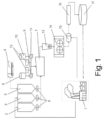
- Figure 1 shows a non-limiting embodiment of a process for the generation of briquettes according to the present invention.
- an installation (1) for the generation of rock wool, rock wool waste, coke fines and other raw materials which are reused for manufacturing new rock wool are generated.
- the rock wool waste and coke fines are stored, respectively, in a rock wool silo (2) and a coke fines silo (3) .
- Torrefied biomass or another fuel of a residual origin which is stored in a torrefied biomass silo (5) is transported by means of external logistics (4).
- Each of the silos (2, 3, 5) in which the raw materials for the generation of briquettes are stored, are associated with respective weighing cells (6) which determine the suitable proportions of raw material that are introduced in a mixer (7).
- the raw material used for formation of the briquette can comprise rock wool or it can comprise rock wool with coke fines and/or torrefied biomass. More specifically, the rock wool used is in fiber form, the fibers having a diameter between 1 ⁇ m and 30 ⁇ m with a fiber length to fiber diameter ratio of at least 3:1.
- the proportions by weight of raw material used at all times can range from 50% to 100% rock wool waste, from 0% to 10% coke fines, and from 0% to 50% torrefied biomass.
- the percentage by weight is represented with respect to the total weight of raw materials at the inlet of the mixer (7).
- a non-fibrous inorganic binder, specifically sodium silicate, which is used to bind the raw materials in solution, is stored in a binder tank (8).
- Sodium silicate is injected into the mixer (7) through a binder injection pump (9).
- Ester which is introduced into the mixer (7) by means of an ester injection pump (11) in the case of using ester as the activating agent of the mixture located in the mixer (7), is stored in another tank (10).
- the proportion by weight of sodium silicate binder is from 3% to 20% in relation to the total weight of raw materials at the inlet of the mixer (7).
- Sodium silicate used as a binder allows producing briquettes which, once cured, have a glassy structure with a good degree of mechanical strength.
- the proportion by weight of the sodium silicate binder is preferably from 6% to 16% in relation to the total weight of the raw material used.
- the percentage of ester in relation to the total weight of raw materials at the inlet of the mixer (7) is between 0% and 4%.
- a worm screw hopper (13) pours the mixture from the mixer (7) into a briquetting machine (14) shaping the briquettes.
- the possibility of a chamber (15) being arranged at the outlet of the briquetting machine (14) for exposing the briquettes to CO 2 gas and a heater (16), which allow accelerating the kinetics for the briquette curing reaction, has been envisaged for the purpose of assuring the mechanical strength necessary for subsequent industrial handling.
- the briquettes are transported to a storage area (17) in which they are stored until being used in the installation (1) for the generation of new rock wool.
- the CO 2 gas used to activate briquette curing can be artificial or it can be ambient CO 2 gas present in the storage area (17) of the briquettes.
- Figure 2 shows a graph comparing an elemental composition of rock wool waste and a briquette using rock wool waste compacted with sodium silicate binder as a raw material.
- the elements making up the rock wool waste aluminum (Al), barium (Ba), bismuth (Bi), calcium (Ca), cadmium (Cd), cobalt (Co), chromium (Cr), copper (Cu), iron (Fe), potassium (K), magnesium (Mg), manganese (Mn), sodium (Na), nickel (Ni), lead (Pb), silicon (Si), zinc (Zn), are shown on X-axis.
- the deviation of each of the elements caused by the addition of the sodium silicate (Na 2 SiO 3 ) binder is shown on the Y-axis. As can be seen, the chemical alteration of the composition due to the addition of the binder is virtually negligible.
Landscapes
- Chemical & Material Sciences (AREA)
- Organic Chemistry (AREA)
- Engineering & Computer Science (AREA)
- Materials Engineering (AREA)
- Life Sciences & Earth Sciences (AREA)
- Geochemistry & Mineralogy (AREA)
- General Chemical & Material Sciences (AREA)
- Chemical Kinetics & Catalysis (AREA)
- General Life Sciences & Earth Sciences (AREA)
- Processing Of Solid Wastes (AREA)
- Solid-Sorbent Or Filter-Aiding Compositions (AREA)
- Compounds Of Alkaline-Earth Elements, Aluminum Or Rare-Earth Metals (AREA)
- Glass Compositions (AREA)
- Glanulating (AREA)
Description
- The present invention relates to briquettes, or solid blocks, used for material recovery from rock wool waste and its possible mixing with fines from residual materials from other industries or not, and/or alternative fuels of a residual origin, which supply heat in furnaces, boilers or the like, proposing a briquette which is used in the mineral fiber manufacturing industry, more specifically for the rock wool manufacturing industry.
- Rock wool is a mineral fiber used primarily in the construction sector as thermal insulation, or as a fire protection element. Rock wool is obtained by melting basalt raw material at more than 1600°C, in a melting furnace, generally in a cupola furnace; the molten material is subjected to the effect of centrifugal force to generate fibers that will form the final rock wool product.
- Currently rock wool wastes, surplus or rejects, as well as other residual materials from other industries, are compacted to form recycling briquettes, which are introduced in the cupola furnace to be transformed back into rock wool.
- Binders are known to be used to produce briquettes with mechanical strength suitable for industrial handling. Low sulfur content cement is currently used as a binder for manufacturing briquettes. Nevertheless, the sulfur emission rate using these briquettes that are briquetted with cement, continues to be high because rock wool has organic compounds that act adversely with cement, such that it is necessary to increase the percentage of cement to produce a briquette with suitable mechanical strength. On the other hand, in addition to the environmental issue generated by sulfur dioxide emissions during combustion of the briquettes, an economic issue is also generated, as a higher percentage of cement is required to produce the desired mechanical strength.
- Patent document
WO97/25286 US 6,074,967 ) discloses a method for the production of briquettes which are used in manufacturing rock wool, the method being in accordance with the pre-amble of appendedindependent claim 10. In the production of rock wool, when the molten material is introduced in the cupola furnace and is subjected to the action of centrifugal force, rock wool fibers are generated, 70% of which has a fibrous form, and 30% has a form of spherical granules which are not valid for industrial use. Patent documentWO97/25286 - The spherical granules of rock wool are ground in a gyratory crusher until producing a finely divided material with a uniform particle size of less than 30 mm. To produce a briquette with suitable mechanical consistency, patent document
WO97/25286 WO97/25286 - This solution allows producing a briquette that reduces sulfur dioxide emissions during combustion of the briquettes, however it requires using a fibrous binder to be able to produce a briquette with suitable mechanical consistency, in addition to requiring the use of special machinery for milling and grinding the granules of rock wool and cellulose fiber and to be able to produce particles having a uniform size.
- An alternative solution which allows the production of briquettes with a low sulfur dioxide emission and which prevents the need to use a fibrous binder to provide the briquette with suitable mechanical strength for correct industrial handling is therefore necessary.
-
US 2005/0242477 relates to a method for making ceramic products from fiber glass waste. -
WO 2006/042755 relates to a moulding for generating a mineral melted mass to be defibrated in order to produce insulating materials made of mineral fibres. -
US 2,366,473 relates to the preparation of glass batch from materials, such as, sand or silica and fluxes such as, soda ash, lime, and the like. -
WO 2010/149655 relates to a method of making a particulate material from a mineral wool base material. - In accordance with the present invention, there is provided a briquette according to appended
independent claim 1, and a method according to appendedindependent claim 10. Embodiments of the invention are defined in appended claims dependent on eitherindependent claim 1 orindependent claim 10. The present invention proposes an alternative process to the process currently used by the mineral fiber manufacturing industry and, more specifically, by the rock wool manufacturing industry, which provides significant improvements on an environmental level and greater utilization of energy resources, giving rise to briquettes with less global impact throughout their life cycle. - The invention proposes a briquette which is used for the production of rock wool, consisting of a raw material comprising rock wool waste, a non-fibrous inorganic binder of that raw material, the non-fibrous inorganic binder being sodium silicate, and an activating agent accelerating the curing (hardening) process of the briquetted raw material, wherein the rock wool waste has a fiber morphology, with the fibers of the rock wool waste having a diameter between 1 µm and 30 µm and a fiber length to fiber diameter ratio of at least 3:1. The non-fibrous inorganic binder, sodium silicate, is used to bind the raw material instead of using cement like in conventional solutions, the sulfur emission problem which is generated with the cement binders of conventional solutions thereby being eliminated.
- Specifically, the invention proposes using trimmings, surplus or rejects from the production of rock wool having a fiber morphology, such that when a raw material with a fibrous form is used, it is not necessary to use a fibrous binder like in conventional solutions to produce a briquette with the mechanical consistency necessary for correct industrial handling. Therefore, the invention proposes using a single type of non-fibrous binder, such as silicate, to bind the raw material of rock wool fibers.
- The possibility of the raw material, in addition to rock wool waste, being able to comprise fines from residual materials and/or fuels of a residual origin has been envisaged. The fines from residual materials are fines from other industries or not, such as for example, coke fines, steel mill and foundry slag, foundry sand or other raw material rejects the grain size distribution of which is not suitable for direct furnace feed. Torrefied biomass, conventional biomass, sewage sludge, SRF or any other residue supplying calorific value and complying with environmental and technical parameters required by the competent administration and the production process is used as fuel of a residual origin.
- Therefore, in one embodiment, the raw material used for manufacturing the briquette has a composition by weight of 50% to 100% of rock wool waste, of between 0% and 50% of fines from residual materials, and of between 0% and 50% of fuels of a residual origin. The proportion by weight of the sodium silicate binder is from 3% to 20% in relation to the total weight of the raw material used.
- Even more preferably, the proportion by weight of the sodium silicate binder is from 6% to 16% in relation to the total weight of the raw material used. By using this amount of binder together with the rock wool fibers, briquettes are produced with a density of between 1.2 and 2.8 g/cm3, which density is sufficient for the briquette to be handled on an industrial level without causing it to break.
- The possibility of using an ester as the activating agent used to accelerate the curing process of the briquette in a percentage of 0% to 4% by weight in relation to the total weight of the raw material used has been envisaged. Using carbon dioxide gas (CO2) as the activating agent as an alternative to ester has been envisaged.
- The carbon dioxide (CO2) can be artificial, being applied directly from cylinders containing the gas, or it can be ambient carbon dioxide (CO2), which is present in the atmosphere in which the briquettes are stored.
- According to all this, for the case of an annual recovery of 10,000 MT of rock wool waste by means of manufacturing briquettes, using the sodium silicate binder and the method of the present invention as a replacement for the cement used as a binder in conventional solutions, the reduction in emissions would be the equivalent of 35,300 kg of sulfuric dioxide (SO2) (calculations have been done for briquettes with a percentage by weight of 15% cement in the briquette and 2% SO3 present in the cement used).
- This reduction in sulfur emissions is even more significant when a fuel of a residual origin of torrefied biomass is used as raw material as a replacement for the fines from residual materials, specifically as a replacement for coke fines, and in a proportion of 50% by weight with respect to the total weight of the raw material used. In these conditions and according to the previously mentioned production, reductions of 131,550 kg of sulfur dioxide (SO2) and 23,400,000 kg of carbon dioxide (CO2) from fossil fuels are obtained.
- The briquettes produced according to the present invention meet needs with respect to:
- Mechanical strength sufficient for industrial handling.
- High productivity which allows assuring the current and future demand.
- Replacement of the cement currently used as a binder with sodium silicate, which favors eliminating sulfur that is supplied by its use.
- Utilization of coke fines in an initial step in the case of such fines being used as raw material, optimizing efficiency of the energy resources available.
- Replacement of coke with torrefied biomass, which favors eliminating sulfur that is supplied by its use and reducing emissions of CO2 from fossil fuels.
- A briquette to be used in the mineral fiber manufacturing industry, and more specifically in the rock wool manufacturing industry, which provides significant improvements on an environmental level and better utilization of energy resources is thereby produced.
-
-
Figure 1 shows a schematic diagram of manufacturing a briquette according to an embodiment of the invention. -
Figure 2 shows a graph comparing an elemental composition of the rock wool waste and a briquette that has been briquetted with sodium silicate binder according to the present invention. -
Figure 1 shows a non-limiting embodiment of a process for the generation of briquettes according to the present invention. In an installation (1) for the generation of rock wool, rock wool waste, coke fines and other raw materials which are reused for manufacturing new rock wool are generated. The rock wool waste and coke fines are stored, respectively, in a rock wool silo (2) and a coke fines silo (3) . - Torrefied biomass or another fuel of a residual origin which is stored in a torrefied biomass silo (5) is transported by means of external logistics (4). Each of the silos (2, 3, 5) in which the raw materials for the generation of briquettes are stored, are associated with respective weighing cells (6) which determine the suitable proportions of raw material that are introduced in a mixer (7).
- The raw material used for formation of the briquette can comprise rock wool or it can comprise rock wool with coke fines and/or torrefied biomass. More specifically, the rock wool used is in fiber form, the fibers having a diameter between 1 µm and 30 µm with a fiber length to fiber diameter ratio of at least 3:1.
- Therefore, the proportions by weight of raw material used at all times can range from 50% to 100% rock wool waste, from 0% to 10% coke fines, and from 0% to 50% torrefied biomass. The percentage by weight is represented with respect to the total weight of raw materials at the inlet of the mixer (7).
- A non-fibrous inorganic binder, specifically sodium silicate, which is used to bind the raw materials in solution, is stored in a binder tank (8). Sodium silicate is injected into the mixer (7) through a binder injection pump (9). Ester, which is introduced into the mixer (7) by means of an ester injection pump (11) in the case of using ester as the activating agent of the mixture located in the mixer (7), is stored in another tank (10).
- The amounts to be injected into the mixer (7) by the binder injection pump (9) and ester injection pump (11) are controlled by means of respective flow meters (12). Therefore, the proportion by weight of sodium silicate binder is from 3% to 20% in relation to the total weight of raw materials at the inlet of the mixer (7). Sodium silicate used as a binder allows producing briquettes which, once cured, have a glassy structure with a good degree of mechanical strength.
- The proportion by weight of the sodium silicate binder is preferably from 6% to 16% in relation to the total weight of the raw material used.
- When the activating agent to accelerate curing of the mixture is an ester, the percentage of ester in relation to the total weight of raw materials at the inlet of the mixer (7) is between 0% and 4%.
- Once the time necessary to homogenize the mixture has lapsed, a worm screw hopper (13) pours the mixture from the mixer (7) into a briquetting machine (14) shaping the briquettes.
- When an ester is not used as the activating agent, the possibility of a chamber (15) being arranged at the outlet of the briquetting machine (14) for exposing the briquettes to CO2 gas and a heater (16), which allow accelerating the kinetics for the briquette curing reaction, has been envisaged for the purpose of assuring the mechanical strength necessary for subsequent industrial handling. Finally, the briquettes are transported to a storage area (17) in which they are stored until being used in the installation (1) for the generation of new rock wool.
- The CO2 gas used to activate briquette curing can be artificial or it can be ambient CO2 gas present in the storage area (17) of the briquettes.
-
Figure 2 shows a graph comparing an elemental composition of rock wool waste and a briquette using rock wool waste compacted with sodium silicate binder as a raw material. The elements making up the rock wool waste, aluminum (Al), barium (Ba), bismuth (Bi), calcium (Ca), cadmium (Cd), cobalt (Co), chromium (Cr), copper (Cu), iron (Fe), potassium (K), magnesium (Mg), manganese (Mn), sodium (Na), nickel (Ni), lead (Pb), silicon (Si), zinc (Zn), are shown on X-axis. The deviation of each of the elements caused by the addition of the sodium silicate (Na2SiO3) binder is shown on the Y-axis. As can be seen, the chemical alteration of the composition due to the addition of the binder is virtually negligible.
Claims (20)
- A briquette used for the production of rock wool, consisting of a raw material comprising rock wool waste, a non-fibrous inorganic binder of the raw material, the non-fibrous inorganic binder being sodium silicate, and an activating agent accelerating the curing process of the briquetted raw material, wherein the rock wool waste has a fiber morphology, with the fibers of the rock wool waste having a diameter between 1 µm and 30 µm and a fiber length to fiber diameter ratio of at least 3:1.
- The briquette used for the production of rock wool according to claim 1, characterized in that the raw material additionally comprises fines from residual materials and/or fuels of a residual origin.
- The briquette used for the production of rock wool according to the preceding claim, characterized in that the raw material used has a percentage by weight of between 50% and 100% rock wool waste, between 0% and 50% of fines from residual materials, and between 0% and 50% of fuels of a residual origin.
- The briquette used for the production of rock wool according to claim 1, characterized in that the proportion by weight of the sodium silicate binder is from 3% to 20% in relation to the total weight of the raw material.
- The briquette used for the production of rock wool according to claim 1, characterized in that the proportion by weight of the sodium silicate binder is from 6% to 16% in relation to the total weight of the raw material.
- The briquette used for the production of rock wool according to claim 1, characterized in that an ester is used as the activating agent in a percentage of 0% to 4% by weight in relation to the total weight of the raw material.
- The briquette used for the production of rock wool according to claim 1, characterized in that carbon dioxide gas is used as the activating agent.
- The briquette used for the production of rock wool according to claim 7, characterized in that the carbon dioxide gas used is an ambient gas present in the briquette storage area.
- The briquette used for the production of rock wool according to claim 7, characterized in that the carbon dioxide gas used is an artificial gas supplied on the briquettes.
- A method for the production of briquettes provided with the features of the preceding claims, wherein a raw material comprising rock wool waste is mixed with a non-fibrous inorganic binder to shape a briquette which is cured by means of an activating agent, the non-fibrous inorganic binder being sodium silicate, characterized in that the rock wool waste has a fiber morphology, with the fibers of the rock wool waste used as raw material having a diameter between 1 µm and 30 µm and a fiber length to fiber diameter ratio of at least 3:1, such that the briquette is shaped without use of a fibrous binder.
- A method for the production of briquettes, according to claim 10, characterized in that the rock wool waste in fiber form used as raw material has a density comprised between 0.18 and 0.99 g/cm3.
- The method for the production of briquettes according to claim 10, characterized in that the raw material additionally comprises fines from residual materials and/or fuels of a residual origin.
- The method for the production of briquettes according to the preceding claim, characterized in that the raw material used has a proportion by weight of between 50% and 100% of rock wool waste, between 0% and 50% of fines from residual materials, and between 0% and 50% of fuels of a residual origin.
- The method for the production of briquettes according to claim 10, characterized in that the sodium silicate used as a binder is added to the raw material in a proportion of between 3% and 20% by weight in relation to the total weight of the raw material.
- The method for the production of briquettes according to claim 10, characterized in that the sodium silicate used as a binder is added to the raw material in a proportion of between 6% and 16% by weight in relation to the total weight of the raw material.
- The method for the production of briquettes according to claim 10, characterized in that the activating agent used to cure the briquette is an ester which is added to the raw material in a percentage of 0% to 4% by weight in relation to the total weight of the raw material.
- The method for the production of briquettes according to claim 10, characterized in that the activating agent used to cure the briquette is carbon dioxide gas.
- The method for the production of briquettes according to claim 17, characterized in that the briquette is cured using ambient carbon dioxide gas present in the atmosphere wherein the briquettes are stored.
- The method for the production of briquettes according to claim 17, characterized in that the briquette is cured using artificial carbon dioxide gas which is supplied directly on the briquettes.
- The method for the production of briquettes according to claim 17, characterized in that the briquette cured with carbon dioxide gas is subjected to a heating process to accelerate the curing process.
Priority Applications (3)
| Application Number | Priority Date | Filing Date | Title |
|---|---|---|---|
| PL13852523.3T PL2918555T5 (en) | 2012-11-12 | 2013-11-08 | Briquette for the production of rock wool and method for the production of said briquette |
| SI201331914T SI2918555T1 (en) | 2012-11-12 | 2013-11-08 | Briquette for the production of rock wool and method for the production of said briquette |
| HRP20211229TT HRP20211229T4 (en) | 2012-11-12 | 2013-11-08 | BRIQUETTE FOR THE PRODUCTION OF STONE WOOL AND PROCEDURE FOR THE PRODUCTION OF THE MENTIONED BRIQUETTE |
Applications Claiming Priority (3)
| Application Number | Priority Date | Filing Date | Title |
|---|---|---|---|
| ES201231735A ES2468065B1 (en) | 2012-11-12 | 2012-11-12 | BRIQUETA USED FOR THE PRODUCTION OF ROCK WOOL AND PROCEDURE TO OBTAIN THE BRIQUETA |
| ES201331598A ES2537025B1 (en) | 2013-10-31 | 2013-10-31 | Briquette used for the production of rock wool and procedure for obtaining said briquette |
| PCT/ES2013/070769 WO2014072560A1 (en) | 2012-11-12 | 2013-11-08 | Briquette for the production of rock wool and method for the production of said briquette |
Publications (4)
| Publication Number | Publication Date |
|---|---|
| EP2918555A1 EP2918555A1 (en) | 2015-09-16 |
| EP2918555A4 EP2918555A4 (en) | 2016-09-28 |
| EP2918555B1 EP2918555B1 (en) | 2021-05-05 |
| EP2918555B2 true EP2918555B2 (en) | 2025-03-05 |
Family
ID=50684106
Family Applications (1)
| Application Number | Title | Priority Date | Filing Date |
|---|---|---|---|
| EP13852523.3A Active EP2918555B2 (en) | 2012-11-12 | 2013-11-08 | Briquette for the production of rock wool and method for the production of said briquette |
Country Status (13)
| Country | Link |
|---|---|
| US (2) | US9550697B2 (en) |
| EP (1) | EP2918555B2 (en) |
| CN (1) | CN104781200A (en) |
| CA (1) | CA2888839C (en) |
| DK (1) | DK2918555T4 (en) |
| ES (1) | ES2881540T5 (en) |
| HR (1) | HRP20211229T4 (en) |
| HU (1) | HUE055177T2 (en) |
| PL (1) | PL2918555T5 (en) |
| PT (1) | PT2918555T (en) |
| RU (1) | RU2657278C2 (en) |
| SI (1) | SI2918555T1 (en) |
| WO (1) | WO2014072560A1 (en) |
Families Citing this family (11)
| Publication number | Priority date | Publication date | Assignee | Title |
|---|---|---|---|---|
| FR3019816B1 (en) | 2014-04-10 | 2021-04-02 | Saint Gobain Isover | COMPOSITE INCLUDING A MINERAL WOOL INCLUDING A SUGAR |
| US10364176B1 (en) * | 2016-10-03 | 2019-07-30 | Owens-Brockway Glass Container Inc. | Glass precursor gel and methods to treat with microwave energy |
| CN107902899A (en) * | 2017-12-20 | 2018-04-13 | 马鞍山市宏达保温材料有限公司 | A kind of recycling technique and device of rock wool waste material |
| US12343339B2 (en) * | 2019-05-24 | 2025-07-01 | The Trustees Of The University Of Pennsylvania | Bisaminoquinolines and bisaminoacridines compounds and methods of their use |
| RU2730462C1 (en) * | 2019-08-02 | 2020-08-24 | ООО "Завод Техно" | Method of producing mineral wool |
| FR3106132B1 (en) * | 2020-01-15 | 2023-05-19 | Saint Gobain Isover | Fusion of vitrifiable material |
| AT524875B1 (en) * | 2021-08-16 | 2022-10-15 | Ibe Anlagentechnik Gmbh | Process for the waste-free manufacture of mineral wool insulation products |
| DE102022130877A1 (en) * | 2022-09-29 | 2024-04-04 | 3 R RE:CYCON GmbH | Method for producing a shaped body |
| CN117229030A (en) * | 2023-09-27 | 2023-12-15 | 西安建筑科技大学 | Rock wool slag-based autoclaved aerated concrete and preparation and application thereof |
| PL448826A1 (en) * | 2024-06-13 | 2025-12-15 | Sabina Wilkanowicz | Briquette containing mineral wool, method for producing briquettes and production line for carrying out the method for producing briquettes |
| EP4663613A1 (en) | 2024-06-13 | 2025-12-17 | Advanced Green Technologies Sp. z o.o. | A briquette comprising mineral wool, a method of producing it and a production line for carrying out the method |
Citations (4)
| Publication number | Priority date | Publication date | Assignee | Title |
|---|---|---|---|---|
| WO1997025286A1 (en) † | 1996-01-05 | 1997-07-17 | Asset Associates Limited | Improvements in or relating to the production of rock wool |
| WO2006002948A2 (en) † | 2004-07-03 | 2006-01-12 | Deutsche Rockwool Mineralwoll Gmbh & Co. Ohg | Rock wool and mineral wool insulating material with inhibiting additives |
| WO2006040046A1 (en) † | 2004-10-07 | 2006-04-20 | Deutsche Rockwool Mineralwoll Gmbh & Co. Ohg | Insulating element |
| EP2415721A1 (en) † | 2010-07-30 | 2012-02-08 | Rockwool International A/S | Compacted body for use as mineral charge in the production of mineral wool |
Family Cites Families (17)
| Publication number | Priority date | Publication date | Assignee | Title |
|---|---|---|---|---|
| US2366473A (en) * | 1941-03-29 | 1945-01-02 | Norbert S Garbisch | Glass batch |
| DE2941664A1 (en) * | 1979-10-15 | 1981-04-23 | Horst 7101 Obergruppenbach Liebert | METHOD FOR RECYCLING WASTE FROM THE PRODUCTION OF MATS OR PANELS FROM MINERAL FIBER PRODUCTS |
| US4617045A (en) * | 1985-04-05 | 1986-10-14 | Boris Bronshtein | Controlled process for making a chemically homogeneous melt for producing mineral wool insulation |
| US4720295A (en) * | 1986-10-20 | 1988-01-19 | Boris Bronshtein | Controlled process for making a chemically homogeneous melt for producing mineral wool insulation |
| FI86541C (en) * | 1990-08-29 | 1992-09-10 | Partek Ab | RAOMATERIALBRIKETT FOER MINERALULLSTILLVERKNING OCH FOERFARANDE FOER DESS FRAMSTAELLNING. |
| US5198190A (en) * | 1990-12-21 | 1993-03-30 | Enviroscience, Inc. | Method of recycling hazardous waste |
| US5364447A (en) * | 1990-12-21 | 1994-11-15 | Enviroscience, Inc. | Method of recycling hazardous waste |
| DE4122334A1 (en) * | 1991-07-05 | 1993-01-07 | Zementanlagen Und Maschinenbau | METHOD AND SYSTEM FOR TREATING MINERAL WOOL WASTE |
| GB9412007D0 (en) * | 1994-06-15 | 1994-08-03 | Rockwell International A S | Production of mineral fibres |
| FI110261B (en) * | 2000-06-20 | 2002-12-31 | Paroc Group Oy Ab | Process for preparing a colloidal silicate dispersion |
| JP2005511459A (en) * | 2001-06-28 | 2005-04-28 | マイケル ジェイ ホーン | Method for manufacturing products from glass fiber waste |
| CA2506769C (en) * | 2002-11-06 | 2012-02-28 | Rockwool International A/S | Method for preparing a mineral melt |
| DE102005040268A1 (en) * | 2004-10-20 | 2006-05-04 | Deutsche Rockwool Mineralwoll Gmbh + Co Ohg | Shaped body for the production of a mineral melt to be fibrillated for the production of insulating materials from mineral fibers |
| DE102007051850B4 (en) * | 2007-10-30 | 2025-08-28 | Ask Chemicals Gmbh | Process for the production of casting moulds for metal processing using a moulding material mixture with improved flowability |
| WO2010149655A1 (en) * | 2009-06-23 | 2010-12-29 | Rockwool International A/S | Method of making particulate material |
| CN102372477A (en) * | 2010-08-27 | 2012-03-14 | 马宝建 | Rock wool product and production method thereof |
| CN102745949A (en) * | 2011-04-22 | 2012-10-24 | 石瑛 | Non-inflammability fireproof inorganic fiber composite exterior wall heat insulation building blocks |
-
2013
- 2013-11-08 SI SI201331914T patent/SI2918555T1/en unknown
- 2013-11-08 HU HUE13852523A patent/HUE055177T2/en unknown
- 2013-11-08 RU RU2015114576A patent/RU2657278C2/en active
- 2013-11-08 CA CA2888839A patent/CA2888839C/en active Active
- 2013-11-08 EP EP13852523.3A patent/EP2918555B2/en active Active
- 2013-11-08 HR HRP20211229TT patent/HRP20211229T4/en unknown
- 2013-11-08 ES ES13852523T patent/ES2881540T5/en active Active
- 2013-11-08 DK DK13852523.3T patent/DK2918555T4/en active
- 2013-11-08 WO PCT/ES2013/070769 patent/WO2014072560A1/en not_active Ceased
- 2013-11-08 PL PL13852523.3T patent/PL2918555T5/en unknown
- 2013-11-08 US US14/436,752 patent/US9550697B2/en active Active
- 2013-11-08 PT PT138525233T patent/PT2918555T/en unknown
- 2013-11-08 CN CN201380054981.1A patent/CN104781200A/en active Pending
-
2016
- 2016-08-10 US US15/233,334 patent/US9550691B2/en active Active
Patent Citations (4)
| Publication number | Priority date | Publication date | Assignee | Title |
|---|---|---|---|---|
| WO1997025286A1 (en) † | 1996-01-05 | 1997-07-17 | Asset Associates Limited | Improvements in or relating to the production of rock wool |
| WO2006002948A2 (en) † | 2004-07-03 | 2006-01-12 | Deutsche Rockwool Mineralwoll Gmbh & Co. Ohg | Rock wool and mineral wool insulating material with inhibiting additives |
| WO2006040046A1 (en) † | 2004-10-07 | 2006-04-20 | Deutsche Rockwool Mineralwoll Gmbh & Co. Ohg | Insulating element |
| EP2415721A1 (en) † | 2010-07-30 | 2012-02-08 | Rockwool International A/S | Compacted body for use as mineral charge in the production of mineral wool |
Non-Patent Citations (1)
| Title |
|---|
| ANONYMOUS: "Man-Made Vitreous Fibres - Nomenclature, Chemistry, and Physical Properties", NOMENCLATURE COMMITTEE OF TIMA INC, 1 March 1993 (1993-03-01), pages 49 - 55, XP055844701, [retrieved on 20210927] † |
Also Published As
| Publication number | Publication date |
|---|---|
| HRP20211229T1 (en) | 2021-11-12 |
| RU2015114576A (en) | 2017-01-10 |
| ES2881540T3 (en) | 2021-11-29 |
| EP2918555A1 (en) | 2015-09-16 |
| PL2918555T5 (en) | 2025-11-17 |
| DK2918555T3 (en) | 2021-08-09 |
| US20160168009A1 (en) | 2016-06-16 |
| EP2918555B1 (en) | 2021-05-05 |
| HUE055177T2 (en) | 2021-11-29 |
| DK2918555T4 (en) | 2025-05-26 |
| RU2657278C2 (en) | 2018-06-09 |
| PL2918555T3 (en) | 2021-12-27 |
| PT2918555T (en) | 2021-07-28 |
| WO2014072560A1 (en) | 2014-05-15 |
| US9550697B2 (en) | 2017-01-24 |
| ES2881540T5 (en) | 2025-06-23 |
| CA2888839C (en) | 2020-04-28 |
| CA2888839A1 (en) | 2014-05-15 |
| SI2918555T1 (en) | 2021-12-31 |
| CN104781200A (en) | 2015-07-15 |
| US20160347637A1 (en) | 2016-12-01 |
| HRP20211229T4 (en) | 2025-11-07 |
| EP2918555A4 (en) | 2016-09-28 |
| US9550691B2 (en) | 2017-01-24 |
Similar Documents
| Publication | Publication Date | Title |
|---|---|---|
| EP2918555B2 (en) | Briquette for the production of rock wool and method for the production of said briquette | |
| EP0767762B1 (en) | Production of mineral fibres | |
| US4720295A (en) | Controlled process for making a chemically homogeneous melt for producing mineral wool insulation | |
| US4617045A (en) | Controlled process for making a chemically homogeneous melt for producing mineral wool insulation | |
| WO1992004289A1 (en) | Raw material briquette for mineral wool production and process for its preparation and its use | |
| CA2506769C (en) | Method for preparing a mineral melt | |
| US8876964B2 (en) | Method of making particulate material | |
| EA026994B1 (en) | Method of manufacturing a composite product (embodiments) and method of manufacturing a molten metal (embodiments) | |
| KR20120037447A (en) | Method for producing an agglomerate made of fine material containing metal oxide for use as a blast furnace feed material | |
| JP2000119050A (en) | Method for producing artificial lightweight aggregate and artificial lightweight aggregate obtained by this method | |
| CN116377213A (en) | Method for reducing burning up of sintered solid by adding pre-granulated carbon-containing solid waste | |
| JP2000143307A (en) | Method for producing artificial lightweight aggregate and artificial lightweight aggregate obtained by this method | |
| JP4670149B2 (en) | A method for producing rock wool made from granulated products of municipal waste incineration ash | |
| CN110747345A (en) | Converter fly ash pressed brick and preparation and utilization methods thereof | |
| ES2537025B1 (en) | Briquette used for the production of rock wool and procedure for obtaining said briquette | |
| JPH11335146A (en) | Method for producing artificial lightweight aggregate and artificial lightweight aggregate obtained by this method | |
| CN102765885A (en) | A process for processing glass fiber by using fly ash | |
| WO2006015846A1 (en) | Method for producing a molten mineral and shaped bricks | |
| ES2468065A1 (en) | Briqueta empleada for the production of rock wool and procedure for obtaining such briqueta (Machine-translation by Google Translate, not legally binding) | |
| CN101838569A (en) | Method for preparing briquette for smelting molten iron | |
| DE102005040268A1 (en) | Shaped body for the production of a mineral melt to be fibrillated for the production of insulating materials from mineral fibers | |
| WO2006015647A1 (en) | Method for producing a mineral melt and shaped brick | |
| DE102005001570A1 (en) | Shaped body for the production of a mineral melt to be fibrillated for the production of mineral fiber insulation materials | |
| SE466456B (en) | Method and composition for producing shape-stable bodies from a particulate material | |
| KR20010085214A (en) | Rock wool using as raw material granulated municipal waste incineration ash and production method thereof |
Legal Events
| Date | Code | Title | Description |
|---|---|---|---|
| PUAI | Public reference made under article 153(3) epc to a published international application that has entered the european phase |
Free format text: ORIGINAL CODE: 0009012 |
|
| 17P | Request for examination filed |
Effective date: 20150420 |
|
| AK | Designated contracting states |
Kind code of ref document: A1 Designated state(s): AL AT BE BG CH CY CZ DE DK EE ES FI FR GB GR HR HU IE IS IT LI LT LU LV MC MK MT NL NO PL PT RO RS SE SI SK SM TR |
|
| AX | Request for extension of the european patent |
Extension state: BA ME |
|
| DAX | Request for extension of the european patent (deleted) | ||
| REG | Reference to a national code |
Ref country code: DE Ref legal event code: R079 Ref document number: 602013077383 Country of ref document: DE Free format text: PREVIOUS MAIN CLASS: C03B0013060000 Ipc: C03C0001000000 |
|
| RA4 | Supplementary search report drawn up and despatched (corrected) |
Effective date: 20160825 |
|
| RIC1 | Information provided on ipc code assigned before grant |
Ipc: C03B 13/06 20060101ALI20160819BHEP Ipc: C03C 1/00 20060101AFI20160819BHEP Ipc: C03B 1/02 20060101ALI20160819BHEP Ipc: C03C 13/06 20060101ALI20160819BHEP |
|
| STAA | Information on the status of an ep patent application or granted ep patent |
Free format text: STATUS: EXAMINATION IS IN PROGRESS |
|
| 17Q | First examination report despatched |
Effective date: 20180112 |
|
| GRAP | Despatch of communication of intention to grant a patent |
Free format text: ORIGINAL CODE: EPIDOSNIGR1 |
|
| STAA | Information on the status of an ep patent application or granted ep patent |
Free format text: STATUS: GRANT OF PATENT IS INTENDED |
|
| INTG | Intention to grant announced |
Effective date: 20201203 |
|
| GRAS | Grant fee paid |
Free format text: ORIGINAL CODE: EPIDOSNIGR3 |
|
| GRAA | (expected) grant |
Free format text: ORIGINAL CODE: 0009210 |
|
| STAA | Information on the status of an ep patent application or granted ep patent |
Free format text: STATUS: THE PATENT HAS BEEN GRANTED |
|
| RAP3 | Party data changed (applicant data changed or rights of an application transferred) |
Owner name: VALORIZACION Y LOGISTICA AMBIENTAL, S.L.L. |
|
| AK | Designated contracting states |
Kind code of ref document: B1 Designated state(s): AL AT BE BG CH CY CZ DE DK EE ES FI FR GB GR HR HU IE IS IT LI LT LU LV MC MK MT NL NO PL PT RO RS SE SI SK SM TR |
|
| REG | Reference to a national code |
Ref country code: GB Ref legal event code: FG4D |
|
| REG | Reference to a national code |
Ref country code: CH Ref legal event code: EP |
|
| REG | Reference to a national code |
Ref country code: AT Ref legal event code: REF Ref document number: 1389632 Country of ref document: AT Kind code of ref document: T Effective date: 20210515 |
|
| REG | Reference to a national code |
Ref country code: IE Ref legal event code: FG4D |
|
| REG | Reference to a national code |
Ref country code: DE Ref legal event code: R096 Ref document number: 602013077383 Country of ref document: DE |
|
| REG | Reference to a national code |
Ref country code: DE Ref legal event code: R081 Ref document number: 602013077383 Country of ref document: DE Owner name: V&L CHEM, S.L., ES Free format text: FORMER OWNER: VALORIZACION Y LOGISTICA AMBIENTAL, S.L.L., BILBAO, ES |
|
| RAP2 | Party data changed (patent owner data changed or rights of a patent transferred) |
Owner name: V&L CHEM, S.L. |
|
| REG | Reference to a national code |
Ref country code: PT Ref legal event code: SC4A Ref document number: 2918555 Country of ref document: PT Date of ref document: 20210728 Kind code of ref document: T Free format text: AVAILABILITY OF NATIONAL TRANSLATION Effective date: 20210722 |
|
| REG | Reference to a national code |
Ref country code: HR Ref legal event code: TUEP Ref document number: P20211229T Country of ref document: HR |
|
| REG | Reference to a national code |
Ref country code: RO Ref legal event code: EPE |
|
| REG | Reference to a national code |
Ref country code: DK Ref legal event code: T3 Effective date: 20210802 |
|
| REG | Reference to a national code |
Ref country code: NL Ref legal event code: PD Owner name: V&L CHEM, S.L.; ES Free format text: DETAILS ASSIGNMENT: CHANGE OF OWNER(S), ASSIGNMENT; FORMER OWNER NAME: VALORIZACION Y LOGISTICA AMBIENTAL, S.L.L. Effective date: 20210803 Ref country code: LT Ref legal event code: MG9D |
|
| REG | Reference to a national code |
Ref country code: GB Ref legal event code: 732E Free format text: REGISTERED BETWEEN 20210826 AND 20210901 |
|
| REG | Reference to a national code |
Ref country code: NO Ref legal event code: T2 Effective date: 20210505 |
|
| REG | Reference to a national code |
Ref country code: AT Ref legal event code: MK05 Ref document number: 1389632 Country of ref document: AT Kind code of ref document: T Effective date: 20210505 |
|
| PG25 | Lapsed in a contracting state [announced via postgrant information from national office to epo] |
Ref country code: LT Free format text: LAPSE BECAUSE OF FAILURE TO SUBMIT A TRANSLATION OF THE DESCRIPTION OR TO PAY THE FEE WITHIN THE PRESCRIBED TIME-LIMIT Effective date: 20210505 Ref country code: FI Free format text: LAPSE BECAUSE OF FAILURE TO SUBMIT A TRANSLATION OF THE DESCRIPTION OR TO PAY THE FEE WITHIN THE PRESCRIBED TIME-LIMIT Effective date: 20210505 Ref country code: BG Free format text: LAPSE BECAUSE OF FAILURE TO SUBMIT A TRANSLATION OF THE DESCRIPTION OR TO PAY THE FEE WITHIN THE PRESCRIBED TIME-LIMIT Effective date: 20210805 Ref country code: AT Free format text: LAPSE BECAUSE OF FAILURE TO SUBMIT A TRANSLATION OF THE DESCRIPTION OR TO PAY THE FEE WITHIN THE PRESCRIBED TIME-LIMIT Effective date: 20210505 |
|
| REG | Reference to a national code |
Ref country code: HR Ref legal event code: T1PR Ref document number: P20211229 Country of ref document: HR |
|
| REG | Reference to a national code |
Ref country code: HR Ref legal event code: ODRP Ref document number: P20211229 Country of ref document: HR Payment date: 20211103 Year of fee payment: 9 |
|
| REG | Reference to a national code |
Ref country code: HU Ref legal event code: AG4A Ref document number: E055177 Country of ref document: HU Ref country code: ES Ref legal event code: FG2A Ref document number: 2881540 Country of ref document: ES Kind code of ref document: T3 Effective date: 20211129 |
|
| PG25 | Lapsed in a contracting state [announced via postgrant information from national office to epo] |
Ref country code: SE Free format text: LAPSE BECAUSE OF FAILURE TO SUBMIT A TRANSLATION OF THE DESCRIPTION OR TO PAY THE FEE WITHIN THE PRESCRIBED TIME-LIMIT Effective date: 20210505 Ref country code: RS Free format text: LAPSE BECAUSE OF FAILURE TO SUBMIT A TRANSLATION OF THE DESCRIPTION OR TO PAY THE FEE WITHIN THE PRESCRIBED TIME-LIMIT Effective date: 20210505 Ref country code: LV Free format text: LAPSE BECAUSE OF FAILURE TO SUBMIT A TRANSLATION OF THE DESCRIPTION OR TO PAY THE FEE WITHIN THE PRESCRIBED TIME-LIMIT Effective date: 20210505 Ref country code: IS Free format text: LAPSE BECAUSE OF FAILURE TO SUBMIT A TRANSLATION OF THE DESCRIPTION OR TO PAY THE FEE WITHIN THE PRESCRIBED TIME-LIMIT Effective date: 20210905 Ref country code: GR Free format text: LAPSE BECAUSE OF FAILURE TO SUBMIT A TRANSLATION OF THE DESCRIPTION OR TO PAY THE FEE WITHIN THE PRESCRIBED TIME-LIMIT Effective date: 20210806 |
|
| PG25 | Lapsed in a contracting state [announced via postgrant information from national office to epo] |
Ref country code: SM Free format text: LAPSE BECAUSE OF FAILURE TO SUBMIT A TRANSLATION OF THE DESCRIPTION OR TO PAY THE FEE WITHIN THE PRESCRIBED TIME-LIMIT Effective date: 20210505 Ref country code: SK Free format text: LAPSE BECAUSE OF FAILURE TO SUBMIT A TRANSLATION OF THE DESCRIPTION OR TO PAY THE FEE WITHIN THE PRESCRIBED TIME-LIMIT Effective date: 20210505 Ref country code: EE Free format text: LAPSE BECAUSE OF FAILURE TO SUBMIT A TRANSLATION OF THE DESCRIPTION OR TO PAY THE FEE WITHIN THE PRESCRIBED TIME-LIMIT Effective date: 20210505 |
|
| REG | Reference to a national code |
Ref country code: DE Ref legal event code: R026 Ref document number: 602013077383 Country of ref document: DE |
|
| PLBI | Opposition filed |
Free format text: ORIGINAL CODE: 0009260 |
|
| PLAX | Notice of opposition and request to file observation + time limit sent |
Free format text: ORIGINAL CODE: EPIDOSNOBS2 |
|
| 26 | Opposition filed |
Opponent name: ROCKWOOL INTERNATIONAL A/S Effective date: 20220207 |
|
| PG25 | Lapsed in a contracting state [announced via postgrant information from national office to epo] |
Ref country code: IS Free format text: LAPSE BECAUSE OF FAILURE TO SUBMIT A TRANSLATION OF THE DESCRIPTION OR TO PAY THE FEE WITHIN THE PRESCRIBED TIME-LIMIT Effective date: 20210905 Ref country code: AL Free format text: LAPSE BECAUSE OF FAILURE TO SUBMIT A TRANSLATION OF THE DESCRIPTION OR TO PAY THE FEE WITHIN THE PRESCRIBED TIME-LIMIT Effective date: 20210505 |
|
| PLBB | Reply of patent proprietor to notice(s) of opposition received |
Free format text: ORIGINAL CODE: EPIDOSNOBS3 |
|
| PG25 | Lapsed in a contracting state [announced via postgrant information from national office to epo] |
Ref country code: MC Free format text: LAPSE BECAUSE OF FAILURE TO SUBMIT A TRANSLATION OF THE DESCRIPTION OR TO PAY THE FEE WITHIN THE PRESCRIBED TIME-LIMIT Effective date: 20210505 |
|
| REG | Reference to a national code |
Ref country code: CH Ref legal event code: PL |
|
| PG25 | Lapsed in a contracting state [announced via postgrant information from national office to epo] |
Ref country code: LU Free format text: LAPSE BECAUSE OF NON-PAYMENT OF DUE FEES Effective date: 20211108 Ref country code: IT Free format text: LAPSE BECAUSE OF FAILURE TO SUBMIT A TRANSLATION OF THE DESCRIPTION OR TO PAY THE FEE WITHIN THE PRESCRIBED TIME-LIMIT Effective date: 20210505 Ref country code: BE Free format text: LAPSE BECAUSE OF NON-PAYMENT OF DUE FEES Effective date: 20211130 |
|
| REG | Reference to a national code |
Ref country code: BE Ref legal event code: MM Effective date: 20211130 |
|
| PG25 | Lapsed in a contracting state [announced via postgrant information from national office to epo] |
Ref country code: IE Free format text: LAPSE BECAUSE OF NON-PAYMENT OF DUE FEES Effective date: 20211108 |
|
| REG | Reference to a national code |
Ref country code: HR Ref legal event code: ODRP Ref document number: P20211229 Country of ref document: HR Payment date: 20221012 Year of fee payment: 10 |
|
| P01 | Opt-out of the competence of the unified patent court (upc) registered |
Effective date: 20230516 |
|
| PG25 | Lapsed in a contracting state [announced via postgrant information from national office to epo] |
Ref country code: CY Free format text: LAPSE BECAUSE OF FAILURE TO SUBMIT A TRANSLATION OF THE DESCRIPTION OR TO PAY THE FEE WITHIN THE PRESCRIBED TIME-LIMIT Effective date: 20210505 |
|
| PG25 | Lapsed in a contracting state [announced via postgrant information from national office to epo] |
Ref country code: LI Free format text: LAPSE BECAUSE OF NON-PAYMENT OF DUE FEES Effective date: 20220630 Ref country code: CH Free format text: LAPSE BECAUSE OF NON-PAYMENT OF DUE FEES Effective date: 20220630 |
|
| REG | Reference to a national code |
Ref country code: HR Ref legal event code: ODRP Ref document number: P20211229 Country of ref document: HR Payment date: 20231031 Year of fee payment: 11 |
|
| PG25 | Lapsed in a contracting state [announced via postgrant information from national office to epo] |
Ref country code: MK Free format text: LAPSE BECAUSE OF FAILURE TO SUBMIT A TRANSLATION OF THE DESCRIPTION OR TO PAY THE FEE WITHIN THE PRESCRIBED TIME-LIMIT Effective date: 20210505 |
|
| PG25 | Lapsed in a contracting state [announced via postgrant information from national office to epo] |
Ref country code: MT Free format text: LAPSE BECAUSE OF FAILURE TO SUBMIT A TRANSLATION OF THE DESCRIPTION OR TO PAY THE FEE WITHIN THE PRESCRIBED TIME-LIMIT Effective date: 20210505 |
|
| REG | Reference to a national code |
Ref country code: HR Ref legal event code: ODRP Ref document number: P20211229 Country of ref document: HR Payment date: 20241022 Year of fee payment: 12 |
|
| PUAH | Patent maintained in amended form |
Free format text: ORIGINAL CODE: 0009272 |
|
| STAA | Information on the status of an ep patent application or granted ep patent |
Free format text: STATUS: PATENT MAINTAINED AS AMENDED |
|
| 27A | Patent maintained in amended form |
Effective date: 20250305 |
|
| AK | Designated contracting states |
Kind code of ref document: B2 Designated state(s): AL AT BE BG CH CY CZ DE DK EE ES FI FR GB GR HR HU IE IS IT LI LT LU LV MC MK MT NL NO PL PT RO RS SE SI SK SM TR |
|
| REG | Reference to a national code |
Ref country code: DE Ref legal event code: R102 Ref document number: 602013077383 Country of ref document: DE |
|
| REG | Reference to a national code |
Ref country code: DK Ref legal event code: T4 Effective date: 20250523 |
|
| REG | Reference to a national code |
Ref country code: ES Ref legal event code: DC2A Ref document number: 2881540 Country of ref document: ES Kind code of ref document: T5 Effective date: 20250623 |
|
| REG | Reference to a national code |
Ref country code: NL Ref legal event code: FP |
|
| REG | Reference to a national code |
Ref country code: HU Ref legal event code: HC9C Owner name: V&L CHEM, S.L., ES Free format text: FORMER OWNER(S): V&L CHEM, S.L., ES |
|
| REG | Reference to a national code |
Ref country code: HR Ref legal event code: T4IZ Ref document number: P20211229 Country of ref document: HR |
|
| REG | Reference to a national code |
Ref country code: HR Ref legal event code: ODRP Ref document number: P20211229 Country of ref document: HR Payment date: 20251021 Year of fee payment: 13 |
|
| PGFP | Annual fee paid to national office [announced via postgrant information from national office to epo] |
Ref country code: PT Payment date: 20251024 Year of fee payment: 13 |
|
| PG25 | Lapsed in a contracting state [announced via postgrant information from national office to epo] |
Ref country code: TR Free format text: LAPSE BECAUSE OF FAILURE TO SUBMIT A TRANSLATION OF THE DESCRIPTION OR TO PAY THE FEE WITHIN THE PRESCRIBED TIME-LIMIT Effective date: 20210505 |
|
| PGFP | Annual fee paid to national office [announced via postgrant information from national office to epo] |
Ref country code: HU Payment date: 20251029 Year of fee payment: 13 |
|
| PGFP | Annual fee paid to national office [announced via postgrant information from national office to epo] |
Ref country code: NL Payment date: 20251126 Year of fee payment: 13 |
|
| PGFP | Annual fee paid to national office [announced via postgrant information from national office to epo] |
Ref country code: DE Payment date: 20251128 Year of fee payment: 13 |
|
| PGFP | Annual fee paid to national office [announced via postgrant information from national office to epo] |
Ref country code: GB Payment date: 20251127 Year of fee payment: 13 |
|
| PGFP | Annual fee paid to national office [announced via postgrant information from national office to epo] |
Ref country code: NO Payment date: 20251128 Year of fee payment: 13 |
|
| PGFP | Annual fee paid to national office [announced via postgrant information from national office to epo] |
Ref country code: DK Payment date: 20251125 Year of fee payment: 13 |
|
| PGFP | Annual fee paid to national office [announced via postgrant information from national office to epo] |
Ref country code: HR Payment date: 20251021 Year of fee payment: 13 Ref country code: FR Payment date: 20251125 Year of fee payment: 13 |
|
| PGFP | Annual fee paid to national office [announced via postgrant information from national office to epo] |
Ref country code: CZ Payment date: 20251023 Year of fee payment: 13 |
|
| PGFP | Annual fee paid to national office [announced via postgrant information from national office to epo] |
Ref country code: PL Payment date: 20251021 Year of fee payment: 13 |
|
| PGFP | Annual fee paid to national office [announced via postgrant information from national office to epo] |
Ref country code: RO Payment date: 20251028 Year of fee payment: 13 |
|
| PGFP | Annual fee paid to national office [announced via postgrant information from national office to epo] |
Ref country code: SI Payment date: 20251017 Year of fee payment: 13 Ref country code: ES Payment date: 20251201 Year of fee payment: 13 |