EP2913980A1 - Method and device for router access control, and router - Google Patents
Method and device for router access control, and router Download PDFInfo
- Publication number
- EP2913980A1 EP2913980A1 EP14194306.8A EP14194306A EP2913980A1 EP 2913980 A1 EP2913980 A1 EP 2913980A1 EP 14194306 A EP14194306 A EP 14194306A EP 2913980 A1 EP2913980 A1 EP 2913980A1
- Authority
- EP
- European Patent Office
- Prior art keywords
- destination
- web address
- post
- return message
- message
- Prior art date
- Legal status (The legal status is an assumption and is not a legal conclusion. Google has not performed a legal analysis and makes no representation as to the accuracy of the status listed.)
- Granted
Links
Images




Classifications
-
- H—ELECTRICITY
- H04—ELECTRIC COMMUNICATION TECHNIQUE
- H04L—TRANSMISSION OF DIGITAL INFORMATION, e.g. TELEGRAPHIC COMMUNICATION
- H04L67/00—Network arrangements or protocols for supporting network services or applications
- H04L67/01—Protocols
- H04L67/02—Protocols based on web technology, e.g. hypertext transfer protocol [HTTP]
-
- H—ELECTRICITY
- H04—ELECTRIC COMMUNICATION TECHNIQUE
- H04L—TRANSMISSION OF DIGITAL INFORMATION, e.g. TELEGRAPHIC COMMUNICATION
- H04L45/00—Routing or path finding of packets in data switching networks
-
- H—ELECTRICITY
- H04—ELECTRIC COMMUNICATION TECHNIQUE
- H04L—TRANSMISSION OF DIGITAL INFORMATION, e.g. TELEGRAPHIC COMMUNICATION
- H04L67/00—Network arrangements or protocols for supporting network services or applications
- H04L67/50—Network services
- H04L67/53—Network services using third party service providers
-
- H—ELECTRICITY
- H04—ELECTRIC COMMUNICATION TECHNIQUE
- H04L—TRANSMISSION OF DIGITAL INFORMATION, e.g. TELEGRAPHIC COMMUNICATION
- H04L67/00—Network arrangements or protocols for supporting network services or applications
- H04L67/50—Network services
- H04L67/55—Push-based network services
Definitions
- the present disclosure relates to the field of network equipment technology, and more particularly, to a method and a device for router access control, and a router.
- the networked information resource may not only change current production structure, industry structure and labor structure, but also has dramatically changed people's lifestyle, ways of social contact, manners of working and learning.
- Some of the traditional social public resources have been added into the information resource network.
- hospital registration can be implemented by the Internet, booking a museum and other showplaces can be made by the Internet; furthermore, by the Internet, hotels, train and airline tickets can be booked.
- the user obtains those social public resources, he needs to use a browser on the computer, mobile phone or other smart terminal to access a destination website, and perform operations of filling in forms and registration to request the resources. Nevertheless, if this resource request is unsuccessful, the request may have to be implemented again after repeatedly performing the same operations many times, which means the time taken for completing the procedure for obtaining the resource on-line can be long and inconvenient.
- the present disclosure provides a method and a device for router access control, and a router, in accordance with claims which follow, which aim to solve the above-mentioned problems.
- a method for router access control including:
- obtaining a destination web address and a destination post content generating a post request in accordance with the destination post content; sending the post request to the destination web address; obtaining a return message returned from the destination web address in accordance with the post request; judging whether the return message is a predetermined return message; and if the return message is not the predetermined return message, continuing to send the post request to the destination web address until the return message is the predetermined return message.
- the method further includes:
- the method further includes:
- sending the pushing message to the predetermined receiving terminal is performed in a format including one of a text message, a mail, a webpage message, an Internet pushing message, and a LAN notification message, or a combination thereof.
- the obtaining the destination web address and the destination post content includes:
- the post instruction including at least the destination web address and the destination post content; and extracting the destination web address and the destination post content from the post instruction.
- the obtaining the destination web address and the destination post content includes:
- the post instruction including at least the destination post content, the application program being bound with a predetermined web address; determining the predetermined web address bound by the application program as the destination web address; and extracting the destination post content from the post instruction.
- the obtaining the destination web address and the destination post content includes:
- the reference post request including at least a reference web address and a reference post content; judging whether a predetermined web address database includes the reference web address; extracting the reference web address and the reference post content from the reference post request if the predetermined web address database includes the reference web address; and determining the reference web address as the destination web address and determining the reference post content as the destination post content.
- the post instruction or the reference post request includes information of a predetermined receiving terminal for receiving the pushing message, and the method further includes:
- a device for router access control which is applied to a router, including:
- an object obtaining unit configured to obtain a destination web address and a destination post content; a request generating unit configured to generate a post request in accordance with the destination post content; a request sending unit configured to send the post request to the destination web address; a return message obtaining unit configured to obtain a return message returned from the destination web address in accordance with the post request; and
- a return message judging unit configured to determine whether the return message is a predetermined return message; wherein if the return message is not the predetermined return message, the request sending unit continues to send the post request to the destination web address until the return message is the predetermined return message.
- the device further includes:
- a first pushing message generating unit configured to generate a prompt pushing message in accordance with the return message if the return message is the predetermined return message; and a first pushing message sending unit configured to send the prompt pushing message to at least one predetermined receiving terminal.
- the device further includes:
- a payment information obtaining unit configured to obtain a payment information in the return message if the return message is the predetermined return message;
- a second pushing message generating unit configured to generate a payment pushing message in accordance with the payment information;
- a second pushing message sending unit configured to send the payment pushing message to at least one predetermined receiving terminal.
- the object obtaining unit may include:
- a first instruction receiving unit configured to receive a post instruction sent from a sending terminal, or inputted from an input device that is connected to the router, the post instruction including at least the destination web address and the destination post content; and an object extracting unit configured to extract the destination web address and the destination post content from the post instruction.
- the object obtaining unit includes:
- a second instruction receiving unit configured to receive a post instruction sent from a sending terminal using an application program, the post instruction including at least the destination post content, the application program being bound with a predetermined web address; a destination web address determining unit configured to determine the predetermined web address bound by the application program as the destination web address; and a destination post content extracting unit configured to extract the destination post content from the post instruction.
- the object obtaining unit includes:
- a request receiving unit configured to receive a reference post request sent from a sending terminal, the reference post request including at least a reference web address and reference post content; a web address judging unit configured to determine whether a predetermined web address database includes the reference web address; a reference object extracting unit configured to extract the reference web address and the reference post content from the reference post request if the predetermined web address database includes the reference web address; and a destination object determining unit configured to determine the reference web address as the destination web address and determine the reference post content as the destination post content.
- the post instruction or the reference post request includes information of a predetermined receiving terminal for receiving the pushing message, and the device further includes:
- a terminal information extracting unit configured to extract the information of the predetermined receiving terminal from the post instruction or the reference post request.
- a router including:
- a processor a memory for storing instructions executable by the processor; wherein, the processor is configured to: obtain a destination web address and a destination post content; generate a post request in accordance with the destination post content; send the post request to the destination web address; obtain a return message returned from the destination web address returns in accordance with the post request; judge whether the return message is a predetermined return message; and if the return message is not the predetermined return message, continue to send the post request to the destination web address until the return message is the predetermined return message.
- a computer program which when executing on a processor of a router, performs the method according to the first aspect of the embodiments of the present disclosure.
- the router only needs to obtain the destination web address and the destination post content once (it is usually the first time in the procedure of obtaining the network resource), and then in the subsequent procedure of obtaining the network resource, whether the return message of this network resource obtaining procedure is the predetermined return message is judged, and when the predetermined return message is not obtained, the post request can be automatically sent many times until the return message of this network resource obtaining procedure is the predetermined return message.
- the method for router access control provided by the present disclosure can automatically complete the subsequent post request sending procedure many times until the predetermined return message is returned, only by receiving the parameters (including the destination web address and the destination post content) once, thereby the problem with the prior art that the user needs to input or perform an operation repeatedly if the first request has failed can be avoided, and the operation becomes easy and convenient.
- the user during the procedure of obtaining the network resource, the user only needs to send the destination web address and the destination post content once to the router through the terminal, and interactions among all the remaining data are totally implemented between the router and the server corresponding to the destination web address.
- the method of the present disclosure does not need to forward the return message of the post request to the user by the router and send the post request again by the user after operations every time, which reduces the number of interactions between the router and the terminal, and further decreases the time consumed for the procedure of obtaining the network resource, such that an interval of two adjacent post requests sent by the router is reduced, the number of sending post requests through the router per unit time is increased, and a success rate of obtaining the finite network resource is significantly improved.
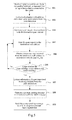
- Fig. 1 is the flow chart of a method for router access control according to an exemplary embodiment. As shown in Fig. 1 , the method for router access control is used in the router, and includes the following steps.
- step S11 a destination web address and a destination post content are obtained.
- the destination web address refers to a web address to which the user needs to send a post request.
- the destination web address can be usual web addresses of shopping websites, such as the web addresses of websites of Taobao, Jingdong, Yihaodian, and it also can be the web addresses of websites for booking the tickets or booking other services, such as a ticket booking website, an airline ticket booking website, a hotel booking website, or a travelling booking website.
- the destination post content refers to information expected to be submitted to the destination web address through the post request by the user.
- the destination post content can be set at discretion according to different destination web addresses.
- the destination post content can be a name, an amount, a payment method, a delivery selection, and a delivery address of the purchased good, etc.
- the destination post content can be a departure location, a destination, a train number (a flight number), a train (plane) departure date, a seat selection, a number of booking tickets, identity information about the passengers, etc.
- the destination post content just includes corresponding information as required.
- the user can input the web address and the destination post content on the router directly. Also, the web address and the destination post content can be submitted to the router by using a terminal such as a mobile phone, a tablet, or a computer.
- a terminal such as a mobile phone, a tablet, or a computer.
- step S12 a post request is generated according to the destination post content.
- the corresponding post request is generated according to the destination post content, and the generated post request carries therein with information corresponding to the destination post content.
- step S13 the post request is sent to the destination web address.
- the router sends the generated post request to a server corresponding to the destination web address through the network.
- step S14 a return message returned by the destination web address in accordance with the post request is obtained.
- the server corresponding to the destination web address may return the return message correspondingly according to the post request such that the user can ensure a result of the post request is sent to the destination web address by the return message.
- the return message can include the predetermined specific characters, such as success or failure of booking tickets, and also can include information related to the destination post content, such as a departure, a destination, a train number (a flight number), a train (plane) departure date, a seat selection, the number of booking tickets, and identity information about the passengers.
- return messages of different types, formats and/or content can represent different results, whereas for a different destination web address, return messages of different types, formats and/or content are usually used to represent different results.
- return messages of different types, formats and/or content are usually used to represent different results.
- there is no exclusion of similar websites using the same return message such as Taobao and Tmall which belong to the same company, or all the websites for booking hotels.
- step S15 whether the return message is a predetermined return message is judged.
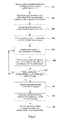
- step 15 may include the following steps.
- step S151 a destination feature in the return message is obtained.
- the destination feature can uniquely recognize or confirm a feature of the return message.
- the destination feature can be a predetermined character, a predetermined number, a character and/or a number in at least one field corresponding to the destination post content, which are contained in the return message.
- the destination feature can also be a format of the return message, etc.
- step S152 whether a predetermined feature library includes the destination feature is judged.
- the predetermined feature libraries respectively related to the different destination web addresses can be established in advance, and after obtaining the return message, the destination feature can be compared with the feature in the predetermined feature library by using the table look-up scheme, etc.
- step S153 it is determined that the return message is the predetermined return message.
- step S154 it is determined that the return message is not the predetermined return message.
- the process returns back to step S13 and the post request continues to be sent to the destination web address until the return message is the predetermined return message.
- the router during the procedure of obtaining the network resource, the router only needs to obtain the destination web address and the destination post content once (it is usually the first time in the procedure of obtaining the network resource), and then in the subsequent procedure of obtaining the network resource, it determines whether the return message of this network resource obtaining procedure is the predetermined return message, and when the predetermined return message is not obtained, the post request can be automatically sent many times until the return message of this network resource obtaining procedure is the predetermined return message.
- the method for router access control provided by the present disclosure can automatically complete the subsequent post request sending procedure many times until the predetermined return message is returned, only by receiving the parameters (including the destination web address and the destination post content) once, thereby the problem with the prior art that the user needs to input or perform an operation repeatedly if the first request has failed can be avoided, and the operation becomes easy and convenient.
- the user during the procedure of obtaining the network resource, the user only needs to send the destination web address and the destination post content once to the router through the terminal, and interactions among all the remaining data are totally implemented between the router and the server corresponding to the destination web address.
- the method of the present disclosure does not need to forward the return message of the post request to the user by the router and send the post request again by the user after operations every time, which reduces the number of interactions between the router and the terminal, and further decreases the time consumed for the procedure of obtaining the network resource, such that an interval of two adjacent post requests sent by the router is reduced, the number of sending post requests through the router per unit time is increased, and a success rate of obtaining the finite network resource is significantly improved.
- Fig. 3 is a flow chart of a method for router access control according to an exemplary embodiment. As shown in Fig. 3 , based on the exemplary embodiment shown in Fig.1 , the method can further include the following steps.
- step S31 a prompt pushing message is generated in accordance with the return message.
- the generated prompt pushing message carries with information corresponding to the return message.
- step S32 the prompt pushing message is sent to at least one predetermined receiving terminal.
- the purpose of sending the prompt pushing message is to inform the user of the result of this post request. Also, sending the prompt pushing message enables the user to know the result of this post request quickly.
- sending the pushing message to the predetermined receiving terminal is performed in a format including one of a text message, a mail, a webpage message, an Internet pushing message, and a LAN notification message, or a combination thereof.
- the predetermined receiving terminal can be a mobile terminal, a computer, or other network terminals.
- the result of the post request can be quickly informed to the user in time in a manner preset by the user, which facilitates the user to check the return message, and implements the subsequent processes according to the return message, such as the payment, the cancellation of order, or the revision of information in the order.
- Fig. 4 is a flow chart of a method for router access control according to an exemplary embodiment. As shown in Fig. 4 , based on the exemplary embodiment shown in Fig.1 , the method can further include the following steps.
- step S41 a payment information in the return message is obtained.
- the purpose of sending the prompt pushing message is to inform the user of the result of this post request.
- the return message is the predetermined return message
- the payment information with which the return message carries can be obtained directly.
- step S42 a payment pushing message is generated in accordance with the payment information.
- the generated payment information carries with information corresponding to the payment information, such as a payment link.
- step S43 the payment pushing message is sent to at least one predetermined receiving terminal.
- step S32 This step can be referred to the details of step S32 described above, which will not be elaborated herein.
- the return message can further carry with other information, such as a logistics information, which also can be pushed to the user.
- the follow-up operations can be implemented quickly, so as to reduce intermediate links between the return message and the payment needed by the user which saves time. From another point of view, it can prevent the user from being seduced or being mistaken to select the payment link, which decreases the risk of the user being cheated and enhances security.
- Fig. 5 is a flow chart of a method for router access control according to an exemplary embodiment. As shown in Fig. 5 , the method for router access control is applied to the router, and includes the following steps.
- step S51 a post instruction sent by a sending terminal or inputted by an input device that is connected to the router is received.
- the sending terminal can be connected to the router via a wired connection, such as a computer. Also, the sending terminal can be connected to the router via a wireless connection, such as a mobile terminal like a mobile phone, and a tablet.
- routers can be provided with input devices, such as a touch panel and keys, thereby the post instruction inputted by the user can be received by the input devices, such as the touch panel and the keys provided on the router.
- the post instruction includes at least the destination web address and the destination post content.
- the router can provide an interface which is similar to a tablet. The user can send the post instruction by the sending terminal or input the post instruction directly on the router.
- step S52 the destination web address and the destination post content are extracted from the post instruction.
- step S53 a post request is generated in accordance with the destination post content.
- step S54 the post request is sent to the destination web address.
- step S55 a return message returned by the destination web address in accordance with the post request is obtained.
- step S56 whether the return message is a predetermined message is judged.
- step S54 the process returns back to step S54 to continue to send the post request to the destination web address.
- step S57 information of a predetermined receiving terminal is extracted from the post instruction.
- the post instruction includes the information of the predetermined receiving terminal for receiving the pushing message.
- the information of the predetermined receiving terminal can be an IP address, an account or an ID, wherein the ID can be a mobile phone number, i.e., the user can specify the information of the predetermined receiving terminal in advance.
- the predetermined receiving terminal can be the same as the terminal for sending the post request, or can be different from the terminal for sending the post request.
- the user can book tickets by a computer, and set the predetermined receiving terminal as this computer or other computers located in the same local area network as this computer, such as computers in other rooms.
- this method is also appropriate for a local area network, such as an office local area network.
- the user books tickets by using his home computer , but the user cannot stay in front of the computer in a future time period; for instance, the user has booked tickets by the computer after waking up in the morning, and then the user goes to work
- the user sends the post instruction through the computer he can specify his mobile phone as the receiving terminal, such that the user can receive the pushing message by his mobile phone once the booking is successful when going to work; or when the user sends the post instruction through the computer, he sends an e-mail to a mailbox specified by the user, such that the user can obtain the pushing message by checking his e-mail after reaching work; or when the user is on the way to work, the pushing message can be sent in the form of webpage pop-up window to the user once the booking is successful.
- the user implements ticket booking for many people he can specify these people's mobile phones as the predetermined receiving terminal in the post instruction, and after the ticket booking is successful, the pushing message can be sent to the mobile phones of those people.
- Step S57 is not limited to be after step S56. It can be implemented at any time after obtaining the post instruction and before step S58.
- step S58 a prompt pushing message is generated in accordance with the return message.
- step S59 the prompt pushing message is sent to at least one predetermined receiving terminal.
- Fig. 6 is a flow chart of a method for router access control according to an exemplary embodiment. As shown in Fig. 6 , the method for router access control is applied to the router, and includes the following steps.
- step S61 a post instruction sent by a sending terminal is received using an application program.
- the post instruction includes at least the destination post content.
- one or more application programs such as an app
- Each of the application programs is bound with a predetermined web address.
- an app for booking train tickets can be installed individually; moreover, for the Taobao website, an app for shopping on Taobao can be installed individually.
- the user needs a service, he can input the post instruction by using the specific app.
- step S62 a predetermined web address bound by the application program is determined as the destination web address.
- each application program is bound with one predetermined web address, when receiving the post instruction by a certain application program, the predetermined web address bound by the application program can be determined as the destination web address.
- step S63 the destination post content is extracted from the post instruction.
- step S64 a post request is generated in accordance with the destination post content.
- step S65 the post request is sent to the destination web address.
- step S66 a return message returned by the destination web address in accordance with the post request is obtained.
- step S67 whether the return message is a predetermined return message is judged.
- step S65 When the return message is not the predetermined return message, the process returns back to step S65 to continue to send the post request to the destination web address until the return message is the predetermined return message.
- step S68 a payment information in the return message is obtained.
- step S69 a payment pushing message is generated in accordance with the return message.
- step S70 the payment pushing message is sent to at least one predetermined receiving terminal.
- the user can directly access a certain application program in the router, and directly input the post instruction including at least the post content according to an input interface provided by the application program without the procedure of inputting the destination web address, which can facilitate sending the post request quickly, especially for those users, who usually open the destination web address by the portal websites but are unfamiliar with a detailed spelling of the web address.
- Fig. 7 is a flow chart of a method for router access control according to an exemplary embodiment. As shown in Fig. 7 , the method for router access control is applied to the router, and includes the following steps.
- step S71 a reference post request sent by a sending terminal is received.
- the user can access a destination website directly by a browser on the sending terminal, and fill a post content in the destination website, then the browser directly generates a reference post request, and sends the reference post request to the router.
- the reference post request includes at least a reference web address and a reference post content.
- the reference post request can include information of a predetermined receiving terminal.
- step S72 whether a predetermined web address database includes the reference web address is determined.
- the web address database is provided in the router in advance. It may be defaulted that the web address database stores web addresses corresponding to the usual shopping and booking websites, or stores web addresses inputted by the user in advance.
- step S73 the reference web address and the reference post content are extracted from the reference post request.
- extracting the reference web address from the reference post request may also be implemented after step S71 and before step S72.
- step S74 the reference web address is determined as the destination web address, and the reference post content is determined as the destination post content.
- step S78 the reference post request is forwarded directly based on the current working mode of the router.
- step S75 the reference post request is sent to the destination web address.
- the reference post request as the post request to be sent, is sent to the destination web address directly.
- step S76 a return message returned by the destination web address in accordance with the reference post request is obtained.
- step S77 whether the return message is a predetermined return message is judged.
- step S75 the process returns back to step S75 to continue to send the reference post request to the destination web address, until the return message is the predetermined return message; and when the return message is the predetermined return message, the process ends.
- the exemplary embodiments of the present disclosure are equivalent to build a plug-in component for accelerating many of specific web addresses in the router.
- Many of the specific web addresses refer to the web addresses provided in the predetermined web address database. Therefore, when the user needs to send many post requests to many destination web addresses, he may directly perform operations on the browser of the terminal without looking for the corresponding application programs in the router and inputting the post instruction individually in the different applications programs.
- the router After the browser sends the different post requests to the router, the router, according to the reference post request sent by the terminal, can selectively and automatically send the post request many times until the return message is the predetermined message, or can selectively and directly perform the retransmission, thereby decreasing the complexity of user operations significantly.
- the method of the present disclosure does not need to forward the return message of the post request to the user by the router and send the post request again by the user after operations every time, which reduces the number of interactions between the router and the terminal, and further decreases the time consumed for the procedure of obtaining network resources, such that an interval of two adjacent post requests sent by the router is reduced, the number of sending post requests through the router per unit time is increased, and a success rate of obtaining the finite network resource is significantly improved.
- Fig. 8 is a block diagram of a device for router access control according to an exemplary embodiment. As shown in Fig. 8 , the device includes an object obtaining unit 101, a request generating unit 102, a request sending unit 103, a return message obtaining unit 104, and a return message judging unit 105.
- the object obtaining unit 101 is configured to obtain a destination web address and a destination post content.
- the object obtaining unit 101 can include a first instruction receiving unit and an object extracting unit, wherein, the first instruction receiving unit is configured to receive a post instruction sent by a sending terminal, or inputted by an input device that is connected to the router, the post instruction including at least the destination web address and the destination post content; and the object extracting unit is configured to extract the destination web address and the destination post content from the post instruction.
- the object obtaining unit 101 can include a second instruction receiving unit, a destination web address determining unit and a destination post content extracting unit, wherein, the second instruction receiving unit is configured to receive the post instruction sent by the sending terminal via an application program, the post instruction including at least the destination post content; the application program is bound with a predetermined web address; the destination web address determining unit is configured to determine the predetermined web address bounded by the application program as the destination web address; and the destination post content extracting unit is configured to extract the destination post content from the post instruction.
- the object obtaining unit 101 can include a request receiving unit, a web address judging unit, a reference object extracting unit, and a destination object determining unit, wherein, the request receiving unit is configured to receive the reference post request sent by the sending terminal, the reference post request including at least the reference web address and the reference post content; the web address judging unit is configured to judge whether a predetermined web address database includes the reference web address; the reference object extracting unit is configured to extract the reference web address and the reference post content from the reference post request if the predetermined web address database includes the reference web address; and the destination object determining unit is configured to determine the reference web address as the destination web address, and to determine the reference post content as the destination post content.
- the request generating unit 102 is configured to generate a post request in accordance with the destination post content.
- the request sending unit 103 is configured to send the post request to the destination web address.
- the return message obtaining unit 104 is configured to obtain a return message returned by the destination web address in accordance with the post request.
- the return message judging unit 105 is configured to judge whether the return message is a predetermined return message.
- the request sending unit 103 is further configured to continue to send the post request to the destination web address, until the return message is the predetermined return message.
- Fig. 9 is a block diagram of a device for router access control according to an exemplary embodiment. Referring to Fig. 9 , based on the exemplary embodiment shown in Fig. 8 , the device further includes a first pushing message generating unit 201 and a first pushing message sending unit 202.
- the first pushing message generating unit 201 is configured to generate a prompt pushing message in accordance with the return message if the return message is the predetermined return message.
- the first pushing message sending unit 202 is configured to send the prompt pushing message to at least one predetermined receiving terminal.
- sending the pushing message to the predetermined receiving terminal is performed in a format including one of a text message, a mail, a webpage message, an Internet pushing message, and a LAN notification message, or a combination thereof
- the predetermined receiving terminal can be a mobile terminal, a computer, or other network terminals.
- Fig. 10 is a block diagram of a device for router access control according to an exemplary embodiment.
- the device further includes a payment information obtaining unit 301, a second pushing message generating unit 302 and a second pushing message sending unit 303.
- the payment information obtaining unit 301 is configured to obtain a payment information in the return message if the return message is the predetermined return message.
- the second pushing message generating unit 302 is configured to generate a payment pushing message in accordance with the payment information.
- the second pushing message sending unit 303 is configured to send the payment pushing message to at least one predetermined receiving terminal.
- the device may further include a terminal information extracting unit.
- the terminal information extracting unit is configured to extract the information of the predetermined receiving terminal from the post instruction or the reference post request.
- the information of the predetermined receiving terminal can be the same as the terminal for sending the post request. Also, it can be different from the terminal sending the post request.
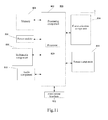
- Fig. 11 is a block diagram of an electronic device 800 for controlling the router access according to an exemplary embodiment.
- the electronic device 800 may be a mobile phone, a computer, a digital broadcast terminal, a messaging device, a gaming console, a tablet, a medical device, exercise equipment, a personal digital assistant, a router, etc. Except for the router described above, other devices can combine with the function of router, and the like.
- the electronic device 800 may include one or more of the following components: a processing module 802, a memory 804, a power component 806, a multimedia component 808, an audio component 810, an input/output (I/O) interface 812, a sensor component 814, and a communication component 816.
- a processing module 802 a memory 804, a power component 806, a multimedia component 808, an audio component 810, an input/output (I/O) interface 812, a sensor component 814, and a communication component 816.
- the processing component 802 typically controls overall operations of the electronic device 800, such as the operations associated with display, telephone calls, data communications, camera operations and recording operations.
- the processing component 802 may include one or more processors 820 to execute instructions to perform all or part of the steps in the above described methods.
- the processing component 802 may include one or more modules which facilitate the interaction between the processing component 802 and other components.
- the processing component 802 may include a multimedia module to facilitate the interaction between the multimedia component 808 and processing component 802.
- the memory 804 is configured to store various types of data to support the operation of the device 800. Examples of such data include instructions for any applications or methods operated on the electronic device 800, contact data, phonebook data, messages, pictures, video, etc.
- the memory 804 can be implemented using any type of volatile or non-volatile memory devices, or a combination thereof, such as a static random access memory (SRAM), an electrically erasable programmable read-only memory (EEPROM), an erasable programmable read-only memory (EPROM), a programmable read-only memory (PROM), a read-only memory (ROM), a magnetic memory, a flash memory, a magnetic or optical disk.
- SRAM static random access memory
- EEPROM electrically erasable programmable read-only memory
- EPROM erasable programmable read-only memory
- PROM programmable read-only memory
- ROM read-only memory
- magnetic memory a magnetic memory
- flash memory a flash memory
- magnetic or optical disk a magnetic or
- the power component 806 provides power to various components of the electronic device 800.
- the power component 806 may include a power management system, one or more power sources, and any other components associated with the generation, management and distribution of power in the electronic device 800.
- the multimedia component 808 includes a screen providing an output interface between the electronic device 800 and the user.
- the screen may include a liquid crystal display (LCD) and a touch panel (TP). If the screen includes the touch panel, the screen may be implemented as a touch screen to receive input signals from the user.
- the touch panel includes one or more touch sensors to sense touches, swipes, and gestures on the touch panel. The touch sensors may not only sense a boundary of a touch or swipe action, but also sense a period of time and a pressure associated with the touch or swipe action.
- the multimedia component 808 includes a front camera and/or a rear camera. The front camera and the rear camera may receive an external multimedia datum while the device 800 is in an operation mode, such as a photographing mode or a video mode. Each of the front camera and the rear camera may be a fixed optical lens system or have focus and optical zoom capability.
- the audio component 810 is configured to output and/or input audio signals.
- the audio component 810 includes a microphone ("MIC") configured to receive an external audio signal when the electronic device 800 is in an operation mode, such as a call mode, a recording mode, and a voice recognition mode.
- the received audio signal may be further stored in the memory 804 or transmitted via the communication component 816.
- the audio component 810 further includes a speaker to output audio signals.
- the I/O interface 812 provides an interface between the processing component 802 and peripheral interface modules, such as a keyboard, a click wheel, buttons, and the like.
- the buttons may include, but are not limited to, a home button, a volume button, a starting button, and a locking button.
- the sensor component 814 includes one or more sensors to provide status assessments of various aspects of the electronic device 800. For instance, the sensor component 814 may detect an open/closed status of the electronic device 800, relative positioning of components, e.g., the display and the keypad, of the electronic device 800, a change in position of the electronic device 800 or a component of the electronic device 800, a presence or absence of user contact with the electronic device 800, an orientation or an acceleration/deceleration of the device 800, and a change in temperature of the electronic device 800.
- the sensor component 814 may include a proximity sensor configured to detect the presence of nearby objects without any physical contact.
- the sensor component 814 may also include a light sensor, such as a CMOS or CCD image sensor, for use in imaging applications.
- the sensor component 814 may also include an accelerometer sensor, a gyroscope sensor, a magnetic sensor, a pressure sensor, or a temperature sensor.
- the communication component 816 is configured to facilitate communication, wired or wirelessly, between the electronic device 800 and other devices.
- the electronic device 800 can access a wireless network based on a communication standard, such as WiFi, 2G, or 3G, or a combination thereof.
- the communication component 816 receives a broadcast signal or broadcast associated information from an external broadcast management system via a broadcast channel.
- the communication component 816 further includes a near field communication (NFC) module to facilitate short-range communications.
- the NFC module may be implemented based on a radio frequency identification (RFID) technology, an infrared data association (IrDA) technology, an ultra-wideband (UWB) technology, a Bluetooth (BT) technology, and other technologies.
- RFID radio frequency identification
- IrDA infrared data association
- UWB ultra-wideband
- BT Bluetooth
- the electronic device 800 may be implemented with one or more application specific integrated circuits (ASICs), digital signal processors (DSPs), digital signal processing devices (DSPDs), programmable logic devices (PLDs), field programmable gate arrays (FPGAs), controllers, micro-controllers, microprocessors, or other electronic components, for performing the above described methods.
- ASICs application specific integrated circuits
- DSPs digital signal processors
- DSPDs digital signal processing devices
- PLDs programmable logic devices
- FPGAs field programmable gate arrays
- controllers micro-controllers, microprocessors, or other electronic components, for performing the above described methods.
- non-transitory computer-readable storage medium including instructions, such as included in the memory 804, executable by the processor 820 in the electronic device 800, for performing the above-described methods.
- the non-transitory computer-readable storage medium may be a ROM, a RAM, a CD-ROM, a magnetic tape, a floppy disc, an optical data storage device, and the like.
- the non-temporary computer readable storage medium can enable the mobile terminal to perform the method for router access control when instructions in the storage medium are executed by a processor of the mobile terminal.
- the method includes:
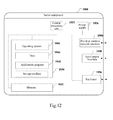
- Fig. 12 is a block diagram of a server according to an exemplary embodiment.
- the server 1900 may have large differences due to distinct configurations or performances, and may include one or more central processing units (CPU) 1922 (such as one or more processors) and a memory 1932, and one or more storage mediums 1930 (such as one or more mass memory devices) storing application programs 1942 or data 1944.
- the memory 1932 and the storage mediums 1930 can be a transient or persistent storage.
- the programs stored in the storage mediums 1930 may include one or more modules (not marked in the drawing). Each of modules may include a series of instruction operations to the server.
- the central processing units 1922 may be arranged to communicate with the storage mediums 1930 to execute a series of instruction operations in the storage mediums 1930 on the server.
- the server 1900 may also include one or more power supplies 1926, one or more wired or wireless network interfaces 1950, one or more input/output interfaces 1958, one or more keyboards 1956, and/or one or more operating systems 1941, such as Windows ServerTM, Mac OS XTM, UnixTM, LinuxTM, FreeBSDTM, or the like.
- the non-temporary computer readable storage medium can enable the server to perform the method of virtually operating a document when the instructions in the storage medium are executed by a processor of the server.
- the method includes:
Landscapes
- Engineering & Computer Science (AREA)
- Computer Networks & Wireless Communication (AREA)
- Signal Processing (AREA)
- Data Exchanges In Wide-Area Networks (AREA)
- Computer And Data Communications (AREA)
- Small-Scale Networks (AREA)
- Information Transfer Between Computers (AREA)
Abstract
Description
- The present disclosure relates to the field of network equipment technology, and more particularly, to a method and a device for router access control, and a router.
- With the development of networked information resources, there are more and more enterprises joining in the information resource network. The networked information resource may not only change current production structure, industry structure and labor structure, but also has dramatically changed people's lifestyle, ways of social contact, manners of working and learning.
- Some of the traditional social public resources have been added into the information resource network. For instance, hospital registration can be implemented by the Internet, booking a museum and other showplaces can be made by the Internet; furthermore, by the Internet, hotels, train and airline tickets can be booked. When the user obtains those social public resources, he needs to use a browser on the computer, mobile phone or other smart terminal to access a destination website, and perform operations of filling in forms and registration to request the resources. Nevertheless, if this resource request is unsuccessful, the request may have to be implemented again after repeatedly performing the same operations many times, which means the time taken for completing the procedure for obtaining the resource on-line can be long and inconvenient.
- The present disclosure provides a method and a device for router access control, and a router, in accordance with claims which follow, which aim to solve the above-mentioned problems.
- According to a first aspect of embodiments of the present disclosure, there is provided a method for router access control, including:
- obtaining a destination web address and a destination post content; generating a post request in accordance with the destination post content; sending the post request to the destination web address; obtaining a return message returned from the destination web address in accordance with the post request; judging whether the return message is a predetermined return message; and if the return message is not the predetermined return message, continuing to send the post request to the destination web address until the return message is the predetermined return message.
- In combination with the first aspect, in a first possible implementing manner of the first aspect, the method further includes:
- generating a prompt pushing message in accordance with the return message if the return message is the predetermined return message; and sending the prompt pushing message to at least one predetermined receiving terminal.
- In combination with the first aspect, in a second possible implementing manner of the first aspect, the method further includes:
- obtaining a payment information in the return message if the return message is the predetermined return message; generating a payment pushing message in accordance with the payment information; and sending the payment pushing message to at least one predetermined receiving terminal.
- In combination with the first or second possible implementing manner of the first aspect, in a third possible implementing manner of the first aspect, sending the pushing message to the predetermined receiving terminal is performed in a format including one of a text message, a mail, a webpage message, an Internet pushing message, and a LAN notification message, or a combination thereof.
- In combination with the first aspect, in a fourth possible implementing manner of the first aspect, the obtaining the destination web address and the destination post content includes:
- receiving a post instruction sent from a sending terminal, or inputted from an input device that is connected to the router, the post instruction including at least the destination web address and the destination post content; and extracting the destination web address and the destination post content from the post instruction.
- In combination with the first aspect, in a fifth possible implementing manner of the first aspect, the obtaining the destination web address and the destination post content includes:
- receiving a post instruction sent from a sending terminal using an application program, the post instruction including at least the destination post content, the application program being bound with a predetermined web address; determining the predetermined web address bound by the application program as the destination web address; and extracting the destination post content from the post instruction.
- In combination with the first aspect, in a sixth possible implementing manner of the first aspect, the obtaining the destination web address and the destination post content includes:
- receiving a reference post request sent from a sending terminal, the reference post request including at least a reference web address and a reference post content; judging whether a predetermined web address database includes the reference web address; extracting the reference web address and the reference post content from the reference post request if the predetermined web address database includes the reference web address; and determining the reference web address as the destination web address and determining the reference post content as the destination post content.
- In combination with the fourth possible implementing manner of the first aspect, the fifth possible implementing manner of the first aspect or the sixth possible implementing manner of the first aspect, in a seventh possible implementing manner of the first aspect, the post instruction or the reference post request includes information of a predetermined receiving terminal for receiving the pushing message, and the method further includes:
- extracting the information of the predetermined receiving terminal from the post instruction or the reference post request.
- According to a second aspect of embodiments of the present disclosure, there is provided a device for router access control, which is applied to a router, including:
- an object obtaining unit configured to obtain a destination web address and a destination post content; a request generating unit configured to generate a post request in accordance with the destination post content; a request sending unit configured to send the post request to the destination web address; a return message obtaining unit configured to obtain a return message returned from the destination web address in accordance with the post request; and
- a return message judging unit configured to determine whether the return message is a predetermined return message; wherein if the return message is not the predetermined return message, the request sending unit continues to send the post request to the destination web address until the return message is the predetermined return message.
- In combination with the second aspect, in a first possible implementing manner of the second aspect, the device further includes:
- a first pushing message generating unit configured to generate a prompt pushing message in accordance with the return message if the return message is the predetermined return message; and a first pushing message sending unit configured to send the prompt pushing message to at least one predetermined receiving terminal.
- In combination with the second aspect, in a second possible implementing manner of the second aspect, the device further includes:
- a payment information obtaining unit configured to obtain a payment information in the return message if the return message is the predetermined return message; a second pushing message generating unit configured to generate a payment pushing message in accordance with the payment information; and a second pushing message sending unit configured to send the payment pushing message to at least one predetermined receiving terminal.
- In combination with the second aspect, in a third possible implementing manner of the second aspect, the object obtaining unit may include:
- a first instruction receiving unit configured to receive a post instruction sent from a sending terminal, or inputted from an input device that is connected to the router, the post instruction including at least the destination web address and the destination post content; and an object extracting unit configured to extract the destination web address and the destination post content from the post instruction.
- In combination with the second aspect, in a fourth possible implementing manner of the second aspect, the object obtaining unit includes:
- a second instruction receiving unit configured to receive a post instruction sent from a sending terminal using an application program, the post instruction including at least the destination post content, the application program being bound with a predetermined web address; a destination web address determining unit configured to determine the predetermined web address bound by the application program as the destination web address; and a destination post content extracting unit configured to extract the destination post content from the post instruction.
- In combination with the second aspect, in a fifth possible implementing manner of the second aspect, the object obtaining unit includes:
- a request receiving unit configured to receive a reference post request sent from a sending terminal, the reference post request including at least a reference web address and reference post content; a web address judging unit configured to determine whether a predetermined web address database includes the reference web address; a reference object extracting unit configured to extract the reference web address and the reference post content from the reference post request if the predetermined web address database includes the reference web address; and a destination object determining unit configured to determine the reference web address as the destination web address and determine the reference post content as the destination post content.
- In combination with the third possible implementing manner of the second aspect, the fourth possible implementing manner of the second aspect or the fifth possible implementing manner of the second aspect, in a sixth possible implementing manner of the second aspect, the post instruction or the reference post request includes information of a predetermined receiving terminal for receiving the pushing message, and the device further includes:
- a terminal information extracting unit configured to extract the information of the predetermined receiving terminal from the post instruction or the reference post request.
- According to a third aspect of embodiments of the present disclosure, there is provided a router, including:
- a processor; a memory for storing instructions executable by the processor; wherein, the processor is configured to: obtain a destination web address and a destination post content; generate a post request in accordance with the destination post content; send the post request to the destination web address; obtain a return message returned from the destination web address returns in accordance with the post request; judge whether the return message is a predetermined return message; and if the return message is not the predetermined return message, continue to send the post request to the destination web address until the return message is the predetermined return message.
- According to a fourth aspect of the embodiments of the present disclosure, there is provided a computer program, which when executing on a processor of a router, performs the method according to the first aspect of the embodiments of the present disclosure.
- The technical solutions of the embodiments of the present disclosure can include the following advantageous effects:
- during the procedure of obtaining the network resource in the present disclosure, the router only needs to obtain the destination web address and the destination post content once (it is usually the first time in the procedure of obtaining the network resource), and then in the subsequent procedure of obtaining the network resource, whether the return message of this network resource obtaining procedure is the predetermined return message is judged, and when the predetermined return message is not obtained, the post request can be automatically sent many times until the return message of this network resource obtaining procedure is the predetermined return message.
- In one aspect, the method for router access control provided by the present disclosure can automatically complete the subsequent post request sending procedure many times until the predetermined return message is returned, only by receiving the parameters (including the destination web address and the destination post content) once, thereby the problem with the prior art that the user needs to input or perform an operation repeatedly if the first request has failed can be avoided, and the operation becomes easy and convenient.
- In another aspect, in the method for router access control provided by the present disclosure, during the procedure of obtaining the network resource, the user only needs to send the destination web address and the destination post content once to the router through the terminal, and interactions among all the remaining data are totally implemented between the router and the server corresponding to the destination web address. In comparison with the related art, the method of the present disclosure does not need to forward the return message of the post request to the user by the router and send the post request again by the user after operations every time, which reduces the number of interactions between the router and the terminal, and further decreases the time consumed for the procedure of obtaining the network resource, such that an interval of two adjacent post requests sent by the router is reduced, the number of sending post requests through the router per unit time is increased, and a success rate of obtaining the finite network resource is significantly improved.
- It is to be understood that both the foregoing general description and the following detailed description are exemplary and explanatory only.
- The accompanying drawings, which are incorporated in and constitute a part of this specification, illustrate embodiments consistent with the invention and, together with the description, serve to explain the principles of the invention.
-
Fig. 1 is an illustrative flow chart of a method for router access control according to an exemplary embodiment. -
Fig. 2 is an illustrative flow chart of step S15 inFig. 1 according to an exemplary embodiment. -
Fig. 3 is an illustrative flow chart of a method for router access control according to an exemplary embodiment. -
Fig. 4 is an illustrative flow chart of a method for router access control according to an exemplary embodiment. -
Fig. 5 is an illustrative flow chart of a method for router access control according to an exemplary embodiment. -
Fig. 6 is an illustrative flow chart of a method for router access control according to an exemplary embodiment. -
Fig. 7 is an illustrative flow chart of a method for router access control according to an exemplary embodiment. -
Fig. 8 is a block diagram of a device for router access control according to an exemplary embodiment. -
Fig. 9 is a block diagram of a device for router access control according to an exemplary embodiment. -
Fig. 10 is a block diagram of a device for router access control according to an exemplary embodiment. -
Fig. 11 is a block diagram of an electronic apparatus for implementing router access control according to an exemplary embodiment. -
Fig. 12 is a block diagram of a server according to an exemplary embodiment. - The embodiments of the present disclosure are illustrated by the drawings above. The present disclosure hereinafter will be described in more detail. These drawings and description are only for exemplary embodiments and illustrative purposes to illustrate the concept of the present disclosure for those skilled in the art, rather than to limit the present disclosure.
- Reference will now be made in detail to exemplary embodiments, examples of which are illustrated in the accompanying drawings. The following description refers to the accompanying drawings in which the same numbers in different drawings represent the same or similar elements unless otherwise represented. The implementations set forth in the following description of exemplary embodiments do not represent all implementations consistent with the invention.
-
Fig. 1 is the flow chart of a method for router access control according to an exemplary embodiment. As shown inFig. 1 , the method for router access control is used in the router, and includes the following steps. - In step S11, a destination web address and a destination post content are obtained.
- The destination web address refers to a web address to which the user needs to send a post request. The destination web address can be usual web addresses of shopping websites, such as the web addresses of websites of Taobao, Jingdong, Yihaodian, and it also can be the web addresses of websites for booking the tickets or booking other services, such as a ticket booking website, an airline ticket booking website, a hotel booking website, or a travelling booking website.
- The destination post content refers to information expected to be submitted to the destination web address through the post request by the user. In the embodiments of the present disclosure, the destination post content can be set at discretion according to different destination web addresses. For instance, for the shopping websites, the destination post content can be a name, an amount, a payment method, a delivery selection, and a delivery address of the purchased good, etc.; for booking train tickets and airline tickets, the destination post content can be a departure location, a destination, a train number (a flight number), a train (plane) departure date, a seat selection, a number of booking tickets, identity information about the passengers, etc.; and for booking hotels or travel tickets, in accordance with the contents listed above, the destination post content just includes corresponding information as required.
- The user can input the web address and the destination post content on the router directly. Also, the web address and the destination post content can be submitted to the router by using a terminal such as a mobile phone, a tablet, or a computer.
- In step S12, a post request is generated according to the destination post content.
- In this step, by using the format of post request in the existing network transport protocol, the corresponding post request is generated according to the destination post content, and the generated post request carries therein with information corresponding to the destination post content.
- In step S13, the post request is sent to the destination web address.
- The router sends the generated post request to a server corresponding to the destination web address through the network.
- In step S14, a return message returned by the destination web address in accordance with the post request is obtained.
- After the server corresponding to the destination web address receives the post request, it may return the return message correspondingly according to the post request such that the user can ensure a result of the post request is sent to the destination web address by the return message. The return message can include the predetermined specific characters, such as success or failure of booking tickets, and also can include information related to the destination post content, such as a departure, a destination, a train number (a flight number), a train (plane) departure date, a seat selection, the number of booking tickets, and identity information about the passengers.
- With regard to the same destination web address, return messages of different types, formats and/or content can represent different results, whereas for a different destination web address, return messages of different types, formats and/or content are usually used to represent different results. Of course, there is no exclusion of similar websites using the same return message, such as Taobao and Tmall which belong to the same company, or all the websites for booking hotels.
- In step S15, whether the return message is a predetermined return message is judged.
- In an exemplary embodiment of the present disclosure, referring to
Fig. 2 , step 15 may include the following steps. - In step S151, a destination feature in the return message is obtained.
- The destination feature can uniquely recognize or confirm a feature of the return message. In the embodiments of the present disclosure, the destination feature can be a predetermined character, a predetermined number, a character and/or a number in at least one field corresponding to the destination post content, which are contained in the return message. In addition, the destination feature can also be a format of the return message, etc.
- In step S152, whether a predetermined feature library includes the destination feature is judged.
- For different destination web addresses, the predetermined feature libraries respectively related to the different destination web addresses can be established in advance, and after obtaining the return message, the destination feature can be compared with the feature in the predetermined feature library by using the table look-up scheme, etc.
- When the predetermined feature library includes the destination feature, in step S153, it is determined that the return message is the predetermined return message. When the predetermined feature library excludes the destination feature, in step S154, it is determined that the return message is not the predetermined return message.
- When the return message is not the predetermined return message, the process returns back to step S13 and the post request continues to be sent to the destination web address until the return message is the predetermined return message.
- According to the technical solution described above, in the method for router access control provided by the embodiments of the present disclosure, during the procedure of obtaining the network resource, the router only needs to obtain the destination web address and the destination post content once (it is usually the first time in the procedure of obtaining the network resource), and then in the subsequent procedure of obtaining the network resource, it determines whether the return message of this network resource obtaining procedure is the predetermined return message, and when the predetermined return message is not obtained, the post request can be automatically sent many times until the return message of this network resource obtaining procedure is the predetermined return message.
- In one aspect, the method for router access control provided by the present disclosure can automatically complete the subsequent post request sending procedure many times until the predetermined return message is returned, only by receiving the parameters (including the destination web address and the destination post content) once, thereby the problem with the prior art that the user needs to input or perform an operation repeatedly if the first request has failed can be avoided, and the operation becomes easy and convenient.
- In another aspect, in the method for router access control provided by the present disclosure, during the procedure of obtaining the network resource, the user only needs to send the destination web address and the destination post content once to the router through the terminal, and interactions among all the remaining data are totally implemented between the router and the server corresponding to the destination web address. In comparison with the related art, the method of the present disclosure does not need to forward the return message of the post request to the user by the router and send the post request again by the user after operations every time, which reduces the number of interactions between the router and the terminal, and further decreases the time consumed for the procedure of obtaining the network resource, such that an interval of two adjacent post requests sent by the router is reduced, the number of sending post requests through the router per unit time is increased, and a success rate of obtaining the finite network resource is significantly improved.
-
Fig. 3 is a flow chart of a method for router access control according to an exemplary embodiment. As shown inFig. 3 , based on the exemplary embodiment shown inFig.1 , the method can further include the following steps. - When the return message is the predetermined return message, in step S31, a prompt pushing message is generated in accordance with the return message.
- The generated prompt pushing message carries with information corresponding to the return message.
- In step S32, the prompt pushing message is sent to at least one predetermined receiving terminal.
- The purpose of sending the prompt pushing message is to inform the user of the result of this post request. Also, sending the prompt pushing message enables the user to know the result of this post request quickly.
- In the exemplary embodiments of the present disclosure, sending the pushing message to the predetermined receiving terminal is performed in a format including one of a text message, a mail, a webpage message, an Internet pushing message, and a LAN notification message, or a combination thereof. Also, it can be seen that the predetermined receiving terminal can be a mobile terminal, a computer, or other network terminals.
- Through sending the prompt pushing message, the result of the post request can be quickly informed to the user in time in a manner preset by the user, which facilitates the user to check the return message, and implements the subsequent processes according to the return message, such as the payment, the cancellation of order, or the revision of information in the order.
-
Fig. 4 is a flow chart of a method for router access control according to an exemplary embodiment. As shown inFig. 4 , based on the exemplary embodiment shown inFig.1 , the method can further include the following steps. - When the return message is the predetermined return message, in step S41, a payment information in the return message is obtained.
- In the exemplary embodiment shown in
Fig. 3 , the purpose of sending the prompt pushing message is to inform the user of the result of this post request. In the exemplary embodiment of the present disclosure, in order to facilitate the operation of the user, when the return message is the predetermined return message, the payment information with which the return message carries can be obtained directly. - In step S42, a payment pushing message is generated in accordance with the payment information.
- The generated payment information carries with information corresponding to the payment information, such as a payment link.
- In step S43, the payment pushing message is sent to at least one predetermined receiving terminal.
- This step can be referred to the details of step S32 described above, which will not be elaborated herein.
- Moreover, with regard to the conditions of booking tickets or shopping without direct payment, such as cash on delivery, the return message can further carry with other information, such as a logistics information, which also can be pushed to the user.
- When the user receives the payment pushing message, it actually is a tacit admission that the user has known the result of this post request promptly. Additionally, by the payment pushing message, the follow-up operations, such as a payment, can be implemented quickly, so as to reduce intermediate links between the return message and the payment needed by the user which saves time. From another point of view, it can prevent the user from being seduced or being mistaken to select the payment link, which decreases the risk of the user being cheated and enhances security.
-
Fig. 5 is a flow chart of a method for router access control according to an exemplary embodiment. As shown inFig. 5 , the method for router access control is applied to the router, and includes the following steps. - In step S51, a post instruction sent by a sending terminal or inputted by an input device that is connected to the router is received.
- The sending terminal can be connected to the router via a wired connection, such as a computer. Also, the sending terminal can be connected to the router via a wireless connection, such as a mobile terminal like a mobile phone, and a tablet.
- With the development of intelligent functions of the router, existing routers can be provided with input devices, such as a touch panel and keys, thereby the post instruction inputted by the user can be received by the input devices, such as the touch panel and the keys provided on the router.
- The post instruction includes at least the destination web address and the destination post content. In one embodiment, the router can provide an interface which is similar to a tablet. The user can send the post instruction by the sending terminal or input the post instruction directly on the router.
- In step S52, the destination web address and the destination post content are extracted from the post instruction.
- In step S53, a post request is generated in accordance with the destination post content.
- In step S54, the post request is sent to the destination web address.
- In step S55, a return message returned by the destination web address in accordance with the post request is obtained.
- In step S56, whether the return message is a predetermined message is judged.
- When the return message is not the predetermined return message, the process returns back to step S54 to continue to send the post request to the destination web address.
- When the return message is the predetermined return message, in step S57, information of a predetermined receiving terminal is extracted from the post instruction.
- The post instruction includes the information of the predetermined receiving terminal for receiving the pushing message. The information of the predetermined receiving terminal can be an IP address, an account or an ID, wherein the ID can be a mobile phone number, i.e., the user can specify the information of the predetermined receiving terminal in advance.
- According to actual application scenarios, the predetermined receiving terminal can be the same as the terminal for sending the post request, or can be different from the terminal for sending the post request. In the exemplary embodiments of the present disclosure, the user can book tickets by a computer, and set the predetermined receiving terminal as this computer or other computers located in the same local area network as this computer, such as computers in other rooms. Similarly, those skilled in the art can contemplate that this method is also appropriate for a local area network, such as an office local area network. However, if for example, the user books tickets by using his home computer , but the user cannot stay in front of the computer in a future time period; for instance, the user has booked tickets by the computer after waking up in the morning, and then the user goes to work, when the user sends the post instruction through the computer, he can specify his mobile phone as the receiving terminal, such that the user can receive the pushing message by his mobile phone once the booking is successful when going to work; or when the user sends the post instruction through the computer, he sends an e-mail to a mailbox specified by the user, such that the user can obtain the pushing message by checking his e-mail after reaching work; or when the user is on the way to work, the pushing message can be sent in the form of webpage pop-up window to the user once the booking is successful. In addition, when the user implements ticket booking for many people, he can specify these people's mobile phones as the predetermined receiving terminal in the post instruction, and after the ticket booking is successful, the pushing message can be sent to the mobile phones of those people.
- Step S57 is not limited to be after step S56. It can be implemented at any time after obtaining the post instruction and before step S58.
- In step S58, a prompt pushing message is generated in accordance with the return message.
- In step S59, the prompt pushing message is sent to at least one predetermined receiving terminal.
-
Fig. 6 is a flow chart of a method for router access control according to an exemplary embodiment. As shown inFig. 6 , the method for router access control is applied to the router, and includes the following steps. - In step S61, a post instruction sent by a sending terminal is received using an application program.
- The post instruction includes at least the destination post content.
- In the exemplary embodiments of the present disclosure, one or more application programs, such as an app, may be built in the router. Each of the application programs is bound with a predetermined web address. For example, for the train ticket booking website, an app for booking train tickets can be installed individually; moreover, for the Taobao website, an app for shopping on Taobao can be installed individually. In this case, when the user needs a service, he can input the post instruction by using the specific app.
- In step S62, a predetermined web address bound by the application program is determined as the destination web address.
- Because each application program is bound with one predetermined web address, when receiving the post instruction by a certain application program, the predetermined web address bound by the application program can be determined as the destination web address.
- In step S63, the destination post content is extracted from the post instruction.
- In step S64, a post request is generated in accordance with the destination post content.
- In step S65, the post request is sent to the destination web address.
- In step S66, a return message returned by the destination web address in accordance with the post request is obtained.
- In step S67, whether the return message is a predetermined return message is judged.
- When the return message is not the predetermined return message, the process returns back to step S65 to continue to send the post request to the destination web address until the return message is the predetermined return message.
- When the return message is the predetermined return message, in step S68, a payment information in the return message is obtained.
- In step S69, a payment pushing message is generated in accordance with the return message.
- In step S70, the payment pushing message is sent to at least one predetermined receiving terminal.
- By building different application programs in the router, the user can directly access a certain application program in the router, and directly input the post instruction including at least the post content according to an input interface provided by the application program without the procedure of inputting the destination web address, which can facilitate sending the post request quickly, especially for those users, who usually open the destination web address by the portal websites but are unfamiliar with a detailed spelling of the web address.
-
Fig. 7 is a flow chart of a method for router access control according to an exemplary embodiment. As shown inFig. 7 , the method for router access control is applied to the router, and includes the following steps. - In step S71, a reference post request sent by a sending terminal is received.
- The user can access a destination website directly by a browser on the sending terminal, and fill a post content in the destination website, then the browser directly generates a reference post request, and sends the reference post request to the router. The reference post request includes at least a reference web address and a reference post content. Furthermore, the reference post request can include information of a predetermined receiving terminal.
- In step S72, whether a predetermined web address database includes the reference web address is determined.
- The web address database is provided in the router in advance. It may be defaulted that the web address database stores web addresses corresponding to the usual shopping and booking websites, or stores web addresses inputted by the user in advance.
- When the predetermined web address database includes the reference web address, in step S73, the reference web address and the reference post content are extracted from the reference post request. In addition, extracting the reference web address from the reference post request may also be implemented after step S71 and before step S72.
- In step S74, the reference web address is determined as the destination web address, and the reference post content is determined as the destination post content.
- When the predetermined web address database does not include the reference web address, in step S78, the reference post request is forwarded directly based on the current working mode of the router.
- In step S75, the reference post request is sent to the destination web address.
- In this step, the reference post request, as the post request to be sent, is sent to the destination web address directly.
- In step S76, a return message returned by the destination web address in accordance with the reference post request is obtained.
- In step S77, whether the return message is a predetermined return message is judged.
- When the return message is not the predetermined message, the process returns back to step S75 to continue to send the reference post request to the destination web address, until the return message is the predetermined return message; and when the return message is the predetermined return message, the process ends.
- The exemplary embodiments of the present disclosure are equivalent to build a plug-in component for accelerating many of specific web addresses in the router. Many of the specific web addresses refer to the web addresses provided in the predetermined web address database. Therefore, when the user needs to send many post requests to many destination web addresses, he may directly perform operations on the browser of the terminal without looking for the corresponding application programs in the router and inputting the post instruction individually in the different applications programs. After the browser sends the different post requests to the router, the router, according to the reference post request sent by the terminal, can selectively and automatically send the post request many times until the return message is the predetermined message, or can selectively and directly perform the retransmission, thereby decreasing the complexity of user operations significantly.
- With regard to any of the exemplary embodiments of the present disclosure shown in
Fig. 1 ,Fig. 3 ,Fig. 4 ,Fig. 5 ,Fig. 6 andFig. 7 , in the procedure of obtaining a network resource, the user only needs to send the destination web address and the destination post content once to the router through the terminal, and interactions among all the remaining data are totally implemented between the router and the server corresponding to the destination web address. In comparison with the related art, the method of the present disclosure does not need to forward the return message of the post request to the user by the router and send the post request again by the user after operations every time, which reduces the number of interactions between the router and the terminal, and further decreases the time consumed for the procedure of obtaining network resources, such that an interval of two adjacent post requests sent by the router is reduced, the number of sending post requests through the router per unit time is increased, and a success rate of obtaining the finite network resource is significantly improved. - Moreover, in the exemplary embodiments of the present disclosure shown in
Fig. 1 ,Fig. 3 ,Fig. 4 ,Fig. 5 ,Fig. 6 andFig. 7 , the same steps in different exemplary embodiments can be referred to each other, and the different steps in different exemplary embodiments can be combined with each other. -
Fig. 8 is a block diagram of a device for router access control according to an exemplary embodiment. As shown inFig. 8 , the device includes anobject obtaining unit 101, arequest generating unit 102, arequest sending unit 103, a returnmessage obtaining unit 104, and a returnmessage judging unit 105. - The
object obtaining unit 101 is configured to obtain a destination web address and a destination post content. - In one exemplary embodiment of the present disclosure, the
object obtaining unit 101 can include a first instruction receiving unit and an object extracting unit, wherein, the first instruction receiving unit is configured to receive a post instruction sent by a sending terminal, or inputted by an input device that is connected to the router, the post instruction including at least the destination web address and the destination post content; and the object extracting unit is configured to extract the destination web address and the destination post content from the post instruction. - In one exemplary embodiment of the present disclosure, the
object obtaining unit 101 can include a second instruction receiving unit, a destination web address determining unit and a destination post content extracting unit, wherein, the second instruction receiving unit is configured to receive the post instruction sent by the sending terminal via an application program, the post instruction including at least the destination post content; the application program is bound with a predetermined web address; the destination web address determining unit is configured to determine the predetermined web address bounded by the application program as the destination web address; and the destination post content extracting unit is configured to extract the destination post content from the post instruction. - In one exemplary embodiment of the present disclosure, the
object obtaining unit 101 can include a request receiving unit, a web address judging unit, a reference object extracting unit, and a destination object determining unit, wherein, the request receiving unit is configured to receive the reference post request sent by the sending terminal, the reference post request including at least the reference web address and the reference post content; the web address judging unit is configured to judge whether a predetermined web address database includes the reference web address; the reference object extracting unit is configured to extract the reference web address and the reference post content from the reference post request if the predetermined web address database includes the reference web address; and the destination object determining unit is configured to determine the reference web address as the destination web address, and to determine the reference post content as the destination post content. - The
request generating unit 102 is configured to generate a post request in accordance with the destination post content. - The
request sending unit 103 is configured to send the post request to the destination web address. - The return
message obtaining unit 104 is configured to obtain a return message returned by the destination web address in accordance with the post request. - The return
message judging unit 105 is configured to judge whether the return message is a predetermined return message. - If the return message is not the predetermined return message, the
request sending unit 103 is further configured to continue to send the post request to the destination web address, until the return message is the predetermined return message. -
Fig. 9 is a block diagram of a device for router access control according to an exemplary embodiment. Referring toFig. 9 , based on the exemplary embodiment shown inFig. 8 , the device further includes a first pushingmessage generating unit 201 and a first pushingmessage sending unit 202. - The first pushing
message generating unit 201 is configured to generate a prompt pushing message in accordance with the return message if the return message is the predetermined return message. - The first pushing
message sending unit 202 is configured to send the prompt pushing message to at least one predetermined receiving terminal. - In the exemplary embodiments of the present disclosure, sending the pushing message to the predetermined receiving terminal is performed in a format including one of a text message, a mail, a webpage message, an Internet pushing message, and a LAN notification message, or a combination thereof It can be seen that the predetermined receiving terminal can be a mobile terminal, a computer, or other network terminals.
-
Fig. 10 is a block diagram of a device for router access control according to an exemplary embodiment. Referring toFig. 10 , based on the exemplary embodiment shown inFig. 8 , the device further includes a paymentinformation obtaining unit 301, a second pushingmessage generating unit 302 and a second pushingmessage sending unit 303. - The payment
information obtaining unit 301 is configured to obtain a payment information in the return message if the return message is the predetermined return message. - The second pushing
message generating unit 302 is configured to generate a payment pushing message in accordance with the payment information. - The second pushing
message sending unit 303 is configured to send the payment pushing message to at least one predetermined receiving terminal. - Additionally, when the post instruction or the reference post request includes information of the predetermined receiving terminal for receiving the pushing message, the device may further include a terminal information extracting unit.
- The terminal information extracting unit is configured to extract the information of the predetermined receiving terminal from the post instruction or the reference post request.
- According to the actual application scenes, the information of the predetermined receiving terminal can be the same as the terminal for sending the post request. Also, it can be different from the terminal sending the post request.
- With respect to the devices in the above embodiments, the specific manners for performing operations for individual modules therein have been described in detail in the embodiments regarding the methods, which will not be elaborated herein.
-
Fig. 11 is a block diagram of anelectronic device 800 for controlling the router access according to an exemplary embodiment. For instance, theelectronic device 800 may be a mobile phone, a computer, a digital broadcast terminal, a messaging device, a gaming console, a tablet, a medical device, exercise equipment, a personal digital assistant, a router, etc. Except for the router described above, other devices can combine with the function of router, and the like. - Referring to
Fig. 11 , theelectronic device 800 may include one or more of the following components: aprocessing module 802, amemory 804, apower component 806, amultimedia component 808, anaudio component 810, an input/output (I/O)interface 812, asensor component 814, and acommunication component 816. - The
processing component 802 typically controls overall operations of theelectronic device 800, such as the operations associated with display, telephone calls, data communications, camera operations and recording operations. Theprocessing component 802 may include one ormore processors 820 to execute instructions to perform all or part of the steps in the above described methods. Moreover, theprocessing component 802 may include one or more modules which facilitate the interaction between theprocessing component 802 and other components. For instance, theprocessing component 802 may include a multimedia module to facilitate the interaction between themultimedia component 808 andprocessing component 802. - The
memory 804 is configured to store various types of data to support the operation of thedevice 800. Examples of such data include instructions for any applications or methods operated on theelectronic device 800, contact data, phonebook data, messages, pictures, video, etc. thememory 804 can be implemented using any type of volatile or non-volatile memory devices, or a combination thereof, such as a static random access memory (SRAM), an electrically erasable programmable read-only memory (EEPROM), an erasable programmable read-only memory (EPROM), a programmable read-only memory (PROM), a read-only memory (ROM), a magnetic memory, a flash memory, a magnetic or optical disk. - The
power component 806 provides power to various components of theelectronic device 800. Thepower component 806 may include a power management system, one or more power sources, and any other components associated with the generation, management and distribution of power in theelectronic device 800. - The
multimedia component 808 includes a screen providing an output interface between theelectronic device 800 and the user. In some embodiments, the screen may include a liquid crystal display (LCD) and a touch panel (TP). If the screen includes the touch panel, the screen may be implemented as a touch screen to receive input signals from the user. The touch panel includes one or more touch sensors to sense touches, swipes, and gestures on the touch panel. The touch sensors may not only sense a boundary of a touch or swipe action, but also sense a period of time and a pressure associated with the touch or swipe action. In some embodiments, themultimedia component 808 includes a front camera and/or a rear camera. The front camera and the rear camera may receive an external multimedia datum while thedevice 800 is in an operation mode, such as a photographing mode or a video mode. Each of the front camera and the rear camera may be a fixed optical lens system or have focus and optical zoom capability. - The
audio component 810 is configured to output and/or input audio signals. For example, theaudio component 810 includes a microphone ("MIC") configured to receive an external audio signal when theelectronic device 800 is in an operation mode, such as a call mode, a recording mode, and a voice recognition mode. The received audio signal may be further stored in thememory 804 or transmitted via thecommunication component 816. In some embodiments, theaudio component 810 further includes a speaker to output audio signals. - The I/
O interface 812 provides an interface between theprocessing component 802 and peripheral interface modules, such as a keyboard, a click wheel, buttons, and the like. The buttons may include, but are not limited to, a home button, a volume button, a starting button, and a locking button. - The
sensor component 814 includes one or more sensors to provide status assessments of various aspects of theelectronic device 800. For instance, thesensor component 814 may detect an open/closed status of theelectronic device 800, relative positioning of components, e.g., the display and the keypad, of theelectronic device 800, a change in position of theelectronic device 800 or a component of theelectronic device 800, a presence or absence of user contact with theelectronic device 800, an orientation or an acceleration/deceleration of thedevice 800, and a change in temperature of theelectronic device 800. Thesensor component 814 may include a proximity sensor configured to detect the presence of nearby objects without any physical contact. Thesensor component 814 may also include a light sensor, such as a CMOS or CCD image sensor, for use in imaging applications. In some embodiments, thesensor component 814 may also include an accelerometer sensor, a gyroscope sensor, a magnetic sensor, a pressure sensor, or a temperature sensor. - The
communication component 816 is configured to facilitate communication, wired or wirelessly, between theelectronic device 800 and other devices. Theelectronic device 800 can access a wireless network based on a communication standard, such as WiFi, 2G, or 3G, or a combination thereof. In one exemplary embodiment, thecommunication component 816 receives a broadcast signal or broadcast associated information from an external broadcast management system via a broadcast channel. In one exemplary embodiment, thecommunication component 816 further includes a near field communication (NFC) module to facilitate short-range communications. For example, the NFC module may be implemented based on a radio frequency identification (RFID) technology, an infrared data association (IrDA) technology, an ultra-wideband (UWB) technology, a Bluetooth (BT) technology, and other technologies. - In exemplary embodiments, the
electronic device 800 may be implemented with one or more application specific integrated circuits (ASICs), digital signal processors (DSPs), digital signal processing devices (DSPDs), programmable logic devices (PLDs), field programmable gate arrays (FPGAs), controllers, micro-controllers, microprocessors, or other electronic components, for performing the above described methods. - In exemplary embodiments, there is also provided a non-transitory computer-readable storage medium including instructions, such as included in the
memory 804, executable by theprocessor 820 in theelectronic device 800, for performing the above-described methods. For example, the non-transitory computer-readable storage medium may be a ROM, a RAM, a CD-ROM, a magnetic tape, a floppy disc, an optical data storage device, and the like. - The non-temporary computer readable storage medium can enable the mobile terminal to perform the method for router access control when instructions in the storage medium are executed by a processor of the mobile terminal. The method includes:
- obtaining a destination web address and a destination post content;
- generating a post request in accordance with the destination post content;
- sending the post request to the destination web address;
- obtaining a return message returned by the destination web address in accordance with the post request;
- judging whether the return message is a predetermined return message; and
- if the return message is not the predetermined return message, continuing to send the post request to the destination web address until the return message is the predetermined return message.
-
Fig. 12 is a block diagram of a server according to an exemplary embodiment. Theserver 1900 may have large differences due to distinct configurations or performances, and may include one or more central processing units (CPU) 1922 (such as one or more processors) and amemory 1932, and one or more storage mediums 1930 (such as one or more mass memory devices) storingapplication programs 1942 ordata 1944. Thememory 1932 and thestorage mediums 1930 can be a transient or persistent storage. The programs stored in thestorage mediums 1930 may include one or more modules (not marked in the drawing). Each of modules may include a series of instruction operations to the server. Furthermore, thecentral processing units 1922 may be arranged to communicate with thestorage mediums 1930 to execute a series of instruction operations in thestorage mediums 1930 on the server. - The
server 1900 may also include one ormore power supplies 1926, one or more wired orwireless network interfaces 1950, one or more input/output interfaces 1958, one ormore keyboards 1956, and/or one ormore operating systems 1941, such as Windows ServerTM, Mac OS XTM, UnixTM, LinuxTM, FreeBSDTM, or the like. - The non-temporary computer readable storage medium can enable the server to perform the method of virtually operating a document when the instructions in the storage medium are executed by a processor of the server. The method includes:
- obtaining a destination web address and a destination post content;
- generating a post request in accordance with the destination post content;
- sending the post request to the destination web address;
- obtaining a return message returned by the destination web address in accordance with the post request.
- judging whether the return message is a predetermined return message; and
- if the return message is not the predetermined return message, continuing to send the post request to the destination web address until the return message is the predetermined return message.
- Other embodiments of the invention will be apparent to those skilled in the art from consideration of the specification and practice of the invention disclosed here. This application is intended to cover any variations, uses, or adaptations of the invention following the general principles thereof and including such departures from the present disclosure as come within known or customary practice in the art.
Claims (15)
- A method for router access control, which is applied to a router, characterized in that the method comprises:obtaining (S11) a destination web address and a destination post content;generating (S12) a post request in accordance with the destination post content;sending (S13) the post request to the destination web address;obtaining (S14) a return message returned from the destination web address in accordance with the post request;judging (S15) whether the return message is a predetermined return message; andif the return message is not the predetermined return message, continuing to send (S 13) the post request to the destination web address until the return message is the predetermined return message.
- The method according to claim 1, wherein the method further comprises:if the return message is the predetermined return message, generating (S31) a prompt pushing message in accordance with the return message; andsending (S32) the prompt pushing message to at least one predetermined receiving terminal.
- The method according to claim 1, wherein the method further comprises:if the return message is the predetermined return message, obtaining (S41) a payment information in the return message;generating (S42) a payment pushing message in accordance with the payment information; andsending (S43) the payment pushing message to at least one predetermined receiving terminal.
- The method according to claim 2 or 3, wherein sending (S32) the pushing message to the predetermined receiving terminal is performed in a format comprising: one of a text message, a mail, a webpage message, an Internet pushing message, and a LAN notification message, or a combination thereof.
- The method according to claim 1, wherein the obtaining (S11) the destination web address and the destination post content comprises:receiving (S51) a post instruction sent from a sending terminal, or inputted from an input device that is connected to the router, the post instruction comprising at least the destination web address and the destination post content; andextracting (S52) the destination web address and the destination post content from the post instruction.
- The method according to claim 1, wherein the obtaining (S11) the destination web address and the destination post content comprises:receiving (S61) a post instruction sent from a sending terminal using an application program, the post instruction comprising at least the destination post content, the application program being bound with a predetermined web address;determining (S62) the predetermined web address bound by the application program as the destination web address; andextracting (S63) the destination post content from the post instruction.
- The method according to claim 1, wherein the obtaining (S11) the destination web address and the destination post content comprises:receiving (S71) a reference post request sent from a sending terminal, the reference post request comprising at least a reference web address and a reference post content;judging (S72) whether a predetermined web address database comprises the reference web address;if the predetermined web address database comprises the reference web address, extracting (S73) the reference web address and the reference post content from the reference post request; anddetermining (S74) the reference web address as the destination web address, and determining the reference post content as the destination post content.
- A device for router access control which is applied to a router, characterized in that the device comprises:an object obtaining unit (101) configured to obtain (S11) a destination web address and a destination post content;a request generating unit (102) configured to generate (S12) a post request in accordance with the destination post content;a request sending unit (103) configured to send (S13) the post request to the destination web address;a return message obtaining unit (104) configured to obtain (S14) a return message returned from the destination web address in accordance with the post request; anda message judging unit (105) configured to judge (S15) whether the return message is a predetermined return message,wherein if the return message is not the predetermined return message, the request sending unit is configured to continue to send (S13) the post request to the destination web address until the return message is the predetermined return message.
- The device according to claim 8, wherein the device further comprises:a first pushing message generating unit (201) configured to generate (S31) a prompt pushing message in accordance with the return message if the return message is the predetermined return message; anda first pushing message sending unit (202) configured to send (S32) the prompt pushing message to at least one predetermined receiving terminal.
- The device according to claim 8, wherein the device further comprises:a payment information obtaining unit (301) configured to obtain (S41) a payment information in the return message if the return message is the predetermined return message;a second pushing message generating unit (302) configured to generate (S42) a payment pushing message in accordance with the payment information; anda second pushing message sending unit (303) configured to send (S43) the payment pushing message to at least one predetermined receiving terminal.
- The device according to claim 8, wherein the object obtaining unit (101) comprises:a first instruction receiving unit configured to receive (S51) a post instruction sent from a sending terminal, or inputted from an input device that is connected to the router, the post instruction comprising at least the destination web address and the destination post content; andan object extracting unit configured to extract (S52) the destination web address and the destination post content from the post instruction.
- The device according to claim 8, wherein the object obtaining unit (101) comprises:a second instruction receiving unit configured to receive (S61) a post instruction sent from a sending terminal using an application program, the post instruction comprising at least the destination post content, the application program being bound with a predetermined web address;a destination web address determining unit configured to determine (S62) the predetermined web address bound by the application program as the destination web address; anda destination post content extracting unit configured to extract (S63) the destination post content from the post instruction.
- The device according to claim 8, wherein the object obtaining unit (101) comprises:a request receiving unit configured to receive (S71) a reference post request sent from a sending terminal, the reference post request comprising at least a reference web address and a reference post content;a web address judging unit configured to determine (S72) whether a predetermined web address database comprises the reference web address;a reference object extracting unit configured to extract (S73) the reference web address and the reference post content from the reference post request if the predetermined web address database comprises the reference web address; anda destination object determining unit configured to determine (S74) the reference web address as the destination web address, and determine the reference post content as the destination post content.
- A router (800), comprising:a processor (820);a memory (804) for storing instructions executable by the processor;characterized in that the processor is configured to:obtain (S11) a destination web address and a destination post content;generate (S12) a post request in accordance with the destination post content;send (S13) the post request to the destination web address;obtain (S14) a return message returned from the destination web address in accordance with the post request;judge (S15) whether the return message is a predetermined return message; andif the return message is not the predetermined return message, continue to send (S13) the post request to the destination web address until the return message is the predetermined return message.
- A computer program, which when executing on a processor of a router, performs a method according to any one of claims 1 to 8.
Applications Claiming Priority (1)
| Application Number | Priority Date | Filing Date | Title |
|---|---|---|---|
| CN201410069570.6A CN103944876B (en) | 2014-02-27 | 2014-02-27 | router access control method, device and router |
Publications (2)
| Publication Number | Publication Date |
|---|---|
| EP2913980A1 true EP2913980A1 (en) | 2015-09-02 |
| EP2913980B1 EP2913980B1 (en) | 2017-07-26 |
Family
ID=51192360
Family Applications (1)
| Application Number | Title | Priority Date | Filing Date |
|---|---|---|---|
| EP14194306.8A Active EP2913980B1 (en) | 2014-02-27 | 2014-11-21 | Method and device for router access control, and router |
Country Status (7)
| Country | Link |
|---|---|
| EP (1) | EP2913980B1 (en) |
| JP (1) | JP6026703B2 (en) |
| KR (1) | KR101602397B1 (en) |
| CN (1) | CN103944876B (en) |
| MX (1) | MX352486B (en) |
| RU (1) | RU2628229C2 (en) |
| WO (1) | WO2015127754A1 (en) |
Cited By (1)
| Publication number | Priority date | Publication date | Assignee | Title |
|---|---|---|---|---|
| CN114978942A (en) * | 2022-05-13 | 2022-08-30 | 深信服科技股份有限公司 | Router detection method and device, electronic equipment and storage medium |
Families Citing this family (1)
| Publication number | Priority date | Publication date | Assignee | Title |
|---|---|---|---|---|
| CN103944876B (en) * | 2014-02-27 | 2018-07-06 | 小米科技有限责任公司 | router access control method, device and router |
Citations (3)
| Publication number | Priority date | Publication date | Assignee | Title |
|---|---|---|---|---|
| EP1209581A2 (en) * | 2000-11-27 | 2002-05-29 | Yamaha Corporation | Information retrieval system and information retrieval method using network |
| US20080291899A1 (en) * | 2007-05-21 | 2008-11-27 | Stefan Gromoll | Method and system for sending, routing, and receiving information using concise messages |
| US20140019352A1 (en) * | 2011-02-22 | 2014-01-16 | Visa International Service Association | Multi-purpose virtual card transaction apparatuses, methods and systems |
Family Cites Families (9)
| Publication number | Priority date | Publication date | Assignee | Title |
|---|---|---|---|---|
| US20040049673A1 (en) * | 2002-09-05 | 2004-03-11 | Docomo Communications Laboratories Usa, Inc. | Apparatus and method for a personal cookie repository service for cookie management among multiple devices |
| KR20090011152A (en) * | 2007-07-25 | 2009-02-02 | 삼성전자주식회사 | Content delivery method and system |
| CN103166917B (en) * | 2011-12-12 | 2016-02-10 | 阿里巴巴集团控股有限公司 | Network equipment personal identification method and system |
| JP5536129B2 (en) * | 2012-03-28 | 2014-07-02 | Necアクセステクニカ株式会社 | How to reconnect to router and website |
| CN103392186A (en) * | 2012-12-28 | 2013-11-13 | 华为技术有限公司 | A payment method, payment gateway and payment client |
| CN103246721B (en) * | 2013-05-03 | 2016-12-28 | 北京奇虎科技有限公司 | The method and apparatus of browser access ticket reselling website |
| CN103455585A (en) * | 2013-08-28 | 2013-12-18 | 小米科技有限责任公司 | Method, device and terminal for displaying commodity information |
| CN103514559A (en) * | 2013-09-26 | 2014-01-15 | Opera软件股份公司 | On-line shopping price comparison method and device based on mobile terminal browser |
| CN103944876B (en) * | 2014-02-27 | 2018-07-06 | 小米科技有限责任公司 | router access control method, device and router |
-
2014
- 2014-02-27 CN CN201410069570.6A patent/CN103944876B/en active Active
- 2014-07-24 JP JP2016504479A patent/JP6026703B2/en active Active
- 2014-07-24 WO PCT/CN2014/082937 patent/WO2015127754A1/en not_active Ceased
- 2014-07-24 RU RU2015134109A patent/RU2628229C2/en active
- 2014-07-24 KR KR1020147026680A patent/KR101602397B1/en active Active
- 2014-07-24 MX MX2014011936A patent/MX352486B/en active IP Right Grant
- 2014-11-21 EP EP14194306.8A patent/EP2913980B1/en active Active
Patent Citations (3)
| Publication number | Priority date | Publication date | Assignee | Title |
|---|---|---|---|---|
| EP1209581A2 (en) * | 2000-11-27 | 2002-05-29 | Yamaha Corporation | Information retrieval system and information retrieval method using network |
| US20080291899A1 (en) * | 2007-05-21 | 2008-11-27 | Stefan Gromoll | Method and system for sending, routing, and receiving information using concise messages |
| US20140019352A1 (en) * | 2011-02-22 | 2014-01-16 | Visa International Service Association | Multi-purpose virtual card transaction apparatuses, methods and systems |
Cited By (2)
| Publication number | Priority date | Publication date | Assignee | Title |
|---|---|---|---|---|
| CN114978942A (en) * | 2022-05-13 | 2022-08-30 | 深信服科技股份有限公司 | Router detection method and device, electronic equipment and storage medium |
| CN114978942B (en) * | 2022-05-13 | 2024-05-24 | 深信服科技股份有限公司 | Router detection method and device, electronic equipment and storage medium |
Also Published As
| Publication number | Publication date |
|---|---|
| RU2628229C2 (en) | 2017-08-15 |
| KR20150111267A (en) | 2015-10-05 |
| MX352486B (en) | 2017-11-27 |
| RU2015134109A (en) | 2017-02-17 |
| CN103944876A (en) | 2014-07-23 |
| JP2016519881A (en) | 2016-07-07 |
| KR101602397B1 (en) | 2016-03-10 |
| JP6026703B2 (en) | 2016-11-16 |
| EP2913980B1 (en) | 2017-07-26 |
| MX2014011936A (en) | 2016-10-27 |
| CN103944876B (en) | 2018-07-06 |
| WO2015127754A1 (en) | 2015-09-03 |
Similar Documents
| Publication | Publication Date | Title |
|---|---|---|
| CN110460578B (en) | Method and device for establishing association relationship and computer readable storage medium | |
| JP6263648B2 (en) | Short message content display method, apparatus, and system, and short message display determination method and apparatus | |
| EP3029889A1 (en) | Method for instant messaging and device thereof | |
| US10764934B2 (en) | Method, apparatus for terminal device to access wireless network | |
| EP3203690B1 (en) | Message transmission method and apparatus, and electronic device | |
| US10216711B2 (en) | Information collection method and apparatus | |
| JP6368857B2 (en) | Method and device for tagging chat messages | |
| EP3176735A1 (en) | Method and device for acquiring business card information | |
| CN107409162A (en) | Communication system and method for using the same | |
| US10242678B2 (en) | Friend addition using voiceprint analysis method, device and medium | |
| US10783459B2 (en) | Method and device for providing ticket information | |
| US10334282B2 (en) | Methods and devices for live broadcasting based on live broadcasting application | |
| US20180342029A1 (en) | Method, apparatus terminal device, and computer readable storage medium for invoking a virtual public transport card | |
| WO2016045277A1 (en) | Method, device, and system for information acquisition | |
| CN104717622A (en) | Information forwarding method and device, terminal and server | |
| EP2913980B1 (en) | Method and device for router access control, and router | |
| CN106648392B (en) | The method and device of pasting data | |
| CN106796523B (en) | Method, device, electronic device and system for intelligent control | |
| US20170185366A1 (en) | Method and device for inputting information | |
| CN104113589B (en) | The method and apparatus for obtaining user information | |
| CN106027601A (en) | Remote control method and device | |
| EP3239856A1 (en) | Information acquisition method, device and system | |
| CN105657002A (en) | Method and device for processing screen unlocking password | |
| KR102616600B1 (en) | Servers, methods and programs that provide virtual time capsules with no risk of loss and enhanced security | |
| CN108833673B (en) | Method, apparatus, hardware apparatus and medium for restricting user operation |
Legal Events
| Date | Code | Title | Description |
|---|---|---|---|
| PUAI | Public reference made under article 153(3) epc to a published international application that has entered the european phase |
Free format text: ORIGINAL CODE: 0009012 |
|
| AK | Designated contracting states |
Kind code of ref document: A1 Designated state(s): AL AT BE BG CH CY CZ DE DK EE ES FI FR GB GR HR HU IE IS IT LI LT LU LV MC MK MT NL NO PL PT RO RS SE SI SK SM TR |
|
| AX | Request for extension of the european patent |
Extension state: BA ME |
|
| 17P | Request for examination filed |
Effective date: 20160126 |
|
| RBV | Designated contracting states (corrected) |
Designated state(s): AL AT BE BG CH CY CZ DE DK EE ES FI FR GB GR HR HU IE IS IT LI LT LU LV MC MK MT NL NO PL PT RO RS SE SI SK SM TR |
|
| 17Q | First examination report despatched |
Effective date: 20160428 |
|
| GRAP | Despatch of communication of intention to grant a patent |
Free format text: ORIGINAL CODE: EPIDOSNIGR1 |
|
| INTG | Intention to grant announced |
Effective date: 20170217 |
|
| GRAS | Grant fee paid |
Free format text: ORIGINAL CODE: EPIDOSNIGR3 |
|
| GRAA | (expected) grant |
Free format text: ORIGINAL CODE: 0009210 |
|
| AK | Designated contracting states |
Kind code of ref document: B1 Designated state(s): AL AT BE BG CH CY CZ DE DK EE ES FI FR GB GR HR HU IE IS IT LI LT LU LV MC MK MT NL NO PL PT RO RS SE SI SK SM TR |
|
| REG | Reference to a national code |
Ref country code: GB Ref legal event code: FG4D |
|
| REG | Reference to a national code |
Ref country code: CH Ref legal event code: EP |
|
| REG | Reference to a national code |
Ref country code: AT Ref legal event code: REF Ref document number: 913259 Country of ref document: AT Kind code of ref document: T Effective date: 20170815 |
|
| REG | Reference to a national code |
Ref country code: IE Ref legal event code: FG4D |
|
| REG | Reference to a national code |
Ref country code: DE Ref legal event code: R096 Ref document number: 602014012211 Country of ref document: DE |
|
| REG | Reference to a national code |
Ref country code: FR Ref legal event code: PLFP Year of fee payment: 4 |
|
| REG | Reference to a national code |
Ref country code: NL Ref legal event code: MP Effective date: 20170726 |
|
| REG | Reference to a national code |
Ref country code: LT Ref legal event code: MG4D |
|
| REG | Reference to a national code |
Ref country code: AT Ref legal event code: MK05 Ref document number: 913259 Country of ref document: AT Kind code of ref document: T Effective date: 20170726 |
|
| PG25 | Lapsed in a contracting state [announced via postgrant information from national office to epo] |
Ref country code: LT Free format text: LAPSE BECAUSE OF FAILURE TO SUBMIT A TRANSLATION OF THE DESCRIPTION OR TO PAY THE FEE WITHIN THE PRESCRIBED TIME-LIMIT Effective date: 20170726 Ref country code: NL Free format text: LAPSE BECAUSE OF FAILURE TO SUBMIT A TRANSLATION OF THE DESCRIPTION OR TO PAY THE FEE WITHIN THE PRESCRIBED TIME-LIMIT Effective date: 20170726 Ref country code: SE Free format text: LAPSE BECAUSE OF FAILURE TO SUBMIT A TRANSLATION OF THE DESCRIPTION OR TO PAY THE FEE WITHIN THE PRESCRIBED TIME-LIMIT Effective date: 20170726 Ref country code: FI Free format text: LAPSE BECAUSE OF FAILURE TO SUBMIT A TRANSLATION OF THE DESCRIPTION OR TO PAY THE FEE WITHIN THE PRESCRIBED TIME-LIMIT Effective date: 20170726 Ref country code: HR Free format text: LAPSE BECAUSE OF FAILURE TO SUBMIT A TRANSLATION OF THE DESCRIPTION OR TO PAY THE FEE WITHIN THE PRESCRIBED TIME-LIMIT Effective date: 20170726 Ref country code: NO Free format text: LAPSE BECAUSE OF FAILURE TO SUBMIT A TRANSLATION OF THE DESCRIPTION OR TO PAY THE FEE WITHIN THE PRESCRIBED TIME-LIMIT Effective date: 20171026 Ref country code: AT Free format text: LAPSE BECAUSE OF FAILURE TO SUBMIT A TRANSLATION OF THE DESCRIPTION OR TO PAY THE FEE WITHIN THE PRESCRIBED TIME-LIMIT Effective date: 20170726 |
|
| PG25 | Lapsed in a contracting state [announced via postgrant information from national office to epo] |
Ref country code: BG Free format text: LAPSE BECAUSE OF FAILURE TO SUBMIT A TRANSLATION OF THE DESCRIPTION OR TO PAY THE FEE WITHIN THE PRESCRIBED TIME-LIMIT Effective date: 20171026 Ref country code: ES Free format text: LAPSE BECAUSE OF FAILURE TO SUBMIT A TRANSLATION OF THE DESCRIPTION OR TO PAY THE FEE WITHIN THE PRESCRIBED TIME-LIMIT Effective date: 20170726 Ref country code: PL Free format text: LAPSE BECAUSE OF FAILURE TO SUBMIT A TRANSLATION OF THE DESCRIPTION OR TO PAY THE FEE WITHIN THE PRESCRIBED TIME-LIMIT Effective date: 20170726 Ref country code: GR Free format text: LAPSE BECAUSE OF FAILURE TO SUBMIT A TRANSLATION OF THE DESCRIPTION OR TO PAY THE FEE WITHIN THE PRESCRIBED TIME-LIMIT Effective date: 20171027 Ref country code: LV Free format text: LAPSE BECAUSE OF FAILURE TO SUBMIT A TRANSLATION OF THE DESCRIPTION OR TO PAY THE FEE WITHIN THE PRESCRIBED TIME-LIMIT Effective date: 20170726 Ref country code: IS Free format text: LAPSE BECAUSE OF FAILURE TO SUBMIT A TRANSLATION OF THE DESCRIPTION OR TO PAY THE FEE WITHIN THE PRESCRIBED TIME-LIMIT Effective date: 20171126 Ref country code: RS Free format text: LAPSE BECAUSE OF FAILURE TO SUBMIT A TRANSLATION OF THE DESCRIPTION OR TO PAY THE FEE WITHIN THE PRESCRIBED TIME-LIMIT Effective date: 20170726 |
|
| PG25 | Lapsed in a contracting state [announced via postgrant information from national office to epo] |
Ref country code: CZ Free format text: LAPSE BECAUSE OF FAILURE TO SUBMIT A TRANSLATION OF THE DESCRIPTION OR TO PAY THE FEE WITHIN THE PRESCRIBED TIME-LIMIT Effective date: 20170726 Ref country code: RO Free format text: LAPSE BECAUSE OF FAILURE TO SUBMIT A TRANSLATION OF THE DESCRIPTION OR TO PAY THE FEE WITHIN THE PRESCRIBED TIME-LIMIT Effective date: 20170726 Ref country code: DK Free format text: LAPSE BECAUSE OF FAILURE TO SUBMIT A TRANSLATION OF THE DESCRIPTION OR TO PAY THE FEE WITHIN THE PRESCRIBED TIME-LIMIT Effective date: 20170726 |
|
| REG | Reference to a national code |
Ref country code: DE Ref legal event code: R097 Ref document number: 602014012211 Country of ref document: DE |
|
| PG25 | Lapsed in a contracting state [announced via postgrant information from national office to epo] |
Ref country code: SM Free format text: LAPSE BECAUSE OF FAILURE TO SUBMIT A TRANSLATION OF THE DESCRIPTION OR TO PAY THE FEE WITHIN THE PRESCRIBED TIME-LIMIT Effective date: 20170726 Ref country code: EE Free format text: LAPSE BECAUSE OF FAILURE TO SUBMIT A TRANSLATION OF THE DESCRIPTION OR TO PAY THE FEE WITHIN THE PRESCRIBED TIME-LIMIT Effective date: 20170726 Ref country code: SK Free format text: LAPSE BECAUSE OF FAILURE TO SUBMIT A TRANSLATION OF THE DESCRIPTION OR TO PAY THE FEE WITHIN THE PRESCRIBED TIME-LIMIT Effective date: 20170726 Ref country code: IT Free format text: LAPSE BECAUSE OF FAILURE TO SUBMIT A TRANSLATION OF THE DESCRIPTION OR TO PAY THE FEE WITHIN THE PRESCRIBED TIME-LIMIT Effective date: 20170726 |
|
| PLBE | No opposition filed within time limit |
Free format text: ORIGINAL CODE: 0009261 |
|
| STAA | Information on the status of an ep patent application or granted ep patent |
Free format text: STATUS: NO OPPOSITION FILED WITHIN TIME LIMIT |
|
| PG25 | Lapsed in a contracting state [announced via postgrant information from national office to epo] |
Ref country code: MC Free format text: LAPSE BECAUSE OF FAILURE TO SUBMIT A TRANSLATION OF THE DESCRIPTION OR TO PAY THE FEE WITHIN THE PRESCRIBED TIME-LIMIT Effective date: 20170726 |
|
| 26N | No opposition filed |
Effective date: 20180430 |
|
| PG25 | Lapsed in a contracting state [announced via postgrant information from national office to epo] |
Ref country code: CH Free format text: LAPSE BECAUSE OF NON-PAYMENT OF DUE FEES Effective date: 20171130 Ref country code: LI Free format text: LAPSE BECAUSE OF NON-PAYMENT OF DUE FEES Effective date: 20171130 |
|
| PG25 | Lapsed in a contracting state [announced via postgrant information from national office to epo] |
Ref country code: SI Free format text: LAPSE BECAUSE OF FAILURE TO SUBMIT A TRANSLATION OF THE DESCRIPTION OR TO PAY THE FEE WITHIN THE PRESCRIBED TIME-LIMIT Effective date: 20170726 Ref country code: LU Free format text: LAPSE BECAUSE OF NON-PAYMENT OF DUE FEES Effective date: 20171121 |
|
| REG | Reference to a national code |
Ref country code: BE Ref legal event code: MM Effective date: 20171130 |
|
| REG | Reference to a national code |
Ref country code: IE Ref legal event code: MM4A |
|
| PG25 | Lapsed in a contracting state [announced via postgrant information from national office to epo] |
Ref country code: MT Free format text: LAPSE BECAUSE OF NON-PAYMENT OF DUE FEES Effective date: 20171121 |
|
| PG25 | Lapsed in a contracting state [announced via postgrant information from national office to epo] |
Ref country code: IE Free format text: LAPSE BECAUSE OF NON-PAYMENT OF DUE FEES Effective date: 20171121 |
|
| PG25 | Lapsed in a contracting state [announced via postgrant information from national office to epo] |
Ref country code: BE Free format text: LAPSE BECAUSE OF NON-PAYMENT OF DUE FEES Effective date: 20171130 |
|
| PG25 | Lapsed in a contracting state [announced via postgrant information from national office to epo] |
Ref country code: HU Free format text: LAPSE BECAUSE OF FAILURE TO SUBMIT A TRANSLATION OF THE DESCRIPTION OR TO PAY THE FEE WITHIN THE PRESCRIBED TIME-LIMIT; INVALID AB INITIO Effective date: 20141121 |
|
| PG25 | Lapsed in a contracting state [announced via postgrant information from national office to epo] |
Ref country code: CY Free format text: LAPSE BECAUSE OF FAILURE TO SUBMIT A TRANSLATION OF THE DESCRIPTION OR TO PAY THE FEE WITHIN THE PRESCRIBED TIME-LIMIT Effective date: 20170726 |
|
| PG25 | Lapsed in a contracting state [announced via postgrant information from national office to epo] |
Ref country code: MK Free format text: LAPSE BECAUSE OF FAILURE TO SUBMIT A TRANSLATION OF THE DESCRIPTION OR TO PAY THE FEE WITHIN THE PRESCRIBED TIME-LIMIT Effective date: 20170726 |
|
| PG25 | Lapsed in a contracting state [announced via postgrant information from national office to epo] |
Ref country code: TR Free format text: LAPSE BECAUSE OF FAILURE TO SUBMIT A TRANSLATION OF THE DESCRIPTION OR TO PAY THE FEE WITHIN THE PRESCRIBED TIME-LIMIT Effective date: 20170726 |
|
| PG25 | Lapsed in a contracting state [announced via postgrant information from national office to epo] |
Ref country code: PT Free format text: LAPSE BECAUSE OF FAILURE TO SUBMIT A TRANSLATION OF THE DESCRIPTION OR TO PAY THE FEE WITHIN THE PRESCRIBED TIME-LIMIT Effective date: 20170726 |
|
| PG25 | Lapsed in a contracting state [announced via postgrant information from national office to epo] |
Ref country code: AL Free format text: LAPSE BECAUSE OF FAILURE TO SUBMIT A TRANSLATION OF THE DESCRIPTION OR TO PAY THE FEE WITHIN THE PRESCRIBED TIME-LIMIT Effective date: 20170726 |
|
| REG | Reference to a national code |
Ref country code: DE Ref legal event code: R079 Ref document number: 602014012211 Country of ref document: DE Free format text: PREVIOUS MAIN CLASS: H04L0029080000 Ipc: H04L0065000000 |
|
| P01 | Opt-out of the competence of the unified patent court (upc) registered |
Effective date: 20230523 |
|
| PGFP | Annual fee paid to national office [announced via postgrant information from national office to epo] |
Ref country code: DE Payment date: 20251119 Year of fee payment: 12 |
|
| PGFP | Annual fee paid to national office [announced via postgrant information from national office to epo] |
Ref country code: GB Payment date: 20251121 Year of fee payment: 12 |
|
| PGFP | Annual fee paid to national office [announced via postgrant information from national office to epo] |
Ref country code: FR Payment date: 20251125 Year of fee payment: 12 |