EP2905164A1 - Cruising range computation device and cruising range computation method - Google Patents
Cruising range computation device and cruising range computation method Download PDFInfo
- Publication number
- EP2905164A1 EP2905164A1 EP13843352.9A EP13843352A EP2905164A1 EP 2905164 A1 EP2905164 A1 EP 2905164A1 EP 13843352 A EP13843352 A EP 13843352A EP 2905164 A1 EP2905164 A1 EP 2905164A1
- Authority
- EP
- European Patent Office
- Prior art keywords
- power consumption
- drivable distance
- consumption ratio
- battery capacity
- driving
- Prior art date
- Legal status (The legal status is an assumption and is not a legal conclusion. Google has not performed a legal analysis and makes no representation as to the accuracy of the status listed.)
- Ceased
Links
Images



Classifications
-
- B—PERFORMING OPERATIONS; TRANSPORTING
- B60—VEHICLES IN GENERAL
- B60L—PROPULSION OF ELECTRICALLY-PROPELLED VEHICLES; SUPPLYING ELECTRIC POWER FOR AUXILIARY EQUIPMENT OF ELECTRICALLY-PROPELLED VEHICLES; ELECTRODYNAMIC BRAKE SYSTEMS FOR VEHICLES IN GENERAL; MAGNETIC SUSPENSION OR LEVITATION FOR VEHICLES; MONITORING OPERATING VARIABLES OF ELECTRICALLY-PROPELLED VEHICLES; ELECTRIC SAFETY DEVICES FOR ELECTRICALLY-PROPELLED VEHICLES
- B60L58/00—Methods or circuit arrangements for monitoring or controlling batteries or fuel cells, specially adapted for electric vehicles
- B60L58/10—Methods or circuit arrangements for monitoring or controlling batteries or fuel cells, specially adapted for electric vehicles for monitoring or controlling batteries
- B60L58/12—Methods or circuit arrangements for monitoring or controlling batteries or fuel cells, specially adapted for electric vehicles for monitoring or controlling batteries responding to state of charge [SoC]
-
- G—PHYSICS
- G01—MEASURING; TESTING
- G01B—MEASURING LENGTH, THICKNESS OR SIMILAR LINEAR DIMENSIONS; MEASURING ANGLES; MEASURING AREAS; MEASURING IRREGULARITIES OF SURFACES OR CONTOURS
- G01B7/00—Measuring arrangements characterised by the use of electric or magnetic techniques
- G01B7/02—Measuring arrangements characterised by the use of electric or magnetic techniques for measuring length, width or thickness
-
- G—PHYSICS
- G01—MEASURING; TESTING
- G01C—MEASURING DISTANCES, LEVELS OR BEARINGS; SURVEYING; NAVIGATION; GYROSCOPIC INSTRUMENTS; PHOTOGRAMMETRY OR VIDEOGRAMMETRY
- G01C21/00—Navigation; Navigational instruments not provided for in groups G01C1/00 - G01C19/00
- G01C21/26—Navigation; Navigational instruments not provided for in groups G01C1/00 - G01C19/00 specially adapted for navigation in a road network
- G01C21/34—Route searching; Route guidance
- G01C21/3453—Special cost functions, i.e. other than distance or default speed limit of road segments
- G01C21/3469—Fuel consumption; Energy use; Emission aspects
-
- G—PHYSICS
- G01—MEASURING; TESTING
- G01R—MEASURING ELECTRIC VARIABLES; MEASURING MAGNETIC VARIABLES
- G01R31/00—Arrangements for testing electric properties; Arrangements for locating electric faults; Arrangements for electrical testing characterised by what is being tested not provided for elsewhere
- G01R31/36—Arrangements for testing, measuring or monitoring the electrical condition of accumulators or electric batteries, e.g. capacity or state of charge [SoC]
- G01R31/3644—Constructional arrangements
- G01R31/3648—Constructional arrangements comprising digital calculation means, e.g. for performing an algorithm
-
- B—PERFORMING OPERATIONS; TRANSPORTING
- B60—VEHICLES IN GENERAL
- B60L—PROPULSION OF ELECTRICALLY-PROPELLED VEHICLES; SUPPLYING ELECTRIC POWER FOR AUXILIARY EQUIPMENT OF ELECTRICALLY-PROPELLED VEHICLES; ELECTRODYNAMIC BRAKE SYSTEMS FOR VEHICLES IN GENERAL; MAGNETIC SUSPENSION OR LEVITATION FOR VEHICLES; MONITORING OPERATING VARIABLES OF ELECTRICALLY-PROPELLED VEHICLES; ELECTRIC SAFETY DEVICES FOR ELECTRICALLY-PROPELLED VEHICLES
- B60L2240/00—Control parameters of input or output; Target parameters
- B60L2240/10—Vehicle control parameters
- B60L2240/12—Speed
-
- B—PERFORMING OPERATIONS; TRANSPORTING
- B60—VEHICLES IN GENERAL
- B60L—PROPULSION OF ELECTRICALLY-PROPELLED VEHICLES; SUPPLYING ELECTRIC POWER FOR AUXILIARY EQUIPMENT OF ELECTRICALLY-PROPELLED VEHICLES; ELECTRODYNAMIC BRAKE SYSTEMS FOR VEHICLES IN GENERAL; MAGNETIC SUSPENSION OR LEVITATION FOR VEHICLES; MONITORING OPERATING VARIABLES OF ELECTRICALLY-PROPELLED VEHICLES; ELECTRIC SAFETY DEVICES FOR ELECTRICALLY-PROPELLED VEHICLES
- B60L2240/00—Control parameters of input or output; Target parameters
- B60L2240/40—Drive Train control parameters
- B60L2240/54—Drive Train control parameters related to batteries
- B60L2240/547—Voltage
-
- B—PERFORMING OPERATIONS; TRANSPORTING
- B60—VEHICLES IN GENERAL
- B60L—PROPULSION OF ELECTRICALLY-PROPELLED VEHICLES; SUPPLYING ELECTRIC POWER FOR AUXILIARY EQUIPMENT OF ELECTRICALLY-PROPELLED VEHICLES; ELECTRODYNAMIC BRAKE SYSTEMS FOR VEHICLES IN GENERAL; MAGNETIC SUSPENSION OR LEVITATION FOR VEHICLES; MONITORING OPERATING VARIABLES OF ELECTRICALLY-PROPELLED VEHICLES; ELECTRIC SAFETY DEVICES FOR ELECTRICALLY-PROPELLED VEHICLES
- B60L2240/00—Control parameters of input or output; Target parameters
- B60L2240/40—Drive Train control parameters
- B60L2240/54—Drive Train control parameters related to batteries
- B60L2240/549—Current
-
- B—PERFORMING OPERATIONS; TRANSPORTING
- B60—VEHICLES IN GENERAL
- B60L—PROPULSION OF ELECTRICALLY-PROPELLED VEHICLES; SUPPLYING ELECTRIC POWER FOR AUXILIARY EQUIPMENT OF ELECTRICALLY-PROPELLED VEHICLES; ELECTRODYNAMIC BRAKE SYSTEMS FOR VEHICLES IN GENERAL; MAGNETIC SUSPENSION OR LEVITATION FOR VEHICLES; MONITORING OPERATING VARIABLES OF ELECTRICALLY-PROPELLED VEHICLES; ELECTRIC SAFETY DEVICES FOR ELECTRICALLY-PROPELLED VEHICLES
- B60L2240/00—Control parameters of input or output; Target parameters
- B60L2240/60—Navigation input
- B60L2240/62—Vehicle position
- B60L2240/622—Vehicle position by satellite navigation
-
- B—PERFORMING OPERATIONS; TRANSPORTING
- B60—VEHICLES IN GENERAL
- B60L—PROPULSION OF ELECTRICALLY-PROPELLED VEHICLES; SUPPLYING ELECTRIC POWER FOR AUXILIARY EQUIPMENT OF ELECTRICALLY-PROPELLED VEHICLES; ELECTRODYNAMIC BRAKE SYSTEMS FOR VEHICLES IN GENERAL; MAGNETIC SUSPENSION OR LEVITATION FOR VEHICLES; MONITORING OPERATING VARIABLES OF ELECTRICALLY-PROPELLED VEHICLES; ELECTRIC SAFETY DEVICES FOR ELECTRICALLY-PROPELLED VEHICLES
- B60L2250/00—Driver interactions
- B60L2250/10—Driver interactions by alarm
-
- B—PERFORMING OPERATIONS; TRANSPORTING
- B60—VEHICLES IN GENERAL
- B60L—PROPULSION OF ELECTRICALLY-PROPELLED VEHICLES; SUPPLYING ELECTRIC POWER FOR AUXILIARY EQUIPMENT OF ELECTRICALLY-PROPELLED VEHICLES; ELECTRODYNAMIC BRAKE SYSTEMS FOR VEHICLES IN GENERAL; MAGNETIC SUSPENSION OR LEVITATION FOR VEHICLES; MONITORING OPERATING VARIABLES OF ELECTRICALLY-PROPELLED VEHICLES; ELECTRIC SAFETY DEVICES FOR ELECTRICALLY-PROPELLED VEHICLES
- B60L2250/00—Driver interactions
- B60L2250/16—Driver interactions by display
-
- B—PERFORMING OPERATIONS; TRANSPORTING
- B60—VEHICLES IN GENERAL
- B60L—PROPULSION OF ELECTRICALLY-PROPELLED VEHICLES; SUPPLYING ELECTRIC POWER FOR AUXILIARY EQUIPMENT OF ELECTRICALLY-PROPELLED VEHICLES; ELECTRODYNAMIC BRAKE SYSTEMS FOR VEHICLES IN GENERAL; MAGNETIC SUSPENSION OR LEVITATION FOR VEHICLES; MONITORING OPERATING VARIABLES OF ELECTRICALLY-PROPELLED VEHICLES; ELECTRIC SAFETY DEVICES FOR ELECTRICALLY-PROPELLED VEHICLES
- B60L2260/00—Operating Modes
- B60L2260/40—Control modes
- B60L2260/50—Control modes by future state prediction
- B60L2260/52—Control modes by future state prediction drive range estimation, e.g. of estimation of available travel distance
-
- B—PERFORMING OPERATIONS; TRANSPORTING
- B60—VEHICLES IN GENERAL
- B60L—PROPULSION OF ELECTRICALLY-PROPELLED VEHICLES; SUPPLYING ELECTRIC POWER FOR AUXILIARY EQUIPMENT OF ELECTRICALLY-PROPELLED VEHICLES; ELECTRODYNAMIC BRAKE SYSTEMS FOR VEHICLES IN GENERAL; MAGNETIC SUSPENSION OR LEVITATION FOR VEHICLES; MONITORING OPERATING VARIABLES OF ELECTRICALLY-PROPELLED VEHICLES; ELECTRIC SAFETY DEVICES FOR ELECTRICALLY-PROPELLED VEHICLES
- B60L2260/00—Operating Modes
- B60L2260/40—Control modes
- B60L2260/50—Control modes by future state prediction
- B60L2260/54—Energy consumption estimation
-
- Y—GENERAL TAGGING OF NEW TECHNOLOGICAL DEVELOPMENTS; GENERAL TAGGING OF CROSS-SECTIONAL TECHNOLOGIES SPANNING OVER SEVERAL SECTIONS OF THE IPC; TECHNICAL SUBJECTS COVERED BY FORMER USPC CROSS-REFERENCE ART COLLECTIONS [XRACs] AND DIGESTS
- Y02—TECHNOLOGIES OR APPLICATIONS FOR MITIGATION OR ADAPTATION AGAINST CLIMATE CHANGE
- Y02T—CLIMATE CHANGE MITIGATION TECHNOLOGIES RELATED TO TRANSPORTATION
- Y02T10/00—Road transport of goods or passengers
- Y02T10/60—Other road transportation technologies with climate change mitigation effect
- Y02T10/70—Energy storage systems for electromobility, e.g. batteries
-
- Y—GENERAL TAGGING OF NEW TECHNOLOGICAL DEVELOPMENTS; GENERAL TAGGING OF CROSS-SECTIONAL TECHNOLOGIES SPANNING OVER SEVERAL SECTIONS OF THE IPC; TECHNICAL SUBJECTS COVERED BY FORMER USPC CROSS-REFERENCE ART COLLECTIONS [XRACs] AND DIGESTS
- Y02—TECHNOLOGIES OR APPLICATIONS FOR MITIGATION OR ADAPTATION AGAINST CLIMATE CHANGE
- Y02T—CLIMATE CHANGE MITIGATION TECHNOLOGIES RELATED TO TRANSPORTATION
- Y02T10/00—Road transport of goods or passengers
- Y02T10/60—Other road transportation technologies with climate change mitigation effect
- Y02T10/72—Electric energy management in electromobility
-
- Y—GENERAL TAGGING OF NEW TECHNOLOGICAL DEVELOPMENTS; GENERAL TAGGING OF CROSS-SECTIONAL TECHNOLOGIES SPANNING OVER SEVERAL SECTIONS OF THE IPC; TECHNICAL SUBJECTS COVERED BY FORMER USPC CROSS-REFERENCE ART COLLECTIONS [XRACs] AND DIGESTS
- Y02—TECHNOLOGIES OR APPLICATIONS FOR MITIGATION OR ADAPTATION AGAINST CLIMATE CHANGE
- Y02T—CLIMATE CHANGE MITIGATION TECHNOLOGIES RELATED TO TRANSPORTATION
- Y02T90/00—Enabling technologies or technologies with a potential or indirect contribution to GHG emissions mitigation
- Y02T90/10—Technologies relating to charging of electric vehicles
- Y02T90/16—Information or communication technologies improving the operation of electric vehicles
Definitions
- the present invention relates to a drivable distance calculation device and a drivable distance calculation method.
- a conventionally proposed drivable distance calculation device estimates the drivable distance based on a remaining capacity of an in-vehicle battery of an electric vehicle.
- the calculation device estimates the drivable distance by comparing the consumption of the battery with the remaining capacity of the battery for each link included in the route to the destination or the set route (see Patent Literature 1).
- Patent Literature 1 Japanese Patent Application Laid-open Publication No. 2006-115623
- the calculation device of Patent Literature 1 cannot estimate the drivable distance when the route is not set.
- the drivable distance may be calculated based on the consumption of the battery at the link where the vehicle is currently traveling or based on the consumption of the battery which is indefinitely predicted from daily driving.
- the drivable distance is estimated based on the battery consumption in the link at the time of the estimation, the instantaneous accuracy of the estimated drivable distance is high but the estimated drivable distance can change considerably each time the vehicle travels to a different link. If the drivable distance is reduced suddenly, the driver is likely to have a feeling of anxiety. If the drivable distance is increased suddenly, the driver is likely to rely on the estimated drivable distance excessively. In the latter case, the drivable distance does not change significantly, but its problem in accuracy simply increases the risk of running out of electricity when the remaining capacity of the battery becomes small.
- the present invention has been made to solve the above-described conventional problems, and an object of the present invention is to provide a drivable distance calculation device and a drivable distance calculation method which are capable of reducing the feeling of anxiety and the like given to the driver and reducing the risk of running out of electricity.
- the drivable distance calculation device and drivable distance calculation method of the present invention that calculate a plurality of power consumption ratios for different units of driving; store the plurality of power consumption ratios in accordance with a remaining capacity of a battery; and calculate a drivable distance based on the remaining capacity of the battery and a power consumption ratio selected from among the plurality of power consumption ratios stored.
- Fig. 1 is a schematic configuration diagram illustrating a drivable distance calculation device according to the first to seventh embodiments.
- a drivable distance calculation device 1 is installed in an electric vehicle, for example.
- the drivable distance calculation device 1 includes a database (DB) 10, an arithmetic unit (power consumption ratio calculation means, drivable distance calculation means) 11, a display unit 12, and a GPS receiving unit 13.
- DB database
- arithmetic unit power consumption ratio calculation means, drivable distance calculation means
- the DB 10 stores plural power consumption ratios for different units of driving.
- the units of driving include driving distances or driving times, for example.
- the DB 10 stores plural power consumption ratios for driving distances or driving times.
- the arithmetic unit 11 includes a drivable distance calculation function and is configured to calculate the drivable distance based on the power consumption ratios stored in the DB 10.
- the display unit 12 is a display configured to display the drivable distance calculated by the arithmetic unit 11.
- the GPS receiving unit 13 receives radio waves from a GPS satellite.
- the arithmetic unit 11 detects the position of a vehicle equipped with the device 1 based on the radio waves received by the GPS receiving unit 13.
- the drivable distance calculation device 1 further includes a remaining battery capacity sensor (remaining capacity calculation means) 14, a vehicle speed sensor 15, and a power consumption sensor 16.
- the arithmetic unit 11 is connected to the sensors 14 to 16 through a CAN (a controller area network) 17.
- the remaining battery capacity sensor 14 calculates a remaining capacity of a battery.
- the remaining battery capacity sensor 14 includes a function of calculating the remaining battery capacity based on the battery voltage or calculating the remaining battery capacity based on the balance of charging and discharging.
- the vehicle speed sensor 15 is provided for a wheel and calculates the vehicle speed based on the number of pulses corresponding to the rotation of the wheel.
- the power consumption sensor 16 detects the amount of discharge from the battery and calculates the power consumption based on the detected amount of discharge.
- the arithmetic unit 11 includes a power consumption ratio calculation function.
- the arithmetic unit 11 calculates plural power consumption ratios for units of driving, including trips, certain driving distances, or certain driving times, for example, from past travels, based on information from the sensors 14 to 16.
- the arithmetic unit 11 causes the DB 10 to store or update the same.
- the arithmetic unit 11 calculates the power consumption ratio of ⁇ m-drive ( ⁇ is lifelong driving distance, for example) based on the past travels and the power consumption ratio of ⁇ m-drive ( ⁇ is the latest 100 m, for example), for example.
- the arithmetic unit 11 calculates the power consumption ratio of ⁇ hour drive ( ⁇ is previous 100 hours, for example) and the power consumption ratio of ⁇ minute drive ( ⁇ is the latest 10 minutes, for example). Moreover, the arithmetic unit 11 stores the calculated power consumption ratios in the DB 10. In the following description, the units of driving are assumed to be driving distances.
- the DB 10 stores the plural power consumption ratios calculated by the arithmetic unit 11 as described above in association with remaining battery capacity.
- the DB 10 stores the power consumption ratio of ⁇ m-drive in association with the remaining battery capacity ⁇ ⁇ (kWh) and stores the power consumption ratio of ⁇ m-drive in association with the remaining battery capacity ⁇ ⁇ (kWh).
- ⁇ is the remaining capacity at which the driver is informed that the battery is nearly depleted, for example.
- the remaining capacity is smaller than ⁇ , an empty warning light illuminates, or the output of the battery is limited.
- the arithmetic unit 11 selects a power consumption ratio corresponding to the current remaining capacity calculated by the remaining battery capacity sensor 14 from among the plural power consumption ratios. The arithmetic unit 11 calculates the drivable distance based on the selected power consumption ratio and the remaining battery capacity.
- the arithmetic unit 11 selects a power consumption ratio of a shorter driving distance. To be more specific, the arithmetic unit 11 selects a power consumption ratio of a short driving distance when the remaining battery capacity is smaller than the predetermined value ⁇ . The arithmetic unit 11 selects a power consumption ratio of a driving distance longer than the short driving distance when the remaining battery capacity is not smaller than the predetermined value ⁇ . In such a manner, the drivable distance calculation device 1 according to the first embodiment calculates the drivable distance by using a power consumption ratio of a long driving distance when the remaining battery capacity is large, for example.
- the drivable distance calculation device 1 calculates the drivable distance by using a power consumption ratio of a short driving distance when the remaining battery capacity is small, for example. This can increase the accuracy of calculating the drivable distance and thereby reduce the risk of running out of electricity.
- Fig. 2 is a flowchart showing the drivable distance calculation method according to the first embodiment.
- the arithmetic unit 11 determines whether the remaining battery capacity (SOC) is equal to or larger than the predetermined value ⁇ (S1).
- the arithmetic unit 11 selects Equation (1) described above (S2), that is, selects the power consumption ratio of ⁇ m-drive to calculate the drivable distance (S3). The process shown in Fig. 2 is terminated.
- the arithmetic unit 11 selects Equation (2) described above (S4), that is, selects the power consumption ratio of ⁇ m-drive to calculate the drivable distance (S3). The process shown in Fig. 2 is terminated.
- the arithmetic unit 11 After calculating the drivable distance, the arithmetic unit 11 sends information on the drivable distance to the display unit 12, and the display unit 12 displays the drivable distance to inform the driver.
- the DB 10 stores only two power consumption ratios, but not limited to the above case, and may store three or more power consumption ratios. In this case, instead of only determining whether the remaining battery capacity is equal to or larger than the predetermined ⁇ , the arithmetic unit 11 compares the remaining battery capacity with first, second, and other predetermined values and selects a power consumption ratio appropriate to the remaining battery capacity.
- the drivable distance calculation device 1 and drivable distance calculation method of the first embodiment when the remaining battery capacity is large, for example, the drivable distance is calculated by employing a power consumption ratio of a long driving distance (unit of driving) or a power consumption ratio of a long driving time (unit of driving). This can prevent the calculated drivable distance from changing significantly and reduce the feeling of anxiety and the like given to the driver.
- the drivable distance is calculated by employing a power consumption ratio of a short driving distance (unit of driving) or a power consumption ratio of a short driving time (unit of driving). This can increase the accuracy of calculating the drivable distance and reduce the risk of running out of electricity.
- the power consumption ratio corresponding to the current remaining battery capacity is selected from among the plural power consumption ratios stored. This means that the power consumption ratio corresponding to the current remaining battery capacity that will not change rapidly is selected. It is therefore possible to reduce the frequency at which the drivable distance changes significantly, making it less likely that the driver has the feeling of anxiety and relies on the calculated drivable distance excessively.
- the drivable distance is calculated by selecting a power consumption ratio of a shorter driving distance (smaller unit of driving). This can increase the accuracy of calculating the drivable distance when the remaining battery capacity is small, thus reducing the risk of running out of electricity.
- the drivable distance is calculated by using the power consumption ratio of a short driving distance (small unit of driving).
- the drivable distance is calculated by using the power consumption ratio of a long driving distance (large unit of driving). It is therefore possible to prevent the calculated drivable distance from changing significantly when a certain level of battery capacity remains and thereby reduce the feeling of anxiety and the like given to the driver. Moreover, it is possible to increase the accuracy of calculating the drivable distance when the remaining battery capacity becomes small, thus reducing the risk of running out of electricity.
- a drivable distance calculation device 1 and a drivable distance calculation method according to the second embodiment are the same as those of the first embodiment but are different from those of the first embodiment in terms of a part of the process.
- the different points from the first embodiment are described.
- the drivable distance calculation device 1 includes a function of determining whether the vehicle is in a driving environment that will degrade the vehicle's power consumption ratio.
- the DB 10 of the second embodiment stores map information.
- the arithmetic unit 11 specifies the position of the vehicle based on radio waves received by the GPS receiving unit 13 and compares the position of the vehicle with the map information to determine whether the vehicle is in a driving environment that will degrade the power consumption ratio. In this process, the arithmetic unit 11 determines that the vehicle is in a driving environment that will degrade the power consumption ratio when the vehicle is located on a highway, in a mountain area, in a hill area, or the like. To determine whether the vehicle is located in a mountain area or a hill area, the arithmetic unit 11 may use the average gradient (%) of the road.
- the arithmetic unit 11 calculates the drivable distance by selecting a power consumption ratio of a shorter driving distance (smaller unit of driving). This can increase the accuracy of calculating the drivable distance when the remaining battery capacity is reduced significantly and thereby reduce the risk of running out of electricity.
- Fig. 3 is a flowchart showing the drivable distance calculation method according to the second embodiment.
- the same steps in Fig. 3 as those of Fig. 2 are given the same reference numerals, and the description thereof is omitted.
- the arithmetic unit 11 determines whether the vehicle is in a power consumption ratio degraded driving environment (S5). When determining that the vehicle is not in the power consumption ratio degraded driving environment (S5: NO), the arithmetic unit 11 selects Equation (1) described above (S2), that is, selects the power consumption ratio of ⁇ m-drive to calculate the drivable distance (S3). The process shown in Fig. 3 is then terminated.
- the arithmetic unit 11 selects Equation (2) described above (S4), that is, selects the power consumption ratio of ⁇ m-drive to calculate the drivable distance (S3). The process shown in Fig. 3 is then terminated.
- the arithmetic unit 11 selects a power consumption ratio of a shorter driving distance (smaller unit of driving), increasing the accuracy of calculating the drivable distance and reducing the risk of running out of electricity.
- the DB 10 stores two power consumption ratios, but not limited to this case, and the DB 10 may store three or more power consumption ratios.
- the arithmetic unit 11 determines whether the power consumption ratio will be degraded (whether the degradation degree of power consumption ratio is 0 or 1) but not limited to this.
- the arithmetic unit 11 may calculate degradation degree of power consumption ratio in various manners. In this case, the degradation degree of power consumption ratio is set to 1 when the vehicle is located on a highway, in a mountain area, in a hill area, or the like for example, and is set to 2 when the road gradient is not less than a predetermined percent. As the degradation degree of power consumption ratio becomes higher, the drivable distance is calculated by using a power consumption ratio of a shorter drivable distance for unit of power.
- the drivable distance calculation device 1 and drivable distance calculation method of the second embodiment it is possible to reduce the feeling of anxiety and the like given to the driver and reduce the risk of running out of electricity in a similar manner to the first embodiment.
- the power consumption ratio of a shorter driving distance (smaller unit of driving) is selected. Accordingly, when the vehicle is traveling on a highway or in a mountain area where the power consumption ratio is degraded, for example, the drivable distance is calculated by using a power consumption ratio of a shorter driving distance (smaller unit of driving). This can increase the accuracy of calculating the drivable distance and further reduce the risk of running out of electricity.
- a drivable distance calculation device 1 and a drivable distance calculation method according to the third embodiment are the same as those of the first embodiment but are different from those of the first embodiment in terms of a part of the process. Hereinafter, the different points from the first embodiment are described.
- the arithmetic unit 11 selects one of the power consumption ratios stored in the DB 10 and calculates the drivable distance based on the selected power consumption ratio. In the third embodiment, the arithmetic unit 11 selects two or more power consumption ratios and calculates the drivable distance with the selected power consumption ratios weighted based on the remaining battery capacity.
- the arithmetic unit 11 calculates the drivable distance by multiplying a power consumption ratio of a short driving distance (small unit of driving) by the predetermined value ⁇ and multiplying a power consumption ratio of a driving distance (long unit of driving) longer than the short driving distance by the value obtained by reducing the predetermined value ⁇ from the remaining battery capacity.
- the weights to the power consumption ratios of ⁇ m-drive and ⁇ m-drive are (remaining battery capacity - ⁇ ) and ⁇ , respectively.
- the weights to the power consumption ratios of ⁇ m-drive and ⁇ m-drive are 0 and the remaining battery capacity (100%), respectively. Since the former weight is 0, the arithmetic unit 11 calculates the drivable distance based on the same equation as Equation (2) of the first embodiment when the remaining battery capacity ⁇ ⁇ (kWh).
- the arithmetic unit 11 weights the selected power consumption ratios and calculates the drivable distance with the weight to the power consumption ratio of the shorter driving distance (smaller unit of driving) set larger especially when the remaining battery capacity is small, thus reducing the risk of running out of electricity.
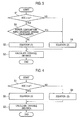
- Fig. 4 is a flowchart showing the drivable distance calculation method according to the third embodiment.
- the same steps in Fig. 4 as those of Fig. 2 are given the same reference numerals, and the description thereof is omitted.
- the arithmetic unit 11 selects Equation (3) described above (S6), that is, selects two power consumption ratios of ⁇ m-drive and ⁇ m-drive and calculates the drivable distance with the two power consumption ratios individually weighted (S3). The process shown in Fig. 4 is then terminated.
- the weights to the power consumption ratios of ⁇ m-drive and ⁇ m-drive are (remaining battery capacity - ⁇ ) and ⁇ , respectively, and the weights appropriate to the remaining battery capacity are set.
- the arithmetic unit 11 selects Equation (2) described above (S4), that is, selects two power consumption ratios of ⁇ m-drive and ⁇ m-drive and calculates the drivable distance with the two power consumption ratios individually weighted (S3).
- the weights to the power consumption ratios of ⁇ m-drive and ⁇ m-drive are 0 and the remaining battery capacity (100%), respectively, and the weights appropriate to the remaining battery capacity are set.
- the DB 10 stores two power consumption ratios, but not limited to this case, and the DB 10 may store three or more power consumption ratios.
- the arithmetic unit 11 compares the remaining battery capacity with the first, second, and other predetermined values to set weights to the power consumption ratios in accordance with the remaining battery capacity.
- the drivable distance calculation device 1 and drivable distance calculation method according to the third embodiment it is possible to reduce the feeling of anxiety and the like given to the driver and reduce the risk of running out of electricity in a similar manner to the first embodiment.
- the drivable distance is calculated by selecting two or more power consumption ratios and individually weighting the selected power consumption ratios based on the remaining battery capacity. Accordingly, when the remaining battery capacity is small, for example, the weight to the power consumption ratio of a short driving distance (small unit of driving) can be set large, when the remaining battery capacity is sufficient, the weight to the power consumption ratio of a short driving distance (small unit of driving) is set small. It is therefore possible to reduce the feeling of anxiety and the like given to the driver and reduce the risk of running out of electricity.
- the drivable distance is calculated by multiplying the power consumption ratio of a short driving distance (small unit of driving) by the predetermined value ⁇ and by multiplying the power consumption ratio of a long driving distance (large unit of driving) by the value obtained by reducing the predetermined value ⁇ from the remaining battery capacity.
- the weight to the power consumption ratio of a short driving distance is set to the predetermined value ⁇ while the power consumption ratio of a long driving distance (large unit of driving) is set to (remaining battery capacity - predetermined value ⁇ ), thus weighting the power consumption ratios appropriate to the remaining battery capacity.
- the weight to the power consumption ratio of a short driving distance (small unit of driving) is set larger. This can increase the accuracy of calculating the drivable distance when the remaining battery capacity is small and therefore reduce the risk of running out of electricity.
- the weight to the power consumption ratio of the shortest driving distance (the smallest unit of driving) is set to 100%. This can further increase the accuracy of calculating the drivable distance when the remaining battery capacity is small and therefore further reduce the risk of running out of electricity.
- a drivable distance calculation device 1 and a drivable distance calculation method according to the fourth embodiment are the same as those of the third embodiment but are different from those of the third embodiment in terms of a part of the process.
- the different points from the third embodiment are described.
- the arithmetic unit 11 calculates plural power consumption ratios corresponding to drivers of the vehicle, and the DB 10 stores the power consumption ratios corresponding to the drivers which are calculated by the arithmetic unit 11.
- the DB 10 may store a power consumption ratio for each driver or may store a power consumption ratio for each type of driver which is classified into a rough driver group or a moderate driver group.
- the drivers (types) may be specified by inputting driver's information into the calculation device 1 or may be specified by the arithmetic unit 11 based on the manner of traveling.
- drivable distance (km) power consumption ratio of ⁇ m-drive of driver B (km/kWh) ⁇ (remaining battery capacity - ⁇ (kWh)) + power consumption ratio of ⁇ m-drive of driver B (km/kWh)x ⁇ (kWh).
- the drivable distance is calculated by selecting power consumption ratios corresponding to the driver (type) in the fourth embodiment, thus increasing the accuracy of calculating the drivable distance.
- Fig. 5 is a flowchart showing the drivable distance calculation method according to the fourth embodiment.
- the same steps in Fig. 5 as those in Fig. 4 are given the same reference numerals, and the description thereof is omitted.
- the arithmetic unit 11 selects the power consumption ratio of ⁇ m-drive corresponding to the current driver (S7). In the step S7, the arithmetic unit 11 selects the power consumption ratio of ⁇ m-drive corresponding to the current driver.
- the arithmetic unit 11 selects Equation (4) described above (S8) and calculates the drivable distance with the power consumption ratios of ⁇ m-drive and ⁇ m-drive corresponding to the current driver both weighted (S3). The process shown in Fig. 5 is terminated.
- the arithmetic unit 11 when determining that the remaining battery capacity is equal to or larger than the predetermined value ⁇ (S1: YES), the arithmetic unit 11 selects a power consumption ratio corresponding to the driver but not limited to this.
- the arithmetic unit 11 may select a power consumption ratio corresponding to the driver when the remaining battery capacity is smaller than the predetermined value ⁇ (S1: NO).
- the drivable distance calculation device 1 and drivable distance calculation method according to the fourth embodiment it is possible to reduce the feeling of anxiety and the like given to the driver and reduce the risk of running out of electricity in a similar manner to the third embodiment.
- plural power consumption ratios are calculated corresponding to drivers who drive the vehicle, and the drivable distance can be therefore calculated by taking account of power consumption ratios different from driver to driver, for example, thus increasing the accuracy of calculating the drivable distance.
- a drivable distance calculation device 1 and a drivable distance calculation method according to the fifth embodiment are the same as those of the third embodiment but are different from those of the third embodiment in terms of a part of the process.
- the different points from the third embodiment are described.
- the drivable distance calculation device 1 and drivable distance calculation method according to the fifth embodiment are configured to select two or more power consumption ratios based on the remaining battery capacity in a similar manner to the third embodiment and also select the power consumption ratios based on whether the vehicle is in a driving environment that will degrade the power consumption ratio in a similar manner to the second embodiment.
- the arithmetic unit 11 of the fifth embodiment calculates the drivable distance in the following manner.
- the weights to the power consumption ratios of ⁇ m-drive and ⁇ m-drive are 0 and the remaining battery capacity (100%), respectively.
- the weights of the power consumption ratios of ⁇ m-drive and ⁇ m-drive are (the remaining battery capacity - ⁇ ) and ⁇ , respectively.
- the weights to the power consumption ratios of ⁇ m-drive and ⁇ m-drive are 0 and the remaining battery capacity (100%), respectively.
- the weights are changed based on driving environments that will degrade the power consumption ratio, thus further reducing the risk of running out of electricity.
- Fig. 6 is a flowchart showing the drivable distance calculation method according to the fifth embodiment.
- the same steps in Fig. 6 as those of Fig. 4 are given the same reference numerals, and the description thereof is omitted.
- the arithmetic unit 11 determines whether the vehicle is located in the power consumption ratio degraded driving environment (S5). When determining that the vehicle is not located in the power consumption ratio degraded driving environment (S5: NO), the arithmetic unit 11 selects Equation (3) described above (S6), that is, selects two power consumption ratios of ⁇ m-drive and ⁇ m-drive and calculates the drivable distance with the two power consumption ratios individually weighted (S3). The process shown in Fig. 6 is then terminated.
- the arithmetic unit 11 selects Equation (2) described above (S4), that is, selects two power consumption ratios of ⁇ m-drive and ⁇ m-drive and calculates the drivable distance with the two power consumption ratios individually weighted (S3). The process shown in Fig. 6 is then terminated.
- the arithmetic unit 11 sets high (to 100%) the weight to the power consumption ratio of the short driving distance (small unit of driving), thus increasing the accuracy of calculating the drivable distance and reducing the risk of running out of electricity.
- the degradation degree of power consumption ratio may be calculated in a similar manner to the second embodiment.
- the degradation degree of power consumption ratio may be set to 1 when the vehicle is located on a highway, in a mountain area, in a hill area, or the like, for example.
- the degradation degree of power consumption ratio may be set to 2 when the road gradient is not less than a predetermined percent. As the degradation degree of power consumption ratio becomes higher, the drivable distance is calculated by using a power consumption ratio of a shorter possible driving distance per unit of power.
- the drivable distance calculation device 1 and drivable distance calculation method according to the fifth embodiment in a similar manner to the third embodiment, it is possible to reduce the feeling of anxiety and the like given to the driver and reduce the risk of running out of electricity.
- the higher the degradation degree of power consumption ratio based on the information on the road that the vehicle travels the larger the weight to the power consumption ratio of the shorter driving distance (smaller unit of driving) is set. Accordingly, when the vehicle is traveling on a highway or in a mountain area where the power consumption ratio is degraded, for example, the weight to the power consumption ratio of the shorter driving distance (smaller unit of driving) is increased. This can increase the accuracy of calculating the drivable distance and reduce the risk of running out of electricity.
- a drivable distance calculation device 1 and a drivable distance calculation method according to the sixth embodiment are the same as those of the third embodiment but are different from those of the third embodiment in terms of a part of the process.
- the different points from the third embodiment are described.
- the arithmetic unit 11 of the sixth embodiment calculates plural power consumption ratios corresponding to environments of roads that the vehicle travels, and the DB 10 stores the plural power consumption ratios corresponding to the environments of roads that the vehicle travels.
- the DB 10 stores power consumption ratios of roads other than ordinary roads and stores power consumption ratios of a highway, a mountain and hill road, and the like, for example.
- the arithmetic unit 11 therefore specifies a road that the vehicle is travelling based on radio waves from the GPS receiving unit 13 and map information stored in the DB 10 and calculates the drivable distance in the following manner.
- the weights to the road environment power consumption ratio corresponding to the road environment and the power consumption ratio of ⁇ m-drive are (the remaining battery capacity - ⁇ ) and ⁇ , respectively.
- the weights to the power consumption ratios of ⁇ m-drive and ⁇ m-drive are (the remaining battery capacity - ⁇ ) and ⁇ , respectively.
- the weights to the power consumption ratios of ⁇ m-drive and ⁇ m-drive are 0 and the remaining battery capacity (100%), respectively.
- Fig. 7 is a flowchart showing the drivable distance calculation method according to the sixth embodiment.
- the same steps in Fig. 7 as those of Fig. 4 are given the same reference numerals, and the description thereof is omitted.
- the arithmetic unit 11 determines whether the vehicle is traveling an ordinary road (S9). When determining that the vehicle is not traveling an ordinary road (S9: NO), the arithmetic unit 11 selects a power consumption ratio corresponding to the road environment (S10). In this process, the arithmetic unit 11 also selects the power consumption ratio of ⁇ m-drive.
- the arithmetic unit 11 selects Equation (5) described above (S11), that is, calculates the drivable distance with the road environment power consumption ratio corresponding to the road environment and power consumption ratio of ⁇ m-drive both weighted (S3). The process shown in Fig. 7 is then terminated.
- the arithmetic unit 11 selects Equation (3) described above (S6), that is, selects the power consumption ratios of ⁇ m-drive and ⁇ m-drive and calculates the drivable distance with the selected power consumption ratios both weighted (S3). The process shown in Fig. 7 is then terminated.
- the drivable distance calculation device 1 and drivable distance calculation method according to the sixth embodiment similarly to the third embodiment, it is possible to reduce the feeling of anxiety and the like given to the driver and reduce the risk of running out of electricity.
- plural power consumption ratios are calculated corresponding to environments of roads that the vehicle travels. It is therefore possible to calculate the power consumption ratios appropriate to the driving environments including a highway, a mountain area, and the like, thus increasing the accuracy of calculating the drivable distance.
- a drivable distance calculation device 1 and a drivable distance calculation method according to the seventh embodiment are the same as those of the third embodiment but are different from those of the third embodiment in terms of a part of the process. Hereinafter, the different points from the third embodiment are described.
- the arithmetic unit 11 of the seventh embodiment includes a function of determining whether the destination is set in a navigation system (not shown) and calculates plural power consumption ratios corresponding to whether the destination is set.
- the DB 10 stores the plural power consumption ratios corresponding to whether the destination is set.
- the arithmetic unit 11 of the seventh embodiment calculates the drivable distance in the following manner.
- the weights of the average power consumption ratio and the power consumption ratio of ⁇ m-drive are (the remaining battery capacity - ⁇ ) and ⁇ , respectively.
- the average power consumption ratio may be calculated, for example, by various methods including calculation from the power consumption ratios for road environments stored in the DB 10 and calculation from the power consumption ratios from individual links.
- the weights to the power consumption ratios of ⁇ m-drive and ⁇ m-drive are (the remaining battery capacity - ⁇ ) and ⁇ , respectively.
- the weights to the power consumption ratios of ⁇ m-drive and ⁇ m-drive are 0 and the remaining battery capacity (100%), respectively.
- Fig. 8 is a flowchart showing the drivable distance calculation method according to the seventh embodiment.
- the same steps in Fig. 8 as those of Fig. 4 are given the same reference numerals, and the description thereof is omitted.
- the arithmetic unit 11 determines whether the determination is set (S12). When determining that the destination is set (S12: YES), the arithmetic unit 11 selects the average power consumption ratio to the reachable point on the route to the destination (S13). In this process, the arithmetic unit 11 also selects the power consumption ratio of ⁇ m-drive.
- the arithmetic unit 11 selects Equation (6) described above (S14), that is, calculates the drivable distance with the average power consumption ratio and the power consumption ratio of ⁇ m-drive both weighted (S3). The process shown in Fig. 8 is then terminated.
- the arithmetic unit 11 selects Equation (3) described above (S6), that is, selects the power consumption ratios of ⁇ m-drive and ⁇ m-drive and calculates the drivable distance with the selected power consumption ratios both weighted (S3). The process shown in Fig. 8 is then terminated.
- the drivable distance calculation device 1 and method according to the seventh embodiment similarly to the third embodiment, it is possible to reduce the feeling of anxiety and the like given to the driver and reduce the risk of running out of electricity.
- the drivable distance calculation device 1 and drivable distance calculation method calculates plural power consumption ratios corresponding to whether the destination is set in the navigation system installed in the vehicle, and the power consumption ratio on the route from the present location to the destination can be therefore calculated, thus increasing the accuracy of calculating the drivable distance.
- the drivable distance is calculated by using the power consumption ratio of a longer driving distance (unit of driving) or longer driving time (unit of driving). This can prevent the calculated drivable distance from changing significantly and reduce the feeling of anxiety and the like given to the driver.
- the drivable distance is calculated by using the power consumption ratio of a shorter driving distance (unit of driving) or shorter driving time (unit of driving). This increases the accuracy of calculating the drivable distance and reduces the risk of running out of electricity.
Landscapes
- Engineering & Computer Science (AREA)
- Radar, Positioning & Navigation (AREA)
- Remote Sensing (AREA)
- Physics & Mathematics (AREA)
- General Physics & Mathematics (AREA)
- Automation & Control Theory (AREA)
- Sustainable Energy (AREA)
- Sustainable Development (AREA)
- Life Sciences & Earth Sciences (AREA)
- Power Engineering (AREA)
- Transportation (AREA)
- Mechanical Engineering (AREA)
- Electric Propulsion And Braking For Vehicles (AREA)
- Navigation (AREA)
- Measurement Of Optical Distance (AREA)
- Power Steering Mechanism (AREA)
Abstract
Description
- The present invention relates to a drivable distance calculation device and a drivable distance calculation method.
- A conventionally proposed drivable distance calculation device estimates the drivable distance based on a remaining capacity of an in-vehicle battery of an electric vehicle. When the destination or route is set in a navigation system, the calculation device estimates the drivable distance by comparing the consumption of the battery with the remaining capacity of the battery for each link included in the route to the destination or the set route (see Patent Literature 1).
- Patent Literature 1: Japanese Patent Application Laid-open Publication No.
2006-115623 - The calculation device of
Patent Literature 1 cannot estimate the drivable distance when the route is not set. To estimate the drivable distance when the route is not set, the drivable distance may be calculated based on the consumption of the battery at the link where the vehicle is currently traveling or based on the consumption of the battery which is indefinitely predicted from daily driving. - In the former case, since the drivable distance is estimated based on the battery consumption in the link at the time of the estimation, the instantaneous accuracy of the estimated drivable distance is high but the estimated drivable distance can change considerably each time the vehicle travels to a different link. If the drivable distance is reduced suddenly, the driver is likely to have a feeling of anxiety. If the drivable distance is increased suddenly, the driver is likely to rely on the estimated drivable distance excessively. In the latter case, the drivable distance does not change significantly, but its problem in accuracy simply increases the risk of running out of electricity when the remaining capacity of the battery becomes small.
- The present invention has been made to solve the above-described conventional problems, and an object of the present invention is to provide a drivable distance calculation device and a drivable distance calculation method which are capable of reducing the feeling of anxiety and the like given to the driver and reducing the risk of running out of electricity.
- The drivable distance calculation device and drivable distance calculation method of the present invention that calculate a plurality of power consumption ratios for different units of driving; store the plurality of power consumption ratios in accordance with a remaining capacity of a battery; and calculate a drivable distance based on the remaining capacity of the battery and a power consumption ratio selected from among the plurality of power consumption ratios stored.
-
- [
Fig. 1] Fig. 1 is a schematic configuration diagram illustrating a drivable distance calculation device according to first to seventh embodiments. - [
Fig. 2] Fig. 2 is a flowchart showing a drivable distance calculation method according to the first embodiment. - [
Fig. 3] Fig. 3 is a flowchart showing a drivable distance calculation method according to the second embodiment. - [
Fig. 4] Fig. 4 is a flowchart showing a drivable distance calculation method according to the third embodiment. - [
Fig. 5] Fig. 5 is a flowchart showing a drivable distance calculation method according to the fourth embodiment. - [
Fig. 6] Fig. 6 is a flowchart showing a drivable distance calculation method according to the fifth embodiment. - [
Fig. 7] Fig. 7 is a flowchart showing a drivable distance calculation method according to the sixth embodiment. - [
Fig. 8] Fig. 8 is a flowchart showing a drivable distance calculation method according to the seventh embodiment. - Hereinafter, a description is given of first to seventh embodiments of the present invention based on the drawings.
Fig. 1 is a schematic configuration diagram illustrating a drivable distance calculation device according to the first to seventh embodiments. A drivabledistance calculation device 1 is installed in an electric vehicle, for example. As illustrated inFig. 1 , the drivabledistance calculation device 1 includes a database (DB) 10, an arithmetic unit (power consumption ratio calculation means, drivable distance calculation means) 11, adisplay unit 12, and aGPS receiving unit 13. - The DB 10 stores plural power consumption ratios for different units of driving. The units of driving include driving distances or driving times, for example. In this case, the DB 10 stores plural power consumption ratios for driving distances or driving times. The
arithmetic unit 11 includes a drivable distance calculation function and is configured to calculate the drivable distance based on the power consumption ratios stored in theDB 10. - The
display unit 12 is a display configured to display the drivable distance calculated by thearithmetic unit 11. TheGPS receiving unit 13 receives radio waves from a GPS satellite. Thearithmetic unit 11 detects the position of a vehicle equipped with thedevice 1 based on the radio waves received by theGPS receiving unit 13. - The drivable
distance calculation device 1 further includes a remaining battery capacity sensor (remaining capacity calculation means) 14, avehicle speed sensor 15, and apower consumption sensor 16. Thearithmetic unit 11 is connected to thesensors 14 to 16 through a CAN (a controller area network) 17. - The remaining
battery capacity sensor 14 calculates a remaining capacity of a battery. The remainingbattery capacity sensor 14 includes a function of calculating the remaining battery capacity based on the battery voltage or calculating the remaining battery capacity based on the balance of charging and discharging. Thevehicle speed sensor 15 is provided for a wheel and calculates the vehicle speed based on the number of pulses corresponding to the rotation of the wheel. Thepower consumption sensor 16 detects the amount of discharge from the battery and calculates the power consumption based on the detected amount of discharge. - Moreover, the
arithmetic unit 11 includes a power consumption ratio calculation function. Thearithmetic unit 11 calculates plural power consumption ratios for units of driving, including trips, certain driving distances, or certain driving times, for example, from past travels, based on information from thesensors 14 to 16. Thearithmetic unit 11 causes theDB 10 to store or update the same. To be more specific, when the units of driving are driving distances, thearithmetic unit 11 calculates the power consumption ratio of β m-drive (β is lifelong driving distance, for example) based on the past travels and the power consumption ratio of γ m-drive (γ is the latest 100 m, for example), for example. When the units of driving are driving times, thearithmetic unit 11 calculates the power consumption ratio of β hour drive (β is previous 100 hours, for example) and the power consumption ratio of γ minute drive (γ is the latest 10 minutes, for example). Moreover, thearithmetic unit 11 stores the calculated power consumption ratios in theDB 10. In the following description, the units of driving are assumed to be driving distances. - The DB 10 stores the plural power consumption ratios calculated by the
arithmetic unit 11 as described above in association with remaining battery capacity. For example, the DB 10 stores the power consumption ratio of β m-drive in association with the remaining battery capacity ≥ α (kWh) and stores the power consumption ratio of γ m-drive in association with the remaining battery capacity < α (kWh). - The aforementioned α is the remaining capacity at which the driver is informed that the battery is nearly depleted, for example. When the remaining capacity is smaller than α, an empty warning light illuminates, or the output of the battery is limited.
- In the thus-configured drivable
distance calculation device 1, thearithmetic unit 11 selects a power consumption ratio corresponding to the current remaining capacity calculated by the remainingbattery capacity sensor 14 from among the plural power consumption ratios. Thearithmetic unit 11 calculates the drivable distance based on the selected power consumption ratio and the remaining battery capacity. - Specifically, when the remaining battery capacity ≥ α (kWh), the
arithmetic unit 11 selects the power consumption ratio of β m-drive and calculates the drivable distance based on Equation (1) of: drivable distance (km) = power consumption ratio of β m-drive (km/kWh) × remaining battery capacity (kWh). When the remaining battery capacity < α (kWh), thearithmetic unit 11 selects the power consumption ratio of γ m-drive and calculates the drivable distance based on Equation (2) of: drivable distance (km) = power consumption ratio of γ m-drive (km/kWh)x remaining battery capacity (kWh). - Herein, as described above, the magnitude relation between β and γ is β > γ. As the remaining battery capacity becomes smaller, the
arithmetic unit 11 selects a power consumption ratio of a shorter driving distance. To be more specific, thearithmetic unit 11 selects a power consumption ratio of a short driving distance when the remaining battery capacity is smaller than the predetermined value α. Thearithmetic unit 11 selects a power consumption ratio of a driving distance longer than the short driving distance when the remaining battery capacity is not smaller than the predetermined value α. In such a manner, the drivabledistance calculation device 1 according to the first embodiment calculates the drivable distance by using a power consumption ratio of a long driving distance when the remaining battery capacity is large, for example. This can prevent the drivable distance from changing significantly and reduce the feeling of anxiety and the like given to the driver. On the other hand, the drivabledistance calculation device 1 calculates the drivable distance by using a power consumption ratio of a short driving distance when the remaining battery capacity is small, for example. This can increase the accuracy of calculating the drivable distance and thereby reduce the risk of running out of electricity. - Next, a description is given of a drivable distance calculation method according to the first embodiment with reference to the flowchart of
Fig. 2. Fig. 2 is a flowchart showing the drivable distance calculation method according to the first embodiment. As shown inFig. 2 , first, thearithmetic unit 11 determines whether the remaining battery capacity (SOC) is equal to or larger than the predetermined value α (S1). - When determining that the remaining battery capacity is equal to or larger than the predetermined value α (S1: YES), the
arithmetic unit 11 selects Equation (1) described above (S2), that is, selects the power consumption ratio of β m-drive to calculate the drivable distance (S3). The process shown inFig. 2 is terminated. - On the other hand, when determining that the remaining battery capacity is smaller than the predetermined α (S1 : NO), the
arithmetic unit 11 selects Equation (2) described above (S4), that is, selects the power consumption ratio of γ m-drive to calculate the drivable distance (S3). The process shown inFig. 2 is terminated. - After calculating the drivable distance, the
arithmetic unit 11 sends information on the drivable distance to thedisplay unit 12, and thedisplay unit 12 displays the drivable distance to inform the driver. - In the first embodiment, the
DB 10 stores only two power consumption ratios, but not limited to the above case, and may store three or more power consumption ratios. In this case, instead of only determining whether the remaining battery capacity is equal to or larger than the predetermined α, thearithmetic unit 11 compares the remaining battery capacity with first, second, and other predetermined values and selects a power consumption ratio appropriate to the remaining battery capacity. - According to the drivable
distance calculation device 1 and drivable distance calculation method of the first embodiment, when the remaining battery capacity is large, for example, the drivable distance is calculated by employing a power consumption ratio of a long driving distance (unit of driving) or a power consumption ratio of a long driving time (unit of driving). This can prevent the calculated drivable distance from changing significantly and reduce the feeling of anxiety and the like given to the driver. On the other hand, when the remaining battery capacity is small, for example, the drivable distance is calculated by employing a power consumption ratio of a short driving distance (unit of driving) or a power consumption ratio of a short driving time (unit of driving). This can increase the accuracy of calculating the drivable distance and reduce the risk of running out of electricity. - According to the first embodiment, the power consumption ratio corresponding to the current remaining battery capacity is selected from among the plural power consumption ratios stored. This means that the power consumption ratio corresponding to the current remaining battery capacity that will not change rapidly is selected. It is therefore possible to reduce the frequency at which the drivable distance changes significantly, making it less likely that the driver has the feeling of anxiety and relies on the calculated drivable distance excessively.
- According to the first embodiment, as the remaining battery capacity becomes lower, the drivable distance is calculated by selecting a power consumption ratio of a shorter driving distance (smaller unit of driving). This can increase the accuracy of calculating the drivable distance when the remaining battery capacity is small, thus reducing the risk of running out of electricity.
- According to the first embodiment, when the remaining battery capacity is smaller than the predetermined value α, the drivable distance is calculated by using the power consumption ratio of a short driving distance (small unit of driving). When the remaining battery capacity is not smaller than the predetermined value α, the drivable distance is calculated by using the power consumption ratio of a long driving distance (large unit of driving). It is therefore possible to prevent the calculated drivable distance from changing significantly when a certain level of battery capacity remains and thereby reduce the feeling of anxiety and the like given to the driver. Moreover, it is possible to increase the accuracy of calculating the drivable distance when the remaining battery capacity becomes small, thus reducing the risk of running out of electricity.
- Next, a description is given of a second embodiment of the present invention. A drivable
distance calculation device 1 and a drivable distance calculation method according to the second embodiment are the same as those of the first embodiment but are different from those of the first embodiment in terms of a part of the process. Hereinafter, the different points from the first embodiment are described. - The drivable
distance calculation device 1 according to the first embodiment includes a function of determining whether the vehicle is in a driving environment that will degrade the vehicle's power consumption ratio. To be specific, theDB 10 of the second embodiment stores map information. Thearithmetic unit 11 specifies the position of the vehicle based on radio waves received by theGPS receiving unit 13 and compares the position of the vehicle with the map information to determine whether the vehicle is in a driving environment that will degrade the power consumption ratio. In this process, thearithmetic unit 11 determines that the vehicle is in a driving environment that will degrade the power consumption ratio when the vehicle is located on a highway, in a mountain area, in a hill area, or the like. To determine whether the vehicle is located in a mountain area or a hill area, thearithmetic unit 11 may use the average gradient (%) of the road. - Moreover, when determining that the vehicle is located in a driving environment that will degrade the power consumption ratio in the second embodiment, the
arithmetic unit 11 calculates the drivable distance by selecting a power consumption ratio of a shorter driving distance (smaller unit of driving). This can increase the accuracy of calculating the drivable distance when the remaining battery capacity is reduced significantly and thereby reduce the risk of running out of electricity. -
Fig. 3 is a flowchart showing the drivable distance calculation method according to the second embodiment. The same steps inFig. 3 as those ofFig. 2 are given the same reference numerals, and the description thereof is omitted. - As shown in
Fig. 3 , when the remaining battery capacity is equal to or higher than the predetermined value α (S1: YES), thearithmetic unit 11 determines whether the vehicle is in a power consumption ratio degraded driving environment (S5). When determining that the vehicle is not in the power consumption ratio degraded driving environment (S5: NO), thearithmetic unit 11 selects Equation (1) described above (S2), that is, selects the power consumption ratio of β m-drive to calculate the drivable distance (S3). The process shown inFig. 3 is then terminated. - On the other hand, when determining that the vehicle is in the power consumption ratio degraded driving environment (S5: YES), the
arithmetic unit 11 selects Equation (2) described above (S4), that is, selects the power consumption ratio of γ m-drive to calculate the drivable distance (S3). The process shown inFig. 3 is then terminated. In other words, when the vehicle travels in a driving environment that will degrade the vehicle's power consumption ratio, thearithmetic unit 11 selects a power consumption ratio of a shorter driving distance (smaller unit of driving), increasing the accuracy of calculating the drivable distance and reducing the risk of running out of electricity. - In the second embodiment, the
DB 10 stores two power consumption ratios, but not limited to this case, and theDB 10 may store three or more power consumption ratios. In the second embodiment, thearithmetic unit 11 determines whether the power consumption ratio will be degraded (whether the degradation degree of power consumption ratio is 0 or 1) but not limited to this. Thearithmetic unit 11 may calculate degradation degree of power consumption ratio in various manners. In this case, the degradation degree of power consumption ratio is set to 1 when the vehicle is located on a highway, in a mountain area, in a hill area, or the like for example, and is set to 2 when the road gradient is not less than a predetermined percent. As the degradation degree of power consumption ratio becomes higher, the drivable distance is calculated by using a power consumption ratio of a shorter drivable distance for unit of power. - According to the drivable
distance calculation device 1 and drivable distance calculation method of the second embodiment, it is possible to reduce the feeling of anxiety and the like given to the driver and reduce the risk of running out of electricity in a similar manner to the first embodiment. - According to the second embodiment, as the degradation degree of power consumption ratio based on the information on road that the vehicle travels becomes higher, the power consumption ratio of a shorter driving distance (smaller unit of driving) is selected. Accordingly, when the vehicle is traveling on a highway or in a mountain area where the power consumption ratio is degraded, for example, the drivable distance is calculated by using a power consumption ratio of a shorter driving distance (smaller unit of driving). This can increase the accuracy of calculating the drivable distance and further reduce the risk of running out of electricity.
- Next, a description is given of a third embodiment of the present invention. A drivable
distance calculation device 1 and a drivable distance calculation method according to the third embodiment are the same as those of the first embodiment but are different from those of the first embodiment in terms of a part of the process. Hereinafter, the different points from the first embodiment are described. - In the first embodiment, the
arithmetic unit 11 selects one of the power consumption ratios stored in theDB 10 and calculates the drivable distance based on the selected power consumption ratio. In the third embodiment, thearithmetic unit 11 selects two or more power consumption ratios and calculates the drivable distance with the selected power consumption ratios weighted based on the remaining battery capacity. - To be specific, when the remaining battery capacity is equal to or larger than the predetermined value α, the
arithmetic unit 11 calculates the drivable distance by multiplying a power consumption ratio of a short driving distance (small unit of driving) by the predetermined value α and multiplying a power consumption ratio of a driving distance (long unit of driving) longer than the short driving distance by the value obtained by reducing the predetermined value α from the remaining battery capacity. To be more specific, when the remaining battery capacity ≥ α (kWh), thearithmetic unit 11 selects two power consumption ratios of β m-drive and γ m-drive and calculates the drivable distance based on Equation (3) of: drivable distance (km) = power consumption ratio of β m-drive (km/kWh) × (remaining battery capacity - α (kWh)) + power consumption ratio of γ m-drive (km/kWh)×α (kWh). In this case, the weights to the power consumption ratios of β m-drive and γ m-drive are (remaining battery capacity - α) and α, respectively. - When the remaining battery capacity < α (kWh), the
arithmetic unit 11 selects two power consumption ratios of β m-drive and γ m-drive and calculates the drivable distance based on Equation (2) of: drivable distance (km) = power consumption ratio of γ m-drive (km/kWh) xremaining battery capacity (kWh). In this case, the weights to the power consumption ratios of β m-drive and γ m-drive are 0 and the remaining battery capacity (100%), respectively. Since the former weight is 0, thearithmetic unit 11 calculates the drivable distance based on the same equation as Equation (2) of the first embodiment when the remaining battery capacity < α (kWh). - As described above, the
arithmetic unit 11 according to the third embodiment weights the selected power consumption ratios and calculates the drivable distance with the weight to the power consumption ratio of the shorter driving distance (smaller unit of driving) set larger especially when the remaining battery capacity is small, thus reducing the risk of running out of electricity. -
Fig. 4 is a flowchart showing the drivable distance calculation method according to the third embodiment. The same steps inFig. 4 as those ofFig. 2 are given the same reference numerals, and the description thereof is omitted. - As shown in
Fig. 4 , when the remaining battery capacity is equal to or larger than the predetermined value α (S1: YES), thearithmetic unit 11 selects Equation (3) described above (S6), that is, selects two power consumption ratios of β m-drive and γ m-drive and calculates the drivable distance with the two power consumption ratios individually weighted (S3). The process shown inFig. 4 is then terminated. - In this process, as for the weights in the step S6, the weights to the power consumption ratios of β m-drive and γ m-drive are (remaining battery capacity - α) and α, respectively, and the weights appropriate to the remaining battery capacity are set.
- On the other hand, when determining that the remaining battery capacity is smaller than the predetermined value α (S1: NO), the
arithmetic unit 11 selects Equation (2) described above (S4), that is, selects two power consumption ratios of β m-drive and γ m-drive and calculates the drivable distance with the two power consumption ratios individually weighted (S3). In this process, as for the weights in the step S4, the weights to the power consumption ratios of β m-drive and γ m-drive are 0 and the remaining battery capacity (100%), respectively, and the weights appropriate to the remaining battery capacity are set. - In the third embodiment, the
DB 10 stores two power consumption ratios, but not limited to this case, and theDB 10 may store three or more power consumption ratios. In this case, instead of only determining whether the remaining battery capacity is smaller than the predetermined value α, thearithmetic unit 11 compares the remaining battery capacity with the first, second, and other predetermined values to set weights to the power consumption ratios in accordance with the remaining battery capacity. In the third embodiment, it is necessary to select two or more power consumption ratios from among the plural power consumption ratios stored in theDB 10 and is unnecessary to select all of the power consumption ratios stored. - As described above, according to the drivable
distance calculation device 1 and drivable distance calculation method according to the third embodiment, it is possible to reduce the feeling of anxiety and the like given to the driver and reduce the risk of running out of electricity in a similar manner to the first embodiment. - According to the third embodiment, the drivable distance is calculated by selecting two or more power consumption ratios and individually weighting the selected power consumption ratios based on the remaining battery capacity. Accordingly, when the remaining battery capacity is small, for example, the weight to the power consumption ratio of a short driving distance (small unit of driving) can be set large, when the remaining battery capacity is sufficient, the weight to the power consumption ratio of a short driving distance (small unit of driving) is set small. It is therefore possible to reduce the feeling of anxiety and the like given to the driver and reduce the risk of running out of electricity.
- According to the third embodiment, when the remaining battery capacity is equal to or larger than the predetermined value α, the drivable distance is calculated by multiplying the power consumption ratio of a short driving distance (small unit of driving) by the predetermined value α and by multiplying the power consumption ratio of a long driving distance (large unit of driving) by the value obtained by reducing the predetermined value α from the remaining battery capacity. For the drivable distance is calculated in such a manner, the weight to the power consumption ratio of a short driving distance (small unit of driving) is set to the predetermined value α while the power consumption ratio of a long driving distance (large unit of driving) is set to (remaining battery capacity - predetermined value α), thus weighting the power consumption ratios appropriate to the remaining battery capacity.
- According to the third embodiment, as the remaining battery capacity becomes smaller, the weight to the power consumption ratio of a short driving distance (small unit of driving) is set larger. This can increase the accuracy of calculating the drivable distance when the remaining battery capacity is small and therefore reduce the risk of running out of electricity.
- According to the third embodiment, when the remaining battery capacity is equal to or smaller more than the predetermined value, the weight to the power consumption ratio of the shortest driving distance (the smallest unit of driving) is set to 100%. This can further increase the accuracy of calculating the drivable distance when the remaining battery capacity is small and therefore further reduce the risk of running out of electricity.
- Next, a description is given of a fourth embodiment of the present invention. A drivable
distance calculation device 1 and a drivable distance calculation method according to the fourth embodiment are the same as those of the third embodiment but are different from those of the third embodiment in terms of a part of the process. Hereinafter, the different points from the third embodiment are described. - The
arithmetic unit 11 according to the fourth embodiment calculates plural power consumption ratios corresponding to drivers of the vehicle, and theDB 10 stores the power consumption ratios corresponding to the drivers which are calculated by thearithmetic unit 11. TheDB 10 may store a power consumption ratio for each driver or may store a power consumption ratio for each type of driver which is classified into a rough driver group or a moderate driver group. The drivers (types) may be specified by inputting driver's information into thecalculation device 1 or may be specified by thearithmetic unit 11 based on the manner of traveling. - The
arithmetic unit 11 calculates the drivable distance in the following manner. To be specific, when the remaining battery capacity is equal to or larger than the predetermined value α, thearithmetic unit 11 selects the power consumption ratios of β m-drive and γ m-drive corresponding to a driver from theDB 10. Thearithmetic unit 11 calculates the drivable distance based on Equation (4) of: drivable distance (km) = power consumption ratio of β m-drive of driver A (km/kWh) × (remaining battery capacity - α (kWh)) + power consumption ratio of γ m-drive of the driver A (km/kWh)x α (kWh). In this case, the weights of the power consumption ratios of β m-drive and γ m-drive of driver A are (remaining battery capacity - α) and α, respectively. - The aforementioned example is a case of the driver (type) A. In the case of a different driver (type) B, the
arithmetic unit 11 similarly calculates the drivable distance based on Equation (4) of: drivable distance (km) = power consumption ratio of β m-drive of driver B (km/kWh)×(remaining battery capacity - α (kWh)) + power consumption ratio of γ m-drive of driver B (km/kWh)x α (kWh). - When the remaining battery capacity < α (kWh), the
arithmetic unit 11 selects the two power consumption ratios of β m-drive and γ m-drive and calculates the drivable distance based on Equation (2) of: drivable distance (km) = power consumption ratio of γ m-drive (km/kWh) × remaining battery capacity (kWh). - As described above, the drivable distance is calculated by selecting power consumption ratios corresponding to the driver (type) in the fourth embodiment, thus increasing the accuracy of calculating the drivable distance.
-
Fig. 5 is a flowchart showing the drivable distance calculation method according to the fourth embodiment. The same steps inFig. 5 as those inFig. 4 are given the same reference numerals, and the description thereof is omitted. - As shown in
Fig. 5 , when the remaining battery capacity is equal to or larger than the predetermined value α (S1: YES), thearithmetic unit 11 selects the power consumption ratio of β m-drive corresponding to the current driver (S7). In the step S7, thearithmetic unit 11 selects the power consumption ratio of γ m-drive corresponding to the current driver. - Next, the
arithmetic unit 11 selects Equation (4) described above (S8) and calculates the drivable distance with the power consumption ratios of β m-drive and γ m-drive corresponding to the current driver both weighted (S3). The process shown inFig. 5 is terminated. - In the fourth embodiment, when determining that the remaining battery capacity is equal to or larger than the predetermined value α (S1: YES), the
arithmetic unit 11 selects a power consumption ratio corresponding to the driver but not limited to this. Thearithmetic unit 11 may select a power consumption ratio corresponding to the driver when the remaining battery capacity is smaller than the predetermined value α (S1: NO). - According to the drivable
distance calculation device 1 and drivable distance calculation method according to the fourth embodiment, it is possible to reduce the feeling of anxiety and the like given to the driver and reduce the risk of running out of electricity in a similar manner to the third embodiment. - According to the fourth embodiment, plural power consumption ratios are calculated corresponding to drivers who drive the vehicle, and the drivable distance can be therefore calculated by taking account of power consumption ratios different from driver to driver, for example, thus increasing the accuracy of calculating the drivable distance.
- Next, a description is given of a fifth embodiment of the present invention. A drivable
distance calculation device 1 and a drivable distance calculation method according to the fifth embodiment are the same as those of the third embodiment but are different from those of the third embodiment in terms of a part of the process. Hereinafter, the different points from the third embodiment are described. - The drivable
distance calculation device 1 and drivable distance calculation method according to the fifth embodiment are configured to select two or more power consumption ratios based on the remaining battery capacity in a similar manner to the third embodiment and also select the power consumption ratios based on whether the vehicle is in a driving environment that will degrade the power consumption ratio in a similar manner to the second embodiment. - The
arithmetic unit 11 of the fifth embodiment calculates the drivable distance in the following manner. To be specific, when the remaining battery capacity ≥ α (kWh) and the vehicle is located in the driving environment that will degrade the power consumption ratio, thearithmetic unit 11 according to the fifth embodiment selects two power consumption ratios of β m-drive and γ m-drive and calculates the drivable distance based on Equation (2) of: drivable distance (km) = power consumption ratio of γ m-drive (km/kWh)x remaining battery capacity (kWh). In this case, the weights to the power consumption ratios of β m-drive and γ m-drive are 0 and the remaining battery capacity (100%), respectively. - When the remaining battery capacity ≥ α (kWh) and the vehicle is not located in a driving environment that will degrade the power consumption ratio, the
arithmetic unit 11 selects two power consumption ratios of β m-drive and γ m-drive and calculates the drivable distance based on Equation (3) of: drivable distance (km) = power consumption ratio of β m-drive (km/kWh)×(remaining battery capacity - α (kWh)) + power consumption ratio of γ m-drive (km/kWh)x α (kWh). In this case, the weights of the power consumption ratios of β m-drive and γ m-drive are (the remaining battery capacity - α) and α, respectively. - When the remaining battery capacity < α (kWh), the
arithmetic unit 11 selects two power consumption ratios of β m-drive and γ m-drive and calculates the drivable distance based on Equation (2) of: drivable distance (km) = power consumption ratio of γ m-drive (km/kWh) × remaining battery capacity (kWh). In this case, the weights to the power consumption ratios of β m-drive and γ m-drive are 0 and the remaining battery capacity (100%), respectively. - As described above, in the fifth embodiment, the weights are changed based on driving environments that will degrade the power consumption ratio, thus further reducing the risk of running out of electricity.
-
Fig. 6 is a flowchart showing the drivable distance calculation method according to the fifth embodiment. The same steps inFig. 6 as those ofFig. 4 are given the same reference numerals, and the description thereof is omitted. - As shown in
Fig. 6 , when determining that the remaining battery capacity is equal to or larger than the predetermined value α (S1: YES), thearithmetic unit 11 determines whether the vehicle is located in the power consumption ratio degraded driving environment (S5). When determining that the vehicle is not located in the power consumption ratio degraded driving environment (S5: NO), thearithmetic unit 11 selects Equation (3) described above (S6), that is, selects two power consumption ratios of β m-drive and γ m-drive and calculates the drivable distance with the two power consumption ratios individually weighted (S3). The process shown inFig. 6 is then terminated. - On the other hand, when determining that the vehicle is located in the power consumption ratio degraded driving environment (S5: YES), the
arithmetic unit 11 selects Equation (2) described above (S4), that is, selects two power consumption ratios of β m-drive and γ m-drive and calculates the drivable distance with the two power consumption ratios individually weighted (S3). The process shown inFig. 6 is then terminated. In other words, since the vehicle is located in a driving environment that will degrade the power consumption ratio, thearithmetic unit 11 sets high (to 100%) the weight to the power consumption ratio of the short driving distance (small unit of driving), thus increasing the accuracy of calculating the drivable distance and reducing the risk of running out of electricity. - In the fifth embodiment, the degradation degree of power consumption ratio may be calculated in a similar manner to the second embodiment. To be specific, the degradation degree of power consumption ratio may be set to 1 when the vehicle is located on a highway, in a mountain area, in a hill area, or the like, for example. Moreover, the degradation degree of power consumption ratio may be set to 2 when the road gradient is not less than a predetermined percent. As the degradation degree of power consumption ratio becomes higher, the drivable distance is calculated by using a power consumption ratio of a shorter possible driving distance per unit of power.
- As described above, according to the drivable
distance calculation device 1 and drivable distance calculation method according to the fifth embodiment, in a similar manner to the third embodiment, it is possible to reduce the feeling of anxiety and the like given to the driver and reduce the risk of running out of electricity. - According to the fifth embodiment, the higher the degradation degree of power consumption ratio based on the information on the road that the vehicle travels, the larger the weight to the power consumption ratio of the shorter driving distance (smaller unit of driving) is set. Accordingly, when the vehicle is traveling on a highway or in a mountain area where the power consumption ratio is degraded, for example, the weight to the power consumption ratio of the shorter driving distance (smaller unit of driving) is increased. This can increase the accuracy of calculating the drivable distance and reduce the risk of running out of electricity.
- Next, a description is given of a sixth embodiment of the present invention. A drivable
distance calculation device 1 and a drivable distance calculation method according to the sixth embodiment are the same as those of the third embodiment but are different from those of the third embodiment in terms of a part of the process. Hereinafter, the different points from the third embodiment are described. - The
arithmetic unit 11 of the sixth embodiment calculates plural power consumption ratios corresponding to environments of roads that the vehicle travels, and theDB 10 stores the plural power consumption ratios corresponding to the environments of roads that the vehicle travels. To be specific, theDB 10 stores power consumption ratios of roads other than ordinary roads and stores power consumption ratios of a highway, a mountain and hill road, and the like, for example. In the sixth embodiment, thearithmetic unit 11 therefore specifies a road that the vehicle is travelling based on radio waves from theGPS receiving unit 13 and map information stored in theDB 10 and calculates the drivable distance in the following manner. - To be specific, when the remaining battery capacity ≥ α (kWh) and the vehicle is traveling a road other than ordinary roads, the
arithmetic unit 11 selects a road environment power consumption ratio corresponding to the road environment and a power consumption ratio of γ m-drive and calculates the drivable distance based on Equation (5) of: drivable distance (km) = road environment power consumption ratio (km/kWh)×(remaining battery capacity - α (kWh)) + power consumption ratio of γ m-drive (km/kWh)x α (kWh). In this case, the weights to the road environment power consumption ratio corresponding to the road environment and the power consumption ratio of γ m-drive are (the remaining battery capacity - α) and α, respectively. - When the remaining battery capacity ≥ α (kWh) and the vehicle is traveling an ordinary road, the
arithmetic unit 11 selects two power consumption ratios of β m-drive and γ m-drive and calculates the drivable distance based on Equation (3) of: drivable distance (km) = power consumption ratio of β m-drive (km/kWh)×(remaining battery capacity - α (kWh)) + power consumption ratio of γ m-drive (km/kWh)×α (kWh). In this case, the weights to the power consumption ratios of β m-drive and γ m-drive are (the remaining battery capacity - α) and α, respectively. - When the remaining battery capacity < α (kWh), the
arithmetic unit 11 selects two power consumption ratios of β m-drive and γ m-drive and calculates the drivable distance based on Equation (2) of: drivable distance (km) = power consumption ratio of γ m-drive (km/kWh) × remaining battery capacity (kWh). In this case, the weights to the power consumption ratios of β m-drive and γ m-drive are 0 and the remaining battery capacity (100%), respectively. -
Fig. 7 is a flowchart showing the drivable distance calculation method according to the sixth embodiment. The same steps inFig. 7 as those ofFig. 4 are given the same reference numerals, and the description thereof is omitted. - As shown in
Fig. 7 , when determining that the remaining battery capacity is equal to or larger than the predetermined value α (S1: YES), thearithmetic unit 11 determines whether the vehicle is traveling an ordinary road (S9). When determining that the vehicle is not traveling an ordinary road (S9: NO), thearithmetic unit 11 selects a power consumption ratio corresponding to the road environment (S10). In this process, thearithmetic unit 11 also selects the power consumption ratio of γ m-drive. - The
arithmetic unit 11 selects Equation (5) described above (S11), that is, calculates the drivable distance with the road environment power consumption ratio corresponding to the road environment and power consumption ratio of γ m-drive both weighted (S3). The process shown inFig. 7 is then terminated. - On the other hand, when determining that the vehicle is traveling an ordinary road (S9: YES), the
arithmetic unit 11 selects Equation (3) described above (S6), that is, selects the power consumption ratios of β m-drive and γ m-drive and calculates the drivable distance with the selected power consumption ratios both weighted (S3). The process shown inFig. 7 is then terminated. - As described above, according to the drivable
distance calculation device 1 and drivable distance calculation method according to the sixth embodiment, similarly to the third embodiment, it is possible to reduce the feeling of anxiety and the like given to the driver and reduce the risk of running out of electricity. - According to the sixth embodiment, plural power consumption ratios are calculated corresponding to environments of roads that the vehicle travels. It is therefore possible to calculate the power consumption ratios appropriate to the driving environments including a highway, a mountain area, and the like, thus increasing the accuracy of calculating the drivable distance.
- Next, a description is given of a seventh embodiment of the present invention. A drivable
distance calculation device 1 and a drivable distance calculation method according to the seventh embodiment are the same as those of the third embodiment but are different from those of the third embodiment in terms of a part of the process. Hereinafter, the different points from the third embodiment are described. - The
arithmetic unit 11 of the seventh embodiment includes a function of determining whether the destination is set in a navigation system (not shown) and calculates plural power consumption ratios corresponding to whether the destination is set. TheDB 10 stores the plural power consumption ratios corresponding to whether the destination is set. Thearithmetic unit 11 of the seventh embodiment calculates the drivable distance in the following manner. - To be specific, when the remaining battery capacity ≥ α (kWh) and the destination is set, the
arithmetic unit 11 selects an average power consumption ratio to a reachable point on the route from the present location to the destination and the power consumption ratio of γ m-drive and calculates the drivable distance based on Equation (6) of: drivable distance (km) = average power consumption ratio (km/kWh)×(remaining battery capacity - α (kWh)) + power consumption ratio of γ m-drive (km/kWh)x α (kWh). In this case, the weights of the average power consumption ratio and the power consumption ratio of γ m-drive are (the remaining battery capacity - α) and α, respectively. The average power consumption ratio may be calculated, for example, by various methods including calculation from the power consumption ratios for road environments stored in theDB 10 and calculation from the power consumption ratios from individual links. - When the remaining battery capacity ≥ α (kWh) and the destination is not set, the
arithmetic unit 11 selects the two power consumption ratios of β m-drive and γ m-drive and calculates the drivable distance based on Equation (3) of: drivable distance (km) = power consumption ratio of β m-drive (km/kWh)×(remaining battery capacity - α (kWh)) + power consumption ratio of γ m-drive (km/kWh)×α (kWh). In this case, the weights to the power consumption ratios of β m-drive and γ m-drive are (the remaining battery capacity - α) and α, respectively. - When the remaining battery capacity < α (kWh), the
arithmetic unit 11 selects the two power consumption ratios of β m-drive and γ m-drive and calculates the drivable distance based on Equation (2) of: drivable distance (km) = power consumption ratio of γ m-drive (km/kWh)x remaining battery capacity (kWh). In this case, the weights to the power consumption ratios of β m-drive and γ m-drive are 0 and the remaining battery capacity (100%), respectively. -
Fig. 8 is a flowchart showing the drivable distance calculation method according to the seventh embodiment. The same steps inFig. 8 as those ofFig. 4 are given the same reference numerals, and the description thereof is omitted. - As shown in
Fig. 7 , when determining that the remaining battery capacity is equal to or larger than the predetermined value α (S1: YES), thearithmetic unit 11 determines whether the determination is set (S12). When determining that the destination is set (S12: YES), thearithmetic unit 11 selects the average power consumption ratio to the reachable point on the route to the destination (S13). In this process, thearithmetic unit 11 also selects the power consumption ratio of γ m-drive. - The
arithmetic unit 11 selects Equation (6) described above (S14), that is, calculates the drivable distance with the average power consumption ratio and the power consumption ratio of γ m-drive both weighted (S3). The process shown inFig. 8 is then terminated. - On the other hand, when determining that the destination is not set (S12: NO), the
arithmetic unit 11 selects Equation (3) described above (S6), that is, selects the power consumption ratios of β m-drive and γ m-drive and calculates the drivable distance with the selected power consumption ratios both weighted (S3). The process shown inFig. 8 is then terminated. - As described above, according to the drivable
distance calculation device 1 and method according to the seventh embodiment, similarly to the third embodiment, it is possible to reduce the feeling of anxiety and the like given to the driver and reduce the risk of running out of electricity. - According to the seventh embodiment, the drivable
distance calculation device 1 and drivable distance calculation method calculates plural power consumption ratios corresponding to whether the destination is set in the navigation system installed in the vehicle, and the power consumption ratio on the route from the present location to the destination can be therefore calculated, thus increasing the accuracy of calculating the drivable distance. - Hereinabove, the present invention is described based on the embodiments but is not limited to the aforementioned embodiments. The present invention may be changed without departing from the scope of the invention, and the embodiments may be properly combined.
- This application is based upon and claims the benefit of priority to Japanese Patent Application No.
2012-219930 filed on October 2, 2012 - According to the present invention, when the remaining battery capacity is large, for example, the drivable distance is calculated by using the power consumption ratio of a longer driving distance (unit of driving) or longer driving time (unit of driving). This can prevent the calculated drivable distance from changing significantly and reduce the feeling of anxiety and the like given to the driver. On the other hand, when the remaining battery capacity is small, for example, the drivable distance is calculated by using the power consumption ratio of a shorter driving distance (unit of driving) or shorter driving time (unit of driving). This increases the accuracy of calculating the drivable distance and reduces the risk of running out of electricity.
-
- 1
- DRIVABLE DISTANCE CALCULATION DEVICE
- 10
- DATABASE (DB)
- 11
- ARITHMETIC UNIT (POWER CONSUMPTION RATIO CALCULATION MEANS, DRIVABLE DISTANCE CALCULATION MEANS)
- 12
- DISPLAY UNIT
- 13
- GPS RECEIVING UNIT
- 14
- REMAINING BATTERY CAPACITY SENSOR (REMAINING CAPACITY CALCULATION MEANS)
- 15
- VEHICLE SPEED SENSOR
- 16
- POWER CONSUMPTION SENSOR
- 17
- CAN
Claims (14)
- A drivable distance calculation device that calculates a drivable distance that a vehicle equipped with the drivable distance calculation device can travel, the device comprising:remaining capacity calculation means for calculating a remaining capacity of a battery installed in the vehicle;power consumption ratio calculation means for calculating a plurality of power consumption ratios for different units of driving in accordance with variations in the remaining battery capacity calculated by the remaining capacity calculation means; anddrivable distance calculation means for calculating the drivable distance based on the remaining battery capacity calculated by the remaining capacity calculation means and a power consumption ratio selected from among the plurality of power consumption ratios calculated by the power consumption ratio calculation means.
- The drivable distance calculation device according to claim 1, wherein the drivable distance calculation means selects a power consumption ratio corresponding to the remaining battery capacity calculated by the remaining capacity calculation means from among the plurality of power consumption ratios calculated by the power consumption ratio calculation means.
- The drivable distance calculation device according to claim 2, wherein the drivable distance calculation means selects a power consumption ratio of a smaller unit of driving from among the plurality of power consumption ratios as the remaining battery capacity calculated by the remaining capacity calculation means becomes smaller.
- The drivable distance calculation device according to claim 3, wherein the drivable distance calculation means selects a power consumption ratio of a smaller unit of driving when the remaining battery capacity calculated by the remaining capacity calculation means is smaller than a predetermined value and selects a power consumption ratio of a unit of driving larger than the smaller unit of driving when the remaining battery capacity is not smaller than the predetermined value.
- The drivable distance calculation device according to any one of claims 2 to 4, wherein the drivable distance calculation means selects a power consumption ratio of a smaller unit of driving as a power consumption ratio degradation degree based on information concerning roads that the vehicle travels becomes higher.
- The drivable distance calculation device according to claim 1, wherein the drivable distance calculation means selects two or more power consumption ratios from among the plurality of power consumption ratios stored in the power consumption ratio calculation means and calculates the drivable distance with the selected power consumption ratios weighted based on the remaining battery capacity calculated by the remaining capacity calculation means.
- The drivable distance calculation device according to claim 6, wherein, when the remaining battery capacity calculated by the remaining capacity calculation means is not smaller than a predetermined value, the drivable distance calculation means calculates the drivable distance by multiplying a power consumption ratio of a smaller unit of driving among the plurality of power consumption ratios by the predetermined value and multiplying a power consumption ratio of a unit of driving larger than the smaller unit of driving by a value obtained by reducing the predetermined value from the remaining battery capacity.
- The drivable distance calculation device according to claim 6 or 7, wherein the drivable distance calculation means sets larger the weight to the power consumption ratio of the smaller unit of driving as the remaining battery capacity calculated by the remaining capacity calculation means becomes smaller.
- The drivable distance calculation device according to any one of claims 6 to 8, wherein the power consumption ratio calculation means calculates a plurality of power consumption ratios corresponding to drivers who drive the vehicle.
- The drivable distance calculation device according to any one of claims 6 to 9, wherein the drivable distance calculation means sets to 100% the weight to the power consumption ratio of the smallest unit of driving when the remaining battery capacity calculated by the remaining capacity calculation means is not larger than a predetermined value.
- The drivable distance calculation device according to any one of claims 6 to 10, wherein the drivable distance calculation means sets larger the weight to a power consumption ratio of a smaller unit of driving as a power consumption ratio degradation degree based on information concerning roads that the vehicle travels becomes higher.
- The drivable distance calculation device according to any one of claims 6 to 11, wherein the power consumption ratio calculation means calculates a plurality of power consumption ratios corresponding to road environments where the vehicle travels.
- The drivable distance calculation device according to any one of claims 6 to 12, wherein the power consumption ratio calculation means calculates a plurality of power consumption ratios corresponding to whether the destination is set in a navigation system installed in the vehicle.
- A drivable distance calculation method of calculating a drivable distance that a vehicle can travel, the method comprising:a remaining capacity calculation step of calculating a remaining capacity of a battery installed in the vehicle;a power consumption ratio calculation step of calculating a plurality of power consumption ratios for different units of driving in accordance with variations in the remaining battery capacity calculated in the remaining capacity calculation step; anda drivable distance calculation step of calculating the driving distance based on the remaining battery capacity calculated in the remaining capacity calculation step and a power consumption ratio selected from among the plurality of power consumption ratios calculated by the power consumption ratio calculation means.
Applications Claiming Priority (2)
| Application Number | Priority Date | Filing Date | Title |
|---|---|---|---|
| JP2012219930 | 2012-10-02 | ||
| PCT/JP2013/076512 WO2014054571A1 (en) | 2012-10-02 | 2013-09-30 | Cruising range computation device and cruising range computation method |
Publications (2)
| Publication Number | Publication Date |
|---|---|
| EP2905164A1 true EP2905164A1 (en) | 2015-08-12 |
| EP2905164A4 EP2905164A4 (en) | 2016-10-19 |
Family
ID=50434898
Family Applications (1)
| Application Number | Title | Priority Date | Filing Date |
|---|---|---|---|
| EP13843352.9A Ceased EP2905164A4 (en) | 2012-10-02 | 2013-09-30 | DEVICE AND METHOD FOR CALCULATING AUTONOMY |
Country Status (8)
| Country | Link |
|---|---|
| US (2) | US10076968B2 (en) |
| EP (1) | EP2905164A4 (en) |
| JP (1) | JP5915763B2 (en) |
| BR (1) | BR112015007176A2 (en) |
| MX (1) | MX341058B (en) |
| MY (1) | MY182006A (en) |
| RU (1) | RU2015116538A (en) |
| WO (1) | WO2014054571A1 (en) |
Cited By (2)
| Publication number | Priority date | Publication date | Assignee | Title |
|---|---|---|---|---|
| GB2550282A (en) * | 2017-04-10 | 2017-11-15 | De Innovation Lab Ltd | Battery temperature monitoring arrangement for vehicles and method of operation |
| CN111497680A (en) * | 2020-05-12 | 2020-08-07 | 浙江吉利新能源商用车集团有限公司 | Control system and control method for power battery of hybrid vehicle |
Families Citing this family (17)
| Publication number | Priority date | Publication date | Assignee | Title |
|---|---|---|---|---|
| JP6100595B2 (en) * | 2013-04-19 | 2017-03-22 | 日立オートモティブシステムズ株式会社 | Crude range calculation device |
| WO2016056069A1 (en) * | 2014-10-07 | 2016-04-14 | 日産自動車株式会社 | Range calculation apparatus and range calculation method |
| JP6520902B2 (en) * | 2016-12-14 | 2019-05-29 | トヨタ自動車株式会社 | Connected vehicle |
| JP6536849B2 (en) * | 2017-11-01 | 2019-07-03 | マツダ株式会社 | Vehicle display device |
| JP6610970B2 (en) * | 2017-11-13 | 2019-11-27 | マツダ株式会社 | Vehicle control device |
| JP6610969B2 (en) * | 2017-11-13 | 2019-11-27 | マツダ株式会社 | Vehicle control device |
| CN111076737A (en) * | 2018-10-18 | 2020-04-28 | 通用汽车环球科技运作有限责任公司 | Route determination method and system based on vehicle and propulsion system characteristics |
| JP7234582B2 (en) * | 2018-10-31 | 2023-03-08 | 株式会社デンソー | Movable distance calculator |
| CN110053507B (en) * | 2019-05-07 | 2021-05-11 | 广东电网有限责任公司 | A kind of electric vehicle charging control method and device |
| CN110103719B (en) * | 2019-05-08 | 2021-07-13 | 广州小鹏汽车科技有限公司 | Charging prompt method, system and vehicle for electric vehicle |
| CN112009308B (en) * | 2019-05-31 | 2022-06-17 | 长城汽车股份有限公司 | Electric vehicle endurance mileage calculation method and device |
| CN110435480B (en) * | 2019-07-15 | 2021-03-30 | 中国第一汽车股份有限公司 | Remaining mileage determining method and device and vehicle |
| FR3099728B1 (en) * | 2019-08-09 | 2023-04-21 | Renault Sas | Method for managing the mileage of a vehicle |
| CN113071323B (en) * | 2020-01-03 | 2024-12-03 | 北京海博思创科技股份有限公司 | Electric vehicle energy consumption analysis method and device |
| JP7447631B2 (en) * | 2020-03-31 | 2024-03-12 | スズキ株式会社 | Cruising range calculation device |
| CN111422099B (en) * | 2020-04-13 | 2021-12-03 | 宁波吉利汽车研究开发有限公司 | Endurance mileage estimation method for pure electric vehicle |
| US11839812B2 (en) * | 2020-11-19 | 2023-12-12 | Jeremy McIntosh | Online gaming platform systems, methods, and apparatus |
Family Cites Families (14)
| Publication number | Priority date | Publication date | Assignee | Title |
|---|---|---|---|---|
| JP2001119802A (en) * | 1999-10-19 | 2001-04-27 | Yamaha Motor Co Ltd | Display for electric vehicles |
| JP2006115623A (en) | 2004-10-15 | 2006-04-27 | Fuji Heavy Ind Ltd | Travel distance estimation system |
| JP4864860B2 (en) * | 2006-04-07 | 2012-02-01 | 富士重工業株式会社 | Vehicle display device |
| JP2009171646A (en) * | 2008-01-10 | 2009-07-30 | Chugoku Electric Power Co Inc:The | Power saving controller for electric car and electric car equipped with the same |
| JP2011142704A (en) * | 2010-01-05 | 2011-07-21 | Mitsubishi Heavy Ind Ltd | Secondary battery charging management method and charging system for work vehicle |
| JP5387853B2 (en) * | 2010-01-07 | 2014-01-15 | 三菱自動車工業株式会社 | Travelable distance calculation device and vehicle using the same |
| JP5607427B2 (en) * | 2010-05-31 | 2014-10-15 | 株式会社モーション | Charging vehicle allocation management server and charging vehicle allocation management system |
| US8121802B2 (en) * | 2010-08-04 | 2012-02-21 | Ford Global Technologies, Llc | System and method for determining an expected vehicle drive range |
| JP5461365B2 (en) * | 2010-11-04 | 2014-04-02 | 本田技研工業株式会社 | Cruising range display device |
| KR101154307B1 (en) * | 2010-12-03 | 2012-06-14 | 기아자동차주식회사 | Device and method for calculating distance to empty of electric vehicle |
| KR101154308B1 (en) | 2010-12-03 | 2012-06-13 | 기아자동차주식회사 | Estimation method of remaining distance of electric vehicle |
| JP2012146016A (en) * | 2011-01-07 | 2012-08-02 | Sharp Corp | Electric automobile charging apparatus, electric automobile charging system, electric automobile charging method, program and recording medium |
| US20140074329A1 (en) * | 2012-09-07 | 2014-03-13 | Chrysler Group Llc | Vehicle electric range estimation |
| JP6020151B2 (en) * | 2012-12-27 | 2016-11-02 | 日産自動車株式会社 | Vehicle information providing device |
-
2013
- 2013-09-30 EP EP13843352.9A patent/EP2905164A4/en not_active Ceased
- 2013-09-30 RU RU2015116538A patent/RU2015116538A/en not_active Application Discontinuation
- 2013-09-30 US US14/432,308 patent/US10076968B2/en active Active
- 2013-09-30 JP JP2014539726A patent/JP5915763B2/en active Active
- 2013-09-30 MY MYPI2015701024A patent/MY182006A/en unknown
- 2013-09-30 BR BR112015007176A patent/BR112015007176A2/en not_active IP Right Cessation
- 2013-09-30 WO PCT/JP2013/076512 patent/WO2014054571A1/en not_active Ceased
- 2013-09-30 MX MX2015004070A patent/MX341058B/en active IP Right Grant
-
2018
- 2018-08-14 US US16/102,839 patent/US10654375B2/en active Active
Cited By (3)
| Publication number | Priority date | Publication date | Assignee | Title |
|---|---|---|---|---|
| GB2550282A (en) * | 2017-04-10 | 2017-11-15 | De Innovation Lab Ltd | Battery temperature monitoring arrangement for vehicles and method of operation |
| CN111497680A (en) * | 2020-05-12 | 2020-08-07 | 浙江吉利新能源商用车集团有限公司 | Control system and control method for power battery of hybrid vehicle |
| CN111497680B (en) * | 2020-05-12 | 2021-07-16 | 浙江吉利新能源商用车集团有限公司 | A control system and control method for a power battery of a hybrid vehicle |
Also Published As
| Publication number | Publication date |
|---|---|
| CN104684751A (en) | 2015-06-03 |
| US20150251557A1 (en) | 2015-09-10 |
| US10654375B2 (en) | 2020-05-19 |
| MX341058B (en) | 2016-08-05 |
| MY182006A (en) | 2021-01-18 |
| EP2905164A4 (en) | 2016-10-19 |
| US20190001835A1 (en) | 2019-01-03 |
| JPWO2014054571A1 (en) | 2016-08-25 |
| MX2015004070A (en) | 2015-07-06 |
| US10076968B2 (en) | 2018-09-18 |
| WO2014054571A1 (en) | 2014-04-10 |
| JP5915763B2 (en) | 2016-05-11 |
| BR112015007176A2 (en) | 2017-07-04 |
| RU2015116538A (en) | 2016-11-27 |
Similar Documents
| Publication | Publication Date | Title |
|---|---|---|
| US10654375B2 (en) | Drivable distance calculation device and drivable distance calculation method | |
| EP3110673B1 (en) | Moving assist apparatus and method | |
| EP2910444B1 (en) | Travel support device, travel support method, and drive support system | |
| US10500974B2 (en) | Travelable distance calculation system and travelable distance calculation method for vehicle | |
| JP6137304B2 (en) | Energy consumption prediction apparatus and energy consumption prediction method | |
| JP5621898B2 (en) | Information provision device | |
| EP2937668B1 (en) | Travel support system, travel support method, and computer program | |
| KR101769723B1 (en) | Movement support apparatus, movement support method, and driving support system | |
| EP2910442B1 (en) | Travel support device, travel support method, and drive support system | |
| US9857183B2 (en) | Travel support device, travel support method, and drive support system | |
| EP3110671B1 (en) | Moving assist apparatus and method and driving assist system | |
| WO2014034298A1 (en) | Travelable distance display system | |
| EP3134303A2 (en) | Movement assistance apparatus, movement assistance method, and driving assistance system | |
| WO2014120849A2 (en) | System and method for inhibiting a driver of an electric vehicle from being stranded | |
| JP6536849B2 (en) | Vehicle display device | |
| JP2017009476A (en) | Navigation device and navigation method | |
| WO2015124978A1 (en) | Moving assist apparatus and method and driving assist system | |
| JP4779273B2 (en) | Power generation control device | |
| CN104684751B (en) | Can endurance distance arithmetic unit and can endurance distance operation method | |
| JP2014044178A (en) | Display system for vehicle and display method |
Legal Events
| Date | Code | Title | Description |
|---|---|---|---|
| PUAI | Public reference made under article 153(3) epc to a published international application that has entered the european phase |
Free format text: ORIGINAL CODE: 0009012 |
|
| 17P | Request for examination filed |
Effective date: 20150415 |
|
| AK | Designated contracting states |
Kind code of ref document: A1 Designated state(s): AL AT BE BG CH CY CZ DE DK EE ES FI FR GB GR HR HU IE IS IT LI LT LU LV MC MK MT NL NO PL PT RO RS SE SI SK SM TR |
|
| AX | Request for extension of the european patent |
Extension state: BA ME |
|
| DAX | Request for extension of the european patent (deleted) | ||
| RIC1 | Information provided on ipc code assigned before grant |
Ipc: B60L 3/00 20060101ALI20160520BHEP Ipc: B60L 11/18 20060101AFI20160520BHEP Ipc: G01C 21/26 20060101ALI20160520BHEP |
|
| RA4 | Supplementary search report drawn up and despatched (corrected) |
Effective date: 20160921 |
|
| RIC1 | Information provided on ipc code assigned before grant |
Ipc: B60L 3/00 20060101ALI20160912BHEP Ipc: B60L 11/18 20060101AFI20160912BHEP Ipc: G01C 21/26 20060101ALI20160912BHEP |
|
| STAA | Information on the status of an ep patent application or granted ep patent |
Free format text: STATUS: EXAMINATION IS IN PROGRESS |
|
| 17Q | First examination report despatched |
Effective date: 20190806 |
|
| REG | Reference to a national code |
Ref country code: DE Ref legal event code: R003 |
|
| STAA | Information on the status of an ep patent application or granted ep patent |
Free format text: STATUS: THE APPLICATION HAS BEEN REFUSED |
|
| 18R | Application refused |
Effective date: 20210930 |