EP2903114A1 - Semiconductor device - Google Patents
Semiconductor device Download PDFInfo
- Publication number
- EP2903114A1 EP2903114A1 EP13841055.0A EP13841055A EP2903114A1 EP 2903114 A1 EP2903114 A1 EP 2903114A1 EP 13841055 A EP13841055 A EP 13841055A EP 2903114 A1 EP2903114 A1 EP 2903114A1
- Authority
- EP
- European Patent Office
- Prior art keywords
- power supply
- internal
- conductivity type
- mos transistor
- supply terminal
- Prior art date
- Legal status (The legal status is an assumption and is not a legal conclusion. Google has not performed a legal analysis and makes no representation as to the accuracy of the status listed.)
- Ceased
Links
Images

Classifications
-
- H—ELECTRICITY
- H02—GENERATION; CONVERSION OR DISTRIBUTION OF ELECTRIC POWER
- H02H—EMERGENCY PROTECTIVE CIRCUIT ARRANGEMENTS
- H02H11/00—Emergency protective circuit arrangements for preventing the switching-on in case an undesired electric working condition might result
- H02H11/002—Emergency protective circuit arrangements for preventing the switching-on in case an undesired electric working condition might result in case of inverted polarity or connection; with switching for obtaining correct connection
-
- H—ELECTRICITY
- H02—GENERATION; CONVERSION OR DISTRIBUTION OF ELECTRIC POWER
- H02H—EMERGENCY PROTECTIVE CIRCUIT ARRANGEMENTS
- H02H11/00—Emergency protective circuit arrangements for preventing the switching-on in case an undesired electric working condition might result
-
- H—ELECTRICITY
- H02—GENERATION; CONVERSION OR DISTRIBUTION OF ELECTRIC POWER
- H02J—ELECTRIC POWER NETWORKS; CIRCUIT ARRANGEMENTS OR SYSTEMS FOR SUPPLYING OR DISTRIBUTING ELECTRIC POWER; SYSTEMS FOR STORING ELECTRIC ENERGY
- H02J7/00—Circuit arrangements for charging or discharging batteries or for supplying loads from batteries
-
- H—ELECTRICITY
- H02—GENERATION; CONVERSION OR DISTRIBUTION OF ELECTRIC POWER
- H02J—ELECTRIC POWER NETWORKS; CIRCUIT ARRANGEMENTS OR SYSTEMS FOR SUPPLYING OR DISTRIBUTING ELECTRIC POWER; SYSTEMS FOR STORING ELECTRIC ENERGY
- H02J7/00—Circuit arrangements for charging or discharging batteries or for supplying loads from batteries
- H02J7/60—Circuit arrangements for charging or discharging batteries or for supplying loads from batteries including safety or protection arrangements
- H02J7/68—Circuit arrangements for charging or discharging batteries or for supplying loads from batteries including safety or protection arrangements using circuits for correcting or protecting against reverse-polarity
-
- H—ELECTRICITY
- H03—ELECTRONIC CIRCUITRY
- H03K—PULSE TECHNIQUE
- H03K17/00—Electronic switching or gating, i.e. not by contact-making and –breaking
- H03K17/08—Modifications for protecting switching circuit against overcurrent or overvoltage
-
- H—ELECTRICITY
- H10—SEMICONDUCTOR DEVICES; ELECTRIC SOLID-STATE DEVICES NOT OTHERWISE PROVIDED FOR
- H10D—INORGANIC ELECTRIC SEMICONDUCTOR DEVICES
- H10D84/00—Integrated devices formed in or on semiconductor substrates that comprise only semiconducting layers, e.g. on Si wafers or on GaAs-on-Si wafers
- H10D84/80—Integrated devices formed in or on semiconductor substrates that comprise only semiconducting layers, e.g. on Si wafers or on GaAs-on-Si wafers characterised by the integration of at least one component covered by groups H10D12/00 or H10D30/00, e.g. integration of IGFETs
- H10D84/82—Integrated devices formed in or on semiconductor substrates that comprise only semiconducting layers, e.g. on Si wafers or on GaAs-on-Si wafers characterised by the integration of at least one component covered by groups H10D12/00 or H10D30/00, e.g. integration of IGFETs of only field-effect components
- H10D84/83—Integrated devices formed in or on semiconductor substrates that comprise only semiconducting layers, e.g. on Si wafers or on GaAs-on-Si wafers characterised by the integration of at least one component covered by groups H10D12/00 or H10D30/00, e.g. integration of IGFETs of only field-effect components of only insulated-gate FETs [IGFET]
-
- H—ELECTRICITY
- H10—SEMICONDUCTOR DEVICES; ELECTRIC SOLID-STATE DEVICES NOT OTHERWISE PROVIDED FOR
- H10D—INORGANIC ELECTRIC SEMICONDUCTOR DEVICES
- H10D89/00—Aspects of integrated devices not covered by groups H10D84/00 - H10D88/00
- H10D89/60—Integrated devices comprising arrangements for electrical or thermal protection, e.g. protection circuits against electrostatic discharge [ESD]
-
- H—ELECTRICITY
- H10—SEMICONDUCTOR DEVICES; ELECTRIC SOLID-STATE DEVICES NOT OTHERWISE PROVIDED FOR
- H10W—GENERIC PACKAGES, INTERCONNECTIONS, CONNECTORS OR OTHER CONSTRUCTIONAL DETAILS OF DEVICES COVERED BY CLASS H10
- H10W72/00—Interconnections or connectors in packages
- H10W72/851—Dispositions of multiple connectors or interconnections
- H10W72/874—On different surfaces
- H10W72/884—Die-attach connectors and bond wires
-
- H—ELECTRICITY
- H10—SEMICONDUCTOR DEVICES; ELECTRIC SOLID-STATE DEVICES NOT OTHERWISE PROVIDED FOR
- H10W—GENERIC PACKAGES, INTERCONNECTIONS, CONNECTORS OR OTHER CONSTRUCTIONAL DETAILS OF DEVICES COVERED BY CLASS H10
- H10W90/00—Package configurations
- H10W90/701—Package configurations characterised by the relative positions of pads or connectors relative to package parts
- H10W90/731—Package configurations characterised by the relative positions of pads or connectors relative to package parts of die-attach connectors
- H10W90/736—Package configurations characterised by the relative positions of pads or connectors relative to package parts of die-attach connectors between a chip and a stacked lead frame, conducting package substrate or heat sink
-
- H—ELECTRICITY
- H10—SEMICONDUCTOR DEVICES; ELECTRIC SOLID-STATE DEVICES NOT OTHERWISE PROVIDED FOR
- H10W—GENERIC PACKAGES, INTERCONNECTIONS, CONNECTORS OR OTHER CONSTRUCTIONAL DETAILS OF DEVICES COVERED BY CLASS H10
- H10W90/00—Package configurations
- H10W90/701—Package configurations characterised by the relative positions of pads or connectors relative to package parts
- H10W90/751—Package configurations characterised by the relative positions of pads or connectors relative to package parts of bond wires
- H10W90/756—Package configurations characterised by the relative positions of pads or connectors relative to package parts of bond wires between a chip and a stacked lead frame, conducting package substrate or heat sink
Definitions
- the present invention relates to a semiconductor device.
- the present invention relates to a semiconductor device configured to prevent a current from flowing when a DC power supply is reversely connected.
- FIG. 5 is a circuit diagram illustrating an electronic device disclosed in Patent Literature 1. Operations of a circuit having a protection function are described for cases where a power supply is normally and reversely connected to the electronic device.
- a voltage between a power supply terminal TV and a ground line LG is divided by resistors R1 and R2.
- the divided voltage is applied to a gate of an NMOS transistor MT1.
- the NMOS transistor MT1 is turned on, and accordingly current flows through a channel of the NMOS transistor MT1 to electrically connect a ground terminal TG and the ground line LG to each other, to thereby establish the supply of power to the electronic device 3.
- the NMOS transistor MT1 in the reverse connection state, the NMOS transistor MT1 is turned off, and accordingly the ground line LG for an internal circuit has a voltage substantially equal to a lower power supply voltage.
- the ground line LG is connected with high impedance, and accordingly the voltage may be applied to the internal circuit via a current path formed by a parasitic element present in the internal circuit, resulting in a risk in that the internal circuit may perform an unintended operation.
- the present invention has been made in view of the above-mentioned risk, and has an object to provide a semiconductor device having a function capable of effectively interrupting a current path in a reverse connection state in which a DC power supply is reversely connected to the semiconductor device.
- a semiconductor device including: a first MOS transistor of a first conductivity type, including a gate connected to a first power supply terminal, a source and a back gate that are connected to an internal second power supply node, and a drain connected to a second power supply terminal; a second MOS transistor of the first conductivity type, including a gate connected to the second power supply terminal, a source and a back gate that are connected to the internal second power supply node, and a drain connected to the first power supply terminal; and an internal circuit configured to use a voltage between the first power supply terminal and the internal second power supply node as an operating power supply.
- an internal node of the internal circuit or a diffusion region of a guard ring is prevented from becoming a floated state. Consequently, a current path formed by a parasitic element present in the internal circuit may be effectively interrupted so that the internal circuit may stably stop its operation.
- a semiconductor device 10 includes a power supply terminal (first power supply terminal) 11, a ground terminal (second power supply terminal) 12, an internal circuit 13, NMOS transistors 14 and 15, an internal power supply node (internal first power supply node) 16, and an internal ground node (internal second power supply node) 17. Further, a power supply terminal 21 of a power supply 20 is connected to the power supply terminal 11 of the semiconductor device 10, and a ground terminal 22 of the power supply 20 is connected to the ground terminal 12 of the semiconductor device 10.
- the NMOS transistor 14 has a gate connected to the power supply terminal 11, a source and a back gate for applying a substrate potential that are connected to the internal ground node 17, and a drain connected to the ground terminal 12.
- the NMOS transistor 15 has a gate connected to the ground terminal 12, a source and a back gate for applying a substrate potential that are connected to the internal ground node 17, and a drain connected to the power supply terminal 11. Accordingly, a parasitic diode is formed between the source and the drain of each of the NMOS transistors 14 and 15.
- the internal circuit 13 has a power supply terminal connected to the power supply terminal 11, and the internal circuit 13 has a ground terminal connected to the internal ground node 17.
- the internal circuit 13 uses a voltage between the power supply terminal 11 and the internal ground node 17 as an operating power supply.
- the power supply terminal 11 is connected to the internal power supply node 16
- the ground terminal 12 is connected to the internal ground node 17 via the NMOS transistor 14. Operations of a circuit having a protection function are now described for respective cases where the power supply is normally and reversely connected to the electronic device.
- a voltage of the internal power supply node 16 is a power supply voltage supplied from the power supply 20.
- a gate voltage of the NMOS transistor 14 is the power supply voltage supplied from the power supply 20, and accordingly the NMOS transistor 14 is turned on.
- a voltage of the internal ground node 17 is substantially equal to a voltage of the ground terminal 12, and is a ground voltage supplied from the power supply 20. Accordingly, the supply of power to the internal circuit 13 is established.
- the internal circuit 13 performs a desired operation based on the power supply voltage and the ground voltage. Note that, drive capability of the NMOS transistor 14 is appropriately circuit-designed in accordance with current consumption of the internal circuit 13.
- a gate voltage of the NMOS transistor 15 is the ground voltage supplied from the power supply 20, and accordingly the NMOS transistor 15 is turned off.
- a gate insulating film of the NMOS transistor 14 needs to have a film thickness having a breakdown voltage that is sufficiently higher than the power supply voltage supplied from the power supply 20.
- the power supply terminal 21 of the power supply 20 is connected to the ground terminal 12 of the semiconductor device 10, and the ground terminal 22 of the power supply 20 is connected to the power supply terminal 11 of the semiconductor device 10.
- the gate voltage of the NMOS transistor 14 is the ground voltage supplied from the power supply 20, and accordingly the NMOS transistor 14 is turned off. Further, the parasitic diode of the NMOS transistor 14 is reversely biased between the ground terminal 12 and the internal ground node 17, and accordingly no current flows. Thus, the ground terminal 12 and the internal ground node 17 are not electrically connected to each other. Consequently, in the reverse connection state, no current path is formed from the ground terminal 12 to the internal circuit 13, and hence the internal circuit 13 is protected.
- the gate voltage of the NMOS transistor 15 is the power supply voltage supplied from the power supply 20, and accordingly the NMOS transistor 15 is turned on.
- the voltage of the internal ground node 17 is substantially equal to the voltages of the power supply terminal 11 and the internal power supply node 16 via the NMOS transistor 15 having low impedance, and is the ground voltage supplied from the power supply 20.
- the voltages of the power supply terminal and the ground terminal of the internal circuit 13 are both the ground voltage supplied from the power supply 20. Accordingly, in the reverse connection state, the internal node of the internal circuit 13 or a diffusion region of a guard ring is prevented from becoming a floated state. Consequently, a current path formed by the parasitic element present in the internal circuit 13 can be effectively interrupted so that the internal circuit 13 can stably stop its operation.
- a gate insulating film of the NMOS transistor 15 have a film thickness having a breakdown voltage that is sufficiently higher than the power supply voltage supplied from the power supply 20.
- the NMOS transistors 14 and 15 protect the internal circuit against the reverse connection of the power supply, and both also function as ESD protection elements for the internal circuit 13. Now, a protection operation against ESD, which occurs when a voltage surge is applied to the power supply terminal, is described.
- the NMOS transistor 15 is set as follows for the purpose of protecting the gate of the NMOS transistor 14.
- the size, impurity concentration, and the like of the NMOS transistor 15 are set so that a start voltage for the breakdown operation of the parasitic diode of the NMOS transistor 15 may be equal to or lower than a breakdown voltage of the gate insulating film of the NMOS transistor 14, and that the parasitic diode of the NMOS transistor 15 may cause a current surge to flow before the gate insulating film of the NMOS transistor 14 is broken down.
- the start voltage for the breakdown operation of the parasitic diode of the NMOS transistor 15 also needs to be equal to or higher than the voltage that is supplied from the power supply 20 in the normal connection state illustrated in FIG. 1 .
- the NMOS transistor 14 is set as follows for the purpose of protecting the gate of the NMOS transistor 15.
- the size, impurity concentration, and the like of the NMOS transistor 14 are set so that a start operation for the breakdown operation of the parasitic diode of the NMOS transistor 14 may be equal to or lower than a breakdown voltage of the gate insulating film of the NMOS transistor 15, and that the parasitic diode of the NMOS transistor 14 may cause a current surge to flow before the gate insulating film of the NMOS transistor 15 is broken down.
- a start voltage for the breakdown operation of the parasitic diode of the NMOS transistor 14 also needs to be equal to or higher than the voltage that is supplied from the power supply 20 in the reverse connection state illustrated in FIG. 2 .
- the semiconductor device 10 includes a P-type semiconductor substrate 31 having a circuit formed in a front surface thereof, an insulating adhesive material 32 made of an insulating paste or an insulating film, a die pad 33, a lead 34, a wire 35, and an encapsulating resin 36.
- the above-mentioned circuit is formed by a known semiconductor technology, such as photolithography.
- the insulating adhesive material 32 bonds the P-type semiconductor substrate 31 and the die pad 33 to each other in a state in which the P-type semiconductor substrate 31 and the die pad 33 are electrically insulated from each other.
- the die pad 33 has a rear surface exposed from the semiconductor device 10 to the outside, to thereby dissipate heat generated by the P-type semiconductor substrate 31 to the outside of the semiconductor device 10. Further, the die pad 33 supports the P-type semiconductor substrate 31.
- the wire 35 electrically connects an external connection terminal (for example, the power supply terminal 11) of the above-mentioned circuit formed in the P-type semiconductor substrate 31 and the lead 34 to each other.
- the lead 34 is used for electrical connection between the semiconductor device 10 and a mounting substrate having a circuit formed thereon.
- the encapsulating resin 36 encapsulates the P-type semiconductor substrate 31, the insulating adhesive material 32, the die pad 33, the lead 34, and the wire 35.
- a voltage of the back gate of the NMOS transistor 14 is equal to the voltage of the internal ground node 17. Accordingly, as illustrated in FIG. 3(B) , the P-type semiconductor substrate 31 has the voltage of the internal ground node 17. In this case, because the insulating adhesive material 32 is used, the P-type semiconductor substrate 31 and the die pad 33 are not electrically connected to each other. Thus, even when there is an electrical influence on the die pad 33 from the outside, the voltage of the P-type semiconductor substrate 31 is not affected but maintained at the voltage of the internal ground node 17.
- PMOS transistors may be used instead of the NMOS transistors.
- a PMOS transistor 24 has a gate connected to the ground terminal (first power supply terminal) 12, a source and a back gate that are connected to the internal power supply node 16 (internal second power supply node), and a drain connected to the power supply terminal (second power supply terminal) 11.
- a PMOS transistor 25 has a gate connected to the power supply terminal 11, a source and a back gate that are connected to the internal power supply node 16, and a drain connected to the ground terminal 12.
- the internal circuit 13 has the power supply terminal connected to the internal power supply node 16, and the internal circuit 13 has the ground terminal connected to the internal ground node (internal first power supply node) 17 that is connected to the ground terminal 12.
- the internal circuit 13 uses a voltage between the internal power supply node 16 and the ground terminal 12 as an operating power supply.
- the power supply terminal 11 is connected to the internal power supply node 16 via the PMOS transistor 24, and the ground terminal 12 is connected to the internal ground node 17.
Landscapes
- Engineering & Computer Science (AREA)
- Power Engineering (AREA)
- Semiconductor Integrated Circuits (AREA)
- Metal-Oxide And Bipolar Metal-Oxide Semiconductor Integrated Circuits (AREA)
- Direct Current Feeding And Distribution (AREA)
- Charge And Discharge Circuits For Batteries Or The Like (AREA)
Abstract
Description
- The present invention relates to a semiconductor device. In particular, the present invention relates to a semiconductor device configured to prevent a current from flowing when a DC power supply is reversely connected.
- A description is now given of a related-art electronic device having a function of protecting an internal circuit against so-called reverse connection in which a DC power supply such as a battery is reversely connected.
FIG. 5 is a circuit diagram illustrating an electronic device disclosed inPatent Literature 1. Operations of a circuit having a protection function are described for cases where a power supply is normally and reversely connected to the electronic device. - In a normal connection state in which a
power supply 1 is normally connected to anelectronic device 3, a voltage between a power supply terminal TV and a ground line LG is divided by resistors R1 and R2. The divided voltage is applied to a gate of an NMOS transistor MT1. When thepower supply 1 is normally connected, the NMOS transistor MT1 is turned on, and accordingly current flows through a channel of the NMOS transistor MT1 to electrically connect a ground terminal TG and the ground line LG to each other, to thereby establish the supply of power to theelectronic device 3. - In a reverse connection state in which the
power supply 1 is reversely connected to theelectronic device 3, the voltage applied to the gate of the NMOS transistor MT1 is lower than a voltage applied to a source thereof, and accordingly the NMOS transistor MT1 is turned off, and a parasitic diode is biased in the reverse direction, with the result that the ground terminal TG and the ground line LG are not electrically connected to each other. Thus, a reverse current does not flow, and hence theelectronic device 3 is protected against the reverse connection. - [PTL 1]
JP 2002-095159 A - In the case where the above-mentioned related art is applied to a semiconductor device, in the reverse connection state, the NMOS transistor MT1 is turned off, and accordingly the ground line LG for an internal circuit has a voltage substantially equal to a lower power supply voltage. In this case, however, the ground line LG is connected with high impedance, and accordingly the voltage may be applied to the internal circuit via a current path formed by a parasitic element present in the internal circuit, resulting in a risk in that the internal circuit may perform an unintended operation.
- The present invention has been made in view of the above-mentioned risk, and has an object to provide a semiconductor device having a function capable of effectively interrupting a current path in a reverse connection state in which a DC power supply is reversely connected to the semiconductor device.
- In order to solve the above-mentioned problem, according to one embodiment of the present invention, there is provided a semiconductor device, including: a first MOS transistor of a first conductivity type, including a gate connected to a first power supply terminal, a source and a back gate that are connected to an internal second power supply node, and a drain connected to a second power supply terminal; a second MOS transistor of the first conductivity type, including a gate connected to the second power supply terminal, a source and a back gate that are connected to the internal second power supply node, and a drain connected to the first power supply terminal; and an internal circuit configured to use a voltage between the first power supply terminal and the internal second power supply node as an operating power supply.
- According to the one embodiment of the present invention, in the reverse connection state, an internal node of the internal circuit or a diffusion region of a guard ring is prevented from becoming a floated state. Consequently, a current path formed by a parasitic element present in the internal circuit may be effectively interrupted so that the internal circuit may stably stop its operation.
-
-
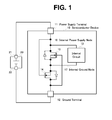
FIG. 1 is a circuit diagram illustrating a semiconductor device. -
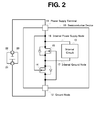
FIG. 2 is a circuit diagram illustrating the semiconductor device. -
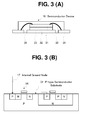
FIGS. 3 are cross-sectional views illustrating the semiconductor device. -
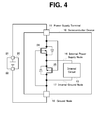
FIG. 4 is a circuit diagram illustrating a semiconductor device. -
FIG. 5 is a circuit diagram illustrating a related-art electronic device. - Now, an embodiment of the present invention is described with reference to the drawings.
- As illustrated in
FIG. 1 , asemiconductor device 10 includes a power supply terminal (first power supply terminal) 11, a ground terminal (second power supply terminal) 12, aninternal circuit 13,NMOS transistors power supply terminal 21 of apower supply 20 is connected to thepower supply terminal 11 of thesemiconductor device 10, and aground terminal 22 of thepower supply 20 is connected to theground terminal 12 of thesemiconductor device 10. - The
NMOS transistor 14 has a gate connected to thepower supply terminal 11, a source and a back gate for applying a substrate potential that are connected to theinternal ground node 17, and a drain connected to theground terminal 12. TheNMOS transistor 15 has a gate connected to theground terminal 12, a source and a back gate for applying a substrate potential that are connected to theinternal ground node 17, and a drain connected to thepower supply terminal 11. Accordingly, a parasitic diode is formed between the source and the drain of each of theNMOS transistors - The
internal circuit 13 has a power supply terminal connected to thepower supply terminal 11, and theinternal circuit 13 has a ground terminal connected to theinternal ground node 17. In other words, theinternal circuit 13 uses a voltage between thepower supply terminal 11 and theinternal ground node 17 as an operating power supply. In this case, thepower supply terminal 11 is connected to the internalpower supply node 16, and theground terminal 12 is connected to theinternal ground node 17 via theNMOS transistor 14. Operations of a circuit having a protection function are now described for respective cases where the power supply is normally and reversely connected to the electronic device. - Continuing to refer to
FIG. 1 , in a normal connection state in which thepower supply 20 is normally connected to thesemiconductor device 10, because the internalpower supply node 16 is connected to thepower supply terminal 11, a voltage of the internalpower supply node 16 is a power supply voltage supplied from thepower supply 20. Further, a gate voltage of theNMOS transistor 14 is the power supply voltage supplied from thepower supply 20, and accordingly theNMOS transistor 14 is turned on. Then, a voltage of theinternal ground node 17 is substantially equal to a voltage of theground terminal 12, and is a ground voltage supplied from thepower supply 20. Accordingly, the supply of power to theinternal circuit 13 is established. Theinternal circuit 13 performs a desired operation based on the power supply voltage and the ground voltage. Note that, drive capability of theNMOS transistor 14 is appropriately circuit-designed in accordance with current consumption of theinternal circuit 13. - Further, a gate voltage of the
NMOS transistor 15 is the ground voltage supplied from thepower supply 20, and accordingly theNMOS transistor 15 is turned off. - In this case, a gate insulating film of the
NMOS transistor 14 needs to have a film thickness having a breakdown voltage that is sufficiently higher than the power supply voltage supplied from thepower supply 20. - In a reverse connection state in which the
power supply 20 is reversely connected to thesemiconductor device 10, as illustrated inFIG. 2 , thepower supply terminal 21 of thepower supply 20 is connected to theground terminal 12 of thesemiconductor device 10, and theground terminal 22 of thepower supply 20 is connected to thepower supply terminal 11 of thesemiconductor device 10. - In this case, the gate voltage of the
NMOS transistor 14 is the ground voltage supplied from thepower supply 20, and accordingly theNMOS transistor 14 is turned off. Further, the parasitic diode of theNMOS transistor 14 is reversely biased between theground terminal 12 and theinternal ground node 17, and accordingly no current flows. Thus, theground terminal 12 and theinternal ground node 17 are not electrically connected to each other. Consequently, in the reverse connection state, no current path is formed from theground terminal 12 to theinternal circuit 13, and hence theinternal circuit 13 is protected. - Further, the gate voltage of the
NMOS transistor 15 is the power supply voltage supplied from thepower supply 20, and accordingly theNMOS transistor 15 is turned on. Thus, the voltage of theinternal ground node 17 is substantially equal to the voltages of thepower supply terminal 11 and the internalpower supply node 16 via theNMOS transistor 15 having low impedance, and is the ground voltage supplied from thepower supply 20. In other words, the voltages of the power supply terminal and the ground terminal of theinternal circuit 13 are both the ground voltage supplied from thepower supply 20. Accordingly, in the reverse connection state, the internal node of theinternal circuit 13 or a diffusion region of a guard ring is prevented from becoming a floated state. Consequently, a current path formed by the parasitic element present in theinternal circuit 13 can be effectively interrupted so that theinternal circuit 13 can stably stop its operation. - In this case, a gate insulating film of the
NMOS transistor 15 have a film thickness having a breakdown voltage that is sufficiently higher than the power supply voltage supplied from thepower supply 20. - The
NMOS transistors internal circuit 13. Now, a protection operation against ESD, which occurs when a voltage surge is applied to the power supply terminal, is described. - When a positive voltage surge is applied to the
power supply terminal 11, a current surge flows from thepower supply terminal 11 to theground terminal 12. In this case, the parasitic diode of theNMOS transistor 15 causes the current surge to flow in the reverse direction due to the breakdown operation, and the parasitic diode of theNMOS transistor 14 causes the current surge to flow in the forward direction, with the result that no current surge flows through theinternal circuit 13. Consequently, theinternal circuit 13 is protected from the current surge. - In this case, the voltage surge is applied to the gate of the
NMOS transistor 14 connected to thepower supply terminal 11. Accordingly, theNMOS transistor 15 is set as follows for the purpose of protecting the gate of theNMOS transistor 14. The size, impurity concentration, and the like of theNMOS transistor 15 are set so that a start voltage for the breakdown operation of the parasitic diode of theNMOS transistor 15 may be equal to or lower than a breakdown voltage of the gate insulating film of theNMOS transistor 14, and that the parasitic diode of theNMOS transistor 15 may cause a current surge to flow before the gate insulating film of theNMOS transistor 14 is broken down. Further, the start voltage for the breakdown operation of the parasitic diode of theNMOS transistor 15 also needs to be equal to or higher than the voltage that is supplied from thepower supply 20 in the normal connection state illustrated inFIG. 1 . - When a negative voltage surge is applied to the
power supply terminal 11, a current surge flows from theground terminal 12 to thepower supply terminal 11. In this case, the parasitic diode of theNMOS transistor 14 causes the current surge to flow in the reverse direction due to the breakdown operation, and the parasitic diode of theNMOS transistor 15 causes the current surge to flow in the forward direction, with the result that no current surge flows through theinternal circuit 13. Consequently, theinternal circuit 13 is protected from the current surge. - In this case, the voltage surge is applied to the gate of the
NMOS transistor 15. Accordingly, theNMOS transistor 14 is set as follows for the purpose of protecting the gate of theNMOS transistor 15. The size, impurity concentration, and the like of theNMOS transistor 14 are set so that a start operation for the breakdown operation of the parasitic diode of theNMOS transistor 14 may be equal to or lower than a breakdown voltage of the gate insulating film of theNMOS transistor 15, and that the parasitic diode of theNMOS transistor 14 may cause a current surge to flow before the gate insulating film of theNMOS transistor 15 is broken down. Further, a start voltage for the breakdown operation of the parasitic diode of theNMOS transistor 14 also needs to be equal to or higher than the voltage that is supplied from thepower supply 20 in the reverse connection state illustrated inFIG. 2 . - A case is considered in which a semiconductor device having the above-mentioned circuit configuration is encapsulated by a resin package as an IC. In this case, as illustrated in
FIG. 3(A) , thesemiconductor device 10 includes a P-type semiconductor substrate 31 having a circuit formed in a front surface thereof, an insulatingadhesive material 32 made of an insulating paste or an insulating film, adie pad 33, alead 34, awire 35, and an encapsulatingresin 36. - In the P-
type semiconductor substrate 31, the above-mentioned circuit is formed by a known semiconductor technology, such as photolithography. The insulatingadhesive material 32 bonds the P-type semiconductor substrate 31 and thedie pad 33 to each other in a state in which the P-type semiconductor substrate 31 and thedie pad 33 are electrically insulated from each other. Thedie pad 33 has a rear surface exposed from thesemiconductor device 10 to the outside, to thereby dissipate heat generated by the P-type semiconductor substrate 31 to the outside of thesemiconductor device 10. Further, thedie pad 33 supports the P-type semiconductor substrate 31. Thewire 35 electrically connects an external connection terminal (for example, the power supply terminal 11) of the above-mentioned circuit formed in the P-type semiconductor substrate 31 and thelead 34 to each other. Thelead 34 is used for electrical connection between thesemiconductor device 10 and a mounting substrate having a circuit formed thereon. The encapsulatingresin 36 encapsulates the P-type semiconductor substrate 31, the insulatingadhesive material 32, thedie pad 33, thelead 34, and thewire 35. - In the case of the circuit configuration of the
semiconductor device 10 illustrated inFIG. 1 , a voltage of the back gate of theNMOS transistor 14 is equal to the voltage of theinternal ground node 17. Accordingly, as illustrated inFIG. 3(B) , the P-type semiconductor substrate 31 has the voltage of theinternal ground node 17. In this case, because the insulatingadhesive material 32 is used, the P-type semiconductor substrate 31 and thedie pad 33 are not electrically connected to each other. Thus, even when there is an electrical influence on thedie pad 33 from the outside, the voltage of the P-type semiconductor substrate 31 is not affected but maintained at the voltage of theinternal ground node 17. - Note that, as illustrated in
FIG. 4 , PMOS transistors may be used instead of the NMOS transistors. In this case, aPMOS transistor 24 has a gate connected to the ground terminal (first power supply terminal) 12, a source and a back gate that are connected to the internal power supply node 16 (internal second power supply node), and a drain connected to the power supply terminal (second power supply terminal) 11. APMOS transistor 25 has a gate connected to thepower supply terminal 11, a source and a back gate that are connected to the internalpower supply node 16, and a drain connected to theground terminal 12. Theinternal circuit 13 has the power supply terminal connected to the internalpower supply node 16, and theinternal circuit 13 has the ground terminal connected to the internal ground node (internal first power supply node) 17 that is connected to theground terminal 12. In other words, theinternal circuit 13 uses a voltage between the internalpower supply node 16 and theground terminal 12 as an operating power supply. In this case, thepower supply terminal 11 is connected to the internalpower supply node 16 via thePMOS transistor 24, and theground terminal 12 is connected to theinternal ground node 17. -
- 10 semiconductor device
- 11 power supply terminal
- 12 ground terminal
- 13 internal circuit
- 14, 15 NMOS transistor
- 16 internal power supply node
- 17 internal ground node
- 20 power supply
- 21 power supply terminal
- 22 ground terminal
Claims (8)
- A semiconductor device, comprising:a first MOS transistor of a first conductivity type, having a gate connected to a first power supply terminal, a source and a back gate that are connected to an internal second power supply node, and a drain connected to a second power supply terminal;a second MOS transistor of the first conductivity type, having a gate connected to the second power supply terminal, a source and a back gate that are connected to the internal second power supply node, and a drain connected to the first power supply terminal; andan internal circuit configured to operate with a voltage between the first power supply terminal and the internal second power supply node.
- A semiconductor device according to claim 1;
wherein the first MOS transistor of the first conductivity type, the second MOS transistor of the first conductivity type, and the internal circuit are formed in the same semiconductor substrate, and
wherein the semiconductor substrate is bonded on a die pad through intermediation of an insulating adhesive material in an electrically insulated state, and is encapsulated by a resin package. - A semiconductor device according to claim 1 or 2;
wherein the first power supply terminal comprises a power supply terminal,
wherein the second power supply terminal comprises a ground terminal,
wherein the internal second power supply node comprises an internal ground node, and
wherein the first MOS transistor of the first conductivity type and the second MOS transistor of the first conductivity type comprise NMOS transistors. - A semiconductor device according to claim 1 or 2;
wherein the first power supply terminal comprises a ground terminal,
wherein the second power supply terminal comprises a power supply terminal,
wherein the internal second power supply node comprises an internal power supply node,and
wherein the first MOS transistor of the first conductivity type and the second MOS transistor of the first conductivity type comprise PMOS transistors. - A semiconductor device according to any one of claims 1 to 4, wherein the first MOS transistor of the first conductivity type comprises a gate insulating film having a breakdown voltage that is equal to or higher than a voltage supplied from a power supply.
- A semiconductor device according to any one of claims 1 to 4, wherein the second MOS transistor of the first conductivity type comprises a gate insulating film having a breakdown voltage that is equal to or higher than a voltage supplied from a power supply.
- A semiconductor device according to any one of claims 1 to 6, wherein the first MOS transistor of the first conductivity type is set so that, when an ESD surge is applied to the drain thereof, a start voltage for a breakdown operation of a parasitic diode is equal to or higher than a voltage supplied from a power supply and the parasitic diode causes an ESD current surge to flow at a breakdown voltage of a gate insulating film of the second MOS transistor of the first conductivity type or lower.
- A semiconductor device according to any one of claims 1 to 6, wherein the second MOS transistor of the first conductivity type is set so that, when an ESD surge is applied to the drain thereof, a start voltage for a breakdown operation of a parasitic diode is equal to or higher than a voltage supplied from a power supply and the parasitic diode causes an ESD current surge to flow at a breakdown voltage of a gate insulating film of the first MOS transistor of the first conductivity type or lower.
Applications Claiming Priority (3)
| Application Number | Priority Date | Filing Date | Title |
|---|---|---|---|
| JP2012211306 | 2012-09-25 | ||
| JP2013164397A JP6190204B2 (en) | 2012-09-25 | 2013-08-07 | Semiconductor device |
| PCT/JP2013/072835 WO2014050407A1 (en) | 2012-09-25 | 2013-08-27 | Semiconductor device |
Publications (2)
| Publication Number | Publication Date |
|---|---|
| EP2903114A1 true EP2903114A1 (en) | 2015-08-05 |
| EP2903114A4 EP2903114A4 (en) | 2016-06-15 |
Family
ID=50387816
Family Applications (1)
| Application Number | Title | Priority Date | Filing Date |
|---|---|---|---|
| EP13841055.0A Ceased EP2903114A4 (en) | 2012-09-25 | 2013-08-27 | SEMICONDUCTOR DEVICE |
Country Status (7)
| Country | Link |
|---|---|
| US (1) | US9589948B2 (en) |
| EP (1) | EP2903114A4 (en) |
| JP (1) | JP6190204B2 (en) |
| KR (1) | KR102032334B1 (en) |
| CN (1) | CN104662762B (en) |
| TW (1) | TWI643308B (en) |
| WO (1) | WO2014050407A1 (en) |
Families Citing this family (10)
| Publication number | Priority date | Publication date | Assignee | Title |
|---|---|---|---|---|
| JP6190204B2 (en) * | 2012-09-25 | 2017-08-30 | エスアイアイ・セミコンダクタ株式会社 | Semiconductor device |
| JP6263435B2 (en) * | 2014-04-28 | 2018-01-17 | 株式会社東芝 | Semiconductor integrated circuit |
| WO2017141811A1 (en) | 2016-02-18 | 2017-08-24 | ローム株式会社 | Protective circuit, method for operating protective circuit, and semiconductor integrated circuit device |
| JP6680102B2 (en) | 2016-06-16 | 2020-04-15 | 富士電機株式会社 | Semiconductor integrated circuit device |
| JP2018190860A (en) * | 2017-05-09 | 2018-11-29 | ルネサスエレクトロニクス株式会社 | Semiconductor device and manufacturing method of the same |
| CN110825692B (en) * | 2019-10-08 | 2024-01-23 | 深圳市稳先微电子有限公司 | System on chip |
| CN113517681B (en) * | 2020-04-09 | 2025-03-07 | 达发科技股份有限公司 | Electrostatic discharge circuit and method for preventing integrated circuit from malfunctioning due to reverse connection of power supply |
| TWI844493B (en) * | 2021-03-29 | 2024-06-01 | 日商新唐科技日本股份有限公司 | Semiconductor Devices |
| KR102526582B1 (en) * | 2021-05-28 | 2023-04-27 | 린나이코리아 주식회사 | DC power supply device |
| TWI792767B (en) * | 2021-12-14 | 2023-02-11 | 瑞昱半導體股份有限公司 | Electrical discharge circuit having stable discharging mechanism |
Family Cites Families (29)
| Publication number | Priority date | Publication date | Assignee | Title |
|---|---|---|---|---|
| US4139880A (en) * | 1977-10-03 | 1979-02-13 | Motorola, Inc. | CMOS polarity reversal circuit |
| US4423456A (en) * | 1981-11-13 | 1983-12-27 | Medtronic, Inc. | Battery reversal protection |
| JPH0494565A (en) * | 1990-08-10 | 1992-03-26 | Toshiba Corp | Semiconductor device |
| US5196980A (en) * | 1991-01-28 | 1993-03-23 | John Fluke Mfg. Co., Inc. | Low impedance, high voltage protection circuit |
| US5151767A (en) | 1991-05-03 | 1992-09-29 | North American Philips Corp. | Power integrated circuit having reverse-voltage protection |
| JPH05152526A (en) * | 1991-11-30 | 1993-06-18 | Hitachi Ltd | Semiconductor integrated circuit device |
| US5742463A (en) * | 1993-07-01 | 1998-04-21 | The University Of Queensland | Protection device using field effect transistors |
| US5594381A (en) * | 1994-04-29 | 1997-01-14 | Maxim Integrated Products | Reverse current prevention method and apparatus and reverse current guarded low dropout circuits |
| US5689209A (en) * | 1994-12-30 | 1997-11-18 | Siliconix Incorporated | Low-side bidirectional battery disconnect switch |
| FR2756679B1 (en) * | 1996-11-29 | 1999-02-12 | France Telecom | VOLTAGE RECTIFIER WITH INTEGRATED COMPONENTS |
| US6031702A (en) * | 1997-10-22 | 2000-02-29 | Siliconix Incorporated | Short circuit protected DC-DC converter using disconnect switching and method of protecting load against short circuits |
| TW399274B (en) * | 1998-02-09 | 2000-07-21 | Winbond Electronics Corp | IC package with enhanced ESD protection capability |
| US6744883B1 (en) * | 1999-01-12 | 2004-06-01 | Paradyne Corporation | Filter system and method to suppress interference imposed upon a frequency-division multiplexed channel |
| JP2001238348A (en) * | 2000-02-21 | 2001-08-31 | Nissan Motor Co Ltd | Protection circuit for power supply for inductive load |
| JP2002095159A (en) | 2000-09-13 | 2002-03-29 | Keihin Corp | Protection circuit |
| US6770938B1 (en) * | 2002-01-16 | 2004-08-03 | Advanced Micro Devices, Inc. | Diode fabrication for ESD/EOS protection |
| AUPS045702A0 (en) * | 2002-02-12 | 2002-03-07 | Fultech Pty Ltd | A protection device |
| JP4694098B2 (en) * | 2003-01-27 | 2011-06-01 | セイコーインスツル株式会社 | Semiconductor integrated circuit and electronic equipment |
| JP3983220B2 (en) * | 2003-12-24 | 2007-09-26 | 沖電気工業株式会社 | Analog switch |
| US7576962B2 (en) * | 2005-06-16 | 2009-08-18 | Bourns, Inc. | Transient blocking apparatus with reset |
| DE102005058432A1 (en) * | 2005-12-07 | 2007-06-14 | Infineon Technologies Ag | Switching arrangement for voltage selection, has two inputs provided for supplying respective supply voltages, and four transistors out of which two transistors are connected between respective inputs and output |
| US7537970B2 (en) * | 2006-03-06 | 2009-05-26 | Semiconductor Components Industries, L.L.C. | Bi-directional transistor with by-pass path and method therefor |
| JP2008053406A (en) * | 2006-08-24 | 2008-03-06 | Seiko Epson Corp | Semiconductor device and manufacturing method thereof |
| JP2010011598A (en) * | 2008-06-25 | 2010-01-14 | Autonetworks Technologies Ltd | Inductive load driving circuit |
| US8040647B2 (en) * | 2008-11-11 | 2011-10-18 | Infineon Technologies Austria Ag | System and method for protection against loss of battery in reverse battery protected devices |
| CN101860999B (en) * | 2010-03-31 | 2013-11-13 | 海洋王照明科技股份有限公司 | Circuit for preventing reverse connection of power supply, LED lamp circuit and LED lamp |
| JP5937436B2 (en) * | 2012-06-28 | 2016-06-22 | アルプス電気株式会社 | Protection circuit |
| US9313897B2 (en) * | 2012-09-14 | 2016-04-12 | Infineon Technologies Ag | Method for electrophoretically depositing a film on an electronic assembly |
| JP6190204B2 (en) * | 2012-09-25 | 2017-08-30 | エスアイアイ・セミコンダクタ株式会社 | Semiconductor device |
-
2013
- 2013-08-07 JP JP2013164397A patent/JP6190204B2/en not_active Expired - Fee Related
- 2013-08-27 KR KR1020157006532A patent/KR102032334B1/en not_active Expired - Fee Related
- 2013-08-27 US US14/430,494 patent/US9589948B2/en not_active Expired - Fee Related
- 2013-08-27 WO PCT/JP2013/072835 patent/WO2014050407A1/en not_active Ceased
- 2013-08-27 CN CN201380048700.1A patent/CN104662762B/en not_active Expired - Fee Related
- 2013-08-27 EP EP13841055.0A patent/EP2903114A4/en not_active Ceased
- 2013-09-06 TW TW102132192A patent/TWI643308B/en not_active IP Right Cessation
Also Published As
| Publication number | Publication date |
|---|---|
| US9589948B2 (en) | 2017-03-07 |
| KR102032334B1 (en) | 2019-10-15 |
| CN104662762A (en) | 2015-05-27 |
| KR20150060696A (en) | 2015-06-03 |
| WO2014050407A1 (en) | 2014-04-03 |
| CN104662762B (en) | 2017-09-22 |
| TW201428929A (en) | 2014-07-16 |
| JP2014082922A (en) | 2014-05-08 |
| TWI643308B (en) | 2018-12-01 |
| JP6190204B2 (en) | 2017-08-30 |
| US20150287712A1 (en) | 2015-10-08 |
| EP2903114A4 (en) | 2016-06-15 |
Similar Documents
| Publication | Publication Date | Title |
|---|---|---|
| US9589948B2 (en) | Semiconductor device | |
| CN107527904B (en) | Semiconductor integrated circuit device with a plurality of semiconductor chips | |
| US11128117B2 (en) | Protection circuit and operational method of the protection circuit, and semiconductor integrated circuit apparatus | |
| US8675323B2 (en) | Method of manufacturing a package | |
| TWI728240B (en) | Method and device for electrical overstress and electrostatic discharge protection | |
| US8237225B2 (en) | Semiconductor device for electrostatic discharge protection | |
| CN103378071B (en) | method and device for electrostatic discharge circuit | |
| CN103579224B (en) | ESD protects | |
| TWI467877B (en) | High voltage open drain electrostatic discharge (esd) protection device | |
| US9627383B2 (en) | Semiconductor device | |
| CN103677042B (en) | Voltage regulator | |
| CN104867922B (en) | Conductor integrated circuit device and the electronic equipment for using the device | |
| US9865586B2 (en) | Semiconductor device and method for testing the semiconductor device | |
| US9425188B2 (en) | Active ESD protection circuit with blocking diode | |
| WO2017157117A1 (en) | Electrostatic discharge (esd) protective circuit for integrated circuit | |
| US20030043517A1 (en) | Electro-static discharge protecting circuit | |
| US8384124B2 (en) | Semiconductor device and semiconductor integrated circuit device for driving plasma display using the semiconductor device | |
| CN204966503U (en) | Bias resistor ware transistor semiconductor device and semiconductor device | |
| US9202908B2 (en) | Protection diode | |
| TWI358181B (en) | Esd protecting circuit | |
| JP2011119415A (en) | Semiconductor integrated device | |
| CN102738143B (en) | Semiconductor device, DC-DC converter, and protective element | |
| TWI429052B (en) | Electrostatic discharge protection device | |
| JPWO2016080123A1 (en) | Semiconductor device and method for preventing negative potential application | |
| CN114678853A (en) | CDM ESD protection circuit |
Legal Events
| Date | Code | Title | Description |
|---|---|---|---|
| PUAI | Public reference made under article 153(3) epc to a published international application that has entered the european phase |
Free format text: ORIGINAL CODE: 0009012 |
|
| 17P | Request for examination filed |
Effective date: 20150428 |
|
| AK | Designated contracting states |
Kind code of ref document: A1 Designated state(s): AL AT BE BG CH CY CZ DE DK EE ES FI FR GB GR HR HU IE IS IT LI LT LU LV MC MK MT NL NO PL PT RO RS SE SI SK SM TR |
|
| AX | Request for extension of the european patent |
Extension state: BA ME |
|
| DAX | Request for extension of the european patent (deleted) | ||
| RAP1 | Party data changed (applicant data changed or rights of an application transferred) |
Owner name: SII SEMICONDUCTOR CORPORATION |
|
| RA4 | Supplementary search report drawn up and despatched (corrected) |
Effective date: 20160517 |
|
| RIC1 | Information provided on ipc code assigned before grant |
Ipc: H01L 27/02 20060101ALI20160510BHEP Ipc: H02J 1/00 20060101ALI20160510BHEP Ipc: H02H 11/00 20060101AFI20160510BHEP Ipc: H01L 27/088 20060101ALI20160510BHEP Ipc: H02J 7/00 20060101ALI20160510BHEP Ipc: H01L 21/822 20060101ALI20160510BHEP Ipc: H03K 17/08 20060101ALI20160510BHEP |
|
| RAP1 | Party data changed (applicant data changed or rights of an application transferred) |
Owner name: ABLIC INC. |
|
| STAA | Information on the status of an ep patent application or granted ep patent |
Free format text: STATUS: EXAMINATION IS IN PROGRESS |
|
| 17Q | First examination report despatched |
Effective date: 20190409 |
|
| REG | Reference to a national code |
Ref country code: DE Ref legal event code: R003 |
|
| STAA | Information on the status of an ep patent application or granted ep patent |
Free format text: STATUS: THE APPLICATION HAS BEEN REFUSED |
|
| 18R | Application refused |
Effective date: 20220512 |