EP2901675B1 - Wiederverwendung adaptiver zwischenschichtmuster-filterparameter für skalierbare videokodierung - Google Patents
Wiederverwendung adaptiver zwischenschichtmuster-filterparameter für skalierbare videokodierung Download PDFInfo
- Publication number
- EP2901675B1 EP2901675B1 EP12885777.8A EP12885777A EP2901675B1 EP 2901675 B1 EP2901675 B1 EP 2901675B1 EP 12885777 A EP12885777 A EP 12885777A EP 2901675 B1 EP2901675 B1 EP 2901675B1
- Authority
- EP
- European Patent Office
- Prior art keywords
- sao
- layer
- enhancement layer
- bitstream
- coding unit
- Prior art date
- Legal status (The legal status is an assumption and is not a legal conclusion. Google has not performed a legal analysis and makes no representation as to the accuracy of the status listed.)
- Not-in-force
Links
Images




Classifications
-
- H—ELECTRICITY
- H04—ELECTRIC COMMUNICATION TECHNIQUE
- H04N—PICTORIAL COMMUNICATION, e.g. TELEVISION
- H04N19/00—Methods or arrangements for coding, decoding, compressing or decompressing digital video signals
- H04N19/10—Methods or arrangements for coding, decoding, compressing or decompressing digital video signals using adaptive coding
- H04N19/102—Methods or arrangements for coding, decoding, compressing or decompressing digital video signals using adaptive coding characterised by the element, parameter or selection affected or controlled by the adaptive coding
- H04N19/117—Filters, e.g. for pre-processing or post-processing
-
- H—ELECTRICITY
- H04—ELECTRIC COMMUNICATION TECHNIQUE
- H04N—PICTORIAL COMMUNICATION, e.g. TELEVISION
- H04N19/00—Methods or arrangements for coding, decoding, compressing or decompressing digital video signals
- H04N19/30—Methods or arrangements for coding, decoding, compressing or decompressing digital video signals using hierarchical techniques, e.g. scalability
-
- H—ELECTRICITY
- H04—ELECTRIC COMMUNICATION TECHNIQUE
- H04N—PICTORIAL COMMUNICATION, e.g. TELEVISION
- H04N19/00—Methods or arrangements for coding, decoding, compressing or decompressing digital video signals
- H04N19/46—Embedding additional information in the video signal during the compression process
- H04N19/463—Embedding additional information in the video signal during the compression process by compressing encoding parameters before transmission
-
- H—ELECTRICITY
- H04—ELECTRIC COMMUNICATION TECHNIQUE
- H04N—PICTORIAL COMMUNICATION, e.g. TELEVISION
- H04N19/00—Methods or arrangements for coding, decoding, compressing or decompressing digital video signals
- H04N19/80—Details of filtering operations specially adapted for video compression, e.g. for pixel interpolation
-
- H—ELECTRICITY
- H04—ELECTRIC COMMUNICATION TECHNIQUE
- H04N—PICTORIAL COMMUNICATION, e.g. TELEVISION
- H04N19/00—Methods or arrangements for coding, decoding, compressing or decompressing digital video signals
- H04N19/80—Details of filtering operations specially adapted for video compression, e.g. for pixel interpolation
- H04N19/82—Details of filtering operations specially adapted for video compression, e.g. for pixel interpolation involving filtering within a prediction loop
Definitions
- Video coding is a process of preparing video (video data), where the video is encoded to meet proper formats and specifications for recording and playback.
- a system of coding may include a video frame source that generates uncompressed video frames.
- the uncompressed video frames may be coded according to principles of H.264 advance video coding (AVC) standard and transmitted to encoder buffer where the coded frames are sent towards a transmitting medium.
- AVC H.264 advance video coding
- the coded frames are generated by using a base layer encoding stage to generate base layer bitstream and an enhancement layer encoding stage to generate enhancement layer coded bitstream, which is a residual signal that represents image information missing in the base layer frames and may therefore be added to the base layer bitstream.
- a Sample Adaptive Offset is an in-loop filter technique adopted into high efficiency video coding (HEVC) standard to improve quality of reconstructed pictures such as during decoding of the coded frames above.
- SAO filter parameters including filter control flags, SAO types, offset values, etc., are determined by an encoder and then transmitted to a decoder.
- a SVC bitstream may include one base layer and at least one enhancement layer bitstream.
- a lower layer bitstream may include the base layer or a lower enhancement layer bitstream.
- direct re-use SAO filter parameters of the lower-layer bitstream or a coded lower-layer bitstream may be used to encode the enhancement layer bitstream, or re-use only part of the SAO filter parameters of the lower-layer bitstream to encode another enhancement layer bitstream.
- the re-use of the SAO parameters from the coded lower-layer bitstream to encode the enhancement layer bitstream may be referred to as inter-layer SAO parameter re-use.
- the inter-layer SAO parameter re-use may improve the SAO filtering process in next generation SVC enhancement layer coding.
- FIG. 1 shows an example system/computing device 100 that may be utilized to implement various described embodiments.
- the computing device 100 shown in FIG. 1 is one example of a computing device and is not intended to suggest any limitation as to the scope of use or functionality of the computer and network architectures.
- computing device 100 includes at least one processing unit 102 and system memory 104.
- system memory 104 may be volatile (such as RAM), non-volatile (such as ROM, flash memory, etc.) or some combination thereof.
- System memory 104 may include an operating system 106, one or more program modules 108, that in certain implementations may implement the algorithm methods and techniques describe herein.
- System memory 104 may further include program data 110 which may include macro blocks/shapes database(s) as described later in this document.
- an encoder 112 is included in this example. The encoder 112 may be used to implement the inter-layer SAO parameter re-use described herein. The encoder 112 may be operatively coupled to and communicate with processing unit 102, system memory 104, and other memory, input/output, devices, further described herein, and other components/devices not shown.
- the encoder 112 includes a Sample Adaptive Offset or SAO filter 114.
- SAO filter 114 may be used for the enhancement layer bitstream coding, and to directly re-use SAO filter parameters of a lower-layer bit stream or a coded lower layer bitstream to encode another enhancement layer bitstream. In certain cases, SAO filter 114 is used for re-use of only part of the SAO filter parameters of the lower-layer to encode another enhancement layer bitstream.
- device 100 may include a decoder 116. Example functions of both encoder 112 and decoder 116 are further described below.
- encoder 112 and/or decoder 116 may be part of an integrated graphics chip set of a central processing units (CPU) that includes 3D and media, having media functionality that includes video, specifically video decode/encode.
- CPU central processing units
- an application specific integrated circuit or ASIC may include the encoder 112 and/or decoder 116 as a fixed function encoder/decoder
- devices with video encoding may make use of the techniques, methods, and devices described. Examples of such devices include media players, video conferencing devices, etc.
- program modules 108 may include specific modules (not shown) such as a codec or software/firmware based encoder, configured to implement the video encoding techniques and methods described herein.
- modules in certain implementations may perform the processes of encoder 112.
- Example codecs include AVC, VC1, and SVC.
- Computing device 100 may have additional features or functionality.
- computing device 100 may also include additional data storage devices such as removable storage 120 and non-removable storage 122.
- the removable storage 120 and non-removable storage 122 are an example of computer accessible media for storing instructions that are executable by the processing unit 102 to perform the various functions described above.
- any of the functions described with reference to the figures may be implemented using software, hardware (e.g., fixed logic circuitry) or a combination of these implementations.
- Program code may be stored in one or more computer accessible media or other computer-readable storage devices.
- the processes and components described herein may be implemented by a computer program product.
- computer accessible media includes volatile and non-volatile, removable and non-removable media implemented in any method or technology for storage of information, such as computer readable instructions, data structures, program modules, or other data.
- the terms "computer accessible medium” and “computer accessible media” refer to non-transitory storage devices and include, but are not limited to, RAM, ROM, EEPROM, flash memory or other memory technology, CD-ROM, digital versatile disks (DVD) or other optical storage, magnetic cassettes, magnetic tape, magnetic disk storage or other magnetic storage devices, or any other non-transitory medium that may be used to store information for access by a computing device, e.g., computing device 100. Any of such computer accessible media may be part of the computing device 100.
- the removable storage 120 which is a computer accessible medium, has a set of instructions stored thereon.
- the set of instructions When executed by the processing unit 102, the set of instructions cause the processing unit 102 to execute operations, tasks, functions and/or methods as described herein, and any variations thereof.
- Computing device 100 may also include one or more input devices 124 such as keyboard, mouse, pen, voice input device, touch input device, etc.
- Computing device 100 may additionally include one or more output devices 126 such as a display, speakers, printer, etc.
- Computing device 100 may also include one or more communication connections 128 that allow the computing device 100 to communicate by wire or wirelessly with one or more other devices (not shown), over connection 130. It is appreciated that the illustrated computing device 100 is one example of a suitable device and is not intended to suggest any limitation as to the scope of use or functionality of the various embodiments described.
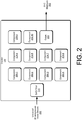
- FIG. 2 shows an example video encoder 112 that implements the SAO filter 114 for HEVC-SVC standard for enhancement layer bitstream coding, and directly re-use SAO filter parameters of the lower-layer or the coded enhancement layer bitstream to encode another enhancement layer bitstream, or re-use only part of the SAO filter parameters of the lower-layer to encode another enhancement layer bitstream.
- the video encoder 112 may be implemented as part of a central processing unit, part of integrated circuit chipset, or as a separate component/device.
- the video encoder 112 may be implemented as firmware or software, such as a codec.
- FIG. 2 is merely illustrative and may contain additional blocks or components and/or different arrangement of the blocks or components.
- the base-layer bitstream is coded using for example, a HEVC standard encoder (e.g., encoder 112) and the base layer bitstream may be decoded independently to reconstruct a base layer video output (not shown).
- the enhancement layer bitstream may be coded using for example, HEVC-SVC coding tools and decoded together with the lower-layer data to construct an enhancement layer output video (not shown).
- an inter-layer coding tool for coding the enhancement layer bitstream includes inter-layer motion-compensated prediction (MCP), which is added as an alternative to intra-layer motion-compensated prediction.
- MCP inter-layer motion-compensated prediction
- Intra-layer MCP may refer to an inter picture prediction that uses preexisting coded pictures of the same layer
- inter-layer MCP may refer to an inter picture prediction that uses preexisting coded pictures of other layers.
- the video encoder 112 may receive un-encoded and/or un-compressed video 200 that includes image frames to be encoded to generate corresponding encoded frames in the form of an SVC bit stream 202.
- one or more components or blocks of the video encoder 112 may be configured to perform SVC encoding consistent with one or more standards and the processes and techniques describe herein.
- the video encoder 112 includes one or more of the following components. It is to be understood that other components may be included, and that the components may be combined (i.e., functionality of components combined). Furthermore, reference to a coding unit or CU may be directed to a portion, or slice of a picture to be coded.
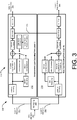
- FIG. 3 shows an example video decoder 116 of a two-layer SVC bitstream.
- the video decoder receives the SVC bitstream 202 and performs de-multiplexing of the SVC bitstream 202 through a de-mux 300 to provide a separate layer zero (0) bitstream for the base layer and a layer one (1) bitstream for the enhancement layer.
- a layer zero (0) 302 bitstream may be independently decoded to reconstruct a base layer 0 output video 304, while a layer 1 306 may be decoded together with the base layer reconstructed output video 304 to provide a reconstructed layer 1 output video 308.
- a base layer decoding flow block 310 processes the layer 0 bitstream 302
- an enhancement layer decoding flow block 312 processes the layer 1 bitstream 306.
- the layer 0 bitstream 302 may be decoded by an HEVC decoder.
- the layer 1 bitstream stream 306 may not be independently decoded to reconstruct the layer 1 output video 308.
- the layer 1 bitstream stream 306 is decoded together with the layer 0 bitstream reconstructed output video 304 because inter-layer prediction may be used for the encoding of other enhancement layer coding units.
- the layer 0 bitstream 302 may be processed before being applied for the inter-layer prediction.
- the layer 0 bitstream 302 is first processed before processing the layer 1 bitstream 306 using inter-layer SAO parameter re-use.
- the "process" may include picture up-sampling for spatial scalability, picture tone mapping for bit-depth scalability, de-interlacing for interlace-progressive scalability, or some other kind of processing.
- an inter-layer SAO parameter re-use is illustrated by a line 314 that connects the SAO filter at the base layer decoding flow 310 to the SAO filter of the enhancement layer decoding flow 312.
- the decoded SAO parameters of the layer 0 302 bitstream or the lower enhancement layer coding unit may be used as the SAO parameters of the enhancement layer coding unit to decode the layer 1 bitstream 306.
- the SAO in applying the SVC, for each layer 0 302 or 1 306 bitstreams, the SAO may be conditionally performed after a de-blocking filter in order to improve both objective and subjective quality of the reconstructed signal.
- the SAO filtering for the lower-layer and the enhancement layer bitstreams may be performed using individual SAO parameters.
- the SAO may be used to classify reconstructed pixels into different categories and then reduce distortion by adding an offset to luma and/or chroma components for each category of pixels.
- an offset table may be added to a particular category and the offset table is to be determined at the encoder 112 and transmitted to the decoder 116.
- Particular implementations provide that the encoder 112 and the decoder 116 reside at different devices, and that the SVC bit stream 202 may be transmitted from the encoder 112 to the decoder 116.
- FIG. 4 Table 1 illustrates 5 different SAO types while FIG. 4 , Table 2 shows an example of 5 different kinds of edge types.
- the SAO filtering at the encoder 112 side may be implemented as follows:
- the SAO filtering at the decoder 116 side may be implemented as follows:
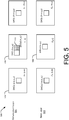
- FIG. 5 shows a mapping 500 between a coding unit in a base layer bitstream 502 and coding units in enhancement layer bitstream 504.
- SAO filtering for enhancement layer bitstream 504 may utilize different SAO parameters such as SAO control flags, SAO types, SAO offset values, SAO band positions, etc. that may be partially or fully inherited from the lower layer 502. For example, a) copying only the SAO control flag and SAO type from the lower layer 502 for the enhancement layer 504; or b) copying all the SAO parameters including SAO control flags, SAO types, SAO offset values, and/or SAO band positions, etc., from the lower layer 502 for the enhancement layer 504.
- the SAO parameters that may be re-used and/or inherited may be defined in the standard specification in order for the encoder 112 and decoder 116 to use the same SAO parameters.
- multiple corresponding coding units from spatial, temporal and inter-layer neighbor coding units may be used to generate the inherited SAO parameters as illustrated in FIG. 3 .
- f B ( t ) stands for a base layer picture 506 at time t
- f E ( t ) stands for an enhancement layer picture 508 at time t
- SAO B ( t , x , y ) stands for the SAO parameters of a coding unit positioned at ( x , y ) in the base layer picture f B ( t ) 506
- SAO E ( t , x , y ) stands for the SAO parameters of a coding unit positioned at ( x , y ) in the enhancement layer picture f E ( t ) 508.
- a gray coding unit in the enhancement coding picture f E ( t-m ) 510 is a coded enhancement layer picture prior to current enhancement picture at time t-m ;
- Consistency should exist as to providing the standard specification as to which block is selected and what kind of SAO information should be inherited, so that the encoder and decoder may produce the same SAO filtering.
- a corresponding block in the reference frame may be derived by different methods using known information such as block location, coded intra-layer/inter-layer motion vector, etc.
- the corresponding coding unit could be (a) the collocated coding unit in the intra-layer/inter-layer bitstream reference frame with the same location of current coding unit; (b) the intra-layer/inter-layer motion -compensated coding unit using preexisting coded intra-layer/inter-layer motion vector etc.
- intra-layer/inter-layer bitstream corresponding coding unit may overlap multiple blocks due to the block-based prediction
- various methods may be used such as dominant overlapped block to represent the corresponding block.
- the proposed methods and techniques may save bits (i.e., processing of video) for indicating the SAO information.
- the methods and techniques may be performed at the encoder 112 and decoder 116.
- flags may be set and provided from the encoder 112 to decoder 116 to indicate whether to use such SAO parameter re-use.
- FIG. 6 shows an example process flowchart 600 illustrating an example method for inter-layer SAO parameters re-use. This is based on the basic unit of the SAO parameter re-use process and techniques being a coding unit or CU. Each picture may be divided into CUs before encoding and decoding.
- the SAO parameter re-use process and techniques first find the corresponding CU in the reference frame, and second re-use the SAO information such as the SAO filter control flag, saoTypeIdx, band position, and offset values from corresponding CU to encode the current CU.
- SAO filtering is performed for a current coding unit (CU). A determination is made if the current CU is from a base-layer bitstream. If the determination is "YES", following the YES branch of block 604, then at block 606, SAO filtering for the CU is performed. This may be a traditional SAO filter process in HEVC standard which is applied to the current CU.
- SAO re-use e.g., inter-layer SAO parameters re-use
- the current CU in the enhancement layer bitstream is coded with inter-layer motion compensation, then following YES branch of block 610, the SAO parameters of the reference CU from inter-layer bitstream reference frame are re-used for filtering current CU. Otherwise, the SAO parameters of the reference frame from intra-layer bitstream reference frame are re-used for filtering current CU at block 614.
- SAO filtering is performed. If SAO type (see table 1 of FIG. 5 ), is in the range of [0, 4], SAO filtering is performed. If SAO type is 4, the following the YES branch of block 620, at block 622, and at block 624 the band position and offset values are re-used to filter current CU. Otherwise, if SAO type is not 4, then edge offset type and offset values are re-used to filter the current CU.
- FIG. 7 illustrates another example system 700 in accordance with the present disclosure.
- system 700 may be a media system although system 700 is not limited to this context.
- system 700 may be incorporated into a personal computer (PC), laptop computer, ultra-laptop computer, tablet, touch pad, portable computer, handheld computer, palmtop computer, personal digital assistant (PDA), cellular telephone, combination cellular telephone/PDA, television, smart device (e.g., smart phone, smart tablet or smart television), mobile internet device (MID), messaging device, data communication device, and so forth.
- PC personal computer
- PDA personal digital assistant
- cellular telephone combination cellular telephone/PDA
- television smart device (e.g., smart phone, smart tablet or smart television), mobile internet device (MID), messaging device, data communication device, and so forth.
- smart device e.g., smart phone, smart tablet or smart television
- MID mobile internet device
- system 700 includes a platform 702 coupled to a display 720.
- Platform 702 may receive content from a content device such as content services device(s) 730 or content delivery device(s) 740 or other similar content sources.
- a navigation controller 750 including one or more navigation features may be used to interact with, for example, platform 702 and/or display 720. Each of these components is described in greater detail below.
- platform 702 may include any combination of a chipset 705, processor 710, memory 712, storage 714, graphics subsystem 715, applications 716 and/or radio 718.
- Chipset 705 may provide intercommunication among processor 710, memory 712, storage 714, graphics subsystem 715, applications 716 and/or radio 718.
- chipset 705 may include a storage adapter (not depicted) capable of providing intercommunication with storage 714.
- Processor 710 may be implemented as a Complex Instruction Set Computer (CISC) or Reduced Instruction Set Computer (RISC) processors, x86 instruction set compatible processors, multi-core, or any other microprocessor or central processing unit (CPU). In various implementations, processor 710 may be dual-core processor(s), dual-core mobile processor(s), and so forth.
- CISC Complex Instruction Set Computer
- RISC Reduced Instruction Set Computer
- processor 710 may be dual-core processor(s), dual-core mobile processor(s), and so forth.
- Memory 712 may be implemented as a volatile memory device such as, but not limited to, a Random Access Memory (RAM), Dynamic Random Access Memory (DRAM), or Static RAM (SRAM).
- RAM Random Access Memory
- DRAM Dynamic Random Access Memory
- SRAM Static RAM
- Storage 714 may be implemented as a non-volatile storage device such as, but not limited to, a magnetic disk drive, optical disk drive, tape drive, an internal storage device, an attached storage device, flash memory, battery backed-up SDRAM (synchronous DRAM), and/or a network accessible storage device.
- storage 714 may include technology to increase the storage performance enhanced protection for valuable digital media when multiple hard drives are included, for example.
- Graphics subsystem 715 may perform processing of images such as still or video for display.
- Graphics subsystem 715 may be a graphics processing unit (GPU) or a visual processing unit (VPU), for example.
- An analog or digital interface may be used to communicatively couple graphics subsystem 715 and display 720.
- the interface may be any of a High-Definition Multimedia Interface, DisplayPort, wireless HDMI, and/or wireless HD compliant techniques.
- Graphics subsystem 715 may be integrated into processor 710 or chipset 705.
- graphics subsystem 715 may be a stand-alone card communicatively coupled to chipset 705.
- graphics and/or video processing techniques described herein may be implemented in various hardware architectures.
- graphics and/or video functionality may be integrated within a chipset.
- a discrete graphics and/or video processor may be used.
- the graphics and/or video functions may be provided by a general purpose processor, including a multi-core processor.
- the functions may be implemented in a consumer electronics device.
- Radio 718 may include one or more radios capable of transmitting and receiving signals using various suitable wireless communications techniques. Such techniques may involve communications across one or more wireless networks.
- Example wireless networks include (but are not limited to) wireless local area networks (WLANs), wireless personal area networks (WPANs), wireless metropolitan area network (WMANs), cellular networks, and satellite networks. In communicating across such networks, radio 718 may operate in accordance with one or more applicable standards in any version.
- display 720 may include any television type monitor or display.
- Display 720 may include, for example, a computer display screen, touch screen display, video monitor, television-like device, and/or a television.
- Display 720 may be digital and/or analog.
- display 720 may be a holographic display.
- display 720 may be a transparent surface that may receive a visual projection.
- projections may convey various forms of information, images, and/or objects.
- such projections may be a visual overlay for a mobile augmented reality (MAR) application.
- MAR mobile augmented reality
- platform 702 may display user interface 722 on display 720.
- MAR mobile augmented reality
- content services device(s) 730 may be hosted by any national, international and/or independent service and thus accessible to platform 702 via the Internet, for example.
- Content services device(s) 730 may be coupled to platform 702 and/or to display 720.
- Platform 702 and/or content services device(s) 730 may be coupled to a network 760 to communicate (e.g., send and/or receive) media information to and from network 760.
- Content delivery device(s) 740 also may be coupled to platform 702 and/or to display 720.
- content services device(s) 730 may include a cable television box, personal computer, network, telephone, Internet enabled devices or appliance capable of delivering digital information and/or content, and any other similar device capable of unidirectionally or bidirectionally communicating content between content providers and platform 702 and/display 720, via network 760 or directly. It will be appreciated that the content may be communicated unidirectionally and/or bidirectionally to and from any one of the components in system 700 and a content provider via network 760. Examples of content may include any media information including, for example, video, music, medical and gaming information, and so forth.
- Content services device(s) 730 may receive content such as cable television programming including media information, digital information, and/or other content.
- content providers may include any cable or satellite television or radio or Internet content providers. The provided examples are not meant to limit implementations in accordance with the present disclosure in any way.
- platform 702 may receive control signals from navigation controller 750 having one or more navigation features.
- the navigation features of controller 750 may be used to interact with user interface 722, for example.
- navigation controller 750 may be a pointing device that may be a computer hardware component (specifically, a human interface device) that allows a user to input spatial (e.g., continuous and multi-dimensional) data into a computer.
- GUI graphical user interfaces
- televisions and monitors allow the user to control and provide data to the computer or television using physical gestures.
- Movements of the navigation features of controller 750 may be replicated on a display (e.g., display 720) by movements of a pointer, cursor, focus ring, or other visual indicators displayed on the display.
- a display e.g., display 720
- the navigation features located on navigation controller 750 may be mapped to virtual navigation features displayed on user interface 722, for example.
- controller 750 may not be a separate component but may be integrated into platform 702 and/or display 720. The present disclosure, however, is not limited to the elements or in the context shown or described herein.
- drivers may include technology to enable users to instantly turn on and off platform 702 like a television with the touch of a button after initial boot-up, when enabled, for example.
- Program logic may allow platform 702 to stream content to media adaptors or other content services device(s) 730 or content delivery device(s) 740 even when the platform is turned "off.”
- chipset 705 may include hardware and/or software support for 5.1 surround sound audio and/or high definition 7.1 surround sound audio, for example.
- Drivers may include a graphics driver for integrated graphics platforms.
- the graphics driver may comprise a peripheral component interconnect (PCI) Express graphics card.
- PCI peripheral component interconnect
- any one or more of the components shown in system 700 may be integrated.
- platform 702 and content services device(s) 730 may be integrated, or platform 702 and content delivery device(s) 740 may be integrated, or platform 702, content services device(s) 730, and content delivery device(s) 740 may be integrated, for example.
- platform 702 and display 720 may be an integrated unit. Display 720 and content service device(s) 730 may be integrated, or display 720 and content delivery device(s) 740 may be integrated, for example. These examples are not meant to limit the present disclosure.
- system 700 may be implemented as a wireless system, a wired system, or a combination of both.
- system 700 may include components and interfaces suitable for communicating over a wireless shared media, such as one or more antennas, transmitters, receivers, transceivers, amplifiers, filters, control logic, and so forth.
- a wireless shared media may include portions of a wireless spectrum, such as the RF spectrum and so forth.
- system 700 may include components and interfaces suitable for communicating over wired communications media, such as input/output (I/O) adapters, physical connectors to connect the I/O adapter with a corresponding wired communications medium, a network interface card (NIC), disc controller, video controller, audio controller, and the like.
- wired communications media may include a wire, cable, metal leads, printed circuit board (PCB), backplane, switch fabric, semiconductor material, twisted-pair wire, co-axial cable, fiber optics, and so forth.
- Platform 702 may establish one or more logical or physical channels to communicate information.
- the information may include media information and control information.
- Media information may refer to any data representing content meant for a user. Examples of content may include, for example, data from a voice conversation, videoconference, streaming video, electronic mail ("email") message, voice mail message, alphanumeric symbols, graphics, image, video, text and so forth. Data from a voice conversation may be, for example, speech information, silence periods, background noise, comfort noise, tones and so forth.
- Control information may refer to any data representing commands, instructions or control words meant for an automated system. For example, control information may be used to route media information through a system, or instruct a node to process the media information in a predetermined manner. The embodiments, however, are not limited to the elements or in the context shown or described in FIG. 7 .
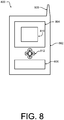
- FIG. 8 illustrates implementations of a small form factor device 800 in which system 700 may be embodied.
- device 800 may be implemented as a mobile computing device having wireless capabilities.
- a mobile computing device may refer to any device having a processing system and a mobile power source or supply, such as one or more batteries, for example.
- examples of a mobile computing device may include a personal computer (PC), laptop computer, ultra-laptop computer, tablet, touch pad, portable computer, handheld computer, palmtop computer, personal digital assistant (PDA), cellular telephone, combination cellular telephone/PDA, television, smart device (e.g., smart phone, smart tablet or smart television), mobile internet device (MID), messaging device, data communication device, and so forth.
- PC personal computer
- laptop computer ultra-laptop computer
- tablet touch pad
- portable computer handheld computer
- palmtop computer personal digital assistant
- PDA personal digital assistant
- cellular telephone e.g., cellular telephone/PDA
- television smart device (e.g., smart phone, smart tablet or smart television), mobile internet device (MID), messaging device, data communication device, and so forth.
- smart device e.g., smart phone, smart tablet or smart television
- MID mobile internet device
- Examples of a mobile computing device also may include computers that are arranged to be worn by a person, such as a wrist computer, finger computer, ring computer, eyeglass computer, belt-clip computer, arm-band computer, shoe computers, clothing computers, and other wearable computers.
- a mobile computing device may be implemented as a smart phone capable of executing computer applications, as well as voice communications and/or data communications.
- voice communications and/or data communications may be described with a mobile computing device implemented as a smart phone by way of example, it may be appreciated that other embodiments may be implemented using other wireless mobile computing devices as well. The embodiments are not limited in this context.
- device 800 may include a housing 802, a display 804, an input/output (I/O) device 806, and an antenna 808.
- Device 800 also may include navigation features 812.
- Display 804 may include any suitable display unit for displaying information appropriate for a mobile computing device.
- I/O device 806 may include any suitable I/O device for entering information into a mobile computing device. Examples for I/O device 806 may include an alphanumeric keyboard, a numeric keypad, a touch pad, input keys, buttons, switches, rocker switches, microphones, speakers, voice recognition device and software, and so forth. Information also may be entered into device 800 by way of microphone (not shown). Such information may be digitized by a voice recognition device (not shown). The embodiments are not limited in this context.
- Various embodiments may be implemented using hardware elements, software elements, or a combination of both.
- hardware elements may include processors, microprocessors, circuits, circuit elements (e.g., transistors, resistors, capacitors, inductors, and so forth), integrated circuits, application specific integrated circuits (ASIC), programmable logic devices (PLD), digital signal processors (DSP), field programmable gate array (FPGA), logic gates, registers, semiconductor device, chips, microchips, chip sets, and so forth.
- Examples of software may include software components, programs, applications, computer programs, application programs, system programs, machine programs, operating system software, middleware, firmware, software modules, routines, subroutines, functions, methods, procedures, software interfaces, application program interfaces (API), instruction sets, computing code, computer code, code segments, computer code segments, words, values, symbols, or any combination thereof. Determining whether an embodiment is implemented using hardware elements and/or software elements may vary in accordance with any number of factors, such as desired computational rate, power levels, heat tolerances, processing cycle budget, input data rates, output data rates, memory resources, data bus speeds and other design or performance constraints.
- IP cores may be stored on a tangible, machine readable medium and supplied to various customers or manufacturing facilities to load into the fabrication machines that actually make the logic or processor.
Landscapes
- Engineering & Computer Science (AREA)
- Multimedia (AREA)
- Signal Processing (AREA)
- Compression Or Coding Systems Of Tv Signals (AREA)
Claims (15)
- Videoencoder, der skalierbare Videocodierung (SVC) implementiert, um SVC-Bitströme bereitzustellen, und umfasst:ein SAO (Sample-adaptiver Offset)-Filter zum Empfangen eines uncodierten und/oder unkomprimierten Videostroms und Bereitstellen von SAO-Filterparametern für einen Bitstrom der unteren Schichten basierend auf dem uncodierten und/oder unkomprimierten Videostrom und Wiederverwenden von SAO-Filterparametern des Bitstroms der unteren Schichten für einen Verbesserungsschicht-Bitstrom, wenn der Verbesserungsschicht-Bitstrom mit Zwischenschicht-Bewegungskompensation codiert ist, und andernfalls Wiederverwenden von SAO-Filterparametern eines Intraschicht-Referenzframes im Verbesserungsschicht-Bitstrom; undeine Ausgabekomponente zum Empfangen von Bitströmen der unteren Schichten und der Verbesserungsschicht und Ausgeben des SVC-Bitstroms.
- Videoencoder nach Anspruch 1, wobei der Bitstrom der unteren Schichten einen Basisschicht-Bitstrom oder einen Bitstrom einer unteren Verbesserungsschicht umfasst, und der Verbesserungsschicht-Bitstrom eine obere Verbesserungsschicht ist, wobei ein Auswahlnummer der SAO-Filterparameter des Basisschicht-Bitstroms oder des Bitstroms der unteren Verbesserungsschicht in der einen oberen Verbesserungsschicht wiederverwendet wird.
- Videoencoder nach Anspruch 1, wobei die SAO-Filterparameter eines oder mehrere von Folgenden umfassen: Steuerflags, SAO-Typen und SAO-Offsetwerten.
- Videoencoder nach Anspruch 1, wobei die SAO-Filterparameter des codierten Bitstroms der unteren Schichten direkt zum Codieren des Verbesserungsschicht-Bitstroms wiederverwendet werden.
- Videoencoder nach Anspruch 1, wobei ein Teil der SAO-Filterparameter des Bitstroms der unteren Schichten ohne Modifikation zum Codieren des Verbesserungsschicht-Bitstroms wiederverwendet wird, und der Videoencoder andere SAO-Filterparameter zum Codieren des Verbesserungsschicht-Bitstroms erzeugt.
- Videoencoder nach Anspruch 1, umfassend einen Mechanismus, um den Encoder adaptiv entscheiden zu lassen, Intraschicht- oder Zwischenschicht-SAO-Parameterwiederverwendung anzuwenden, und dann ein Flag an den Decoder zu senden, um die Entscheidung des Encoders anzuzeigen.
- Videoencoder nach Anspruch 1, wobei eine Entscheidung im Hinblick auf eine Wiederverwendung der SAO-Filterparameter durch den Videoencoder für den Verbesserungsschicht-Bitstrom getroffen wird, wobei, wenn die SAO-Filterparameter aus dem Bitstrom der unteren Schichten nicht wiederverwendet werden, der Videoencoder andere SAO-Filterparameter für einen aktuellen Verbesserungsschicht-Bitstrom erzeugt.
- Videoencoder nach Anspruch 1, wobei individuelle SAO-Filterparameterwiederverwendungsschemata für Y-, Cb- und Cr-Farbräume angewendet werden, wobei jedes Wiederverwendungsschema spezifiziert, ob eine adaptive oder obligatorische Wiederverwendung angewendet wird.
- Videoencoder nach Anspruch 1, wobei die SAO-Filterparameter zum Codieren einer Codierungseinheit im Verbesserungsschicht-Bitstrom vererbte SAO-Filterparametern von mehreren entsprechenden Codierungseinheiten aus räumlich und zeitlich benachbarten Zwischenschicht-Codierungseinheiten umfassen.
- Videoencoder nach Anspruch 1, wobei wiederverwendete SAO-Filterparameter für eine aktuelle Codierungseinheit im Verbesserungsschicht-Bitstrom von einer räumlich oder zeitlich benachbarten codierten Codierungseinheit der unteren Schichten vererbt werden.
- Verfahren zur Implementierung von Zwischenschicht-SAO (Sample-adaptiver Offset)-Parameterwiederverwendung für skalierbare Videocodierung (SVC), umfassend:Durchführen von SAO (Sample-adaptiver Offset)-Filterung für eine Codierungseinheit (CU) eines Bitstroms der unteren Schichten, um SAO-Filterungsparameter zu erzeugen;Bestimmen, ob SAO-Filterungsparameter für Codierungseinheiten eines Verbesserungsschicht-Bitstroms wiederverwendet werden sollen; undWiederverwenden von SAO-Filterungsparametern beim SAO-Filtern der Codierungseinheiten des Verbesserungsschicht-Bitstroms, wenn der Verbesserungsschicht-Bitstrom mit Zwischenschicht-Bewegungskompensation codiert ist, und andernfalls Wiederverwenden von SAO-Filterparametern eines Intraschicht-Referenzframes im Verbesserungsschicht-Bitstrom.
- Verfahren nach Anspruch 11, wobei SAO-Filterungsparameter einer zeitlich benachbarten Codierungseinheit aus einer Codierung einer codierten Verbesserungsschicht vor der aktuellen Verbesserungsschicht-Codierungseinheit wiederverwendet werden, um die aktuelle Verbesserungsschicht-Codierungseinheit zu codieren.
- Verfahren nach Anspruch 11, wobei SAO-Filterungsparameter einer Zwischenschicht-Codierungseinheit aus einem Bitstrom der unteren Schichten wiederverwendet werden, um eine aktuelle Verbesserungsschicht-Codierungseinheit zu codieren.
- Verfahren nach Anspruch 11, wobei SAO-Filterungsparameter einer räumlich benachbarten Codierungseinheit aus dem Verbesserungsschicht-Bitstrom wiederverwendet werden, um eine aktuelle Verbesserungsschicht-Codierungseinheit zu codieren, wobei die räumlich benachbarte Codierungseinheit eine linke, obere, linke obere oder rechte obere codierte benachbarte Codierungseinheit zu einer aktuellen Codierungseinheit umfasst.
- Verfahren nach Anspruch 11, wobei SAO-Filterungsparameter einer zeitlich benachbarten Zwischenschicht-Codierungseinheit aus einem codierten Basisschichtbild vor dem aktuellen Basisschichtbild wiederverwendet werden, um die aktuelle Verbesserungsschicht-Codierungseinheit zu codieren.
Applications Claiming Priority (1)
| Application Number | Priority Date | Filing Date | Title |
|---|---|---|---|
| PCT/CN2012/081908 WO2014047776A1 (en) | 2012-09-25 | 2012-09-25 | Inter-layer sample adaptive filter parameters re-use for scalable video coding |
Publications (3)
| Publication Number | Publication Date |
|---|---|
| EP2901675A1 EP2901675A1 (de) | 2015-08-05 |
| EP2901675A4 EP2901675A4 (de) | 2016-04-13 |
| EP2901675B1 true EP2901675B1 (de) | 2018-03-14 |
Family
ID=50386768
Family Applications (1)
| Application Number | Title | Priority Date | Filing Date |
|---|---|---|---|
| EP12885777.8A Not-in-force EP2901675B1 (de) | 2012-09-25 | 2012-09-25 | Wiederverwendung adaptiver zwischenschichtmuster-filterparameter für skalierbare videokodierung |
Country Status (5)
| Country | Link |
|---|---|
| US (1) | US10277908B2 (de) |
| EP (1) | EP2901675B1 (de) |
| KR (1) | KR101668202B1 (de) |
| CN (1) | CN104584552B (de) |
| WO (1) | WO2014047776A1 (de) |
Families Citing this family (12)
| Publication number | Priority date | Publication date | Assignee | Title |
|---|---|---|---|---|
| EP2901675B1 (de) | 2012-09-25 | 2018-03-14 | Intel Corporation | Wiederverwendung adaptiver zwischenschichtmuster-filterparameter für skalierbare videokodierung |
| CN104641641A (zh) * | 2012-09-28 | 2015-05-20 | 索尼公司 | 编码装置、编码方法、解码装置和解码方法 |
| KR20140043037A (ko) * | 2012-09-28 | 2014-04-08 | 삼성전자주식회사 | 인터 레이어 예측 오차를 부호화하기 위한 sao 오프셋 보상 방법 및 그 장치 |
| CN103716628B (zh) * | 2012-09-29 | 2017-08-18 | 华为技术有限公司 | 编解码处理方法、编码器和解码器 |
| GB2509563A (en) * | 2013-01-04 | 2014-07-09 | Canon Kk | Encoding or decoding a scalable video sequence using inferred SAO parameters |
| KR102166335B1 (ko) * | 2013-04-19 | 2020-10-15 | 삼성전자주식회사 | Sao 파라미터를 시그널링하는 비디오 부호화 방법 및 그 장치, 비디오 복호화 방법 및 그 장치 |
| CN105306940B (zh) * | 2015-10-27 | 2019-10-18 | 中星技术股份有限公司 | 一种视频编解码样值偏移补偿中边界补偿模式处理方法 |
| EP3209022A1 (de) * | 2016-02-19 | 2017-08-23 | Thomson Licensing | Verfahren zur codierung und verfahren zur decodierung eines blocks von farbmustern und zugehörige vorrichtung |
| WO2019026721A1 (en) * | 2017-08-01 | 2019-02-07 | Sharp Kabushiki Kaisha | SYSTEMS AND METHODS FOR FILTERING RECONSTRUCTED VIDEO DATA USING ADAPTIVE LOOP FILTERING TECHNIQUES |
| GB2574421A (en) * | 2018-06-05 | 2019-12-11 | Canon Kk | Video coding and decoding |
| CN113475074A (zh) * | 2019-03-04 | 2021-10-01 | 北京字节跳动网络技术有限公司 | 视频处理中的环路滤波 |
| WO2021247883A1 (en) | 2020-06-03 | 2021-12-09 | Beijing Dajia Internet Information Technology Co., Ltd. | Chroma coding enhancement in cross-component correlation |
Family Cites Families (17)
| Publication number | Priority date | Publication date | Assignee | Title |
|---|---|---|---|---|
| CA2126467A1 (en) * | 1993-07-13 | 1995-01-14 | Barin Geoffry Haskell | Scalable encoding and decoding of high-resolution progressive video |
| EP1730968A2 (de) * | 2004-04-02 | 2006-12-13 | THOMSON Licensing | Verfahren und vorrichtung für einen komplexitätsskalierbaren videocodierer |
| CN101218825B (zh) * | 2005-07-08 | 2014-07-09 | Lg电子株式会社 | 用于建模视频信号的编码信息以压缩/解压编码信息的方法 |
| EP2016774B1 (de) * | 2006-05-05 | 2010-04-28 | Thomson Licensing | Vereinfachte bewegungsprädiktion zwischen schichten für die skalierbare videocodierung |
| US8577168B2 (en) * | 2006-12-28 | 2013-11-05 | Vidyo, Inc. | System and method for in-loop deblocking in scalable video coding |
| JP5383674B2 (ja) | 2007-06-27 | 2014-01-08 | トムソン ライセンシング | ビット深さスケーラビリティのために向上層残差予測を使ってビデオ・データをエンコードおよび/またはデコードする方法および装置 |
| CN102100069A (zh) | 2008-07-16 | 2011-06-15 | 汤姆逊许可证公司 | 用于快速信道改变以增大编码效率的可分级视频编码方法 |
| US9571856B2 (en) | 2008-08-25 | 2017-02-14 | Microsoft Technology Licensing, Llc | Conversion operations in scalable video encoding and decoding |
| KR102062821B1 (ko) | 2010-09-29 | 2020-01-07 | 한국전자통신연구원 | 필터 정보 예측을 이용한 영상 부호화/복호화 방법 및 장치 |
| US9055305B2 (en) * | 2011-01-09 | 2015-06-09 | Mediatek Inc. | Apparatus and method of sample adaptive offset for video coding |
| KR20140005296A (ko) | 2011-06-10 | 2014-01-14 | 미디어텍 인크. | 스케일러블 비디오 코딩의 방법 및 장치 |
| WO2012167711A1 (en) * | 2011-06-10 | 2012-12-13 | Mediatek Inc. | Method and apparatus of scalable video coding |
| WO2013006310A1 (en) * | 2011-07-01 | 2013-01-10 | Vidyo, Inc. | Loop filter techniques for cross-layer prediction |
| CN104322067B (zh) * | 2012-03-20 | 2018-08-10 | 三星电子株式会社 | 一种可伸缩视频编/解码方法和装置 |
| US20150049806A1 (en) * | 2012-04-16 | 2015-02-19 | Samsung Electronics Co., Ltd. | Method for multi-view video encoding based on tree structure encoding unit and apparatus for same, and method for multi-view video decoding based on tree structure encoding unit and apparatus for same |
| US10136144B2 (en) | 2012-05-21 | 2018-11-20 | Mediatek Singapore Pte. Ltd. | Method and apparatus of inter-layer filtering for scalable video coding |
| EP2901675B1 (de) | 2012-09-25 | 2018-03-14 | Intel Corporation | Wiederverwendung adaptiver zwischenschichtmuster-filterparameter für skalierbare videokodierung |
-
2012
- 2012-09-25 EP EP12885777.8A patent/EP2901675B1/de not_active Not-in-force
- 2012-09-25 WO PCT/CN2012/081908 patent/WO2014047776A1/en not_active Ceased
- 2012-09-25 KR KR1020157004552A patent/KR101668202B1/ko not_active Expired - Fee Related
- 2012-09-25 US US13/976,541 patent/US10277908B2/en active Active
- 2012-09-25 CN CN201280075375.3A patent/CN104584552B/zh not_active Expired - Fee Related
Non-Patent Citations (1)
| Title |
|---|
| HONG D ET AL: "Scalability Support in HEVC", 97. MPEG MEETING; 18-7-2011 - 22-7-2011; TORINO; (MOTION PICTURE EXPERT GROUP OR ISO/IEC JTC1/SC29/WG11),, no. m20710, 13 July 2011 (2011-07-13), XP030049273 * |
Also Published As
| Publication number | Publication date |
|---|---|
| EP2901675A4 (de) | 2016-04-13 |
| KR20150038229A (ko) | 2015-04-08 |
| EP2901675A1 (de) | 2015-08-05 |
| CN104584552B (zh) | 2019-02-12 |
| CN104584552A (zh) | 2015-04-29 |
| KR101668202B1 (ko) | 2016-10-20 |
| US10277908B2 (en) | 2019-04-30 |
| US20150131747A1 (en) | 2015-05-14 |
| WO2014047776A1 (en) | 2014-04-03 |
Similar Documents
| Publication | Publication Date | Title |
|---|---|---|
| EP2901675B1 (de) | Wiederverwendung adaptiver zwischenschichtmuster-filterparameter für skalierbare videokodierung | |
| US9769450B2 (en) | Inter-view filter parameters re-use for three dimensional video coding | |
| US10659777B2 (en) | Cross-channel residual prediction | |
| US10462467B2 (en) | Refining filter for inter layer prediction of scalable video coding | |
| US20150181216A1 (en) | Inter-layer pixel sample prediction | |
| US9503719B2 (en) | Inter-layer coding unit quadtree pattern prediction | |
| US9769475B2 (en) | Enhanced reference region utilization for scalable video coding | |
| US20140086310A1 (en) | Power efficient encoder architecture during static frame or sub-frame detection | |
| US10536710B2 (en) | Cross-layer cross-channel residual prediction | |
| US9860533B2 (en) | Cross-layer cross-channel sample prediction | |
| US10979703B2 (en) | Adaptive filtering for scalable video coding | |
| US10021387B2 (en) | Performance and bandwidth efficient fractional motion estimation |
Legal Events
| Date | Code | Title | Description |
|---|---|---|---|
| PUAI | Public reference made under article 153(3) epc to a published international application that has entered the european phase |
Free format text: ORIGINAL CODE: 0009012 |
|
| 17P | Request for examination filed |
Effective date: 20150210 |
|
| AK | Designated contracting states |
Kind code of ref document: A1 Designated state(s): AL AT BE BG CH CY CZ DE DK EE ES FI FR GB GR HR HU IE IS IT LI LT LU LV MC MK MT NL NO PL PT RO RS SE SI SK SM TR |
|
| AX | Request for extension of the european patent |
Extension state: BA ME |
|
| DAX | Request for extension of the european patent (deleted) | ||
| RA4 | Supplementary search report drawn up and despatched (corrected) |
Effective date: 20160310 |
|
| RIC1 | Information provided on ipc code assigned before grant |
Ipc: H04N 19/30 20140101ALI20160304BHEP Ipc: H04N 19/463 20140101ALI20160304BHEP Ipc: H04N 19/82 20140101ALI20160304BHEP Ipc: H04N 19/00 20140101AFI20160304BHEP Ipc: H04N 19/80 20140101ALI20160304BHEP |
|
| GRAP | Despatch of communication of intention to grant a patent |
Free format text: ORIGINAL CODE: EPIDOSNIGR1 |
|
| INTG | Intention to grant announced |
Effective date: 20171031 |
|
| GRAS | Grant fee paid |
Free format text: ORIGINAL CODE: EPIDOSNIGR3 |
|
| GRAA | (expected) grant |
Free format text: ORIGINAL CODE: 0009210 |
|
| AK | Designated contracting states |
Kind code of ref document: B1 Designated state(s): AL AT BE BG CH CY CZ DE DK EE ES FI FR GB GR HR HU IE IS IT LI LT LU LV MC MK MT NL NO PL PT RO RS SE SI SK SM TR |
|
| REG | Reference to a national code |
Ref country code: GB Ref legal event code: FG4D |
|
| REG | Reference to a national code |
Ref country code: CH Ref legal event code: EP Ref country code: AT Ref legal event code: REF Ref document number: 979924 Country of ref document: AT Kind code of ref document: T Effective date: 20180315 |
|
| REG | Reference to a national code |
Ref country code: IE Ref legal event code: FG4D |
|
| REG | Reference to a national code |
Ref country code: DE Ref legal event code: R096 Ref document number: 602012044080 Country of ref document: DE |
|
| REG | Reference to a national code |
Ref country code: NL Ref legal event code: FP |
|
| REG | Reference to a national code |
Ref country code: LT Ref legal event code: MG4D |
|
| PG25 | Lapsed in a contracting state [announced via postgrant information from national office to epo] |
Ref country code: LT Free format text: LAPSE BECAUSE OF FAILURE TO SUBMIT A TRANSLATION OF THE DESCRIPTION OR TO PAY THE FEE WITHIN THE PRESCRIBED TIME-LIMIT Effective date: 20180314 Ref country code: HR Free format text: LAPSE BECAUSE OF FAILURE TO SUBMIT A TRANSLATION OF THE DESCRIPTION OR TO PAY THE FEE WITHIN THE PRESCRIBED TIME-LIMIT Effective date: 20180314 Ref country code: FI Free format text: LAPSE BECAUSE OF FAILURE TO SUBMIT A TRANSLATION OF THE DESCRIPTION OR TO PAY THE FEE WITHIN THE PRESCRIBED TIME-LIMIT Effective date: 20180314 Ref country code: NO Free format text: LAPSE BECAUSE OF FAILURE TO SUBMIT A TRANSLATION OF THE DESCRIPTION OR TO PAY THE FEE WITHIN THE PRESCRIBED TIME-LIMIT Effective date: 20180614 Ref country code: CY Free format text: LAPSE BECAUSE OF FAILURE TO SUBMIT A TRANSLATION OF THE DESCRIPTION OR TO PAY THE FEE WITHIN THE PRESCRIBED TIME-LIMIT Effective date: 20180314 |
|
| REG | Reference to a national code |
Ref country code: AT Ref legal event code: MK05 Ref document number: 979924 Country of ref document: AT Kind code of ref document: T Effective date: 20180314 |
|
| PG25 | Lapsed in a contracting state [announced via postgrant information from national office to epo] |
Ref country code: RS Free format text: LAPSE BECAUSE OF FAILURE TO SUBMIT A TRANSLATION OF THE DESCRIPTION OR TO PAY THE FEE WITHIN THE PRESCRIBED TIME-LIMIT Effective date: 20180314 Ref country code: SE Free format text: LAPSE BECAUSE OF FAILURE TO SUBMIT A TRANSLATION OF THE DESCRIPTION OR TO PAY THE FEE WITHIN THE PRESCRIBED TIME-LIMIT Effective date: 20180314 Ref country code: LV Free format text: LAPSE BECAUSE OF FAILURE TO SUBMIT A TRANSLATION OF THE DESCRIPTION OR TO PAY THE FEE WITHIN THE PRESCRIBED TIME-LIMIT Effective date: 20180314 Ref country code: BG Free format text: LAPSE BECAUSE OF FAILURE TO SUBMIT A TRANSLATION OF THE DESCRIPTION OR TO PAY THE FEE WITHIN THE PRESCRIBED TIME-LIMIT Effective date: 20180614 Ref country code: GR Free format text: LAPSE BECAUSE OF FAILURE TO SUBMIT A TRANSLATION OF THE DESCRIPTION OR TO PAY THE FEE WITHIN THE PRESCRIBED TIME-LIMIT Effective date: 20180615 |
|
| PG25 | Lapsed in a contracting state [announced via postgrant information from national office to epo] |
Ref country code: AL Free format text: LAPSE BECAUSE OF FAILURE TO SUBMIT A TRANSLATION OF THE DESCRIPTION OR TO PAY THE FEE WITHIN THE PRESCRIBED TIME-LIMIT Effective date: 20180314 Ref country code: RO Free format text: LAPSE BECAUSE OF FAILURE TO SUBMIT A TRANSLATION OF THE DESCRIPTION OR TO PAY THE FEE WITHIN THE PRESCRIBED TIME-LIMIT Effective date: 20180314 Ref country code: IT Free format text: LAPSE BECAUSE OF FAILURE TO SUBMIT A TRANSLATION OF THE DESCRIPTION OR TO PAY THE FEE WITHIN THE PRESCRIBED TIME-LIMIT Effective date: 20180314 Ref country code: EE Free format text: LAPSE BECAUSE OF FAILURE TO SUBMIT A TRANSLATION OF THE DESCRIPTION OR TO PAY THE FEE WITHIN THE PRESCRIBED TIME-LIMIT Effective date: 20180314 Ref country code: ES Free format text: LAPSE BECAUSE OF FAILURE TO SUBMIT A TRANSLATION OF THE DESCRIPTION OR TO PAY THE FEE WITHIN THE PRESCRIBED TIME-LIMIT Effective date: 20180314 Ref country code: PL Free format text: LAPSE BECAUSE OF FAILURE TO SUBMIT A TRANSLATION OF THE DESCRIPTION OR TO PAY THE FEE WITHIN THE PRESCRIBED TIME-LIMIT Effective date: 20180314 |
|
| PG25 | Lapsed in a contracting state [announced via postgrant information from national office to epo] |
Ref country code: SK Free format text: LAPSE BECAUSE OF FAILURE TO SUBMIT A TRANSLATION OF THE DESCRIPTION OR TO PAY THE FEE WITHIN THE PRESCRIBED TIME-LIMIT Effective date: 20180314 Ref country code: CZ Free format text: LAPSE BECAUSE OF FAILURE TO SUBMIT A TRANSLATION OF THE DESCRIPTION OR TO PAY THE FEE WITHIN THE PRESCRIBED TIME-LIMIT Effective date: 20180314 Ref country code: AT Free format text: LAPSE BECAUSE OF FAILURE TO SUBMIT A TRANSLATION OF THE DESCRIPTION OR TO PAY THE FEE WITHIN THE PRESCRIBED TIME-LIMIT Effective date: 20180314 Ref country code: SM Free format text: LAPSE BECAUSE OF FAILURE TO SUBMIT A TRANSLATION OF THE DESCRIPTION OR TO PAY THE FEE WITHIN THE PRESCRIBED TIME-LIMIT Effective date: 20180314 |
|
| REG | Reference to a national code |
Ref country code: DE Ref legal event code: R097 Ref document number: 602012044080 Country of ref document: DE |
|
| PG25 | Lapsed in a contracting state [announced via postgrant information from national office to epo] |
Ref country code: PT Free format text: LAPSE BECAUSE OF FAILURE TO SUBMIT A TRANSLATION OF THE DESCRIPTION OR TO PAY THE FEE WITHIN THE PRESCRIBED TIME-LIMIT Effective date: 20180716 |
|
| PGFP | Annual fee paid to national office [announced via postgrant information from national office to epo] |
Ref country code: NL Payment date: 20181114 Year of fee payment: 7 |
|
| PLBE | No opposition filed within time limit |
Free format text: ORIGINAL CODE: 0009261 |
|
| STAA | Information on the status of an ep patent application or granted ep patent |
Free format text: STATUS: NO OPPOSITION FILED WITHIN TIME LIMIT |
|
| PG25 | Lapsed in a contracting state [announced via postgrant information from national office to epo] |
Ref country code: DK Free format text: LAPSE BECAUSE OF FAILURE TO SUBMIT A TRANSLATION OF THE DESCRIPTION OR TO PAY THE FEE WITHIN THE PRESCRIBED TIME-LIMIT Effective date: 20180314 |
|
| 26N | No opposition filed |
Effective date: 20181217 |
|
| PG25 | Lapsed in a contracting state [announced via postgrant information from national office to epo] |
Ref country code: SI Free format text: LAPSE BECAUSE OF FAILURE TO SUBMIT A TRANSLATION OF THE DESCRIPTION OR TO PAY THE FEE WITHIN THE PRESCRIBED TIME-LIMIT Effective date: 20180314 |
|
| PG25 | Lapsed in a contracting state [announced via postgrant information from national office to epo] |
Ref country code: MC Free format text: LAPSE BECAUSE OF FAILURE TO SUBMIT A TRANSLATION OF THE DESCRIPTION OR TO PAY THE FEE WITHIN THE PRESCRIBED TIME-LIMIT Effective date: 20180314 |
|
| REG | Reference to a national code |
Ref country code: CH Ref legal event code: PL |
|
| REG | Reference to a national code |
Ref country code: BE Ref legal event code: MM Effective date: 20180930 |
|
| REG | Reference to a national code |
Ref country code: IE Ref legal event code: MM4A |
|
| PG25 | Lapsed in a contracting state [announced via postgrant information from national office to epo] |
Ref country code: LU Free format text: LAPSE BECAUSE OF NON-PAYMENT OF DUE FEES Effective date: 20180925 |
|
| PG25 | Lapsed in a contracting state [announced via postgrant information from national office to epo] |
Ref country code: IE Free format text: LAPSE BECAUSE OF NON-PAYMENT OF DUE FEES Effective date: 20180925 |
|
| PG25 | Lapsed in a contracting state [announced via postgrant information from national office to epo] |
Ref country code: CH Free format text: LAPSE BECAUSE OF NON-PAYMENT OF DUE FEES Effective date: 20180930 Ref country code: LI Free format text: LAPSE BECAUSE OF NON-PAYMENT OF DUE FEES Effective date: 20180930 Ref country code: FR Free format text: LAPSE BECAUSE OF NON-PAYMENT OF DUE FEES Effective date: 20180930 Ref country code: BE Free format text: LAPSE BECAUSE OF NON-PAYMENT OF DUE FEES Effective date: 20180930 |
|
| PGFP | Annual fee paid to national office [announced via postgrant information from national office to epo] |
Ref country code: GB Payment date: 20190926 Year of fee payment: 8 |
|
| PG25 | Lapsed in a contracting state [announced via postgrant information from national office to epo] |
Ref country code: MT Free format text: LAPSE BECAUSE OF NON-PAYMENT OF DUE FEES Effective date: 20180925 |
|
| PG25 | Lapsed in a contracting state [announced via postgrant information from national office to epo] |
Ref country code: TR Free format text: LAPSE BECAUSE OF FAILURE TO SUBMIT A TRANSLATION OF THE DESCRIPTION OR TO PAY THE FEE WITHIN THE PRESCRIBED TIME-LIMIT Effective date: 20180314 |
|
| REG | Reference to a national code |
Ref country code: NL Ref legal event code: MM Effective date: 20191001 |
|
| PG25 | Lapsed in a contracting state [announced via postgrant information from national office to epo] |
Ref country code: MK Free format text: LAPSE BECAUSE OF NON-PAYMENT OF DUE FEES Effective date: 20180314 Ref country code: HU Free format text: LAPSE BECAUSE OF FAILURE TO SUBMIT A TRANSLATION OF THE DESCRIPTION OR TO PAY THE FEE WITHIN THE PRESCRIBED TIME-LIMIT; INVALID AB INITIO Effective date: 20120925 |
|
| PG25 | Lapsed in a contracting state [announced via postgrant information from national office to epo] |
Ref country code: NL Free format text: LAPSE BECAUSE OF NON-PAYMENT OF DUE FEES Effective date: 20191001 Ref country code: IS Free format text: LAPSE BECAUSE OF FAILURE TO SUBMIT A TRANSLATION OF THE DESCRIPTION OR TO PAY THE FEE WITHIN THE PRESCRIBED TIME-LIMIT Effective date: 20180714 |
|
| GBPC | Gb: european patent ceased through non-payment of renewal fee |
Effective date: 20200925 |
|
| PG25 | Lapsed in a contracting state [announced via postgrant information from national office to epo] |
Ref country code: GB Free format text: LAPSE BECAUSE OF NON-PAYMENT OF DUE FEES Effective date: 20200925 |
|
| P01 | Opt-out of the competence of the unified patent court (upc) registered |
Effective date: 20230518 |
|
| PGFP | Annual fee paid to national office [announced via postgrant information from national office to epo] |
Ref country code: DE Payment date: 20230822 Year of fee payment: 12 |
|
| REG | Reference to a national code |
Ref country code: DE Ref legal event code: R119 Ref document number: 602012044080 Country of ref document: DE |
|
| PG25 | Lapsed in a contracting state [announced via postgrant information from national office to epo] |
Ref country code: DE Free format text: LAPSE BECAUSE OF NON-PAYMENT OF DUE FEES Effective date: 20250401 |