EP2901600B1 - Verfahren und vorrichtungen zur bestimmung von vorrichtungskanalressourcen einer benutzerausrüstung - Google Patents
Verfahren und vorrichtungen zur bestimmung von vorrichtungskanalressourcen einer benutzerausrüstung Download PDFInfo
- Publication number
- EP2901600B1 EP2901600B1 EP13820852.5A EP13820852A EP2901600B1 EP 2901600 B1 EP2901600 B1 EP 2901600B1 EP 13820852 A EP13820852 A EP 13820852A EP 2901600 B1 EP2901600 B1 EP 2901600B1
- Authority
- EP
- European Patent Office
- Prior art keywords
- channel
- user equipment
- control channel
- downlink
- enhanced
- Prior art date
- Legal status (The legal status is an assumption and is not a legal conclusion. Google has not performed a legal analysis and makes no representation as to the accuracy of the status listed.)
- Active
Links
Images


Classifications
-
- H—ELECTRICITY
- H04—ELECTRIC COMMUNICATION TECHNIQUE
- H04W—WIRELESS COMMUNICATION NETWORKS
- H04W72/00—Local resource management
- H04W72/04—Wireless resource allocation
- H04W72/044—Wireless resource allocation based on the type of the allocated resource
- H04W72/0446—Resources in time domain, e.g. slots or frames
-
- H—ELECTRICITY
- H04—ELECTRIC COMMUNICATION TECHNIQUE
- H04L—TRANSMISSION OF DIGITAL INFORMATION, e.g. TELEGRAPHIC COMMUNICATION
- H04L1/00—Arrangements for detecting or preventing errors in the information received
- H04L1/12—Arrangements for detecting or preventing errors in the information received by using return channel
- H04L1/16—Arrangements for detecting or preventing errors in the information received by using return channel in which the return channel carries supervisory signals, e.g. repetition request signals
- H04L1/18—Automatic repetition systems, e.g. Van Duuren systems
- H04L1/1829—Arrangements specially adapted for the receiver end
- H04L1/1854—Scheduling and prioritising arrangements
-
- H—ELECTRICITY
- H04—ELECTRIC COMMUNICATION TECHNIQUE
- H04L—TRANSMISSION OF DIGITAL INFORMATION, e.g. TELEGRAPHIC COMMUNICATION
- H04L5/00—Arrangements affording multiple use of the transmission path
- H04L5/14—Two-way operation using the same type of signal, i.e. duplex
-
- H—ELECTRICITY
- H04—ELECTRIC COMMUNICATION TECHNIQUE
- H04W—WIRELESS COMMUNICATION NETWORKS
- H04W72/00—Local resource management
- H04W72/20—Control channels or signalling for resource management
- H04W72/23—Control channels or signalling for resource management in the downlink direction of a wireless link, i.e. towards a terminal
-
- H—ELECTRICITY
- H04—ELECTRIC COMMUNICATION TECHNIQUE
- H04W—WIRELESS COMMUNICATION NETWORKS
- H04W88/00—Devices specially adapted for wireless communication networks, e.g. terminals, base stations or access point devices
- H04W88/08—Access point devices
Definitions
- the present invention relates to the field of communication technology, and more specifically, to a method, apparatus, and equipment for determining device channel resource(s) of a user equipment in an LTE-TDD system.
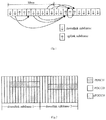
- the lowest eCCE index number plus offset may be applied to a frequency division duplexing (FDD) system, it is not well applicable to a time division duplexing (TDD) system, because the TDD system not only has a one uplink subframe corresponding to one downlink subframe mode, but also has a one subframe corresponding to multiple downlink subframe mode. For example, as shown in Fig.
- the uplink subframe within the circle corresponds to two downlink subframes
- the uplink subframe at the left side of the uplink subframe within the circle corresponds to three downlink subframes
- the right-side uplink subframe corresponds to one downlink subframe
- one uplink subframe corresponding to one or more downlink subframes means the ACK/NACK of the one or more downlink subframes are reported in its corresponding uplink subframe.
- the lowest eCCE index number plus offset technique cannot be utilized. This issue can be better illustrated with reference to Fig. 2 .
- Fig. 2 shows a diagram of two downlink subframes provided with ePDCCH.
- the transversal axis of Fig. 2 represents time domain, while the longitudinal axis represents frequency domain, wherein the ACK/NACK of downlink subframes 1 and 2 are reported in one uplink subframe.
- Fig. 2 schematically shows a one uplink subframe corresponding to two downlink subframes mode.
- ePDCCH is added to a PDSCH (Physical Downlink Shared Chanel).
- PDSCH Physical Downlink Shared Chanel
- the existing PDCCH-specific system resource allocation scheme is not suitable for a TDD system with ePDCCH, while the "lowest eCCE index number plus offset" is not well suitable for the TDD system with the ePDCCH either.
- An objective of the present invention is to provide a method, apparatus, and equipment for determining device channel resource(s) of a user equipment in an LTE-TDD system.
- a method for determining device channel resource(s) of the present user equipment, wherein the TDD system performs resource scheduling to the user equipment using an enhanced physical downlink control channel, and a physical uplink control channel as used includes channel resource(s) for feeding back a hybrid automatic repeat request of a physical downlink shared channel as scheduled by the enhanced physical downlink control channel, when the number of downlink subframes as fed back in one uplink subframe may be more than one, the channel resource(s) is divided into a plurality of channel regions based on the number of downlink subframes having the enhanced physical downlink control channel set thereon currently, or based on the potential highest number of downlink subframes having the enhanced physical downlink control channel set thereon, the method comprising the following step:
- an apparatus in a user equipment of a TDD system, for determining device channel resource(s) of the present user equipment, wherein the TDD system performs resource scheduling to the user equipment using an enhanced physical downlink control channel, and a physical uplink control channel as used includes channel resource(s) for feeding back a hybrid automatic repeat request of a physical downlink shared channel as scheduled by the enhanced physical downlink control channel, when the number of downlink subframes as fed back in one uplink subframe may be more than one, the channel resource(s) is divided into a plurality of channel regions based on the number of downlink subframes having the enhanced physical downlink control channel set thereon currently, or based on the potential highest number of downlink subframes having the enhanced physical downlink control channel set thereon, the apparatus comprising:
- the present invention has the following advantages: 1) it enables the user equipment to feed back HARQ (Hybrid Automatic Repeat Request) of the PDSCH scheduled by the ePDCCH; further, the present invention re-allocates the PUCCH resource(s), such that the user equipment can obtain the device channel resource(s) for feeding back the HARQ from within the PUCCH; 2) by providing the number of PRB pairs to the user equipment or directly providing the number of eCCEs of a downlink subframe via the base station, the lowest eCCE index plus offset can be suitable for the TDD system, which avoids the conflict issue caused by directly using the lowest eCCE index number plus offset by the TDD system in the prior art, and reduces resource waste; 3) for channel resource(s) for feeding back HARQ, the present invention can also adopt an interleaved mode for resource allocation.
- HARQ Hybrid Automatic Repeat Request
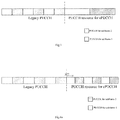
- Fig. 3 shows a schematic diagram of PUCCH channel resource allocation of a TDD system with ePDCCH according to one preferred embodiment of the present invention.
- the PUCCH further comprises channel resource(s) at the right side of the dotted line for feeding back the hybrid automatic repeat request (HARQ) of the PDSCH scheduled by the ePDCCH; preferably, the channel resource(s) at the right side of the dotted line is used for sending ACK/NACK.
- HARQ hybrid automatic repeat request
- the channel resource(s) is divided into a plurality of channel regions based on the current number of downlink subframes having ePDCCH set thereon, or based on the potential highest number of downlink subframes having ePDCCH set thereon; wherein, when each downlink subframe as fed back in one uplink subframe has an ePDCCH set thereon, the channel resource(s) is divided into a plurality of channel regions based on the current number of downlink subframes or the potential highest number of the downlink subframes.
- the channel resource(s) for feeding back HARQ at the right side of the dotted line may be divided into two channel regions based on the highest number of downlink subframes being two, wherein one channel region is allocated to a user equipment which performs HARQ feedback in a one uplink subframe to one downlink subframe mode, while the other channel region is allocated to a user equipment which performs HARQ feedback in a one uplink subframe to two downlink subframes, wherein one uplink subframe to one downlink subframe will be referred to as OTO hereinafter, while the one uplink subframe to multiple downlink subframes will be referred to as OTM hereinafter.
- the channel resource(s) for feeding back HARQ at the right side of the dotted line is divided into three channel regions, which three channel regions are allocated to a user equipment adopting OTO, a user equipment with one uplink subframe corresponding two downlink subframes in OTM, and a user equipment with one uplink subframe to three downlink subframes in OTM.
- each downlink subframe as fed back in one uplink subframe has an ePDCCH thereon, and the number of downlink subframes as currently fed back in one uplink subframe is two, then the channel resource(s) for feeding back HARQ at the right side of the dotted line is divided into two channel regions based on the current number of downlink subframes being two, wherein one channel region is allocated to the downlink subframe 1, while the other channel region is allocated to the downlink subframe 2.
- the interleaved mode is not used in this example; besides, when the number of downlink subframes as currently fed back in one uplink subframe is three, then the channel resource(s) for feeding back HARQ at the right side of the dotted line is divided into three channel regions based on the current number of downlink subframes being three, which three channel regions are allocated to downlink subframes 1, 2, and 3, respectively.
- each downlink subframe as fed back in one uplink subframe has an ePDCCH set thereon, and the current number of downlink subframes as fed back by the user equipment is two.
- eCCE enhanced Control Channel Element
- the user equipment determines that the channel resource(s) for feeding back HARQ at the right side of the dotted line is divided into 9 channel regions, and the channel regions for feeding back the downlink subframe 1, downlink subframe 2, and downlink subframe 3 are interleavedly distributed in order.
- the user equipment may adopt a plurality of manners to obtain the device channel resource(s) occupied by the present user equipment in at least one channel region of the plurality of channel regions divided from channel resource(s) for feeding back HARQ, which will be further explained infra with reference to Figs. 5 and 6 .
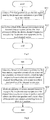
- the channel resource(s) for feeding back HARQ is divided into a plurality of channel regions based on the highest number of downlink subframes, and the different channel regions divided from the channel resource(s) for feeding back HARQ are allocated to user equipments adopting a different number of downlink subframes. Then, in this embodiment, the user equipment only occupies the device channel resource(s) in one channel region at one time point; the user equipment in this embodiment performs the following steps S11 and S12.
- step S11 the user equipment receives a first start position of the channel region provided by the base station while used by the present user equipment; wherein the used channel region may be determined by a base station, for example, eNB, based on the potential highest number of downlink subframes having the enhanced physical downlink control channel set thereon, wherein the first start position of the channel region is determined by the base station and provided to the user equipment.
- a base station for example, eNB
- the channel resource(s) for feeding back HARQ is divided into two channel regions based on the highest number of downlink subframes with the enhanced physical downlink control channel thereon being two, wherein the channel region without shading is allocated to a user equipment adopting OTO, while the channel region indicated by oblique shading is allocated to the user equipment adopting a one uplink subframe to two downlink subframes in OTM; if the present user equipment adopts OTO, then the present user equipment currently uses the channel region without shading, and the base station provides the first start position N (1) PUCCH,OTO , which is already configured by the said base station, of the channel region without shading to the present user equipment; if the present user equipment currently adopts OTM, then the present user equipment currently uses the channel region indicated by oblique shading, and the base station provides the first start position N (1) PUCCH,OTM of the channel region indicated by oblique shading as already configured by the said base station to the present user equipment.
- step S12 the user equipment obtains the device channel resource(s) occupied by the present user equipment in the used channel region by the first start position plus a first offset of the present user equipment in the used channel region, wherein the first offset is determined by the present user equipment through blind detection.
- the user equipment blind detects the lowest eCCE index number in its subframe so as to determine its first offset n eCCE and the like in its used channel region.
- n PUCCH 1 n eCCE + N PUCCH , OTO 1
- OTM the start of the device channel resource(s) occupied by the user equipment in the used channel region indicated by oblique shading
- step S11 the user equipment can receive each first start position in OTO and each OTM together as configured by the base station, for example, configured through signaling, and then in the step S12, the user equipment selects a corresponding first start position based on the currently adopted OTO or OTM.
- the channel resource(s) for feeding back HARQ is divided into a plurality of channel regions based on the current number of downlink subframes corresponding to one uplink subframe in the user equipment, and one channel region is allocated to perform feedback for one downlink subframe.
- the scenario in which one channel region is allocated to perform feedback for one downlink subframe may comprise:
- the user equipment in the present embodiment performs step S21 and step S22.
- step S21 the user equipment, based on the information provided by the base station, determines respective second offsets of respective second start positions of channel regions, which including respective lowest eCCE index numbers, with respect to a third start position of the channel resource(s) for feeding back HARQ.
- the information provided by the base station may include, but not limited to, at least one of the following items:
- the information provided by the base station may further comprise information of downlink subframe having ePDCCH set thereon, so as to be available for the user equipment to determine the downlink subframe having ePDCCH set thereon.
- the manners in which the user equipment, based on the information provided by the base station, determines respective second offsets of respective second start positions of channel regions including respective lowest eCCE index numbers with respect to a third start position of the channel resource(s), include, but not limited to:
- the six channel regions correspond to, in an order from left to right, the first group of eCCEs of downlink subframe 1, the first group of eCCEs of downlink subframe 2, the second group of eCCEs of downlink subframe 1, the second group of eCCEs of downlink subframe 2, the third group of eCCEs of downlink subframe 1, and the third group of eCCEs of downlink subframe 2.
- its second offset ⁇ may be determined similarly adopting the above manner, wherein the second offset ⁇ actually reflects the sum of the number of eCCEs of all eCCEs groups before the p+1 st group of eCCEs; for example, continue to refer to Fig.
- p ⁇ ⁇ l 1 M ⁇ N eCCE m N ⁇ indicates the sum of the number of eCCEs in the first group of eCCEs of the downlink subframe 1 and the first group of eCCEs of the downlink subframe 2
- ⁇ l 1 m ⁇ 1 ⁇ N eCCE m N ⁇ indicates the number of the eCCEs in the second group of eCCEs of the downlink subframe 1.
- p may be decremented to 1 from N gradually, or even randomly selecting a non-repetitive p between 1 and N.
- step S22 the user equipment obtains the plurality of device channel resources occupied by the user equipment in the channel resources for feeding back HARQ by summing respective second offsets of respective subframes to a third start position and a third offset n eCCE m starting from the third start position N PUCCH 1 , respectively, wherein the third start position N PUCCH 1 is provided by the base station, and the third offset n eCCE m is determined by the present user equipment through blind detection, for example, acquiring its own downlink control signaling through blind detecting the ePDCCH, as well as the lowest eCCE (first eCCE) index number bearing the downlink control signaling, i.e., n eCCE m .
- the manners in which the user equipment obtains the plurality of device channel resources include, but not limited to:
- the number of device channel resources n PUCCH 1 should be equal to the number of downlink subframes of the user equipment currently corresponding to one uplink subframe, i.e., for each downlink subframe, the user equipment can determine a device channel resource to feed back the HARQ of the downlink subframe.
- the present invention enables a user equipment to feed back the HARQ of the PDSCH as scheduled for the ePDCCH; further, the present invention re-allocates the PUCCH resource(s), such that the user equipment can obtain the device channel resource(s) for feeding back the HARQ from within the PUCCH; preferably, by providing the number of PRB pairs to the user equipment or directly providing the number of eCCEs of a downlink subframe via the base station, the lowest eCCE index plus offset can be suitable for the TDD system, which avoids the conflict issue caused by directly using the lowest eCCE index number plus offset by the TDD system in the prior art, and reduces resource waste; more preferably, for channel resource(s) for feeding back HARQ, the present invention can also adopt an interleaved mode for resource allocation.
- the apparatus for implementing the following solution is included in the user equipment.
- the apparatus comprises an acquiring module configured to perform the following operations:
- the acquiring module may adopt a plurality of manners to obtain the device channel resource(s) occupied by the present user equipment in at least one channel region of the plurality of channel regions divided from channel resource(s) for feeding back HARQ, which will be further explained infra with reference to Figs. 7 and 8 .
- the channel resource(s) for feeding back HARQ is divided into a plurality of channel regions based on the highest number of downlink subframes, and the different channel regions divided from the channel resource(s) for feeding back HARQ are allocated to user equipments adopting a different number of downlink subframes. Then, in this embodiment, the user equipment only occupies the device channel resource(s) in one channel region at one time point.
- the acquiring module in the present embodiment comprises a receiving module 11 and a first summing module 12.
- the receiving module 11 receives a first start position of the channel region provided by the base station while used by the present user equipment; wherein the used channel region may be determined by a base station, for example, eNB, based on the potential highest number of downlink subframes having the enhanced physical downlink control channel set thereon, wherein the first start position of the channel region is determined by the base station and provided to the user equipment.
- a base station for example, eNB
- the channel resource(s) for feeding back HARQ is divided into two channel regions based on the highest number of downlink subframes with the enhanced physical downlink control channel thereon being two, wherein the channel region without shading is allocated to a user equipment adopting OTO, while the channel region indicated by oblique shading is allocated to the user equipment adopting a one uplink subframe to two downlink subframes in OTM; if the present user equipment adopts OTO, then the present user equipment currently uses the channel region without shading, and the base station provides the first start position N (1) PUCCH,OTO , which is already configured by the said base station, of the channel region without shading to the present user equipment, and received by the receiving module 11; if the present user equipment currently adopts OTM, then the present user equipment currently uses the channel region indicated by oblique shading, and the base station provides the first start position N (1) PUCCH,OTM of the channel region indicated by oblique shading as already configured by the said base station to the present user equipment,
- the first summing module 12 obtains the device channel resource(s) occupied by the present user equipment in the used channel region by the first start position plus a first offset of the present user equipment in the used channel region, wherein the first offset is determined by the present user equipment through blind detection. For example, the user equipment blind detects the lowest eCCE index number in its subframe so as to determine its first offset n eCCE and the like in its used channel region.
- n PUCCH 1 n eCCE + N PUCCH , OTO 1
- OTM the start of the device channel resource(s) occupied by the user equipment in the used channel region indicated by oblique shading
- the receiving module 11 may receive each first start position in OTO and each OTM together as configured by the base station, for example, configured through signaling, then the first summing module 12 selects the corresponding first start position based on the currently adopted OTO or OTM.
- the channel resource(s) for feeding back HARQ is divided into a plurality of channel regions based on the current number of downlink subframes corresponding to one uplink subframe in the user equipment, and one channel region is allocated to perform feedback for one downlink subframe.
- the scenario in which one channel region is allocated to perform feedback for one downlink subframe may comprise:
- the acquiring module in the present embodiment comprises a determining module 21 and a second summing module 22.
- the determining module 21 determines respective second offsets of respective second start positions of channel regions, which including respective lowest eCCE index numbers, with respect to a third start position of the channel resource(s) for feeding back HARQ.
- the information provided by the base station may include, but not limited to, at least one of the following items:
- the information provided by the base station may further comprise information of downlink subframe having ePDCCH set thereon, so as to be available for the user equipment to determine the downlink subframe having ePDCCH set thereon.
- the manners in which the determining module 21, based on the information provided by the base station, determines respective second offsets of respective second start positions of channel regions including respective lowest eCCE index numbers with respect to a third start position of the channel resource(s), include, but not limited to:
- the third sub-determining module determines the number N p m of the enhanced control channel elements included in the first p groups of eCCEs of one downlink subframe, wherein 0 ⁇ p ⁇ N -1 , m denotes the serial number of downlink subframe and 1 ⁇ m ⁇ M, M denotes the highest number of downlink subframes.
- the six channel regions correspond to, in an order from left to right, the first group of eCCEs of downlink subframe 1, the first group of eCCEs of downlink subframe 2, the second group of eCCEs of downlink subframe 1, the second group of eCCEs of downlink subframe 2, the third group of eCCEs of downlink subframe 1, and the third group of eCCEs of downlink subframe 2.
- its second offset ⁇ may be determined similarly adopting the above manner, wherein the second offset ⁇ actually reflects the sum of the number of eCCEs of all eCCEs groups before the p+1 st group of eCCEs; for example, continue to refer to Fig.
- p ⁇ ⁇ l 1 M ⁇ N eCCE m N ⁇ indicates the sum of the number of eCCEs in the first group of eCCEs of the downlink subframe 1 and the first group of eCCEs of the downlink subframe 2
- ⁇ l 1 m ⁇ 1 ⁇ N eCCE m N ⁇ indicates the number of the eCCEs in the second group of eCCEs of the downlink subframe 1.
- p may be decremented to 1 from N gradually, or even randomly selecting a non-repetitive p between 1 and N.
- the second summing module 22 obtains the plurality of device channel resources occupied by the user equipment in the channel resources for feeding back HARQ by summing respective second offsets of respective subframes to a third start position and a third offset n eCCE m starting from the third start position N PUCCH 1 , respectively, wherein the third start position N PUCCH 1 is provided by the base station, and the third offset n eCCE m is determined by the present user equipment through blind detection, for example, acquiring its own downlink control signaling through blind detecting the ePDCCH, as well as the lowest eCCE (first eCCE) index number bearing the downlink control signaling, i.e., n eCCE m .
- the manners in which the second summing module 22 obtains the plurality of device channel resources include, but not limited to:
- the number of device channel resources n PUCCH 1 should be equal to the number of downlink subframes of the user equipment currently corresponding to one uplink subframe, i.e., for each downlink subframe, the user equipment can determine a device channel resource to feed back the HARQ of the downlink subframe.
- the present invention enables a user equipment to feed back the HARQ of the PDSCH as scheduled for the ePDCCH; further, the present invention re-allocates the PUCCH resource(s), such that the user equipment can obtain the device channel resource(s) for feeding back the HARQ from within the PUCCH; preferably, by providing the number of PRB pairs to the user equipment or directly providing the number of eCCEs of a downlink subframe via the base station, the lowest eCCE index plus offset can be suitable for the TDD system, which avoids the conflict issue caused by directly using the lowest eCCE index number plus offset by the TDD system in the prior art, and reduces resource waste; more preferably, for channel resource(s) for feeding back HARQ, the present invention can also adopt an interleaved mode for resource allocation.
- the present invention can be implemented in software and/or a combination of software and hardware, for example, the invention can be implemented by using an Application Specific Integrated Circuit (ASIC), a general purpose computer or any other similar hardware equipment.
- ASIC Application Specific Integrated Circuit
- the software program of this invention can be executed by a processor to accomplish the aforesaid steps or functions.
- the software program (including the relevant data structure) of the invention can be stored in a computer readable recording medium, for example, RAM memory, magneto-optical drive or floppy disk and similar devices.
- some steps or functions of the invention can be realized by using hardware, for example, a circuit that cooperates with the processor to perform various steps or functions.
Landscapes
- Engineering & Computer Science (AREA)
- Signal Processing (AREA)
- Computer Networks & Wireless Communication (AREA)
- Mobile Radio Communication Systems (AREA)
Claims (14)
- Verfahren, das ausgeführt wird von einem Teilnehmergerät eines TDD-Systems (Time Division Duplex), zum Bestimmen der Gerätekanalressource(n) des vorliegenden Teilnehmergeräts, wobei das TDD-System eine Ressourcenplanung durchführt für das Teilnehmergerät unter Verwenden eines erweiterten physikalischen Downlink-Steuerkanals, und wobei ein physikalischer Uplink-Steuerkanal, falls verwendet, (eine) Kanalressource(n) einschließt zum Zurückführen einer automatischen Hybrid-Antwortanforderung eines gemeinsamen physikalischen Downlink-Kanals, wie geplant von dem erweiterten physikalischen Downlink-Steuerkanal, wobei die Anzahl der Downlink-Unterrahmen, die in einen Uplink-Unterrahmen zurückgeführt werden, größer als Eins sein kann und wobei die Kanalressource(n) in eine Vielzahl von Kanalregionen unterteilt wird (werden) auf Grundlage der potenziell höchsten Anzahl von Downlink-Unterrahmen, die den erweiterten physikalischen Downlink-Steuerkanal darauf eingestellt haben, wobei verschiedenen Kanalregionen dem Teilnehmergerät zugewiesen werden unter Annehmen der verschiedenen Anzahl von Downlink-Unterrahmen, wobei das Verfahren das Folgende umfasst:Erhalten (S12, S22) der Gerätekanalressource(n), die von dem vorliegenden Teilnehmergerät belegt werden, in mindestens einer Kanalregion der Vielzahl von Kanalregionen; wobei das Erhalten umfasst:Empfangen (S11) einer ersten Startposition der Kanalregion, die verwendet wird von dem vorliegenden Teilnehmergerät, wie von einer Basisstation bereitgestellt, wobei die verwendete Kanalregion bestimmt wird auf Grundlage der höchsten Anzahl von Downlink-Unterrahmen;Summieren (S12) eines ersten Offsets des vorliegenden Teilnehmergeräts in der verwendeten Kanalregion und der ersten Startposition zum Erhalten der Gerätekanalressource(n), die von dem vorliegenden Teilnehmergerät in der verwendeten Kanalregion belegt wird (werden), wobei das erste Offset bestimmt wird durch das vorliegende Teilnehmergerät durch Blind Detection.
- Verfahren nach Anspruch 1, wobei die Anzahl von Downlink-Unterrahmen, die in einen Uplink-Unterrahmen zurückgeführt werden, mindestens 2 ist.
- Verfahren, das ausgeführt wird von einem Teilnehmergerät eines TDD-Systems (Time Division Duplex), zum Bestimmen der Gerätekanalressource(n) des vorliegenden Teilnehmergeräts, wobei das TDD-System eine Ressourcenplanung durchführt für das Teilnehmergerät unter Verwenden eines erweiterten physikalischen Downlink-Steuerkanals, und wobei ein physikalischer Uplink-Steuerkanal, falls verwendet, (eine) Kanalressource(n) einschließt zum Zurückführen einer automatischen Hybrid-Antwortanforderung eines gemeinsamen physikalischen Downlink-Kanals, wie geplant von dem erweiterten physikalischen Downlink-Steuerkanal, wobei die Anzahl der Downlink-Unterrahmen, die in einen Uplink-Unterrahmen zurückgeführt werden, größer als Eins sein kann und wobei die Kanalressource(n) in eine Vielzahl von Kanalregionen unterteilt wird (werden) auf Grundlage der Anzahl von Downlink-Unterrahmen, die den erweiterten physikalischen Downlink-Steuerkanal momentan darauf eingestellt haben, wobei das Verfahren umfasst:Erhalten (S12, S22) der Gerätekanalressource(n), die von dem vorliegenden Teilnehmergerät belegt werden, in mindestens einer Kanalregion der Vielzahl von Kanalregionen; wobei die Kanalressource(n) unterteilt ist (sind) in eine Vielzahl von Kanalregionen auf Grundlage der Anzahl von Downlink-Unterrahmen, die konfiguriert sind mit dem erweiterten physikalischen Downlink-Steuerkanal, wobei eine Kanalregion zugewiesen ist zum Durchführen einer Rückführung zu einem Downlink-Unterrahmen, wobei das Erhalten umfasst:a1 Bestimmen (S21), auf Grundlage von Information, die von der Basisstation bereitgestellt wird, entsprechender zweiter Offsets zweiter Startpositionen von Kanalregionen, welche entsprechende niedrigste erweiterte Steuerkanalelementidentifikationen einschließt, in Hinblick auf eine dritte Startposition der Kanalressource(n);a2 Erhalten (S22) der Vielzahl von Gerätekanalressourcen, die belegt werden von dem vorliegenden Teilnehmergerät in den Kanalressourcen auf Grundlage der entsprechenden zweiten Offsets, wobei die dritte Startposition und ein drittes Offset des vorliegenden Teilnehmergeräts von der dritten Startposition starten, wobei die dritte Startposition von der Basisstation bereitgestellt wird, und wobei der dritte Offset bestimmt wird von dem vorliegenden Teilnehmergerät durch Blind Detection.
- Verfahren nach Anspruch 3, wobei jede der Kanalregionen eine Eins-zu-Eins-Korrespondenz aufweist mit einem der Downlink-Unterrahmen, wobei der Schritt a1 die folgenden Schritte umfasst:- Bestimmen, auf Grundlage der Information, die von der Basisstation bereitgestellt worden ist, der Anzahl erweiterter Steuerkanalelemente, die in einem erweiterten Downlink-Steuerkanal eingeschlossen sind;- Übernehmen einer jeden Kanalregion als eine Kanalregion, einschließlich der niedrigsten erweiterten Steuerkanalelementidentifikation, und Bestimmen, auf Grundlage der Anzahl der erweiterten Steuerkanalelemente, entsprechender zweiter Offsets der zweiten Startpositionen der entsprechenden Kanalregionen in Hinblick auf die dritte Startposition; wobei der Schritt a2 weiterhin den folgenden Schritt umfasst:- Summieren jeweils des entsprechenden zweiten Offsets und der dritten Startposition und des dritten Offsets zum Erhalten der Vielzahl von Gerätekanalressourcen, die von dem vorliegenden Teilnehmergerät in den Kanalressourcen belegt werden.
- Verfahren nach Anspruch 3, wobei die erweiterten Steuerkanalelemente eines jeden Downlink-Unterrahmens in N Gruppen unterteilt werden, wobei jede Kanalregion einer Gruppe von erweiterten Steuerkanalelementen entspricht, und eine Vielzahl von Gruppen erweiterter Steuerkanalelemente der Vielzahl von Downlink-Unterrahmen verteilt wird mit einem verschränkten Modus, wobei N ein Parameter ist, wobei Schritt a1 die folgenden Schritte umfasst:- Bestimmen der Anzahl
 - Bewirken, dass p in einem Bereich von 0 bis N-1 variiert, und Vergleichen der Anzahl


 - Summieren jeweils des entsprechenden zweiten Offsets Δ und der dritten Startposition und des dritten Offsets mit dem jeweils Negativen der Anzahl
- Verfahren nach einem beliebigen der Ansprüche 3 bis 5, wobei die Information, die von der Basisstation bereitgestellt wird, mindestens eines der folgenden einschließt:- Information über die Anzahl von PRB-Paaren, die in einem Downlink-Unterrahmen eingeschlossen sind und dem erweiterten physikalischen Downlink-Steuerkanal zugewiesen werden;- die Anzahl von erweiterten Steuerkanalelementen, die in einem Downlink-Unterrahmen eingeschlossen sind.
- Verfahren nach einem beliebigen der Ansprüche 3 bis 6, wobei die Anzahl der Downlink-Unterrahmen, die in einen Uplink-Unterrahmen zurückgeführt werden, mindestens 2 ist.
- Teilnehmergerät eines TDD-Systems (Time Division Duplex), zum Bestimmen der Gerätekanalressource(n) des vorliegenden Teilnehmergeräts, wobei das TDD-System eine Ressourcenplanung durchführt für das Teilnehmergerät unter Verwenden eines erweiterten physikalischen Downlink-Steuerkanals, und wobei ein physikalischer Uplink-Steuerkanal, falls verwendet, (eine) Kanalressource(n) einschließt zum Zurückführen einer automatischen Hybrid-Antwortanforderung eines gemeinsamen physikalischen Downlink-Kanals, wie geplant von dem erweiterten physikalischen Downlink-Steuerkanal, wobei die Anzahl der Downlink-Unterrahmen, die in einen Uplink-Unterrahmen zurückgeführt werden, größer als Eins sein kann und wobei die Kanalressource(n) unterteilt ist (sind) in eine Vielzahl von Kanalregionen auf Grundlage der potenziell höchsten Anzahl von Downlink-Unterrahmen, die den erweiterten physikalischen Downlink-Steuerkanal darauf gesetzt haben, wobei verschiedenen Kanalregionen dem Teilnehmergerät zugewiesen werden unter Annehmen der verschiedenen Anzahl von Downlink-Unterrahmen, wobei das Teilnehmergerät umfasst:ein Erfassungsmodul, das konfiguriert ist zum Erhalten der Gerätekanalressource(n), die von dem vorliegenden Teilnehmergerät belegt werden in mindestens einer Kanalregion der Vielzahl von Kanalregionen; wobei das Erkennungsmodul umfasst:ein Empfangsmodul (11), das konfiguriert ist zum Empfangen (S11) einer ersten Startposition der Kanalregion, die verwendet wird von dem vorliegenden Teilnehmergerät wie bereitgestellt von einer Basisstation, wobei die verwendete Kanalregion bestimmt wird auf Grundlage der höchsten Anzahl von Downlink-Unterrahmen;ein erstes Summierungsmodul (12), das konfiguriert ist zum Summieren der ersten Startposition und eines ersten Offsets des vorliegenden Teilnehmergeräts in der verwendeten Kanalregion zum Erhalten der Gerätekanalressource(n), die von dem vorliegenden Teilnehmergerät in der verwendeten Kanalregion belegt wird (werden), wobei der erste Offset bestimmt wird durch das vorliegende Teilnehmergerät durch blind detection.
- Teilnehmergerät nach Anspruch 8, wobei die Anzahl von Downlink-Unterrahmen, die in einen Uplink-Unterrahmen zurückgeführt werden, mindestens 2 ist.
- Teilnehmergerät eines TDD-Systems (Time Divison Duplex) zum Bestimmen von Gerätekanalressource(n) des vorliegenden Teilnehmergeräts, wobei das TDD-System eine Ressourcenplanung durchführt für das Teilnehmergerät unter Verwenden eines erweiterten physikalischen Downlink-Steuerkanals, und wobei ein physikalischer Uplink-Steuerkanal, falls verwendet, (eine) Kanalressource(n) einschließt zum Zurückführen einer automatischen Hybrid-Antwortanforderung eines gemeinsamen physikalischen Downlink-Kanals, wie geplant von dem erweiterten physikalischen Downlink-Steuerkanal, wobei die Anzahl der Downlink-Unterrahmen, die in einen Uplink-Unterrahmen zurückgeführt werden, größer als eins sein kann und wobei die Kanalressource(n) in eine Vielzahl von Kanalregionen unterteilt wird (werden) auf Grundlage der Anzahl von Downlink-Unterrahmen, die den erweiterten physikalischen Downlink-Steuerkanal momentan darauf gesetzt haben, wobei das Verfahren umfasst:ein Erfassungsmodul, das konfiguriert ist zum Erhalten der Gerätekanalressource(n), die von dem vorliegenden Teilnehmergerät belegt werden in mindestens einer Kanalregion der Vielzahl von Kanalregionen; wobei die Kanalressource(n) unterteilt ist (sind) in eine Vielzahl von Kanalregionen auf Grundlage der Anzahl von Downlink-Unterrahmen, die konfiguriert sind mit dem erweiterten physikalischen Downlink-Steuerkanal, wobei eine Kanalregion zu gewiesen ist zum Durchführen einer Rückführung zu einem Downlink-Unterrahmen, wobei das Erhalten umfasst:ein Bestimmungsmodul (21), das konfiguriert ist zum Bestimmen (21), auf Grundlage von Information, die von der Basisstation bereitgestellt wird, entsprechender zweiter Offsets zweiter Startpositionen von Kanalregionen, welche entsprechende niedrigste erweiterte Steuerkanalelementidentifikationen einschließt, in Hinblick auf eine dritte Startposition der Kanalressource(n);ein zweites Summierungsmodul (22), das konfiguriert ist zum Erhalten der Vielzahl von Gerätekanalressourcen, die belegt werden von dem vorliegenden Teilnehmergerät in den Kanalressourcen auf Grundlage der entsprechenden zweiten Offsets, wobei die dritte Startposition und ein drittes Offset des vorliegenden Teilnehmergeräts von der dritten Startposition starten, wobei die dritte Startposition von der Basisstation bereitgestellt wird, und wobei der dritte Offset bestimmt wird von dem vorliegenden Teilnehmergerät durch Blind Detection.
- Teilnehmergerät nach Anspruch 10, wobei jede der Kanalregionen eine Eins-zu-Eins-Korrespondenz aufweist mit einem der Downlink-Unterrahmen, wobei das Bestimmungsmodul umfasst:ein erstes Bestimmungsuntermodul, das konfiguriert ist zum Bestimmen, auf Grundlage der Information, die von der Basisstation bereitgestellt worden ist, der Anzahl erweiterter Steuerkanalelemente, die in einem erweiterten Downlink-Steuerkanal eingeschlossen sind;ein zweites Bestimmungsuntermodul, das konfiguriert ist zum Berücksichtigen einer jeden Kanalregion als eine Kanalregion, einschließlich der niedrigsten erweiterten Steuerkanalelementidentifikation, und Bestimmen, auf Grundlage der Anzahl der erweiterten Steuerkanalelemente, entsprechender zweiter Offsets der zweiten Startpositionen der entsprechenden Kanalregionen in Hinblick auf die dritte Startposition; wobei das zweite Summierungsmodul umfasst:ein erstes Summierungsuntermodul, das konfiguriert ist zum Summieren jeweils des entsprechenden zweiten Offsets und der dritten Startposition und des dritten Offsets zum erhalten der Vielzahl von Gerätekanalressourcen, die von dem vorliegenden Teilnehmergerät in den Kanalressourcen belegt werden.
- Teilnehmergerät nach Anspruch 10, wobei die erweiterten Steuerkanalelemente eines jeden Downlink-Unterrahmens in N Gruppen unterteilt werden, wobei jede Kanalregion einer Gruppe von erweiterten Steuerkanalelementen entspricht, und eine Vielzahl von Gruppen erweiterter Steuerkanalelemente der Vielzahl von Downlink-Unterrahmen verteilt wird mit einem verschränkten Modus, wobei N ein Parameter ist, wobei das Bestimmungsmodul umfasst:ein drittes Bestimmungsuntermodul, das konfiguriert ist zum Bestimmen der Anzahl
 ein viertes Bestimmungsuntermodul, das konfiguriert ist zum Bewirken, dass p in einem Bereich von 0 bis N-1 variiert, und Vergleichen der Anzahl


 wobei
wobei
 wobei das zweite Summierungsmodul umfasst:ein zweites Summierungsuntermodul, das konfiguriert ist zum Summieren der entsprechenden zweiten Offsets Δ und der dritten Startposition und des dritten Offsets mit dem jeweils Negativen der Anzahl
- Teilnehmergerät nach einem beliebigen der Ansprüche 10 bis 12, wobei die Information, die von der Basisstation bereitgestellt wird, mindestens eines der folgenden einschließt:- Information über die Anzahl von PRB-Paaren, die in einem Downlink-Unterrahmen eingeschlossen sind und dem erweiterten physikalischen Downlink-Steuerkanal zugewiesen werden;- die Anzahl von erweiterten Steuerkanalelementen, die in einem Downlink-Unterrahmen eingeschlossen sind.
- Teilnehmergerät nach einem beliebigen der Ansprüche 10 bis 13, wobei die Anzahl der Downlink-Unterrahmen, die in einen Uplink-Unterrahmen zurückgeführt werden, mindestens 2 ist.
Applications Claiming Priority (2)
| Application Number | Priority Date | Filing Date | Title |
|---|---|---|---|
| CN201210378010.XA CN103716887B (zh) | 2012-09-28 | 2012-09-28 | 用于确定用户设备的设备信道资源的方法、装置和设备 |
| PCT/IB2013/002410 WO2014049435A2 (en) | 2012-09-28 | 2013-09-18 | Method, apparatus and equipment for determining device channel resource(s) of a user equipment |
Publications (2)
| Publication Number | Publication Date |
|---|---|
| EP2901600A2 EP2901600A2 (de) | 2015-08-05 |
| EP2901600B1 true EP2901600B1 (de) | 2018-04-25 |
Family
ID=49955386
Family Applications (1)
| Application Number | Title | Priority Date | Filing Date |
|---|---|---|---|
| EP13820852.5A Active EP2901600B1 (de) | 2012-09-28 | 2013-09-18 | Verfahren und vorrichtungen zur bestimmung von vorrichtungskanalressourcen einer benutzerausrüstung |
Country Status (5)
| Country | Link |
|---|---|
| US (1) | US9794933B2 (de) |
| EP (1) | EP2901600B1 (de) |
| CN (1) | CN103716887B (de) |
| TW (1) | TWI521913B (de) |
| WO (1) | WO2014049435A2 (de) |
Families Citing this family (1)
| Publication number | Priority date | Publication date | Assignee | Title |
|---|---|---|---|---|
| WO2019051768A1 (zh) | 2017-09-15 | 2019-03-21 | 华为技术有限公司 | 一种传输资源分配方法及装置 |
Family Cites Families (8)
| Publication number | Priority date | Publication date | Assignee | Title |
|---|---|---|---|---|
| CN101547077B (zh) * | 2008-03-24 | 2011-07-20 | 鼎桥通信技术有限公司 | 一种传输ack/nack信息的方法 |
| KR20100094924A (ko) * | 2009-02-19 | 2010-08-27 | 삼성전자주식회사 | 무선 이동 통신 시스템에서 복합 자동 재전송 요구 동작 방법 |
| EP2222011A3 (de) | 2009-02-19 | 2014-10-29 | Samsung Electronics Co., Ltd. | Verfahren zur Durchführung von hybriden automatischen Wiederholungsanforderungsoperationen in einem drahtlosen Kommunikationssystem |
| US8767528B2 (en) | 2009-07-26 | 2014-07-01 | Lg Electronics Inc. | Method and apparatus for receiving reception acknowledgement in wireless communication system |
| KR101849107B1 (ko) * | 2011-02-17 | 2018-04-16 | 삼성전자주식회사 | 진화된 다운링크 물리 제어 채널에 대응하는 데이터 패킷들의 성공적 수신 여부를 피드백하기 위한 업링크 피드백 채널 할당 방법 및 장치 |
| US9107214B2 (en) * | 2012-01-06 | 2015-08-11 | Industrial Technology Research Institute | Method of handling hybrid automatic repeat request acknowledgement responses in wireless communication system |
| AU2013228185B2 (en) * | 2012-03-05 | 2016-11-03 | Samsung Electronics Co., Ltd. | HARQ-ACK signal transmission in response to detection of control channel type in case of multiple control channel types |
| US9526091B2 (en) * | 2012-03-16 | 2016-12-20 | Intel Corporation | Method and apparatus for coordination of self-optimization functions in a wireless network |
-
2012
- 2012-09-28 CN CN201210378010.XA patent/CN103716887B/zh active Active
-
2013
- 2013-09-10 TW TW102132569A patent/TWI521913B/zh active
- 2013-09-18 EP EP13820852.5A patent/EP2901600B1/de active Active
- 2013-09-18 US US14/431,654 patent/US9794933B2/en active Active
- 2013-09-18 WO PCT/IB2013/002410 patent/WO2014049435A2/en not_active Ceased
Non-Patent Citations (1)
| Title |
|---|
| None * |
Also Published As
| Publication number | Publication date |
|---|---|
| WO2014049435A2 (en) | 2014-04-03 |
| TWI521913B (zh) | 2016-02-11 |
| EP2901600A2 (de) | 2015-08-05 |
| TW201415827A (zh) | 2014-04-16 |
| US9794933B2 (en) | 2017-10-17 |
| US20150288507A1 (en) | 2015-10-08 |
| WO2014049435A3 (en) | 2014-05-15 |
| CN103716887B (zh) | 2017-04-05 |
| CN103716887A (zh) | 2014-04-09 |
Similar Documents
| Publication | Publication Date | Title |
|---|---|---|
| US12294549B2 (en) | Method and apparatus for transmitting HARQ-ACK information | |
| JP5463284B2 (ja) | Lteにおけるロバストなダウンリンクmacpdu伝送用の動的なack/nack再送方法およびシステム | |
| CN104883243B (zh) | 用于载波聚合系统的通信方法和装置 | |
| CN104769878B (zh) | 在通信系统中针对e‑pdcch的pucch资源分配 | |
| CN111294752B (zh) | V2x传输候选资源确定方法及装置、存储介质、用户设备 | |
| US10952197B2 (en) | Method for determining hybrid automatic repeat request process number, base station, and user equipment | |
| EP3637903B1 (de) | Verfahren und vorrichtung zur übertragung von hybrid automatic repeat request unter verwendung von semipersistenter planung | |
| EP4156582A1 (de) | Verfahren und vorrichtung für harq-ack-informationsrückkopplung | |
| CN106804116B (zh) | 一种反馈信息的传输方法和基站以及用户设备 | |
| CN104767595A (zh) | Harq-ack反馈信息的传输方法、系统及终端和基站 | |
| MX2011009200A (es) | Metodo y aparato para transmitir señal de ack/nack de harq en sistema de multiples antenas. | |
| US10965404B2 (en) | Method for transmission duration pattern | |
| CN110719150B (zh) | 一种信息传输方法、终端及基站 | |
| CN111884770A (zh) | Harq-ack码本产生方法 | |
| CN108242970B (zh) | 基于资源单位的非许可传输的反馈方法及设备 | |
| CN102843732A (zh) | 一种时分双工tdd通信方法、基站和用户设备 | |
| JP2017511076A (ja) | 制御チャネル資源割当方法及び装置 | |
| CN105472757A (zh) | 一种d2d通信调度方法及设备 | |
| EP2413654A1 (de) | Funkbasisstation und mobilkommunikationsverfahren | |
| CN105992361A (zh) | 一种增强的 ca 中的调度方法和装置 | |
| CN107666454A (zh) | 上下行数据处理方法及装置 | |
| US10771197B2 (en) | Method for transmitting hybrid automatic repeat request feedback information, and user equipment | |
| EP2901600B1 (de) | Verfahren und vorrichtungen zur bestimmung von vorrichtungskanalressourcen einer benutzerausrüstung | |
| CN109586852A (zh) | 提高下行传输反馈精度的方法、装置、设备及存储介质 | |
| CN117939651A (zh) | 传输信息量的确定方法、装置、设备及存储介质 |
Legal Events
| Date | Code | Title | Description |
|---|---|---|---|
| PUAI | Public reference made under article 153(3) epc to a published international application that has entered the european phase |
Free format text: ORIGINAL CODE: 0009012 |
|
| 17P | Request for examination filed |
Effective date: 20150428 |
|
| AK | Designated contracting states |
Kind code of ref document: A2 Designated state(s): AL AT BE BG CH CY CZ DE DK EE ES FI FR GB GR HR HU IE IS IT LI LT LU LV MC MK MT NL NO PL PT RO RS SE SI SK SM TR |
|
| AX | Request for extension of the european patent |
Extension state: BA ME |
|
| RIN1 | Information on inventor provided before grant (corrected) |
Inventor name: YANG, HONGWEI Inventor name: SHE, FENG Inventor name: DENG, YUN |
|
| DAX | Request for extension of the european patent (deleted) | ||
| STAA | Information on the status of an ep patent application or granted ep patent |
Free format text: STATUS: EXAMINATION IS IN PROGRESS |
|
| 17Q | First examination report despatched |
Effective date: 20170131 |
|
| GRAP | Despatch of communication of intention to grant a patent |
Free format text: ORIGINAL CODE: EPIDOSNIGR1 |
|
| STAA | Information on the status of an ep patent application or granted ep patent |
Free format text: STATUS: GRANT OF PATENT IS INTENDED |
|
| INTG | Intention to grant announced |
Effective date: 20171114 |
|
| GRAA | (expected) grant |
Free format text: ORIGINAL CODE: 0009210 |
|
| GRAS | Grant fee paid |
Free format text: ORIGINAL CODE: EPIDOSNIGR3 |
|
| STAA | Information on the status of an ep patent application or granted ep patent |
Free format text: STATUS: THE PATENT HAS BEEN GRANTED |
|
| RAP1 | Party data changed (applicant data changed or rights of an application transferred) |
Owner name: ALCATEL LUCENT |
|
| AK | Designated contracting states |
Kind code of ref document: B1 Designated state(s): AL AT BE BG CH CY CZ DE DK EE ES FI FR GB GR HR HU IE IS IT LI LT LU LV MC MK MT NL NO PL PT RO RS SE SI SK SM TR |
|
| REG | Reference to a national code |
Ref country code: GB Ref legal event code: FG4D |
|
| REG | Reference to a national code |
Ref country code: CH Ref legal event code: EP |
|
| REG | Reference to a national code |
Ref country code: AT Ref legal event code: REF Ref document number: 993965 Country of ref document: AT Kind code of ref document: T Effective date: 20180515 |
|
| REG | Reference to a national code |
Ref country code: IE Ref legal event code: FG4D |
|
| REG | Reference to a national code |
Ref country code: DE Ref legal event code: R096 Ref document number: 602013036618 Country of ref document: DE |
|
| REG | Reference to a national code |
Ref country code: NL Ref legal event code: MP Effective date: 20180425 |
|
| REG | Reference to a national code |
Ref country code: LT Ref legal event code: MG4D |
|
| PG25 | Lapsed in a contracting state [announced via postgrant information from national office to epo] |
Ref country code: NL Free format text: LAPSE BECAUSE OF FAILURE TO SUBMIT A TRANSLATION OF THE DESCRIPTION OR TO PAY THE FEE WITHIN THE PRESCRIBED TIME-LIMIT Effective date: 20180425 |
|
| PG25 | Lapsed in a contracting state [announced via postgrant information from national office to epo] |
Ref country code: BG Free format text: LAPSE BECAUSE OF FAILURE TO SUBMIT A TRANSLATION OF THE DESCRIPTION OR TO PAY THE FEE WITHIN THE PRESCRIBED TIME-LIMIT Effective date: 20180725 Ref country code: LT Free format text: LAPSE BECAUSE OF FAILURE TO SUBMIT A TRANSLATION OF THE DESCRIPTION OR TO PAY THE FEE WITHIN THE PRESCRIBED TIME-LIMIT Effective date: 20180425 Ref country code: SE Free format text: LAPSE BECAUSE OF FAILURE TO SUBMIT A TRANSLATION OF THE DESCRIPTION OR TO PAY THE FEE WITHIN THE PRESCRIBED TIME-LIMIT Effective date: 20180425 Ref country code: ES Free format text: LAPSE BECAUSE OF FAILURE TO SUBMIT A TRANSLATION OF THE DESCRIPTION OR TO PAY THE FEE WITHIN THE PRESCRIBED TIME-LIMIT Effective date: 20180425 Ref country code: PL Free format text: LAPSE BECAUSE OF FAILURE TO SUBMIT A TRANSLATION OF THE DESCRIPTION OR TO PAY THE FEE WITHIN THE PRESCRIBED TIME-LIMIT Effective date: 20180425 Ref country code: NO Free format text: LAPSE BECAUSE OF FAILURE TO SUBMIT A TRANSLATION OF THE DESCRIPTION OR TO PAY THE FEE WITHIN THE PRESCRIBED TIME-LIMIT Effective date: 20180725 Ref country code: FI Free format text: LAPSE BECAUSE OF FAILURE TO SUBMIT A TRANSLATION OF THE DESCRIPTION OR TO PAY THE FEE WITHIN THE PRESCRIBED TIME-LIMIT Effective date: 20180425 |
|
| PG25 | Lapsed in a contracting state [announced via postgrant information from national office to epo] |
Ref country code: LV Free format text: LAPSE BECAUSE OF FAILURE TO SUBMIT A TRANSLATION OF THE DESCRIPTION OR TO PAY THE FEE WITHIN THE PRESCRIBED TIME-LIMIT Effective date: 20180425 Ref country code: RS Free format text: LAPSE BECAUSE OF FAILURE TO SUBMIT A TRANSLATION OF THE DESCRIPTION OR TO PAY THE FEE WITHIN THE PRESCRIBED TIME-LIMIT Effective date: 20180425 Ref country code: HR Free format text: LAPSE BECAUSE OF FAILURE TO SUBMIT A TRANSLATION OF THE DESCRIPTION OR TO PAY THE FEE WITHIN THE PRESCRIBED TIME-LIMIT Effective date: 20180425 Ref country code: GR Free format text: LAPSE BECAUSE OF FAILURE TO SUBMIT A TRANSLATION OF THE DESCRIPTION OR TO PAY THE FEE WITHIN THE PRESCRIBED TIME-LIMIT Effective date: 20180726 |
|
| REG | Reference to a national code |
Ref country code: AT Ref legal event code: MK05 Ref document number: 993965 Country of ref document: AT Kind code of ref document: T Effective date: 20180425 |
|
| PG25 | Lapsed in a contracting state [announced via postgrant information from national office to epo] |
Ref country code: PT Free format text: LAPSE BECAUSE OF FAILURE TO SUBMIT A TRANSLATION OF THE DESCRIPTION OR TO PAY THE FEE WITHIN THE PRESCRIBED TIME-LIMIT Effective date: 20180827 |
|
| REG | Reference to a national code |
Ref country code: DE Ref legal event code: R097 Ref document number: 602013036618 Country of ref document: DE |
|
| PG25 | Lapsed in a contracting state [announced via postgrant information from national office to epo] |
Ref country code: SK Free format text: LAPSE BECAUSE OF FAILURE TO SUBMIT A TRANSLATION OF THE DESCRIPTION OR TO PAY THE FEE WITHIN THE PRESCRIBED TIME-LIMIT Effective date: 20180425 Ref country code: CZ Free format text: LAPSE BECAUSE OF FAILURE TO SUBMIT A TRANSLATION OF THE DESCRIPTION OR TO PAY THE FEE WITHIN THE PRESCRIBED TIME-LIMIT Effective date: 20180425 Ref country code: RO Free format text: LAPSE BECAUSE OF FAILURE TO SUBMIT A TRANSLATION OF THE DESCRIPTION OR TO PAY THE FEE WITHIN THE PRESCRIBED TIME-LIMIT Effective date: 20180425 Ref country code: DK Free format text: LAPSE BECAUSE OF FAILURE TO SUBMIT A TRANSLATION OF THE DESCRIPTION OR TO PAY THE FEE WITHIN THE PRESCRIBED TIME-LIMIT Effective date: 20180425 Ref country code: EE Free format text: LAPSE BECAUSE OF FAILURE TO SUBMIT A TRANSLATION OF THE DESCRIPTION OR TO PAY THE FEE WITHIN THE PRESCRIBED TIME-LIMIT Effective date: 20180425 Ref country code: AT Free format text: LAPSE BECAUSE OF FAILURE TO SUBMIT A TRANSLATION OF THE DESCRIPTION OR TO PAY THE FEE WITHIN THE PRESCRIBED TIME-LIMIT Effective date: 20180425 |
|
| PG25 | Lapsed in a contracting state [announced via postgrant information from national office to epo] |
Ref country code: SM Free format text: LAPSE BECAUSE OF FAILURE TO SUBMIT A TRANSLATION OF THE DESCRIPTION OR TO PAY THE FEE WITHIN THE PRESCRIBED TIME-LIMIT Effective date: 20180425 Ref country code: IT Free format text: LAPSE BECAUSE OF FAILURE TO SUBMIT A TRANSLATION OF THE DESCRIPTION OR TO PAY THE FEE WITHIN THE PRESCRIBED TIME-LIMIT Effective date: 20180425 |
|
| PLBE | No opposition filed within time limit |
Free format text: ORIGINAL CODE: 0009261 |
|
| STAA | Information on the status of an ep patent application or granted ep patent |
Free format text: STATUS: NO OPPOSITION FILED WITHIN TIME LIMIT |
|
| 26N | No opposition filed |
Effective date: 20190128 |
|
| PG25 | Lapsed in a contracting state [announced via postgrant information from national office to epo] |
Ref country code: MC Free format text: LAPSE BECAUSE OF FAILURE TO SUBMIT A TRANSLATION OF THE DESCRIPTION OR TO PAY THE FEE WITHIN THE PRESCRIBED TIME-LIMIT Effective date: 20180425 |
|
| REG | Reference to a national code |
Ref country code: CH Ref legal event code: PL |
|
| PG25 | Lapsed in a contracting state [announced via postgrant information from national office to epo] |
Ref country code: SI Free format text: LAPSE BECAUSE OF FAILURE TO SUBMIT A TRANSLATION OF THE DESCRIPTION OR TO PAY THE FEE WITHIN THE PRESCRIBED TIME-LIMIT Effective date: 20180425 |
|
| REG | Reference to a national code |
Ref country code: DE Ref legal event code: R081 Ref document number: 602013036618 Country of ref document: DE Owner name: NOKIA TECHNOLOGIES OY, FI Free format text: FORMER OWNER: ALCATEL LUCENT, NOZAY, FR |
|
| REG | Reference to a national code |
Ref country code: BE Ref legal event code: MM Effective date: 20180930 |
|
| REG | Reference to a national code |
Ref country code: IE Ref legal event code: MM4A |
|
| PG25 | Lapsed in a contracting state [announced via postgrant information from national office to epo] |
Ref country code: LU Free format text: LAPSE BECAUSE OF NON-PAYMENT OF DUE FEES Effective date: 20180918 |
|
| PG25 | Lapsed in a contracting state [announced via postgrant information from national office to epo] |
Ref country code: IE Free format text: LAPSE BECAUSE OF NON-PAYMENT OF DUE FEES Effective date: 20180918 |
|
| PG25 | Lapsed in a contracting state [announced via postgrant information from national office to epo] |
Ref country code: CH Free format text: LAPSE BECAUSE OF NON-PAYMENT OF DUE FEES Effective date: 20180930 Ref country code: LI Free format text: LAPSE BECAUSE OF NON-PAYMENT OF DUE FEES Effective date: 20180930 Ref country code: FR Free format text: LAPSE BECAUSE OF NON-PAYMENT OF DUE FEES Effective date: 20180930 Ref country code: BE Free format text: LAPSE BECAUSE OF NON-PAYMENT OF DUE FEES Effective date: 20180930 |
|
| PG25 | Lapsed in a contracting state [announced via postgrant information from national office to epo] |
Ref country code: AL Free format text: LAPSE BECAUSE OF FAILURE TO SUBMIT A TRANSLATION OF THE DESCRIPTION OR TO PAY THE FEE WITHIN THE PRESCRIBED TIME-LIMIT Effective date: 20180425 |
|
| PG25 | Lapsed in a contracting state [announced via postgrant information from national office to epo] |
Ref country code: MT Free format text: LAPSE BECAUSE OF NON-PAYMENT OF DUE FEES Effective date: 20180918 |
|
| PG25 | Lapsed in a contracting state [announced via postgrant information from national office to epo] |
Ref country code: TR Free format text: LAPSE BECAUSE OF FAILURE TO SUBMIT A TRANSLATION OF THE DESCRIPTION OR TO PAY THE FEE WITHIN THE PRESCRIBED TIME-LIMIT Effective date: 20180425 |
|
| REG | Reference to a national code |
Ref country code: GB Ref legal event code: 732E Free format text: REGISTERED BETWEEN 20200312 AND 20200318 |
|
| PG25 | Lapsed in a contracting state [announced via postgrant information from national office to epo] |
Ref country code: HU Free format text: LAPSE BECAUSE OF FAILURE TO SUBMIT A TRANSLATION OF THE DESCRIPTION OR TO PAY THE FEE WITHIN THE PRESCRIBED TIME-LIMIT; INVALID AB INITIO Effective date: 20130918 Ref country code: MK Free format text: LAPSE BECAUSE OF NON-PAYMENT OF DUE FEES Effective date: 20180425 Ref country code: CY Free format text: LAPSE BECAUSE OF FAILURE TO SUBMIT A TRANSLATION OF THE DESCRIPTION OR TO PAY THE FEE WITHIN THE PRESCRIBED TIME-LIMIT Effective date: 20180425 |
|
| PG25 | Lapsed in a contracting state [announced via postgrant information from national office to epo] |
Ref country code: IS Free format text: LAPSE BECAUSE OF FAILURE TO SUBMIT A TRANSLATION OF THE DESCRIPTION OR TO PAY THE FEE WITHIN THE PRESCRIBED TIME-LIMIT Effective date: 20180825 |
|
| PGFP | Annual fee paid to national office [announced via postgrant information from national office to epo] |
Ref country code: DE Payment date: 20250730 Year of fee payment: 13 |
|
| PGFP | Annual fee paid to national office [announced via postgrant information from national office to epo] |
Ref country code: GB Payment date: 20250731 Year of fee payment: 13 |