EP2899296A1 - Surface-treated aluminum material and method for producing same - Google Patents
Surface-treated aluminum material and method for producing same Download PDFInfo
- Publication number
- EP2899296A1 EP2899296A1 EP13839636.1A EP13839636A EP2899296A1 EP 2899296 A1 EP2899296 A1 EP 2899296A1 EP 13839636 A EP13839636 A EP 13839636A EP 2899296 A1 EP2899296 A1 EP 2899296A1
- Authority
- EP
- European Patent Office
- Prior art keywords
- aluminum
- oxide layer
- aluminum material
- hydrated
- hydrated oxide
- Prior art date
- Legal status (The legal status is an assumption and is not a legal conclusion. Google has not performed a legal analysis and makes no representation as to the accuracy of the status listed.)
- Withdrawn
Links
Images

Classifications
-
- C—CHEMISTRY; METALLURGY
- C23—COATING METALLIC MATERIAL; COATING MATERIAL WITH METALLIC MATERIAL; CHEMICAL SURFACE TREATMENT; DIFFUSION TREATMENT OF METALLIC MATERIAL; COATING BY VACUUM EVAPORATION, BY SPUTTERING, BY ION IMPLANTATION OR BY CHEMICAL VAPOUR DEPOSITION, IN GENERAL; INHIBITING CORROSION OF METALLIC MATERIAL OR INCRUSTATION IN GENERAL
- C23C—COATING METALLIC MATERIAL; COATING MATERIAL WITH METALLIC MATERIAL; SURFACE TREATMENT OF METALLIC MATERIAL BY DIFFUSION INTO THE SURFACE, BY CHEMICAL CONVERSION OR SUBSTITUTION; COATING BY VACUUM EVAPORATION, BY SPUTTERING, BY ION IMPLANTATION OR BY CHEMICAL VAPOUR DEPOSITION, IN GENERAL
- C23C22/00—Chemical surface treatment of metallic material by reaction of the surface with a reactive liquid, leaving reaction products of surface material in the coating, e.g. conversion coatings, passivation of metals
- C23C22/05—Chemical surface treatment of metallic material by reaction of the surface with a reactive liquid, leaving reaction products of surface material in the coating, e.g. conversion coatings, passivation of metals using aqueous solutions
- C23C22/68—Chemical surface treatment of metallic material by reaction of the surface with a reactive liquid, leaving reaction products of surface material in the coating, e.g. conversion coatings, passivation of metals using aqueous solutions using aqueous solutions with pH between 6 and 8
-
- C—CHEMISTRY; METALLURGY
- C23—COATING METALLIC MATERIAL; COATING MATERIAL WITH METALLIC MATERIAL; CHEMICAL SURFACE TREATMENT; DIFFUSION TREATMENT OF METALLIC MATERIAL; COATING BY VACUUM EVAPORATION, BY SPUTTERING, BY ION IMPLANTATION OR BY CHEMICAL VAPOUR DEPOSITION, IN GENERAL; INHIBITING CORROSION OF METALLIC MATERIAL OR INCRUSTATION IN GENERAL
- C23C—COATING METALLIC MATERIAL; COATING MATERIAL WITH METALLIC MATERIAL; SURFACE TREATMENT OF METALLIC MATERIAL BY DIFFUSION INTO THE SURFACE, BY CHEMICAL CONVERSION OR SUBSTITUTION; COATING BY VACUUM EVAPORATION, BY SPUTTERING, BY ION IMPLANTATION OR BY CHEMICAL VAPOUR DEPOSITION, IN GENERAL
- C23C22/00—Chemical surface treatment of metallic material by reaction of the surface with a reactive liquid, leaving reaction products of surface material in the coating, e.g. conversion coatings, passivation of metals
- C23C22/73—Chemical surface treatment of metallic material by reaction of the surface with a reactive liquid, leaving reaction products of surface material in the coating, e.g. conversion coatings, passivation of metals characterised by the process
-
- C—CHEMISTRY; METALLURGY
- C23—COATING METALLIC MATERIAL; COATING MATERIAL WITH METALLIC MATERIAL; CHEMICAL SURFACE TREATMENT; DIFFUSION TREATMENT OF METALLIC MATERIAL; COATING BY VACUUM EVAPORATION, BY SPUTTERING, BY ION IMPLANTATION OR BY CHEMICAL VAPOUR DEPOSITION, IN GENERAL; INHIBITING CORROSION OF METALLIC MATERIAL OR INCRUSTATION IN GENERAL
- C23C—COATING METALLIC MATERIAL; COATING MATERIAL WITH METALLIC MATERIAL; SURFACE TREATMENT OF METALLIC MATERIAL BY DIFFUSION INTO THE SURFACE, BY CHEMICAL CONVERSION OR SUBSTITUTION; COATING BY VACUUM EVAPORATION, BY SPUTTERING, BY ION IMPLANTATION OR BY CHEMICAL VAPOUR DEPOSITION, IN GENERAL
- C23C22/00—Chemical surface treatment of metallic material by reaction of the surface with a reactive liquid, leaving reaction products of surface material in the coating, e.g. conversion coatings, passivation of metals
- C23C22/78—Pretreatment of the material to be coated
-
- B—PERFORMING OPERATIONS; TRANSPORTING
- B29—WORKING OF PLASTICS; WORKING OF SUBSTANCES IN A PLASTIC STATE IN GENERAL
- B29C—SHAPING OR JOINING OF PLASTICS; SHAPING OF MATERIAL IN A PLASTIC STATE, NOT OTHERWISE PROVIDED FOR; AFTER-TREATMENT OF THE SHAPED PRODUCTS, e.g. REPAIRING
- B29C65/00—Joining or sealing of preformed parts, e.g. welding of plastics materials; Apparatus therefor
- B29C65/02—Joining or sealing of preformed parts, e.g. welding of plastics materials; Apparatus therefor by heating, with or without pressure
- B29C65/44—Joining a heated non plastics element to a plastics element
-
- B—PERFORMING OPERATIONS; TRANSPORTING
- B29—WORKING OF PLASTICS; WORKING OF SUBSTANCES IN A PLASTIC STATE IN GENERAL
- B29C—SHAPING OR JOINING OF PLASTICS; SHAPING OF MATERIAL IN A PLASTIC STATE, NOT OTHERWISE PROVIDED FOR; AFTER-TREATMENT OF THE SHAPED PRODUCTS, e.g. REPAIRING
- B29C65/00—Joining or sealing of preformed parts, e.g. welding of plastics materials; Apparatus therefor
- B29C65/82—Testing the joint
- B29C65/8207—Testing the joint by mechanical methods
- B29C65/8223—Peel tests
-
- B—PERFORMING OPERATIONS; TRANSPORTING
- B29—WORKING OF PLASTICS; WORKING OF SUBSTANCES IN A PLASTIC STATE IN GENERAL
- B29C—SHAPING OR JOINING OF PLASTICS; SHAPING OF MATERIAL IN A PLASTIC STATE, NOT OTHERWISE PROVIDED FOR; AFTER-TREATMENT OF THE SHAPED PRODUCTS, e.g. REPAIRING
- B29C66/00—General aspects of processes or apparatus for joining preformed parts
- B29C66/01—General aspects dealing with the joint area or with the area to be joined
- B29C66/02—Preparation of the material, in the area to be joined, prior to joining or welding
- B29C66/026—Chemical pre-treatments
-
- B—PERFORMING OPERATIONS; TRANSPORTING
- B29—WORKING OF PLASTICS; WORKING OF SUBSTANCES IN A PLASTIC STATE IN GENERAL
- B29C—SHAPING OR JOINING OF PLASTICS; SHAPING OF MATERIAL IN A PLASTIC STATE, NOT OTHERWISE PROVIDED FOR; AFTER-TREATMENT OF THE SHAPED PRODUCTS, e.g. REPAIRING
- B29C66/00—General aspects of processes or apparatus for joining preformed parts
- B29C66/01—General aspects dealing with the joint area or with the area to be joined
- B29C66/05—Particular design of joint configurations
- B29C66/10—Particular design of joint configurations particular design of the joint cross-sections
- B29C66/11—Joint cross-sections comprising a single joint-segment, i.e. one of the parts to be joined comprising a single joint-segment in the joint cross-section
- B29C66/112—Single lapped joints
- B29C66/1122—Single lap to lap joints, i.e. overlap joints
-
- B—PERFORMING OPERATIONS; TRANSPORTING
- B29—WORKING OF PLASTICS; WORKING OF SUBSTANCES IN A PLASTIC STATE IN GENERAL
- B29C—SHAPING OR JOINING OF PLASTICS; SHAPING OF MATERIAL IN A PLASTIC STATE, NOT OTHERWISE PROVIDED FOR; AFTER-TREATMENT OF THE SHAPED PRODUCTS, e.g. REPAIRING
- B29C66/00—General aspects of processes or apparatus for joining preformed parts
- B29C66/01—General aspects dealing with the joint area or with the area to be joined
- B29C66/05—Particular design of joint configurations
- B29C66/303—Particular design of joint configurations the joint involving an anchoring effect
- B29C66/3032—Particular design of joint configurations the joint involving an anchoring effect making use of protrusions or cavities belonging to at least one of the parts to be joined
- B29C66/30325—Particular design of joint configurations the joint involving an anchoring effect making use of protrusions or cavities belonging to at least one of the parts to be joined making use of cavities belonging to at least one of the parts to be joined
-
- B—PERFORMING OPERATIONS; TRANSPORTING
- B29—WORKING OF PLASTICS; WORKING OF SUBSTANCES IN A PLASTIC STATE IN GENERAL
- B29C—SHAPING OR JOINING OF PLASTICS; SHAPING OF MATERIAL IN A PLASTIC STATE, NOT OTHERWISE PROVIDED FOR; AFTER-TREATMENT OF THE SHAPED PRODUCTS, e.g. REPAIRING
- B29C66/00—General aspects of processes or apparatus for joining preformed parts
- B29C66/40—General aspects of joining substantially flat articles, e.g. plates, sheets or web-like materials; Making flat seams in tubular or hollow articles; Joining single elements to substantially flat surfaces
- B29C66/41—Joining substantially flat articles ; Making flat seams in tubular or hollow articles
- B29C66/45—Joining of substantially the whole surface of the articles
-
- B—PERFORMING OPERATIONS; TRANSPORTING
- B29—WORKING OF PLASTICS; WORKING OF SUBSTANCES IN A PLASTIC STATE IN GENERAL
- B29C—SHAPING OR JOINING OF PLASTICS; SHAPING OF MATERIAL IN A PLASTIC STATE, NOT OTHERWISE PROVIDED FOR; AFTER-TREATMENT OF THE SHAPED PRODUCTS, e.g. REPAIRING
- B29C66/00—General aspects of processes or apparatus for joining preformed parts
- B29C66/70—General aspects of processes or apparatus for joining preformed parts characterised by the composition, physical properties or the structure of the material of the parts to be joined; Joining with non-plastics material
- B29C66/74—Joining plastics material to non-plastics material
- B29C66/742—Joining plastics material to non-plastics material to metals or their alloys
- B29C66/7422—Aluminium or alloys of aluminium
-
- B—PERFORMING OPERATIONS; TRANSPORTING
- B29—WORKING OF PLASTICS; WORKING OF SUBSTANCES IN A PLASTIC STATE IN GENERAL
- B29C—SHAPING OR JOINING OF PLASTICS; SHAPING OF MATERIAL IN A PLASTIC STATE, NOT OTHERWISE PROVIDED FOR; AFTER-TREATMENT OF THE SHAPED PRODUCTS, e.g. REPAIRING
- B29C66/00—General aspects of processes or apparatus for joining preformed parts
- B29C66/90—Measuring or controlling the joining process
- B29C66/91—Measuring or controlling the joining process by measuring or controlling the temperature, the heat or the thermal flux
- B29C66/919—Measuring or controlling the joining process by measuring or controlling the temperature, the heat or the thermal flux characterised by specific temperature, heat or thermal flux values or ranges
-
- B—PERFORMING OPERATIONS; TRANSPORTING
- B29—WORKING OF PLASTICS; WORKING OF SUBSTANCES IN A PLASTIC STATE IN GENERAL
- B29C—SHAPING OR JOINING OF PLASTICS; SHAPING OF MATERIAL IN A PLASTIC STATE, NOT OTHERWISE PROVIDED FOR; AFTER-TREATMENT OF THE SHAPED PRODUCTS, e.g. REPAIRING
- B29C66/00—General aspects of processes or apparatus for joining preformed parts
- B29C66/90—Measuring or controlling the joining process
- B29C66/92—Measuring or controlling the joining process by measuring or controlling the pressure, the force, the mechanical power or the displacement of the joining tools
- B29C66/929—Measuring or controlling the joining process by measuring or controlling the pressure, the force, the mechanical power or the displacement of the joining tools characterized by specific pressure, force, mechanical power or displacement values or ranges
-
- B—PERFORMING OPERATIONS; TRANSPORTING
- B29—WORKING OF PLASTICS; WORKING OF SUBSTANCES IN A PLASTIC STATE IN GENERAL
- B29C—SHAPING OR JOINING OF PLASTICS; SHAPING OF MATERIAL IN A PLASTIC STATE, NOT OTHERWISE PROVIDED FOR; AFTER-TREATMENT OF THE SHAPED PRODUCTS, e.g. REPAIRING
- B29C66/00—General aspects of processes or apparatus for joining preformed parts
- B29C66/90—Measuring or controlling the joining process
- B29C66/94—Measuring or controlling the joining process by measuring or controlling the time
- B29C66/949—Measuring or controlling the joining process by measuring or controlling the time characterised by specific time values or ranges
Definitions
- the present invention relates to a surface-treated aluminum material and a method of producing the same.
- Patent Document 1 a method of providing roughness on a surface of an aluminum material by etching
- Patent Documents 2 and 3 a method of forming a boehmite on a surface of an aluminum material
- Patent Document 4 a method for providing fine roughness on a surface of an aluminum material with presence of reactive functional groups
- a surface-treated aluminum material and a method of producing the same, are provided, in which the surface-treated aluminum material has high adhesion to a coating resin even when resin coating is performed some time after the production of the material.
- a surface-treated aluminum material of a first aspect of the present invention is preferably provided with a surface having a plurality of concave features formed thereon, and being covered with an aluminum hydrated oxide layer with a thickness of 5 nm or more and 1000 nm or less, an area of the plurality of concave features being 15% or more of an area of the surface.
- the surface-treated aluminum material according to the one aspect of the present invention has high adhesion to the coating resin even when the resin coating is performed some time after the plurality of concave features and the aluminum hydrated oxide layer are formed (i.e., after the surface-treated aluminum material is produced). Therefore, a process of the resin coating may not necessarily be performed immediately after the production process of the surface-treated aluminum material. The degree of freedom of the process is increased.
- the hydrated aluminum oxide layer satisfies conditions 1 to 3 below. In this case, adhesion between the coating resin and the surface-treated aluminum material is further improved.
- the surface-treated aluminum material of yet another aspect produced according to the present invention has high adhesion to a coating resin even when the resin coating is performed some time after the aluminum material is produced. Therefore, the resin coating may not necessarily be performed immediately after the production of the surface-treated aluminum material. Thus, the degree of freedom of the process is increased.
- the aluminum hydrated oxide layer formation step may comprise a step of bringing the aluminum material into contact with one of warm water at 60°C or above, boiling water, and water vapor. In this case, adhesion between the produced surface-treated aluminum material and the coating resin is further improved.
- a desmut process is performed before the aluminum hydrated oxide layer formation step.
- the aluminum hydrated oxide layer tends to satisfy the above conditions 1 to 3.
- the adhesion between the produced surface-treated aluminum material and the coating resin is further improved.
- a plurality of concave features can be formed by etching.
- An etching process for example, may comprise a process of bringing an aluminum material (aluminum base material before an aluminum hydrated oxide layer is formed) into contact with an alkaline solution (for example, aqueous sodium hydroxide) (for example, immersing an aluminum material in an alkaline solution).
- the concave feature for example, may be a hole (pit) having a circular cross-section.
- An area of the plurality of concave features is 15% or more of an area of the total surface (area when the surface of the surface-treated aluminum material is assumed to be flat). With the area of 15% or more, adhesion between the surface-treated aluminum material and the coating resin is improved. The larger the area of the plurality of concave features is, the more the adhesion between the surface-treated aluminum material and the coating resin is improved.
- the area of the plurality of concave features may be, for example, 20% or more, 30% or more, or 40% or more of the area of the total surface.
- the area of the plurality of concave features can be calculated by the following steps (i) to (iii).
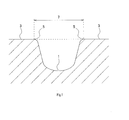
- a portion to be marked is, as shown in FIG. 1 , a region 7 bounded by a point 5 from which an average surface 3 of the aluminum material begins to drop, around the concave feature 1.
- the aluminum hydrated oxide (boehmite) layer for example, can be formed by bringing the aluminum material into contact with one of warm water at 60°C or above, boiling water, and water vapor.
- the thickness of the aluminum hydrated oxide layer is 5 nm or more and 1000 nm or less, and preferably 20 nm or more and 200nm or less. Because the thickness of the hydrated oxide film is 5 nm or more, it is possible to uniformly cover the surface of the aluminum material with the aluminum hydrated oxide layer. As a result, adhesion between the surface-treated aluminum material and the coating resin is improved. Also, when the thickness of the aluminum hydrated oxide layer is 20 nm or more, the surface of the aluminum material can be covered in more uniform manner with the aluminum hydrated oxide layer. Thus, partial variation in the adhesion between the surface-treated aluminum material and the coating resin is reduced.
- the aluminum hydrated oxide layer is thicker than 1000 nm, there would be no problem in terms of adhesion.
- the thickness is 1000 nm or less, it is possible to reduce time and energy required for formation of the aluminum hydrated oxide layer. Also, it is more preferred that the thickness of the aluminum hydrated oxide layer is 200 nm or less, since the thickness of the aluminum hydrated oxide layer increases linearly according to processing time for forming the aluminum hydrated oxide layer.
- the thickness of the aluminum hydrated oxide layer can be measured as follows. That is, in the surface-treated aluminum material after the formation of the aluminum hydrated oxide layer, a profile of aluminum concentration in a thickness direction is acquired by GD-OES (glow discharge optical emission surface analysis). In the profile, a distance from a point where an aluminum concentration is one half of an aluminum concentration in a sufficiently deep place to an outermost surface is regarded as a film thickness of the aluminum hydrated oxide layer.
- An apparatus used for GD-OES may be a GDA750 manufactured by RIGAKU. Measurement conditions of GD-OES may be as follows.
- the aluminum hydrated oxide layer comprises layers, for example, satisfying the above conditions 1 to 3.
- the aluminum hydrated oxide layer satisfying the conditions 1 to 3 for example, has a 3-layer structure composed of a layer with a hydrogen/aluminum ratio of 0.7 or more (first layer), a highly crystallized pseudo-boehmite layer with an oxygen/aluminum ratio of 0.4 or more and 0.8 or less (second layer), and a low crystallized pseudo-boehmite layer with an oxygen/aluminum ratio of 0.8 or more and 2 or less (third layer), from a side farther from the aluminum material.
- the aluminum hydrated oxide layer satisfying the above conditions 1 to 3 can be obtained by performing a desmut process before the aluminum hydrated oxide layer forming process.
- a profile of hydrogen concentration, the profile of the aluminum concentration, and a profile of oxygen concentration in the above conditions 1 to 3 can be obtained by GD-OES (glow discharge optical emission surface analysis).
- An apparatus used for GD-OES may be a GDA750 manufactured by RIGAKU. Measurement conditions thereof may be as follows.
- the desmut process is, for example, a process to remove dissolved residue after alkali etching.
- the desmut process for example, comprises a method of bringing the aluminum material into contact with a solution having an acid activity (e.g., nitric acid). By performing the desmut process, it is possible to obtain an aluminum hydrated oxide layer satisfying the above conditions 1-3.
- an anode oxide film may be present or absent between the aluminum material and the aluminum hydrated oxide layer.
- JIS-A6063 was used as the aluminum material.
- the aluminum material after degreased with a weak alkaline degreasing solution, was immersed in a 5% aqueous sodium hydroxide at 50°C thereby to form etch pits (multiple concave features).
- the step of immersion in the aqueous sodium hydroxide is an embodiment of a concave feature forming step.
- the aluminum material was washed with water and immersed in a 10% nitric acid at room temperature.
- the process of immersion in the nitric acid is an embodiment of a desmut process.
- the aluminum material after washed again, was immersed in pure water at 85°C, to form an aluminum hydrated oxide layer.
- the step of immersion in pure water at 85°C is an embodiment of a hydrated aluminum oxide layer forming step.
- the surface-treated aluminum material is produced.
- time for immersing the aluminum material in the aqueous sodium hydroxide, and time of immersing the aluminum material in pure water at 85°C are variously changed, thereby to produce seven types of surface-treated aluminum materials S1 to S7.
- the processing conditions of S1 to S7 are as shown in Table 1.
- an area occupied by the pits in the surface of the surface-treated aluminum material was measured by the following steps of (i) to (iii).
- a ratio of the area occupied by pits (hereinafter referred to as a pit area ratio) to the total surface area of the surface-treated aluminum material was calculated.
- the calculation results were shown in Table 1 above.
- GD-OES low discharge optical emission surface analysis
- An apparatus used for GD-OES is a GDA750 manufactured by RIGAKU. Measurement conditions of GD-OES were as follows.
- FIG. 3 shows the profile for S1.
- a distance from a point where an aluminum concentration is one half of an aluminum concentration in a sufficiently deep point (where the aluminum hydrated oxide layer is not formed) of the surface-treated aluminum material to the outermost surface was set to a film thickness of the aluminum hydrated oxide layer.
- Table 1 above shows the thickness of the hydrated aluminum oxide layer in S1 to S7.
- the profile of the hydrogen concentration in the thickness direction of the aluminum hydrated oxide layer had a peak in the vicinity of the surface. Also, the profile of the aluminum concentration in the thickness direction of the aluminum hydrated oxide layer had a minimum value. Also, the profile of the oxygen concentration in the thickness direction of the aluminum hydrated oxide layer had a maximum value. Note that the same tendency was observed in GD-OES profiles in S2 to S6. On the other hand, such tendency was not observed in S7.
- An adhesion test between the surface-treated aluminum material and an ethylene acrylic acid copolymer (EAA) resin was conducted for each case of immediately after the production, after left for 15 days from the production, after left for 30 days from the production, and after left for 100 days from the production of the surface-treated aluminum material.
- the adhesion test was carried out in each of S1 to S7.
- the surface-treated aluminum material was left under the indoor environment simulating a warehouse.
- the method of the adhesion test was as follows.
- Granular EAA resin was melt and molded at 130°C and 98 MPa according to a conventional method, to create a rectangular EAA material with a thickness of 0.5 mm, a width of 10 mm, and a length 20 mm.
- the first surface-treated aluminum material (20 mm x 100 mm) was heated for 150 seconds on a hot plate at 80°C.
- the rectangular EAA material was placed on the second surface-treated aluminum material (20 mm x 100 mm).
- the second surface-treated aluminum material was heated on a hot plate at 170°C to heat and melt the rectangular EAA material.
- the second surface-treated aluminum material was placed on the first surface-treated aluminum material which has been heated at 80°C so that the rectangular EAA material is sandwiched by the two surface-treated aluminum materials. After held for 15 seconds by applying a load of 1 kgf, the overlapped materials were removed from the hot plate for cooling, to prepare an adhesion test piece.
Landscapes
- Chemical & Material Sciences (AREA)
- General Chemical & Material Sciences (AREA)
- Chemical Kinetics & Catalysis (AREA)
- Engineering & Computer Science (AREA)
- Materials Engineering (AREA)
- Mechanical Engineering (AREA)
- Metallurgy (AREA)
- Organic Chemistry (AREA)
- Chemical Treatment Of Metals (AREA)
- Laminated Bodies (AREA)
- Other Surface Treatments For Metallic Materials (AREA)
Abstract
Description
- This international application claims the benefit of Japanese Patent Application No.
2012-208423 filed September 21, 2012 2012-208423 - The present invention relates to a surface-treated aluminum material and a method of producing the same.
- Conventionally, a technique is known of coating a surface of an aluminum material with a resin. In this technique, it is necessary to improve adhesion between the aluminum material and the resin coating the surface (hereinafter, coating resin), and various methods have been proposed. For example, there have been proposed are a method of providing roughness on a surface of an aluminum material by etching (Patent Document 1), a method of forming a boehmite on a surface of an aluminum material (Patent Documents 2 and 3), and a method for providing fine roughness on a surface of an aluminum material with presence of reactive functional groups (Patent Document 4).
-
- Patent Document 1: Japanese Unexamined Patent Application Publication No.
2002-120002 - Patent Document 2: Japanese Unexamined Patent Application Publication No.
H05-25574 - Patent Document 3:
WO 1997/035716 - Patent Document 4: Japanese Unexamined Patent Application Publication No.
2003-170531 - In the methods of Patent Documents 1 to 4, if resin coating is performed some time after the surface treatment of the aluminum material, adhesion between the aluminum material and the coating resin becomes insufficient.
- In one aspect of the invention, it is desirable that a surface-treated aluminum material, and a method of producing the same, are provided, in which the surface-treated aluminum material has high adhesion to a coating resin even when resin coating is performed some time after the production of the material.
- A surface-treated aluminum material of a first aspect of the present invention is preferably provided with a surface having a plurality of concave features formed thereon, and being covered with an aluminum hydrated oxide layer with a thickness of 5 nm or more and 1000 nm or less, an area of the plurality of concave features being 15% or more of an area of the surface.
- The surface-treated aluminum material according to the one aspect of the present invention has high adhesion to the coating resin even when the resin coating is performed some time after the plurality of concave features and the aluminum hydrated oxide layer are formed (i.e., after the surface-treated aluminum material is produced). Therefore, a process of the resin coating may not necessarily be performed immediately after the production process of the surface-treated aluminum material. The degree of freedom of the process is increased.
- As a surface-treated aluminum material of a second aspect of the present invention, it is preferable that the hydrated aluminum oxide layer satisfies conditions 1 to 3 below. In this case, adhesion between the coating resin and the surface-treated aluminum material is further improved.
- Condition 1: a profile of hydrogen concentration in a thickness direction of the aluminum hydrated oxide layer has a peak near the surface.
- Condition 2: a profile of aluminum concentration in the thickness direction of the hydrated aluminum oxide layer has a minimum value.
- Condition 3: a profile of the oxygen concentration in the thickness direction of the hydrated aluminum oxide layer has a maximum value.
- The surface-treated aluminum material of yet another aspect produced according to the present invention has high adhesion to a coating resin even when the resin coating is performed some time after the aluminum material is produced. Therefore, the resin coating may not necessarily be performed immediately after the production of the surface-treated aluminum material. Thus, the degree of freedom of the process is increased.
- The aluminum hydrated oxide layer formation step, for example, may comprise a step of bringing the aluminum material into contact with one of warm water at 60°C or above, boiling water, and water vapor. In this case, adhesion between the produced surface-treated aluminum material and the coating resin is further improved.
- In the method of producing a surface-treated aluminum material of a fourth aspect of the present invention, it is preferable that a desmut process is performed before the aluminum hydrated oxide layer formation step. In this case, the aluminum hydrated oxide layer tends to satisfy the above conditions 1 to 3. The adhesion between the produced surface-treated aluminum material and the coating resin is further improved.
-
-
FIG. 1 is a cross-sectional view showing aregion 7 to be marked in a concave feature (pit) 1. -
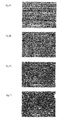
FIGs. 2A-2D show SEM images of a surface of a surface-treated aluminum material, taken at 250 magnifications, whereFIG. 2A is a SEM image when immersion time in an aqueous sodium hydroxide is 0 seconds,FIG. 2B is a SEM image when the immersion time in the aqueous sodium hydroxide is 60 seconds,FIG. 2C is a SEM image when the immersion time in the aqueous sodium hydroxide is 120 seconds, andFIG. 2D is a SEM image when the immersion time in the aqueous sodium hydroxide is 300 seconds. -
FIG. 3 is a graph showing profiles of aluminum concentration, hydrogen concentration, and oxygen concentration in a thickness direction of an aluminum hydrated oxide layer, acquired by GD-OES (glow discharge optical emission surface analysis). - 1 ... concave feature, 3 ... surface, 5 ... point, 7 ... area
- An embodiment of the present invention will be described. A plurality of concave features, for example, can be formed by etching. An etching process, for example, may comprise a process of bringing an aluminum material (aluminum base material before an aluminum hydrated oxide layer is formed) into contact with an alkaline solution (for example, aqueous sodium hydroxide) (for example, immersing an aluminum material in an alkaline solution). The concave feature, for example, may be a hole (pit) having a circular cross-section.
- An area of the plurality of concave features is 15% or more of an area of the total surface (area when the surface of the surface-treated aluminum material is assumed to be flat). With the area of 15% or more, adhesion between the surface-treated aluminum material and the coating resin is improved. The larger the area of the plurality of concave features is, the more the adhesion between the surface-treated aluminum material and the coating resin is improved. The area of the plurality of concave features may be, for example, 20% or more, 30% or more, or 40% or more of the area of the total surface.
- The area of the plurality of concave features can be calculated by the following steps (i) to (iii).
- (i) A SEM image, taken at 250 magnifications, of the surface of the surface-treated aluminum material is acquired.
- (ii) In the above SEM image, concave features (pits) having a diameter of 5 µm or more are extracted and marked (filled).
- (iii) Using an image processing software (LUZEX AP manufactured by NIRECO Corporation), the marked area is calculated as described above.
- In the above step (ii), a portion to be marked is, as shown in
FIG. 1 , aregion 7 bounded by apoint 5 from which anaverage surface 3 of the aluminum material begins to drop, around the concave feature 1. - The aluminum hydrated oxide (boehmite) layer, for example, can be formed by bringing the aluminum material into contact with one of warm water at 60°C or above, boiling water, and water vapor. The thickness of the aluminum hydrated oxide layer is 5 nm or more and 1000 nm or less, and preferably 20 nm or more and 200nm or less. Because the thickness of the hydrated oxide film is 5 nm or more, it is possible to uniformly cover the surface of the aluminum material with the aluminum hydrated oxide layer. As a result, adhesion between the surface-treated aluminum material and the coating resin is improved. Also, when the thickness of the aluminum hydrated oxide layer is 20 nm or more, the surface of the aluminum material can be covered in more uniform manner with the aluminum hydrated oxide layer. Thus, partial variation in the adhesion between the surface-treated aluminum material and the coating resin is reduced.
- Even if the aluminum hydrated oxide layer is thicker than 1000 nm, there would be no problem in terms of adhesion. When the thickness is 1000 nm or less, it is possible to reduce time and energy required for formation of the aluminum hydrated oxide layer. Also, it is more preferred that the thickness of the aluminum hydrated oxide layer is 200 nm or less, since the thickness of the aluminum hydrated oxide layer increases linearly according to processing time for forming the aluminum hydrated oxide layer.
- The thickness of the aluminum hydrated oxide layer can be measured as follows. That is, in the surface-treated aluminum material after the formation of the aluminum hydrated oxide layer, a profile of aluminum concentration in a thickness direction is acquired by GD-OES (glow discharge optical emission surface analysis). In the profile, a distance from a point where an aluminum concentration is one half of an aluminum concentration in a sufficiently deep place to an outermost surface is regarded as a film thickness of the aluminum hydrated oxide layer. An apparatus used for GD-OES may be a GDA750 manufactured by RIGAKU. Measurement conditions of GD-OES may be as follows.
- Ar gas pressure: 3.5 hpa
- Anode diameter: 2.5 mmΦ
- It is preferred that the aluminum hydrated oxide layer comprises layers, for example, satisfying the above conditions 1 to 3. The aluminum hydrated oxide layer satisfying the conditions 1 to 3, for example, has a 3-layer structure composed of a layer with a hydrogen/aluminum ratio of 0.7 or more (first layer), a highly crystallized pseudo-boehmite layer with an oxygen/aluminum ratio of 0.4 or more and 0.8 or less (second layer), and a low crystallized pseudo-boehmite layer with an oxygen/aluminum ratio of 0.8 or more and 2 or less (third layer), from a side farther from the aluminum material. The aluminum hydrated oxide layer satisfying the above conditions 1 to 3 can be obtained by performing a desmut process before the aluminum hydrated oxide layer forming process.
- A profile of hydrogen concentration, the profile of the aluminum concentration, and a profile of oxygen concentration in the above conditions 1 to 3 can be obtained by GD-OES (glow discharge optical emission surface analysis). An apparatus used for GD-OES may be a GDA750 manufactured by RIGAKU. Measurement conditions thereof may be as follows.
- Ar gas pressure: 3.5 hpa
- Anode diameter: 2.5 mmΦ
- The desmut process is, for example, a process to remove dissolved residue after alkali etching. The desmut process, for example, comprises a method of bringing the aluminum material into contact with a solution having an acid activity (e.g., nitric acid). By performing the desmut process, it is possible to obtain an aluminum hydrated oxide layer satisfying the above conditions 1-3.
- In the surface-treated aluminum material, an anode oxide film may be present or absent between the aluminum material and the aluminum hydrated oxide layer.
- JIS-A6063 was used as the aluminum material. The aluminum material, after degreased with a weak alkaline degreasing solution, was immersed in a 5% aqueous sodium hydroxide at 50°C thereby to form etch pits (multiple concave features). The step of immersion in the aqueous sodium hydroxide is an embodiment of a concave feature forming step.
- Then, the aluminum material was washed with water and immersed in a 10% nitric acid at room temperature. The process of immersion in the nitric acid is an embodiment of a desmut process.
- Then, the aluminum material, after washed again, was immersed in pure water at 85°C, to form an aluminum hydrated oxide layer. The step of immersion in pure water at 85°C is an embodiment of a hydrated aluminum oxide layer forming step.
- Through the above steps, the surface-treated aluminum material is produced. In this production method, time for immersing the aluminum material in the aqueous sodium hydroxide, and time of immersing the aluminum material in pure water at 85°C are variously changed, thereby to produce seven types of surface-treated aluminum materials S1 to S7. The processing conditions of S1 to S7 are as shown in Table 1.
[Table 1] Processing time (sec) Film thickness of aluminum hydrated oxide layer (nm) Pit area ratio (%) Aqueous sodium hydroxide Pure water at 85 °C Total 1st layer 2nd layer 3rd layer S1 120 300 56 8 12 36 17.8 S2 300 300 100 10 30 60 27.1 S3 60 300 21 3 6 12 2.1 S4 0 240 50 5 15 30 0 S5 120 5 3 - - 3 17.8 S6 120 10000 2000 20 980 1000 17.8 S7 120 300 520 10 60 450 17.8 - For each of S1 to S7, an area occupied by the pits in the surface of the surface-treated aluminum material was measured by the following steps of (i) to (iii).
- (i) A SEM image of 250 magnifications imaging the surface of the surface-treated aluminum material was acquired.
FIGS. 2A to 2D respectively show the SEM images of S4 (0 seconds of immersion time to the aqueous sodium hydroxide), S3 (60 seconds of immersion time to the aqueous sodium hydroxide), S1 (120 seconds of immersion time in the aqueous sodium hydroxide), and S2 (300 seconds of immersion time to the aqueous sodium hydroxide). In S3, S1, and S2, a plurality of pits were formed on the surface of the surface-treated aluminum material. Also, as the immersion time in the aqueous sodium hydroxide is increased, the size and the number of the pits were increased. - (ii) In the SEM images of the above (i), the pits with a diameter of 5 µm or more were extracted, and marked (filled).
- (iii) Using an image processing software (LUZEX AP manufactured by Nireco, Ltd.), the area marked as described above (ii) was calculated. This area is an area the pits occupy in the surface of the surface-treated aluminum material.
- Then, for each of S1 to S7, a ratio of the area occupied by pits (hereinafter referred to as a pit area ratio) to the total surface area of the surface-treated aluminum material was calculated. The calculation results were shown in Table 1 above.
- For each of S1 to S7, profiles of aluminum concentration, hydrogen concentration, and oxygen concentration in the thickness direction were obtained by GD-OES (glow discharge optical emission surface analysis). An apparatus used for GD-OES is a GDA750 manufactured by RIGAKU. Measurement conditions of GD-OES were as follows.
- Ar gas pressure: 3.5 hpa
- Anode diameter: 2.5 mmΦ
-
FIG. 3 shows the profile for S1. A distance from a point where an aluminum concentration is one half of an aluminum concentration in a sufficiently deep point (where the aluminum hydrated oxide layer is not formed) of the surface-treated aluminum material to the outermost surface was set to a film thickness of the aluminum hydrated oxide layer. Table 1 above shows the thickness of the hydrated aluminum oxide layer in S1 to S7. - In
FIG. 3 , the profile of the hydrogen concentration in the thickness direction of the aluminum hydrated oxide layer had a peak in the vicinity of the surface. Also, the profile of the aluminum concentration in the thickness direction of the aluminum hydrated oxide layer had a minimum value. Also, the profile of the oxygen concentration in the thickness direction of the aluminum hydrated oxide layer had a maximum value. Note that the same tendency was observed in GD-OES profiles in S2 to S6. On the other hand, such tendency was not observed in S7. - An adhesion test between the surface-treated aluminum material and an ethylene acrylic acid copolymer (EAA) resin was conducted for each case of immediately after the production, after left for 15 days from the production, after left for 30 days from the production, and after left for 100 days from the production of the surface-treated aluminum material. The adhesion test was carried out in each of S1 to S7. Here, the surface-treated aluminum material was left under the indoor environment simulating a warehouse. The method of the adhesion test was as follows.
- Granular EAA resin was melt and molded at 130°C and 98 MPa according to a conventional method, to create a rectangular EAA material with a thickness of 0.5 mm, a width of 10 mm, and a
length 20 mm. - Then, the first surface-treated aluminum material (20 mm x 100 mm) was heated for 150 seconds on a hot plate at 80°C. The rectangular EAA material was placed on the second surface-treated aluminum material (20 mm x 100 mm). The second surface-treated aluminum material was heated on a hot plate at 170°C to heat and melt the rectangular EAA material.
- Thereafter, the second surface-treated aluminum material was placed on the first surface-treated aluminum material which has been heated at 80°C so that the rectangular EAA material is sandwiched by the two surface-treated aluminum materials. After held for 15 seconds by applying a load of 1 kgf, the overlapped materials were removed from the hot plate for cooling, to prepare an adhesion test piece.
- For this adhesion test piece, a T-peel test was conducted in accordance with JIS-K6854-3 (1999). Its tensile speed was 50 mm/min. In addition to measuring a maximum intensity, its failure pattern was observed. When the failure pattern is cohesive failure peeling of the EAA resin, the test piece is considered to have passed the test. The test results are as shown in Table 2.
[Table 2] Immediately after Left for 15 days Left for 30 days Left for 100 days Adhesion strength (N/mm2) Failure pattern Adhesion strength (N/mm2) Failure pattern Adhesion strength (N/mm2) Failure pattern Adhesion strength (N/mm2) Failure pattern S1 70.7 cohesive failure 68.2 cohesive failure 65.8 cohesive failure 62.3 cohesive failure S2 100.9 cohesive failure 97.3 cohesive failure 95.1 cohesive failure 92.1 cohesive failure S3 54.6 partial interfacial failure 52 interfacial failure 51.5 interfacial failure 48.6 interfacial failure S4 46.5 interfacial failure 45.3 interfacial failure 44.8 interfacial failure 40.3 interfacial failure S5 63.5 cohesive failure 44.3 interfacial failure 39.6 interfacial failure 38.8 interfacial failure S6 101.5 cohesive failure 98.9 cohesive failure 97.3 cohesive failure 93.5 cohesive failure S7 52.3 cohesive failure 50.2 cohesive failure 48.8 cohesive failure 47.9 cohesive failure - In contrast, in S3 to S5, when a long time has elapsed from the production of the surface-treated aluminum material, the adhesion between the surface-treated aluminum material and the resin was low.
Claims (5)
- A surface-treated aluminum material provided with a surface having a plurality of concave features formed thereon, and being covered with a hydrated aluminum oxide layer with a thickness of 5 nm or more and 1000 nm or less; an area of the plurality of concave features being 15% or more of an area of the surface.
- The surface-treated aluminum material according to claim 1, wherein the aluminum hydrated oxide layer satisfies conditions 1 to 3 below:condition 1: a profile of hydrogen concentration in a thickness direction of the aluminum hydrated oxide layer has a peak near the surface;condition 2: a profile of aluminum concentration in the thickness direction of the hydrated aluminum oxide layer has a minimum value; andcondition 3: a profile of oxygen concentration in the thickness direction of the hydrated aluminum oxide layer has a maximum value.
- A production method of surface-treated aluminum material, the method comprising:a concave feature forming step in which a plurality of concave features are formed on a surface of the aluminum material; andan aluminum hydrated oxide layer forming step in which an aluminum hydrated oxide layer having a thickness of 5 nm or more and 1000 nm or less is formed on the surface,an area of the plurality of concave features formed in the concave feature forming step being 15% or more of an area of the surface.
- The production method according to claim 3,
wherein the aluminum hydrated oxide layer formation step comprises a step of bringing the aluminum material into contact with one of warm water at 60°C or above, boiling water, and water vapor. - The production method according to claim 3 or 4,
wherein a desmut step is performed before the hydrated aluminum oxide layer forming step.
Applications Claiming Priority (2)
| Application Number | Priority Date | Filing Date | Title |
|---|---|---|---|
| JP2012208423A JP6077248B2 (en) | 2012-09-21 | 2012-09-21 | Surface-treated aluminum material and method for producing the same |
| PCT/JP2013/071018 WO2014045733A1 (en) | 2012-09-21 | 2013-08-02 | Surface-treated aluminum material and method for producing same |
Publications (2)
| Publication Number | Publication Date |
|---|---|
| EP2899296A1 true EP2899296A1 (en) | 2015-07-29 |
| EP2899296A4 EP2899296A4 (en) | 2016-05-11 |
Family
ID=50341058
Family Applications (1)
| Application Number | Title | Priority Date | Filing Date |
|---|---|---|---|
| EP13839636.1A Withdrawn EP2899296A4 (en) | 2012-09-21 | 2013-08-02 | SURFACE TREATED ALUMINUM MATERIAL AND PROCESS FOR PRODUCING THE SAME |
Country Status (4)
| Country | Link |
|---|---|
| EP (1) | EP2899296A4 (en) |
| JP (1) | JP6077248B2 (en) |
| CN (1) | CN104736741A (en) |
| WO (1) | WO2014045733A1 (en) |
Cited By (2)
| Publication number | Priority date | Publication date | Assignee | Title |
|---|---|---|---|---|
| EP4471179A1 (en) | 2023-05-31 | 2024-12-04 | Constellium Bowling Green LLC | Boehmite coating for aluminium alloy products |
| WO2024246196A1 (en) | 2023-05-31 | 2024-12-05 | Constellium Bowling Green Llc | Boehmite coating for aluminum alloy products |
Families Citing this family (1)
| Publication number | Priority date | Publication date | Assignee | Title |
|---|---|---|---|---|
| CN105666338B (en) * | 2016-02-25 | 2019-04-02 | 苏州市永通不锈钢有限公司 | Stainless steel surface treatment process with precise control of roughness |
Family Cites Families (15)
| Publication number | Priority date | Publication date | Assignee | Title |
|---|---|---|---|---|
| NL202898A (en) * | 1954-12-16 | |||
| US3945899A (en) * | 1973-07-06 | 1976-03-23 | Kansai Paint Company, Limited | Process for coating aluminum or aluminum alloy |
| JPH0525574A (en) | 1991-07-22 | 1993-02-02 | Furukawa Alum Co Ltd | High strength aluminum alloy clad material for high temperature forming |
| AU1944497A (en) * | 1996-03-27 | 1997-10-17 | Toyo Kohan Co. Ltd. | Thermoplastic resin-coated aluminum alloy plate, and process and apparatus for producing the same |
| JP3214835B2 (en) * | 1998-03-13 | 2001-10-02 | 株式会社神戸製鋼所 | Al alloy material for transport equipment with excellent water resistance and yarn rust resistance |
| JPH11353572A (en) * | 1998-06-05 | 1999-12-24 | Osaka Gas Co Ltd | Automatic gauge examination device |
| JP3680206B2 (en) | 2000-10-17 | 2005-08-10 | 古河スカイ株式会社 | Aluminum alloy plate for coating with excellent adhesion of coating layer |
| JP3816363B2 (en) * | 2001-08-28 | 2006-08-30 | 三菱アルミニウム株式会社 | Surface-treated aluminum material excellent in corrosion resistance and method for producing the same |
| JP4202015B2 (en) | 2001-12-10 | 2008-12-24 | 大成プラス株式会社 | Metal-resin composite and method for producing the same |
| JP2004277784A (en) * | 2003-03-14 | 2004-10-07 | Hitachi Ltd | High corrosion resistance and high wear resistance aluminum material and surface treatment method thereof |
| CN101285185A (en) * | 2008-03-21 | 2008-10-15 | 北京化工大学 | Preparation method of corrosion-resistant hydrotalcite-like film on the surface of aluminum and its alloy parts |
| CN103826822A (en) * | 2011-09-26 | 2014-05-28 | 日本轻金属株式会社 | Aluminum resin bonded body and method for producing same |
| CN102492943A (en) * | 2011-12-09 | 2012-06-13 | 江苏技术师范学院 | Method for forming chemical conversion coating on surface of pure aluminum and used treating fluid |
| WO2014024877A1 (en) * | 2012-08-07 | 2014-02-13 | 日本軽金属株式会社 | Aluminum resin bonded body and method for producing same |
| JP6017675B2 (en) * | 2013-03-26 | 2016-11-02 | 日本軽金属株式会社 | Metal-resin bonded body and manufacturing method thereof |
-
2012
- 2012-09-21 JP JP2012208423A patent/JP6077248B2/en not_active Expired - Fee Related
-
2013
- 2013-08-02 EP EP13839636.1A patent/EP2899296A4/en not_active Withdrawn
- 2013-08-02 WO PCT/JP2013/071018 patent/WO2014045733A1/en not_active Ceased
- 2013-08-02 CN CN201380048836.2A patent/CN104736741A/en active Pending
Cited By (2)
| Publication number | Priority date | Publication date | Assignee | Title |
|---|---|---|---|---|
| EP4471179A1 (en) | 2023-05-31 | 2024-12-04 | Constellium Bowling Green LLC | Boehmite coating for aluminium alloy products |
| WO2024246196A1 (en) | 2023-05-31 | 2024-12-05 | Constellium Bowling Green Llc | Boehmite coating for aluminum alloy products |
Also Published As
| Publication number | Publication date |
|---|---|
| EP2899296A4 (en) | 2016-05-11 |
| JP2014062299A (en) | 2014-04-10 |
| CN104736741A (en) | 2015-06-24 |
| JP6077248B2 (en) | 2017-02-08 |
| WO2014045733A1 (en) | 2014-03-27 |
Similar Documents
| Publication | Publication Date | Title |
|---|---|---|
| KR101736042B1 (en) | Perforated aluminum foil, and process for production thereof | |
| EP2878691B1 (en) | Anodic-oxidation-treated aluminum alloy member | |
| JP6713932B2 (en) | Aluminum foil, electronic device, roll-to-roll aluminum foil, and method for manufacturing aluminum foil | |
| EP3461579A1 (en) | Method for producing cladding material | |
| CN114555868B (en) | Electrolytic foil and current collector for battery | |
| KR100935964B1 (en) | Corrosion resistance treatment of aluminum or aluminum alloy | |
| EP2899296A1 (en) | Surface-treated aluminum material and method for producing same | |
| CN108055835A (en) | Metal laminated material and manufacturing method thereof | |
| KR20140146184A (en) | Heat exchange tube attached with aluminum alloy inner groove | |
| EP2535435A1 (en) | Magnesium alloy plate | |
| KR101655612B1 (en) | A method for manufacturing a fuel cell membrane electrode assembly with high durability | |
| JP4068742B2 (en) | Method for producing anodized film-coated member for semiconductor production equipment having excellent heat cracking resistance and corrosion resistance | |
| JP6352087B2 (en) | Surface-treated aluminum material and method for producing the same | |
| CN106460221B (en) | Surface-treated aluminum material, method for producing the same, and surface-treated aluminum material/resin layer bonded body | |
| JP5937937B2 (en) | Aluminum anodized film | |
| JP5912575B2 (en) | Method for producing surface-treated aluminum plate with excellent workability | |
| JP5426956B2 (en) | Manufacturing method of surface treatment member for semiconductor liquid crystal manufacturing apparatus | |
| JP5143416B2 (en) | Method for producing surface-treated aluminum material | |
| EP4074999A1 (en) | Sliding member and method for producing same | |
| KR102491868B1 (en) | Surface-treated aluminum material with excellent resin adhesion, manufacturing method thereof, and surface-treated aluminum material/resin junction | |
| KR101278411B1 (en) | Method for manufacturing clad metal product | |
| JP5149590B2 (en) | Method for producing surface-treated aluminum material | |
| KR102675025B1 (en) | Film for cell pouch and manufacturing method thereof | |
| JP5397884B2 (en) | Method for producing surface-treated aluminum material for vacuum equipment | |
| JP5014781B2 (en) | Method for producing surface-treated aluminum material and apparatus for producing surface-treated aluminum material |
Legal Events
| Date | Code | Title | Description |
|---|---|---|---|
| PUAI | Public reference made under article 153(3) epc to a published international application that has entered the european phase |
Free format text: ORIGINAL CODE: 0009012 |
|
| 17P | Request for examination filed |
Effective date: 20150312 |
|
| AK | Designated contracting states |
Kind code of ref document: A1 Designated state(s): AL AT BE BG CH CY CZ DE DK EE ES FI FR GB GR HR HU IE IS IT LI LT LU LV MC MK MT NL NO PL PT RO RS SE SI SK SM TR |
|
| AX | Request for extension of the european patent |
Extension state: BA ME |
|
| DAX | Request for extension of the european patent (deleted) | ||
| RA4 | Supplementary search report drawn up and despatched (corrected) |
Effective date: 20160412 |
|
| RIC1 | Information provided on ipc code assigned before grant |
Ipc: C23C 22/78 20060101ALI20160404BHEP Ipc: B05D 7/14 20060101ALI20160404BHEP Ipc: C23C 22/68 20060101AFI20160404BHEP Ipc: B29C 65/00 20060101ALI20160404BHEP |
|
| 17Q | First examination report despatched |
Effective date: 20190322 |
|
| STAA | Information on the status of an ep patent application or granted ep patent |
Free format text: STATUS: THE APPLICATION IS DEEMED TO BE WITHDRAWN |
|
| 18D | Application deemed to be withdrawn |
Effective date: 20190802 |