EP2899281B1 - Inhibitoren des Sterolmetabolismus zu ihrer Verwendung zur Speicherung von Triglyceriden in Mikroalgen und Verfahren dafür - Google Patents
Inhibitoren des Sterolmetabolismus zu ihrer Verwendung zur Speicherung von Triglyceriden in Mikroalgen und Verfahren dafür Download PDFInfo
- Publication number
- EP2899281B1 EP2899281B1 EP14305111.8A EP14305111A EP2899281B1 EP 2899281 B1 EP2899281 B1 EP 2899281B1 EP 14305111 A EP14305111 A EP 14305111A EP 2899281 B1 EP2899281 B1 EP 2899281B1
- Authority
- EP
- European Patent Office
- Prior art keywords
- group
- microalgae
- hydrogen atom
- linear
- branched alkyl
- Prior art date
- Legal status (The legal status is an assumption and is not a legal conclusion. Google has not performed a legal analysis and makes no representation as to the accuracy of the status listed.)
- Active
Links
- 0 *C1C(*=C)C2=CC(O)=CC*2C(CC2)C1C1C2(*)C(*)(*)CC1 Chemical compound *C1C(*=C)C2=CC(O)=CC*2C(CC2)C1C1C2(*)C(*)(*)CC1 0.000 description 1
Images


Classifications
-
- C—CHEMISTRY; METALLURGY
- C12—BIOCHEMISTRY; BEER; SPIRITS; WINE; VINEGAR; MICROBIOLOGY; ENZYMOLOGY; MUTATION OR GENETIC ENGINEERING
- C12P—FERMENTATION OR ENZYME-USING PROCESSES TO SYNTHESISE A DESIRED CHEMICAL COMPOUND OR COMPOSITION OR TO SEPARATE OPTICAL ISOMERS FROM A RACEMIC MIXTURE
- C12P7/00—Preparation of oxygen-containing organic compounds
- C12P7/64—Fats; Fatty oils; Ester-type waxes; Higher fatty acids, i.e. having at least seven carbon atoms in an unbroken chain bound to a carboxyl group; Oxidised oils or fats
- C12P7/6436—Fatty acid esters
- C12P7/6445—Glycerides
- C12P7/6463—Glycerides obtained from glyceride producing microorganisms, e.g. single cell oil
-
- A—HUMAN NECESSITIES
- A23—FOODS OR FOODSTUFFS; TREATMENT THEREOF, NOT COVERED BY OTHER CLASSES
- A23L—FOODS, FOODSTUFFS OR NON-ALCOHOLIC BEVERAGES, NOT OTHERWISE PROVIDED FOR; PREPARATION OR TREATMENT THEREOF
- A23L33/00—Modifying nutritive qualities of foods; Dietetic products; Preparation or treatment thereof
- A23L33/10—Modifying nutritive qualities of foods; Dietetic products; Preparation or treatment thereof using additives
- A23L33/115—Fatty acids or derivatives thereof; Fats or oils
- A23L33/12—Fatty acids or derivatives thereof
-
- C—CHEMISTRY; METALLURGY
- C10—PETROLEUM, GAS OR COKE INDUSTRIES; TECHNICAL GASES CONTAINING CARBON MONOXIDE; FUELS; LUBRICANTS; PEAT
- C10L—FUELS NOT OTHERWISE PROVIDED FOR; NATURAL GAS; SYNTHETIC NATURAL GAS OBTAINED BY PROCESSES NOT COVERED BY SUBCLASSES C10G OR C10K; LIQUIFIED PETROLEUM GAS; USE OF ADDITIVES TO FUELS OR FIRES; FIRE-LIGHTERS
- C10L1/00—Liquid carbonaceous fuels
- C10L1/02—Liquid carbonaceous fuels essentially based on components consisting of carbon, hydrogen, and oxygen only
-
- C—CHEMISTRY; METALLURGY
- C12—BIOCHEMISTRY; BEER; SPIRITS; WINE; VINEGAR; MICROBIOLOGY; ENZYMOLOGY; MUTATION OR GENETIC ENGINEERING
- C12P—FERMENTATION OR ENZYME-USING PROCESSES TO SYNTHESISE A DESIRED CHEMICAL COMPOUND OR COMPOSITION OR TO SEPARATE OPTICAL ISOMERS FROM A RACEMIC MIXTURE
- C12P7/00—Preparation of oxygen-containing organic compounds
- C12P7/64—Fats; Fatty oils; Ester-type waxes; Higher fatty acids, i.e. having at least seven carbon atoms in an unbroken chain bound to a carboxyl group; Oxidised oils or fats
- C12P7/6436—Fatty acid esters
- C12P7/6445—Glycerides
- C12P7/6458—Glycerides by transesterification, e.g. interesterification, ester interchange, alcoholysis or acidolysis
-
- C—CHEMISTRY; METALLURGY
- C12—BIOCHEMISTRY; BEER; SPIRITS; WINE; VINEGAR; MICROBIOLOGY; ENZYMOLOGY; MUTATION OR GENETIC ENGINEERING
- C12P—FERMENTATION OR ENZYME-USING PROCESSES TO SYNTHESISE A DESIRED CHEMICAL COMPOUND OR COMPOSITION OR TO SEPARATE OPTICAL ISOMERS FROM A RACEMIC MIXTURE
- C12P7/00—Preparation of oxygen-containing organic compounds
- C12P7/64—Fats; Fatty oils; Ester-type waxes; Higher fatty acids, i.e. having at least seven carbon atoms in an unbroken chain bound to a carboxyl group; Oxidised oils or fats
- C12P7/6436—Fatty acid esters
- C12P7/649—Biodiesel, i.e. fatty acid alkyl esters
-
- A—HUMAN NECESSITIES
- A23—FOODS OR FOODSTUFFS; TREATMENT THEREOF, NOT COVERED BY OTHER CLASSES
- A23V—INDEXING SCHEME RELATING TO FOODS, FOODSTUFFS OR NON-ALCOHOLIC BEVERAGES AND LACTIC OR PROPIONIC ACID BACTERIA USED IN FOODSTUFFS OR FOOD PREPARATION
- A23V2002/00—Food compositions, function of food ingredients or processes for food or foodstuffs
-
- C—CHEMISTRY; METALLURGY
- C10—PETROLEUM, GAS OR COKE INDUSTRIES; TECHNICAL GASES CONTAINING CARBON MONOXIDE; FUELS; LUBRICANTS; PEAT
- C10L—FUELS NOT OTHERWISE PROVIDED FOR; NATURAL GAS; SYNTHETIC NATURAL GAS OBTAINED BY PROCESSES NOT COVERED BY SUBCLASSES C10G OR C10K; LIQUIFIED PETROLEUM GAS; USE OF ADDITIVES TO FUELS OR FIRES; FIRE-LIGHTERS
- C10L2200/00—Components of fuel compositions
- C10L2200/04—Organic compounds
- C10L2200/0461—Fractions defined by their origin
- C10L2200/0469—Renewables or materials of biological origin
-
- C—CHEMISTRY; METALLURGY
- C10—PETROLEUM, GAS OR COKE INDUSTRIES; TECHNICAL GASES CONTAINING CARBON MONOXIDE; FUELS; LUBRICANTS; PEAT
- C10L—FUELS NOT OTHERWISE PROVIDED FOR; NATURAL GAS; SYNTHETIC NATURAL GAS OBTAINED BY PROCESSES NOT COVERED BY SUBCLASSES C10G OR C10K; LIQUIFIED PETROLEUM GAS; USE OF ADDITIVES TO FUELS OR FIRES; FIRE-LIGHTERS
- C10L2290/00—Fuel preparation or upgrading, processes or apparatus therefore, comprising specific process steps or apparatus units
- C10L2290/26—Composting, fermenting or anaerobic digestion fuel components or materials from which fuels are prepared
-
- C—CHEMISTRY; METALLURGY
- C10—PETROLEUM, GAS OR COKE INDUSTRIES; TECHNICAL GASES CONTAINING CARBON MONOXIDE; FUELS; LUBRICANTS; PEAT
- C10L—FUELS NOT OTHERWISE PROVIDED FOR; NATURAL GAS; SYNTHETIC NATURAL GAS OBTAINED BY PROCESSES NOT COVERED BY SUBCLASSES C10G OR C10K; LIQUIFIED PETROLEUM GAS; USE OF ADDITIVES TO FUELS OR FIRES; FIRE-LIGHTERS
- C10L2290/00—Fuel preparation or upgrading, processes or apparatus therefore, comprising specific process steps or apparatus units
- C10L2290/54—Specific separation steps for separating fractions, components or impurities during preparation or upgrading of a fuel
- C10L2290/544—Extraction for separating fractions, components or impurities during preparation or upgrading of a fuel
-
- Y—GENERAL TAGGING OF NEW TECHNOLOGICAL DEVELOPMENTS; GENERAL TAGGING OF CROSS-SECTIONAL TECHNOLOGIES SPANNING OVER SEVERAL SECTIONS OF THE IPC; TECHNICAL SUBJECTS COVERED BY FORMER USPC CROSS-REFERENCE ART COLLECTIONS [XRACs] AND DIGESTS
- Y02—TECHNOLOGIES OR APPLICATIONS FOR MITIGATION OR ADAPTATION AGAINST CLIMATE CHANGE
- Y02E—REDUCTION OF GREENHOUSE GAS [GHG] EMISSIONS, RELATED TO ENERGY GENERATION, TRANSMISSION OR DISTRIBUTION
- Y02E50/00—Technologies for the production of fuel of non-fossil origin
- Y02E50/10—Biofuels, e.g. bio-diesel
Definitions
- the invention relates to a method for accumulating triacylglycerols in microalgae by inhibiting the sterol metabolism according to formula (I), (III) and (IV) as defined below.
- the invention also relates to a method for producing fatty acids, biofuels, pharmaceutical or cosmetic compositions comprising a triacylglycerols accumulation step in microalgae according to the invention.
- the invention concerns the use of an inhibitor of sterol metabolism to accumulate triglycerides in microalgae.
- TAG triacylglycerol
- Table 1 Oil content of some algae (from Chisti, Biotechnology Advances 25 (2007) 294-306) Microalga Oil content (% dry wt) Botryocooccus braunii 25-75 Chlorella sp. 28-32 Crypthecodinium cohnii 20 Cylindrotheca sp. 16-37 Dunaliella primolecta 23 Isockrysis sp. 25-33 Monallanthiis salina >20 Nannochloris sp. 20-35 Nannochloropsis sp.
- Neochloris oleoubundans 35-54 Nitzschia sp. 45-47 Phaeodactylum tricomutum 20-30 Schizochytrium sp. 50-77 Tetraselmis sueica 15-23
- the lipid composition of microalgae is compatible with biodiesel production ( Dismukes et al., Current Opinion in Biotechnology 2008, 19:235-240 ; Scott et al., Current Opinion in Biotechnology 2010, 21:277-286 ).
- the rationale for producing biodiesel from microalgae is to use sunlight to convert water and carbon dioxide into biomass. This biomass is then specifically redirected towards the synthesis of oil for the generation biofuels, by applying external stimuli like nutrient stresses, and/or by genetic engineering of metabolism ( Dorval Courchesne et al., Journal of Biotechnology 141 (2009) 31-41 ).
- Diatoms are a major phylum of the phytoplankton biodiversity in oceans, fresh water and various soil habitats. They are responsible for up to 25% of the global primary productivity. Study of this group of eukaryotes has benefited from recent developments on Phaeodactylum tricornutum, a model of pennate diatoms.
- Diatoms like other microalgae, are considered a plausible alternative source of hydrocarbons to replace fossil fuels or chemicals from petrochemistry, with the advantage of having a neutral CO 2 balance, based on the hypotheses that CO 2 and water can be efficiently converted into biomass by photosynthesis and that the carbon metabolism could be controlled so that they accumulate energetically-rich TAG.
- Different phytoplanktonic organisms of the Chromalevolata superphylum have focused the attention for their ability to accumulate TAG, with promising initial yields and appropriate robustness and physical properties to be implemented in an industrial process, including Phaeodactylum tricornutum.
- Phaeodactylum tricornutum is currently used for the industrial production of omega-3 polyunsaturated fatty acids but industrial implementation for this application and for other applications such as biofuels is still limited by the growth retardation and low yield in biomass when TAG accumulation is triggered using conventional nutrient starvation approaches, such as nitrogen starvation ( Chisti, Journal of Biotechnology 167 (2013) 201-214 ). These approaches have an important drawback which is the limitation of growth that the nitrogen starvation induces. Phaeodactylum tricornutum exhibits interesting properties for an industrial implementation, like the ability to grow in the absence of silicon or the sedimentation of cells that could be useful for harvesting techniques.
- TAG accumulation can rely on various strategies that can be combined, including the stimulation of fatty acid and TAG biosynthesis, the blocking of pathways that diverts carbon to alternative metabolic routes and eventually the arrest of TAG catabolism. Small molecules could act on each of these three aspects of TAG metabolism.
- WO 2013/138523 discloses a method for accumulating triacylglycerols in microalgae comprising incubating the microalgae with a compound that may be ketoconazole.
- Franz et al. (ACS Chemical Biology 2013, 8, 1053-1062 ) studies the increase of lipid productivity in oleaginous microalgae without decreasing growth and biomass production, in particular with ketoconazole. These methods are different from the one of the claimed invention, which do not involve ketoconazole.
- a first subject of the disclosure is a method for triggering TAG accumulation in microalgae by inhibiting the sterol metabolism, preferably by inhibiting the synthesis of the sterols, which overcomes the disadvantages listed above.
- microalgae refers to microalgae for eukaryotes.
- the TAG is built by esterification of a 3-carbon glycerol backbone at positions 1, 2 and 3 by fatty acids.
- TAG is synthesized by esterification of a glycerol backbone by three fatty acids (R 1 , R 2 , R 3 ).
- halogen atoms are chosen among bromine, chlorine, fluorine and iodine, and preferably bromine, chlorine and fluorine.
- the acid addition salts of the inhibitor of sterol metabolism according to the disclosure may be for example chosen among hydrochloride, hydrobromide, sulphate or bisulphate, phosphate or hydrogenophosphate, acetate, benzoate, succinate, fumarate, maleate, lactate, citrate, tartrate, gluconate, methanesulphonate, benzene-sulphonate and paratoluenesulphonate.
- the inhibition of the sterol metabolism is realized by incubating the microalgae with an inhibitor of sterol metabolism, said incubation step being preferably implemented in a nitrogen medium.
- the concentration of the inhibitor of sterol metabolism may range from 1 ⁇ M to 1M, and preferably from 5 to 20 ⁇ M.
- the incubation step lasts preferably from 24 to 72 hours.
- the microalgae of the disclosure is advantageously selected from microalgae of the diatom phylum, the Chromalveolata phylum, and the Archaeplastidae phylum.
- the microalgae is selected from the diatom micro-algae species Phaeodactylum tricornutum and Thalassiosira pseudonana, the Chromalveolata micro-algae species Nannochloropsis, and more preferably Nannochloropsis gaditana, Nannochloropsis oceanica, Nannochloropsis salina, and the Archaeplastidae micro-algae species Chlamydomonas, Ostreococcus, Chlorella.
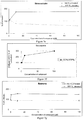
- Sterol inhibitors consist of molecules that have an effect on any protein activity in the biosynthesis of sterols, a pathway that starts with the biosynthesis of HMG-CoA reductase, followed by the biosynthesis of mevalonic acid, epoxysqualene and then all steroid structures deriving from epoxysqualene (see Figure 1 ).
- the identification of compounds which inhibit sterol metabolism, preferably with at least a decrease of 20% of total sterol content per cell, can be achieved simply by colorimetric or fluorometric dosage methods such as that commercialized by CellBioLabs (Total Sterol Assay Kit, Colorimetric method, reference STA-384 or Fluorometric method, reference STA-390), based on a treatment by cholesterol oxidase/esterase, which has proved to be efficient on detecting plant sterols ( D. Kritchevsky and S. A. Tepper, Clinical Chemistry, Vol. 25, No. 8, 1464-1465 (1979 )), or also according to methods such as those exemplified in the applications WO 2010/046385 and WO 97/03202 .
- the inhibitor of sterol metabolism is a compound of formula (I) or a salt thereof: wherein:
- R 11 is a -COR 1a group, in which R 1a is a linear or branched alkyl chain, and preferably R 11 is a -COCH(CH 3 )C 2 H 5 or -COC(CH 3 ) 2 C 2 H 5 group.
- R 14 represent a C 1 -C 6 alkyl chain, preferably a -CH 3 group, and both R 12 and R 13 represent hydrogen atoms.
- R 12 and R 14 may represent a C 1 -C 6 alkyl chain, preferably a -CH 3 group, and R 13 a hydrogen atom.
- n 1 2
- R 15 represents a hydroxyl group.
- the inhibitor of sterol metabolism is a compound of formula (II) or a salt thereof: wherein:
- X 2 represents a nitrogen atom
- W 2 , Y 2 and Z 2 represent carbon atom
- R 21 represents a group of formula: in which R 2c represents a -COR 2a group.
- the inhibitor of sterol metabolism is a compound of formula (III) or a salt thereof: wherein:
- the dotted lines of formula (III) represent single or double bonds.
- said W 3 -X 3 bond or Y 3 -Z 3 bond is single bond respectively when one of W 3 or X 3 of the W 3 -X 3 bond, or one of Y 3 or Z 3 of the Y 3 -Z 3 bond, is sulphur or oxygen.
- Said W 3 -X 3 bond or Y 3 -Z 3 bond is double bond respectively when W 3 and X 3 , or Y 3 and Z 3 are carbon or nitrogen.
- R 31 and R 32 represent C 1 -C 6 linear or branched alkyl chains, or an arylalkyl group, optionally substituted with one or more groups independently selected from linear or branched alkyl.
- R 31 represents a C 1 -C 6 linear or branched alkyl chain
- the inhibitor of sterol metabolism is a compound of formula (IV) or a salt thereof: wherein:
- R 41 and R 42 represent a hydrogen atom, a nitrile, hydroxyl, C 1 -C 2 alkyl or -COOR 4a group in which R 4a is in C 1 -C 7 and is optionally substituted by a C 4 -C 6 cycloalkyl group.
- the inhibitor of sterol metabolism is selected from Ethinylestradiol, Mevastatin, Simvastatin, Butenafine, Terbinafine, Estrone.
- the inhibitors of sterol metabolism of the disclosure are all acting on the “mevalonate” pathway, and not on the “non-mevalonate” pathway of synthesis of sterols (see Figure 1 ).
- Another subject-matter of the invention is a method for producing fatty acids comprising a triggering of triacylglycerols accumulation step in microalgae as defined according to the invention.
- the invention also relates to a method for producing biofuels comprising a triggering of triacylglycerols accumulation step in microalgae as defined according to the invention and a subsequent trans-esterification step of the obtained triacylglycerols, as described by Zhang et al., Bioresource Technology 147 (2013) 59-64 .
- the invention also concerns a method for producing pharmaceutical or cosmetic compositions comprising a triggering of triacylglycerols accumulation step in microalgae as defined according to the invention.
- the invention also relates to a method for producing human food supplements comprising a triggering of triacylglycerols accumulation step in microalgae as defined according to the invention.
- the methods of the disclosure may comprise one or more extraction steps after the triggering of triacylglycerols accumulation step in microalgae.
- the extraction step may be implemented using solvents or another extraction method well known form the skilled artisan.
- Another subject-matter of the invention relates to the use of an inhibitor of sterol metabolism to accumulate triglycerides in microalgae, more preferably in microalgae of the diatom phylum, and still more preferably in the diatom microalgae species Phaeodactylum tricornutum, wherein the inhibitor of sterol metabolism is selected from the compounds of formula (I), (III), and (IV), such as Ethinylestradiol, Mevastatin, Simvastatin, Butenafine, Terbinafine, Estrone, to accumulate triglycerides in microalgae.
- the invention also concerns the use of combination of inhibitors of sterol metabolism selected from the compounds of formula (I), (III), and (IV), such as Ethinylestradiol, Mevastatin, Simvastatin, Butenafine, Terbinafine, Estrone. Further combination of said uses with other methods known to enhance the accumulation of TAG in microalgae, in particular a shortage of nutrient, and more preferably a shortage of nitrogen are considered.
- Pt1 was grown at 20°C in 250 mL flask using "enriched artificial seawater” (ESAW) medium, prepared following the recommendations of the Canadian Center for the Culture of Microorganisms.
- ESAW enriched artificial seawater
- ESAW medium To prepare the ESAW medium, four separated solutions are prepared, two solutions of salts (solutions 1 and 2), one solution of nutrients, and one solution of vitamins. Salts are added in order to distilled deionized water (DDW). When the salts in solutions 1 and 2 are completely dissolved, the solutions 1 and 2 are mixed together. The total volume is diluted with DDW.
- DDW distilled deionized water
- Table 3 Compositions of the ESAW salts solutions 1 and 2 Solution 1: Anhydrous salts Molecular weight (g.mol -1 ) Amount to weight (g/L solution) Concentration (mM) NaCl 58.44 20.756 362.7 Na 2 SO 4 142.04 3.477 25.0 KCl 74.56 0.587 8.03 NaHCO 3 84 0.17 2.067 KBr 119.01 0.0845 0.725 H 3 BO 3 61.83 0.022 0.372 NaF 41.99 0.0027 0.0657 Solution 2: Hydrated salts MgCl 2 .6H 2 O 203.33 9.395 47.18 CaCl 2 .2H 2 O 147.03 1.316 9.134 SrCl 2 .6H 2 O 266.64 0.0214 0.082 Table 4 : Nutrient Enrichment Stocks Solutions Stock concentration (g.L -1 ) Final concentration ( ⁇ M) 1 NaNO 3 46.67 549.1 2* Na 2 glycerophosphate 6.
- the solutions are filtered through 0.45 um membrane filter with a glass fiber prefilter.
- a flask is acid-washed in 10% HCl and rinsed in distilled water before first use.
- 1 mL of Nutrient Enrichment Stock solutions 1, 2, 4, 5, 6 and 7, 2 mL of Nutrient Enrichment Stock solution 3, and 2 mL of the Vitamin Stock are added (Tables 4 and 5).
- 1.44 mL of IN HCl and 0.12g of sodium bicarbonate are added.
- the obtained ESAW medium is then sterilized by autoclaving.
- Nile Red Sigma Aldrich fluorescent staining (Excitation wavelength at 485 nm; emission at 525 nm) as described by Ren et al. (Biotechnology for Biofuels 2013, 6:143 ).
- Cells were diluted and adjusted to a cell density that was linearly correlated with Nile Red fluorescence.
- Nile Red solution 40 ⁇ L of 2.5 ⁇ g.mL -1 stock concentration, in 100% DMSO was added to 160 ⁇ L cell suspension. Specific fluorescence was determined by dividing Nile Red fluorescence intensity by the number of cells. Oil bodies stained with Nile Red were then visualized using a Zeiss AxioScope.A1 microscope (FITC filter; Excitation wavelength at 488 nm; emission at 519 nm).
- Lipid droplets can be visualized.
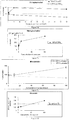
- a Phaeodactylum cell was visualized by confocal microscopy after a 72h cultivation in Nitrogen-rich N(+) medium or in Nitrogen-starved N(-) medium.
- cells On the left side, cells are shown in phase contrast ("phase").
- cells On the right side, cells are shown after excitation of Nile red at 488 nm and emission at 519 nm. Lipid droplets can be clearly visualized.
- oil is extracted using solvents or another extraction method, separated and purified by thin layer chromatography and methanolyzed to produce fatty acid methyl esters and quantified by gas chromatography coupled to a ionization flame detector or a mass spectrometer.
- TAG were extracted from 200 mg of freeze-dried Phaeodactylum tricornutum cells in order to prevent lipid degradation. Briefly, cells were frozen in liquid nitrogen immediately after harvest. The freeze-dried cell pellet was resuspended in 4 mL of boiling ethanol for 5 minutes followed by the addition of 2 mL of methanol and 8 mL of chloroform at room temperature. The mixture was then saturated with argon and stirred for 1h at room temperature. After filtration through glass wool, cell remains were rinsed with 3 mL of chloroform/methanol (2:1, v/v). In order to initiate biphase formation, 5 mL of NaCl 1% was then added to the filtrate.
- the chloroform phase was dried under argon before re-solubilization of the lipid extract in pure chloroform.
- lipids were run on silica gel thin layer chromatography (TLC) plates (Merck) with hexane/diethylether/acetic acid (70:30:1, v/v). Lipids were then visualized under UV light after pulverization of 8-anilino-1-naphthalenesulfonic acid at 2% in methanol. They were then scraped off from the TLC plates for further analyses.
- fatty acids were methylated using 3 mL of 2.5% H 2 SO 4 in methanol during 1h at 100°C (including standard amounts of 21:0). The reaction was stopped by the addition of 3 mL of water and 3 mL of hexane. The hexane phase was analyzed by gas liquid chromatography (Perkin Elmer) on a BPX70 (SGE) column. Methylated fatty acids were identified by comparison of their retention times with those of standards and quantified by surface peak method using 21:0 for calibration. Extraction and quantification were done at least 3 times.
- the number of cells in a sample can be evaluated using a fluorescent reporter, like the strain by Siaut et al. (Gene 406 (2007) 23-35 ) containing a genetic construction with Histone H4 protein fused to the Yellow Fluorescent Protein (YFP) ( Figure 5A of Siaut et al., Gene 406 (2007) 23-35 ).
- a fluorescent reporter like the strain by Siaut et al. (Gene 406 (2007) 23-35 ) containing a genetic construction with Histone H4 protein fused to the Yellow Fluorescent Protein (YFP)
- N(-) ESAW The supernatant was discarded and the pellet suspended in N(-) ESAW.
- Cells were then diluted to 1x10 6 cells/mL in N(-) ESAW.
- Samples were then separated into two batches. One was supplemented with 1 ⁇ L/mL of 46.7 g/L NaNO 3 stock to obtain a suspension of cells in N(+) ESAW medium. Another was left without NaNO 3 to obtain a N(-) ESAW culture as a control for high lipid accumulation.
- 450 ⁇ L/well of 1x10 6 cells/mL were dispensed.
- each well of the 48-well plate was then subjected to an appropriate incubation with 0, 1, 10 or 100 ⁇ M of inhibitor of sterol metabolism using 50 ⁇ L of the following: 50 ⁇ L of a 10 time concentrated solution of inhibitor of sterol metabolism (5% DMSO:95% N(+) ESAW) or 50 ⁇ L of Nitrogen-rich medium without any inhibitor of sterol metabolism (5% DMSO:95% N(+) ESAW) or Nitrogen-starved medium without any inhibitor of sterol metabolism (5% DMSO:95% N(-) ESAW) as a positive control.
- Inhibitors of sterol metabolism were obtained from the Prestwick library for their ability to trigger the accumulation of lipid droplets within the cells of Phaeodactylum tricornutum, and then purchased from Sigma-Aldrich. Table 6 : Inhibitors of sterol metabolism selected from the Prestwick library Chemical name Structure Molecular Formula Ketoconazole C 26 H 28 C 12 N 4 O 4 Mevastatin C 23 H 34 O 5 Butenafine C 23 H 27 N Simvastatin C 25 H 38 O 5 Estrone C 18 H 22 O 2 Ethinylestradiol C 20 H 24 O 2
- Phaeodactylum tricornutum was incubated for 48h in presence of 10 ⁇ M of Ketoconazole, Mevastatin, Butenafine, Simvastatin, Estrone, Ethinylestradiol and Terbinafine.
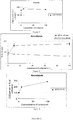
- Figure 3 a-j illustrates the dose response for Ethinylestradiol, Mevastatin, Simvastatin and Estrone with an evaluation of the TAG content by staining with Nile Red, and an evaluation of cells by monitoring YFP fluorescence from an expressed Histone H4 reporter gene.
- Figure 3 a-j shows the Nile Red levels in percent of untreated cells and the number of cells estimated by the YFP fluorescence expressed in percent of untreated cells.
- the right panels show the increase of oil content per cell, by the ratio of Nile Red fluorescence/YFP fluorescence, expressed in percent of untreated cells. The oil content per cell increases with drug concentration and consequently level of sterol metabolism inhibition and ranges from 120 to 400 % when compared to untreated cells.
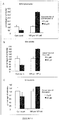
- Figure 4 illustrates the dose response for Ethinylestradiol (A), Mevastatin (B) and Mevastatin (C) with an evaluation of the TAG content by staining with Nile Red and an evaluation of cells by counting in an aliquote fraction using a Malassez cell.
- the white bars indicate the evaluation of cell numbers in percent of untreated cells
- the black bars indicate the Nile Red per 10 6 cell, in percent of untreated cells.
- the oil content per cell, and consequently level of sterol metabolism inhibition increases with incubation of 50 ⁇ M of inhibitor, and ranges from 120 to 350% when compared to untreated cells.
Landscapes
- Chemical & Material Sciences (AREA)
- Organic Chemistry (AREA)
- Life Sciences & Earth Sciences (AREA)
- Engineering & Computer Science (AREA)
- Zoology (AREA)
- Wood Science & Technology (AREA)
- Oil, Petroleum & Natural Gas (AREA)
- Health & Medical Sciences (AREA)
- General Chemical & Material Sciences (AREA)
- Chemical Kinetics & Catalysis (AREA)
- Genetics & Genomics (AREA)
- Biotechnology (AREA)
- Microbiology (AREA)
- Biochemistry (AREA)
- Bioinformatics & Cheminformatics (AREA)
- General Engineering & Computer Science (AREA)
- General Health & Medical Sciences (AREA)
- Cell Biology (AREA)
- Mycology (AREA)
- Nutrition Science (AREA)
- Food Science & Technology (AREA)
- Polymers & Plastics (AREA)
- Acyclic And Carbocyclic Compounds In Medicinal Compositions (AREA)
- Pharmaceuticals Containing Other Organic And Inorganic Compounds (AREA)
Claims (11)
- Verfahren zum Auslösen von Anreicherung von Triacylglycerinen in Mikroalgen durch Hemmen des Sterolstoffwechsels,
durch Inkubieren der Mikroalgen mit einem Sterolstoffwechsel-Hemmer einer der folgenden Formeln oder einem Salz davon: - n1 im Bereich von 1 bis 12 liegt,- R11 für ein Wasserstoffatom; eine -COR1a-Gruppe, bei der R1a eine Gruppe ist, ausgewählt aus einer linearen oder verzweigten Alkylkette, gegebenenfalls mit einer oder mehreren Gruppen substituiert, unabhängig ausgewählt aus Hydroxyl-, Halogen-, Nitro-, gegebenenfalls substituierten Benzylgruppen, oder gegebenenfalls substituierten Arylgruppen, wie Phenylgruppen, wobei die Arylgruppen eventuell mit einer oder mehreren Gruppen substituiert sind, unabhängig ausgewählt aus Halogenatomen und Methylgruppen, steht;- R12, R13 und R14, identisch oder verschieden, für ein Wasserstoffatom; eine lineare oder verzweigte Alkylkette; eine Hydroxylgruppe; eine -CH2OH-Gruppe; eine -COOR1b-Gruppe, bei der R1b für ein Wasserstoffatom, oder eine lineare oder verzweigte Alkylkette steht; eine-OSiR1cR1dR1e-Gruppe, bei der R1c, R1d und R1e, identisch oder verschieden, für ein Wasserstoffatom oder eine lineare oder verzweigte Alkylkette stehen, steht; oder R12 und R13 zusammen eine Exomethylengruppe bilden;R15 für ein Hydroxyl; eine -OSiR1cR1dR1e-Gruppe; eine -COOR1f-Gruppe, bei der Rif für ein Wasserstoffatom oder eine lineare oder verzweigte Alkylkette steht; eine -OCOR1g-Gruppe, bei der Rig für eine lineare oder verzweigte Alkylkette steht, steht; oder R15 ein Kohlenstoff ist, der mit dem Tetrahydropyranonring eine ethylenische Ungesättigtheit bildet;wobei:
 - W3, X3, Y3 und Z3 für Kohlenstoff-, Schwefel-, Stickstoff- oder Sauerstoffatom stehen;- n3 und n3' unabhängig eine ganze Zahl gleich 0 oder 1 sind, und vorzugsweise n3 und n3' gleich 1 sind;- R31 und R32, identisch oder verschieden, für ein Wasserstoffatom, lineare oder verzweigte Alkyl-, Alkenyl-, Alkinyl-, Alkinylalkenyl-, Cycloalkyl-, Alkylaryl-, Arylalkyl-, Arylalkenyl-, Arylalkinyl-, Heteroalkyl-, Heteroarylgruppen stehen oder zusammen eine Cycloalkylgruppe mit 5 bis 6 Kohlenstoffatomen bilden, wobei ein oder zwei Kohlenstoffatome der Cycloalkylgruppe möglicherweise durch ein oder zwei Heteroatome ersetzt sind, oder einer aus R31 oder R32 zusammen mit R39 eine Cycloalkylgruppe, umfassend 5 bis 6 Kohlenstoffatome, bildet, wobei ein oder zwei Kohlenstoffatome der Cycloalkylgruppe möglicherweise durch ein oder zwei Heteroatome ersetzt sind, wobei der R31 oder R32 gegebenenfalls mit einer oder mehreren Gruppen substituiert ist, unabhängig ausgewählt aus linearer oder verzweigter Alkyl-, Cycloalkyl-, wie
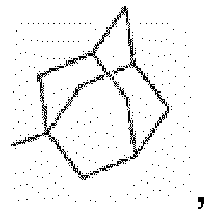 - R33 für ein Wasserstoffatom, eine lineare oder verzweigte Alkylkette oder eine Nitrilgruppe steht;- R34, R35, R36, R37, R38 und R39, identisch oder verschieden, für Wasserstoff- oder Halogenatome oder Hydroxylgruppen stehen;wobei:
 - R41 und R42, identisch oder verschieden, für ein Wasserstoffatom, Alkyl-, Alkenyl-, Alkinyl- oder Hydroxyl-, -COR4a- oder-COOR4a-Gruppe stehen, wobei R4a für ein Wasserstoffatom, eine lineare oder verzweigte Alkyl-, Aryl-, Heteroarylgruppe steht, gegebenenfalls mit einer oder mehreren Gruppen substituiert, unabhängig ausgewählt aus Alkyl- oder Cycloalkylgruppen;- R43 für ein Wasserstoffatom oder eine Alkylgruppe steht; und- R44, R45 und R46, identisch oder verschieden, für ein Wasserstoffatom, eine Alkyl-, Alkoxy-, Hydroxylgruppe oder ein durch eine Doppelbindung gebundenes Sauerstoffatom stehen, wobei die Alkylgruppe gegebenenfalls mit einem oder mehreren Halogenatomen substituiert ist und gegebenenfalls in ihrer Kette eine oder mehrere Sulfoxidfunktionen einschließt.
 - Verfahren nach Anspruch 1, wobei der Inkubationsschritt in einem Stickstoffmedium umgesetzt wird.
- Verfahren nach Ansprüchen 1 bis 2, wobei die Mikroalgen aus Mikroalgen des Diatomeen-Stamms, des Chromalveolata-Stamms und des Archaeplastidae-Stamms ausgewählt sind.
- Verfahren nach Anspruch 3, wobei die Mikroalgen ausgewählt sind aus den Diatomeen-Mikroalgenarten Phaeodactylum tricornutum und Thalassiosira pseudonana, den Chromalveolata-Mikroalgenarten Nannochloropsis und vorzugsweise Nannochloropsis gaditana, Nannochloropsis oceanica, Nannochloropsis salina, und den Archaeplastidae-Mikroalgenarten Chlamydomonas, Ostreococcus, Chlorella.
- Verfahren nach Ansprüchen 1 bis 4, wobei der Sterolstoffwechsel-Hemmer ausgewählt ist aus Ethinylestradiol, Mevastatin, Simvastatin, Butenafin, Terbinafin, Estron.
- Verfahren zum Herstellen von Fettsäuren, das einen Schritt des Auslösens von Anreicherung von Triacylglycerinen in Mikroalgen umfasst, wie gemäß Ansprüchen 1 bis 5 definiert.
- Verfahren zum Herstellen von Biokraftstoffen, das einen Schritt des Auslösens von Anreicherung von Triacylglycerinen in Mikroalgen, wie gemäß Ansprüchen 1 bis 5 definiert, und einen anschließenden Umesterungsschritt der erhaltenen Triacylglycerine umfasst.
- Verwendung eines Verfahrens zum Auslösen von Anreicherung von Triacylglycerinen in Mikroalgen, wie gemäß Ansprüchen 1 bis 5 definiert, zum Herstellen von pharmazeutischen oder kosmetischen Zusammensetzungen.
- Verwendung eines Verfahrens zum Auslösen von Anreicherung von Triacylglycerinen in Mikroalgen, wie gemäß Ansprüchen 1 bis 5 definiert, zum Herstellen von Nahrungsergänzungsmitteln.
- Verwendung eines Sterolstoffwechsel-Hemmers, um Triglyceride in Mikroalgen anzureichern,
wobei der Sterolstoffwechsel-Hemmer aus den Verbindungen der Formel (I), (III), und (IV), wie in Anspruch 1 definiert, oder Kombinationen davon gewählt ist. - Verwendung nach Anspruch 10, wobei der Sterolstoffwechsel-Hemmer aus Ethinylestradiol, Mevastatin, Simvastatin, Butenafin, Terbinafin, Estron oder Kombinationen davon gewählt ist.
Priority Applications (5)
| Application Number | Priority Date | Filing Date | Title |
|---|---|---|---|
| EP14305111.8A EP2899281B1 (de) | 2014-01-27 | 2014-01-27 | Inhibitoren des Sterolmetabolismus zu ihrer Verwendung zur Speicherung von Triglyceriden in Mikroalgen und Verfahren dafür |
| CN201580007877.6A CN106488985B (zh) | 2014-01-27 | 2015-01-27 | 固醇代谢的抑制剂使微藻内甘油三酯累积的应用及其方法 |
| CA2937733A CA2937733C (en) | 2014-01-27 | 2015-01-27 | Inhibitors of sterol metabolism for their use to accumulate triglycerides in microalgae, and methods thereof |
| US15/112,886 US10844411B2 (en) | 2014-01-27 | 2015-01-27 | Inhibitors of sterol metabolism for their use to accumulate triglycerides in microalgae, and methods thereof |
| PCT/IB2015/050614 WO2015111029A1 (en) | 2014-01-27 | 2015-01-27 | Inhibitors of sterol metabolism for their use to accumulate triglycerides in microalgae, and methods thereof |
Applications Claiming Priority (1)
| Application Number | Priority Date | Filing Date | Title |
|---|---|---|---|
| EP14305111.8A EP2899281B1 (de) | 2014-01-27 | 2014-01-27 | Inhibitoren des Sterolmetabolismus zu ihrer Verwendung zur Speicherung von Triglyceriden in Mikroalgen und Verfahren dafür |
Publications (2)
| Publication Number | Publication Date |
|---|---|
| EP2899281A1 EP2899281A1 (de) | 2015-07-29 |
| EP2899281B1 true EP2899281B1 (de) | 2020-07-01 |
Family
ID=50189641
Family Applications (1)
| Application Number | Title | Priority Date | Filing Date |
|---|---|---|---|
| EP14305111.8A Active EP2899281B1 (de) | 2014-01-27 | 2014-01-27 | Inhibitoren des Sterolmetabolismus zu ihrer Verwendung zur Speicherung von Triglyceriden in Mikroalgen und Verfahren dafür |
Country Status (5)
| Country | Link |
|---|---|
| US (1) | US10844411B2 (de) |
| EP (1) | EP2899281B1 (de) |
| CN (1) | CN106488985B (de) |
| CA (1) | CA2937733C (de) |
| WO (1) | WO2015111029A1 (de) |
Families Citing this family (2)
| Publication number | Priority date | Publication date | Assignee | Title |
|---|---|---|---|---|
| WO2017033188A1 (en) * | 2015-08-24 | 2017-03-02 | Yeda Research And Development Co. Ltd. | Algal oil and biofuel and methods of producing same |
| EP3199620B1 (de) | 2016-01-29 | 2019-08-21 | Commissariat A L'energie Atomique Et Aux Energies Alternatives | Verwendung von stickoxid oder stickoxiddonor zur induzierung der produktion von triacyglycerolen in mikroalgen |
Family Cites Families (6)
| Publication number | Priority date | Publication date | Assignee | Title |
|---|---|---|---|---|
| GB9514184D0 (en) | 1995-07-12 | 1995-09-13 | Zeneca Ltd | Assay |
| WO2010046385A2 (en) | 2008-10-21 | 2010-04-29 | Basf Se | Use of a sterol biosynthesis inhibitors on cultivated plants |
| CN102373156B (zh) * | 2010-08-10 | 2014-04-30 | 中国科学院青岛生物能源与过程研究所 | 一种用于微藻工业化生产的半干固态培养方法 |
| KR101304841B1 (ko) * | 2011-01-27 | 2013-09-05 | 영남대학교 산학협력단 | 정소 또는 태반 추출물을 함유하는 미세조류용 배지 조성물 |
| CN102517349B (zh) * | 2011-11-28 | 2014-04-09 | 天津大学 | 利用代谢组学改进微藻培养条件以提高产油能力的方法 |
| WO2013138523A1 (en) * | 2012-03-15 | 2013-09-19 | The Regents Of The University Of California | Methods for altering lipids in algae and yeast |
-
2014
- 2014-01-27 EP EP14305111.8A patent/EP2899281B1/de active Active
-
2015
- 2015-01-27 WO PCT/IB2015/050614 patent/WO2015111029A1/en not_active Ceased
- 2015-01-27 CA CA2937733A patent/CA2937733C/en active Active
- 2015-01-27 CN CN201580007877.6A patent/CN106488985B/zh active Active
- 2015-01-27 US US15/112,886 patent/US10844411B2/en active Active
Non-Patent Citations (1)
| Title |
|---|
| None * |
Also Published As
| Publication number | Publication date |
|---|---|
| CA2937733A1 (en) | 2015-07-30 |
| US10844411B2 (en) | 2020-11-24 |
| WO2015111029A1 (en) | 2015-07-30 |
| EP2899281A1 (de) | 2015-07-29 |
| US20160348138A1 (en) | 2016-12-01 |
| CN106488985B (zh) | 2020-03-20 |
| CA2937733C (en) | 2022-07-12 |
| CN106488985A (zh) | 2017-03-08 |
Similar Documents
| Publication | Publication Date | Title |
|---|---|---|
| Yang et al. | Removal of ofloxacin with biofuel production by oleaginous microalgae Scenedesmus obliquus | |
| Kim et al. | Comparison of red microalgae (Porphyridium cruentum) culture conditions for bioethanol production | |
| Sun et al. | Effect of nitrogen-starvation, light intensity and iron on triacylglyceride/carbohydrate production and fatty acid profile of Neochloris oleoabundans HK-129 by a two-stage process | |
| Nagappan et al. | Nitrogen-fixing cyanobacteria as a potential resource for efficient biodiesel production | |
| Gim et al. | Comparison of biomass production and total lipid content of freshwater green microalgae cultivated under various culture conditions | |
| Pancha et al. | Salinity induced oxidative stress enhanced biofuel production potential of microalgae Scenedesmus sp. CCNM 1077 | |
| Wang et al. | Salt stress induced lipid accumulation in heterotrophic culture cells of Chlorella protothecoides: mechanisms based on the multi-level analysis of oxidative response, key enzyme activity and biochemical alteration | |
| Moazami et al. | Biomass and lipid productivities of marine microalgae isolated from the Persian Gulf and the Qeshm Island | |
| Teo et al. | Enhancing growth and lipid production of marine microalgae for biodiesel production via the use of different LED wavelengths | |
| Ma et al. | Toxic and non-toxic strains of Microcystis aeruginosa induce temperature dependent allelopathy toward growth and photosynthesis of Chlorella vulgaris | |
| Karpagam et al. | Enhancement of lipid production and fatty acid profiling in Chlamydomonas reinhardtii, CC1010 for biodiesel production | |
| Fan | Acclimation to NaCl and light stress of heterotrophic Chlamydomonas reinhardtii for lipid accumulation | |
| Sorokina et al. | Production of biodiesel and succinic acid from the biomass of the microalga Micractinium sp. IC-44 | |
| Wang et al. | Coordinated response of photosynthesis, carbon assimilation, and triacylglycerol accumulation to nitrogen starvation in the marine microalgae Isochrysis zhangjiangensis (Haptophyta) | |
| Jiang et al. | Effects of fluctuating temperature and silicate supply on the growth, biochemical composition and lipid accumulation of Nitzschia sp. | |
| Miazek et al. | Beech wood Fagus sylvatica dilute-acid hydrolysate as a feedstock to support Chlorella sorokiniana biomass, fatty acid and pigment production | |
| Ki et al. | Enhanced carotenoid production, biodiesel quality, and harvesting efficiency in microalga Graesiella emersonii via heterotrophic cultivation strategy | |
| US10844411B2 (en) | Inhibitors of sterol metabolism for their use to accumulate triglycerides in microalgae, and methods thereof | |
| KR102020144B1 (ko) | 옥세노클로렐라 프로토테코이드 mm0011 균주 및 그 용도 | |
| Liu et al. | Enhancement of lipid productivity in green microalgae Chlorella sp. via fast neutron irradiation | |
| CN105026547B (zh) | 脂类的产生和胞外分泌方法 | |
| EP3199620B1 (de) | Verwendung von stickoxid oder stickoxiddonor zur induzierung der produktion von triacyglycerolen in mikroalgen | |
| Kugler et al. | Resilience to freezing in the vegetative cells of the microalga Lobosphaera incisa (Trebouxiophyceae, Chlorophyta) | |
| WO2013168617A1 (ja) | 脂質の製造方法 | |
| Dai et al. | Imidazole as chemical stimulant induces the accumulation of β-cryptoxanthin in Dunaliella tertiolecta |
Legal Events
| Date | Code | Title | Description |
|---|---|---|---|
| PUAI | Public reference made under article 153(3) epc to a published international application that has entered the european phase |
Free format text: ORIGINAL CODE: 0009012 |
|
| 17P | Request for examination filed |
Effective date: 20140127 |
|
| AK | Designated contracting states |
Kind code of ref document: A1 Designated state(s): AL AT BE BG CH CY CZ DE DK EE ES FI FR GB GR HR HU IE IS IT LI LT LU LV MC MK MT NL NO PL PT RO RS SE SI SK SM TR |
|
| AX | Request for extension of the european patent |
Extension state: BA ME |
|
| 17P | Request for examination filed |
Effective date: 20160129 |
|
| RBV | Designated contracting states (corrected) |
Designated state(s): AL AT BE BG CH CY CZ DE DK EE ES FI FR GB GR HR HU IE IS IT LI LT LU LV MC MK MT NL NO PL PT RO RS SE SI SK SM TR |
|
| RAP1 | Party data changed (applicant data changed or rights of an application transferred) |
Owner name: COMMISSARIAT A L'ENERGIE ATOMIQUE ET AUX ENERGIES Owner name: CENTRE NATIONAL DE LA RECHERCHE SCIENTIFIQUE |
|
| STAA | Information on the status of an ep patent application or granted ep patent |
Free format text: STATUS: EXAMINATION IS IN PROGRESS |
|
| 17Q | First examination report despatched |
Effective date: 20181123 |
|
| GRAP | Despatch of communication of intention to grant a patent |
Free format text: ORIGINAL CODE: EPIDOSNIGR1 |
|
| STAA | Information on the status of an ep patent application or granted ep patent |
Free format text: STATUS: GRANT OF PATENT IS INTENDED |
|
| INTG | Intention to grant announced |
Effective date: 20200212 |
|
| GRAS | Grant fee paid |
Free format text: ORIGINAL CODE: EPIDOSNIGR3 |
|
| GRAA | (expected) grant |
Free format text: ORIGINAL CODE: 0009210 |
|
| STAA | Information on the status of an ep patent application or granted ep patent |
Free format text: STATUS: THE PATENT HAS BEEN GRANTED |
|
| AK | Designated contracting states |
Kind code of ref document: B1 Designated state(s): AL AT BE BG CH CY CZ DE DK EE ES FI FR GB GR HR HU IE IS IT LI LT LU LV MC MK MT NL NO PL PT RO RS SE SI SK SM TR |
|
| REG | Reference to a national code |
Ref country code: AT Ref legal event code: REF Ref document number: 1286226 Country of ref document: AT Kind code of ref document: T Effective date: 20200715 Ref country code: CH Ref legal event code: EP |
|
| REG | Reference to a national code |
Ref country code: IE Ref legal event code: FG4D |
|
| REG | Reference to a national code |
Ref country code: DE Ref legal event code: R096 Ref document number: 602014067197 Country of ref document: DE |
|
| REG | Reference to a national code |
Ref country code: LT Ref legal event code: MG4D |
|
| PG25 | Lapsed in a contracting state [announced via postgrant information from national office to epo] |
Ref country code: BG Free format text: LAPSE BECAUSE OF FAILURE TO SUBMIT A TRANSLATION OF THE DESCRIPTION OR TO PAY THE FEE WITHIN THE PRESCRIBED TIME-LIMIT Effective date: 20201001 |
|
| REG | Reference to a national code |
Ref country code: NL Ref legal event code: MP Effective date: 20200701 |
|
| REG | Reference to a national code |
Ref country code: AT Ref legal event code: MK05 Ref document number: 1286226 Country of ref document: AT Kind code of ref document: T Effective date: 20200701 |
|
| PG25 | Lapsed in a contracting state [announced via postgrant information from national office to epo] |
Ref country code: FI Free format text: LAPSE BECAUSE OF FAILURE TO SUBMIT A TRANSLATION OF THE DESCRIPTION OR TO PAY THE FEE WITHIN THE PRESCRIBED TIME-LIMIT Effective date: 20200701 Ref country code: AT Free format text: LAPSE BECAUSE OF FAILURE TO SUBMIT A TRANSLATION OF THE DESCRIPTION OR TO PAY THE FEE WITHIN THE PRESCRIBED TIME-LIMIT Effective date: 20200701 Ref country code: NO Free format text: LAPSE BECAUSE OF FAILURE TO SUBMIT A TRANSLATION OF THE DESCRIPTION OR TO PAY THE FEE WITHIN THE PRESCRIBED TIME-LIMIT Effective date: 20201001 Ref country code: SE Free format text: LAPSE BECAUSE OF FAILURE TO SUBMIT A TRANSLATION OF THE DESCRIPTION OR TO PAY THE FEE WITHIN THE PRESCRIBED TIME-LIMIT Effective date: 20200701 Ref country code: GR Free format text: LAPSE BECAUSE OF FAILURE TO SUBMIT A TRANSLATION OF THE DESCRIPTION OR TO PAY THE FEE WITHIN THE PRESCRIBED TIME-LIMIT Effective date: 20201002 Ref country code: LT Free format text: LAPSE BECAUSE OF FAILURE TO SUBMIT A TRANSLATION OF THE DESCRIPTION OR TO PAY THE FEE WITHIN THE PRESCRIBED TIME-LIMIT Effective date: 20200701 Ref country code: ES Free format text: LAPSE BECAUSE OF FAILURE TO SUBMIT A TRANSLATION OF THE DESCRIPTION OR TO PAY THE FEE WITHIN THE PRESCRIBED TIME-LIMIT Effective date: 20200701 Ref country code: CZ Free format text: LAPSE BECAUSE OF FAILURE TO SUBMIT A TRANSLATION OF THE DESCRIPTION OR TO PAY THE FEE WITHIN THE PRESCRIBED TIME-LIMIT Effective date: 20200701 Ref country code: PT Free format text: LAPSE BECAUSE OF FAILURE TO SUBMIT A TRANSLATION OF THE DESCRIPTION OR TO PAY THE FEE WITHIN THE PRESCRIBED TIME-LIMIT Effective date: 20201102 Ref country code: HR Free format text: LAPSE BECAUSE OF FAILURE TO SUBMIT A TRANSLATION OF THE DESCRIPTION OR TO PAY THE FEE WITHIN THE PRESCRIBED TIME-LIMIT Effective date: 20200701 |
|
| PG25 | Lapsed in a contracting state [announced via postgrant information from national office to epo] |
Ref country code: IS Free format text: LAPSE BECAUSE OF FAILURE TO SUBMIT A TRANSLATION OF THE DESCRIPTION OR TO PAY THE FEE WITHIN THE PRESCRIBED TIME-LIMIT Effective date: 20201101 Ref country code: PL Free format text: LAPSE BECAUSE OF FAILURE TO SUBMIT A TRANSLATION OF THE DESCRIPTION OR TO PAY THE FEE WITHIN THE PRESCRIBED TIME-LIMIT Effective date: 20200701 Ref country code: LV Free format text: LAPSE BECAUSE OF FAILURE TO SUBMIT A TRANSLATION OF THE DESCRIPTION OR TO PAY THE FEE WITHIN THE PRESCRIBED TIME-LIMIT Effective date: 20200701 Ref country code: RS Free format text: LAPSE BECAUSE OF FAILURE TO SUBMIT A TRANSLATION OF THE DESCRIPTION OR TO PAY THE FEE WITHIN THE PRESCRIBED TIME-LIMIT Effective date: 20200701 |
|
| PG25 | Lapsed in a contracting state [announced via postgrant information from national office to epo] |
Ref country code: NL Free format text: LAPSE BECAUSE OF FAILURE TO SUBMIT A TRANSLATION OF THE DESCRIPTION OR TO PAY THE FEE WITHIN THE PRESCRIBED TIME-LIMIT Effective date: 20200701 |
|
| REG | Reference to a national code |
Ref country code: DE Ref legal event code: R097 Ref document number: 602014067197 Country of ref document: DE |
|
| PG25 | Lapsed in a contracting state [announced via postgrant information from national office to epo] |
Ref country code: SM Free format text: LAPSE BECAUSE OF FAILURE TO SUBMIT A TRANSLATION OF THE DESCRIPTION OR TO PAY THE FEE WITHIN THE PRESCRIBED TIME-LIMIT Effective date: 20200701 Ref country code: RO Free format text: LAPSE BECAUSE OF FAILURE TO SUBMIT A TRANSLATION OF THE DESCRIPTION OR TO PAY THE FEE WITHIN THE PRESCRIBED TIME-LIMIT Effective date: 20200701 Ref country code: IT Free format text: LAPSE BECAUSE OF FAILURE TO SUBMIT A TRANSLATION OF THE DESCRIPTION OR TO PAY THE FEE WITHIN THE PRESCRIBED TIME-LIMIT Effective date: 20200701 Ref country code: EE Free format text: LAPSE BECAUSE OF FAILURE TO SUBMIT A TRANSLATION OF THE DESCRIPTION OR TO PAY THE FEE WITHIN THE PRESCRIBED TIME-LIMIT Effective date: 20200701 Ref country code: DK Free format text: LAPSE BECAUSE OF FAILURE TO SUBMIT A TRANSLATION OF THE DESCRIPTION OR TO PAY THE FEE WITHIN THE PRESCRIBED TIME-LIMIT Effective date: 20200701 |
|
| PLBE | No opposition filed within time limit |
Free format text: ORIGINAL CODE: 0009261 |
|
| STAA | Information on the status of an ep patent application or granted ep patent |
Free format text: STATUS: NO OPPOSITION FILED WITHIN TIME LIMIT |
|
| PG25 | Lapsed in a contracting state [announced via postgrant information from national office to epo] |
Ref country code: AL Free format text: LAPSE BECAUSE OF FAILURE TO SUBMIT A TRANSLATION OF THE DESCRIPTION OR TO PAY THE FEE WITHIN THE PRESCRIBED TIME-LIMIT Effective date: 20200701 |
|
| 26N | No opposition filed |
Effective date: 20210406 |
|
| PG25 | Lapsed in a contracting state [announced via postgrant information from national office to epo] |
Ref country code: SK Free format text: LAPSE BECAUSE OF FAILURE TO SUBMIT A TRANSLATION OF THE DESCRIPTION OR TO PAY THE FEE WITHIN THE PRESCRIBED TIME-LIMIT Effective date: 20200701 |
|
| PG25 | Lapsed in a contracting state [announced via postgrant information from national office to epo] |
Ref country code: SI Free format text: LAPSE BECAUSE OF FAILURE TO SUBMIT A TRANSLATION OF THE DESCRIPTION OR TO PAY THE FEE WITHIN THE PRESCRIBED TIME-LIMIT Effective date: 20200701 Ref country code: MC Free format text: LAPSE BECAUSE OF FAILURE TO SUBMIT A TRANSLATION OF THE DESCRIPTION OR TO PAY THE FEE WITHIN THE PRESCRIBED TIME-LIMIT Effective date: 20200701 |
|
| REG | Reference to a national code |
Ref country code: CH Ref legal event code: PL |
|
| PG25 | Lapsed in a contracting state [announced via postgrant information from national office to epo] |
Ref country code: LU Free format text: LAPSE BECAUSE OF NON-PAYMENT OF DUE FEES Effective date: 20210127 |
|
| REG | Reference to a national code |
Ref country code: BE Ref legal event code: MM Effective date: 20210131 |
|
| PG25 | Lapsed in a contracting state [announced via postgrant information from national office to epo] |
Ref country code: LI Free format text: LAPSE BECAUSE OF NON-PAYMENT OF DUE FEES Effective date: 20210131 Ref country code: CH Free format text: LAPSE BECAUSE OF NON-PAYMENT OF DUE FEES Effective date: 20210131 |
|
| PG25 | Lapsed in a contracting state [announced via postgrant information from national office to epo] |
Ref country code: IE Free format text: LAPSE BECAUSE OF NON-PAYMENT OF DUE FEES Effective date: 20210127 |
|
| PG25 | Lapsed in a contracting state [announced via postgrant information from national office to epo] |
Ref country code: BE Free format text: LAPSE BECAUSE OF NON-PAYMENT OF DUE FEES Effective date: 20210131 |
|
| PG25 | Lapsed in a contracting state [announced via postgrant information from national office to epo] |
Ref country code: HU Free format text: LAPSE BECAUSE OF FAILURE TO SUBMIT A TRANSLATION OF THE DESCRIPTION OR TO PAY THE FEE WITHIN THE PRESCRIBED TIME-LIMIT; INVALID AB INITIO Effective date: 20140127 |
|
| PG25 | Lapsed in a contracting state [announced via postgrant information from national office to epo] |
Ref country code: CY Free format text: LAPSE BECAUSE OF FAILURE TO SUBMIT A TRANSLATION OF THE DESCRIPTION OR TO PAY THE FEE WITHIN THE PRESCRIBED TIME-LIMIT Effective date: 20200701 |
|
| PG25 | Lapsed in a contracting state [announced via postgrant information from national office to epo] |
Ref country code: MK Free format text: LAPSE BECAUSE OF FAILURE TO SUBMIT A TRANSLATION OF THE DESCRIPTION OR TO PAY THE FEE WITHIN THE PRESCRIBED TIME-LIMIT Effective date: 20200701 |
|
| PG25 | Lapsed in a contracting state [announced via postgrant information from national office to epo] |
Ref country code: MT Free format text: LAPSE BECAUSE OF FAILURE TO SUBMIT A TRANSLATION OF THE DESCRIPTION OR TO PAY THE FEE WITHIN THE PRESCRIBED TIME-LIMIT Effective date: 20200701 |
|
| PG25 | Lapsed in a contracting state [announced via postgrant information from national office to epo] |
Ref country code: TR Free format text: LAPSE BECAUSE OF FAILURE TO SUBMIT A TRANSLATION OF THE DESCRIPTION OR TO PAY THE FEE WITHIN THE PRESCRIBED TIME-LIMIT Effective date: 20200701 |
|
| PGFP | Annual fee paid to national office [announced via postgrant information from national office to epo] |
Ref country code: GB Payment date: 20260121 Year of fee payment: 13 |
|
| PGFP | Annual fee paid to national office [announced via postgrant information from national office to epo] |
Ref country code: DE Payment date: 20260120 Year of fee payment: 13 |
|
| PGFP | Annual fee paid to national office [announced via postgrant information from national office to epo] |
Ref country code: FR Payment date: 20260121 Year of fee payment: 13 |