EP2898886A1 - Pharmaceutical composition for oral administration with improved elution and/or absorbency - Google Patents
Pharmaceutical composition for oral administration with improved elution and/or absorbency Download PDFInfo
- Publication number
- EP2898886A1 EP2898886A1 EP13839200.6A EP13839200A EP2898886A1 EP 2898886 A1 EP2898886 A1 EP 2898886A1 EP 13839200 A EP13839200 A EP 13839200A EP 2898886 A1 EP2898886 A1 EP 2898886A1
- Authority
- EP
- European Patent Office
- Prior art keywords
- acid
- pharmaceutical composition
- carbonylpiperidin
- piperazinecarboxamide
- methylpyrrol
- Prior art date
- Legal status (The legal status is an assumption and is not a legal conclusion. Google has not performed a legal analysis and makes no representation as to the accuracy of the status listed.)
- Granted
Links
Images
Classifications
-
- A—HUMAN NECESSITIES
- A61—MEDICAL OR VETERINARY SCIENCE; HYGIENE
- A61K—PREPARATIONS FOR MEDICAL, DENTAL OR TOILETRY PURPOSES
- A61K47/00—Medicinal preparations characterised by the non-active ingredients used, e.g. carriers or inert additives; Targeting or modifying agents chemically bound to the active ingredient
- A61K47/06—Organic compounds, e.g. natural or synthetic hydrocarbons, polyolefins, mineral oil, petrolatum or ozokerite
- A61K47/08—Organic compounds, e.g. natural or synthetic hydrocarbons, polyolefins, mineral oil, petrolatum or ozokerite containing oxygen, e.g. ethers, acetals, ketones, quinones, aldehydes, peroxides
- A61K47/12—Carboxylic acids; Salts or anhydrides thereof
-
- A—HUMAN NECESSITIES
- A61—MEDICAL OR VETERINARY SCIENCE; HYGIENE
- A61K—PREPARATIONS FOR MEDICAL, DENTAL OR TOILETRY PURPOSES
- A61K31/00—Medicinal preparations containing organic active ingredients
- A61K31/33—Heterocyclic compounds
- A61K31/395—Heterocyclic compounds having nitrogen as a ring hetero atom, e.g. guanethidine or rifamycins
- A61K31/535—Heterocyclic compounds having nitrogen as a ring hetero atom, e.g. guanethidine or rifamycins having six-membered rings with at least one nitrogen and one oxygen as the ring hetero atoms, e.g. 1,2-oxazines
- A61K31/5375—1,4-Oxazines, e.g. morpholine
- A61K31/5377—1,4-Oxazines, e.g. morpholine not condensed and containing further heterocyclic rings, e.g. timolol
-
- A—HUMAN NECESSITIES
- A61—MEDICAL OR VETERINARY SCIENCE; HYGIENE
- A61K—PREPARATIONS FOR MEDICAL, DENTAL OR TOILETRY PURPOSES
- A61K9/00—Medicinal preparations characterised by special physical form
- A61K9/0012—Galenical forms characterised by the site of application
- A61K9/0053—Mouth and digestive tract, i.e. intraoral and peroral administration
-
- A—HUMAN NECESSITIES
- A61—MEDICAL OR VETERINARY SCIENCE; HYGIENE
- A61K—PREPARATIONS FOR MEDICAL, DENTAL OR TOILETRY PURPOSES
- A61K9/00—Medicinal preparations characterised by special physical form
- A61K9/20—Pills, tablets, discs, rods
- A61K9/2004—Excipients; Inactive ingredients
- A61K9/2013—Organic compounds, e.g. phospholipids, fats
-
- A—HUMAN NECESSITIES
- A61—MEDICAL OR VETERINARY SCIENCE; HYGIENE
- A61P—SPECIFIC THERAPEUTIC ACTIVITY OF CHEMICAL COMPOUNDS OR MEDICINAL PREPARATIONS
- A61P21/00—Drugs for disorders of the muscular or neuromuscular system
-
- A—HUMAN NECESSITIES
- A61—MEDICAL OR VETERINARY SCIENCE; HYGIENE
- A61P—SPECIFIC THERAPEUTIC ACTIVITY OF CHEMICAL COMPOUNDS OR MEDICINAL PREPARATIONS
- A61P29/00—Non-central analgesic, antipyretic or antiinflammatory agents, e.g. antirheumatic agents; Non-steroidal antiinflammatory drugs [NSAID]
-
- A—HUMAN NECESSITIES
- A61—MEDICAL OR VETERINARY SCIENCE; HYGIENE
- A61P—SPECIFIC THERAPEUTIC ACTIVITY OF CHEMICAL COMPOUNDS OR MEDICINAL PREPARATIONS
- A61P37/00—Drugs for immunological or allergic disorders
- A61P37/08—Antiallergic agents
Definitions
- the present invention relates to a pharmaceutical composition for oral administration comprising 4-((1-methylpyrrol-2-yl)-carbonyl)-N-(4-(4-morpholin-1-yl-carbonylpiperidin-1-yl)-phenyl)-1-piperazinecarboxamide, a salt thereof, or a solvate thereof.
- Bioavailability which is an index showing the extent to which an administrated drug reaches and acts in the blood in the general circulation, is a clinically significant parameter closely relating to drug efficacy or toxicity. Prediction or control of drug efficacy or toxicity of drugs with low bioavailability is difficult because they sometimes fail to attain the expected drug efficacy or have large intra- or inter-individual variation. Thus, obtaining appropriate bioavailability is important in the development of pharmaceutical products. Orally administered drugs are affected by the gastrointestinal absorption efficiency and metabolism in the liver and gastrointestinal tract. In particular, for poorly soluble drugs, improving drug dissolution from a pharmaceutical preparation or improving drug solubility in water is important to obtain appropriate bioavailability.
- 4-((1-methylpyrrol-2-yl)-carbonyl)-N-(4-(4-morpholin-1-yl-carbonylpiperidin-1-yl)-phenyl)-1-piperazinecarboxamide or a salt thereof is a drug for preventing and/or treating allergy diseases, inflammatory diseases, degenerative muscle diseases and the like, caused by an inhibitory effect of prostaglandin D synthase, particularly, hematopoietic prostaglandin D synthase (Patent Literature 1).
- Patent Literature 1 there has been a problem of ensuring appropriate bioavailability because of the drug's low absorption and dissolution in the neutral pH range.
- Reported techniques include, for example, a technique of combining a benzimidazole compound and a pH modifier such as monosodium fumarate (Patent Literature 2), a technique of combining a morphinan derivative and an organic acid such as fumaric acid (Patent Literature 3), and the like.
- An object of the present invention is to provide a pharmaceutical composition for oral administration comprising 4-((1-methylpyrrol-2-yl)-carbonyl)-N-(4-(4-morpholin-1-yl-carbonylpiperidin-1-yl)-phenyl)-1-piperazinecarboxamide, the pharmaceutical composition having improved dissolution and/or absorption.
- the present inventors added a different type of organic acid to 4-((1-methylpyrrol-2-yl)-carbonyl)-N-(4-(4-morpholin-1-yl-carbonylpiperidin-1-yl)-phenyl)-1-piperazinecarboxamide, a salt thereof, or a solvate thereof to evaluate its compatibility, dissolution, and absorption.
- the present invention provides a pharmaceutical composition for oral administration comprising: 4-((1-methylpyrrol-2-yl)-carbonyl)-N-(4-(4-morpholin-1-yl-carbonylpiperidin-1-yl)-phenyl)-1-piperazinecarboxamide, a salt thereof, or a solvate thereof; and at least one organic acid selected from the group consisting of adipic acid, succinic acid, Fumaric acid, L-aspartic acid, and L-glutamic acid.
- the present invention provides patients and health care professionals with a pharmaceutical composition for oral administration having excellent dissolution and absorption since the stability of the active pharmaceutical ingredient is not adversely affected and the pharmaceutical composition ensures its stability.
- the active pharmaceutical ingredient of the pharmaceutical composition for oral administration of the present invention is 4-((1-methylpyrrol-2-yl)-carbonyl)-N-(4-(4-morpholin-1-yl-carbonylpiperidin-1-yl)-phenyl)-1-piperazinecarboxamide.
- 4-((1-methylpyrrol-2-yl)-carbonyl)-N-(4-(4-morpholin-1-yl-carbonylpiperidin-1-yl)-phenyl)-1-piperazinecarboxamide may be a salt.
- the salt of the compound of the present invention include salts conventionally used in the field of organic chemistry, such as acid addition salts.
- the acid addition salts include inorganic acid salts such as hydrochlorides, sulfates, nitrates, phosphates, and perchlorates; organic acid salts such as acetates, formates, maleates, fumarates, tartrates, citrates, ascorbates, and trifluoroacetates; sulfonates such as methanesulfonates, isethionates, benzenesulfonates, and p-toluenesulfonates; etc.
- inorganic acid salts such as hydrochlorides, sulfates, nitrates, phosphates, and perchlorates
- organic acid salts such as acetates, formates, maleates, fumarates, tartrates, citrates, ascorbates, and trifluoroacetates
- sulfonates such as methanesulfonates, isethionates, benzenesulfonates
- 4-((1-methylpyrrol-2-yl)-carbonyl)-N-(4-(4-morpholin-1-yl-carbonylpiperidin-1-yl)-phenyl)-1-piperazinecarboxamide may be a solvate, preferably hydrate, and more preferably monohydrate.
- the pharmaceutical composition for oral administration of the present invention includes an acid additive.
- the acid additive is adipic acid, succinic acid, fumaric acid, L-aspartic acid, or L-glutamic acid. These acid additives can be used singly or in a combination of two or more.
- the amount of the acid additive to be mixed is about 0.25 to 5 parts by mass, preferably about 0.5 to 2 parts by mass, more preferably about 0.8 to 1.5 parts by mass, and most preferably about 1 part by mass per part by mass of the active pharmaceutical ingredient 4-(1-methylpyrrol-2-yl)-carbonyl)-N-(4-(4-morpholin-1-yl-carbonylpiperidin-1-yl)-phenyl)-1-piperazinecarboxamide.
- the total amount of the acid additives is considered to be the amount of the acid additive.
- the pharmaceutical composition for oral administration of the present invention may include various excipients that are generally used for pharmaceutical preparations as long as the effect of the present invention is not impaired.
- the excipients for pharmaceutical preparations are not particularly limited as long as they are excipients generally used. Examples of such excipients include diluents, binders, disintegrants, lubricants, flavors, coating agents, coloring agents, corrigents and the like.
- the amount of the acid additive to be mixed is about 0.15 to 6 parts by mass, preferably about 0.2 to 2 parts by mass, and more preferably about 0.5 to 2 parts by mass per part by mass of the diluting agent.
- the total amount of the acid additives is considered to be the amount of the acid additive.
- Examples of the diluents include lactose, saccharose, sucrose, mannitol, crystalline cellulose, corn starch, dextran and the like.
- Examples of the binders include hydroxypropyl cellulose, hypromellose, polyvinyl alcohol and the like.
- Examples of the disintegrants include croscarmellose sodium, crospovidone, low-substituted hydroxypropyl cellulose and the like.
- Examples of the lubricants include hydrogenated oil, magnesium stearate, calcium stearate, talc, sucrose esters of fatty acids, and stearic acid.
- Examples of the coating agents include ethyl cellulose, hypromellose, hypromellose phthalic acid ester, macrogol, Opadry and the like.
- Examples of the coloring agents include food yellow No. 5, food blue No. 2, food lake dye, ferric oxide, yellow ferric oxide, titanium oxide and the like.
- Examples of the flavors include various fragrances of orange, lemon and the like.
- Examples of the corrigents include 1-menthol, camphor, peppermint and the like. These can be used singly or in a combination of two or more.
- the pharmaceutical composition for oral administration of the present invention can be formed into granulated products, compression-molded products (e.g., uncoated tablets and film-coated tablets), powders and the like.
- the pharmaceutical preparation for oral administration of the present invention may be formed into tablets, granules, powders, fine granules and the like.
- the tablets include chewable tablets, troches, drops, tablets which quickly dissolve or disintegrate in the oral cavity and can be taken without water, and effervescent tablets that dissolve when used.
- Examples of the granules, powders, and fine granules include dry syrups that dissolve when used, and powdery or granular products that quickly dissolve in the oral cavity and can be taken without water.
- the pharmaceutical composition or pharmaceutical preparation for oral administration of the present invention can be produced by using a known method for producing orally administered pharmaceutical preparations.
- the method include a directly tableting method in which components are mixed, followed by tableting and a method in which a granulated product containing components is produced, followed by tableting.
- the granulation method include fluid bed granulation, agitation granulation, fluid bed rotation granulation, extrusion granulation, spray granulation, crushing granulation and the like.
- the resulting tablets may be film-coated, for example, by spraying a coating liquid onto the tablets.
- composition of the present invention is administered to mammals such as humans, monkeys, dogs, cats, rabbits, mice, rats, and guinea pigs, and preferably to humans.
- the daily dose of the pharmaceutical composition for oral administration of the present invention can be suitably selected according to the patient's condition, age, body weight, and sex, administration method, or the like.
- the daily dose of the 4-((1-methylpyrrol-2-yl)-carbonyl)-N-(4-(4-morpholin-1-yl-carbonylpiperidin-1-yl)-phenyl)-1-piperazinecarboxamide, which is contained as an active pharmaceutical ingredient, for an adult (body weight: 50 kg) is typically about 1 to 1,000 mg, and preferably 10 to 800 mg.
- the composition can be administered in a single dose or in about two to three divided doses per day.
- active pharmaceutical ingredient compound 1, a salt thereof, or a solvate thereof in the composition of the present invention is stabilized.
- the expression “stabilized” indicates that the decomposition amount of compound 1 monohydrate obtained when a mixed powder of active pharmaceutical ingredient compound 1 and an acid additive is allowed to stand for a specific period (e.g., two weeks) is smaller than the amount obtained when no acid additive is added.
- the composition of the present invention has improved dissolution.
- improved dissolution herein indicates that the pharmaceutical composition or preparation containing an acid additive according to the present invention has equivalent disslution to or higher than the dissolution of a pharmaceutical composition or preparation containing no acid additive.
- a difference in dissolution between an active pharmaceutical ingredient in a pharmaceutical preparation containing an acid additive and an active pharmaceutical ingredient in a pharmaceutical preparation containing no acid additive is above 10%, wherein both preparations are obtained 15 minutes after a dissolution test, which is performed according to the dissolution test (specifically, a paddle method) described in the Japanese Pharmacopoeia, Sixteenth Edition.
- the composition of the present invention can attain improved absorption.
- improved absorption herein indicates that the body absorption of the pharmaceutical composition or preparation containing an acid additive according to the present invention is equivalent to or higher than the absorption of a pharmaceutical composition or preparation that does not contain an acid additive.
- AUC blood concentration-time curve
- Cmax maximum drug concentration of the active pharmaceutical ingredient obtained after the administration of the pharmaceutical composition or preparation of the present invention is 1.5 or more times larger than that of a pharmaceutical preparation containing no acid additive.
- a diluent selected from lactose, saccharose, sucrose, mannitol, crystalline cellulose, corn starch, and dextran
- a binder selected from hydroxypropyl cellulose, hypromellose, and polyvinyl alcohol
- a disintegrant selected from croscarmellose sodium, crospovidone, and low-substituted hydroxypropyl cellulose
- a lubricant selected from hydrogenated oil, magnesium stearate, calcium stearate, talc, sucrose fatty acid ester, and stearic acid
- a coating agent selected from ethyl cellulose, hypromellose, hypromellose phthalic acid ester, macrogol, and Opadry
- a coloring agent selected from food yellow No.
- Each organic acid mixed powder and each compound 1 monohydrate powder were weighed in amounts of 0.04 g and 0.02 g, respectively, in sealed and open glass bottles. These bottles were allowed to stand at 60°C and a relative humidity of 60% for two weeks, and then the production of a compound 1 monohydrate related substance was examined by HPLC to evaluate stability. In the evaluation, a high-speed liquid chromatograph (Shimadzu Corporation) was used. Table 2 shows the results.
- Tablets of Formulation Example 1, Formulation Example 2, and Comparative Example 1 were produced. Table 3 shows the formulation of each tablet.
- Compound 1 monohydrate (1 g), and fumaric acid (1 g) as an acid additive were placed in a tablet grinder (Konishi Seisakusyo Co., Ltd.) and milled to obtain a milled product containing fumaric acid.
- the milled product containing fumaric acid (1.50 g), a diluent (4.17 g), a disintegrant (0.30 g), and a lubricant (0.030 g) were introduced and mixed in a glass bottle, and then the mixture was compressed using a tableting machine to obtain tablets each weighing 200 mg.
- Fumaric acid (1 g) was added as an acid additive in place of the succinic acid (1 g) of Formulation Example 1, followed by milling to obtain a milled product containing fumaric acid. Tablets each weighing 200 mg were obtained in the same manner as in Formulation Example 1.
- tablets were obtained in the same manner as in Formulation Examples 1 and 2 except that no acid additive was added.
- the dissolution test was performed at 50 rpm using 900 mL of dissolution test solution 2 (37°C) as a test solution in accordance with the paddle method of the dissolution test methods described in the Japanese Pharmacopoeia, Sixteenth Edition.
- a dissolution tester Toyama Sangyo Co., Ltd.
- a solution monitor Otsuka Electronics Co., Ltd.
- Tablets of Formulation Examples 3, 4, 5, and 6, and Comparative Example 2 were produced. Table 4 shows the formulation of each tablet.
- Compound 1 monohydrate, fumaric acid, and a diluent were placed in a fluidized bed granulator (Powrex Corp.), and the mixture was granulated with spraying a binder solution to obtain a granulated product.
- a disintegrant and a lubricant were added to the resulting granulated product and mixed, and then the mixture was compressed by using a tableting machine (Kikusui Seisakusyo Ltd.) to obtain tablets each weighing 282 mg.
- a film coating liquid comprising a coating agent, coloring agent, and purified water (about 92% relative to the coating solution) was sprayed onto the resulting tablets using a coater (Powrex Corp.) to obtain film-coated tablets each weighing 296 mg.
- the amount of fumaric acid was about 0.25 parts by mass per part by mass of the compound 1 monohydrate.
- Film-coated tablets were obtained in the same manner as in Formulation Example 3 except that the amount of fumaric acid was changed to about 0.5 per part by mass of the compound 1 monohydrate, and the mixing ratio of the fumaric acid and the diluent was changed.
- Film-coated tablets each weighing 296 mg were obtained in the same manner as in Formulation Example 3 except that the amount of fumaric acid was changed to about 0.8 per part by mass of the compound 1 monohydrate, and the mixing ratio of the fumaric acid and the diluent was changed.
- Film-coated tablets each weighing 296 mg were obtained in the same manner as in Formulation Example 3 except that the amount of fumaric acid was changed to about 1.0 per part by mass of the compound 1 monohydrate, and the mixing ratio of the fumaric acid and the diluent was changed.
- film-coated tablets each weighing 296 mg were obtained in the same manner as in Formulation Example 3 except that no fumaric acid was added and that the mixing ratio of the diluent was changed.
- Tablets of Formulation Example 7 and Comparative Example 3 were produced. Table 6 shows the formulation of each tablet.
- tablets each weighing 268 mg were obtained in the same manner as in Formulation Example 7 except that the granulated product was obtained by adding no fumaric acid and increasing the amount of the diluent to 3.60 g.
- Plasma extracted from each dog was centrifuged (12,000 rpm, 5°C, three minutes), and the resulting plasma (25 ⁇ L) was extracted in a polypropylene microtube, followed by the addition of purified water (25 ⁇ L).
- Acetonitrile (100 ⁇ L) and an inner standard solution (50 ⁇ L) were added and mixed in a vortex mixer.
- a supernant (60 ⁇ L) was extracted in a polypropylene autosampler tube, and purified water (120 ⁇ L) was added thereto and mixed by using a vortex mixer.
- the resulting sample for the measurement was quantified by using a high-speed liquid chromatograph/mass spectrometer (Japan Waters, Inc.).
- Tablets of Formulation Examples 8 and 9 were produced. Table 8 shows the formulation of each tablet.
- a film coating liquid comprising a coating agent (27.0 g), a coloring agent (3.0 g), and memerified water (270.0 g) was sprayed onto the resulting tablets using a coater (Powrex Corp.) to obtain film-coated tablets.
- a binder solution (108.1 g) was added to the mixture of Compound 1 monohydrate (37.4 g), fumaric acid (71.9 g), and a diluent (179.9 g), and the resulting mixture was granulated to obtain a granulated product.
- a disintegrant (12.0 g) and a lubricant (1.5 g) were added to the resulting granulated product (250.2 g), and the mixture was compressed by using a tableting machine (Kikusui Seisakusyo Ltd.) to obtain tablets each weighing 87.9 mg.
- a film coating liquid comprising a coating agent (45.0 g), a coloring agent (5.0 g), and purified water (450.0 g) was sprayed onto the resulting tablets using a coater (Powrex Corp.) to obtain film-coated tablets.
- Plasma extracted from each dog was centrifuged (12,000 rpm, 5°C, three minutes), and the resulting plasma (25 ⁇ L) was extracted in a polypropylene micro tube, followed by addition of purified water (25 ⁇ L). Acetonitrile (100 ⁇ L) and an inner standard solution (50 ⁇ L) were added and mixed in a vortex mixer. After centrifugal separation (15,000 x g, 5°C, two minutes), a supernant (60 ⁇ L) was extracted in a polypropylene autosampler tube, and purified water (120 ⁇ L) was added thereto and mixed by using a vortex mixer. The resulting sample for the measurement was quantified by using a high-speed liquid chromatograph/mass spectrometer (Japan Waters, Inc.).
- Fig. 4 shows that Formulation Example 8, which contained 1 part by mass of fumaric acid relative to compound 1, and Formulation Example 9, which contained two parts by mass of fumaric acid relative to compound 1, had sufficient absorption.
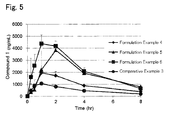
- the results of Fig. 5 also indicate that the AUC (7,890 ⁇ 1,513, 15,033 ⁇ 1,250, 20,324 ⁇ 2,856) and Cmax (2,073 ⁇ 922, 4,230 ⁇ 540, 5,023 ⁇ 1,258) of Formulation Examples 4, 5, and 6 were both 1.5 or more times larger than the AUC (3,518 ⁇ 2,932) and Cmax (842 ⁇ 850) of Comparative Example 3.
Landscapes
- Health & Medical Sciences (AREA)
- Life Sciences & Earth Sciences (AREA)
- Chemical & Material Sciences (AREA)
- Pharmacology & Pharmacy (AREA)
- Veterinary Medicine (AREA)
- Public Health (AREA)
- General Health & Medical Sciences (AREA)
- Animal Behavior & Ethology (AREA)
- Medicinal Chemistry (AREA)
- Epidemiology (AREA)
- General Chemical & Material Sciences (AREA)
- Chemical Kinetics & Catalysis (AREA)
- Engineering & Computer Science (AREA)
- Nuclear Medicine, Radiotherapy & Molecular Imaging (AREA)
- Organic Chemistry (AREA)
- Molecular Biology (AREA)
- Biophysics (AREA)
- Bioinformatics & Cheminformatics (AREA)
- Oil, Petroleum & Natural Gas (AREA)
- Nutrition Science (AREA)
- Physiology (AREA)
- Pulmonology (AREA)
- Physical Education & Sports Medicine (AREA)
- Orthopedic Medicine & Surgery (AREA)
- Neurology (AREA)
- Rheumatology (AREA)
- Immunology (AREA)
- Pain & Pain Management (AREA)
- Pharmaceuticals Containing Other Organic And Inorganic Compounds (AREA)
- Medicinal Preparation (AREA)
- Proteomics, Peptides & Aminoacids (AREA)
Abstract
Description
- This application claims priority to Japanese Patent Application No.
2012-205681 filed on September 19, 2012 - The present invention relates to a pharmaceutical composition for oral administration comprising 4-((1-methylpyrrol-2-yl)-carbonyl)-N-(4-(4-morpholin-1-yl-carbonylpiperidin-1-yl)-phenyl)-1-piperazinecarboxamide, a salt thereof, or a solvate thereof.
- Bioavailability, which is an index showing the extent to which an administrated drug reaches and acts in the blood in the general circulation, is a clinically significant parameter closely relating to drug efficacy or toxicity. Prediction or control of drug efficacy or toxicity of drugs with low bioavailability is difficult because they sometimes fail to attain the expected drug efficacy or have large intra- or inter-individual variation. Thus, obtaining appropriate bioavailability is important in the development of pharmaceutical products. Orally administered drugs are affected by the gastrointestinal absorption efficiency and metabolism in the liver and gastrointestinal tract. In particular, for poorly soluble drugs, improving drug dissolution from a pharmaceutical preparation or improving drug solubility in water is important to obtain appropriate bioavailability.
- 4-((1-methylpyrrol-2-yl)-carbonyl)-N-(4-(4-morpholin-1-yl-carbonylpiperidin-1-yl)-phenyl)-1-piperazinecarboxamide or a salt thereof is a drug for preventing and/or treating allergy diseases, inflammatory diseases, degenerative muscle diseases and the like, caused by an inhibitory effect of prostaglandin D synthase, particularly, hematopoietic prostaglandin D synthase (Patent Literature 1). However, there has been a problem of ensuring appropriate bioavailability because of the drug's low absorption and dissolution in the neutral pH range.
- To improve drug dissolution and absorption, a method of adding an organic acid is widely known. Reported techniques include, for example, a technique of combining a benzimidazole compound and a pH modifier such as monosodium fumarate (Patent Literature 2), a technique of combining a morphinan derivative and an organic acid such as fumaric acid (Patent Literature 3), and the like.
- However, regarding 4-((1-methylpyrrol-2-yl)-carbonyl)-N-(4-(4-morpholin-1-yl-carbonylpiperidin-1-yl)-phenyl)-1-piperazinecarboxamide, there has been no document reporting that dissolution and/or absorption is improved by adding a specific organic acid as an acid additive, as in the present invention.
-
- PTL 1:
WO2010/104024 - PTL 2:
WO2008/123536 - PTL 3:
WO2008/143240 - An object of the present invention is to provide a pharmaceutical composition for oral administration comprising 4-((1-methylpyrrol-2-yl)-carbonyl)-N-(4-(4-morpholin-1-yl-carbonylpiperidin-1-yl)-phenyl)-1-piperazinecarboxamide, the pharmaceutical composition having improved dissolution and/or absorption.
- The present inventors added a different type of organic acid to 4-((1-methylpyrrol-2-yl)-carbonyl)-N-(4-(4-morpholin-1-yl-carbonylpiperidin-1-yl)-phenyl)-1-piperazinecarboxamide, a salt thereof, or a solvate thereof to evaluate its compatibility, dissolution, and absorption. As a result, they found that by adding a specific organic acid such as adipic acid, succinic acid, or fumaric acid as an acid additive, a pharmaceutical composition for oral administration with excellent dissoltuin and absorption can be obtained without affecting the stability of 4-((1-methylpyrrol-2-yl)-carbonyl)-N-(4-(4-morpholin-1-yl-carbonylpiperidin-1-yl)-phenyl)-1-piperazinecarboxamide. The present invention was thus accomplished.
- Specifically, the present invention provides a pharmaceutical composition for oral administration comprising: 4-((1-methylpyrrol-2-yl)-carbonyl)-N-(4-(4-morpholin-1-yl-carbonylpiperidin-1-yl)-phenyl)-1-piperazinecarboxamide, a salt thereof, or a solvate thereof; and at least one organic acid selected from the group consisting of adipic acid, succinic acid, Fumaric acid, L-aspartic acid, and L-glutamic acid.
- The present invention provides patients and health care professionals with a pharmaceutical composition for oral administration having excellent dissolution and absorption since the stability of the active pharmaceutical ingredient is not adversely affected and the pharmaceutical composition ensures its stability.
-
-
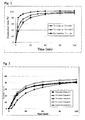
Fig. 1 shows the results of the dissolution test in Example 2. -
Fig. 2 shows the results of the dissolution test in Example 3. -
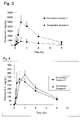
Fig. 3 shows the results of the absorption test in Example 4. -
Fig. 4 shows the results of the absorption test in Example 5. -
Fig. 5 shows the results of the absorption test in Example 5. - As used throughout this disclosure, the singular forms "a," "an," and "the" include both the singular and the plural unless otherwise indicated herein or clearly contradicted by context.
- The active pharmaceutical ingredient of the pharmaceutical composition for oral administration of the present invention is 4-((1-methylpyrrol-2-yl)-carbonyl)-N-(4-(4-morpholin-1-yl-carbonylpiperidin-1-yl)-phenyl)-1-piperazinecarboxamide. 4-((1-methylpyrrol-2-yl)-carbonyl)-N-(4-(4-morpholin-1-yl-carbonylpiperidin-1-yl)-phenyl)-1-piperazinecarboxamide may be a salt. Examples of the salt of the compound of the present invention include salts conventionally used in the field of organic chemistry, such as acid addition salts.
- Examples of the acid addition salts include inorganic acid salts such as hydrochlorides, sulfates, nitrates, phosphates, and perchlorates; organic acid salts such as acetates, formates, maleates, fumarates, tartrates, citrates, ascorbates, and trifluoroacetates; sulfonates such as methanesulfonates, isethionates, benzenesulfonates, and p-toluenesulfonates; etc.
- 4-((1-methylpyrrol-2-yl)-carbonyl)-N-(4-(4-morpholin-1-yl-carbonylpiperidin-1-yl)-phenyl)-1-piperazinecarboxamide may be a solvate, preferably hydrate, and more preferably monohydrate.
- The pharmaceutical composition for oral administration of the present invention includes an acid additive. The acid additive is adipic acid, succinic acid, fumaric acid, L-aspartic acid, or L-glutamic acid. These acid additives can be used singly or in a combination of two or more.
- The amount of the acid additive to be mixed is about 0.25 to 5 parts by mass, preferably about 0.5 to 2 parts by mass, more preferably about 0.8 to 1.5 parts by mass, and most preferably about 1 part by mass per part by mass of the active pharmaceutical ingredient 4-(1-methylpyrrol-2-yl)-carbonyl)-N-(4-(4-morpholin-1-yl-carbonylpiperidin-1-yl)-phenyl)-1-piperazinecarboxamide. When two or more acid additives are added, the total amount of the acid additives is considered to be the amount of the acid additive.
- The pharmaceutical composition for oral administration of the present invention may include various excipients that are generally used for pharmaceutical preparations as long as the effect of the present invention is not impaired. The excipients for pharmaceutical preparations are not particularly limited as long as they are excipients generally used. Examples of such excipients include diluents, binders, disintegrants, lubricants, flavors, coating agents, coloring agents, corrigents and the like.
- When a diluent is contained as an excipient, the amount of the acid additive to be mixed is about 0.15 to 6 parts by mass, preferably about 0.2 to 2 parts by mass, and more preferably about 0.5 to 2 parts by mass per part by mass of the diluting agent. When two or more acid additives are used, the total amount of the acid additives is considered to be the amount of the acid additive.
- Examples of the diluents include lactose, saccharose, sucrose, mannitol, crystalline cellulose, corn starch, dextran and the like. Examples of the binders include hydroxypropyl cellulose, hypromellose, polyvinyl alcohol and the like. Examples of the disintegrants include croscarmellose sodium, crospovidone, low-substituted hydroxypropyl cellulose and the like. Examples of the lubricants include hydrogenated oil, magnesium stearate, calcium stearate, talc, sucrose esters of fatty acids, and stearic acid. Examples of the coating agents include ethyl cellulose, hypromellose, hypromellose phthalic acid ester, macrogol, Opadry and the like. Examples of the coloring agents include food yellow No. 5, food blue No. 2, food lake dye, ferric oxide, yellow ferric oxide, titanium oxide and the like. Examples of the flavors include various fragrances of orange, lemon and the like. Examples of the corrigents include 1-menthol, camphor, peppermint and the like. These can be used singly or in a combination of two or more.
- The pharmaceutical composition for oral administration of the present invention can be formed into granulated products, compression-molded products (e.g., uncoated tablets and film-coated tablets), powders and the like. The pharmaceutical preparation for oral administration of the present invention may be formed into tablets, granules, powders, fine granules and the like. Examples of the tablets include chewable tablets, troches, drops, tablets which quickly dissolve or disintegrate in the oral cavity and can be taken without water, and effervescent tablets that dissolve when used. Examples of the granules, powders, and fine granules include dry syrups that dissolve when used, and powdery or granular products that quickly dissolve in the oral cavity and can be taken without water.
- The pharmaceutical composition or pharmaceutical preparation for oral administration of the present invention can be produced by using a known method for producing orally administered pharmaceutical preparations. Examples of the method include a directly tableting method in which components are mixed, followed by tableting and a method in which a granulated product containing components is produced, followed by tableting. Examples of the granulation method include fluid bed granulation, agitation granulation, fluid bed rotation granulation, extrusion granulation, spray granulation, crushing granulation and the like. The resulting tablets may be film-coated, for example, by spraying a coating liquid onto the tablets.
- The composition of the present invention is administered to mammals such as humans, monkeys, dogs, cats, rabbits, mice, rats, and guinea pigs, and preferably to humans.
- The daily dose of the pharmaceutical composition for oral administration of the present invention can be suitably selected according to the patient's condition, age, body weight, and sex, administration method, or the like. The daily dose of the 4-((1-methylpyrrol-2-yl)-carbonyl)-N-(4-(4-morpholin-1-yl-carbonylpiperidin-1-yl)-phenyl)-1-piperazinecarboxamide, which is contained as an active pharmaceutical ingredient, for an adult (body weight: 50 kg) is typically about 1 to 1,000 mg, and preferably 10 to 800 mg. The composition can be administered in a single dose or in about two to three divided doses per day.
- In one embodiment, active
pharmaceutical ingredient compound 1, a salt thereof, or a solvate thereof in the composition of the present invention is stabilized. The expression "stabilized" indicates that the decomposition amount ofcompound 1 monohydrate obtained when a mixed powder of activepharmaceutical ingredient compound 1 and an acid additive is allowed to stand for a specific period (e.g., two weeks) is smaller than the amount obtained when no acid additive is added. - In another embodiment, the composition of the present invention has improved dissolution. The expression "improved dissolution" herein indicates that the pharmaceutical composition or preparation containing an acid additive according to the present invention has equivalent disslution to or higher than the dissolution of a pharmaceutical composition or preparation containing no acid additive. One example is a case where a difference in dissolution between an active pharmaceutical ingredient in a pharmaceutical preparation containing an acid additive and an active pharmaceutical ingredient in a pharmaceutical preparation containing no acid additive is above 10%, wherein both preparations are obtained 15 minutes after a dissolution test, which is performed according to the dissolution test (specifically, a paddle method) described in the Japanese Pharmacopoeia, Sixteenth Edition.
- In still another embodiment, the composition of the present invention can attain improved absorption. The expression "improved absorption" herein indicates that the body absorption of the pharmaceutical composition or preparation containing an acid additive according to the present invention is equivalent to or higher than the absorption of a pharmaceutical composition or preparation that does not contain an acid additive. For example, the area under the blood concentration-time curve (AUC) obtained after the administration of the pharmaceutical composition or preparation of the present invention is 1.5 or more times larger than that of a pharmaceutical preparation that does not contain an acid additive. Additionally, the maximum drug concentration (Cmax) of the active pharmaceutical ingredient obtained after the administration of the pharmaceutical composition or preparation of the present invention is 1.5 or more times larger than that of a pharmaceutical preparation containing no acid additive.
- Below are shown the embodiments, including preferable embodiments, of the present invention.
- 1. A pharmaceutical composition for oral administration comprising 4-((1-methylpyrrol-2-yl)-carbonyl)-N-(4-(4-morpholin-1-yl-carbonylpiperidin-1-yl)-phenyl)-1-piperazinecarboxamide, a salt thereof, or a solvate thereof, as an active pharmaceutical ingredient; and at least one acid additive selected from the group consisting of adipic acid, succinic acid, fumaric acid, L-aspartic acid, and L-glutamic acid.
- 2. The pharmaceutical composition for oral administration according to
Item 1, wherein the acid additive is contained in an amount of 0.25 to 5 parts by mass per part by mass of the 4-((1-methylpyrrol-2-yl)-carbonyl)-N-(4-(4-morpholin-1-yl-carbonylpiperidin-1-yl)-phenyl)-1-piperazinecarboxamide. - 3. The pharmaceutical composition for oral administration according to
Item 1, wherein the acid additive is contained in an amount of 0.5 to 2 parts by mass per part by mass of the 4-((1-methylpyrrol-2-yl)-carbonyl)-N-(4-(4-morpholin-1-yl-carbonylpiperidin-1-yl)-phenyl)-1-piperazinecarboxamide. - 4. The pharmaceutical composition for oral administration according to
Item 1, wherein the composition further comprises a diluent, and the acid additive is contained in an amount of 0.15 to 6 parts by mass per part by mass of the diluent. - 5. The pharmaceutical composition for oral administration according to any one of
Items 1 to 4, wherein the acid additive is fumaric acid. - 6. The pharmaceutical composition according to any one of
Items 1 to 5, wherein a difference in dissolution rate between an active pharmaceutical ingredient of a pharmaceutical preparation containing an acid additive and an active pharmaceutical ingredient of a pharmaceutical preparation containing no acid additive is above 10%, the pharmaceutical preparations being obtained 15 minutes after a dissolution test according to a dissolution test method described in the Japanese Pharmacopoeia, Sixteenth Edition. - 7. The pharmaceutical composition for oral administration according to any one of
Items 1 to 5, wherein the AUC and Cmax of the active pharmaceutical ingredient obtained after oral administration of the pharmaceutical composition are 1.5 or more times larger than the AUC and Cmax of the pharmaceutical composition containing no acid additive. - 8. A method for stabilizing 4-((1-methylpyrrol-2-yl)-carbonyl)-N-(4-(4-morpholin-1-yl-carbonylpiperidin-1-yl)-phenyl)-1-piperazinecarboxamide, a salt thereof, or a solvate thereof contained in a pharmaceutical composition, the method comprising adding at least one acid additive selected from the group consisting of adipic acid, succinic acid, fumaric acid, L-aspartic acid, and L-glutamic acid to the pharmaceutical composition.
- 9. A method for improving dissolution of 4-((1-methylpyrrol-2-yl)-carbonyl)-N-(4-(4-morpholin-1-yl-carbonylpiperidin-1-yl)-phenyl)-1-piperazinecarboxamide, a salt thereof, or a solvate thereof contained in a pharmaceutical composition, the method comprising adding at least one acid additive selected from the group consisting of adipic acid, succinic acid, fumaric acid, L-aspartic acid, and L-glutamic acid to the pharmaceutical composition.
- 10. A method for improving absorption of 4-((1-methylpyrrol-2-yl)-carbonyl)-N-(4-(4-morpholin-1-yl-carbonylpiperidin-1-yl)-phenyl)-1-piperazinecarboxamide, a salt thereof, or a solvate thereof contained in a pharmaceutical composition, the method comprising adding at least one acid additive selected from the group consisting of adipic acid, succinic acid, fumaric acid, L-aspartic acid, and L-glutamic acid to the pharmaceutical composition.
- 11. Use of at least one acid additive selected from the group consisting of adipic acid, succinic acid, fumaric acid, L-aspartic acid, and L-glutamic acid for stabilizing 4-((1-methylpyrrol-2-yl)-carbonyl)-N-(4-(4-morpholin-1-yl-carbonylpiperidin-1-yl)-phenyl)-1-piperazinecarboxamide, a salt thereof, or a solvate thereof contained in a pharmaceutical composition.
- 12. Use of at least one acid additive selected from the group consisting of adipic acid, succinic acid, fumaric acid, L-aspartic acid, and L-glutamic acid for improving dissolution of 4-((1-methylpyrrol-2-yl)-carbonyl)-N-(4-(4-morpholin-1-yl-carbonylpiperidin-1-yl)-phenyl)-1-piperazinecarboxamide, a salt thereof, or a solvate thereof contained in a pharmaceutical composition.
- 13. Use of at least one acid additive selected from the group consisting of adipic acid, succinic acid, fumaric acid, L-aspartic acid, and L-glutamic acid for improving absorption of 4-((1-methylpyrrol-2-yl)-carbonyl)-N-(4-(4-morpholin-1-yl-carbonylpiperidin-1-yl)-phenyl)-1-piperazinecarboxamide, a salt thereof, or a solvate thereof contained in a pharmaceutical composition.
- 14. Use of at least one acid additive selected from the group consisting of adipic acid, succinic acid, fumaric acid, L-aspartic acid, and L-glutamic acid for producing a pharmaceutical composition for oral administration comprising 4-((1-methylpyrrol-2-yl)-carbonyl)-N-(4-(4-morpholin-1-yl-carbonylpiperidin-1-yl)-phenyl)-1-piperazinecarboxamide, a salt thereof, or a solvate thereof.
- The present invention is explained in detail with reference to the Examples; however, the present invention is not limited to these.
- In Examples 2 to 5, the following materials can be used: a diluent selected from lactose, saccharose, sucrose, mannitol, crystalline cellulose, corn starch, and dextran; a binder selected from hydroxypropyl cellulose, hypromellose, and polyvinyl alcohol; a disintegrant selected from croscarmellose sodium, crospovidone, and low-substituted hydroxypropyl cellulose; a lubricant selected from hydrogenated oil, magnesium stearate, calcium stearate, talc, sucrose fatty acid ester, and stearic acid; a coating agent selected from ethyl cellulose, hypromellose, hypromellose phthalic acid ester, macrogol, and Opadry; and a coloring agent selected from food yellow No. 5, food blue No. 2, food lake dye, ferric oxide, yellow ferric oxide, and titanium oxide. No diluent, binder, disintegrant, lubricant, coating agent, or coloring agent will substantially affect the evaluation of dissolution or absorption of the pharmaceutical preparations.
- 4-((1-methylpyrrol-2-yl)-carbonyl)-N-(4-(4-morpholin-1-yl-carbonylpiperidin-1-yl)-phenyl)-1-piperazinecarboxamide (compound 1) monohydrate and organic acids were respectively weighed in an amount of 0.5 g.
Compound 1 monohydrate was mixed with each organic acid in a mortar to produce individual mixed powders. Subsequently,compound 1 monohydrate alone was weighed in an amount of 0.5 g to produce acompound 1 monohydrate powder according to the same method as in the production of the organic acid mixed powders. - Each organic acid mixed powder and each
compound 1 monohydrate powder were weighed in amounts of 0.04 g and 0.02 g, respectively, in sealed and open glass bottles. These bottles were allowed to stand at 60°C and a relative humidity of 60% for two weeks, and then the production of acompound 1 monohydrate related substance was examined by HPLC to evaluate stability. In the evaluation, a high-speed liquid chromatograph (Shimadzu Corporation) was used. Table 2 shows the results. -
- Detector: Ultraviolet spectrophotometer (measurement wavelength: 260 nm)
- Column: Phenylated silica gel for liquid chromatography (3.5 µm) (XBridge Phenyl, Japan Waters, Inc.) was placed in a stainless pipe with an inner diameter of 4.6 mm and a length of 10 cm. Column temperature: Constant temperature of around 40°C
-
- Mobile phase A: Phosphate buffer solution (pH 7)
- Mobile phase B: Acetonitrile
- Transfer of mobile phase: The concentration gradient is regulated by changing the mixing ratio of mobile phases A and B as shown in Table 1.
- When anhydrous citric acid, L-tartaric acid, DL-tartaric acid, or DL-malic acid was added as an acid additive, the amount of a related substance significantly increased under open conditions, sealed conditions, or both. In contrast, when an organic acid selected from adipic acid, succinic acid, fumaric acid, L-aspartic acid, and L-glutamic acid was added, the amount of an related substance was the same as the initial value under both open conditions and sealed conditions, which did not affect the stability of compound 1 (Table 2).
Table 2 Sealed Related Substances (mass%) Open Related Substances (mass%) Initial value Related Substances (mass%) Compound 1 monohydrate0.44 0.47 0.46 + adipic acid 0.20 0.17 0.23 + succinic acid 0.21 0.26 0.20 + fumaric acid 0.26 0.25 0.25 + L-aspartic acid 0.19 0.18 0.21 + L-glutamic acid 0.20 0.17 0.20 + anhydrous citric acid 2.03 43.31 0.50 + L-tartaric acid 0.69 45.62 0.38 + DL-tartaric acid 0.73 35.39 0.76 + DL-malic acid 29.60 60.90 0.37 - Tablets of Formulation Example 1, Formulation Example 2, and Comparative Example 1 were produced. Table 3 shows the formulation of each tablet.
-
Compound 1 monohydrate (1 g), and fumaric acid (1 g) as an acid additive were placed in a tablet grinder (Konishi Seisakusyo Co., Ltd.) and milled to obtain a milled product containing fumaric acid. The milled product containing fumaric acid (1.50 g), a diluent (4.17 g), a disintegrant (0.30 g), and a lubricant (0.030 g) were introduced and mixed in a glass bottle, and then the mixture was compressed using a tableting machine to obtain tablets each weighing 200 mg. - Fumaric acid (1 g) was added as an acid additive in place of the succinic acid (1 g) of Formulation Example 1, followed by milling to obtain a milled product containing fumaric acid. Tablets each weighing 200 mg were obtained in the same manner as in Formulation Example 1.
- As a control, tablets were obtained in the same manner as in Formulation Examples 1 and 2 except that no acid additive was added.
- Regarding Formulation Examples 1 and 2, and Comparative Example 1, the dissolution test was performed at 50 rpm using 900 mL of dissolution test solution 2 (37°C) as a test solution in accordance with the paddle method of the dissolution test methods described in the Japanese Pharmacopoeia, Sixteenth Edition. As measurement equipment, a dissolution tester (Toyama Sangyo Co., Ltd.) and a solution monitor (Otsuka Electronics Co., Ltd.) were used.
- The results are shown in
Fig. 1 (n=3, average dissolution rate ± SD). In Comparative Example 1, which contained no acid additive, the dissolution rate obtained 15 minutes later was 65%, whereas in Formulation Example 1, which contained fumaric acid, and Formulation Example 2, which contained succinic acid, the dissolution rates obtained 15 minutes later were 93% and 76%, respectively. This confirmed that the acid additives of the present invention had a dissolution improvement effect.Table 3 Formulation Example 1 (mg/tablet) Formulation Example 2 (mg/tablet) Comparative Example 1 (mg/tablet) Compound 1 monohydrate25 25 25 Fumaric acid 25 - - Succinic acid - 25 - Diluent 139 139 139 Disintegrant 10 10 10 Lubricant 1 1 1 Total 200 200 175 - Tablets of Formulation Examples 3, 4, 5, and 6, and Comparative Example 2 were produced. Table 4 shows the formulation of each tablet.
-
Compound 1 monohydrate, fumaric acid, and a diluent were placed in a fluidized bed granulator (Powrex Corp.), and the mixture was granulated with spraying a binder solution to obtain a granulated product. A disintegrant and a lubricant were added to the resulting granulated product and mixed, and then the mixture was compressed by using a tableting machine (Kikusui Seisakusyo Ltd.) to obtain tablets each weighing 282 mg. A film coating liquid comprising a coating agent, coloring agent, and purified water (about 92% relative to the coating solution) was sprayed onto the resulting tablets using a coater (Powrex Corp.) to obtain film-coated tablets each weighing 296 mg. In Formulation Example 3, the amount of fumaric acid was about 0.25 parts by mass per part by mass of thecompound 1 monohydrate. - Film-coated tablets were obtained in the same manner as in Formulation Example 3 except that the amount of fumaric acid was changed to about 0.5 per part by mass of the
compound 1 monohydrate, and the mixing ratio of the fumaric acid and the diluent was changed. - Film-coated tablets each weighing 296 mg were obtained in the same manner as in Formulation Example 3 except that the amount of fumaric acid was changed to about 0.8 per part by mass of the
compound 1 monohydrate, and the mixing ratio of the fumaric acid and the diluent was changed. - Film-coated tablets each weighing 296 mg were obtained in the same manner as in Formulation Example 3 except that the amount of fumaric acid was changed to about 1.0 per part by mass of the
compound 1 monohydrate, and the mixing ratio of the fumaric acid and the diluent was changed. - As a control, film-coated tablets each weighing 296 mg were obtained in the same manner as in Formulation Example 3 except that no fumaric acid was added and that the mixing ratio of the diluent was changed.
- Regarding Formulation Examples 3, 4, 5, and 6, and Comparative Example 2, the dissolution test was performed at 50 rpm using 900 mL of dissolution test solution 2 (37°C) as a test solution in accordance with the paddle method of the dissolution test methods described in the Japanese Pharmacopoeia, Sixteenth Edition. In the evaluation, a high-speed liquid chromatograph (Shimadzu Corporation) was used. The results are shown in
Fig. 2 (n=3, average dissolution rate ± SD). Formulation Examples 3, 4, 5, and 6, which contained fumaric acid, showed improvement in dissolution compared to Comparative Example 2, which contained no fumaric acid.Table 4 Formulation Example 3 (mg/tablet) Formulation Example 4 (mg/tablet) Formulation Example 5 (mg/tablet) Formulation Example 6 (mg/tablet) Comparative Example 2 (mg/tablet) Compound 1 monohydrate104 104 104 104 104 Fumaric acid 25 50 80 100 0 Diluent 125 100 70 50 150 Binder 10 10 10 10 10 Disintegrant 15 15 15 15 15 Lubricant 3 3 3 3 3 Coating agent 12.6 12.6 12.6 12.6 12.6 Coloring agent 1.54 1.54 1.54 1.54 1.54 Total 296 296 296 296 296 - Tablets of Formulation Example 7 and Comparative Example 3 were produced. Table 6 shows the formulation of each tablet.
-
Compound 1 monohydrate (2.40 g), fumaric acid (2.40 g), and a diluent (1.2 g) were placed in a mortar. A binder solution (1.28 g) was added thereto., and the mixture was granulated to obtain a granulated product. The granulated product was sized, and then allowed to stand and dried at 60°C for one hour to obtain a dry granulated product. A disintegrant (0.26 g) and a lubricant (0.02 g) were added to the resulting dry granulated product (5.08 g) and mixed. The mixture was then compressed using a tableting machine (Shimadzu Corporation) to obtain tablets each weighing 268 mg. - As a control, tablets each weighing 268 mg were obtained in the same manner as in Formulation Example 7 except that the granulated product was obtained by adding no fumaric acid and increasing the amount of the diluent to 3.60 g.
-
- Animals used: Beagles (Kitayama Labes, male, n=6)
- Meal conditions: Fasted from the previous day for 20 hours.
- Dose: 100 mg/body
- Sample to be administered: Formulation Example 7 and Comparative Example 3, one tablet per Example
- Administration method: Administered together with 50 mL water. Pretreatment: An atropine sulfate intravenous injection (10 µg/0.1 mL/kg) and an omeprazole intravenous injection (1 mg/0.25 mL/kg) were intravenously administered 30 minutes before sample administration. Another omeprazole intravenous injection (1 mg/0.25 mL/kg) was intravenously administered 30 minutes after the sample administration.
- Blood extracted from each dog was centrifuged (12,000 rpm, 5°C, three minutes), and the resulting plasma (25 µL) was extracted in a polypropylene microtube, followed by the addition of purified water (25 µL). Acetonitrile (100 µL) and an inner standard solution (50 µL) were added and mixed in a vortex mixer. After centrifugal separation (15,000 x g, 5°C, two minutes), a supernant (60 µL) was extracted in a polypropylene autosampler tube, and purified water (120 µL) was added thereto and mixed by using a vortex mixer. The resulting sample for the measurement was quantified by using a high-speed liquid chromatograph/mass spectrometer (Japan Waters, Inc.).
- Device: High-speed liquid chromatograph/mass spectrometer (Japan Waters, Inc.)
- Liquid Chromatography Measurement Conditions
- Column: ACQUITY UPLC BEH C18 (1.7 µm, inner diameter: 2.1 mm,
- length: 50 mm)
- Column temperature: 40°C
-
- Mobile phase A: 10 mmol/L ammonium formate
- Mobile phase B: Acetonitrile
- Transfer of mobile phase: The concentration gradient is regulated by changing the mixing ratio of mobile phases A and B as shown in Table 5.
-
- Ionization source: Electrospray ionization (ESI) positive mode Scan mode: MRM
- The results are shown in
Fig. 3 (n=6, average plasma concentration + SD). The AUC (17,783±3,813) and Cmax (5,067±1,334) of Formulation Example 7, which contained fumaric acid, were respectively 5 times and 6 times larger than the AUC (3,518±2,932) and Cmax (842±850) of Comparative Example 3, which contained no fumaric acid. Formulation Example 7, which contained fumaric acid, showed improvement in absorption compared to Comparative Example 3, which contained no fumaric acid. This confirmed that fumaric acid improved absorption.Table 6 Formulation Example 7 (mg/tablet) Comparative Example 3 (mg/tablet) Compound 1monohydrate 100 100 Fumaric acid 100 - Diluent 50 150 Binder 4 4 Disintegrant 13 13 Lubricant 1 1 Total 268 268 - Tablets of Formulation Examples 8 and 9 were produced. Table 8 shows the formulation of each tablet.
-
Compound 1 monohydrate (42.5 g), fumaric acid (40.9 g), and a diluent (204.4) were placed in a fluidized bed granulator (Freund Corp.), and the mixture was granulated with spraying a binder solution (123.0 g) to obtain a granulated product. A disintegrant (13.6 g) and a lubricant (1.7 g) were added to the resulting granulated product and mixed, and then the mixture was compressed by using a tableting machine (Kikusui Seisakusyo Ltd.) to obtain tablets each weighing 77.9 mg. A film coating liquid comprising a coating agent (27.0 g), a coloring agent (3.0 g), and puirified water (270.0 g) was sprayed onto the resulting tablets using a coater (Powrex Corp.) to obtain film-coated tablets. - A binder solution (108.1 g) was added to the mixture of
Compound 1 monohydrate (37.4 g), fumaric acid (71.9 g), and a diluent (179.9 g), and the resulting mixture was granulated to obtain a granulated product. A disintegrant (12.0 g) and a lubricant (1.5 g) were added to the resulting granulated product (250.2 g), and the mixture was compressed by using a tableting machine (Kikusui Seisakusyo Ltd.) to obtain tablets each weighing 87.9 mg. A film coating liquid comprising a coating agent (45.0 g), a coloring agent (5.0 g), and purified water (450.0 g) was sprayed onto the resulting tablets using a coater (Powrex Corp.) to obtain film-coated tablets. -
- Animals used: Beagles (Kitayama Labes, male, n=3 or 6)
- Meal conditions: Fasted from the previous day for 20 hours.
- Dose: 10 mg/body or 100 mg/body
- Sample to be administered: Formulation Example 8 or 9, or
- Formulation Example 4, 5, or 6, or Comparative Example 3, one tablet per Example
- Administration method: Administered together with 50 mL water Pretreatment: An atropine sulfate intravenous injection (10 µg/0.1 mL/kg) and an omeprazole intravenous injection (1 mg/0.25 mL/kg) were intravenously administered 30 minutes before sample administration. Another omeprazole intravenous injection (1 mg/0.25 mL/kg) was intravenously administered 30 minutes after sample administration.
- Blood extracted from each dog was centrifuged (12,000 rpm, 5°C, three minutes), and the resulting plasma (25 µL) was extracted in a polypropylene micro tube, followed by addition of purified water (25 µL). Acetonitrile (100 µL) and an inner standard solution (50 µL) were added and mixed in a vortex mixer. After centrifugal separation (15,000 x g, 5°C, two minutes), a supernant (60 µL) was extracted in a polypropylene autosampler tube, and purified water (120 µL) was added thereto and mixed by using a vortex mixer. The resulting sample for the measurement was quantified by using a high-speed liquid chromatograph/mass spectrometer (Japan Waters, Inc.).
- Device: High-speed liquid chromatograph/mass spectrometer (Japan Waters, Inc.)
- Liquid Chromatography Measurement Conditions
- Column: ACQUITY UPLC BEH C18 (1.7 µm, inner diameter: 2.1 mm,
- length: 50 mm)
- Column temperature: 40°C
-
- Mobile phase A: 10 mmol/L ammonium acetate
- Mobile phase B: Acetonitrile
- Transfer of mobile phase: The concentration gradient is regulated by changing the mixing ratio of mobile phases A and B as shown in Table 7.
-
- Ionization source: Electrospray ionization (ESI) positive mode Scan mode: MRM
- The results are shown in
Fig. 4 (n=6, average plasma concentration + SD) andFig. 5 (n=3, average plasma concentration + SD).Fig. 4 shows that Formulation Example 8, which contained 1 part by mass of fumaric acid relative to compound 1, and Formulation Example 9, which contained two parts by mass of fumaric acid relative to compound 1, had sufficient absorption. The results ofFig. 5 also indicate that the AUC (7,890±1,513, 15,033±1,250, 20,324±2,856) and Cmax (2,073±922, 4,230±540, 5,023±1,258) of Formulation Examples 4, 5, and 6 were both 1.5 or more times larger than the AUC (3,518±2,932) and Cmax (842±850) of Comparative Example 3. Formulation Examples 4, 5, and 6, which contained fumaric acid, showed more excellent absorption than that of Comparative Example 3.Table 8 Formulation Example 8 (mg/tablet) Formulation Example 9 (mg/tablet) Compound 1 monohydrate10.4 10.4 Fumaric acid 10 20 Diluent 50 50 Binder 3 3 Disintegrant 4 4 Lubricant 0.5 0.5 Coating agent 3.5 3.95 Coloring agent 0.4 0.45 Total 81.8 92.3
| Time after injection (min) | Phase A (%) | Phase B (%) |
| 0-2 | 90->80 | 10->20 |
| 2-15 | 80->75 | 20->25 |
| 15-20 | 75->30 | 25->70 |
| 20-22 | 30 | 70 |
| Flow rate: 1.5 mL/min |
| Time after injection (min) | Phase A(%) | Phase B (%) |
| 0.00-2.10 | 80->50 | 20->50 |
| 2.10-2.40 | 50 | 50 |
| 2.40-2.41 | 50->80 | 50->20 |
| 2.41-3.50 | 80 | 20 |
| Flow rate: 0.3 mL/min |
| Time after injection (min) | Phase A (%) | Phase B (%) |
| 0.00-2.25 | 80->50 | 20->50 |
| 2.25-3.00 | 50 | 50 |
| 3.00-3.01 | 50->80 | 50->20 |
| 3.01-4.50 | 80 | 20 |
| Flow rate: 0.3 mL/min |
Claims (14)
- A pharmaceutical composition for oral administration comprising:4-((1-methylpyrrol-2-yl)-carbonyl)-N-(4-(4-morpholin-1-yl-carbonylpiperidin-1-yl)-phenyl)-1-piperazinecarboxamide, a salt thereof, or a solvate thereof, as an active pharmaceutical ingredient; andat least one acid additive selected from the group consisting of adipic acid, succinic acid, fumaric acid, L-aspartic acid, and L-glutamic acid.
- The pharmaceutical composition for oral administration according to claim 1, wherein the acid additive is contained in an amount of 0.25 to 5 parts by mass per part by mass of the 4-((1-methylpyrrol-2-yl)-carbonyl)-N-(4-(4-morpholin-1-yl-carbonylpiperidin-1-yl)-phenyl)-1-piperazinecarboxamide.
- The pharmaceutical composition for oral administration according to claim 1, wherein the acid additive is contained in an amount of 0.5 to 2 parts by mass per part by mass of the 4-((1-methylpyrrol-2-yl)-carbonyl)-N-(4-(4-morpholin-1-yl-carbonylpiperidin-1-yl)-phenyl)-1-piperazinecarboxamide.
- The pharmaceutical composition for oral administration according to claim 1, wherein the composition further comprises a diluting agent, and the acid additive is contained in an amount of 0.15 to 6 parts by mass per part by mass of the diluent.
- The pharmaceutical composition for oral administration according to any one of claims 1 to 4, wherein the acid additive is fumaric acid.
- The pharmaceutical composition according to any one of claims 1 to 5, wherein a difference in dissolution rate between an active pharmaceutical ingredient of a pharmaceutical preparation containing an acid additive and an active pharmaceutical ingredient of a pharmaceutical preparation containing no acid additive is above 10%, the pharmaceutical preparations being obtained 15 minutes after a dissolution test according to a dissolution test method described in the Japanese Pharmacopoeia, Sixteenth Edition.
- The pharmaceutical composition for oral administration according to any one of claims 1 to 5, wherein the AUC and Cmax of the active pharmaceutical ingredient obtained after oral administration of the pharmaceutical composition are 1.5 or more times larger than the AUC and Cmax of the pharmaceutical composition containing no acid additive.
- A method for stabilizing 4-((1-methylpyrrol-2-yl)-carbonyl)-N-(4-(4-morpholin-1-yl-carbonylpiperidin-1-yl)-phenyl)-1-piperazinecarboxamide, a salt thereof, or a solvate thereof contained in a pharmaceutical composition, the method comprising
adding at least one acid additive selected from the group consisting of adipic acid, succinic acid, fumaric acid, L-aspartic acid, and L-glutamic acid to the pharmaceutical composition. - A method for improving dissolution of 4-((1-methylpyrrol-2-yl)-carbonyl)-N-(4-(4-morpholin-1-yl-carbonylpiperidin-1-yl)-phenyl)-1-piperazinecarboxamide, a salt thereof, or a solvate thereof contained in a pharmaceutical composition, the method comprising
adding at least one acid additive selected from the group consisting of adipic acid, succinic acid, fumaric acid, L-aspartic acid, and L-glutamic acid to the pharmaceutical composition. - A method for improving absorption of 4-((1-methylpyrrol-2-yl)-carbonyl)-N-(4-(4-morpholin-1-yl-carbonylpiperidin-1-yl)-phenyl)-1-piperazinecarboxamide, a salt thereof, or a solvate thereof contained in a pharmaceutical composition, the method comprising
adding at least one acid additive selected from the group consisting of adipic acid, succinic acid, fumaric acid, L-aspartic acid, and L-glutamic acid to the pharmaceutical composition. - Use of at least one acid additive selected from the group consisting of adipic acid, succinic acid, fumaric acid, L-aspartic acid, and L-glutamic acid for stabilizing 4-((1-methylpyrrol-2-yl)-carbonyl)-N-(4-(4-morpholin-1-yl-carbonylpiperidin-1-yl)-phenyl)-1-piperazinecarboxamide, a salt thereof, or a solvate thereof contained in a pharmaceutical composition.
- Use of at least one acid additive selected from the group consisting of adipic acid, succinic acid, fumaric acid, L-aspartic acid, and L-glutamic acid for improving dissolution of 4-((1-methylpyrrol-2-yl)-carbonyl)-N-(4-(4-morpholin-1-yl-carbonylpiperidin-1-yl)-phenyl)-1-piperazinecarboxamide, a salt thereof, or a solvate thereof contained in a pharmaceutical composition.
- Use of at least one acid additive selected from the group consisting of adipic acid, succinic acid, fumaric acid, L-aspartic acid, and L-glutamic acid for improving absorption of 4-((1-methylpyrrol-2-yl)-carbonyl)-N-(4-(4-morpholin-1-yl-carbonylpiperidin-1-yl)-phenyl)-1-piperazinecarboxamide, a salt thereof, or a solvate thereof contained in a pharmaceutical composition.
- Use of at least one acid additive selected from the group consisting of adipic acid, succinic acid, fumaric acid, L-aspartic acid, and L-glutamic acid for producing a pharmaceutical composition for oral administration comprising 4-((1-methylpyrrol-2-yl)-carbonyl)-N-(4-(4-morpholin-1-yl-carbonylpiperidin-1-yl)-phenyl)-1-piperazinecarboxamide, a salt thereof, or a solvate thereof.
Priority Applications (1)
| Application Number | Priority Date | Filing Date | Title |
|---|---|---|---|
| PL13839200T PL2898886T3 (en) | 2012-09-19 | 2013-09-18 | Pharmaceutical composition for oral administration with improved elution and/or absorbency |
Applications Claiming Priority (2)
| Application Number | Priority Date | Filing Date | Title |
|---|---|---|---|
| JP2012205681 | 2012-09-19 | ||
| PCT/JP2013/075157 WO2014046129A1 (en) | 2012-09-19 | 2013-09-18 | Pharmaceutical composition for oral administration with improved elution and/or absorbency |
Publications (3)
| Publication Number | Publication Date |
|---|---|
| EP2898886A1 true EP2898886A1 (en) | 2015-07-29 |
| EP2898886A4 EP2898886A4 (en) | 2016-04-27 |
| EP2898886B1 EP2898886B1 (en) | 2017-02-15 |
Family
ID=50341439
Family Applications (1)
| Application Number | Title | Priority Date | Filing Date |
|---|---|---|---|
| EP13839200.6A Active EP2898886B1 (en) | 2012-09-19 | 2013-09-18 | Pharmaceutical composition for oral administration with improved elution and/or absorbency |
Country Status (19)
| Country | Link |
|---|---|
| US (1) | US9555115B2 (en) |
| EP (1) | EP2898886B1 (en) |
| JP (1) | JP5791817B2 (en) |
| KR (1) | KR101609105B1 (en) |
| CN (1) | CN104640547B (en) |
| AU (1) | AU2013319118B2 (en) |
| BR (1) | BR112015005489B1 (en) |
| CA (1) | CA2884731C (en) |
| DK (1) | DK2898886T3 (en) |
| ES (1) | ES2622585T3 (en) |
| HU (1) | HUE032635T2 (en) |
| MX (1) | MX345435B (en) |
| MY (1) | MY183976A (en) |
| PL (1) | PL2898886T3 (en) |
| PT (1) | PT2898886T (en) |
| RU (1) | RU2589701C1 (en) |
| SG (1) | SG11201501043TA (en) |
| TW (1) | TWI536992B (en) |
| WO (1) | WO2014046129A1 (en) |
Cited By (1)
| Publication number | Priority date | Publication date | Assignee | Title |
|---|---|---|---|---|
| EP3351542A4 (en) * | 2015-09-17 | 2019-04-24 | Taiho Pharmaceutical Co., Ltd. | NEW CRYSTAL OF PIPERAZINE COMPOUND |
Family Cites Families (18)
| Publication number | Priority date | Publication date | Assignee | Title |
|---|---|---|---|---|
| DE3237575A1 (en) * | 1982-10-09 | 1984-04-12 | Dr. Karl Thomae Gmbh, 7950 Biberach | NEW ORAL MOPIDAMOL SHAPES |
| TW482675B (en) * | 1997-01-31 | 2002-04-11 | Green Cross Corp | Compositions for oral administration containing pyridazinone compounds technical field of the invention |
| JP4292588B2 (en) * | 1997-01-31 | 2009-07-08 | 日産化学工業株式会社 | Oral formulation of pyridazinone compounds |
| JP3797764B2 (en) * | 1997-10-01 | 2006-07-19 | エーザイ株式会社 | Light stabilizing composition |
| US6989385B2 (en) * | 2000-12-21 | 2006-01-24 | Vertex Pharmaceuticals Incorporated | Pyrazole compounds useful as protein kinase inhibitors |
| CA2445860A1 (en) | 2001-04-30 | 2002-11-07 | Shire Laboratories Inc. | Pharmaceutical composition including ace/nep inhibitors and bioavailability enhancers |
| US20040137052A1 (en) | 2001-12-25 | 2004-07-15 | Yoshihiro Uchiyama | Acid-containing preparations |
| JP2003252762A (en) * | 2001-12-25 | 2003-09-10 | Takeda Chem Ind Ltd | Acid-formulated preparation |
| DE10209982A1 (en) * | 2002-03-07 | 2003-09-25 | Boehringer Ingelheim Pharma | Dosage form to be administered orally for poorly soluble basic active ingredients |
| DE10337697A1 (en) | 2003-08-16 | 2005-03-24 | Boehringer Ingelheim Pharma Gmbh & Co. Kg | Tablet containing 3 - [(2 - {[4- (hexyloxycarbonylamino-iminomethyl) -phenyl-amino] -methyl} -1-methyl-1H-benzimidazole-5-carbonyl) -pyridin-2-yl-amino] - propionic acid ethyl ester or its salts |
| JP4572293B2 (en) * | 2004-07-21 | 2010-11-04 | トーアエイヨー株式会社 | Pimobendan oral dosage formulation |
| US20080069878A1 (en) * | 2006-08-31 | 2008-03-20 | Gopi Venkatesh | Drug Delivery Systems Comprising Solid Solutions of Weakly Basic Drugs |
| WO2008123536A1 (en) | 2007-03-28 | 2008-10-16 | Takeda Pharmaceutical Company Limited | Solid pharmaceutical composition comprising a benzimidazole-7-carboxylate derivative and a ph control agent |
| AU2008254038B2 (en) * | 2007-05-21 | 2013-01-10 | Toray Industries, Inc. | Oral preparation comprising specific organic acid, and method for improvement in elution property and chemical stability of oral preparation |
| WO2009147211A1 (en) | 2008-06-04 | 2009-12-10 | Biovitrum Ab (Publ) | New compounds v |
| TW201431552A (en) | 2008-07-28 | 2014-08-16 | Takeda Pharmaceutical | Pharmaceutical composition |
| JP5196004B2 (en) | 2009-03-06 | 2013-05-15 | トヨタ自動車株式会社 | Driving assistance device |
| ES2564454T3 (en) | 2009-03-09 | 2016-03-22 | Taiho Pharmaceutical Co., Ltd. | Piperazine compound that can inhibit prostaglandin D synthase |
-
2013
- 2013-09-18 PL PL13839200T patent/PL2898886T3/en unknown
- 2013-09-18 HU HUE13839200A patent/HUE032635T2/en unknown
- 2013-09-18 JP JP2014536878A patent/JP5791817B2/en active Active
- 2013-09-18 CA CA2884731A patent/CA2884731C/en active Active
- 2013-09-18 RU RU2015114567/15A patent/RU2589701C1/en active
- 2013-09-18 PT PT138392006T patent/PT2898886T/en unknown
- 2013-09-18 SG SG11201501043TA patent/SG11201501043TA/en unknown
- 2013-09-18 BR BR112015005489-7A patent/BR112015005489B1/en active IP Right Grant
- 2013-09-18 MX MX2015003410A patent/MX345435B/en active IP Right Grant
- 2013-09-18 CN CN201380048719.6A patent/CN104640547B/en active Active
- 2013-09-18 KR KR1020157009713A patent/KR101609105B1/en active Active
- 2013-09-18 ES ES13839200.6T patent/ES2622585T3/en active Active
- 2013-09-18 US US14/423,750 patent/US9555115B2/en active Active
- 2013-09-18 TW TW102133892A patent/TWI536992B/en active
- 2013-09-18 DK DK13839200.6T patent/DK2898886T3/en active
- 2013-09-18 AU AU2013319118A patent/AU2013319118B2/en active Active
- 2013-09-18 WO PCT/JP2013/075157 patent/WO2014046129A1/en not_active Ceased
- 2013-09-18 MY MYPI2015700813A patent/MY183976A/en unknown
- 2013-09-18 EP EP13839200.6A patent/EP2898886B1/en active Active
Cited By (3)
| Publication number | Priority date | Publication date | Assignee | Title |
|---|---|---|---|---|
| EP3351542A4 (en) * | 2015-09-17 | 2019-04-24 | Taiho Pharmaceutical Co., Ltd. | NEW CRYSTAL OF PIPERAZINE COMPOUND |
| AU2016324121B2 (en) * | 2015-09-17 | 2020-08-20 | Taiho Pharmaceutical Co., Ltd. | New crystal of piperazine compound |
| TWI707851B (en) * | 2015-09-17 | 2020-10-21 | 日商大鵬藥品工業股份有限公司 | Novel crystals of piperazine compounds |
Also Published As
| Publication number | Publication date |
|---|---|
| PL2898886T3 (en) | 2017-06-30 |
| EP2898886A4 (en) | 2016-04-27 |
| CA2884731C (en) | 2016-11-01 |
| PT2898886T (en) | 2017-03-23 |
| AU2013319118A1 (en) | 2015-03-12 |
| JP5791817B2 (en) | 2015-10-07 |
| KR20150056827A (en) | 2015-05-27 |
| US9555115B2 (en) | 2017-01-31 |
| CN104640547A (en) | 2015-05-20 |
| WO2014046129A1 (en) | 2014-03-27 |
| JPWO2014046129A1 (en) | 2016-08-18 |
| EP2898886B1 (en) | 2017-02-15 |
| SG11201501043TA (en) | 2015-04-29 |
| TW201414476A (en) | 2014-04-16 |
| HK1207969A1 (en) | 2016-02-19 |
| RU2589701C1 (en) | 2016-07-10 |
| US20150297722A1 (en) | 2015-10-22 |
| AU2013319118B2 (en) | 2016-03-03 |
| TWI536992B (en) | 2016-06-11 |
| HUE032635T2 (en) | 2017-10-30 |
| BR112015005489A2 (en) | 2017-07-04 |
| CN104640547B (en) | 2017-07-11 |
| MX345435B (en) | 2017-01-30 |
| BR112015005489B1 (en) | 2022-07-12 |
| ES2622585T3 (en) | 2017-07-06 |
| DK2898886T3 (en) | 2017-03-27 |
| MY183976A (en) | 2021-03-17 |
| KR101609105B1 (en) | 2016-04-04 |
| MX2015003410A (en) | 2015-06-04 |
| CA2884731A1 (en) | 2014-03-27 |
Similar Documents
| Publication | Publication Date | Title |
|---|---|---|
| EP1884242A1 (en) | Pharmaceutical composition | |
| EP4233847B1 (en) | A tablet comprising a methoxyurea derivative and mannitol particles | |
| JP5517938B2 (en) | Stable tranexamic acid and ascorbic acid-containing pharmaceutical composition | |
| WO2019004447A1 (en) | Pharmaceutical composition | |
| KR20100053449A (en) | Stable solid formulation of egualen sodium | |
| JP7060878B2 (en) | Film-coated tablets containing methotrexate | |
| EP2898886B1 (en) | Pharmaceutical composition for oral administration with improved elution and/or absorbency | |
| TWI757465B (en) | Tabletized pharmaceutical composition containing nalfurafine | |
| EP2694039B1 (en) | Solid preparation | |
| HK1207969B (en) | Pharmaceutical composition for oral administration with improved dissolution and/or absorption | |
| KR20200137243A (en) | Process for preparation of pharmaceutical combination containing ezetimibe and rosuvastatin | |
| HK1108379B (en) | Pharmaceutical composition comprising lurasidone |
Legal Events
| Date | Code | Title | Description |
|---|---|---|---|
| PUAI | Public reference made under article 153(3) epc to a published international application that has entered the european phase |
Free format text: ORIGINAL CODE: 0009012 |
|
| 17P | Request for examination filed |
Effective date: 20150216 |
|
| AK | Designated contracting states |
Kind code of ref document: A1 Designated state(s): AL AT BE BG CH CY CZ DE DK EE ES FI FR GB GR HR HU IE IS IT LI LT LU LV MC MK MT NL NO PL PT RO RS SE SI SK SM TR |
|
| AX | Request for extension of the european patent |
Extension state: BA ME |
|
| DAX | Request for extension of the european patent (deleted) | ||
| RA4 | Supplementary search report drawn up and despatched (corrected) |
Effective date: 20160329 |
|
| RIC1 | Information provided on ipc code assigned before grant |
Ipc: A61P 29/00 20060101ALI20160321BHEP Ipc: A61K 47/12 20060101ALI20160321BHEP Ipc: A61K 31/5377 20060101AFI20160321BHEP Ipc: A61K 9/20 20060101ALI20160321BHEP Ipc: A61P 37/08 20060101ALI20160321BHEP Ipc: A61K 47/18 20060101ALI20160321BHEP |
|
| GRAP | Despatch of communication of intention to grant a patent |
Free format text: ORIGINAL CODE: EPIDOSNIGR1 |
|
| INTG | Intention to grant announced |
Effective date: 20160913 |
|
| GRAS | Grant fee paid |
Free format text: ORIGINAL CODE: EPIDOSNIGR3 |
|
| GRAA | (expected) grant |
Free format text: ORIGINAL CODE: 0009210 |
|
| AK | Designated contracting states |
Kind code of ref document: B1 Designated state(s): AL AT BE BG CH CY CZ DE DK EE ES FI FR GB GR HR HU IE IS IT LI LT LU LV MC MK MT NL NO PL PT RO RS SE SI SK SM TR |
|
| REG | Reference to a national code |
Ref country code: GB Ref legal event code: FG4D Ref country code: CH Ref legal event code: EP |
|
| REG | Reference to a national code |
Ref country code: IE Ref legal event code: FG4D |
|
| REG | Reference to a national code |
Ref country code: AT Ref legal event code: REF Ref document number: 867515 Country of ref document: AT Kind code of ref document: T Effective date: 20170315 |
|
| REG | Reference to a national code |
Ref country code: PT Ref legal event code: SC4A Ref document number: 2898886 Country of ref document: PT Date of ref document: 20170323 Kind code of ref document: T Free format text: AVAILABILITY OF NATIONAL TRANSLATION Effective date: 20170317 |
|
| REG | Reference to a national code |
Ref country code: DK Ref legal event code: T3 Effective date: 20170322 |
|
| REG | Reference to a national code |
Ref country code: NL Ref legal event code: FP |
|
| REG | Reference to a national code |
Ref country code: DE Ref legal event code: R096 Ref document number: 602013017582 Country of ref document: DE |
|
| REG | Reference to a national code |
Ref country code: SE Ref legal event code: TRGR |
|
| REG | Reference to a national code |
Ref country code: NO Ref legal event code: T2 Effective date: 20170215 |
|
| REG | Reference to a national code |
Ref country code: LT Ref legal event code: MG4D |
|
| REG | Reference to a national code |
Ref country code: ES Ref legal event code: FG2A Ref document number: 2622585 Country of ref document: ES Kind code of ref document: T3 Effective date: 20170706 |
|
| PG25 | Lapsed in a contracting state [announced via postgrant information from national office to epo] |
Ref country code: HR Free format text: LAPSE BECAUSE OF FAILURE TO SUBMIT A TRANSLATION OF THE DESCRIPTION OR TO PAY THE FEE WITHIN THE PRESCRIBED TIME-LIMIT Effective date: 20170215 Ref country code: LT Free format text: LAPSE BECAUSE OF FAILURE TO SUBMIT A TRANSLATION OF THE DESCRIPTION OR TO PAY THE FEE WITHIN THE PRESCRIBED TIME-LIMIT Effective date: 20170215 |
|
| REG | Reference to a national code |
Ref country code: GR Ref legal event code: EP Ref document number: 20170400805 Country of ref document: GR Effective date: 20170804 |
|
| REG | Reference to a national code |
Ref country code: FR Ref legal event code: PLFP Year of fee payment: 5 |
|
| PG25 | Lapsed in a contracting state [announced via postgrant information from national office to epo] |
Ref country code: BG Free format text: LAPSE BECAUSE OF FAILURE TO SUBMIT A TRANSLATION OF THE DESCRIPTION OR TO PAY THE FEE WITHIN THE PRESCRIBED TIME-LIMIT Effective date: 20170515 Ref country code: RS Free format text: LAPSE BECAUSE OF FAILURE TO SUBMIT A TRANSLATION OF THE DESCRIPTION OR TO PAY THE FEE WITHIN THE PRESCRIBED TIME-LIMIT Effective date: 20170215 Ref country code: LV Free format text: LAPSE BECAUSE OF FAILURE TO SUBMIT A TRANSLATION OF THE DESCRIPTION OR TO PAY THE FEE WITHIN THE PRESCRIBED TIME-LIMIT Effective date: 20170215 |
|
| REG | Reference to a national code |
Ref country code: RO Ref legal event code: EPE |
|
| REG | Reference to a national code |
Ref country code: HU Ref legal event code: AG4A Ref document number: E032635 Country of ref document: HU |
|
| PG25 | Lapsed in a contracting state [announced via postgrant information from national office to epo] |
Ref country code: EE Free format text: LAPSE BECAUSE OF FAILURE TO SUBMIT A TRANSLATION OF THE DESCRIPTION OR TO PAY THE FEE WITHIN THE PRESCRIBED TIME-LIMIT Effective date: 20170215 Ref country code: SK Free format text: LAPSE BECAUSE OF FAILURE TO SUBMIT A TRANSLATION OF THE DESCRIPTION OR TO PAY THE FEE WITHIN THE PRESCRIBED TIME-LIMIT Effective date: 20170215 |
|
| REG | Reference to a national code |
Ref country code: DE Ref legal event code: R097 Ref document number: 602013017582 Country of ref document: DE |
|
| PG25 | Lapsed in a contracting state [announced via postgrant information from national office to epo] |
Ref country code: SM Free format text: LAPSE BECAUSE OF FAILURE TO SUBMIT A TRANSLATION OF THE DESCRIPTION OR TO PAY THE FEE WITHIN THE PRESCRIBED TIME-LIMIT Effective date: 20170215 |
|
| PLBE | No opposition filed within time limit |
Free format text: ORIGINAL CODE: 0009261 |
|
| STAA | Information on the status of an ep patent application or granted ep patent |
Free format text: STATUS: NO OPPOSITION FILED WITHIN TIME LIMIT |
|
| 26N | No opposition filed |
Effective date: 20171116 |
|
| PG25 | Lapsed in a contracting state [announced via postgrant information from national office to epo] |
Ref country code: SI Free format text: LAPSE BECAUSE OF FAILURE TO SUBMIT A TRANSLATION OF THE DESCRIPTION OR TO PAY THE FEE WITHIN THE PRESCRIBED TIME-LIMIT Effective date: 20170215 |
|
| PG25 | Lapsed in a contracting state [announced via postgrant information from national office to epo] |
Ref country code: MC Free format text: LAPSE BECAUSE OF FAILURE TO SUBMIT A TRANSLATION OF THE DESCRIPTION OR TO PAY THE FEE WITHIN THE PRESCRIBED TIME-LIMIT Effective date: 20170215 |
|
| PG25 | Lapsed in a contracting state [announced via postgrant information from national office to epo] |
Ref country code: LU Free format text: LAPSE BECAUSE OF NON-PAYMENT OF DUE FEES Effective date: 20170918 |
|
| REG | Reference to a national code |
Ref country code: FR Ref legal event code: PLFP Year of fee payment: 6 |
|
| PG25 | Lapsed in a contracting state [announced via postgrant information from national office to epo] |
Ref country code: MT Free format text: LAPSE BECAUSE OF NON-PAYMENT OF DUE FEES Effective date: 20170918 |
|
| REG | Reference to a national code |
Ref country code: AT Ref legal event code: UEP Ref document number: 867515 Country of ref document: AT Kind code of ref document: T Effective date: 20170215 |
|
| PG25 | Lapsed in a contracting state [announced via postgrant information from national office to epo] |
Ref country code: CY Free format text: LAPSE BECAUSE OF FAILURE TO SUBMIT A TRANSLATION OF THE DESCRIPTION OR TO PAY THE FEE WITHIN THE PRESCRIBED TIME-LIMIT Effective date: 20170215 |
|
| PG25 | Lapsed in a contracting state [announced via postgrant information from national office to epo] |
Ref country code: MK Free format text: LAPSE BECAUSE OF FAILURE TO SUBMIT A TRANSLATION OF THE DESCRIPTION OR TO PAY THE FEE WITHIN THE PRESCRIBED TIME-LIMIT Effective date: 20170215 |
|
| PG25 | Lapsed in a contracting state [announced via postgrant information from national office to epo] |
Ref country code: IS Free format text: LAPSE BECAUSE OF FAILURE TO SUBMIT A TRANSLATION OF THE DESCRIPTION OR TO PAY THE FEE WITHIN THE PRESCRIBED TIME-LIMIT Effective date: 20170615 Ref country code: AL Free format text: LAPSE BECAUSE OF FAILURE TO SUBMIT A TRANSLATION OF THE DESCRIPTION OR TO PAY THE FEE WITHIN THE PRESCRIBED TIME-LIMIT Effective date: 20170215 |
|
| PGFP | Annual fee paid to national office [announced via postgrant information from national office to epo] |
Ref country code: NL Payment date: 20250814 Year of fee payment: 13 |
|
| REG | Reference to a national code |
Ref country code: CH Ref legal event code: U11 Free format text: ST27 STATUS EVENT CODE: U-0-0-U10-U11 (AS PROVIDED BY THE NATIONAL OFFICE) Effective date: 20251001 |
|
| PGFP | Annual fee paid to national office [announced via postgrant information from national office to epo] |
Ref country code: FI Payment date: 20250912 Year of fee payment: 13 Ref country code: PT Payment date: 20250918 Year of fee payment: 13 |
|
| PGFP | Annual fee paid to national office [announced via postgrant information from national office to epo] |
Ref country code: DK Payment date: 20250911 Year of fee payment: 13 Ref country code: DE Payment date: 20250730 Year of fee payment: 13 |
|
| PGFP | Annual fee paid to national office [announced via postgrant information from national office to epo] |
Ref country code: GR Payment date: 20250818 Year of fee payment: 13 Ref country code: NO Payment date: 20250909 Year of fee payment: 13 |
|
| PGFP | Annual fee paid to national office [announced via postgrant information from national office to epo] |
Ref country code: PL Payment date: 20250729 Year of fee payment: 13 Ref country code: IT Payment date: 20250825 Year of fee payment: 13 Ref country code: TR Payment date: 20250911 Year of fee payment: 13 |
|
| PGFP | Annual fee paid to national office [announced via postgrant information from national office to epo] |
Ref country code: BE Payment date: 20250818 Year of fee payment: 13 Ref country code: HU Payment date: 20250828 Year of fee payment: 13 Ref country code: GB Payment date: 20250731 Year of fee payment: 13 |
|
| PGFP | Annual fee paid to national office [announced via postgrant information from national office to epo] |
Ref country code: AT Payment date: 20250827 Year of fee payment: 13 Ref country code: FR Payment date: 20250808 Year of fee payment: 13 |
|
| PGFP | Annual fee paid to national office [announced via postgrant information from national office to epo] |
Ref country code: SE Payment date: 20250728 Year of fee payment: 13 |
|
| PGFP | Annual fee paid to national office [announced via postgrant information from national office to epo] |
Ref country code: CZ Payment date: 20250905 Year of fee payment: 13 Ref country code: IE Payment date: 20250812 Year of fee payment: 13 |
|
| PGFP | Annual fee paid to national office [announced via postgrant information from national office to epo] |
Ref country code: RO Payment date: 20250827 Year of fee payment: 13 |
|
| PGFP | Annual fee paid to national office [announced via postgrant information from national office to epo] |
Ref country code: CH Payment date: 20251001 Year of fee payment: 13 |
|
| PGFP | Annual fee paid to national office [announced via postgrant information from national office to epo] |
Ref country code: ES Payment date: 20251013 Year of fee payment: 13 |