EP2897349A1 - Electronic device, method for controlling electronic device, and recording medium - Google Patents
Electronic device, method for controlling electronic device, and recording medium Download PDFInfo
- Publication number
- EP2897349A1 EP2897349A1 EP13836619.0A EP13836619A EP2897349A1 EP 2897349 A1 EP2897349 A1 EP 2897349A1 EP 13836619 A EP13836619 A EP 13836619A EP 2897349 A1 EP2897349 A1 EP 2897349A1
- Authority
- EP
- European Patent Office
- Prior art keywords
- vibration
- display
- memory
- control unit
- data
- Prior art date
- Legal status (The legal status is an assumption and is not a legal conclusion. Google has not performed a legal analysis and makes no representation as to the accuracy of the status listed.)
- Withdrawn
Links
Images





Classifications
-
- G—PHYSICS
- G06—COMPUTING OR CALCULATING; COUNTING
- G06F—ELECTRIC DIGITAL DATA PROCESSING
- G06F3/00—Input arrangements for transferring data to be processed into a form capable of being handled by the computer; Output arrangements for transferring data from processing unit to output unit, e.g. interface arrangements
- G06F3/01—Input arrangements or combined input and output arrangements for interaction between user and computer
- G06F3/016—Input arrangements with force or tactile feedback as computer generated output to the user
-
- G—PHYSICS
- G06—COMPUTING OR CALCULATING; COUNTING
- G06F—ELECTRIC DIGITAL DATA PROCESSING
- G06F3/00—Input arrangements for transferring data to be processed into a form capable of being handled by the computer; Output arrangements for transferring data from processing unit to output unit, e.g. interface arrangements
- G06F3/01—Input arrangements or combined input and output arrangements for interaction between user and computer
- G06F3/048—Interaction techniques based on graphical user interfaces [GUI]
- G06F3/0487—Interaction techniques based on graphical user interfaces [GUI] using specific features provided by the input device, e.g. functions controlled by the rotation of a mouse with dual sensing arrangements, or of the nature of the input device, e.g. tap gestures based on pressure sensed by a digitiser
- G06F3/0488—Interaction techniques based on graphical user interfaces [GUI] using specific features provided by the input device, e.g. functions controlled by the rotation of a mouse with dual sensing arrangements, or of the nature of the input device, e.g. tap gestures based on pressure sensed by a digitiser using a touch-screen or digitiser, e.g. input of commands through traced gestures
-
- H—ELECTRICITY
- H04—ELECTRIC COMMUNICATION TECHNIQUE
- H04M—TELEPHONIC COMMUNICATION
- H04M1/00—Substation equipment, e.g. for use by subscribers
- H04M1/72—Mobile telephones; Cordless telephones, i.e. devices for establishing wireless links to base stations without route selection
- H04M1/724—User interfaces specially adapted for cordless or mobile telephones
- H04M1/72403—User interfaces specially adapted for cordless or mobile telephones with means for local support of applications that increase the functionality
- H04M1/7243—User interfaces specially adapted for cordless or mobile telephones with means for local support of applications that increase the functionality with interactive means for internal management of messages
-
- H—ELECTRICITY
- H04—ELECTRIC COMMUNICATION TECHNIQUE
- H04M—TELEPHONIC COMMUNICATION
- H04M19/00—Current supply arrangements for telephone systems
- H04M19/02—Current supply arrangements for telephone systems providing ringing current or supervisory tones, e.g. dialling tone or busy tone
- H04M19/04—Current supply arrangements for telephone systems providing ringing current or supervisory tones, e.g. dialling tone or busy tone the ringing-current being generated at the substations
Definitions
- the present invention relates to an electronic device for generating vibration, a method for controlling an electronic device, and a recording medium.
- a vibrator is mounted on a portable phone.
- a variety of a notification is conveyed to a user of the portable phone by vibrations generated by the vibrator.
- the vibrator can generate characteristic vibrations different for each type of a notification. For example, a vibration pattern of the vibrator for notifying reception of electronic mails can be made different from a vibration pattern of the vibrator for notifying reception of telephone calls.
- Patent Literature 1 a portable terminal device capable of notifying a called party that a call is received from a particular person.
- This portable terminal device generates vibration by switching over vibration patterns as a result of comparison between telephone number of calling party and telephone numbers registered beforehand. By this method, the portable terminal device can notify the called party that the call is received from a particular party.
- a plurality of applications such as a short message service application, an electronic mail application, and a telephone application are installed on a portable terminal device.
- the individual settings for each of applications for registering telephone numbers of originators and vibration patterns corresponding to these telephone numbers are necessary, wherefore setting works get complicated.
- the present invention has been developed in consideration of the aforementioned actual situations, and has an object to provide an electronic device, a control method of an electronic device, and a recording medium that are capable of generating vibration of an arbitrary vibration pattern without depending upon applications being used, and without complicated setting work.
- An electronic device includes:
- a control method of an electronic device includes:
- a non-transitory recording medium recording a program that causes a computer to execute:
- vibration can be generated in vibration patterns different for each displayed character data without depending upon applications being used, and without complicated setting work.
- a portable terminal device 100 includes a display unit 120, a display memory 130, a vibration generating unit 140, a control unit 150, and a memory unit 160.
- the display unit 120 is a device that has a function of displaying information such as images and characters on a screen.
- the display memory 130 contains a memory area where image data (display data) for displaying information on the screen of the display unit 120 is loaded in bitmap format or the like.
- the display memory 130 stores display data in this memory area.
- the display unit 120 displays information corresponding to display data that is loaded, i.e. stored, in the display memory 130.
- the vibration generating unit 140 generates vibration of a variety of vibration patterns.
- the control unit 150 includes a CPU (Central Processing Unit) or DSP (Digital Signal Processor), and an internal memory from the physical viewpoint.
- the internal memory temporarily stores OS (Operating System) programs, application programs and the like to be executed by the CPU.
- the internal memory also stores a variety of data for processing performed by the CPU.
- the OS is a multitask OS capable of executing a plurality of application programs simultaneously (in parallel).
- the control unit 150 reads and executes programs stored in the memory unit 160 to control the display unit 120, the display memory 130, the vibration generating unit 140, and the memory unit 160 that are the respective elements of the portable terminal device 100.
- the memory unit 160 is constituted by devices such as a ROM (Read Only Memory), and a RAM (Random Access Memory) from the physical viewpoint.
- the memory unit 160 stores the not-shown OS (Operating System), a variety of application programs, and the like.
- the memory unit 160 also stores arbitrary character strings (character data) in association with vibration patterns. In other words, the memory unit 160 also stores information on vibration patterns set beforehand and associated with character strings.
- the vibration patterns in this context represent patterns of vibration.
- the control unit 150 reads the application programs from the memory device 160 to store the application programs in the internal memory, and the programs stored in the internal memory are read and executed by the CPU of the control unit 150. A variety of processing is executed in this manner.
- the control unit 150 stores display data in the display memory 130 in the course of execution of the application programs to cause the display unit 120 to display a variety of images as information.
- the control unit 150 also reads a character string recognition program from the memory device 160 to store the character string recognition program in the internal memory in parallel with execution of the application programs, and reads the program stored in the internal memory in the CPU of the control unit 150 to be executed.
- the control unit 150 recognizes the display data stored in the display memory 130 as a character string.
- the control unit 150 obtains a vibration pattern corresponding to the recognized character string from the memory unit 160.
- the control unit 150 vibrates the vibration generating unit 140 in the obtained vibration pattern.
- the control unit 150 recognizes a character string in the display data stored in the display memory 130, and vibrates the vibration generating unit 140 in a vibration pattern corresponding to the character string.
- the user can confirm that the vibration thus generated is related to the character string.
- vibration can be generated in such vibration patterns as different for each displayed character data, common to a plurality of application programs, and not requiring complicated setting work. According to the present invention, therefore, vibration patterns can be allocated to respective character strings without depending upon applications to be used.
- a portable terminal device 10 includes a communication unit 11, a touch panel display 12, a display memory 13, a vibration generating unit 14, a control unit 15, and a memory device 16.
- the communication unit 11 has a function of communicating with other portable terminal devices via a base station and a communication network.
- the communication unit 11 includes an antenna for transmitting and receiving wireless signals to and from the base station, and a transmission and reception circuit that performs transmitting and receiving processing of wireless signals to and from the base station.
- the touch panel display 12 corresponds to the display unit 120 in the first exemplary embodiment.
- the touch panel display 12 is a device that has a function of displaying information such as images, and characters on a screen, and a function of detecting a touch position by a user who has touched the screen and outputting a signal for indicating the recognized position.
- the touch panel display 12 includes a liquid crystal panel 12a, and a touch sensor 12b.
- the liquid crystal panel 12a displays on screen information such as images, and characters loaded, i.e., stored, in the display memory 13.
- the touch sensor 12b detects the fact of being touched, and the touch position.
- the liquid crystal panel 12a and the touch sensor 12b are overlapped with each other.
- the touch sensor 12b is disposed on the screen of the liquid crystal panel 12a.
- the touch sensor 12b is transparent, wherefore a display image of the liquid crystal panel 12a can be viewed through the touch sensor 12b.
- the touch sensor 12b detects the touch position by the user, and transmits the recognized position to the control unit 15.
- the display memory 13 corresponds to the display memory 130 in the first exemplary embodiment.
- the display memory 13 includes a memory area where image data (display data) for displaying information on the screen of the liquid crystal panel 12a is loaded in bitmap format or the like.
- the display memory 13 stores display data in this memory area.
- the liquid crystal panel 12a displays information corresponding to display data loaded, i.e., stored, in the display memory 13.
- the vibration generating unit 14 corresponds to the vibration generating unit 140 in the first exemplary embodiment.
- the vibration generating unit 14 includes a vibrator capable of generating a variety of vibration.
- the vibration generating unit 14 generates vibration of a variety of vibration patterns by using this vibrator.
- the vibration generated by the vibration generating unit 14 includes sound produced by aerial vibration other than mechanical vibration.
- the vibration generating unit 14 includes means for generating sound that is aerial vibration.
- the control unit 15 corresponds to the control unit 150 in the first exemplary embodiment.
- the control unit 15 includes a CPU or a DSP, and an internal memory from the physical viewpoint. At least a part of programs of OS (Operating System) and application programs to be executed by the CPU are temporarily stored in the internal memory. A variety of data necessary for processing by the CPU are also stored in the internal memory.
- OS Operating System
- the control unit 15 controls the touch panel display 12, the display memory 13, the vibration generating unit 14, and the memory device 16 that are respective elements of the portable terminal device 10 by reading and executing programs stored in the memory device 16.
- the memory device 16 corresponds to the memory unit 160 in the first exemplary embodiment.
- the memory device 16 is constituted by devices such as a ROM, and a RAM from the physical viewpoint.
- the memory device 16 stores the not-shown OS (Operating System), a variety of application programs 16a, a vibration control program 16b for controlling vibration of the vibration generating unit 14, or the like. Types of application programs may be arbitrary as long as the application programs 16a can display and select character strings.
- the vibration control program 16b vibrates the vibration generating unit 14 according to any one of a plurality of vibration patterns set beforehand.
- the vibration control program 16b includes a character recognition program.
- the character string recognition program is a program that converts dot (bit) pattern data of a character loaded in the display memory 13 into character codes.
- the character string recognition program may be software such as an optical character recognition (OCR) program, for example.
- the memory device 16 further stores vibration-setting information 16c, vibration pattern definition information 16d, and setting edition program 16e.
- the vibration-setting information 16c is information by which arbitrary character strings such as sender (originator) names and information names are associated with vibration patterns set beforehand.
- the vibration pattern definition information 16d is information for defining a plurality of vibration patterns beforehand.
- the information for defining respective vibration pattern contains changes of the number of vibrations (frequency) with elapses of time t, changes of amplitude with elapses of time, changes of vibration waveform, time intervals of respective vibrations, and the number of times of vibrations, or the like, for example.
- the setting edition program 16e is a program that edits (adds, processes, and deletes) the vibration-setting information 16c and the vibration pattern definition information 16d.
- the control unit 15 reads the application programs 16a from the memory device 16 to store the read application programs 16a in the internal memory, and reads the programs stored in the internal memory by the CPU to be executed. A variety of processing is executed in this manner.
- the control unit 15 stores display data in the display memory 13 in the course of execution of a variety of processing to load a variety of images as information and to cause the images to be displayed on the liquid crystal panel 12a.
- the control unit 15 executes a plurality of application programs 16a to load display data as an image for each of the application programs, and to cause the display memory 13 to store the image.
- the control unit 15 also reads the vibration control program 16b from the memory device 16 to store the vibration control program 16b in the internal memory in parallel with execution of the application programs 16a, and reads the program stored in the internal memory by the CPU to be executed.
- the control unit 15 recognizes a character string at a touch position by analyzing pixel patterns on the display memory 13 when a character string displayed on the liquid crystal panel 12a is touched by the user using the finger and a stylus or the like. Further, the control unit 15 obtains a vibration pattern corresponding to the recognized character string from the vibration-setting information 16c. Furthermore, the control unit 15 vibrates the vibration generating unit 14 by the obtained vibration pattern.
- the control unit 15 controls the display position so that the position of a character, a character string, or an image displayed at the touch position may not overlap with the positions of display images of icons or shortcuts that are to be triggers for start of the application programs.
- the control unit 15 also reads the setting edition program 16e from the memory device 16 to store the read setting edition program 16e in the internal memory in response to an instruction from the touch panel display 12 of a user, and reads the program stored in the internal memory by the CPU to be executed.
- the control unit 15 edits the vibration-setting information 16c illustrated in Fig. 3 adds new combinations of character strings and vibration patterns, delete combinations, and change combinations of character strings and vibration patterns.
- One vibration pattern corresponding to one character string is selected from among the vibration patterns set beforehand in the vibration pattern definition information 16d.
- the control unit 15 also adds and deletes vibration patterns to and from the vibration pattern definition information 16d, and changes and modifies vibration patterns in the vibration pattern definition information 16d by executing the setting edition program 16e.
- the portable terminal device 10 includes a signal processing unit for processing voices or the like, a microphone, and a speaker in addition to the foregoing elements.
- the signal processing unit converts signals received via the communication unit 11 and the control unit 15 into electric signals corresponding to voices or the like.
- the speaker outputs voices corresponding to the converted electric signals.
- the microphone converts input voices or the like into electric signals.
- the signal processing unit converts electric signals input from the microphone into transmission signals to be transmitted to a portable terminal device of the transmission destination via the control unit 15 and the communication unit 11.
- vibration-setting information 16c For easy understanding, it is assumed that four character strings, and vibration patterns corresponding to the respective character strings as illustrated in Fig. 3 are set in the memory device 16 as the vibration-setting information 16c. According to the example illustrated in the figure, in the vibration-setting information 16c, "Vibration Pattern 1", “Vibration Pattern 2", “Vibration Pattern 3”, and “Vibration Pattern 4" are assigned respectively for four character strings of "Yamada Taro", “Yamada Hanako”, “Typhoon Information", and "Train Information”.
- the control unit 15 displays icons for starting the respective application programs 16a mounted on the touch panel display 12.
- the control unit 15 executes the vibration control program 16b in a background, for example.
- the user touches one of the displayed icons, an icon of a mailer for electronic mails, for example, to start the corresponding application program. Further, the user operates an icon such as a list of received mails.
- the control unit 15 displays a window indicating a list of senders of electronic mails received from other portable terminal devices as illustrated in Fig. 4 on the screen of the liquid crystal panel 12a. According to the example illustrated in the figure, a name list of senders of four electronic mails ("Yamada Taro", “Yamada Hanako", “Nippon Taro", and "Nippon Hanako”) is displayed within the window.
- the touch sensor 12b of the touch panel display 12 detects the position touched and designated by the user, and outputs position information on the recognized position to the control unit 15.
- the control unit 15 executes processing such as displaying the electronic mail corresponding to the selected position.
- control unit 15 starts a vibration control processing illustrated in Fig. 5 in a background in parallel with operation for opening the mail or the like in response to a touch operation.
- the control unit 15 initially obtains the position (position information) designated by the user (step S41).
- control unit 15 obtains an image (image data) of the position and a periphery of the position from the display memory 13 based on the obtained position (step S42). Subsequently, the control unit 15 executes a character recognition processing from the bit pattern of the obtained image to recognize the character string at the position touched by the user and the periphery of the position, i.e., "Yamada Taro" illustrated in Fig. 4 (step S43).
- the control unit 15 searches for the character string that corresponds with the recognized character string "Yamada Taro" referring to the vibration-setting information 16c, and obtains the vibration pattern corresponding to the corresponded character string, i.e., the "Vibration Pattern 1" illustrated in Fig. 3 (step S44).
- control unit 15 drives the vibration generating unit 14 according to the obtained vibration pattern (foregoing "Vibration Pattern 1") (step S45).
- control unit 15 outputs a driving signal for vibrating the vibration generating unit 14 to the vibration generating unit 14.
- the vibration generating unit 14 vibrates in the specified vibration pattern.
- the portable terminal device 10 vibrates in a vibration pattern corresponding to the character string when a displayed character string is touched. Accordingly, the user can confirm the character string personally touched by vibration. Moreover, when there is a touch, a dot pattern loaded on the display memory 13 is recognized as a character string, and a corresponding vibration pattern is specified. Accordingly, a vibration pattern common to a plurality of application programs 16a can be allocated to each of the character strings.
- the user designates a character displayed on the screen of the touch panel display 12 by touching the corresponding character, but a character string or an image as well as a character may be touched and designated.
- a touch panel is used for designating a character
- an input device such as a mouse may be connected with the portable terminal device so that a character, a character string, or an image may be designated by shifting a cursor on the screen.
- a character string may be designated by designating a start point and an end point of the character string by a touch or the like.
- words or a series of sentences containing a portion of character designated by a touch or the like may be determined as a character string. Words or a series of sentences to be determined may be registered as character strings beforehand. In this case, known determination technique may be employed for determining the words and the series of sentences.
- control unit 15 recognizes a character string displayed at a touch position touched by the user and the periphery thereof, and generates vibration.
- this invention is not limited to this example.
- This invention is also applicable to a situation or the like in which a sender is automatically determined at the time of reception of a mail or a telephone call to generate a vibration in a vibration pattern corresponding to the sender, for example.
- the application programs 16a include an electronic mail program and a telephone program.
- the memory device 16 includes telephone directory data illustrated in Fig. 6A by way of example. As illustrated in Fig. 6A , telephone numbers, electronic mail addresses, names of senders, and vibration patterns are associated with each other, and stored in the telephone directory data.
- the control unit 15 When receiving a telephone call, the control unit 15 starts the telephone program, and specifies the telephone number of the originator or the name of the originator. Further, the control unit 15 causes the display memory 13 to store the specified information, and causes the liquid crystal panel 12a to display the specified information. Similarly, when receiving a mail, the control unit 15 starts the mailer program, and specifies the name of the sender from the mail address of the sender referring to the telephone directory data. Further, the control unit 15 causes the display memory 13 to store the specified information, and displays the specified information on the liquid crystal panel 12a.
- the control unit 15 when determining that a telephone call has been received from a telephone number "03-1234-5678", the control unit 15 specifies that the originator is "Yamada Ichiro" referring to the telephone directory data. The control unit 15 causes the display memory 13 to store the character string data of "Yamada Ichiro" so specified, and causes the liquid crystal panel 12b to display the character string data. Similarly, when determining that a mail has been received from "jiro@biglobe.org.jp", the control unit 15 specifies that the sender is "Yamada Jiro" referring to the telephone directory data. The control unit 15 causes the display memory 13 to store the character string data of "Yamada Jiro" so specified, and causes the liquid crystal panel 12b to display the character string data.
- the control unit 15 starts a vibration control processing illustrated in Fig. 6B in a background in parallel with the foregoing operation or the like.
- the control unit 15 obtains an image (image data) from the display memory 13 (step S51).
- the control unit 15 executes a character recognition processing from the bit pattern of the obtained image to detect a character string (step S52).
- the control unit 15 obtains a vibration pattern associated with the recognized character string referring to the telephone directory data (step S53).
- the control unit 15 drives the vibration generating unit according to the vibration pattern (step S54).
- the control unit 15 outputs to the vibration generating unit 14 a driving signal for vibrating the vibration generating unit 14 in the obtained vibration pattern.
- the vibration generating unit 14 vibrates in the obtained vibration pattern.
- vibration in the vibration pattern 1 is generated.
- vibration in the vibration pattern 2 is generated.
- the user of the portable terminal device 10 can determine from the vibration whom the reception has been originated from.
- notification vibration patterns can be set for each sender regardless of the types of applications 16a.
- Notification sound patterns may be stored in addition to vibration patterns or instead of vibration, and notification sounds corresponding to recognized character strings can be emitted from the speaker.
- the portable terminal device 10 requires the user to start the setting edition program 16e, to operate the touch panel display 12 personally, and to set the vibration-setting information 16c.
- This invention is not limited to this example, but a setting method is arbitrary.
- a portable terminal device for which a user as an originator (sender) can set vibration patterns will be hereinafter described.
- FIG. 8 an operation example will be described when a user of a portable terminal device 10 1 illustrated in Fig. 7 sends an electronic mail to a portable terminal device 10 2 , and personally sets a vibration pattern for this sending.
- the user operates the touch panel display 12, and starts the mailer program from among a plurality of application programs 16a.
- the control unit 15 creates an electronic mail according to operation input by the user (step S71).
- the control unit 15 After creation of the electronic mail, the control unit 15 creates vibration designation information in a predetermined format (step S72).
- the control unit 15 creates information indicating a character string and a vibration pattern as vibration designation information in a format determined beforehand in the title or body of the electronic mail. For example, when registering "Yamada Ichiro" and "Vibration Pattern 2" in the vibration-setting information 16c, information such as "Yamada Ichiro: 2" is created as vibration-setting information.
- control unit 15 In response to an instruction of "send", the control unit 15 sends the created electronic mail from the communication unit 11 to the portable terminal device 10 2 via a network 60 (step S73).
- the control unit 15 imports the received electronic mail (step S81).
- a list of received electronic mails is displayed on the liquid crystal display panel 12a as illustrated in Fig. 4 by way of example.
- the edition program searches the title and body of the mail to determine whether or not designation information in a predetermined format is contained therein, and extracts vibration designation information in a predetermined format, when designation information in a predetermined format is found (step S82).
- the control unit 15 updates the vibration setting-information 16c by the extracted vibration designation information (step S83).
- the following operation is identical to the operation of the portable terminal device 10 according to the second exemplary embodiment (vibration control processing illustrated in Fig. 5 ).
- the sender of the mail can personally designate vibration for notifying selection and reception of its own mail.
- the vibration designation information 16c is updated. Thereafter, the reception notification process is executed so that vibration for reception notification may be generated in the vibration pattern designated by the sender.
- control unit 15 may operate as illustrated in Fig. 9B .
- the control unit 15 extracts vibration designation information from the electronic mail (step S82) after execution of step S81 as mentioned above.
- the vibration designation information contains update designation information (update flag) for designating whether or not the vibration designation information 16c is updated.
- the control unit 15 determines whether or not the update flag is set, i.e., whether or not the update designation information is designating "update” (step S84).
- the control unit 15 updates the vibration-setting information 16c from the extracted vibration designation information (step S83).
- step S84 when the update designation information does not designate "update" (step S84: No), the control unit 15 controls so that vibration may be generated by the received vibration designation information, i.e., by a mode designated by the mail only for the receiving processing this time (step S85).
- vibration designation information is transmitted by an electronic mail
- vibration designation information may not be limited to be transmitted by an electronic mail, but by a short message, an instant message or the like, for example, as long as necessary information can be transmitted thereby.
- the touch sensor may be any one of a projection type electrostatic capacitance system touch panel, a surface type electrostatic capacitance system touch panel, an inner type electrostatic capacitance system touch panel, or the like.
- the touch sensor may not be limited to a touch panel mentioned hereinabove as long as the control unit 15 can determine a character string or the like designated by the user on the screen.
- the touch sensor or the like may be either a contact detection type for detecting contact, or a proximity detection type for detecting proximity.
- the electronic device according to the present invention is described by an example applied to a portable terminal device such as a portable phone and a PHS (Personal Handy-phone System).
- a portable terminal device such as a portable phone and a PHS (Personal Handy-phone System).
- the electronic device according to the present invention is also applicable to a game machine, a tablet PC (Personal Computer), a notebook PC, and the like other than a portable information terminal such as a PDA (personal Data Assistant), a portable compact electronic device such as a smart phone.
- the touch panel display 12 may be used as an input unit of information communication device such as a bank ATM, an automatic ticket vending machine, a POS (Point of Sale) terminal, a game machine, a tablet PC, and a notebook PC other than a portable compact electronic device such as a smart phone.
- information communication device such as a bank ATM, an automatic ticket vending machine, a POS (Point of Sale) terminal, a game machine, a tablet PC, and a notebook PC other than a portable compact electronic device such as a smart phone.
- programs to be executed may be stored in a computer-readable recording medium such as a flexible disc, a CD-ROM (Compact Disc Read-Only Memory), a DVD (Digital Versatile Disc), and an MO (Magneto-Optical Disc) to be distributed, so as to constitute a system for executing the foregoing programs by installing the program.
- a computer-readable recording medium such as a flexible disc, a CD-ROM (Compact Disc Read-Only Memory), a DVD (Digital Versatile Disc), and an MO (Magneto-Optical Disc) to be distributed, so as to constitute a system for executing the foregoing programs by installing the program.
- the programs may be stored in a disk device or the like contained in a predetermined server device on a communication network such as the internet, and downloaded from the disk device or the like by superimposing on carrier waves, for example.
- OS Operating System
- OS Operating System
- This invention is not limited to the exemplary embodiments described above, but may be modified and applied variously.
- An electronic device comprising:
- the electronic device characterized in that the display data recognized by the control unit as character data is display data contained in the information displayed by the display unit and corresponding to information designated by operation from a user.
- the electronic device characterized in that the control unit starts a corresponding application program in response to reception, causes the display memory to store character data, and causes the display unit to display the character data.
- control unit executes plural application programs, loads display data as an image for each of the application programs, and causes the display memory to store the image.
- the electronic device according to any one of Supplementary Notes 1 to 4, characterized in that the display data displayed in the display unit contains data received from another electronic device.
- control unit controls such that the display position of the display data contained in the display data stored in the memory unit and recognized as character data does not overlap with the display position of an icon or a shortcut corresponding to a trigger for start of an application program.
- the electronic device further comprising means for receiving signal from another electronic device, characterized in that the control unit determines whether or not the received signal contains character data and designation information for designating a vibration pattern, and updates the character data and the vibration pattern corresponding to the character data stored in the memory unit on the basis of the designation information when the control unit determines that the received signal contains the designation information.
- the electronic device according to any one of Supplementary Notes 1 to 7, characterized in that the vibration generating unit contains means for generating sound as aerial vibration.
- a non-transitory recording medium recording a program that causes a computer to execute:
- This invention is suitable for an electronic device such as a portable terminal device.
Landscapes
- Engineering & Computer Science (AREA)
- General Engineering & Computer Science (AREA)
- Theoretical Computer Science (AREA)
- Human Computer Interaction (AREA)
- Physics & Mathematics (AREA)
- General Physics & Mathematics (AREA)
- Signal Processing (AREA)
- Business, Economics & Management (AREA)
- General Business, Economics & Management (AREA)
- Computer Networks & Wireless Communication (AREA)
- User Interface Of Digital Computer (AREA)
- Telephone Function (AREA)
Abstract
Description
- The present invention relates to an electronic device for generating vibration, a method for controlling an electronic device, and a recording medium.
- A vibrator is mounted on a portable phone. A variety of a notification is conveyed to a user of the portable phone by vibrations generated by the vibrator. The vibrator can generate characteristic vibrations different for each type of a notification. For example, a vibration pattern of the vibrator for notifying reception of electronic mails can be made different from a vibration pattern of the vibrator for notifying reception of telephone calls.
- There is disclosed in Patent Literature 1 a portable terminal device capable of notifying a called party that a call is received from a particular person. This portable terminal device generates vibration by switching over vibration patterns as a result of comparison between telephone number of calling party and telephone numbers registered beforehand. By this method, the portable terminal device can notify the called party that the call is received from a particular party.
- In general, a plurality of applications such as a short message service application, an electronic mail application, and a telephone application are installed on a portable terminal device. In this type of portable terminal device, the individual settings for each of applications for registering telephone numbers of originators and vibration patterns corresponding to these telephone numbers are necessary, wherefore setting works get complicated. A similar problem exists not only in vibration for an incoming call notification, but also in a variety of vibration set individually.
- [PTL 1] Japanese Laid-open Patent Publication No.
9-307631 - The present invention has been developed in consideration of the aforementioned actual situations, and has an object to provide an electronic device, a control method of an electronic device, and a recording medium that are capable of generating vibration of an arbitrary vibration pattern without depending upon applications being used, and without complicated setting work.
- An electronic device according to a first aspect of the present invention includes:
- a vibration generating unit that generates vibration;
- a display memory that stores display data;
- a display unit that displays information corresponding to the display data stored in the display memory;
- a memory unit that stores character data and vibration patterns indicating patterns of the vibration in association with each other; and
- a control unit that recognizes the display data stored in the display memory as character data, obtains a vibration pattern corresponding to the recognized character data from the memory unit, and vibrates the vibration generating unit in the obtained vibration pattern.
- A control method of an electronic device according to a second aspect of the present invention includes:
- a step for storing display data in a display memory;
- a step for displaying information corresponding to the display data stored in the display memory; and
- a step for recognizing the stored display data as character data, obtaining a vibration pattern corresponding to the recognized character data based on a correlation between the character data and the vibration pattern stored beforehand, and generating vibration in the obtained vibration pattern.
- A non-transitory recording medium recording a program that causes a computer to execute:
- a process for storing display data in a display memory;
- a process for displaying information corresponding to the display data stored in the display memory;
- a process for recognizing the stored display data as character data, obtaining a vibration pattern corresponding to the recognized character data based on a correlation between the character data and the vibration pattern stored beforehand, and generating vibration in the obtained vibration pattern.
- According to the present invention, vibration can be generated in vibration patterns different for each displayed character data without depending upon applications being used, and without complicated setting work.
-
- [
Fig. 1] Fig. 1 is a block diagram of a portable terminal device according to a first exemplary embodiment of the present invention. - [
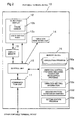
Fig. 2] Fig. 2 is a block diagram of a portable terminal device according to a second exemplary embodiment of the present invention. - [
Fig. 3] Fig. 3 is a diagram illustrating vibration-setting information of the portable terminal device illustrated inFig. 2 . - [
Fig. 4] Fig. 4 is a display example of a window on a screen of the portable terminal device illustrated inFig. 2 . - [
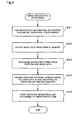
Fig. 5] Fig. 5 is a flowchart describing a vibration control processing performed by a control unit of the portable terminal device illustrated inFig. 1 . - [
Fig. 6A] Fig. 6A is a diagram illustrating telephone directory data provided by a memory device of a portable terminal device according to a third exemplary embodiment of the present invention. - [
Fig. 6B] Fig. 6B is a flowchart describing a vibration control processing performed by a control unit of the portable terminal device according to the third exemplary embodiment of the present invention. - [
Fig. 7] Fig. 7 is a block diagram of a portable terminal device according to a fourth exemplary embodiment of the present invention. - [
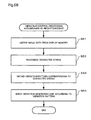
Fig. 8] Fig. 8 is a flowchart describing an operation example when a user of the portable terminal device illustrated inFig. 7 personally sets vibration patterns in sending an electronic mail to another portable terminal device. - [
Fig. 9A] Fig. 9A is a flowchart describing an operation example of the portable terminal device that received an electronic mail. - [
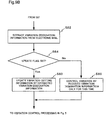
Fig. 9B] Fig. 9B is a flowchart describing a modified example of an operation example of the portable terminal device that received an electronic mail. - An electronic device according to exemplary embodiments of the present invention is hereinafter described referring to the accompanying drawings. The exemplary embodiments will be described using a portable terminal device as an example.
- As illustrated in
Fig. 1 , aportable terminal device 100 according to a first exemplary embodiment includes adisplay unit 120, adisplay memory 130, a vibration generatingunit 140, acontrol unit 150, and amemory unit 160. - The
display unit 120 is a device that has a function of displaying information such as images and characters on a screen. - The
display memory 130 contains a memory area where image data (display data) for displaying information on the screen of thedisplay unit 120 is loaded in bitmap format or the like. Thedisplay memory 130 stores display data in this memory area. Thedisplay unit 120 displays information corresponding to display data that is loaded, i.e. stored, in thedisplay memory 130. - The vibration generating
unit 140 generates vibration of a variety of vibration patterns. - The
control unit 150 includes a CPU (Central Processing Unit) or DSP (Digital Signal Processor), and an internal memory from the physical viewpoint. The internal memory temporarily stores OS (Operating System) programs, application programs and the like to be executed by the CPU. The internal memory also stores a variety of data for processing performed by the CPU. The OS is a multitask OS capable of executing a plurality of application programs simultaneously (in parallel). - The
control unit 150 reads and executes programs stored in thememory unit 160 to control thedisplay unit 120, thedisplay memory 130, thevibration generating unit 140, and thememory unit 160 that are the respective elements of the portableterminal device 100. - The
memory unit 160 is constituted by devices such as a ROM (Read Only Memory), and a RAM (Random Access Memory) from the physical viewpoint. Thememory unit 160 stores the not-shown OS (Operating System), a variety of application programs, and the like. Thememory unit 160 also stores arbitrary character strings (character data) in association with vibration patterns. In other words, thememory unit 160 also stores information on vibration patterns set beforehand and associated with character strings. The vibration patterns in this context represent patterns of vibration. - The
control unit 150 reads the application programs from thememory device 160 to store the application programs in the internal memory, and the programs stored in the internal memory are read and executed by the CPU of thecontrol unit 150. A variety of processing is executed in this manner. Thecontrol unit 150 stores display data in thedisplay memory 130 in the course of execution of the application programs to cause thedisplay unit 120 to display a variety of images as information. Thecontrol unit 150 also reads a character string recognition program from thememory device 160 to store the character string recognition program in the internal memory in parallel with execution of the application programs, and reads the program stored in the internal memory in the CPU of thecontrol unit 150 to be executed. By execution of the character string recognition program, thecontrol unit 150 recognizes the display data stored in thedisplay memory 130 as a character string. Moreover, thecontrol unit 150 obtains a vibration pattern corresponding to the recognized character string from thememory unit 160. Furthermore, thecontrol unit 150 vibrates thevibration generating unit 140 in the obtained vibration pattern. - According to this configuration, the
control unit 150 recognizes a character string in the display data stored in thedisplay memory 130, and vibrates thevibration generating unit 140 in a vibration pattern corresponding to the character string. As a result, the user can confirm that the vibration thus generated is related to the character string. Accordingly, vibration can be generated in such vibration patterns as different for each displayed character data, common to a plurality of application programs, and not requiring complicated setting work. According to the present invention, therefore, vibration patterns can be allocated to respective character strings without depending upon applications to be used. - As illustrated in
Fig. 2 , a portableterminal device 10 according to a second exemplary embodiment includes acommunication unit 11, atouch panel display 12, adisplay memory 13, avibration generating unit 14, acontrol unit 15, and amemory device 16. - The
communication unit 11 has a function of communicating with other portable terminal devices via a base station and a communication network. Thecommunication unit 11 includes an antenna for transmitting and receiving wireless signals to and from the base station, and a transmission and reception circuit that performs transmitting and receiving processing of wireless signals to and from the base station. - The
touch panel display 12 corresponds to thedisplay unit 120 in the first exemplary embodiment. Thetouch panel display 12 is a device that has a function of displaying information such as images, and characters on a screen, and a function of detecting a touch position by a user who has touched the screen and outputting a signal for indicating the recognized position. - For realizing these functions, the
touch panel display 12 includes aliquid crystal panel 12a, and atouch sensor 12b. Theliquid crystal panel 12a displays on screen information such as images, and characters loaded, i.e., stored, in thedisplay memory 13. Thetouch sensor 12b detects the fact of being touched, and the touch position. Theliquid crystal panel 12a and thetouch sensor 12b are overlapped with each other. Thetouch sensor 12b is disposed on the screen of theliquid crystal panel 12a. Thetouch sensor 12b is transparent, wherefore a display image of theliquid crystal panel 12a can be viewed through thetouch sensor 12b. Thetouch sensor 12b detects the touch position by the user, and transmits the recognized position to thecontrol unit 15. - The
display memory 13 corresponds to thedisplay memory 130 in the first exemplary embodiment. Thedisplay memory 13 includes a memory area where image data (display data) for displaying information on the screen of theliquid crystal panel 12a is loaded in bitmap format or the like. Thedisplay memory 13 stores display data in this memory area. Theliquid crystal panel 12a displays information corresponding to display data loaded, i.e., stored, in thedisplay memory 13. - The
vibration generating unit 14 corresponds to thevibration generating unit 140 in the first exemplary embodiment. Thevibration generating unit 14 includes a vibrator capable of generating a variety of vibration. Thevibration generating unit 14 generates vibration of a variety of vibration patterns by using this vibrator. The vibration generated by thevibration generating unit 14 includes sound produced by aerial vibration other than mechanical vibration. In other words, thevibration generating unit 14 includes means for generating sound that is aerial vibration. - The
control unit 15 corresponds to thecontrol unit 150 in the first exemplary embodiment. Thecontrol unit 15 includes a CPU or a DSP, and an internal memory from the physical viewpoint. At least a part of programs of OS (Operating System) and application programs to be executed by the CPU are temporarily stored in the internal memory. A variety of data necessary for processing by the CPU are also stored in the internal memory. - The
control unit 15 controls thetouch panel display 12, thedisplay memory 13, thevibration generating unit 14, and thememory device 16 that are respective elements of the portableterminal device 10 by reading and executing programs stored in thememory device 16. - The
memory device 16 corresponds to thememory unit 160 in the first exemplary embodiment. Thememory device 16 is constituted by devices such as a ROM, and a RAM from the physical viewpoint. Thememory device 16 stores the not-shown OS (Operating System), a variety ofapplication programs 16a, avibration control program 16b for controlling vibration of thevibration generating unit 14, or the like. Types of application programs may be arbitrary as long as theapplication programs 16a can display and select character strings. Thevibration control program 16b vibrates thevibration generating unit 14 according to any one of a plurality of vibration patterns set beforehand. Thevibration control program 16b includes a character recognition program. The character string recognition program is a program that converts dot (bit) pattern data of a character loaded in thedisplay memory 13 into character codes. The character string recognition program may be software such as an optical character recognition (OCR) program, for example. - In addition, the
memory device 16 further stores vibration-settinginformation 16c, vibrationpattern definition information 16d, and settingedition program 16e. - As illustrated in
Fig. 3 , the vibration-settinginformation 16c is information by which arbitrary character strings such as sender (originator) names and information names are associated with vibration patterns set beforehand. - The vibration
pattern definition information 16d is information for defining a plurality of vibration patterns beforehand. The information for defining respective vibration pattern contains changes of the number of vibrations (frequency) with elapses of time t, changes of amplitude with elapses of time, changes of vibration waveform, time intervals of respective vibrations, and the number of times of vibrations, or the like, for example. - The
setting edition program 16e is a program that edits (adds, processes, and deletes) the vibration-settinginformation 16c and the vibrationpattern definition information 16d. - The
control unit 15 reads theapplication programs 16a from thememory device 16 to store theread application programs 16a in the internal memory, and reads the programs stored in the internal memory by the CPU to be executed. A variety of processing is executed in this manner. Thecontrol unit 15 stores display data in thedisplay memory 13 in the course of execution of a variety of processing to load a variety of images as information and to cause the images to be displayed on theliquid crystal panel 12a. Thecontrol unit 15 executes a plurality ofapplication programs 16a to load display data as an image for each of the application programs, and to cause thedisplay memory 13 to store the image. Thecontrol unit 15 also reads thevibration control program 16b from thememory device 16 to store thevibration control program 16b in the internal memory in parallel with execution of theapplication programs 16a, and reads the program stored in the internal memory by the CPU to be executed. By execution of thevibration control program 16b, thecontrol unit 15 recognizes a character string at a touch position by analyzing pixel patterns on thedisplay memory 13 when a character string displayed on theliquid crystal panel 12a is touched by the user using the finger and a stylus or the like. Further, thecontrol unit 15 obtains a vibration pattern corresponding to the recognized character string from the vibration-settinginformation 16c. Furthermore, thecontrol unit 15 vibrates thevibration generating unit 14 by the obtained vibration pattern. Thecontrol unit 15 controls the display position so that the position of a character, a character string, or an image displayed at the touch position may not overlap with the positions of display images of icons or shortcuts that are to be triggers for start of the application programs. - The
control unit 15 also reads thesetting edition program 16e from thememory device 16 to store the readsetting edition program 16e in the internal memory in response to an instruction from thetouch panel display 12 of a user, and reads the program stored in the internal memory by the CPU to be executed. By execution of thesetting edition program 16e, thecontrol unit 15 edits the vibration-settinginformation 16c illustrated inFig. 3 adds new combinations of character strings and vibration patterns, delete combinations, and change combinations of character strings and vibration patterns. One vibration pattern corresponding to one character string is selected from among the vibration patterns set beforehand in the vibrationpattern definition information 16d. Thecontrol unit 15 also adds and deletes vibration patterns to and from the vibrationpattern definition information 16d, and changes and modifies vibration patterns in the vibrationpattern definition information 16d by executing thesetting edition program 16e. - The portable
terminal device 10 includes a signal processing unit for processing voices or the like, a microphone, and a speaker in addition to the foregoing elements. The signal processing unit converts signals received via thecommunication unit 11 and thecontrol unit 15 into electric signals corresponding to voices or the like. The speaker outputs voices corresponding to the converted electric signals. The microphone converts input voices or the like into electric signals. The signal processing unit converts electric signals input from the microphone into transmission signals to be transmitted to a portable terminal device of the transmission destination via thecontrol unit 15 and thecommunication unit 11. - Next, the operation of the portable
terminal device 10, centering on the operation of thecontrol unit 15, is described referring toFig. 5 . - For easy understanding, it is assumed that four character strings, and vibration patterns corresponding to the respective character strings as illustrated in
Fig. 3 are set in thememory device 16 as the vibration-settinginformation 16c. According to the example illustrated in the figure, in the vibration-settinginformation 16c, "Vibration Pattern 1", "Vibration Pattern 2", "Vibration Pattern 3", and "Vibration Pattern 4" are assigned respectively for four character strings of "Yamada Taro", "Yamada Hanako", "Typhoon Information", and "Train Information". - When the power source of the portable
terminal device 10 is set to be in a power-on state by the user, thecontrol unit 15 displays icons for starting therespective application programs 16a mounted on thetouch panel display 12. - The
control unit 15 executes thevibration control program 16b in a background, for example. - The user touches one of the displayed icons, an icon of a mailer for electronic mails, for example, to start the corresponding application program. Further, the user operates an icon such as a list of received mails. When the operation is executed, the
control unit 15 displays a window indicating a list of senders of electronic mails received from other portable terminal devices as illustrated inFig. 4 on the screen of theliquid crystal panel 12a. According to the example illustrated in the figure, a name list of senders of four electronic mails ("Yamada Taro", "Yamada Hanako", "Nippon Taro", and "Nippon Hanako") is displayed within the window. - Assuming that the user touches an arbitrary position on a
screen 30 of theliquid crystal panel 12a, such as "Ta" of "Yamada Taro" in the sender names displayed on thescreen 30 illustrated inFig. 4 by using the finger of the user or a stylus pen, thetouch sensor 12b of thetouch panel display 12 detects the position touched and designated by the user, and outputs position information on the recognized position to thecontrol unit 15. In response to this operation, thecontrol unit 15 executes processing such as displaying the electronic mail corresponding to the selected position. - On the other hand, the
control unit 15 starts a vibration control processing illustrated inFig. 5 in a background in parallel with operation for opening the mail or the like in response to a touch operation. In the vibration control processing, thecontrol unit 15 initially obtains the position (position information) designated by the user (step S41). - Next, the
control unit 15 obtains an image (image data) of the position and a periphery of the position from thedisplay memory 13 based on the obtained position (step S42). Subsequently, thecontrol unit 15 executes a character recognition processing from the bit pattern of the obtained image to recognize the character string at the position touched by the user and the periphery of the position, i.e., "Yamada Taro" illustrated inFig. 4 (step S43). - The
control unit 15 searches for the character string that corresponds with the recognized character string "Yamada Taro" referring to the vibration-settinginformation 16c, and obtains the vibration pattern corresponding to the corresponded character string, i.e., the "Vibration Pattern 1" illustrated inFig. 3 (step S44). - Next, the
control unit 15 drives thevibration generating unit 14 according to the obtained vibration pattern (foregoing "Vibration Pattern 1") (step S45). In more detail, thecontrol unit 15 outputs a driving signal for vibrating thevibration generating unit 14 to thevibration generating unit 14. As a result, thevibration generating unit 14 vibrates in the specified vibration pattern. - According to this configuration, the portable
terminal device 10 vibrates in a vibration pattern corresponding to the character string when a displayed character string is touched. Accordingly, the user can confirm the character string personally touched by vibration. Moreover, when there is a touch, a dot pattern loaded on thedisplay memory 13 is recognized as a character string, and a corresponding vibration pattern is specified. Accordingly, a vibration pattern common to a plurality ofapplication programs 16a can be allocated to each of the character strings. - In the first exemplary embodiment, an example is shown in which the user designates a character displayed on the screen of the
touch panel display 12 by touching the corresponding character, but a character string or an image as well as a character may be touched and designated. - While a touch panel is used for designating a character, an input device such as a mouse may be connected with the portable terminal device so that a character, a character string, or an image may be designated by shifting a cursor on the screen. Incidentally, a character string may be designated by designating a start point and an end point of the character string by a touch or the like. Moreover, words or a series of sentences containing a portion of character designated by a touch or the like may be determined as a character string. Words or a series of sentences to be determined may be registered as character strings beforehand. In this case, known determination technique may be employed for determining the words and the series of sentences.
- In the second exemplary embodiment, the
control unit 15 recognizes a character string displayed at a touch position touched by the user and the periphery thereof, and generates vibration. However, this invention is not limited to this example. - This invention is also applicable to a situation or the like in which a sender is automatically determined at the time of reception of a mail or a telephone call to generate a vibration in a vibration pattern corresponding to the sender, for example.
- An exemplary embodiment corresponding to this example is hereinafter described. In the exemplary embodiment, the
application programs 16a include an electronic mail program and a telephone program. - Moreover, the
memory device 16 includes telephone directory data illustrated inFig. 6A by way of example. As illustrated inFig. 6A , telephone numbers, electronic mail addresses, names of senders, and vibration patterns are associated with each other, and stored in the telephone directory data. - When receiving a telephone call, the
control unit 15 starts the telephone program, and specifies the telephone number of the originator or the name of the originator. Further, thecontrol unit 15 causes thedisplay memory 13 to store the specified information, and causes theliquid crystal panel 12a to display the specified information. Similarly, when receiving a mail, thecontrol unit 15 starts the mailer program, and specifies the name of the sender from the mail address of the sender referring to the telephone directory data. Further, thecontrol unit 15 causes thedisplay memory 13 to store the specified information, and displays the specified information on theliquid crystal panel 12a. - For example, when determining that a telephone call has been received from a telephone number "03-1234-5678", the
control unit 15 specifies that the originator is "Yamada Ichiro" referring to the telephone directory data. Thecontrol unit 15 causes thedisplay memory 13 to store the character string data of "Yamada Ichiro" so specified, and causes theliquid crystal panel 12b to display the character string data. Similarly, when determining that a mail has been received from "jiro@biglobe.org.jp", thecontrol unit 15 specifies that the sender is "Yamada Jiro" referring to the telephone directory data. Thecontrol unit 15 causes thedisplay memory 13 to store the character string data of "Yamada Jiro" so specified, and causes theliquid crystal panel 12b to display the character string data. - On the other hand, the
control unit 15 starts a vibration control processing illustrated inFig. 6B in a background in parallel with the foregoing operation or the like. In the vibration control processing, thecontrol unit 15 obtains an image (image data) from the display memory 13 (step S51). Subsequently, thecontrol unit 15 executes a character recognition processing from the bit pattern of the obtained image to detect a character string (step S52). - The
control unit 15 obtains a vibration pattern associated with the recognized character string referring to the telephone directory data (step S53). - The
control unit 15 drives the vibration generating unit according to the vibration pattern (step S54). In detail, thecontrol unit 15 outputs to the vibration generating unit 14 a driving signal for vibrating thevibration generating unit 14 in the obtained vibration pattern. As a result, thevibration generating unit 14 vibrates in the obtained vibration pattern. - Accordingly, when receiving a telephone call from the telephone number "03-1234-5678", for example, vibration in the
vibration pattern 1 is generated. On the other hand, when receiving a mail from "jiro@biglobe.org.jp", vibration in thevibration pattern 2 is generated. - The user of the portable
terminal device 10 can determine from the vibration whom the reception has been originated from. - According to this configuration, notification vibration patterns can be set for each sender regardless of the types of
applications 16a. - Notification sound patterns may be stored in addition to vibration patterns or instead of vibration, and notification sounds corresponding to recognized character strings can be emitted from the speaker.
- The portable
terminal device 10 according to the first exemplary embodiment requires the user to start thesetting edition program 16e, to operate thetouch panel display 12 personally, and to set the vibration-settinginformation 16c. This invention is not limited to this example, but a setting method is arbitrary. - A portable terminal device for which a user as an originator (sender) can set vibration patterns will be hereinafter described.
- Referring to
Fig. 8 , an operation example will be described when a user of a portableterminal device 101 illustrated inFig. 7 sends an electronic mail to a portableterminal device 102, and personally sets a vibration pattern for this sending. - The user operates the
touch panel display 12, and starts the mailer program from among a plurality ofapplication programs 16a. After the start of the mailer program, thecontrol unit 15 creates an electronic mail according to operation input by the user (step S71). - After creation of the electronic mail, the
control unit 15 creates vibration designation information in a predetermined format (step S72). Thecontrol unit 15 creates information indicating a character string and a vibration pattern as vibration designation information in a format determined beforehand in the title or body of the electronic mail. For example, when registering "Yamada Ichiro" and "Vibration Pattern 2" in the vibration-settinginformation 16c, information such as "Yamada Ichiro: 2" is created as vibration-setting information. - In response to an instruction of "send", the
control unit 15 sends the created electronic mail from thecommunication unit 11 to the portableterminal device 102 via a network 60 (step S73). - Next, an operation of the portable
terminal device 102 having received an electronic mail is described referring toFig. 9A . - When the mailer program is started in the portable
terminal device 102, thecontrol unit 15 imports the received electronic mail (step S81). In this example, a list of received electronic mails is displayed on the liquidcrystal display panel 12a as illustrated inFig. 4 by way of example. - At this time, the edition program searches the title and body of the mail to determine whether or not designation information in a predetermined format is contained therein, and extracts vibration designation information in a predetermined format, when designation information in a predetermined format is found (step S82). Next, the
control unit 15 updates the vibration setting-information 16c by the extracted vibration designation information (step S83). - The following operation is identical to the operation of the portable
terminal device 10 according to the second exemplary embodiment (vibration control processing illustrated inFig. 5 ). - According to this configuration, the sender of the mail can personally designate vibration for notifying selection and reception of its own mail.
- When the presence of designation information in a predetermined format is determined at the time of reception of a mail, the
vibration designation information 16c is updated. Thereafter, the reception notification process is executed so that vibration for reception notification may be generated in the vibration pattern designated by the sender. - In addition, the
control unit 15 may operate as illustrated inFig. 9B . As illustrated inFig. 9B , thecontrol unit 15 extracts vibration designation information from the electronic mail (step S82) after execution of step S81 as mentioned above. The vibration designation information contains update designation information (update flag) for designating whether or not thevibration designation information 16c is updated. Subsequently, thecontrol unit 15 determines whether or not the update flag is set, i.e., whether or not the update designation information is designating "update" (step S84). When the update designation information is designating "update" (step S84: Yes), thecontrol unit 15 updates the vibration-settinginformation 16c from the extracted vibration designation information (step S83). On the other hand, when the update designation information does not designate "update" (step S84: No), thecontrol unit 15 controls so that vibration may be generated by the received vibration designation information, i.e., by a mode designated by the mail only for the receiving processing this time (step S85). - In the third exemplary embodiment, an example is shown in which vibration designation information is transmitted by an electronic mail, and vibration designation information may not be limited to be transmitted by an electronic mail, but by a short message, an instant message or the like, for example, as long as necessary information can be transmitted thereby.
- The touch sensor may be any one of a projection type electrostatic capacitance system touch panel, a surface type electrostatic capacitance system touch panel, an inner type electrostatic capacitance system touch panel, or the like. The touch sensor may not be limited to a touch panel mentioned hereinabove as long as the
control unit 15 can determine a character string or the like designated by the user on the screen. - Further, the touch sensor or the like may be either a contact detection type for detecting contact, or a proximity detection type for detecting proximity.
- The electronic device according to the present invention is described by an example applied to a portable terminal device such as a portable phone and a PHS (Personal Handy-phone System). However, the electronic device according to the present invention is also applicable to a game machine, a tablet PC (Personal Computer), a notebook PC, and the like other than a portable information terminal such as a PDA (personal Data Assistant), a portable compact electronic device such as a smart phone.
- The
touch panel display 12 may be used as an input unit of information communication device such as a bank ATM, an automatic ticket vending machine, a POS (Point of Sale) terminal, a game machine, a tablet PC, and a notebook PC other than a portable compact electronic device such as a smart phone. - In the foregoing exemplary embodiments, programs to be executed may be stored in a computer-readable recording medium such as a flexible disc, a CD-ROM (Compact Disc Read-Only Memory), a DVD (Digital Versatile Disc), and an MO (Magneto-Optical Disc) to be distributed, so as to constitute a system for executing the foregoing programs by installing the program.
- Moreover, the programs may be stored in a disk device or the like contained in a predetermined server device on a communication network such as the internet, and downloaded from the disk device or the like by superimposing on carrier waves, for example.
- When the foregoing functions are shared and realized by an OS (Operating System), or are realized by collaboration between the OS and applications, only the part other than the OS may be stored in the medium and distributed, or may be downloaded.
- This invention is not limited to the exemplary embodiments described above, but may be modified and applied variously.
- In other words, a variety of exemplary embodiments and modifications are made possible according to this invention without departing from the spirit of this invention in a broad sense and the scope of this invention. Further, the foregoing exemplary embodiments are for the purpose of explanation of this invention, and do not limit the scope of this invention. In other words, the scope of this invention is shown not by the exemplary embodiments but by the claims. It is considered that a variety of modifications made within the scope of the claims and within the scope of significance of the invention equivalent to the claims be all contained in the scope of this invention.
- A part or the whole of the foregoing exemplary embodiments may be described as in the following supplementary notes, but is not limited to these notes.
- An electronic device comprising:
- a vibration generating unit that generates vibration;
- a display memory that stores display data;
- a display unit that displays information corresponding to the display data stored in the display memory;
- a memory unit that stores character data and vibration patterns indicating patterns of the vibration in association with each other; and
- a control unit that recognizes the display data stored in the display memory as character data, obtains a vibration pattern corresponding to the recognized character data from the memory unit, and vibrates the vibration generating unit in the obtained vibration pattern.
- The electronic device according to
Supplementary Note 1, characterized in that the display data recognized by the control unit as character data is display data contained in the information displayed by the display unit and corresponding to information designated by operation from a user. - The electronic device according to
Supplementary Note 1 orSupplementary Note 2, characterized in that the control unit starts a corresponding application program in response to reception, causes the display memory to store character data, and causes the display unit to display the character data. - The electronic device according to any one of
Supplementary Notes 1 to 3, characterized in that the control unit executes plural application programs, loads display data as an image for each of the application programs, and causes the display memory to store the image. - The electronic device according to any one of
Supplementary Notes 1 to 4, characterized in that the display data displayed in the display unit contains data received from another electronic device. - The electronic device according to any one of
Supplementary Notes 1 to 5, characterized in that the control unit controls such that the display position of the display data contained in the display data stored in the memory unit and recognized as character data does not overlap with the display position of an icon or a shortcut corresponding to a trigger for start of an application program. - The electronic device according to any one of
Supplementary Notes 1 to 6, further comprising means for receiving signal from another electronic device,
characterized in that the control unit determines whether or not the received signal contains character data and designation information for designating a vibration pattern, and updates the character data and the vibration pattern corresponding to the character data stored in the memory unit on the basis of the designation information when the control unit determines that the received signal contains the designation information. - The electronic device according to any one of
Supplementary Notes 1 to 7, characterized in that the vibration generating unit contains means for generating sound as aerial vibration. - A control method of an electronic device characterized by comprising:
- a step for storing display data in a display memory;
- a step for displaying information corresponding to the display data stored in the display memory; and
- a step for recognizing the stored display data as character data, obtaining a vibration pattern corresponding to the recognized character data based on a correlation between the character data and the vibration pattern stored beforehand, and generating vibration in the obtained vibration pattern.
- A non-transitory recording medium recording a program that causes a computer to execute:
- a process for storing display data in a display memory;
- a process for displaying information corresponding to the display data stored in the display memory;
- a process for recognizing the stored display data as character data, obtaining a vibration pattern corresponding to the recognized character data based on a correlation between the character data and the vibration pattern stored beforehand, and generating vibration in the obtained vibration pattern.
- This application is based on Japanese Patent Application No.
2012-199762, filed on September 11, 2012 2012-199762 - This invention is suitable for an electronic device such as a portable terminal device.
-
- 10, 101, 102, 100
- Portable terminal device (electronic device)
- 11
- Communication unit
- 12
- Touch panel display
- 12a
- Liquid crystal panel
- 12b
- Touch sensor
- 120
- Display unit
- 13, 130
- Display memory
- 14, 140
- Vibration generating unit
- 15, 150
- Control unit
- 16, 160
- Memory device (memory unit)
- 16a
- Application program
- 16b
- Vibration control program
- 16c
- Vibration-setting information
- 16d
- Vibration pattern definition information
- 16e
- Setting edition program
- 30
- Screen
- 60
- Network
Claims (10)
- An electronic device comprising:a vibration generating unit that generates vibration;a display memory that stores display data;a display unit that displays information corresponding to the display data stored in the display memory;a memory unit that stores character data and vibration patterns indicating patterns of the vibration in association with each other; anda control unit that recognizes the display data stored in the display memory as character data, obtains a vibration pattern corresponding to the recognized character data from the memory unit, and vibrates the vibration generating unit in the obtained vibration pattern.
- The electronic device according to claim 1, wherein the display data recognized by the control unit as character data is display data contained in the information displayed by the display unit and corresponding to information designated by operation from a user.
- The electronic device according to claim 1 or claim 2, wherein the control unit starts a corresponding application program in response to reception, causes the display memory to store character data, and causes the display unit to display the character data.
- The electronic device according to any one of claims 1 to 3, wherein the control unit executes plural application programs, loads display data as an image for each of the application programs, and causes the display memory to store the image.
- The electronic device according to any one of claims 1 to 4, wherein the display data displayed in the display unit contains data received from another electronic device.
- The electronic device according to any one of claims 1 to 5, wherein the control unit controls such that the display position of the display data contained in the display data stored in the memory unit and recognized as character data does not overlap with the display position of an icon or a shortcut corresponding to a trigger for start of an application program.
- The electronic device according to any one of claims 1 to 6, further comprising means for receiving signal from another electronic device,
wherein the control unit determines whether or not the received signal contains character data and designation information for designating a vibration pattern, and updates the character data stored in the memory unit and the vibration pattern corresponding to the character data on the basis of the designation information when the control unit determines that the received signal contains the designation information. - The electronic device according to any one of claims 1 to 7, wherein the vibration generating unit contains means for generating sound as aerial vibration.
- A control method of an electronic device comprising:a step for storing display data in a display memory;a step for displaying information corresponding to the display data stored in the display memory; anda step for recognizing the stored display data as character data, obtaining a vibration pattern corresponding to the recognized character data based on a correlation between the character data and the vibration pattern stored beforehand, and generating vibration in the obtained vibration pattern.
- A non-transitory recording medium recording a program that causes a computer to execute:a process for storing display data in a display memory;a process for displaying information corresponding to the display data stored in the display memory;a process for recognizing the stored display data as character data, obtaining a vibration pattern corresponding to the recognized character data based on a correlation between the character data and the vibration pattern stored beforehand, and generating vibration in the obtained vibration pattern.
Applications Claiming Priority (2)
| Application Number | Priority Date | Filing Date | Title |
|---|---|---|---|
| JP2012199762 | 2012-09-11 | ||
| PCT/JP2013/067901 WO2014041870A1 (en) | 2012-09-11 | 2013-06-28 | Electronic device, method for controlling electronic device, and recording medium |
Publications (2)
| Publication Number | Publication Date |
|---|---|
| EP2897349A1 true EP2897349A1 (en) | 2015-07-22 |
| EP2897349A4 EP2897349A4 (en) | 2016-05-25 |
Family
ID=50278004
Family Applications (1)
| Application Number | Title | Priority Date | Filing Date |
|---|---|---|---|
| EP13836619.0A Withdrawn EP2897349A4 (en) | 2012-09-11 | 2013-06-28 | Electronic device, method for controlling electronic device, and recording medium |
Country Status (5)
| Country | Link |
|---|---|
| US (1) | US9746924B2 (en) |
| EP (1) | EP2897349A4 (en) |
| JP (1) | JP6308132B2 (en) |
| CN (1) | CN104620566A (en) |
| WO (1) | WO2014041870A1 (en) |
Families Citing this family (11)
| Publication number | Priority date | Publication date | Assignee | Title |
|---|---|---|---|---|
| WO2014203960A1 (en) * | 2013-06-21 | 2014-12-24 | 株式会社ニコン | Vibration data generation program, and vibration data generation device |
| TWI494767B (en) * | 2013-12-27 | 2015-08-01 | Quanta Comp Inc | Method, system, electronic device and peripheral device of communication |
| CN112152911A (en) | 2015-02-16 | 2020-12-29 | 钉钉控股(开曼)有限公司 | Communication method and mobile device |
| JP6281509B2 (en) * | 2015-03-13 | 2018-02-21 | 京セラドキュメントソリューションズ株式会社 | Data transmission device |
| CN105681056B (en) | 2016-01-13 | 2019-03-19 | 阿里巴巴集团控股有限公司 | Object allocation method and device |
| CN105812237B (en) * | 2016-03-07 | 2020-12-04 | 钉钉控股(开曼)有限公司 | Method and device for quickly adding reminding object |
| CN107305459A (en) | 2016-04-25 | 2017-10-31 | 阿里巴巴集团控股有限公司 | The sending method and device of voice and Multimedia Message |
| CN107368995A (en) | 2016-05-13 | 2017-11-21 | 阿里巴巴集团控股有限公司 | Task processing method and device |
| CN106648113A (en) * | 2017-01-11 | 2017-05-10 | 维沃移动通信有限公司 | Message vibration prompting method and mobile terminal |
| JP7020004B2 (en) * | 2017-09-07 | 2022-02-16 | カシオ計算機株式会社 | Programs, information processing terminals and control methods |
| JP2020053797A (en) * | 2018-09-26 | 2020-04-02 | 株式会社デンソー | Incoming call guidance device |
Family Cites Families (17)
| Publication number | Priority date | Publication date | Assignee | Title |
|---|---|---|---|---|
| JPH09307631A (en) | 1996-05-09 | 1997-11-28 | Mitsubishi Electric Corp | Mobile terminal device and calling method thereof |
| JPH09330199A (en) | 1996-06-11 | 1997-12-22 | Hitachi Ltd | Personal computer |
| JP2000148393A (en) * | 1998-11-06 | 2000-05-26 | Minolta Co Ltd | Visual and tactile information transmission device |
| JP3949912B2 (en) * | 2000-08-08 | 2007-07-25 | 株式会社エヌ・ティ・ティ・ドコモ | Portable electronic device, electronic device, vibration generator, notification method by vibration and notification control method |
| JP2002057759A (en) * | 2000-08-09 | 2002-02-22 | Nec Saitama Ltd | Foldable mobile phone |
| JP2008122507A (en) * | 2006-11-09 | 2008-05-29 | Sharp Corp | Screen display processor, video display device, and osd display method |
| CN101193149A (en) * | 2006-11-28 | 2008-06-04 | 官国锋 | Incoming call response mode for mobile communication terminal and the terminal with this mode |
| CN101779441B (en) * | 2007-08-10 | 2014-05-14 | 京瓷株式会社 | mobile terminal |
| JP5186900B2 (en) | 2007-11-28 | 2013-04-24 | ソニー株式会社 | Vibrating body, input device and electronic device |
| JP2009211393A (en) * | 2008-03-04 | 2009-09-17 | Fujitsu Ten Ltd | Display controller and display control method |
| KR101556522B1 (en) | 2008-06-27 | 2015-10-01 | 엘지전자 주식회사 | Mobile terminal for providing haptic effect and control method thereof |
| CN102804104A (en) * | 2009-10-19 | 2012-11-28 | 拜尔材料科学股份公司 | Flexible assembly and fixture for haptic feedback |
| JP5656511B2 (en) * | 2010-08-26 | 2015-01-21 | 京セラ株式会社 | Display device |
| CN102026075B (en) | 2010-12-21 | 2014-06-04 | 瑞声声学科技(深圳)有限公司 | Vibration speaker |
| WO2012135373A2 (en) * | 2011-04-01 | 2012-10-04 | Analog Devices, Inc. | A dedicated user interface controller for feedback responses |
| US20130227409A1 (en) * | 2011-12-07 | 2013-08-29 | Qualcomm Incorporated | Integrating sensation functionalities into social networking services and applications |
| US20140009380A1 (en) * | 2012-07-07 | 2014-01-09 | Seungman KIM | Electronic apparatus and method of storing activity thereof |
-
2013
- 2013-06-28 US US14/426,021 patent/US9746924B2/en not_active Expired - Fee Related
- 2013-06-28 WO PCT/JP2013/067901 patent/WO2014041870A1/en not_active Ceased
- 2013-06-28 EP EP13836619.0A patent/EP2897349A4/en not_active Withdrawn
- 2013-06-28 JP JP2014535406A patent/JP6308132B2/en not_active Expired - Fee Related
- 2013-06-28 CN CN201380047062.1A patent/CN104620566A/en active Pending
Also Published As
| Publication number | Publication date |
|---|---|
| US20150346821A1 (en) | 2015-12-03 |
| WO2014041870A1 (en) | 2014-03-20 |
| EP2897349A4 (en) | 2016-05-25 |
| CN104620566A (en) | 2015-05-13 |
| JPWO2014041870A1 (en) | 2016-08-18 |
| US9746924B2 (en) | 2017-08-29 |
| JP6308132B2 (en) | 2018-04-11 |
Similar Documents
| Publication | Publication Date | Title |
|---|---|---|
| US9746924B2 (en) | Electronic device, method for controlling electronic device, and recording medium | |
| US11050889B2 (en) | Method and apparatus for notification of message reception according to property of received message | |
| US9838523B2 (en) | Display processing apparatus | |
| US8699948B2 (en) | Connection method for near field communication | |
| EP2699029A1 (en) | Method and Device for Providing a Message Function | |
| KR100740189B1 (en) | Devices with a graphical user interface | |
| US9851867B2 (en) | Portable electronic device, method of controlling same, and program for invoking an application by dragging objects to a screen edge | |
| CN101632287A (en) | Method and device for snoozing a condition-based reminder | |
| US20130219342A1 (en) | Mobile terminal device, storage medium and application execution control method | |
| JP6082554B2 (en) | Mobile terminal device, program, and control method for mobile terminal device | |
| JP2010231618A (en) | Mobile terminal apparatus and application starting method | |
| WO2010041155A1 (en) | Live preview of open windows | |
| US20160139907A1 (en) | Electronic device and method for controlling electronic device | |
| EP2884382B1 (en) | Dynamic application association with hand-written pattern | |
| US20130244627A1 (en) | Method for providing phone book service and associated electronic device thereof | |
| KR20110074456A (en) | Mobile phone, confirmation information display program, confirmation information display method and calling method of mobile phone | |
| US20080136784A1 (en) | Method and device for selectively activating a function thereof | |
| CN101601268B (en) | Phone availability indication and motion detection | |
| JP6665124B2 (en) | Electronic device, control method, and program | |
| JP2012028957A (en) | Mobile terminal, display notification program and display notification method | |
| JP4816191B2 (en) | Mobile phone, e-mail information display method, and e-mail information display program | |
| JP5784288B2 (en) | Communication equipment | |
| JP6814901B2 (en) | Electronics, control methods, and programs | |
| JP2014068240A (en) | Electronic device, control method, and control program | |
| KR100987635B1 (en) | Mobile communication terminal using rhythm |
Legal Events
| Date | Code | Title | Description |
|---|---|---|---|
| PUAI | Public reference made under article 153(3) epc to a published international application that has entered the european phase |
Free format text: ORIGINAL CODE: 0009012 |
|
| 17P | Request for examination filed |
Effective date: 20150318 |
|
| AK | Designated contracting states |
Kind code of ref document: A1 Designated state(s): AL AT BE BG CH CY CZ DE DK EE ES FI FR GB GR HR HU IE IS IT LI LT LU LV MC MK MT NL NO PL PT RO RS SE SI SK SM TR |
|
| AX | Request for extension of the european patent |
Extension state: BA ME |
|
| RAP1 | Party data changed (applicant data changed or rights of an application transferred) |
Owner name: NEC CORPORATION |
|
| DAX | Request for extension of the european patent (deleted) | ||
| RA4 | Supplementary search report drawn up and despatched (corrected) |
Effective date: 20160425 |
|
| RIC1 | Information provided on ipc code assigned before grant |
Ipc: H04M 1/00 20060101AFI20160419BHEP Ipc: G06F 3/01 20060101ALI20160419BHEP Ipc: G06F 3/0488 20130101ALI20160419BHEP |
|
| 17Q | First examination report despatched |
Effective date: 20170511 |
|
| STAA | Information on the status of an ep patent application or granted ep patent |
Free format text: STATUS: THE APPLICATION HAS BEEN WITHDRAWN |
|
| 18W | Application withdrawn |
Effective date: 20170829 |