EP2896609A1 - Crystalline fingolimod citrate for the treatment of relapsing-remitting multiple sclerosis - Google Patents
Crystalline fingolimod citrate for the treatment of relapsing-remitting multiple sclerosis Download PDFInfo
- Publication number
- EP2896609A1 EP2896609A1 EP15152927.8A EP15152927A EP2896609A1 EP 2896609 A1 EP2896609 A1 EP 2896609A1 EP 15152927 A EP15152927 A EP 15152927A EP 2896609 A1 EP2896609 A1 EP 2896609A1
- Authority
- EP
- European Patent Office
- Prior art keywords
- fingolimod
- formula
- acid
- dsc
- peaks
- Prior art date
- Legal status (The legal status is an assumption and is not a legal conclusion. Google has not performed a legal analysis and makes no representation as to the accuracy of the status listed.)
- Granted
Links
- 229960000556 fingolimod Drugs 0.000 title claims abstract description 58
- 208000007400 Relapsing-Remitting Multiple Sclerosis Diseases 0.000 title claims abstract description 4
- KKGQTZUTZRNORY-UHFFFAOYSA-N fingolimod Chemical compound CCCCCCCCC1=CC=C(CCC(N)(CO)CO)C=C1 KKGQTZUTZRNORY-UHFFFAOYSA-N 0.000 title claims abstract description 4
- KRKNYBCHXYNGOX-UHFFFAOYSA-K Citrate Chemical compound [O-]C(=O)CC(O)(CC([O-])=O)C([O-])=O KRKNYBCHXYNGOX-UHFFFAOYSA-K 0.000 title claims description 7
- 238000000113 differential scanning calorimetry Methods 0.000 claims description 31
- 150000001875 compounds Chemical class 0.000 claims description 30
- 238000002844 melting Methods 0.000 claims description 12
- 230000008018 melting Effects 0.000 claims description 12
- 150000001860 citric acid derivatives Chemical class 0.000 abstract 1
- SWZTYAVBMYWFGS-UHFFFAOYSA-N fingolimod hydrochloride Chemical compound Cl.CCCCCCCCC1=CC=C(CCC(N)(CO)CO)C=C1 SWZTYAVBMYWFGS-UHFFFAOYSA-N 0.000 description 79
- 238000000034 method Methods 0.000 description 53
- LFQSCWFLJHTTHZ-UHFFFAOYSA-N Ethanol Chemical compound CCO LFQSCWFLJHTTHZ-UHFFFAOYSA-N 0.000 description 25
- 239000000203 mixture Substances 0.000 description 23
- 150000003839 salts Chemical class 0.000 description 21
- 229960004967 fingolimod hydrochloride Drugs 0.000 description 18
- 239000003638 chemical reducing agent Substances 0.000 description 17
- XLYOFNOQVPJJNP-UHFFFAOYSA-N water Substances O XLYOFNOQVPJJNP-UHFFFAOYSA-N 0.000 description 17
- VEXZGXHMUGYJMC-UHFFFAOYSA-N Hydrochloric acid Chemical compound Cl VEXZGXHMUGYJMC-UHFFFAOYSA-N 0.000 description 16
- 150000007513 acids Chemical class 0.000 description 16
- MUBZPKHOEPUJKR-UHFFFAOYSA-N Oxalic acid Chemical group OC(=O)C(O)=O MUBZPKHOEPUJKR-UHFFFAOYSA-N 0.000 description 13
- 238000006243 chemical reaction Methods 0.000 description 13
- 238000004128 high performance liquid chromatography Methods 0.000 description 13
- -1 laureate Chemical compound 0.000 description 13
- 125000000217 alkyl group Chemical group 0.000 description 10
- 239000012458 free base Substances 0.000 description 10
- 239000002904 solvent Substances 0.000 description 10
- CIWBSHSKHKDKBQ-JLAZNSOCSA-N Ascorbic acid Natural products OC[C@H](O)[C@H]1OC(=O)C(O)=C1O CIWBSHSKHKDKBQ-JLAZNSOCSA-N 0.000 description 9
- 238000002360 preparation method Methods 0.000 description 8
- VZCYOOQTPOCHFL-UHFFFAOYSA-N trans-butenedioic acid Natural products OC(=O)C=CC(O)=O VZCYOOQTPOCHFL-UHFFFAOYSA-N 0.000 description 8
- AFVFQIVMOAPDHO-UHFFFAOYSA-N Methanesulfonic acid Chemical compound CS(O)(=O)=O AFVFQIVMOAPDHO-UHFFFAOYSA-N 0.000 description 7
- 239000000243 solution Substances 0.000 description 7
- IJGRMHOSHXDMSA-UHFFFAOYSA-N Atomic nitrogen Chemical compound N#N IJGRMHOSHXDMSA-UHFFFAOYSA-N 0.000 description 6
- 0 CCCCCCCCC1C=CC(CCC(CO)(CO)NC(*)=O)=CC1 Chemical compound CCCCCCCCC1C=CC(CCC(CO)(CO)NC(*)=O)=CC1 0.000 description 6
- RTZKZFJDLAIYFH-UHFFFAOYSA-N Diethyl ether Chemical compound CCOCC RTZKZFJDLAIYFH-UHFFFAOYSA-N 0.000 description 6
- VZCYOOQTPOCHFL-OWOJBTEDSA-N Fumaric acid Chemical compound OC(=O)\C=C\C(O)=O VZCYOOQTPOCHFL-OWOJBTEDSA-N 0.000 description 6
- WNLRTRBMVRJNCN-UHFFFAOYSA-L adipate(2-) Chemical group [O-]C(=O)CCCCC([O-])=O WNLRTRBMVRJNCN-UHFFFAOYSA-L 0.000 description 6
- BJEPYKJPYRNKOW-UHFFFAOYSA-N alpha-hydroxysuccinic acid Natural products OC(=O)C(O)CC(O)=O BJEPYKJPYRNKOW-UHFFFAOYSA-N 0.000 description 6
- 239000011668 ascorbic acid Substances 0.000 description 6
- 235000010323 ascorbic acid Nutrition 0.000 description 6
- 239000003623 enhancer Substances 0.000 description 6
- 238000000227 grinding Methods 0.000 description 6
- 239000000047 product Substances 0.000 description 6
- BJEPYKJPYRNKOW-REOHCLBHSA-N (S)-malic acid Chemical compound OC(=O)[C@@H](O)CC(O)=O BJEPYKJPYRNKOW-REOHCLBHSA-N 0.000 description 5
- 229910019142 PO4 Inorganic materials 0.000 description 5
- 229940072107 ascorbate Drugs 0.000 description 5
- 238000004108 freeze drying Methods 0.000 description 5
- 229940049920 malate Drugs 0.000 description 5
- IWYDHOAUDWTVEP-UHFFFAOYSA-M mandelate Chemical group [O-]C(=O)C(O)C1=CC=CC=C1 IWYDHOAUDWTVEP-UHFFFAOYSA-M 0.000 description 5
- 125000002496 methyl group Chemical group [H]C([H])([H])* 0.000 description 5
- NBIIXXVUZAFLBC-UHFFFAOYSA-K phosphate Chemical group [O-]P([O-])([O-])=O NBIIXXVUZAFLBC-UHFFFAOYSA-K 0.000 description 5
- 239000010452 phosphate Chemical group 0.000 description 5
- 239000013557 residual solvent Substances 0.000 description 5
- 239000007787 solid Substances 0.000 description 5
- KDYFGRWQOYBRFD-UHFFFAOYSA-L succinate(2-) Chemical group [O-]C(=O)CCC([O-])=O KDYFGRWQOYBRFD-UHFFFAOYSA-L 0.000 description 5
- UXVMQQNJUSDDNG-UHFFFAOYSA-L Calcium chloride Chemical compound [Cl-].[Cl-].[Ca+2] UXVMQQNJUSDDNG-UHFFFAOYSA-L 0.000 description 4
- VYPSYNLAJGMNEJ-UHFFFAOYSA-N Silicium dioxide Chemical compound O=[Si]=O VYPSYNLAJGMNEJ-UHFFFAOYSA-N 0.000 description 4
- QAOWNCQODCNURD-UHFFFAOYSA-L Sulfate Chemical compound [O-]S([O-])(=O)=O QAOWNCQODCNURD-UHFFFAOYSA-L 0.000 description 4
- 150000001298 alcohols Chemical class 0.000 description 4
- 125000003118 aryl group Chemical group 0.000 description 4
- WPYMKLBDIGXBTP-UHFFFAOYSA-N benzoic acid Chemical compound OC(=O)C1=CC=CC=C1 WPYMKLBDIGXBTP-UHFFFAOYSA-N 0.000 description 4
- 239000001110 calcium chloride Substances 0.000 description 4
- 229910001628 calcium chloride Inorganic materials 0.000 description 4
- 235000011167 hydrochloric acid Nutrition 0.000 description 4
- SUMDYPCJJOFFON-UHFFFAOYSA-N isethionic acid Chemical compound OCCS(O)(=O)=O SUMDYPCJJOFFON-UHFFFAOYSA-N 0.000 description 4
- 238000005259 measurement Methods 0.000 description 4
- 239000003960 organic solvent Substances 0.000 description 4
- 239000012279 sodium borohydride Substances 0.000 description 4
- 229910000033 sodium borohydride Inorganic materials 0.000 description 4
- SJJCQDRGABAVBB-UHFFFAOYSA-N 1-hydroxy-2-naphthoic acid Chemical compound C1=CC=CC2=C(O)C(C(=O)O)=CC=C21 SJJCQDRGABAVBB-UHFFFAOYSA-N 0.000 description 3
- QCQCHGYLTSGIGX-GHXANHINSA-N 4-[[(3ar,5ar,5br,7ar,9s,11ar,11br,13as)-5a,5b,8,8,11a-pentamethyl-3a-[(5-methylpyridine-3-carbonyl)amino]-2-oxo-1-propan-2-yl-4,5,6,7,7a,9,10,11,11b,12,13,13a-dodecahydro-3h-cyclopenta[a]chrysen-9-yl]oxy]-2,2-dimethyl-4-oxobutanoic acid Chemical compound N([C@@]12CC[C@@]3(C)[C@]4(C)CC[C@H]5C(C)(C)[C@@H](OC(=O)CC(C)(C)C(O)=O)CC[C@]5(C)[C@H]4CC[C@@H]3C1=C(C(C2)=O)C(C)C)C(=O)C1=CN=CC(C)=C1 QCQCHGYLTSGIGX-GHXANHINSA-N 0.000 description 3
- QTBSBXVTEAMEQO-UHFFFAOYSA-M Acetate Chemical compound CC([O-])=O QTBSBXVTEAMEQO-UHFFFAOYSA-M 0.000 description 3
- QTBSBXVTEAMEQO-UHFFFAOYSA-N Acetic acid Chemical compound CC(O)=O QTBSBXVTEAMEQO-UHFFFAOYSA-N 0.000 description 3
- WWZKQHOCKIZLMA-UHFFFAOYSA-N Caprylic acid Natural products CCCCCCCC(O)=O WWZKQHOCKIZLMA-UHFFFAOYSA-N 0.000 description 3
- FEWJPZIEWOKRBE-JCYAYHJZSA-N Dextrotartaric acid Chemical compound OC(=O)[C@H](O)[C@@H](O)C(O)=O FEWJPZIEWOKRBE-JCYAYHJZSA-N 0.000 description 3
- CKLJMWTZIZZHCS-REOHCLBHSA-N L-aspartic acid Chemical compound OC(=O)[C@@H](N)CC(O)=O CKLJMWTZIZZHCS-REOHCLBHSA-N 0.000 description 3
- YXFVVABEGXRONW-UHFFFAOYSA-N Toluene Chemical compound CC1=CC=CC=C1 YXFVVABEGXRONW-UHFFFAOYSA-N 0.000 description 3
- 230000015572 biosynthetic process Effects 0.000 description 3
- MIOPJNTWMNEORI-UHFFFAOYSA-N camphorsulfonic acid Chemical compound C1CC2(CS(O)(=O)=O)C(=O)CC1C2(C)C MIOPJNTWMNEORI-UHFFFAOYSA-N 0.000 description 3
- 150000001805 chlorine compounds Chemical group 0.000 description 3
- GHVNFZFCNZKVNT-UHFFFAOYSA-N decanoic acid Chemical compound CCCCCCCCCC(O)=O GHVNFZFCNZKVNT-UHFFFAOYSA-N 0.000 description 3
- 238000004090 dissolution Methods 0.000 description 3
- MOTZDAYCYVMXPC-UHFFFAOYSA-N dodecyl hydrogen sulfate Chemical compound CCCCCCCCCCCCOS(O)(=O)=O MOTZDAYCYVMXPC-UHFFFAOYSA-N 0.000 description 3
- CCIVGXIOQKPBKL-UHFFFAOYSA-M ethanesulfonate Chemical group CCS([O-])(=O)=O CCIVGXIOQKPBKL-UHFFFAOYSA-M 0.000 description 3
- JFCQEDHGNNZCLN-UHFFFAOYSA-N glutaric acid Chemical compound OC(=O)CCCC(O)=O JFCQEDHGNNZCLN-UHFFFAOYSA-N 0.000 description 3
- FUZZWVXGSFPDMH-UHFFFAOYSA-N hexanoic acid Chemical compound CCCCCC(O)=O FUZZWVXGSFPDMH-UHFFFAOYSA-N 0.000 description 3
- 125000004435 hydrogen atom Chemical group [H]* 0.000 description 3
- VZCYOOQTPOCHFL-UPHRSURJSA-N maleic acid Chemical compound OC(=O)\C=C/C(O)=O VZCYOOQTPOCHFL-UPHRSURJSA-N 0.000 description 3
- 238000004519 manufacturing process Methods 0.000 description 3
- 238000003801 milling Methods 0.000 description 3
- 239000012452 mother liquor Substances 0.000 description 3
- PSZYNBSKGUBXEH-UHFFFAOYSA-N naphthalene-1-sulfonic acid Chemical group C1=CC=C2C(S(=O)(=O)O)=CC=CC2=C1 PSZYNBSKGUBXEH-UHFFFAOYSA-N 0.000 description 3
- KVBGVZZKJNLNJU-UHFFFAOYSA-N naphthalene-2-sulfonic acid Chemical compound C1=CC=CC2=CC(S(=O)(=O)O)=CC=C21 KVBGVZZKJNLNJU-UHFFFAOYSA-N 0.000 description 3
- 229910052757 nitrogen Inorganic materials 0.000 description 3
- 239000002245 particle Substances 0.000 description 3
- 239000011541 reaction mixture Substances 0.000 description 3
- 238000003786 synthesis reaction Methods 0.000 description 3
- WBYWAXJHAXSJNI-VOTSOKGWSA-M trans-cinnamate Chemical compound [O-]C(=O)\C=C\C1=CC=CC=C1 WBYWAXJHAXSJNI-VOTSOKGWSA-M 0.000 description 3
- LSPHULWDVZXLIL-UHFFFAOYSA-N (+/-)-Camphoric acid Chemical compound CC1(C)C(C(O)=O)CCC1(C)C(O)=O LSPHULWDVZXLIL-UHFFFAOYSA-N 0.000 description 2
- BMYNFMYTOJXKLE-UHFFFAOYSA-N 3-azaniumyl-2-hydroxypropanoate Chemical compound NCC(O)C(O)=O BMYNFMYTOJXKLE-UHFFFAOYSA-N 0.000 description 2
- QCXJEYYXVJIFCE-UHFFFAOYSA-M 4-acetamidobenzoate Chemical compound CC(=O)NC1=CC=C(C([O-])=O)C=C1 QCXJEYYXVJIFCE-UHFFFAOYSA-M 0.000 description 2
- QCXJEYYXVJIFCE-UHFFFAOYSA-N 4-acetamidobenzoic acid Chemical compound CC(=O)NC1=CC=C(C(O)=O)C=C1 QCXJEYYXVJIFCE-UHFFFAOYSA-N 0.000 description 2
- CPELXLSAUQHCOX-UHFFFAOYSA-M Bromide Chemical compound [Br-] CPELXLSAUQHCOX-UHFFFAOYSA-M 0.000 description 2
- VEXZGXHMUGYJMC-UHFFFAOYSA-M Chloride anion Chemical compound [Cl-] VEXZGXHMUGYJMC-UHFFFAOYSA-M 0.000 description 2
- CPELXLSAUQHCOX-UHFFFAOYSA-N Hydrogen bromide Chemical compound Br CPELXLSAUQHCOX-UHFFFAOYSA-N 0.000 description 2
- JVTAAEKCZFNVCJ-UHFFFAOYSA-M Lactate Chemical compound CC(O)C([O-])=O JVTAAEKCZFNVCJ-UHFFFAOYSA-M 0.000 description 2
- WMFOQBRAJBCJND-UHFFFAOYSA-M Lithium hydroxide Chemical compound [Li+].[OH-] WMFOQBRAJBCJND-UHFFFAOYSA-M 0.000 description 2
- NBIIXXVUZAFLBC-UHFFFAOYSA-N Phosphoric acid Chemical compound OP(O)(O)=O NBIIXXVUZAFLBC-UHFFFAOYSA-N 0.000 description 2
- JUJWROOIHBZHMG-UHFFFAOYSA-N Pyridine Chemical compound C1=CC=NC=C1 JUJWROOIHBZHMG-UHFFFAOYSA-N 0.000 description 2
- PMZURENOXWZQFD-UHFFFAOYSA-L Sodium Sulfate Chemical compound [Na+].[Na+].[O-]S([O-])(=O)=O PMZURENOXWZQFD-UHFFFAOYSA-L 0.000 description 2
- QAOWNCQODCNURD-UHFFFAOYSA-N Sulfuric acid Chemical compound OS(O)(=O)=O QAOWNCQODCNURD-UHFFFAOYSA-N 0.000 description 2
- WYURNTSHIVDZCO-UHFFFAOYSA-N Tetrahydrofuran Chemical compound C1CCOC1 WYURNTSHIVDZCO-UHFFFAOYSA-N 0.000 description 2
- WNLRTRBMVRJNCN-UHFFFAOYSA-N adipic acid Chemical compound OC(=O)CCCCC(O)=O WNLRTRBMVRJNCN-UHFFFAOYSA-N 0.000 description 2
- VSCWAEJMTAWNJL-UHFFFAOYSA-K aluminium trichloride Chemical compound Cl[Al](Cl)Cl VSCWAEJMTAWNJL-UHFFFAOYSA-K 0.000 description 2
- 125000003289 ascorbyl group Chemical group [H]O[C@@]([H])(C([H])([H])O*)[C@@]1([H])OC(=O)C(O*)=C1O* 0.000 description 2
- 239000007795 chemical reaction product Substances 0.000 description 2
- 229940114081 cinnamate Drugs 0.000 description 2
- POULHZVOKOAJMA-UHFFFAOYSA-N dodecanoic acid Chemical compound CCCCCCCCCCCC(O)=O POULHZVOKOAJMA-UHFFFAOYSA-N 0.000 description 2
- 229940043264 dodecyl sulfate Drugs 0.000 description 2
- AFAXGSQYZLGZPG-UHFFFAOYSA-L ethane-1,2-disulfonate Chemical compound [O-]S(=O)(=O)CCS([O-])(=O)=O AFAXGSQYZLGZPG-UHFFFAOYSA-L 0.000 description 2
- NLFBCYMMUAKCPC-KQQUZDAGSA-N ethyl (e)-3-[3-amino-2-cyano-1-[(e)-3-ethoxy-3-oxoprop-1-enyl]sulfanyl-3-oxoprop-1-enyl]sulfanylprop-2-enoate Chemical compound CCOC(=O)\C=C\SC(=C(C#N)C(N)=O)S\C=C\C(=O)OCC NLFBCYMMUAKCPC-KQQUZDAGSA-N 0.000 description 2
- 125000001495 ethyl group Chemical group [H]C([H])([H])C([H])([H])* 0.000 description 2
- 239000000706 filtrate Substances 0.000 description 2
- 238000010438 heat treatment Methods 0.000 description 2
- 239000003018 immunosuppressive agent Substances 0.000 description 2
- 239000013067 intermediate product Substances 0.000 description 2
- JVTAAEKCZFNVCJ-UHFFFAOYSA-N lactic acid Chemical compound CC(O)C(O)=O JVTAAEKCZFNVCJ-UHFFFAOYSA-N 0.000 description 2
- 239000007788 liquid Substances 0.000 description 2
- KWGKDLIKAYFUFQ-UHFFFAOYSA-M lithium chloride Chemical compound [Li+].[Cl-] KWGKDLIKAYFUFQ-UHFFFAOYSA-M 0.000 description 2
- 239000000463 material Substances 0.000 description 2
- 229910052751 metal Inorganic materials 0.000 description 2
- 239000002184 metal Substances 0.000 description 2
- XTEGVFVZDVNBPF-UHFFFAOYSA-L naphthalene-1,5-disulfonate(2-) Chemical group C1=CC=C2C(S(=O)(=O)[O-])=CC=CC2=C1S([O-])(=O)=O XTEGVFVZDVNBPF-UHFFFAOYSA-L 0.000 description 2
- XTEGVFVZDVNBPF-UHFFFAOYSA-N naphthalene-1,5-disulfonic acid Chemical compound C1=CC=C2C(S(=O)(=O)O)=CC=CC2=C1S(O)(=O)=O XTEGVFVZDVNBPF-UHFFFAOYSA-N 0.000 description 2
- WWZKQHOCKIZLMA-UHFFFAOYSA-M octanoate Chemical compound CCCCCCCC([O-])=O WWZKQHOCKIZLMA-UHFFFAOYSA-M 0.000 description 2
- 235000006408 oxalic acid Nutrition 0.000 description 2
- 239000008194 pharmaceutical composition Substances 0.000 description 2
- 238000000634 powder X-ray diffraction Methods 0.000 description 2
- 239000002244 precipitate Substances 0.000 description 2
- 230000035484 reaction time Effects 0.000 description 2
- 229960001860 salicylate Drugs 0.000 description 2
- YGSDEFSMJLZEOE-UHFFFAOYSA-M salicylate Chemical compound OC1=CC=CC=C1C([O-])=O YGSDEFSMJLZEOE-UHFFFAOYSA-M 0.000 description 2
- YGSDEFSMJLZEOE-UHFFFAOYSA-N salicylic acid Chemical compound OC(=O)C1=CC=CC=C1O YGSDEFSMJLZEOE-UHFFFAOYSA-N 0.000 description 2
- 238000003860 storage Methods 0.000 description 2
- 239000000126 substance Substances 0.000 description 2
- 229940095064 tartrate Drugs 0.000 description 2
- 231100000331 toxic Toxicity 0.000 description 2
- 230000002588 toxic effect Effects 0.000 description 2
- QBYIENPQHBMVBV-HFEGYEGKSA-N (2R)-2-hydroxy-2-phenylacetic acid Chemical compound O[C@@H](C(O)=O)c1ccccc1.O[C@@H](C(O)=O)c1ccccc1 QBYIENPQHBMVBV-HFEGYEGKSA-N 0.000 description 1
- BJEPYKJPYRNKOW-UWTATZPHSA-N (R)-malic acid Chemical compound OC(=O)[C@H](O)CC(O)=O BJEPYKJPYRNKOW-UWTATZPHSA-N 0.000 description 1
- GYSCBCSGKXNZRH-UHFFFAOYSA-N 1-benzothiophene-2-carboxamide Chemical compound C1=CC=C2SC(C(=O)N)=CC2=C1 GYSCBCSGKXNZRH-UHFFFAOYSA-N 0.000 description 1
- RTBFRGCFXZNCOE-UHFFFAOYSA-N 1-methylsulfonylpiperidin-4-one Chemical compound CS(=O)(=O)N1CCC(=O)CC1 RTBFRGCFXZNCOE-UHFFFAOYSA-N 0.000 description 1
- VVYAIXIPOVUMQD-UHFFFAOYSA-N 5-(1,3-dioxoisoindol-2-yl)pentanoic acid Chemical compound C1=CC=C2C(=O)N(CCCCC(=O)O)C(=O)C2=C1 VVYAIXIPOVUMQD-UHFFFAOYSA-N 0.000 description 1
- WBYWAXJHAXSJNI-SREVYHEPSA-N Cinnamic acid Chemical compound OC(=O)\C=C/C1=CC=CC=C1 WBYWAXJHAXSJNI-SREVYHEPSA-N 0.000 description 1
- 229910021580 Cobalt(II) chloride Inorganic materials 0.000 description 1
- CKLJMWTZIZZHCS-UHFFFAOYSA-N D-OH-Asp Natural products OC(=O)C(N)CC(O)=O CKLJMWTZIZZHCS-UHFFFAOYSA-N 0.000 description 1
- CKLJMWTZIZZHCS-UWTATZPHSA-N L-Aspartic acid Natural products OC(=O)[C@H](N)CC(O)=O CKLJMWTZIZZHCS-UWTATZPHSA-N 0.000 description 1
- 229910002249 LaCl3 Inorganic materials 0.000 description 1
- 239000005639 Lauric acid Substances 0.000 description 1
- 239000012448 Lithium borohydride Substances 0.000 description 1
- 206010025327 Lymphopenia Diseases 0.000 description 1
- 229910021380 Manganese Chloride Inorganic materials 0.000 description 1
- GLFNIEUTAYBVOC-UHFFFAOYSA-L Manganese chloride Chemical compound Cl[Mn]Cl GLFNIEUTAYBVOC-UHFFFAOYSA-L 0.000 description 1
- OFOBLEOULBTSOW-UHFFFAOYSA-N Propanedioic acid Natural products OC(=O)CC(O)=O OFOBLEOULBTSOW-UHFFFAOYSA-N 0.000 description 1
- IWYDHOAUDWTVEP-UHFFFAOYSA-N R-2-phenyl-2-hydroxyacetic acid Natural products OC(=O)C(O)C1=CC=CC=C1 IWYDHOAUDWTVEP-UHFFFAOYSA-N 0.000 description 1
- KDYFGRWQOYBRFD-UHFFFAOYSA-N Succinic acid Natural products OC(=O)CCC(O)=O KDYFGRWQOYBRFD-UHFFFAOYSA-N 0.000 description 1
- FEWJPZIEWOKRBE-UHFFFAOYSA-N Tartaric acid Natural products [H+].[H+].[O-]C(=O)C(O)C(O)C([O-])=O FEWJPZIEWOKRBE-UHFFFAOYSA-N 0.000 description 1
- 239000001361 adipic acid Substances 0.000 description 1
- 235000011037 adipic acid Nutrition 0.000 description 1
- OBETXYAYXDNJHR-UHFFFAOYSA-N alpha-ethylcaproic acid Natural products CCCCC(CC)C(O)=O OBETXYAYXDNJHR-UHFFFAOYSA-N 0.000 description 1
- 229910052782 aluminium Inorganic materials 0.000 description 1
- XAGFODPZIPBFFR-UHFFFAOYSA-N aluminium Chemical compound [Al] XAGFODPZIPBFFR-UHFFFAOYSA-N 0.000 description 1
- 229910000147 aluminium phosphate Inorganic materials 0.000 description 1
- 125000003368 amide group Chemical group 0.000 description 1
- 150000001450 anions Chemical class 0.000 description 1
- 238000000149 argon plasma sintering Methods 0.000 description 1
- 229960005070 ascorbic acid Drugs 0.000 description 1
- 229960005261 aspartic acid Drugs 0.000 description 1
- 229940077388 benzenesulfonate Drugs 0.000 description 1
- SRSXLGNVWSONIS-UHFFFAOYSA-M benzenesulfonate Chemical compound [O-]S(=O)(=O)C1=CC=CC=C1 SRSXLGNVWSONIS-UHFFFAOYSA-M 0.000 description 1
- SRSXLGNVWSONIS-UHFFFAOYSA-N benzenesulfonic acid Chemical compound OS(=O)(=O)C1=CC=CC=C1 SRSXLGNVWSONIS-UHFFFAOYSA-N 0.000 description 1
- 229940092714 benzenesulfonic acid Drugs 0.000 description 1
- GONOPSZTUGRENK-UHFFFAOYSA-N benzyl(trichloro)silane Chemical compound Cl[Si](Cl)(Cl)CC1=CC=CC=C1 GONOPSZTUGRENK-UHFFFAOYSA-N 0.000 description 1
- BNQRPLGZFADFGA-UHFFFAOYSA-N benzyl(triphenyl)phosphanium Chemical compound C=1C=CC=CC=1[P+](C=1C=CC=CC=1)(C=1C=CC=CC=1)CC1=CC=CC=C1 BNQRPLGZFADFGA-UHFFFAOYSA-N 0.000 description 1
- FLLNLJJKHKZKMB-UHFFFAOYSA-N boron;tetramethylazanium Chemical compound [B].C[N+](C)(C)C FLLNLJJKHKZKMB-UHFFFAOYSA-N 0.000 description 1
- 239000012267 brine Substances 0.000 description 1
- KDYFGRWQOYBRFD-NUQCWPJISA-N butanedioic acid Chemical compound O[14C](=O)CC[14C](O)=O KDYFGRWQOYBRFD-NUQCWPJISA-N 0.000 description 1
- 159000000007 calcium salts Chemical class 0.000 description 1
- LSPHULWDVZXLIL-QUBYGPBYSA-N camphoric acid Chemical compound CC1(C)[C@H](C(O)=O)CC[C@]1(C)C(O)=O LSPHULWDVZXLIL-QUBYGPBYSA-N 0.000 description 1
- 229930016911 cinnamic acid Natural products 0.000 description 1
- 235000013985 cinnamic acid Nutrition 0.000 description 1
- 239000000084 colloidal system Substances 0.000 description 1
- 238000004440 column chromatography Methods 0.000 description 1
- 238000002425 crystallisation Methods 0.000 description 1
- 230000008025 crystallization Effects 0.000 description 1
- 230000007812 deficiency Effects 0.000 description 1
- RYOKCHIAMHPMLV-UHFFFAOYSA-N diethyl 2-acetamido-2-[2-(4-octylphenyl)ethyl]propanedioate Chemical compound CCCCCCCCC1=CC=C(CCC(NC(C)=O)(C(=O)OCC)C(=O)OCC)C=C1 RYOKCHIAMHPMLV-UHFFFAOYSA-N 0.000 description 1
- 238000001938 differential scanning calorimetry curve Methods 0.000 description 1
- 238000001035 drying Methods 0.000 description 1
- 125000004185 ester group Chemical group 0.000 description 1
- AFAXGSQYZLGZPG-UHFFFAOYSA-N ethanedisulfonic acid Chemical compound OS(=O)(=O)CCS(O)(=O)=O AFAXGSQYZLGZPG-UHFFFAOYSA-N 0.000 description 1
- LRFKWQGGENFBFO-UHFFFAOYSA-N fingolimod phosphate Chemical compound CCCCCCCCC1=CC=C(CCC(N)(CO)COP(O)(O)=O)C=C1 LRFKWQGGENFBFO-UHFFFAOYSA-N 0.000 description 1
- 239000001530 fumaric acid Substances 0.000 description 1
- 239000007789 gas Substances 0.000 description 1
- 239000011521 glass Substances 0.000 description 1
- 150000004820 halides Chemical class 0.000 description 1
- 229940125721 immunosuppressive agent Drugs 0.000 description 1
- 239000012535 impurity Substances 0.000 description 1
- 229910003480 inorganic solid Inorganic materials 0.000 description 1
- 238000002955 isolation Methods 0.000 description 1
- 229940116298 l- malic acid Drugs 0.000 description 1
- 229960000448 lactic acid Drugs 0.000 description 1
- ICAKDTKJOYSXGC-UHFFFAOYSA-K lanthanum(iii) chloride Chemical compound Cl[La](Cl)Cl ICAKDTKJOYSXGC-UHFFFAOYSA-K 0.000 description 1
- 210000001165 lymph node Anatomy 0.000 description 1
- 210000004698 lymphocyte Anatomy 0.000 description 1
- 231100001023 lymphopenia Toxicity 0.000 description 1
- BJEPYKJPYRNKOW-UHFFFAOYSA-L malate(2-) Chemical compound [O-]C(=O)C(O)CC([O-])=O BJEPYKJPYRNKOW-UHFFFAOYSA-L 0.000 description 1
- 239000011976 maleic acid Substances 0.000 description 1
- 235000011090 malic acid Nutrition 0.000 description 1
- 229960002510 mandelic acid Drugs 0.000 description 1
- 239000011565 manganese chloride Substances 0.000 description 1
- 150000002739 metals Chemical class 0.000 description 1
- 229940098779 methanesulfonic acid Drugs 0.000 description 1
- WBYWAXJHAXSJNI-UHFFFAOYSA-N methyl p-hydroxycinnamate Natural products OC(=O)C=CC1=CC=CC=C1 WBYWAXJHAXSJNI-UHFFFAOYSA-N 0.000 description 1
- 239000004570 mortar (masonry) Substances 0.000 description 1
- XDKYDMHKJNIXAT-UHFFFAOYSA-N n-[1-hydroxy-2-(hydroxymethyl)-4-(4-octylphenyl)butan-2-yl]acetamide Chemical compound CCCCCCCCC1=CC=C(CCC(CO)(CO)NC(C)=O)C=C1 XDKYDMHKJNIXAT-UHFFFAOYSA-N 0.000 description 1
- FJKROLUGYXJWQN-UHFFFAOYSA-N papa-hydroxy-benzoic acid Natural products OC(=O)C1=CC=C(O)C=C1 FJKROLUGYXJWQN-UHFFFAOYSA-N 0.000 description 1
- RGSFGYAAUTVSQA-UHFFFAOYSA-N pentamethylene Natural products C1CCCC1 RGSFGYAAUTVSQA-UHFFFAOYSA-N 0.000 description 1
- 235000011007 phosphoric acid Nutrition 0.000 description 1
- 239000000843 powder Substances 0.000 description 1
- 238000001556 precipitation Methods 0.000 description 1
- 125000002577 pseudohalo group Chemical group 0.000 description 1
- 238000010926 purge Methods 0.000 description 1
- UMJSCPRVCHMLSP-UHFFFAOYSA-N pyridine Natural products COC1=CC=CN=C1 UMJSCPRVCHMLSP-UHFFFAOYSA-N 0.000 description 1
- 230000005855 radiation Effects 0.000 description 1
- 229960004889 salicylic acid Drugs 0.000 description 1
- 238000009097 single-agent therapy Methods 0.000 description 1
- 239000011734 sodium Substances 0.000 description 1
- 229910052938 sodium sulfate Inorganic materials 0.000 description 1
- 235000011152 sodium sulphate Nutrition 0.000 description 1
- HPALAKNZSZLMCH-UHFFFAOYSA-M sodium;chloride;hydrate Chemical compound O.[Na+].[Cl-] HPALAKNZSZLMCH-UHFFFAOYSA-M 0.000 description 1
- 238000001694 spray drying Methods 0.000 description 1
- 229910001220 stainless steel Inorganic materials 0.000 description 1
- 239000010935 stainless steel Substances 0.000 description 1
- 238000003756 stirring Methods 0.000 description 1
- 150000003890 succinate salts Chemical group 0.000 description 1
- 239000011975 tartaric acid Substances 0.000 description 1
- 235000002906 tartaric acid Nutrition 0.000 description 1
- DZLFLBLQUQXARW-UHFFFAOYSA-N tetrabutylammonium Chemical compound CCCC[N+](CCCC)(CCCC)CCCC DZLFLBLQUQXARW-UHFFFAOYSA-N 0.000 description 1
- 239000010409 thin film Substances 0.000 description 1
- 239000011592 zinc chloride Substances 0.000 description 1
- JIAARYAFYJHUJI-UHFFFAOYSA-L zinc dichloride Chemical compound [Cl-].[Cl-].[Zn+2] JIAARYAFYJHUJI-UHFFFAOYSA-L 0.000 description 1
Images









Classifications
-
- C—CHEMISTRY; METALLURGY
- C07—ORGANIC CHEMISTRY
- C07C—ACYCLIC OR CARBOCYCLIC COMPOUNDS
- C07C213/00—Preparation of compounds containing amino and hydroxy, amino and etherified hydroxy or amino and esterified hydroxy groups bound to the same carbon skeleton
- C07C213/08—Preparation of compounds containing amino and hydroxy, amino and etherified hydroxy or amino and esterified hydroxy groups bound to the same carbon skeleton by reactions not involving the formation of amino groups, hydroxy groups or etherified or esterified hydroxy groups
-
- A—HUMAN NECESSITIES
- A61—MEDICAL OR VETERINARY SCIENCE; HYGIENE
- A61P—SPECIFIC THERAPEUTIC ACTIVITY OF CHEMICAL COMPOUNDS OR MEDICINAL PREPARATIONS
- A61P25/00—Drugs for disorders of the nervous system
-
- C—CHEMISTRY; METALLURGY
- C07—ORGANIC CHEMISTRY
- C07C—ACYCLIC OR CARBOCYCLIC COMPOUNDS
- C07C215/00—Compounds containing amino and hydroxy groups bound to the same carbon skeleton
- C07C215/02—Compounds containing amino and hydroxy groups bound to the same carbon skeleton having hydroxy groups and amino groups bound to acyclic carbon atoms of the same carbon skeleton
- C07C215/22—Compounds containing amino and hydroxy groups bound to the same carbon skeleton having hydroxy groups and amino groups bound to acyclic carbon atoms of the same carbon skeleton the carbon skeleton being unsaturated
- C07C215/28—Compounds containing amino and hydroxy groups bound to the same carbon skeleton having hydroxy groups and amino groups bound to acyclic carbon atoms of the same carbon skeleton the carbon skeleton being unsaturated and containing six-membered aromatic rings
-
- C—CHEMISTRY; METALLURGY
- C07—ORGANIC CHEMISTRY
- C07C—ACYCLIC OR CARBOCYCLIC COMPOUNDS
- C07C231/00—Preparation of carboxylic acid amides
- C07C231/12—Preparation of carboxylic acid amides by reactions not involving the formation of carboxamide groups
-
- C—CHEMISTRY; METALLURGY
- C07—ORGANIC CHEMISTRY
- C07C—ACYCLIC OR CARBOCYCLIC COMPOUNDS
- C07C233/00—Carboxylic acid amides
- C07C233/01—Carboxylic acid amides having carbon atoms of carboxamide groups bound to hydrogen atoms or to acyclic carbon atoms
- C07C233/16—Carboxylic acid amides having carbon atoms of carboxamide groups bound to hydrogen atoms or to acyclic carbon atoms having the nitrogen atom of at least one of the carboxamide groups bound to a carbon atom of a hydrocarbon radical substituted by singly-bound oxygen atoms
- C07C233/17—Carboxylic acid amides having carbon atoms of carboxamide groups bound to hydrogen atoms or to acyclic carbon atoms having the nitrogen atom of at least one of the carboxamide groups bound to a carbon atom of a hydrocarbon radical substituted by singly-bound oxygen atoms with the substituted hydrocarbon radical bound to the nitrogen atom of the carboxamide group by an acyclic carbon atom
- C07C233/18—Carboxylic acid amides having carbon atoms of carboxamide groups bound to hydrogen atoms or to acyclic carbon atoms having the nitrogen atom of at least one of the carboxamide groups bound to a carbon atom of a hydrocarbon radical substituted by singly-bound oxygen atoms with the substituted hydrocarbon radical bound to the nitrogen atom of the carboxamide group by an acyclic carbon atom having the carbon atom of the carboxamide group bound to a hydrogen atom or to a carbon atom of an acyclic saturated carbon skeleton
-
- C—CHEMISTRY; METALLURGY
- C07—ORGANIC CHEMISTRY
- C07C—ACYCLIC OR CARBOCYCLIC COMPOUNDS
- C07C55/00—Saturated compounds having more than one carboxyl group bound to acyclic carbon atoms
- C07C55/02—Dicarboxylic acids
- C07C55/06—Oxalic acid
- C07C55/07—Salts thereof
-
- C—CHEMISTRY; METALLURGY
- C07—ORGANIC CHEMISTRY
- C07C—ACYCLIC OR CARBOCYCLIC COMPOUNDS
- C07C55/00—Saturated compounds having more than one carboxyl group bound to acyclic carbon atoms
- C07C55/02—Dicarboxylic acids
- C07C55/10—Succinic acid
-
- C—CHEMISTRY; METALLURGY
- C07—ORGANIC CHEMISTRY
- C07C—ACYCLIC OR CARBOCYCLIC COMPOUNDS
- C07C55/00—Saturated compounds having more than one carboxyl group bound to acyclic carbon atoms
- C07C55/02—Dicarboxylic acids
- C07C55/14—Adipic acid
-
- C—CHEMISTRY; METALLURGY
- C07—ORGANIC CHEMISTRY
- C07C—ACYCLIC OR CARBOCYCLIC COMPOUNDS
- C07C59/00—Compounds having carboxyl groups bound to acyclic carbon atoms and containing any of the groups OH, O—metal, —CHO, keto, ether, groups, groups, or groups
- C07C59/40—Unsaturated compounds
- C07C59/42—Unsaturated compounds containing hydroxy or O-metal groups
- C07C59/48—Unsaturated compounds containing hydroxy or O-metal groups containing six-membered aromatic rings
- C07C59/50—Mandelic acid
-
- C—CHEMISTRY; METALLURGY
- C07—ORGANIC CHEMISTRY
- C07B—GENERAL METHODS OF ORGANIC CHEMISTRY; APPARATUS THEREFOR
- C07B2200/00—Indexing scheme relating to specific properties of organic compounds
- C07B2200/13—Crystalline forms, e.g. polymorphs
Definitions
- the invention relates to a process for producing pharmaceutically acceptable salts of fingolimod (Ib), comprising the step of reacting a N-[1,1-bis hydroxymethyl-3-(4-octyl phenyl)-propyl]-acylamide (II) with an acidic compound. Furthermore, the invention provides different pharmaceutically acceptable salts of fingolimod and a desirable polymorphic form of fingolimod hydrochloride.
- Fingolimod is a known immunosuppressant drug that causes lymphopenia by preventing egress of lymphocytes from lymph nodes. It is expected that fingolimod can be used as monotherapy for relapsing-remitting multiple sclerosis.
- fingolimod in form of the free base
- fingolimod (2-amino-2-(2-(4-octyl phenyl)-ethyl]-propane-1,3-diol). It is illustrated by the chemical formula (Ib)
- a process for preparing fingolimod is disclosed in Example 28 of EP 0 627 406 B1 .
- steps 7a and 7b including the subsequent conversion into the salt, can be carried out only with low yield (about 26 %).
- the above process requires pyridine as solvent, which is undesirable due to toxic effects.
- the process according to EP 0 627 406 requires anhydrous THF (tetrahydrofurane), a large excess of LiOH and an isolation step using column chromatography, which is not desirable from an economic point of view.
- Example 28 The process according to Example 28 was improved by Durand et al., see "A new Efficient Synthesis of the Immunosuppressive Agent FTY-720", Synthesis 2000, No. 4, 505 - 506 .
- Durand et al. disclosed an improved process for steps 1 to 6.
- Durand et al. were not able to improve steps 7a and 7b, including the subsequent conversion into the hydrochloric salt. Therefore, when following the synthesis concept according to Durand at al., the resulting process still shows deficiencies with regard to yield, undesirable solvents and purity.
- the process should be carried out in high yield and should enable a production in large scale.
- a subject of the present invention is a process for producing a pharmaceutically acceptable salt of fingolimod according to formula (I-i) or a process for producing a pharmaceutically acceptable salt of fingolimod according to formula (I-ii) said process comprising reacting a compound according to formula (II) with an acidic compound of the formula H y X, wherein in the above formulae H is a dissociable hydrogen atom, X is a pharmaceutically acceptable residue, y and n are a natural number from 1 to 5, preferably from 1 to 3, wherein n s y and R 1 is an organic residue, preferably an alkyl or aryl group, more preferably methyl.
- n is smaller than y (n ⁇ y).
- further subject of the present invention are polymorphic forms of fingolimod hydrochloride.
- a further subject of the present invention is the use of a chemoselective reducing agent in a process for producing a pharmaceutically acceptable salt of fingolimod, wherein fingolimod in form of the free base does not occur as an intermediate in said process.
- the process of the present invention comprises reacting a compound according to formula (II) with an acidic compound.
- R 1 represents an organic residue, preferably an alkyl or aryl group, more preferably a C 1 to C 4 alkyl group and, particularly, a methyl group.
- an acidic compound that means a compound being capable of dissociating protons.
- the acidic compound is a compound according to the formula Hy X, wherein H is hydrogen atom, capable of dissociating as proton.
- X is a pharmaceutically acceptable residue.
- X is a pharmaceutically acceptable anion, preferably bromide or chloride, especially chloride, y is a natural number from 1 to 5, preferably 1 to 3, i.e. 1, 2 or 3. More preferably y is 1 or 2.
- y is 1 and X is chloride. If oxalic acid is used as acidic compound, then y is 2 and X is oxalate.
- Examples for preferred acidic compounds are hydrochloric acid, ascorbic acid, succinic acid, oxalic acid, phosphoric acid, mandelic acid, adipic acid, hydrobromic acid, sulfuric acid, acetic acid, fumaric acid, maleic acid, methane-sulfonic acid, benzenesulfonic acid.
- L-malic acid ethanesulfonic acid, naphthalene-1,5-disulfonic acid, naphthalene-1-sulfonic acid, naphthalene-2-sulfonic acid, L-aspartic acid, 4-acetamidobenzoic acid, (+) camphoric acid, (+) camphor-10-sulfonic acid, decanoic acid, hexanoic acid, octanoic acid, cinnamic acid, dodecylsulfuric acid, ethane-1,2-disulfonic acid, 2-hydroxyethanesulfonic acid, glutaric acid, DL-lactic acid, 1-hydroxy-2-naphthoic acid, lauric acid, salicylic acid, tartaric acid or mixtures thereof.
- hydrochloric or hydrobromic acid is used as acidic compound.
- the reaction of the compound according to formula (II) with the acidic compound may be carried out in usual organic solvents and at usual temperatures.
- organic solvents being capable of completely dissolving the acidic compound, are used.
- alcohols or alcohol/water mixtures are used as suitable solvents.
- an ethanol/water mixture is used.
- reaction is carried out at temperatures between 10 °C and 100 °C. preferably between 60 °C and 80 °C.
- the reaction time may vary from 10 minutes to 5 hours.
- Suitable solvents are alcohols, e.g. ethanol.
- Freeze-drying is done, using VirTis ® Bench top K Freeze dryer.
- the VirTis ® glass bottle of 40 ml capacity, condenser temperature is from -53 °C to -105 °C, particularly -104 °C, and the vacuum is 15 mT (2 Pa).
- the compound according to formula (II) can be obtained by a process comprising reacting a compound according to formula (III) with a reducing agent, wherein in formula (III) R 1 is an organic residue, preferably an alkyl or aryl group, more preferably a C 1 to C 4 alkyl group, in particular methyl, and R 2 and R 3 are alkyl groups, more preferably C 1 to C 4 alkyl groups, in particular ethyl.
- the reaction of the compound according to formula (III) with the reducing agent may be carried out in usual organic solvents and at usual temperatures.
- alcohols or alcohol/water mixtures are used as suitable solvents.
- an ethanol/water mixture is used.
- the reaction is carried out at temperatures between - 80 °C and 50 °C, preferably between - 10°C and 20 °C.
- the reaction time may vary from 10 minutes to 10 hours.
- the reaction product (II) is obtained in crystalline form.
- a chemoselective reducing agent is used.
- the term "chemoselective” refers to a reducing agent being capable of reducing the ester groups but not the amido group of the compound according to formula (III).
- Suitable reducing agents are NaBH 4 , LiBH 4 , KBH 4 , NaCNBH 3 , Na(AcO) 3 BH, L-Selectride ® , K-Selectride ® , N-Selectride ® , benzyltriethylammonium borohydride, lithium dimethylaminoborohydride, lithium morpholinoborohydride, lithium pyrrolidinoborohydride, lithium triethylborohydride, potassium triethylborohydride, potassium triphenylborohydride, benzyltriphenylphosphonium borohydride, sodium triethylborohydride, sodium trimethoxyborohydride, tetrabutylammonium borohydride, tetrabutylammonium cyanoborohydride, tetramethylammonium borohydride, tetramethylammonium triacetoxyborohydride.
- NaBH 4 is used as chemoselective reducing agent.
- the chemoselective reducing agent is used together with a reduction enhancer.
- reduction enhancer refers to a compound being capable of enforcing the reduction force of the reducing agent.
- metal salts are used as reduction enhancer, preferably halides and pseudohalides of metals, more preferably salts selected from LiCl, CaCl 2 , AlCl 3 , LaCl 3 , MnCl 2 , CoCl 2 and ZnCl 2 , most preferably calcium salts are used.
- CaCl 2 is used as reduction enhancer.
- the process of the present invention enables the production of a variety of pharmaceutically acceptable fingolimod salts, wherein in said process the free base of fingolimod does not occur as intermediate product. It has been unexpectedly found that the avoidance of the free base of fingolimod results in a desirable increase of purity and yield.
- a further subject of the present invention is the use of a chemoselective reducing agent in a process for producing a pharmaceutically acceptable salt of fingolimod, wherein fingolimod in form of the free base does not occur as an intermediate in said process.
- compound III is prepared by the following reaction route:
- fingolimod (I) is obtained in crystalline form.
- pharmaceutically acceptable salts of fingolimod (I) may be obtained in different polymorphic forms. If the acidic compound is hydrochloric acid, then fingolimod in form of the hydrochloride salt - as illustrated in the above formula Ia - is obtained.
- the fingolimod hydrochloride (Ia) as obtained by the process of the present invention shows (when subjected to differential scanning calorimetry, commonly abbreviated as DSC) endothermic peaks between 66 °C to 69 °C and between 100 °C to 110 °C, preferably between 67 °C to 68 °C and between 107 °C to 108 °C. Further, it has been verified that none of the two peaks is related to residual solvents or other impurities. Hence, it is assumed that the fingolimod hydrochloride (Ia) as obtained by the process of the present invention crystallizes in a mixture of two polymorphic forms (referred to as mixture of polymorphic forms A and B).
- DSC differential scanning calorimetry
- DSC measurements have been carried out as follows: DSC thermograms were obtained by using a Mettler ® Toledo Model DSC 822°, heating range: 30°C to 300°C. heating rate: 10°C/min, purge gas: Nitrogen 50 ml/min, sample holder: 40 ⁇ l aluminum crucible.
- XRD Samples were analyzed on a Bruker ® -AXS D8 Advance powder X-Ray diffractometer.
- polymorphic Form B of fingolimod hydrochloride (Ia) unexpectedly shows desirable properties.
- polymorphic form B shows a constant dissolution profile before and after storage, i.e. the dissolution profile essentially remains constant during shelf life.
- polymorphic form B shows an advantageous processability in the preparation of pharmaceutical formulations.
- the flowability of polymorphic form B is superior when compared to form A or mixtures of forms A and B.
- Polymorphic Form B of fingolimod hydrochloride (Ia) shows (when subjected to differential scanning calorimetry) an endothermic peak between 100 °C to 110 °C, preferably between 107 °C to 108 °C.
- a further subject of the present invention is a compound according to formula (Ia) in crystalline form, wherein the differential scanning calorimetry (DSC) shows an endothermic peak between 100 °C to 110 °C but not an endothermic peak between 66 °C to 69 °C.
- Polymorphic form B of fingolimod hydrochloride (Ia) can be prepared by dissolving the mixture of polymorphic forms A and B (preferably as obtained by the process of the present invention) in a solvent and subsequently subjecting the resulting solution to a rapid drying process.
- a solvent Preferably water, alcohols or alcohol/water mixtures are used as suitable solvents. Particularly water is used.
- the resulting solution is "rapidly" dried, for example by spray-drying or freeze-drying. Freeze-drying is preferred.
- polymorphic form B of fingolimod hydrochloride (Ia) can also be prepared by grinding the mixture of polymorphic forms A and B (preferably as obtained by the process of the present invention).
- Suitable grinding machines are ball mill, rod mill, mortar and pestle, pebble mill, colloid mill, conical mill or disk mill.
- Preferred grinding machine is a ball mill from agate or stainless steel, preferably with 10 mm agate round balls.
- a subject of the present invention is a process for producing polymorph B (i.e. the compound of claim 13), comprising
- Suitable frequencies are between 10 Hz to 100 Hz, preferably between 20 Hz to 50 Hz, most preferably about 30 Hz.
- the milling time usually ranges from 5 minutes to 5 hours, preferably from 10 minutes to 4 hours, more preferably from 20 minutes to 3 hours, still more preferably from 30 minutes to 2 hours.
- Conversion of a mixture of polymorphic forms A and B to pure polymorphic form B by the above described grinding process particularly affects the flowability properties in a positive way.
- the resulting product usually has a superior bulk density when compared to polymorphic form B as obtained by freeze-drying.
- fingolimod is not only provided in form of the hydrochloride.
- fingolimod is provided in form of a variety of acid-addition salts.
- a further subject of the present invention is fingolimod in form of an acid-addition salt, selected from ascorbate, succinate, oxalate, phosphate, mandelate, adipate, bromide, sulfate, acetate, fumarate, maleate, methane-sulfonate, benzenesulfonate, L-malate, ethanesulfonate, naphthalene-1,5-disulfonate, naphthalene-1-sulfonate, naphthalene-2-sulfonate, L-aspartate, 4-acetamidobenzoate, (+) camphorate, (+) camphor-10-sulfonate, decanoate, hexanoate, o
- n is preferably 2. If in the formula (I-ii) X is succinate, fumarate or malate (D-malate, L-malate, DL-malate, preferably L-malate), then n is preferably 2. If in the formula (I-ii) X is oxalate, phosphate, adipate, citrate or sulfate, then n is preferably 1.
- fingolimod salts show advantageous processability in the preparation of pharmaceutical formulations (when being compared to fingolimod hydrochoride, particularly fingolimod hydrochloride in form of a mixture of polymorphic forms A and B).
- processability under elevated temperature conditions is significantly improved.
- the fingolimod hydrochloride (preferably in form B) or the other above mentioned fingolimod salts preferably are present in particulate form.
- the particles have a volume mean particle size (D 50 ) of 1 to 250 ⁇ m, preferably of 2 to 200 ⁇ m, more preferably of 5 to 150 ⁇ m, further more preferably of 10 to 120 ⁇ m, most preferably of 15 to 90 ⁇ m.
- the fingolimod salts preferably possess Hausner ratios in the range of 1.01 to 1.5 or 1.05 to 1.4, preferably of 1.06 to 1.3, more preferably between 1.08 to 1.25.
- the Hausner ratio is the ratio of tapped density to bulk density, determined according to Ph.Eur. 4.0, 2.9.15.
- volume mean particle size (D 50 ) is determined by the light scattering method, using a Mastersizer 2000 apparatus made by Malvern Instruments (wet measurement, 2000 rpm, ultrasonic waves for 60 sec., data interpretation via Fraunhofer method).
- Fingolimod salts ascorbate, succinate, oxalate, phosphate, mandelate, adipate, sulfate, malate, malate hydrate, acetate, benzoate, citrate, fumarate, maleate and mesylate were prepared in a previously described way.
- the present invention relates to the following embodiments (1) to (15)
Landscapes
- Chemical & Material Sciences (AREA)
- Organic Chemistry (AREA)
- Chemical Kinetics & Catalysis (AREA)
- Health & Medical Sciences (AREA)
- Nuclear Medicine, Radiotherapy & Molecular Imaging (AREA)
- Engineering & Computer Science (AREA)
- Neurology (AREA)
- Biomedical Technology (AREA)
- General Chemical & Material Sciences (AREA)
- Medicinal Chemistry (AREA)
- Bioinformatics & Cheminformatics (AREA)
- Neurosurgery (AREA)
- Pharmacology & Pharmacy (AREA)
- Life Sciences & Earth Sciences (AREA)
- Animal Behavior & Ethology (AREA)
- General Health & Medical Sciences (AREA)
- Public Health (AREA)
- Veterinary Medicine (AREA)
- Pharmaceuticals Containing Other Organic And Inorganic Compounds (AREA)
- Nitrogen Condensed Heterocyclic Rings (AREA)
Abstract
Description
- The invention relates to a process for producing pharmaceutically acceptable salts of fingolimod (Ib), comprising the step of reacting a N-[1,1-bis hydroxymethyl-3-(4-octyl phenyl)-propyl]-acylamide (II) with an acidic compound. Furthermore, the invention provides different pharmaceutically acceptable salts of fingolimod and a desirable polymorphic form of fingolimod hydrochloride.
- Fingolimod is a known immunosuppressant drug that causes lymphopenia by preventing egress of lymphocytes from lymph nodes. It is expected that fingolimod can be used as monotherapy for relapsing-remitting multiple sclerosis.
- The chemical name of fingolimod (in form of the free base) is (2-amino-2-(2-(4-octyl phenyl)-ethyl]-propane-1,3-diol). It is illustrated by the chemical formula (Ib)

- A process for preparing fingolimod is disclosed in Example 28 of
EP 0 627 406 B1Steps 7 and 8 (= step 7b) comprise the following reactions: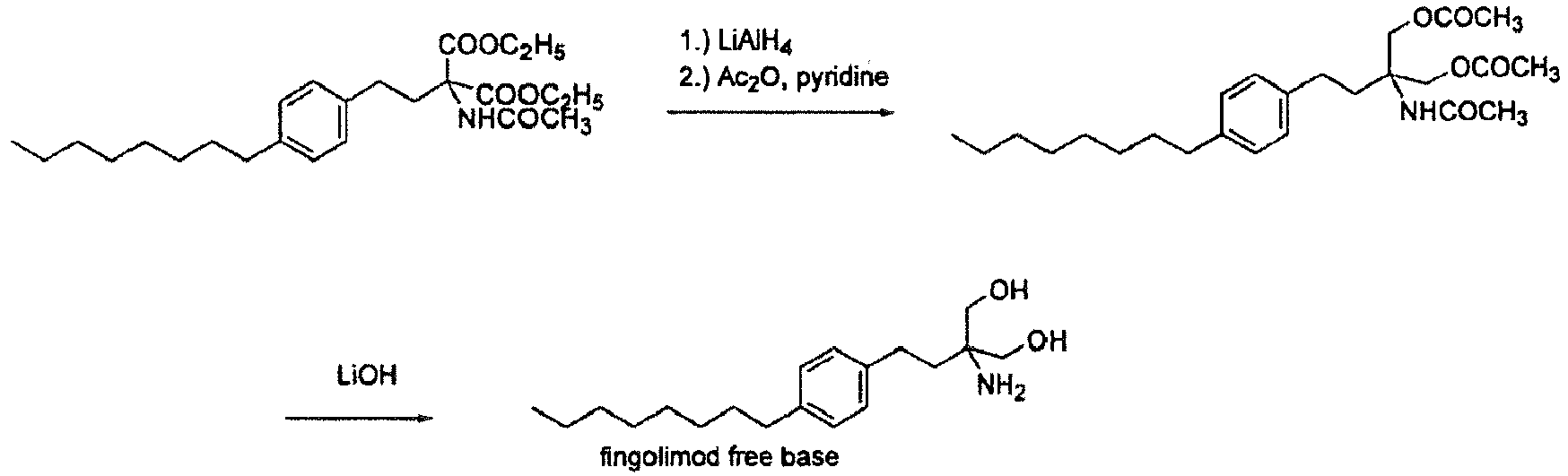
- Subsequently, the free base of fingolimod is converted into the hydrochloride according to Example 29.
- However, it has been found that steps 7a and 7b, including the subsequent conversion into the salt, can be carried out only with low yield (about 26 %). Furthermore, the above process requires pyridine as solvent, which is undesirable due to toxic effects.
In addition, the process according toEP 0 627 406 - The process according to Example 28 was improved by Durand et al., see "A new Efficient Synthesis of the Immunosuppressive Agent FTY-720", . Durand et al. disclosed an improved process for steps 1 to 6. However, Durand et al. were not able to improve steps 7a and 7b, including the subsequent conversion into the hydrochloric salt. Therefore, when following the synthesis concept according to Durand at al., the resulting process still shows deficiencies with regard to yield, undesirable solvents and purity.
- Therefore, it was an object of the present invention to provide an improved process for producing pharmaceutically acceptable salts of fingolimod. In particular, the process should be carried out in high yield and should enable a production in large scale. It was a further object of the present invention to provide a process for producing fingolimod having a high degree of purity and a low residual solvent content. The use of solvents, having undesirable toxic effects, should be avoided. Moreover, it was an object of the present invention to provide an improved process for producing not only fingolimod in form of the hydrochloride salt but fingolimod in form of a variety of different pharmaceutically acceptable salts. In addition, it was an object of the present invention to provide fingolimod in form of pharmaceutically acceptable salts, showing a constant dissolution profile before and after storage.
- The above mentioned objects have been unexpectedly solved by reacting N-[1,1-bis hydroxymethyl-3-(4-octyl phenyl)-propyl]-acylamide (II) with an acidic compound.
- Hence, a subject of the present invention is a process for producing a pharmaceutically acceptable salt of fingolimod according to formula (I-i)

a process for producing a pharmaceutically acceptable salt of fingolimod according to formula (I-ii)

wherein in the above formulae H is a dissociable hydrogen atom, X is a pharmaceutically acceptable residue, y and n are a natural number from 1 to 5, preferably from 1 to 3, wherein n s y and R1 is an organic residue, preferably an alkyl or aryl group, more preferably methyl. In a possible embodiment of formula (I-ii) n is smaller than y (n < y). - Formula (I-i) corresponds to formula (I-ii) if y = n.
- In addition, further subjects of the present invention are compounds according to formula (I-i) or (I-ii), wherein X is ascorbate, succinate, oxalate, phosphate, mandelate, adipate, ethanesulfonate, naphthalene-1,5-disulfonate, naphthalene-1-sulfonate. naphthalene-2-sulfonate, L-aspartate, 4-acetamidobenzoate, (+) camphorate, (+) camphor-10-sulfonate, decanoate, hexanoate, octanoate, cinnamate, dodecylsulfate, ethane-1,2-disulfonate, 2-hydroxyethanesulfonate, glutarate, DL-lactate, 1-hydroxy-2-naphthoate, laureate, salicylate, tartrate, mesylate, citrate, benzoate or mixtures thereof. Moreover, further subject of the present invention are polymorphic forms of fingolimod hydrochloride.
- Finally, a further subject of the present invention is the use of a chemoselective reducing agent in a process for producing a pharmaceutically acceptable salt of fingolimod, wherein fingolimod in form of the free base does not occur as an intermediate in said process.
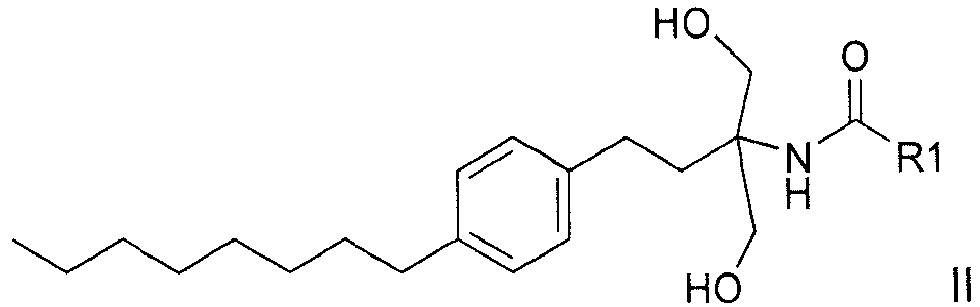
- The process of the present invention comprises reacting a compound according to formula (II)

- Generally, in formula (II) R1 represents an organic residue, preferably an alkyl or aryl group, more preferably a C1 to C4 alkyl group and, particularly, a methyl group.
- In the above reaction an acidic compound is used, that means a compound being capable of dissociating protons. The acidic compound is a compound according to the formula Hy X, wherein H is hydrogen atom, capable of dissociating as proton. X is a pharmaceutically acceptable residue. Hence, after the proton H+ has been dissociated, X is a pharmaceutically acceptable anion, preferably bromide or chloride, especially chloride, y is a natural number from 1 to 5, preferably 1 to 3, i.e. 1, 2 or 3. More preferably y is 1 or 2.
- For example, if hydrochloric acid is used as acidic compound, then y is 1 and X is chloride. If oxalic acid is used as acidic compound, then y is 2 and X is oxalate.
- Examples for preferred acidic compounds are hydrochloric acid, ascorbic acid, succinic acid, oxalic acid, phosphoric acid, mandelic acid, adipic acid, hydrobromic acid, sulfuric acid, acetic acid, fumaric acid, maleic acid, methane-sulfonic acid, benzenesulfonic acid. L-malic acid, ethanesulfonic acid, naphthalene-1,5-disulfonic acid, naphthalene-1-sulfonic acid, naphthalene-2-sulfonic acid, L-aspartic acid, 4-acetamidobenzoic acid, (+) camphoric acid, (+) camphor-10-sulfonic acid, decanoic acid, hexanoic acid, octanoic acid, cinnamic acid, dodecylsulfuric acid, ethane-1,2-disulfonic acid, 2-hydroxyethanesulfonic acid, glutaric acid, DL-lactic acid, 1-hydroxy-2-naphthoic acid, lauric acid, salicylic acid, tartaric acid or mixtures thereof.
- In a particular preferred embodiment hydrochloric or hydrobromic acid is used as acidic compound.
- The process according to the present invention results in a pharmaceutically acceptable salt of fingolimod according to formula (I-i) or (I-ii):


- Consequently, if hydrochloric acid is used as acidic compound in formula (I-i) or (I-ii), y is 1 and X is chloride. The resulting product is fingolimod hydrochloride as illustrated in formula (Ia)

- The reaction of the compound according to formula (II) with the acidic compound may be carried out in usual organic solvents and at usual temperatures. Preferably organic solvents, being capable of completely dissolving the acidic compound, are used. More preferably, alcohols or alcohol/water mixtures are used as suitable solvents. Particularly, an ethanol/water mixture is used.
- Usually the reaction is carried out at temperatures between 10 °C and 100 °C. preferably between 60 °C and 80 °C. The reaction time may vary from 10 minutes to 5 hours. Usually, the reaction product (I) (= I-i or I-ii) is obtained in crystalline form.
- In an embodiment of the present invention, the obtained product (I) (= I-i or I-ii) is (preferably completely) dissolved in water and/or and an organic solvent and subsequently freeze-dried. Suitable solvents are alcohols, e.g. ethanol. Preferably, water or a water/ethanol mixture is used. Freeze-drying is done, using VirTis® Bench top K Freeze dryer. The VirTis® glass bottle of 40 ml capacity, condenser temperature is from -53 °C to -105 °C, particularly -104 °C, and the vacuum is 15 mT (2 Pa).
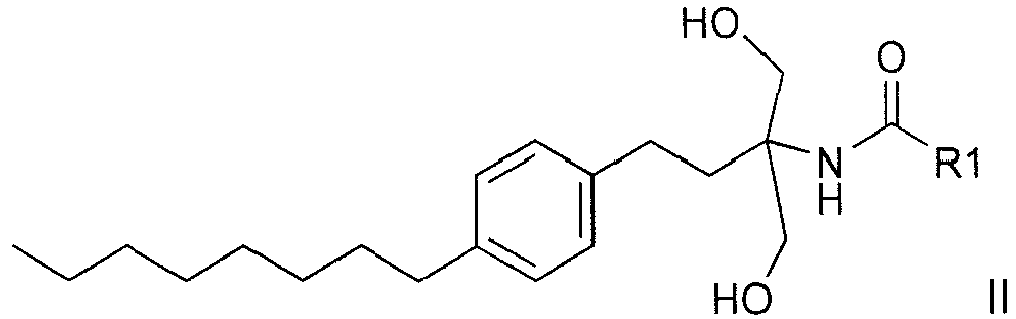
- In the above mentioned process a compound according to formula (II) is used. The compound according to formula (II) can be obtained by a process comprising reacting a compound according to formula (III)

wherein in formula (III) R1 is an organic residue, preferably an alkyl or aryl group,
more preferably a C1 to C4 alkyl group, in particular methyl, and R2 and R3 are alkyl groups, more preferably C1 to C4 alkyl groups, in particular ethyl. - The reaction of the compound according to formula (III) with the reducing agent may be carried out in usual organic solvents and at usual temperatures. Preferably alcohols or alcohol/water mixtures are used as suitable solvents. Particularly, an ethanol/water mixture is used. Usually the reaction is carried out at temperatures between - 80 °C and 50 °C, preferably between - 10°C and 20 °C. The reaction time may vary from 10 minutes to 10 hours. Usually, the reaction product (II) is obtained in crystalline form.
- In a preferred embodiment a chemoselective reducing agent is used. In this context the term "chemoselective" refers to a reducing agent being capable of reducing the ester groups but not the amido group of the compound according to formula (III).
- Examples of suitable reducing agents are NaBH4, LiBH4, KBH4, NaCNBH3, Na(AcO)3BH, L-Selectride®, K-Selectride®, N-Selectride®, benzyltriethylammonium borohydride, lithium dimethylaminoborohydride, lithium morpholinoborohydride, lithium pyrrolidinoborohydride, lithium triethylborohydride, potassium triethylborohydride, potassium triphenylborohydride, benzyltriphenylphosphonium borohydride, sodium triethylborohydride, sodium trimethoxyborohydride, tetrabutylammonium borohydride, tetrabutylammonium cyanoborohydride, tetramethylammonium borohydride, tetramethylammonium triacetoxyborohydride.
- Preferably NaBH4 is used as chemoselective reducing agent.
- In a preferred embodiment the chemoselective reducing agent is used together with a reduction enhancer. In this context the term "reduction enhancer" refers to a compound being capable of enforcing the reduction force of the reducing agent.
- Preferably metal salts are used as reduction enhancer, preferably halides and pseudohalides of metals, more preferably salts selected from LiCl, CaCl2, AlCl3, LaCl3, MnCl2, CoCl2 and ZnCl2, most preferably calcium salts are used. In particular, CaCl2 is used as reduction enhancer.
- A preferred reaction scheme of the process of the present invention is illustrated below:


- As illustrated in the above scheme, the process of the present invention enables the production of a variety of pharmaceutically acceptable fingolimod salts, wherein in said process the free base of fingolimod does not occur as intermediate product. It has been unexpectedly found that the avoidance of the free base of fingolimod results in a desirable increase of purity and yield.
- In addition, it has been found that the above-mentioned objects could be specifically solved by use of a chemoselective reducing agent in a process that avoids the free base of fingolimod as intermediate product. Consequently, a further subject of the present invention is the use of a chemoselective reducing agent in a process for producing a pharmaceutically acceptable salt of fingolimod, wherein fingolimod in form of the free base does not occur as an intermediate in said process.
- The preparation of compound III is known in the art. Preferably, compound III is prepared by the following reaction route:

- The process according to the present invention results in pharmaceutically acceptable salts of fingolimod (I) (= I-i or I-ii) having high purity and having a low residual solvent content, preferably of less than 1500 ppm, more preferably of less than 500 ppm, particularly less than 200 ppm.
- Usually, pharmaceutically acceptable salts of fingolimod (I) (= I-i or I-ii) are obtained in crystalline form. Depending on the acidic compound, pharmaceutically acceptable salts of fingolimod (I) (= I-i or I-ii) may be obtained in different polymorphic forms. If the acidic compound is hydrochloric acid, then fingolimod in form of the hydrochloride salt - as illustrated in the above formula Ia - is obtained. Usually, the fingolimod hydrochloride (Ia) as obtained by the process of the present invention shows (when subjected to differential scanning calorimetry, commonly abbreviated as DSC) endothermic peaks between 66 °C to 69 °C and between 100 °C to 110 °C, preferably between 67 °C to 68 °C and between 107 °C to 108 °C. Further, it has been verified that none of the two peaks is related to residual solvents or other impurities. Hence, it is assumed that the fingolimod hydrochloride (Ia) as obtained by the process of the present invention crystallizes in a mixture of two polymorphic forms (referred to as mixture of polymorphic forms A and B).
- In the present application DSC measurements have been carried out as follows:
DSC thermograms were obtained by using a Mettler® Toledo Model DSC 822°, heating range: 30°C to 300°C. heating rate: 10°C/min, purge gas: Nitrogen 50 ml/min, sample holder: 40 µl aluminum crucible.
XRD: Samples were analyzed on a Bruker®-AXS D8 Advance powder X-Ray diffractometer. The measurement conditions were as follows:Detector: VANTEC-13°2 Radiation: Cu Kα1(1.5406A) Monochromator: None Second β filter: Ni 0.1 mm Start angle: 2º End Angle: 55º Measurement time: 11 mi Step: 0.016º 2(-) Software : EVA (Brukar-AXS, Karlsruhe) - It further has been found that the mixture of polymorphic forms A and B can be converted into pure polymorphic form B. Polymorphic Form B of fingolimod hydrochloride (Ia) unexpectedly shows desirable properties. For example, polymorphic form B shows a constant dissolution profile before and after storage, i.e. the dissolution profile essentially remains constant during shelf life. Furthermore, polymorphic form B shows an advantageous processability in the preparation of pharmaceutical formulations. In particular, the flowability of polymorphic form B is superior when compared to form A or mixtures of forms A and B.
- Polymorphic Form B of fingolimod hydrochloride (Ia) shows (when subjected to differential scanning calorimetry) an endothermic peak between 100 °C to 110 °C, preferably between 107 °C to 108 °C. Thus, a further subject of the present invention is a compound according to formula (Ia) in crystalline form, wherein the differential scanning calorimetry (DSC) shows an endothermic peak between 100 °C to 110 °C but not an endothermic peak between 66 °C to 69 °C.
- Polymorphic form B of fingolimod hydrochloride (Ia) can be prepared by dissolving the mixture of polymorphic forms A and B (preferably as obtained by the process of the present invention) in a solvent and subsequently subjecting the resulting solution to a rapid drying process. Preferably water, alcohols or alcohol/water mixtures are used as suitable solvents. Particularly water is used. The resulting solution is "rapidly" dried, for example by spray-drying or freeze-drying. Freeze-drying is preferred.
- In a preferred embodiment polymorphic form B of fingolimod hydrochloride (Ia) can also be prepared by grinding the mixture of polymorphic forms A and B (preferably as obtained by the process of the present invention). Suitable grinding machines are ball mill, rod mill, mortar and pestle, pebble mill, colloid mill, conical mill or disk mill. Preferred grinding machine is a ball mill from agate or stainless steel, preferably with 10 mm agate round balls.
- Hence, a subject of the present invention is a process for producing polymorph B (i.e. the compound of claim 13), comprising
- (a) providing polymorph A or a mixture of polymorphs A and B, that means providing a compound according to formula (Ia), wherein the differential scanning calorimetry (DSC) either shows one endothermic peak between 66 °C to 69 °C or two endothermic peaks between 100 °C to 110 °C and 66 °C to 69 °C, respectively; and
- (b) grinding the material provided in step (a).
- It was unexpectedly found that specific milling frequencies might positively affect the purity of form B. Suitable frequencies are between 10 Hz to 100 Hz, preferably between 20 Hz to 50 Hz, most preferably about 30 Hz.
- The milling time usually ranges from 5 minutes to 5 hours, preferably from 10 minutes to 4 hours, more preferably from 20 minutes to 3 hours, still more preferably from 30 minutes to 2 hours.
- Conversion of a mixture of polymorphic forms A and B to pure polymorphic form B by the above described grinding process particularly affects the flowability properties in a positive way. The resulting product usually has a superior bulk density when compared to polymorphic form B as obtained by freeze-drying.
- In the present invention fingolimod is not only provided in form of the hydrochloride. In addition, fingolimod is provided in form of a variety of acid-addition salts. As mentioned above, a further subject of the present invention is fingolimod in form of an acid-addition salt, selected from ascorbate, succinate, oxalate, phosphate, mandelate, adipate, bromide, sulfate, acetate, fumarate, maleate, methane-sulfonate, benzenesulfonate, L-malate, ethanesulfonate, naphthalene-1,5-disulfonate, naphthalene-1-sulfonate, naphthalene-2-sulfonate, L-aspartate, 4-acetamidobenzoate, (+) camphorate, (+) camphor-10-sulfonate, decanoate, hexanoate, octanoate, cinnamate, dodecylsulfate, ethane-1,2-disulfonate, 2-hydroxyethanesulfonate, glutarate, DL-lactate, 1-hydroxy-2-naphthoate, laureate, salicylate, tartrate, mesylate (methanesulfonate), citrate, benzoate or mixtures thereof.
- If in the formula (I-ii) X is succinate, fumarate or malate (D-malate, L-malate, DL-malate, preferably L-malate), then n is preferably 2. If in the formula (I-ii) X is oxalate, phosphate, adipate, citrate or sulfate, then n is preferably 1.
- It has been unexpectedly found that the above-mentioned fingolimod salts show advantageous processability in the preparation of pharmaceutical formulations (when being compared to fingolimod hydrochoride, particularly fingolimod hydrochloride in form of a mixture of polymorphic forms A and B). In particular, processability under elevated temperature conditions is significantly improved.
- The fingolimod hydrochloride (preferably in form B) or the other above mentioned fingolimod salts preferably are present in particulate form. Usually the particles have a volume mean particle size (D50) of 1 to 250 µm, preferably of 2 to 200 µm, more preferably of 5 to 150 µm, further more preferably of 10 to 120 µm, most preferably of 15 to 90 µm. The fingolimod salts preferably possess Hausner ratios in the range of 1.01 to 1.5 or 1.05 to 1.4, preferably of 1.06 to 1.3, more preferably between 1.08 to 1.25. The Hausner ratio is the ratio of tapped density to bulk density, determined according to Ph.Eur. 4.0, 2.9.15.
- Within this application, the volume mean particle size (D50) is determined by the light scattering method, using a
Mastersizer 2000 apparatus made by Malvern Instruments (wet measurement, 2000 rpm, ultrasonic waves for 60 sec., data interpretation via Fraunhofer method). - Finally, for the sake of completeness it is noted that the compounds according to formula (I) (= I-i or I-ii) can be prepared by two alternative routes, which are outlined below.


- More specific embodiments of
Routes 1 and 2 concerning the hydrochloride salt are outlined below.

- The present invention is illustrated by the following examples.
- 28 g (64.57 mmole) 2-(acetylamino)-2-[2-(4-octylphenyl)ethyl]propanedioic acid diethylester (= compound according to formula (III)) was added to 450 ml ethanol. A solution of 17.91 g calcium chloride in 125 ml water was added in one lot. 12.21 g (322.7 mmole) sodium borohydride was added to the reaction mixture at 0º C in 1
hr 20 min. The reaction mixture was left overnight for stirring. 100 ml of 1 N HCl was added to neutralize the reaction mixture and inorganic solids were filtered and washed with 200 ml ethanol. Filtrate was evaporated under vacuum. 300 ml water was added to the residue obtained and was extracted with 2 x 250 ml EtOAC. The organic extract was washed with brine, dried over sodium sulphate and evaporated to give 23 g semisolid.
300 ml petrolether was added to the semisolid obtained and filtered and dried.
Crop 1 = 8.3 gm
From the filtrate,crop 2 was isolated as an oil.
Crop 1 = 8.3 gm
Crop 2 = 13.3 gm. Total yield = 95 %
IR (cm-1): 3283.47, 3096.67, 2957.98, 2925.22, 2871.63, 1624.63, 1560.18. - 4 ml ethanol was added to 0.75 gm of N-acetyl-fingolimod. To the clear solution obtained 2.7 ml of 6 M HCl was added and the reaction was refluxed for 2 hours. Solvent and water were evaporated on a rotary evaporator to give 0.48 gm of crystalline fingolimod hydrochloride.
IR (cm-1): 3268.3, 3034.9, 2923.7, 2853, 1600.8, 1516.1, 1466.8, 1455.9
Residual solvents: Not detected
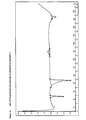
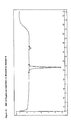
DSC shows endothermic peaks at 68.6 °C and 100.77 ºC, indicating a mixture of polymorphic forms A and B.
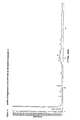
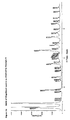
An X-ray powder diffraction (XRPD) of the resulting fingolimod hydrochloride is shown inFigure 1 .
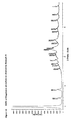
100 mg was recrystallized from ethanol. DSC shows endothermic peaks at 67.16 °C and 107.6 ºC. The respective graph is shown inFigure 2 . - 1 ml of concentrated HCl + 2 ml water was added to 484 mg (1.38 mmole) N-acetyl-fingolimod (II). The solution was heated at 50 °C to 60 ºC for 1 hr 15 min. Toluene was added to the reaction and water was distilled out azeotropically. The residue was triturated with dry diethyl ether and the solid obtained was filtered and dried under vacuum.
- Yield = 363 mg fingolimod hydrochloride (76.5 % yield)
DSC shows two endothermic peaks at 66.18 °C and 108.09 ºC, indicating a mixture of polymorphic forms A and B.
IR (cm-1): 3268.1, 2992.7, 2852, 1601.2, 1516.2, 1469, 1456.2
Residual solvents: Not detected. - 500 mg of fingolimod hydrochloride, obtainable by Example 2, was dissolved in 2.3 ml water. It was frozen to a thin film in a flask by using liquid nitrogen and was connected to a Freeze dryer.
A fluffy solid was obtained. Yield = 496 mg
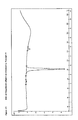
DSC shows a peak at 107.45 ºC, whereas no peak was observed at about 66 ºC, indicating the presence of polymorphic form B only.
IR (cm-1): 3267.6, 2922.9, 1601.1, 1516.8, 1469.1, 1456.5, 1069.3
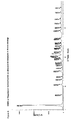
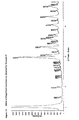
XRD shows characteristic peaks at 2θ = 3.5°. 7.1°, 10.6°. 20.2°, 20.4°, 21.4°. - 500 mg (2.14 mmole) N-acetyl-fingolimod (II) + 4 ml ethanol + 2 ml 6 N HCl. Solution was refluxed for 1.5 hours. Ethanol was removed under vacuum. The remaining mixture was frozen in liquid nitrogen and connected to a freeze dryer. 350 mg solid was obtained.
DSC shows a major endothermic peak at 104.75°C. - 200 mg of Fingolimod HCl: DSC shows 2 peaks at 66.8 (-20 J/g) and 108.9°C (-117.6 J/g), was milled at 30 Hz for 1 hour, using 10 ml agate jar and 10 mm agate balls.
Yield = 194 mg
DSC shows endothermic peak at 109.72°C. - 4 ml ethanol was added to 500 mg (2.14 mmole) of N-acetyl-fingolimod. 2 ml 47 % aq HBr was added to the clear solution and was refluxed for 2 hours. The solvent was evaporated under vacuum and the obtained residue was treated with 50 ml diethyl ether, and the mixture was stirred for 1 hour. Solid was filtered and dried at 40°C under vacuum.
Yield = 488 mg.
DSC shows an endotherm at 83.4°C. - Fingolimod salts ascorbate, succinate, oxalate, phosphate, mandelate, adipate, sulfate, malate, malate hydrate, acetate, benzoate, citrate, fumarate, maleate and mesylate were prepared in a previously described way.
- Yield = 0.266 g
DSC shows a major endotherm at 152.68°C and a minor endotherm at 183.28 °C. Melting point = 151.6 - 153.1°C.
HPLC purity = 99.39 %
IR: 3255, 2926.7, 2853.9, 1652.5, 1618.6, 1541.6, 1513.2 cm-1
Characteristic XRPD-peaks at 2θ = 3.2°, 9.8°, 19.8°, 23.2°, 26.1°, 33.2°.
According to formula (I-ii), y and n are 2. - Yield = 0.288 g
DSC shows overlapping endotherms at 166.20 and 169.31 °C.
Melting point = 162.6 - 167.7°C
HPLC purity = 99.3 %
IR: 3374.1, 2955.4, 2852.2, 1721.3, 1698.6, 1618.9 cm-1
Characteristic XRPD-peaks at 2θ = 2.8°, 3.1°, 4.5°, 9.0°, 18.1°, 20.4°, 22.6°, 27.2°. According to formula (I-ii), y is 2 and n is 1. - Yield = 0.312 g
DSC shows endotherms at 41.10, 72.13. 129.37 and 170.36 °C.
Melting point = 167.1 -174.9°C
HPLC purity = 99.2 %
IR: 3386.8, 2923.6, 2850.7, 1655.6, 1633.9 cm-1
Characteristic XRPD-peaks at 2θ = 2.9°, 8.7°, 18.9°, 22.4°, 22.9°.
According to formula (I-ii), y is 3 and n is 1. - Yield = 0.218 g
DSC shows a major endotherm at 126.46°C and a minor endotherm at168.94 °C.
Melting point = 126.3 -131.2°C
HPLC purity = 99.8 %
IR: 3464.9. 2922.3, 2852.7, 1634.4, 1613.7, 1575.3 cm-1
Characteristic XRPD-peaks at 2θ = 4.4°, 8.8°, 17.8°, 18.7°, 20.8°, 22.1°, 26.8°, 31.3°. - Yield = 0.271 g
DSC shows a minor endotherm at 95.50, a major endotherm at 121.67 and a minor endotherm at 165.47 °C.
Melting point = 120.4 - 121.7°C
HPLC purity = 99.55 %
IR: 3332.9, 2925.9, 2871.7, 1605.5, 1558, 1527.6 cm-1
Characteristic XRPD-peaks at 2θ = 2.3°, 3.4°, 10.4°, 17.4°, 18.5°, 21.5°, 28.5°, 33.9°, 37.2°.
According to formula (I-ii), y is 2 and n is 1. - Yield = 0.255 g
DSC does not show any endothermic peak indicating amorphous nature.
HPLC purity = 99.06 %
IR: 2924.4, 2853.7, 1721, 1607 cm-1. - Two different products were obtained from precipitation and from crystallization out of mother liquor. Both were analyzed separately.
- Product I (precipitate):
- Yield = 0.124 g
- Characteristic XRPD-peaks at 2θ = 2.8°, 8.5°, 17.1°, 25.8°.
- Product II (obtained from mother liquor):
- The mother liquor on keeping for 30 min at room temperature gave more precipitate, which was filtered and dried at 40 °C under vacuum for 1 h to obtain a white solid.
- Yield = 0.077 g
- Characteristic XRPD-peaks at 2θ = 2.8°, 3.0°, 6.2°, 8.5°, 17.1°, 19.6°, 21.4°, 23.2°. According to formula (I-ii), y is 2 and n is 1.
- Yield = 86.2%
DSC showed a sharp endotherm at 155.64 ºC
IR : 3237, 2925.9. 2853.8, 1642.6, 1561, 1514.8, 1467.1, 1390.7 cm-1
Melting point = 150.9 -153°C
HPLC purity = 99.7 %
Characteristic XRPD-peaks at 2θ = 3.12, 6.19, 9.35, 18.35, 18.71, 21.91, 22.31, 24.99, 31.38.
According to formula (I-ii) y is 2 and n is 2. - DSC showed two small endotherms at 59.6 and 69.47 and a sharp endotherm at 151.24 ºC
Melting point = 152.3-159.6 °C
IR: 3371.3, 2925.4, 2853.2, 1628.5, 1551.4 cm-1
HPLC purity = 99.78 %
Water content: 4.7702%
Characteristic XRPD-peaks at 2θ = 3.02, 9.19, 11.25, 18.50, 19.79, 20.85, 22.08, 22.69, 24.71, 25.18, 28.50, 28.65, 31.15.
According to formula (I-ii) y is 2 and n is 2. - Yield = 73.1 %
DSC showed a sharp endotherm at 124.2°C
HPLC purity = 98.91 %
IR: 3353.3, 3324.98, 3290.98, 2925.2, 2853.9, 1573, 1465.9, 1018.7 cm-1 Characteristic XRPD-peaks at 2θ =19.42, 20.71, 23.37, 27.35, 30.4, 31.36, 35.4. - Yield = 88.16 %
DSC showed an endotherm at 147.92 °C
Melting point: 150.1-152.1 °C
IR: 3229.3, 3134.2, 3018.1, 2923.0, 2851.8, 1630.8, 1556.5, 1513.3 cm-1
HPLC purity = 99.48%
Characteristic XRD-peaks at 2θ = 4.99, 8.51, 10.09, 15.20, 19.28, 20.06, 21.48, 21.95, 25.22, 25.53, 30.78, 36.08. - Yield =97.8 %
DSC shows an endotherm at 164.49 ºC
Melting point = 165.9-168 °C
HPLC purity = 99.9 %
IR: 3280.5, 3090.1, 2957.4, 2923.2, 2851.8, 1646.1, 1618.8, 1592 cm-1 Characteristic XRD-peaks at 2θ = 3.80, 7.7, 15.42, 19.30, 19.70, 20.04, 21.76. - Yield = 77 %
DSC showed endotherms at 56.29, 61.27, 129.61, 132.77, 167.97 ºC
Melting point: 168-169.7 °C
IR: 3340.6, 3228.3, 2923.4, 1602.4, 1571.0 cm-1
HPLC purity = 99.16 %
Characteristic XRD peaks at 2θ = 2.56, 7.71, 10.31, 12.92, 15.67, 15.88, 17.50, 17.85, 22.67, 28.41, 29.47.
According to formula (I-ii), y is 3 and n is 1. - Yield = 85%
DSC showed small endotherms at 50.46, 175.69 and a sharp endotherm at 199.56, followed by a merging endotherm at 200.75 ºC
Melting point = 192-193.4 °C
HPLC purity = 99.58 %
IR: 3354.0, 2870.5, 2650.4, 1644.2, 1626.5, 1587.9, 1521.7 cm-1
According to formula (I-ii), y is 2 and n is 2. - The present invention relates to the following embodiments (1) to (15)
- (1) Process for producing a pharmaceutically acceptable salt of fingolimod according to formula (I-i)

according to formula (I-ii)
wherein H is a dissociable hydrogen atom, X is a pharmaceutically acceptable residue, y and n are a natural number from 1 to 3, wherein n ≤ y, and R1 is an alkyl group, preferably methyl. - (2) Process according to embodiment (1), wherein y is 1.
- (3) Process according to embodiment (1) or (2), wherein X is chloride.
- (4) Process according to embodiment (1) or (3), wherein the compound according to formula (I) is dissolved and subsequently freeze-dried.
- (5) Process for producing a compound according to formula (II)

wherein R1 is an alkyl or aryl group, preferably methyl, and R2 and R3 are alkyl groups, preferably ethyl. - (6) Process according to embodiment (5), wherein the compound according to formula (II) is further reacted according to a process as described in embodiments (1) to (4).
- (7) Process according to embodiment (5) or (6), wherein the reducing agent is a chemoselective reducing agent.
- (8) Process according to any of embodiments (5) to (7), wherein the reducing agent is NaBH4.
- (9) Process according to any of embodiments (5) to (8), wherein the reducing agent is used together with a reduction enhancer.
- (10) Process according to embodiment (9), wherein the reduction enhancer is CaCl2.
- (11) Process according to any one of embodiments (1) to (10), wherein fingolimod in form of the free base does not occur as an intermediate.
- (12) Compound according to formula (I-i) or (I-ii), wherein X is ascorbate, succinate, oxalate, phosphate, mandelate, adipate or mixtures thereof.
- (13) Compound according to formula (Ia) in crystalline form

- (14) Process for producing the compound of embodiment (13), comprising
- (a) providing a compound according to formula (Ia), wherein the differential scanning calorimetry (DSC) either shows one endothermic peak between 66 °C to 69 °C or two endothermic peaks between 100 °C to 110 °C and 66 °C to 69 °C, respectively; and
- (b) grinding the material provided in step (a).
- (15) Use of a chemoselective reducing agent in a process for producing a pharmaceutically acceptable salt of fingolimod, wherein fingolimod in form of the free base does not occur as an intermediate in said process.
Claims (3)
- Fingolimod citrate, characterized by XRD peaks at 2θ = 2.56, 7.71, 10.31, 12.92, 15.67, 15.88, 17.50, 17.85, 22.67, 28.41 and 29.47.
- The compound according to claim 1, further characterized byi) differential scanning calorimetry (DSC) showing endothermic peaks at 56.29, 61.27, 129.61, 132.77 and 167.97°C; and/orii) a melting point of 168-169.7°C; and/oriii) IR peaks at 3340.6, 3228.3, 2923.4, 1602.4, and 1571.9 cm-1.
- The compound according to any one of claims 1 or 2, wherein the compound is for use in the treatment of relapsing-remitting multiple sclerosis.
Applications Claiming Priority (2)
| Application Number | Priority Date | Filing Date | Title |
|---|---|---|---|
| IN1535DE2009 | 2009-07-24 | ||
| EP10737516.4A EP2456752A2 (en) | 2009-07-24 | 2010-07-23 | Process for producing fingolimod salts |
Related Parent Applications (1)
| Application Number | Title | Priority Date | Filing Date |
|---|---|---|---|
| EP10737516.4A Division EP2456752A2 (en) | 2009-07-24 | 2010-07-23 | Process for producing fingolimod salts |
Publications (2)
| Publication Number | Publication Date |
|---|---|
| EP2896609A1 true EP2896609A1 (en) | 2015-07-22 |
| EP2896609B1 EP2896609B1 (en) | 2018-06-27 |
Family
ID=54207861
Family Applications (2)
| Application Number | Title | Priority Date | Filing Date |
|---|---|---|---|
| EP10737516.4A Withdrawn EP2456752A2 (en) | 2009-07-24 | 2010-07-23 | Process for producing fingolimod salts |
| EP15152927.8A Not-in-force EP2896609B1 (en) | 2009-07-24 | 2010-07-23 | Crystalline fingolimod citrate for the treatment of relapsing-remitting multiple sclerosis |
Family Applications Before (1)
| Application Number | Title | Priority Date | Filing Date |
|---|---|---|---|
| EP10737516.4A Withdrawn EP2456752A2 (en) | 2009-07-24 | 2010-07-23 | Process for producing fingolimod salts |
Country Status (5)
| Country | Link |
|---|---|
| US (1) | US8766005B2 (en) |
| EP (2) | EP2456752A2 (en) |
| KR (1) | KR20120032538A (en) |
| IL (1) | IL217592A (en) |
| WO (1) | WO2011009634A2 (en) |
Cited By (1)
| Publication number | Priority date | Publication date | Assignee | Title |
|---|---|---|---|---|
| EP4353709A4 (en) * | 2021-05-31 | 2026-02-18 | Shanghai Yonsun Biotechnology Co Ltd | Fingolimod pharmaceutical salt, manufacturing process therefor, pharmaceutical composition thereof and use thereof |
Families Citing this family (8)
| Publication number | Priority date | Publication date | Assignee | Title |
|---|---|---|---|---|
| EP2646409A4 (en) | 2010-11-25 | 2015-12-16 | Shilpa Medicare Ltd | FINGOLIMODE POLYMORPHS AND METHODS THEREOF |
| US9216943B2 (en) | 2011-04-29 | 2015-12-22 | Dr. Reddy's Laboratories Ltd. | Preparation of fingolimod and its salts |
| CN102850319A (en) * | 2011-06-27 | 2013-01-02 | 中国药科大学 | Preparation method of {5-[2-(4-n-octyl-phenyl)ethyl]-2,2-dimethyl-1,3-dioxane-5-yl} carbamic acid tert-butyl ester |
| EP2945927A4 (en) * | 2013-01-17 | 2017-01-18 | Shilpa Medicare Limited | Process for preparation of fingolimod and its salts |
| JP6484567B2 (en) * | 2013-03-05 | 2019-03-13 | バイオコン・リミテッドBiocon Limited | Process for the production of 2-amino-1,3-propanediol compounds and salts thereof |
| US9925138B2 (en) | 2015-01-20 | 2018-03-27 | Handa Pharmaceuticals, Llc | Stable solid fingolimod dosage forms |
| RU2627691C1 (en) * | 2016-07-06 | 2017-08-10 | Олег Ростиславович Михайлов | Crystalline h-modification of 2-amino-2-(2-(4-octylphenyl) ethyl)propane-1,3-diole hydrochloride, method for its production and pharmaceutical composition based thereon |
| EP3560628A4 (en) | 2016-12-22 | 2019-10-30 | Posco | Vertical continuous casting apparatus and control method therefor |
Citations (5)
| Publication number | Priority date | Publication date | Assignee | Title |
|---|---|---|---|---|
| EP0627406A1 (en) | 1992-10-21 | 1994-12-07 | Yoshitomi Pharmaceutical Industries, Ltd. | 2-amino-1,3-propanediol compound and immunosuppressant |
| EP0812588A1 (en) * | 1995-12-28 | 1997-12-17 | Yoshitomi Pharmaceutical Industries, Ltd. | External preparation |
| EP1050301A1 (en) * | 1998-01-19 | 2000-11-08 | Yoshitomi Pharmaceutical Industries, Ltd. | Medicinal compositions |
| WO2007143081A2 (en) * | 2006-06-02 | 2007-12-13 | The Ohio State University Research Foundation | Therapeutic agents for the treatment of lymphoid malignancies |
| WO2009115534A1 (en) * | 2008-03-19 | 2009-09-24 | Novartis Ag | Process for the preparation of 2-amino-2- [2- (4-c3-c21-alkyl-phenyl)ethyl] propane-1, 3-diols |
Family Cites Families (6)
| Publication number | Priority date | Publication date | Assignee | Title |
|---|---|---|---|---|
| US6476004B1 (en) * | 1996-07-18 | 2002-11-05 | Mitsubishi Pharma Corporation | Pharmaceutical composition |
| JP4079505B2 (en) | 1998-04-28 | 2008-04-23 | 田辺三菱製薬株式会社 | Novel process for the preparation of 2-amino-2- [2- (4-octylphenyl) ethyl] propane-1,3-diol |
| CA2483594C (en) | 2002-05-16 | 2011-02-15 | Novartis Ag | Use of edg receptor binding agents in cancer |
| RU2008116578A (en) | 2005-09-30 | 2009-11-10 | Новартис АГ (CH) | APPLICATION OF DPP-IV INHIBITORS FOR TREATMENT OF AUTOIMMUNE DISEASES AND TRANSPLANT rejection |
| CN100548968C (en) | 2006-03-01 | 2009-10-14 | 徐州师范大学 | A kind of method for preparing 2-to octyl group styroyl-2-amino-propanediol hydrochloride |
| JP2012508215A (en) | 2008-11-11 | 2012-04-05 | ノバルティス アーゲー | Organic compounds |
-
2010
- 2010-07-23 EP EP10737516.4A patent/EP2456752A2/en not_active Withdrawn
- 2010-07-23 WO PCT/EP2010/004547 patent/WO2011009634A2/en not_active Ceased
- 2010-07-23 EP EP15152927.8A patent/EP2896609B1/en not_active Not-in-force
- 2010-07-23 US US13/386,808 patent/US8766005B2/en not_active Expired - Fee Related
- 2010-07-23 KR KR1020127001953A patent/KR20120032538A/en not_active Ceased
-
2012
- 2012-01-17 IL IL217592A patent/IL217592A/en not_active IP Right Cessation
Patent Citations (6)
| Publication number | Priority date | Publication date | Assignee | Title |
|---|---|---|---|---|
| EP0627406A1 (en) | 1992-10-21 | 1994-12-07 | Yoshitomi Pharmaceutical Industries, Ltd. | 2-amino-1,3-propanediol compound and immunosuppressant |
| EP0627406B1 (en) | 1992-10-21 | 1998-10-28 | Yoshitomi Pharmaceutical Industries, Ltd. | 2-amino-1,3-propanediol compound and immunosuppressant |
| EP0812588A1 (en) * | 1995-12-28 | 1997-12-17 | Yoshitomi Pharmaceutical Industries, Ltd. | External preparation |
| EP1050301A1 (en) * | 1998-01-19 | 2000-11-08 | Yoshitomi Pharmaceutical Industries, Ltd. | Medicinal compositions |
| WO2007143081A2 (en) * | 2006-06-02 | 2007-12-13 | The Ohio State University Research Foundation | Therapeutic agents for the treatment of lymphoid malignancies |
| WO2009115534A1 (en) * | 2008-03-19 | 2009-09-24 | Novartis Ag | Process for the preparation of 2-amino-2- [2- (4-c3-c21-alkyl-phenyl)ethyl] propane-1, 3-diols |
Non-Patent Citations (2)
| Title |
|---|
| DURAND ET AL.: "A new Efficient Synthesis of the Immunosuppressive Agent FTY-720", SYNTHESIS, 2000, pages 505 - 506, XP055186178, DOI: doi:10.1055/s-2000-6365 |
| KAPPOS, L. ET AL.: "ORAL FINGOLIMOD (FTY720) FOR RELAPSING MULTIPLE SCLEROSIS", NEW ENGLAND JOURNAL OF MEDICINE, MASSACHUSETTS MEDICAL SOCIETY, BOSTON, MA, US, vol. 355, no. 11, 14 September 2006 (2006-09-14), pages 1124 - 1140, XP009072986, ISSN: 1533-4406, DOI: 10.1056/NEJMOA052643 * |
Cited By (1)
| Publication number | Priority date | Publication date | Assignee | Title |
|---|---|---|---|---|
| EP4353709A4 (en) * | 2021-05-31 | 2026-02-18 | Shanghai Yonsun Biotechnology Co Ltd | Fingolimod pharmaceutical salt, manufacturing process therefor, pharmaceutical composition thereof and use thereof |
Also Published As
| Publication number | Publication date |
|---|---|
| IL217592A (en) | 2015-08-31 |
| US20120184617A1 (en) | 2012-07-19 |
| KR20120032538A (en) | 2012-04-05 |
| WO2011009634A3 (en) | 2011-11-10 |
| EP2456752A2 (en) | 2012-05-30 |
| EP2896609B1 (en) | 2018-06-27 |
| WO2011009634A2 (en) | 2011-01-27 |
| US8766005B2 (en) | 2014-07-01 |
Similar Documents
| Publication | Publication Date | Title |
|---|---|---|
| US8766005B2 (en) | Process for producing fingolimod salts | |
| RU2417986C2 (en) | Synthesis of n-(4-fluorobenzyl)-n-(1-methylpiperidin-4-yl)-n'-(4-(2-methylpropyloxy)phenylmethyl)carbamide, as well as tartrate and crystalline forms thereof | |
| US20100041920A1 (en) | New salt forms of an aminoindan derivative | |
| JP2010527371A (en) | Synthesis of N- (4-fluorobenzyl) -N- (1-methylpiperidin-4-yl) -N '-(4- (2-methylpropyloxy) phenylmethyl) carbamide and its tartrate salt and various crystal forms | |
| US20090082398A1 (en) | Crystalline forms of fexofenadine hydrochloride and processes for their preparation | |
| KR20180030964A (en) | The co-crystals of ibrutinib and carboxylic acid | |
| EP2409967A1 (en) | Polymorphs of n-hydroxy-3-[4-[[[2-(2-methyl-1h-indol-3-yl)ethyl]amino]methyl]phenyl]-2e-2-propenamide | |
| AU2022325334A1 (en) | Crystal form of lanifibranor, preparation method therefor, and use thereof | |
| US7642353B2 (en) | Process of making crystalline aripiprazole | |
| EP2220031A1 (en) | Polymorphic forms of aliskiren hemifumarate and process for preparation thereof | |
| US20080021244A1 (en) | Levalbuterol hydrochloride Polymorph A | |
| US20080108818A1 (en) | Maleate, tosylate, fumarate and oxalate salts of 5-(1-(S)-amino-2-hydroxyethyl)-N-[(2,4-difluorophenyl)-methy]-2-[8-methoxy-2-(triflouromethy)-5-quinoline]-4-oxazolecarboxamide and preparation process therefore | |
| US20060142299A1 (en) | Crystalline aripiprazole solvates | |
| KR20250003750A (en) | Polymorphs of [2-(1H-Indol-3-yl)-1H-imidazol-4-yl](3,4,5-trimethoxyphenyl)methanone and its salts | |
| WO2011121607A2 (en) | Rasagiline and its pharmaceutically acceptable salts | |
| WO2017167949A1 (en) | Crystalline forms of bilastine | |
| EP2397473A1 (en) | A stable highly crystalline anacetrapib | |
| US8933123B2 (en) | Polymorphic forms of O-desmethyl-venlafaxine succinate | |
| EP3083551B1 (en) | Crystalline form of tapentadol intermediate | |
| CN116041323B (en) | Acid salt of Sigma-1 receptor agonist, crystal form thereof, preparation method and application thereof | |
| WO2013064188A1 (en) | A stable highly crystalline anacetrapib | |
| EP3368506B1 (en) | Process for the preparation of enclomiphene citrate having needle shaped crystal habit. | |
| EP1768969B1 (en) | Crystalline mycophenolate sodium | |
| EP4190320A1 (en) | Crystalline form of phentermine hydrochloride and process for obtaining same | |
| WO2012153349A2 (en) | Rasagiline and its pharmaceutically acceptable salts |
Legal Events
| Date | Code | Title | Description |
|---|---|---|---|
| PUAI | Public reference made under article 153(3) epc to a published international application that has entered the european phase |
Free format text: ORIGINAL CODE: 0009012 |
|
| 17P | Request for examination filed |
Effective date: 20150128 |
|
| AC | Divisional application: reference to earlier application |
Ref document number: 2456752 Country of ref document: EP Kind code of ref document: P |
|
| AK | Designated contracting states |
Kind code of ref document: A1 Designated state(s): AL AT BE BG CH CY CZ DE DK EE ES FI FR GB GR HR HU IE IS IT LI LT LU LV MC MK MT NL NO PL PT RO SE SI SK SM TR |
|
| 17P | Request for examination filed |
Effective date: 20160121 |
|
| RBV | Designated contracting states (corrected) |
Designated state(s): AL AT BE BG CH CY CZ DE DK EE ES FI FR GB GR HR HU IE IS IT LI LT LU LV MC MK MT NL NO PL PT RO SE SI SK SM TR |
|
| 17Q | First examination report despatched |
Effective date: 20170516 |
|
| REG | Reference to a national code |
Ref country code: DE Ref legal event code: R079 Ref document number: 602010051585 Country of ref document: DE Free format text: PREVIOUS MAIN CLASS: C07C0213080000 Ipc: C07C0215280000 |
|
| RIC1 | Information provided on ipc code assigned before grant |
Ipc: C07C 59/265 20060101ALI20171212BHEP Ipc: C07C 215/28 20060101AFI20171212BHEP |
|
| GRAP | Despatch of communication of intention to grant a patent |
Free format text: ORIGINAL CODE: EPIDOSNIGR1 |
|
| INTG | Intention to grant announced |
Effective date: 20180122 |
|
| GRAS | Grant fee paid |
Free format text: ORIGINAL CODE: EPIDOSNIGR3 |
|
| GRAA | (expected) grant |
Free format text: ORIGINAL CODE: 0009210 |
|
| AC | Divisional application: reference to earlier application |
Ref document number: 2456752 Country of ref document: EP Kind code of ref document: P |
|
| AK | Designated contracting states |
Kind code of ref document: B1 Designated state(s): AL AT BE BG CH CY CZ DE DK EE ES FI FR GB GR HR HU IE IS IT LI LT LU LV MC MK MT NL NO PL PT RO SE SI SK SM TR |
|
| REG | Reference to a national code |
Ref country code: GB Ref legal event code: FG4D |
|
| REG | Reference to a national code |
Ref country code: AT Ref legal event code: REF Ref document number: 1012185 Country of ref document: AT Kind code of ref document: T Effective date: 20180715 |
|
| REG | Reference to a national code |
Ref country code: IE Ref legal event code: FG4D |
|
| REG | Reference to a national code |
Ref country code: DE Ref legal event code: R096 Ref document number: 602010051585 Country of ref document: DE |
|
| REG | Reference to a national code |
Ref country code: FR Ref legal event code: PLFP Year of fee payment: 9 |
|
| PG25 | Lapsed in a contracting state [announced via postgrant information from national office to epo] |
Ref country code: FI Free format text: LAPSE BECAUSE OF FAILURE TO SUBMIT A TRANSLATION OF THE DESCRIPTION OR TO PAY THE FEE WITHIN THE PRESCRIBED TIME-LIMIT Effective date: 20180627 Ref country code: BG Free format text: LAPSE BECAUSE OF FAILURE TO SUBMIT A TRANSLATION OF THE DESCRIPTION OR TO PAY THE FEE WITHIN THE PRESCRIBED TIME-LIMIT Effective date: 20180927 Ref country code: LT Free format text: LAPSE BECAUSE OF FAILURE TO SUBMIT A TRANSLATION OF THE DESCRIPTION OR TO PAY THE FEE WITHIN THE PRESCRIBED TIME-LIMIT Effective date: 20180627 Ref country code: NO Free format text: LAPSE BECAUSE OF FAILURE TO SUBMIT A TRANSLATION OF THE DESCRIPTION OR TO PAY THE FEE WITHIN THE PRESCRIBED TIME-LIMIT Effective date: 20180927 Ref country code: SE Free format text: LAPSE BECAUSE OF FAILURE TO SUBMIT A TRANSLATION OF THE DESCRIPTION OR TO PAY THE FEE WITHIN THE PRESCRIBED TIME-LIMIT Effective date: 20180627 |
|
| REG | Reference to a national code |
Ref country code: NL Ref legal event code: MP Effective date: 20180627 |
|
| REG | Reference to a national code |
Ref country code: LT Ref legal event code: MG4D |
|
| PG25 | Lapsed in a contracting state [announced via postgrant information from national office to epo] |
Ref country code: GR Free format text: LAPSE BECAUSE OF FAILURE TO SUBMIT A TRANSLATION OF THE DESCRIPTION OR TO PAY THE FEE WITHIN THE PRESCRIBED TIME-LIMIT Effective date: 20180928 Ref country code: LV Free format text: LAPSE BECAUSE OF FAILURE TO SUBMIT A TRANSLATION OF THE DESCRIPTION OR TO PAY THE FEE WITHIN THE PRESCRIBED TIME-LIMIT Effective date: 20180627 Ref country code: HR Free format text: LAPSE BECAUSE OF FAILURE TO SUBMIT A TRANSLATION OF THE DESCRIPTION OR TO PAY THE FEE WITHIN THE PRESCRIBED TIME-LIMIT Effective date: 20180627 |
|
| REG | Reference to a national code |
Ref country code: AT Ref legal event code: MK05 Ref document number: 1012185 Country of ref document: AT Kind code of ref document: T Effective date: 20180627 |
|
| PG25 | Lapsed in a contracting state [announced via postgrant information from national office to epo] |
Ref country code: NL Free format text: LAPSE BECAUSE OF FAILURE TO SUBMIT A TRANSLATION OF THE DESCRIPTION OR TO PAY THE FEE WITHIN THE PRESCRIBED TIME-LIMIT Effective date: 20180627 |
|
| PG25 | Lapsed in a contracting state [announced via postgrant information from national office to epo] |
Ref country code: RO Free format text: LAPSE BECAUSE OF FAILURE TO SUBMIT A TRANSLATION OF THE DESCRIPTION OR TO PAY THE FEE WITHIN THE PRESCRIBED TIME-LIMIT Effective date: 20180627 Ref country code: SK Free format text: LAPSE BECAUSE OF FAILURE TO SUBMIT A TRANSLATION OF THE DESCRIPTION OR TO PAY THE FEE WITHIN THE PRESCRIBED TIME-LIMIT Effective date: 20180627 Ref country code: CZ Free format text: LAPSE BECAUSE OF FAILURE TO SUBMIT A TRANSLATION OF THE DESCRIPTION OR TO PAY THE FEE WITHIN THE PRESCRIBED TIME-LIMIT Effective date: 20180627 Ref country code: IS Free format text: LAPSE BECAUSE OF FAILURE TO SUBMIT A TRANSLATION OF THE DESCRIPTION OR TO PAY THE FEE WITHIN THE PRESCRIBED TIME-LIMIT Effective date: 20181027 Ref country code: PL Free format text: LAPSE BECAUSE OF FAILURE TO SUBMIT A TRANSLATION OF THE DESCRIPTION OR TO PAY THE FEE WITHIN THE PRESCRIBED TIME-LIMIT Effective date: 20180627 Ref country code: EE Free format text: LAPSE BECAUSE OF FAILURE TO SUBMIT A TRANSLATION OF THE DESCRIPTION OR TO PAY THE FEE WITHIN THE PRESCRIBED TIME-LIMIT Effective date: 20180627 Ref country code: AT Free format text: LAPSE BECAUSE OF FAILURE TO SUBMIT A TRANSLATION OF THE DESCRIPTION OR TO PAY THE FEE WITHIN THE PRESCRIBED TIME-LIMIT Effective date: 20180627 |
|
| PG25 | Lapsed in a contracting state [announced via postgrant information from national office to epo] |
Ref country code: IT Free format text: LAPSE BECAUSE OF FAILURE TO SUBMIT A TRANSLATION OF THE DESCRIPTION OR TO PAY THE FEE WITHIN THE PRESCRIBED TIME-LIMIT Effective date: 20180627 Ref country code: SM Free format text: LAPSE BECAUSE OF FAILURE TO SUBMIT A TRANSLATION OF THE DESCRIPTION OR TO PAY THE FEE WITHIN THE PRESCRIBED TIME-LIMIT Effective date: 20180627 Ref country code: ES Free format text: LAPSE BECAUSE OF FAILURE TO SUBMIT A TRANSLATION OF THE DESCRIPTION OR TO PAY THE FEE WITHIN THE PRESCRIBED TIME-LIMIT Effective date: 20180627 |
|
| REG | Reference to a national code |
Ref country code: CH Ref legal event code: PL |
|
| REG | Reference to a national code |
Ref country code: DE Ref legal event code: R097 Ref document number: 602010051585 Country of ref document: DE |
|
| PG25 | Lapsed in a contracting state [announced via postgrant information from national office to epo] |
Ref country code: LU Free format text: LAPSE BECAUSE OF NON-PAYMENT OF DUE FEES Effective date: 20180723 Ref country code: MC Free format text: LAPSE BECAUSE OF FAILURE TO SUBMIT A TRANSLATION OF THE DESCRIPTION OR TO PAY THE FEE WITHIN THE PRESCRIBED TIME-LIMIT Effective date: 20180627 |
|
| REG | Reference to a national code |
Ref country code: BE Ref legal event code: MM Effective date: 20180731 |
|
| REG | Reference to a national code |
Ref country code: IE Ref legal event code: MM4A |
|
| PG25 | Lapsed in a contracting state [announced via postgrant information from national office to epo] |
Ref country code: CH Free format text: LAPSE BECAUSE OF NON-PAYMENT OF DUE FEES Effective date: 20180731 Ref country code: IE Free format text: LAPSE BECAUSE OF NON-PAYMENT OF DUE FEES Effective date: 20180723 Ref country code: LI Free format text: LAPSE BECAUSE OF NON-PAYMENT OF DUE FEES Effective date: 20180731 |
|
| PLBE | No opposition filed within time limit |
Free format text: ORIGINAL CODE: 0009261 |
|
| STAA | Information on the status of an ep patent application or granted ep patent |
Free format text: STATUS: NO OPPOSITION FILED WITHIN TIME LIMIT |
|
| PG25 | Lapsed in a contracting state [announced via postgrant information from national office to epo] |
Ref country code: DK Free format text: LAPSE BECAUSE OF FAILURE TO SUBMIT A TRANSLATION OF THE DESCRIPTION OR TO PAY THE FEE WITHIN THE PRESCRIBED TIME-LIMIT Effective date: 20180627 Ref country code: BE Free format text: LAPSE BECAUSE OF NON-PAYMENT OF DUE FEES Effective date: 20180731 |
|
| 26N | No opposition filed |
Effective date: 20190328 |
|
| PG25 | Lapsed in a contracting state [announced via postgrant information from national office to epo] |
Ref country code: SI Free format text: LAPSE BECAUSE OF FAILURE TO SUBMIT A TRANSLATION OF THE DESCRIPTION OR TO PAY THE FEE WITHIN THE PRESCRIBED TIME-LIMIT Effective date: 20180627 |
|
| PGFP | Annual fee paid to national office [announced via postgrant information from national office to epo] |
Ref country code: DE Payment date: 20190719 Year of fee payment: 10 Ref country code: FR Payment date: 20190719 Year of fee payment: 10 |
|
| PG25 | Lapsed in a contracting state [announced via postgrant information from national office to epo] |
Ref country code: AL Free format text: LAPSE BECAUSE OF FAILURE TO SUBMIT A TRANSLATION OF THE DESCRIPTION OR TO PAY THE FEE WITHIN THE PRESCRIBED TIME-LIMIT Effective date: 20180627 |
|
| PGFP | Annual fee paid to national office [announced via postgrant information from national office to epo] |
Ref country code: GB Payment date: 20190719 Year of fee payment: 10 |
|
| PG25 | Lapsed in a contracting state [announced via postgrant information from national office to epo] |
Ref country code: MT Free format text: LAPSE BECAUSE OF NON-PAYMENT OF DUE FEES Effective date: 20180723 |
|
| PG25 | Lapsed in a contracting state [announced via postgrant information from national office to epo] |
Ref country code: TR Free format text: LAPSE BECAUSE OF FAILURE TO SUBMIT A TRANSLATION OF THE DESCRIPTION OR TO PAY THE FEE WITHIN THE PRESCRIBED TIME-LIMIT Effective date: 20180627 |
|
| PG25 | Lapsed in a contracting state [announced via postgrant information from national office to epo] |
Ref country code: PT Free format text: LAPSE BECAUSE OF FAILURE TO SUBMIT A TRANSLATION OF THE DESCRIPTION OR TO PAY THE FEE WITHIN THE PRESCRIBED TIME-LIMIT Effective date: 20180627 |
|
| PG25 | Lapsed in a contracting state [announced via postgrant information from national office to epo] |
Ref country code: CY Free format text: LAPSE BECAUSE OF FAILURE TO SUBMIT A TRANSLATION OF THE DESCRIPTION OR TO PAY THE FEE WITHIN THE PRESCRIBED TIME-LIMIT Effective date: 20180627 Ref country code: HU Free format text: LAPSE BECAUSE OF FAILURE TO SUBMIT A TRANSLATION OF THE DESCRIPTION OR TO PAY THE FEE WITHIN THE PRESCRIBED TIME-LIMIT; INVALID AB INITIO Effective date: 20100723 Ref country code: MK Free format text: LAPSE BECAUSE OF NON-PAYMENT OF DUE FEES Effective date: 20180627 |
|
| REG | Reference to a national code |
Ref country code: DE Ref legal event code: R119 Ref document number: 602010051585 Country of ref document: DE |
|
| GBPC | Gb: european patent ceased through non-payment of renewal fee |
Effective date: 20200723 |
|
| PG25 | Lapsed in a contracting state [announced via postgrant information from national office to epo] |
Ref country code: FR Free format text: LAPSE BECAUSE OF NON-PAYMENT OF DUE FEES Effective date: 20200731 Ref country code: GB Free format text: LAPSE BECAUSE OF NON-PAYMENT OF DUE FEES Effective date: 20200723 |
|
| PG25 | Lapsed in a contracting state [announced via postgrant information from national office to epo] |
Ref country code: DE Free format text: LAPSE BECAUSE OF NON-PAYMENT OF DUE FEES Effective date: 20210202 |