EP2896254B1 - Enhanced lte positioning protocol information transfer procedures for control plane lcs on lte - Google Patents
Enhanced lte positioning protocol information transfer procedures for control plane lcs on lte Download PDFInfo
- Publication number
- EP2896254B1 EP2896254B1 EP13745269.4A EP13745269A EP2896254B1 EP 2896254 B1 EP2896254 B1 EP 2896254B1 EP 13745269 A EP13745269 A EP 13745269A EP 2896254 B1 EP2896254 B1 EP 2896254B1
- Authority
- EP
- European Patent Office
- Prior art keywords
- protocol session
- mobile device
- session message
- message
- protocol
- Prior art date
- Legal status (The legal status is an assumption and is not a legal conclusion. Google has not performed a legal analysis and makes no representation as to the accuracy of the status listed.)
- Active
Links
Images





Classifications
-
- H—ELECTRICITY
- H04—ELECTRIC COMMUNICATION TECHNIQUE
- H04W—WIRELESS COMMUNICATION NETWORKS
- H04W64/00—Locating users or terminals or network equipment for network management purposes, e.g. mobility management
-
- H—ELECTRICITY
- H04—ELECTRIC COMMUNICATION TECHNIQUE
- H04L—TRANSMISSION OF DIGITAL INFORMATION, e.g. TELEGRAPHIC COMMUNICATION
- H04L1/00—Arrangements for detecting or preventing errors in the information received
- H04L1/12—Arrangements for detecting or preventing errors in the information received by using return channel
- H04L1/16—Arrangements for detecting or preventing errors in the information received by using return channel in which the return channel carries supervisory signals, e.g. repetition request signals
- H04L1/18—Automatic repetition systems, e.g. Van Duuren systems
- H04L1/1803—Stop-and-wait protocols
-
- H—ELECTRICITY
- H04—ELECTRIC COMMUNICATION TECHNIQUE
- H04L—TRANSMISSION OF DIGITAL INFORMATION, e.g. TELEGRAPHIC COMMUNICATION
- H04L1/00—Arrangements for detecting or preventing errors in the information received
- H04L1/12—Arrangements for detecting or preventing errors in the information received by using return channel
- H04L1/16—Arrangements for detecting or preventing errors in the information received by using return channel in which the return channel carries supervisory signals, e.g. repetition request signals
- H04L1/18—Automatic repetition systems, e.g. Van Duuren systems
- H04L1/1829—Arrangements specially adapted for the receiver end
- H04L1/1848—Time-out mechanisms
-
- H—ELECTRICITY
- H04—ELECTRIC COMMUNICATION TECHNIQUE
- H04L—TRANSMISSION OF DIGITAL INFORMATION, e.g. TELEGRAPHIC COMMUNICATION
- H04L1/00—Arrangements for detecting or preventing errors in the information received
- H04L1/12—Arrangements for detecting or preventing errors in the information received by using return channel
- H04L1/16—Arrangements for detecting or preventing errors in the information received by using return channel in which the return channel carries supervisory signals, e.g. repetition request signals
- H04L1/18—Automatic repetition systems, e.g. Van Duuren systems
- H04L1/1867—Arrangements specially adapted for the transmitter end
- H04L1/188—Time-out mechanisms
Definitions
- the present disclosure relates generally to positioning protocols, and more specifically to techniques for providing improved reliability in positioning protocols using non-piggybacked acknowledgements.
- LTE Long Term Evolution
- 3GPP 3rd Generation Partnership Project
- LPP LTE Positioning Protocol
- LPP Reliable Transport specifications include requirements for duplicate message detection, acknowledgement, and retransmission of messages.
- the LPP specifications require that the User Equipment (UE) support LPP Reliable Transport.
- UE User Equipment
- the acknowledgement procedure set out in the TS 36.355 specification includes the following stages:
- the sender of the LPP message requiring acknowledgement enters a "wait for acknowledgement" state while waiting for the acknowledgement to be received in which the sender cannot transmit subsequent messages that include an LPP message body.
- the sender can become stuck in the wait-for-acknowledgement state until the timeout occurs.
- EP 2 466 778 A1 describing a system and method for handling an error in a LTE Positioning Protocol (LPP) transaction.
- the method includes the steps of: receiving, by a receiver, at least one of a plurality of LPP messages from a sender, wherein each of the LPP messages has a sequence number; returning, by the receiver, an acknowledgment to the sender for each of the at least one received LPP message; returning, by the receiver, an error indication to the sender when the receiver detects an error in the at least one received LPP message; and receiving, by the receiver, at least one of the at least one received LPP message retransmitted by the sender.
- LPP LTE Positioning Protocol
- An example method for executing on a mobile device a protocol session with a location server using a protocol with mechanisms that allow for transport of protocol messages over a non-reliable link includes: sending a first protocol session message associated with a first protocol session to the location server, entering a wait-for-acknowledgement state in which uplink transmissions from the mobile device to the location server are suspended while waiting for an acknowledgement from the location server in response to the first protocol session message, receiving a second protocol session message associated with a second protocol session, the second protocol session message not being the acknowledgement from the location server in response to the first protocol session message, the second protocol session message including information requested in the first protocol session message, exiting the wait-for-acknowledgement state responsive to receiving the second protocol session message, and performing an action using the information received in the second protocol session message.
- the first protocol session message is an LTE Positioning Protocol (LPP) Request Assistance Data message and the second protocol session message is an LPP Provide Assistance Data message.
- the first protocol session message is an LPP Request Assistance Data message and the second protocol session message is an LPP Error message or an LPP Abort message.
- the first protocol session message includes a request for information from the location server and the second protocol session message includes the information from the location server. Comparing a first transaction ID associated with the first protocol session message to a second transaction ID associated with the second protocol session message, and exiting the wait-for-acknowledgement state responsive to receiving the second protocol session message only if the first transaction ID matches the second transaction ID. Resending the first protocol session message to the location server if neither the acknowledgement from the location server in response to the first protocol session message nor the second protocol session message is received by the mobile device prior to expiration of a retransmission timer.
- An example apparatus for executing on a mobile device a protocol session with a location server using a protocol with mechanisms that allow for transport of protocol messages over a non-reliable link includes: means for sending a first protocol session message associated with a first protocol session to the location server, means for entering a wait-for-acknowledgement state in which uplink transmissions from the mobile device to the location server are suspended while waiting for an acknowledgement from the location server in response to the first protocol session message, means for receiving a second protocol session message associated with a second protocol session, the second protocol session message not being the acknowledgement from the location server in response to the first protocol session message, the second protocol session message including information requested in the first protocol session message, means for exiting the wait-for-acknowledgement state responsive to receiving the second protocol session message, and means for performing an action using the information received in the second protocol session message.
- the first protocol session message is an LTE Positioning Protocol (LPP) Request Assistance Data message and the second protocol session message is an LPP Provide Assistance Data message.
- the first protocol session message is an LPP Request Assistance Data message and the second protocol session message is an LPP Error message or an LPP Abort message.
- the first protocol session message includes a request for information from the location server and the second protocol session message includes the information from the location server.
- Means for resending the first protocol session message to the location server if neither the acknowledgement from the location server in response to the first protocol session message nor the second protocol session message is received by the mobile device prior to expiration of a retransmission timer.
- An example apparatus for executing on a mobile device a protocol session with a location server using a protocol with mechanisms that allow for transport of protocol messages over a non-reliable link includes: a transceiver configured to transmit and receive data wirelessly, a memory configured to store processor-executable program code, and a processor.
- the processor is configured to send a first protocol session message associated with a first protocol session to the location server, enter a wait-for-acknowledgement state in which uplink transmissions from the mobile device to the location server are suspended while waiting for an acknowledgement from the location server in response to the first protocol session message, receive a second protocol session message associated with a second protocol session, the second protocol session message not being the acknowledgement from the location server in response to the first protocol session message, the second protocol session message including information requested in the first protocol session message, exit the wait-for-acknowledgement state responsive to receiving the second protocol session message, and perform an action using the information received in the second protocol session message.
- the first protocol session message is an LTE Positioning Protocol (LPP) Request Assistance Data message and the second protocol session message is an LPP Provide Assistance Data message.
- the first protocol session message is an LPP Request Assistance Data message and the second protocol session message is an LPP Error message or an LPP Abort message.
- the first protocol session message includes a request for information from the location server and the second protocol session message includes the information from the location server.
- the processor is further configured to: compare a first transaction ID associated with the first protocol session message to a second transaction ID associated with the second protocol session message, and exit the wait-for-acknowledgement state responsive to receiving the second protocol session message only if the first transaction ID matches the second transaction ID.
- the processor is further configured to resend the first protocol session message to the location server if neither the acknowledgement from the location server in response to the first protocol session message nor the second protocol session message is received by the mobile device prior to expiration of a retransmission timer.
- a non-transitory computer-readable medium having stored thereon computer-readable instructions for executing on a mobile device a protocol session with a location server using a protocol with mechanisms that allow for transport of protocol messages over a non-reliable link, includes instructions configured to cause a computer to: send a first protocol session message associated with a first protocol session to the location server, enter a wait-for-acknowledgement state in which uplink transmissions from the mobile device to the location server are suspended while waiting for an acknowledgement from the location server in response to the first protocol session message, receive a second protocol session message associated with a second protocol session, the second protocol session message not being the acknowledgement from the location server in response to the first protocol session message, the second protocol session message including information requested in the first protocol session message, exit the wait-for-acknowledgement state responsive to receiving the second protocol session message, and perform an action using the information received in the second protocol session message.
- the first protocol session message is an LTE Positioning Protocol (LPP) Request Assistance Data message and the second protocol session message is an LPP Provide Assistance Data message.
- the first protocol session message is an LPP Request Assistance Data message and the second protocol session message is an LPP Error message or an LPP Abort message.
- the first protocol session message includes a request for information from the location server and the second protocol session message includes the information from the location server.
- An example method for executing on a location server a protocol session with a mobile device using a protocol with mechanisms that allow for transport of protocol messages over a non-reliable link includes: sending a first protocol session message associated with a first protocol session to the mobile device, entering a wait-for-acknowledgement state in which downlink transmissions from the location server to the mobile device are suspended while waiting for an acknowledgement from the mobile device in response to the first protocol session message, receiving a second protocol session message associated with a second protocol session, the second protocol session message not being the acknowledgement from the mobile device in response to the first protocol session message, the second protocol session message including information requested in the first protocol session message, exiting the wait-for-acknowledgement state responsive to receiving the second protocol session message, and performing an action using the information received in the second protocol session message.
- the protocol session message includes a request for information from the mobile device and the second protocol session message includes the information from the mobile device. Resending the first protocol session message to the mobile device if neither the acknowledgement from the mobile device in response to the first protocol session message nor the second protocol session message is received by the mobile device prior to expiration of a retransmission timer. Comparing a first transaction ID associated with the first protocol session message to a second transaction ID associated with the second protocol session message, and exiting the wait-for-acknowledgement state responsive to receiving the second protocol session message only if the first transaction ID matches the second transaction ID.
- the first protocol session message is an LTE Positioning Protocol (LPP) Provide Assistance Data message and the second protocol session message is an LPP Provide Location Information message.
- LTP LTE Positioning Protocol
- An example apparatus for executing on a location server a protocol session with a mobile device using a protocol with mechanisms that allow for transport of protocol messages over a non-reliable link includes: means for sending a first protocol session message associated with a first protocol session to the mobile device, means for entering a wait-for-acknowledgement state in which downlink transmissions from the location server to the mobile device are suspended while waiting for an acknowledgement from the mobile device in response to the first protocol session message, means for receiving a second protocol session message associated with a second protocol session, the second protocol session message not being the acknowledgement from the mobile device in response to the first protocol session message, the second protocol session message including information requested in the first protocol session message, means for exiting the wait-for-acknowledgement state responsive to receiving the second protocol session message, and means for performing an action using the information received in the second protocol session message.
- the protocol session message includes a request for information from the mobile device and the second protocol session message includes the information from the mobile device.
- the first protocol session message is an LTE Positioning Protocol (LPP) Provide Assistance Data message and the second protocol session message is an LPP Provide Location Information message.
- LTP LTE Positioning Protocol
- An example apparatus for executing on a location server a protocol session with a mobile device using a protocol with mechanisms that allow for transport of protocol messages over a non-reliable link includes: a network interface configured to transmit and receive data via one or more networks, a memory configured to store processor-executable program code; and a processor.
- the processor is configured to: send a first protocol session message associated with a first protocol session to the mobile device, enter a wait-for-acknowledgement state in which downlink transmissions from the location server to the mobile device are suspended while waiting for an acknowledgement from the mobile device in response to the first protocol session message, receive a second protocol session message associated with a second protocol session, the second protocol session message not being the acknowledgement from the mobile device in response to the first protocol session message, the second protocol session message including information requested in the first protocol session message, exit the wait-for-acknowledgement state responsive to receiving the second protocol session message; and perform an action using the information received in the second protocol session message.
- the protocol session message includes a request for information from the mobile device and the second protocol session message includes the information from the mobile device. Resend the first protocol session message to the mobile device if neither the acknowledgement from the mobile device in response to the first protocol session message nor the second protocol session message is received by the mobile device prior to expiration of a retransmission timer. Compare a first transaction ID associated with the first protocol session message to a second transaction ID associated with the second protocol session message, and exit the wait-for-acknowledgement state responsive to receiving the second protocol session message only if the first transaction ID matches the second transaction ID.
- the first protocol session message is an LTE Positioning Protocol (LPP) Provide Assistance Data message and the second protocol session message is an LPP Provide Location Information message.
- LTP LTE Positioning Protocol
- An example non-transitory computer-readable medium having stored thereon computer-readable instructions for executing on a location server a protocol session with a mobile device using a protocol with mechanisms that allow for transport of protocol messages over a non-reliable link, includes instructions configured to cause a computer to: send a first protocol session message associated with a first protocol session to the mobile device, enter a wait-for-acknowledgement state in which downlink transmissions from the location server to the mobile device are suspended while waiting for an acknowledgement from the mobile device in response to the first protocol session message, receive a second protocol session message associated with a second protocol session, the second protocol session message not being the acknowledgement from the mobile device in response to the first protocol session message, the second protocol session message including information requested in the first protocol session message, exit the wait-for-acknowledgement state responsive to receiving the second protocol session message, and perform an action using the information received in the second protocol session message.
- the protocol session message includes a request for information from the mobile device and the second protocol session message includes the information from the mobile device. Instructions to cause the computer to resend the first protocol session message to the mobile device if neither the acknowledgement from the mobile device in response to the first protocol session message nor the second protocol session message is received by the mobile device prior to expiration of a retransmission timer. Instructions to cause the computer to: compare a first transaction ID associated with the first protocol session message to a second transaction ID associated with the second protocol session message, and exit the wait-for-acknowledgement state responsive to receiving the second protocol session message only if the first transaction ID matches the second transaction ID.
- the first protocol session message is an LTE Positioning Protocol (LPP) Provide Assistance Data message and the second protocol session message is an LPP Provide Location Information message.
- LTP LTE Positioning Protocol
- LPP LTE Positioning Protocol
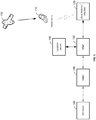
- FIG. 1 is a block diagram of a first network architecture 100, which may be suitable for an LTE network and for implementing the techniques discussed herein.
- the first network architecture 100 includes a mobile device 110, which may also be referred to as a User Equipment (UE), a mobile station, a terminal, an access terminal, a subscriber unit, a station, etc.
- the mobile device 110 may be a cellular phone, a personal digital assistant (PDA), a wireless device, a wireless modem, a wireless router, a laptop computer, a telemetry device, a tracking device, etc.
- the mobile device 110 may communicate with a base station 120, also referred to herein as a eNodeB (eNB), in a radio access network (RAN) to obtain communication services.
- eNodeB eNodeB
- RAN radio access network
- the RAN may include other network entities not shown in FIG. 1 for simplicity and may also be referred to as an Evolved Universal Terrestrial Radio Access Network (E-UTRAN).
- E-UTRAN Evolved Universal Terrestrial Radio Access Network
- the base station 120 may also be referred to as a Node B, an access point, etc.
- the mobile device 110 may also receive and measure signals from one or more satellites 170 and obtain pseudo-range measurements for the satellites. Satellites 170 may be part of a Global Navigation Satellite System (GNSS), which may be the United States Global Positioning System (GPS), the European Galileo system, the Russian GLONASS system, or some other GNSS.
- GNSS Global Navigation Satellite System
- the mobile device 110 may also measure signals from eNBs, such as base station 120, and obtain timing measurements (e.g., for time of arrival (TOA) or observed time difference of arrival (OTDOA)), signal strength measurements, and/or signal quality measurements for the eNBs.
- the pseudo-range measurements, timing measurements, signal strength measurements, and/or signal quality measurements may be used to derive a location estimate for mobile device 110.
- a location estimate may also be referred to as a position estimate, a position fix, etc.
- the base station 120 may communicate with a Mobility Management Entity (MME) 130, which may perform various control functions such as mobility management, gateway selection, authentication, bearer management, etc.
- MME 130 may communicate with a location server 140.
- the location server 140 can be an Evolved Serving Mobile Location Center (E-SMLC) 140.
- E-SMLC Evolved Serving Mobile Location Center
- GMLC Gateway Mobile Location Center
- the location server 140 may support mobile device-based, mobile device-assisted, network-based and/or network-assisted positioning methods and may support one or more MMEs.
- the location server 140 may also be referred to as a standalone SMLC (SAS), etc.
- SAS standalone SMLC
- the location server 140 may also communicate with the GMLC 150 to support location services.
- the GMLC 150 may perform various functions to support location services, interface with external location services (LCS) clients, such as LCS client 160, and provide services such as subscriber privacy, authorization, authentication, billing, etc.
- the GMLC 150 may include a Home GMLC (H-GMLC), a Visited GMLC (V-GMLC), and/or a Requesting GMLC (R-GMLC).
- H-GMLC Home GMLC
- V-GMLC Visited GMLC
- R-GMLC Requesting GMLC
- the H-GMLC, V-GMLC, and R-GMLC are not illustrated in FIG. 1 as they are not necessary for illustrating the techniques disclosed herein.
- the example network configuration illustrated in FIG. 1 is merely an example of one possible configuration of a network in which the techniques disclosed herein may be implemented.
- Other network configurations may include additional elements not illustrated in FIG. 1 and the various components may be interconnected in a different configuration than what is shown in FIG. 1 .
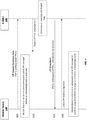
- FIG. 2 provides an example call flow for a mobile device-initiated Assistance Data Transfer that illustrates what should occur when a non-piggybacked LPP Acknowledgement message is not lost.
- the mobile device-initiated Assistance Data Transfer procedure illustrated in FIG. 2 illustrates signaling that occurs between the mobile device 110 and the location server 140 (also referred to herein as a Location Server).
- the call flow for the mobile device-initiated Assistance Data Transfer illustrated in FIG. 2 includes the following stages:
- the mobile device 110 After stage 205, the mobile device 110 enters a wait-for-acknowledgement state in which the mobile device 110 waits for the acknowledgement from the location server 140.
- the non-piggybacked acknowledgment sent to the mobile device 110 by the location server 140 may be lost, causing the mobile device 110 to become stuck in the wait-for-acknowledgement state.
- the non-piggybacked acknowledgement might be lost due to a brief service interruption in the LTE transport layer during an eNodeB handover or due to MME 130 or base station 120 congestion.
- the current acknowledgement procedure described in the TS 36.355 specification requires that, if no acknowledgement is received in response to the request message sent in stage 205, the mobile device 110 stays in the wait-for-acknowledgement state until a "timeout period" expiry at which time the mobile device 110 retransmits the LPP Request Assistance Data message to once again request the assistance data from the location server 140. Retransmission of the LPP Request Assistance Data message can be useful when the mobile device 110 is given a response time long enough to allow for retransmissions.
- LBS location-based service
- E-911 Enhanced 911
- LPP Request Assistance Data messages Even when sufficient time to retransmit LPP Request Assistance Data messages is available, unnecessary retransmissions introduce extra signaling load at the base station 120 and MME 130 on the LTE network that could impact the performance of LTE network.
- the mobile device 110 While in the wait-for-acknowledgement state, the mobile device 110 cannot send subsequent uplink LPP messages that include a message body. However, the mobile device 110 can continue to receive downlink messages from the location server 140.
- the LPP standard does not forbid the mobile device 110 from receiving and acknowledging subsequent (downlink) LPP messages while waiting for the acknowledgement to the last (uplink) LPP message sent by the mobile device 110.
- the mobile device 110 can receive the LPP Provide Assistance Data message (stage 215) that carries the requested assistance data, even though the non-piggybacked acknowledgement transmitted by the location server 140 in stage 210 has been lost.
- the mobile device 110 In response to receiving the LPP Provide Assistance Data message that includes the assistance data requested by the mobile device 110, the mobile device 110 is able to perform a positioning procedure to determine the location of the mobile device 110. But, because the mobile device 110 remains stuck in the wait-for-acknowledgement state, the mobile device 110 is not allowed according to the LPP standards to send the results of the positioning procedure to the location server 140. As a result, the positioning session can be considered to have failed, even though the mobile device 110 was able to estimate or measure the position of the mobile device 110 using the Assistance Data received from the location server140 received in stage 215.
- the mobile device 110 can be configured to accept the LPP Provide Assistance Data message that includes the requested Assistance Data as a "substitute/implicit acknowledgement" for the lost non-piggybacked acknowledgement and the mobile device 110 can exit the wait-for-acknowledgement state and enable uplink LPP signaling.
- the LPP Provide Assistance Data message can serve as a substitute/implicit acknowledgement for the explicit LPP non-piggybacked acknowledgment sent by the location server 140 to the mobile device 110 in stage 210, because the LPP Provide Assistance Data message is provided in response to the LPP Request Assistance Data messages sent by the mobile device 110 to the location server 140 in stage 205.
- Receipt of the LPP Provide Assistance Data message by the mobile device 110 indicates that the location server 140 did receive the LPP Request Assistance Data message sent in stage 205, even though the explicit non-piggybacked acknowledgement sent by the location server 140 in stage 210 in response to the request was lost before the acknowledgement reached the mobile device 110. Accordingly, the mobile device 110 can exit the wait-for-acknowledgement state and continue with the positioning session. Examples of a target device, such as mobile device 110, being configured to accept a Substitute/Implicit Acknowledgement are provided in FIGs. 3 and 4 .
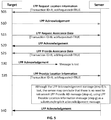
- FIGS. 3 and 4 are call flow diagrams that illustrate example process where the mobile device is configured to accept a subsequent downlink message as a substitute/implicit acknowledgment following the loss of a non-piggybacked acknowledgement.
- the substitute/implicit acknowledgement is a response to a message.
- FIG. 3 illustrates an example call flow for a mobile device-initiated Assistance Data Transfer where the mobile device 110 has been configured to accept the LPP Provide Assistance Data message from the location server 140 as a substitute/implicit acknowledgement.
- the mobile device 110 can verify that the Transaction ID included in the Provide Assistance Data Message matches the Transaction ID included in the LPP Request Assistance Data message that the mobile device 110 sent to the Location Server. If the two Transaction IDs match, the mobile device 110 can be configured to accept the Provide Assistance Data message received from the Location Server as a substitute/implicit acknowledgement. Because the requested Assistance Data has been received, the mobile device 110 can assume that the Location Server received the LPP Request Assistance Data message even though the mobile device 110 never received the non-piggybacked acknowledgement from the Location Server. The mobile device 110 is then able to proceed with the call flow by sending subsequent uplink LPP messages as necessary.
- substitute/implicit acknowledgement provides at least following technical advantages or benefits: 1) use of the substitute/implicit acknowledgement can prevent unnecessary hold-up on the uplink LPP signaling, by forcing the mobile device 110 to exit the wait-for-acknowledgement state, and 2) use of the substitute/implicit acknowledgement can improve the overall performance of LBS applications (especially to those that are less latency tolerant), by eliminating unnecessary retransmissions.
- the mobile device 110 can be configured to use the Transaction ID associated with the Provide Assistance Data Message to determine that the Provide Assistance Data Message is associated with and provided in response to the LPP Request Assistance Data message sent in stage 305. In other implementations, other information may be used to determine that a particular message received at the mobile device 110 is provided in response to a request sent to the location server 140 by the mobile device 110.
- the mobile device 110 can be configured to accept the next LPP Provide Assistance Data message received from the location server 140 as a substitute/implicit acknowledgement or the next LPP Provide Assistance Data message received from the location server 140 within a predetermined time period of the mobile device 110 sending the LPP Request Assistance Data message as a substitute/implicit acknowledgement for an explicit non-piggybacked acknowledgement.
- FIG. 4 illustrates an example call flow for a mobile device-initiated Assistance Data Transfer where the substitute/implicit acknowledgement can comprise an LPP Error Message or an LPP Abort Message.
- the mobile device 110 can verify that the Transaction ID included in the LPP Error Message or the LPP Abort Message matches the Transaction ID included in the Request Assistance Data message that the mobile device 110 sent to the location server 140. If the two Transaction IDs match, the mobile device 110 can be configured to accept the LPP Error Message or the LPP Abort Message received from the location server 140 as a substitute/implicit acknowledgement and to terminate the erroneous transaction. The mobile device 110 is then able to proceed with the call flow by sending subsequent uplink LPP messages as necessary.
- the mobile device 110 can be configured to use the Transaction ID associated with the LPP Error Message or the LPP Abort Message to determine that the LPP Error Message or the LPP Abort Message is associated with and provided in response to the LPP Request Assistance Data message sent in stage 405.
- other information may be used to determine that a particular message received at the mobile device 110 is provided in response to a request sent to the location server 140 by the mobile device 110.
- the mobile device 110 can be configured to accept the next LPP Error Message or LPP Abort Message received from the location server 140 as a substitute/implicit acknowledgement or the next LPP Error Message or LPP Abort Message received from the location server 140 within a predetermined time period of the mobile device 110 sending the LPP Request Assistance Data message as a substitute/implicit acknowledgement for an explicit non-piggybacked acknowledgement.
- Substitute/Implicit Acknowledgement solution illustrated in FIGS. 3 and 4 uses mobile device-initiated LPP procedures for illustration, but the substitute/implicit acknowledgement technique can also be applied to server-initiated procedures as well.
- the LPP Capability Transfer procedure and the LPP Location Information Transfer procedure are two examples of server-initiated procedures where the substitute/implicit acknowledgement technique can be used where the mobile device 110 supports sending of non-piggybacked acknowledgements upon received of downlink LPP messages that require acknowledgement.
- the LPP Provide Capability message can be used as "Substitute/Implicit Acknowledgement" at the location server 140 where a non-piggybacked acknowledgement for the LPP Request Capability message sent by the mobile device 110 and is lost but the LPP Provide Capability message is received by the Location Server.
- the location server 140 can exit the wait-for-acknowledgement state to prevent subsequent downlink LPP signaling from being held up.
- the LPP Provide Location Information message can be used as "Substitute/Implicit Acknowledgement" at the location server 140 where the non-piggybacked acknowledgement for the LPP Request Location Information message sent by the mobile device 110 is lost but the LPP Provide Location Information message is received by the location server 140.
- the location server 140 can exit the wait-for-acknowledgement state to prevent subsequent downlink LPP signaling from being held up.
- the mobile device 110 may send an uplink LPP Error message or an LPP Abort message, both of which can be used as substitute/Implicit acknowledgement for the non-piggybacked acknowledgement for which the location server 140 is waiting.
- FIG. 5 is call flow diagram that illustrates an example method where a communication serves as a substitute/implicit acknowledgment of a prior message.
- the sending/receiving of the communication implies that re-sending of a prior message is moot or unnecessary, e.g., because the prior message was either received or not needed.
- FIG. 5 also illustrates an example of a situation where a server rather than a target device, such as a User Equipment, can accept a substitute/implicit acknowledgement instead of an express non-piggybacked acknowledgement.
- a location information request and an acknowledgement are sent.
- a server e.g. location server 140
- a target device e.g., a mobile device 110
- LPP Request Location Information message This request includes a transaction identity (ID), here indicating a transaction ID of A.
- ID transaction identity
- the target responds by sending an LPP acknowledgement at stage 510 that reaches the server.
- an assistance data request and an acknowledgement are sent.
- the target sends an LPP Request Assistance Data message to the server, which responds at stage 520 d by sending an LPP acknowledgement that reaches the target device.
- the request includes an indication of a transaction ID of B.
- an assistance data request and an acknowledgement are sent.
- the server sends the target device an LPP Provide Assistance Data request that indicates a transaction ID of B, corresponding to the request sent at stage 515.
- the target device responds to this request by sending an LPP acknowledgement that is lost or otherwise fails to reach (i.e., be received by) the server.
- location information requested in stage 505 is provided.
- the target device sends an LPP Provide Location Information message to the server corresponding to the request sent at stage 505. Similar to the request sent at stage 505, the message sent at stage 535 includes a transaction ID of A.
- the server can thus associate the message sent by the target device and received by the server at stage 535 with the request sent by the server and received by the target device at stage 505.
- the server can analyze the contents of the message received at stage 535 and conclude that the message for which acknowledgement has not been received need not be re-sent. For example, the server can determine in this case that location information requested at stage 505 has been provided in the message sent at stage 535, e.g., with a desired accuracy.
- the server can conclude that retransmitting the assistance data message sent at stage 525 is unnecessary.
- the lack of need of re-sending the message may be due, e.g., to the message at stage 525 having been received and used, or to the message sent at stage 525 not having been needed to satisfy the request from stage 505.
- the server need not determine the cause of the mootness of re-sending the message from stage 525. In other words, the server may determine that a transaction is complete (here the request and provision of location information), and thus conclude not to retransmit a message for use in completing that transaction.
- the server can provide an LPP Acknowledgement in response to the LPP Provide Location Information message (stage 540).
- FIG. 5 illustrates a situation where a server concludes that retransmission of assistance data for a location determination is moot.
- Substitute/Implicit Acknowledgements of other types of transactions i.e., other than requests for and provision of location information, are possible, as are situations where the target device determines that retransmission of a message to a server or other device is not needed.
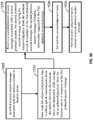
- FIG. 10 is a flow diagram of a process for executing a protocol session with between a first network entity and a second network entity using a protocol with mechanisms that allow for transport over a non-reliable link.
- the example provided in FIG. 10 is an example of a mobile device-initiated protocol session in which the first network entity is a mobile device 110 and the second network entity is a location server 140.
- the second network entity could be other network entities, such as the GMLC 150, the MME 130, or other network server
- the first network entity could be another device configured to communicate with another network-connected device that is configured to communicate with the first network entity using a protocol with mechanisms that allow for transport over a non-reliable link.
- the process illustrated in FIG. 10 can be applied to any mobile device-initiated protocol session, such as those illustrated in the preceding figures, such as FIG. 2-4 .
- the method illustrated in FIG. 10 can be implemented by the mobile device 110.
- the process can begin with a mobile device 110 sending a first protocol session message to the location server 140 (stage 1005).
- the first protocol session message may be part of protocol session in which the mobile device 110 and the second network entity exchange a plurality of messages.
- the messages exchanged between the mobile device 110 and the location server 140 may include requests for information and/or services.
- the message exchanges between the mobile device 110 and the location server 140 during the protocol session may also include sending requested information and/or service-related information.
- the mobile device 110 can send a first protocol session message to the location server 140, such as in processes illustrated in FIGs. 3 and 4 where the mobile device 110 sends a LPP Request Assistance Data message to the location server 140.
- FIG. 3 and 4 the mobile device 110 sends a LPP Request Assistance Data message
- the server can send an LPP Provide Assistance Data message to the target device.
- the mobile device 110 y can also be configured to send other types of request to the location server 140 where the mobile device 110 expects a non-piggybacked acknowledgement to the first protocol session message.
- the mobile device 110 can then be configured to enter into a wait-for-acknowledgement state after sending the first protocol session message to the location server 140 (stage 1010).
- the mobile device 110 waits to receive the non-piggybacked acknowledgement to the first protocol session message. While the mobile device 110 is in the wait-for-acknowledgement state, subsequent uplink messages from the mobile device 110 to the location server 140 are suspended, except for acknowledgements (ACKs). For example, if the mobile device 110 receives a subsequent protocol session message from the location server 140 that requests a response from the mobile device 110, the mobile device cannot send a response to the subsequent protocol session message until the non-piggybacked acknowledgement or a substitute/implicit acknowledgement of the first protocol session message is received.
- ACKs acknowledgements
- FIGs. 3 and 4 illustrate examples where the mobile device 110 waits for a non-piggybacked LPP Acknowledgement from the location server 140 in response to the LPP Request Assistance Data message sent to the location server 140 by the mobile device 110.
- the process illustrated in FIG. 10 is not limited to these specific examples, and the mobile device 110 can enter a wait-for-acknowledgement state while waiting for a non-piggybacked acknowledgement from the location server 140.
- the mobile device 110 can then receive a second protocol session message from the second network entity (stage 1015).
- the second protocol session message is not the acknowledgement from the location server 140 in response to the first protocol session message, but the second protocol session message includes information requested in the first protocol session message.
- the mobile device 110 can be configured to accept the second protocol session messages as a substitute/implicit acknowledgement to the first protocol session message, since the second protocol session message includes information that was requested in the first protocol session message.
- the location server 140 must have received the first protocol session message and the non-piggybacked acknowledgement to the first protocol session message provided by the location server 140 in response to the first protocol session message must have been lost en route to the mobile device 110.
- FIGs. 3 and 4 illustrate examples of substitute/implicit acknowledgements.
- the mobile device 110 can enter a wait-for-acknowledgement state while waiting for an explicit LPP non-piggybacked acknowledgment from the location server 140.
- the non-piggybacked acknowledgment from the location server 140 was lost but the mobile device 110 is configured to accept the LPP Provide Assistance Data message from the location server 140 as a substitute/implicit acknowledgement.
- the non-piggybacked acknowledgment from the location server 140 was lost but the mobile device 110 is configured to accept the LPP Error or LPP Abort message from the location server 140 as a substitute/implicit acknowledgement.
- FIG. 3 provides an example where the mobile device 110 transmits an LPP Request Assistance Data message to the location server 140.
- the LPP Request Assistance Data message is associated with a transaction and that transaction is assigned a transaction ID "x".
- the location server 140 transmits an explicit LPP Acknowledgement message to the mobile device 110 in response to receiving the LPP Request Assistance Data message from the mobile device 110, and the location server 140 subsequently transmits an LPP Provide Assistance Data message to the mobile device 110.
- the LPP Provide Assistance Data message is provided in response to the LPP Request Assistance Data message and is assigned the same transaction ID as the LPP Request Assistance Data message.
- the data provided by the LPP Provide Assistance Data is also the data that was requested in the LPP Request Assistance Data message.
- the mobile device 110 can use the LPP Provide Assistance Data as a substitute/implicit acknowledgement of the LPP Request Assistance Data message.
- Other examples of a second protocol session messages serving as a substitute/implicit response can be found in FIGs. 3 and 4 .
- the process illustrated in FIG. 10 is not limited to these specific examples, and can be used in other situations where a second protocol session message can serve as a substitute / implicit acknowledgement when a non-piggybacked acknowledgement is lost.
- the mobile device 110 can be configured to exit the wait-for-acknowledgement state (stage 1030).
- the mobile device can be configured to accept the second protocol session message as a non-piggybacked acknowledgement to the first protocol session message, and the mobile device 110 can exit the wait-for-acknowledgement state.
- the mobile device Upon exiting the wait-for-acknowledgment state, the mobile device can be configured to proceed with the call flow of the protocol session with the location server and can be configured to perform one or more actions using information received in the second protocol session message (stage 1035). For example, after exiting in the wait-for-acknowledgement state, the mobile device 110 may be able to resume sending protocol session messages to the location server 140, if necessary.
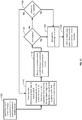
- FIG. 11 is a flow diagram of a process for executing a protocol session with between a first network entity and a second network entity using a protocol with mechanisms that allow for transport over a non-reliable link that is similar to the process described in FIG. 10 but includes a few additional stages not included in the process illustrated in FIG. 10 .
- the example provided in FIG. 11 is an example of a mobile device-initiated protocol session in which the first network entity is a mobile device 110 and the second network entity is a location server 140.
- the second network entity could be other network entities, such as the GMLC 150, the MME 130, or other network server, and the first network entity could be another device configured to communicate with another network-connected device that is configured to communicate with the first network entity using a protocol with mechanisms that allow for transport over a non-reliable link.
- the process illustrated in FIG. 11 can be applied to any mobile device-initiated protocol session, such as those illustrated in the preceding figures, such as FIG. 2-4 .
- the method illustrated in FIG. 11 can be implemented by the mobile device 110.
- the process can begin with a mobile device 110 sending a first protocol session message to the location server 140 (stage 1105).
- the first protocol session message may be part of protocol session in which the mobile device 110 and the second network entity exchange a plurality of messages.
- the message exchanges between the mobile device 110 and the location server 140 may include requests for information and/or services.
- the message exchanges between the mobile device 110 and the location server 140 during the protocol session may also include sending requested information and/or service-related information.
- the mobile device 110 can send a first protocol session message to the location server 140, such as in processes illustrated in FIGs. 3 and 4 where the mobile device 110 sends a LPP Request Assistance Data message to the location server 140.
- FIG. 3 and 4 the mobile device 110 sends a LPP Request Assistance Data message
- the server can send an LPP Provide Assistance Data message to the target device.
- the mobile device 110 y can also be configured to send other types of request to the location server 140 where the mobile device 110 expects a non-piggybacked acknowledgement to the first protocol session message.
- the mobile device 110 can then be configured to enter into a wait-for-acknowledgement state after sending the first protocol session message to the location server 140 (stage 1110).
- the mobile device 110 waits to receive the non-piggybacked acknowledgement to the first protocol session message. While the mobile device 110 is in the wait-for-acknowledgement state, subsequent uplink messages from the mobile device 110 to the location server 140 are suspended, except for acknowledgements (ACKs). For example, if the mobile device 110 receives a subsequent protocol session message from the location server 140 that requests a response from the mobile device 110, the mobile device cannot send a response to the subsequent protocol session message until the non-piggybacked acknowledgement or a substitute/implicit acknowledgement of the first protocol session message is received.
- ACKs acknowledgements
- FIGs. 3 and 4 illustrate examples where the mobile device 110 waits for a non-piggybacked LPP Acknowledgement from the location server 140 in response to the LPP Request Assistance Data message sent to the location server 140 by the mobile device 110.
- the process illustrated in FIG. 10 is not limited to these specific examples, and the mobile device 110 can enter a wait-for-acknowledgement state while waiting for a non-piggybacked acknowledgement from the location server 140.
- the mobile device 110 can then receive a second protocol session message from the second network entity (stage 1115).
- the second protocol session message may or may not be a non-piggybacked acknowledgement from the location server 140 in response to the first protocol session message.
- the second protocol session message can be a non-piggybacked acknowledgement to the first protocol session message, a substitute/implicit acknowledgement, or an unrelated protocol session message.
- FIG. 2 illustrates an example of where an explicit LPP non-piggybacked acknowledgment is sent by a second network entity to a first network entity.
- FIGs. 3 and 4 illustrate examples of substitute/implicit acknowledgements. In the examples illustrated in FIG.
- the mobile device 110 can receive an explicit LPP non-piggybacked acknowledgment from the location server 140 or may receive an LPP Provide Assistance Data message that includes the assistance data requested by the mobile device 110 or may receive an LPP Error or LPP Abort message if there was a problem with the LPP Request Assistance Data message received by the location server 140. If the protocol session message is an unrelated protocol session message then the mobile device 110 can be configured to remain in the wait-for-acknowledgement state.
- the mobile device 110 can then make a determination whether the second protocol session message is a non-piggybacked acknowledgement to the first protocol session message (stage 1120). If the second protocol session message is not a non-piggybacked acknowledgement to the first protocol session message, the mobile device 110 can be configured to make a determination whether the second protocol session message is a substitute/implicit acknowledgement of the first protocol session message (stage 1125).
- the substitute/implicit acknowledgement can comprise a second protocol session message associated with a transaction associated with the first protocol session message and the second protocol session message may contain information requested in the first protocol session message. If the second protocol session message is a substitute/implicit acknowledgement of the first protocol session message to the first protocol session message, the mobile device 110 can be configured to exit the wait-for-acknowledgement state (stage 1130).
- FIG. 3 provides an example where the mobile device 110 transmits an LPP Request Assistance Data message to the location server 140.
- the LPP Request Assistance Data message is associated with a transaction and that transaction is assigned a transaction ID "x".
- the location server 140 transmits an explicit LPP Acknowledgement message to the mobile device 110 in response to receiving the LPP Request Assistance Data message from the mobile device 110, and the location server 140 subsequently transmits an LPP Provide Assistance Data message to the mobile device 110.
- the LPP Provide Assistance Data message is provided in response to the LPP Request Assistance Data message and is assigned the same transaction ID as the LPP Request Assistance Data message.
- the data provided by the LPP Provide Assistance Data is also the data that was requested in the LPP Request Assistance Data message.
- the mobile device 110 can use the LPP Provide Assistance Data as a substitute/implicit acknowledgement of the LPP Request Assistance Data message.
- Other examples of a second protocol session messages serving as a substitute/implicit response can be found in FIGs. 3 and 4 .
- the process illustrated in FIG. 11 is not limited to these specific examples, and can be used in other situations where a second protocol session message can serve as a substitute / implicit acknowledgement when a non-piggybacked acknowledgement is lost.
- the mobile device 110 can be configured to exit the wait-for-acknowledgement state (stage 1130). Upon exiting the wait-for-acknowledgment state, the mobile device can be configured to proceed with the call flow of the protocol session with the location server and can be configured to perform one or more actions using information received in the second protocol session message (stage 1135). For example, after exiting in the wait-for-acknowledgement state, the mobile device 110 may be able to resume sending protocol session messages to the location server 140, if necessary.
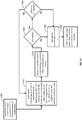
- FIG. 12 is another flow diagram of an example process for executing a protocol session with between a first network entity and a second network entity using a protocol with mechanisms that allow for transport over a non-reliable link that is similar to that illustrated in FIGs. 9 and 10 .
- the example provided in FIG. 12 is an example of a server-initiated protocol session in which the first network entity is a location server 140 and the second network entity is a mobile device 110.
- the first network entity could be other network entities, such as the GMLC 150, the MME 130, or other network server
- the second network entity could be another device configured to communicate with another network-connected device that is configured to communicate with the first network entity using a protocol with mechanisms that allow for transport over a non-reliable link.
- the process illustrated in FIG. 12 can be applied to any server-initiated protocol session, such as those illustrated in the preceding figures, as FIG. 5 .
- the method illustrated in FIG. 12 can be implemented by the location server 140.
- the process can begin with sending from the from the location server 140 a first protocol session message associated with a first protocol session to the mobile device (stage 1205).
- the first protocol session message may be part of protocol session in which the location server 140 and the mobile device 110 exchange a plurality of messages.
- the message exchanges between the location server 140 and the mobile device 110 may include requests for information and/or services.
- the message exchanges between the location server 140 and the mobile device 110 during the protocol session may also include sending requested information and/or service-related information.
- the location server 140 can send an LPP Provide Assistance Data message to a target device, which in this example is the mobile device 110.
- the location server 140 can also be configured to send other types of requests to the mobile device 110 in response to which the location server 140 expects a non-piggybacked acknowledgement to the first protocol session message from the mobile device 110.
- the location server 140 can then be configured to enter into a wait-for-acknowledgement state after sending the first protocol session message to the mobile device 110 (stage 1210).
- the location server 140 waits to receive the non-piggybacked acknowledgement to the first protocol session message from the mobile device 110. While the location server 140 is in the wait-for-acknowledgement state, subsequent downlink messages from the location server 140 to the mobile device 110 are suspended, except for acknowledgements (ACKs). For example, if the location server 140 receives a subsequent protocol session message from the mobile device 110 that requests a response from location server 140, the location server 140 cannot send response to the subsequent protocol session message until the non-piggybacked acknowledgement or a substitute/implicit acknowledgement of the first protocol session message is received.
- ACKs acknowledgements
- the location server 140 can only respond to the subsequent protocol session messages with an acknowledgement (ACK).
- FIG. 5 illustrates an example where the location server 140 waits for an acknowledgment from the mobile device 110 in response to an LPP Provide Assistance Data message.
- the process illustrated in FIG. 12 is not limited to this specific example, and the location server 140 can enter a wait-for-acknowledgement state while waiting for a non-piggybacked acknowledgement from the mobile device 110 in response to other types of requests from the location server 140.
- the location server 140 can then receive a second protocol session message from the mobile device 110 (stage 1215).
- the second protocol session message is not the acknowledgement from the mobile device 110 in response to the first protocol session message, but the second protocol session message includes information requested in the first protocol session message.
- the location server 140 can be configured to accept the second protocol session messages as a substitute/implicit acknowledgement to the first protocol session message, since the second protocol session message includes information that was requested in the first protocol session message.
- the mobile device 110 must have received the first protocol session message and the non-piggybacked acknowledgement to the first protocol session message provided by the mobile device 110 in response to the first protocol session message must have been lost.
- the location server 140 can enter a wait-for-acknowledgement state while waiting for an explicit LPP non-piggybacked acknowledgment from the mobile device 110 in response to sending an LPP Provide Assistance Data message to the target device.
- the non-piggybacked acknowledgment from the mobile device 110 was lost but the location server 140 accepts the LPP Provide Location Information message from the mobile device 110 as a substitute/implicit acknowledgement.
- the location server 140 can be configured to exit the wait-for-acknowledgement state (stage 1230).
- the second protocol session message accepted as a non-piggybacked acknowledgement to the first protocol session message, and the location server 140 can exit the wait-for-acknowledgement state.
- the location server 140 Upon exiting the wait-for-acknowledgment state, the location server 140 can be configured to proceed with the call flow of the protocol session with the mobile device 110 and can be configured to perform one or more actions using information received in the second protocol session message (stage 1235). For example, the location server 140 may resume sending protocol session messages to the mobile device 110, if necessary.
- the location of a mobile device 110 may have been determined during the protocol session and the location information may then be used to provide location-based services to a user of the mobile device 110 or to another network entity, such as a mapping or navigation application on another mobile device or to provide location-related information to the mobile device 110.
- Other types of actions may also be provided by the location server 140 based on the types of information included in the second protocol session message.
- the process illustrated in FIG. 12 is not limited to the specific examples provided above, and can be used in other situations where a second protocol session message can serve as a substitute / implicit acknowledgement when a non-piggybacked acknowledgement is lost.
- FIG. 13 is another flow diagram of an example process for executing a protocol session with between a first network entity and a second network entity using a protocol with mechanisms that allow for transport over a non-reliable link that is similar to that illustrated in the process illustrated in FIG. 12 , but includes additional stages not included in the process illustrated FIG. 12 .
- the example provided in FIG. 13 is an example of a server-initiated protocol session in which the first network entity is a location server 140 and the second network entity is a mobile device 110.
- the first network entity could be other network entities, such as the GMLC 150, the MME 130, or other network server, and the second network entity could be another device configured to communicate with another network-connected device that is configured to communicate with the first network entity using a protocol with mechanisms that allow for transport over a non-reliable link.
- the process illustrated in FIG. 13 can be applied to any server-initiated protocol session, such as those illustrated in the preceding figures, such as FIG. 5 .
- the process illustrated in FIG. 13 can be implemented by the location server 140.
- the process can begin with sending from the from the location server 140 a first protocol session message associated with a first protocol session to the mobile device (stage 1305).
- Stage 1305 is similar to that of stage 1205 of the process illustrated in FIG. 12 .
- the location server 140 can then be configured to enter into a wait-for-acknowledgement state after sending the first protocol session message to the mobile device 110 (stage 1310).
- Stage 1310 is similar to that of stage 1310 of the process illustrated in FIG. 12 .
- the location server 140 can then receive a second protocol session message from the mobile device 110 (stage 1315).
- the second protocol session message may or may not be a non-piggybacked acknowledgement from the mobile device 110 in response to the first protocol session message.
- the second protocol session message can be a non-piggybacked acknowledgement to the first protocol session message, a substitute/implicit acknowledgement, or an unrelated protocol session message.
- the location server 140 can enter a wait-for-acknowledgement state while waiting for an explicit LPP non-piggybacked acknowledgment from the mobile device 110 in response to sending an LPP Provide Assistance Data message to the target device.
- the location server 140 can be configured accept an explicit LPP Acknowledgement from the mobile device 110 or an LPP Provide Location Information message from the mobile device 110 to trigger the location server 140 to exit the wait-for-acknowledgement state. If the protocol session message is an unrelated protocol session message then the location server 140 can be configured to remain in the wait-for-acknowledgement state.
- the location server 140 can then make a determination whether the second protocol session message is a non-piggybacked acknowledgement to the first protocol session message (stage 1320). If the second protocol session message is not a non-piggybacked acknowledgement to the first protocol session message, the location server 140 can be configured to make a determination whether the second protocol session message is a substitute/implicit acknowledgement of the first protocol session message (stage 1325).
- the substitute/implicit acknowledgement can comprise a second protocol session message associated with a transaction associated with the first protocol session message and the second protocol session message may contain information requested in the first protocol session message. If the second protocol session message is a substitute/implicit acknowledgement of the first protocol session message to the first protocol session message, the location server 140 can be configured to exit the wait-for-acknowledgement state (stage 1330).
- the location server 140 can be configured to exit the wait-for-acknowledgement state (stage 1330). Upon exiting the wait-for-acknowledgment state, the location server 140 can be configured to proceed with the call flow of the protocol session with the mobile device 110 and can be configured to perform one or more actions using information received in the second protocol session message (stage 1335). For example, the location server 140 may resume sending protocol session messages to the mobile device 110, if necessary.
- the location of a mobile device 110 may have been determined during the protocol session and the location information may then be used to provide location-based services to a user of the mobile device 110 or to another network entity, such as a mapping or navigation application on another mobile device or to provide location-related information to the mobile device 110.
- Other types of actions may also be provided by the location server 140 based on the types of information included in the second protocol session message.
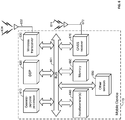
- FIG. 6 is a block diagram of a mobile device that can be used to implement the User Equipment 110 illustrated in the preceding figures.
- the mobile device 110 comprises a computer system including a general-purpose processor 610, a digital signal processor (DSP) 620, a wireless transceiver 630, and a non-transitory memory 660, connected to each other by a bus 601.
- the mobile device 110 can also include one or more of the following features: one or more accelerometers 640, other sensors 650, and a GNSS receiver 670.
- the wireless transceiver 630 is connected by a line 632 to an antenna 634 for sending and receiving communications to/from the base stations 120 (eNB) shown in FIG. 1 .
- the mobile device 110 may include a GNSS receiver 670 in examples where absolute positioning is used in conjunction with the relative positioning techniques described above.
- the GNSS receiver 670 is connected by a line 672 to an antenna 674 for receiving location signals (signals from which, at least in part, location of mobile device 110 can be determined) from satellites of one or more GNSS systems.
- the processor 610 can be an intelligent device, e.g., a personal computer central processing unit (CPU) such as those made by Intel® Corporation or AMD®, a microcontroller, an application specific integrated circuit (ASIC), etc.
- the memory 660 is a storage device that includes random access memory (RAM) and read-only memory (ROM).
- the memory 660 stores processor-readable, processor-executable software code containing instructions for controlling the processor 610 to perform functions described herein (although the description may read that the software performs the function(s)).
- the software can be loaded onto the memory 660 by being downloaded via a network connection, uploaded from a disk, etc. Further, the software may not be directly executable, e.g., requiring compiling before execution.
- the mobile device 110 may include one or more other sensors 650 that are configured to measure various data that can be used to supplement the relative positioning information collected by the mobile device 110.
- the other sensors 650 may include a magnetometer and/or a gyroscope and/or still other sensors.
- the accelerometer(s) 640 and/or one or more of the other sensors 650 is/are configured to provide information regarding the orientation of the mobile device 110.
- the software in the memory 660 is configured to enable the processor 610 to perform various actions, including implementing the various position location related techniques described herein.
- FIG. 7 is a functional block diagram of the mobile device 110 illustrated in FIG. 6 that illustrates functional modules of a memory shown in FIG. 6 .
- the mobile device 110 can include a message processing module 762 and a location determination module 764.
- the mobile device 110 may also include one or more additional functional modules that provide other functionality to the mobile device 110.
- the mobile device 110 illustrated in FIG. 6 and 7 can be used to implement the mobile devices associated with the processes illustrated in FIGs. 2-5, and 10-13 .
- the message processing module 762 can be configured to generate messages to be transmitted to the location server 140 and/or other devices and to receive and process messages received from the location server 140 and/or other devices.
- the message processing module 762 can be configured to transmit and/or receive LPP messages, such as those described in the preceding figures.
- the message processing module 762 can also be configured to determine whether a message requires an acknowledgement and can be configured to place the mobile device 110 into a wait-for-acknowledgement state while waiting for an acknowledgement.
- the message processing module 762 can also be configured to determine whether an acknowledgement has been received in response to a message requiring an acknowledgement or whether a substitute/implicit acknowledgement has been received and to remove the mobile device 110 from the wait-for-acknowledgement state if the an acknowledgement or whether a substitute/implicit acknowledgement has been received.
- the location determination module 764 can be configured to determine the location of the mobile device 110 and/or to request assistance data from the location server 140 that the mobile device 110 can use to determine the location of the mobile device 110.
- the location determination module 764 can be configured to use signal information received from a Global Positioning System (GPS) or other Global Navigation Satellite System (GNSS), or by using trilateration or triangulation techniques to determine the location of the mobile device 110.
- GPS Global Positioning System
- GNSS Global Navigation Satellite System
- the location determination module 764 can also be configured to receive assistance data from the location server 140 that the mobile device 110 can use to acquire signals from satellite vehicles (SVs) that are part of the GPS system and/or other SNSS system that can be used by the mobile device 110 to determine the location of the mobile device 110 or be sent to the location server 140 to allow the location server 140 determine the location of the mobile device 110.
- the location determination module 764 can be configured to perform trilateration using signal measurements (e.g., RSSI (received signal strength indication), RTT (round-trip time)), time of arrival (TOA), measurements received from the mobile device 110 based on the known positions of the wireless access points and/or eNodeBs from which the signal measurements are obtained.
- signal measurements e.g., RSSI (received signal strength indication), RTT (round-trip time)
- TOA time of arrival
- FIG. 8 is a block diagram of an example server that can be used to implement the location server 140 illustrated in the preceding figures.
- the example server illustrated in FIG. 8 can be used to implement an E-SMLC.
- the server illustrated in FIG. 8 can also be used to implement the GMLC 150 and the MME 130 illustrated in FIG. 1 .
- the location server 140 comprises a computer system including a general-purpose processor 810, a network interface 830, and a non-transitory memory 860, connected to each other by a bus 801.
- the processor 810 can be an intelligent device, e.g., a personal computer central processing unit (CPU) such as those made by Intel® Corporation or AMD®, a microcontroller, an application specific integrated circuit (ASIC), etc.
- the processor 810 can be configured to execute computer processor-readable, processor-executable software code stored in the memory 860.
- the memory 860 is a storage device that includes random access memory (RAM) and/or read-only memory (ROM).
- the memory 860 stores processor-readable, processor-executable software code containing instructions for controlling the processor 810 to perform functions described herein (although the description may read that the software performs the function(s)).
- the software can be loaded onto the memory 860 by being downloaded via a network connection, uploaded from a disk, etc. Further, the software may not be directly executable, e.g., requiring compiling before execution.
- the software in the memory 860 is configured to enable the processor 810 to perform various actions, including implementing the various position location related techniques described herein.
- the location server 140 can also include one or more external memory devices (not shown) that can be used to store data and/or processor-executable program code.
- the network interface 830 can be configured to provide bidirectional wireless and/or wired network communications to other components of the LTE network, such as those illustrated in FIG. 1 , as well as other network elements outside of the LTE network.
- the bidirectional wireless and/or wired network communications may be routed over one or more wired and/or wireless networks, such as the Internet, a wireless network service provider's core network, one or more wireless local area networks (WLANs), and/or other types of network.
- the network communications may also pass through one or more intermediate network entities. For example, communications between the location server 140 and a mobile device 110 may be routed through an MME 130 and a base station 120.
- FIG. 9 is a functional block diagram of a location server 140 illustrated in FIG. 8 that illustrates functional modules of the memory illustrated in FIG. 8 .
- FIG. 9 illustrates functional modules in a memory 860 as well as some of the physical components of the location server 140.
- the memory 860 can include one more functional modules that provide functionality to the location server 140.
- the location server 140 includes a message processing module 862 and a location determination module 864.
- the location server 140 may include additional components and/or modules that provide additional functionality to the location server 140.
- the location server illustrated in FIG. 8 and 9 can be used to implement the servers associated with the processes illustrated in FIGs. 2-5, and 10- 13 .
- the message processing module 962 can be configured to generate messages to be transmitted from the location server 140 to other devices on the LTE network, such as the MME 130, mobile device 110, or other networked device, and to receive and process messages received from the MME 130, mobile device 110, and/or other networked devices.
- the message processing module 962 can be configured to transmit and/or receive LPP messages, such as those described in the preceding figures.
- the message processing module 962 can also be configured to determine whether a message requires an acknowledgement and can be configured to place the mobile device 110 into a wait-for-acknowledgement state while waiting for an acknowledgement.
- the message processing module 962 can also be configured to determine whether an acknowledgement has been received in response to a message requiring an acknowledgement or whether a substitute/implicit acknowledgement has been received and to remove the mobile device 110 from the wait-for-acknowledgement state if the an acknowledgement or whether a substitute/implicit acknowledgement has been received.
- the location determination module 964 can be configured to determine the location of the mobile device 110 and/or to provide assistance data to the mobile device 110 that the mobile device 110 can use to determine the location of the mobile device 110.
- the location determination module 964 can be configured to use signal information received from a Global Positioning System (GPS) or other Global Navigation Satellite System (GNSS), or by using trilateration or triangulation techniques to determine the location of the mobile device 110. This signal information can be collected by the mobile device 110 and provided to the location server 140 by the mobile device 110.
- GPS Global Positioning System
- GNSS Global Navigation Satellite System
- the location determination module 964 can also be configured to provide assistance data to the mobile device 110 that the mobile device 110 can use to acquire signals from satellite vehicles (SVs) that are part of the GPS system and/or other SNSS system that can be used by the mobile device 110 to determine the location of the mobile device 110 or be sent to the location server 140 to allow the location server 140 determine the location of the mobile device 110.
- the location determination module 964 can be configured to perform trilateration using signal measurements (e.g., RSSI (received signal strength indication), RTT (round-trip time)), time of arrival (TOA), measurements received from the mobile device 110 based on the known positions of the wireless access points and/or eNodeBs from which the signal measurements are obtained.
- signal measurements e.g., RSSI (received signal strength indication), RTT (round-trip time)
- TOA time of arrival
- the methodologies described herein may be implemented by various means depending upon the application. For example, these methodologies may be implemented in hardware, firmware, software, or any combination thereof.
- the processing units may be implemented within one or more application specific integrated circuits (ASICs), digital signal processors (DSPs), digital signal processing devices (DSPDs), programmable logic devices (PLDs), field programmable gate arrays (FPGAs), processors, controllers, micro-controllers, microprocessors, electronic devices, other electronic units designed to perform the functions described herein, or a combination thereof.
- ASICs application specific integrated circuits
- DSPs digital signal processors
- DSPDs digital signal processing devices
- PLDs programmable logic devices
- FPGAs field programmable gate arrays
- processors controllers, micro-controllers, microprocessors, electronic devices, other electronic units designed to perform the functions described herein, or a combination thereof.
- the methodologies maybe implemented with modules (e.g., procedures, functions, and so on) that perform the functions described herein.
- Any machine-readable medium tangibly embodying instructions may be used in implementing the methodologies described herein.
- software codes may be stored in a memory and executed by a processor unit.
- Memory may be implemented within the processor unit or external to the processor unit.
- the term "memory" refers to any type of long term, short term, volatile, nonvolatile, or other memory and is not to be limited to any particular type of memory or number of memories, or type of media.
- Tangible media include one or more physical articles of machine readable media, such as random access memory, magnetic storage, optical storage media, and so on.
- the functions maybe stored as one or more instructions or code on a computer-readable medium.
- Examples include computer-readable media encoded with a data structure and computer-readable media encoded with a computer program.
- Computer-readable media includes physical computer storage media. A storage medium may be any available medium that can be accessed by a computer.
- such computer-readable media can comprise RAM, ROM, EEPROM, CD-ROM or other optical disk storage, magnetic disk storage or other magnetic storage devices, or any other medium that can be used to store desired program code in the form of instructions or data structures and that can be accessed by a computer; disk and disc, as used herein, includes compact disc (CD), laser disc, optical disc, digital versatile disc (DVD), floppy disk and Blu-ray disc where disks usually reproduce data magnetically, while discs reproduce data optically with lasers. Combinations of the above should also be included within the scope of computer-readable media.
- Such media also provide examples of non-transitory media, which can be machine readable, and wherein computers are an example of a machine that can read from such non-transitory media.
Landscapes
- Engineering & Computer Science (AREA)
- Computer Networks & Wireless Communication (AREA)
- Signal Processing (AREA)
- Mobile Radio Communication Systems (AREA)
- Telephonic Communication Services (AREA)
Applications Claiming Priority (4)
| Application Number | Priority Date | Filing Date | Title |
|---|---|---|---|
| US201261699543P | 2012-09-11 | 2012-09-11 | |
| US201261705118P | 2012-09-24 | 2012-09-24 | |
| US13/779,626 US8971920B2 (en) | 2012-09-11 | 2013-02-27 | Enhanced LTE positioning protocol information transfer procedures for control plane LCS on LTE |
| PCT/US2013/051448 WO2014042765A1 (en) | 2012-09-11 | 2013-07-22 | Enhanced lte positioning protocol information transfer procedures for control plane lcs on lte |
Publications (2)
| Publication Number | Publication Date |
|---|---|
| EP2896254A1 EP2896254A1 (en) | 2015-07-22 |
| EP2896254B1 true EP2896254B1 (en) | 2017-05-17 |
Family
ID=50233777
Family Applications (1)
| Application Number | Title | Priority Date | Filing Date |
|---|---|---|---|
| EP13745269.4A Active EP2896254B1 (en) | 2012-09-11 | 2013-07-22 | Enhanced lte positioning protocol information transfer procedures for control plane lcs on lte |
Country Status (5)
| Country | Link |
|---|---|
| US (2) | US8971920B2 (enExample) |
| EP (1) | EP2896254B1 (enExample) |
| JP (1) | JP6246811B2 (enExample) |
| CN (1) | CN104685943B (enExample) |
| WO (1) | WO2014042765A1 (enExample) |
Families Citing this family (15)
| Publication number | Priority date | Publication date | Assignee | Title |
|---|---|---|---|---|
| US9270587B2 (en) | 2010-01-08 | 2016-02-23 | Qualcomm Incorporated | Method and apparatus for routing messages of a positioning protocol in a wireless network |
| US8971920B2 (en) | 2012-09-11 | 2015-03-03 | Qualcomm Incorporated | Enhanced LTE positioning protocol information transfer procedures for control plane LCS on LTE |
| WO2015196360A1 (zh) * | 2014-06-24 | 2015-12-30 | 华为技术有限公司 | 设备管理方法及装置、系统 |
| US10334484B2 (en) * | 2015-03-18 | 2019-06-25 | Lg Electronics Inc. | Method for processing data when loss of access occurs in a wireless communication system, and device therefor |
| US9736631B2 (en) | 2015-08-13 | 2017-08-15 | At&T Mobility Ii Llc | Location accuracy for proximity services |
| US10257684B2 (en) * | 2015-12-09 | 2019-04-09 | Huawei Technologies Co., Ltd. | System and methods for critical communication |
| US10027763B2 (en) | 2016-03-25 | 2018-07-17 | Qualcomm Incorporated | Abort messages for position location message flows |
| US12114283B2 (en) | 2016-08-21 | 2024-10-08 | Qualcomm Incorporated | Methods and systems for support of location for the internet of things |
| US9942719B2 (en) * | 2016-08-26 | 2018-04-10 | Qualcomm Incorporated | OTDOA positioning via local wireless transmitters |
| US11405863B2 (en) | 2016-10-05 | 2022-08-02 | Qualcomm Incorporated | Systems and methods to enable combined periodic and triggered location of a mobile device |
| US10313825B2 (en) | 2017-02-28 | 2019-06-04 | Qualcomm Incorporated | Control plane LCS solution for improving multiple reporting LPP messaging |
| US11240706B2 (en) | 2017-10-08 | 2022-02-01 | Qualcomm Incorporated | Methods and systems for segmentation of positioning protocol messages |
| US12108305B2 (en) | 2020-09-29 | 2024-10-01 | Qualcomm Incorporated | System and methods for power efficient positioning of a mobile device |
| US12499774B2 (en) * | 2021-05-19 | 2025-12-16 | Tencent America LLC | Method and apparatus for UAV and UAV controller group membership update |
| CN118901259A (zh) * | 2022-04-01 | 2024-11-05 | 联想(北京)有限公司 | 用于侧链路定位的方法及设备 |
Family Cites Families (21)
| Publication number | Priority date | Publication date | Assignee | Title |
|---|---|---|---|---|
| US5165020A (en) * | 1987-03-27 | 1992-11-17 | Digital Equipment Corporation | Terminal device session management protocol |
| US7103018B1 (en) * | 1998-04-28 | 2006-09-05 | Nokia Corporation | Method of and a network for handling wireless session protocol (WSP) sessions |
| AR042582A1 (es) | 2000-11-16 | 2005-06-29 | Ericsson Telefon Ab L M | Sistema y metodo de comunicaciones que utilizan formas de comunicacion de peticion - repuesta para la compresion de los datos |
| US6751453B2 (en) * | 2001-01-23 | 2004-06-15 | Openwave Systems, Inc. | Seamless message retrieval and transmittal during wireless application protocol session |
| JP2003092781A (ja) * | 2001-09-17 | 2003-03-28 | Toshiba Corp | 通信端末装置 |
| KR100605806B1 (ko) * | 2004-06-10 | 2006-08-01 | 삼성전자주식회사 | 모바일 인터넷 프로토콜, 보이스 오버 인터넷 프로토콜, 및 세션 초기화 프로토콜 기반 이동단말기, 세션 초기화 프로토콜 서버, 및 보이스 오버 인터넷 프로토콜 서비스를 위한 라우팅 경로 제어 방법 및 그 시스템 |
| KR100620055B1 (ko) | 2004-12-06 | 2006-09-08 | 엘지전자 주식회사 | 위치정보요청 취소방법 |
| EP2345300A2 (en) * | 2008-10-07 | 2011-07-20 | University Of South Florida | Architecture and two-layered protocol for real-time location-aware applications |
| US8938211B2 (en) * | 2008-12-22 | 2015-01-20 | Qualcomm Incorporated | Providing and utilizing maps in location determination based on RSSI and RTT data |
| EP2395796B1 (en) * | 2009-02-09 | 2016-07-27 | Nec Corporation | Mobile communication system, and control method and wireless base station device therefor |
| US8811307B2 (en) | 2009-07-17 | 2014-08-19 | Htc Corporation | Method of handling long term evaluation positioning protocol data and related communication device |
| US20110039583A1 (en) * | 2009-08-17 | 2011-02-17 | Motorola, Inc. | Muting time masks to suppress serving cell interference for observed time difference of arrival location |
| CN102056231A (zh) * | 2009-11-04 | 2011-05-11 | 中兴通讯股份有限公司 | 一种保证lte定位协议数据可靠传输的方法及设备 |
| US8463294B2 (en) | 2010-04-06 | 2013-06-11 | Htc Corporation | Apparatuses and methods for reporting positioning information of a mobile communications device |
| EP2558879B1 (en) | 2010-04-12 | 2021-08-18 | Nokia Technologies Oy | Periodic assistance data flow control |
| US9374798B2 (en) * | 2010-05-26 | 2016-06-21 | Qualcomm Incorporated | Support of multiple positioning protocols |
| US8675474B2 (en) | 2010-12-10 | 2014-03-18 | Htc Corporation | Method and system for handling error in LPP messages exchange |
| CN102355647B (zh) * | 2011-10-28 | 2014-05-07 | 电信科学技术研究院 | 专用s1信令连接建立和进行定位的方法、系统及设备 |
| US8948789B2 (en) * | 2012-05-08 | 2015-02-03 | Qualcomm Incorporated | Inferring a context from crowd-sourced activity data |
| US20130346217A1 (en) * | 2012-06-22 | 2013-12-26 | Cisco Technology, Inc. | Mobile device location analytics for use in content selection |
| US8971920B2 (en) | 2012-09-11 | 2015-03-03 | Qualcomm Incorporated | Enhanced LTE positioning protocol information transfer procedures for control plane LCS on LTE |
-
2013
- 2013-02-27 US US13/779,626 patent/US8971920B2/en active Active
- 2013-07-22 JP JP2015531077A patent/JP6246811B2/ja active Active
- 2013-07-22 WO PCT/US2013/051448 patent/WO2014042765A1/en not_active Ceased
- 2013-07-22 EP EP13745269.4A patent/EP2896254B1/en active Active
- 2013-07-22 CN CN201380051822.6A patent/CN104685943B/zh active Active
-
2015
- 2015-01-23 US US14/604,386 patent/US9241322B2/en active Active
Also Published As
| Publication number | Publication date |
|---|---|
| US20150141049A1 (en) | 2015-05-21 |
| US8971920B2 (en) | 2015-03-03 |
| JP2015533032A (ja) | 2015-11-16 |
| CN104685943B (zh) | 2018-09-28 |
| US20140073347A1 (en) | 2014-03-13 |
| CN104685943A (zh) | 2015-06-03 |
| WO2014042765A1 (en) | 2014-03-20 |
| US9241322B2 (en) | 2016-01-19 |
| JP6246811B2 (ja) | 2017-12-13 |
| EP2896254A1 (en) | 2015-07-22 |
Similar Documents
| Publication | Publication Date | Title |
|---|---|---|
| US9241322B2 (en) | Enhanced LTE positioning protocol information transfer procedures for control plane LCS on LTE | |
| US10506543B1 (en) | Low power periodic and triggered location of a mobile device using early data transmission | |
| KR101161980B1 (ko) | 사용자 평면 위치를 위해 서비스 능력 정보를 사용하기 위한 장치 및 방법 | |
| US20200053686A1 (en) | Low power periodic and triggered location of a mobile device using control plane optimization | |
| EP3506605B1 (en) | Methods for performing session info query for user plane location | |
| EP3509274B1 (en) | Segmented data transfer with resume capability | |
| US12490057B2 (en) | Systems and methods for periodic and triggered event reporting via user plane | |
| EP2901722B1 (en) | Selected acknowledgment positioning optimizations | |
| WO2018160261A1 (en) | Control plane lcs solution for improving multiple reporting lpp messaging | |
| CN119487875A (zh) | 基于低时延非陆地网络的用户装备位置验证 | |
| HK1150921A (en) | Method and apparatus for using service capability information for user plane location |
Legal Events
| Date | Code | Title | Description |
|---|---|---|---|
| PUAI | Public reference made under article 153(3) epc to a published international application that has entered the european phase |
Free format text: ORIGINAL CODE: 0009012 |
|
| 17P | Request for examination filed |
Effective date: 20150409 |
|
| AK | Designated contracting states |
Kind code of ref document: A1 Designated state(s): AL AT BE BG CH CY CZ DE DK EE ES FI FR GB GR HR HU IE IS IT LI LT LU LV MC MK MT NL NO PL PT RO RS SE SI SK SM TR |
|
| AX | Request for extension of the european patent |
Extension state: BA ME |
|
| DAX | Request for extension of the european patent (deleted) | ||
| 17Q | First examination report despatched |
Effective date: 20160503 |
|
| GRAP | Despatch of communication of intention to grant a patent |
Free format text: ORIGINAL CODE: EPIDOSNIGR1 |
|
| INTG | Intention to grant announced |
Effective date: 20161206 |
|
| GRAS | Grant fee paid |
Free format text: ORIGINAL CODE: EPIDOSNIGR3 |
|
| GRAA | (expected) grant |
Free format text: ORIGINAL CODE: 0009210 |
|
| AK | Designated contracting states |
Kind code of ref document: B1 Designated state(s): AL AT BE BG CH CY CZ DE DK EE ES FI FR GB GR HR HU IE IS IT LI LT LU LV MC MK MT NL NO PL PT RO RS SE SI SK SM TR |
|
| REG | Reference to a national code |
Ref country code: GB Ref legal event code: FG4D |
|
| REG | Reference to a national code |
Ref country code: FR Ref legal event code: PLFP Year of fee payment: 5 |
|
| REG | Reference to a national code |
Ref country code: CH Ref legal event code: EP |
|
| REG | Reference to a national code |
Ref country code: IE Ref legal event code: FG4D |
|
| REG | Reference to a national code |
Ref country code: AT Ref legal event code: REF Ref document number: 895483 Country of ref document: AT Kind code of ref document: T Effective date: 20170615 |
|
| REG | Reference to a national code |
Ref country code: DE Ref legal event code: R096 Ref document number: 602013021279 Country of ref document: DE |
|
| REG | Reference to a national code |
Ref country code: NL Ref legal event code: MP Effective date: 20170517 |
|
| REG | Reference to a national code |
Ref country code: LT Ref legal event code: MG4D |
|
| REG | Reference to a national code |
Ref country code: AT Ref legal event code: MK05 Ref document number: 895483 Country of ref document: AT Kind code of ref document: T Effective date: 20170517 |
|
| PG25 | Lapsed in a contracting state [announced via postgrant information from national office to epo] |
Ref country code: ES Free format text: LAPSE BECAUSE OF FAILURE TO SUBMIT A TRANSLATION OF THE DESCRIPTION OR TO PAY THE FEE WITHIN THE PRESCRIBED TIME-LIMIT Effective date: 20170517 Ref country code: AT Free format text: LAPSE BECAUSE OF FAILURE TO SUBMIT A TRANSLATION OF THE DESCRIPTION OR TO PAY THE FEE WITHIN THE PRESCRIBED TIME-LIMIT Effective date: 20170517 Ref country code: LT Free format text: LAPSE BECAUSE OF FAILURE TO SUBMIT A TRANSLATION OF THE DESCRIPTION OR TO PAY THE FEE WITHIN THE PRESCRIBED TIME-LIMIT Effective date: 20170517 Ref country code: FI Free format text: LAPSE BECAUSE OF FAILURE TO SUBMIT A TRANSLATION OF THE DESCRIPTION OR TO PAY THE FEE WITHIN THE PRESCRIBED TIME-LIMIT Effective date: 20170517 Ref country code: NO Free format text: LAPSE BECAUSE OF FAILURE TO SUBMIT A TRANSLATION OF THE DESCRIPTION OR TO PAY THE FEE WITHIN THE PRESCRIBED TIME-LIMIT Effective date: 20170817 Ref country code: HR Free format text: LAPSE BECAUSE OF FAILURE TO SUBMIT A TRANSLATION OF THE DESCRIPTION OR TO PAY THE FEE WITHIN THE PRESCRIBED TIME-LIMIT Effective date: 20170517 Ref country code: GR Free format text: LAPSE BECAUSE OF FAILURE TO SUBMIT A TRANSLATION OF THE DESCRIPTION OR TO PAY THE FEE WITHIN THE PRESCRIBED TIME-LIMIT Effective date: 20170818 |
|
| PG25 | Lapsed in a contracting state [announced via postgrant information from national office to epo] |
Ref country code: PL Free format text: LAPSE BECAUSE OF FAILURE TO SUBMIT A TRANSLATION OF THE DESCRIPTION OR TO PAY THE FEE WITHIN THE PRESCRIBED TIME-LIMIT Effective date: 20170517 Ref country code: LV Free format text: LAPSE BECAUSE OF FAILURE TO SUBMIT A TRANSLATION OF THE DESCRIPTION OR TO PAY THE FEE WITHIN THE PRESCRIBED TIME-LIMIT Effective date: 20170517 Ref country code: IS Free format text: LAPSE BECAUSE OF FAILURE TO SUBMIT A TRANSLATION OF THE DESCRIPTION OR TO PAY THE FEE WITHIN THE PRESCRIBED TIME-LIMIT Effective date: 20170917 Ref country code: RS Free format text: LAPSE BECAUSE OF FAILURE TO SUBMIT A TRANSLATION OF THE DESCRIPTION OR TO PAY THE FEE WITHIN THE PRESCRIBED TIME-LIMIT Effective date: 20170517 Ref country code: SE Free format text: LAPSE BECAUSE OF FAILURE TO SUBMIT A TRANSLATION OF THE DESCRIPTION OR TO PAY THE FEE WITHIN THE PRESCRIBED TIME-LIMIT Effective date: 20170517 Ref country code: NL Free format text: LAPSE BECAUSE OF FAILURE TO SUBMIT A TRANSLATION OF THE DESCRIPTION OR TO PAY THE FEE WITHIN THE PRESCRIBED TIME-LIMIT Effective date: 20170517 Ref country code: BG Free format text: LAPSE BECAUSE OF FAILURE TO SUBMIT A TRANSLATION OF THE DESCRIPTION OR TO PAY THE FEE WITHIN THE PRESCRIBED TIME-LIMIT Effective date: 20170817 |
|
| PG25 | Lapsed in a contracting state [announced via postgrant information from national office to epo] |
Ref country code: EE Free format text: LAPSE BECAUSE OF FAILURE TO SUBMIT A TRANSLATION OF THE DESCRIPTION OR TO PAY THE FEE WITHIN THE PRESCRIBED TIME-LIMIT Effective date: 20170517 Ref country code: RO Free format text: LAPSE BECAUSE OF FAILURE TO SUBMIT A TRANSLATION OF THE DESCRIPTION OR TO PAY THE FEE WITHIN THE PRESCRIBED TIME-LIMIT Effective date: 20170517 Ref country code: DK Free format text: LAPSE BECAUSE OF FAILURE TO SUBMIT A TRANSLATION OF THE DESCRIPTION OR TO PAY THE FEE WITHIN THE PRESCRIBED TIME-LIMIT Effective date: 20170517 Ref country code: SK Free format text: LAPSE BECAUSE OF FAILURE TO SUBMIT A TRANSLATION OF THE DESCRIPTION OR TO PAY THE FEE WITHIN THE PRESCRIBED TIME-LIMIT Effective date: 20170517 Ref country code: CZ Free format text: LAPSE BECAUSE OF FAILURE TO SUBMIT A TRANSLATION OF THE DESCRIPTION OR TO PAY THE FEE WITHIN THE PRESCRIBED TIME-LIMIT Effective date: 20170517 |
|
| REG | Reference to a national code |
Ref country code: DE Ref legal event code: R097 Ref document number: 602013021279 Country of ref document: DE |
|
| PG25 | Lapsed in a contracting state [announced via postgrant information from national office to epo] |
Ref country code: SM Free format text: LAPSE BECAUSE OF FAILURE TO SUBMIT A TRANSLATION OF THE DESCRIPTION OR TO PAY THE FEE WITHIN THE PRESCRIBED TIME-LIMIT Effective date: 20170517 Ref country code: IT Free format text: LAPSE BECAUSE OF FAILURE TO SUBMIT A TRANSLATION OF THE DESCRIPTION OR TO PAY THE FEE WITHIN THE PRESCRIBED TIME-LIMIT Effective date: 20170517 |
|
| REG | Reference to a national code |
Ref country code: CH Ref legal event code: PL |
|
| PLBE | No opposition filed within time limit |
Free format text: ORIGINAL CODE: 0009261 |
|
| STAA | Information on the status of an ep patent application or granted ep patent |
Free format text: STATUS: NO OPPOSITION FILED WITHIN TIME LIMIT |
|
| REG | Reference to a national code |
Ref country code: IE Ref legal event code: MM4A |
|
| 26N | No opposition filed |
Effective date: 20180220 |
|
| PG25 | Lapsed in a contracting state [announced via postgrant information from national office to epo] |
Ref country code: LI Free format text: LAPSE BECAUSE OF NON-PAYMENT OF DUE FEES Effective date: 20170731 Ref country code: CH Free format text: LAPSE BECAUSE OF NON-PAYMENT OF DUE FEES Effective date: 20170731 Ref country code: IE Free format text: LAPSE BECAUSE OF NON-PAYMENT OF DUE FEES Effective date: 20170722 |
|
| PG25 | Lapsed in a contracting state [announced via postgrant information from national office to epo] |
Ref country code: SI Free format text: LAPSE BECAUSE OF FAILURE TO SUBMIT A TRANSLATION OF THE DESCRIPTION OR TO PAY THE FEE WITHIN THE PRESCRIBED TIME-LIMIT Effective date: 20170517 |
|
| REG | Reference to a national code |
Ref country code: BE Ref legal event code: MM Effective date: 20170731 |
|
| REG | Reference to a national code |
Ref country code: FR Ref legal event code: PLFP Year of fee payment: 6 |
|
| PG25 | Lapsed in a contracting state [announced via postgrant information from national office to epo] |
Ref country code: LU Free format text: LAPSE BECAUSE OF NON-PAYMENT OF DUE FEES Effective date: 20170722 |
|
| PG25 | Lapsed in a contracting state [announced via postgrant information from national office to epo] |
Ref country code: BE Free format text: LAPSE BECAUSE OF NON-PAYMENT OF DUE FEES Effective date: 20170731 |
|
| PG25 | Lapsed in a contracting state [announced via postgrant information from national office to epo] |
Ref country code: MT Free format text: LAPSE BECAUSE OF NON-PAYMENT OF DUE FEES Effective date: 20170722 |
|
| PG25 | Lapsed in a contracting state [announced via postgrant information from national office to epo] |
Ref country code: MC Free format text: LAPSE BECAUSE OF FAILURE TO SUBMIT A TRANSLATION OF THE DESCRIPTION OR TO PAY THE FEE WITHIN THE PRESCRIBED TIME-LIMIT Effective date: 20170517 Ref country code: HU Free format text: LAPSE BECAUSE OF FAILURE TO SUBMIT A TRANSLATION OF THE DESCRIPTION OR TO PAY THE FEE WITHIN THE PRESCRIBED TIME-LIMIT; INVALID AB INITIO Effective date: 20130722 |
|
| PG25 | Lapsed in a contracting state [announced via postgrant information from national office to epo] |
Ref country code: CY Free format text: LAPSE BECAUSE OF FAILURE TO SUBMIT A TRANSLATION OF THE DESCRIPTION OR TO PAY THE FEE WITHIN THE PRESCRIBED TIME-LIMIT Effective date: 20170517 |
|
| PG25 | Lapsed in a contracting state [announced via postgrant information from national office to epo] |
Ref country code: MK Free format text: LAPSE BECAUSE OF FAILURE TO SUBMIT A TRANSLATION OF THE DESCRIPTION OR TO PAY THE FEE WITHIN THE PRESCRIBED TIME-LIMIT Effective date: 20170517 |
|
| PG25 | Lapsed in a contracting state [announced via postgrant information from national office to epo] |
Ref country code: TR Free format text: LAPSE BECAUSE OF FAILURE TO SUBMIT A TRANSLATION OF THE DESCRIPTION OR TO PAY THE FEE WITHIN THE PRESCRIBED TIME-LIMIT Effective date: 20170517 |
|
| PG25 | Lapsed in a contracting state [announced via postgrant information from national office to epo] |
Ref country code: PT Free format text: LAPSE BECAUSE OF FAILURE TO SUBMIT A TRANSLATION OF THE DESCRIPTION OR TO PAY THE FEE WITHIN THE PRESCRIBED TIME-LIMIT Effective date: 20170517 |
|
| PG25 | Lapsed in a contracting state [announced via postgrant information from national office to epo] |
Ref country code: AL Free format text: LAPSE BECAUSE OF FAILURE TO SUBMIT A TRANSLATION OF THE DESCRIPTION OR TO PAY THE FEE WITHIN THE PRESCRIBED TIME-LIMIT Effective date: 20170517 |
|
| PGFP | Annual fee paid to national office [announced via postgrant information from national office to epo] |
Ref country code: FR Payment date: 20240613 Year of fee payment: 12 |
|
| PGFP | Annual fee paid to national office [announced via postgrant information from national office to epo] |
Ref country code: DE Payment date: 20240613 Year of fee payment: 12 |
|
| REG | Reference to a national code |
Ref country code: DE Ref legal event code: R119 Ref document number: 602013021279 Country of ref document: DE |
|
| PG25 | Lapsed in a contracting state [announced via postgrant information from national office to epo] |
Ref country code: DE Free format text: LAPSE BECAUSE OF NON-PAYMENT OF DUE FEES Effective date: 20260203 |
|
| PG25 | Lapsed in a contracting state [announced via postgrant information from national office to epo] |
Ref country code: FR Free format text: LAPSE BECAUSE OF NON-PAYMENT OF DUE FEES Effective date: 20250731 |
|
| PGFP | Annual fee paid to national office [announced via postgrant information from national office to epo] |
Ref country code: GB Payment date: 20260618 Year of fee payment: 14 |