EP2895973B1 - Verfahren und vorrichtungen zur bestimmung optimaler wirkstoffdosierungen - Google Patents
Verfahren und vorrichtungen zur bestimmung optimaler wirkstoffdosierungen Download PDFInfo
- Publication number
- EP2895973B1 EP2895973B1 EP13766198.9A EP13766198A EP2895973B1 EP 2895973 B1 EP2895973 B1 EP 2895973B1 EP 13766198 A EP13766198 A EP 13766198A EP 2895973 B1 EP2895973 B1 EP 2895973B1
- Authority
- EP
- European Patent Office
- Prior art keywords
- subject
- esa
- erythropoiesis
- anemia
- concentration
- Prior art date
- Legal status (The legal status is an assumption and is not a legal conclusion. Google has not performed a legal analysis and makes no representation as to the accuracy of the status listed.)
- Active
Links
Images




Classifications
-
- G—PHYSICS
- G16—INFORMATION AND COMMUNICATION TECHNOLOGY [ICT] SPECIALLY ADAPTED FOR SPECIFIC APPLICATION FIELDS
- G16H—HEALTHCARE INFORMATICS, i.e. INFORMATION AND COMMUNICATION TECHNOLOGY [ICT] SPECIALLY ADAPTED FOR THE HANDLING OR PROCESSING OF MEDICAL OR HEALTHCARE DATA
- G16H20/00—ICT specially adapted for therapies or health-improving plans, e.g. for handling prescriptions, for steering therapy or for monitoring patient compliance
- G16H20/10—ICT specially adapted for therapies or health-improving plans, e.g. for handling prescriptions, for steering therapy or for monitoring patient compliance relating to drugs or medications, e.g. for ensuring correct administration to patients
-
- A—HUMAN NECESSITIES
- A61—MEDICAL OR VETERINARY SCIENCE; HYGIENE
- A61K—PREPARATIONS FOR MEDICAL, DENTAL OR TOILETRY PURPOSES
- A61K38/00—Medicinal preparations containing peptides
- A61K38/16—Peptides having more than 20 amino acids; Gastrins; Somatostatins; Melanotropins; Derivatives thereof
- A61K38/17—Peptides having more than 20 amino acids; Gastrins; Somatostatins; Melanotropins; Derivatives thereof from animals; from humans
- A61K38/18—Growth factors; Growth regulators
- A61K38/1816—Erythropoietin [EPO]
-
- A—HUMAN NECESSITIES
- A61—MEDICAL OR VETERINARY SCIENCE; HYGIENE
- A61M—DEVICES FOR INTRODUCING MEDIA INTO, OR ONTO, THE BODY; DEVICES FOR TRANSDUCING BODY MEDIA OR FOR TAKING MEDIA FROM THE BODY; DEVICES FOR PRODUCING OR ENDING SLEEP OR STUPOR
- A61M5/00—Devices for bringing media into the body in a subcutaneous, intra-vascular or intramuscular way; Accessories therefor, e.g. filling or cleaning devices, arm-rests
- A61M5/14—Infusion devices, e.g. infusing by gravity; Blood infusion; Accessories therefor
- A61M5/158—Needles for infusions; Accessories therefor, e.g. for inserting infusion needles, or for holding them on the body
-
- A—HUMAN NECESSITIES
- A61—MEDICAL OR VETERINARY SCIENCE; HYGIENE
- A61M—DEVICES FOR INTRODUCING MEDIA INTO, OR ONTO, THE BODY; DEVICES FOR TRANSDUCING BODY MEDIA OR FOR TAKING MEDIA FROM THE BODY; DEVICES FOR PRODUCING OR ENDING SLEEP OR STUPOR
- A61M5/00—Devices for bringing media into the body in a subcutaneous, intra-vascular or intramuscular way; Accessories therefor, e.g. filling or cleaning devices, arm-rests
- A61M5/14—Infusion devices, e.g. infusing by gravity; Blood infusion; Accessories therefor
- A61M5/168—Means for controlling media flow to the body or for metering media to the body, e.g. drip meters, counters ; Monitoring media flow to the body
- A61M5/172—Means for controlling media flow to the body or for metering media to the body, e.g. drip meters, counters ; Monitoring media flow to the body electrical or electronic
- A61M5/1723—Means for controlling media flow to the body or for metering media to the body, e.g. drip meters, counters ; Monitoring media flow to the body electrical or electronic using feedback of body parameters, e.g. blood-sugar, pressure
-
- G—PHYSICS
- G16—INFORMATION AND COMMUNICATION TECHNOLOGY [ICT] SPECIALLY ADAPTED FOR SPECIFIC APPLICATION FIELDS
- G16H—HEALTHCARE INFORMATICS, i.e. INFORMATION AND COMMUNICATION TECHNOLOGY [ICT] SPECIALLY ADAPTED FOR THE HANDLING OR PROCESSING OF MEDICAL OR HEALTHCARE DATA
- G16H50/00—ICT specially adapted for medical diagnosis, medical simulation or medical data mining; ICT specially adapted for detecting, monitoring or modelling epidemics or pandemics
- G16H50/50—ICT specially adapted for medical diagnosis, medical simulation or medical data mining; ICT specially adapted for detecting, monitoring or modelling epidemics or pandemics for simulation or modelling of medical disorders
-
- G—PHYSICS
- G16—INFORMATION AND COMMUNICATION TECHNOLOGY [ICT] SPECIALLY ADAPTED FOR SPECIFIC APPLICATION FIELDS
- G16Z—INFORMATION AND COMMUNICATION TECHNOLOGY [ICT] SPECIALLY ADAPTED FOR SPECIFIC APPLICATION FIELDS, NOT OTHERWISE PROVIDED FOR
- G16Z99/00—Subject matter not provided for in other main groups of this subclass
-
- A—HUMAN NECESSITIES
- A61—MEDICAL OR VETERINARY SCIENCE; HYGIENE
- A61M—DEVICES FOR INTRODUCING MEDIA INTO, OR ONTO, THE BODY; DEVICES FOR TRANSDUCING BODY MEDIA OR FOR TAKING MEDIA FROM THE BODY; DEVICES FOR PRODUCING OR ENDING SLEEP OR STUPOR
- A61M5/00—Devices for bringing media into the body in a subcutaneous, intra-vascular or intramuscular way; Accessories therefor, e.g. filling or cleaning devices, arm-rests
- A61M5/14—Infusion devices, e.g. infusing by gravity; Blood infusion; Accessories therefor
- A61M5/168—Means for controlling media flow to the body or for metering media to the body, e.g. drip meters, counters ; Monitoring media flow to the body
- A61M5/172—Means for controlling media flow to the body or for metering media to the body, e.g. drip meters, counters ; Monitoring media flow to the body electrical or electronic
- A61M5/1723—Means for controlling media flow to the body or for metering media to the body, e.g. drip meters, counters ; Monitoring media flow to the body electrical or electronic using feedback of body parameters, e.g. blood-sugar, pressure
- A61M2005/1726—Means for controlling media flow to the body or for metering media to the body, e.g. drip meters, counters ; Monitoring media flow to the body electrical or electronic using feedback of body parameters, e.g. blood-sugar, pressure the body parameters being measured at, or proximate to, the infusion site
-
- A—HUMAN NECESSITIES
- A61—MEDICAL OR VETERINARY SCIENCE; HYGIENE
- A61M—DEVICES FOR INTRODUCING MEDIA INTO, OR ONTO, THE BODY; DEVICES FOR TRANSDUCING BODY MEDIA OR FOR TAKING MEDIA FROM THE BODY; DEVICES FOR PRODUCING OR ENDING SLEEP OR STUPOR
- A61M2205/00—General characteristics of the apparatus
- A61M2205/33—Controlling, regulating or measuring
- A61M2205/3303—Using a biosensor
-
- A—HUMAN NECESSITIES
- A61—MEDICAL OR VETERINARY SCIENCE; HYGIENE
- A61M—DEVICES FOR INTRODUCING MEDIA INTO, OR ONTO, THE BODY; DEVICES FOR TRANSDUCING BODY MEDIA OR FOR TAKING MEDIA FROM THE BODY; DEVICES FOR PRODUCING OR ENDING SLEEP OR STUPOR
- A61M2230/00—Measuring parameters of the user
- A61M2230/20—Blood composition characteristics
Definitions
- the present description in some embodiments thereof, relates to methods and devices for effectively determining an optimal dosage program for a medical agent.
- the instant description allows for such determinations with algorithms that applicable to subjects from a wide range of ages and racial backgrounds.
- Blood is critical for human health. Red blood cells move carbon dioxide out of and oxygen into metabolizing cells throughout the body. The key component for this action is the protein hemoglobin. Hemoglobin, a tetrameric iron protein, is produced according to the biological needs of the body and moves throughout the body in red blood cells. In some cases, the body is unable to produce enough red blood cells, e.g., due to some form of illness that may include renal failure. Such conditions can be extremely dangerous, as the brain in particular has a high oxygen demand.
- EPO Erythropoietin
- Erythropoietin is a critical material in the production of red blood cells. EPO is produced in the renal cortex. EPO was also one of the first recombinant drugs to receive FDA approval and find wide use. However, methods and devices for effectively delivering EPO to a needy patient are critical. Optimization of EPO and similar drug delivery can enhance the quality of life for those who cannot produce EPO on their own, and efficient dosing of EPO can save enormous amounts of money for a health provider such as an HMO or hospital.
- the prior art generally describes delivery of EPO to anemic patients in a manner that is case-specific and requires frequent dosing.
- many current anemia management protocols or AMPs
- fail to stabilize hemoglobin concentrations in a subject which may lead to adverse medical complications or even death of the subject. Accordingly, improvements in such delivery and control are needed.
- the present invention is defined by the claims.
- the present description in some embodiments thereof, relates to methods and devices for effectively determining an optimal dosage program for a medical agent.
- the subject matter of the present description involves, in some cases, interrelated products, alternative solutions to a particular problem, and/or a plurality of different uses of one or more systems and/or articles.
- One aspect of the present description is generally directed to methods for determining optimal dosing of erythropoiesis agents for an anemic subject.
- the present description is generally directed to a method for computing erythropoiesis-stimulating agents (ESAs) dosing (e.g., intravenously, subcutaneously, orally, etc.), for treating anemia in a subject, such as a human subject.
- the method includes acts of measuring a value of at least one biochemical property related to an anemia status in the subject; determining a difference between the value of the at least one biochemical property and a predetermined optimal value for the property; and, employing a computing element with a mathematical algorithm to calculate a required ESA dosage based on the difference.
- the algorithm may maintain predetermined target performance criteria for a range of biochemical property values in a plurality of predetermined physiological factors affecting the value of the at least one biochemical property.
- the biochemical property is hemoglobin concentration.
- the range of target values is 8 g/dl and 14 g/dl
- the dosing involves administration of recombinant human erythropoietin (rHuEPO).
- rHuEPO recombinant human erythropoietin
- the rHuEPO is produced in a non-human source using synthetically or biologic methods.
- the dosing involves administration of novel erythropoiesis stimulating protein (NESP).
- NESP erythropoiesis stimulating protein
- the dosing involves administration of HIF stabilizing agent.
- the value is determined 3 times a week, once a week, bi-weekly, monthly, or other intervals.
- the anemia is associated with renal failure.
- the physiological factors include red blood cell lifespan, production rate of new red blood cells, and iron status.
- the physiological factors include intravenous, subcutaneous, or oral delivery of iron to the subject.
- the present invention additionally includes, in another aspect, a method for applying an anemia management protocol (AMP) for treating anemia in a subject, such as a human subject.
- AMP anemia management protocol
- the method includes acts of measuring a value of at least one biochemical property related to an anemia status in the subject; determining a difference between the value of the at least one biochemical property and a predetermined value for the property; and, employing a computing element with a mathematical algorithm to calculate a required dosage for erythropoiesis-stimulating agents (ESA) based on the difference.
- ESA erythropoiesis-stimulating agents
- the algorithm may include a step for reducing the sensitivity of the anemia management protocol to variability in the subject's responsiveness to the erythropoiesis-stimulating agents.
- the algorithm includes a step to reduce the sensitivity of the AMP to variations in concentrations of iron and vitamins in the subject's blood.
- the algorithm includes a step for reducing the sensitivity of the AMP to variability in the value of the biochemical property.
- the algorithm includes a step for adjusting the gain of the AMP for a present level of the subject's responsiveness to the ESA.
- the algorithm includes a step for calculating dosage for the ESA for the subject over a predetermined dosing schedule.
- the predetermined dosing schedule is selected from the following: daily, three times per week, weekly, bi-weekly, and monthly.
- the step includes an integrator or an approximated discrete-time integrator.
- the AMP remains fixed for any target values of the property in the range 8 g/dl and 14 g/dl
- the integrator is described by the equation: z z ⁇ 1
- the approximated discrete-time integrator is described by: z z ⁇ a , wherein the value of a is near 1.
- the discrete-time integrator is selected from the following: Forward Euler, Backward Euler, Trapezoidal method, second-order accurate method, or third order accurate method.
- the algorithm includes at least one step for reducing the sensitivity of the AMP to variability in the value of the measured biochemical property.
- the algorithm includes an estimator for the subject's responsiveness to ESAs.
- estimated responsivenss mean weekly Hgb measurements during past n weeks mean weekly ESA doses during past n weeks .
- the gain associated with the AMP is adjustable in an inversely proportional manner to the responsiveness.
- the present description in yet another aspect, is generally directed to a device for delivering erythropoiesis-stimulating agents (ESA) to a subject, such as a human subject.
- ESA erythropoiesis-stimulating agents
- the erythropoiesis-stimulating agents may be an optimized amount.
- the erythropoiesis-stimulating agents may be delivered by any suitable technique, for example, intravenously, subcutaneously, orally, etc.
- the erythropoiesis-stimulating agents may be delivered by the device for treating anemia in the subject,
- the device includes one or more of a measuring element adapted to measure a value of at least one biochemical property related to an anemia status in the subject; a communication element adapted to communicate the value to a computing element; a computing element adapted to calculate a difference between the value of the at least one biochemical property and a predetermined value or range of values for the property, the element adapted to employ a mathematical algorithm to calculate a required ESA dosage based on the difference.
- the algorithm may remain fixed for any target values of the property in the range 8 g/dl and 14 g/dl and, a delivery element for delivering the ESA to the subject.
- the erythropoiesis-stimulating agents include EPO.
- the delivery element is implanted in the subject.
- the communication element includes a wireless component.
- the measuring element includes a disposable component.
- the computing element is selected from laptop computer, tablet computer, cell phone, table-top computer, networked computing device, and wireless computing device.
- the present description in yet another aspect, is directed to a method for applying an anemia management protocol (AMP) for treating anemia in a human subject, including: measuring a value of at least one biochemical property related to an anemia status in the subject; determining a difference between the value of the at least one biochemical property and a predetermined value for the property; and, employing a computing element with a mathematical algorithm to calculate a required dosage for erythropoiesis-stimulating agents based on the difference.
- the algorithm may include an integrator or an approximated discrete-time integrator, the integrator being described by the equation: z z ⁇ 1 , and the approximated discrete-time integrator being described by: z z ⁇ a , wherein the value of a is near 1.
- the present description is directed to a method.
- the method includes acts of determining a hemoglobin concentration in a subject; using a device comprising a controller comprising an integrator or an approximated discrete-time integrator, and encoding Equations 1-5, to determine a dosage of an erythropoiesis-stimulating agent; and administering the dosage to the subject.
- the present description in still another aspect, is directed to a device.
- the device comprises a receiver for determining a hemoglobin concentration in a subject; a controller comprising an integrator or an approximated discrete-time integrator, and encoding Equations 1-5 to determine a dosage of an erythropoiesis-stimulating agent using the hemoglobin concentration; and an applicator for administrating the dosage to the subject.
- the device comprises a receiver for determining a hemoglobin concentration in a subject; and a controller comprising an integrator or an approximated discrete-time integrator, and encoding Equations 1-5 to determine a dosage of an erythropoiesis-stimulating agent using the hemoglobin concentration.
- present description encompasses methods of making one or more of the embodiments described herein. In still another aspect, the present description description encompasses methods of using one or more of the embodiments described herein.
- the present description is generally directed to methods and devices for determining dosing for a medical agent.
- a mathematical algorithm is employed for computing erythropoiesis-stimulating agents dosing for treating anemia in a subject, e.g., a human subject. Any suitable dosing may be used, e.g., intravenous, subcutaneous, oral, intraarterial, intramuscular, transdermal, etc. In some cases, dosing for a wide range of subject types and health conditions can be achieved using the devices and methods disclosed herein.
- various embodiments of the description are generally directed to devices and methods able to control the concentration of hemoglobin in a subject via the administration of erythropoiesis-stimulating agents such as erythropoietin.
- a device may be able to calculate and in some cases administer a next dose of erythropoiesis-stimulating agent that is to be applied to the subject in a way such that the concentration of hemoglobin within the subject remains controlled.
- Such a dosing can only be accurately determined using equations as are discussed herein, although the devices and methods as discussed herein are generally directed to controlling hemoglobin concentrations within the blood of a subject, not to the mathematical equations themselves.
- control of the concentration of hemoglobin within the blood is of real, concrete, palpable, tangible, and critical use in maintaining the health of subjects, e.g., having or at risk of anemia; the failure to control such hemoglobin concentrations within the subject could potentially lead to adverse medical complications or even death of the subject.
- an erythropoiesis-stimulating agent such as erythropoietin
- the present description is generally directed to determining an optimal dosing of an erythropoiesis-stimulating agent (ESA) such as EPO (erythropoietin) or OMONTYS for a subject, for example, an anemic patient.
- ESA erythropoiesis-stimulating agent
- the present description may allow for optimized use of the ESA while providing optimal description hemoglobin (Hgb) concentration in subjects, e.g., by treating the subjects using the devices and methods as discussed herein.
- ESA erythropoiesis-stimulating agent
- Hgb hemoglobin
- Erythropoietin secreted primarily by the kidneys (e.g., in response to hypoxia), drives the production of red blood cells (RBCs) by stimulating the production of the RBC progenitors within the bone marrow.
- RBCs red blood cells
- CKD chronic kidney disease
- endogenously produced EPO is insufficient to maintain normal RBC concentrations, which may lead to a clinical state of anemia.
- recombinant human EPO One example of an erythropoietin that can be applied to a subject is recombinant human EPO.
- rHuEPO recombinant human EPO
- the discovery of recombinant human EPO (rHuEPO) has shifted the treatment of anemia for subjects on dialysis from blood transfusions to rHuEPO therapy.
- AMP Anemia Management Protocols
- certain Anemia Management Protocols for treating anemia in a subject are implemented by acquiring a sample from the subject, determining a concentration of hemoglobin in the sample, using the model to determine the next dose of a suitable erythropoiesis-stimulating agent to be applied to the subject, and optionally applying the next dose to the subject.
- the model may be implemented, e.g., using an integrator or an approximated discrete-time integrator to determine certain parameters of the model, as those parameters cannot be precisely solved, and can only be numerically evaluated using a computer, e.g., via numerical integration.
- a computer or other integration device is typically required in order to determine the next dose of the erythropoiesis-stimulating agent.
- PK pharmacokinetic
- PD pharmacodynamics
- the PK model outlined as follows comprises a single dynamic pool of EPO, an IV EPO dose as an impulsive input, and a saturable function capturing nonlinear clearance/degradation as shown below.
- V max denotes maximal clearance/degradation rate of EPO within a subject (e.g., via the kidneys)
- K m ⁇ K' m V d denotes the concentration of rHuEPO which produces the half maximal clearance rate of V max in the subject
- V d denotes the volume of distribution of EPO in blood
- K m ′ denotes the concentration of rHuEPO which produces half maximal E clearance rate of V max in the subject
- d denotes the rHuEPO dose as a function of time.
- rHuEPO is used in this model as an example of an erythropoiesis-stimulating agent, although in other embodiments of the invention, other erythropoiesis-stimulating agents may be used, e.g., in addition or instead of rHuEPO.
- this model can be used for any ESA whose mechanism of action is simulation via EPOR (EPO) receptor.
- E en denotes the baseline level of endogenous EPO
- E p the total amount of EPO present in the subject.
- the PD model comprises stimulatory effects of EPO on differentiation, maturation, and proliferation of hematopoietic stem cells into reticulocytes and maturation into red blood cells.
- RBC ( t ) is the mass of red blood cells (which the reticulocytes mature into)
- t D T D is the time required for pluripotent hematopoietic stem cells to become RBCs.
- Equation 4 is the production rate of new reticulocytes in the subject (offset by a time-delay t D ), as described in Equation 4. As is discussed herein, this equation may be evaluated in some embodiments using an integrator or an approximated discrete-time integrator.
- Hgb K Hgb RBC where RBC is the mass of red blood cells, and K Hgb is the average hemoglobin concentration per RBC, also known as the mean corpuscular hemoglobin (MCH).
- the concentration of hemoglobin in a subject may be determined.
- the above equations may be used to determine the next dose of a erythropoiesis-stimulating agent to give to the subject.
- a device comprising a controller is used to predict a hemoglobin concentration or amount in a subject based on a dose of an erythropoiesis-stimulating agent given to the subject. For example, the prediction may be made for a future moment in time, or used to determine the success or failure of a concurrently occurring treatment.
- a device comprising a controller is used to determine a suitable dose of an erythropoiesis-stimulating agent to be given to a subject based on a desired hemoglobin concentration or amount.
- a device comprising a controller with appropriate hardware and/or software, e.g., for numerically evaluating the above equations, e.g., as discussed herein.
- these equations in total, require mathematical operations such as numerical integration of probability density functions, which cannot be precisely solved, but can only be numerically evaluated using a computer, e.g., using computational discrete-time integrator methods such as the Forward Euler, Backward Euler, Trapezoidal method, second-order accurate methods, or third order accurate methods. Accordingly, it is generally not possible for a human to evaluate these equations with a sufficient degree of accuracy, and thus, a device comprising a controller such as is described herein is used to numerically evaluate the above equations, in various embodiments.
- the present description is generally directed to devices and methods for treating a subject with serial doses of an erythropoiesis-stimulating agent (ESA).
- ESA erythropoiesis-stimulating agent
- the concentration of hemoglobin in a subject is determined, directly or indirectly, and by using techniques such as those described herein, the next dose of the erythropoiesis-stimulating agent to be given to the subject is then computed or calculated.
- Erythropoietin is made endogenously by a subject, and can also be obtained commercially (e.g., as recombinant human erythropoietin); in some cases, the subject may receive erythropoietin from both sources, which need to be balanced against each other as is discussed herein.
- erythropoietin may be produced by recombinant DNA technology in mammalian cell culture.
- Recombinant EPO has a variety of glycosylation patterns giving rise to alpha, beta, delta, and omega forms, for example Epogen, Procrit, and Anserp, made by Amgen.
- the erythropoietin given to the subject is recombinant human erythropoietin (rHuEPO).
- OMONTYS peginesatide
- OMONTYS is a synthetic, pegylated, peptide-based ESA that mimics the structure of erythropoietin.
- ESAs hypoxia-inducible factors (HIFs), transcription factors that respond to decreases in oxygen, or hypoxia, in the cellular environment.
- HIFs hypoxia-inducible factors
- Several companies, for example Akebia Therapeutics and Fibrogen are currently involved in clinical trials that study the therapeutic potential of these inhibitors in treating patients with anemia of chronic disease.
- the subject may be one in which it is desired to control or normalize hemoglobin concentrations.
- the subject may be human or non-human, e.g., a non-human mammal.
- the subject may be anemic, for example, due to chronic kidney disease (e.g., where the subject may or may not be on dialysis), chemotherapy, or the effects of zidovudine (AZT) and other medications used to treat HIV infection (which often cause anemia as a side effect).
- chronic kidney disease e.g., where the subject may or may not be on dialysis
- chemotherapy or the effects of zidovudine (AZT) and other medications used to treat HIV infection (which often cause anemia as a side effect).
- ZT zidovudine
- One set of embodiments is generally directed to a device for delivering erythropoiesis-stimulating agents to a subject.
- a sample e.g., of blood
- analyzed e.g., as discussed herein
- Other biochemical properties may also be determined, in addition or instead of hemoglobin in the sample, for example, complete blood count, soluble EPO receptors (sEPOR), iron test, and Ferritin, which may be used to estimate hemoglobin concentrations using routine techniques known to those of ordinary skill in the art. These properties may be determined, and in some cases, used to estimate the concentration of hemoglobin, e.g., for use in the equations described herein.
- serial samples are taken from the subject. For example, the samples may be taken daily, weekly, biweekly, every 4 weeks, monthly, etc. In some cases, however, the samples are taken more frequently, e.g., hourly or every few hours.
- FIG. 1 shows the applicability of Equations 1-5 to predict Hgb response of a chronic kidney disease subject ("Pat #1") to EPO administration, as an illustrative non-limiting example.
- FIG. 1 shows two predicted Hgb responses of the subject based on Equations 1-5 vs. the clinical data (top), and the administered EPO doses (bottom).
- id#1 successfully predicted the clinical Hgb response up to day 325 (approximately), but failed to do so thereafter.
- Most subjects undergo changes in erythropoiesis over time resulting in a time-varying model using Equations 1-5.
- Equations 1-5 as discussed above may not adequately be used to predict hemoglobin concentrations in the subject, or future doses of a suitable erythropoiesis-stimulating agent to be applied to the subject, as is discussed herein. It should also be noted that, as discussed herein, some of the controllers discussed herein are robust and able to respond to disturbances in the subject, e.g., bleeding, cancer, bacterial infections, blood transfusions, etc. that Equations 1-5 are otherwise unable to incorporate.
- a device comprising a controller is used to regulate the concentration or amount of hemoglobin (Hgb) in a subject.
- the controller may accept input based on a dosage of an ESA given to a subject, and be used to determine the concentration or amount of hemoglobin, or the controller may accept input based on a desired concentration or amount of hemoglobin (Hgb), and be used to determine a suitable dosage of an erythropoiesis-stimulating agent that would produce such as a result.
- Hgb hemoglobin
- other biochemical properties may also be determined, in addition or instead of hemoglobin, as discussed herein, and such properties used instead of or in addition to the desired concentration or amount of hemoglobin, e.g., in the equations discussed above.
- an anemia management protocol i.e., a controller (in the terminology of control engineering)
- Hgb hemoglobin
- controller in the terminology of control engineering
- Hgb hemoglobin
- Examples of such disturbances that may be taken into account in the controller include, bleeding, cancer, bacterial infections, blood transfusions, or the like, that may alter the availability of hemoglobin in the subject and/or the amount of oxygen delivery that is available due to changes in hemoglobin concentrations, either positively or negatively (in contrast, prior art protocols, e.g., using dose-response predictions, are typically incapable of accounting for such disturbances).
- a single controller is designed based on a nominal model, a quantitatively defined model uncertainty, and the desired performance.
- an estimated model can be considered a nominal model, at least in certain embodiments of the invention.
- FIG. 2 A block diagram of the discrete-time system is shown in FIG. 2 as an illustrative non-limiting example. It includes the following components: a protocol (e.g., a discrete-time controller protocol) C ( z ) operating once per dose decision period ( T ), whose input signal is the difference between target Hgb and actual Hgb and output is the dose of an ESA, and the discrete-time plant P(z) representing the dynamics between administered ESA doses and resulting Hgb (for example, the continuous-time plant may be described herein by Equations 1-5, as noted above).
- a protocol e.g., a discrete-time controller protocol
- a controller may comprise a discrete-time controller protocol ( C ( z )) and a plant P ( z ) . It should be noted, however, that the present description is not limited only to the controller as is shown in FIG. 2 . In other embodiments of the description, other blocks may be present, and/or the blocks may be arranged in a different order.
- the difference between the target and actual concentrations of hemoglobin is applied to a discrete-time controller protocol ( C ( z )) to determine a suitable level of an ESA (such as rHuEPO as is shown in FIG. 2 ) that is to be applied to a subject, then that level of the ESA is applied to the plant model ( P ( z )) (e.g., as is implemented using Equations 1-5 to determine the concentration of hemoglobin (Hgb) that will be present in the subject at the next period of time T .
- C ( z ) discrete-time controller protocol
- Non-limiting examples of controller protocols are discussed below.
- the discrete-time controller protocol may proceed by using the current input signal (for example, hemoglobin concentration), and the previous input and output signals to determine the next output signal (e.g., the amount of an erythropoiesis-stimulating agent that is required).
- the current input signal for example, hemoglobin concentration
- the previous input and output signals to determine the next output signal (e.g., the amount of an erythropoiesis-stimulating agent that is required).
- a variety of different controller protocols may be used, as is discussed herein.
- an estimation of the responsiveness in a subject between the amount of erythropoiesis-stimulating agent that is administered to the subject and the resulting hemoglobin concentration may be used within the controller. This relationship may be termed the gain.
- the controller may comprise a discrete-time controller protocol that uses the gain as the input.
- the gain may be set to a fixed constant, e.g., based on the subject's use of an erythropoiesis-stimulating agent, or the gain may be estimated using measurements or samples taken from a subject, e.g., at different points in time.
- the computations required by the controller may be performed using a device having these equations encoded in hardware and/or software.
- the device may also administer that dosage, e.g., intravenously, subcutaneously, orally, etc.
- the device may be wristwatch or other portable device that is able to receive a sample of blood, calculate the next dose using a controller, as discussed herein, and apply the next dose to the subject at the appropriate time.
- the device may include a hemoglobin sensor that can determine the hemoglobin concentration from the sample of blood, e.g., using pulse oximetery (reflectance or transmissive) sensors, spectrophotometric sensors, electrochemical sensors, or the like. Many such hemoglobin sensors may be readily obtained commercially.
- the device may further comprise a needle and a reservoir for containing a suitable erythropoiesis-stimulating agent.
- the controller may determine an appropriate dosage of a suitable erythropoiesis-stimulating agent, and the device may then deliver that dosage of the erythropoiesis-stimulating agent from the reservoir via the needle.
- the device may also include a receiver for determining the hemoglobin concentration in a subject.
- the receiver may include a hemoglobin sensor for determining hemoglobin in a sample of blood withdrawn from the subject (e.g., as discussed herein), or the receiver may include an input device for entering a concentration of hemoglobin (for example, if an external device was used to determine the concentration of hemoglobin in a sample of blood withdrawn from the subject.
- the input device may include a keyboard (e.g., for manual entry of the hemoglobin concentration), or a USB port, a transceiver, etc. that allows the input device to receive input from a computer or other external device.
- the biochemical property most usually measured is the concentration of hemoglobin, although other properties could also be used in other embodiments. Deviations from target hemoglobin concentration allow for determination of appropriate ESA dosing for a subject.
- the algorithm allows for predetermined target performance in spite of potential disturbances-such as bleeding, cancer, bacterial infection, blood transfusions, or the like-that may lead to changes in the amount of blood and/or changes in the amount of oxygen delivery to organs within the subject, e.g., due to changes in hemoglobin concentrations.
- Other potential disturbances include, but are not limited to, levels of B12 and folate, iron availability, inflammation, uremic toxins, hypothyroidism, hypersplenism, ongoing infection, etc.
- Hgb concentration cannot be inferred from the open-loop PK/PD studies that are commonly used by others.
- various embodiments are used to predict Hgb concentrations in a subject, by analyzing the closed-loop system formally (e.g., with a controller), explicitly taking into account the periodicity of the protocols and the uncertain parameters of the PK/PD models.
- Typical anemia management protocols are designed from a viewpoint where the designer (i.e., doctor) is too close to the treatment: the designer obtains an Hgb measurement, then makes an EPO dose decision. For instance, once a new Hgb measurement is obtained, the designer determines the next dose of ESA based on the expected dose-response behavior, e.g., based on how the designer predicts that the subject will respond to this dose as illustrated in FIG. 4 . This is common to virtually all drug dosing protocols. However, in this approach, the designer cannot "see" the overall feedback system for the cause-effect relationship of EPO-to-Hgb (e.g., as implemented by a controller as is discussed in various embodiments herein).
- the designer in such prior art systems can only observe a 'local' viewpoint, and has no way of accounting for other effects, such as the relationship between the ESA and the resulting Hgb concentration, especially with respect to time.
- the resulting Hgb dynamics are often different from the 'designer's dose-response understanding, no matter how accurate this understanding is, and thus, the resulting predictions will be lead astray (see FIG. 5 and resulting Hgb cycling due to incorrect design).
- this problem has not previously been recognized, and many designers or doctors continue to make predictions based only on expected (or guessed) dose-response behavior, and do not take into account the relationship between the previous dose of the ESA and the resulting Hgb concentration.
- the present description is generally directed to a "large view" of dynamic feedback interaction, e.g., to account for this relationship , as schematically suggested in FIG. 6 .
- the description recognizes that a new system is created through feedback, and by taking into account the relationship the previous dose of the ESA and the resulting Hgb concentration, e.g., via a controller, more optimal dosing of an ESA may be achieved in a subject.
- the systems and methods described in the following non-limiting examples are designed based on short and long-term performance objectives such as avoiding overshooting and gaining stability. Performance tradeoffs are evaluated a priori as a function of modeling fidelity.
- FIG. 11 shows a non-limiting embodiment of the present description, describing a method for computing erythropoiesis-stimulating agents (ESAs) dosing (e.g., intravenously, subcutaneously, orally, etc.), for treating anemia in a subject, such as a human subject, including the following steps: measuring a value of at least one biochemical property related to an anemia status in the subject; determining a difference between the value of the at least one biochemical property and a predetermined optimal value for the property; and, employing a computing element with a mathematical algorithm to calculate a required ESA dosage based on the difference, wherein the algorithm maintains predetermined target performance criteria for a range of biochemical property values in a plurality of predetermined physiological factors affecting the value of the at least one biochemical property.
- ESAs erythropoiesis-stimulating agents
- a plurality of predetermined physiological factors may be used, including the lifespan of red blood cells in the range of 20-200 days, mean corpuscular hemoglobin (MCH) in the range of 25-42 picograms/cell, and the time from ESA stimulation to release of new red blood cell into circulation in the range of 3-9 days.
- MCH mean corpuscular hemoglobin
- the biochemical property most usually measured is the concentration of hemoglobin, although other properties could also be used in other embodiments. Deviations from ideality for hemoglobin concentration allow for determination of appropriate ESA dosing for a subject.
- the algorithm has a fixed value for a range of hemoglobin concentration values, generally but not necessarily, 8 to 14 g/dl of blood.
- FIG. 12 another non-limiting embodiment of a method for applying an Anemia Management Protocol (AMP) for treating anemia in a subject, such as a human subject, including: measuring a value of at least one biochemical property related to an anemia status in the subject; determining a difference between the value of the at least one biochemical property and a predetermined value for the property; and, employing a computing element with a mathematical algorithm to calculate a required dosage for erythropoiesis-stimulating agents (ESAs) based on the difference, wherein the algorithm includes a step for reducing the sensitivity of the AMP to the variability in the subject's responsiveness to the ESAs.
- ESAs erythropoiesis-stimulating agents
- FIG. 13 describes yet another non-limiting embodiment of a method for applying an Anemia Management Protocol (AMP) for treating anemia in a human subject, including: measuring a value of at least one biochemical property related to an anemia status in the subject; determining a difference between the value of the at least one biochemical property and a predetermined value for the property; and, employing a computing element with a mathematical algorithm to calculate a required dosage for erythropoiesis-stimulating agents (ESAs) based on the difference.
- ESAs erythropoiesis-stimulating agents
- the algorithm includes an integrator or an approximated discrete-time integrator, the integrator being described by the equation: z z ⁇ 1 , and the approximated discrete-time integrator being described by: z z ⁇ a , wherein the value of a is selected to be near 1.
- FIG. 14 shows a schematic view of non-limiting example device 1300 for delivering an optimized amount of an erythropoiesis-stimulating agents (ESAs) (e.g., intravenously, subcutaneously, orally, etc.), for treating anemia in a human subject 1303, including: a measuring element 1305 adapted to measure a value of at least one biochemical property related to an anemia status in the subject; a communication element 1310 adapted to communicate the value to a computing element 1320 adapted to calculate a difference between the value of said at least one biochemical property and a predetermined value or range of values for the property, the element adapted to employ a mathematical algorithm to calculate a required ESA dosage based on the difference, wherein the algorithm remains fixed for a predetermined range of target values of the property; and, optionally, a delivery element 1330 for delivering said ESA to the subject 1303.
- delivery element 1330 may include a needle, such as a hypodermic needle, and a reservoir containing the
- the erythropoiesis-stimulating agent will be EPO, although other erythropoiesis-stimulating agents that could also be used (in addition to or instead of EPO) have been previously discussed herein.
- the delivery element 1330 may be implanted directly into subject 1303.
- the communication element 1310 includes wireless component for moving data between components of the device 1300. Any component of the device 1300 that comes into direct contact with subject 1300 or bodily fluids of subject 1303 may be disposable in certain cases.
- the computing element may be a laptop computer, a tablet computer, a cell phone, a table-top computer, a networked computing device, a wireless computing device, or the like.
- d ss may be computed using numerical simulations to compute the value of d ss that results in the desired target Hb. See also Nichols, et al. "Simplification of an erythropoiesis model for design of anemia management protocols in end stage renal disease," Conf. Proc. IEEE Eng. Med. Biol. Soc., 2011:83-86, 2011 .
- the subjects were categorized into four groups: hypo-responsive ( gain ⁇ 8e - 4 ), intermediate-responsive (8e -4 ⁇ gain ⁇ 18e -4 ), hyper-responsive (18e -4 ⁇ gain ⁇ 30.42e -4 ), and very hyper-responsive (gain ⁇ 30.42e -1 ).
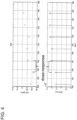
- FIG. 8 shows clinical results related to the implementation of different anemia management protocols (AMPs) including one based on an embodiment of the present invention.
- EPO erythropoietin
- Hgb hemoglobin
- a new anemia management protocol (implemented using one embodiment of the present invention) was switched on at day 670. It was found that the new protocol was able to smoothly guide the subject's Hgb to its target and maintain it within the target range. In all performance measures (data not shown), the new anemia management protocols outperformed the control anemia management protocols.
- the gain of AMP may be adjusted whenever a change in the subject's responsiveness (the "gain ") is detected. This change was studied in this example in one of two ways:
- This individualization of the protocol as related to various embodiments of the present invention requires the estimation of a subject's responsiveness (i.e., the gain ).
- a subject's responsiveness i.e., the gain
- There are several approaches that may be used for estimating this value for example, least square estimation or the Kalman filter or one of its extensions.
- FIG. 9 illustrates such a case in a clinical study. Similar to the results in Example 2, up to around day 670, EPO (erythropoietin) doses for the subject have been computed using several AMPs. During this time period, undesirable Hgb (hemoglobin) cycling and a lack of Hgb remaining in a desired range were observed.
- EPO erythropoietin
- a new AMP (implemented using one embodiment of the present invention) was switched on at day 670.
- the new AMP was able to smoothly guide the subject's Hgb to its target.
- the subject developed a slow internal bleeding that was completely overcome only two months later.
- the new protocol detected a corresponding change in the subject's responsiveness and adapted the AMP accordingly.
- the adaptation was successful and that the AMP overcame the bleeding and successfully guided Hgb to its target without cycling.
- the new AMP (including adaptation to the subject's changing condition) outperformed traditional AMPs in terms of performance measures.
- This example demonstrates the applicability of an anemia management protocol (AMP) designed for the recently FDA-approved ESA OMONTYS made by Affimax.
- AMP anemia management protocol
- the basic pharmacokinetic/pharmacodynamics model estimated in Example 1 was used in this example, and PK parameters were modified to reflect the mean drug half-life of 48 hours.
- the reported conversion of Epogen dose to OMONTYS dose was also used.
- the subject's endogenous Hgb was set to 8.5 g/d, and fluid variability was modeled using a multiplicative white noise of mean 1 and standard deviation of 0.023.
- the ability of the new AMP to guide the subject to its Hgb target of 11.25 g/l and stabilize it around that concentration with minimal cycling is demonstrated in Figure 10 .
- range format is merely for convenience and brevity and should not be construed as an inflexible limitation on the scope of the invention. Accordingly, the description of a range should be considered to have specifically disclosed all the possible subranges as well as individual numerical values within that range. For example, description of a range such as from 1 to 6 should be considered to have specifically disclosed subranges such as from 1 to 3, from 1 to 4, from 1 to 5, from 2 to 4, from 2 to 6, from 3 to 6 etc., as well as individual numbers within that range, for example, 1, 2, 3, 4, 5, and 6. This applies regardless of the breadth of the range.
- a reference to "A and/or B", when used in conjunction with open-ended language such as “comprising” can refer, in one embodiment, to A only (optionally including elements other than B); in another embodiment, to B only (optionally including elements other than A); in yet another embodiment, to both A and B (optionally including other elements); etc.
- the phrase "at least one,” in reference to a list of one or more elements, should be understood to mean at least one element selected from any one or more of the elements in the list of elements, but not necessarily including at least one of each and every element specifically listed within the list of elements and not excluding any combinations of elements in the list of elements.
- This definition also allows that elements may optionally be present other than the elements specifically identified within the list of elements to which the phrase "at least one" refers, whether related or unrelated to those elements specifically identified.
- At least one of A and B can refer, in one embodiment, to at least one, optionally including more than one, A, with no B present (and optionally including elements other than B); in another embodiment, to at least one, optionally including more than one, B, with no A present (and optionally including elements other than A); in yet another embodiment, to at least one, optionally including more than one, A, and at least one, optionally including more than one, B (and optionally including other elements); etc.
Landscapes
- Health & Medical Sciences (AREA)
- Engineering & Computer Science (AREA)
- Public Health (AREA)
- Life Sciences & Earth Sciences (AREA)
- General Health & Medical Sciences (AREA)
- Medical Informatics (AREA)
- Epidemiology (AREA)
- Veterinary Medicine (AREA)
- Animal Behavior & Ethology (AREA)
- Biomedical Technology (AREA)
- Chemical & Material Sciences (AREA)
- Bioinformatics & Cheminformatics (AREA)
- Medicinal Chemistry (AREA)
- Primary Health Care (AREA)
- Vascular Medicine (AREA)
- Anesthesiology (AREA)
- Heart & Thoracic Surgery (AREA)
- Hematology (AREA)
- Zoology (AREA)
- Gastroenterology & Hepatology (AREA)
- Immunology (AREA)
- Pharmacology & Pharmacy (AREA)
- Proteomics, Peptides & Aminoacids (AREA)
- Data Mining & Analysis (AREA)
- Databases & Information Systems (AREA)
- Pathology (AREA)
- Diabetes (AREA)
- Medicines That Contain Protein Lipid Enzymes And Other Medicines (AREA)
- Pharmaceuticals Containing Other Organic And Inorganic Compounds (AREA)
Claims (11)
- Verfahren zum Berechnen der intravenösen, subkutanen oder oralen Dosierung von Erythropoese-stimulierenden Mitteln (ESAs) zur Behandlung von Anämie bei einem menschlichen Subjekt, das Folgendes einschließt:Bereitstellen einer zuvor gewonnenen Probe des Subjekts;Bestimmen eines Wertes einer Hämoglobinkonzentration als mindestens eine biochemische Eigenschaft, die mit einem Anämiestatus in der Probe zusammenhängt;Bestimmen einer Differenz zwischen dem Wert der Hämoglobinkonzentration und einem vorbestimmten optimalen Wert für die Hämoglobinkonzentration; und,Verwenden eines Rechenelements mit einem mathematischen Algorithmus zur Berechnung einer erforderlichen ESA-Dosierung auf der Grundlage der genannten Differenz, wobei der Algorithmusi) einen angenäherten zeitdiskreten Integrator einschließt, der eine Ausgabe y(kT) zu einem Probezeitpunkt kT liefert, die mit einer aktuellen Eingabe u(kT) durch eine Differenzgleichung von y(kT) = u(kT) + y(kT-T) in Beziehung steht, wobei y(kT - T) die Ausgabe zu dem vorherigen Probezeitpunkt ist, und wobei die Eingabe für den angenäherten zeitdiskreten Integrator die gemessene Hämoglobinkonzentration ist und die Ausgabe des angenäherten zeitdiskreten Integrators eine Konzentration des Erythropoese-stimulierenden Mittels, ESA ist, undii) vorbestimmte Zielleistungskriterien für einen Bereich von biochemischen Eigenschaftswerten in einer Vielzahl von vorbestimmten physiologischen Faktoren, die den Wert der Hämoglobinkonzentration beeinflussen, beibehält.
- Verfahren nach Anspruch 1, wobei der Bereich der Zielwerte 8 g/dl und 14 g/dl beträgt.
- Verfahren nach Anspruch 1, wobei die Dosierung die Verabreichung von rekombinantem humanem Erythropoietin (rHuEPO) beinhaltet, vorzugsweise wobei das rHuEPO in einer nicht-menschlichen Quelle unter Verwendung synthetischer oder biologischer Verfahren hergestellt wird.
- Verfahren nach Anspruch 1, wobei die Dosierung die Verabreichung eines neuen Erythropoese-stimulierenden Proteins (NESP) oder eines HIF-stabilisierenden Mittels beinhaltet.
- Verfahren nach Anspruch 1, wobei der Wert dreimal pro Woche, einmal pro Woche, zweiwöchentlich, monatlich oder in anderen Intervallen bestimmt wird.
- Verfahren nach Anspruch 1, wobei die Anämie mit Nierenversagen verbunden ist.
- Verfahren nach Anspruch 1, wobei die physiologischen Faktoren die Lebensdauer von roten Blutkörperchen, das mittlere korpuskuläre Hämoglobin (MCH), die Zeit von der ESA-Stimulation bis zu der Freisetzung neuer roter Blutkörperchen in den Blutkreislauf oder die periodische intravenöse, subkutane oder orale Zufuhr von Eisen an das Subjekt einschließen.
- Verfahren nach Anspruch 1, wobei der Algorithmus einen Schritt zur Verringerung der Empfindlichkeit eines Anämie-Management-Protokolls (AMP) gegenüber der Variabilität des Ansprechens des Subjekts auf die ESAs einschließt.
- Verfahren nach Anspruch 8, wobei der Algorithmus einen Schritt zur Verringerung der Empfindlichkeit des AMP gegenüber Schwankungen der Eisen- und Vitaminkonzentrationen im Blut des Subjekts einschließt, vorzugsweise wobei der Algorithmus einen Schritt zur Verringerung der Empfindlichkeit des AMP gegenüber der Variabilität des Wertes der biochemischen Eigenschaft einschließt, vorzugsweise wobei der Algorithmus einen Schritt zur Berechnung der Dosierung des ESA für das Subjekt über einen vorbestimmten Dosierungsplan einschließt, vorzugsweise wobei der vorbestimmte Dosierungsplan aus den folgenden ausgewählt wird: täglich, dreimal pro Woche, wöchentlich, zweiwöchentlich und monatlich.
- Verfahren nach Anspruch 8, wobei der Algorithmus einen Schritt zum Anpassen der Verstärkung des AMP an ein aktuelles Level des Ansprechens des Subjekts auf die ESA einschließt.
- Verfahren nach Anspruch 10, wobei die mit dem AMP verbundene Verstärkung umgekehrt proportional zu dem Ansprechen einstellbar ist.
Applications Claiming Priority (2)
| Application Number | Priority Date | Filing Date | Title |
|---|---|---|---|
| US201261701527P | 2012-09-14 | 2012-09-14 | |
| PCT/US2013/059360 WO2014043295A1 (en) | 2012-09-14 | 2013-09-12 | Methods and devices for determining optimal agent dosages |
Publications (3)
| Publication Number | Publication Date |
|---|---|
| EP2895973A1 EP2895973A1 (de) | 2015-07-22 |
| EP2895973B1 true EP2895973B1 (de) | 2024-07-24 |
| EP2895973C0 EP2895973C0 (de) | 2024-07-24 |
Family
ID=49230871
Family Applications (1)
| Application Number | Title | Priority Date | Filing Date |
|---|---|---|---|
| EP13766198.9A Active EP2895973B1 (de) | 2012-09-14 | 2013-09-12 | Verfahren und vorrichtungen zur bestimmung optimaler wirkstoffdosierungen |
Country Status (3)
| Country | Link |
|---|---|
| US (2) | US10049187B2 (de) |
| EP (1) | EP2895973B1 (de) |
| WO (1) | WO2014043295A1 (de) |
Families Citing this family (8)
| Publication number | Priority date | Publication date | Assignee | Title |
|---|---|---|---|---|
| US10852069B2 (en) | 2010-05-04 | 2020-12-01 | Fractal Heatsink Technologies, LLC | System and method for maintaining efficiency of a fractal heat sink |
| ES2856261T3 (es) * | 2013-10-01 | 2021-09-27 | Fresenius Medical Care Deutschland Gmbh | Método y aparatos para determinar una pérdida diaria de hierro de un paciente |
| JP6864834B2 (ja) * | 2017-06-14 | 2021-04-28 | ニプロ株式会社 | 投与量決定プログラムおよび投与量決定装置 |
| EP3842808A4 (de) * | 2018-08-24 | 2022-05-18 | National University Corporation Yokohama National University | Verabreichungsverwaltungsvorrichtung, verabreichungsverwaltungsverfahren und programm |
| CN113261064B (zh) * | 2019-01-23 | 2024-03-08 | 国立研究开发法人科学技术振兴机构 | 给药量管理支援系统 |
| EP4013297A4 (de) | 2019-08-16 | 2023-12-13 | Poltorak Technologies, LLC | Vorrichtung und verfahren für medizinische diagnostik |
| CA3153012A1 (en) * | 2019-12-23 | 2021-07-01 | Fresenius Medical Care Holdings, Inc. | Connected drug delivery system for erythropoietin stimulating agents |
| US11969577B1 (en) * | 2020-01-14 | 2024-04-30 | Hana Patent Technology, Llc | Wearable drug delivery device for disease management and system therefor with artificial intelligence |
Family Cites Families (9)
| Publication number | Priority date | Publication date | Assignee | Title |
|---|---|---|---|---|
| BR0010316A (pt) | 1999-05-11 | 2004-04-27 | Ortho Mcnell Pharmaceutical In | Método e sistema para obtenção de regimes de dosagem otimizados de epo para uma resposta farmacodinâmica/farmacocinética desejada em um paciente |
| NZ532988A (en) | 2001-11-28 | 2008-04-30 | Ortho Mcneil Pharm Inc | Erythropoietin dosing regimen for treating anemia |
| WO2006133391A2 (en) | 2005-06-06 | 2006-12-14 | Fibrogen, Inc. | Improved treatment for anemia using a hif-alpha stabilising agent |
| US20080050749A1 (en) * | 2006-08-17 | 2008-02-28 | Ildiko Amann-Zalan | Use of bnp-type peptides for the stratification of therapy with erythropoietic stimulating agents |
| US9370324B2 (en) | 2008-11-05 | 2016-06-21 | Fresenius Medical Care Holdings, Inc. | Hemodialysis patient data acquisition, management and analysis system |
| US8480581B2 (en) | 2009-03-24 | 2013-07-09 | Cardiac Pacemakers, Inc. | Systems and methods for anemia detection, monitoring, and treatment |
| WO2011057744A1 (en) | 2009-11-13 | 2011-05-19 | Roche Diagnostics Gmbh | Differential diagnosis of iron deficiencies based on hepcidin and mean hemoglobin content per reticulocyte |
| EP2521983B1 (de) | 2010-01-04 | 2025-03-05 | Mayo Foundation For Medical Education And Research | Bestimmung der dosis eines erythropoese-stimulans (esa) |
| WO2013049624A1 (en) * | 2011-09-30 | 2013-04-04 | University Of Louisville Research Foundation, Inc. | System and method for personalized dosing of pharmacologic agents |
-
2013
- 2013-09-12 EP EP13766198.9A patent/EP2895973B1/de active Active
- 2013-09-12 US US14/427,775 patent/US10049187B2/en active Active
- 2013-09-12 WO PCT/US2013/059360 patent/WO2014043295A1/en not_active Ceased
-
2018
- 2018-07-11 US US16/032,990 patent/US20190013090A1/en not_active Abandoned
Non-Patent Citations (2)
| Title |
|---|
| "Numerical Solution of Ordinary Differential Equations : Atkinson/Numerical", 27 January 2009, JOHN WILEY & SONS, INC., Hoboken, NJ, USA, ISBN: 978-0-470-04294-6, article KENDALL E. ATKINSON ET AL: "NUMERICAL SOLUTION OF ORDINARY DIFFERENTIAL EQUATIONS", XP055448248 * |
| MUSTAFA INC ET AL: "A COMPARISON OF NUMERICAL ODE SOLVERS BASED ON EULER METHODS", 1 January 1998 (1998-01-01), pages 153 - 159, XP055447956, Retrieved from the Internet <URL:http://www.mdpi.com/2297-8747/3/3/153/pdf> [retrieved on 20180205] * |
Also Published As
| Publication number | Publication date |
|---|---|
| EP2895973A1 (de) | 2015-07-22 |
| WO2014043295A1 (en) | 2014-03-20 |
| US20190013090A1 (en) | 2019-01-10 |
| US20150220700A1 (en) | 2015-08-06 |
| US10049187B2 (en) | 2018-08-14 |
| EP2895973C0 (de) | 2024-07-24 |
Similar Documents
| Publication | Publication Date | Title |
|---|---|---|
| EP2895973B1 (de) | Verfahren und vorrichtungen zur bestimmung optimaler wirkstoffdosierungen | |
| US20240296928A1 (en) | System and method for personalized dosing of pharmacologic agents | |
| Garvican-Lewis et al. | Intravenous iron does not augment the hemoglobin mass response to simulated hypoxia | |
| EP2989569B1 (de) | Verfahren zum betrieb einer steuervorrichtung zur steuerung einer infusionsvorrichtung | |
| EP2521983B1 (de) | Bestimmung der dosis eines erythropoese-stimulans (esa) | |
| WO2010138848A1 (en) | System coordinator and modular architecture for open-loop and closed-loop control of diabetes | |
| Kovacevic et al. | Population pharmacokinetic model of Vancomycin based on therapeutic drug monitoring data in critically ill septic patients | |
| Brier et al. | Personalized anemia management and precision medicine in ESA and iron pharmacology in end-stage kidney disease | |
| Brier et al. | Artificial intelligence for optimal anemia management in end-stage renal disease | |
| Chait et al. | Control-relevant erythropoiesis modeling in end-stage renal disease | |
| Schiavon et al. | Modeling subcutaneous absorption of long-acting insulin glargine in type 1 diabetes | |
| Rosebraugh et al. | Multidose optimization simulation of erythropoietin treatment in preterm infants | |
| Chen et al. | The accuracy evaluation of four blood glucose monitoring systems according to ISO 15197: 2003 and ISO 15197: 2013 criteria | |
| Furió-Novejarque et al. | Assessment of a new model of glucagon action with glucagon receptor dynamics | |
| Wu et al. | Glucose–insulin regulation model with subcutaneous insulin injection and evaluation using diabetic inpatients data | |
| Kalita et al. | InsNET: Accurate Basal and Bolus Insulin Dose Prediction for Closed Loop Diabetes Management | |
| Budha et al. | Comparative performance of cell life span and cell transit models for describing erythropoietic drug effects | |
| Pozhar et al. | Control methods in automated glycemia maintaining system | |
| US20250331771A1 (en) | System and method of modeling erythropoiesis | |
| Teksöz et al. | Blood Gas Measurements Using Point-of-Care Testing Devices in Pediatric Patients | |
| US20240127961A1 (en) | System and method for adjusting hypoxia-inducible factor stabilizer treatment based on anemia modeling | |
| Neelakantan et al. | Erythropoietin pharmacokinetic/pharmacodynamic analysis suggests higher doses in treating neonatal anemia | |
| Cao et al. | Mechanism-Based Pharmacokinetic/Pharmacodynamic Modeling for Iron-Regulated Hematopoietic Stem and Progenitor Cells’ Commitment toward Erythroid and Megakaryocytic Lineages | |
| Freise | Cellular lifespan based pharmacodynamic analysis of erythropoiesis | |
| Copot et al. | Towards a cyber-medical system for drug assisting devices |
Legal Events
| Date | Code | Title | Description |
|---|---|---|---|
| PUAI | Public reference made under article 153(3) epc to a published international application that has entered the european phase |
Free format text: ORIGINAL CODE: 0009012 |
|
| 17P | Request for examination filed |
Effective date: 20150407 |
|
| AK | Designated contracting states |
Kind code of ref document: A1 Designated state(s): AL AT BE BG CH CY CZ DE DK EE ES FI FR GB GR HR HU IE IS IT LI LT LU LV MC MK MT NL NO PL PT RO RS SE SI SK SM TR |
|
| AX | Request for extension of the european patent |
Extension state: BA ME |
|
| RIN1 | Information on inventor provided before grant (corrected) |
Inventor name: HOROWITZ, JOSEPH Inventor name: CHAIT, YOSSI Inventor name: VOGT, WILLIAM CHARLES Inventor name: GERMAIN, MICHAEL, J. Inventor name: HOLLOT, CHRISTOPHER, V. |
|
| DAX | Request for extension of the european patent (deleted) | ||
| STAA | Information on the status of an ep patent application or granted ep patent |
Free format text: STATUS: EXAMINATION IS IN PROGRESS |
|
| 17Q | First examination report despatched |
Effective date: 20170609 |
|
| REG | Reference to a national code |
Ref country code: DE Ref legal event code: R079 Free format text: PREVIOUS MAIN CLASS: G06F0019000000 Ipc: G16H0050500000 Ref country code: DE Ref legal event code: R079 Ref document number: 602013085931 Country of ref document: DE Free format text: PREVIOUS MAIN CLASS: G06F0019000000 Ipc: G16H0050500000 |
|
| GRAP | Despatch of communication of intention to grant a patent |
Free format text: ORIGINAL CODE: EPIDOSNIGR1 |
|
| STAA | Information on the status of an ep patent application or granted ep patent |
Free format text: STATUS: GRANT OF PATENT IS INTENDED |
|
| RIC1 | Information provided on ipc code assigned before grant |
Ipc: G16Z 99/00 20190101ALI20240206BHEP Ipc: A61K 38/18 20060101ALI20240206BHEP Ipc: G16H 20/10 20180101ALI20240206BHEP Ipc: G16H 50/50 20180101AFI20240206BHEP |
|
| INTG | Intention to grant announced |
Effective date: 20240229 |
|
| GRAS | Grant fee paid |
Free format text: ORIGINAL CODE: EPIDOSNIGR3 |
|
| GRAA | (expected) grant |
Free format text: ORIGINAL CODE: 0009210 |
|
| STAA | Information on the status of an ep patent application or granted ep patent |
Free format text: STATUS: THE PATENT HAS BEEN GRANTED |
|
| AK | Designated contracting states |
Kind code of ref document: B1 Designated state(s): AL AT BE BG CH CY CZ DE DK EE ES FI FR GB GR HR HU IE IS IT LI LT LU LV MC MK MT NL NO PL PT RO RS SE SI SK SM TR |
|
| REG | Reference to a national code |
Ref country code: GB Ref legal event code: FG4D |
|
| REG | Reference to a national code |
Ref country code: CH Ref legal event code: EP |
|
| REG | Reference to a national code |
Ref country code: IE Ref legal event code: FG4D Ref country code: DE Ref legal event code: R096 Ref document number: 602013085931 Country of ref document: DE |
|
| U01 | Request for unitary effect filed |
Effective date: 20240814 |
|
| U07 | Unitary effect registered |
Designated state(s): AT BE BG DE DK EE FI FR IT LT LU LV MT NL PT SE SI Effective date: 20240827 |
|
| U20 | Renewal fee for the european patent with unitary effect paid |
Year of fee payment: 12 Effective date: 20240927 |
|
| PG25 | Lapsed in a contracting state [announced via postgrant information from national office to epo] |
Ref country code: NO Free format text: LAPSE BECAUSE OF FAILURE TO SUBMIT A TRANSLATION OF THE DESCRIPTION OR TO PAY THE FEE WITHIN THE PRESCRIBED TIME-LIMIT Effective date: 20241024 |
|
| PG25 | Lapsed in a contracting state [announced via postgrant information from national office to epo] |
Ref country code: PL Free format text: LAPSE BECAUSE OF FAILURE TO SUBMIT A TRANSLATION OF THE DESCRIPTION OR TO PAY THE FEE WITHIN THE PRESCRIBED TIME-LIMIT Effective date: 20240724 Ref country code: GR Free format text: LAPSE BECAUSE OF FAILURE TO SUBMIT A TRANSLATION OF THE DESCRIPTION OR TO PAY THE FEE WITHIN THE PRESCRIBED TIME-LIMIT Effective date: 20241025 |
|
| PG25 | Lapsed in a contracting state [announced via postgrant information from national office to epo] |
Ref country code: IS Free format text: LAPSE BECAUSE OF FAILURE TO SUBMIT A TRANSLATION OF THE DESCRIPTION OR TO PAY THE FEE WITHIN THE PRESCRIBED TIME-LIMIT Effective date: 20241124 |
|
| PG25 | Lapsed in a contracting state [announced via postgrant information from national office to epo] |
Ref country code: HR Free format text: LAPSE BECAUSE OF FAILURE TO SUBMIT A TRANSLATION OF THE DESCRIPTION OR TO PAY THE FEE WITHIN THE PRESCRIBED TIME-LIMIT Effective date: 20240724 |
|
| PG25 | Lapsed in a contracting state [announced via postgrant information from national office to epo] |
Ref country code: RS Free format text: LAPSE BECAUSE OF FAILURE TO SUBMIT A TRANSLATION OF THE DESCRIPTION OR TO PAY THE FEE WITHIN THE PRESCRIBED TIME-LIMIT Effective date: 20241024 Ref country code: ES Free format text: LAPSE BECAUSE OF FAILURE TO SUBMIT A TRANSLATION OF THE DESCRIPTION OR TO PAY THE FEE WITHIN THE PRESCRIBED TIME-LIMIT Effective date: 20240724 |
|
| PG25 | Lapsed in a contracting state [announced via postgrant information from national office to epo] |
Ref country code: RS Free format text: LAPSE BECAUSE OF FAILURE TO SUBMIT A TRANSLATION OF THE DESCRIPTION OR TO PAY THE FEE WITHIN THE PRESCRIBED TIME-LIMIT Effective date: 20241024 Ref country code: PL Free format text: LAPSE BECAUSE OF FAILURE TO SUBMIT A TRANSLATION OF THE DESCRIPTION OR TO PAY THE FEE WITHIN THE PRESCRIBED TIME-LIMIT Effective date: 20240724 Ref country code: NO Free format text: LAPSE BECAUSE OF FAILURE TO SUBMIT A TRANSLATION OF THE DESCRIPTION OR TO PAY THE FEE WITHIN THE PRESCRIBED TIME-LIMIT Effective date: 20241024 Ref country code: IS Free format text: LAPSE BECAUSE OF FAILURE TO SUBMIT A TRANSLATION OF THE DESCRIPTION OR TO PAY THE FEE WITHIN THE PRESCRIBED TIME-LIMIT Effective date: 20241124 Ref country code: HR Free format text: LAPSE BECAUSE OF FAILURE TO SUBMIT A TRANSLATION OF THE DESCRIPTION OR TO PAY THE FEE WITHIN THE PRESCRIBED TIME-LIMIT Effective date: 20240724 Ref country code: GR Free format text: LAPSE BECAUSE OF FAILURE TO SUBMIT A TRANSLATION OF THE DESCRIPTION OR TO PAY THE FEE WITHIN THE PRESCRIBED TIME-LIMIT Effective date: 20241025 Ref country code: ES Free format text: LAPSE BECAUSE OF FAILURE TO SUBMIT A TRANSLATION OF THE DESCRIPTION OR TO PAY THE FEE WITHIN THE PRESCRIBED TIME-LIMIT Effective date: 20240724 |
|
| PG25 | Lapsed in a contracting state [announced via postgrant information from national office to epo] |
Ref country code: RO Free format text: LAPSE BECAUSE OF FAILURE TO SUBMIT A TRANSLATION OF THE DESCRIPTION OR TO PAY THE FEE WITHIN THE PRESCRIBED TIME-LIMIT Effective date: 20240724 Ref country code: SM Free format text: LAPSE BECAUSE OF FAILURE TO SUBMIT A TRANSLATION OF THE DESCRIPTION OR TO PAY THE FEE WITHIN THE PRESCRIBED TIME-LIMIT Effective date: 20240724 |
|
| PG25 | Lapsed in a contracting state [announced via postgrant information from national office to epo] |
Ref country code: MC Free format text: LAPSE BECAUSE OF FAILURE TO SUBMIT A TRANSLATION OF THE DESCRIPTION OR TO PAY THE FEE WITHIN THE PRESCRIBED TIME-LIMIT Effective date: 20240724 |
|
| PG25 | Lapsed in a contracting state [announced via postgrant information from national office to epo] |
Ref country code: CZ Free format text: LAPSE BECAUSE OF FAILURE TO SUBMIT A TRANSLATION OF THE DESCRIPTION OR TO PAY THE FEE WITHIN THE PRESCRIBED TIME-LIMIT Effective date: 20240724 |
|
| PG25 | Lapsed in a contracting state [announced via postgrant information from national office to epo] |
Ref country code: SK Free format text: LAPSE BECAUSE OF FAILURE TO SUBMIT A TRANSLATION OF THE DESCRIPTION OR TO PAY THE FEE WITHIN THE PRESCRIBED TIME-LIMIT Effective date: 20240724 |
|
| REG | Reference to a national code |
Ref country code: CH Ref legal event code: PL |
|
| PLBE | No opposition filed within time limit |
Free format text: ORIGINAL CODE: 0009261 |
|
| STAA | Information on the status of an ep patent application or granted ep patent |
Free format text: STATUS: NO OPPOSITION FILED WITHIN TIME LIMIT |
|
| 26N | No opposition filed |
Effective date: 20250425 |
|
| PG25 | Lapsed in a contracting state [announced via postgrant information from national office to epo] |
Ref country code: CH Free format text: LAPSE BECAUSE OF NON-PAYMENT OF DUE FEES Effective date: 20240930 |
|
| PG25 | Lapsed in a contracting state [announced via postgrant information from national office to epo] |
Ref country code: IE Free format text: LAPSE BECAUSE OF NON-PAYMENT OF DUE FEES Effective date: 20240912 |
|
| PGFP | Annual fee paid to national office [announced via postgrant information from national office to epo] |
Ref country code: GB Payment date: 20250929 Year of fee payment: 13 |
|
| U20 | Renewal fee for the european patent with unitary effect paid |
Year of fee payment: 13 Effective date: 20250929 |
|
| PG25 | Lapsed in a contracting state [announced via postgrant information from national office to epo] |
Ref country code: CY Free format text: LAPSE BECAUSE OF FAILURE TO SUBMIT A TRANSLATION OF THE DESCRIPTION OR TO PAY THE FEE WITHIN THE PRESCRIBED TIME-LIMIT; INVALID AB INITIO Effective date: 20130912 |