EP2895529B1 - Process for preparing a stable aqueous dispersion of polyamide-imide which is free of carcinogenic, mutagenic or reprotoxic substances, and application to coatings - Google Patents
Process for preparing a stable aqueous dispersion of polyamide-imide which is free of carcinogenic, mutagenic or reprotoxic substances, and application to coatings Download PDFInfo
- Publication number
- EP2895529B1 EP2895529B1 EP13762108.2A EP13762108A EP2895529B1 EP 2895529 B1 EP2895529 B1 EP 2895529B1 EP 13762108 A EP13762108 A EP 13762108A EP 2895529 B1 EP2895529 B1 EP 2895529B1
- Authority
- EP
- European Patent Office
- Prior art keywords
- imide
- polyamide
- preparing
- dispersion
- stable aqueous
- Prior art date
- Legal status (The legal status is an assumption and is not a legal conclusion. Google has not performed a legal analysis and makes no representation as to the accuracy of the status listed.)
- Not-in-force
Links
- 0 OC(c(cc1)cc(C(N2C*N(C(c(cc3)c4cc3C(O)=O)=O)C4=O)=O)c1C2=O)=O Chemical compound OC(c(cc1)cc(C(N2C*N(C(c(cc3)c4cc3C(O)=O)=O)C4=O)=O)c1C2=O)=O 0.000 description 2
- ULAULRZTDLPTTE-ILKKLZGPSA-N CC[C@H](C)CC([Al](C(N1NC)=O)C1=O)=O Chemical compound CC[C@H](C)CC([Al](C(N1NC)=O)C1=O)=O ULAULRZTDLPTTE-ILKKLZGPSA-N 0.000 description 1
Images

Classifications
-
- C—CHEMISTRY; METALLURGY
- C09—DYES; PAINTS; POLISHES; NATURAL RESINS; ADHESIVES; COMPOSITIONS NOT OTHERWISE PROVIDED FOR; APPLICATIONS OF MATERIALS NOT OTHERWISE PROVIDED FOR
- C09D—COATING COMPOSITIONS, e.g. PAINTS, VARNISHES OR LACQUERS; FILLING PASTES; CHEMICAL PAINT OR INK REMOVERS; INKS; CORRECTING FLUIDS; WOODSTAINS; PASTES OR SOLIDS FOR COLOURING OR PRINTING; USE OF MATERIALS THEREFOR
- C09D179/00—Coating compositions based on macromolecular compounds obtained by reactions forming in the main chain of the macromolecule a linkage containing nitrogen, with or without oxygen, or carbon only, not provided for in groups C09D161/00 - C09D177/00
- C09D179/04—Polycondensates having nitrogen-containing heterocyclic rings in the main chain; Polyhydrazides; Polyamide acids or similar polyimide precursors
- C09D179/08—Polyimides; Polyester-imides; Polyamide-imides; Polyamide acids or similar polyimide precursors
-
- B—PERFORMING OPERATIONS; TRANSPORTING
- B05—SPRAYING OR ATOMISING IN GENERAL; APPLYING FLUENT MATERIALS TO SURFACES, IN GENERAL
- B05D—PROCESSES FOR APPLYING FLUENT MATERIALS TO SURFACES, IN GENERAL
- B05D1/00—Processes for applying liquids or other fluent materials
- B05D1/02—Processes for applying liquids or other fluent materials performed by spraying
-
- C—CHEMISTRY; METALLURGY
- C08—ORGANIC MACROMOLECULAR COMPOUNDS; THEIR PREPARATION OR CHEMICAL WORKING-UP; COMPOSITIONS BASED THEREON
- C08G—MACROMOLECULAR COMPOUNDS OBTAINED OTHERWISE THAN BY REACTIONS ONLY INVOLVING UNSATURATED CARBON-TO-CARBON BONDS
- C08G73/00—Macromolecular compounds obtained by reactions forming a linkage containing nitrogen with or without oxygen or carbon in the main chain of the macromolecule, not provided for in groups C08G12/00 - C08G71/00
- C08G73/06—Polycondensates having nitrogen-containing heterocyclic rings in the main chain of the macromolecule
- C08G73/10—Polyimides; Polyester-imides; Polyamide-imides; Polyamide acids or similar polyimide precursors
- C08G73/14—Polyamide-imides
-
- C—CHEMISTRY; METALLURGY
- C08—ORGANIC MACROMOLECULAR COMPOUNDS; THEIR PREPARATION OR CHEMICAL WORKING-UP; COMPOSITIONS BASED THEREON
- C08J—WORKING-UP; GENERAL PROCESSES OF COMPOUNDING; AFTER-TREATMENT NOT COVERED BY SUBCLASSES C08B, C08C, C08F, C08G or C08H
- C08J3/00—Processes of treating or compounding macromolecular substances
- C08J3/02—Making solutions, dispersions, lattices or gels by other methods than by solution, emulsion or suspension polymerisation techniques
- C08J3/03—Making solutions, dispersions, lattices or gels by other methods than by solution, emulsion or suspension polymerisation techniques in aqueous media
- C08J3/07—Making solutions, dispersions, lattices or gels by other methods than by solution, emulsion or suspension polymerisation techniques in aqueous media from polymer solutions
-
- C—CHEMISTRY; METALLURGY
- C08—ORGANIC MACROMOLECULAR COMPOUNDS; THEIR PREPARATION OR CHEMICAL WORKING-UP; COMPOSITIONS BASED THEREON
- C08K—Use of inorganic or non-macromolecular organic substances as compounding ingredients
- C08K5/00—Use of organic ingredients
- C08K5/04—Oxygen-containing compounds
- C08K5/06—Ethers; Acetals; Ketals; Ortho-esters
-
- C—CHEMISTRY; METALLURGY
- C09—DYES; PAINTS; POLISHES; NATURAL RESINS; ADHESIVES; COMPOSITIONS NOT OTHERWISE PROVIDED FOR; APPLICATIONS OF MATERIALS NOT OTHERWISE PROVIDED FOR
- C09D—COATING COMPOSITIONS, e.g. PAINTS, VARNISHES OR LACQUERS; FILLING PASTES; CHEMICAL PAINT OR INK REMOVERS; INKS; CORRECTING FLUIDS; WOODSTAINS; PASTES OR SOLIDS FOR COLOURING OR PRINTING; USE OF MATERIALS THEREFOR
- C09D5/00—Coating compositions, e.g. paints, varnishes or lacquers, characterised by their physical nature or the effects produced; Filling pastes
- C09D5/14—Paints containing biocides, e.g. fungicides, insecticides or pesticides
-
- C—CHEMISTRY; METALLURGY
- C08—ORGANIC MACROMOLECULAR COMPOUNDS; THEIR PREPARATION OR CHEMICAL WORKING-UP; COMPOSITIONS BASED THEREON
- C08J—WORKING-UP; GENERAL PROCESSES OF COMPOUNDING; AFTER-TREATMENT NOT COVERED BY SUBCLASSES C08B, C08C, C08F, C08G or C08H
- C08J2379/00—Characterised by the use of macromolecular compounds obtained by reactions forming in the main chain of the macromolecule a linkage containing nitrogen with or without oxygen, or carbon only, not provided for in groups C08J2361/00 - C08J2377/00
- C08J2379/04—Polycondensates having nitrogen-containing heterocyclic rings in the main chain; Polyhydrazides; Polyamide acids or similar polyimide precursors
- C08J2379/08—Polyimides; Polyester-imides; Polyamide-imides; Polyamide acids or similar polyimide precursors
Definitions
- the present invention relates to a process for the production of a dry film of polyamide-imide from a stable, ready-to-use aqueous dispersion which is free of carcinogenic, mutagenic or reprotoxic substances, said process comprising either a step for dispersion by means of a specific milling process preceded by a step for dissolution and precipitation.
- thermoplastic polyimides carry chemical groups which can render them fusible and soluble in solvents without significantly altering their properties.
- the principal thermoplastic polyimides are polyether-imides and polyamide-imides.
- Polyamide-imides which are high performance amorphous thermoplastic polymers, are widely used as impregnation resins and protective anti-corrosion varnishes for applications requiring good thermal behaviour or as binders for decorative, non-stick and self-lubricating paints.
- the polyamide-imide polymer has superior mechanical properties as well as excellent chemical resistance.
- a Rockwell M hardness in the range 110 to 125, a resistance at break and compressive strength in the range 110 to 220 MPa mean that it can cope with the pressure and shear type loads occurring in a metal-metal contact.
- EP 2 502 952 proposes a method comprising a first step wherein polyamide-imide resin is dissolved in an organic solvent, followed by a step wherein the polyamide-imide resin solution is either added to a specific solvent or subjected to flash crystallization.
- NMP is mainly used.
- patent US 4 087 394 filed by E I Du Pont de Nemours and Co. That patent pertains to the preparation of coatings with lubricant, unmoulding, chemical resistance, high temperature resistance and electrically insulating properties from an aqueous dispersion containing a fluoropolymer as the major ingredient and a polyimide precursor in solution which is capable of forming a film below the melting point of the fluoropolymer (PTFE).
- the solution of polyamide acid salt, polyimide precursor is constituted by a carboxylic polyamide acid with a water-soluble tertiary amine (triethylamine and/or diethylethanolamine).
- a coalescing agent exclusively N-methylpyrrolidone, is systematically added to facilitate film formation.
- Patent US 4 259 221 from General Electric proposes applying a single polyamide-imide coating which is soluble in water or, preferably, in a water/organic solvent mixture in order to reduce costs arising from organic solvents, such as their environmental impact. Dispersing the polymer is facilitated by forming a salt with a tertiary amine (dimethylethanolamine).
- the powdered PAI polymer (Amoco® AI-10) is a polyamide-imide pre-polymer obtained by synthesis in two reactions: a reaction between a trimellitic anhydride and an aromatic polyamine, resulting in a polyamide-imide pre-polymer, followed by reaction between the pre-polymer and a polyisocyanate.
- T Matsushita typically reused the same process for obtaining a polyamide-imide resin in solution to applying a layer which is not adhesive as regards ink in a printing system.
- HPC soluble polyamide-imides
- US 5 037 862 Hitachi Chemical Ltd also form a paste from at least 40% of an aromatic polyamide-imide resin in a solvent for serigraphy applications.
- the solvents could be selected from the following substances: lactones, aliphatic ketones, ethers, phenols, DMSO and sulpholane.
- the process consists of dispersing fine particles of aromatic polyamide-imide resin (40 ⁇ m) in a solution of polyamide-imide resin, preferably dissolved in an ether such as THF, triethylene glycol dimethyl ether, without providing details as to whether the paste obtained can be dispersed in water.
- AkzoNobel proposes using the same type of polyamide-imide in aqueous dispersion in an application concerning a paint for aluminium cooking utensils.
- the corresponding EP 0 724 915 concerns the application of an aqueous dispersion of PTFE containing a polyamide-imide binder.
- the proportion of NMP in the final aqueous polyamide-imide dispersion is 11% by weight.
- Patent US 6 479 581 from Solvay Advanced Polymers illuminates the preferential molecular structure of a soluble polyamide-imide pre-polymer for generating a non-tacky, adhesive film on a wide variety of ferrous and non-ferrous substrates including steel, aluminium and copper.
- a solution of polyamide-amic acid obtained by synthesis in an aliphatic tertiary amine (triethylamine) would considerably favour dispersion in water.
- the invention stipulates that the quantity of residual organic solvent in the pre-polymer is in the range 0.1% to 5% by weight.
- the moist Torlon® AI-30 powder corresponding to the soluble pre-polymer obtained by synthesis contains at least 2% by weight of residual NMP solvent.
- Polar solvents toluene, xylene
- polar aprotic solvents containing nitrogen such as NMP, N,N-dimethylacetamide (DMAc), N,N-dimethylformamide (DMF), hexamethylphosphoramide (HMPA), etc, employed when forming a polyamide-imide film are substances which are classified as carcinogenic, mutagenic or reprotoxic (CMR) which are subject to prohibition or restricted use in many applications.
- CMR carcinogenic, mutagenic or reprotoxic
- the limiting concentration thresholds for the most sensitive carcinogenic and mutagenic substances, classed as 1A (can cause cancer), 1B (may induce a genetic anomaly), are 0.1% or less in mixtures and 0.3% or less for reprotoxic substances.
- Other CMR substances of class 2, deemed to be of concern for fertility and human development, have to be in concentrations of 1% or less.
- the present invention proposes preparing an aqueous dispersion of an aromatic polyamide-imide polymer containing no CMR substances in order to generate a dry coating of polyamide-imide that is easy to apply, adherent to a wide variety of substrates, particularly to ferrous or non-ferrous metals, and that can be protective, lubricating and abrasion-resistant.
- the present invention concerns a process for preparing a stable aqueous polyamide-imide dispersion, characterized in that it comprises at least the following steps:
- the proportion of polyamide-imide may be 35% by weight or less.
- the step for dissolving the polyamide-imide powder may be carried out at a temperature of more than 50°C, preferably more than 80°C.
- the step for milling the polyamide-imide particles may be carried out by vertical or horizontal bead milling, the milling yield being in the range 40% to 95%, preferably more than 90%.
- the size of the polyamide-imide polymer particles in dispersion may be less than 70 ⁇ m, preferably less than 20 ⁇ m and primarily less than 10 ⁇ m.
- the aqueous polyamide-imide dispersion may comprise a thixotropic agent which is thermally stable at temperatures of 250°C or more selected from the group constituted by organically modified sheet silicates of the laponite, saponite, bentonite or smectite type with a pH in 2% by weight suspension in the range 9 to 11.
- a thixotropic agent which is thermally stable at temperatures of 250°C or more selected from the group constituted by organically modified sheet silicates of the laponite, saponite, bentonite or smectite type with a pH in 2% by weight suspension in the range 9 to 11.
- the aqueous polyamide-imide dispersion may comprise in the range 0.05% to 0.4% by weight of a bactericidal and/or fungicidal agent for protection during storage and for protection of the film, selected from the group constituted by iodopropynyl-butyl-carbamate, benzisothiazolinone, chloromethyl-isothiazolinone and methylisothiazolinone.
- a bactericidal and/or fungicidal agent for protection during storage and for protection of the film selected from the group constituted by iodopropynyl-butyl-carbamate, benzisothiazolinone, chloromethyl-isothiazolinone and methylisothiazolinone.
- the aqueous polyamide-imide dispersion may comprise a spreading agent of the polyether modified dimethylpolysiloxane type to reduce the surface tension.
- the aqueous polyamide-imide dispersion may comprise an anti-foaming agent which may be an emulsion of hydrophobic components containing silicone and/or paraffinic mineral oils.
- the polyamide-imide (PAI) powder may be selected from aromatic polyamide-imide powders.
- the selected aromatic polyamide-imide may be obtained from a reaction between a trimellitic acid anhydride chloride and an aromatic diamine selected from compounds other than 4,4'-methylenedianiline.
- the selected polyamide-imide may preferably be selected from the group formed by aromatic polyamide-imide polymers with a molecular mass in the range 10000 to 30000 g/mole and a glass transition temperature in the range 220°C to 285°C.
- the maximum particle size in the polyamide-imide powder may be less than 150 ⁇ m, 95% of the particles having a size of less than 75 ⁇ m.
- the mean volumetric granulometry of the polyamide-imide particles may be in the range 30 to 40 ⁇ m.
- the polar aprotic solvent is selected from the group constituted by dimethylsulphoxide, and ⁇ -butyrolactone.
- the polar aprotic solvent may be dimethylsulphoxide.
- the present invention also pertains to a process for producing a dry polyamide-imide film on a substrate, characterized in that it comprises:
- the substrate coated thereby may be cooled at ambient temperature.
- the process consists of preparing a ready-to-use aqueous dispersion of a polyamide-imide polymer.
- Amorphous polyamide-imide polymers have mechanical bending, impact resistance and resistance at break properties which are superior to other heterocyclic polymers, namely polyimides (PI), polyetherimides (PEI), phenylene polysulphide (PPS) or polyether etherketone (PEEK). It can also be used to improve extrusion or moulding operations (as well as overmoulding), due in part to their having glass transition temperatures which are lower than the corresponding polyimides (Slade H Gardner "An investigation of the structure-property relationships for high performance thermoplastic matrix, carbon fibre composites with a tailored polyimide interphase", 1998).
- the polyamide-imide polymer is preferably selected from aromatic polyamide-imides.
- Aromatic polyamide-imides are of particular interest in producing high temperature-resistant films and fibres.
- the aromatic polyamide-imide polymer may be synthesized by a polycondensation reaction between a polycarboxylic diimide monomer and a diamine or diisocyanate co-monomer in a polar solvent.
- Figure 1 represents an example with a dibasic carboxylic acid imide on the left and a diamine on the right.
- Synthesis of the polymer may also involve polycondensation of a diamine and a trimellitic acid anhydride chloride in a bipolar aprotic solvent.
- the reaction between the diamine and an anhydride produces an intermediate product, polyamic acid, which has to be cyclized. Cyclization or imidization of this precursor polymer by a chemical or thermal pathway gives rise to the final polyamide-imide.
- the precursor obtained may have alternating imide and amic acid units, and preferably an imide unit proportion of more than 90%.
- Figure 2 shows an imide unit on the left and an amic acid unit on the right in more detail.
- the polymer may have a 1,3-polyamide-imide configuration, a 1,4-polyamide-imide configuration or a mixture.
- Figure 3 shows a 1,3-polyamide-imide configuration on the left and a 1,4-polyamide-imide configuration on the right in more detail.
- the selected aromatic polyamide-imide polymer is preferably obtained by a pathway which consists of reacting a trimellitic acid anhydride chloride and an aromatic diamine selected from compounds other than 4,4'-methylenedianiline, which is classified as a CMR substance.
- the selected polyamide-imide polymer is preferably selected from the group formed by aromatic polyamide-imide polymers with a molecular mass in the range 10000 to 30000 g/mole, a glass transition temperature in the range 220°C to 285°C, a molar fraction of polyamide-amic acid of 0.1 or less or an acid index of 20 mgKOH/g or less.
- the thermal resistance of the polyamide-imide polymer increases with its molecular mass and its degree of imidization, and so an aromatic polyamide-imide polymer with a high molecular mass will advantageously be selected in order to increase the performance of the film ( Robertson G, Polymers 2004, vol 45, pp 1111-1117 ).
- the Applicant proposes preparing an aqueous dispersion from a polyamide-imide powder with a maximum particle size of less than 150 ⁇ m wherein 95% of the particles have a size of less than 75 ⁇ m.
- the mean volumetric granulometry is in the range 30 to 40 ⁇ m.
- the polyamide-imide polymer is dissolved in a polar aprotic solvent with a boiling point of more than 180°C at 101.3 kPa (760 mm Hg) for which the Hansen total solubility parameters, expressed as MPa 1/2 , are close to those of the polyamide-imide polymer.
- the polymer solubility parameters extracted from the European Polymer Journal, volume 22, Issue 10, 1986, pages 821-825 , are approximately 3 MPa 1/2
- the difference between the solubility parameters, ⁇ solvent and ⁇ polymer should preferably be less than a value of 4 where there are strong specific solvent-polymer interactions, as shown by PAI dispersions in a water/NMP mixture, while the respective solubilities of water and NMP are respectively 47.9 MPa 1/2 and 22.9 MPa 1/2 .
- the polar aprotic solvents are selected from the group constituted by the following compounds: dimethylsulphoxide, and ⁇ -butyrolactone, preferably dimethylsulphoxide (DMSO) which has a zero-danger classification.
- DMSO dimethylsulphoxide
- DMSO is known to be one of the least toxic compounds. Its uses and applications form a compound that is in common use in the pharmacy field ( Parcell S, "Sulfur in human nutrition and applications in medicine", Altern Med Rev 2002, vol 7, pp 22-44 ).
- DMSO has approximately 40 pharmacological properties which may be beneficial in the prevention, relief or regression of many diseases ( Morton W, "DMSO, Nature's Healer", New York; A very 1993 ).
- the polyamide-imide polymer is preferably dissolved in DMSO at a temperature of more than 50°C with mechanical agitation, preferably at more than 80°C, in order to facilitate dissolution and to avoid recrystallization phenomena at ambient storage temperature.
- the proportion of polymer dissolved in the solvent is 35% by weight or less, advantageously 30% or less in order to provide a kinematic viscosity which is acceptable in view of the second step.
- the solution of polymer maintained at a minimum temperature of 50°C, is slowly precipitated in an aqueous mixture at ambient temperature.
- Addition is preferably carried out drop by drop with vigorous agitation and high shear (minimum 7000 rpm) using an IKA® or Ultra Turrax® disperser-homogenizer to obtain a maximum grain size of 1 mm.
- the aqueous mixture contains distilled water and at least one non-ionic surfactant selected from the group constituted by polyoxyethylenated acetylenic diols.
- the non-ionic surfactant preferably has a hydrophilic-lipophilic balance of 13 or less, preferably 8 or less, in order to reduce the surface tension at equilibrium and the dynamic surface tension and to ensure that the polymer-solvent system is wetted in the water.
- the aqueous mixture is free of polyoxyethylenated alkylphenyl ethers.
- the aqueous mixture may also comprise a thixotropic agent which is thermally stable at temperatures of 250°C or higher selected from the group constituted by organically modified sheet silicates of the laponite, saponite, bentonite or smectite type with a pH in suspension at 2% by weight in the range 9 to 11.
- a thixotropic agent which is thermally stable at temperatures of 250°C or higher selected from the group constituted by organically modified sheet silicates of the laponite, saponite, bentonite or smectite type with a pH in suspension at 2% by weight in the range 9 to 11.
- the aqueous mixture may also comprise in the range 0.05% to 0.4% by weight of a bactericidal/fungicidal agent or a synergy to provide protection during storage and protection of the film selected from the group constituted by the following biocidally active substances: iodopropynyl-butyl-carbamate, benzisothiazolinone, chloromethyl-isothiazolinone and methylisothiazolinone.
- a bactericidal/fungicidal agent or a synergy to provide protection during storage and protection of the film selected from the group constituted by the following biocidally active substances: iodopropynyl-butyl-carbamate, benzisothiazolinone, chloromethyl-isothiazolinone and methylisothiazolinone.
- the present invention comprises a third step with the aim of reducing the size of the suspended particles by fine milling using a colloidal bead or basket mill.
- the colloidal bead or basket mill is preferably a modular vertical system with a recirculation system sold, for example, by Brant Industrie under the trade name DISPERMAT®.
- the diameter of the ceramic or metallic beads is 1 mm or less, preferably 0.4 mm or less.
- Dispersion by milling is carried out at a minimum rate of 600 rpm and at constant power in order to ensure mechanical de-agglomeration of the associated particles (agglomerates and aggregates) into finer particles and stabilization of the finer particles produced during dispersion to prevent them from re-agglomerating (or "flocculating").
- the milling yield is in the range 40% to 95%, preferably more than 90%.
- fine milling may be carried out by recirculating the dispersion in a horizontal colloidal bead mill with a cooled, pressurized milling chamber (for example an HMP type SUSSMEYER® mill).
- a horizontal colloidal bead mill with a cooled, pressurized milling chamber (for example an HMP type SUSSMEYER® mill).
- the particle size may be measured in the liquid phase using a CILAS 1064 laser granulometer.
- the size of the polyamide-imide polymer particles in dispersion is preferably less than 20 ⁇ m and primarily less than 10 ⁇ m.
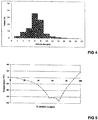
- Figure 4 illustrates the granulometry of an aqueous polyamide-imide dispersion obtained by said process.
- Functional pigment fillers may be added, preferably during milling or as a subsequent addition.
- the functional pigment fillers may also be added during milling or post addition.
- the proportion of polyamide-imide in the final dispersion is preferably in the range 5% to 20%. If the concentration is greater than 20% by weight, the fluidity is reduced, which renders application difficult; if the concentration is less than 5% by weight, it becomes more complicated to form a film of sufficient thickness.
- the proportion of co-solvent with respect to the water in the dispersion is preferably in the range 40% to 80% in order to guarantee good stability during cold storage.
- Figure 5 illustrates the freezing point for a water-dimethylsulphoxide mixture as a function of the dimethylsulphoxide fraction.
- the aqueous dispersion may also comprise a modified polyether dimethylpolysiloxane type spreading agent in order to reduce the surface tension and to improve film formation.
- the aqueous dispersion may comprise an anti-foaming agent such as an emulsion of hydrophobic components containing silicone and paraffinic mineral oils in order to facilitate film formation, particularly for high concentrations by volume of pigments.
- an anti-foaming agent such as an emulsion of hydrophobic components containing silicone and paraffinic mineral oils in order to facilitate film formation, particularly for high concentrations by volume of pigments.
- the aqueous dispersion prepared thereby contains a minimum of 7% by weight of the polyamide-imide polymer formulation.
- the aqueous dispersion contains no concentrations of a carcinogenic, mutagenic or reprotoxic substance appearing on the CIRC (IARC), ACGIH, NTP and/or OSHA lists in a concentration of 0.1% or higher.
- the aqueous dispersion has a neutral pH in the range 7 to 7.5, a dynamic viscosity in the range 0.1 to 1 Pa.s at 20°C depending on the proportion of polymer and a stability on storage of at least two weeks at a temperature of -5°C or 40°C.
- polyamide-imide film may be obtained by pneumatic spraying or cold electrostatic spraying.
- the aqueous dispersion is sufficiently thixotropic to allow it to be applied to a vertical surface.
- the solvents are evaporated off during a drying phase at 80°C.
- the dry film is formed after a curing phase at temperatures in the range 230°C to 325°C depending on the polymer, preferably at a temperature which is at least 10°C higher than the glass transition temperature of said polymer. Cooling may be carried out at ambient temperature.
- the DMSO co-solvent which is moderately volatile and thermally stable at 150°C, is evaporated off completely during the drying step, principally between 40°C and 80°C by elution with water. No decomposition product apart from CO 2 , analysed by ATG-IRTF, is detected during the curing step between 230°C and 325°C.
- the volatile organic compounds given off during the drying phase principally DMSO and dimethyl sulphide (DMS), is readily recycled by re-condensation.
- Functional additives or pigment fillers may be added to the aqueous dispersion, preferably during milling in order, inter alia, to guarantee the lubrication and wear resistance properties.
Landscapes
- Chemical & Material Sciences (AREA)
- Organic Chemistry (AREA)
- Chemical Kinetics & Catalysis (AREA)
- Health & Medical Sciences (AREA)
- Medicinal Chemistry (AREA)
- Polymers & Plastics (AREA)
- Life Sciences & Earth Sciences (AREA)
- Engineering & Computer Science (AREA)
- Materials Engineering (AREA)
- Wood Science & Technology (AREA)
- Dispersion Chemistry (AREA)
- Plant Pathology (AREA)
- Compositions Of Macromolecular Compounds (AREA)
- Paints Or Removers (AREA)
- Processes Of Treating Macromolecular Substances (AREA)
Description
- The present invention relates to a process for the production of a dry film of polyamide-imide from a stable, ready-to-use aqueous dispersion which is free of carcinogenic, mutagenic or reprotoxic substances, said process comprising either a step for dispersion by means of a specific milling process preceded by a step for dissolution and precipitation.
- In order to overcome difficulties in using them, novel polyimides have been manufactured from the beginning of the 1970s. Such thermoplastic polyimides carry chemical groups which can render them fusible and soluble in solvents without significantly altering their properties. The principal thermoplastic polyimides are polyether-imides and polyamide-imides.
- Polyamide-imides, which are high performance amorphous thermoplastic polymers, are widely used as impregnation resins and protective anti-corrosion varnishes for applications requiring good thermal behaviour or as binders for decorative, non-stick and self-lubricating paints.
- Its principal qualities consist of very good film-forming properties, good surface hardness, good abrasion resistance, excellent adhesion to any metallic support, good resistance to solvents, fuels, acids, exceptional electrical rigidity and remarkable flexibility of the film above 220°C.
- One of the main applications concerns glide coatings. In fact, the polyamide-imide polymer has superior mechanical properties as well as excellent chemical resistance. A Rockwell M hardness in the range 110 to 125, a resistance at break and compressive strength in the range 110 to 220 MPa mean that it can cope with the pressure and shear type loads occurring in a metal-metal contact.
- Since a polyamide-imide polymer is practically insoluble, application in the form of a coating necessitates a vital step of dissolution in an appropriate dipolar aprotic solvent. For applications as a protective layer of a fuser element, Xerox Corporation proposes, for example, dissolving an Amoco® AI-10 polyamide-imide in a mixture of acetone and dipolar aprotic solvent with a high boiling point, namely N-methyl-2-pyrrolidone (NMP) (
EP 1 291 734 - Such dissolutions of a polyamide-imide in N-methyl-2-pyrrolidone are also disclosed in
WO 2009/014009 .
Even to provide fine particles of polyamide-imide resin,EP 2 502 952 - In addition, in order to facilitate the application of polyamide-imides and to limit the use of organic solvents with a high boiling point in non-negligible quantities, or solvents considered to be highly volatile oxygen compounds (tetrahydrofuran, THF), the skilled person will strive to find versions of functionalized polymers which are soluble in water or aqueous dispersions for a large variety of applications. The use of polyamide acid salts is thus at the origin of inventions in that field.
- One of the very first patents mentioning taking polyamide acid salts into aqueous dispersion is patent
US 4 087 394 filed by E I Du Pont de Nemours and Co. That patent pertains to the preparation of coatings with lubricant, unmoulding, chemical resistance, high temperature resistance and electrically insulating properties from an aqueous dispersion containing a fluoropolymer as the major ingredient and a polyimide precursor in solution which is capable of forming a film below the melting point of the fluoropolymer (PTFE). The solution of polyamide acid salt, polyimide precursor, is constituted by a carboxylic polyamide acid with a water-soluble tertiary amine (triethylamine and/or diethylethanolamine). However, a coalescing agent, exclusively N-methylpyrrolidone, is systematically added to facilitate film formation. - Patent
US 4 259 221 from General Electric, based on earlier work, proposes applying a single polyamide-imide coating which is soluble in water or, preferably, in a water/organic solvent mixture in order to reduce costs arising from organic solvents, such as their environmental impact. Dispersing the polymer is facilitated by forming a salt with a tertiary amine (dimethylethanolamine). The powdered PAI polymer (Amoco® AI-10) is a polyamide-imide pre-polymer obtained by synthesis in two reactions: a reaction between a trimellitic anhydride and an aromatic polyamine, resulting in a polyamide-imide pre-polymer, followed by reaction between the pre-polymer and a polyisocyanate. The organic solvent selected from a list of dipolar aprotic solvents, in particular comprising: cresol, phenol, xylene, NMP, DMF, DMAc, DMSO, is exclusively NMP. - In patent
US 2011 0081493 , T Matsushita (Hitachi Chemical Ltd) typically reused the same process for obtaining a polyamide-imide resin in solution to applying a layer which is not adhesive as regards ink in a printing system. However, the whole range of soluble polyamide-imides marketed under the trade name HPC by Hitachi Chemical Ltd, in particular the HPC-1000 version given as an example in said patent, exclusively contains organic solvents such as γ-butyrolactone, NMP, NEP or, as is preferred, NMP/water mixtures. In another patent,US 5 037 862 , Hitachi Chemical Ltd also form a paste from at least 40% of an aromatic polyamide-imide resin in a solvent for serigraphy applications. The solvents could be selected from the following substances: lactones, aliphatic ketones, ethers, phenols, DMSO and sulpholane. However, the process consists of dispersing fine particles of aromatic polyamide-imide resin (40 µm) in a solution of polyamide-imide resin, preferably dissolved in an ether such as THF, triethylene glycol dimethyl ether, without providing details as to whether the paste obtained can be dispersed in water. - AkzoNobel proposes using the same type of polyamide-imide in aqueous dispersion in an application concerning a paint for aluminium cooking utensils. The
corresponding EP 0 724 915 concerns the application of an aqueous dispersion of PTFE containing a polyamide-imide binder. The proportion of NMP in the final aqueous polyamide-imide dispersion is 11% by weight. - The same approach is claimed by DuPont de Nemours in patent
US 5 789 083 . - Patent
US 6 479 581 from Solvay Advanced Polymers illuminates the preferential molecular structure of a soluble polyamide-imide pre-polymer for generating a non-tacky, adhesive film on a wide variety of ferrous and non-ferrous substrates including steel, aluminium and copper. A solution of polyamide-amic acid obtained by synthesis in an aliphatic tertiary amine (triethylamine) would considerably favour dispersion in water. The invention stipulates that the quantity of residual organic solvent in the pre-polymer is in the range 0.1% to 5% by weight. In reality, the moist Torlon® AI-30 powder corresponding to the soluble pre-polymer obtained by synthesis contains at least 2% by weight of residual NMP solvent. - In response to the above technique, which consists of functionalizing the polymer, in patent
US 5 468 798 , Whitford Corp proposed dissolving a polyamide-imide resin in a suitable polar aprotic solvent such as NMP then milling the resin precipitated in water by means of a ball mill. Starting from this stable aqueous dispersion of PAI resin particles in a water/NMP mixture, Whitford proposed producing a dry adhesion-promoting layer of between 20 and 30 µm, rendered sufficiently rough and adhesive by means of filamentary nickel. The scratch resistance and abrasion resistance of a PAI polymer means that the traditional "tefloning" in cooking utensils, electrical appliances or printing machines can readily be replaced. - However, even though a number of technological advances claim the possibility of preparing an aqueous dispersion or a polyamide-imide resin which is soluble in water, none of them is completely free of CMR category substances and there is currently no ready-to-use commercially available dispersion of this polymer on the market. In other words, this type of alternative simply results in a drastic reduction in the volatile organic substances released. For this reason, all of the aqueous solutions currently on the market for application in the form of a coating (Altana, Fujifilm Hunt Chemicals, Okitsumo, Solvay) in fact contain CMR category substances, sometimes in relatively large quantities.
- In view of the regulations regarding the working environment (Directive 2004/37/EC from the European Parliament and Council dated 29th April 2004 regarding the protection of workers against risks linked to exposure to carcinogenic or mutagenic agents in the workplace) and the classification of evaporated substances (Commission Directive 2009/2/EC dated 15th January 2009, amending, for the purposes of its adaptation to technical progress, for the 31st time, Council Directive 67/548/EEC on the approximation of dispositions relating to the classification, packaging and labelling of dangerous substances; (EC) Rule no 1272/2008 European Parliament and Council dated 16th December 2008 relating to the classification, labelling and packaging of substances and mixtures), the risk to the user is particularly high.
- Polar solvents (toluene, xylene), in particular polar aprotic solvents containing nitrogen, such as NMP, N,N-dimethylacetamide (DMAc), N,N-dimethylformamide (DMF), hexamethylphosphoramide (HMPA), etc, employed when forming a polyamide-imide film are substances which are classified as carcinogenic, mutagenic or reprotoxic (CMR) which are subject to prohibition or restricted use in many applications.
- The limiting concentration thresholds for the most sensitive carcinogenic and mutagenic substances, classed as 1A (can cause cancer), 1B (may induce a genetic anomaly), are 0.1% or less in mixtures and 0.3% or less for reprotoxic substances. Other CMR substances of
class 2, deemed to be of concern for fertility and human development, have to be in concentrations of 1% or less. - The classification of the polar aprotic solvents used and their known toxicity is given in the table below.
Substance name CMR classification N,N-dimethylacetamide Reprotoxic cat. 1B N,N-dimethylformamide Reprotoxic cat. 1B Hexamethylphosphoramide Carcinogenic and mutagenic cat. 1B N -methylpyrrolidone Reprotoxic cat. 1B Toluene Reprotoxic cat. 2 - The new classification for CMR substances in
classes 1A, 1B and 2 will be applicable to mixtures from June 2015, and so it would be appropriate to provide a novel alternative in order to prevent the risk of chemical exposure to CMR agents in application of the French Labour Code (article R4411-73 and articles R231-56 to R231-56-12). - Starting from this point, the present invention proposes preparing an aqueous dispersion of an aromatic polyamide-imide polymer containing no CMR substances in order to generate a dry coating of polyamide-imide that is easy to apply, adherent to a wide variety of substrates, particularly to ferrous or non-ferrous metals, and that can be protective, lubricating and abrasion-resistant.
- In particular, the present invention concerns a process for preparing a stable aqueous polyamide-imide dispersion, characterized in that it comprises at least the following steps:
- selecting a polyamide-imide powder;
- producing a dispersion with at least:
- a step in which the polyamide-imide powder is dissolved in a polar aprotic solvent with a boiling point of more than 180°C at 101.3 kPa (760 mm Hg) in order to obtain a polyamide-imide solution, said polar aprotic solvent being selected from the group constituted by dimethylsulphoxide and γ-butyrolactone;
- a step in which the polymer solution is precipitated in an aqueous mixture at ambient temperature containing distilled water and at least one non-ionic surfactant selected from the group constituted by polyoxyethylenated acetylenic diols. the aqueous mixture being free of polyoxyethylenated alkylphenyl ethers;
-
- a step in which the precipitated solution is dispersed and stabilized by milling the polyamide-imide particles.
- Optional characteristics, which maybe complementary or substitutional, are defined below.
- The proportion of polyamide-imide may be 35% by weight or less.
- The step for dissolving the polyamide-imide powder may be carried out at a temperature of more than 50°C, preferably more than 80°C.
- The step for milling the polyamide-imide particles may be carried out by vertical or horizontal bead milling, the milling yield being in the
range 40% to 95%, preferably more than 90%. - The size of the polyamide-imide polymer particles in dispersion may be less than 70 µm, preferably less than 20 µm and primarily less than 10 µm.
- The aqueous polyamide-imide dispersion may comprise a thixotropic agent which is thermally stable at temperatures of 250°C or more selected from the group constituted by organically modified sheet silicates of the laponite, saponite, bentonite or smectite type with a pH in 2% by weight suspension in the range 9 to 11.
- The aqueous polyamide-imide dispersion may comprise in the range 0.05% to 0.4% by weight of a bactericidal and/or fungicidal agent for protection during storage and for protection of the film, selected from the group constituted by iodopropynyl-butyl-carbamate, benzisothiazolinone, chloromethyl-isothiazolinone and methylisothiazolinone.
- The aqueous polyamide-imide dispersion may comprise a spreading agent of the polyether modified dimethylpolysiloxane type to reduce the surface tension.
- The aqueous polyamide-imide dispersion may comprise an anti-foaming agent which may be an emulsion of hydrophobic components containing silicone and/or paraffinic mineral oils.
- The polyamide-imide (PAI) powder may be selected from aromatic polyamide-imide powders.
- The selected aromatic polyamide-imide may be obtained from a reaction between a trimellitic acid anhydride chloride and an aromatic diamine selected from compounds other than 4,4'-methylenedianiline.
- The selected polyamide-imide may preferably be selected from the group formed by aromatic polyamide-imide polymers with a molecular mass in the range 10000 to 30000 g/mole and a glass transition temperature in the range 220°C to 285°C.
- The maximum particle size in the polyamide-imide powder may be less than 150 µm, 95% of the particles having a size of less than 75 µm.
- The mean volumetric granulometry of the polyamide-imide particles may be in the
range 30 to 40 µm. - The polar aprotic solvent is selected from the group constituted by dimethylsulphoxide, and γ-butyrolactone.
- The polar aprotic solvent may be dimethylsulphoxide.
- The present invention also pertains to a process for producing a dry polyamide-imide film on a substrate, characterized in that it comprises:
- preparing a stable aqueous polyamide-imide dispersion in accordance with the process described above;
- applying said aqueous dispersion to said substrate by spraying;
- curing said aqueous dispersion applied to the substrate at temperatures in the range 230°C to 325°C.
- Optionally, after curing, the substrate coated thereby may be cooled at ambient temperature.
- Some characteristics and advantages of the invention are set out in more detail in the description below, made with reference to the accompanying drawings.
-
Figure 1 represents a polycarboxylic diimide monomer and an aromatic diamine co-monomer; -
Figure 2 represents an imide unit on the left and an amic acid on the right; -
Figure 3 represents a 1,3-polyamide-imide configuration on the left and a 1,4-polyamide-imide configuration on the right; -
Figure 4 represents the granulometry of an aqueous dispersion of polyamide-imide obtained by a process in accordance with the invention; -
Figure 5 represents the freezing point for a water-dimethylsulphoxide mixture as a function of the fraction of dimethylsulphoxide. - The process consists of preparing a ready-to-use aqueous dispersion of a polyamide-imide polymer.
- Amorphous polyamide-imide polymers (PAIs) have mechanical bending, impact resistance and resistance at break properties which are superior to other heterocyclic polymers, namely polyimides (PI), polyetherimides (PEI), phenylene polysulphide (PPS) or polyether etherketone (PEEK). It can also be used to improve extrusion or moulding operations (as well as overmoulding), due in part to their having glass transition temperatures which are lower than the corresponding polyimides (Slade H Gardner "An investigation of the structure-property relationships for high performance thermoplastic matrix, carbon fibre composites with a tailored polyimide interphase", 1998).
- The polyamide-imide polymer is preferably selected from aromatic polyamide-imides. Aromatic polyamide-imides are of particular interest in producing high temperature-resistant films and fibres.
- The aromatic polyamide-imide polymer may be synthesized by a polycondensation reaction between a polycarboxylic diimide monomer and a diamine or diisocyanate co-monomer in a polar solvent.
Figure 1 represents an example with a dibasic carboxylic acid imide on the left and a diamine on the right. - Synthesis of the polymer may also involve polycondensation of a diamine and a trimellitic acid anhydride chloride in a bipolar aprotic solvent. The reaction between the diamine and an anhydride produces an intermediate product, polyamic acid, which has to be cyclized. Cyclization or imidization of this precursor polymer by a chemical or thermal pathway gives rise to the final polyamide-imide. As can be seen in
Figure 2 , the precursor obtained may have alternating imide and amic acid units, and preferably an imide unit proportion of more than 90%.Figure 2 shows an imide unit on the left and an amic acid unit on the right in more detail. - As can be seen in
Figure 3 , depending on the diamine selected, the polymer may have a 1,3-polyamide-imide configuration, a 1,4-polyamide-imide configuration or a mixture.Figure 3 shows a 1,3-polyamide-imide configuration on the left and a 1,4-polyamide-imide configuration on the right in more detail. - For the purposes of the invention, the selected aromatic polyamide-imide polymer is preferably obtained by a pathway which consists of reacting a trimellitic acid anhydride chloride and an aromatic diamine selected from compounds other than 4,4'-methylenedianiline, which is classified as a CMR substance.
- The selected polyamide-imide polymer is preferably selected from the group formed by aromatic polyamide-imide polymers with a molecular mass in the range 10000 to 30000 g/mole, a glass transition temperature in the range 220°C to 285°C, a molar fraction of polyamide-amic acid of 0.1 or less or an acid index of 20 mgKOH/g or less.
- The thermal resistance of the polyamide-imide polymer increases with its molecular mass and its degree of imidization, and so an aromatic polyamide-imide polymer with a high molecular mass will advantageously be selected in order to increase the performance of the film (Robertson G, Polymers 2004, vol 45, pp 1111-1117).
- In an advantageous embodiment, the Applicant proposes preparing an aqueous dispersion from a polyamide-imide powder with a maximum particle size of less than 150 µm wherein 95% of the particles have a size of less than 75 µm. Preferably, the mean volumetric granulometry is in the
range 30 to 40 µm. - In a first step, the polyamide-imide polymer is dissolved in a polar aprotic solvent with a boiling point of more than 180°C at 101.3 kPa (760 mm Hg) for which the Hansen total solubility parameters, expressed as MPa1/2, are close to those of the polyamide-imide polymer. The polymer solubility parameters, extracted from the European Polymer Journal, , are approximately 3 MPa1/2
- In order to ensure good stability on dispersion, the difference between the solubility parameters, δsolvent and δpolymer, should preferably be less than a value of 4 where there are strong specific solvent-polymer interactions, as shown by PAI dispersions in a water/NMP mixture, while the respective solubilities of water and NMP are respectively 47.9 MPa1/2 and 22.9 MPa1/2.
- The polar aprotic solvents are selected from the group constituted by the following compounds: dimethylsulphoxide, and γ-butyrolactone, preferably dimethylsulphoxide (DMSO) which has a zero-danger classification. In fact, DMSO is known to be one of the least toxic compounds. Its uses and applications form a compound that is in common use in the pharmacy field (Parcell S, "Sulfur in human nutrition and applications in medicine", Altern Med Rev 2002, vol 7, pp 22-44). DMSO has approximately 40 pharmacological properties which may be beneficial in the prevention, relief or regression of many diseases (Morton W, "DMSO, Nature's Healer", New York; A very 1993).
- Other solvents such as acetone, ethyl acetate, cyclohexanone, 1,3-dioxolane, methylethyl ketone, tetrahydrofuran or triethylamine, which are capable of complying with the solubility requirements, are clearly prohibited in view of their being classified as highly flammable substances.
- The polyamide-imide polymer is preferably dissolved in DMSO at a temperature of more than 50°C with mechanical agitation, preferably at more than 80°C, in order to facilitate dissolution and to avoid recrystallization phenomena at ambient storage temperature.
- The proportion of polymer dissolved in the solvent is 35% by weight or less, advantageously 30% or less in order to provide a kinematic viscosity which is acceptable in view of the second step.
- In a second step, the solution of polymer, maintained at a minimum temperature of 50°C, is slowly precipitated in an aqueous mixture at ambient temperature. Addition is preferably carried out drop by drop with vigorous agitation and high shear (minimum 7000 rpm) using an IKA® or Ultra Turrax® disperser-homogenizer to obtain a maximum grain size of 1 mm. The aqueous mixture contains distilled water and at least one non-ionic surfactant selected from the group constituted by polyoxyethylenated acetylenic diols. The non-ionic surfactant preferably has a hydrophilic-lipophilic balance of 13 or less, preferably 8 or less, in order to reduce the surface tension at equilibrium and the dynamic surface tension and to ensure that the polymer-solvent system is wetted in the water. The aqueous mixture is free of polyoxyethylenated alkylphenyl ethers.
- The aqueous mixture may also comprise a thixotropic agent which is thermally stable at temperatures of 250°C or higher selected from the group constituted by organically modified sheet silicates of the laponite, saponite, bentonite or smectite type with a pH in suspension at 2% by weight in the range 9 to 11.
- The aqueous mixture may also comprise in the range 0.05% to 0.4% by weight of a bactericidal/fungicidal agent or a synergy to provide protection during storage and protection of the film selected from the group constituted by the following biocidally active substances: iodopropynyl-butyl-carbamate, benzisothiazolinone, chloromethyl-isothiazolinone and methylisothiazolinone.
- The present invention comprises a third step with the aim of reducing the size of the suspended particles by fine milling using a colloidal bead or basket mill. The colloidal bead or basket mill is preferably a modular vertical system with a recirculation system sold, for example, by Brant Industrie under the trade name DISPERMAT®. The diameter of the ceramic or metallic beads is 1 mm or less, preferably 0.4 mm or less. Dispersion by milling is carried out at a minimum rate of 600 rpm and at constant power in order to ensure mechanical de-agglomeration of the associated particles (agglomerates and aggregates) into finer particles and stabilization of the finer particles produced during dispersion to prevent them from re-agglomerating (or "flocculating"). After a purge in compressed air and washing with distilled water, the milling yield is in the
range 40% to 95%, preferably more than 90%. - Alternatively, fine milling may be carried out by recirculating the dispersion in a horizontal colloidal bead mill with a cooled, pressurized milling chamber (for example an HMP type SUSSMEYER® mill).
- The particle size may be measured in the liquid phase using a CILAS 1064 laser granulometer. The size of the polyamide-imide polymer particles in dispersion is preferably less than 20 µm and primarily less than 10 µm.
Figure 4 illustrates the granulometry of an aqueous polyamide-imide dispersion obtained by said process. - Functional pigment fillers may be added, preferably during milling or as a subsequent addition.
- The functional pigment fillers may also be added during milling or post addition.
- The proportion of polyamide-imide in the final dispersion is preferably in the range 5% to 20%. If the concentration is greater than 20% by weight, the fluidity is reduced, which renders application difficult; if the concentration is less than 5% by weight, it becomes more complicated to form a film of sufficient thickness.
- The proportion of co-solvent with respect to the water in the dispersion is preferably in the
range 40% to 80% in order to guarantee good stability during cold storage.Figure 5 illustrates the freezing point for a water-dimethylsulphoxide mixture as a function of the dimethylsulphoxide fraction. - The aqueous dispersion may also comprise a modified polyether dimethylpolysiloxane type spreading agent in order to reduce the surface tension and to improve film formation.
- Finally, the aqueous dispersion may comprise an anti-foaming agent such as an emulsion of hydrophobic components containing silicone and paraffinic mineral oils in order to facilitate film formation, particularly for high concentrations by volume of pigments.
- In conclusion, the aqueous dispersion prepared thereby contains a minimum of 7% by weight of the polyamide-imide polymer formulation.
- The aqueous dispersion contains no concentrations of a carcinogenic, mutagenic or reprotoxic substance appearing on the CIRC (IARC), ACGIH, NTP and/or OSHA lists in a concentration of 0.1% or higher.
- The aqueous dispersion has a neutral pH in the range 7 to 7.5, a dynamic viscosity in the range 0.1 to 1 Pa.s at 20°C depending on the proportion of polymer and a stability on storage of at least two weeks at a temperature of -5°C or 40°C.
- polyamide-imide film may be obtained by pneumatic spraying or cold electrostatic spraying. The aqueous dispersion is sufficiently thixotropic to allow it to be applied to a vertical surface. The solvents are evaporated off during a drying phase at 80°C. The dry film is formed after a curing phase at temperatures in the range 230°C to 325°C depending on the polymer, preferably at a temperature which is at least 10°C higher than the glass transition temperature of said polymer. Cooling may be carried out at ambient temperature.
- The DMSO co-solvent, which is moderately volatile and thermally stable at 150°C, is evaporated off completely during the drying step, principally between 40°C and 80°C by elution with water. No decomposition product apart from CO2, analysed by ATG-IRTF, is detected during the curing step between 230°C and 325°C. The volatile organic compounds given off during the drying phase, principally DMSO and dimethyl sulphide (DMS), is readily recycled by re-condensation.
- Functional additives or pigment fillers may be added to the aqueous dispersion, preferably during milling in order, inter alia, to guarantee the lubrication and wear resistance properties.
Claims (12)
- A process for preparing a stable aqueous polyamide-imide dispersion, characterized in that it comprises at least the following steps:• selecting a polyamide-imide powder;• producing a dispersion with at least:- a step in which the polyamide-imide powder is dissolved in a polar aprotic solvent with a boiling point of more than 180°C at 101.3 kPa (760 mm Hg) in order to obtain a polyamide-imide solution, said polar aprotic solvent being selected from the group constituted by dimethylsulphoxide and γ-butyrolactone;- a step in which the polymer solution is precipitated in a aqueous mixture at ambient temperature containing distilled water and at least one non-ionic surfactant selected from the group constituted by polyoxyethylenated acetylenic diols, the aqueous mixture being free of polyoxyethylenated alkylphenyl ethers;- a step in which the precipitated solution is dispersed and stabilized by milling the polyamide-imide particles.
- A process for preparing a stable aqueous polyamide-imide dispersion according to claim 1, characterized in that the proportion of polyamide-imide is 35% by weight or less.
- A process for preparing a stable aqueous polyamide-imide dispersion according to claim 1, characterized in that the step for dissolving the polyamide-imide powder is carried out at a temperature of more than 50°C.
- A process for preparing a stable aqueous polyamide-imide dispersion according to claim 1, characterized in that the step for milling the polyamide-imide particles in claim 1 is carried out by vertical or horizontal bead milling, the milling yield being in the range 40% to 95%.
- A process for preparing a stable aqueous polyamide-imide dispersion according to any one of the preceding claims, characterized in that the size of the polyamide-imide polymer particles in dispersion is less than 70 µm.
- A process for preparing a stable aqueous polyamide-imide dispersion according to any one of the preceding claims, characterized in that the aqueous polyamide-imide dispersion comprises a thixotropic agent which is thermally stable at temperatures of 250°C or more selected from the group constituted by organically modified sheet silicates of the laponite, saponite, bentonite or smectite type with a pH in 2% by weight suspension in the range 9 to 11.
- A process for preparing a stable aqueous polyamide-imide dispersion according to any one of the preceding claims, characterized in that the aqueous polyamide-imide dispersion comprises in the range 0.05% to 0.4% by weight of a bactericidal and/or fungicidal agent, selected from the group constituted by iodopropynyl-butyl-carbamate, benzisothiazolinone, chloromethyl-isothiazolinone and methylisothiazolinone.
- A process for preparing a stable aqueous polyamide-imide dispersion according to any one of the preceding claims, characterized in that the aqueous polyamide-imide dispersion comprises a spreading agent of the polyether modified dimethylpolysiloxane type to reduce the surface tension.
- A process for preparing a stable aqueous polyamide-imide dispersion according to any one of the preceding claims, characterized in that the aqueous polyamide-imide dispersion comprises an anti-foaming agent which may be an emulsion of hydrophobic components containing silicone and/or paraffinic mineral oils.
- A process for preparing a stable aqueous polyamide-imide dispersion according to any one of the preceding claims, characterized in that the polar aprotic solvent is dimethylsulphoxide.
- A process for producing a dry polyamide-imide film on a substrate, characterized in that it comprises:• preparing a stable aqueous polyamide-imide dispersion according to any one of claims 1 to 10;• applying said aqueous dispersion to said substrate by spraying;• curing said aqueous dispersion applied to the substrate at temperatures in the range 230°C to 325°C.
- A process for producing a dry polyamide-imide film on a substrate according to claim 11, characterized in that after curing, the substrate coated thereby is cooled at ambient temperature.
Applications Claiming Priority (2)
| Application Number | Priority Date | Filing Date | Title |
|---|---|---|---|
| FR1202426A FR2995312B1 (en) | 2012-09-12 | 2012-09-12 | PROCESS FOR THE PREPARATION OF A STABLE AQUEOUS DISPERSION OF POLYAMIDE-IMIDE FREE OF CARCINOGENIC SUBSTANCE, MUTAGE OR REPROTOXIC AND APPLICATION TO COATINGS |
| PCT/EP2013/068798 WO2014044583A1 (en) | 2012-09-12 | 2013-09-11 | Process for preparing a stable aqueous dispersion of polyamide-imide which is free of carcinogenic, mutagenic or reprotoxic substances, and application to coatings |
Publications (2)
| Publication Number | Publication Date |
|---|---|
| EP2895529A1 EP2895529A1 (en) | 2015-07-22 |
| EP2895529B1 true EP2895529B1 (en) | 2018-04-25 |
Family
ID=47553132
Family Applications (1)
| Application Number | Title | Priority Date | Filing Date |
|---|---|---|---|
| EP13762108.2A Not-in-force EP2895529B1 (en) | 2012-09-12 | 2013-09-11 | Process for preparing a stable aqueous dispersion of polyamide-imide which is free of carcinogenic, mutagenic or reprotoxic substances, and application to coatings |
Country Status (13)
| Country | Link |
|---|---|
| US (1) | US10017665B2 (en) |
| EP (1) | EP2895529B1 (en) |
| JP (1) | JP2015531813A (en) |
| CN (1) | CN104704026A (en) |
| AR (1) | AR092524A1 (en) |
| AU (1) | AU2013320432A1 (en) |
| BR (1) | BR112015005425A2 (en) |
| CA (1) | CA2882096A1 (en) |
| EA (1) | EA030351B1 (en) |
| FR (1) | FR2995312B1 (en) |
| IN (1) | IN2015DN01529A (en) |
| MX (1) | MX2015003162A (en) |
| WO (1) | WO2014044583A1 (en) |
Families Citing this family (7)
| Publication number | Priority date | Publication date | Assignee | Title |
|---|---|---|---|---|
| JP5295219B2 (en) | 2007-04-13 | 2013-09-18 | ヴァルレック・マンネスマン・オイル・アンド・ガス・フランス | Tubular threaded element with dry protective coating |
| JP5994955B1 (en) | 2015-05-25 | 2016-09-21 | 三菱マテリアル株式会社 | Electrodeposition solution for water-dispersed insulation film formation |
| CN107922626A (en) * | 2015-06-30 | 2018-04-17 | 沙特基础工业全球技术有限公司 | The method for preparing polyimides micronized particle, the particle formed by it and the product made by it |
| ITUB20156295A1 (en) | 2015-12-03 | 2017-06-03 | Versalis Spa | WATER EMULSIONS CONTAINING ETHYLENE-VINYLACETATE COPOLYMERS, THEIR PREPARATION PROCEDURE AND THEIR USE AS ANTI-GELIFICANT ADDITIVES TO GROWING OIL. |
| JP6794718B2 (en) * | 2015-12-22 | 2020-12-02 | 三菱マテリアル株式会社 | Electrodeposition liquid for forming water-dispersed insulating film |
| JP7596722B2 (en) * | 2020-11-04 | 2024-12-10 | artience株式会社 | Thermoelectric conversion material composition |
| CN112646484B (en) * | 2020-12-22 | 2022-05-06 | 苏州太湖电工新材料股份有限公司 | Polyamide-imide varnish and preparation method thereof |
Citations (2)
| Publication number | Priority date | Publication date | Assignee | Title |
|---|---|---|---|---|
| JP2009067880A (en) * | 2007-09-13 | 2009-04-02 | Toray Ind Inc | Method for producing polyamideimide fine particles |
| EP2502952A1 (en) * | 2009-11-19 | 2012-09-26 | Toray Industries, Inc. | Process for production of polyamideimide resin microparticles, and polyamideimide resin microparticles |
Family Cites Families (20)
| Publication number | Priority date | Publication date | Assignee | Title |
|---|---|---|---|---|
| IT1054595B (en) | 1975-02-04 | 1981-11-30 | Du Pont | WATER DISPERSIONS OF PERFLUOROOLEFINIC POLYMERS CONTAINING FILMOGENIC MATERIALS |
| US4259221A (en) | 1976-12-20 | 1981-03-31 | General Electric Company | Water-soluble polyamideimides |
| US5037862A (en) | 1987-06-11 | 1991-08-06 | Hitachi Chemical Company, Ltd. | Polyamide-imide resin pastes |
| US5789083A (en) | 1992-12-23 | 1998-08-04 | E. I. Du Pont De Nemours And Company | Aqueous fluoropolymer primer for smooth substrates |
| JPH07179077A (en) * | 1993-12-24 | 1995-07-18 | Toyobo Co Ltd | Heat-resistant thermal transfer ribbon and production thereof |
| US5468798A (en) | 1994-02-18 | 1995-11-21 | Whitford Corporation | Basecoat for a coating system |
| IT1273477B (en) | 1995-01-31 | 1997-07-08 | Lambda Srl | WATER-BASED PAINT SUITABLE TO REALIZE PTFE-BASED NON-STICK COATINGS ON PRINTED PRODUCTS OR ALUMINUM SHEET |
| US6291054B1 (en) | 1999-02-19 | 2001-09-18 | E. I. Du Pont De Nemours And Company | Abrasion resistant coatings |
| US6479581B1 (en) | 1999-03-12 | 2002-11-12 | Solvay Advanced Polymers, Llc | Aqueous-based polyamide-amic acid compositions |
| US6733943B2 (en) | 2001-09-07 | 2004-05-11 | Xerox Corporation | Pressure belt having polyimide outer layer |
| JP2004204073A (en) * | 2002-12-25 | 2004-07-22 | Daikin Ind Ltd | Coating composition, coating film and coated article |
| KR100807451B1 (en) * | 2004-04-20 | 2008-02-25 | 다이킨 고교 가부시키가이샤 | Water- and Oil-Repellent Composition and Process for Production Thereof |
| WO2006085596A1 (en) * | 2005-02-10 | 2006-08-17 | Kaneka Corporation | Process for producing spherical polymer powder and spherical powder comprising (meth)acrylic block copolymer |
| EP1971645A2 (en) | 2005-12-05 | 2008-09-24 | Solvay SA | Ptfe-based compositions |
| JP5191102B2 (en) * | 2006-04-28 | 2013-04-24 | 国立大学法人広島大学 | Method for producing high-performance nucleating agent |
| CA2667480A1 (en) | 2006-10-24 | 2008-05-02 | Akzo Nobel Coatings International B.V. | Non-stick coating composition |
| WO2009014009A1 (en) * | 2007-07-24 | 2009-01-29 | Daikin Industries, Ltd. | Coating composition |
| US8383715B2 (en) * | 2007-08-15 | 2013-02-26 | Tremco Incorporated | Primer for fluorocarbon polymer substrates |
| JP5083406B2 (en) | 2008-06-04 | 2012-11-28 | コニカミノルタIj株式会社 | Inkjet head manufacturing method |
| CN103140540B (en) * | 2010-09-28 | 2014-07-23 | 东丽株式会社 | Polymer microparticles and process for production thereof |
-
2012
- 2012-09-12 FR FR1202426A patent/FR2995312B1/en active Active
-
2013
- 2013-09-11 EA EA201590338A patent/EA030351B1/en not_active IP Right Cessation
- 2013-09-11 IN IN1529DEN2015 patent/IN2015DN01529A/en unknown
- 2013-09-11 EP EP13762108.2A patent/EP2895529B1/en not_active Not-in-force
- 2013-09-11 CN CN201380048460.5A patent/CN104704026A/en active Pending
- 2013-09-11 JP JP2015531545A patent/JP2015531813A/en active Pending
- 2013-09-11 WO PCT/EP2013/068798 patent/WO2014044583A1/en not_active Ceased
- 2013-09-11 BR BR112015005425A patent/BR112015005425A2/en not_active IP Right Cessation
- 2013-09-11 AR ARP130103242A patent/AR092524A1/en unknown
- 2013-09-11 CA CA2882096A patent/CA2882096A1/en not_active Abandoned
- 2013-09-11 MX MX2015003162A patent/MX2015003162A/en unknown
- 2013-09-11 US US14/427,543 patent/US10017665B2/en not_active Expired - Fee Related
- 2013-09-11 AU AU2013320432A patent/AU2013320432A1/en not_active Abandoned
Patent Citations (2)
| Publication number | Priority date | Publication date | Assignee | Title |
|---|---|---|---|---|
| JP2009067880A (en) * | 2007-09-13 | 2009-04-02 | Toray Ind Inc | Method for producing polyamideimide fine particles |
| EP2502952A1 (en) * | 2009-11-19 | 2012-09-26 | Toray Industries, Inc. | Process for production of polyamideimide resin microparticles, and polyamideimide resin microparticles |
Also Published As
| Publication number | Publication date |
|---|---|
| WO2014044583A1 (en) | 2014-03-27 |
| EP2895529A1 (en) | 2015-07-22 |
| EA201590338A1 (en) | 2015-05-29 |
| FR2995312B1 (en) | 2015-07-03 |
| EA030351B1 (en) | 2018-07-31 |
| US10017665B2 (en) | 2018-07-10 |
| MX2015003162A (en) | 2015-07-14 |
| AR092524A1 (en) | 2015-04-22 |
| FR2995312A1 (en) | 2014-03-14 |
| JP2015531813A (en) | 2015-11-05 |
| BR112015005425A2 (en) | 2017-07-04 |
| CA2882096A1 (en) | 2014-03-27 |
| AU2013320432A1 (en) | 2015-03-19 |
| CN104704026A (en) | 2015-06-10 |
| US20150247060A1 (en) | 2015-09-03 |
| WO2014044583A9 (en) | 2014-05-08 |
| IN2015DN01529A (en) | 2015-07-03 |
Similar Documents
| Publication | Publication Date | Title |
|---|---|---|
| US10017665B2 (en) | Process for preparing a stable aqueous dispersion of polyamide-imide which is free of carcinogenic, mutagenic or reprotoxic substances, and application to coatings | |
| KR100622883B1 (en) | Aqueous primer composition for coating fluororesin | |
| CN109563343A (en) | Resin combination uses its sheet material, laminated body, power semiconductor, plasma processing apparatus and method for making semiconductor | |
| US9187676B2 (en) | Production process of polyimide film laminate, and polyimide film laminate | |
| CN101139501B (en) | A kind of polyimide high temperature resistant aqueous dispersion paint and its preparation method and application | |
| JP6414325B2 (en) | Polyamideimide resin composition and paint | |
| CN103108923A (en) | Conductive coating composition and method for manufacturing a conductive layer using same | |
| Rout et al. | In-situ generation and application of nanocomposites on steel surface for anti-corrosion coating | |
| WO2014149237A1 (en) | Low toxicity solvent system for polyamideimide and polyamide amic acid resins and coating solutions thereof | |
| JP2021021013A (en) | Aqueous fluororesin coating composition | |
| TWI678398B (en) | Polyurethane resin modified with urethane | |
| CN104974661A (en) | Polyethersulfone superfine micropowder and application thereof, paint containing polyethersulfone superfine micropowder and preparation method thereof | |
| CN110770273B (en) | Powder coating compositions containing polymeric aromatic products of the aromatic isocyanate process | |
| CN105419421A (en) | Cooling coating of water-based carbon nanotube and preparation method of cooling coating | |
| CN103865378B (en) | A kind of formula of polyphenylsulphine coating and preparation method thereof and coating processes | |
| US11718751B2 (en) | Water-borne polymer composition | |
| OA17208A (en) | Process for preparing a stable aqueous dispersion of polyamide-imide which is free of carcinogenic, mutagenic or reprotoxic substances, and application to coatings. | |
| JP4516061B2 (en) | Polybenzimidazole coating composition | |
| O'Keefe et al. | Solution processed low‐k dielectric core‐shell nanoparticles for additive manufacturing of microwave devices | |
| Gürşen et al. | Preparation, characterization and dielectric properties of polycyanurate films cyclotrimerized in the presence of different catalysts | |
| CN104211952A (en) | Resin formulation, resin prepolymer, resin polymer and composite material containing the same | |
| CA3211061A1 (en) | Environmentally friendly waterbased engineering polymer compositions | |
| JP4318154B2 (en) | Antistatic agent, molded product thereof, and molding method | |
| Revathi et al. | Synthesis, solubility and thermal behavior of novel Diamino-diphenyl methane and caprolactam based different polyimide matrix for antibacterial applications | |
| JP2008280541A (en) | Antistatic resin composition, formed product thereof, and molding method |
Legal Events
| Date | Code | Title | Description |
|---|---|---|---|
| PUAI | Public reference made under article 153(3) epc to a published international application that has entered the european phase |
Free format text: ORIGINAL CODE: 0009012 |
|
| 17P | Request for examination filed |
Effective date: 20150319 |
|
| AK | Designated contracting states |
Kind code of ref document: A1 Designated state(s): AL AT BE BG CH CY CZ DE DK EE ES FI FR GB GR HR HU IE IS IT LI LT LU LV MC MK MT NL NO PL PT RO RS SE SI SK SM TR |
|
| AX | Request for extension of the european patent |
Extension state: BA ME |
|
| DAX | Request for extension of the european patent (deleted) | ||
| 17Q | First examination report despatched |
Effective date: 20160930 |
|
| GRAP | Despatch of communication of intention to grant a patent |
Free format text: ORIGINAL CODE: EPIDOSNIGR1 |
|
| RIC1 | Information provided on ipc code assigned before grant |
Ipc: C09D 5/14 20060101ALI20171107BHEP Ipc: C08K 5/06 20060101ALI20171107BHEP Ipc: C08G 73/14 20060101ALI20171107BHEP Ipc: C09D 179/08 20060101ALI20171107BHEP Ipc: B05D 1/02 20060101ALI20171107BHEP Ipc: C08J 3/07 20060101AFI20171107BHEP |
|
| INTG | Intention to grant announced |
Effective date: 20171130 |
|
| GRAS | Grant fee paid |
Free format text: ORIGINAL CODE: EPIDOSNIGR3 |
|
| GRAA | (expected) grant |
Free format text: ORIGINAL CODE: 0009210 |
|
| RAP1 | Party data changed (applicant data changed or rights of an application transferred) |
Owner name: VALLOUREC OIL AND GAS FRANCE Owner name: NIPPON STEEL & SUMITOMO METAL CORPORATION |
|
| AK | Designated contracting states |
Kind code of ref document: B1 Designated state(s): AL AT BE BG CH CY CZ DE DK EE ES FI FR GB GR HR HU IE IS IT LI LT LU LV MC MK MT NL NO PL PT RO RS SE SI SK SM TR |
|
| REG | Reference to a national code |
Ref country code: GB Ref legal event code: FG4D |
|
| REG | Reference to a national code |
Ref country code: CH Ref legal event code: EP |
|
| REG | Reference to a national code |
Ref country code: AT Ref legal event code: REF Ref document number: 992837 Country of ref document: AT Kind code of ref document: T Effective date: 20180515 |
|
| REG | Reference to a national code |
Ref country code: IE Ref legal event code: FG4D |
|
| REG | Reference to a national code |
Ref country code: DE Ref legal event code: R096 Ref document number: 602013036524 Country of ref document: DE |
|
| REG | Reference to a national code |
Ref country code: NL Ref legal event code: MP Effective date: 20180425 |
|
| REG | Reference to a national code |
Ref country code: LT Ref legal event code: MG4D |
|
| PG25 | Lapsed in a contracting state [announced via postgrant information from national office to epo] |
Ref country code: NL Free format text: LAPSE BECAUSE OF FAILURE TO SUBMIT A TRANSLATION OF THE DESCRIPTION OR TO PAY THE FEE WITHIN THE PRESCRIBED TIME-LIMIT Effective date: 20180425 |
|
| REG | Reference to a national code |
Ref country code: NO Ref legal event code: T2 Effective date: 20180425 |
|
| PG25 | Lapsed in a contracting state [announced via postgrant information from national office to epo] |
Ref country code: LT Free format text: LAPSE BECAUSE OF FAILURE TO SUBMIT A TRANSLATION OF THE DESCRIPTION OR TO PAY THE FEE WITHIN THE PRESCRIBED TIME-LIMIT Effective date: 20180425 Ref country code: FI Free format text: LAPSE BECAUSE OF FAILURE TO SUBMIT A TRANSLATION OF THE DESCRIPTION OR TO PAY THE FEE WITHIN THE PRESCRIBED TIME-LIMIT Effective date: 20180425 Ref country code: PL Free format text: LAPSE BECAUSE OF FAILURE TO SUBMIT A TRANSLATION OF THE DESCRIPTION OR TO PAY THE FEE WITHIN THE PRESCRIBED TIME-LIMIT Effective date: 20180425 Ref country code: BG Free format text: LAPSE BECAUSE OF FAILURE TO SUBMIT A TRANSLATION OF THE DESCRIPTION OR TO PAY THE FEE WITHIN THE PRESCRIBED TIME-LIMIT Effective date: 20180725 Ref country code: ES Free format text: LAPSE BECAUSE OF FAILURE TO SUBMIT A TRANSLATION OF THE DESCRIPTION OR TO PAY THE FEE WITHIN THE PRESCRIBED TIME-LIMIT Effective date: 20180425 Ref country code: SE Free format text: LAPSE BECAUSE OF FAILURE TO SUBMIT A TRANSLATION OF THE DESCRIPTION OR TO PAY THE FEE WITHIN THE PRESCRIBED TIME-LIMIT Effective date: 20180425 |
|
| PG25 | Lapsed in a contracting state [announced via postgrant information from national office to epo] |
Ref country code: HR Free format text: LAPSE BECAUSE OF FAILURE TO SUBMIT A TRANSLATION OF THE DESCRIPTION OR TO PAY THE FEE WITHIN THE PRESCRIBED TIME-LIMIT Effective date: 20180425 Ref country code: RS Free format text: LAPSE BECAUSE OF FAILURE TO SUBMIT A TRANSLATION OF THE DESCRIPTION OR TO PAY THE FEE WITHIN THE PRESCRIBED TIME-LIMIT Effective date: 20180425 Ref country code: LV Free format text: LAPSE BECAUSE OF FAILURE TO SUBMIT A TRANSLATION OF THE DESCRIPTION OR TO PAY THE FEE WITHIN THE PRESCRIBED TIME-LIMIT Effective date: 20180425 Ref country code: GR Free format text: LAPSE BECAUSE OF FAILURE TO SUBMIT A TRANSLATION OF THE DESCRIPTION OR TO PAY THE FEE WITHIN THE PRESCRIBED TIME-LIMIT Effective date: 20180726 |
|
| REG | Reference to a national code |
Ref country code: AT Ref legal event code: MK05 Ref document number: 992837 Country of ref document: AT Kind code of ref document: T Effective date: 20180425 |
|
| PG25 | Lapsed in a contracting state [announced via postgrant information from national office to epo] |
Ref country code: PT Free format text: LAPSE BECAUSE OF FAILURE TO SUBMIT A TRANSLATION OF THE DESCRIPTION OR TO PAY THE FEE WITHIN THE PRESCRIBED TIME-LIMIT Effective date: 20180827 |
|
| REG | Reference to a national code |
Ref country code: DE Ref legal event code: R097 Ref document number: 602013036524 Country of ref document: DE |
|
| PG25 | Lapsed in a contracting state [announced via postgrant information from national office to epo] |
Ref country code: AT Free format text: LAPSE BECAUSE OF FAILURE TO SUBMIT A TRANSLATION OF THE DESCRIPTION OR TO PAY THE FEE WITHIN THE PRESCRIBED TIME-LIMIT Effective date: 20180425 Ref country code: DK Free format text: LAPSE BECAUSE OF FAILURE TO SUBMIT A TRANSLATION OF THE DESCRIPTION OR TO PAY THE FEE WITHIN THE PRESCRIBED TIME-LIMIT Effective date: 20180425 Ref country code: SK Free format text: LAPSE BECAUSE OF FAILURE TO SUBMIT A TRANSLATION OF THE DESCRIPTION OR TO PAY THE FEE WITHIN THE PRESCRIBED TIME-LIMIT Effective date: 20180425 Ref country code: CZ Free format text: LAPSE BECAUSE OF FAILURE TO SUBMIT A TRANSLATION OF THE DESCRIPTION OR TO PAY THE FEE WITHIN THE PRESCRIBED TIME-LIMIT Effective date: 20180425 Ref country code: RO Free format text: LAPSE BECAUSE OF FAILURE TO SUBMIT A TRANSLATION OF THE DESCRIPTION OR TO PAY THE FEE WITHIN THE PRESCRIBED TIME-LIMIT Effective date: 20180425 Ref country code: EE Free format text: LAPSE BECAUSE OF FAILURE TO SUBMIT A TRANSLATION OF THE DESCRIPTION OR TO PAY THE FEE WITHIN THE PRESCRIBED TIME-LIMIT Effective date: 20180425 |
|
| PG25 | Lapsed in a contracting state [announced via postgrant information from national office to epo] |
Ref country code: IT Free format text: LAPSE BECAUSE OF FAILURE TO SUBMIT A TRANSLATION OF THE DESCRIPTION OR TO PAY THE FEE WITHIN THE PRESCRIBED TIME-LIMIT Effective date: 20180425 Ref country code: SM Free format text: LAPSE BECAUSE OF FAILURE TO SUBMIT A TRANSLATION OF THE DESCRIPTION OR TO PAY THE FEE WITHIN THE PRESCRIBED TIME-LIMIT Effective date: 20180425 |
|
| PLBE | No opposition filed within time limit |
Free format text: ORIGINAL CODE: 0009261 |
|
| STAA | Information on the status of an ep patent application or granted ep patent |
Free format text: STATUS: NO OPPOSITION FILED WITHIN TIME LIMIT |
|
| REG | Reference to a national code |
Ref country code: DE Ref legal event code: R119 Ref document number: 602013036524 Country of ref document: DE |
|
| 26N | No opposition filed |
Effective date: 20190128 |
|
| PG25 | Lapsed in a contracting state [announced via postgrant information from national office to epo] |
Ref country code: MC Free format text: LAPSE BECAUSE OF FAILURE TO SUBMIT A TRANSLATION OF THE DESCRIPTION OR TO PAY THE FEE WITHIN THE PRESCRIBED TIME-LIMIT Effective date: 20180425 |
|
| REG | Reference to a national code |
Ref country code: CH Ref legal event code: PL |
|
| PG25 | Lapsed in a contracting state [announced via postgrant information from national office to epo] |
Ref country code: SI Free format text: LAPSE BECAUSE OF FAILURE TO SUBMIT A TRANSLATION OF THE DESCRIPTION OR TO PAY THE FEE WITHIN THE PRESCRIBED TIME-LIMIT Effective date: 20180425 |
|
| REG | Reference to a national code |
Ref country code: BE Ref legal event code: MM Effective date: 20180930 |
|
| REG | Reference to a national code |
Ref country code: IE Ref legal event code: MM4A |
|
| PG25 | Lapsed in a contracting state [announced via postgrant information from national office to epo] |
Ref country code: LU Free format text: LAPSE BECAUSE OF NON-PAYMENT OF DUE FEES Effective date: 20180911 |
|
| PG25 | Lapsed in a contracting state [announced via postgrant information from national office to epo] |
Ref country code: IE Free format text: LAPSE BECAUSE OF NON-PAYMENT OF DUE FEES Effective date: 20180911 Ref country code: DE Free format text: LAPSE BECAUSE OF NON-PAYMENT OF DUE FEES Effective date: 20190402 |
|
| PG25 | Lapsed in a contracting state [announced via postgrant information from national office to epo] |
Ref country code: FR Free format text: LAPSE BECAUSE OF NON-PAYMENT OF DUE FEES Effective date: 20180930 Ref country code: BE Free format text: LAPSE BECAUSE OF NON-PAYMENT OF DUE FEES Effective date: 20180930 Ref country code: CH Free format text: LAPSE BECAUSE OF NON-PAYMENT OF DUE FEES Effective date: 20180930 Ref country code: LI Free format text: LAPSE BECAUSE OF NON-PAYMENT OF DUE FEES Effective date: 20180930 |
|
| PGFP | Annual fee paid to national office [announced via postgrant information from national office to epo] |
Ref country code: NO Payment date: 20190826 Year of fee payment: 7 |
|
| PG25 | Lapsed in a contracting state [announced via postgrant information from national office to epo] |
Ref country code: AL Free format text: LAPSE BECAUSE OF FAILURE TO SUBMIT A TRANSLATION OF THE DESCRIPTION OR TO PAY THE FEE WITHIN THE PRESCRIBED TIME-LIMIT Effective date: 20180425 |
|
| PGFP | Annual fee paid to national office [announced via postgrant information from national office to epo] |
Ref country code: GB Payment date: 20190820 Year of fee payment: 7 |
|
| PG25 | Lapsed in a contracting state [announced via postgrant information from national office to epo] |
Ref country code: MT Free format text: LAPSE BECAUSE OF NON-PAYMENT OF DUE FEES Effective date: 20180911 |
|
| PG25 | Lapsed in a contracting state [announced via postgrant information from national office to epo] |
Ref country code: TR Free format text: LAPSE BECAUSE OF FAILURE TO SUBMIT A TRANSLATION OF THE DESCRIPTION OR TO PAY THE FEE WITHIN THE PRESCRIBED TIME-LIMIT Effective date: 20180425 |
|
| PG25 | Lapsed in a contracting state [announced via postgrant information from national office to epo] |
Ref country code: HU Free format text: LAPSE BECAUSE OF FAILURE TO SUBMIT A TRANSLATION OF THE DESCRIPTION OR TO PAY THE FEE WITHIN THE PRESCRIBED TIME-LIMIT; INVALID AB INITIO Effective date: 20130911 Ref country code: MK Free format text: LAPSE BECAUSE OF NON-PAYMENT OF DUE FEES Effective date: 20180425 Ref country code: CY Free format text: LAPSE BECAUSE OF FAILURE TO SUBMIT A TRANSLATION OF THE DESCRIPTION OR TO PAY THE FEE WITHIN THE PRESCRIBED TIME-LIMIT Effective date: 20180425 |
|
| PG25 | Lapsed in a contracting state [announced via postgrant information from national office to epo] |
Ref country code: IS Free format text: LAPSE BECAUSE OF FAILURE TO SUBMIT A TRANSLATION OF THE DESCRIPTION OR TO PAY THE FEE WITHIN THE PRESCRIBED TIME-LIMIT Effective date: 20180825 |
|
| REG | Reference to a national code |
Ref country code: NO Ref legal event code: MMEP |
|
| GBPC | Gb: european patent ceased through non-payment of renewal fee |
Effective date: 20200911 |
|
| PG25 | Lapsed in a contracting state [announced via postgrant information from national office to epo] |
Ref country code: NO Free format text: LAPSE BECAUSE OF NON-PAYMENT OF DUE FEES Effective date: 20200930 |
|
| PG25 | Lapsed in a contracting state [announced via postgrant information from national office to epo] |
Ref country code: GB Free format text: LAPSE BECAUSE OF NON-PAYMENT OF DUE FEES Effective date: 20200911 |