EP2894230A1 - Method for performing multiplexed genotyping - Google Patents
Method for performing multiplexed genotyping Download PDFInfo
- Publication number
- EP2894230A1 EP2894230A1 EP14305043.3A EP14305043A EP2894230A1 EP 2894230 A1 EP2894230 A1 EP 2894230A1 EP 14305043 A EP14305043 A EP 14305043A EP 2894230 A1 EP2894230 A1 EP 2894230A1
- Authority
- EP
- European Patent Office
- Prior art keywords
- markers
- population
- individuals
- loci
- subgroup
- Prior art date
- Legal status (The legal status is an assumption and is not a legal conclusion. Google has not performed a legal analysis and makes no representation as to the accuracy of the status listed.)
- Withdrawn
Links
- 238000000034 method Methods 0.000 title claims abstract description 60
- 238000003205 genotyping method Methods 0.000 title claims abstract description 52
- 239000003550 marker Substances 0.000 claims description 76
- 108700028369 Alleles Proteins 0.000 claims description 74
- 210000000349 chromosome Anatomy 0.000 claims description 17
- 238000002360 preparation method Methods 0.000 claims description 15
- 238000012163 sequencing technique Methods 0.000 claims description 10
- FGUUSXIOTUKUDN-IBGZPJMESA-N C1(=CC=CC=C1)N1C2=C(NC([C@H](C1)NC=1OC(=NN=1)C1=CC=CC=C1)=O)C=CC=C2 Chemical compound C1(=CC=CC=C1)N1C2=C(NC([C@H](C1)NC=1OC(=NN=1)C1=CC=CC=C1)=O)C=CC=C2 FGUUSXIOTUKUDN-IBGZPJMESA-N 0.000 claims description 5
- 238000012408 PCR amplification Methods 0.000 claims description 5
- 230000015556 catabolic process Effects 0.000 claims description 3
- 238000006731 degradation reaction Methods 0.000 claims description 3
- 238000002156 mixing Methods 0.000 claims description 3
- 108020004414 DNA Proteins 0.000 description 74
- 239000000523 sample Substances 0.000 description 27
- 241000196324 Embryophyta Species 0.000 description 14
- 230000003321 amplification Effects 0.000 description 9
- 238000003199 nucleic acid amplification method Methods 0.000 description 9
- 230000002068 genetic effect Effects 0.000 description 8
- 238000007403 mPCR Methods 0.000 description 5
- 239000000203 mixture Substances 0.000 description 5
- 239000002773 nucleotide Substances 0.000 description 5
- 125000003729 nucleotide group Chemical group 0.000 description 5
- 108090000623 proteins and genes Proteins 0.000 description 5
- 238000005215 recombination Methods 0.000 description 5
- 230000006798 recombination Effects 0.000 description 5
- 239000012634 fragment Substances 0.000 description 4
- 238000007481 next generation sequencing Methods 0.000 description 4
- 108091028043 Nucleic acid sequence Proteins 0.000 description 3
- 238000010459 TALEN Methods 0.000 description 3
- 238000009395 breeding Methods 0.000 description 3
- 230000001488 breeding effect Effects 0.000 description 3
- 210000004027 cell Anatomy 0.000 description 3
- 238000006243 chemical reaction Methods 0.000 description 3
- 239000000975 dye Substances 0.000 description 3
- 238000005516 engineering process Methods 0.000 description 3
- 210000003783 haploid cell Anatomy 0.000 description 3
- 238000000926 separation method Methods 0.000 description 3
- 102000054766 genetic haplotypes Human genes 0.000 description 2
- 238000009396 hybridization Methods 0.000 description 2
- 239000012139 lysis buffer Substances 0.000 description 2
- 102000054765 polymorphisms of proteins Human genes 0.000 description 2
- 230000001568 sexual effect Effects 0.000 description 2
- 210000001519 tissue Anatomy 0.000 description 2
- TWQHGBJNKVFWIU-UHFFFAOYSA-N 8-[4-(4-quinolin-2-ylpiperazin-1-yl)butyl]-8-azaspiro[4.5]decane-7,9-dione Chemical compound C1C(=O)N(CCCCN2CCN(CC2)C=2N=C3C=CC=CC3=CC=2)C(=O)CC21CCCC2 TWQHGBJNKVFWIU-UHFFFAOYSA-N 0.000 description 1
- 108091093088 Amplicon Proteins 0.000 description 1
- 241000283690 Bos taurus Species 0.000 description 1
- LZZYPRNAOMGNLH-UHFFFAOYSA-M Cetrimonium bromide Chemical compound [Br-].CCCCCCCCCCCCCCCC[N+](C)(C)C LZZYPRNAOMGNLH-UHFFFAOYSA-M 0.000 description 1
- 238000007400 DNA extraction Methods 0.000 description 1
- 241001465754 Metazoa Species 0.000 description 1
- 108091092878 Microsatellite Proteins 0.000 description 1
- VSYMNDBTCKIDLT-UHFFFAOYSA-N [2-(carbamoyloxymethyl)-2-ethylbutyl] carbamate Chemical compound NC(=O)OCC(CC)(CC)COC(N)=O VSYMNDBTCKIDLT-UHFFFAOYSA-N 0.000 description 1
- 238000013459 approach Methods 0.000 description 1
- 238000003491 array Methods 0.000 description 1
- 239000000470 constituent Substances 0.000 description 1
- 238000010276 construction Methods 0.000 description 1
- 235000013365 dairy product Nutrition 0.000 description 1
- 230000000593 degrading effect Effects 0.000 description 1
- 238000001514 detection method Methods 0.000 description 1
- 238000011156 evaluation Methods 0.000 description 1
- 238000000605 extraction Methods 0.000 description 1
- 238000011049 filling Methods 0.000 description 1
- 235000013312 flour Nutrition 0.000 description 1
- 238000002866 fluorescence resonance energy transfer Methods 0.000 description 1
- 230000002538 fungal effect Effects 0.000 description 1
- 230000007614 genetic variation Effects 0.000 description 1
- 239000011521 glass Substances 0.000 description 1
- 239000007788 liquid Substances 0.000 description 1
- 239000003147 molecular marker Substances 0.000 description 1
- 239000012071 phase Substances 0.000 description 1
- 108091033319 polynucleotide Proteins 0.000 description 1
- 239000002157 polynucleotide Substances 0.000 description 1
- 102000040430 polynucleotide Human genes 0.000 description 1
- 102000004169 proteins and genes Human genes 0.000 description 1
- 238000000746 purification Methods 0.000 description 1
- 230000008929 regeneration Effects 0.000 description 1
- 238000011069 regeneration method Methods 0.000 description 1
- 238000012552 review Methods 0.000 description 1
- 239000007787 solid Substances 0.000 description 1
- 239000007790 solid phase Substances 0.000 description 1
- 230000002269 spontaneous effect Effects 0.000 description 1
- XLYOFNOQVPJJNP-UHFFFAOYSA-N water Substances O XLYOFNOQVPJJNP-UHFFFAOYSA-N 0.000 description 1
Images

Classifications
-
- C—CHEMISTRY; METALLURGY
- C12—BIOCHEMISTRY; BEER; SPIRITS; WINE; VINEGAR; MICROBIOLOGY; ENZYMOLOGY; MUTATION OR GENETIC ENGINEERING
- C12N—MICROORGANISMS OR ENZYMES; COMPOSITIONS THEREOF; PROPAGATING, PRESERVING, OR MAINTAINING MICROORGANISMS; MUTATION OR GENETIC ENGINEERING; CULTURE MEDIA
- C12N15/00—Mutation or genetic engineering; DNA or RNA concerning genetic engineering, vectors, e.g. plasmids, or their isolation, preparation or purification; Use of hosts therefor
- C12N15/09—Recombinant DNA-technology
- C12N15/10—Processes for the isolation, preparation or purification of DNA or RNA
- C12N15/1034—Isolating an individual clone by screening libraries
- C12N15/1093—General methods of preparing gene libraries, not provided for in other subgroups
-
- C—CHEMISTRY; METALLURGY
- C12—BIOCHEMISTRY; BEER; SPIRITS; WINE; VINEGAR; MICROBIOLOGY; ENZYMOLOGY; MUTATION OR GENETIC ENGINEERING
- C12N—MICROORGANISMS OR ENZYMES; COMPOSITIONS THEREOF; PROPAGATING, PRESERVING, OR MAINTAINING MICROORGANISMS; MUTATION OR GENETIC ENGINEERING; CULTURE MEDIA
- C12N15/00—Mutation or genetic engineering; DNA or RNA concerning genetic engineering, vectors, e.g. plasmids, or their isolation, preparation or purification; Use of hosts therefor
- C12N15/09—Recombinant DNA-technology
- C12N15/10—Processes for the isolation, preparation or purification of DNA or RNA
- C12N15/1034—Isolating an individual clone by screening libraries
- C12N15/1065—Preparation or screening of tagged libraries, e.g. tagged microorganisms by STM-mutagenesis, tagged polynucleotides, gene tags
-
- C—CHEMISTRY; METALLURGY
- C12—BIOCHEMISTRY; BEER; SPIRITS; WINE; VINEGAR; MICROBIOLOGY; ENZYMOLOGY; MUTATION OR GENETIC ENGINEERING
- C12Q—MEASURING OR TESTING PROCESSES INVOLVING ENZYMES, NUCLEIC ACIDS OR MICROORGANISMS; COMPOSITIONS OR TEST PAPERS THEREFOR; PROCESSES OF PREPARING SUCH COMPOSITIONS; CONDITION-RESPONSIVE CONTROL IN MICROBIOLOGICAL OR ENZYMOLOGICAL PROCESSES
- C12Q1/00—Measuring or testing processes involving enzymes, nucleic acids or microorganisms; Compositions therefor; Processes of preparing such compositions
- C12Q1/68—Measuring or testing processes involving enzymes, nucleic acids or microorganisms; Compositions therefor; Processes of preparing such compositions involving nucleic acids
- C12Q1/6806—Preparing nucleic acids for analysis, e.g. for polymerase chain reaction [PCR] assay
-
- C—CHEMISTRY; METALLURGY
- C12—BIOCHEMISTRY; BEER; SPIRITS; WINE; VINEGAR; MICROBIOLOGY; ENZYMOLOGY; MUTATION OR GENETIC ENGINEERING
- C12Q—MEASURING OR TESTING PROCESSES INVOLVING ENZYMES, NUCLEIC ACIDS OR MICROORGANISMS; COMPOSITIONS OR TEST PAPERS THEREFOR; PROCESSES OF PREPARING SUCH COMPOSITIONS; CONDITION-RESPONSIVE CONTROL IN MICROBIOLOGICAL OR ENZYMOLOGICAL PROCESSES
- C12Q1/00—Measuring or testing processes involving enzymes, nucleic acids or microorganisms; Compositions therefor; Processes of preparing such compositions
- C12Q1/68—Measuring or testing processes involving enzymes, nucleic acids or microorganisms; Compositions therefor; Processes of preparing such compositions involving nucleic acids
- C12Q1/6813—Hybridisation assays
- C12Q1/6827—Hybridisation assays for detection of mutation or polymorphism
Definitions
- the invention relates to a method for genotyping individuals, through multiplexing genotyping, where samples carrying different loci of various individuals are pooled and genotyping is performed on this pool.
- the genotyping of a few markers per sample and of 10 000 markers (or more) per sample can be addressed with a very good efficiency with platforms like the SNPline TM from Kbioscience on one hand and the Affymetrix Axiom® platform or the Next Generation sequencing based Genotyping (NGG) on the other hand.
- platforms like the SNPline TM from Kbioscience on one hand and the Affymetrix Axiom® platform or the Next Generation sequencing based Genotyping (NGG) on the other hand.
- Next Generation sequencing based Genotyping are new genotyping methods developed with the leverage of the Next Generation sequencing methods and the reduced cost of sequencing associated.
- Next Generation sequencing methods are summarized in the review of Jay Schendure and Hanlee Ji (Nature Biotechnology, Vol 26, N°10 October 2008 ); 454 sequencing from Roche, Marlulies et al., (Nature vol 437 p 376-380, 2005 ), Illumina Solexa ( Fedurco et al., NAR 34, e22 (2006 ) and Tarcatti et al., NAR 36, e25 (2008 ), AB SOLiD from Applied Biosystem ( Shendure et al., Science 309, 1728-1732 (2005 ), HeliScope ( Braslavsky et al., PNAS 100, 3960-3964(2003 )).
- NGG may address this genotyping application, using the huge capacity of current sequencer and assuming that several hundreds of samples can be sequenced in a single run for example after a DNA library preparation based on the TruSeqTM custom Amplicon protocol.
- the main limitation of such protocol is based on the requirement to add a tag per sample which is currently the only way to redistribute each sequence/data to the corresponding sample.
- This tagging step is, at the time being, a bottleneck in term of high throughput and cost for NGG approach and is difficult to conceptualize for array based protocols, due to the nature of the added tag, which is currently not easily detectable by an array.
- the purpose of the invention is to provide a new genotyping method that allows the genotyping of several individuals without the need of indexing each individual independently.
- An " allele" is one of a number of alternative forms of the same gene or same genetic locus.
- locus is the specific location of a gene or DNA sequence or position on a chromosome.
- a “ molecular marker” or " marker” is a gene or DNA sequence with a known location on a chromosome for which different alleles can be revealed through the use of molecular protocols. It can be a short DNA sequence, such as a sequence surrounding a single base-pair change (single nucleotide polymorphism, SNP), or a long one, like microsatellites.
- a marker makes it possible to discriminate between different alleles at a specific locus.
- Use of markers to do so in an individual consists in genotyping said individual (see below).
- An individual for which the alleles at different loci have been determined is said to be a "genotyped individual" for the markers associated with these loci.
- An " ordered set of markers" is a set of markers wherein each marker is genetically positioned as compared to the other markers. In other words, the relative (genetic) position or order of each marker with regards to the others is known.
- Said ordered set of markers may be represented by a list of markers in which each marker, in the list, is genetically localized just after the marker before it in the list, and just before the marker listed after it. There may obviously be different lists of markers in case the set of markers is intended for genotyping of different DNA segments (such as different chromosomes).
- the markers of said ordered set of markers may be evenly distributed over the DNA region to genotype, or not.
- the set of markers is preferably a high density set of markers (which means at least one marker every 5 cM on average), and there can be markers with a higher density, for the specific and precise genotyping of some regions.
- Genotyping means determining the combination of alleles for one marker or a set of markers. In the context of the present invention, genotyping may be performed on the whole genome of an individual, on a part of the genome, such as on one or more chromosomes, on a part of one or more chromosomes, or on one or more specific regions of the genome.
- markers sequences that may be polymorphic between different individual can be named "markers" (it is clear that polymorphism for a given marker can be observed between a specific individual and a second individual, whereas it would not be observed with a third individual). These markers can thus indicate the nature of an allele at the specific locus that they target. For markers that differentiate between two alleles, and assuming that the frequency of both alleles is balanced, it is statistically assumed that about 50 % of the markers will reveal the same allele, between two unrelated individuals, just by chance.
- An individual is said to be " derived from a cross between parents " if the parents of said individuals are known. Said individual may be the direct progeny or descendant of the sexual crossing of the parents, at the first generation or at a following generation.
- An individual is said to be “related to a population “ (or “apparented to a population” or “kin to a population”) if it descends (belongs to the progeny) from sexual crosses between individuals of said population, at the first generation, or between individuals being the progeny of said population (at a later generation).
- a "related population" is a population comprising individuals that have strong linkage disequilibrium between two consecutive markers/alleles. Individual in a related population generally share common ancestors. Methods for calculating linkage disequilibrium are known in the art and are described, for instance in the lecture Lecture 15 (Bio 107/207, Winter 2005, Linkage disequilibrium and recombination, available from Unviversity of California San Diego: http://bio.classes.ucsc.edu/bio107/Class%20pdfs/W05_lecture15.pdf)
- Consecutive markers are markers that are located consecutively in an ordered set of markers defining a chromosome map.
- examples of consecutive markers are mk1 and mk2, mk2 and mk3, mk3 and mk4.
- Genotyping an individual is generally performed in two steps, the first step being the preparation of DNA of said individual and the second step being the "identification" of the alleles at the marker loci.
- a plant tissue that could be a leaf sample or a seed sample, is first grinded by using for instance the Geno/Grinder® (SPEX® SamplePrep®, Metuchen, NJ, USA) .
- the flour is then submitted to a lysis buffer and a purification step is performed to eliminate other cell constituents and keep the DNA.
- One protocol based on CTAB lysis buffer is described in Rogers and Bendich (1994, Extraction of DNA from plant, fungal and algal tissues. In: Gelvin SB, Schilperoort RA (eds) Plant Molecular Biology Manual ). The method as described above can be described as the "conventional way" to prepare DNA.
- the KASPTM genotyping system uses tree target specific primers: two primers, each of them being specific of each allelic form of the SNP (Single Nucleotide Polymorpshism) ) and one other primer to achieve reverse amplification, which is shared by both allelic form.
- Each target specific primer also presents a tail sequence that corresponds with one of two FRET probes: one label with FAM® dye and the other with HEX® dye. Successive PCR reactions are performed, the last one presence of the probes amplification. The nature of the emitted fluorescence is used to identified the allelic form or forms present in the mix from the studied DNA.
- AXIOM® method from Affymetrix (Santa Clara, CA, USA): this method makes use of a high density array comprising hundreds or thousands of probes arrayed on a small chip, allowing for many SNPs to be interrogated simultaneously.
- the probes may:
- Sequencing methods may also be used for genotyping an individual.
- the method according to the invention uses the fact that one can take advantage of the pre-existing knowledge of the genotyping information of the individuals of a second population, when genotyping individuals of a first population that is related to said second population.
- This method is of particular interest when there is a need to genotype a population of individuals that are all derived from the same parents or related to a given population, for which the genotyping information is available.
- This method is, in particular, used in breeding programs in order to select the individuals presenting the best composition of alleles at different loci, and use them in further rounds of breeding.
- the method makes use of the fact that recombination (crossing-over) is not very frequent. Consequently, when two consecutive markers have been inherited from a specific parent, it can be assumed that the region between these two markers originates from said specific parent. It is thus important to use an ordered set of markers, to perform the claimed method, as one needs to be able to position each marker with regards to the other ones.
- the set of markers will also be split in as many subsets that there are of population subgroups, namely X. This will thus define X “markers subgroups” or “markers subsets”. It is preferred when each markers subset contains approximately the same number of markers than the other ones. A specific marker shall be present only in one marker subset.
- the markers can be allocated to a marker subset randomly, but preferably they can be attributed based on their order on the targeted region by allocating the first marker of the ordered set of markers to the first marker subset, the second marker to the second marker subset, applying the rule up to cover all marker subsets. This allows a regular and even distribution of markers along the target region in each marker subset.
- markers of a specific markers subset spans only a portion of said region that is to be genotyped (such as only one chromosome in the case the whole genome is to be genotyped, or the like) and when this subset doesn't contain any marker that spans other regions of the DNA.
- This step of allocation of markers to subsets may be first performed, and it is then preferable to assess the content of each subset in order to determine whether the nature of the markers in said subset will lead to technical difficulties when using this subset of markers for genotyping (such as to avoid unspecific amplification if preparation of DNA is performed by PCR).
- the next step is to bijectively link a subset of markers to a subgroup of individuals.
- the individuals in the subgroups will thus be genotyped using the markers that have been assigned in the linked subsets.
- the DNA of individuals in the subgroups is then prepared. It is not done the conventional way, as reminded above (unspecific amplification), which is suitable when the whole set of markers is to be applied for genotyping.
- the DNA preparation of individuals is done so as to only amplify, for an individual, the loci that are recognized by the markers in the subset linked to the subgroup to which belongs this individual (loci of interest).
- This selection of loci of interest may be performed, in particular, either by specific PCR amplification of each locus (it is possible to perform multiplexed PCR reactions).
- An alternative way could be to protect the loci targeted by the markers from the linked markers subset, before performing a step of degrading DNA at the unwanted loci.
- This can be performed by using TALEN (Transcription activator-like effector nuclease) proteins that target the unwanted loci and will thus cut the genome at these locations.
- Non-specific amplification such as the one described for the Axiom® protocol can then be performed, as no DNA carrying the unwanted loci will be amplified due to the cut performed at said unwanted loci by the TALEN.
- the result of this DNA preparation step will be to obtain, for each individual, a DNA composition or library (enriched DNA fraction) that is enriched in the loci corresponding to the markers of the markers subset linked to said individual's subgroup, and in which the loci corresponding to other markers are either absent or a dramatic minority.
- the step of revealing the nature of the alleles is performed after various enriched DNA fractions, each being from one individual of the different population subgroups, are pooled together, thereby leading to a multiplexed pool of loci.
- each locus that is present in said multiplexed pool of loci originates only from one individual, in this embodiment.
- This multiplexed pool of loci is then processed through conventional ways (such as through arraying or sequencing) in order to determine the allele at each locus.
- genotyped individuals are genotyped with only a subset of markers, though, and two individuals from different population subgroups do not share any markers in this genotyping method.
- the method as disclosed above can advantageously be completed by the addition of a further step of allocating, for each individual, alleles at loci that have not been genotyped (the loci corresponding to the markers that were not associated with the subgroup to which said individual belongs).
- Said allocation/imputation step is perfomed using the linkage disequilibrium information between markers obtained from the individuals of the genotyped population to which said individuals genotyped according to the method of the invention are related, and the information obtained for the loci genotyped for said individual.
- the identification of the nature of an allele at a given position makes it possible to predict the nature of the allele at a consecutive position due to the linkage disequilibrium.
- Consecutive identified alleles means the proximal identified allele on the genetic map.
- mk1, mk2, mk3, mk4 if mk1 has been genotyped, mk2 and mk 3 are missing and mk4 has been genotyped, the consecutive identified alleles are alleles of mk1 and mk4.
- the invention thus relates to a method for genotyping with a set of markers, a genome region in individuals of a first population, said method comprising the steps of:
- said set of markers is an ordered set of markers.
- said individuals of said first population are related to a second population, and said region has already been genotyped with said set of markers (preferably ordered in this embodiment) in the individuals of said second population.
- said genome region is a part of the genome of said individual. There is no limit on the size of the region, which can be continuous or not within the genome.
- said genome region is a part of a chromosome of said individuals. In this embodiment, it is preferred that the region is a continuous part of the chromosome.
- said genome region is a whole chromosome of said individuals.
- said genome region is parts of two or more chromosomes of said individuals.
- said genome region is the whole genome of said individuals.
- said individuals of said first population are derived from a cross between known parents that have been genotyped with the global set of markers. In this embodiment, said parents are thus said individuals of said second population.
- this step gives added value to the method according to the invention with regards to the prior art method.
- the loci that will be prepared for each individuals are the one that bear the polymorphisms (alleles) that can be revealed by the markers of said linked subset (the loci of interest).
- the person skilled in the art thus understand that the loci of interest will all be the same for individuals belonging to the same subgroup, and that there are no identical loci of interest for individuals belonging to different subgroups.
- the DNA preparation may be performed, in particular by specific PCR amplification of said loci, using appropriately designed primers.
- This PCR reactions may be multiplexed in order to save time and money (i.e. amplification is performed in the same vial for multiple primers, using multiple pairs of primers).
- the output of this step will be to obtain an enriched DNA fraction for each individual, wherein said enriched DNA fraction contains the loci of interest for this individual.
- the result is enriched DNA fractions where the loci for which the alleles can be revealed are the same for individuals that are in the same population subgroup.
- a locus present in the enriched DNA fraction for an individual in a population subgroup can't be found in the enriched DNA fraction of an individual in another population subgroup. This is due to the fact that a specific locus is linked to a specific marker and a marker, which belong to a specific marker subset is thus linked to a unique population subset.
- this method of preparing the enriched DNA fractions also contains a step of adding a tag (or index) to each DNA fragment obtained for an individual.
- tags are described in the art (see in particular the Sample Multiplexing technique of Illumina®, San Diego, USA). Some kits are available on the market to do this sample tagging step (such as the Illumina TruSeqTM). This extra layer of sample multiplexing based on the tagging can be applied when the genotyping is done through sequencing.
- the tags are generally DNA fragments which are ligated to the products obtained after preparing the loci of interest. Multiple tags may be generated and will be revealed at the same time the alleles are revealed. This system works best when genotyping is performed by sequencing the enriched DNA fractions.
- 1/Y individuals of each subgroup will be labeled by a given tag 1/Y individuals will be labeled by another tag, and so on.
- the next step is to mix enriched DNA fractions from different individuals so as to obtain a multiplexed pool of enriched DNA fractions.
- the multiplexed pool contains shall not contain enriched DNA fractions coming from different individuals that belonged to the same subgroup
- the multiplexed pool contains multiple enriched DNA fractions each of them coming from an individual that belongs to a different subgroup.
- each population subgroup is represented only at most once in a given multiplexed pool of loci.
- the multiplexed pool may contain more than one enriched DNA fraction coming from individuals belonging to the same subgroup, with the proviso that these enriched DNA fractions don't bear the same tag/label.
- said revealing step f) is performed on an array. In another embodiment, said revealing step f) is performed through sequencing.
- the revealing step is performed according to methods known in the art.
- the revelation step also comprises the step of revealing the tags.
- Demultiplexing the genotyping data and allocating the alleles to the individuals from which the related loci were obtained is performed by any method, such as by hand or by using adequate software, as disclosed above.
- the method of the invention provides genotyping information only for a subset of loci/markers for each individual.
- the genotyped individual is related to an already genotyped population, it is possible to "fill the gaps", i.e. to obtain allele information for most of the loci/markers that have not been genotyped for said individual (i.e. the loci/markers that were not in the marker subset linked to the population subgroup to which belonged said individual), based on the molecular markers linkage disequilibrium computed on related individuals of said second population that has been extensively genotyped (i.e. with the whole set of markers).
- step f it is possible to allocate, for each individual and for the loci for which no allele information was obtained in step f), allele information using the allele information available for the genotyped individuals of said second population.
- Said allocation is performed using the imputation algorithm described above. It is also possible to specifically obtain genotyping information for a few loci for which the information can't be inferred or presenting a particular interest.
- said individuals in said first population are heterozygous. It can be the case when said individuals are derived from a cross between parents.
- said individuals in said first population are homozygous. This may be the case when these individuals are doubled haploids. It is reminded that a doubled haploid (DH) plant is a plant obtained from regeneration of haploid cells having undergone chromosome doubling. Haploid cells are produced from pollen or egg cells or from other cells of the gametophyte, then by induced or spontaneous chromosome doubling, a doubled haploid cell is produced, which can be grown into a doubled haploid plant.
- DH doubled haploid
- some individuals in the first population are homozygous and other individuals are heterozygous.
- the given number X is preferably less or equal to 10, more preferably less or equal to 8, more preferably less or equal to 7, more preferably less or equal to 6, more preferably less or equal to 5, more preferably less or equal to 4, more preferably less or equal to 3.
- Said given number X is preferably more or equal to 2, more preferably more or equal to 3, more preferably more or equal to 4, more preferably more or equal to 5, more preferably more or equal to 6, more preferably more or equal to 7.
- said markers of said ordered set of markers are evenly distributed on said region. This means that the distance between two given consecutive markers is higher or lower of no more than 15 %, more preferably 10 % of the average distance between two consecutive markers.
- said markers of said set of markers are such that they cover at least one part of said genome region more densely than other parts. This embodiment is of particular interest if it is known that some parts of the genome are more prone to, bear genes or loci of particular interest. Using a higher density of markers for these regions makes it possible to reduce the uncertainty that recombination (crossing-over) can give and/or obtain more valuable information.
- the average genetic distance between two consecutive markers in a subset of markers is less or equal to 10 cM, more preferably less or equal to 8 cM, more preferably less or equal to 6 cM, more preferably less or equal to 5cM.
- the average genetic distance between two consecutive markers in a subset of markers is more or equal to 2 cM, more preferably more or equal to 3 cM, more preferably more or equal to 4 cM, more preferably more or equal to 5 cM.
- the average genetic distance between two consecutive markers in a subset of markers is about 5 cM.
- the average genetic distance between two consecutive markers in the ordered set of markers is about 3 cM.
- the average genetic distance between two consecutive markers in the ordered set of markers is about 4 cM.
- the average physical distance between two consecutive markers in the ordered set of markers is about 6 cM.
- said ordered set of markers comprises more than 5000 markers, preferably more or equal to 6000 marker, more preferably more than 7000 markers.
- the predetermined number X is the number 4.
- the ordered list of markers contains 20 markers designated as mk1, mk2...mk20, according to their order in the list.
- the set of markers is split in 4 subsets which will allow a multiplex of 4 samples.
- the 4 sets of markers are:
- This selection/enrichment can be done for instance either by PCR amplification of each locus or by capturing corresponding sequences with baits.
- An alternative way could be to protect the targeted loci before performing a step of DNA degradation to eliminate all the unwanted loci.
- the enriched loci of 4 individuals are bulked and genotyping is performed with the full set of markers, using regular methods in the art (such as through a sequencing protocol or in an array).
- the predetermined number X is the number 4.
- each subgroup contains 8 individuals. These individuals are then split in 4 population subgroups (1 to 4), each subgroup containing 2 individuals. Each population subgroup is then further split in two sub-subgroups A and B (containing one individual). The individuals in each sub-subgroup A will be tagged with tag "A”. The individuals in each sub-subgroup B will be tagged with tag "B". Said tags may be polynucleotides as described by Illumina in the TrueSeq® kit.
- the ordered list of markers contains 20 markers designated as mk1, mk2...mk20, according to their order in the list.
- the set of markers is split in 4 subsets which will allow a multiplex of 4 samples.
- the 4 sets of markers are:
- the ultimate output is then 8 samples of DNA.
- the predetermined number is 6. Therefore, one shall perform the method on bulks of 6 plants, using an ordered set of 6000 markers (thereby applying 1000 markers per plant).
- 1000 (one thousand) markers for a map of 3000 cM signifies that the mean interval between two consecutive markers is 3 cM.
- 90 cM are expected to be not imputable (3% of the genome), when imputing the missing markers using the linkage disequilibrium or the genotyping information from the parents. This is a very low number, whereas the savings are high as 6 individuals can be genotyped in one single batch. Information relating to the missing data can then be specifically obtained if needed.
- the predetermined number is 10. Therefore, one shall perform the method on bulks of 10 plants, using an ordered set of 6000 markers (thereby applying 600 markers per plant).
- markers for a map of 3000 cM signifies that the mean interval between two consecutive markers is 5 cM.
- 150 cM are expected to be not imputable (5% of the genome), when imputing the missing markers using the linkage disequilibrium or the genotyping information from the parents. This is a very low number, whereas the savings are high as 10 individuals can be genotyped in one single batch. Information relating to the missing data can then be specifically obtained if needed.
- Goal Amplification by multiplex PCR in the same well of multiple loci corresponding to different markers, and genotyping on an Affymetrix® array.
- Multiplex PCR Using the kit Qiagen 2X multiplex PCR and pooled PCR primers pairs it is possible to simultaneously amplify 126 regions/loci in the multiplex PCR. For each locus, the distance between the primers is from 1 to 10 bases, the amplified region contains the polymorphism to genotype.
- PCR conditions are : 95°C x 15 min + (95°C x 15 s + 60°C x 4 min) x 14 cycles + 17°C (hold).
- the PCR products have then been processed using the Axiom® technology of Affymetrix®, and the alleles have been revealed on an Affymetrix® array.
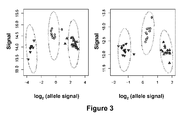
- results show that it is possible to obtain DNA samples enriched in specific loci. These samples can then be pooled and analyzed on the array. Results of genotyping of these markers are shows on the figure 3 . This figure shows that, for two SNPs, it has been possible to obtain a good separation of the different possible alleles, thereby demonstrating the possibility to conduct an appropriate genotyping when using an DNA fraction enriched in specific loci, obtained by a multiplex specific PCR amplification.
Landscapes
- Chemical & Material Sciences (AREA)
- Life Sciences & Earth Sciences (AREA)
- Health & Medical Sciences (AREA)
- Organic Chemistry (AREA)
- Engineering & Computer Science (AREA)
- Genetics & Genomics (AREA)
- Wood Science & Technology (AREA)
- Zoology (AREA)
- Bioinformatics & Cheminformatics (AREA)
- Biotechnology (AREA)
- General Engineering & Computer Science (AREA)
- Proteomics, Peptides & Aminoacids (AREA)
- Molecular Biology (AREA)
- Biochemistry (AREA)
- Microbiology (AREA)
- General Health & Medical Sciences (AREA)
- Physics & Mathematics (AREA)
- Biophysics (AREA)
- Biomedical Technology (AREA)
- Analytical Chemistry (AREA)
- Immunology (AREA)
- Bioinformatics & Computational Biology (AREA)
- Plant Pathology (AREA)
- Crystallography & Structural Chemistry (AREA)
- Chemical Kinetics & Catalysis (AREA)
- Measuring Or Testing Involving Enzymes Or Micro-Organisms (AREA)
- Algebra (AREA)
- General Physics & Mathematics (AREA)
- Mathematical Analysis (AREA)
- Mathematical Optimization (AREA)
- Mathematical Physics (AREA)
- Pure & Applied Mathematics (AREA)
Abstract
The invention relates to a method for genotyping individuals, through multiplexing genotyping, when samples carrying different loci of various individuals are pooled and genotyping is performed on this pool.
Description
- The invention relates to a method for genotyping individuals, through multiplexing genotyping, where samples carrying different loci of various individuals are pooled and genotyping is performed on this pool.
- The genotyping of a few markers per sample and of 10 000 markers (or more) per sample can be addressed with a very good efficiency with platforms like the SNPline™ from Kbioscience on one hand and the Affymetrix Axiom® platform or the Next Generation sequencing based Genotyping (NGG) on the other hand.
- Nevertheless, these systems may not be the most effective ones for use in breeding applications especially when genotyping is done on progenies of sister plants, which have a high Linkage Disequilibrium (non-random association of alleles at two or more loci).
- Next Generation sequencing based Genotyping (NGG) are new genotyping methods developed with the leverage of the Next Generation sequencing methods and the reduced cost of sequencing associated. Next Generation sequencing methods are summarized in the review of Jay Schendure and Hanlee Ji (Nature Biotechnology, Vol 26, N°10 October 2008); 454 sequencing from Roche, Marlulies et al., (Nature vol 437 p 376-380, 2005), Illumina Solexa (Fedurco et al., NAR 34, e22 (2006) and Tarcatti et al., NAR 36, e25 (2008), AB SOLiD from Applied Biosystem (Shendure et al., Science 309, 1728-1732 (2005), HeliScope (Braslavsky et al., PNAS 100, 3960-3964(2003)). NGG may address this genotyping application, using the huge capacity of current sequencer and assuming that several hundreds of samples can be sequenced in a single run for example after a DNA library preparation based on the TruSeq™ custom Amplicon protocol. But the main limitation of such protocol is based on the requirement to add a tag per sample which is currently the only way to redistribute each sequence/data to the corresponding sample. This tagging step is, at the time being, a bottleneck in term of high throughput and cost for NGG approach and is difficult to conceptualize for array based protocols, due to the nature of the added tag, which is currently not easily detectable by an array.
- The purpose of the invention is to provide a new genotyping method that allows the genotyping of several individuals without the need of indexing each individual independently.
- An "allele" is one of a number of alternative forms of the same gene or same genetic locus.
- A "locus" is the specific location of a gene or DNA sequence or position on a chromosome.
- A "molecular marker" or "marker" is a gene or DNA sequence with a known location on a chromosome for which different alleles can be revealed through the use of molecular protocols. It can be a short DNA sequence, such as a sequence surrounding a single base-pair change (single nucleotide polymorphism, SNP), or a long one, like microsatellites.
- In summary, a marker makes it possible to discriminate between different alleles at a specific locus. Use of markers to do so in an individual consists in genotyping said individual (see below). An individual for which the alleles at different loci have been determined is said to be a "genotyped individual" for the markers associated with these loci.
- An "ordered set of markers" is a set of markers wherein each marker is genetically positioned as compared to the other markers. In other words, the relative (genetic) position or order of each marker with regards to the others is known.
Said ordered set of markers may be represented by a list of markers in which each marker, in the list, is genetically localized just after the marker before it in the list, and just before the marker listed after it.
There may obviously be different lists of markers in case the set of markers is intended for genotyping of different DNA segments (such as different chromosomes).
The markers of said ordered set of markers may be evenly distributed over the DNA region to genotype, or not. The set of markers is preferably a high density set of markers (which means at least one marker every 5 cM on average), and there can be markers with a higher density, for the specific and precise genotyping of some regions. - "Genotyping" means determining the combination of alleles for one marker or a set of markers. In the context of the present invention, genotyping may be performed on the whole genome of an individual, on a part of the genome, such as on one or more chromosomes, on a part of one or more chromosomes, or on one or more specific regions of the genome.
- In order to genotype an individual (or part of the genome of an individual), one uses a set of markers. By extension, sequences that may be polymorphic between different individual can be named "markers" (it is clear that polymorphism for a given marker can be observed between a specific individual and a second individual, whereas it would not be observed with a third individual). These markers can thus indicate the nature of an allele at the specific locus that they target.
For markers that differentiate between two alleles, and assuming that the frequency of both alleles is balanced, it is statistically assumed that about 50 % of the markers will reveal the same allele, between two unrelated individuals, just by chance. - An individual is said to be "derived from a cross between parents" if the parents of said individuals are known. Said individual may be the direct progeny or descendant of the sexual crossing of the parents, at the first generation or at a following generation.
- An individual is said to be "related to a population" (or "apparented to a population" or "kin to a population") if it descends (belongs to the progeny) from sexual crosses between individuals of said population, at the first generation, or between individuals being the progeny of said population (at a later generation).
- A "related population" (or apparented population) is a population comprising individuals that have strong linkage disequilibrium between two consecutive markers/alleles. Individual in a related population generally share common ancestors. Methods for calculating linkage disequilibrium are known in the art and are described, for instance in the lecture Lecture 15 (Bio 107/207, Winter 2005, Linkage disequilibrium and recombination, available from Unviversity of California San Diego: http://bio.classes.ucsc.edu/bio107/Class%20pdfs/W05_lecture15.pdf)
- "Consecutive markers" are markers that are located consecutively in an ordered set of markers defining a chromosome map. On a following list of genetically ordered markers mk1, mk2, mk3, mk4, examples of consecutive markers are mk1 and mk2, mk2 and mk3, mk3 and mk4.
- As an example of linkage disequilibrium, let's take 2 consecutive alleles (1A and 1 B at
position 1 and 2A and 2B at position 2), with each allele havind a 50 % prevalence. - In a non-related population, since individuals in this population don't share common ancestors, if an individual presents allele 1A at
position 1 and allele 2A atposition 2, another individual that presents allele 1A atposition 1 will have a 50% probability to have allele 2A atposition 2 and a 50% probability to have allele 2B atposition 2. - In a related population, there is a strong linkage disequilibrium between two consecutive markers, which means that, if an individual presents allele 1A at
position 1 and allele 2A atposition 2, another individual that presents allele 1A atposition 1 will have a stronger probability than 50 % to have allele 2A atposition 2. Indeed, the fact that the two individual share a common ancestor, there is a non-random association of alleles at these two loci, that descend from a single, ancestral chromosome. - Genotyping an individual is generally performed in two steps, the first step being the preparation of DNA of said individual and the second step being the "identification" of the alleles at the marker loci.
- For performing DNA extraction on plants, generally a plant tissue that could be a leaf sample or a seed sample, is first grinded by using for instance the Geno/Grinder® (SPEX® SamplePrep®, Metuchen, NJ, USA) . The flour is then submitted to a lysis buffer and a purification step is performed to eliminate other cell constituents and keep the DNA. One protocol based on CTAB lysis buffer is described in Rogers and Bendich (1994, Extraction of DNA from plant, fungal and algal tissues. In: Gelvin SB, Schilperoort RA (eds) Plant Molecular Biology Manual).
The method as described above can be described as the "conventional way" to prepare DNA. - Once the DNA has been prepared, the nature of the alleles at molecular markers is identified (or "revealed") by different methods.
One of the method should be the Kaspar method from KBioscience (LGC Group, Teddington, Middlesex, UK).
The KASP™ genotyping system uses tree target specific primers: two primers, each of them being specific of each allelic form of the SNP (Single Nucleotide Polymorpshism) ) and one other primer to achieve reverse amplification, which is shared by both allelic form. Each target specific primer also presents a tail sequence that corresponds with one of two FRET probes: one label with FAM® dye and the other with HEX® dye.
Successive PCR reactions are performed, the last one presence of the probes amplification. The nature of the emitted fluorescence is used to identified the allelic form or forms present in the mix from the studied DNA. - Another method that can be used is the AXIOM® method from Affymetrix (Santa Clara, CA, USA): this method makes use of a high density array comprising hundreds or thousands of probes arrayed on a small chip, allowing for many SNPs to be interrogated simultaneously.
The probes may: - Carry the polymorphisms. In this case, for a given allele, the array will bear the probes corresponding to all different allele forms
- Be probes that are close to the polymorphism. In this case, the nature of the allele is revealed through primer extension
- Sequencing methods may also be used for genotyping an individual. One can use any technology in the art, such as the one described in the paper "Agrigenomics genotyping Decisions Reach a crossroads", Application spotlight : Analysing Genetic Variation", available on the Illumina (San Diego, CA, USA) website. (http://res.illumina.com/documents/products/appspotlights/app_spotlight_ngg_ag.p df)
- The method according to the invention uses the fact that one can take advantage of the pre-existing knowledge of the genotyping information of the individuals of a second population, when genotyping individuals of a first population that is related to said second population.
- This method is of particular interest when there is a need to genotype a population of individuals that are all derived from the same parents or related to a given population, for which the genotyping information is available.
- This method is, in particular, used in breeding programs in order to select the individuals presenting the best composition of alleles at different loci, and use them in further rounds of breeding.
- The method makes use of the fact that recombination (crossing-over) is not very frequent. Consequently, when two consecutive markers have been inherited from a specific parent, it can be assumed that the region between these two markers originates from said specific parent. It is thus important to use an ordered set of markers, to perform the claimed method, as one needs to be able to position each marker with regards to the other ones.
- The method according to the invention can be summarized as such:
- The individuals are split in a given number (designated as "X") of subgroups, that may be called "population subgroups", or subgroups of individuals". It is preferred when said subgroups contain approximately the same number of individuals. This separation of individuals and allocation to a given subgroup may be done by giving a reference to each individual, so as to identify to which subgroup it is assigned.
- For each subgroup, only a fraction of the markers used to genotyped the parents will be used, and no marker will be used for genotyping individuals in more than one sub-group of individuals.
- In view of the above, the set of markers will also be split in as many subsets that there are of population subgroups, namely X. This will thus define X "markers subgroups" or "markers subsets". It is preferred when each markers subset contains approximately the same number of markers than the other ones. A specific marker shall be present only in one marker subset.
- The markers can be allocated to a marker subset randomly, but preferably they can be attributed based on their order on the targeted region by allocating the first marker of the ordered set of markers to the first marker subset, the second marker to the second marker subset, applying the rule up to cover all marker subsets. This allows a regular and even distribution of markers along the target region in each marker subset.
- It is thus very unfavorable if the markers of a specific markers subset spans only a portion of said region that is to be genotyped (such as only one chromosome in the case the whole genome is to be genotyped, or the like) and when this subset doesn't contain any marker that spans other regions of the DNA. This step of allocation of markers to subsets may be first performed, and it is then preferable to assess the content of each subset in order to determine whether the nature of the markers in said subset will lead to technical difficulties when using this subset of markers for genotyping (such as to avoid unspecific amplification if preparation of DNA is performed by PCR).
- After performing these two steps, are then defined X subgroups of individuals and X subsets of markers, with no marker belonging to two different subsets of markers. It is also preferred that an individual is assigned to only one subgroup of individuals, although this is not mandatory.
- The next step is to bijectively link a subset of markers to a subgroup of individuals. The individuals in the subgroups will thus be genotyped using the markers that have been assigned in the linked subsets.
- The DNA of individuals in the subgroups is then prepared. It is not done the conventional way, as reminded above (unspecific amplification), which is suitable when the whole set of markers is to be applied for genotyping. The DNA preparation of individuals is done so as to only amplify, for an individual, the loci that are recognized by the markers in the subset linked to the subgroup to which belongs this individual (loci of interest).
- This selection of loci of interest may be performed, in particular, either by specific PCR amplification of each locus (it is possible to perform multiplexed PCR reactions).
- It is also possible to capture the sequences of the loci of interest with baits either in liquid or in solid phases (this can be done with the Agilent SureSelect DNA Capture Array from Agilent (Santa Clara, CA, USA) or the protocol developed by Roche NimbleGen, Inc. (Madison, WI, USA) or others. Once these loci of interest have been captured and isolated, they can be amplified (using non-specific primers as there are no more unwanted loci), and genotyped.
- An alternative way could be to protect the loci targeted by the markers from the linked markers subset, before performing a step of degrading DNA at the unwanted loci. This can be performed by using TALEN (Transcription activator-like effector nuclease) proteins that target the unwanted loci and will thus cut the genome at these locations. Non-specific amplification such as the one described for the Axiom® protocol can then be performed, as no DNA carrying the unwanted loci will be amplified due to the cut performed at said unwanted loci by the TALEN.
- Whatever the method used, the result of this DNA preparation step will be to obtain, for each individual, a DNA composition or library (enriched DNA fraction) that is enriched in the loci corresponding to the markers of the markers subset linked to said individual's subgroup, and in which the loci corresponding to other markers are either absent or a dramatic minority.
- In view of the above, it is clear that the consequence of this step of DNA preparation / enrichment in specific loci is that, applying genotyping on the whole set of markers to said enriched DNA fraction would only provide information on the alleles at said loci of interest, that have been enriched in said enriched DNA fractions, the other loci being absent or in a number below the detection threshold.
- In the method of the invention, though, the step of revealing the nature of the alleles is performed after various enriched DNA fractions, each being from one individual of the different population subgroups, are pooled together, thereby leading to a multiplexed pool of loci. By construction, it is to be noted that each locus that is present in said multiplexed pool of loci originates only from one individual, in this embodiment.
- This multiplexed pool of loci is then processed through conventional ways (such as through arraying or sequencing) in order to determine the allele at each locus.
- It is then possible to allocate each allele to the individual from which the allele's locus originated (demultiplexing the results to link each determined allele to its marker and thus to the individual belonging to the subgroup of individual linked to the subset of markers from which said marker comes from).
- By this method, it is thus possible to obtain genotyped individuals. These individuals are genotyped with only a subset of markers, though, and two individuals from different population subgroups do not share any markers in this genotyping method.
- When the individuals that have been genotyped are related to a population of individuals that have already been genotyped with the ordered set of markers (or when they are issued from a cross between parents that have already been genotyped with the ordered set of markers), the method as disclosed above can advantageously be completed by the addition of a further step of allocating, for each individual, alleles at loci that have not been genotyped (the loci corresponding to the markers that were not associated with the subgroup to which said individual belongs).
- Said allocation/imputation step is perfomed using the linkage disequilibrium information between markers obtained from the individuals of the genotyped population to which said individuals genotyped according to the method of the invention are related, and the information obtained for the loci genotyped for said individual. As reminded above, the identification of the nature of an allele at a given position makes it possible to predict the nature of the allele at a consecutive position due to the linkage disequilibrium.
- In particular, if individuals is derived from a cross between two identified and genotyped parents, said allocation is performed by applying the following imputation algorithm
- a. If two consecutive identified alleles (and polymorphic between the two parents) for said individual are from the same parental origin (plant A), the region and alleles between these two markers are considered to be from the same parental origin than said markers (Plant A)
- b. If two consecutive identified alleles for said individuals are from different parent origins,
- i. The alleles between said consecutive identified alleles that are identical between the parents are allocated as such
- ii. The alleles between said consecutive identified alleles that are not identical between the parents are indicated as with "no information"
- c. In all the others questionable situations, it is postulated that no recombination between parents is the most probable situation.
- d. For allocating alleles on the end of chromosomes or the end of genotyped regions: alleles are from the parent for which the closest polymorphic marker is present (it is thus postulated that no recombination between parents is the most probable situation).
- If individuals are related or apparented to a population that have previously been genotyped with the ordered set of markers, some softwares are able to input and allocate the missing markers based on the data from the linkage disequilibrium between consecutive marker in the genotyped population.
- One can cite the following softwares, which are widely available to the person skilled in the art: Beagle (Browning and Browning 2007, Rapid and accurate haplotype phase inference for genome-wide associations studies. Am j Hum genet 81:1084-1097), fastPhase (Weigel et al., 2010 Prediction of unobserved single nucleotide polymorphisme genotype of jersey cattle using references panels and population-based imputation algorithms. Journal of Dairy Science 93(5), 2229-2238; Nothnagel et al., 2008, A comprehensive evaluation of SNP genotype imputation. Humain Genetics, 125 (2). 163-171; Calus et al., 2011, Imputation of missing single nucleotide polymorphism genotypes using a multivariate mixed model framework. Journal of Animal science, 89(7), 2042-2049, IMPUTE (Marchini et al., 2007, A new multipoint method for genome-wide association studies by imputation of genotypes. Nat genet 39:906-913), or MACH (Li and Abecasis 2006, Mach 1.0: rapid haplotype reconstruction and missing genotype inference. Am J Hum genet S79:2290).
- Due to the fact that all individuals (sample genotype individual and individuals of the related population) have common ancestors, this makes it possible to use the linkage disequilibrium between two consecutive markers computed in the population to predict genotyping data for missing markers on the sample genotyped individuals.
"Consecutive identified alleles" means the proximal identified allele on the genetic map. On a following list of genetically ordered markers mk1, mk2, mk3, mk4, if mk1 has been genotyped, mk2 and mk 3 are missing and mk4 has been genotyped, the consecutive identified alleles are alleles of mk1 and mk4. - Using this mean of allocating alleles to non-genotyped loci for individuals with known genotyped parent, and assuming that the number of crossing over is generally less than 3 per chromssome, it is possible to eventually obtain individuals for which it is generally possible to allocate alleles for at least 95 % of the loci associated with the markers of said ordered set of markers.
- In summary, the invention thus relates to a method for genotyping with a set of markers, a genome region in individuals of a first population, said method comprising the steps of:
- a) splitting said first population into a given number "X" of first population subgroups, containing approximately the same number of individuals
- b) splitting said set of markers into said given number "X" of markers subsets, containing approximately the same number of markers
- c) Bijectively linking each marker subset to a population subgroup
- d) Preparing, in the population subgroups, the loci of the individuals of said population subgroup, wherein said prepared loci correspond to the markers of the markers subset linked to said population subgroup, thereby obtaining DNA fractions enriched in said loci
- e) Mixing the enriched DNA fraction of a particular individual of a population subgroup with the enriched DNA fraction of other individuals of other population subgroups so as to obtain a multiplexed pool of enriched DNA fractions,
- f) Revealing, for said multiplexed pool of enriched DNA fractions, the alleles for each locus present in said multiplexed pool of enriched DNA fractions
- g) Allocating each revealed allele to the individual from which the corresponding locus was obtained,
- h) Thereby obtaining individuals for which a genome region has been genotyped with subsets of said ordered set of markers.
- In a preferred embodiment, said set of markers is an ordered set of markers.
- In another embodiment, said individuals of said first population are related to a second population, and said region has already been genotyped with said set of markers (preferably ordered in this embodiment) in the individuals of said second population.
- As intended herein, said genome region is a part of the genome of said individual. There is no limit on the size of the region, which can be continuous or not within the genome.
- In a specific embodiment, said genome region is a part of a chromosome of said individuals. In this embodiment, it is preferred that the region is a continuous part of the chromosome.
- In another embodiment, said genome region is a whole chromosome of said individuals.
- In another embodiment, said genome region is parts of two or more chromosomes of said individuals.
- In a further embodiment, said genome region is the whole genome of said individuals.
- In a specific embodiment, said individuals of said first population are derived from a cross between known parents that have been genotyped with the global set of markers. In this embodiment, said parents are thus said individuals of said second population.
- As indicated above, this step gives added value to the method according to the invention with regards to the prior art method.
- Indeed, whereas the methods of the prior art generally prepare the whole genome of the individual to be genotyped, only a subset of loci will be prepared for each individual in the method according to the invention.
- Since each individual has been put in a population subgroup, which is linked to a marker subset, the loci that will be prepared for each individuals are the one that bear the polymorphisms (alleles) that can be revealed by the markers of said linked subset (the loci of interest). The person skilled in the art thus understand that the loci of interest will all be the same for individuals belonging to the same subgroup, and that there are no identical loci of interest for individuals belonging to different subgroups.
- This may be done by different techniques.
- The DNA preparation may be performed, in particular by specific PCR amplification of said loci, using appropriately designed primers. This PCR reactions may be multiplexed in order to save time and money (i.e. amplification is performed in the same vial for multiple primers, using multiple pairs of primers).
- Alternatively, it is possible to capture the loci corresponding to the markers contained in the markers subset allocated to said population subgroup with baits, or to protect the loci of interest and then performing a step of DNA degradation to eliminate all the unwanted loci, as disclosed above.
- The output of this step will be to obtain an enriched DNA fraction for each individual, wherein said enriched DNA fraction contains the loci of interest for this individual.
- The result is enriched DNA fractions where the loci for which the alleles can be revealed are the same for individuals that are in the same population subgroup.
- A locus present in the enriched DNA fraction for an individual in a population subgroup can't be found in the enriched DNA fraction of an individual in another population subgroup. This is due to the fact that a specific locus is linked to a specific marker and a marker, which belong to a specific marker subset is thus linked to a unique population subset.
- In a specific embodiment, this method of preparing the enriched DNA fractions also contains a step of adding a tag (or index) to each DNA fragment obtained for an individual. Such tags are described in the art (see in particular the Sample Multiplexing technique of Illumina®, San Diego, USA). Some kits are available on the market to do this sample tagging step (such as the Illumina TruSeq™). This extra layer of sample multiplexing based on the tagging can be applied when the genotyping is done through sequencing.
- These tags will allow to further improve the potency of the method of the invention.
- The tags are generally DNA fragments which are ligated to the products obtained after preparing the loci of interest. Multiple tags may be generated and will be revealed at the same time the alleles are revealed. This system works best when genotyping is performed by sequencing the enriched DNA fractions.
- Depending on the number of available tags (Y), 1/Y individuals of each subgroup will be labeled by a given
tag 1/Y individuals will be labeled by another tag, and so on. - The next step is to mix enriched DNA fractions from different individuals so as to obtain a multiplexed pool of enriched DNA fractions.
- When no tag has been added during the enriched DNA fractions preparation step, the multiplexed pool contains shall not contain enriched DNA fractions coming from different individuals that belonged to the same subgroup
- Consequently, the multiplexed pool contains multiple enriched DNA fractions each of them coming from an individual that belongs to a different subgroup. In other words, each population subgroup is represented only at most once in a given multiplexed pool of loci.
- When tags have been added to individuals during the enriched DNA fractions preparation step, the multiplexed pool may contain more than one enriched DNA fraction coming from individuals belonging to the same subgroup, with the proviso that these enriched DNA fractions don't bear the same tag/label.
- In a preferred embodiment, said revealing step f) is performed on an array. In another embodiment, said revealing step f) is performed through sequencing.
- It is to be understood that the revealing step is performed according to methods known in the art.
- When tags have been added to individuals during the enriched DNA fractions preparation step, the revelation step also comprises the step of revealing the tags.
- Demultiplexing the genotyping data and allocating the alleles to the individuals from which the related loci were obtained is performed by any method, such as by hand or by using adequate software, as disclosed above.
- The method of the invention provides genotyping information only for a subset of loci/markers for each individual.
- In the case the genotyped individual is related to an already genotyped population, it is possible to "fill the gaps", i.e. to obtain allele information for most of the loci/markers that have not been genotyped for said individual (i.e. the loci/markers that were not in the marker subset linked to the population subgroup to which belonged said individual), based on the molecular markers linkage disequilibrium computed on related individuals of said second population that has been extensively genotyped (i.e. with the whole set of markers).
- Consequently, it is possible to allocate, for each individual and for the loci for which no allele information was obtained in step f), allele information using the allele information available for the genotyped individuals of said second population.
- Said allocation is performed using the imputation algorithm described above. It is also possible to specifically obtain genotyping information for a few loci for which the information can't be inferred or presenting a particular interest.
- In an embodiment, said individuals in said first population are heterozygous. It can be the case when said individuals are derived from a cross between parents.
- In another embodiment, said individuals in said first population are homozygous. This may be the case when these individuals are doubled haploids. It is reminded that a doubled haploid (DH) plant is a plant obtained from regeneration of haploid cells having undergone chromosome doubling. Haploid cells are produced from pollen or egg cells or from other cells of the gametophyte, then by induced or spontaneous chromosome doubling, a doubled haploid cell is produced, which can be grown into a doubled haploid plant.
- In yet another embodiment, some individuals in the first population are homozygous and other individuals are heterozygous.
- The given number X (number markers subsets and of the population subgroups) is preferably less or equal to 10, more preferably less or equal to 8, more preferably less or equal to 7, more preferably less or equal to 6, more preferably less or equal to 5, more preferably less or equal to 4, more preferably less or equal to 3.
- Said given number X is preferably more or equal to 2, more preferably more or equal to 3, more preferably more or equal to 4, more preferably more or equal to 5, more preferably more or equal to 6, more preferably more or equal to 7.
- In one embodiment, said markers of said ordered set of markers are evenly distributed on said region. This means that the distance between two given consecutive markers is higher or lower of no more than 15 %, more preferably 10 % of the average distance between two consecutive markers.
- In another embodiment, said markers of said set of markers are such that they cover at least one part of said genome region more densely than other parts. This embodiment is of particular interest if it is known that some parts of the genome are more prone to, bear genes or loci of particular interest. Using a higher density of markers for these regions makes it possible to reduce the uncertainty that recombination (crossing-over) can give and/or obtain more valuable information.
- In a specific embodiment, the average genetic distance between two consecutive markers in a subset of markers is less or equal to 10 cM, more preferably less or equal to 8 cM, more preferably less or equal to 6 cM, more preferably less or equal to 5cM.
- In a specific embodiment, the average genetic distance between two consecutive markers in a subset of markers is more or equal to 2 cM, more preferably more or equal to 3 cM, more preferably more or equal to 4 cM, more preferably more or equal to 5 cM.
- In a specific embodiment, the average genetic distance between two consecutive markers in a subset of markers is about 5 cM.
- In a specific embodiment, the average genetic distance between two consecutive markers in the ordered set of markers is about 3 cM.
- In a specific embodiment, the average genetic distance between two consecutive markers in the ordered set of markers is about 4 cM.
- In a specific embodiment, the average physical distance between two consecutive markers in the ordered set of markers is about 6 cM.
- In a specific embodiment, said ordered set of markers comprises more than 5000 markers, preferably more or equal to 6000 marker, more preferably more than 7000 markers.
-
-
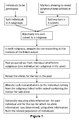
Figure 1 summarizes the different steps for performing an embodiment of the method according to the invention -
Figure 2 summarizes the different steps for performing another embodiment of the method according to the invention -
Figure 3 : Cluster separation in the log2 (allele signal) obtained for two SNPs using the Axiom technology for samples that have been obtained through a multiplexed PCR. Each sample Is shaped and colored according to called genotypes (bottom triangles, and up triangles corresponds to AA, AB, BB, respectively). Ovals are cluster position posterior results from the genotyping algorithm. - In this example, it is assumed that the predetermined number X is the
number 4. - It is assumed that the population contains 8 individuals. These individuals are then split in 4 population subgroups (1 to 4), each subgroup containing 2 individuals.
- It is also assumed that the ordered list of markers contains 20 markers designated as mk1, mk2...mk20, according to their order in the list.
The set of markers is split in 4 subsets which will allow a multiplex of 4 samples. The 4 sets of markers (if assumed that there are 20 markers) are: - marker subset 1: mk1, mk5, mk9, mk13, mk17
- marker subset 2: mk2, mk6, mk10 mk14, mk18
- marker subset 3: mk3, mk7, mk11, mk15, mk19
- marker subset 4: mk4, mk8, mk12, mk16, mk20
- And then the principle is to perform a selection of loci as follow:
- the loci corresponding to the SNP detected by the markers of the
marker subset 1 are selected/enriched for each individuals ofpopulation subgroup 1 - the loci corresponding to the SNP detected by the markers of the
marker subset 2 are selected/enriched for each individuals ofpopulation subgroup 2 - And so on...
This selection/enrichment can be done for instance either by PCR amplification of each locus or by capturing corresponding sequences with baits. An alternative way could be to protect the targeted loci before performing a step of DNA degradation to eliminate all the unwanted loci. - After this locus selection/enrichment, the enriched loci of 4 individuals (one from each population subgroup) are bulked and genotyping is performed with the full set of markers, using regular methods in the art (such as through a sequencing protocol or in an array).
- The genotyping data:
- corresponding to the
marker subset 1 can be attributed to the individual from thepopulation subgroup 1 - corresponding to the
marker subset 2 can be attributed to the individual from thepopulation subgroup 2 - corresponding to the marker subset 3 can be attributed to the individual from the population subgroup 3
- corresponding to the
marker subset 4 can be attributed to the individual from thepopulation subgroup 4 - In this example, it is assumed that the predetermined number X is the
number 4. - It is assumed that the population contains 8 individuals. These individuals are then split in 4 population subgroups (1 to 4), each subgroup containing 2 individuals. Each population subgroup is then further split in two sub-subgroups A and B (containing one individual).
The individuals in each sub-subgroup A will be tagged with tag "A".
The individuals in each sub-subgroup B will be tagged with tag "B".
Said tags may be polynucleotides as described by Illumina in the TrueSeq® kit. - It is also assumed that the ordered list of markers contains 20 markers designated as mk1, mk2...mk20, according to their order in the list.
The set of markers is split in 4 subsets which will allow a multiplex of 4 samples.
The 4 sets of markers (if assumed that there are 20 markers) are: - marker subset 1: mk1, mk5, mk9, mk13, mk17
- marker subset 2: mk2, mk6, mk10 mk14, mk18
- marker subset 3: mk3, mk7, mk11, mk15, mk19
- marker subset 4: mk4, mk8, mk12, mk16, mk20
- And then one performs a selection of loci as follow:
- the loci corresponding to the SNP detected by the markers of the
marker subset 1 are selected/enriched for each individuals ofpopulation subgroup 1 - the loci corresponding to the SNP detected by the markers of the
marker subset 2 are selected/enriched for each individuals ofpopulation subgroup 2 - And so on...
- In this example, the ultimate output is then 8 samples of DNA.
- One DNA sample from an individual of population subgroup 1 (with loci revealed by the markers of the marker subset 1), said DNA tagged with tag A
- One DNA sample from an individual of population subgroup 1 (with loci revealed by the markers of the marker subset 1), said DNA tagged with tag B
- One DNA sample from an individual of population subgroup 2 (with loci revealed by the markers of the marker subset 2), said DNA tagged with tag A
- One DNA sample from an individual of population subgroup 2 (with loci revealed by the markers of the marker subset 2), said DNA tagged with tag B
- One DNA sample from an individual of population subgroup 3 (with loci revealed by the markers of the marker subset 3), said DNA tagged with tag A
- One DNA sample from an individual of population subgroup 3 (with loci revealed by the markers of the marker subset 3), said DNA tagged with tag B
- One DNA sample from an individual of population subgroup 4 (with loci revealed by the markers of the marker subset 4), said DNA tagged with tag A
- One DNA sample from an individual of population subgroup 4 (with loci revealed by the markers of the marker subset 4), said DNA tagged with tag B
- After this locus selection/enrichment, one shall bulk the enriched loci of the 8 individuals and perform genotyping with the full set of markers, using regular methods in the art (such as through a sequencing protocol, as described by Illumina for the TrueSeq® kit).
The nature of the tags (A or B) is also revealed at this stage, therefore allowing the determination of an relationship allele-label. - The genotyping data:
- corresponding to the
marker subset 1 with the tag "A" can be attributed to the individual from the sub-subgroup A of thepopulation subgroup 1 - corresponding to the
marker subset 1 with the tag "B" can be attributed to the individual from the sub-subgroup B of thepopulation subgroup 1 - corresponding to the
marker subset 2 with the tag "A" can be attributed to the individual from the sub-subgroup A of thepopulation subgroup 2 - corresponding to the
marker subset 2 with the tag "B" can be attributed to the individual from the sub-subgroup B of thepopulation subgroup 2 - corresponding to the marker subset 3 with the tag "A" can be attributed to the individual from the sub-subgroup A of the population subgroup 3
- corresponding to the marker subset 3 with the tag "B" can be attributed to the individual from the sub-subgroup B of the population subgroup 3
- corresponding to the
marker subset 4 with the tag "A" can be attributed to the individual from the sub-subgroup A of thepopulation subgroup 4 - corresponding to the
marker subset 4 with the tag "B" can be attributed to the individual from the sub-subgroup B of thepopulation subgroup 4 - In this example, the predetermined number is 6.
Therefore, one shall perform the method on bulks of 6 plants, using an ordered set of 6000 markers (thereby applying 1000 markers per plant).
Using 1000 (one thousand) markers for a map of 3000 cM signifies that the mean interval between two consecutive markers is 3 cM.
Assuming that there has been 30 crossing-over events per plant, 90 cM are expected to be not imputable (3% of the genome), when imputing the missing markers using the linkage disequilibrium or the genotyping information from the parents. This is a very low number, whereas the savings are high as 6 individuals can be genotyped in one single batch.
Information relating to the missing data can then be specifically obtained if needed. - In this example, the predetermined number is 10.
Therefore, one shall perform the method on bulks of 10 plants, using an ordered set of 6000 markers (thereby applying 600 markers per plant). - Using 600 (six hundred) markers for a map of 3000 cM signifies that the mean interval between two consecutive markers is 5 cM.
Thus, assuming that there has been 30 crossing-over events per plant, 150 cM are expected to be not imputable (5% of the genome), when imputing the missing markers using the linkage disequilibrium or the genotyping information from the parents. This is a very low number, whereas the savings are high as 10 individuals can be genotyped in one single batch.
Information relating to the missing data can then be specifically obtained if needed. - Goal: Amplification by multiplex PCR in the same well of multiple loci corresponding to different markers, and genotyping on an Affymetrix® array.
- Multiplex PCR: Using the kit Qiagen 2X multiplex PCR and pooled PCR primers pairs it is possible to simultaneously amplify 126 regions/loci in the multiplex PCR. For each locus, the distance between the primers is from 1 to 10 bases, the amplified region contains the polymorphism to genotype.
-
Vol (µl) Vol (µl) Vol (µl) Qiagen 2X Multiplex PCR Master Mix (PN 206145) 2.5 5 25 5X STA Primers (252 primers at 250 nM 1 2 10 DNase- free water 0 0 0 Volume mix 3.5 7 35 genomic DNA 1.5 3 15 Total 5 10 50 - PCR conditions are : 95°C x 15 min + (95°C x 15 s + 60°C x 4 min) x 14 cycles + 17°C (hold).
- The PCR products have then been processed using the Axiom® technology of Affymetrix®, and the alleles have been revealed on an Affymetrix® array.
- The results show that it is possible to obtain DNA samples enriched in specific loci. These samples can then be pooled and analyzed on the array. Results of genotyping of these markers are shows on the
figure 3 . This figure shows that, for two SNPs, it has been possible to obtain a good separation of the different possible alleles, thereby demonstrating the possibility to conduct an appropriate genotyping when using an DNA fraction enriched in specific loci, obtained by a multiplex specific PCR amplification.
These fragments are purified, re suspended and hybridized to the array. Following hybridization, the array is washed under stringent conditions to remove non-specific hybridization. Each bound nucleotide is queried via a multi-color ligation event carried out on the array surface (solution probe bearing attachment site for one of two dyes depending of the 3'SNP site base hybridize to the glass plobe/target complex). After ligation the arrays are stained and imaged.
Claims (15)
- A method for genotyping, with a set of markers, a genome region in individuals of a first population, said method comprising the steps of:a) splitting said first population into a given number "X" of first population subgroups, containing approximately the same number of individualsb) splitting said set of markers into said given number "X" of markers subsets, containing approximately the same number of markersc) Bijectively linking each marker subset to a population subgroupd) Preparing, in the population subgroups, the loci of the individuals of said population subgroup, wherein said prepared loci correspond to the markers of the markers subset linked to said population subgroup, thereby obtaining DNA fractions enriched in said locie) Mixing the enriched DNA fraction of a particular individual of a population subgroup with the enriched DNA fraction of other individuals of other population subgroups so as to obtain a multiplexed pool of enriched DNA fractions,f) Revealing, for said multiplexed pool of enriched DNA fractions, the alleles for each locus present in said multiplexed pool of enriched DNA fractionsg) Allocating each revealed allele to the individual from which the corresponding locus was obtained,h) Thereby obtaining individuals for which a genome region has been genotyped with subsets of said ordered set of markers.
- The method of claim 1 wherein said set of markers is an ordered set of markers.
- The method of claim 1 or of claim 2, wherein said individuals of said first population are derived from a cross between parents, or related to a second population, wherein said region has already been genotyped with said set of markers in said parents or in the individuals of said second population.
- The method of claim 3, wherein said set of markers is an ordered set of markers and which further comprises the step of allocating, for each individual and for the loci for which no allele information was obtained in setp f), allele information using the allele information available for said parents or for said genotyped individuals of said second population.
- The method of any one of claims 1 to 4, wherein said revealing step f) is performed on an array.
- The method of any one of claims 1 to 4, wherein said revealing step f) is performed through sequencing.
- The method of any one of claims 1 to 6, wherein individuals from the same population subset are individually indexed with various molecular tags.
- The method of any of any one of claims 1 to 7, wherein said markers of said ordered set of markers are evenly distributed on said region.
- The method of any one of claims 1 to 8, wherein said markers of said set of markers are such that they cover at least one part of said genome region more densely than other parts.
- The method of any one of claims 1 to 9, wherein said genome region is a part of a chromosome of said individuals.
- The method of any one of claims 1 to 10, wherein said genome region is a whole chromosome of said individuals.
- The method of any one of claims 1 to 9, wherein said genome region is the whole genome of said individuals.
- The method of any one of claims 1 to 12, wherein said preparation step e) is performed by PCR amplification of the loci corresponding to the markers contained in the markers subset allocated to said population subgroup.
- The method of any one of claims 1 to 12, wherein said preparation step e) is performed by capturing the loci corresponding to the markers contained in the markers subset allocated to said population subgroup with baits.
- The method of any of claims 1 to 12, wherein said preparation step e) is performed by protecting the loci corresponding to the markers contained in the markers subset allocated to said population subgroup and performing a step of DNA degradation to eliminate all the unwanted loci.
Priority Applications (4)
| Application Number | Priority Date | Filing Date | Title |
|---|---|---|---|
| EP14305043.3A EP2894230A1 (en) | 2014-01-11 | 2014-01-11 | Method for performing multiplexed genotyping |
| EP15700540.6A EP3092316B1 (en) | 2014-01-11 | 2015-01-09 | Method for performing multiplexed genotyping |
| US15/110,660 US10745697B2 (en) | 2014-01-11 | 2015-01-09 | Method for performing multiplexed genotyping |
| PCT/EP2015/050313 WO2015104364A1 (en) | 2014-01-11 | 2015-01-09 | Method for performing multiplexed genotyping |
Applications Claiming Priority (1)
| Application Number | Priority Date | Filing Date | Title |
|---|---|---|---|
| EP14305043.3A EP2894230A1 (en) | 2014-01-11 | 2014-01-11 | Method for performing multiplexed genotyping |
Publications (1)
| Publication Number | Publication Date |
|---|---|
| EP2894230A1 true EP2894230A1 (en) | 2015-07-15 |
Family
ID=50030218
Family Applications (2)
| Application Number | Title | Priority Date | Filing Date |
|---|---|---|---|
| EP14305043.3A Withdrawn EP2894230A1 (en) | 2014-01-11 | 2014-01-11 | Method for performing multiplexed genotyping |
| EP15700540.6A Active EP3092316B1 (en) | 2014-01-11 | 2015-01-09 | Method for performing multiplexed genotyping |
Family Applications After (1)
| Application Number | Title | Priority Date | Filing Date |
|---|---|---|---|
| EP15700540.6A Active EP3092316B1 (en) | 2014-01-11 | 2015-01-09 | Method for performing multiplexed genotyping |
Country Status (3)
| Country | Link |
|---|---|
| US (1) | US10745697B2 (en) |
| EP (2) | EP2894230A1 (en) |
| WO (1) | WO2015104364A1 (en) |
-
2014
- 2014-01-11 EP EP14305043.3A patent/EP2894230A1/en not_active Withdrawn
-
2015
- 2015-01-09 US US15/110,660 patent/US10745697B2/en active Active
- 2015-01-09 EP EP15700540.6A patent/EP3092316B1/en active Active
- 2015-01-09 WO PCT/EP2015/050313 patent/WO2015104364A1/en not_active Ceased
Non-Patent Citations (21)
| Title |
|---|
| BRASLAVSKY ET AL., PNAS, vol. 100, 2003, pages 3960 - 3964 |
| BROWNING; BROWNING: "Rapid and accurate haplotype phase inference for genome-wide associations studies", AM J HUM GENET, vol. 81, 2007, pages 1084 - 1097 |
| CALUS ET AL.: "Imputation of missing single nucleotide polymorphism genotypes using a multivariate mixed model framework", JOURNAL OF ANIMAL SCIENCE, vol. 89, no. 7, 2011, pages 2042 - 2049 |
| D. HABIER ET AL: "Genomic Selection Using Low-Density Marker Panels", GENETICS, vol. 182, no. 1, 18 March 2009 (2009-03-18), pages 343 - 353, XP055110218, ISSN: 0016-6731, DOI: 10.1534/genetics.108.100289 * |
| FEDURCO ET AL., NAR, vol. 34, 2006, pages E22 |
| J. CROSSA ET AL: "Genomic Prediction in Maize Breeding Populations with Genotyping-by-Sequencing", G3: GENES|GENOMES|GENETICS, vol. 3, no. 11, 6 November 2013 (2013-11-06), pages 1903 - 1926, XP055110324, ISSN: 2160-1836, DOI: 10.1534/g3.113.008227 * |
| JAY SCHENDURE; HANLEE JI, NATURE BIOTECHNOLOGY, vol. 26, no. 10, October 2008 (2008-10-01) |
| LI; ABECASIS: "Mach 1.0: rapid haplotype reconstruction and missing genotype inference", AM J HUM GENET, vol. S79, 2006, pages 2290 |
| MARCHINI ET AL.: "A new multipoint method for genome-wide association studies by imputation of genotypes", NAT GENET, vol. 39, 2007, pages 906 - 913 |
| MARLULIES ET AL., NATURE, vol. 437, 2005, pages 376 - 380 |
| MEHAR S KHATKAR ET AL: "Strategies and utility of imputed SNP genotypes for genomic analysis in dairy cattle", BMC GENOMICS, BIOMED CENTRAL LTD, LONDON, UK, vol. 13, no. 1, 8 October 2012 (2012-10-08), pages 538, XP021127935, ISSN: 1471-2164, DOI: 10.1186/1471-2164-13-538 * |
| NOTHNAGEL ET AL.: "A comprehensive evaluation of SNP genotype imputation", HUMAIN GENETICS, vol. 125, no. 2, 2008, pages 163 - 171, XP019716386 |
| PAUL M VANRADEN ET AL: "Genomic evaluations with many more genotypes", GENETICS SELECTION EVOLUTION, vol. 43, no. 1, 1 January 2011 (2011-01-01), pages 10, XP055110317, ISSN: 1297-9686, DOI: 10.1186/1471-2156-10-19 * |
| R. DASSONNEVILLE ET AL: "Short communication: Imputation performances of 3 low-density marker panels in beef and dairy cattle", JOURNAL OF DAIRY SCIENCE, vol. 95, no. 7, 1 July 2012 (2012-07-01), pages 4136 - 4140, XP055110328, ISSN: 0022-0302, DOI: 10.3168/jds.2011-5133 * |
| ROGERS; BENDICH: "Plant Molecular Biology Manual", 1994, article "Extraction of DNA from plant, fungal and algal tissues" |
| SHENDURE ET AL., SCIENCE, vol. 309, 2005, pages 1728 - 1732 |
| TARCATTI ET AL., NAR, vol. 36, 2008, pages E25 |
| WEIGEL ET AL.: "Prediction of unobserved single nucleotide polymorphisme genotype of jersey cattle using references panels and population-based imputation algorithms", JOURNAL OF DAIRY SCIENCE, vol. 93, no. 5, 2010, pages 2229 - 2238 |
| WEIGEL K A ET AL: "Prediction of unobserved single nucleotide polymorphism genotypes of Jersey cattle using reference panels and population-based imputation algorithms", JOURNAL OF DAIRY SCIENCE, AMERICAN DAIRY SCIENCE ASSOCIATION, US, vol. 93, no. 5, 1 May 2010 (2010-05-01), pages 2229 - 2238, XP027015881, ISSN: 0022-0302, [retrieved on 20100419] * |
| YVONNE M BADKE ET AL: "Methods of tagSNP selection and other variables affecting imputation accuracy in swine", BMC GENETICS, BIOMED CENTRAL, GB, vol. 14, no. 1, 21 February 2013 (2013-02-21), pages 8, XP021157759, ISSN: 1471-2156, DOI: 10.1186/1471-2156-14-8 * |
| Z. ZHANG ET AL: "Marker imputation with low-density marker panels in Dutch Holstein cattle", JOURNAL OF DAIRY SCIENCE, vol. 93, no. 11, 1 November 2010 (2010-11-01), pages 5487 - 5494, XP055110219, ISSN: 0022-0302, DOI: 10.3168/jds.2010-3501 * |
Also Published As
| Publication number | Publication date |
|---|---|
| EP3092316B1 (en) | 2018-06-06 |
| WO2015104364A1 (en) | 2015-07-16 |
| US10745697B2 (en) | 2020-08-18 |
| US20160326522A1 (en) | 2016-11-10 |
| EP3092316A1 (en) | 2016-11-16 |
Similar Documents
| Publication | Publication Date | Title |
|---|---|---|
| Backström et al. | Genomics of natural bird populations: a gene‐based set of reference markers evenly spread across the avian genome | |
| Vignal et al. | A review on SNP and other types of molecular markers and their use in animal genetics | |
| Borge et al. | Contrasting patterns of polymorphism and divergence on the Z chromosome and autosomes in two Ficedula flycatcher species | |
| EP3006571B1 (en) | Hla gene multiplex dna typing method and kit | |
| Huang et al. | Spatial pattern of chloroplast DNA variation of Cyclobalanopsis glauca in Taiwan and East Asia | |
| EP2663655B1 (en) | Paired end random sequence based genotyping | |
| Isobe et al. | Construction of an integrated high density simple sequence repeat linkage map in cultivated strawberry (Fragaria× ananassa) and its applicability | |
| US20190002979A1 (en) | Haplotyping of hla loci with ultra-deep shotgun sequencing | |
| McConnell et al. | The isolation and mapping of 19 tetranucleotide microsatellite markers in the chicken | |
| Babik et al. | Contrasting patterns of variation in MHC loci in the Alpine newt | |
| Miller et al. | High-density single-nucleotide polymorphism maps of the human genome | |
| Wallner et al. | Isolation of Y chromosome-specific microsatellites in the horse and cross-species amplification in the genus Equus | |
| WO2014101655A1 (en) | Method for analyzing high-throughput nucleic acid and application thereof | |
| CN103492588A (en) | Methods and systems for haplotype determination | |
| US20150379195A1 (en) | Software haplotying of hla loci | |
| KR101686440B1 (en) | SNP markers for discriminating Korean Brown Cornish line of chicken and use thereof | |
| Weiner et al. | Introduction to SNPs: discovery of markers for disease | |
| Finno et al. | Applied equine genetics | |
| KR101923647B1 (en) | SNP markers for discrimination of Jubilee type or Crimson type watermelon cultivar | |
| CN103370456A (en) | Defining diagnostic and therapeutic targets of conserved free floating fetal DNA in maternal circulating blood | |
| CN107090494A (en) | The molecular labeling related to millet code grain number character and its detection primer and application | |
| CN107090450A (en) | The molecular labeling related to millet spike length character and its detection primer and application | |
| KR20180077873A (en) | SNP markers for selection of marker-assisted backcross in watermelon | |
| Lorenz et al. | BAC‐based upgrading and physical integration of a genetic SNP map in Atlantic salmon | |
| CN109988851A (en) | Specific primers and detection methods for Tibetan mastiff molecular markers |
Legal Events
| Date | Code | Title | Description |
|---|---|---|---|
| PUAI | Public reference made under article 153(3) epc to a published international application that has entered the european phase |
Free format text: ORIGINAL CODE: 0009012 |
|
| 17P | Request for examination filed |
Effective date: 20140111 |
|
| AK | Designated contracting states |
Kind code of ref document: A1 Designated state(s): AL AT BE BG CH CY CZ DE DK EE ES FI FR GB GR HR HU IE IS IT LI LT LU LV MC MK MT NL NO PL PT RO RS SE SI SK SM TR |
|
| AX | Request for extension of the european patent |
Extension state: BA ME |
|
| STAA | Information on the status of an ep patent application or granted ep patent |
Free format text: STATUS: THE APPLICATION IS DEEMED TO BE WITHDRAWN |
|
| 18D | Application deemed to be withdrawn |
Effective date: 20160116 |