EP2891718B1 - Method for measuring cholesterol in high-density lipoprotein - Google Patents
Method for measuring cholesterol in high-density lipoprotein Download PDFInfo
- Publication number
- EP2891718B1 EP2891718B1 EP13833253.1A EP13833253A EP2891718B1 EP 2891718 B1 EP2891718 B1 EP 2891718B1 EP 13833253 A EP13833253 A EP 13833253A EP 2891718 B1 EP2891718 B1 EP 2891718B1
- Authority
- EP
- European Patent Office
- Prior art keywords
- reagent
- cholesterol
- substituted
- measuring
- carbon atoms
- Prior art date
- Legal status (The legal status is an assumption and is not a legal conclusion. Google has not performed a legal analysis and makes no representation as to the accuracy of the status listed.)
- Active
Links
Classifications
-
- C—CHEMISTRY; METALLURGY
- C12—BIOCHEMISTRY; BEER; SPIRITS; WINE; VINEGAR; MICROBIOLOGY; ENZYMOLOGY; MUTATION OR GENETIC ENGINEERING
- C12Q—MEASURING OR TESTING PROCESSES INVOLVING ENZYMES, NUCLEIC ACIDS OR MICROORGANISMS; COMPOSITIONS OR TEST PAPERS THEREFOR; PROCESSES OF PREPARING SUCH COMPOSITIONS; CONDITION-RESPONSIVE CONTROL IN MICROBIOLOGICAL OR ENZYMOLOGICAL PROCESSES
- C12Q1/00—Measuring or testing processes involving enzymes, nucleic acids or microorganisms; Compositions therefor; Processes of preparing such compositions
- C12Q1/60—Measuring or testing processes involving enzymes, nucleic acids or microorganisms; Compositions therefor; Processes of preparing such compositions involving cholesterol
-
- C—CHEMISTRY; METALLURGY
- C12—BIOCHEMISTRY; BEER; SPIRITS; WINE; VINEGAR; MICROBIOLOGY; ENZYMOLOGY; MUTATION OR GENETIC ENGINEERING
- C12Q—MEASURING OR TESTING PROCESSES INVOLVING ENZYMES, NUCLEIC ACIDS OR MICROORGANISMS; COMPOSITIONS OR TEST PAPERS THEREFOR; PROCESSES OF PREPARING SUCH COMPOSITIONS; CONDITION-RESPONSIVE CONTROL IN MICROBIOLOGICAL OR ENZYMOLOGICAL PROCESSES
- C12Q1/00—Measuring or testing processes involving enzymes, nucleic acids or microorganisms; Compositions therefor; Processes of preparing such compositions
- C12Q1/26—Measuring or testing processes involving enzymes, nucleic acids or microorganisms; Compositions therefor; Processes of preparing such compositions involving oxidoreductase
-
- C—CHEMISTRY; METALLURGY
- C12—BIOCHEMISTRY; BEER; SPIRITS; WINE; VINEGAR; MICROBIOLOGY; ENZYMOLOGY; MUTATION OR GENETIC ENGINEERING
- C12Q—MEASURING OR TESTING PROCESSES INVOLVING ENZYMES, NUCLEIC ACIDS OR MICROORGANISMS; COMPOSITIONS OR TEST PAPERS THEREFOR; PROCESSES OF PREPARING SUCH COMPOSITIONS; CONDITION-RESPONSIVE CONTROL IN MICROBIOLOGICAL OR ENZYMOLOGICAL PROCESSES
- C12Q1/00—Measuring or testing processes involving enzymes, nucleic acids or microorganisms; Compositions therefor; Processes of preparing such compositions
- C12Q1/26—Measuring or testing processes involving enzymes, nucleic acids or microorganisms; Compositions therefor; Processes of preparing such compositions involving oxidoreductase
- C12Q1/32—Measuring or testing processes involving enzymes, nucleic acids or microorganisms; Compositions therefor; Processes of preparing such compositions involving oxidoreductase involving dehydrogenase
-
- C—CHEMISTRY; METALLURGY
- C12—BIOCHEMISTRY; BEER; SPIRITS; WINE; VINEGAR; MICROBIOLOGY; ENZYMOLOGY; MUTATION OR GENETIC ENGINEERING
- C12Q—MEASURING OR TESTING PROCESSES INVOLVING ENZYMES, NUCLEIC ACIDS OR MICROORGANISMS; COMPOSITIONS OR TEST PAPERS THEREFOR; PROCESSES OF PREPARING SUCH COMPOSITIONS; CONDITION-RESPONSIVE CONTROL IN MICROBIOLOGICAL OR ENZYMOLOGICAL PROCESSES
- C12Q1/00—Measuring or testing processes involving enzymes, nucleic acids or microorganisms; Compositions therefor; Processes of preparing such compositions
- C12Q1/34—Measuring or testing processes involving enzymes, nucleic acids or microorganisms; Compositions therefor; Processes of preparing such compositions involving hydrolase
- C12Q1/44—Measuring or testing processes involving enzymes, nucleic acids or microorganisms; Compositions therefor; Processes of preparing such compositions involving hydrolase involving esterase
-
- G—PHYSICS
- G01—MEASURING; TESTING
- G01N—INVESTIGATING OR ANALYSING MATERIALS BY DETERMINING THEIR CHEMICAL OR PHYSICAL PROPERTIES
- G01N33/00—Investigating or analysing materials by specific methods not covered by groups G01N1/00 - G01N31/00
- G01N33/48—Biological material, e.g. blood, urine; Haemocytometers
- G01N33/50—Chemical analysis of biological material, e.g. blood, urine; Testing involving biospecific ligand binding methods; Immunological testing
- G01N33/92—Chemical analysis of biological material, e.g. blood, urine; Testing involving biospecific ligand binding methods; Immunological testing involving lipids, e.g. cholesterol, lipoproteins, or their receptors
-
- G—PHYSICS
- G01—MEASURING; TESTING
- G01N—INVESTIGATING OR ANALYSING MATERIALS BY DETERMINING THEIR CHEMICAL OR PHYSICAL PROPERTIES
- G01N2333/00—Assays involving biological materials from specific organisms or of a specific nature
- G01N2333/90—Enzymes; Proenzymes
- G01N2333/902—Oxidoreductases (1.)
-
- G—PHYSICS
- G01—MEASURING; TESTING
- G01N—INVESTIGATING OR ANALYSING MATERIALS BY DETERMINING THEIR CHEMICAL OR PHYSICAL PROPERTIES
- G01N2333/00—Assays involving biological materials from specific organisms or of a specific nature
- G01N2333/90—Enzymes; Proenzymes
- G01N2333/902—Oxidoreductases (1.)
- G01N2333/904—Oxidoreductases (1.) acting on CHOH groups as donors, e.g. glucose oxidase, lactate dehydrogenase (1.1)
-
- G—PHYSICS
- G01—MEASURING; TESTING
- G01N—INVESTIGATING OR ANALYSING MATERIALS BY DETERMINING THEIR CHEMICAL OR PHYSICAL PROPERTIES
- G01N2333/00—Assays involving biological materials from specific organisms or of a specific nature
- G01N2333/90—Enzymes; Proenzymes
- G01N2333/914—Hydrolases (3)
-
- G—PHYSICS
- G01—MEASURING; TESTING
- G01N—INVESTIGATING OR ANALYSING MATERIALS BY DETERMINING THEIR CHEMICAL OR PHYSICAL PROPERTIES
- G01N2333/00—Assays involving biological materials from specific organisms or of a specific nature
- G01N2333/90—Enzymes; Proenzymes
- G01N2333/914—Hydrolases (3)
- G01N2333/916—Hydrolases (3) acting on ester bonds (3.1), e.g. phosphatases (3.1.3), phospholipases C or phospholipases D (3.1.4)
- G01N2333/918—Carboxylic ester hydrolases (3.1.1)
Definitions
- the present invention relates to a method, a reagent and a kit for measuring cholesterol in high-density lipoprotein in a specimen.
- Lipoproteins in the living body are classified into high-density lipoprotein (hereinafter abbreviated as HDL), low-density lipoprotein (hereinafter abbreviated as LDL), very low-density lipoprotein (hereinafter abbreviated as VLDL), and chylomicron (hereinafter abbreviated as CM) according to their specific gravity.
- HDL high-density lipoprotein
- LDL low-density lipoprotein
- VLDL very low-density lipoprotein
- CM chylomicron
- HDL is involved in the removal action of cholesterol accumulated in cells to receive cholesterol from tissues including arterial walls and is a risk prevention factor for various arterial scleroses, including coronary arteriosclerosis, and therefore, its level in blood is a useful index for predicting the onset of arteriosclerotic diseases.
- HDL cholesterol The conventional methods for measuring cholesterol in HDL (hereinafter abbreviated as HDL cholesterol) consist of two steps: a fractionation operation by an ultracentrifugation method, an immunochemical method, an electrophoresis method, or a precipitation method, and cholesterol determination.
- the fractionation operations are complicated and time-consuming and also have a problem in terms of safety.
- these measurement methods involving the fractionation operations are extremely inefficient and are not suited for practical use.
- a method for the specific fractional determination of HDL cholesterol which involves reacting serum or plasma with a cholesterol esterase and a cholesterol oxidase in a buffer solution comprising the above enzymes as well as a bile acid salt, a bile acid derivative, or dioctylsulfosuccinate (see patent document 1) and a method for measuring HDL cholesterol, which involves reacting serum with pancreas-derived cholesterol esterase and cholesterol oxidase in a buffer solution comprising the enzymes, a surfactant belonging to the group of bile acids, and a nonionic surfactant at a specific pH and a specific temperature (see patent document 2).
- the reaction of LDL cholesterol with the enzymes proceeds first and HDL cholesterol can then be measured.
- these measurements require long time and have not always been measurement methods specific for HDL cholesterol.
- Known examples of methods for aggregating HDL cholesterol by aggregating lipoproteins other than HDL include: a method using a reagent for aggregating lipoproteins other than HDL, such as dextran sulfate, a divalent metal salt, and a chemically modified enzyme (see patent document 3); a measurement method using a reagent forming a complex with lipoproteins other than HDL, such as a polyanion, and a surfactant not dissolving lipoproteins, such as a polyoxyethylene-polyoxypropylene condensate, (see patent document 4); a measurement method using a polyanion, such as dextran sulfate, a divalent metal salt, a specific nonionic surfactant, and albumin different from the albumin derived from a sample (see patent document 5); and a method for measuring HDL cholesterol in serum or plasma, which involves treating serum or plasma with a solution comprising a lipoprotein fractionating agent (a combination of a polyanion
- Known examples of methods for aggregating HDL cholesterol without aggregating lipoproteins other than HDL include: a method for measuring HDL cholesterol in a biological sample, which involves reacting the biological sample with pancreas-derived cholesterol esterase and cholesterol oxidase in the presence of a bile acid or a salt thereof and albumin, and measuring a compound consumed or formed by the enzymatic reaction (see patent document 7); and a method for measuring HDL cholesterol in a specimen, which involves reacting the specimen with a lipoprotein lipase preferentially acting on an HDL fraction and/or a cholesterol esterase and a cholesterol oxidase in the presence of a nonionic surfactant with an HLB value of 16 or more, having reaction selectivity on the HDL fraction (see patent document 8).
- a method for measuring HDL cholesterol in a specimen which involves reacting the specimen with i) a cholesterol ester hydrolase and a cholesterol oxidase, or ii) a cholesterol ester hydrolase, an oxidized coenzyme, and a cholesterol dehydrogenase in an aqueous medium comprising a nonionic surfactant, a polyanion, and albumin, and measuring a formed hydrogen peroxide or reduced coenzyme (see patent document 10); and a method for measuring HDL cholesterol, which involves reacting a specimen with i) a cholesterol ester hydrolase and a cholesterol oxidase, or ii) a cholesterol ester hydrolase, an oxidized coenzyme, and a cholesterol dehydrogenase in an aqueous medium comprising a quaternary ammonium salt or amine having a specific structure and a polyanion, and measuring a formed hydrogen peroxide or reduced coenzyme (see patent document 11).
- Patent Document 12 relates to a specific process for measuring a substrate or an enzymatic activity in a body fluid.
- An object of the present invention is to provide a method, a reagent and a kit for measuring HDL cholesterol simply and accurately.
- the present inventors have carried out intensive studies for solving the above object and have found that a cholesterol ester hydrolase and a cholesterol oxidase or a cholesterol dehydrogenase specifically act on HDL cholesterol under the coexistence of a specific nitrogen-containing substance having the structure of a pyridinium salt or a quaternary ammonium salt and a polyanion, thereby accomplishing the present invention.
- the present invention relates to items 1. to 13. below.
- the method for measuring HDL cholesterol according to the present invention is a method for specifically measuring HDL cholesterol without eliminating cholesterol in lipoproteins other than HDL.
- specimen used in the measurement method of the present invention examples include whole blood, plasma, serum, spinal fluid, saliva, amniotic fluid, urea, sweat, and pancreatic juice; plasma and serum are preferable.
- the cholesterol hydrolase according to the present invention is not particularly limited so long as it is an enzyme having the capacity to hydrolyze a cholesterol ester; examples thereof include cholesterol esterase and lipoprotein lipase derived from an animal, a plant, or a microorganism; cholesterol esterase and lipoprotein lipase produced by a genetic engineering technique.
- cholesterol hydrolase as well as a chemically modified cholesterol ester hydrolase can be used as the cholesterol hydrolase.
- a commercially available cholesterol ester hydrolase can be used as a cholesterol ester hydrolase.
- Examples of the commercially available cholesterol hydrolase include Cholesterol Esterase “Amano” 2 (CHE2; manufactured by Amano Enzyme Inc.), Cholesterol Esterase “Amano” 3 (CHE3; manufactured by Amano Enzyme Inc.), Cholesterol Esterase EST “Amano” 2 (manufactured by Amano Enzyme Inc.), Lipoprotein Lipase (LPL311; manufactured by Toyobo Co., Ltd.), Lipoprotein Lipase "Amano” 6 (LPL6; manufactured by Amano Enzyme Inc.), and Cholesterol Esterase [COE313 (chemically modified cholesterol esterase); manufactured by Toyobo Co., Ltd.].
- two or more cholesterol ester hydrolases can also be used in combination.
- Examples of the groups modifying a cholesterol ester hydrolase (chemically modifying groups) in chemically modifying the enzyme include a group comprising polyethylene glycol as a main component, a group having a copolymer of polypropylene glycol, a group comprising a water-soluble polysaccharide, a sulfopropyl group, a sulfobutyl group, a polyurethane group, and a group having a chelate function; a group comprising polyethylene glycol as a main component is preferable.
- Examples of the water-soluble polysaccharide include dextran, pullulan, and soluble starch.
- Examples of the reagent for chemically modifying a cholesterol hydrolase include a compound having both of the above chemically modifying groups and a functional group or structure capable of reacting with the amino group, the carboxyl group, the sulfhydryl group, or the like of the enzyme.
- Examples of the functional group or the structure capable of reacting with the amino group of the enzyme include a carboxyl group, an active ester group (e.g., N-hydroxysuccinimide), an acid anhydride, a chloride-free substance, an aldehyde, an epoxide group, 1,3-propanesultone, and 1,4-butanesultone.
- Examples of the functional group or the structure capable of reacting with the carboxyl group of the enzyme include an amino group.
- Examples of the group or the structure having reactivity with the sulfhydryl group of the enzyme include a maleimide group, a disulfide, and an ⁇ -halo ester (e.g., ⁇ -iodo ester).
- a commercially available chemical modifier can be used as a chemical modifier.
- the commercially available chemical modifier include Sunbright ME-50CS, Sunbright MEAC-50HS, and Sunbright MEC-50HS (all are manufactured by NOF Corporation), which have a group comprising polyethylene glycol as a main component and an N-hydroxysuccinimide group; Sunbright AKM series (e.g., Sunbright AKM-1510), Sunbright ADM series, and Sunbright ACM series (all are manufactured by NOF Corporation), which have a group comprising a polyalkylene glycol as a main component and an acid anhydride structure; EPOX-3400 and M-EPOX-5000 (both are manufactured by Sheawater Polymers, Inc.), which have a group comprising polyethylene glycol as a main component and an epoxide group; diethylenetriamine-N,N,N",N"-pentaacetic anhydride (DTPA anhydride; manufactured by Dojindo Laboratories), which has a group having
- the method for chemically modifying a cholesterol hydrolase is not particularly limited; for example, the modification can be carried out by dissolving a cholesterol hydrolase in a buffer solution of pH 8.0 or more (e.g., HEPES buffer solution), adding a 0.01- to 500-fold molar amount of a chemical modifier at 0 to 5°C, and stirring the resultant for 5 minutes to 5 hours.
- a chemically modified cholesterol ester hydrolase used in the present invention this reaction solution itself can be used, and optionally a solution from which an unreacted chemical modifier and the like are removed using an ultrafiltration membrane or the like can be used.
- the concentration of the cholesterol ester hydrolase used in the method for this reaction is not particularly limited so long as it is a concentration that enables the measurement of HDL cholesterol according to the present invention; it is preferably a concentration of 0.01 to 200 U/mL, preferably 0.02 to 100 U/mL, in the reaction solution.
- the cholesterol oxidase according to the present invention is not particularly limited so long as it is an enzyme having the capacity to oxidize cholesterol to form hydrogen peroxide; examples thereof include: cholesterol oxidase derived from an animal, a plant, a microorganism or the like.
- cholesterol oxidase derived from an animal, a plant, a microorganism or the like.
- two or more cholesterol oxidases may also be used in combination.
- the cholesterol oxidase may be an unmodified enzyme or a chemically modified enzyme.
- the chemically modified cholesterol oxidase can be prepared, for example, by the above chemical modification method using any of the above chemical modifiers.
- the concentration of the cholesterol oxidase used in the method for the reaction is not particularly limited so long as it is a concentration that enables the measurement of HDL cholesterol according to the present invention; it is preferably a concentration of 0.01 to 200 U/mL, more preferably 0.02 to 100 U/mL, in the reaction solution.
- the cholesterol dehydrogenase according to the present invention is not particularly limited so long as it is an enzyme having the capacity to oxidize cholesterol in the presence of an oxidized coenzyme to form a reduced coenzyme; examples thereof include: cholesterol dehydrogenase derived from an animal, a plant, or a microorganism; cholesterol dehydrogenase produced by a genetic engineering technique. Commercially available enzymes, such as Cholesterol Dehydrogenase "Amano" 5 (CHDH5; manufactured by Amano Enzyme Inc.), may also be used. In the present invention, two or more cholesterol dehydrogenases may also be used in combination.
- the cholesterol dehydrogenase may be an unmodified enzyme or a chemically modified enzyme.
- the chemically modified cholesterol dehydrogenase can be prepared, for example, by the above chemical modification method using any of the above chemical modifiers.
- the concentration of the cholesterol dehydrogenase used in the method for the reaction is not particularly limited so long as it is a concentration that enables the measurement of HDL cholesterol according to the present invention; it is preferably a concentration of 0.01 to 200 U/mL, more preferably 0.02 to 100 U/mL, in the reaction solution.
- An oxidized coenzyme is used in the measurement method using a cholesterol dehydrogenase according to the present invention.
- Examples of the oxidized coenzyme include NAD + , NADP + , thio-NAD + , and thio-NADP + .
- a substance represented by general formula (II) is used.
- a substance represented by general formula (I): (wherein R 1 represents a substituted or unsubstituted alkyl or alkenyl having 8 to 14 carbon atoms; R a represents a hydrogen atom, a substituted or unsubstituted alkyl, or a substituted or unsubstituted alkenyl; n represents an integer of 1 to 5; and X - represents a monovalent anion) [hereinafter referred to as compound (I)], and a substance represented by general formula (II): (wherein R 2 represents a substituted or unsubstituted alkyl or alkenyl having 6 to 30 carbon atoms; R 3 represents a substituted or unsubstituted alkyl having 1 to 6 carbon atoms or alkenyl having 2 to 6 carbon atoms; R 4 represents a hydrogen atom, a substituted or unsubstituted
- examples of the alkyl in the substituted or unsubstituted alkyl having 8 to 14 carbon atoms include octyl, nonyl, decyl, undecyl, dodecyl (lauryl), tridecyl, and tetradecyl; preferred is alkyl having 12 to 14 carbon atoms.
- examples of the alkenyl in the substituted or unsubstituted alkenyl having 8 to 14 carbon atoms include octenyl, nonenyl, decenyl, undecenyl, dodecenyl, tridecenyl, and tetradecenyl; preferred is alkenyl having 12 to 14 carbon atoms.
- examples of the substituent in the substituted alkyl having 8 to 14 carbon atoms and the substituted alkenyl having 8 to 14 carbon atoms include a phenyl group, a hydroxyl group, a sulfo group, a cyano group, and a halogen atom.
- examples of the halogen atom include a chlorine atom, a bromine atom, and an iodine atom.
- examples of the alkyl in the substituted or unsubstituted alkyl include alkyl having 1 to 20 carbon atoms.
- examples of the alkyl having 1 to 20 carbon atoms include methyl, ethyl, propyl, butyl, pentyl, hexyl, heptyl, octyl, nonyl, decyl, undecyl, dodecyl (lauryl), tridecyl, tetradecyl (myristyl), pentadecyl, hexadecyl (cetyl), heptadecyl, octadecyl (stearyl), nonadecyl, and icosyl.
- examples of the alkenyl in the substituted or unsubstituted alkenyl include alkenyl having 2 to 20 carbon atoms.
- examples of the alkenyl having 2 to 20 carbon atoms include vinyl, propenyl, allyl, butenyl, pentenyl, hexenyl, heptenyl, octenyl, nonenyl, decenyl, undecenyl, dodecenyl, tetradecenyl, pentadecenyl, hexadecenyl, heptadecenyl, octadecenyl, oleyl, nonadecenyl, and icosenyl.
- examples of the substituent in the substituted alkyl and the substituted alkenyl include a phenyl group, a hydroxyl group, a sulfo group, a cyano group, and a halogen atom.
- examples of the phenyl group-substituted alkyl include benzyl and 1-phenylethyl.
- examples of the halogen atom include a chlorine atom, a bromine atom, and an iodine atom.
- X - in the compound (I) represents a monovalent anion.
- the monovalent anion include halogen ion, OH - , PF 6 - , BF 4 - , CH 3 CH 2 OSO 3 - , and (CF 3 SO 2 ) 2 N - .
- the halogen ion include Cl - , Br - , and I - .
- a compound (I) is preferably a compound (I) in which R 1 is substituted or unsubstituted alkyl or alkenyl having 12 to 14 carbon atoms and R a is a hydrogen atom.
- Specific examples (products) of the compound (I) include lauryl pyridinium chloride and cetyl pyridinium chloride (both are manufactured by Tokyo Chemical Industry Co., Ltd.).
- examples of the alkyl in the substituted or unsubstituted alkyl having 6 to 30 carbon atoms include hexyl, heptyl, octyl, nonyl, decyl, undecyl, dodecyl (lauryl), tridecyl, tetradecyl (myristyl), pentadecyl, hexadecyl (cetyl), heptadecyl, octadecyl (stearyl), nonadecyl, icosyl, heneicosyl, docosyl (behenyl), tricosyl, tetracosyl, pentacosyl, hexacosyl, heptacosyl, octacosyl, nonacosyl, and triacontyl; preferred is alkyl having 8 to 20 carbon atoms, more preferably alkyl having 8 to 18 carbon atoms.
- examples of the alkenyl in the substituted or unsubstituted alkenyl having 6 to 30 carbon atoms include hexenyl, heptenyl, octenyl, nonenyl, decenyl, undecenyl, dodecenyl, tridecenyl, tetradecenyl, pentadecenyl, hexadecenyl, heptadecenyl, octadecenyl, oleyl, nonadecenyl, icosenyl, heneicosenyl, docosenyl, tricosenyl, tetracosenyl, pentacosenyl, hexacosenyl, heptacosenyl, octacosenyl, nonacosenyl, and triaconsenyl; preferred is alkenyl having 8
- examples of the substituent in the substituted alkyl having 6 to 30 carbon atoms and the substituted alkenyl having 6 to 30 carbon atoms include a phenyl group, a hydroxyl group, an alkoxyl group, a sulfo group, a cyano group, and a halogen atom.
- examples of the phenyl group-substituted alkyl include benzyl and 1-phenylethyl.
- examples of the halogen atom include a chlorine atom, a bromine atom, and an iodine atom.
- examples of the alkyl in the substituted or unsubstituted alkyl having 1 to 6 carbon atoms include methyl, ethyl, propyl, butyl, pentyl, and hexyl; preferred is alkyl having 1 to 4 carbon atoms.
- examples of the alkenyl in the substituted or unsubstituted alkenyl having 2 to 6 carbon atoms include vinyl, propenyl, allyl, butenyl, pentenyl, and hexenyl; preferred is alkenyl having 2 to 4 carbon atoms.
- examples of the substituent in the substituted alkyl having 1 to 6 carbon atoms and the substituted alkenyl having 2 to 6 carbon atoms include a phenyl group, a hydroxyl group, an alkoxyl group, a sulfo group, a cyano group, and a halogen atom.
- examples of the phenyl group-substituted alkyl include benzyl and 1-phenylethyl.
- examples of the halogen atom include a chlorine atom, a bromine atom, and an iodine atom.
- examples of the aryl in the substituted or unsubstituted aryl include phenyl and naphthyl.
- examples of the alkyl in the substituted or unsubstituted alkyl include alkyl having 1 to 20 carbon atoms.
- examples of the alkyl having 1 to 20 carbon atoms include the aforementioned alkyl having 1 to 20 carbon atoms.
- examples of the substituent in the substituted aryl and the substituted alkyl include a phenyl group, a hydroxyl group, an alkoxyl group, a sulfo group, a cyano group, and a halogen atom.
- examples of the phenyl group-substituted alkyl include benzyl and 1-phenylethyl.
- examples of the halogen atom include a chlorine atom, a bromine atom, and an iodine atom.
- Y - in the compound (II) represents a monovalent anion.
- the monovalent anion include halogen ion, OH - , PF 6 - , BF 4 - , CH 3 CH 2 OSO 3 - , and (CF 3 SO 2 ) 2 N - .
- the halogen ion include Cl - , Br - , and I - .
- a compound (II) is preferably a compound (II) in which R 2 is a substituted or unsubstituted alkyl or alkenyl having 8 to 18 carbon atoms; R 3 is a substituted or unsubstituted alkyl having 1 to 4 carbon atoms or a substituted or unsubstituted alkenyl having 2 to 4 carbon atoms; and R 4 is a hydrogen atom, a substituted or unsubstituted aryl, or a substituted or unsubstituted alkyl.
- Specific examples (products) of the compound (II) include Ethoquad C/12 [coconut oil alkyl bis(2-hydroxyethyl)methylammonium chloride; manufactured by Lion Corporation], Ethoquad C/25 [polyoxyethylene coconut oil alkyl methylammonium chloride; manufactured by Lion Corporation], and domiphen bromide [dimethyldodecyl(2-phenoxyethyl)ammonium bromide; manufactured by Tokyo Chemical Industry Co., Ltd.].
- the coconut oil alkyl in Ethoquad C/12 and Ethoquad C/25 is alkyl having 8 to 18 carbon atoms, and examples of the alkyl having 8 to 18 carbon atoms include octyl, nonyl, decyl, undecyl, dodecyl (lauryl), tridecyl, tetradecyl (myristyl), pentadecyl, hexadecyl (cetyl), heptadecyl, and octadecyl (stearyl).
- a concentration of the compound (II) in the reaction solution is not particularly limited so long as it is a concentration that enables the method for measuring HDL cholesterol of the present invention; it is usually 0.001 to 3%, preferably 0.002 to 0.3%.
- a polyanion used in the present invention is not particularly limited so long as it is a polyanion that enables the method for measuring HDL cholesterol of the present invention.
- Examples thereof include dextran sulfate or a salt thereof, heparin or a salt thereof, phosphotungstic acid or a salt thereof, sulfated cyclodextrin or a salt thereof, sulfated oligosaccharide or a salt thereof, and carrageenan; preferred is dextran sulfate or a salt thereof.
- the dextran sulfate include dextran sulfate having a molecular weight of 40,000, 80,000, 200,000, 500,000, 1,000,000, or 2,000,000.
- sulfated oligosaccharide examples include sulfated agarose, sulfated trehalose, and chondroitin sulfate.
- the salt examples include a sodium salt, a potassium salt, a lithium salt, an ammonium salt, and a magnesium salt. In the present invention, two or more polyanions may be used.
- the concentration of the polyanion in the reaction solution is not particularly limited so long as it is a concentration that enables the method for measuring HDL cholesterol of the present invention; it is usually 0.001 to 10%, preferably 0.01 to 1%.
- Albumin used in the present invention is not particularly limited so long as it is albumin that enables the method for measuring HDL cholesterol of the present invention.
- examples thereof include bovine, ovine, or human albumin; preferred is bovine serum albumin (hereinafter abbreviated as BSA).
- BSA bovine serum albumin
- Albumin produced by a genetic engineering technique may also be used.
- two or more albumins may also be used in combination.
- a concentration of albumin in the reaction solution is not particularly limited so long as it is a concentration that enables the method for measuring HDL cholesterol of the present invention; it is usually 0.001 to 10%, preferably 0.01 to 1%.
- An aqueous medium used in the method for measuring HDL cholesterol of the present invention is not particularly limited so long as it is an aqueous medium that enables the method for measuring HDL cholesterol of the present invention.
- examples thereof include a deionized water, a distilled water, and a buffer solution; preferred is a buffer solution.
- Examples of the buffer used in the buffer solution include a tris(hydroxymethyl)aminomethane buffer, a phosphate buffer, a borate buffer, and a Good's buffer.
- Examples of the Good's buffer include 2-morpholinoethanesulfonic acid (MES), bis(2-hydroxyethyl)iminotris(hydroxymethyl)methane (Bis-Tris), N-(2-acetamido)iminodiacetic acid (ADA), piperazine-N,N'-bis(2-ethanesulfonic acid) (PIPES), N-(2-acetamido)-2-aminoethanesulfonic acid (ACES), 3-morpholino-2-hydroxypropanesulfonic acid (MOPSO), N,N-bis(2-hydroxyethyl)-2-aminoethanesulfonic acid (BES), 3-morpholinopropanesulfonic acid (MOPS), N-[tris(hydroxymethyl)methyl]-2-aminoethane
- a concentration of the buffer solution is not particularly limited so long as it is a concentration suitable for the measurement; it is usually 0.001 to 2.0 mol/L, preferably 0.005 to 1.0 mol/L.
- the method, the reagent and the kit for measuring HDL cholesterol according to the present invention will be specifically described below.
- Examples of the method for measuring HDL cholesterol according to the present invention include methods in the following embodiments.
- the concentration of HDL cholesterol in a specimen can be determined by:
- the concentration of HDL cholesterol in a specimen can be determined by:
- the reaction of (1) is carried out, for example, at 10 to 50°C, preferably 20 to 40°C, for 1 to 60 minutes, preferably 2 to 30 minutes.
- the amount of the formed hydrogen peroxide may also, for example, be measured using a reagent for measuring hydrogen peroxide, while it may be directly measured using an electrode for hydrogen peroxide detection.
- the reagent for measuring hydrogen peroxide is a reagent for converting the formed hydrogen peroxide to a detectable substance.
- the detectable substance include a dye and a luminescence; preferred is a dye.
- the reagent for measuring hydrogen peroxide comprises an oxidative coloring-type chromogen and a peroxidative substance, such as a peroxidase.
- the oxidative coloring-type chromogen include oxidative coloring-type chromogens to be described later.
- the reagent for measuring hydrogen peroxide comprises a chemiluminescent substance.
- the chemiluminescent substance include luminol, isoluminol, lucigenin, and an acridinium ester.
- hydrogen peroxide can be determined by reacting the hydrogen peroxide with an oxidative coloring-type chromogen in the presence of a peroxidative substance to form a dye and measuring the formed dye.
- hydrogen peroxide can be determined by reacting the hydrogen peroxide with the chemiluminescent substance to generate photon and measuring the generated photon.
- oxidative coloring-type chromogen examples include a leuco-type chromogen and an oxidative coupling coloring-type chromogen.
- the leuco-type chromogen is a substance that is converted to a dye by itself in the presence of hydrogen peroxide and a peroxidative substance such as a peroxidase.
- a peroxidative substance such as a peroxidase.
- Specific examples thereof include 10-N-carboxymethylaminocarbonyl-3,7-bis(dimethylamino)-10-phenothiazine (CCAP), 10-N-methylcarbamoyl-3,7-bis(dimethylamino)-10-phenothiazine (MCDP), N-(carboxymethylaminocarbonyl)-4,4'-bis(dimethylamino)diphenylamine sodium salt (DA-64), 10-N-carboxymethylaminocarbonyl-3,7-bis(dimethylamino)-10-phenothiazine sodium salt (DA-67), 4,4'-bis(dimethylamino)diphenylamine, and bis[3-bis(4-
- the oxidative coupling coloring chromogen is a substance that forms a dye by oxidative-coupling of two compounds in the presence of hydrogen peroxide and a peroxidative substance such as a peroxidase.
- Examples of the combination of the two compounds include a combination of a coupler and an aniline and a combination of a coupler and a phenol.
- Examples of the coupler include 4-aminoantipyrine (4-AA) and 3-methyl-2-benzothiazolinone hydrazine.
- aniline examples include N-(3-sulfopropyl)aniline, N-ethyl-N-(2-hydroxy-3-sulfopropyl)-3-methylaniline (TOOS), N-ethyl-N-(2-hydroxy-3-sulfopropyl)-3,5-dimethylaniline (MAOS), N-ethyl-N-(2-hydroxy-3-sulfopropyl)-3,5-dimethoxyaniline (DAOS), N-ethyl-N-(3-sulfopropyl)-3-methylaniline (TOPS), N-(2-hydroxy-3-sulfopropyl)-3,5-dimethoxyaniline (HDAOS), N,N-dimethyl-3-methylaniline, N,N-di(3-sulfopropyl)-3,5-dimethoxyaniline, N-ethyl-N-(3-sulfopropyl)-3-methoxyaniline, N-eth
- the concentration of the peroxidative substance is not particularly limited so long as it is a concentration suitable for the measurement; in a case where a peroxidase is used as the peroxidative substance, it is usually 1 to 100 kU/L.
- the concentration of the oxidative coloring-type chromogen is not particularly limited so long as it is a concentration suitable for the measurement; it is usually 0.01 to 10 g/L.
- Methods for measuring the reduced coenzyme include a method which comprises measuring the absorbance of the formed reduced coenzyme and a method using a reagent for measuring the reduced coenzyme.
- the absorbance is usually 300 to 500 nm, preferably 330 to 400 nm, more preferably around 340 nm.
- the reagent for measuring the reduced coenzyme is a reagent for converting the formed reduced coenzyme to a detectable substance. Examples of the detectable substance include a dye.
- Examples of the reagent for measuring the reduced coenzyme in a case where the detectable substance is a dye include a reagent comprising a diaphorase, an electron carrier, and a reductive coloring-type chromogen.
- Examples of the electron carrier include 1-methoxy-5-methylphenazinium methylsulfate.
- the reduced coenzyme can be determined by determining the dye formed by the conversion of the reductive coloring-type chromogen.
- Examples of the reductive coloring-type chromogen include 3-(4,5-dimethyl-2-thiazolyl)-2,5-diphenyl-2H-tetrazolium bromide (MTT), 2-(4-iodophenyl)-3-(4-nitrophenyl)-5-(2,4-disulfophenyl)-2H-tetrazolium monosodium salt (WST-1), and 2-(4-iodophenyl)-3-(2,4-dinitrophenyl)-5-(2,4-disulfophenyl)-2H-tetrazolium monosodium salt (WST-3).
- MTT 2-(4-iodophenyl)-3-(4-nitrophenyl)-5-(2,4-disulfophenyl)-2H-tetrazolium monosodium salt
- WST-3 2-(4-iodophenyl)-3-(2,4-dinitrophenyl)-5-(2,4
- the reagent for measuring HDL cholesterol according to the present invention can be used for the method for measuring HDL cholesterol according to the present invention.
- reagents for measuring HDL cholesterol include reagents in the following embodiments, which are not intended in any way to limit the scope of the present invention.
- a reagent comprising the compound (II), a polyanion, a cholesterol ester hydrolase, a cholesterol oxidase, and a reagent for measuring hydrogen peroxide.
- a reagent comprising the compound (II), a polyanion, a cholesterol ester hydrolase, an oxidized coenzyme, and a cholesterol dehydrogenase.
- a reagent comprising the compound (II), a polyanion, a cholesterol ester hydrolase, an oxidized coenzyme, a cholesterol dehydrogenase, and a reagent for measuring a reduced coenzyme.
- a reagent comprising the compound (II), a polyanion, albumin, a cholesterol ester hydrolase, a cholesterol oxidase, and a reagent for measuring hydrogen peroxide.
- a reagent comprising the compound (II), a polyanion, albumin, a cholesterol ester hydrolase, an oxidized coenzyme, and a cholesterol dehydrogenase.
- a reagent comprising the compound (II), a polyanion, albumin, a cholesterol ester hydrolase, an oxidized coenzyme, a cholesterol dehydrogenase, and a reagent for measuring a reduced coenzyme.
- the reagent for measuring HDL cholesterol according to the present invention may be preserved, distributed, and used in the form of a kit.
- the form of the kit is not particularly limited; it may be a two-reagent system, a three-reagent system, or the like; a two-reagent system is preferable.
- the kit for measuring HDL cholesterol according to the present invention can be used for the method for measuring HDL cholesterol according to the present invention.
- a cholesterol ester hydrolase and a cholesterol oxidase or the cholesterol dehydrogenase may be separately contained in the first reagent and the second reagent or contained together in the second reagent; in a case where they are separately contained in the first reagent and the second reagent, an embodiment is preferable in which a cholesterol ester hydrolase is contained in the first reagent and a cholesterol oxidase or a cholesterol dehydrogenase is contained in the second reagent.
- An oxidized coenzyme used in the measurement method using a cholesterol dehydrogenase may be contained in either the first or second reagent, or in both of the first and second reagents.
- the compound (II) may be contained in either the first or second reagent, or in both of the first and second reagents; the compound (II) is preferably contained in the first reagent.
- the polyanion may be contained in either the first or second reagent, or in both of the first and second reagents; it is preferably contained in the first reagent.
- Albumin may be contained in either the first or second reagent, or in both of the first and second reagents; it is preferably contained in the first reagent.
- the reagent for measuring hydrogen peroxide may be contained in either the first or second reagent, or in both of the first and second reagent; in a case where the reagent comprises oxidative coupling-type chromogen, preferred is an embodiment in which one of a pair of oxidative coupling-type chromogens is contained in the first reagent and the other is contained in the second reagent, that is, an embodiment in which the reagent for measuring hydrogen peroxide is contained in both of the first and second reagents.
- the reagent for measuring a reduced coenzyme may be contained in either the first or second reagent, or in both of the first and second reagents; it is preferably contained in both of the first and second reagents.
- kits for measuring HDL cholesterol examples include kits in the following embodiments, which are not intended in any way to limit the scope of the present invention.
- Compound (II) a polyanion, a reagent for measuring hydrogen peroxide, and a cholesterol ester hydrolase
- Compound (II) a polyanion, an oxidized coenzyme, a reagent for measuring a reduced coenzyme, and a cholesterol ester hydrolase
- Compound (II) a polyanion, an oxidized coenzyme, and a reagent for measuring a reduced coenzyme
- Compound (II) a polyanion, albumin, a reagent for measuring hydrogen peroxide, and a cholesterol ester hydrolase
- Compound (II) a polyanion, albumin, an oxidized coenzyme, and a cholesterol ester hydrolase
- Compound (II) a polyanion, albumin, an oxidized coenzyme, a reagent for measuring a reduced coenzyme, and a cholesterol ester hydrolase
- Compound (II) a polyanion, albumin, an oxidized coenzyme, and a reagent for measuring a reduced coenzyme
- the compound (II), a polyanion, albumin, a cholesterol ester hydrolase, a cholesterol oxidase, a cholesterol dehydrogenase, an oxidized coenzyme, a reagent for measuring hydrogen peroxide, and a reagent for measuring a reduced coenzyme mentioned above in the method for measuring HDL cholesterol according to the present invention can be used.
- the reagent and the kit for measuring HDL cholesterol according to the present invention may comprise an aqueous medium, a stabilizer, a preservative, an interference inhibitor, a reaction promoter, and the like, if necessary.
- the aqueous medium include the aforementioned aqueous media.
- the stabilizer include ethylenediaminetetraacetic acid (EDTA), sucrose, and calcium chloride.
- the preservative include sodium azide and an antibiotic.
- the interference inhibitor include an ascorbate oxidase for eliminating the influence of ascorbic acid.
- the reaction promoter include enzymes such as colipase and phospholipase, and salts such as sodium sulfate and sodium chloride.
- the reagent and the kit for measuring HDL cholesterol according to the present invention may be in freeze-dried form or in a state dissolved in an aqueous medium.
- the reagent is used after being dissolved in an aqueous medium.
- the aqueous medium used for dissolving the reagent in freeze-dried form include the aforementioned aqueous media.
- the amount of the cholesterol ester hydrolase, the cholesterol oxidase, and the cholesterol dehydrogenase in the reagent and the kit for measuring HDL cholesterol according to the present invention is usually an amount such that the concentration thereof in a state dissolved in an aqueous medium is 0.01 to 1,200 U/mL, preferably 0.02 to 600 U/mL.
- the amount of the compound (II) in the reagent and the kit for measuring HDL cholesterol according to the present invention is usually an amount such that the concentration thereof in a state dissolved in an aqueous medium is 0.001 to 10%, preferably 0.002 to 1%.
- the amount of the polyanion in the reagent and the kit for measuring HDL cholesterol according to the present invention is usually an amount such that the concentration thereof in a state dissolved in an aqueous medium is 0.001 to 30%, preferably 0.01 to 3%.
- the amount of albumin in the reagent and the kit for measuring HDL cholesterol according to the present invention is usually an amount such that the concentration thereof in a state dissolved in an aqueous medium is 0.001 to 30%, preferably 0.01 to 3%.
- HEPES manufactured by Calbiochem
- EMSE manufactured by Daito Chemix Corporation
- sodium dextran sulfate molecular weight: 500,000
- BSA bovine serum albumin
- sodium sulfate manufactured by Kanto Chemical Co., Inc.
- 4-AA manufactured by Saikyo Kasei K.K.
- peroxidase manufactured by Toyobo Co., Ltd.
- EST "Amano” 2 cholesterol ester hydrolase; manufactured by Amano Enzyme Inc.
- CHO-PEL cholesterol oxidase; manufactured by Kikkoman Corporation
- laurylpyridinium chloride laurylpyridinium chloride
- a kit for measuring HDL cholesterol consisting of the following first reagent and second reagent was prepared.
- HEPES pH 7.5 10 mmol/L EMSE 0.3 g/L Sodium sulfate 5.0 g/L Sodium dextran sulfate (molecular weight: 500,000) 0.2 g/L BSA 2.0 g/L Peroxidase 10 kU/L Laurylpyridinium chloride 0.025 g/L
- HEPES pH 7.0 10 mmol/L 4-AA 0.3 g/L Peroxidase 20 kU/L EST “Amano" 2 100 kU/L CHO-PEL 1.2 kU/L
- a kit for measuring HDL cholesterol consisting of the following first reagent and second reagent was prepared.
- HEPES pH 7.5 10 mmol/L EMSE 0.3 g/L Sodium sulfate 5.0 g/L Sodium dextran sulfate (molecular weight: 500,000) 0.2 g/L BSA 2.0 g/L Peroxidase 10 kU/L Domiphen bromide 0.03 g/L
- HEPES pH 7.0 10 mmol/L 4-AA 0.3 g/L Peroxidase 20 kU/L EST “Amano" 2 100 kU/L CHO-PEL 1.2 kU/L
- a kit for measuring HDL cholesterol consisting of the following first reagent and second reagent was prepared.
- HEPES pH 7.5 10 mmol/L EMSE 0.3 g/L Sodium sulfate 5.0 g/L Sodium dextran sulfate (molecular weight: 500,000) 0.2 g/L BSA 2.0 g/L Peroxidase 10 kU/L Ethoquad C/12 0.035 g/L
- HEPES pH 7.0 10 mmol/L 4-AA 0.3 g/L Peroxidase 20 kU/L EST “Amano" 2 100 kU/L CHO-PEL 1.2 kU/L
- a kit for measuring HDL cholesterol consisting of the following first reagent and second reagent was prepared.
- HEPES pH 7.5 10 mmol/L EMSE 0.3 g/L Sodium sulfate 5.0 g/L Sodium dextran sulfate (molecular weight: 500,000) 0.2 g/L BSA 2.0 g/L Peroxidase 10 kU/L Ethoquad C/25 0.075 g/L
- HEPES pH 7.0 10 mmol/L 4-AA 0.3 g/L Peroxidase 20 kU/L EST “Amano" 2 100 kU/L CHO-PEL 1.2 kU/L
- a kit for measuring HDL cholesterol consisting of the following first reagent and second reagent was prepared.
- HEPES pH 7.5 10 mmol/L EMSE 0.3 g/L Sodium sulfate 5.0 g/L Sodium dextran sulfate (molecular weight: 500,000) 0.2 g/L BSA 2.0 g/L Peroxidase 10 kU/L
- HEPES pH 7.0 10 mmol/L 4-AA 0.3 g/L Peroxidase 20 kU/L EST “Amano" 2 100 kU/L CHO-PEL 1.2 kU/L
- a kit for measuring HDL cholesterol consisting of the following first reagent and second reagent was prepared.
- HEPES pH 7.5 10 mmol/L EMSE 0.3 g/L Sodium sulfate 5.0 g/L Sodium dextran sulfate (molecular weight: 500,000) 0.2 g/L BSA 2.0 g/L Peroxidase 10 kU/L Cation BB 0.14 g/L
- HEPES pH 7.0 10 mmol/L 4-AA 0.3 g/L Peroxidase 20 kU/L EST “Amano" 2 100 kU/L CHO-PEL 1.2 kU/L
- HDL cholesterol in each of 40 specimens of human serum was measured with Hitachi 7170S autoanalyzer.
- a calibration curve showing the relationship between HDL cholesterol concentration and "absorbance” was prepared using a physiological saline (HDL cholesterol concentration: 0.0 mg/dL) and a serum (HDL cholesterol concentration: 60.0 mg/dL) as standard solutions and the kit of Example 1 as a kit.
- absorbance here is meant to describe a value obtained by subtracting E1 from E2 based on two absorbances (E1 and E2) measured by the following reactions.
- the standard solution (3 ⁇ L) and the first reagent (0.24 mL) were added to a reaction cuvette and incubated at 37°C for 5 minutes; the absorbance (E1) of the reaction solution was measured at a main wavelength of 600 nm and a sub-wavelength of 700 nm; the second reagent (0.08 mL) was then added to this reaction solution, and was further incubated at 37°C for 5 minutes; and the absorbance (E2) of the reaction solution was measured at a main wavelength of 600 nm and a sub-wavelength of 700 nm.
- the concentration of HDL cholesterol in each of the specimens was determined from the "absorbance" calculated in (2) and the calibration curve prepared in (1).
- HDL cholesterol in each of 40 specimens of human serum was measured with Hitachi 7170S autoanalyzer by the same method as in Example 5 except for using the kit of Example 2 instead of the kit of Example 1.
- HDL cholesterol in each of 40 specimens of human serum was measured with Hitachi 7170S autoanalyzer by the same method as in Example 5 except for using the kit of Example 3 instead of the kit of Example 1.
- HDL cholesterol in each of 40 specimens of human serum was measured with Hitachi 7170S autoanalyzer by the same method as in Example 5 except for using the kit of Example 4 instead of the kit of Example 1.
- HDL cholesterol in each of 40 specimens of human serum was measured with Hitachi 7170S autoanalyzer by the same method as in Example 5 except for using the kit of Comparative Example 1 instead of the kit of Example 1.
- HDL cholesterol in each of the specimens was measured using a method (DCM: Designated Comparison Method) as described in Clinical Chemistry, Vol. 45, No. 10, p.1803-1812 (1999 ) as a reference method to compare the measurement values with those obtained in the Examples.
- DCM Designated Comparison Method
- the HDL cholesterol concentration was determined as negative values in the method using the kit of Comparative Example 2 comprising Cation BB as a quaternary ammonium salt instead of the compound (I) and the compound (II); therefore, it proved that the HDL cholesterol concentration in each of the LpX specimens could not be accurately measured in the method using the kit of Comparative Example 2 comprising Cation BB.
- the use of the kit of the present invention comprising the compound (II) can accurately measure HDL cholesterol in even specimens rich in LpX, abnormal specimens.
- a method, a reagent and a kit for measuring HDL cholesterol in a specimen which are useful for the diagnosis of metabolic syndromes or the like.
Landscapes
- Chemical & Material Sciences (AREA)
- Life Sciences & Earth Sciences (AREA)
- Health & Medical Sciences (AREA)
- Organic Chemistry (AREA)
- Engineering & Computer Science (AREA)
- Zoology (AREA)
- Proteomics, Peptides & Aminoacids (AREA)
- Wood Science & Technology (AREA)
- Molecular Biology (AREA)
- Immunology (AREA)
- General Health & Medical Sciences (AREA)
- Microbiology (AREA)
- Analytical Chemistry (AREA)
- Biotechnology (AREA)
- Physics & Mathematics (AREA)
- Biochemistry (AREA)
- Biophysics (AREA)
- Bioinformatics & Cheminformatics (AREA)
- General Engineering & Computer Science (AREA)
- Genetics & Genomics (AREA)
- Biomedical Technology (AREA)
- Hematology (AREA)
- Urology & Nephrology (AREA)
- Endocrinology (AREA)
- Cell Biology (AREA)
- Food Science & Technology (AREA)
- Medicinal Chemistry (AREA)
- General Physics & Mathematics (AREA)
- Pathology (AREA)
- Measuring Or Testing Involving Enzymes Or Micro-Organisms (AREA)
- Investigating Or Analysing Biological Materials (AREA)
Description
- The present invention relates to a method, a reagent and a kit for measuring cholesterol in high-density lipoprotein in a specimen.
- Lipoproteins in the living body are classified into high-density lipoprotein (hereinafter abbreviated as HDL), low-density lipoprotein (hereinafter abbreviated as LDL), very low-density lipoprotein (hereinafter abbreviated as VLDL), and chylomicron (hereinafter abbreviated as CM) according to their specific gravity. Each class of the lipoproteins has a considerably different function in vivo mainly depending on the type of the apoprotein and also has a different lipid composition. It is known that, of these lipoproteins, HDL is involved in the removal action of cholesterol accumulated in cells to receive cholesterol from tissues including arterial walls and is a risk prevention factor for various arterial scleroses, including coronary arteriosclerosis, and therefore, its level in blood is a useful index for predicting the onset of arteriosclerotic diseases.
- The conventional methods for measuring cholesterol in HDL (hereinafter abbreviated as HDL cholesterol) consist of two steps: a fractionation operation by an ultracentrifugation method, an immunochemical method, an electrophoresis method, or a precipitation method, and cholesterol determination. However, the fractionation operations are complicated and time-consuming and also have a problem in terms of safety. Thus, these measurement methods involving the fractionation operations are extremely inefficient and are not suited for practical use.
- Various measurement methods have been reported in recent years to solve the above problems. Known examples of the methods include: a method for the specific fractional determination of HDL cholesterol, which involves reacting serum or plasma with a cholesterol esterase and a cholesterol oxidase in a buffer solution comprising the above enzymes as well as a bile acid salt, a bile acid derivative, or dioctylsulfosuccinate (see patent document 1) and a method for measuring HDL cholesterol, which involves reacting serum with pancreas-derived cholesterol esterase and cholesterol oxidase in a buffer solution comprising the enzymes, a surfactant belonging to the group of bile acids, and a nonionic surfactant at a specific pH and a specific temperature (see patent document 2). In the method described in patent document 2, the reaction of LDL cholesterol with the enzymes proceeds first and HDL cholesterol can then be measured. However, these measurements require long time and have not always been measurement methods specific for HDL cholesterol.
- Known examples of methods for aggregating HDL cholesterol by aggregating lipoproteins other than HDL include: a method using a reagent for aggregating lipoproteins other than HDL, such as dextran sulfate, a divalent metal salt, and a chemically modified enzyme (see patent document 3); a measurement method using a reagent forming a complex with lipoproteins other than HDL, such as a polyanion, and a surfactant not dissolving lipoproteins, such as a polyoxyethylene-polyoxypropylene condensate, (see patent document 4); a measurement method using a polyanion, such as dextran sulfate, a divalent metal salt, a specific nonionic surfactant, and albumin different from the albumin derived from a sample (see patent document 5); and a method for measuring HDL cholesterol in serum or plasma, which involves treating serum or plasma with a solution comprising a lipoprotein fractionating agent (a combination of a polyanion, such as dextran sulfate, and a divalent cation, such as magnesium ion), reacting the resultant mixture with a cholesterol esterase and a cholesterol oxidase in the presence of an anionic surfactant (an alkylsulfonic acid, or a bile acid or a derivative thereof) without subjecting the mixture to solid-liquid separation, and measuring a formed hydrogen peroxide (see patent document 6).
- Known examples of methods for aggregating HDL cholesterol without aggregating lipoproteins other than HDL include: a method for measuring HDL cholesterol in a biological sample, which involves reacting the biological sample with pancreas-derived cholesterol esterase and cholesterol oxidase in the presence of a bile acid or a salt thereof and albumin, and measuring a compound consumed or formed by the enzymatic reaction (see patent document 7); and a method for measuring HDL cholesterol in a specimen, which involves reacting the specimen with a lipoprotein lipase preferentially acting on an HDL fraction and/or a cholesterol esterase and a cholesterol oxidase in the presence of a nonionic surfactant with an HLB value of 16 or more, having reaction selectivity on the HDL fraction (see patent document 8). Also known is a method which involves preferentially converting cholesterol in lipoproteins other than HDL into hydrogen peroxide with acyl polyoxyethylene sorbitan ester; eliminating a formed hydrogen peroxide; and then enzymatically measuring HDL cholesterol by adding a polyoxyethylene alkyl ether (see patent document 9).
- Further, known are: a method for measuring HDL cholesterol in a specimen, which involves reacting the specimen with i) a cholesterol ester hydrolase and a cholesterol oxidase, or ii) a cholesterol ester hydrolase, an oxidized coenzyme, and a cholesterol dehydrogenase in an aqueous medium comprising a nonionic surfactant, a polyanion, and albumin, and measuring a formed hydrogen peroxide or reduced coenzyme (see patent document 10); and a method for measuring HDL cholesterol, which involves reacting a specimen with i) a cholesterol ester hydrolase and a cholesterol oxidase, or ii) a cholesterol ester hydrolase, an oxidized coenzyme, and a cholesterol dehydrogenase in an aqueous medium comprising a quaternary ammonium salt or amine having a specific structure and a polyanion, and measuring a formed hydrogen peroxide or reduced coenzyme (see patent document 11).
- In a case where a specific substance in a specimen is measured by an optical technique, there is a problem is that for a specimen derived from a patient with liver/biliary tract disease, abnormal lipoprotein (LpX) in which phospholipids and free cholesterol are increased appears, and the LpX has an optical influence on the measurement system to provide an incorrect measurements. To avoid the optical influence, a method is commonly known which involves increasing the concentration of salts in the reaction solution to eliminate turbidity due to water-insoluble proteins. However, in HDL cholesterol measurement, the presence of a high concentration of salts may lead to a reduced specificity to HDL cholesterol and further a deactivation of contained enzymes.
- Patent Document 12 relates to a specific process for measuring a substrate or an enzymatic activity in a body fluid.
-
- Patent Document 1: Japanese unexamined Patent Application Publication No.
62-69999 - Patent Document 2: Japanese unexamined Patent Application Publication No.
63-126498 - Patent Document 3: Japanese unexamined Patent Application Publication No.
8-131197 - Patent Document 4: Japanese unexamined Patent Application Publication No.
8-201393 - Patent Document 5: Japanese unexamined Patent Application Publication No.
9-285298 - Patent Document 6: Japanese unexamined Patent Application Publication No.
8-116996 - Patent Document 7: International Publication No.
WO 97/40376 - Patent Document 8: International Publication No.
WO 00/52480 - Patent Document 9: Japanese unexamined Patent Application Publication No.
9-299 - Patent Document 10: International Publication No.
WO 2004/035816 - Patent Document 11: International Publication No.
WO 2006/118199 (also published asEP 1 876 243 A1 ) - Patent Document 12:
EP 0 402 094 A2 - An object of the present invention is to provide a method, a reagent and a kit for measuring HDL cholesterol simply and accurately.
- The present inventors have carried out intensive studies for solving the above object and have found that a cholesterol ester hydrolase and a cholesterol oxidase or a cholesterol dehydrogenase specifically act on HDL cholesterol under the coexistence of a specific nitrogen-containing substance having the structure of a pyridinium salt or a quaternary ammonium salt and a polyanion, thereby accomplishing the present invention.
- Thus, the present invention relates to items 1. to 13. below.
- 1. A method for measuring cholesterol in high-density lipoprotein in a specimen, comprising reacting the specimen with i) a cholesterol ester hydrolase and a cholesterol oxidase, or ii) a cholesterol ester hydrolase, an oxidized coenzyme, and a cholesterol dehydrogenase, in an aqueous medium comprising a polyanion and a substance represented by formula (II):

- 2. The method according to item 1, wherein the aqueous medium further comprises albumin.
- 3. The method according to item 1 or 2, wherein the polyanion is dextran sulfate or a salt thereof.
- 4. A reagent for measuring cholesterol in high-density lipoprotein, comprising a substance represented by formula (II):

- 5. A reagent for measuring cholesterol in high-density lipoprotein, comprising a substance represented by formula (II):

- 6. The reagent according to item 5, further comprising a reagent for measuring a reduced coenzyme.
- 7. The reagent according to any one of items 4 to 6, further comprising albumin.
- 8. The reagent according to any one of items 4 to 7, wherein the polyanion is dextran sulfate or a salt thereof.
- 9. A kit for measuring cholesterol in high-density lipoprotein comprising a first reagent and a second reagent, wherein a substance represented by formula (II):

- 10. A kit for measuring cholesterol in high-density lipoprotein comprising a first reagent and a second reagent, wherein a substance represented by formula (II):

- 11. The kit according to item 10, further comprising a reagent for measuring a reduced coenzyme in either the first or second reagent, or in both of the first and second reagents.
- 12. The kit according to any one of items 9 to 11, further comprising albumin in either the first or second reagent, or in both of the first and second reagents.
- 13. The kit according to any one of items 9 to 12, wherein the polyanion is dextran sulfate or a salt thereof.
- In accordance with the present invention, there are provided a method, a reagent and a kit for measuring HDL cholesterol simply and accurately.
- The method for measuring HDL cholesterol according to the present invention is a method for specifically measuring HDL cholesterol without eliminating cholesterol in lipoproteins other than HDL.
- Examples of the specimen used in the measurement method of the present invention include whole blood, plasma, serum, spinal fluid, saliva, amniotic fluid, urea, sweat, and pancreatic juice; plasma and serum are preferable.
- The cholesterol hydrolase according to the present invention is not particularly limited so long as it is an enzyme having the capacity to hydrolyze a cholesterol ester; examples thereof include cholesterol esterase and lipoprotein lipase derived from an animal, a plant, or a microorganism; cholesterol esterase and lipoprotein lipase produced by a genetic engineering technique.
- An unmodified cholesterol ester hydrolase as well as a chemically modified cholesterol ester hydrolase can be used as the cholesterol hydrolase. A commercially available cholesterol ester hydrolase can be used as a cholesterol ester hydrolase.
- Examples of the commercially available cholesterol hydrolase include Cholesterol Esterase "Amano" 2 (CHE2; manufactured by Amano Enzyme Inc.), Cholesterol Esterase "Amano" 3 (CHE3; manufactured by Amano Enzyme Inc.), Cholesterol Esterase EST "Amano" 2 (manufactured by Amano Enzyme Inc.), Lipoprotein Lipase (LPL311; manufactured by Toyobo Co., Ltd.), Lipoprotein Lipase "Amano" 6 (LPL6; manufactured by Amano Enzyme Inc.), and Cholesterol Esterase [COE313 (chemically modified cholesterol esterase); manufactured by Toyobo Co., Ltd.]. In addition, in the present invention, two or more cholesterol ester hydrolases can also be used in combination.
- Examples of the groups modifying a cholesterol ester hydrolase (chemically modifying groups) in chemically modifying the enzyme include a group comprising polyethylene glycol as a main component, a group having a copolymer of polypropylene glycol, a group comprising a water-soluble polysaccharide, a sulfopropyl group, a sulfobutyl group, a polyurethane group, and a group having a chelate function; a group comprising polyethylene glycol as a main component is preferable. Examples of the water-soluble polysaccharide include dextran, pullulan, and soluble starch.
- Examples of the reagent for chemically modifying a cholesterol hydrolase (chemical modifiers) include a compound having both of the above chemically modifying groups and a functional group or structure capable of reacting with the amino group, the carboxyl group, the sulfhydryl group, or the like of the enzyme. Examples of the functional group or the structure capable of reacting with the amino group of the enzyme include a carboxyl group, an active ester group (e.g., N-hydroxysuccinimide), an acid anhydride, a chloride-free substance, an aldehyde, an epoxide group, 1,3-propanesultone, and 1,4-butanesultone. Examples of the functional group or the structure capable of reacting with the carboxyl group of the enzyme include an amino group. Examples of the group or the structure having reactivity with the sulfhydryl group of the enzyme include a maleimide group, a disulfide, and an α-halo ester (e.g., α-iodo ester).
- A commercially available chemical modifier can be used as a chemical modifier. Examples of the commercially available chemical modifier include Sunbright ME-50CS, Sunbright MEAC-50HS, and Sunbright MEC-50HS (all are manufactured by NOF Corporation), which have a group comprising polyethylene glycol as a main component and an N-hydroxysuccinimide group; Sunbright AKM series (e.g., Sunbright AKM-1510), Sunbright ADM series, and Sunbright ACM series (all are manufactured by NOF Corporation), which have a group comprising a polyalkylene glycol as a main component and an acid anhydride structure; EPOX-3400 and M-EPOX-5000 (both are manufactured by Sheawater Polymers, Inc.), which have a group comprising polyethylene glycol as a main component and an epoxide group; diethylenetriamine-N,N,N",N"-pentaacetic anhydride (DTPA anhydride; manufactured by Dojindo Laboratories), which has a group having a chelate function and an acid anhydride structure.
- The method for chemically modifying a cholesterol hydrolase is not particularly limited; for example, the modification can be carried out by dissolving a cholesterol hydrolase in a buffer solution of pH 8.0 or more (e.g., HEPES buffer solution), adding a 0.01- to 500-fold molar amount of a chemical modifier at 0 to 5°C, and stirring the resultant for 5 minutes to 5 hours. As a chemically modified cholesterol ester hydrolase used in the present invention, this reaction solution itself can be used, and optionally a solution from which an unreacted chemical modifier and the like are removed using an ultrafiltration membrane or the like can be used.
- The concentration of the cholesterol ester hydrolase used in the method for this reaction is not particularly limited so long as it is a concentration that enables the measurement of HDL cholesterol according to the present invention; it is preferably a concentration of 0.01 to 200 U/mL, preferably 0.02 to 100 U/mL, in the reaction solution.
- The cholesterol oxidase according to the present invention is not particularly limited so long as it is an enzyme having the capacity to oxidize cholesterol to form hydrogen peroxide; examples thereof include: cholesterol oxidase derived from an animal, a plant, a microorganism or the like. There can also be used commercially available enzymes such as Cholesterol Oxidase "Amano" I (CHOD1; manufactured by Amano Enzyme Inc.), Cholesterol Oxidase (CHO-PEL; manufactured by Kikkoman Corporation), and Cholesterol Oxidase (C00321; manufactured by Toyobo Co., Ltd.). In the present invention, two or more cholesterol oxidases may also be used in combination.
- The cholesterol oxidase may be an unmodified enzyme or a chemically modified enzyme. The chemically modified cholesterol oxidase can be prepared, for example, by the above chemical modification method using any of the above chemical modifiers.
- The concentration of the cholesterol oxidase used in the method for the reaction is not particularly limited so long as it is a concentration that enables the measurement of HDL cholesterol according to the present invention; it is preferably a concentration of 0.01 to 200 U/mL, more preferably 0.02 to 100 U/mL, in the reaction solution.
- The cholesterol dehydrogenase according to the present invention is not particularly limited so long as it is an enzyme having the capacity to oxidize cholesterol in the presence of an oxidized coenzyme to form a reduced coenzyme; examples thereof include: cholesterol dehydrogenase derived from an animal, a plant, or a microorganism; cholesterol dehydrogenase produced by a genetic engineering technique. Commercially available enzymes, such as Cholesterol Dehydrogenase "Amano" 5 (CHDH5; manufactured by Amano Enzyme Inc.), may also be used. In the present invention, two or more cholesterol dehydrogenases may also be used in combination. The cholesterol dehydrogenase may be an unmodified enzyme or a chemically modified enzyme. The chemically modified cholesterol dehydrogenase can be prepared, for example, by the above chemical modification method using any of the above chemical modifiers.
- The concentration of the cholesterol dehydrogenase used in the method for the reaction is not particularly limited so long as it is a concentration that enables the measurement of HDL cholesterol according to the present invention; it is preferably a concentration of 0.01 to 200 U/mL, more preferably 0.02 to 100 U/mL, in the reaction solution.
- An oxidized coenzyme is used in the measurement method using a cholesterol dehydrogenase according to the present invention. Examples of the oxidized coenzyme include NAD+, NADP+, thio-NAD+, and thio-NADP+.
- According to the present invention, a substance represented by general formula (II) is used. Herein disclosed is also that a substance represented by general formula (I):


- In R1, examples of the alkyl in the substituted or unsubstituted alkyl having 8 to 14 carbon atoms include octyl, nonyl, decyl, undecyl, dodecyl (lauryl), tridecyl, and tetradecyl; preferred is alkyl having 12 to 14 carbon atoms.
- In R1, examples of the alkenyl in the substituted or unsubstituted alkenyl having 8 to 14 carbon atoms include octenyl, nonenyl, decenyl, undecenyl, dodecenyl, tridecenyl, and tetradecenyl; preferred is alkenyl having 12 to 14 carbon atoms.
- In R1, examples of the substituent in the substituted alkyl having 8 to 14 carbon atoms and the substituted alkenyl having 8 to 14 carbon atoms include a phenyl group, a hydroxyl group, a sulfo group, a cyano group, and a halogen atom. Examples of the halogen atom include a chlorine atom, a bromine atom, and an iodine atom.
- In Ra, examples of the alkyl in the substituted or unsubstituted alkyl include alkyl having 1 to 20 carbon atoms. Examples of the alkyl having 1 to 20 carbon atoms include methyl, ethyl, propyl, butyl, pentyl, hexyl, heptyl, octyl, nonyl, decyl, undecyl, dodecyl (lauryl), tridecyl, tetradecyl (myristyl), pentadecyl, hexadecyl (cetyl), heptadecyl, octadecyl (stearyl), nonadecyl, and icosyl.
- In Ra, examples of the alkenyl in the substituted or unsubstituted alkenyl include alkenyl having 2 to 20 carbon atoms. Examples of the alkenyl having 2 to 20 carbon atoms include vinyl, propenyl, allyl, butenyl, pentenyl, hexenyl, heptenyl, octenyl, nonenyl, decenyl, undecenyl, dodecenyl, tetradecenyl, pentadecenyl, hexadecenyl, heptadecenyl, octadecenyl, oleyl, nonadecenyl, and icosenyl.
- In Ra, examples of the substituent in the substituted alkyl and the substituted alkenyl include a phenyl group, a hydroxyl group, a sulfo group, a cyano group, and a halogen atom. Examples of the phenyl group-substituted alkyl include benzyl and 1-phenylethyl. Examples of the halogen atom include a chlorine atom, a bromine atom, and an iodine atom.
- In a case where two or more substituents are on a pyridine ring, these substituents may be the same or different. X- in the compound (I) represents a monovalent anion. Examples of the monovalent anion include halogen ion, OH-, PF6 -, BF4 -, CH3CH2OSO3 -, and (CF3SO2)2N-. Examples of the halogen ion include Cl-, Br-, and I-.
- As a compound (I), is preferably a compound (I) in which R1 is substituted or unsubstituted alkyl or alkenyl having 12 to 14 carbon atoms and Ra is a hydrogen atom.
- Specific examples (products) of the compound (I) include lauryl pyridinium chloride and cetyl pyridinium chloride (both are manufactured by Tokyo Chemical Industry Co., Ltd.).
- In R2, examples of the alkyl in the substituted or unsubstituted alkyl having 6 to 30 carbon atoms include hexyl, heptyl, octyl, nonyl, decyl, undecyl, dodecyl (lauryl), tridecyl, tetradecyl (myristyl), pentadecyl, hexadecyl (cetyl), heptadecyl, octadecyl (stearyl), nonadecyl, icosyl, heneicosyl, docosyl (behenyl), tricosyl, tetracosyl, pentacosyl, hexacosyl, heptacosyl, octacosyl, nonacosyl, and triacontyl; preferred is alkyl having 8 to 20 carbon atoms, more preferably alkyl having 8 to 18 carbon atoms.
- In R2, examples of the alkenyl in the substituted or unsubstituted alkenyl having 6 to 30 carbon atoms include hexenyl, heptenyl, octenyl, nonenyl, decenyl, undecenyl, dodecenyl, tridecenyl, tetradecenyl, pentadecenyl, hexadecenyl, heptadecenyl, octadecenyl, oleyl, nonadecenyl, icosenyl, heneicosenyl, docosenyl, tricosenyl, tetracosenyl, pentacosenyl, hexacosenyl, heptacosenyl, octacosenyl, nonacosenyl, and triaconsenyl; preferred is alkenyl having 8 to 20 carbon atoms, more preferably alkenyl having 8 to 18 carbon atoms.
- In R2, examples of the substituent in the substituted alkyl having 6 to 30 carbon atoms and the substituted alkenyl having 6 to 30 carbon atoms include a phenyl group, a hydroxyl group, an alkoxyl group, a sulfo group, a cyano group, and a halogen atom. Examples of the phenyl group-substituted alkyl include benzyl and 1-phenylethyl. Examples of the halogen atom include a chlorine atom, a bromine atom, and an iodine atom.
- In R3, examples of the alkyl in the substituted or unsubstituted alkyl having 1 to 6 carbon atoms include methyl, ethyl, propyl, butyl, pentyl, and hexyl; preferred is alkyl having 1 to 4 carbon atoms.
- In R3, examples of the alkenyl in the substituted or unsubstituted alkenyl having 2 to 6 carbon atoms include vinyl, propenyl, allyl, butenyl, pentenyl, and hexenyl; preferred is alkenyl having 2 to 4 carbon atoms.
- In R3, examples of the substituent in the substituted alkyl having 1 to 6 carbon atoms and the substituted alkenyl having 2 to 6 carbon atoms include a phenyl group, a hydroxyl group, an alkoxyl group, a sulfo group, a cyano group, and a halogen atom. Examples of the phenyl group-substituted alkyl include benzyl and 1-phenylethyl. Examples of the halogen atom include a chlorine atom, a bromine atom, and an iodine atom.
- In R4, examples of the aryl in the substituted or unsubstituted aryl include phenyl and naphthyl.
- In R4, examples of the alkyl in the substituted or unsubstituted alkyl include alkyl having 1 to 20 carbon atoms. Examples of the alkyl having 1 to 20 carbon atoms include the aforementioned alkyl having 1 to 20 carbon atoms.
- In R4, examples of the substituent in the substituted aryl and the substituted alkyl include a phenyl group, a hydroxyl group, an alkoxyl group, a sulfo group, a cyano group, and a halogen atom. Examples of the phenyl group-substituted alkyl include benzyl and 1-phenylethyl. Examples of the halogen atom include a chlorine atom, a bromine atom, and an iodine atom.
- Y- in the compound (II) represents a monovalent anion. Examples of the monovalent anion include halogen ion, OH-, PF6 -, BF4 -, CH3CH2OSO3 -, and (CF3SO2)2N-. Examples of the halogen ion include Cl-, Br-, and I-.
- As a compound (II), is preferably a compound (II) in which R2 is a substituted or unsubstituted alkyl or alkenyl having 8 to 18 carbon atoms; R3 is a substituted or unsubstituted alkyl having 1 to 4 carbon atoms or a substituted or unsubstituted alkenyl having 2 to 4 carbon atoms; and R4 is a hydrogen atom, a substituted or unsubstituted aryl, or a substituted or unsubstituted alkyl.
- Specific examples (products) of the compound (II) include Ethoquad C/12 [coconut oil alkyl bis(2-hydroxyethyl)methylammonium chloride; manufactured by Lion Corporation], Ethoquad C/25 [polyoxyethylene coconut oil alkyl methylammonium chloride; manufactured by Lion Corporation], and domiphen bromide [dimethyldodecyl(2-phenoxyethyl)ammonium bromide; manufactured by Tokyo Chemical Industry Co., Ltd.]. The coconut oil alkyl in Ethoquad C/12 and Ethoquad C/25 is alkyl having 8 to 18 carbon atoms, and examples of the alkyl having 8 to 18 carbon atoms include octyl, nonyl, decyl, undecyl, dodecyl (lauryl), tridecyl, tetradecyl (myristyl), pentadecyl, hexadecyl (cetyl), heptadecyl, and octadecyl (stearyl).
- According to the method for measuring HDL cholesterol of the present invention, a concentration of
the compound (II) in the reaction solution is not particularly limited so long as it is a concentration that enables the method for measuring HDL cholesterol of the present invention; it is usually 0.001 to 3%, preferably 0.002 to 0.3%. - A polyanion used in the present invention is not particularly limited so long as it is a polyanion that enables the method for measuring HDL cholesterol of the present invention. Examples thereof include dextran sulfate or a salt thereof, heparin or a salt thereof, phosphotungstic acid or a salt thereof, sulfated cyclodextrin or a salt thereof, sulfated oligosaccharide or a salt thereof, and carrageenan; preferred is dextran sulfate or a salt thereof. Examples of the dextran sulfate include dextran sulfate having a molecular weight of 40,000, 80,000, 200,000, 500,000, 1,000,000, or 2,000,000. Examples of the sulfated oligosaccharide include sulfated agarose, sulfated trehalose, and chondroitin sulfate. Examples of the salt include a sodium salt, a potassium salt, a lithium salt, an ammonium salt, and a magnesium salt. In the present invention, two or more polyanions may be used.
- According to the method for measuring HDL cholesterol of the present invention, the concentration of the polyanion in the reaction solution is not particularly limited so long as it is a concentration that enables the method for measuring HDL cholesterol of the present invention; it is usually 0.001 to 10%, preferably 0.01 to 1%.
- Albumin used in the present invention is not particularly limited so long as it is albumin that enables the method for measuring HDL cholesterol of the present invention. Examples thereof include bovine, ovine, or human albumin; preferred is bovine serum albumin (hereinafter abbreviated as BSA). Albumin produced by a genetic engineering technique may also be used. In the present invention, two or more albumins may also be used in combination.
- In the HDL cholesterol of the present invention, a concentration of albumin in the reaction solution is not particularly limited so long as it is a concentration that enables the method for measuring HDL cholesterol of the present invention; it is usually 0.001 to 10%, preferably 0.01 to 1%.
- An aqueous medium used in the method for measuring HDL cholesterol of the present invention is not particularly limited so long as it is an aqueous medium that enables the method for measuring HDL cholesterol of the present invention. Examples thereof include a deionized water, a distilled water, and a buffer solution; preferred is a buffer solution.
- Examples of the buffer used in the buffer solution include a tris(hydroxymethyl)aminomethane buffer, a phosphate buffer, a borate buffer, and a Good's buffer. Examples of the Good's buffer include 2-morpholinoethanesulfonic acid (MES), bis(2-hydroxyethyl)iminotris(hydroxymethyl)methane (Bis-Tris), N-(2-acetamido)iminodiacetic acid (ADA), piperazine-N,N'-bis(2-ethanesulfonic acid) (PIPES), N-(2-acetamido)-2-aminoethanesulfonic acid (ACES), 3-morpholino-2-hydroxypropanesulfonic acid (MOPSO), N,N-bis(2-hydroxyethyl)-2-aminoethanesulfonic acid (BES), 3-morpholinopropanesulfonic acid (MOPS), N-[tris(hydroxymethyl)methyl]-2-aminoethanesulfonic acid (TES), 2-[4-(2-hydroxyethyl)-1-piperazinyl]ethanesulfonic acid (HEPES), 3-[N,N-bis(2-hydroxyethyl)amino]-2-hydroxypropanesulfonic acid (DIPSO), N-[tris(hydroxymethyl)methyl]-2-hydroxy-3-aminopropanesulfonic acid (TAPSO), piperazine-N,N'-bis(2-hydroxypropanesulfonic acid) (POPSO), 3-[4-(2-hydroxyethyl)-1-piperazinyl]-2-hydroxypropanesulfonic acid (HEPPSO), 3-[4-(2-hydroxyethyl)-1-piperazinyl]propanesulfonic acid [(H)EPPS], N-[tris(hydroxymethyl)]glycine (Tricine), N,N-bis(2-hydroxyethyl)glycine (Bicine), N-tris(hydroxymethyl)methyl-3-aminopropanesulfonic acid (TAPS), N-cyclohexyl-2-aminoethanesulfonic acid (CHES), N-cyclohexyl-3-amino-2-hydroxypropanesulfonic acid (CAPSO), and N-cyclohexyl-3-aminopropanesulfonic acid (CAPS).
- A concentration of the buffer solution is not particularly limited so long as it is a concentration suitable for the measurement; it is usually 0.001 to 2.0 mol/L, preferably 0.005 to 1.0 mol/L.
- The method, the reagent and the kit for measuring HDL cholesterol according to the present invention will be specifically described below.
- Examples of the method for measuring HDL cholesterol according to the present invention include methods in the following embodiments.
- The concentration of HDL cholesterol in a specimen can be determined by:
- (1) reacting the specimen with a cholesterol ester hydrolase and a cholesterol oxidase, or a cholesterol ester hydrolase, an oxidized coenzyme, and a cholesterol dehydrogenase, in an aqueous medium comprising the compound (II) and a polyanion to form hydrogen peroxide or a reduced coenzyme;
- (2) measuring the formed hydrogen peroxide or reduced coenzyme; and
- (3) calculating the concentration of HDL cholesterol in the specimen from the value measured in (2) and a previously-prepared calibration curve showing the relationship between HDL cholesterol concentrations and measured values of hydrogen peroxide or reduced coenzyme.
- The concentration of HDL cholesterol in a specimen can be determined by:
- (1) reacting the specimen with a cholesterol ester hydrolase and a cholesterol oxidase, or a cholesterol ester hydrolase, an oxidized coenzyme, and a cholesterol dehydrogenase, in an aqueous medium comprising the compound (II), a polyanion, and albumin to form hydrogen peroxide or a reduced coenzyme;
- (2) measuring the formed hydrogen peroxide or reduced coenzyme; and
- (3) calculating the concentration of HDL cholesterol in the specimen from the value measured in (2) and a previously-prepared calibration curve showing the relationship between HDL cholesterol concentrations and measured values of hydrogen peroxide or reduced coenzyme.
- In this measurement method, the reaction of (1) is carried out, for example, at 10 to 50°C, preferably 20 to 40°C, for 1 to 60 minutes, preferably 2 to 30 minutes.
- The amount of the formed hydrogen peroxide may also, for example, be measured using a reagent for measuring hydrogen peroxide, while it may be directly measured using an electrode for hydrogen peroxide detection. The reagent for measuring hydrogen peroxide is a reagent for converting the formed hydrogen peroxide to a detectable substance. Examples of the detectable substance include a dye and a luminescence; preferred is a dye. In a case where the detectable substance is a dye, the reagent for measuring hydrogen peroxide comprises an oxidative coloring-type chromogen and a peroxidative substance, such as a peroxidase. Examples of the oxidative coloring-type chromogen include oxidative coloring-type chromogens to be described later. In a case where the detectable substance is a luminescence, the reagent for measuring hydrogen peroxide comprises a chemiluminescent substance. Examples of the chemiluminescent substance include luminol, isoluminol, lucigenin, and an acridinium ester.
- In a case where a reagent comprising an oxidative coloring-type chromogen and a peroxidative substance, such as a peroxidase, is used as a reagent for measuring hydrogen peroxide, hydrogen peroxide can be determined by reacting the hydrogen peroxide with an oxidative coloring-type chromogen in the presence of a peroxidative substance to form a dye and measuring the formed dye. In a case where a reagent for measuring hydrogen peroxide comprising a chemiluminescent substance is used, hydrogen peroxide can be determined by reacting the hydrogen peroxide with the chemiluminescent substance to generate photon and measuring the generated photon.
- Examples of the oxidative coloring-type chromogen include a leuco-type chromogen and an oxidative coupling coloring-type chromogen.
- The leuco-type chromogen is a substance that is converted to a dye by itself in the presence of hydrogen peroxide and a peroxidative substance such as a peroxidase. Specific examples thereof include 10-N-carboxymethylaminocarbonyl-3,7-bis(dimethylamino)-10-phenothiazine (CCAP), 10-N-methylcarbamoyl-3,7-bis(dimethylamino)-10-phenothiazine (MCDP), N-(carboxymethylaminocarbonyl)-4,4'-bis(dimethylamino)diphenylamine sodium salt (DA-64), 10-N-carboxymethylaminocarbonyl-3,7-bis(dimethylamino)-10-phenothiazine sodium salt (DA-67), 4,4'-bis(dimethylamino)diphenylamine, and bis[3-bis(4-chlorophenyl)methyl-4-dimethylaminophenyl]amine (BCMA).
- The oxidative coupling coloring chromogen is a substance that forms a dye by oxidative-coupling of two compounds in the presence of hydrogen peroxide and a peroxidative substance such as a peroxidase.
- Examples of the combination of the two compounds include a combination of a coupler and an aniline and a combination of a coupler and a phenol. Examples of the coupler include 4-aminoantipyrine (4-AA) and 3-methyl-2-benzothiazolinone hydrazine. Examples of the aniline include N-(3-sulfopropyl)aniline, N-ethyl-N-(2-hydroxy-3-sulfopropyl)-3-methylaniline (TOOS), N-ethyl-N-(2-hydroxy-3-sulfopropyl)-3,5-dimethylaniline (MAOS), N-ethyl-N-(2-hydroxy-3-sulfopropyl)-3,5-dimethoxyaniline (DAOS), N-ethyl-N-(3-sulfopropyl)-3-methylaniline (TOPS), N-(2-hydroxy-3-sulfopropyl)-3,5-dimethoxyaniline (HDAOS), N,N-dimethyl-3-methylaniline, N,N-di(3-sulfopropyl)-3,5-dimethoxyaniline, N-ethyl-N-(3-sulfopropyl)-3-methoxyaniline, N-ethyl-N-(3-sulfopropyl)aniline, N-ethyl-N-(3-sulfopropyl)-3,5-dimethoxyaniline, N-(3-sulfopropyl)-3,5-dimethoxyaniline, N-ethyl-N-(3-sulfopropyl)-3,5-dimethylaniline, N-ethyl-N-(2-hydroxy-3-sulfopropyl)-3-methoxyaniline, N-ethyl-N-(2-hydroxy-3-sulfopropyl)aniline, N-ethyl-N-(3-methylphenyl)-N'-succinylethylenediamine (EMSE), N-ethyl-N-(3-methylphenyl)-N'-acetylethylenediamine, and N-ethyl-N-(2-hydroxy-3-sulfopropyl)-4-fluoro-3,5-dimethoxyaniline (F-DAOS). Examples of the phenol include phenol, 4-chlorophenol, 3-methylphenol, and 3-hydroxy-2,4,6-triiodobenzoic acid (HTIB).
- In the measurement of hydrogen peroxide, the concentration of the peroxidative substance is not particularly limited so long as it is a concentration suitable for the measurement; in a case where a peroxidase is used as the peroxidative substance, it is usually 1 to 100 kU/L. The concentration of the oxidative coloring-type chromogen is not particularly limited so long as it is a concentration suitable for the measurement; it is usually 0.01 to 10 g/L.
- Methods for measuring the reduced coenzyme include a method which comprises measuring the absorbance of the formed reduced coenzyme and a method using a reagent for measuring the reduced coenzyme. In the method comprising measuring the absorbance of the reduced coenzyme, the absorbance is usually 300 to 500 nm, preferably 330 to 400 nm, more preferably around 340 nm. The reagent for measuring the reduced coenzyme is a reagent for converting the formed reduced coenzyme to a detectable substance. Examples of the detectable substance include a dye. Examples of the reagent for measuring the reduced coenzyme in a case where the detectable substance is a dye include a reagent comprising a diaphorase, an electron carrier, and a reductive coloring-type chromogen. Examples of the electron carrier include 1-methoxy-5-methylphenazinium methylsulfate. In a case where the reagent comprising a diaphorase, an electron carrier, and a reductive coloring-type chromogen is used as a reagent for measuring a reduced coenzyme, the reduced coenzyme can be determined by determining the dye formed by the conversion of the reductive coloring-type chromogen.
- Examples of the reductive coloring-type chromogen include 3-(4,5-dimethyl-2-thiazolyl)-2,5-diphenyl-2H-tetrazolium bromide (MTT), 2-(4-iodophenyl)-3-(4-nitrophenyl)-5-(2,4-disulfophenyl)-2H-tetrazolium monosodium salt (WST-1), and 2-(4-iodophenyl)-3-(2,4-dinitrophenyl)-5-(2,4-disulfophenyl)-2H-tetrazolium monosodium salt (WST-3).
- The reagent for measuring HDL cholesterol according to the present invention can be used for the method for measuring HDL cholesterol according to the present invention.
- Examples of the reagent for measuring HDL cholesterol according to the present invention include reagents in the following embodiments, which are not intended in any way to limit the scope of the present invention.
- A reagent comprising
the compound (II), a polyanion, a cholesterol ester hydrolase, a cholesterol oxidase, and a reagent for measuring hydrogen peroxide. - A reagent comprising
the compound (II), a polyanion, a cholesterol ester hydrolase, an oxidized coenzyme, and a cholesterol dehydrogenase. - A reagent comprising
the compound (II), a polyanion, a cholesterol ester hydrolase, an oxidized coenzyme, a cholesterol dehydrogenase, and a reagent for measuring a reduced coenzyme. - A reagent comprising
the compound (II), a polyanion, albumin, a cholesterol ester hydrolase, a cholesterol oxidase, and a reagent for measuring hydrogen peroxide. - A reagent comprising
the compound (II), a polyanion, albumin, a cholesterol ester hydrolase, an oxidized coenzyme, and a cholesterol dehydrogenase. - A reagent comprising
the compound (II), a polyanion, albumin, a cholesterol ester hydrolase, an oxidized coenzyme, a cholesterol dehydrogenase, and a reagent for measuring a reduced coenzyme. - The reagent for measuring HDL cholesterol according to the present invention may be preserved, distributed, and used in the form of a kit. The form of the kit is not particularly limited; it may be a two-reagent system, a three-reagent system, or the like; a two-reagent system is preferable. The kit for measuring HDL cholesterol according to the present invention can be used for the method for measuring HDL cholesterol according to the present invention.
- In the two-reagent system kit for measuring HDL cholesterol, consisting of a first reagent and a second reagent, a cholesterol ester hydrolase and a cholesterol oxidase or the cholesterol dehydrogenase may be separately contained in the first reagent and the second reagent or contained together in the second reagent; in a case where they are separately contained in the first reagent and the second reagent, an embodiment is preferable in which a cholesterol ester hydrolase is contained in the first reagent and a cholesterol oxidase or a cholesterol dehydrogenase is contained in the second reagent. An oxidized coenzyme used in the measurement method using a cholesterol dehydrogenase may be contained in either the first or second reagent, or in both of the first and second reagents.
- The compound (II) may be contained in either the first or second reagent, or in both of the first and second reagents; the compound (II) is preferably contained in the first reagent. The polyanion may be contained in either the first or second reagent, or in both of the first and second reagents; it is preferably contained in the first reagent. Albumin may be contained in either the first or second reagent, or in both of the first and second reagents; it is preferably contained in the first reagent.
- The reagent for measuring hydrogen peroxide may be contained in either the first or second reagent, or in both of the first and second reagent; in a case where the reagent comprises oxidative coupling-type chromogen, preferred is an embodiment in which one of a pair of oxidative coupling-type chromogens is contained in the first reagent and the other is contained in the second reagent, that is, an embodiment in which the reagent for measuring hydrogen peroxide is contained in both of the first and second reagents. The reagent for measuring a reduced coenzyme may be contained in either the first or second reagent, or in both of the first and second reagents; it is preferably contained in both of the first and second reagents.
- Examples of the kit for measuring HDL cholesterol according to the present invention include kits in the following embodiments, which are not intended in any way to limit the scope of the present invention.
- Compound (II), a polyanion, a reagent for measuring hydrogen peroxide, and a cholesterol ester hydrolase
- A reagent for measuring hydrogen peroxide and a cholesterol oxidase
- Compound (II), a polyanion, and a reagent for measuring hydrogen peroxide
- A reagent for measuring hydrogen peroxide, a cholesterol ester hydrolase, and a cholesterol oxidase
- Compound (II), a polyanion, an oxidized coenzyme, and a cholesterol ester hydrolase
- A cholesterol dehydrogenase
- Compound (II), a polyanion, and an oxidized coenzyme
- A cholesterol ester hydrolase and a cholesterol dehydrogenase
- Compound (II), a polyanion, an oxidized coenzyme, a reagent for measuring a reduced coenzyme, and a cholesterol ester hydrolase
- A reagent for measuring a reduced coenzyme and a cholesterol dehydrogenase
- Compound (II), a polyanion, an oxidized coenzyme, and a reagent for measuring a reduced coenzyme
- A reagent for measuring a reduced coenzyme, a cholesterol ester hydrolase, and a cholesterol dehydrogenase
- Compound (II), a polyanion, albumin, a reagent for measuring hydrogen peroxide, and a cholesterol ester hydrolase
- A reagent for measuring hydrogen peroxide and a cholesterol oxidase
- Compound (II), a polyanion, albumin, and a reagent for measuring hydrogen peroxide
- A reagent for measuring hydrogen peroxide, a cholesterol ester hydrolase, and a cholesterol oxidase
- Compound (II), a polyanion, albumin, an oxidized coenzyme, and a cholesterol ester hydrolase
- A cholesterol dehydrogenase
- Compound (II), a polyanion, albumin, and an oxidized coenzyme
- A cholesterol ester hydrolase and a cholesterol dehydrogenase
- Compound (II), a polyanion, albumin, an oxidized coenzyme, a reagent for measuring a reduced coenzyme, and a cholesterol ester hydrolase
- A reagent for measuring a reduced coenzyme and a cholesterol dehydrogenase
- Compound (II), a polyanion, albumin, an oxidized coenzyme, and a reagent for measuring a reduced coenzyme
- A reagent for measuring a reduced coenzyme, a cholesterol ester hydrolase, and a cholesterol dehydrogenase
- In the reagent and the kit for measuring HDL cholesterol according to the present invention, the
compound (II), a polyanion, albumin, a cholesterol ester hydrolase, a cholesterol oxidase, a cholesterol dehydrogenase, an oxidized coenzyme, a reagent for measuring hydrogen peroxide, and a reagent for measuring a reduced coenzyme mentioned above in the method for measuring HDL cholesterol according to the present invention can be used. - The reagent and the kit for measuring HDL cholesterol according to the present invention may comprise an aqueous medium, a stabilizer, a preservative, an interference inhibitor, a reaction promoter, and the like, if necessary. Examples of the aqueous medium include the aforementioned aqueous media. Examples of the stabilizer include ethylenediaminetetraacetic acid (EDTA), sucrose, and calcium chloride. Examples of the preservative include sodium azide and an antibiotic. Examples of the interference inhibitor include an ascorbate oxidase for eliminating the influence of ascorbic acid. Examples of the reaction promoter include enzymes such as colipase and phospholipase, and salts such as sodium sulfate and sodium chloride.
- The reagent and the kit for measuring HDL cholesterol according to the present invention may be in freeze-dried form or in a state dissolved in an aqueous medium. In a case where HDL cholesterol in a specimen is measured using the reagent in freeze-dried form, the reagent is used after being dissolved in an aqueous medium. Examples of the aqueous medium used for dissolving the reagent in freeze-dried form include the aforementioned aqueous media.
- The amount of the cholesterol ester hydrolase, the cholesterol oxidase, and the cholesterol dehydrogenase in the reagent and the kit for measuring HDL cholesterol according to the present invention is usually an amount such that the concentration thereof in a state dissolved in an aqueous medium is 0.01 to 1,200 U/mL, preferably 0.02 to 600 U/mL.
- The amount of the compound (II) in the reagent and the kit for measuring HDL cholesterol according to the present invention is usually an amount such that the concentration thereof in a state dissolved in an aqueous medium is 0.001 to 10%, preferably 0.002 to 1%. The amount of the polyanion in the reagent and the kit for measuring HDL cholesterol according to the present invention is usually an amount such that the concentration thereof in a state dissolved in an aqueous medium is 0.001 to 30%, preferably 0.01 to 3%.
- The amount of albumin in the reagent and the kit for measuring HDL cholesterol according to the present invention is usually an amount such that the concentration thereof in a state dissolved in an aqueous medium is 0.001 to 30%, preferably 0.01 to 3%.
- The present invention will be described below in detail with reference to Examples, which are not intended in any way to limit the scope of the present invention. In these Examples, reagents and enzymes from the following manufacturers were used. HEPES (manufactured by Calbiochem), EMSE (manufactured by Daito Chemix Corporation), sodium dextran sulfate (molecular weight: 500,000) (manufactured by PK Chemicals A/S), bovine serum albumin (BSA; manufactured by Millipore Corporation), sodium sulfate (manufactured by Kanto Chemical Co., Inc.), 4-AA (manufactured by Saikyo Kasei K.K.), peroxidase (manufactured by Toyobo Co., Ltd.), EST "Amano" 2 (cholesterol ester hydrolase; manufactured by Amano Enzyme Inc.), CHO-PEL (cholesterol oxidase; manufactured by Kikkoman Corporation), laurylpyridinium chloride (manufactured by Tokyo Chemical Industry Co., Ltd.), domiphen bromide (manufactured by Tokyo Chemical Industry Co., Ltd.), Ethoquad C/12 (manufactured by Lion Corporation), Ethoquad C/25 (manufactured by Lion Corporation), and Cation BB (dodecyltrimethyl ammonium chloride; manufactured by NOF Corporation).
- A kit for measuring HDL cholesterol consisting of the following first reagent and second reagent was prepared.
-
HEPES (pH 7.5) 10 mmol/L EMSE 0.3 g/L Sodium sulfate 5.0 g/L Sodium dextran sulfate (molecular weight: 500,000) 0.2 g/L BSA 2.0 g/L Peroxidase 10 kU/L Laurylpyridinium chloride 0.025 g/L -
HEPES (pH 7.0) 10 mmol/L 4-AA 0.3 g/L Peroxidase 20 kU/L EST "Amano" 2 100 kU/L CHO-PEL 1.2 kU/L - A kit for measuring HDL cholesterol consisting of the following first reagent and second reagent was prepared.
-
HEPES (pH 7.5) 10 mmol/L EMSE 0.3 g/L Sodium sulfate 5.0 g/L Sodium dextran sulfate (molecular weight: 500,000) 0.2 g/L BSA 2.0 g/L Peroxidase 10 kU/L Domiphen bromide 0.03 g/L -
HEPES (pH 7.0) 10 mmol/L 4-AA 0.3 g/L Peroxidase 20 kU/L EST "Amano" 2 100 kU/L CHO-PEL 1.2 kU/L - A kit for measuring HDL cholesterol consisting of the following first reagent and second reagent was prepared.
-
HEPES (pH 7.5) 10 mmol/L EMSE 0.3 g/L Sodium sulfate 5.0 g/L Sodium dextran sulfate (molecular weight: 500,000) 0.2 g/L BSA 2.0 g/L Peroxidase 10 kU/L Ethoquad C/12 0.035 g/L -
HEPES (pH 7.0) 10 mmol/L 4-AA 0.3 g/L Peroxidase 20 kU/L EST "Amano" 2 100 kU/L CHO-PEL 1.2 kU/L - A kit for measuring HDL cholesterol consisting of the following first reagent and second reagent was prepared.
-
HEPES (pH 7.5) 10 mmol/L EMSE 0.3 g/L Sodium sulfate 5.0 g/L Sodium dextran sulfate (molecular weight: 500,000) 0.2 g/L BSA 2.0 g/L Peroxidase 10 kU/L Ethoquad C/25 0.075 g/L -
HEPES (pH 7.0) 10 mmol/L 4-AA 0.3 g/L Peroxidase 20 kU/L EST "Amano" 2 100 kU/L CHO-PEL 1.2 kU/L - A kit for measuring HDL cholesterol consisting of the following first reagent and second reagent was prepared.
-
HEPES (pH 7.5) 10 mmol/L EMSE 0.3 g/L Sodium sulfate 5.0 g/L Sodium dextran sulfate (molecular weight: 500,000) 0.2 g/L BSA 2.0 g/L Peroxidase 10 kU/L -
HEPES (pH 7.0) 10 mmol/L 4-AA 0.3 g/L Peroxidase 20 kU/L EST "Amano" 2 100 kU/L CHO-PEL 1.2 kU/L - A kit for measuring HDL cholesterol consisting of the following first reagent and second reagent was prepared.
-
HEPES (pH 7.5) 10 mmol/L EMSE 0.3 g/L Sodium sulfate 5.0 g/L Sodium dextran sulfate (molecular weight: 500,000) 0.2 g/L BSA 2.0 g/L Peroxidase 10 kU/L Cation BB 0.14 g/L -
HEPES (pH 7.0) 10 mmol/L 4-AA 0.3 g/L Peroxidase 20 kU/L EST "Amano" 2 100 kU/L CHO-PEL 1.2 kU/L - Using the kit of Example 1, HDL cholesterol in each of 40 specimens of human serum was measured with Hitachi 7170S autoanalyzer.
- Employing Hitachi 7170S autoanalyzer, a calibration curve showing the relationship between HDL cholesterol concentration and "absorbance" was prepared using a physiological saline (HDL cholesterol concentration: 0.0 mg/dL) and a serum (HDL cholesterol concentration: 60.0 mg/dL) as standard solutions and the kit of Example 1 as a kit.
- The "absorbance" here is meant to describe a value obtained by subtracting E1 from E2 based on two absorbances (E1 and E2) measured by the following reactions.
- The standard solution (3 µL) and the first reagent (0.24 mL) were added to a reaction cuvette and incubated at 37°C for 5 minutes; the absorbance (E1) of the reaction solution was measured at a main wavelength of 600 nm and a sub-wavelength of 700 nm; the second reagent (0.08 mL) was then added to this reaction solution, and was further incubated at 37°C for 5 minutes; and the absorbance (E2) of the reaction solution was measured at a main wavelength of 600 nm and a sub-wavelength of 700 nm.
- "Absorbance" for each of the human serum specimens was measured by the same method as the "absorbance" calculation method of (1) except for using each of the specimens instead of the standard solutions in the preparation of the calibration curve in (1).
- The concentration of HDL cholesterol in each of the specimens was determined from the "absorbance" calculated in (2) and the calibration curve prepared in (1).
- HDL cholesterol in each of 40 specimens of human serum was measured with Hitachi 7170S autoanalyzer by the same method as in Example 5 except for using the kit of Example 2 instead of the kit of Example 1.
- HDL cholesterol in each of 40 specimens of human serum was measured with Hitachi 7170S autoanalyzer by the same method as in Example 5 except for using the kit of Example 3 instead of the kit of Example 1.
- HDL cholesterol in each of 40 specimens of human serum was measured with Hitachi 7170S autoanalyzer by the same method as in Example 5 except for using the kit of Example 4 instead of the kit of Example 1.
- HDL cholesterol in each of 40 specimens of human serum was measured with Hitachi 7170S autoanalyzer by the same method as in Example 5 except for using the kit of Comparative Example 1 instead of the kit of Example 1.
- Employing the each of 40 specimens of human serum used in the measurements in Examples 5 to 8 and Comparative Example 3, HDL cholesterol in each of the specimens was measured using a method (DCM: Designated Comparison Method) as described in Clinical Chemistry, Vol. 45, No. 10, p.1803-1812 (1999) as a reference method to compare the measurement values with those obtained in the Examples.
- The correlation coefficients between measurements in each of Examples 5 to 8 and Comparative Example 3 and measurements by DCM are shown in Table 1.
-
Table 1 Measurement Method Kit for Measurement Correlation Coefficient First Reagent Second Reagent Example 5 Example 1 Reagent A Reagent a 0.990 Example 6 Example 2 Reagent B Reagent a 0.996 Example 7 Example 3 Reagent C Reagent a 0.982 Example 8 Example 4 Reagent D Reagent a 0.991 Comparative Example 3 Comparative Example 1 Reagent E Reagent a 0.441 - As apparent from Table 1, a good correlation was observed between measurements using each of the kits of Examples 1 to 4 comprising the compound (I) or the compound (II) and measurements by DCM as a reference method. On the other hand, no good correlation was observed between measurements using the kit of Comparative Example 1 comprising neither the compound (I) nor the compound (II) and measurements by DCM as a reference method.
- Employing two sera rich in LpX, an abnormal lipoprotein, obtained from patients with liver/biliary tract disease as a specimen (LpX specimen 1 and LpX specimen 2), the concentration of HDL cholesterol in each of the LpX specimens was determined with Hitachi 7170S autoanalyzer by the same method as in Example 5 using each of the kits of Examples 1 to 4 and Comparative Examples 1 and 2 as a kit for measurement. The results and the concentration of HDL cholesterol in each of the LpX specimens determined by DCM as a reference method are shown in Table 2. In Table 2, values in parentheses show the difference between the HDL cholesterol concentration of each of the LpX specimens determined by DCM as a reference method and the HDL cholesterol concentration determined by each of the methods in a case where the concentration determined by DCM is assumed as 0.
-
Table 2 Specimen HDL Cholesterol Concentration (mg/dL) Example 1 Example 2 Example 3 Example 4 DCM Comparative Example 1 Comparative Example 2 LpX Specimen 1 2.5 5.2 4.5 5.8 5.6 36.6 -2.2 (-3.1) (-0.4) (-1.1) (+0.2) (0.0) (+31.0) - LpX Specimen 2 2.4 2.4 2.2 2.3 3.2 39.1 -2.8 (-0.8) (-0.8) (-1.0) (-0.9) (0.0) (+35.9) - - As apparent from Table 2, whereas the HDL cholesterol concentration in each of the LpX specimens determined by the method using each of the kits of Examples 1 to 4 comprising the compound (I) or the compound (II) coincide closely with the HDL cholesterol concentration in each of the LpX specimens determined by DCM as a reference method, the HDL cholesterol concentration in each of the LpX specimens determined by the method using the kit of Comparative Example 1 comprising neither the compound (I) nor the compound (II) greatly deviated from the HDL cholesterol concentration in each of the LpX specimens determined by DCM as a reference method. The HDL cholesterol concentration was determined as negative values in the method using the kit of Comparative Example 2 comprising Cation BB as a quaternary ammonium salt instead of the compound (I) and the compound (II); therefore, it proved that the HDL cholesterol concentration in each of the LpX specimens could not be accurately measured in the method using the kit of Comparative Example 2 comprising Cation BB. Thus, it proved that the use of the kit of the present invention comprising the compound (II) can accurately measure HDL cholesterol in even specimens rich in LpX, abnormal specimens.
- There are provided according to the present invention a method, a reagent and a kit for measuring HDL cholesterol in a specimen, which are useful for the diagnosis of metabolic syndromes or the like.
Claims (13)
- A method for measuring cholesterol in high-density lipoprotein in a specimen, comprising reacting the specimen with i) a cholesterol ester hydrolase and a cholesterol oxidase, or ii) a cholesterol ester hydrolase, an oxidized coenzyme, and a cholesterol dehydrogenase, in an aqueous medium comprising a polyanion and a substance represented by formula (II):

- The method according to claim 1, wherein the aqueous medium further comprises albumin.
- The method according to claim 1 or 2, wherein the polyanion is dextran sulfate or a salt thereof.
- A reagent for measuring cholesterol in high-density lipoprotein, comprising a substance represented by formula (II) :

- A reagent for measuring cholesterol in high-density lipoprotein, comprising a substance represented by formula (II) :
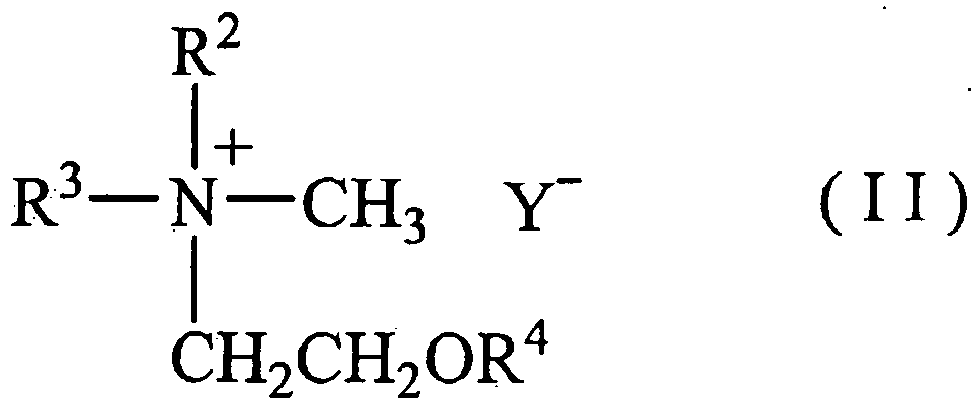
- The reagent according to claim 5, further comprising a reagent for measuring a reduced coenzyme.
- The reagent according to any one of claims 4 to 6, further comprising albumin.
- The reagent according to any one of claims 4 to 7, wherein the polyanion is dextran sulfate or a salt thereof.
- A kit for measuring cholesterol in high-density lipoprotein comprising a first reagent and a second reagent, wherein a substance represented by formula (II):

- A kit for measuring cholesterol in high-density lipoprotein comprising a first reagent and a second reagent, wherein a substance represented by formula (II):

- The kit according to claim 10, further comprising a reagent for measuring a reduced coenzyme in either the first or second reagent, or in both of the first and second reagents.
- The kit according to any one of claims 9 to 11, further comprising albumin in either the first or second reagent, or in both of the first and second reagents.
- The kit according to any one of claims 9 to 12, wherein the polyanion is dextran sulfate or a salt thereof.
Applications Claiming Priority (2)
| Application Number | Priority Date | Filing Date | Title |
|---|---|---|---|
| JP2012191144 | 2012-08-31 | ||
| PCT/JP2013/073250 WO2014034823A1 (en) | 2012-08-31 | 2013-08-30 | Method for measuring cholesterol in high-density lipoprotein |
Publications (3)
| Publication Number | Publication Date |
|---|---|
| EP2891718A1 EP2891718A1 (en) | 2015-07-08 |
| EP2891718A4 EP2891718A4 (en) | 2016-03-23 |
| EP2891718B1 true EP2891718B1 (en) | 2019-01-30 |
Family
ID=50183628
Family Applications (1)
| Application Number | Title | Priority Date | Filing Date |
|---|---|---|---|
| EP13833253.1A Active EP2891718B1 (en) | 2012-08-31 | 2013-08-30 | Method for measuring cholesterol in high-density lipoprotein |
Country Status (5)
| Country | Link |
|---|---|
| US (1) | US9670525B2 (en) |
| EP (1) | EP2891718B1 (en) |
| JP (1) | JP6372921B2 (en) |
| CN (2) | CN107267594B (en) |
| WO (1) | WO2014034823A1 (en) |
Families Citing this family (1)
| Publication number | Priority date | Publication date | Assignee | Title |
|---|---|---|---|---|
| CN112695071B (en) * | 2020-12-16 | 2022-12-30 | 浙江伊利康生物技术有限公司 | High-density lipoprotein 3 determination reagent, method and kit |
Family Cites Families (20)
| Publication number | Priority date | Publication date | Assignee | Title |
|---|---|---|---|---|
| US3956069A (en) * | 1974-04-29 | 1976-05-11 | Abbott Laboratories | Enzymatic assays for glucose, creatine phosphokinase or plasma ammonia |
| US4161425A (en) * | 1976-07-01 | 1979-07-17 | Beckman Instruments, Inc. | Enzymatic reagent system for total cholesterol assay using oxygen-rate method |
| DE3533288A1 (en) | 1985-09-18 | 1987-03-26 | Boehringer Mannheim Gmbh | METHOD AND REAGENT FOR SPECIFIC DETERMINATION OF HDL CHOLESTEROL IN SERUM |
| DE3636851A1 (en) | 1986-10-29 | 1988-05-11 | Boehringer Mannheim Gmbh | METHOD AND REAGENT FOR SPECIFIC DETERMINATION OF THE CHOLESTERIN OF THE HDL FACTION |
| JPH0878B2 (en) * | 1989-06-09 | 1996-01-10 | 和光純薬工業株式会社 | How to measure body fluid components |
| JP2600065B2 (en) | 1994-03-08 | 1997-04-16 | 協和メデックス株式会社 | Determination of cholesterol in high density lipoprotein |
| JPH08116996A (en) | 1994-10-26 | 1996-05-14 | Toyobo Co Ltd | Measurement of hdl-cholesterol in serum or plasma |
| JP2799835B2 (en) | 1995-01-31 | 1998-09-21 | 第一化学薬品株式会社 | How to determine cholesterol |
| JP3614514B2 (en) | 1995-06-21 | 2005-01-26 | 国際試薬株式会社 | Method for quantifying cholesterol in high-density lipoprotein fraction and reagent kit for quantification |
| JP3869471B2 (en) | 1996-04-22 | 2007-01-17 | 株式会社三菱化学ヤトロン | Method for specific measurement of HDL cholesterol and composition for measurement |
| JPH09285298A (en) | 1996-04-22 | 1997-11-04 | Iatron Lab Inc | HDL-cholesterol measuring method and measuring reagent |
| JP4547095B2 (en) | 1999-03-01 | 2010-09-22 | シスメックス株式会社 | Method for measuring biological sample components |
| EP1555326B1 (en) * | 2002-10-16 | 2009-11-25 | Kyowa Medex Co., Ltd. | Method and reagent for measuring cholesterol in high density lipoproteins |
| CN1918303A (en) * | 2004-04-15 | 2007-02-21 | 协和梅迪克斯株式会社 | Method of assaying cholesterol of high-density lipoprotein |
| CN100564539C (en) * | 2004-12-31 | 2009-12-02 | 浙江伊利康生物技术有限公司 | The mensuration reagent and the preparation method of cholesterol in the high-density lipoprotein (HDL) |
| TWI372783B (en) * | 2005-04-27 | 2012-09-21 | Kyowa Medex Co Ltd | A process for measuring the cholesterol in high density lipoprotein |
| US8785146B2 (en) | 2008-04-01 | 2014-07-22 | Beijing Strong Biotechnologies, Inc. | Method for quantitative measurements of HDL-C and LDL-C |
| WO2012011563A1 (en) * | 2010-07-23 | 2012-01-26 | デンカ生研株式会社 | Method for quantifying the amount of cholesterol in high-density lipoprotein 3 |
| JP5671029B2 (en) * | 2010-07-23 | 2015-02-18 | デンカ生研株式会社 | Method for quantifying cholesterol in high density lipoprotein 3 |
| US20130171674A1 (en) * | 2010-07-23 | 2013-07-04 | Denka Seiken Co., Ltd. | Method for quantifying the amount of cholesterol in high-density lipoprotein 3 |
-
2013
- 2013-08-30 EP EP13833253.1A patent/EP2891718B1/en active Active
- 2013-08-30 JP JP2014533096A patent/JP6372921B2/en active Active
- 2013-08-30 WO PCT/JP2013/073250 patent/WO2014034823A1/en not_active Ceased
- 2013-08-30 CN CN201710377398.4A patent/CN107267594B/en active Active
- 2013-08-30 US US14/420,925 patent/US9670525B2/en active Active
- 2013-08-30 CN CN201380043988.3A patent/CN104603282A/en active Pending
Non-Patent Citations (1)
| Title |
|---|
| None * |
Also Published As
| Publication number | Publication date |
|---|---|
| US9670525B2 (en) | 2017-06-06 |
| CN107267594A (en) | 2017-10-20 |
| EP2891718A1 (en) | 2015-07-08 |
| WO2014034823A1 (en) | 2014-03-06 |
| CN104603282A (en) | 2015-05-06 |
| JP6372921B2 (en) | 2018-08-15 |
| US20150232914A1 (en) | 2015-08-20 |
| CN107267594B (en) | 2022-05-17 |
| JPWO2014034823A1 (en) | 2016-08-08 |
| EP2891718A4 (en) | 2016-03-23 |
| HK1206798A1 (en) | 2016-01-15 |
Similar Documents
| Publication | Publication Date | Title |
|---|---|---|
| EP1555326B1 (en) | Method and reagent for measuring cholesterol in high density lipoproteins | |
| EP1849876B1 (en) | Method, reagent and kit for determination of cholesterol in remnant-like particles (rlp) | |
| EP1876243B1 (en) | Method for determination of cholesterol in high-density lipoprotein | |
| EP2363498B1 (en) | Method for quantitatively determining cholesterol in low-density lipoproteins, reagent for quantitative determination, and quantitative determination kit | |
| EP1715060A1 (en) | Method, reagent, and kit for determining cholesterol in very-low-density lipoprotein remnant (vldl remnant) | |
| JP4796489B2 (en) | Method for measuring cholesterol in high density lipoprotein | |
| US9670525B2 (en) | Method for measuring cholesterol in high-density lipoprotein | |
| HK1206798B (en) | Method for measuring cholesterol in high-density lipoprotein | |
| HK1109916B (en) | Method for determination of cholesterol in high-density lipoprotein | |
| HK1161317B (en) | Method for quantitatively determining cholesterol in low-density lipoproteins, reagent for quantitative determination, and quantitative determination kit | |
| HK1109648B (en) | Method, reagent and kit for determination of cholesterol in remnant-like particles (rlp) |
Legal Events
| Date | Code | Title | Description |
|---|---|---|---|
| PUAI | Public reference made under article 153(3) epc to a published international application that has entered the european phase |
Free format text: ORIGINAL CODE: 0009012 |
|
| 17P | Request for examination filed |
Effective date: 20150324 |
|
| AK | Designated contracting states |
Kind code of ref document: A1 Designated state(s): AL AT BE BG CH CY CZ DE DK EE ES FI FR GB GR HR HU IE IS IT LI LT LU LV MC MK MT NL NO PL PT RO RS SE SI SK SM TR |
|
| AX | Request for extension of the european patent |
Extension state: BA ME |
|
| DAX | Request for extension of the european patent (deleted) | ||
| REG | Reference to a national code |
Ref country code: HK Ref legal event code: DE Ref document number: 1206798 Country of ref document: HK |
|
| RA4 | Supplementary search report drawn up and despatched (corrected) |
Effective date: 20160224 |
|
| RIC1 | Information provided on ipc code assigned before grant |
Ipc: C12Q 1/60 20060101ALI20160218BHEP Ipc: G01N 33/92 20060101ALI20160218BHEP Ipc: C12Q 1/44 20060101AFI20160218BHEP Ipc: C12Q 1/26 20060101ALI20160218BHEP Ipc: C12Q 1/32 20060101ALI20160218BHEP |
|
| STAA | Information on the status of an ep patent application or granted ep patent |
Free format text: STATUS: EXAMINATION IS IN PROGRESS |
|
| 17Q | First examination report despatched |
Effective date: 20170725 |
|
| GRAP | Despatch of communication of intention to grant a patent |
Free format text: ORIGINAL CODE: EPIDOSNIGR1 |
|
| STAA | Information on the status of an ep patent application or granted ep patent |
Free format text: STATUS: GRANT OF PATENT IS INTENDED |
|
| INTG | Intention to grant announced |
Effective date: 20180717 |
|
| GRAS | Grant fee paid |
Free format text: ORIGINAL CODE: EPIDOSNIGR3 |
|
| GRAJ | Information related to disapproval of communication of intention to grant by the applicant or resumption of examination proceedings by the epo deleted |
Free format text: ORIGINAL CODE: EPIDOSDIGR1 |
|
| GRAL | Information related to payment of fee for publishing/printing deleted |
Free format text: ORIGINAL CODE: EPIDOSDIGR3 |
|
| STAA | Information on the status of an ep patent application or granted ep patent |
Free format text: STATUS: EXAMINATION IS IN PROGRESS |
|
| GRAR | Information related to intention to grant a patent recorded |
Free format text: ORIGINAL CODE: EPIDOSNIGR71 |
|
| STAA | Information on the status of an ep patent application or granted ep patent |
Free format text: STATUS: GRANT OF PATENT IS INTENDED |
|
| GRAA | (expected) grant |
Free format text: ORIGINAL CODE: 0009210 |
|
| STAA | Information on the status of an ep patent application or granted ep patent |
Free format text: STATUS: THE PATENT HAS BEEN GRANTED |
|
| INTC | Intention to grant announced (deleted) | ||
| INTG | Intention to grant announced |
Effective date: 20181218 |
|
| AK | Designated contracting states |
Kind code of ref document: B1 Designated state(s): AL AT BE BG CH CY CZ DE DK EE ES FI FR GB GR HR HU IE IS IT LI LT LU LV MC MK MT NL NO PL PT RO RS SE SI SK SM TR |
|
| REG | Reference to a national code |
Ref country code: GB Ref legal event code: FG4D |
|
| REG | Reference to a national code |
Ref country code: CH Ref legal event code: EP |
|
| REG | Reference to a national code |
Ref country code: AT Ref legal event code: REF Ref document number: 1093300 Country of ref document: AT Kind code of ref document: T Effective date: 20190215 |
|
| REG | Reference to a national code |
Ref country code: IE Ref legal event code: FG4D |
|
| REG | Reference to a national code |
Ref country code: DE Ref legal event code: R096 Ref document number: 602013050339 Country of ref document: DE |
|
| REG | Reference to a national code |
Ref country code: LT Ref legal event code: MG4D |
|
| PG25 | Lapsed in a contracting state [announced via postgrant information from national office to epo] |
Ref country code: PT Free format text: LAPSE BECAUSE OF FAILURE TO SUBMIT A TRANSLATION OF THE DESCRIPTION OR TO PAY THE FEE WITHIN THE PRESCRIBED TIME-LIMIT Effective date: 20190530 Ref country code: ES Free format text: LAPSE BECAUSE OF FAILURE TO SUBMIT A TRANSLATION OF THE DESCRIPTION OR TO PAY THE FEE WITHIN THE PRESCRIBED TIME-LIMIT Effective date: 20190130 Ref country code: NL Free format text: LAPSE BECAUSE OF FAILURE TO SUBMIT A TRANSLATION OF THE DESCRIPTION OR TO PAY THE FEE WITHIN THE PRESCRIBED TIME-LIMIT Effective date: 20190130 Ref country code: SE Free format text: LAPSE BECAUSE OF FAILURE TO SUBMIT A TRANSLATION OF THE DESCRIPTION OR TO PAY THE FEE WITHIN THE PRESCRIBED TIME-LIMIT Effective date: 20190130 Ref country code: LT Free format text: LAPSE BECAUSE OF FAILURE TO SUBMIT A TRANSLATION OF THE DESCRIPTION OR TO PAY THE FEE WITHIN THE PRESCRIBED TIME-LIMIT Effective date: 20190130 Ref country code: PL Free format text: LAPSE BECAUSE OF FAILURE TO SUBMIT A TRANSLATION OF THE DESCRIPTION OR TO PAY THE FEE WITHIN THE PRESCRIBED TIME-LIMIT Effective date: 20190130 Ref country code: NO Free format text: LAPSE BECAUSE OF FAILURE TO SUBMIT A TRANSLATION OF THE DESCRIPTION OR TO PAY THE FEE WITHIN THE PRESCRIBED TIME-LIMIT Effective date: 20190430 Ref country code: FI Free format text: LAPSE BECAUSE OF FAILURE TO SUBMIT A TRANSLATION OF THE DESCRIPTION OR TO PAY THE FEE WITHIN THE PRESCRIBED TIME-LIMIT Effective date: 20190130 |
|
| REG | Reference to a national code |
Ref country code: AT Ref legal event code: MK05 Ref document number: 1093300 Country of ref document: AT Kind code of ref document: T Effective date: 20190130 |
|
| PG25 | Lapsed in a contracting state [announced via postgrant information from national office to epo] |
Ref country code: BG Free format text: LAPSE BECAUSE OF FAILURE TO SUBMIT A TRANSLATION OF THE DESCRIPTION OR TO PAY THE FEE WITHIN THE PRESCRIBED TIME-LIMIT Effective date: 20190430 Ref country code: IS Free format text: LAPSE BECAUSE OF FAILURE TO SUBMIT A TRANSLATION OF THE DESCRIPTION OR TO PAY THE FEE WITHIN THE PRESCRIBED TIME-LIMIT Effective date: 20190530 Ref country code: RS Free format text: LAPSE BECAUSE OF FAILURE TO SUBMIT A TRANSLATION OF THE DESCRIPTION OR TO PAY THE FEE WITHIN THE PRESCRIBED TIME-LIMIT Effective date: 20190130 Ref country code: GR Free format text: LAPSE BECAUSE OF FAILURE TO SUBMIT A TRANSLATION OF THE DESCRIPTION OR TO PAY THE FEE WITHIN THE PRESCRIBED TIME-LIMIT Effective date: 20190501 Ref country code: LV Free format text: LAPSE BECAUSE OF FAILURE TO SUBMIT A TRANSLATION OF THE DESCRIPTION OR TO PAY THE FEE WITHIN THE PRESCRIBED TIME-LIMIT Effective date: 20190130 Ref country code: HR Free format text: LAPSE BECAUSE OF FAILURE TO SUBMIT A TRANSLATION OF THE DESCRIPTION OR TO PAY THE FEE WITHIN THE PRESCRIBED TIME-LIMIT Effective date: 20190130 |
|
| PG25 | Lapsed in a contracting state [announced via postgrant information from national office to epo] |
Ref country code: RO Free format text: LAPSE BECAUSE OF FAILURE TO SUBMIT A TRANSLATION OF THE DESCRIPTION OR TO PAY THE FEE WITHIN THE PRESCRIBED TIME-LIMIT Effective date: 20190130 Ref country code: IT Free format text: LAPSE BECAUSE OF FAILURE TO SUBMIT A TRANSLATION OF THE DESCRIPTION OR TO PAY THE FEE WITHIN THE PRESCRIBED TIME-LIMIT Effective date: 20190130 Ref country code: SK Free format text: LAPSE BECAUSE OF FAILURE TO SUBMIT A TRANSLATION OF THE DESCRIPTION OR TO PAY THE FEE WITHIN THE PRESCRIBED TIME-LIMIT Effective date: 20190130 Ref country code: AL Free format text: LAPSE BECAUSE OF FAILURE TO SUBMIT A TRANSLATION OF THE DESCRIPTION OR TO PAY THE FEE WITHIN THE PRESCRIBED TIME-LIMIT Effective date: 20190130 Ref country code: DK Free format text: LAPSE BECAUSE OF FAILURE TO SUBMIT A TRANSLATION OF THE DESCRIPTION OR TO PAY THE FEE WITHIN THE PRESCRIBED TIME-LIMIT Effective date: 20190130 Ref country code: EE Free format text: LAPSE BECAUSE OF FAILURE TO SUBMIT A TRANSLATION OF THE DESCRIPTION OR TO PAY THE FEE WITHIN THE PRESCRIBED TIME-LIMIT Effective date: 20190130 Ref country code: CZ Free format text: LAPSE BECAUSE OF FAILURE TO SUBMIT A TRANSLATION OF THE DESCRIPTION OR TO PAY THE FEE WITHIN THE PRESCRIBED TIME-LIMIT Effective date: 20190130 |
|
| REG | Reference to a national code |
Ref country code: DE Ref legal event code: R097 Ref document number: 602013050339 Country of ref document: DE |
|
| PG25 | Lapsed in a contracting state [announced via postgrant information from national office to epo] |
Ref country code: SM Free format text: LAPSE BECAUSE OF FAILURE TO SUBMIT A TRANSLATION OF THE DESCRIPTION OR TO PAY THE FEE WITHIN THE PRESCRIBED TIME-LIMIT Effective date: 20190130 |
|
| PLBE | No opposition filed within time limit |
Free format text: ORIGINAL CODE: 0009261 |
|
| STAA | Information on the status of an ep patent application or granted ep patent |
Free format text: STATUS: NO OPPOSITION FILED WITHIN TIME LIMIT |
|
| PG25 | Lapsed in a contracting state [announced via postgrant information from national office to epo] |
Ref country code: AT Free format text: LAPSE BECAUSE OF FAILURE TO SUBMIT A TRANSLATION OF THE DESCRIPTION OR TO PAY THE FEE WITHIN THE PRESCRIBED TIME-LIMIT Effective date: 20190130 |
|
| 26N | No opposition filed |
Effective date: 20191031 |
|
| PG25 | Lapsed in a contracting state [announced via postgrant information from national office to epo] |
Ref country code: SI Free format text: LAPSE BECAUSE OF FAILURE TO SUBMIT A TRANSLATION OF THE DESCRIPTION OR TO PAY THE FEE WITHIN THE PRESCRIBED TIME-LIMIT Effective date: 20190130 |
|
| PG25 | Lapsed in a contracting state [announced via postgrant information from national office to epo] |
Ref country code: TR Free format text: LAPSE BECAUSE OF FAILURE TO SUBMIT A TRANSLATION OF THE DESCRIPTION OR TO PAY THE FEE WITHIN THE PRESCRIBED TIME-LIMIT Effective date: 20190130 |
|
| PG25 | Lapsed in a contracting state [announced via postgrant information from national office to epo] |
Ref country code: CH Free format text: LAPSE BECAUSE OF NON-PAYMENT OF DUE FEES Effective date: 20190831 Ref country code: LU Free format text: LAPSE BECAUSE OF NON-PAYMENT OF DUE FEES Effective date: 20190830 Ref country code: LI Free format text: LAPSE BECAUSE OF NON-PAYMENT OF DUE FEES Effective date: 20190831 Ref country code: MC Free format text: LAPSE BECAUSE OF FAILURE TO SUBMIT A TRANSLATION OF THE DESCRIPTION OR TO PAY THE FEE WITHIN THE PRESCRIBED TIME-LIMIT Effective date: 20190130 |
|
| REG | Reference to a national code |
Ref country code: BE Ref legal event code: MM Effective date: 20190831 |
|
| PG25 | Lapsed in a contracting state [announced via postgrant information from national office to epo] |
Ref country code: IE Free format text: LAPSE BECAUSE OF NON-PAYMENT OF DUE FEES Effective date: 20190830 |
|
| PG25 | Lapsed in a contracting state [announced via postgrant information from national office to epo] |
Ref country code: BE Free format text: LAPSE BECAUSE OF NON-PAYMENT OF DUE FEES Effective date: 20190831 |
|
| PG25 | Lapsed in a contracting state [announced via postgrant information from national office to epo] |
Ref country code: CY Free format text: LAPSE BECAUSE OF FAILURE TO SUBMIT A TRANSLATION OF THE DESCRIPTION OR TO PAY THE FEE WITHIN THE PRESCRIBED TIME-LIMIT Effective date: 20190130 |
|
| PG25 | Lapsed in a contracting state [announced via postgrant information from national office to epo] |
Ref country code: MT Free format text: LAPSE BECAUSE OF FAILURE TO SUBMIT A TRANSLATION OF THE DESCRIPTION OR TO PAY THE FEE WITHIN THE PRESCRIBED TIME-LIMIT Effective date: 20190130 Ref country code: HU Free format text: LAPSE BECAUSE OF FAILURE TO SUBMIT A TRANSLATION OF THE DESCRIPTION OR TO PAY THE FEE WITHIN THE PRESCRIBED TIME-LIMIT; INVALID AB INITIO Effective date: 20130830 |
|
| PG25 | Lapsed in a contracting state [announced via postgrant information from national office to epo] |
Ref country code: MK Free format text: LAPSE BECAUSE OF FAILURE TO SUBMIT A TRANSLATION OF THE DESCRIPTION OR TO PAY THE FEE WITHIN THE PRESCRIBED TIME-LIMIT Effective date: 20190130 |
|
| P01 | Opt-out of the competence of the unified patent court (upc) registered |
Effective date: 20230515 |
|
| REG | Reference to a national code |
Ref country code: DE Ref legal event code: R081 Ref document number: 602013050339 Country of ref document: DE Owner name: CANON MEDICAL DIAGNOSTICS CORPORATION, JP Free format text: FORMER OWNER: KYOWA MEDEX CO., LTD., TOKYO, JP |
|
| PGFP | Annual fee paid to national office [announced via postgrant information from national office to epo] |
Ref country code: DE Payment date: 20250702 Year of fee payment: 13 |
|
| PGFP | Annual fee paid to national office [announced via postgrant information from national office to epo] |
Ref country code: GB Payment date: 20250703 Year of fee payment: 13 |
|
| PGFP | Annual fee paid to national office [announced via postgrant information from national office to epo] |
Ref country code: FR Payment date: 20250703 Year of fee payment: 13 |