EP2890044A2 - Nachrichtenerweiterungsprozessoren, verfahren, -systeme und -anweisungen der SM3-Hash-Funktion - Google Patents
Nachrichtenerweiterungsprozessoren, verfahren, -systeme und -anweisungen der SM3-Hash-Funktion Download PDFInfo
- Publication number
- EP2890044A2 EP2890044A2 EP14194120.3A EP14194120A EP2890044A2 EP 2890044 A2 EP2890044 A2 EP 2890044A2 EP 14194120 A EP14194120 A EP 14194120A EP 2890044 A2 EP2890044 A2 EP 2890044A2
- Authority
- EP
- European Patent Office
- Prior art keywords
- messages
- xor
- packed data
- instruction
- processor
- Prior art date
- Legal status (The legal status is an assumption and is not a legal conclusion. Google has not performed a legal analysis and makes no representation as to the accuracy of the status listed.)
- Pending
Links
Images




Classifications
-
- G—PHYSICS
- G09—EDUCATION; CRYPTOGRAPHY; DISPLAY; ADVERTISING; SEALS
- G09C—CIPHERING OR DECIPHERING APPARATUS FOR CRYPTOGRAPHIC OR OTHER PURPOSES INVOLVING THE NEED FOR SECRECY
- G09C1/00—Apparatus or methods whereby a given sequence of signs, e.g. an intelligible text, is transformed into an unintelligible sequence of signs by transposing the signs or groups of signs or by replacing them by others according to a predetermined system
-
- G—PHYSICS
- G06—COMPUTING OR CALCULATING; COUNTING
- G06F—ELECTRIC DIGITAL DATA PROCESSING
- G06F9/00—Arrangements for program control, e.g. control units
- G06F9/06—Arrangements for program control, e.g. control units using stored programs, i.e. using an internal store of processing equipment to receive or retain programs
- G06F9/30—Arrangements for executing machine instructions, e.g. instruction decode
- G06F9/30145—Instruction analysis, e.g. decoding, instruction word fields
-
- G—PHYSICS
- G06—COMPUTING OR CALCULATING; COUNTING
- G06F—ELECTRIC DIGITAL DATA PROCESSING
- G06F9/00—Arrangements for program control, e.g. control units
- G06F9/06—Arrangements for program control, e.g. control units using stored programs, i.e. using an internal store of processing equipment to receive or retain programs
- G06F9/30—Arrangements for executing machine instructions, e.g. instruction decode
- G06F9/30003—Arrangements for executing specific machine instructions
- G06F9/30007—Arrangements for executing specific machine instructions to perform operations on data operands
-
- G—PHYSICS
- G06—COMPUTING OR CALCULATING; COUNTING
- G06F—ELECTRIC DIGITAL DATA PROCESSING
- G06F9/00—Arrangements for program control, e.g. control units
- G06F9/06—Arrangements for program control, e.g. control units using stored programs, i.e. using an internal store of processing equipment to receive or retain programs
- G06F9/30—Arrangements for executing machine instructions, e.g. instruction decode
- G06F9/30003—Arrangements for executing specific machine instructions
- G06F9/30007—Arrangements for executing specific machine instructions to perform operations on data operands
- G06F9/30036—Instructions to perform operations on packed data, e.g. vector, tile or matrix operations
-
- G—PHYSICS
- G06—COMPUTING OR CALCULATING; COUNTING
- G06F—ELECTRIC DIGITAL DATA PROCESSING
- G06F9/00—Arrangements for program control, e.g. control units
- G06F9/06—Arrangements for program control, e.g. control units using stored programs, i.e. using an internal store of processing equipment to receive or retain programs
- G06F9/30—Arrangements for executing machine instructions, e.g. instruction decode
- G06F9/30003—Arrangements for executing specific machine instructions
- G06F9/30007—Arrangements for executing specific machine instructions to perform operations on data operands
- G06F9/30036—Instructions to perform operations on packed data, e.g. vector, tile or matrix operations
- G06F9/30038—Instructions to perform operations on packed data, e.g. vector, tile or matrix operations using a mask
-
- H—ELECTRICITY
- H04—ELECTRIC COMMUNICATION TECHNIQUE
- H04L—TRANSMISSION OF DIGITAL INFORMATION, e.g. TELEGRAPHIC COMMUNICATION
- H04L9/00—Cryptographic mechanisms or cryptographic arrangements for secret or secure communications; Network security protocols
- H04L9/06—Cryptographic mechanisms or cryptographic arrangements for secret or secure communications; Network security protocols the encryption apparatus using shift registers or memories for block-wise or stream coding, e.g. DES systems or RC4; Hash functions; Pseudorandom sequence generators
- H04L9/0643—Hash functions, e.g. MD5, SHA, HMAC or f9 MAC
-
- H—ELECTRICITY
- H04—ELECTRIC COMMUNICATION TECHNIQUE
- H04L—TRANSMISSION OF DIGITAL INFORMATION, e.g. TELEGRAPHIC COMMUNICATION
- H04L2209/00—Additional information or applications relating to cryptographic mechanisms or cryptographic arrangements for secret or secure communication H04L9/00
- H04L2209/12—Details relating to cryptographic hardware or logic circuitry
- H04L2209/122—Hardware reduction or efficient architectures
Definitions
- Embodiments generally relate to processors.
- embodiments generally relate to evaluating hash functions with processors.
- Hash functions are a type of cryptographic functions that are widely used in computer systems and other electronic devices.
- the hash functions generally take a message as an input, generate a corresponding hash value by applying the hash function to the message, and output a hash value.
- the same hash value should be generated if the same hash function is evaluated with the same message.
- Such hash functions are used for various purposes, such as for verification (e.g., verifying the integrity of files, data, or messages), identification (e.g., identifying files, data, or messages), authentication (e.g., generating message authentication codes), generating digital signatures, generating pseudorandom numbers, and the like.
- a hash function may be used to generate a hash value for a given message.
- a hash value may be recomputed for the message using the same hash function. If the hash values are identical, then it can be assumed that the message hasn't been changed. In contrast, if the hash values are different, then it can be assumed that the message has been changed.
- SM3 hash function One known type of hash function or secure hashing algorithm is the SM3 hash function, which has been published by the Chinese Commercial Cryptography Association Office. An English language description of the SM3 hash function has been published as the Internet Engineering Task Force (IETF) Internet-Draft entitled "SM3 Hash Function," by S. Shen and X. Lee, on October 24, 2011 . SM3 is currently specified as the hashing algorithm for the TCM (Trusted Computing Module) by the China Information Security Standardization Technical Committee (TC260) initiative. For a message of a given length, the SM3 hash algorithm generates a hash value having a length of 256-bits after padding and iterative compression. The iterative procedure involves dividing the message after padding into 512-bit blocks.
- IETF Internet Engineering Task Force
- TC260 China Information Security Standardization Technical Committee
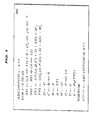
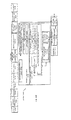
- Figure 1 illustrates the compression function 100 of the SM3 hash function.
- an SM3 hash function message expansion instruction may be used to calculate or otherwise generate one or more messages that are to be used in the compression function of the SM3 hash function.
- the W j messages are added to the evaluation of the Boolean function GGj.
- the W' j messages are added to the evaluation of the Boolean function FF j .
- the terms W 0 to W 15 are obtained from the 512-bit block being compressed.
- the 512-bit message block being compressed is divided or partitioned into sixteen 32-bit words referenced in big-endian format as W 0 to W 15 .
- the remaining messages are calculated during a message extension or message expansion portion of the SM3 hash algorithm.
- the W j messages for iterations 16 to 63 may be calculated according to Equation 1 with the permutation function P1 according to Equation 2. Notice that the calculation of a W j message for a given round (e.g., round j) depend on messages from earlier rounds. In particular, as can be readily seen in Equation 1, the W j message for a given round (e.g., round j) depends on the prior round messages W j-16 , W j-13 , W j-9 , W j-6 , and W j-3 . W j-3 is the message from three rounds back, W j-16 is the message from sixteen rounds back, and so on.
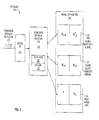
- the processor 210 may receive the SM3 hash function message expansion instruction 212.
- this instruction may also be referred to herein simply as an SM3 message expansion instruction.
- the SM3 message expansion instruction may be received from an instruction fetch unit, an instruction queue, or the like.
- the SM3 message expansion instruction may represent a macroinstruction, assembly language instruction, machine code instruction, or other instruction or control signal of an instruction set of the processor.
- Evaluating Equation 1 includes generating a value that would be generated by Equation 1 and includes the possibility of some calculations from Equation 1 being performed previously (e.g., to generate logical combinations), as will be described further below.
- W j-16 , W j-9 , W j-3 , W j-13 , and W j-6 are five messages of the compression function of the SM3 hash function.
- XOR is an exclusive OR operation.
- the symbol ⁇ designates a rotate operation.
- the combination W* j-6 effectively groups two messages into a same single value (e.g., a 32-bit data element).
- a single 32-bit data element may be used to specify a combination of the two messages. This may optionally be used when the available number of data elements in the source operands do not permit specifying all of the messages.
- all of the messages needed for the evaluation of Equation 1 may optionally be explicitly specified in the source operands if they have enough data elements to explicitly specify all such messages.
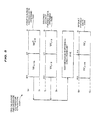
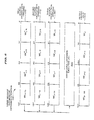
- One example of possible messages in the source operands is provided, although it is to be appreciated that in various embodiments, the first and second source packed data operands may optionally specify the information shown in any of Figures 4-6 , or other information described elsewhere herein.
- the processor includes a decode unit or decoder 214.
- the decode unit may receive and decode the SM3 message expansion instruction.
- the decode unit may output one or more microinstructions, micro-operations, micro-code entry points, decoded instructions or control signals, or other relatively lower-level instructions or control signals that reflect, represent, and/or are derived from the SM3 message expansion instruction.
- the one or more relatively lower-level instructions or control signals may implement the relatively higher-level SM3 message expansion instruction through one or more relatively lower-level (e.g., circuit-level or hardware-level) operations.
- the result packed data 224 may include a W j message corresponding to a round j of the compression function of the SM3 hash function (e.g., to be input to the round j of the compression function).
- the W j message may be stored in the result packed data.
- the result packed data may also have another data element, which is indicated by an asterisk (*) to indicate that it is a don't care value (e.g., an existing value may be left unchanged, zero or another predetermined value may be stored, etc.).
- the SM3 message expansion execution unit may be operable to use the data elements of the first and second source packed data operands to evaluate Equations 1 and 2.
- Equation 1 is used to generate a current round message W j
- Equation 5 is used to generate a next round message W j+1 that is one round later than W j
- Equations 1 and 5 include ten messages.
- Equation 1 includes the five messages W j-16 , W j-9 , W j-3 , W j-13 , and W j-6
- Equation 5 includes the five messages W j-15 , W j-8 , W j-2 , W j-12 , and W j-5 .
- the messages in Equation 1 are each for one round prior to the corresponding messages in Equation 5.
- one of the two remaining data elements may store a first logical combination W* j-6 which represents and/or is equal to W j-13 ⁇ 7) XOR W j-6 .
- W j-13 and W j-6 are two messages from Equation 1 that are not explicitly specified in the source operands.
- another of the two remaining data elements may store a second logical combination W* j-5 .
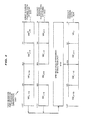
- the destination storage location used to store the result packed data 424 may optionally be a same storage location as used for one of the source packed data operands.
- the instruction may have a source/destination operand that explicitly specified once but is implicitly used as both a source operand and then later as a destination operand.
- the storage location for the first packed data operand 420 has been reused for the result packed data 424, although this is not required.
- messages W j and/or W j+1 may be stored over one or more of the logical combinations. For example, as shown in the illustrated example, W j+1 may be stored over W* j-5 and W j may be stored over W* j-6 .
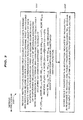
- the SM3EXPAND instruction only indicates the operands XMM1 and XMM2.
- W* j-6 is equal to (W j-13 ⁇ 7) XOR W j-6 .
- W* j-5 is equal to (W j-12 ⁇ 7) XOR W j-5 .
- Performing the SM3EXPAND instruction stores a result packed data in the XMM1 register.
- a first new message W j is equal to P1(W j-16 XOR W j-9 XOR (W j-3 ⁇ 15)) XOR W* j-6 .
- the function P1(X) is equal to X XOR (X ⁇ 15) XOR (X ⁇ 23).
- one of the source operands may optionally be wider than 64-bits (e.g., a 128-bit operand) to provide an additional data element so that all five messages needed to evaluate Equations 1 and 2 may be explicitly provided.
- the first, second, and third source packed data operands may be provided to an SM3 message expansion execution logic or unit 616.
- a result packed data operand 624 may be generated and stored in a destination storage location in response to the instruction.
- the destination storage location may be a packed data register, a memory location, or other storage location.
- the result packed data may include a W j message, a W j+1 message, and a W j+2 message, respectively, to be input to a round j, a round j+1, and a round j+2 of the compression function of the SM3 hash function.
- this three message SM3 message expansion operation/instruction may significantly help to increase the speed, efficiency, and/or performance of implementing the SM3 message generation.
- the destination storage location used to store the result packed data 624 may optionally be the same storage location as was used for one of the source packed data operands.
- the instruction may implicitly indicate that a source operand is to be reused as a destination operand.
- one or more or all of W j , W j+1 , and W j+2 may optionally be stored over the logical combination(s) (e.g., W* j-6 , W* j-5 , W* j-4 ), although this is not required.
- a source need not be used as a destination.
- W j , W j+1 , and W j+2 may optionally be stored in a same order as some or most other pairs of adjacent messages in the operands, although this is not required.
- the one message generation operation of Figure 5 and a three message generation operation of Figure 6 bear certain similarities to the two message generation operation of Figure 4 .
- the different and/or additional characteristics for the one and three message generation operations have primarily been described, without repeating all the optionally similar or common characteristics and details relative to the two message generation operation of Figure 4 .
- the previously described characteristics and details of the two message generation operation may also optionally apply to the one and three message generation operations, unless stated otherwise or otherwise clearly apparent.
- the logic of the execution unit is operable to implement Equations 1 plus 2, and Equations 5 plus 2, except that the logical combinations for W* j-6 and W* j-5 are performed outside the execution unit in this example.
- the logical combinations may instead optionally also be performed by the SM3 message expansion execution unit if the relevant messages are explicitly provided by the source operands.
- other arrangements of the data elements within the source packed data and/or result packed data may optionally be used with simple routing of the data elements.
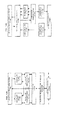
- Figure 8 is a block diagram of an embodiment of a suitable instruction format 870.
- the instruction format includes an operation code or opcode 872.
- the opcode may represent a plurality of bits or one or more fields that are operable to identify the instruction and/or the operation to be performed (e.g., an SM3 message expansion operation).
- the instruction format also optionally includes a first source specifier 874, a second source specifier 876, and a destination specifier 878.
- each of these specifiers may include bits or one or more fields to specify an address of a register, memory location, or other storage location.
- one or more of the first source specifier, the second source specifier, and the destination specifier may optionally be implicit to the instruction rather than being explicitly specified.
- a same storage location used for one of the sources may optionally be implicitly used as the destination.
- the instruction specifies only two sources, but in other embodiments a third source may also optionally be specified or indicated. It is to be appreciated that this is just one illustrative example. Alternate embodiments may add additional fields.
- the illustrated order/arrangement of the fields and is not required, but rather the fields may be rearranged, overlapped, fields need not include contiguous sequences of bits but rather may be composed of non-contiguous or separated bits, etc.
- a second instance of the SM3EXPAND instruction may be used to generate two new messages W j+3 and W k+2 .
- SM3EXPAND XMM5, XMM2 ; W j-13 , W j-14 , W j+3 , W j+2 is stored in XMM5
- this algorithm uses a relatively low number of XMM registers and a relatively low number of shuffle instructions and permits a tight loop (only 16 rounds need to be unrolled) for code size reduction.
- the calculation of the W j messages for rounds 16 to 63 and the W' j messages for rounds 12 to 63 may be calculated before the evaluation of the compression function for a given round which uses those messages as inputs.
- the W j and W' j messages may be calculated in parallel with the evaluation of the compression function for an earlier round so that the performance of implementing the SM3 hash function is not significantly limited by message expansion.
- Figure 10B shows processor core 1090 including a front end unit 1030 coupled to an execution engine unit 1050, and both are coupled to a memory unit 1070.
- the core 1090 may be a reduced instruction set computing (RISC) core, a complex instruction set computing (CISC) core, a very long instruction word (VLIW) core, or a hybrid or alternative core type.
- the core 1090 may be a special-purpose core, such as, for example, a network or communication core, compression engine, coprocessor core, general purpose computing graphics processing unit (GPGPU) core, graphics core, or the like.
- GPGPU general purpose computing graphics processing unit
- the set of memory access units 1064 is coupled to the memory unit 1070, which includes a data TLB unit 1072 coupled to a data cache unit 1074 coupled to a level 2 (L2) cache unit 1076.
- the memory access units 1064 may include a load unit, a store address unit, and a store data unit, each of which is coupled to the data TLB unit 1072 in the memory unit 1070.
- the instruction cache unit 1034 is further coupled to a level 2 (L2) cache unit 1076 in the memory unit 1070.
- the L2 cache unit 1076 is coupled to one or more other levels of cache and eventually to a main memory.
- Figure 11B is an expanded view of part of the processor core in Figure 11A according to embodiments of the invention.
- Figure 11B includes an L1 data cache 1106A part of the L1 cache 1104, as well as more detail regarding the vector unit 1110 and the vector registers 1114.
- the vector unit 1110 is a 16-wide vector processing unit (VPU) (see the 16-wide ALU 1128), which executes one or more of integer, single-precision float, and double-precision float instructions.
- the VPU supports swizzling the register inputs with swizzle unit 1120, numeric conversion with numeric convert units 1122A-B, and replication with replication unit 1124 on the memory input.
- Write mask registers 1126 allow predicating resulting vector writes.
- the cores 1202A-N may be homogenous or heterogeneous in terms of architecture instruction set; that is, two or more of the cores 1202A-N may be capable of execution the same instruction set, while others may be capable of executing only a subset of that instruction set or a different instruction set.
- Figures 13-16 are block diagrams of exemplary computer architectures.
- Other system designs and configurations known in the arts for laptops, desktops, handheld PCs, personal digital assistants, engineering workstations, servers, network devices, network hubs, switches, embedded processors, digital signal processors (DSPs), graphics devices, video game devices, set-top boxes, micro controllers, cell phones, portable media players, hand held devices, and various other electronic devices, are also suitable.
- DSPs digital signal processors
- graphics devices video game devices, set-top boxes, micro controllers, cell phones, portable media players, hand held devices, and various other electronic devices, are also suitable.
- DSPs digital signal processors
- a huge variety of systems or electronic devices capable of incorporating a processor and/or other execution logic as disclosed herein are generally suitable.
- processors 1315 may include one or more of the processing cores described herein and may be some version of the processor 1200.
- suitable machines include, but are not limited to, a general-purpose processor, a special-purpose processor, an instruction processing apparatus, a digital logic circuit, an integrated circuit, or the like. Still other examples of suitable machines include a computing device or other electronic device that includes a processor, instruction processing apparatus, digital logic circuit, or integrated circuit. Examples of such computing devices and electronic devices include, but are not limited to, desktop computers, laptop computers, notebook computers, tablet computers, netbooks, smartphones, cellular phones, servers, network devices (e.g., routers and switches.), Mobile Internet devices (MIDs), media players, smart televisions, nettops, set-top boxes, and video game controllers.
- MIDs Mobile Internet devices
- Example 2 includes the processor of any preceding example and optionally in which the decode unit is to decode the instruction in which the data elements of the first and second source packed data operands are to include a first subset of the messages W j-16 , W j-9 , W j-3 , W j-13 , and W j-6 and are to include a logical combination of a second different subset of the messages Wj-16 , W j-9 , W j-3 , W j-13 , and W j-6 .
- Example 9 includes the processor of any of Examples 5 to 8 and optionally in which the data elements of the first and second source packed data operands are to include at least three pairs of messages from adjacent rounds selected from a pair W j-2 and W j-3 , a pair W j-5 and W j-6 , a pair W j-8 and W j-9 , a pair W j-12 and W j-13 , and a pair W j-15 and W j-16 . Also, in which each of the at least three pairs of messages is to have its corresponding messages in a same source packed data operand.
- Example 15 includes the method of any preceding example and optionally in which receiving comprises receiving the instruction that is to implicitly indicate that a storage location to be used for one of the first and second source packed data operands is also to be used as the destination storage location. Also, in which the execution unit is to store the W j message over the logical combination of the second subset of the messages.
- the data elements of the first and second source packed data operands are to include a first subset of the messages W j-15 , W j-8 , W j-2 , W j-12 , and W j-5 and a second combination of a second different subset of the messages W j-15 , W j-8 , W j-2 , W j-12 , and W j-5 .
- Example 23 is an article of manufacture that includes a non-transitory machine-readable storage medium.
- the non-transitory machine-readable storage medium stores an instruction.
- the instruction is to indicate a first source packed data operand and to indicate a second source packed data operand.
- the first and second source packed data operands are each to include a plurality of data elements.
- the data elements of the first and second source packed data operands are to include a plurality of messages associated with a compression function of an SM3 hash function and to include information sufficient to evaluate:
Landscapes
- Engineering & Computer Science (AREA)
- Theoretical Computer Science (AREA)
- Software Systems (AREA)
- Physics & Mathematics (AREA)
- General Physics & Mathematics (AREA)
- General Engineering & Computer Science (AREA)
- Mathematical Physics (AREA)
- Power Engineering (AREA)
- Computer Security & Cryptography (AREA)
- Computer Networks & Wireless Communication (AREA)
- Signal Processing (AREA)
- Executing Machine-Instructions (AREA)
Applications Claiming Priority (1)
| Application Number | Priority Date | Filing Date | Title |
|---|---|---|---|
| US14/142,745 US10503510B2 (en) | 2013-12-27 | 2013-12-27 | SM3 hash function message expansion processors, methods, systems, and instructions |
Publications (2)
| Publication Number | Publication Date |
|---|---|
| EP2890044A2 true EP2890044A2 (de) | 2015-07-01 |
| EP2890044A3 EP2890044A3 (de) | 2015-08-12 |
Family
ID=51951679
Family Applications (1)
| Application Number | Title | Priority Date | Filing Date |
|---|---|---|---|
| EP14194120.3A Pending EP2890044A3 (de) | 2013-12-27 | 2014-11-20 | Nachrichtenerweiterungsprozessoren, verfahren, -systeme und -anweisungen der SM3-Hash-Funktion |
Country Status (2)
| Country | Link |
|---|---|
| US (1) | US10503510B2 (de) |
| EP (1) | EP2890044A3 (de) |
Cited By (8)
| Publication number | Priority date | Publication date | Assignee | Title |
|---|---|---|---|---|
| CN106230581A (zh) * | 2016-09-09 | 2016-12-14 | 杭州华为数字技术有限公司 | Sm3消息处理方法和装置 |
| CN107612681A (zh) * | 2017-09-25 | 2018-01-19 | 郑州云海信息技术有限公司 | 一种基于sm3算法的数据处理方法、装置及系统 |
| US9979538B2 (en) * | 2014-09-04 | 2018-05-22 | Intel Corporation | SM3 hash algorithm acceleration processors, methods, systems, and instructions |
| CN110138542A (zh) * | 2019-03-25 | 2019-08-16 | 电子科技大学 | 一种sm3密码杂凑算法中消息填充的硬件实现方法 |
| US10503510B2 (en) | 2013-12-27 | 2019-12-10 | Intel Corporation | SM3 hash function message expansion processors, methods, systems, and instructions |
| US10592245B2 (en) | 2014-09-26 | 2020-03-17 | Intel Corporation | Instructions and logic to provide SIMD SM3 cryptographic hashing functionality |
| CN112104658A (zh) * | 2020-09-17 | 2020-12-18 | 山东方寸微电子科技有限公司 | 一种报文压缩方法及系统 |
| US12621126B2 (en) | 2024-09-18 | 2026-05-05 | Intel Corporation | SM3 hash algorithm acceleration processors, methods, systems, and instructions |
Families Citing this family (16)
| Publication number | Priority date | Publication date | Assignee | Title |
|---|---|---|---|---|
| US8924741B2 (en) | 2012-12-29 | 2014-12-30 | Intel Corporation | Instruction and logic to provide SIMD secure hashing round slice functionality |
| US10038550B2 (en) | 2013-08-08 | 2018-07-31 | Intel Corporation | Instruction and logic to provide a secure cipher hash round functionality |
| US9912481B2 (en) | 2014-03-27 | 2018-03-06 | Intel Corporation | Method and apparatus for efficiently executing hash operations |
| US10164772B2 (en) * | 2014-05-30 | 2018-12-25 | Apple Inc. | Permutation composition based hash function |
| US9513913B2 (en) | 2014-07-22 | 2016-12-06 | Intel Corporation | SM4 acceleration processors, methods, systems, and instructions |
| US9467279B2 (en) | 2014-09-26 | 2016-10-11 | Intel Corporation | Instructions and logic to provide SIMD SM4 cryptographic block cipher functionality |
| US10097345B2 (en) * | 2015-04-14 | 2018-10-09 | PeerNova, Inc. | Secure hash algorithm in digital hardware for cryptographic applications |
| KR102307105B1 (ko) * | 2015-08-19 | 2021-09-29 | 인텔 코포레이션 | Simd sm3 암호화 해싱 기능을 제공하기 위한 명령어 및 로직 |
| GB2564878B (en) * | 2017-07-25 | 2020-02-26 | Advanced Risc Mach Ltd | Parallel processing of fetch blocks of data |
| CN110022203A (zh) * | 2019-03-15 | 2019-07-16 | 深圳市纽创信安科技开发有限公司 | 一种sm3加速方法和装置 |
| US10824428B2 (en) | 2019-03-29 | 2020-11-03 | Intel Corporation | Apparatuses, methods, and systems for hashing instructions |
| US12375262B2 (en) * | 2021-06-25 | 2025-07-29 | Intel Corporation | Fused instruction to accelerate performance of secure hash algorithm 2 (SHA-2) workloads in a graphics environment |
| CN113794552B (zh) * | 2021-09-14 | 2023-07-07 | 山东省计算中心(国家超级计算济南中心) | 一种基于simd的sm3并行数据加密运算方法及系统 |
| US12413388B2 (en) * | 2021-11-10 | 2025-09-09 | Intel Corporation | Methods and apparatus to hash data |
| CN116260572B (zh) * | 2023-02-21 | 2024-01-23 | 成都海泰方圆科技有限公司 | 数据杂凑处理方法、数据验证方法及电子设备 |
| CN116775544B (zh) * | 2023-08-23 | 2023-11-28 | 上海芯联芯智能科技有限公司 | 一种协处理器和计算机设备 |
Family Cites Families (88)
| Publication number | Priority date | Publication date | Assignee | Title |
|---|---|---|---|---|
| DE2458331A1 (de) | 1973-12-13 | 1975-06-19 | Honeywell Inf Systems | Datenverarbeitungssystem zur adressierung eines in einem sekundaerspeicher abgelegten datensatzes |
| US4250483A (en) | 1978-01-30 | 1981-02-10 | Rubner Anthony C | System for signalized intersection control |
| DE68926200T2 (de) | 1988-08-11 | 1996-10-17 | Ibm | Geheime Datenübertragung mittels Steuervektoren |
| US5339398A (en) | 1989-07-31 | 1994-08-16 | North American Philips Corporation | Memory architecture and method of data organization optimized for hashing |
| US5349642A (en) | 1992-11-03 | 1994-09-20 | Novell, Inc. | Method and apparatus for authentication of client server communication |
| US5649179A (en) | 1995-05-19 | 1997-07-15 | Motorola, Inc. | Dynamic instruction allocation for a SIMD processor |
| US5608801A (en) | 1995-11-16 | 1997-03-04 | Bell Communications Research, Inc. | Efficient cryptographic hash functions and methods for amplifying the security of hash functions and pseudo-random functions |
| JPH1049369A (ja) * | 1996-08-07 | 1998-02-20 | Ricoh Co Ltd | データ処理装置 |
| US5920900A (en) | 1996-12-30 | 1999-07-06 | Cabletron Systems, Inc. | Hash-based translation method and apparatus with multiple level collision resolution |
| US5897637A (en) | 1997-03-07 | 1999-04-27 | Apple Computer, Inc. | System and method for rapidly identifying the existence and location of an item in a file |
| US6067547A (en) | 1997-08-12 | 2000-05-23 | Microsoft Corporation | Hash table expansion and contraction for use with internal searching |
| US5960434A (en) | 1997-09-26 | 1999-09-28 | Silicon Graphics, Inc. | System method and computer program product for dynamically sizing hash tables |
| US6260055B1 (en) | 1997-10-15 | 2001-07-10 | Kabushiki Kaisha Toshiba | Data split parallel shifter and parallel adder/subtractor |
| US6226710B1 (en) | 1997-11-14 | 2001-05-01 | Utmc Microelectronic Systems Inc. | Content addressable memory (CAM) engine |
| US6360218B1 (en) | 1998-10-26 | 2002-03-19 | Microsoft Corporation | Compact record format for low-overhead databases |
| US6307955B1 (en) | 1998-12-18 | 2001-10-23 | Topaz Systems, Inc. | Electronic signature management system |
| US7065633B1 (en) | 1999-01-28 | 2006-06-20 | Ati International Srl | System for delivering exception raised in first architecture to operating system coded in second architecture in dual architecture CPU |
| US6578131B1 (en) | 1999-04-27 | 2003-06-10 | Microsoft Corporation | Scaleable hash table for shared-memory multiprocessor system |
| US6983350B1 (en) | 1999-08-31 | 2006-01-03 | Intel Corporation | SDRAM controller for parallel processor architecture |
| US6631419B1 (en) | 1999-09-22 | 2003-10-07 | Juniper Networks, Inc. | Method and apparatus for high-speed longest prefix and masked prefix table search |
| US6594665B1 (en) | 2000-02-18 | 2003-07-15 | Intel Corporation | Storing hashed values of data in media to allow faster searches and comparison of data |
| US6952770B1 (en) | 2000-03-14 | 2005-10-04 | Intel Corporation | Method and apparatus for hardware platform identification with privacy protection |
| US7917647B2 (en) | 2000-06-16 | 2011-03-29 | Mcafee, Inc. | Method and apparatus for rate limiting |
| US6470329B1 (en) | 2000-07-11 | 2002-10-22 | Sun Microsystems, Inc. | One-way hash functions for distributed data synchronization |
| US20020032551A1 (en) | 2000-08-07 | 2002-03-14 | Jabari Zakiya | Systems and methods for implementing hash algorithms |
| US7681018B2 (en) | 2000-08-31 | 2010-03-16 | Intel Corporation | Method and apparatus for providing large register address space while maximizing cycletime performance for a multi-threaded register file set |
| EP1360795B1 (de) | 2001-01-12 | 2006-08-09 | Broadcom Corporation | Implementierung des SHA1 Algorithmusses |
| US7073059B2 (en) | 2001-06-08 | 2006-07-04 | Hewlett-Packard Development Company, L.P. | Secure machine platform that interfaces to operating systems and customized control programs |
| US7249255B2 (en) | 2001-06-13 | 2007-07-24 | Corrent Corporation | Apparatus and method for a hash processing system using multiple hash storage areas |
| US20040015579A1 (en) | 2001-06-14 | 2004-01-22 | Geoffrey Cooper | Method and apparatus for enterprise management |
| US7240203B2 (en) | 2001-07-24 | 2007-07-03 | Cavium Networks, Inc. | Method and apparatus for establishing secure sessions |
| KR100423811B1 (ko) | 2001-12-12 | 2004-03-22 | 한국전자통신연구원 | 카스미 암호화 알고리즘을 응용한 암호화 장치 |
| US7395412B2 (en) | 2002-03-08 | 2008-07-01 | Ip-First, Llc | Apparatus and method for extending data modes in a microprocessor |
| US7400722B2 (en) | 2002-03-28 | 2008-07-15 | Broadcom Corporation | Methods and apparatus for performing hash operations in a cryptography accelerator |
| US7069442B2 (en) | 2002-03-29 | 2006-06-27 | Intel Corporation | System and method for execution of a secured environment initialization instruction |
| US7165135B1 (en) | 2002-04-18 | 2007-01-16 | Advanced Micro Devices, Inc. | Method and apparatus for controlling interrupts in a secure execution mode-capable processor |
| AU2003221972A1 (en) | 2002-04-18 | 2003-11-03 | Advanced Micro Devices, Inc. | Initialization of a computer system including a secure execution mode-capable processor |
| JP2004109420A (ja) | 2002-09-18 | 2004-04-08 | Sony Corp | 乱数生成装置及び乱数生成方法 |
| US7373514B2 (en) | 2003-07-23 | 2008-05-13 | Intel Corporation | High-performance hashing system |
| US7921300B2 (en) | 2003-10-10 | 2011-04-05 | Via Technologies, Inc. | Apparatus and method for secure hash algorithm |
| US7684563B1 (en) | 2003-12-12 | 2010-03-23 | Sun Microsystems, Inc. | Apparatus and method for implementing a unified hash algorithm pipeline |
| US7599489B1 (en) | 2004-02-09 | 2009-10-06 | Sun Microsystems Inc. | Accelerating cryptographic hash computations |
| US7602905B2 (en) | 2004-09-01 | 2009-10-13 | Texas Instruments Incorporated | Processes, circuits, devices, and systems for encryption and decryption and other purposes, and processes of making |
| EP1672831A1 (de) | 2004-12-16 | 2006-06-21 | Nagravision S.A. | Verfahren zur digitalen Datenübertragung in einem lokalen Netzwerk. |
| EP1860630B1 (de) | 2005-03-16 | 2018-12-26 | Mitsubishi Electric Corporation | Datenumsetzungsvorrichtung und datenumsetzungsverfahren |
| US7725624B2 (en) | 2005-12-30 | 2010-05-25 | Intel Corporation | System and method for cryptography processing units and multiplier |
| US8073892B2 (en) | 2005-12-30 | 2011-12-06 | Intel Corporation | Cryptographic system, method and multiplier |
| US8020142B2 (en) | 2006-12-14 | 2011-09-13 | Intel Corporation | Hardware accelerator |
| US7949130B2 (en) | 2006-12-28 | 2011-05-24 | Intel Corporation | Architecture and instruction set for implementing advanced encryption standard (AES) |
| US8281109B2 (en) | 2007-12-27 | 2012-10-02 | Intel Corporation | Compressed instruction format |
| US8923510B2 (en) | 2007-12-28 | 2014-12-30 | Intel Corporation | Method and apparatus for efficiently implementing the advanced encryption standard |
| US8340280B2 (en) | 2008-06-13 | 2012-12-25 | Intel Corporation | Using a single instruction multiple data (SIMD) instruction to speed up galois counter mode (GCM) computations |
| US8711159B2 (en) | 2009-02-23 | 2014-04-29 | Microsoft Corporation | VGPU: a real time GPU emulator |
| US8832464B2 (en) | 2009-03-31 | 2014-09-09 | Oracle America, Inc. | Processor and method for implementing instruction support for hash algorithms |
| US20100250965A1 (en) | 2009-03-31 | 2010-09-30 | Olson Christopher H | Apparatus and method for implementing instruction support for the advanced encryption standard (aes) algorithm |
| WO2011120421A1 (zh) | 2010-03-31 | 2011-10-06 | 北京飞天诚信科技有限公司 | 加密引擎的实现方法 |
| US8583902B2 (en) * | 2010-05-07 | 2013-11-12 | Oracle International Corporation | Instruction support for performing montgomery multiplication |
| US8712039B2 (en) | 2011-04-06 | 2014-04-29 | Certicom Corp. | Efficient implementation of hash algorithm on a processor |
| JP2012252281A (ja) | 2011-06-06 | 2012-12-20 | Canon Inc | 演算処理装置およびその方法、並びに、情報処理装置 |
| US8855302B2 (en) | 2011-06-21 | 2014-10-07 | Intel Corporation | Apparatus and method for Skein hashing |
| GB2497070B (en) | 2011-11-17 | 2015-11-25 | Advanced Risc Mach Ltd | Cryptographic support instructions |
| CN102412971B (zh) | 2011-11-30 | 2015-04-29 | 西安西电捷通无线网络通信股份有限公司 | 基于sm2密钥交换协议的密钥协商方法及装置 |
| WO2013095503A1 (en) | 2011-12-22 | 2013-06-27 | Intel Corporation | Method and apparatus to process sha-1 secure hashing algorithm |
| CN102420834A (zh) | 2011-12-29 | 2012-04-18 | 公安部第三研究所 | 网络电子身份证中网络身份标识码的生成和校验控制方法 |
| ES2886348T3 (es) | 2012-03-30 | 2021-12-17 | Intel Corp | Procedimiento y aparato para procesar un algoritmo de hashing seguro SHA-2 |
| US8856546B2 (en) | 2012-06-07 | 2014-10-07 | Intel Corporation | Speed up secure hash algorithm (SHA) using single instruction multiple data (SIMD) architectures |
| US8856547B2 (en) | 2012-06-07 | 2014-10-07 | Intel Corporation | Speed up secure hash algorithm (SHA) using single instruction multiple data (SIMD) architectures |
| US10198248B2 (en) | 2012-07-11 | 2019-02-05 | Intel Corporation | Parallel processing of a single data buffer |
| GB2496934B (en) | 2012-08-07 | 2014-06-11 | Imagination Tech Ltd | Multi-stage register renaming using dependency removal |
| US8874933B2 (en) | 2012-09-28 | 2014-10-28 | Intel Corporation | Instruction set for SHA1 round processing on 128-bit data paths |
| US8838997B2 (en) | 2012-09-28 | 2014-09-16 | Intel Corporation | Instruction set for message scheduling of SHA256 algorithm |
| US9251377B2 (en) | 2012-12-28 | 2016-02-02 | Intel Corporation | Instructions processors, methods, and systems to process secure hash algorithms |
| US8924741B2 (en) | 2012-12-29 | 2014-12-30 | Intel Corporation | Instruction and logic to provide SIMD secure hashing round slice functionality |
| US20140362098A1 (en) | 2013-06-10 | 2014-12-11 | Sharp Laboratories Of America, Inc. | Display stream compression |
| CN103457719B (zh) | 2013-07-23 | 2016-06-08 | 国家密码管理局商用密码检测中心 | 一种对sm3密码算法hmac模式的侧信道能量分析方法 |
| US10038550B2 (en) | 2013-08-08 | 2018-07-31 | Intel Corporation | Instruction and logic to provide a secure cipher hash round functionality |
| CN103427997B (zh) | 2013-08-16 | 2016-06-22 | 西安西电捷通无线网络通信股份有限公司 | 一种生成数字签名的方法及装置 |
| CN103490895B (zh) | 2013-09-12 | 2016-09-14 | 电小虎能源科技(北京)有限公司 | 一种应用国密算法的工业控制身份认证方法及装置 |
| US9424209B2 (en) | 2013-09-19 | 2016-08-23 | Intel Corporation | Dynamic heterogeneous hashing functions in ranges of system memory addressing space |
| US9390246B2 (en) | 2013-09-25 | 2016-07-12 | Intel Corporation | Creating secure original equipment manufacturer (OEM) identification |
| US9425953B2 (en) | 2013-10-09 | 2016-08-23 | Intel Corporation | Generating multiple secure hashes from a single data buffer |
| US9250914B2 (en) | 2013-12-20 | 2016-02-02 | Intel Corporation | Method and apparatus for selecting cache locality for atomic operations |
| US10503510B2 (en) | 2013-12-27 | 2019-12-10 | Intel Corporation | SM3 hash function message expansion processors, methods, systems, and instructions |
| US9361106B2 (en) | 2013-12-27 | 2016-06-07 | Intel Corporation | SMS4 acceleration processors, methods, systems, and instructions |
| US9912481B2 (en) | 2014-03-27 | 2018-03-06 | Intel Corporation | Method and apparatus for efficiently executing hash operations |
| US9513913B2 (en) | 2014-07-22 | 2016-12-06 | Intel Corporation | SM4 acceleration processors, methods, systems, and instructions |
| US9317719B2 (en) | 2014-09-04 | 2016-04-19 | Intel Corporation | SM3 hash algorithm acceleration processors, methods, systems, and instructions |
| US9658854B2 (en) | 2014-09-26 | 2017-05-23 | Intel Corporation | Instructions and logic to provide SIMD SM3 cryptographic hashing functionality |
-
2013
- 2013-12-27 US US14/142,745 patent/US10503510B2/en active Active
-
2014
- 2014-11-20 EP EP14194120.3A patent/EP2890044A3/de active Pending
Non-Patent Citations (1)
| Title |
|---|
| S. SHEN; X. LEE: "Internet Engineering Task Force (IETF) Internet-Draft", SM3 HASH FUNCTION, 24 October 2011 (2011-10-24) |
Cited By (13)
| Publication number | Priority date | Publication date | Assignee | Title |
|---|---|---|---|---|
| US10503510B2 (en) | 2013-12-27 | 2019-12-10 | Intel Corporation | SM3 hash function message expansion processors, methods, systems, and instructions |
| US10623175B2 (en) | 2014-09-04 | 2020-04-14 | Intel Corporation | SM3 hash algorithm acceleration processors, methods, systems, and instructions |
| US12132821B2 (en) | 2014-09-04 | 2024-10-29 | Intel Corporation | SM3 hash algorithm acceleration processors, methods, systems, and instructions |
| US9979538B2 (en) * | 2014-09-04 | 2018-05-22 | Intel Corporation | SM3 hash algorithm acceleration processors, methods, systems, and instructions |
| US11128443B2 (en) | 2014-09-04 | 2021-09-21 | Intel Corporation | SM3 hash algorithm acceleration processors, methods, systems, and instructions |
| US11075746B2 (en) | 2014-09-04 | 2021-07-27 | Intel Corporation | SM3 hash algorithm acceleration processors, methods, systems, and instructions |
| US10592245B2 (en) | 2014-09-26 | 2020-03-17 | Intel Corporation | Instructions and logic to provide SIMD SM3 cryptographic hashing functionality |
| CN106230581A (zh) * | 2016-09-09 | 2016-12-14 | 杭州华为数字技术有限公司 | Sm3消息处理方法和装置 |
| CN106230581B (zh) * | 2016-09-09 | 2019-05-21 | 杭州华为数字技术有限公司 | Sm3消息处理方法和装置 |
| CN107612681A (zh) * | 2017-09-25 | 2018-01-19 | 郑州云海信息技术有限公司 | 一种基于sm3算法的数据处理方法、装置及系统 |
| CN110138542A (zh) * | 2019-03-25 | 2019-08-16 | 电子科技大学 | 一种sm3密码杂凑算法中消息填充的硬件实现方法 |
| CN112104658A (zh) * | 2020-09-17 | 2020-12-18 | 山东方寸微电子科技有限公司 | 一种报文压缩方法及系统 |
| US12621126B2 (en) | 2024-09-18 | 2026-05-05 | Intel Corporation | SM3 hash algorithm acceleration processors, methods, systems, and instructions |
Also Published As
| Publication number | Publication date |
|---|---|
| US10503510B2 (en) | 2019-12-10 |
| US20150186139A1 (en) | 2015-07-02 |
| EP2890044A3 (de) | 2015-08-12 |
Similar Documents
| Publication | Publication Date | Title |
|---|---|---|
| US12132821B2 (en) | SM3 hash algorithm acceleration processors, methods, systems, and instructions | |
| US10503510B2 (en) | SM3 hash function message expansion processors, methods, systems, and instructions | |
| US10163468B2 (en) | Multiple register memory access instructions, processors, methods, and systems | |
| US10963257B2 (en) | Packed data element predication processors, methods, systems, and instructions | |
| US10372449B2 (en) | Packed data operation mask concatenation processors, methods, systems, and instructions | |
| EP2889760A2 (de) | SMS4-Beschleunigungsprozessoren, Verfahren, Systeme und Anweisungen | |
| EP3014419A1 (de) | Prozessoren, verfahren, und systeme für den zugang zu einem satz von registern entweder in form von mehreren kleineren registern oder einem kombinierten grösseren register | |
| US12621126B2 (en) | SM3 hash algorithm acceleration processors, methods, systems, and instructions |
Legal Events
| Date | Code | Title | Description |
|---|---|---|---|
| PUAI | Public reference made under article 153(3) epc to a published international application that has entered the european phase |
Free format text: ORIGINAL CODE: 0009012 |
|
| 17P | Request for examination filed |
Effective date: 20141120 |
|
| AK | Designated contracting states |
Kind code of ref document: A2 Designated state(s): AL AT BE BG CH CY CZ DE DK EE ES FI FR GB GR HR HU IE IS IT LI LT LU LV MC MK MT NL NO PL PT RO RS SE SI SK SM TR |
|
| AX | Request for extension of the european patent |
Extension state: BA ME |
|
| PUAL | Search report despatched |
Free format text: ORIGINAL CODE: 0009013 |
|
| RIN1 | Information on inventor provided before grant (corrected) |
Inventor name: GULLY, SEAN Inventor name: GOPAL, VINODH Inventor name: FEGHALI, WAJDI K. Inventor name: YAP, KIRK S. Inventor name: WOLRICH, GILBERT M. |
|
| AK | Designated contracting states |
Kind code of ref document: A3 Designated state(s): AL AT BE BG CH CY CZ DE DK EE ES FI FR GB GR HR HU IE IS IT LI LT LU LV MC MK MT NL NO PL PT RO RS SE SI SK SM TR |
|
| AX | Request for extension of the european patent |
Extension state: BA ME |
|
| RIC1 | Information provided on ipc code assigned before grant |
Ipc: H04L 9/06 20060101AFI20150706BHEP Ipc: G09C 1/00 20060101ALI20150706BHEP |
|
| 17Q | First examination report despatched |
Effective date: 20170404 |