EP2887642A2 - Verfahren, Vorrichtung und Computerprogrammprodukt zur Bildneufokussierung für Lichtfeldbilder - Google Patents
Verfahren, Vorrichtung und Computerprogrammprodukt zur Bildneufokussierung für Lichtfeldbilder Download PDFInfo
- Publication number
- EP2887642A2 EP2887642A2 EP14196238.1A EP14196238A EP2887642A2 EP 2887642 A2 EP2887642 A2 EP 2887642A2 EP 14196238 A EP14196238 A EP 14196238A EP 2887642 A2 EP2887642 A2 EP 2887642A2
- Authority
- EP
- European Patent Office
- Prior art keywords
- light
- images
- field
- image
- view
- Prior art date
- Legal status (The legal status is an assumption and is not a legal conclusion. Google has not performed a legal analysis and makes no representation as to the accuracy of the status listed.)
- Withdrawn
Links
Images



Classifications
-
- H—ELECTRICITY
- H04—ELECTRIC COMMUNICATION TECHNIQUE
- H04N—PICTORIAL COMMUNICATION, e.g. TELEVISION
- H04N23/00—Cameras or camera modules comprising electronic image sensors; Control thereof
- H04N23/60—Control of cameras or camera modules
- H04N23/68—Control of cameras or camera modules for stable pick-up of the scene, e.g. compensating for camera body vibrations
- H04N23/682—Vibration or motion blur correction
- H04N23/683—Vibration or motion blur correction performed by a processor, e.g. controlling the readout of an image memory
-
- G—PHYSICS
- G02—OPTICS
- G02B—OPTICAL ELEMENTS, SYSTEMS OR APPARATUS
- G02B27/00—Optical systems or apparatus not provided for by any of the groups G02B1/00 - G02B26/00, G02B30/00
- G02B27/0075—Optical systems or apparatus not provided for by any of the groups G02B1/00 - G02B26/00, G02B30/00 with means for altering, e.g. increasing, the depth of field or depth of focus
-
- G—PHYSICS
- G06—COMPUTING OR CALCULATING; COUNTING
- G06T—IMAGE DATA PROCESSING OR GENERATION, IN GENERAL
- G06T5/00—Image enhancement or restoration
- G06T5/50—Image enhancement or restoration using two or more images, e.g. averaging or subtraction
-
- G—PHYSICS
- G06—COMPUTING OR CALCULATING; COUNTING
- G06T—IMAGE DATA PROCESSING OR GENERATION, IN GENERAL
- G06T5/00—Image enhancement or restoration
- G06T5/73—Deblurring; Sharpening
-
- G—PHYSICS
- G06—COMPUTING OR CALCULATING; COUNTING
- G06T—IMAGE DATA PROCESSING OR GENERATION, IN GENERAL
- G06T7/00—Image analysis
- G06T7/97—Determining parameters from multiple pictures
-
- H—ELECTRICITY
- H04—ELECTRIC COMMUNICATION TECHNIQUE
- H04N—PICTORIAL COMMUNICATION, e.g. TELEVISION
- H04N13/00—Stereoscopic video systems; Multi-view video systems; Details thereof
- H04N13/10—Processing, recording or transmission of stereoscopic or multi-view image signals
- H04N13/106—Processing image signals
- H04N13/128—Adjusting depth or disparity
-
- H—ELECTRICITY
- H04—ELECTRIC COMMUNICATION TECHNIQUE
- H04N—PICTORIAL COMMUNICATION, e.g. TELEVISION
- H04N13/00—Stereoscopic video systems; Multi-view video systems; Details thereof
- H04N13/20—Image signal generators
- H04N13/271—Image signal generators wherein the generated image signals comprise depth maps or disparity maps
-
- H—ELECTRICITY
- H04—ELECTRIC COMMUNICATION TECHNIQUE
- H04N—PICTORIAL COMMUNICATION, e.g. TELEVISION
- H04N23/00—Cameras or camera modules comprising electronic image sensors; Control thereof
- H04N23/60—Control of cameras or camera modules
- H04N23/67—Focus control based on electronic image sensor signals
-
- H—ELECTRICITY
- H04—ELECTRIC COMMUNICATION TECHNIQUE
- H04N—PICTORIAL COMMUNICATION, e.g. TELEVISION
- H04N23/00—Cameras or camera modules comprising electronic image sensors; Control thereof
- H04N23/60—Control of cameras or camera modules
- H04N23/68—Control of cameras or camera modules for stable pick-up of the scene, e.g. compensating for camera body vibrations
- H04N23/681—Motion detection
- H04N23/6812—Motion detection based on additional sensors, e.g. acceleration sensors
-
- G—PHYSICS
- G02—OPTICS
- G02B—OPTICAL ELEMENTS, SYSTEMS OR APPARATUS
- G02B3/00—Simple or compound lenses
- G02B3/0006—Arrays
-
- G—PHYSICS
- G06—COMPUTING OR CALCULATING; COUNTING
- G06T—IMAGE DATA PROCESSING OR GENERATION, IN GENERAL
- G06T2207/00—Indexing scheme for image analysis or image enhancement
- G06T2207/10—Image acquisition modality
- G06T2207/10052—Images from lightfield camera
Definitions
- Various implementations relate generally to method, apparatus, and computer program product for image refocusing for light-field images.
- Various electronic devices for example, cameras, mobile phones, and other multimedia devices are widely used for capturing image of a scene.
- Some of these devices also feature a light-field camera that includes a micro-lens array in addition to a main lens to capture four-dimensional (4D) light-field information (termed as light-field images) about the scene.
- 4D four-dimensional
- an image sensor is positioned slightly behind the micro-lens array.
- a track length of the light-field camera should be large to estimate depth in the scene with better depth resolution.
- a method comprising: facilitating receipt of a plurality of light-field images of a scene, the plurality of light-field images captured in a burst capture by a light-field camera; determining shifts between images of the plurality of light-field images, the shifts between the images of the plurality of light-field images associated with shake of the light-field camera while capturing the plurality of light-field images; generating a plurality of depth maps for the plurality of light-field images, wherein a depth map of the plurality of depth maps is generated for corresponding light-field image of the plurality of light-field images; generating a set of view images of the scene based on the plurality of light-field images and the plurality of depth maps; and generating a refocus image by combining the set of view images based at least on the shifts between the images of the plurality of light-field images.
- an apparatus comprising: at least one processor; and at least one memory comprising computer program code, the at least one memory and the computer program code configured to, with the at least one processor, cause the apparatus to perform at least: facilitate receipt of a plurality of light-field images of a scene, the plurality of light-field images captured in a burst capture by a light-field camera; determine shifts between images of the plurality of light-field images, the shifts between the images of the plurality of light-field images associated with shake of the light-field camera while capturing the plurality of light-field images; generate a plurality of depth maps for the plurality of light-field images, wherein a depth map of the plurality of depth maps is generated for corresponding light-field image of the plurality of light-field images; generate a set of view images of the scene based on the plurality of light-field images and the plurality of depth maps; and generate a refocus image by combining the set of view images based at least on the shifts between the
- a computer program product comprising at least one computer-readable storage medium, the computer-readable storage medium comprising a set of instructions, which, when executed by one or more processors, cause an apparatus to at least perform: facilitate receipt of a plurality of light-field images of a scene, the plurality of light-field images captured in a burst capture by a light-field camera; determine shifts between images of the plurality of light-field images, the shifts between the images of the plurality of light-field images associated with shake of the light-field camera while capturing the plurality of light-field images; generate a plurality of depth maps for the plurality of light-field images, wherein a depth map of the plurality of depth maps is generated for corresponding light-field image of the plurality of light-field images; generate a set of view images of the scene based on the plurality of light-field images and the plurality of depth maps; and generate a refocus image by combining the set of view images based at least on the shifts between the
- an apparatus comprising: means for facilitating receipt of a plurality of light-field images of a scene, the plurality of light-field images captured in a burst capture by a light-field camera; means for determining shifts between images of the plurality of light-field images, the shifts between the images of the plurality of light-field images associated with shake of the light-field camera while capturing the plurality of light-field images; means for generating a plurality of depth maps for the plurality of light-field images, wherein a depth map of the plurality of depth maps is generated for corresponding light-field image of the plurality of light-field images; means for generating a set of view images of the scene based on the plurality of light-field images and the plurality of depth maps; and means for generating a refocus image by combining the set of view images based at least on the shifts between the images of the plurality of light-field images.
- a computer program comprising program instructions which when executed by an apparatus, cause the apparatus to: facilitate receipt of a plurality of light-field images of a scene, the plurality of light-field images captured in a burst capture by a light-field camera; determine shifts between images of the plurality of light-field images, the shifts between the images of the plurality of light-field images associated with shake of the light-field camera while capturing the plurality of light-field images; generate a plurality of depth maps for the plurality of light-field images, wherein a depth map of the plurality of depth maps is generated for corresponding light-field image of the plurality of light-field images; generate a set of view images of the scene based on the plurality of light-field images and the plurality of depth maps; and generate a refocus image by combining the set of view images based at least on the shifts between the images of the plurality of light-field images.
- FIGURES 1 through 9 of the drawings Example embodiments and their potential effects are understood by referring to FIGURES 1 through 9 of the drawings.
- FIGURE 1 illustrates a device 100 in accordance with an example embodiment. It should be understood, however, that the device 100 as illustrated and hereinafter described is merely illustrative of one type of device that may benefit from various embodiments, therefore, should not be taken to limit the scope of the embodiments. As such, it should be appreciated that at least some of the components described below in connection with the device 100 may be optional and thus in an example embodiment may include more, less or different components than those described in connection with the example embodiment of FIGURE 1 .
- the device 100 could be any of a number of types of mobile electronic devices, for example, portable digital assistants (PDAs), pagers, mobile televisions, gaming devices, cellular phones, all types of computers (for example, laptops, mobile computers or desktops), cameras, audio/video players, radios, global positioning system (GPS) devices, media players, mobile digital assistants, or any combination of the aforementioned, and other types of communications devices.
- PDAs portable digital assistants
- pagers mobile televisions
- gaming devices for example, laptops, mobile computers or desktops
- computers for example, laptops, mobile computers or desktops
- GPS global positioning system
- media players media players
- mobile digital assistants or any combination of the aforementioned, and other types of communications devices.
- the device 100 may include an antenna 102 (or multiple antennas) in operable communication with a transmitter 104 and a receiver 106.
- the device 100 may further include an apparatus, such as a controller 108 or other processing device that provides signals to and receives signals from the transmitter 104 and receiver 106, respectively.
- the signals may include signaling information in accordance with the air interface standard of the applicable cellular system, and/or may also include data corresponding to user speech, received data and/or user generated data.
- the device 100 may be capable of operating with one or more air interface standards, communication protocols, modulation types, and access types.
- the device 100 may be capable of operating in accordance with any of a number of first, second, third and/or fourth-generation communication protocols or the like.
- the device 100 may be capable of operating in accordance with second-generation (2G) wireless communication protocols IS-136 (time division multiple access (TDMA)), GSM (global system for mobile communication), and IS-95 (code division multiple access (CDMA)), or with third-generation (3G) wireless communication protocols, such as Universal Mobile Telecommunications System (UMTS), CDMA1000, wideband CDMA (WCDMA) and time division-synchronous CDMA (TD-SCDMA), with 3.9G wireless communication protocol such as evolved- universal terrestrial radio access network (E-UTRAN), with fourth-generation (4G) wireless communication protocols, or the like.
- 2G wireless communication protocols IS-136 (time division multiple access (TDMA)
- GSM global system for mobile communication
- IS-95 code division multiple access
- third-generation (3G) wireless communication protocols such as Universal Mobile Telecommunications System (UMTS), CDMA1000, wideband CDMA (WCDMA) and time division-synchronous CDMA (TD-SCDMA), with 3.9G wireless communication protocol such as evolved- universal terrestrial radio access network (E-UTRAN
- computer networks such as the Internet, local area network, wide area networks, and the like; short range wireless communication networks such as include Bluetooth® networks, Zigbee® networks, Institute of Electric and Electronic Engineers (IEEE) 802.11x networks, and the like; wireline telecommunication networks such as public switched telephone network (PSTN).
- PSTN public switched telephone network
- the controller 108 may include circuitry implementing, among others, audio and logic functions of the device 100.
- the controller 108 may include, but are not limited to, one or more digital signal processor devices, one or more microprocessor devices, one or more processor(s) with accompanying digital signal processor(s), one or more processor(s) without accompanying digital signal processor(s), one or more special-purpose computer chips, one or more field-programmable gate arrays (FPGAs), one or more controllers, one or more application-specific integrated circuits (ASICs), one or more computer(s), various analog to digital converters, digital to analog converters, and/or other support circuits. Control and signal processing functions of the device 100 are allocated between these devices according to their respective capabilities.
- the controller 108 thus may also include the functionality to convolutionally encode and interleave message and data prior to modulation and transmission.
- the controller 108 may additionally include an internal voice coder, and may include an internal data modem.
- the controller 108 may include functionality to operate one or more software programs, which may be stored in a memory.
- the controller 108 may be capable of operating a connectivity program, such as a conventional Web browser.
- the connectivity program may then allow the device 100 to transmit and receive Web content, such as location-based content and/or other web page content, according to a Wireless Application Protocol (WAP), Hypertext Transfer Protocol (HTTP) and/or the like.
- WAP Wireless Application Protocol
- HTTP Hypertext Transfer Protocol
- the controller 108 may be embodied as a multi-core processor such as a dual or quad core processor. However, any number of processors may be included in the controller 108.
- the device 100 may also comprise a user interface including an output device such as a ringer 110, an earphone or speaker 112, a microphone 114, a display 116, and a user input interface, which may be coupled to the controller 108.
- the user input interface which allows the device 100 to receive data, may include any of a number of devices allowing the device 100 to receive data, such as a keypad 118, a touch display, a microphone or other input device.
- the keypad 118 may include numeric (0-9) and related keys (#, *), and other hard and soft keys used for operating the device 100.
- the keypad 118 may include a conventional QWERTY keypad arrangement.
- the keypad 118 may also include various soft keys with associated functions.
- the device 100 may include an interface device such as a joystick or other user input interface.
- the device 100 further includes a battery 120, such as a vibrating battery pack, for powering various circuits that are used to operate the device 100, as well as optionally providing mechanical vibration as a detectable output.
- the device 100 includes a media capturing element, such as a camera, video and/or audio module, in communication with the controller 108.
- the media capturing element may be any means for capturing an image, video and/or audio for storage, display or transmission.
- the camera module 122 may include a digital camera capable of forming a digital image file from a captured image.
- the camera module 122 includes all hardware, such as a lens or other optical component(s), and software for creating a digital image file from a captured image.
- the camera module 122 may include the hardware needed to view an image, while a memory device of the device 100 stores instructions for execution by the controller 108 in the form of software to create a digital image file from a captured image.
- the camera module 122 may further include a processing element such as a co-processor, which assists the controller 108 in processing image data and an encoder and/or decoder for compressing and/or decompressing image data.
- the encoder and/or decoder may encode and/or decode according to a JPEG standard format or another like format.
- the encoder and/or decoder may employ any of a plurality of standard formats such as, for example, standards associated with H.261, H.262/ MPEG-2, H.263, H.264, H.264/MPEG-4, MPEG-4, and the like.
- the camera module 122 may provide live image data to the display 116.
- the display 116 may be located on one side of the device 100 and the camera module 122 may include a lens positioned on the opposite side of the device 100 with respect to the display 116 to enable the camera module 122 to capture images on one side of the device 100 and present a view of such images to the user positioned on the other side of the device 100.
- the device 100 may further include a user identity module (UIM) 124.
- the UIM 124 may be a memory device having a processor built in.
- the UIM 124 may include, for example, a subscriber identity module (SIM), a universal integrated circuit card (UICC), a universal subscriber identity module (USIM), a removable user identity module (R-UIM), or any other smart card.
- SIM subscriber identity module
- UICC universal integrated circuit card
- USIM universal subscriber identity module
- R-UIM removable user identity module
- the UIM 124 typically stores information elements related to a mobile subscriber.
- the device 100 may be equipped with memory.
- the device 100 may include volatile memory 126, such as volatile random access memory (RAM) including a cache area for the temporary storage of data.
- RAM volatile random access memory
- the device 100 may also include other non-volatile memory 128, which may be embedded and/or may be removable.
- the non-volatile memory 128 may additionally or alternatively comprise an electrically erasable programmable read only memory (EEPROM), flash memory, hard drive, or the like.
- EEPROM electrically erasable programmable read only memory
- the memories may store any number of pieces of information, and data, used by the device 100 to implement the functions of the device 100.
- FIGURE 2 illustrates an apparatus 200 for image refocusing for light-field images, in accordance with an example embodiment.
- the apparatus 200 may be employed, for example, in the device 100 of FIGURE 1 .
- the apparatus 200 may also be employed on a variety of other devices both mobile and fixed, and therefore, embodiments should not be limited to application on devices such as the device 100 of FIGURE 1 .
- embodiments may be employed on a combination of devices including, for example, those listed above. Accordingly, various embodiments may be embodied wholly at a single device, for example, the device 100 or in a combination of devices.
- the devices or elements described below may not be mandatory and thus some may be omitted in certain embodiments.
- the apparatus 200 includes or otherwise is in communication with at least one processor 202 and at least one memory 204.
- the at least one memory 204 include, but are not limited to, volatile and/or non-volatile memories.
- volatile memory include, but are not limited to, random access memory, dynamic random access memory, static random access memory, and the like.
- the non-volatile memory include, but are not limited to, hard disks, magnetic tapes, optical disks, programmable read only memory, erasable programmable read only memory, electrically erasable programmable read only memory, flash memory, and the like.
- the memory 204 may be configured to store information, data, applications, instructions or the like for enabling the apparatus 200 to carry out various functions in accordance with various example embodiments.
- the memory 204 may be configured to buffer input data comprising media content for processing by the processor 202. Additionally or alternatively, the memory 204 may be configured to store instructions for execution by the processor 202.
- the processor 202 may include the controller 108.
- the processor 202 may be embodied in a number of different ways.
- the processor 202 may be embodied as a multi-core processor, a single core processor; or combination of multi-core processors and single core processors.
- the processor 202 may be embodied as one or more of various processing means such as a coprocessor, a microprocessor, a controller, a digital signal processor (DSP), processing circuitry with or without an accompanying DSP, or various other processing devices including integrated circuits such as, for example, an application specific integrated circuit (ASIC), a field programmable gate array (FPGA), a microcontroller unit (MCU), a hardware accelerator, a special-purpose computer chip, or the like.
- various processing means such as a coprocessor, a microprocessor, a controller, a digital signal processor (DSP), processing circuitry with or without an accompanying DSP, or various other processing devices including integrated circuits such as, for example, an application specific integrated circuit
- the multi-core processor may be configured to execute instructions stored in the memory 204 or otherwise accessible to the processor 202.
- the processor 202 may be configured to execute hard coded functionality.
- the processor 202 may represent an entity, for example, physically embodied in circuitry, capable of performing operations according to various embodiments while configured accordingly.
- the processor 202 may be specifically configured hardware for conducting the operations described herein.
- the processor 202 may specifically configure the processor 202 to perform the algorithms and/or operations described herein when the instructions are executed.
- the processor 202 may be a processor of a specific device, for example, a mobile terminal or network device adapted for employing embodiments by further configuration of the processor 202 by instructions for performing the algorithms and/or operations described herein.
- the processor 202 may include, among other things, a clock, an arithmetic logic unit (ALU) and logic gates configured to support operation of the processor 202.
- ALU arithmetic logic unit
- a user interface 206 may be in communication with the processor 202.
- Examples of the user interface 206 include, but are not limited to, input interface and/or output interface.
- the input interface is configured to receive an indication of a user input.
- the output user interface provides an audible, visual, mechanical or other output and/or feedback to the user.
- Examples of the input interface may include, but are not limited to, a keyboard, a mouse, a joystick, a keypad, a touch screen, soft keys, and the like.
- the output interface may include, but are not limited to, a display such as light emitting diode display, thin-film transistor (TFT) display, liquid crystal displays, active-matrix organic light-emitting diode (AMOLED) display, a microphone, a speaker, ringers, vibrators, and the like.
- the user interface 206 may include, among other devices or elements, any or all of a speaker, a microphone, a display, and a keyboard, touch screen, or the like.
- the processor 202 may comprise user interface circuitry configured to control at least some functions of one or more elements of the user interface 206, such as, for example, a speaker, ringer, microphone, display, and/or the like.
- the processor 202 and/or user interface circuitry comprising the processor 202 may be configured to control one or more functions of one or more elements of the user interface 206 through computer program instructions, for example, software and/or firmware, stored on a memory, for example, the at least one memory 204, and/or the like, accessible to the processor 202.
- the apparatus 200 may include an electronic device.
- the electronic device include communication device, media capturing device with or without communication capabilities, computing devices, and the like.
- Some examples of the electronic device may include a mobile phone, a personal digital assistant (PDA), and the like.
- Some examples of computing device may include a laptop, a personal computer, and the like.
- the electronic device may include a user interface, for example, the user interface 206, having user interface circuitry and user interface software configured to facilitate a user to control at least one function of the electronic device through use of a display and further configured to respond to user inputs.
- the electronic device may include a display circuitry configured to display at least a portion of the user interface 206 of the electronic device. The display and display circuitry may be configured to facilitate the user to control at least one function of the electronic device.
- the electronic device may be embodied as to include a transceiver.
- the transceiver may be any device operating or circuitry operating in accordance with software or otherwise embodied in hardware or a combination of hardware and software.
- the processor 202 operating under software control, or the processor 202 embodied as an ASIC or FPGA specifically configured to perform the operations described herein, or a combination thereof, thereby configures the apparatus or circuitry to perform the functions of the transceiver.
- the transceiver may be configured to receive media content. Examples of the media content may include audio content, video content, data, and a combination thereof.
- the electronic device may be embodied as to include a light-field camera 208.
- the light-field camera 208 is capable of capturing light coming from the scene such that multiple views of the scene can be generated from a single image, and various parts of the scene can be refocused after the capture of the image.
- the light-field camera 208 may be in communication with the processor 202 and/or other components of the apparatus 200.
- the light-field camera 208 may be in communication with other imaging circuitries and/or software, and is configured to capture digital images or to make a video or other graphic media files.
- the light-field camera 208 and other circuitries, in combination, may be an example of at least one camera module such as the camera module 122 of the device 100.
- the light-field camera 208 may include a main lens, a sensor, and a plurality of micro-lenses placed between the main lens and the sensor. An example of the light-field camera is shown in FIGURE 3 .
- the centralized circuit system 210 may be various devices configured to, among other things, provide or enable communication between the components (202-208) of the apparatus 200.
- the centralized circuit system 210 may be a central printed circuit board (PCB) such as a motherboard, main board, system board, or logic board.
- the centralized circuit system 210 may also, or alternatively, include other printed circuit assemblies (PCAs) or communication channel media.
- the processor 202 is configured to, with the content of the memory 204, and optionally with other components described herein, to cause the apparatus 200 to facilitate receipt of a plurality of light-field images of a scene.
- the plurality of light-field images may be captured by a light-field camera (also termed as a plenoptic camera) such as the light-field camera 208.
- the 'scene' refers to arrangement (natural, manmade, sorted or assorted) of one or more objects of which the images or videos can be captured, or of which the preview can be generated.
- the plurality of light-field images are captured by the light-field camera that may be present in the apparatus 200.
- the apparatus 200 may be caused to send instructions for capturing of the plurality of light-field images of the scene by an external light-field camera that is accessible/communicably coupled to the apparatus 200.
- the light-field camera includes any camera that is capable of capturing image/video data of the scene, such that multiple views of the same scene may be generated, and different regions of the light-field images/videos may be re-focused after the capture of the light-field images/videos.
- the plurality of light-field images may be prerecorded or stored in an apparatus 200, or may be received from sources external to the apparatus 200.
- the apparatus 200 is caused to receive the plurality of light-field images from external storage medium such as DVD, Compact Disk (CD), flash drive, memory card, or from external storage locations through Internet, Bluetooth ® , and the like.
- a processing means may be configured to facilitate capture of the plurality of light-field images of the scene including the foreground object.
- An example of the processing means may include the processor 202, which may be an example of the controller 108, and/or the light-field camera 208.
- the plurality of light-field images are captured as a burst capture mode by the light-field camera 208. It should be noted that there may be a shake in the light-field camera 208 while capturing the plurality of light-field images. For example, while capturing the light-field images in the burst manner, there may be shake in the light-field camera 208 due to reasons including, but not limited to, handshake or other vibrations.
- the apparatus 200 is caused to capture four light-field images I1, I2, 13 and 14 as burst images by the light-field camera 208.
- example of four light-field images (I1-I4) merely serve as example only and in fact any number of successive light-field images may be captured as the burst capture by the light-field camera 208.
- relative shift for example, displacement
- relative shifts of the individual light-field images of the light-field images are attributed to shake of the light-field camera 208 while capturing the light-field images (11-14).
- the apparatus 200 is caused to determine shifts between the images of the plurality of light-field images (11-14). In an example embodiment, shifts between the images (I1-I4) and a reference light-field image may be determined. In an example embodiment, the reference light-field image may be selected from the plurality of light-field images (11-14). For instance, the light-field image I1 may be selected as the reference light-field image. In an example embodiment, the corresponding shifts of the light-field images I1, 12, 13 and 14 are determined with respect to the light-field image I1. In this example embodiment, shift between any image pair (of images I1-I4) may also be determined using the shifts between the images 12, 13, 14 and the image I1.
- a processing means may be configured to determine shifts between the images of the plurality of light-field images (I1-I4).
- An example of the processing means may include the processor 202, which may be an example of the controller 108, and/or the light-field camera 208 including gyroscope.
- the apparatus 200 is caused to determine the shifts between the light-field images based on changes in positions of the light-field camera 208 while capturing the plurality of light-field images. In an example embodiment, the apparatus 200 is caused to determine the position of the light-field camera 208 at instants of capture of the light-field images (I1-I4) based on one or more positional measurements performed at instants of capturing the plurality of light-field images (11-14). In an example embodiment, a gyroscope may be used to perform the positional measurements (for example, measuring X, Y and Z positions). In some example embodiments, accelerometers may also be used with or without gyroscope for the positions measurements of the light-field camera 208.
- the apparatus 200 is caused to calculate the shifts between the light-field images of the plurality of images (I1-14) based on the changes in the positions of the light-field camera 208 at the instants of capture of the light-field images (11-14).
- a processing means may be configured to determine shifts between the images of the plurality of light-field images (11-14).
- An example of the processing means may include the processor 202, which may be an example of the controller 108, and/or the light-field camera 208 including gyroscope.
- the apparatus 200 is caused to calculate the shifts of the light-field images of the plurality of images (I1-I4) with reference to a reference light-field image (for example, image I1), based on the changes in the positions of the light-field camera 208 at the instants of capture of the images I1-I4 with respect to a reference position.
- the reference position of the light-field camera 208 may be a position of the light-field camera 208 at an instant of capture of the reference light-field image, for example, image I1.
- the apparatus 200 is caused to calculate the shifts of the light-field images of the plurality of images (11-14) with reference to the reference light-field image (for example, image I1), based on the changes in the positions of the light-field camera 208 with respect to the reference position determined.
- the relative shift between two light-field images may be determined by selecting a reference light-field image from the plurality of light-field images and performing image registration of the plurality of light-field images (I1-I4) with the reference light-field image (I1).
- the light-field image I1 may be selected as the reference light-field image and the light-field images (12-14) may be registered with the light-field image I1 using image registration techniques known in the state of the art.
- the shifts between the images of the plurality of light-field images (11-14) may be determined based on the image registration of the plurality of light-field images (I1-I4) with the reference light-field image (I1).
- the relative shift between two light-field images may be determined by matching corresponding pixels in the light-field images I1 and I2, and finding difference in the locations of the corresponding pixels in the light-field images I1 and 12. Additionally or alternatively, difference in the positions of the corner point pixels in both light-field images I1 and I2 may be determined to obtain the shift between the light-field images I1 and 12. It should be noted that other image registration methods may also be used to find respective shifts between the light-field images (11-14) and the reference light-field image (I1).
- the apparatus 200 is caused to generate a plurality of depth maps for the plurality of light-field images (I1-I4).
- a corresponding depth map is generated for each light-field image.
- depth maps d1, d2, d3 and d4 may be generated corresponding to the light-field images I1, I2, I3 and 14, respectively.
- the depth maps (d1-d4) for the light-field images I1-I4 may be generated by many suitable techniques known in the state of art. One such technique is set forth in Mithun Uliyar, Gururaj Putraya and Basavaraja Sv, "Fast EPI Based Depthfor Plenoptic Cameras" in 2013 IEEE International conference on Image processing (ICIP 2013).
- a processing means may be configured to generate the plurality of depth maps for the plurality of light-field images (11-14).
- An example of the processing means may include the processor 202, which may be an example of the controller 108, and/or the light-field camera 208.
- the apparatus 200 is caused to generate a set of view images of the scene based on the plurality of light-field images and the plurality of depth maps. For instance, the apparatus 200 is caused to generate the set of view images based on the light-field images (11-14) and the plurality of depth maps (d1-d4).
- each view image of the set of view images has a distinct view of the scene.
- the set of view images includes a plurality of groups of view images, where each group of view images are generated based on a light-field image of the plurality of light-field images and a corresponding depth map of the light-field image.
- the apparatus 200 may be caused to generate view images I11, I12, I13, I14 based on the light-field image I1 and the depth map d1, caused to generate view images I21, I22, I23, I24 based on the light-field image I2 and the depth map d2, caused to generate view images I31, I32, I33, I34 based on the light-field image 13 and the depth map d3, and caused to generate view images I41, I42, I43, I44 based on the light-field image 14 and the depth map d4.
- a processing means may be configured to generate the set of view images of the scene based on the plurality of light-field images (I1-I4) and the plurality of depth maps (d1-d4).
- An example of the processing means may include the processor 202, which may be an example of the controller 108, and/or the light-field camera 208.
- the apparatus 200 is caused to generate a refocus image by combining the set of view images based at least on the plurality of shifts between the images of the plurality of light-field images.
- the apparatus 200 is caused to generate the refocus image by selecting a view image of the set of view images, shifting one or more view images of the set of view images corresponding to respective shifts of the one or more view images with respect to the selected view image, and adding the one or more shifted images to the selected image to generate the refocus image.
- a processing means may be configured to generate a refocus image by combining the set of view images based at least on the plurality of shifts between the images of the plurality of images.
- An example of the processing means may include the processor 202, which may be an example of the controller 108, and/or the light-field camera 208.
- the apparatus 200 is also caused to generate a refined depth map based on the images I1 to 14. In another example embodiment, the apparatus 200 is also caused to generate a refined depth map based on the images I1, I11, I12, I13, I14, I2, I21, I22, I23, I24, I3, I31, I32, I33, I34, I4, I41, I42, I43 and 144.
- FIGURE 3 represents an example representation of the light-field camera 208.
- the light-field camera 208 includes a main lens 310, a sensor 320 and a micro-lens array 330 positioned between the main lens 310 and the sensor 320. Light is collected at the sensor 320 from various angles through the micro-lens array 330. In various scenarios, several images of portions of an object 340 (example of a scene) present in front of the light-field camera 208 are generated by the micro-lens array 330 onto the sensor 320.
- micro-lenses of the micro-lens array 330 project a beam coming to them from the main lens 310 onto different parts of the sensor 320 thereby creating multiple instances of an object point (belonging to the object 340) onto multiple locations of the sensor 320.
- the micro-lens array 330 is capable of generating a light-field image data 350 corresponding to the object 340.
- the light-field image data 350 may be stored in the memory 204, or any other storage location embodied in the apparatus 200 or otherwise accessible to the apparatus 200.
- the light-field image data 350 includes a plurality of sub-images (for example, shown by 352), where each sub-image may include image information for at least a portion of the object 340.
- the light-field image data 350 generated by the micro-lens array 320 is used to generate multiple view images of the object 340.
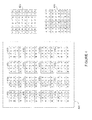
- FIGURE 4 represents an example representation of generation of a view image from light-field image data 400 (an example of the light-field image data 350), in accordance with an example embodiment.
- the light-field image data 400 corresponds to a light-field image captured by the light-field camera 208.
- the light-field image data 400 includes a plurality of sub-images formed on the sensor 320.
- An example representation of the sub-images is shown by 410 1 , 410 2 , 410 3 Vietnamese 410 16 . In this example representation, each of the sub-images 410 1 , 410 2 , 410 3 ).
- 410 16 are shown as including 4*4 pixels (total of 16 pixels) for example purposes only.
- multiple views of the scene may be generated by concatenating some pixels of the sub-images 410 1 , 410 2 , 410 3 across 410 16 in a pre-determined order.
- the four central pixels of each of the sub-images 410 1 , 410 2 , 410 3 ?? 410 16 are represented by English alphabet characters "FGJK".
- the central pixels (shown as FGJK) of the sub-images (410 1 -410 16 ) of the light-field image data 400 are concatenated to generate the view 420 of the scene.
- the four left corner pixels of each of the sub-images (410 1 -410 16 ) are represented by English alphabet characters "ABEF".
- the four left corner pixels (shown as ABEF) of the sub-images (410 1 -410 16 ) of the light-field image data 400 are concatenated to generate the view 430 of the scene.
- each of the sub-images 410 1 , 410 2 , 410 3 ?? 410 16 may represent at least a portion of the object 340.
- a set of pixels of the sub-images 410 1 , 410 2 , 410 3 ??410 16 are concatenated to generate the views such as the views 420, 430 and the like.
- the number of pixels in the set of pixels (also termed as size of the set of pixels) depends upon a depth (obtained from the depth map of the light-field image data 400) of regions in the images 410 1 , 410 2 , 410 3 across 410 16 .
- FIGURES 5 and 6 are provided for the representation of an example only, and should not be considered limiting to the scope of the various example embodiments.
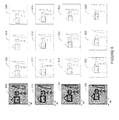
- FIGURE 5 illustrates an example representation of a plurality of light-field images and corresponding depth maps, in accordance with an example embodiment.
- the light-field camera such as the light-field camera 208, may be embodied in the apparatus 200, or otherwise communicably accessible to the apparatus 200.
- light-field images 500, 510, 520 and 530 of a scene are captured in a burst manner.
- the relative shifts between the light-field images 500-530 may be determined based on through positional measurements by gyroscope and the like, or based on differences in the locations of corresponding pixels in the light-field images 500-530.
- the relative shifts between images may also be obtained based on differences in the locations of corresponding pixels in the light-field images 500-530. For example, if an edge or a corner pixel is at a distance X0 from a reference in the light-field image 500, and if the edge or the corner pixel is at a distance X1 from the reference in the light-field image 510, the shift between the light-field image 510 and the reference light-field image (for example, the reference light-field image 500) may be s1 where s1 is equal to x1 minus x0.
- the shift between the light-field image 520 and the reference light-field image 500 may be s2, where s2 is equal to x2 minus x0; and the shift between the light-field image 530 and the reference image 500 may be s3 where s3 is equal to x3 minus x0.
- depth maps 502, 512, 522 and 532 are also shown.
- the depth maps 502, 512, 522 and 532 are generated for the plurality of light-field images 500, 510, 520 and 530, respectively.
- the depth map 502 may be generated by any suitable technique that is able to determine displacement in corresponding positions of a same object point in various sub-images of the light-field image 500.
- FIGURE 6 illustrates a set of view images generated from the light-field images 500, 510, 520 and 530.
- the view images 602, 604 and 606 are generated from the light-field image 500.
- each of the view images 602, 604 and 606 represent different views of the scene.
- the view images 602, 604 and 606 with different views of the scene are generated using the depth map 502.
- the view images 612, 614 and 616 are generated from the light-field image 510.
- each of the view images 612, 614 and 616 represent different views of the scene and are generated using the depth map 512.
- the view images 622, 624 and 626 are generated from the light-field image 520.
- each of the view images 622, 624 and 626 represent different views of the scene and are generated using the depth map 522.
- the view images 632, 634 and 636 are generated from the light-field image 530.
- each of the view images 632, 634 and 636 represent different views of the scene and are generated using the depth map 532.
- the apparatus 200 may be caused to generate a refined depth map based on the light-field image 500 and the view images generated from the light-field image 500 (for example, 602, 604 and 606), the light-field image 510 and the view images generated from the light-field image 510 (for example, 612, 614 and 616), the light-field image 520 and the view images generated from the light-field image 520 (for example, 622, 624 and 626) and the light-field image 530 and the view images generated from the light-field image 530 (for example, 632, 634 and 636).
- the apparatus 200 is caused to generate a refocus image by combining the set of view images based at least on the shifts of the images of the plurality of light-field images with respect to the reference light-field image.
- a refocus image may be generated by using the images from 12 view images, for example, the view images 602, 604 and 606 that are generated by the light-field image 500, the view images 612, 614 and 616 that are generated by the light-field image 510, the view images 622, 624 and 626 that are generated by the light-field image 520, and the view images 632, 634 and 636 that are generated by the light-field image 530.
- two or more view images of the set of view images 602-606, 612-616, 622-626, and 632-636 may be combined in a shift and add manner to generate the refocus image.
- the relative shift between the light-field image 500 and the light-field image 510 is s1
- between the light-field image 500 and the light-field image 520 is s2
- between the light-field image 500 and the light-field image 530 is s3.
- shifts such as ⁇ 1, ⁇ 2 between the view images 612 and 614, and between the view images 612 and 616, respectively; and there may be shifts such as ⁇ 1, ⁇ 2, between the view images 622 and 624, and between the view images 622 and 626, respectively; and there may be shifts such as ⁇ 1, ⁇ 2, between the view images 632 and 634, and between the view images 632 and 636, respectively.
- two or more view images of the set of view images 602-606, 612-616, 622-626, and 632-636 may be combined to generate the refocus image.
- a view image for example, the view image 602 from the set of view images may be selected.
- one or more view images may be shifted corresponding to respective shifts of the one or more view images with respect to the selected view image 602 to generate one or more shifted view images.
- one or more images, for example, the view images 614 and 626 may be shifted corresponding to their respective shifts with respect to the view image 602 to generate a shifted view image of the view image 614 and a shifted view image of the view image 626.
- the view image 614 may be shifted by s1 plus ⁇ 1 to generate the shifted view image of the view image 614, and the view image 626 may be shifted by s2 plus ⁇ 2 to generate a shifted view image of the view image 626.
- the selected view image 602, the shifted view image of the view image 614 and the shifted view image of the view image 626 may be added to generate the refocus image.
- any number of view images from the view images 602, 604, 606, 612, 614, 616, 622, 624, 626, 632, 634 and 636 may be combined in the shift and add manner to generate the refocus image.
- combining the set of view images (for example, 602-606, 612-616, 622-626 and 632-636) that are generated from the light-field images (500, 510, 520 and 530) captured in a burst manner, provide better refocusing compared to combining view images generated from a single light-field image, for example, from any one light-field image 500, 510, 520 or 530.
- the apparatus 200 may also be caused to generate a refined depth map based on the light-field images (500-530) and the set of view images (602-606, 612-616, 622-626 and 632-636). It should be noted that due to relative shifts between the light-field images, and in turn, between the set of view images, there is a better depth estimation as compared to a depth estimation in case of the view images generated from a single light-field image.
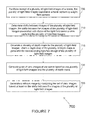
- FIGURE 7 is a flowchart depicting an example method 700 for image refocusing of images captured from a light-field camera, in accordance with an example embodiment.
- Example references of the FIGURES 2 to 6 may be made for the description of the method 700.
- the method 700 depicted in the flowchart may be executed by, for example, the apparatus 200 of FIGURE 2 .
- the method 700 includes facilitating receipt of a plurality of light-field images of a scene.
- the plurality of light-field images may be captured by a light-field camera present in or otherwise accessible to the apparatus 200.
- the plurality of light-field images is captured in a burst capture by the light-field camera.
- the method 700 includes determining shifts between images of the plurality of light-field images (I1-I4) with respect to a reference light-field image selected from the plurality of light-field images.
- the shifts between the images of the plurality of light-field images are associated with shake of the light-field camera while capturing the plurality of light-field images.
- the method 700 includes generating a plurality of depth maps (d1-d4) for the plurality of light-field images (11-14), wherein a depth map of the plurality of depth maps (d1-d4) is generated for corresponding light-field image of the plurality of light-field images (11-14).
- the depth maps d1, d2, d3 and d4 may be generated corresponding to the light-field images I1, I2, I3 and 14, respectively.
- the method 700 includes generating a set of view images of the scene based on the plurality of light-field images (I1-I4) and the plurality of depth maps (d1-d4).
- each view image of the set of view images has a distinct view of the scene.
- the set of view images includes a plurality of groups of view images, where each group of view images are generated based on a light-field image of the plurality of light-field images and a corresponding depth map of the light-field image.
- the method 700 includes generating images I11, 112, 113, 114 based on the image I1 and the depth map d1, generating images I21, I22, 123, 124 based on the image 12 and the depth map d2, generating images I31, I32, I33, I34 based on the image 13 and the depth map d3, and generating images I41, I42, I43, I44 based on the image 14 and the depth map d4.
- the method 700 includes generating a refocus image by combining the set of view images based at least on the shifts between the images of the plurality of light-field images with respect to the reference image.
- the apparatus 200 is caused to generate the refocus image by selecting a view image of the set of view images, shifting the one or more view images of the set of view images corresponding to respective shifts of the one or more view images with respect to the selected view image, and adding the one or more shifted images to the selected image to generate the refocus image.
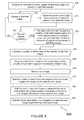
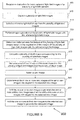
- FIGURE 8 is a flowchart depicting an example method 800 for image refocusing of images captured from a light-field camera, in accordance with another example embodiment.
- Example references are made to FIGURES 2 to 6 for the description of the method 800.
- the method 800 depicted in the flowchart may be executed by, for example, the apparatus 200 of FIGURE 2 .
- the method 800 includes receiving an instruction for burst capture of light-field images of a scene by a light-field camera.
- a light-field image for example, I1
- the method 800 includes determining a position and/or change in position of the light-field camera with respect to a reference position at an instant of capturing the light-field image.
- the method 800 checks whether the burst capture is complete. If it is determined that the burst capture is not complete, the method 800 again performs the operation 810 to capture a successive light-field image (for example, 12), and the position of the light-field camera at the instant of capturing the light-field image I2 is determined. Once it is determined that the burst capture is complete, for example, four images I1, I2, I3 and I4 are captured, the method 800 proceeds to 825.
- the method 800 includes calculating the shifts between the images of the plurality of light-field images, based on the changes in the positions of the light-field camera at the instants of capture of the plurality of light-field images (I1-I4).
- the method 800 includes generating a plurality of depth maps (d1, d2, d3 and d4) for the plurality of light-field images (11-14), where a depth map of the plurality of depth maps is generated for corresponding light-field image of the plurality of light-field images.
- the depth maps d1, d2, d3 and d4 are generated for the light-field images I1, 12, 13, and 14, respectively.
- the method 800 includes generating a set of view images of the scene based on the plurality of light-field images (11-14) and the plurality of depth maps (d1-d4).
- the set of view images includes a plurality of groups of view images, where each group of view images is generated for respective light-field image. For instance, a group of view images for example, I11, 112,113 and 114 are generated for the light-field image I1.
- a group of view images I21, 122, 123 and 124 are generated for the light-field image I2
- a group of view images I31, I32, I33 and 134 are generated for the light-field image 13
- a group of view images I41, I42, I43 and 144 are generated for the light-field image 14.
- the method 800 includes selecting a view image, for example I11, from the set of view images for generating a refocus image.
- the method 800 includes determining shifts of one or more view images of the set of view images with respect to the selected view image. For instance, shifts of the one or more view images, for example, images I21, I31 and 142 are determined with respect to the selected view image I11.
- the method 800 includes shifting the one or more view images to generate the one or more shifted view images based on the shifts of the one or view images with respect to the selected view image I11.
- the shifted view images I21', I31', 142' are generated by shifting the images I21, I31 and 142 based on the S(I21, I11), S(I31, I11) and S(I42, I11), respectively, where S(I21, I11) represents shift between the image I21 and I11, S(I31, I11) represents shift between the image I31 and I11, and S(I42, I11) represents shift between the image 142 and I11.
- the method 800 includes adding the one or more shifted view images (I21', I31', 142') to the selected view image (I11) to generate the refocus image.
- the method 800 also includes determining a refined depth map based on the set of view images I11, 112,113 and I14, I21, I22, I23 and I24, I31, I32, I33 and I34, I41, I42, I43 and 144.
- FIGURE 9 is a flowchart depicting an example method 900 for image refocusing of images captured from a light-field camera, in accordance with another example embodiment.
- Example references are made to FIGURES 2 to 8 for the description of the method 900.
- the method 900 depicted in the flowchart may be executed by, for example, the apparatus 200 of FIGURE 2 .
- the method 900 includes receiving instructions for burst capture of light-field images of a scene by a light-field camera.
- the method 900 includes capturing a plurality of light-field images (I1, 12, 13 and 14) of a scene.
- the plurality of light-field images (11-14) may be captured by a light-field camera in the burst capture manner, whether the light-field camera is present in or otherwise accessible to the apparatus 200.
- the method 900 includes selecting a reference light-field image from the plurality of light-field images (11-14). For instance, light-field image I1 may be selected as the reference light-field image.
- the method 900 includes performing image registration of the plurality of light-field images (11-14) with the reference light-field image (I1).
- the method 900 includes determining shifts between the images of the plurality of light-field images (11-14) based on the registration of the images of the plurality of light-field images (11-14) with the reference light-field image (I1).
- the method 900 includes operations of blocks 830, 835, 840, 850 and 855 to generate a refocus image.
- One or more example embodiments of the operations of the blocks 830, 835, 840, 850 and 855 are further explained with reference to FIGURE 8 .
- the methods depicted in these flow charts may be executed by, for example, the apparatus 200 of FIGURE 2 .
- Operations of the flowchart, and combinations of operation in the flowcharts may be implemented by various means, such as hardware, firmware, processor, circuitry and/or other device associated with execution of software including one or more computer program instructions.
- one or more of the procedures described in various embodiments may be embodied by computer program instructions.
- the computer program instructions, which embody the procedures, described in various embodiments may be stored by at least one memory device of an apparatus and executed by at least one processor in the apparatus.
- Any such computer program instructions may be loaded onto a computer or other programmable apparatus (for example, hardware) to produce a machine, such that the resulting computer or other programmable apparatus embody means for implementing the operations specified in the flowchart.
- These computer program instructions may also be stored in a computer-readable storage memory (as opposed to a transmission medium such as a carrier wave or electromagnetic signal) that may direct a computer or other programmable apparatus to function in a particular manner, such that the instructions stored in the computer-readable memory produce an article of manufacture the execution of which implements the operations specified in the flowchart.
- the computer program instructions may also be loaded onto a computer or other programmable apparatus to cause a series of operations to be performed on the computer or other programmable apparatus to produce a computer-implemented process such that the instructions, which execute on the computer or other programmable apparatus, provide operations for implementing the operations in the flowchart.
- the operations of the methods are described with help of apparatus 200. However, the operations of the methods can be described and/or practiced by using any other apparatus.
- a technical effect of one or more of the example embodiments disclosed herein is to utilize the shake in the light-field camera while capturing burst images to generate improved refocus images and to obtain enhanced depth estimation, which are otherwise possible only by employing a light-field camera having larger track length (distance between the main lens and the sensor).
- Various embodiments are capable of utilizing the shifts between the light-field images to generate refocus images, thereby reducing need for having larger track length and such setup of the light-field camera can be integrated in small hand-held devices, for example mobile phones.
- Various embodiments described above may be implemented in software, hardware, application logic or a combination of software, hardware and application logic.
- the software, application logic and/or hardware may reside on at least one memory, at least one processor, an apparatus or, a computer program product.
- the application logic, software or an instruction set is maintained on any one of various conventional computer-readable media.
- a "computer-readable medium" may be any media or means that can contain, store, communicate, propagate or transport the instructions for use by or in connection with an instruction execution system, apparatus, or device, such as a computer, with one example of an apparatus described and depicted in FIGURES 1 and/or 2.
- a computer-readable medium may comprise a computer-readable storage medium that may be any media or means that can contain or store the instructions for use by or in connection with an instruction execution system, apparatus, or device, such as a computer.
- the different functions discussed herein may be performed in a different order and/or concurrently with each other. Furthermore, if desired, one or more of the above-described functions may be optional or may be combined.
Landscapes
- Engineering & Computer Science (AREA)
- Physics & Mathematics (AREA)
- General Physics & Mathematics (AREA)
- Multimedia (AREA)
- Signal Processing (AREA)
- Theoretical Computer Science (AREA)
- Optics & Photonics (AREA)
- Computer Vision & Pattern Recognition (AREA)
- Studio Devices (AREA)
Applications Claiming Priority (1)
| Application Number | Priority Date | Filing Date | Title |
|---|---|---|---|
| IN6005CH2013 | 2013-12-23 |
Publications (2)
| Publication Number | Publication Date |
|---|---|
| EP2887642A2 true EP2887642A2 (de) | 2015-06-24 |
| EP2887642A3 EP2887642A3 (de) | 2015-07-01 |
Family
ID=52102474
Family Applications (1)
| Application Number | Title | Priority Date | Filing Date |
|---|---|---|---|
| EP14196238.1A Withdrawn EP2887642A3 (de) | 2013-12-23 | 2014-12-04 | Verfahren, Vorrichtung und Computerprogrammprodukt zur Bildneufokussierung für Lichtfeldbilder |
Country Status (2)
| Country | Link |
|---|---|
| US (1) | US10003743B2 (de) |
| EP (1) | EP2887642A3 (de) |
Cited By (7)
| Publication number | Priority date | Publication date | Assignee | Title |
|---|---|---|---|---|
| WO2017100061A1 (en) * | 2015-12-07 | 2017-06-15 | Google Inc. | Systems and methods for multiscopic noise reduction and high-dynamic range |
| WO2017102549A1 (en) * | 2015-12-16 | 2017-06-22 | Thomson Licensing | Method and device for refocusing at least one plenoptic video |
| WO2018141414A1 (en) * | 2017-02-06 | 2018-08-09 | Photonic Sensors & Algorithms, S.L. | Device and method for obtaining depth information from a scene |
| CN108896017A (zh) * | 2018-05-09 | 2018-11-27 | 西安工业大学 | 一种弹丸近炸破片群位置参数测量与计算方法 |
| WO2020207172A1 (zh) * | 2019-04-09 | 2020-10-15 | 深圳市视觉动力科技有限公司 | 基于三维光场技术的光学无人机监测方法及系统 |
| CN111862098A (zh) * | 2019-04-30 | 2020-10-30 | 曜科智能科技(上海)有限公司 | 基于光场语义的个体匹配方法、装置、设备和介质 |
| US11533464B2 (en) | 2018-08-21 | 2022-12-20 | Samsung Electronics Co., Ltd. | Method for synthesizing intermediate view of light field, system for synthesizing intermediate view of light field, and method for compressing light field |
Families Citing this family (7)
| Publication number | Priority date | Publication date | Assignee | Title |
|---|---|---|---|---|
| US9426365B2 (en) * | 2013-11-01 | 2016-08-23 | The Lightco Inc. | Image stabilization related methods and apparatus |
| JP6346476B2 (ja) * | 2014-03-17 | 2018-06-20 | キヤノン株式会社 | 表示制御装置、制御方法、プログラム及び記録媒体 |
| US9912864B2 (en) * | 2014-10-17 | 2018-03-06 | Light Labs Inc. | Methods and apparatus for using a camera device to support multiple modes of operation |
| US10291845B2 (en) * | 2015-08-17 | 2019-05-14 | Nokia Technologies Oy | Method, apparatus, and computer program product for personalized depth of field omnidirectional video |
| CN106507019B (zh) | 2016-11-29 | 2019-05-10 | Oppo广东移动通信有限公司 | 控制方法、控制装置、电子装置 |
| CN106507069B (zh) * | 2016-11-29 | 2018-06-05 | 广东欧珀移动通信有限公司 | 控制方法、控制装置及电子装置 |
| CN114157814B (zh) * | 2022-02-09 | 2022-06-10 | 荣耀终端有限公司 | 一种光场照片的显示方法、终端及存储介质 |
Family Cites Families (6)
| Publication number | Priority date | Publication date | Assignee | Title |
|---|---|---|---|---|
| US8290358B1 (en) | 2007-06-25 | 2012-10-16 | Adobe Systems Incorporated | Methods and apparatus for light-field imaging |
| US8416282B2 (en) * | 2008-10-16 | 2013-04-09 | Spatial Cam Llc | Camera for creating a panoramic image |
| JP2014521117A (ja) | 2011-06-28 | 2014-08-25 | ペリカン イメージング コーポレイション | アレイカメラで使用するための光学配列 |
| EP2551827A3 (de) | 2011-07-28 | 2017-08-02 | Sony Mobile Communications AB | Präsentation von dreidimensionaler Tiefe |
| US8995785B2 (en) * | 2012-02-28 | 2015-03-31 | Lytro, Inc. | Light-field processing and analysis, camera control, and user interfaces and interaction on light-field capture devices |
| US9426365B2 (en) * | 2013-11-01 | 2016-08-23 | The Lightco Inc. | Image stabilization related methods and apparatus |
-
2014
- 2014-12-04 EP EP14196238.1A patent/EP2887642A3/de not_active Withdrawn
- 2014-12-16 US US14/572,033 patent/US10003743B2/en not_active Expired - Fee Related
Non-Patent Citations (1)
| Title |
|---|
| MITHUN ULIYAR; GURURAJ PUTRAYA; BASAVARAJA SV: "Fast EPI Based Depthfor Plenoptic Cameras", 2013 IEEE INTERNATIONAL CONFERENCE ON IMAGE PROCESSING (ICIP 2013), 2013 |
Cited By (17)
| Publication number | Priority date | Publication date | Assignee | Title |
|---|---|---|---|---|
| WO2017100061A1 (en) * | 2015-12-07 | 2017-06-15 | Google Inc. | Systems and methods for multiscopic noise reduction and high-dynamic range |
| US10580210B2 (en) | 2015-12-16 | 2020-03-03 | Interdigital Ce Patent Holdings | Method and device for refocusing at least one plenoptic video |
| WO2017102549A1 (en) * | 2015-12-16 | 2017-06-22 | Thomson Licensing | Method and device for refocusing at least one plenoptic video |
| CN108369730A (zh) * | 2015-12-16 | 2018-08-03 | 汤姆逊许可公司 | 用于重新聚焦至少一个全景视频的方法和设备 |
| CN108369730B (zh) * | 2015-12-16 | 2022-05-27 | 交互数字Ce专利控股公司 | 用于重新聚焦至少一个全景视频的方法和设备 |
| EP3624050A1 (de) * | 2015-12-16 | 2020-03-18 | InterDigital CE Patent Holdings | Verfahren und modul zur neufokussierung von wenigstens einem plenoptischen video |
| US11145077B2 (en) * | 2017-02-06 | 2021-10-12 | Photonic Sensors & Algorithms, S.L. | Device and method for obtaining depth information from a scene |
| JP2020506487A (ja) * | 2017-02-06 | 2020-02-27 | フォトニック センサーズ アンド アルゴリズムス,エセ.エレ. | シーンから深度情報を取得するための装置および方法 |
| ES2747387R1 (es) * | 2017-02-06 | 2020-03-25 | Photonic Sensors & Algorithms S L | Dispositivo y metodo para obtener informacion de profundidad a partir de una escena. |
| WO2018141414A1 (en) * | 2017-02-06 | 2018-08-09 | Photonic Sensors & Algorithms, S.L. | Device and method for obtaining depth information from a scene |
| CN108896017A (zh) * | 2018-05-09 | 2018-11-27 | 西安工业大学 | 一种弹丸近炸破片群位置参数测量与计算方法 |
| CN108896017B (zh) * | 2018-05-09 | 2022-04-15 | 西安工业大学 | 一种弹丸近炸破片群位置参数测量与计算方法 |
| US11533464B2 (en) | 2018-08-21 | 2022-12-20 | Samsung Electronics Co., Ltd. | Method for synthesizing intermediate view of light field, system for synthesizing intermediate view of light field, and method for compressing light field |
| WO2020207172A1 (zh) * | 2019-04-09 | 2020-10-15 | 深圳市视觉动力科技有限公司 | 基于三维光场技术的光学无人机监测方法及系统 |
| CN111818274A (zh) * | 2019-04-09 | 2020-10-23 | 深圳市视觉动力科技有限公司 | 基于三维光场技术的光学无人机监测方法及系统 |
| CN111862098A (zh) * | 2019-04-30 | 2020-10-30 | 曜科智能科技(上海)有限公司 | 基于光场语义的个体匹配方法、装置、设备和介质 |
| CN111862098B (zh) * | 2019-04-30 | 2023-11-24 | 曜科智能科技(上海)有限公司 | 基于光场语义的个体匹配方法、装置、设备和介质 |
Also Published As
| Publication number | Publication date |
|---|---|
| US20150181124A1 (en) | 2015-06-25 |
| EP2887642A3 (de) | 2015-07-01 |
| US10003743B2 (en) | 2018-06-19 |
Similar Documents
| Publication | Publication Date | Title |
|---|---|---|
| US10003743B2 (en) | Method, apparatus and computer program product for image refocusing for light-field images | |
| US9542750B2 (en) | Method, apparatus and computer program product for depth estimation of stereo images | |
| US9478036B2 (en) | Method, apparatus and computer program product for disparity estimation of plenoptic images | |
| EP2947627B1 (de) | Tiefenschätzung bei lichtfeldbildern | |
| EP2736011B1 (de) | Verfahren, Vorrichtung und Computerprogrammprodukt zur Erzeugung von superaufgelösten Bildern | |
| EP2680222A1 (de) | Verfahren, Vorrichtung und Computerprogrammprodukt zur Verarbeitung von Medieninhalten | |
| US20150078669A1 (en) | Method, apparatus and computer program product for object detection and segmentation | |
| EP2876603B1 (de) | Verfahren und Vorrichtung zur Segmentierung von Vordergrundobjekten in Bildern und Verarbeitung davon | |
| US9183618B2 (en) | Method, apparatus and computer program product for alignment of frames | |
| US10257417B2 (en) | Method and apparatus for generating panoramic images | |
| US20140072231A1 (en) | Method, apparatus and computer program product for processing of images | |
| EP2991036B1 (de) | Verfahren, vorrichtung und computerprogrammprodukt zur disparitätsschätzung von vordergrundobjekten in bildern | |
| US9202266B2 (en) | Method, apparatus and computer program product for processing of images | |
| US9158374B2 (en) | Method, apparatus and computer program product for displaying media content | |
| US20150070462A1 (en) | Method, Apparatus and Computer Program Product for Generating Panorama Images | |
| US20130107008A1 (en) | Method, apparatus and computer program product for capturing images | |
| US9691127B2 (en) | Method, apparatus and computer program product for alignment of images | |
| US10097807B2 (en) | Method, apparatus and computer program product for blending multimedia content | |
| WO2015055892A1 (en) | Method, apparatus and computer program product for detection and correction of image defect |
Legal Events
| Date | Code | Title | Description |
|---|---|---|---|
| PUAL | Search report despatched |
Free format text: ORIGINAL CODE: 0009013 |
|
| PUAI | Public reference made under article 153(3) epc to a published international application that has entered the european phase |
Free format text: ORIGINAL CODE: 0009012 |
|
| 17P | Request for examination filed |
Effective date: 20141204 |
|
| AK | Designated contracting states |
Kind code of ref document: A2 Designated state(s): AL AT BE BG CH CY CZ DE DK EE ES FI FR GB GR HR HU IE IS IT LI LT LU LV MC MK MT NL NO PL PT RO RS SE SI SK SM TR |
|
| AX | Request for extension of the european patent |
Extension state: BA ME |
|
| AK | Designated contracting states |
Kind code of ref document: A3 Designated state(s): AL AT BE BG CH CY CZ DE DK EE ES FI FR GB GR HR HU IE IS IT LI LT LU LV MC MK MT NL NO PL PT RO RS SE SI SK SM TR |
|
| AX | Request for extension of the european patent |
Extension state: BA ME |
|
| RIC1 | Information provided on ipc code assigned before grant |
Ipc: H04N 5/232 20060101AFI20150526BHEP Ipc: G02B 27/00 20060101ALI20150526BHEP |
|
| R17P | Request for examination filed (corrected) |
Effective date: 20160104 |
|
| RBV | Designated contracting states (corrected) |
Designated state(s): AL AT BE BG CH CY CZ DE DK EE ES FI FR GB GR HR HU IE IS IT LI LT LU LV MC MK MT NL NO PL PT RO RS SE SI SK SM TR |
|
| RAP1 | Party data changed (applicant data changed or rights of an application transferred) |
Owner name: NOKIA TECHNOLOGIES OY |
|
| GRAP | Despatch of communication of intention to grant a patent |
Free format text: ORIGINAL CODE: EPIDOSNIGR1 |
|
| INTG | Intention to grant announced |
Effective date: 20190410 |
|
| RAP1 | Party data changed (applicant data changed or rights of an application transferred) |
Owner name: NOKIA TECHNOLOGIES OY |
|
| STAA | Information on the status of an ep patent application or granted ep patent |
Free format text: STATUS: THE APPLICATION IS DEEMED TO BE WITHDRAWN |
|
| 18D | Application deemed to be withdrawn |
Effective date: 20190821 |