EP2886624A1 - Adhesive composition for touch panel, adhesive film, and touch panel - Google Patents
Adhesive composition for touch panel, adhesive film, and touch panel Download PDFInfo
- Publication number
- EP2886624A1 EP2886624A1 EP13879358.3A EP13879358A EP2886624A1 EP 2886624 A1 EP2886624 A1 EP 2886624A1 EP 13879358 A EP13879358 A EP 13879358A EP 2886624 A1 EP2886624 A1 EP 2886624A1
- Authority
- EP
- European Patent Office
- Prior art keywords
- meth
- acrylate
- urethane
- adhesive composition
- touch panels
- Prior art date
- Legal status (The legal status is an assumption and is not a legal conclusion. Google has not performed a legal analysis and makes no representation as to the accuracy of the status listed.)
- Granted
Links
Images


Classifications
-
- C—CHEMISTRY; METALLURGY
- C09—DYES; PAINTS; POLISHES; NATURAL RESINS; ADHESIVES; COMPOSITIONS NOT OTHERWISE PROVIDED FOR; APPLICATIONS OF MATERIALS NOT OTHERWISE PROVIDED FOR
- C09J—ADHESIVES; NON-MECHANICAL ASPECTS OF ADHESIVE PROCESSES IN GENERAL; ADHESIVE PROCESSES NOT PROVIDED FOR ELSEWHERE; USE OF MATERIALS AS ADHESIVES
- C09J7/00—Adhesives in the form of films or foils
- C09J7/30—Adhesives in the form of films or foils characterised by the adhesive composition
-
- C—CHEMISTRY; METALLURGY
- C09—DYES; PAINTS; POLISHES; NATURAL RESINS; ADHESIVES; COMPOSITIONS NOT OTHERWISE PROVIDED FOR; APPLICATIONS OF MATERIALS NOT OTHERWISE PROVIDED FOR
- C09J—ADHESIVES; NON-MECHANICAL ASPECTS OF ADHESIVE PROCESSES IN GENERAL; ADHESIVE PROCESSES NOT PROVIDED FOR ELSEWHERE; USE OF MATERIALS AS ADHESIVES
- C09J175/00—Adhesives based on polyureas or polyurethanes; Adhesives based on derivatives of such polymers
- C09J175/04—Polyurethanes
-
- C—CHEMISTRY; METALLURGY
- C08—ORGANIC MACROMOLECULAR COMPOUNDS; THEIR PREPARATION OR CHEMICAL WORKING-UP; COMPOSITIONS BASED THEREON
- C08F—MACROMOLECULAR COMPOUNDS OBTAINED BY REACTIONS ONLY INVOLVING CARBON-TO-CARBON UNSATURATED BONDS
- C08F220/00—Copolymers of compounds having one or more unsaturated aliphatic radicals, each having only one carbon-to-carbon double bond, and only one being terminated by only one carboxyl radical or a salt, anhydride ester, amide, imide or nitrile thereof
- C08F220/02—Monocarboxylic acids having less than ten carbon atoms; Derivatives thereof
- C08F220/10—Esters
-
- C—CHEMISTRY; METALLURGY
- C09—DYES; PAINTS; POLISHES; NATURAL RESINS; ADHESIVES; COMPOSITIONS NOT OTHERWISE PROVIDED FOR; APPLICATIONS OF MATERIALS NOT OTHERWISE PROVIDED FOR
- C09J—ADHESIVES; NON-MECHANICAL ASPECTS OF ADHESIVE PROCESSES IN GENERAL; ADHESIVE PROCESSES NOT PROVIDED FOR ELSEWHERE; USE OF MATERIALS AS ADHESIVES
- C09J11/00—Features of adhesives not provided for in group C09J9/00, e.g. additives
- C09J11/02—Non-macromolecular additives
- C09J11/06—Non-macromolecular additives organic
-
- C—CHEMISTRY; METALLURGY
- C09—DYES; PAINTS; POLISHES; NATURAL RESINS; ADHESIVES; COMPOSITIONS NOT OTHERWISE PROVIDED FOR; APPLICATIONS OF MATERIALS NOT OTHERWISE PROVIDED FOR
- C09J—ADHESIVES; NON-MECHANICAL ASPECTS OF ADHESIVE PROCESSES IN GENERAL; ADHESIVE PROCESSES NOT PROVIDED FOR ELSEWHERE; USE OF MATERIALS AS ADHESIVES
- C09J133/00—Adhesives based on homopolymers or copolymers of compounds having one or more unsaturated aliphatic radicals, each having only one carbon-to-carbon double bond, and at least one being terminated by only one carboxyl radical, or of salts, anhydrides, esters, amides, imides, or nitriles thereof; Adhesives based on derivatives of such polymers
- C09J133/04—Homopolymers or copolymers of esters
- C09J133/14—Homopolymers or copolymers of esters of esters containing halogen, nitrogen, sulfur or oxygen atoms in addition to the carboxy oxygen
-
- C—CHEMISTRY; METALLURGY
- C09—DYES; PAINTS; POLISHES; NATURAL RESINS; ADHESIVES; COMPOSITIONS NOT OTHERWISE PROVIDED FOR; APPLICATIONS OF MATERIALS NOT OTHERWISE PROVIDED FOR
- C09J—ADHESIVES; NON-MECHANICAL ASPECTS OF ADHESIVE PROCESSES IN GENERAL; ADHESIVE PROCESSES NOT PROVIDED FOR ELSEWHERE; USE OF MATERIALS AS ADHESIVES
- C09J175/00—Adhesives based on polyureas or polyurethanes; Adhesives based on derivatives of such polymers
- C09J175/04—Polyurethanes
- C09J175/08—Polyurethanes from polyethers
-
- C—CHEMISTRY; METALLURGY
- C09—DYES; PAINTS; POLISHES; NATURAL RESINS; ADHESIVES; COMPOSITIONS NOT OTHERWISE PROVIDED FOR; APPLICATIONS OF MATERIALS NOT OTHERWISE PROVIDED FOR
- C09J—ADHESIVES; NON-MECHANICAL ASPECTS OF ADHESIVE PROCESSES IN GENERAL; ADHESIVE PROCESSES NOT PROVIDED FOR ELSEWHERE; USE OF MATERIALS AS ADHESIVES
- C09J4/00—Adhesives based on organic non-macromolecular compounds having at least one polymerisable carbon-to-carbon unsaturated bond ; adhesives, based on monomers of macromolecular compounds of groups C09J183/00 - C09J183/16
-
- C—CHEMISTRY; METALLURGY
- C09—DYES; PAINTS; POLISHES; NATURAL RESINS; ADHESIVES; COMPOSITIONS NOT OTHERWISE PROVIDED FOR; APPLICATIONS OF MATERIALS NOT OTHERWISE PROVIDED FOR
- C09J—ADHESIVES; NON-MECHANICAL ASPECTS OF ADHESIVE PROCESSES IN GENERAL; ADHESIVE PROCESSES NOT PROVIDED FOR ELSEWHERE; USE OF MATERIALS AS ADHESIVES
- C09J7/00—Adhesives in the form of films or foils
- C09J7/20—Adhesives in the form of films or foils characterised by their carriers
- C09J7/22—Plastics; Metallised plastics
-
- C—CHEMISTRY; METALLURGY
- C09—DYES; PAINTS; POLISHES; NATURAL RESINS; ADHESIVES; COMPOSITIONS NOT OTHERWISE PROVIDED FOR; APPLICATIONS OF MATERIALS NOT OTHERWISE PROVIDED FOR
- C09J—ADHESIVES; NON-MECHANICAL ASPECTS OF ADHESIVE PROCESSES IN GENERAL; ADHESIVE PROCESSES NOT PROVIDED FOR ELSEWHERE; USE OF MATERIALS AS ADHESIVES
- C09J7/00—Adhesives in the form of films or foils
- C09J7/20—Adhesives in the form of films or foils characterised by their carriers
- C09J7/22—Plastics; Metallised plastics
- C09J7/25—Plastics; Metallised plastics based on macromolecular compounds obtained otherwise than by reactions involving only carbon-to-carbon unsaturated bonds
- C09J7/255—Polyesters
-
- C—CHEMISTRY; METALLURGY
- C09—DYES; PAINTS; POLISHES; NATURAL RESINS; ADHESIVES; COMPOSITIONS NOT OTHERWISE PROVIDED FOR; APPLICATIONS OF MATERIALS NOT OTHERWISE PROVIDED FOR
- C09J—ADHESIVES; NON-MECHANICAL ASPECTS OF ADHESIVE PROCESSES IN GENERAL; ADHESIVE PROCESSES NOT PROVIDED FOR ELSEWHERE; USE OF MATERIALS AS ADHESIVES
- C09J7/00—Adhesives in the form of films or foils
- C09J7/20—Adhesives in the form of films or foils characterised by their carriers
- C09J7/29—Laminated material
-
- C—CHEMISTRY; METALLURGY
- C09—DYES; PAINTS; POLISHES; NATURAL RESINS; ADHESIVES; COMPOSITIONS NOT OTHERWISE PROVIDED FOR; APPLICATIONS OF MATERIALS NOT OTHERWISE PROVIDED FOR
- C09J—ADHESIVES; NON-MECHANICAL ASPECTS OF ADHESIVE PROCESSES IN GENERAL; ADHESIVE PROCESSES NOT PROVIDED FOR ELSEWHERE; USE OF MATERIALS AS ADHESIVES
- C09J7/00—Adhesives in the form of films or foils
- C09J7/30—Adhesives in the form of films or foils characterised by the adhesive composition
- C09J7/38—Pressure-sensitive adhesives [PSA]
-
- G—PHYSICS
- G06—COMPUTING OR CALCULATING; COUNTING
- G06F—ELECTRIC DIGITAL DATA PROCESSING
- G06F1/00—Details not covered by groups G06F3/00 - G06F13/00 and G06F21/00
- G06F1/16—Constructional details or arrangements
- G06F1/1613—Constructional details or arrangements for portable computers
- G06F1/1633—Constructional details or arrangements of portable computers not specific to the type of enclosures covered by groups G06F1/1615 - G06F1/1626
- G06F1/1637—Details related to the display arrangement, including those related to the mounting of the display in the housing
- G06F1/1643—Details related to the display arrangement, including those related to the mounting of the display in the housing the display being associated to a digitizer, e.g. laptops that can be used as penpads
-
- G—PHYSICS
- G06—COMPUTING OR CALCULATING; COUNTING
- G06F—ELECTRIC DIGITAL DATA PROCESSING
- G06F1/00—Details not covered by groups G06F3/00 - G06F13/00 and G06F21/00
- G06F1/16—Constructional details or arrangements
- G06F1/1613—Constructional details or arrangements for portable computers
- G06F1/1633—Constructional details or arrangements of portable computers not specific to the type of enclosures covered by groups G06F1/1615 - G06F1/1626
- G06F1/1684—Constructional details or arrangements related to integrated I/O peripherals not covered by groups G06F1/1635 - G06F1/1675
- G06F1/169—Constructional details or arrangements related to integrated I/O peripherals not covered by groups G06F1/1635 - G06F1/1675 the I/O peripheral being an integrated pointing device, e.g. trackball in the palm rest area, mini-joystick integrated between keyboard keys, touch pads or touch stripes
- G06F1/1692—Constructional details or arrangements related to integrated I/O peripherals not covered by groups G06F1/1635 - G06F1/1675 the I/O peripheral being an integrated pointing device, e.g. trackball in the palm rest area, mini-joystick integrated between keyboard keys, touch pads or touch stripes the I/O peripheral being a secondary touch screen used as control interface, e.g. virtual buttons or sliders
-
- G—PHYSICS
- G06—COMPUTING OR CALCULATING; COUNTING
- G06F—ELECTRIC DIGITAL DATA PROCESSING
- G06F3/00—Input arrangements for transferring data to be processed into a form capable of being handled by the computer; Output arrangements for transferring data from processing unit to output unit, e.g. interface arrangements
- G06F3/01—Input arrangements or combined input and output arrangements for interaction between user and computer
- G06F3/03—Arrangements for converting the position or the displacement of a member into a coded form
- G06F3/041—Digitisers, e.g. for touch screens or touch pads, characterised by the transducing means
-
- G—PHYSICS
- G06—COMPUTING OR CALCULATING; COUNTING
- G06F—ELECTRIC DIGITAL DATA PROCESSING
- G06F3/00—Input arrangements for transferring data to be processed into a form capable of being handled by the computer; Output arrangements for transferring data from processing unit to output unit, e.g. interface arrangements
- G06F3/01—Input arrangements or combined input and output arrangements for interaction between user and computer
- G06F3/03—Arrangements for converting the position or the displacement of a member into a coded form
- G06F3/041—Digitisers, e.g. for touch screens or touch pads, characterised by the transducing means
- G06F3/0412—Digitisers structurally integrated in a display
-
- G—PHYSICS
- G06—COMPUTING OR CALCULATING; COUNTING
- G06F—ELECTRIC DIGITAL DATA PROCESSING
- G06F3/00—Input arrangements for transferring data to be processed into a form capable of being handled by the computer; Output arrangements for transferring data from processing unit to output unit, e.g. interface arrangements
- G06F3/01—Input arrangements or combined input and output arrangements for interaction between user and computer
- G06F3/03—Arrangements for converting the position or the displacement of a member into a coded form
- G06F3/041—Digitisers, e.g. for touch screens or touch pads, characterised by the transducing means
- G06F3/0416—Control or interface arrangements specially adapted for digitisers
-
- C—CHEMISTRY; METALLURGY
- C08—ORGANIC MACROMOLECULAR COMPOUNDS; THEIR PREPARATION OR CHEMICAL WORKING-UP; COMPOSITIONS BASED THEREON
- C08F—MACROMOLECULAR COMPOUNDS OBTAINED BY REACTIONS ONLY INVOLVING CARBON-TO-CARBON UNSATURATED BONDS
- C08F222/00—Copolymers of compounds having one or more unsaturated aliphatic radicals, each having only one carbon-to-carbon double bond, and at least one being terminated by a carboxyl radical and containing at least one other carboxyl radical in the molecule; Salts, anhydrides, esters, amides, imides, or nitriles thereof
- C08F222/10—Esters
- C08F222/1006—Esters of polyhydric alcohols or polyhydric phenols
- C08F222/106—Esters of polycondensation macromers
- C08F222/1063—Esters of polycondensation macromers of alcohol terminated polyethers
-
- C—CHEMISTRY; METALLURGY
- C09—DYES; PAINTS; POLISHES; NATURAL RESINS; ADHESIVES; COMPOSITIONS NOT OTHERWISE PROVIDED FOR; APPLICATIONS OF MATERIALS NOT OTHERWISE PROVIDED FOR
- C09J—ADHESIVES; NON-MECHANICAL ASPECTS OF ADHESIVE PROCESSES IN GENERAL; ADHESIVE PROCESSES NOT PROVIDED FOR ELSEWHERE; USE OF MATERIALS AS ADHESIVES
- C09J2203/00—Applications of adhesives in processes or use of adhesives in the form of films or foils
- C09J2203/318—Applications of adhesives in processes or use of adhesives in the form of films or foils for the production of liquid crystal displays
-
- C—CHEMISTRY; METALLURGY
- C09—DYES; PAINTS; POLISHES; NATURAL RESINS; ADHESIVES; COMPOSITIONS NOT OTHERWISE PROVIDED FOR; APPLICATIONS OF MATERIALS NOT OTHERWISE PROVIDED FOR
- C09J—ADHESIVES; NON-MECHANICAL ASPECTS OF ADHESIVE PROCESSES IN GENERAL; ADHESIVE PROCESSES NOT PROVIDED FOR ELSEWHERE; USE OF MATERIALS AS ADHESIVES
- C09J2301/00—Additional features of adhesives in the form of films or foils
- C09J2301/30—Additional features of adhesives in the form of films or foils characterized by the chemical, physicochemical or physical properties of the adhesive or the carrier
- C09J2301/312—Additional features of adhesives in the form of films or foils characterized by the chemical, physicochemical or physical properties of the adhesive or the carrier parameters being the characterizing feature
-
- C—CHEMISTRY; METALLURGY
- C09—DYES; PAINTS; POLISHES; NATURAL RESINS; ADHESIVES; COMPOSITIONS NOT OTHERWISE PROVIDED FOR; APPLICATIONS OF MATERIALS NOT OTHERWISE PROVIDED FOR
- C09J—ADHESIVES; NON-MECHANICAL ASPECTS OF ADHESIVE PROCESSES IN GENERAL; ADHESIVE PROCESSES NOT PROVIDED FOR ELSEWHERE; USE OF MATERIALS AS ADHESIVES
- C09J2475/00—Presence of polyurethane
-
- G—PHYSICS
- G06—COMPUTING OR CALCULATING; COUNTING
- G06F—ELECTRIC DIGITAL DATA PROCESSING
- G06F2203/00—Indexing scheme relating to G06F3/00 - G06F3/048
- G06F2203/041—Indexing scheme relating to G06F3/041 - G06F3/045
- G06F2203/04103—Manufacturing, i.e. details related to manufacturing processes specially suited for touch sensitive devices
-
- Y—GENERAL TAGGING OF NEW TECHNOLOGICAL DEVELOPMENTS; GENERAL TAGGING OF CROSS-SECTIONAL TECHNOLOGIES SPANNING OVER SEVERAL SECTIONS OF THE IPC; TECHNICAL SUBJECTS COVERED BY FORMER USPC CROSS-REFERENCE ART COLLECTIONS [XRACs] AND DIGESTS
- Y10—TECHNICAL SUBJECTS COVERED BY FORMER USPC
- Y10T—TECHNICAL SUBJECTS COVERED BY FORMER US CLASSIFICATION
- Y10T428/00—Stock material or miscellaneous articles
- Y10T428/14—Layer or component removable to expose adhesive
- Y10T428/1476—Release layer
-
- Y—GENERAL TAGGING OF NEW TECHNOLOGICAL DEVELOPMENTS; GENERAL TAGGING OF CROSS-SECTIONAL TECHNOLOGIES SPANNING OVER SEVERAL SECTIONS OF THE IPC; TECHNICAL SUBJECTS COVERED BY FORMER USPC CROSS-REFERENCE ART COLLECTIONS [XRACs] AND DIGESTS
- Y10—TECHNICAL SUBJECTS COVERED BY FORMER USPC
- Y10T—TECHNICAL SUBJECTS COVERED BY FORMER US CLASSIFICATION
- Y10T428/00—Stock material or miscellaneous articles
- Y10T428/28—Web or sheet containing structurally defined element or component and having an adhesive outermost layer
- Y10T428/2848—Three or more layers
-
- Y—GENERAL TAGGING OF NEW TECHNOLOGICAL DEVELOPMENTS; GENERAL TAGGING OF CROSS-SECTIONAL TECHNOLOGIES SPANNING OVER SEVERAL SECTIONS OF THE IPC; TECHNICAL SUBJECTS COVERED BY FORMER USPC CROSS-REFERENCE ART COLLECTIONS [XRACs] AND DIGESTS
- Y10—TECHNICAL SUBJECTS COVERED BY FORMER USPC
- Y10T—TECHNICAL SUBJECTS COVERED BY FORMER US CLASSIFICATION
- Y10T428/00—Stock material or miscellaneous articles
- Y10T428/28—Web or sheet containing structurally defined element or component and having an adhesive outermost layer
- Y10T428/2852—Adhesive compositions
- Y10T428/2896—Adhesive compositions including nitrogen containing condensation polymer [e.g., polyurethane, polyisocyanate, etc.]
Definitions
- the present invention relates to an adhesive composition for touch panels, an adhesive film, and a touch panel.
- a transparent conductive plastic film is used to achieve light weight and prevent cracking.
- An example of the film includes a film which includes a base of a polyethylene terephthalate (PET) film, and a conductive layer of indium tin oxide (ITO) formed on one surface of the base.
- PET polyethylene terephthalate
- ITO indium tin oxide
- the film is stacked on a conductive glass, a stiffener, or a decorative film via an adhesive layer.
- the adhesive layer requires various properties, such as durability and the like.
- a urethane-based adhesive composition for touch panels has a glass transition temperature of about - 20°C to about -50°C, wherein a cured product of the composition has a modulus of about 50,000 Pa to about 70,000 Pa, as measured at about 60°C to about 80°C.
- the urethane-based adhesive composition for touch panels may include a urethane-based curable compound, a (meth)acrylic acid ester monomer, and a crosslinkable monomer.
- the (meth)acrylic acid ester monomer may be present in an amount of about 5 parts by weight to about 100 parts by weight based on 100 parts by weight of the urethane-based curable compound.
- the crosslinkable monomer may be present in an amount of about 0.01 parts by weight to about 10 parts by weight based on 100 parts by weight of the urethane-based curable compound.
- the (meth)acrylic acid ester monomer may be alkyl(meth)acrylate, and the alkyl of the alkyl(meth)acrylate may be a linear or branched C 1 to C 14 alkyl.
- the (meth)acrylic acid ester monomer may include one selected from the group consisting of methyl (meth)acrylate, ethyl (meth)acrylate, n-propyl (meth)acrylate, isopropyl (meth)acrylate, n-butyl (meth)acrylate, t-butyl (meth)acrylate, sec-butyl (meth)acrylate, pentyl (meth)acrylate, 2-ethylhexyl (meth)acrylate, 2-ethylbutyl (meth)acrylate, n-octyl (meth)acrylate, isooctyl (meth)acrylate, isobornyl (meth)acrylate, isononyl (meth)acrylate, and combinations thereof.
- the crosslinkable monomer may include one selected from the group consisting of a hydroxy group-containing monomer, a carboxyl group-containing monomer, a nitrogen-containing monomer, and combinations thereof.
- the crosslinkable monomer may include one selected from the group consisting of 2-hydroxyethyl (meth)acrylate, 2-hydroxypropyl (meth)acrylate, 4-hydroxybutyl (meth)acrylate, 6-hydroxyhexyl (meth)acrylate, 8-hydroxyoctyl (meth)acrylate, 2-hydroxyethyleneglycol (meth)acrylate, 2-hydroxypropyleneglycol (meth)acrylate, acrylic acid, methacrylic acid, 2-(meth)acryloyloxy acetic acid, 3-(meth)acryloyloxy propyl acid, 4-(meth)acryloyloxy butyl acid, an acrylic acid dimer, itaconic acid, maleic acid, 2-isocyanatoethyl (meth)acrylate, 3-isocyanatopropyl (meth)acrylate, 4-isocyanatobutyl (meth)acrylate, (meth)acrylamide, N-vinyl pyrrolidone, N-vinyl caprol
- the urethane-based adhesive composition for touch panels may further include a photoinitiator.
- the photoinitiator may include one selected from the group consisting of benzoin initiators, hydroxyketone initiators, aminoketone initiators, caprolactam initiators and combinations thereof.
- an adhesive film may include an adhesive layer including a cured product of the urethane-based adhesive composition for touch panels as set forth above.
- the adhesive layer may have a thickness of about 25 ⁇ m to about 300 ⁇ m.
- the adhesive film may have a degree of deformation ranging from about 0.08 mm to about 0.11mm, as measured after application of 1000 gf to the adhesive film for 5 minutes using a texture analyzer (TA XT Plus, Stable Micro systems Co., Ltd.).
- the adhesive film may include a base layer and an adhesive layer stacked on one or both sides of the base layer.
- the base layer may include one selected from the group consisting of polyethylene terephthalate, polytetrafluoroethylene, polyethylene, polypropylene, polybutene, polybutadiene, a vinyl chloride copolymer, polyurethane, ethylene-vinyl acetate, an ethylene-propylene copolymer, an ethylene-ethyl acrylate copolymer, an ethylene-methyl acrylate copolymer, polyimide, and combinations thereof.
- the adhesive layer and a release film may be sequentially staked on one or both sides of the base layer.
- a touch panel includes a conductive plastic film with a conductive layer formed on one surface thereof; and an adhesive layer attached to the conductive layer and including a cured product of the adhesive composition for touch panels as set forth.
- the conductive plastic film may be a polyethylene terephthalate film with an ITO (conductive metal oxide) layer formed on one surface thereof.
- ITO conductive metal oxide
- the adhesive composition for touch panels can provide an adhesive film which exhibits an excellent anti-bending property when interposed between films having different thermal shrinkages and expansions at high temperature.
- a urethane-based adhesive composition for touch panels having a glass transition temperature of about -20°C to about -50°C, wherein a cured product of the composition has a modulus of about 50,000 Pa to about 70,000 Pa, as measured at about 60°C to about 80°C.
- the urethane-based adhesive composition for touch panels may be cured to be formed into an adhesive layer interposed between two films. In order to stack a transparent conductive film on a window glass of a display of mobile phones, tablet PCs, and the like, the adhesive layer may be interposed therebetween.
- the window glass formed of a plastic base exhibits different thermal shrinkage and expansion than the transparent conductive film
- the window glass can be bent towards one side or the other side, for example, in a direction of the plastic base.
- the urethane-based adhesive composition for touch panels having a low glass transition temperature can effectively suppress such bending.
- the urethane-based adhesive composition for touch panels is composed to have high modulus at high temperature so as to prevent reduction in peeling force due to a low glass transition temperature.
- Modulus at high temperature may be controlled by adjusting a degree of cure of the urethane-based adhesive composition for touch panels.
- the urethane-based adhesive composition for touch panels may be cured at a degree of cure from about 70 wt% to about 90 wt% to form the adhesive layer.
- the composition of the urethane-based adhesive composition for touch panels such that the glass transition temperature of the urethane-based adhesive composition falls within the range as set forth above, and by increasing the modulus at high temperature of the cured adhesive composition up to the aforementioned range, bending of the window glass can be effectively suppressed, which can occur when the adhesive layer formed of the cured adhesive composition is interposed between the window glass and the transparent conductive film.
- adjustment of the degree of cure or the glass transition temperature, or addition of a material having strong adhesion such as a urethane-based oligomer may be employed.
- the urethane-based adhesive composition for touch panels can provide excellent stress relaxation while maintaining balance of adhesion properties.
- the urethane-based adhesive composition for touch panels can suitably secure both stress relaxation and reliability.
- the urethane-based adhesive composition for touch panels can improve reliability with respect to outgassing of the window glass formed of the plastic base, and allow overall stress relaxation, thereby effectively suppressing bending of the plastic base.
- the urethane-based adhesive composition for touch panels may include a urethane-based curable compound, a (meth)acrylic acid ester monomer, and a crosslinkable monomer.
- the urethane-based curable compound refers to monomers, oligomers, and prepolymers for formation of urethane-based curable resins.
- a prepolymer consisting of a urethane acrylate oligomer and an acrylate monomer, and a functional acrylate monomer are used.
- the urethane acrylate oligomer may include an oligomer having a weight-average molecular weight of about 30,000 to about 100,000.
- the adhesive composition for touch panels may include about 5 parts by weight to about 100 parts by weight of the (meth)acrylic acid ester monomer and about 0.01 parts by weight to about 10 parts by weight of the crosslinkable monomer based on 100 parts by weight of the urethane-based curable compound.
- the (meth)acrylic acid ester monomer may be, for example alkyl(meth)acrylate, without being limited thereto.
- the alkyl of the alkyl(meth)acrylate may be a linear or branched C 1 to C 14 alkyl, specifically a C 1 to C 8 alkyl.
- the cured adhesive composition for touch panels can be adjusted to have appropriate cohesion, glass transition temperature, and adhesion.
- the (meth)acrylic acid ester monomer may include one selected from the group consisting of methyl (meth)acrylate, ethyl (meth)acrylate, n-propyl (meth)acrylate, isopropyl (meth)acrylate, n-butyl (meth)acrylate, t-butyl (meth)acrylate, sec-butyl (meth)acrylate, pentyl (meth)acrylate, 2-ethylhexyl (meth)acrylate, 2-ethylbutyl (meth)acrylate, n-octyl (meth)acrylate, isooctyl (meth)acrylate, isobornyl (meth)acrylate, isononyl (meth)acrylate, and combinations thereof.
- the crosslinkable monomer refers to a monomer including both a copolymerizable functional group and a crosslinkable functional group.
- the crosslinkable monomer may include one selected from the group consisting of a hydroxy group-containing monomer, a carboxyl group-containing monomer, a nitrogen-containing monomer, and combinations thereof.
- the crosslinkable monomer may include one selected from the group consisting of 2-hydroxyethyl (meth)acrylate, 2-hydroxypropyl (meth)acrylate, 4-hydroxybutyl (meth)acrylate, 6-hydroxyhexyl (meth)acrylate, 8-hydroxyoctyl (meth)acrylate, 2-hydroxyethyleneglycol (meth)acrylate, 2-hydroxypropyleneglycol (meth)acrylate, acrylic acid, methacrylic acid, 2-(meth)acryloyloxy acetic acid, 3-(meth)acryloyloxy propyl acid, 4-(meth)acryloyloxy butyl acid, an acrylic acid dimer, itaconic acid, maleic acid, 2-isocyanatoethyl (meth)acrylate, 3-isocyanatopropyl (meth)acrylate, 4-isocyanatobutyl (meth)acrylate, (meth)acrylamide, N-vinyl pyrrolidone, N-vinyl
- the adhesive composition for touch panels can be controlled in terms of glass transition temperature by adjusting the amount of each component.
- the adhesive composition for touch panels is a photocurable composition and may further include a photoinitiator to adjust a degree of polymerization.
- the photo initiator may be present in an amount of about 0.01 parts by weight to about 10 parts by weight based on 100 parts by weight of the urethane-based curable compound.
- the photoinitiator may be any initiator so long as the initiator can generate radicals by light irradiation and thus initiate polymerization.
- the photoinitiator may include one selected from the group consisting of benzoin initiators, hydroxyketone initiators, aminoketone initiators, caprolactam initiators and combinations thereof.
- the adhesive composition for touch panels may further include at least one additive selected from the group consisting of epoxy resins, crosslinking agents, UV stabilizers, antioxidants, toning agents, reinforcing agents, fillers, defoamers, surfactants, plasticizers, and combinations thereof, without deviating from the invention.
- an adhesive film including an adhesive layer including a cured product of the adhesive composition for touch panels as set forth above.
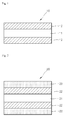
- Fig. 1 is a sectional view of an adhesive film 10 including an adhesive layer 12 according to one embodiment of the present invention.
- the adhesive film 10 includes a base layer 11 and an adhesive layer 12 formed on both surfaces of the base layer 11.
- the adhesive film 10 may include the adhesive layer 12 formed only on one surface of the base layer 11.
- the adhesive film 10 may include a sheet-shaped adhesive layer 12 alone without the base layer.
- the adhesive layer 12 may have a modulus of about 50,000 Pa to about 70,000 Pa, as measured at about 60°C to about 80°C.
- the modulus of the adhesive layer formed of the cured adhesive composition for touch panels falls within this range at high temperature, it is possible to effectively suppress bending, as described above.
- the adhesive film may have a degree of deformation ranging from about 0.08 mm to about 0.11 mm, as measured after application of 1000 gf to the adhesive film for 5 minutes using a texture analyzer (TA XT Plus, Stable Micro systems Co., Ltd.).
- the adhesive layer 12 may have a glass transition temperature of about - 20°C to about -50°C.
- the adhesive film 10 may be prepared by applying the adhesive composition for touch panels to the base layer 11, and photocuring by light irradiation to form the adhesive layer 12.
- the term "light irradiation” refers to irradiation with electromagnetic waves which can influence photoinitiators or polymerizable compounds to cause polymerization
- the electromagnetic waves are used as a generic term for particle beams, such as ⁇ -particle beams, proton beams, neutron beams, and electron beams, as well as microwaves, infrared rays, ultraviolet rays, X-rays, and ⁇ -rays.
- the adhesive layer 12 may be formed by introducing the adhesive composition for touch panels or a coating solution obtained by adding a solvent thereto into a casting mold, or applying the adhesive composition or the coating solution to an appropriate processing base using a bar coater, followed by curing.
- Curing of the adhesive composition or the coating solution thereof may be performed by, for example, irradiating a coating layer formed of the adhesive composition for touch panels or the coating solution thereof with UV rays, or aging the coating layer under predetermined conditions, without being limited thereto.
- the adhesive layer 12 may have a thickness of about 25 ⁇ m to about 300 ⁇ m, specifically about 100 ⁇ m to about 200 ⁇ m. Within this range, the adhesive layer can be applied to thin touch panels or touchscreens while realizing an adhesive film 10 having excellent durability.
- the base layer 11 may include one selected form the group consisting of polyethylene terephthalate, polytetrafluoroethylene, polyethylene, polypropylene, polybutene, polybutadiene, a vinyl chloride copolymer, polyurethane, ethylene-vinyl acetate, an ethylene-propylene copolymer, an ethylene-ethyl acrylate copolymer, an ethylene-methyl acrylate copolymer, polyimide, and combinations thereof.
- the base layer 11 may include a polyethylene terephthalate film, without being limited thereto.
- the base layer 11 may have a thickness of about 25 ⁇ m to about 300 ⁇ m, specifically about 30 ⁇ m to about 200 ⁇ m. Within this range, the base layer 11 can be applied to thin touch panels or touchscreens while realizing an adhesive film 10 having excellent durability.
- Fig. 2 is a sectional view of an adhesive film 20 according to another embodiment of the present invention.
- the adhesive film 20 may further include a release film 23 on the adhesive layer 22, as needed.
- the adhesive film 20 includes a base layer 21; adhesive layers 22 stacked on both surfaces of the base layer 21; and a release film 23 stacked on each of the adhesive layers 22.
- the release film 23 may be formed by, for example, release treatment on one surface of various plastic films used as the base layers 11, 21.
- a release agent used in release treatment may include alkyd release agents, silicone release agents, fluorine release agents, unsaturated ester release agents, polyolefin release agents, wax release agents, and the like.
- the release agent preferably includes an alkyd release agent, a silicone release agent, or a fluorine release agent, without being limited thereto.
- the thickness of the release film 23 may be selected depending upon applications thereof without limitation.
- the release film 23 may have a thickness of about 10 ⁇ m to 100 ⁇ m, specifically about 30 ⁇ m to 90 ⁇ m, more specifically about 40 ⁇ m to 80 ⁇ m.
- a touch panel which includes a conductive plastic film with a conductive layer formed on one surface thereof; and an adhesive layer attached to the conductive layer and including a cured product of the adhesive composition for touch panels.
- the touch panel may be, for example, a capacitive touch panel.
- the touch panel may be structured and formed in any typical fashion known in the art so long as the adhesive composition can be applied to the touch panel.
- Figs. 3 and 4 each depict a schematic sectional view of touch panels 100 and 200 according to further embodiments of the present invention.
- the touch panel 100 may include: a conductive plastic film 130 including a plastic base layer 131 and a conductive layer 132 formed on one surface of the plastic base layer 131; and an adhesive layer 112 attached to one surface of the conductive layer 132 of the conductive plastic film 130.
- the conductive plastic film 130 any conductive film known in the art may be used.
- the conductive plastic film 130 may be a transparent plastic film with an ITO (conductive metal oxide) electrode layer formed on one side thereof.
- the transparent plastic film, which forms the plastic base layer 131 may include polyethylene terephthalate films, polytetrafluoroethylene films, polyethylene films, polypropylene films, polybutene films, polybutadiene films, vinyl chloride copolymer films, polyurethane films, ethylene-vinyl acetate films, ethylene-propylene copolymer films, ethylene-ethyl acrylate copolymer films, ethylene-methyl acrylate copolymer films, or polyimide films, without being limited thereto.
- the plastic base layer 131 may be a polyethylene terephthalate (PET) film.
- the touch panel 200 may include, from top to bottom, an anti-reflection coating 240, a protective film 250, an adhesive layer 222, a conductive plastic film 230 including a plastic base layer 231 and a conductive layer 232 formed on one surface of the plastic base layer, and a transparent substrate 260.
- the touch panel 200 including these layers may be attached to a display 270, such as a liquid crystal display (LCD).
- LCD liquid crystal display
- the adhesive layer 222 including the cured product of the adhesive composition for touch panels may be attached to an upper portion of the conductive layer 232 of the conductive plastic film 230.
- all features, except for the adhesive layer 222 including the cured product of the adhesive composition for touch panels, are not limited as to the type and forming method thereof, and may employ any typical component known in the art.
- IPDI isophorone diisocyanate
- 40 parts by weight of the urethane-based curable oligomer, 35 parts by weight of 2-ethylhexyl acrylate (2-EHA), and 25 parts by weight of hydroxyethyl acrylate (HEA) were mixed, followed by adding 1-hydroxy cyclohexyl phenyl ketone (Irgacure 184, HCPK), as a photoinitiator, and a coupling agent to the mixture, thereby preparing an adhesive composition.
- Irgacure 184, HCPK 1-hydroxy cyclohexyl phenyl ketone
- the glass transition temperature of the adhesive composition was measured by differential scanning calorimetry (DSC). Results are shown in Table 1.
- the adhesive composition was coated onto one surface of a polyethylene terephthalate film (thickness: 75 ⁇ m) to a thickness of 100 ⁇ m using a bar coater after UV curing. Then, the adhesive composition-coated film was cured by irradiation with UV rays for 10 minutes using a UV lamp, thereby preparing an adhesive film.
- Adhesive films were prepared in the same manner as in Example 1 except that the amount of each component of the adhesive composition was changed as listed in Table 1.
- 10 parts by weight of the urethane-based curable oligomer, 65 parts by weight of 2-ethylhexyl acrylate (2-EHA), and 25 parts by weight of isobornyl acrylate (IBOA) were mixed, followed by adding 1-hydroxy cyclohexyl phenyl ketone (Irgacure 184, HCPK), as a photoinitiator, and a coupling agent to the mixture, thereby preparing an adhesive composition.
- Irgacure 184, HCPK 1-hydroxy cyclohexyl phenyl ketone
- the glass transition temperature of the adhesive composition was measured by differential scanning calorimetry (DSC). Results are shown in Table 1.
- the adhesive composition was coated on one surface of a polyethylene terephthalate film (thickness: 75 ⁇ m) to a thickness of 100 ⁇ m using a bar coater after UV curing. Then, the adhesive composition-coated film was cured by irradiation with UV rays for 10 minutes using a UV lamp, thereby preparing an adhesive film.
- the adhesive composition was coated on one surface of a polyethylene terephthalate film (thickness: 75 ⁇ m) to a thickness of 100 ⁇ m using a bar coater, after UV curing. Then, the adhesive composition-coated film was cured by irradiation with UV rays for 10 minutes using a UV lamp, thereby preparing an adhesive film.
- Shear storage modulus was measured using a rheometer (ARES-G2, TA Instruments) under the following conditions.
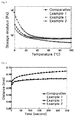
- Fig. 5 is a graph showing modulus as a function of temperature.
- Each of the adhesive films prepared in Examples 1 to 3 and Comparative Examples 1 to 4 was attached between a plastic base and an ITO film, and left under high temperature and high humidity conditions (temperature: 85°C, humidity: 85%) for 24 hours. Then, in appearance evaluation, the specimen was observed with the naked eye to determine whether the specimen suffered from bubbling, followed by evaluating reliability based on the following criteria. Results are shown in Table 2.
Landscapes
- Engineering & Computer Science (AREA)
- Chemical & Material Sciences (AREA)
- Organic Chemistry (AREA)
- Theoretical Computer Science (AREA)
- General Engineering & Computer Science (AREA)
- Human Computer Interaction (AREA)
- Physics & Mathematics (AREA)
- General Physics & Mathematics (AREA)
- Chemical Kinetics & Catalysis (AREA)
- Computer Hardware Design (AREA)
- Health & Medical Sciences (AREA)
- Medicinal Chemistry (AREA)
- Polymers & Plastics (AREA)
- Adhesive Tapes (AREA)
- Adhesives Or Adhesive Processes (AREA)
- Laminated Bodies (AREA)
Abstract
Description
- The present invention relates to an adhesive composition for touch panels, an adhesive film, and a touch panel.
- Recently, electronic devices, such as PDAs, mobile telecommunication terminals, or navigation systems for vehicles, have created a huge market. In such electronic devices, examples of technical goals include slimness, light weight, low power consumption, high resolution, and high brightness. For electronic devices having an input controller provided with a touchscreen or a touch panel switch, a transparent conductive plastic film is used to achieve light weight and prevent cracking. An example of the film includes a film which includes a base of a polyethylene terephthalate (PET) film, and a conductive layer of indium tin oxide (ITO) formed on one surface of the base. The film is stacked on a conductive glass, a stiffener, or a decorative film via an adhesive layer. The adhesive layer requires various properties, such as durability and the like.
- It is one aspect of the present invention to provide an adhesive composition for touch panels which exhibits an excellent anti-bending property when interposed between films having different thermal shrinkages and expansions at high temperature.
- It is another aspect of the present invention to provide an adhesive film fabricated using the adhesive composition for touch panels as set forth above.
- It is a further aspect of the present invention to provide a touch panel employing the adhesive film as set forth above.
- In accordance with one aspect of the present invention, a urethane-based adhesive composition for touch panels has a glass transition temperature of about - 20°C to about -50°C, wherein a cured product of the composition has a modulus of about 50,000 Pa to about 70,000 Pa, as measured at about 60°C to about 80°C.
- The urethane-based adhesive composition for touch panels may include a urethane-based curable compound, a (meth)acrylic acid ester monomer, and a crosslinkable monomer.
- The (meth)acrylic acid ester monomer may be present in an amount of about 5 parts by weight to about 100 parts by weight based on 100 parts by weight of the urethane-based curable compound.
- The crosslinkable monomer may be present in an amount of about 0.01 parts by weight to about 10 parts by weight based on 100 parts by weight of the urethane-based curable compound.
- The (meth)acrylic acid ester monomer may be alkyl(meth)acrylate, and the alkyl of the alkyl(meth)acrylate may be a linear or branched C1 to C14 alkyl.
- The (meth)acrylic acid ester monomer may include one selected from the group consisting of methyl (meth)acrylate, ethyl (meth)acrylate, n-propyl (meth)acrylate, isopropyl (meth)acrylate, n-butyl (meth)acrylate, t-butyl (meth)acrylate, sec-butyl (meth)acrylate, pentyl (meth)acrylate, 2-ethylhexyl (meth)acrylate, 2-ethylbutyl (meth)acrylate, n-octyl (meth)acrylate, isooctyl (meth)acrylate, isobornyl (meth)acrylate, isononyl (meth)acrylate, and combinations thereof.
- The crosslinkable monomer may include one selected from the group consisting of a hydroxy group-containing monomer, a carboxyl group-containing monomer, a nitrogen-containing monomer, and combinations thereof.
- The crosslinkable monomer may include one selected from the group consisting of 2-hydroxyethyl (meth)acrylate, 2-hydroxypropyl (meth)acrylate, 4-hydroxybutyl (meth)acrylate, 6-hydroxyhexyl (meth)acrylate, 8-hydroxyoctyl (meth)acrylate, 2-hydroxyethyleneglycol (meth)acrylate, 2-hydroxypropyleneglycol (meth)acrylate, acrylic acid, methacrylic acid, 2-(meth)acryloyloxy acetic acid, 3-(meth)acryloyloxy propyl acid, 4-(meth)acryloyloxy butyl acid, an acrylic acid dimer, itaconic acid, maleic acid, 2-isocyanatoethyl (meth)acrylate, 3-isocyanatopropyl (meth)acrylate, 4-isocyanatobutyl (meth)acrylate, (meth)acrylamide, N-vinyl pyrrolidone, N-vinyl caprolactam, and combinations thereof.
- The urethane-based adhesive composition for touch panels may further include a photoinitiator.
- The photoinitiator may include one selected from the group consisting of benzoin initiators, hydroxyketone initiators, aminoketone initiators, caprolactam initiators and combinations thereof.
- In accordance with another aspect of the present invention, an adhesive film may include an adhesive layer including a cured product of the urethane-based adhesive composition for touch panels as set forth above.
- The adhesive layer may have a thickness of about 25 µm to about 300 µm.
- The adhesive film may have a degree of deformation ranging from about 0.08 mm to about 0.11mm, as measured after application of 1000 gf to the adhesive film for 5 minutes using a texture analyzer (TA XT Plus, Stable Micro systems Co., Ltd.).
- The adhesive film may include a base layer and an adhesive layer stacked on one or both sides of the base layer.
- The base layer may include one selected from the group consisting of polyethylene terephthalate, polytetrafluoroethylene, polyethylene, polypropylene, polybutene, polybutadiene, a vinyl chloride copolymer, polyurethane, ethylene-vinyl acetate, an ethylene-propylene copolymer, an ethylene-ethyl acrylate copolymer, an ethylene-methyl acrylate copolymer, polyimide, and combinations thereof.
- The adhesive layer and a release film may be sequentially staked on one or both sides of the base layer.
- In accordance with a further aspect of the present invention, a touch panel includes a conductive plastic film with a conductive layer formed on one surface thereof; and an adhesive layer attached to the conductive layer and including a cured product of the adhesive composition for touch panels as set forth.
- The conductive plastic film may be a polyethylene terephthalate film with an ITO (conductive metal oxide) layer formed on one surface thereof.
- The adhesive composition for touch panels can provide an adhesive film which exhibits an excellent anti-bending property when interposed between films having different thermal shrinkages and expansions at high temperature.
-
-
Fig. 1 is a schematic sectional view of an adhesive film according to one embodiment of the present invention. -
Fig. 2 is a schematic sectional view of an adhesive film according to another embodiment of the present invention. -
Fig. 3 is a schematic sectional view of a touch panel according to further embodiments of the present invention. -
Fig. 4 is a schematic sectional view of a touch panel according to still further embodiments of the present invention. -
Fig. 5 is a graph showing modulus as a function of temperature for adhesive films prepared in Examples 1 to 2 and Comparative Example 1. -
Fig. 6 is a graph showing the results of a creep test for the adhesive films prepared in Examples 1 to 2 and Comparative Example 1. -
Fig. 7 is a graph showing relaxation modulus measured for the adhesive films prepared in Examples 1 to 2 and Comparative Example 1. - Hereinafter, embodiments of the present invention will be described in detail with reference to the accompanying drawings. It should be understood that the following embodiments are provided for illustration only and are not to be construed in any way as limiting the present invention. The scope of the present invention should be defined only by the accompanying claims and equivalents thereof.
- For clarity, portions irrelevant to the description are omitted for clarity. Like components will be denoted by like reference numerals throughout the specification.
- In the drawings, thicknesses are enlarged to clearly express various layers and regions. In the drawings, the thicknesses of some layers and regions are exaggerated for convenience of description.
- It will be understood that when an element such as a layer, a film, an area, a plate, etc. is referred to as being formed on another element, it can be directly formed on the other element, or an intervening layer(s) may also be present. In contrast, when an element is referred to as being "directly formed" on another element, there are no intervening elements therebetween.
- In accordance with one aspect of the present invention, there is provided a urethane-based adhesive composition for touch panels having a glass transition temperature of about -20°C to about -50°C, wherein a cured product of the composition has a modulus of about 50,000 Pa to about 70,000 Pa, as measured at about 60°C to about 80°C. The urethane-based adhesive composition for touch panels may be cured to be formed into an adhesive layer interposed between two films. In order to stack a transparent conductive film on a window glass of a display of mobile phones, tablet PCs, and the like, the adhesive layer may be interposed therebetween. Here, since the window glass formed of a plastic base exhibits different thermal shrinkage and expansion than the transparent conductive film, the window glass can be bent towards one side or the other side, for example, in a direction of the plastic base. The urethane-based adhesive composition for touch panels having a low glass transition temperature can effectively suppress such bending.
- Furthermore, the urethane-based adhesive composition for touch panels is composed to have high modulus at high temperature so as to prevent reduction in peeling force due to a low glass transition temperature.
- Modulus at high temperature may be controlled by adjusting a degree of cure of the urethane-based adhesive composition for touch panels. Specifically, the urethane-based adhesive composition for touch panels may be cured at a degree of cure from about 70 wt% to about 90 wt% to form the adhesive layer.
- By adjusting the composition of the urethane-based adhesive composition for touch panels such that the glass transition temperature of the urethane-based adhesive composition falls within the range as set forth above, and by increasing the modulus at high temperature of the cured adhesive composition up to the aforementioned range, bending of the window glass can be effectively suppressed, which can occur when the adhesive layer formed of the cured adhesive composition is interposed between the window glass and the transparent conductive film. In order to increase the modulus of the cured adhesive composition, adjustment of the degree of cure or the glass transition temperature, or addition of a material having strong adhesion such as a urethane-based oligomer may be employed.
- Within the aforementioned range of glass transition temperature, the urethane-based adhesive composition for touch panels can provide excellent stress relaxation while maintaining balance of adhesion properties. In addition, within the aforementioned range of modulus, the urethane-based adhesive composition for touch panels can suitably secure both stress relaxation and reliability.
- Furthermore, the urethane-based adhesive composition for touch panels can improve reliability with respect to outgassing of the window glass formed of the plastic base, and allow overall stress relaxation, thereby effectively suppressing bending of the plastic base.
- In one embodiment, the urethane-based adhesive composition for touch panels may include a urethane-based curable compound, a (meth)acrylic acid ester monomer, and a crosslinkable monomer.
- The urethane-based curable compound refers to monomers, oligomers, and prepolymers for formation of urethane-based curable resins. Specifically, as the urethane-based curable compound, a prepolymer consisting of a urethane acrylate oligomer and an acrylate monomer, and a functional acrylate monomer are used. For example, the urethane acrylate oligomer may include an oligomer having a weight-average molecular weight of about 30,000 to about 100,000.
- In another embodiment, the adhesive composition for touch panels may include about 5 parts by weight to about 100 parts by weight of the (meth)acrylic acid ester monomer and about 0.01 parts by weight to about 10 parts by weight of the crosslinkable monomer based on 100 parts by weight of the urethane-based curable compound.
- The (meth)acrylic acid ester monomer may be, for example alkyl(meth)acrylate, without being limited thereto. The alkyl of the alkyl(meth)acrylate may be a linear or branched C1 to C14 alkyl, specifically a C1 to C8 alkyl. Within this range of carbon number of the alkyl (meth)acrylate, the cured adhesive composition for touch panels can be adjusted to have appropriate cohesion, glass transition temperature, and adhesion. Specifically, the (meth)acrylic acid ester monomer may include one selected from the group consisting of methyl (meth)acrylate, ethyl (meth)acrylate, n-propyl (meth)acrylate, isopropyl (meth)acrylate, n-butyl (meth)acrylate, t-butyl (meth)acrylate, sec-butyl (meth)acrylate, pentyl (meth)acrylate, 2-ethylhexyl (meth)acrylate, 2-ethylbutyl (meth)acrylate, n-octyl (meth)acrylate, isooctyl (meth)acrylate, isobornyl (meth)acrylate, isononyl (meth)acrylate, and combinations thereof.
- The crosslinkable monomer refers to a monomer including both a copolymerizable functional group and a crosslinkable functional group.
- The crosslinkable monomer may include one selected from the group consisting of a hydroxy group-containing monomer, a carboxyl group-containing monomer, a nitrogen-containing monomer, and combinations thereof.
- Specifically, the crosslinkable monomer may include one selected from the group consisting of 2-hydroxyethyl (meth)acrylate, 2-hydroxypropyl (meth)acrylate, 4-hydroxybutyl (meth)acrylate, 6-hydroxyhexyl (meth)acrylate, 8-hydroxyoctyl (meth)acrylate, 2-hydroxyethyleneglycol (meth)acrylate, 2-hydroxypropyleneglycol (meth)acrylate, acrylic acid, methacrylic acid, 2-(meth)acryloyloxy acetic acid, 3-(meth)acryloyloxy propyl acid, 4-(meth)acryloyloxy butyl acid, an acrylic acid dimer, itaconic acid, maleic acid, 2-isocyanatoethyl (meth)acrylate, 3-isocyanatopropyl (meth)acrylate, 4-isocyanatobutyl (meth)acrylate, (meth)acrylamide, N-vinyl pyrrolidone, N-vinyl caprolactam, and combinations thereof.
- The adhesive composition for touch panels can be controlled in terms of glass transition temperature by adjusting the amount of each component.
- The adhesive composition for touch panels is a photocurable composition and may further include a photoinitiator to adjust a degree of polymerization. The photo initiator may be present in an amount of about 0.01 parts by weight to about 10 parts by weight based on 100 parts by weight of the urethane-based curable compound. The photoinitiator may be any initiator so long as the initiator can generate radicals by light irradiation and thus initiate polymerization. The photoinitiator may include one selected from the group consisting of benzoin initiators, hydroxyketone initiators, aminoketone initiators, caprolactam initiators and combinations thereof.
- The adhesive composition for touch panels may further include at least one additive selected from the group consisting of epoxy resins, crosslinking agents, UV stabilizers, antioxidants, toning agents, reinforcing agents, fillers, defoamers, surfactants, plasticizers, and combinations thereof, without deviating from the invention.
- In accordance with another aspect of the present invention, there is provided an adhesive film including an adhesive layer including a cured product of the adhesive composition for touch panels as set forth above.
-
Fig. 1 is a sectional view of anadhesive film 10 including anadhesive layer 12 according to one embodiment of the present invention. InFig. 1 , theadhesive film 10 includes abase layer 11 and anadhesive layer 12 formed on both surfaces of thebase layer 11. However, theadhesive film 10 may include theadhesive layer 12 formed only on one surface of thebase layer 11. In addition, as needed, theadhesive film 10 may include a sheet-shapedadhesive layer 12 alone without the base layer. - The
adhesive layer 12 may have a modulus of about 50,000 Pa to about 70,000 Pa, as measured at about 60°C to about 80°C. When the modulus of the adhesive layer formed of the cured adhesive composition for touch panels falls within this range at high temperature, it is possible to effectively suppress bending, as described above. For example, the adhesive film may have a degree of deformation ranging from about 0.08 mm to about 0.11 mm, as measured after application of 1000 gf to the adhesive film for 5 minutes using a texture analyzer (TA XT Plus, Stable Micro systems Co., Ltd.). - The
adhesive layer 12 may have a glass transition temperature of about - 20°C to about -50°C. - The
adhesive film 10 may be prepared by applying the adhesive composition for touch panels to thebase layer 11, and photocuring by light irradiation to form theadhesive layer 12. - As used herein, the term "light irradiation" refers to irradiation with electromagnetic waves which can influence photoinitiators or polymerizable compounds to cause polymerization, and the electromagnetic waves are used as a generic term for particle beams, such as α-particle beams, proton beams, neutron beams, and electron beams, as well as microwaves, infrared rays, ultraviolet rays, X-rays, and γ-rays.
- In order to form the
adhesive layer 12 by curing the adhesive composition for touch panels, any suitable method may be used without limitation. For example, theadhesive layer 12 may be formed by introducing the adhesive composition for touch panels or a coating solution obtained by adding a solvent thereto into a casting mold, or applying the adhesive composition or the coating solution to an appropriate processing base using a bar coater, followed by curing. - Since curing is performed after sufficiently removing components, which are volatile or can cause bubbling, from the adhesive composition or the coating solution, it is possible to provide appropriate crosslinking density, molecular weight, modulus, and the like for the cured product, and to prevent a risk that bubbles will grow in an adhesive interface to form scattering materials inside the composition. Curing of the adhesive composition or the coating solution thereof may be performed by, for example, irradiating a coating layer formed of the adhesive composition for touch panels or the coating solution thereof with UV rays, or aging the coating layer under predetermined conditions, without being limited thereto.
- The
adhesive layer 12 may have a thickness of about 25 µm to about 300 µm, specifically about 100 µm to about 200 µm. Within this range, the adhesive layer can be applied to thin touch panels or touchscreens while realizing anadhesive film 10 having excellent durability. - As the
base layer 11, any plastic film typically used in the art may be used. For example, thebase layer 11 may include one selected form the group consisting of polyethylene terephthalate, polytetrafluoroethylene, polyethylene, polypropylene, polybutene, polybutadiene, a vinyl chloride copolymer, polyurethane, ethylene-vinyl acetate, an ethylene-propylene copolymer, an ethylene-ethyl acrylate copolymer, an ethylene-methyl acrylate copolymer, polyimide, and combinations thereof. Specifically, thebase layer 11 may include a polyethylene terephthalate film, without being limited thereto. - The
base layer 11 may have a thickness of about 25 µm to about 300 µm, specifically about 30 µm to about 200 µm. Within this range, thebase layer 11 can be applied to thin touch panels or touchscreens while realizing anadhesive film 10 having excellent durability. -
Fig. 2 is a sectional view of anadhesive film 20 according to another embodiment of the present invention. - The
adhesive film 20 may further include arelease film 23 on theadhesive layer 22, as needed. InFig. 2 , theadhesive film 20 includes abase layer 21;adhesive layers 22 stacked on both surfaces of thebase layer 21; and arelease film 23 stacked on each of the adhesive layers 22. - The
release film 23 may be formed by, for example, release treatment on one surface of various plastic films used as the base layers 11, 21. Examples of a release agent used in release treatment may include alkyd release agents, silicone release agents, fluorine release agents, unsaturated ester release agents, polyolefin release agents, wax release agents, and the like. In terms of heat resistance, the release agent preferably includes an alkyd release agent, a silicone release agent, or a fluorine release agent, without being limited thereto. - The thickness of the
release film 23 may be selected depending upon applications thereof without limitation. For example, therelease film 23 may have a thickness of about 10 µm to 100 µm, specifically about 30 µm to 90 µm, more specifically about 40 µm to 80 µm. - In accordance with a further aspect of the invention, there is provided a touch panel which includes a conductive plastic film with a conductive layer formed on one surface thereof; and an adhesive layer attached to the conductive layer and including a cured product of the adhesive composition for touch panels.
- The touch panel may be, for example, a capacitive touch panel. In addition, the touch panel may be structured and formed in any typical fashion known in the art so long as the adhesive composition can be applied to the touch panel.
-
Figs. 3 and 4 each depict a schematic sectional view oftouch panels - In
Fig. 3 , thetouch panel 100 may include: aconductive plastic film 130 including aplastic base layer 131 and aconductive layer 132 formed on one surface of theplastic base layer 131; and anadhesive layer 112 attached to one surface of theconductive layer 132 of theconductive plastic film 130. - As the
conductive plastic film 130, any conductive film known in the art may be used. For example, theconductive plastic film 130 may be a transparent plastic film with an ITO (conductive metal oxide) electrode layer formed on one side thereof. Specifically, the transparent plastic film, which forms theplastic base layer 131, may include polyethylene terephthalate films, polytetrafluoroethylene films, polyethylene films, polypropylene films, polybutene films, polybutadiene films, vinyl chloride copolymer films, polyurethane films, ethylene-vinyl acetate films, ethylene-propylene copolymer films, ethylene-ethyl acrylate copolymer films, ethylene-methyl acrylate copolymer films, or polyimide films, without being limited thereto. More specifically, theplastic base layer 131 may be a polyethylene terephthalate (PET) film. - As shown in
Fig. 4 , thetouch panel 200 may include, from top to bottom, ananti-reflection coating 240, aprotective film 250, anadhesive layer 222, aconductive plastic film 230 including aplastic base layer 231 and aconductive layer 232 formed on one surface of the plastic base layer, and atransparent substrate 260. In addition, thetouch panel 200 including these layers may be attached to adisplay 270, such as a liquid crystal display (LCD). - In
Fig. 4 , theadhesive layer 222 including the cured product of the adhesive composition for touch panels may be attached to an upper portion of theconductive layer 232 of theconductive plastic film 230. - In the structure shown in
Fig. 4 , all features, except for theadhesive layer 222 including the cured product of the adhesive composition for touch panels, are not limited as to the type and forming method thereof, and may employ any typical component known in the art. - Hereinafter, the present invention will be described in more detail with reference to some examples. It should be understood that these examples are provided for illustration only and are not to be construed in any way as limiting the present invention.
- Polypropylene glycol (PPG, Mw=2,000) was polymerized with isophorone diisocyanate (IPDI), thereby preparing a urethane-based curable oligomer (Mw=40,000∼100,000). 40 parts by weight of the urethane-based curable oligomer, 35 parts by weight of 2-ethylhexyl acrylate (2-EHA), and 25 parts by weight of hydroxyethyl acrylate (HEA) were mixed, followed by adding 1-hydroxy cyclohexyl phenyl ketone (Irgacure 184, HCPK), as a photoinitiator, and a coupling agent to the mixture, thereby preparing an adhesive composition. Thereafter, the glass transition temperature of the adhesive composition was measured by differential scanning calorimetry (DSC). Results are shown in Table 1. The adhesive composition was coated onto one surface of a polyethylene terephthalate film (thickness: 75 µm) to a thickness of 100 µm using a bar coater after UV curing. Then, the adhesive composition-coated film was cured by irradiation with UV rays for 10 minutes using a UV lamp, thereby preparing an adhesive film.
- Adhesive films were prepared in the same manner as in Example 1 except that the amount of each component of the adhesive composition was changed as listed in Table 1.
- Polypropylene glycol (PPG, Mw=2,000) was polymerized with isophorone diisocyanate (IPDI), thereby preparing a urethane-based curable oligomer (Mw=40,000∼100,000). 10 parts by weight of the urethane-based curable oligomer, 65 parts by weight of 2-ethylhexyl acrylate (2-EHA), and 25 parts by weight of isobornyl acrylate (IBOA) were mixed, followed by adding 1-hydroxy cyclohexyl phenyl ketone (Irgacure 184, HCPK), as a photoinitiator, and a coupling agent to the mixture, thereby preparing an adhesive composition. Thereafter, the glass transition temperature of the adhesive composition was measured by differential scanning calorimetry (DSC). Results are shown in Table 1. The adhesive composition was coated on one surface of a polyethylene terephthalate film (thickness: 75 µm) to a thickness of 100 µm using a bar coater after UV curing. Then, the adhesive composition-coated film was cured by irradiation with UV rays for 10 minutes using a UV lamp, thereby preparing an adhesive film.
- 65 parts by weight of 2-ethylhexyl acrylate (2-EHA), 15 parts by weight of isobornyl acrylate (IBOA), and 20 parts by weight of hydroxyethyl acrylate were mixed, followed by adding 1-hydroxy cyclohexyl phenyl ketone (Irgacure 184, HCPK), as a photoinitiator, and a coupling agent to the mixture, thereby preparing an adhesive composition. Thereafter, the glass transition temperature of the adhesive composition was measured by differential scanning calorimetry (DSC). Results are shown in Table 1. The adhesive composition was coated on one surface of a polyethylene terephthalate film (thickness: 75 µm) to a thickness of 100 µm using a bar coater, after UV curing. Then, the adhesive composition-coated film was cured by irradiation with UV rays for 10 minutes using a UV lamp, thereby preparing an adhesive film.
Table 1 Examples (parts by weight) Comparative Examples (parts by weight) 1 2 3 1 2 3 4 Urethane oligomer 40 40 40 40 40 40 - 2-EHA 30 35 40 30 35 40 65 HEA 30 25 20 - - - 20 IBOA - - - 30 25 20 15 Glass transition temperature (°C) -25 -30 -35 -10 -15 -20 -35 - The adhesive films prepared in Examples 1 to 3 and Comparative Examples 1 to 4 were evaluated as to the following properties. Results are shown in Table 2.
- Shear storage modulus was measured using a rheometer (ARES-G2, TA Instruments) under the following conditions.
- Frequency: 1 rad/sec, Strain: 10%, Temperature: 0°C∼100°C
- Sample Geometry: Circular sample with a thickness of 600 µm or more and a diameter of 10 mm
-
Fig. 5 is a graph showing modulus as a function of temperature. - Modulus values at 80°C are shown in Table 2.
- For each of the adhesive films prepared in Examples 1 to 2 and Comparative Examples 1, a degree of deformation over time was measured after application of 1000 gf to the adhesive film for 5 minutes using a texture analyzer (TA XT Plus, Stable Micro systems Co., Ltd.). Results are shown in
Fig. 6 . - Each of the adhesive films prepared in Examples 1 to 3 and Comparative Examples 1 to 4 was stored under high temperature and high humidity conditions (temperature: 85°C, humidity: 85%) for 24 hours, and then left at room temperature for 1 hour. Thereafter, a degree of bending was measured. Results are shown in Table 2.
- Each of the adhesive films prepared in Examples 1 to 2 and Comparative Example 1 was evaluated as to relaxation modulus calculated as a ratio of stress to strain. Results are shown in
Fig. 7 . - Each of the adhesive films prepared in Examples 1 to 3 and Comparative Examples 1 to 4 was attached between a plastic base and an ITO film, and left under high temperature and high humidity conditions (temperature: 85°C, humidity: 85%) for 24 hours. Then, in appearance evaluation, the specimen was observed with the naked eye to determine whether the specimen suffered from bubbling, followed by evaluating reliability based on the following criteria. Results are shown in Table 2.
- Good: Little or No bubbling
- Bad: Severe bubbling
-
- 10, 20:
- Adhesive film
- 11, 21:
- Base layer
- 12, 22, 112, 222:
- Adhesive layer
- 23:
- Release film layer
- 100, 200:
- Touch panel
- 130, 230:
- Conductive plastic film
- 131, 231:
- Plastic base layer
- 132, 232:
- Conductive layer
- 240:
- Anti-reflection coating
- 250:
- Protective film
- 260:
- Transparent substrate
- 270:
- Liquid crystal display (LCD)
| Examples (parts by weight) | Comparative Examples (parts by weight) | ||||||
| 1 | 2 | 3 | 1 | 2 | 3 | 4 | |
| Modulus at 80°C (Pa) | 70,000 | 65,000 | 55,000 | 10,500 | 100,000 | 95000 | 55,000 |
| Degree of bending (mm) | 0.3 | 0.25 | 0.2 | 0.6 | 0.5 | 0.4 | 0.2 |
| Reliability (bubbling) | Good | Good | Good | Good | Good | Good | Bad |
Claims (18)
- A urethane-based adhesive composition for touch panels, the urethane-based adhesive composition having a glass transition temperature of about -20°C to about - 50°C, wherein a cured product of the urethane-based adhesive composition has a modulus of about 50,000 Pa to about 70,000 Pa, as measured at about 60°C to about 80°C.
- The urethane-based adhesive composition for touch panels according to claim 1, comprising:a urethane-based curable compound; a (meth)acrylic acid ester monomer; and a crosslinkable monomer.
- The urethane-based adhesive composition for touch panels according to claim 2, wherein the (meth)acrylic acid ester monomer is present in an amount of about 5 parts by weight to about 100 parts by weight based on 100 parts by weight of the urethane-based curable compound.
- The urethane-based adhesive composition for touch panels according to claim 2, wherein the crosslinkable monomer is present in an amount of about 0.01 parts by weight to about 10 parts by weight based on 100 parts by weight of the urethane-based curable compound.
- The urethane-based adhesive composition for touch panels according to claim 2, wherein the (meth)acrylic acid ester monomer comprises alkyl(meth)acrylate, and the alkyl of the alkyl(meth)acrylate comprises a linear or branched C1 to C14 alkyl.
- The urethane-based adhesive composition for touch panels according to claim 2, wherein the (meth)acrylic acid ester monomer comprises one selected from the group consisting of methyl (meth)acrylate, ethyl (meth)acrylate, n-propyl (meth)acrylate, isopropyl (meth)acrylate, n-butyl (meth)acrylate, t-butyl (meth)acrylate, sec-butyl (meth)acrylate, pentyl (meth)acrylate, 2-ethylhexyl (meth)acrylate, 2-ethylbutyl (meth)acrylate, n-octyl (meth)acrylate, isooctyl (meth)acrylate, isobornyl (meth)acrylate, isononyl (meth)acrylate, and combinations thereof.
- The urethane-based adhesive composition for touch panels according to claim 2, wherein the crosslinkable monomer comprises one selected from the group consisting of a hydroxy group-containing monomer, a carboxyl group-containing monomer, a nitrogen-containing monomer, and combinations thereof.
- The urethane-based adhesive composition for touch panels according to claim 2, wherein the crosslinkable monomer comprises one selected from the group consisting of 2-hydroxyethyl (meth)acrylate, 2-hydroxypropyl (meth)acrylate, 4-hydroxybutyl (meth)acrylate, 6-hydroxyhexyl (meth)acrylate, 8-hydroxyoctyl (meth)acrylate, 2-hydroxyethyleneglycol (meth)acrylate, 2-hydroxypropyleneglycol (meth)acrylate, acrylic acid, methacrylic acid, 2-(meth)acryloyloxy acetic acid, 3-(meth)acryloyloxy propyl acid, 4-(meth)acryloyloxy butyl acid, an acrylic acid dimer, itaconic acid, maleic acid, 2-isocyanatoethyl (meth)acrylate, 3-isocyanatopropyl (meth)acrylate, 4-isocyanatobutyl (meth)acrylate, (meth)acrylamide, N-vinyl pyrrolidone, N-vinyl caprolactam, and combinations thereof.
- The urethane-based adhesive composition for touch panels according to claim 1, further comprising: a photoinitiator.
- The urethane-based adhesive composition for touch panels according to claim 8, wherein the photoinitiator comprises one selected from the group consisting of benzoin initiators, hydroxyketone initiators, aminoketone initiators, caprolactam initiators and combinations thereof.
- An adhesive film comprising:an adhesive layer comprising a cured product of the urethane-based adhesive composition for touch panels according to any one of claims 1 to 10.
- The adhesive film according to claim 11, wherein the adhesive layer has a thickness of about 25 µm to about 300 µm.
- The adhesive film according to claim 12, wherein the adhesive film has a degree of deformation ranging from about 0.08 mm to about 0.11mm, as measured after application of 1000 gf to the adhesive film for 5 minutes using a texture analyzer (TA XT Plus, Stable Micro systems Co., Ltd.).
- The adhesive film according to claim 11, comprising:a base layer; andan adhesive layer stacked on one or both surfaces of the base layer.
- The adhesive film according to claim 14, wherein the base layer comprises one selected from the group consisting of polyethylene terephthalate, polytetrafluoroethylene, polyethylene, polypropylene, polybutene, polybutadiene, a vinyl chloride copolymer, polyurethane, ethylene-vinyl acetate, an ethylene-propylene copolymer, an ethylene-ethyl acrylate copolymer, an ethylene-methyl acrylate copolymer, polyimide, and combinations thereof.
- The adhesive film according to claim 14, wherein the adhesive layer and a release film are sequentially staked on one or both surfaces of the base layer.
- A touch panel comprising:a conductive plastic film with a conductive layer formed on one surface thereof; andan adhesive layer attached to the conductive layer and comprising a cured product of the adhesive composition for touch panels according to any one of claims 1 to 10.
- The touch panel according to claim 17, wherein the conductive plastic film is a polyethylene terephthalate film with an ITO (conductive metal oxide) layer formed on one surface thereof.
Applications Claiming Priority (2)
| Application Number | Priority Date | Filing Date | Title |
|---|---|---|---|
| KR1020120089713A KR101542644B1 (en) | 2012-08-16 | 2012-08-16 | Adhesive composition for touch panel, adhesive film and touch panel |
| PCT/KR2013/007131 WO2014027788A1 (en) | 2012-08-16 | 2013-08-07 | Adhesive composition for touch panel, adhesive film, and touch panel |
Publications (3)
| Publication Number | Publication Date |
|---|---|
| EP2886624A1 true EP2886624A1 (en) | 2015-06-24 |
| EP2886624A4 EP2886624A4 (en) | 2015-06-24 |
| EP2886624B1 EP2886624B1 (en) | 2018-12-19 |
Family
ID=50268970
Family Applications (1)
| Application Number | Title | Priority Date | Filing Date |
|---|---|---|---|
| EP13879358.3A Not-in-force EP2886624B1 (en) | 2012-08-16 | 2013-08-07 | Adhesive composition for touch panel, adhesive film, and touch panel |
Country Status (7)
| Country | Link |
|---|---|
| US (1) | US10174224B2 (en) |
| EP (1) | EP2886624B1 (en) |
| JP (1) | JP6246208B2 (en) |
| KR (1) | KR101542644B1 (en) |
| CN (1) | CN104540916B (en) |
| TW (1) | TWI619789B (en) |
| WO (1) | WO2014027788A1 (en) |
Cited By (2)
| Publication number | Priority date | Publication date | Assignee | Title |
|---|---|---|---|---|
| EP3441855A4 (en) * | 2016-04-04 | 2019-10-23 | Alps Alpine Co., Ltd. | CAPACITIVE SENSOR |
| WO2025046451A1 (en) * | 2023-08-28 | 2025-03-06 | 3M Innovative Properties Company | Curable adhesive |
Families Citing this family (27)
| Publication number | Priority date | Publication date | Assignee | Title |
|---|---|---|---|---|
| JP3035082B2 (en) | 1992-07-23 | 2000-04-17 | 株式会社神戸製鋼所 | Kneading device |
| KR102417018B1 (en) | 2014-08-26 | 2022-07-05 | 엘지디스플레이 주식회사 | Apparatus for driving of touch panel |
| CN111704865A (en) * | 2014-11-01 | 2020-09-25 | 三星Sdi株式会社 | Adhesive film and display member including adhesive film |
| WO2016068423A1 (en) * | 2014-11-01 | 2016-05-06 | 삼성에스디아이 주식회사 | Flexible display device |
| KR101844372B1 (en) | 2014-12-03 | 2018-04-02 | 주식회사 엘엠에스 | Optical filter for image pickup device, and image pickup device containing the same |
| KR102184024B1 (en) * | 2014-12-17 | 2020-11-27 | 동우 화인켐 주식회사 | Touch sensor module and manufaturing method the same |
| KR102298419B1 (en) * | 2015-05-18 | 2021-09-03 | 동우 화인켐 주식회사 | Display device |
| KR101667413B1 (en) * | 2015-05-29 | 2016-10-19 | 주식회사 테이팩스 | Optically clear photo-curable adhesive sheet and preparation method thereof |
| KR101814247B1 (en) | 2015-06-30 | 2018-01-05 | 삼성에스디아이 주식회사 | Adhesive film and display member comprising the same |
| KR102089404B1 (en) * | 2016-02-04 | 2020-03-16 | 주식회사 엘지화학 | Conductive laminate |
| US10676654B2 (en) | 2016-04-22 | 2020-06-09 | Samsung Sdi Co., Ltd. | Adhesive film, optical member comprising the same and optical display comprising the same |
| KR102143994B1 (en) * | 2016-09-12 | 2020-08-12 | 동우 화인켐 주식회사 | Optically Clear Adhesive Composition, and Optically Clear Adhesive Film comprising the Same, and Flat Panel Display |
| KR102143798B1 (en) * | 2016-09-12 | 2020-08-12 | 동우 화인켐 주식회사 | Optically Clear Adhesive Composition, and Optically Clear Adhesive Film comprising the Same, and Flat Panel Display |
| WO2018179608A1 (en) * | 2017-03-28 | 2018-10-04 | バンドー化学株式会社 | Optically clear adhesive sheet, method for manufacturing optically clear adhesive sheet, laminate, and bonded structure |
| WO2019013366A1 (en) * | 2017-07-11 | 2019-01-17 | 삼성전자 주식회사 | Window film for foldable display device, and display device |
| JP6744850B2 (en) * | 2017-08-30 | 2020-08-19 | リンテック株式会社 | STRUCTURE AND ITS MANUFACTURING METHOD, DISPLAY, AND OPTICAL ADHESIVE SHEET |
| JP7185396B2 (en) * | 2017-12-19 | 2022-12-07 | リンテック株式会社 | Adhesive sheet, repeated bending laminated member and repeatedly bending device |
| JP7241465B2 (en) | 2018-01-30 | 2023-03-17 | 日東電工株式会社 | Adhesive, curable adhesive composition, adhesive sheet and method for producing same |
| JP7028660B2 (en) | 2018-01-30 | 2022-03-02 | 日東電工株式会社 | Adhesive sheet and its manufacturing method, as well as adhesive film |
| KR102208594B1 (en) * | 2018-10-30 | 2021-01-28 | 주식회사 엘지화학 | Photosensitive urethane-based resin, adhesive composition comprising the same, and adhesive |
| CN109810643A (en) * | 2019-01-28 | 2019-05-28 | 常州凯奥机电科技有限公司 | A kind of preparation method of static conductive thermal isolation film |
| US11332559B2 (en) | 2019-07-17 | 2022-05-17 | Rohm And Haas Electronic Materials Llc | Polymers for display devices |
| WO2021044531A1 (en) * | 2019-09-04 | 2021-03-11 | 三菱電機株式会社 | Touch panel device, touch panel control method, and touch panel control program |
| KR20220078002A (en) | 2020-12-02 | 2022-06-10 | 삼성디스플레이 주식회사 | Resin composition, adhesive meber, and display device including the same |
| KR102733143B1 (en) * | 2021-07-09 | 2024-11-21 | 삼성에스디아이 주식회사 | Multilayer adhesive sheet, optical member comprising the same and display apparatus comprising the same |
| KR20230060577A (en) | 2021-10-27 | 2023-05-08 | 삼성디스플레이 주식회사 | Adhesive member and display device including the same |
| KR20230126307A (en) * | 2022-02-22 | 2023-08-30 | 삼성디스플레이 주식회사 | A resin composition and display apparatus including the same |
Family Cites Families (18)
| Publication number | Priority date | Publication date | Assignee | Title |
|---|---|---|---|---|
| JP4493273B2 (en) * | 2003-01-29 | 2010-06-30 | 日東電工株式会社 | Double-sided adhesive sheet and display device with touch panel |
| JP4800363B2 (en) * | 2008-09-26 | 2011-10-26 | 日東電工株式会社 | Adhesive sheet for bonding optical members |
| WO2011119180A1 (en) * | 2010-03-24 | 2011-09-29 | 3M Innovative Properties Company | Optical assembly having a display panel and methods of making and disassembling same |
| KR101219327B1 (en) * | 2009-07-22 | 2013-01-08 | 토요잉크Sc홀딩스주식회사 | Pressure-sensitive adhesive composition for conductive member and laminate using the same |
| US8242185B2 (en) * | 2009-08-03 | 2012-08-14 | Morgan Adhesives Company | Adhesive compositions for easy application and improved durability |
| JP5473509B2 (en) * | 2009-09-16 | 2014-04-16 | 藤森工業株式会社 | Moist heat resistant adhesive film |
| JP2011111572A (en) * | 2009-11-30 | 2011-06-09 | Toray Advanced Film Co Ltd | Adhesive sheet and display device |
| JP2011256264A (en) * | 2010-06-09 | 2011-12-22 | Toyo Ink Sc Holdings Co Ltd | Adhesive composition and adhesive laminate using the same |
| KR101435240B1 (en) * | 2010-10-27 | 2014-08-29 | 주식회사 엘지화학 | Touch panel |
| JP5596588B2 (en) * | 2010-11-08 | 2014-09-24 | 日東電工株式会社 | UV curable optical resin adhesive composition |
| TWI447192B (en) * | 2010-11-24 | 2014-08-01 | Lg Hausys Ltd | Pressure-sensitive adhesive composition for touch panel, pressure-sensitive adhesive film and touch panel |
| KR101576689B1 (en) * | 2010-11-24 | 2015-12-10 | (주)엘지하우시스 | Pressure-sensitive adhesive composition for touch panel, pressure-sensitive adhesive film and touch panel |
| WO2012082706A2 (en) * | 2010-12-16 | 2012-06-21 | 3M Innovative Properties Company | Methods for preparing optically clear adhesives and coatings |
| JP5630256B2 (en) * | 2010-12-24 | 2014-11-26 | Dic株式会社 | UV-curable adhesive resin composition, adhesive and laminate |
| US8957156B2 (en) | 2010-12-31 | 2015-02-17 | Cheil Industries, Inc. | Optical adhesive composition for displays, optical adhesive film prepared from the same, and display panel including the same |
| KR101411014B1 (en) | 2010-12-31 | 2014-06-23 | 제일모직주식회사 | Optically adhesive composition, optically adhesive film prepared from the same, and display panel comprising the same |
| KR101798655B1 (en) * | 2011-02-01 | 2017-11-16 | 도레이첨단소재 주식회사 | Composite film for electrostatic capacity type touch screen panel |
| WO2013173976A1 (en) | 2012-05-22 | 2013-11-28 | Henkel (China) Company Limited | Liquid optically clear photo-curable adhesive |
-
2012
- 2012-08-16 KR KR1020120089713A patent/KR101542644B1/en not_active Expired - Fee Related
-
2013
- 2013-08-07 JP JP2015527363A patent/JP6246208B2/en not_active Expired - Fee Related
- 2013-08-07 CN CN201380042890.6A patent/CN104540916B/en not_active Expired - Fee Related
- 2013-08-07 EP EP13879358.3A patent/EP2886624B1/en not_active Not-in-force
- 2013-08-07 WO PCT/KR2013/007131 patent/WO2014027788A1/en not_active Ceased
- 2013-08-07 US US14/421,023 patent/US10174224B2/en active Active
- 2013-08-16 TW TW102129584A patent/TWI619789B/en not_active IP Right Cessation
Cited By (2)
| Publication number | Priority date | Publication date | Assignee | Title |
|---|---|---|---|---|
| EP3441855A4 (en) * | 2016-04-04 | 2019-10-23 | Alps Alpine Co., Ltd. | CAPACITIVE SENSOR |
| WO2025046451A1 (en) * | 2023-08-28 | 2025-03-06 | 3M Innovative Properties Company | Curable adhesive |
Also Published As
| Publication number | Publication date |
|---|---|
| US20150232707A1 (en) | 2015-08-20 |
| EP2886624A4 (en) | 2015-06-24 |
| JP2015531804A (en) | 2015-11-05 |
| US10174224B2 (en) | 2019-01-08 |
| JP6246208B2 (en) | 2017-12-13 |
| WO2014027788A1 (en) | 2014-02-20 |
| TW201408746A (en) | 2014-03-01 |
| CN104540916A (en) | 2015-04-22 |
| KR101542644B1 (en) | 2015-08-06 |
| EP2886624B1 (en) | 2018-12-19 |
| TWI619789B (en) | 2018-04-01 |
| KR20140023624A (en) | 2014-02-27 |
| CN104540916B (en) | 2018-05-11 |
Similar Documents
| Publication | Publication Date | Title |
|---|---|---|
| EP2886624B1 (en) | Adhesive composition for touch panel, adhesive film, and touch panel | |
| EP2644675B1 (en) | Adhesive composition for touch panel, adhesive film, and touch panel | |
| EP2644676B1 (en) | Adhesive composition for touch panel, adhesive film, and touch panel | |
| CN102648260B (en) | Touch panel | |
| KR101374374B1 (en) | Adhesive Composition, Adhesive Film Comprising the Same, Method for Preparing the Adhesive Film and Display Member Using the Same | |
| KR101566060B1 (en) | Adhesive film, adhesive composition for the same and display member comprising the same | |
| US20130236674A1 (en) | Adhesive composition for touch panel, adhesive film, and touch panel | |
| CN103261351A (en) | Adhesive composition for optical film, adhesive layer for optical film, adhesive optical film, and image display device | |
| KR20140085259A (en) | Adhesive film, adhesive composition for the same and display member comprising the same | |
| KR101745042B1 (en) | Adhesive composition for touch panel, adhesive film and touch panel | |
| CN106795397B (en) | Adhesive composition for touch screen panel, optical adhesive film, and touch screen panel | |
| KR20120056175A (en) | Pressure-sensitive adhesive composition for touch panel, pressure-sensitive adhesive film and touch panel | |
| KR101509855B1 (en) | Pressure-sensitive adhesive composition | |
| KR101494495B1 (en) | Pressure sensitive adhesive composition for an optical film | |
| KR102850268B1 (en) | Adhesive film, optical member comprising the same and optical display apparatus comprising the same | |
| KR20170064577A (en) | Adhesive composition, optically clear adhesive film and touch screen panel | |
| KR101541579B1 (en) | Pressure-sensitive adhesive composition for an optical film | |
| KR20180111468A (en) | Solventless type adhesive compositon, adhesive, and manufacturing method of adhesive | |
| KR20260031282A (en) | Adhesive protective film, optical member comprising the same and optical display apparatus comprising the same | |
| KR20200065536A (en) | Adhesive composition and adhesive sheet comprising photo-cured product thereof |
Legal Events
| Date | Code | Title | Description |
|---|---|---|---|
| PUAI | Public reference made under article 153(3) epc to a published international application that has entered the european phase |
Free format text: ORIGINAL CODE: 0009012 |
|
| 17P | Request for examination filed |
Effective date: 20150211 |
|
| A4 | Supplementary search report drawn up and despatched |
Effective date: 20150506 |
|
| AK | Designated contracting states |
Kind code of ref document: A1 Designated state(s): AL AT BE BG CH CY CZ DE DK EE ES FI FR GB GR HR HU IE IS IT LI LT LU LV MC MK MT NL NO PL PT RO RS SE SI SK SM TR |
|
| AX | Request for extension of the european patent |
Extension state: BA ME |
|
| DAX | Request for extension of the european patent (deleted) | ||
| RAP1 | Party data changed (applicant data changed or rights of an application transferred) |
Owner name: LG CHEM, LTD. |
|
| GRAP | Despatch of communication of intention to grant a patent |
Free format text: ORIGINAL CODE: EPIDOSNIGR1 |
|
| STAA | Information on the status of an ep patent application or granted ep patent |
Free format text: STATUS: GRANT OF PATENT IS INTENDED |
|
| RIC1 | Information provided on ipc code assigned before grant |
Ipc: C09J 175/04 20060101AFI20180710BHEP Ipc: G06F 3/041 20060101ALI20180710BHEP Ipc: C09J 7/22 20180101ALI20180710BHEP Ipc: C08F 220/10 20060101ALI20180710BHEP Ipc: C09J 7/30 20180101ALI20180710BHEP |
|
| INTG | Intention to grant announced |
Effective date: 20180731 |
|
| GRAS | Grant fee paid |
Free format text: ORIGINAL CODE: EPIDOSNIGR3 |
|
| GRAJ | Information related to disapproval of communication of intention to grant by the applicant or resumption of examination proceedings by the epo deleted |
Free format text: ORIGINAL CODE: EPIDOSDIGR1 |
|
| GRAL | Information related to payment of fee for publishing/printing deleted |
Free format text: ORIGINAL CODE: EPIDOSDIGR3 |
|
| STAA | Information on the status of an ep patent application or granted ep patent |
Free format text: STATUS: REQUEST FOR EXAMINATION WAS MADE |
|
| GRAR | Information related to intention to grant a patent recorded |
Free format text: ORIGINAL CODE: EPIDOSNIGR71 |
|
| STAA | Information on the status of an ep patent application or granted ep patent |
Free format text: STATUS: GRANT OF PATENT IS INTENDED |
|
| GRAA | (expected) grant |
Free format text: ORIGINAL CODE: 0009210 |
|
| STAA | Information on the status of an ep patent application or granted ep patent |
Free format text: STATUS: THE PATENT HAS BEEN GRANTED |
|
| INTC | Intention to grant announced (deleted) | ||
| AK | Designated contracting states |
Kind code of ref document: B1 Designated state(s): AL AT BE BG CH CY CZ DE DK EE ES FI FR GB GR HR HU IE IS IT LI LT LU LV MC MK MT NL NO PL PT RO RS SE SI SK SM TR |
|
| INTG | Intention to grant announced |
Effective date: 20181113 |
|
| REG | Reference to a national code |
Ref country code: GB Ref legal event code: FG4D |
|
| REG | Reference to a national code |
Ref country code: CH Ref legal event code: EP |
|
| REG | Reference to a national code |
Ref country code: IE Ref legal event code: FG4D |
|
| REG | Reference to a national code |
Ref country code: DE Ref legal event code: R096 Ref document number: 602013048598 Country of ref document: DE |
|
| REG | Reference to a national code |
Ref country code: AT Ref legal event code: REF Ref document number: 1078670 Country of ref document: AT Kind code of ref document: T Effective date: 20190115 |
|
| REG | Reference to a national code |
Ref country code: CH Ref legal event code: PK Free format text: BERICHTIGUNGEN |
|
| RIC2 | Information provided on ipc code assigned after grant |
Ipc: C08F 220/10 20060101ALI20180710BHEP Ipc: C09J 7/22 20180101ALI20180710BHEP Ipc: C09J 175/04 20060101AFI20180710BHEP Ipc: G06F 3/041 20060101ALI20180710BHEP Ipc: C09J 7/30 20180101ALI20180710BHEP |
|
| REG | Reference to a national code |
Ref country code: NL Ref legal event code: MP Effective date: 20181219 |
|
| PG25 | Lapsed in a contracting state [announced via postgrant information from national office to epo] |
Ref country code: NO Free format text: LAPSE BECAUSE OF FAILURE TO SUBMIT A TRANSLATION OF THE DESCRIPTION OR TO PAY THE FEE WITHIN THE PRESCRIBED TIME-LIMIT Effective date: 20190319 Ref country code: FI Free format text: LAPSE BECAUSE OF FAILURE TO SUBMIT A TRANSLATION OF THE DESCRIPTION OR TO PAY THE FEE WITHIN THE PRESCRIBED TIME-LIMIT Effective date: 20181219 Ref country code: BG Free format text: LAPSE BECAUSE OF FAILURE TO SUBMIT A TRANSLATION OF THE DESCRIPTION OR TO PAY THE FEE WITHIN THE PRESCRIBED TIME-LIMIT Effective date: 20190319 Ref country code: LT Free format text: LAPSE BECAUSE OF FAILURE TO SUBMIT A TRANSLATION OF THE DESCRIPTION OR TO PAY THE FEE WITHIN THE PRESCRIBED TIME-LIMIT Effective date: 20181219 Ref country code: HR Free format text: LAPSE BECAUSE OF FAILURE TO SUBMIT A TRANSLATION OF THE DESCRIPTION OR TO PAY THE FEE WITHIN THE PRESCRIBED TIME-LIMIT Effective date: 20181219 Ref country code: LV Free format text: LAPSE BECAUSE OF FAILURE TO SUBMIT A TRANSLATION OF THE DESCRIPTION OR TO PAY THE FEE WITHIN THE PRESCRIBED TIME-LIMIT Effective date: 20181219 |
|
| REG | Reference to a national code |
Ref country code: LT Ref legal event code: MG4D |
|
| REG | Reference to a national code |
Ref country code: AT Ref legal event code: MK05 Ref document number: 1078670 Country of ref document: AT Kind code of ref document: T Effective date: 20181219 |
|
| PG25 | Lapsed in a contracting state [announced via postgrant information from national office to epo] |
Ref country code: RS Free format text: LAPSE BECAUSE OF FAILURE TO SUBMIT A TRANSLATION OF THE DESCRIPTION OR TO PAY THE FEE WITHIN THE PRESCRIBED TIME-LIMIT Effective date: 20181219 Ref country code: SE Free format text: LAPSE BECAUSE OF FAILURE TO SUBMIT A TRANSLATION OF THE DESCRIPTION OR TO PAY THE FEE WITHIN THE PRESCRIBED TIME-LIMIT Effective date: 20181219 Ref country code: AL Free format text: LAPSE BECAUSE OF FAILURE TO SUBMIT A TRANSLATION OF THE DESCRIPTION OR TO PAY THE FEE WITHIN THE PRESCRIBED TIME-LIMIT Effective date: 20181219 Ref country code: GR Free format text: LAPSE BECAUSE OF FAILURE TO SUBMIT A TRANSLATION OF THE DESCRIPTION OR TO PAY THE FEE WITHIN THE PRESCRIBED TIME-LIMIT Effective date: 20190320 |
|
| PG25 | Lapsed in a contracting state [announced via postgrant information from national office to epo] |
Ref country code: NL Free format text: LAPSE BECAUSE OF FAILURE TO SUBMIT A TRANSLATION OF THE DESCRIPTION OR TO PAY THE FEE WITHIN THE PRESCRIBED TIME-LIMIT Effective date: 20181219 |
|
| PG25 | Lapsed in a contracting state [announced via postgrant information from national office to epo] |
Ref country code: ES Free format text: LAPSE BECAUSE OF FAILURE TO SUBMIT A TRANSLATION OF THE DESCRIPTION OR TO PAY THE FEE WITHIN THE PRESCRIBED TIME-LIMIT Effective date: 20181219 Ref country code: PL Free format text: LAPSE BECAUSE OF FAILURE TO SUBMIT A TRANSLATION OF THE DESCRIPTION OR TO PAY THE FEE WITHIN THE PRESCRIBED TIME-LIMIT Effective date: 20181219 Ref country code: IT Free format text: LAPSE BECAUSE OF FAILURE TO SUBMIT A TRANSLATION OF THE DESCRIPTION OR TO PAY THE FEE WITHIN THE PRESCRIBED TIME-LIMIT Effective date: 20181219 Ref country code: CZ Free format text: LAPSE BECAUSE OF FAILURE TO SUBMIT A TRANSLATION OF THE DESCRIPTION OR TO PAY THE FEE WITHIN THE PRESCRIBED TIME-LIMIT Effective date: 20181219 Ref country code: PT Free format text: LAPSE BECAUSE OF FAILURE TO SUBMIT A TRANSLATION OF THE DESCRIPTION OR TO PAY THE FEE WITHIN THE PRESCRIBED TIME-LIMIT Effective date: 20190419 |
|
| PG25 | Lapsed in a contracting state [announced via postgrant information from national office to epo] |
Ref country code: RO Free format text: LAPSE BECAUSE OF FAILURE TO SUBMIT A TRANSLATION OF THE DESCRIPTION OR TO PAY THE FEE WITHIN THE PRESCRIBED TIME-LIMIT Effective date: 20181219 Ref country code: SK Free format text: LAPSE BECAUSE OF FAILURE TO SUBMIT A TRANSLATION OF THE DESCRIPTION OR TO PAY THE FEE WITHIN THE PRESCRIBED TIME-LIMIT Effective date: 20181219 Ref country code: IS Free format text: LAPSE BECAUSE OF FAILURE TO SUBMIT A TRANSLATION OF THE DESCRIPTION OR TO PAY THE FEE WITHIN THE PRESCRIBED TIME-LIMIT Effective date: 20190419 Ref country code: EE Free format text: LAPSE BECAUSE OF FAILURE TO SUBMIT A TRANSLATION OF THE DESCRIPTION OR TO PAY THE FEE WITHIN THE PRESCRIBED TIME-LIMIT Effective date: 20181219 Ref country code: SM Free format text: LAPSE BECAUSE OF FAILURE TO SUBMIT A TRANSLATION OF THE DESCRIPTION OR TO PAY THE FEE WITHIN THE PRESCRIBED TIME-LIMIT Effective date: 20181219 |
|
| REG | Reference to a national code |
Ref country code: DE Ref legal event code: R097 Ref document number: 602013048598 Country of ref document: DE |
|
| PLBE | No opposition filed within time limit |
Free format text: ORIGINAL CODE: 0009261 |
|
| STAA | Information on the status of an ep patent application or granted ep patent |
Free format text: STATUS: NO OPPOSITION FILED WITHIN TIME LIMIT |
|
| PG25 | Lapsed in a contracting state [announced via postgrant information from national office to epo] |
Ref country code: AT Free format text: LAPSE BECAUSE OF FAILURE TO SUBMIT A TRANSLATION OF THE DESCRIPTION OR TO PAY THE FEE WITHIN THE PRESCRIBED TIME-LIMIT Effective date: 20181219 Ref country code: DK Free format text: LAPSE BECAUSE OF FAILURE TO SUBMIT A TRANSLATION OF THE DESCRIPTION OR TO PAY THE FEE WITHIN THE PRESCRIBED TIME-LIMIT Effective date: 20181219 |
|
| 26N | No opposition filed |
Effective date: 20190920 |
|
| PG25 | Lapsed in a contracting state [announced via postgrant information from national office to epo] |
Ref country code: SI Free format text: LAPSE BECAUSE OF FAILURE TO SUBMIT A TRANSLATION OF THE DESCRIPTION OR TO PAY THE FEE WITHIN THE PRESCRIBED TIME-LIMIT Effective date: 20181219 |
|
| PG25 | Lapsed in a contracting state [announced via postgrant information from national office to epo] |
Ref country code: TR Free format text: LAPSE BECAUSE OF FAILURE TO SUBMIT A TRANSLATION OF THE DESCRIPTION OR TO PAY THE FEE WITHIN THE PRESCRIBED TIME-LIMIT Effective date: 20181219 |
|
| GBPC | Gb: european patent ceased through non-payment of renewal fee |
Effective date: 20190807 |
|
| PG25 | Lapsed in a contracting state [announced via postgrant information from national office to epo] |
Ref country code: MC Free format text: LAPSE BECAUSE OF FAILURE TO SUBMIT A TRANSLATION OF THE DESCRIPTION OR TO PAY THE FEE WITHIN THE PRESCRIBED TIME-LIMIT Effective date: 20181219 Ref country code: LI Free format text: LAPSE BECAUSE OF NON-PAYMENT OF DUE FEES Effective date: 20190831 Ref country code: LU Free format text: LAPSE BECAUSE OF NON-PAYMENT OF DUE FEES Effective date: 20190807 Ref country code: CH Free format text: LAPSE BECAUSE OF NON-PAYMENT OF DUE FEES Effective date: 20190831 |
|
| REG | Reference to a national code |
Ref country code: BE Ref legal event code: MM Effective date: 20190831 |
|
| PG25 | Lapsed in a contracting state [announced via postgrant information from national office to epo] |
Ref country code: IE Free format text: LAPSE BECAUSE OF NON-PAYMENT OF DUE FEES Effective date: 20190807 Ref country code: FR Free format text: LAPSE BECAUSE OF NON-PAYMENT OF DUE FEES Effective date: 20190831 |
|
| PG25 | Lapsed in a contracting state [announced via postgrant information from national office to epo] |
Ref country code: BE Free format text: LAPSE BECAUSE OF NON-PAYMENT OF DUE FEES Effective date: 20190831 Ref country code: GB Free format text: LAPSE BECAUSE OF NON-PAYMENT OF DUE FEES Effective date: 20190807 |
|
| PG25 | Lapsed in a contracting state [announced via postgrant information from national office to epo] |
Ref country code: CY Free format text: LAPSE BECAUSE OF FAILURE TO SUBMIT A TRANSLATION OF THE DESCRIPTION OR TO PAY THE FEE WITHIN THE PRESCRIBED TIME-LIMIT Effective date: 20181219 |
|
| PG25 | Lapsed in a contracting state [announced via postgrant information from national office to epo] |
Ref country code: HU Free format text: LAPSE BECAUSE OF FAILURE TO SUBMIT A TRANSLATION OF THE DESCRIPTION OR TO PAY THE FEE WITHIN THE PRESCRIBED TIME-LIMIT; INVALID AB INITIO Effective date: 20130807 Ref country code: MT Free format text: LAPSE BECAUSE OF FAILURE TO SUBMIT A TRANSLATION OF THE DESCRIPTION OR TO PAY THE FEE WITHIN THE PRESCRIBED TIME-LIMIT Effective date: 20181219 |
|
| REG | Reference to a national code |
Ref country code: DE Ref legal event code: R081 Ref document number: 602013048598 Country of ref document: DE Owner name: KOZA NOVEL MATERIALS KOREA CO., LTD., KR Free format text: FORMER OWNER: LG CHEM. LTD., SEOUL, KR |
|
| PG25 | Lapsed in a contracting state [announced via postgrant information from national office to epo] |
Ref country code: MK Free format text: LAPSE BECAUSE OF FAILURE TO SUBMIT A TRANSLATION OF THE DESCRIPTION OR TO PAY THE FEE WITHIN THE PRESCRIBED TIME-LIMIT Effective date: 20181219 |
|
| PGFP | Annual fee paid to national office [announced via postgrant information from national office to epo] |
Ref country code: DE Payment date: 20240612 Year of fee payment: 12 |
|
| REG | Reference to a national code |
Ref country code: DE Ref legal event code: R119 Ref document number: 602013048598 Country of ref document: DE |
|
| PG25 | Lapsed in a contracting state [announced via postgrant information from national office to epo] |
Ref country code: DE Free format text: LAPSE BECAUSE OF NON-PAYMENT OF DUE FEES Effective date: 20260303 |