EP2884204A2 - Wärmepumpe mit einem kältemittelgekühlten Inverter - Google Patents
Wärmepumpe mit einem kältemittelgekühlten Inverter Download PDFInfo
- Publication number
- EP2884204A2 EP2884204A2 EP14191552.0A EP14191552A EP2884204A2 EP 2884204 A2 EP2884204 A2 EP 2884204A2 EP 14191552 A EP14191552 A EP 14191552A EP 2884204 A2 EP2884204 A2 EP 2884204A2
- Authority
- EP
- European Patent Office
- Prior art keywords
- heat pump
- valve
- temperature
- refrigerant
- power output
- Prior art date
- Legal status (The legal status is an assumption and is not a legal conclusion. Google has not performed a legal analysis and makes no representation as to the accuracy of the status listed.)
- Granted
Links
Images

Classifications
-
- H—ELECTRICITY
- H05—ELECTRIC TECHNIQUES NOT OTHERWISE PROVIDED FOR
- H05K—PRINTED CIRCUITS; CASINGS OR CONSTRUCTIONAL DETAILS OF ELECTRIC APPARATUS; MANUFACTURE OF ASSEMBLAGES OF ELECTRICAL COMPONENTS
- H05K7/00—Constructional details common to different types of electric apparatus
- H05K7/20—Modifications to facilitate cooling, ventilating, or heating
- H05K7/2089—Modifications to facilitate cooling, ventilating, or heating for power electronics, e.g. for inverters for controlling motor
- H05K7/20945—Thermal management, e.g. inverter temperature control
-
- B—PERFORMING OPERATIONS; TRANSPORTING
- B60—VEHICLES IN GENERAL
- B60H—ARRANGEMENTS OF HEATING, COOLING, VENTILATING OR OTHER AIR-TREATING DEVICES SPECIALLY ADAPTED FOR PASSENGER OR GOODS SPACES OF VEHICLES
- B60H1/00—Heating, cooling or ventilating devices
- B60H1/02—Heating, cooling or ventilating devices the heat being derived from the propulsion plant
- B60H1/14—Heating, cooling or ventilating devices the heat being derived from the propulsion plant other than from cooling liquid of the plant
- B60H1/143—Heating, cooling or ventilating devices the heat being derived from the propulsion plant other than from cooling liquid of the plant the heat being derived from cooling an electric component, e.g. electric motors, electric circuits, fuel cells or batteries
-
- F—MECHANICAL ENGINEERING; LIGHTING; HEATING; WEAPONS; BLASTING
- F25—REFRIGERATION OR COOLING; COMBINED HEATING AND REFRIGERATION SYSTEMS; HEAT PUMP SYSTEMS; MANUFACTURE OR STORAGE OF ICE; LIQUEFACTION SOLIDIFICATION OF GASES
- F25B—REFRIGERATION MACHINES, PLANTS OR SYSTEMS; COMBINED HEATING AND REFRIGERATION SYSTEMS; HEAT PUMP SYSTEMS
- F25B30/00—Heat pumps
- F25B30/02—Heat pumps of the compression type
-
- F—MECHANICAL ENGINEERING; LIGHTING; HEATING; WEAPONS; BLASTING
- F25—REFRIGERATION OR COOLING; COMBINED HEATING AND REFRIGERATION SYSTEMS; HEAT PUMP SYSTEMS; MANUFACTURE OR STORAGE OF ICE; LIQUEFACTION SOLIDIFICATION OF GASES
- F25B—REFRIGERATION MACHINES, PLANTS OR SYSTEMS; COMBINED HEATING AND REFRIGERATION SYSTEMS; HEAT PUMP SYSTEMS
- F25B49/00—Arrangement or mounting of control or safety devices
- F25B49/02—Arrangement or mounting of control or safety devices for compression type machines, plants or systems
-
- F—MECHANICAL ENGINEERING; LIGHTING; HEATING; WEAPONS; BLASTING
- F25—REFRIGERATION OR COOLING; COMBINED HEATING AND REFRIGERATION SYSTEMS; HEAT PUMP SYSTEMS; MANUFACTURE OR STORAGE OF ICE; LIQUEFACTION SOLIDIFICATION OF GASES
- F25B—REFRIGERATION MACHINES, PLANTS OR SYSTEMS; COMBINED HEATING AND REFRIGERATION SYSTEMS; HEAT PUMP SYSTEMS
- F25B2400/00—Component parts or details not otherwise provided for in this subclass
- F25B2400/04—Refrigeration circuit bypassing means
- F25B2400/0419—Refrigeration circuit bypassing means for superheaters
-
- F—MECHANICAL ENGINEERING; LIGHTING; HEATING; WEAPONS; BLASTING
- F25—REFRIGERATION OR COOLING; COMBINED HEATING AND REFRIGERATION SYSTEMS; HEAT PUMP SYSTEMS; MANUFACTURE OR STORAGE OF ICE; LIQUEFACTION SOLIDIFICATION OF GASES
- F25B—REFRIGERATION MACHINES, PLANTS OR SYSTEMS; COMBINED HEATING AND REFRIGERATION SYSTEMS; HEAT PUMP SYSTEMS
- F25B2400/00—Component parts or details not otherwise provided for in this subclass
- F25B2400/06—Several compression cycles arranged in parallel
-
- F—MECHANICAL ENGINEERING; LIGHTING; HEATING; WEAPONS; BLASTING
- F25—REFRIGERATION OR COOLING; COMBINED HEATING AND REFRIGERATION SYSTEMS; HEAT PUMP SYSTEMS; MANUFACTURE OR STORAGE OF ICE; LIQUEFACTION SOLIDIFICATION OF GASES
- F25B—REFRIGERATION MACHINES, PLANTS OR SYSTEMS; COMBINED HEATING AND REFRIGERATION SYSTEMS; HEAT PUMP SYSTEMS
- F25B2600/00—Control issues
- F25B2600/02—Compressor control
- F25B2600/021—Inverters therefor
-
- F—MECHANICAL ENGINEERING; LIGHTING; HEATING; WEAPONS; BLASTING
- F25—REFRIGERATION OR COOLING; COMBINED HEATING AND REFRIGERATION SYSTEMS; HEAT PUMP SYSTEMS; MANUFACTURE OR STORAGE OF ICE; LIQUEFACTION SOLIDIFICATION OF GASES
- F25B—REFRIGERATION MACHINES, PLANTS OR SYSTEMS; COMBINED HEATING AND REFRIGERATION SYSTEMS; HEAT PUMP SYSTEMS
- F25B2600/00—Control issues
- F25B2600/25—Control of valves
- F25B2600/2501—Bypass valves
-
- F—MECHANICAL ENGINEERING; LIGHTING; HEATING; WEAPONS; BLASTING
- F25—REFRIGERATION OR COOLING; COMBINED HEATING AND REFRIGERATION SYSTEMS; HEAT PUMP SYSTEMS; MANUFACTURE OR STORAGE OF ICE; LIQUEFACTION SOLIDIFICATION OF GASES
- F25B—REFRIGERATION MACHINES, PLANTS OR SYSTEMS; COMBINED HEATING AND REFRIGERATION SYSTEMS; HEAT PUMP SYSTEMS
- F25B2700/00—Sensing or detecting of parameters; Sensors therefor
- F25B2700/21—Temperatures
- F25B2700/2106—Temperatures of fresh outdoor air
-
- F—MECHANICAL ENGINEERING; LIGHTING; HEATING; WEAPONS; BLASTING
- F25—REFRIGERATION OR COOLING; COMBINED HEATING AND REFRIGERATION SYSTEMS; HEAT PUMP SYSTEMS; MANUFACTURE OR STORAGE OF ICE; LIQUEFACTION SOLIDIFICATION OF GASES
- F25B—REFRIGERATION MACHINES, PLANTS OR SYSTEMS; COMBINED HEATING AND REFRIGERATION SYSTEMS; HEAT PUMP SYSTEMS
- F25B31/00—Compressor arrangements
- F25B31/006—Cooling of compressor or motor
-
- F—MECHANICAL ENGINEERING; LIGHTING; HEATING; WEAPONS; BLASTING
- F25—REFRIGERATION OR COOLING; COMBINED HEATING AND REFRIGERATION SYSTEMS; HEAT PUMP SYSTEMS; MANUFACTURE OR STORAGE OF ICE; LIQUEFACTION SOLIDIFICATION OF GASES
- F25B—REFRIGERATION MACHINES, PLANTS OR SYSTEMS; COMBINED HEATING AND REFRIGERATION SYSTEMS; HEAT PUMP SYSTEMS
- F25B40/00—Subcoolers, desuperheaters or superheaters
- F25B40/06—Superheaters
-
- F—MECHANICAL ENGINEERING; LIGHTING; HEATING; WEAPONS; BLASTING
- F25—REFRIGERATION OR COOLING; COMBINED HEATING AND REFRIGERATION SYSTEMS; HEAT PUMP SYSTEMS; MANUFACTURE OR STORAGE OF ICE; LIQUEFACTION SOLIDIFICATION OF GASES
- F25B—REFRIGERATION MACHINES, PLANTS OR SYSTEMS; COMBINED HEATING AND REFRIGERATION SYSTEMS; HEAT PUMP SYSTEMS
- F25B41/00—Fluid-circulation arrangements
- F25B41/20—Disposition of valves, e.g. of on-off valves or flow control valves
- F25B41/22—Disposition of valves, e.g. of on-off valves or flow control valves between evaporator and compressor
Definitions
- the invention relates to a heat pump.
- the heat pump has a compressor and an electronically commutated electric motor for driving the compressor, which is connected to the compressor.
- the heat pump also has a power output stage connected to the electric motor, in particular an inverter, wherein the power output stage is designed to energize the electric motor, in particular for generating a magnetic rotary field.
- the power output stage is heat-conductively connected to a section of a refrigerant circuit of the heat pump, so that loss heat generated by the power output stage can be delivered to the refrigerant circuit.
- the power electronics comprising a power output stage is cooled by the refrigerant circuit of the heat pump, it may occur when starting the compressor, or operating with low power dissipation generated by the power electronics that the temperature of the power electronics falls below an ambient temperature, and the power electronics by the surrounding condensing humidity can be dewatered. This condensation can lead to a failure of the power electronics.
- the heat pump has at least one temperature sensor and / or moisture sensor.
- the temperature sensor is arranged to detect a temperature of the power output stage and to generate a temperature signal representing the temperature.
- the moisture sensor is designed to detect a humidity in the range of the power output stage and to generate a humidity signal representing the humidity.
- the refrigerant circuit has a bypass fluid line and at least one controllably designed valve.
- the bypass fluid line is designed to bypass a flow of refrigerant at the portion connected to the power output stage.
- the valve is designed to enable or block the flow of refrigerant through the section as a function of a control signal.
- the heat pump has a control unit connected to the temperature sensor, which is designed to generate the control signal as a function of the temperature signal and / or the moisture signal.
- the bypass fluid line and the at least one controllable designed valve can advantageously be prevented undercooling of the power electronics, in particular the power output stage, and so a Betauen the power electronics. If, for example, the temperature of the power electronics, detected by the temperature sensor, falls below a predetermined temperature value, the control unit can generate the control signal and thus control the valve for blocking the section of the refrigeration circuit, in particular a fluid line of the refrigeration circuit, which is thermally conductively connected to the power electronics ,
- the section is preferably formed by a heat sink, in particular an aluminum block.
- the heat sink has at least one fluid channel for guiding refrigerant, and is designed to be connected to the power output stage in a heat-conducting manner, preferably by means of a heat-conducting paste.
- the valve is a solenoid valve having an electromagnetically movable armature, which is designed to interrupt the refrigerant circuit preferably in response to the control signal and / or release.
- the solenoid valve can so advantageous through the portion of the refrigeration cycle, which is formed, the power output stage to cool, flowing cooling fluid can be controlled by means of a control signal controllable in the fluid circuit.
- the valve is a three-way valve configured to direct the flow of refrigerant through the section and / or through the bypass fluid line.
- the three-way valve is preferably a sliding valve which has a valve inlet and a valve outlet connected to the section and a further valve outlet connected to the bypass fluid line.
- the sliding valve has an actuating element or sliding element preferably designed to be actuatable in response to the control signal, which has at least one opening which is designed to direct the fluid flow from the inlet to the bypass fluid line or the section, and the adjusting element is rotatable or the sliding element is mounted axially displaceable for this purpose.
- both a refrigerant flow can flow through the section and also through the bypass fluid line, preferably in equal parts in the aforementioned middle position.
- a sum of the flows through the section and the bypass fluid line is preferably constant and thus independent of a position of the slide or adjusting element.
- the heat pump has two controllably designed valves, wherein a valve is designed and arranged to open or close the refrigerant flow through the section and another bypass valve is formed and arranged to control the flow of refrigerant through the by-pass valve. Fluid line to open or close.
- the control unit is connected to the by-pass valve and designed to control the bypass valve in response to the temperature signal and / or the moisture signal to open and to control the valve to lock the section.
- the refrigerant flow from the power output stage cooling section can be switched to the bypass.
- the heat pump has a passage valve, which is designed and arranged to release or block the flow of refrigerant through the bypass fluid line in dependence on a fluid pressure of the refrigerant.
- the passage valve is arranged in the bypass fluid line.
- control unit when the control unit generates the control signal for locking the portion and sends to the controllable valve for blocking the flow of refrigerant through the power output stage cooling section, the refrigerant pressure in the refrigerant circuit upstream of the section increases, so that the gate valve opens in response to the pressure rise and so the refrigerant flow of the heat pump can be maintained through the bypass on.
- the heat pump has an ambient temperature sensor connected to the control unit.
- the ambient temperature sensor is configured to detect an ambient temperature and to generate an ambient temperature signal representative of the ambient temperature.
- the control unit is designed to generate the control signal for the at least one valve such that the temperature of the power output stage is greater than the ambient temperature.
- the control unit is designed to regulate the temperature of the power output stage by a predetermined temperature interval greater than the ambient temperature.
- control unit is designed to generate the control signal in such a way that the refrigerant flow flows periodically alternately through the section and through the bypass fluid line.
- valves can each be advantageous as - in particular low-cost to be provided - Be formed solenoid valve, which is designed to fully enable or block a flow as a function of the control signal.
- control signal represents an opening degree of the valve between a full opening and a blocked valve position, so that by means of the control unit, the flow through both valves can be partially released by means of a control.
- the refrigerant flow may flow simultaneously through the section and through the bypass fluid line by means of the aforementioned three-way valve in the embodiment of the spool.
- control unit is designed to generate the control signal in such a way that the refrigerant flow alternately flows through the section or through the bypass fluid line for a predetermined time interval.
- the time interval is generated by a pulse width modulator.
- the heat pump may advantageously have the cooling power on the section which dissipates heat from the Power output stage can dissipate, be controlled by means of pulse width modulated signals.
- the heat pump has a branch element, which is connected on the input side to an evaporator of the heat pump and is connected to a first output with the bypass fluid line and a second output to the section, in particular heat sink.
- the branch element is designed to divide the refrigerant flow received on the input side into the first and the second output and output there.
- the invention also relates to a method for preventing dewing of a power output stage of a heat pump, wherein the power output stage is cooled via a refrigerant circuit of the heat pump.
- a temperature of the power output stage is preferably detected and a temperature signal representing the temperature is generated. More preferably, depending on the temperature signal, a refrigerant flow is interrupted or reduced at the power output stage and the refrigerant for further operation of the heat pump at the power output stage - preferably bypassed - at least partially or completely.
- the method detects an ambient temperature and generates an ambient temperature signal representing the ambient temperature.
- the temperature of the power output stage is preferably regulated as a function of the ambient temperature signal such that the temperature of the power output stage is greater than the ambient temperature.
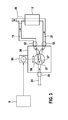
- FIG. 1 shows an embodiment of a heat pump 1.
- the heat pump 1 has a compressor 2 and an operatively connected to the compressor 3 electric motor.
- the electric motor 3 is an electronically commutated electric motor, which in this embodiment has a permanent magnet rotor and a stator designed to produce a magnetic rotating field.
- the electric motor 3, in particular stator coils of the stator, are connected to an inverter 4, previously also called power output stage.
- the inverter 4 has, for example semiconductor switch half-bridges, wherein the semiconductor switch, for example, a field effect transistor or an insulated gate bipolar transistor.
- the inverter 4 is connected to a heat sink 5 thermally conductive.
- the heat sink 5 has at least one or more fluid channels and is designed to dissipate heat loss generated by the inverter 4 to a refrigerant flowing in the at least one fluid channel.
- the heat sink 5 is integrated in a refrigeration cycle of the heat pump 1 and thus forms the aforementioned section of the refrigeration cycle.
- the control unit 6 is connected on the input side to an ambient temperature sensor 7.
- the ambient temperature sensor 7 is designed to detect a temperature of an ambient air in the region of the inverter 4.
- the heat pump 1 also has a temperature sensor 8, which is designed and arranged to detect a temperature of the inverter 4 or additionally of the control unit 6.
- the control unit 6 may be part of an electronics of the heat pump 1, for example. Both the control unit 6 and the power output stage 4 are electronic components of the heat pump 1, which is to be protected from moisture precipitation, previously also known as condensation.
- the control unit 6 is connected on the output side via a connecting line 32 to a display 10.
- the display 10 is formed in this embodiment as a touch screen and has to a touch-sensitive surface 11, which is connected on the output side via a connecting line 31 to the control unit 6.
- the touch-sensitive surface 11 is configured to generate a user interaction signal, which represents a touch location of the touch-sensitive surface 11 and to send it on the output side via the connection line 31 to the control unit 6, depending on how it is touched, for example by a user hand 47.
- the display 10 is designed, for example, as an LCD display, as an LED display or as a TFT display.
- the heat pump 1 also has a condenser 12, which in this exemplary embodiment is a heat exchanger for transporting heat generated and pumped by the heat pump 1 to a heating circuit.
- the condenser 12 has for this purpose an input 19 for the heating circuit and an output 20 for the heating circuit.
- the condenser 12 is connected on the input side via a fluid line 21 to the compressor 2.
- the condenser 12 is connected via a fluid line 22 to an expansion valve 18 designed to be controllable in this exemplary embodiment.
- the expansion valve 18 is connected on the output side via a fluid line 23 to an evaporator 13.
- the evaporator 13 has in this embodiment, a fan and is adapted to receive heat from an air stream 14 and deliver it to a received from the fluid line 23 refrigerant.
- the evaporator 13 is connected on the output side via a fluid line 24 with a branch element 25.
- the branch element 25 divides the refrigerant flow coming from the fluid line 24 to a bypass 15 and towards a controllable valve 16, which is connected on the output side to the heat sink 5 via a fluid line 27.
- the heat sink 5 is connected on the output side via a branch element 26 to the compressor 2.
- the bypass 15 is connected to the branch element 26 and thus also in the flow direction with the compressor 2.
- the bypass 15 is designed to pass a refrigerant flow coming from the evaporator 13 on the heat sink 5 and the compressor 2 - bypassing the heat sink 5 - supply.
- the control unit 6 is connected via a connecting line 30 with the controllable valve 16 and is designed to generate a control signal in response to a temperature signal generated by the temperature sensor 8 and / or the ambient temperature sensor 7 and to send this via the connecting line 30 to the valve 16 , In addition to or independent of the temperature signals of the temperature sensors 7 and 8, the control unit 6 can generate the control signal for actuating the valve 16 as a function of the humidity signal generated by the moisture sensor 9.
- the humidity sensor 9 is connected to the control unit 6 via a connecting line 33.
- the control unit 6 is designed to generate a generated depending on the ambient temperature sensor 7 ambient temperature signal and the temperature signal generated by the temperature sensor 8, a difference signal representing a temperature difference of the temperature signals and depending on the difference signal to generate the control signal to close the valve 16 and the output over output the connection line 30.
- the control unit 6 can for this purpose have a discriminator 49, which is designed to generate the difference signal.
- the refrigerant then flows from the evaporator 13 via the branch element 25 to the bypass fluid line 15, so that the refrigerant circuit to the compressor 2 through the branch element 26 is closed.
- the bypass fluid line 15 has, in this embodiment, a passage valve 17, which is designed to open at a predetermined refrigerant pressure, received from the evaporator 13, and thus to release the bypass 15 for the refrigerant flow.
- a further controllably designed valve 55 is arranged as the valve 16, which is connected to the control unit 6.
- the further valve 55 is shown in dashed lines.
- the control unit 6 can then, depending on the ambient temperature signal and the temperature signal or the humidity signal when falling below a predetermined temperature difference between the ambient temperature and the temperature of the inverter 4, which is greater than the ambient temperature by the predetermined temperature difference, a control signal for opening of the valve instead of the gate valve 17 and a control signal for closing the valve 16 to the heat sink 5 out.
- the valves 16 and 55 can each be designed to partially or completely open in response to the control signal, so that by means of the control signal generated by the control unit 6, a flow through the valve can be controlled.
- the bypass fluid line 15 does not have a pressure-dependent switching through-flow valve, such as the through-flow valve 17 or the controllable valve, which is arranged instead of the through-flow valve 17, like the valve 16.
- the refrigerant flow is then divided with the valve 16 open at the branch element in a proportion which flows through the valve 16 via the heat sink 5 to the branch element 26 and which flows via the branch element 25 via the bypass 15 to the branch element 26 and there with the heat from the fifth merging refrigerant flow and passes to the compressor 2.
- the branch elements 25 and 26 are each formed, for example, by a T-piece or Y-piece designed to carry fluid.
- control unit 6 may generate a control signal for at least partially or completely opening the valve 16, so that the inverter 4 can dissipate heat loss to the refrigerant via the heat sink 5.
- an efficiency of the heat pump 1 can be increased, insofar as the heat loss generated by the inverter 4 can not be delivered to an environment, but as part of the heat pumped by the heat pump 1 heat 34 to the heating circuit.
- the control unit 6 is connected via a connecting line 29 with the control valve designed in this embodiment 18 and can control a power of the heat pump 1, in particular the heat output of the pumped heat 34 via the controllable expansion valve 18 and to a corresponding control signal - for example, depending on a Produce received from the display 10 user interaction signal and send to the expansion valve 18.
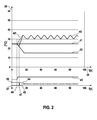
- FIG. 2 shows a diagram having a time axis 38 and an amplitude axis 39.
- the amplitude axis 39 represents a temperature in degrees Celsius for a curve 40, a curve 41 and a curve 42.
- the curve 40 represents a temperature of the inverter 4, represented for example by the temperature sensor 8 in FIG FIG. 1 generated temperature signal.
- the curve 41 represents an ambient temperature signal generated by the ambient temperature sensor 7 in FIG FIG. 1
- the temperature 42 represents a temperature of the refrigerant.
- the refrigerant flow through the bypass fluid line 15, represented by the curve 44, is in the in FIG. 2 illustrated example produced by a controllable trained valve, which instead of the passage valve 17 in FIG. 1 is arranged in the bypass fluid line 15.
- the control unit 6 activates the inverter 4 via the connecting line 48, for example by means of control pulses for generating a magnetic rotating field in the electric motor 3. It can be seen that the temperature of the refrigerant, represented by the curve 42, drops. If the temperature of the inverter, represented by the curve 40, after the time 46 is smaller by a predetermined temperature difference than at the time 46, then at a time 47, the control signal for opening the valve 55 instead of the valve 17 in FIG. 1 and generates the control signal to close the valve 16.
- valve 16 is driven to close at time 46 so that a temperature of the inverter 4 is not lower than the temperature Ambient temperature may fall. This is represented by the dashed curve 40 '.
- the control unit 6 then regulates the temperature of the inverter in the following time curve such that the temperature of the inverter is greater than an ambient temperature detected by the ambient temperature sensor 7 in FIG. 1 ,
- FIG. 3 shows an embodiment of a three-way valve, which instead of the in FIG. 1 shown branch element 25 may be arranged.
- the three-way valve 36 has an input 51, an output 52 and an output 53.
- the entrance 51 is with the in FIG. 1 connected fluid line 24, wherein the output 52 is connected to the bypass 15.
- the bypass 15 is connected to the branch element 26 where a refrigerant flow received from the cooling element 5 is combined with a refrigerant flow received from the bypass fluid line 15 and sent to the compressor 2.
- the three-way valve 36 has - for example, depending on a of the in FIG. 1 shown control signal 6 generated control signal - controllable trained actuator 54.
- the actuator 54 is rotatably mounted in this embodiment and has a tapered fluid channel 37, which is formed to receive from the input 51 received refrigerant in response to a rotational position of the rotary member to the output 52 and / or to the output 53.
- the actuator 54 takes in the in FIG. 3 shown position a center position, so that the flow of refrigerant is divided to the outputs 52 and 53 in equal parts. Shown is also a pivot position 37 ', in which the input 51 is connected only to the output 52, so that the refrigerant flow can only be bypassed via the bypass 15 on the heat sink 5.
- the three-way valve 36 in particular the adjusting element 54, is connected to a servo motor 50, which is formed, an angular position of the actuating element 54 to change in response to a control signal received on the input side and to determine in a changed position.
- the control signal may be, for example, from the in FIG. 1 shown control unit 6 are generated in response to the temperature signal and / or humidity signal.
Landscapes
- Engineering & Computer Science (AREA)
- Physics & Mathematics (AREA)
- Thermal Sciences (AREA)
- Microelectronics & Electronic Packaging (AREA)
- Mechanical Engineering (AREA)
- General Engineering & Computer Science (AREA)
- Chemical & Material Sciences (AREA)
- Combustion & Propulsion (AREA)
- Control Of Positive-Displacement Pumps (AREA)
- Cooling Or The Like Of Electrical Apparatus (AREA)
- Compressor (AREA)
Abstract
Description
- Die Erfindung betrifft eine Wärmepumpe. Die Wärmepumpe weist einen Verdichter und einen elektronisch kommutierten Elektromotor zum Antrieb des Verdichters auf, welcher mit dem Verdichter verbunden ist. Die Wärmepumpe weist auch eine mit dem Elektromotor verbundene Leistungsendstufe, insbesondere Inverter auf, wobei die Leistungsendstufe ausgebildet ist, den Elektromotor - insbesondere zum Erzeugen eines magnetischen Drehfeldes - zu bestromen. Die Leistungsendstufe ist mit einem Abschnitt eines Kältemittelkreislaufs der Wärmepumpe wärmeleitend verbunden, sodass von der Leistungsendstufe erzeugte Verlustwärme an den Kältemittelkreislauf abgegeben werden kann.
- Bei Wärmepumpen, deren Leistungselektronik umfassend eine Leistungsendstufe von dem Kältemittelkreislauf der Wärmepumpe gekühlt wird, kann es beim Anlaufen des Verdichters, oder beim Betrieb mit durch die Leistungselektronik erzeugte geringe Verlustleistung vorkommen, dass die Temperatur der Leistungselektronik unter eine Umgebungstemperatur fällt, und die Leistungselektronik durch aus der Umgebung kondensierende Luftfeuchtigkeit betaut werden kann. Diese Betauung kann zu einem Ausfall der Leistungselektronik führen.
- Erfindungsgemäß weist die Wärmepumpe wenigstens einen Temperatursensor und/oder Feuchtigkeitssensor auf. Der Temperatursensor ist angeordnet, eine Temperatur der Leistungsendstufe zu erfassen und ein die Temperatur repräsentierendes Temperatursignal zu erzeugen. Der Feuchtigkeitssensor ist ausgebildet, eine Luftfeuchtigkeit im Bereich der Leistungsendstufe zu erfassen und ein die Luftfeuchtigkeit repräsentierendes Feuchtigkeitssignal zu erzeugen. Der Kältemittelkreislauf weist eine Bypass-Fluidleitung und wenigstens ein steuerbar ausgebildetes Ventil auf. Die Bypass-Fluidleitung ist ausgebildet, einen Kältemittelfluss an dem mit der Leistungsendstufe verbundenen Abschnitt vorbeizuführen. Das Ventil ist ausgebildet, in Abhängigkeit eines Steuersignals den Kältemittelfluss durch den Abschnitt freizugeben oder zu sperren. Die Wärmepumpe weist eine mit dem Temperatursensor verbundene Steuereinheit auf, welche ausgebildet ist, das Steuersignal in Abhängigkeit des Temperatursignals und/oder des Feuchtigkeitssignals zu erzeugen.
- Durch die so ausgebildete Wärmepumpe, insbesondere die Bypass-Fluidleitung und das wenigstens eine steuerbar ausgebildete Ventil kann vorteilhaft ein Unterkühlen der Leistungselektronik, insbesondere der Leistungsendstufe, und so ein Betauen der Leistungselektronik verhindert werden. Wenn beispielsweise die Temperatur der Leistungselektronik, erfasst durch den Temperatursensor, einen vorbestimmten Temperaturwert unterschreitet, so kann die Steuereinheit das Steuersignal erzeugen und so das Ventil zum Sperren des Abschnitts des Kältekreislaufs, insbesondere einer Fluidleitung des Kältekreislaufs, welcher wärmeleitend mit der Leistungselektronik wirkverbunden ist, ansteuern.
- Bevorzugt ist der Abschnitt durch einen Kühlkörper, insbesondere einen Aluminiumblock gebildet. Der Kühlkörper weist wenigstens einen Fluidkanal zum Führen von Kältemittel auf, und ist ausgebildet, mit der Leistungsendstufe wärmeleitend, bevorzugt mittels einer Wärmeleitpaste, verbunden zu werden.
- Bevorzugt ist das Ventil ein Magnetventil, welches einen elektromagnetisch bewegbar ausgebildeten Anker aufweist, welcher ausgebildet ist, den Kältemittelkreislauf bevorzugt in Abhängigkeit des Steuersignals zu unterbrechen und/oder freizugeben. Mittels des Magnetventils kann so vorteilhaft das durch den Abschnitt des Kältekreislaufs, welcher ausgebildet ist, die Leistungsendstufe zu kühlen, fließende Kühlfluid mittels eines Steuersignals steuerbar im Fluidkreislauf gelenkt werden.
- In einer bevorzugten Ausführungsform ist das Ventil ein Drei-Wege-Ventil, welches ausgebildet ist, den Kältemittelfluss durch den Abschnitt und/oder durch die Bypass-Fluidleitung zu leiten. Mittels des Drei-Wege-Ventils kann der Kältemittelfluss vorteilhaft von dem Abschnitt auf die Bypass-Fluidleitung umgelenkt werden. Bevorzugt ist das Drei-Wege-Ventil ein Schiebeventil, welches einen Ventileingang und einen mit dem Abschnitt verbundenen Ventilausgang und einen weiteren mit der Bypass-Fluidleitung verbundenen Ventilausgang aufweist. Das Schiebeventil weist ein bevorzugt in Abhängigkeit des Steuersignals betätigbar ausgebildetes Stellelement oder Schiebeelement auf, welches wenigstens einen Durchbruch aufweist, welcher ausgebildet ist, den Fluidstrom von dem Eingang zu der Bypass-Fluidleitung oder dem Abschnitt zu leiten, und das Stellelement dazu drehbar oder das Schiebelement dazu axial verschiebbar gelagert ist. So kann beispielsweise entlang eines Dreh- oder Schiebeweges des Schiebers der in dem Schieber beziehungsweise Stellelement angeordnete Durchbruch von einer Öffnung für den Abschnitt weggeschwenkt oder weggeschoben werden und dabei vor eine Öffnung für die Bypass-Fluidleitung - innerhalb des Drei-Wege-Ventils - bewegt werden. Bevorzugt kann so der Fluidstrom stufenlos von dem Ausgang für den Abschnitt, auf den Ausgang für die Bypass-Fluidleitung umgestellt werden. Vorteilhaft kann so bei einer mittleren Stellung des Schiebers sowohl ein Kältemittelfluss durch den Abschnitt fließen als auch durch die Bypass-Fluidleitung, bevorzugt zu gleichen Teilen in der zuvor genannten mittleren Stellung. Bevorzugt ist dabei eine Summe der Durchflüsse durch den Abschnitt und die Bypass-Fluidleitung konstant und so unabhängig von einer Stellung des Schiebers beziehungsweise Stellelements.
- In einer bevorzugten Ausführungsform weist die Wärmepumpe zwei steuerbar ausgebildete Ventile auf, wobei ein Ventil ausgebildet und angeordnet ist, den Kältemittelfluss durch den Abschnitt zu öffnen oder zu schließen und ein weiteres Bypass-Ventil ausgebildet und angeordnet ist, den Kältemittelfluss durch die By-pass-Fluidleitung zu öffnen oder zu schließen. Die Steuereinheit ist mit dem By-pass-Ventil verbunden und ausgebildet, in Abhängigkeit des Temperatursignals und/oder des Feuchtigkeitssignals das Bypass-Ventil zum Öffnen anzusteuern und das Ventil zum Sperren des Abschnitts anzusteuern. So kann der Kältemittelfluss von dem die Leistungsendstufe kühlenden Abschnitt auf den Bypass umgeschaltet werden.
- In einer bevorzugten Ausführungsform weist die Wärmepumpe ein Durchlassventil auf, welches ausgebildet und angeordnet ist, den Kältemittelfluss durch die Bypass-Fluidleitung in Abhängigkeit eines Fluiddruckes des Kältemittels freizugeben oder zu sperren. Bevorzugt ist das Durchlassventil in der Bypass-Fluidleitung angeordnet. So kann vorteilhaft das zuvor erwähnte steuerbar ausgebildete Ventil in der Bypass-Fluidleitung durch das passive, druckabhängig schaltende Durchlassventil ersetzt werden. Wenn beispielsweise die Steuereinheit das Steuersignal zum Sperren des Abschnitts erzeugt und an das steuerbar ausgebildete Ventil zum Sperren des Kältemittelflusses durch den die Leistungsendstufe kühlenden Abschnitt sendet, so steigt der Kältemitteldruck in dem Kältemittelkreislauf vor dem Abschnitt an, sodass sich das Durchlassventil in Abhängigkeit des Druckanstiegs öffnen kann und so der Kältemittelfluss der Wärmepumpe über den Bypass weiter aufrecht erhalten werden kann.
- In einer bevorzugten Ausführungsform weist die Wärmepumpe einen mit der Steuereinheit verbundenen Umgebungstemperatursensor auf. Der Umgebungstemperatursensor ist ausgebildet, eine Umgebungstemperatur zu erfassen und ein die Umgebungstemperatur repräsentierendes Umgebungstemperatursignal zu erzeugen. Die Steuereinheit ist ausgebildet, das Steuersignal für das wenigstens eine Ventil derart zu erzeugen, dass die Temperatur der Leistungsendstufe größer als die Umgebungstemperatur ist. Bevorzugt ist die Steuereinheit ausgebildet, die Temperatur der Leistungsendstufe um ein vorbestimmtes Temperaturintervall größer als die Umgebungstemperatur zu regeln. So kann vorteilhaft mittels der zuvor erwähnten erfassten Temperaturen das Betauen der Leistungselektronik zuverlässig verhindert werden.
- In einer bevorzugten Ausführungsform ist die Steuereinheit ausgebildet, das Steuersignal derart zu erzeugen, dass der Kältemittelfluss periodisch alternierend durch den Abschnitt und durch die Bypass-Fluidleitung fließt. Dadurch können die Ventile jeweils vorteilhaft als - insbesondere aufwandsgünstig bereitzustellendes - Magnetventil ausgebildet sein, welches ausgebildet ist, in Abhängigkeit des Steuersignals einen Durchfluss vollständig freigeben oder zu sperren.
- In einer anderen Ausführungsform repräsentiert das Steuersignal einen Öffnungsgrad des Ventils zwischen einer vollen Öffnung und einer gesperrten Ventilstellung, so dass mittels der Steuereinheit der Durchfluss durch beide Ventile mittels einer Regelung teilweise freigegeben sein kann.
- In einer anderen Ausführungsform kann der Kältemittelfluss - mittels des zuvor erwähnten Drei-Wege-Ventils in der Ausführungsform des Schiebers - gleichzeitig durch den Abschnitt und durch die Bypass-Fluidleitung fließen. Mittels der so ausgebildeten Steuereinheit kann anstelle der Ausführungsform mit zwei Ventilen vorteilhaft mit nur einem Ventil ein Kühlmittelfluss sowohl durch den Abschnitt als auch die Bypass-Fluidleitung erzeugt werden.
- In einer bevorzugten Ausführungsform ist die Steuereinheit ausgebildet, das Steuersignal derart zu erzeugen, dass der Kältemittelfluss jeweils für ein vorbestimmtes Zeitintervall alternierend durch den Abschnitt oder durch die Bypass-Fluidleitung fließt. Bevorzugt wird das Zeitintervall von einem Pulsweitenmodulator erzeugt. So kann die Wärmepumpe vorteilhaft in der Ausführungsform mit wenigstens einem Ventil oder zusätzlich dem Durchlassventil oder in der Ausführungsform mit zwei Ventilen, nämlich einem Ventil für den Abschnitt und einem weiteren Ventil für die Bypass-Fluidleitung, die Kühlleistung auf dem Abschnitt, welcher Wärme von der Leistungsendstufe abführen kann, mittels pulsweitenmodulierter Signale gesteuert werden.
- Bevorzugt weist die Wärmepumpe ein Abzweigelement auf, welches eingangsseitig mit einem Verdampfer der Wärmepumpe verbunden ist und mit einem ersten Ausgang mit der Bypass-Fluidleitung und einem zweiten Ausgang mit dem Abschnitt, insbesondere Kühlkörper verbunden ist. Das Abzweigelement ist ausgebildet, den eingangsseitig empfangenen Kältemittelstrom auf den ersten und den zweiten Ausgang aufzuteilen und dort auszugeben.
- Die Erfindung betrifft auch ein Verfahren zum Verhindern einer Betauung einer Leistungsendstufe einer Wärmepumpe, wobei die Leistungsendstufe über einen Kältemittelkreislauf der Wärmepumpe gekühlt wird.
- Bevorzugt wird bei dem Verfahren eine Temperatur der Leistungsendstufe erfasst und ein die Temperatur repräsentierendes Temperatursignal erzeugt. Weiter bevorzugt wird in Abhängigkeit des Temperatursignals ein Kältemittelfluss an der Leistungsendstufe unterbrochen oder reduziert und das Kältemittel zum Weiterbetrieb der Wärmepumpe an der Leistungsendstufe - bevorzugt durch einen Bypass - wenigstens teilweise oder vollständig vorbeigeführt.
- Weiter bevorzugt wird bei dem Verfahren eine Umgebungstemperatur erfasst und ein die Umgebungstemperatur repräsentierendes Umgebungstemperatursignal erzeugt. Bevorzugt wird während des Betriebs der Wärmepumpe die Temperatur der Leistungsendstufe in Abhängigkeit des Umgebungstemperatursignals derart geregelt, dass die Temperatur der Leistungsendstufe größer ist als die Umgebungstemperatur.
- Die Erfindung wird nun im Folgenden anhand von weiteren Ausführungsbeispielen beschrieben. Weitere vorteilhafte Ausführungsvarianten ergeben sich aus den in den abhängigen Ansprüchen und den Figuren beschriebenen Merkmalen.
-
Figur 1 zeigt ein Ausführungsbeispiel für eine Wärmepumpe, bei der ein Kältemittelkreislauf über eine Leistungselektronik umfassend einen Inverter geführt ist und beim Betrieb der Wärmepumpe Verlustwärme von dem Inverter an den Kältemittelkreislauf abgegeben werden kann. Der Kältemittelkreislauf weist eine Bypass-Fluidleitung auf, durch welche das Kältemittel mittels wenigstens eines Ventils an der Leistungselektronik vorbeigeführt werden kann, so dass eine Betauung der Leistungselektronik verhindert werden kann; -
Figur 2 zeigt ein Diagramm in dem beim Betrieb der inFigur 1 dargestellten Wärmepumpe aufgezeichnete Temperaturkurven dargestellt sind; -
Figur 3 zeigt ein Beispiel für ein steuerbar ausgebildetes Drei-Wege-Ventil, mit dem der Kältemittelfluss durch die Bypass-Fluidleitung und über die Leistungselektronik stufenlos eingestellt werden kann. -
Figur 1 zeigt ein Ausführungsbeispiel für eine Wärmepumpe 1. Die Wärmepumpe 1 weist einen Verdichter 2 und einen mit dem Verdichter wirkverbundenen Elektromotor 3 auf. Der Elektromotor 3 ist eine elektronisch kommutierter Elektromotor, welcher in diesem Ausführungsbeispiel einen permanentmagnetisch ausgebildeten Rotor und einen zum Erzeugen eines magnetischen Drehfeldes ausgebildeten Stator aufweist. Der Elektromotor 3, insbesondere Statorspulen des Stators, sind mit einem Inverter 4, zuvor auch Leistungsendstufe genannt, verbunden. Der Inverter 4 weist beispielsweise Halbleiterschalter-Halbbrücken auf, wobei der Halbleiterschalter beispielsweise ein Feldeffekttransistor oder ein Insulated-Gate-Bipolar-Transistor ist. - Der Inverter 4 ist mit einem Kühlkörper 5 wärmeleitend verbunden. Der Kühlkörper 5 weist in diesem Ausführungsbeispiel wenigstens einen oder mehrere Fluidkanäle auf und ist ausgebildet, von dem Inverter 4 erzeugte Verlustwärme an ein in dem wenigstens einen Fluidkanal fließenden Kältemittel abzuführen. Der Kühlkörper 5 ist in einen Kältekreislauf der Wärmepumpe 1 eingebunden und bildet so den zuvor erwähnten Abschnitt des Kältekreislaufs.
- Die Wärmepumpe 1 weist auch eine Steuereinheit 6 auf, welche beispielsweise durch einen Mikroprozessor oder einen Mikrocontroller oder ein FPGA (FPGA = Field-Programmable-Gate-Array) gebildet ist. Die Steuereinheit 6 ist eingangsseitig mit einem Umgebungstemperatursensor 7 verbunden. Der Umgebungstemperatursensor 7 ist ausgebildet, eine Temperatur einer Umgebungsluft im Bereich des Inverters 4 zu erfassen.
- Die Wärmepumpe 1 weist auch einen Temperatursensor 8 auf, welcher ausgebildet und angeordnet ist, eine Temperatur des Inverters 4 oder zusätzlich der Steuereinheit 6 zu erfassen. Die Steuereinheit 6 kann beispielsweise Bestandteil einer Elektronik der Wärmepumpe 1 sein. Sowohl die Steuereinheit 6 als auch die Leistungsendstufe 4 sind elektronische Komponenten der Wärmepumpe 1, welche vor einem Feuchtigkeitsniederschlag, zuvor auch Betauung genannt, geschützt werden soll.
- Die Steuereinheit 6 ist ausgangsseitig über eine Verbindungsleitung 32 mit einem Display 10 verbunden. Das Display 10 ist in diesem Ausführungsbeispiel als Touch-Screen ausgebildet und weist dazu eine berührungsempfindliche Oberfläche 11 auf, welche ausgangsseitig über eine Verbindungsleitung 31 mit der Steuereinheit 6 verbunden ist. Die berührungsempfindliche Oberfläche 11 ist ausgebildet, in Abhängigkeit eines Berührens - beispielsweise durch eine Benutzerhand 47 - ein Benutzerinteraktionssignal zu erzeugen, welches einen Berührungsort der berührungsempfindlichen Oberfläche 11 repräsentiert und dieses ausgangsseitig über die Verbindungsleitung 31 an die Steuereinheit 6 zu senden.
- Das Display 10 ist beispielsweise als LCD-Display, als LED-Display oder als TFT-Display ausgebildet.
- Die Wärmepumpe 1 weist auch einen Verflüssiger 12 auf, welcher in diesem Ausführungsbeispiel einen Wärmetauscher zum Transportieren von der Wärmepumpe 1 erzeugter und gepumpter Wärme 34 zu einem Heizungskreislauf hin ausgebildet ist. Der Verflüssiger 12 weist dazu einen Eingang 19 für den Heizungskreislauf und einen Ausgang 20 für den Heizungskreislauf auf. Der Verflüssiger 12 ist eingangsseitig über eine Fluidleitung 21 mit dem Verdichter 2 verbunden. Der Verflüssiger 12 ist ausgangsseitig über eine Fluidleitung 22 mit einem in diesem Ausführungsbeispiel steuerbar ausgebildeten Expansionsventil 18 verbunden. Das Expansionsventil 18 ist ausgangsseitig über eine Fluidleitung 23 mit einem Verdampfer 13 verbunden. Der Verdampfer 13 weist in diesem Ausführungsbeispiel einen Ventilator auf und ist ausgebildet, Wärme aus einem Luftstrom 14 aufzunehmen und an ein von der Fluidleitung 23 empfangenes Kältemittel abzugeben. Der Verdampfer 13 ist ausgangsseitig über eine Fluidleitung 24 mit einem Abzweigelement 25 verbunden. Das Abzweigelement 25 teilt den Kältemittelfluss von der Fluidleitung 24 kommend zu einem Bypass 15 hin und zu einem steuerbar ausgebildeten Ventil 16 hin, welches über eine Fluidleitung 27 ausgangsseitig mit dem Kühlkörper 5 verbunden ist. Der Kühlkörper 5 ist ausgangsseitig über ein Abzweigelement 26 mit dem Verdichter 2 verbunden.
- Der Bypass 15 ist mit dem Abzweigelement 26 und so auch in Flussrichtung mit dem Verdichter 2 verbunden. Der Bypass 15 ist ausgebildet, einen Kältemittelfluss von dem Verdampfer 13 kommend an dem Kühlkörper 5 vorbeizuführen und dem Verdichter 2 - unter Umgehung des Kühlkörpers 5 - zuzuführen.
- Die Steuereinheit 6 ist über eine Verbindungsleitung 30 mit dem steuerbar ausgebildeten Ventil 16 verbunden und ist ausgebildet, in Abhängigkeit eines von dem Temperatursensor 8 und/oder dem Umgebungstemperatursensor 7 erzeugten Temperatursignals ein Steuersignal zu erzeugen und dieses über die Verbindungsleitung 30 an das Ventil 16 zu senden. Zusätzlich oder unabhängig von den Temperatursignalen der Temperatursensoren 7 und 8 kann die Steuereinheit 6 das Steuersignal zum Betätigen des Ventils 16 in Abhängigkeit des von dem Feuchtigkeitssensor 9 erzeugten Feuchtigkeitssignal erzeugen. Der Feuchtigkeitssensor 9 ist über eine Verbindungsleitung 33 mit der Steuereinheit 6 verbunden.
- Die Funktionsweise der Wärmepumpe 1 wird nun im Folgenden beschrieben:
- Wenn beispielsweise mittels der Benutzerhand 47 von der berührungsempfindlichen Oberfläche 11 des Displays 10 ein Benutzerinteraktionssignal erzeugt wird, kann die Steuereinheit 6 das Benutzerinteraktionssignal über die Verbindungsleitung 31 empfangen und in Abhängigkeit des Benutzerinteraktionssignals den Inverter 4 über eine Verbindungsleitung 48 zum Bestromen des Elektromotors 3 ansteuern. Der Inverter 4 kann dann über eine elektrische Verbindung 28 den Elektromotor 3, insbesondere den Stator des Elektromotors 3, zum Erzeugen eines magnetischen Drehfeldes bestromen. Dabei erzeugt der Inverter 4 Verlustwärme. Der Verdichter 2 kann dann - angetrieben durch den Elektromotor 3 - einen Kältemittelfluss erzeugen, welcher über die Fluidleitung 21, weiter über den Verflüssiger 12, die Fluidleitung 22, das Expansionsventil 18, die Fluidleitung 23 und den Verdampfer 13, weiter über die Fluidleitung 24 und das Ventil 16, und über die Fluidleitung 27 zum Kühlkörper 5 fließt. Das Kältemittel kann vom Kühlkörper 5 schließlich über das Abzweigelement 26 zum Verdichter 2 zurückfließen. Die Steuereinheit 6 ist ausgebildet, in Abhängigkeit des Benutzerinteraktionssignals ein Steuersignal zum Öffnen des Ventils 16 über die Verbindungsleitung 30 an das Ventil 16 zu senden. Das Kältemittel fließt dann durch das geöffnete Ventil 16 über den Kühlkörper 5 zum Verdichter 2.
- Nach einem Anlaufen des Verdichters 2 sinkt dabei eine Temperatur des Kühlmittels am Verdampfer 13 stark ab, sodass der mit dem Kühlkörper 5 wärmeleitend verbundene Inverter 4 beispielsweise auf eine Temperatur kleiner als eine Umgebungstemperatur abgekühlt werden kann. Die Steuereinheit 6 ist ausgebildet, in Abhängigkeit des Umgebungstemperatursensors 7 erzeugten Umgebungstemperatursignals und in Abhängigkeit des vom Temperatursensor 8 erzeugten Temperatursignals ein Differenzsignal zu erzeugen, welches eine Temperaturdifferenz der Temperatursignale repräsentiert und in Abhängigkeit des Differenzsignals das Steuersignal zum Schließen des Ventils 16 zu erzeugen und ausgangsseitig über die Verbindungsleitung 30 auszugeben. Die Steuereinheit 6 kann dazu einen Diskriminator 49 aufweisen, welcher ausgebildet ist, das Differenzsignal zu erzeugen.
- Das Kältemittel fließt dann von dem Verdampfer 13 über das Abzweigelement 25 zur Bypass-Fluidleitung 15, sodass der Kältemittelkreislauf zum Verdichter 2 hin über das Abzweigelement 26 geschlossen ist.
- Die Bypass-Fluidleitung 15 weist in diesem Ausführungsbeispiel ein Durchlassventil 17 auf, welches ausgebildet ist, bei einem vorbestimmten Kältemitteldruck, empfangen vom Verdampfer 13, zu öffnen und so den Bypass 15 für den Kältemittelfluss freizugeben.
- In einer anderen Ausführungsform ist anstelle des Durchlassventils 17 ein weiteres steuerbar ausgebildetes Ventil 55 wie das Ventil 16 angeordnet, welches mit der Steuereinheit 6 verbunden ist. Das weitere Ventil 55 ist gestrichelt dargestellt. Die Steuereinheit 6 kann dann in Abhängigkeit des Umgebungstemperatursignals und des Temperatursignals oder des Feuchtigkeitssignals bei Unterschreiten einer vorbestimmten Temperaturdifferenz zwischen der Umgebungstemperatur und der Temperatur des Inverters 4, welche um die vorbestimmte Temperaturdifferenz größer ist als die Umgebungstemperatur, ein Steuersignal zum Öffnen des Ventils anstelle des Durchlassventils 17 und ein Steuersignal zum Schließen des Ventils 16 zum Kühlkörper 5 hin erzeugen. Die Ventile 16 und 55 können jeweils ausgebildet sein, in Abhängigkeit des Steuersignals teilweise oder vollständig zu öffnen, so dass mittels des Steuersignals, erzeugt durch die Steuereinheit 6, ein Durchfluss durch das Ventil geregelt werden kann.
- In einer anderen Ausführungsform weist die Bypass-Fluidleitung 15 kein druckabhängig schaltendes Durchlassventil wie das Durchlassventil 17 oder das anstelle des Durchlassventils 17 angeordneten steuerbar ausgebildeten Ventils wie das Ventil 16 auf. Der Kältemittelfluss teilt sich dann bei geöffnetem Ventil 16 am Abzweigelement in einen Anteil, welcher durch das Ventil 16 über den Kühlkörper 5 zum Abzweigelement 26 hinfließt und welcher über das Abzweigelement 25 über den Bypass 15 zum Abzweigelement 26 fließt und sich dort mit dem vom Kühlkörper 5 kommenden Kältemittelfluss vereint und zum Verdichter 2 gelangt.
- Die Abzweigelemente 25 und 26 sind beispielsweise jeweils durch ein zum Fluidführen ausgebildetes T-Stück oder Y-Stück gebildet.
- Wenn die Temperatur des Inverters, erfasst durch den Temperatursensor 8, weiter ansteigt, kann die Steuereinheit 6 ein Steuersignal zum wenigstens teilweisen oder vollständigen Öffnen des Ventils 16 erzeugen, sodass der Inverter 4 über den Kühlkörper 5 Verlustwärme an das Kältemittel abgeben kann. So kann vorteilhaft ein Wirkungsgrad der Wärmepumpe 1 vergrößert werden, insoweit die vom Inverter 4 erzeugte Verlustwärme nicht an eine Umgebung, sondern als Bestandteil der von der Wärmepumpe 1 gepumpten Wärme 34 an den Heizungskreislauf abgegeben werden kann.
- Die Steuereinheit 6 ist über eine Verbindungsleitung 29 mit dem in diesem Ausführungsbeispiel steuerbar ausgebildeten Expansionsventil 18 verbunden und kann eine Leistung der Wärmepumpe 1, insbesondere die Wärmeleistung der gepumpten Wärme 34 über das steuerbar ausgebildete Expansionsventil 18 regeln und dazu ein entsprechendes Steuersignal - beispielsweise in Abhängigkeit eines vom Display 10 empfangenen Benutzerinteraktionssignal erzeugen und an das Expansionsventil 18 senden.
-
Figur 2 zeigt ein Diagramm, welches eine Zeitachse 38 und eine Amplitudenachse 39 aufweist. Die Amplitudenachse 39 repräsentiert eine Temperatur in Grad Celsius für eine Kurve 40, eine Kurve 41 und eine Kurve 42. Die Kurve 40 repräsentiert eine Temperatur des Inverters 4, beispielsweise repräsentiert durch das durch den Temperatursensor 8 inFigur 1 erzeugte Temperatursignal. Die Kurve 41 repräsentiert ein Umgebungstemperatursignal, erzeugt durch den Umgebungstemperatursensor 7 inFigur 1 . Die Temperatur 42 repräsentiert eine Temperatur des Kältemittels. - Dargestellt ist auch eine Kurve 43, welche einen Ein- beziehungsweise Ausschaltzustand des in
Figur 1 dargestellten Elektromotors 3 und so auch des Verdichters 2 repräsentiert. Dargestellt ist auch eine Kurve 44, welche einen Kältemittelfluss durch die Bypass-Fluidleitung 15 inFigur 1 repräsentiert. Eine Kurve 45 repräsentiert einen Kältemittelfluss durch die Fluidleitung 27, gesteuert durch das Ventil 16. - Der Kältemittelfluss durch die Bypass-Fluidleitung 15, repräsentiert durch die Kurve 44, wird in dem in
Figur 2 dargestellten Beispiel durch ein steuerbar ausgebildetes Ventil erzeugt, welches anstelle des Durchlassventils 17 inFigur 1 in der Bypass-Fluidleitung 15 angeordnet ist. - Zu einem Zeitpunkt 46 wird von der Steuereinheit 6 der Inverter 4 über die Verbindungsleitung 48 - beispielsweise mittels Steuerpulsen zum Erzeugen eines magnetischen Drehfelds im Elektromotor 3 - angesteuert. Sichtbar ist, dass die Temperatur des Kältemittels, repräsentiert durch die Kurve 42, absinkt. Wenn die Temperatur des Inverters, repräsentiert durch die Kurve 40, nach dem Zeitpunkt 46 um eine vorbestimmte Temperaturdifferenz kleiner ist als zum Zeitpunkt 46, so wird zu einem Zeitpunkt 47 das Steuersignal zum Öffnen des Ventils 55 anstelle des Ventils 17 in
Figur 1 und das Steuersignal zum Schließen des Ventils 16 erzeugt. - In einer anderen Ausführungsform wird das Ventil 16 zum Zeitpunkt 46 zum Schließen angesteuert, so dass eine Temperatur des Inverters 4 nicht unter die Umgebungstemperatur fallen kann. Das ist durch die gestrichtelte Kurve 40' dargestellt.
- Die Steuereinheit 6 regelt dann im folgenden Zeitverlauf die Temperatur des Inverters derart, dass die Temperatur des Inverters größer ist als eine Umgebungstemperatur, erfasst durch den Umgebungstemperatursensor 7 in
Figur 1 . -
Figur 3 zeigt ein Ausführungsbeispiel für ein Drei-Wege-Ventil, welches anstelle des inFigur 1 dargestellten Abzweigelements 25 angeordnet sein kann. - Das Drei-Wege-Ventil 36 weist einen Eingang 51, einen Ausgang 52 und einen Ausgang 53 auf.
- Der Eingang 51 ist mit der in
Figur 1 dargestellten Fluidleitung 24 verbunden, wobei der Ausgang 52 mit dem Bypass 15 verbunden ist. - Der Bypass 15 ist mit dem Abzweigelement 26 verbunden, wo ein von dem Kühlelement 5 empfangener Kältemittelfluss mit einem von der Bypass-Fluidleitung 15 empfangenen Kältemittelfluss zusammengeführt und an den Verdichter 2 geleitet wird.
- Das Drei-Wege-Ventil 36 weist ein - beispielsweise in Abhängigkeit eines von der in
Figur 1 dargestellten Steuereinheit 6 erzeugten Steuersignal - steuerbar ausgebildetes Stellelement 54 auf. Das Stellelement 54 ist in diesem Ausführungsbeispiel drehbar gelagert und weist einen sich verjüngenden Fluidkanal 37 auf, welcher ausgebildet ist, vom Eingang 51 empfangenes Kältemittel in Abhängigkeit einer Drehstellung des Drehelements zum Ausgang 52 und/oder zum Ausgang 53 zu leiten. Das Stellelement 54 nimmt in der inFigur 3 dargestellten Position eine Mittelstellung ein, sodass der Kältemittelfluss auf die Ausgänge 52 und 53 zu gleichen Teilen aufgeteilt wird. Dargestellt ist auch eine Schwenkstellung 37', in der der Eingang 51 nur mit dem Ausgang 52 verbunden ist, sodass der Kältemittelfluss nur über den Bypass 15 am Kühlkörper 5 vorbeigeleitet werden kann. Das Drei-Wege-Ventil 36, insbesondere das Stellelement 54, ist mit einem Stellmotor 50 verbunden, welcher ausgebildet ist, eine Winkelstellung des Stellelements 54 in Abhängigkeit eines eingangsseitig empfangenen Steuersignals zu ändern und in einer geänderten Position festzustellen. Das Steuersignal kann beispielsweise von der inFigur 1 gezeigten Steuereinheit 6 in Abhängigkeit des Temperatursignals und/oder Feuchtigkeitssignals erzeugt werden.
Claims (10)
- Wärmepumpe (1) mit einem Verdichter (2), und einem mit dem Verdichter (2) verbundenen elektronisch kommutierten Elektromotor zum Antrieb des Verdichters, wobei die Wärmepumpe eine mit dem Elektromotor verbundene Leistungsendstufe (4) aufweist, welche ausgebildet ist, den Elektromotor zu bestromen, und die Leistungsendstufe (7) mit einem Abschnitt (5) eines Kältemittelkreislaufs (5, 21, 22, 23, 24, 27) der Wärmepumpe (1) wärmeleitend verbunden ist, so dass von der Leistungsendstufe (4) erzeugte Verlustwärme an den Kältemittelkreislauf (5, 21, 22, 23, 24, 27) abgegeben werden kann,
dadurch gekennzeichnet, dass
die Wärmepumpe (1) wenigstens einen Temperatursensor (8) aufweist, wobei der Temperatursensor (8) angeordnet ist, eine Temperatur der Leistungsendstufe (4) zu erfassen und ein die Temperatur repräsentierendes Temperatursignal zu erzeugen, wobei der Kältemittelkreislauf (21, 22, 23, 24, 27) eine Bypass-Fluidleitung (15) und wenigstens ein steuerbar ausgebildetes Ventil (16, 36, 55) aufweist, wobei die Bypass-Fluidleitung (15) ausgebildet und angeordnet ist, einen Kältemittelfluß an dem Abschnitt (5) vorbeizuführen und das Ventil (16, 36, 55) ausgebildet ist, in Abhängigkeit eines Steuersignals den Kältemittelfluß durch den Abschnitt (5) freizugeben oder zu sperren, und die Wärmepumpe (1) eine mit dem Temperatursensor (8) verbundene Steuereinheit (6) aufweist, welche ausgebildet ist, das Steuersignal in Abhängigkeit des Temperatursignals zu erzeugen. - Wärmepumpe (1) nach Anspruch 1,
dadurch gekennzeichnet, dass
das Ventil (16, 17, 36, 55) ein Magnetventil ist, welches einen elektromagnetisch bewegbar ausgebildeten Anker aufweist, welcher ausgebildet ist, in Abhängigkeit des Steuersignals den Kältemittelkreislauf zu unterbrechen und/oder freizugeben. - Wärmepumpe (1) nach Anspruch 1 oder 2,
dadurch gekennzeichnet, dass
das Ventil ein 3-Wege-Ventil (36) ist, welches ausgebildet ist, den Kältemittelfluß durch den Abschnitt (5) und/oder die Bypass-Fluidleitung (15) zu leiten. - Wärmepumpe (1) nach Anspruch 1 oder 2,
dadurch gekennzeichnet, dass
die Wärmepumpe (1) zwei steuerbar ausgebildete Ventile (16) aufweist, wobei ein Ventil (16) ausgebildet und angeordnet ist, den Kältemittelfluß durch den Abschnitt zu öffnen oder zu schließen, und ein weiteres Ventil (55) ausgebildet und angeordnet ist, den Kältemittelfluß durch die Bypass-Fluidleitung (15) zu öffnen oder zu schließen, wobei die Steuereinheit (6) mit dem weiteren Ventil (55) verbunden und ausgebildet ist, in Abhängigkeit des Temperatursignals das weitere Ventil (55) zum Öffnen anzusteuern und das Ventil (16) zum Sperren des Abschnitts (5) anzusteuern. - Wärmepumpe (1) nach Anspruch 1 oder 2,
dadurch gekennzeichnet, dass
die Wärmepumpe (1) ein Durchlassventil (17) aufweist, welches ausgebildet und angeordnet ist, den Kältemittelfluß durch die Bypass-Fluidleitung (15) in Abhängigkeit eines Fluiddruckes des Kältemittels freizugeben oder zu sperren. - Wärmepumpe (1) nach einem der vorhergehenden Ansprüche,
dadurch gekennzeichnet, dass
die Wärmepumpe (1) einen mit der Steuereinheit (6) verbundenen Umgebungstemperatursensor (7) aufweist, welcher ausgebildet ist eine Umgebungstemperatur zu erfassen und ein die Umgebungstemperatur repräsentierendes Umgebungstemperatursignal zu erzeugen und die Steuereinheit (6) ausgebildet ist, das Steuersignal derart zu erzeugen, dass die Temperatur der Leistungsendstufe (4) größer als die Umgebungstemperatur ist. - Wärmepumpe (1) nach einem der vorhergehenden Ansprüche,
dadurch gekennzeichnet, dass
die Steuereinheit (6) ausgebildet ist, das Steuersignal derart zu erzeugen, dass der Kältemittelfluß alternierend durch den Abschnitt (5) und durch die Bypass-Fluidleitung (15) fließt. - Wärmepumpe (1) nach Anspruch 7,
dadurch gekennzeichnet, dass
die Steuereinheit (6) ausgebildet ist, das Steuersignal derart zu erzeugen, dass der Kältemittelfluß jeweils für ein vorbestimmtes Zeitintervall alternierend durch den Abschnitt (5) und durch die Bypass-Fluidleitung (15) fließt. - Verfahren zum Verhindern einer Betauung einer Leistungsendstufe (4) einer Wärmepumpe (1), wobei die Leistungsendstufe (4) über einen Kältemittelkreislauf (5, 21, 22, 23, 24, 27) der Wärmepumpe (1) gekühlt wird,
dadurch gekennzeichnet, dass
eine Temperatur der Leistungsendstufe (4) erfasst wird, ein die Temperatur repräsentierendes Temperatursignal (40) erzeugt wird und in Abhängigkeit des Temperatursignals ein Kältemittelfluß an der Leistungsendstufe (4) unterbrochen oder reduziert wird, und das Kältemittel zum Weiterbetrieb der Wärmepumpe (1) an der Leistungsendstufe (4) wenigstens teilweise oder vollständig vorbeigeführt wird. - Verfahren nach Anspruch 9,
dadurch gekennzeichnet, dass
eine Umgebungstemperatur erfasst wird und ein die Umgebungstemperatur repräsentierendes Umgebungstemperatursignal (41) erzeugt wird und während des Betriebs der Wärmepumpe (1) die Temperatur der Leistungsendstufe (4) in Abhängigkeit des Umgebungstemperatursignals (41) derart geregelt wird, dass die Temperatur der Leistungsendstufe (4) größer ist als die Umgebungstemperatur.
Applications Claiming Priority (1)
| Application Number | Priority Date | Filing Date | Title |
|---|---|---|---|
| DE201310225450 DE102013225450B3 (de) | 2013-12-10 | 2013-12-10 | Wärmepumpe mit einem kältemittelgekühlten Inverter |
Publications (3)
| Publication Number | Publication Date |
|---|---|
| EP2884204A2 true EP2884204A2 (de) | 2015-06-17 |
| EP2884204A3 EP2884204A3 (de) | 2015-06-24 |
| EP2884204B1 EP2884204B1 (de) | 2020-10-28 |
Family
ID=51868819
Family Applications (1)
| Application Number | Title | Priority Date | Filing Date |
|---|---|---|---|
| EP14191552.0A Active EP2884204B1 (de) | 2013-12-10 | 2014-11-03 | Wärmepumpe mit einem kältemittelgekühlten Inverter |
Country Status (2)
| Country | Link |
|---|---|
| EP (1) | EP2884204B1 (de) |
| DE (1) | DE102013225450B3 (de) |
Families Citing this family (10)
| Publication number | Priority date | Publication date | Assignee | Title |
|---|---|---|---|---|
| EP3217116A1 (de) * | 2016-03-09 | 2017-09-13 | Vaillant GmbH | Rückgewinnung von durch einen verdichterantrieb erzeugter wärme |
| EP3425307B1 (de) | 2017-07-03 | 2024-08-07 | Ningbo Geely Automobile Research & Development Co. Ltd. | Verfahren zur steuerung eines wärmepumpensystems |
| CN109640580B (zh) * | 2018-10-22 | 2020-05-12 | 无锡地铁集团有限公司 | 一种盾构隧道试验平台精密液压元件户外防护装置及方法 |
| DE202019100059U1 (de) | 2019-01-08 | 2019-02-11 | Vaillant Gmbh | Inverteranordnung |
| DE102019204492A1 (de) * | 2019-03-29 | 2020-10-01 | Siemens Mobility GmbH | Verfahren zum Betreiben einer Wärmepumpe, Wärmepumpe, Belüftungsanlage und Fahrzeug |
| DE102020115492A1 (de) | 2020-06-10 | 2021-12-16 | Ebm-Papst Mulfingen Gmbh & Co. Kg | Kraftwärmemaschine |
| DE102020132713A1 (de) * | 2020-12-09 | 2022-06-09 | Vaillant Gmbh | Verfahren und Vorrichtungen zur Temperaturregelung einer Leistungselektronik an einer Klima- und/oder Heizanlage |
| DE102021106599A1 (de) * | 2021-03-18 | 2022-09-22 | Man Truck & Bus Se | Flüssigkeitsgekühlter Wechselrichter zur Ansteuerung eines elektrischen Antriebsmotors eines Fahrzeugs |
| DE102022134177A1 (de) | 2022-12-20 | 2024-06-20 | Viessmann Climate Solutions Se | Wärmepumpe und verfahren zum betreiben der wärmepumpe |
| DE102024207331A1 (de) | 2024-08-02 | 2026-02-05 | Robert Bosch Gesellschaft mit beschränkter Haftung | Verfahren zum Temperieren eines Steuergeräts |
Family Cites Families (5)
| Publication number | Priority date | Publication date | Assignee | Title |
|---|---|---|---|---|
| US6032472A (en) * | 1995-12-06 | 2000-03-07 | Carrier Corporation | Motor cooling in a refrigeration system |
| US6116040A (en) * | 1999-03-15 | 2000-09-12 | Carrier Corporation | Apparatus for cooling the power electronics of a refrigeration compressor drive |
| DE10128307B4 (de) * | 2001-06-12 | 2004-03-18 | Siemens Ag | Klimaanlage |
| US20070186581A1 (en) * | 2006-02-14 | 2007-08-16 | Ingersoll-Rand Company | Compressor cooling system |
| IT1395987B1 (it) * | 2009-10-16 | 2012-11-09 | Delphi Italia Automotive Systems S R L | Gruppo motore-compressore per un sistema di refrigerazione e/o condizionamento di un veicolo |
-
2013
- 2013-12-10 DE DE201310225450 patent/DE102013225450B3/de not_active Expired - Fee Related
-
2014
- 2014-11-03 EP EP14191552.0A patent/EP2884204B1/de active Active
Non-Patent Citations (1)
| Title |
|---|
| None |
Also Published As
| Publication number | Publication date |
|---|---|
| EP2884204A3 (de) | 2015-06-24 |
| EP2884204B1 (de) | 2020-10-28 |
| DE102013225450B3 (de) | 2015-03-26 |
Similar Documents
| Publication | Publication Date | Title |
|---|---|---|
| EP2884204A2 (de) | Wärmepumpe mit einem kältemittelgekühlten Inverter | |
| EP3104103B1 (de) | Temperiergerät, insbesondere fahrzeugtemperiergerät | |
| EP2822790B1 (de) | Vorrichtung und verfahren zur vereisungsvermeidungsregelung für wärmepumpenverdampfer | |
| KR101814274B1 (ko) | 유량 제어 밸브 | |
| DE10128307A1 (de) | Klimaanlage | |
| DE10043169A1 (de) | Wärmepumpen-Heißwasserversorgungssystem zum Durchführen eines Entfrostungsvorgangs | |
| KR20150136613A (ko) | 칠러 장치 | |
| DE3738412A1 (de) | Vorrichtung und verfahren zur motorkuehlung | |
| DE3783129T2 (de) | Kaeltemittelstromregelung. | |
| DE112012002377T5 (de) | Kältekreislauf | |
| DE112015000983B4 (de) | Automobilklimaanlage | |
| EP3597019A1 (de) | Verfahren zum kühlen eines umrichters, insbesondere eines frequenzumrichters in einem wärmepumpenkreislauf | |
| DE4222092A1 (de) | Backofen mit einem Kühlluftgebläse und/oder mit einem Heißluftgebläse | |
| DE102017212131A1 (de) | Wärmepumpenanordnung mit einem steuerbaren Wärmetauscher und Verfahren zur Herstellung einer Wärmepumpenanordnung | |
| CN204027078U (zh) | 空冷热泵单元 | |
| US9903260B2 (en) | Apparatus and method for determining pore clogging in engine cooling system | |
| DE112014005711T5 (de) | Vorrichtung zur thermischen Behandlung eines Fahrgastraums und/oder eines Organs eines Kraftfahrzeugs | |
| DE102014219846A1 (de) | Kühlvorrichtung zur Kühlung von elektronischen Bauelementen | |
| EP3060811B1 (de) | Verfahren zur ansteuerung eines motors eines ventilators eines wärmeaustauschers, ansteuervorrichtung für einen ventilator und wärmeaustauscher | |
| WO1996008066A1 (de) | Schaltung zum betreiben eines elektromotors | |
| WO2015189010A1 (de) | Kältegerät mit heissgasabtauung und abtauverfahren | |
| EP3184929A1 (de) | Lüfter mit heizfunktion | |
| EP3032191B1 (de) | Wärmepumpenvorrichtung | |
| DE102015105346A1 (de) | Temperiergerät, insbesondere Fahrzeugtemperiergerät | |
| WO2010060784A1 (de) | Kältegerät mit mehreren lagerfächern |
Legal Events
| Date | Code | Title | Description |
|---|---|---|---|
| PUAL | Search report despatched |
Free format text: ORIGINAL CODE: 0009013 |
|
| PUAI | Public reference made under article 153(3) epc to a published international application that has entered the european phase |
Free format text: ORIGINAL CODE: 0009012 |
|
| 17P | Request for examination filed |
Effective date: 20141103 |
|
| AK | Designated contracting states |
Kind code of ref document: A2 Designated state(s): AL AT BE BG CH CY CZ DE DK EE ES FI FR GB GR HR HU IE IS IT LI LT LU LV MC MK MT NL NO PL PT RO RS SE SI SK SM TR |
|
| AX | Request for extension of the european patent |
Extension state: BA ME |
|
| AK | Designated contracting states |
Kind code of ref document: A3 Designated state(s): AL AT BE BG CH CY CZ DE DK EE ES FI FR GB GR HR HU IE IS IT LI LT LU LV MC MK MT NL NO PL PT RO RS SE SI SK SM TR |
|
| AX | Request for extension of the european patent |
Extension state: BA ME |
|
| RIC1 | Information provided on ipc code assigned before grant |
Ipc: F25B 41/04 20060101ALI20150515BHEP Ipc: F25B 49/00 20060101ALI20150515BHEP Ipc: F25B 49/02 20060101ALI20150515BHEP Ipc: F25B 30/02 20060101AFI20150515BHEP Ipc: F25B 31/00 20060101ALI20150515BHEP Ipc: H05K 7/20 20060101ALI20150515BHEP Ipc: F25B 40/06 20060101ALI20150515BHEP |
|
| R17P | Request for examination filed (corrected) |
Effective date: 20160104 |
|
| RBV | Designated contracting states (corrected) |
Designated state(s): AL AT BE BG CH CY CZ DE DK EE ES FI FR GB GR HR HU IE IS IT LI LT LU LV MC MK MT NL NO PL PT RO RS SE SI SK SM TR |
|
| RIC1 | Information provided on ipc code assigned before grant |
Ipc: F25B 41/04 20060101ALI20200305BHEP Ipc: F25B 40/06 20060101ALI20200305BHEP Ipc: F25B 31/00 20060101ALI20200305BHEP Ipc: F25B 30/02 20060101AFI20200305BHEP Ipc: F25B 49/00 20060101ALI20200305BHEP Ipc: F25B 49/02 20060101ALI20200305BHEP Ipc: H05K 7/20 20060101ALI20200305BHEP |
|
| RAP1 | Party data changed (applicant data changed or rights of an application transferred) |
Owner name: ROBERT BOSCH GMBH |
|
| GRAP | Despatch of communication of intention to grant a patent |
Free format text: ORIGINAL CODE: EPIDOSNIGR1 |
|
| STAA | Information on the status of an ep patent application or granted ep patent |
Free format text: STATUS: GRANT OF PATENT IS INTENDED |
|
| INTG | Intention to grant announced |
Effective date: 20200512 |
|
| GRAS | Grant fee paid |
Free format text: ORIGINAL CODE: EPIDOSNIGR3 |
|
| GRAA | (expected) grant |
Free format text: ORIGINAL CODE: 0009210 |
|
| STAA | Information on the status of an ep patent application or granted ep patent |
Free format text: STATUS: THE PATENT HAS BEEN GRANTED |
|
| AK | Designated contracting states |
Kind code of ref document: B1 Designated state(s): AL AT BE BG CH CY CZ DE DK EE ES FI FR GB GR HR HU IE IS IT LI LT LU LV MC MK MT NL NO PL PT RO RS SE SI SK SM TR |
|
| REG | Reference to a national code |
Ref country code: GB Ref legal event code: FG4D Free format text: NOT ENGLISH |
|
| REG | Reference to a national code |
Ref country code: CH Ref legal event code: EP |
|
| REG | Reference to a national code |
Ref country code: AT Ref legal event code: REF Ref document number: 1328622 Country of ref document: AT Kind code of ref document: T Effective date: 20201115 |
|
| REG | Reference to a national code |
Ref country code: DE Ref legal event code: R096 Ref document number: 502014014928 Country of ref document: DE |
|
| REG | Reference to a national code |
Ref country code: IE Ref legal event code: FG4D Free format text: LANGUAGE OF EP DOCUMENT: GERMAN |
|
| REG | Reference to a national code |
Ref country code: NL Ref legal event code: MP Effective date: 20201028 |
|
| PG25 | Lapsed in a contracting state [announced via postgrant information from national office to epo] |
Ref country code: FI Free format text: LAPSE BECAUSE OF FAILURE TO SUBMIT A TRANSLATION OF THE DESCRIPTION OR TO PAY THE FEE WITHIN THE PRESCRIBED TIME-LIMIT Effective date: 20201028 Ref country code: RS Free format text: LAPSE BECAUSE OF FAILURE TO SUBMIT A TRANSLATION OF THE DESCRIPTION OR TO PAY THE FEE WITHIN THE PRESCRIBED TIME-LIMIT Effective date: 20201028 Ref country code: PT Free format text: LAPSE BECAUSE OF FAILURE TO SUBMIT A TRANSLATION OF THE DESCRIPTION OR TO PAY THE FEE WITHIN THE PRESCRIBED TIME-LIMIT Effective date: 20210301 Ref country code: NO Free format text: LAPSE BECAUSE OF FAILURE TO SUBMIT A TRANSLATION OF THE DESCRIPTION OR TO PAY THE FEE WITHIN THE PRESCRIBED TIME-LIMIT Effective date: 20210128 Ref country code: NL Free format text: LAPSE BECAUSE OF FAILURE TO SUBMIT A TRANSLATION OF THE DESCRIPTION OR TO PAY THE FEE WITHIN THE PRESCRIBED TIME-LIMIT Effective date: 20201028 Ref country code: GR Free format text: LAPSE BECAUSE OF FAILURE TO SUBMIT A TRANSLATION OF THE DESCRIPTION OR TO PAY THE FEE WITHIN THE PRESCRIBED TIME-LIMIT Effective date: 20210129 |
|
| REG | Reference to a national code |
Ref country code: LT Ref legal event code: MG4D |
|
| PG25 | Lapsed in a contracting state [announced via postgrant information from national office to epo] |
Ref country code: PL Free format text: LAPSE BECAUSE OF FAILURE TO SUBMIT A TRANSLATION OF THE DESCRIPTION OR TO PAY THE FEE WITHIN THE PRESCRIBED TIME-LIMIT Effective date: 20201028 Ref country code: IS Free format text: LAPSE BECAUSE OF FAILURE TO SUBMIT A TRANSLATION OF THE DESCRIPTION OR TO PAY THE FEE WITHIN THE PRESCRIBED TIME-LIMIT Effective date: 20210228 Ref country code: LV Free format text: LAPSE BECAUSE OF FAILURE TO SUBMIT A TRANSLATION OF THE DESCRIPTION OR TO PAY THE FEE WITHIN THE PRESCRIBED TIME-LIMIT Effective date: 20201028 Ref country code: SE Free format text: LAPSE BECAUSE OF FAILURE TO SUBMIT A TRANSLATION OF THE DESCRIPTION OR TO PAY THE FEE WITHIN THE PRESCRIBED TIME-LIMIT Effective date: 20201028 Ref country code: ES Free format text: LAPSE BECAUSE OF FAILURE TO SUBMIT A TRANSLATION OF THE DESCRIPTION OR TO PAY THE FEE WITHIN THE PRESCRIBED TIME-LIMIT Effective date: 20201028 Ref country code: BG Free format text: LAPSE BECAUSE OF FAILURE TO SUBMIT A TRANSLATION OF THE DESCRIPTION OR TO PAY THE FEE WITHIN THE PRESCRIBED TIME-LIMIT Effective date: 20210128 |
|
| PG25 | Lapsed in a contracting state [announced via postgrant information from national office to epo] |
Ref country code: HR Free format text: LAPSE BECAUSE OF FAILURE TO SUBMIT A TRANSLATION OF THE DESCRIPTION OR TO PAY THE FEE WITHIN THE PRESCRIBED TIME-LIMIT Effective date: 20201028 |
|
| REG | Reference to a national code |
Ref country code: CH Ref legal event code: PL |
|
| REG | Reference to a national code |
Ref country code: DE Ref legal event code: R097 Ref document number: 502014014928 Country of ref document: DE |
|
| PG25 | Lapsed in a contracting state [announced via postgrant information from national office to epo] |
Ref country code: LT Free format text: LAPSE BECAUSE OF FAILURE TO SUBMIT A TRANSLATION OF THE DESCRIPTION OR TO PAY THE FEE WITHIN THE PRESCRIBED TIME-LIMIT Effective date: 20201028 Ref country code: MC Free format text: LAPSE BECAUSE OF FAILURE TO SUBMIT A TRANSLATION OF THE DESCRIPTION OR TO PAY THE FEE WITHIN THE PRESCRIBED TIME-LIMIT Effective date: 20201028 Ref country code: LU Free format text: LAPSE BECAUSE OF NON-PAYMENT OF DUE FEES Effective date: 20201103 Ref country code: SK Free format text: LAPSE BECAUSE OF FAILURE TO SUBMIT A TRANSLATION OF THE DESCRIPTION OR TO PAY THE FEE WITHIN THE PRESCRIBED TIME-LIMIT Effective date: 20201028 Ref country code: RO Free format text: LAPSE BECAUSE OF FAILURE TO SUBMIT A TRANSLATION OF THE DESCRIPTION OR TO PAY THE FEE WITHIN THE PRESCRIBED TIME-LIMIT Effective date: 20201028 Ref country code: SM Free format text: LAPSE BECAUSE OF FAILURE TO SUBMIT A TRANSLATION OF THE DESCRIPTION OR TO PAY THE FEE WITHIN THE PRESCRIBED TIME-LIMIT Effective date: 20201028 Ref country code: EE Free format text: LAPSE BECAUSE OF FAILURE TO SUBMIT A TRANSLATION OF THE DESCRIPTION OR TO PAY THE FEE WITHIN THE PRESCRIBED TIME-LIMIT Effective date: 20201028 Ref country code: CZ Free format text: LAPSE BECAUSE OF FAILURE TO SUBMIT A TRANSLATION OF THE DESCRIPTION OR TO PAY THE FEE WITHIN THE PRESCRIBED TIME-LIMIT Effective date: 20201028 |
|
| REG | Reference to a national code |
Ref country code: BE Ref legal event code: MM Effective date: 20201130 |
|
| PG25 | Lapsed in a contracting state [announced via postgrant information from national office to epo] |
Ref country code: LI Free format text: LAPSE BECAUSE OF NON-PAYMENT OF DUE FEES Effective date: 20201130 Ref country code: CH Free format text: LAPSE BECAUSE OF NON-PAYMENT OF DUE FEES Effective date: 20201130 Ref country code: DK Free format text: LAPSE BECAUSE OF FAILURE TO SUBMIT A TRANSLATION OF THE DESCRIPTION OR TO PAY THE FEE WITHIN THE PRESCRIBED TIME-LIMIT Effective date: 20201028 |
|
| PLBE | No opposition filed within time limit |
Free format text: ORIGINAL CODE: 0009261 |
|
| STAA | Information on the status of an ep patent application or granted ep patent |
Free format text: STATUS: NO OPPOSITION FILED WITHIN TIME LIMIT |
|
| GBPC | Gb: european patent ceased through non-payment of renewal fee |
Effective date: 20210128 |
|
| 26N | No opposition filed |
Effective date: 20210729 |
|
| PG25 | Lapsed in a contracting state [announced via postgrant information from national office to epo] |
Ref country code: IE Free format text: LAPSE BECAUSE OF NON-PAYMENT OF DUE FEES Effective date: 20201103 Ref country code: AL Free format text: LAPSE BECAUSE OF FAILURE TO SUBMIT A TRANSLATION OF THE DESCRIPTION OR TO PAY THE FEE WITHIN THE PRESCRIBED TIME-LIMIT Effective date: 20201028 |
|
| PG25 | Lapsed in a contracting state [announced via postgrant information from national office to epo] |
Ref country code: GB Free format text: LAPSE BECAUSE OF NON-PAYMENT OF DUE FEES Effective date: 20210128 Ref country code: SI Free format text: LAPSE BECAUSE OF FAILURE TO SUBMIT A TRANSLATION OF THE DESCRIPTION OR TO PAY THE FEE WITHIN THE PRESCRIBED TIME-LIMIT Effective date: 20201028 |
|
| REG | Reference to a national code |
Ref country code: AT Ref legal event code: MM01 Ref document number: 1328622 Country of ref document: AT Kind code of ref document: T Effective date: 20201103 |
|
| PG25 | Lapsed in a contracting state [announced via postgrant information from national office to epo] |
Ref country code: AT Free format text: LAPSE BECAUSE OF NON-PAYMENT OF DUE FEES Effective date: 20201103 |
|
| PG25 | Lapsed in a contracting state [announced via postgrant information from national office to epo] |
Ref country code: IS Free format text: LAPSE BECAUSE OF FAILURE TO SUBMIT A TRANSLATION OF THE DESCRIPTION OR TO PAY THE FEE WITHIN THE PRESCRIBED TIME-LIMIT Effective date: 20210228 Ref country code: TR Free format text: LAPSE BECAUSE OF FAILURE TO SUBMIT A TRANSLATION OF THE DESCRIPTION OR TO PAY THE FEE WITHIN THE PRESCRIBED TIME-LIMIT Effective date: 20201028 Ref country code: MT Free format text: LAPSE BECAUSE OF FAILURE TO SUBMIT A TRANSLATION OF THE DESCRIPTION OR TO PAY THE FEE WITHIN THE PRESCRIBED TIME-LIMIT Effective date: 20201028 Ref country code: CY Free format text: LAPSE BECAUSE OF FAILURE TO SUBMIT A TRANSLATION OF THE DESCRIPTION OR TO PAY THE FEE WITHIN THE PRESCRIBED TIME-LIMIT Effective date: 20201028 |
|
| PG25 | Lapsed in a contracting state [announced via postgrant information from national office to epo] |
Ref country code: MK Free format text: LAPSE BECAUSE OF FAILURE TO SUBMIT A TRANSLATION OF THE DESCRIPTION OR TO PAY THE FEE WITHIN THE PRESCRIBED TIME-LIMIT Effective date: 20201028 |
|
| PG25 | Lapsed in a contracting state [announced via postgrant information from national office to epo] |
Ref country code: BE Free format text: LAPSE BECAUSE OF NON-PAYMENT OF DUE FEES Effective date: 20201130 |
|
| P01 | Opt-out of the competence of the unified patent court (upc) registered |
Effective date: 20230509 |
|
| PGFP | Annual fee paid to national office [announced via postgrant information from national office to epo] |
Ref country code: IT Payment date: 20251128 Year of fee payment: 12 |
|
| PGFP | Annual fee paid to national office [announced via postgrant information from national office to epo] |
Ref country code: FR Payment date: 20251120 Year of fee payment: 12 |
|
| PGFP | Annual fee paid to national office [announced via postgrant information from national office to epo] |
Ref country code: DE Payment date: 20260126 Year of fee payment: 12 |