EP2882749B1 - 4-methyl-2,3,5,9,9b-pentaaza-cyclopenta[a]naphthalenes - Google Patents
4-methyl-2,3,5,9,9b-pentaaza-cyclopenta[a]naphthalenes Download PDFInfo
- Publication number
- EP2882749B1 EP2882749B1 EP13742632.6A EP13742632A EP2882749B1 EP 2882749 B1 EP2882749 B1 EP 2882749B1 EP 13742632 A EP13742632 A EP 13742632A EP 2882749 B1 EP2882749 B1 EP 2882749B1
- Authority
- EP
- European Patent Office
- Prior art keywords
- alkyl
- group
- optionally
- substituted
- cycloalkyl
- Prior art date
- Legal status (The legal status is an assumption and is not a legal conclusion. Google has not performed a legal analysis and makes no representation as to the accuracy of the status listed.)
- Active
Links
- 0 *CC=CC=C(C=C*=CC=CC=C*)c1nnc2[n]1c1nc(*)c(*)c(*)c1nc2* Chemical compound *CC=CC=C(C=C*=CC=CC=C*)c1nnc2[n]1c1nc(*)c(*)c(*)c1nc2* 0.000 description 8
- JPJVFAWCZLFVAJ-UHFFFAOYSA-N CC(C)(c1ccc(C)c(-c2nnc3[n]2c(nc(C2CC2)cc2)c2nc3C)c1)O Chemical compound CC(C)(c1ccc(C)c(-c2nnc3[n]2c(nc(C2CC2)cc2)c2nc3C)c1)O JPJVFAWCZLFVAJ-UHFFFAOYSA-N 0.000 description 2
- BMHAOZUJNXVLNI-UHFFFAOYSA-N Cc(c1nnc(-c2cc(OC(COC3)C3O)ccc2Cl)[n]11)nc2c1nc(C1CC1)cc2 Chemical compound Cc(c1nnc(-c2cc(OC(COC3)C3O)ccc2Cl)[n]11)nc2c1nc(C1CC1)cc2 BMHAOZUJNXVLNI-UHFFFAOYSA-N 0.000 description 2
- JGNUDACJSYHPNH-UHFFFAOYSA-N C1=C[N-]NC=C1 Chemical compound C1=C[N-]NC=C1 JGNUDACJSYHPNH-UHFFFAOYSA-N 0.000 description 1
- XGDSKVZBNGTARC-UHFFFAOYSA-N C1C2OC2COC1 Chemical compound C1C2OC2COC1 XGDSKVZBNGTARC-UHFFFAOYSA-N 0.000 description 1
- PWZDTIGYAAWOQB-UHFFFAOYSA-N C1c(cccc2)c2NC1c1ccc(CNC2)c2c1 Chemical compound C1c(cccc2)c2NC1c1ccc(CNC2)c2c1 PWZDTIGYAAWOQB-UHFFFAOYSA-N 0.000 description 1
- TVNKZHOSRQBJHL-UHFFFAOYSA-N CC(C(F)(F)F)Oc(cc1-c2nnc3[n]2c(nccc2)c2nc3C)ccc1Cl Chemical compound CC(C(F)(F)F)Oc(cc1-c2nnc3[n]2c(nccc2)c2nc3C)ccc1Cl TVNKZHOSRQBJHL-UHFFFAOYSA-N 0.000 description 1
- YSUARIXLLIDXCK-UHFFFAOYSA-N CC(C)(C)Oc(cc1-c2nnc3[n]2c(nccc2)c2nc3C)ccc1Cl Chemical compound CC(C)(C)Oc(cc1-c2nnc3[n]2c(nccc2)c2nc3C)ccc1Cl YSUARIXLLIDXCK-UHFFFAOYSA-N 0.000 description 1
- VTYDLKIESUQRDD-UHFFFAOYSA-N CC(C)(CCc(cc1)cc(-c2nnc3[n]2c(nccc2)c2nc3C)c1F)O Chemical compound CC(C)(CCc(cc1)cc(-c2nnc3[n]2c(nccc2)c2nc3C)c1F)O VTYDLKIESUQRDD-UHFFFAOYSA-N 0.000 description 1
- XOXQBNCDSZCOJT-UHFFFAOYSA-N CC(C)(CCc(cc1-c2nnc3[n]2c(nc(C2CC2)cc2)c2nc3C)ccc1F)O Chemical compound CC(C)(CCc(cc1-c2nnc3[n]2c(nc(C2CC2)cc2)c2nc3C)ccc1F)O XOXQBNCDSZCOJT-UHFFFAOYSA-N 0.000 description 1
- KGKNIUSVFRHYKV-UHFFFAOYSA-N CC(C)(CO)c1cc(-c2nnc3[n]2c(nc(C2CC2)cc2)c2nc3C)c(C)cc1 Chemical compound CC(C)(CO)c1cc(-c2nnc3[n]2c(nc(C2CC2)cc2)c2nc3C)c(C)cc1 KGKNIUSVFRHYKV-UHFFFAOYSA-N 0.000 description 1
- CIRUYWLAARSKGF-UHFFFAOYSA-N CC(C)(Cc(cc1)cc(-c2nnc3[n]2c(nc(C2CC2)cc2)c2nc3C)c1F)O Chemical compound CC(C)(Cc(cc1)cc(-c2nnc3[n]2c(nc(C2CC2)cc2)c2nc3C)c1F)O CIRUYWLAARSKGF-UHFFFAOYSA-N 0.000 description 1
- XNFKALAKSAUCKI-UHFFFAOYSA-N CC(C)c(cc1)nc2c1nc(C)c1nnc(-c3cc(I)ccc3Cl)[n]21 Chemical compound CC(C)c(cc1)nc2c1nc(C)c1nnc(-c3cc(I)ccc3Cl)[n]21 XNFKALAKSAUCKI-UHFFFAOYSA-N 0.000 description 1
- MFYPACMMNWKUPW-UHFFFAOYSA-N CC(C)c(cc1)nc2c1nc(C)c1nnc(-c3cc(OCC(C)(C)O)ccc3F)[n]21 Chemical compound CC(C)c(cc1)nc2c1nc(C)c1nnc(-c3cc(OCC(C)(C)O)ccc3F)[n]21 MFYPACMMNWKUPW-UHFFFAOYSA-N 0.000 description 1
- GVGYNCPNQNEUKW-UHFFFAOYSA-N CC(C)c(cc1N=C2C)cnc1NC2=O Chemical compound CC(C)c(cc1N=C2C)cnc1NC2=O GVGYNCPNQNEUKW-UHFFFAOYSA-N 0.000 description 1
- GHSXQEOEHMFLKT-UHFFFAOYSA-N CC(C)c1cc(nc(C)c2nnc(-c3cc(C(C)(C)O)ccc3C)[n]22)c2nc1 Chemical compound CC(C)c1cc(nc(C)c2nnc(-c3cc(C(C)(C)O)ccc3C)[n]22)c2nc1 GHSXQEOEHMFLKT-UHFFFAOYSA-N 0.000 description 1
- IGJQNMYGSBDAJU-UHFFFAOYSA-N CC(c1cc(-c2nnc3[n]2c(nc(C2CC2)cc2)c2nc3C)c(C)cc1)=O Chemical compound CC(c1cc(-c2nnc3[n]2c(nc(C2CC2)cc2)c2nc3C)c(C)cc1)=O IGJQNMYGSBDAJU-UHFFFAOYSA-N 0.000 description 1
- ZJOJDFDFBZXBGP-UHFFFAOYSA-N CC1(c2cc(-c3nnc4[n]3c(nc(C3CC3)cc3)c3nc4C)c(C)cc2)OC1 Chemical compound CC1(c2cc(-c3nnc4[n]3c(nc(C3CC3)cc3)c3nc4C)c(C)cc2)OC1 ZJOJDFDFBZXBGP-UHFFFAOYSA-N 0.000 description 1
- RGFWIGSKKPTFSX-UHFFFAOYSA-N CC1=CNCNC1 Chemical compound CC1=CNCNC1 RGFWIGSKKPTFSX-UHFFFAOYSA-N 0.000 description 1
- VQHUVMOUFUJTHS-UHFFFAOYSA-N CC1Nc2ccc(C3CC3)nc2-[n]2c(-c3c(C)ccc(C(C)(C)O)c3)nnc12 Chemical compound CC1Nc2ccc(C3CC3)nc2-[n]2c(-c3c(C)ccc(C(C)(C)O)c3)nnc12 VQHUVMOUFUJTHS-UHFFFAOYSA-N 0.000 description 1
- SUFNSZIJMAMLCJ-UHFFFAOYSA-N CCCCC(CC)CNN Chemical compound CCCCC(CC)CNN SUFNSZIJMAMLCJ-UHFFFAOYSA-N 0.000 description 1
- YVTDSMSMQIIYFM-ZCFIWIBFSA-N CCCCN[C@H](C)N Chemical compound CCCCN[C@H](C)N YVTDSMSMQIIYFM-ZCFIWIBFSA-N 0.000 description 1
- YMFNTALYUIAPBZ-WAYWQWQTSA-N CCCN/C=C(/C)\N Chemical compound CCCN/C=C(/C)\N YMFNTALYUIAPBZ-WAYWQWQTSA-N 0.000 description 1
- VOEFMCIEHPUNPS-JTQLQIEISA-N C[C@@H](COc(cc1-c2nnc3[n]2c(nccc2)c2nc3C)ccc1Cl)O Chemical compound C[C@@H](COc(cc1-c2nnc3[n]2c(nccc2)c2nc3C)ccc1Cl)O VOEFMCIEHPUNPS-JTQLQIEISA-N 0.000 description 1
- VGRJHUXGIUNWST-UHFFFAOYSA-N Cc(c(-c1nnc2[n]1c(nccc1)c1nc2C)c1)ccc1OCC1(CCC1)O Chemical compound Cc(c(-c1nnc2[n]1c(nccc1)c1nc2C)c1)ccc1OCC1(CCC1)O VGRJHUXGIUNWST-UHFFFAOYSA-N 0.000 description 1
- HPHYBIXWJYOWIW-UHFFFAOYSA-N Cc(c1nnc(-c2cc(C(CCOC3)(C3O)O)ccc2F)[n]11)nc2c1nc(C1CC1)cc2 Chemical compound Cc(c1nnc(-c2cc(C(CCOC3)(C3O)O)ccc2F)[n]11)nc2c1nc(C1CC1)cc2 HPHYBIXWJYOWIW-UHFFFAOYSA-N 0.000 description 1
- QIYPZFHFIZFYKM-UHFFFAOYSA-N Cc(c1nnc(-c2cc(C3(COCC3)O)ccc2Cl)[n]11)nc2c1nc(C(F)(F)F)cc2 Chemical compound Cc(c1nnc(-c2cc(C3(COCC3)O)ccc2Cl)[n]11)nc2c1nc(C(F)(F)F)cc2 QIYPZFHFIZFYKM-UHFFFAOYSA-N 0.000 description 1
- HZSBOZQKVGBRRJ-UHFFFAOYSA-N Cc(c1nnc(-c2cc(C3(COCCC3)O)ccc2Cl)[n]11)nc2c1nc(C(F)(F)F)cc2 Chemical compound Cc(c1nnc(-c2cc(C3(COCCC3)O)ccc2Cl)[n]11)nc2c1nc(C(F)(F)F)cc2 HZSBOZQKVGBRRJ-UHFFFAOYSA-N 0.000 description 1
- IOLGYGMKMVZBTC-UHFFFAOYSA-N Cc(c1nnc(-c2cc(OC(CC3)CC3O)ccc2Cl)[n]11)nc2c1nccc2 Chemical compound Cc(c1nnc(-c2cc(OC(CC3)CC3O)ccc2Cl)[n]11)nc2c1nccc2 IOLGYGMKMVZBTC-UHFFFAOYSA-N 0.000 description 1
- GBEHIERNTCEIGH-UHFFFAOYSA-N Cc(c1nnc(-c2cc(OC(COC3)C3O)ccc2Cl)[n]11)nc2c1nccc2 Chemical compound Cc(c1nnc(-c2cc(OC(COC3)C3O)ccc2Cl)[n]11)nc2c1nccc2 GBEHIERNTCEIGH-UHFFFAOYSA-N 0.000 description 1
- BAZNAGLQESOABE-UHFFFAOYSA-N Cc(c1nnc(-c2cc(OC(COCC3)C3O)ccc2Cl)[n]11)nc2c1nccc2 Chemical compound Cc(c1nnc(-c2cc(OC(COCC3)C3O)ccc2Cl)[n]11)nc2c1nccc2 BAZNAGLQESOABE-UHFFFAOYSA-N 0.000 description 1
- XQTHZBKUIVFAST-UHFFFAOYSA-N Cc(cc1)ccc1S(OCCC(F)(F)F)(=O)=O Chemical compound Cc(cc1)ccc1S(OCCC(F)(F)F)(=O)=O XQTHZBKUIVFAST-UHFFFAOYSA-N 0.000 description 1
- WWCNXHYRAKUQDB-SNVBAGLBSA-N Cc(cc1)ccc1S(O[C@H]1COCC1)(=O)=O Chemical compound Cc(cc1)ccc1S(O[C@H]1COCC1)(=O)=O WWCNXHYRAKUQDB-SNVBAGLBSA-N 0.000 description 1
- FTTVFGVLWXKOOY-UHFFFAOYSA-N Cc(cc1)nc2c1nc(C)c1nnc(-c(cc(C)nc3)c3Cl)[n]21 Chemical compound Cc(cc1)nc2c1nc(C)c1nnc(-c(cc(C)nc3)c3Cl)[n]21 FTTVFGVLWXKOOY-UHFFFAOYSA-N 0.000 description 1
- WTZCQCTWMAHHPH-UHFFFAOYSA-N Cc(cc1)nc2c1nc(C)c1nnc(-c(cc(cc3)OC(CC4)CCC4(F)F)c3Cl)[n]21 Chemical compound Cc(cc1)nc2c1nc(C)c1nnc(-c(cc(cc3)OC(CC4)CCC4(F)F)c3Cl)[n]21 WTZCQCTWMAHHPH-UHFFFAOYSA-N 0.000 description 1
- AIVZZKYBGRDWCZ-UHFFFAOYSA-N Cc(cc1)nc2c1nc(C)c1nnc(-c3cc(Br)ccc3Cl)[n]21 Chemical compound Cc(cc1)nc2c1nc(C)c1nnc(-c3cc(Br)ccc3Cl)[n]21 AIVZZKYBGRDWCZ-UHFFFAOYSA-N 0.000 description 1
- WREDJOGPAYNGKD-UHFFFAOYSA-N Cc(cc1)nc2c1nc(C)c1nnc(-c3cc(O)ccc3Cl)[n]21 Chemical compound Cc(cc1)nc2c1nc(C)c1nnc(-c3cc(O)ccc3Cl)[n]21 WREDJOGPAYNGKD-UHFFFAOYSA-N 0.000 description 1
- LFBHHJIXURBMIW-UHFFFAOYSA-N Cc(cc1)nc2c1nc(C)c1nnc(-c3cc(OCCCO)ccc3)[n]21 Chemical compound Cc(cc1)nc2c1nc(C)c1nnc(-c3cc(OCCCO)ccc3)[n]21 LFBHHJIXURBMIW-UHFFFAOYSA-N 0.000 description 1
- LCIONKYVFWJFMY-UHFFFAOYSA-N Cc(cc1)nc2c1nc(C)c1nnc(-c3cc(OCCCOC(F)(F)F)ccc3Cl)[n]21 Chemical compound Cc(cc1)nc2c1nc(C)c1nnc(-c3cc(OCCCOC(F)(F)F)ccc3Cl)[n]21 LCIONKYVFWJFMY-UHFFFAOYSA-N 0.000 description 1
- XLTSUZKSKMRIAS-UHFFFAOYSA-N Cc(ccc(I)c1)c1-c1nnc2[n]1c(nc(C1CC1)cc1)c1nc2C Chemical compound Cc(ccc(I)c1)c1-c1nnc2[n]1c(nc(C1CC1)cc1)c1nc2C XLTSUZKSKMRIAS-UHFFFAOYSA-N 0.000 description 1
- PTWGHRQXNJBJQK-UHFFFAOYSA-N Cc(ccc(I)c1)c1C(NN)=O Chemical compound Cc(ccc(I)c1)c1C(NN)=O PTWGHRQXNJBJQK-UHFFFAOYSA-N 0.000 description 1
- IMUWQOKSBPPDFX-UHFFFAOYSA-N Cc1ccc(C2(CCOCC2)O)cc1-c1nnc2[n]1c(nc(C1CC1)cc1)c1nc2C Chemical compound Cc1ccc(C2(CCOCC2)O)cc1-c1nnc2[n]1c(nc(C1CC1)cc1)c1nc2C IMUWQOKSBPPDFX-UHFFFAOYSA-N 0.000 description 1
- WRVLPCVQCROKFN-UHFFFAOYSA-N Cc1nc2cccnc2[n]2c(-c3cc(OCC(O)=C)ccc3Cl)nnc12 Chemical compound Cc1nc2cccnc2[n]2c(-c3cc(OCC(O)=C)ccc3Cl)nnc12 WRVLPCVQCROKFN-UHFFFAOYSA-N 0.000 description 1
- AZQAPZPQRNXTJY-UHFFFAOYSA-N Cc1nc2cccnc2[n]2c(-c3cc(OCC4COCC4)ccc3Cl)nnc12 Chemical compound Cc1nc2cccnc2[n]2c(-c3cc(OCC4COCC4)ccc3Cl)nnc12 AZQAPZPQRNXTJY-UHFFFAOYSA-N 0.000 description 1
- XNCQHQAOYKTQII-UHFFFAOYSA-N Cc1nc2cccnc2[n]2c(-c3cc(OCCC(F)(F)F)ccc3Cl)nnc12 Chemical compound Cc1nc2cccnc2[n]2c(-c3cc(OCCC(F)(F)F)ccc3Cl)nnc12 XNCQHQAOYKTQII-UHFFFAOYSA-N 0.000 description 1
- RBIPQUPPQHENAE-CYBMUJFWSA-N Cc1nc2cccnc2[n]2c(-c3cc(O[C@H]4COCC4)ccc3Cl)nnc12 Chemical compound Cc1nc2cccnc2[n]2c(-c3cc(O[C@H]4COCC4)ccc3Cl)nnc12 RBIPQUPPQHENAE-CYBMUJFWSA-N 0.000 description 1
- BYUMBYXGOKFQCP-UHFFFAOYSA-N NNC(c(cc(cc1)Br)c1F)=O Chemical compound NNC(c(cc(cc1)Br)c1F)=O BYUMBYXGOKFQCP-UHFFFAOYSA-N 0.000 description 1
- ABISNLYEFPJYKV-UHFFFAOYSA-N NNC(c(cc(cc1)F)c1Cl)=O Chemical compound NNC(c(cc(cc1)F)c1Cl)=O ABISNLYEFPJYKV-UHFFFAOYSA-N 0.000 description 1
- HLURATXLIPAYKO-UHFFFAOYSA-N O=S1(Cc2cc(/[O]=S3/Cc4ccccc4CC3)ccc2CC1)=O Chemical compound O=S1(Cc2cc(/[O]=S3/Cc4ccccc4CC3)ccc2CC1)=O HLURATXLIPAYKO-UHFFFAOYSA-N 0.000 description 1
- YYVPARHZEAEOHF-UHFFFAOYSA-N O=S1Cc2ccccc2C1 Chemical compound O=S1Cc2ccccc2C1 YYVPARHZEAEOHF-UHFFFAOYSA-N 0.000 description 1
- QNNJHBNTHVHALE-UHFFFAOYSA-N OC(c(cc(cc1)I)c1F)=O Chemical compound OC(c(cc(cc1)I)c1F)=O QNNJHBNTHVHALE-UHFFFAOYSA-N 0.000 description 1
- ILVXOBCQQYKLDS-UHFFFAOYSA-N [O-][n+]1ccccc1 Chemical compound [O-][n+]1ccccc1 ILVXOBCQQYKLDS-UHFFFAOYSA-N 0.000 description 1
- CZPWVGJYEJSRLH-UHFFFAOYSA-N c1cncnc1 Chemical compound c1cncnc1 CZPWVGJYEJSRLH-UHFFFAOYSA-N 0.000 description 1
- FYADHXFMURLYQI-UHFFFAOYSA-N c1cnncn1 Chemical compound c1cnncn1 FYADHXFMURLYQI-UHFFFAOYSA-N 0.000 description 1
- BAXOFTOLAUCFNW-UHFFFAOYSA-N c1n[nH]c2ccccc12 Chemical compound c1n[nH]c2ccccc12 BAXOFTOLAUCFNW-UHFFFAOYSA-N 0.000 description 1
- KTZQTRPPVKQPFO-UHFFFAOYSA-N c1n[o]c2ccccc12 Chemical compound c1n[o]c2ccccc12 KTZQTRPPVKQPFO-UHFFFAOYSA-N 0.000 description 1
- HYZJCKYKOHLVJF-UHFFFAOYSA-N c1nc2ccccc2[nH]1 Chemical compound c1nc2ccccc2[nH]1 HYZJCKYKOHLVJF-UHFFFAOYSA-N 0.000 description 1
- BCMCBBGGLRIHSE-UHFFFAOYSA-N c1nc2ccccc2[o]1 Chemical compound c1nc2ccccc2[o]1 BCMCBBGGLRIHSE-UHFFFAOYSA-N 0.000 description 1
- IOJUPLGTWVMSFF-UHFFFAOYSA-N c1nc2ccccc2[s]1 Chemical compound c1nc2ccccc2[s]1 IOJUPLGTWVMSFF-UHFFFAOYSA-N 0.000 description 1
- KYQCOXFCLRTKLS-UHFFFAOYSA-N c1nccnc1 Chemical compound c1nccnc1 KYQCOXFCLRTKLS-UHFFFAOYSA-N 0.000 description 1
- JIHQDMXYYFUGFV-UHFFFAOYSA-N c1ncncn1 Chemical compound c1ncncn1 JIHQDMXYYFUGFV-UHFFFAOYSA-N 0.000 description 1
Classifications
-
- C—CHEMISTRY; METALLURGY
- C07—ORGANIC CHEMISTRY
- C07D—HETEROCYCLIC COMPOUNDS
- C07D471/00—Heterocyclic compounds containing nitrogen atoms as the only ring hetero atoms in the condensed system, at least one ring being a six-membered ring with one nitrogen atom, not provided for by groups C07D451/00 - C07D463/00
- C07D471/12—Heterocyclic compounds containing nitrogen atoms as the only ring hetero atoms in the condensed system, at least one ring being a six-membered ring with one nitrogen atom, not provided for by groups C07D451/00 - C07D463/00 in which the condensed system contains three hetero rings
- C07D471/14—Ortho-condensed systems
-
- A—HUMAN NECESSITIES
- A61—MEDICAL OR VETERINARY SCIENCE; HYGIENE
- A61K—PREPARATIONS FOR MEDICAL, DENTAL OR TOILETRY PURPOSES
- A61K31/00—Medicinal preparations containing organic active ingredients
- A61K31/33—Heterocyclic compounds
- A61K31/395—Heterocyclic compounds having nitrogen as a ring hetero atom, e.g. guanethidine or rifamycins
- A61K31/495—Heterocyclic compounds having nitrogen as a ring hetero atom, e.g. guanethidine or rifamycins having six-membered rings with two or more nitrogen atoms as the only ring heteroatoms, e.g. piperazine or tetrazines
- A61K31/4985—Pyrazines or piperazines ortho- or peri-condensed with heterocyclic ring systems
-
- A—HUMAN NECESSITIES
- A61—MEDICAL OR VETERINARY SCIENCE; HYGIENE
- A61P—SPECIFIC THERAPEUTIC ACTIVITY OF CHEMICAL COMPOUNDS OR MEDICINAL PREPARATIONS
- A61P1/00—Drugs for disorders of the alimentary tract or the digestive system
-
- A—HUMAN NECESSITIES
- A61—MEDICAL OR VETERINARY SCIENCE; HYGIENE
- A61P—SPECIFIC THERAPEUTIC ACTIVITY OF CHEMICAL COMPOUNDS OR MEDICINAL PREPARATIONS
- A61P11/00—Drugs for disorders of the respiratory system
-
- A—HUMAN NECESSITIES
- A61—MEDICAL OR VETERINARY SCIENCE; HYGIENE
- A61P—SPECIFIC THERAPEUTIC ACTIVITY OF CHEMICAL COMPOUNDS OR MEDICINAL PREPARATIONS
- A61P15/00—Drugs for genital or sexual disorders; Contraceptives
-
- A—HUMAN NECESSITIES
- A61—MEDICAL OR VETERINARY SCIENCE; HYGIENE
- A61P—SPECIFIC THERAPEUTIC ACTIVITY OF CHEMICAL COMPOUNDS OR MEDICINAL PREPARATIONS
- A61P21/00—Drugs for disorders of the muscular or neuromuscular system
-
- A—HUMAN NECESSITIES
- A61—MEDICAL OR VETERINARY SCIENCE; HYGIENE
- A61P—SPECIFIC THERAPEUTIC ACTIVITY OF CHEMICAL COMPOUNDS OR MEDICINAL PREPARATIONS
- A61P25/00—Drugs for disorders of the nervous system
-
- A—HUMAN NECESSITIES
- A61—MEDICAL OR VETERINARY SCIENCE; HYGIENE
- A61P—SPECIFIC THERAPEUTIC ACTIVITY OF CHEMICAL COMPOUNDS OR MEDICINAL PREPARATIONS
- A61P25/00—Drugs for disorders of the nervous system
- A61P25/08—Antiepileptics; Anticonvulsants
-
- A—HUMAN NECESSITIES
- A61—MEDICAL OR VETERINARY SCIENCE; HYGIENE
- A61P—SPECIFIC THERAPEUTIC ACTIVITY OF CHEMICAL COMPOUNDS OR MEDICINAL PREPARATIONS
- A61P25/00—Drugs for disorders of the nervous system
- A61P25/14—Drugs for disorders of the nervous system for treating abnormal movements, e.g. chorea, dyskinesia
-
- A—HUMAN NECESSITIES
- A61—MEDICAL OR VETERINARY SCIENCE; HYGIENE
- A61P—SPECIFIC THERAPEUTIC ACTIVITY OF CHEMICAL COMPOUNDS OR MEDICINAL PREPARATIONS
- A61P25/00—Drugs for disorders of the nervous system
- A61P25/14—Drugs for disorders of the nervous system for treating abnormal movements, e.g. chorea, dyskinesia
- A61P25/16—Anti-Parkinson drugs
-
- A—HUMAN NECESSITIES
- A61—MEDICAL OR VETERINARY SCIENCE; HYGIENE
- A61P—SPECIFIC THERAPEUTIC ACTIVITY OF CHEMICAL COMPOUNDS OR MEDICINAL PREPARATIONS
- A61P25/00—Drugs for disorders of the nervous system
- A61P25/18—Antipsychotics, i.e. neuroleptics; Drugs for mania or schizophrenia
-
- A—HUMAN NECESSITIES
- A61—MEDICAL OR VETERINARY SCIENCE; HYGIENE
- A61P—SPECIFIC THERAPEUTIC ACTIVITY OF CHEMICAL COMPOUNDS OR MEDICINAL PREPARATIONS
- A61P25/00—Drugs for disorders of the nervous system
- A61P25/20—Hypnotics; Sedatives
-
- A—HUMAN NECESSITIES
- A61—MEDICAL OR VETERINARY SCIENCE; HYGIENE
- A61P—SPECIFIC THERAPEUTIC ACTIVITY OF CHEMICAL COMPOUNDS OR MEDICINAL PREPARATIONS
- A61P25/00—Drugs for disorders of the nervous system
- A61P25/24—Antidepressants
-
- A—HUMAN NECESSITIES
- A61—MEDICAL OR VETERINARY SCIENCE; HYGIENE
- A61P—SPECIFIC THERAPEUTIC ACTIVITY OF CHEMICAL COMPOUNDS OR MEDICINAL PREPARATIONS
- A61P25/00—Drugs for disorders of the nervous system
- A61P25/28—Drugs for disorders of the nervous system for treating neurodegenerative disorders of the central nervous system, e.g. nootropic agents, cognition enhancers, drugs for treating Alzheimer's disease or other forms of dementia
-
- A—HUMAN NECESSITIES
- A61—MEDICAL OR VETERINARY SCIENCE; HYGIENE
- A61P—SPECIFIC THERAPEUTIC ACTIVITY OF CHEMICAL COMPOUNDS OR MEDICINAL PREPARATIONS
- A61P29/00—Non-central analgesic, antipyretic or antiinflammatory agents, e.g. antirheumatic agents; Non-steroidal antiinflammatory drugs [NSAID]
-
- A—HUMAN NECESSITIES
- A61—MEDICAL OR VETERINARY SCIENCE; HYGIENE
- A61P—SPECIFIC THERAPEUTIC ACTIVITY OF CHEMICAL COMPOUNDS OR MEDICINAL PREPARATIONS
- A61P3/00—Drugs for disorders of the metabolism
- A61P3/04—Anorexiants; Antiobesity agents
-
- A—HUMAN NECESSITIES
- A61—MEDICAL OR VETERINARY SCIENCE; HYGIENE
- A61P—SPECIFIC THERAPEUTIC ACTIVITY OF CHEMICAL COMPOUNDS OR MEDICINAL PREPARATIONS
- A61P3/00—Drugs for disorders of the metabolism
- A61P3/06—Antihyperlipidemics
-
- A—HUMAN NECESSITIES
- A61—MEDICAL OR VETERINARY SCIENCE; HYGIENE
- A61P—SPECIFIC THERAPEUTIC ACTIVITY OF CHEMICAL COMPOUNDS OR MEDICINAL PREPARATIONS
- A61P3/00—Drugs for disorders of the metabolism
- A61P3/08—Drugs for disorders of the metabolism for glucose homeostasis
- A61P3/10—Drugs for disorders of the metabolism for glucose homeostasis for hyperglycaemia, e.g. antidiabetics
-
- A—HUMAN NECESSITIES
- A61—MEDICAL OR VETERINARY SCIENCE; HYGIENE
- A61P—SPECIFIC THERAPEUTIC ACTIVITY OF CHEMICAL COMPOUNDS OR MEDICINAL PREPARATIONS
- A61P43/00—Drugs for specific purposes, not provided for in groups A61P1/00-A61P41/00
-
- C—CHEMISTRY; METALLURGY
- C07—ORGANIC CHEMISTRY
- C07D—HETEROCYCLIC COMPOUNDS
- C07D487/00—Heterocyclic compounds containing nitrogen atoms as the only ring hetero atoms in the condensed system, not provided for by groups C07D451/00 - C07D477/00
- C07D487/12—Heterocyclic compounds containing nitrogen atoms as the only ring hetero atoms in the condensed system, not provided for by groups C07D451/00 - C07D477/00 in which the condensed system contains three hetero rings
- C07D487/14—Ortho-condensed systems
Definitions
- the invention relates to 4-methyl-2,3,5,9,9b-pentaaza-cyclopenta[a]naphthalene derivatives of general formula (I) which are inhibitors of phosphodiesterase 2 and/or 10, useful in treating central nervous system diseases and other diseases.
- the invention relates to pharmaceutical compositions containing said compounds as well as to said compounds for use as medicaments and to said compounds and compositions for use in the prevention or treatment of central nervous system diseases and other diseases.
- Cognitive dysfunction plays a role in a number of central nervous system disorders, including neurological disorders, such as Alzheimer's disease (AD), Parkinson disease and dementia, but also psychiatric disorders, such as schizophrenia, depression and bipolar disorders. As world population grows older the number of patients with dementia and AD is growing. Therefore, most people are familiar with the cognitive deficits related to these neurological diseases (Massoud and Gauthier, 2010).
- Schizophrenia has a heterogeneous symptomatic picture (American Psychiatric Association, 1994) that may be divided into three distinct disease domains: positive symptoms (psychotic episodes of hallucinations, delusions and agitation), negative symptoms (social withdrawal, anhedonia, flattened affect) and cognitive deficits (deficits in executive function, verbal learning and memory, verbal fluency) (Thompson and Meltzer, 1993).
- ADHD attention deficit/hyperactivity disorder
- Depression is a severe mental disorder which extremely impairs daily life. Its prevalence is about 10 % of the world population with an incidence of 2 % according to WHO. Women are more affected than men and elder people more than younger people. The disorder mostly implies a life-long treatment due to the progression of the disease and permanent total disability.
- Bipolar disorders are characterized by complex symptomatology, including severe symptoms of mood disorders but also manic episodes and cognitive deficits.
- the Diagnostic and Statistical Manual, 4th edition and International Classification of Mental Disorder recommend subgroups of bipolar disorder based on whether depressive or manic [psychotic] symptoms and episodes are dominating and on the frequency of the episodes (Gaiwani, 2009).
- Pharmacological agents commonly used in the management of bipolar disorder include lithium; anticonvulsants, such as valproate, carbamazepine and lamotrigine; and recent years have witnessed increasing use of atypical antipsychotics (Altamura et al., 2011).
- As a problem of current therapy the development of tolerance against anticonvulsant treatment and 30% of treatment refractory cases are described (Post and Weiss, 2010; Gaiwani, 2009).
- ADHD Attention deficit hyperactivity disorder
- impulsivity a hyperactivity that is primarily seen in boys.
- the disease starts at an early age and symptoms are most intense during childhood. After puberty the signs of the disease are more masked and focus on cognitive dysfunction (Jucaite et al. 2005; Turner et al. 2003). Although modern research broadened the understanding of the pathomechanism the exact etiology of the disease remains unclear.
- the symptoms seen in ADHD are not due to a hyperactivity but a hypoactivity of the so called executive loop of the striatum (Winstanley et al., 2006; Plizska, 2005).
- the executive loop is responsible for the regulation of cognitive processes such as planning, working memory and attention (Benke et al., 2003; Easton et al., 2007).
- a dysfunction of the prefrontal cortex or other pathways within the loop induces impulsivity and a loss of the ability to filter stimuli that come from the outside. The latter causes the symptoms of sustained attention and hyperactivity (Roberts and Wallis, 2000; Gonzales et al., 2000).
- the dopaminergic neurotransmitter system plays a central role in regulating the activity of the executive loop (Jucaite et al., 2005). This conclusion is also supported by the current treatment for ADHD that aims for an activation of the dopaminergic neurotransmitter system (Jucaite et al., 2005).
- PDE Phosphodiesterases
- the phosphodiesterases of the different families vary in their substrate selectivity. Thus, some families only hydrolyse cAMP others only cGMP. Some phosphodiesterases, such as phosphodiesterase 2 and 10, inactivate both cAMP and cGMP (Menniti et al., 2006).
- phosphodiesterase families have different regulatory properties and intracellular location; some are bound to cell membranes and some are dissociated in the cytoplasm, additionally, a division into various intracellular compartments has been reported (Conti and Jin, 1999).
- PDE2 and PDE10 hydrolyse both, cGMP and cAMP (Menniti et al., 2006; Soderling et al., 1999; Kotera et al., 1999).
- PDE2 mRNA is mainly distributed in olfactory bulb, olfactory tubercle, cortex, amygdala, striatum, and hippocampus (Lakics et al., 2005; van Staveren et al., 2003).
- PDE10 PDE10A
- PDE10A is primarily expressed in the nucleus accumbens and the caudate putamen. Areas with moderate expression are the thalamus, hippocampus, frontal cortex and olfactory tubercle (Menniti et al., 2001).
- PDE2 in the nucleus accumbens (part of the striatum), the olfactory bulb, the olfactory tubercle and the amygdala and the expression of PDE10 in the nucleus accumbens, the olfactory tubercle and the thalamus supports additional involvement of PDE2 and 10 in the pathophysiology of anxiety and depression (Modell et al., 1990). This is supported by in vivo studies.
- the selective PDE2 inhibitors BAY60-7550 and ND-7001 are described to be effective in animal models of anxiety and stress-induced behavior (Masood et al., 2008, 2009).
- PDE10 In addition to the pro-cognitive and antidepressant potential of PDE10 inhibition there is evidence for an additional antipsychotic potential of PDE10 inhibitors.
- PDE10 In the striatum PDE10 is predominately found postsynaptic in the medium spiny neurons (Xie et al., 2006). By this location, PDE10 may have an important influence on the signal cascade induced by dopaminergic and glutamatergic input on the striatum, two neurotransmitter systems playing a predominate role in the pathomechanism of psychosis.
- PDE10A inhibitors by up-regulating cAMP and cGMP levels act as D1 agonists and D2 antagonists because the activation of Gs-protein coupled dopamine D1 receptor increases intracellular cAMP, whereas the activation of the Gi-protein coupled dopamine D2 receptor decreases intracellular cAMP levels through inhibition of adenylyl cyclase activity (Mutschler et al., 2001). Accordingly, PDE10 inhibitors are reported to be active in several animal models of schizophrenia (Schmidt et al., 2008; Siuciak et al., 2006; Grauer et al., 2009).
- PDE10 inhibitors have been disclosed recently in J. Med. Chem, 2011, 54, 7621-7638 .
- CSF cerebrospinal fluid
- Inhibition of the hERG channel by xenobiotics and subsequent delayed cardiac repolarization is associated with an increased risk for a specific polymorphic ventricular tachyarrhythmia, torsade de pointes, as established by Sanguinetti et al. (1995, Cell, Apr. 21, 81(2):299-307 ) and a large body of subsequent evidence.
- low hERG channel inhibition such as that shown by the compounds of the present invention, is highly desirable for therapeutics.
- Imidazotriazinones are claimed in WO 2002/068423 for the treatment of e.g. memory deficiency, cognitive disorders, dementia and Alzheimer's disease. Oxindoles are described in WO 2005/041957 for the treatment of dementia.
- benzodiazepines are described in WO 2005/063723 for the general treatment of CNS diseases including anxiety, depression, ADHD, neurodegeneration, Alzheimer's disease and psychosis.
- WO 2010/054253 presents triazine derivatives as inhibitors of PDE 2 or PDE 10.
- Pyrido[3,2-e]pyrazines are described as PDE 10 inhibitors in WO 2007/137819 and in WO 2007/137820 .
- Further N-containing heteroaryl inhibitors of PDE 10 are disclosed in US 2012/0178748 .
- compounds of the present invention are effective inhibitors of phosphodiesterase 2 and/or 10. Besides the inhibition property toward phosphodiesterase 2 and/or 10 enzymes, the compounds of the present invention provide further advantageous pharmacokinetic properties.
- the compounds of the present invention show high concentration in cerebrospinal fluid (CSF) and have a high CSF to plasma ratio, which translates in lower efficacious doses of the compounds for disease treatment and as a consequence in further potential advantages such as minimization of side effects.
- CSF cerebrospinal fluid
- compounds of the present inventions show good metabolic stability and low potential of formation of biologically active metabolite and low hERG potassium channel inhibition.
- one aspect of the invention refers to compounds according to formula I, the tautomers thereof, the stereoisomers thereof, the mixtures thereof, the solvates thereof, the hydrates thereof and salts thereof.
- Another aspect of the invention refers to compounds according to formula I, the tautomers thereof, the stereoisomers thereof, the mixtures thereof, the solvates thereof, the hydrates thereof and salts thereof as inhibitors of phosphodiesterase 2 and/or 10.
- Another aspect of the invention refers to compounds according to formula I, the tautomers thereof, the stereoisomers thereof, the mixtures thereof, the solvates thereof, the hydrates thereof and the physiologically acceptable salts thereof as inhibitors of phosphodiesterase 2 and/or 10 and reaching high concentrations in cerebrospinal fluid (CSF) and/or having high CSF to plasma ratio.
- CSF cerebrospinal fluid
- Another aspect of the invention refers to compounds according to formula I, the tautomers thereof, the stereoisomers thereof, the mixtures thereof, the solvates thereof, the hydrates thereof and the physiologically acceptable salts thereof as inhibitors of phosphodiesterase 2 and/or 10 and showing good metabolic stability.
- Another aspect of the invention refers to compounds according to formula I, the tautomers thereof, the stereoisomers thereof, the mixtures thereof, the solvates thereof, the hydrates thereof and the physiologically acceptable salts thereof as inhibitors of phosphodiesterase 2 and/or 10 with low hERG channel inhibition.
- Another aspect of the invention refers to compounds according to formula I, the tautomers thereof, the stereoisomers thereof, the mixtures thereof, the solvates thereof, the hydrates thereof and the physiologically acceptable salts thereof as inhibitors of phosphodiesterase 2 and/or 10 with low potential of forming biologically active metabolite.
- this invention relates to pharmaceutical compositions containing at least one compound according to formula I or a pharmaceutically acceptable tautomer thereof, stereoisomer thereof, mixtures thereof, solvate thereof, hydrate thereof or salt thereof together with one or more pharmaceutically acceptable carrier.
- compositions containing at least one compound according to formula I, the tautomers thereof, the stereoisomers thereof, the mixtures thereof, the solvates thereof, the hydrates thereof and the physiologically acceptable salts thereof optionally together with one or more inert carriers and/or diluents.
- a further aspect of the present disclosure relates to compounds according to formula I, the tautomers thereof, the stereoisomers thereof, the mixtures thereof, the solvates thereof, the hydrates thereof and the physiologically acceptable salts thereof or pharmaceutical compositions comprising compounds according to formula I, the tautomers thereof, the stereoisomers thereof, the mixtures thereof, the solvates thereof, the hydrates thereof and the physiologically acceptable salts thereof for the use in the prevention and/or treatment of disorders associated with PDE2 and/or 10 hyperactivity and/or cAMP and/or cGMP hypofunction.
- a further aspect of the present invention relates to compounds according to formula I, the tautomers thereof, the stereoisomers thereof, the mixtures thereof, the solvates thereof, the hydrates thereof and the physiologically acceptable salts thereof or pharmaceutical compositions comprising compounds according to formula I, the tautomers thereof, the stereoisomers thereof, the mixtures thereof, the solvates thereof, the hydrates thereof and the physiologically acceptable salts thereof for the use in the prevention and/or treatment of diseases or conditions which can be influenced by inhibition of PDE2 and/or 10 hyperactivity and/or cAMP and/or cGMP hypofunction, such as (1) disorders comprising the symptom of cognitive deficiency; (2) organic, including symptomatic, mental disorders, dementia; (3) mental retardation; (4) mood affective disorders; (5) neurotic, stress-related and somatoform disorders including anxiety disorders; (6) behavioural and emotional disorders with onset usually occurring in childhood and adolescence, attention deficit hyperactivity syndrome (ADHD) including Autism spectrum disorders; (7) disorders of psychological development, developmental
- the compounds of the present invention can be used for the treatment, amelioration and / or prevention of cognitive impairment being related to perception, concentration, cognition, learning or memory.
- the compounds of the present invention can be used for the treatment amelioration and / or prevention of cognitive impairment being related to age-associated learning and memory impairments, age-associated memory losses, vascular dementia, craniocerebral trauma, stroke, dementia occurring after strokes (post stroke dementia), post-traumatic dementia, general concentration impairments, concentration impairments in children with learning and memory problems, Alzheimer's disease, Lewy body dementia, dementia with degeneration of the frontal lobes, including Pick's syndrome, Parkinson's disease, progressive nuclear palsy, dementia with corticobasal degeneration, amyotropic lateral sclerosis (ALS), Huntington's disease, multiple sclerosis, thalamic degeneration, Creutzfeld-Jacob dementia, HIV dementia, schizophrenia with dementia or Korsakoff's psychosis.
- the compounds of the present invention can be used for the treatment of Alzheimer's disease.
- compounds of the present invention can be used for the treatment of pain disorders, including but not limited to inflammatory, neuropatic and osteoarthritic pain.
- the compounds of the present invention can be used for the treatment of sleep disorders, bipolar disorder, metabolic syndrome, obesity, diabetis mellitus, hyperglycemia, dyslipidemia, impaired glucose tolerance, or a disease of the testes, brain, small intestine, skeletal muscle, heart, lung, thymus or spleen.
- the present invention relates to compounds of general formula I wherein
- Each R 1x , R 2x , R 3x , R 4x/5x , R 6x , R 7x , R 8x and A x represents a characterized, individual embodiment for the corresponding substituent as described above.
- preferred individual embodiments of the first aspect of the invention are fully characterized by the term (R 1x , R 2x , R 3x , R 4x/5x , R 6x , R 7x , R 8x and A x ), wherein for each index x an individual figure is given that ranges from "a" to the highest letter given above. All individual embodiments described by the term in parentheses with full permutation of the indices x, referring to the definitions above, shall be comprised by the present invention and disclosure.
- Table 1 shows, exemplarily and in the order of increasing preference from the first line to the last line, such embodiments E-1 to E-37 of the invention and disclosure that are considered preferred. This means that embodiment E-37, represented by the entries in the last row of Table 1, is the most preferred embodiment.
- aryl-C 1-3 -alkyl- means an aryl group which is bound to a C 1-3 -alkyl group, the latter of which is bound to the core molecule or to the group to which the substituent is attached.
- core molecule is defined by the following structure:
- the attachment site of a given residue to another group shall be variable, i.e. any capable atom, bearing hydrogens to be replaced, within this residue may be the linking spot to the group being attached, unless otherwise indicated.
- An asterisk may be used in sub-formulas to indicate the bond which is connected to the core molecule or to the substituent to which it is bound as defined.
- a given chemical formula or name shall encompass tautomers and all stereo, optical and geometrical isomers (e.g. enantiomers, diastereomers, E/Z isomers etc%) and racemates thereof as well as mixtures in different proportions of the separate enantiomers, mixtures of diastereomers, or mixtures of any of the foregoing forms where such isomers and enantiomers exist, as well as salts, including pharmaceutically acceptable salts thereof and solvates thereof such as for instance hydrates including solvates of the free compounds or solvates of a salt of the compound.
- phrases "pharmaceutically acceptable” or “physiologically acceptable” is employed herein to refer to those compounds, materials, compositions, and/or dosage forms which are, within the scope of sound medical judgment, suitable for use in contact with the tissues of human beings and animals without excessive toxicity, irritation, allergic response, or other problem or complication, and commensurate with a reasonable benefit/risk ratio.
- pharmaceutically acceptable salts or “physiologically acceptable salts” refer to derivatives of the disclosed compounds wherein the parent compound is modified by making acid or base salts thereof.
- pharmaceutically acceptable salts or physiologically acceptable salts include, but are not limited to, mineral or organic acid salts of basic residues such as amines; alkali or organic salts of acidic residues such as carboxylic acids; and the like.
- such salts include salts from ammonia, L-arginine, betaine, benethamine, benzathine, calcium hydroxide, choline, deanol, diethanolamine (2,2'-iminobis(ethanol)), diethylamine, 2-(diethylamino)-ethanol, 2-aminoethanol, ethylenediamine, N-ethyl-glucamine, hydrabamine, 1H-imidazole, lysine, magnesium hydroxide, 4-(2-hydroxyethyl)-morpholine, piperazine, potassium hydroxide, 1-(2-hydroxyethyl)-pyrrolidine, sodium hydroxide, triethanolamine (2,2',2"-nitrilotris(ethanol)), tromethamine, zinc hydroxide, acetic acid, 2,2-dichloro-acetic acid, adipic acid, alginic acid, ascorbic acid, L-aspartic acid, benzenesulfonic acid, be
- salts can be formed with cations from metals like aluminium, calcium, lithium, magnesium, potassium, sodium, zinc and the like (also see Pharmaceutical salts, Berge, S.M. et al., J. Pharm. Sci., (1977), 66, 1-19 ).
- the pharmaceutically acceptable salts of the present invention can be synthesized from the parent compound which contains a basic or acidic moiety by conventional chemical methods. Generally, such salts can be prepared by reacting the free acid or base forms of these compounds with a sufficient amount of the appropriate base or acid in water or in an organic diluent like ether, ethyl acetate, ethanol, isopropanol, or acetonitrile, or a mixture thereof.
- Salts of other acids than those mentioned above which for example are useful for purifying or isolating the compounds of the present invention e.g. trifluoro acetate salts
- Salts of other acids than those mentioned above which for example are useful for purifying or isolating the compounds of the present invention also comprise a part of the invention.
- substituted means that any one or more hydrogens on the designated atom is replaced with a selection from the indicated group, provided that the designated atom's viable valence number is not exceeded, and that the substitution results in a stable compound.
- partially unsaturated as used herein means that in the designated group or moiety 1, 2, or more, preferably 1 or 2, double bonds are present.
- the term “partially unsaturated” does not cover fully unsaturated groups or moieties.
- groups may optionally be substituted with 1 to 5 substituents independently selected from the group consisting of halogen, HO-, optionally with 1 to 7 fluorine atoms substituted C 1-3 -alkyl-O-, and optionally with 1 to 7 fluorine atoms substituted C 1-3 -alkyl-" means that the referenced group may be substituted with 1 to 5 substituents, wherein these substituents can be halogen, HO-, C 1-3 -alkyl-O- which may be optionally fluorinated with 1 to 7 fluoro atoms, and C 1-3 -alkyl-O- which may be optionally fluorinated with 1 to 7 fluoro atoms.
- halogen generally denotes fluorine, chlorine, bromine and iodine.
- C 1-n -alkyl wherein n is an integer from 2 to n, either alone or in combination with another radical denotes an acyclic, saturated, branched or linear hydrocarbon radical with 1 to n C atoms.
- C 1-5 -alkyl embraces the radicals H 3 C-, H 3 C-CH 2 -, H 3 C-CH 2 -CH 2 -, H 3 C-CH(CH 3 )-, H 3 C-CH 2 -CH 2 -CH 2 -, H 3 C-CH 2 -CH(CH 3 )-, H 3 C-CH(CH 3 )-CH 2 -, H 3 C-C(CH 3 ) 2 -, H 3 C-CH 2 -CH 2 -CH 2 -CH 2 -, H 3 C-CH 2 -CH 2 -CH(CH 3 )-, H 3 C-CH 2 -CH(CH 3 )-CH 2 -, H 3 C-CH(CH 3 )-CH 2 -, H 3
- Carbocyclyl and “carbocycle” as used either alone or in combination with another radical mean, if not mentioned otherwise, a mono- bi- or tricyclic ring structure consisting of 3 to 14 carbon atoms.
- the terms include the following exemplary structures which are not depicted as radicals as each form may be attached through a covalent bond to any atom so long as appropriate valences are maintained:
- C 3-n -cycloalkyl wherein n is an integer from 4 to n, either alone or in combination with another radical denotes a cyclic, saturated, unbranched hydrocarbon radical with 3 to n C atoms.
- C 3-7 -cycloalkyl includes cyclopropyl, cyclobutyl, cyclopentyl, cyclohexyl and cycloheptyl.
- the terms encompass fused, bridged and spirocyclic systems.The terms are intended to include all the possible isomeric forms.
- the terms include the following exemplary structures which are not depicted as radicals as each form may be attached through a covalent bond to any atom so long as appropriate valences are maintained:
- aryl denotes a carbocyclic aromatic monocyclic group containing 6 carbon atoms which may be further fused to a second 5- or 6-membered carbocyclic group which may be aromatic, saturated or unsaturated.
- Aryl includes, but is not limited to, phenyl, indanyl, indenyl, naphthyl, anthracenyl, phenanthrenyl, tetrahydronaphthyl and dihydronaphthyl.
- heteroaryl is intended to include all the possible isomeric forms.
- heteroaryl includes the following exemplary structures which are not depicted as radicals as each form may be attached through a covalent bond to any atom so long as appropriate valences are maintained:
- the compounds according to the invention may be obtained using methods of synthesis known in principle.
- the compounds are obtained by the following methods according to the invention which are described in more detail hereinafter.
- Scheme 1 In a first step, substituted 1,2-pyrido-diamines (A),commercially available or prepared following well known reported procedures, were reacted with the appropriate 1,2 - keto ester or acid in EtOH or MeOH as solvents at room temperature, to form the corresponding pyrido[2,3-b] pyrazinone intermediates (B,C). Where required, regioisomers were separated by flash cromatography and treated with POCl 3 under heating to obtain the 2-chloro-pyridopyrazines(D). Nucleophilic substitution was performed using hydrazine hydrate in appropriate solvents (e.g.
- step 5 preformed hydrazides derivative were reacted with 2-chloro-pyridopyrazines (D) in appropriate solvents (such as DMF) to gave intermediates hydrazides (E) which were then converted to compounds G as described before or heating directly the 2-chloro-pyridopyrazines (D) with the appropriate hydrazides in approriate solvent such as cyclohexanol at high temperature.
- appropriate solvents such as DMF
- Rx and Ry Examples 13, 15, 16, 17, 18, 19, 20, 21, 22, 23, 24, 25, 26, 27, 28, 29, 30, 31, 32, 32a, 33, 34, 35, 35a, 36, 37, 38, 39, 40, 41, 42, 43, 44, 45,46, 47, 48, 49, 50, 51, 52, 53, 54, 55, 56, 57,58,106,107,108a, 108b, 108c, 108d, 109a, 109b, 109c, 109d, 110b, 110d, 111 were prepared following the above described procedures.
- Examples 84, 85, 86, 87, 88, 89, 90, 91, 92, 93, 94, 95, 96, 96a, 96b, 96c, 97 were prepared following the above described procedure.
- the compounds of general formula I according to the invention and the physiologically acceptable salts thereof have valuable pharmacological properties, particularly as inhibitors of phosphodiesterase 2 and/or 10.
- the in-vitro effect of the active compounds of the invention can be shown with the following biological assays.
- SF9 lysate containing PDE2A is incubated at room temperature for 1 h with [ 3 H]cAMP and the reaction is terminated by addition of SPA beads in 18 mM zinc sulphate.
- the [ 3 H]AMP bound to SPA beads is determined after at least 3 hours of sedimentation of the beads, the signal is recorded using the TopCount with a recording time of 3 min/well.
- PDE 2A protein is expressed upon baculovirus infection in SF9 cells.
- the cells have been incubated upon infection for ⁇ 3 days and protein production was confirmed by Western Blot.
- the cells were collected by centrifugation and the pellet frozen in liquid nitrogen before it was resuspended in PBS containing 1% Triton X-100 and protease inhibitors. After 45 min incubation on ice, the cell debris was removed by centrifugation (13.000 rpm, 30 min).
- the assay conditions were as follows : total assay volume: 40 ⁇ l protein amount: 5 ng protein concentration: 500 pg/ ⁇ l substrate concentration: 20 nM; ⁇ 1,08 mCi/l incubation time: 60 min
- the buffer used for above described assay buffer was: 50 mM Tris/HCl, pH 7.4 8.3 mM MgCl 2 1.7 mM EGTA 0.1 % (w/v) BSA 0.05 % (v/v) Tween 20
- the protocol is as follows: Into a 384 well plate (OptiPlate, white), the following components are pipetted (either manually or using automated pipetting devices):
- IC50 are calculated with GraphPadPrism or other suited software setting the positive control as 100 and the negative control as 0. For calculation of IC50 usually 11 dilutions of the test compound are selected.
- protein amount 3 ng protein concentration: 75 pg/ ⁇ l
- the protocol is as follows: Into a 384 well plate (OptiPlate, white), the following components are pipetted (either manually or using automated pipetting devices):
- PDE 10A protein is expressed upon baculovirus infection in SF9 cells.
- the cells have been incubated upon infection for ⁇ 3 days and protein production was confirmed by Western Blot.
- the cells were collected by centrifugation and the pellet frozen in liquid nitrogen before it was resuspended in PBS containing 1% Triton X-100 and protease inhibitors. After 45 min incubation on ice, the cell debris was removed by centrifugation (13.000 rpm, 30 min). In the following table the resuls of the above described experiments are listed.
- Table 3 Activity of the examples (Ex) compiled in the experimental part, based on above described assays (cAMPA SPA radioactive).
- PDE2 IC 50 [ ⁇ M] PDE10 IC 50 [ ⁇ M] Ex. PDE2 IC 50 [ ⁇ M] PDE10 IC 50 [ ⁇ M] 1 0.016 0.421 25 0.055 3.26 2 0.004 0.040 26 0.116 1.38 3 0.155 0.411 27 0.004 0.97 4 0.138 0.441 28 0.009 >10 13 0.053 2.190 29 0.017 2.38 14 0.202 3.580 30 0.027 3.92 15 0.040 >10 31 0.007 1.90 16 0.058 1.876 32 0.003 1.76 17 0.098 5.72 33 0.004 2.50 18 0.071 3.01 34 0.009 1.89 19 0.146 3.01 35 0.009 1.30 20 0.028 2.76 36 0.219 0.85 21 0.070 2.82 37 0.171 3.08 22 0.115 >5 38 0.417 1.96 23 0.071 5.10 39 0.914 2.10 24 0.138 6.69 40 0.080 3.47 Another, non radioactive, in-vitro assay was performed as follows:
- the PDE reaction cleaves cAMP to AMP.
- the IMAP system (Molecular Device) using fluorescence polarization (FP) as detection principle was used to measure enzyme activity.
- a fluorescent labeled cAMP was used as substrate for the reaction, generating a labeled AMP.
- the fluorescent AMP binds specifically to the large M(III)-based nano-particles which reduces the rotational speed of the substrate and thus increases its polarization.
- the inhibition of PDE 2A or 10 enzyme activity was assessed using IMAP-Phosphodiesterase-cAMP fluorescence labeled substrate (Molecular Devices, Order No. R7506), IMAP TR-FRET screening express (Molecular Devices, Order No. R8160, the TR-FRET component will not be used) and PDE 2A or PDE10 protein expressed upon baculovirus infection in SF9 cells.
- the cells were incubated after infection for ⁇ 3 days and protein production was confirmed by Western Blot. The cells were collected by centrifugation and the pellet frozen in liquid nitrogen before it was resuspended in PBS containing 1% Triton X-100 and protease inhibitors.
- Test compounds were administered to animals (rat) different routes at doses of 10.0 or 5 ⁇ mol/kg, (both oral and intravenous). After compound administration, the animals were sacrificed in a CO 2 chamber and CSF samples were carefully collected by puncture of the cisterna magna. Immediately after CSF sampling, blood was taken by heart puncture and brains were dissected out. Blood was collected in EDTA-coated microvettes and plasma was prepared by centrifugation. Concentration of the test compounds in plasma, CSF or brain homogenate was determined using HPLC-MS-MS. Table 4 : Plasma, brain and CSF concentration Ex.
- the compounds of the present invention are not only very potent phosphodiesterase 2 and/or 10 inhibitors but also reach high CSF concentrations and adequate CSF to plasma ratios.
- the compounds of general formula I according to the invention including the tautomers thereof, the stereoisomers thereof, the mixtures thereof, the hydrates thereof, the solvates and the physiologically acceptable salts thereof, are suitable for the treatment and/or preventative treatment of all those diseases or conditions which can be influenced by inhibition of PDE2 and/or 10 hyperactivity and/or cAMP and/or cGMP hypofunction.
- compounds according to the invention are particularly suitable for the prevention or treatment of diseases, particularly (1) disorders comprising the symptom of cognitive deficiency; (2) organic, including symptomatic, mental disorders, dementia; (3) mental retardation; (4) mood [affective] disorders; (5) neurotic, stress-related and somatoform disorders including anxiety disorders; (6) behavioural and emotional disorders with onset usually occurring in childhood and adolescence, attention deficit hyperactivity syndrome (ADHD) and Autism spectrum disorders; (7) disorders of psychological development, developmental disorders of scholastic skills; (8) schizophrenia and other psychotic disorders; (9) disorders of adult personality and behaviour; (10) mental and behavioural disorders due to psychoactive substance use; (11) extrapyramidal and movement disorders; (12) episodic and paroxysmal disorders, epilepsy; (13) Systemic atrophies primarily affecting the central nervous system, ataxia; (14) Behavioural syndromes associated with physiological disturbances and physical factors; (15) sexual dysfunction comprising excessive sexual drive; (16) factitious disorders.
- diseases particularly (1) disorders comprising the symptom
- the compounds according to the invention can be used for the treatment, amelioration and / or prevention of cognitive impairment being related to perception, concentration, cognition, learning or memory.
- the compounds according to the invention can be used for the treatment amelioration and / or prevention of cognitive impairment being related to age-associated learning and memory impairments, age-associated memory losses, vascular dementia, craniocerebral trauma, stroke, dementia occurring after strokes (post stroke dementia), post-traumatic dementia, general concentration impairments, concentration impairments in children with learning and memory problems, Alzheimer's disease, Lewy body dementia, dementia with degeneration of the frontal lobes, including Pick's syndrome, Parkinson's disease, progressive nuclear palsy, dementia with corticobasal degeneration, amyotropic lateral sclerosis (ALS), Huntington's disease, multiple sclerosis, thalamic degeneration, Creutzfeld-Jacob dementia, HIV dementia, schizophrenia with dementia or Korsakoffs psychosis.
- the compounds of the present invention can be used for the treatment of Alzheimer's disease.
- compounds according to the invention can be used for the treatment of pain disorders including but not limited to inflammatory, neuropatic and osteoarthritic pain.
- the compounds according to the invention can be used for the treatment of sleep disorders, bipolar disorder, metabolic syndrome, obesity, diabetis mellitus, hyperglycemia, dyslipidemia, impaired glucose tolerance, or a disease of the testes, brain, small intestine, skeletal muscle, heart, lung, thymus or spleen.
- the compounds according to the invention are suitable for the treatment of Alzheimer's Disease and for the treatment of schizophrenia.
- the compounds according to the invention are suitable for symptomatic treatment of Alzheimer's Disease and for the treatment of cognitive impairment associated with schizophrenia.
- the compounds according to the invention are suitable for symptomatic treatment of prodromal and mild-to-moderate Alzheimer's Disease and for the treatment of cognitive impairment associated with schizophrenia.
- the present invention relates to the above-mentioned compounds for use in methods for the treatment or prevention of above mentioned diseases and conditions, which method comprises the administration of an effective amount of a compound of general formula I, the tautomers thereof, the stereoisomers thereof, the mixtures thereof, the hydrates thereof, the solvates and the physiologically acceptable salts thereof, to a human being.
- the dose range of the compounds of general formula I applicable per day is usually from 0.1 to 1000 mg, preferably from 1 to 500 mg by oral route, in each case administered 1 to 4 times a day.
- Each dosage unit may conveniently contain from 0.1 to 500 mg, preferably 1 to 100 mg.
- the actual pharmaceutically effective amount or therapeutic dosage will of course depend on factors known by those skilled in the art such as age and weight of the patient, route of administration and severity of disease. In any case the combination will be administered at dosages and in a manner which allows a pharmaceutically effective amount to be delivered based upon patient's unique condition.
- Suitable preparations for administering the compounds of formula I, including the physiologically acceptable salts thereof, will be apparent to those with ordinary skill in the art and include for example tablets, pills, capsules, suppositories, lozenges, troches, solutions, syrups, elixirs, sachets, injectables, inhalatives, powders, etc..
- the content of the pharmaceutically active compound(s) should be in the range from 0.1 to 95 wt.-%, preferably 5.0 to 90 wt.-% of the composition as a whole.
- Suitable tablets may be obtained, for example, by mixing one or more compounds according to formula I with known excipients, for example inert diluents, carriers, disintegrants, adjuvants, surfactants, binders and/or lubricants.
- excipients for example inert diluents, carriers, disintegrants, adjuvants, surfactants, binders and/or lubricants.
- the tablets may also consist of several layers.
- the compounds of formula I prepared according to the invention may be formulated, optionally together with other active substances, together with one or more inert conventional carriers and/or diluents, e.g. with corn starch, lactose, glucose, microcrystalline cellulose, magnesium stearate, citric acid, tartaric acid, water, polyvinylpyrrolidone, water/ethanol, water/glycerol, water/sorbitol, water/polyethylene glycol, propylene glycol, cetylstearyl alcohol, carboxymethylcellulose or fatty substances such as hard fat or suitable mixtures thereof.
- inert conventional carriers and/or diluents e.g. with corn starch, lactose, glucose, microcrystalline cellulose, magnesium stearate, citric acid, tartaric acid, water, polyvinylpyrrolidone, water/ethanol, water/glycerol, water/sorbitol, water/polyethylene glycol, propylene glycol, cetylstearyl alcohol
- the compounds according to the invention may also be used in conjunction with other active substances, particularly for the treatment and/or prevention of the diseases and conditions mentioned above.
- Other active substances which are suitable for such combinations include, for example, BACE inhibitors; amyloid aggregation inhibitors (e.g. ELND-005); directly or indirectly acting neuroprotective and/or disease-modifying substances; anti-oxidants (e.g. vitamin E or ginkolide); antiinflammatory substances (e.g.
- Cox inhibitors NSAIDs additionally or exclusively having Abeta lowering properties
- HMG-CoA reductase inhibitors statins
- acetylcholinesterase inhibitors e.g., donepezil, rivastigmine, tacrine, galantamine
- NMDA receptor antagonists e.g.
- AMPA receptor agonists AMPA receptor positive modulators
- AMPAkines monoamine receptor reuptake inhibitors, substances modulating the concentration or release of neurotransmitters
- substances inducing the secretion of growth hormone e.g., ibutamoren mesylate and capromorelin
- CB-1 receptor antagonists or inverse agonists antibiotics (e.g., minocyclin or rifampicin); PDE2, PDE4, PDE5, PDE9, PDE10 inhibitors, GABAA receptor inverse agonists, GABAA receptor antagonists, nicotinic receptor agonists or partial agonists or positive modulators, alpha4beta2 nicotinic receptor agonists or partial agonists or positive modulators, alpha7 nicotinic receptor agonists or partial agonists or positive modulators; histamine H3 antagonists, 5 HT-4 agonists or partial agonists, 5HT-6 antagonists, alpha2-adrenorecept
- the compounds according to the invention may also be used in combination with immunotherapies (e.g., active immunisation with Abeta or parts thereof or passive immunisation with humanised anti-Abeta antibodies or nanobodies) for the treatment of the above-mentioned diseases and conditions.
- immunotherapies e.g., active immunisation with Abeta or parts thereof or passive immunisation with humanised anti-Abeta antibodies or nanobodies
- the dosage for the combination partners mentioned above is usefully 1/5 of the lowest dose normally recommended up to 1/1 of the normally recommended dose.
- this disclosure relates to a compound according to the invention or a physiologically acceptable salt thereof combined with at least one of the active substances described above as a combination partner, for use in preparing a pharmaceutical composition which is suitable for the treatment or prevention of diseases or conditions which can be affected by inhibitors of phosphodiesterase 2 and/or 10.
- diseases or conditions which can be affected by inhibitors of phosphodiesterase 2 and/or 10.
- These are preferably pathologies related to PDE2 and/or 10 hyperactivity and/or cAMP and/or cGMP hypofunction, particularly one of the diseases or conditions listed above, most particularly prodromal and mild-to-moderate Alzheimer's Disease and cognitive impairment associated with schizophrenia.
- the use of the compound according to the invention, or a physiologically acceptable salt thereof, in combination with another active substance may take place simultaneously or at staggered times, but particularly within a short space of time. If they are administered simultaneously, the two active substances are given to the patient together; while if they are used at staggered times the two active substances are given to the patient within a period of less than or equal to 12 hours, but particularly less than or equal to 6 hours.
- this disclosure relates to a pharmaceutical composition which comprises a compound according to the invention or a physiologically acceptable salt of such a compound and at least one of the active substances described above as combination partners, optionally together with one or more inert carriers and/or diluents.
- the compound according to the invention, or a physiologically acceptable salt thereof, and the additional active substance to be combined therewith may both be present together in one formulation, for example a tablet or capsule, or separately in two identical or different formulations, for example as a so-called kit-of-parts.
- Instrument GC/MS Thermo Scientific TRACE GC ULTRA, DSQ II MS single quadrupole; column: Agilent DB-5MS, 25m x 0.2 5 mmol x 0.25 ⁇ m; carrier gas:Helium, 1 mL/min costant flow; oven program: 50°C, to 100°C in 10°C/min, to 200°C in 20°C/min, to 320°C in 30°C/min (hold 10 min); detection: DSQ II MS single quadrupole; ion source: El; scan range: 50- 450 amu.
- the most suitable purification techniques applied for the purification of compounds of the present invention are direct phase silica gel flash chromatography and reverse phase chromatography or preparative HPLC.
- Example 1 the presented chemical structure is depicted as:
- racemic mixture points to the two stereochemical options and thus the manufactured compounds is a mixture of:
- single stereoisomer a is assigned to the first eluting isomer in chiral HPLC
- single stereoisomer b is assigned to the second eluting isomer in chiral HPLC .
- Example 2 the presented chemical structure is depicted as:
- 'TRANS-single stereoisomer' indicates a relative configuration known (trans) and the planar bond indicates the unknown absolute configuration.
- the same principles applies to 'CIS-single stereoisomer'.
- Single stereoisomer a is assigned to the first eluting isomer in chiral HPLC
- single stereoisomer b is assigned to the second eluting isomer in chiral HPLC .
- Step 1 was performed in analogy to what reported in literature reference: Li, Yuanzhen et al. Organic Letters, 2007, vol. 9, # 20, p. 4057 - 4060 , starting from Ester Intermediate 5c.
- Step 1
- Step 1 was performed in analogy to what reported in the literature reference: Duong, Hung A.; et al. Angewandte Chemie, International Edition, 2011 , vol.50, p. 463 - 466 , starting from commercially available (3-bromo-4-chloro-phenyl)-acetic acid.
- Step 2
- Step 3
- Step 3 was performed in analogy to Step 2 starting from Intermediate obtained in Step 2.
- Step 4
- Step 4 was performed in analogy to preparation of Intermediate 5o, starting from Intermediate obtained in Step 3.
- Step 5
- Step 1 was performed in analogy to what described in Step 1 in the preparation of Intermediate 7a, starting from commercially available 2-Isopropenyl-4,4,5,5-tetramethyl-[1,3,2]dioxaborolane.
- Chloride Intermediates were prepare in analogy to Chloride Intermediate 9 and purified applying the most suitable purification technique, starting from the corrisponding Amide Intermediates. Heating temperature reported in Table.
- Epoxide Intermediate 29b (1 g) was prepared in analogy to what described in WO2013/55577 A1 starting from 3,6-Dihydro-2H-pyran (2 g, 23.78 mmol).
- Example 12a (0.15 g) was prepared in analogy to Example 12 and purified applying the most suitable purification technique, starting from the Hydrazide Intermediate 6a (0.23 g, 1.45 mmol).
- Example 1 0.05 g, 0.16 mmol
- Intermediate 10 0.05 g, 0.018 mmol
- cesium carbonate 0.08 g, 0.24 mmol
- solvent evaporated, the residue was dissolved with DCM, washed with a saturated solution of NaCl. Phases were separated, organics dried over sodium sulphate and evaporated.
- the residue was purified by flash chromatography (eluent from 70:30 to 20:80 Cy/EtOAc) to obtain 0.025 g of the title compound.
- Example 2 To a solution of Example 2 (0.07 g, 0.20 mmol) and Intermediate 14 (0.12 g, 0.41 mmol) in dry DMF (3mL), cesium carbonate (0.2 g, 0.61 mmol) was added and the mixture heated at 90°C for 2 h. Solvent was evaporated under reduced pressure, the residue dissolved with DCM and treated with water. Phases were separated, dried over sodium sulphate and the crude purified by flash cromatography (eluent from 80:20 to 40:60 hexane/EtOAc) and then further purified by prep-HPLC (Method 14). Fractions containing the pure compound were combined and evaporated to reduced volume, diluted with DCM.
- Example 32a (0.06 g) was prepared in analogy to Example 32 and purified applying the most suitable purification technique, starting from Example 9 (0.08 g, 0.23 mmol).
- Example 33 was prepared as described for Example 31 starting from Example 2 (0.07 g, 0.20 mmol) and commercially available 1-bromo-3-trifluoro-methoxypropane (0.084 g, 0.41 mmol). Solvent was evaporated under reduced pressure, the residue dissolved with DCM and washed with water. Phases were separated, dried over sodium sulphate and the crude purified by flash cromatography (eluent from 88:12 to 0:100 Cy/EtOAc) and then further purified by prep-HPLC (Method 14). Fractions containing the pure compound were combined and evaporated to reduced volume, diluted with DCM.
- Phases were separated, dried over sodium sulphate and the crude purified by flash cromatography (eluent from 80:20 to 0:100 Cy/EtOAc) to obtain 0.055 g of the protected intermediate 1- ⁇ 2-chloro-5-[(S)-2-(tetrahydro-pyran-2-yloxy)-propoxy]-phenyl ⁇ -8-cyclopropyl-4-methyl-2,3,5,9,9b-pentaaza-cyclopenta[a]naphthalene.
- Example 41 (0.05 g) was prepared as described for Example 22 and purified applying the most suitable purification technique, starting from Example 2 (0.1 g, 0.3 mmol).
- Example 42 (0.06 g) was prepared as described for Example 23 and purified applying the most suitable purification technique, starting from Example 2 (0.09 g, 0.28 mmol).
- HPLC-MS Method 13
- Example 43 (0.03 g) was prepared as described for Example 24 and purified applying the most suitable purification technique, starting from Example 2 (0.09 g, 0.28 mmol).
- Example 44 The following Examples were prepared in analogy to Example 44 and purified applying the most suitable purification technique, starting from the corresponding Starting Example and the suitable epoxides.
- Example 58a ( CIS- racemic mixture) :
- Example 58b was obtained by chiral HPLC separation of Example 58a.
- Example 59 and Example 60 are identical to Example 59 and Example 60:
- the reaction mixture was diluted with ethyl acetate and washed with water.
- the organic phase was washed with brine, dried over sodium sulfate and concentrated under vacuum.
- the crude product obtained was purified by flash chromatography (eluent from 100:0 to 80:20 Cy/EtOAc) to obtain the title compound (0.3 g).
- Example 64 (0.03 g) was prepared in analogy to Example 1 and purified applying the most suitable purification technique, starting from Intermediate 2 (0.1 g, 0.55 mmol) and Hydrazide Intermediate 6i (0.15 g, 0.55 mmol).
- Example 65 (0.03 mg) was prepared in analogy to the preparation of Intermediate 5i and purified applying the most suitable purification technique, starting from Scaffold Intermediate 30d (0.1 g, 0.25 mmol).
- Example 70 (0.03 g) was prepared in analogy to the preparation of Intermediate 5j and purified applying the most suitable purification technique, starting from Scaffold Intermediate 30b (0.16 g, 0.38 mmol) and acetone (0.07 mg, 1.13 mmol).
- Example 80 (0.02 g) was prepared in step 2, step 3 and step 4 step in analogy to Example 75 and purified applying the most suitable purification technique, starting from the Intermediate obtained in step 1.
- Step 1 was performed as follow:
- Step 2 Step 3 and Step 4 were performed in analogy to Example 75.
- MS: m/z 392 (M+H) +
- Example 82 (0.09 g) was prepared in analogy to Example 1 starting from Chloride Intermediate 2 (0.1 g, 0.61 mmol) and Hydrazide Intermediate 6p (0.2 g, 0.61 mmol).
- Example 98 (0.026 g) was prepared in analogy to Example 1 starting from Chloride Intermediate 2 (0.3 g, 1.45 mmol) and Hydrazide Intermediate 6q (0.4 g, 1.56 mmol) after semipreparative chiral purification.
- Example 99 (0.028 g) was obtained via further elution from the column in the semipreparative chiral chromatographic purification of Example 98.
- Step 1 The intermediate obtained in Step 1 (0.4 g, 0.07 mmol) was dissolved in THF (6 mL) and stirred under nitrogen atmosphere at 0°C for 5 minutes. Lithiumaluminium hydride (0.5 mL of a 2M solution in THF) was added. The reaction mixture was stirred at 0 °C for 10 minutes then allowed to reach room temperature and stirred for 0.5h. The solvent was removed, the crude product was dissolved in DCM and the reaction mixture was washed with water (4 mL), bicarbonate saturated water solution (2 mL) and brine (2 mL). The organic phase was separated, dried over sodium sulfate and manganese dioxide (0.15 g, 1.73 mmol) was added.
- Example 101 (0.05 g) was prepared in analogy to Example 100 and purified applying the most suitable purification technique, starting from Scaffold Intermediate 30i (0.36 g, 0.9 mmol).
- HPLC-MS (Method): R t 3.3 min
- MS : m/z 392 (M+H) +
- Step 1 was performed in analogy to preparation of Example 1 starting from Chloride Intermediate 9 (0.3 g, 1.39 mmol) and Hydrazide Intermediate 6o (0.47 g, 1.39 mmol).
- Example 104a (CIS-single stereoisomer a):
- Example 104a was obtained via Chiral HPLC purification of Example 104.
- Example 105 (0.03 g) was prepared in analogy to Example 104, starting from 8-Cyclopropyl-1-[5-(3,6-dihydro-2H-pyran-4-yl)-2-fluoro-phenyl]-4-methyl-2,3,5,9,9b-pentaaza-cyclopenta[a]naphthalene (0.05g, 0.12 mmol) which was obtained as by-product in the preparation of Example 95 and isolated from the same flash chromatograpy purification.
- MS: m/z 436 (M+H) +
- Example 44 The following Examples were prepared in analogy to Example 44 and purified applying the most suitable purification technique, starting from the corresponding Starting Example and the corresponding epoxides.
- TRANS regioisomeric racemic mixtures were obtained in analogy to preparation of Example 44, starting from epoxide Intermediate 29b and the corresponding Starting Examples or Starting Intermediates.
Landscapes
- Health & Medical Sciences (AREA)
- Chemical & Material Sciences (AREA)
- Organic Chemistry (AREA)
- Engineering & Computer Science (AREA)
- Bioinformatics & Cheminformatics (AREA)
- Life Sciences & Earth Sciences (AREA)
- Public Health (AREA)
- Veterinary Medicine (AREA)
- General Health & Medical Sciences (AREA)
- Medicinal Chemistry (AREA)
- Animal Behavior & Ethology (AREA)
- Pharmacology & Pharmacy (AREA)
- Chemical Kinetics & Catalysis (AREA)
- General Chemical & Material Sciences (AREA)
- Nuclear Medicine, Radiotherapy & Molecular Imaging (AREA)
- Neurology (AREA)
- Neurosurgery (AREA)
- Biomedical Technology (AREA)
- Diabetes (AREA)
- Pain & Pain Management (AREA)
- Hematology (AREA)
- Obesity (AREA)
- Psychiatry (AREA)
- Psychology (AREA)
- Endocrinology (AREA)
- Orthopedic Medicine & Surgery (AREA)
- Pulmonology (AREA)
- Hospice & Palliative Care (AREA)
- Anesthesiology (AREA)
- Child & Adolescent Psychology (AREA)
- Emergency Medicine (AREA)
- Physical Education & Sports Medicine (AREA)
- Rheumatology (AREA)
- Reproductive Health (AREA)
- Epidemiology (AREA)
- Pharmaceuticals Containing Other Organic And Inorganic Compounds (AREA)
- Organic Low-Molecular-Weight Compounds And Preparation Thereof (AREA)
- Acyclic And Carbocyclic Compounds In Medicinal Compositions (AREA)
- Nitrogen Condensed Heterocyclic Rings (AREA)
- Plural Heterocyclic Compounds (AREA)
Description
- The invention relates to 4-methyl-2,3,5,9,9b-pentaaza-cyclopenta[a]naphthalene derivatives of general formula (I) which are inhibitors of phosphodiesterase 2 and/or 10, useful in treating central nervous system diseases and other diseases.
In addition, the invention relates to pharmaceutical compositions containing said compounds as well as to said compounds for use as medicaments and to said compounds and compositions for use in the prevention or treatment of central nervous system diseases and other diseases.
- Cognitive dysfunction plays a role in a number of central nervous system disorders, including neurological disorders, such as Alzheimer's disease (AD), Parkinson disease and dementia, but also psychiatric disorders, such as schizophrenia, depression and bipolar disorders. As world population grows older the number of patients with dementia and AD is growing. Therefore, most people are familiar with the cognitive deficits related to these neurological diseases (Massoud and Gauthier, 2010).
- However, also in psychiatric disorders cognitive impairment adversely affect the progress and the treatment outcome of the disease. A most prominent example is schizophrenia. Schizophrenia has a heterogeneous symptomatic picture (American Psychiatric Association, 1994) that may be divided into three distinct disease domains: positive symptoms (psychotic episodes of hallucinations, delusions and agitation), negative symptoms (social withdrawal, anhedonia, flattened affect) and cognitive deficits (deficits in executive function, verbal learning and memory, verbal fluency) (Thompson and Meltzer, 1993).
- Whereas positive symptoms are essentially alleviated by dopamine D2 receptor antagonist and second generation antipsychotics negative symptoms and cognitive deficits are still hardly affected by current treatments. Therefore, research on cognitive deficits in schizophrenia has been intensified over the past years. A worldwide network initiative, called MATRICS, has been founded to characterise the cognitive deficits more deeply and to find novel therapies (Young et al., 2009).
- However, cognitive impairment is also seen in patients with depression, bipolar disorders (Sachs et al., 2007; Pavuluri et al., 2009) and in many patients with disorders usually first diagnosed in infancy, childhood and adolescence, such as attention deficit/hyperactivity disorder (ADHD) (Jucaite et al., 2005; Turner et al., 2003).
- Depression is a severe mental disorder which extremely impairs daily life. Its prevalence is about 10 % of the world population with an incidence of 2 % according to WHO. Women are more affected than men and elder people more than younger people. The disorder mostly implies a life-long treatment due to the progression of the disease and permanent total disability.
- The most prominent symptoms of the disease are anhedonia, feeling of hopelessness, decreased self esteem, loss of appetite and sleep disturbances. Suicide ideation is also a common symptom of depression and about 10% of depressed patients (Holma et al., 2010) attempt suicide. Depression is often combined with anxiety disorders. Interestingly, it is less known that depression is also regularly associated with various cognitive impairments (Gualtieri et al., 2006; Mandelli et al., 2006). Here, deficits of attentional and executive functions are mostly reported (Paelecke-Habermann et al., 2005). Cognitive deficits are even discussed to be involved in the development of the disease (Beck depression model, Beck, 2008). More recent studies indicate that the severity of the cognitive deficits may predict non-response to certain antidepressant treatment (Dunkin et al., 2000; Gorlyn et al., 2008).
- Up to now, current antidepressant therapy seems not to be sufficient regarding cognitive deficits. Elder antidepressants are reported to impair memory in animal models of learning and memory probably due to their anticholinergic component (Kumar and Kulkarni, 1996). In contrast, SSRIs, in particular fluoxetine, are described to impair hippocampal-independent but not hippocampal dependent learning in different rodent models (Valluzi and Chan, 2007). At least, in clinic current therapy it is not possible to fully reverse cognitive deficits. Thus, in depressive patients who had been successfully treated cognitive performance could be improved but not normalised (Gualtieri et al., 2006). Therefore, an antidepressant with higher efficacy on cognitive impairment may improve disease outcome.
- Bipolar disorders are characterized by complex symptomatology, including severe symptoms of mood disorders but also manic episodes and cognitive deficits. The Diagnostic and Statistical Manual, 4th edition and International Classification of Mental Disorder recommend subgroups of bipolar disorder based on whether depressive or manic [psychotic] symptoms and episodes are dominating and on the frequency of the episodes (Gaiwani, 2009). Pharmacological agents commonly used in the management of bipolar disorder include lithium; anticonvulsants, such as valproate, carbamazepine and lamotrigine; and recent years have witnessed increasing use of atypical antipsychotics (Altamura et al., 2011). As a problem of current therapy the development of tolerance against anticonvulsant treatment and 30% of treatment refractory cases are described (Post and Weiss, 2010; Gaiwani, 2009).
- Attention deficit hyperactivity disorder (ADHD) is a central nervous system disorder that is mainly defined by its clinical signs. ADHD shows a heterogeneous symptom pattern in humans. The most important indicators are attention deficits, impulsivity and a hyperactivity that is primarily seen in boys. The disease starts at an early age and symptoms are most intense during childhood. After puberty the signs of the disease are more masked and focus on cognitive dysfunction (Jucaite et al. 2005; Turner et al. 2003). Although modern research broadened the understanding of the pathomechanism the exact etiology of the disease remains unclear.
- Interestingly, the symptoms seen in ADHD are not due to a hyperactivity but a hypoactivity of the so called executive loop of the striatum (Winstanley et al., 2006; Plizska, 2005). The executive loop is responsible for the regulation of cognitive processes such as planning, working memory and attention (Benke et al., 2003; Easton et al., 2007). A dysfunction of the prefrontal cortex or other pathways within the loop induces impulsivity and a loss of the ability to filter stimuli that come from the outside. The latter causes the symptoms of sustained attention and hyperactivity (Roberts and Wallis, 2000; Gonzales et al., 2000). The dopaminergic neurotransmitter system plays a central role in regulating the activity of the executive loop (Jucaite et al., 2005). This conclusion is also supported by the current treatment for ADHD that aims for an activation of the dopaminergic neurotransmitter system (Jucaite et al., 2005).
- Phosphodiesterases (PDE) are expressed in nearly all mammalian cells. To date eleven families of phosphodiesterases have been identified in mammals (Essayan, 2001). It is well established that PDEs are critically involved in cell signalling. Specifically, PDEs are known to inactivate the cyclic nucleotides cAMP and/or cGMP (Soderling and Beavo, 2000). The cyclic nucleotides cAMP and cGMP are synthesised by the adenylyl and guanylyl cyclases and are second messengers that control many key cellular functions. The synthesis of cAMP and cGMP is regulated by different G-protein-coupled receptor types including dopamine D1 and D2 receptors (Mutschler, 2001).
- The phosphodiesterases of the different families vary in their substrate selectivity. Thus, some families only hydrolyse cAMP others only cGMP. Some phosphodiesterases, such as phosphodiesterase 2 and 10, inactivate both cAMP and cGMP (Menniti et al., 2006).
- Furthermore, there is a difference in the distribution of the different phosphodiesterases within the organism and additionally, within any particular tissue or organ. For instance, the distribution pattern of the phosphodiesterases within the brain is quite specific (Menniti et al., 2006).
- Finally, phosphodiesterase families have different regulatory properties and intracellular location; some are bound to cell membranes and some are dissociated in the cytoplasm, additionally, a division into various intracellular compartments has been reported (Conti and Jin, 1999).
- These differences in the function and location of the different PDE enzyme families suggest that the individual phosphodiesterases are selectively involved in regulating many different physiological processes. Accordingly, selective phosphodiesterase inhibitors may with fine specificity regulate different physiological and pathophysiological processes.
- PDE2 and PDE10 hydrolyse both, cGMP and cAMP (Menniti et al., 2006; Soderling et al., 1999; Kotera et al., 1999).
- They are both abundantly expressed in the brain indicating their relevance in CNS function (Bolger et al., 1994; Menniti et al., 2001).
- PDE2 mRNA is mainly distributed in olfactory bulb, olfactory tubercle, cortex, amygdala, striatum, and hippocampus (Lakics et al., 2005; van Staveren et al., 2003). PDE10 (PDE10A) is primarily expressed in the nucleus accumbens and the caudate putamen. Areas with moderate expression are the thalamus, hippocampus, frontal cortex and olfactory tubercle (Menniti et al., 2001).
- Although there are certainly fine differences in the function and expression patterns of PDE2 and 10, the expression of PDE2 in the hippocampus, the cortex and in the striatum and the expression of PDE10 in striatum, hippocampus and frontal cortex indicate an involvement in the mechanism of learning and memory/cognition. This is further supported by the fact that increased levels of both cGMP and cAMP are involved in the process of short and long term potentiation (LTP) forming (Blokland et al., 2006; Prickaerts et al., 2002). LTP is regarded as the electrophysiological basis of long term memory (Baddeley, 2003). Boess et al. (2004) showed that PDE2 inhibitors amplify the generation of LTP. Additionally, it is reported that the selective PDE2 inhibitor BAY60-7550 enhances learning and memory in rats and mice in different animal models (Boess et al., 2004; Rutten et al., 2006). Similar pro-cognitive effects are described for selective PDE10 inhibitors, such as papaverine and MP-10. Rodefer et al. (2005) have found that papaverine reverses attentional set-shifting deficits induced by subchronic administration of phencyclidine, an NMDA antagonist, in rats. Grauer et al. (2009) could show a positive effect of papaverine and MP-10 on cognitive deficits in the novel object recognition and in prepulse inhibition of acoustic startle response in rats. These data support the procognitive effect of PDE2 and/or 10 and a synergistic effect of PDE2 and 10 on cognition.
- Furthermore, the expression of PDE2 in the nucleus accumbens (part of the striatum), the olfactory bulb, the olfactory tubercle and the amygdala and the expression of PDE10 in the nucleus accumbens, the olfactory tubercle and the thalamus supports additional involvement of PDE2 and 10 in the pathophysiology of anxiety and depression (Modell et al., 1990). This is supported by in vivo studies. The selective PDE2 inhibitors BAY60-7550 and ND-7001 are described to be effective in animal models of anxiety and stress-induced behavior (Masood et al., 2008, 2009).
- In addition to the pro-cognitive and antidepressant potential of PDE10 inhibition there is evidence for an additional antipsychotic potential of PDE10 inhibitors. In the striatum PDE10 is predominately found postsynaptic in the medium spiny neurons (Xie et al., 2006). By this location, PDE10 may have an important influence on the signal cascade induced by dopaminergic and glutamatergic input on the striatum, two neurotransmitter systems playing a predominate role in the pathomechanism of psychosis. Focusing on the dopaminergic input on the medium spiny neurons, PDE10A inhibitors by up-regulating cAMP and cGMP levels act as D1 agonists and D2 antagonists because the activation of Gs-protein coupled dopamine D1 receptor increases intracellular cAMP, whereas the activation of the Gi-protein coupled dopamine D2 receptor decreases intracellular cAMP levels through inhibition of adenylyl cyclase activity (Mutschler et al., 2001). Accordingly, PDE10 inhibitors are reported to be active in several animal models of schizophrenia (Schmidt et al., 2008; Siuciak et al., 2006; Grauer et al., 2009).
- PDE10 inhibitors have been disclosed recently in J. Med. Chem, 2011, 54, 7621-7638.
- For drugs with an intended action in the central nervous system (CNS), it is assumed that unbound drug in interstitial spaces in the brain is in direct contact or in equilibrium with the site of action (de Lange and Danhof, 2002).
It is commonly accepted that unbound or free drug is the species available for interaction with drug targets within the body, and this is referred to as the free drug hypothesis. - Because cerebrospinal fluid (CSF) is in direct contact with the brain tissue, it is assumed to readily equilibrate with brain interstitial fluid concentration (Meineke et al., 2002; Shen et al., 2004) so that CSF concentration is used as a common surrogate measure for drug unbound concentration in clinical pharmacology studies (Bonati et al., 1982; Cherubin et al., 1989; Garver, 1989; Reiter and Doron, 1996; Ostermann et al., 2004). Accordingly, for compounds with an intended action in the central nervous system it is important that they reach a high CSF concentration and a high CSF to plasma ratio in order to have high pharmacological activity in the CNS.
- Inhibition of the hERG channel by xenobiotics and subsequent delayed cardiac repolarization is associated with an increased risk for a specific polymorphic ventricular tachyarrhythmia, torsade de pointes, as established by Sanguinetti et al. (1995, Cell, Apr. 21, 81(2):299-307) and a large body of subsequent evidence. As such, low hERG channel inhibition, such as that shown by the compounds of the present invention, is highly desirable for therapeutics.
- Several families of PDE2 inhibitors are known. Imidazotriazinones are claimed in
WO 2002/068423 for the treatment of e.g. memory deficiency, cognitive disorders, dementia and Alzheimer's disease. Oxindoles are described inWO 2005/041957 for the treatment of dementia. Further inhibitors of PDE2 are known fromWO 2007/121319 for the treatment of anxiety and depression, fromWO 2013/034761 , disclosing pentaaza-cyclopenta[a]naphthalenes,WO 2012/104293 andWO 2013/000924 for the treatment of neurological and psychiatric disorders, fromWO 2006/072615 ,WO 2006/072612 ,WO 2006/024640 andWO 2005/113517 for the treatment of arthritis, cancer, edema and septic shock, fromWO 2005/063723 for the treatment of renal and liver failure, liver dysfunction, restless leg syndrome, rheumatic disorders, arthritis, rhinitis, asthma and obesity, fromWO 2005/041957 for the treatment of cancer and thrombotic disorders, fromWO 2006/102728 for the treatment of angina pectoris and hypertension fromWO 2008/043461 for the treatment of cardiovascular disorders, erectile dysfunction, inflammation and renal failure and fromWO 2005/061497 for the treatment of e.g. dementia, memory disorders, cancer and osteoporosis. - Finally, benzodiazepines are described in
WO 2005/063723 for the general treatment of CNS diseases including anxiety, depression, ADHD, neurodegeneration, Alzheimer's disease and psychosis. - In addition,
WO 2010/054253 presents triazine derivatives as inhibitors of PDE 2 or PDE 10. Pyrido[3,2-e]pyrazines are described as PDE 10 inhibitors in
WO 2007/137819 and inWO 2007/137820 . Further N-containing heteroaryl inhibitors of PDE 10 are disclosed inUS 2012/0178748 . - It has now been found that compounds of the present invention according to general formula I are effective inhibitors of phosphodiesterase 2 and/or 10.
Besides the inhibition property toward phosphodiesterase 2 and/or 10 enzymes, the compounds of the present invention provide further advantageous pharmacokinetic properties. For example the compounds of the present invention show high concentration in cerebrospinal fluid (CSF) and have a high CSF to plasma ratio, which translates in lower efficacious doses of the compounds for disease treatment and as a consequence in further potential advantages such as minimization of side effects. Furthermore, compounds of the present inventions show good metabolic stability and low potential of formation of biologically active metabolite and low hERG potassium channel inhibition. - Accordingly, one aspect of the invention refers to compounds according to formula I, the tautomers thereof, the stereoisomers thereof, the mixtures thereof, the solvates thereof, the hydrates thereof and salts thereof.
- Another aspect of the invention refers to compounds according to formula I, the tautomers thereof, the stereoisomers thereof, the mixtures thereof, the solvates thereof, the hydrates thereof and salts thereof as inhibitors of phosphodiesterase 2 and/or 10.
- Another aspect of the invention refers to compounds according to formula I, the tautomers thereof, the stereoisomers thereof, the mixtures thereof, the solvates thereof, the hydrates thereof and the physiologically acceptable salts thereof as inhibitors of phosphodiesterase 2 and/or 10 and reaching high concentrations in cerebrospinal fluid (CSF) and/or having high CSF to plasma ratio.
- Another aspect of the invention refers to compounds according to formula I, the tautomers thereof, the stereoisomers thereof, the mixtures thereof, the solvates thereof, the hydrates thereof and the physiologically acceptable salts thereof as inhibitors of phosphodiesterase 2 and/or 10 and showing good metabolic stability.
- Another aspect of the invention refers to compounds according to formula I, the tautomers thereof, the stereoisomers thereof, the mixtures thereof, the solvates thereof, the hydrates thereof and the physiologically acceptable salts thereof as inhibitors of phosphodiesterase 2 and/or 10 with low hERG channel inhibition.
- Another aspect of the invention refers to compounds according to formula I, the tautomers thereof, the stereoisomers thereof, the mixtures thereof, the solvates thereof, the hydrates thereof and the physiologically acceptable salts thereof as inhibitors of phosphodiesterase 2 and/or 10 with low potential of forming biologically active metabolite.
- In a further aspect this invention relates to pharmaceutical compositions containing at least one compound according to formula I or a pharmaceutically acceptable tautomer thereof, stereoisomer thereof, mixtures thereof, solvate thereof, hydrate thereof or salt thereof together with one or more pharmaceutically acceptable carrier.
- In a further aspect this disclosure relates to pharmaceutical compositions, containing at least one compound according to formula I, the tautomers thereof, the stereoisomers thereof, the mixtures thereof, the solvates thereof, the hydrates thereof and the physiologically acceptable salts thereof optionally together with one or more inert carriers and/or diluents.
- A further aspect of the present disclosure relates to compounds according to formula I, the tautomers thereof, the stereoisomers thereof, the mixtures thereof, the solvates thereof, the hydrates thereof and the physiologically acceptable salts thereof or pharmaceutical compositions comprising compounds according to formula I, the tautomers thereof, the stereoisomers thereof, the mixtures thereof, the solvates thereof, the hydrates thereof and the physiologically acceptable salts thereof for the use in the prevention and/or treatment of disorders associated with PDE2 and/or 10 hyperactivity and/or cAMP and/or cGMP hypofunction.
- A further aspect of the present invention relates to compounds according to formula I, the tautomers thereof, the stereoisomers thereof, the mixtures thereof, the solvates thereof, the hydrates thereof and the physiologically acceptable salts thereof or pharmaceutical compositions comprising compounds according to formula I, the tautomers thereof, the stereoisomers thereof, the mixtures thereof, the solvates thereof, the hydrates thereof and the physiologically acceptable salts thereof for the use in the prevention and/or treatment of diseases or conditions which can be influenced by inhibition of PDE2 and/or 10 hyperactivity and/or cAMP and/or cGMP hypofunction, such as (1) disorders comprising the symptom of cognitive deficiency; (2) organic, including symptomatic, mental disorders, dementia; (3) mental retardation; (4) mood affective disorders; (5) neurotic, stress-related and somatoform disorders including anxiety disorders; (6) behavioural and emotional disorders with onset usually occurring in childhood and adolescence, attention deficit hyperactivity syndrome (ADHD) including Autism spectrum disorders; (7) disorders of psychological development, developmental disorders of scholastic skills; (8) schizophrenia and other psychotic disorders; (9) disorders of adult personality and behaviour; (10) mental and behavioural disorders due to psychoactive substance use; (11) extrapyramidal and movement disorders; (12) episodic and paroxysmal disorders, epilepsy; (13) Systemic atrophies primarily affecting the central nervous system, ataxia; (14) Behavioural syndromes associated with physiological disturbances and physical factors; (15) sexual dysfunction comprising excessive sexual drive; (16) factitious disorders.
- In addition, the compounds of the present invention can be used for the treatment, amelioration and / or prevention of cognitive impairment being related to perception, concentration, cognition, learning or memory.
- In addition, the compounds of the present invention can be used for the treatment amelioration and / or prevention of cognitive impairment being related to age-associated learning and memory impairments, age-associated memory losses, vascular dementia, craniocerebral trauma, stroke, dementia occurring after strokes (post stroke dementia), post-traumatic dementia, general concentration impairments, concentration impairments in children with learning and memory problems, Alzheimer's disease, Lewy body dementia, dementia with degeneration of the frontal lobes, including Pick's syndrome, Parkinson's disease, progressive nuclear palsy, dementia with corticobasal degeneration, amyotropic lateral sclerosis (ALS), Huntington's disease, multiple sclerosis, thalamic degeneration, Creutzfeld-Jacob dementia, HIV dementia, schizophrenia with dementia or Korsakoff's psychosis. In addition, the compounds of the present invention can be used for the treatment of Alzheimer's disease.
- In addition compounds of the present invention can be used for the treatment of pain disorders, including but not limited to inflammatory, neuropatic and osteoarthritic pain.
- In addition, the compounds of the present invention can be used for the treatment of sleep disorders, bipolar disorder, metabolic syndrome, obesity, diabetis mellitus, hyperglycemia, dyslipidemia, impaired glucose tolerance, or a disease of the testes, brain, small intestine, skeletal muscle, heart, lung, thymus or spleen.
- Other aims of the present invention will become apparent to the skilled man directly from the foregoing and following remarks.
- In a first aspect the present invention relates to compounds of general formula I

- A
- is selected from the group Aa consisting of


- R1
- is selected from the group R1a consisting of
- H, halogen, NC-, C1-6-alkyl-, C1-6-alkyl-O-, C3-6-cycloalkyl and R8-(CH2)n-O- with n = 0, 1, 2, 3 or 4,
- wherein above mentioned C1-6-alkyl-, C1-6-alkyl-O-, C3-6-cycloalkyl and R8-(CH2)n-O- groups may optionally be substituted with 1 to 5 substituents independently selected from the group consisting of halogen, HO- and optionally with 1 to 7 fluorine atoms substituted C1-3-alkyl-;
- H, halogen, NC-, C1-6-alkyl-, C1-6-alkyl-O-, C3-6-cycloalkyl and R8-(CH2)n-O- with n = 0, 1, 2, 3 or 4,
- R2
- is selected from the group R2c1 consisting of
- HO-, C1-4-alkyl-, C1-4-alkyl-O-, C3-6-cycloalkyl, C3-6-cycloalkyl-C1-3-alkyl-, heterocyclyl, R8-(CH2)n-O- with n = 0, 1, 2, or 3, and R8-(CH2)m-(CH)(CH3)-(CH2)o-O- with m = 0 or 1 and o = 0 or 1
- wherein the term heterocyclyl means a saturated or unsaturated mono- or polycyclic ring system containing one or more heteroatoms selected from N, O or S(O)r, wherein r=0, 1 or 2, which may contain aromatic rings consisting of, if not mentioned otherwise, 3 to 14 ring atoms wherein none of the heteroatoms is part of an aromatic ring, wherein the term heterocyclyl encompasses fused, bridged and spirocyclic systems and includes all the possible isomeric forms,
and - wherein above mentioned C1-4-alkyl- and C1-4-alkyl-O-groups are substituted with 1 to 5, preferably 1 to 3, substituents independently selected from the group consisting of HO-, and optionally with 1 to 7 fluorine atoms substituted C1-3-alkyl-O-,
and - wherein above mentioned C1-4-alkyl- and C1-4-alkyl-O-groups may optionally be substituted with 1 to 5, preferably 1 to 3, substituents independently selected from the group consisting of halogen, and optionally with 1 to 7 fluorine atoms substituted C1-3-alkyl-,
and - wherein above mentioned C3-6-cycloalkyl, C3-6-cycloalkyl-C1-3-alkyl-, heterocyclyl, R8-(CH2)n-O- and R8-(CH2)m-(CH)(CH3)-(CH2)o-O-groups may optionally be substituted with 1 to 5, preferably 1 to 3, substituents independently selected from the group consisting of halogen, HO-, optionally with 1 to 7 fluorine atoms substituted C1-3-alkyl-O-, and optionally with 1 to 7 fluorine atoms substituted C1-3-alkyl-;
- wherein the term heterocyclyl means a saturated or unsaturated mono- or polycyclic ring system containing one or more heteroatoms selected from N, O or S(O)r, wherein r=0, 1 or 2, which may contain aromatic rings consisting of, if not mentioned otherwise, 3 to 14 ring atoms wherein none of the heteroatoms is part of an aromatic ring, wherein the term heterocyclyl encompasses fused, bridged and spirocyclic systems and includes all the possible isomeric forms,
- HO-, C1-4-alkyl-, C1-4-alkyl-O-, C3-6-cycloalkyl, C3-6-cycloalkyl-C1-3-alkyl-, heterocyclyl, R8-(CH2)n-O- with n = 0, 1, 2, or 3, and R8-(CH2)m-(CH)(CH3)-(CH2)o-O- with m = 0 or 1 and o = 0 or 1
- R3
- is selected from the group R3a consisting of
- H, halogen, NC-, C1-4-alkyl- and C3-6-cycloalkyl-,
- wherein the above mentioned C1-4-alkyl- and C3-6-cycloalkyl-groups may optionally be substituted with 1 to 9 substituents independently selected from the group consisting of halogen, NC-, HO-, C1-3-alkyl-and C1-3-alkyl-O-,
- H, halogen, NC-, C1-4-alkyl- and C3-6-cycloalkyl-,
- R4, R5
- are selected independently of each other from the group R4b/R5b consisting of
- H, halogen, HO-, H3C-, F3C-, H3C-O-, F2HC-O-, FH2C-O-, F3C-O-, C1-4-alkyl-O-, R7-CH2-O- and R7-(CH2)2-O-,
- wherein above mentioned C1-4-alkyl-O-, R7-CH2-O- and R7-(CH2)2-O-groups, may optionally be substituted with 1 to 5 substituents independently selected from the group consisting of halogen, optionally with 1 to 5 halogen atoms substituted C1-2-alkyl-, and optionally with 1 to 5 halogen atoms substituted C1-2-alkyl-O-,
- R6
- is selected from the group R6a consisting of
- H, NC-, C1-6-alkyl-, C3-8-cycloalkyl-, C3-8-cycloalkyl-C1-3-alkyl- and C3-8-cycloalkyl-O-
- wherein above mentioned C1-6-alkyl- groups may optionally be substituted with 1-3 halogen atoms;
- H, NC-, C1-6-alkyl-, C3-8-cycloalkyl-, C3-8-cycloalkyl-C1-3-alkyl- and C3-8-cycloalkyl-O-
- R7
- is selected from the group R7c consisting of
- H and phenyl,
- wherein above mentioned phenyl group may optionally be substituted with 1 to 4 substituents independently selected from the group consisting of halogen and optionally with 1 to 3 halogen atoms substituted C1-3-alkyl-O- ;
- R8
- is selected from the group R8b consisting of
- C3-6-cycloalkyl, heterocyclyl, heterocyclyl-C1-3-alkyl-,
- wherein the term heterocyclyl means a saturated or unsaturated mono- or polycyclic ring system containing one or more heteroatoms selected from N, O or S(O)r,wherein r=0, 1 or 2, which may contain aromatic rings consisting of, if not mentioned otherwise, 3 to 14 ring atoms wherein none of the heteroatoms is part of an aromatic ring, wherein the term heterocyclyl encompasses fused, bridged and spirocyclic systems and includes all the possible isomeric forms, and
- wherein above mentioned C3-6-cycloalkyl, heterocyclyl and heterocyclyl-C1-3-alkyl-groups may optionally be substituted with 1 to 5 substituents independently selected from the group consisting of HO-, fluorine and optionally with 1 to 7 halogen atoms substituted C1-3-alkyl-;
- C3-6-cycloalkyl, heterocyclyl, heterocyclyl-C1-3-alkyl-,
- Unless otherwise stated, the groups, residues, and substituents, particularly R1, R2, R3, R4/5, R6, R7, R8 and A are defined as above and hereinafter. If residues, substituents, or groups occur several times in a compound they may have the same or different meanings. Some preferred meanings of groups and substituents of the compounds according to the invention will be given hereinafter.
- In a further embodiment of the present invention
- A
- is selected from the group Ab consisting of

- In a further embodiment of the present invention
- A
- is selected from the group Ac consisting of
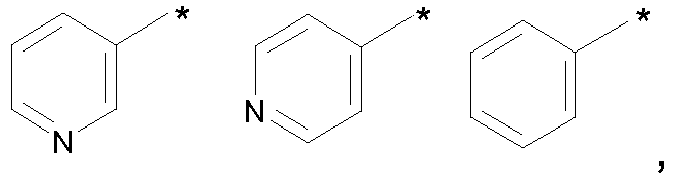
- In a further embodiment of the present invention
- A
- is selected from the group Ad consisting of

- In a further embodiment of the present invention
- A
- is selected from the group Ae consisting of

- In a further embodiment of the present invention
- A
- is selected from the group Af consisting of

- In a further embodiment of the present invention
- A
- is selected from the group Ag consisting of
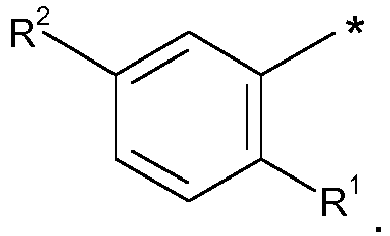
- In a further embodiment of the present invention
- R1
- is selected from the group R1b consisting of
- H, halogen, C1-6-alkyl- and C3-6-cycloalkyl
- wherein above mentioned C1-6-alkyl- and C3-6-cycloalkyl-groups may optionally be substituted with 1 to 5 substituents independently selected from the group consisting of halogen, HO- and optionally with 1 to 7 fluorine atoms substituted C1-3-alkyl-.
- H, halogen, C1-6-alkyl- and C3-6-cycloalkyl
- In a further embodiment of the present invention
- R1
- is selected from the group R1c consisting of
- H, H3C-, F3C-, F2HC-, FH2C-, fluorine, chlorine and bromine.
- In a further embodiment of the present invention
- R1
- is selected from the group R1c1 consisting of
- H3C-, fluorine and chlorine.
- In a further embodiment of the present invention
- R1
- is selected from the group R1d consisting of H, fluorine and chlorine.
- In a further embodiment of the present disclosure
- R2
- is selected from the group R2a consisting of
- H, HO-, halogen, C1-6-alkyl-, C1-6-alkyl-O-, C3-6-cycloalkyl, heterocyclyl, heterocyclyl-C1-3-alkyl-, phenyl, heteroaryl, R8-(CH2)n-O- with n = 0, 1, 2, 3 or 4, and R8-(CH2)m-(CH)(CH3)-(CH2)o-O- with m = 0, 1 or 2 and o = 0, 1 or 2,
- wherein above mentioned C1-6-alkyl-, C1-6-alkyl-O-, C3-6-cycloalkyl, heterocyclyl, heterocyclyl-C1-3-alkyl-, phenyl, heteroaryl, R8-(CH2)n-O-and R8-(CH2)m-(CH)(CH3)-(CH2)o-O-groups may optionally be substituted with 1 to 5 substituents independently selected from the group consisting of halogen, HO-, optionally with 1 to 7 fluorine atoms substituted C1-3-alkyl-O-, and optionally with 1 to 7 fluorine atoms substituted C1-3-alkyl-;
- H, HO-, halogen, C1-6-alkyl-, C1-6-alkyl-O-, C3-6-cycloalkyl, heterocyclyl, heterocyclyl-C1-3-alkyl-, phenyl, heteroaryl, R8-(CH2)n-O- with n = 0, 1, 2, 3 or 4, and R8-(CH2)m-(CH)(CH3)-(CH2)o-O- with m = 0, 1 or 2 and o = 0, 1 or 2,
- In a further embodiment of the present disclosure
- R2
- is selected from the group R2a1 consisting of
- HO-, C1-6-alkyl-, C1-6-alkyl-O-, C3-6-cycloalkyl, C3-6-cycloalkyl-C1-3-alkyl-, heterocyclyl, heterocyclyl-C1-3-alkyl-, phenyl, heteroaryl, R8-(CH2)n-O-with n = 0, 1, 2, 3 or 4, and R8-(CH2)m-(CH)(CH3)-(CH2)o-O- with m = 0, 1 or 2 and o = 0, 1 or 2
- wherein above mentioned C1-6-alkyl- and C1-6-alkyl-O-groups are substituted with 1 to 5 substituents independently selected from the group consisting of HO-, and optionally with 1 to 7 fluorine atoms substituted C1-3-alkyl-O-,
and - wherein above mentioned C1-6-alkyl- and C1-6-alkyl-O-groups may optionally be substituted with 1 to 5 substituents independently selected from the group consisting of halogen, and optionally with 1 to 7 fluorine atoms substituted C1-3-alkyl-,
and - wherein above mentioned C3-6-cycloalkyl, C3-6-cycloalkyl-C1-3-alkyl-, heterocyclyl, heterocyclyl-C1-3-alkyl-, phenyl, heteroaryl, R8-(CH2)n-O-and R8-(CH2)m-(CH)(CH3)-(CH2)o-O-groups may optionally be substituted with 1 to 5 substituents independently selected from the group consisting of halogen, HO-, optionally with 1 to 7 fluorine atoms substituted C1-3-alkyl-O-, and optionally with 1 to 7 fluorine atoms substituted C1-3-alkyl-.
- wherein above mentioned C1-6-alkyl- and C1-6-alkyl-O-groups are substituted with 1 to 5 substituents independently selected from the group consisting of HO-, and optionally with 1 to 7 fluorine atoms substituted C1-3-alkyl-O-,
- HO-, C1-6-alkyl-, C1-6-alkyl-O-, C3-6-cycloalkyl, C3-6-cycloalkyl-C1-3-alkyl-, heterocyclyl, heterocyclyl-C1-3-alkyl-, phenyl, heteroaryl, R8-(CH2)n-O-with n = 0, 1, 2, 3 or 4, and R8-(CH2)m-(CH)(CH3)-(CH2)o-O- with m = 0, 1 or 2 and o = 0, 1 or 2
- In a further embodiment of the present disclosure
- R2
- is selected from the group R2b consisting of
- H, HO-, C1-4-alkyl-, C1-4-alkyl-O-, C3-6-cycloalkyl, heterocyclyl, heterocyclyl-C1-3-alkyl-, phenyl, heteroaryl, R8-(CH2)n-O- with n = 0, 1, 2 or 3 and R8-(CH2)m-(CH)(CH3)-(CH2)o-O- with m = 0 or 1 and o = 0 or 1
- wherein above mentioned C1-4-alkyl-, C1-4-alkyl-O-, C3-6-cycloalkyl, heterocyclyl, heterocyclyl-C1-3-alkyl-, R8-(CH2)n-O- and and R8-(CH2)m-(CH)(CH3)-(CH2)o-O-groups may optionally be substituted with 1 to 3 substituents independently selected from the group consisting of halogen, HO-, optionally with 1 to 7 fluorine atoms substituted C1-3-alkyl-O-, and optionally with 1 to 7 fluorine atoms substituted C1-3-alkyl-.
- H, HO-, C1-4-alkyl-, C1-4-alkyl-O-, C3-6-cycloalkyl, heterocyclyl, heterocyclyl-C1-3-alkyl-, phenyl, heteroaryl, R8-(CH2)n-O- with n = 0, 1, 2 or 3 and R8-(CH2)m-(CH)(CH3)-(CH2)o-O- with m = 0 or 1 and o = 0 or 1
- In a further embodiment of the present disclosure
- R2
- is selected from the group R2b1 consisting of
- HO-, C1-4-alkyl-, C1-4-alkyl-O-, C3-6-cycloalkyl, C3-6-cycloalkyl-C1-3-alkyl-, heterocyclyl, heterocyclyl-C1-3-alkyl-, phenyl, heteroaryl, R8-(CH2)n-O-with n = 0, 1, 2 or 3 and R8-(CH2)m-(CH)(CH3)-(CH2)o-O- with m = 0 or 1 and o = 0 or 1
- wherein above mentioned C1-4-alkyl- and C1-4-alkyl-O- groups are substituted with 1 to 3 substituents independently selected from the group consisting of HO- and optionally with 1 to 7 fluorine atoms substituted C1-3-alkyl-O-,
and - wherein above mentioned C1-4-alkyl- and C1-4-alkyl-O-groups may optionally be substituted with 1 to 3 substituents independently selected from the group consisting of halogen, and optionally with 1 to 7 fluorine atoms substituted C1-3-alkyl-,
and - wherein above mentioned C3-6-cycloalkyl-, C3-6-cycloalkyl-C1-3-alkyl-, heterocyclyl, heterocyclyl-C1-3-alkyl-, R8-(CH2)n-O- and and R8-(CH2)m-(CH)(CH3)-(CH2)o-O-groups may optionally be substituted with 1 to 3 substituents independently selected from the group consisting of halogen, HO-, optionally with 1 to 7 fluorine atoms substituted C1-3-alkyl-O-, and optionally with 1 to 7 fluorine atoms substituted C1-3-alkyl-.
- wherein above mentioned C1-4-alkyl- and C1-4-alkyl-O- groups are substituted with 1 to 3 substituents independently selected from the group consisting of HO- and optionally with 1 to 7 fluorine atoms substituted C1-3-alkyl-O-,
- HO-, C1-4-alkyl-, C1-4-alkyl-O-, C3-6-cycloalkyl, C3-6-cycloalkyl-C1-3-alkyl-, heterocyclyl, heterocyclyl-C1-3-alkyl-, phenyl, heteroaryl, R8-(CH2)n-O-with n = 0, 1, 2 or 3 and R8-(CH2)m-(CH)(CH3)-(CH2)o-O- with m = 0 or 1 and o = 0 or 1
- In a further embodiment of the present disclosure
- R2
- is selected from the group R2c consisting of
- H, HO-, C1-4-alkyl-, C1-4-alkyl-O-, C3-6-cycloalkyl, heterocyclyl, R8-(CH2)n-O- with n = 0, 1, 2, or 3, and R8-(CH2)m-(CH)(CH3)-(CH2)o-O- with m = 0 or 1 and o = 0 or 1
- wherein above mentioned C1-4-alkyl-, C1-4-alkyl-O-, C3-6-cycloalkyl, heterocyclyl, R8-(CH2)n-O- and and R8-(CH2)m-(CH)(CH3)-(CH2)o-O-groups may optionally be substituted with 1 to 5 substituents independently selected from the group consisting of halogen, HO-, optionally with 1 to 7 fluorine atoms substituted C1-3-alkyl-O-, and optionally with 1 to 7 fluorine atoms substituted C1-3-alkyl-.
- H, HO-, C1-4-alkyl-, C1-4-alkyl-O-, C3-6-cycloalkyl, heterocyclyl, R8-(CH2)n-O- with n = 0, 1, 2, or 3, and R8-(CH2)m-(CH)(CH3)-(CH2)o-O- with m = 0 or 1 and o = 0 or 1
- In a further embodiment of the present invention
- R2
- is selected from the group R2c1 consisting of
- HO-, C1-4-alkyl-, C1-4-alkyl-O-, C3-6-cycloalkyl, C3-6-cycloalkyl-C1-3-alkyl-, heterocyclyl, R8-(CH2)n-O- with n = 0, 1, 2, or 3, and R8-(CH2)m-(CH)(CH3)-(CH2)o-O- with m = 0 or 1 and o = 0 or 1
- wherein above mentioned C1-4-alkyl- and C1-4-alkyl-O-groups are substituted with 1 to 5, preferably 1 to 3, substituents independently selected from the group consisting of HO-, and optionally with 1 to 7 fluorine atoms substituted C1-3-alkyl-O-,
and - wherein above mentioned C1-4-alkyl- and C1-4-alkyl-O-groups may optionally be substituted with 1 to 5, preferably 1 to 3, substituents independently selected from the group consisting of halogen, and optionally with 1 to 7 fluorine atoms substituted C1-3-alkyl-,
and - wherein above mentioned C3-6-cycloalkyl, C3-6-cycloalkyl-C1-3-alkyl-, heterocyclyl, R8-(CH2)n-O- and and R8-(CH2)m-(CH)(CH3)-(CH2)o-O-groups may optionally be substituted with 1 to 5, preferably 1 to 3, substituents independently selected from the group consisting of halogen, HO-, optionally with 1 to 7 fluorine atoms substituted C1-3-alkyl-O-, and optionally with 1 to 7 fluorine atoms substituted C1-3-alkyl-.
- wherein above mentioned C1-4-alkyl- and C1-4-alkyl-O-groups are substituted with 1 to 5, preferably 1 to 3, substituents independently selected from the group consisting of HO-, and optionally with 1 to 7 fluorine atoms substituted C1-3-alkyl-O-,
- HO-, C1-4-alkyl-, C1-4-alkyl-O-, C3-6-cycloalkyl, C3-6-cycloalkyl-C1-3-alkyl-, heterocyclyl, R8-(CH2)n-O- with n = 0, 1, 2, or 3, and R8-(CH2)m-(CH)(CH3)-(CH2)o-O- with m = 0 or 1 and o = 0 or 1
- In a further embodiment of the present disclosure
- R2
- is selected from the group R2d consisting of
- H, HO-, C1-4-alkyl-, C1-4-alkyl-O-, a saturated 6 membered monocyclic heterocycle containing one heteroatom selected from N or O, R8-(CH2)n-O- with n = 0, 1 or 2, and R8-(CH2)m-(CH)(CH3)-(CH2)o-O- with m = 0 or 1 and o = 0 or 1
- wherein above mentioned C1-4-alkyl-, C1-4-alkyl-O-, saturated 6 membered monocyclic heterocycle containing one heteroatom selected from N or O, R8-(CH2)n-O- and and R8-(CH2)m-(CH)(CH3)-(CH2)o-O- groups may optionally be substituted with 1 to 5 substituents independently selected from the group consisting of halogen, HO-, optionally with 1 to 7 fluorine atoms substituted C1-3-alkyl-O-, and optionally with 1 to 7 fluorine atoms substituted C1-3-alkyl-.
- H, HO-, C1-4-alkyl-, C1-4-alkyl-O-, a saturated 6 membered monocyclic heterocycle containing one heteroatom selected from N or O, R8-(CH2)n-O- with n = 0, 1 or 2, and R8-(CH2)m-(CH)(CH3)-(CH2)o-O- with m = 0 or 1 and o = 0 or 1
- In a further embodiment of the present invention
- R2
- is selected from the group R2d1 consisting of
- HO-, C1-4-alkyl-, C1-4-alkyl-O-, C3-6-cycloalkyl, C3-6-cycloalkyl-C1-3-alkyl-, a saturated 5 or 6 membered monocyclic heterocycle containing one heteroatom selected from N or O, R8-(CH2)n-O- with n = 0, 1 or 2, and R8-(CH2)m-(CH)(CH3)-(CH2)o-O- with m = 0 or 1 and o = 0 or 1
- wherein above mentioned C1-4-alkyl- and C1-4-alkyl-O-groups are substituted with 1 to 5, preferably 1 to 3, substituents independently selected from the group consisting of HO-, and optionally with 1 to 7 fluorine atoms substituted C1-3-alkyl-O-,
and - wherein above mentioned C1-4-alkyl- and C1-4-alkyl-O-groups may optionally be substituted with 1 to 5, preferably 1 to 3, substituents independently selected from the group consisting of halogen, and optionally with 1 to 7 fluorine atoms substituted C1-3-alkyl-,
and - wherein above mentioned C3-6-cycloalkyl-, C3-6-cycloalkyl-C1-3-alkyl-, saturated 5 or 6 membered monocyclic heterocycle containing one heteroatom selected from N or O, R8-(CH2)n-O- and and R8-(CH2)m-(CH)(CH3)-(CH2)o-O- groups may optionally be substituted with 1 to 5, preferably 1 to 3, substituents independently selected from the group consisting of halogen, HO-, optionally with 1 to 7 fluorine atoms substituted C1-3-alkyl-O-, and optionally with 1 to 7 fluorine atoms substituted C1-3-alkyl-.
- wherein above mentioned C1-4-alkyl- and C1-4-alkyl-O-groups are substituted with 1 to 5, preferably 1 to 3, substituents independently selected from the group consisting of HO-, and optionally with 1 to 7 fluorine atoms substituted C1-3-alkyl-O-,
- HO-, C1-4-alkyl-, C1-4-alkyl-O-, C3-6-cycloalkyl, C3-6-cycloalkyl-C1-3-alkyl-, a saturated 5 or 6 membered monocyclic heterocycle containing one heteroatom selected from N or O, R8-(CH2)n-O- with n = 0, 1 or 2, and R8-(CH2)m-(CH)(CH3)-(CH2)o-O- with m = 0 or 1 and o = 0 or 1
- In a further embodiment of the present disclosure
- R2
- is selected from the group R2e consisting of


- In a further embodiment of the present invention
- R2
- is selected from the group R2e1 consisting of


- In a further embodiment of the present disclosure
- R2
- is selected from the group R2f consisting of


- In a further embodiment of the present invention
- R2
- is selected from the group R2f1 consisting of


- In a further embodiment of the present invention
- R3
- is selected from the group R3a1 consisting of
- C3-6-cycloalkyl-,
- wherein the above mentioned C3-6-cycloalkyl-group may optionally be substituted with 1 to 9 substituents independently selected from the group consisting of halogen, NC-, HO-, C1-3-alkyl- and C1-3-alkyl-O-.
- C3-6-cycloalkyl-,
- In a further embodiment of the present invention
- R3
- is selected from the group R3b consisting of
- H, C1-3-alkyl-, cyclobutyl- and cyclopropyl-,
- wherein the above mentioned C1-3-alkyl-, cyclobutyl- and cyclopropyl-groups may optionally be substituted with 1 to 7 substituents independently selected from the group consisting of halogen, C1-3-alkyl-O-, NC- and HO-.
- H, C1-3-alkyl-, cyclobutyl- and cyclopropyl-,
- In a further embodiment of the present invention
- R3
- is selected from the group R3c consisting of
- H, and H3C- and cyclopropyl-,
- wherein the above mentioned H3C- and cyclopropyl-groups may optionally be substituted with 1 to 3 fluorine atoms.
- H, and H3C- and cyclopropyl-,
- In a further embodiment of the present invention
- R3
- is selected from the group R3d consisting of
- H and H3C-,
- wherein the above mentioned H3C-group may optionally be substituted with 1 to 3 fluorine atoms.
- H and H3C-,
- In a further embodiment of the present invention
- R3
- is selected from the group R3e consisting of
- H.
- In a further embodiment of the present invention
- R3
- is selected from the group R3f consisting of
- H3C-,
- wherein the above mentioned H3C-group may optionally be substituted with 1 to 3 fluorine atoms.
- H3C-,
- In a further embodiment of the present invention
- R3
- is selected from the group R3g consisting of
- cyclopropyl-,
- wherein the above mentioned cyclopropyl-group may optionally be substituted with 1 to 7 substituents independently selected from the group consisting of halogen, C1-3-alkyl-O-, NC- and HO-.
- cyclopropyl-,
- In a further embodiment of the present disclosure
- R4, R5
- are selected independently of each other from the group R4a/R5a consisting of
- H, halogen, NC-, HO-, C1-6-alkyl-, C1-6-alkyl-O-, C3-8-cycloalkyl-, C3-8-cycloalkyl-C1-3-alkyl-, C3-8-cycloalkyl-O-, heterocyclyl-O-, heterocyclyl, heteroaryl, R7-CH2-O- and R7-(CH2)2-O-,
- wherein above mentioned C1-6-alkyl-, C1-6-alkyl-O-, C3-8-cycloalkyl-, C3-8-cycloalkyl-C1-3-alkyl-, C3-8-cycloalkyl-O-, heterocyclyl-O-, heterocyclyl, heteroaryl, R7-CH2-O- and R7-(CH2)2-O-groups, may optionally be substituted with 1 to 5 substituents independently selected from the group consisting of halogen, optionally with 1 to 5 halogen atoms, substituted C1-2-alkyl-, and optionally with 1 to 5 halogen atoms substituted C1-2-alkyl-O-.
- H, halogen, NC-, HO-, C1-6-alkyl-, C1-6-alkyl-O-, C3-8-cycloalkyl-, C3-8-cycloalkyl-C1-3-alkyl-, C3-8-cycloalkyl-O-, heterocyclyl-O-, heterocyclyl, heteroaryl, R7-CH2-O- and R7-(CH2)2-O-,
- In a further embodiment of the present invention
- R4, R5
- are selected independently of each other from the group R4b/R5b consisting of
- H, halogen, HO-, H3C-, F3C-, H3C-O-, F2HC-O-, FH2C-O-, F3C-O-, C1-4-alkyl-O-, R7-CH2-O- and R7-(CH2)2-O-,
- wherein above mentioned C1-4-alkyl-O-, R7-CH2-O- and R7-(CH2)2-O-groups, may optionally be substituted with 1 to 5 substituents independently selected from the group consisting of halogen, optionally with 1 to 5 halogen atoms substituted C1-2-alkyl-, and optionally with 1 to 5 halogen atoms substituted C1-2-alkyl-O-.
- H, halogen, HO-, H3C-, F3C-, H3C-O-, F2HC-O-, FH2C-O-, F3C-O-, C1-4-alkyl-O-, R7-CH2-O- and R7-(CH2)2-O-,
- In a further embodiment of the present invention
- R4, R5
- are selected independently of each other from the group R4c/R5c consisting of
- H, fluorine, chlorine, bromine, HO-, H3C-, F3C-, H3C-O-, F3C-O- and R7-CH2-O-.
- In a further embodiment of the present invention
- R4, R5
- are selected from the group R4d/R5d consisting of
- H-.
- In a further embodiment of the present invention
- R6
- is selected from the group R6b consisting of
- H, C1-4-alkyl- and cyclopropyl-,
- wherein above mentioned C1-4-alkyl-group may optionally be substituted with 1-9 fluorine and/or chlorine atoms.
- H, C1-4-alkyl- and cyclopropyl-,
- In a further embodiment of the present invention
- R6
- is selected from the group R6c consisting of
- H and C1-2-alkyl-,
- wherein above mentioned C1-2-alkyl- group may optionally be substituted with 1-5 fluorine and/or chlorine atoms.
- H and C1-2-alkyl-,
- In a further embodiment of the present invention
- R6
- is selected from the group R6d consisting of
- H, H3C-, FH2C-, F2HC- and F3C-.
- In a further embodiment of the present invention
- R6
- is selected from the group R6e consisting of
- H3C-, FH2C-, F2HC- and F3C-.
- In a further embodiment of the present invention
- R6
- is selected from the group R6f consisting of
- H3C-.
- In a further embodiment of the present disclosure
- R7
- is selected from the group R7a consisting of
- H, carbocyclyl, heterocyclyl and heteroaryl,
- wherein above mentioned carbocyclyl, heterocyclyl and heteroaryl-groups may optionally be substituted with 1 to 4 substituents independently selected from the group consisting of HO-, optionally with 1 to 3 halogen atoms substituted C1-4-alkyl-, optionally with 1 to 3 halogen atoms substituted C1-4-alkyl-O- and halogen.
- H, carbocyclyl, heterocyclyl and heteroaryl,
- In a further embodiment of the present disclosure
- R7
- is selected from the group R7b consisting of
- H, phenyl, heteroaryl, cycloalkyl and heterocyclyl
- wherein above mentioned phenyl, heteroaryl, cycloalkyl and heterocyclyl-groups may optionally be substituted with 1 to 4 substituents independently selected from the group consisting of halogen, and optionally with 1 to 3 halogen atoms substituted C1-3-alkyl-O-.
- H, phenyl, heteroaryl, cycloalkyl and heterocyclyl
- In a further embodiment of the present invention
- R7
- is selected from the group R7c consisting of
- H and phenyl,
- wherein above mentioned phenyl group may optionally be substituted with 1 to 4 substituents independently selected from the group consisting of halogen and optionally with 1 to 3 halogen atoms substituted C1-3-alkyl-O-.
- H and phenyl,
- In a further embodiment of the present invention
- R7
- is selected from the group R7d consisting of
- H-.
- In a further embodiment of the present disclosure
- R8
- is selected from the group R8a consisting of
- C3-6-cycloalkyl, heterocyclyl, heterocyclyl-C1-3-alkyl-, phenyl and pyridyl,
- wherein above mentioned C3-6-cycloalkyl, heterocyclyl, heterocyclyl-C1-3-alkyl-, phenyl and pyridyl groups may optionally be substituted with 1 to 5 substituents independently selected from the group consisting of HO-, fluorine and optionally with 1 to 7 halogen atoms substituted C1-3-alkyl-.
- C3-6-cycloalkyl, heterocyclyl, heterocyclyl-C1-3-alkyl-, phenyl and pyridyl,
- In a further embodiment of the present invention
- R8
- is selected from the group R8b consisting of
- C3-6-cycloalkyl, heterocyclyl and heterocyclyl-C1-3-alkyl-,
- wherein above mentioned C3-6-cycloalkyl, heterocyclyl and heterocyclyl-C1-3-alkyl-groups may optionally be substituted with 1 to 5 substituents independently selected from the group consisting of HO-, fluorine and optionally with 1 to 7 halogen atoms substituted C1-3-alkyl-.
- C3-6-cycloalkyl, heterocyclyl and heterocyclyl-C1-3-alkyl-,
- In a further embodiment of the present invention
- R8
- is selected from the group R8c consisting of
- C3-6-cycloalkyl and heterocyclyl,
- wherein above mentioned C3-6-cycloalkyl and heterocyclyl-groups may optionally be substituted with 1 to 5 substituents independently selected from the group consisting of HO-, fluorine and optionally with 1 to 7 halogen atoms substituted C1-3-alkyl-.
- C3-6-cycloalkyl and heterocyclyl,
- In a further embodiment of the present invention
- R8
- is selected from the group R8c1 consisting of
- C3-6-cycloalkyl and a saturated 4 to 6 membered monocyclic heterocycle containing one or two heteroatoms selected from N or O,
- wherein above mentioned C3-6-cycloalkyl and heterocyclyl-groups may optionally be substituted with 1 to 5 substituents independently selected from the group consisting of HO-, fluorine and optionally with 1 to 7 halogen atoms substituted C1-3-alkyl-.
- C3-6-cycloalkyl and a saturated 4 to 6 membered monocyclic heterocycle containing one or two heteroatoms selected from N or O,
- In a further embodiment of the present invention
- R8
- is selected from the group R8d consisting of

- In a further embodiment of the present invention
- R8
- is selected from the group R8d1 consisting of

- In a further embodiment of the present invention
- R8
- is selected from the group R8e consisting of

- In a further embodiment of the present invention
- R8
- is selected from the group R8e1 consisting of

- In a further embodiment of the present invention
- R8
- is selected from the group R8f consisting of

- In a further embodiment of the present invention
- R8
- is selected from the group R8f1 consisting of

- Each R1x, R2x, R3x, R4x/5x, R6x, R7x, R8x and Ax represents a characterized, individual embodiment for the corresponding substituent as described above. Thus given the above definitions, preferred individual embodiments of the first aspect of the invention are fully characterized by the term (R1x, R2x, R3x, R4x/5x, R6x, R7x, R8x and Ax), wherein for each index x an individual figure is given that ranges from "a" to the highest letter given above. All individual embodiments described by the term in parentheses with full permutation of the indices x, referring to the definitions above, shall be comprised by the present invention and disclosure.
- The following Table 1 shows, exemplarily and in the order of increasing preference from the first line to the last line, such embodiments E-1 to E-37 of the invention and disclosure that are considered preferred. This means that embodiment E-37, represented by the entries in the last row of Table 1, is the most preferred embodiment.
Table 1: Preferred embodiments E-1 to E-37 of the invention and disclosure AX R1x R2x R3x R4x/R5x R6x R7x R8x E-1 Ab R1b R2a R3b R4b/R5b R6b R7b R8a E-2 Ac R1b R2a R3b R4b/R5b R6b R7b R8a E-3 Ac R1c R2b R3b R4b/R5b R6b R7c R8b E-4 Ac R1c R2b R3c R4c/R5c R6b R7c R8c E-5 Ac R1c R2b R3c R4c/R5c R6b R7d R8c E-6 Ac R1c R2c R3c R4c/R5c R6c R7c R8c E-7 Ac R1c R2d R3c R4c/R5c R6c R7c R8d E-8 Ad R1c R2d R3d R4d/R5d R6c - R8d E-9 Ae R1d R2d R3d R4d/R5d R6e - R8f E-10 Ae R1d R2e R3d R4d/R5d R6f - - E-11 Af R1d R2d R3d R4d/R5d R6e - R8f E-12 Af R1d R2e R3d R4d/R5d R6f - - E-13 Af R1d R2f R3d R4d/R5d R6e - - E-14 Af R1d R2f R3d R4d/R5d R6f - - E-15 Aa R1a R2a R3a1 R4a/R5a R6a R7a R8a E-16 Ab R1c R2c R3a1 R4b/R5b R6b R7b R8b E-17 Ad R1c R2d R3a1 R4c/R5c R6b - R8c E-18 Ae R1c R2d R3a1 R4d/R5d R6b - R8d E-19 Ag R1c R2d R3a1 R4d/R5d R6b - R8f E-20 Ad R1c R2d R3g R4d/R5d R6b - R8c1 E-21 Ae R1c R2d R3g R4d/R5d R6b - R8d E-22 Ag R1c R2d R3g R4d/R5d R6b - R8f E-23 Aa R1a R2a1 R3a R4a/R5a R6a R7a R8a E-24 Ab R1b R2b1 R3a R4c/R5c R6b R7c R8b E-25 Ac R1c R2b1 R3a R4d/R5d R6c - R8c1 E-26 Ad R1c R2c1 R3b R4d/R5d R6c - R8d1 E-27 Ad R1c R2d1 R3c R4d/R5d R6d - R8e1 E-28 Ad R1c1 R2c1 R3c R4d/R5d R6d - R8f1 E-29 Ae R1c R2d1 R3b R4d/R5d R6c - R8c1 E-30 Ae R1c R2d1 R3b R4d/R5d R6d - R8d1 E-31 Ae R1c1 R2e1 R3c R4d/R5d R6e - - E-32 Af R1c R2d1 R3b R4d/R5d R6c - R8e1 E-33 Af R1c1 R2e1 R3c R4d/R5d R6e - - E-34 Af R1c1 R2t1 R3c R4d/R5d R6f - - E-35 Ag R1c R2c1 R3b R4d/R5d R6c - R8e1 E-36 Ag R1c R2d1 R3c R4d/R5d R6e - R8f1 E-37 Ag R1c1 R2f1 R3c R4d/R5d R6f - - - Accordingly, for example E-15 covers compounds of formula I, wherein
- A
- is selected from the group Aa consisting of


- R1
- is selected from the group R1a consisting of
- H, halogen, NC-, C1-6-alkyl-, C1-6-alkyl-O-, C3-6-cycloalkyl and R8-(CH2)n-O- with n = 0, 1, 2, 3 or 4,
- wherein above mentioned C1-6-alkyl-, C1-6-alkyl-O-, C3-6-cycloalkyl and R8-(CH2)n-O- groups may optionally be substituted with 1 to 5
- substituents independently selected from the group consisting of halogen, HO- and optionally with 1 to 7 fluorine atoms substituted C1-3-alkyl-;
- H, halogen, NC-, C1-6-alkyl-, C1-6-alkyl-O-, C3-6-cycloalkyl and R8-(CH2)n-O- with n = 0, 1, 2, 3 or 4,
- R2
- is selected from the group R2a consisting of
- H, HO-, halogen, C1-6-alkyl-, C1-6-alkyl-O-, C3-6-cycloalkyl, heterocyclyl, heterocyclyl-C1-3-alkyl-, phenyl, heteroaryl, R8-(CH2)n-O- with n = 0, 1, 2, 3 or 4, and R8-(CH2)m-(CH)(CH3)-(CH2)o-O- with m = 0, 1 or 2 and o = 0, 1 or 2,
- wherein above mentioned C1-6-alkyl-, C1-6-alkyl-O-, C3-6-cycloalkyl, heterocyclyl, heterocyclyl-C1-3-alkyl-, phenyl, heteroaryl, R8-(CH2)n-O-and R8-(CH2)m-(CH)(CH3)-(CH2)o-O-groups may optionally be substituted with 1 to 5 substituents independently selected from the group consisting of halogen, HO-, optionally with 1 to 7 fluorine atoms substituted C1-3-alkyl-O-, and optionally with 1 to 7 fluorine atoms substituted C1-3-alkyl-;
- H, HO-, halogen, C1-6-alkyl-, C1-6-alkyl-O-, C3-6-cycloalkyl, heterocyclyl, heterocyclyl-C1-3-alkyl-, phenyl, heteroaryl, R8-(CH2)n-O- with n = 0, 1, 2, 3 or 4, and R8-(CH2)m-(CH)(CH3)-(CH2)o-O- with m = 0, 1 or 2 and o = 0, 1 or 2,
- R3
- is selected from the group R3a1 consisting of
- C3-6-cycloalkyl-,
- wherein the above mentioned C3-6-cycloalkyl-group may optionally be substituted with 1 to 9 substituents independently selected from the group consisting of halogen, NC-, HO-, C1-3-alkyl- and C1-3-alkyl-O-;
- C3-6-cycloalkyl-,
- R4, R5
- are selected independently of each other from the group R4a/R5a consisting of
- H, halogen, NC-, HO-, C1-6-alkyl-, C1-6-alkyl-O-, C3-8-cycloalkyl-, C3-8-cycloalkyl-C1-3-alkyl-, C3-8-cycloalkyl-O-, heterocyclyl-O-, heterocyclyl, heteroaryl, R7-CH2-O- and R7-(CH2)2-O-,
- wherein above mentioned C1-6-alkyl-, C1-6-alkyl-O-, C3-8-cycloalkyl-, C3-8-cycloalkyl-C1-3-alkyl-, C3-8-cycloalkyl-O-, heterocyclyl-O-, heterocyclyl, heteroaryl, R7-CH2-O- and R7-(CH2)2-O-groups, may optionally be substituted with 1 to 5 substituents independently selected from the group consisting of halogen, optionally with 1 to 5 halogen atoms, substituted C1-2-alkyl-, and optionally with 1 to 5 halogen atoms substituted C1-2-alkyl-O-,
- H, halogen, NC-, HO-, C1-6-alkyl-, C1-6-alkyl-O-, C3-8-cycloalkyl-, C3-8-cycloalkyl-C1-3-alkyl-, C3-8-cycloalkyl-O-, heterocyclyl-O-, heterocyclyl, heteroaryl, R7-CH2-O- and R7-(CH2)2-O-,
- R6
- is selected from the group R6a consisting of
- H, NC-, C1-6-alkyl-, C3-8-cycloalkyl-, C3-8-cycloalkyl-C1-3-alkyl- and C3-8-cycloalkyl-O-
- wherein above mentioned C1-6-alkyl- groups may optionally be substituted with 1-3 halogen atoms;
- H, NC-, C1-6-alkyl-, C3-8-cycloalkyl-, C3-8-cycloalkyl-C1-3-alkyl- and C3-8-cycloalkyl-O-
- R7
- is selected from the group R7a consisting of
- H, carbocyclyl, heterocyclyl and heteroaryl,
- wherein above mentioned carbocyclyl, heterocyclyl and heteroaryl-groups may optionally be substituted with 1 to 4 substituents independently selected from the group consisting of HO-, optionally with 1 to 3 halogen atoms substituted C1-4-alkyl-, optionally with 1 to 3 halogen atoms substituted C1-4-alkyl-O- and halogen;
- H, carbocyclyl, heterocyclyl and heteroaryl,
- R8
- is selected from the group R8a consisting of
- C3-6-cycloalkyl, heterocyclyl, heterocyclyl-C1-3-alkyl-, phenyl and pyridyl,
- wherein above mentioned C3-6-cycloalkyl, heterocyclyl, heterocyclyl-C1-3-alkyl-, phenyl and pyridyl groups may optionally be substituted with 1 to 5 substituents independently selected from the group consisting of HO-, fluorine and optionally with 1 to 7 halogen atoms substituted C1-3-alkyl-;
- C3-6-cycloalkyl, heterocyclyl, heterocyclyl-C1-3-alkyl-, phenyl and pyridyl,
- Accordingly, for example E-23 covers compounds of formula I,
wherein - A
- is selected from the group Aa consisting of


- R1
- is selected from the group R1a consisting of
- H, halogen, NC-, C1-6-alkyl-, C1-6-alkyl-O-, C3-6-cycloalkyl and R8-(CH2)n-O- with n = 0, 1, 2, 3 or 4,
- wherein above mentioned C1-6-alkyl-, C1-6-alkyl-O-, C3-6-cycloalkyl and R8-(CH2)n-O- groups may optionally be substituted with 1 to 5 substituents independently selected from the group consisting of halogen, HO- and optionally with 1 to 7 fluorine atoms substituted C1-3-alkyl-;
- H, halogen, NC-, C1-6-alkyl-, C1-6-alkyl-O-, C3-6-cycloalkyl and R8-(CH2)n-O- with n = 0, 1, 2, 3 or 4,
- R2
- is selected from the group R2a1 consisting of
- HO-, C1-6-alkyl-, C1-6-alkyl-O-, C3-6-cycloalkyl, C3-6-cycloalkyl-C1-3-alkyl-, heterocyclyl, heterocyclyl-C1-3-alkyl-, phenyl, heteroaryl, R8-(CH2)n-O-with n = 0, 1, 2, 3 or 4, and R8-(CH2)m-(CH)(CH3)-(CH2)o-O- with m = 0, 1 or 2 and o = 0, 1 or 2
- wherein above mentioned C1-6-alkyl- and C1-6-alkyl-O-groups are substituted with 1 to 5 substituents independently selected from the group consisting of HO-, and optionally with 1 to 7 fluorine atoms substituted C1-3-alkyl-O-,
and - wherein above mentioned C1-6-alkyl- and C1-6-alkyl-O-groups may optionally be substituted with 1 to 5 substituents independently selected from the group consisting of halogen, and optionally with 1 to 7 fluorine atoms substituted C1-3-alkyl-,
and - wherein above mentioned C3-6-cycloalkyl, C3-6-cycloalkyl-C1-3-alkyl-, heterocyclyl, heterocyclyl-C1-3-alkyl-, phenyl, heteroaryl, R8-(CH2)n-O-and R8-(CH2)m-(CH)(CH3)-(CH2)o-O-groups may optionally be substituted with 1 to 5 substituents independently selected from the group consisting of halogen, HO-, optionally with 1 to 7 fluorine atoms substituted C1-3-alkyl-O-, and optionally with 1 to 7 fluorine atoms substituted C1-3-alkyl-;
- wherein above mentioned C1-6-alkyl- and C1-6-alkyl-O-groups are substituted with 1 to 5 substituents independently selected from the group consisting of HO-, and optionally with 1 to 7 fluorine atoms substituted C1-3-alkyl-O-,
- HO-, C1-6-alkyl-, C1-6-alkyl-O-, C3-6-cycloalkyl, C3-6-cycloalkyl-C1-3-alkyl-, heterocyclyl, heterocyclyl-C1-3-alkyl-, phenyl, heteroaryl, R8-(CH2)n-O-with n = 0, 1, 2, 3 or 4, and R8-(CH2)m-(CH)(CH3)-(CH2)o-O- with m = 0, 1 or 2 and o = 0, 1 or 2
- R3
- is selected from the group R3a consisting of
- H, halogen, NC-, C1-4-alkyl- and C3-6-cycloalkyl-,
- wherein the above mentioned C1-4-alkyl- and C3-6-cycloalkyl-groups may optionally be substituted with 1 to 9 substituents independently selected from the group consisting of halogen, NC-, HO-, C1-3-alkyl- and C1-3-alkyl-O-,
- H, halogen, NC-, C1-4-alkyl- and C3-6-cycloalkyl-,
- R4, R5
- are selected independently of each other from the group R4a/R5a consisting of
- H, halogen, NC-, HO-, C1-6-alkyl-, C1-6-alkyl-O-, C3-8-cycloalkyl-, C3-8-cycloalkyl-C1-3-alkyl-, C3-8-cycloalkyl-O-, heterocyclyl-O-, heterocyclyl, heteroaryl, R7-CH2-O- and R7-(CH2)2-O-,
- wherein above mentioned C1-6-alkyl-, C1-6-alkyl-O-, C3-8-cycloalkyl-, C3-8-cycloalkyl-C1-3-alkyl-, C3-8-cycloalkyl-O-, heterocyclyl-O-, heterocyclyl, heteroaryl, R7-CH2-O- and R7-(CH2)2-O-groups, may optionally be substituted with 1 to 5 substituents independently selected from the group consisting of halogen, optionally with 1 to 5 halogen atoms, substituted C1-2-alkyl-, and optionally with 1 to 5 halogen atoms substituted C1-2-alkyl-O-,
- H, halogen, NC-, HO-, C1-6-alkyl-, C1-6-alkyl-O-, C3-8-cycloalkyl-, C3-8-cycloalkyl-C1-3-alkyl-, C3-8-cycloalkyl-O-, heterocyclyl-O-, heterocyclyl, heteroaryl, R7-CH2-O- and R7-(CH2)2-O-,
- R6
- is selected from the group R6a consisting of
- H, NC-, C1-6-alkyl-, C3-8-cycloalkyl-, C3-8-cycloalkyl-C1-3-alkyl- and C3-8-cycloalkyl-O-
- wherein above mentioned C1-6-alkyl- groups may optionally be substituted with 1-3 halogen atoms;
- H, NC-, C1-6-alkyl-, C3-8-cycloalkyl-, C3-8-cycloalkyl-C1-3-alkyl- and C3-8-cycloalkyl-O-
- R7
- is selected from the group R7a consisting of
- H, carbocyclyl, heterocyclyl and heteroaryl,
- wherein above mentioned carbocyclyl, heterocyclyl and heteroaryl-groups may optionally be substituted with 1 to 4 substituents independently selected from the group consisting of HO-, optionally with 1 to 3 halogen atoms substituted C1-4-alkyl-, optionally with 1 to 3 halogen atoms substituted C1-4-alkyl-O- and halogen;
- H, carbocyclyl, heterocyclyl and heteroaryl,
- R8
- is selected from the group R8a consisting of
- C3-6-cycloalkyl, heterocyclyl, heterocyclyl-C1-3-alkyl-, phenyl and pyridyl,
- wherein above mentioned C3-6-cycloalkyl, heterocyclyl, heterocyclyl-C1-3-alkyl-, phenyl and pyridyl groups may optionally be substituted with 1 to 5 substituents independently selected from the group consisting of HO-, fluorine and optionally with 1 to 7 halogen atoms substituted C1-3-alkyl-;
- C3-6-cycloalkyl, heterocyclyl, heterocyclyl-C1-3-alkyl-, phenyl and pyridyl,
- Accordingly, for example E-29 covers compounds of formula I,
wherein - A
- is selected from the group Ae consisting of

- R1
- is selected from the group R1c consisting of
- H, H3C-, F3C-, F2HC-, FH2C-, fluorine, chlorine and bromine:
- R2
- is selected from the group R2d1 consisting of
- HO-, C1-4-alkyl-, C1-4-alkyl-O-, C3-6-cycloalkyl, C3-6-cycloalkyl-C1-3-alkyl-, a saturated 5 or 6 membered monocyclic heterocycle containing one heteroatom selected from N or O, R8-(CH2)n-O- with n = 0, 1 or 2, and R8-(CH2)m-(CH)(CH3)-(CH2)o-O- with m = 0 or 1 and o = 0 or 1
- wherein above mentioned C1-4-alkyl- and C1-4-alkyl-O-groups are substituted with 1 to 5, preferably 1 to 3, substituents independently selected from the group consisting of HO-, and optionally with 1 to 7 fluorine atoms substituted C1-3-alkyl-O-,
and - wherein above mentioned C1-4-alkyl- and C1-4-alkyl-O-groups may optionally be substituted with 1 to 5, preferably 1 to 3, substituents independently selected from the group consisting of halogen, and optionally with 1 to 7 fluorine atoms substituted C1-3-alkyl-,
and - wherein above mentioned C3-6-cycloalkyl-, C3-6-cycloalkyl-C1-3-alkyl-, saturated 5 or 6 membered monocyclic heterocycle containing one heteroatom selected from N or O, R8-(CH2)n-O- and and R8-(CH2)m-(CH)(CH3)-(CH2)o-O- groups may optionally be substituted with 1 to 5, preferably 1 to 3, substituents independently selected from the group consisting of halogen, HO-, optionally with 1 to 7 fluorine atoms substituted C1-3-alkyl-O-, and optionally with 1 to 7 fluorine atoms substituted C1-3-alkyl-;
- wherein above mentioned C1-4-alkyl- and C1-4-alkyl-O-groups are substituted with 1 to 5, preferably 1 to 3, substituents independently selected from the group consisting of HO-, and optionally with 1 to 7 fluorine atoms substituted C1-3-alkyl-O-,
- HO-, C1-4-alkyl-, C1-4-alkyl-O-, C3-6-cycloalkyl, C3-6-cycloalkyl-C1-3-alkyl-, a saturated 5 or 6 membered monocyclic heterocycle containing one heteroatom selected from N or O, R8-(CH2)n-O- with n = 0, 1 or 2, and R8-(CH2)m-(CH)(CH3)-(CH2)o-O- with m = 0 or 1 and o = 0 or 1
- R3
- is selected from the group R3b consisting of
- H, C1-3-alkyl-, cyclobutyl- and cyclopropyl-,
- wherein the above mentioned C1-3-alkyl-, cyclobutyl-, and cyclopropyl-groups may optionally be substituted with 1 to 7 substituents independently selected from the group consisting of halogen, C1-3-alkyl-O-, NC- and HO-;
- H, C1-3-alkyl-, cyclobutyl- and cyclopropyl-,
- R4, R5
- are selected from the group R4d/R5d consisting of
- H;
- R6
- is selected from the group R6c consisting of
- H and C1-2-alkyl-,
- wherein above mentioned C1-2-alkyl- group may optionally be substituted with 1-5 fluorine and/or chlorine atoms;
- H and C1-2-alkyl-,
- R8
- is selected from the group R8c1 consisting of
- C3-6-cycloalkyl and a saturated 4 to 6 membered monocyclic heterocycle containing one or two heteroatoms selected from N or O, wherein above mentioned C3-6-cycloalkyl and heterocyclyl-groups may optionally be substituted with 1 to 5 substituents independently selected from the group consisting of HO-, fluorine and optionally with 1 to 7 halogen atoms substituted C1-3-alkyl-;
- Accordingly, for example E-37 covers compounds of formula I,
wherein - A
- is selected from the group Ag consisting of

- R1
- is selected from the group R1c1 consisting of H3C-, fluorine and chlorine;
- R2
- is selected from the group R2f1 consisting of


- R3
- is selected from the group R3c consisting of
- H, and H3C- and cyclopropyl-,
- wherein the above mentioned H3C- and cyclopropyl-groups may optionally be substituted with 1 to 3 fluorine atoms;
- H, and H3C- and cyclopropyl-,
- R4, R5
- are selected from the group R4d/R5d consisting of
- H;
- R6
- is selected independently of each other from the group R6f consisting of
- H3C-;
- Further preferred are the following compounds and reference compounds listed in table 2:
No. Structure No. Structure I 
II 
III 
IV 
V 
VI 
VII 
VIII 
IX 
X 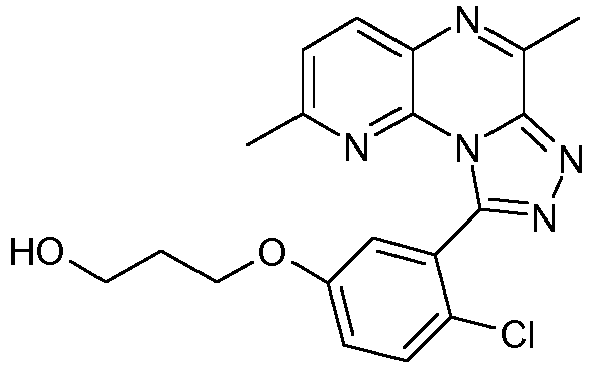
XI 
XII 
XIII 
XIV 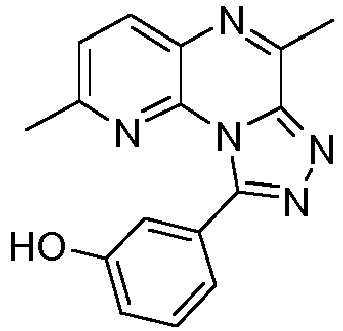
XV 
XVI 
XVII 
XVIII 
XIX 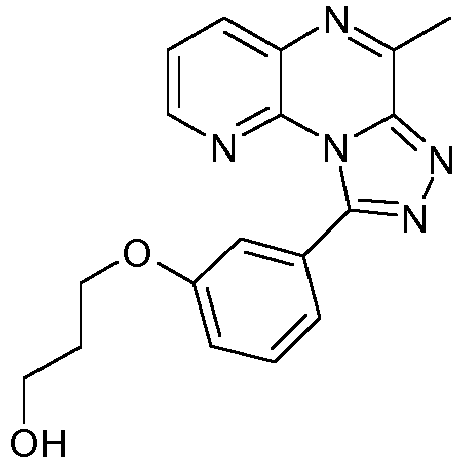
XX 
XXI 
XXII 
XXIII 
XXIV 
XXV 
XXVI 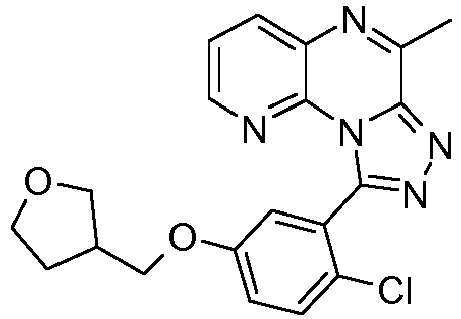
XXVII 
XXVIII 
XXIX 
XXX 
XXXI 
XXXI 
XXXIII 
XXXIV 
XXXV 
XXXVI 
XXXVII 
XXXVIII 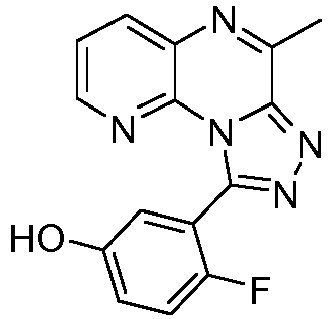
XXXIX 
XL 
XLI 
XLII 
XLIII 
XLIV 
XLV 
XLVI 
XLVII 
XLVIII 
XLIX 
L 
LI 
LII 
LIII 
LIV 
LV 
LVI 
LVII 
LVIII 
LIX 
LX 
LXI 
LXII 
LXIII 
LXIV 
LXV 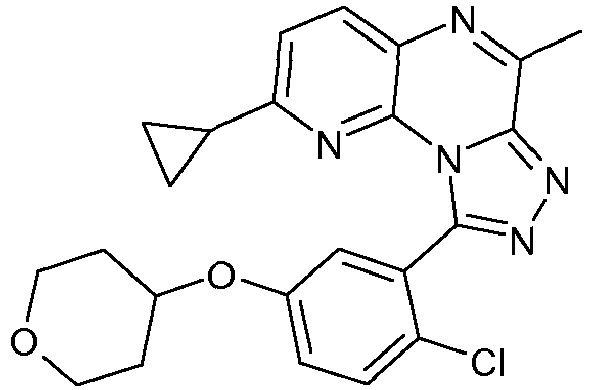
LXVI 
LXVII 
LXVIII 
LXIX 
LXX 
LXXI 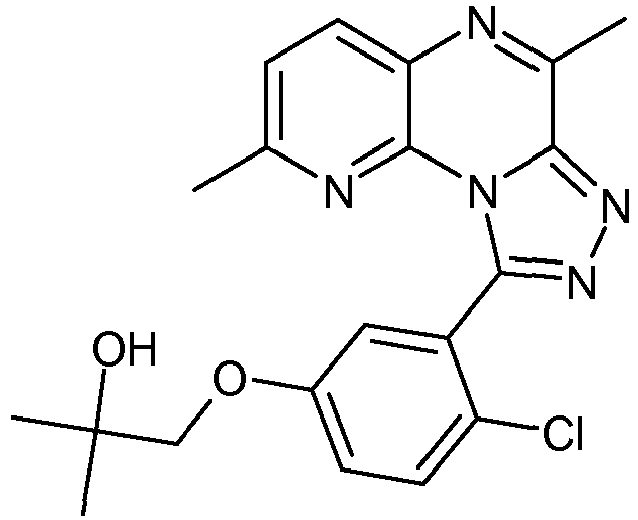
LXXII 
LXXIII 
LXXIV 
LXXV 
LXXVI 
LXXVII 
LXXVIII 
LXXIX 
LXXX 
LXXXI 
LXXXII 
LXXXIII 
LXXXIV 
LXXXV 
LXXXVI 
LXXXVII 
LXXXVIII 
LXXXIX 
XC 
XCI 
XCII 
XCIII 
XCIV 
XCV 
XCVI 
XCVII 
XCVIII 
XCIX 
C 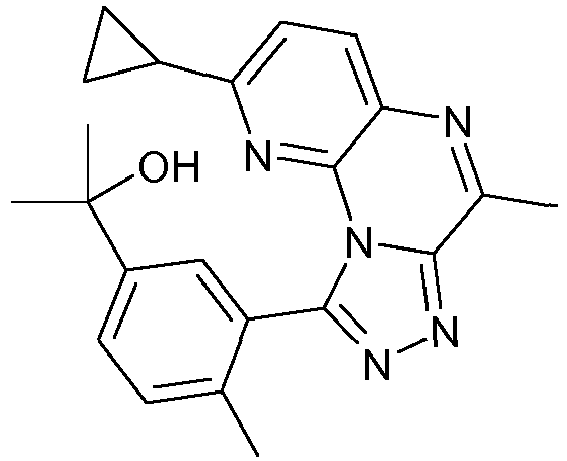
CI 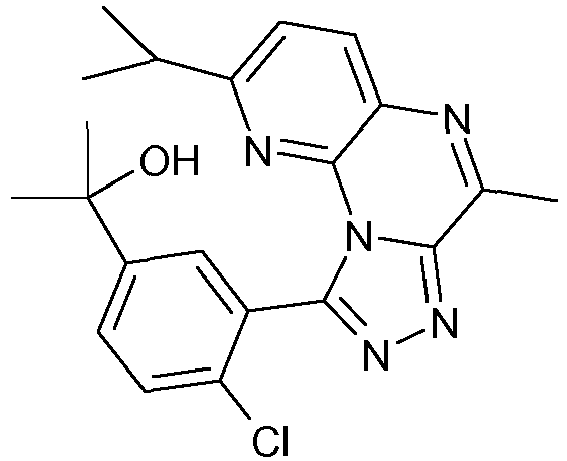
CII 
CIII 
CIV 
CV 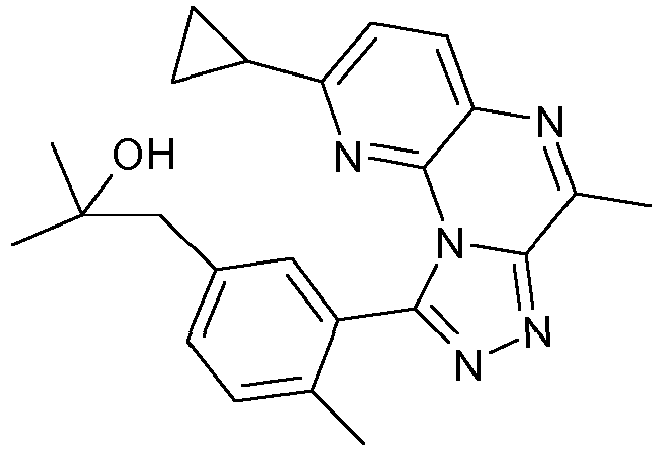
CVI 
CVII 
CVIII 
CIX 
CX 
CXI 
CXII 
CXIII 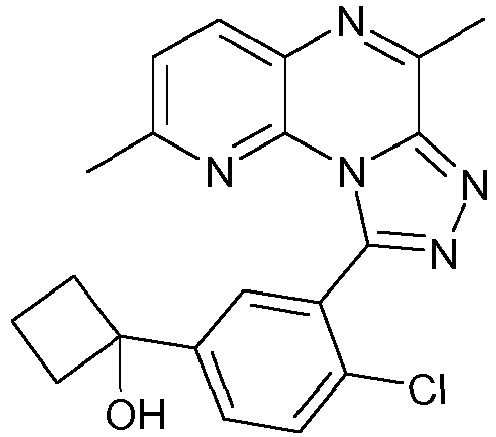
CXIV 
CXV 
CXVI 
CXVII 
CXVIII 
CXIX 
CXX 
CXXI 
CXXII 
CXXIII 
CXXIV 
CXXV 
CXXVI 
CXXVII 
CXXVIII 
CXXIX 
CXXX 
CXXXI 
CXXXII 
CXXXIII 
CXXXIV 
CXXXV 
CXXXVI 
CXXXVII 
CXXXVIII 
CXXXIX 
CXL 
- Some terms used above and hereinafter to describe the compounds according to the invention will now be defined more closely.
- Terms not specifically defined herein should be given the meanings that would be given to them by one of skill in the art in light of the disclosure and the context. As used in the specification, however, unless specified to the contrary, the following terms have the meaning indicated and the following conventions are adhered to.
In the groups, radicals, or moieties defined below, the number of carbon atoms is often specified preceding the group, for example C1-6-alkyl means an alkyl group or radical having 1 to 6 carbon atoms. In general, for groups comprising two or more subgroups, the last named subgroup is the radical attachment point, for example, the substituent "aryl-C1-3-alkyl-" means an aryl group which is bound to a C1-3-alkyl group, the latter of which is bound to the core molecule or to the group to which the substituent is attached.
Within the present invention, the term "core molecule" is defined by the following structure:
- In general, the attachment site of a given residue to another group shall be variable, i.e. any capable atom, bearing hydrogens to be replaced, within this residue may be the linking spot to the group being attached, unless otherwise indicated.
- In case a compound of the present invention is depicted in form of a chemical name and as a formula in case of any discrepancy the formula shall prevail.
- An asterisk may be used in sub-formulas to indicate the bond which is connected to the core molecule or to the substituent to which it is bound as defined.
- Unless specifically indicated, throughout the specification and the appended claims, a given chemical formula or name shall encompass tautomers and all stereo, optical and geometrical isomers (e.g. enantiomers, diastereomers, E/Z isomers etc...) and racemates thereof as well as mixtures in different proportions of the separate enantiomers, mixtures of diastereomers, or mixtures of any of the foregoing forms where such isomers and enantiomers exist, as well as salts, including pharmaceutically acceptable salts thereof and solvates thereof such as for instance hydrates including solvates of the free compounds or solvates of a salt of the compound.
- The phrase "pharmaceutically acceptable" or "physiologically acceptable" is employed herein to refer to those compounds, materials, compositions, and/or dosage forms which are, within the scope of sound medical judgment, suitable for use in contact with the tissues of human beings and animals without excessive toxicity, irritation, allergic response, or other problem or complication, and commensurate with a reasonable benefit/risk ratio.
- As used herein, "pharmaceutically acceptable salts" or "physiologically acceptable salts" refer to derivatives of the disclosed compounds wherein the parent compound is modified by making acid or base salts thereof. Examples of pharmaceutically acceptable salts or physiologically acceptable salts include, but are not limited to, mineral or organic acid salts of basic residues such as amines; alkali or organic salts of acidic residues such as carboxylic acids; and the like. For example, such salts include salts from ammonia, L-arginine, betaine, benethamine, benzathine, calcium hydroxide, choline, deanol, diethanolamine (2,2'-iminobis(ethanol)), diethylamine, 2-(diethylamino)-ethanol, 2-aminoethanol, ethylenediamine, N-ethyl-glucamine, hydrabamine, 1H-imidazole, lysine, magnesium hydroxide, 4-(2-hydroxyethyl)-morpholine, piperazine, potassium hydroxide, 1-(2-hydroxyethyl)-pyrrolidine, sodium hydroxide, triethanolamine (2,2',2"-nitrilotris(ethanol)), tromethamine, zinc hydroxide, acetic acid, 2,2-dichloro-acetic acid, adipic acid, alginic acid, ascorbic acid, L-aspartic acid, benzenesulfonic acid, benzoic acid, 2,5-dihydroxybenzoic acid, 4-acetamido-benzoic acid, (+)-camphoric acid, (+)-camphor-10-sulfonic acid, carbonic acid, cinnamic acid, citric acid, cyclamic acid, decanoic acid, dodecylsulfuric acid, ethane-1,2-disulfonic acid, ethanesulfonic acid, 2-hydroxy-ethanesulfonic acid, ethylenediaminetetraacetic acid, formic acid, fumaric acid, galactaric acid, gentisic acid, D-glucoheptonic acid, D-gluconic acid, D-glucuronic acid, glutamic acid, glutaric acid, 2-oxo-glutaric acid, glycerophosphoric acid, glycine, glycolic acid, hexanoic acid, hippuric acid, hydrobromic acid, hydrochloric acid, isobutyric acid, DL-lactic acid, lactobionic acid, lauric acid, lysine, maleic acid, (-)-L-malic acid, malonic acid, DL-mandelic acid, methanesulfonic acid, galactaric acid, naphthalene-1,5-disulfonic acid, naphthalene-2-sulfonic acid, 1-hydroxy-2-naphthoic acid, nicotinic acid, nitric acid, octanoic acid, oleic acid, orotic acid, oxalic acid, palmitic acid, pamoic acid (embonic acid), phosphoric acid, propionic acid, (-)-L-pyroglutamic acid, salicylic acid, 4-amino-salicylic acid, sebacic acid, stearic acid, succinic acid, sulfuric acid, tannic acid, (+)-L-tartaric acid, thiocyanic acid, p-toluenesulfonic acid and undecylenic acid. Further pharmaceutically acceptable salts can be formed with cations from metals like aluminium, calcium, lithium, magnesium, potassium, sodium, zinc and the like (also see Pharmaceutical salts, Berge, S.M. et al., J. Pharm. Sci., (1977), 66, 1-19).
- The pharmaceutically acceptable salts of the present invention can be synthesized from the parent compound which contains a basic or acidic moiety by conventional chemical methods. Generally, such salts can be prepared by reacting the free acid or base forms of these compounds with a sufficient amount of the appropriate base or acid in water or in an organic diluent like ether, ethyl acetate, ethanol, isopropanol, or acetonitrile, or a mixture thereof.
- Salts of other acids than those mentioned above which for example are useful for purifying or isolating the compounds of the present invention (e.g. trifluoro acetate salts) also comprise a part of the invention.
- The term "substituted" as used herein means that any one or more hydrogens on the designated atom is replaced with a selection from the indicated group, provided that the designated atom's viable valence number is not exceeded, and that the substitution results in a stable compound.
- The term "partially unsaturated" as used herein means that in the designated group or moiety 1, 2, or more, preferably 1 or 2, double bonds are present. Preferably, as used herein, the term "partially unsaturated" does not cover fully unsaturated groups or moieties.
- Terms like "...optionally with 1 to 7 fluorine atoms substituted C1-3-alkyl-O-.." or "...optionally with 1 to 7 fluorine atoms substituted C1-3-alkyl-" in a section like "... groups may optionally be substituted with 1 to 5 substituents independently selected from the group consisting of halogen, HO-, optionally with 1 to 7 fluorine atoms substituted C 1-3 -alkyl-O-, and optionally with 1 to 7 fluorine atoms substituted C 1-3 -alkyl-" means that the referenced group may be substituted with 1 to 5 substituents, wherein these substituents can be halogen, HO-, C1-3-alkyl-O- which may be optionally fluorinated with 1 to 7 fluoro atoms, and C1-3-alkyl-O- which may be optionally fluorinated with 1 to 7 fluoro atoms.
- The term "halogen" generally denotes fluorine, chlorine, bromine and iodine.
- The term "C1-n-alkyl", wherein n is an integer from 2 to n, either alone or in combination with another radical denotes an acyclic, saturated, branched or linear hydrocarbon radical with 1 to n C atoms. For example the term C1-5-alkyl embraces the radicals H3C-, H3C-CH2-, H3C-CH2-CH2-, H3C-CH(CH3)-, H3C-CH2-CH2-CH2-, H3C-CH2-CH(CH3)-, H3C-CH(CH3)-CH2-, H3C-C(CH3)2-, H3C-CH2-CH2-CH2-CH2-, H3C-CH2-CH2-CH(CH3)-, H3C-CH2-CH(CH3)-CH2-, H3C-CH(CH3)-CH2-CH2-, H3C-CH2-C(CH3)2-, H3C-C(CH3)2-CH2-, H3C-CH(CH3)-CH(CH3)- and H3C-CH2-CH(CH2CH3)-.
- The terms "carbocyclyl" and "carbocycle" as used either alone or in combination with another radical, mean, if not mentioned otherwise, a mono- bi- or tricyclic ring structure consisting of 3 to 14 carbon atoms. The terms, if not mentioned otherwise, refers to fully saturated, partially saturated and aromatic ring systems. The terms encompass fused, bridged and spirocyclic systems.
Thus, the terms include the following exemplary structures which are not depicted as radicals as each form may be attached through a covalent bond to any atom so long as appropriate valences are maintained:


- The term "C3-n-cycloalkyl", wherein n is an integer from 4 to n, either alone or in combination with another radical denotes a cyclic, saturated, unbranched hydrocarbon radical with 3 to n C atoms. For example the term C3-7-cycloalkyl includes cyclopropyl, cyclobutyl, cyclopentyl, cyclohexyl and cycloheptyl.
- The terms "heterocyclyl" and "heterocycle" as used either alone or in combination with another radical, mean a saturated or unsaturated mono- or polycyclic ring system containing one or more heteroatoms selected from N, O or S(O)r ,wherein r=0, 1 or 2, which may contain aromatic rings consisting of, if not mentioned otherwise, 3 to 14 ring atoms wherein none of the heteroatoms is part of an aromatic ring. The terms encompass fused, bridged and spirocyclic systems.The terms are intended to include all the possible isomeric forms.
- Thus, the terms include the following exemplary structures which are not depicted as radicals as each form may be attached through a covalent bond to any atom so long as appropriate valences are maintained:







- The term "aryl" as used herein, either alone or in combination with another radical, denotes a carbocyclic aromatic monocyclic group containing 6 carbon atoms which may be further fused to a second 5- or 6-membered carbocyclic group which may be aromatic, saturated or unsaturated. Aryl includes, but is not limited to, phenyl, indanyl, indenyl, naphthyl, anthracenyl, phenanthrenyl, tetrahydronaphthyl and dihydronaphthyl.
- The term "heteroaryl" means a mono- or polycyclic-ring systems containing one or more heteroatoms selected from N, O or S(O)r, wherein r=0, 1 or 2, consisting of 5 to 14 ring atoms wherein at least one of the heteroatoms is part of an aromatic ring. The term "heteroaryl" is intended to include all the possible isomeric forms.
- Thus, the term "heteroaryl" includes the following exemplary structures which are not depicted as radicals as each form may be attached through a covalent bond to any atom so long as appropriate valences are maintained:








- Many of the terms given above may be used repeatedly in the definition of a formula or group and in each case have one of the meanings given above, independently of one another.
- The compounds according to the invention may be obtained using methods of synthesis known in principle. Preferably, the compounds are obtained by the following methods according to the invention which are described in more detail hereinafter.
- The following schemes illustrate generally how to manufacture the compounds of the present invention by way of example. The abbreviated substituents may be as defined above if not defined otherwise within the context of the schemes :

- Scheme 1: In a first step, substituted 1,2-pyrido-diamines (A),commercially available or prepared following well known reported procedures, were reacted with the appropriate 1,2 - keto ester or acid in EtOH or MeOH as solvents at room temperature, to form the corresponding pyrido[2,3-b] pyrazinone intermediates (B,C). Where required, regioisomers were separated by flash cromatography and treated with POCl3 under heating to obtain the 2-chloro-pyridopyrazines(D). Nucleophilic substitution was performed using hydrazine hydrate in appropriate solvents (e.g. EtOH) at room temperature to form the corresponding pyrido[2,3-b]-pyrazin-3yl-idrazines derivatives (F). Reaction with appropriate acyl chlorides or carboxylic acids in the presence of a coupling agent (e.g. HATU or TBTU) and a base (e.g. TEA or DIPEA), gave the corresponding hydrazides (E) which were submitted to in situ cyclization to triazoles core by heating in appropriate solvent (e.g. cyclohexanol). Alternatively, in step 5, preformed hydrazides derivative were reacted with 2-chloro-pyridopyrazines (D) in appropriate solvents (such as DMF) to gave intermediates hydrazides (E) which were then converted to compounds G as described before or heating directly the 2-chloro-pyridopyrazines (D) with the appropriate hydrazides in approriate solvent such as cyclohexanol at high temperature.
- Further examples of the present invention were prepared following Scheme 2:

- Further examples of the present invention were prepared by alkylation of the appropriate phenol derivative (obtained as described in Scheme 1) with alkylating agents (e.g. chloride, bromide or tosylates derivatives) in the presence of a suitable base (e.g. tBuOK or Cs2CO3) in a solvent like DMF under heating or by ring opening of the appropriate epoxides in the presence of a suitable base (e.g. Cs2CO3) in a solvent like DMF or DMA under conventional heating or microwave irradation.
Rx and Ry : Examples 13, 15, 16, 17, 18, 19, 20, 21, 22, 23, 24, 25, 26, 27, 28, 29, 30, 31, 32, 32a, 33, 34, 35, 35a, 36, 37, 38, 39, 40, 41, 42, 43, 44, 45,46, 47, 48, 49, 50, 51, 52, 53, 54, 55, 56, 57,58,106,107,108a, 108b, 108c, 108d, 109a, 109b, 109c, 109d, 110b, 110d, 111 were prepared following the above described procedures.
- Further examples of the present invention were prepared by aromatic nucleophilic substitution, reacting the appropriate aromatic fluoro derivatives (prepared as described in Scheme1) with primary or secondary alcohols in the presence of a suitable base (e.g tBuOK or Cs2CO3), in a solvent like DMF under heating.
Examples 58a , 58b, 58c were prepared following the above described procedure.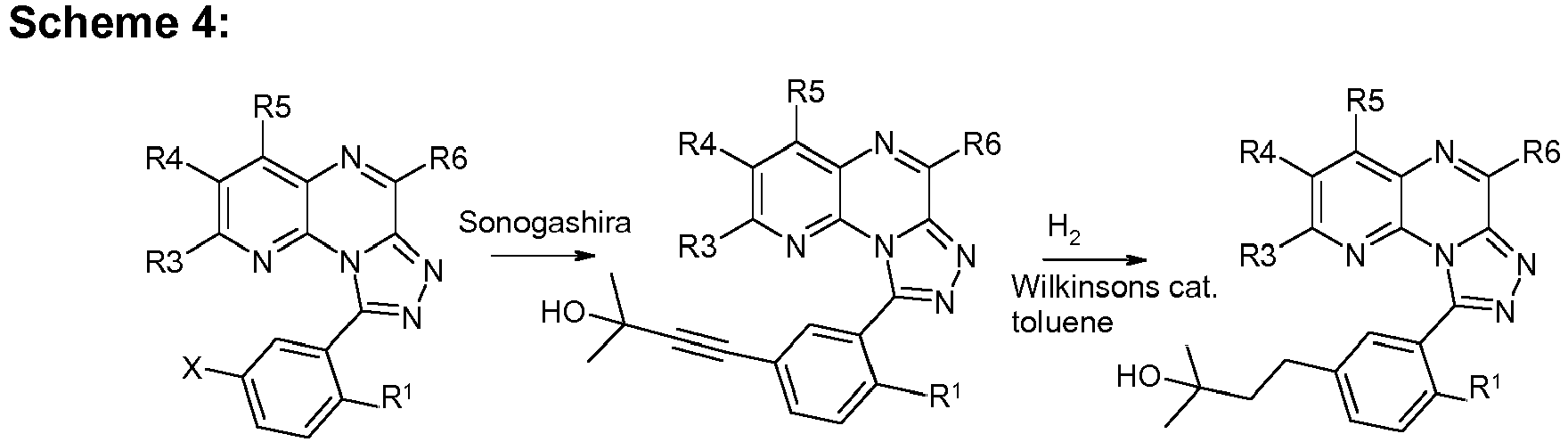
- Further examples of the present invention were prepared by well-known cross coupling reaction (i.e Sonogashira, see for example Organic Letters, 2007 , vol. 9, p. 4057 - 4060) starting from appropriate aromatic halogen intermediates (X=Br,I). The resulting unsaturated triple bond intermediates were then converted to final compounds by appropriate reduction with Wilkinson's catalyst RhCl(TPP)3 under hydrogen atmosphere in toluene as solvent.
Examples 66, 67, 68, 69 were prepared following the above described procedure. Alternatively, the same synthetic approach was applied for the preparation of preformed hydrazydes which were then reacted with intermediate D as described in Scheme 1
- Examples 64 and 65 were prepared following the above described procedure.

- Further examples of the present invention were prepared as described in Scheme 6 : in a first step the appropriate aromatic alogen derivatives (X=I) was treated with isopropyl magnesium bromide in a suitable solvent (like THF) at low temperature followed by addition of the appropriate ketone or aldehyde derivatives.
Examples 70, 71, 72, 73, 74 were prepared following the above described procedure. Alternatively, the same synthetic approach was applied for the preparation of preformed hydrazydes which were then reacted with intermediate D as described in Scheme 1.
- Examples 84, 85, 86, 87, 88, 89, 90, 91, 92, 93, 94, 95, 96, 96a, 96b, 96c, 97 were prepared following the above described procedure.

- Further examples of the present invention were prepared as described in Scheme 8: in a first step the appropriate aromatic aldehyde is obtained by reaction of halogen derivatives (X=I) with n-BuLi in a suitable solvent (like THF) at low temperature followed by addition of dry DMF in THF. In a second step the suitable commercially available Grignard reagent is added at low temperature.
Rz: Examples 59,61,62,63 were prepared following the above reported procedure.
- Further examples of the present invention were prepared as described in Scheme 9: in a first step the appropriate ketone is obtained by reaction of halogen derivatives (X=I,Br) with tributyl-(1-ethoxyvinyl-)tin in the presence of Pd(PPh3)4. The epoxide obtained by reaction with appropriate trimethyl sulphonium ylide was then subjected to ring opening with hydride and subsequent oxidation with suitable agents such as manganese dioxide in appropriate solvents (DCM).
Examples 76, 77, 78, 79 were prepared following the above reported procedure.
In analogy, the omologated derivatives Examples 80, 81 were obtained performing the first step as described in Scheme 9a.
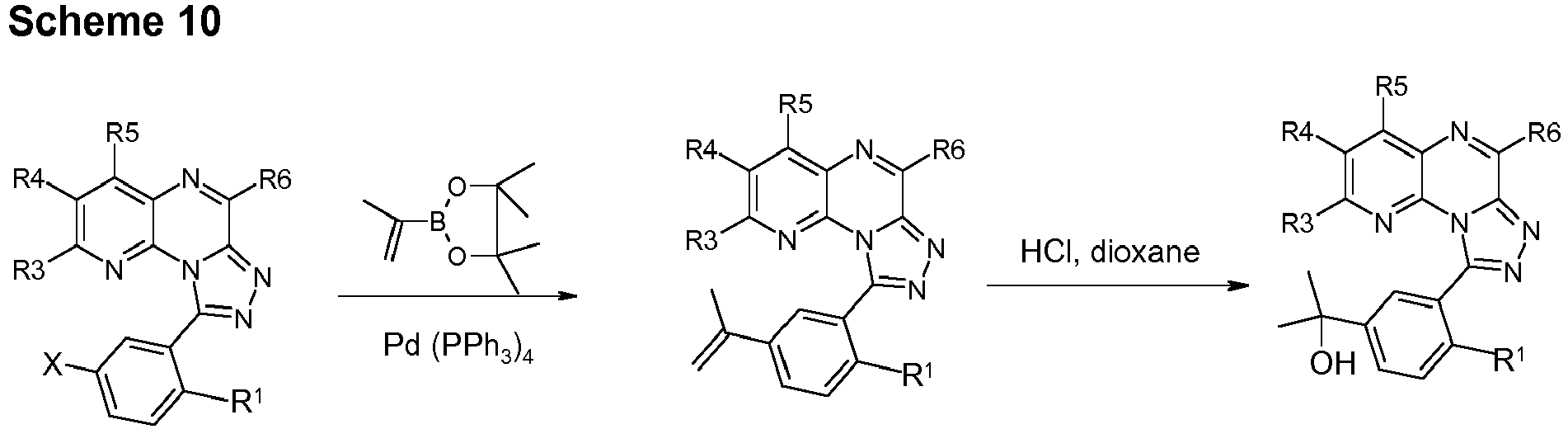
- Further examples of the present invention were prepared as described in Scheme 10: in a first step the appropriate double bond is installed by Suzuki coupling with suitable boronic acids or esters (such as for example 2-isopropenyl- dioxaborolane, Scheme 10). In a second step, the hydratation of the double bond (HCl/dioxane) allowed to introduce hydroxylic function.
Example 103,103b,103c were prepared following the above described procedure. - The compounds according to the invention are advantageously also obtainable using the methods described in the examples that follow, which may also be combined for this purpose with methods known to the skilled man from the literature.
- As already mentioned, the compounds of general formula I according to the invention and the physiologically acceptable salts thereof have valuable pharmacological properties, particularly as inhibitors of phosphodiesterase 2 and/or 10.
- The in-vitro effect of the active compounds of the invention can be shown with the following biological assays.
- For all experiments the Phosphodiesterase [3H]cAMP SPA Enzyme Assay (TRKQ7090, GE Healthcare Europe GmbH) were used. The enzymatic activity of the PDE2 and the inhibitory potency of compounds was measured by the conversion of [3H]cAMP to [3H]AMP. [3H]AMP associate to the scintillator soaked yttrium-silicate beads resulting in an increase in scintillation events. Compounds that inhibit the respective enzymes decrease the generation of [3H]AMP and accordingly the number of counts detected.
- SF9 lysate containing PDE2A is incubated at room temperature for 1 h with [3H]cAMP and the reaction is terminated by addition of SPA beads in 18 mM zinc sulphate. The [3H]AMP bound to SPA beads is determined after at least 3 hours of sedimentation of the beads, the signal is recorded using the TopCount with a recording time of 3 min/well.
- PDE 2A protein is expressed upon baculovirus infection in SF9 cells. The cells have been incubated upon infection for ∼3 days and protein production was confirmed by Western Blot. The cells were collected by centrifugation and the pellet frozen in liquid nitrogen before it was resuspended in PBS containing 1% Triton X-100 and protease inhibitors. After 45 min incubation on ice, the cell debris was removed by centrifugation (13.000 rpm, 30 min).
- The assay conditions were as follows :
total assay volume: 40 µl protein amount: 5 ng protein concentration: 500 pg/µl substrate concentration: 20 nM; ∼1,08 mCi/l incubation time: 60 min - The buffer used for above described assay buffer was:
50 mM Tris/HCl, pH 7.4 8.3 mM MgCl2 1.7 mM EGTA 0.1 % (w/v) BSA 0.05 % (v/v) Tween 20 - In detail the protocol is as follows:
Into a 384 well plate (OptiPlate, white), the following components are pipetted (either manually or using automated pipetting devices): - 20 µl test-compound solution (test compound diluted in assay buffer at twofold the desired concentration)
- + 10 µl PDE 2A preparation (enzyme diluted in assay buffer to a concentration of 0,5 ng/µl protein)
- + 10 µl [3H]cAMP (diluted in assay buffer to a concentration of 80 nM cAMP)
- Controls included into each experiment:
- positive control: no inhibitor, DMSO at the concentration as used in the compound dilutions
- negative control: no PDE 2 (SF9 lysate instead of SF9/PDE 2A lysate)
- The activity of the positive control (minus the negative control = background) is set to 100% and activity in the presence of compound is expressed relative to these 100%.
- IC50 are calculated with GraphPadPrism or other suited software setting the positive control as 100 and the negative control as 0. For calculation of IC50 usually 11 dilutions of the test compound are selected.
- For assessing activity of compounds on PDE10 inhibition, the following modifications of the protocol described above are applied:
protein amount: 3 ng protein concentration: 75 pg/µl - In detail the protocol is as follows:
Into a 384 well plate (OptiPlate, white), the following components are pipetted (either manually or using automated pipetting devices): - 20 µl test-compound solution (test compound diluted in assay buffer at twofold the desired concentration)
- + 10 µl PDE 10A preparation (enzyme diluted in assay buffer to a concentration of 0,3 ng/µl protein)
- + 10 µl cAMP tracer (diluted in assay buffer to a concentration of 80 nM cAMP, specific activity ∼4 mCi/l)
- PDE 10A protein is expressed upon baculovirus infection in SF9 cells. The cells have been incubated upon infection for ∼3 days and protein production was confirmed by Western Blot. The cells were collected by centrifugation and the pellet frozen in liquid nitrogen before it was resuspended in PBS containing 1% Triton X-100 and protease inhibitors. After 45 min incubation on ice, the cell debris was removed by centrifugation (13.000 rpm, 30 min).
In the following table the resuls of the above described experiments are listed.Table 3: Activity of the examples (Ex) compiled in the experimental part, based on above described assays (cAMPA SPA radioactive). Ex. PDE2 IC50 [µM] PDE10 IC50 [µM] Ex. PDE2 IC50 [µM] PDE10 IC50 [µM] 1 0.016 0.421 25 0.055 3.26 2 0.004 0.040 26 0.116 1.38 3 0.155 0.411 27 0.004 0.97 4 0.138 0.441 28 0.009 >10 13 0.053 2.190 29 0.017 2.38 14 0.202 3.580 30 0.027 3.92 15 0.040 >10 31 0.007 1.90 16 0.058 1.876 32 0.003 1.76 17 0.098 5.72 33 0.004 2.50 18 0.071 3.01 34 0.009 1.89 19 0.146 3.01 35 0.009 1.30 20 0.028 2.76 36 0.219 0.85 21 0.070 2.82 37 0.171 3.08 22 0.115 >5 38 0.417 1.96 23 0.071 5.10 39 0.914 2.10 24 0.138 6.69 40 0.080 3.47 - The PDE reaction cleaves cAMP to AMP. The IMAP system (Molecular Device) using fluorescence polarization (FP) as detection principle was used to measure enzyme activity. A fluorescent labeled cAMP was used as substrate for the reaction, generating a labeled AMP. The fluorescent AMP binds specifically to the large M(III)-based nano-particles which reduces the rotational speed of the substrate and thus increases its polarization.
- The inhibition of PDE 2A or 10 enzyme activity was assessed using IMAP-Phosphodiesterase-cAMP fluorescence labeled substrate (Molecular Devices, Order No. R7506), IMAP TR-FRET screening express (Molecular Devices, Order No. R8160, the TR-FRET component will not be used) and PDE 2A or PDE10 protein expressed upon baculovirus infection in SF9 cells. The cells were incubated after infection for ∼3 days and protein production was confirmed by Western Blot. The cells were collected by centrifugation and the pellet frozen in liquid nitrogen before it was resuspended in PBS containing 1% Triton X-100 and protease inhibitors. After 45 min incubation on ice, the cell debris was removed by centrifugation (13.000 rpm, 30 min). Since SF 9 cells do not express cAMP hydrolyzing enzymes to a high extent, no further purification of the protein was needed.
All reactions were performed in 384 well plates, Perkin Elmer black optiplates and IMAP reaction buffer with 0.1 % Tween20 (kit component) - Compounds were serial diluted in DMSO. With an intermediate dilution step with reaction buffer DMSO concentration was reduced to achieve 1% DMSO in the assay reaction. Setup of the assay started with 10µl enzyme (∼10ng/well, depending on prep. batch), 5 µl compound, reaction was started by addition of 5 µl labeled cAMP (30 nM, final concentration), immediately mixed for 15 seconds on a Eppendorf mixmate (2000 rpm) followed by an incubation at room temperature for 90 minutes in the dark. Reaction is stopped by adding of 60 µl binding buffer for FP/cAMP (kit component). After at least 90 min of further incubation (room temperature, dark) the assay was measured at 485 nm excitation/525 nm emission in an Envision multilabel reader (PerkinElmer).
- Each assay plate contained wells with vehicle controls (1 % DMSO) for the measurement of non-inhibited reaction (=100% control) and wells without enzyme as 0% controls.
- The analysis of the data was performed by calculation of the percentage of inhibition in the presence of test compound compared to the vehicle control samples (100% control, no inhibition) and a low control (0% control, no enzyme).
IC50 values are calculated with Assay Explorer or other suited software based on curve fitting of results of at least 8 different compound concentrations. The compound concentrations may vary according to the needed range, but typically cover the range between 10µM and 0.1 pM.Table 3a: Activity of the examples (Ex) compiled in the experimental part, based on above described assays (IMAP fluorescent). Ex. PDE2 IC50 [µM] PDE10 IC50 [µM] Ex. PDE2 IC50 [µM] PDE10 IC50 [µM] Ex. PDE2 IC50 [µM] PDE10 IC50 [µM] 1 0.041 0.355 55 0.080 5.298 96 0.043 5.945 2 0.003 0.033 55a 0.033 2.435 96a 0.199 10.000 4 0.120 0.256 56 0.002 0.061 96b 0.087 10.000 5 0.003 0.005 56a 0.008 0.061 96c 0.591 7.460 6 0.003 0.010 56b 0.001 0.066 97 0.004 2.142 7 0.003 0.016 57 0.006 0.045 97a 0.004 5.945 8 0.002 0.008 57a 0.012 0.167 97b 0.004 0.891 9 0.001 0.015 57b 0.003 0.091 98 0.139 1.560 10 0.229 0.254 58 0.143 0.663 99 0.125 1.510 11 0.059 0.123 58a 0.054 0.713 100 0.017 3.856 12 0.009 0.044 58b 0.045 0.663 101 0.047 1.125 12a 0.036 0.170 58c 0.037 0.241 102 0.103 2.265 13 0.095 6.363 59 0.008 0.936 103 0.003 1.007 15 0.112 1.118 60 0.019 0.285 103b 0.100 10.000 16 0.098 8.700 61 0.004 0.534 103c 0.622 7980 17 0.162 10.200 62 0.011 1.300 104 0.036 7.715 18 0.090 8.418 63 0.060 1.710 104a 0.040 3.229 20 0.077 8.162 64 0.045 3.870 104b 0.030 9.765 21 0.022 7.047 65 0.214 3.545 105 0.023 1.540 22 0.207 9.317 66 0.003 0.674 105a 0.104 3.630 23 0.216 9.193 67 0.175 3.905 105b 0.038 3.410 25 0.038 7.333 68 0.002 1.007 106 0.160 1.940 27 0.018 0.958 69 0.001 0.891 106a 0.429 1.410 28 0.020 0.299 70 0.163 8.620 106b 0.050 2.500 29 0.037 5.097 71 0.109 2.080 107 0.007 0.022 30 0.020 2.573 72 0.032 2.865 111 0.022 3.980 31 0.008 2.897 73 0.189 10.000 108a 0.011 0.548 32 0.026 6.703 74 0.131 2.340 108b 0.059 0.594 32a 0.006 7.390 75 0.012 2.403 108c 0.024 0.262 33 0.005 3.417 76 0.021 1.105 108d 0.046 0.630 34 0.017 2.143 77 0.004 1.400 109a 0.014 1.670 35 0.017 1.477 78 0.010 2.845 109b 0.009 1.090 35a 0.003 0.822 79 0.144 0.305 109c 0.009 1.360 40 0.077 8.707 80 0.010 5.405 109d 0.004 1.830 41 0.050 2.770 81 0.007 5.384 110b 0.388 >10 42 0.035 2.520 82 0.199 5.615 110d 0.467 7.600 43 0.057 3.015 83 0.004 8.815 111a 0.065 1.830 43a 0.109 4.510 84 0.006 0.565 111b 0.011 2.130 44 0.156 6.037 85 0.006 4.325 112 0.018 7.000 45 0.005 1.488 86 0.434 5.750 112a 0.025 2.600 46 0.050 1.035 87 0.074 2.594 112b 0.068 2.500 47 0.008 0.852 88 0.001 0.302 113 0.0002 3.190 48 0.008 1.520 89 0.018 0.187 114 0.022 10.000 49 0.033 3.760 90 0.103 0.485 114a 0.009 10.000 50 0.194 7.120 91 0.001 0.077 114b 0.011 10.000 51 0.009 2.150 92 0.002 0.553 115 0.039 10.000 52 0.011 1.195 93 0.086 6.107 115a 0.082 10.000 53 0.140 2.830 94 0.001 2.719 115b 0.045 10.000 54 0.058 0.798 95 0.005 1.369 - Test compounds were administered to animals (rat) different routes at doses of 10.0 or 5 µmol/kg, (both oral and intravenous). After compound administration, the animals were sacrificed in a CO2 chamber and CSF samples were carefully collected by puncture of the cisterna magna. Immediately after CSF sampling, blood was taken by heart puncture and brains were dissected out. Blood was collected in EDTA-coated microvettes and plasma was prepared by centrifugation. Concentration of the test compounds in plasma, CSF or brain homogenate was determined using HPLC-MS-MS.
Table 4 : Plasma, brain and CSF concentration Ex. Time(*) (h) conc plasma (nmol/L) conc brain (nmol/L) c(brain)/c(plasma) conc CSF (nmol/L) c(CSF)/c(plasma) 44 0.5 2187 670 0.31 228 0.10 34 0.5 223 146 0.7 19 0.09 18 0.5 1225 351 0.3 163 0.13 20 0.5 338 272 0.82 37 0.11 45 2 801 183 0.20 25 0.03 64 2 783 254 0.5 37 0.06 76 2 463 218 0.5 18 0.04 75 2 1130 383 0.34 31 0.03 70 2 2377 695 0.29 276 0.12 47 2 622 441 0.7 22 0.04 49 2 239 47 0.2 13 0.06 (*) Time between administration and CSF sampling - For the skilled in the art it is evident from the experimental results shown above that the compounds of the present invention are not only very potent phosphodiesterase 2 and/or 10 inhibitors but also reach high CSF concentrations and adequate CSF to plasma ratios.
- The metabolic stability of the compounds according to the invention has been investigated as follows:
- The metabolic degradation of the test compound was assayed at 37 °C with pooled liver microsomes from various species. The final incubation volume of 100 µl per time point contains TRIS buffer pH 7.6 at room temperature (0.1 M), magnesium chloride (5 mM), microsomal protein (1 mg/mL for human and dog, 0.5 mg/mL for other species) and the test compound at a final concentration of 1 µM. Following a short preincubation period at 37°C, the reactions were initiated by addition of betanicotinamide adenine dinucleotide phosphate, reduced form (NADPH, 1 mM), and terminated by transferring an aliquot into solvent after different time points. After centrifugation (10000 g, 5 min), an aliquot of the supernatant was assayed by LC10 MS/MS for the amount of parent compound. The half-life was determined by the slope of the semi-logarithmic plot of the concentration-time profile.
- hERG channel inhibition of compounds of the present invention has been investigated as follows:
- HEK (human embryonic kidney) 293 cells were stably transfected with hERG cDNA. Cells were superfused with a bath solution containing (mM): NaCl (137), KCI (4.0), MgCl2 (1.0), CaCl2 (1.8), Glucose (10), HEPES (10), pH 7.4 with NaOH. Patch pipettes were made from borosilicate glass tubing using a horizontal puller and filled with pipette solution containing (mM): K-aspartate (130), MgCl2 (5.0), EGTA (5.0), K2ATP (4.0), HEPES (10.0), pH 7.2 with KOH. Resistance of the microelectrodes was in the range between 2 and 5 MΩ.
- Stimulation and recording:
- Membrane currents were recorded using an EPC-10 patch clamp amplifier and PatchMaster software. hERG-mediated membrane currents were recorded at 35°C, using the whole-cell configuration of the patch-clamp technique. Transfected HEK293 cells were clamped at a holding potential of -60 mV and hERG-mediated inactivating tail currents were elicited using a pulse pattern with fixed amplitudes (activation/inactivation: 40 mV for 2000 ms; recovery: 120 mV for 2 ms; ramp to 40 mV in 2 ms; inactivating tail current: 40 mV for 50 ms) repeated at 15 s intervals. During each inter-pulse interval 4 pulses scaled down by a factor of 0.2 were recorded for a P/n leak subtraction procedure. Rs compensation was employed up to a level that safely allowed recording devoid of ringing.
- Compound preparation and application:
- The different concentrations of the test compound were applied sequentially on each of the different cells investigated. A steady state level of baseline current was measured for at least 6 sweeps prior to the application of the first test compound concentration.
- Data analysis and IC50 determination:
- Peak current amplitudes were measured 3 ms after the ramp to +40 mV. For baseline and each concentration the peak currents of the three last sweeps before application of the next concentration were averaged. Residual currents (I/I0) were calculated for each cell as the fraction of actual average peak current and average baseline peak current.
- C:
- actual concentration of compound (in µM)
- IC50:
- half-inhibitory concentration (in µM)
- p:
- Hill slope
- In view of their ability to inhibit the activity of phosphodiesterase 2 and/or 10 activity, their CSF values and their metabolic stability and their low inhibition of the hERG channel, the compounds of general formula I according to the invention, including the tautomers thereof, the stereoisomers thereof, the mixtures thereof, the hydrates thereof, the solvates and the physiologically acceptable salts thereof, are suitable for the treatment and/or preventative treatment of all those diseases or conditions which can be influenced by inhibition of PDE2 and/or 10 hyperactivity and/or cAMP and/or cGMP hypofunction. Therefore, compounds according to the invention, including the physiologically acceptable salts thereof, are particularly suitable for the prevention or treatment of diseases, particularly (1) disorders comprising the symptom of cognitive deficiency; (2) organic, including symptomatic, mental disorders, dementia; (3) mental retardation; (4) mood [affective] disorders; (5) neurotic, stress-related and somatoform disorders including anxiety disorders; (6) behavioural and emotional disorders with onset usually occurring in childhood and adolescence, attention deficit hyperactivity syndrome (ADHD) and Autism spectrum disorders; (7) disorders of psychological development, developmental disorders of scholastic skills; (8) schizophrenia and other psychotic disorders; (9) disorders of adult personality and behaviour; (10) mental and behavioural disorders due to psychoactive substance use; (11) extrapyramidal and movement disorders; (12) episodic and paroxysmal disorders, epilepsy; (13) Systemic atrophies primarily affecting the central nervous system, ataxia; (14) Behavioural syndromes associated with physiological disturbances and physical factors; (15) sexual dysfunction comprising excessive sexual drive; (16) factitious disorders.
- In addition, the compounds according to the invention can be used for the treatment, amelioration and / or prevention of cognitive impairment being related to perception, concentration, cognition, learning or memory.
- In addition, the compounds according to the invention can be used for the treatment amelioration and / or prevention of cognitive impairment being related to age-associated learning and memory impairments, age-associated memory losses, vascular dementia, craniocerebral trauma, stroke, dementia occurring after strokes (post stroke dementia), post-traumatic dementia, general concentration impairments, concentration impairments in children with learning and memory problems, Alzheimer's disease, Lewy body dementia, dementia with degeneration of the frontal lobes, including Pick's syndrome, Parkinson's disease, progressive nuclear palsy, dementia with corticobasal degeneration, amyotropic lateral sclerosis (ALS), Huntington's disease, multiple sclerosis, thalamic degeneration, Creutzfeld-Jacob dementia, HIV dementia, schizophrenia with dementia or Korsakoffs psychosis. In addition, the compounds of the present invention can be used for the treatment of Alzheimer's disease.
- In addition compounds according to the invention can be used for the treatment of pain disorders including but not limited to inflammatory, neuropatic and osteoarthritic pain.
- In addition, the compounds according to the invention can be used for the treatment of sleep disorders, bipolar disorder, metabolic syndrome, obesity, diabetis mellitus, hyperglycemia, dyslipidemia, impaired glucose tolerance, or a disease of the testes, brain, small intestine, skeletal muscle, heart, lung, thymus or spleen.
- Preferably the compounds according to the invention are suitable for the treatment of Alzheimer's Disease and for the treatment of schizophrenia.
- More preferably the compounds according to the invention are suitable for symptomatic treatment of Alzheimer's Disease and for the treatment of cognitive impairment associated with schizophrenia.
- In particular the compounds according to the invention are suitable for symptomatic treatment of prodromal and mild-to-moderate Alzheimer's Disease and for the treatment of cognitive impairment associated with schizophrenia.
- In a further aspect the present invention relates to the above-mentioned compounds for use in methods for the treatment or prevention of above mentioned diseases and conditions, which method comprises the administration of an effective amount of a compound of general formula I, the tautomers thereof, the stereoisomers thereof, the mixtures thereof, the hydrates thereof, the solvates and the physiologically acceptable salts thereof, to a human being.
- The dose range of the compounds of general formula I applicable per day is usually from 0.1 to 1000 mg, preferably from 1 to 500 mg by oral route, in each case administered 1 to 4 times a day.
Each dosage unit may conveniently contain from 0.1 to 500 mg, preferably 1 to 100 mg. - The actual pharmaceutically effective amount or therapeutic dosage will of course depend on factors known by those skilled in the art such as age and weight of the patient, route of administration and severity of disease. In any case the combination will be administered at dosages and in a manner which allows a pharmaceutically effective amount to be delivered based upon patient's unique condition.
- Suitable preparations for administering the compounds of formula I, including the physiologically acceptable salts thereof, will be apparent to those with ordinary skill in the art and include for example tablets, pills, capsules, suppositories, lozenges, troches, solutions, syrups, elixirs, sachets, injectables, inhalatives, powders, etc.. The content of the pharmaceutically active compound(s) should be in the range from 0.1 to 95 wt.-%, preferably 5.0 to 90 wt.-% of the composition as a whole.
- Suitable tablets may be obtained, for example, by mixing one or more compounds according to formula I with known excipients, for example inert diluents, carriers, disintegrants, adjuvants, surfactants, binders and/or lubricants. The tablets may also consist of several layers.
- For this purpose, the compounds of formula I prepared according to the invention may be formulated, optionally together with other active substances, together with one or more inert conventional carriers and/or diluents, e.g. with corn starch, lactose, glucose, microcrystalline cellulose, magnesium stearate, citric acid, tartaric acid, water, polyvinylpyrrolidone, water/ethanol, water/glycerol, water/sorbitol, water/polyethylene glycol, propylene glycol, cetylstearyl alcohol, carboxymethylcellulose or fatty substances such as hard fat or suitable mixtures thereof.
- The compounds according to the invention may also be used in conjunction with other active substances, particularly for the treatment and/or prevention of the diseases and conditions mentioned above. Other active substances which are suitable for such combinations include, for example, BACE inhibitors; amyloid aggregation inhibitors (e.g. ELND-005); directly or indirectly acting neuroprotective and/or disease-modifying substances; anti-oxidants (e.g. vitamin E or ginkolide); antiinflammatory substances (e.g. Cox inhibitors, NSAIDs additionally or exclusively having Abeta lowering properties); HMG-CoA reductase inhibitors (statins); acetylcholinesterase inhibitors (e.g., donepezil, rivastigmine, tacrine, galantamine); NMDA receptor antagonists (e.g. memantine); AMPA receptor agonists; AMPA receptor positive modulators, AMPAkines, monoamine receptor reuptake inhibitors, substances modulating the concentration or release of neurotransmitters; substances inducing the secretion of growth hormone (e.g., ibutamoren mesylate and capromorelin); CB-1 receptor antagonists or inverse agonists; antibiotics (e.g., minocyclin or rifampicin); PDE2, PDE4, PDE5, PDE9, PDE10 inhibitors, GABAA receptor inverse agonists, GABAA receptor antagonists, nicotinic receptor agonists or partial agonists or positive modulators, alpha4beta2 nicotinic receptor agonists or partial agonists or positive modulators, alpha7 nicotinic receptor agonists or partial agonists or positive modulators; histamine H3 antagonists, 5 HT-4 agonists or partial agonists, 5HT-6 antagonists, alpha2-adrenoreceptor antagonists, calcium antagonists, muscarinic receptor M1 agonists or partial agonists or positive modulators, muscarinic receptor M2 antagonists, muscarinic receptor M4 antagonists, metabotropic glutamate-receptor 5 positive modulators, glycine transporter 1 inhibitors, antidepressants, such as citalopram, fluoxetine, paroxetine, sertraline and trazodone; anxiolytics, such as lorazepam and oxazepam; antiphychotics, such as aripiprazole, clozapine, haloperidol, olanzapine, quetiapine, risperidone and ziprasidone, and other substances that modulate receptors or enzymes in a manner such that the efficacy and/or safety of the compounds according to the invention is increased and/or unwanted side effects are reduced. The compounds according to the invention may also be used in combination with immunotherapies (e.g., active immunisation with Abeta or parts thereof or passive immunisation with humanised anti-Abeta antibodies or nanobodies) for the treatment of the above-mentioned diseases and conditions.
- The dosage for the combination partners mentioned above is usefully 1/5 of the lowest dose normally recommended up to 1/1 of the normally recommended dose.
- Therefore, in another aspect, this disclosure relates to a compound according to the invention or a physiologically acceptable salt thereof combined with at least one of the active substances described above as a combination partner, for use in preparing a pharmaceutical composition which is suitable for the treatment or prevention of diseases or conditions which can be affected by inhibitors of phosphodiesterase 2 and/or 10. These are preferably pathologies related to PDE2 and/or 10 hyperactivity and/or cAMP and/or cGMP hypofunction, particularly one of the diseases or conditions listed above, most particularly prodromal and mild-to-moderate Alzheimer's Disease and cognitive impairment associated with schizophrenia.
The use of the compound according to the invention, or a physiologically acceptable salt thereof, in combination with another active substance may take place simultaneously or at staggered times, but particularly within a short space of time. If they are administered simultaneously, the two active substances are given to the patient together; while if they are used at staggered times the two active substances are given to the patient within a period of less than or equal to 12 hours, but particularly less than or equal to 6 hours. - Consequently, in another aspect, this disclosure relates to a pharmaceutical composition which comprises a compound according to the invention or a physiologically acceptable salt of such a compound and at least one of the active substances described above as combination partners, optionally together with one or more inert carriers and/or diluents.
- The compound according to the invention, or a physiologically acceptable salt thereof, and the additional active substance to be combined therewith may both be present together in one formulation, for example a tablet or capsule, or separately in two identical or different formulations, for example as a so-called kit-of-parts.
- The following examples are intended to illustrate the invention, without restricting its scope.
-
- ACN
- acetonitrile
- APCI
- Atmospheric pressure chemical ionization
- d
- day
- Cy
- cyclohexane
- DCM
- dichloromethane
- DIPEA
- diisopropylethylamine
- DMF
- dimethylformamide
- DMA
- dimethylacetamide
- ESI
- electrospray ionization (in MS)
- EtOAc
- ethylacetate
- EtOH
- ethanol
- Ex.
- example
- h
- hour(s)
- HATU
- O-(7-azabenzotriazol-1-yl)-N,N,N',N'-tetramethyluronium-hexafluorophosphate
- HPLC
- high performance liquid chromatography
- HPLC-MS
- coupled high performance liquid chromatography-mass spectrometry
- M
- molar (mol/L)
- MeOH
- methanol
- min
- minute(s)
- MS
- mass spectrometry
- NMP
- 1-methyl-2-pyrrolidinone
- rt
- room temperature
- Rt
- retention time (in HPLC)
- TBTU
- O-(benzotriazol-1-yl)-N,N,N',N'-tetramethyluronium tetrafluoroborate
- TEA
- triethylamine
- TFA
- trifluoroacetic acid
- THF
- tetrahydrofuran
- TLC
- thin-layer chromatography
- UPLC- MS
- ultra performance liquid chromatography - mass spectrometry
- Instrument: LC/MS Waters Acquity UPLC System DAD, SQD single quadrupole; column: HSS C18 1,8 µm 2,1 x 50 mm, Temp 35°C; mobile phase: A = H2O 90% + 10% CH3CN + CF3COOH 0,1%, B = CH3CN 90% + H2O 10%; gradient: 0.0 min 0% B → 1.20 min 100% B → 1.45 min 100% B → 1.55 min 0% B → 1.75 min 0% B; flow rate: 0.70 mL/min; detection: UV 254 nm; detection: SQD, single quadrupole; ion source: ES+/ ES-; scan range: 90-900 amu.
- Instrument: LC/MS Waters Acquity UPLC System DAD, SQD single quadrupole; column: BEH C18 1,7µm 2,1 x 50 mm, Temp 35°C; mobile phase: A = H2O 90% + 10% CH3CN + NH4COOH 5 mmol, B = CH3CN 90% + H2O 10%; gradient: 0.0 min 0% B → 1.20 min 100% B → 1.45 min 100% B → 1.55 min 0% B → 1.75 min 0% B; flow rate: 0.70 mL/min; detection: UV 254 nm; detection: SQD, single quadrupole; ion source: ES+/ ES-; scan range: 90-900 amu.
- Instrument: LC/MS Waters Acquity UPLC System DAD, ELSD detector, SQD single quadrupole; column: HSS C18 1,8 µm 2,1 x 50 mm, Temp 35°C; mobile phase: A = H2O 90% + 10% CH3CN + CF3COOH 0,1%, B = CH3CN 90% + H2O 10%; gradient: 0.0 min 0% B → 2.40 min 100% B → 2.70 min 100% B → 2.80 min 0% B → 3.00 min 0% B; flow rate: 0.70 mL/min; detection: UV 254 nm; detection: ELSD detector; detection: SQD, single quadrupole; ion source: ES+/ ES-; scan range: 90-900 amu.
- Instrument: LC/MS Waters Acquity UPLC System DAD, ELSD detector, SQD single quadrupole; column: HSS C18 1,8 µm 2,1 x 50 mm, Temp 35°C; mobile phase: A = H2O 90% + 10% CH3CN + NH4COOH 5 mmol, B = CH3CN 90% + H2O 10%; gradient: 0.0 min 0% B → 2.40 min 100% B → 2.70 min 100% B → 2.80 min 0% B → 3.00 min 0% B; flow rate: 0.70 mL/min; detection: UV 254 nm; detection: ELSD detector; detection: SQD, single quadrupole; ion source: ES+/ ES-; scan range: 90-900 amu.
- Instrument: LC/MS ThermoFinnigan. Hplc Surveyor DAD, MSQ Quadrupole; column: Synergi Hydro-RP80A, 4 um, 4.60 x 100 mm; eluent A: 90% water + 10% ACN + ammonium formate 10 mM; eluent B = ACN 90%+10% H2O + NH4COOH 10 mM; gradient: A (100) for 1.5 min, then to B (100) in 10 min for 1.5 min; flow rate: 1.2 mL/min; UV Detection: 254nm; Ion source: APCI.
- Instrument: LC/MS ThermoFinnigan HPLC Surveyor DAD, LCQ Fleet Ion Trap; column:
- Simmetry Shield RP8, 5µm, 4,6 x 150 mm; eluent A: 90% water + 10% ACN + HCOOH 0.1%; eluent B = ACN 90%+10% H2O + HCOOH 0.1%; gradient: 0.0 min 5% B → 1.5 min 5% B → 11.5 min 95% B → 13.0 min 95% B → 13.3 min 5% B → 15.0 min 5% B; flow rate: 1.0 mL/min; UV Detection: 254 nm; Detection: Finnigan Fleet, Ion Trap; ion source: ES+; scan range: 100-900 amu.
- Instrument: LC/MS ThermoFinnigan. Hplc Surveyor DAD, MSQ Quadrupole; column: Synergi Hydro-RP8, 4 um, 4.60 x 100 mm; eluent A: 90% water + 10% ACN + ammonium formate 10 mM; eluent B = ACN 90%+10% H2O + NH4COOH 10 mM; gradient: 0.0 min 30% B → 1.50 min 50% B → 8.50 min 100% B → 13.50 min 100% B → 14.00 min 30% B → 15.00 min 30% B; flow rate: 0.85 mL/min; UV Detection: 254 nm; Ion source: ES+.
- Instrument: LC/MS ThermoFinnigan. Hplc Surveyor DAD, MSQ Quadrupole; column: Synergi Hydro-RP100A, 2.5 um, 3 x 50 mm; eluent A: 90% water + 10% ACN + ammonium formate 10 mM; eluent B = ACN 90%+10% H2O + NH4COOH 10 mM; gradient: A (100) for 1.5 min, then to B (100) in 10 min for 1.5 min; flow rate: 0.7 mL/min; UV Detection: 254nm; Ion source: APCI.
- Instrument: LC/MS ThermoFinnigan. Hplc Surveyor DAD, MSQ Quadrupole; column: Synergi Hydro-RP100A, 2.5 um, 3 x 50 mm; eluent A: 90% water + 10% ACN + NH4COOH 5 mM; eluent B = ACN 90%+10% H2O; gradient: A (100), then to B (100) in 4min for 1.3 min; flow rate: 1.2 mL/min; UV Detection: 254nm; Ion source: APCI.
- Instrument: LC/MS ThermoFinnigan HPLC Surveyor DAD, LCQ Fleet Ion Trap; column: Xselect CSH, 2.5 um, 4.6 x 50 mm; eluent A: 90% water + 10% ACN + HCOOH 0.1%; eluent B = ACN 90%+10% H2O + HCOOH 0.1%; gradient: A (100), then to B (100) in 4min for 1.3 min; then to A(100) in 1.6min. flow rate: 1.4 mL/min; UV Detection: 254nm; Ion source: ESI.
- Instrument: LC/MS Waters Alliance 2695 HPLC System DAD, Quattro Micro Triple quadrupole; Column:Atlantis dC18 5µm 4,6 x 50 mm, Temp 35°C: Mobile phase:A = H2O 90% + 10% CH3CN + CF3COOH 0,05%; B = CH3CN 90% + 10% H2O; flow rate: 1.3 mL/min; UV Detection: 254nm; Ion source: ESI.
Gradient: Time in min %A %B 0.00 100 0 0.70 100 0 4.5 0 100 5.80 0 100 6.00 100 0 - Instrument: LC/MS ThermoFinnigan HPLC Surveyor DAD, LCQ Fleet Ion Trap; column: Xselect CSH, 2.5 um, 4.6 x 50 mm; eluent A: 90% water + 10% ACN + HCOOH 0.1%; eluent B = ACN 90%+10% H2O + HCOOH 0.1%; flow rate: 1.4 mL/min; UV Detection: 254nm; Ion source: ESI.
Gradient: Time in min: %A %B 0.00 100 0 1.00 100 0 8.50 0 100 10.0 0 100 10.2 100 0 11.0 100 0 - Instrument: GC/MS Thermo Scientific TRACE GC ULTRA, DSQ II MS single quadrupole; column: Agilent DB-5MS, 25m x 0.2 5 mmol x 0.25 µm; carrier gas:Helium, 1 mL/min costant flow; oven program: 50°C, to 100°C in 10°C/min, to 200°C in 20°C/min, to 320°C in 30°C/min (hold 10 min); detection: DSQ II MS single quadrupole; ion source: El; scan range: 50- 450 amu.
- Instrument: Waters Autopurification HPLC/MS System; column: Sunfire C18, ODB 5.0 µm, 19x100mm. MS Zq single quadropole; eluent A: 90% water + 0.05% TFA; eluent B = ACN gradient: 0.0 min 20% B → 6.5 min 60% B → 7.0 min 95% B → 8.5 min 20% B flow rate: 40 mL/min; UV Detection: 254 nm; Ion source: ES+.
- Instrument: Waters Autopurification HPLC/MS System; column: Sunfire C18, ODB 5.0 µm, 19x100mm. MS Zq single quadropole; eluent A: 90% water + 0.05% TFA; eluent B = ACN gradient: 0.0 min 50% B → 6.5 min 90% B → 7.0 min 95% B → 8.5 min 50% B flow rate: 40 mL/min; UV Detection: 254 nm; Ion source: ES+.
- Instrument: Waters Autopurification HPLC/MS System; column: Xbridge, C18 5 µm, 19x100mm. MS Zq single quadropole; eluent A: 90% water + NH4COOH 5mM, eluent B = ACN gradient: 0.0 min 40% B → 6.5 min 80% B → 7.0 min 95% B → 8.0 min 95% B → 8.5 min 40% B flow rate: 40 mL/min; UV Detection: 254 nm; Ion source: ES+.
- Instrument: Waters Autopurification HPLC/MS System; column: Xbridge, C18 5 µm, 19x100mm. MS Zq single quadropole; eluent A: 90% water + NH4COOH 5mM, eluent B = ACN gradient: 0.0 min 30% B → 6.5 min 80% B → 6.50 min 70% B → 8.0 min 95% B → 8.5 min 30% B flow rate: 40 mL/min; UV Detection: 254 nm; Ion source: ES+.
- Instrument: HPLC Agilent 1100 (DAD equipped; UV Detection: 230 nm); flow rate: 15 mL/min; column temperature: 25°C.
- column: Daicel Chiralpack AS-H; eluent: Hexane:EtOH=70:30
- column: Daicel Chiralpack AS-H; eluent: Hexane:EtOH=80:20
- column: Daicel Chiralpack AD-H; eluent: Hexane:lsopropanol=70:30
- column: Daicel Chiralpack AD-H; eluent: Hexane:lsopropanol=75:25
- column: Daicel Chiralpack AD-H; eluent: Hexane:Isopropanol=80:20
- column: Daicel Chiralpack AD-H; eluent: Hexane:lsopropanol=60:40
- column: Daicel Chiralcel OJ-H; eluent: Hexane:EtOH=80:20
- The most suitable purification techniques applied for the purification of compounds of the present invention are direct phase silica gel flash chromatography and reverse phase chromatography or preparative HPLC.
- Compounds with stereogenic centre(s): The structures depicted in the experimental section will not necessarily show all the stereochemical possibilities of the compounds but only one.
The structural presentation of the compounds in the experimental section will show a stereochemical bond only in case where the absolute stereochemistry is known. - The structural presentation of the compounds in the experimental section with unknown absolute stereochemistry will show a planar bond plus an additional comment that indicates if the described compound is a racemic mixture, a single stereoisomer and where applicable the relative stereochemistry.
Two examples are given below. - Example 1: the presented chemical structure is depicted as:
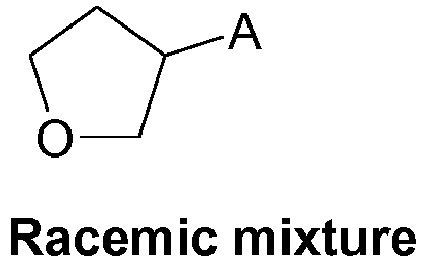
- The added term racemic mixture points to the two stereochemical options and thus the manufactured compounds is a mixture of:

- When racemic mixtures of above depicted structures are separated, the single stereoisomers are depicted as :

- The added term 'single stereoisomer' indicates that the absolute configuration is unknown.
Single stereoisomer a is assigned to the first eluting isomer in chiral HPLC, single stereoisomer b is assigned to the second eluting isomer in chiral HPLC . - Example 2 : the presented chemical structure is depicted as:

- The added term 'TRANS- racemic mixture' points to the two stereochemical options and thus the manufactured compounds is a mixture of:

- The same principles applies to 'CIS-racemic mixture' .
- When racemic mixtures of above depicted structures are separated, the single stereoisomers are depicted as:

- The added term 'TRANS-single stereoisomer' indicates a relative configuration known (trans) and the planar bond indicates the unknown absolute configuration. The same principles applies to 'CIS-single stereoisomer'.
Single stereoisomer a is assigned to the first eluting isomer in chiral HPLC, single stereoisomer b is assigned to the second eluting isomer in chiral HPLC . -

- To a stirred solution of 2-oxo-propanoic acid (157 mL, 2.23 mmol) in dry MeOH (100 mL) at 0 °C, pyridine-2,3-diamine (20 g, 18 mmol) was added portionwise. The resulting solution was stirred at room temperature overnight, solvent was evaporated under reduced pressure and the suspension filtered. The solid was washed with MeOH, dried to obtain 14 g of title compound.
HPLC-MS (Method 6): Rt = 5 min
MS: m/z = 162 (M+H)+ -
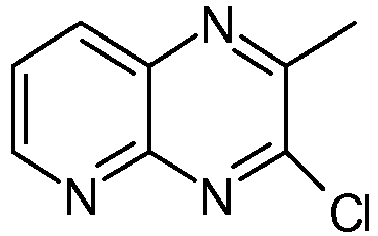
- A mixture of Intermediate 1 (1 g) and phosphorus oxychloride (15 mL) was heated to 90 °C for 2.5 h. After cooling, the reaction mixture was carefully poured on ice, then neutralized with a saturated solution of Na2CO3 and diluted with DCM. Phases were separated, organics washed with a saturated solution of NaCl, dried over sodium sulphate and evaporated to obtain 0.95 g of the title compound.
HPLC-MS (Method 8): Rt = 4.54 min
MS: m/z = 180 (M+H)+ -

- To a mixture of commercially available 2-chloro-5-hydroxybenzoic acid (4 g, 23.18mmol) in dry EtOH (90 mL), concentrated sulphuric acid (1 mL, 17.62mmol) was added. The mixture was stirred under reflux overnight, then solvent evaporated under reduced pressure and the residue dissolved with DCM. A saturated solution of NaHCO3 was added, phases were separated, organics dried over sodium sulphate , filtered and evaporated to obtain 5 g of the corresponding 2-chloro-5-hydroxybenzoic acid ethyl ester.
HPLC-MS (Method 2): Rt = 1.0 min
MS: m/z = 201.6 (M+H)+ -

- Intermediate 3 (5 g, 23.62 mmol) was dissolved in EtOH (100 mL) and hydrazine hydrate (13.0 mL, 262.12 mmol) was added. Mixture was stirred under reflux for 24 h, solvent evaporated and the crude treated with 20 mL of water. The white solid formed was filtered and washed with water and dried for 3 h at 60°C over P2O5 to obtain 3.0 g of title compound.
HPLC-MS (Method 2): Rt = 0.53 min
MS: m/z = 180 (M+H)+ -

- Intermediate 5 was prepared as described for Intermediate 3 starting from commercially available 2-fluoro-5-hydroxy-benzoic acid (1 g, 6.41 mmol) to obtain 1.17 g of the title compound.
HPLC-MS (Method 2): Rt = 0.94 min
MS : m/z = 185.16 (M+H)+ - The following Ester Intermediates were prepared in analogy to Intermediate 3 starting from commercially available benzoic acids.
Starting benzoic acid Ester Intermediate MS m/z Rt (min) Method 
5a 
180 [M]+ 9.73 10 
5b 
203 [M+H]+ 1.2 2 
5c 
263 [M]+ 9.90 10 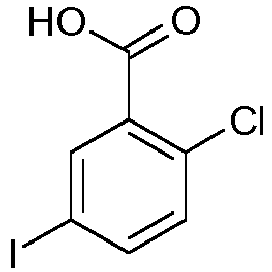
5d 
310 [M]+ 10.47 10 
5e 
294 [M]+ 9.52 10 
5f 
242 [M]+ 9.42 10 
5g 
246 [M]+ 8.84 10 
5h 
290 [M]+ 10.15 10 -
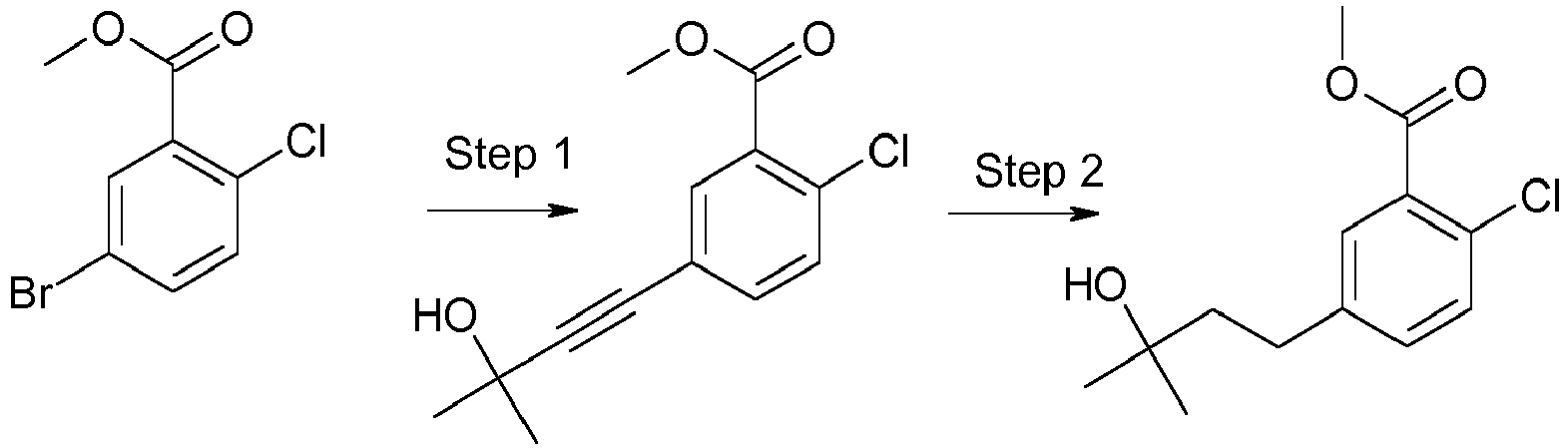
- Step 1 was performed in analogy to what reported in literature reference: Li, Yuanzhen et al. Organic Letters, 2007, vol. 9, # 20, p. 4057 - 4060, starting from Ester Intermediate 5c.
- Intermediate obtained from Step 1 (0.5 g), was dissolved in toluene (10 mL). Wilkinson's catalyst RhCl(TPP)3 (0.1g) was added and the reaction mixture stirred at 60°C under hydrogen atmosphere for 18h. The reaction mixture was filtered on a celite pad and the solvent was removed under vacuum to obtain the desired product (0.4 g).
GC-MS (Method 10) Rt = 11,55 min
MS : m/z = 256 [M]+ -

- Under nitrogen atmosphere, starting Ester Intermediate 5e (5.0 g, 15.3 mmol) was dissolved in THF (40 mL), the reaction mixture was cooled to -50°C and stirred for 10 minutes. Isopropyl-magnesium-chloride (11 mL of a 2M solution in THF) was added dropwise and the reaction mixture was stirred at -50°C for 2h. The reaction mixture was cooled to -78°C and a solution of cyclobutanone (2.15 g, 30.6 mmol) in THF (10 mL) was added dropwise. The reaction mixture was stirred at -78°C for 1 h, then warmed to room temperature and stirred for 18h. The solvent was removed under vacuum, dichloromethane was added and the reaction mixture was washed with a saturated solution of NaHCO3, The organic phase was concentrated under vacuum and the crude product obtained was purified by flash chromatography (eluent from 90:10 to 80:20 Cy/EtOAc) to obtain the desired product (3.0 g).
GC-MS (Method 10): Rt = 10.91 min
MS : m/z = 210 (M-28)+ - The following Ester Intermediates were prepared in analogy to Intermediate 5j and purified applying the most suitable purification technique, starting from the corresponding Starting Esters Intermediates and commercially available ketones.
Starting Ester intermediate Starting ketone Ester intermediate Structure MS m/z Rt (min) Method 5d 
5k 
255 [M+H]+ 4.23 16 5d 
5l 
284[M]+ 12.58 10 5d 
5m 
243 [M+H]+ 1.04 2 5e 
5n 
268[M]+ 11.97 10 5h 
5na 
264[M]+ 12.18 10 5d 
5q 
253 [M+H]+ 2.84 13 5e 
5r 
237 [M-17]+ 2.68 13 5d 
5s 
284[M]+ 12.42 10 -

- To a solution of Ester Intermediate 5m (0.37 g, 1.52 mmol) in dichloromethane (9 mL), pyridinium-para-toluenesulfonate (0.06 mg, 0.23 mmol) and 3,4-dihydro-2H-pyran (0.2 mL, 2.29 mmol) were added and the reaction mixture was stirred at room temperature for 4h. The reaction mixture was washed with water and the organic phase was concentrated under vacuum. Crude was purified by flash chromatography (eluent from 100:0 to 80:20 Cy/EtOAc) to obtain the desired product (0.4 g).
GC-MS (Method 10): Rt = 12.52 min
MS : m/z = 326 (M)+ -

- Step 1 was performed in analogy to what reported in the literature reference: Duong, Hung A.; et al. Angewandte Chemie, International Edition, 2011 , vol.50, p. 463 - 466, starting from commercially available (3-bromo-4-chloro-phenyl)-acetic acid.
- Under nitrogen atmosphere, a solution of Intermediate from Step 1 (0.24 g) in THF (10 mL) was stirred at -60°C, methylmagnesium bromide was added dropwise and the reaction mixture was stirred at -78 °C to r.t. for 2 h. The reaction mixture was quenched with saturated ammonium chloride water solution and extracted with ethyl acetate twice, dried over sodium sulfate and concentrated under vacuum to get the crude product as colour-less oil.
- Step 3 was performed in analogy to Step 2 starting from Intermediate obtained in Step 2.
- Step 4 was performed in analogy to preparation of Intermediate 5o, starting from Intermediate obtained in Step 3.
- To a solution of the Intermediate obtained from Step 4 (15 g) in MeOH (150 mL), [1,1'-bis(diphenylphosphino)ferrocene]dichloropalladium(II)] (3.088 g) and triethylamine (22 g, 21.4 mL) were added and the reaction mixture was stirred at 80°C under CO atmoshere for 36 h.
- The solvent was removed under vacuum and the crude product obtained was purified by flash chromatography to get the desired product.
-

- Intermediate 6 (4,4 g) was prepared as described for Intermediate 4 and purified applying the most suitable purification technique, starting from Intermediate 5 (5.84 g, 0.03 mmol).
HPLC-MS (Method 2): Rt = 0.42 min
MS: m/z = 171.2 (M+H)+ - The following Hydrazide Intermediates were prepared in analogy to Intermediate 4 and purified applying the most suitable purification technique, starting from the corresponding Ester Intermediates.
Starting Ester intermediate Hydrazide Intermediate Structure MS m/z Rt (min) Method 5a 6a 
167 [M+H]+ 0.47 17 5b 6b 
188 [M]+ 9.47 10 5c 6c 
249 [M+H]+ 1.98 13 5d 6d 
296 [M]+ 11.78 10 5e 6e 
281 [M+H]+ 1.83 9 5f 6f 
229 [M+H]+ 1.80 9 5g 6g 
233 [M+H]+ 1.55 9 5h 6h 
277 [M+H]+ 1.94 9 5i 6i 
256 [M+H]+ 0.68 2 5j 6j 
225 [M+H]+ 0.56 2 5k 6k 
241 [M+H]+ 0.59 2 5l 6l 
271 [M+H]+ 0.57 2 5m 6m 
228 [M]+ 11.79 10 5n 6n 
255 [M+H]+ 0.43 2 5na 6na 
251 [M+H]+ 0.57 2 5o 6o 
313 [M+H]+ 0.85 2 5p 6p 
327 [M+H]+ 0.90 2 5q 6q 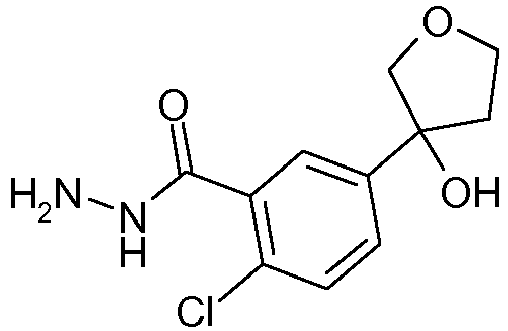
257 [M+H]+ 0.49 13 5r 6r 
241 [M+H]+ 0.44 2 5s 6s 
271 [M+H]+ 0.58 2 -

- Commercially available 2-amino-6-methyl-3-nitropyridine (12 g, 78.36 mmol) was dissolved in a mixture of dry THF/MeOH (1:1, 60 mL) and hydrogenated in the presence of Pd/C (10%, 1.2 g) under 5 bar hydrogen atmosphere for 5 h. Catalyst was filtered, solvent evaporated under reduced pressure to obtain 7 g of the title compound.
HPLC-MS (Method 2): Rt = 0.77 min
MS : m/z = 154(M+H)+ -

- 2-Amino-6-chloro-3-nitro-pyridine (20 g, 115 mmol), cyclopropylboronic acid (12.8 g, 150 mmol), tricyclohexylphosphine (3.2 g, 11.5 mmol), 2,6-ditert-butyl-4-methylphenol (5.08 g, 23 mmol), palladium acetate (1.3 g, 5.7 mmol) and tripotassium-phosphate (73 g, 346 mmol) were suspended in toluene (40 mL) and water (2 mL). The reaction mixture was stirred at reflux for 18h, diluted with ethyl acetate and washed with water. The organic phase was separated, concentrated under vacuum and dried over sodium sulfate. The crude product obtained was purified by flash chromatography (eluent from 90:10 to 45:55 Cy/EtOAc) to obtain the desired product (10.6 g).
GC-MS (Method 10): Rt = 10.54 min
MS : m/z = 179 (M)+ - To a solution of Intermediate from Step 1 (6 g, 19 mmol) in absolute EtOH (120 mL), zinc (13.7 g, 209 mmol) and ammonium chloride (30.8 g, 573 mmol) were added and the reaction mixture was stirred at room temperature for 18 h. The reaction mixture was filtered on a celite pad, the solvent was removed under vacuum and the crude product obtained was purified by flash chromatography (eluent 90:10 dichloromethane/MeOH) to obtain the desired product (2.4 g).
HPLC-MS (Method 9): Rt = 1.42 min
MS : m/z = 150 (M+H)+ -

- Step 1 was performed in analogy to what described in Step 1 in the preparation of Intermediate 7a, starting from commercially available 2-Isopropenyl-4,4,5,5-tetramethyl-[1,3,2]dioxaborolane.
- Intermediate from Step 1 (5 g, 26.5 mmol) was dissolved in 20 mL of methanol, Pd/C (0.25 g) was added and the reaction mixture was stirred under hydrogen atmosphere (4 bar) for 2h at room temperature. The reaction mixture was filtered on a celite pad and the solvent was removed under vacuum to give the desired product (3 g).
GC-MS (Method 10): Rt = 8.91 min
MS : m/z = 151 (M)+ -

- Intermediate 7c (3.99 g) was prepared in analogy to Intermediate 7 and purified applying the most suitable purification technique, starting from commercially available 2-amino-3-nitro-5-picoline (5.0 g, 32.65 mmol).
-

- Intermediate 7d (4 g) was prepared in analogy to Intermediate 7b and purified applying the most suitable purification technique, starting from commercially available 2-amino-5-chloro-3-nitro-pyridine (5 g, 26.5 mmol).
HPLC-MS (Method 2): Rt = 0.6 min
MS: m/z = 152 (M+H)+ -

- To stirred solution of 2-oxo-propanoic acid (40.8 mL, 587 mmol) in dry MeOH (130 mL) at 0 °C, 6-methyl-pyridine-2,3-diamine (Intermediate 7, 6.8 g, 55.2 mmol) dissolved in dry MeOH (40mL) was added dropwise. The solution was stirred at room temperature overnight then solvent was evaporated under reduced pressure and the resulting suspension filtered. The solid was washed with MeOH, dried to obtain 1.35 g of title compound.
HPLC-MS (Method 9): Rt = 1.31 min
MS: m/z = 176 (M+H)+ -

- Intermediate 7a (2.4 g, 15.2 mmol) was dissolved in absolute EtOH and stirred at 0°C, Dimethylacetylenedicarboxylate (2.4 g, 16.8 mmol) was added dropwise and the reaction mixture was allowed to react room temperature for 18h. The solid formed was filtered, washed with EtOH, Ethyl Ether and dried in vacuum to give the desired product (3 g).
HPLC-MS (Method 13): Rt = 3.16 min
MS: m/z = 260 (M+H)+ - Intermediate obtained from Step 1 (3 g 0.01 mol) was dissolved in a sodium hydroxide water solution (1.36 g , 0.03 mol in 50 mL) and the reaction mixture was reflux for 2h. pH was adjusted to 2-3 and the reaction mixture was extracted with ethyl acetate. The organic phase was dried over sodium sulfate, concentrated under vacuum. The crude product obtained was purified by flash chromatography (eluent from 80:20 to 20:80 Cy/EtOAc) to obtained the desired product (2.0 g).
HPLC-MS (Method 13): Rt = 2.46 min
MS: m/z = 202 (M+H)+ - The following Amide Intermediates were prepared in analogy to Amide Intermediate 8a and purified applying the most suitable purification technique, starting from the corrisponding Di-amine Intermediates.
Starting Di-amine Intermediate Amide Intermediate Structure MS m/z Rt (min) Method 7b 8b 
204 [M+H]+ 2.48 13 7c 8c 
176 [M+H]+ 1.88 13 7d 8d 
204[M+H]+ 0.78 2 6-(1-Methylcyclopropyl)-pyridine-2,3-diamine (commercially available) 8e 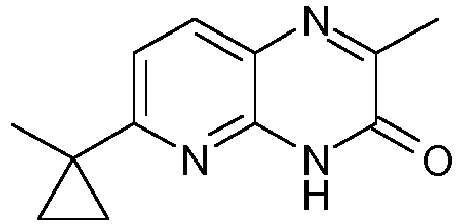
216 [M+H]+ 4.96 17 6-trifluoromethylpyridine-2,3-di amine (commercially available) 8f 
229 [M]+ 9.42 10 -

- A mixture of Amide intermediate 8 (1.35 g, 7.71 mmol) and phosphorus oxychloride (16 mL) was heated to 90 °C for 3h. After cooling, solvent was reduced under reduced pressure, the reaction mixture was carefully poured on ice and neutralized with a saturated solution of Na2CO3 . DCM was added, phases were separated, organics washed with a saturated solution of NaCl, dried over sodium sulphate and evaporated to obtain 1.39 g of the title compound.
HPLC-MS (Method 8): Rt = 0.84min
MS: m/z = 194.6 (M+H)+ - The following Chloride Intermediates were prepare in analogy to Chloride Intermediate 9 and purified applying the most suitable purification technique, starting from the corrisponding Amide Intermediates. Heating temperature reported in Table.


-

- Intermediate 8f (1.35 g, 5.9 mmol) and N,N-diisopropylethylamine (2.28 g, 3 mmol) were dissolved in DMF (10 mL). The reaction mixture was cooled to 0°C and methanesulfonylchloride (0.74 g, 6.48 mmol) was added dropwise. The reaction mixture was allowed to reach room temperature and stirred for 4h. Ammonium chloride saturared water solution was added and the reaction mixture was extracted with dichloromethane. The organic phase was washed with citric acid (10% water solution), dried over sodium sulfate and concentrated under vacuum, to give the desired product (1.5 g).
HPLC-MS (Method 13): Rt = 3.09 min
MS: m/z = 308 (M+H)+ - The following Intermediates were prepared based on well known reported procedures starting from commercially available starting materials.
Intermediate Structure Reference 10 Toluene-4-sulfonic acid 3-hydroxy-3-methylbutyl ester 
Bioorganic & Medicinal Chemistry Letters (2007), 17(22), 6164-6168 11 Toluene-4-sulfonic acid 3-hydroxy-butyl ester 
Bioorganic & Medicinal Chemistry, 18(4), 1665-1675; 2010 12 Toluene-4-sulfonic acid 3.3.3-trifluoro-propyl ester 
US 2009-564132 13 Toluene-4-sulfonic acid tetrahydropyran-4-yl ester 
WO 2011-20767 14 Toluene-4-sulfonic acid 4,4-difluoro-cyclohexyl ester 
WO 2008-119663 15 Toluene-4-sulfonic acid tetrahydro-furan-3-yl ester 
WO 2010- 023594 16 Toluene-4-sulfonic acid (S)-(tetrahydro-furan-3-yl)ester 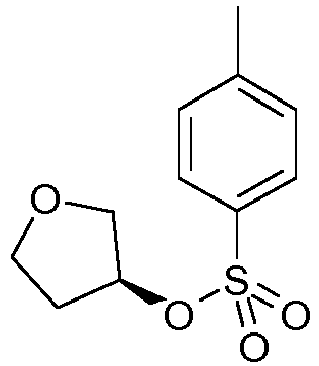
WO 2011-061590 17 Toluene-4-sulfonic acid (R)-(tetrahydro-furan-3-yl)ester 
WO 2010-102512 18 Toluene-4-sulfonic acid tetrahydro-furan-3-ylmethyl ester 
WO 2011-084402 19 tert-Butyl-(R)-2-chloro-1-methyl-ethoxy)-diphenyl-silane 
Tetrahedron Letters (1982), 23(25), 2543-6. 20 tert-Butyl-(S)-2-chloro-1-methyl-ethoxy)-diphenyl-silane 
Tetrahedron Letters (1982), 23(25), 2543-6. 21 2-((S)-2-Chloro-1-methyl-ethoxy)-te trahydro-pyran 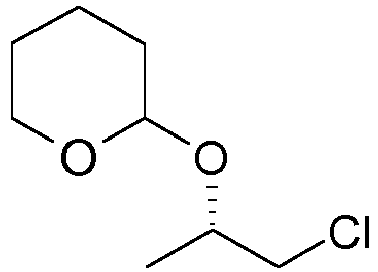
Tetrahedron Letters (1982), 23(25), 2543-6. 26 Toluene-4-sulfonic acid 3-methyl-oxetan-3-ylmethyl ester 
Synthetic Communications (2011 41(17), 2539-2543 27 Toluene-4-sulfonic acid 1-(tetrahydro-pyran-4-yl)-ethyl ester 
Journal of Organometallic Chemistry (1978), 150(2), 179-85 28 Toluene-4-sulfonic acid 1,4-dioxa-spiro[4.5]dec-8-yl ester 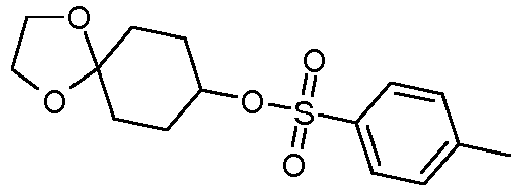
WO 2010-006086 29 Toluene-4-sulfonic acid 3-hydroxy-cyclopentyl ester 
US 2007-0049537 -

- Literature Reference: Journal of Organic Chemistry USSR (English Translation), 1989, vol. 25, # 6.1, p. 1019-1025).
Epoxide Intermediate 29a (4 g) was prepared in analogy to what described inWO2010/47956 A1
[M]+= 83 -

- Epoxide Intermediate 29b (1 g) was prepared in analogy to what described in
WO2013/55577 A1
[M]+= 99 -

- To a solution of Example 1 (0.2 g, 0.67 mmol) in dry DMF (3 mL), cesium carbonate (0.63 g, 1.92 mmol) and Intermediate 28 (0.41 g, 1.28 mmol) were added. Mixture was heated at 80°C for 1 h, then solvent evaporated under reduced pressure and the residue dissolved in DCM and washed with a saturated solution of NaCl. Phases were separated, organics dried over sodium sulphate and evaporated. The residue was purified by flash chromatography (eluent from 100:0 to 50:50 Cy/EtOAc) to obtain 0.21 g of the title compound.
HPLC-MS (Method 2): Rt =1.12 min
MS: m/z = 452 (M+H)+ -

- To a solution of Intermediate 29c (0.21 g, 0.46 mmol) in acetone (10 mL), a 4M solution of HCl (1 mL) was added and mixture stirred at room temperature for 2 h. Solvent was evaporated under reduced pressure, the residue treated with DCM, washed with a saturated solution of NaHCO3. Phases were separated, organics dried over sodium sulphate and evaporated. The residue was purified by flash chromatography (eluent from 90:10 to 50:50 Cy/EtOAc) to obtain 0.18 g of the title compound.
HPLC-MS (Method 2): Rt =1.09 min
MS: m/z = 410 (M+H)+ - The following intermediates were prepared in analogy to Example 1 and purified applying the most suitable purification technique, starting from the corresponding Chloride and Idrazide intermediates:
Chloride Intermediate Hydrazide Intermediate Structure MS m/z Rt (min) Method 9 6c 30a 
388 [M+H]+ 3.58 13 2 6d 30b 
422 [M+H]+ 1.07 2 2 6h 30c 
402 [M+H]+ 3.00 9 2 6e 30d 
406 [M+H]+ 3.02 9 9a 6e 30e 
446 [M+H]+ 3.78 13 2 6f 30f 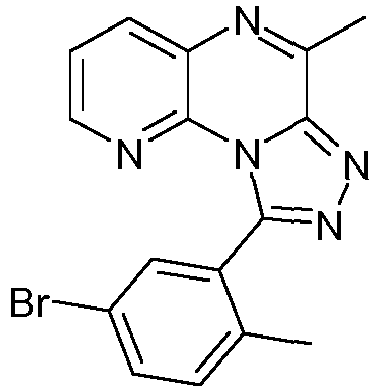
354 [M+H]+ 3.35 13 9a 6f 30g 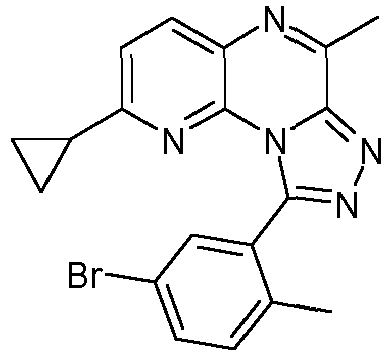
394 [M+H]+ 3.69 13 9a 6d 30h 
462 [M+H]+ 3.81 13 9a 6g 30i 
398 [M+H]+ 3.72 13 9 6d 30j 
436 [M+H]+ 3.64 13 9b 6d 30k 
464 [M+H]+ 3.99 13 9b 6f 30l 
396 [M+H]+ 3.85 13 9e 6e 30m 
460 [M+H]+ 1.29 2 9d 6f 30n 
397 [M+H]+ 1.27 2 9a 6b 30o 
354 [M+H]+ 3.53 13 9f 6d 30r 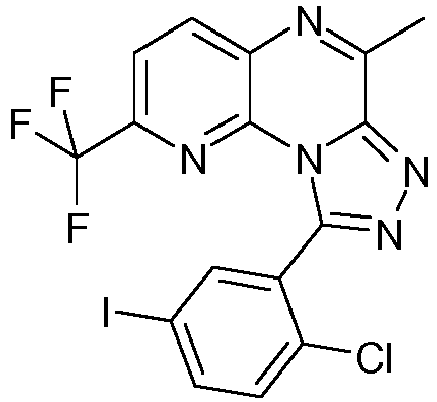
490 [M+H]+ 1.25 2 9f 6g 30s 
427 [M+H]+ 1.15 2 -

- Intermediate 30p (0.26 g) was prepared in analogy to Example 1 and purified applying the most suitable purification technique, starting from Chloride Intermediate 9d (0.25 g, 1.01 mmol) and Hydrazide Intermediate 4 (0.19 g, 1.01 mmol).
HPLC-MS (Method 2): Rt =1.01 min
MS: m/z = 354 (M+H)+ -

- To a solution of Example 1 (0.4 g, 1.3 mmol) in dry DMF (4 mL), cesium carbonate (0.85 g, 2.62 mmol) and methylbromoacetate (0.152 mL, 1.56 mmol) were added. Mixture was stirred at room temperature overnight, solvent evaporated and the residue treated with EtOAc. A saturated solution of NH4Cl was added, phases were separated and evaporated. The crude was purified by flash chromatography (eluent from 50:50 to 0:100 Cy/EtOAc) to obtain 0.29 g of the title compound.
HPLC-MS (Method 13): Rt =3.06 min
MS: m/z = 384 (M+H)+ -

- Intermediate 32 (0.5 g) was prepared in analogy to Example 1 and purified applying the most suitable purification technique, starting from Intermediate 9f (0.9 g, 2.52 mmol) and Hydrazide Intermediate 6 (0.47 g, 2.77 mmol).
HPLC-MS (Method 13) Rt =3.11 min
MS : m/z = 380 (M+H)+ -

- Intermediate 2 (0.60 g, 3.34 mmol) and Intermediate 4 (0.62 g, 3.34 mmol) were suspended in cyclohexanol (5 mL) and heated under reflux for 2 h. The resulting solution was cooled and solvent evaporated under reduced pressure and the residue purified by flash chromatography (eluent 95:5 DCM/EtOH) to obtain 0.95 g of the title compound.
HPLC-MS (Method 9): Rt =2.17 min
MS : m/z = 312 (M+H)+ - The following Examples were prepared in analogy to Example 1 and purified applying the most suitable purification technique, starting from the corresponding Chloride Intermediates and Hydrazide Intermediates:


-

- Example 12 (0.04 g) was prepared in analogy to Example 1 and purified applying the most suitable purification technique, starting from Intermediate 9f (0.3 g, 0.68 mmol) and Hydrazide Intermediate 4 (0.27, 0.68 mmol).
HPLC-MS (Method 13) Rt =3.11 min
MS: m/z = 380 (M+H)+ -

- Example 12a (0.15 g) was prepared in analogy to Example 12 and purified applying the most suitable purification technique, starting from the Hydrazide Intermediate 6a (0.23 g, 1.45 mmol).
HPLC-MS (Method) Rt =3.00 min
MS: m/z = 360 (M+H)+ -

- To a solution of Example 1 (0.1 g, 0.24 mmol) in dry ACN (3 mL), cesium carbonate (0.2 g) and commercially available 3-chloro-1-propanol (0.04 mL) were added. Mixture was heated at 80°C for 1 h, then solvent evaporated under reduced pressure and the residue dissolved in DCM and washed with a saturated solution of NaCl. Phases were separated, organics dried over sodium sulphate and evapoarated. The residue was purified by flash chromatography (eluent from 100:0 to 94:6 DCM/EtOH) to obtain 0.02 g of the title compound.
HPLC-MS (Method 8) Rt =5.23 min
MS: m/z = 370 (M+H)+ -

- To a solution of Example 1 (0.05 g, 0.16 mmol) in dry DMF (3 mL), Intermediate 10 (0.05 g, 0.018 mmol) and cesium carbonate (0.08 g, 0.24 mmol) were added and mixture heated at 100 °C for 2h. Solvent was evaporated, the residue was dissolved with DCM, washed with a saturated solution of NaCl. Phases were separated, organics dried over sodium sulphate and evaporated. The residue was purified by flash chromatography (eluent from 70:30 to 20:80 Cy/EtOAc) to obtain 0.025 g of the title compound.
HPLC-MS (Method 9): Rt =2.57 min
MS : m/z = 398 (M+H)+ -

- To a solution of Example 1 (0.08 g, 0.16 mmol) in dry ACN (3 mL), commercially available 2-bromo-ethanol (0.65g, 0.52mmol) and cesium carbonate (0.5 g, 1.54 mmol) were added and mixture heated at 80 °C for 48 h. Solvent was evaporated, the residue was dissolved with DCM, washed with 1N solution of NaOH and then with a saturated solution of NaCl. Phases were separated, organics dried over sodium sulphate and evaporated. The residue was purified by flash chromatography (eluent from 100:0 to 97:3 DCM/EtOH) to obtain 0.04 g of the title compound.
HPLC-MS (Method 6): Rt =8.75 min
MS: m/z = 356 (M+H)+ -

- To a solution of Example 1 (0.05 g, 0.16 mmol) in dry DMF (3 mL), commercially available 1-bromo-2-propanol (0.09 g, 0.64 mmol) and potassium tert-butoxide (0.1 g, 0.96 mmol) were added and mixture heated at 130°C for 8h. Solvent was evaporated, the residue was dissolved with DCM, washed with 1N solution of NaOH and then with a saturated solution of NaCl. Phases were separated, organics dried over sodium sulphate and evapoarated. The residue was purified by flash chromatography (eluent from 100:0 to 97:3 DCM/EtOH) to obtain 0.05 g of the title compound.
HPLC-MS (Method 9): Rt =2.23 min
MS: m/z = 370 (M+H)+ -

- To a solution of Example 1 (0.085 g, 0.27 mmol) in dry DMF (3 mL), commercially available (R)-1-chloro-2-propanol (0.052 g, 0.55 mmol) and potassium tert-butoxide (0.093 g, 0.82 mmol) were added and mixture heated at 130 °C for 48h. Solvent was evaporated, the residue was dissolved with DCM, washed with 1N solution of NaOH and then with a saturated solution of NaCl. Phases were separated, organics dried over sodium sulphate and evaporated. The residue was purified by flash chromatography (eluent from 100:0 to 97:3 DCM/EtOH) to obtain 0.0085 g of the title compound.
HPLC-MS (Method 9): Rt =2.22 min
MS: m/z = 370 (M+H)+ -

- Example 18 was prepared as described for Example 17 starting from Example 1 (0.085 g, 0.27 mmol) and commercially available (S)-1-chloro-2-propanol. The residue was purified by flash chromatography (eluent from 100:0 to 90:10 DCM/MeOH) to obtain 0.045 g of the title compound.
HPLC-MS (Method 9): Rt =2.19 min
MS: m/z = 370 (M+H)+ -

- To a solution of Example 1 (0.115 g, 0.37 mmol) in dry DMF (3 mL), cesium carbonate (0.36 g, 1.11 mmol) and Intermediate 11 (0.09 g, 0.37 mmol) were added and mixture heated at 100°C for 4h. Solvent was evaporated, the residue was dissolved with DCM, washed with a saturated solution of NaCl. Phases were separated, organics dried over sodium sulphate and evaporated. The residue was purified by flash chromatography (eluent from 100:0 to 80:20 DCM/EtOH) to obtain 0.025 g of the title compound.
HPLC-MS (Method 9): Rt =2.4 min
MS: m/z = 384 (M+H)+ -

- Example 20 was prepared as described for Example 19 , starting from Example 1 (0.08 g, 0.26 mmol) and Intermediate 13 (0.2 g, 0.78 mmol). The residue was purified by flash chromatography (eluent from 100:0 to 50:50 Cy/EtOAc) to obtain 0.032 g of the title compound.
HPLC-MS (Method 9): Rt =2.65 min
MS: m/z = 396 (M+H)+ -

- Example 21 was prepared as described for Example 20, starting from Example 1 (0.065g, 0.21mmol) and Intermediate 14 (0.12 g, 0.42 mmol). The residue was purified by flash chromatography (eluent from 100:0 to 50:50 Cy/EtOAc) to obtain 0.035 g of the title compound.
HPLC-MS (Method 9): Rt =3.32 min
MS: m/z = 430 (M+H)+ -

- Example 22 was prepared as described for Example 20, starting from Example 1 (0.1 g, 0.32 mmol) and Intermediate 15 (0.093 g, 0.38 mmol). The residue was purified by flash chromatography (eluent from 100:0 to 50:50 Cy/EtOAc) to obtain 0.032 g of the title compound.
HPLC-MS (Method 13): Rt =3.03 min
MS: m/z = 382 (M+H)+ -

- Example 23 was prepared as described for Example 20, starting from Example 1 (0.1 g, 0.32 mmol) and Intermediate 17 (0.093 g, 0.38 mmol). The residue was purified by flash chromatography (eluent from 100:0 to 50:50 Cy/EtOAc) to obtain 0.02 g of the title compound.
HPLC-MS (Method13): Rt =3.07 min
MS: m/z = 382 (M+H)+ -

- Example 24 was prepared as described for Example 20, starting from Example 1 (0.1 g, 0.32 mmol) and Intermediate 16 (0.093 g, 0.38 mmol). The residue was purified by flash chromatography (eluent from 100:0 to 50:50 Cy/EtOAc) to obtain 0.03 g of the title compound.
HPLC-MS (Method 13): Rt =3.05 min
MS: m/z = 382 (M+H)+ -

- Example 25 was prepared as described for Example 20, starting from Example 1 (0.1 g, 0.32 mmol) and Intermediate 18 (0.097 g, 0.38 mmol). The residue was purified by flash chromatography (eluent from 100:0 to 50:50 Cy/EtOAc) to obtain 0.03 g of the title compound.
HPLC-MS (Method 13): Rt =3.18 min
MS: m/z = 396 (M+H)+ -

- Example 26 was prepared as described for Example 20, starting from Example 4 (0.08 g, 0.27 mmol) and commercially available 3-chloro-1-propanol (0.052 g, 0.54 mmol). The crude was purified by flash chromatography (eluent from 100:0 to 97:3 DCM/EtOH) to obtain 0.052 g of the title compound.
HPLC-MS (Method 13): Rt =2.71 min
MS: m/z = 354 (M+H)+ -

- Example 27 was prepared as described for Example 20, starting from Example 2 (0.133 g, 80% content, 0.32 mmol) and commercially available 3-chloro-1-propanol (0.046 g, 0.49 mmol). The crude was purified by prep-HPLC (Method 11). Fractions containing the pure compound were combined and evaporated to reduced volume, diluted with DCM and treated with a saturated solution of sodium carbonate. Phases were separated, dried over sodium sulphate and evaporated under reduced pressure to obtain 0.039 g of the title compound.
HPLC-MS (Method 9): Rt =2.46 min
MS: m/z = 384(M+H)+ -

- Example 28 was prepared as described for Example 20, starting from Example 2 (0.133 g, 80% content, 0.32 mmol) and commercially available 2-bromo-ethanol (0.061 g, 0.49 mmol). The crude was purified by prep-HPLC (Method 12). Fractions containing the pure compound are combined and evaporated to reduced volume, diluted with DCM and treated with a saturated solution of sodium carbonate. Phases were separated, dried over sodium sulphate and evaporated under reduced pressure to obtain 0.025 g of the title compound.
HPLC-MS (Method 9): Rt =2.35 min
MS: m/z = 370(M+H)+ -

- To a solution of Example 2 (0.07 g, 0.20 mmol) and commercially available 2-bromo-methylether (0.057 g, 0.41 mmol) in dry DMF (3 mL), cesium carbonate (0.199 g, 0.61 mmol) was added and the mixture heated at 100°C for 1 h. Solvent was evaporated under reduced pressure, the residue dissolved with DCM and treated with water. Phases were separated, dried over sodium sulphate and the crude purified by flash cromatography (eluent from 80:20 to 40:60 hexane/EtOAc) to obtain 0.023 g of the title compound.
HPLC-MS (Method 9): Rt =2.82 min
MS: m/z = 384 (M+H)+ -

- To a solution of Example 2 (0.07 g, 0.20 mmol) and Intermediate 14 (0.12 g, 0.41 mmol) in dry DMF (3mL), cesium carbonate (0.2 g, 0.61 mmol) was added and the mixture heated at 90°C for 2 h. Solvent was evaporated under reduced pressure, the residue dissolved with DCM and treated with water. Phases were separated, dried over sodium sulphate and the crude purified by flash cromatography (eluent from 80:20 to 40:60 hexane/EtOAc) and then further purified by prep-HPLC (Method 14). Fractions containing the pure compound were combined and evaporated to reduced volume, diluted with DCM. Phases were separated, dried over sodium sulphate and evaporated under reduced pressure to obtain 0.047 g of the title compound.
HPLC-MS (Method 9): Rt =3.56 min
MS: m/z = 444 (M+H)+ -

- Example 31 was prepared as described for Example 30 starting from Example 2 (0.07 g, 0.20 mmol) and commercially available 1-bromo-3-methoxy-propane (0.063 g, 0.41 mmol). After heating for 3h at 100°C in dry DMF (3 mL), solvent was evaporated under reduced pressure, the residue dissolved with DCM and treated with water. Phases were separated, dried over sodium sulphate and the crude purified by flash cromatography (eluent from 88:12 to 0:100 Cy/EtOAc) to obtain 0.043 g of the title compound.
HPLC-MS (Method 13): Rt =3.55 min
MS: m/z = 398 (M+H)+ -

- Example 32 was prepared as described for Example 31 starting from Example 2 (0.09 g, 0.26 mmol) and Intermediate 13 (0.20 g, 0.78 mmol). Solvent was evaporated under reduced pressure, the residue dissolved with DCM and washed with 1N solution of NaOH. Phases were separated, dried over sodium sulphate and the crude purified by flash cromatography (eluent from 88:12 to 0:100 Cy/EtOAc) to obtain 0.037 g of the title compound.
HPLC-MS (Method 9): Rt =2.95 min
MS: m/z = 410 (M+H)+ -

- Example 32a (0.06 g) was prepared in analogy to Example 32 and purified applying the most suitable purification technique, starting from Example 9 (0.08 g, 0.23 mmol).
HPLC-MS (Method 16): Rt =4.51 min
MS: m/z = 436 (M+H)+ -

- Example 33 was prepared as described for Example 31 starting from Example 2 (0.07 g, 0.20 mmol) and commercially available 1-bromo-3-trifluoro-methoxypropane (0.084 g, 0.41 mmol). Solvent was evaporated under reduced pressure, the residue dissolved with DCM and washed with water. Phases were separated, dried over sodium sulphate and the crude purified by flash cromatography (eluent from 88:12 to 0:100 Cy/EtOAc) and then further purified by prep-HPLC (Method 14). Fractions containing the pure compound were combined and evaporated to reduced volume, diluted with DCM. Phases were separated, dried over sodium sulphate and evaporated under reduced pressure to obtain 0.047 g of the title compound. cromatography (eluent from 88:12 to 0:100 Cy/EtOAc) to obtain 0.037 g of the title compound.
HPLC-MS (Method 13): Rt =1.06 min
MS: m/z = 452 (M+H)+ -

- To a solution of Example 2 (0.082 g, 0.25 mmol) in dry DMF (3mL), potassium tert-butoxide (0.084 g, 0.65 mmol) and Intermediate 20 (0.176 g, 0.50 mmol) were added. The resulting solution was heated at 120°C for 5 h. The mixture was left at room temperature for 24 h. Solvent was evaporated under reduced pressure, the residue dissolved in DCM and treated with a 1N solution of NaOH. Phases were separated, dried over sodium sulphate and the crude purified by flash cromatography (eluent from 20:80 to 0:100 ACN/H2O) to obtain 0.033 g of the title compound.
HPLC-MS (Method 9): Rt =2.98 min
MS: m/z = 384 (M+H)+ -

- To a solution of Example 2 (0.095 g, 0.29 mmol) in dry DMF (3 mL), potassium tert-butoxide (0.074 g, 0.22 mmol and Intermediate 19 (0.204 g, 0.58 mmol) were added. The resulting solution was heated at 120 °C for 5h. Solvent was evaporated under reduced pressure, the residue dissolved in DCM and treated with a 1N solution of NaOH. Phases were separated, dried over sodium sulphate and the crude purified by flash cromatography (eluent from 80:20 to 0:100 Cy/EtOAc) to obtain 0.023 g of the title compound.
HPLC-MS (Method 13): Rt =2.98 min
MS: m/z = 384 (M+H)+ -

- To a suspension of Intermediate 9a (0.08 g, 0.23 mmol) in dry DMF (4 mL), t-BuOK (0.076 g, 0.68 mmol) and Intermediate 21 (0.09 g, 0.45 mmol) were added and the reaction mixture was heated at 90 °C for 5h. Dry DMF was then added and mixture heated at 110 °C overnight. Solvent was evaporated under reduced pressure, the residue dissolved in DCM and treated with a 1N solution of NaOH. Phases were separated, dried over sodium sulphate and the crude purified by flash cromatography (eluent from 80:20 to 0:100 Cy/EtOAc) to obtain 0.055 g of the protected intermediate 1-{2-chloro-5-[(S)-2-(tetrahydro-pyran-2-yloxy)-propoxy]-phenyl}-8-cyclopropyl-4-methyl-2,3,5,9,9b-pentaaza-cyclopenta[a]naphthalene.
- The compound (0.055 g, 0.11 mmol) was then dissolved in dry MeOH (1 mL) and p-toluenesulfonic acid monohydrate (0.012 g, 0.06 mmol) was added. Mixture was stirred at room temperature for 1 h, solvent evaporated under reduced pressure and the residue purified by reverse phase flash cromatography (eluent ACN/H2O from 10:100 to 100:0) and then by silica flash cromatography (eluent DCM/EtOH 90:10) to obtain 0.03 g of the title compound.
HPLC-MS (Method 9): Rt =2.69 min
MS: m/z = 384 (M+H)+ -

- To a solution of Example 3 (0.07 g, 0.24 mmol) in dry DMF (3 mL), cesium carbonate (0.23g, 0.71 mmol) and commercially available 3-chloro-1-propanol (0.024g,0.26 mmol) were added and the mixture heated at 100 °C for 3 h. Solvent was evaporated under reduced pressure, the residue dissolved with DCM and washed with 1N solution of NaOH . Phases were separated, dried over sodium sulphate and the crude purified by prep-HPLC (Method 11). Fractions containing the pure compound were combined and evaporated to reduced volume, diluted with DCM and washed with a saturated solution of sodium carbonate. Phases were separated, dried over sodium sulphate and evaporated under reduced pressure to obtain 0.02 g of the title compound.
HPLC-MS (Method 13): Rt =2.71 min
MS: m/z = 350 (M+H)+ -

- Example 37 was prepared as described for Example 32 starting from Example 1 (0.07 g, 0.22 mmol) and Intermediate 26 (0.22 g, 067 mmol). The residue was purified by flash cromatography (eluent from 100:0 to 50:50 Cy/EtOAc) to obtain 0.046 g of the title compound.
HPLC-MS (Method 13): Rt =3.15 min
MS: m/z = 396 (M+H)+ -

- Example 38 was prepared as described for Example 32 starting from Example 1 (0.07 g, 0.22 mmol) and Intermediate 27 (0.127 g, 044 mmol). The residue was purified by flash cromatography (eluent from 100:0 to 50:50 Cy/EtOAc) to obtain 0.045 g of the title compound.
HPLC-MS (Method 13): Rt =3.45 min
MS: m/z = 424 (M+H)+ -

- To a solution of Intermediate 30 (0.18 g, 0.44 mmol) in absolute EtOH (10 mL) sodiumborohydride (0.008 g, 0.22 mmol) was added and the mixture stirred at room temperature for 30 min. Sovent was evaporated under reduced pressure, the residue treated with DCM and washed with a saturated solution of sodiumcarbonate. Phases were separated, dried over sodium sulphate and evaporated under reduced pressure to obtain 0.047 g of the title compound.
HPLC-MS (Method 13): Rt =2.96 min
MS: m/z = 410 (M+H)+ -
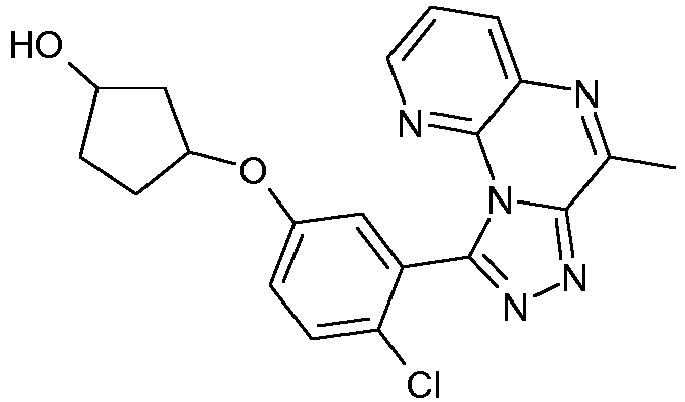
- Example 40 was prepared as described Example 14, starting from Example 1 (0.075 g, 0.24 mmol) and Intermediate 31 (0.12 g, 0.48 mmol). Crude was purified by flash chromatography (eluent from 100:0 to 95:5 DCM/EtOH) to obtain 0.046 g of the title compound.
HPLC-MS (Method 13): Rt =2.87 min
MS: m/z = 396 (M+H)+ -

- Example 41 (0.05 g) was prepared as described for Example 22 and purified applying the most suitable purification technique, starting from Example 2 (0.1 g, 0.3 mmol).
HPLC-MS (Method 13): Rt =3.21 min
MS: m/z = 396 (M+H)+ -

- Example 42 (0.06 g) was prepared as described for Example 23 and purified applying the most suitable purification technique, starting from Example 2 (0.09 g, 0.28 mmol).
(HPLC-MS (Method 13): Rt =3.21 min
MS: m/z = 396 (M+H)+ -

- Example 43 (0.03 g) was prepared as described for Example 24 and purified applying the most suitable purification technique, starting from Example 2 (0.09 g, 0.28 mmol).
HPLC-MS (Method 13): Rt =3.21 min
MS: m/z = 396 (M+H)+ -

- To a solution of ethylmagnesium bromide (0.7 mL of a 3M solution in diethyl ether) in dry DCM (2 mL) at -75°C, titanium(IV) isopropoxide (0.2 mL, 0.7 mmol) was added. Mixture was stirred for 10 min, then a solution of Intermediate 31 (0.28 g, 0.73 mmol) in dry DCM (8 mL) was added dropwise. Mixture was allowed to reach room temperature and stirred at room temperature overnight. Mixture was diluted with EtOAc, hydrochloric acid (1N solution) was added and phases separated. Organics were dried over sodium sulphate and evaporated under reduced pressure and the crude purified by silica flash cromatography (eluent AcOEt/EtOH 90:10) follwed by a reverse phase cromatography to obtain 0.006 g of the title compound.
HPLC-MS (Method 13): Rt =2.93 min
MS: m/z = 382 (M+H)+ -

- Example 1 (0.07 mg, 0.2 mmol) was dissolved in DMF (3 mL), isobutylene oxide (0.03 mg, 0.43 mmol) and cesium carbonate (208 mg, 0.64 mmol) were added and the reaction mixture was warmed to 100 °C for 2h. The solvent was removed, dichloromethane was added and the organic phase was washed with a 1M NaOH water solution, dried over sodium sulfate, concentrated under vacuum. The crude product obtained was purified by reverse phase chromatography to give the desired compound (29 mg).
HPLC-MS (Method 13): Rt =2.93 min
MS: m/z = 386 (M+H)+ - The following Examples were prepared in analogy to Example 44 and purified applying the most suitable purification technique, starting from the corresponding Starting Example and the suitable epoxides.


- The following examples were obtained as single stereoisomers by chiral HPLC separation of the corresponding racemic mixture.
Starting Racemic Mixture Ex. # Structure MS m/z [M+H]+ Rt(min) [LC-MS Method] Rt(min) [Chiral HPLC Method] 55 55a 
398 2.63 [13] 8.23 [C1] TRANS-racemic mixture TRANS-single stereoisomer a 56 56a 
438 3.03 [13] 12.13 [C2] TRANS-racemic mixture TRANS-single stereoisomer a 56 56b 
438 3.03 [13] 16.56 [C2] TRANS-racemic mixture TRANS-single stereoisomer b 57 57a 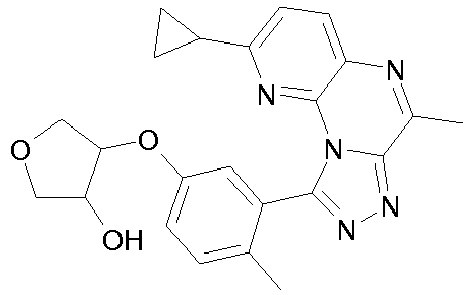
418 2.18 [13] 17.66 [C2] TRANS-racemic mixture TRANS-single stereoisomer a 57 57b 
418 2.81 [13] 19.81 [C2] TRANS-racemic mixture TRANS-single stereoisomer b -

- Example 58 (0.01 g) was prepared in analogy to example 44 starting from Example 1 (0.2 g, 0.61 mmol) and epoxide intermediate 29b (0.07 g, 0.73 mmol) after chiral HPLC separation HPLC-MS (Method 13): Rt =2.63 min
MS: m/z = 412 (M+H)+
Chiral HPLC (Method C2): Rt = 16.84 min -

- To a solution of Intermediate 30o (0.13 g, 0.37 mmol) in dry DMF (3 mL), potassium tert.butoxide (0.083 g, 0.73 mmol) and commercially available 1,4-anhydroerythritol (0.06 mL, 0.73 mmol) were added and mixture heated at 90 C for 6 h. Solvent was evaporated, DCM and water added. Organics were separated, washed with a saturated solution of ammonium chloride, evaporated. The crude was purified by flash chromatography (eluent Cy/EtOAc 90:10 to 0:100) to give the desired compound (0.055 g).
HPLC-MS (Method 13): Rt =2.94 min
MS: m/z = 438 (M+H)+ -

- Example 58b was obtained by chiral HPLC separation of Example 58a.
HPLC-MS (Method 13): Rt =2.95 min
MS : m/z = 438 (M+H)+
Chiral HPLC (Method C1): Rt = 7.65 min -

- Further elution from the chiral column in the purification of Example 58a gave Example 58c
HPLC-MS (Method 13): Rt =2.95 min
MS : m/z = 438 (M+H)+
Chiral HPLC (Method C1): Rt = 9.54 min -

- Scaffold Intermediate 30a (1.4 g, 3.5 mmol) was suspended in THF (40 mL) and stirred at -78°C under nitrogen atmosphere. N-Butyllithium (3 mL of a 2,5M solution in hexane) was added dropwise and the reaction mixture was stirred at -78°C for 0.5h. A solution of N,N.dimethylformamide (1.43 mL, 17.6 mmol) in THF (15 mL) was added dropwise and the reaxtion mixture was stirred at -78°C for 30 minutes. Ammonium chloride saturated water solution (20 mL) was added and the reaction mixture was allowed to reach room temperature. The reaction mixture was diluted with ethyl acetate and washed with water. The organic phase was washed with brine, dried over sodium sulfate and concentrated under vacuum. The crude product obtained was purified by flash chromatography (eluent from 100:0 to 80:20 Cy/EtOAc) to obtain the title compound (0.3 g).
- Intermediate obtained from Step 1 (0.07 g, 0.21 mmol) was suspended in THF (2 mL) and stirred at 0 °C. A 2M solution of isopropylmagnesium chloride in THF (0.1 mL) was added an the reaction mixture was allowed to reach room temperature in 2h. Ammonium chloride saturated water solution (20 mL) was added and the reaction mixture was allowed to reach room temperature. The reaction mixture was diluted with ethyl acetate and washed with water. The organic phase was washed with brine, dried over sodium sulfate and concentrated under vacuum. The crude product obtained was purified by flash chromatography (eluent 50:50 Cy/EtOAc) to obtain Example 60 (0.02 g).
HPLC-MS (Method 9): Rt =2.85 min
MS : m/z = 382 (M+H)+
Further elution from the column (eluent from 50:50 to 0:100 Cy/EtOAc) gave Example 60 (0.03 g)
HPLC-MS (Method 9): Rt =2.28 min
MS : m/z = 340 (M+H)+ - The following examples were prepared in analogy to Example 59 and purified applying the most suitable purification technique, starting from Scaffold Intermediate 30a and the corrsponding commercially available Grignard reagents.
Grignard reagent Ex. # Structure MS m/z (M+H)+ Rt(min) Method 
61 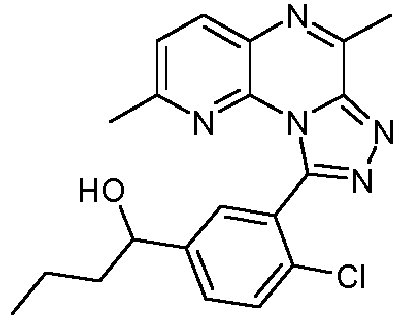
382 2.89 9 
62 
368 3.12 13 -Mg-Cl 63 
354 2.93 13 -

- Example 64 (0.03 g) was prepared in analogy to Example 1 and purified applying the most suitable purification technique,, starting from Intermediate 2 (0.1 g, 0.55 mmol) and Hydrazide Intermediate 6i (0.15 g, 0.55 mmol).
HPLC-MS (Method 9): Rt =2.52 min
MS: m/z = 382 (M+H)+ -
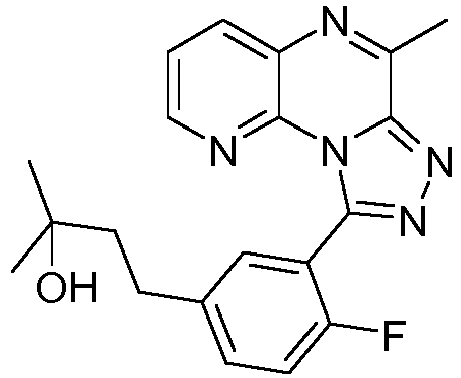
- Example 65 (0.03 mg) was prepared in analogy to the preparation of Intermediate 5i and purified applying the most suitable purification technique, starting from Scaffold Intermediate 30d (0.1 g, 0.25 mmol).
HPLC-MS (Method 9): Rt =2.45 min
MS : m/z = 366 (M+H)+ - The following examples were prepared in analogy to Example 65 and purified applying the most suitable purification technique, starting from the corresponding Scaffold Intermediates.
Starting Intermediate Ex. # Structure MS m/z (M+H)+ Rt (min) Method 30e 66 
406 3.29 13 30f 67 
362 3.83 16 30g 68 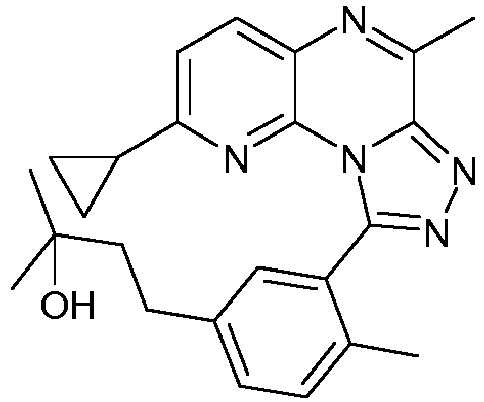
402 3.22 13 30h 69 
422 3.33 13 -

- Example 70 (0.03 g) was prepared in analogy to the preparation of Intermediate 5j and purified applying the most suitable purification technique, starting from Scaffold Intermediate 30b (0.16 g, 0.38 mmol) and acetone (0.07 mg, 1.13 mmol). HPLC-MS (Method 13): Rt = 2.67 min
MS: m/z = 354 (M+H)+ - The following examples were prepared in analogy to Example 70 and purified applying the most suitable purification technique, starting from the corresponding Scaffold Intermediates and commercially available ketons.
Starting Intermediate Ketone Ex. # Structure MS m/z (M+H)+ Rt (min) Method 30j 
71 
368 2.95 13 30m 
72 
392 3.32 13 30c 
73 
346 2.77 13 30b 
74 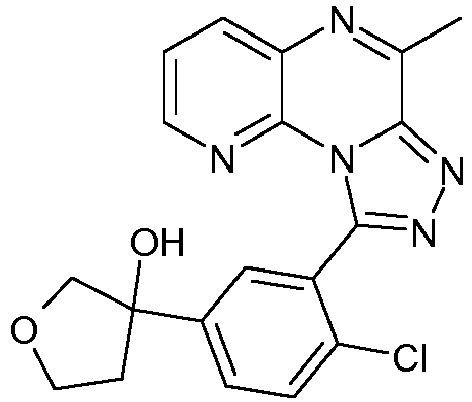
382 2.61 13 -

- Under N2 atmosphere, to a solution of Scaffold Intermediate 30g (1.0 g, 2.54 mmol) in toluene (35 mL), tributyl-(1-ethoxyvinyl-)tin (1.3 mL, 3.04 mmol) and Pd tetrakis(triphenylphosphine) (580 mg, 0.51 mmol). The solution was stirred at 105°C for 18h. The reaction mixture was cooled at room temperature, concentrated in vacuo and the crude product obtained was dissolved in THF. A 2N water solution of HCl 2N (5ml) was added and the reaction mixture was stirred for 30 mins. After dilution with ethyl acetate, phases were separated and organic layer was dried over sodium sulfate and concentrated. The crude product obtained was purified by flash chromatography (eluent from 90:10 to 75:25 Cy/EtOAc) to obtain the desired compound (0.8 g).
HPLC-MS (Method 13): Rt = 3.09 min
MS : m/z = 358(M+H)+ - To a solution of the intermediate from Step 1 (0.8 g, 2.2 mmol) in DCM (20 mL) 50% NaOH/H2O solution (0.8 mL) was added and the reaction mixture was stirred for 10 minutes. Trimethylsulfonium methyl sulfate (0.4 g, 2.8 mmol) was added and the reaction mixture was refluxed for 2h. The reaction mixture was diluted with DCM and washed with water. The organic layer was separated, dried over sodium sulfate and concentrated. The crude product obtained was purified by flash chromatography (eluent 85:15 Cy/EtOAc) to obtain the desired compound (0.5 g).
HPLC-MS (Method 13): Rt = 3.33 min
MS : m/z = 372(M+H)+ - To a solution of lithiumaluminiumhydride (0.15 mL of a 2M solution in THF) in 15 mL of THF stirred at 0°C, the intermediate from step 2 (0.4 g, 0.4 mmol) was added slowly. The reaction mixture was stirred for 1h and allowe to reach room temperature. Water (2 mL) and NaOH (1 mL of a 2M water solution) were added and the reaction mixture was diluted with ethyl acetate. Organic phase was separated, dried over sodium sulfate and concentrated to give the desired product (0.28 g).
HPLC-MS (Method 13): Rt = 3.0 min
MS : m/z = 376(M+H)+ - Intermediate from step 3 (0.17 g, 0.38 mmol) was dissolved in DCM (10 mL), manganese dioxide (0.38 g, 3.38 mmol) was added and the suspension was stirred for 1h at room temperature. The reaction mixture was filtered on a celite pad and the solvent was evaporated. The crude product obtained was purified by flash chromatography (eluent 90:10 DCM/MeOH) to obtain the desired compound (0.14 g).
HPLC-MS (Method 13): Rt = 3.04 min
MS : m/z = 374 (M+H)+ - The following examples were prepared in analogy to Example 75 and purified applying the most suitable purification technique, starting from the corresponding Intermediates.
Starting Intermediate Ex. Structure MS m/z (M+H)+ Rt (min) Method 30e 76 
378 3.12 13 30k 77 
396 3.37 13 30l 78 
376 3.3 13 30n 79 
376 3.31 13 -

- Example 80 (0.02 g) was prepared in step 2, step 3 and step 4 step in analogy to Example 75 and purified applying the most suitable purification technique, starting from the Intermediate obtained in step 1.
- Step 1 was performed as follow:
- Scaffold Intermediate 30i (1.35 g, 3.39 mmol) tri-n-butylmethoxytin (1.51 mL, 5.08 mmol), isopropenyl acetate (5.6 mL, 51 mmol), tri-o-tolylphosphine (0.07 g, 0.25 mmol) and palladium acetate (0.03 g) were suspended in toluene (30 mL) under nitrogen atmosphere and stirred for 2h at room temperature, then at 110°C for 20 minutes. Water (10 mL) and a bicarbonate saturated water solution (3 mL) were added, toluene was removed under vacuum and DCM was added. The organic phase was separated, and concentrated. The crude product obtained was purified by flash chromatography (eluent from 30:70 to 0:100 cyclohexane/AcOEt) to obtain the desired compound (0.5 g).
- Step 2, Step 3 and Step 4 were performed in analogy to Example 75.
HPLC-MS (Method 16): Rt = 3.13 min
MS: m/z = 392 (M+H)+ - The following example was prepared in analogy to Example 80 and purified applying the most suitable purification technique, starting from the corresponding Scaffold Intermediates.
Intermediate Ex. # Structure MS m/z (M+H)+ Rt (min) Method 30g 81 
388 5.75 17 -

- Example 82 (0.09 g) was prepared in analogy to Example 1 starting from Chloride Intermediate 2 (0.1 g, 0.61 mmol) and Hydrazide Intermediate 6p (0.2 g, 0.61 mmol).
(HPLC-MS (Method 13): Rt 2.80 =min
MS : m/z = 368 (M+H)+ - The following examples were prepared in analogy to Example 82 and purified applying the most suitable purification technique, starting from the corresponding Chloride and Hydrazide Intermediates.
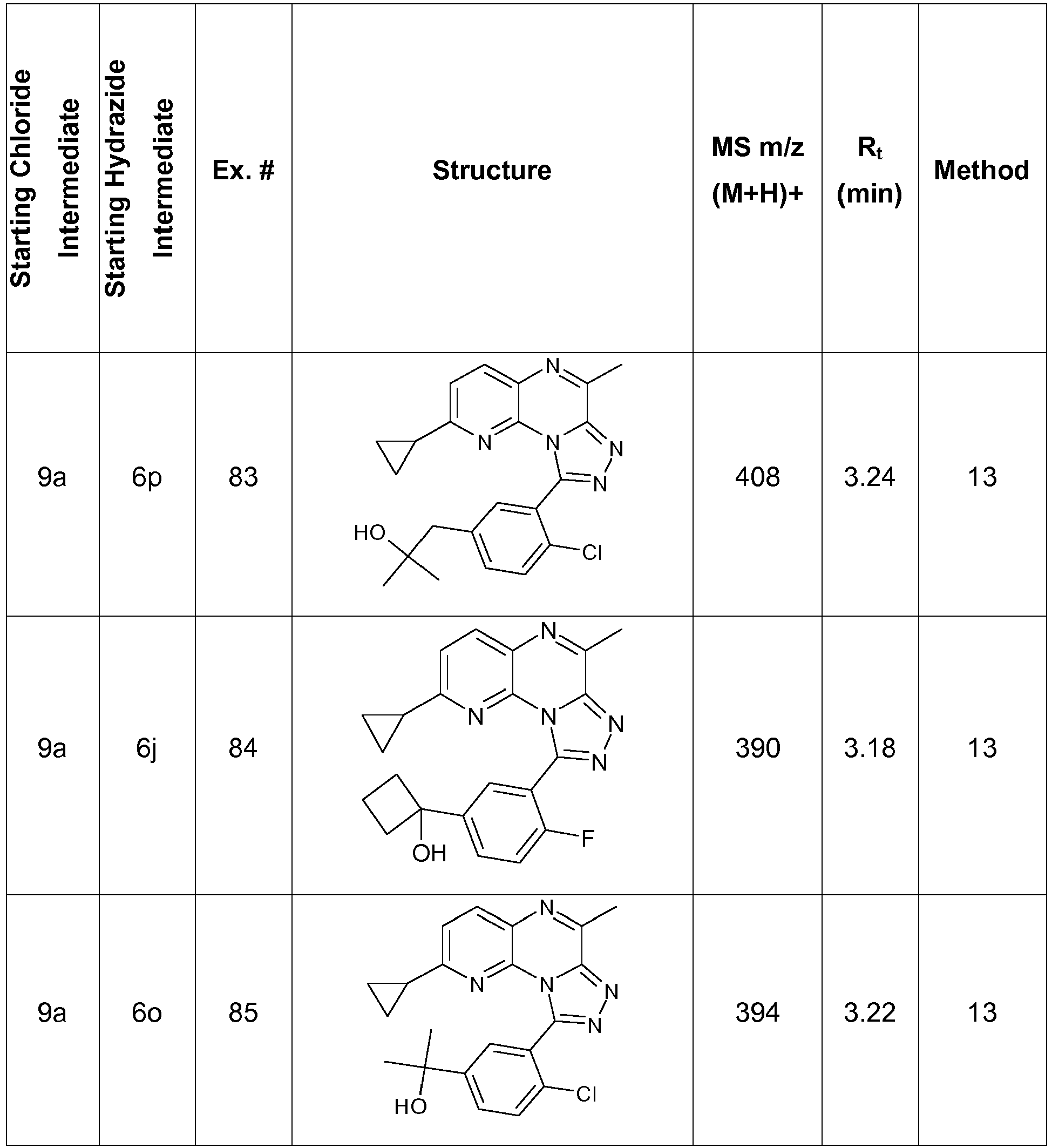


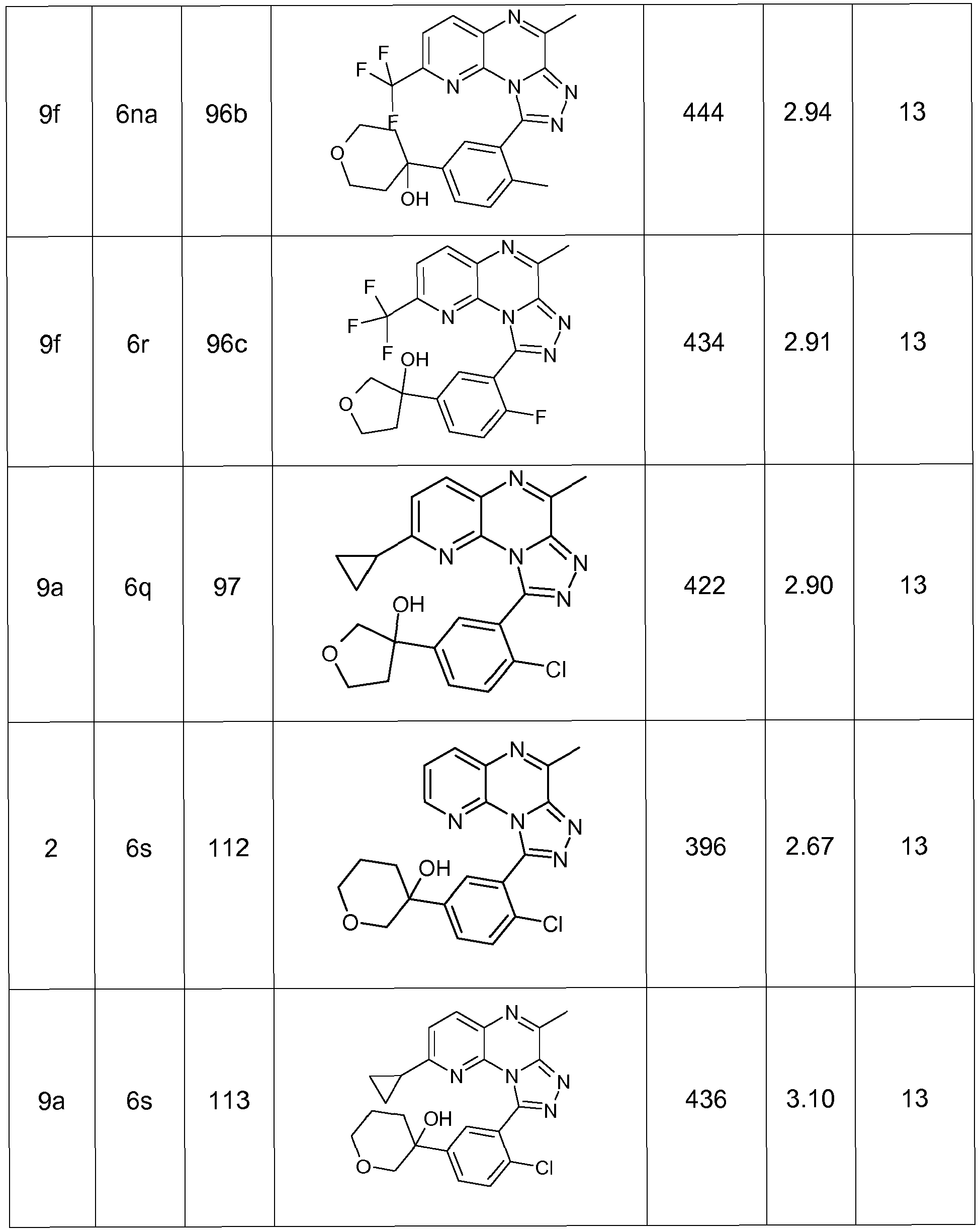

- The following examples were obtained as single stereoisomers by chiral HPLC separation of the corresponding racemic mixture.
Starting Racemic Mixture Ex. # Structure MS m/z [M+H]+ Rt(min) [LC-MS Method] Rt(min) [Chiral HPLC Method] 97 97a 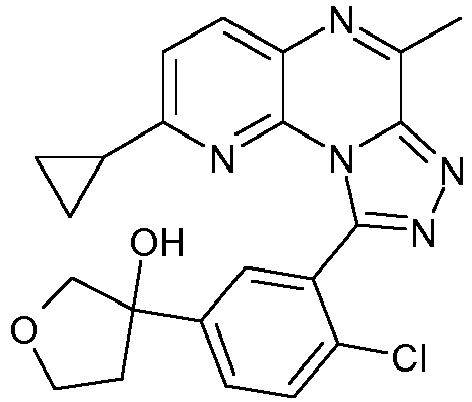
422 2.89 [13] 15.75 [C2a] Racemic mixture Single stereoiso mer b 97 97b 
422 2.89 [13] 13.32 [C2a] Racemic mixture Single stereoiso mer a 112 112a 
396 2.85 [13] 14.5 [C2a] Racemic mixture Single stereoiso mer a 112 112b 
396 2.85 [13] 15.6 [C2a] Racemic mixture Single stereoiso mer b 114 114a 
464 3.21 [131 13.8[C2] Racemic mixture Single stereoiso mer a 114 114b 
464 3.21 [13] 16.76[C2] Racemic mixture Single stereoiso mer b 115 115a 
450 3.05 [13] 28.0[C2b] Racemic mixture Single stereoiso mer a 115 115b 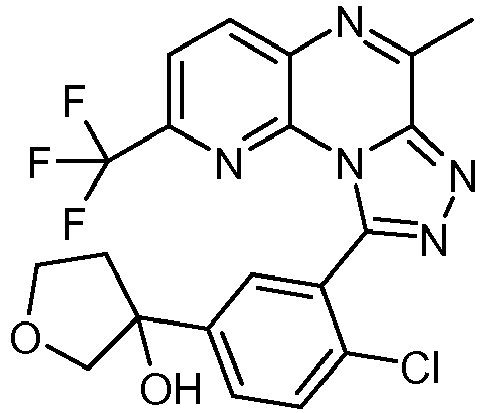
450 3.05 [13] 31.2[C2b] Racemic mixture Single stereoiso mer b -

- Example 98 (0.026 g) was prepared in analogy to Example 1 starting from Chloride Intermediate 2 (0.3 g, 1.45 mmol) and Hydrazide Intermediate 6q (0.4 g, 1.56 mmol) after semipreparative chiral purification.
HPLC-MS (Method 13): Rt =2.56 min
MS: m/z = 382 (M+H)+
Chiral HPLC (Method C1 a): Rt = 9.55 min -

- Example 99 (0.028 g) was obtained via further elution from the column in the semipreparative chiral chromatographic purification of Example 98.
HPLC-MS (Method 13): Rt =2.52 min
MS: m/z = 382 (M+H)+
Chiral HPLC (Method C1 a): Rt = 11.03 min -

- Scaffold Intermediate 30g (0.5 g, 1.27 mmol), 1-methoxy-2-methyl-1-(trimethylsililoxy)propene (1.9 g, 11.4 mmol), bis(dibenzylideneacetone)palladium(0) (0.14 g, 0.25 mmol) and zinc fluoride (0.19 g, 1.9 mmol) were suspended in DMF (25 mL) and stirred under nitrogen atmosphere for 10 minutes. Tri-tert-butyl-phosphine (0.06 mL, 0.25 mmol) was added and the reaction mixture was stirred at 115 °C for 18h. The reaction mixture was concentrated, an ammonium chloride water saturated solution was added and the reaction mixture was extracted with DCM. The organic phase was separated, dried over sodium sulfate and concentrated. The crude product obtained was purified by flash chromatography (eluent from 100:0 to 50:50 cyclohexane/AcOEt) to obtain the desired compound (0.4 g).
- The intermediate obtained in Step 1 (0.4 g, 0.07 mmol) was dissolved in THF (6 mL) and stirred under nitrogen atmosphere at 0°C for 5 minutes. Lithiumaluminium hydride (0.5 mL of a 2M solution in THF) was added. The reaction mixture was stirred at 0 °C for 10 minutes then allowed to reach room temperature and stirred for 0.5h. The solvent was removed, the crude product was dissolved in DCM and the reaction mixture was washed with water (4 mL), bicarbonate saturated water solution (2 mL) and brine (2 mL). The organic phase was separated, dried over sodium sulfate and manganese dioxide (0.15 g, 1.73 mmol) was added. The reaction mixture was stirred for 0.5 h, filtered on a celite pad and concentrated. The crude product obtained was purified by flash chromatography (eluent from 100:0 to 95:5 DCM/MeOH) to obtain the desired compound (0.1 g).
(HPLC-MS (Method 13): Rt =3.29 min
MS: m/z = 388 (M+H)+ -

- Example 101 (0.05 g) was prepared in analogy to Example 100 and purified applying the most suitable purification technique, starting from Scaffold Intermediate 30i (0.36 g, 0.9 mmol).
HPLC-MS (Method): Rt = 3.3 min
MS : m/z = 392 (M+H)+ -

- Step 1 was performed in analogy to preparation of Example 1 starting from Chloride Intermediate 9 (0.3 g, 1.39 mmol) and Hydrazide Intermediate 6o (0.47 g, 1.39 mmol).
- Intermediate from step 1 (0.09 g, 0.26 mmol) and hydrochloric acid (10 mL of a 37% water solution) were dissolved in 10 mL of 1,4-dioxane. The reaction mixture was stirred at room temperature for 20 minutes. A bicarbonate saturated water solution was added, THF was removed in vacuum and the reaction mixture was extracted with DCM. The organic phase was separated, dried over sodium sulfate and concentrated. The crude product obtained was purified by flash chromatography (eluent from 100:0 to 90:10 DCM/MeOH) to obtain the title compound (0.03 g).
HPLC-MS (Method 13): Rt = 2.95 min
MS: m/z = 360 (M+H)+ -

- Under nitrogen atmosphere, Scaffold Intermediate 30g (0.3 g, 0.61 mmol), potassium carbonate (0.34 g, 2.4 mmol) and
[1,1'Bis(diphenylphosphino)ferrocene]dichloropalladium(II) (0.05 g) were suspended in toluene (150 mL) and stirred at room temperature for 10 minutes. 3,6-dihydro-2H-pyran-4-boronic acid pinacol ester (0.17 g, 0.79 mmol) was added and the reaction mixture was stirres at 100°C for 4h. Water (30 mL) was added and the reaction mixture was extracted with AcOEt. The organic phase was separated and concentrated. The crude product obtained was purified by flash chromatography (eluent from 100:0 to 90:10 DCM/MeOH) to obtain the title compound (0.02 g). - Step 2 was performed in analogy to Step 2 in the preparation of Example 102. 0.02 g of the desired product were obtained after purification by flash chromatography (eluent from 100:0 to 90:10 DCM/MeOH).
(HPLC-MS (Method 13): Rt = 2.88 min
MS : m/z = 416 (M+H)+ - The following examples were prepared in analogy to Example 103 and purified applying the most suitable purification technique, starting from the corresponding Scaffold Intermediate and the boronic ester 2-Isopropenyl-4,4,5,5-tetramethyl-[1,3,2]dioxaborolane.
Starting Intermediate Ex. # Structure MS m/z (M+H)+ Rt (min) Method 30r 103b 
422 3.25 13 30s 103c 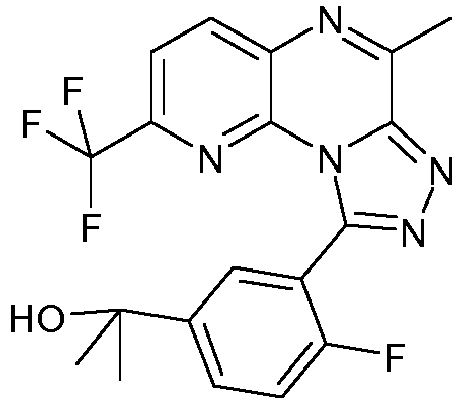
406 3.17 13 -

- Intermediate obtained from Step 1 in preparation of Example 103 (50 mg, 0.13 mmol) was dissolved in DCM (5 mL). Osmium tetroxide (0.1 mL, 0.01 mmol) and 4-methylmorpholine-4-oxide (0.07g, 0.63 mmol) were added and the reaction mixture was stirred at room temperature for 5 h. The solvent was removed and the crude product obtained was was purified by flash chromatography (eluent from 100:0 to 80.20 DCM/MeOH) to obtain the title compound (0.03 g).
HPLC-MS (Method 13): Rt = 2.73 min
MS: m/z = 432 (M+H)+ -

- Example 104a was obtained via Chiral HPLC purification of Example 104.
HPLC-MS (Method 13): Rt = 2.65 min
MS: m/z = 432 (M+H)+
Chiral HPLC (Method C2b): Rt = 18.70 min -

- Further elution from the chiral column gave Example 104b.
HPLC-MS (Method 13): Rt = 2.65 min
MS: m/z = 432 (M+H)+
Chiral HPLC (Method C2b): Rt = 21.04 min -
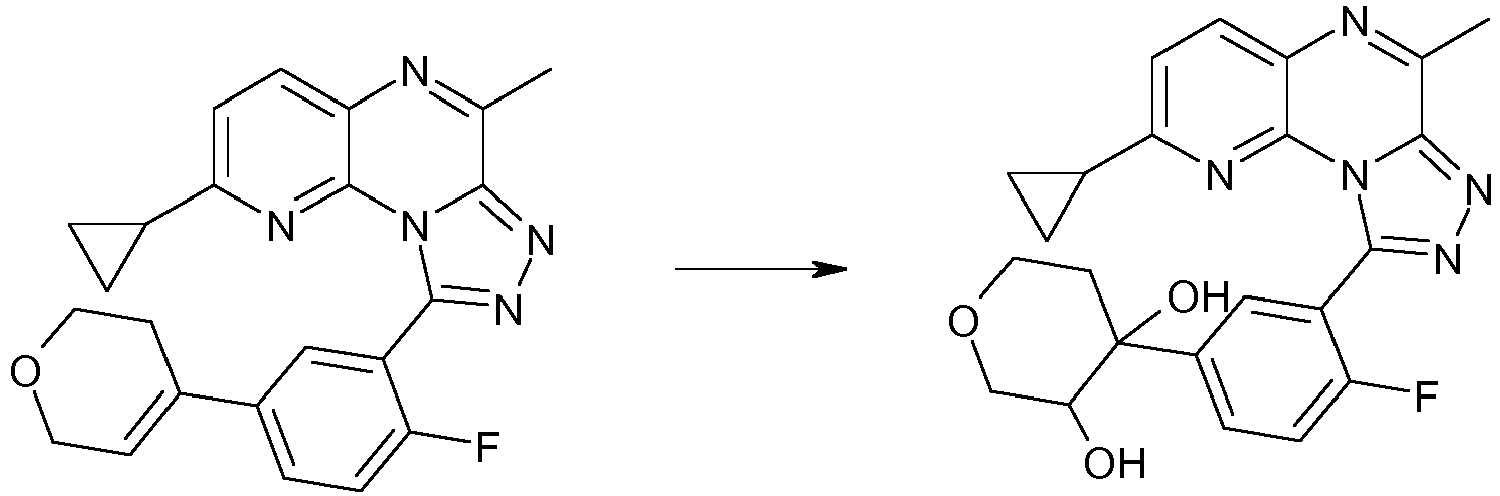
- Example 105 (0.03 g) was prepared in analogy to Example 104, starting from 8-Cyclopropyl-1-[5-(3,6-dihydro-2H-pyran-4-yl)-2-fluoro-phenyl]-4-methyl-2,3,5,9,9b-pentaaza-cyclopenta[a]naphthalene (0.05g, 0.12 mmol) which was obtained as by-product in the preparation of Example 95 and isolated from the same flash chromatograpy purification.
HPLC-MS (Method 13): Rt = 2.68 min
MS: m/z = 436 (M+H)+ - The following examples were obtained as single stereoisomers by chiral HPLC separation of the corresponding racemic mixture.
Starting Racemic Mixture Ex. # Structure MS m/z [M+H]+ Rt(min) [LC-MS Method] Rt(min) [Chiral HPLC Method] 105 105a 
436 2.69 [13] 15.05 [C2b] CIS-Racemic mixture CIS-Single stereoiso mer a 97 105b 
436 2.68 [13] 18.47 [C2b] CIS-Racemic mixture CIS-Single stereoiso mer b - The following Examples were prepared in analogy to Example 44 and purified applying the most suitable purification technique, starting from the corresponding Starting Example and the corresponding epoxides.

- The following examples were obtained as single stereoisomers by chiral HPLC separation of the corresponding racemic mixture.
Starting Racemic Mixture Ex. # Structure MS m/z [M+H]+ Rt(min) [LC-MS Method] Rt(min) [Chiral HPLC Method] 106 106a 
450 2.95 [13] 7.77 [C2c] TRANS-Racemic mixture TRANS-single stereoiso mer a 106 106b 
450 2.98 [13] 11.58 [C2c] TRANS-Racemic mixture TRANS-single stereoiso mer b 111 111a 
466 3.10 [13] 13.65 [C2] TRANS-Racemic mixture TRANS-single stereoiso mer a 111 111b 
466 3.10 [13] 16.14 [C2] TRANS-Racemic mixture TRANS-single stereoiso mer b - The following examples were obtained as single stereoisomers by chiral HPLC separation of the corresponding TRANS regioisomeric racemic mixtures. TRANS regioisomeric racemic mixtures were obtained in analogy to preparation of Example 44, starting from epoxide Intermediate 29b and the corresponding Starting Examples or Starting Intermediates.


After at least 3 hours sedimentation of the beads, the signal is recorded using the TopCount with a recording time of 3 min/well.
| Ex. | Half-life - t1/2 [min] | Ex. | Half-life - t1/2 [min] | Ex. | Half-life - t1/2 [min] |
| 1 | 130 | 54 | 130 | 76 | 130 |
| 5 | 43 | 55 | 130 | 77 | 90 |
| 6 | 66 | 55a | 130 | 78 | 79 |
| 9 | 41 | 56 | 120 | 80 | 83 |
| 12 | 63 | 56a | 110 | 81 | 26 |
| 13 | 130 | 56b | 62 | 82 | 130 |
| 17 | 130 | 57 | 130 | 83 | 100 |
| 18 | 130 | 57a | 130 | 84 | 39 |
| 20 | 130 | 57b | 93 | 85 | 130 |
| 21 | 130 | 58 | 130 | 87 | 130 |
| 30 | 130 | 58a | 130 | 88 | 53 |
| 32 | 130 | 58b | 130 | 89 | 130 |
| 32a | 36 | 58c | 130 | 91 | 28 |
| 34 | 130 | 59 | 49 | 92 | 23 |
| 35 | 130 | 61 | 65 | 93 | 130 |
| 35a | 130 | 62 | 130 | 94 | 38 |
| 42 | 130 | 63 | 130 | 96 | 110 |
| 43 | 130 | 64 | 130 | 97 | 51 |
| 44 | 130 | 66 | 57 | 99 | 130 |
| 45 | 130 | 67 | 130 | 100 | 12 |
| 46 | 130 | 68 | 39 | 101 | 22 |
| 47 | 130 | 69 | 53 | 102 | 130 |
| 48 | 130 | 70 | 130 | 104 | 130 |
| 49 | 130 | 71 | 130 | 104a | 130 |
| 50 | 130 | 72 | 130 | 104b | 130 |
| 51 | 130 | 73 | 130 | ||
| 52 | 130 | 75 | 130 |

| Ex. | hERG IC50 [µM] | Ex. | hERG IC50 [µM] |
| 13 | >10 | 64 | >10 |
| 18 | >10 | 66 | >10 |
| 20 | >10 | 68 | 8.3 |
| 21 | >10 | 75 | >10 |
| 27 | >10 | 76 | >10 |
| 28 | >10 | 80 | >10 |
| 32 | >10 | 82 | >10 |
| 32a | >10 | 83 | >10 |
| 34 | >10 | 84 | 6.3 |
| 35a | >10 | 85 | >10 |
| 45 | >10 | 87 | >10 |
| 47 | >10 | 88 | >10 |
| 48 | >10 | 93 | >10 |
| 49 | >10 | ||
| 55 | >10 | ||
Claims (21)
- Compounds of formula I
 A is selected from the group Aa consisting of
 R1 is selected from the group R1a consisting ofH, halogen, NC-, C1-6-alkyl-, C1-6-alkyl-O-, C3-6-cycloalkyl and R8-(CH2)n-O- with n = 0, 1, 2, 3 or 4,wherein above mentioned C1-6-alkyl-, C1-6-alkyl-O-, C3-6-cycloalkyl and R8-(CH2)n-O- groups may optionally be substituted with 1 to 5 substituents independently selected from the group consisting of halogen, HO- and optionally with 1 to 7 fluorine atoms substituted C1-3-alkyl-;R2 is selected from the group R2c1 consisting ofHO-, C1-4-alkyl-, C1-4-alkyl-O-, C3-6-cycloalkyl, C3-6-cycloalkyl-C1-3-alkyl-, heterocyclyl, R8-(CH2)n-O- with n = 0, 1, 2, or 3, and R8-(CH2)m-(CH)(CH3)-(CH2)o-O- with m = 0 or 1 and o = 0 or 1wherein the term heterocyclyl means a saturated or unsaturated mono- or polycyclic ring system containing one or more heteroatoms selected from N, O or S(O)r ,wherein r=0, 1 or 2, which may contain aromatic rings consisting of, if not mentioned otherwise, 3 to 14 ring atoms wherein none of the heteroatoms is part of an aromatic ring, wherein the term heterocyclyl encompasses fused, bridged and spirocyclic systems and includes all the possible isomeric forms,
andwherein above mentioned C1-4-alkyl- and C1-4-alkyl-O-groups are substituted with 1 to 5 substituents independently selected from the group consisting of HO-, and optionally with 1 to 7 fluorine atoms substituted C1-3-alkyl-O-,
andwherein above mentioned C1-4-alkyl- and C1-4-alkyl-O-groups may optionally be substituted with 1 to 5 substituents independently selected from the group consisting of halogen, and optionally with 1 to 7 fluorine atoms substituted C1-3-alkyl-,
andwherein above mentioned C3-6-cycloalkyl, C3-6-cycloalkyl-C1-3-alkyl-, heterocyclyl, R8-(CH2)n-O- and R8-(CH2)m-(CH)(CH3)-(CH2)o-O-groups may optionally be substituted with 1 to 5 substituents independently selected from the group consisting of halogen, HO-, optionally with 1 to 7 fluorine atoms substituted C1-3-alkyl-O-, and optionally with 1 to 7 fluorine atoms substituted C1-3-alkyl-.R3 is selected from the group R3a consisting ofH, halogen, NC-, C1-4-alkyl- and C3-6-cycloalkyl-,wherein the above mentioned C1-4-alkyl- and C3-6-cycloalkyl-groups may optionally be substituted with 1 to 9 substituents independently selected from the group consisting of halogen, NC-, HO-, C1-3-alkyl-and C1-3-alkyl-O-,R4, R5 are selected independently of each other from the group R4b/R5b consisting ofH, halogen, HO-, H3C-, F3C-, H3C-O-, F2HC-O-, FH2C-O-, F3C-O-, C1-4-alkyl-O-, R7-CH2-O- and R7-(CH2)2-O-,wherein above mentioned C1-4-alkyl-O-, R7-CH2-O- and R7-(CH2)2-O-groups, may optionally be substituted with 1 to 5 substituents independently selected from the group consisting of halogen, optionally with 1 to 5 halogen atoms substituted C1-2-alkyl-, and optionally with 1 to 5 halogen atoms substituted C1-2-alkyl-O-;R6 is selected from the group R6a consisting ofH, NC-, C1-6-alkyl-, C3-8-cycloalkyl-, C3-8-cycloalkyl-C1-3-alkyl- and C3-8-cycloalkyl-O-wherein above mentioned C1-6-alkyl- groups may optionally be substituted with 1-3 halogen atoms;R7 is selected from the group R7c consisting ofH and phenyl,wherein above mentioned phenyl group may optionally be substituted with 1 to 4 substituents independently selected from the group consisting of halogen and optionally with 1 to 3 halogen atoms substituted C1-3-alkyl-O-;R8 is selected from the group R8b consisting ofthe tautomers thereof, the stereoisomers thereof, the mixtures thereof, the solvates thereof, the hydrates thereof and the salts thereof.C3-6-cycloalkyl, heterocyclyl, heterocyclyl-C1-3-alkyl-,wherein the term heterocyclyl means a saturated or unsaturated mono- or polycyclic ring system containing one or more heteroatoms selected from N, O or S(O)r ,wherein r=0, 1 or 2, which may contain aromatic rings consisting of, if not mentioned otherwise, 3 to 14 ring atoms wherein none of the heteroatoms is part of an aromatic ring, wherein the term heterocyclyl encompasses fused, bridged and spirocyclic systems and includes all the possible isomeric forms,
andwherein above mentioned C3-6-cycloalkyl, heterocyclyl and heterocyclyl-C1-3-alkyl-groups may optionally be substituted with 1 to 5 substituents independently selected from the group consisting of HO-, fluorine and optionally with 1 to 7 halogen atoms substituted C1-3-alkyl-; - A compound according to claim 1, whereinA is selected from the group Ab consisting of

- A compound according to any one or more of claims 1 to 2, whereinR1 is selected from the group R1b consisting ofH, halogen, C1-6-alkyl- and C3-6-cycloalkylwherein above mentioned C1-6-alkyl- and C3-6-cycloalkyl-groups may optionally be substituted with 1 to 5 substituents independently selected from the group consisting of halogen, HO- and optionally with 1 to 7 fluorine atoms substituted C1-3-alkyl-.
- A compound according to any one or more of claims 1 to 3, whereinR3 is selected from the group R3b consisting ofH, C1-3-alkyl-, cyclobutyl- and cyclopropyl-,wherein the above mentioned C1-3-alkyl-, cyclobutyl- and cyclopropyl-groups may optionally be substituted with 1 to 7 substituents independently selected from the group consisting of halogen, C1-3-alkyl-O-, NC- and HO-.
- A compound according to any one or more of claims 1 to 4, whereinR6 is selected from the group R6b consisting ofH, C1-4-alkyl- and cyclopropyl-,wherein above mentioned C1-4-alkyl-group may optionally be substituted with 1-9 fluorine and/or chlorine atoms.
- A compound according to claim 1 selected from the group consisting of


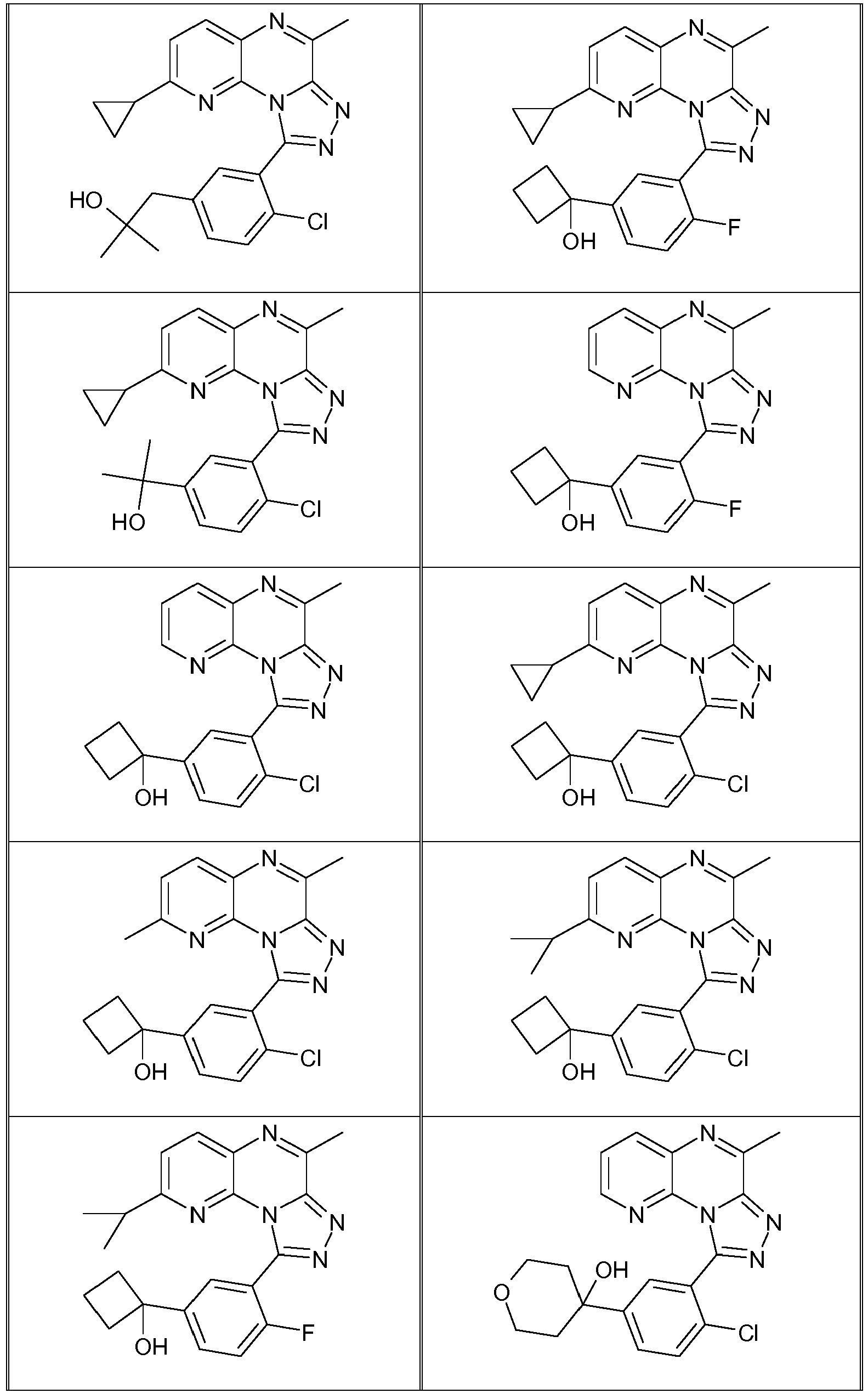

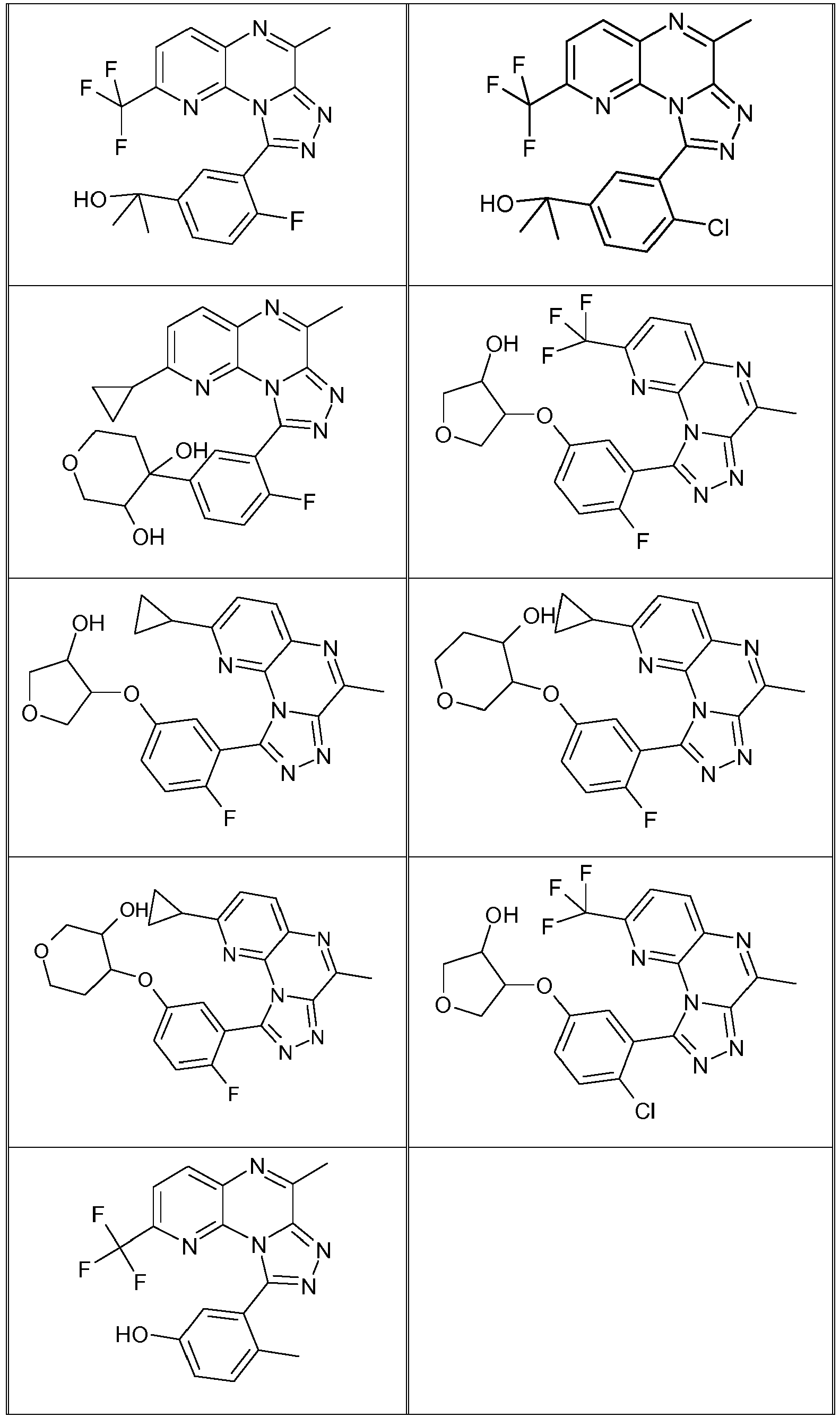
 the tautomers thereof, the stereoisomers thereof, the solvates thereof, the hydrates thereof and the salts thereof.
- A compound according to any one or more of claims 1 to 6 of the formula

- A compound according to any one or more of claims 1 to 6 of the formula

- A compound according to any one or more of claims 1 to 6 of the formula
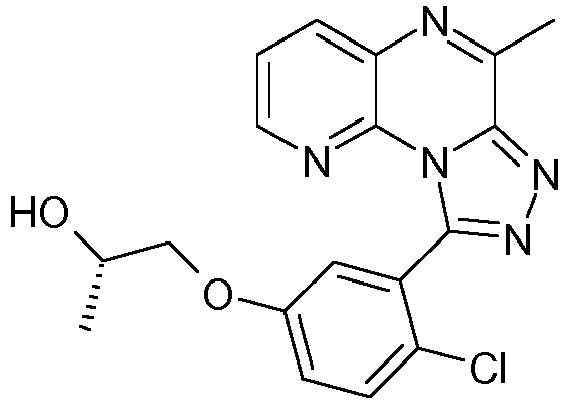
- A compound according to any one or more of claims 1 to 6 of the formula

- A compound according to any one or more of claims 1 to 6 of the formula

- A compound according to any one or more of claims 1 to 6 of the formula

- A compound according to any one or more of claims 1 to 6 of the formula

- A compound according to any one or more of claims 1 to 6 of the formula

- A compound according to any one or more of claims 1 to 6 of the formula

- A compound according to any one or more of claims 1 to 6 of the formula

- A compound according to any one or more of claims 1 to 6 of the formula

- A compound according to any one or more of claims 1 to 17, or a pharmaceutically acceptable tautomer thereof, stereoisomer thereof, mixtures thereof, solvate thereof, hydrate thereof or salt thereof for use as a medicament.
- Pharmaceutical compositions containing at least one compound according to any one or more of the claims 1 to 17 or a pharmaceutically acceptable tautomer thereof, stereoisomer thereof, mixtures thereof, solvate thereof, hydrate thereof or salt thereof together with one or more pharmaceutically acceptable carrier.
- A compound according to any one or more of claims 1 to 17, or a pharmaceutically acceptable tautomer thereof, stereoisomer thereof, mixtures thereof, solvate thereof, hydrate thereof or salt thereof or a pharmaceutical composition according to claim 19 for use in the prevention or treatment of (1) disorders comprising the symptom of cognitive deficiency; (2) organic, including symptomatic, mental disorders, dementia; (3) mental retardation; (4) mood [affective] disorders; (5) neurotic, stress-related and somatoform disorders including anxiety disorders; (6) behavioural and emotional disorders with onset usually occurring in childhood and adolescence, attention deficit hyperactivity syndrome (ADHD) and Autism spectrum disorders; (7) disorders of psychological development, developmental disorders of scholastic skills; (8) schizophrenia and other psychotic disorders; (9) disorders of adult personality and behaviour; (10) mental and behavioural disorders due to psychoactive substance use; (11) extrapyramidal and movement disorders; (12) episodic and paroxysmal disorders, epilepsy; (13) Systemic atrophies primarily affecting the central nervous system, ataxia; (14) Behavioural syndromes associated with physiological disturbances and physical factors; (15) sexual dysfunction comprising excessive sexual drive; (16) factitious disorders; (17) Treatment, amelioration and / or prevention of cognitive impairment being related to perception, concentration, cognition, learning or memory; (18) Treatment amelioration and / or prevention of cognitive impairment being related to age-associated learning and memory impairments; (19) Age-associated memory losses; (20) Vascular dementia; (21) Craniocerebral trauma; (22) Stroke; (23) Dementia occurring after strokes (post stroke dementia); (24) Post-traumatic dementia; (25) General concentration impairments; (26) Concentration impairments in children with learning and memory problems; (27) Alzheimer's disease; (28) Lewy body dementia; (29) Dementia with degeneration of the frontal lobes; including Pick's syndrome; (30) Parkinson's disease; (31) Progressive nuclear palsy; (32) Dementia with corticobasal degeneration; (33) Amyotropic lateral sclerosis (ALS); (34) Huntington's disease; (35) Multiple sclerosis; (36) Thalamic degeneration; (37) Creutzfeld-Jacob dementia; (38) HIV dementia; (38) Schizophrenia with dementia or Korsakoff's psychosis; (39) Sleep disorders; (40) Bipolar disorder; (41) Metabolic syndrome; (42) Obesity; (43) Diabetis mellitus; (44) Hyperglycemia; (45) Dyslipidemia; (46) Impaired glucose tolerance; (47) Disease of the testes, brain, small intestine, skeletal muscle, heart, lung, thymus or spleen and (48) pain disorders.
- A compound according to any one or more of claims 1 to 17, or a pharmaceutically acceptable tautomer thereof, stereoisomer thereof, mixtures thereof, solvate thereof, hydrate thereof or salt thereof or a pharmaceutical composition according to claim 19 for use in symptomatic treatment of Alzheimer's Disease, symptomatic treatment of prodromal and/or mild-to-moderate Alzheimer's Disease and/or for the treatment of cognitive impairment associated with schizophrenia.
Priority Applications (1)
| Application Number | Priority Date | Filing Date | Title |
|---|---|---|---|
| EP13742632.6A EP2882749B1 (en) | 2012-07-31 | 2013-07-29 | 4-methyl-2,3,5,9,9b-pentaaza-cyclopenta[a]naphthalenes |
Applications Claiming Priority (3)
| Application Number | Priority Date | Filing Date | Title |
|---|---|---|---|
| EP12178713 | 2012-07-31 | ||
| EP13742632.6A EP2882749B1 (en) | 2012-07-31 | 2013-07-29 | 4-methyl-2,3,5,9,9b-pentaaza-cyclopenta[a]naphthalenes |
| PCT/EP2013/065894 WO2014019979A1 (en) | 2012-07-31 | 2013-07-29 | 4-methyl-2,3,5,9,9b-pentaaza-cyclopenta[a]naphthalenes |
Publications (2)
| Publication Number | Publication Date |
|---|---|
| EP2882749A1 EP2882749A1 (en) | 2015-06-17 |
| EP2882749B1 true EP2882749B1 (en) | 2018-04-04 |
Family
ID=48906250
Family Applications (1)
| Application Number | Title | Priority Date | Filing Date |
|---|---|---|---|
| EP13742632.6A Active EP2882749B1 (en) | 2012-07-31 | 2013-07-29 | 4-methyl-2,3,5,9,9b-pentaaza-cyclopenta[a]naphthalenes |
Country Status (27)
| Country | Link |
|---|---|
| US (2) | US20140045856A1 (en) |
| EP (1) | EP2882749B1 (en) |
| JP (1) | JP6356671B2 (en) |
| KR (1) | KR20150037950A (en) |
| CN (1) | CN104428302B (en) |
| AP (1) | AP2015008202A0 (en) |
| AR (1) | AR091939A1 (en) |
| AU (1) | AU2013298621B2 (en) |
| BR (1) | BR112015002118A2 (en) |
| CA (1) | CA2880447A1 (en) |
| CL (1) | CL2015000096A1 (en) |
| CO (1) | CO7310531A2 (en) |
| EA (1) | EA028958B1 (en) |
| EC (1) | ECSP15006871A (en) |
| GE (1) | GEP201706707B (en) |
| IL (1) | IL236494A0 (en) |
| MA (1) | MA37798B1 (en) |
| MX (1) | MX2015000965A (en) |
| NZ (1) | NZ703797A (en) |
| PE (1) | PE20150706A1 (en) |
| PH (1) | PH12015500211B1 (en) |
| SG (1) | SG11201500772VA (en) |
| TN (1) | TN2015000022A1 (en) |
| TW (1) | TW201418255A (en) |
| UA (1) | UA115561C2 (en) |
| UY (1) | UY34955A (en) |
| WO (1) | WO2014019979A1 (en) |
Families Citing this family (19)
| Publication number | Priority date | Publication date | Assignee | Title |
|---|---|---|---|---|
| US9540379B2 (en) | 2011-01-31 | 2017-01-10 | Boehringer Ingelheim International Gmbh | (1,2,4)triazolo[4,3-A]quinoxaline derivatives as inhibitors of phosphodiesterases |
| JP2014526453A (en) * | 2011-09-09 | 2014-10-06 | ハー・ルンドベック・アクチエゼルスカベット | Pyridine compounds and their use |
| US20140045856A1 (en) * | 2012-07-31 | 2014-02-13 | Boehringer Ingelheim International Gmbh | 4-Methyl-2,3,5,9,9b-pentaaza-cyclopenta[a]naphthalenes |
| WO2016145614A1 (en) | 2015-03-17 | 2016-09-22 | Merck Sharp & Dohme Corp. | Triazolyl pyrimidinone compounds as pde2 inhibitors |
| WO2016154081A1 (en) | 2015-03-26 | 2016-09-29 | Merck Sharp & Dohme Corp. | Pyrazolyl pyrimidinone compounds as pde2 inhibitors |
| US10195201B2 (en) | 2015-05-05 | 2019-02-05 | Merck Sharp & Dohme Corp. | Heteroaryl-pyrimidinone compounds as PDE2 inhibitors |
| WO2016183741A1 (en) | 2015-05-15 | 2016-11-24 | Merck Sharp & Dohme Corp. | Pyrimidinone amide compounds as pde2 inhibitors |
| US10618898B2 (en) * | 2015-05-20 | 2020-04-14 | Guangdong Raynovent Biotech Co., Ltd. | Hydroxyl purine compounds and use thereof |
| WO2016191935A1 (en) | 2015-05-29 | 2016-12-08 | Merck Sharp & Dohme Corp. | 6-alkyl dihydropyrazolopyrimidinone compounds as pde2 inhibitors |
| WO2016192083A1 (en) | 2015-06-04 | 2016-12-08 | Merck Sharp & Dohme Corp. | Dihydropyrazolopyrimidinone compounds as pde2 inhibitors |
| US10647727B2 (en) | 2015-06-25 | 2020-05-12 | Merck Sharp & Dohme Corp. | Substituted pyrazolo/imidazolo bicyclic compounds as PDE2 inhibitors |
| WO2017000277A1 (en) | 2015-07-01 | 2017-01-05 | Merck Sharp & Dohme Corp. | Substituted triazolo bicycliccompounds as pde2 inhibitors |
| WO2017000276A1 (en) | 2015-07-01 | 2017-01-05 | Merck Sharp & Dohme Corp. | Bicyclic heterocyclic compounds as pde2 inhibitors |
| EP3156405A1 (en) | 2015-10-13 | 2017-04-19 | Boehringer Ingelheim International GmbH | Spirocyclic ether derivatives of pyrazolo[1,5-a]pyrimidine-3-carboxamide |
| WO2017176652A2 (en) | 2016-04-04 | 2017-10-12 | Sinopia Biosciences, Inc. | Treating extrapyramidal syndrome using trapidil |
| AR112457A1 (en) * | 2017-08-02 | 2019-10-30 | Lilly Co Eli | DERIVATIVES OF [1,2,4] TRIAZOLO [4,3-A] PIRAZIN-6 (5H) -ONE |
| PT3713572T (en) | 2017-11-23 | 2025-08-28 | Oslo Univ Hospital Hf | Treatment of tachycardia |
| CN115916180A (en) | 2020-03-26 | 2023-04-04 | 希诺皮亚生物科学公司 | Isotope-labeled tripidil derivatives |
| CN115960101B (en) * | 2022-12-30 | 2024-10-18 | 海南大学 | 7-Oxo-4,5,6,7-tetrahydropyrazolopyridine amide compounds and preparation methods and applications thereof |
Family Cites Families (35)
| Publication number | Priority date | Publication date | Assignee | Title |
|---|---|---|---|---|
| JP2000319277A (en) * | 1999-05-11 | 2000-11-21 | Ono Pharmaceut Co Ltd | Condensed pyrazine compound and drug containing the compound as active ingredient |
| JP2000319278A (en) * | 1999-05-11 | 2000-11-21 | Ono Pharmaceut Co Ltd | Condensed pyrazine compound and drug containing the compound as active ingredient |
| DE10108752A1 (en) | 2001-02-23 | 2002-09-05 | Bayer Ag | New substituted imidazotriazinones |
| CA2520251A1 (en) | 2003-03-27 | 2004-10-07 | Pfizer Products Inc. | Substituted 4-amino[1,2,4]triazolo[4,3-a]quinoxalines |
| WO2005041957A1 (en) | 2003-10-29 | 2005-05-12 | Pfizer Products Inc. | Oxindole derivatives and their use as phosphodiesterase type 2 inhibitors |
| GEP20094720B (en) | 2003-12-16 | 2009-06-25 | Pfizer Prod Inc | Pyrido[2,3-d]pyrimidine-2,4-diamines as pde 2 inhibitors |
| EP1548011A1 (en) | 2003-12-23 | 2005-06-29 | Neuro3D | Benzo[1,4]diazepin-2-one derivatives as phosphodiesterase PDE2 inhibitors, preparation and therapeutic use thereof |
| FR2865331A1 (en) | 2004-01-21 | 2005-07-22 | France Telecom | Removable digital medium e.g. CD-ROM, stores single policy enforcement point identifier intended to be transmitted to policy decision point server in order to be stored in server corresponding to network address |
| FR2870539B1 (en) | 2004-05-19 | 2006-08-04 | Greenpharma Sa Sa | NEW METHODS AND MEDICINES |
| BRPI0514586A (en) | 2004-09-02 | 2008-06-17 | Altana Pharma Ag | triazolphtalazine |
| CA2591991C (en) | 2005-01-05 | 2013-11-19 | Altana Pharma Ag | Triazolophthalazines |
| MX2007008137A (en) | 2005-01-05 | 2007-07-19 | Altana Pharma Ag | Triazolophthalazines. |
| BRPI0502411A (en) | 2005-03-31 | 2006-11-28 | Univ Minas Gerais | process of developing substances as potent and selective inhibitors of phosphodiesterase isoforms of types 1 to 5 (pde1, pde2, pde3, pde4, pde5) based on diocleine, fluranol or analogs and their pharmaceutical compositions for the study and treatment of cardiovascular disease and associated products |
| WO2007087250A2 (en) | 2006-01-23 | 2007-08-02 | Amira Pharmaceuticals, Inc. | Tricyclic inhibitors of 5-lipoxygenase |
| WO2007121319A2 (en) | 2006-04-14 | 2007-10-25 | University Of California | Compostions and methods for determining and predicting treatment responses for depression and anxiety |
| TW200815436A (en) | 2006-05-30 | 2008-04-01 | Elbion Ag | 4-amino-pyrido[3,2-e]pyrazines, their use as inhibitors of phosphodiesterase 10, and processes for preparing them |
| TW200817400A (en) * | 2006-05-30 | 2008-04-16 | Elbion Ag | Pyrido [3,2-e] pyrazines, their use as inhibitors of phosphodiesterase 10, and processes for preparing them |
| US20080090834A1 (en) | 2006-07-06 | 2008-04-17 | Pfizer Inc | Selective azole pde10a inhibitor compounds |
| DE102006048693A1 (en) | 2006-10-14 | 2008-04-17 | Bayer Healthcare Ag | Inhibition of PDE2A |
| WO2008072779A1 (en) * | 2006-12-13 | 2008-06-19 | Aska Pharmaceutical Co., Ltd. | Quinoxaline derivative |
| US20090143361A1 (en) * | 2007-11-30 | 2009-06-04 | Elbion Gmbh | Pyrido[3,2-E]Pyrazines, Process For Preparing The Same, And Their Use As Inhibitors Of Phosphodiesterase 10 |
| TWI501965B (en) | 2008-06-20 | 2015-10-01 | Lundbeck & Co As H | Novel phenylimidazole derivatives as pde10a enzyme inhibitors |
| AU2009291719A1 (en) | 2008-09-10 | 2010-03-18 | Alcon Research, Ltd | Heterocyclic inhibitors of histamine receptors for the treatment of disease |
| CN102272135A (en) | 2008-10-08 | 2011-12-07 | 百时美施贵宝公司 | Azolopyrrolone melanin concentrating hormone receptor-1 antagonists |
| WO2010054253A1 (en) | 2008-11-07 | 2010-05-14 | Biotie Therapies Gmbh | Triazine derivatives as inhibitors of phosphodiesterases |
| WO2010104933A1 (en) * | 2009-03-11 | 2010-09-16 | Merck Sharp & Dohme Corp. | Inhibitors of akt activity |
| EP2266985A1 (en) * | 2009-06-26 | 2010-12-29 | Deutsches Krebsforschungszentrum Stiftung des öffentlichen Rechts | Tricyclic Pyrimidine Derivatives as Wnt antagonists |
| CN107141309A (en) * | 2011-01-11 | 2017-09-08 | 桑诺维恩药品公司 | Heteroaryl compound and its application method |
| US9540379B2 (en) | 2011-01-31 | 2017-01-10 | Boehringer Ingelheim International Gmbh | (1,2,4)triazolo[4,3-A]quinoxaline derivatives as inhibitors of phosphodiesterases |
| BR112013033375B1 (en) | 2011-06-27 | 2022-05-10 | Janssen Pharmaceutica N.V | Derivatives of 1-aryl-4-methyl-[1,2,4]triazolo[4,3-a]quinoxaline, their use, pharmaceutical composition that comprises them, process of preparation thereof, sterile solution and intermediate compound |
| WO2013034758A1 (en) | 2011-09-09 | 2013-03-14 | H. Lundbeck A/S | Substituted triazolopyrazines and uses thereof |
| JP2014526453A (en) | 2011-09-09 | 2014-10-06 | ハー・ルンドベック・アクチエゼルスカベット | Pyridine compounds and their use |
| AR088082A1 (en) | 2011-10-13 | 2014-05-07 | Lilly Co Eli | ANDROGEN RECEIVER SELECTIVE MODULATORS |
| RU2657540C2 (en) | 2012-06-26 | 2018-06-14 | Янссен Фармацевтика Нв | Combinations comprising pde 2 inhibitors such as 1-aryl-4-methyl- [1,2,4]triazolo[4,3-a]quinoxaline compounds and pde 10 inhibitors for use in treatment of neurological or metabolic disorders |
| US20140045856A1 (en) * | 2012-07-31 | 2014-02-13 | Boehringer Ingelheim International Gmbh | 4-Methyl-2,3,5,9,9b-pentaaza-cyclopenta[a]naphthalenes |
-
2013
- 2013-07-18 US US13/945,008 patent/US20140045856A1/en not_active Abandoned
- 2013-07-26 US US13/951,531 patent/US9085584B2/en active Active
- 2013-07-29 PE PE2015000102A patent/PE20150706A1/en not_active Application Discontinuation
- 2013-07-29 WO PCT/EP2013/065894 patent/WO2014019979A1/en not_active Ceased
- 2013-07-29 CA CA2880447A patent/CA2880447A1/en not_active Abandoned
- 2013-07-29 EA EA201500182A patent/EA028958B1/en not_active IP Right Cessation
- 2013-07-29 NZ NZ703797A patent/NZ703797A/en not_active IP Right Cessation
- 2013-07-29 JP JP2015524750A patent/JP6356671B2/en active Active
- 2013-07-29 EP EP13742632.6A patent/EP2882749B1/en active Active
- 2013-07-29 AU AU2013298621A patent/AU2013298621B2/en not_active Ceased
- 2013-07-29 MA MA37798A patent/MA37798B1/en unknown
- 2013-07-29 AP AP2015008202A patent/AP2015008202A0/en unknown
- 2013-07-29 UA UAA201501673A patent/UA115561C2/en unknown
- 2013-07-29 CN CN201380037349.6A patent/CN104428302B/en not_active Expired - Fee Related
- 2013-07-29 SG SG11201500772VA patent/SG11201500772VA/en unknown
- 2013-07-29 MX MX2015000965A patent/MX2015000965A/en unknown
- 2013-07-29 BR BR112015002118A patent/BR112015002118A2/en not_active IP Right Cessation
- 2013-07-29 GE GEAP201313748A patent/GEP201706707B/en unknown
- 2013-07-29 KR KR20157002607A patent/KR20150037950A/en not_active Withdrawn
- 2013-07-30 AR ARP130102708A patent/AR091939A1/en unknown
- 2013-07-30 TW TW102127314A patent/TW201418255A/en unknown
- 2013-07-31 UY UY0001034955A patent/UY34955A/en unknown
-
2014
- 2014-12-28 IL IL236494A patent/IL236494A0/en unknown
-
2015
- 2015-01-14 CL CL2015000096A patent/CL2015000096A1/en unknown
- 2015-01-16 TN TNP2015000022A patent/TN2015000022A1/en unknown
- 2015-01-29 CO CO15018184A patent/CO7310531A2/en unknown
- 2015-01-30 PH PH12015500211A patent/PH12015500211B1/en unknown
- 2015-02-25 EC ECIEPI20156871A patent/ECSP15006871A/en unknown
Also Published As
Similar Documents
| Publication | Publication Date | Title |
|---|---|---|
| US9085584B2 (en) | Substituted pyrido[3,2-E][1,2,4]-triazolo[4,3-A]pyrazines for the treatment of central nervous system disorders | |
| RU2603140C2 (en) | Imidazotriazinone compounds | |
| EP2170889B1 (en) | 6-cycloamino-3-(pyridin-4-yl)imidazo[1,2-b]pyridazine derivatives, preparation thereof and therapeutic use thereof | |
| EP3286194B1 (en) | Imidazotriazinones as pde1 inhibitors | |
| JP5349056B2 (en) | Indropyridines as Eg5 kinesin modulators | |
| KR20180133906A (en) | Amine-substituted aryl or heteroaryl compounds as EHMT1 and EHMT2 inhibitors | |
| IE912126A1 (en) | Polycyclic guanine derivatives | |
| JP2010513463A (en) | Substituted heteroaryl pyridopyrimidone derivatives | |
| KR20110036917A (en) | Substituted pyrimidin-4-one derivatives | |
| KR20100117583A (en) | Substituted heteroarylamide diazepinopyrimidone derivatives | |
| KR20110027804A (en) | Substituted alkyl pyrimidin-4-one derivatives | |
| KR20100116591A (en) | Substituted heteroarylamide oxazepinopyrimidone derivatives | |
| EP3362453B1 (en) | Cyclic ether derivatives of pyrazolo[1,5-a]pyrimidine-3-carboxyamide | |
| CN107344942B (en) | Compounds that modulate voltage-gated sodium channels | |
| OA17160A (en) | 4-methyl-2,3,5,9,9b-pentaza-cyclopenta[a]-naphthalenes | |
| HK1254651B (en) | Cyclic ether derivatives of pyrazolo[1,5-a]pyrimidine-3-carboxyamide | |
| HK1208440B (en) | 4-methyl-2,3,5,9,9b-pentaaza-cyclopenta[a]naphthalenes | |
| JP2011516522A (en) | Pyrrolo [2,3-d] pyrimidin-2-yl-amine derivatives as PKC-theta inhibitors | |
| HK1234039A1 (en) | Imidazotriazinone compounds |
Legal Events
| Date | Code | Title | Description |
|---|---|---|---|
| PUAI | Public reference made under article 153(3) epc to a published international application that has entered the european phase |
Free format text: ORIGINAL CODE: 0009012 |
|
| 17P | Request for examination filed |
Effective date: 20150302 |
|
| AK | Designated contracting states |
Kind code of ref document: A1 Designated state(s): AL AT BE BG CH CY CZ DE DK EE ES FI FR GB GR HR HU IE IS IT LI LT LU LV MC MK MT NL NO PL PT RO RS SE SI SK SM TR |
|
| AX | Request for extension of the european patent |
Extension state: BA ME |
|
| 17Q | First examination report despatched |
Effective date: 20160329 |
|
| GRAP | Despatch of communication of intention to grant a patent |
Free format text: ORIGINAL CODE: EPIDOSNIGR1 |
|
| INTG | Intention to grant announced |
Effective date: 20171026 |
|
| GRAS | Grant fee paid |
Free format text: ORIGINAL CODE: EPIDOSNIGR3 |
|
| GRAA | (expected) grant |
Free format text: ORIGINAL CODE: 0009210 |
|
| AK | Designated contracting states |
Kind code of ref document: B1 Designated state(s): AL AT BE BG CH CY CZ DE DK EE ES FI FR GB GR HR HU IE IS IT LI LT LU LV MC MK MT NL NO PL PT RO RS SE SI SK SM TR |
|
| AX | Request for extension of the european patent |
Extension state: BA ME |
|
| REG | Reference to a national code |
Ref country code: GB Ref legal event code: FG4D |
|
| REG | Reference to a national code |
Ref country code: CH Ref legal event code: EP |
|
| REG | Reference to a national code |
Ref country code: AT Ref legal event code: REF Ref document number: 985485 Country of ref document: AT Kind code of ref document: T Effective date: 20180415 |
|
| REG | Reference to a national code |
Ref country code: IE Ref legal event code: FG4D |
|
| REG | Reference to a national code |
Ref country code: DE Ref legal event code: R096 Ref document number: 602013035392 Country of ref document: DE |
|
| REG | Reference to a national code |
Ref country code: FR Ref legal event code: PLFP Year of fee payment: 6 |
|
| REG | Reference to a national code |
Ref country code: NL Ref legal event code: MP Effective date: 20180404 |
|
| REG | Reference to a national code |
Ref country code: LT Ref legal event code: MG4D |
|
| PG25 | Lapsed in a contracting state [announced via postgrant information from national office to epo] |
Ref country code: NL Free format text: LAPSE BECAUSE OF FAILURE TO SUBMIT A TRANSLATION OF THE DESCRIPTION OR TO PAY THE FEE WITHIN THE PRESCRIBED TIME-LIMIT Effective date: 20180404 |
|
| PG25 | Lapsed in a contracting state [announced via postgrant information from national office to epo] |
Ref country code: ES Free format text: LAPSE BECAUSE OF FAILURE TO SUBMIT A TRANSLATION OF THE DESCRIPTION OR TO PAY THE FEE WITHIN THE PRESCRIBED TIME-LIMIT Effective date: 20180404 Ref country code: SE Free format text: LAPSE BECAUSE OF FAILURE TO SUBMIT A TRANSLATION OF THE DESCRIPTION OR TO PAY THE FEE WITHIN THE PRESCRIBED TIME-LIMIT Effective date: 20180404 Ref country code: AL Free format text: LAPSE BECAUSE OF FAILURE TO SUBMIT A TRANSLATION OF THE DESCRIPTION OR TO PAY THE FEE WITHIN THE PRESCRIBED TIME-LIMIT Effective date: 20180404 Ref country code: NO Free format text: LAPSE BECAUSE OF FAILURE TO SUBMIT A TRANSLATION OF THE DESCRIPTION OR TO PAY THE FEE WITHIN THE PRESCRIBED TIME-LIMIT Effective date: 20180704 Ref country code: FI Free format text: LAPSE BECAUSE OF FAILURE TO SUBMIT A TRANSLATION OF THE DESCRIPTION OR TO PAY THE FEE WITHIN THE PRESCRIBED TIME-LIMIT Effective date: 20180404 Ref country code: BG Free format text: LAPSE BECAUSE OF FAILURE TO SUBMIT A TRANSLATION OF THE DESCRIPTION OR TO PAY THE FEE WITHIN THE PRESCRIBED TIME-LIMIT Effective date: 20180704 Ref country code: LT Free format text: LAPSE BECAUSE OF FAILURE TO SUBMIT A TRANSLATION OF THE DESCRIPTION OR TO PAY THE FEE WITHIN THE PRESCRIBED TIME-LIMIT Effective date: 20180404 Ref country code: PL Free format text: LAPSE BECAUSE OF FAILURE TO SUBMIT A TRANSLATION OF THE DESCRIPTION OR TO PAY THE FEE WITHIN THE PRESCRIBED TIME-LIMIT Effective date: 20180404 |
|
| PG25 | Lapsed in a contracting state [announced via postgrant information from national office to epo] |
Ref country code: GR Free format text: LAPSE BECAUSE OF FAILURE TO SUBMIT A TRANSLATION OF THE DESCRIPTION OR TO PAY THE FEE WITHIN THE PRESCRIBED TIME-LIMIT Effective date: 20180705 Ref country code: HR Free format text: LAPSE BECAUSE OF FAILURE TO SUBMIT A TRANSLATION OF THE DESCRIPTION OR TO PAY THE FEE WITHIN THE PRESCRIBED TIME-LIMIT Effective date: 20180404 Ref country code: LV Free format text: LAPSE BECAUSE OF FAILURE TO SUBMIT A TRANSLATION OF THE DESCRIPTION OR TO PAY THE FEE WITHIN THE PRESCRIBED TIME-LIMIT Effective date: 20180404 Ref country code: RS Free format text: LAPSE BECAUSE OF FAILURE TO SUBMIT A TRANSLATION OF THE DESCRIPTION OR TO PAY THE FEE WITHIN THE PRESCRIBED TIME-LIMIT Effective date: 20180404 |
|
| REG | Reference to a national code |
Ref country code: AT Ref legal event code: MK05 Ref document number: 985485 Country of ref document: AT Kind code of ref document: T Effective date: 20180404 |
|
| PG25 | Lapsed in a contracting state [announced via postgrant information from national office to epo] |
Ref country code: PT Free format text: LAPSE BECAUSE OF FAILURE TO SUBMIT A TRANSLATION OF THE DESCRIPTION OR TO PAY THE FEE WITHIN THE PRESCRIBED TIME-LIMIT Effective date: 20180806 |
|
| REG | Reference to a national code |
Ref country code: DE Ref legal event code: R097 Ref document number: 602013035392 Country of ref document: DE |
|
| PG25 | Lapsed in a contracting state [announced via postgrant information from national office to epo] |
Ref country code: CZ Free format text: LAPSE BECAUSE OF FAILURE TO SUBMIT A TRANSLATION OF THE DESCRIPTION OR TO PAY THE FEE WITHIN THE PRESCRIBED TIME-LIMIT Effective date: 20180404 Ref country code: RO Free format text: LAPSE BECAUSE OF FAILURE TO SUBMIT A TRANSLATION OF THE DESCRIPTION OR TO PAY THE FEE WITHIN THE PRESCRIBED TIME-LIMIT Effective date: 20180404 Ref country code: DK Free format text: LAPSE BECAUSE OF FAILURE TO SUBMIT A TRANSLATION OF THE DESCRIPTION OR TO PAY THE FEE WITHIN THE PRESCRIBED TIME-LIMIT Effective date: 20180404 Ref country code: AT Free format text: LAPSE BECAUSE OF FAILURE TO SUBMIT A TRANSLATION OF THE DESCRIPTION OR TO PAY THE FEE WITHIN THE PRESCRIBED TIME-LIMIT Effective date: 20180404 Ref country code: EE Free format text: LAPSE BECAUSE OF FAILURE TO SUBMIT A TRANSLATION OF THE DESCRIPTION OR TO PAY THE FEE WITHIN THE PRESCRIBED TIME-LIMIT Effective date: 20180404 Ref country code: SK Free format text: LAPSE BECAUSE OF FAILURE TO SUBMIT A TRANSLATION OF THE DESCRIPTION OR TO PAY THE FEE WITHIN THE PRESCRIBED TIME-LIMIT Effective date: 20180404 |
|
| PLBE | No opposition filed within time limit |
Free format text: ORIGINAL CODE: 0009261 |
|
| STAA | Information on the status of an ep patent application or granted ep patent |
Free format text: STATUS: NO OPPOSITION FILED WITHIN TIME LIMIT |
|
| PG25 | Lapsed in a contracting state [announced via postgrant information from national office to epo] |
Ref country code: IT Free format text: LAPSE BECAUSE OF FAILURE TO SUBMIT A TRANSLATION OF THE DESCRIPTION OR TO PAY THE FEE WITHIN THE PRESCRIBED TIME-LIMIT Effective date: 20180404 Ref country code: SM Free format text: LAPSE BECAUSE OF FAILURE TO SUBMIT A TRANSLATION OF THE DESCRIPTION OR TO PAY THE FEE WITHIN THE PRESCRIBED TIME-LIMIT Effective date: 20180404 |
|
| REG | Reference to a national code |
Ref country code: CH Ref legal event code: PL |
|
| 26N | No opposition filed |
Effective date: 20190107 |
|
| PG25 | Lapsed in a contracting state [announced via postgrant information from national office to epo] |
Ref country code: MC Free format text: LAPSE BECAUSE OF FAILURE TO SUBMIT A TRANSLATION OF THE DESCRIPTION OR TO PAY THE FEE WITHIN THE PRESCRIBED TIME-LIMIT Effective date: 20180404 Ref country code: LU Free format text: LAPSE BECAUSE OF NON-PAYMENT OF DUE FEES Effective date: 20180729 |
|
| REG | Reference to a national code |
Ref country code: BE Ref legal event code: MM Effective date: 20180731 |
|
| PG25 | Lapsed in a contracting state [announced via postgrant information from national office to epo] |
Ref country code: CH Free format text: LAPSE BECAUSE OF NON-PAYMENT OF DUE FEES Effective date: 20180731 Ref country code: LI Free format text: LAPSE BECAUSE OF NON-PAYMENT OF DUE FEES Effective date: 20180731 |
|
| PG25 | Lapsed in a contracting state [announced via postgrant information from national office to epo] |
Ref country code: SI Free format text: LAPSE BECAUSE OF FAILURE TO SUBMIT A TRANSLATION OF THE DESCRIPTION OR TO PAY THE FEE WITHIN THE PRESCRIBED TIME-LIMIT Effective date: 20180404 Ref country code: BE Free format text: LAPSE BECAUSE OF NON-PAYMENT OF DUE FEES Effective date: 20180731 |
|
| PG25 | Lapsed in a contracting state [announced via postgrant information from national office to epo] |
Ref country code: IE Free format text: LAPSE BECAUSE OF NON-PAYMENT OF DUE FEES Effective date: 20180729 |
|
| PG25 | Lapsed in a contracting state [announced via postgrant information from national office to epo] |
Ref country code: MT Free format text: LAPSE BECAUSE OF NON-PAYMENT OF DUE FEES Effective date: 20180729 |
|
| PG25 | Lapsed in a contracting state [announced via postgrant information from national office to epo] |
Ref country code: TR Free format text: LAPSE BECAUSE OF FAILURE TO SUBMIT A TRANSLATION OF THE DESCRIPTION OR TO PAY THE FEE WITHIN THE PRESCRIBED TIME-LIMIT Effective date: 20180404 |
|
| PG25 | Lapsed in a contracting state [announced via postgrant information from national office to epo] |
Ref country code: HU Free format text: LAPSE BECAUSE OF FAILURE TO SUBMIT A TRANSLATION OF THE DESCRIPTION OR TO PAY THE FEE WITHIN THE PRESCRIBED TIME-LIMIT; INVALID AB INITIO Effective date: 20130729 |
|
| PG25 | Lapsed in a contracting state [announced via postgrant information from national office to epo] |
Ref country code: CY Free format text: LAPSE BECAUSE OF FAILURE TO SUBMIT A TRANSLATION OF THE DESCRIPTION OR TO PAY THE FEE WITHIN THE PRESCRIBED TIME-LIMIT Effective date: 20180404 Ref country code: MK Free format text: LAPSE BECAUSE OF NON-PAYMENT OF DUE FEES Effective date: 20180404 |
|
| PG25 | Lapsed in a contracting state [announced via postgrant information from national office to epo] |
Ref country code: IS Free format text: LAPSE BECAUSE OF FAILURE TO SUBMIT A TRANSLATION OF THE DESCRIPTION OR TO PAY THE FEE WITHIN THE PRESCRIBED TIME-LIMIT Effective date: 20180804 |
|
| PGFP | Annual fee paid to national office [announced via postgrant information from national office to epo] |
Ref country code: DE Payment date: 20250722 Year of fee payment: 13 |
|
| PGFP | Annual fee paid to national office [announced via postgrant information from national office to epo] |
Ref country code: GB Payment date: 20250722 Year of fee payment: 13 |
|
| PGFP | Annual fee paid to national office [announced via postgrant information from national office to epo] |
Ref country code: FR Payment date: 20250725 Year of fee payment: 13 |