EP2881153B1 - Method and apparatus for recognising a graphic element inscribed on a game ticket - Google Patents
Method and apparatus for recognising a graphic element inscribed on a game ticket Download PDFInfo
- Publication number
- EP2881153B1 EP2881153B1 EP14194200.3A EP14194200A EP2881153B1 EP 2881153 B1 EP2881153 B1 EP 2881153B1 EP 14194200 A EP14194200 A EP 14194200A EP 2881153 B1 EP2881153 B1 EP 2881153B1
- Authority
- EP
- European Patent Office
- Prior art keywords
- graphic element
- image
- slip
- game
- reproduction
- Prior art date
- Legal status (The legal status is an assumption and is not a legal conclusion. Google has not performed a legal analysis and makes no representation as to the accuracy of the status listed.)
- Active
Links
Images

Classifications
-
- G—PHYSICS
- G07—CHECKING-DEVICES
- G07F—COIN-FREED OR LIKE APPARATUS
- G07F17/00—Coin-freed apparatus for hiring articles; Coin-freed facilities or services
- G07F17/32—Coin-freed apparatus for hiring articles; Coin-freed facilities or services for games, toys, sports, or amusements
- G07F17/3244—Payment aspects of a gaming system, e.g. payment schemes, setting payout ratio, bonus or consolation prizes
-
- A—HUMAN NECESSITIES
- A63—SPORTS; GAMES; AMUSEMENTS
- A63F—CARD, BOARD, OR ROULETTE GAMES; INDOOR GAMES USING SMALL MOVING PLAYING BODIES; VIDEO GAMES; GAMES NOT OTHERWISE PROVIDED FOR
- A63F3/00—Board games; Raffle games
- A63F3/06—Lottos or bingo games; Systems, apparatus or devices for checking such games
- A63F3/0625—Devices for filling-in or checking
- A63F3/064—Electric devices for filling-in or checking
-
- G—PHYSICS
- G07—CHECKING-DEVICES
- G07F—COIN-FREED OR LIKE APPARATUS
- G07F17/00—Coin-freed apparatus for hiring articles; Coin-freed facilities or services
- G07F17/32—Coin-freed apparatus for hiring articles; Coin-freed facilities or services for games, toys, sports, or amusements
- G07F17/3286—Type of games
- G07F17/329—Regular and instant lottery, e.g. electronic scratch cards
Definitions
- the present invention relates to a method for recognizing a graphic element with a technical function which is written on a game bulletin. It also relates to an apparatus for implementing such a method.
- position markers such as fixed-shape blocks to determine the position of the game bulletin in the reading apparatus. Dark rectangles, usually uniform in color, commonly constitute such position marks. Such a determination of the position of the ballot serves in particular to read the game code at the place in the ballot where this code is written. Other markers may also be written on the game ballots to facilitate decoding, such as regularly spaced markers which are called "clock marks”. But all these benchmarks, whose functions are technical, are searched for in an image of each game bulletin by performing pattern recognition analyzes.
- the object of the invention is to determine a graphic element with a technical function which is written on each ballot delivered to a player, in a new way to avoid or reduce the disadvantages just mentioned.
- An additional aim of the invention may be to allow a reduction in the size of the desired graphic element in the game report, while maintaining the reliability and robustness of its recognition.
- Yet another object of the invention may be to allow a combination of a graphic element whose utility is only of a technical nature, with at least one other graphic element which appears on the game ballots, in particular with a graphic element to decorative function.
- graphical elements with technical functions but which are unsightly in themselves can be integrated into other graphic elements that are more aesthetic.
- a method according to the invention does not proceed by reading or recognizing characters or shapes, but by comparing image contents, between the portion of the image that is selected inside the bulletin to contain the image. inscription the graphic element, and the reference images that serve as representation models for each graphic element.
- the graphic element recognition that is proposed by the invention implements no interpretation of reading, but only a comparison of the levels of similarity between the graphic element as it appears on the bulletin and each graphic element such as that it appears in the reference images. The result of the recognition is given by the reference image for which the resemblance is the greatest.
- the invention proceeds directly at the level of the images, by comparison thereof, unlike reading methods which implement a combination of operations of selection, extraction, and interpretation of characters or segments codes that are written on the ballots.
- the invention requires only one image comparison algorithm, capable of producing a similarity score for each pair of images that are compared to each other.
- This comparison algorithm is applicable regardless of the registration mode that is used for the graphic element, without restriction for new encoding and registration modes that would be introduced, and without the need to adapt devices already installed before such new encoding and registration methods be designed and used.
- the method of the invention is compatible with very variable encoding and registration modes, including alphanumeric codes, bar codes, logos or drawings, possibly differentiated by colors or levels of gray, illustrations or photographs, etc.
- the registration method of the technical function graphic element on the bulletin can be integrated with an element of decoration of the bulletin, or part of a decoration, for example a part of scenery that extends over the bulletin beyond a significant region for the graphic element.
- the recognition error rate of a method according to the invention may be particularly low, particularly due to the absence of read interpretation step.
- the technical function graphical element to which the method of the invention can be applied can be varied.
- the technical function can relate to a selection of the game, a principle of the game, an implementation of the game, a registration of useful data, use of the game report, automated processing or not the game bulletin, or a combination of several technical functions.
- the graphic element may include a game code or a game symbol, or a graphical reference element for determining a position of the ballot.
- the technical function graphic element has useful features, as opposed to graphic decor or advertising elements that may be further inscribed on each game bulletin.
- the image portion is then selected in the bulletin image at the position that was determined in substep / 3-2 /.
- the substep / 3-1 / may itself comprise an identification in the image which is input in step / 2 /, of an area of this image which is occupied by the bulletin. In this case, the marks are detected within this zone.
- the location of the reproduction of the graphic element in each bulletin may vary depending on the game.
- an identification of this location may be further provided in step / 1 / for each reference image. Step / 3 / is then repeated for each reference picture, using the location identification which corresponds to the reference picture for which step / 4 / is then executed.
- At least one image correction can be applied to the image portion that contains the reproduction of the graphic element such that this element appears on the bulletin.
- This image correction is determined to increase the similarity between the reproduction of the graphic element on the bulletin and the reference image of the current comparison.
- the similarity score then quantifies the similarity between the reproduction of the graphic element as a result of the image correction that is applied to the image portion, and the reference image.
- Such an image correction may concern at least one of the following parameters: a level of clarity, a contrast, a sharpness, a size, an orientation or an angle of view, for the reproduction of the graphic element such as that it appears in the image portion.
- a validation of the proposed graphic element may also be required.
- Such validation may be decided by the player, or a provider of the ballot to the player, or be decided by using additional ballot content in relation to the reproduction of the graphic element.
- validation can be decided automatically from a consistency between the additional content of the bulletin and data that is associated with the proposed graphic element.
- the graphic element includes a game code or a game symbol
- the additional content that is used for this may include the selection between multiple proposals that is entered by the player on the ballot, and the data that is associated with the code.
- game or proposed game symbol may include rules of this game. In other words, consistency is sought between the selection made by the player to play, and the rules of the game available which is presumed from the comparison of the game. images.
- a method according to the invention may be implemented on a distribution point of the game bulletin.
- Such an apparatus is adapted to implement a method which is in accordance with the first aspect of the invention, including optional enhancements.
- the graphic element to be recognized is a game code or a game symbol
- the apparatus can be further adapted to read this selection, and to validate the game code or game symbol that is proposed based on the consistency between the play selection and the game rules of that code or symbol.
- the game code 3 can be written in any form and format within the zone 30.
- the zone 30 can itself have any peripheral shape, rectangular or otherwise.
- the game code thus registered is captured as an image and then compared with reference records.
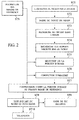
- the previous step ST0 of the figure 2 consists in providing these reference records for a set of games that are offered to the player. For example, a separate record is provided for each game, which consists of an image of the code of that game such that the code is supposed to be registered on each ballot for the game.
- a separate reference image is provided for each of its codes.
- reference images correspond to the same game code, especially to reduce the risk that a single reference image that would be provided for the same game code, has poor imaging quality.
- reference images that are provided for the same game code are preferably entered under conditions independent of a reference image to another. For example, about twenty reference images can be thus available, in total for all the games that are proposed, against which each game report will be analyzed.
- each reference image may be a representation of a complete bulletin of the corresponding game, which is taken as a model for the rest of the process.
- the reference image can then be reduced to a portion thereof which corresponds to the area 30.
- the location of the reproduction of the game code within each game bulletin is not the same for different games.
- an identification of this location is also provided at step ST0 for each reference picture, and is associated with the recording of this reference picture.
- the location of the reproduction of the game code can be identified in different ways. For example, geometric coordinates that are based on the markers 4, or on the edges of the game bulletin 10, can identify the location of the reproduction of the game code in the ballot.
- the location of the reproduction of the game code in the bulletin may be identified by a mask that is intended to be superimposed on a computer image of the bulletin. Such a mask then has a selection window which corresponds directly to the area 30.
- vector or bitmap formats can be used to identify the location of the reproduction of the game code in each game bulletin.
- each reference image is a representation of a complete ballot of the corresponding game
- the portion thereof corresponding to the area 30 may be determined by applying the identification of the location of the reproduction of the game code to the game. reference image itself.
- a game ball game recognition device in accordance with the invention, is intended to be installed in a point of sale or distribution of newsletters.
- Reference images can then be sent to the device via a communication network to which the device is connected, when updating reference images or to add a new reference image, for example when a new game is launched. All reference images can be stored in the device on a suitable data carrier.
- a player acquires a ballot that corresponds to this game, then uses it according to the rules of this game (step ST1 of the game). figure 2 ). This use may include a selection of certain numbers that are indicated in grids 2, or scratching to reveal a combination that is initially hidden, etc.
- the method of the invention relates to the identification of the code of the game in which the player participated, according to the game bulletin used.
- step ST2 an image of the bulletin 10 is captured using a photographic device that can be integrated into the apparatus, in a manner that is known per se.
- the image field that is captured is advantageously larger than the game ballot 10.
- each image may represent a whole ballot .
- several images can be captured for the same game report, for example in the form of a short video, and the image having the highest contrast or sharpness is selected.
- the steps ST3 to ST5 are intended to extract the code area 30 in the captured image. Progressive convergence to this zone 30 can be used to ensure that the zone 30 is finally found in all the analyzed bulletins.
- the step ST3 may consist of looking for the edges of the bulletin 10 in the image that has been entered. Such a search for the edges of the ballot may be based on color or contrast variations between the ballot itself and the background in the captured image. Alternatively or in addition, detection of straight lines in the captured image can be implemented, to find the edges of the bulletin 10 in the picture. Such methods are known to those skilled in the art of image analysis, so there is no need to describe them here.
- the area of the image that is occupied by the bulletin is then known by its peripheral boundaries, which correspond to the edges of the bulletin.
- the step ST4 may consist of looking for the marks 4, within the area of the image which is occupied by the bulletin 10.
- the marks 4 can be identified by their shape, their color or their contrast.
- an initial estimate of the locations of the markers 4 in the image can be obtained from the form of the bulletin, such that this form has been identified in step ST3.
- the zone 30 is identified precisely in the captured image, inside the zone of the image which is occupied by the whole of the bulletin 10. This identification of the zone 30 can be performed from the positions of the marks 4 in the captured image, or directly from the edges of the bulletin 10 as they could be detected in the captured image.
- Steps ST6 and ST7 compare the portion of the captured image that corresponds to area 30 with each of the reference images provided at step ST0. Steps ST6 and ST7 are therefore repeated for each of the reference images, from the same game bulletin 10.
- the sequence of the steps ST5 to ST7 is repeated for each reference picture with which the ballot 10 is compared.
- the image portion is again selected in step ST5 in the image that was input in step ST2, assuming that this reference image corresponds to the same set as bulletin 10.
- the identification of the location of the game code in the ballot, recorded for the reference picture that is in use, is applied. This is the negative result finally obtained for the comparison between the content of the image portion thus selected, and the reference image, which will eliminate the attempts for which the portion of the image that has been selected does not contain the reproduction of the game code.
- the comparison of the step ST7 is performed at the level of the image contents, without operation interpretation and reading.
- step ST2 can also introduce by itself geometric distortions, color changes, sharpness defects, etc., additional to those caused by the reprographic process which has been used to print the bulletin 10.
- one or more imaging corrections may be applied to the portion of the image that corresponds to the area 30 of the bulletin 10.
- the imaging corrections that are known, the following are of the photometric correction type: registration of a scale of hue levels, filtering of local variations of clarity, and sharpness correction.
- the rescaling of hue levels makes it possible to obtain, in the image portion corresponding to the area 30, a mean illumination and / or a contrast which are equivalent to those of the reference image.
- Geometric-type imaging corrections may relate to the apparent size of the area 30 in the image portion, its orientation, or an angle of view, relative to the reference image. Such corrections proceed by homotheties or homographies which are determined in comparing points or remarkable lines in the portion of the captured image and in the reference image. In known manner, a geometric registration up to a sub-pixellic level can be achieved thus, that is to say that the image portion can be realigned with respect to the reference image with a precision which is more fine than the pitch of the pixels in each image.
- Imaging corrections are applied to the portion of the captured image that reproduces the area of the bulletin 10, but in the form of a record that is separate from that of the image capture so that it can be resumed later. image as it was entered, especially to compare it with another reference image. Finally, the image portion that is thus corrected is compared to the reference image.
- Image comparison algorithms are known to those skilled in the art, the results of which include a numerical value that measures the level of similarity between the images being compared. Such a value has been called score in the general part of the present description. Thus, for the bulletin 10 being processed, a similarity score is obtained relative to each of the stored reference images.
- imaging corrections or only some of them may be applied to the reference image for the current comparison, instead of being applied to the image portion that reproduces the area 30 of the bulletin 10.
- Each imaging correction is then determined to increase the similarity between the reproduction of the game code 3 as it appears on the bulletin 10, and the reference image after the latter has been corrected.
- image corrections that would be applied to the reference image use a record thereof that is separate from that provided in step ST0, so that the initial reference image can be resumed later.
- the imaging corrections already mentioned above for the portion of the image of the bulletin 10 which corresponds to the zone 30, can thus be applied to the reference images.
- Some image corrections may also be applied to both the portion of the bulletin image 10 and the reference image.
- steps ST8 to ST10 relate to the decision process that results in presenting one of the game codes of the reference images, such as the one who is recognized on the bulletin 10.
- the two highest scores can be selected from among all the scores that have been obtained for the reference images provided at step ST0, and the difference between these two highest scores is calculated at step ST8 .
- This difference may be considered as a measure of a doubt that may exist between the two reference images that most closely resemble the reproduction of the game code that appears on the bulletin 10. If this difference is greater than or equal to a threshold of reliability initially set, then the reference image for which the highest score was obtained, is considered as that which corresponds to the reproduction of the bulletin 10, and the corresponding game code is presented as having been recognized on the bulletin 10 (step ST9).
- an estimate value of the reliability of the proposed game code can be delivered by the device. This value can be in particular the difference between the two highest scores, in the case of the test just described. If reliability is judged insufficient, then the process can be restarted from step ST2.
- a validation of the identity between the game code of the reference image whose score is the highest, and the code which is inscribed on the bulletin 10, can be requested (step ST10). Such validation can be performed by the player himself, or by the agent who issued him the bulletin 10. But other modes of validation can be used alternately, which do not require intervention of the player or the player. 'agent.
- validation may be obtained or denied by seeking consistency between the game code of the reference image for which the highest score was obtained, and other characteristics or content elements of the bulletin 10.
- the selection that has been made by the player to bet or play can itself be used. Indeed, this selection is also read automatically. Its consistency with the rules of the game that corresponds to the highest score, can then be checked quickly. A positive result for this consistency test may establish the validation sought, for the game code of the reference image that provided the highest score.
- Another test to estimate the reliability of the recognition for the proposed game code may relate to the value of the highest score itself. This value can be compared to a reliability threshold, separate from the previous one, and the test is declared positive if the value is greater than or equal to the threshold, or negative if it is not. In this case, the highest score value can be provided as an estimate value of the reliability of the game code recognition.
- imaging quality tests can be applied to the image that was input in step ST2 , or to the image portion that was selected in step ST5. For example, such tests may evaluate whether a contrast or sharpness of the image or portion of the image is sufficient for the subsequent recognition of the game code to be reliable or not.
- the person skilled in the imaging art knows at this level of multiple tests that quantify the quality of an image.
- the recognition method which has just been described in detail in the case of the game code may be applied to any other technical function graphic element which is written on a game bulletin, and for which a reference image is available. Indeed, this method is independent of the nature and the content of the graphic element with technical function.
- the game code may be replaced by a symbol of the game, for example of the type logo, acronym, sign or pictogram, or by a graphic element with technical function such as a marker of the positioning of the game bulletin in the game. image that is captured, to then search for other graphic elements at locations that are determined from these positioning marks.
- the reliability and the robustness of the method of recognition of the invention make it possible to avoid using pattern recognition methods.
- the positioning marks that can be registered on the game ballots have particular forms and aspects, such as dark rectangles that are not aesthetic in the visual appearance of the bulletin, to be compatible with pattern recognition algorithms.
- the positioning marks can be combined with other graphic elements whose function becomes multiple.
- certain graphic elements with technical functions can merge with decor elements and positioning marks, or data encoding elements can be combined with positioning marks.
- a series of patterns can serve both as positioning and game code.
- Such graphics with multiple technical functions can be detected in the game report using POI approaches, or related component analyzes followed by moment calculations, and are then recognized using an image comparison according to the present invention.
- each step of image analysis or program execution can be implemented in many ways, all of which are accessible to those skilled in the art without effort of invention. It is recalled that most of the advantages of the invention result from the search for a coincidence at the image level, without reading or interpretation step. The technical function graphical element can then be written on the newsletters in any way, with image content characteristics that vary for different games.
Landscapes
- Physics & Mathematics (AREA)
- General Physics & Mathematics (AREA)
- Engineering & Computer Science (AREA)
- Multimedia (AREA)
- Image Analysis (AREA)
- Credit Cards Or The Like (AREA)
Description
La présente invention concerne un procédé de reconnaissance d'un élément graphique à fonction technique qui est inscrit sur un bulletin de jeu. Elle concerne aussi un appareil pour mettre en oeuvre un tel procédé.The present invention relates to a method for recognizing a graphic element with a technical function which is written on a game bulletin. It also relates to an apparatus for implementing such a method.
De nombreux jeux de loterie, ou de paris qui sont fondés sur des courses hippiques, sur des compétitions sportives ou sur tout évènement proposé pour parier, utilisent des bulletins de jeu qui sont délivrés au joueur. Après que le joueur a effectué son action de jouer, par exemple en sélectionnant une proposition parmi de multiples propositions qui sont disponibles, et a inscrit sa sélection sur le bulletin de jeu, ce bulletin est traité par un appareil de lecture. Cet appareil lit la sélection de jeu qui a été effectuée par le joueur, mais aussi au moins un autre élément, dont un code qui identifie le jeu auquel le joueur a participé. Ce code détermine notamment les règles du jeu auquel le joueur a participé. Il est possible qu'un même modèle de bulletin de jeu soit commun à plusieurs jeux différents, par exemple des jeux qui ont des règles différentes tout en ayant une présentation graphique sur le bulletin qui est la même. Dans ce cas, les bulletins relatifs à des jeux différents sont distingués par les codes de jeux qui sont inscrits sur ces bulletins : deux jeux différents sont identifiés par des codes eux-mêmes différents.Many lottery games, or bets that are based on horse racing, sports competitions or any event proposed to bet, use game ballots that are issued to the player. After the player has performed his action of playing, for example by selecting a proposal among multiple proposals that are available, and has registered his selection on the game bulletin, this bulletin is processed by a reading device. This device reads the game selection that has been made by the player, but also at least one other element, including a code that identifies the game in which the player participated. This code determines in particular the rules of the game in which the player participated. It is possible that the same game bulletin template is common to several different games, for example games that have different rules while having a graphic presentation on the ballot that is the same. In this case, the ballots relating to different games are distinguished by the game codes that are inscribed on these ballots: two different games are identified by codes themselves different.
Un dispositif d'analyse de tels bulletins de jeu est décrit dans la demande de brevet européen
Le code de jeu est inscrit sur le bulletin en plus de la sélection qui a été effectuée par le joueur pour jouer, et est lu automatiquement par l'appareil. Or plusieurs modes d'encodage et d'inscription sont utilisés pour inscrire les codes de jeux sur les bulletins : écriture alphanumérique, code-barres, positions de marquages, encodages spécifiques à la société de production du jeu ou spécifiques à une catégorie de jeux, etc. Plusieurs algorithmes de lecture sont alors mis en oeuvre dans l'appareil de lecture des bulletins, pour identifier les codes de jeux qui sont inscrits sur ceux-ci. En particulier, un algorithme de reconnaissance de caractères est utilisé pour lire des codes de jeux alphanumériques, un algorithme de lecture de codes-barres pour le cas d'une inscription de ce type, etc. Des algorithmes de lecture différents, chacun étant spécifique à un mode d'inscription, sont donc nécessaires, ce qui rend complexe le fonctionnement de l'appareil de lecture des bulletins de jeu. D'autres inconvénients de cette situation sont notamment :
- il est nécessaire de déterminer le mode d'inscription qui est utilisé pour le code de jeu, sur le bulletin à traiter, avant de procéder à sa lecture ;
- chaque algorithme doit être développé et testé séparément, notamment par rapport à son taux d'erreur de lecture ;
- des mise-à-jour éventuelles concernent chaque algorithme indépendamment des autres, d'où une multiplication des opérations de mise-à-jour qui peuvent être nécessaires ;
- les modes d'inscription qui sont utilisés pour les codes jeux, doivent être connus a priori pour que l'appareil puisse être utilisé. Autrement dit, un nouveau mode d'inscription de code jeu ne peut pas être introduit sans ajouter l'algorithme de lecture correspondant à tous les appareils de lecture déjà en service ; et
- tous les modes d'inscription qui sont utilisés doivent être conçus pour réduire au maximum le taux d'erreur de lecture.
- it is necessary to determine the registration method that is used for the game code, on the bulletin to be processed, before proceeding to its reading;
- each algorithm must be developed and tested separately, especially with respect to its reading error rate;
- possible updates concern each algorithm independently of the others, resulting in a multiplication of update operations that may be necessary;
- the registration methods that are used for game codes must be known a priori for the device to be used. In other words, a new game code registration mode can not be introduced without adding the read algorithm corresponding to all reading devices already in use; and
- all the registration modes that are used must be designed to minimize the reading error rate.
Il est aussi connu d'utiliser des repères de position tels que des pavés aux formes fixées, pour déterminer la position du bulletin de jeu dans l'appareil de lecture. Des rectangles sombres, le plus souvent uniformes en couleur, constituent couramment de tels repères de position. Une telle détermination de la position du bulletin sert en particulier à lire le code de jeu à l'endroit dans le bulletin où ce code est inscrit. D'autres repères peuvent aussi être inscrits sur les bulletins de jeu pour faciliter le décodage, tels que des repères à espacements réguliers qui sont appelés «clock marks». Mais tous ces repères, dont les fonctions sont techniques, sont recherchés dans une image de chaque bulletin de jeu en effectuant des analyses de reconnaissance de formes.It is also known to use position markers such as fixed-shape blocks to determine the position of the game bulletin in the reading apparatus. Dark rectangles, usually uniform in color, commonly constitute such position marks. Such a determination of the position of the ballot serves in particular to read the game code at the place in the ballot where this code is written. Other markers may also be written on the game ballots to facilitate decoding, such as regularly spaced markers which are called "clock marks". But all these benchmarks, whose functions are technical, are searched for in an image of each game bulletin by performing pattern recognition analyzes.
A partir de cette situation, l'invention a pour but de déterminer un élément graphique à fonction technique qui est inscrit sur chaque bulletin délivré à un joueur, d'une nouvelle façon pour éviter ou réduire les inconvénients qui viennent d'être cités.From this situation, the object of the invention is to determine a graphic element with a technical function which is written on each ballot delivered to a player, in a new way to avoid or reduce the disadvantages just mentioned.
Un but complémentaire de l'invention peut être de permettre une réduction de la taille de l'élément graphique recherché dans le bulletin de jeu, tout en conservant la fiabilité et la robustesse de sa reconnaissance.An additional aim of the invention may be to allow a reduction in the size of the desired graphic element in the game report, while maintaining the reliability and robustness of its recognition.
Un autre but encore de l'invention peut être de permettre une combinaison d'un élément graphique dont l'utilité est uniquement de nature technique, avec au moins un autre élément graphique qui figure sur les bulletins de jeu, notamment avec un élément graphique à fonction décorative. Ainsi, des éléments graphiques à fonctions techniques mais qui sont peu esthétiques en soi peuvent être intégrés dans d'autres éléments graphiques qui sont plus esthétiques.Yet another object of the invention may be to allow a combination of a graphic element whose utility is only of a technical nature, with at least one other graphic element which appears on the game ballots, in particular with a graphic element to decorative function. Thus, graphical elements with technical functions but which are unsightly in themselves can be integrated into other graphic elements that are more aesthetic.
Pour cela, un premier aspect de l'invention propose un procédé de reconnaissance d'un élément graphique qui est inscrit sur un bulletin de jeu délivré à un joueur, ce procédé comprenant les étapes suivantes :
- /1/ fournir une série d'images de référence qui contiennent chacune une représentation d'un élément graphique, sous forme d'enregistrements de ces images de référence ;
- /2/ saisir au moins une image du bulletin qui a été délivré au joueur ;
- /3/ à l'intérieur de l'image du bulletin, sélectionner une portion d'image qui contient une reproduction de l'élément graphique telle que cet élément graphique apparaît sur le bulletin ;
- /4/ comparer la reproduction de l'élément graphique contenue dans la portion d'image sélectionnée avec chaque image de référence, et pour chacune des images de référence, obtenir un score qui quantifie une similarité entre la reproduction de l'élément graphique et l'image de référence ;
- /5/ proposer l'élément graphique de l'image de référence pour laquelle le score est le plus élevé, comme élément graphique qui est reconnu pour le bulletin ; et
- /6/ optionnellement, exécuter un traitement à partir de l'élément graphique à fonction technique tel que proposé à l'étape /5/ comme élément graphique reconnu. Un tel traitement, automatisé ou non, peut être notamment l'exécution d'une partie d'un jeu, ou une utilisation du bulletin de jeu.
- / 1 / providing a series of reference images which each contain a representation of a graphic element, in the form of records of these reference images;
- / 2 / entering at least one image of the ballot delivered to the player;
- / 3 / inside the bulletin image, select a portion of an image that contains a reproduction of the graphic element such that this graphic element appears on the bulletin;
- / 4 / comparing the reproduction of the graphic element contained in the selected image portion with each reference image, and for each of the reference images, obtaining a score that quantifies a similarity between the reproduction of the graphic element and the reference image;
- / 5 / propose the graphic element of the reference image for which the score is highest, as a graphic element which is recognized for the newsletter; and
- / 6 / optionally, execute a processing from the graphic element with technical function as proposed in step / 5 / as recognized graphic element. Such treatment, automated or not, can be including the performance of part of a game, or use of the game bulletin.
Ainsi, un procédé conforme à l'invention ne procède pas par lecture ou reconnaissance de caractères ni de formes, mais par comparaison de contenus d'images, entre la portion d'image qui est sélectionnée à l'intérieur du bulletin pour contenir l'inscription l'élément graphique, et les images de référence qui servent de modèles de représentation pour chaque élément graphique. Ainsi, la reconnaissance d'élément graphique qui est proposée par l'invention ne met en oeuvre aucune interprétation de lecture, mais seulement une comparaison des niveaux de ressemblance entre l'élément graphique tel qu'il apparaît sur le bulletin et chaque élément graphique tel qu'il apparaît dans les images de référence. Le résultat de la reconnaissance est donné par l'image de référence pour laquelle la ressemblance est la plus grande.Thus, a method according to the invention does not proceed by reading or recognizing characters or shapes, but by comparing image contents, between the portion of the image that is selected inside the bulletin to contain the image. inscription the graphic element, and the reference images that serve as representation models for each graphic element. Thus, the graphic element recognition that is proposed by the invention implements no interpretation of reading, but only a comparison of the levels of similarity between the graphic element as it appears on the bulletin and each graphic element such as that it appears in the reference images. The result of the recognition is given by the reference image for which the resemblance is the greatest.
Autrement dit, l'invention procède directement au niveau des images, par comparaison de celles-ci, contrairement aux procédés de lecture qui mettent en oeuvre une combinaison d'opérations de sélection, d'extraction, et d'interprétation de caractères ou de segments de codes qui sont inscrits sur les bulletins.In other words, the invention proceeds directly at the level of the images, by comparison thereof, unlike reading methods which implement a combination of operations of selection, extraction, and interpretation of characters or segments codes that are written on the ballots.
Ainsi, l'invention ne nécessite qu'un seul algorithme de comparaison d'images, apte à produire un score de similarité pour chaque paire d'images qui sont comparées l'une à l'autre. Cet algorithme de comparaison est applicable quelque soit le mode d'inscription qui est utilisé pour l'élément graphique, sans restriction pour des nouveaux modes d'encodage et d'inscription qui seraient introduits, et sans nécessité d'adapter des appareils déjà installés avant que de tels nouveaux modes d'encodage et d'inscription soient conçus et utilisés.Thus, the invention requires only one image comparison algorithm, capable of producing a similarity score for each pair of images that are compared to each other. This comparison algorithm is applicable regardless of the registration mode that is used for the graphic element, without restriction for new encoding and registration modes that would be introduced, and without the need to adapt devices already installed before such new encoding and registration methods be designed and used.
En particulier, le procédé de l'invention est compatible avec des modes d'encodage et d'inscription très variables, y compris des codes alphanumériques, des codes-barres, des logos ou des dessins, possiblement différenciés par des couleurs ou des niveaux de gris, des illustrations ou des photographies, etc. Notamment, le mode d'inscription de l'élément graphique à fonction technique sur le bulletin peut être intégré avec un élément de décoration du bulletin, ou une partie d'un décor, par exemple une partie de décor qui s'étend sur le bulletin au-delà d'une région significative pour l'élément graphique.In particular, the method of the invention is compatible with very variable encoding and registration modes, including alphanumeric codes, bar codes, logos or drawings, possibly differentiated by colors or levels of gray, illustrations or photographs, etc. In particular, the registration method of the technical function graphic element on the bulletin can be integrated with an element of decoration of the bulletin, or part of a decoration, for example a part of scenery that extends over the bulletin beyond a significant region for the graphic element.
Enfin, le taux d'erreur de reconnaissance d'un procédé selon l'invention, peut être particulièrement faible, notamment grâce à l'absence d'étape d'interprétation de lecture.Finally, the recognition error rate of a method according to the invention may be particularly low, particularly due to the absence of read interpretation step.
L'élément graphique à fonction technique auquel peut être appliqué le procédé de l'invention peut être varié. En particulier, la fonction technique peut se rapporter à une sélection du jeu, un principe du jeu, une mise en oeuvre du jeu, une inscription de données utiles, une utilisation du bulletin de jeu, un traitement automatisé ou non du bulletin de jeu, ou une combinaison de plusieurs fonctions techniques. Par exemple, l'élément graphique peut comprendre un code de jeu ou un symbole de jeu, ou un élément graphique de référence pour déterminer une position du bulletin. De façon générale pour l'invention, l'élément graphique à fonction technique présente des caractéristiques utiles, par opposition à des éléments graphiques de décors ou publicitaires qui peuvent être inscrits en outre sur chaque bulletin de jeu.The technical function graphical element to which the method of the invention can be applied can be varied. In particular, the technical function can relate to a selection of the game, a principle of the game, an implementation of the game, a registration of useful data, use of the game report, automated processing or not the game bulletin, or a combination of several technical functions. For example, the graphic element may include a game code or a game symbol, or a graphical reference element for determining a position of the ballot. In general, for the invention, the technical function graphic element has useful features, as opposed to graphic decor or advertising elements that may be further inscribed on each game bulletin.
Dans des premiers perfectionnements possibles de l'invention, la portion de l'image du bulletin, qui contient l'élément graphique inscrit, peut être déterminée progressivement. Pour cela, l'étape /3/ peut comprendre les sous-étapes suivantes :
- /3-1/ dans l'image qui est saisie pour le bulletin, détecter des repères qui sont inscrits sur ce bulletin ; puis
- /3-2/ à partir des repères, déterminer une position de la portion d'image qui contient la reproduction de l'élément graphique telle que cet élément graphique apparaît sur le bulletin.
- / 3-1 / in the image that is entered for the newsletter, detect markers that are listed on this newsletter; then
- / 3-2 / from the markers, determine a position of the image portion that contains the reproduction of the graphic element such that this graphic element appears on the bulletin.
La portion d'image est alors sélectionnée dans l'image du bulletin à la position qui a été déterminée à la sous-étape /3-2/. Eventuellement, la sous-étape /3-1/ peut comprendre elle-même une identification dans l'image qui est saisie à l'étape /2/, d'une zone de cette image qui est occupée par le bulletin. Dans ce cas, les repères sont détectés à l'intérieur de cette zone.The image portion is then selected in the bulletin image at the position that was determined in substep / 3-2 /. Optionally, the substep / 3-1 / may itself comprise an identification in the image which is input in step / 2 /, of an area of this image which is occupied by the bulletin. In this case, the marks are detected within this zone.
Possiblement, l'emplacement de la reproduction de l'élément graphique dans chaque bulletin peut varier en fonction du jeu. Dans ce cas, une identification de cet emplacement peut être fournie en outre à l'étape /1/ pour chaque image de référence. L'étape /3/ est alors répétée pour chaque image de référence, en utilisant l'identification d'emplacement qui correspond à l'image de référence pour laquelle l'étape /4/ est ensuite exécutée.Possibly, the location of the reproduction of the graphic element in each bulletin may vary depending on the game. In this case, an identification of this location may be further provided in step / 1 / for each reference image. Step / 3 / is then repeated for each reference picture, using the location identification which corresponds to the reference picture for which step / 4 / is then executed.
Des seconds perfectionnements possibles permettent de comparer de façon plus fiable les représentations de l'élément graphique sur le bulletin et dans chaque image de référence. Pour cela, au moins une correction d'imagerie peut être appliquée à la portion d'image qui contient la reproduction de l'élément graphique telle que cet élément apparaît sur le bulletin. Cette correction d'imagerie est déterminée pour augmenter la similarité entre la reproduction de l'élément graphique qui figure sur le bulletin, et l'image de référence de la comparaison en cours. Le score de similarité quantifie alors la similarité entre la reproduction de l'élément graphique telle qu'elle résulte de la correction d'imagerie qui est appliquée à la portion d'image, et l'image de référence. Une telle correction d'imagerie peut concerner au moins l'un des paramètres suivants : un niveau de clarté, un contraste, une netteté, une taille, une orientation ou un angle de prise de vue, pour la reproduction de l'élément graphique telle qu'il apparaît dans la portion d'image.Second possible improvements make it possible to more reliably compare the representations of the graphic element on the bulletin and in each reference image. For this, at least one image correction can be applied to the image portion that contains the reproduction of the graphic element such that this element appears on the bulletin. This image correction is determined to increase the similarity between the reproduction of the graphic element on the bulletin and the reference image of the current comparison. The similarity score then quantifies the similarity between the reproduction of the graphic element as a result of the image correction that is applied to the image portion, and the reference image. Such an image correction may concern at least one of the following parameters: a level of clarity, a contrast, a sharpness, a size, an orientation or an angle of view, for the reproduction of the graphic element such as that it appears in the image portion.
Dans des troisièmes perfectionnements optionnels de l'invention, le procédé peut comprendre en outre, après l'étape /5/, un test pour estimer une fiabilité de la reconnaissance de l'élément graphique. Alors, si le test est positif, l'élément graphique proposé est confirmé comme élément graphique qui est reconnu sur le bulletin. Si le test est négatif, alors une valeur d'estimation de la fiabilité est produite. Le test qui est utilisé pour estimer la fiabilité de la reconnaissance de l'élément graphique peut être :
- une comparaison avec un seuil de fiabilité, d'un écart entre le score le plus élevé et le score suivant dans un ordre décroissant des scores qui sont obtenus pour toutes les images de référence, le test étant positif lorsque l'écart est supérieur ou égal au seuil de fiabilité ;
- une comparaison du score le plus élevé avec un seuil de fiabilité, le test étant positif lorsque ce score le plus élevé est supérieur ou égal au seuil de fiabilité ; ou
- un critère de qualité d'imagerie suffisante, pour la portion d'image qui contient la reproduction de l'élément graphique telle que cet élément graphique apparaît sur le bulletin.
- a comparison with a reliability threshold, a difference between the highest score and the next score in descending order of the scores obtained for all the reference images, the test being positive when the difference is greater than or equal to at the reliability threshold;
- a comparison of the highest score with a reliability threshold, the test being positive when this highest score is greater than or equal to the reliability threshold; or
- a sufficient image quality criterion, for the portion of the image that contains the reproduction of the graphic element such that this graphic element appears on the bulletin.
Eventuellement, une combinaison de ces différents tests peut être utilisée.Optionally, a combination of these different tests can be used.
Possiblement, lorsque le test est négatif, une validation de l'élément graphique proposé peut en outre être requise. Une telle validation peut être décidée par le joueur, ou par un fournisseur du bulletin au joueur, ou être décidée en utilisant un contenu du bulletin supplémentaire par rapport à la reproduction de l'élément graphique. Par exemple, la validation peut être décidée automatiquement à partir d'une cohérence entre le contenu supplémentaire du bulletin et des données qui sont associées à l'élément graphique proposé. Lorsque l'élément graphique comprend un code de jeu ou un symbole de jeu, le contenu supplémentaire qui est utilisé pour cela peut comprendre la sélection entre les propositions multiples qui est inscrite par le joueur sur le bulletin, et les données qui sont associées au code de jeu ou symbole de jeu proposé peuvent comprendre des règles de ce jeu. Autrement dit, la cohérence est recherchée entre la sélection qu'effectue le joueur pour jouer, et les règles de celui des jeux disponibles qui est présumé d'après la comparaison d'images.Possibly, when the test is negative, a validation of the proposed graphic element may also be required. Such validation may be decided by the player, or a provider of the ballot to the player, or be decided by using additional ballot content in relation to the reproduction of the graphic element. For example, validation can be decided automatically from a consistency between the additional content of the bulletin and data that is associated with the proposed graphic element. When the graphic element includes a game code or a game symbol, the additional content that is used for this may include the selection between multiple proposals that is entered by the player on the ballot, and the data that is associated with the code. game or proposed game symbol may include rules of this game. In other words, consistency is sought between the selection made by the player to play, and the rules of the game available which is presumed from the comparison of the game. images.
De façon générale, un procédé conforme à l'invention peut être mis en oeuvre sur un point de distribution du bulletin de jeu.In general, a method according to the invention may be implemented on a distribution point of the game bulletin.
Un second aspect de l'invention propose un appareil de reconnaissance d'un élément graphique à fonction technique qui est inscrit sur un bulletin de jeu. Cet appareil de l'invention qui comprend :
- des moyens de stockage d'une série d'images de référence qui contiennent chacune une représentation d'un élément graphique à fonction technique, sous forme d'enregistrements de ces images de référence ;
- des moyens de saisie d'image, qui sont adaptés pour saisir au moins une image du bulletin de jeu ;
- des moyens d'analyse d'image, adaptés pour sélectionner, à l'intérieur d'une image du bulletin de jeu, une portion d'image qui contient une reproduction de l'élément graphique à fonction technique telle que cet élément graphique apparaît sur le bulletin ;
- des moyens de comparaison, adaptés pour comparer la reproduction de l'élément graphique avec chaque image de référence stockée, de façon à produire pour chacune des images de référence, un score qui quantifie une similarité entre la reproduction de l'élément graphique et l'image de référence ;
- des moyens pour sélectionner l'élément graphique de l'image de référence pour laquelle le score est le plus élevé, et pour proposer cet élément graphique sélectionné comme élément graphique qui est reconnu pour le bulletin ; et
- optionnellement, des moyens pour exécuter un traitement à partir de l'élément graphique à fonction technique proposé comme élément graphique reconnu.
- means for storing a series of reference images which each contain a representation of a technical function graphical element, in the form of records of these reference images;
- image capturing means, which are adapted to capture at least one image of the game report;
- image analysis means, adapted to select, within an image of the game report, an image portion which contains a reproduction of the graphic element with a technical function such that this graphic element appears on the bulletin ;
- comparison means, adapted to compare the reproduction of the graphic element with each stored reference image, so as to produce for each of the reference images, a score which quantifies a similarity between the reproduction of the graphic element and the reference image;
- means for selecting the graphical element of the reference image for which the score is highest, and for proposing this selected graphical element as a graphical element which is recognized for the newsletter; and
- optionally, means for executing a processing from the graphic element with a technical function proposed as a recognized graphic element.
Un tel appareil est adapté pour mettre en oeuvre un procédé qui est conforme au premier aspect de l'invention, y compris les perfectionnements optionnels. En particulier, lorsque l'élément graphique à reconnaître est un code de jeu ou un symbole de jeu, et lorsqu'une sélection entre plusieurs propositions est inscrite sur le bulletin de jeu, l'appareil peut être adapté en outre pour lire cette sélection, et pour valider le code de jeu ou symbole de jeu qui est proposé en fonction de la cohérence entre la sélection lue et les règles du jeu de ce code ou symbole.Such an apparatus is adapted to implement a method which is in accordance with the first aspect of the invention, including optional enhancements. In particular, when the graphic element to be recognized is a game code or a game symbol, and when a selection between several proposals is written on the game bulletin, the apparatus can be further adapted to read this selection, and to validate the game code or game symbol that is proposed based on the consistency between the play selection and the game rules of that code or symbol.
D'autres particularités et avantages de la présente invention apparaîtront dans la description ci-après d'exemples de réalisation non limitatifs, en référence aux dessins annexés, dans lesquels :
- la
figure 1 représente schématiquement un bulletin de jeu avec lequel l'invention peut être mise en oeuvre; et - la
figure 2 est un diagramme des étapes d'un procédé conforme à l'invention.
- the
figure 1 schematically represents a game bulletin with which the invention can be implemented; and - the
figure 2 is a diagram of the steps of a method according to the invention.
Pour raison de clarté, les dimensions des éléments qui sont représentés dans la
L'invention est maintenant décrite en détail dans le cas d'un code de jeu en tant qu'élément graphique à fonction technique qui est reconnu en appliquant l'invention, mais il est entendu qu'il ne s'agit que d'une application particulière de l'invention, qui est prise à titre d'illustration.The invention is now described in detail in the case of a game code as a technical function graphic element which is recognized by applying the invention, but it is understood that it is only a matter of particular application of the invention, which is taken by way of illustration.
Conformément à la
- une zone de titre ou de
décor 1, - une ou plusieurs
grilles 2, dans lesquelles le joueur indique ses sélections pour jouer, et - un code de jeu 3 dans une
zone 30 qui est dédiée pour contenir l'inscription ducode 3, et - des repères 4, par rapport auxquels les différentes zones du
bulletin 10 sont agencées et peuvent être localisées.
- a title or
decor area 1, - one or
more grids 2, in which the player indicates his selections to play, and - a
game code 3 in azone 30 which is dedicated to contain the inscription of thecode 3, and - 4, relative to which the different areas of the
bulletin 10 are arranged and can be located.
Grâce à l'invention, le code de jeu 3 peut être inscrit sous une forme et un format qui sont quelconques à l'intérieur de la zone 30. La zone 30 peut elle-même avoir une forme périphérique quelconque, rectangulaire ou autre. Le code de jeu ainsi inscrit est saisi en image puis est comparé à des enregistrements de référence. L'étape préalable ST0 de la
Eventuellement, chaque image de référence peut être une représentation d'un bulletin complet du jeu correspondant, qui est pris comme modèle pour la suite du procédé. Dans ce cas, l'image de référence peut être ensuite réduite à une portion de celle-ci qui correspond à la zone 30.Optionally, each reference image may be a representation of a complete bulletin of the corresponding game, which is taken as a model for the rest of the process. In this case, the reference image can then be reduced to a portion thereof which corresponds to the
Il est possible que l'emplacement de la reproduction du code de jeu à l'intérieur de chaque bulletin de jeu ne soit pas la même pour des jeux différents. Dans ce cas, une identification de cet emplacement est aussi fournie à l'étape ST0 pour chaque image de référence, et est associée à l'enregistrement de cette image de référence. L'emplacement de la reproduction du code de jeu peut être identifié de différentes façons. Par exemple, des coordonnées géométriques qui sont basées sur les repères 4, ou sur les bords du bulletin de jeu 10, peuvent identifier l'emplacement de la reproduction du code de jeu dans le bulletin. Alternativement, l'emplacement de la reproduction du code de jeu dans le bulletin peut être identifié par un masque qui est destiné à être superposé informatiquement à une image du bulletin. Un tel masque possède alors une fenêtre de sélection qui correspond directement à la zone 30. En particulier, des formats vectoriels ou bitmap peuvent être utilisés pour identifier l'emplacement de la reproduction du code de jeu dans chaque bulletin de jeu.It is possible that the location of the reproduction of the game code within each game bulletin is not the same for different games. In this case, an identification of this location is also provided at step ST0 for each reference picture, and is associated with the recording of this reference picture. The location of the reproduction of the game code can be identified in different ways. For example, geometric coordinates that are based on the
Lorsque chaque image de référence est une représentation d'un bulletin complet du jeu correspondant, la portion de celle-ci qui correspond à la zone 30 peut être déterminée en appliquant l'identification de l'emplacement de la reproduction du code de jeu à l'image de référence elle-même.When each reference image is a representation of a complete ballot of the corresponding game, the portion thereof corresponding to the
Un appareil de reconnaissance des bulletins de jeu, conforme à l'invention, est destiné à être installé dans un point de vente ou de distribution des bulletins. Les images de référence peuvent alors être envoyées à l'appareil au moyen d'un réseau de communication auquel l'appareil est connecté, lors de mise-à-jour des images de référence ou pour ajouter une nouvelle image de référence, par exemple quand un nouveau jeu est lancé. Toutes les images de référence peuvent être stockées dans l'appareil, sur un support de données approprié.A game ball game recognition device, in accordance with the invention, is intended to be installed in a point of sale or distribution of newsletters. Reference images can then be sent to the device via a communication network to which the device is connected, when updating reference images or to add a new reference image, for example when a new game is launched. All reference images can be stored in the device on a suitable data carrier.
Pour participer à l'un des jeux qui lui sont proposés dans le point de distribution, un joueur acquiert un bulletin qui correspond à ce jeu, puis l'utilise conformément au règlement de ce jeu (étape ST1 de la
A l'étape ST2, une image du bulletin 10 est saisie en utilisant un dispositif photographique qui peut être intégré dans l'appareil, d'une façon qui est connue en soi. Afin de pouvoir utiliser le même appareil pour des bulletins de jeu qui ont des tailles et des formes différentes, le champ de l'image qui est saisie est avantageusement plus grand que le bulletin de jeu 10. Ainsi, chaque image peut représenter un bulletin entier. Préférentiellement, plusieurs images peuvent être saisies pour un même bulletin de jeu, par exemple sous forme d'une courte vidéo, et l'image qui présente un contraste ou une netteté la plus élevée est sélectionnée.In step ST2, an image of the
Les étapes ST3 à ST5 ont pour but d'extraire la zone de code 30 dans l'image saisie. Une convergence progressive vers cette zone 30 peut être utilisée, pour garantir que la zone 30 soit finalement trouvée dans tous les bulletins analysés. Dans un premier temps, l'étape ST3 peut consister à rechercher les bords du bulletin 10 dans l'image qui a été saisie. Une telle recherche des bords du bulletin peut être basée sur des variations de couleur ou de contraste entre le bulletin lui-même et l'arrière-plan dans l'image saisie. Alternativement ou en complément, une détection de lignes rectilignes dans l'image saisie peut être mise en oeuvre, pour trouver les bords du bulletin 10 dans l'image. De telles méthodes sont connues de l'Homme du métier de l'analyse d'image, si bien qu'il n'est pas nécessaire de les décrire ici. La zone de l'image qui est occupée par le bulletin est alors connue par ses limites périphériques, qui correspondent aux bords du bulletin. Puis l'étape ST4 peut consister à rechercher les repères 4, à l'intérieur de la zone de l'image qui est occupée par le bulletin 10. Les repères 4 peuvent être identifiés par leur forme, leur couleur ou leur contraste. Eventuellement, une estimation initiale des emplacements des repères 4 dans l'image peut être obtenue à partir de la forme du bulletin, telle que cette forme a été identifiée à l'étape ST3. Enfin, à l'étape ST5, la zone 30 est identifiée précisément dans l'image saisie, à l'intérieur de la zone de l'image qui est occupée par l'ensemble du bulletin 10. Cette identification de la zone 30 peut être effectuée à partir des positions des repères 4 dans l'image saisie, ou directement à partir des bords du bulletin 10 tels qu'ils ont pu être détectés dans l'image saisie.The steps ST3 to ST5 are intended to extract the
Les étapes ST6 et ST7 consistent à comparer la portion de l'image saisie qui correspond à la zone 30, avec chacune des images de référence fournies à l'étape ST0. Les étapes ST6 et ST7 sont donc répétées pour chacune des images de référence, à partir du même bulletin de jeu 10.Steps ST6 and ST7 compare the portion of the captured image that corresponds to
Lorsque l'emplacement de la reproduction du code dans le bulletin 10 peut varier pour des jeux qui sont différents, la séquence des étapes ST5 à ST7 est répétée pour chaque image de référence avec laquelle le bulletin 10 est comparé. Ainsi, pour chacune des images de référence indépendamment, la portion d'image est de nouveau sélectionnée à l'étape ST5 dans l'image qui a été saisie à l'étape ST2, en supposant que cette image de référence correspond au même jeu que le bulletin 10. L'identification de l'emplacement du code de jeu dans le bulletin, enregistrée pour l'image de référence qui est en cours d'utilisation, est appliquée. C'est le résultat négatif finalement obtenu pour la comparaison entre le contenu de la portion d'image ainsi sélectionnée, et l'image de référence, qui éliminera les tentatives pour lesquelles la portion d'image qui a été sélectionnée ne contient pas la reproduction du code de jeu.When the location of the reproduction of the code in the
Selon l'une des caractéristiques de l'invention, la comparaison de l'étape ST7 est effectuée au niveau des contenus d'image, sans opération d'interprétation ni de lecture.According to one of the features of the invention, the comparison of the step ST7 is performed at the level of the image contents, without operation interpretation and reading.
Or dans la pratique, un des codes de jeu est reproduit sur chaque bulletin en utilisant des procédés standards de reprographie. Mais de tels procédés peuvent introduire des distorsions géométriques, ou des altérations de couleurs, ou encore des défauts de netteté, etc, qui sont variables et non-contrôlés. Pour cette raison, le code de jeu peut être reproduit de façon imparfaite sur le bulletin 10, en comparaison avec le même code de jeu tel qu'il est contenu dans l'image de référence correspondante. De plus, le bulletin de jeu peut avoir été quelque peu dégradé, par exemple froissé ou terni par des frottements involontaires. En outre, la saisie d'image de l'étape ST2 peut aussi introduire par elle-même des distorsions géométriques, des altérations de couleurs, des défauts de netteté, etc, supplémentaires par rapport à ceux causés par le procédé de reprographie qui a été utilisé pour imprimer le bulletin 10.In practice, however, one of the game codes is reproduced on each ballot using standard reprographic procedures. But such methods may introduce geometric distortions, or color alterations, or sharpness defects, etc., which are variable and uncontrolled. For this reason, the game code may be imperfectly reproduced on the
Il est alors nécessaire que le résultat de la comparaison d'image soit robuste par rapport à de tels défauts de reprographie, de dégradation du bulletin, et d'imagerie. Pour rendre cette comparaison plus robuste par rapport à de tels défauts potentiels, ainsi que par rapport à des variations des conditions de la saisie d'image qui a été effectuée à l'étape ST2, une ou plusieurs corrections d'imagerie peuvent être appliquées à la portion d'image qui correspond à la zone 30 du bulletin 10. Parmi les corrections d'imagerie qui sont connues, les suivantes sont du type corrections photométriques : recalage d'une échelle de niveaux de teinte, filtrage de variations locales de clarté, et correction de netteté. Le recalage d'échelle de niveaux de teinte permet d'obtenir dans la portion d'image qui correspond à la zone 30, un éclairement moyen et/ou un contraste qui sont équivalents à ceux de l'image de référence. Le filtrage des variations locales de clarté permet de supprimer un brouillage d'image qui serait causé par un froissement involontaire du bulletin 10, ou par une courbure de celui-ci due à la façon de le maintenir pendant que l'image est saisie. Des corrections d'imagerie de type géométrique peuvent concerner la taille apparente de la zone 30 dans la portion d'image, son orientation ou un angle de prise de vue, par rapport à l'image de référence. De telles corrections procèdent par des homothéties ou des homographies qui sont déterminées en comparant des points ou des lignes remarquables dans la portion de l'image saisie et dans l'image de référence. De façon connue, un recalage géométrique jusqu'à un niveau sub-pixellique peut être réalisé ainsi, c'est-à-dire que la portion d'image peut être réalignée par rapport à l'image de référence avec une précision qui est plus fine que le pas des pixels dans chaque image. Les corrections d'imagerie sont appliquées à la portion de l'image saisie qui reproduit la zone 30 du bulletin 10, mais sous la forme d'un enregistrement qui est séparé de celui de la saisie d'image afin de pouvoir reprendre ultérieurement l'image telle qu'elle a été saisie, notamment pour la comparer avec une autre image de référence. Enfin, la portion d'image qui est ainsi corrigée est comparée à l'image de référence. Des algorithmes de comparaison d'images sont connus de l'Homme du métier, dont les résultats comprennent une valeur numérique qui mesure le niveau de similarité entre les images qui sont comparées. Une telle valeur a été appelée score dans la partie générale de la présente description. Ainsi, pour le bulletin 10 qui est en cours de traitement, un score de similarité est obtenu relativement à chacune des images de référence stockées.It is then necessary that the result of the image comparison is robust with respect to such defects in reprography, bulletin degradation, and imaging. To make this comparison more robust with respect to such potential defects, as well as with respect to variations in the conditions of the image capture which has been performed in step ST2, one or more imaging corrections may be applied to the portion of the image that corresponds to the
Dans des mises en oeuvre alternatives du procédé, les corrections d'imagerie ou certaines d'entre elles seulement, peuvent être appliquées à l'image de référence pour la comparaison en cours, au lieu d'être appliquées à la portion d'image qui reproduit la zone 30 du bulletin 10. Chaque correction d'imagerie est alors déterminée pour augmenter la similarité entre la reproduction du code de jeu 3 telle qu'il apparaît sur le bulletin 10, et l'image de référence après que cette dernière a été corrigée. Evidemment, des corrections d'imagerie qui seraient ainsi appliquées à l'image de référence, utilisent un enregistrement de celle-ci qui est séparé de celui fourni à l'étape ST0, afin de pouvoir reprendre ultérieurement l'image de référence initiale. Les corrections d'imagerie déjà citées plus haut pour la portion de l'image du bulletin 10 qui correspond à la zone 30, peuvent donc être appliquées ainsi aux images de référence. Certaines corrections d'imagerie peuvent aussi être appliquées à la fois à la portion de l'image du bulletin 10 et à l'image de référence.In alternative implementations of the method, imaging corrections or only some of them may be applied to the reference image for the current comparison, instead of being applied to the image portion that reproduces the
Enfin, les étapes ST8 à ST10 concernent le processus de décision qui aboutit à présenter l'un des codes de jeu des images de référence, comme celui qui est reconnu sur le bulletin 10.Finally, the steps ST8 to ST10 relate to the decision process that results in presenting one of the game codes of the reference images, such as the one who is recognized on the
Par exemple, les deux scores les plus élevés peuvent être sélectionnés, parmi tous les scores qui ont été obtenus pour les images de référence fournies à l'étape ST0, et la différence entre ces deux scores les plus élevés est calculée à l'étape ST8. Cette différence peut être considérée comme une mesure d'un doute qui pourrait exister entre les deux images de référence qui ressemblent le plus à la reproduction du code de jeu qui figure sur le bulletin 10. Si cette différence est supérieure ou égale à un seuil de fiabilité fixé initialement, alors l'image de référence pour laquelle le score le plus élevé a été obtenu, est considérée comme celle qui correspond à la reproduction du bulletin 10, et le code de jeu correspondant est présenté comme ayant été reconnu sur le bulletin 10 (étape ST9).For example, the two highest scores can be selected from among all the scores that have been obtained for the reference images provided at step ST0, and the difference between these two highest scores is calculated at step ST8 . This difference may be considered as a measure of a doubt that may exist between the two reference images that most closely resemble the reproduction of the game code that appears on the
A l'inverse, lorsque la différence entre les deux scores les plus élevés est inférieure au seuil de fiabilité, une valeur d'estimation de la fiabilité du code de jeu proposé peut être délivrée par l'appareil. Cette valeur peut être notamment la différence entre les deux scores les plus élevés, dans le cas du test qui vient d'être décrit. Si la fiabilité est jugée insuffisante, alors le procédé peut être recommencé à partir de l'étape ST2. Alternativement, une validation de l'identité entre le code de jeu de l'image de référence dont score est le plus élevé, et le code qui est inscrit sur le bulletin 10, peut être sollicitée (étape ST10). Une telle validation peut être effectuée par le joueur lui-même, ou par l'agent qui lui a délivré le bulletin 10. Mais d'autres modes de validation peuvent être utilisés alternativement, qui ne nécessitent pas d'intervention du joueur ou de l'agent. Par exemple, la validation peut être obtenue ou refusée en recherchant une cohérence entre le code de jeu de l'image de référence pour laquelle le score le plus élevé a été obtenu, et d'autres caractéristiques ou éléments de contenu du bulletin 10. Parmi de tels éléments de contenu du bulletin 10, la sélection qui a été effectuée par le joueur pour parier ou jouer, peut elle-même être utilisée. En effet, cette sélection est par ailleurs lue automatiquement. Sa cohérence avec les règles du jeu qui correspond au score le plus élevé, peut alors être vérifiée rapidement. Un résultat positif pour ce test de cohérence peut établir la validation recherchée, pour le code de jeu de l'image de référence qui a fourni le score le plus élevé.Conversely, when the difference between the two highest scores is below the reliability threshold, an estimate value of the reliability of the proposed game code can be delivered by the device. This value can be in particular the difference between the two highest scores, in the case of the test just described. If reliability is judged insufficient, then the process can be restarted from step ST2. Alternatively, a validation of the identity between the game code of the reference image whose score is the highest, and the code which is inscribed on the
Un autre test pour estimer la fiabilité de la reconnaissance pour le code de jeu proposé, peut porter sur la valeur du score le plus élevé lui-même. Cette valeur peut être comparée à un seuil de fiabilité, séparé du précédent, et le test est déclaré positif si la valeur est supérieure ou égale au seuil, ou négatif dans le cas contraire. Dans ce cas, la valeur du score le plus élevé peut être fournie en tant que valeur d'estimation de la fiabilité de la reconnaissance du code de jeu.Another test to estimate the reliability of the recognition for the proposed game code, may relate to the value of the highest score itself. This value can be compared to a reliability threshold, separate from the previous one, and the test is declared positive if the value is greater than or equal to the threshold, or negative if it is not. In this case, the highest score value can be provided as an estimate value of the reliability of the game code recognition.
Mais des tests de natures différentes peuvent aussi être utilisés alternativement, pour estimer la fiabilité de la reconnaissance du code de jeu. Par exemple, des tests de qualité d'imagerie peuvent être appliqués à l'image qui a été saisie à l'étape ST2, ou à la portion d'image qui a été sélectionnée à l'étape ST5. Par exemple, de tels tests peuvent évaluer si un contraste ou une netteté de l'image ou de la portion d'image est suffisante pour que la reconnaissance ultérieure du code de jeu soit fiable ou non. L'Homme du métier d'imagerie connaît à ce niveau de multiples tests qui quantifient la qualité d'une image.But tests of different natures can also be used alternatively, to estimate the reliability of the recognition of the game code. For example, imaging quality tests can be applied to the image that was input in step ST2 , or to the image portion that was selected in step ST5. For example, such tests may evaluate whether a contrast or sharpness of the image or portion of the image is sufficient for the subsequent recognition of the game code to be reliable or not. The person skilled in the imaging art knows at this level of multiple tests that quantify the quality of an image.
Quelque soit le test qui est utilisé pour évaluer la fiabilité de la reconnaissance du code de jeu, lorsque ce test est négatif, la validation du code de jeu proposé peut être effectuée de façon similaire à celle déjà décrite pour le test fondé sur l'écart entre les deux scores les plus élevés.Whichever test is used to evaluate the reliability of the game code recognition, when this test is negative, the validation of the proposed game code may be performed in a manner similar to that already described for the gap test. between the two highest scores.
La méthode de reconnaissance qui vient d'être décrite en détail dans le cas du code de jeu peut être appliquée à tout autre élément graphique à fonction technique qui est inscrit sur un bulletin de jeu, et pour lequel une image de référence est disponible. En effet, cette méthode est indépendante de la nature et du contenu de l'élément graphique à fonction technique. En particulier, le code de jeu peut être remplacé par un symbole du jeu, par exemple du type logo, sigle, signe ou pictogramme, ou par un élément graphique à fonction technique tels qu'un repère du positionnement du bulletin de jeu dans l'image qui est saisie, pour y rechercher ensuite d'autres éléments graphiques à des endroits qui sont déterminés à partir ces repères de positionnement.The recognition method which has just been described in detail in the case of the game code may be applied to any other technical function graphic element which is written on a game bulletin, and for which a reference image is available. Indeed, this method is independent of the nature and the content of the graphic element with technical function. In particular, the game code may be replaced by a symbol of the game, for example of the type logo, acronym, sign or pictogram, or by a graphic element with technical function such as a marker of the positioning of the game bulletin in the game. image that is captured, to then search for other graphic elements at locations that are determined from these positioning marks.
La fiabilité et la robustesse du procédé de reconnaissance de l'invention, par comparaison d'images pour des éléments graphiques à fonctions techniques, permettent d'éviter d'utiliser des procédés de reconnaissance de formes. Grâce à cela, il n'est plus nécessaire que les repères de positionnement qui peuvent être inscrits sur les bulletins de jeu aient des formes et des aspects particuliers, tels que des rectangles sombres qui ne sont pas esthétiques dans l'apparence visuelle du bulletin, pour être compatibles avec les algorithmes de reconnaissance de formes. En particulier, les repères de positionnement peuvent être combinés avec d'autres éléments graphiques dont la fonction devient multiple. Notamment, certains éléments graphiques à fonctions techniques peuvent se fondre avec des éléments de décor et des repères de positionnement, ou des éléments d'encodage de données être combinés avec des repères de positionnement. De même, une série de motifs peut servir à la fois de repères de positionnement et de code de jeu. De tels éléments graphiques à fonctions techniques multiples peuvent être détectés dans le bulletin de jeu en utilisant des approches par points d'intérêt, ou des analyses en composantes connexes suivies de calculs de moments, puis sont ensuite reconnus en utilisant une comparaison d'images selon la présente invention.The reliability and the robustness of the method of recognition of the invention, by comparison of images for graphic elements with technical functions, make it possible to avoid using pattern recognition methods. With this, it is no longer necessary that the positioning marks that can be registered on the game ballots have particular forms and aspects, such as dark rectangles that are not aesthetic in the visual appearance of the bulletin, to be compatible with pattern recognition algorithms. In particular, the positioning marks can be combined with other graphic elements whose function becomes multiple. In particular, certain graphic elements with technical functions can merge with decor elements and positioning marks, or data encoding elements can be combined with positioning marks. Similarly, a series of patterns can serve both as positioning and game code. Such graphics with multiple technical functions can be detected in the game report using POI approaches, or related component analyzes followed by moment calculations, and are then recognized using an image comparison according to the present invention.
Il est entendu que l'invention peut être reproduite selon de multiples variantes, tout en conservant certains au moins des avantages qui ont été cités. En particulier, chaque étape d'analyse d'image ou d'exécution de programme peut être mise en oeuvre de nombreuses façons, qui sont toutes accessibles à l'Homme du métier sans effort d'invention. Il est rappelé que la plupart des avantages de l'invention résultent de la recherche d'une coïncidence au niveau des images, sans étape de lecture ni d'interprétation. L'élément graphique à fonction technique peut alors être inscrit sur les bulletins de façon quelconque, avec des caractéristiques de contenu d'image qui varient pour des jeux distincts.It is understood that the invention may be reproduced in multiple variants, while retaining at least some of the advantages that have been cited. In particular, each step of image analysis or program execution can be implemented in many ways, all of which are accessible to those skilled in the art without effort of invention. It is recalled that most of the advantages of the invention result from the search for a coincidence at the image level, without reading or interpretation step. The technical function graphical element can then be written on the newsletters in any way, with image content characteristics that vary for different games.
Claims (17)
- Method for recognizing a graphic element with technical function which is printed on a play slip (10) issued to a player, the technical function possibly relating in particular to a selection or principle of the game, an implementation of the game, a printing of useful data, a use of the play slip, or a processing of said play slip, the method comprising the steps of:/1/ providing a series of reference images that each contain a representation of a graphic element, in form of records of said reference images;/2/ capturing at least one image of the slip (10) issued to the player;/3/ within the image of the slip (10), selecting an image portion (30) that contains a reproduction of the graphic element as said graphic element appears on the slip;/4/ comparing the reproduction of the graphic element contained in the selected image portion (30) with each reference image, and for each of the reference images, obtaining a score that quantifies a similarity between the reproduction of the graphic element and the reference image; and/5/ proposing the graphic element of the reference image for which the score is the highest as a graphic element that is recognized for the slip (10).
- Method according to claim 1, wherein the graphic element is a game code (3) or a game symbol.
- Method according to claim 2, wherein step /3/ comprises the following substeps:/3-1/ in the captured image of the slip (10), detecting position indicators (14) printed on said slip; then/3-2/ from the indicators (14), determining a position of the image portion (30) which contains the reproduction of the graphic element as said graphic element appears on the slip (10),and the image portion (30) is selected in the image of the slip (10) at the position determined in substep /3-2/.
- Method according to claim 3, wherein substep /3-1/ itself comprises an identification, in the image captured in step /2/, of an area of said image which is occupied by the slip (10),
then the indicators (4) are detected within the image area which is occupied by the slip (10). - Method according to any one of the preceding claims, wherein:an identification of a location of the reproduction of the graphic element in the slip (10) is also provided in step /1/ for each reference image, thenstep /3/ is repeated for each reference image, using the location identification that corresponds to the reference image for which step /4/ is then executed.
- Method according to any one of the preceding claims, wherein step /4/ itself comprises, for each reference image:- determining at least one imaging correction to be applied to the image portion (30) which contains the reproduction of the graphic element as said graphic element appears on the slip (10), so that said correction increases the similarity between the reproduction of the graphic element and the reference image; and- determining the score so as to quantify the similarity between the reproduction of the graphic element as resulting from the imaging correction, and the reference image.
- Method according to claim 6, wherein the imaging correction concerns at least one of the following parameters: level of brightness, contrast, sharpness, size, orientation or angle of view, for the reproduction of the graphic element as said graphic element appears in the image portion (30).
- Method according to any one of the preceding claims, further comprising, after step /5/, a test to estimate a reliability of the graphic element recognition, then
if the test is positive, then the proposed graphic element is confirmed as the graphic element that is recognized on the slip (10), and
if the test is negative, an estimation value of the reliability is generated, the test being selected from among:- a comparison with a reliability threshold, of the difference between the highest score and the next highest score in descending order of the scores for all the reference images, the test being positive when said difference is greater than or equal to the reliability threshold;- a comparison of the highest score with a reliability threshold, the test being positive when said highest score is greater than or equal to the reliability threshold; and- an imaging quality sufficiency criterion, for the image portion (30) which contains the reproduction of the graphic element as said graphic element appears on the slip (10). - Method according to claim 8, wherein, when the test is negative, a validation of the proposed graphic element is also required, and said validation is decided by the player or by a supplier of the slip to the player, or is decided using additional content of the slip (10) relative to the reproduction of the graphic element.
- Method according to claim 9, wherein the validation is automatically determined based on a consistency between the additional content of the slip (10) and data associated with the proposed graphic element.
- Method according to claim 10, wherein when the graphic element comprises a game code (3) or a game symbol, the additional content comprises a selection from among multiple proposals which is written down by the player on the slip (10), and the data associated with the proposed game code or game symbol include game rules.
- Method according to any one of the preceding claims, implemented at a point of distribution of the play slip.
- Method according to any one of the preceding claims, further comprising the following step, performed after step /5/:/6/ carrying out a processing based on the graphic element with technical function as proposed in step /5/ as the recognized graphic element.
- Device for recognizing a graphic element with technical function printed on a play slip (10), comprising:- means for storing a series of reference images that each contain a representation of a graphic element with technical function, in form of records of said reference images;- image capture means, adapted to capture at least one image of the play slip (10);- image analysis means, adapted to select, within an image of the play slip (10), an image portion (30) that contains a reproduction of the graphic element with technical feature as said graphic element appears on the slip;- comparison means, adapted to compare the reproduction of the graphic element to each stored reference image so as to produce, for each of the reference images, a score that quantifies a similarity between the reproduction of the graphic element and the reference image; and- means for selecting the graphic element with technical function of the reference image for which the score is highest, and for proposing the selected graphic element as a recognized graphic element for the slip (10),said device being adapted to automatically carry out a method according to any one of claims 1 to 7.
- Device according to claim 14, adapted to automatically carry out a method according to claim 8, and further adapted to, when the test is negative, validate or not validate the proposed graphic element based on a consistency between an additional content of the slip (10) further to the reproduction of the graphic element, and data associated with the proposed graphic element.
- Device according to claim 15, further adapted to read a selection from among multiple proposals which is also written on the play slip (10), and when the graphic element is a game code (3) or a game symbol, adapted to validate or not validate the proposed game code or game symbol based on the consistency between the selection read and game rules associated with the proposed game code or game symbol.
- Device according to any one of claims 14 to 16, further comprising means for carrying out a processing based on the graphic element with technical function proposed as a recognized graphic element.
Applications Claiming Priority (1)
| Application Number | Priority Date | Filing Date | Title |
|---|---|---|---|
| FR1362265A FR3014326B1 (en) | 2013-12-06 | 2013-12-06 | METHOD AND APPARATUS FOR RECOGNIZING A GAME CODE ENTERED ON A GAME BULLETIN |
Publications (2)
| Publication Number | Publication Date |
|---|---|
| EP2881153A1 EP2881153A1 (en) | 2015-06-10 |
| EP2881153B1 true EP2881153B1 (en) | 2016-07-20 |
Family
ID=50780551
Family Applications (1)
| Application Number | Title | Priority Date | Filing Date |
|---|---|---|---|
| EP14194200.3A Active EP2881153B1 (en) | 2013-12-06 | 2014-11-20 | Method and apparatus for recognising a graphic element inscribed on a game ticket |
Country Status (5)
| Country | Link |
|---|---|
| US (1) | US20150161846A1 (en) |
| EP (1) | EP2881153B1 (en) |
| AU (1) | AU2014271284A1 (en) |
| CA (1) | CA2873145A1 (en) |
| FR (1) | FR3014326B1 (en) |
Families Citing this family (1)
| Publication number | Priority date | Publication date | Assignee | Title |
|---|---|---|---|---|
| US10115265B2 (en) | 2016-02-17 | 2018-10-30 | The Froelich Group LLC | Device for instant lottery ticket inspection and activation, and method and system for same |
Family Cites Families (7)
| Publication number | Priority date | Publication date | Assignee | Title |
|---|---|---|---|---|
| CA1321026C (en) * | 1989-09-28 | 1993-08-03 | Arny I. Sokoloff | Method and apparatus for optically reading pre-printed survey pages |
| FR2661529A1 (en) * | 1990-04-27 | 1991-10-31 | Dassault Electronique | DEVICE FOR PROCESSING PRINTS COMPRISING COMPLEMENTS, IN PARTICULAR LOTTERY BULLETINS. |
| FR2695500B1 (en) * | 1992-09-07 | 1997-04-30 | Int Jeux | DEVICE FOR ANALYZING INFORMATION MEDIA, PARTICULARLY GAME BULLETINS. |
| US6405929B1 (en) * | 1998-05-29 | 2002-06-18 | Hand Held Products, Inc. | Material detection systems for security documents |
| WO2006085151A2 (en) * | 2004-12-06 | 2006-08-17 | Dspv, Ltd | System and method of generic symbol recognition and user authentication using a communication device with imaging capabilities |
| US7921120B2 (en) * | 2006-11-30 | 2011-04-05 | D&S Consultants | Method and system for image recognition using a similarity inverse matrix |
| US8821259B2 (en) * | 2011-09-29 | 2014-09-02 | Global Cash Access, Inc. | Gaming system and gaming machines utilizing cash tickets having a feature trigger |
-
2013
- 2013-12-06 FR FR1362265A patent/FR3014326B1/en active Active
-
2014
- 2014-11-20 EP EP14194200.3A patent/EP2881153B1/en active Active
- 2014-12-01 CA CA2873145A patent/CA2873145A1/en not_active Abandoned
- 2014-12-03 AU AU2014271284A patent/AU2014271284A1/en not_active Abandoned
- 2014-12-04 US US14/560,546 patent/US20150161846A1/en not_active Abandoned
Also Published As
| Publication number | Publication date |
|---|---|
| US20150161846A1 (en) | 2015-06-11 |
| FR3014326B1 (en) | 2016-02-05 |
| FR3014326A1 (en) | 2015-06-12 |
| EP2881153A1 (en) | 2015-06-10 |
| CA2873145A1 (en) | 2015-06-06 |
| AU2014271284A1 (en) | 2015-06-25 |
Similar Documents
| Publication | Publication Date | Title |
|---|---|---|
| JP5047005B2 (en) | Image processing method, pattern detection method, pattern recognition method, and image processing apparatus | |
| EP3832535A1 (en) | Method for detecting at least one visible element of interest in an input image by means of a convolutional neural network | |
| EP3347842A1 (en) | System and method for providing augmented reality interactions over printed media | |
| WO2020212619A1 (en) | Image processing method for an identity document | |
| CN112749696A (en) | Text detection method and device | |
| KR20130049099A (en) | Method and apparatus for estimating age or gender using face image | |
| CA3043090C (en) | Character recognition process | |
| CN101692269B (en) | Method and device for processing video programs | |
| CN112365487A (en) | Stamp identification method, system, device and storage medium | |
| EP2881153A1 (en) | Method and apparatus for recognising a graphic element inscribed on a game ticket | |
| EP2652674B1 (en) | Method of comparing images of irises by intelligent selection of textured zones | |
| JP7375273B2 (en) | Information processing system, information processing method, and program | |
| US20240082707A1 (en) | System and Method for Identifying a Cutscene | |
| FR3076378A1 (en) | METHOD OF FORMING NEURON NETWORK FOR RECOGNITION OF CHARACTER SEQUENCE AND ASSOCIATED RECOGNITION METHOD | |
| FR3111214A1 (en) | Method for analyzing element (s) of photographed object (s) for the detection of modification (s), and associated analysis device | |
| CN114463239A (en) | Document image generation method, document image recognition device and storage medium | |
| EP4073684B1 (en) | Method, device and computer program product for decoding a game ticket | |
| FR3110727A1 (en) | Method, device and computer program for identifying and ordering user selectable events | |
| EP4136565A1 (en) | Method for detecting an attack by presentation for fingerprints | |
| CN114399802B (en) | Face comparison methods and devices | |
| FR3151109A1 (en) | Method for digitally watermarking an image, method for extracting a digital watermark, and method for detecting falsification of a watermarked image | |
| JP2010108262A (en) | Object detection apparatus and control method | |
| EP2082336B1 (en) | Method of fast searching and recognition of a digital image representative of at least one graphical pattern in a bank of digital images | |
| Fernandes | Automatic Event Detection for Motorsports Integrating Computer Vision Techniques With Racing Events | |
| WO2025002657A1 (en) | Method for processing a test image, computer device and computer program associated therewith |
Legal Events
| Date | Code | Title | Description |
|---|---|---|---|
| PUAI | Public reference made under article 153(3) epc to a published international application that has entered the european phase |
Free format text: ORIGINAL CODE: 0009012 |
|
| 17P | Request for examination filed |
Effective date: 20141120 |
|
| AK | Designated contracting states |
Kind code of ref document: A1 Designated state(s): AL AT BE BG CH CY CZ DE DK EE ES FI FR GB GR HR HU IE IS IT LI LT LU LV MC MK MT NL NO PL PT RO RS SE SI SK SM TR |
|
| AX | Request for extension of the european patent |
Extension state: BA ME |
|
| R17P | Request for examination filed (corrected) |
Effective date: 20150828 |
|
| RBV | Designated contracting states (corrected) |
Designated state(s): AL AT BE BG CH CY CZ DE DK EE ES FI FR GB GR HR HU IE IS IT LI LT LU LV MC MK MT NL NO PL PT RO RS SE SI SK SM TR |
|
| GRAP | Despatch of communication of intention to grant a patent |
Free format text: ORIGINAL CODE: EPIDOSNIGR1 |
|
| RIC1 | Information provided on ipc code assigned before grant |
Ipc: G06K 17/00 20060101ALI20160126BHEP Ipc: G07F 17/32 20060101ALI20160126BHEP Ipc: A63F 3/06 20060101AFI20160126BHEP |
|
| INTG | Intention to grant announced |
Effective date: 20160211 |
|
| RAP1 | Party data changed (applicant data changed or rights of an application transferred) |
Owner name: MORPHO |
|
| RIN1 | Information on inventor provided before grant (corrected) |
Inventor name: BEAUDET, JEAN Inventor name: ROUH, ALAIN Inventor name: ROSTAING, LAURENT |
|
| GRAS | Grant fee paid |
Free format text: ORIGINAL CODE: EPIDOSNIGR3 |
|
| GRAA | (expected) grant |
Free format text: ORIGINAL CODE: 0009210 |
|
| AK | Designated contracting states |
Kind code of ref document: B1 Designated state(s): AL AT BE BG CH CY CZ DE DK EE ES FI FR GB GR HR HU IE IS IT LI LT LU LV MC MK MT NL NO PL PT RO RS SE SI SK SM TR |
|
| REG | Reference to a national code |
Ref country code: GB Ref legal event code: FG4D Free format text: NOT ENGLISH |
|
| REG | Reference to a national code |
Ref country code: CH Ref legal event code: EP |
|
| REG | Reference to a national code |
Ref country code: IE Ref legal event code: FG4D Free format text: LANGUAGE OF EP DOCUMENT: FRENCH |
|
| REG | Reference to a national code |
Ref country code: AT Ref legal event code: REF Ref document number: 813567 Country of ref document: AT Kind code of ref document: T Effective date: 20160815 |
|
| REG | Reference to a national code |
Ref country code: DE Ref legal event code: R096 Ref document number: 602014002768 Country of ref document: DE |
|
| REG | Reference to a national code |
Ref country code: FR Ref legal event code: PLFP Year of fee payment: 3 |
|
| REG | Reference to a national code |
Ref country code: SE Ref legal event code: TRGR |
|
| REG | Reference to a national code |
Ref country code: LT Ref legal event code: MG4D |
|
| REG | Reference to a national code |
Ref country code: NL Ref legal event code: MP Effective date: 20160720 |
|
| PG25 | Lapsed in a contracting state [announced via postgrant information from national office to epo] |
Ref country code: NL Free format text: LAPSE BECAUSE OF FAILURE TO SUBMIT A TRANSLATION OF THE DESCRIPTION OR TO PAY THE FEE WITHIN THE PRESCRIBED TIME-LIMIT Effective date: 20160720 Ref country code: LT Free format text: LAPSE BECAUSE OF FAILURE TO SUBMIT A TRANSLATION OF THE DESCRIPTION OR TO PAY THE FEE WITHIN THE PRESCRIBED TIME-LIMIT Effective date: 20160720 Ref country code: HR Free format text: LAPSE BECAUSE OF FAILURE TO SUBMIT A TRANSLATION OF THE DESCRIPTION OR TO PAY THE FEE WITHIN THE PRESCRIBED TIME-LIMIT Effective date: 20160720 Ref country code: IS Free format text: LAPSE BECAUSE OF FAILURE TO SUBMIT A TRANSLATION OF THE DESCRIPTION OR TO PAY THE FEE WITHIN THE PRESCRIBED TIME-LIMIT Effective date: 20161120 Ref country code: FI Free format text: LAPSE BECAUSE OF FAILURE TO SUBMIT A TRANSLATION OF THE DESCRIPTION OR TO PAY THE FEE WITHIN THE PRESCRIBED TIME-LIMIT Effective date: 20160720 Ref country code: IT Free format text: LAPSE BECAUSE OF FAILURE TO SUBMIT A TRANSLATION OF THE DESCRIPTION OR TO PAY THE FEE WITHIN THE PRESCRIBED TIME-LIMIT Effective date: 20160720 Ref country code: NO Free format text: LAPSE BECAUSE OF FAILURE TO SUBMIT A TRANSLATION OF THE DESCRIPTION OR TO PAY THE FEE WITHIN THE PRESCRIBED TIME-LIMIT Effective date: 20161020 Ref country code: RS Free format text: LAPSE BECAUSE OF FAILURE TO SUBMIT A TRANSLATION OF THE DESCRIPTION OR TO PAY THE FEE WITHIN THE PRESCRIBED TIME-LIMIT Effective date: 20160720 |
|
| PG25 | Lapsed in a contracting state [announced via postgrant information from national office to epo] |
Ref country code: GR Free format text: LAPSE BECAUSE OF FAILURE TO SUBMIT A TRANSLATION OF THE DESCRIPTION OR TO PAY THE FEE WITHIN THE PRESCRIBED TIME-LIMIT Effective date: 20161021 Ref country code: LV Free format text: LAPSE BECAUSE OF FAILURE TO SUBMIT A TRANSLATION OF THE DESCRIPTION OR TO PAY THE FEE WITHIN THE PRESCRIBED TIME-LIMIT Effective date: 20160720 Ref country code: PL Free format text: LAPSE BECAUSE OF FAILURE TO SUBMIT A TRANSLATION OF THE DESCRIPTION OR TO PAY THE FEE WITHIN THE PRESCRIBED TIME-LIMIT Effective date: 20160720 Ref country code: ES Free format text: LAPSE BECAUSE OF FAILURE TO SUBMIT A TRANSLATION OF THE DESCRIPTION OR TO PAY THE FEE WITHIN THE PRESCRIBED TIME-LIMIT Effective date: 20160720 Ref country code: PT Free format text: LAPSE BECAUSE OF FAILURE TO SUBMIT A TRANSLATION OF THE DESCRIPTION OR TO PAY THE FEE WITHIN THE PRESCRIBED TIME-LIMIT Effective date: 20161121 Ref country code: BE Free format text: LAPSE BECAUSE OF NON-PAYMENT OF DUE FEES Effective date: 20161130 |
|
| REG | Reference to a national code |
Ref country code: DE Ref legal event code: R097 Ref document number: 602014002768 Country of ref document: DE |
|
| PG25 | Lapsed in a contracting state [announced via postgrant information from national office to epo] |
Ref country code: EE Free format text: LAPSE BECAUSE OF FAILURE TO SUBMIT A TRANSLATION OF THE DESCRIPTION OR TO PAY THE FEE WITHIN THE PRESCRIBED TIME-LIMIT Effective date: 20160720 Ref country code: RO Free format text: LAPSE BECAUSE OF FAILURE TO SUBMIT A TRANSLATION OF THE DESCRIPTION OR TO PAY THE FEE WITHIN THE PRESCRIBED TIME-LIMIT Effective date: 20160720 |
|
| PLBE | No opposition filed within time limit |
Free format text: ORIGINAL CODE: 0009261 |
|
| STAA | Information on the status of an ep patent application or granted ep patent |
Free format text: STATUS: NO OPPOSITION FILED WITHIN TIME LIMIT |
|
| PG25 | Lapsed in a contracting state [announced via postgrant information from national office to epo] |
Ref country code: BG Free format text: LAPSE BECAUSE OF FAILURE TO SUBMIT A TRANSLATION OF THE DESCRIPTION OR TO PAY THE FEE WITHIN THE PRESCRIBED TIME-LIMIT Effective date: 20161020 Ref country code: SK Free format text: LAPSE BECAUSE OF FAILURE TO SUBMIT A TRANSLATION OF THE DESCRIPTION OR TO PAY THE FEE WITHIN THE PRESCRIBED TIME-LIMIT Effective date: 20160720 Ref country code: DK Free format text: LAPSE BECAUSE OF FAILURE TO SUBMIT A TRANSLATION OF THE DESCRIPTION OR TO PAY THE FEE WITHIN THE PRESCRIBED TIME-LIMIT Effective date: 20160720 Ref country code: CZ Free format text: LAPSE BECAUSE OF FAILURE TO SUBMIT A TRANSLATION OF THE DESCRIPTION OR TO PAY THE FEE WITHIN THE PRESCRIBED TIME-LIMIT Effective date: 20160720 Ref country code: SM Free format text: LAPSE BECAUSE OF FAILURE TO SUBMIT A TRANSLATION OF THE DESCRIPTION OR TO PAY THE FEE WITHIN THE PRESCRIBED TIME-LIMIT Effective date: 20160720 |
|
| 26N | No opposition filed |
Effective date: 20170421 |
|
| REG | Reference to a national code |
Ref country code: IE Ref legal event code: MM4A |
|
| PG25 | Lapsed in a contracting state [announced via postgrant information from national office to epo] |
Ref country code: SI Free format text: LAPSE BECAUSE OF FAILURE TO SUBMIT A TRANSLATION OF THE DESCRIPTION OR TO PAY THE FEE WITHIN THE PRESCRIBED TIME-LIMIT Effective date: 20160720 |
|
| PG25 | Lapsed in a contracting state [announced via postgrant information from national office to epo] |
Ref country code: LU Free format text: LAPSE BECAUSE OF NON-PAYMENT OF DUE FEES Effective date: 20161130 |
|
| REG | Reference to a national code |
Ref country code: FR Ref legal event code: PLFP Year of fee payment: 4 |
|
| PG25 | Lapsed in a contracting state [announced via postgrant information from national office to epo] |
Ref country code: IE Free format text: LAPSE BECAUSE OF NON-PAYMENT OF DUE FEES Effective date: 20161120 |
|
| REG | Reference to a national code |
Ref country code: BE Ref legal event code: MM Effective date: 20161130 |
|
| PG25 | Lapsed in a contracting state [announced via postgrant information from national office to epo] |
Ref country code: HU Free format text: LAPSE BECAUSE OF FAILURE TO SUBMIT A TRANSLATION OF THE DESCRIPTION OR TO PAY THE FEE WITHIN THE PRESCRIBED TIME-LIMIT; INVALID AB INITIO Effective date: 20141120 |
|
| PG25 | Lapsed in a contracting state [announced via postgrant information from national office to epo] |
Ref country code: MC Free format text: LAPSE BECAUSE OF FAILURE TO SUBMIT A TRANSLATION OF THE DESCRIPTION OR TO PAY THE FEE WITHIN THE PRESCRIBED TIME-LIMIT Effective date: 20160720 Ref country code: MK Free format text: LAPSE BECAUSE OF FAILURE TO SUBMIT A TRANSLATION OF THE DESCRIPTION OR TO PAY THE FEE WITHIN THE PRESCRIBED TIME-LIMIT Effective date: 20160720 Ref country code: CY Free format text: LAPSE BECAUSE OF FAILURE TO SUBMIT A TRANSLATION OF THE DESCRIPTION OR TO PAY THE FEE WITHIN THE PRESCRIBED TIME-LIMIT Effective date: 20160720 |
|
| PG25 | Lapsed in a contracting state [announced via postgrant information from national office to epo] |
Ref country code: CH Free format text: LAPSE BECAUSE OF NON-PAYMENT OF DUE FEES Effective date: 20171130 Ref country code: LI Free format text: LAPSE BECAUSE OF NON-PAYMENT OF DUE FEES Effective date: 20171130 |
|
| PG25 | Lapsed in a contracting state [announced via postgrant information from national office to epo] |
Ref country code: MT Free format text: LAPSE BECAUSE OF FAILURE TO SUBMIT A TRANSLATION OF THE DESCRIPTION OR TO PAY THE FEE WITHIN THE PRESCRIBED TIME-LIMIT Effective date: 20160720 |
|
| REG | Reference to a national code |
Ref country code: FR Ref legal event code: PLFP Year of fee payment: 5 |
|
| PG25 | Lapsed in a contracting state [announced via postgrant information from national office to epo] |
Ref country code: TR Free format text: LAPSE BECAUSE OF FAILURE TO SUBMIT A TRANSLATION OF THE DESCRIPTION OR TO PAY THE FEE WITHIN THE PRESCRIBED TIME-LIMIT Effective date: 20160720 Ref country code: AL Free format text: LAPSE BECAUSE OF FAILURE TO SUBMIT A TRANSLATION OF THE DESCRIPTION OR TO PAY THE FEE WITHIN THE PRESCRIBED TIME-LIMIT Effective date: 20160720 |
|
| REG | Reference to a national code |
Ref country code: AT Ref legal event code: UEP Ref document number: 813567 Country of ref document: AT Kind code of ref document: T Effective date: 20160720 |
|
| GBPC | Gb: european patent ceased through non-payment of renewal fee |
Effective date: 20181120 |
|
| PG25 | Lapsed in a contracting state [announced via postgrant information from national office to epo] |
Ref country code: GB Free format text: LAPSE BECAUSE OF NON-PAYMENT OF DUE FEES Effective date: 20181120 |
|
| REG | Reference to a national code |
Ref country code: DE Ref legal event code: R081 Ref document number: 602014002768 Country of ref document: DE Owner name: CARRUS GAMING, FR Free format text: FORMER OWNER: MORPHO, ISSY-LES-MOULINEAUX, FR Ref country code: DE Ref legal event code: R081 Ref document number: 602014002768 Country of ref document: DE Owner name: GOLD FRANCE, FR Free format text: FORMER OWNER: MORPHO, ISSY-LES-MOULINEAUX, FR Ref country code: DE Ref legal event code: R081 Ref document number: 602014002768 Country of ref document: DE Owner name: IDEMIA IDENTITY & SECURITY FRANCE SAS, FR Free format text: FORMER OWNER: MORPHO, ISSY-LES-MOULINEAUX, FR |
|
| PGFP | Annual fee paid to national office [announced via postgrant information from national office to epo] |
Ref country code: SE Payment date: 20201026 Year of fee payment: 7 |
|
| REG | Reference to a national code |
Ref country code: AT Ref legal event code: HC Ref document number: 813567 Country of ref document: AT Kind code of ref document: T Owner name: IDEMIA IDENTITY & SECURITY FRANCE, FR Effective date: 20220323 |
|
| REG | Reference to a national code |
Ref country code: DE Ref legal event code: R081 Ref document number: 602014002768 Country of ref document: DE Owner name: CARRUS GAMING, FR Free format text: FORMER OWNER: IDEMIA IDENTITY & SECURITY FRANCE SAS, COURBEVOIE, FR |
|
| PG25 | Lapsed in a contracting state [announced via postgrant information from national office to epo] |
Ref country code: SE Free format text: LAPSE BECAUSE OF NON-PAYMENT OF DUE FEES Effective date: 20211121 |
|
| REG | Reference to a national code |
Ref country code: DE Ref legal event code: R081 Ref document number: 602014002768 Country of ref document: DE Owner name: CARRUS GAMING, FR Free format text: FORMER OWNER: GOLD FRANCE, COURBEVOIE, FR |
|
| PGFP | Annual fee paid to national office [announced via postgrant information from national office to epo] |
Ref country code: DE Payment date: 20251103 Year of fee payment: 12 |
|
| PGFP | Annual fee paid to national office [announced via postgrant information from national office to epo] |
Ref country code: AT Payment date: 20251104 Year of fee payment: 12 |
|
| PGFP | Annual fee paid to national office [announced via postgrant information from national office to epo] |
Ref country code: FR Payment date: 20251121 Year of fee payment: 12 |