EP2875730A1 - Method for providing plants with resistance to stress - Google Patents
Method for providing plants with resistance to stress Download PDFInfo
- Publication number
- EP2875730A1 EP2875730A1 EP13820583.6A EP13820583A EP2875730A1 EP 2875730 A1 EP2875730 A1 EP 2875730A1 EP 13820583 A EP13820583 A EP 13820583A EP 2875730 A1 EP2875730 A1 EP 2875730A1
- Authority
- EP
- European Patent Office
- Prior art keywords
- group
- coc
- formula
- substituted
- unsubstituted
- Prior art date
- Legal status (The legal status is an assumption and is not a legal conclusion. Google has not performed a legal analysis and makes no representation as to the accuracy of the status listed.)
- Withdrawn
Links
- 0 *C(CO)C(C(C1=O)=O)OC1=O Chemical compound *C(CO)C(C(C1=O)=O)OC1=O 0.000 description 3
Classifications
-
- A—HUMAN NECESSITIES
- A01—AGRICULTURE; FORESTRY; ANIMAL HUSBANDRY; HUNTING; TRAPPING; FISHING
- A01N—PRESERVATION OF BODIES OF HUMANS OR ANIMALS OR PLANTS OR PARTS THEREOF; BIOCIDES, e.g. AS DISINFECTANTS, AS PESTICIDES OR AS HERBICIDES; PEST REPELLANTS OR ATTRACTANTS; PLANT GROWTH REGULATORS
- A01N57/00—Biocides, pest repellants or attractants, or plant growth regulators containing organic phosphorus compounds
- A01N57/10—Biocides, pest repellants or attractants, or plant growth regulators containing organic phosphorus compounds having phosphorus-to-oxygen bonds or phosphorus-to-sulfur bonds
- A01N57/16—Biocides, pest repellants or attractants, or plant growth regulators containing organic phosphorus compounds having phosphorus-to-oxygen bonds or phosphorus-to-sulfur bonds containing heterocyclic radicals
-
- A—HUMAN NECESSITIES
- A01—AGRICULTURE; FORESTRY; ANIMAL HUSBANDRY; HUNTING; TRAPPING; FISHING
- A01N—PRESERVATION OF BODIES OF HUMANS OR ANIMALS OR PLANTS OR PARTS THEREOF; BIOCIDES, e.g. AS DISINFECTANTS, AS PESTICIDES OR AS HERBICIDES; PEST REPELLANTS OR ATTRACTANTS; PLANT GROWTH REGULATORS
- A01N43/00—Biocides, pest repellants or attractants, or plant growth regulators containing heterocyclic compounds
- A01N43/02—Biocides, pest repellants or attractants, or plant growth regulators containing heterocyclic compounds having rings with one or more oxygen or sulfur atoms as the only ring hetero atoms
- A01N43/04—Biocides, pest repellants or attractants, or plant growth regulators containing heterocyclic compounds having rings with one or more oxygen or sulfur atoms as the only ring hetero atoms with one hetero atom
- A01N43/06—Biocides, pest repellants or attractants, or plant growth regulators containing heterocyclic compounds having rings with one or more oxygen or sulfur atoms as the only ring hetero atoms with one hetero atom five-membered rings
- A01N43/08—Biocides, pest repellants or attractants, or plant growth regulators containing heterocyclic compounds having rings with one or more oxygen or sulfur atoms as the only ring hetero atoms with one hetero atom five-membered rings with oxygen as the ring hetero atom
-
- A—HUMAN NECESSITIES
- A01—AGRICULTURE; FORESTRY; ANIMAL HUSBANDRY; HUNTING; TRAPPING; FISHING
- A01N—PRESERVATION OF BODIES OF HUMANS OR ANIMALS OR PLANTS OR PARTS THEREOF; BIOCIDES, e.g. AS DISINFECTANTS, AS PESTICIDES OR AS HERBICIDES; PEST REPELLANTS OR ATTRACTANTS; PLANT GROWTH REGULATORS
- A01N43/00—Biocides, pest repellants or attractants, or plant growth regulators containing heterocyclic compounds
- A01N43/02—Biocides, pest repellants or attractants, or plant growth regulators containing heterocyclic compounds having rings with one or more oxygen or sulfur atoms as the only ring hetero atoms
- A01N43/04—Biocides, pest repellants or attractants, or plant growth regulators containing heterocyclic compounds having rings with one or more oxygen or sulfur atoms as the only ring hetero atoms with one hetero atom
- A01N43/14—Biocides, pest repellants or attractants, or plant growth regulators containing heterocyclic compounds having rings with one or more oxygen or sulfur atoms as the only ring hetero atoms with one hetero atom six-membered rings
- A01N43/16—Biocides, pest repellants or attractants, or plant growth regulators containing heterocyclic compounds having rings with one or more oxygen or sulfur atoms as the only ring hetero atoms with one hetero atom six-membered rings with oxygen as the ring hetero atom
-
- C—CHEMISTRY; METALLURGY
- C07—ORGANIC CHEMISTRY
- C07D—HETEROCYCLIC COMPOUNDS
- C07D307/00—Heterocyclic compounds containing five-membered rings having one oxygen atom as the only ring hetero atom
- C07D307/02—Heterocyclic compounds containing five-membered rings having one oxygen atom as the only ring hetero atom not condensed with other rings
- C07D307/34—Heterocyclic compounds containing five-membered rings having one oxygen atom as the only ring hetero atom not condensed with other rings having two or three double bonds between ring members or between ring members and non-ring members
- C07D307/56—Heterocyclic compounds containing five-membered rings having one oxygen atom as the only ring hetero atom not condensed with other rings having two or three double bonds between ring members or between ring members and non-ring members with hetero atoms or with carbon atoms having three bonds to hetero atoms with at the most one bond to halogen, e.g. ester or nitrile radicals, directly attached to ring carbon atoms
- C07D307/62—Three oxygen atoms, e.g. ascorbic acid
-
- C—CHEMISTRY; METALLURGY
- C07—ORGANIC CHEMISTRY
- C07F—ACYCLIC, CARBOCYCLIC OR HETEROCYCLIC COMPOUNDS CONTAINING ELEMENTS OTHER THAN CARBON, HYDROGEN, HALOGEN, OXYGEN, NITROGEN, SULFUR, SELENIUM OR TELLURIUM
- C07F9/00—Compounds containing elements of Groups 5 or 15 of the Periodic Table
- C07F9/02—Phosphorus compounds
- C07F9/547—Heterocyclic compounds, e.g. containing phosphorus as a ring hetero atom
- C07F9/655—Heterocyclic compounds, e.g. containing phosphorus as a ring hetero atom having oxygen atoms, with or without sulfur, selenium, or tellurium atoms, as the only ring hetero atoms
- C07F9/65515—Heterocyclic compounds, e.g. containing phosphorus as a ring hetero atom having oxygen atoms, with or without sulfur, selenium, or tellurium atoms, as the only ring hetero atoms the oxygen atom being part of a five-membered ring
-
- C—CHEMISTRY; METALLURGY
- C07—ORGANIC CHEMISTRY
- C07F—ACYCLIC, CARBOCYCLIC OR HETEROCYCLIC COMPOUNDS CONTAINING ELEMENTS OTHER THAN CARBON, HYDROGEN, HALOGEN, OXYGEN, NITROGEN, SULFUR, SELENIUM OR TELLURIUM
- C07F9/00—Compounds containing elements of Groups 5 or 15 of the Periodic Table
- C07F9/02—Phosphorus compounds
- C07F9/547—Heterocyclic compounds, e.g. containing phosphorus as a ring hetero atom
- C07F9/6558—Heterocyclic compounds, e.g. containing phosphorus as a ring hetero atom containing at least two different or differently substituted hetero rings neither condensed among themselves nor condensed with a common carbocyclic ring or ring system
- C07F9/65586—Heterocyclic compounds, e.g. containing phosphorus as a ring hetero atom containing at least two different or differently substituted hetero rings neither condensed among themselves nor condensed with a common carbocyclic ring or ring system at least one of the hetero rings does not contain nitrogen as ring hetero atom
-
- C—CHEMISTRY; METALLURGY
- C07—ORGANIC CHEMISTRY
- C07H—SUGARS; DERIVATIVES THEREOF; NUCLEOSIDES; NUCLEOTIDES; NUCLEIC ACIDS
- C07H15/00—Compounds containing hydrocarbon or substituted hydrocarbon radicals directly attached to hetero atoms of saccharide radicals
- C07H15/26—Acyclic or carbocyclic radicals, substituted by hetero rings
Definitions
- the present invention relates to a method of providing a plant with stress resistance. More specifically, the present invention relates to a method of providing a plant with resistance to biological stress, physical stress or chemical stress which affects the growth of the plant.
- Plants grown at farmlands or ordinary home gardens are always exposed to various biological or non-biological stresses.
- agricultural crops subjected to breed improvement tend to be less resistant to these stresses.
- agricultural chemicals are used such as fungicides, insecticides and herbicides.
- agricultural chemicals may have insufficient effects, and may cause phytotoxicity when improperly used, and may allow agricultural pests and weeds to develop resistance to the agricultural chemicals, and may pose concerns about safety for environmental life.
- the right plant in the right place, breed improvement, irrigation, greenhouse, soil improvement and the like are utilized to respond environmental stress such as temperature, moisture, illuminance, soil pH and salt concentrations.
- Non-patent Literature 1 describes that ascorbic acid is involved in disease resistance, hormone actions and the like
- Non-patent Literature 2 describes that ascorbic acid affects plant aging.
- Ascorbic acid is externally given to a plant, its physiological effect is very limited because ascorbic acid is present at a high concentration in a plant body. Therefore, there will be almost no practical effect.
- Patent Literature 1 describes that a certain derivative of ascorbic acid demonstrates a preventive and curative effect against a plant virus disease, and proposes to apply it to a plant.
- Patent Literature 2 discloses a composition comprising an antimicrobic antibiotic such as neomycin sulfate and ascorbic acid, and states that this composition can control a plant disease.
- An object of the present invention is to provide a method of providing a plant with resistance to biological stress, physical stress or chemical stress which affects the growth of the plant.
- the method according to the present invention can provide a plant with resistance to biological stress, physical stress or chemical stress which affects the growth of the plant.
- phytotoxicity due to agricultural chemicals comprising a substance and the like which may affect a physiological function of a plant can be reduced, and damage due to plant diseases including virus diseases can be reduced.
- even under poor environmental conditions such as high temperature, low temperature, dryness and soil conditions, reduced crop yield, deteriorated quality and the like can be prevented.
- the method of providing a plant with stress resistance according to the present invention comprises applying the substance (A) to a plant.
- the substance (A) is at least one selected from the group consisting of compounds represented by Formula (I), compounds represented by Formula (II) and salts thereof.
- R 1 to R 4 each independently represents a hydrogen atom, -SO 3 H, -PO 3 H 2 , a glycosyl group or -COR 11 .
- R 5 and R 6 each independently represents a hydrogen atom, -SO 3 H, -PO 3 H 2 , a glycosyl group or -COR 11 .
- the glycosyl group is a sugar residue such as a monosaccharide or a low molecular weight oligosaccharide (which is, specifically, a partial structure of a molecule in which a hemiacetal hydroxy group at a sugar portion is removed to give a connecting position).
- monosaccharides include glucose, galactose, fructose, rhamnose and the like
- oligosaccharides include rutinose, vicianose, lactose, maltose, sucrose and the like.
- glycosyl groups include a glucosyl group, a galactosyl group, a fructosyl group, a rhamnosyl group and the like. Further, glycosyl groups include disaccharide groups in which any combination of these groups are connected in the 1 ⁇ 2 linkage, the 1 ⁇ 3 linkage, the 1 ⁇ 4 linkage or the 1 ⁇ 6 linkage.
- R 11 in -COR 11 represents an unsubstituted or substituted C1 to C30 alkyl group or an unsubstituted or substituted C2 to C30 alkenyl group.
- unsubstituted means that a corresponding group comprises only a group serving as a mother nucleus. Note that when described only under the name of a group serving as a mother nucleus without a description of "substituted”, it means “unsubstituted” unless otherwise stated.
- substituted means that any hydrogen atom in a group serving as a mother nucleus is substituted with a group having a structure which is different from or the same as the mother nucleus. Therefore, the term “substituent” is another group substituted on a group serving as a mother nucleus.
- the number of substituents may be 1, or may be 2 or more. Two or more substituents may be the same, or may be different.
- a substituted C1 to C30 alkyl group is a group having a structure in which the group serving as a mother nucleus is a C1 to C30 alkyl group, and any hydrogen atom thereof is substituted with a group having a different structure (“substituent").
- a "C1 to C30 alkyl group" in R 11 is a saturated hydrocarbon group comprising 1 to 30 carbon atoms.
- a C1 to C30 alkyl group may be a linear chain, or may be a branched chain.
- Examples of C1 to C30 alkyl groups include a methyl group, an ethyl group, an n-propyl group, an n-butyl group, an n-pentyl group, an n-hexyl group, an n-heptyl group, an n-octyl group, an i-propyl group, an i-butyl group, an s-butyl group, a t-butyl group, an i-pentyl group, a neopentyl group, a 2-methylbutyl group, a 2,2-dimethylpropyl group, an i-hexyl group, a heptyl group, an octyl group
- a "C2 to C30 alkenyl group" in R 11 is an unsaturated hydrocarbon group comprising 2 to 30 carbon atoms having at least one carbon-carbon double bond.
- a C2 to C30 alkenyl group may be a linear chain, or may be a branched chain.
- C2 to C30 alkenyl groups include a vinyl group, a 1-propenyl group, an isopropenyl group, an allyl group, a 1-butenyl group, a 2-butenyl group, a 3-butenyl group, a 1-pentenyl group, a 2-pentenyl group, a 3-pentenyl group, a 4-pentenyl group, a 1-hexenyl group, a 2-hexenyl group, a 3-hexenyl group, a 4-hexenyl group, a 5-hexenyl group, a 1-heptenyl group, a 6-heptenyl group, a 1-octenyl group, a 7-octenyl group, a 1-methyl-allyl group, a 2-methyl-allyl group, a 1-methyl-2-butenyl group, a 2-methyl-2-butenyl group, an octenyl group, a nonenyl group,
- Examples of groups which can be a "substituent" in the C1 to C30 alkyl group or the C2 to C30 alkenyl group include a hydroxyl group; a mercapto group; an amino group; a nitro group; a halogen atom such as a chlorine atom, a fluorine atom, a bromine atom; an alkoxy group such as a methoxy group, an ethoxy group, an isopropoxy group, an n-propoxy group, an n-butoxy group, an isobutoxy group, an s-butoxy group, a t-butoxy group; an aryloxy group such as a phenoxy group, a 1-naphthyloxy group; a haloalkoxy group such as a fluoromethoxy group, a difluoromethoxy group, a trifluoromethoxy group, a 2-chloroethoxy group, a 2,2,2-trichloroethoxy group
- R 11 represents an unsubstituted or substituted C8 to C20 alkyl group or an unsubstituted or substituted C8 to C20 alkenyl group.
- the substance (A) is preferably a compound represented by Formula (I) or a salt thereof. Further, preferably, R 1 to R 4 in Formula (I) are not simultaneously hydrogen atoms.
- the substance (A) is preferably a compound represented by Formula (I) [at least one of R 1 to R 4 represents -COR 11 .
- R 11 represents an unsubstituted or substituted C12 to C30 alkyl group or an unsubstituted or substituted C12 to C30 alkenyl group.] or a salt thereof.
- C12 to C30 alkyl groups include a dodecyl group, a tridecyl group, a tetradecyl group (a myristyl group), a pentadecyl group, a hexadecyl group (a cetyl group, a palmityl group), a heptadecyl group, an octadecyl group (a stearyl group), a nonadecyl group, an icosyl group, a henicosyl group, a triacontyl group and the like.
- Substituted C12 to C30 alkyl groups include a 2-hydroxytridecyl group, a 1-hydroxypentadecyl group, an 11-hydroxyheptadecyl group, a 1-aminoheptadecyl group and the like.
- C12 to C30 alkenyl groups include a dodecenyl group, a tridecenyl group, a tetradecenyl group, a pentadecenyl group, a hexadecenyl group, a heptadecenyl group, an octadecenyl group, a nonadecenyl group, an icosenyl group, a henicosenyl group, a triacontenyl group and the like.
- substituted C12 to C30 alkenyl groups include a 7-hydroxy-8-pentadecenyl group, a 1-hydroxy-8-heptadecenyl group, a 1-amino-8-heptadecenyl group and the like.
- the substance (A) is preferably a compound represented by Formula (I) [R 1 to R 4 each independently represents a hydrogen atom or -COR 11 , and at least one of R 1 to R 4 represents -COR 11 , and R 11 represents an unsubstituted or substituted C1 to C30 alkyl group or an unsubstituted or substituted C2 to C30 alkenyl group, and R 11 in at least one of -COR 11 represents an unsubstituted or substituted C12 to C30 alkyl group or an unsubstituted or substituted C12 to C30 alkenyl group.] or a salt thereof.
- Formula (I) R 1 to R 4 each independently represents a hydrogen atom or -COR 11 , and at least one of R 1 to R 4 represents -COR 11 , and R 11 represents an unsubstituted or substituted C1 to C30 alkyl group or an unsubstituted or substituted C2 to C30 alkenyl group,
- substance (A) as described above can include ascorbic acid 6-myristate, ascorbic acid 6-palmitate, ascorbic acid 6-stearate, ascorbic acid 2-myristate, ascorbic acid 2-palmitate, ascorbic acid 2-stearate, ascorbic acid 2,6-dimyristate, ascorbic acid 2,6-dipalmitate, ascorbic acid 2,6-distearate and the like.
- salts of a compound represented by Formula (I) and salts of a compound represented by Formula (II) can include, for example, an alkali metal salt such as a sodium salt, a potassium salt; an alkaline earth metal salt such as a calcium salt, a magnesium salt and the like.
- the substance (A) used for the present invention can be obtained by a known synthesis approach. For example, an esterification reaction of a fatty acid compound with ascorbic acid for introducing -COR 11 into any of R 1 to R 4 , an esterification reaction of a phosphoric acid compound with ascorbic acid for introducing -PO 3 H 2 into any of R 1 to R 4 , an esterification reaction of a sulfuric acid compound with ascorbic acid for introducing -SO 3 H into any of R 1 to R 4 , and other known reactions can be used for synthesis. Further, the substances (A) obtained by the aforementioned synthesis methods can be purified by a known method such as extraction, distillation, chromatography. Moreover, many of the substances (A) used for the present invention are commercially available, and therefore it is also possible to use them.
- the structure of the substance (A) can be identified or confirmed by a known analytical means such as an IR spectrum, an NMR spectrum, a mass spectrum, elementary analysis.
- the substance (A) may be used alone, but is preferably used in combination of at least two.
- the substance (A) is preferably a composition comprising a water soluble substance (A1) of those selected from the group consisting of compounds represented by Formula (I), compounds represented by Formula (II) and salts thereof; and a lipid soluble substance (A2) of those selected from the group consisting of compounds represented by Formula (I), compounds represented by Formula (II) and salts thereof because an effect of the substance (A) is synergistically enhanced.
- the substance (A) is preferably a composition comprising at least one water soluble substance (A1) selected from the group consisting of compounds represented by Formula (Ia), compounds represented by Formula (IIa) and salts thereof; and at least one lipid soluble substance (A2) selected from the group consisting of compounds represented by Formula (Ib), compounds represented by Formula (IIb) and salts thereof.
- R 1a to R 4a each independently represents a hydrogen atom, -SO 3 H, -PO 3 H 2 or a glycosyl group.
- R 5a to R 6a each independently represents a hydrogen atom, -SO 3 H, -PO 3 H 2 or a glycosyl group.
- R 1b to R 4b each independently represents a hydrogen atom or -COR 11 .
- At least one of R 1b to R 4b represents -COR 11
- R 11 represents an unsubstituted or substituted C1 to C30 alkyl group or an unsubstituted or substituted C2 to C30 alkenyl group, preferably an unsubstituted or substituted C12 to C30 alkyl group or an unsubstituted or substituted C12 to C30 alkenyl group.
- R 5b and R 6b each independently represents a hydrogen atom or -COR 11 .
- At least one of R 5b and R 6b represents -COR 11 , and R 11 represents an unsubstituted or substituted C1 to C30 alkyl group or an unsubstituted or substituted C2 to C30 alkenyl group, preferably an unsubstituted or substituted C12 to C30 alkyl group or an unsubstituted or substituted C12 to C30 alkenyl group.
- the mass ratio of the lipid soluble substance (A2) to the water soluble substance (A1) is usually from 0.001 to 1000, preferably from 0.1 to 10.
- the substance (A) can be prepared into a formulation such as a wettable powder, an emulsifiable concentrate, a water soluble powder, a water dispersible granule, a dust, a tablet and the like.
- a formulation such as a wettable powder, an emulsifiable concentrate, a water soluble powder, a water dispersible granule, a dust, a tablet and the like.
- a method of preparing a formulation and a known preparation method can be used depending on a dosage form.
- an application method to a plant can be suitably determined depending on the type and the like of a target plant.
- preferred modes of application can include foliage application, dipping treatment, soil irrigation, seed treatment, water culture medium treatment, smoking treatment, ordinary temperature fogging treatment and the like.
- the method according to the present invention may be used without limitation by cultivation forms such as soil cultivation and hydroponic cultivation. Further, excellent effects can be achieved even when used in a special environment such as meristem culture.
- An application amount of the substance (A) according to the present invention can be suitably determined depending on meteorological conditions, formulation forms, application times, application methods, application places, target diseases to be controlled, target crops and the like.
- plants to which the method according to the present invention can be employed, and they may be either edible plants or non-edible plants.
- the target plants include cereal crops such as rice plant, wheat, corn; legumes such as soybean, azuki bean, peanut; fruit trees such as citrus, apple, pear, grape, peach; vegetables such as tomato, lettuce, cabbage, onion, green onion, bell pepper; pepos such as cucumber, watermelon, melon, pumpkin; root vegetables such as potato, sweet potato, Chinese yam, carrot, radish; crops for processing such as cotton, sugarbeet, hop, sugarcane, rubber tree, coffee, tobacco, tea; grass such as ryegrass, timothy, orchard grass; lawn grasses such as bentgrass, Zoysia grass, and the like.
- the method according to the present invention can provide a plant with stress resistance.
- stresses include biological stress due to plant viruses, phytopathogenic bacteria, phytopathogenic filamentous fungi, agricultural pests, weeds, or microorganisms used as biological agricultural chemicals or arthropods; physical or chemical stress due to high temperature, low temperature, high illuminance, low illuminance, excessive humidity, dryness, salinity, acidity, agricultural chemicals, chemical substances or heavy metals.
- plant viruses which may cause stress.
- they can include gemini viruses having a single stranded DNA as the genome, cauliflower mosaic virus having double stranded DNA as the genome, tobacco mosaic virus, tomato bushy stunt virus having a single stranded RNA as the genome, rice ragged stunt virus having double stranded RNA as the genome and the like.
- phytopathogenic bacteria which may cause stress.
- they include Burkholderia plantarii, Acidovorax avenae, Burkholderia glumae, Xanthomonas campestris pv.oryzae, Pseudomonas lachrymans, Erwinia carotovora and the like.
- phytopathogenic filamentous fungi which may cause stress.
- they include Pyricularia oryzae, Gibberella fujikuroi, Cochliobolus miyabeanus, Erysiphe graminis f.sp.tritici, Gibberella zeae, Puccinia recondita, Septoria tritici, Leptosphaeria nodorum, Ustilago tritici, Sphaerotheca fuliginea, Pseudoperonospora cubensis, Mycosphaerella melonis, Fusarium oxysporum, Botrytis cinerea, Colletotrichum orbiculare, Cladosporium cucumerinum, Corynespora cassicola, Cladosporium fulvum, Phytophthora infestans and the like.
- pests which may cause stress include:
- agricultural pests for which application are particularly preferred include Aphidoidea, Aleyrodoidea, Thripidae, and Tetranychidae.
- weeds which may cause stress include gramineous weeds such as Echinochloa crus-galli, Sorghum bicolor, Setaria faberi Herrm, Setaria viridis, Setaria glauca, Alopecurus aequalis, Digitaria ciliaris, Eleusine indica, Poa annua; Compositae weeds such as Xanthium strumarium, Ambrosia artemisiifolia, Ambrosia trifida, Erigeron annuus, Erigeron philadelphicus, Erigeron canadensis, Conyza sumatrensis, Youngia japonica, Conyza bonariensis, Gnaphalium japonicum, Bidens, Artemisia princeps; Oxalis corniculata, Plantago asiatica, Polygonaceae, Capsella bursa-pastoris, Cardamine flexuosa
- high temperature and low temperature which may cause stress. They include, for example, high temperature injury and low temperature injury which may decrease the growth and quality of rice plant, high temperature injury which may decrease the fruit setting percentage of Solanaceae crops such as tomato, high temperature injury which tends to occur particularly in tunnel cultivation and greenhouse cultivation of lettuce and the like, high temperature injury which may inhibit the growth of turves, freezing and frost damage to tea plant and fruit trees such as citrus and the like.
- excessive humidity and dryness which may cause stress.
- they are the poor growth of crops due to excessive humidity resulting from excessive rain fall, irrigation and poorly drained soil; or the decrease in disease resistance; or the wilt of crops due to dryness resulting from the shortage of rain fall and irrigation, sandy soil and the like.
- chemical substances which may cause stress including at least one compound selected from agricultural chemicals such as herbicides, growth regulators, plant hormones, disease resistance inducers, fungicides, insecticides, miticides; fertilizers; surfactants; allelopathy substances produced by other plants which affects crops and the like.
- agricultural chemicals such as herbicides, growth regulators, plant hormones, disease resistance inducers, fungicides, insecticides, miticides; fertilizers; surfactants; allelopathy substances produced by other plants which affects crops and the like.
- Phytotoxicity which may cause stress is, for example, phytotoxicity when treated at a concentration above the usage standard and when applied to non-intended crops, and in addition, phytotoxicity occurring under high temperature and strong light conditions and the like. Further, the application range of agricultural chemicals can be extended wider than the conventional application range because the present invention controls those phytotoxicitys.
- heavy metals which may cause stress
- examples of the heavy metals include iron, zinc, copper, manganese, nickel, cobalt, tin, chromium, lead, cadmium, mercury, arsenic and the like.
- Phytotoxicity of a plant due to agricultural chemicals can be reduced by the method according to the present invention.
- agricultural chemicals include herbicides; growth regulators; plant hormones; resistance inducers against pathogens; fungicides, insecticides, miticides, repellents, fertilizers, surfactants which may cause phytotoxicity when used at a high concentration; and the like.
- preferred is at least one selected from the group consisting of fungicides, insecticides, plant growth regulators and herbicides.
- the agricultural chemical is preferably a respiratory inhibitor.
- the agricultural chemical is preferably a strobilurin compound.
- fungicides include those such as captan, folpet, thiuram, dilam, zineb, maneb, mancozeb, propineb, polycarbamate, chlorothalonil, quintozene, captaphore, iprodione, procymidone, fluoroimide, mepronil, flutolanil, pencycuron, oxycarboxin, fosetylaluminium, propamocarb, hexaconazole, imibenconazole, tebuconazole, difenoconazole, prothioconazole, fenbuconazole, diclobutrazol, bitertanol, myclobutanil, flusilazole, hexaconazole, etaconazole, fluotrimazole, triadimefon, triadimenol, flutriafen, penconazole, diniconazole, cyprocon
- strobilurin based fungicides such as kresoxim-methyl, trifloxystrobin, azoxystrobin, pyraclostrobin, orysastrobin.
- Herbicides include 2,4-D, MCPA, clomeprop, dicamba, chlorotoluron, diuron, linuron, isouron, fenuron, neburon, simazine, atrazine, simetryn, prometryn, hexazinone, propazine, desmetryn, terbumeton, propanil, bromoxynil, ioxynil, pyridate, chloridazon, bentazone, chlomethoxyfen, bifenox, acifluorfen sodium salt, flumioxazin, thidiazimin, oxadiazon, sulfentrazone, pentoxazone, pyraclonil, pyrazolynate, pyrazoxyfen, benzofenap, mesotrione, isoxaflutole, isoxachlortole, amitrole, aclonifen, diflufenican, benz
- insecticides include organophosphate based and carbamate based insecticides such as fenthion, fenitrothion, diazinon, chlorpyrifos, ESP, vamidothion, phenthoate, dimethoate, formothion, malathion, trichlorfon, thiometon, phosmet, dichlorvos, acephate, EPBP, methylparathion, oxydemeton-methyl, ethion, salithion, cyanophos, isoxathion, pyridaphenthion, phosalone, methidathion, sulprofos, chlorfenvinphos, tetrachlorvinphos, dimethylvinphos, propaphos, isofenphos, ethylthiometon, prophenophos, pyraclophos, monocrotophos, azinephosmethyl, aldicarb, methom
- neonicotinoid based insecticides such as imidacloprid, acetamiprid, nitenpyram, thiacloprid, clothianidin, thiamethoxam, dinotefuran, nithiazine; and insecticides or miticides which have respiratory inhibition effects such as chlorphenapyl, pymetrozine, pyridaben, fenpyroximate, tolfenpyrad, tebufenpyrad, cyenopyrafen, cyflumetofen, fluacrypyrim, acequinocyl, fenazaquin.
- neonicotinoid based insecticides such as imidacloprid, acetamiprid, nitenpyram, thiacloprid, clothianidin, thiamethoxam, dinotefuran, nithiazine
- insecticides or miticides which have respiratory inhibition effects such as chlorphen
- plant hormones examples include gibberellins (for example, gibberellin A3, gibberellin A4, gibberellin A7 and the like), auxins (for example, 2,4-D, IAA, NAA and the like), cytokinins (for example, kinetin, benzyladenine and the like), abscisic acid, jasmone acids, brassinosteroids, strigolactones, salicylic acid and the like.
- plant growth regulators in addition to the aforementioned plant hormones, mentioned are hymexazol, uniconazole, trinexapac, daminozide, cyanamide and the like.
- fertilizers examples include nitrogenous fertilizers, phosphatic fertilizers, potash fertilizers, calcareous fertilizers, magnesium fertilizers, silicate fertilizers, trace element fertilizers, animal matter fertilizers, plant matter fertilizers and the like.
- concentration of a water soluble component of a fertilizer is too high, fertilizer disorders such as withering and death of root and leaf may be caused to a plant.
- a certain type of a fertilizer such as ammonium sulfate is used in a large amount, the growth of a plant may be compromised through soil acidification.
- a surfactant is used as an auxiliary component of an agrochemical formulation, as an active component of some insecticides or miticides, or as a spreader.
- surfactants include nonionic surfactants such alkylphenyl ether in which polyoxyethylene is added, alkyl ether in which polyoxyethylene is added, higher fatty acid ester in which polyoxyethylene is added, sorbitan higher fatty acid ester in which polyoxyethylene is added, tristyrylphenyl ether in which polyoxyethylene added; anionic surfactants such as a sulfuric ester salt of alkylphenyl ether in which polyoxyethylene is added, alkylbenzene sulfonate, a sulfuric ester salt of higher alcohol, alkylnaphthalenesulfonate, polycarboxylate, lignin sulfonate, a formaldehyde condensate of alkylnaphthalenesulfonate, a copolymer of isobuty
- formulations according to the present invention are shown. There is no particular limitation for mixing prescriptions for the formulations, and they are widely modifiable.
- the parts in the formulations of Examples represent parts by weight.
- Substance (A) 20 parts White carbon 20 parts Diatomaceous earth 52 parts Sodium alkyl sulfate 8 parts
- the above materials are uniformly mixed, and finely ground to obtain a wettable powder.
- Substance (A) 20 parts Xylene 55 parts Dimethylformamide 15 parts Polyoxyethylene phenyl ether 10 parts
- the above materials are uniformly mixed, finely ground, and then granulated to obtain a granular formulation.
- Substance (A) 10 parts Polyoxyethylene aryl phenyl ether 2 parts Dialkyl sulfosuccinate sodium salt 0.5 part Glycerin 5 parts Xanthan gum 0.3 part Water 82.2 parts
- Substance (A) 30 parts Inorganic carrier 70 parts
- the above materials are uniformly mixed, finely ground, and then granulated to obtain a water dispersible granule.
- N,N -dimethylformamide based solutions were prepared according to the formulations shown in Table 3 to give chemical solutions for the tests.
- Tomato (breed: Momotaro) grown up to the 2.5 leaf stage in a greenhouse was prepared.
- the above chemical solution was sprayed to the stem and leaf parts of the above tomato nursery plants in a sufficient amount, and then air dried. They were allowed to grow at 30°C for 2 days under conditions of 16 hours under a daylight condition and 8 hours under a dark condition. Then, they were allowed to grow for 6 days under conditions of 16 hours under a daylight condition at 40°C and 8 hours under a dark condition at 30°C.
- Disorders were evaluated by 11 levels of disorder indices from 0 (no disorders) to 10 (withering to death).
- High temperature injury relief percentages as compared with a region treated with solvent DMF only were computed by the following formula.
- High temperature injury relief percentage disorder index of region treated with solvent only - disorder index of each treatment region / disorder index of region treated with solvent only ⁇ 100
- Cherry tomato (breed; Regina, 5 reprications) grown in a greenhouse was prepared.
- N,N-dimethylformamide based solutions were prepared according to the formulations shown in Tables 5 to give chemical solutions for the tests.
- the above chemical solution was sprayed to the stem and leaf parts of the above cucumber nursery plants in a sufficient amount, and then air dried. They were allowed to grow at 25°C for 2 days under conditions of 16 hours under a daylight condition and 8 hours under a dark condition. Then, they were allowed to grow for 9 days under conditions of 16 hours under a daylight condition at 10°C and 8 hours under a dark condition at 7°C.
- Disorders were evaluated by 11 levels of disorder indices from 0 (no disorders) to 10 (withering to death).
- Low temperature injury relief percentages as compared with a region treated with solvent DMF only (Chemical solution 3) were computed by the following formula.
- Low temperature injury relief percentage disorder index of region treated with solvent only - disorder index of each treated region / disorder index of treated with solvent only ⁇ 100
- Eggplant (breed: Senryo 2 gou, 3 reprications) grown up to the 4 to 6 leaf stage in a greenhouse was prepared.
- a water dispersible granule of 30% ascorbyl palmitate and pyraclostrobin dissolved to 40% with N, N-dimethylformamide were diluted with tap water to a concentration described in Table 6, and the diluted solution was sprayed over the whole nursery plants in a sufficient amount. After air dried, they were allowed to grow for 1 day under conditions of 16 hours under a daylight condition at 18°C and 8 hours under a dark condition at 13°C, and then allowed to grow under conditions of 16 hours under a daylight condition at 13°C and 8 hours under a dark condition at 8°C. A degree of disorder was investigated at the elapsed time of 15 days after the spray treatment.
- Disorders were evaluated by 4 levels of disorder indices of 0 (no color change), 1 (discolored up to 1/4 of the whole), 2 (discolored up to 1/2 of the whole), 3 (discolored at 1/2 or more of the whole) with reference to the area of a discolored portion in an expanded leaf after treatment.
- Injury relief percentage disorder index of untreated region - disorder index of each treated region / disorder index of untreated region ⁇ 100
- Tomato (breed: Reiyo, 4 reprications) grown up to the 3.5 leaf stage in a greenhouse was prepared.
- a water dispersible granule of 30% ascorbyl palmitate and pyraclostrobin dissolved to 40% with N , N -dimethylformamide were diluted with tap water to a concentration described in Table 7, and the diluted solution was sprayed over the whole nursery plants in a sufficient amount. After air dried, they were transferred to the outside of the greenhouse at an average temperature of 0.5°C during night to investigate a degree of low temperature injury on the next morning.
- Disorders were evaluated by 5 levels of disorder indices of 0 (no disorder) to 4 (complete withering). From this, disorder relief percentages were computed by the following formula.
- Low temperature injury relief percentage disorder index of untreated region - disorder index of each treated region / disorder index of untreated region ⁇ 100
- Eustoma grandiflorum (breed: King of Snow) grown at a temperature of 22°C and 16 hours under dark condition in a cell tray in the room was prepared.
- a water dispersible granule of 30% ascorbyl palmitate was diluted with distilled water to a predetermined concentration, and the diluted solution was sprayed on the whole nursery plants in a sufficient amount. Subsequently, spraying by the same method was performed two times a week for the total of 10 times including the first application.
- Tomato (breed: Reiryo, 2 reprications) grown up to the two leaf stage in a greenhouse was prepared.
- a water dispersible granule of 30% of ascorbyl palmitate and pyraclostrobin dissolved to 40% N,N-dimethylformamide were diluted with tap water to each of the concentrations described in Table 9, and the diluted solution was sprayed over the whole nursery plants in a sufficient amount. After air dried, they were exposed to strong light under summer blazing sun. A degree of disorder was investigated at the elapsed time of 4 days after the spraying.
- disorder relief percentage disorder index of untreated region - disorder index of each treated region / disorder index of untreated region ⁇ 100
- N,N-dimethylformamide based solutions were prepared according to the formulations shown in Table 10 to give chemical solutions for the tests.
- Tomato nursery plants (breed: Momotaro) grown up to the 4 leaf stage in a greenhouse were prepared.
- the above chemical solution was sprayed to the stem and leaf parts of the above tomato nursery plants in an amount of liquid dropping, and then air dried. They were allowed to grow for 7 days under the average temperature and humidity conditions on March in Japan.
- Phytotoxicity was evaluated by 11 levels of phytotoxicity indices of 0 (with no disorder) to 10 (withering to death).
- Chemincal poisoning injury relief percentage phytotoxicity index of region treatment with solvent only - phytotoxicity index of each treated region ) / phytotoxicity index of region treated with solvent only ⁇ 100 The results are shown in Table 10.
- Wheat (breed, Norin No. 61, 15 plants/m 2 /region, 2 reprications) grown in the field was used.
- a water dispersible granule of 30% ascorbyl palmitate in an amount described in Table 11 was applied to the plant foot 4 times at intervals of seven days from the next day of the ear emergence day in August.
- the leaf color index of top 4 to 5 leaves of each plant in a treatment region was investigated on September 6 to evaluate maintenance effects of leaf color as compared with that in the untreated region.
- Cucumber (breed: Sagamihanjirohushinari, 2 reprications) grown up to the two leaf stage in a greenhouse was prepared.
- a water dispersible granule of 30% ascorbyl palmitate and pyraclostrobin adjusted to 40% with N, N-dimethylformamide were diluted with tap water to a predetermined concentration, and the diluted solution was sprayed in a sufficient amount. They were subjected to flood conditions up to immediately below the cotyledon from 2 days after the spray treatment, and the raw weights of an above ground part and a root part of cucumber were each measured at the elapsed time of 11 days after the spray treatment. From this, injury relief percentages were computed by the following formula.
- Flood injury relief percentage raw weight of each treatment region - raw weight of untreated region / raw weight of untreated region
- Soybean (breed: Enrei, 2 reprications) grown up to the two leaf stage in a greenhouse was prepared.
- Cucumber (breed: Sagamihanjirohushinari, 2 reprications) hydroponically grown up to the two leaf stage in a 100 ml flask was prepared.
- a water dispersible granule of 30% ascorbic acid palmitate and pyraclostrobin adjusted to 40% with N, N-dimethylformamide were diluted with tap water to a predetermined concentration, and the diluted solution was sprayed over the whole nursery plants in a sufficient amount.
- the water culture medium was adjusted to pH 4 with 1 N hydrochloric acid at the elapsed time of 2 days after the spray treatment, and the above cucumber was continuously allowed to grow hydroponically.
- Soybean (breed: Enrei, 2 reprications) hydroponically grown up to the two leaf stage in a 100 ml flask was prepared.
- a water dispersible granule of 30% ascorbyl palmitate and pyraclostrobin dissolved to 40% with N, N-dimethylformamide were diluted with tap water to a predetermined concentration, and the diluted solution was sprayed over the whole nursery plants in a sufficient amount.
- the water culture medium was adjusted to pH 4 with 1 N hydrochloric acid at the elapsed time of 2 days after the spray treatment, and the above soybean was continuously allowed to grow hydroponically. Disorder in the soybean was investigated at the elapsed time of 11 days after the spray treatment.
- Cucumber (breed: Sagamihanjirohushinari, 2 reprications) hydroponically grown up to the two leaf stage in a greenhouse was prepared.
- Soybean (breed: Enrei, 2 reprications) hydroponically grown up to the two leaf stage in a greenhouse was prepared.
- N,N-dimethylformamide based solutions were prepared according to the formulations shown in Table 18 to give chemical liquids for the tests.
- Tomato nursery plants (breed: Momotaro) grown up to the 8 leaf stage in a greenhouse were prepared.
- Tomato nursery plants suffering from tomato yellow leaf curl virus (TYLCV) were used as inoculation sources.
- a diseased plant was obliquely cut in round slices at the stem, and graft-inoculated to a tomato nursery plant. In order to prevent dryness, parafilm was wrapped around the grafted portion for protection.
- the above chemical solution was sprayed on the stem and leaf part of the tomato nursery plant in a sufficient amount. Then, the above chemical solution was sprayed 3 times at intervals of about one week in a sufficient amount. Symptoms of tomato yellow leaf curl disease were investigated at an elapsed time of 25 days.
- Symptoms were evaluated by 5 levels of onset indices of 0 (with no onset) to 4 (fulminant).
- E M + N - MN/100.
- E represents the expectation value of an onset inhibition percentage (%)
- M represents an onset inhibition percentage (%) calculated from measurements when the substance (A1) is used alone
- N represent an onset inhibition percentage (%) calculated from measurements when the substance (A2) is used alone.
Landscapes
- Life Sciences & Earth Sciences (AREA)
- Chemical & Material Sciences (AREA)
- Organic Chemistry (AREA)
- General Health & Medical Sciences (AREA)
- Health & Medical Sciences (AREA)
- Engineering & Computer Science (AREA)
- Wood Science & Technology (AREA)
- Dentistry (AREA)
- Plant Pathology (AREA)
- Zoology (AREA)
- Environmental Sciences (AREA)
- Pest Control & Pesticides (AREA)
- Agronomy & Crop Science (AREA)
- Biochemistry (AREA)
- Molecular Biology (AREA)
- Biotechnology (AREA)
- Genetics & Genomics (AREA)
- Agricultural Chemicals And Associated Chemicals (AREA)
- Cultivation Of Plants (AREA)
Abstract
Description
- The present invention relates to a method of providing a plant with stress resistance. More specifically, the present invention relates to a method of providing a plant with resistance to biological stress, physical stress or chemical stress which affects the growth of the plant.
- Plants grown at farmlands or ordinary home gardens are always exposed to various biological or non-biological stresses. In general, agricultural crops subjected to breed improvement tend to be less resistant to these stresses. In order to reduce biological stress such as agricultural pests and weeds to maintain a crop yield, agricultural chemicals are used such as fungicides, insecticides and herbicides. However, agricultural chemicals may have insufficient effects, and may cause phytotoxicity when improperly used, and may allow agricultural pests and weeds to develop resistance to the agricultural chemicals, and may pose concerns about safety for environmental life. Meanwhile, the right plant in the right place, breed improvement, irrigation, greenhouse, soil improvement and the like are utilized to respond environmental stress such as temperature, moisture, illuminance, soil pH and salt concentrations. Attempts have been made for conferring stress resistance using a plant growth regulator and the like, but effects have been unsatisfactory. Further, plant viral diseases may cause serious damage to key crops such as cereal crops, vegetables and fruit trees. However, to date, agricultural chemicals have not been found which sufficiently demonstrate practical effects against plant viral diseases.
- Meanwhile, Non-patent Literature 1 describes that ascorbic acid is involved in disease resistance, hormone actions and the like, and Non-patent Literature 2 describes that ascorbic acid affects plant aging. However, even when ascorbic acid is externally given to a plant, its physiological effect is very limited because ascorbic acid is present at a high concentration in a plant body. Therefore, there will be almost no practical effect.
- Nonetheless, Patent Literature 1 describes that a certain derivative of ascorbic acid demonstrates a preventive and curative effect against a plant virus disease, and proposes to apply it to a plant. Further, Patent Literature 2 discloses a composition comprising an antimicrobic antibiotic such as neomycin sulfate and ascorbic acid, and states that this composition can control a plant disease.
-
- Non-patent Literature 1: Vitamins 79 (2): 116-117 (2005)
- Non-patent Literature 2: The Horticulture Journal, 6 (2): 169-175
-
- Patent Literature 1:
WO 2011/030816 A - Patent Literature 2:
JP 2001-508808 A - An object of the present invention is to provide a method of providing a plant with resistance to biological stress, physical stress or chemical stress which affects the growth of the plant.
- As a result of conducting extensive studies to achieve the above object, the present inventors complete the present invention which has the following aspects.
- [1] A method of providing a plant with stress resistance, wherein the method comprises applying at least one substance (A) to the plant, said at least one substance (A) being selected from the group consisting of compounds represented by Formula (I), compounds represented by Formula (II) and salts thereof.


- [2] The method according to [1], wherein the substance (A) is a compound represented by Formula (I) [provided that R1 to R4 are not each simultaneously a hydrogen atom] or a salt thereof.
- [3] The method according to [1], wherein the substance (A) is a compound represented by Formula (I) [provided that at least one of R1 to R4 represents -COR11, and R11 represents an unsubstituted or substituted C12 to C30 alkyl group or an unsubstituted or substituted C12 to C30 alkenyl group.] or a salt thereof.
- [4] The method according to [1], wherein the substance (A) is a compound represented by Formula (I) [provided that R1 to R4 each independently represents a hydrogen atom or -COR11, and at least one of R1 to R4 represents -COR11. R11 represents an unsubstituted or substituted C1 to C30 alkyl group or an unsubstituted or substituted C2 to C30 alkenyl group. R11 in at least one of -COR11 represents an unsubstituted or substituted C12 to C30 alkyl group or an unsubstituted or substituted C12 to C30 alkenyl group.] or a salt thereof.
- [5] The method according to [1], wherein the substance (A) is a composition comprising a water soluble substance (A1) of those selected from the group consisting of compounds represented by Formula (I), compounds represented by Formula (II) and salts thereof; and a lipid soluble substance (A2) of those selected from the group consisting of compounds represented by Formula (I), compounds represented by Formula (II) and salts thereof.
- [6] The method according to any one of [1] to [5], wherein the stress is biological stress due to plant viruses, phytopathogenic bacteria, phytopathogenic filamentous fungi, pests or weeds; or physical or chemical stress due to high temperature, low temperature, high illuminance, low illuminance, excessive humidity, dryness, salt, acidity, agricultural chemicals, chemical substances or heavy metals.
- [7] A stress resistance conferring composition for a plant, wherein the composition comprises at least two substances (A) selected from the group consisting of compounds represented by Formula (I), compounds represented by Formula (II) and salts thereof.


- [8] The composition according to [7], wherein one of the substances (A) is a water soluble substance (A1) of those selected from the group consisting of compounds represented by Formula (I), compounds represented by Formula (II) and salts thereof; and another of the substances (A) is a lipid soluble substance (A2) of those selected from the group consisting of compounds represented by Formula (I), compounds represented by Formula (II) and salts thereof.
- [9] A stress resistance conferring composition for a plant, wherein the composition comprises at least one water soluble substance (A1) selected from the group consisting of compounds represented by Formula (Ia), compounds represented by Formula (IIa) and salts thereof; and
at least one lipid soluble substance (A2) selected from the group consisting of compounds represented by Formula (Ib), compounds represented by Formula (IIb) and salts thereof.


- [10] A method of reducing phytotoxicity of a plant due to an agricultural chemical, wherein the method comprises providing the plant with stress resistance by the method according to any one of [1] to [6].
- [11] The method of reducing phytotoxicity of a plant due to an agricultural chemical according to claim 10, wherein the agricultural chemical comprises at least one selected from the group consisting of fungicides, insecticides, plant growth regulators and herbicides.
- The method according to the present invention can provide a plant with resistance to biological stress, physical stress or chemical stress which affects the growth of the plant. As a result, for example, phytotoxicity due to agricultural chemicals comprising a substance and the like which may affect a physiological function of a plant can be reduced, and damage due to plant diseases including virus diseases can be reduced. Moreover, even under poor environmental conditions such as high temperature, low temperature, dryness and soil conditions, reduced crop yield, deteriorated quality and the like can be prevented.
- The method of providing a plant with stress resistance according to the present invention comprises applying the substance (A) to a plant.
- The substance (A) is at least one selected from the group consisting of compounds represented by Formula (I), compounds represented by Formula (II) and salts thereof.
- In Formula (I), R1 to R4 each independently represents a hydrogen atom, -SO3H, -PO3H2, a glycosyl group or -COR11.
- In Formula (II), R5 and R6 each independently represents a hydrogen atom, -SO3H, -PO3H2, a glycosyl group or -COR11.
- The glycosyl group is a sugar residue such as a monosaccharide or a low molecular weight oligosaccharide (which is, specifically, a partial structure of a molecule in which a hemiacetal hydroxy group at a sugar portion is removed to give a connecting position). Examples of monosaccharides include glucose, galactose, fructose, rhamnose and the like, and examples of oligosaccharides include rutinose, vicianose, lactose, maltose, sucrose and the like. Therefore, examples of glycosyl groups include a glucosyl group, a galactosyl group, a fructosyl group, a rhamnosyl group and the like. Further, glycosyl groups include disaccharide groups in which any combination of these groups are connected in the 1→2 linkage, the 1→3 linkage, the 1→4 linkage or the 1→6 linkage.
- R11 in -COR11 represents an unsubstituted or substituted C1 to C30 alkyl group or an unsubstituted or substituted C2 to C30 alkenyl group.
- As used herein, the term "unsubstituted" means that a corresponding group comprises only a group serving as a mother nucleus. Note that when described only under the name of a group serving as a mother nucleus without a description of "substituted", it means "unsubstituted" unless otherwise stated.
- Meanwhile, the term "substituted" means that any hydrogen atom in a group serving as a mother nucleus is substituted with a group having a structure which is different from or the same as the mother nucleus. Therefore, the term "substituent" is another group substituted on a group serving as a mother nucleus. The number of substituents may be 1, or may be 2 or more. Two or more substituents may be the same, or may be different. For example, a substituted C1 to C30 alkyl group is a group having a structure in which the group serving as a mother nucleus is a C1 to C30 alkyl group, and any hydrogen atom thereof is substituted with a group having a different structure ("substituent").
- A "C1 to C30 alkyl group" in R11 is a saturated hydrocarbon group comprising 1 to 30 carbon atoms. A C1 to C30 alkyl group may be a linear chain, or may be a branched chain. Examples of C1 to C30 alkyl groups include a methyl group, an ethyl group, an n-propyl group, an n-butyl group, an n-pentyl group, an n-hexyl group, an n-heptyl group, an n-octyl group, an i-propyl group, an i-butyl group, an s-butyl group, a t-butyl group, an i-pentyl group, a neopentyl group, a 2-methylbutyl group, a 2,2-dimethylpropyl group, an i-hexyl group, a heptyl group, an octyl group, a nonyl group, a decyl group, an undecyl group, a dodecyl group, a tridecyl group, a tetradecyl group (a myristyl group), a pentadecyl group, a hexadecyl group (a cetyl group, a palmityl group), a heptadecyl group, an octadecyl group (a stearyl group), a nonadecyl group, an icosyl group, a henicosyl group, a triacontyl group and the like.
- A "C2 to C30 alkenyl group" in R11 is an unsaturated hydrocarbon group comprising 2 to 30 carbon atoms having at least one carbon-carbon double bond. A C2 to C30 alkenyl group may be a linear chain, or may be a branched chain. Examples of C2 to C30 alkenyl groups include a vinyl group, a 1-propenyl group, an isopropenyl group, an allyl group, a 1-butenyl group, a 2-butenyl group, a 3-butenyl group, a 1-pentenyl group, a 2-pentenyl group, a 3-pentenyl group, a 4-pentenyl group, a 1-hexenyl group, a 2-hexenyl group, a 3-hexenyl group, a 4-hexenyl group, a 5-hexenyl group, a 1-heptenyl group, a 6-heptenyl group, a 1-octenyl group, a 7-octenyl group, a 1-methyl-allyl group, a 2-methyl-allyl group, a 1-methyl-2-butenyl group, a 2-methyl-2-butenyl group, an octenyl group, a nonenyl group, a decenyl group, an undecenyl group, a dodecenyl group, a tridecenyl group, a tetradecenyl group, a pentadecenyl group, a hexadecenyl group, a heptadecenyl group, an octadecenyl group, a nonadecenyl group, an icosenyl group, a henicosenyl group, a triacontenyl group and the like.
- Examples of groups which can be a "substituent" in the C1 to C30 alkyl group or the C2 to C30 alkenyl group include a hydroxyl group; a mercapto group; an amino group; a nitro group; a halogen atom such as a chlorine atom, a fluorine atom, a bromine atom; an alkoxy group such as a methoxy group, an ethoxy group, an isopropoxy group, an n-propoxy group, an n-butoxy group, an isobutoxy group, an s-butoxy group, a t-butoxy group; an aryloxy group such as a phenoxy group, a 1-naphthyloxy group; a haloalkoxy group such as a fluoromethoxy group, a difluoromethoxy group, a trifluoromethoxy group, a 2-chloroethoxy group, a 2,2,2-trichloroethoxy group, a 1,1,1,3,3,3-hexafluoro-2-propoxy group; an alkylthio group such as a methylthio group, an ethylthio group; an arylthio group such as a phenylthio group, a 1-naphthylthio group; an alkylamino group such as a methylamino group, a diethylamino group; an arylamino group such as an anilino group, a 1-naphthyl amino group; a cyano group and the like.
- Preferably, the above R11 represents an unsubstituted or substituted C8 to C20 alkyl group or an unsubstituted or substituted C8 to C20 alkenyl group.
- The substance (A) is preferably a compound represented by Formula (I) or a salt thereof. Further, preferably, R1 to R4 in Formula (I) are not simultaneously hydrogen atoms.
- Moreover, the substance (A) is preferably a compound represented by Formula (I) [at least one of R1 to R4 represents -COR11. R11 represents an unsubstituted or substituted C12 to C30 alkyl group or an unsubstituted or substituted C12 to C30 alkenyl group.] or a salt thereof.
- Examples of "C12 to C30 alkyl groups" include a dodecyl group, a tridecyl group, a tetradecyl group (a myristyl group), a pentadecyl group, a hexadecyl group (a cetyl group, a palmityl group), a heptadecyl group, an octadecyl group (a stearyl group), a nonadecyl group, an icosyl group, a henicosyl group, a triacontyl group and the like.
- Examples of "Substituted C12 to C30 alkyl groups" include a 2-hydroxytridecyl group, a 1-hydroxypentadecyl group, an 11-hydroxyheptadecyl group, a 1-aminoheptadecyl group and the like.
- Examples of "C12 to C30 alkenyl groups" include a dodecenyl group, a tridecenyl group, a tetradecenyl group, a pentadecenyl group, a hexadecenyl group, a heptadecenyl group, an octadecenyl group, a nonadecenyl group, an icosenyl group, a henicosenyl group, a triacontenyl group and the like.
- Examples of "substituted C12 to C30 alkenyl groups" include a 7-hydroxy-8-pentadecenyl group, a 1-hydroxy-8-heptadecenyl group, a 1-amino-8-heptadecenyl group and the like.
- Further, the substance (A) is preferably a compound represented by Formula (I) [R1 to R4 each independently represents a hydrogen atom or -COR11, and at least one of R1 to R4 represents -COR11, and R11 represents an unsubstituted or substituted C1 to C30 alkyl group or an unsubstituted or substituted C2 to C30 alkenyl group, and R11 in at least one of -COR11 represents an unsubstituted or substituted C12 to C30 alkyl group or an unsubstituted or substituted C12 to C30 alkenyl group.] or a salt thereof.
- Specific examples of the substance (A) as described above can include ascorbic acid 6-myristate, ascorbic acid 6-palmitate, ascorbic acid 6-stearate, ascorbic acid 2-myristate, ascorbic acid 2-palmitate, ascorbic acid 2-stearate, ascorbic acid 2,6-dimyristate, ascorbic acid 2,6-dipalmitate, ascorbic acid 2,6-distearate and the like.
- There is no particular limitation for salts of a compound represented by Formula (I) and salts of a compound represented by Formula (II) as long as they are agriculturally and horticulturally acceptable salts. They can include, for example, an alkali metal salt such as a sodium salt, a potassium salt; an alkaline earth metal salt such as a calcium salt, a magnesium salt and the like.
- The substance (A) used for the present invention can be obtained by a known synthesis approach. For example, an esterification reaction of a fatty acid compound with ascorbic acid for introducing -COR11 into any of R1 to R4, an esterification reaction of a phosphoric acid compound with ascorbic acid for introducing -PO3H2 into any of R1 to R4, an esterification reaction of a sulfuric acid compound with ascorbic acid for introducing -SO3H into any of R1 to R4, and other known reactions can be used for synthesis. Further, the substances (A) obtained by the aforementioned synthesis methods can be purified by a known method such as extraction, distillation, chromatography. Moreover, many of the substances (A) used for the present invention are commercially available, and therefore it is also possible to use them.
- The structure of the substance (A) can be identified or confirmed by a known analytical means such as an IR spectrum, an NMR spectrum, a mass spectrum, elementary analysis.
- The substance (A) may be used alone, but is preferably used in combination of at least two. In a case where a combination of two is used, the substance (A) is preferably a composition comprising a water soluble substance (A1) of those selected from the group consisting of compounds represented by Formula (I), compounds represented by Formula (II) and salts thereof; and a lipid soluble substance (A2) of those selected from the group consisting of compounds represented by Formula (I), compounds represented by Formula (II) and salts thereof because an effect of the substance (A) is synergistically enhanced.
- In a case where a combination of two is used, more specifically, the substance (A) is preferably a composition comprising at least one water soluble substance (A1) selected from the group consisting of compounds represented by Formula (Ia), compounds represented by Formula (IIa) and salts thereof; and at least one lipid soluble substance (A2) selected from the group consisting of compounds represented by Formula (Ib), compounds represented by Formula (IIb) and salts thereof.

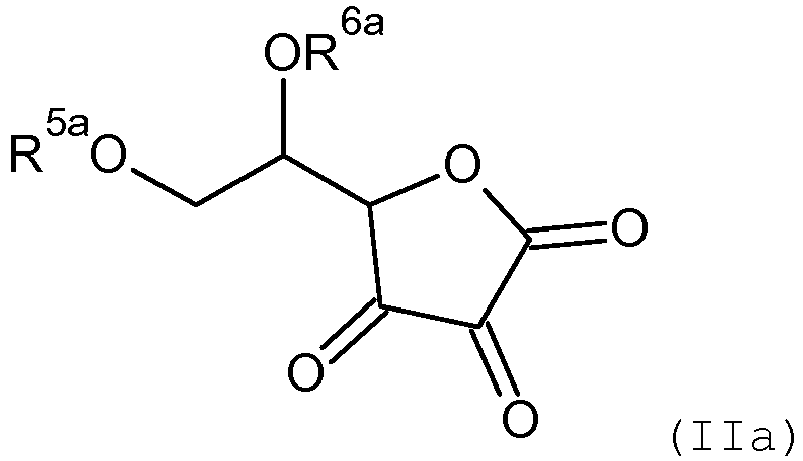


- The mass ratio of the lipid soluble substance (A2) to the water soluble substance (A1) is usually from 0.001 to 1000, preferably from 0.1 to 10.
- The substance (A) can be prepared into a formulation such as a wettable powder, an emulsifiable concentrate, a water soluble powder, a water dispersible granule, a dust, a tablet and the like. There is no particular limitation for a method of preparing a formulation, and a known preparation method can be used depending on a dosage form.
- There is no particular limitation for a method of applying the substance (A) to a plant, and a known application method in the field of agriculture and horticulture can be used. Further, an application method to a plant can be suitably determined depending on the type and the like of a target plant. For example, preferred modes of application can include foliage application, dipping treatment, soil irrigation, seed treatment, water culture medium treatment, smoking treatment, ordinary temperature fogging treatment and the like. The method according to the present invention may be used without limitation by cultivation forms such as soil cultivation and hydroponic cultivation. Further, excellent effects can be achieved even when used in a special environment such as meristem culture. An application amount of the substance (A) according to the present invention can be suitably determined depending on meteorological conditions, formulation forms, application times, application methods, application places, target diseases to be controlled, target crops and the like.
- There is no particular limitation for plants to which the method according to the present invention can be employed, and they may be either edible plants or non-edible plants. Examples of the target plants include cereal crops such as rice plant, wheat, corn; legumes such as soybean, azuki bean, peanut; fruit trees such as citrus, apple, pear, grape, peach; vegetables such as tomato, lettuce, cabbage, onion, green onion, bell pepper; pepos such as cucumber, watermelon, melon, pumpkin; root vegetables such as potato, sweet potato, Chinese yam, carrot, radish; crops for processing such as cotton, sugarbeet, hop, sugarcane, rubber tree, coffee, tobacco, tea; grass such as ryegrass, timothy, orchard grass; lawn grasses such as bentgrass, Zoysia grass, and the like.
- The method according to the present invention can provide a plant with stress resistance. Such stresses include biological stress due to plant viruses, phytopathogenic bacteria, phytopathogenic filamentous fungi, agricultural pests, weeds, or microorganisms used as biological agricultural chemicals or arthropods; physical or chemical stress due to high temperature, low temperature, high illuminance, low illuminance, excessive humidity, dryness, salinity, acidity, agricultural chemicals, chemical substances or heavy metals.
- There is no particular limitation for plant viruses which may cause stress. For example, preferably, they can include gemini viruses having a single stranded DNA as the genome, cauliflower mosaic virus having double stranded DNA as the genome, tobacco mosaic virus, tomato bushy stunt virus having a single stranded RNA as the genome, rice ragged stunt virus having double stranded RNA as the genome and the like.
- There is no particular limitation for phytopathogenic bacteria which may cause stress. For example, they include Burkholderia plantarii, Acidovorax avenae, Burkholderia glumae, Xanthomonas campestris pv.oryzae, Pseudomonas lachrymans, Erwinia carotovora and the like.
- There is no particular limitation for phytopathogenic filamentous fungi which may cause stress. For example, they include Pyricularia oryzae, Gibberella fujikuroi, Cochliobolus miyabeanus, Erysiphe graminis f.sp.tritici, Gibberella zeae, Puccinia recondita, Septoria tritici, Leptosphaeria nodorum, Ustilago tritici, Sphaerotheca fuliginea, Pseudoperonospora cubensis, Mycosphaerella melonis, Fusarium oxysporum, Botrytis cinerea, Colletotrichum orbiculare, Cladosporium cucumerinum, Corynespora cassicola, Cladosporium fulvum, Phytophthora infestans and the like.
- There is no particular limitation for pests which may cause stress, and examples of the pests include:
- Lepidoptera pests, for example, Spodoptera frugiperda, Leucania, Spodoptera litura, Agrotis ipsilon, Adoxophyes honmai, Homona magnanima, Carposina niponensis Walsingham, Cydia molesta, Phyllocnistis citrella, Caloptilia theivora, Phyllonorycter ringoniella, Lymantria dispar, Euproctis pseudoconspersa, Chilo suppressalis, Cnaphalocrocis medinalis, Ostrinia nubilalis, Hyphantria cunea, Cadra cautella, the genus Heliothis, the genus Helicoverpa, the genus Agrotis, Tinea translucens, Ostrinia furnacalis, Pieris brassicae, Heliothis virescens, Plutella xylostella, cutworm (a kind of Noctuidae) and the like;
- Hemiptera pests, for example, Aphidae such as Lipaphis erysimi, Rhopalosiphum padi, Myzus persicaem, Aphis gossypii, Aphis favae; Aleyrodidae such as Trialeurodes vaporariorum, Bemisia tabaci, Bemisia argentifolii; Pyrrhocoroidea, Riptortus clavatus, Nezara antennata, Unaspis yanonensis, Pseudococcus longispinis, Psylla pyricola, Stephanitis nashi, Nilaparvata lugens, Laodelphax straitellus, Sogatella furcifera, Nephotettix cincticeps and the like;
- Coleoptera pests, for example, Phyllotreta striolata, Aulacophora femoralis, Leptinotarsa decemlineata, Phaedon cochleariae, Lissorhoptrus oryzophilus, Sitophilus zeamais, Callosobruchus chinensis, Popillia japonica, Anomala rufocuprea, corn rootwarm, the genus Diabrotic, Lasioderma serricorne, Lyctus brunneus, Monochamus alternatus, Anoplophora malasiaca, the genus Agriote, Epilachna vigintioctopunctata, Trogossitidae, Anthonomus grandis and the like;
- Orthoptera pests, for example, locust, Locusta migratoria and the like;
- Thysanoptera pests, for example, Thrips palmi, Scirtothrips dorsalis, Thrips tabaci, Frankliniella intonsa and the like;
- Diptera pests, for example, Dacus cucurbitae, Bactrocera dorsalis, Agromyza oryzae and the like;
- Mites, for example, Tetranychidae such as Tetranychus urticae, Tetranychus cinnabarinus, Tetranychus kanzawa, Panonychus citri, Panonychus ulmi, Tenuipalpidae; Aculops pelekassi, Aculus schlechtendali, Polyphagotarsonemus latus, Rhizoglyphus robini and the like.
- Among these, agricultural pests for which application are particularly preferred include Aphidoidea, Aleyrodoidea, Thripidae, and Tetranychidae.
- There is no particular limitation for weeds which may cause stress, and examples of them include gramineous weeds such as Echinochloa crus-galli, Sorghum bicolor, Setaria faberi Herrm, Setaria viridis, Setaria glauca, Alopecurus aequalis, Digitaria ciliaris, Eleusine indica, Poa annua; Compositae weeds such as Xanthium strumarium, Ambrosia artemisiifolia, Ambrosia trifida, Erigeron annuus, Erigeron philadelphicus, Erigeron canadensis, Conyza sumatrensis, Youngia japonica, Conyza bonariensis, Gnaphalium japonicum, Bidens, Artemisia princeps; Oxalis corniculata, Plantago asiatica, Polygonaceae, Capsella bursa-pastoris, Cardamine flexuosa, Galium aparine Abutilon theophrasti, Hydrocotyle sibthorpioides, Solanum nigrum, Ipomoea hederacea, Amaranthus lividus, Amaranthus viridis, Amaranthus retroflexus, Chenopodium album var. centrorubrum, Chenopodium album, Viola verecunda, Sida spinosa, Trifolium repens, Senna obtusifolia, Scirpus hotarui, Eleocharis acicularis, Cyperus serotinus Rottb, Monochoria vaginalis, Lindernia procumbens, Elatine triandra, Sagittaria pygmaea and the like. Preferably, they include plant parasites such as the genus Striga of Scrophulariaceae and the genus Orobanche of Orobanchaceae, which are parasitic on cereal crops, legumes, eggplant, tomato and the like in Africa, causing significant decrease in crop yields. Further, they include Amaranthus palmeri of Amaranthaceae, Ambrosia artemisiifolia and Erigeron canadensis of Asteraceae, which are glyphosate resistant weeds.
- There is no particular limitation for high temperature and low temperature which may cause stress. They include, for example, high temperature injury and low temperature injury which may decrease the growth and quality of rice plant, high temperature injury which may decrease the fruit setting percentage of Solanaceae crops such as tomato, high temperature injury which tends to occur particularly in tunnel cultivation and greenhouse cultivation of lettuce and the like, high temperature injury which may inhibit the growth of turves, freezing and frost damage to tea plant and fruit trees such as citrus and the like.
- There is no particular limitation for excessive humidity and dryness which may cause stress. For example, they are the poor growth of crops due to excessive humidity resulting from excessive rain fall, irrigation and poorly drained soil; or the decrease in disease resistance; or the wilt of crops due to dryness resulting from the shortage of rain fall and irrigation, sandy soil and the like.
- There is no particular limitation for physical properties of soil which may cause stress. For example, they are growth disorders of crops in salty soil, acidic soil or alkaline soil and the like. Among these, effects on the poor growth in salty soil and acidic soil, in particular, effects on the poor growth of crops which are weak to acidic soil such as spinach, garden pea, fava bean, onion, asparagus, lettuce, burdock are significant, and it is effective for improving the yields and qualities of these crops.
- There is no particular limitation for chemical substances which may cause stress, including at least one compound selected from agricultural chemicals such as herbicides, growth regulators, plant hormones, disease resistance inducers, fungicides, insecticides, miticides; fertilizers; surfactants; allelopathy substances produced by other plants which affects crops and the like.
- There is no particular limitation for agricultural chemicals which may cause stress, and examples of the chemicals include those described as substances which may affect a physiological function of a plant.
- Phytotoxicity which may cause stress is, for example, phytotoxicity when treated at a concentration above the usage standard and when applied to non-intended crops, and in addition, phytotoxicity occurring under high temperature and strong light conditions and the like. Further, the application range of agricultural chemicals can be extended wider than the conventional application range because the present invention controls those phytotoxicitys.
- There is no particular limitation for heavy metals which may cause stress, and examples of the heavy metals include iron, zinc, copper, manganese, nickel, cobalt, tin, chromium, lead, cadmium, mercury, arsenic and the like.
- Phytotoxicity of a plant due to agricultural chemicals can be reduced by the method according to the present invention. Examples of agricultural chemicals include herbicides; growth regulators; plant hormones; resistance inducers against pathogens; fungicides, insecticides, miticides, repellents, fertilizers, surfactants which may cause phytotoxicity when used at a high concentration; and the like. Among these, preferred is at least one selected from the group consisting of fungicides, insecticides, plant growth regulators and herbicides. Further, the agricultural chemical is preferably a respiratory inhibitor.
Furthermore, the agricultural chemical is preferably a strobilurin compound. - Examples of fungicides include those such as captan, folpet, thiuram, dilam, zineb, maneb, mancozeb, propineb, polycarbamate, chlorothalonil, quintozene, captaphore, iprodione, procymidone, fluoroimide, mepronil, flutolanil, pencycuron, oxycarboxin, fosetylaluminium, propamocarb, hexaconazole, imibenconazole, tebuconazole, difenoconazole, prothioconazole, fenbuconazole, diclobutrazol, bitertanol, myclobutanil, flusilazole, hexaconazole, etaconazole, fluotrimazole, triadimefon, triadimenol, flutriafen, penconazole, diniconazole, cyproconazole, fenarimol, triflumizole, prochloraz, imazalil, kresoxim-methyl, trifloxystrobin, azoxystrobin, pyraclostrobin, orysastrobin, pefurazoate, tridemorph, fenpropimorph, trifolin, buthiobate, pyrifenox, anilazine, polyoxin, metalaxyl, oxadixyl, furalaxyl, isoprothiolane, probenazole, pyrrolnitrin, blasticidin S, kasugamycin, validamycin, dihydrostreptomycin sulfate, benomyl, carbendazim, thiophanate-methyl, hymexazol, basic copper chloride, basic copper sulfate, fentinacetate, triphenyltin hydroxide, diethofencarb, chinomethionate, binapacryl, lecithin, sodium bicarbonate, dithianon, dinocap, fenaminosulf, dichlomedin, guazatine, dodine, IBP, edifenphos, mepanipyrim, ferimzone, trichlamid, metasulfocarb, fluazinam, etoquinolak, dimethomorph, pyroquilon, tecloftalam, fthalide, phenazine oxide, thiabendazole, tricyclazole, vincrozoline, cymoxanil, guazatine, propamocarb hydrochloride, oxolinic acid, cyflufenamid, iminoctadine, triazine, fenhexamid, cyazofamid, cyprodinil, carpropamide, boscalid. They also include resistance inducers against a pathogen such as probenazole, tiadinil.
- Among these, particularly preferred are strobilurin based fungicides such as kresoxim-methyl, trifloxystrobin, azoxystrobin, pyraclostrobin, orysastrobin.
- Herbicides include 2,4-D, MCPA, clomeprop, dicamba, chlorotoluron, diuron, linuron, isouron, fenuron, neburon, simazine, atrazine, simetryn, prometryn, hexazinone, propazine, desmetryn, terbumeton, propanil, bromoxynil, ioxynil, pyridate, chloridazon, bentazone, chlomethoxyfen, bifenox, acifluorfen sodium salt, flumioxazin, thidiazimin, oxadiazon, sulfentrazone, pentoxazone, pyraclonil, pyrazolynate, pyrazoxyfen, benzofenap, mesotrione, isoxaflutole, isoxachlortole, amitrole, aclonifen, diflufenican, benzobicyclon, diclofop-methyl, fluazifop-butyl, alloxydim sodium salt, clethodim, sethoxydim, tralkoxydim, tepraloxydim, bensulfuron-methyl, pyrazosulfuron-ethyl, rimsulfuron, imazosulfuron, prosulfuron, flumetsulam, diclosulam, metosulam, imazapyr, imazaquin, pyrithiobac-sodium salt, bispyribac-sodium salt, pyriminobac-methyl, flucabazone, propoxycarbazone, glyphosate, glyphosate ammonium salt, glufosinate, trifluralin, pendimethalin, benfluralin, prodiamine, propham, dithiopyr, alachlor, metolachlor, pethoxamid, acetochlor, propachlor, dimethenamid, diphenamid, napropamide, mefenacet, fentrazamide, molinate, dimepiperate, cycloate, esprocarb, thiobencarb, thiocarbazil, bensulide, dalapon, asulam, DNOC, dinoseb, flupoxam, traiziflam, quinchlorac, cinmethylin, dazomet, dymron, etobenzanide, oxaziclomefone, pyributicarband the like.
- Examples of insecticides include organophosphate based and carbamate based insecticides such as fenthion, fenitrothion, diazinon, chlorpyrifos, ESP, vamidothion, phenthoate, dimethoate, formothion, malathion, trichlorfon, thiometon, phosmet, dichlorvos, acephate, EPBP, methylparathion, oxydemeton-methyl, ethion, salithion, cyanophos, isoxathion, pyridaphenthion, phosalone, methidathion, sulprofos, chlorfenvinphos, tetrachlorvinphos, dimethylvinphos, propaphos, isofenphos, ethylthiometon, prophenophos, pyraclophos, monocrotophos, azinephosmethyl, aldicarb, methomyl, thiodicarb, carbofuran, carbosulfane, benfuracarb, furathiocarb, propoxur, BPMC, MTMC, MIPC, carbaryl, pirimicarb, ethiofencarb, phenoxycarb, cartap, thiocyclam, bensultap; pyrethroid based insecticides such as permethrin, cypermethrin, deltamethrin, fenvalerate, fenpropathrin, pyrethrin, allethrin, tetramethrin, resmethrin, dimethrin, propathrin, phenothrin, prothrin, fluvalinate, cyfluthrin, cyhalothrin, flucythrinate, etofenprox, cycloprothrin, tralomethrin, silafluofen, acrinathrin; neonicotinoid based insecticides such as imidacloprid, acetamiprid, nitenpyram, thiacloprid, clothianidin, thiamethoxam, dinotefuran, nithiazine; benzoylphenylurea based insecticides such as diflubenzuron, chlorfluazuron, hexaflumuron, triflumuron, flufenoxuron, furcycloxuron, buprofezin, pyriproxifen, methoprene, benzoepin, diafenthiuron, fipronil, nicotine sulfate, rotenone, metaldehyde, acetamiprid, chlorphenapyl, nitenpyram, thiacloprid, clothianidin, thiamethoxam, dinotefuran, indoxacarb, pymetrozine, spinosad, emamectin, pyridalyl, tebufenozide, chromafenozide, methoxyfenozide, tolfenpyrad, flubendiamide, chlorantraniliprole, cyantraniliprole; Nematicides such as fenamiphos, phosthiazate, cadusafos; miticides such as chlorbenzilate, phenisobromolate, dicofol, amitraz, BPPS, benzomate, hexythiazox, fenbutatin-oxide, polynactin, chinomethionate, CPCBS, tetradifon, avermectin, milbemectin, clofentezine, cyhexatin, pyridaben, fenpyroximate, tebufenpyrad, cyenopyrafen, cyflumetofen, pyrimidifen, phenothiocarb, dienochlor, fluacrypyrim, acequinocyl, bifenazate, etoxazole, spirodiclofen, fenazaquin; microorganism-derived formulations such as BT agents; and the like.
- Among these, particularly preferred are neonicotinoid based insecticides such as imidacloprid, acetamiprid, nitenpyram, thiacloprid, clothianidin, thiamethoxam, dinotefuran, nithiazine; and insecticides or miticides which have respiratory inhibition effects such as chlorphenapyl, pymetrozine, pyridaben, fenpyroximate, tolfenpyrad, tebufenpyrad, cyenopyrafen, cyflumetofen, fluacrypyrim, acequinocyl, fenazaquin.
- Examples of plant hormones include gibberellins (for example, gibberellin A3, gibberellin A4, gibberellin A7 and the like), auxins (for example, 2,4-D, IAA, NAA and the like), cytokinins (for example, kinetin, benzyladenine and the like), abscisic acid, jasmone acids, brassinosteroids, strigolactones, salicylic acid and the like.
- As plant growth regulators, in addition to the aforementioned plant hormones, mentioned are hymexazol, uniconazole, trinexapac, daminozide, cyanamide and the like.
- Examples of fertilizers include nitrogenous fertilizers, phosphatic fertilizers, potash fertilizers, calcareous fertilizers, magnesium fertilizers, silicate fertilizers, trace element fertilizers, animal matter fertilizers, plant matter fertilizers and the like. When the concentration of a water soluble component of a fertilizer is too high, fertilizer disorders such as withering and death of root and leaf may be caused to a plant. Further, when a certain type of a fertilizer such as ammonium sulfate is used in a large amount, the growth of a plant may be compromised through soil acidification.
- A surfactant is used as an auxiliary component of an agrochemical formulation, as an active component of some insecticides or miticides, or as a spreader. Examples of surfactants include nonionic surfactants such alkylphenyl ether in which polyoxyethylene is added, alkyl ether in which polyoxyethylene is added, higher fatty acid ester in which polyoxyethylene is added, sorbitan higher fatty acid ester in which polyoxyethylene is added, tristyrylphenyl ether in which polyoxyethylene added; anionic surfactants such as a sulfuric ester salt of alkylphenyl ether in which polyoxyethylene is added, alkylbenzene sulfonate, a sulfuric ester salt of higher alcohol, alkylnaphthalenesulfonate, polycarboxylate, lignin sulfonate, a formaldehyde condensate of alkylnaphthalenesulfonate, a copolymer of isobutylene-maleic anhydride; cationic surfactants such as alkyltrimethylammonium chloride, methyl·polyoxyethylene·alkylammonium chloride, alkyl·N-methylpyridium bromide, mono- or di-alkylmethylated ammonium chloride, alkylpentamethylpropylenediamine dichloride, alkyldimethylbenzalkonium chloride, benzethonium chloride; amphoteric surfactants such as dialkyldiaminoethylbetaine, alkyldimethylbenzylbetaine, dialkyldiaminoethylglycine, alkyldimethylbenzylglycine; and the like.
- The present invention will be described in detail with reference to Examples, but the scope of the present invention shall not be limited by these.
- Various substances (A) were synthesized by esterifying, glycosylating or oxidizing ascorbic acid, isoascorbic acid or dehydroascorbic acid by a known reaction. Some of the substances (A) synthesized are shown in Tables 1 and 2. R1 to R4 in Table 1 correspond to R1 to R4 in Formula (I). R5 and R6 in Table 2 correspond to R5 and R6 in Formula (II).
- [Table 1]
Table 1 Compound # R1 R2 R3 R4 1 H H H H 2 SO3H H H H 3 PO3H2 H H H 4 glucosyl H H H 5 mannosyl H H H 6 galactosyl H H H 7 COCH3 H H H 8 COC3H7-i H H H 9 COC17H35-n H H H 10 COC16H33-n H H H 11 COC18H37-n H H H 12 CO(CH2)7CH=CHC6H13-n H H H 13 COCH=CH2 H H H 14 COCH2CH=CH2 H H H 15 H SO3H H H 16 H PO3H2 H H 17 H glucosyl H H 18 H mannosyl H H 19 H galactosyl H H 20 H COCH3 H H 21 H COC3H7-i H H 22 H COC17H35-n H H 23 H COC16H33-n H H 24 H COC18H37-n H H 25 H CO(CH2)7CH=CHC6H13-n H H 26 H COCH=CH2 H H 27 H COCH2CH=CH2 H H 28 H H SO3H H 29 H H PO3H2 H 30 H H glucosyl H 31 H H mannosyl H 32 H H galactosyl H 33 H H COCH3 H 34 H H COC3H7-i H 35 H H COC17H35-n H 36 H H COC16H33-n H 37 H H COC18H37-n H 38 H H CO(CH2)7CH=CHC6H13-n H 39 H H COCH=CH2 H 40 H H COCH2CH=CH2 H 41 H H H SO3H 42 H H H PO3H2 43 H H H glucosyl 44 H H H mannosyl 45 H H H galactosyl 46 H H H COCH3 47 H H H COC3H7-i 48 H H H COC17H35-n 49 H H H COC16H33-n 50 H H H COC18H37-n 51 H H H CO(CH2)7CH=CHC6H13-n 52 H H H COCH=CH2 53 H H H COCH2CH=CH2 54 SO3H SO3H H H 55 SO3H PO3H2 H H 56 SO3H glucosyl H H 57 SO3H mannosyl H H 58 SO3H galactosyl H H 59 SO3H COCH3 H H 60 SO3H COC3H7-i H H 61 SO3H COC17H35-n H H 62 SO3H COC16H33-n H H 63 SO3H COC18H37-n H H 64 SO3H CO(CH2)7CH=CHC6H13-n H H 65 SO3H COCH=CH2 H H 66 SO3H COCH2CH=CH2 H H 67 SO3H SO3H H H 68 SO3H PO3H2 H H 69 SO3H glucosyl H H 70 SO3H mannosyl H H 71 SO3H galactosyl H H 72 SO3H COCH3 H H 73 SO3H COC3H7-i H H 74 SO3H COC17H35-n H H 75 SO3H COC16H33-n H H 76 SO3H COC18H37-n H H 77 SO3H CO(CH2)7CH=CHC6H13-n H H 78 SO3H COCH=CH2 H H 79 SO3H COCH2CH=CH2 H H 80 glucosyl SO3H H H 81 glucosyl PO3H2 H H 82 glucosyl glucosyl H H 83 glucosyl mannosyl H H 84 glucosyl galactosyl H H 85 glucosyl COCH3 H H 86 glucosyl COC3H7-i H H 87 glucosyl COC17H35-n H H 88 glucosyl COC16H33-n H H 89 glucosyl COC18H37-n H H 90 glucosyl CO(CH2)7CH=CHC6H13-n H H 91 glucosyl COCH=CH2 H H 92 glucosyl COCH2CH=CH2 H H 93 COC16H33 SO3H H H 94 COC16H33 PO3H2 H H 95 COC16H33 glucosyl H H 96 COC16H33 mannosyl H H 97 COC16H33 galactosyl H H 98 COC16H33 COCH3 H H 99 COC16H33 COC3H7-i H H 100 COC16H33 COC17H35-n H H 101 COC16H33 COC16H33-n H H 102 COC16H33 COC18H37-n H H 103 COC16H33 CO(CH2)7CH=CHC6H13-n H H 104 COC16H33 COCH=CH2 H H 105 COC16H33 COCH2CH=CH2 H H 106 CO(CHC)7CH=CHC6H13 SO3H H H 107 CO(CH2)7CH=CHC6H13 PO3H2 H H 108 CO(CH2)7CH=CHC6H13 glucosyl H H 109 CO(CH2)7CH=CHC6H13 mannosyl H H 110 CO(CH2)7CH=CHC6H13 galactosyl H H 111 CO(CH2)7CH=CHC6H13 COCH3 H H 112 CO(CH2)7CH=CHC6H13 COC3H7-i H H 113 CO(CH2)7CH=CHC6H13 COC17H35-n H H 114 CO(CH2)7CH=CHC6H13 COC16H33-n H H 115 CO(CH2)7CH=CHC6H13 COC18H37-n H H 116 CO(CH2)7CH=CHC6H13 CO(CH2)7CH=CHC6H13-n H H 117 CO(CH2)7CH=CHC6H13 COCH=CH2 H H 118 CO(CH2)7CH=CHC6H13 COCH2CH=CH2 H H 119 SO3H H SO3H H 120 SO3H H PO3H2 H 121 SO3H H glucosyl H 122 SO3H H mannosyl H 123 SO3H H galactosyl H 124 SO3H H COCH3 H 125 SO3H H COC3H7-i H 126 SO3H H COC17H35-n H 127 SO3H H COC16H33-n H 128 SO3H H COC18H37-n H 129 SO3H H CO(CH2)7CH=CHC6H13-n H 130 SO3H H COCH=CH2 H 131 SO3H H COCH2CH=CH2 H 132 PO3H2 H SO3H H 133 PO3H2 H PO3H2 H 134 PO3H2 H glucosyl H 135 PO3H2 H mannosyl H 136 PO3H2 H galactosyl H 137 PO3H2 H COCH3 H 138 PO3H2 H COC3H7-i H 139 PO3H2 H COC17H35-n H 140 PO3H2 H COC16H33-n H 141 PO3H2 H COC18H37-n H 142 PO3H2 H CO(CH2)7CH=CHC6H13-n H 143 PO3H2 H COCH=CH2 H 144 PO3H2 H COCH2CH=CH2 H 145 glucosyl H SO3H H 146 glucosyl H PO3H2 H 147 glucosyl H glucosyl H 148 glucosyl H mannosyl H 149 glucosyl H galactosyl H 150 glucosyl H COCH3 H 151 glucosyl H COC3H7-i H 152 glucosyl H COC17H35-n H 153 glucosyl H COC16H33-n H 154 glucosyl H COC18H37-n H 155 glucosyl H CO(CH2)7CH=CHC6H13-n H 156 glucosyl H COCH=CH2 H 157 glucosyl H COCH2CH=CH2 H 158 COC16H33-n H SO3H H 159 COC16H33-n H PO3H2 H 160 COC16H33-n H glucosyl H 161 COC16H33-n H mannosyl H 162 COC16H33-n H galactosyl H 163 COC16H33-n H COCH3 H 164 COC16H33-n H COC3H7-i H 165 COC16H33-n H COC17H35-n H 166 COC16H33-n H COC16H33-n H 167 COC16H33-n H COC18H37-n H 168 COC16H33-n H CO(CH2)7CH=CHC6H13-n H 169 COC16H33-n H COCH=CH2 H 170 COC16H33-n H COCH2CH=CH2 H 171 CO(CH2)7CH=CHC6H13-n H SO3H H 172 CO(CH2)7CH=CHC6H13-n H PO3H2 H 173 CO(CH2)7CH=CHC6H13-n H glucosyl H 174 CO(CH2)7CH=CHC6H13-n H mannosyl H 175 CO(CH2)7CH=CHC6H13-n H galactosyl H 176 CO(CH2)7CH=CHC6H13-n H COCH3 H 177 CO(CH2)7CH=CHC6H13-n H COC3H7-i H 178 CO(CH2)7CH=CHC6H13-n H COC17H35-n H 179 CO(CH2)7CH=CHC6H13-n H COC16H33-n H 180 CO(CH2)7CH=CHC6H13-n H COC18H37-n H 181 CO(CH2)7CH=CHC6H13-n H CO(CH2)7CH=CHC6H13-n H 182 CO(CH2)7CH=CHC6H13-n H COCH=CH2 H 183 CO(CH2)7CH=CHC6H13-n H COCH2CH=CH2 H 184 SO3H H H SO3H 185 SO3H H H PO3H2 186 SO3H H H glucosyl 187 SO3H H H mannosyl 188 SO3H H H galactosyl 189 SO3H H H COCH3 190 SO3H H H COC3H7-i 191 SO3H H H COC17H35-n 192 SO3H H H COC16H33-n 193 SO3H H H COC18H37-n 194 SO3H H H CO(CH2)7CH=CHC6H13-n 195 SO3H H H COCH=CH2 196 SO3H H H COCH2CH=CH2 197 PO3H2 H H SO3H 198 PO3H2 H H PO3H2 199 PO3H2 H H glucosyl 200 PO3H2 H H mannosyl 201 PO3H2 H H galactosyl 202 PO3H2 H H COCH3 203 PO3H2 H H COC3H7-i 204 PO3H2 H H COC17H35-n 205 PO3H2 H H COC16H33-n 206 PO3H2 H H COC18H37-n 207 PO3H2 H H CO(CH2)7CH=CHC6H13-n 208 PO3H2 H H COCH=CH2 209 PO3H2 H H COCH2CH=CH2 210 glucosyl H H SO3H 211 glucosyl H H PO3H2 212 glucosyl H H glucosyl 213 glucosyl H H mannosyl 214 glucosyl H H galactosyl 215 glucosyl H H COCH3 216 glucosyl H H COC3H7-i 217 glucosyl H H COC17H35-n 218 glucosyl H H COC16H33-n 219 glucosyl H H COC18H37-n 220 glucosyl H H CO(CH2)7CH=CHC6H13-n 221 glucosyl H H COCH=CH2 222 glucosyl H H COCH2CH=CH2 223 COC16H33-n H H SO3H 224 COC16H33-n H H PO3H2 225 COC16H33-n H H glucosyl 226 COC16H33-n H H mannosyl 227 COC16H33-n H H galactosyl 228 COC16H33-n H H COCH3 229 COC16H33-n H H COC3H7-i 230 COC16H33-n H H COC17H35-n 231 COC16H33-n H H COC16H33-n 232 COC16H33-n H H COC18H37-n 233 COC16H33-n H H CO(CH2)7CH=CHC6H13-n 234 COC16H33-n H H COCH=CH2 235 COC16H33-n H H COCH2CH=CH2 236 CO(CH2)7CH=CHC6H13-n H H SO3H 237 CO(CH2)7CH=CHC6H13-n H H PO3H2 238 CO(CH2)7CH=CHC6H13-n H H glucosyl 239 CO(CH2)7CH=CHC6H13-n H H mannosyl 240 CO(CH2)7CH=CHC6H13-n H H galactosyl 241 CO(CH2)7CH=CHC6H13-n H H COCH3 242 CO(CH2)7CH=CHC6H13-n H H COC3H7-i 243 CO(CH2)7CH=CHC6H13-n H H COC17H35-n 244 CO(CH2)7CH=CHC6H13-n H H COC16H33-n 245 CO(CH2)7CH=CHC6H13-n H H COC18H37-n 246 CO(CH2)7CH=CHC6H13-n H H CO(CH2)7CH=CHC6H13-n 247 CO(CH2)7CH=CHC6H13-n H H COCH=CH2 248 CO(CH2)7CH=CHC6H13-n H H COCH2CH=CH2 249 SO3H SO3H SO3H H 250 SO3H SO3H PO3H2 H 251 SO3H SO3H glucosyl H 252 SO3H SO3H mannosyl H 253 SO3H SO3H galactosyl H 254 SO3H SO3H COCH3 H 255 SO3H SO3H COC3H7-i H 256 SO3H SO3H COC17H35-n H 257 SO3H SO3H COC16H33-n H 258 SO3H SO3H COC18H37-n H 259 SO3H SO3H CO(CH2)7CH=CHC6H13-n H 260 SO3H SO3H COCH=CH2 H 261 SO3H SO3H COCH2CH=CH2 H 262 PO3H2 PO3H2 SO3H H 263 PO3H2 PO3H2 PO3H2 H 264 PO3H2 PO3H2 glucosyl H 265 PO3H2 PO3H2 mannosyl H 266 PO3H2 PO3H2 galactosyl H 267 PO3H2 PO3H2 COCH3 H 268 PO3H2 PO3H2 COC3H7-i H 269 PO3H2 PO3H2 COC17H35-n H 270 PO3H2 PO3H2 COC16H33-n H 271 PO3H2 PO3H2 COC18H37-n H 272 PO3H2 PO3H2 CO(CH2)7CH=CHC6H13-n H 273 PO3H2 PO3H2 COCH=CH2 H 274 PO3H2 PO3H2 COCH2CH=CH2 H 275 glucosyl glucosyl SO3H H 276 glucosyl glucosyl PO3H2 H 277 glucosyl glucosyl glucosyl H 278 glucosyl glucosyl mannosyl H 279 glucosyl glucosyl galactosyl H 280 glucosyl glucosyl COCH3 H 281 glucosyl glucosyl COC3H7-i H 282 glucosyl glucosyl COC17H35-n H 283 glucosyl glucosyl COC16H33-n H 284 glucosyl glucosyl COC18H37-n H 285 glucosyl glucosyl CO(CH2)7CH=CHC6H13-n H 286 glucosyl glucosyl COCH=CH2 H 287 glucosyl glucosyl COCH2CH=CH2 H 288 COC16H33-n COC16H33-n SO3H H 289 COC16H33-n COC16H33-n PO3H2 H 290 COC16H33-n COC16H33-n glucosyl H 291 COC16H33-n COC16H33-n mannosyl H 292 COC16H33-n COC16H33-n galactosyl H 293 COC16H33-n COC16H33-n COCH3 H 294 COC16H33-n COC16H33-n COC3H7-i H 295 COC16H33-n COC16H33-n COC17H35-n H 296 COC16H33-n COC16H33-n COC16H33-n H 297 COC16H33-n COC16H33-n COC18H37-n H 298 COC16H33-n COC16H33-n CO(CH2)7CH=CHC6H13-n H 299 COC16H33-n COC16H33-n COCH=CH2 H 300 COC16H33-n COC16H33-n COCH2CH=CH2 H 301 CO(CH2)7CH=CHC6H13-n CO(CH2)7CH=CHC6H13-n SO3H H 302 CO(CH2)7CH=CHC6H13-n CO(CH2)7CH=CHC6H13-n PO3H2 H 303 CO(CH2)7CH=CHC6H13-n CO(CH2)7CH=CHC6H13-n glucosyl H 304 CO(CH2)7CH=CHC6H13-n CO(CH2)7CH=CHC6H13-n mannosyl H 305 CO(CH2)7CH=CHC6H13-n CO(CH2)7CH=CHC6H13-n galactosyl H 306 CO(CH2)7CH=CHC6H13-n CO(CH2)7CH=CHC6H13-n COCH3 H 307 CO(CH2)7CH=CHC6H13-n CO(CH2)7CH=CHC6H13-n COC3H7-i H 308 CO(CH2)7CH=CHC6H13-n CO(CH2)7CH=CHC6H13-n COC17H35-n H 309 CO(CH2)7CH=CHC6H13-n CO(CH2)7CH=CHC6H13-n COC16H33-n H 310 CO(CH2)7CH=CHC6H13-n CO(CH2)7CH=CHC6H13-n COC18H37-n H 311 CO(CH2)7CH=CHC6H13-n CO(CH2)7CH=CHC6H13-n CO(CH2)7CH=CHC6H13-n H 312 CO(CH2)7CH=CHC6H13-n CO(CH2)7CH=CHC6H13-n COCH=CH2 H 313 CO(CH2)7CH=CHC6H13-n CO(CH2)7CH=CHC6H13-n COCH2CH=CH2 H 314 SO3H SO3H H SO3H 315 SO3H SO3H H PO3H2 316 SO3H SO3H H glucosyl 317 SO3H SO3H H mannosyl 318 SO3H SO3H H galactosyl 319 SO3H SO3H H COCH3 320 SO3H SO3H H COC3H7-i 321 SO3H SO3H H COC17H35-n 322 SO3H SO3H H COC16H33-n 323 SO3H SO3H H COC18H37-n 324 SO3H SO3H H CO(CH2)7CH=CHC6H13-n 325 SO3H SO3H H COCH=CH2 326 SO3H SO3H H COCH2CH=CH2 327 PO3H2 PO3H2 H SO3H 328 PO3H2 PO3H2 H PO3H2 329 PO3H2 PO3H2 H glucosyl 330 PO3H2 PO3H2 H mannosyl 331 PO3H2 PO3H2 H galactosyl 332 PO3H2 PO3H2 H COCH3 333 PO3H2 PO3H2 H COC3H7-i 334 PO3H2 PO3H2 H COC17H35-n 335 PO3H2 PO3H2 H COC16H33-n 336 PO3H2 PO3H2 H COC18H37-n 337 PO3H2 PO3H2 H CO(CH2)7CH=CHC6H13-n 338 PO3H2 PO3H2 H COCH=CH2 339 PO3H2 PO3H2 H COCH2CH=CH2 340 glucosyl glucosyl H SO3H 341 glucosyl glucosyl H PO3H2 342 glucosyl glucosyl H glucosyl 343 glucosyl glucosyl H mannosyl 344 glucosyl glucosyl H galactosyl 345 glucosyl glucosyl H COCH3 346 glucosyl glucosyl H COC3H7-i 347 glucosyl glucosyl H COC17H35-n 348 glucosyl glucosyl H COC16H33-n 349 glucosyl glucosyl H COC18H37-n 350 glucosyl glucosyl H CO(CH2)7CH=CHC6H13-n 351 glucosyl glucosyl H COCH=CH2 352 glucosyl glucosyl H COCH2CH=CH2 353 COC16H33-n COC16H33-n H SO3H 354 COC16H33-n COC16H33-n H PO3H2 355 COC16H33-n COC16H33-n H glucosyl 356 COC16H33-n COC16H33-n H mannosyl 357 COC16H33-n COC16H33-n H galactosyl 358 COC16H33-n COC16H33-n H COCH3 359 COC16H33-n COC16H33-n H COC3H7-i 360 COC16H33-n COC16H33-n H COC17H35-n 361 COC16H33-n COC16H33-n H COC16H33-n 362 COC16H33-n COC16H33-n H COC18H37-n 363 COC16H33-n COC16H33-n H CO(CH2)7CH=CHC6H13-n 364 COC16H33-n COC16H33-n H COCH=CH2 365 COC16H33-n COC16H33-n H COCH2CH=CH2 366 CO(CH2)7CH=CHC6H13-n CO(CH2)7CH=CHC6H13-n H SO3H 367 CO(CH2)7CH=CHC6H13-n CO(CH2)7CH=CHC6H13-n H PO3H2 368 CO(CH2)7CH=CHC6H13-n CO(CH2)7CH=CHC6H13-n H glucosyl 369 CO(CH2)7CH=CHC6H13-n CO(CH2)7CH=CHC6H13-n H mannosyl 370 CO(CH2)7CH=CHC6H13-n CO(CH2)7CH=CHC6H13-n H galactosyl 371 CO(CH2)7CH=CHC6H13-n CO(CH2)7CH=CHC6H13-n H COCH3 372 CO(CH2)7CH=CHC6H13-n CO(CH2)7CH=CHC6H13-n H COC3H7-i 373 CO(CH2)7CH=CHC6H13-n CO(CH2)7CH=CHC6H13-n H COC17H35-n 374 CO(CH2)7CH=CHC6H13-n CO(CH2)7CH=CHC6H13-n H COC16H33-n 375 CO(CH2)7CH=CHC6H13-n CO(CH2)7CH=CHC6H13-n H COC18H37-n 376 CO(CH2)7CH=CHC6H13-n CO(CH2)7CH=CHC6H13-n H CO(CH2)7CH=CHC6H13-n 377 CO(CH2)7CH=CHC6H13-n CO(CH2)7CH=CHC6H13-n H COCH=CH2 378 CO(CH2)7CH=CHC6H13-n CO(CH2)7CH=CHC6H13-n H COCH2CH=CH2 379 SO3H SO3H SO3H SO3H 380 SO3H SO3H SO3H PO3H2 381 SO3H SO3H SO3H glucosyl 382 SO3H SO3H SO3H mannosyl 383 SO3H SO3H SO3H galactosyl 384 SO3H SO3H SO3H COCH3 385 SO3H SO3H SO3H COC3H7-i 386 SO3H SO3H SO3H COC17H35-n 387 SO3H SO3H SO3H COC16H33-n 388 SO3H SO3H SO3H COC18H37-n 389 SO3H SO3H SO3H CO(CH2)7CH=CHC6H13-n 390 SO3H SO3H SO3H COCH=CH2 391 SO3H SO3H SO3H COCH2CH=CH2 392 PO3H2 PO3H2 PO3H2 SO3H 393 PO3H2 PO3H2 PO3H2 PO3H2 394 PO3H2 PO3H2 PO3H2 glucosyl 395 PO3H2 PO3H2 PO3H2 mannosyl 396 PO3H2 PO3H2 PO3H2 galactosyl 397 PO3H2 PO3H2 PO3H2 COCH3 398 PO3H2 PO3H2 PO3H2 COC3H7-i 399 PO3H2 PO3H2 PO3H2 COC17H35-n 400 PO3H2 PO3H2 PO3H2 COC16H33-n 401 PO3H2 PO3H2 PO3H2 COC18H37-n 402 PO3H2 PO3H2 PO3H2 CO(CH2)7CH=CHC6H13-n 403 PO3H2 PO3H2 PO3H2 COCH=CH2 404 PO3H2 PO3H2 PO3H2 COCH2CH=CH2 405 glucosyl glucosyl glucosyl SO3H 406 glucosyl glucosyl glucosyl PO3H2 407 glucosyl glucosyl glucosyl glucosyl 408 glucosyl glucosyl glucosyl mannosyl 409 glucosyl glucosyl glucosyl galactosyl 410 glucosyl glucosyl glucosyl COCH3 411 glucosyl glucosyl glucosyl COC3H7-i 412 glucosyl glucosyl glucosyl COC17H35-n 413 glucosyl glucosyl glucosyl COC16H33-n 414 glucosyl glucosyl glucosyl COC18H37-n 415 glucosyl glucosyl glucosyl CO(CH2)7CH=CHC6H13-n 416 glucosyl glucosyl glucosyl COCH=CH2 417 glucosyl glucosyl glucosyl COCH2CH=CH2 418 COC16H33-n COC16H33-n COC16H33-n SO3H 419 COC16H33-n COC16H33-n COC16H33-n PO3H2 420 COC16H33-n COC16H33-n COC16H33-n glucosyl 421 COC16H33-n COC16H33-n COC16H33-n mannosyl 422 COC16H33-n COC16H33-n COC16H33-n galactosyl 423 COC16H33-n COC16H33-n COC16H33-n COCH3 424 COC16H33-n COC16H33-n COC16H33-n COC3H7-i 425 COC16H33-n COC16H33-n COC16H33-n COC17H35-n 426 COC16H33-n COC16H33-n COC16H33-n COC16H33-n 427 COC16H33-n COC16H33-n COC16H33-n COC18H37-n 428 COC16H33-n COC16H33-n COC16H33-n CO(CH2)7CH=CHC6H13-n 429 COC16H33-n COC16H33-n COC16H33-n COCH=CH2 430 COC16H33-n COC16H33-n COC16H33-n COCH2CH=CH2 431 CO(CH2)7CH=CHC6H13-n CO(CH2)7CH=CHC6H13-n CO(CH2)7CH=CHC6H13-n SO3H 432 CO(CH2)7CH=CHC6H13-n CO(CH2)7CH=CHC6H13-n CO(CH2)7CH=CHC6H13-n PO3H2 433 CO(CH2)7CH=CHC6H13-n CO(CH2)7CH=CHC6H13-n CO(CH2)7CH=CHC6H13-n glucosyl 434 CO(CH2)7CH=CHC6H13-n CO(CH2)7CH=CHC6H13-n CO(CH2)7CH=CHC6H13-n mannosyl 435 CO(CH2)7CH=CHC6H13-n CO(CH2)7CH=CHC6H13-n CO(CH2)7CH=CHC6H13-n galactosyl 436 CO(CH2)7CH=CHC6H13-n CO(CH2)7CH=CHC6H13-n CO(CH2)7CH=CHC6H13-n COCH3 437 CO(CH2)7CH=CHC6H13-n CO(CH2)7CH=CHC6H13-n CO(CH2)7CH=CHC6H13-n COC3H7-i 438 CO(CH2)7CH=CHC6H13-n CO(CH2)7CH=CHC6H13-n CO(CH2)7CH=CHC6H13-n COC17H35-n 439 CO(CH2)7CH=CHC6H13-n CO(CH2)7CH=CHC6H13-n CO(CH2)7CH=CHC6H13-n COC16H33-n 440 CO(CH2)7CH=CHC6H13-n CO(CH2)7CH=CHC6H13-n CO(CH2)7CH=CHC6H13-n COC18H37-n 441 CO(CH2)7CH=CHC6H13-n CO(CH2)7CH=CHC6H13-n CO(CH2)7CH=CHC6H13-n CO(CH2)7CH=CHC6H13-n 442 CO(CH2)7CH=CHC6H13-n CO(CH2)7CH=CHC6H13-n CO(CH2)7CH=CHC6H13-n COCH=CH2 443 CO(CH2)7CH=CHC6H13-n CO(CH2)7CH=CHC6H13-n CO(CH2)7CH=CHC6H13-n COCH2CH=CH2 - [Table 2]
Table 2 Compound # R5 R6 444 H H 445 SO3H H 446 PO3H2 H 447 glucosyl H 448 mannosyl H 449 galactosyl H 450 COCH3 H 451 COC3H7-i H 452 COC17H35-n H 453 COC16H33-n H 454 COC18H37-n H 455 CO(CH2)7CH=CHC6H13-n H 456 COCH=CH2 H 457 COCH2CH=CH2 H 458 H SO3H 459 H PO3H2 460 H glucosyl 461 H mannosyl 462 H galactosyl 463 H COCH3 464 H COC3H7-i 465 H COC17H35-n 466 H COC16H33-n 467 H COC18H37-n 468 H CO(CH2)7CH=CHC6H13-n 469 H COCH=CH2 470 H COCH2CH=CH2 471 SO3H SO3H 472 SO3H PO3H2 473 SO3H glucosyl 474 SO3H mannosyl 475 SO3H galactosyl 476 SO3H COCH3 477 SO3H COC3H7-i 478 SO3H COC17H35-n 479 SO3H COC16H33-n 480 SO3H COC18H37-n 481 SO3H CO(CH2)7CH=CHC6H13-n 482 SO3H COCH=CH2 483 SO3H COCH2CH=CH2 484 PO3H2 SO3H 485 PO3H2 PO3H2 486 PO3H2 glucosyl 487 PO3H2 mannosyl 488 PO3H2 galactosyl 489 PO3H2 COCH3 490 PO3H2 COC3H7-i 491 PO3H2 COC17H35-n 492 PO3H2 COC16H33-n 493 PO3H2 COC18H37-n 494 PO3H2 CO(CH2)7CH=CHC6H13-n 495 PO3H2 COCH=CH2 496 PO3H2 COCH2CH=CH2 497 glucosyl SO3H 498 glucosyl PO3H2 499 glucosyl glucosyl 500 glucosyl mannosyl 501 glucosyl galactosyl 502 glucosyl COCH3 503 glucosyl COC3H7-i 504 glucosyl COC17H35-n 505 glucosyl COC16H33-n 506 glucosyl COC18H37-n 507 glucosyl CO(CH2)7CH=CHC6H13-n 508 glucosyl COCH=CH2 509 glucosyl COCH2CH=CH2 510 COC16H33-n SO3H 511 COC16H33-n PO3H2 512 COC16H33-n glucosyl 513 COC16H33-n mannosyl 514 COC16H33-n galactosyl 515 COC16H33-n COCH3 516 COC16H33-n COC3H7-i 517 COC16H33-n COC17H35-n 518 COC16H33-n COC16H33-n 519 COC16H33-n COC18H37-n 520 COC16H33-n CO(CH2)7CH=CHC6H13-n 521 COC16H33-n COCH=CH2 522 COC16H33-n COCH2CH=CH2 523 CO(CH2)7CH=CHC6H13-n SO3H 524 CO(CH2)7CH=CHC6H13-n PO3H2 525 CO(CH2)7CH=CHC6H13-n glucosyl 526 CO(CH2)7CH=CHC6H13-n mannosyl 527 CO(CH2)7CH=CHC6H13-n galactosyl 528 CO(CH2)7CH=CHC6H13-n COCH3 529 CO(CH2)7CH=CHC6H13-n COC3H7-i 530 CO(CH2)7CH=CHC6H13-n COC17H35-n 531 CO(CH2)7CH=CHC6H13-n COC16H33-n 532 CO(CH2)7CH=CHC6H13-n COC18H37-n 533 CO(CH2)7CH=CHC6H13-n CO(CH2)7CH=CHC6H13-n 534 CO(CH2)7CH=CHC6H13-n COCH=CH2 535 CO(CH2)7CH=CHC6H13-n COCH2CH=CH2 - Next, some examples of the formulations according to the present invention are shown. There is no particular limitation for mixing prescriptions for the formulations, and they are widely modifiable. The parts in the formulations of Examples represent parts by weight.
-
Substance (A) 20 parts White carbon 20 parts Diatomaceous earth 52 parts Sodium alkyl sulfate 8 parts - The above materials are uniformly mixed, and finely ground to obtain a wettable powder.
-
Substance (A) 20 parts Xylene 55 parts Dimethylformamide 15 parts Polyoxyethylene phenyl ether 10 parts - The above materials are mixed, and dissolved to obtain an emulsion.
-
Substance (A) 10 parts Talc 37 parts Clay 36 parts Bentonite 10 parts Sodium alkyl sulfate 7 parts - The above materials are uniformly mixed, finely ground, and then granulated to obtain a granular formulation.
-
Substance (A) 10 parts Polyoxyethylene aryl phenyl ether 2 parts Dialkyl sulfosuccinate sodium salt 0.5 part Glycerin 5 parts Xanthan gum 0.3 part Water 82.2 parts - The above materials are mixed and wet ground to obtain a flowable formulation.
-
Substance (A) 30 parts Inorganic carrier 70 parts - The above materials are uniformly mixed, finely ground, and then granulated to obtain a water dispersible granule.
- N,N-dimethylformamide based solutions were prepared according to the formulations shown in Table 3 to give chemical solutions for the tests.
- Tomato (breed: Momotaro) grown up to the 2.5 leaf stage in a greenhouse was prepared.
- The above chemical solution was sprayed to the stem and leaf parts of the above tomato nursery plants in a sufficient amount, and then air dried. They were allowed to grow at 30°C for 2 days under conditions of 16 hours under a daylight condition and 8 hours under a dark condition. Then, they were allowed to grow for 6 days under conditions of 16 hours under a daylight condition at 40°C and 8 hours under a dark condition at 30°C.
- Subsequently, a degree of leaf browning and growth inhibition were observed to investigate states of high temperature injury.
- Disorders were evaluated by 11 levels of disorder indices from 0 (no disorders) to 10 (withering to death).
- High temperature injury relief percentages as compared with a region treated with solvent DMF only (Chemical solution 3) were computed by the following formula.

- [Table 3]
Table 3 Chemical solution 1 2 3 Substance(A)[Conc.ppm] ascorbyl palmitate 800 0 0 Agric.chemical[Conc.ppm] Pyraclostrobin 0 40 0 relief percents of high-temperature injury(%) 57 35 0 - Cherry tomato (breed; Regina, 5 reprications) grown in a greenhouse was prepared.
- On August 24 at the first inflorescence anthesis, 0.15% of 4-chlorophenoxyacetic acid was sprayed, and a water dispersible granule of 30% ascorbyl palmitate in an amount described in Table 4 was further applied at the plant foot at intervals of seven days. All fruits were harvested on September 28, and the color of a fruit (classified into red and green), the weight of a fruit, and the number of fruits were investigated to calculate the weight per fruit and the percentage of red fruits (%).
The results are shown in Table 4. - [Table 4]

- N,N-dimethylformamide based solutions were prepared according to the formulations shown in Tables 5 to give chemical solutions for the tests.
- Cucumber nursery plants (breed: Sagamihanjiro) grown up to the 1.5 leaf stage in a greenhouse was prepared.
- The above chemical solution was sprayed to the stem and leaf parts of the above cucumber nursery plants in a sufficient amount, and then air dried. They were allowed to grow at 25°C for 2 days under conditions of 16 hours under a daylight condition and 8 hours under a dark condition. Then, they were allowed to grow for 9 days under conditions of 16 hours under a daylight condition at 10°C and 8 hours under a dark condition at 7°C.
- Subsequently, a degree of leaf browning and outgrowth inhibition were observed to investigate states of low temperature injury.
- Disorders were evaluated by 11 levels of disorder indices from 0 (no disorders) to 10 (withering to death).
- Low temperature injury relief percentages as compared with a region treated with solvent DMF only (Chemical solution 3) were computed by the following formula.

- The results are shown in Table 5.
- [Table 5]
Table 5 Chemical solution 1 2 3 Substance(A)[Conc.ppm] ascorbyl palmitate 800 0 0 Agric.chemical[Conc.ppm] Pyraclostrobin 0 40 0 relief percents of low-temperature injury(%) 25 19 0 - Eggplant (breed: Senryo 2 gou, 3 reprications) grown up to the 4 to 6 leaf stage in a greenhouse was prepared.
- A water dispersible granule of 30% ascorbyl palmitate and pyraclostrobin dissolved to 40% with N, N-dimethylformamide were diluted with tap water to a concentration described in Table 6, and the diluted solution was sprayed over the whole nursery plants in a sufficient amount. After air dried, they were allowed to grow for 1 day under conditions of 16 hours under a daylight condition at 18°C and 8 hours under a dark condition at 13°C, and then allowed to grow under conditions of 16 hours under a daylight condition at 13°C and 8 hours under a dark condition at 8°C. A degree of disorder was investigated at the elapsed time of 15 days after the spray treatment.
- Disorders were evaluated by 4 levels of disorder indices of 0 (no color change), 1 (discolored up to 1/4 of the whole), 2 (discolored up to 1/2 of the whole), 3 (discolored at 1/2 or more of the whole) with reference to the area of a discolored portion in an expanded leaf after treatment.

- The results are shown in Table 6.
- [Table 6]
Table 6 Chemical solution 4 5 3 Substance(A)[Conc.ppm] ascorbyl palmitate 1000 0 0 Agric.chemical[Conc.ppm] Pyraclostrobin 0 50 0 relief percents of low-temperature injury(%) 13.0 13.0 0.0 - Tomato (breed: Reiyo, 4 reprications) grown up to the 3.5 leaf stage in a greenhouse was prepared.
- A water dispersible granule of 30% ascorbyl palmitate and pyraclostrobin dissolved to 40% with N,N-dimethylformamide were diluted with tap water to a concentration described in Table 7, and the diluted solution was sprayed over the whole nursery plants in a sufficient amount. After air dried, they were transferred to the outside of the greenhouse at an average temperature of 0.5°C during night to investigate a degree of low temperature injury on the next morning.
- Disorders were evaluated by 5 levels of disorder indices of 0 (no disorder) to 4 (complete withering). From this, disorder relief percentages were computed by the following formula.

- The results are shown in Table 7.
- [Table 7]
Table 7 Chemical solution 6 5 3 Substance(A)[Conc.ppm] ascorbyl palmitate 500 0 0 Agric.chemical[Conc.ppm] Pyraclostrobin 0 50 0 relief percents of low-temperature injury(%) 100 25 0 - Eustoma grandiflorum (breed: King of Snow) grown at a temperature of 22°C and 16 hours under dark condition in a cell tray in the room was prepared. When an appropriately half were sprouted after seeding, a water dispersible granule of 30% ascorbyl palmitate was diluted with distilled water to a predetermined concentration, and the diluted solution was sprayed on the whole nursery plants in a sufficient amount. Subsequently, spraying by the same method was performed two times a week for the total of 10 times including the first application. Meanwhile, they were transferred to under conditions of 16 hours under a daylight condition at 35°C and 8 hours under a dark condition at 15°C at the expansion stage of a pair of true leaves 3 weeks after seeding, and allowed to grow for 2 weeks. Further, they were transferred to in a glass greenhouse and allowed to grow. Then naturalization was performed upon the expansion stage of two pairs of true leaves 8 week after seeding, and continuously allowed to grow in the greenhouse. Subsequently, the number of those bloomed out of the bolting plants was investigated.
The results are shown in Table 8. - [Table 8]
Table 8 Chemical solution 7 8 Substance(A)[Conc.ppm] ascorbyl palmitate 600 0 Number of bolting plants 16 14 Number of bloomed plants 12 5 Percents of bloomed plants(%) 75.0 35.7 - Tomato (breed: Reiryo, 2 reprications) grown up to the two leaf stage in a greenhouse was prepared.
- A water dispersible granule of 30% of ascorbyl palmitate and pyraclostrobin dissolved to 40% N,N-dimethylformamide were diluted with tap water to each of the concentrations described in Table 9, and the diluted solution was sprayed over the whole nursery plants in a sufficient amount. After air dried, they were exposed to strong light under summer blazing sun. A degree of disorder was investigated at the elapsed time of 4 days after the spraying.
- For disorder, a degree of necrosis due to light effects was evaluated by 11 levels of disorder indices from 0 (no necrosis) to 10 (withering to death). From this, disorder relief percentages were computed by the following formula.

- The results are shown in Table 9.
- [Table 9]
Table 9 Chemical solution 4 5 3 Substance(A)[Conc.ppm] ascorbyl palmitate 1000 0 0 Agric.chemical[Conc.ppm] Pyraclostrobin 0 50 0 relief percents of strong light injury(%) 50 40 0 - N,N-dimethylformamide based solutions were prepared according to the formulations shown in Table 10 to give chemical solutions for the tests.
- Tomato nursery plants (breed: Momotaro) grown up to the 4 leaf stage in a greenhouse were prepared.
- The above chemical solution was sprayed to the stem and leaf parts of the above tomato nursery plants in an amount of liquid dropping, and then air dried. They were allowed to grow for 7 days under the average temperature and humidity conditions on March in Japan.
- Subsequently, phytotoxicity such as a degree of leaf browning and outgrowth inhibition was investigated.
- Phytotoxicity was evaluated by 11 levels of phytotoxicity indices of 0 (with no disorder) to 10 (withering to death).
- Chemical poisoning injury relief percentages as compared with a region treated with solvent DMF only were computed by the following formula.

The results are shown in Table 10. - [Table 10]
Table 10 Chemical solution 9 10 11 12 13 14 15 16 Substance(A)[Conc.ppm] ascorbyl palmitate 800 800 0 0 800 800 0 0 Agric.chemical[Conc.ppm] Fluazinam 200 100 200 100 0 0 0 0 Azoxystrobin 0 0 0 0 200 100 200 100 phytotoxicity index 4 2 6 6 4 3 6 5 relief percents of phytotoxicity (%) 33 67 0 0 33 40 0 0 - Wheat (breed, Norin No. 61, 15 plants/m2/region, 2 reprications) grown in the field was used. A water dispersible granule of 30% ascorbyl palmitate in an amount described in Table 11 was applied to the plant foot 4 times at intervals of seven days from the next day of the ear emergence day in August. The leaf color index of top 4 to 5 leaves of each plant in a treatment region was investigated on September 6 to evaluate maintenance effects of leaf color as compared with that in the untreated region.
- Leaf color was evaluated by 4 levels of leaf color indices of 1 (discolored at 1/4 or less of the whole), 2 (discolored at 1/2 or less of the whole) and 3 (discolored at 3/4 or more of the whole). From this, the mean leaf color index, and green color maintenance effects were computed by the following formula.

- The results are shown in Table 11.
- [Table 11]
Table 11 Substance(A) ascorbyl palmitate no treatment appl. amount (g/m2) 1.5 - mean leaf color index 1.5 2.0 Green color maintenance effect(%) 25.0 0.0 - Cucumber (breed: Sagamihanjirohushinari, 2 reprications) grown up to the two leaf stage in a greenhouse was prepared.
- A water dispersible granule of 30% ascorbyl palmitate and pyraclostrobin adjusted to 40% with N, N-dimethylformamide were diluted with tap water to a predetermined concentration, and the diluted solution was sprayed in a sufficient amount. They were subjected to flood conditions up to immediately below the cotyledon from 2 days after the spray treatment, and the raw weights of an above ground part and a root part of cucumber were each measured at the elapsed time of 11 days after the spray treatment. From this, injury relief percentages were computed by the following formula.

- The results are shown in Table 12.
- [Table 12]
Table 12 Chemical solution 4 5 3 Substance(A)[Conc.ppm] ascorbyl palmitate 1000 0 0 Agric.Chemical[Conc.ppm] Pyraclostrobin 0 50 0 relief percents of flood injury in aerial part(%) 31.9 61.7 0.0 relief percents of flood injury in root(%) 41.5 39.0 0.0 - Soybean (breed: Enrei, 2 reprications) grown up to the two leaf stage in a greenhouse was prepared.
- A water dispersible granule of 30% ascorbyl palmitate and pyraclostrobin adjusted to 40% with N,N-dimethylformamide were diluted with tap water to a predetermined concentration, and the diluted solution was sprayed in a sufficient amount. They were subjected to flood conditions up to immediately below the cotyledon from 2 days after the spray treatment, and the raw weights of an above ground part and a root part of soybean were each measured at the elapsed time of 11 days after the spray treatment. From this, injury relief percentages were computed by the following formula.

- The results are shown in Table 13.
- [Table 13]
Table 13 Chemical solution 4 5 3 Substance(A)[Conc.ppm] ascorbyl palmitate 1000 0 0 Agric.Chemical[Conc.ppm] Pyraclostrobin 0 50 0 relief percents of flood injury in aerial part(%) 2.8 0.0 0.0 relief percents of flood injury in root(%) 20.4 3.2 0.0 - Cucumber (breed: Sagamihanjirohushinari, 2 reprications) hydroponically grown up to the two leaf stage in a 100 ml flask was prepared.
- A water dispersible granule of 30% ascorbic acid palmitate and pyraclostrobin adjusted to 40% with N, N-dimethylformamide were diluted with tap water to a predetermined concentration, and the diluted solution was sprayed over the whole nursery plants in a sufficient amount. The water culture medium was adjusted to pH 4 with 1 N hydrochloric acid at the elapsed time of 2 days after the spray treatment, and the above cucumber was continuously allowed to grow hydroponically. Leaf stage of the cucumber was investigated 17 days after the spray treatment. From this, disorder relief percentages were computed by the following formula.

- The results are shown in Table 14.
- [Table 14]
Table 14 Chemical solution 4 5 3 Substance(A)[Conc.ppm] ascorbyl palmitate 1000 0 0 Agric.Chemical[Conc.ppm] Pyraclostrobin 0 50 0 relief percents of acidity problem(%) 15.6 15.6 0.0 - Soybean (breed: Enrei, 2 reprications) hydroponically grown up to the two leaf stage in a 100 ml flask was prepared.
- A water dispersible granule of 30% ascorbyl palmitate and pyraclostrobin dissolved to 40% with N, N-dimethylformamide were diluted with tap water to a predetermined concentration, and the diluted solution was sprayed over the whole nursery plants in a sufficient amount. The water culture medium was adjusted to pH 4 with 1 N hydrochloric acid at the elapsed time of 2 days after the spray treatment, and the above soybean was continuously allowed to grow hydroponically. Disorder in the soybean was investigated at the elapsed time of 11 days after the spray treatment.
- For disorder, a degree of necrosis was evaluated by 11 levels of disorder indices from 0 (no necrosis) to 10 (withering to death). From this, problem relief percentages were computed by the following formula.

The results are shown in Table 15. - [Table 15]
Table 15 Chemical solution 4 5 3 Substance(A)[Conc.ppm] ascorbyl palmitate 1000 0 0 Agric.Chemical[Conc.ppm] Pyraclostrobin 0 50 0 relief percents of acidity problem(%) 43.8 12.5 0.0 - Cucumber (breed: Sagamihanjirohushinari, 2 reprications) hydroponically grown up to the two leaf stage in a greenhouse was prepared.
- A water dispersible granule of 30% ascorbic acid palmitate and pyraclostrobin adjusted to 40% with N, N-dimethylformamide were diluted with tap water to a predetermined concentration, and the diluted solution was sprayed over the whole nursery plants in a sufficient amount. After air dried, they were cultivated with normal irrigation in a greenhouse. Then, the irrigation conditions were changed to 0.1% aqueous sodium chloride solution in 2 cm depth from 2 days after the spraying, and cultivated up to 11 days after the spray treatment. Then the raw weights of an aerial part and a root part were each measured. From this, injury relief percentages were computed by the following formula.

The results are shown in Table 16. - [Table 16]
Table 16 Chemical solution 4 5 3 Substance(A)[Conc.ppm] ascorbyl palmitate 1000 0 0 Agric.Chemical[Conc.ppm] Pyraclostrobin 0 50 0 relief percents of salt injury in aerial part(%) 8.8 45.6 0.0 relief percents of salt injury in root(%) 16.0 20.0 0.0 - Soybean (breed: Enrei, 2 reprications) hydroponically grown up to the two leaf stage in a greenhouse was prepared.
- A water dispersible granule of 30% ascorbic acid palmitate and pyraclostrobin adjusted to 40% with N, N-dimethylformamide were diluted with tap water to a predetermined concentration, and the diluted solution was sprayed over the whole nursery plants in a sufficient amount. After air dried, they were cultivated with normal irrigation in a greenhouse. Then, the irrigation conditions were changed to 0.1% aqueous sodium chloride solution in 2 cm depth from 2 days after the spraying, and cultivated up to 11 days after the spray treatment. Then the raw weights of an aerial part and a root part were each measured. From this, injury relief percentages were computed by the following formula.

The results are shown in Table 17. - [Table 17]
Table 17 Chemical solution 4 5 3 Substance(A)[Conc.ppm] ascorbyl palmitate 1000 0 0 Agric.Chemical[Conc.ppm] Pyraclostrobin 0 50 0 relief percents of salt injury in aerial part(%) 20.4 3.2 0.0 relief percents of salt injury in root(%) 22.2 2.5 0.0 - N,N-dimethylformamide based solutions were prepared according to the formulations shown in Table 18 to give chemical liquids for the tests.
- Tomato nursery plants (breed: Momotaro) grown up to the 8 leaf stage in a greenhouse were prepared.
- Tomato nursery plants suffering from tomato yellow leaf curl virus (TYLCV) were used as inoculation sources.
- A diseased plant was obliquely cut in round slices at the stem, and graft-inoculated to a tomato nursery plant. In order to prevent dryness, parafilm was wrapped around the grafted portion for protection.
- After the graft inoculation, the above chemical solution was sprayed on the stem and leaf part of the tomato nursery plant in a sufficient amount. Then, the above chemical solution was sprayed 3 times at intervals of about one week in a sufficient amount. Symptoms of tomato yellow leaf curl disease were investigated at an elapsed time of 25 days.
- Symptoms were evaluated by 5 levels of onset indices of 0 (with no onset) to 4 (fulminant).
- Onset inhibition percentages as compared with a region treated with solvent DMF only (Chemical solution 3) were computed by the following formula.

- Further, the expectation values of onset inhibition percentages were computed based on the Colby's equation.
- The Colby's equation is E = M + N - MN/100. In the equation, E represents the expectation value of an onset inhibition percentage (%), and M represents an onset inhibition percentage (%) calculated from measurements when the substance (A1) is used alone, and N represent an onset inhibition percentage (%) calculated from measurements when the substance (A2) is used alone. The results are shown in Table 18.
- [Table 18]
Table 18 Chemical solution 17 4 6 18 3 Substance(A1)[Conc.ppm] Ascorbyl glucoside 500 0 0 500 0 Substance(A2)[Conc.ppm] ascorbyl palmitate 500 1000 500 0 0 Onset percentage(%) 10 20 30 40 50 Onset inhibition percentage(%) 80 60 40 20 0 Expectation value(%) 52 60 40 20 0 - Nursery plants of rice (breed: Koshihikari, 10 reprications) were prepared. A water dispersible granule of 30% ascorbyl palmitate and pyraclostrobin adjusted to 5% with N,N-dimethylformamide were diluted with tap water to a predetermined concentration, and these were sprayed over the whole nursery plants in a sufficient amount, and then air dried. They were inoculated with Pyricularia oryzae on the next day. The number of rice blast spots was investigated at the elapsed time of 11 days after the inoculation. From this, preventive values were computed by the following formula.

The results are shown in Table 19. - [Table 19]
Table 19 Chemical solution 19 20 3 Substance(A)[Conc.ppm] ascorbyl palmitate 50 0 0 Agric.Chemical[Conc.ppm] Pyraclostrobin 0 5 0 Number of lesion spots 30 10 33 Preventive value(%) 9 70 0
Claims (11)
- A method of providing a plant with stress resistance, wherein the method comprises
applying at least one substance (A) to the plant, said at least one substance (A) being selected from the group consisting of
compounds represented by Formula (I):
compounds represented by Formula (II):
- The method according to claim 1, wherein the substance (A) is a compound represented by Formula (I) [provided that R1 to R4 are not each simultaneously a hydrogen atom.] or a salt thereof.
- The method according to claim 1, wherein the substance (A) is a compound represented by Formula (I) [provided that at least one of R1 to R4 represents -COR11, and R11 represents an unsubstituted or substituted C12 to C30 alkyl group or an unsubstituted or substituted C12 to C30 alkenyl group.] or a salt thereof.
- The method according to claim 1, wherein the substance (A) is a compound represented by Formula (I) [provided that R1 to R4 each independently represents a hydrogen atom or -COR11, and at least one of R1 to R4 represents -COR11. R11 represents an unsubstituted or substituted C1 to C30 alkyl group or an unsubstituted or substituted C2 to C30 alkenyl group. R11 in at least one of -COR11 represents an unsubstituted or substituted C12 to C30 alkyl group or an unsubstituted or substituted C12 to C30 alkenyl group.] or a salt thereof.
- The method according to claim 1, wherein the substance (A) is a composition comprising a water soluble substance (A1) of those selected from the group consisting of compounds represented by Formula (I), compounds represented by Formula (II) and salts thereof; and a lipid soluble substance (A2) of those selected from the group consisting of compounds represented by Formula (I), compounds represented by Formula (II) and salts thereof.
- The method according to any one of claims 1 to 5, wherein the stress is at least one of biological stress due to plant viruses, phytopathogenic bacteria, phytopathogenic filamentous fungi, agricultural pests or weeds; or physical or chemical stress due to high temperature, low temperature, high illuminance, low illuminance, excessive humidity, dryness, salt, acidity, agricultural chemicals, chemical substances or heavy metals.
- A stress resistance conferring composition for a plant, wherein the composition comprises at least two substances (A) selected from the group consisting of
compounds represented by Formula (I):
compounds represented by Formula (II):
salts thereof. - The composition according to claim 7, wherein one of the substances (A) is a water soluble substance (A1) of those selected from the group consisting of compounds represented by Formula (I), compounds represented by Formula (II) and salts thereof; and another of the substances (A) is a lipid soluble substance (A2) of those selected from the group consisting of compounds represented by Formula (I), compounds represented by Formula (II) and salts thereof.
- A stress resistance conferring composition for a plant, wherein the composition comprises at least one water soluble substance (A1) selected from the group consisting of
compounds represented by Formula (Ia):
compounds represented by Formula (IIa):
at least one lipid soluble substance (A2) selected from the group consisting of
compounds represented by Formula (Ib):
compounds represented by Formula (IIb):
- A method of reducing phytotoxicity of a plant due to an agricultural chemical, wherein the method comprises providing the plant with stress resistance by the method according to any one of claims 1 to 6.
- The method of reducing phytotoxicity of a plant due to an agricultural chemical according to claim 10, wherein the agricultural chemical comprises at least one selected from the group consisting of fungicides, insecticides, plant growth regulators and herbicides.
Applications Claiming Priority (2)
| Application Number | Priority Date | Filing Date | Title |
|---|---|---|---|
| JP2012161898 | 2012-07-20 | ||
| PCT/JP2013/004430 WO2014013744A1 (en) | 2012-07-20 | 2013-07-19 | Method for providing plants with resistance to stress |
Publications (2)
| Publication Number | Publication Date |
|---|---|
| EP2875730A1 true EP2875730A1 (en) | 2015-05-27 |
| EP2875730A4 EP2875730A4 (en) | 2016-03-09 |
Family
ID=49948582
Family Applications (1)
| Application Number | Title | Priority Date | Filing Date |
|---|---|---|---|
| EP13820583.6A Withdrawn EP2875730A4 (en) | 2012-07-20 | 2013-07-19 | Method for providing plants with resistance to stress |
Country Status (7)
| Country | Link |
|---|---|
| US (1) | US20150126368A1 (en) |
| EP (1) | EP2875730A4 (en) |
| JP (1) | JP2014037407A (en) |
| AU (1) | AU2013291440B2 (en) |
| BR (1) | BR112015001016A2 (en) |
| CA (1) | CA2879519A1 (en) |
| WO (1) | WO2014013744A1 (en) |
Cited By (2)
| Publication number | Priority date | Publication date | Assignee | Title |
|---|---|---|---|---|
| WO2019104210A1 (en) * | 2017-11-21 | 2019-05-31 | Advanced Biological Marketing, Inc. | Compositions and methods for inducing crop changes by leveraging the effects of an applied agricultural chemical |
| WO2021122933A1 (en) * | 2019-12-20 | 2021-06-24 | Universiteit Gent | Use of dehydroascorbic acid against nematode infection in plants |
Families Citing this family (6)
| Publication number | Priority date | Publication date | Assignee | Title |
|---|---|---|---|---|
| WO2014013743A1 (en) * | 2012-07-20 | 2014-01-23 | 日本曹達株式会社 | Drug composition for reducing stress on plants |
| GB2519972A (en) | 2013-11-01 | 2015-05-13 | Innospec Ltd | Detergent compositions |
| CN106795129A (en) * | 2014-10-21 | 2017-05-31 | 三得利控股株式会社 | Ascorbic acid derivates and used the derivative glucosides manufacture method |
| EP4422401A4 (en) * | 2021-10-27 | 2025-08-13 | Sound Agriculture Company | SUBSTITUTED FURANONES AND THEIR USE FOR AGRICULTURAL APPLICATIONS |
| JP2023164255A (en) * | 2022-04-28 | 2023-11-10 | 花王株式会社 | Root nodule activity promoter |
| CN114903057B (en) * | 2022-06-24 | 2023-09-05 | 西北农林科技大学 | Plant regulator for improving stress resistance of crops |
Family Cites Families (11)
| Publication number | Priority date | Publication date | Assignee | Title |
|---|---|---|---|---|
| US3973032A (en) * | 1975-09-19 | 1976-08-03 | Board Of Regents, State Of Florida For And On Behalf Of The University Of Florida | Treatment of citrus tree diseases |
| US5004493A (en) * | 1988-06-10 | 1991-04-02 | Norris Dale M | Method for inducing resistance in plants using environmentally safe antioxidants |
| JP2700510B2 (en) * | 1991-05-17 | 1998-01-21 | 明治製菓株式会社 | Plant growth regulator and method for enhancing stress resistance of plant |
| US5801153A (en) | 1991-09-13 | 1998-09-01 | Badaway; Mohammed A. | Method of enhancing the antimicrobial properties of antibacterial antibiotics to massively control and prevent bacterial, fungal, and viral diseases in plants |
| JPH05170605A (en) * | 1991-12-20 | 1993-07-09 | Iseki & Co Ltd | Spray for tomato leaf |
| JP4141387B2 (en) * | 2002-01-04 | 2008-08-27 | ユニバーシティー・オブ・ゲルフ | Composition for the preservation of fruits and vegetables |
| WO2004095926A2 (en) * | 2003-04-28 | 2004-11-11 | Monsanto Technology, Llc | Treatment of plants and plant propagation materials with an antioxidant to improve plant health and/or yield |
| EP1881761A2 (en) * | 2005-04-21 | 2008-01-30 | Glenn A. Goldstein | N-acetylcysteine amide (nac amide) for enhancing plant resistance and tolerance to environmental stress |
| EP2478768A4 (en) * | 2009-09-14 | 2014-05-07 | Univ Hokkaido Nat Univ Corp | ANTIPHYTOVIRAL AGENT |
| EP2468097A1 (en) * | 2010-12-21 | 2012-06-27 | Bayer CropScience AG | Use of Isothiazolecarboxamides to create latent host defenses in a plant |
| WO2013093578A1 (en) * | 2011-12-22 | 2013-06-27 | Vive Crop Protection Inc. | Strobilurin formulations |
-
2013
- 2013-07-19 US US14/415,285 patent/US20150126368A1/en not_active Abandoned
- 2013-07-19 BR BR112015001016A patent/BR112015001016A2/en not_active IP Right Cessation
- 2013-07-19 CA CA2879519A patent/CA2879519A1/en not_active Abandoned
- 2013-07-19 JP JP2013151151A patent/JP2014037407A/en active Pending
- 2013-07-19 EP EP13820583.6A patent/EP2875730A4/en not_active Withdrawn
- 2013-07-19 WO PCT/JP2013/004430 patent/WO2014013744A1/en not_active Ceased
- 2013-07-19 AU AU2013291440A patent/AU2013291440B2/en not_active Ceased
Cited By (3)
| Publication number | Priority date | Publication date | Assignee | Title |
|---|---|---|---|---|
| WO2019104210A1 (en) * | 2017-11-21 | 2019-05-31 | Advanced Biological Marketing, Inc. | Compositions and methods for inducing crop changes by leveraging the effects of an applied agricultural chemical |
| WO2021122933A1 (en) * | 2019-12-20 | 2021-06-24 | Universiteit Gent | Use of dehydroascorbic acid against nematode infection in plants |
| US20230104477A1 (en) * | 2019-12-20 | 2023-04-06 | Universiteit Gent | Use of dehydroascorbic acid against nematode infection in plants |
Also Published As
| Publication number | Publication date |
|---|---|
| JP2014037407A (en) | 2014-02-27 |
| WO2014013744A1 (en) | 2014-01-23 |
| EP2875730A4 (en) | 2016-03-09 |
| AU2013291440A1 (en) | 2015-02-12 |
| CA2879519A1 (en) | 2014-01-23 |
| BR112015001016A2 (en) | 2017-08-22 |
| US20150126368A1 (en) | 2015-05-07 |
| AU2013291440B2 (en) | 2015-08-06 |
Similar Documents
| Publication | Publication Date | Title |
|---|---|---|
| US9345243B2 (en) | Chemicals composition for reducing stress on plant | |
| AU2013291440B2 (en) | Method of providing plant with stress resistance | |
| JP6752210B2 (en) | Agricultural and horticultural fungicide composition | |
| TWI388282B (en) | Pest control agents | |
| RU2439879C2 (en) | Pesticide compositions | |
| US9018235B2 (en) | Insecticide compositions | |
| CN108601353B (en) | Bactericidal composition | |
| JP5687490B2 (en) | Strobilurin for increasing plant tolerance to abiotic stress | |
| BRPI0806771A2 (en) | pesticide combinations | |
| UA127377C2 (en) | STABLE INOCULANT COMPOSITIONS CONTAINING PARAFFIN OILS/WAXES | |
| CN110734411A (en) | pharmaceutical composition containing amide compounds and application thereof | |
| WO2019177174A1 (en) | Agricultural/horticultural agent, diluent, agricultural crop protection and pest control method, and agricultural crop protection and pest control product | |
| CN114685495A (en) | N-difluoromethyl dinitrogen heterocyclic selenourea compounds with insecticidal, antibacterial, herbicidal and anticancer effects, and preparation and application thereof | |
| US20160286822A1 (en) | Molluscicidal Agents and Uses Thereof | |
| JP2020097575A (en) | 1,3,5,6-TETRA SUBSTITUTED THIENO[2,3-d]PYRIMIDINE-2,4(1H,3H)DIONE COMPOUND AND HORTICULTURAL BACTERICIDE | |
| TW202606572A (en) | Agricultural and horticultural preparation, agricultural and horticultural dispersant | |
| Van der Watt et al. | In vitro and in vivo bio-stimulatory properties of a Lupinus albus L. seed suspension | |
| JP2007112733A (en) | Plant disease and insecticide inhibitor and method for producing the same | |
| WO2025012479A1 (en) | Method to improve a plant's growth, development and resistance to (a)biotic stress | |
| CN107459514A (en) | A kind of chiral piperidine derivative and its production and use | |
| JPH09143012A (en) | Pest control agent | |
| CN120004782A (en) | A kind of alkoxyphenylpyrrolidone compound and its preparation method and application, agricultural fungicide and its application | |
| JP2005041815A (en) | Agricultural and horticultural compositions containing sulfonamide derivatives and substituted thiophene derivatives | |
| JP2015231958A (en) | Bactericide composition for agricultural and horticultural use | |
| JPH0812648A (en) | Indole derivative and antimicrobial containing the same for agricultural and horticultural purposes |
Legal Events
| Date | Code | Title | Description |
|---|---|---|---|
| PUAI | Public reference made under article 153(3) epc to a published international application that has entered the european phase |
Free format text: ORIGINAL CODE: 0009012 |
|
| 17P | Request for examination filed |
Effective date: 20150130 |
|
| AK | Designated contracting states |
Kind code of ref document: A1 Designated state(s): AL AT BE BG CH CY CZ DE DK EE ES FI FR GB GR HR HU IE IS IT LI LT LU LV MC MK MT NL NO PL PT RO RS SE SI SK SM TR |
|
| AX | Request for extension of the european patent |
Extension state: BA ME |
|
| DAX | Request for extension of the european patent (deleted) | ||
| RA4 | Supplementary search report drawn up and despatched (corrected) |
Effective date: 20160204 |
|
| RIC1 | Information provided on ipc code assigned before grant |
Ipc: A01N 43/16 20060101ALI20160129BHEP Ipc: A01N 57/16 20060101ALI20160129BHEP Ipc: A01N 43/08 20060101ALI20160129BHEP Ipc: C07F 9/6558 20060101ALI20160129BHEP Ipc: A01G 7/06 20060101AFI20160129BHEP Ipc: A01P 21/00 20060101ALI20160129BHEP Ipc: C07F 9/655 20060101ALI20160129BHEP Ipc: C07D 307/62 20060101ALI20160129BHEP |
|
| 17Q | First examination report despatched |
Effective date: 20170403 |
|
| STAA | Information on the status of an ep patent application or granted ep patent |
Free format text: STATUS: THE APPLICATION HAS BEEN WITHDRAWN |
|
| 18W | Application withdrawn |
Effective date: 20170929 |