EP2873728A1 - A subunit vaccine platform based on multimeric ribonucleoproteins comprising nucleoproteins of a non-segmented negative-strand RNA virus as carriers of heterologous polypeptides - Google Patents
A subunit vaccine platform based on multimeric ribonucleoproteins comprising nucleoproteins of a non-segmented negative-strand RNA virus as carriers of heterologous polypeptides Download PDFInfo
- Publication number
- EP2873728A1 EP2873728A1 EP20130306577 EP13306577A EP2873728A1 EP 2873728 A1 EP2873728 A1 EP 2873728A1 EP 20130306577 EP20130306577 EP 20130306577 EP 13306577 A EP13306577 A EP 13306577A EP 2873728 A1 EP2873728 A1 EP 2873728A1
- Authority
- EP
- European Patent Office
- Prior art keywords
- yeast
- seq
- rnps
- pbcs
- recombinant
- Prior art date
- Legal status (The legal status is an assumption and is not a legal conclusion. Google has not performed a legal analysis and makes no representation as to the accuracy of the status listed.)
- Withdrawn
Links
- 108010081734 Ribonucleoproteins Proteins 0.000 title claims abstract description 111
- 102000004389 Ribonucleoproteins Human genes 0.000 title claims abstract description 111
- 108090000765 processed proteins & peptides Proteins 0.000 title claims abstract description 86
- 102000004196 processed proteins & peptides Human genes 0.000 title claims abstract description 68
- 229920001184 polypeptide Polymers 0.000 title claims abstract description 67
- 102000011931 Nucleoproteins Human genes 0.000 title claims abstract description 54
- 108010061100 Nucleoproteins Proteins 0.000 title claims abstract description 54
- 229940031626 subunit vaccine Drugs 0.000 title claims abstract description 5
- 241001493065 dsRNA viruses Species 0.000 title claims description 13
- 239000000969 carrier Substances 0.000 title abstract description 3
- 240000004808 Saccharomyces cerevisiae Species 0.000 claims abstract description 202
- 108020001507 fusion proteins Proteins 0.000 claims abstract description 62
- 102000037865 fusion proteins Human genes 0.000 claims abstract description 62
- 239000006166 lysate Substances 0.000 claims abstract description 57
- 230000014509 gene expression Effects 0.000 claims abstract description 46
- 229920002477 rna polymer Polymers 0.000 claims abstract description 36
- 239000000203 mixture Substances 0.000 claims abstract description 26
- 238000004519 manufacturing process Methods 0.000 claims abstract description 19
- 238000000034 method Methods 0.000 claims abstract description 17
- 230000002163 immunogen Effects 0.000 claims abstract description 12
- 241000700605 Viruses Species 0.000 claims abstract description 10
- 238000002360 preparation method Methods 0.000 claims abstract description 10
- 239000013598 vector Substances 0.000 claims abstract description 9
- 230000028993 immune response Effects 0.000 claims abstract description 8
- 238000000338 in vitro Methods 0.000 claims abstract description 8
- 239000004480 active ingredient Substances 0.000 claims abstract description 6
- 230000008569 process Effects 0.000 claims abstract description 6
- 230000001225 therapeutic effect Effects 0.000 claims abstract description 5
- 230000000069 prophylactic effect Effects 0.000 claims abstract description 4
- 230000001681 protective effect Effects 0.000 claims abstract description 4
- 235000014680 Saccharomyces cerevisiae Nutrition 0.000 claims description 196
- 241000235058 Komagataella pastoris Species 0.000 claims description 56
- 241000712079 Measles morbillivirus Species 0.000 claims description 52
- 108091033319 polynucleotide Proteins 0.000 claims description 50
- 239000002157 polynucleotide Substances 0.000 claims description 50
- 102000040430 polynucleotide Human genes 0.000 claims description 50
- 239000002773 nucleotide Substances 0.000 claims description 25
- 125000003729 nucleotide group Chemical group 0.000 claims description 24
- 239000002671 adjuvant Substances 0.000 claims description 15
- 241000711504 Paramyxoviridae Species 0.000 claims description 14
- 125000000539 amino acid group Chemical group 0.000 claims description 13
- 244000045947 parasite Species 0.000 claims description 13
- 241001529459 Enterovirus A71 Species 0.000 claims description 11
- 241000224016 Plasmodium Species 0.000 claims description 11
- 241000223960 Plasmodium falciparum Species 0.000 claims description 11
- 241000224017 Plasmodium berghei Species 0.000 claims description 7
- 108091026890 Coding region Proteins 0.000 claims description 6
- 241000709661 Enterovirus Species 0.000 claims description 6
- 239000013612 plasmid Substances 0.000 claims description 6
- 230000001413 cellular effect Effects 0.000 claims description 5
- 229960003213 live attenuated measles Drugs 0.000 claims description 5
- 230000001939 inductive effect Effects 0.000 claims description 4
- 238000011144 upstream manufacturing Methods 0.000 claims description 4
- 244000000040 protozoan parasite Species 0.000 claims description 3
- 238000012258 culturing Methods 0.000 claims description 2
- 239000013604 expression vector Substances 0.000 claims description 2
- 108091092328 cellular RNA Proteins 0.000 abstract description 7
- 229960005486 vaccine Drugs 0.000 description 51
- 108090000623 proteins and genes Proteins 0.000 description 49
- 102000004169 proteins and genes Human genes 0.000 description 43
- 235000018102 proteins Nutrition 0.000 description 41
- 241000699670 Mus sp. Species 0.000 description 37
- 239000000427 antigen Substances 0.000 description 32
- 102000036639 antigens Human genes 0.000 description 32
- 108091007433 antigens Proteins 0.000 description 32
- 101710141454 Nucleoprotein Proteins 0.000 description 24
- 230000003053 immunization Effects 0.000 description 22
- 238000002649 immunization Methods 0.000 description 22
- 210000004027 cell Anatomy 0.000 description 19
- OKKJLVBELUTLKV-UHFFFAOYSA-N Methanol Chemical compound OC OKKJLVBELUTLKV-UHFFFAOYSA-N 0.000 description 18
- 125000003275 alpha amino acid group Chemical group 0.000 description 18
- 238000010790 dilution Methods 0.000 description 18
- 239000012895 dilution Substances 0.000 description 18
- 210000003046 sporozoite Anatomy 0.000 description 18
- 208000009182 Parasitemia Diseases 0.000 description 17
- 208000030852 Parasitic disease Diseases 0.000 description 17
- 238000002965 ELISA Methods 0.000 description 16
- 108091028043 Nucleic acid sequence Proteins 0.000 description 15
- 108010028253 Measles virus nucleoprotein Proteins 0.000 description 14
- 229910052757 nitrogen Inorganic materials 0.000 description 14
- 238000012360 testing method Methods 0.000 description 14
- 210000003743 erythrocyte Anatomy 0.000 description 13
- 239000008188 pellet Substances 0.000 description 13
- 208000015181 infectious disease Diseases 0.000 description 12
- 238000005199 ultracentrifugation Methods 0.000 description 12
- 241000699666 Mus <mouse, genus> Species 0.000 description 11
- 230000034994 death Effects 0.000 description 11
- 231100000517 death Toxicity 0.000 description 11
- 230000004083 survival effect Effects 0.000 description 11
- 238000001262 western blot Methods 0.000 description 11
- 230000004044 response Effects 0.000 description 10
- 210000005253 yeast cell Anatomy 0.000 description 10
- 230000006698 induction Effects 0.000 description 9
- 230000003612 virological effect Effects 0.000 description 9
- 229930006000 Sucrose Natural products 0.000 description 8
- CZMRCDWAGMRECN-UGDNZRGBSA-N Sucrose Chemical compound O[C@H]1[C@H](O)[C@@H](CO)O[C@@]1(CO)O[C@@H]1[C@H](O)[C@@H](O)[C@H](O)[C@@H](CO)O1 CZMRCDWAGMRECN-UGDNZRGBSA-N 0.000 description 8
- 235000001014 amino acid Nutrition 0.000 description 8
- 230000002779 inactivation Effects 0.000 description 8
- 238000002347 injection Methods 0.000 description 8
- 239000007924 injection Substances 0.000 description 8
- 239000005720 sucrose Substances 0.000 description 8
- 241001506991 Komagataella phaffii GS115 Species 0.000 description 7
- 238000004458 analytical method Methods 0.000 description 7
- 210000004369 blood Anatomy 0.000 description 7
- 239000008280 blood Substances 0.000 description 7
- 210000000805 cytoplasm Anatomy 0.000 description 7
- 210000004443 dendritic cell Anatomy 0.000 description 7
- 238000001493 electron microscopy Methods 0.000 description 7
- 230000004927 fusion Effects 0.000 description 7
- 230000005847 immunogenicity Effects 0.000 description 7
- 201000004792 malaria Diseases 0.000 description 7
- 150000001413 amino acids Chemical class 0.000 description 6
- 239000000872 buffer Substances 0.000 description 6
- 230000001965 increasing effect Effects 0.000 description 6
- 210000003936 merozoite Anatomy 0.000 description 6
- 102100036826 Aldehyde oxidase Human genes 0.000 description 5
- 108090001008 Avidin Proteins 0.000 description 5
- 208000032843 Hemorrhage Diseases 0.000 description 5
- 101000928314 Homo sapiens Aldehyde oxidase Proteins 0.000 description 5
- 230000005875 antibody response Effects 0.000 description 5
- 208000034158 bleeding Diseases 0.000 description 5
- 231100000319 bleeding Toxicity 0.000 description 5
- 230000000740 bleeding effect Effects 0.000 description 5
- 210000004899 c-terminal region Anatomy 0.000 description 5
- 230000003993 interaction Effects 0.000 description 5
- 239000002609 medium Substances 0.000 description 5
- 238000002255 vaccination Methods 0.000 description 5
- 241000282412 Homo Species 0.000 description 4
- 241001465754 Metazoa Species 0.000 description 4
- 241000283973 Oryctolagus cuniculus Species 0.000 description 4
- CDBYLPFSWZWCQE-UHFFFAOYSA-L Sodium Carbonate Chemical compound [Na+].[Na+].[O-]C([O-])=O CDBYLPFSWZWCQE-UHFFFAOYSA-L 0.000 description 4
- 238000010171 animal model Methods 0.000 description 4
- 238000004364 calculation method Methods 0.000 description 4
- 239000011248 coating agent Substances 0.000 description 4
- 238000000576 coating method Methods 0.000 description 4
- 238000011161 development Methods 0.000 description 4
- 238000002474 experimental method Methods 0.000 description 4
- 230000012010 growth Effects 0.000 description 4
- 230000002458 infectious effect Effects 0.000 description 4
- 229940124735 malaria vaccine Drugs 0.000 description 4
- 239000013641 positive control Substances 0.000 description 4
- 229940125575 vaccine candidate Drugs 0.000 description 4
- XLYOFNOQVPJJNP-UHFFFAOYSA-N water Chemical compound O XLYOFNOQVPJJNP-UHFFFAOYSA-N 0.000 description 4
- RBTBFTRPCNLSDE-UHFFFAOYSA-N 3,7-bis(dimethylamino)phenothiazin-5-ium Chemical compound C1=CC(N(C)C)=CC2=[S+]C3=CC(N(C)C)=CC=C3N=C21 RBTBFTRPCNLSDE-UHFFFAOYSA-N 0.000 description 3
- 241000283707 Capra Species 0.000 description 3
- 206010063094 Cerebral malaria Diseases 0.000 description 3
- WSFSSNUMVMOOMR-UHFFFAOYSA-N Formaldehyde Chemical compound O=C WSFSSNUMVMOOMR-UHFFFAOYSA-N 0.000 description 3
- 241000283984 Rodentia Species 0.000 description 3
- 230000001580 bacterial effect Effects 0.000 description 3
- 238000005119 centrifugation Methods 0.000 description 3
- 239000003153 chemical reaction reagent Substances 0.000 description 3
- 230000009089 cytolysis Effects 0.000 description 3
- 230000002354 daily effect Effects 0.000 description 3
- 238000001514 detection method Methods 0.000 description 3
- 230000000694 effects Effects 0.000 description 3
- 239000012634 fragment Substances 0.000 description 3
- 230000013595 glycosylation Effects 0.000 description 3
- 238000006206 glycosylation reaction Methods 0.000 description 3
- 230000008348 humoral response Effects 0.000 description 3
- 210000000987 immune system Anatomy 0.000 description 3
- 238000010185 immunofluorescence analysis Methods 0.000 description 3
- 229960000907 methylthioninium chloride Drugs 0.000 description 3
- 238000010172 mouse model Methods 0.000 description 3
- 230000035772 mutation Effects 0.000 description 3
- 150000007523 nucleic acids Chemical class 0.000 description 3
- 239000003921 oil Substances 0.000 description 3
- 239000002245 particle Substances 0.000 description 3
- 230000002035 prolonged effect Effects 0.000 description 3
- 238000011002 quantification Methods 0.000 description 3
- 230000001850 reproductive effect Effects 0.000 description 3
- 238000011160 research Methods 0.000 description 3
- 238000003118 sandwich ELISA Methods 0.000 description 3
- 238000004062 sedimentation Methods 0.000 description 3
- 210000002966 serum Anatomy 0.000 description 3
- 239000000243 solution Substances 0.000 description 3
- 239000000126 substance Substances 0.000 description 3
- 239000000725 suspension Substances 0.000 description 3
- 239000003981 vehicle Substances 0.000 description 3
- 230000035899 viability Effects 0.000 description 3
- YBJHBAHKTGYVGT-ZKWXMUAHSA-N (+)-Biotin Chemical compound N1C(=O)N[C@@H]2[C@H](CCCCC(=O)O)SC[C@@H]21 YBJHBAHKTGYVGT-ZKWXMUAHSA-N 0.000 description 2
- CSCPPACGZOOCGX-UHFFFAOYSA-N Acetone Chemical compound CC(C)=O CSCPPACGZOOCGX-UHFFFAOYSA-N 0.000 description 2
- 229920001817 Agar Polymers 0.000 description 2
- 238000009010 Bradford assay Methods 0.000 description 2
- 102100040840 C-type lectin domain family 7 member A Human genes 0.000 description 2
- 241000712083 Canine morbillivirus Species 0.000 description 2
- 101710117490 Circumsporozoite protein Proteins 0.000 description 2
- 108020004705 Codon Proteins 0.000 description 2
- 108020004414 DNA Proteins 0.000 description 2
- 241001502545 Dolphin morbillivirus Species 0.000 description 2
- DHMQDGOQFOQNFH-UHFFFAOYSA-N Glycine Chemical compound NCC(O)=O DHMQDGOQFOQNFH-UHFFFAOYSA-N 0.000 description 2
- 208000020061 Hand, Foot and Mouth Disease Diseases 0.000 description 2
- 208000025713 Hand-foot-and-mouth disease Diseases 0.000 description 2
- 101710165610 Heat-stable 19 kDa antigen Proteins 0.000 description 2
- 241000699660 Mus musculus Species 0.000 description 2
- 238000010222 PCR analysis Methods 0.000 description 2
- 241001494479 Pecora Species 0.000 description 2
- 108091005804 Peptidases Proteins 0.000 description 2
- 102000007982 Phosphoproteins Human genes 0.000 description 2
- 108010089430 Phosphoproteins Proteins 0.000 description 2
- 239000004365 Protease Substances 0.000 description 2
- 108091028664 Ribonucleotide Proteins 0.000 description 2
- 241000711897 Rinderpest morbillivirus Species 0.000 description 2
- 241001428894 Small ruminant morbillivirus Species 0.000 description 2
- FAPWRFPIFSIZLT-UHFFFAOYSA-M Sodium chloride Chemical compound [Na+].[Cl-] FAPWRFPIFSIZLT-UHFFFAOYSA-M 0.000 description 2
- 230000029662 T-helper 1 type immune response Effects 0.000 description 2
- 239000008272 agar Substances 0.000 description 2
- 230000008901 benefit Effects 0.000 description 2
- 230000005540 biological transmission Effects 0.000 description 2
- 230000015572 biosynthetic process Effects 0.000 description 2
- 229960002685 biotin Drugs 0.000 description 2
- 239000011616 biotin Substances 0.000 description 2
- 229910052799 carbon Inorganic materials 0.000 description 2
- 230000015556 catabolic process Effects 0.000 description 2
- 230000000875 corresponding effect Effects 0.000 description 2
- 108010025838 dectin 1 Proteins 0.000 description 2
- 230000002950 deficient Effects 0.000 description 2
- 230000006735 deficit Effects 0.000 description 2
- 238000006731 degradation reaction Methods 0.000 description 2
- 238000012217 deletion Methods 0.000 description 2
- 230000037430 deletion Effects 0.000 description 2
- 201000010099 disease Diseases 0.000 description 2
- 208000037265 diseases, disorders, signs and symptoms Diseases 0.000 description 2
- 238000011156 evaluation Methods 0.000 description 2
- 238000000684 flow cytometry Methods 0.000 description 2
- 238000001943 fluorescence-activated cell sorting Methods 0.000 description 2
- 230000002538 fungal effect Effects 0.000 description 2
- 239000000499 gel Substances 0.000 description 2
- BRZYSWJRSDMWLG-CAXSIQPQSA-N geneticin Chemical compound O1C[C@@](O)(C)[C@H](NC)[C@@H](O)[C@H]1O[C@@H]1[C@@H](O)[C@H](O[C@@H]2[C@@H]([C@@H](O)[C@H](O)[C@@H](C(C)O)O2)N)[C@@H](N)C[C@H]1N BRZYSWJRSDMWLG-CAXSIQPQSA-N 0.000 description 2
- 108091005608 glycosylated proteins Proteins 0.000 description 2
- 102000035122 glycosylated proteins Human genes 0.000 description 2
- 238000010438 heat treatment Methods 0.000 description 2
- 208000002672 hepatitis B Diseases 0.000 description 2
- 210000003494 hepatocyte Anatomy 0.000 description 2
- 230000028996 humoral immune response Effects 0.000 description 2
- 210000003000 inclusion body Anatomy 0.000 description 2
- 210000005229 liver cell Anatomy 0.000 description 2
- 238000011068 loading method Methods 0.000 description 2
- 102000039446 nucleic acids Human genes 0.000 description 2
- 108020004707 nucleic acids Proteins 0.000 description 2
- 230000003287 optical effect Effects 0.000 description 2
- 244000052769 pathogen Species 0.000 description 2
- 230000004481 post-translational protein modification Effects 0.000 description 2
- 238000000746 purification Methods 0.000 description 2
- 230000002829 reductive effect Effects 0.000 description 2
- 230000010076 replication Effects 0.000 description 2
- 239000002336 ribonucleotide Substances 0.000 description 2
- 125000002652 ribonucleotide group Chemical group 0.000 description 2
- 239000012898 sample dilution Substances 0.000 description 2
- 238000005070 sampling Methods 0.000 description 2
- 238000001338 self-assembly Methods 0.000 description 2
- 229910000029 sodium carbonate Inorganic materials 0.000 description 2
- 238000010186 staining Methods 0.000 description 2
- 238000006467 substitution reaction Methods 0.000 description 2
- 229940021747 therapeutic vaccine Drugs 0.000 description 2
- 238000013518 transcription Methods 0.000 description 2
- 230000035897 transcription Effects 0.000 description 2
- 238000001890 transfection Methods 0.000 description 2
- 230000014616 translation Effects 0.000 description 2
- 238000011282 treatment Methods 0.000 description 2
- 230000029069 type 2 immune response Effects 0.000 description 2
- QKNYBSVHEMOAJP-UHFFFAOYSA-N 2-amino-2-(hydroxymethyl)propane-1,3-diol;hydron;chloride Chemical compound Cl.OCC(N)(CO)CO QKNYBSVHEMOAJP-UHFFFAOYSA-N 0.000 description 1
- UAIUNKRWKOVEES-UHFFFAOYSA-N 3,3',5,5'-tetramethylbenzidine Chemical compound CC1=C(N)C(C)=CC(C=2C=C(C)C(N)=C(C)C=2)=C1 UAIUNKRWKOVEES-UHFFFAOYSA-N 0.000 description 1
- QCVGEOXPDFCNHA-UHFFFAOYSA-N 5,5-dimethyl-2,4-dioxo-1,3-oxazolidine-3-carboxamide Chemical class CC1(C)OC(=O)N(C(N)=O)C1=O QCVGEOXPDFCNHA-UHFFFAOYSA-N 0.000 description 1
- 241001316595 Acris Species 0.000 description 1
- 239000012099 Alexa Fluor family Substances 0.000 description 1
- 241000256186 Anopheles <genus> Species 0.000 description 1
- 241001414900 Anopheles stephensi Species 0.000 description 1
- 201000002909 Aspergillosis Diseases 0.000 description 1
- 208000036641 Aspergillus infections Diseases 0.000 description 1
- 208000027312 Bursal disease Diseases 0.000 description 1
- 210000001266 CD8-positive T-lymphocyte Anatomy 0.000 description 1
- 102000018059 CS domains Human genes 0.000 description 1
- 108050007176 CS domains Proteins 0.000 description 1
- 101710166785 Capsid protein 1 Proteins 0.000 description 1
- OKTJSMMVPCPJKN-UHFFFAOYSA-N Carbon Chemical compound [C] OKTJSMMVPCPJKN-UHFFFAOYSA-N 0.000 description 1
- 208000006154 Chronic hepatitis C Diseases 0.000 description 1
- 241000223205 Coccidioides immitis Species 0.000 description 1
- 108091035707 Consensus sequence Proteins 0.000 description 1
- 102000004127 Cytokines Human genes 0.000 description 1
- 108090000695 Cytokines Proteins 0.000 description 1
- WQZGKKKJIJFFOK-QTVWNMPRSA-N D-mannopyranose Chemical compound OC[C@H]1OC(O)[C@@H](O)[C@@H](O)[C@@H]1O WQZGKKKJIJFFOK-QTVWNMPRSA-N 0.000 description 1
- 102000016911 Deoxyribonucleases Human genes 0.000 description 1
- 108010053770 Deoxyribonucleases Proteins 0.000 description 1
- 101100125027 Dictyostelium discoideum mhsp70 gene Proteins 0.000 description 1
- KCXVZYZYPLLWCC-UHFFFAOYSA-N EDTA Chemical compound OC(=O)CN(CC(O)=O)CCN(CC(O)=O)CC(O)=O KCXVZYZYPLLWCC-UHFFFAOYSA-N 0.000 description 1
- 108010000912 Egg Proteins Proteins 0.000 description 1
- 102000002322 Egg Proteins Human genes 0.000 description 1
- 206010014909 Enterovirus infection Diseases 0.000 description 1
- 241000588724 Escherichia coli Species 0.000 description 1
- 241000434924 Feline morbillivirus Species 0.000 description 1
- 101710113436 GTPase KRas Proteins 0.000 description 1
- 241000287828 Gallus gallus Species 0.000 description 1
- 108700007698 Genetic Terminator Regions Proteins 0.000 description 1
- 239000004471 Glycine Substances 0.000 description 1
- 101150031823 HSP70 gene Proteins 0.000 description 1
- 241000711549 Hepacivirus C Species 0.000 description 1
- 208000005176 Hepatitis C Diseases 0.000 description 1
- QNAYBMKLOCPYGJ-REOHCLBHSA-N L-alanine Chemical compound C[C@H](N)C(O)=O QNAYBMKLOCPYGJ-REOHCLBHSA-N 0.000 description 1
- 102000043129 MHC class I family Human genes 0.000 description 1
- 108091054437 MHC class I family Proteins 0.000 description 1
- 239000007993 MOPS buffer Substances 0.000 description 1
- 229940124862 Measles virus vaccine Drugs 0.000 description 1
- 241000712045 Morbillivirus Species 0.000 description 1
- 102000004472 Myostatin Human genes 0.000 description 1
- 108010056852 Myostatin Proteins 0.000 description 1
- 206010028980 Neoplasm Diseases 0.000 description 1
- 208000012902 Nervous system disease Diseases 0.000 description 1
- 239000000020 Nitrocellulose Substances 0.000 description 1
- 108090001074 Nucleocapsid Proteins Proteins 0.000 description 1
- 102100034574 P protein Human genes 0.000 description 1
- 101710181008 P protein Proteins 0.000 description 1
- 241000711502 Paramyxovirinae Species 0.000 description 1
- 102000035195 Peptidases Human genes 0.000 description 1
- 101710177166 Phosphoprotein Proteins 0.000 description 1
- 241000709664 Picornaviridae Species 0.000 description 1
- 206010035226 Plasma cell myeloma Diseases 0.000 description 1
- 241000223801 Plasmodium knowlesi Species 0.000 description 1
- 241000223821 Plasmodium malariae Species 0.000 description 1
- 241001505293 Plasmodium ovale Species 0.000 description 1
- 241000223810 Plasmodium vivax Species 0.000 description 1
- 230000006819 RNA synthesis Effects 0.000 description 1
- 101001091368 Rattus norvegicus Glandular kallikrein-7, submandibular/renal Proteins 0.000 description 1
- 108010008281 Recombinant Fusion Proteins Proteins 0.000 description 1
- 102000007056 Recombinant Fusion Proteins Human genes 0.000 description 1
- 102100037486 Reverse transcriptase/ribonuclease H Human genes 0.000 description 1
- 101000898773 Saccharomyces cerevisiae (strain ATCC 204508 / S288c) Saccharopepsin Proteins 0.000 description 1
- 108091081024 Start codon Proteins 0.000 description 1
- QAOWNCQODCNURD-UHFFFAOYSA-N Sulfuric acid Chemical compound OS(O)(=O)=O QAOWNCQODCNURD-UHFFFAOYSA-N 0.000 description 1
- 230000024932 T cell mediated immunity Effects 0.000 description 1
- 108010006785 Taq Polymerase Proteins 0.000 description 1
- 108010067390 Viral Proteins Proteins 0.000 description 1
- 108020000999 Viral RNA Proteins 0.000 description 1
- 230000000240 adjuvant effect Effects 0.000 description 1
- 235000004279 alanine Nutrition 0.000 description 1
- VREFGVBLTWBCJP-UHFFFAOYSA-N alprazolam Chemical compound C12=CC(Cl)=CC=C2N2C(C)=NN=C2CN=C1C1=CC=CC=C1 VREFGVBLTWBCJP-UHFFFAOYSA-N 0.000 description 1
- 159000000013 aluminium salts Chemical class 0.000 description 1
- 230000008350 antigen-specific antibody response Effects 0.000 description 1
- 238000013459 approach Methods 0.000 description 1
- 230000002238 attenuated effect Effects 0.000 description 1
- 210000003719 b-lymphocyte Anatomy 0.000 description 1
- 239000011324 bead Substances 0.000 description 1
- 230000003115 biocidal effect Effects 0.000 description 1
- 230000008033 biological extinction Effects 0.000 description 1
- 229960000074 biopharmaceutical Drugs 0.000 description 1
- 235000020958 biotin Nutrition 0.000 description 1
- OWMVSZAMULFTJU-UHFFFAOYSA-N bis-tris Chemical compound OCCN(CCO)C(CO)(CO)CO OWMVSZAMULFTJU-UHFFFAOYSA-N 0.000 description 1
- 239000007469 bmm - medium Substances 0.000 description 1
- 201000011510 cancer Diseases 0.000 description 1
- 210000000170 cell membrane Anatomy 0.000 description 1
- 239000006285 cell suspension Substances 0.000 description 1
- 210000002421 cell wall Anatomy 0.000 description 1
- 238000012512 characterization method Methods 0.000 description 1
- 239000003795 chemical substances by application Substances 0.000 description 1
- 238000013377 clone selection method Methods 0.000 description 1
- 201000003486 coccidioidomycosis Diseases 0.000 description 1
- 150000001875 compounds Chemical class 0.000 description 1
- 239000012141 concentrate Substances 0.000 description 1
- 230000001276 controlling effect Effects 0.000 description 1
- 230000002596 correlated effect Effects 0.000 description 1
- 230000037029 cross reaction Effects 0.000 description 1
- 125000000151 cysteine group Chemical group N[C@@H](CS)C(=O)* 0.000 description 1
- 230000003247 decreasing effect Effects 0.000 description 1
- 238000002224 dissection Methods 0.000 description 1
- 239000012153 distilled water Substances 0.000 description 1
- 238000009826 distribution Methods 0.000 description 1
- 101150052825 dnaK gene Proteins 0.000 description 1
- 229940079593 drug Drugs 0.000 description 1
- 239000003814 drug Substances 0.000 description 1
- 238000004520 electroporation Methods 0.000 description 1
- 230000003203 everyday effect Effects 0.000 description 1
- 230000002349 favourable effect Effects 0.000 description 1
- 238000000855 fermentation Methods 0.000 description 1
- 230000004151 fermentation Effects 0.000 description 1
- 230000009567 fermentative growth Effects 0.000 description 1
- 238000002073 fluorescence micrograph Methods 0.000 description 1
- 230000006870 function Effects 0.000 description 1
- 239000011521 glass Substances 0.000 description 1
- 150000004676 glycans Chemical class 0.000 description 1
- 239000001963 growth medium Substances 0.000 description 1
- 229910052736 halogen Inorganic materials 0.000 description 1
- 150000002367 halogens Chemical class 0.000 description 1
- 208000010710 hepatitis C virus infection Diseases 0.000 description 1
- HNDVDQJCIGZPNO-UHFFFAOYSA-N histidine Natural products OC(=O)C(N)CC1=CN=CN1 HNDVDQJCIGZPNO-UHFFFAOYSA-N 0.000 description 1
- 238000002169 hydrotherapy Methods 0.000 description 1
- 239000012642 immune effector Substances 0.000 description 1
- 238000010166 immunofluorescence Methods 0.000 description 1
- 229940121354 immunomodulator Drugs 0.000 description 1
- 229960001438 immunostimulant agent Drugs 0.000 description 1
- 239000003022 immunostimulating agent Substances 0.000 description 1
- 230000003308 immunostimulating effect Effects 0.000 description 1
- 230000001024 immunotherapeutic effect Effects 0.000 description 1
- 238000001727 in vivo Methods 0.000 description 1
- 230000000977 initiatory effect Effects 0.000 description 1
- 238000011081 inoculation Methods 0.000 description 1
- 230000016507 interphase Effects 0.000 description 1
- 230000003834 intracellular effect Effects 0.000 description 1
- 208000032839 leukemia Diseases 0.000 description 1
- 230000021633 leukocyte mediated immunity Effects 0.000 description 1
- 239000007788 liquid Substances 0.000 description 1
- 230000004807 localization Effects 0.000 description 1
- 230000007774 longterm Effects 0.000 description 1
- 210000001165 lymph node Anatomy 0.000 description 1
- 210000004962 mammalian cell Anatomy 0.000 description 1
- 239000000463 material Substances 0.000 description 1
- 238000005259 measurement Methods 0.000 description 1
- 239000012528 membrane Substances 0.000 description 1
- 108020004999 messenger RNA Proteins 0.000 description 1
- 230000002503 metabolic effect Effects 0.000 description 1
- 229910001507 metal halide Inorganic materials 0.000 description 1
- 150000005309 metal halides Chemical class 0.000 description 1
- 244000000010 microbial pathogen Species 0.000 description 1
- 229940031348 multivalent vaccine Drugs 0.000 description 1
- 201000000050 myeloid neoplasm Diseases 0.000 description 1
- 238000006386 neutralization reaction Methods 0.000 description 1
- 229920001220 nitrocellulos Polymers 0.000 description 1
- 150000002482 oligosaccharides Polymers 0.000 description 1
- 238000000399 optical microscopy Methods 0.000 description 1
- 230000000242 pagocytic effect Effects 0.000 description 1
- 230000001717 pathogenic effect Effects 0.000 description 1
- 230000037361 pathway Effects 0.000 description 1
- 102000007863 pattern recognition receptors Human genes 0.000 description 1
- 108010089193 pattern recognition receptors Proteins 0.000 description 1
- 239000000137 peptide hydrolase inhibitor Substances 0.000 description 1
- 230000002093 peripheral effect Effects 0.000 description 1
- 229940118768 plasmodium malariae Drugs 0.000 description 1
- 230000010287 polarization Effects 0.000 description 1
- 229920002401 polyacrylamide Polymers 0.000 description 1
- 229920000136 polysorbate Polymers 0.000 description 1
- 230000003389 potentiating effect Effects 0.000 description 1
- 230000003449 preventive effect Effects 0.000 description 1
- 125000002924 primary amino group Chemical group [H]N([H])* 0.000 description 1
- 238000012545 processing Methods 0.000 description 1
- 239000000047 product Substances 0.000 description 1
- 235000019419 proteases Nutrition 0.000 description 1
- 230000012846 protein folding Effects 0.000 description 1
- 230000017854 proteolysis Effects 0.000 description 1
- 102000005962 receptors Human genes 0.000 description 1
- 108020003175 receptors Proteins 0.000 description 1
- 230000009467 reduction Effects 0.000 description 1
- 230000008844 regulatory mechanism Effects 0.000 description 1
- 230000003362 replicative effect Effects 0.000 description 1
- 230000002441 reversible effect Effects 0.000 description 1
- 239000003161 ribonuclease inhibitor Substances 0.000 description 1
- 210000003079 salivary gland Anatomy 0.000 description 1
- 238000012216 screening Methods 0.000 description 1
- 238000013207 serial dilution Methods 0.000 description 1
- 239000011780 sodium chloride Substances 0.000 description 1
- 241000894007 species Species 0.000 description 1
- 230000002269 spontaneous effect Effects 0.000 description 1
- 230000006641 stabilisation Effects 0.000 description 1
- 238000011105 stabilization Methods 0.000 description 1
- 238000007920 subcutaneous administration Methods 0.000 description 1
- 239000007929 subcutaneous injection Substances 0.000 description 1
- 238000010254 subcutaneous injection Methods 0.000 description 1
- 229910052717 sulfur Inorganic materials 0.000 description 1
- 235000011149 sulphuric acid Nutrition 0.000 description 1
- 239000006228 supernatant Substances 0.000 description 1
- 208000037369 susceptibility to malaria Diseases 0.000 description 1
- 210000000225 synapse Anatomy 0.000 description 1
- 230000009885 systemic effect Effects 0.000 description 1
- 230000008685 targeting Effects 0.000 description 1
- 231100000419 toxicity Toxicity 0.000 description 1
- 230000001988 toxicity Effects 0.000 description 1
- 230000009261 transgenic effect Effects 0.000 description 1
- 230000014621 translational initiation Effects 0.000 description 1
- 230000009452 underexpressoin Effects 0.000 description 1
- 239000000277 virosome Substances 0.000 description 1
- 230000003442 weekly effect Effects 0.000 description 1
- 239000012138 yeast extract Substances 0.000 description 1
- 239000007222 ypd medium Substances 0.000 description 1
- 108010082737 zymolyase Proteins 0.000 description 1
Images


Classifications
-
- A—HUMAN NECESSITIES
- A61—MEDICAL OR VETERINARY SCIENCE; HYGIENE
- A61K—PREPARATIONS FOR MEDICAL, DENTAL OR TOILETRY PURPOSES
- A61K39/00—Medicinal preparations containing antigens or antibodies
- A61K39/12—Viral antigens
- A61K39/155—Paramyxoviridae, e.g. parainfluenza virus
- A61K39/165—Mumps or measles virus
-
- C—CHEMISTRY; METALLURGY
- C12—BIOCHEMISTRY; BEER; SPIRITS; WINE; VINEGAR; MICROBIOLOGY; ENZYMOLOGY; MUTATION OR GENETIC ENGINEERING
- C12N—MICROORGANISMS OR ENZYMES; COMPOSITIONS THEREOF; PROPAGATING, PRESERVING, OR MAINTAINING MICROORGANISMS; MUTATION OR GENETIC ENGINEERING; CULTURE MEDIA
- C12N7/00—Viruses; Bacteriophages; Compositions thereof; Preparation or purification thereof
-
- A—HUMAN NECESSITIES
- A61—MEDICAL OR VETERINARY SCIENCE; HYGIENE
- A61K—PREPARATIONS FOR MEDICAL, DENTAL OR TOILETRY PURPOSES
- A61K39/00—Medicinal preparations containing antigens or antibodies
- A61K39/002—Protozoa antigens
- A61K39/015—Hemosporidia antigens, e.g. Plasmodium antigens
-
- A—HUMAN NECESSITIES
- A61—MEDICAL OR VETERINARY SCIENCE; HYGIENE
- A61K—PREPARATIONS FOR MEDICAL, DENTAL OR TOILETRY PURPOSES
- A61K39/00—Medicinal preparations containing antigens or antibodies
- A61K39/12—Viral antigens
- A61K39/125—Picornaviridae, e.g. calicivirus
-
- C—CHEMISTRY; METALLURGY
- C07—ORGANIC CHEMISTRY
- C07K—PEPTIDES
- C07K14/00—Peptides having more than 20 amino acids; Gastrins; Somatostatins; Melanotropins; Derivatives thereof
- C07K14/005—Peptides having more than 20 amino acids; Gastrins; Somatostatins; Melanotropins; Derivatives thereof from viruses
-
- C—CHEMISTRY; METALLURGY
- C07—ORGANIC CHEMISTRY
- C07K—PEPTIDES
- C07K14/00—Peptides having more than 20 amino acids; Gastrins; Somatostatins; Melanotropins; Derivatives thereof
- C07K14/435—Peptides having more than 20 amino acids; Gastrins; Somatostatins; Melanotropins; Derivatives thereof from animals; from humans
- C07K14/44—Peptides having more than 20 amino acids; Gastrins; Somatostatins; Melanotropins; Derivatives thereof from animals; from humans from protozoa
- C07K14/445—Plasmodium
-
- C—CHEMISTRY; METALLURGY
- C12—BIOCHEMISTRY; BEER; SPIRITS; WINE; VINEGAR; MICROBIOLOGY; ENZYMOLOGY; MUTATION OR GENETIC ENGINEERING
- C12N—MICROORGANISMS OR ENZYMES; COMPOSITIONS THEREOF; PROPAGATING, PRESERVING, OR MAINTAINING MICROORGANISMS; MUTATION OR GENETIC ENGINEERING; CULTURE MEDIA
- C12N15/00—Mutation or genetic engineering; DNA or RNA concerning genetic engineering, vectors, e.g. plasmids, or their isolation, preparation or purification; Use of hosts therefor
- C12N15/09—Recombinant DNA-technology
- C12N15/63—Introduction of foreign genetic material using vectors; Vectors; Use of hosts therefor; Regulation of expression
- C12N15/79—Vectors or expression systems specially adapted for eukaryotic hosts
- C12N15/80—Vectors or expression systems specially adapted for eukaryotic hosts for fungi
- C12N15/81—Vectors or expression systems specially adapted for eukaryotic hosts for fungi for yeasts
- C12N15/815—Vectors or expression systems specially adapted for eukaryotic hosts for fungi for yeasts for yeasts other than Saccharomyces
-
- A—HUMAN NECESSITIES
- A61—MEDICAL OR VETERINARY SCIENCE; HYGIENE
- A61K—PREPARATIONS FOR MEDICAL, DENTAL OR TOILETRY PURPOSES
- A61K39/00—Medicinal preparations containing antigens or antibodies
- A61K2039/51—Medicinal preparations containing antigens or antibodies comprising whole cells, viruses or DNA/RNA
- A61K2039/52—Bacterial cells; Fungal cells; Protozoal cells
- A61K2039/521—Bacterial cells; Fungal cells; Protozoal cells inactivated (killed)
-
- A—HUMAN NECESSITIES
- A61—MEDICAL OR VETERINARY SCIENCE; HYGIENE
- A61K—PREPARATIONS FOR MEDICAL, DENTAL OR TOILETRY PURPOSES
- A61K39/00—Medicinal preparations containing antigens or antibodies
- A61K2039/51—Medicinal preparations containing antigens or antibodies comprising whole cells, viruses or DNA/RNA
- A61K2039/52—Bacterial cells; Fungal cells; Protozoal cells
- A61K2039/523—Bacterial cells; Fungal cells; Protozoal cells expressing foreign proteins
-
- A—HUMAN NECESSITIES
- A61—MEDICAL OR VETERINARY SCIENCE; HYGIENE
- A61K—PREPARATIONS FOR MEDICAL, DENTAL OR TOILETRY PURPOSES
- A61K39/00—Medicinal preparations containing antigens or antibodies
- A61K2039/54—Medicinal preparations containing antigens or antibodies characterised by the route of administration
- A61K2039/541—Mucosal route
- A61K2039/542—Mucosal route oral/gastrointestinal
-
- A—HUMAN NECESSITIES
- A61—MEDICAL OR VETERINARY SCIENCE; HYGIENE
- A61K—PREPARATIONS FOR MEDICAL, DENTAL OR TOILETRY PURPOSES
- A61K39/00—Medicinal preparations containing antigens or antibodies
- A61K2039/545—Medicinal preparations containing antigens or antibodies characterised by the dose, timing or administration schedule
-
- A—HUMAN NECESSITIES
- A61—MEDICAL OR VETERINARY SCIENCE; HYGIENE
- A61K—PREPARATIONS FOR MEDICAL, DENTAL OR TOILETRY PURPOSES
- A61K39/00—Medicinal preparations containing antigens or antibodies
- A61K2039/57—Medicinal preparations containing antigens or antibodies characterised by the type of response, e.g. Th1, Th2
-
- A—HUMAN NECESSITIES
- A61—MEDICAL OR VETERINARY SCIENCE; HYGIENE
- A61K—PREPARATIONS FOR MEDICAL, DENTAL OR TOILETRY PURPOSES
- A61K39/00—Medicinal preparations containing antigens or antibodies
- A61K2039/57—Medicinal preparations containing antigens or antibodies characterised by the type of response, e.g. Th1, Th2
- A61K2039/575—Medicinal preparations containing antigens or antibodies characterised by the type of response, e.g. Th1, Th2 humoral response
-
- A—HUMAN NECESSITIES
- A61—MEDICAL OR VETERINARY SCIENCE; HYGIENE
- A61K—PREPARATIONS FOR MEDICAL, DENTAL OR TOILETRY PURPOSES
- A61K39/00—Medicinal preparations containing antigens or antibodies
- A61K2039/60—Medicinal preparations containing antigens or antibodies characteristics by the carrier linked to the antigen
- A61K2039/6031—Proteins
-
- A—HUMAN NECESSITIES
- A61—MEDICAL OR VETERINARY SCIENCE; HYGIENE
- A61K—PREPARATIONS FOR MEDICAL, DENTAL OR TOILETRY PURPOSES
- A61K39/00—Medicinal preparations containing antigens or antibodies
- A61K2039/60—Medicinal preparations containing antigens or antibodies characteristics by the carrier linked to the antigen
- A61K2039/6031—Proteins
- A61K2039/6075—Viral proteins
-
- A—HUMAN NECESSITIES
- A61—MEDICAL OR VETERINARY SCIENCE; HYGIENE
- A61K—PREPARATIONS FOR MEDICAL, DENTAL OR TOILETRY PURPOSES
- A61K39/00—Medicinal preparations containing antigens or antibodies
- A61K2039/70—Multivalent vaccine
-
- C—CHEMISTRY; METALLURGY
- C07—ORGANIC CHEMISTRY
- C07K—PEPTIDES
- C07K2319/00—Fusion polypeptide
- C07K2319/85—Fusion polypeptide containing an RNA binding domain
-
- C—CHEMISTRY; METALLURGY
- C12—BIOCHEMISTRY; BEER; SPIRITS; WINE; VINEGAR; MICROBIOLOGY; ENZYMOLOGY; MUTATION OR GENETIC ENGINEERING
- C12N—MICROORGANISMS OR ENZYMES; COMPOSITIONS THEREOF; PROPAGATING, PRESERVING, OR MAINTAINING MICROORGANISMS; MUTATION OR GENETIC ENGINEERING; CULTURE MEDIA
- C12N2760/00—MICROORGANISMS OR ENZYMES; COMPOSITIONS THEREOF; PROPAGATING, PRESERVING, OR MAINTAINING MICROORGANISMS; MUTATION OR GENETIC ENGINEERING; CULTURE MEDIA ssRNA viruses negative-sense
- C12N2760/00011—Details
- C12N2760/18011—Paramyxoviridae
- C12N2760/18411—Morbillivirus, e.g. Measles virus, canine distemper
- C12N2760/18422—New viral proteins or individual genes, new structural or functional aspects of known viral proteins or genes
-
- C—CHEMISTRY; METALLURGY
- C12—BIOCHEMISTRY; BEER; SPIRITS; WINE; VINEGAR; MICROBIOLOGY; ENZYMOLOGY; MUTATION OR GENETIC ENGINEERING
- C12N—MICROORGANISMS OR ENZYMES; COMPOSITIONS THEREOF; PROPAGATING, PRESERVING, OR MAINTAINING MICROORGANISMS; MUTATION OR GENETIC ENGINEERING; CULTURE MEDIA
- C12N2760/00—MICROORGANISMS OR ENZYMES; COMPOSITIONS THEREOF; PROPAGATING, PRESERVING, OR MAINTAINING MICROORGANISMS; MUTATION OR GENETIC ENGINEERING; CULTURE MEDIA ssRNA viruses negative-sense
- C12N2760/00011—Details
- C12N2760/18011—Paramyxoviridae
- C12N2760/18411—Morbillivirus, e.g. Measles virus, canine distemper
- C12N2760/18434—Use of virus or viral component as vaccine, e.g. live-attenuated or inactivated virus, VLP, viral protein
-
- C—CHEMISTRY; METALLURGY
- C12—BIOCHEMISTRY; BEER; SPIRITS; WINE; VINEGAR; MICROBIOLOGY; ENZYMOLOGY; MUTATION OR GENETIC ENGINEERING
- C12N—MICROORGANISMS OR ENZYMES; COMPOSITIONS THEREOF; PROPAGATING, PRESERVING, OR MAINTAINING MICROORGANISMS; MUTATION OR GENETIC ENGINEERING; CULTURE MEDIA
- C12N2760/00—MICROORGANISMS OR ENZYMES; COMPOSITIONS THEREOF; PROPAGATING, PRESERVING, OR MAINTAINING MICROORGANISMS; MUTATION OR GENETIC ENGINEERING; CULTURE MEDIA ssRNA viruses negative-sense
- C12N2760/00011—Details
- C12N2760/18011—Paramyxoviridae
- C12N2760/18411—Morbillivirus, e.g. Measles virus, canine distemper
- C12N2760/18451—Methods of production or purification of viral material
-
- C—CHEMISTRY; METALLURGY
- C12—BIOCHEMISTRY; BEER; SPIRITS; WINE; VINEGAR; MICROBIOLOGY; ENZYMOLOGY; MUTATION OR GENETIC ENGINEERING
- C12N—MICROORGANISMS OR ENZYMES; COMPOSITIONS THEREOF; PROPAGATING, PRESERVING, OR MAINTAINING MICROORGANISMS; MUTATION OR GENETIC ENGINEERING; CULTURE MEDIA
- C12N2760/00—MICROORGANISMS OR ENZYMES; COMPOSITIONS THEREOF; PROPAGATING, PRESERVING, OR MAINTAINING MICROORGANISMS; MUTATION OR GENETIC ENGINEERING; CULTURE MEDIA ssRNA viruses negative-sense
- C12N2760/00011—Details
- C12N2760/18011—Paramyxoviridae
- C12N2760/18411—Morbillivirus, e.g. Measles virus, canine distemper
- C12N2760/18471—Demonstrated in vivo effect
-
- C—CHEMISTRY; METALLURGY
- C12—BIOCHEMISTRY; BEER; SPIRITS; WINE; VINEGAR; MICROBIOLOGY; ENZYMOLOGY; MUTATION OR GENETIC ENGINEERING
- C12N—MICROORGANISMS OR ENZYMES; COMPOSITIONS THEREOF; PROPAGATING, PRESERVING, OR MAINTAINING MICROORGANISMS; MUTATION OR GENETIC ENGINEERING; CULTURE MEDIA
- C12N2770/00—MICROORGANISMS OR ENZYMES; COMPOSITIONS THEREOF; PROPAGATING, PRESERVING, OR MAINTAINING MICROORGANISMS; MUTATION OR GENETIC ENGINEERING; CULTURE MEDIA ssRNA viruses positive-sense
- C12N2770/00011—Details
- C12N2770/32011—Picornaviridae
- C12N2770/32311—Enterovirus
- C12N2770/32322—New viral proteins or individual genes, new structural or functional aspects of known viral proteins or genes
-
- C—CHEMISTRY; METALLURGY
- C12—BIOCHEMISTRY; BEER; SPIRITS; WINE; VINEGAR; MICROBIOLOGY; ENZYMOLOGY; MUTATION OR GENETIC ENGINEERING
- C12N—MICROORGANISMS OR ENZYMES; COMPOSITIONS THEREOF; PROPAGATING, PRESERVING, OR MAINTAINING MICROORGANISMS; MUTATION OR GENETIC ENGINEERING; CULTURE MEDIA
- C12N2770/00—MICROORGANISMS OR ENZYMES; COMPOSITIONS THEREOF; PROPAGATING, PRESERVING, OR MAINTAINING MICROORGANISMS; MUTATION OR GENETIC ENGINEERING; CULTURE MEDIA ssRNA viruses positive-sense
- C12N2770/00011—Details
- C12N2770/32011—Picornaviridae
- C12N2770/32311—Enterovirus
- C12N2770/32334—Use of virus or viral component as vaccine, e.g. live-attenuated or inactivated virus, VLP, viral protein
-
- C—CHEMISTRY; METALLURGY
- C12—BIOCHEMISTRY; BEER; SPIRITS; WINE; VINEGAR; MICROBIOLOGY; ENZYMOLOGY; MUTATION OR GENETIC ENGINEERING
- C12N—MICROORGANISMS OR ENZYMES; COMPOSITIONS THEREOF; PROPAGATING, PRESERVING, OR MAINTAINING MICROORGANISMS; MUTATION OR GENETIC ENGINEERING; CULTURE MEDIA
- C12N2770/00—MICROORGANISMS OR ENZYMES; COMPOSITIONS THEREOF; PROPAGATING, PRESERVING, OR MAINTAINING MICROORGANISMS; MUTATION OR GENETIC ENGINEERING; CULTURE MEDIA ssRNA viruses positive-sense
- C12N2770/00011—Details
- C12N2770/32011—Picornaviridae
- C12N2770/32311—Enterovirus
- C12N2770/32351—Methods of production or purification of viral material
-
- Y—GENERAL TAGGING OF NEW TECHNOLOGICAL DEVELOPMENTS; GENERAL TAGGING OF CROSS-SECTIONAL TECHNOLOGIES SPANNING OVER SEVERAL SECTIONS OF THE IPC; TECHNICAL SUBJECTS COVERED BY FORMER USPC CROSS-REFERENCE ART COLLECTIONS [XRACs] AND DIGESTS
- Y02—TECHNOLOGIES OR APPLICATIONS FOR MITIGATION OR ADAPTATION AGAINST CLIMATE CHANGE
- Y02A—TECHNOLOGIES FOR ADAPTATION TO CLIMATE CHANGE
- Y02A50/00—TECHNOLOGIES FOR ADAPTATION TO CLIMATE CHANGE in human health protection, e.g. against extreme weather
- Y02A50/30—Against vector-borne diseases, e.g. mosquito-borne, fly-borne, tick-borne or waterborne diseases whose impact is exacerbated by climate change
Definitions
- the present invention relates to a subunit vaccine platform based on multimeric ribonucleoproteins (RNPs) comprising nucleoproteins of a non-segmented negative-strand ribonucleic acid (RNA) virus as carriers of heterologous polypeptides.
- RNPs multimeric ribonucleoproteins
- RNA negative-strand ribonucleic acid
- the present invention also relates to multimeric RNPs resulting from the assembly of at least 200 fusion proteins with a cellular RNA, or to recombinant yeasts or yeast lysates expressing these multimeric RNPs. It also concerns a process for the preparation of these multimeric RNPs or recombinant yeasts or yeast lysates.
- the present invention relates to their use as active ingredient for the in vitro production of an immunogenic composition or in eliciting a protective prophylactic or a therapeutic immune response against said heterologous polypeptide in a host in need thereof.
- Recombinant yeasts or yeast lysates of the invention can also be used as expression and vector systems for delivery to a host.
- Immunogen or epitope delivery is a major issue in the success of vaccines. Although only a few adjuvants are licensed ( http.//www.fda.gov/BiologicsBloodVaccines/SafetyAvailability/VaccineSafety/ ucm187810.htm, Vaccines, Blood & Biologics, 2011 ), a large array of chemical-based new adjuvants or immunostimulants for vaccine polypeptides are currently developed ( Ribeiro, CM, Schijns VE, 2010, Methods Mol Biol 626: 1-14 ).
- Yeast-based vaccines elicit both humoral and cell-mediated immune responses in the absence of adjuvants ( Stubbs AC et al., 2001, Nat Med 7: 625-629 ; Roohvand F, Kossari N, 2012, Expert Opin Ther Pat 22: 391-415 ; Bian G et al., 2009, Vaccine 28: 187-194 ).
- Heat-killed yeasts have been shown to protect mice against systemic aspergillosis and coccidioidomycosis ( Liu M et al., 2011, Vaccine 29: 1745-1753 ), or to provide sterile protection to chicken towards infectious bursal disease ( Arnold M et al., 2012, PLoS One 7: e42870 ).
- Recombinant yeasts are currently developed as vaccine candidates against HBV and HCV in humans ( Haller AA et al., 2007, Vaccine 25: 1452-1463 ) or leukemia ( Bui MR et al., 2010, Vaccine 28: 6028-6035 ).
- Yeasts under the form of whole yeasts activate dendritic cells (DCs) and are efficiently taken up through fungipods or phagocytic synapses on DCs ( Neumann AK, Jacobson K, 2010, PLoS Pathog 6: e1000760 ; Goodridge HS et al., 2011, Nature 472: 471-475 ). Both mannose and Dectin-1 receptors mediate the interaction between human DCs and the most biotechnologically relevant yeasts: Saccharomyces cerevisiae ( S. cerevisiae ) and Pichia pastoris ( P. pastoris ) ( Bazan SB et al., 2011, Vaccine 29: 8165-8173 ).
- DCs can distinguish direct fungal contacts from soluble fungal-derived components through the Dectin-1 pattern-recognition receptor ( Goodridge HS et al., 2011, Nature 472: 471-475 ). Thus, activated DCs become potent presenting cells for antigens expressed in recombinant yeast, and efficiently deliver antigens into both MHC class I and class II pathways.
- yeast-DC interplay provides a strong adjuvant effect on antigen immunogenicity ( Stubbs AC et al., 2001, Nat Med 7: 625-629 ; Roohvand F, Kossari N, 2012, Expert Opin Ther Pat 22: 391-415 ; Bian G et al., 2009, Vaccine 28: 187-194 ; Saiki M et al., 2005, J Autoimmun 24, 203-208 ).
- Multimerization of monomeric antigens was also largely demonstrated to amplify their immunogenicity through increased uptake by DCs ( Arias MA et al., 2011, Vaccine 29: 1258-1269 ; Singh M et al, 2007, Expert Rev Vaccines 6: 797-808 ; Xiang SD et al., 2006, Methods 40: 1-9 ; Storni T et al., 2005, Adv Drug Deliv Rev 57: 333-355 ).
- N The nucleoprotein (N) of measles virus (MV), which composes the viral helical nucleocapsid ( Griffin DE et al., 2012, FEMS Microbiol Rev 36: 649-662 ; Griffin DE, 2001, Fields Virology. Philadelphia: Lippincott Williams & Wilkins Publications. pp.
- RNA molecule 1401-1441 has the capacity to auto-assemble around any RNA molecule in the cytoplasm of cells in which this protein is expressed including in mammalian ( Bourhis JM, Canard B, Longhi S, 2006, Virology 344: 94-110 ), bacterial ( Warnes A et al., 1995, Gene 160: 173-178 ) or yeast cells ( Slibinskas R et al., 2004, J Biotechnol 107: 115-124 )) with a ratio of 1 N molecule to 6 ribonucleotides.
- Vaccine manufacturers largely use yeast as bioreactor for producing high amounts of low cost vaccines, the best example being the anti-hepatitis B (HBV) vaccine (ENGERIX-B®).
- HBV anti-hepatitis B
- ENGERIX-B® anti-hepatitis B
- This vaccine is based on the HBV small surface antigen (HBsAg) and is manufactured in S. cerevisiae yeast.
- ENGERIX-B® HBsAg is produced and purified from yeasts. Attempts to validate S. cerevisiae as both an antigen bioreactor and a delivery system are currently ongoing in preclinical and clinical trials.
- HCV therapeutic vaccine (Gl-5005) was tested in Phase IIb, and an HBV therapeutic vaccine (Gl-13000) is undergoing preclinical studies (http://www.glolichmune.com/). These vaccine candidates are based on S. cerevisiae , as most whole yeast-based vaccine candidates ( Liu M et al., 2011, Vaccine 29: 1745-1753 ; Bui MR et al., 2010, Vaccine 28: 6028-6035 ). In 2009 the entire genome of P. pastoris yeast (GS115 strain) was sequenced ( De Schutter K et al., 2009, Nat Biotechnol 27: 561-566 ). This encouraged the development of P. pastoris as bioreactor in vaccinology. Indeed, P.
- pastoris may offer advantages compared to S. cerevisiae , such as the stringent control of protein production through a strong inducible promoter and the reduced length of the oligosaccharide chains eventually added post-translationally to transgenic proteins. Moreover, terminal ⁇ -1,3 glycan linkages on glycosylated proteins, which are responsible for hyper-antigenicity effects of antigens produced in S. cerevisiae ( Cregg JM et al., 1993, Biotechnology (N Y) 11: 905-910 ), are not formed in P. pastoris. Thus, P. pastoris is an interesting alternative in the development of whole yeast vaccines, since this species introduces less post-translational modifications on heterologous antigens than S.
- P. pastoris is particularly suitable for the fermentative growth and has the ability to reach very high cell densities during fermentation, which may improve overall protein yields ( Liu R et al., 2009, Appl Biochem Biotechnol 158: 432-444 ) .
- fusion proteins wherein the protein of interest, e.g. an antigen derived from a pathogenic microorganism such as a Plasmodium parasite, is fused at the C-terminal end of the N protein of a virus of the Paramyxoviridae family, e.g. the measles virus. These fusion proteins are expressed in E. Coli and purified in the form of soluble rings, containing 10 molecules of N protein and a RNA of bacterial origin, which are proposed in applications for vaccination and intracellular vectorisation.
- the protein of interest e.g. an antigen derived from a pathogenic microorganism such as a Plasmodium parasite
- a polypeptide in particular a polypeptide bearing epitope(s) or an antigen
- another N protein as a vector protein
- fusion of a polypeptide to another may impact the vector protein folding and/or general properties.
- the vector protein auto-assembles into a quaternary structure (i.e. MV RNPs)
- MV RNPs quaternary structure
- HBV VLPs In the case of HBV VLPs, it was demonstrated that the length and the amino acid composition, the presence of cysteine residues and/or of ATG codons in the three reading frames, and hydrophobicity of proteins/peptides fused in N-terminal to the HBsAg protein (auto-assembling into HBV VLPs) can greatly impact the efficiency of VLP assembly and their immunogenicity ( Gonzales MC et al. 2009, Virus research 146: 107-114 ; Berkower et al. 2004, Virology 321: 75-86 ; Cheong et al. 2009, J. Virol. Methods 158: 35-40 ; Mancini et al. 1994, Int. Rev. Immunol.
- the GSK anti-Plasmodium falciparum vaccine which comprises an adjuvant, is based on these VLPs (high doses) ( WO93/10152 ; Vanloubbeeck Y et al. 2013. Vaccine ).
- Patent applications US5830463 , US8221763 and EP0789593 are directed to yeast-based delivery vehicles, e.g. P. pastoris-based delivery vehicles, and their use to deliver a variety of compounds to different cell types.
- yeast vehicles do not need to be administered with an adjuvant, and are capable of protecting an animal from an infection, e.g. from a Plasmodium infection.
- Plasmodium parasites that are known to infect humans are Plasmodium vivax , Plasmodium ovale , Plasmodium malariae , Plasmodium knowlesi and Plasmodium falciparum , the latter being the most prominent parasite that causes the majority of human deaths.
- the Plasmodium sporozoite is covered with the circumsporozoite protein (CS), the leading vaccine candidate against the pre-erythrocytic stage of Plasmodium.
- the CS protein is present on the surface of Plasmodium sporozoites (10 pg per sporozoite; Kumar S et al., 2013, J Immunol Methods 390: 99-105 ) when they are inoculated into the skin of the host ( Miller LH et al., 2013, Nat Med 19: 156-167 ; Nussenzweig V, Nussenzweig RS, 1985, Cell 42: 401-403 ; Gueirard P et al., 2010, Proc Natl Acad Sci U S A 107: 18640-18645 ).
- Antibodies to CS ( Kester KE et al., 2009, J Infect Dis 200: 337-346 ; John CC et al., 2005, Am J Trop Med Hyg 73: 222-228 ; Schofield L et al., 1987, Nature 330: 664-666 ), as well as specific CD8+ T cells ( Schofield L et al., 1987, Nature 330: 664-666 ; Weiss WR et al., 1988, Proc Natl Acad Sci U S A 85: 573-576 ; Radosevic K et al., 2010, Clin Vaccine Immunol 17: 1687-1694 ), are known to protect against sporozoite challenge in animal models, primarily rodents.
- RTS,S the most advanced malaria vaccine candidate
- CS CS antigen
- CS multimerization is achieved by its association to hepatitis B virus-like particles.
- Current estimates of vaccine efficacy in the 12 months following three doses were 30-56%, depending on age group and endpoint ( Agnandji ST et al., 2012, N Engl J Med 367: 2284-2295 ).
- the inventors set up a delivery system based on the heterologous expression of measles virus nucleoprotein (MV-N) in P. pastoris.
- MV-N measles virus nucleoprotein
- the inventors showed that the spontaneous auto-assembly of this protein in association with cellular RNA in P. pastoris provided a mean or vector to multimerize heterologous polypeptides.
- the inventors fused to MV-N the circumsporozoite protein (CS) from Plasmodium berghei ( Pb ), the etiologic agent of rodent malaria ( Scheller LF et al., 1994, Infect Immun 62: 4844-4847 ).
- CS circumsporozoite protein
- the present invention thus relates to multimeric ribonucleoproteins (RNPs) resulting from the assembly of at least 200 fusion proteins with a cellular ribonucleic acid (RNA), wherein the fusion protein comprises a nucleoprotein (N) of a non-segmented negative-strand RNA virus of the Paramyxoviridae family fused directly or indirectly with a heterologous polypeptide carrying one or a plurality of epitopes.
- RNPs multimeric ribonucleoproteins
- the present invention relates to multimeric ribonucleoproteins (RNPs) resulting from the assembly of at least 200 fusion proteins with a cellular ribonucleic acid (RNA), wherein the fusion protein consists of a nucleoprotein (N) of a non-segmented negative-strand RNA virus of the Paramyxoviridae family fused directly or indirectly with a heterologous polypeptide carrying one or a plurality of epitopes.
- RNPs multimeric ribonucleoproteins
- a nucleoprotein according to the invention encompasses a native nucleoprotein from a MV virus, in particular a N protein from MV Schwarz or from MV Moraten. It also relates to a variant or to a mutant form of a native nucleoprotein from a MV virus. It also encompasses a nucleoprotein which has undergone post-translational modifications, e.g. a glycosylated nucleoprotein.
- the nucleoprotein and optionally the heterologous polypeptide is (are) glycosylated, especially as a result of yeast glycosylation, such as glycosylation by P. pastoris or S. cerevisiae.
- ribonucleoprotein is abbreviated RNP.
- ribonucleoprotein refers to a quaternary structure containing a cellular ribonucleic acid (RNA) and fusion proteins according to the invention, the latter being multimerized in a manner that enables their assembly along the strand of RNA to form a rod-shaped structure.
- the cellular RNA is especially RNA present in cytoplasm of cells where the RNPs are formed.
- the conformation of this quaternary structure is different from the one of the non-segmented negative-strand RNA virus of the Paramyxoviridae family, where RNPs result from auto-assembly of N and P proteins with the replicating MV-RNA as nucleocapsids.
- the RNPs of the invention adopt a rod-shaped structure as previously described by Spehner et al. (J. Virol. 1991, 65(11): 6296-6300 ) or Bakker et al. (J. Gen. Virol., 2013, 94: 1734-1738 ).
- the multimeric RNPs according to the invention in particular those adopting a rod-shaped structure, have a herringbone shape with a diameter of at least 20 nm and a rod length of at least 100 nm.
- the RNPs of the invention are stable and maintain their structures exposing the heterologous polypeptides on their surface.
- the heterologous polypeptides are all of the same nature, in particular they are all identical as far as their content in amino acid residues and sequence length is concerned.
- RNPs may have different compositions in the multimer, as far as the number of fusion protein and/or length and/or nucleotide composition of the encapsidated RNA is concerned.
- RNPs formed with the N protein of MV virus are capable to deliver heterologous polypeptides on their surface.
- N molecule wraps or interacts with exactly 6 RNA nucleotides, which has been proposed as an explanation for the so-called "rule of six" known to be necessary to allow efficient replication of MV is maintained.
- the interactions between the N and the nucleotides of the RNA molecule involve the core portion of the protein, constituted by the N-terminal 400 amino acid residues of the protein (out of total 525 amino acid residues).
- a regulatory mechanism is necessary to prevent the illegitimate self-assembly of the N in the absence of ongoing viral genomic RNA synthesis.
- the N protein is free to associate with cellular RNA molecules of different lengths.
- multimeric RNPs have fusion proteins as disclosed herein which are all or substantially all formed with a N protein and a heterologous polypeptide as defined herein, multimeric RNPs may differ from one another in their number of fusion proteins and size and/or composition of RNA molecule.
- fusion protein refers to the fusion of the nucleoprotein (N) as defined herein, in particular a nucleoprotein of a non-segmented negative-strand RNA virus of the Paramyxoviridae family, preferably a measles virus, with a heterologous polypeptide as defined herein. This fusion does not impair the stability of the multimeric RNPs of the invention.
- a fusion protein of the invention is obtained by expression in a host cell, in particular a yeast, of a recombinant polynucleotide encoding the N protein and the heterologous polypeptide, these coding sequences being optionally fused in the polynucleotide having recourse to a third sequence acting as a linker between the N protein and the heterologous polypeptide when translated.
- a host cell in particular a yeast
- the terms " fusion protein thus encompass glycosylated proteins as a result of glycosylation performed by the yeast expressing them.
- cellular ribonucleic acid refers to RNA present in the yeast cells, in particular yeast RNA present in the cytoplasm of cells.
- this RNA is transcribed from the genome of the cell, i.e. is cellular RNA.
- the RNA can be a specific RNA which encodes the fusion protein and optionally comprises Leader and/or Trailer sequences as defined hereafter.
- heterologous polypeptide means that the polypeptide is not a protein or an antigen naturally expressed by a virus of the Paramyxoviridae family but is instead characteristic from another pathogenic organism such as a parasite or another virus.
- This polypeptide bears epitope(s), B and/or T epitopes, and when expressed on RNPs of the invention induces an immune response in a host, especially in a human, and enables protection against outcomes of infection by said pathogen in particular against outcomes of infection by said parasite or virus.
- the polypeptide bearing epitope(s) may in particular be an antigen, i.e. a polypeptide recognized by the immune system of a host.
- Paramyxoviridae family encompass the Paramyxovirinae subfamily, in particular the Morbillivirus genus.
- the non-segmented negative-strand RNA virus of the Paramyxoviridae family is selected among a measles virus, Rinderpest virus (RPV), the Peste des Petits Ruminants Virus (PPRV), the Canine Distemper Virus (CDV), Dolphin Morbillivirus (DMV) and Feline Morbillivirus.
- RDV Rinderpest virus
- PPRV Peste des Petits Ruminants Virus
- CDV Canine Distemper Virus
- DMV Dolphin Morbillivirus
- Feline Morbillivirus Feline Morbillivirus
- the non-segmented negative-strand RNA virus of the Paramyxoviridae family is a measles virus. More preferably, the measles virus is derived from a live-attenuated measles virus strain.
- Preferred live-attenuated measles virus strains are the Schwarz, Moraten, Rubeovax, AIK-C, Zagreb and Edmonston strains.
- the most preferred live-attenuated measles virus strains are the Schwarz strain and the Moraten strain.
- MV measles virus
- measles virus derived from a live-attenuated measles virus strain designates a measles virus originating from a strain that is avirulent or less virulent than a determined parent strain in the same host, especially in human, while maintaining infectious properties and immunogenicity and possibly adjuvancy when administered in a host, especially in human.
- nucleoproteins suitable to prepare the fusion protein and RNPs of the invention are nucleoproteins of measles viruses.
- the nucleoprotein may be that of Schwarz/Moraten MV or a variant thereof especially one having amino acid substitutions such as those found in different MV strains and disclosed in Parks et al. (Journal of Virology, 2001, 75(2), 910-920 ).
- the native and optimized nucleotide sequences of the polynucleotide encoding the nucleoprotein of Schwarz/Moraten MV as well as the amino acid sequence of the nucleoprotein of Schwarz/Moraten MV of the invention are the sequences disclosed as SEQ ID No: 1, SEQ ID No: 2 and SEQ ID No: 3 respectively.
- the native and optimized nucleotide sequences of the polynucleotide encoding the nucleoprotein of Rubeovax MV as well as the amino acid sequence of the nucleoprotein of Rubeovax MV of the invention are the sequences disclosed as SEQ ID No: 4, SEQ ID No: 5 and SEQ ID No: 6 respectively.
- the native and optimized nucleotide sequences of the polynucleotide encoding the nucleoprotein of AIK-C MV as well as the amino acid sequence of the nucleoprotein of AIK-C MV of the invention are the sequences disclosed as SEQ ID No: 7, SEQ ID No: 8 and SEQ ID No: 9 respectively.
- the native and optimized nucleotide sequences of the polynucleotide encoding the nucleoprotein of Zagreb MV as well as the amino acid sequence of the nucleoprotein of Zagreb MV of the invention are the sequences disclosed as SEQ ID No: 10, SEQ ID No: 11 and SEQ ID No: 12 respectively.
- the native and optimized nucleotide sequences of the polynucleotide encoding the nucleoprotein of Edmonston MV as well as the amino acid sequence of the nucleoprotein of Edmonston MV of the invention are the sequences disclosed as SEQ ID No: 13, SEQ ID No: 11 and SEQ ID No: 12 respectively.
- a mutant form of a native protein of the invention is a protein with point mutations, in particular with 1 to 10% of substitutions in amino acid residues or with mutations occurring between nucleoproteins of MV as illustrated herein and found in various MV strains or mutations by deletion of amino acid residues. Mutant forms also include deletion of polypeptide fragments such as fragments spanning from 1 to 125 amino acid residues in the C-terminal part of the nucleoprotein of MV, i.e. , fragments in the last 125 amino acid residue chain of this nucleoprotein (amino acids 401-525). It has indeed been observed that interactions between the native nucleoprotein of MV and RNA molecules involve the N-terminal 400 amino acid residues of the native protein.
- the heterologous polypeptide is from a parasite, preferably from a protozoan parasite of the genus Plasmodium, more preferably from Plasmodium berghei or Plasmodium falciparum , or from a virus, preferably from the Picornaviridiae family, more preferably from the genus Enterovirus, for example from Enterovirus 71 (EV71).
- a parasite preferably from a protozoan parasite of the genus Plasmodium, more preferably from Plasmodium berghei or Plasmodium falciparum
- a virus preferably from the Picornaviridiae family, more preferably from the genus Enterovirus, for example from Enterovirus 71 (EV71).
- protozoan parasite of the genus Plasmodium designates every and all forms of the parasite that are associated with the various stages of the life cycle in the mammalian, especially human host, including in particular sporozoites, especially sporozoites present in the body after inoculation, or sporozoites developing in the hepatocytes, merozoites, including especially merozoites produced in the hepatocytes (forms of the pre-erythrocytic stage and including forms of the erythrocytic stage of the cycle such as merozoites contained in red-blood cells of the cycle).
- These forms of the parasite are characterized by various specific antigens that are well known and identified in the art, and can also be designated by reference to the stage of the infection.
- the heterologous polypeptide is the CS (circumsporozoite) polypeptide, in particular of P. berghei or P. falciparum .
- the native and optimized nucleotide sequences of the polynucleotide encoding the CS polypeptide of P. berghei as well as the amino acid sequence of the CS polypeptide of P. berghei of the invention are the sequences disclosed as SEQ ID No: 14, SEQ ID No: 15 and SEQ ID No: 16 respectively.
- the native and optimized nucleotide sequences of the polynucleotide encoding the CS polypeptide of P. falciparum as well as the amino acid sequence of the CS polypeptide of P. falciparum of the invention are the sequences disclosed as SEQ ID No: 17, SEQ ID No: 18 and SEQ ID No: 19 respectively.
- Enterovirus is a small, positive-sense single-stranded RNA virus from the Enterovirus genus in the family Picornaviridae , which causes a wide range of infections.
- Enterovirus 71 (EV71), first isolated in 1969, causes hand, foot, and mouth disease (HFMD), mainly in young children, and can be associated with neurological complications.
- HFMD hand, foot, and mouth disease
- Asian countries have seen large outbreaks of disease, notably in summer 2013.
- the heterologous polypeptide is from the genus Enterovirus, preferably from Enterovirus 71 (EV71).
- the heterologous polypeptide from an Enterovirus is VP1 (Viral capsid protein 1) from Enterovirus 71.
- the native and optimized nucleotide sequences of the polynucleotide encoding the VP1 protein from Enterovirus 71 as well as the amino acid sequence of the VP1 protein from Enterovirus 71 of the invention are the sequences disclosed as SEQ ID No: 20, SEQ ID No: 21 and SEQ ID No: 22 respectively.
- Avidin a highly glycosylated egg-white protein, is known to have a high affinity for biotin, allowing the formation of a stable avidin-biotin complex. It has found widespread use in protein and nucleic acid detection as well as purification methods.
- the heterologous polypeptide is avidin or comprises avidin.
- the native and optimized nucleotide sequences of the polynucleotide encoding the avidin protein as well as the amino acid sequence of the avidin protein of the invention are the sequences disclosed as SEQ ID No: 23, SEQ ID No: 24 and SEQ ID No: 25 respectively.
- the heterologous polypeptide is fused to the C-terminus of the nucleoprotein (N) as defined herein (including its variants), in particular is fused to the C-terminus of the nucleoprotein (N) as defined herein (including its variants) through a peptide linker, whose sequence has a size between 5 and 10 amino acid residues.
- the linker is recognized as a sequence which neither belongs to the native nucleoprotein nor to the heterologous polypeptide.
- a preferred peptide linker of the invention is composed of 6 or 7 amino acid residues.
- the peptide linker is a small peptide linker, which is composed of amino acid residues having small and non charged side chains such as Alanine and Glycine.
- the fusion protein of the invention does not comprise a peptide linker.
- the nucleotide sequence encoding the peptide linker and the amino acid sequence of the peptide linker of the invention are the sequences disclosed as SEQ ID No: 26 and SEQ ID No: 27 respectively. They are in particular used in the N-PbCS, N-VP1 and N-Avidin fusion proteins designed for the preparation of RNPs.
- the nucleotide sequence encoding the peptide linker and the amino acid sequence of the peptide linker of the invention are the sequences disclosed as SEQ ID No: 28 and SEQ ID No: 29 respectively. They are in particular used in the N-PfCS fusion protein designed for the preparation of RNPs.
- the native and optimized nucleotide sequences of the polynucleotide encoding the N-PbCS fusion protein as well as the amino acid sequence of the N-PbCS fusion protein are the sequences disclosed as SEQ ID No: 30, SEQ ID No: 31 and SEQ ID No: 32 respectively, wherein the nucleoprotein N is obtained from the Schwarz strain and the fusion protein comprises a peptide linker disclosed as sequence SEQ ID No: 26 or SEQ ID No: 27.
- the native and optimized nucleotide sequences of the polynucleotide encoding the N-PfCS fusion protein as well as the amino acid sequence of the N-PfCS fusion protein are the sequences disclosed as SEQ ID No: 33, SEQ ID No: 34 and SEQ ID No: 35 respectively, wherein the nucleoprotein N is obtained from the Schwarz strain and the fusion protein comprises a peptide linker disclosed as sequence SEQ ID No: 28 or SEQ ID No: 29.
- the native and optimized nucleotide sequences of the polynucleotide encoding the N-VP1 fusion protein as well as the amino acid sequence of the N-VP1 fusion protein are the sequences disclosed as SEQ ID No: 36, SEQ ID No: 37 and SEQ ID No: 38 respectively, wherein the nucleoprotein N is obtained from the Schwarz strain and the fusion protein comprises a peptide linker disclosed as sequence SEQ ID No: 26 or SEQ ID No: 27.
- the native and optimized nucleotide sequences of the polynucleotide encoding the N-Avidin fusion protein as well as the amino acid sequence of the N-Avidin fusion protein are the sequences disclosed as SEQ ID No: 39, SEQ ID No: 40 and SEQ ID No: 41 respectively, wherein the nucleoprotein N is obtained from the Schwarz strain and the fusion protein comprises a peptide linker disclosed as sequence SEQ ID No: 26 or SEQ ID No: 27.
- the multimeric RNPs according to the invention are high-molecular weight RNPs, assembling from 200 to 1000 fusion proteins obtained between a nucleoprotein (N) and a heterologous polypeptide, preferably from 300 to 700 of said fusion proteins, in particular from 500 to 700 of said fusion proteins.
- the molecular weight of these RNPs is comprised between 10,000 and 100,000 kDa.
- the N proteins are fused to the heterologous polypeptides and also interact with RNA molecules of the cell in which they are expressed in such a way that the heterologous polypeptide elicits the immune system of a host to whom it is administered.
- the present invention also relates to a polynucleotide encoding the fusion protein according to the invention, in particular a polynucleotide comprising (i) the nucleotide sequence encoding the nucleoprotein (N) selected in the group of SEQ ID No: 2, SEQ ID No: 5, SEQ ID No: 8 and SEQ ID No: 11, optionally fused with (ii) a nucleotide sequence encoding the peptide linker selected in the group of SEQ ID No: 26 and SEQ ID No: 28, and (iii) the nucleotide sequence encoding the heterologous polypeptide fused to the nucleotide sequence of (i) or, if any, to the nucleotide sequence of (ii).
- nucleic acid molecules used in the present application defines the ability of the nucleic acid molecules to be transcribed and where appropriate translated for product expression into selected cells or cell lines, when said molecule is placed under expression control sequences including promoter for transcription.
- the polynucleotide encoding the N protein and the polynucleotide encoding the heterologous polypeptide are advantageously optimized for expression in yeast, and the initiating ATG codon of N is put in a modified Kozak consensus sequence for proper translation initiation of the polygene in yeast (aaaaaa ATG GCC) ( Kozak M 1987, NAR 15: 8125-8148 ; Kozak M 1990, PNAS 87: 8301-8305 , which discloses aAaAaA ATG ca).
- the polynucleotide comprising the nucleotide sequence encoding the nucleoprotein (N) has an optimized sequence for expression in yeast.
- a particular embodiment of this polynucleotide is selected in the group of SEQ ID No: 2, SEQ ID No: 5, SEQ ID No: 8 and SEQ ID No: 11.
- the polynucleotide encoding the nucleoprotein (N) and the polynucleotide encoding the heterologous polypeptide are inserted between a Leader and/or a Trailer sequence from a non-segmented negative-strand RNA virus of the Paramyxoviridae family.
- These viral sequences contain the encapsidation signals that allow RNA assembly with the nucleoprotein (N) ( Longhi S. Current topics in microbiology and immunology 2009; 329:103-28 ).
- the Leader and Trailer sequences make possible the encapsidation of these RNA molecules into the RNPs.
- the Leader and Trailer sequences of a non-segmented negative-strand RNA virus of the Paramyxoviridae family have been described in the international patent application WO2009/095791 .
- the Leader sequence can comprise one viral promoter of a non-segmented negative-strand RNA virus of the Paramyxoviridae family, and the Trailer sequence can comprise a terminator sequence of the transcription.
- the MV Schwarz Leader sequence (comprising a N start codon) cloned upstream from the coding sequence of the nucleoprotein (N) and the MV Schwarz Trailer sequence cloned downstream from the coding sequence of the heterologous polypeptide are disclosed as the sequences SEQ ID No: 42 and SEQ ID No: 43 respectively.
- the polynucleotide encoding the fusion protein according to the invention further comprises a Leader sequence and/or a Trailer sequence, for example a Leader sequence cloned upstream from the coding sequence of the nucleoprotein (N), as disclosed in SEQ ID No: 42 and/or a Trailer sequence cloned downstream from the coding sequence of the heterologous polypeptide as disclosed in SEQ ID No: 43.
- a Leader sequence and/or a Trailer sequence for example a Leader sequence cloned upstream from the coding sequence of the nucleoprotein (N), as disclosed in SEQ ID No: 42 and/or a Trailer sequence cloned downstream from the coding sequence of the heterologous polypeptide as disclosed in SEQ ID No: 43.
- the polynucleotide has a nucleic acid sequence formed of the nucleotide sequence encoding a N protein of a MV virus, in particular of a Schwarz/Moraten strain fused, in its ends corresponding to the C-terminal end of the N protein or of a variant as defined herein, with a sequence encoding a peptide linker.
- the polynucleotide comprising the nucleotide sequence encoding the heterologous polypeptide is optimized for expression in yeast.
- a particular embodiment of this polynucleotide is selected in the group of SEQ ID No: 15, SEQ ID No: 18, SEQ ID No: 21 and SEQ ID No: 24.
- the polynucleotide comprising the nucleotide sequence encoding the fusion protein is optimized for expression in yeast.
- a particular embodiment of this polynucleotide is selected in the group of SEQ ID No: 31, SEQ ID No: 34 and SEQ ID No: 37.
- the present invention also relates to an isolated or purified polynucleotide encoding a fusion protein as defined herein.
- the present invention relates to an isolated or purified polynucleotide encoding a fusion protein as defined herein and comprising the nucleotide sequence selected in the group of SEQ ID No: 31, SEQ ID No: 34 and SEQ ID No: 37.
- the present invention also relates to an isolated or purified fusion protein encoded by a polynucleotide herein disclosed.
- the present invention relates to an isolated or purified fusion protein encoded by a polynucleotide herein disclosed and comprising the amino acid sequence selected in the group of SEQ ID No: 32, SEQ ID No: 35 and SEQ ID No: 38.
- the polynucleotide encoding the fusion protein of RNPs is under the control of an inducible promoter suitable for yeast expression.
- Methanol-inducible AOX1 promoter is an example of such control sequence.
- the present invention also relates an expression vector, in particular a plasmid bearing the polynucleotide of the invention, which is illustrated in the examples.
- the present invention also relates to recombinant yeast, which is recombined with a polynucleotide of the invention, in conditions enabling constitutive or transitory or inducible expression of multimeric RNPs of the invention.
- the present invention also relates to recombinant yeast, which is recombined with a polynucleotide of the invention, especially by transfection with a plasmid comprising said polynucleotide. Said transfection is advantageously stable.
- the present invention also relates to recombinant yeast, which expresses multimeric RNPs of the invention.
- the present invention also relates to recombinant yeast, which is recombined, especially transfected with a polynucleotide of the invention and expresses multimeric RNPs of the invention.
- Cells of said recombinant yeasts are either suitable for use in the embodiments of the invention either as live-cells or as inactivated, in particular heat-inactivated yeast cells.
- the yeast cells may be designated as whole recombinant yeasts.
- the recombinant yeast of the invention is prepared from a strain of P. pastoris or S. cerevisiae .
- the strain of P. pastoris is the SMD1168 strain or the GS115 strain or the KM71 strain or any other P. pastoris strain that are known to the person skilled in the art ( Lin-Cereghino J. et al. , Methods Mol. Biol. , 2007 , 389 , 11-25 ).
- P. pastoris strains are commercially available (Invitrogen, GeneScriptTM).
- the present invention also relates to an inactivated recombinant yeast, which results from heat-inactivation at 58-60°C for 45-60 minutes, preferably at 60°C for 45 minutes of a recombinant yeast as defined herein.
- the present invention also relates to a yeast lysate, which is a lysate of the recombinant yeast according to the invention.
- yeast lysate encompass whole or fractions of the yeast lysate, such as mechanically disrupted yeast cells submitted to mild centrifugation to eliminate nuclei and most cell membranes.
- the present invention also relates to an immunogenic composition comprising multimeric RNPs or recombinant yeast or yeast lysate according to the invention.
- the immunogenic composition does not comprise an accessory adjuvant.
- accessory adjuvant encompass any molecules such as oils, aluminium salts and virosomes that enhance the immune response of a vaccine.
- accessory adjuvants are well known to a person skilled in the art.
- the present invention also relates to a subunit vaccine platform comprising multimeric RNPs or recombinant yeast or yeast lysate according to the invention.
- a subunit vaccine platform comprising multimeric RNPs or recombinant yeast or yeast lysate according to the invention.
- two delivery systems yeast and MV RNPs are combined.
- the present invention also relates to a multivalent vaccine comprising a mixture of recombinant yeasts or a mixture of yeast lysates according to the invention, wherein in the mixture, at least two clones of recombinant yeasts or yeast lysates are present, one clone expressing a heterologous polypeptide as defined herein different from the heterologous polypeptide of the other(s) clone(s).
- the present invention also relates to a multivalent immunogenic composition
- a multivalent immunogenic composition comprising a mixture of recombinant yeasts or a mixture of yeast lysates according to the invention, wherein in the mixture, at least two clones of recombinant yeasts or yeast lysates are present, one clone expressing a heterologous polypeptide as defined herein different from the heterologous polypeptide of the other(s) clone(s).
- the mixture comprises yeasts expressing different RNPs, i.e. yeasts distinguishing from one another by the heterologous polypeptide expressed by their RNPs, or lysates of such yeasts.
- the different recombinant yeasts or yeast lysates, each expressing a polypeptide of interest are mixed in a single vaccine.
- the present invention also relates to a process for the preparation of recombinant yeasts or yeast lysates according to the invention comprising:
- the present invention also relates to the use of recombinant yeasts or yeast lysates according to the invention for the in vitro production of a vaccine.
- the present invention also relates to the use of recombinant yeasts or yeast lysates according to the invention for the in vitro production of an immunogenic composition.
- the present invention also relates to the use of recombinant yeasts or yeast lysates according to the invention for expression and vector systems for delivery to a host.
- the present invention also relates to the use of multimeric RNPs according to the invention as active ingredient for the in vitro production of a vaccine.
- the present invention also relates to the use of multimeric RNPs according to the invention as active ingredient for the in vitro production of an immunogenic composition.
- the present invention also relates to multimeric RNPs or recombinant yeasts or yeast lysates according to the invention for use in eliciting a protective prophylactic or a therapeutic immune response against the heterologous polypeptide in a host in need thereof.
- the immune response is intended for protection against malaria or is intended for protection against Enterovirus infection depending on the heterologous polypeptide expressed on RNPs.
- a vaccine comprising the recombinant yeasts or the yeast lysates according to the invention induces the production of antibodies, especially of antibodies directed against the heterologous polypeptide of the RNPs.
- a vaccine comprising the recombinant yeasts or the yeast lysates according to the invention induces both Th1 and Th2 immune responses.
- the administration of the recombinant yeasts, recombinant yeast lysates or multimeric RNPs is carried out in a prime boost regimen.
- N, PbCS and the PbCS nucleotide sequences were synthesized and optimized for expression in P. pastoris (GeneScript TM ), and cloned within EcoRI and NotI restriction sites into the pPIC3.5K plasmid (Invitrogen) for yeast expression under the control of the methanol-inducible AOX1 promoter.
- a linker of 7 amino acids (GAAGAGA) was inserted between the N and PbCS genes.
- GS115, KM71 and SMD1168 yeast strains were transformed by electroporation and plated on RDB plates (histidine-deficient medium) for the first round of clone selection ( HIS+ 8 clones).
- N, PbCS and N-PbCS protein expression were monitored upon methanol induction.
- Yeast clones were cultured in BMG medium over weekend, then transferred to the BMM medium and protein production was induced and maintained by adding 0.5% methanol to cultures every 24h.
- yeast cells were quantified by spectrophotometer analysis at OD 600nm . Collected culture samples were lysed every 24h using acid-washed glass beads (425-600 ⁇ m; G8772 Sigma-Aldrich) and Breaking Buffer (Invitrogen). Following mechanic lysis, yeast extracts were centrifuged at 134g for 10 minutes, and then supernatants clarified by centrifugation at 371g for 15 minutes.
- N and N-PbCS band intensities were quantified by the Luminescent Image Analyzer LAS-1000plus (FUJIFILM) and reported on the N standard curve.
- Total soluble proteins (TSP) in lysates were measured by Bio-Rad Bradford Assay.
- yeast cultures were stopped on ice and samples (4,325 YU) were lysed and resuspended in 2 ml suspension buffer (SB: TrisHCl 25 mM pH 7.5, NaCl 50 mM, EDTA 2 mM in UltraPureTM DNase/RNase-Free Distilled Water) supplemented with anti-protease cocktail (Roche) and rRNasin RNase Inhibitor (Promega).
- SB TrisHCl 25 mM pH 7.5, NaCl 50 mM, EDTA 2 mM in UltraPureTM DNase/RNase-Free Distilled Water
- anti-protease cocktail Roche
- rRNasin RNase Inhibitor Promega
- PCR analysis on lysed yeast cultures before and after centrifugation at 134 g and on clarified lysates was performed by a classical protocol using Taq DNA polymerase from Invitrogen and the 5' AOX1 (Invitrogen) and the 3' NOPT-INTER (5'-TTGTTCAGTCTGACCAGTCTC) primers resulting in a 437-nucleotide band on recombinant yeast genome.
- Anti-N and anti-PbCS sandwich ELISA were performed by coating in sodium carbonate buffer (pH 9.6) 0.5 ⁇ g/ml of the mouse anti-N (MAB8906 Millipore) or 1/2,000 dilution of the MR4-100 anti-PbCS monoclonal antibody, and using the anti-N rabbit polyclonal IgG antibody (ABIN346975 Antibodies-Online GMBH) at 1/10,000 in 1xPBS as primary antibody, and the anti-rabbit IgG-HRP (NA934V Amersham Biosciences) at 1/7,000 dilution in 1xPBS as secondary antibody.
- Anti-N ELISA positive controls were SMD1168 expressing N protein, lysed and diluted at 1/200, 1/400 and 1/800 in 1xPBS.
- Anti-PbCS ELISA positive control was N-PbCS SMD1168 lysate (1/200) before loading on ultracentrifugation tube.
- ELISA plates were read with the EnSpire 2300 Multilabel Reader (Perkin Elmer) at OD450nm, using OD620nm as reference wavelength. Fractions and pellets collected from ultracentrifugation tubes with no yeast (SB only loaded on 20% sucrose) showed negative background of reagents in all the performed tests (ELISA, NanoDrop TM and Bradford).
- a sedimentation calculation routine according to classical Svedberg equations has been used to predict the distance (cm) at which the protein of interest migrates from the upper surface of solutions in ultracentrifugation tubes.
- the calculation takes into account: (i) the protein mass and structure to estimate the vbar and Sw20 sedimentation parameters; (ii) ultracentrifugation tube characteristics and rotor diameter; (iii) sucrose percentage and volume for each solution phase; (iv) ultracentrifugation time; and (vi) rotation speed (rpm).
- SMD1168 yeasts expressing N or N-PbCS were lysed and clarified as described above.
- EM was directly performed on N clarified lysate, while the N-PbCS clarified lysate was concentrated by ultracentrifugation on 20-60% sucrose gradient for 1h30 at 32,000 rpm (SW32 Ti). The fractions at the interphase were collected, and further ultracentrifuged on 30% sucrose cushion for 4h at 32,000 rpm (SW32 Ti) to collect the pellet.
- Samples were spotted on glow discharged carbon coated grids (EMS, USA) and negatively stained with NanoW TM (Nanoprobes, USA) ( Desfosses A et al., 2011, J Virol 85: 1391-1395 ).
- Cells were labeled with a rabbit polyclonal anti-MV-N (Covalab pab0035; 1/500 dilution) or MRA-100 mouse anti-PbCS monoclonal antibodies (1/1,000 dilution), then Alexa 488 goat anti-rabbit IgG (H+L) (Invitrogen A-11008; 1/500 dilution) or CY3-AffinityPure F(ab')2 Frag goat anti-mouse IgG (Jackson ImmunoReasearch 115-166-072; 1/1,000 dilution) as secondary antibodies. Brightfield and fluorescence images were acquired on a motorized inverted wide field fluorescence microscope.
- the system was controlled by the AxioVision software (Release 4.8.2.0, Zeiss) and was composed of a motorized inverted microscope (AxioObserver Z.1, Zeiss) equipped with a halogen illuminator (HAL100, Zeiss), a metal halide illuminator (HXP120, Zeiss) and a CCD camera (AxioCam MR, Zeiss). DAPI, Alexa Fluor and Cy3 were detected with specific filter sets. Stacks of 6 focal planes spaced 0.5 ⁇ m apart were acquired with a 100x oil objective (EC Plan-Neofluar 100x/1,30 Oil Iris, Zeiss). Images were then processed with the ImageJ software ( Schneider CA et al., 2012, Nat Methods 9: 671-675 ).
- GS115, KM71 or SMD1168 yeast strains were cultured in YPD medium at 30°C and 250 YU were pelleted at 134 g for 10 minutes, medium was carefully removed and the yeast pellet treated at indicated temperatures and time points in a water bath. Heat-inactivation was stopped by transferring samples on ice. One YU of each sample was then plated on YPD/agar and cultured for 7 days at 30°C. The viability test was performed by adding 20 ⁇ l of methylene blue solution (Sigma-Aldrich; 0.05 mmol-1 3 in PBS pH 7.2) to the same volume of yeast cell suspensions and dead cell counting was performed under optical microscopy.
- methylene blue solution Sigma-Aldrich; 0.05 mmol-1 3 in PBS pH 7.2
- whole SMD1168 wild-type yeast or yeast expressing N, PbCS or N-PbCS were heat-inactivated at 60°C for 45 minutes and resuspended in 1xPBS at 30 YU/50 ⁇ l.
- mice immunization, flow cytometry, survival rate and ELISA analyses Mice immunization, flow cytometry, survival rate and ELISA analyses.
- mice Six week old C56BI/6 females were housed and included in experimental protocol groups following the European Directive 2010/63/EU. The experimental protocol was submitted and approved by the Ethic Comity Ile-de-France - Paris 1 (advise n er 2012-0009). Mice were daily monitored from arrival up to death (study endpoint). Mice were injected subcutaneously (50 ⁇ l) in correspondence of inguinal lymph nodes and bleedings (100 ⁇ l) were performed 3 days before the first immunization (day minus 3) or 6h before next immunizations. Following the last bleeding (d42), mice were challenged at d43 with 6,000 sporozoites per mouse (1 ⁇ l, injected intradermally in the posterior footpad).
- Anti-N IgG ELISA was performed by coating in wells 50 ⁇ g of >70% pure recombinant N protein (Genscript) and using the monoclonal mouse anti-N primary antibody (MAB8906, Millipore) at 1/5,000 and 1/20,000 dilutions in 1xPBS, Tween 0.05% and BSA 0.5% for positive controls.
- the anti-PbCS IgG ELISA was performed by coating in wells 50 ⁇ g of recombinant PbCS protein produced at the Recombinant Protein and Antibodies Production Core Facility of the Institut Pasteur, using the BioPod F800 microfermentor battery (Fogale Nanotech) ( Frachon E et al., 2006, Appl Environ Microbiol 72: 5225-5231 ).
- the anti-PbCS monoclonal antibody from the MR4-100 reagent was used for positive controls at 1/4,000 and 1/10,000 dilutions.
- the anti-P. pastoris IgG ELISA was performed by coating 25 YU of whole or lysed wild type P. pastoris per well in sodium carbonate buffer (pH 9.6).
- Yeast was previously cultured, inactivated and lysed as described. Saturation of wells by whole or lysed yeast was defined by ELISA performed using an anti-P. pastoris rabbit polyclonal antibody (BP2240, Acris Antibodies) at 1/200 dilution and the anti-rabbit IgG-HRP (NA934V Amersham Biosciences) at 1/10,000 dilution. In all ELISA on serum samples, serial dilutions (1/100, 1/1,000, 1/10,000 and 1/100,000 for anti-N and anti-PbCS ELISA; 1/300 and 1/1,000 for anti- P .
- BP2240 anti-P. pastoris rabbit polyclonal antibody
- NA934V Amersham Biosciences anti-rabbit IgG-HRP
- IgG In ELISA determination of IgG isotypes, the polyclonal goat anti-mouse ads-HRP IgG (1030-05: dilution 1/8,000), IgG1 (1070-05; dilution 1/4,000), IgG2a (1080-05; dilution 1/4,000) and IgG2b (1090-05; dilution 1/4,000) from Southern Biotech were used as secondary antibodies. Sera were diluted by two folds from 1/50 to a maximum of 1/614,400. Titers were determined as the inverse of the highest sample dilution for which the OD 450nm signal was greater than the cut off (the mean optical density plus 3 times the standard deviation of pre-immune control sera from mice under study). Mann-Whitney nonparametric and Spearman tests were performed using GraphPad Prism version 5.0b for Mac OS X, GraphPad Software, San Diego California USA (www.graphpad.com).
- N nucleoprotein
- MV measles virus vaccine
- Schwarz strain Combredet C et al., 2003, J Virol 77: 11546-11554
- N nucleoprotein
- MV measles virus vaccine
- Schwarz strain Combredet C et al., 2003, J Virol 77: 11546-11554
- Three strains of P. pastoris (the commonly used GS115 and KM71, as well as SMD1168, which is deficient in proteinase A activity) were transformed with the recombinant plasmid and 10 positive clones per strain were amplified.
- a first kinetic study of N expression was performed by western blot analysis of yeast lysates.
- the optimal time point for N expression was found to be 54 hours (h) after methanol induction for the three P. pastoris strains.
- the best N-expressing clone for each strain was then selected by western blot analysis of yeast lysates collected 54h after induction. These clones showed the highest expression of full-length undegraded N of comparable weights ( Figure 1 ).
- the N expression was further characterized in the GS115, KM71, and SMD1168 best clones by Bradford analysis and quantitative western blot.
- the N protein was expressed at the predicted apparent molecular weight with no visible degradation or processing. The amount of N protein expressed was around 1 ⁇ g per yeast unit (YU).
- N production accounted for as much as 24% of total soluble proteins (TSP), while this was only 14% in the SMD1168 strain ( Table 1 ).
- the expression levels in GS115 and KM71 were in the same range as previously shown for these strains ( Slibinskas R et al., 2004, J Biotechnol 107: 115-124 ).
- Table 1 Amount of N protein expressed in P. pastoris GS115, KM71 and SMD1168 strains.
- One YU corresponds to 10 7 yeast cells.
- MV-N-based RNPs as carrier to multimerize heterologous antigens in malaria vaccine prototypes, the inventors fused the circumsporozoite (CS) antigen ( Nussenzweig V, Nussenzweig RS, 1985, Cell 42: 401-403 ) from Pb (ANKA strain) to the C-terminus of MV-N through a linker of 7 amino acids ( Figure 2A ; Figure 3 ; Kyte J, Doolittle RF, 1982, J Mol Biol 157: 105-132 ).
- CS circumsporozoite
- N-PbCS fusion protein Induction of N-PbCS in GS115 and KM71 strains resulted in the rapid degradation of the fusion protein (data not shown), while the full-length fusion protein was correctly produced in SMD1168 strain ( Figure 2B ). The maximum expression of N-PbCS was obtained at 54h after induction. In the best N-PbCS expressing clone selected by qualitative and quantitative western blot, the expression level of fusion protein (12 ng/YU) was 73 times lower than N alone (871 ng/YU) in the same strain ( Table 1; Figure 2C ). Thus, full length N-PbCS fusion protein could only be expressed in SMD1168 P. pastoris and at a nearly 2-log lower level than the N protein alone.
- an SMD1168 clone expressing PbCS alone was generated and selected as previously described.
- PbCS yeast showed a comparable expression level of the antigen alone (16 ng/YU) to that of the N-PbCS fusion protein (12 ng/YU).
- the replication kinetics of recombinant SMD1168 yeasts expressing N, PbCS or N-PbCS were strictly comparable in all tested culture media (YPD, BMG and BMM), and no macroscopic phenotype difference was observed between recombinant and wild-type SMD1168 yeasts.
- the MV-N nucleoprotein has the capacity to auto-assemble around RNA in the cytoplasm of mammalian, bacterial or yeast cells ( Bourhis JM et al., 2006, Virology 344: 94-110 ; Wanes A et al., 1995, Gene 160: 173-178 ; Slibinskas R et al., 2004, J Biotechnol 107: 115-124 ).
- yeast lysates were ultracentrifuged on 20% sucrose and the presence of N and PbCS proteins was quantified in fractions and pellets ( Figure 4 ).
- N multimerization may impact the affinity of RNPs of different size for anti-N antibodies used for quantification
- a comparison of N amounts can be performed among fractions at similar levels in N and N-PbCS samples.
- the profile of N and N-PbCS distribution on sucrose showed the presence of monomeric or oligomeric N in the upper fractions, multimeric forms in the middle fractions and highly multimeric RNPs in the pellets.
- the inventors estimated by calculation routine that RNPs present in the pellets were heavier than 36,502 kDa, assembling more than 628 N molecules.
- the 2-log difference in read out between the two recombinant yeasts relates to the 2-log difference in N expression level between N and N-PbCS yeasts (871 ng/YU versus 12 ng/YU).
- N was predominantly found in the pellet. Quantitative western blot analysis of N-PbCS pellets demonstrated that RNPs were mainly constituted of N (70-80%) and that full length N-PbCS protein represented 10-20% of total N. In addition, recombinant RNPs contained 10% of degraded N-PbCS proteins (data not shown).
- the imbalanced profile of N-PbCS yeast may be due to RNP pull down by interaction of PbCS antigen with subcellular elements or alternatively to RNPs stabilization by N-PbCS fusion resulting in highly multimeric RNPs. Heterologous antigen expression did not modify yeast RNA and TSP patterns as compared to wild-type yeasts ( Figure 5 ). Theses profiles were maintained independently of yeast amounts loaded on sucrose (data not shown).
- yeast lysates were observed by electron microscopy (EM).
- EM electron microscopy
- the inventors found numerous RNPs with herringbone shape of 20-22 nm diameter and variable rod length of 30 to 200 nm ( Figure 6A ). This finding was similar to that previously described in recombinant P. pastoris GS115 strain ( Slibinskas R et al., 2004, J Biotechnol 107: 115-124 ) and in mammalian cells infected by MV ( Griffin DE, 2001, Fields Virology. Philadelphia: Lippincott Williams & Wilkins Publications. pp. 1401-1441 ).
- N-PbCS N-PbCS
- N-PbCS N-PbCS clarified lysate was submitted to two ultracentrifugation rounds to concentrate N-PbCS structures, while N sample was not. This explains the differences observed in average rod length in both samples, as previously observed ( Slibinskas R et al., 2004, J Biotechnol 107: 115-124 ).
- the inventors selected the fractions containing RNPs of around 333 N molecules, which represented the major population as compared to shorter or longer RNP structures present in the other ultracentrifugation fractions or pellet.
- This assumption was made taking into account that 1 N molecule associates with 6 RNA ribonucleotides ( Griffin DE, 2001, Fields Virology. Philadelphia: Lippincott Williams & Wilkins Publications. pp. 1401-1441 ), and that eukaryotic mRNAs have an average size of 2 kb ( Jackson DA, Pombo A, Iborra F, 2000, FASEB J 14: 242-254 ).
- mice The second group of mice was immunized similarly with 30 YU of recombinant SMD1168 expressing N only (diluted with wild-type SMD1168 yeast to adjust the amounts of N and of yeast material with respect to the N-PbCS group).
- the third group received 30 YU of wild-type (WT) SMD1168, and the fourth group was kept unvaccinated but housed in parallel (naive). Bleedings were performed every week during immunization and just before challenge (day 42) to determine antibody responses. All groups of mice were challenged at day 43 with 6,000 GFP + Pb sporozoites and parasitemia and mouse survival rate were monitored.
- GFP + Pb sporozoites provide the same growth rate and infectivity as the wild type parasite throughout the Pb life cycle ( Ishino T et al., 2006, 59: 1175-1184 ), and were used to facilitate parasitemia determination by flow cytometry.
- an additional immunization study was performed following the protocol described above.
- a new group of 8 mice was added: the PbCS group that was immunized with PbCS recombinant yeast expressing the Plasmodium antigen in its monomeric form.
- data were comparable, showing the robustness of outputs despite two independent sporozoite and recombinant yeast preparations. Consequently, immunization groups from both rounds were pooled ( Figure 10 and Figure 11 ).
- Anti-N IgG antibodies became detectable after the third injection in mice immunized with N or N-PbCS yeasts and reached highest titers at day 42.
- the anti-N response at day 42 ( Figure 10A ) was statistically comparable in both N and N-PbCS immunized groups, excluding immune interference between N and PbCS antigens in anti-N humoral response. All immunized mice showed anti- P . pastoris antibody responses ( Figure 11 ), while naive mice did not present anti- P . pastoris cross reacting antibody responses (data not shown).
- mice dying early presented clinical signs of experimental cerebral malaria
- mice died as a consequence of hyper-parasitemia up to 35-55% of iRBCs/RBCs at day 20, and 60-70% at day 25.
- the parasitemia at day 5 and the day of death showed a significant inverse correlation (Spearman test; p ⁇ 0.005): a low parasitemia (0-0.2%) preferentially resulted in a late death, while a higher parasitemia (>0.2%) resulted in a more rapid death associated with experimental cerebral malaria ( Figure 10D ).
- N-PbCS yeasts increased survival since 10 out of 14 mice were still alive at day 22 post challenge, while most of the mice from PbCS, WT and naive groups died around day 11 ( Figure 10E ).
- the N group showed a comparable survival rate to the N-PbCS group, despite the complete absence of antibody cross-reactions between N and PbCS, and different impact of N and N-PbCS immunizations on parasitemia.
- mice with the highest anti-PbCS IgG levels had the most prolonged survival, although antibody titers were not predictive of early or late animal death outcome (Mann-Whitney nonparametric test).
- Anti-PbCS IgG responses reflected unbiased contribution of Th1 and Th2 immune responses, indicating broad elicitation of the immune system in the absence of accessory adjuvants.
- pastoris was considered by the inventors to be favorable for developing a human vaccine relying on this strategy.
- the administration regimen was an important issue for whole inactivated yeast.
- the inventors showed that three injections at one-week interval were necessary to elicit detectable anti-CS antibody response in most mice.
- three injections at two-week interval did not induce anti-CS antibodies or parasitemia delay (data not shown). This might be due to the low expression level of N-PbCS in SMD1168 strain (12 ng/YU) or to the intrinsic feature of whole recombinant P. pastoris. Increasing antigen production yield by further selection of expressing clones was obviously required.
- P. pastoris yeast as an alternative vaccine production and delivery system to multimerize antigens of Plasmodium.
- PbCS was selected given the availability of the stringent C57BI/6 mouse model of infection by Pb sporozoites, allowing the evaluation of vaccine efficacy in vivo.
- the CS antigen was multimerized by fusion to MV-N known to auto-assemble in yeast in large size RNPs.
- the N-PbCS protein generated highly multimeric and heterogenic RNPs bearing the PbCS antigen on their surface. Electron microscopy and immunofluorescence analyses revealed the shape of these RNPs and their localization in peripheral cytoplasmic inclusions.
Landscapes
- Health & Medical Sciences (AREA)
- Life Sciences & Earth Sciences (AREA)
- Chemical & Material Sciences (AREA)
- Organic Chemistry (AREA)
- Genetics & Genomics (AREA)
- General Health & Medical Sciences (AREA)
- Virology (AREA)
- Medicinal Chemistry (AREA)
- Microbiology (AREA)
- Engineering & Computer Science (AREA)
- Zoology (AREA)
- Mycology (AREA)
- Wood Science & Technology (AREA)
- Bioinformatics & Cheminformatics (AREA)
- Immunology (AREA)
- Biochemistry (AREA)
- Tropical Medicine & Parasitology (AREA)
- Biotechnology (AREA)
- Biomedical Technology (AREA)
- Pharmacology & Pharmacy (AREA)
- Epidemiology (AREA)
- Animal Behavior & Ethology (AREA)
- Public Health (AREA)
- Veterinary Medicine (AREA)
- General Engineering & Computer Science (AREA)
- Biophysics (AREA)
- Molecular Biology (AREA)
- Proteomics, Peptides & Aminoacids (AREA)
- Gastroenterology & Hepatology (AREA)
- Pulmonology (AREA)
- Communicable Diseases (AREA)
- Physics & Mathematics (AREA)
- Plant Pathology (AREA)
- Toxicology (AREA)
- Micro-Organisms Or Cultivation Processes Thereof (AREA)
- Medicines Containing Antibodies Or Antigens For Use As Internal Diagnostic Agents (AREA)
- Peptides Or Proteins (AREA)
Abstract
The present invention relates to a subunit vaccine platform based on multimeric ribonucleoproteins (RNPs) comprising nucleoproteins of a non-segmented negative-strand ribonucleic acid (RNA) virus as carriers of heterologous polypeptides. The present invention also relates to multimeric RNPs resulting from the assembly of at least 200 fusion proteins with a cellular RNA, or to recombinant yeasts or yeast lysates expressing these multimeric RNPs. It also concerns a process for the preparation of these multimeric RNPs or recombinant yeasts or yeast lysates. In particular, the present invention relates to their use as active ingredient for the in vitro production of an immunogenic composition or in eliciting a protective prophylactic or a therapeutic immune response against said heterologous polypeptide in a host in need thereof. Recombinant yeasts or yeast lysates of the invention can also be used as expression and vector systems for delivery to a host.
Description
- The present invention relates to a subunit vaccine platform based on multimeric ribonucleoproteins (RNPs) comprising nucleoproteins of a non-segmented negative-strand ribonucleic acid (RNA) virus as carriers of heterologous polypeptides. The present invention also relates to multimeric RNPs resulting from the assembly of at least 200 fusion proteins with a cellular RNA, or to recombinant yeasts or yeast lysates expressing these multimeric RNPs. It also concerns a process for the preparation of these multimeric RNPs or recombinant yeasts or yeast lysates. In particular, the present invention relates to their use as active ingredient for the in vitro production of an immunogenic composition or in eliciting a protective prophylactic or a therapeutic immune response against said heterologous polypeptide in a host in need thereof. Recombinant yeasts or yeast lysates of the invention can also be used as expression and vector systems for delivery to a host.
- Immunogen or epitope delivery is a major issue in the success of vaccines. Although only a few adjuvants are licensed (http.//www.fda.gov/BiologicsBloodVaccines/SafetyAvailability/VaccineSafety/ ucm187810.htm, Vaccines, Blood & Biologics, 2011), a large array of chemical-based new adjuvants or immunostimulants for vaccine polypeptides are currently developed (Ribeiro, CM, Schijns VE, 2010, Methods Mol Biol 626: 1-14). However, several concerns about the safety of using chemicals in association with vaccines are raised (Bagnoli F et al., 2011, OMICS 15: 545-566 ; Tomljenovic L, 2011, J Alzheimers Dis 23: 567-598 ; Francois G et al., 2005, Pediatr Infect Dis J 24: 953-961; Piyasirisilp S, Hemachudha T, 2002, Curr Opin Neurol 15: 333-338; Miller E et al., 2013, BMJ 346: f794). Therefore, alternative delivery strategies need to be developed. Among them, the use of attenuated (Lacerda CM et al., 2011, Mycopathologia 171: 395-401) or inactivated (Stubbs AC et al., 2001, Nat Med 7: 625-629 ; Roohvand F, Kossari N, 2012, Expert Opin Ther Pat 22: 391-415 ; Bian G et al., 2009, Vaccine 28: 187-194) yeast is emerging. Yeast-based vaccines elicit both humoral and cell-mediated immune responses in the absence of adjuvants (Stubbs AC et al., 2001, Nat Med 7: 625-629 ; Roohvand F, Kossari N, 2012, Expert Opin Ther Pat 22: 391-415 ; Bian G et al., 2009, Vaccine 28: 187-194). Heat-killed yeasts have been shown to protect mice against systemic aspergillosis and coccidioidomycosis (Liu M et al., 2011, Vaccine 29: 1745-1753), or to provide sterile protection to chicken towards infectious bursal disease ( Arnold M et al., 2012, PLoS One 7: e42870). Recombinant yeasts are currently developed as vaccine candidates against HBV and HCV in humans (Haller AA et al., 2007, Vaccine 25: 1452-1463) or leukemia (Bui MR et al., 2010, Vaccine 28: 6028-6035). Yeasts under the form of whole yeasts activate dendritic cells (DCs) and are efficiently taken up through fungipods or phagocytic synapses on DCs (Neumann AK, Jacobson K, 2010, PLoS Pathog 6: e1000760 ; Goodridge HS et al., 2011, Nature 472: 471-475 ). Both mannose and Dectin-1 receptors mediate the interaction between human DCs and the most biotechnologically relevant yeasts: Saccharomyces cerevisiae (S. cerevisiae) and Pichia pastoris (P. pastoris) (Bazan SB et al., 2011, Vaccine 29: 8165-8173). DCs can distinguish direct fungal contacts from soluble fungal-derived components through the Dectin-1 pattern-recognition receptor (Goodridge HS et al., 2011, Nature 472: 471-475). Thus, activated DCs become potent presenting cells for antigens expressed in recombinant yeast, and efficiently deliver antigens into both MHC class I and class II pathways. Hence, yeast-DC interplay provides a strong adjuvant effect on antigen immunogenicity (Stubbs AC et al., 2001, Nat Med 7: 625-629 ; Roohvand F, Kossari N, 2012, Expert Opin Ther Pat 22: 391-415 ; Bian G et al., 2009, Vaccine 28: 187-194; Saiki M et al., 2005, J Autoimmun 24, 203-208).
- Multimerization of monomeric antigens was also largely demonstrated to amplify their immunogenicity through increased uptake by DCs (Arias MA et al., 2011, Vaccine 29: 1258-1269 ; Singh M et al, 2007, Expert Rev Vaccines 6: 797-808 ; Xiang SD et al., 2006, Methods 40: 1-9 ; Storni T et al., 2005, Adv Drug Deliv Rev 57: 333-355 ). Several multimeric proteins, generally from viral origin, have been used as delivery systems (Casares S et al., 2010, Vaccine 28: 4880-4894 ; Gonzalez MC et al., 2009, Virus Res 146: 107-114 ; Vietheer PT et al., 2007, Antivir Ther 12: 477-487; Jariyapong P et al., 2013, Vaccine 31: 417-424).
- The nucleoprotein (N) of measles virus (MV), which composes the viral helical nucleocapsid (Griffin DE et al., 2012, FEMS Microbiol Rev 36: 649-662 ; Griffin DE, 2001, Fields Virology. Philadelphia: Lippincott Williams & Wilkins Publications. pp. 1401-1441), has the capacity to auto-assemble around any RNA molecule in the cytoplasm of cells in which this protein is expressed including in mammalian (Bourhis JM, Canard B, Longhi S, 2006, Virology 344: 94-110 ), bacterial (Warnes A et al., 1995, Gene 160: 173-178) or yeast cells (Slibinskas R et al., 2004, J Biotechnol 107: 115-124)) with a ratio of 1 N molecule to 6 ribonucleotides. This gives rise to helical, highly stable, and multimeric RNPs similar in shape and diameter to RNPs present in MV viral particles (Jensen MR et al., 2011, Proc Natl Acad Sci USA 108: 9839-9844). The expression of MV-N protein in P. pastoris GS115 yeast strain induces the formation of high amounts of these RNPs visible in the cytoplasm by electron microscopy, without the help of other measles virus viral proteins (Slibinskas R et al., 2004, J Biotechnol 107: 115-124).
- Vaccine manufacturers largely use yeast as bioreactor for producing high amounts of low cost vaccines, the best example being the anti-hepatitis B (HBV) vaccine (ENGERIX-B®). This vaccine is based on the HBV small surface antigen (HBsAg) and is manufactured in S. cerevisiae yeast. Like in all yeast-based vaccines currently on the market, ENGERIX-B® HBsAg is produced and purified from yeasts. Attempts to validate S. cerevisiae as both an antigen bioreactor and a delivery system are currently ongoing in preclinical and clinical trials. An HCV therapeutic vaccine (Gl-5005) was tested in Phase IIb, and an HBV therapeutic vaccine (Gl-13000) is undergoing preclinical studies (http://www.globeimmune.com/). These vaccine candidates are based on S. cerevisiae, as most whole yeast-based vaccine candidates (Liu M et al., 2011, Vaccine 29: 1745-1753 ; Bui MR et al., 2010, Vaccine 28: 6028-6035 ). In 2009 the entire genome of P. pastoris yeast (GS115 strain) was sequenced (De Schutter K et al., 2009, Nat Biotechnol 27: 561-566). This encouraged the development of P. pastoris as bioreactor in vaccinology. Indeed, P. pastoris may offer advantages compared to S. cerevisiae, such as the stringent control of protein production through a strong inducible promoter and the reduced length of the oligosaccharide chains eventually added post-translationally to transgenic proteins. Moreover, terminal α-1,3 glycan linkages on glycosylated proteins, which are responsible for hyper-antigenicity effects of antigens produced in S. cerevisiae (Cregg JM et al., 1993, Biotechnology (N Y) 11: 905-910), are not formed in P. pastoris. Thus, P. pastoris is an interesting alternative in the development of whole yeast vaccines, since this species introduces less post-translational modifications on heterologous antigens than S. cerevisiae ( Cregg JM et al., 1993, Biotechnology (N Y) 11: 905-910). Moreover, unlike S. cerevisiae, P. pastoris is particularly suitable for the fermentative growth and has the ability to reach very high cell densities during fermentation, which may improve overall protein yields (Liu R et al., 2009, Appl Biochem Biotechnol 158: 432-444).
- International patent application
WO2007/119011 discloses fusion proteins, wherein the protein of interest, e.g. an antigen derived from a pathogenic microorganism such as a Plasmodium parasite, is fused at the C-terminal end of the N protein of a virus of the Paramyxoviridae family, e.g. the measles virus. These fusion proteins are expressed in E. Coli and purified in the form of soluble rings, containing 10 molecules of N protein and a RNA of bacterial origin, which are proposed in applications for vaccination and intracellular vectorisation. - The fusion of a polypeptide (in particular a polypeptide bearing epitope(s) or an antigen) to another (N protein as a vector protein) may impact the vector protein folding and/or general properties. In particular, if the vector protein auto-assembles into a quaternary structure (i.e. MV RNPs), fusion of this protein with a heterologous one may impair its association. In the case of HBV VLPs, it was demonstrated that the length and the amino acid composition, the presence of cysteine residues and/or of ATG codons in the three reading frames, and hydrophobicity of proteins/peptides fused in N-terminal to the HBsAg protein (auto-assembling into HBV VLPs) can greatly impact the efficiency of VLP assembly and their immunogenicity (Gonzales MC et al. 2009, Virus research 146: 107-114 ; Berkower et al. 2004, Virology 321: 75-86; Cheong et al. 2009, J. Virol. Methods 158: 35-40 ; Mancini et al. 1994, Int. Rev. Immunol. 11: 143-151; Michel et al. 2007 Vaccine 25 :1901-1911 ). Notably, the GSK anti-Plasmodium falciparum vaccine, which comprises an adjuvant, is based on these VLPs (high doses) (
WO93/10152 - International patent application
WO2009/095791 discloses a method for the generation by reverse genetics of infectious ribonucleoparticles (RNPs), RNPs-like of measles virus or such RNPs fused with a heterologous sequence, said method being carried out in recombinant yeast, e.g. in S. cerevisiae or P. Pastoris. It discloses the production and purification of MV-RNPs in yeast. - International patent application
WO2010/033841 discloses the use of heat-inactivated, whole yeast, e.g. P. pastoris, in the preparation of an immunotherapeutic composition to treat chronic hepatitis C virus. - Patent applications
US5830463 ,US8221763 andEP0789593 are directed to yeast-based delivery vehicles, e.g. P. pastoris-based delivery vehicles, and their use to deliver a variety of compounds to different cell types. Yeast vehicles do not need to be administered with an adjuvant, and are capable of protecting an animal from an infection, e.g. from a Plasmodium infection. - Major challenges in vaccinology are to develop new antigen production and delivery strategies and to bypass chemical adjuvants for safety concerns. The present invention addresses these issues.
- To evaluate a new vaccine platform based on recombinant yeast as epitope delivery vector for multimerized polypeptides, the inventors used a malaria animal model. Despite major research efforts, an efficient malaria vaccine is indeed still not available (Daily JP, 2012, N Engl J Med 367: 2349-2351). Hence, it is worthwhile to investigate new approaches.
- Malaria is a life-threatening disease caused by the multiplication of Plasmodium parasites in the blood after injection in the skin by a female Anopheles mosquito. Plasmodium parasites that are known to infect humans are Plasmodium vivax, Plasmodium ovale, Plasmodium malariae, Plasmodium knowlesi and Plasmodium falciparum, the latter being the most prominent parasite that causes the majority of human deaths. The parasite forms in the skin, called sporozoites, enter the bloodstream and invade liver cells, where they multiply into merozoites. Then, following the rupture of the liver cells, these merozoites infect red blood cells and undergo multiple nuclear divisions to give rise to further merozoites capable of invading additional red blood cells (Miller LH et al., 2013, Nat Med 19: 156-167).
- The Plasmodium sporozoite is covered with the circumsporozoite protein (CS), the leading vaccine candidate against the pre-erythrocytic stage of Plasmodium. The CS protein is present on the surface of Plasmodium sporozoites (10 pg per sporozoite; Kumar S et al., 2013, J Immunol Methods 390: 99-105 ) when they are inoculated into the skin of the host (Miller LH et al., 2013, Nat Med 19: 156-167 ; Nussenzweig V, Nussenzweig RS, 1985, Cell 42: 401-403 ; Gueirard P et al., 2010, Proc Natl Acad Sci U S A 107: 18640-18645). Antibodies to CS (Kester KE et al., 2009, J Infect Dis 200: 337-346 ; John CC et al., 2005, Am J Trop Med Hyg 73: 222-228 ; Schofield L et al., 1987, Nature 330: 664-666), as well as specific CD8+ T cells ( Schofield L et al., 1987, Nature 330: 664-666; Weiss WR et al., 1988, Proc Natl Acad Sci U S A 85: 573-576 ; Radosevic K et al., 2010, Clin Vaccine Immunol 17: 1687-1694), are known to protect against sporozoite challenge in animal models, primarily rodents. In humans, the most advanced malaria vaccine candidate (RTS,S) is based on this CS antigen (Regules JA et al., 2011, Expert Rev Vaccines 10: 589-599). In RTS,S, CS multimerization is achieved by its association to hepatitis B virus-like particles. Full results from the phase III trial of RTS,S are expected in 2015. Current estimates of vaccine efficacy in the 12 months following three doses were 30-56%, depending on age group and endpoint (Agnandji ST et al., 2012, N Engl J Med 367: 2284-2295). Nevertheless, recent phase IIb analysis showed that RTS,S efficacy is inversely correlated with transmission intensity, dropping to zero in a three-year perspective (Bejon P et al., 2013, Lancet Infect Dis). This is in strong support for developing second-generation malaria vaccine strategies.
- The inventors set up a delivery system based on the heterologous expression of measles virus nucleoprotein (MV-N) in P. pastoris. The inventors showed that the spontaneous auto-assembly of this protein in association with cellular RNA in P. pastoris provided a mean or vector to multimerize heterologous polypeptides. As a proof of concept, the inventors fused to MV-N the circumsporozoite protein (CS) from Plasmodium berghei (Pb), the etiologic agent of rodent malaria (Scheller LF et al., 1994, Infect Immun 62: 4844-4847).
- The present invention thus relates to multimeric ribonucleoproteins (RNPs) resulting from the assembly of at least 200 fusion proteins with a cellular ribonucleic acid (RNA), wherein the fusion protein comprises a nucleoprotein (N) of a non-segmented negative-strand RNA virus of the Paramyxoviridae family fused directly or indirectly with a heterologous polypeptide carrying one or a plurality of epitopes.
- In a particular embodiment, the present invention relates to multimeric ribonucleoproteins (RNPs) resulting from the assembly of at least 200 fusion proteins with a cellular ribonucleic acid (RNA), wherein the fusion protein consists of a nucleoprotein (N) of a non-segmented negative-strand RNA virus of the Paramyxoviridae family fused directly or indirectly with a heterologous polypeptide carrying one or a plurality of epitopes.
- A nucleoprotein according to the invention encompasses a native nucleoprotein from a MV virus, in particular a N protein from MV Schwarz or from MV Moraten. It also relates to a variant or to a mutant form of a native nucleoprotein from a MV virus. It also encompasses a nucleoprotein which has undergone post-translational modifications, e.g. a glycosylated nucleoprotein.
- In a preferred embodiment of the invention, the nucleoprotein and optionally the heterologous polypeptide is (are) glycosylated, especially as a result of yeast glycosylation, such as glycosylation by P. pastoris or S. cerevisiae.
- In the present invention, the term "ribonucleoprotein" is abbreviated RNP.
- As defined herein, the term "ribonucleoprotein (RNP)" refers to a quaternary structure containing a cellular ribonucleic acid (RNA) and fusion proteins according to the invention, the latter being multimerized in a manner that enables their assembly along the strand of RNA to form a rod-shaped structure. The cellular RNA is especially RNA present in cytoplasm of cells where the RNPs are formed. Thus, the conformation of this quaternary structure is different from the one of the non-segmented negative-strand RNA virus of the Paramyxoviridae family, where RNPs result from auto-assembly of N and P proteins with the replicating MV-RNA as nucleocapsids.
- The RNPs of the invention adopt a rod-shaped structure as previously described by Spehner et al. (J. Virol. 1991, 65(11): 6296-6300) or Bakker et al. (J. Gen. Virol., 2013, 94: 1734-1738). Preferably, the multimeric RNPs according to the invention, in particular those adopting a rod-shaped structure, have a herringbone shape with a diameter of at least 20 nm and a rod length of at least 100 nm. Once charged with heterologous polypeptides, the RNPs of the invention are stable and maintain their structures exposing the heterologous polypeptides on their surface. In multimeric RNPs, the heterologous polypeptides are all of the same nature, in particular they are all identical as far as their content in amino acid residues and sequence length is concerned. Within the frame of the invention, RNPs may have different compositions in the multimer, as far as the number of fusion protein and/or length and/or nucleotide composition of the encapsidated RNA is concerned.
- Surprisingly, in the present invention, it was demonstrated for the first time that RNPs formed with the N protein of MV virus are capable to deliver heterologous polypeptides on their surface.
- It has been disclosed that even in the absence of viral RNA, the MV N protein auto-assembles into RNPs by interacting with cellular RNA present in various cells where it is expressed (Spehner D et al. 1991 J. Virol 65(11), 6296-6300 ; Bourhis JM, Canard B, Longhi S, 2006, Virology 344: 94-110 ; Warnes A et al., 1995, Gene 160: 173-178 ; Slibinskas R et al., 2004, J Biotechnol 107: 115-124). One N molecule wraps or interacts with exactly 6 RNA nucleotides, which has been proposed as an explanation for the so-called "rule of six" known to be necessary to allow efficient replication of MV is maintained. The interactions between the N and the nucleotides of the RNA molecule involve the core portion of the protein, constituted by the N-
terminal 400 amino acid residues of the protein (out oftotal 525 amino acid residues). In measles virus, a regulatory mechanism is necessary to prevent the illegitimate self-assembly of the N in the absence of ongoing viral genomic RNA synthesis. This role is played by the viral phosphoprotein (P), whose association with N prevents illegitimate self-assembly of this latter, and also retains the N soluble form in the cytoplasm. Hence, in the absence of expression of viral phosphoprotein, as it is the case in the expression system of the present invention, the N protein is free to associate with cellular RNA molecules of different lengths. - Accordingly, provided the multimeric RNPs have fusion proteins as disclosed herein which are all or substantially all formed with a N protein and a heterologous polypeptide as defined herein, multimeric RNPs may differ from one another in their number of fusion proteins and size and/or composition of RNA molecule.
- As defined herein, the terms "fusion protein" refer to the fusion of the nucleoprotein (N) as defined herein, in particular a nucleoprotein of a non-segmented negative-strand RNA virus of the Paramyxoviridae family, preferably a measles virus, with a heterologous polypeptide as defined herein. This fusion does not impair the stability of the multimeric RNPs of the invention. A fusion protein of the invention is obtained by expression in a host cell, in particular a yeast, of a recombinant polynucleotide encoding the N protein and the heterologous polypeptide, these coding sequences being optionally fused in the polynucleotide having recourse to a third sequence acting as a linker between the N protein and the heterologous polypeptide when translated. According to the invention, the terms "fusion protein" thus encompass glycosylated proteins as a result of glycosylation performed by the yeast expressing them.
- As defined herein, the terms "cellular ribonucleic acid" refer to RNA present in the yeast cells, in particular yeast RNA present in the cytoplasm of cells. In particular, this RNA is transcribed from the genome of the cell, i.e. is cellular RNA. In a particular embodiment, the RNA can be a specific RNA which encodes the fusion protein and optionally comprises Leader and/or Trailer sequences as defined hereafter.
- As defined herein, the expression "heterologous polypeptide" means that the polypeptide is not a protein or an antigen naturally expressed by a virus of the Paramyxoviridae family but is instead characteristic from another pathogenic organism such as a parasite or another virus. This polypeptide bears epitope(s), B and/or T epitopes, and when expressed on RNPs of the invention induces an immune response in a host, especially in a human, and enables protection against outcomes of infection by said pathogen in particular against outcomes of infection by said parasite or virus. The polypeptide bearing epitope(s) may in particular be an antigen, i.e. a polypeptide recognized by the immune system of a host.
- As defined herein, the terms "Paramyxoviridae family" encompass the Paramyxovirinae subfamily, in particular the Morbillivirus genus.
- According to a particular embodiment of the invention to prepare RNPs according to the invention, the non-segmented negative-strand RNA virus of the Paramyxoviridae family is selected among a measles virus, Rinderpest virus (RPV), the Peste des Petits Ruminants Virus (PPRV), the Canine Distemper Virus (CDV), Dolphin Morbillivirus (DMV) and Feline Morbillivirus. Preferably, the non-segmented negative-strand RNA virus of the Paramyxoviridae family is a measles virus. More preferably, the measles virus is derived from a live-attenuated measles virus strain. Preferred live-attenuated measles virus strains are the Schwarz, Moraten, Rubeovax, AIK-C, Zagreb and Edmonston strains. The most preferred live-attenuated measles virus strains are the Schwarz strain and the Moraten strain.
- In the present invention, the term "measles virus" is abbreviated "MV".
- As defined herein, the expression "measles virus derived from a live-attenuated measles virus strain" designates a measles virus originating from a strain that is avirulent or less virulent than a determined parent strain in the same host, especially in human, while maintaining infectious properties and immunogenicity and possibly adjuvancy when administered in a host, especially in human.
- Particular nucleoproteins suitable to prepare the fusion protein and RNPs of the invention are nucleoproteins of measles viruses. For illustration, the nucleoprotein may be that of Schwarz/Moraten MV or a variant thereof especially one having amino acid substitutions such as those found in different MV strains and disclosed in Parks et al. (Journal of Virology, 2001, 75(2), 910-920).
- The native and optimized nucleotide sequences of the polynucleotide encoding the nucleoprotein of Schwarz/Moraten MV as well as the amino acid sequence of the nucleoprotein of Schwarz/Moraten MV of the invention are the sequences disclosed as SEQ ID No: 1, SEQ ID No: 2 and SEQ ID No: 3 respectively.
- The native and optimized nucleotide sequences of the polynucleotide encoding the nucleoprotein of Rubeovax MV as well as the amino acid sequence of the nucleoprotein of Rubeovax MV of the invention are the sequences disclosed as SEQ ID No: 4, SEQ ID No: 5 and SEQ ID No: 6 respectively.
- The native and optimized nucleotide sequences of the polynucleotide encoding the nucleoprotein of AIK-C MV as well as the amino acid sequence of the nucleoprotein of AIK-C MV of the invention are the sequences disclosed as SEQ ID No: 7, SEQ ID No: 8 and SEQ ID No: 9 respectively.
- The native and optimized nucleotide sequences of the polynucleotide encoding the nucleoprotein of Zagreb MV as well as the amino acid sequence of the nucleoprotein of Zagreb MV of the invention are the sequences disclosed as SEQ ID No: 10, SEQ ID No: 11 and SEQ ID No: 12 respectively.
- The native and optimized nucleotide sequences of the polynucleotide encoding the nucleoprotein of Edmonston MV as well as the amino acid sequence of the nucleoprotein of Edmonston MV of the invention are the sequences disclosed as SEQ ID No: 13, SEQ ID No: 11 and SEQ ID No: 12 respectively.
- A mutant form of a native protein of the invention is a protein with point mutations, in particular with 1 to 10% of substitutions in amino acid residues or with mutations occurring between nucleoproteins of MV as illustrated herein and found in various MV strains or mutations by deletion of amino acid residues. Mutant forms also include deletion of polypeptide fragments such as fragments spanning from 1 to 125 amino acid residues in the C-terminal part of the nucleoprotein of MV, i.e., fragments in the last 125 amino acid residue chain of this nucleoprotein (amino acids 401-525). It has indeed been observed that interactions between the native nucleoprotein of MV and RNA molecules involve the N-
terminal 400 amino acid residues of the native protein. - According to a particular embodiment of the invention, the heterologous polypeptide is from a parasite, preferably from a protozoan parasite of the genus Plasmodium, more preferably from Plasmodium berghei or Plasmodium falciparum, or from a virus, preferably from the Picornaviridiae family, more preferably from the genus Enterovirus, for example from Enterovirus 71 (EV71).
- The expression "protozoan parasite of the genus Plasmodium" designates every and all forms of the parasite that are associated with the various stages of the life cycle in the mammalian, especially human host, including in particular sporozoites, especially sporozoites present in the body after inoculation, or sporozoites developing in the hepatocytes, merozoites, including especially merozoites produced in the hepatocytes (forms of the pre-erythrocytic stage and including forms of the erythrocytic stage of the cycle such as merozoites contained in red-blood cells of the cycle). These forms of the parasite are characterized by various specific antigens that are well known and identified in the art, and can also be designated by reference to the stage of the infection.
- In a particular embodiment of the invention, the heterologous polypeptide is the CS (circumsporozoite) polypeptide, in particular of P. berghei or P. falciparum.
- The native and optimized nucleotide sequences of the polynucleotide encoding the CS polypeptide of P. berghei as well as the amino acid sequence of the CS polypeptide of P. berghei of the invention are the sequences disclosed as SEQ ID No: 14, SEQ ID No: 15 and SEQ ID No: 16 respectively.
- According to a particular embodiment of the invention, the native and optimized nucleotide sequences of the polynucleotide encoding the CS polypeptide of P. falciparum as well as the amino acid sequence of the CS polypeptide of P. falciparum of the invention are the sequences disclosed as SEQ ID No: 17, SEQ ID No: 18 and SEQ ID No: 19 respectively.
- Enterovirus is a small, positive-sense single-stranded RNA virus from the Enterovirus genus in the family Picornaviridae, which causes a wide range of infections. In particular, Enterovirus 71 (EV71), first isolated in 1969, causes hand, foot, and mouth disease (HFMD), mainly in young children, and can be associated with neurological complications. Asian countries have seen large outbreaks of disease, notably in summer 2013.
- In a particular embodiment of the invention, the heterologous polypeptide is from the genus Enterovirus, preferably from Enterovirus 71 (EV71).
- In a particular embodiment, the heterologous polypeptide from an Enterovirus is VP1 (Viral capsid protein 1) from Enterovirus 71.
- The native and optimized nucleotide sequences of the polynucleotide encoding the VP1 protein from Enterovirus 71 as well as the amino acid sequence of the VP1 protein from Enterovirus 71 of the invention are the sequences disclosed as SEQ ID No: 20, SEQ ID No: 21 and SEQ ID No: 22 respectively.
- Avidin, a highly glycosylated egg-white protein, is known to have a high affinity for biotin, allowing the formation of a stable avidin-biotin complex. It has found widespread use in protein and nucleic acid detection as well as purification methods.
- According to a particular embodiment of the invention, the heterologous polypeptide is avidin or comprises avidin.
- The native and optimized nucleotide sequences of the polynucleotide encoding the avidin protein as well as the amino acid sequence of the avidin protein of the invention are the sequences disclosed as SEQ ID No: 23, SEQ ID No: 24 and SEQ ID No: 25 respectively.
- According to a particular embodiment of the invention, the heterologous polypeptide is fused to the C-terminus of the nucleoprotein (N) as defined herein (including its variants), in particular is fused to the C-terminus of the nucleoprotein (N) as defined herein (including its variants) through a peptide linker, whose sequence has a size between 5 and 10 amino acid residues. The linker is recognized as a sequence which neither belongs to the native nucleoprotein nor to the heterologous polypeptide. A preferred peptide linker of the invention is composed of 6 or 7 amino acid residues. Preferably, the peptide linker is a small peptide linker, which is composed of amino acid residues having small and non charged side chains such as Alanine and Glycine.
- According to another particular embodiment of the invention, the fusion protein of the invention does not comprise a peptide linker.
- According to a particular embodiment of the invention, the nucleotide sequence encoding the peptide linker and the amino acid sequence of the peptide linker of the invention are the sequences disclosed as SEQ ID No: 26 and SEQ ID No: 27 respectively. They are in particular used in the N-PbCS, N-VP1 and N-Avidin fusion proteins designed for the preparation of RNPs.
- According to another particular embodiment of the invention, the nucleotide sequence encoding the peptide linker and the amino acid sequence of the peptide linker of the invention are the sequences disclosed as SEQ ID No: 28 and SEQ ID No: 29 respectively. They are in particular used in the N-PfCS fusion protein designed for the preparation of RNPs.
- According to a particular embodiment of the invention, the native and optimized nucleotide sequences of the polynucleotide encoding the N-PbCS fusion protein as well as the amino acid sequence of the N-PbCS fusion protein are the sequences disclosed as SEQ ID No: 30, SEQ ID No: 31 and SEQ ID No: 32 respectively, wherein the nucleoprotein N is obtained from the Schwarz strain and the fusion protein comprises a peptide linker disclosed as sequence SEQ ID No: 26 or SEQ ID No: 27.
- According to a particular embodiment of the invention, the native and optimized nucleotide sequences of the polynucleotide encoding the N-PfCS fusion protein as well as the amino acid sequence of the N-PfCS fusion protein are the sequences disclosed as SEQ ID No: 33, SEQ ID No: 34 and SEQ ID No: 35 respectively, wherein the nucleoprotein N is obtained from the Schwarz strain and the fusion protein comprises a peptide linker disclosed as sequence SEQ ID No: 28 or SEQ ID No: 29.
- According to a particular embodiment of the invention, the native and optimized nucleotide sequences of the polynucleotide encoding the N-VP1 fusion protein as well as the amino acid sequence of the N-VP1 fusion protein are the sequences disclosed as SEQ ID No: 36, SEQ ID No: 37 and SEQ ID No: 38 respectively, wherein the nucleoprotein N is obtained from the Schwarz strain and the fusion protein comprises a peptide linker disclosed as sequence SEQ ID No: 26 or SEQ ID No: 27.
- According to a particular embodiment of the invention, the native and optimized nucleotide sequences of the polynucleotide encoding the N-Avidin fusion protein as well as the amino acid sequence of the N-Avidin fusion protein are the sequences disclosed as SEQ ID No: 39, SEQ ID No: 40 and SEQ ID No: 41 respectively, wherein the nucleoprotein N is obtained from the Schwarz strain and the fusion protein comprises a peptide linker disclosed as sequence SEQ ID No: 26 or SEQ ID No: 27.
- The multimeric RNPs according to the invention are high-molecular weight RNPs, assembling from 200 to 1000 fusion proteins obtained between a nucleoprotein (N) and a heterologous polypeptide, preferably from 300 to 700 of said fusion proteins, in particular from 500 to 700 of said fusion proteins. The molecular weight of these RNPs is comprised between 10,000 and 100,000 kDa. In this structure, the N proteins are fused to the heterologous polypeptides and also interact with RNA molecules of the cell in which they are expressed in such a way that the heterologous polypeptide elicits the immune system of a host to whom it is administered.
- The present invention also relates to a polynucleotide encoding the fusion protein according to the invention, in particular a polynucleotide comprising (i) the nucleotide sequence encoding the nucleoprotein (N) selected in the group of SEQ ID No: 2, SEQ ID No: 5, SEQ ID No: 8 and SEQ ID No: 11, optionally fused with (ii) a nucleotide sequence encoding the peptide linker selected in the group of SEQ ID No: 26 and SEQ ID No: 28, and (iii) the nucleotide sequence encoding the heterologous polypeptide fused to the nucleotide sequence of (i) or, if any, to the nucleotide sequence of (ii).
- The term "encoding" used in the present application defines the ability of the nucleic acid molecules to be transcribed and where appropriate translated for product expression into selected cells or cell lines, when said molecule is placed under expression control sequences including promoter for transcription.
- According to the invention, the polynucleotide encoding the N protein and the polynucleotide encoding the heterologous polypeptide are advantageously optimized for expression in yeast, and the initiating ATG codon of N is put in a modified Kozak consensus sequence for proper translation initiation of the polygene in yeast (aaaaaaATGGCC) (Kozak M 1987, NAR 15: 8125-8148; Kozak M 1990, PNAS 87: 8301-8305 , which discloses aAaAaAATGca).
- In a particular embodiment of the invention, the polynucleotide comprising the nucleotide sequence encoding the nucleoprotein (N) has an optimized sequence for expression in yeast. A particular embodiment of this polynucleotide is selected in the group of SEQ ID No: 2, SEQ ID No: 5, SEQ ID No: 8 and SEQ ID No: 11.
- In a particular embodiment of the invention, the polynucleotide encoding the nucleoprotein (N) and the polynucleotide encoding the heterologous polypeptide are inserted between a Leader and/or a Trailer sequence from a non-segmented negative-strand RNA virus of the Paramyxoviridae family. These viral sequences contain the encapsidation signals that allow RNA assembly with the nucleoprotein (N) (Longhi S. Current topics in microbiology and immunology 2009; 329:103-28 ). Cloned upstream and downstream of the polynucleotide encoding the nucleoprotein (N) and the heterologous polypeptide, the Leader and Trailer sequences make possible the encapsidation of these RNA molecules into the RNPs. The Leader and Trailer sequences of a non-segmented negative-strand RNA virus of the Paramyxoviridae family have been described in the international patent application
WO2009/095791 . The Leader sequence can comprise one viral promoter of a non-segmented negative-strand RNA virus of the Paramyxoviridae family, and the Trailer sequence can comprise a terminator sequence of the transcription. As an example, the MV Schwarz Leader sequence (comprising a N start codon) cloned upstream from the coding sequence of the nucleoprotein (N) and the MV Schwarz Trailer sequence cloned downstream from the coding sequence of the heterologous polypeptide are disclosed as the sequences SEQ ID No: 42 and SEQ ID No: 43 respectively. - In a particular embodiment of the invention, the polynucleotide encoding the fusion protein according to the invention further comprises a Leader sequence and/or a Trailer sequence, for example a Leader sequence cloned upstream from the coding sequence of the nucleoprotein (N), as disclosed in SEQ ID No: 42 and/or a Trailer sequence cloned downstream from the coding sequence of the heterologous polypeptide as disclosed in SEQ ID No: 43.
- In an aspect of the invention, the polynucleotide has a nucleic acid sequence formed of the nucleotide sequence encoding a N protein of a MV virus, in particular of a Schwarz/Moraten strain fused, in its ends corresponding to the C-terminal end of the N protein or of a variant as defined herein, with a sequence encoding a peptide linker.
- In a particular embodiment of the invention, the polynucleotide comprising the nucleotide sequence encoding the heterologous polypeptide is optimized for expression in yeast. A particular embodiment of this polynucleotide is selected in the group of SEQ ID No: 15, SEQ ID No: 18, SEQ ID No: 21 and SEQ ID No: 24.
- In a particular embodiment of the invention, the polynucleotide comprising the nucleotide sequence encoding the fusion protein is optimized for expression in yeast. A particular embodiment of this polynucleotide is selected in the group of SEQ ID No: 31, SEQ ID No: 34 and SEQ ID No: 37.
- The present invention also relates to an isolated or purified polynucleotide encoding a fusion protein as defined herein. In particular, the present invention relates to an isolated or purified polynucleotide encoding a fusion protein as defined herein and comprising the nucleotide sequence selected in the group of SEQ ID No: 31, SEQ ID No: 34 and SEQ ID No: 37.
- The present invention also relates to an isolated or purified fusion protein encoded by a polynucleotide herein disclosed. In particular, the present invention relates to an isolated or purified fusion protein encoded by a polynucleotide herein disclosed and comprising the amino acid sequence selected in the group of SEQ ID No: 32, SEQ ID No: 35 and SEQ ID No: 38.
- According to a particular embodiment of the invention, the polynucleotide encoding the fusion protein of RNPs, in particular the polynucleotide having one of the sequences illustrated herein, is under the control of an inducible promoter suitable for yeast expression. Methanol-inducible AOX1 promoter is an example of such control sequence.
- The present invention also relates an expression vector, in particular a plasmid bearing the polynucleotide of the invention, which is illustrated in the examples.
- The present invention also relates to recombinant yeast, which is recombined with a polynucleotide of the invention, in conditions enabling constitutive or transitory or inducible expression of multimeric RNPs of the invention. The present invention also relates to recombinant yeast, which is recombined with a polynucleotide of the invention, especially by transfection with a plasmid comprising said polynucleotide. Said transfection is advantageously stable.
- The present invention also relates to recombinant yeast, which expresses multimeric RNPs of the invention.
- The present invention also relates to recombinant yeast, which is recombined, especially transfected with a polynucleotide of the invention and expresses multimeric RNPs of the invention.
- Cells of said recombinant yeasts are either suitable for use in the embodiments of the invention either as live-cells or as inactivated, in particular heat-inactivated yeast cells. In such a case, the yeast cells may be designated as whole recombinant yeasts.
- According to a particular embodiment of the invention, the recombinant yeast of the invention is prepared from a strain of P. pastoris or S. cerevisiae. In particular, the strain of P. pastoris is the SMD1168 strain or the GS115 strain or the KM71 strain or any other P. pastoris strain that are known to the person skilled in the art (Lin-Cereghino J. et al., Methods Mol. Biol., 2007, 389, 11-25). P. pastoris strains are commercially available (Invitrogen, GeneScript™).
- The present invention also relates to an inactivated recombinant yeast, which results from heat-inactivation at 58-60°C for 45-60 minutes, preferably at 60°C for 45 minutes of a recombinant yeast as defined herein.
- The present invention also relates to a yeast lysate, which is a lysate of the recombinant yeast according to the invention.
- As defined herein, the terms "yeast lysate" encompass whole or fractions of the yeast lysate, such as mechanically disrupted yeast cells submitted to mild centrifugation to eliminate nuclei and most cell membranes.
- The present invention also relates to an immunogenic composition comprising multimeric RNPs or recombinant yeast or yeast lysate according to the invention.
- In a particular embodiment, the immunogenic composition does not comprise an accessory adjuvant.
- As defined herein, the terms "accessory adjuvant" encompass any molecules such as oils, aluminium salts and virosomes that enhance the immune response of a vaccine. Examples of accessory adjuvants are well known to a person skilled in the art.
- The present invention also relates to a subunit vaccine platform comprising multimeric RNPs or recombinant yeast or yeast lysate according to the invention. In the present invention, two delivery systems (yeast and MV RNPs) are combined.
- The present invention also relates to a multivalent vaccine comprising a mixture of recombinant yeasts or a mixture of yeast lysates according to the invention, wherein in the mixture, at least two clones of recombinant yeasts or yeast lysates are present, one clone expressing a heterologous polypeptide as defined herein different from the heterologous polypeptide of the other(s) clone(s).
- The present invention also relates to a multivalent immunogenic composition comprising a mixture of recombinant yeasts or a mixture of yeast lysates according to the invention, wherein in the mixture, at least two clones of recombinant yeasts or yeast lysates are present, one clone expressing a heterologous polypeptide as defined herein different from the heterologous polypeptide of the other(s) clone(s). In particular, the mixture comprises yeasts expressing different RNPs, i.e. yeasts distinguishing from one another by the heterologous polypeptide expressed by their RNPs, or lysates of such yeasts. In this case, the different recombinant yeasts or yeast lysates, each expressing a polypeptide of interest, are mixed in a single vaccine.
- The present invention also relates to a process for the preparation of multimeric RNPs of the invention characterized in that it comprises the steps of:
- (i) obtaining recombinant yeast or yeast lysate according to the invention, and
- (ii) recovering the multimeric RNPs from said yeast or yeast lysate.
- The present invention also relates to a process for the preparation of recombinant yeasts or yeast lysates according to the invention comprising:
- (i) recombining a yeast with a polynucleotide according to the invention,
- (ii) culturing said yeast in a medium,
- (iii) expressing the fusion protein in said yeast, in particular upon induction of the promoter controlling expression of the polynucleotide, e.g. by methanol induction,
- (iv) optionally, heat-inactivating said yeast at 58-60°C for 45-60 minutes, preferably at 60°C for 45 minutes, and
- (v) optionally, preparing a yeast lysate.
- The present invention also relates to the use of recombinant yeasts or yeast lysates according to the invention for the in vitro production of a vaccine.
- The present invention also relates to the use of recombinant yeasts or yeast lysates according to the invention for the in vitro production of an immunogenic composition.
- The present invention also relates to the use of recombinant yeasts or yeast lysates according to the invention for expression and vector systems for delivery to a host.
- The present invention also relates to the use of multimeric RNPs according to the invention as active ingredient for the in vitro production of a vaccine.
- The present invention also relates to the use of multimeric RNPs according to the invention as active ingredient for the in vitro production of an immunogenic composition.
- The present invention also relates to multimeric RNPs or recombinant yeasts or yeast lysates according to the invention for use in eliciting a protective prophylactic or a therapeutic immune response against the heterologous polypeptide in a host in need thereof. In particular the immune response is intended for protection against malaria or is intended for protection against Enterovirus infection depending on the heterologous polypeptide expressed on RNPs.
- According to another particular embodiment, a vaccine comprising the recombinant yeasts or the yeast lysates according to the invention induces the production of antibodies, especially of antibodies directed against the heterologous polypeptide of the RNPs.
- According to another particular embodiment, a vaccine comprising the recombinant yeasts or the yeast lysates according to the invention induces both Th1 and Th2 immune responses.
- In a particular embodiment of the invention, the administration of the recombinant yeasts, recombinant yeast lysates or multimeric RNPs is carried out in a prime boost regimen.
- Other features and advantages of the invention will be apparent from the examples which follow and will also be illustrated in the figures.
-
-
Figure 1 . Expression of N protein in GS115, KM71 and SMD1168 P. pastoris strains. Concentrations of Geneticin in selection plates for the specific clones, and clone numbers, are indicated. Yeast lysates were diluted 1/600 before loading on western blot. -
Figure 2 . Expression of N-PbCS in P. pastoris. (A) Schematic representation of N-PbCS fusion protein. MV-N (grey) is composed of a core domain in N-terminal and an unstructured tail domain in C-terminal (Longhi S, 2012, Adv Exp Med Biol 725: 126-141). The GAAGAGA linker is in black. PbCS (white) corresponds to the central repeat region flanked by major portions of the N-terminal and C-terminal domains of the protein (Plassmeyer ML et al., 2009, J Biol Chem 284: 26951-26963). Amino acids numbering are given according to N from the MV Schwarz vaccine strain and PbCS from the Pb ANKA strain (sequence details inFigure 3 ). (B) Quantitative western blot analysis of SMD1168 expressing N-PbCS or (C) N. In (B) and (C), yeast lysates were diluted as indicated, the MV-N protein was used as a standard with increasing concentrations and western blots were probed with an anti-N antibody. -
Figure 3 . Optimized nucleotide sequence of the N (SEQ ID No: 2) (A) and PbCS (SEQ ID No: 15) (B) proteins for expression in GS115, KM71 and SMD1168 P. pastoris strains. The nucleotide sequence of the linker between N and PbCS (SEQ ID No: 26) is given in bold in the box (B); (C) Kyte-Doolitle hydropathy profile (DNA Strider1.4f18) of N-PbCS: negative values correspond to hydrophilic amino acid motifs. -
Figure 4 . ELISA quantification of N or PbCS proteins in ultracentrifugation (U) fractions and pellets of SMD1168 lysates expressing N alone at 871 ng/YU (A) or N-PbCS at 12 ng/YU (B). Yeast cultures, lysates and ultracentrifugations were performed in duplicate (3U and 4U for N expressing yeast, and 5U and 6U for N-PbCS yeast). Values correspond to optical densities at OD450nm (taking OD620nm as reference) multiplied by sample dilutions. SB: suspension buffer. -
Figure 5 . Total RNA (A, B and C) and Total Soluble Protein (TSP; D, E and F) in fractions (Fr) and pellets from ultracentrifuged samples (U) in duplicate. (A and D) SMD1168 P. pastoris transformed with pPIC3.5K without insert; (B and E) SMD1168 P. pastoris expressing N; (C and F) SMD1168 P. pastoris expressing N-PbCS. SB: suspension buffer. PCR analysis targeting the gene insert demonstrated the absence of genomic DNA (of nucleus origin) in samples analysed by NanoDrop™ for total RNA content. -
Figure 6 . Electron microscopy analysis of yeast lysates from SMD1168 P. pastoris expressing N (A) or N-PbCS (B). Scale bars are indicated. Black arrows highlight RNP rod and ring structures. -
Figure 7 . Immunofluorescence analysis of N or N-PbCS expression in yeasts (N staining, third column; PbCS staining, fourth column; and nuclei, second column). Each image is the maximal intensity projection of three consecutive focal planes spaced 0.5 µm apart. -
Figure 8 . Tests of P. pastoris reproductive activity on YPD plates following heat-inactivation. Each spot corresponds to 1 YU (5 x 10⁷ cells), out of 250 YU samples, loaded on YPD/agar plate and cultured over 7 days at 30°C. GS115 heat-treated samples are numbered on horizontal lines from 1 to 8, KM71 from 9 to 16 and SMD1168 from 17 to 24. (A) GS115, (B) KM71, and (C) SMD1168 samples were not submitted to heat-treatment, while all the other spots were submitted to 58°C for 45 minutes (1,2, 9, 10, 17, 18) or 60 minutes (3, 4, 11, 12, 19, 20), and to 60°C for 45 minutes (5, 6, 13, 14, 21, 22) or 60 minutes (7, 8, 15, 16, 23, 24). Untreated samples actively grew (A, B and C), while all heat-inactivated samples (from 1 to 24) were completely arrested in their reproductive activity (visible spots correspond to 1 YU loaded on plates). -
Figure 9 . Schematic representation of the immunization protocol. Immunization and challenge schedule are given in days (d) and bleeding time points in weeks. -
Figure 10 . Parasitemia delay and humoral response following immunization and challenge. (A) Anti-N IgG titers in mice serums collected atday 42 after immunization with WT yeast or yeasts expressing N or N-PbCS. Titers are expressed from 0 to 101 in arithmetic scale, and from 102 to 105 in logarithmic (log10) scale. Specific symbols for N-PbCS mice indicate the same animals as in A, B and F panels. Median values were compared by the Wicoxon Two Sample Test (p=0.4558). (B) Kinetics of anti-PbCS IgG responses in mice immunized with N-PbCS yeasts. OD450nm are expressed in log10 scale. Black arrows indicate immunization schedule. Hash sign (#) indicates anti-N antibody negative mice in panel 10A. (C) Mean and standard deviations log10 values of the parasitemia of mice immunized by N-PbCS, N or WT yeast, and of naive (not immunized) mice following infection with 6,000 GFP+ Pb sporozoites. Blood parasitemia is expressed in log10 scale as the percentage of infected red blood cells (iRBCs) out of total RBCs along the first 7 days follow up. Asterisks (*) indicate the significance level of the Mann-Whitney nonparametric test: one star corresponds to p< 0.05 and two stars to p< 0.005. (D) Inverse correlation between the day of death (x axis) and the percentage of iRBCs per total RBCs (y axis; arithmetic scale) per mouse. The cause of death is given in the upper part of the graph. (E) Survival curves of immunized mice after challenge with 6,000 GFP+ Pb sporozoites. (F) Isotyping of humoral IgG responses atday 42 in mice immunized with N-PbCS. Bars correspond to median values per group. Titers are given in log10 scale. Asterisks (*) indicate significant median differences (p< 0.05; Mann-Whitney nonparametric test). Hash sign (#) indicates anti-N antibody negative mice in panel 10A. -
Figure 11 . Anti-P. pastoris IgG responses in immunized mice. Heat-inactivated wild type P. pastoris (25 YU) was directly coated (black bars) or coated following lysis (white bars). Results (OD450nm) correspond to 1/1,000 dilution of serum samples from the WT, N, PbCS and N-PbCS immunized mouse groups. The naive group did not show cross-reacting antibodies recognizing P. pastoris (data not shown). Hash sign (#) highlights immunized mice that show negative anti-N responses (Figure 10A ). - The N, PbCS and the PbCS nucleotide sequences were synthesized and optimized for expression in P. pastoris (GeneScript™), and cloned within EcoRI and NotI restriction sites into the pPIC3.5K plasmid (Invitrogen) for yeast expression under the control of the methanol-inducible AOX1 promoter. In the N-PbCS fusion protein, a linker of 7 amino acids (GAAGAGA) was inserted between the N and PbCS genes. GS115, KM71 and SMD1168 yeast strains were transformed by electroporation and plated on RDB plates (histidine-deficient medium) for the first round of clone selection (
HIS+ 8 clones). Screening of clones with multiple inserts was performed on YPD-Geneticin plates at a final antibiotic concentration of 0.25 to 4.0 mg/ml (G8168-100, Sigma-Aldrich). Details on yeast culture mediums and plates are given in Invitrogen User Manuals for P. pastoris. - Kinetics and levels of N, PbCS and N-PbCS protein expression were monitored upon methanol induction. Yeast clones were cultured in BMG medium over weekend, then transferred to the BMM medium and protein production was induced and maintained by adding 0.5% methanol to cultures every 24h. Before lysis, yeast cells were quantified by spectrophotometer analysis at OD600nm. Collected culture samples were lysed every 24h using acid-washed glass beads (425-600 µm; G8772 Sigma-Aldrich) and Breaking Buffer (Invitrogen). Following mechanic lysis, yeast extracts were centrifuged at 134g for 10 minutes, and then supernatants clarified by centrifugation at 371g for 15 minutes. Western blot (WB) was performed in denaturing conditions on 4-12% Bis-Tris polyacrylamide gels with XT MOPS buffer (Criterion 345-0123, Bio-Rad) using the Color Plus™ Prestained Protein Ladder (7-200 kDa; P7711 BioLabs), nitrocellulose membranes (Hybond™-C Extra RPN303E; Amersham Biosciences), and as primary antibodies the
anti-N clones 25 or 120 (Buckland R et al., 1989, J Gen Virol 70 (Pt 2): 435-441) or the anti-PbCS antibody obtained through the Malaria Research and Reference Reagent Resource Center (MR4) as part of the BEI Resources Repository, NIAID, NIH: Mus musculus (B cell); Mus musculus (myeloma) 3D11, MRA-100, deposited by V Nussenzweig. Primary antibodies were at 1/1,000 dilution overnight at 4°C and the secondary HRP-conjugated sheep anti-mouse IgG antibody (GE Healthcare UK Limited, NA931V) at 1/5,000 dilution for 1h30 at room temperature. In quantitative WB, selected clones were induced in BMM and cultures stopped at 54h. Yeast was quantified (yeast unit; YU) by spectophotometer analysis (OD600nm) and lysed. Lysed samples were diluted as indicated, and loaded on gel in parallel to the N standard protein (GenScript) at predefined quantities (10 to 20 ng). Theanti-N clone 25 was used as primary antibody. N and N-PbCS band intensities were quantified by the Luminescent Image Analyzer LAS-1000plus (FUJIFILM) and reported on the N standard curve. Total soluble proteins (TSP) in lysates were measured by Bio-Rad Bradford Assay. - After methanol induction for 54h, yeast cultures were stopped on ice and samples (4,325 YU) were lysed and resuspended in 2 ml suspension buffer (SB:
TrisHCl 25 mM pH 7.5,NaCl 50 mM,EDTA 2 mM in UltraPure™ DNase/RNase-Free Distilled Water) supplemented with anti-protease cocktail (Roche) and rRNasin RNase Inhibitor (Promega). The 2 ml samples were loaded on 9ml 20% sucrose cushion in SB and centrifuged in SW41 Ti rotor for 1h at 36,000 rpm at 4°C. Fractions of 1 ml were collected using the Masterflex® L/S@ compact pump sampling machine (Cole-Parmer). Pellets were resuspended in 1 ml SB. Each aliquot including the pellet was analyzed for total soluble proteins (TSP), total RNA and N or N-PbCS protein concentrations by Bio-Rad Bradford Assay,NanoDrop ™ 1000 Spectrophotometer, and anti-N or anti-PbCS sandwich ELISA. PCR analysis on lysed yeast cultures before and after centrifugation at 134 g and on clarified lysates was performed by a classical protocol using Taq DNA polymerase from Invitrogen and the 5' AOX1 (Invitrogen) and the 3' NOPT-INTER (5'-TTGTTCAGTCTGACCAGTCTC) primers resulting in a 437-nucleotide band on recombinant yeast genome. Anti-N and anti-PbCS sandwich ELISA were performed by coating in sodium carbonate buffer (pH 9.6) 0.5 µg/ml of the mouse anti-N (MAB8906 Millipore) or 1/2,000 dilution of the MR4-100 anti-PbCS monoclonal antibody, and using the anti-N rabbit polyclonal IgG antibody (ABIN346975 Antibodies-Online GMBH) at 1/10,000 in 1xPBS as primary antibody, and the anti-rabbit IgG-HRP (NA934V Amersham Biosciences) at 1/7,000 dilution in 1xPBS as secondary antibody. Anti-N ELISA positive controls were SMD1168 expressing N protein, lysed and diluted at 1/200, 1/400 and 1/800 in 1xPBS. Anti-PbCS ELISA positive control was N-PbCS SMD1168 lysate (1/200) before loading on ultracentrifugation tube. ELISA plates were read with the EnSpire 2300 Multilabel Reader (Perkin Elmer) at OD450nm, using OD620nm as reference wavelength. Fractions and pellets collected from ultracentrifugation tubes with no yeast (SB only loaded on 20% sucrose) showed negative background of reagents in all the performed tests (ELISA, NanoDrop™ and Bradford). - A sedimentation calculation routine according to classical Svedberg equations has been used to predict the distance (cm) at which the protein of interest migrates from the upper surface of solutions in ultracentrifugation tubes. The calculation takes into account: (i) the protein mass and structure to estimate the vbar and Sw20 sedimentation parameters; (ii) ultracentrifugation tube characteristics and rotor diameter; (iii) sucrose percentage and volume for each solution phase; (iv) ultracentrifugation time; and (vi) rotation speed (rpm).
- SMD1168 yeasts expressing N or N-PbCS were lysed and clarified as described above. EM was directly performed on N clarified lysate, while the N-PbCS clarified lysate was concentrated by ultracentrifugation on 20-60% sucrose gradient for 1h30 at 32,000 rpm (SW32 Ti). The fractions at the interphase were collected, and further ultracentrifuged on 30% sucrose cushion for 4h at 32,000 rpm (SW32 Ti) to collect the pellet. Samples were spotted on glow discharged carbon coated grids (EMS, USA) and negatively stained with NanoW™ (Nanoprobes, USA) (Desfosses A et al., 2011, J Virol 85: 1391-1395). Samples were then observed at 120kV with a Philips/
FEI CM 12 transmission electron microscope. Images were recorded using a KeenView™ camera (OSIS, Germany) and ITEM software (OSIS, Germany). RNP length and diameter were estimated as the average measures of 50 particles counted manually. Measurement standard deviation was 5%. - After induction of protein expression, 50 YU per sample were fixed by 3.7% formaldehyde. Cell wall was digested by zymolyase (Sigma-Aldrich: L2524-50KU), and cells were fixed again by methanol/acetone and attached to microscope slides as described in Keeling et al. (Keeling JW, Miller RK, 2011, Methods Mol Biol 782: 231-244). Cells were labeled with a rabbit polyclonal anti-MV-N (Covalab pab0035; 1/500 dilution) or MRA-100 mouse anti-PbCS monoclonal antibodies (1/1,000 dilution), then Alexa 488 goat anti-rabbit IgG (H+L) (Invitrogen A-11008; 1/500 dilution) or CY3-AffinityPure F(ab')2 Frag goat anti-mouse IgG (Jackson ImmunoReasearch 115-166-072; 1/1,000 dilution) as secondary antibodies. Brightfield and fluorescence images were acquired on a motorized inverted wide field fluorescence microscope. The system was controlled by the AxioVision software (Release 4.8.2.0, Zeiss) and was composed of a motorized inverted microscope (AxioObserver Z.1, Zeiss) equipped with a halogen illuminator (HAL100, Zeiss), a metal halide illuminator (HXP120, Zeiss) and a CCD camera (AxioCam MR, Zeiss). DAPI, Alexa Fluor and Cy3 were detected with specific filter sets. Stacks of 6 focal planes spaced 0.5 µm apart were acquired with a 100x oil objective (EC Plan-Neofluar 100x/1,30 Oil Iris, Zeiss). Images were then processed with the ImageJ software (Schneider CA et al., 2012, Nat Methods 9: 671-675).
- GS115, KM71 or SMD1168 yeast strains were cultured in YPD medium at 30°C and 250 YU were pelleted at 134g for 10 minutes, medium was carefully removed and the yeast pellet treated at indicated temperatures and time points in a water bath. Heat-inactivation was stopped by transferring samples on ice. One YU of each sample was then plated on YPD/agar and cultured for 7 days at 30°C. The viability test was performed by adding 20 µl of methylene blue solution (Sigma-Aldrich; 0.05 mmol-1 3 in PBS pH 7.2) to the same volume of yeast cell suspensions and dead cell counting was performed under optical microscopy. For immunizations, whole SMD1168 wild-type yeast or yeast expressing N, PbCS or N-PbCS (54h cultures) were heat-inactivated at 60°C for 45 minutes and resuspended in 1xPBS at 30 YU/50 µl.
- Six week old C56BI/6 females were housed and included in experimental protocol groups following the European Directive 2010/63/EU. The experimental protocol was submitted and approved by the Ethic Comity Ile-de-France - Paris 1 (advise ner 2012-0009). Mice were daily monitored from arrival up to death (study endpoint). Mice were injected subcutaneously (50 µl) in correspondence of inguinal lymph nodes and bleedings (100 µl) were performed 3 days before the first immunization (day minus 3) or 6h before next immunizations. Following the last bleeding (d42), mice were challenged at d43 with 6,000 sporozoites per mouse (1 µl, injected intradermally in the posterior footpad). Sporozoites were freshly collected by salivary gland dissection from Anopheles stephensi infected with Pb ANKA strain expressing the GFP (GFP+) under the control of the hsp70 promoter [63]. Post challenge (c+), every day from
c +3 toc +7, blood samples (2 µl) were taken from tails, diluted in 600 µl 1xPBS and analyzed in plates by Fluorescence Activated Cell Sorting (FACS; MacsQuant®, Miltenyi Biotec). Doublets and clusters of red blood cells (RBCs) were excluded from counts. Single GFP+ RBCs (infected RBC, iRBCs) among total RBCs were estimated and data analyzed by the MACSQuantify™ Software. Post-challenge death was daily registered till total mouse extinction (c+29). Mice weren't intentionally sacrificed before study endpoint, as the death score was necessary for determining the effect of vaccination on eventually enhanced resistance to cerebral malaria and/or prolonged survival. No alleviating treatment was acceptable for evaluating vaccine efficiency in this preclinical study. For IgG quantification in blood, sera from bleedings were separated from blood samples by Capiject® T-MG Capillary Blood collection System (Terumo Medical Corporation) and stored at -20°C till ELISA tests. Anti-N IgG ELISA was performed by coating inwells 50 µg of >70% pure recombinant N protein (Genscript) and using the monoclonal mouse anti-N primary antibody (MAB8906, Millipore) at 1/5,000 and 1/20,000 dilutions in 1xPBS, Tween 0.05% and BSA 0.5% for positive controls. The anti-PbCS IgG ELISA was performed by coating inwells 50 µg of recombinant PbCS protein produced at the Recombinant Protein and Antibodies Production Core Facility of the Institut Pasteur, using the BioPod F800 microfermentor battery (Fogale Nanotech) (Frachon E et al., 2006, Appl Environ Microbiol 72: 5225-5231). The anti-PbCS monoclonal antibody from the MR4-100 reagent was used for positive controls at 1/4,000 and 1/10,000 dilutions. The anti-P. pastoris IgG ELISA was performed by coating 25 YU of whole or lysed wild type P. pastoris per well in sodium carbonate buffer (pH 9.6). Yeast was previously cultured, inactivated and lysed as described. Saturation of wells by whole or lysed yeast was defined by ELISA performed using an anti-P. pastoris rabbit polyclonal antibody (BP2240, Acris Antibodies) at 1/200 dilution and the anti-rabbit IgG-HRP (NA934V Amersham Biosciences) at 1/10,000 dilution. In all ELISA on serum samples, serial dilutions (1/100, 1/1,000, 1/10,000 and 1/100,000 for anti-N and anti-PbCS ELISA; 1/300 and 1/1,000 for anti-P. pastoris ELISA), the HRP-conjugated sheep anti-mouse IgG secondary antibody (NA931V, GE Healthcare UK Limited) at 1/5,000 dilution in 1x PBS, and the 3,3',5,5'-Tetramethylbenzidine substrate (TMB; Sigma-Aldrich) were used. ELISA development was stopped after 5 minutes with 2N H2SO4 and plates were read at OD450nm, using OD620nm as reference wavelength. In ELISA determination of IgG isotypes, the polyclonal goat anti-mouse ads-HRP IgG (1030-05:dilution 1/8,000), IgG1 (1070-05;dilution 1/4,000), IgG2a (1080-05;dilution 1/4,000) and IgG2b (1090-05;dilution 1/4,000) from Southern Biotech were used as secondary antibodies. Sera were diluted by two folds from 1/50 to a maximum of 1/614,400. Titers were determined as the inverse of the highest sample dilution for which the OD450nm signal was greater than the cut off (the mean optical density plus 3 times the standard deviation of pre-immune control sera from mice under study). Mann-Whitney nonparametric and Spearman tests were performed using GraphPad Prism version 5.0b for Mac OS X, GraphPad Software, San Diego California USA (www.graphpad.com). - The nucleotide sequence encoding the nucleoprotein (N) of measles virus vaccine (MV) Schwarz strain (Combredet C et al., 2003, J Virol 77: 11546-11554) was optimized for expression in P. pastoris and cloned into the pPIC3.5K plasmid under the control of the methanol-inducible AOX1 promoter. Three strains of P. pastoris (the commonly used GS115 and KM71, as well as SMD1168, which is deficient in proteinase A activity) were transformed with the recombinant plasmid and 10 positive clones per strain were amplified. A first kinetic study of N expression was performed by western blot analysis of yeast lysates. The optimal time point for N expression was found to be 54 hours (h) after methanol induction for the three P. pastoris strains. The best N-expressing clone for each strain was then selected by western blot analysis of yeast lysates collected 54h after induction. These clones showed the highest expression of full-length undegraded N of comparable weights (
Figure 1 ). The N expression was further characterized in the GS115, KM71, and SMD1168 best clones by Bradford analysis and quantitative western blot. The N protein was expressed at the predicted apparent molecular weight with no visible degradation or processing. The amount of N protein expressed was around 1 µg per yeast unit (YU). In the GS115 and KM71 strains, N production accounted for as much as 24% of total soluble proteins (TSP), while this was only 14% in the SMD1168 strain (Table 1). The expression levels in GS115 and KM71 were in the same range as previously shown for these strains (Slibinskas R et al., 2004, J Biotechnol 107: 115-124).Table 1. Amount of N protein expressed in P. pastoris GS115, KM71 and SMD1168 strains. One YU corresponds to 107 yeast cells. P. pastoris strain GS115 KM71 SMD1168 N protein amount per YU (µg) 1.25 1.14 0.87 Total soluble protein (TSP) per YU (µg) 5.11 4.63 5.98 N protein / TSP (%) 24 24 14 - To test the possibility of using MV-N-based RNPs as carrier to multimerize heterologous antigens in malaria vaccine prototypes, the inventors fused the circumsporozoite (CS) antigen (Nussenzweig V, Nussenzweig RS, 1985, Cell 42: 401-403) from Pb (ANKA strain) to the C-terminus of MV-N through a linker of 7 amino acids (
Figure 2A ;Figure 3 ; Kyte J, Doolittle RF, 1982, J Mol Biol 157: 105-132). The choice of using Pb opens access to the mouse animal model to evaluate the immunogenicity and efficacy of the vaccine prototype by vaccination and parasite challenge (Scheller LF et al., 1994, Infect Immun 62: 4844-4847 ; Craig AG et al., 2012, PLoS Pathog 8: e1002401). GS115, KM71 and SMD1168 P. pastoris strains were transformed by pPIC3.5K bearing the N-PbCS encoding gene under the control of the AOX1 methanol-inducible promoter. Induction of N-PbCS in GS115 and KM71 strains resulted in the rapid degradation of the fusion protein (data not shown), while the full-length fusion protein was correctly produced in SMD1168 strain (Figure 2B ). The maximum expression of N-PbCS was obtained at 54h after induction. In the best N-PbCS expressing clone selected by qualitative and quantitative western blot, the expression level of fusion protein (12 ng/YU) was 73 times lower than N alone (871 ng/YU) in the same strain (Table 1;Figure 2C ). Thus, full length N-PbCS fusion protein could only be expressed in SMD1168 P. pastoris and at a nearly 2-log lower level than the N protein alone. In order to obtain control yeast with the monomeric form of the Plasmodium antigen, an SMD1168 clone expressing PbCS alone was generated and selected as previously described. PbCS yeast showed a comparable expression level of the antigen alone (16 ng/YU) to that of the N-PbCS fusion protein (12 ng/YU). The replication kinetics of recombinant SMD1168 yeasts expressing N, PbCS or N-PbCS were strictly comparable in all tested culture media (YPD, BMG and BMM), and no macroscopic phenotype difference was observed between recombinant and wild-type SMD1168 yeasts. - The MV-N nucleoprotein has the capacity to auto-assemble around RNA in the cytoplasm of mammalian, bacterial or yeast cells (Bourhis JM et al., 2006, Virology 344: 94-110 ; Wanes A et al., 1995, Gene 160: 173-178 ; Slibinskas R et al., 2004, J Biotechnol 107: 115-124). To assess whether N and N-PbCS were assembled into high-molecular weight RNPs in SMD1168 P. pastoris, yeast lysates were ultracentrifuged on 20% sucrose and the presence of N and PbCS proteins was quantified in fractions and pellets (
Figure 4 ). Although N multimerization may impact the affinity of RNPs of different size for anti-N antibodies used for quantification, a comparison of N amounts can be performed among fractions at similar levels in N and N-PbCS samples. For both recombinant yeasts, the profile of N and N-PbCS distribution on sucrose showed the presence of monomeric or oligomeric N in the upper fractions, multimeric forms in the middle fractions and highly multimeric RNPs in the pellets. Notably, the inventors estimated by calculation routine that RNPs present in the pellets were heavier than 36,502 kDa, assembling more than 628 N molecules. The 2-log difference in read out between the two recombinant yeasts relates to the 2-log difference in N expression level between N and N-PbCS yeasts (871 ng/YU versus 12 ng/YU). - Remarkably, in N-PbCS recombinant yeast, N was predominantly found in the pellet. Quantitative western blot analysis of N-PbCS pellets demonstrated that RNPs were mainly constituted of N (70-80%) and that full length N-PbCS protein represented 10-20% of total N. In addition, recombinant RNPs contained 10% of degraded N-PbCS proteins (data not shown). The imbalanced profile of N-PbCS yeast may be due to RNP pull down by interaction of PbCS antigen with subcellular elements or alternatively to RNPs stabilization by N-PbCS fusion resulting in highly multimeric RNPs. Heterologous antigen expression did not modify yeast RNA and TSP patterns as compared to wild-type yeasts (
Figure 5 ). Theses profiles were maintained independently of yeast amounts loaded on sucrose (data not shown). - To look for the structure of RNPs, yeast lysates were observed by electron microscopy (EM). In the N recombinant SMD1168 yeast, the inventors found numerous RNPs with herringbone shape of 20-22 nm diameter and variable rod length of 30 to 200 nm (
Figure 6A ). This finding was similar to that previously described in recombinant P. pastoris GS115 strain (Slibinskas R et al., 2004, J Biotechnol 107: 115-124) and in mammalian cells infected by MV (Griffin DE, 2001, Fields Virology. Philadelphia: Lippincott Williams & Wilkins Publications. pp. 1401-1441). In the N-PbCS sample, RNPs appeared less rigid than N-only RNPs with length spanning from 30 to 70 nm. Most N-PbCS RNPs were detected in microenvironments where discrete rings were visible next to rod structures (Figure 6B ). Because of the lower expression level of N-PbCS as compared to N, the N-PbCS clarified lysate was submitted to two ultracentrifugation rounds to concentrate N-PbCS structures, while N sample was not. This explains the differences observed in average rod length in both samples, as previously observed (Slibinskas R et al., 2004, J Biotechnol 107: 115-124). Moreover, after the first round of ultracentrifugation, the inventors selected the fractions containing RNPs of around 333 N molecules, which represented the major population as compared to shorter or longer RNP structures present in the other ultracentrifugation fractions or pellet. This assumption was made taking into account that 1 N molecule associates with 6 RNA ribonucleotides (Griffin DE, 2001, Fields Virology. Philadelphia: Lippincott Williams & Wilkins Publications. pp. 1401-1441 ), and that eukaryotic mRNAs have an average size of 2 kb (Jackson DA, Pombo A, Iborra F, 2000, FASEB J 14: 242-254). RNP selection was then performed on the basis of a sedimentation calculation routine (see Methods). The presence of lighter and heavier N-PbCS RNPs in lysate as well as of N-PbCS fusion protein in selected RNPs was put in evidence by anti-PbCS/anti-N sandwich ELISA on all 1 ml fractions taken from the top to the bottom of tubes from both ultracentrifugation rounds (data not shown). - Immunofluorescence analysis of N or N-PbCS recombinant SMD1168 yeasts showed that RNPs localized in large and compact cytoplasmic inclusions, as previously observed for N alone in GS115 P. pastoris (Slibinskas R et al., 2004, J Biotechnol 107: 115-124), and that N inclusions co-localized with PbCS in N-PbCS yeasts (
Figure 7 ). - The development of P. pastoris for whole recombinant yeast vaccine, as an alternative to S. cerevisiae, needed a set up of a protocol of heat-inactivation ensuring the death of vegetative yeast cells before their use. A recombinant S. cerevisiae previously tested in Phase IIb trial was heat-inactivated at 56°C for 1 h (Haller AA et al., 2007, Vaccine 25: 1452-1463). As this protocol only partially inactivated P. pastoris GS115, the inventors evaluated a series of inactivation temperatures and time of treatment to achieve complete impairment of yeast growth. The inventors tested P. pastoris GS115, KM71, and SMD1168. Yeast survival after heat treatments was analyzed by culture both on plates and in liquid medium for 7 days at 30°C. The total loss of reproductive capacity was associated to the lack of metabolic activities, as assessed by methylene blue viability test. Complete growth impairment for the three strains was obtained following heat-inactivation at 58-60°C for 45-60 minutes (Table 2). For the next experiments, the inventors used 60°C for 45 minutes.
Table 2. Heat-inactivation of P.pastoris GS115, KM71 and SMD1168. The hyphen (-) corresponds to incomplete inactivation and "n.v." to not-viable yeast. Results of these experiments are shown in Figure 8. First round Temperature (°C) Time (minutes) GS115 inactivation 43 30 - 56 60 - 60 30 - 65 30 - 66 40 - 65 15 - 66 3 - 68 10 YES 68 15 YES 95 5 YES Second round Temperature (°C) Time (minutes) GS115 inactivation KM71 inactivation 56 60 - - 56 120 YES - 60 60 YES YES 60 120 YES YES 65 60 YES YES 65 120 YES YES Third round Temperature (°C) Time (minutes) GS115 inactivation KM71 inactivation SMD1168 inactivation Yeast viability (methylene blue) 58 45 YES YES YES n.v. 58 60 YES YES YES n.v. 60 45 YES YES YES n.v. 60 60 YES YES YES n.v. - To evaluate the immunogenicity and efficacy of whole recombinant SMD1168 P. pastoris expressing MV-N-based RNPs as carrier of PbCS antigen, the inventors used the C56BI/6 mouse model of Pb infection, a highly stringent animal model for severe rodent malaria (Scheller LF et al., 1994, Infect Immun 62: 4844-4847). Immunizations were performed by five subcutaneous injections (once every week) of 30 YU heat-inactivated SMD1168 P. pastoris expressing N-PbCS in the absence of accessory adjuvants (
Figure 9 ). This dose contained 360 ng of N-PbCS corresponding to around 230 ng of N and 130 ng of PbCS antigens. The second group of mice was immunized similarly with 30 YU of recombinant SMD1168 expressing N only (diluted with wild-type SMD1168 yeast to adjust the amounts of N and of yeast material with respect to the N-PbCS group). The third group received 30 YU of wild-type (WT) SMD1168, and the fourth group was kept unvaccinated but housed in parallel (naive). Bleedings were performed every week during immunization and just before challenge (day 42) to determine antibody responses. All groups of mice were challenged at day 43 with 6,000 GFP+ Pb sporozoites and parasitemia and mouse survival rate were monitored. GFP+ Pb sporozoites provide the same growth rate and infectivity as the wild type parasite throughout the Pb life cycle (Ishino T et al., 2006, 59: 1175-1184), and were used to facilitate parasitemia determination by flow cytometry. To enlarge mouse sampling and validate results from the first experiment, an additional immunization study was performed following the protocol described above. In this second immunization round, a new group of 8 mice was added: the PbCS group that was immunized with PbCS recombinant yeast expressing the Plasmodium antigen in its monomeric form. Independently from the immunization round, data were comparable, showing the robustness of outputs despite two independent sporozoite and recombinant yeast preparations. Consequently, immunization groups from both rounds were pooled (Figure 10 andFigure 11 ). - Anti-N IgG antibodies became detectable after the third injection in mice immunized with N or N-PbCS yeasts and reached highest titers at
day 42. The anti-N response at day 42 (Figure 10A ) was statistically comparable in both N and N-PbCS immunized groups, excluding immune interference between N and PbCS antigens in anti-N humoral response. All immunized mice showed anti-P. pastoris antibody responses (Figure 11 ), while naive mice did not present anti-P. pastoris cross reacting antibody responses (data not shown). Interestingly, the two N-PbCS mice that were negative for anti-N antibodies (Figure 10A ) had anti-PbCS responses at 4 x 10⁴ and 1.5 x 10⁵ titers (Figure 10B and 10F ). In the PbCS group, the anti-PbCS antibody response was at the limit of detection all over the follow up (data not shown), while in the N-PbCS group it was detected after 2-4 immunizations and still increased in half of the animals after the last injection (Figure 10B ). Median titer reached 3 x 10⁴ atday 42 when immunization was completed (Figure 10F ). Comparison between PbCS and N-PbCS groups clearly shows that multimerization of the Plasmodium antigen on MV N RNPs rescued antigen specific antibody responses. - Two weeks after the last immunization, immunized mice were challenged with 6,000 GFP+ Pb sporozoites and the parasitemia (proportion of parasite-containing RBCs) was determined at early time points during parasite exponential growth (
Figure 10C ). Fromday 3 to 6 after challenge, the parasitemia was comparable in the N, PbCS and WT control groups where iRBC reduction was non statistically different from values of the naive group, while parasitemia was significantly reduced in the N-PbCS group (notably, around 4-fold atday 5 post-challenge; p< 0.05 atdays day 6; Mann-Whitney nonparametric test). Comparison between parasitemia in the N-PbCS and PbCS groups shows again that multimerization of PbCS on RNPs made the difference. The inventors observed that mice dying early (day 7-14) presented clinical signs of experimental cerebral malaria, whereas afterday 20 mice died as a consequence of hyper-parasitemia (up to 35-55% of iRBCs/RBCs atday 20, and 60-70% at day 25). The parasitemia atday 5 and the day of death showed a significant inverse correlation (Spearman test; p<0.005): a low parasitemia (0-0.2%) preferentially resulted in a late death, while a higher parasitemia (>0.2%) resulted in a more rapid death associated with experimental cerebral malaria (Figure 10D ). Immunization with N-PbCS yeasts increased survival since 10 out of 14 mice were still alive at day 22 post challenge, while most of the mice from PbCS, WT and naive groups died around day 11 (Figure 10E ). Surprisingly, the N group showed a comparable survival rate to the N-PbCS group, despite the complete absence of antibody cross-reactions between N and PbCS, and different impact of N and N-PbCS immunizations on parasitemia. In the N-PbCS group, mice with the highest anti-PbCS IgG levels had the most prolonged survival, although antibody titers were not predictive of early or late animal death outcome (Mann-Whitney nonparametric test). - As IgG subclasses mediate different immune effector functions depending on their structures (Nimmerjahn F, Ravetch JV, 2008, Nat Rev Immunol 8: 34-47), the inventors determined the IgG subclass responses to PbCS in N-PbCS immunized mice before challenge (
Figure 10F ). There was no Th1 or Th2 polarization of the humoral immune response since the IgG1 response was statistically comparable to IgG2b, and the relevant difference between IgG1 and IgG2a (p<0.05) was compensated in the Th2/Th1 bias by the IgG2b response (Mann-Whitney nonparametric test). Remarkably, the detection of significant IgG1 and IgG2a/b humoral responses underlines the elicitation of both Th1 and Th2 cytokine environments after vaccination with the whole recombinant N-PbCS yeast in the absence of adjuvants. - In the present work, fusion of PbCS to MV-N resulted in antigen multimerization into RNP structures that were localized in the cytoplasm of recombinant yeasts. Injected subcutaneously in the absence of accessory adjuvants and at low antigen dose (130 ng PbCS per injection), the N-PbCS P. pastoris induced a significant delay in the emergence of parasitemia as well as prolonged survival of recipient C57BI/6 mice following a stringent challenge consisting in the intradermal injection of a high number (6,000) of infectious Pb sporozoites. Comparison among N, PbCS and N-PbCS groups indicates that multimerization of PbCS on RNPs was necessary to significantly decrease parasitemia and increase survival in mice. But as far as survival is concerned, the N protein seems to contribute together with Plasmodium antigen multimerization to the outcome. Anti-PbCS IgG responses reflected unbiased contribution of Th1 and Th2 immune responses, indicating broad elicitation of the immune system in the absence of accessory adjuvants.
- The inventors assumed that the CS proteins from Pb (infecting mice) and P. falciparum (infecting humans) shared conformational and functional properties, although they present around 60% divergent amino acids sequences (Plassmeyer ML et al., 2009, J Biol Chem 284: 26951-26963). To determine whether CS expression in P. pastoris depends on specific protein sequence, the inventors generated MV-N fusion proteins with equivalent CS domains from P. falciparum (strain 3D7; PfCS) and from PbCS. Full length N-PfCS (92.73 kDa) was produced in P. pastoris GS115 and KM71 at 97 ng/YU (data not shown), while N-PbCS (91.32 kDa) was not produced in GS115 or KM71 strains, and only at lower yield in SMD1168 strain (12 ng/YU). These data indicated that primary amino acid sequence determined the efficiency of N-CS fusion protein expression in P. pastoris. Yeast proteases are major actors in foreign protein degradation. As only general knowledge is available on protease targets essentially from S. cerevisiae, the outcome of the production system of the invention would not be predictable from the available prior knowledge. The better production yield observed for PfCS as compared to PbCS in P. pastoris was considered by the inventors to be favorable for developing a human vaccine relying on this strategy. The administration regimen was an important issue for whole inactivated yeast. In this study, the inventors showed that three injections at one-week interval were necessary to elicit detectable anti-CS antibody response in most mice. In preliminary experiments, the inventors observed that three injections at two-week interval (d0, d14, d28) did not induce anti-CS antibodies or parasitemia delay (data not shown). This might be due to the low expression level of N-PbCS in SMD1168 strain (12 ng/YU) or to the intrinsic feature of whole recombinant P. pastoris. Increasing antigen production yield by further selection of expressing clones was obviously required. However, frequent boosts might be needed to elicit robust long-term immune responses. Multiple doses with whole recombinant yeast were tested as administration protocols for therapeutic vaccination with myostatin (Zhang T et al., 2011, Vaccine 29: 8412-8416), K-Ras oncoprotein (Lu Y et al., 2004, Cancer Res 64: 5084-5088) or HCV NS3 and Core (GI-5005; Haller AA et al., 2007, Vaccine 25: 1452-1463 ). Notably in this last study, up to 13 weekly doses of whole recombinant yeast showed no yeast neutralization in mouse or toxicity in rabbit, and cellular immune responses increased in parallel with injection frequency (Haller AA et al., 2007, Vaccine 25: 1452-1463). However, for logistic and economic reasons, no more than three vaccine administrations can be scheduled for preventive immunization of infants living in areas of malaria endemicity.
- In conclusion, the inventors provide P. pastoris yeast as an alternative vaccine production and delivery system to multimerize antigens of Plasmodium. PbCS was selected given the availability of the stringent C57BI/6 mouse model of infection by Pb sporozoites, allowing the evaluation of vaccine efficacy in vivo. The CS antigen was multimerized by fusion to MV-N known to auto-assemble in yeast in large size RNPs. Expressed in P. pastoris SMD1168, the N-PbCS protein generated highly multimeric and heterogenic RNPs bearing the PbCS antigen on their surface. Electron microscopy and immunofluorescence analyses revealed the shape of these RNPs and their localization in peripheral cytoplasmic inclusions. Subcutaneous immunization of C57BI/6 mice with heat-inactivated, whole P. pastoris expressing N-PbCS RNPs provided significant protection against intradermal challenge with a high dose of parasites. Thus, in the absence of accessory adjuvants, a very low amount of PbCS antigen expressed in whole unpurified yeast significantly decreased clinical damages associated with Pb infection in a highly stringent challenge model, providing a proof of concept of the intrinsic adjuvancy of this vaccine strategy.


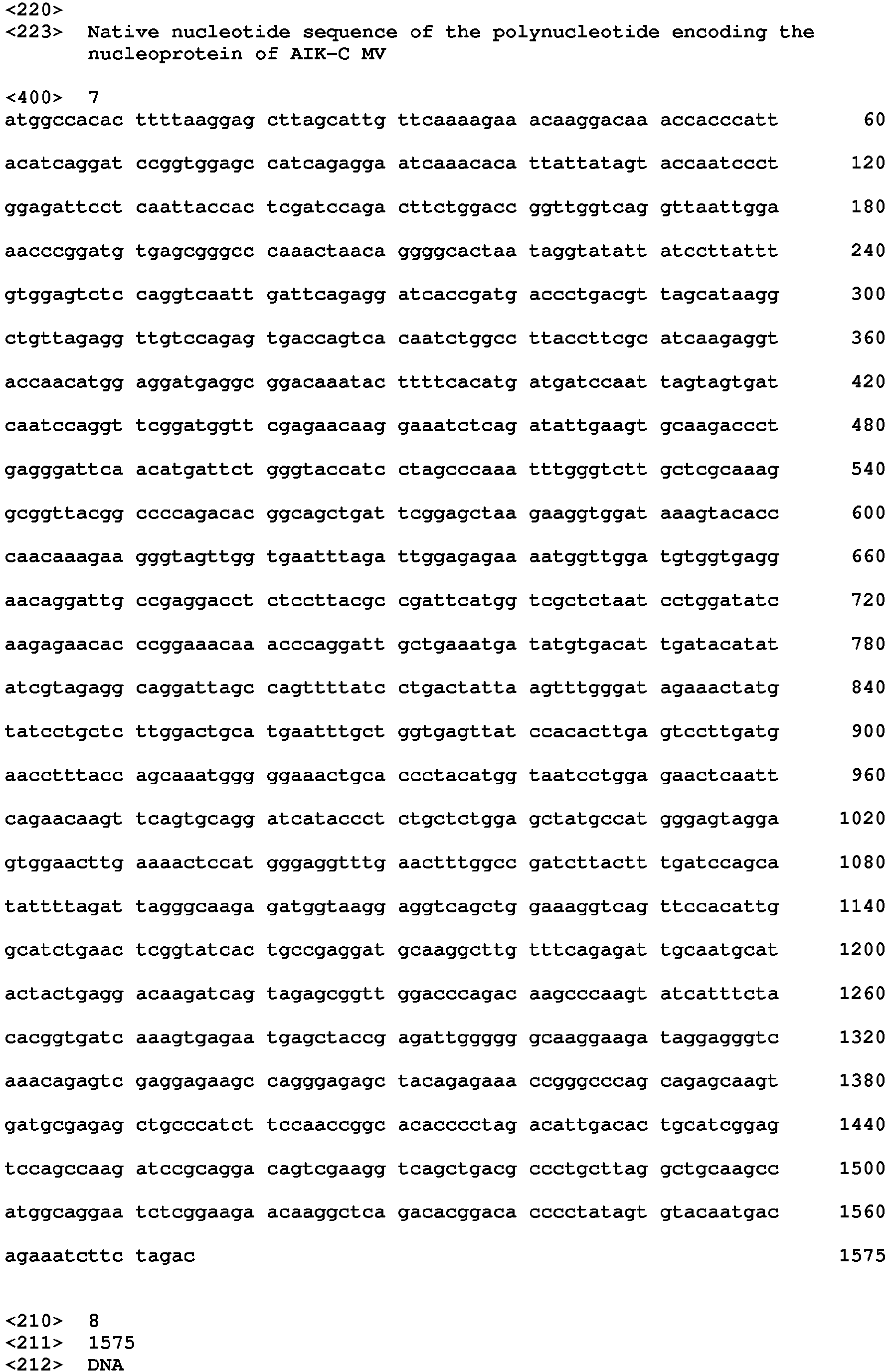


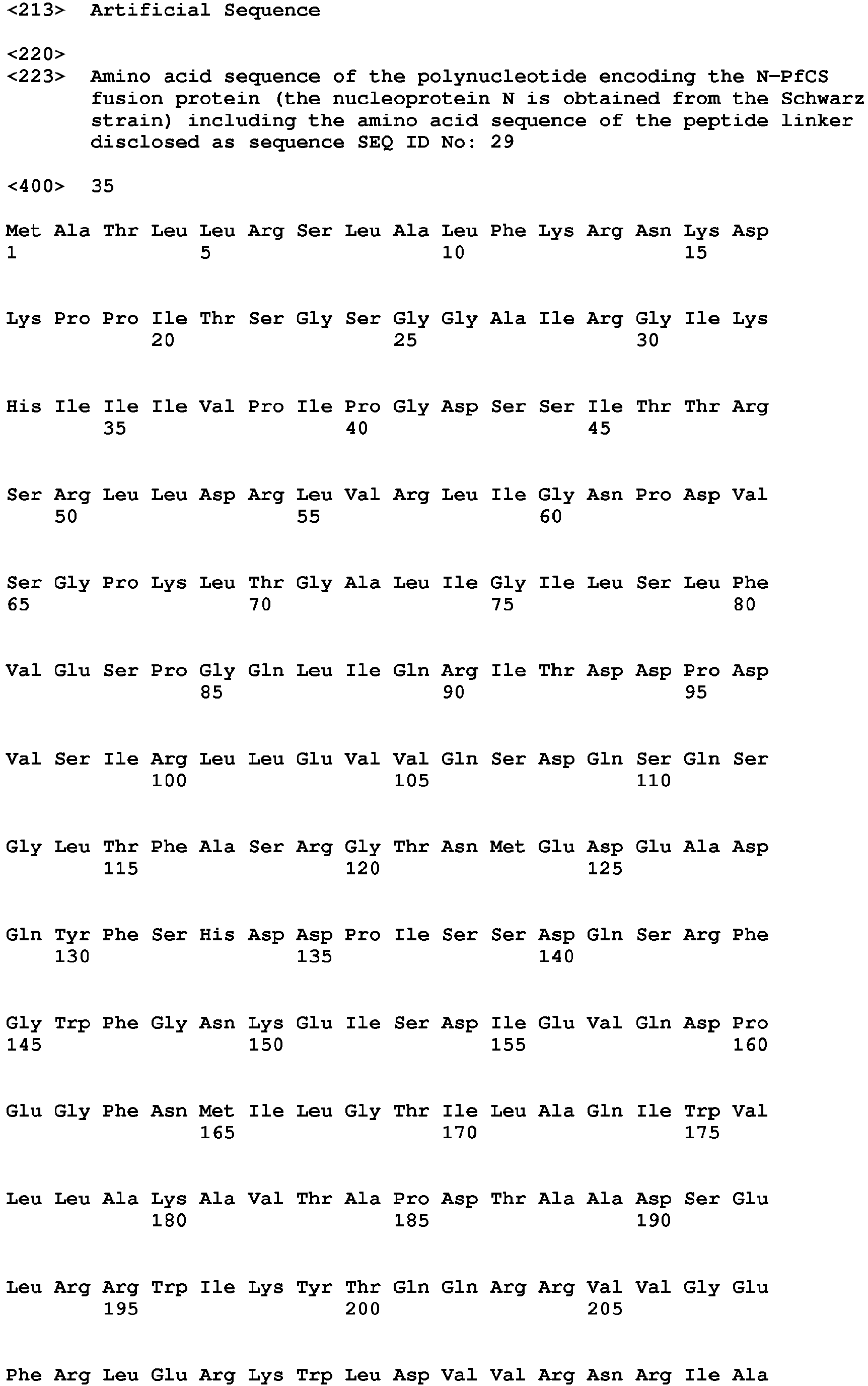


Claims (21)
- Multimeric ribonucleoproteins (RNPs) resulting from the assembly of at least 200 fusion proteins with a cellular ribonucleic acid (RNA), wherein the fusion protein comprises a nucleoprotein (N) of a non-segmented negative-strand RNA virus of the Paramyxoviridae family fused directly or indirectly with a heterologous polypeptide carrying one or a plurality of epitopes.
- The multimeric RNPs according to claim 1, wherein the non-segmented negative-strand RNA virus of the Paramyxoviridae family is a measles virus, preferably a measles virus derived from a live-attenuated measles virus strain, more preferably a measles virus derived from the Schwarz, Moraten, Rubeovax, AIK-C, Zagreb and Edmonston strains, even more preferably a measles virus derived from the Schwarz strain or the Moraten strain.
- The multimeric RNPs according to claim 1 or 2, wherein the heterologous polypeptide is from a parasite, preferably from a protozoan parasite of the genus Plasmodium, more preferably from Plasmodium berghei or Plasmodium falciparum, or from a virus, preferably from the Picornaviridiae family, more preferably from the genus Enterovirus, for example from Enterovirus 71 (EV71).
- The multimeric RNPs according to any one of claims 1 to 3, wherein the heterologous polypeptide is fused to the C-terminus of the nucleoprotein (N), in particular is fused to the C-terminus of the nucleoprotein (N) through a peptide linker, whose sequence has a size between 5 and 10 amino acid residues, preferably a peptide linker of 6 or 7 amino acid residues.
- The multimeric RNPs according to any one of claims 1 to 4, which are high-molecular weight RNPs, assembling from 200 to 1000 fusion proteins obtained between a nucleoprotein (N) and a heterologous polypeptide, preferably from 300 to 700 of said fusion proteins, in particular from 500 to 700 of said fusion proteins.
- A polynucleotide encoding a fusion protein as defined in any one of claims 1 to 4, in particular a polynucleotide comprising (i) the nucleotide sequence encoding the nucleoprotein (N) selected in the group of SEQ ID No: 2, SEQ ID No: 5, SEQ ID No: 8 and SEQ ID No: 11, optionally fused with (ii) a nucleotide sequence encoding the peptide linker selected in the group of SEQ ID No: 26 and SEQ ID No: 28, and (iii) the nucleotide sequence encoding the heterologous polypeptide fused to the nucleotide sequence of (i) or, if any, to the nucleotide sequence of (ii).
- A polynucleotide according to claim 6, which further comprises a Leader sequence and/or a Trailer sequence, for example a Leader sequence cloned upstream from the coding sequence of the nucleoprotein (N), as disclosed in SEQ ID No: 42 and/or a Trailer sequence cloned downstream from the coding sequence of the heterologous polypeptide, as disclosed in SEQ ID No: 43.
- An isolated or purified polynucleotide according to claim 6 encoding a fusion protein as defined in any one of claims 1 to 4, and comprising the nucleotide sequence selected in the group of SEQ ID NO: 31, SEQ ID NO: 34 and SEQ ID NO: 37.
- An expression vector, in particular a plasmid bearing the polynucleotide according to any one of claims 6 to 8.
- A recombinant yeast, which is recombined with the polynucleotide according to any one of claims 6 to 8, in conditions enabling constitutive or transitory or inducible expression of multimeric RNPs according to any one of claims 1 to 5.
- The recombinant yeast according to claim 10, which is prepared from a strain of Pichia pastoris or Saccharomyces cerevisiae.
- An inactivated recombinant yeast, which results from heat-inactivation at 58-60°C for 45-60 minutes, preferably at 60°C for 45 minutes of a recombinant yeast according to claim 10 or 11.
- A yeast lysate, which is a lysate of the recombinant yeast according to claim 10 or 11.
- An immunogenic composition comprising multimeric RNPs according to any one of claims 1 to 5 or recombinant yeast according to any one of claims 10 to 12 or yeast lysate according to claim 13, which optionally does not comprise an accessory adjuvant.
- A subunit vaccine platform comprising multimeric RNPs according to any one of claims 1 to 5 or recombinant yeast according to any one of claims 10 to 12 or yeast lysate according to claim 13.
- A multivalent immunogenic composition comprising a mixture of recombinant yeasts according to any one of claims 10 to 12 or a mixture of yeast lysates according to claim 13, wherein in the mixture, at least two clones of recombinant yeasts or yeast lysates are present, one clone expressing a heterologous polypeptide as defined in any one of claims 1, 3 and 4 different from the heterologous polypeptide of the other(s) clone(s).
- A process for the preparation of multimeric RNPs according to any one of claims 1 to 5 characterized in that it comprises the steps of:(i) obtaining recombinant yeast according to any one of claims 10 to 12 or yeast lysate according to claim 13, and(ii) recovering the multimeric RNPs from said yeast or yeast lysate.
- A process for the preparation of recombinant yeasts according to any one of claims 10 to 12 or yeast lysates according to claim 13 comprising:(i) recombining a yeast with a polynucleotide according to any one of claims 6 to 8,(ii) culturing said yeast in a medium,(iii) expressing the fusion protein in said yeast,(iv) optionally, heat-inactivating said yeast at 58-60°C for 45-60 minutes, preferably at 60°C for 45 minutes, and(v) optionally, preparing a yeast lysate.
- Use of recombinant yeasts according to any one of claims 10 to 12 or yeast lysates according to claim 13 as active ingredient for the in vitro production of an immunogenic composition, or as expression and vector systems for delivery to a host.
- Use of multimeric RNPs according to any one of claims 1 to 5 as active ingredient for the in vitro production of an immunogenic composition.
- The multimeric RNPs according to any one of claims 1 to 5 or recombinant yeasts according to any one of claims 10 to 12 or yeast lysates according to claim 13 for use in eliciting a protective prophylactic or a therapeutic immune response against the heterologous polypeptide in a host in need thereof.
Priority Applications (7)
| Application Number | Priority Date | Filing Date | Title |
|---|---|---|---|
| EP20130306577 EP2873728A1 (en) | 2013-11-18 | 2013-11-18 | A subunit vaccine platform based on multimeric ribonucleoproteins comprising nucleoproteins of a non-segmented negative-strand RNA virus as carriers of heterologous polypeptides |
| EP14772304.3A EP3071690B1 (en) | 2013-11-18 | 2014-09-17 | A subunit vaccine platform based on multimeric ribonucleoproteins comprising nucleoproteins of a non-segmented negative-strand rna virus as carriers of heterologous polypeptides |
| CA2928053A CA2928053C (en) | 2013-11-18 | 2014-09-17 | A subunit vaccine platform based on multimeric ribonucleoproteins comprising nucleoproteins of a non-segmented negative-strand rna virus as carriers of heterologous polypeptides |
| CN201480062811.2A CN106164258B (en) | 2013-11-18 | 2014-09-17 | Subunit vaccine platform based on multimeric ribonucleoproteins comprising nucleoproteins of a non-segmented negative-strand RNA virus as a carrier for heterologous polypeptides |
| PCT/EP2014/069830 WO2015071009A1 (en) | 2013-11-18 | 2014-09-17 | A subunit vaccine platform based on multimeric ribonucleoproteins comprising nucleoproteins of a non-segmented negative-strand rna virus as carriers of heterologous polypeptides |
| AU2014350565A AU2014350565B2 (en) | 2013-11-18 | 2014-09-17 | A subunit vaccine platform based on multimeric ribonucleoproteins comprising nucleoproteins of a non-segmented negative-strand RNA virus as carriers of heterologous polypeptides |
| US15/034,870 US10300128B2 (en) | 2013-11-18 | 2014-09-17 | Subunit vaccine platform based on multimeric ribonucleoproteins comprising nucleoproteins of a non-segmented negative-strand RNA virus as carriers of heterologous polypeptides |
Applications Claiming Priority (1)
| Application Number | Priority Date | Filing Date | Title |
|---|---|---|---|
| EP20130306577 EP2873728A1 (en) | 2013-11-18 | 2013-11-18 | A subunit vaccine platform based on multimeric ribonucleoproteins comprising nucleoproteins of a non-segmented negative-strand RNA virus as carriers of heterologous polypeptides |
Publications (1)
| Publication Number | Publication Date |
|---|---|
| EP2873728A1 true EP2873728A1 (en) | 2015-05-20 |
Family
ID=49641700
Family Applications (2)
| Application Number | Title | Priority Date | Filing Date |
|---|---|---|---|
| EP20130306577 Withdrawn EP2873728A1 (en) | 2013-11-18 | 2013-11-18 | A subunit vaccine platform based on multimeric ribonucleoproteins comprising nucleoproteins of a non-segmented negative-strand RNA virus as carriers of heterologous polypeptides |
| EP14772304.3A Active EP3071690B1 (en) | 2013-11-18 | 2014-09-17 | A subunit vaccine platform based on multimeric ribonucleoproteins comprising nucleoproteins of a non-segmented negative-strand rna virus as carriers of heterologous polypeptides |
Family Applications After (1)
| Application Number | Title | Priority Date | Filing Date |
|---|---|---|---|
| EP14772304.3A Active EP3071690B1 (en) | 2013-11-18 | 2014-09-17 | A subunit vaccine platform based on multimeric ribonucleoproteins comprising nucleoproteins of a non-segmented negative-strand rna virus as carriers of heterologous polypeptides |
Country Status (6)
| Country | Link |
|---|---|
| US (1) | US10300128B2 (en) |
| EP (2) | EP2873728A1 (en) |
| CN (1) | CN106164258B (en) |
| AU (1) | AU2014350565B2 (en) |
| CA (1) | CA2928053C (en) |
| WO (1) | WO2015071009A1 (en) |
Families Citing this family (5)
| Publication number | Priority date | Publication date | Assignee | Title |
|---|---|---|---|---|
| EP3103474A1 (en) * | 2015-06-12 | 2016-12-14 | Institut Pasteur | Live recombinant measles-m2 virus and its use in eliciting immunity against influenza viruses |
| CN108912213B (en) * | 2015-11-27 | 2021-08-03 | 山东大学 | Immunogenic polypeptide of enterovirus type 71 VP1 antigen and its preparation method and application |
| CN112543640B (en) * | 2018-05-15 | 2025-02-14 | 全球免疫公司 | Recombinant yeast lysate for induction of cellular immune responses |
| US20230183739A1 (en) * | 2018-05-23 | 2023-06-15 | Institut Pasteur | Recombinant measles virus expressing proteins of a plasmodium parasite and their applications |
| CN114177285A (en) * | 2022-01-14 | 2022-03-15 | 上海恒赛生物科技有限公司 | Immunologic adjuvant and application thereof in hepatitis B therapeutic vaccine |
Citations (6)
| Publication number | Priority date | Publication date | Assignee | Title |
|---|---|---|---|---|
| WO1993010152A1 (en) | 1991-11-16 | 1993-05-27 | Smithkline Beecham Biologicals S.A. | HYBRID PROTEIN BETWEEN CS FROM PLASMODIUM AND HBsAG |
| EP0789593A1 (en) | 1994-11-15 | 1997-08-20 | The Regents Of The University Of Colorado | Yeast-based delivery vehicles |
| WO2007119011A2 (en) | 2006-04-18 | 2007-10-25 | Institut National De La Recherche Agronomique (Inra) | N protein fusion proteins of a virus in the paramyxoviridae-protein of interest family |
| WO2009095791A1 (en) | 2008-01-31 | 2009-08-06 | Institut Pasteur | Reverse genetics of negative-strand rna viruses in yeast |
| WO2010033841A1 (en) | 2008-09-19 | 2010-03-25 | Globeimmune, Inc. | Immunotherapy for chronic hepatitis c virus infection |
| US8221763B2 (en) | 2000-11-15 | 2012-07-17 | Globeimmune, Inc. | Yeast-antigen compositions and methods of using the same |
Family Cites Families (5)
| Publication number | Priority date | Publication date | Assignee | Title |
|---|---|---|---|---|
| KR101076102B1 (en) * | 2002-02-21 | 2011-10-21 | 비로노바티브 비.브이. | Recombinant parainfluenza virus expression systems and vaccines comprising heterologous antigens derived from metapneumovirus |
| DK1375670T3 (en) * | 2002-06-20 | 2013-09-23 | Pasteur Institut | Recombinant measles viruses expressing epitopes of RNA virus antigens and use of the recombinant viruses to prepare vaccine compositions |
| KR101616572B1 (en) * | 2009-05-05 | 2016-05-11 | 카딜라 핼쓰캐어 리미티드 | Combined measles-malaria vaccine |
| WO2012030720A1 (en) * | 2010-08-31 | 2012-03-08 | Merial Limited | Newcastle disease virus vectored herpesvirus vaccines |
| WO2012038832A2 (en) * | 2010-09-24 | 2012-03-29 | Institut Pasteur | Generation of replicating chimeric measles virus - retrovirus particles |
-
2013
- 2013-11-18 EP EP20130306577 patent/EP2873728A1/en not_active Withdrawn
-
2014
- 2014-09-17 US US15/034,870 patent/US10300128B2/en active Active
- 2014-09-17 EP EP14772304.3A patent/EP3071690B1/en active Active
- 2014-09-17 CN CN201480062811.2A patent/CN106164258B/en not_active Expired - Fee Related
- 2014-09-17 AU AU2014350565A patent/AU2014350565B2/en not_active Ceased
- 2014-09-17 WO PCT/EP2014/069830 patent/WO2015071009A1/en not_active Ceased
- 2014-09-17 CA CA2928053A patent/CA2928053C/en not_active Expired - Fee Related
Patent Citations (7)
| Publication number | Priority date | Publication date | Assignee | Title |
|---|---|---|---|---|
| WO1993010152A1 (en) | 1991-11-16 | 1993-05-27 | Smithkline Beecham Biologicals S.A. | HYBRID PROTEIN BETWEEN CS FROM PLASMODIUM AND HBsAG |
| US5830463A (en) | 1993-07-07 | 1998-11-03 | University Technology Corporation | Yeast-based delivery vehicles |
| EP0789593A1 (en) | 1994-11-15 | 1997-08-20 | The Regents Of The University Of Colorado | Yeast-based delivery vehicles |
| US8221763B2 (en) | 2000-11-15 | 2012-07-17 | Globeimmune, Inc. | Yeast-antigen compositions and methods of using the same |
| WO2007119011A2 (en) | 2006-04-18 | 2007-10-25 | Institut National De La Recherche Agronomique (Inra) | N protein fusion proteins of a virus in the paramyxoviridae-protein of interest family |
| WO2009095791A1 (en) | 2008-01-31 | 2009-08-06 | Institut Pasteur | Reverse genetics of negative-strand rna viruses in yeast |
| WO2010033841A1 (en) | 2008-09-19 | 2010-03-25 | Globeimmune, Inc. | Immunotherapy for chronic hepatitis c virus infection |
Non-Patent Citations (80)
| Title |
|---|
| AGNANDJI ST ET AL., N ENGL J MED, vol. 367, 2012, pages 2284 - 2295 |
| ARIAS MA ET AL., VACCINE, vol. 29, 2011, pages 1258 - 1269 |
| ARNOLD M ET AL., PLOS ONE, vol. 7, 2012, pages E42870 |
| BAGNOLI F ET AL., OMICS, vol. 15, 2011, pages 545 - 566 |
| BAKKER ET AL., J. GEN. VIROL., vol. 94, 2013, pages 1734 - 1738 |
| BAZAN SB ET AL., VACCINE, vol. 29, 2011, pages 8165 - 8173 |
| BEJON P ET AL., LANCET INFECT DIS, 2013 |
| BERKOWER ET AL., VIROLOGY, vol. 321, 2004, pages 75 - 86 |
| BIAN G ET AL., VACCINE, vol. 28, 2009, pages 187 - 194 |
| BOURHIS JM ET AL., VIROLOGY, vol. 344, 2006, pages 94 - 110 |
| BOURHIS JM; CANARD B; LONGHI S, VIROLOGY, vol. 344, 2006, pages 94 - 110 |
| BUCKLAND R ET AL., J GEN VIROL, vol. 70, 1989, pages 435 - 441 |
| BUI MR ET AL., VACCINE, vol. 28, 2010, pages 6028 - 6035 |
| CASARES S ET AL., VACCINE, vol. 28, 2010, pages 4880 - 4894 |
| CHEONG ET AL., J. VIROL. METHODS, vol. 158, 2009, pages 35 - 40 |
| COMBREDET C ET AL., J VIROL, vol. 77, 2003, pages 11546 - 11554 |
| CRAIG AG ET AL., PLOS PATHOG, vol. 8, 2012, pages E1002401 |
| CREGG JM ET AL., BIOTECHNOLOGY (N Y, vol. 11, 1993, pages 905 - 910 |
| DAILY JP, N ENGL J MED, vol. 367, 2012, pages 2349 - 2351 |
| DE SCHUTTER K ET AL., NAT BIOTECHNOL, vol. 27, 2009, pages 561 - 566 |
| DESFOSSES A ET AL., J VIROL, vol. 85, 2011, pages 1391 - 1395 |
| FRACHON E ET AL., APPL ENVIRON MICROBIOL, vol. 72, 2006, pages 5225 - 5231 |
| FRANCOIS G ET AL., PEDIATR INFECT DIS J, vol. 24, 2005, pages 953 - 961 |
| GONZALES MC ET AL., VIRUS RESEARCH, vol. 146, 2009, pages 107 - 114 |
| GONZALEZ MC ET AL., VIRUS RES, vol. 146, 2009, pages 107 - 114 |
| GOODRIDGE HS ET AL., NATURE, vol. 472, 2011, pages 471 - 475 |
| GRIFFIN DE ET AL., FEMS MICROBIOL REV, vol. 36, 2012, pages 649 - 662 |
| GRIFFIN DE: "Fields Virology", 2001, LIPPINCOTT WILLIAMS & WILKINS PUBLICATIONS, pages: 1401 - 1441 |
| GUEIRARD P ET AL., PROC NATL ACAD SCI USA, vol. 107, 2010, pages 18640 - 18645 |
| HALLER AA ET AL., VACCINE, vol. 25, 2007, pages 1452 - 1463 |
| JACKSON DA; POMBO A; IBORRA F, FASEB J, vol. 14, 2000, pages 242 - 254 |
| JARIYAPONG P ET AL., VACCINE, vol. 31, 2013, pages 417 - 424 |
| JENSEN MR ET AL., PROC NATL ACAD SCI USA, vol. 108, 2011, pages 9839 - 9844 |
| JOHN CC ET AL., AM J TROP MED HYG, vol. 73, 2005, pages 222 - 228 |
| KEELING JW; MILLER RK, METHODS MOL BIOL, vol. 782, 2011, pages 231 - 244 |
| KESTER KE ET AL., J INFECT DIS, vol. 200, 2009, pages 337 - 346 |
| KOZAK M, NAR, vol. 15, 1987, pages 8125 - 8148 |
| KOZAK M, PNAS, vol. 87, 1990, pages 8301 - 8305 |
| KUMAR S ET AL., J IMMUNOL METHODS, vol. 390, 2013, pages 99 - 105 |
| KYTE J; DOOLITTLE RF, J MOL BIOL, vol. 157, 1982, pages 105 - 132 |
| LACERDA CM ET AL., MYCOPATHOLOGIA, vol. 171, 2011, pages 395 - 401 |
| LIN-CEREGHINO J. ET AL., METHODS MOL. BIOL., vol. 389, 2007, pages 11 - 25 |
| LIU M ET AL., VACCINE, vol. 29, 2011, pages 1745 - 1753 |
| LIU R ET AL., APPL BIOCHEM, vol. 158, 2009, pages 432 - 444 |
| LONGHI S, ADV EXP MED BIOL, vol. 725, 2012, pages 126 - 141 |
| LONGHI S., CURRENT TOPICS IN MICROBIOLOGY AND IMMUNOLOGY, vol. 329, 2009, pages 103 - 28 |
| LU Y ET AL., CANCER RES, vol. 64, 2004, pages 5084 - 5088 |
| MANCINI ET AL., INT. REV. IMMUNOL., vol. 11, 1994, pages 143 - 151 |
| MICHEL ET AL., VACCINE, vol. 25, 2007, pages 1901 - 1911 |
| MILLER E ET AL., BMJ, vol. 346, 2013, pages F794 |
| MILLER LH ET AL., NAT MED, vol. 19, 2013, pages 156 - 167 |
| NEUMANN AK; JACOBSON K, PLOS PATHOG, vol. 6, 2010, pages E1000760 |
| NIMMERJAHN F; RAVETCH JV, NAT REV IMMUNOL, vol. 8, 2008, pages 34 - 47 |
| NUSSENZWEIG V; NUSSENZWEIG RS, CELL, vol. 42, 1985, pages 401 - 403 |
| PARKS ET AL., JOURNAL OF VIROLOGY, vol. 75, no. 2, 2001, pages 910 - 920 |
| PIYASIRISILP S; HEMACHUDHA T, CURR OPIN NEUROL, vol. 15, 2002, pages 333 - 338 |
| PLASSMEYER ML ET AL., J BIOL CHEM, vol. 284, 2009, pages 26951 - 26963 |
| RADOSEVIC K ET AL., CLIN VACCINE IMMUNOL, vol. 17, 2010, pages 1687 - 1694 |
| REGULES JA ET AL., EXPERT REV VACCINES, vol. 10, 2011, pages 589 - 599 |
| REGULES JASON A ET AL: "The RTS,S vaccine candidate for malaria", EXPERT REVIEW OF VACCINES ENGLAND, EXPERT REVIEWS LTD, GB, vol. 10, no. 5, 1 May 2011 (2011-05-01), pages 589 - 599, XP009176307, ISSN: 1744-8395, DOI: 10.1586/ERV.11.57 * |
| RIBEIRO, CM; SCHIJNS VE, METHODS MOL BIOL, vol. 626, 2010, pages 1 - 14 |
| RIMANTAS SLIBINSKAS ET AL: "Synthesis of the measles virus nucleoprotein in yeast Pichia pastoris and Saccharomyces cerevisiae", JOURNAL OF BIOTECHNOLOGY, vol. 107, no. 2, 1 January 2004 (2004-01-01), pages 115 - 124, XP055102902, ISSN: 0168-1656, DOI: 10.1016/j.jbiotec.2003.10.018 * |
| ROOHVAND F; KOSSARI N, EXPERT OPIN THER PAT, vol. 22, 2012, pages 391 - 415 |
| SAIKI M ET AL., J AUTOIMMUN, vol. 24, 2005, pages 203 - 208 |
| SCHELLER LF ET AL., INFECT IMMUN, vol. 62, 1994, pages 4844 - 4847 |
| SCHNEIDER CA ET AL., NAT METHODS, vol. 9, 2012, pages 671 - 675 |
| SCHOFIELD L ET AL., NATURE, vol. 330, 1987, pages 664 - 666 |
| SINGH M ET AL., EXPERT REV VACCINES, vol. 6, 2007, pages 797 - 808 |
| SLIBINSKAS R ET AL., J BIOTECHNOL, vol. 107, 2004, pages 115 - 124 |
| SPEHNER D ET AL., J. VIROL, vol. 65, no. 11, 1991, pages 6296 - 6300 |
| SPEHNER ET AL., J. VIROL., vol. 65, no. 11, 1991, pages 6296 - 6300 |
| STORNI T ET AL., ADV DRUG DELIV REV, vol. 57, 2005, pages 333 - 355 |
| STUBBS AC ET AL., NAT MED, vol. 7, 2001, pages 625 - 629 |
| TOMLJENOVIC L, J ALZHEIMERS DIS, vol. 23, 2011, pages 567 - 598 |
| VANLOUBBEECK Y ET AL., VACCINE, 2013 |
| VIETHEER PT ET AL., ANTIVIR THER, vol. 12, 2007, pages 477 - 487 |
| WARNES A ET AL., GENE, vol. 160, 1995, pages 173 - 178 |
| WEISS WR ET AL., PROC NATL ACAD SCI USA, vol. 85, 1988, pages 573 - 576 |
| XIANG SD ET AL., METHODS, vol. 40, 2006, pages 1 - 9 |
| ZHANG T ET AL., VACCINE, vol. 29, 2011, pages 8412 - 8416 |
Also Published As
| Publication number | Publication date |
|---|---|
| EP3071690B1 (en) | 2020-07-29 |
| US20160271242A1 (en) | 2016-09-22 |
| CA2928053A1 (en) | 2015-05-21 |
| CA2928053C (en) | 2021-07-13 |
| AU2014350565A1 (en) | 2016-05-26 |
| CN106164258A (en) | 2016-11-23 |
| US10300128B2 (en) | 2019-05-28 |
| EP3071690A1 (en) | 2016-09-28 |
| WO2015071009A1 (en) | 2015-05-21 |
| CN106164258B (en) | 2021-01-19 |
| AU2014350565B2 (en) | 2019-08-08 |
Similar Documents
| Publication | Publication Date | Title |
|---|---|---|
| Jacob et al. | Whole Pichia pastoris yeast expressing measles virus nucleoprotein as a production and delivery system to multimerize Plasmodium antigens | |
| US9782471B2 (en) | EV71 virus-like particles and preparation method and application thereof | |
| EP3071690B1 (en) | A subunit vaccine platform based on multimeric ribonucleoproteins comprising nucleoproteins of a non-segmented negative-strand rna virus as carriers of heterologous polypeptides | |
| KR20230008801A (en) | Optimized nucleotide sequences encoding SARS-COV-2 antigens | |
| US9987353B2 (en) | Virus like vesicles (VLVS) based vaccines to prevent or treat chronic hepatitis B virus (HBV) infection | |
| JPH07501213A (en) | Hybrid protein between CS and HBsAG from malaria parasite | |
| EP4147715A1 (en) | Biofusion proteins as anti-malaria vaccines | |
| US20210030859A1 (en) | Uses of parasite macrophage migration inhibitory factors | |
| Guo et al. | Self-assembly of virus-like particles of rabbit hemorrhagic disease virus capsid protein expressed in Escherichia coli and their immunogenicity in rabbits | |
| KR20180108754A (en) | New antigens for use in malaria vaccines | |
| US11944674B2 (en) | Vaccines | |
| JP5568017B2 (en) | Recombinant chicken infectious coryza vaccine and method for producing the same | |
| CN120617496A (en) | Respiratory syncytial virus vaccine, and preparation method and application thereof | |
| CN118207228B (en) | A multi-stage dual-target tandem malaria mRNA vaccine combining prevention and treatment | |
| US20160136253A1 (en) | Vaccines against pregnancy-associated malaria | |
| CN102127554A (en) | Japanese encephalitis particle vaccine and preparation method and application thereof | |
| EP2658568A1 (en) | Canine babesiosis vaccine antigen | |
| OA17769A (en) | A subunit vaccine platform based on multimeric ribonucleoproteins comprising nucleoproteins of a non-segmented negativestrand RNA virus as carriers of heterologous polypeptides | |
| Jacob et al. | Yeast lysates carrying the nucleoprotein from measles virus vaccine as a novel subunit vaccine platform to deliver Plasmodium circumsporozoite antigen | |
| CN116710557A (en) | Optimized nucleotide sequence encoding SARS-COV-2 antigen | |
| CN110819653A (en) | Recombinant horse serum albumin and preparation method and application thereof | |
| Ono et al. | Actively induced antigen-specific CD8+ T cells by epitope-bearing parasite pre-infection but not prime/boost virus vector vaccination could ameliorate the course of Plasmodium yoelii blood-stage infection | |
| Wei et al. | Construction and identification of Complex DNA vaccine of hepatitis B and Toxoplasma gondii | |
| CN101947325A (en) | Vibrio paraheamolyticus bivalent DNA vaccine as well as preparation method and application thereof | |
| Delfino et al. | mRNA-Tc-Vax vaccine induces T cell-dependent prophylactic and therapeutic protection against Trypanosoma cruzi |
Legal Events
| Date | Code | Title | Description |
|---|---|---|---|
| PUAI | Public reference made under article 153(3) epc to a published international application that has entered the european phase |
Free format text: ORIGINAL CODE: 0009012 |
|
| 17P | Request for examination filed |
Effective date: 20131118 |
|
| AK | Designated contracting states |
Kind code of ref document: A1 Designated state(s): AL AT BE BG CH CY CZ DE DK EE ES FI FR GB GR HR HU IE IS IT LI LT LU LV MC MK MT NL NO PL PT RO RS SE SI SK SM TR |
|
| AX | Request for extension of the european patent |
Extension state: BA ME |
|
| STAA | Information on the status of an ep patent application or granted ep patent |
Free format text: STATUS: THE APPLICATION IS DEEMED TO BE WITHDRAWN |
|
| 18D | Application deemed to be withdrawn |
Effective date: 20151121 |