EP2873366A1 - Method with biofeedback for training the muscles of the pelvic floor - Google Patents
Method with biofeedback for training the muscles of the pelvic floor Download PDFInfo
- Publication number
- EP2873366A1 EP2873366A1 EP13820576.0A EP13820576A EP2873366A1 EP 2873366 A1 EP2873366 A1 EP 2873366A1 EP 13820576 A EP13820576 A EP 13820576A EP 2873366 A1 EP2873366 A1 EP 2873366A1
- Authority
- EP
- European Patent Office
- Prior art keywords
- exercises
- sensors
- user
- electronic device
- capturing
- Prior art date
- Legal status (The legal status is an assumption and is not a legal conclusion. Google has not performed a legal analysis and makes no representation as to the accuracy of the status listed.)
- Granted
Links
Images
Classifications
-
- A—HUMAN NECESSITIES
- A61—MEDICAL OR VETERINARY SCIENCE; HYGIENE
- A61B—DIAGNOSIS; SURGERY; IDENTIFICATION
- A61B5/00—Measuring for diagnostic purposes; Identification of persons
- A61B5/24—Detecting, measuring or recording bioelectric or biomagnetic signals of the body or parts thereof
- A61B5/316—Modalities, i.e. specific diagnostic methods
- A61B5/389—Electromyography [EMG]
- A61B5/391—Electromyography [EMG] of genito-urinary organs
-
- A—HUMAN NECESSITIES
- A61—MEDICAL OR VETERINARY SCIENCE; HYGIENE
- A61B—DIAGNOSIS; SURGERY; IDENTIFICATION
- A61B5/00—Measuring for diagnostic purposes; Identification of persons
- A61B5/48—Other medical applications
- A61B5/486—Biofeedback
-
- A—HUMAN NECESSITIES
- A61—MEDICAL OR VETERINARY SCIENCE; HYGIENE
- A61B—DIAGNOSIS; SURGERY; IDENTIFICATION
- A61B5/00—Measuring for diagnostic purposes; Identification of persons
- A61B5/68—Arrangements of detecting, measuring or recording means, e.g. sensors, in relation to patient
- A61B5/6801—Arrangements of detecting, measuring or recording means, e.g. sensors, in relation to patient specially adapted to be attached to or worn on the body surface
- A61B5/6813—Specially adapted to be attached to a specific body part
- A61B5/6823—Trunk, e.g., chest, back, abdomen, hip
-
- A—HUMAN NECESSITIES
- A61—MEDICAL OR VETERINARY SCIENCE; HYGIENE
- A61B—DIAGNOSIS; SURGERY; IDENTIFICATION
- A61B5/00—Measuring for diagnostic purposes; Identification of persons
- A61B5/0002—Remote monitoring of patients using telemetry, e.g. transmission of vital signals via a communication network
- A61B5/0004—Remote monitoring of patients using telemetry, e.g. transmission of vital signals via a communication network characterised by the type of physiological signal transmitted
-
- A—HUMAN NECESSITIES
- A61—MEDICAL OR VETERINARY SCIENCE; HYGIENE
- A61B—DIAGNOSIS; SURGERY; IDENTIFICATION
- A61B5/00—Measuring for diagnostic purposes; Identification of persons
- A61B5/103—Measuring devices for testing the shape, pattern, colour, size or movement of the body or parts thereof, for diagnostic purposes
- A61B5/11—Measuring movement of the entire body or parts thereof, e.g. head or hand tremor or mobility of a limb
- A61B5/1107—Measuring contraction of parts of the body, e.g. organ or muscle
-
- A—HUMAN NECESSITIES
- A61—MEDICAL OR VETERINARY SCIENCE; HYGIENE
- A61B—DIAGNOSIS; SURGERY; IDENTIFICATION
- A61B5/00—Measuring for diagnostic purposes; Identification of persons
- A61B5/20—Measuring for diagnostic purposes; Identification of persons for measuring urological functions restricted to the evaluation of the urinary system
- A61B5/202—Assessing bladder functions, e.g. incontinence assessment
-
- A—HUMAN NECESSITIES
- A61—MEDICAL OR VETERINARY SCIENCE; HYGIENE
- A61B—DIAGNOSIS; SURGERY; IDENTIFICATION
- A61B5/00—Measuring for diagnostic purposes; Identification of persons
- A61B5/24—Detecting, measuring or recording bioelectric or biomagnetic signals of the body or parts thereof
- A61B5/30—Input circuits therefor
- A61B5/307—Input circuits therefor specially adapted for particular uses
- A61B5/313—Input circuits therefor specially adapted for particular uses for electromyography [EMG]
-
- A—HUMAN NECESSITIES
- A61—MEDICAL OR VETERINARY SCIENCE; HYGIENE
- A61B—DIAGNOSIS; SURGERY; IDENTIFICATION
- A61B5/00—Measuring for diagnostic purposes; Identification of persons
- A61B5/68—Arrangements of detecting, measuring or recording means, e.g. sensors, in relation to patient
- A61B5/6846—Arrangements of detecting, measuring or recording means, e.g. sensors, in relation to patient specially adapted to be brought in contact with an internal body part, i.e. invasive
- A61B5/6867—Arrangements of detecting, measuring or recording means, e.g. sensors, in relation to patient specially adapted to be brought in contact with an internal body part, i.e. invasive specially adapted to be attached or implanted in a specific body part
- A61B5/6873—Intestine
-
- A—HUMAN NECESSITIES
- A61—MEDICAL OR VETERINARY SCIENCE; HYGIENE
- A61B—DIAGNOSIS; SURGERY; IDENTIFICATION
- A61B5/00—Measuring for diagnostic purposes; Identification of persons
- A61B5/74—Details of notification to user or communication with user or patient; User input means
- A61B5/7405—Details of notification to user or communication with user or patient; User input means using sound
-
- A—HUMAN NECESSITIES
- A61—MEDICAL OR VETERINARY SCIENCE; HYGIENE
- A61B—DIAGNOSIS; SURGERY; IDENTIFICATION
- A61B5/00—Measuring for diagnostic purposes; Identification of persons
- A61B5/74—Details of notification to user or communication with user or patient; User input means
- A61B5/742—Details of notification to user or communication with user or patient; User input means using visual displays
-
- A—HUMAN NECESSITIES
- A63—SPORTS; GAMES; AMUSEMENTS
- A63B—APPARATUS FOR PHYSICAL TRAINING, GYMNASTICS, SWIMMING, CLIMBING, OR FENCING; BALL GAMES; TRAINING EQUIPMENT
- A63B23/00—Exercising apparatus specially adapted for particular parts of the body
- A63B23/20—Exercising apparatus specially adapted for particular parts of the body for vaginal muscles or other sphincter-type muscles
-
- A—HUMAN NECESSITIES
- A63—SPORTS; GAMES; AMUSEMENTS
- A63B—APPARATUS FOR PHYSICAL TRAINING, GYMNASTICS, SWIMMING, CLIMBING, OR FENCING; BALL GAMES; TRAINING EQUIPMENT
- A63B71/00—Games or sports accessories not covered in groups A63B1/00 - A63B69/00
- A63B71/06—Indicating or scoring devices for games or players, or for other sports activities
- A63B71/0619—Displays, user interfaces and indicating devices, specially adapted for sport equipment, e.g. display mounted on treadmills
- A63B71/0622—Visual, audio or audio-visual systems for entertaining, instructing or motivating the user
-
- A—HUMAN NECESSITIES
- A63—SPORTS; GAMES; AMUSEMENTS
- A63B—APPARATUS FOR PHYSICAL TRAINING, GYMNASTICS, SWIMMING, CLIMBING, OR FENCING; BALL GAMES; TRAINING EQUIPMENT
- A63B71/00—Games or sports accessories not covered in groups A63B1/00 - A63B69/00
- A63B71/06—Indicating or scoring devices for games or players, or for other sports activities
- A63B71/0619—Displays, user interfaces and indicating devices, specially adapted for sport equipment, e.g. display mounted on treadmills
- A63B71/0622—Visual, audio or audio-visual systems for entertaining, instructing or motivating the user
- A63B2071/0625—Emitting sound, noise or music
-
- A—HUMAN NECESSITIES
- A63—SPORTS; GAMES; AMUSEMENTS
- A63B—APPARATUS FOR PHYSICAL TRAINING, GYMNASTICS, SWIMMING, CLIMBING, OR FENCING; BALL GAMES; TRAINING EQUIPMENT
- A63B2230/00—Measuring physiological parameters of the user
- A63B2230/60—Measuring physiological parameters of the user muscle strain, i.e. measured on the user
- A63B2230/605—Measuring physiological parameters of the user muscle strain, i.e. measured on the user used as a control parameter for the apparatus
Definitions
- the present invention relates to a method with biofeedback envisaged for training muscles of the pelvic floor, applicable to the treatment of urinary incontinence, fecal incontinence and prolapse of pelvic organs, in which an electronic device associated with sensors (generally electrodes) is used for capturing and processing EMG signals relating to an area to be treated and to abdominal activity, showing a user or patient some graphs or images representative of the results of the captured and processed signals through visual and/or acoustic display means, which can possibly be replaced with a computer screen.
- sensors generally electrodes
- the invention therefore falls within non-invasive methods for treating dysfunctions such as urinary or fecal incontinence, through muscle exercises controlled by an electronic device prepared for capturing, through feedback by means of sensors, electromyographic EMG signals relating to the pelvic floor and EMG signals relating to a lower abdominal area, simultaneously showing a user information illustrating the muscle activity of the treated area, and auxiliary messages particularly offering guidance for said exercises, by means of a visual and/or acoustic interface, while the user performs said muscle exercises.
- dysfunctions such as urinary or fecal incontinence
- an electronic device prepared for capturing, through feedback by means of sensors, electromyographic EMG signals relating to the pelvic floor and EMG signals relating to a lower abdominal area, simultaneously showing a user information illustrating the muscle activity of the treated area, and auxiliary messages particularly offering guidance for said exercises, by means of a visual and/or acoustic interface, while the user performs said muscle exercises.
- the invention particularly proposes a method which makes it easier for the user herself to learn and perform the mentioned exercises after a simple training step with the help of a medical practitioner, with the capacity to automatically adapt the parameters of said exercises to the particular conditions of each user at all times throughout the period of performing the exercises and optimizing result capturing and processing.
- the term "user”, or subject of the method shall refer to a female user, although it is clear that the method would also be applicable to male users in the case of fecal incontinence.
- Patent document US 5 277 197 discloses a microprocessor-controlled system for performing unsupervised training exercises, with EMG feedback, in which it describes the use of an electromyographic sensor producing a signal representative of an EMG activity (electromyographic signal the electric source of which is the potential of the muscle membrane), said sensor being an electrode that is positioned adjacent to a muscle group to be controlled and describes a chain of elements for converting and carrying said signal to a display screen where the level of muscle activity generated by the user is shown so that the user can perform variable contraction and relaxation exercises in response to the results detected by the mentioned electromyographic sensor.
- EMG activity electromyographic signal the electric source of which is the potential of the muscle membrane
- Patent document US 5 423 329 describes in detail a non-invasive method of treatment for urinary incontinence, envisaged to be performed by medical personnel in which sensors are applied for controlling muscles of the anus and other sensors are applied under and on the thigh and in the lower abdomen area, acquiring information from said several sources to provide supervision information (measurements from a base reference to a peak reference) resulting from voluntary contractions by the patient aided by practitioners.
- Patent document 5 881 731 describes a vaginal probe-type device in which the particularity of pelvic floor asymmetry has been envisaged and sensors have been envisaged for such purpose on both sides of a tubular portion that can be inserted into the vagina, such that when the device is suitably positioned, it can acquire information from the muscles of the two sides, separately.
- the method of the invention uses means for capturing pelvic floor muscle activity data, such as those mentioned, but proposes and allows using same at home, i.e., applied by a user without the help of any medical personnel, except in one or more initiation sessions, integrating said pelvic floor muscle activity data and displaying to the user, which not only allows the user to perform suitable exercises, but also allows evaluating them and dynamically adapting same both to the conditions for performing specific exercises (number of exercises or time in which they are performed, in particular after an earlier workout) and to the individual characteristics of the users every time they perform exercises.
- the invention proposes a method with biofeedback for training muscles of the pelvic floor, applicable to the treatment of urinary or fecal incontinence, in which an electronic device is used for capturing, through sensors, EMG signals relating to a vaginal or anal area while performing muscle exercises, and EMG signals relating to abdominal activity, showing a representation associated with said processed EMG signals, providing information about the result of said exercises, through visual and/or acoustic display means, which can possibly be replaced with a computer screen with which said electronic device is associated.
- the method is based on processes and/or techniques which have already been used, generally with medical support, comprising the following steps:
- the exercises of step b) include two types: rapid and sustained or resistance contraction exercises for training the different types of muscle fibers.
- the method according to this invention is characterized in that it is performed by the user herself who will place said vaginal or rectal sensor in the user's vagina or rectum.
- a portable electronic device that can be located in an area close to the area where exercises are performed will be at the user's disposal and said portable electronic device captures information from said vaginal or rectal sensor by means of radiofrequency or another type of wireless signal.
- step a) also includes the placement, by the user, of at least two sensors for capturing the EMG signals in the lower abdominal area.
- the proposed method is also characterized by verifying, before step b), the correct/suitable placement (sufficient EMG signal capture) of said at least two sensors for the lower abdominal area, indicating to the user, via the portable electronic device, that a suitable position of the sensors has been reached through said acoustic and/or visual means.
- the proposed method is also characterized by performing before step b) first relaxation exercises for establishing a baseline level of muscle activity which is established from the muscle tone captured by the EMG signal provided by said abdominal sensors and vaginal or rectal sensors, and obtaining a maximum level, requesting to that end maximum contraction of said areas from said user.
- the invention is implemented in a preferred embodiment with a system or equipment comprising a compact portable device providing a biofeedback signal relating to training exercises performed by a user.
- the exercises are for strengthening muscles of the pelvic floor for the treatment of urinary incontinence.
- the system comprises a probe 10 for capturing the electromyographic (EMG) signal relating to the pelvic floor.
- the probe can be a vaginal or rectal probe.
- the system also includes a second channel recording the EMG relating to abdominal muscles from sensors such as electrodes 11 applied in the lower abdomen, to assure that the exercises are being correctly performed.
- the EMG signals from both sources are filtered and amplified and then processed for obtaining the level of muscle activity.
- the information about muscle activity can be presented by way of numbers, graphs, or by means of an acoustic signal.
- the equipment will generally include (for example, stored in a memory) a set of preprogrammed exercises which can be configured by medical personnel. The equipment offers the user guidance for performing the exercises so that she achieves a certain level of activation of the two measurement channels. All the data is stored in a history log which will be wirelessly transmitted to a PC so that medical personnel can consult it a posteriori with reports, statistics, etc. The data may also be remotely transmitted from where the patient is to the center where the medical personnel is.
- the portable system can also be connected to a personal computer.
- the personal computer When it is connected to the personal computer:
- the portable equipment dumps the data into a computer, for example, a computer in a rehabilitation center, so that statistics are generated based on the variables of interest from the EMG signals, and clinical reports are prepared for the doctors which allows assessing patient progression. This information transfer could be done remotely, allowing remote patient care.
- the equipment also measures muscle tone, using to that end sensors applied in the lower abdominal area, so that the level of contraction which the patients perform during exercises can subsequently be better assessed.
- the portable equipment is capable of checking or verifying (assessing the signal received from the sensors) the correct placement of the sensors (for example, electrodes) and the vaginal probe.
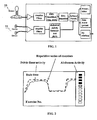
- FIG 1 shows the components of the equipment and the steps of processing the captured EMG signals.
- Figure 2 illustrates an example of a display screen indicating the parameters shown to a user.
- the activity of the muscles of the pelvic floor (continuous line) is graphically shown together with the screen indicating the exercise to be performed (discontinuous line).
- the bar on the right simultaneously shows the activity of the abdominal muscles.
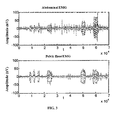
- Figure 3 shows graphs with examples of EMG signals recorded in the pelvic floor and in the abdomen and the result of processing such signals.
Landscapes
- Health & Medical Sciences (AREA)
- Life Sciences & Earth Sciences (AREA)
- Engineering & Computer Science (AREA)
- General Health & Medical Sciences (AREA)
- Veterinary Medicine (AREA)
- Animal Behavior & Ethology (AREA)
- Biomedical Technology (AREA)
- Heart & Thoracic Surgery (AREA)
- Medical Informatics (AREA)
- Molecular Biology (AREA)
- Surgery (AREA)
- Pathology (AREA)
- Biophysics (AREA)
- Public Health (AREA)
- Physics & Mathematics (AREA)
- Physiology (AREA)
- Physical Education & Sports Medicine (AREA)
- Urology & Nephrology (AREA)
- Reproductive Health (AREA)
- Gynecology & Obstetrics (AREA)
- Biodiversity & Conservation Biology (AREA)
- Computer Networks & Wireless Communication (AREA)
- Dentistry (AREA)
- Oral & Maxillofacial Surgery (AREA)
- Multimedia (AREA)
- Human Computer Interaction (AREA)
- Measurement Of The Respiration, Hearing Ability, Form, And Blood Characteristics Of Living Organisms (AREA)
- Orthopedics, Nursing, And Contraception (AREA)
- Rehabilitation Tools (AREA)
- Electrotherapy Devices (AREA)
Abstract
Description
- The present invention relates to a method with biofeedback envisaged for training muscles of the pelvic floor, applicable to the treatment of urinary incontinence, fecal incontinence and prolapse of pelvic organs, in which an electronic device associated with sensors (generally electrodes) is used for capturing and processing EMG signals relating to an area to be treated and to abdominal activity, showing a user or patient some graphs or images representative of the results of the captured and processed signals through visual and/or acoustic display means, which can possibly be replaced with a computer screen.
- It is well known that performing periodic muscle exercises of a muscle area to be treated such as the indicated area (i.e., the pelvic floor), capturing information about the muscle activity of the area involved while performing exercises leads to improvement in most cases for strengthening muscles or improving the sensitivity of said exercised area.
- The invention therefore falls within non-invasive methods for treating dysfunctions such as urinary or fecal incontinence, through muscle exercises controlled by an electronic device prepared for capturing, through feedback by means of sensors, electromyographic EMG signals relating to the pelvic floor and EMG signals relating to a lower abdominal area, simultaneously showing a user information illustrating the muscle activity of the treated area, and auxiliary messages particularly offering guidance for said exercises, by means of a visual and/or acoustic interface, while the user performs said muscle exercises.
- The invention particularly proposes a method which makes it easier for the user herself to learn and perform the mentioned exercises after a simple training step with the help of a medical practitioner, with the capacity to automatically adapt the parameters of said exercises to the particular conditions of each user at all times throughout the period of performing the exercises and optimizing result capturing and processing.
- Throughout this description the term "user", or subject of the method, shall refer to a female user, although it is clear that the method would also be applicable to male users in the case of fecal incontinence.
- Patent document
US 5 277 197 discloses a microprocessor-controlled system for performing unsupervised training exercises, with EMG feedback, in which it describes the use of an electromyographic sensor producing a signal representative of an EMG activity (electromyographic signal the electric source of which is the potential of the muscle membrane), said sensor being an electrode that is positioned adjacent to a muscle group to be controlled and describes a chain of elements for converting and carrying said signal to a display screen where the level of muscle activity generated by the user is shown so that the user can perform variable contraction and relaxation exercises in response to the results detected by the mentioned electromyographic sensor. - Patent document
US 5 423 329 describes in detail a non-invasive method of treatment for urinary incontinence, envisaged to be performed by medical personnel in which sensors are applied for controlling muscles of the anus and other sensors are applied under and on the thigh and in the lower abdomen area, acquiring information from said several sources to provide supervision information (measurements from a base reference to a peak reference) resulting from voluntary contractions by the patient aided by practitioners. -
Patent document 5 881 731 describes a vaginal probe-type device in which the particularity of pelvic floor asymmetry has been envisaged and sensors have been envisaged for such purpose on both sides of a tubular portion that can be inserted into the vagina, such that when the device is suitably positioned, it can acquire information from the muscles of the two sides, separately. - The method of the invention uses means for capturing pelvic floor muscle activity data, such as those mentioned, but proposes and allows using same at home, i.e., applied by a user without the help of any medical personnel, except in one or more initiation sessions, integrating said pelvic floor muscle activity data and displaying to the user, which not only allows the user to perform suitable exercises, but also allows evaluating them and dynamically adapting same both to the conditions for performing specific exercises (number of exercises or time in which they are performed, in particular after an earlier workout) and to the individual characteristics of the users every time they perform exercises.
- To achieve said objectives, the invention proposes a method with biofeedback for training muscles of the pelvic floor, applicable to the treatment of urinary or fecal incontinence, in which an electronic device is used for capturing, through sensors, EMG signals relating to a vaginal or anal area while performing muscle exercises, and EMG signals relating to abdominal activity, showing a representation associated with said processed EMG signals, providing information about the result of said exercises, through visual and/or acoustic display means, which can possibly be replaced with a computer screen with which said electronic device is associated.
- The method is based on processes and/or techniques which have already been used, generally with medical support, comprising the following steps:
- a) placing a vaginal or rectal sensor in the user's vagina or rectum for capturing the EMG signals;
- b) performing a repetitive series of exercises working the muscles of the pelvic floor or adjacent areas;
- c) capturing the EMG signals relating to the pelvic floor;
- d) providing evaluation of the exercises performed by means of acoustic signals and/or on a screen; and
- e) storing the results of each session.
- The exercises of step b) include two types: rapid and sustained or resistance contraction exercises for training the different types of muscle fibers.
- The method according to this invention is characterized in that it is performed by the user herself who will place said vaginal or rectal sensor in the user's vagina or rectum.
- Likewise, a portable electronic device that can be located in an area close to the area where exercises are performed will be at the user's disposal and said portable electronic device captures information from said vaginal or rectal sensor by means of radiofrequency or another type of wireless signal.
- Characteristically of the proposed method, step a) also includes the placement, by the user, of at least two sensors for capturing the EMG signals in the lower abdominal area.
- The proposed method is also characterized by verifying, before step b), the correct/suitable placement (sufficient EMG signal capture) of said at least two sensors for the lower abdominal area, indicating to the user, via the portable electronic device, that a suitable position of the sensors has been reached through said acoustic and/or visual means.
- The proposed method is also characterized by performing before step b) first relaxation exercises for establishing a baseline level of muscle activity which is established from the muscle tone captured by the EMG signal provided by said abdominal sensors and vaginal or rectal sensors, and obtaining a maximum level, requesting to that end maximum contraction of said areas from said user.
- Other features of the invention will become apparent after reading an example of application that will be provided in detail in reference to the drawings depicting the equipment used.
-
-
Figure 1 shows by way of example a block diagram of the equipment for implementing the method of this invention. -
Figure 2 illustrates a screen of the mentioned biofeedback equipment. -
Figure 3 shows in detail graphs with examples of EMG signals recorded in the pelvic floor and the abdomen and the result of processing said signals. - The invention is implemented in a preferred embodiment with a system or equipment comprising a compact portable device providing a biofeedback signal relating to training exercises performed by a user. The exercises are for strengthening muscles of the pelvic floor for the treatment of urinary incontinence. The system comprises a
probe 10 for capturing the electromyographic (EMG) signal relating to the pelvic floor. The probe can be a vaginal or rectal probe. The system also includes a second channel recording the EMG relating to abdominal muscles from sensors such aselectrodes 11 applied in the lower abdomen, to assure that the exercises are being correctly performed. The EMG signals from both sources are filtered and amplified and then processed for obtaining the level of muscle activity. - The information about muscle activity (pelvic floor and abdomen) can be presented by way of numbers, graphs, or by means of an acoustic signal. The equipment will generally include (for example, stored in a memory) a set of preprogrammed exercises which can be configured by medical personnel. The equipment offers the user guidance for performing the exercises so that she achieves a certain level of activation of the two measurement channels. All the data is stored in a history log which will be wirelessly transmitted to a PC so that medical personnel can consult it a posteriori with reports, statistics, etc. The data may also be remotely transmitted from where the patient is to the center where the medical personnel is.
- Therefore, the portable system can also be connected to a personal computer. When it is connected to the personal computer:
- stored data corresponding to the exercises already performed can be transferred wirelessly,
- new exercise sessions can be programmed, and
- signals being recorded with the system at that time can be captured in real time.
- The most important features of the biofeedback equipment for training the pelvic floor in patients with urinary incontinence are:
- the equipment collects EMG from two channels, the vagina and abdomen, such that it is capable of discerning actual activity of the pelvic floor from that of the abdomen (to assure correct performance of the exercises);
- the portable/home equipment allows initial configuration by doctors/therapists for performing daily sessions for a specific time (several weeks);
- the equipment is capable of evaluating "online" the performance of the exercises and the levels of contraction achieved to increase the setpoint levels requested of the patient in the next exercises to be performed, facilitating patient progress and/or improvement;
- not only does the portable equipment offer visual/acoustic feedback of the exercise being performed, but it also stores data relating to the exercises performed.
- After an established home rehabilitation time, the portable equipment dumps the data into a computer, for example, a computer in a rehabilitation center, so that statistics are generated based on the variables of interest from the EMG signals, and clinical reports are prepared for the doctors which allows assessing patient progression. This information transfer could be done remotely, allowing remote patient care.
- The equipment also measures muscle tone, using to that end sensors applied in the lower abdominal area, so that the level of contraction which the patients perform during exercises can subsequently be better assessed.
- The portable equipment is capable of checking or verifying (assessing the signal received from the sensors) the correct placement of the sensors (for example, electrodes) and the vaginal probe.
-
Figure 1 shows the components of the equipment and the steps of processing the captured EMG signals. -
Figure 2 illustrates an example of a display screen indicating the parameters shown to a user. In this example, the activity of the muscles of the pelvic floor (continuous line) is graphically shown together with the screen indicating the exercise to be performed (discontinuous line). The bar on the right simultaneously shows the activity of the abdominal muscles. - As indicated,
Figure 3 shows graphs with examples of EMG signals recorded in the pelvic floor and in the abdomen and the result of processing such signals.
Claims (10)
- A method with biofeedback for training muscles of the pelvic floor, applicable to the treatment of urinary or fecal incontinence, in which an electronic device is used for capturing, through sensors, EMG signals relating to an area to be treated, while performing exercises, and to abdominal activity, and evaluative results of the exercises are shown by visual and/or acoustic display means associated with said electronic device, the method comprising the following steps:a) placing by a user a vaginal or rectal sensor (10) for capturing EMG signals in the user's vagina or rectum;b) performing a repetitive series of exercises working the muscles of the pelvic floor or adjacent areas;c) capturing said EMG signals relating to the pelvic floor;d) providing evaluations of the exercises performed by means of acoustic signals and/or on a screen; ande) storing the results of each session,wherein a portable electronic device is used to perform said capturing and providing evaluations, characterized in that:• said step a) further comprises placing by the user at least two sensors (11) for capturing EMG signals in the lower abdominal area; and• before step b) the correct placement of said at least two sensors (11) is verified indicating to the user that a suitable position has been reached through said acoustic and/or visual means,wherein said portable electronic device is further used for capturing EMG signals relating to a lower abdominal area through feedback by means of said sensors (11).
- The method according to claim 1, characterized in that it comprises performing first relaxation exercises before step b) to establish a baseline level of muscle activity from the muscle tone captured by the EMG signal provided by said abdominal sensors, and a maximum level, requesting to that end maximum contraction of said abdominal area from said user.
- The method according to claim 1, characterized in that it comprises in said step b) acquiring a maximum number of repetitive and sustained or resistance contraction exercises, which the user is capable of performing, by repetition of a contraction exercise intended for training the different types of muscle fibers of the pelvic muscles.
- The method according to claim 3, characterized in that in said step b) at least one maximum contraction of the muscles of the pelvic floor or adjacent areas is requested.
- The method according to claim 1, characterized in that during each session the results of an exercise or of one or more groups of exercises performed are re-evaluated, and a correction factor is applied to the time the contraction is maintained for the remaining exercises of a training session and of the following sessions.
- The method according to claim 1, characterized in that the results of the different exercises performed in each session and patient are stored in the portable electronic device, in a history log, for the next workout, and in that the parameters of said exercises are reconfigured for said next workout in a new session depending on said previously stored results and on the response to said step b1).
- The method according to claim 1, characterized in that said step for verifying the correct placement of said at least two sensors (11) comprises measuring the captured EMG signal and comparing it with threshold values sufficient for assessing a baseline muscle tone measurement, in response to a relaxation exercise, derived from said sensors, and emitting a visual and/or acoustic confirmation or repositioning request signal after measuring and evaluating the captured signal relating to abdominal activity.
- The method according to claim 7, characterized in that said repositioning information is carried out with the aid of visual means showing an image of the abdominal area on which the areas where the mentioned sensors (11) must be placed are graphically illustrated.
- The method according to claim 1, characterized in that the EMG signals captured by the vaginal or rectal sensor (10) and EMG signals captured by the at least two abdominal sensors (11) are transmitted to said portable electronic device by radio frequency/wireless means.
- The method according to claim 9, characterized in that said EMG signals are stored in said portable electronic device and later transmitted to a computer of a rehabilitation center for preparing clinical reports for evaluating and monitoring remote therapy compliance.
Applications Claiming Priority (2)
| Application Number | Priority Date | Filing Date | Title |
|---|---|---|---|
| ES201231114A ES2392083B1 (en) | 2012-07-16 | 2012-07-16 | Bio-feedback method for training the pelvic floor muscles |
| PCT/ES2013/070507 WO2014013118A1 (en) | 2012-07-16 | 2013-07-16 | Method with biofeedback for training the muscles of the pelvic floor |
Publications (3)
| Publication Number | Publication Date |
|---|---|
| EP2873366A1 true EP2873366A1 (en) | 2015-05-20 |
| EP2873366A4 EP2873366A4 (en) | 2016-04-20 |
| EP2873366B1 EP2873366B1 (en) | 2018-06-27 |
Family
ID=47178382
Family Applications (1)
| Application Number | Title | Priority Date | Filing Date |
|---|---|---|---|
| EP13820576.0A Active EP2873366B1 (en) | 2012-07-16 | 2013-07-16 | Equipment with biofeedback for training the muscles of the pelvic floor |
Country Status (5)
| Country | Link |
|---|---|
| US (1) | US10602979B2 (en) |
| EP (1) | EP2873366B1 (en) |
| CN (1) | CN104703537B (en) |
| ES (1) | ES2392083B1 (en) |
| WO (1) | WO2014013118A1 (en) |
Families Citing this family (24)
| Publication number | Priority date | Publication date | Assignee | Title |
|---|---|---|---|---|
| EP2995292A3 (en) | 2014-09-13 | 2016-07-06 | Standard Innovation SARL | Sexual wellness device |
| HK1249385A1 (en) * | 2015-03-24 | 2018-11-02 | 卡利卡股份有限公司 | Kegel health system |
| WO2017008374A1 (en) * | 2015-07-16 | 2017-01-19 | 微昔智能科技(上海)有限公司 | Pelvic floor muscle exercise system and detection device |
| CN105031814B (en) * | 2015-08-28 | 2017-10-10 | 南京麦澜德医疗科技有限公司 | A kind of intelligent Pelvic floor device for healing and training and its application method |
| KR101845323B1 (en) * | 2016-07-12 | 2018-04-04 | 주식회사 에이치에이치에스 | The exercise managing method and system using emg sensors |
| WO2018064172A1 (en) * | 2016-09-28 | 2018-04-05 | Children's Medical Center Corporation | Pelvic muscle rehabilitation for treating urinary incontinence |
| CN107066800B (en) * | 2017-01-17 | 2023-10-20 | 南京麦澜德医疗科技股份有限公司 | Graded diagnosis and treatment system for pelvic floor dysfunction diseases |
| US20200138326A1 (en) * | 2017-06-05 | 2020-05-07 | Powell Mansfield, Inc. | Transmembrane sensor to evaluate neuromuscular function |
| CN107233663A (en) * | 2017-06-28 | 2017-10-10 | 湖南融和微电子有限公司 | Portable electronic instrument, control method and control device |
| CN107617200A (en) * | 2017-09-07 | 2018-01-23 | 华南理工大学 | Treat seat in a kind of non-intrusion type basin bottom |
| CN108325080A (en) * | 2018-03-09 | 2018-07-27 | 广州圆医生物科技有限公司 | A kind of single channel EMG feedback and electric stimulating instrument for the rehabilitation of basin bottom |
| CN108634956A (en) * | 2018-05-18 | 2018-10-12 | 浙江百安医疗科技有限公司 | Basin bottom organ prolapse evaluating apparatus and application method |
| CN108969288B (en) * | 2018-06-13 | 2020-09-11 | 邵旭 | Postpartum pelvic floor muscle rehabilitation training device |
| CN109044360A (en) * | 2018-07-24 | 2018-12-21 | 东华大学 | A kind of postpartum abdomen recovery auxiliary monitoring abdomen support |
| CN111012326B (en) * | 2018-10-09 | 2022-07-05 | 深圳市理邦精密仪器股份有限公司 | Pelvic floor calibration method, device and computer-readable storage medium |
| CN110314345A (en) * | 2019-06-28 | 2019-10-11 | 宁波迈达医疗仪器有限公司 | A kind of biofeedback therapy |
| CN110236922B (en) * | 2019-07-04 | 2024-02-02 | 吉林省嘉士韦医疗科技有限公司 | Abdominal pressure triggering type pressure urinary incontinence rehabilitation method and therapeutic apparatus |
| EP4142576B1 (en) * | 2020-04-30 | 2025-10-08 | University of Houston System | System for determining a treatment regimen for chronic pelvic pain |
| KR20230066596A (en) * | 2020-09-08 | 2023-05-16 | 주식회사 에스알파테라퓨틱스 | Methods and apparatus for strengthening or increasing pelvic floor muscle mass |
| CN113082516A (en) * | 2021-04-01 | 2021-07-09 | 悦一美(广州)科技有限公司 | Pelvic floor muscle repair probe, equipment and control method of equipment |
| CN113274025B (en) * | 2021-05-18 | 2023-06-20 | 南京麦澜德医疗科技股份有限公司 | Adjustment system and method based on pelvic floor muscle symmetry test |
| US12531035B2 (en) | 2021-06-25 | 2026-01-20 | Intel Corporation | User-presence based adjustment of display characteristics |
| WO2023011503A1 (en) * | 2021-08-03 | 2023-02-09 | 南京伟思医疗科技股份有限公司 | Dual-posture smar seat for pelvic floor magnetic stimulation |
| WO2025075053A1 (en) * | 2023-10-03 | 2025-04-10 | アステラス製薬株式会社 | Training assistance device, training assistance program, training assistance system, and non-transitory recording medium |
Family Cites Families (10)
| Publication number | Priority date | Publication date | Assignee | Title |
|---|---|---|---|---|
| US5277197A (en) * | 1986-12-08 | 1994-01-11 | Physical Health Device, Inc. | Microprocessor controlled system for unsupervised EMG feedback and exercise training |
| US5291902A (en) * | 1993-01-11 | 1994-03-08 | Brent Carman | Incontinence treatment |
| US5881731A (en) | 1994-02-21 | 1999-03-16 | Remes; Arto | Device for treatment of incontinence of urine |
| US5423329A (en) * | 1994-04-15 | 1995-06-13 | Rehab Centers Of America, Inc. | Method of treatment for urinary incontinence |
| DE4441267C2 (en) * | 1994-11-19 | 1996-09-05 | Andreas Dipl Ing Schoenfeld | Exercise machine to correct incontinence in humans |
| FI982489A7 (en) * | 1998-11-17 | 2000-05-18 | Arto Remes | Method for training muscles |
| US6643541B2 (en) * | 2001-12-07 | 2003-11-04 | Motorola, Inc | Wireless electromyography sensor and system |
| EP2319410A1 (en) * | 2003-09-12 | 2011-05-11 | BodyMedia, Inc. | Apparatus for measuring heart related parameters |
| US7979110B1 (en) * | 2004-09-23 | 2011-07-12 | Orbital Research Inc. | Method for accurate placement of electrodes |
| US9603540B2 (en) * | 2009-01-21 | 2017-03-28 | Honeywell International Inc. | Electrode placement for remote monitoring |
-
2012
- 2012-07-16 ES ES201231114A patent/ES2392083B1/en active Active
-
2013
- 2013-07-16 US US14/414,893 patent/US10602979B2/en active Active
- 2013-07-16 WO PCT/ES2013/070507 patent/WO2014013118A1/en not_active Ceased
- 2013-07-16 CN CN201380048154.1A patent/CN104703537B/en active Active
- 2013-07-16 EP EP13820576.0A patent/EP2873366B1/en active Active
Also Published As
| Publication number | Publication date |
|---|---|
| CN104703537A (en) | 2015-06-10 |
| WO2014013118A9 (en) | 2014-03-13 |
| ES2392083B1 (en) | 2013-10-09 |
| US10602979B2 (en) | 2020-03-31 |
| ES2392083A1 (en) | 2012-12-04 |
| EP2873366B1 (en) | 2018-06-27 |
| CN104703537B (en) | 2019-01-08 |
| WO2014013118A1 (en) | 2014-01-23 |
| US20150182161A1 (en) | 2015-07-02 |
| EP2873366A4 (en) | 2016-04-20 |
Similar Documents
| Publication | Publication Date | Title |
|---|---|---|
| EP2873366B1 (en) | Equipment with biofeedback for training the muscles of the pelvic floor | |
| CN110464347B (en) | Pelvic floor muscle treatment method, system and device | |
| US11207562B2 (en) | Pelvic floor muscle exercise system and detection device | |
| CN205814870U (en) | A kind of hand-held Pelvic floor therapeutic instrument | |
| US20180192908A1 (en) | Probe for Measuring a Patient's Bulbocavernosus Muscle Reflex | |
| JP2021007751A (en) | System and method for kegel training | |
| CN107049742A (en) | Prostate modality for intelligent prostate physical therapeutic system | |
| CN105232066B (en) | Pelvic floor muscle exercise system and detection device thereof | |
| EP2708187A1 (en) | Pelvic floor rehabilitation system | |
| CN111603136B (en) | Remote consultation system for foot diagnosis and treatment | |
| JP4783782B2 (en) | Intelligent self-interpreting visceral electromyogram system and method | |
| JP2024516196A (en) | Method, system and electronic wearable unit for controlling electrical stimulation to a subject's pelvic region | |
| CN114177518A (en) | Control method and device of pelvic floor rehabilitation instrument | |
| CN111920409A (en) | Pelvic floor muscle therapy device and method | |
| US20160136421A1 (en) | Vaginal rehabilitative device | |
| CN113274025B (en) | Adjustment system and method based on pelvic floor muscle symmetry test | |
| CN114768211A (en) | Pelvic floor muscle exercising instrument and exercising method thereof | |
| KR20220036374A (en) | Exercise and cognitive rehabilitation training system based on user's bio-signals | |
| Mahmod et al. | A Prototype Validation Study of a Digitized Pressure Biofeedback Unit Versus Electromyography During Transverse Abdominis Muscle Activation | |
| KR20220060077A (en) | Pelvic floor muscle strengthening exercise device | |
| US20250221662A1 (en) | Systems, methods, apparatuses, and devices for facilitating treatment for anorectal and pelvic floor disorders of users using biofeedback therapy | |
| US12575788B2 (en) | Systems, methods, apparatuses, and devices for facilitating treatment for anorectal and pelvic floor disorders of users using biofeedback therapy | |
| Mehta et al. | Evaluation of the IoT-based Device for Strengthening the Pelvic Muscle | |
| CN117617977A (en) | Non-invasive pelvic floor muscle group repair system and method | |
| Kaviya et al. | Detection System: A Step Toward Proactive Muscle Health Management |
Legal Events
| Date | Code | Title | Description |
|---|---|---|---|
| PUAI | Public reference made under article 153(3) epc to a published international application that has entered the european phase |
Free format text: ORIGINAL CODE: 0009012 |
|
| 17P | Request for examination filed |
Effective date: 20150212 |
|
| AK | Designated contracting states |
Kind code of ref document: A1 Designated state(s): AL AT BE BG CH CY CZ DE DK EE ES FI FR GB GR HR HU IE IS IT LI LT LU LV MC MK MT NL NO PL PT RO RS SE SI SK SM TR |
|
| AX | Request for extension of the european patent |
Extension state: BA ME |
|
| DAX | Request for extension of the european patent (deleted) | ||
| RA4 | Supplementary search report drawn up and despatched (corrected) |
Effective date: 20160322 |
|
| RIC1 | Information provided on ipc code assigned before grant |
Ipc: A61B 5/0488 20060101AFI20160316BHEP Ipc: A61B 5/20 20060101ALI20160316BHEP Ipc: A63B 23/20 20060101ALI20160316BHEP Ipc: A61B 5/00 20060101ALI20160316BHEP Ipc: A61B 5/04 20060101ALI20160316BHEP |
|
| GRAP | Despatch of communication of intention to grant a patent |
Free format text: ORIGINAL CODE: EPIDOSNIGR1 |
|
| INTG | Intention to grant announced |
Effective date: 20180122 |
|
| RIN1 | Information on inventor provided before grant (corrected) |
Inventor name: MANANAS VILLANUEVA, MIGUEL ANGEL Inventor name: ESPUNA PONS, MONTSERRAT Inventor name: PEREZ GONZALEZ, AMELIA Inventor name: RAMOS CASTRO, JUAN JOSE |
|
| GRAS | Grant fee paid |
Free format text: ORIGINAL CODE: EPIDOSNIGR3 |
|
| GRAA | (expected) grant |
Free format text: ORIGINAL CODE: 0009210 |
|
| AK | Designated contracting states |
Kind code of ref document: B1 Designated state(s): AL AT BE BG CH CY CZ DE DK EE ES FI FR GB GR HR HU IE IS IT LI LT LU LV MC MK MT NL NO PL PT RO RS SE SI SK SM TR |
|
| REG | Reference to a national code |
Ref country code: GB Ref legal event code: FG4D |
|
| REG | Reference to a national code |
Ref country code: AT Ref legal event code: REF Ref document number: 1011589 Country of ref document: AT Kind code of ref document: T Effective date: 20180715 |
|
| REG | Reference to a national code |
Ref country code: IE Ref legal event code: FG4D |
|
| REG | Reference to a national code |
Ref country code: DE Ref legal event code: R096 Ref document number: 602013039499 Country of ref document: DE |
|
| REG | Reference to a national code |
Ref country code: NL Ref legal event code: FP |
|
| REG | Reference to a national code |
Ref country code: SE Ref legal event code: TRGR |
|
| REG | Reference to a national code |
Ref country code: FR Ref legal event code: PLFP Year of fee payment: 6 |
|
| PG25 | Lapsed in a contracting state [announced via postgrant information from national office to epo] |
Ref country code: NO Free format text: LAPSE BECAUSE OF FAILURE TO SUBMIT A TRANSLATION OF THE DESCRIPTION OR TO PAY THE FEE WITHIN THE PRESCRIBED TIME-LIMIT Effective date: 20180927 Ref country code: BG Free format text: LAPSE BECAUSE OF FAILURE TO SUBMIT A TRANSLATION OF THE DESCRIPTION OR TO PAY THE FEE WITHIN THE PRESCRIBED TIME-LIMIT Effective date: 20180927 Ref country code: LT Free format text: LAPSE BECAUSE OF FAILURE TO SUBMIT A TRANSLATION OF THE DESCRIPTION OR TO PAY THE FEE WITHIN THE PRESCRIBED TIME-LIMIT Effective date: 20180627 |
|
| REG | Reference to a national code |
Ref country code: LT Ref legal event code: MG4D |
|
| PG25 | Lapsed in a contracting state [announced via postgrant information from national office to epo] |
Ref country code: RS Free format text: LAPSE BECAUSE OF FAILURE TO SUBMIT A TRANSLATION OF THE DESCRIPTION OR TO PAY THE FEE WITHIN THE PRESCRIBED TIME-LIMIT Effective date: 20180627 Ref country code: HR Free format text: LAPSE BECAUSE OF FAILURE TO SUBMIT A TRANSLATION OF THE DESCRIPTION OR TO PAY THE FEE WITHIN THE PRESCRIBED TIME-LIMIT Effective date: 20180627 Ref country code: LV Free format text: LAPSE BECAUSE OF FAILURE TO SUBMIT A TRANSLATION OF THE DESCRIPTION OR TO PAY THE FEE WITHIN THE PRESCRIBED TIME-LIMIT Effective date: 20180627 |
|
| REG | Reference to a national code |
Ref country code: AT Ref legal event code: MK05 Ref document number: 1011589 Country of ref document: AT Kind code of ref document: T Effective date: 20180627 |
|
| PG25 | Lapsed in a contracting state [announced via postgrant information from national office to epo] |
Ref country code: IS Free format text: LAPSE BECAUSE OF FAILURE TO SUBMIT A TRANSLATION OF THE DESCRIPTION OR TO PAY THE FEE WITHIN THE PRESCRIBED TIME-LIMIT Effective date: 20181027 Ref country code: PL Free format text: LAPSE BECAUSE OF FAILURE TO SUBMIT A TRANSLATION OF THE DESCRIPTION OR TO PAY THE FEE WITHIN THE PRESCRIBED TIME-LIMIT Effective date: 20180627 Ref country code: EE Free format text: LAPSE BECAUSE OF FAILURE TO SUBMIT A TRANSLATION OF THE DESCRIPTION OR TO PAY THE FEE WITHIN THE PRESCRIBED TIME-LIMIT Effective date: 20180627 Ref country code: AT Free format text: LAPSE BECAUSE OF FAILURE TO SUBMIT A TRANSLATION OF THE DESCRIPTION OR TO PAY THE FEE WITHIN THE PRESCRIBED TIME-LIMIT Effective date: 20180627 Ref country code: CZ Free format text: LAPSE BECAUSE OF FAILURE TO SUBMIT A TRANSLATION OF THE DESCRIPTION OR TO PAY THE FEE WITHIN THE PRESCRIBED TIME-LIMIT Effective date: 20180627 Ref country code: RO Free format text: LAPSE BECAUSE OF FAILURE TO SUBMIT A TRANSLATION OF THE DESCRIPTION OR TO PAY THE FEE WITHIN THE PRESCRIBED TIME-LIMIT Effective date: 20180627 Ref country code: SK Free format text: LAPSE BECAUSE OF FAILURE TO SUBMIT A TRANSLATION OF THE DESCRIPTION OR TO PAY THE FEE WITHIN THE PRESCRIBED TIME-LIMIT Effective date: 20180627 |
|
| PG25 | Lapsed in a contracting state [announced via postgrant information from national office to epo] |
Ref country code: SM Free format text: LAPSE BECAUSE OF FAILURE TO SUBMIT A TRANSLATION OF THE DESCRIPTION OR TO PAY THE FEE WITHIN THE PRESCRIBED TIME-LIMIT Effective date: 20180627 Ref country code: IT Free format text: LAPSE BECAUSE OF FAILURE TO SUBMIT A TRANSLATION OF THE DESCRIPTION OR TO PAY THE FEE WITHIN THE PRESCRIBED TIME-LIMIT Effective date: 20180627 |
|
| REG | Reference to a national code |
Ref country code: CH Ref legal event code: PL |
|
| REG | Reference to a national code |
Ref country code: DE Ref legal event code: R097 Ref document number: 602013039499 Country of ref document: DE |
|
| PG25 | Lapsed in a contracting state [announced via postgrant information from national office to epo] |
Ref country code: MC Free format text: LAPSE BECAUSE OF FAILURE TO SUBMIT A TRANSLATION OF THE DESCRIPTION OR TO PAY THE FEE WITHIN THE PRESCRIBED TIME-LIMIT Effective date: 20180627 Ref country code: LU Free format text: LAPSE BECAUSE OF NON-PAYMENT OF DUE FEES Effective date: 20180716 |
|
| REG | Reference to a national code |
Ref country code: BE Ref legal event code: MM Effective date: 20180731 |
|
| REG | Reference to a national code |
Ref country code: IE Ref legal event code: MM4A |
|
| PG25 | Lapsed in a contracting state [announced via postgrant information from national office to epo] |
Ref country code: IE Free format text: LAPSE BECAUSE OF NON-PAYMENT OF DUE FEES Effective date: 20180716 Ref country code: LI Free format text: LAPSE BECAUSE OF NON-PAYMENT OF DUE FEES Effective date: 20180731 Ref country code: CH Free format text: LAPSE BECAUSE OF NON-PAYMENT OF DUE FEES Effective date: 20180731 |
|
| PLBE | No opposition filed within time limit |
Free format text: ORIGINAL CODE: 0009261 |
|
| STAA | Information on the status of an ep patent application or granted ep patent |
Free format text: STATUS: NO OPPOSITION FILED WITHIN TIME LIMIT |
|
| PG25 | Lapsed in a contracting state [announced via postgrant information from national office to epo] |
Ref country code: BE Free format text: LAPSE BECAUSE OF NON-PAYMENT OF DUE FEES Effective date: 20180731 Ref country code: DK Free format text: LAPSE BECAUSE OF FAILURE TO SUBMIT A TRANSLATION OF THE DESCRIPTION OR TO PAY THE FEE WITHIN THE PRESCRIBED TIME-LIMIT Effective date: 20180627 |
|
| 26N | No opposition filed |
Effective date: 20190328 |
|
| PG25 | Lapsed in a contracting state [announced via postgrant information from national office to epo] |
Ref country code: SI Free format text: LAPSE BECAUSE OF FAILURE TO SUBMIT A TRANSLATION OF THE DESCRIPTION OR TO PAY THE FEE WITHIN THE PRESCRIBED TIME-LIMIT Effective date: 20180627 |
|
| PG25 | Lapsed in a contracting state [announced via postgrant information from national office to epo] |
Ref country code: AL Free format text: LAPSE BECAUSE OF FAILURE TO SUBMIT A TRANSLATION OF THE DESCRIPTION OR TO PAY THE FEE WITHIN THE PRESCRIBED TIME-LIMIT Effective date: 20180627 |
|
| PG25 | Lapsed in a contracting state [announced via postgrant information from national office to epo] |
Ref country code: MT Free format text: LAPSE BECAUSE OF NON-PAYMENT OF DUE FEES Effective date: 20180716 |
|
| PG25 | Lapsed in a contracting state [announced via postgrant information from national office to epo] |
Ref country code: ES Free format text: LAPSE BECAUSE OF FAILURE TO SUBMIT A TRANSLATION OF THE DESCRIPTION OR TO PAY THE FEE WITHIN THE PRESCRIBED TIME-LIMIT Effective date: 20180627 |
|
| PG25 | Lapsed in a contracting state [announced via postgrant information from national office to epo] |
Ref country code: TR Free format text: LAPSE BECAUSE OF FAILURE TO SUBMIT A TRANSLATION OF THE DESCRIPTION OR TO PAY THE FEE WITHIN THE PRESCRIBED TIME-LIMIT Effective date: 20180627 |
|
| PG25 | Lapsed in a contracting state [announced via postgrant information from national office to epo] |
Ref country code: PT Free format text: LAPSE BECAUSE OF FAILURE TO SUBMIT A TRANSLATION OF THE DESCRIPTION OR TO PAY THE FEE WITHIN THE PRESCRIBED TIME-LIMIT Effective date: 20180627 Ref country code: HU Free format text: LAPSE BECAUSE OF FAILURE TO SUBMIT A TRANSLATION OF THE DESCRIPTION OR TO PAY THE FEE WITHIN THE PRESCRIBED TIME-LIMIT; INVALID AB INITIO Effective date: 20130716 |
|
| PG25 | Lapsed in a contracting state [announced via postgrant information from national office to epo] |
Ref country code: GR Free format text: LAPSE BECAUSE OF FAILURE TO SUBMIT A TRANSLATION OF THE DESCRIPTION OR TO PAY THE FEE WITHIN THE PRESCRIBED TIME-LIMIT Effective date: 20180627 Ref country code: CY Free format text: LAPSE BECAUSE OF FAILURE TO SUBMIT A TRANSLATION OF THE DESCRIPTION OR TO PAY THE FEE WITHIN THE PRESCRIBED TIME-LIMIT Effective date: 20180627 Ref country code: MK Free format text: LAPSE BECAUSE OF NON-PAYMENT OF DUE FEES Effective date: 20180627 |
|
| REG | Reference to a national code |
Ref country code: DE Ref legal event code: R079 Ref document number: 602013039499 Country of ref document: DE Free format text: PREVIOUS MAIN CLASS: A61B0005048800 Ipc: A61B0005389000 |
|
| PGFP | Annual fee paid to national office [announced via postgrant information from national office to epo] |
Ref country code: NL Payment date: 20250728 Year of fee payment: 13 |
|
| PGFP | Annual fee paid to national office [announced via postgrant information from national office to epo] |
Ref country code: FI Payment date: 20250725 Year of fee payment: 13 |
|
| PGFP | Annual fee paid to national office [announced via postgrant information from national office to epo] |
Ref country code: DE Payment date: 20250825 Year of fee payment: 13 |
|
| PGFP | Annual fee paid to national office [announced via postgrant information from national office to epo] |
Ref country code: GB Payment date: 20250729 Year of fee payment: 13 |
|
| PGFP | Annual fee paid to national office [announced via postgrant information from national office to epo] |
Ref country code: FR Payment date: 20250729 Year of fee payment: 13 |
|
| PGFP | Annual fee paid to national office [announced via postgrant information from national office to epo] |
Ref country code: SE Payment date: 20250728 Year of fee payment: 13 |