EP2866464B1 - Elektronischer Gehörschutz mit Quadrantenschalllokalisierung - Google Patents
Elektronischer Gehörschutz mit Quadrantenschalllokalisierung Download PDFInfo
- Publication number
- EP2866464B1 EP2866464B1 EP14190105.8A EP14190105A EP2866464B1 EP 2866464 B1 EP2866464 B1 EP 2866464B1 EP 14190105 A EP14190105 A EP 14190105A EP 2866464 B1 EP2866464 B1 EP 2866464B1
- Authority
- EP
- European Patent Office
- Prior art keywords
- signal
- filter
- microphone
- provides
- hearing protector
- Prior art date
- Legal status (The legal status is an assumption and is not a legal conclusion. Google has not performed a legal analysis and makes no representation as to the accuracy of the status listed.)
- Active
Links
Images








Classifications
-
- A—HUMAN NECESSITIES
- A61—MEDICAL OR VETERINARY SCIENCE; HYGIENE
- A61F—FILTERS IMPLANTABLE INTO BLOOD VESSELS; PROSTHESES; DEVICES PROVIDING PATENCY TO, OR PREVENTING COLLAPSING OF, TUBULAR STRUCTURES OF THE BODY, e.g. STENTS; ORTHOPAEDIC, NURSING OR CONTRACEPTIVE DEVICES; FOMENTATION; TREATMENT OR PROTECTION OF EYES OR EARS; BANDAGES, DRESSINGS OR ABSORBENT PADS; FIRST-AID KITS
- A61F11/00—Methods or devices for treatment of the ears or hearing sense; Non-electric hearing aids; Methods or devices for enabling ear patients to achieve auditory perception through physiological senses other than hearing sense; Protective devices for the ears, carried on the body or in the hand
- A61F11/06—Protective devices for the ears
- A61F11/14—Protective devices for the ears external, e.g. earcaps or earmuffs
-
- A—HUMAN NECESSITIES
- A61—MEDICAL OR VETERINARY SCIENCE; HYGIENE
- A61F—FILTERS IMPLANTABLE INTO BLOOD VESSELS; PROSTHESES; DEVICES PROVIDING PATENCY TO, OR PREVENTING COLLAPSING OF, TUBULAR STRUCTURES OF THE BODY, e.g. STENTS; ORTHOPAEDIC, NURSING OR CONTRACEPTIVE DEVICES; FOMENTATION; TREATMENT OR PROTECTION OF EYES OR EARS; BANDAGES, DRESSINGS OR ABSORBENT PADS; FIRST-AID KITS
- A61F11/00—Methods or devices for treatment of the ears or hearing sense; Non-electric hearing aids; Methods or devices for enabling ear patients to achieve auditory perception through physiological senses other than hearing sense; Protective devices for the ears, carried on the body or in the hand
- A61F11/06—Protective devices for the ears
- A61F11/14—Protective devices for the ears external, e.g. earcaps or earmuffs
- A61F11/145—Protective devices for the ears external, e.g. earcaps or earmuffs electric, e.g. for active noise reduction
-
- H—ELECTRICITY
- H04—ELECTRIC COMMUNICATION TECHNIQUE
- H04R—LOUDSPEAKERS, MICROPHONES, GRAMOPHONE PICK-UPS OR LIKE ACOUSTIC ELECTROMECHANICAL TRANSDUCERS; ELECTRIC HEARING AIDS; PUBLIC ADDRESS SYSTEMS
- H04R1/00—Details of transducers, loudspeakers or microphones
- H04R1/10—Earpieces; Attachments therefor ; Earphones; Monophonic headphones
- H04R1/1083—Reduction of ambient noise
-
- H—ELECTRICITY
- H04—ELECTRIC COMMUNICATION TECHNIQUE
- H04R—LOUDSPEAKERS, MICROPHONES, GRAMOPHONE PICK-UPS OR LIKE ACOUSTIC ELECTROMECHANICAL TRANSDUCERS; ELECTRIC HEARING AIDS; PUBLIC ADDRESS SYSTEMS
- H04R5/00—Stereophonic arrangements
- H04R5/027—Spatial or constructional arrangements of microphones, e.g. in dummy heads
-
- H—ELECTRICITY
- H04—ELECTRIC COMMUNICATION TECHNIQUE
- H04R—LOUDSPEAKERS, MICROPHONES, GRAMOPHONE PICK-UPS OR LIKE ACOUSTIC ELECTROMECHANICAL TRANSDUCERS; ELECTRIC HEARING AIDS; PUBLIC ADDRESS SYSTEMS
- H04R1/00—Details of transducers, loudspeakers or microphones
- H04R1/10—Earpieces; Attachments therefor ; Earphones; Monophonic headphones
- H04R1/1008—Earpieces of the supra-aural or circum-aural type
-
- H—ELECTRICITY
- H04—ELECTRIC COMMUNICATION TECHNIQUE
- H04R—LOUDSPEAKERS, MICROPHONES, GRAMOPHONE PICK-UPS OR LIKE ACOUSTIC ELECTROMECHANICAL TRANSDUCERS; ELECTRIC HEARING AIDS; PUBLIC ADDRESS SYSTEMS
- H04R2410/00—Microphones
- H04R2410/05—Noise reduction with a separate noise microphone
-
- H—ELECTRICITY
- H04—ELECTRIC COMMUNICATION TECHNIQUE
- H04R—LOUDSPEAKERS, MICROPHONES, GRAMOPHONE PICK-UPS OR LIKE ACOUSTIC ELECTROMECHANICAL TRANSDUCERS; ELECTRIC HEARING AIDS; PUBLIC ADDRESS SYSTEMS
- H04R3/00—Circuits for transducers
- H04R3/005—Circuits for transducers for combining the signals of two or more microphones
-
- H—ELECTRICITY
- H04—ELECTRIC COMMUNICATION TECHNIQUE
- H04R—LOUDSPEAKERS, MICROPHONES, GRAMOPHONE PICK-UPS OR LIKE ACOUSTIC ELECTROMECHANICAL TRANSDUCERS; ELECTRIC HEARING AIDS; PUBLIC ADDRESS SYSTEMS
- H04R5/00—Stereophonic arrangements
- H04R5/033—Headphones for stereophonic communication
Definitions
- the present disclosure relates to the field of electronic hearing protection, and in particular to electronic hearing protectors that include quadrant sound localization.
- duplex theory allows for localization of sounds in the horizontal plane in front of the listener, but there remains some ambiguity if sounds from the rear are also of interest. For example, a sound originating from a point directly ahead of the listener would have roughly the same ITD and IID as a sound originating from a point directly behind the listener at the same distance. In fact, shifting the sound source 30 degrees to the left in both the front and rear would result in a similar ambiguity. In other words, duplex theory is insufficient for front-to-back localization of sound, and also for localization in elevation. For every off-axis angle, there exists a set of points resembling a cone with an axis through both ears, known as the "cone of confusion", where a sound coming from anywhere on that cone will not be resolvable within that cone.
- Spectral shaping of sounds due to reflection and refraction around and along the head, torso, and outer ear may be used to infer information about the location of the source. For example, a sound originating from behind the listener must travel through and around the tissue of the outer ear, or pinna, which will act as an acoustic filter. This filter will shape the spectrum of the original sound, which can be used by the brain as a cue to the location of the sound source.
- the characteristics of the various spectral cues encoded in a sound by the head, torso, and ears of a listener are known as head-related transfer functions (HRTF), and vary from person to person.
- HRTF head-related transfer functions
- the localization problem may be simplified when the headphones have microphones directly on them (such as mounted on the hearing protector ear cup), so the listener can hear the environment instead of a recording or broadcast. Since the listener's head is already spatially filtering the incoming sound, fewer parts of the HRTF are needed, which will require less processing. Left/right panning is still distinguishable. However, the use of headphones still alters the listener's HRTF since normal pinna filtering is bypassed when a microphone is placed on the outside of the hearing protection ear cup.
- the localization problem can be further simplified by reducing the required resolution.
- Research has focused on the ability to distinguish closely spaced angles, e.g., 5° to 10°. Some sound localization applications require less angle resolution.
- Quadrant localization attempts to resolve confusion between sources that are fore versus aft, in addition to the left versus right localization that is natural to the head, as seen in FIG. 1 .
- HRTF Database contains the head-related impulse response (HRIR) of about fifty test subjects. Analysis of this data confirms the fact that HRTFs are specific to each individual, but it also shows that there are some common factors among most HRTFs.
- the data provided contains an HRIR for each test subject at 187 combinations of azimuth and elevation angles.
- the ipsilateral side the ear closer to the sound source
- Given a stationary listener head let 0° represent a point directly in front of the head.
- 90° is directly left of the head, and 180° is directly behind the head.
- the head is symmetric and refer to all ears as if they were a left ear. In other words, 90° will always represent a point on the ipsilateral side; no distinction was made between left and right ears.
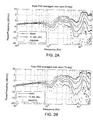
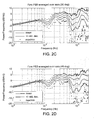
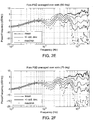
- FIGs. 2A-2F show plots of the average power spectral density over the listener's ears for each of the six azimuth angles (e.g., 0 deg, 15 deg, 30 deg, 45 deg, 60 deg and 75 deg) corresponding to sound sources in front of the listener.
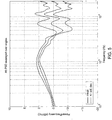
- FIG. 3 shows a weighted average of the power spectral density over the six forward azimuth angles. A weighting curve was applied that emphasizes angles closer to 0°.
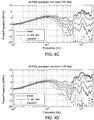
- FIG. 4A-4F show plots of the average power spectral density over the listener's ears for each of the six azimuth angles (e.g., 180 deg, 165 deg, 150 deg, 135 deg, 120 deg and 105 deg) corresponding to a sound sources behind the listener.
- FIG. 5 shows a weighted average of the power spectral density over the six rear azimuth angles. A weighting curve was applied that emphasizes angles closer to 180°.
- Duplex theory is helpful by determining the azimuth position of a sound source. Whereas duplex theory takes advantage of binaural cues, aft-fore differentiation relies heavily on monaural cues.
- the spectral cues used to locate sounds can be detected by a single ear, and do not require simultaneous information from both ears.
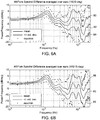
- To eliminate the "cone of confusion,” the spectral differences between two points in the cone are evaluated, specifically, in the points where the cone of confusion intersects the horizontal plane. The information encoded in these differences provide a key to quadrant localization.
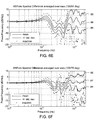
- FIGs. 6A-6F shows the spectral differences for each of the six azimuth pairs.
- Lines 82-87 represent the average spectral difference over all subject ears.
- Lines 88, 89 represent one standard deviation above and below the average associated, and the individual points in each plot represent point-wise max and mins. As can be seen, the differences are most pronounced where the angle difference increases.
- FIG. 7 shows the spectral differences averaged over all subject ears and all azimuth pairs on line 92, and lines 94, 95 represent one standard deviation above and below respectively.
- US2013/0129105 A1 discloses an audio headset with active noise control.
- the electronic hearing protector includes an ear cup assembly that comprises a front exterior microphone that provides a front microphone signal and a rear exterior microphone that provides a rear microphone signal.
- a processor receives and digitizes the front microphone signal and the rear microphone signal, and provides a front channel signal and a rear channel signal indicative thereof.
- a filter receives and filters the rear channel signal, and has a cut-off frequency value that provides a high-frequency roll-off and a notch at a notch filter frequency value that is less than the cut-off frequency value, where the filter provides a filtered signal.
- a first signal indicative of the front channel signal and a second signal indicative of the filtered signal are summed, and a signal indicative of the resultant sum is provided to a transducer that provides an audio signal within the first ear cup indicative of the summed signal.
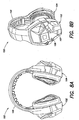
- FIGs. 8A and 8B are perspective pictorial illustrations of an electronic hearing protector/headset 100, which includes a first ear cup assembly 102, a second ear cup assembly 104 and a head band 106 that interconnects the first and second ear cup assemblies 102, 104.
- the first ear cup assembly 102 includes a first front microphone assembly 107 and a first rear microphone assembly 108.
- the second ear cup assembly 104 includes a second front microphone assembly and a second rear microphone assembly (not shown).
- Each of the microphone assemblies may include an array microphone comprising a plurality of omnidirectional microphones. Alternatively, directional microphones may also be used.
- FIG. 9 is a block diagram illustration of signal processing 110 associated with at least one of the ear cup assemblies 102, 104 ( FIGs. 8A and 8B ).
- the front microphone assembly provides a front microphone signal on a line 112 and the rear microphone assembly provides a rear microphone signal on a line 114.
- Array processor 116 processes the front and rear microphone signals and provides a front channel signal on a line 118 and a rear channel signal on a line 120.
- the array processor is configured and arranged as a delay and subtract beamformer.
- the rear microphone signal on the line 114 is delayed by a time equal to the propagation time between the front and rear microphones (typically tens of microseconds), then subtracted from the front microphone signal on the line 112. The resultant difference is provided as the front channel signal on the line 118.
- the front microphone signal on the line 112 is delayed by a time equal to the propagation time between the front and rear microphone, and the delayed front microphone signal is subtracted from the rear microphone signal on the line 114. The resultant difference is provided as the rear channel signal on the line 120.
- a first filter 122 receives the rear channel signal on the line 120 and provides a first filtered signal on a line 124.
- the first filter 122 may be configured as a low pass filter having a cut-off frequency value f c1 .
- the first filter 122 may be implemented as a biquad filter structure. However, it is contemplated that the first filter may be implemented in other digital filter embodiments, including for example a 1,024 tap FIR filter.
- the filter implementation for the first filter will primarily be based upon the processing power and memory available.
- alternative filter structures may also be used.
- the first filtered signal on the line 124 is input to a second filter 126, which provides a second filtered signal on a line 128.
- the second filter may be configured as a notch filter having a notch filter value f n1 .
- the second filter may also be implemented as a biquad.
- the second filter 126 may be implemented a number of different ways based upon the desired signal processing including filtering, and the processing power and memory available to the designer. It is further contemplated that the processing of the first and second filters may be combined into a single filter that provides an output similar to the serially connected first and second filters illustrated in FIG. 9 .
- the front channel signal on a line 118 and the second filtered signal on a line 128 may be summed by a summer 130, and a signal indicative of the summed signal is output to a speaker 132 located within the ear cup.
- the output by the speaker 132 provides enhanced audio with sufficient cues to provide the headset wearer with sound localization (e.g., quadrant sound localization).
- the first filter 122 may be configured as a low pass filter with a cut-off frequency located at about 12 kHz.
- the second filter 126 may be configured as a notch filter with a notch at about 4.9 kHz.
- This embodiment provides spectral cues that allow the headset wearer to determine front-to-back localization of sounds.
- the ear cups 102, 104 each include front and rear microphones, and the headset provides the associated signal processing illustrated in FIG. 9 to the microphone signals from each ear cup to provide enhanced localization.
- additional processing may be located between the summer 130 and speaker 132.
- the additional processing may include noise reduction, dynamics processing, equalizing, mixing and/or volume control, et cetera.
- FIG. 10 illustrates another embodiment of signal processing 133 that may be associated with at least one of the ear cup assemblies 102, 104 ( FIG. 10 ).
- This embodiment is substantially the same as the embodiment in FIG. 9 , with the principal exception that front channel signal path 134 also includes processing to enhance localization and restore some of the naturalness of human hearing.
- the front channel signal path includes a first front channel filter H3 136 that receives the front channel signal on the line 118 and provides a first front channel filtered signal on line 138 to a second front channel filter H4 140.
- summer 142 sums the signal on the line 128 and the output from the second front channel filter 140.
- the first front channel filter H3 136 may be configured as a high-shelf filter and the second front channel filter H4 140 may be configured as a notch filter. Since processing power and memory will be a premium, the first and second front channel filters 136, 140 may be implemented as biquads. Of course, the implementation of the filter will be left to the filter designer based upon the desired system signal processing and the available processing and memory available to implement the filters.
- filters are implemented that mimic the effects of the head and torso on the sound. These filters are applied to the outputs of a microphone array, where beamforming is used to yield forward facing inputs and rearward facing inputs. Because of the limited computing power available in a headset application, the filters may be implemented as digital biquadratic filters. This provides a balance between computational complexity and customizability.
- each channel may use a single filter structure.
- a single filter may be used having a notch at about 4.9 kHz and a high frequency roll off at about 12 kHz.
- the single filter may operate in the time or frequency domains, and may be configured for example as a FIR or IIR filter.
- the notch may have quality factor Q of about 2.0.
- the signal processing 110 and 133 of FIGs. 9 and 10 respectively, may be performed by a microprocessor and complementary memory that stores executable programs that are executed in the microprocessor.
- the memory may include a main memory, a static memory, or a dynamic memory.
- the memory may include, but is not limited to computer readable storage media such as various types of volatile and nonvolatile storage media, including but not limited to random access memory, read-only memory, programmable read-only memory, electrically programmable read-only memory, electrically erasable read-only memory, flash memory, magnetic tape or disk, optical media and the like.
- the memory includes a cache or random access memory for the processor.
- the memory is separate from the processor, such as a cache memory of a processor, the system memory, or other memory.
- the memory may include or be an external storage device or database for storing data.
- the memory is operable to store instructions executable by the processor. The functions, acts or tasks illustrated in the figures or described may be performed by the programmed processor executing instructions stored in the memory.
- the electronic hearing protector 100 may be used for applications such as shooting ranges, hunting, construction, heavy equipment operators and manufacturing. With respect to application such as a shooting range, the electronic hearing protector headsets protects the wearer from impulse sound such as a gunshots, while allowing the wearer to hear and locate lower-level sound on the range, such as for example instructions from the range officer.
- the electronic hearing protector may also include additional signal processing to attenuate impulse sound.
- each ear cup may include passive impulse noise attenuating features to further protect the hearing of the wearer from damaging impulse noise. It is also contemplated that each ear cup may include a separate volume control so the wearer can independently adjust the speaker volume in each ear cup.
Landscapes
- Health & Medical Sciences (AREA)
- Engineering & Computer Science (AREA)
- Acoustics & Sound (AREA)
- Physics & Mathematics (AREA)
- Life Sciences & Earth Sciences (AREA)
- Signal Processing (AREA)
- Biomedical Technology (AREA)
- Psychology (AREA)
- Otolaryngology (AREA)
- Heart & Thoracic Surgery (AREA)
- Vascular Medicine (AREA)
- Animal Behavior & Ethology (AREA)
- General Health & Medical Sciences (AREA)
- Public Health (AREA)
- Veterinary Medicine (AREA)
- Biophysics (AREA)
- Circuit For Audible Band Transducer (AREA)
- Stereophonic System (AREA)
Claims (7)
- Elektronischer Gehörschutz (100), der Folgendes umfasst:eine erste Ohrschalenanordnung (102), die ein erstes Frontaußenmikrofon (107), das ein erstes Frontmikrofonsignal bereitstellt, und ein erstes Rückaußenmikrofon (108), das ein erstes Rückmikrofonsignal bereitstellt, umfasst;eine zweite Ohrschalenanordnung (104), die ein zweites Frontaußenmikrofon, das ein zweites Frontmikrofonsignal bereitstellt, und ein zweites Rückaußenmikrofon, das ein zweites Rückmikrofonsignal bereitstellt, einschließt;einen Prozessor (116), der das erste Frontmikrofonsignal und das erste Rückmikrofonsignal empfängt, und ein erstes Frontkanalsignal bereitstellt, durch ein Verzögern des ersten Rückmikrofonsignals um eine Zeitspanne, die gleich einer Signallaufzeit zwischen dem ersten Frontaußenmikrofon und dem ersten Rückaußenmikrofon ist, und durch ein Subtrahieren des verzögerten ersten Rückmikrofonsignals von dem ersten Frontmikrofonsignal und ein erstes Rückkanalsignal bereitstellt, durch ein Verzögern des ersten Frontmikrofonsignals um eine Zeitspanne, die gleich einer Signallaufzeit zwischen dem ersten Frontaußenmikrofon und dem ersten Rückaußenmikrofon ist, und durch ein Subtrahieren des verzögerten ersten Frontmikrofonsignals von dem ersten Rückmikrofonsignal;einen ersten Filter (122), der das erste Rückkanalsignal empfängt und ein gefiltertes Tiefpasssignal bereitstellt;einen zweiten Filter (126), der das gefilterte Tiefpasssignal empfängt und ein kerbgefiltertes Signal bereitstellt;eine Additionsschaltung (130), die ein erstes Signal, das das erste Frontkanalsignal anzeigt, und ein zweites Signal, das das kerbgefilterte Signal anzeigt, empfängt und ein summiertes Signal bereitstellt;einen Wandler innerhalb der ersten Ohrschale, der ein Audiosignal innerhalb der ersten Ohrschale bereitstellt, das das summierte Signal anzeigt.
- Elektronischer Gehörschutz (100) nach Anspruch 1, wobei der erste Filter (122) einen ersten Biquad-Filter mit einer Abschneidefrequenz von etwa 12 kHz umfasst.
- Elektronischer Gehörschutz (100) nach Anspruch 1 oder 2, wobei der zweite Filter (126) einen zweiten Biquad-Filter mit einer Kerbfilterfrequenz von etwa 4,9 kHz umfasst.
- Elektronischer Gehörschutz (100) nach einem der Ansprüche 1 bis 3, wobei der Prozessor (116) ein zweites Frontmikrofonsignal und ein zweites Rückmikrofonsignal empfängt, und ein zweites Frontkanalsignal und ein zweites Rückkanalsignal, die mit einer zweiten Ohrschale des elektronischen Gehörschutzes assoziiert sind, bereitstellt, und wobei der elektronische Gehörschutz ferner einen Tiefpassfilter umfasst, der das zweite Rückkanalsignal empfängt und ein zweites gefiltertes Tiefpasssignal bereitstellt;
einen Kerbfilter, der das zweite gefilterte Tiefpasssignal empfängt und ein zweites kerbgefiltertes Signal bereitstellt; und
eine zweite Additionsschaltung, die ein drittes Signal, das das zweite Frontkanalsignal anzeigt, und ein viertes Signal, das das zweite kerbgefilterte Signal anzeigt, empfängt, und ein zweites summiertes Signal für einen zweiten Wandler bereitstellt, der ein zweites Audiosignal in der zweiten Ohrschale bereitstellt, das das zweite summierte Signal anzeigt. - Elektronischer Gehörschutz nach einem der Ansprüche 1 bis 4, ferner umfassend:einen Frontkanalshelffilter (136), der das erste Frontkanalsignal empfängt und ein gefiltertes Frontkanalsignal bereitstellt; undeinen Frontkanalkerbfilter (140), der das gefilterte Frontkanalsignal empfängt und das erste Signal bereitstellt.
- Elektronischer Gehörschutz nach Anspruch 5, wobei der Frontkanalshelffilter (136) einen Biquad-Filter mit einer Abschneidefrequenz von etwa 1,9 kHz umfasst.
- Elektronischer Gehörschutz nach Anspruch 5 oder 6, wobei der Kerbfilter (140) einen Biquad-Filter mit einer Kerbfrequenz von etwa 8,1 kHz umfasst.
Applications Claiming Priority (1)
| Application Number | Priority Date | Filing Date | Title |
|---|---|---|---|
| US14/063,820 US9180055B2 (en) | 2013-10-25 | 2013-10-25 | Electronic hearing protector with quadrant sound localization |
Publications (2)
| Publication Number | Publication Date |
|---|---|
| EP2866464A1 EP2866464A1 (de) | 2015-04-29 |
| EP2866464B1 true EP2866464B1 (de) | 2018-08-01 |
Family
ID=51790590
Family Applications (1)
| Application Number | Title | Priority Date | Filing Date |
|---|---|---|---|
| EP14190105.8A Active EP2866464B1 (de) | 2013-10-25 | 2014-10-23 | Elektronischer Gehörschutz mit Quadrantenschalllokalisierung |
Country Status (3)
| Country | Link |
|---|---|
| US (2) | US9180055B2 (de) |
| EP (1) | EP2866464B1 (de) |
| CN (1) | CN104581477B (de) |
Cited By (1)
| Publication number | Priority date | Publication date | Assignee | Title |
|---|---|---|---|---|
| US12115039B2 (en) | 2020-06-09 | 2024-10-15 | 3M Innovative Properties Company | Hearing protection device |
Families Citing this family (16)
| Publication number | Priority date | Publication date | Assignee | Title |
|---|---|---|---|---|
| US10321252B2 (en) * | 2012-02-13 | 2019-06-11 | Axd Technologies, Llc | Transaural synthesis method for sound spatialization |
| US10390122B2 (en) | 2014-12-23 | 2019-08-20 | Hed Technologies Sarl | Method and system for audio sharing |
| US9591427B1 (en) * | 2016-02-20 | 2017-03-07 | Philip Scott Lyren | Capturing audio impulse responses of a person with a smartphone |
| FR3052622B1 (fr) * | 2016-06-13 | 2020-02-28 | Elno | Casque acoustique |
| US10034092B1 (en) | 2016-09-22 | 2018-07-24 | Apple Inc. | Spatial headphone transparency |
| CN109792572B (zh) * | 2016-09-28 | 2021-02-05 | 3M创新有限公司 | 自适应电子听力保护装置 |
| US9843861B1 (en) * | 2016-11-09 | 2017-12-12 | Bose Corporation | Controlling wind noise in a bilateral microphone array |
| US9930447B1 (en) * | 2016-11-09 | 2018-03-27 | Bose Corporation | Dual-use bilateral microphone array |
| EP3346726A1 (de) * | 2017-01-04 | 2018-07-11 | Harman Becker Automotive Systems GmbH | Anordnungen und verfahren zur aktiven rauschunterdrückung |
| US11074906B2 (en) | 2017-12-07 | 2021-07-27 | Hed Technologies Sarl | Voice aware audio system and method |
| EP3668123B1 (de) | 2018-12-13 | 2024-07-17 | GN Audio A/S | Hörgerät zur bereitstellung von virtuellem klang |
| CA3143331A1 (en) | 2019-06-13 | 2020-12-17 | SoundTrack Outdoors, LLC | Hearing enhancement and protection device |
| KR20220117263A (ko) | 2019-12-20 | 2022-08-23 | 팔콘 에이/에스 | 임무 수행 사용자를 위한 통신 장치 및 관련 방법 |
| EP3840396A1 (de) | 2019-12-20 | 2021-06-23 | GN Hearing A/S | Gehörschutzvorrichtung und system mit schallquellenlokalisierung und zugehörige verfahren |
| US11496852B2 (en) | 2020-12-03 | 2022-11-08 | Snap Inc. | Head-related transfer function |
| BE1028706B1 (nl) * | 2021-03-10 | 2022-05-10 | Areal | Koptelefoon |
Family Cites Families (14)
| Publication number | Priority date | Publication date | Assignee | Title |
|---|---|---|---|---|
| US3952158A (en) | 1974-08-26 | 1976-04-20 | Kyle Gordon L | Ear protection and hearing device |
| US4985925A (en) | 1988-06-24 | 1991-01-15 | Sensor Electronics, Inc. | Active noise reduction system |
| US7409068B2 (en) * | 2002-03-08 | 2008-08-05 | Sound Design Technologies, Ltd. | Low-noise directional microphone system |
| US7627352B2 (en) | 2006-03-27 | 2009-12-01 | Gauger Jr Daniel M | Headset audio accessory |
| DK1841281T3 (en) * | 2006-03-28 | 2015-10-26 | Oticon As | System and method for generating auditory spatial information |
| US8953812B2 (en) * | 2007-07-19 | 2015-02-10 | Alon Konchitsky | Voice signals improvements in compressed wireless communications systems |
| US20100296666A1 (en) * | 2009-05-25 | 2010-11-25 | National Chin-Yi University Of Technology | Apparatus and method for noise cancellation in voice communication |
| US8699720B2 (en) | 2010-02-18 | 2014-04-15 | Walter Ka Wai Chu | Headphones with distortion-free loudness limiting and dynamic equalization device |
| JP5610945B2 (ja) * | 2010-09-15 | 2014-10-22 | 株式会社オーディオテクニカ | ノイズキャンセルヘッドホン及びノイズキャンセルイヤーマフ |
| FR2974655B1 (fr) * | 2011-04-26 | 2013-12-20 | Parrot | Combine audio micro/casque comprenant des moyens de debruitage d'un signal de parole proche, notamment pour un systeme de telephonie "mains libres". |
| FR2983026A1 (fr) * | 2011-11-22 | 2013-05-24 | Parrot | Casque audio a controle actif de bruit de type non-adaptatif, pour l'ecoute d'une source musicale audio et/ou pour des fonctions de telephonie "mains-libres" |
| US9020157B2 (en) * | 2012-03-16 | 2015-04-28 | Cirrus Logic International (Uk) Limited | Active noise cancellation system |
| US9148735B2 (en) * | 2012-12-28 | 2015-09-29 | Gn Resound A/S | Hearing aid with improved localization |
| US9100762B2 (en) * | 2013-05-22 | 2015-08-04 | Gn Resound A/S | Hearing aid with improved localization |
-
2013
- 2013-10-25 US US14/063,820 patent/US9180055B2/en active Active
-
2014
- 2014-10-23 EP EP14190105.8A patent/EP2866464B1/de active Active
- 2014-10-24 CN CN201410577688.XA patent/CN104581477B/zh active Active
-
2015
- 2015-10-21 US US14/918,866 patent/US9649225B2/en active Active
Cited By (1)
| Publication number | Priority date | Publication date | Assignee | Title |
|---|---|---|---|---|
| US12115039B2 (en) | 2020-06-09 | 2024-10-15 | 3M Innovative Properties Company | Hearing protection device |
Also Published As
| Publication number | Publication date |
|---|---|
| US20160038343A1 (en) | 2016-02-11 |
| CN104581477B (zh) | 2019-06-25 |
| US9180055B2 (en) | 2015-11-10 |
| CN104581477A (zh) | 2015-04-29 |
| US9649225B2 (en) | 2017-05-16 |
| EP2866464A1 (de) | 2015-04-29 |
| US20150117659A1 (en) | 2015-04-30 |
Similar Documents
| Publication | Publication Date | Title |
|---|---|---|
| US9649225B2 (en) | Electronic hearing protector with quadrant sound localization | |
| US10469961B2 (en) | Binaural hearing systems and methods for preserving an interaural level difference between signals generated for each ear of a user | |
| US8270642B2 (en) | Method and system for producing a binaural impression using loudspeakers | |
| US9613610B2 (en) | Directional sound masking | |
| KR101415026B1 (ko) | 마이크로폰 어레이를 이용한 다채널 사운드 획득 방법 및장치 | |
| US10959035B2 (en) | System, method, and apparatus for generating and digitally processing a head related audio transfer function | |
| US20110305358A1 (en) | Head related transfer function generation apparatus, head related transfer function generation method, and sound signal processing apparatus | |
| US20060013409A1 (en) | Microphone-array processing to generate directional cues in an audio signal | |
| EP3837863B1 (de) | Verfahren zur gewinnung und wiedergabe einer binauralen aufzeichnung | |
| CN113412630B (zh) | 处理装置、处理方法、再现方法和程序 | |
| US20160212554A1 (en) | Method of determining acoustical characteristics of a room or venue having n sound sources | |
| US10595150B2 (en) | Method and apparatus for acoustic crosstalk cancellation | |
| JP2017028525A (ja) | 頭外定位処理装置、頭外定位処理方法、及びプログラム | |
| US10469962B2 (en) | Systems and methods for facilitating interaural level difference perception by enhancing the interaural level difference | |
| WO2023061130A1 (zh) | 耳机、用户设备及处理信号的方法 | |
| US11510013B2 (en) | Partial HRTF compensation or prediction for in-ear microphone arrays | |
| US20160100270A1 (en) | Audio signal processing apparatus and audio signal processing method | |
| EP4256803B1 (de) | Verfahren zur wiedergabe eines audiosignals | |
| US20240080618A1 (en) | Out-of-head localization processing device, out-of-head localization processing method, and computer-readable medium | |
| KR101071895B1 (ko) | 청취자 위치 추적 기법에 의한 적응형 사운드 생성기 | |
| Boyd | Experimental investigations of auditory externalization and the application of head-movement information to hearing-aid signal processing | |
| Avendano | Virtual spatial sound | |
| Lezzoum et al. | Assessment of sound source localization of an intra-aural audio wearable device for audio augmented reality applications | |
| Hughet | Binaural Hearing Effects of Mapping Microphone Array's Responses to a Listener's Head-Related Transfer Functions | |
| Khayeri | Binaural Beamforming Robust to Errors in Direction of Arrival Estimates |
Legal Events
| Date | Code | Title | Description |
|---|---|---|---|
| PUAI | Public reference made under article 153(3) epc to a published international application that has entered the european phase |
Free format text: ORIGINAL CODE: 0009012 |
|
| 17P | Request for examination filed |
Effective date: 20141023 |
|
| AK | Designated contracting states |
Kind code of ref document: A1 Designated state(s): AL AT BE BG CH CY CZ DE DK EE ES FI FR GB GR HR HU IE IS IT LI LT LU LV MC MK MT NL NO PL PT RO RS SE SI SK SM TR |
|
| AX | Request for extension of the european patent |
Extension state: BA ME |
|
| R17P | Request for examination filed (corrected) |
Effective date: 20151029 |
|
| RBV | Designated contracting states (corrected) |
Designated state(s): AL AT BE BG CH CY CZ DE DK EE ES FI FR GB GR HR HU IE IS IT LI LT LU LV MC MK MT NL NO PL PT RO RS SE SI SK SM TR |
|
| 17Q | First examination report despatched |
Effective date: 20160310 |
|
| GRAP | Despatch of communication of intention to grant a patent |
Free format text: ORIGINAL CODE: EPIDOSNIGR1 |
|
| INTG | Intention to grant announced |
Effective date: 20180219 |
|
| GRAS | Grant fee paid |
Free format text: ORIGINAL CODE: EPIDOSNIGR3 |
|
| GRAA | (expected) grant |
Free format text: ORIGINAL CODE: 0009210 |
|
| AK | Designated contracting states |
Kind code of ref document: B1 Designated state(s): AL AT BE BG CH CY CZ DE DK EE ES FI FR GB GR HR HU IE IS IT LI LT LU LV MC MK MT NL NO PL PT RO RS SE SI SK SM TR |
|
| REG | Reference to a national code |
Ref country code: GB Ref legal event code: FG4D |
|
| REG | Reference to a national code |
Ref country code: CH Ref legal event code: EP Ref country code: AT Ref legal event code: REF Ref document number: 1025762 Country of ref document: AT Kind code of ref document: T Effective date: 20180815 |
|
| REG | Reference to a national code |
Ref country code: IE Ref legal event code: FG4D |
|
| REG | Reference to a national code |
Ref country code: DE Ref legal event code: R096 Ref document number: 602014029437 Country of ref document: DE |
|
| REG | Reference to a national code |
Ref country code: NL Ref legal event code: MP Effective date: 20180801 |
|
| REG | Reference to a national code |
Ref country code: LT Ref legal event code: MG4D |
|
| REG | Reference to a national code |
Ref country code: AT Ref legal event code: MK05 Ref document number: 1025762 Country of ref document: AT Kind code of ref document: T Effective date: 20180801 |
|
| PG25 | Lapsed in a contracting state [announced via postgrant information from national office to epo] |
Ref country code: NO Free format text: LAPSE BECAUSE OF FAILURE TO SUBMIT A TRANSLATION OF THE DESCRIPTION OR TO PAY THE FEE WITHIN THE PRESCRIBED TIME-LIMIT Effective date: 20181101 Ref country code: GR Free format text: LAPSE BECAUSE OF FAILURE TO SUBMIT A TRANSLATION OF THE DESCRIPTION OR TO PAY THE FEE WITHIN THE PRESCRIBED TIME-LIMIT Effective date: 20181102 Ref country code: AT Free format text: LAPSE BECAUSE OF FAILURE TO SUBMIT A TRANSLATION OF THE DESCRIPTION OR TO PAY THE FEE WITHIN THE PRESCRIBED TIME-LIMIT Effective date: 20180801 Ref country code: IS Free format text: LAPSE BECAUSE OF FAILURE TO SUBMIT A TRANSLATION OF THE DESCRIPTION OR TO PAY THE FEE WITHIN THE PRESCRIBED TIME-LIMIT Effective date: 20181201 Ref country code: RS Free format text: LAPSE BECAUSE OF FAILURE TO SUBMIT A TRANSLATION OF THE DESCRIPTION OR TO PAY THE FEE WITHIN THE PRESCRIBED TIME-LIMIT Effective date: 20180801 Ref country code: SE Free format text: LAPSE BECAUSE OF FAILURE TO SUBMIT A TRANSLATION OF THE DESCRIPTION OR TO PAY THE FEE WITHIN THE PRESCRIBED TIME-LIMIT Effective date: 20180801 Ref country code: FI Free format text: LAPSE BECAUSE OF FAILURE TO SUBMIT A TRANSLATION OF THE DESCRIPTION OR TO PAY THE FEE WITHIN THE PRESCRIBED TIME-LIMIT Effective date: 20180801 Ref country code: PL Free format text: LAPSE BECAUSE OF FAILURE TO SUBMIT A TRANSLATION OF THE DESCRIPTION OR TO PAY THE FEE WITHIN THE PRESCRIBED TIME-LIMIT Effective date: 20180801 Ref country code: LT Free format text: LAPSE BECAUSE OF FAILURE TO SUBMIT A TRANSLATION OF THE DESCRIPTION OR TO PAY THE FEE WITHIN THE PRESCRIBED TIME-LIMIT Effective date: 20180801 Ref country code: BG Free format text: LAPSE BECAUSE OF FAILURE TO SUBMIT A TRANSLATION OF THE DESCRIPTION OR TO PAY THE FEE WITHIN THE PRESCRIBED TIME-LIMIT Effective date: 20181101 Ref country code: NL Free format text: LAPSE BECAUSE OF FAILURE TO SUBMIT A TRANSLATION OF THE DESCRIPTION OR TO PAY THE FEE WITHIN THE PRESCRIBED TIME-LIMIT Effective date: 20180801 |
|
| PG25 | Lapsed in a contracting state [announced via postgrant information from national office to epo] |
Ref country code: AL Free format text: LAPSE BECAUSE OF FAILURE TO SUBMIT A TRANSLATION OF THE DESCRIPTION OR TO PAY THE FEE WITHIN THE PRESCRIBED TIME-LIMIT Effective date: 20180801 Ref country code: HR Free format text: LAPSE BECAUSE OF FAILURE TO SUBMIT A TRANSLATION OF THE DESCRIPTION OR TO PAY THE FEE WITHIN THE PRESCRIBED TIME-LIMIT Effective date: 20180801 Ref country code: LV Free format text: LAPSE BECAUSE OF FAILURE TO SUBMIT A TRANSLATION OF THE DESCRIPTION OR TO PAY THE FEE WITHIN THE PRESCRIBED TIME-LIMIT Effective date: 20180801 |
|
| PG25 | Lapsed in a contracting state [announced via postgrant information from national office to epo] |
Ref country code: EE Free format text: LAPSE BECAUSE OF FAILURE TO SUBMIT A TRANSLATION OF THE DESCRIPTION OR TO PAY THE FEE WITHIN THE PRESCRIBED TIME-LIMIT Effective date: 20180801 Ref country code: RO Free format text: LAPSE BECAUSE OF FAILURE TO SUBMIT A TRANSLATION OF THE DESCRIPTION OR TO PAY THE FEE WITHIN THE PRESCRIBED TIME-LIMIT Effective date: 20180801 Ref country code: CZ Free format text: LAPSE BECAUSE OF FAILURE TO SUBMIT A TRANSLATION OF THE DESCRIPTION OR TO PAY THE FEE WITHIN THE PRESCRIBED TIME-LIMIT Effective date: 20180801 Ref country code: ES Free format text: LAPSE BECAUSE OF FAILURE TO SUBMIT A TRANSLATION OF THE DESCRIPTION OR TO PAY THE FEE WITHIN THE PRESCRIBED TIME-LIMIT Effective date: 20180801 Ref country code: IT Free format text: LAPSE BECAUSE OF FAILURE TO SUBMIT A TRANSLATION OF THE DESCRIPTION OR TO PAY THE FEE WITHIN THE PRESCRIBED TIME-LIMIT Effective date: 20180801 |
|
| REG | Reference to a national code |
Ref country code: DE Ref legal event code: R097 Ref document number: 602014029437 Country of ref document: DE |
|
| PG25 | Lapsed in a contracting state [announced via postgrant information from national office to epo] |
Ref country code: SK Free format text: LAPSE BECAUSE OF FAILURE TO SUBMIT A TRANSLATION OF THE DESCRIPTION OR TO PAY THE FEE WITHIN THE PRESCRIBED TIME-LIMIT Effective date: 20180801 Ref country code: SM Free format text: LAPSE BECAUSE OF FAILURE TO SUBMIT A TRANSLATION OF THE DESCRIPTION OR TO PAY THE FEE WITHIN THE PRESCRIBED TIME-LIMIT Effective date: 20180801 Ref country code: DK Free format text: LAPSE BECAUSE OF FAILURE TO SUBMIT A TRANSLATION OF THE DESCRIPTION OR TO PAY THE FEE WITHIN THE PRESCRIBED TIME-LIMIT Effective date: 20180801 |
|
| REG | Reference to a national code |
Ref country code: CH Ref legal event code: PL |
|
| PLBE | No opposition filed within time limit |
Free format text: ORIGINAL CODE: 0009261 |
|
| STAA | Information on the status of an ep patent application or granted ep patent |
Free format text: STATUS: NO OPPOSITION FILED WITHIN TIME LIMIT |
|
| REG | Reference to a national code |
Ref country code: BE Ref legal event code: MM Effective date: 20181031 |
|
| PG25 | Lapsed in a contracting state [announced via postgrant information from national office to epo] |
Ref country code: MC Free format text: LAPSE BECAUSE OF FAILURE TO SUBMIT A TRANSLATION OF THE DESCRIPTION OR TO PAY THE FEE WITHIN THE PRESCRIBED TIME-LIMIT Effective date: 20180801 Ref country code: LU Free format text: LAPSE BECAUSE OF NON-PAYMENT OF DUE FEES Effective date: 20181023 |
|
| 26N | No opposition filed |
Effective date: 20190503 |
|
| REG | Reference to a national code |
Ref country code: IE Ref legal event code: MM4A |
|
| PG25 | Lapsed in a contracting state [announced via postgrant information from national office to epo] |
Ref country code: LI Free format text: LAPSE BECAUSE OF NON-PAYMENT OF DUE FEES Effective date: 20181031 Ref country code: CH Free format text: LAPSE BECAUSE OF NON-PAYMENT OF DUE FEES Effective date: 20181031 Ref country code: SI Free format text: LAPSE BECAUSE OF FAILURE TO SUBMIT A TRANSLATION OF THE DESCRIPTION OR TO PAY THE FEE WITHIN THE PRESCRIBED TIME-LIMIT Effective date: 20180801 Ref country code: FR Free format text: LAPSE BECAUSE OF NON-PAYMENT OF DUE FEES Effective date: 20181031 Ref country code: BE Free format text: LAPSE BECAUSE OF NON-PAYMENT OF DUE FEES Effective date: 20181031 |
|
| PG25 | Lapsed in a contracting state [announced via postgrant information from national office to epo] |
Ref country code: IE Free format text: LAPSE BECAUSE OF NON-PAYMENT OF DUE FEES Effective date: 20181023 |
|
| PG25 | Lapsed in a contracting state [announced via postgrant information from national office to epo] |
Ref country code: MT Free format text: LAPSE BECAUSE OF NON-PAYMENT OF DUE FEES Effective date: 20181023 |
|
| PG25 | Lapsed in a contracting state [announced via postgrant information from national office to epo] |
Ref country code: TR Free format text: LAPSE BECAUSE OF FAILURE TO SUBMIT A TRANSLATION OF THE DESCRIPTION OR TO PAY THE FEE WITHIN THE PRESCRIBED TIME-LIMIT Effective date: 20180801 |
|
| PG25 | Lapsed in a contracting state [announced via postgrant information from national office to epo] |
Ref country code: PT Free format text: LAPSE BECAUSE OF FAILURE TO SUBMIT A TRANSLATION OF THE DESCRIPTION OR TO PAY THE FEE WITHIN THE PRESCRIBED TIME-LIMIT Effective date: 20180801 |
|
| PG25 | Lapsed in a contracting state [announced via postgrant information from national office to epo] |
Ref country code: CY Free format text: LAPSE BECAUSE OF FAILURE TO SUBMIT A TRANSLATION OF THE DESCRIPTION OR TO PAY THE FEE WITHIN THE PRESCRIBED TIME-LIMIT Effective date: 20180801 Ref country code: MK Free format text: LAPSE BECAUSE OF NON-PAYMENT OF DUE FEES Effective date: 20180801 Ref country code: HU Free format text: LAPSE BECAUSE OF FAILURE TO SUBMIT A TRANSLATION OF THE DESCRIPTION OR TO PAY THE FEE WITHIN THE PRESCRIBED TIME-LIMIT; INVALID AB INITIO Effective date: 20141023 |
|
| P01 | Opt-out of the competence of the unified patent court (upc) registered |
Effective date: 20230527 |
|
| PGFP | Annual fee paid to national office [announced via postgrant information from national office to epo] |
Ref country code: GB Payment date: 20250923 Year of fee payment: 12 |
|
| PGFP | Annual fee paid to national office [announced via postgrant information from national office to epo] |
Ref country code: DE Payment date: 20250923 Year of fee payment: 12 |