EP2862870A2 - Massenspektrometrie-Quantifizierung von P450-Protein-Isoformen in Hepatozyten - Google Patents
Massenspektrometrie-Quantifizierung von P450-Protein-Isoformen in Hepatozyten Download PDFInfo
- Publication number
- EP2862870A2 EP2862870A2 EP20140193907 EP14193907A EP2862870A2 EP 2862870 A2 EP2862870 A2 EP 2862870A2 EP 20140193907 EP20140193907 EP 20140193907 EP 14193907 A EP14193907 A EP 14193907A EP 2862870 A2 EP2862870 A2 EP 2862870A2
- Authority
- EP
- European Patent Office
- Prior art keywords
- seq
- cyp
- isoform
- amino acid
- cytochrome
- Prior art date
- Legal status (The legal status is an assumption and is not a legal conclusion. Google has not performed a legal analysis and makes no representation as to the accuracy of the status listed.)
- Granted
Links
Images



Classifications
-
- C—CHEMISTRY; METALLURGY
- C12—BIOCHEMISTRY; BEER; SPIRITS; WINE; VINEGAR; MICROBIOLOGY; ENZYMOLOGY; MUTATION OR GENETIC ENGINEERING
- C12Q—MEASURING OR TESTING PROCESSES INVOLVING ENZYMES, NUCLEIC ACIDS OR MICROORGANISMS; COMPOSITIONS OR TEST PAPERS THEREFOR; PROCESSES OF PREPARING SUCH COMPOSITIONS; CONDITION-RESPONSIVE CONTROL IN MICROBIOLOGICAL OR ENZYMOLOGICAL PROCESSES
- C12Q1/00—Measuring or testing processes involving enzymes, nucleic acids or microorganisms; Compositions therefor; Processes of preparing such compositions
- C12Q1/26—Measuring or testing processes involving enzymes, nucleic acids or microorganisms; Compositions therefor; Processes of preparing such compositions involving oxidoreductase
-
- C—CHEMISTRY; METALLURGY
- C12—BIOCHEMISTRY; BEER; SPIRITS; WINE; VINEGAR; MICROBIOLOGY; ENZYMOLOGY; MUTATION OR GENETIC ENGINEERING
- C12N—MICROORGANISMS OR ENZYMES; COMPOSITIONS THEREOF; PROPAGATING, PRESERVING, OR MAINTAINING MICROORGANISMS; MUTATION OR GENETIC ENGINEERING; CULTURE MEDIA
- C12N9/00—Enzymes; Proenzymes; Compositions thereof; Processes for preparing, activating, inhibiting, separating or purifying enzymes
- C12N9/0004—Oxidoreductases (1.)
- C12N9/0071—Oxidoreductases (1.) acting on paired donors with incorporation of molecular oxygen (1.14)
- C12N9/0077—Oxidoreductases (1.) acting on paired donors with incorporation of molecular oxygen (1.14) with a reduced iron-sulfur protein as one donor (1.14.15)
-
- G—PHYSICS
- G01—MEASURING; TESTING
- G01N—INVESTIGATING OR ANALYSING MATERIALS BY DETERMINING THEIR CHEMICAL OR PHYSICAL PROPERTIES
- G01N33/00—Investigating or analysing materials by specific methods not covered by groups G01N1/00 - G01N31/00
- G01N33/48—Biological material, e.g. blood, urine; Haemocytometers
- G01N33/50—Chemical analysis of biological material, e.g. blood, urine; Testing involving biospecific ligand binding methods; Immunological testing
- G01N33/5005—Chemical analysis of biological material, e.g. blood, urine; Testing involving biospecific ligand binding methods; Immunological testing involving human or animal cells
- G01N33/5008—Chemical analysis of biological material, e.g. blood, urine; Testing involving biospecific ligand binding methods; Immunological testing involving human or animal cells for testing or evaluating the effect of chemical or biological compounds, e.g. drugs, cosmetics
- G01N33/502—Chemical analysis of biological material, e.g. blood, urine; Testing involving biospecific ligand binding methods; Immunological testing involving human or animal cells for testing or evaluating the effect of chemical or biological compounds, e.g. drugs, cosmetics for testing non-proliferative effects
-
- G—PHYSICS
- G01—MEASURING; TESTING
- G01N—INVESTIGATING OR ANALYSING MATERIALS BY DETERMINING THEIR CHEMICAL OR PHYSICAL PROPERTIES
- G01N33/00—Investigating or analysing materials by specific methods not covered by groups G01N1/00 - G01N31/00
- G01N33/48—Biological material, e.g. blood, urine; Haemocytometers
- G01N33/50—Chemical analysis of biological material, e.g. blood, urine; Testing involving biospecific ligand binding methods; Immunological testing
- G01N33/5005—Chemical analysis of biological material, e.g. blood, urine; Testing involving biospecific ligand binding methods; Immunological testing involving human or animal cells
- G01N33/5008—Chemical analysis of biological material, e.g. blood, urine; Testing involving biospecific ligand binding methods; Immunological testing involving human or animal cells for testing or evaluating the effect of chemical or biological compounds, e.g. drugs, cosmetics
- G01N33/502—Chemical analysis of biological material, e.g. blood, urine; Testing involving biospecific ligand binding methods; Immunological testing involving human or animal cells for testing or evaluating the effect of chemical or biological compounds, e.g. drugs, cosmetics for testing non-proliferative effects
- G01N33/5023—Chemical analysis of biological material, e.g. blood, urine; Testing involving biospecific ligand binding methods; Immunological testing involving human or animal cells for testing or evaluating the effect of chemical or biological compounds, e.g. drugs, cosmetics for testing non-proliferative effects on expression patterns
-
- G—PHYSICS
- G01—MEASURING; TESTING
- G01N—INVESTIGATING OR ANALYSING MATERIALS BY DETERMINING THEIR CHEMICAL OR PHYSICAL PROPERTIES
- G01N33/00—Investigating or analysing materials by specific methods not covered by groups G01N1/00 - G01N31/00
- G01N33/48—Biological material, e.g. blood, urine; Haemocytometers
- G01N33/50—Chemical analysis of biological material, e.g. blood, urine; Testing involving biospecific ligand binding methods; Immunological testing
- G01N33/5005—Chemical analysis of biological material, e.g. blood, urine; Testing involving biospecific ligand binding methods; Immunological testing involving human or animal cells
- G01N33/5008—Chemical analysis of biological material, e.g. blood, urine; Testing involving biospecific ligand binding methods; Immunological testing involving human or animal cells for testing or evaluating the effect of chemical or biological compounds, e.g. drugs, cosmetics
- G01N33/5044—Chemical analysis of biological material, e.g. blood, urine; Testing involving biospecific ligand binding methods; Immunological testing involving human or animal cells for testing or evaluating the effect of chemical or biological compounds, e.g. drugs, cosmetics involving specific cell types
- G01N33/5067—Liver cells
-
- G—PHYSICS
- G01—MEASURING; TESTING
- G01N—INVESTIGATING OR ANALYSING MATERIALS BY DETERMINING THEIR CHEMICAL OR PHYSICAL PROPERTIES
- G01N33/00—Investigating or analysing materials by specific methods not covered by groups G01N1/00 - G01N31/00
- G01N33/48—Biological material, e.g. blood, urine; Haemocytometers
- G01N33/50—Chemical analysis of biological material, e.g. blood, urine; Testing involving biospecific ligand binding methods; Immunological testing
- G01N33/68—Chemical analysis of biological material, e.g. blood, urine; Testing involving biospecific ligand binding methods; Immunological testing involving proteins, peptides or amino acids
- G01N33/6803—General methods of protein analysis not limited to specific proteins or families of proteins
- G01N33/6848—Methods of protein analysis involving mass spectrometry
-
- G—PHYSICS
- G01—MEASURING; TESTING
- G01N—INVESTIGATING OR ANALYSING MATERIALS BY DETERMINING THEIR CHEMICAL OR PHYSICAL PROPERTIES
- G01N30/00—Investigating or analysing materials by separation into components using adsorption, absorption or similar phenomena or using ion-exchange, e.g. chromatography or field flow fractionation
- G01N30/02—Column chromatography
- G01N30/88—Integrated analysis systems specially adapted therefor, not covered by a single one of the groups G01N30/04 - G01N30/86
- G01N2030/8809—Integrated analysis systems specially adapted therefor, not covered by a single one of the groups G01N30/04 - G01N30/86 analysis specially adapted for the sample
- G01N2030/8813—Integrated analysis systems specially adapted therefor, not covered by a single one of the groups G01N30/04 - G01N30/86 analysis specially adapted for the sample biological materials
- G01N2030/8831—Integrated analysis systems specially adapted therefor, not covered by a single one of the groups G01N30/04 - G01N30/86 analysis specially adapted for the sample biological materials involving peptides or proteins
-
- G—PHYSICS
- G01—MEASURING; TESTING
- G01N—INVESTIGATING OR ANALYSING MATERIALS BY DETERMINING THEIR CHEMICAL OR PHYSICAL PROPERTIES
- G01N2333/00—Assays involving biological materials from specific organisms or of a specific nature
- G01N2333/90—Enzymes; Proenzymes
- G01N2333/902—Oxidoreductases (1.)
- G01N2333/90245—Oxidoreductases (1.) acting on paired donors with incorporation of molecular oxygen (1.14)
-
- G—PHYSICS
- G01—MEASURING; TESTING
- G01N—INVESTIGATING OR ANALYSING MATERIALS BY DETERMINING THEIR CHEMICAL OR PHYSICAL PROPERTIES
- G01N2500/00—Screening for compounds of potential therapeutic value
- G01N2500/04—Screening involving studying the effect of compounds C directly on molecule A (e.g. C are potential ligands for a receptor A, or potential substrates for an enzyme A)
-
- G—PHYSICS
- G01—MEASURING; TESTING
- G01N—INVESTIGATING OR ANALYSING MATERIALS BY DETERMINING THEIR CHEMICAL OR PHYSICAL PROPERTIES
- G01N2500/00—Screening for compounds of potential therapeutic value
- G01N2500/10—Screening for compounds of potential therapeutic value involving cells
-
- G—PHYSICS
- G01—MEASURING; TESTING
- G01N—INVESTIGATING OR ANALYSING MATERIALS BY DETERMINING THEIR CHEMICAL OR PHYSICAL PROPERTIES
- G01N2500/00—Screening for compounds of potential therapeutic value
- G01N2500/20—Screening for compounds of potential therapeutic value cell-free systems
-
- G—PHYSICS
- G01—MEASURING; TESTING
- G01N—INVESTIGATING OR ANALYSING MATERIALS BY DETERMINING THEIR CHEMICAL OR PHYSICAL PROPERTIES
- G01N2560/00—Chemical aspects of mass spectrometric analysis of biological material
-
- G—PHYSICS
- G01—MEASURING; TESTING
- G01N—INVESTIGATING OR ANALYSING MATERIALS BY DETERMINING THEIR CHEMICAL OR PHYSICAL PROPERTIES
- G01N30/00—Investigating or analysing materials by separation into components using adsorption, absorption or similar phenomena or using ion-exchange, e.g. chromatography or field flow fractionation
- G01N30/02—Column chromatography
- G01N30/62—Detectors specially adapted therefor
- G01N30/72—Mass spectrometers
- G01N30/7233—Mass spectrometers interfaced to liquid or supercritical fluid chromatograph
-
- Y—GENERAL TAGGING OF NEW TECHNOLOGICAL DEVELOPMENTS; GENERAL TAGGING OF CROSS-SECTIONAL TECHNOLOGIES SPANNING OVER SEVERAL SECTIONS OF THE IPC; TECHNICAL SUBJECTS COVERED BY FORMER USPC CROSS-REFERENCE ART COLLECTIONS [XRACs] AND DIGESTS
- Y10—TECHNICAL SUBJECTS COVERED BY FORMER USPC
- Y10T—TECHNICAL SUBJECTS COVERED BY FORMER US CLASSIFICATION
- Y10T436/00—Chemistry: analytical and immunological testing
- Y10T436/24—Nuclear magnetic resonance, electron spin resonance or other spin effects or mass spectrometry
Definitions
- the present teachings relate to cytochrome P450 enzymes (CYPs) and detection of enzymes using mass spectrometry.
- CYPs cytochrome P450 enzymes
- Cytochrome P450 enzymes are major drug metabolizing enzymes and experimental pharmaceutical compounds are generally evaluated for their CYP induction potential early in the development process. Measurement of a CYP induction profile in response to a chemical can be used as a fundamental aspect of drug safety evaluation, but expression of these proteins is regulated by transcriptional, post transcriptional and translational mechanisms. As a result, mRNA-based assays are not reliable predictors of CYP induction. Further, CYPs exhibit extensive amino acid sequence homology, particularly within subfamilies, so that P450 protein expression methods are also poorly discriminatory.
- a method of quantitating the 1A2, 2B6, 3A4, and 3A5 isoforms of cytochrome P450 enzymes is provided without the need for any chemical labeling.
- Isoform-specific tryptic peptides can be observed in liquid chromatography-Tandem Mass Spectrometry (LC-MSMS) analysis of samples derived from hepatocytes, for example, in microsomes, along with their optimal Q1 and Q3 transitions. Those observed peptides and transitions, can be used to enable a reliable CYP quantitation of the isoforms 1A2, 2B6, 3A4, and 3A5.
- a set of peptides and optimal MRM transitions are provided as "house keeping" microsomol proteins whose concentrations are unaffected by drug incubation.
- the set can be used as normalization proteins for quantitative anlysis.
- quantitation can be performed by spiking into the sample heavy forms of the isoform-specific peptides, for example, forms that have been enriched with C13 and/or N15.
- FIG. 1 shows a typical MRM analysis for CYP 1A2, CYP2B6, and CYP3A3/3A4 from human microsomes, wherein some of the isoform-specific peptides have been labelled in FIG. 1 .
- the optimized transitions for each of a set of observed, most sensitive isoform-specific peptides, according to various embodiments of the present teachings, is shown in Tables 1-4 below.
- a method for screening a drug for cytochrome P450 (CYP) induction comprises incubating the drug with a microsome-containing biological sample and quantitating at least one CYP isoform.
- the isoforms can comprise one or more isoform selected from 2B6, 3A4, 1A2, and 3A5 isoform.
- the method can comprise using a liquid chromatography tandem mass spectrometry (LC-MSMS) technique to quantitated the amount of each isoform.
- the quantitated value of each can be compared to a threshold value, and the drug can be identified as having an acceptable CYP induction potential when the quantitated value does not exceed the threshold value.
- LC-MSMS liquid chromatography tandem mass spectrometry
- the threshold value can be selected or predetermined based on a desired CYP induction potential or based on the CYP induction potential of one or more different drugs, similar or non-similar to the drug being screened.
- the microsome-containing biological sample can be derived from a mammal, from a primate, or from a human.
- the drug can be incubated with a sample containing human hepatocytes.
- the sample containing human hepatocytes can be used to obtain at least one microsome fraction by, for example, 16 G centrifugation.
- the microsome fraction can be analyzed for CYP induction by the drug, by detecting isolated peptides specific to CYP (isoform-specific peptides).
- the sample containing human hepatocytes can be used to obtain at least one S9 fraction by, for example, 9 G centrifugation.
- the S9 fraction can be analyzed to detect CYP induction by the drug, for example, by detecting isolated peptides specific to CYP ( ⁇ soform-specific peptides).
- the microsome fraction or the S9 fraction can be analyzed using a liquid chromatography tandem mass spectrometry (LC-MSMS) technique in order to quantitate at least one CYP isoform.
- LC-MSMS liquid chromatography tandem mass spectrometry
- the quantitated value of each can be compared to a threshold value, and the drug can be identified as having an acceptable CYP induction potential when the quantitated value does not exceed the threshold value.
- a method for directly analyzing CYP from hepatocytes.
- antibody peptides can be used to pull the isoform-specific peptides directly out of hepatocyctes.
- using antibody peptides to pull the isoform-specific peptides directly out of hepatocytes would have the advantage of not needing to prepare S9 or microsome fractions, and would require less hepatocyte cells for drug incubation.
- the method comprises comparing detected induction to a control. For example, because little or no drug induction ofCYPs is desirable, a threshold can be set such that the drug must show less than ( ⁇ ) 40% induction compared to the positive control, to be considered acceptable. In some embodiments, the drug must show less than ( ⁇ ) 30% induction compared to the positive control to be considered acceptable. In other embodiments, the drug must show less than ( ⁇ ) 20% induction compared to the positive control, to be considered acceptable.
- a method for determining an amount of at least one isoform of cytochrome P450 (CYP) in a sample is provided.
- the method can comprise the use of a mass spectrometry technique, wherein the at least one isoform of cytochrome P450 comprises at least one of CYP 2B6, CYP 3A4, CYP 1A2, and CYP 3A5.
- the mass spectrometry technique can comprise a tandem mass spectrometry (MS/MS) technique and/or a liquid chromatography tandem mass spectrometry (LC-MS/MS) technique.
- the technique comprises an LC-MS/MS technique and the use of a triple quadrupole instrument, and Multiple Reaction Monitoring (MRM).
- MRM Multiple Reaction Monitoring
- FIG. 1 shows a typical MRM analysis for CYP 1A2, CYP 2B6, and CYP 3A4, as well as the "housekeeping" microsomal proteins (microsomal GST, Corticosteroid 11 beta, and Microsomal Tryglyceride), from a microsomal sample preparation prepared as described below in the Examples.
- the quantity of CYP 1A2, CYP 2B6, and CYP 3A4 can be determined by, for example, Isotope Dilution Mass Spectrometry, wherein the sample preparation is spiked with heavy forms of the isoform-specific peptides.
- the quantity of CYP 1A2, CYP 2B6, and CYP 3A4 can also be determined using other conventional methods known in the art.
- the method uses LC-MSMS with multiple reaction monitoring (MRM) quantitation of the isoform-specific peptides and isotope-coded affinity tags (ICAT) to generate a CYP induction profile.
- MRM multiple reaction monitoring
- ICAT isotope-coded affinity tags
- the method can use, for example, approaches similar to the approaches presented by Pennington et al. to qnantitate isoform-specific cysteine-containing peptides labeled with ICAT as described in Proteomics, 6(6), pages 1934-1947 (March 2006 ), which is incorporated herein in its entirety by reference.
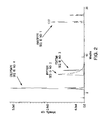
- FIG. 2 shows a typical MRM analysis for CYP 2B6 from the microsomal preparation prepared as described herein.
- Isolated peptides comprising the amino acid sequence of SEQ ID NOS: 1, 2, 3, or 4 identified in Table 1 below are specific to CYP 2B6.
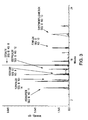
- FIG. 3 shows a typical MRM analysis for CYP 1A2 from the microsomal preparation prepared as described herein.
- the isolated peptides comprising the amino acid sequence of SEQ ID NOS: 8, 9, 10, 11, 12, 13 or 14 identified in Table 3 below are specific to CYP 1A2.
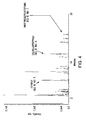
- FIG. 4 shows a typical MRM analysis for CYP 3A4 from the microsomal preparation prepared as described herein.
- the isolated peptides comprising the amino acid sequence of SEQ ID NOs: 5, 6, or 7 identified in Table 2 below are specific to CYP 3A4. It should be understood that peptides comprising the amino acid sequence of SEQ ID NOS: 5, 6, or 7 can also be used to identity and/or quantify CYP 3A3.
- the isolated peptides comprising the amino acid sequence of SEQ ID NOs: 15, 16, or 17 identified in Table 4 below are specific to CYP 3A5.
- FIGs. 5A-5C show three different, panes of a typical MRM analysis for CYP 3A5 from the microsomal preparation prepared as described herein. Each pane relates to specific transitions used for the particular peptide.
- the isolated peptides comprising the amino acid sequence ofSEQ ID NOS: 15, 16, or 17 are specific, to CYP 3A5.
- the method can comprise determining an amount of CYP 2B6 in the sample by detecting an isolated peptide specific to cytochrome P450 (CYP) isoform CYP 2B6, for example, one or more of the isoforms comprising the amino acid sequence of SEQ ID NO: 1, SEQ ID NO: 2, or SEQ ID NO: 3 identified herein.
- the amount can be determined using a triple quadrupole instrument and Multiple Reaction Monitoring (MRM).
- MRM Multiple Reaction Monitoring
- the isolated peptide can comprise the amino acid sequence of SEQ ID NO: 1A2, identified herein, and the method can comprise monitoring precursor-product ion pair transitions having an m/z value of about 548/911, 548/681, or 548/566, wherein the term "about” as used herein means within a range of +/- one (1) atomic mass unit.
- the isolated peptide can comprise the amino acid sequence of SEQ ID NO: 2 identified herein, and the method can comprise monitoring precursor-product ion pair transitions having an m/z value of about 494/777, 494/437, or 494/874.
- the isolated peptide can comprise the amino acid sequence of SEQ ID NO: 3 identified herein, and the method can comprise monitoring precursor-product ion pair transitions having an m/z value of about 421/508,421/607, or 421/694. In some embodiments, the isolated peptide can comprise the amino acid sequence of SEQ ID NO: 4, and the method can comprise monitoring precursor-product ion pair transitions having an m/z value of about 479/499, 479/614, or 479/727.
- the method can comprise determining an amount of CYP 3A4 in the sample by detecting an isolated peptide specific to cytochrome P450 (CYP) isoform CYP 3A4, comprising the amino acid sequence of SEQ ID NO: 5, SEQ ID NO: 6, or SEQ ID NO: 7 identified herein.
- CYP cytochrome P450
- the method can use, for example, a triple quadrupole instrument and Multiple Reaction Monitoring (MRM).
- MRM Multiple Reaction Monitoring
- the isolated peptide can comprise the amino acid sequence of SEQ ID NO: 5 identified herein, and the method can comprise monitoring precursor-product ion pair transitions having an m/z value of about 440/549, 440/650, or 440/532, In some embodiments, the isolated peptide can comprise the amino acid sequence of SEQ ID NO: 6 identified herein, and the method can comprise monitoring precursor-product ion pair transitions having an m/z value of about 704/794, 704/929, 564/689, 564/745, or 564/790.
- the isolated peptide can comprise the amino acid sequence of SEQ ID NO: 7 identified herein, and the method can comprise monitoring precursor-product ion pair transitions having an m/z value of about 798/819, 798/932, or 798/1004.
- the method can comprise determining an amount of CYP 1A2 in the sample by detecting an isolated peptide specific to cytochrome P450 (CYP) isoform CYP 1A2, comprising the amino acid sequence of SEQ ID NO: 8, SEQ ID NO: 9, SEQ ID NO: 10, SEQ ID NO: 11, SEQ ID NO: 12, SEQ ID NO: 13, or SEQ ID NO: 14, identified herein.
- CYP cytochrome P450
- the method can use, for example, a triple quadrupole instrument and Multiple Reaction Monitoring (MRM).
- MRM Multiple Reaction Monitoring
- the isolated peptide can comprise the amino acid sequence of SEQ ID NO: 8 identified herein, and the method can comprise monitoring precursor-product ion pair transitions having an m/z value of about 432/636, 432/535, or 432/478.
- the isolated peptide can comprise the amino acid sequence of SEQ ID NO: 9 identified herein, and the method can comprise monitoring precursor-product ion pair transitions having an m/z value of about 482/800, 482/628, or 482/743.
- the isolated peptide can comprise the amino acid sequence of SEQ ID NO: 10 identified herein, and the method can comprise monitoring precursor-product ion pair transitions having an m/z value of about 491/721, 491/834, or 491/535.
- the isolated peptide can comprise the amino acid sequence of SEQ ID NO: 11 identified herein, and the method can comprise monitoring precursor-product ion pair transitions having an m/z value of about 528/501, 528/614, or 528/727.
- the isolated peptide can comprise the amino acid sequence of SEQ ID NO: 12 identified herein, and the method can comprise monitoring precursor-product ion pair transitions having an m/z value of about 571/783, 571/971, 571/1028, 381/587, 381/474, or 381/375.
- the isolated peptide can comprise the amino acid sequence of SEQ ID NO: 13 identified herein, and the method can comprise monitoring precursor-product ion pair transitions having an m/z value of about 695/695, 695/837, or 695/950.
- the isolated peptide can comprise the isolated peptide comprises the amino acid sequence of SEQ ID NO; 14 identified herein, and the method can comprise monitoring precursor-product ion pair transitions having an m/z value of about 536/795, 536/584, or 536/698.
- the method can comprise determining an amount of CYP 3A5 in the sample by detecting an isolated peptide specific to cytochrome P450 (CYP) isoform CYP 3A5, comprising the amino acid sequence of SEQ ID NO: 15, SEQ ID NO: 16, or SEQ ID NO: 17 identified herein.
- the method can use, for example, a triple quadrupole instrument and Multiple Reaction Monitoring (MRM).
- MRM Multiple Reaction Monitoring
- the isolated peptide can comprise an amino acid sequence of SEQ ID NO: 15 identified herein, and the method can comprise monitoring precursor-product ion pair transitions having an m/z value of about 468/581, 468/679, or 468/736.
- the isolated peptide can comprise an amino acid sequence of SEQ ID NO: 16 identified herein, and the method can comprise monitoring precursor-product ion pair transitions having an m/z value of about 470/494, 470/608, or 470/722. In some embodiments, the isolated peptide can comprise an amino acid sequence of SEQ ID NO: 17 identified herein, and the method can comprise monitoring precursor-product ion pair transitions having an m/z value of about 589/747, 589/696, or 589/647.
- a kit can comprise one or more of the isolated peptides specific to one or more of cytochrome P450 (CYP) isoform CYP 2B6, CYP 3A4, CYP 1A2, and CYP 3A5,
- the kit can comprise one or more isolated proteins specific to CYP 2B6, comprising the amino acid sequence of SEQ ID NO: 1, SEQ ID NO: 2, SEQ ID NO: 3, or SEQ ID NO: 4.
- the kit can comprise one or more isolated proteins specific to CYP isoform CYP 3A4, comprising the amino acid sequence of SEQ ID NO: 5, SEQ ID NO: 6, or SEQ ID NO: 7.
- the kit can comprise one or more isolated proteins specific to CYP isoform CYP 1A2, comprising the amino acid sequence of SEQ ID NO: 8, SEQ ID NO: 9, SEQ ID NO: 10, SEQ ID NO: 11, SEQ ID NO: 12, SEQ ID NO: 13, or SEQ ID NO: 14.
- the kit can comprise one or more isolated proteins specific to CYP isoform CYP 3A5, comprising the amino acid sequence of SEQ ID NO: 15, SEQ ID NO: 16, or SEQ ID NO: 17.
- the kit can comprise at least one isolated peptide specific to each of CYP isoforms CYP 2B6, CYP 3A4, CYP 1A2, and CYP 3A5.
- the kit can comprise each of the isolated peptides of SEQ ID NOS: 1-17 identified herein, and further can comprise instructions for measuring Q1 and Q3 transition values for each of the isoform-specific peptides.
- the kit can comprise enzyme digestion components including buffers and enzymes, other buffers, and optionally other reagents and/or components.
- the kit can comprise, for example, a homogeneous assay such that the user need only add a sample.
- the kit can comprise calibration or normalization reagents or standards.
- Information pertaining to instrument settings that can or should be used to perform an assay can also be included in the kit.
- Information pertaining to sample preparation, operating conditions, volumetric amounts, temperature settings, and the like, can be included with the kit.
- the kit can comprise different transition values and/or suggested settings, useful to make comparative measurements between a sample and one or more control reagents.
- the kit can include instructions to measure specific pairs of transition values, for example, the Q1/Q3 transition pair, or the values of one or more different transition pairs.
- the kit can be packaged in a hermetically sealed container containing one or more regent vessels and appropriate instructions.
- An electronic medium can be included in the kit, having stored thereon electronic information pertaining to one or more assays, measurement values, transition pairs, operating instructions, software for carrying out operations, a combination thereof, or the like.
- CYP quantitation method of the present teachings was used to determine the amount of CYP in the sample after treatment with the liver enzyme inducers.
- CYP activity was measured by metabolite formation from selective substrates (phenacetin, bupropion and testosterone, respectively) and mRNA was measured by qRT-PCR (Taqman®, Applied Biosystems).
- Microsomal subcellular fractions were prepared by lysing treated hepatocytes in homogenization buffer (50 mM TRIS-HCl, pH 7.0, 150 mM KCl, 2 mM EDTA) followed by centrifugation at 9,000 x g for 20 minutes at 4°C. The supernatant (S9 fraction) was then spun at 100,000 x g for 60 minutes at 4°C. The resulting microsomal pellet was resuspended in 0.25 M sucrose and stored at -80°C until analysis.
- homogenization buffer 50 mM TRIS-HCl, pH 7.0, 150 mM KCl, 2 mM EDTA
- Quantitative data was processed using MultiQuantTM 1.2 software available from Applied Biosystems, LLC of Foster City, California.
- FIG. 6 is a graph comparing the changes in expression ofCYP 2B6 observed using the RNA assay, the CYP activity assay (designated “enzyme activity assay” in the figures), and a CYP quantitation method of the present teachings (designated “protein assay” in the figures).
- the 3-MC is a vehicle control and induces basal levels of CYP 2B6.
- the PB is a prototypical inducer for CYP 2B6, by CAR nuclear receptor activation.
- the RIF is also a known inducer of CYP 2B6.
- protein expression changes observed in the CYP activity assay and RNA assay generally mirror the expression changes observed using a CYP quantitation method of the present teachings.
- FIG. 7 is a graph comparing the changes in expression of CYP 1A2 observed using the RNA assay, the CYP activity assay (designated “enzyme activity assay” in the figures), and the CYP quantitation method of the present teachings (designated “protein assay” in the figures).
- the 3-MC is a prototypical inducer of CYP 1A2 by AhR nuclear receptor activation.
- the PB and RIF are vehicle consols inducing basal levels of 1A2, if any.
- protein expression changes observed in the CYP activity assay and RNA assay generally mirror the expression changes observed using a CYP quantitation method of the present teachings, except that the RNA assay for the sample treated with 3MC exhibits very high levels of RNA.
- the RNA assay cannot accurately quantify proteins because not all mRNA is converted to protein.
- FIG. 8 is a graph comparing the changes in expression of CYP 3A4 observed using the RNA assay, the CYP activity assay (designated “enzyme activity assay” in the figures), and a CYP quantitation method of the present teachings (designated “protein assay” in the figures).
- the 3-MC minimally induces CYP 3A4.
- the PB significantly induces 3A4.
- the RIF is a prototypical inducer of CYP 3A4 by PXR nuclear receptor activation.
- protein expression changes observed in the CYP activity assay and RNA assay generally mirror the expression changes observed using the CYP quantitation method of the present teachings.
- Table I shows sequences of the peptides determined, according to the present teachings, to be specific to cytochrome P450 (CYP) isoform CYP 2B6, along with their optimal MRM Q1, Q3 transitions. According to various embodiments, these observed peptides and transitions can be used to enable a reliable CYP quantitation of the isoform CYP 2B6.
- CYP cytochrome P450
- Table 2 shows sequences of the peptides determined, according to the present teachings, to be specific to cytochrome P450 (CYP) isoform CYP 3A4, along with their optimal MRM Q1, Q3 transitions. According to various embodiments, these observed peptides and transitions can be used to enable a reliable CYP quantitation of the isoform CYP 3A4.
- CYP cytochrome P450
- Table 3 shows sequences of the peptides determined, according to the present, teachings, to be specific to cytochrome P450 (CYP) isoform CYP 1A2, along with their optimal MRM Q1, Q3 transitions. According to various embodiments, these observed peptides and transitions can be used to enable a reliable CYP quantitation of the isoform CYP 1A2.
- CYP cytochrome P450
- Table 4 shows sequences of the peptides determined, according to the present teachings, to be specific to cytochrome P450 (CYP) isoform CYP 3A5, along with their optimal MRM Q1, Q3 transitions. According to various embodiments, these observed peptides and transitions can be used to enable a reliable CYP quantitation of the isoform CYP 3A5.
- CYP cytochrome P450
- Table 5 shows sequences of the peptides along with their optimal MRM Q1, Q3 transitions for the house-keeping microsomal protein Microsomal GST. According to various embodiments, the concentration of this observed peptide is unaffected by drug incubation and thus the peptide can be useful as a normalization protein to enable reliable CYP quantitation.
- Microsomal GST Q1 Q3 DVNVENVNQQR (SEQ ID NO: 18) 657.8 758.3 657.8 887.5 657.8 545.3 MYLLALK (SEQ ID NO: 19) 426.3 720.5 426.3 557.4 426.3 444.3 NALLPEGIPSLLK (SEQ ID NO: 20) 682.9 1066.7 682.9 727.5 682.9 953.6
- Table 6 shows sequences of the peptides along with their optimal MRM Q1, Q3 transitions for the house-keeping microsomal protein Microsomal Triglyceride. According to various embodiments, the concentration of this observed peptide is unaffected by drug incubation and thus the peptide can be useful as a normalization protein to enable reliable CYP quantitation.
- TABLE 6 Microsomal Tryglyceride Q1 Q3 MMLMSTATAFYR (SEQ ID NO: 21) 711.8 829.4 711.8 916.2 711.8 1047.5
- Table 7 shows sequences of the peptides along with their optimal MRM Q1, Q3 transitions for the house-keeping microsomal protein Corticosteroid 11 beta. It should be understood that the Q1 and Q3 masses for the peptide of SEQ ID NO: 22 in Table 7 refers to the MMTS alkylated peptide and that changing to a different alkylating reagent will change the Q1, Q3 masses. In addition, alkylating reagents other than MMTS can be used. According to various embodiments, the concentration of this observed peptide is unaffected by drug incubation and thus the peptide can be useful as a normalization protein to enable reliable CYP quantitation.
Landscapes
- Health & Medical Sciences (AREA)
- Life Sciences & Earth Sciences (AREA)
- Engineering & Computer Science (AREA)
- Chemical & Material Sciences (AREA)
- Molecular Biology (AREA)
- Biomedical Technology (AREA)
- Immunology (AREA)
- Bioinformatics & Cheminformatics (AREA)
- Hematology (AREA)
- Urology & Nephrology (AREA)
- Physics & Mathematics (AREA)
- Biotechnology (AREA)
- Biochemistry (AREA)
- Microbiology (AREA)
- General Health & Medical Sciences (AREA)
- Medicinal Chemistry (AREA)
- Organic Chemistry (AREA)
- Cell Biology (AREA)
- Analytical Chemistry (AREA)
- Wood Science & Technology (AREA)
- Zoology (AREA)
- Pathology (AREA)
- General Physics & Mathematics (AREA)
- Food Science & Technology (AREA)
- Genetics & Genomics (AREA)
- Proteomics, Peptides & Aminoacids (AREA)
- Bioinformatics & Computational Biology (AREA)
- Toxicology (AREA)
- Tropical Medicine & Parasitology (AREA)
- Biophysics (AREA)
- General Engineering & Computer Science (AREA)
- Spectroscopy & Molecular Physics (AREA)
- Gastroenterology & Hepatology (AREA)
- Other Investigation Or Analysis Of Materials By Electrical Means (AREA)
- Peptides Or Proteins (AREA)
- Investigating Or Analysing Biological Materials (AREA)
- Enzymes And Modification Thereof (AREA)
- Measuring Or Testing Involving Enzymes Or Micro-Organisms (AREA)
Applications Claiming Priority (4)
| Application Number | Priority Date | Filing Date | Title |
|---|---|---|---|
| US25243009P | 2009-10-16 | 2009-10-16 | |
| US25264809P | 2009-10-17 | 2009-10-17 | |
| EP10824088.8A EP2488545B1 (de) | 2009-10-16 | 2010-10-14 | Massenspektrometrie-quantifizierung von p450-protein-isoformen in hepatozyten |
| PCT/US2010/052665 WO2011047150A1 (en) | 2009-10-16 | 2010-10-14 | Mass spectrometry quantitation of p450 protein isoforms in hepatocytes |
Related Parent Applications (2)
| Application Number | Title | Priority Date | Filing Date |
|---|---|---|---|
| EP10824088.8A Division EP2488545B1 (de) | 2009-10-16 | 2010-10-14 | Massenspektrometrie-quantifizierung von p450-protein-isoformen in hepatozyten |
| EP10824088.8A Division-Into EP2488545B1 (de) | 2009-10-16 | 2010-10-14 | Massenspektrometrie-quantifizierung von p450-protein-isoformen in hepatozyten |
Publications (3)
| Publication Number | Publication Date |
|---|---|
| EP2862870A2 true EP2862870A2 (de) | 2015-04-22 |
| EP2862870A3 EP2862870A3 (de) | 2015-08-12 |
| EP2862870B1 EP2862870B1 (de) | 2020-08-12 |
Family
ID=43876537
Family Applications (2)
| Application Number | Title | Priority Date | Filing Date |
|---|---|---|---|
| EP14193907.4A Active EP2862870B1 (de) | 2009-10-16 | 2010-10-14 | Massenspektrometrie-Quantifizierung von P450-Protein-Isoformen in Hepatozyten |
| EP10824088.8A Active EP2488545B1 (de) | 2009-10-16 | 2010-10-14 | Massenspektrometrie-quantifizierung von p450-protein-isoformen in hepatozyten |
Family Applications After (1)
| Application Number | Title | Priority Date | Filing Date |
|---|---|---|---|
| EP10824088.8A Active EP2488545B1 (de) | 2009-10-16 | 2010-10-14 | Massenspektrometrie-quantifizierung von p450-protein-isoformen in hepatozyten |
Country Status (5)
| Country | Link |
|---|---|
| US (3) | US8940545B2 (de) |
| EP (2) | EP2862870B1 (de) |
| JP (2) | JP5936273B2 (de) |
| CA (1) | CA2777690C (de) |
| WO (1) | WO2011047150A1 (de) |
Families Citing this family (2)
| Publication number | Priority date | Publication date | Assignee | Title |
|---|---|---|---|---|
| JP2012056880A (ja) * | 2010-09-08 | 2012-03-22 | Idemitsu Kosan Co Ltd | インドロカルバゾール化合物、有機エレクトロルミネッセンス素子用材料、及びそれを用いた有機エレクトロルミネッセンス素子 |
| US9548190B2 (en) | 2012-12-20 | 2017-01-17 | Dh Technologies Development Pte. Ltd. | Scheduled MS3 for quantitation |
Family Cites Families (5)
| Publication number | Priority date | Publication date | Assignee | Title |
|---|---|---|---|---|
| US20080206737A1 (en) | 2004-05-19 | 2008-08-28 | Hunter Christie L | Expression quantification using mass spectrometry |
| WO2005114700A2 (en) * | 2004-05-19 | 2005-12-01 | Applera Corporation | Expression quantification using mass spectrometry |
| US20080020673A1 (en) * | 2005-03-08 | 2008-01-24 | Cara Sills | Doll having hand-assemblable costume |
| US20070092926A1 (en) | 2005-10-14 | 2007-04-26 | Alterman Michail A | Analysis of protein isoforms using unique tryptic peptides by mass spectrometry and immunochemistry |
| JP5299956B2 (ja) * | 2008-09-29 | 2013-09-25 | 国立大学法人東北大学 | 質量分析装置を用いた代謝酵素群の一斉タンパク質定量に用いるペプチド |
-
2010
- 2010-10-14 JP JP2012534356A patent/JP5936273B2/ja not_active Expired - Fee Related
- 2010-10-14 WO PCT/US2010/052665 patent/WO2011047150A1/en not_active Ceased
- 2010-10-14 EP EP14193907.4A patent/EP2862870B1/de active Active
- 2010-10-14 EP EP10824088.8A patent/EP2488545B1/de active Active
- 2010-10-14 US US12/904,520 patent/US8940545B2/en active Active
- 2010-10-14 CA CA2777690A patent/CA2777690C/en not_active Expired - Fee Related
-
2014
- 2014-08-21 US US14/465,460 patent/US20150045256A1/en not_active Abandoned
-
2015
- 2015-01-22 US US14/602,917 patent/US9546393B2/en not_active Expired - Fee Related
-
2016
- 2016-04-04 JP JP2016074921A patent/JP6116730B2/ja not_active Expired - Fee Related
Also Published As
| Publication number | Publication date |
|---|---|
| US8940545B2 (en) | 2015-01-27 |
| CA2777690A1 (en) | 2011-04-21 |
| EP2488545A1 (de) | 2012-08-22 |
| US9546393B2 (en) | 2017-01-17 |
| JP2013507924A (ja) | 2013-03-07 |
| EP2862870B1 (de) | 2020-08-12 |
| JP2016119915A (ja) | 2016-07-07 |
| US20150140600A1 (en) | 2015-05-21 |
| US20150045256A1 (en) | 2015-02-12 |
| EP2862870A3 (de) | 2015-08-12 |
| JP5936273B2 (ja) | 2016-06-22 |
| CA2777690C (en) | 2019-05-21 |
| WO2011047150A1 (en) | 2011-04-21 |
| JP6116730B2 (ja) | 2017-04-19 |
| EP2488545A4 (de) | 2013-05-15 |
| US20110091981A1 (en) | 2011-04-21 |
| EP2488545B1 (de) | 2014-12-24 |
Similar Documents
| Publication | Publication Date | Title |
|---|---|---|
| Picard et al. | PSAQ™ standards for accurate MS–based quantification of proteins: from the concept to biomedical applications | |
| Cooke et al. | Evaluation of enzyme-linked immunosorbent assay and liquid chromatography–tandem mass spectrometry methodology for the analysis of 8-oxo-7, 8-dihydro-2′-deoxyguanosine in saliva and urine | |
| Weiß et al. | Direct quantification of cytochromes P450 and drug transporters—a rapid, targeted mass spectrometry-based immunoassay panel for tissues and cell culture lysates | |
| De Bock et al. | Development and validation of a fast and sensitive UPLC–MS/MS method for the quantification of six probe metabolites for the in vitro determination of cytochrome P450 activity | |
| Spaggiari et al. | Phenotyping of CYP450 in human liver microsomes using the cocktail approach | |
| Youdim et al. | An automated, high-throughput, 384 well Cytochrome P450 cocktail IC50 assay using a rapid resolution LC–MS/MS end-point | |
| Vildhede et al. | Comparison of proteomic quantification approaches for hepatic drug transporters: multiplexed global quantitation correlates with targeted proteomic quantitation | |
| Fernandez et al. | Multiple heart-cutting two dimensional liquid chromatography and isotope dilution tandem mass spectrometry for the absolute quantification of proteins in human serum | |
| Wang et al. | A gel‐free MS‐based quantitative proteomic approach accurately measures cytochrome P450 protein concentrations in human liver microsomes | |
| Sykes et al. | Quantitative proteomic analysis of ribosome assembly and turnover in vivo | |
| Williamson et al. | Quantitative protein determination for CYP induction via LC‐MS/MS | |
| US9546393B2 (en) | Mass spectrometry quantitation of P450 isoforms in hepatocytes | |
| US20100148054A1 (en) | Mass spectrometry assay for thiopurine-s-methyl transferase activity and products generated thereby | |
| Frederick et al. | Stable isotope labeling by essential nutrients in cell culture (SILEC) for accurate measurement of nicotinamide adenine dinucleotide metabolism | |
| Wellhausen et al. | Facing current quantification challenges in protein microarrays | |
| CN102175804B (zh) | Cyp450酶亚型生物质谱绝对定量方法 | |
| Muschong et al. | Improvement of Workflows and Assay Reproducibility by The Introduction of “Assay-Ready” Culturing of MDCK Cells for Transport Studies: Muschong et al. | |
| Crow et al. | A simple and cost effective method for the quantification of 8‐hydroxy‐2′‐deoxyguanosine from urine using liquid chromatography tandem mass spectrometry | |
| She et al. | Quantification of protein isoforms in mesenchymal stem cells by reductive dimethylation of lysines in intact proteins | |
| Wiśniewski | Dilemmas With Absolute Quantification of Pharmacologically Relevant Proteins Using Mass Spectrometry | |
| Al‐Dirbashi et al. | Reliable prenatal diagnosis of Canavan disease by measuring N‐acetylaspartate in amniotic fluid using liquid chromatography tandem mass spectrometry | |
| CN103163010A (zh) | 相对定量分析蛋白质磷酸化修饰水平的方法 | |
| Lankes et al. | Relative quantification of albumin and fibrinogen modifications by liquid chromatography tandem mass spectrometry in the diagnosis and monitoring of acute pancreatitis | |
| Li et al. | Quantitative absorptive micro-sampling for decentralized monitoring of insulin-like growth factor 1 | |
| Williams | LC-MS/MS measurement of serum steroids in the clinical laboratory |
Legal Events
| Date | Code | Title | Description |
|---|---|---|---|
| PUAI | Public reference made under article 153(3) epc to a published international application that has entered the european phase |
Free format text: ORIGINAL CODE: 0009012 |
|
| 17P | Request for examination filed |
Effective date: 20141119 |
|
| AC | Divisional application: reference to earlier application |
Ref document number: 2488545 Country of ref document: EP Kind code of ref document: P |
|
| AK | Designated contracting states |
Kind code of ref document: A2 Designated state(s): AL AT BE BG CH CY CZ DE DK EE ES FI FR GB GR HR HU IE IS IT LI LT LU LV MC MK MT NL NO PL PT RO RS SE SI SK SM TR |
|
| PUAL | Search report despatched |
Free format text: ORIGINAL CODE: 0009013 |
|
| AK | Designated contracting states |
Kind code of ref document: A3 Designated state(s): AL AT BE BG CH CY CZ DE DK EE ES FI FR GB GR HR HU IE IS IT LI LT LU LV MC MK MT NL NO PL PT RO RS SE SI SK SM TR |
|
| RIC1 | Information provided on ipc code assigned before grant |
Ipc: G01N 33/68 20060101ALI20150706BHEP Ipc: C07K 7/00 20060101AFI20150706BHEP Ipc: G01N 33/50 20060101ALI20150706BHEP Ipc: G01N 33/00 20060101ALI20150706BHEP Ipc: G01N 30/72 20060101ALI20150706BHEP |
|
| R17P | Request for examination filed (corrected) |
Effective date: 20160211 |
|
| RBV | Designated contracting states (corrected) |
Designated state(s): AL AT BE BG CH CY CZ DE DK EE ES FI FR GB GR HR HU IE IS IT LI LT LU LV MC MK MT NL NO PL PT RO RS SE SI SK SM TR |
|
| STAA | Information on the status of an ep patent application or granted ep patent |
Free format text: STATUS: EXAMINATION IS IN PROGRESS |
|
| 17Q | First examination report despatched |
Effective date: 20161213 |
|
| RAP1 | Party data changed (applicant data changed or rights of an application transferred) |
Owner name: DH TECHNOLOGIES DEVELOPMENT PTE. LTD. |
|
| GRAP | Despatch of communication of intention to grant a patent |
Free format text: ORIGINAL CODE: EPIDOSNIGR1 |
|
| STAA | Information on the status of an ep patent application or granted ep patent |
Free format text: STATUS: GRANT OF PATENT IS INTENDED |
|
| INTG | Intention to grant announced |
Effective date: 20200224 |
|
| GRAS | Grant fee paid |
Free format text: ORIGINAL CODE: EPIDOSNIGR3 |
|
| GRAA | (expected) grant |
Free format text: ORIGINAL CODE: 0009210 |
|
| STAA | Information on the status of an ep patent application or granted ep patent |
Free format text: STATUS: THE PATENT HAS BEEN GRANTED |
|
| AC | Divisional application: reference to earlier application |
Ref document number: 2488545 Country of ref document: EP Kind code of ref document: P |
|
| AK | Designated contracting states |
Kind code of ref document: B1 Designated state(s): AL AT BE BG CH CY CZ DE DK EE ES FI FR GB GR HR HU IE IS IT LI LT LU LV MC MK MT NL NO PL PT RO RS SE SI SK SM TR |
|
| REG | Reference to a national code |
Ref country code: CH Ref legal event code: EP |
|
| REG | Reference to a national code |
Ref country code: IE Ref legal event code: FG4D |
|
| REG | Reference to a national code |
Ref country code: DE Ref legal event code: R096 Ref document number: 602010065189 Country of ref document: DE |
|
| REG | Reference to a national code |
Ref country code: AT Ref legal event code: REF Ref document number: 1301477 Country of ref document: AT Kind code of ref document: T Effective date: 20200915 |
|
| REG | Reference to a national code |
Ref country code: LT Ref legal event code: MG4D |
|
| REG | Reference to a national code |
Ref country code: NL Ref legal event code: MP Effective date: 20200812 |
|
| PG25 | Lapsed in a contracting state [announced via postgrant information from national office to epo] |
Ref country code: FI Free format text: LAPSE BECAUSE OF FAILURE TO SUBMIT A TRANSLATION OF THE DESCRIPTION OR TO PAY THE FEE WITHIN THE PRESCRIBED TIME-LIMIT Effective date: 20200812 Ref country code: ES Free format text: LAPSE BECAUSE OF FAILURE TO SUBMIT A TRANSLATION OF THE DESCRIPTION OR TO PAY THE FEE WITHIN THE PRESCRIBED TIME-LIMIT Effective date: 20200812 Ref country code: NO Free format text: LAPSE BECAUSE OF FAILURE TO SUBMIT A TRANSLATION OF THE DESCRIPTION OR TO PAY THE FEE WITHIN THE PRESCRIBED TIME-LIMIT Effective date: 20201112 Ref country code: GR Free format text: LAPSE BECAUSE OF FAILURE TO SUBMIT A TRANSLATION OF THE DESCRIPTION OR TO PAY THE FEE WITHIN THE PRESCRIBED TIME-LIMIT Effective date: 20201113 Ref country code: SE Free format text: LAPSE BECAUSE OF FAILURE TO SUBMIT A TRANSLATION OF THE DESCRIPTION OR TO PAY THE FEE WITHIN THE PRESCRIBED TIME-LIMIT Effective date: 20200812 Ref country code: BG Free format text: LAPSE BECAUSE OF FAILURE TO SUBMIT A TRANSLATION OF THE DESCRIPTION OR TO PAY THE FEE WITHIN THE PRESCRIBED TIME-LIMIT Effective date: 20201112 Ref country code: HR Free format text: LAPSE BECAUSE OF FAILURE TO SUBMIT A TRANSLATION OF THE DESCRIPTION OR TO PAY THE FEE WITHIN THE PRESCRIBED TIME-LIMIT Effective date: 20200812 Ref country code: LT Free format text: LAPSE BECAUSE OF FAILURE TO SUBMIT A TRANSLATION OF THE DESCRIPTION OR TO PAY THE FEE WITHIN THE PRESCRIBED TIME-LIMIT Effective date: 20200812 |
|
| REG | Reference to a national code |
Ref country code: AT Ref legal event code: MK05 Ref document number: 1301477 Country of ref document: AT Kind code of ref document: T Effective date: 20200812 |
|
| PG25 | Lapsed in a contracting state [announced via postgrant information from national office to epo] |
Ref country code: PL Free format text: LAPSE BECAUSE OF FAILURE TO SUBMIT A TRANSLATION OF THE DESCRIPTION OR TO PAY THE FEE WITHIN THE PRESCRIBED TIME-LIMIT Effective date: 20200812 Ref country code: RS Free format text: LAPSE BECAUSE OF FAILURE TO SUBMIT A TRANSLATION OF THE DESCRIPTION OR TO PAY THE FEE WITHIN THE PRESCRIBED TIME-LIMIT Effective date: 20200812 Ref country code: LV Free format text: LAPSE BECAUSE OF FAILURE TO SUBMIT A TRANSLATION OF THE DESCRIPTION OR TO PAY THE FEE WITHIN THE PRESCRIBED TIME-LIMIT Effective date: 20200812 Ref country code: NL Free format text: LAPSE BECAUSE OF FAILURE TO SUBMIT A TRANSLATION OF THE DESCRIPTION OR TO PAY THE FEE WITHIN THE PRESCRIBED TIME-LIMIT Effective date: 20200812 Ref country code: IS Free format text: LAPSE BECAUSE OF FAILURE TO SUBMIT A TRANSLATION OF THE DESCRIPTION OR TO PAY THE FEE WITHIN THE PRESCRIBED TIME-LIMIT Effective date: 20201212 |
|
| PG25 | Lapsed in a contracting state [announced via postgrant information from national office to epo] |
Ref country code: SM Free format text: LAPSE BECAUSE OF FAILURE TO SUBMIT A TRANSLATION OF THE DESCRIPTION OR TO PAY THE FEE WITHIN THE PRESCRIBED TIME-LIMIT Effective date: 20200812 Ref country code: RO Free format text: LAPSE BECAUSE OF FAILURE TO SUBMIT A TRANSLATION OF THE DESCRIPTION OR TO PAY THE FEE WITHIN THE PRESCRIBED TIME-LIMIT Effective date: 20200812 Ref country code: DK Free format text: LAPSE BECAUSE OF FAILURE TO SUBMIT A TRANSLATION OF THE DESCRIPTION OR TO PAY THE FEE WITHIN THE PRESCRIBED TIME-LIMIT Effective date: 20200812 Ref country code: CZ Free format text: LAPSE BECAUSE OF FAILURE TO SUBMIT A TRANSLATION OF THE DESCRIPTION OR TO PAY THE FEE WITHIN THE PRESCRIBED TIME-LIMIT Effective date: 20200812 Ref country code: EE Free format text: LAPSE BECAUSE OF FAILURE TO SUBMIT A TRANSLATION OF THE DESCRIPTION OR TO PAY THE FEE WITHIN THE PRESCRIBED TIME-LIMIT Effective date: 20200812 |
|
| REG | Reference to a national code |
Ref country code: DE Ref legal event code: R097 Ref document number: 602010065189 Country of ref document: DE |
|
| PG25 | Lapsed in a contracting state [announced via postgrant information from national office to epo] |
Ref country code: AL Free format text: LAPSE BECAUSE OF FAILURE TO SUBMIT A TRANSLATION OF THE DESCRIPTION OR TO PAY THE FEE WITHIN THE PRESCRIBED TIME-LIMIT Effective date: 20200812 Ref country code: AT Free format text: LAPSE BECAUSE OF FAILURE TO SUBMIT A TRANSLATION OF THE DESCRIPTION OR TO PAY THE FEE WITHIN THE PRESCRIBED TIME-LIMIT Effective date: 20200812 |
|
| REG | Reference to a national code |
Ref country code: CH Ref legal event code: PL |
|
| PLBE | No opposition filed within time limit |
Free format text: ORIGINAL CODE: 0009261 |
|
| STAA | Information on the status of an ep patent application or granted ep patent |
Free format text: STATUS: NO OPPOSITION FILED WITHIN TIME LIMIT |
|
| PG25 | Lapsed in a contracting state [announced via postgrant information from national office to epo] |
Ref country code: MC Free format text: LAPSE BECAUSE OF FAILURE TO SUBMIT A TRANSLATION OF THE DESCRIPTION OR TO PAY THE FEE WITHIN THE PRESCRIBED TIME-LIMIT Effective date: 20200812 Ref country code: LU Free format text: LAPSE BECAUSE OF NON-PAYMENT OF DUE FEES Effective date: 20201014 Ref country code: SK Free format text: LAPSE BECAUSE OF FAILURE TO SUBMIT A TRANSLATION OF THE DESCRIPTION OR TO PAY THE FEE WITHIN THE PRESCRIBED TIME-LIMIT Effective date: 20200812 |
|
| REG | Reference to a national code |
Ref country code: BE Ref legal event code: MM Effective date: 20201031 |
|
| 26N | No opposition filed |
Effective date: 20210514 |
|
| PG25 | Lapsed in a contracting state [announced via postgrant information from national office to epo] |
Ref country code: IT Free format text: LAPSE BECAUSE OF FAILURE TO SUBMIT A TRANSLATION OF THE DESCRIPTION OR TO PAY THE FEE WITHIN THE PRESCRIBED TIME-LIMIT Effective date: 20200812 |
|
| PG25 | Lapsed in a contracting state [announced via postgrant information from national office to epo] |
Ref country code: CH Free format text: LAPSE BECAUSE OF NON-PAYMENT OF DUE FEES Effective date: 20201031 Ref country code: BE Free format text: LAPSE BECAUSE OF NON-PAYMENT OF DUE FEES Effective date: 20201031 Ref country code: LI Free format text: LAPSE BECAUSE OF NON-PAYMENT OF DUE FEES Effective date: 20201031 Ref country code: SI Free format text: LAPSE BECAUSE OF FAILURE TO SUBMIT A TRANSLATION OF THE DESCRIPTION OR TO PAY THE FEE WITHIN THE PRESCRIBED TIME-LIMIT Effective date: 20200812 |
|
| PG25 | Lapsed in a contracting state [announced via postgrant information from national office to epo] |
Ref country code: IE Free format text: LAPSE BECAUSE OF NON-PAYMENT OF DUE FEES Effective date: 20201014 |
|
| PG25 | Lapsed in a contracting state [announced via postgrant information from national office to epo] |
Ref country code: TR Free format text: LAPSE BECAUSE OF FAILURE TO SUBMIT A TRANSLATION OF THE DESCRIPTION OR TO PAY THE FEE WITHIN THE PRESCRIBED TIME-LIMIT Effective date: 20200812 Ref country code: MT Free format text: LAPSE BECAUSE OF FAILURE TO SUBMIT A TRANSLATION OF THE DESCRIPTION OR TO PAY THE FEE WITHIN THE PRESCRIBED TIME-LIMIT Effective date: 20200812 Ref country code: CY Free format text: LAPSE BECAUSE OF FAILURE TO SUBMIT A TRANSLATION OF THE DESCRIPTION OR TO PAY THE FEE WITHIN THE PRESCRIBED TIME-LIMIT Effective date: 20200812 |
|
| PG25 | Lapsed in a contracting state [announced via postgrant information from national office to epo] |
Ref country code: MK Free format text: LAPSE BECAUSE OF FAILURE TO SUBMIT A TRANSLATION OF THE DESCRIPTION OR TO PAY THE FEE WITHIN THE PRESCRIBED TIME-LIMIT Effective date: 20200812 |
|
| PG25 | Lapsed in a contracting state [announced via postgrant information from national office to epo] |
Ref country code: PT Free format text: LAPSE BECAUSE OF FAILURE TO SUBMIT A TRANSLATION OF THE DESCRIPTION OR TO PAY THE FEE WITHIN THE PRESCRIBED TIME-LIMIT Effective date: 20200812 |
|
| P01 | Opt-out of the competence of the unified patent court (upc) registered |
Effective date: 20230601 |
|
| PGFP | Annual fee paid to national office [announced via postgrant information from national office to epo] |
Ref country code: GB Payment date: 20230824 Year of fee payment: 14 |
|
| PGFP | Annual fee paid to national office [announced via postgrant information from national office to epo] |
Ref country code: FR Payment date: 20230821 Year of fee payment: 14 |
|
| GBPC | Gb: european patent ceased through non-payment of renewal fee |
Effective date: 20241014 |
|
| PG25 | Lapsed in a contracting state [announced via postgrant information from national office to epo] |
Ref country code: GB Free format text: LAPSE BECAUSE OF NON-PAYMENT OF DUE FEES Effective date: 20241014 |
|
| PG25 | Lapsed in a contracting state [announced via postgrant information from national office to epo] |
Ref country code: FR Free format text: LAPSE BECAUSE OF NON-PAYMENT OF DUE FEES Effective date: 20241031 |
|
| PGFP | Annual fee paid to national office [announced via postgrant information from national office to epo] |
Ref country code: DE Payment date: 20251028 Year of fee payment: 16 |