EP2860193B1 - Polypeptid mit funktion zur gezielten diagnose und therapie von nasopharynx-karzinom, nanopartikel die dieses enthalten und verwendung davon - Google Patents
Polypeptid mit funktion zur gezielten diagnose und therapie von nasopharynx-karzinom, nanopartikel die dieses enthalten und verwendung davon Download PDFInfo
- Publication number
- EP2860193B1 EP2860193B1 EP13801389.1A EP13801389A EP2860193B1 EP 2860193 B1 EP2860193 B1 EP 2860193B1 EP 13801389 A EP13801389 A EP 13801389A EP 2860193 B1 EP2860193 B1 EP 2860193B1
- Authority
- EP
- European Patent Office
- Prior art keywords
- nasopharyngeal carcinoma
- dual
- targeted
- boa
- npc
- Prior art date
- Legal status (The legal status is an assumption and is not a legal conclusion. Google has not performed a legal analysis and makes no representation as to the accuracy of the status listed.)
- Not-in-force
Links
Images






Classifications
-
- C—CHEMISTRY; METALLURGY
- C07—ORGANIC CHEMISTRY
- C07K—PEPTIDES
- C07K7/00—Peptides having 5 to 20 amino acids in a fully defined sequence; Derivatives thereof
- C07K7/04—Linear peptides containing only normal peptide links
- C07K7/08—Linear peptides containing only normal peptide links having 12 to 20 amino acids
-
- A—HUMAN NECESSITIES
- A61—MEDICAL OR VETERINARY SCIENCE; HYGIENE
- A61K—PREPARATIONS FOR MEDICAL, DENTAL OR TOILETRY PURPOSES
- A61K31/00—Medicinal preparations containing organic active ingredients
- A61K31/12—Ketones
-
- A—HUMAN NECESSITIES
- A61—MEDICAL OR VETERINARY SCIENCE; HYGIENE
- A61K—PREPARATIONS FOR MEDICAL, DENTAL OR TOILETRY PURPOSES
- A61K31/00—Medicinal preparations containing organic active ingredients
- A61K31/33—Heterocyclic compounds
- A61K31/335—Heterocyclic compounds having oxygen as the only ring hetero atom, e.g. fungichromin
- A61K31/337—Heterocyclic compounds having oxygen as the only ring hetero atom, e.g. fungichromin having four-membered rings, e.g. taxol
-
- A—HUMAN NECESSITIES
- A61—MEDICAL OR VETERINARY SCIENCE; HYGIENE
- A61K—PREPARATIONS FOR MEDICAL, DENTAL OR TOILETRY PURPOSES
- A61K38/00—Medicinal preparations containing peptides
- A61K38/16—Peptides having more than 20 amino acids; Gastrins; Somatostatins; Melanotropins; Derivatives thereof
-
- A—HUMAN NECESSITIES
- A61—MEDICAL OR VETERINARY SCIENCE; HYGIENE
- A61K—PREPARATIONS FOR MEDICAL, DENTAL OR TOILETRY PURPOSES
- A61K47/00—Medicinal preparations characterised by the non-active ingredients used, e.g. carriers or inert additives; Targeting or modifying agents chemically bound to the active ingredient
- A61K47/50—Medicinal preparations characterised by the non-active ingredients used, e.g. carriers or inert additives; Targeting or modifying agents chemically bound to the active ingredient the non-active ingredient being chemically bound to the active ingredient, e.g. polymer-drug conjugates
- A61K47/51—Medicinal preparations characterised by the non-active ingredients used, e.g. carriers or inert additives; Targeting or modifying agents chemically bound to the active ingredient the non-active ingredient being chemically bound to the active ingredient, e.g. polymer-drug conjugates the non-active ingredient being a modifying agent
- A61K47/62—Medicinal preparations characterised by the non-active ingredients used, e.g. carriers or inert additives; Targeting or modifying agents chemically bound to the active ingredient the non-active ingredient being chemically bound to the active ingredient, e.g. polymer-drug conjugates the non-active ingredient being a modifying agent the modifying agent being a protein, peptide or polyamino acid
- A61K47/64—Drug-peptide, drug-protein or drug-polyamino acid conjugates, i.e. the modifying agent being a peptide, protein or polyamino acid which is covalently bonded or complexed to a therapeutically active agent
- A61K47/6425—Drug-peptide, drug-protein or drug-polyamino acid conjugates, i.e. the modifying agent being a peptide, protein or polyamino acid which is covalently bonded or complexed to a therapeutically active agent the peptide or protein in the drug conjugate being a receptor, e.g. CD4, a cell surface antigen, i.e. not a peptide ligand targeting the antigen, or a cell surface determinant, i.e. a part of the surface of a cell
-
- A—HUMAN NECESSITIES
- A61—MEDICAL OR VETERINARY SCIENCE; HYGIENE
- A61K—PREPARATIONS FOR MEDICAL, DENTAL OR TOILETRY PURPOSES
- A61K47/00—Medicinal preparations characterised by the non-active ingredients used, e.g. carriers or inert additives; Targeting or modifying agents chemically bound to the active ingredient
- A61K47/50—Medicinal preparations characterised by the non-active ingredients used, e.g. carriers or inert additives; Targeting or modifying agents chemically bound to the active ingredient the non-active ingredient being chemically bound to the active ingredient, e.g. polymer-drug conjugates
- A61K47/51—Medicinal preparations characterised by the non-active ingredients used, e.g. carriers or inert additives; Targeting or modifying agents chemically bound to the active ingredient the non-active ingredient being chemically bound to the active ingredient, e.g. polymer-drug conjugates the non-active ingredient being a modifying agent
- A61K47/62—Medicinal preparations characterised by the non-active ingredients used, e.g. carriers or inert additives; Targeting or modifying agents chemically bound to the active ingredient the non-active ingredient being chemically bound to the active ingredient, e.g. polymer-drug conjugates the non-active ingredient being a modifying agent the modifying agent being a protein, peptide or polyamino acid
- A61K47/65—Peptidic linkers, binders or spacers, e.g. peptidic enzyme-labile linkers
-
- A—HUMAN NECESSITIES
- A61—MEDICAL OR VETERINARY SCIENCE; HYGIENE
- A61K—PREPARATIONS FOR MEDICAL, DENTAL OR TOILETRY PURPOSES
- A61K47/00—Medicinal preparations characterised by the non-active ingredients used, e.g. carriers or inert additives; Targeting or modifying agents chemically bound to the active ingredient
- A61K47/50—Medicinal preparations characterised by the non-active ingredients used, e.g. carriers or inert additives; Targeting or modifying agents chemically bound to the active ingredient the non-active ingredient being chemically bound to the active ingredient, e.g. polymer-drug conjugates
- A61K47/51—Medicinal preparations characterised by the non-active ingredients used, e.g. carriers or inert additives; Targeting or modifying agents chemically bound to the active ingredient the non-active ingredient being chemically bound to the active ingredient, e.g. polymer-drug conjugates the non-active ingredient being a modifying agent
- A61K47/62—Medicinal preparations characterised by the non-active ingredients used, e.g. carriers or inert additives; Targeting or modifying agents chemically bound to the active ingredient the non-active ingredient being chemically bound to the active ingredient, e.g. polymer-drug conjugates the non-active ingredient being a modifying agent the modifying agent being a protein, peptide or polyamino acid
- A61K47/66—Medicinal preparations characterised by the non-active ingredients used, e.g. carriers or inert additives; Targeting or modifying agents chemically bound to the active ingredient the non-active ingredient being chemically bound to the active ingredient, e.g. polymer-drug conjugates the non-active ingredient being a modifying agent the modifying agent being a protein, peptide or polyamino acid the modifying agent being a pre-targeting system involving a peptide or protein for targeting specific cells
-
- A—HUMAN NECESSITIES
- A61—MEDICAL OR VETERINARY SCIENCE; HYGIENE
- A61K—PREPARATIONS FOR MEDICAL, DENTAL OR TOILETRY PURPOSES
- A61K47/00—Medicinal preparations characterised by the non-active ingredients used, e.g. carriers or inert additives; Targeting or modifying agents chemically bound to the active ingredient
- A61K47/50—Medicinal preparations characterised by the non-active ingredients used, e.g. carriers or inert additives; Targeting or modifying agents chemically bound to the active ingredient the non-active ingredient being chemically bound to the active ingredient, e.g. polymer-drug conjugates
- A61K47/69—Medicinal preparations characterised by the non-active ingredients used, e.g. carriers or inert additives; Targeting or modifying agents chemically bound to the active ingredient the non-active ingredient being chemically bound to the active ingredient, e.g. polymer-drug conjugates the conjugate being characterised by physical or galenical forms, e.g. emulsion, particle, inclusion complex, stent or kit
- A61K47/6921—Medicinal preparations characterised by the non-active ingredients used, e.g. carriers or inert additives; Targeting or modifying agents chemically bound to the active ingredient the non-active ingredient being chemically bound to the active ingredient, e.g. polymer-drug conjugates the conjugate being characterised by physical or galenical forms, e.g. emulsion, particle, inclusion complex, stent or kit the form being a particulate, a powder, an adsorbate, a bead or a sphere
- A61K47/6927—Medicinal preparations characterised by the non-active ingredients used, e.g. carriers or inert additives; Targeting or modifying agents chemically bound to the active ingredient the non-active ingredient being chemically bound to the active ingredient, e.g. polymer-drug conjugates the conjugate being characterised by physical or galenical forms, e.g. emulsion, particle, inclusion complex, stent or kit the form being a particulate, a powder, an adsorbate, a bead or a sphere the form being a solid microparticle having no hollow or gas-filled cores
- A61K47/6929—Medicinal preparations characterised by the non-active ingredients used, e.g. carriers or inert additives; Targeting or modifying agents chemically bound to the active ingredient the non-active ingredient being chemically bound to the active ingredient, e.g. polymer-drug conjugates the conjugate being characterised by physical or galenical forms, e.g. emulsion, particle, inclusion complex, stent or kit the form being a particulate, a powder, an adsorbate, a bead or a sphere the form being a solid microparticle having no hollow or gas-filled cores the form being a nanoparticle, e.g. an immuno-nanoparticle
-
- A—HUMAN NECESSITIES
- A61—MEDICAL OR VETERINARY SCIENCE; HYGIENE
- A61K—PREPARATIONS FOR MEDICAL, DENTAL OR TOILETRY PURPOSES
- A61K49/00—Preparations for testing in vivo
- A61K49/001—Preparation for luminescence or biological staining
- A61K49/0063—Preparation for luminescence or biological staining characterised by a special physical or galenical form, e.g. emulsions, microspheres
- A61K49/0069—Preparation for luminescence or biological staining characterised by a special physical or galenical form, e.g. emulsions, microspheres the agent being in a particular physical galenical form
- A61K49/0089—Particulate, powder, adsorbate, bead, sphere
- A61K49/0091—Microparticle, microcapsule, microbubble, microsphere, microbead, i.e. having a size or diameter higher or equal to 1 micrometer
- A61K49/0093—Nanoparticle, nanocapsule, nanobubble, nanosphere, nanobead, i.e. having a size or diameter smaller than 1 micrometer, e.g. polymeric nanoparticle
-
- A—HUMAN NECESSITIES
- A61—MEDICAL OR VETERINARY SCIENCE; HYGIENE
- A61K—PREPARATIONS FOR MEDICAL, DENTAL OR TOILETRY PURPOSES
- A61K9/00—Medicinal preparations characterised by special physical form
- A61K9/48—Preparations in capsules, e.g. of gelatin, of chocolate
- A61K9/50—Microcapsules having a gas, liquid or semi-solid filling; Solid microparticles or pellets surrounded by a distinct coating layer, e.g. coated microspheres, coated drug crystals
- A61K9/51—Nanocapsules; Nanoparticles
- A61K9/5107—Excipients; Inactive ingredients
- A61K9/5123—Organic compounds, e.g. fats, sugars
-
- A—HUMAN NECESSITIES
- A61—MEDICAL OR VETERINARY SCIENCE; HYGIENE
- A61K—PREPARATIONS FOR MEDICAL, DENTAL OR TOILETRY PURPOSES
- A61K9/00—Medicinal preparations characterised by special physical form
- A61K9/48—Preparations in capsules, e.g. of gelatin, of chocolate
- A61K9/50—Microcapsules having a gas, liquid or semi-solid filling; Solid microparticles or pellets surrounded by a distinct coating layer, e.g. coated microspheres, coated drug crystals
- A61K9/51—Nanocapsules; Nanoparticles
- A61K9/5107—Excipients; Inactive ingredients
- A61K9/513—Organic macromolecular compounds; Dendrimers
- A61K9/5169—Proteins, e.g. albumin, gelatin
-
- A—HUMAN NECESSITIES
- A61—MEDICAL OR VETERINARY SCIENCE; HYGIENE
- A61P—SPECIFIC THERAPEUTIC ACTIVITY OF CHEMICAL COMPOUNDS OR MEDICINAL PREPARATIONS
- A61P11/00—Drugs for disorders of the respiratory system
- A61P11/02—Nasal agents, e.g. decongestants
-
- A—HUMAN NECESSITIES
- A61—MEDICAL OR VETERINARY SCIENCE; HYGIENE
- A61P—SPECIFIC THERAPEUTIC ACTIVITY OF CHEMICAL COMPOUNDS OR MEDICINAL PREPARATIONS
- A61P11/00—Drugs for disorders of the respiratory system
- A61P11/04—Drugs for disorders of the respiratory system for throat disorders
-
- A—HUMAN NECESSITIES
- A61—MEDICAL OR VETERINARY SCIENCE; HYGIENE
- A61P—SPECIFIC THERAPEUTIC ACTIVITY OF CHEMICAL COMPOUNDS OR MEDICINAL PREPARATIONS
- A61P35/00—Antineoplastic agents
-
- C—CHEMISTRY; METALLURGY
- C07—ORGANIC CHEMISTRY
- C07K—PEPTIDES
- C07K14/00—Peptides having more than 20 amino acids; Gastrins; Somatostatins; Melanotropins; Derivatives thereof
- C07K14/435—Peptides having more than 20 amino acids; Gastrins; Somatostatins; Melanotropins; Derivatives thereof from animals; from humans
- C07K14/46—Peptides having more than 20 amino acids; Gastrins; Somatostatins; Melanotropins; Derivatives thereof from animals; from humans from vertebrates
- C07K14/47—Peptides having more than 20 amino acids; Gastrins; Somatostatins; Melanotropins; Derivatives thereof from animals; from humans from vertebrates from mammals
- C07K14/4701—Peptides having more than 20 amino acids; Gastrins; Somatostatins; Melanotropins; Derivatives thereof from animals; from humans from vertebrates from mammals not used
- C07K14/4747—Apoptosis related proteins
-
- C—CHEMISTRY; METALLURGY
- C07—ORGANIC CHEMISTRY
- C07K—PEPTIDES
- C07K14/00—Peptides having more than 20 amino acids; Gastrins; Somatostatins; Melanotropins; Derivatives thereof
- C07K14/435—Peptides having more than 20 amino acids; Gastrins; Somatostatins; Melanotropins; Derivatives thereof from animals; from humans
- C07K14/46—Peptides having more than 20 amino acids; Gastrins; Somatostatins; Melanotropins; Derivatives thereof from animals; from humans from vertebrates
- C07K14/47—Peptides having more than 20 amino acids; Gastrins; Somatostatins; Melanotropins; Derivatives thereof from animals; from humans from vertebrates from mammals
- C07K14/4701—Peptides having more than 20 amino acids; Gastrins; Somatostatins; Melanotropins; Derivatives thereof from animals; from humans from vertebrates from mammals not used
- C07K14/4748—Tumour specific antigens; Tumour rejection antigen precursors [TRAP], e.g. MAGE
-
- G—PHYSICS
- G01—MEASURING; TESTING
- G01N—INVESTIGATING OR ANALYSING MATERIALS BY DETERMINING THEIR CHEMICAL OR PHYSICAL PROPERTIES
- G01N33/00—Investigating or analysing materials by specific methods not covered by groups G01N1/00 - G01N31/00
- G01N33/48—Biological material, e.g. blood, urine; Haemocytometers
- G01N33/50—Chemical analysis of biological material, e.g. blood, urine; Testing involving biospecific ligand binding methods; Immunological testing
- G01N33/53—Immunoassay; Biospecific binding assay; Materials therefor
- G01N33/575—Immunoassay; Biospecific binding assay; Materials therefor for cancer
- G01N33/57557—Immunoassay; Biospecific binding assay; Materials therefor for cancer of other specific parts of the body, e.g. brain
-
- G—PHYSICS
- G01—MEASURING; TESTING
- G01N—INVESTIGATING OR ANALYSING MATERIALS BY DETERMINING THEIR CHEMICAL OR PHYSICAL PROPERTIES
- G01N33/00—Investigating or analysing materials by specific methods not covered by groups G01N1/00 - G01N31/00
- G01N33/48—Biological material, e.g. blood, urine; Haemocytometers
- G01N33/50—Chemical analysis of biological material, e.g. blood, urine; Testing involving biospecific ligand binding methods; Immunological testing
- G01N33/58—Chemical analysis of biological material, e.g. blood, urine; Testing involving biospecific ligand binding methods; Immunological testing involving labelled substances
- G01N33/582—Chemical analysis of biological material, e.g. blood, urine; Testing involving biospecific ligand binding methods; Immunological testing involving labelled substances with fluorescent label
-
- A—HUMAN NECESSITIES
- A61—MEDICAL OR VETERINARY SCIENCE; HYGIENE
- A61K—PREPARATIONS FOR MEDICAL, DENTAL OR TOILETRY PURPOSES
- A61K38/00—Medicinal preparations containing peptides
- A61K38/04—Peptides having up to 20 amino acids in a fully defined sequence; Derivatives thereof
- A61K38/10—Peptides having 12 to 20 amino acids
-
- A—HUMAN NECESSITIES
- A61—MEDICAL OR VETERINARY SCIENCE; HYGIENE
- A61K—PREPARATIONS FOR MEDICAL, DENTAL OR TOILETRY PURPOSES
- A61K47/00—Medicinal preparations characterised by the non-active ingredients used, e.g. carriers or inert additives; Targeting or modifying agents chemically bound to the active ingredient
- A61K47/30—Macromolecular organic or inorganic compounds, e.g. inorganic polyphosphates
- A61K47/42—Proteins; Polypeptides; Degradation products thereof; Derivatives thereof, e.g. albumin, gelatin or zein
-
- C—CHEMISTRY; METALLURGY
- C07—ORGANIC CHEMISTRY
- C07K—PEPTIDES
- C07K2319/00—Fusion polypeptide
-
- C—CHEMISTRY; METALLURGY
- C07—ORGANIC CHEMISTRY
- C07K—PEPTIDES
- C07K2319/00—Fusion polypeptide
- C07K2319/33—Fusion polypeptide fusions for targeting to specific cell types, e.g. tissue specific targeting, targeting of a bacterial subspecies
Definitions
- the invention belongs to the field of bioscience and drug carriers, and in particular, relates to a dual-targeted therapeutic peptide for nasopharyngeal carcinoma, as defined in the claims nanoparticles carrying the same and uses thereof.
- Nasopharyngeal carcinoma a highly malignant tumor originated from nasopharyngeal epithelium, is very easy to invade the base of skull and other important structures, and its cervical lymph node metastasis and distant metastasis may occur earlier.
- Nasopharyngeal carcinoma is hard to be treated by surgery since it has high malignancy with a special pathogenic site. Therefore, nasopharyngeal carcinoma is clinically treated mainly by radiotherapy in combination with systemic chemotherapy.
- the traditional radiotherapy and chemotherapy have serious toxic and side effects, and the radiotherapy only applies to the primary tumor and its sentinel lymph node metastasis, but not to its distant metastasis.
- the five-year survival rate for nasopharyngeal carcinoma patients fluctuates around 60% due to limitation in the therapeutic method.
- Monoclonal antibody drugs have shown a good prospect for clinical application in tumor therapy.
- a conjugate formed by a monoclonal antibody with a radionuclide, a drug or a toxin showed a targeting specific lethal role on tumor cell.
- some monoclonal antibodies specific for tumor markers themselves have significant antitumor effects.
- Herceptin an antibody to epidermal growth factor HER-2/neu of tumor cell, has achieved a good curative effect as a targeting drug for HER-2 positive metastatic breast cancer.
- monoclonal antibody still has several limitations in practical clinic application. It has a problem of immunogenicity, since most of monoclonal antibody drugs for clinical study are prepared by using mice.
- Peptide as a specific ligand to the molecule of a tumor marker, is the focus of researcher's attention. Peptide has advantages of small size, good tissue penetrability, low immunogenicity and low cost, compared with the monoclonal antibodies, and may overcome the defects of antibody preparation to a large extent.
- the in vivo application of targeting peptides is limited due to its relatively weak affinity to tumor and short half-life. Multivalent strategies based on nanotechnology can significantly prolong the effective circulation time of targeting peptides in vivo, and greatly improve its affinity for binding with a specific receptor, so as to achieve the purpose of significantly enhancing the biological effect of the peptide.
- an octavalent peptide fluorescent nano-probe based on tetramer far-red fluorescent protein was prepared by using a method for constructing a peptide fluorescent probe having multivalent and nanoscale effects found in our preliminary work.
- the tumor-targeting property and the biological anti-tumor effect of a peptide can be rapidly and accurately screened and identified by using the method.
- the clinical use of the far-red fluorescent protein is limited by its immunogenicity, because the far-red fluorescent protein is a foreign protein. Therefore, there is an urgent need to develop a nano-carrier capable of effectively transporting the targeted peptide without affecting its targeting property and therapeutic effect.
- Nasopharyngeal carcinoma is a complex disease gradually developed from a multi-step interaction involving factors such as environmental factors and genetic genes of host.
- Clinical studies on the combined treatment with radiotherapy and adjuvant chemotherapy showed that a variety of anticancer drugs, either alone or in combination, have certain curative effect on nasopharyngeal carcinoma which is relatively sensitive to chemotherapy.
- the main water-soluble chemotherapeutic agents such as cisplatin and 5-fluorouracil (5-FU)
- intravenously administered cisplatin and 5-FU have disadvantages of a short half-life and lack of selection, thereby increasing its toxic and side effects.
- Curcumin and paclitaxel are two kinds of representative anti-cancer herbal medicines.
- Curcumin having many pharmacological effects, is a phenolic pigment extracted from the rhizome of Curcuma longa, a herbaceous plant. It is confirmed from many studies that curcumin can inhibit the growth of various tumor cells, and enhance the recruitment of NK cells in tumor microenvironment, thereby improving the body's immunity.
- Paclitaxel has been used in the treatment of advanced nasopharyngeal carcinoma, since it was first approved by FDA of US to enter into the clinic treatment of ovarian cancer in 1992.
- paclitaxel can also enhance the recruitment of NK cells in tumor microenvironment and activate antigen presenting ability of dendritic cells, so as to enhance the immune responses against tumor cells. Because both curcumin and paclitaxel are fat-soluble drugs, they are difficult to be directly taken up by tumor tissue cells via passive transportation, and have highly toxic and side effects in a vein, and thus have poor clinic applications currently. So far, a targeted therapeutic nano-drug for nasopharyngeal carcinoma has not been reported in China.
- Nano-carrier is an effective means for targeted delivery of an imaging contrast agents or a drug to tumor cells to achieve specific imaging diagnosis and targeted treatment of tumor.
- a high-density lipoprotein-like peptide-lipid nanoparticle has been invented (International Publication Number: WO2009073984 ). It is formed by interacting a functional peptide R4F having a ⁇ -helix structure with phospholipid and cholesteryl ester, and has a particle size of 30 nm or less.
- Such nanoparticle mainly targets to cells with high expression of scavenger receptor B (SR-B1) based on the function of the peptide.
- SR-B1 is also highly expressed in the normal tissue cells (e.g.
- the nanoparticle does not have a desired contrast in distribution between tumors and normal tissues, and may have potential toxic and side effects during transportation of chemotherapy drugs.
- the nanoparticle of WO2009073984 only functions as a tool for targeted delivery, and does not involve in the effects of tumor therapy.
- HAIMING LUO ET AL "An125I-labeled octavalent peptide fluorescent nanoprobe for tumor-homing imaging in vivo", BIOMATERIALS, ELSEVIER SCIENCE PUBLISHERS BV., BARKING, GB, vol. 33, no. 19, March 13, 2012, pages 4843-4850 ) discloses an approach to efficiently examine targeting radiopeptides with a new class of octavalent peptide fluorescent nanoprobe (Octa-FNP) platform, which is composed of candidate targeting peptides and a tetrameric far-red fluorescent protein (tfRFP) scaffold.
- Octa-FNP octavalent peptide fluorescent nanoprobe
- YANG MI ET AL "Attenuation of nontargeted cell-kill using a high-density lipoprotein-mimicking peptide-phospholipid nanoscaffold" NANOMEDICINE, FUTURE MEDICINE LTD, LONDON, ENGLAND, vol. 6, no. 4, June 1, 2011, pages 631-641 ) discloses that a high-density lipoprotein-mimicking peptide-phospholipid nanoscaffold (HPPS) may be used to deliver a lipophilic drug, paclitaxel oleate (PTXOL).
- HPPS high-density lipoprotein-mimicking peptide-phospholipid nanoscaffold
- the present invention provides a targeted therapeutic peptide for use in a method of in-vivo diagnosis and treatment of nasopharyngeal carcinoma (LTVSPWYLTVSPWY, SEQ ID NO.3), and a dual-targeted therapeutic peptide for use in a method of in-vivo diagnosis and treatment of nasopharyngeal carcinoma (referred to as dtTP NPC ) capable of controlling the size of lipid nanoparticles, as well as a dual-targeted diagnostic and therapeutic nanoparticle in a method of in-vivo diagnosis and treatment of nasopharyngeal carcinoma (referred to as dtDTNP NPC ) carrying the dtTP NPC and uses thereof.
- dtTP NPC a method of in-vivo diagnosis and treatment of nasopharyngeal carcinoma
- the invention further provides the use of the above peptide and nanoparticle in a method of in-vitro diagnosis of nasopharyngeal carcinoma as defined in claim 11 or claim 14, respectively.
- the peptide and nanoparticle can efficiently and specifically target to nasopharyngeal carcinoma, and significantly inhibit the growth of nasopharyngeal tumor cells, and thus, can be used in the clinical treatment.
- the present invention provides a technical solution by providing a dual-targeted therapeutic peptide according to claim 1 which can be obtained by covalently linking a targeted therapeutic peptide for nasopharyngeal carcinoma having an ⁇ -helical structure (the ⁇ -helical peptide is a targeted therapeutic peptide capable of forming an ⁇ -helical structure via interaction with a phospholipid) with another targeted therapeutic peptide for nasopharyngeal carcinoma through a peptide linker in sequence, wherein the amino acid sequence of the targeted therapeutic peptide with an ⁇ -helical structure is: FAEKFKEAVKDYFAKFWD (SEQ ID NO.2).
- the resulted peptide can be used for dual-targeted therapy of nasopharyngeal carcinoma and size control of lipid nanoparticles.
- amino acid sequence of the dual-targeted therapeutic peptide for use in a method of in-vivo diagnosis and treatment of nasopharyngeal carcinoma is preferably:
- the amino acid sequence of the said targeted therapeutic peptide for use in a method of in-vivo diagnosis and treatment of nasopharyngeal carcinoma is:
- the present invention also provides a dual-targeted diagnostic and therapeutic nanoparticle for use in a method of in-vivo diagnosis and treatment of nasopharyngeal carcinoma consisting of three components: 1) a dual-targeted therapeutic peptide for nasopharyngeal carcinoma capable of controlling size of lipid nanoparticles; 2) phospholipid and cholesteryl ester for composing the shell of the nanoparticle and maintaining a stable spherical nano-structure; 3) a cargo which is an imaging contrast agent, a drug or the combination thereof, wherein the imaging contrast agent may be a fluorescent dye modified with cholesteryl ester (DiR-BOA or Fluo-BOA), and the drug may be paclitaxel or curcumin.
- the imaging contrast agent may be a fluorescent dye modified with cholesteryl ester (DiR-BOA or Fluo-BOA)
- the drug may be paclitaxel or curcumin.
- the above defined peptide or nanoparticle can also be used according to the invention in a method of in-vitro diagnosis of nasopharyngeal carcinoma as defined in any one of claims 11 to 20.
- the present invention has the following advantages.
- a peptide octavalent fluorescent nanoprobe based on tetramer far-red fluorescent protein was prepared by using a method for constructing a peptide fluorescent probe having a multivalent effect and a nanosized effect invented in the previous research.
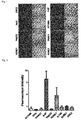
- the probe was used to detect and screen different types of tumor cell lines, in order to screen and identify the tumor-targeting property of the peptide, LTVSPWYLTVSPWY (SEQ ID NO.3).
- the peptide LTVSPWYLTVSPWY(SEQ ID NO.3) not only has an excellent tumor-targeting property to nasopharyngeal carcinoma cells, but also can effectively induce the death of tumor cells.
- Fig. 3 the peptide LTVSPWYLTVSPWY(SEQ ID NO.3) not only has an excellent tumor-targeting property to nasopharyngeal carcinoma cells, but also can effectively induce the death of tumor cells.
- the octavalent fluorescent nanoprobe based on the peptide LTVSPWYLTVSPWY(SEQ ID NO.3) is more likely to be absorbed by nasopharyngeal carcinoma cells (such as 5-8F cells, SUNE-1 cells, HONE-1 cells and so on), compared with other cancer (such as liver cancer and cervical cancer) cells.
- dtTP NPC two specifically targeted therapeutic peptides for nasopharyngeal carcinoma, LTVSPWYLTVSPWY(SEQ ID NO.3) and FAEKFKEAVKDYFAKFWD (SEQ ID NO.2), were linked via a sequence of GSG to form a new dual-targeted therapeutic peptide for nasopharyngeal carcinoma (referred to as dtTP NPC ).
- the complete amino acid sequence thereof is described as SEQ ID NO.1 in the sequence listing.
- Dual-targeted diagnostic and therapeutic nanoparticles for nasopharyngeal carcinoma (referred to as dtDTNP NPC ) were prepared by using the dtTP NPC through the following steps:
- a fluorescent dye DiR-BOA (a near infrared fluorescent dye modified with cholesteryl ester, and having excitation and emission wavelengths of 748 nm and 780 nm, respectively), was loaded in core so that the nanoparticles are capable of dual-targeted diagnosis and therapy of nasopharyngeal carcinoma.
- a dtDTNP NPC having a suitable particle size and a certain loading was obtained by adjusting the ratio of the fluorescent dye DiR-BOA to the peptide and the phospholipid.
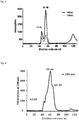
- FPLC Purification results are shown in Figs. 3 to 4. Fig.
- FIG. 3 is a dual band absorbance-elution volume curve of two synthetic units of 0.4 ⁇ mol (DiR-BOA)dtDTNP NPC purified by FPLC system.
- DiR-BOA diR-BOAdtDTNP NPC purified by FPLC system.
- the peak absorbance value of DiR-BOA is very low, showing that the loading efficiency for DiR-BOA is very low.
- the obtained results are shown in Fig. 4 .
- a peak appears at 55.52 min for most of the obtained nanoparticles.
- the optimal ratio for each component is 6 ⁇ mol of DMPC, 0.45 ⁇ mol of DiR-BOA, and 0.72 ⁇ mol of dtTP NPC .
- the near infrared fluorescent dye, DiR-BOA was replaced with cholesteryl ester to obtain nanoparticles having a suitable particle size.
- Results of FPLC Purification are shown in Fig. 6 .
- the appearance time for the nanoparticles is at 59.60 min, and only a few free peptides appears at 118 min, indicating that the above optimized ratio is suitable for cholesteryl ester.
- the ratio of the raw materials is 3 ⁇ mol of DMPC, 0.1 ⁇ mol of C.O, and 0.36 ⁇ mol of dtTP NPC .
- the particle size of the purified dtDTNP NPC was measured on a dynamic laser scattering (DLS) system and the results are shown in Fig. 7 .
- the average particle size is 14.60 ⁇ 1.64 nm, and the nanoparticles have a uniform size and a good monodispersity.
- Fig. 8 shows the measurement on the ⁇ -helical structure of the peptide in dtDTNP NPC by using a circular dichroism spectrometer, and it shows that, the synthesized dtDTNP NPC has a stronger ⁇ -helical structure, compared with the circular dichroism results of NP in Fig. 9 .
- Fig. 10 shows the experimental results of the tumor cell-targeting properties of the Fluo-BOA or DiR-BOA core-loaded dtDTNP NPC s prepared in Example 2.
- Laser confocal imaging was performed after incubating nasopharyngeal carcinoma 5-8F cells and lung cancer LLC cells respectively with 2 ⁇ mol (Fluo-BOA)dtDTNP NPC for 1h, and the results show that the dtDTNP NPC are easier to be taken up by nasopharyngeal carcinoma 5-8F cells.
- dtDTNP NPC can be selectively taken up by 5-8F cells, indicating that they are capable of selectively targeting to the nasopharyngeal carcinoma cells.
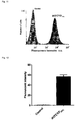
- a flow cytometry measurement was carried out after incubating nasopharyngeal carcinoma 5-8F cells with (DiR-BOA)dtDTNP NPC containing 8 ⁇ mol peptides and (DiR-BOA)NP containing 8 ⁇ mol peptides for 1h.
- the nasopharyngeal carcinoma 5-8F cells incubated with (DiR-BOA)dtDTNP NPC have a significantly improved fluorescence intensity, which is about 9 times of that of (DiR-BOA)NP.
- nasopharyngeal carcinoma 5-8F, HONE-1, 6-10B, CNE2, SUNE-1 and CNE-1 cells and tumor HT1080 Hela, BXPC-3 and MCF-7 cells were incubated with (DiR-BOA)dtDTNP NPC at 37°C for 3h.
- (DiR-BOA)dtDTNP NPC can selectively target to nasopharyngeal carcinoma 5-8F cells and SUNE-1 cells.
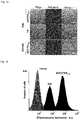
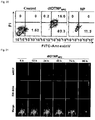
- a quantitative determination on FITC/PI fluorescent signal of cells by using Annexin V-FITC/PI agent was performed after incubating nasopharyngeal carcinoma 5-8F cells with 2 ⁇ mol (DiR-BOA)dtDTNP NPC and (DiR-BOA)NP for 1h.
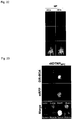
- Figs. 17-18 show the results of detecting the three fluorescent signals of DiR-BOA, FITC and PI through laser confocal imaging.
- (DiR-BOA)dtDTNP NPC treatment group showed a very strong fluorescent signal in DiR channel, and at the same time, some cells showed a strong PI signal in PI channel, indicating the death of some cells, while the fluorescent signal in FITC channel is weak. Therefore, a preliminary judgment was that the (DiR-BOA)dtDTNP NPC induce necrosis of the nasopharyngeal carcinoma 5-8F cells. A quantitative determination was further carried out on the fluorescent signal intensity of cells treated with (DiR-BOA)dtDTNP NPC in FITC and PI channels on a flow cytometer. The results in Fig.
- Fig. 20 show that, compared with those of the (DiR-BOA)NP control group, the tumor cells incubated with (DiR-BOA)dtDTNP NPC have strong signals in both FL1 and FL3 channels, indicating that the (DiR-BOA)dtDTNP NPC mainly kill nasopharyngeal carcinoma 5-8F cells via necrosis mechanism.
- the whole-body fluorescence imaging was carried out at 3 h, 6 h, 12 h, 24 h, 48 h, 72 h and 96 h after the tail-vein injection, and the selected exposure time was the same as that before the tail-vein injection.
- a xenon light source, an excitation filter of 716/40 nm, and a 800FS40-25 band pass filter as the receiving filter were used in the whole-body fluorescence imaging system.
- an excitation filter of 685/40 nm was used to collect the autofluorescence from tissues, and the autofluorescence was deducted in the subsequent image processing to eliminate its interference to fluorescent signals. As shown in Fig.
- the (DiR-BOA)dtDTNP NPC could effectively accumulate in 5-8F tumor at 24h after the tail vein injection, and 5-8F tumor showed the strongest fluorescent signal at 48h, and the best signal-to-noise ratio between 5-8F tumor and normal tissue appeared after 72h.
- the (DiR-BOA)NP group no fluorescent signal was detected in the tumor site at 24h and 48h after the tail vein injection, as shown in Fig. 22 .
- the in vivo dynamic fluorescence imaging fully confirmed that the dtDTNP NPC are capable of targeting to the tumor.
- each of the organs was excised to perform the whole-body fluorescence imaging.
- Nude mice models with subcutaneous nasopharyngeal carcinoma 5-8F and lung cancer LLC were constructed. LLC tumor was used as the negative control group for the targeting property of dtDTNP NPC .
- 5-8F and LLC cells were digested, rinsed twice with sterilized PBS, and then counted.
- the nude mice were inoculated with 5-8F cells at 1 x 10 6 cells/animal.
- the inoculated tumor-bearing nude mice were randomly divided into PBS control group and 5-8F tumor groups treated with dtDTNP NPC and NP.
- the nude mice in LLC tumor control group were subcutaneously inoculated with LLC cell at 2 x 10 6 cells/animal. The number of tumor-bearing nude mice in these three groups was 5 for each group.
- Tail vein injection of dtDTNP NPC started from the third day after the subcutaneous inoculation of tumor cells once every other day to perform therapy.
- the dosage for the tail-vein injection was dtDTNP NPC and NP containing 10 nmol peptides.
- the dosage for the tail-vein injection was dtDTNP NPC containing 10 nmol peptides.
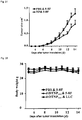
- the tumor volume of the nude mice inoculated subcutaneously with tumor cells was zero at day 3 and day 4, and the tumor began to appear at day 5.
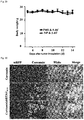
- 5-8F tumor treatment groups showed a significantly inhibited tumor growth compared with the PBS control group, after 3 rounds of dtDTNP NPC administration. After 5 rounds of dtDTNP NPC administration, the growth of 5-8F tumor was still be inhibited, while the LLC tumor volume was significantly increased, indicating that dtDTNP NPC have selectively inhibitory effect on nasopharyngeal carcinoma 5-8F tumor. However, no significant difference in tumor was found between the NP treatment group and the PBS control group (as shown in Fig. 27 ). In terms of change in the body weight of the tumor-bearing nude mice, as shown in Figs.
- cholesteryl oleate used for preparing dtDTNP NPC in Example 2 was partially replaced with paclitaxel (PTX-OL), a fat-soluble drug.
- PTX-OL paclitaxel
- cholesteryl oleate used for preparing dtDTNP NPC in Example 2 was partially replaced with curcumin, a fat-soluble drug.
- (Curcumin)dtDTNP NPC were formed by using phospholipid, dtTP NPC and curcumin, and showed good killing effect on nasopharyngeal carcinoma cells.
- confocal fluorescence imaging was carried out after incubating 5-8F-mRFP cells with free curcumin and dtDTNP NPC containing 2 ⁇ mol of curcumin for 1h respectively, and (Curcumin)dtDTNP NPC are more likely to be taken up by 5-8F-mRFP and have a better killing effect, compared with free curcumin.
Landscapes
- Health & Medical Sciences (AREA)
- Life Sciences & Earth Sciences (AREA)
- Chemical & Material Sciences (AREA)
- Engineering & Computer Science (AREA)
- General Health & Medical Sciences (AREA)
- Medicinal Chemistry (AREA)
- Animal Behavior & Ethology (AREA)
- Veterinary Medicine (AREA)
- Public Health (AREA)
- Bioinformatics & Cheminformatics (AREA)
- Pharmacology & Pharmacy (AREA)
- Epidemiology (AREA)
- Molecular Biology (AREA)
- Immunology (AREA)
- Proteomics, Peptides & Aminoacids (AREA)
- Organic Chemistry (AREA)
- Biomedical Technology (AREA)
- Biochemistry (AREA)
- Urology & Nephrology (AREA)
- Hematology (AREA)
- Cell Biology (AREA)
- Nanotechnology (AREA)
- Physics & Mathematics (AREA)
- Gastroenterology & Hepatology (AREA)
- Biophysics (AREA)
- Genetics & Genomics (AREA)
- Zoology (AREA)
- Toxicology (AREA)
- Analytical Chemistry (AREA)
- General Physics & Mathematics (AREA)
- Food Science & Technology (AREA)
- Pathology (AREA)
- Biotechnology (AREA)
- Microbiology (AREA)
- Optics & Photonics (AREA)
- Pulmonology (AREA)
- Chemical Kinetics & Catalysis (AREA)
- General Chemical & Material Sciences (AREA)
- Nuclear Medicine, Radiotherapy & Molecular Imaging (AREA)
- Otolaryngology (AREA)
Claims (20)
- Dual-zielgerichtetes therapeutisches Peptid zur Verwendung in einem Verfahren für die In-Vivo-Diagnose und Behandlung von Nasopharynxkarzinom, wobei das dual-zielgerichtete therapeutische Peptid gebildet wird, indem ein zielgerichtetes therapeutisches Peptid mit einer α-helikalen Struktur für Nasopharynxkarzinom, ein Peptid-Linker und ein zielgerichtetes therapeutisches Peptid für Nasopharynxkarzinom der Reihe nach miteinander verbunden werden, wobei die Aminosäuresequenz von dem zielgerichteten therapeutischen Peptid mit einer α-helikalen Struktur wie folgt ist:FAEKFKEAVKDYFAKFWD (SEQ ID NO.2).
- Dual-zielgerichtetes therapeutisches Peptid zur Verwendung in einem Verfahren für die In-Vivo-Diagnose und Behandlung von Nasopharynxkarzinom nach Anspruch 1, wobei die Aminosäuresequenz von dem dual-zielgerichteten therapeutischen Peptid wie folgt ist:FAEKFKEAVKDYFAKFWDGSGLTVSPWYLTVSPWY (SEQ ID NO.1).
- Dual-zielgerichtetes therapeutisches Peptid zur Verwendung in einem Verfahren für die In-Vivo-Diagnose und Behandlung von Nasopharynxkarzinom nach Anspruch 1 oder 2, wobei die Aminosäuresequenz von dem zielgerichteten therapeutischen Peptid für Nasopharynxkarzinom wie folgt ist:LTVSPWYLTVSPWY (SEQ ID NO.3).
- Dual-zielgerichteter diagnostischer und therapeutischer Nanopartikel zur Verwendung in einem Verfahren für die In-Vivo-Diagnose und Behandlung von Nasopharynxkarzinom, wobei der Nanopartikel aus dem dual-zielgerichteten therapeutischen Peptid für Nasopharynxkarzinom nach Anspruch 1, Phospholipid und Cholesterylester oder einem Cargo besteht.
- Dual-zielgerichteter diagnostischer und therapeutischer Nanopartikel zur Verwendung in einem Verfahren für die In-Vivo-Diagnose und Behandlung von Nasopharynx-karzinom nach Anspruch 4, wobei das Cargo ein bildgebendes Kontrastmittel, ein Medikament oder eine Kombination davon ist.
- Dual-zielgerichteter diagnostischer und therapeutischer Nanopartikel zur Verwendung in einem Verfahren für die In-Vivo-Diagnose und Behandlung von Nasopharynxkarzinom nach Anspruch 5, wobei das bildgebende Kontrastmittel ein Fluoreszenzfarbstoff ist, der mit Cholesterylester modifiziert ist.
- Dual-zielgerichteter diagnostischer und therapeutischer Nanopartikel zur Verwendung in einem Verfahren für die In-Vivo-Diagnose und Behandlung von Nasopharynxkarzinom nach Anspruch 6, wobei der Fluoreszenzfarbstoff, der mit Cholesterylester modifiziert ist, DiR-BOR oder Fluo-BOA ist.
- Dual-zielgerichteter diagnostischer und therapeutischer Nanopartikel zur Verwendung in einem Verfahren für die In-Vivo-Diagnose und Behandlung von Nasopharynx-karzinom nach Anspruch 5, wobei das Medikament Paclitaxel oder Curcumin ist.
- Dual-zielgerichteter diagnostischer und therapeutischer Nanopartikel zur Verwendung in einem Verfahren für die In-Vivo-Diagnose und Behandlung von Nasopharynxkarzinom nach Anspruch 4, wobei das Phospholipid DMPC (1,2-Dimyristoyl-sn-glycero-3-phosphocholin) ist.
- Dual-zielgerichteter diagnostischer und therapeutischer Nanopartikel zur Verwendung in einem Verfahren für die In-Vivo-Diagnose und Behandlung von Nasopharynxkarzinom nach einem der Ansprüche 4 bis 9, wobei der Nanopartikel wirksam und spezifisch auf ein Nasopharynxkarzinom abzielen kann und signifikant das Wachstum eines Nasopharynxkarzinomtumors hemmen kann.
- Verwendung eines dual-zielgerichteten therapeutischen Peptids in einem Verfahren für die In-Vivo-Diagnose von Nasopharynxkarzinom, wobei das dual-zielgerichtete therapeutische Peptid gebildet wird, indem ein zielgerichtetes therapeutisches Peptid mit einer α-helikalen Struktur für Nasopharynxkarzinom, ein Peptid-Linker und ein zielgerichtetes therapeutisches Peptid für Nasopharynxkarzinom der Reihe nach miteinander verbunden werden, wobei die Aminosäuresequenz von dem zielgerichteten therapeutischen Peptid mit einer α-helikalen Struktur wie folgt ist:FAEKFKEAVKDYFAKFWD (SEQ ID NO.2).
- Verwendung nach Anspruch 11, wobei die Aminosäuresequenz von dem dual-zielgerichteten therapeutischen Peptid wie folgt ist:FAEKFKEAVKDYFAKFWDGSGLTVSPWYLTVSPWY (SEQ ID NO.1).
- Verwendung nach Anspruch 11 oder 12, wobei die Aminosäuresequenz von dem zielgerichteten therapeutischen Peptid für Nasopharynxkarzinom wie folgt ist:LTVSPWYLTVSPWY (SEQ ID NO.3).
- Verwendung eines dual-zielgerichteten diagnostischen und therapeutischen Nanopartikels in einem Verfahren für die In-Vivo-Diagnose von Nasopharynxkarzinom, wobei der Nanopartikel aus dem dual-zielgerichteten therapeutischen Peptid für Nasopharynxkarzinom nach Anspruch 11, Phospholipid und Cholesterylester oder einem Cargo besteht.
- Verwendung nach Anspruch 14, wobei als das Cargo ein bildgebendes Kontrastmittel, ein Medikament oder eine Kombination davon verwendet wird.
- Verwendung nach Anspruch 15, wobei als das bildgebende Kontrastmittel ein Fluoreszenzfarbstoff verwendet wird, der mit Cholesterylester modifiziert ist.
- Verwendung nach Anspruch 16, wobei als der Fluoreszenzfarbstoff, der mit Cholesterylester modifiziert ist, DiR-BOR oder Fluo-BOA verwendet wird.
- Verwendung nach Anspruch 15, wobei als das Medikament Paclitaxel oder Curcumin verwendet wird.
- Verwendung nach Anspruch 14, wobei als das Phospholipid DMPC (1,2-Dimyristoyl-sn-glycero-3-phosphocholin) verwendet wird.
- Verwendung nach einem der Ansprüche 14 bis 19, wobei der Nanopartikel wirksam und spezifisch auf ein Nasopharynxkarzinom abzielen kann und signifikant das Wachstum eines Nasopharynxkarzinomtumors hemmen kann.
Applications Claiming Priority (2)
| Application Number | Priority Date | Filing Date | Title |
|---|---|---|---|
| CN201210185089.4A CN102766215B (zh) | 2012-06-07 | 2012-06-07 | 一种具有协同靶向诊疗鼻咽癌功能的多肽和携带此多肽的纳米颗粒及其应用 |
| PCT/CN2013/000680 WO2013181934A1 (zh) | 2012-06-07 | 2013-06-07 | 一种具有协同靶向诊疗鼻咽癌功能的多肽和携带此多肽的纳米颗粒及其应用 |
Publications (3)
| Publication Number | Publication Date |
|---|---|
| EP2860193A1 EP2860193A1 (de) | 2015-04-15 |
| EP2860193A4 EP2860193A4 (de) | 2015-09-23 |
| EP2860193B1 true EP2860193B1 (de) | 2017-11-15 |
Family
ID=47093821
Family Applications (1)
| Application Number | Title | Priority Date | Filing Date |
|---|---|---|---|
| EP13801389.1A Not-in-force EP2860193B1 (de) | 2012-06-07 | 2013-06-07 | Polypeptid mit funktion zur gezielten diagnose und therapie von nasopharynx-karzinom, nanopartikel die dieses enthalten und verwendung davon |
Country Status (4)
| Country | Link |
|---|---|
| US (1) | US9371364B2 (de) |
| EP (1) | EP2860193B1 (de) |
| CN (1) | CN102766215B (de) |
| WO (1) | WO2013181934A1 (de) |
Families Citing this family (13)
| Publication number | Priority date | Publication date | Assignee | Title |
|---|---|---|---|---|
| CN102766215B (zh) | 2012-06-07 | 2014-08-13 | 华中科技大学 | 一种具有协同靶向诊疗鼻咽癌功能的多肽和携带此多肽的纳米颗粒及其应用 |
| CN103910802B (zh) * | 2014-04-24 | 2017-01-11 | 华中科技大学 | 一种促进树突细胞摄取抗原肽的多肽、促进树突细胞摄取抗原肽的纳米颗粒及其应用 |
| US9868828B2 (en) * | 2015-06-23 | 2018-01-16 | Amolifescience Co., Ltd. | Defined three-dimensional microenvironment for stem cell |
| CN105477630B (zh) * | 2015-11-17 | 2019-06-04 | 华中科技大学 | 一种同时实现促进树突细胞迁移至淋巴结和多模式成像的方法 |
| WO2018039332A1 (en) * | 2016-08-23 | 2018-03-01 | The Johns Hopkins University | Immunoswitch nanoparticles for reprogrammed t cell responses |
| CN107573418B (zh) * | 2017-08-21 | 2020-09-25 | 华中科技大学 | 肿瘤相关巨噬细胞双靶向多肽、纳米颗粒、制备及应用 |
| CN109692335B (zh) * | 2017-10-23 | 2021-01-08 | 华中科技大学 | 一种靶向全身多级淋巴结的纳米颗粒、制备方法及应用 |
| CN108143719B (zh) * | 2017-12-27 | 2022-01-25 | 华中科技大学 | 一种携载多肽的纳米脂质体及其制备方法和应用 |
| CN112386709B (zh) * | 2019-08-16 | 2022-03-08 | 上海交通大学医学院 | 一种靶向多肽修饰的载药脂蛋白纳米递药系统及其制备和应用 |
| CN112826794B (zh) | 2019-11-06 | 2022-02-11 | 上海交通大学医学院 | 一种靶向修复神经血管病变的纳米复合物及其制备与应用 |
| CN115944606B (zh) * | 2023-01-09 | 2025-02-18 | 蒋彬灿 | 一种靶向鼻咽肿瘤细胞的载药纳米粒及其制备方法与应用 |
| CN118304404B (zh) * | 2024-04-08 | 2024-09-17 | 海南大学 | 一种新型光诊疗的纳米制剂及其制备方法和应用 |
| CN118846122B (zh) * | 2024-07-04 | 2025-04-04 | 海南大学 | 一种靶向调节脑膜淋巴系统的纳米颗粒及其制备方法与应用 |
Family Cites Families (5)
| Publication number | Priority date | Publication date | Assignee | Title |
|---|---|---|---|---|
| TWI262192B (en) * | 2003-07-01 | 2006-09-21 | Univ Nat Taiwan | Labeling peptide for nasopharyngeal carcinoma (NPC) cells |
| AU2007284801A1 (en) | 2006-08-08 | 2008-02-21 | The Regents Of The University Of Californina | Salicylanilides enhance oral delivery of therapeutic peptides |
| CN105903029A (zh) | 2007-12-12 | 2016-08-31 | 大学健康网络 | 高密度脂蛋白样肽磷脂支架(“hpps”)纳米颗粒 |
| CN101876658B (zh) | 2009-11-25 | 2013-08-28 | 华中科技大学 | 一种具有多价效应和纳米尺寸效应的多肽荧光探针的构建方法及其应用 |
| CN102766215B (zh) * | 2012-06-07 | 2014-08-13 | 华中科技大学 | 一种具有协同靶向诊疗鼻咽癌功能的多肽和携带此多肽的纳米颗粒及其应用 |
-
2012
- 2012-06-07 CN CN201210185089.4A patent/CN102766215B/zh not_active Expired - Fee Related
-
2013
- 2013-06-07 US US14/406,399 patent/US9371364B2/en active Active
- 2013-06-07 WO PCT/CN2013/000680 patent/WO2013181934A1/zh not_active Ceased
- 2013-06-07 EP EP13801389.1A patent/EP2860193B1/de not_active Not-in-force
Non-Patent Citations (1)
| Title |
|---|
| None * |
Also Published As
| Publication number | Publication date |
|---|---|
| US9371364B2 (en) | 2016-06-21 |
| CN102766215A (zh) | 2012-11-07 |
| EP2860193A4 (de) | 2015-09-23 |
| US20150344525A1 (en) | 2015-12-03 |
| WO2013181934A1 (zh) | 2013-12-12 |
| EP2860193A1 (de) | 2015-04-15 |
| CN102766215B (zh) | 2014-08-13 |
Similar Documents
| Publication | Publication Date | Title |
|---|---|---|
| EP2860193B1 (de) | Polypeptid mit funktion zur gezielten diagnose und therapie von nasopharynx-karzinom, nanopartikel die dieses enthalten und verwendung davon | |
| Czapar et al. | Tobacco mosaic virus delivery of phenanthriplatin for cancer therapy | |
| Belhadj et al. | Multifunctional targeted liposomal drug delivery for efficient glioblastoma treatment | |
| Wei et al. | TMTP1-modified indocyanine green-loaded polymeric micelles for targeted imaging of cervical cancer and metastasis sentinel lymph node in vivo | |
| Shao et al. | A smart multifunctional nanoparticle for enhanced near-infrared image-guided photothermal therapy against gastric cancer | |
| Han et al. | Enzyme-sensitive gemcitabine conjugated albumin nanoparticles as a versatile theranostic nanoplatform for pancreatic cancer treatment | |
| Lee et al. | Nano-sized metabolic precursors for heterogeneous tumor-targeting strategy using bioorthogonal click chemistry in vivo | |
| Thirumalai et al. | Cancer therapy with iRGD as a tumor-penetrating peptide | |
| Liu et al. | Dynamic disordering of liposomal cocktails and the spatio-temporal favorable release of cargoes to circumvent drug resistance | |
| CN109953972A (zh) | 基于巨噬细胞膜包被的乳腺癌靶向纳米粒及其制备方法 | |
| CN104013599A (zh) | 一种肿瘤特异性靶向给药的药物载体及其应用 | |
| Xie et al. | A novel estrogen-targeted PEGylated liposome co-delivery oxaliplatin and paclitaxel for the treatment of ovarian cancer | |
| JP7164205B2 (ja) | キナ酸修飾ナノ粒子およびその使用 | |
| US11622990B2 (en) | VAP polypeptide and use thereof in preparation of drug for targeted diagnosis and treatment of tumor | |
| Li et al. | Polysialic acid-functionalized liposomes for efficient honokiol delivery to inhibit breast cancer growth and metastasis | |
| Huang et al. | Development of curcumin-loaded galactosylated chitosan-coated nanoparticles for targeted delivery of hepatocellular carcinoma | |
| Huang et al. | Peptide dendrimers as potentiators of conventional chemotherapy in the treatment of pancreatic cancer in a mouse model | |
| Li et al. | Tumor acid microenvironment-activated self-targeting & splitting gold nanoassembly for tumor chemo-radiotherapy | |
| Wang et al. | A TMVP1-modified near-infrared nanoprobe: molecular imaging for tumor metastasis in sentinel lymph node and targeted enhanced photothermal therapy | |
| Xu et al. | Transferrin and tocopheryl-polyethylene glycol-succinate dual ligands decorated, cisplatin loaded nano-sized system for the treatment of lung cancer | |
| Hyldbakk et al. | Intraperitoneal administration of cabazitaxel-loaded nanoparticles in peritoneal metastasis models | |
| Song et al. | Dual-targeting nanovesicles enhance specificity to dynamic tumor cells in vitro and in vivo via manipulation of αvβ3-ligand binding | |
| CN103446588B (zh) | 靶向型诊疗联用药物及其制备方法和应用 | |
| Zhang et al. | Octreotide-modified polymeric micelles as potential carriers for targeted docetaxel delivery to somatostatin receptor overexpressing tumor cells | |
| CN102048694A (zh) | 一种多肽修饰的肝肿瘤靶向纳米给药系统及其制备方法 |
Legal Events
| Date | Code | Title | Description |
|---|---|---|---|
| PUAI | Public reference made under article 153(3) epc to a published international application that has entered the european phase |
Free format text: ORIGINAL CODE: 0009012 |
|
| 17P | Request for examination filed |
Effective date: 20150105 |
|
| AK | Designated contracting states |
Kind code of ref document: A1 Designated state(s): AL AT BE BG CH CY CZ DE DK EE ES FI FR GB GR HR HU IE IS IT LI LT LU LV MC MK MT NL NO PL PT RO RS SE SI SK SM TR |
|
| AX | Request for extension of the european patent |
Extension state: BA ME |
|
| DAX | Request for extension of the european patent (deleted) | ||
| RA4 | Supplementary search report drawn up and despatched (corrected) |
Effective date: 20150826 |
|
| 17Q | First examination report despatched |
Effective date: 20160705 |
|
| STAA | Information on the status of an ep patent application or granted ep patent |
Free format text: STATUS: EXAMINATION IS IN PROGRESS |
|
| REG | Reference to a national code |
Ref country code: DE Ref legal event code: R079 Ref document number: 602013029560 Country of ref document: DE Free format text: PREVIOUS MAIN CLASS: C07K0019000000 Ipc: A61K0047660000 |
|
| GRAP | Despatch of communication of intention to grant a patent |
Free format text: ORIGINAL CODE: EPIDOSNIGR1 |
|
| STAA | Information on the status of an ep patent application or granted ep patent |
Free format text: STATUS: GRANT OF PATENT IS INTENDED |
|
| RIC1 | Information provided on ipc code assigned before grant |
Ipc: A61K 49/00 20060101ALI20170529BHEP Ipc: A61K 9/14 20060101ALI20170529BHEP Ipc: G01N 33/58 20060101ALI20170529BHEP Ipc: A61K 47/65 20170101ALI20170529BHEP Ipc: A61K 47/66 20170101AFI20170529BHEP Ipc: A61P 35/00 20060101ALI20170529BHEP Ipc: G01N 33/574 20060101ALI20170529BHEP Ipc: A61K 47/69 20170101ALI20170529BHEP |
|
| INTG | Intention to grant announced |
Effective date: 20170623 |
|
| GRAS | Grant fee paid |
Free format text: ORIGINAL CODE: EPIDOSNIGR3 |
|
| GRAA | (expected) grant |
Free format text: ORIGINAL CODE: 0009210 |
|
| STAA | Information on the status of an ep patent application or granted ep patent |
Free format text: STATUS: THE PATENT HAS BEEN GRANTED |
|
| AK | Designated contracting states |
Kind code of ref document: B1 Designated state(s): AL AT BE BG CH CY CZ DE DK EE ES FI FR GB GR HR HU IE IS IT LI LT LU LV MC MK MT NL NO PL PT RO RS SE SI SK SM TR |
|
| REG | Reference to a national code |
Ref country code: CH Ref legal event code: EP Ref country code: GB Ref legal event code: FG4D Ref country code: AT Ref legal event code: REF Ref document number: 945631 Country of ref document: AT Kind code of ref document: T Effective date: 20171115 |
|
| REG | Reference to a national code |
Ref country code: IE Ref legal event code: FG4D |
|
| REG | Reference to a national code |
Ref country code: DE Ref legal event code: R096 Ref document number: 602013029560 Country of ref document: DE |
|
| REG | Reference to a national code |
Ref country code: NL Ref legal event code: MP Effective date: 20171115 |
|
| REG | Reference to a national code |
Ref country code: LT Ref legal event code: MG4D |
|
| REG | Reference to a national code |
Ref country code: AT Ref legal event code: MK05 Ref document number: 945631 Country of ref document: AT Kind code of ref document: T Effective date: 20171115 |
|
| PG25 | Lapsed in a contracting state [announced via postgrant information from national office to epo] |
Ref country code: NL Free format text: LAPSE BECAUSE OF FAILURE TO SUBMIT A TRANSLATION OF THE DESCRIPTION OR TO PAY THE FEE WITHIN THE PRESCRIBED TIME-LIMIT Effective date: 20171115 Ref country code: NO Free format text: LAPSE BECAUSE OF FAILURE TO SUBMIT A TRANSLATION OF THE DESCRIPTION OR TO PAY THE FEE WITHIN THE PRESCRIBED TIME-LIMIT Effective date: 20180215 Ref country code: LT Free format text: LAPSE BECAUSE OF FAILURE TO SUBMIT A TRANSLATION OF THE DESCRIPTION OR TO PAY THE FEE WITHIN THE PRESCRIBED TIME-LIMIT Effective date: 20171115 Ref country code: ES Free format text: LAPSE BECAUSE OF FAILURE TO SUBMIT A TRANSLATION OF THE DESCRIPTION OR TO PAY THE FEE WITHIN THE PRESCRIBED TIME-LIMIT Effective date: 20171115 Ref country code: SE Free format text: LAPSE BECAUSE OF FAILURE TO SUBMIT A TRANSLATION OF THE DESCRIPTION OR TO PAY THE FEE WITHIN THE PRESCRIBED TIME-LIMIT Effective date: 20171115 Ref country code: FI Free format text: LAPSE BECAUSE OF FAILURE TO SUBMIT A TRANSLATION OF THE DESCRIPTION OR TO PAY THE FEE WITHIN THE PRESCRIBED TIME-LIMIT Effective date: 20171115 |
|
| PG25 | Lapsed in a contracting state [announced via postgrant information from national office to epo] |
Ref country code: GR Free format text: LAPSE BECAUSE OF FAILURE TO SUBMIT A TRANSLATION OF THE DESCRIPTION OR TO PAY THE FEE WITHIN THE PRESCRIBED TIME-LIMIT Effective date: 20180216 Ref country code: BG Free format text: LAPSE BECAUSE OF FAILURE TO SUBMIT A TRANSLATION OF THE DESCRIPTION OR TO PAY THE FEE WITHIN THE PRESCRIBED TIME-LIMIT Effective date: 20180215 Ref country code: RS Free format text: LAPSE BECAUSE OF FAILURE TO SUBMIT A TRANSLATION OF THE DESCRIPTION OR TO PAY THE FEE WITHIN THE PRESCRIBED TIME-LIMIT Effective date: 20171115 Ref country code: LV Free format text: LAPSE BECAUSE OF FAILURE TO SUBMIT A TRANSLATION OF THE DESCRIPTION OR TO PAY THE FEE WITHIN THE PRESCRIBED TIME-LIMIT Effective date: 20171115 Ref country code: HR Free format text: LAPSE BECAUSE OF FAILURE TO SUBMIT A TRANSLATION OF THE DESCRIPTION OR TO PAY THE FEE WITHIN THE PRESCRIBED TIME-LIMIT Effective date: 20171115 Ref country code: AT Free format text: LAPSE BECAUSE OF FAILURE TO SUBMIT A TRANSLATION OF THE DESCRIPTION OR TO PAY THE FEE WITHIN THE PRESCRIBED TIME-LIMIT Effective date: 20171115 |
|
| REG | Reference to a national code |
Ref country code: FR Ref legal event code: PLFP Year of fee payment: 6 |
|
| PG25 | Lapsed in a contracting state [announced via postgrant information from national office to epo] |
Ref country code: EE Free format text: LAPSE BECAUSE OF FAILURE TO SUBMIT A TRANSLATION OF THE DESCRIPTION OR TO PAY THE FEE WITHIN THE PRESCRIBED TIME-LIMIT Effective date: 20171115 Ref country code: CY Free format text: LAPSE BECAUSE OF FAILURE TO SUBMIT A TRANSLATION OF THE DESCRIPTION OR TO PAY THE FEE WITHIN THE PRESCRIBED TIME-LIMIT Effective date: 20171115 Ref country code: SK Free format text: LAPSE BECAUSE OF FAILURE TO SUBMIT A TRANSLATION OF THE DESCRIPTION OR TO PAY THE FEE WITHIN THE PRESCRIBED TIME-LIMIT Effective date: 20171115 Ref country code: DK Free format text: LAPSE BECAUSE OF FAILURE TO SUBMIT A TRANSLATION OF THE DESCRIPTION OR TO PAY THE FEE WITHIN THE PRESCRIBED TIME-LIMIT Effective date: 20171115 Ref country code: CZ Free format text: LAPSE BECAUSE OF FAILURE TO SUBMIT A TRANSLATION OF THE DESCRIPTION OR TO PAY THE FEE WITHIN THE PRESCRIBED TIME-LIMIT Effective date: 20171115 |
|
| REG | Reference to a national code |
Ref country code: DE Ref legal event code: R097 Ref document number: 602013029560 Country of ref document: DE |
|
| PG25 | Lapsed in a contracting state [announced via postgrant information from national office to epo] |
Ref country code: PL Free format text: LAPSE BECAUSE OF FAILURE TO SUBMIT A TRANSLATION OF THE DESCRIPTION OR TO PAY THE FEE WITHIN THE PRESCRIBED TIME-LIMIT Effective date: 20171115 Ref country code: IT Free format text: LAPSE BECAUSE OF FAILURE TO SUBMIT A TRANSLATION OF THE DESCRIPTION OR TO PAY THE FEE WITHIN THE PRESCRIBED TIME-LIMIT Effective date: 20171115 Ref country code: SM Free format text: LAPSE BECAUSE OF FAILURE TO SUBMIT A TRANSLATION OF THE DESCRIPTION OR TO PAY THE FEE WITHIN THE PRESCRIBED TIME-LIMIT Effective date: 20171115 Ref country code: RO Free format text: LAPSE BECAUSE OF FAILURE TO SUBMIT A TRANSLATION OF THE DESCRIPTION OR TO PAY THE FEE WITHIN THE PRESCRIBED TIME-LIMIT Effective date: 20171115 |
|
| PLBE | No opposition filed within time limit |
Free format text: ORIGINAL CODE: 0009261 |
|
| STAA | Information on the status of an ep patent application or granted ep patent |
Free format text: STATUS: NO OPPOSITION FILED WITHIN TIME LIMIT |
|
| 26N | No opposition filed |
Effective date: 20180817 |
|
| PG25 | Lapsed in a contracting state [announced via postgrant information from national office to epo] |
Ref country code: SI Free format text: LAPSE BECAUSE OF FAILURE TO SUBMIT A TRANSLATION OF THE DESCRIPTION OR TO PAY THE FEE WITHIN THE PRESCRIBED TIME-LIMIT Effective date: 20171115 |
|
| REG | Reference to a national code |
Ref country code: CH Ref legal event code: PL |
|
| REG | Reference to a national code |
Ref country code: BE Ref legal event code: MM Effective date: 20180630 |
|
| REG | Reference to a national code |
Ref country code: IE Ref legal event code: MM4A |
|
| PG25 | Lapsed in a contracting state [announced via postgrant information from national office to epo] |
Ref country code: MC Free format text: LAPSE BECAUSE OF FAILURE TO SUBMIT A TRANSLATION OF THE DESCRIPTION OR TO PAY THE FEE WITHIN THE PRESCRIBED TIME-LIMIT Effective date: 20171115 Ref country code: LU Free format text: LAPSE BECAUSE OF NON-PAYMENT OF DUE FEES Effective date: 20180607 |
|
| PG25 | Lapsed in a contracting state [announced via postgrant information from national office to epo] |
Ref country code: IE Free format text: LAPSE BECAUSE OF NON-PAYMENT OF DUE FEES Effective date: 20180607 Ref country code: CH Free format text: LAPSE BECAUSE OF NON-PAYMENT OF DUE FEES Effective date: 20180630 Ref country code: LI Free format text: LAPSE BECAUSE OF NON-PAYMENT OF DUE FEES Effective date: 20180630 |
|
| PG25 | Lapsed in a contracting state [announced via postgrant information from national office to epo] |
Ref country code: BE Free format text: LAPSE BECAUSE OF NON-PAYMENT OF DUE FEES Effective date: 20180630 |
|
| PG25 | Lapsed in a contracting state [announced via postgrant information from national office to epo] |
Ref country code: MT Free format text: LAPSE BECAUSE OF NON-PAYMENT OF DUE FEES Effective date: 20180607 |
|
| PG25 | Lapsed in a contracting state [announced via postgrant information from national office to epo] |
Ref country code: TR Free format text: LAPSE BECAUSE OF FAILURE TO SUBMIT A TRANSLATION OF THE DESCRIPTION OR TO PAY THE FEE WITHIN THE PRESCRIBED TIME-LIMIT Effective date: 20171115 |
|
| PG25 | Lapsed in a contracting state [announced via postgrant information from national office to epo] |
Ref country code: PT Free format text: LAPSE BECAUSE OF FAILURE TO SUBMIT A TRANSLATION OF THE DESCRIPTION OR TO PAY THE FEE WITHIN THE PRESCRIBED TIME-LIMIT Effective date: 20171115 |
|
| PG25 | Lapsed in a contracting state [announced via postgrant information from national office to epo] |
Ref country code: MK Free format text: LAPSE BECAUSE OF NON-PAYMENT OF DUE FEES Effective date: 20171115 Ref country code: HU Free format text: LAPSE BECAUSE OF FAILURE TO SUBMIT A TRANSLATION OF THE DESCRIPTION OR TO PAY THE FEE WITHIN THE PRESCRIBED TIME-LIMIT; INVALID AB INITIO Effective date: 20130607 |
|
| PG25 | Lapsed in a contracting state [announced via postgrant information from national office to epo] |
Ref country code: AL Free format text: LAPSE BECAUSE OF FAILURE TO SUBMIT A TRANSLATION OF THE DESCRIPTION OR TO PAY THE FEE WITHIN THE PRESCRIBED TIME-LIMIT Effective date: 20171115 Ref country code: IS Free format text: LAPSE BECAUSE OF FAILURE TO SUBMIT A TRANSLATION OF THE DESCRIPTION OR TO PAY THE FEE WITHIN THE PRESCRIBED TIME-LIMIT Effective date: 20180315 |
|
| PGFP | Annual fee paid to national office [announced via postgrant information from national office to epo] |
Ref country code: FR Payment date: 20220629 Year of fee payment: 10 |
|
| PGFP | Annual fee paid to national office [announced via postgrant information from national office to epo] |
Ref country code: DE Payment date: 20220629 Year of fee payment: 10 |
|
| REG | Reference to a national code |
Ref country code: DE Ref legal event code: R119 Ref document number: 602013029560 Country of ref document: DE |
|
| PG25 | Lapsed in a contracting state [announced via postgrant information from national office to epo] |
Ref country code: DE Free format text: LAPSE BECAUSE OF NON-PAYMENT OF DUE FEES Effective date: 20240103 |
|
| PG25 | Lapsed in a contracting state [announced via postgrant information from national office to epo] |
Ref country code: FR Free format text: LAPSE BECAUSE OF NON-PAYMENT OF DUE FEES Effective date: 20230630 |
|
| PGFP | Annual fee paid to national office [announced via postgrant information from national office to epo] |
Ref country code: GB Payment date: 20240530 Year of fee payment: 12 |
|
| GBPC | Gb: european patent ceased through non-payment of renewal fee |
Effective date: 20250607 |
|
| PG25 | Lapsed in a contracting state [announced via postgrant information from national office to epo] |
Ref country code: GB Free format text: LAPSE BECAUSE OF NON-PAYMENT OF DUE FEES Effective date: 20250607 |