EP2858951B1 - A new wastewater treatment and solids reduction process - Google Patents
A new wastewater treatment and solids reduction process Download PDFInfo
- Publication number
- EP2858951B1 EP2858951B1 EP13768093.0A EP13768093A EP2858951B1 EP 2858951 B1 EP2858951 B1 EP 2858951B1 EP 13768093 A EP13768093 A EP 13768093A EP 2858951 B1 EP2858951 B1 EP 2858951B1
- Authority
- EP
- European Patent Office
- Prior art keywords
- bioreactor
- aeration
- aerobic
- zone
- previous
- Prior art date
- Legal status (The legal status is an assumption and is not a legal conclusion. Google has not performed a legal analysis and makes no representation as to the accuracy of the status listed.)
- Active
Links
Images






Classifications
-
- C—CHEMISTRY; METALLURGY
- C02—TREATMENT OF WATER, WASTE WATER, SEWAGE, OR SLUDGE
- C02F—TREATMENT OF WATER, WASTE WATER, SEWAGE, OR SLUDGE
- C02F3/00—Biological treatment of water, waste water, or sewage
- C02F3/30—Aerobic and anaerobic processes
- C02F3/301—Aerobic and anaerobic treatment in the same reactor
-
- C—CHEMISTRY; METALLURGY
- C02—TREATMENT OF WATER, WASTE WATER, SEWAGE, OR SLUDGE
- C02F—TREATMENT OF WATER, WASTE WATER, SEWAGE, OR SLUDGE
- C02F3/00—Biological treatment of water, waste water, or sewage
- C02F3/02—Aerobic processes
- C02F3/10—Packings; Fillings; Grids
-
- C—CHEMISTRY; METALLURGY
- C02—TREATMENT OF WATER, WASTE WATER, SEWAGE, OR SLUDGE
- C02F—TREATMENT OF WATER, WASTE WATER, SEWAGE, OR SLUDGE
- C02F3/00—Biological treatment of water, waste water, or sewage
- C02F3/02—Aerobic processes
- C02F3/10—Packings; Fillings; Grids
- C02F3/105—Characterized by the chemical composition
-
- C—CHEMISTRY; METALLURGY
- C02—TREATMENT OF WATER, WASTE WATER, SEWAGE, OR SLUDGE
- C02F—TREATMENT OF WATER, WASTE WATER, SEWAGE, OR SLUDGE
- C02F3/00—Biological treatment of water, waste water, or sewage
- C02F3/02—Aerobic processes
- C02F3/10—Packings; Fillings; Grids
- C02F3/109—Characterized by the shape
-
- C—CHEMISTRY; METALLURGY
- C02—TREATMENT OF WATER, WASTE WATER, SEWAGE, OR SLUDGE
- C02F—TREATMENT OF WATER, WASTE WATER, SEWAGE, OR SLUDGE
- C02F3/00—Biological treatment of water, waste water, or sewage
- C02F3/02—Aerobic processes
- C02F3/12—Activated sludge processes
- C02F3/1236—Particular type of activated sludge installations
- C02F3/1268—Membrane bioreactor systems
- C02F3/1273—Submerged membrane bioreactors
-
- C—CHEMISTRY; METALLURGY
- C02—TREATMENT OF WATER, WASTE WATER, SEWAGE, OR SLUDGE
- C02F—TREATMENT OF WATER, WASTE WATER, SEWAGE, OR SLUDGE
- C02F3/00—Biological treatment of water, waste water, or sewage
- C02F3/30—Aerobic and anaerobic processes
- C02F3/302—Nitrification and denitrification treatment
- C02F3/303—Nitrification and denitrification treatment characterised by the nitrification
-
- C—CHEMISTRY; METALLURGY
- C02—TREATMENT OF WATER, WASTE WATER, SEWAGE, OR SLUDGE
- C02F—TREATMENT OF WATER, WASTE WATER, SEWAGE, OR SLUDGE
- C02F3/00—Biological treatment of water, waste water, or sewage
- C02F3/30—Aerobic and anaerobic processes
- C02F3/302—Nitrification and denitrification treatment
- C02F3/305—Nitrification and denitrification treatment characterised by the denitrification
-
- C—CHEMISTRY; METALLURGY
- C02—TREATMENT OF WATER, WASTE WATER, SEWAGE, OR SLUDGE
- C02F—TREATMENT OF WATER, WASTE WATER, SEWAGE, OR SLUDGE
- C02F2303/00—Specific treatment goals
- C02F2303/02—Odour removal or prevention of malodour
-
- Y—GENERAL TAGGING OF NEW TECHNOLOGICAL DEVELOPMENTS; GENERAL TAGGING OF CROSS-SECTIONAL TECHNOLOGIES SPANNING OVER SEVERAL SECTIONS OF THE IPC; TECHNICAL SUBJECTS COVERED BY FORMER USPC CROSS-REFERENCE ART COLLECTIONS [XRACs] AND DIGESTS
- Y02—TECHNOLOGIES OR APPLICATIONS FOR MITIGATION OR ADAPTATION AGAINST CLIMATE CHANGE
- Y02W—CLIMATE CHANGE MITIGATION TECHNOLOGIES RELATED TO WASTEWATER TREATMENT OR WASTE MANAGEMENT
- Y02W10/00—Technologies for wastewater treatment
- Y02W10/10—Biological treatment of water, waste water, or sewage
Definitions
- the present invention concerns a process and attached growth media for treating wastewater.
- the process particularly includes a step of biological wastewater treatment which eliminating or greatly reducing excess biological sludge production.
- the invention may find application in a range of wastewater treatment plants from small on-sites package plants up to large domestic or industrial wastewater treatment plants. It can be used as a standalone total treatment or can be combined with other steps. It also can be used as a means to upgrade the existing plants to increase the capacity and/or quality of the treatment or to reduce or eliminate the biological excess sludge production of such plants.
- Water is the most vital thing for life. It is more vital than air as some of the living. things do not need air or even oxygen in any form to survive. Water can easily dissolve impurities including organic matters and will become polluted. Almost every water usage will add impurities to water and produce wastewater. How to remove these impurities in an efficient way to prevent -the spread of the pollutants to the wider environment or to reuse the water has been a major challenge in recent centuries in general and especially during recent decades. The standard practice to remove organic pollutants from water or in more. common word wastewater treatment is biological treatment. One of the side effects of biological treatment is the production of excess sludge where it is a source of pollution by itself and needs further treatment and disposal steps. These steps incur a high investment and operation costs.
- CA2542894 discloses a single-tank wastewater treatment system comprising suspended and immobilized microorganisms, wherein the system has a multiplicity of zones with different environmental conditions including aerobic, anoxic and anaerobic, to reduce the strength of highly concentrated wastewaters in terms of their content of organic carbonaceous compounds and nutrients, notably nitrogen and phosphorus.
- the upper zone of the treatment system operates under alternatively aerobic and anoxic conditions controlled by the on-off operation of an air blower that introduces air through air diffusers placed at the bottom of the upper zone.
- the lower section of the treatment system contains oxygen-depleted zones including anoxic conditions at the bottom and anaerobic conditions above the anoxic zones and below the air diffusers.
- the upper and lower sections of the tank are in fluid communication.
- loose carrier material or stationary objects are disposed to support the attachment of microbial biomass and the formation of microbial biofilm.
- the Invention is a simple yet very advanced wastewater treatment process which can use unique packing medias that enhance attached microbial growth to large surface areas.
- the aerobic section of this process can use Super Aerators as aeration units that cover with high efficiency a large area of the bioreactor.
- the Invention includes in its overall ensemble many flexibilities in handling the treatment of a diverse type of industrial and sanitary wastewaters.
- the process can be used in different configurations such as with the packing media or without the packing media or as a stand alone treatment process or in combination with other processes or can be used in the side stream of a treatment plant to reduce the excess sludge production or as a solids reduction remedy and or to increase the treatment capacity or to add/increase the Nitrogen removal at the same time.
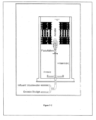
- FIG. F-1 shows the basic multi zone bioreactor.
- influent wastewater along with the return sludge is introduced and distributed at the bottom of the relatively deep bioreactor.
- the aeration is done at the middle or at the upper part of the bioreactor.
- different zones are forming due to the availability of Nitrate and Oxygen. If Nitrate is present then the first zone at the bottom will be anoxic where Nitrate is getting utilized by microorganisms along with carbon sources thus N2 gas is generated.
- packing media can be placed at the bottom part of the bioreactor to increase the biomass populations there. After all Nitrates are consumed, due to lack of Oxygen anaerobic zone is formed. At this zone fat and other complex organic molecules break into simpler forms such as fatty acids that are easier to be oxidized later on at the aerobic zone.
- aeration zone Just beneath the aeration zone there is a zone that is neither aerobic nor anaerobic. Facultative bacteria are dominating in this zone. Aerators' turbulence will pull and push the aerobic and anaerobic bacteria into opposing zones and into facultative zone. Aerobic and anaerobic bacteria die off when in opposing zones.
- the resulting stress due to the turbulent movement of cells between different conditions and the rapid and recurring changes in the oxidation reduction potentials of their environment initiate futile cycle which cause uncoupling the energy and growth cycle and will lead to a state of high energy production instead of new cell production. These conditions can lead to the total and/or partial elimination of excess biological sludge production.
- H2S is usually generated at the anaerobic zone and it is the main source of odor. Sulfide will turn into Sulfate in the upper aerobic zone hence the odor causing substance is eliminated and odor is removed.
- packing media for attached growth can. be used to ensure the existence of a large microorganisms population to utilize the aeration and the resultant dissolved Oxygen in a maximum fashion.
- Packing media is better to be used in the aerobic upper zone to ensure the maximum use of the aeration but it can also be used at the bottom anoxic and/ or anaerobic zones when it is needed to increase the rate.
- Figure F-2 shows a bioreactor that only have the packing media in he aerobic zone.
- a carbon source such as raw wastewater can be added to the flow to the bottom of the bioreactor as shown in Figure F-3 .
- a carbon source such as raw wastewater can be added to the flow to the bottom of the bioreactor as shown in Figure F-3 .
- This is specially applicable if the process is used to denitrify the treated effluent from a treatment process which does not have a denitrification stage.
- multi zone bioreactor the excess sludge and solids generated in that treatment plant can be reduced or eliminated while removing Nitrate. It also increases the capacity of the treatment plant by utilizing some of the raw wastewater as the carbon source.
- a carbon source such as raw wastewater can be added to the flow to the bottom of the bioreactor as shown in Figure F-3 .
- a carbon source such as raw wastewater can be added to the flow to the bottom of the bioreactor as shown in Figure F-3 .
- This is specially applicable if the process is used to denitrify the treated effluent from a treatment process which does not have a denitrification stage.
- multi zone bioreactor the excess sludge and solids generated in that treatment plant can be reduced or eliminated while removing Nitrate. It also increases the capacity of the treatment plant by utilizing some of the raw wastewater as the carbon source.
- Two or more multi zone bioreactor can be used in series for high COD wastewaters to ensure the desired treatment level to meet the standards or to reuse the water. It is also advisable to use an aerobic bioreactor after the multi zone bioreactor/s especially if Nitrogen removal is intended to ensure the nitrification to turn the ammonia Nitrogen into Nitrate form. Nitrate will turn into N2 gas when it is returned into the bottom of the multi zone bioreactor along with the returned sludge or in a separate internal recycle.
- Figure-4 is showing a Multi-zone bioreactor (a) that is followed by an aerobic bioreactor (b). In aerobic bioreactor (b) packing media can be used to increase the microorganisms' population in the attached growth form.
- the connection between the Multi-zone bioreactor (a) and the aerobic bioreactor (b) should be in a way that short circuit in the aerobic bioreactor is avoided.
- the follow into the aerobic bioreactor (a) can be on top or bottom of the aerobic bioreactor(a). Generally as the aeration provides good mixing short circuit could not be formed even if the flow is enters the aerobic bioreactor (a) on the top unless the tank is small or narrow and the distance between the flow in and out of the aerobic bioreactor is very short.
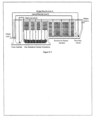
- FIG. F-5 shows one configuration that can be used to treat sanitary and many industrial wastewaters.
- influent wastewater (line 1) enters a wet-well or equalization tank (pump chamber) based on the wastewater conditions.
- Return sludge that is separated from the effluent in a settling tank or in a membrane or filtration process (line 4) is returned into same pump chamber. Some of the returned sludge (line 4) can be returned into the aerobic bioreactor if the MLSS there needs to be controlled.
- the mixture (line 2) then pumped into the bottom of the Multi-zone bioreactor (facultative) and is distributed there.
- the wastewater after undergoing different treatments in the Multi zone bioreactor is flowing from the top of the bioreactor into the adjacent aerobic bioreactor.
- An Internal recycle (line 5) brings back some of the nitrified water into the pump chamber. Aeration is done in the upper part of the Multi zone bioreactor and in the bottom of the aerobic bioreactor. Water after treated in the aerobic bioreactor is flowing into the settling tank where it loses its solids and clear water is disinfected or filtered or can go through other processes based on the usage of the treated water.
- membrane modules can be used alone or in conjunction with micro-strainers or micro-screens to separate solids from the water. Separated solids are returned to the inlet or pump chamber.
- Submerged membranes can be used in the aerobic treatment if it is desired then the internal recycle (line 5) is only needed to bring the solids back into the inlet or pump chamber and to ensure a stable concentration of the suspended solids in the membrane chamber or in the aerobic bioreactor.
- a packing media with high specific surface area and a rough surface to encourage a rapid bacteria growth in the form of biofilm is placed inside bioreactor/s.
- the packing media should be also of non clogging nature. Although different packing media can be used but a specific media with high specific surface area is designed that works better and it is self cleaning and does not clog.
- This packing media can be molded of different plastics. Special powders or fillers can be added to the polymer to increase the microscopic surface area and encourage microbial growth on the surface.
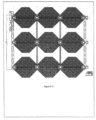
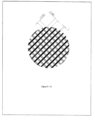
- Figure F-6 shows the special design of this packing media. As it is shown in Figure F-7 , Figure F-8 and Figure F-9 , each piece is supplied with female connectors in one side and male connectors in the other side.
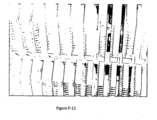
- Figure F-12 shows a photo of inserted pieces together.
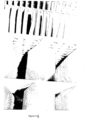
- Figure F-7 , Figure F-8 , Figure F-9 , and Figure F -10 show different angel views and details of the said piece.
- Figure F11 land Figure F-12 show how the assembled block sits on top of each other. Each layer sits on top the other layer with 90 degree turn. This way the channels to carry away the sloughed and peeled pieces of biofilm are crossed in each layer to maximize the mixing and prevent channeling.
- the method of present invention can be applied to any form of biological wastewater treatment plants be it small or large, domestic or industrial. It can be used to make new plants or can be used in conjunction of the existing plants to increase the capacity or quality of the effluent or to decrease or eliminate the excess biological sludge production or all or some of the above together.
Landscapes
- Life Sciences & Earth Sciences (AREA)
- Chemical & Material Sciences (AREA)
- Water Supply & Treatment (AREA)
- Hydrology & Water Resources (AREA)
- Engineering & Computer Science (AREA)
- Environmental & Geological Engineering (AREA)
- Microbiology (AREA)
- Biodiversity & Conservation Biology (AREA)
- Organic Chemistry (AREA)
- Chemical Kinetics & Catalysis (AREA)
- General Chemical & Material Sciences (AREA)
- Biological Treatment Of Waste Water (AREA)
- Purification Treatments By Anaerobic Or Anaerobic And Aerobic Bacteria Or Animals (AREA)
Priority Applications (2)
| Application Number | Priority Date | Filing Date | Title |
|---|---|---|---|
| HRP20240848TT HRP20240848T1 (hr) | 2012-03-27 | 2013-03-27 | Novi proces pročišćavanja otpadnih voda i smanjenja krutih tvari |
| RS20240877A RS65818B1 (sr) | 2012-03-27 | 2013-03-27 | Novi tretman otpadnih voda i postupak za smanjenje čvrstih materija |
Applications Claiming Priority (2)
| Application Number | Priority Date | Filing Date | Title |
|---|---|---|---|
| AU2012901238A AU2012901238A0 (en) | 2012-03-27 | A new wastewater treatment and solids reduction process | |
| PCT/AU2013/000346 WO2013142923A1 (en) | 2012-03-27 | 2013-03-27 | A new wastewater treatment and solids reduction process |
Publications (4)
| Publication Number | Publication Date |
|---|---|
| EP2858951A1 EP2858951A1 (en) | 2015-04-15 |
| EP2858951A4 EP2858951A4 (en) | 2016-03-30 |
| EP2858951B1 true EP2858951B1 (en) | 2024-05-08 |
| EP2858951C0 EP2858951C0 (en) | 2024-05-08 |
Family
ID=49257965
Family Applications (1)
| Application Number | Title | Priority Date | Filing Date |
|---|---|---|---|
| EP13768093.0A Active EP2858951B1 (en) | 2012-03-27 | 2013-03-27 | A new wastewater treatment and solids reduction process |
Country Status (10)
| Country | Link |
|---|---|
| US (1) | US20150203390A1 (pl) |
| EP (1) | EP2858951B1 (pl) |
| AU (1) | AU2013239353A1 (pl) |
| CA (1) | CA2908026A1 (pl) |
| ES (1) | ES2987500T3 (pl) |
| HR (1) | HRP20240848T1 (pl) |
| HU (1) | HUE068028T2 (pl) |
| PL (1) | PL2858951T3 (pl) |
| RS (1) | RS65818B1 (pl) |
| WO (1) | WO2013142923A1 (pl) |
Families Citing this family (4)
| Publication number | Priority date | Publication date | Assignee | Title |
|---|---|---|---|---|
| CN105836964B (zh) * | 2016-03-31 | 2018-08-17 | 煤科集团杭州环保研究院有限公司 | 一种固定床气化废水生物处理系统及方法 |
| CN110078224A (zh) * | 2019-05-07 | 2019-08-02 | 广西凯泉环保工程有限公司 | 一种微能耗微生物净化系统 |
| CN111018115B (zh) * | 2020-01-09 | 2022-03-22 | 成都市农林科学院 | 一种生物膜装置及淡水养殖尾水处理方法 |
| CN115259356A (zh) * | 2022-07-22 | 2022-11-01 | 三亚易可霖环保科技有限公司 | 改进的滑石粉高浓度活性污泥法污水处理设备及其方法 |
Citations (1)
| Publication number | Priority date | Publication date | Assignee | Title |
|---|---|---|---|---|
| US20050040107A1 (en) * | 2003-08-20 | 2005-02-24 | Kasparian Kaspar A. | Single vessel multi-zone wastewater bio-treatment system |
Family Cites Families (7)
| Publication number | Priority date | Publication date | Assignee | Title |
|---|---|---|---|---|
| ATA177787A (de) * | 1986-08-04 | 1991-08-15 | Mueanyagfel Dolgozo Vall | Kugel- oder kreisringfoermiges fuellelement aus kunststoff mit zentraler durchflussoeffnung fuer ungeordnete fuellungen von biologischen tropfkoerpern |
| US5202027A (en) * | 1989-01-13 | 1993-04-13 | Stuth William L | Secondary sewage treatment system |
| FR2760739B1 (fr) * | 1997-03-13 | 1999-04-30 | Omnium Traitement Valorisa | Dispositif pour la filtration ascendante des eaux residuaires a lit granulaire multi-couches |
| KR100441208B1 (ko) * | 2001-10-24 | 2004-07-22 | 삼성엔지니어링 주식회사 | 생물 여과 기술을 이용하는 회분식 폐수처리장치 및 이를이용한 폐수처리방법 |
| NL1020091C2 (nl) * | 2002-02-28 | 2003-08-29 | Tno | Nieuwe membraanbioreactor. |
| CA2542894C (en) * | 2006-04-04 | 2014-08-12 | Laleh Yerushalmi | Multi-environment wastewater treatment method |
| CN101525207A (zh) * | 2009-04-15 | 2009-09-09 | 郑俊 | 前置反硝化脱氮生物滤池污水处理集成工艺 |
-
2013
- 2013-03-27 PL PL13768093.0T patent/PL2858951T3/pl unknown
- 2013-03-27 WO PCT/AU2013/000346 patent/WO2013142923A1/en not_active Ceased
- 2013-03-27 HU HUE13768093A patent/HUE068028T2/hu unknown
- 2013-03-27 HR HRP20240848TT patent/HRP20240848T1/hr unknown
- 2013-03-27 US US14/420,864 patent/US20150203390A1/en not_active Abandoned
- 2013-03-27 RS RS20240877A patent/RS65818B1/sr unknown
- 2013-03-27 AU AU2013239353A patent/AU2013239353A1/en not_active Abandoned
- 2013-03-27 CA CA2908026A patent/CA2908026A1/en not_active Abandoned
- 2013-03-27 EP EP13768093.0A patent/EP2858951B1/en active Active
- 2013-03-27 ES ES13768093T patent/ES2987500T3/es active Active
Patent Citations (1)
| Publication number | Priority date | Publication date | Assignee | Title |
|---|---|---|---|---|
| US20050040107A1 (en) * | 2003-08-20 | 2005-02-24 | Kasparian Kaspar A. | Single vessel multi-zone wastewater bio-treatment system |
Also Published As
| Publication number | Publication date |
|---|---|
| PL2858951T3 (pl) | 2024-10-14 |
| CA2908026A1 (en) | 2013-10-03 |
| RS65818B1 (sr) | 2024-09-30 |
| WO2013142923A1 (en) | 2013-10-03 |
| ES2987500T3 (es) | 2024-11-15 |
| EP2858951A1 (en) | 2015-04-15 |
| US20150203390A1 (en) | 2015-07-23 |
| AU2013239353A1 (en) | 2014-10-16 |
| EP2858951A4 (en) | 2016-03-30 |
| HRP20240848T1 (hr) | 2024-12-06 |
| HUE068028T2 (hu) | 2024-12-28 |
| EP2858951C0 (en) | 2024-05-08 |
Similar Documents
| Publication | Publication Date | Title |
|---|---|---|
| Chen et al. | Treatment of dairy wastewater by immobilized microbial technology using polyurethane foam as carrier | |
| US20130264282A1 (en) | Process, apparatus and membrane bioreactor for wastewater treatment | |
| CN109052848A (zh) | 一种氧化和生化耦合一体化的水处理方法 | |
| CN103112991A (zh) | 焦化废水处理系统及焦化废水处理方法 | |
| CN106430845A (zh) | 餐厨垃圾废水处理装置 | |
| CN108455799A (zh) | 污水处理系统以及方法 | |
| CN109205954A (zh) | 微电解催化氧化、生化处理高浓度废水工艺 | |
| CN109467187A (zh) | 废水处理系统及其用于高浓度抗生素生产废水的处理工艺 | |
| CN116477801A (zh) | 一种综合废水处理工艺 | |
| Feng et al. | The effects of different carriers on removal performance and membrane fouling by HMBR in treating sewage with low carbon-to-nitrogen ratio | |
| CA2542894C (en) | Multi-environment wastewater treatment method | |
| US20150203390A1 (en) | New wastewater treatment and solids reduction process | |
| KR101186606B1 (ko) | 하수 및 오/폐수의 질소 와 인을 복합적으로 제거하는 고도처리장치 | |
| CN201406361Y (zh) | 一种垃圾渗滤液废水处理装置 | |
| CN106082564A (zh) | 一种膜生物反应器污泥减量化污水处理技术 | |
| CN203269735U (zh) | 两级生物反应器处理垃圾渗滤液设备 | |
| KR101268064B1 (ko) | 개량형 중공복합담체를 이용한 하수고도 처리장치 | |
| CN111153551A (zh) | 一种市政污水处理装置及处理工艺 | |
| CN206298494U (zh) | 动物尸体无害化废水处理系统 | |
| CN215906050U (zh) | 一种后置缺氧的mbr污水处理装置 | |
| CN112723566B (zh) | 一种baf曝气管及baf脱氮去除cod的方法 | |
| CN205061691U (zh) | 一种不分区的膜生物污水处理系统 | |
| CN210559922U (zh) | 一种污水处理系统 | |
| KR19990083645A (ko) | 간헐폭기공정과 평판형 정밀여과막을 이용한 유기물 및 질소·인의 제거방법 | |
| CN113772890A (zh) | 一种基于ao-mbbr-电感耦合滤池的污水处理系统及处理方法 |
Legal Events
| Date | Code | Title | Description |
|---|---|---|---|
| REG | Reference to a national code |
Ref country code: HR Ref legal event code: TUEP Ref document number: P20240848T Country of ref document: HR |
|
| PUAI | Public reference made under article 153(3) epc to a published international application that has entered the european phase |
Free format text: ORIGINAL CODE: 0009012 |
|
| 17P | Request for examination filed |
Effective date: 20150202 |
|
| AK | Designated contracting states |
Kind code of ref document: A1 Designated state(s): AL AT BE BG CH CY CZ DE DK EE ES FI FR GB GR HR HU IE IS IT LI LT LU LV MC MK MT NL NO PL PT RO RS SE SI SK SM TR |
|
| AX | Request for extension of the european patent |
Extension state: BA ME |
|
| DAX | Request for extension of the european patent (deleted) | ||
| RA4 | Supplementary search report drawn up and despatched (corrected) |
Effective date: 20160229 |
|
| RIC1 | Information provided on ipc code assigned before grant |
Ipc: C02F 3/10 20060101AFI20160223BHEP Ipc: C02F 3/30 20060101ALI20160223BHEP Ipc: C02F 3/12 20060101ALI20160223BHEP |
|
| STAA | Information on the status of an ep patent application or granted ep patent |
Free format text: STATUS: EXAMINATION IS IN PROGRESS |
|
| 17Q | First examination report despatched |
Effective date: 20171011 |
|
| GRAP | Despatch of communication of intention to grant a patent |
Free format text: ORIGINAL CODE: EPIDOSNIGR1 |
|
| STAA | Information on the status of an ep patent application or granted ep patent |
Free format text: STATUS: GRANT OF PATENT IS INTENDED |
|
| INTG | Intention to grant announced |
Effective date: 20231016 |
|
| GRAS | Grant fee paid |
Free format text: ORIGINAL CODE: EPIDOSNIGR3 |
|
| GRAA | (expected) grant |
Free format text: ORIGINAL CODE: 0009210 |
|
| STAA | Information on the status of an ep patent application or granted ep patent |
Free format text: STATUS: THE PATENT HAS BEEN GRANTED |
|
| AK | Designated contracting states |
Kind code of ref document: B1 Designated state(s): AL AT BE BG CH CY CZ DE DK EE ES FI FR GB GR HR HU IE IS IT LI LT LU LV MC MK MT NL NO PL PT RO RS SE SI SK SM TR |
|
| REG | Reference to a national code |
Ref country code: GB Ref legal event code: FG4D |
|
| REG | Reference to a national code |
Ref country code: CH Ref legal event code: EP |
|
| REG | Reference to a national code |
Ref country code: DE Ref legal event code: R096 Ref document number: 602013085693 Country of ref document: DE |
|
| REG | Reference to a national code |
Ref country code: IE Ref legal event code: FG4D |
|
| U01 | Request for unitary effect filed |
Effective date: 20240604 |
|
| U07 | Unitary effect registered |
Designated state(s): AT BE BG DE DK EE FI FR IT LT LU LV MT NL PT SE SI Effective date: 20240613 |
|
| REG | Reference to a national code |
Ref country code: SK Ref legal event code: T3 Ref document number: E 44342 Country of ref document: SK |
|
| REG | Reference to a national code |
Ref country code: GR Ref legal event code: EP Ref document number: 20240401727 Country of ref document: GR Effective date: 20240906 |
|
| PG25 | Lapsed in a contracting state [announced via postgrant information from national office to epo] |
Ref country code: IS Free format text: LAPSE BECAUSE OF FAILURE TO SUBMIT A TRANSLATION OF THE DESCRIPTION OR TO PAY THE FEE WITHIN THE PRESCRIBED TIME-LIMIT Effective date: 20240908 |
|
| PG25 | Lapsed in a contracting state [announced via postgrant information from national office to epo] |
Ref country code: IS Free format text: LAPSE BECAUSE OF FAILURE TO SUBMIT A TRANSLATION OF THE DESCRIPTION OR TO PAY THE FEE WITHIN THE PRESCRIBED TIME-LIMIT Effective date: 20240908 |
|
| REG | Reference to a national code |
Ref country code: ES Ref legal event code: FG2A Ref document number: 2987500 Country of ref document: ES Kind code of ref document: T3 Effective date: 20241115 |
|
| REG | Reference to a national code |
Ref country code: HR Ref legal event code: T1PR Ref document number: P20240848 Country of ref document: HR |
|
| REG | Reference to a national code |
Ref country code: HU Ref legal event code: AG4A Ref document number: E068028 Country of ref document: HU |
|
| PG25 | Lapsed in a contracting state [announced via postgrant information from national office to epo] |
Ref country code: SM Free format text: LAPSE BECAUSE OF FAILURE TO SUBMIT A TRANSLATION OF THE DESCRIPTION OR TO PAY THE FEE WITHIN THE PRESCRIBED TIME-LIMIT Effective date: 20240508 |
|
| PG25 | Lapsed in a contracting state [announced via postgrant information from national office to epo] |
Ref country code: SM Free format text: LAPSE BECAUSE OF FAILURE TO SUBMIT A TRANSLATION OF THE DESCRIPTION OR TO PAY THE FEE WITHIN THE PRESCRIBED TIME-LIMIT Effective date: 20240508 |
|
| REG | Reference to a national code |
Ref country code: DE Ref legal event code: R097 Ref document number: 602013085693 Country of ref document: DE |
|
| PLBE | No opposition filed within time limit |
Free format text: ORIGINAL CODE: 0009261 |
|
| STAA | Information on the status of an ep patent application or granted ep patent |
Free format text: STATUS: NO OPPOSITION FILED WITHIN TIME LIMIT |
|
| REG | Reference to a national code |
Ref country code: HR Ref legal event code: ODRP Ref document number: P20240848 Country of ref document: HR Payment date: 20250129 Year of fee payment: 13 |
|
| 26N | No opposition filed |
Effective date: 20250211 |
|
| U20 | Renewal fee for the european patent with unitary effect paid |
Year of fee payment: 13 Effective date: 20250328 |
|
| PG25 | Lapsed in a contracting state [announced via postgrant information from national office to epo] |
Ref country code: MC Free format text: LAPSE BECAUSE OF FAILURE TO SUBMIT A TRANSLATION OF THE DESCRIPTION OR TO PAY THE FEE WITHIN THE PRESCRIBED TIME-LIMIT Effective date: 20240508 |
|
| REG | Reference to a national code |
Ref country code: CH Ref legal event code: U11 Free format text: ST27 STATUS EVENT CODE: U-0-0-U10-U11 (AS PROVIDED BY THE NATIONAL OFFICE) Effective date: 20260401 |
|
| PGFP | Annual fee paid to national office [announced via postgrant information from national office to epo] |
Ref country code: GB Payment date: 20260326 Year of fee payment: 14 |
|
| PGFP | Annual fee paid to national office [announced via postgrant information from national office to epo] |
Ref country code: NO Payment date: 20260330 Year of fee payment: 14 Ref country code: IE Payment date: 20260326 Year of fee payment: 14 |
|
| PGFP | Annual fee paid to national office [announced via postgrant information from national office to epo] |
Ref country code: RO Payment date: 20260323 Year of fee payment: 14 |
|
| PGFP | Annual fee paid to national office [announced via postgrant information from national office to epo] |
Ref country code: HU Payment date: 20260320 Year of fee payment: 14 |
|
| PGFP | Annual fee paid to national office [announced via postgrant information from national office to epo] |
Ref country code: RS Payment date: 20260326 Year of fee payment: 14 |
|
| PGFP | Annual fee paid to national office [announced via postgrant information from national office to epo] |
Ref country code: TR Payment date: 20260323 Year of fee payment: 14 |
|
| PGFP | Annual fee paid to national office [announced via postgrant information from national office to epo] |
Ref country code: CZ Payment date: 20260324 Year of fee payment: 14 |
|
| PGFP | Annual fee paid to national office [announced via postgrant information from national office to epo] |
Ref country code: GR Payment date: 20260324 Year of fee payment: 14 Ref country code: PL Payment date: 20260326 Year of fee payment: 14 |
|
| REG | Reference to a national code |
Ref country code: HR Ref legal event code: ODRP Ref document number: P20240848 Country of ref document: HR Payment date: 20260320 Year of fee payment: 14 |
|
| PGFP | Annual fee paid to national office [announced via postgrant information from national office to epo] |
Ref country code: SK Payment date: 20260323 Year of fee payment: 14 |
|
| U20 | Renewal fee for the european patent with unitary effect paid |
Year of fee payment: 14 Effective date: 20260330 |
|
| PG25 | Lapsed in a contracting state [announced via postgrant information from national office to epo] |
Ref country code: CY Free format text: LAPSE BECAUSE OF FAILURE TO SUBMIT A TRANSLATION OF THE DESCRIPTION OR TO PAY THE FEE WITHIN THE PRESCRIBED TIME-LIMIT Effective date: 20240508 |
|
| PGFP | Annual fee paid to national office [announced via postgrant information from national office to epo] |
Ref country code: ES Payment date: 20260626 Year of fee payment: 14 |
|
| PGFP | Annual fee paid to national office [announced via postgrant information from national office to epo] |
Ref country code: CH Payment date: 20260401 Year of fee payment: 14 |
|
| PGFP | Annual fee paid to national office [announced via postgrant information from national office to epo] |
Ref country code: HR Payment date: 20260416 Year of fee payment: 14 |