EP2853608A1 - Precipitation hardening steel with improved toughness and method - Google Patents
Precipitation hardening steel with improved toughness and method Download PDFInfo
- Publication number
- EP2853608A1 EP2853608A1 EP14175600.7A EP14175600A EP2853608A1 EP 2853608 A1 EP2853608 A1 EP 2853608A1 EP 14175600 A EP14175600 A EP 14175600A EP 2853608 A1 EP2853608 A1 EP 2853608A1
- Authority
- EP
- European Patent Office
- Prior art keywords
- precipitation hardening
- hardening steel
- temperature
- steel part
- ksi
- Prior art date
- Legal status (The legal status is an assumption and is not a legal conclusion. Google has not performed a legal analysis and makes no representation as to the accuracy of the status listed.)
- Granted
Links
Images


Classifications
-
- C—CHEMISTRY; METALLURGY
- C21—METALLURGY OF IRON
- C21D—MODIFYING THE PHYSICAL STRUCTURE OF FERROUS METALS; GENERAL DEVICES FOR HEAT TREATMENT OF FERROUS OR NON-FERROUS METALS OR ALLOYS; MAKING METAL MALLEABLE, e.g. BY DECARBURISATION OR TEMPERING
- C21D6/00—Heat treatment of ferrous alloys
- C21D6/02—Hardening by precipitation
-
- C—CHEMISTRY; METALLURGY
- C21—METALLURGY OF IRON
- C21D—MODIFYING THE PHYSICAL STRUCTURE OF FERROUS METALS; GENERAL DEVICES FOR HEAT TREATMENT OF FERROUS OR NON-FERROUS METALS OR ALLOYS; MAKING METAL MALLEABLE, e.g. BY DECARBURISATION OR TEMPERING
- C21D1/00—General methods or devices for heat treatment, e.g. annealing, hardening, quenching or tempering
- C21D1/18—Hardening; Quenching with or without subsequent tempering
-
- C—CHEMISTRY; METALLURGY
- C21—METALLURGY OF IRON
- C21D—MODIFYING THE PHYSICAL STRUCTURE OF FERROUS METALS; GENERAL DEVICES FOR HEAT TREATMENT OF FERROUS OR NON-FERROUS METALS OR ALLOYS; MAKING METAL MALLEABLE, e.g. BY DECARBURISATION OR TEMPERING
- C21D1/00—General methods or devices for heat treatment, e.g. annealing, hardening, quenching or tempering
- C21D1/74—Methods of treatment in inert gas, controlled atmosphere, vacuum or pulverulent material
-
- C—CHEMISTRY; METALLURGY
- C21—METALLURGY OF IRON
- C21D—MODIFYING THE PHYSICAL STRUCTURE OF FERROUS METALS; GENERAL DEVICES FOR HEAT TREATMENT OF FERROUS OR NON-FERROUS METALS OR ALLOYS; MAKING METAL MALLEABLE, e.g. BY DECARBURISATION OR TEMPERING
- C21D6/00—Heat treatment of ferrous alloys
- C21D6/004—Heat treatment of ferrous alloys containing Cr and Ni
-
- C—CHEMISTRY; METALLURGY
- C21—METALLURGY OF IRON
- C21D—MODIFYING THE PHYSICAL STRUCTURE OF FERROUS METALS; GENERAL DEVICES FOR HEAT TREATMENT OF FERROUS OR NON-FERROUS METALS OR ALLOYS; MAKING METAL MALLEABLE, e.g. BY DECARBURISATION OR TEMPERING
- C21D6/00—Heat treatment of ferrous alloys
- C21D6/04—Hardening by cooling below 0 degrees Celsius
-
- C—CHEMISTRY; METALLURGY
- C21—METALLURGY OF IRON
- C21D—MODIFYING THE PHYSICAL STRUCTURE OF FERROUS METALS; GENERAL DEVICES FOR HEAT TREATMENT OF FERROUS OR NON-FERROUS METALS OR ALLOYS; MAKING METAL MALLEABLE, e.g. BY DECARBURISATION OR TEMPERING
- C21D9/00—Heat treatment, e.g. annealing, hardening, quenching or tempering, adapted for particular articles; Furnaces therefor
- C21D9/0068—Heat treatment, e.g. annealing, hardening, quenching or tempering, adapted for particular articles; Furnaces therefor for particular articles not mentioned below
-
- C—CHEMISTRY; METALLURGY
- C22—METALLURGY; FERROUS OR NON-FERROUS ALLOYS; TREATMENT OF ALLOYS OR NON-FERROUS METALS
- C22C—ALLOYS
- C22C38/00—Ferrous alloys, e.g. steel alloys
- C22C38/18—Ferrous alloys, e.g. steel alloys containing chromium
- C22C38/40—Ferrous alloys, e.g. steel alloys containing chromium with nickel
-
- C—CHEMISTRY; METALLURGY
- C21—METALLURGY OF IRON
- C21D—MODIFYING THE PHYSICAL STRUCTURE OF FERROUS METALS; GENERAL DEVICES FOR HEAT TREATMENT OF FERROUS OR NON-FERROUS METALS OR ALLOYS; MAKING METAL MALLEABLE, e.g. BY DECARBURISATION OR TEMPERING
- C21D2211/00—Microstructure comprising significant phases
- C21D2211/008—Martensite
Definitions
- the following description relates to precipitation hardening steel with improved toughness and a heat treatment process for making the same.
- Precipitation hardening (PH) steels are steel alloys which utilize an aging treatment to form additional phases which improve the alloy's mechanical properties.
- Precipitation hardening steel is widely used in industry for fittings, shafts, pins, aircraft components, and chemical applications.
- Precipitation hardening steel is typically heat treated using standard processes. To improve toughness of precipitation hardening steel, higher temperature heat treatments can be used. Also, refined chemistry can be used.
- FIG. 1 is a schematic diagram of an example heat treatment system 100.
- the heat treatment system 100 is a collection of equipment, chambers, and components that can be used to perform a heat treatment process on a precipitation hardening steel part.
- the heat treatment process can be controlled to alter or enhance the material characteristics of the precipitation hardening steel.
- the process can be controlled to increase the toughness of a precipitation hardening steel part while maintaining strength.
- the precipitation hardening steel part could be any suitable part, component, tool or other (item?) used in any applicable industry such as aerospace, aviation, nuclear, or automotive.
- precipitation hardening steel may, for example, be used for fixed-wing aircraft, rotor-winged aircraft such as helicopters, vertical-lift aircraft and tilt-rotor aircraft.
- the precipitation hardening steel part could be composed of any suitable steel, such as 13Cr-8Ni (PH 13-8, UNS S13800, XM-13).
- the heat treatment system 100 includes a solution treatment furnace 102, a protective atmosphere cooling chamber 104, a low temperature cooling chamber 106, an aging treatment furnace 108, and an air cooling chamber 110.
- the system 100 may not include a separate protective atmosphere cooling chamber 104 or an air cooling chamber 110 without departing from the scope of the disclosure.
- the solution treatment furnace 102 may be a vacuum furnace where both the solution treatment and the protective atmosphere cooling occur.
- air cooling may be accomplished by removing a part from the aging treatment furnace 108 or opening the furnace doors and cooling in ambient air.
- the components of the heat treatment system 100 may vary in their configuration or arrangement.
- the protective atmosphere cooling chamber 104 can be incorporated into the solution treatment furnace 102.
- the protective atmosphere cooling chamber 104 and the low temperature cooling chamber 106 could be the same chamber or equipment.
- One or more components may be connected as part of a workflow or may be separate. For example, conveyors, rollers, or other mechanisms could convey a part from one component to another. In some implementations, one or more of the components can be omitted, or other components can be included.
- the solution treatment furnace 102 is a furnace capable of heating a precipitation hardening steel part to the austenitizing temperature.
- the austenitization temperature is a temperature at which, given sufficient time, will ensure transformation of the steel to an austenitic structure.
- the austenitization temperature may vary depending on a steel's particular chemical composition. As an example, the austenization temperature for PH 13-8 is typically a temperature in the range of 1700 °F.
- the precipitation hardening steel part is held at each of one or more stages at a temperature setting until that temperature is substantially or otherwise uniform throughout the part.
- the precipitation hardening steel part could be heated in the furnace to a temperature of 1700 °F and held at that temperature for one hour after the part has uniformly reached 1700 °F.
- a different austenitizing temperature or a different period of time could be used.
- Any suitable treatment furnace like those found in the industry can be used.
- the solution treatment furnace 102 can have a gas or electric heat source, or may process the part in air, a vacuum, or protective atmosphere.
- the protective atmosphere cooling chamber 104 is a chamber or apparatus in which the steel part can cool or quench in a protective atmosphere after solution treatment heating.
- the protective atmosphere can be a gas such as nitrogen or argon, or it can be a gas mixture such as a mixture of nitrogen and hydrogen.
- the protective atmosphere cooling chamber 104 can cool the precipitation hardening steel part to a given temperature such as 300 °F or room temperature.
- the protective atmosphere cooling chamber 104 is incorporated into the solution treatment furnace 102.
- the temperature setting of the solution treatment furnace 102 could be lowered without removing the steel part, or a protective atmosphere could be introduced into the solution treatment furnace 102.
- the system 100 may not include a separate protective atmosphere cooling chamber 104.
- the low temperature cooling chamber 106 is a chamber or apparatus in which the precipitation hardening steel part can cool or quench to a relatively low temperature for conversion of the steel structure to martensite.
- the low temperature cooling chamber 106 could cool a precipitation hardening steel part to a temperature below room temperature, such as below 60 °F or -100 °F.
- the precipitation hardening steel part may be cooled below 32 °F.
- the cooling process may improve fatigue performance.
- the part in the low temperature cooling chamber 106 is maintained at a low temperature by a liquid nitrogen bath or a deep freeze chiller.
- the low temperature cooling chamber 106 may be combined with the protective atmosphere cooling chamber 104. For example, the part could be cooled to room temperature and then down to -100 °F in a single chamber.
- the aging treatment furnace 108 is a furnace for applying an aging heat treatment to a precipitation hardening steel part.
- the aging treatment furnace 108 is the same furnace as the solution treatment furnace 102.
- the aging treatment furnace 108 can be configured to hold a steel part at a set temperature for a period of time.
- the set temperature can be a temperature that will create reverted austenite in the precipitation hardening steel part, such as a temperature in the range of 950-1150 °F
- the aging treatment furnace 108 can maintain the part at that temperature for a period of time.
- the aging treatment furnace 108 can be configured to maintain the precipitation hardening steel part at a set temperature of 1000 °F for more than four hours, for example, for five or more hours.
- the example air cooling chamber 110 is a chamber within which a precipitation hardening steel part can cool to room temperature after an aging treatment.
- the example air cooling chamber 110 uses a cool or room temperature environment to allow the part to cool to room temperature.
- other cooling techniques such as a water bath or an oil bath could be implemented instead of or in tandem with air cooling.
- the example air cooling chamber 110 can be incorporated into the aging treatment furnace 108.
- the aging treatment furnace 108 can cool to room temperature after the aging treatment.
- the system 100 may not include a separate air cooling chamber 110.
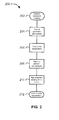
- FIG. 2 shows an example heat treatment process 200.
- the heat treatment process 200 is an example process to toughen a precipitation hardening steel part.
- the toughness of the precipitation hardening steel part may be improved while maintaining tensile strength, other strength or other properties of the precipitation hardening steel above desired levels.
- sub processes of the heat treatment process 200 may be omitted or combined.
- the heat treatment process 200 may not include at least one of cooling in a protective atmosphere or warming to ambient temperature.
- the heat treatment process 200 can use some or all of the system described in FIG. 1 .
- the precipitation hardening steel part is subjected to a solution treatment.
- This solution treatment is a heat treatment that holds the steel part at an austenitization temperature for a period of time.
- the steel part to be treated can be heated in a furnace such as the solution treatment furnace 102 in FIG. 1 .
- the precipitation hardening steel part is placed in the furnace when the furnace is at room temperature, and the temperature of the furnace is subsequently increased to the austenitization temperature. In this manner, the temperature of the steel part can ramp along with the temperature of the furnace.
- the precipitation hardening steel part Once the precipitation hardening steel part has uniformly reached the set austenitization temperature, the part is held at that temperature until the part has formed a substantially or otherwise homogenous austenite structure.
- the length of time that the precipitation hardening steel part is held at the austenitization temperature can depend on the size and shape of the part. For example, a part can be ramped to 1700 °F and held at 1700 °F for
- the solution-treated part is cooled or quenched in a protective atmosphere.
- the precipitation hardening steel part can be allowed to cool in the solution treatment furnace or in a separate environment such as the protective atmosphere chamber 104 of FIG. 1 . Cooling the precipitation hardening steel part in a protective atmosphere can reduce oxidation and other undesired chemical reactions. In some cases, the precipitation hardening steel part is allowed to cool to room temperature.
- the precipitation hardening steel part is cooled to a low temperature to facilitate martensitic conversion.
- the low quenching temperature can be a temperature below room temperature, such as at or below 60 °F 32 °F, or -100 °F.
- a lower temperature (such as -100 °F) can increase the driving force for martensitic conversion and create a substantially or otherwise uniform martensitic microstructure.
- the precipitation hardening steel part can be cooled with a variety of techniques, including placement in a deep freeze chiller or a liquid nitrogen bath. The temperature of the part can be ramped down, or the part can be placed directly in a low-temperature environment (such as a liquid nitrogen bath). In some cases, the precipitation hardening steel part is held in the cooling environment long enough for the entire part to reach the desired temperature.
- the precipitation hardening steel part is allowed to return to an ambient temperature (such as room temperature).
- the precipitation hardening steel part is subjected to an aging treatment.
- An aging treatment is a prolonged heat treatment in a furnace such as the aging treatment furnace 108 of FIG. 1 .
- An aging treatment can increase fracture toughness in a precipitation hardening steel part.
- the precipitation hardening steel part is placed in a room temperature furnace, and the furnace temperature is increased to the set aging temperature.
- the precipitation hardening steel part is placed into a furnace that is already at the set aging temperature. After the temperature of the part has reached the set aging temperature such that it is substantially or otherwise uniform at the temperature, the precipitation hardening steel part is maintained at that temperature for a period of time.
- the set aging temperature can be a temperature in the range of 950-1150 °F.
- the precipitation hardening steel part is held or heated at a temperature of 950-1150 °F for five or more hours.
- the heat treatment time may, for example, be 5.5 hours, 6 hours, 6.5 hours, 7 hours, 7.5 hours, 8 hours, or some other suitable time. Holding the precipitation hardening steel part at the aging temperature of 1000 °F for five or more hours can additionally increase fracture toughness and additionally enhance resistance to hydrogen embrittlement.
- An extended age time of five or more hours can, for example, form retained austenite and allow martensite to revert to austenite in an even manner.
- the precipitation hardening steel part is cooled to room temperature.
- the precipitation hardening steel part can be cooled in situ by bringing the aging treatment furnace to room temperature.
- the precipitation hardening steel part can also be cooled by removing the part from the furnace to a cooler environment, such as a chiller or the ambient temperature of the room. In some cases, the precipitation hardening steel part is cooled in a protective atmosphere.
- FIG. 3 shows an example plot 300 based on exemplary data, showing material properties curves 302, 304, and 306 for precipitation-hardened 13-8 stainless steel (PH-13-8) after undergoing extended aging treatments for more than four hours.
- the PH-13-8 stainless steel characterized in FIG. 3 was treated using the example process described in FIG. 2 .
- the PH-13-8 stainless steel was solution treated at 1700 °F, cooled at -100 °F, and aged at 1000 °F for four to eight hours.
- curve 302 represents the ultimate tensile strength (UTS) of the steel
- curve 304 represents the yield strength (YS)
- curve 306 represents the fracture toughness (Kq).
- UTS ultimate tensile strength
- YS yield strength
- Kq fracture toughness
- the x-axis is the aging time of the PH-13-8 stainless steel in hours.
- the left y-axis is the tensile strength measured in ksi, corresponding to curves 302 and 304.
- the right y-axis is the fracture toughness measured in ksi ⁇ in, corresponding to curve 306.
- the horizontal line 308 represents an example minimum UTS standard of 205 ksi.
- the horizontal line 310 represents an example minimum fracture toughness standard of 120 ksi ⁇ in at room temperature. Room temperature is typically in the range of 65 °F to 75 °F.
- FIG. 3 shows that aging more than four hours, such as for five or more hours, can have a material effect on material properties of PH 13-8 stainless steel.
- the fracture toughness curve 306 shows that increasing the aging time more than 4 hours can result in increased fracture toughness of 140 ksi ⁇ in. At six or more hours, the example fracture toughness is 125 ksi ⁇ in, greater than the minimum standard fracture toughness of line 310.
- the ultimate tensile strength (curve 302) and yield strength (curve 304) of the 13-8 stainless steel is reduced as the aging time increases.
- the extended heat treatment aging at standard temperature allows improved toughness while limiting reduction in ultimate tensile strength and yield strength and/or maintaining ultimate tensile strength and yield strength above minimum or other desired limits.
- the example ultimate tensile strength remains greater than the minimum standard ultimate tensile strength of line 308.
- the extended aging time may yield material properties for the precipitation hardening steel of a fracture toughness greater than 115 ksi ⁇ in, 120 ksi ⁇ in, or 130 ksi ⁇ in at room temperature, a yield strength greater than 195 ksi or 200 ksi, and an ultimate tensile strength greater than 210 ksi or 215 ksi.
- the properties may include one or more of the following: about 220 ksi strength and 85 ksi ⁇ in toughness (H950); about 185 ksi strength and 140 ksi ⁇ in toughness (H1025); about 175 ksi strength and 165 ksi ⁇ in toughness (H1050); or others.
Landscapes
- Chemical & Material Sciences (AREA)
- Engineering & Computer Science (AREA)
- Mechanical Engineering (AREA)
- Materials Engineering (AREA)
- Metallurgy (AREA)
- Organic Chemistry (AREA)
- Physics & Mathematics (AREA)
- Thermal Sciences (AREA)
- Crystallography & Structural Chemistry (AREA)
- Heat Treatment Of Articles (AREA)
Abstract
Description
- This application claims priority to
U.S. Patent Application Serial No. 14/038,229 filed on September 26, 2013 , the entire contents of which are hereby incorporated by reference. - The following description relates to precipitation hardening steel with improved toughness and a heat treatment process for making the same.
- Precipitation hardening (PH) steels are steel alloys which utilize an aging treatment to form additional phases which improve the alloy's mechanical properties. Precipitation hardening steel is widely used in industry for fittings, shafts, pins, aircraft components, and chemical applications. Precipitation hardening steel is typically heat treated using standard processes. To improve toughness of precipitation hardening steel, higher temperature heat treatments can be used. Also, refined chemistry can be used.
-
-
FIG. 1 is a diagram of an example heat treatment system; -
FIG. 2 is a flowchart diagram of an example heat treatment process for precipitation hardening steel; and -
FIG. 3 is an example plot based on exemplary data of material characteristics vs. an extended aging time. - Like reference symbols in the various drawings indicate like elements.
-
FIG. 1 is a schematic diagram of an exampleheat treatment system 100. Theheat treatment system 100 is a collection of equipment, chambers, and components that can be used to perform a heat treatment process on a precipitation hardening steel part. The heat treatment process can be controlled to alter or enhance the material characteristics of the precipitation hardening steel. For example, the process can be controlled to increase the toughness of a precipitation hardening steel part while maintaining strength. The precipitation hardening steel part could be any suitable part, component, tool or other (item?) used in any applicable industry such as aerospace, aviation, nuclear, or automotive. In aviation, precipitation hardening steel may, for example, be used for fixed-wing aircraft, rotor-winged aircraft such as helicopters, vertical-lift aircraft and tilt-rotor aircraft. The precipitation hardening steel part could be composed of any suitable steel, such as 13Cr-8Ni (PH 13-8, UNS S13800, XM-13). - Referring to
FIG. 1 , theheat treatment system 100 includes asolution treatment furnace 102, a protectiveatmosphere cooling chamber 104, a lowtemperature cooling chamber 106, anaging treatment furnace 108, and anair cooling chamber 110. Though, thesystem 100 may not include a separate protectiveatmosphere cooling chamber 104 or anair cooling chamber 110 without departing from the scope of the disclosure. For example, thesolution treatment furnace 102 may be a vacuum furnace where both the solution treatment and the protective atmosphere cooling occur. In instances that do not include a separateair cooling chamber 110, air cooling may be accomplished by removing a part from theaging treatment furnace 108 or opening the furnace doors and cooling in ambient air. The components of theheat treatment system 100 may vary in their configuration or arrangement. For example, the protectiveatmosphere cooling chamber 104 can be incorporated into thesolution treatment furnace 102. As another example, the protectiveatmosphere cooling chamber 104 and the lowtemperature cooling chamber 106 could be the same chamber or equipment. One or more components may be connected as part of a workflow or may be separate. For example, conveyors, rollers, or other mechanisms could convey a part from one component to another. In some implementations, one or more of the components can be omitted, or other components can be included. - The
solution treatment furnace 102 is a furnace capable of heating a precipitation hardening steel part to the austenitizing temperature. The austenitization temperature is a temperature at which, given sufficient time, will ensure transformation of the steel to an austenitic structure. The austenitization temperature may vary depending on a steel's particular chemical composition. As an example, the austenization temperature for PH 13-8 is typically a temperature in the range of 1700 °F. In a typical implementation, the precipitation hardening steel part is held at each of one or more stages at a temperature setting until that temperature is substantially or otherwise uniform throughout the part. For example, the precipitation hardening steel part could be heated in the furnace to a temperature of 1700 °F and held at that temperature for one hour after the part has uniformly reached 1700 °F. A different austenitizing temperature or a different period of time could be used. Any suitable treatment furnace like those found in the industry can be used. For example, thesolution treatment furnace 102 can have a gas or electric heat source, or may process the part in air, a vacuum, or protective atmosphere. - The protective
atmosphere cooling chamber 104 is a chamber or apparatus in which the steel part can cool or quench in a protective atmosphere after solution treatment heating. The protective atmosphere can be a gas such as nitrogen or argon, or it can be a gas mixture such as a mixture of nitrogen and hydrogen. The protectiveatmosphere cooling chamber 104 can cool the precipitation hardening steel part to a given temperature such as 300 °F or room temperature. In some instances, the protectiveatmosphere cooling chamber 104 is incorporated into thesolution treatment furnace 102. For example, the temperature setting of thesolution treatment furnace 102 could be lowered without removing the steel part, or a protective atmosphere could be introduced into thesolution treatment furnace 102. As previously mentioned, thesystem 100 may not include a separate protectiveatmosphere cooling chamber 104. - The low
temperature cooling chamber 106 is a chamber or apparatus in which the precipitation hardening steel part can cool or quench to a relatively low temperature for conversion of the steel structure to martensite. For example, the lowtemperature cooling chamber 106 could cool a precipitation hardening steel part to a temperature below room temperature, such as below 60 °F or -100 °F. For example, the precipitation hardening steel part may be cooled below 32 °F. In some implementations, the cooling process may improve fatigue performance. In some instances, the part in the lowtemperature cooling chamber 106 is maintained at a low temperature by a liquid nitrogen bath or a deep freeze chiller. In some instances, the lowtemperature cooling chamber 106 may be combined with the protectiveatmosphere cooling chamber 104. For example, the part could be cooled to room temperature and then down to -100 °F in a single chamber. - The aging
treatment furnace 108 is a furnace for applying an aging heat treatment to a precipitation hardening steel part. In some instances, the agingtreatment furnace 108 is the same furnace as thesolution treatment furnace 102. The agingtreatment furnace 108 can be configured to hold a steel part at a set temperature for a period of time. The set temperature can be a temperature that will create reverted austenite in the precipitation hardening steel part, such as a temperature in the range of 950-1150 °F After the steel part has uniformly reached the set temperature, the agingtreatment furnace 108 can maintain the part at that temperature for a period of time. For example, the agingtreatment furnace 108 can be configured to maintain the precipitation hardening steel part at a set temperature of 1000 °F for more than four hours, for example, for five or more hours. - The example
air cooling chamber 110 is a chamber within which a precipitation hardening steel part can cool to room temperature after an aging treatment. The exampleair cooling chamber 110 uses a cool or room temperature environment to allow the part to cool to room temperature. In some cases, other cooling techniques such as a water bath or an oil bath could be implemented instead of or in tandem with air cooling. The exampleair cooling chamber 110 can be incorporated into the agingtreatment furnace 108. For example, the agingtreatment furnace 108 can cool to room temperature after the aging treatment. As previously mentioned, thesystem 100 may not include a separateair cooling chamber 110. -
FIG. 2 shows an exampleheat treatment process 200. Theheat treatment process 200 is an example process to toughen a precipitation hardening steel part. In one embodiment, the toughness of the precipitation hardening steel part may be improved while maintaining tensile strength, other strength or other properties of the precipitation hardening steel above desired levels. In some cases, sub processes of theheat treatment process 200 may be omitted or combined. For example, theheat treatment process 200 may not include at least one of cooling in a protective atmosphere or warming to ambient temperature. Theheat treatment process 200 can use some or all of the system described inFIG. 1 . - At 202, the precipitation hardening steel part is subjected to a solution treatment. This solution treatment is a heat treatment that holds the steel part at an austenitization temperature for a period of time. The steel part to be treated can be heated in a furnace such as the
solution treatment furnace 102 inFIG. 1 . In some cases, the precipitation hardening steel part is placed in the furnace when the furnace is at room temperature, and the temperature of the furnace is subsequently increased to the austenitization temperature. In this manner, the temperature of the steel part can ramp along with the temperature of the furnace. Once the precipitation hardening steel part has uniformly reached the set austenitization temperature, the part is held at that temperature until the part has formed a substantially or otherwise homogenous austenite structure. The length of time that the precipitation hardening steel part is held at the austenitization temperature can depend on the size and shape of the part. For example, a part can be ramped to 1700 °F and held at 1700 °F for 1 hour. - At 204, the solution-treated part is cooled or quenched in a protective atmosphere. The precipitation hardening steel part can be allowed to cool in the solution treatment furnace or in a separate environment such as the
protective atmosphere chamber 104 ofFIG. 1 . Cooling the precipitation hardening steel part in a protective atmosphere can reduce oxidation and other undesired chemical reactions. In some cases, the precipitation hardening steel part is allowed to cool to room temperature. - At 206, the precipitation hardening steel part is cooled to a low temperature to facilitate martensitic conversion. The low quenching temperature can be a temperature below room temperature, such as at or below 60 °F 32 °F, or -100 °F. A lower temperature (such as -100 °F) can increase the driving force for martensitic conversion and create a substantially or otherwise uniform martensitic microstructure. The precipitation hardening steel part can be cooled with a variety of techniques, including placement in a deep freeze chiller or a liquid nitrogen bath. The temperature of the part can be ramped down, or the part can be placed directly in a low-temperature environment (such as a liquid nitrogen bath). In some cases, the precipitation hardening steel part is held in the cooling environment long enough for the entire part to reach the desired temperature. At 208, the precipitation hardening steel part is allowed to return to an ambient temperature (such as room temperature).
- At 210, the precipitation hardening steel part is subjected to an aging treatment. An aging treatment is a prolonged heat treatment in a furnace such as the aging
treatment furnace 108 ofFIG. 1 . An aging treatment can increase fracture toughness in a precipitation hardening steel part. In some implementations, the precipitation hardening steel part is placed in a room temperature furnace, and the furnace temperature is increased to the set aging temperature. In some implementations, the precipitation hardening steel part is placed into a furnace that is already at the set aging temperature. After the temperature of the part has reached the set aging temperature such that it is substantially or otherwise uniform at the temperature, the precipitation hardening steel part is maintained at that temperature for a period of time. For example, the set aging temperature can be a temperature in the range of 950-1150 °F. In the illustrated embodiment, the precipitation hardening steel part is held or heated at a temperature of 950-1150 °F for five or more hours. The heat treatment time may, for example, be 5.5 hours, 6 hours, 6.5 hours, 7 hours, 7.5 hours, 8 hours, or some other suitable time. Holding the precipitation hardening steel part at the aging temperature of 1000 °F for five or more hours can additionally increase fracture toughness and additionally enhance resistance to hydrogen embrittlement. An extended age time of five or more hours can, for example, form retained austenite and allow martensite to revert to austenite in an even manner. - At 212, the precipitation hardening steel part is cooled to room temperature. The precipitation hardening steel part can be cooled in situ by bringing the aging treatment furnace to room temperature. The precipitation hardening steel part can also be cooled by removing the part from the furnace to a cooler environment, such as a chiller or the ambient temperature of the room. In some cases, the precipitation hardening steel part is cooled in a protective atmosphere. These and other cooling techniques can be implemented.
-
FIG. 3 shows anexample plot 300 based on exemplary data, showing material properties curves 302, 304, and 306 for precipitation-hardened 13-8 stainless steel (PH-13-8) after undergoing extended aging treatments for more than four hours. The PH-13-8 stainless steel characterized inFIG. 3 was treated using the example process described inFIG. 2 . The PH-13-8 stainless steel was solution treated at 1700 °F, cooled at -100 °F, and aged at 1000 °F for four to eight hours. InFIG. 3 ,curve 302 represents the ultimate tensile strength (UTS) of the steel,curve 304 represents the yield strength (YS), andcurve 306 represents the fracture toughness (Kq). InFIG. 3 , the x-axis is the aging time of the PH-13-8 stainless steel in hours. The left y-axis is the tensile strength measured in ksi, corresponding tocurves curve 306. The horizontal line 308 represents an example minimum UTS standard of 205 ksi. Thehorizontal line 310 represents an example minimum fracture toughness standard of 120 ksi√in at room temperature. Room temperature is typically in the range of 65 °F to 75 °F. -
FIG. 3 shows that aging more than four hours, such as for five or more hours, can have a material effect on material properties of PH 13-8 stainless steel. For example, thefracture toughness curve 306 shows that increasing the aging time more than 4 hours can result in increased fracture toughness of 140 ksi√in. At six or more hours, the example fracture toughness is 125 ksi√in, greater than the minimum standard fracture toughness ofline 310. The ultimate tensile strength (curve 302) and yield strength (curve 304) of the 13-8 stainless steel is reduced as the aging time increases. However, for example, in one or more embodiments, the extended heat treatment aging at standard temperature allows improved toughness while limiting reduction in ultimate tensile strength and yield strength and/or maintaining ultimate tensile strength and yield strength above minimum or other desired limits. After 8 hours of aging, the example ultimate tensile strength remains greater than the minimum standard ultimate tensile strength of line 308. In specific embodiments, the extended aging time may yield material properties for the precipitation hardening steel of a fracture toughness greater than 115 ksi√in, 120 ksi√in, or 130 ksi√in at room temperature, a yield strength greater than 195 ksi or 200 ksi, and an ultimate tensile strength greater than 210 ksi or 215 ksi. For example, the properties may include one or more of the following: about 220 ksi strength and 85 ksi√in toughness (H950); about 185 ksi strength and 140 ksi√in toughness (H1025); about 175 ksi strength and 165 ksi√in toughness (H1050); or others. - While this specification contains many details, these should not be construed as limitations on the scope of what may be claimed, but rather as descriptions of features specific to particular examples. Certain features that are described in this specification in the context of separate implementations can also be combined. Conversely, various features that are described in the context of a single implementation can also be implemented in multiple embodiments separately or in any suitable subcombination. A number of examples have been described. Nevertheless, it will be understood that various modifications can be made. Accordingly, other implementations are within the scope of the following claims.
Claims (15)
- A heat treatment process for precipitation hardening steel comprising:a solution treatment for a precipitation hardening steel part, wherein the precipitation hardening steel part is heated to an austenitizing temperature;a cooling treatment for a precipitation hardening steel part, wherein the precipitation hardening steel part is cooled to a martensitizing temperature; andan aging treatment for a precipitation hardening steel part, including heating the precipitation hardening steel part in a furnace at a temperature of at least 950 °F for at least 5 hours until a fracture toughness of the precipitation hardening steel part is greater than 120 ksi√in.
- The heat treatment process of claim 1, wherein the quenching treatment includes cooling the stainless steel part in a protective atmosphere.
- The heat treatment process of claim 1, or of claim 2, wherein the austenitizing temperature is a temperature of 1700 °F.
- The heat treatment process of claim 1, or of claim 2 or of claim 3, wherein the martensitizing temperature is a temperature of 32 °F or lower.
- The heat treatment process of claim 1, or of any of claim 2 to 4, wherein the temperature for the aging treatment is 1000 °F or greater.
- The heat treatment process of claim 1, or of any of claims 2 to 5, wherein the aging treatment is for at least 6 hours.
- The heat treatment process of claim 1, or of any of claims 2 to 5, wherein the aging treatment is for at least 7 hours; or is for at least 8 hours.
- The heat treatment process of claim 1, or of any of claims 2 to 7, wherein the precipitation hardening steel part is composed of precipitation-hardened 13Cr-8Mo stainless steel (PH 13-8, UNS S13800, XM-13).
- A precipitation hardening steel part comprising:a part composed of precipitation hardening steel alloy having:an ultimate tensile strength greater than 170 ksi; anda fracture toughness greater than 120 ksi√in.
- The precipitation hardening steel part of claim 9, wherein the fracture toughness is greater than 140 ksi√in.
- The precipitation hardening steel part of claim 9 or of claim 10, wherein the fracture toughness is greater than 165 ksi√in and the yield strength is about or greater than 175 ksi.
- The precipitation hardening steel part of claim 9 or of claim 10, or of claim 11, wherein the fracture toughness is at or greater than 140 ksi√in and the yield strength is about or greater than 185 ksi.
- The precipitation hardening steel part of claim 9, or of any of claims 10 to 12, wherein the yield strength is greater than 195 ksi, or is greater than 200 ksi.
- The precipitation hardening steel part of claim 9, or of any of claims 10 to 13, wherein the ultimate tensile strength is greater than 210 ksi, or is greater than 215 ksi.
- A vertical lift aircraft component of precipitation hardening steel formed from:a solution treatment for the component, wherein the component is heated to an austenitizing temperature;a cooling treatment for the component, wherein the component is cooled to a martensitizing temperature; andan aging treatment for the component, including heating the component in a furnace at a temperature of 1000 °F plus or minus 15 °F and holding the component at the aging temperature for at least 5 hours until a fracture toughness of the precipitation hardening steel part is greater than 120 ksi√in.
Applications Claiming Priority (1)
| Application Number | Priority Date | Filing Date | Title |
|---|---|---|---|
| US14/038,229 US20160138122A1 (en) | 2013-09-26 | 2013-09-26 | Precipitation hardening steel with improved toughness and method |
Publications (2)
| Publication Number | Publication Date |
|---|---|
| EP2853608A1 true EP2853608A1 (en) | 2015-04-01 |
| EP2853608B1 EP2853608B1 (en) | 2017-09-27 |
Family
ID=49680838
Family Applications (1)
| Application Number | Title | Priority Date | Filing Date |
|---|---|---|---|
| EP14175600.7A Active EP2853608B1 (en) | 2013-09-26 | 2014-07-03 | Precipitation hardening steel with improved toughness and method |
Country Status (3)
| Country | Link |
|---|---|
| US (1) | US20160138122A1 (en) |
| EP (1) | EP2853608B1 (en) |
| CA (1) | CA2862600C (en) |
Cited By (2)
| Publication number | Priority date | Publication date | Assignee | Title |
|---|---|---|---|---|
| CN105331786A (en) * | 2015-12-07 | 2016-02-17 | 哈尔滨工业大学 | Negative temperature gradient solid solution heat treatment method of PH17-4 precipitation-hardening stainless steel |
| CN110724794A (en) * | 2019-09-18 | 2020-01-24 | 舞阳钢铁有限责任公司 | Production method of high-quality nuclear I-grade tempering steel |
Citations (4)
| Publication number | Priority date | Publication date | Assignee | Title |
|---|---|---|---|---|
| GB1056561A (en) * | 1962-10-02 | 1967-01-25 | Armco Steel Corp | Chromium-nickel-aluminium steel and method for heat treatment thereof |
| US3658513A (en) * | 1969-03-06 | 1972-04-25 | Armco Steel Corp | Precipitation-hardenable stainless steel |
| US5888449A (en) * | 1997-05-30 | 1999-03-30 | Teledyne Industries, Inc. | Stainless steel |
| US20110232809A1 (en) * | 2009-02-04 | 2011-09-29 | General Electric Company | High corrosion resistance precipitation hardened martensitic stainless steel |
-
2013
- 2013-09-26 US US14/038,229 patent/US20160138122A1/en not_active Abandoned
-
2014
- 2014-07-03 EP EP14175600.7A patent/EP2853608B1/en active Active
- 2014-09-10 CA CA2862600A patent/CA2862600C/en active Active
Patent Citations (4)
| Publication number | Priority date | Publication date | Assignee | Title |
|---|---|---|---|---|
| GB1056561A (en) * | 1962-10-02 | 1967-01-25 | Armco Steel Corp | Chromium-nickel-aluminium steel and method for heat treatment thereof |
| US3658513A (en) * | 1969-03-06 | 1972-04-25 | Armco Steel Corp | Precipitation-hardenable stainless steel |
| US5888449A (en) * | 1997-05-30 | 1999-03-30 | Teledyne Industries, Inc. | Stainless steel |
| US20110232809A1 (en) * | 2009-02-04 | 2011-09-29 | General Electric Company | High corrosion resistance precipitation hardened martensitic stainless steel |
Non-Patent Citations (2)
| Title |
|---|
| DAVIS J.R., ED.: "ASM Specialty Handbook- Stainless Steels", 1996, ASM INTERNATIONAL, ISBN: 0-87170-503-6, pages: 34-37, 300-302, XP002732565 * |
| PING D H ET AL: "Microstructural evolution in 13Cr-8Ni-2.5Mo-2Al martensitic precipitation-hardened stainless steel", MATERIALS SCIENCE AND ENGINEERING A: STRUCTURAL MATERIALS:PROPERTIES, MICROSTRUCTURE & PROCESSING, LAUSANNE, CH, vol. 394, no. 1-2, 15 March 2005 (2005-03-15), pages 285 - 295, XP027791305, ISSN: 0921-5093, [retrieved on 20050315] * |
Cited By (2)
| Publication number | Priority date | Publication date | Assignee | Title |
|---|---|---|---|---|
| CN105331786A (en) * | 2015-12-07 | 2016-02-17 | 哈尔滨工业大学 | Negative temperature gradient solid solution heat treatment method of PH17-4 precipitation-hardening stainless steel |
| CN110724794A (en) * | 2019-09-18 | 2020-01-24 | 舞阳钢铁有限责任公司 | Production method of high-quality nuclear I-grade tempering steel |
Also Published As
| Publication number | Publication date |
|---|---|
| EP2853608B1 (en) | 2017-09-27 |
| CA2862600A1 (en) | 2015-03-26 |
| US20160138122A1 (en) | 2016-05-19 |
| CA2862600C (en) | 2017-09-26 |
Similar Documents
| Publication | Publication Date | Title |
|---|---|---|
| Yumak et al. | A review on heat treatment efficiency in metastable β titanium alloys: the role of treatment process and parameters | |
| Kar et al. | Processing-microstructure-yield strength correlation in a near β Ti alloy, Ti–5Al–5Mo–5V–3Cr | |
| WO2016001889A3 (en) | Method for manufacturing a high-strength steel sheet and sheet obtained by the method | |
| CN107385156B (en) | The Strengthening and Toughening composite heat treating method of 30CrMnSiA steel | |
| JP2014148720A (en) | Heat treatment method of steel material and steel material obtained by heat treatment method | |
| US20180355464A1 (en) | Steel Article Having Improved Contact Fatigue Resistance | |
| CN103898283A (en) | Tempering heat treatment process of high-strength steel | |
| CA2862600C (en) | Precipitation hardening steel with improved toughness and method | |
| Vahdat et al. | Effect of microstructure parameters on tensile toughness of tool steel after deep cryogenic treatment | |
| Fan et al. | Dependence of microstructure morphology on processing in subtransus isothermal local loading forming of TA15 titanium alloy | |
| CN105648172A (en) | Heat treatment process method for 0Cr13Ni8Mo2Al steel | |
| CN102021479B (en) | Si-containing medium carbon steel and thermal treatment method for Si-containing medium carbon steel to obtain high strength and elasticity | |
| CN104451043A (en) | Intensive quenching process for 20CrMnMo steel | |
| Belyakov et al. | Development of ultrafine grained austenitic stainless steels by large strain deformation and annealing | |
| CN105525077A (en) | Heating processing technology for improving mechanical property of spring steel | |
| RU2344182C2 (en) | Method of thermal processing of high-strength maraging steel articles | |
| Hermawan et al. | Effect of austenitizing temperature on microstructure, amount of retained austenite, and hardness of AISI O1 tool steel | |
| RU2535889C1 (en) | Heat treatment method of corrosion-resistant martensite-aging steels | |
| Totten et al. | Overview of intensive-quenching processes | |
| CN105925773A (en) | Heat treatment method for steel | |
| CN104726652B (en) | A kind of gradient heat treatment method of unimach | |
| CN107130088B (en) | Fluctuation tempering process method | |
| RU2594925C1 (en) | Method for thermocyclic steel treatment | |
| Demakov et al. | Effect of heat treatment on the structure and fracture behavior of titanium alloy VST5553 | |
| RU2646180C1 (en) | Method for thermocyclic treatment of steels |
Legal Events
| Date | Code | Title | Description |
|---|---|---|---|
| PUAI | Public reference made under article 153(3) epc to a published international application that has entered the european phase |
Free format text: ORIGINAL CODE: 0009012 |
|
| 17P | Request for examination filed |
Effective date: 20140703 |
|
| AK | Designated contracting states |
Kind code of ref document: A1 Designated state(s): AL AT BE BG CH CY CZ DE DK EE ES FI FR GB GR HR HU IE IS IT LI LT LU LV MC MK MT NL NO PL PT RO RS SE SI SK SM TR |
|
| AX | Request for extension of the european patent |
Extension state: BA ME |
|
| GRAP | Despatch of communication of intention to grant a patent |
Free format text: ORIGINAL CODE: EPIDOSNIGR1 |
|
| RIC1 | Information provided on ipc code assigned before grant |
Ipc: C21D 6/04 20060101ALI20170503BHEP Ipc: C21D 6/00 20060101ALI20170503BHEP Ipc: C21D 6/02 20060101AFI20170503BHEP Ipc: C21D 1/74 20060101ALI20170503BHEP |
|
| INTG | Intention to grant announced |
Effective date: 20170601 |
|
| GRAS | Grant fee paid |
Free format text: ORIGINAL CODE: EPIDOSNIGR3 |
|
| GRAJ | Information related to disapproval of communication of intention to grant by the applicant or resumption of examination proceedings by the epo deleted |
Free format text: ORIGINAL CODE: EPIDOSDIGR1 |
|
| GRAL | Information related to payment of fee for publishing/printing deleted |
Free format text: ORIGINAL CODE: EPIDOSDIGR3 |
|
| GRAR | Information related to intention to grant a patent recorded |
Free format text: ORIGINAL CODE: EPIDOSNIGR71 |
|
| INTC | Intention to grant announced (deleted) | ||
| GRAA | (expected) grant |
Free format text: ORIGINAL CODE: 0009210 |
|
| AK | Designated contracting states |
Kind code of ref document: B1 Designated state(s): AL AT BE BG CH CY CZ DE DK EE ES FI FR GB GR HR HU IE IS IT LI LT LU LV MC MK MT NL NO PL PT RO RS SE SI SK SM TR |
|
| INTG | Intention to grant announced |
Effective date: 20170818 |
|
| REG | Reference to a national code |
Ref country code: GB Ref legal event code: FG4D |
|
| REG | Reference to a national code |
Ref country code: CH Ref legal event code: EP |
|
| REG | Reference to a national code |
Ref country code: AT Ref legal event code: REF Ref document number: 932019 Country of ref document: AT Kind code of ref document: T Effective date: 20171015 |
|
| REG | Reference to a national code |
Ref country code: IE Ref legal event code: FG4D |
|
| REG | Reference to a national code |
Ref country code: DE Ref legal event code: R096 Ref document number: 602014014986 Country of ref document: DE |
|
| PG25 | Lapsed in a contracting state [announced via postgrant information from national office to epo] |
Ref country code: SE Free format text: LAPSE BECAUSE OF FAILURE TO SUBMIT A TRANSLATION OF THE DESCRIPTION OR TO PAY THE FEE WITHIN THE PRESCRIBED TIME-LIMIT Effective date: 20170927 Ref country code: HR Free format text: LAPSE BECAUSE OF FAILURE TO SUBMIT A TRANSLATION OF THE DESCRIPTION OR TO PAY THE FEE WITHIN THE PRESCRIBED TIME-LIMIT Effective date: 20170927 Ref country code: LT Free format text: LAPSE BECAUSE OF FAILURE TO SUBMIT A TRANSLATION OF THE DESCRIPTION OR TO PAY THE FEE WITHIN THE PRESCRIBED TIME-LIMIT Effective date: 20170927 Ref country code: FI Free format text: LAPSE BECAUSE OF FAILURE TO SUBMIT A TRANSLATION OF THE DESCRIPTION OR TO PAY THE FEE WITHIN THE PRESCRIBED TIME-LIMIT Effective date: 20170927 Ref country code: NO Free format text: LAPSE BECAUSE OF FAILURE TO SUBMIT A TRANSLATION OF THE DESCRIPTION OR TO PAY THE FEE WITHIN THE PRESCRIBED TIME-LIMIT Effective date: 20171227 |
|
| REG | Reference to a national code |
Ref country code: NL Ref legal event code: MP Effective date: 20170927 |
|
| REG | Reference to a national code |
Ref country code: LT Ref legal event code: MG4D |
|
| REG | Reference to a national code |
Ref country code: AT Ref legal event code: MK05 Ref document number: 932019 Country of ref document: AT Kind code of ref document: T Effective date: 20170927 |
|
| PG25 | Lapsed in a contracting state [announced via postgrant information from national office to epo] |
Ref country code: BG Free format text: LAPSE BECAUSE OF FAILURE TO SUBMIT A TRANSLATION OF THE DESCRIPTION OR TO PAY THE FEE WITHIN THE PRESCRIBED TIME-LIMIT Effective date: 20171227 Ref country code: LV Free format text: LAPSE BECAUSE OF FAILURE TO SUBMIT A TRANSLATION OF THE DESCRIPTION OR TO PAY THE FEE WITHIN THE PRESCRIBED TIME-LIMIT Effective date: 20170927 Ref country code: RS Free format text: LAPSE BECAUSE OF FAILURE TO SUBMIT A TRANSLATION OF THE DESCRIPTION OR TO PAY THE FEE WITHIN THE PRESCRIBED TIME-LIMIT Effective date: 20170927 Ref country code: GR Free format text: LAPSE BECAUSE OF FAILURE TO SUBMIT A TRANSLATION OF THE DESCRIPTION OR TO PAY THE FEE WITHIN THE PRESCRIBED TIME-LIMIT Effective date: 20171228 |
|
| PG25 | Lapsed in a contracting state [announced via postgrant information from national office to epo] |
Ref country code: NL Free format text: LAPSE BECAUSE OF FAILURE TO SUBMIT A TRANSLATION OF THE DESCRIPTION OR TO PAY THE FEE WITHIN THE PRESCRIBED TIME-LIMIT Effective date: 20170927 |
|
| PG25 | Lapsed in a contracting state [announced via postgrant information from national office to epo] |
Ref country code: ES Free format text: LAPSE BECAUSE OF FAILURE TO SUBMIT A TRANSLATION OF THE DESCRIPTION OR TO PAY THE FEE WITHIN THE PRESCRIBED TIME-LIMIT Effective date: 20170927 Ref country code: RO Free format text: LAPSE BECAUSE OF FAILURE TO SUBMIT A TRANSLATION OF THE DESCRIPTION OR TO PAY THE FEE WITHIN THE PRESCRIBED TIME-LIMIT Effective date: 20170927 Ref country code: CZ Free format text: LAPSE BECAUSE OF FAILURE TO SUBMIT A TRANSLATION OF THE DESCRIPTION OR TO PAY THE FEE WITHIN THE PRESCRIBED TIME-LIMIT Effective date: 20170927 |
|
| PG25 | Lapsed in a contracting state [announced via postgrant information from national office to epo] |
Ref country code: EE Free format text: LAPSE BECAUSE OF FAILURE TO SUBMIT A TRANSLATION OF THE DESCRIPTION OR TO PAY THE FEE WITHIN THE PRESCRIBED TIME-LIMIT Effective date: 20170927 Ref country code: SK Free format text: LAPSE BECAUSE OF FAILURE TO SUBMIT A TRANSLATION OF THE DESCRIPTION OR TO PAY THE FEE WITHIN THE PRESCRIBED TIME-LIMIT Effective date: 20170927 Ref country code: SM Free format text: LAPSE BECAUSE OF FAILURE TO SUBMIT A TRANSLATION OF THE DESCRIPTION OR TO PAY THE FEE WITHIN THE PRESCRIBED TIME-LIMIT Effective date: 20170927 Ref country code: IS Free format text: LAPSE BECAUSE OF FAILURE TO SUBMIT A TRANSLATION OF THE DESCRIPTION OR TO PAY THE FEE WITHIN THE PRESCRIBED TIME-LIMIT Effective date: 20180127 Ref country code: AT Free format text: LAPSE BECAUSE OF FAILURE TO SUBMIT A TRANSLATION OF THE DESCRIPTION OR TO PAY THE FEE WITHIN THE PRESCRIBED TIME-LIMIT Effective date: 20170927 |
|
| REG | Reference to a national code |
Ref country code: DE Ref legal event code: R097 Ref document number: 602014014986 Country of ref document: DE |
|
| REG | Reference to a national code |
Ref country code: FR Ref legal event code: PLFP Year of fee payment: 5 |
|
| PG25 | Lapsed in a contracting state [announced via postgrant information from national office to epo] |
Ref country code: DK Free format text: LAPSE BECAUSE OF FAILURE TO SUBMIT A TRANSLATION OF THE DESCRIPTION OR TO PAY THE FEE WITHIN THE PRESCRIBED TIME-LIMIT Effective date: 20170927 |
|
| PLBE | No opposition filed within time limit |
Free format text: ORIGINAL CODE: 0009261 |
|
| STAA | Information on the status of an ep patent application or granted ep patent |
Free format text: STATUS: NO OPPOSITION FILED WITHIN TIME LIMIT |
|
| PG25 | Lapsed in a contracting state [announced via postgrant information from national office to epo] |
Ref country code: PL Free format text: LAPSE BECAUSE OF FAILURE TO SUBMIT A TRANSLATION OF THE DESCRIPTION OR TO PAY THE FEE WITHIN THE PRESCRIBED TIME-LIMIT Effective date: 20170927 |
|
| 26N | No opposition filed |
Effective date: 20180628 |
|
| PG25 | Lapsed in a contracting state [announced via postgrant information from national office to epo] |
Ref country code: SI Free format text: LAPSE BECAUSE OF FAILURE TO SUBMIT A TRANSLATION OF THE DESCRIPTION OR TO PAY THE FEE WITHIN THE PRESCRIBED TIME-LIMIT Effective date: 20170927 |
|
| REG | Reference to a national code |
Ref country code: CH Ref legal event code: PL |
|
| PG25 | Lapsed in a contracting state [announced via postgrant information from national office to epo] |
Ref country code: MC Free format text: LAPSE BECAUSE OF FAILURE TO SUBMIT A TRANSLATION OF THE DESCRIPTION OR TO PAY THE FEE WITHIN THE PRESCRIBED TIME-LIMIT Effective date: 20170927 Ref country code: LU Free format text: LAPSE BECAUSE OF NON-PAYMENT OF DUE FEES Effective date: 20180703 |
|
| REG | Reference to a national code |
Ref country code: BE Ref legal event code: MM Effective date: 20180731 |
|
| REG | Reference to a national code |
Ref country code: IE Ref legal event code: MM4A |
|
| PG25 | Lapsed in a contracting state [announced via postgrant information from national office to epo] |
Ref country code: IE Free format text: LAPSE BECAUSE OF NON-PAYMENT OF DUE FEES Effective date: 20180703 Ref country code: LI Free format text: LAPSE BECAUSE OF NON-PAYMENT OF DUE FEES Effective date: 20180731 Ref country code: CH Free format text: LAPSE BECAUSE OF NON-PAYMENT OF DUE FEES Effective date: 20180731 |
|
| PG25 | Lapsed in a contracting state [announced via postgrant information from national office to epo] |
Ref country code: BE Free format text: LAPSE BECAUSE OF NON-PAYMENT OF DUE FEES Effective date: 20180731 |
|
| PG25 | Lapsed in a contracting state [announced via postgrant information from national office to epo] |
Ref country code: MT Free format text: LAPSE BECAUSE OF NON-PAYMENT OF DUE FEES Effective date: 20180703 |
|
| PG25 | Lapsed in a contracting state [announced via postgrant information from national office to epo] |
Ref country code: TR Free format text: LAPSE BECAUSE OF FAILURE TO SUBMIT A TRANSLATION OF THE DESCRIPTION OR TO PAY THE FEE WITHIN THE PRESCRIBED TIME-LIMIT Effective date: 20170927 |
|
| PG25 | Lapsed in a contracting state [announced via postgrant information from national office to epo] |
Ref country code: HU Free format text: LAPSE BECAUSE OF FAILURE TO SUBMIT A TRANSLATION OF THE DESCRIPTION OR TO PAY THE FEE WITHIN THE PRESCRIBED TIME-LIMIT; INVALID AB INITIO Effective date: 20140703 Ref country code: PT Free format text: LAPSE BECAUSE OF FAILURE TO SUBMIT A TRANSLATION OF THE DESCRIPTION OR TO PAY THE FEE WITHIN THE PRESCRIBED TIME-LIMIT Effective date: 20170927 |
|
| PG25 | Lapsed in a contracting state [announced via postgrant information from national office to epo] |
Ref country code: MK Free format text: LAPSE BECAUSE OF NON-PAYMENT OF DUE FEES Effective date: 20170927 Ref country code: CY Free format text: LAPSE BECAUSE OF FAILURE TO SUBMIT A TRANSLATION OF THE DESCRIPTION OR TO PAY THE FEE WITHIN THE PRESCRIBED TIME-LIMIT Effective date: 20170927 |
|
| PG25 | Lapsed in a contracting state [announced via postgrant information from national office to epo] |
Ref country code: AL Free format text: LAPSE BECAUSE OF FAILURE TO SUBMIT A TRANSLATION OF THE DESCRIPTION OR TO PAY THE FEE WITHIN THE PRESCRIBED TIME-LIMIT Effective date: 20170927 |
|
| PGFP | Annual fee paid to national office [announced via postgrant information from national office to epo] |
Ref country code: IT Payment date: 20210721 Year of fee payment: 8 |
|
| P01 | Opt-out of the competence of the unified patent court (upc) registered |
Effective date: 20230602 |
|
| PG25 | Lapsed in a contracting state [announced via postgrant information from national office to epo] |
Ref country code: IT Free format text: LAPSE BECAUSE OF NON-PAYMENT OF DUE FEES Effective date: 20220703 |
|
| PGFP | Annual fee paid to national office [announced via postgrant information from national office to epo] |
Ref country code: DE Payment date: 20250729 Year of fee payment: 12 |
|
| PGFP | Annual fee paid to national office [announced via postgrant information from national office to epo] |
Ref country code: GB Payment date: 20250728 Year of fee payment: 12 |
|
| PGFP | Annual fee paid to national office [announced via postgrant information from national office to epo] |
Ref country code: FR Payment date: 20250725 Year of fee payment: 12 |