EP2847910B1 - Method and apparatus for hybrid automatic repeat request signaling for carrier aggregation - Google Patents
Method and apparatus for hybrid automatic repeat request signaling for carrier aggregation Download PDFInfo
- Publication number
- EP2847910B1 EP2847910B1 EP13725835.6A EP13725835A EP2847910B1 EP 2847910 B1 EP2847910 B1 EP 2847910B1 EP 13725835 A EP13725835 A EP 13725835A EP 2847910 B1 EP2847910 B1 EP 2847910B1
- Authority
- EP
- European Patent Office
- Prior art keywords
- serving cell
- harq feedback
- dai
- generate
- harq
- Prior art date
- Legal status (The legal status is an assumption and is not a legal conclusion. Google has not performed a legal analysis and makes no representation as to the accuracy of the status listed.)
- Active
Links
Images

Classifications
-
- H—ELECTRICITY
- H04—ELECTRIC COMMUNICATION TECHNIQUE
- H04L—TRANSMISSION OF DIGITAL INFORMATION, e.g. TELEGRAPHIC COMMUNICATION
- H04L1/00—Arrangements for detecting or preventing errors in the information received
- H04L1/12—Arrangements for detecting or preventing errors in the information received by using return channel
- H04L1/16—Arrangements for detecting or preventing errors in the information received by using return channel in which the return channel carries supervisory signals, e.g. repetition request signals
- H04L1/18—Automatic repetition systems, e.g. Van Duuren systems
- H04L1/1812—Hybrid protocols; Hybrid automatic repeat request [HARQ]
-
- H—ELECTRICITY
- H04—ELECTRIC COMMUNICATION TECHNIQUE
- H04L—TRANSMISSION OF DIGITAL INFORMATION, e.g. TELEGRAPHIC COMMUNICATION
- H04L1/00—Arrangements for detecting or preventing errors in the information received
- H04L1/12—Arrangements for detecting or preventing errors in the information received by using return channel
- H04L1/16—Arrangements for detecting or preventing errors in the information received by using return channel in which the return channel carries supervisory signals, e.g. repetition request signals
- H04L1/1607—Details of the supervisory signal
-
- H—ELECTRICITY
- H04—ELECTRIC COMMUNICATION TECHNIQUE
- H04L—TRANSMISSION OF DIGITAL INFORMATION, e.g. TELEGRAPHIC COMMUNICATION
- H04L1/00—Arrangements for detecting or preventing errors in the information received
- H04L1/12—Arrangements for detecting or preventing errors in the information received by using return channel
- H04L1/16—Arrangements for detecting or preventing errors in the information received by using return channel in which the return channel carries supervisory signals, e.g. repetition request signals
- H04L1/18—Automatic repetition systems, e.g. Van Duuren systems
- H04L1/1829—Arrangements specially adapted for the receiver end
- H04L1/1861—Physical mapping arrangements
-
- H—ELECTRICITY
- H04—ELECTRIC COMMUNICATION TECHNIQUE
- H04L—TRANSMISSION OF DIGITAL INFORMATION, e.g. TELEGRAPHIC COMMUNICATION
- H04L5/00—Arrangements affording multiple use of the transmission path
- H04L5/003—Arrangements for allocating sub-channels of the transmission path
- H04L5/0053—Allocation of signalling, i.e. of overhead other than pilot signals
- H04L5/0055—Physical resource allocation for ACK/NACK
-
- H—ELECTRICITY
- H04—ELECTRIC COMMUNICATION TECHNIQUE
- H04L—TRANSMISSION OF DIGITAL INFORMATION, e.g. TELEGRAPHIC COMMUNICATION
- H04L5/00—Arrangements affording multiple use of the transmission path
- H04L5/14—Two-way operation using the same type of signal, i.e. duplex
Definitions
- the present invention relates to systems and methods for Hybrid Automatic Repeat reQuest, HARQ, feedback using Physical Uplink Control Channel, PUCCH, for interband Time Division Duplex, TDD, carrier aggregation with different Uplink/Downlink, UL/DL, configurations on different bands.
- Carrier aggregation or CA is one of the new features recently developed by the members of the 3rd-Generation Partnership Project, 3GPP, for so-called Long Term Evolution, LTE, systems, and is standardized as part of LTE Release 10, referred to as "LTE Rel-10" or simply “Rel-10", which is also known as LTE-Advanced.
- LTE Rel-10 Long Term Evolution
- Rel-10 Long Term Evolution-Advanced
- Rel-10 is an earlier version of the LTE standards and it supports bandwidths up to 20 MHz.
- LTE-Advanced supports bandwidths up to 100 MHz.
- the very high data rates contemplated for LTE-Advanced require an expansion of the transmission bandwidth.
- CA component carriers
- CCs component carriers
- each CC is Rel-8 compatible.
- CA enables bandwidth expansion beyond the limits of LTE Rel-8 systems by allowing mobile terminals to transmit data over an "aggregation" of multiple Rel-8 compatible CCs, which together can cover up to 100 MHz of spectrum.
- This approach to CA ensures compatibility with legacy, Rel-8 mobile terminals, while also ensuring efficient use of the wider carrier bandwidths supported in Rel-10 and beyond by making it possible for the legacy mobile terminals to be scheduled in all parts of the wideband LTE-Advanced carrier.
- the number of aggregated CCs may be different for uplink, UL and downlink, DL, transmissions.
- the configuration of aggregated CCs is referred to as "symmetric" when the number of CCs in the UL is the same as in the DL.
- a CA configuration with different numbers of CCs aggregated in the UL versus the DL is referred to as an asymmetric configuration.
- the number of CCs configured for a geographic cell area may be different from the number of CCs seen by a given mobile terminal.
- a mobile terminal for example, may support more downlink CCs than uplink CCs, even though the same number of uplink and downlink CCs may be offered by the network in a particular area.
- LTE systems can operate in either Frequency-Division Duplex, FDD, mode or in TDD mode.
- FDD mode downlink and uplink transmissions take place in different, sufficiently separated, frequency bands.
- TDD mode on the other hand, downlink and uplink transmission take place in different, non-overlapping time slots.
- TDD can operate in unpaired spectrum, whereas FDD requires paired spectrum.
- TDD mode also allows for different asymmetries in terms of the amount of resources allocated for uplink and Downlink transmission, respectively.
- the UL/DL configuration of a TDD cell determines, among other things, the particular allocation of subframes for DL use and for UL use, within a given radio frame. Different UL/DL configurations correspond to different proportions of DL and UL allocations. Accordingly, UL and DL resources can be allocated asymmetrically for a given TDD carrier.
- UL control signaling includes HARQ feedback.
- HARQ feedback denotes the HARQ-ACK bits transmitted from the mobile terminal for CCs being reported on, for a given HARQ feedback window.
- each CC serving cell
- the UL/DL configurations of the serving cells in the CA configuration define these association sets-and the reader may refer to Table 10.1.3.1-I in 3GPP TS 36.213 version 10.5.0 Release 10, for an example of association set details.
- each serving cell in the CA configuration has certain associated DL subframes within a defined window of subframes, and in this disclosure, the term “HART feedback'window” unless noted otherwise, refers to the overall set or span of DL subframes that is associated with the HARQ feedback being generated, as taken across all serving cells involved in the HARQ feedback generation. That is, unless otherwise noted, the term “HARQ feedback window” spans all of the association sets of the respective serving cells being reported on in a given HARQ feedback event.
- HARQ-ACK bit refers to a given HARQ feedback bit or bit position within the HARQ feedback, regardless of whether the state of that bit is an ACK value, a NACK value, or a DTX value.
- a UE operating in accordance with LTE Rel-8 or Rel-9-i.e., without CA- is configured with only a single downlink CC and uplink CC.
- the time-frequency resource location of the first Control Channel Element, CCE, used to transmit the Physical Downlink Control Channel, PDCCH, for a particular downlink assignment determines the dynamic resource to be used by the targeted UE for sending corresponding HARQ feedback on a PUCCH, which in this context is referred to as a "Rel-8 PUCCH".
- HARQ feedback becomes more complicated in the CA context, where the HARQ feedback relates to multiple serving cells or, equivalently, multiple CCs.
- the UE For CA in the DL, the UE must feed back multiple HARQ bits for the case of simultaneous transmission on multiple CCs.
- PUCCH format 3 provides an efficient mechanism for feeding back more than four HARQ-ACK bits in a given UL subframe and thus represents a good choice for HARQ feedback in CA configurations involving more than two serving cells.
- PUCCH format 3 uses DFT-precoded OFDM, which is also used by the UE for UL Shared Channel, UL-SCH, transmissions.
- DFT-precoded OFDM which is also used by the UE for UL Shared Channel, UL-SCH, transmissions.
- one or two HARQ-ACK bits are generated per DL CC, depending on the transmission mode of each CC. These bits and a Scheduling Request, SR, bit, if present, are concatenated into a sequence of bits, with bits corresponding to unscheduled Transport Blocks set to zero. Block coding and scrambling as applied to this sequence produces 48 bits, which are QPSK-modulated, split into two groups of 12 QPSK symbols each, and the two groups are transmitted by the UE in the two slots of the subframe n in which the HARQ feedback is transmitted.
- CA PUCCH and other HARQ feedback protocols in Rel-10 are predicated on the assumption that all serving cells in a given CA configuration have the same UL/DL configurations and thus have the same UL/DL subframe allocations.
- This assumption is seen, for example, in use of the " M " parameter as explained in Section 10.1.3.1 and Table 10.1.3.1-1 in the aforementioned 3GPP TS 36.213.
- the " M ' parameter of a serving cell or CC in a CA configuration can be understood as representing the size of the association set of the serving cell with respect to the HARQ feedback to be generated.
- Rel-11 adds the flexibility of aggregating carriers having different UL/DL configurations and aggregating carriers having different frequency bands and/or Radio Access Technologies, RATs. Rel-11 thus introduces a number of new HARQ feedback scenarios that are incompatible with the HARQ feedback signaling introduced in Rel-10 for CA scenarios.
- the teachings herein provide a system and method for reusing the PUCCH format 3 to address the new HARQ-ACK feedback cases encountered in Rel-11, where different UL/DL configurations are involved in the CA configuration of a UE, such as Rel-11 interband TDD CA with different UL/DL configurations on different bands.
- the various embodiments illustrated by way of example in this disclosure enable reliable and efficient HARQ-ACK feedback for Rel-11 TDD CA without a substantial increase in specification and implementation complexity.
- An example embodiment relates to a method at a UE for generating HARQ feedback for transmission in a wireless communication network, e.g., an LTE network.
- the method includes receiving a Downlink Assignment Index, DAI, in an UL grant for the UE, where the UE is operating according to a CA configuration that aggregates a number of TDD cells of a wireless communication network as serving cells for the UE.
- DAI Downlink Assignment Index
- the value of the DAI indicates to the UE the number of subframes for which the UE shall potentially provide HARQ feedback and thus is not a cell-specific value, in contrast to the cell-specific association set sizes of the serving cells.
- the DAI indicated in the UL grant is single value that is valid across multiple serving cells.
- the method further includes determining the number of HARQ feedback bits to generate for each serving cell based on the minimum one between the value of the DAI and the size of an association set for the serving cell.
- the association set of each serving cell is defined by the UL/DL configurations of the serving cells and indicates which DL subframes are associated with the HARQ feedback for the serving cell.
- the method includes generating the HARQ feedback based on generating the determined number of HARQ feedback bits for each of the serving cells. The method enables the UE to reuse PUCCH format 3 for HARQ feedback transmission on PUSCH, even for Rel-11 CA configurations involving serving cells of differing UL/DL configurations.
- a UE is configured to generate HARQ feedback for transmission in a wireless communication network.
- the UE includes a communications interface and a controller circuit that is operatively associated with the communications interface.
- the communications interface is configured for communicating with the wireless communication network via an air interface and the controller circuit operates according to an advantageous configuration for generating HARQ feedback.
- 3GPP contribution paper R1-110009 “Coding and resource mapping for UCI on PUSCH” discloses a method where the number of HARQ feedback bits is determined based on a function of a Downlink Assignment Index and the number of configured downlink component carriers.
- the controller circuit is configured to receive a DAI in a UL grant for the UB, where the UE is operating according to a CA configuration that aggregates a number of TDD cells of the wireless communication network as serving cells for the UE.
- the value of the DAI indicates to the UE the number of DL scheduling assignments associated with the HARQ feedback and thus is not a cell-specific value, in contrast to the cell-specific association set sizes of the serving cells.
- the controller is further configured to determine the number of HARQ feedback bits to generate for each serving cell based on the minimum one between the value of the DAI and the size of an association set for the serving cell, where the association set of each serving cell is defined by the UL/DL configurations of the serving cells and indicates which DL subframes are associated with the HARQ feedback for the serving cell.
- the controller circuit is configured to generate the HARQ- feedback based on generating the determined number of HARQ feedback bits for each of the serving cells.
- Fig.1 illustrates a representative example of a modem wireless communication network 10 contemplated for use in one or more embodiments of the teachings presented herein.
- the network 10 is depicted according to the LTE standards promulgated by 3 GPP.
- the network 10 includes a core network 12-an "evolved packet core" in the LTE context-and radio access network 14-which is denoted as an E-UTRAN for the LTE context-i.e., an Evolved universal Terrestrial Radio Access Network.
- the core network 12 comprises a plurality of nodes 16 including those having the functionality of a Mobile Management Entity, MME, and a Signaling Gateway, S-GW.
- the radio access network 14 includes a number of base stations 18, referred to as evolved NodeBs, eNodeBs, or simply eNBs in the LTE context.
- the eNBs 18 communicatively connect to each other over a logical interface referred to as the "X2" interface. Further, the eNBs 18 communicate with the MME/ S-QWs 16 over a logical interface referred to as the "S 1" interface.
- the eNBs 18 also communicate with one or more user terminals, as represented by the User Equipment, UE, 20 shown in the diagram. With respect to those communications, each eNB 18 provides or otherwise controls one or more "cells". Multiple cells associated with one eNB 18 may partly or wholly overlap in terms of geographic area. Likewise, cells associated with neighboring eNBs 18 may at least partly overlap at their respective borders. As is well understood in the art, a cell may be understood as the allocation of particular radio resources over a particular geographic area. For example, a given eNB 18 may provide two cells that partially or wholly overlap by using different carriers for the two cells, e.g., carriers in different frequency bands or subbands. Unless the distinction is needed for clarity, the term "serving cell” is used interchangeably with "component carrier” or "CC”, in the CA context of interest herein.
- Fig. 1 illustrates only one UE 20.
- the network 10 may include additional eNBs 18, MME /S-GWs 16, and various other entities not shown, such as for authorization, access control and accounting, operations and maintenance, etc.
- the term "UE” should be given a broad construction that encompasses essentially any wireless device or apparatus that is configured to operate within the network 10, with mobile terminals such as cellular telephones or other wireless computing devices being non-limiting examples.
- the radio access network 14 provides an air interface communicatively linking the UEs 20 and the eNBs 18, where the air interface is defined by specific frequencies, signal type/structure, timing, protocols, etc. In the example case, the air interface follows the LTE specifications.
- the eNBs 18 provide the UEs 20 with access to the core network 12, and to other systems and networks to which the core network 12 is communicatively coupled.
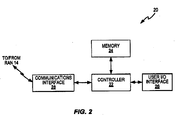
- Fig. 2 provides a functional block diagram illustrating components of an example UE 20 configured to operate according to one or more embodiments of the teachings herein.
- the example UE 20 comprises a programmable controller 22, a memory 24, a user I/O interface 26, and a communications interface 28.
- the user I/O interface 26 provides the components necessary for a user to interact with the UE 20 and its details depend on the intended use and features of the UE 20, which are of no particular concern in this discussion.
- the communications interface 28 comprises a transceiver-a transmitter and receiver-that supports wireless communication with the wireless communication network 10 via an air interface. That is, the communications interface 28 provides for communications with the eNBs 18 in the network 10 over the appropriate air interface.
- the air interface is an LTE-based air interface and the communications interface 28 is configured to operate according to the LTE specifications, e.g., according to Reel-11.
- the memory 24 may comprise any solid-state memory or computer readable media known in the art. Suitable examples of such media include, but are not limited to, ROM, DRAM, FLASH, or a device operable as computer-readable media, such as optical or magnetic media. Of course, working memory such as SRAM also may be Included, e.g., in or accessible to the programmable controller 22.
- the programmable controller 22 also referred to as a "controller circuit" is implemented by one or more microprocessors, hardware, firmware, or any combination thereof, and generally controls the operation and functions of the UE 20 according to the appropriate standards. Such operations and functions include, but are not limited to, communicating with the eNBs 18 as previously noted.
- the programmable controller 22 may be configured to implement logic and instructions stored in memory 24 to perform the device-side method(s) described herein, or any variations or extensions.
- the example UE 20 is configured to generate HARQ feedback according to the teachings herein.
- the UE 20 is configured to generate HARQ feedback for transmission in the network 10 in a manner that allows the UE 20 to reuse the PUCCH Format 3, as used in Rel-10 for CA PUCCH, to address the new HARQ-ACK feedback cases encountered in Rel-11, such as interband TDD CA with different UL/DL configurations on different bands.
- the embodiment represented by this example, and other embodiments disclosed herein, enable reliable and efficient HARQ-ACK feedback for the new HARQ feedback scenarios in Rel-11 that involve CA configurations of serving cells having different UL/DL configurations, such as Rel-11 interband TDD CA without a substantial increase in specification and implementation complexity.
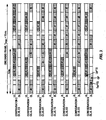
- Fig. 3 depicts seven defined UL/DL configurations for TDD operation of a cell in an LTE network.
- the LTE radio frame is ten milliseconds and each frame includes ten subframes of one millisecond each.
- each LTE subframe includes two slots of one-half millisecond each, and that each slot spans six or seven Orthogonal Frequency Division Multiplexing, OFDM, symbol times, depending on whether normal Cyclic Prefix, CP, or extended CP is being used.
- OFDM Orthogonal Frequency Division Multiplexing
- each UL/DL configuration defines a certain allocation of subframes to DL use and to UL use, and includes "special" subframes having an abbreviated DL part-DwPTS-and an abbreviated UL part-UpPTS.
- a guard portion or GP separates the DL and UL parts of a special subframe.
- LTE Rel-8 specifies that a UE shall provide HARQ feedback for PDSCH decoding in an UL subframe having a predefined position relative to the DL subframes for which the HARQ feedback is being generated.
- association set can be understood as defining the DL subframes that are associated with the HARQ feedback being generated for transmission at UL subframe n .
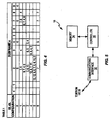
- Table 1 as shown in Fig. 4 illustrates the association sets as specified in TS 36.213 for the different UL/DL configurations shown in Fig. 5 and is a reproduction of Table 10.1.3.1-1 in 3GPP TS 36.213.
- the size of the association set K is denoted by M .
- the parameter M is used to determine the PUCCH resources and signaling for HARQ feedback.
- the parameter M may take on different values in different subframes and in cells of different UL/DL configurations.
- Rel-10 assumes that all aggregated serving cells have the same UL/DL configuration.
- the M parameters are identical across all CCs configured as serving cells for a UE in Rel-10 CA.
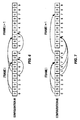
- This arrangement is illustrated in Fig. 6 , which shows two consecutive LTE frames often subframes each, where the subframes in each frame are indexed from 0 to 9.
- UL/DL Configuration #1 arrows pointing from DL subframes 0 and 1 to the UL subframe 7, indicating that the HARQ feedback sent in UL subframe 7 will be for DL subframes 0 and 1.
- Fig. 7 illustrates that, according to Configuration # 2, the UL subframe 2 in the second frame, FRAME i+1, has an association set defined by K - ⁇ 8, 7, 4, 6 ⁇ , which corresponds to carrying possible HARQ feedback for PDSCHs transmitted in subframes 4, 5, 6, and 8 of the preceding frame, FRAME i.
- This arrangement is illustrated as arrows from the associated DL subframes to the UL subframe 2.
- M - 4 for the UL subframe 2 in FRAME i+1 i.e., its association set size equals four and the corresponding HARQ feedback window includes all of the associated DL subframes.
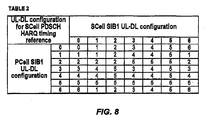
- the SCell PDSCH HARQ timing is determined based on the SCell PDSCH HARQ timing reference configuration number given in Table 2, as shown in Fig. 8 .
- SIB System Information Block
- the SCell PDSCH HARQ timing references given in Table 2 are used when the SCell is scheduled with PDCCH transmitted on the SCell-i.e., a self-scheduling cell. Similar types of SCell PDSCH HARQ timing reference configuration numbers can also be defined in case of cross-scheduled SCell. The teachings presented herein are applicable to such oases. Where the CA configuration of a UE includes three or more serving cells, the SCell PDSCH HARQ timing of each of the serving SCell is determined separately based on the PCell and the concerned SCell UL/DL configurations according to Table 2.
- one or more embodiments of the present invention provide for the advantageous reuse of PUCCH format 3 in Rel-11 CA configuration scenarios involving CCs having different values ofMparameters.
- Such reuse is performed in a manner that is essentially transparent with respect to the CA-PUCCH protocols established for CA PUCCH in Rel-10, or are at least minimally disruptive with respect to those standards, and similarly impose minimal additional complexity on the UE.
- the UE 20, such as shown in the example configuration of Fig. 2 is configured to generate HARQ feedback for transmission in the network 10.
- the communications interface 28 comprises a transceiver for communicating with the network 10 via an air interface; and the controller circuit 22 is operatively associated with the communications Interface 28 and configured to receive a DAI in an UL grant for the UE 20, where the UE 20 is operating according to CA configuration that aggregates a number of TDD cells of the wireless communication network 10 as serving cells for the UE 20.
- CA configuration is a Rel-11 CA configuration where not all of the serving cells have the same UL/DL configuration.
- the value of the DAI indicates the number of DL scheduling assignments associated with the HARQ feedback and it should be reiterated that the DAI is not a cell-specific value.
- the controller circuit 22 is further configured to determine the number of HARQ feedback bits to generate for each serving cell based on the minimum one between the value of the DAI and the size of an association set for the serving cell.
- the association set of each serving cell is defined by the UL/DL configurations of the serving cells and indicates which DL subframes are associated with the HARQ feedback for the serving cell.
- the controller circuit 22 is further configured to generate the HARQ feedback based on generating the determined number of HARQ feedback bits for each of the serving cells.
- the controller circuit 22 is configured to set, for each serving cell, the number equal to the minimum one between the value of the DAI and the size of the association set defined for the serving cell. In another example embodiment, or in the same embodiment but under different conditions, the controller circuit 22 is configured to determine the number of HARQ feedback bits to generate for each serving cell by, for each serving cell, setting the number equal to a multiple of the minimum one between the value of the DAI and the size of the association set defined for the serving cell, and setting the multiple as a function of a transport block transmission mode of the UE 20 for the serving cell.
- the UE 20 in an example configuration sets the multiple to one if the UE 20 is configured with a single transport block transmission mode for the serving cell, and setting the multiple to two if the UE 20 is configured with a two transport block transmission mode for the serving cell.
- controller circuit 22 is configured to perform the above-described determine and generate operations for HARQ feedback generation conditionally, in dependence on subframe configuration values, so that HARQ feedback bits are not generated for any DL subframe having one or more defined special subframe configurations.
- the controller circuit 22 is configured to transmit the HARQ feedback on a PUSCH corresponding to the UL grant. In one example of such a transmission, the controller circuit 22 reuses PUCCH format 3, to report HARQ feedback for a Rel-11 CA configuration involving different UL/DL configurations of the included serving cells.
- a computer program comprises instructions stored in the memory 24 or other computer readable medium, which, when executed by the controller circuit 22, configure the UB 20 to generate HARQ feedback for transmission in the network 10, based on configuring the UE 20 to: (a) receive a DAI in an UL grant for the UE 20, for a case where the UE 20 is operating according to a CA configuration that aggregates a number of TDD cells of the network 10 as serving cells for the UE 20; (b) determine the number of HARQ feedback bits to generate for each serving cell based on the minimum one between the value of the DAI and the size of an association set for the serving cell, where the association set of each serving cell is defined by the UL/DL configurations of the serving cells and indicates which DL subframes are associated with the HARQ feedback for the serving cell; and (c) generate the HARQ feedback based on generating the determined number of HARQ feedback bits for each of the serving cells.
- a given eNB 18 receives HARQ feedback from a given UE 20, as advantageously generated according to the above example(s).
- Fig. 5 illustrates a functional block diagram of an example eNB 18 that is configured to carry out network-side processing according to one or more embodiments taught herein.
- the example eNB 18 comprises a programmable controller 30, a communications interface 32, and a memory 34.
- the communication interface 32 may, for example, comprise a transmitter and receiver configured to operate in an LTE system or other similar system. As is known in the art, the transmitter and receiver are coupled to one or more antennas, which are not shown, and communicate with the UE 20 over the LTE-based air interface.
- Memory 34 may comprise any solid-state memory or computer readable media known in the art. Suitable examples of such media include, but are not limited to, ROM, DRAM, Flash, or a device capable of reading computer-readable media, such as optical or magnetic media.
- the programmable controller 30 controls the operation of the eNB 18 in accordance with the LTE standard.
- the functions of the controller 30 may be implemented by one or more microprocessors, hardware, firmware, or a combination thereof, and include performing the network-side processing described herein.
- the controller 30 may be configured, according to logic and instructions stored in memory 34, to communicate with UEs 20, and to perform the network-side aspects of HARQ-feedback related processing as taught herein.
- the eNB 18 only tries to receive the amount of HARQ-ACK bits that the UE 20 would in total generate according to the device-side teachings herein. This configuration at the eNB 18 thus saves resources on PUSCH when the HARQ feedback is multiplexed with either data or CSI and thus allows a higher code rate on the data on PUSCH.
- the advantageous configuration of the controller circuit 22, as illustrated by way of the above examples, allows, among other things, PUCCH format 3 to be used for Rel-11 CA PUCCH involving serving cells of differing M parameters.
- the controller circuit 22 is configured: to determine the number of HARQ feedback bits to generate for each serving cell based on the minimum one between the value of the DAI and the size of the association set for the serving cell; and generate the HARQ feedback based on generating the determined number of HARQ feedback bits for each of the serving cells.
- the controller circuit 22 is configured to determine the number of HARQ feedback bits to generate for each serving cell by, for each serving cell, setting the number equal to the minimum one between the value of the DAI and the size of the association set defined for the serving cell.
- determining the number of HARQ bits to generate for each serving cell c based on the minimum one between the DAI value and the size of the association set for serving cell c means determining the number as the minimum one between the DAI and association set size for serving cell c.
- the controller circuit 22 is configured to determine the number of HARQ feedback bits to generate for each serving cell c by, for each serving cell c, setting the number equal to a multiple of the minimum one between the value of the DAI and the size of the association set defined for the serving cell.
- the controller circuit 22 sets the multiple as a function of a number of transport blocks that are possible for the configured DL transmission mode for the UE 20, for the serving cell.
- the UE 20 sets the multiple to one if the UE 20 is configured with a single transport block for the DL transmission mode for the serving cell, and sets the multiple to two if the UE 20 is configured with two transport blocks for the DL transmission mode for the serving cell.
- the controller circuit 22 is configured to determine and generate operations conditionally in dependence on subframe configuration values, so that HARQ feedback bits are not generated for any DL subframes having one or more defined special subframe configurations. Refer back to Fig. 3 for an example of UL/DL configuration definitions and special subframe configuration examples.
- the controller circuit 22 is configured to transmit the HARQ feedback, as generated according to the above generation rule, on a PUSCH, according to the UL grant received by the UE 20. That is, in at least one example, a UE 20 uses the above HARQ feedback generation rule to send HARQ feedback for a Rel-11 CA configuration, reusing Rel-10 CA PUCCH format 3.
- the controller circuit 22 received the DAI in the corresponding UL grant.
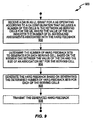
- Fig. 9 illustrates a method 900 for generating HARQ feedback for transmission in the network 10.
- the method 900 may be implemented at the UE 20, for example, via configuration of the controller circuit 22.
- the method 900 includes: receiving (Block 902) a DAI in an UL grant for the UE 20, where the UE 20 is operating according to a CA configuration that aggregates a number of TDD cells of the wireless communication network 10 as serving cells for the UE 20; determining (Block 904) the number of HARQ feedback bits to generate for each serving cell based on the minimum one between the value of the DAI and the size of an association set for the serving cell, where the association set of each serving cell is defined by the UL/DL configurations of the serving cells and indicates which DL subframes are associated with the HARQ feedback for the serving cell; and generating (Block 906) the HARQ feedback based on generating the determined number of HARQ feedback bits for each of the serving cells and transmitting (
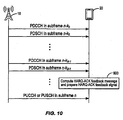
- Fig. 10 is a signal flow diagram illustrating example signaling between the UE 20 and an eNB 18 in the network 10.
- Fig. 10 thus can be understood as presenting an example context relevant to the method 900.
- a UE 20 configured according to one embodiment herein.
- the UB 20 is operating with a Rel-11 CA configuration in which one or more of the DL serving cells for which the HARQ feedback is being generated have different value M parameters.
- UE 20 will transmit the HARQ feedback on a PUSCH corresponding to an UL grant to the UE 20, assume that UL/DL configuration 0 is not in use for any of the serving cells being reported on, and assume that the UE 20 applies spatial HARQ-ACK bundling across multiple codewords within a DL subframe for a given cell, based on performing a logical AND operation of all the corresponding individual HARQ-ACK bits for the DL subframe.
- the UE 20 generates min W DAI UL M c HARQ-ACK bits per serving cell in the CA configuration, where, M c denotes the M parameter for the c-th serving cell and W DAI UL is received by the UE 20 in the UL grant.
- the UE 20 does not apply spatial HARQ-ACK bundling across multiple codewords within a DL subframe.
- the UE 20 For each DL serving cell that is configured with a DL transmission mode that supports a single transport block for the UE 20, the UE 20 generates min W DAI UL M c HARQ-ACK bits.
- the UB 20 For each DL serving cell of the UE 20 that is configured with a DL transmission mode that supports two transport blocks for the UE 20, the UB 20 generates 2 ⁇ min W DAI UL M c HARQ-ACK bits.
- the UE 20 may be further configured to exclude from the generated HARQ-ACK bits those bits corresponding to a special subframe of configuration 0 and 5 for normal cyclic prefix, and 0 and 4 for extended cyclic prefix. If the UE 20 generates more than M c number of HARQ-ACK bits for the c -th DL serving cell-in a case where the UE 20 is not configured to follow the min W DAI UL M c rule-the additional HARQ-ACK bits generated can be set to either NACK or Discontinuous Transmission, DTX.
- the UE 20 may be configured to generate M c HARQ-ACK bits per serving cell c, for a PUCCH format 3 transmission or PUSCH transmission that is not based on an UL grant.
- M c HARQ-ACK bits per serving cell c For a PUSCH transmission that is based on an UL grant, the UE 20 generates min W DAI UL M c HARQ-ACK bits per DL serving cell for which the HARQ feedback is being generated.
- W DAI UL is a value indicating the number of scheduled DL subframes for the UE 20 within the total HARQ-ACK feedback window across all serving cells.
Landscapes
- Engineering & Computer Science (AREA)
- Signal Processing (AREA)
- Computer Networks & Wireless Communication (AREA)
- Mobile Radio Communication Systems (AREA)
- Detection And Prevention Of Errors In Transmission (AREA)
- Transmitters (AREA)
- Amplifiers (AREA)
- Digital Transmission Methods That Use Modulated Carrier Waves (AREA)
Priority Applications (1)
| Application Number | Priority Date | Filing Date | Title |
|---|---|---|---|
| EP16162562.9A EP3082286B1 (en) | 2012-05-10 | 2013-05-08 | Method and apparatus for hybrid automatic repeat request signaling |
Applications Claiming Priority (2)
| Application Number | Priority Date | Filing Date | Title |
|---|---|---|---|
| US201261645476P | 2012-05-10 | 2012-05-10 | |
| PCT/SE2013/000067 WO2013169167A1 (en) | 2012-05-10 | 2013-05-08 | Method and apparatus for hybrid automatic repeat request signaling for carrier aggregation |
Related Child Applications (1)
| Application Number | Title | Priority Date | Filing Date |
|---|---|---|---|
| EP16162562.9A Division EP3082286B1 (en) | 2012-05-10 | 2013-05-08 | Method and apparatus for hybrid automatic repeat request signaling |
Publications (2)
| Publication Number | Publication Date |
|---|---|
| EP2847910A1 EP2847910A1 (en) | 2015-03-18 |
| EP2847910B1 true EP2847910B1 (en) | 2016-03-30 |
Family
ID=48536979
Family Applications (2)
| Application Number | Title | Priority Date | Filing Date |
|---|---|---|---|
| EP13725835.6A Active EP2847910B1 (en) | 2012-05-10 | 2013-05-08 | Method and apparatus for hybrid automatic repeat request signaling for carrier aggregation |
| EP16162562.9A Active EP3082286B1 (en) | 2012-05-10 | 2013-05-08 | Method and apparatus for hybrid automatic repeat request signaling |
Family Applications After (1)
| Application Number | Title | Priority Date | Filing Date |
|---|---|---|---|
| EP16162562.9A Active EP3082286B1 (en) | 2012-05-10 | 2013-05-08 | Method and apparatus for hybrid automatic repeat request signaling |
Country Status (12)
| Country | Link |
|---|---|
| US (2) | US9356760B2 (enExample) |
| EP (2) | EP2847910B1 (enExample) |
| JP (1) | JP6134381B2 (enExample) |
| KR (1) | KR102129635B1 (enExample) |
| CN (2) | CN107612663B (enExample) |
| AU (1) | AU2013260233B2 (enExample) |
| ES (1) | ES2569939T3 (enExample) |
| IN (1) | IN2014DN08962A (enExample) |
| MY (1) | MY182206A (enExample) |
| PL (1) | PL2847910T3 (enExample) |
| PT (1) | PT3082286T (enExample) |
| WO (1) | WO2013169167A1 (enExample) |
Families Citing this family (43)
| Publication number | Priority date | Publication date | Assignee | Title |
|---|---|---|---|---|
| US8953635B2 (en) * | 2012-05-17 | 2015-02-10 | Sharp Kabushiki Kaisha | Devices for sending and receiving feedback information |
| US9749094B2 (en) * | 2012-06-14 | 2017-08-29 | Sharp Kabushiki Kaisha | Devices for sending and receiving feedback information |
| US9407302B2 (en) | 2012-12-03 | 2016-08-02 | Intel Corporation | Communication device, mobile terminal, method for requesting information and method for providing information |
| WO2015042835A1 (en) * | 2013-09-26 | 2015-04-02 | Qualcomm Incorporated | METHOD AND APPARATUS FOR EFFICIENT USAGE OF DAI BITS FOR eIMTA IN LTE |
| WO2015119448A1 (en) * | 2014-02-07 | 2015-08-13 | Samsung Electronics Co., Ltd. | Method and apparatus for allocating resources in carrier aggregation system |
| CN105656605B (zh) * | 2014-11-14 | 2018-12-28 | 普天信息技术有限公司 | 中断harq进程的续传方法和服务器 |
| WO2017028001A1 (en) * | 2015-08-14 | 2017-02-23 | Lenovo Innovations Limited (Hong Kong) | Determining a harq-ack response codebook in a wireless communication system |
| CN106470089B (zh) | 2015-08-14 | 2021-05-11 | 中兴通讯股份有限公司 | 一种上行控制信息的发送方法及装置 |
| CN107295663B (zh) * | 2016-04-01 | 2021-06-29 | 上海诺基亚贝尔股份有限公司 | 获取混合自动重传请求确认信息反馈的方法和装置 |
| US10512065B2 (en) * | 2016-05-31 | 2019-12-17 | Qualcomm Incorporated | Flexible control information reporting |
| EP3632021A1 (en) * | 2017-06-02 | 2020-04-08 | Telefonaktiebolaget LM Ericsson (Publ) | Size indication for feedback signaling |
| KR102532586B1 (ko) | 2017-06-28 | 2023-05-16 | 텔레호낙티에볼라게트 엘엠 에릭슨(피유비엘) | 구성 라디오 노드에 의해 구성되는, harq 코드북에 기초한 사용자 장비 및 수신 라디오 노드의 동작 |
| WO2019028703A1 (zh) * | 2017-08-09 | 2019-02-14 | Oppo广东移动通信有限公司 | 一种反馈应答信息的长度确定方法及相关产品 |
| US10951175B2 (en) | 2018-09-04 | 2021-03-16 | Qorvo Us, Inc. | Envelope tracking circuit and related power amplifier apparatus |
| CN114128137B (zh) | 2019-07-25 | 2026-01-09 | Qorvo美国公司 | 多模式功率管理设备 |
| CN112351504B (zh) * | 2019-08-08 | 2022-04-08 | 大唐移动通信设备有限公司 | 一种harq-ack反馈方法、终端及网络侧设备 |
| CN119728033A (zh) * | 2020-04-10 | 2025-03-28 | 中兴通讯股份有限公司 | Harq-ack码本产生方法 |
| US11736076B2 (en) | 2020-06-10 | 2023-08-22 | Qorvo Us, Inc. | Average power tracking power management circuit |
| US11894767B2 (en) | 2020-07-15 | 2024-02-06 | Qorvo Us, Inc. | Power management circuit operable to reduce rush current |
| US11619957B2 (en) | 2020-08-18 | 2023-04-04 | Qorvo Us, Inc. | Power management circuit operable to reduce energy loss |
| WO2022103496A1 (en) | 2020-11-16 | 2022-05-19 | Qorvo Us, Inc. | Power management circuit operable with multiple supply voltages |
| US11699950B2 (en) | 2020-12-17 | 2023-07-11 | Qorvo Us, Inc. | Fast-switching power management circuit operable to prolong battery life |
| US12101063B2 (en) | 2021-02-19 | 2024-09-24 | Qorvo Us, Inc. | Distributed power management apparatus |
| US12206365B2 (en) | 2021-06-18 | 2025-01-21 | Qorvo Us, Inc. | Voltage ripple suppression in a transmission circuit |
| US11942899B2 (en) | 2021-06-18 | 2024-03-26 | Qorvo Us, Inc. | Envelope tracking voltage correction in a transmission circuit |
| US12057813B2 (en) | 2021-06-18 | 2024-08-06 | Qorvo Us, Inc. | Wideband transmission circuit |
| US12231088B2 (en) | 2021-06-18 | 2025-02-18 | Qorvo Us, Inc. | Wideband transmission circuit |
| US12199577B2 (en) | 2021-06-18 | 2025-01-14 | Qorvo Us, Inc. | Envelope tracking voltage correction in a transmission circuit |
| US12401332B2 (en) | 2021-09-16 | 2025-08-26 | Qorvo Us, Inc. | Phase and amplitude error correction in a transmission circuit |
| US11962338B2 (en) | 2021-09-16 | 2024-04-16 | Qorvo Us, Inc. | Equalization filter calibration in a transceiver circuit |
| US11906992B2 (en) * | 2021-09-16 | 2024-02-20 | Qorvo Us, Inc. | Distributed power management circuit |
| US12323174B2 (en) | 2021-09-16 | 2025-06-03 | Qorvo Us, Inc. | Amplitude-to-phase error correction in a transceiver circuit |
| US12284003B2 (en) | 2021-09-16 | 2025-04-22 | Qorvo Us, Inc. | Phase and amplitude error correction in a transmission circuit |
| US12355407B2 (en) | 2021-10-14 | 2025-07-08 | Qorvo Us, Inc. | Circuit and method for intra-symbol voltage modulation |
| US12381524B2 (en) | 2021-10-14 | 2025-08-05 | Qorvo Us, Inc. | Multi-voltage generation circuit |
| US12237854B2 (en) | 2021-10-14 | 2025-02-25 | Qorvo Us, Inc. | Circuit and method for inter-symbol and intra-symbol voltage modulation |
| US12335073B2 (en) | 2021-11-04 | 2025-06-17 | Qorvo Us, Inc. | Intra-symbol voltage modulation in a wireless communication circuit |
| US12526001B2 (en) | 2022-01-18 | 2026-01-13 | Qorvo Us, Inc. | Linearized front-end operation using information from baseband circuit |
| US12273081B2 (en) | 2022-01-27 | 2025-04-08 | Qorvo Us, Inc. | Voltage ripple reduction in a power management circuit |
| US12549138B1 (en) | 2022-04-12 | 2026-02-10 | Qorvo Us, Inc. | Bandwidth adaptation in a transmission circuit |
| US12489402B2 (en) | 2022-05-31 | 2025-12-02 | Qorvo Us, Inc. | Voltage ripple reduction in a power management circuit |
| US12381525B2 (en) * | 2022-06-28 | 2025-08-05 | Qorvo Us, Inc. | Amplifier system |
| US12456957B2 (en) | 2023-01-20 | 2025-10-28 | Qorvo Us, Inc. | Amplitude and phase error correction in a wireless communication circuit |
Family Cites Families (22)
| Publication number | Priority date | Publication date | Assignee | Title |
|---|---|---|---|---|
| US8345605B2 (en) * | 2008-02-21 | 2013-01-01 | Texas Instruments Incorporated | Transmission of bundled feedback in wireless networks |
| US9350581B2 (en) * | 2009-06-02 | 2016-05-24 | Qualcomm Incorporated | Downlink assignment indicator design for multi-carrier wireless communication |
| US8472357B2 (en) * | 2009-07-16 | 2013-06-25 | Futurewei Technologies, Inc. | System, methods, and apparatus for bidirectional relaying in wireless communications systems |
| RU2517191C2 (ru) * | 2009-08-26 | 2014-05-27 | Интердиджитал Пэйтент Холдингз, Инк. | Способ и устройство для предоставления информации обратной связи для работы с множеством несущих |
| US9184899B2 (en) | 2009-10-14 | 2015-11-10 | Qualcomm Incorporated | Downlink association set for uplink ACK/NACK in time division duplex system |
| ES2902634T3 (es) * | 2009-12-14 | 2022-03-29 | Ericsson Telefon Ab L M | Método y disposición para reconfigurar el mapeo de un campo indicador de portadora a una portadora de componentes |
| JP2013515421A (ja) * | 2009-12-22 | 2013-05-02 | 富士通株式会社 | リレーノードを使用した通信システムにおける伝送方法 |
| KR101750371B1 (ko) * | 2009-12-24 | 2017-07-03 | 삼성전자 주식회사 | 크로스 캐리어 스케쥴링을 지원하는 tdd 통신시스템에서 물리채널의 송수신 타이밍을 정의하는 방법 |
| US9179395B2 (en) * | 2010-01-18 | 2015-11-03 | Qualcomm Incorporated | Method and apparatus for mitigating data loss during autonomous system information reading |
| CN102972078B (zh) * | 2010-06-11 | 2015-11-25 | 华为技术有限公司 | 上行控制信息传输 |
| CN102377548A (zh) * | 2010-08-16 | 2012-03-14 | 夏普株式会社 | 下行harq反馈方法以及相应的基站和用户设备 |
| US9112692B2 (en) * | 2010-08-16 | 2015-08-18 | Qualcomm Incorporated | ACK/NACK transmission for multi-carrier operation |
| AU2011308576C1 (en) | 2010-10-01 | 2016-03-03 | Interdigital Patent Holdings, Inc. | Systems and methods for uplink feedback for high-speed downlink packet access (HSDPA) |
| CN102098151B (zh) * | 2010-12-28 | 2015-08-12 | 中兴通讯股份有限公司 | 一种正确/错误应答消息的发送方法及用户终端 |
| CN102142941B (zh) * | 2011-04-01 | 2016-12-07 | 中兴通讯股份有限公司 | 一种时分双工系统中应答消息的发送方法及系统 |
| CN102916789B (zh) * | 2011-08-05 | 2016-01-13 | 财团法人工业技术研究院 | 时分双工无线通信系统与混合自动重复请求确认回报方法 |
| JP5908080B2 (ja) * | 2011-08-10 | 2016-04-26 | インターデイジタル パテント ホールディングス インコーポレイテッド | マルチサイトスケジューリングに対するアップリンクフィードバック |
| DK2742756T3 (en) | 2011-08-12 | 2015-03-09 | Ericsson Telefon Ab L M | BASIC STATION, USER EQUIPMENT AND METHODS OF TIME MANAGEMENT CONFIGURATION ALLOCATION IN A MULTIPLE CELL TELECOMMUNICATION NETWORK |
| WO2013043025A2 (ko) * | 2011-09-23 | 2013-03-28 | 엘지전자 주식회사 | 제어 정보를 전송하는 방법 및 이를 위한 장치 |
| ES2642682T3 (es) * | 2011-09-23 | 2017-11-17 | Lg Electronics, Inc. | Método para transmitir información de control y aparato para el mismo |
| WO2013051983A1 (en) | 2011-10-03 | 2013-04-11 | Telefonaktiebolaget L M Ericsson (Publ) | Simultaneous reporting of ack/nack and channel-state information using pucch format 3 resources |
| CN109412775B (zh) * | 2012-06-27 | 2021-08-03 | 北京三星通信技术研究有限公司 | 一种发送harq-ack反馈信息的方法 |
-
2013
- 2013-05-08 CN CN201710936942.4A patent/CN107612663B/zh active Active
- 2013-05-08 EP EP13725835.6A patent/EP2847910B1/en active Active
- 2013-05-08 ES ES13725835.6T patent/ES2569939T3/es active Active
- 2013-05-08 KR KR1020147034673A patent/KR102129635B1/ko active Active
- 2013-05-08 AU AU2013260233A patent/AU2013260233B2/en active Active
- 2013-05-08 WO PCT/SE2013/000067 patent/WO2013169167A1/en not_active Ceased
- 2013-05-08 MY MYPI2014703045A patent/MY182206A/en unknown
- 2013-05-08 PL PL13725835.6T patent/PL2847910T3/pl unknown
- 2013-05-08 EP EP16162562.9A patent/EP3082286B1/en active Active
- 2013-05-08 CN CN201380023589.0A patent/CN104272630B/zh active Active
- 2013-05-08 IN IN8962DEN2014 patent/IN2014DN08962A/en unknown
- 2013-05-08 JP JP2015511407A patent/JP6134381B2/ja active Active
- 2013-05-08 US US13/994,466 patent/US9356760B2/en active Active
- 2013-05-08 PT PT16162562T patent/PT3082286T/pt unknown
-
2016
- 2016-05-03 US US15/144,981 patent/US9716569B2/en active Active
Also Published As
| Publication number | Publication date |
|---|---|
| PT3082286T (pt) | 2018-10-29 |
| CN107612663A (zh) | 2018-01-19 |
| EP3082286B1 (en) | 2018-07-11 |
| US20140078981A1 (en) | 2014-03-20 |
| AU2013260233A1 (en) | 2014-11-27 |
| JP2015522971A (ja) | 2015-08-06 |
| WO2013169167A1 (en) | 2013-11-14 |
| MY182206A (en) | 2021-01-18 |
| CN104272630B (zh) | 2017-10-24 |
| ES2569939T3 (es) | 2016-05-13 |
| IN2014DN08962A (enExample) | 2015-05-22 |
| US20160248551A1 (en) | 2016-08-25 |
| KR102129635B1 (ko) | 2020-07-02 |
| CN107612663B (zh) | 2021-01-29 |
| US9356760B2 (en) | 2016-05-31 |
| HK1246522A1 (zh) | 2018-09-07 |
| EP2847910A1 (en) | 2015-03-18 |
| US9716569B2 (en) | 2017-07-25 |
| KR20150009579A (ko) | 2015-01-26 |
| CN104272630A (zh) | 2015-01-07 |
| EP3082286A1 (en) | 2016-10-19 |
| JP6134381B2 (ja) | 2017-05-24 |
| AU2013260233B2 (en) | 2017-04-27 |
| PL2847910T3 (pl) | 2016-09-30 |
Similar Documents
| Publication | Publication Date | Title |
|---|---|---|
| EP3082286B1 (en) | Method and apparatus for hybrid automatic repeat request signaling | |
| EP2847911B1 (en) | Method and apparatus for hybrid automatic repeat request signaling | |
| CN103493417B (zh) | 移动通信系统及其信道发送/接收方法 | |
| KR102376050B1 (ko) | 무선 통신 시스템에서 D2D(Device-to-Device) 통신을 위한 제어 정보 송수신 방법 및 이를 위한 장치 | |
| US10205576B2 (en) | Acknowledgement transmission method and apparatus in wireless communication system | |
| CN104956758A (zh) | 双连通性模式的同时上行链路传输 | |
| WO2018031779A1 (en) | User equipments, base stations and methods | |
| CN104871442B (zh) | 用于无线通信系统中的装置至装置的信号传输方法和装置 | |
| TW201309065A (zh) | 用於上行鏈路功率控制之方法及配置 | |
| US20230396298A1 (en) | Method, user equipment, processing device, storage medium and computer program for transmitting channel state information report, and method and base station for receiving channel state information report | |
| EP3386254B1 (en) | Cross-carrier scheduling methods, and apparatuses | |
| US20250287376A1 (en) | Method for transmitting uplink signal, user equipment, processing device, storage medium, and method and base station for receiving uplink signal | |
| HK1246522B (zh) | 用於针对载波聚合的混合自动重传请求信令的方法和设备 |
Legal Events
| Date | Code | Title | Description |
|---|---|---|---|
| PUAI | Public reference made under article 153(3) epc to a published international application that has entered the european phase |
Free format text: ORIGINAL CODE: 0009012 |
|
| 17P | Request for examination filed |
Effective date: 20141210 |
|
| AK | Designated contracting states |
Kind code of ref document: A1 Designated state(s): AL AT BE BG CH CY CZ DE DK EE ES FI FR GB GR HR HU IE IS IT LI LT LU LV MC MK MT NL NO PL PT RO RS SE SI SK SM TR |
|
| AX | Request for extension of the european patent |
Extension state: BA ME |
|
| GRAP | Despatch of communication of intention to grant a patent |
Free format text: ORIGINAL CODE: EPIDOSNIGR1 |
|
| RIN1 | Information on inventor provided before grant (corrected) |
Inventor name: LARSSON, DANIEL Inventor name: CHENG, JUNG-FU Inventor name: FRENNE, MATTLAS Inventor name: ERIKSSON, ERIK |
|
| DAX | Request for extension of the european patent (deleted) | ||
| INTG | Intention to grant announced |
Effective date: 20150623 |
|
| INTG | Intention to grant announced |
Effective date: 20151125 |
|
| GRAS | Grant fee paid |
Free format text: ORIGINAL CODE: EPIDOSNIGR3 |
|
| GRAA | (expected) grant |
Free format text: ORIGINAL CODE: 0009210 |
|
| AK | Designated contracting states |
Kind code of ref document: B1 Designated state(s): AL AT BE BG CH CY CZ DE DK EE ES FI FR GB GR HR HU IE IS IT LI LT LU LV MC MK MT NL NO PL PT RO RS SE SI SK SM TR |
|
| REG | Reference to a national code |
Ref country code: GB Ref legal event code: FG4D |
|
| REG | Reference to a national code |
Ref country code: CH Ref legal event code: EP |
|
| REG | Reference to a national code |
Ref country code: AT Ref legal event code: REF Ref document number: 786414 Country of ref document: AT Kind code of ref document: T Effective date: 20160415 Ref country code: CH Ref legal event code: NV Representative=s name: ISLER AND PEDRAZZINI AG, CH |
|
| REG | Reference to a national code |
Ref country code: IE Ref legal event code: FG4D |
|
| REG | Reference to a national code |
Ref country code: DE Ref legal event code: R096 Ref document number: 602013005996 Country of ref document: DE |
|
| REG | Reference to a national code |
Ref country code: ES Ref legal event code: FG2A Ref document number: 2569939 Country of ref document: ES Kind code of ref document: T3 Effective date: 20160513 |
|
| REG | Reference to a national code |
Ref country code: FR Ref legal event code: PLFP Year of fee payment: 4 |
|
| REG | Reference to a national code |
Ref country code: RO Ref legal event code: EPE |
|
| REG | Reference to a national code |
Ref country code: NL Ref legal event code: FP |
|
| REG | Reference to a national code |
Ref country code: LT Ref legal event code: MG4D |
|
| PG25 | Lapsed in a contracting state [announced via postgrant information from national office to epo] |
Ref country code: FI Free format text: LAPSE BECAUSE OF FAILURE TO SUBMIT A TRANSLATION OF THE DESCRIPTION OR TO PAY THE FEE WITHIN THE PRESCRIBED TIME-LIMIT Effective date: 20160330 Ref country code: HR Free format text: LAPSE BECAUSE OF FAILURE TO SUBMIT A TRANSLATION OF THE DESCRIPTION OR TO PAY THE FEE WITHIN THE PRESCRIBED TIME-LIMIT Effective date: 20160330 |
|
| REG | Reference to a national code |
Ref country code: NO Ref legal event code: T2 Effective date: 20160330 |
|
| REG | Reference to a national code |
Ref country code: AT Ref legal event code: MK05 Ref document number: 786414 Country of ref document: AT Kind code of ref document: T Effective date: 20160330 |
|
| PG25 | Lapsed in a contracting state [announced via postgrant information from national office to epo] |
Ref country code: SE Free format text: LAPSE BECAUSE OF FAILURE TO SUBMIT A TRANSLATION OF THE DESCRIPTION OR TO PAY THE FEE WITHIN THE PRESCRIBED TIME-LIMIT Effective date: 20160330 Ref country code: LT Free format text: LAPSE BECAUSE OF FAILURE TO SUBMIT A TRANSLATION OF THE DESCRIPTION OR TO PAY THE FEE WITHIN THE PRESCRIBED TIME-LIMIT Effective date: 20160330 Ref country code: BE Free format text: LAPSE BECAUSE OF NON-PAYMENT OF DUE FEES Effective date: 20160531 Ref country code: LV Free format text: LAPSE BECAUSE OF FAILURE TO SUBMIT A TRANSLATION OF THE DESCRIPTION OR TO PAY THE FEE WITHIN THE PRESCRIBED TIME-LIMIT Effective date: 20160330 Ref country code: RS Free format text: LAPSE BECAUSE OF FAILURE TO SUBMIT A TRANSLATION OF THE DESCRIPTION OR TO PAY THE FEE WITHIN THE PRESCRIBED TIME-LIMIT Effective date: 20160330 |
|
| REG | Reference to a national code |
Ref country code: GR Ref legal event code: EP Ref document number: 20160401185 Country of ref document: GR Effective date: 20160729 |
|
| PG25 | Lapsed in a contracting state [announced via postgrant information from national office to epo] |
Ref country code: IS Free format text: LAPSE BECAUSE OF FAILURE TO SUBMIT A TRANSLATION OF THE DESCRIPTION OR TO PAY THE FEE WITHIN THE PRESCRIBED TIME-LIMIT Effective date: 20160730 Ref country code: EE Free format text: LAPSE BECAUSE OF FAILURE TO SUBMIT A TRANSLATION OF THE DESCRIPTION OR TO PAY THE FEE WITHIN THE PRESCRIBED TIME-LIMIT Effective date: 20160330 |
|
| PG25 | Lapsed in a contracting state [announced via postgrant information from national office to epo] |
Ref country code: PT Free format text: LAPSE BECAUSE OF FAILURE TO SUBMIT A TRANSLATION OF THE DESCRIPTION OR TO PAY THE FEE WITHIN THE PRESCRIBED TIME-LIMIT Effective date: 20160801 Ref country code: SK Free format text: LAPSE BECAUSE OF FAILURE TO SUBMIT A TRANSLATION OF THE DESCRIPTION OR TO PAY THE FEE WITHIN THE PRESCRIBED TIME-LIMIT Effective date: 20160330 Ref country code: CZ Free format text: LAPSE BECAUSE OF FAILURE TO SUBMIT A TRANSLATION OF THE DESCRIPTION OR TO PAY THE FEE WITHIN THE PRESCRIBED TIME-LIMIT Effective date: 20160330 Ref country code: AT Free format text: LAPSE BECAUSE OF FAILURE TO SUBMIT A TRANSLATION OF THE DESCRIPTION OR TO PAY THE FEE WITHIN THE PRESCRIBED TIME-LIMIT Effective date: 20160330 Ref country code: SM Free format text: LAPSE BECAUSE OF FAILURE TO SUBMIT A TRANSLATION OF THE DESCRIPTION OR TO PAY THE FEE WITHIN THE PRESCRIBED TIME-LIMIT Effective date: 20160330 |
|
| PG25 | Lapsed in a contracting state [announced via postgrant information from national office to epo] |
Ref country code: LU Free format text: LAPSE BECAUSE OF FAILURE TO SUBMIT A TRANSLATION OF THE DESCRIPTION OR TO PAY THE FEE WITHIN THE PRESCRIBED TIME-LIMIT Effective date: 20160508 Ref country code: BE Free format text: LAPSE BECAUSE OF FAILURE TO SUBMIT A TRANSLATION OF THE DESCRIPTION OR TO PAY THE FEE WITHIN THE PRESCRIBED TIME-LIMIT Effective date: 20160330 |
|
| REG | Reference to a national code |
Ref country code: DE Ref legal event code: R097 Ref document number: 602013005996 Country of ref document: DE |
|
| PG25 | Lapsed in a contracting state [announced via postgrant information from national office to epo] |
Ref country code: DK Free format text: LAPSE BECAUSE OF FAILURE TO SUBMIT A TRANSLATION OF THE DESCRIPTION OR TO PAY THE FEE WITHIN THE PRESCRIBED TIME-LIMIT Effective date: 20160330 |
|
| PLBE | No opposition filed within time limit |
Free format text: ORIGINAL CODE: 0009261 |
|
| STAA | Information on the status of an ep patent application or granted ep patent |
Free format text: STATUS: NO OPPOSITION FILED WITHIN TIME LIMIT |
|
| 26N | No opposition filed |
Effective date: 20170103 |
|
| REG | Reference to a national code |
Ref country code: FR Ref legal event code: PLFP Year of fee payment: 5 |
|
| PG25 | Lapsed in a contracting state [announced via postgrant information from national office to epo] |
Ref country code: SI Free format text: LAPSE BECAUSE OF FAILURE TO SUBMIT A TRANSLATION OF THE DESCRIPTION OR TO PAY THE FEE WITHIN THE PRESCRIBED TIME-LIMIT Effective date: 20160330 |
|
| REG | Reference to a national code |
Ref country code: FR Ref legal event code: PLFP Year of fee payment: 6 |
|
| PG25 | Lapsed in a contracting state [announced via postgrant information from national office to epo] |
Ref country code: HU Free format text: LAPSE BECAUSE OF FAILURE TO SUBMIT A TRANSLATION OF THE DESCRIPTION OR TO PAY THE FEE WITHIN THE PRESCRIBED TIME-LIMIT; INVALID AB INITIO Effective date: 20130508 |
|
| PG25 | Lapsed in a contracting state [announced via postgrant information from national office to epo] |
Ref country code: CY Free format text: LAPSE BECAUSE OF FAILURE TO SUBMIT A TRANSLATION OF THE DESCRIPTION OR TO PAY THE FEE WITHIN THE PRESCRIBED TIME-LIMIT Effective date: 20160330 Ref country code: MK Free format text: LAPSE BECAUSE OF FAILURE TO SUBMIT A TRANSLATION OF THE DESCRIPTION OR TO PAY THE FEE WITHIN THE PRESCRIBED TIME-LIMIT Effective date: 20160330 Ref country code: MC Free format text: LAPSE BECAUSE OF FAILURE TO SUBMIT A TRANSLATION OF THE DESCRIPTION OR TO PAY THE FEE WITHIN THE PRESCRIBED TIME-LIMIT Effective date: 20160330 Ref country code: MT Free format text: LAPSE BECAUSE OF NON-PAYMENT OF DUE FEES Effective date: 20160531 |
|
| PG25 | Lapsed in a contracting state [announced via postgrant information from national office to epo] |
Ref country code: BG Free format text: LAPSE BECAUSE OF FAILURE TO SUBMIT A TRANSLATION OF THE DESCRIPTION OR TO PAY THE FEE WITHIN THE PRESCRIBED TIME-LIMIT Effective date: 20160330 |
|
| PG25 | Lapsed in a contracting state [announced via postgrant information from national office to epo] |
Ref country code: AL Free format text: LAPSE BECAUSE OF FAILURE TO SUBMIT A TRANSLATION OF THE DESCRIPTION OR TO PAY THE FEE WITHIN THE PRESCRIBED TIME-LIMIT Effective date: 20160330 |
|
| P01 | Opt-out of the competence of the unified patent court (upc) registered |
Effective date: 20230523 |
|
| PGFP | Annual fee paid to national office [announced via postgrant information from national office to epo] |
Ref country code: NL Payment date: 20250526 Year of fee payment: 13 |
|
| PGFP | Annual fee paid to national office [announced via postgrant information from national office to epo] |
Ref country code: PL Payment date: 20250418 Year of fee payment: 13 Ref country code: DE Payment date: 20250529 Year of fee payment: 13 |
|
| PGFP | Annual fee paid to national office [announced via postgrant information from national office to epo] |
Ref country code: GB Payment date: 20250527 Year of fee payment: 13 Ref country code: ES Payment date: 20250602 Year of fee payment: 13 |
|
| PGFP | Annual fee paid to national office [announced via postgrant information from national office to epo] |
Ref country code: NO Payment date: 20250530 Year of fee payment: 13 |
|
| PGFP | Annual fee paid to national office [announced via postgrant information from national office to epo] |
Ref country code: IT Payment date: 20250521 Year of fee payment: 13 |
|
| PGFP | Annual fee paid to national office [announced via postgrant information from national office to epo] |
Ref country code: FR Payment date: 20250526 Year of fee payment: 13 |
|
| PGFP | Annual fee paid to national office [announced via postgrant information from national office to epo] |
Ref country code: GR Payment date: 20250528 Year of fee payment: 13 |
|
| PGFP | Annual fee paid to national office [announced via postgrant information from national office to epo] |
Ref country code: CH Payment date: 20250601 Year of fee payment: 13 |
|
| PGFP | Annual fee paid to national office [announced via postgrant information from national office to epo] |
Ref country code: RO Payment date: 20250429 Year of fee payment: 13 |
|
| PGFP | Annual fee paid to national office [announced via postgrant information from national office to epo] |
Ref country code: TR Payment date: 20250428 Year of fee payment: 13 |
|
| PGFP | Annual fee paid to national office [announced via postgrant information from national office to epo] |
Ref country code: IE Payment date: 20250527 Year of fee payment: 13 |