EP2845493A1 - Frozen confectionery product with layered structure and apparatus for manufacturing same - Google Patents
Frozen confectionery product with layered structure and apparatus for manufacturing same Download PDFInfo
- Publication number
- EP2845493A1 EP2845493A1 EP14187178.0A EP14187178A EP2845493A1 EP 2845493 A1 EP2845493 A1 EP 2845493A1 EP 14187178 A EP14187178 A EP 14187178A EP 2845493 A1 EP2845493 A1 EP 2845493A1
- Authority
- EP
- European Patent Office
- Prior art keywords
- chocolate
- ice
- layers
- container
- confectionery product
- Prior art date
- Legal status (The legal status is an assumption and is not a legal conclusion. Google has not performed a legal analysis and makes no representation as to the accuracy of the status listed.)
- Granted
Links
Images
Classifications
-
- A—HUMAN NECESSITIES
- A23—FOODS OR FOODSTUFFS; TREATMENT THEREOF, NOT COVERED BY OTHER CLASSES
- A23G—COCOA; COCOA PRODUCTS, e.g. CHOCOLATE; SUBSTITUTES FOR COCOA OR COCOA PRODUCTS; CONFECTIONERY; CHEWING GUM; ICE-CREAM; PREPARATION THEREOF
- A23G9/00—Frozen sweets, e.g. ice confectionery, ice-cream; Mixtures therefor
- A23G9/44—Frozen sweets, e.g. ice confectionery, ice-cream; Mixtures therefor characterised by shape, structure or physical form
- A23G9/48—Composite products, e.g. layered, laminated, coated, filled
-
- A—HUMAN NECESSITIES
- A23—FOODS OR FOODSTUFFS; TREATMENT THEREOF, NOT COVERED BY OTHER CLASSES
- A23G—COCOA; COCOA PRODUCTS, e.g. CHOCOLATE; SUBSTITUTES FOR COCOA OR COCOA PRODUCTS; CONFECTIONERY; CHEWING GUM; ICE-CREAM; PREPARATION THEREOF
- A23G9/00—Frozen sweets, e.g. ice confectionery, ice-cream; Mixtures therefor
- A23G9/04—Production of frozen sweets, e.g. ice-cream
- A23G9/22—Details, component parts or accessories of apparatus insofar as not peculiar to a single one of the preceding groups
- A23G9/28—Details, component parts or accessories of apparatus insofar as not peculiar to a single one of the preceding groups for portioning or dispensing
-
- A—HUMAN NECESSITIES
- A23—FOODS OR FOODSTUFFS; TREATMENT THEREOF, NOT COVERED BY OTHER CLASSES
- A23G—COCOA; COCOA PRODUCTS, e.g. CHOCOLATE; SUBSTITUTES FOR COCOA OR COCOA PRODUCTS; CONFECTIONERY; CHEWING GUM; ICE-CREAM; PREPARATION THEREOF
- A23G9/00—Frozen sweets, e.g. ice confectionery, ice-cream; Mixtures therefor
- A23G9/04—Production of frozen sweets, e.g. ice-cream
- A23G9/22—Details, component parts or accessories of apparatus insofar as not peculiar to a single one of the preceding groups
- A23G9/28—Details, component parts or accessories of apparatus insofar as not peculiar to a single one of the preceding groups for portioning or dispensing
- A23G9/281—Details, component parts or accessories of apparatus insofar as not peculiar to a single one of the preceding groups for portioning or dispensing at the discharge end of freezing chambers
- A23G9/282—Details, component parts or accessories of apparatus insofar as not peculiar to a single one of the preceding groups for portioning or dispensing at the discharge end of freezing chambers for dispensing multi-flavour ice-creams
-
- A—HUMAN NECESSITIES
- A23—FOODS OR FOODSTUFFS; TREATMENT THEREOF, NOT COVERED BY OTHER CLASSES
- A23G—COCOA; COCOA PRODUCTS, e.g. CHOCOLATE; SUBSTITUTES FOR COCOA OR COCOA PRODUCTS; CONFECTIONERY; CHEWING GUM; ICE-CREAM; PREPARATION THEREOF
- A23G9/00—Frozen sweets, e.g. ice confectionery, ice-cream; Mixtures therefor
- A23G9/04—Production of frozen sweets, e.g. ice-cream
- A23G9/22—Details, component parts or accessories of apparatus insofar as not peculiar to a single one of the preceding groups
- A23G9/28—Details, component parts or accessories of apparatus insofar as not peculiar to a single one of the preceding groups for portioning or dispensing
- A23G9/281—Details, component parts or accessories of apparatus insofar as not peculiar to a single one of the preceding groups for portioning or dispensing at the discharge end of freezing chambers
- A23G9/283—Details, component parts or accessories of apparatus insofar as not peculiar to a single one of the preceding groups for portioning or dispensing at the discharge end of freezing chambers for filling containers with material
-
- A—HUMAN NECESSITIES
- A23—FOODS OR FOODSTUFFS; TREATMENT THEREOF, NOT COVERED BY OTHER CLASSES
- A23G—COCOA; COCOA PRODUCTS, e.g. CHOCOLATE; SUBSTITUTES FOR COCOA OR COCOA PRODUCTS; CONFECTIONERY; CHEWING GUM; ICE-CREAM; PREPARATION THEREOF
- A23G9/00—Frozen sweets, e.g. ice confectionery, ice-cream; Mixtures therefor
- A23G9/04—Production of frozen sweets, e.g. ice-cream
- A23G9/22—Details, component parts or accessories of apparatus insofar as not peculiar to a single one of the preceding groups
- A23G9/28—Details, component parts or accessories of apparatus insofar as not peculiar to a single one of the preceding groups for portioning or dispensing
- A23G9/288—Details, component parts or accessories of apparatus insofar as not peculiar to a single one of the preceding groups for portioning or dispensing for finishing or filling ice-cream cones or other edible containers; Manipulating methods therefor
-
- A—HUMAN NECESSITIES
- A23—FOODS OR FOODSTUFFS; TREATMENT THEREOF, NOT COVERED BY OTHER CLASSES
- A23G—COCOA; COCOA PRODUCTS, e.g. CHOCOLATE; SUBSTITUTES FOR COCOA OR COCOA PRODUCTS; CONFECTIONERY; CHEWING GUM; ICE-CREAM; PREPARATION THEREOF
- A23G2200/00—COCOA; COCOA PRODUCTS, e.g. CHOCOLATE; SUBSTITUTES FOR COCOA OR COCOA PRODUCTS; CONFECTIONERY; CHEWING GUM; ICE-CREAM; PREPARATION THEREOF containing organic compounds, e.g. synthetic flavouring agents
- A23G2200/08—COCOA; COCOA PRODUCTS, e.g. CHOCOLATE; SUBSTITUTES FOR COCOA OR COCOA PRODUCTS; CONFECTIONERY; CHEWING GUM; ICE-CREAM; PREPARATION THEREOF containing organic compounds, e.g. synthetic flavouring agents containing cocoa fat if specifically mentioned or containing products of cocoa fat or containing other fats, e.g. fatty acid, fatty alcohol, their esters, lecithin, paraffins
-
- A—HUMAN NECESSITIES
- A23—FOODS OR FOODSTUFFS; TREATMENT THEREOF, NOT COVERED BY OTHER CLASSES
- A23V—INDEXING SCHEME RELATING TO FOODS, FOODSTUFFS OR NON-ALCOHOLIC BEVERAGES AND LACTIC OR PROPIONIC ACID BACTERIA USED IN FOODSTUFFS OR FOOD PREPARATION
- A23V2002/00—Food compositions, function of food ingredients or processes for food or foodstuffs
Definitions
- the present invention relates to a frozen confectionery product with a layered structure and to a method and an apparatus for manufacturing the same.
- US 5,135,767 discloses to make a cup or a cone having a flaky texture, superposed ribbons of ice cream and chocolate are extruded into a mold in the form of spirals by means of an extrusion assembly comprising a flat extrusion tube and a spray tube.
- the extrusion assembly receives a spinning movement resulting from an eccentric rotational movement and an ascending movement relative to the mold.
- US 5,603,965 relates to the production of cakes of ice confectionery containing integrated decorative layers of crisp material such as chocolate.
- the ice cream is horizontally extruded, and chocolate is sprayed on an ice cream layer.
- EP 0 221 757 A2 discloses an ice cream product containing chocolate flakes.
- the ice cream is extruded from a nozzle into a cone or a mold, and chocolate is ejected with high speed towards a stream of ice cream issued from the nozzle so as to penetrate the ice cream and form a thin strip like layer therein. It is not possible to obtain a regular, layered structure with such a method.
- the object of the present invention to provide an apparatus and a method for making frozen confectionery products which overcomes the drawbacks mentioned above. It is furthermore the object of the present invention to provide a novel frozen confectionery product, comprising very thin and crispy chocolate layers which are regularly distributed in the product.
- the apparatus for making a frozen confectionery product by vertical extrusion comprises:
- the outlet ports have elongated cross-sections, and a chocolate port extends next to an ice cream port in parallel thereto, so that a chocolate stripe is "painted" on the ice cream strip which is extruded.
- each outlet port is connected to its own chocolate passage with its own inlet port, and the chocolate flow is thus metered separately for each outlet port.
- This avoids clumping of chocolate in one of the circuits.
- this gives the possibility of making a product having different crunchy layers, for example different types of chocolate or other layers.
- one common inlet port leads through a chocolate passage to two outlet ports. This solution still allows it to obtain two helices in one step, but is less complex.
- the term "chocolate” used in the present application should comprise any composition similar to a recipe containing cocoa or chocolate which can form crunchy layers in an ice cream product.
- the elongated cross section of the outlet ports can have any shape, in particular it can be rectangular, but also curved.
- the apparatus comprises a fixed body, and the nozzle can be rotated with respect to said fixed body.
- the inlet ports are then provided in the fixed body and the outlet ports in the rotatable nozzle.
- the rotatable nozzle and the fixed body are coaxial to each other.
- the inlet ports can thus be distributed around the apparatus and be connected to the outlet ports through annular passages.
- the apparatus and the nozzle can remain static, and the container is rotated during extrusion.
- the apparatus may comprise a motor for a vertical movement so that it can be moved away from the container while filling it.
- the container can be moved away from the apparatus and the apparatus remains static.
- two outlet ports of the chocolate passages are arranged symmetrically with respect to a central ice-cream outlet port on opposite sides thereof. This makes it possible to extrude a stripe of ice cream being "painted" with chocolate on both sides, so that one obtains two chocolate helixes which will start and end on different sides of the container.
- the chocolate outlet ports can be laterally offset with respect to each other, and by designing the geometry of the outlet ports adequately, one can obtain a product with two chocolate helixes, which will never be in contact with each other, but always be separated by the ice cream layer.
- outlet ports are possible and fall within the scope of the present invention. It is for example possible to use several ice cream outlet ports, for instance three ice cream outlet ports arranged in a star-like conformation, or four ice cream outlet ports arranged in a cross-like conformation. For each ice cream outlet port one can provide a chocolate outlet port "painting" a chocolate stripe on the extruded ice cream stripe. This allows it to create a multitude of interesting products combining different ice cream flavours, ice cream and sorbet, etc. The chocolate can also for some of the outlet ports be replaced by another, either crunchy or softer material such as a caramel, a fruit sauce, etc..
- the chocolate passage or passages are separated and insulated from the ice-cream passage and join the ice-cream passage only at the outlet port. This avoids that the liquid chocolate is chilled by the ice cream which could lead to undesired clumping of the chocolate.
- the chocolate can be maintained at a temperature above its melting point and solidifies only after the extrusion when it is in direct contact with the ice cream and forms the desired layer. It is thus possible to obtain very thin and regular chocolate layers.
- the apparatus can further comprise a hot air passage having an inlet port and an outlet port, said outlet port being directed towards the chocolate passage such that hot air exiting said outlet port heats up the chocolate passage.
- the chocolate is thus kept at a temperature which is above its melting temperature so that it remains liquid and solidifies only after extrusion.
- the chocolate passage or passages can at least partly be formed by flexible hoses.
- the ice-cream passage has two ice-cream inlet ports both leading into the passage before the outlet port. It is thus possible to use two different ice cream flavours. Preferably one will chose two ice cream flavours having a different appearance, so that the final product will not only contain chocolate layers but will also have a layered structure with two different types of ice cream alternating. This also allows giving an appealing appearance to the top of the product, which may have a swirled decoration due to the two visually distinctive types of ice cream extruded through the ice cream outlet.
- each of the chocolate outlet ports corresponds to less than half of the longitudinal diameter of the ice cream outlet port.
- the transversal diameter of the chocolate outlets will be much smaller than the transversal diameter of the ice cream outlet.
- the ice cream outlet may have a longitudinal diameter corresponding basically to the diameter of a tub to be filled, while the chocolate outlets would have a smaller longitudinal diameter.
- the method for manufacturing a frozen confectionery product uses an apparatus as described above. Ice-cream and chocolate are simultaneously extruded through the respective outlet ports into a container, while the nozzle and the container are rotated with respect to each other. At the same time the distance between the container and the nozzle is increased, either by moving the apparatus upwards in a vertical movement, or by moving the container downwards.
- two different types of ice cream having a visually different appearance are fed to the apparatus through two ice cream inlets so as to obtain a layered ice cream structure. It also possible to use three or more different types of frozen confectionery, e.g. different ice cream flavours, and to extrude them through separate or combined ice cream outlet ports.
- the frozen confectionery product comprises a container such as a tub or a cup, preferably in an individual portion size.
- the container can also be an edible container such as a wafer cup or cone.
- the product furthermore comprises an aerated frozen confection extruded into the container, wherein a plurality of thin chocolate patterns are provided in the aerated frozen confection.
- the frozen confection can be any extrudable, i.e. relatively soft, frozen confection such as ice cream, sherbet, sorbet, or frozen yoghurt.
- the chocolate patterns have the form of at least one, preferably two or more, substantially helical chocolate layers extending across the complete height of the container and forming substantially annular parallel chocolate layers.
- “Extending across the complete height of the container” means that the lower end of the helical chocolate layer is situated close to the bottom of the container, although it does of course not necessarily have to touch the bottom. In the same way the upper end of the chocolate layer lies close to the top of the frozen confection, although it might not be visible at the surface.
- the helical chocolate structure appears as a plurality of annular layers which are substantially parallel to each other and to the bottom of the container.
- the top of the frozen confection may not be flat but rather conical, i.e. the cross section of the frozen confection when cut vertically may be tapered towards the top of the product. It is particularly attractive to have a spiral-like top with the helical chocolate structure being visible from the top. It is rather difficult to finish a traditional ice cream cone with a spiral-like top being extruded, as the shape retention of the extrudable frozen confection is in general not sufficient to achieve a form-stable shape.
- the chocolate layers provide additional shape retention to the ice confection in such a way that is now easier to obtain a stable, i.e. freestanding conical or spiral structure protruding from the container.
- the invention therefore opens up new possibilities of obtaining shaped tops, in particular for wafer cones, but also for transparent cups or any other type of container, the product thus being visually more attractive for the consumer.
- the shaping effect can also be advantageously used when combining a frozen confection having relatively high shape retention on the outside of the product with a softer frozen confection, having a lower shape retention, e.g. a sorbet, on the inside.
- the chocolate forming the layers is a real chocolate in the sense of the Directive 2000/36/EC of the European Parliament and of the Council of 23 June 2000 relating to cocoa and chocolate products intended for human consumption, i.e. it contains little or no vegetable fat except for the cocoa butter which is naturally present in chocolate. Compared to the frequently used and cheaper fat-based materials, real chocolate has a better taste and a higher quality. As cocoa butter has a melting point of 34°-38°C, the melting point of the chocolate forming the layers is lying above 34°C.
- the method and apparatus of the present invention make it possible to produce very thin, regular and crunchy layers of real chocolate.
- the layers have a thickness of between 500 ⁇ m and 3500 ⁇ m, more preferably between 800 ⁇ m and 3500 ⁇ m, even more preferably between 900 ⁇ m and 2500 ⁇ m. Below a thickness of 500 ⁇ m the layers are not perceived as crunchy anymore. Below a thickness of 900 ⁇ m the crunchiness is getting less perceivable but may still be acceptable.
- the layers Preferably, for at least 80%, preferably 90% of the surface of the layers, the layers have a thickness between 800 ⁇ m and 1800 ⁇ m with an average thickness lying around 1300 ⁇ m.
- real chocolate as explained above, consumers perceive the layers as crunchy, but not too hard to be spooned for a layer thickness lying in this range. The same perception may be achieved with a different layer thickness for different chocolate recipes.
- the distance between two parallel chocolate layers lies between 4 and 10mm, ideally between 8 and 9mm for a cup or tub.
- This distance leads to a well balanced product.
- the ice cream layers may be thinner, for example between 4 to 6mm.
- the aerated frozen confection has itself a helically layered structure formed by at least two visually different types of aerated frozen confection alternating with the chocolate layers.
- Such a product is not only visually more appealing, but the use of two different types of aerated frozen confection, e.g. two different ice cream flavours, gives a lot of possibilities to create interesting dessert compositions.
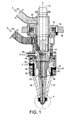
- Fig. 1 shows a cross section of an apparatus for making a frozen confectionery product according to a preferred embodiment of the present invention.
- a fixed body 12 and, a rotatable nozzle 14 are mounted concentrically on a central rod 10.
- the nozzle 14 can be rotated with respect to the fixed body 12 around the longitudinal axis X by a gear 16.
- the whole apparatus is held in a frame 18 and can be moved upwards and downwards.
- An ice-cream passage with an upper part 20 and a lower part 22 extends along the longitudinal axis X of the apparatus through the fixed body 12 and the rotatable nozzle 14.
- the passage features two inlet ports 24, 26 through which two different types of ice cream can be fed to the apparatus (direction of arrows F, G).
- a first inlet port 24 lies above a second inlet port 26, and when the apparatus is in use, the tubular upper part 20 of the ice cream passage is only filled with the ice cream fed thereto via the first inlet port 24.
- the ice cream fed to the apparatus via the second inlet port 26 joins the ice cream passage in a lower part 22 where it is no longer tubular, but cylindrical.
- the apparatus is furthermore provided with two chocolate passages 30, 32 with respectively an inlet port 34, 36 and an outlet port 38, 38' (cf. Figs. 1A and 2 ).
- the inlet ports 34, 36 are provided in the fixed body, below the ice cream inlet ports, while the outlet ports 38, 38' are provided in the rotatable nozzle.
- the chocolate is then led via flexible hoses 35, 37 towards the outlet ports 38, 38'.
- the flexible hoses 35, 37 do not touch the part of the nozzle 14 containing the lower part of the ice cream passage 22, and the liquid and warm chocolate is thus insulated from the ice cream.
- the chocolate passages 30, 32 and the flexible chocolate hoses 35, 37 can furthermore be heated up by hot air that is blown in through an air inlet port 50 (direction of arrow D) to flow through hot air passage 56 and towards hot air outlet port 52, 54.
- the chocolate supply can be metered individually and there is no preferred circuit. This avoids clumping of chocolate in the circuit or at the outlet ports.
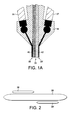
- the outlet ports 28, 38, 38' have elongated cross-sections and extend in parallel, with the outlet ports 38, 38' of the chocolate passages 30, 32 being arranged symmetrically with respect to the central ice-cream outlet port 28.
- the schematical drawing of Fig. 2 is not on scale, one can see that the ice cream outlet port 28 is about twice as large as the chocolate outlet ports 38, 38'.
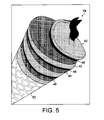
- the chocolate layers 44, 46 have preferably a thickness between 800 ⁇ m and 1800 ⁇ m at least for 80% or 90% of the layer surface with an average thickness lying around 1300 ⁇ m.
- the ideal thickness preferred by consumers seeking crunchiness can vary depending on the chocolate recipe.
- a dark chocolate not containing any other vegetable fat than cocoa butter was used.
- Fig. 5 shows an alternative embodiment, where a wafer cone 62 is used as a container instead of a tub or cup.
- the frozen confection is filled into the wafer cone 62 and continues on top thereof in a shape which is a prolongation of the conical wafer.
- the chocolate layers 46 are partly visible from the outside. Instead of ending in a conventional flat top or ball top, the uppermost part of the frozen confection has a spiral shape 64 which makes the ice cream or sorbet layers 40, 42 and the chocolate layers 46 appear as twirl when looked at from above.
- the spiral shape at the end can be achieved by adjusting the speed at which the nozzle 14 is lifted and the rotational speed of the nozzle. With the same apparatus, depending on the choice of these parameters and the timing of the opening of the valves, it is possible to achieve different shapes from a flat top to a very "steep" spiral top.
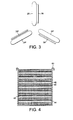
- Fig. 3 shows an alternative design of the outlet ports.
- Three ice cream outlet ports 28, 28', 28" having an elongated cross section are arranged with an angle of 120° in between them in a star-like manner.
- This design can be used with an apparatus corresponding basically to the one shown in Fig. 1 , but being provided with three ice cream passages and three ice cream inlets as well as with three chocolate passages.
- a chocolate stripe is painted on the ice cream stripe extruded through the associated ice cream outlet port 28, 28', 28".
- chocolate or a fat-based chocolate coating one can extrude caramel or another softer material through one of the chocolate outlet ports, so that two chocolate layers and one caramel layer alternate in the product.
Landscapes
- Life Sciences & Earth Sciences (AREA)
- Chemical & Material Sciences (AREA)
- Engineering & Computer Science (AREA)
- Food Science & Technology (AREA)
- Polymers & Plastics (AREA)
- Confectionery (AREA)
- Manufacturing And Processing Devices For Dough (AREA)
Abstract
- a nozzle (14)
- at least one ice-cream passage (20,22) with at least one inlet port (24, 16) and an outlet port (28), and
- at least one chocolate passage (30, 32) with respectively an inlet port (34, 36) and an outlet port (38, 38').
Description
- The present invention relates to a frozen confectionery product with a layered structure and to a method and an apparatus for manufacturing the same.
- Various frozen confectionery products containing inclusions or crispy layers of a fat-based coating exist.
-
US 5,135,767 discloses to make a cup or a cone having a flaky texture, superposed ribbons of ice cream and chocolate are extruded into a mold in the form of spirals by means of an extrusion assembly comprising a flat extrusion tube and a spray tube. The extrusion assembly receives a spinning movement resulting from an eccentric rotational movement and an ascending movement relative to the mold. - However, as the chocolate is sprayed onto the ice cream, it is very difficult to control the thickness of the chocolate layers and virtually impossible to obtain regular crunchy layers of a desired thickness. Furthermore the spraying mechanism is relatively expensive.
- In
US 5,283,070 a layered cone with alternating layers of chocolate and ice cream is made by extruding an ice cream into a vertically descending helix rotating about a vertical axis and having spaced flights which define passages therebetween the helix. Chocolate is sprayed into these passages of the extruded helix. Here also it is very difficult to control the thickness and crunchiness of the chocolate layers, and the apparatus is rather expensive due to the spraying process. -
US 5,603,965 relates to the production of cakes of ice confectionery containing integrated decorative layers of crisp material such as chocolate. The ice cream is horizontally extruded, and chocolate is sprayed on an ice cream layer. Here also it is difficult and costly to control the thickness of the chocolate layers. -
EP 0 221 757 A2 discloses an ice cream product containing chocolate flakes. The ice cream is extruded from a nozzle into a cone or a mold, and chocolate is ejected with high speed towards a stream of ice cream issued from the nozzle so as to penetrate the ice cream and form a thin strip like layer therein. It is not possible to obtain a regular, layered structure with such a method. - Other methods for producing layered ice cream products are known from prior art where the chocolate stays relatively long in contact with the ice cream, e.g. using a chocolate nozzle rotating inside an ice cream flow. These methods do not work with real chocolate, which has a higher melting point than fat-based coatings and will thus quickly clump.
- It is thus the object of the present invention to provide an apparatus and a method for making frozen confectionery products which overcomes the drawbacks mentioned above. It is furthermore the object of the present invention to provide a novel frozen confectionery product, comprising very thin and crispy chocolate layers which are regularly distributed in the product.
- This object is achieved by the apparatus according to claim 1, the method according to claim 8 and the frozen confectionery product according to
claim 10. - According to the invention, the apparatus for making a frozen confectionery product by vertical extrusion comprises:
- a nozzle,
- at least one ice-cream passage with at least one inlet port and an outlet port, and
- at least one chocolate passage with an inlet port and an outlet port.
- The outlet ports have elongated cross-sections, and a chocolate port extends next to an ice cream port in parallel thereto, so that a chocolate stripe is "painted" on the ice cream strip which is extruded. When the nozzle and the container are rotated with respect to each other, annular or helical chocolate layers separated by ice cream layers are formed.
- According to a preferred embodiment there are at least two chocolate outlet ports.
- This makes it possible to obtain two chocolate helixes in one step. According to a preferred embodiment of the invention, at least two chocolate passages with respectively an inlet port and an outlet port are provided, i.e. each outlet port is connected to its own chocolate passage with its own inlet port, and the chocolate flow is thus metered separately for each outlet port. This avoids clumping of chocolate in one of the circuits. Furthermore this gives the possibility of making a product having different crunchy layers, for example different types of chocolate or other layers.
- According to another preferred embodiment of the invention, one common inlet port leads through a chocolate passage to two outlet ports. This solution still allows it to obtain two helices in one step, but is less complex.
- It should be noted that, where nothing else is specified, the term "chocolate" used in the present application should comprise any composition similar to a recipe containing cocoa or chocolate which can form crunchy layers in an ice cream product. Furthermore, it should be noted that the elongated cross section of the outlet ports can have any shape, in particular it can be rectangular, but also curved.
- According to a preferred embodiment of the invention, the apparatus comprises a fixed body, and the nozzle can be rotated with respect to said fixed body. The inlet ports are then provided in the fixed body and the outlet ports in the rotatable nozzle. Preferably the rotatable nozzle and the fixed body are coaxial to each other. The inlet ports can thus be distributed around the apparatus and be connected to the outlet ports through annular passages.
- Alternatively, the apparatus and the nozzle can remain static, and the container is rotated during extrusion.
- In the same way, the apparatus may comprise a motor for a vertical movement so that it can be moved away from the container while filling it. Alternatively, the container can be moved away from the apparatus and the apparatus remains static.
- According to a preferred embodiment of the invention, two outlet ports of the chocolate passages are arranged symmetrically with respect to a central ice-cream outlet port on opposite sides thereof. This makes it possible to extrude a stripe of ice cream being "painted" with chocolate on both sides, so that one obtains two chocolate helixes which will start and end on different sides of the container. The chocolate outlet ports can be laterally offset with respect to each other, and by designing the geometry of the outlet ports adequately, one can obtain a product with two chocolate helixes, which will never be in contact with each other, but always be separated by the ice cream layer.
- Various other geometries of the outlet ports are possible and fall within the scope of the present invention. It is for example possible to use several ice cream outlet ports, for instance three ice cream outlet ports arranged in a star-like conformation, or four ice cream outlet ports arranged in a cross-like conformation. For each ice cream outlet port one can provide a chocolate outlet port "painting" a chocolate stripe on the extruded ice cream stripe. This allows it to create a multitude of interesting products combining different ice cream flavours, ice cream and sorbet, etc. The chocolate can also for some of the outlet ports be replaced by another, either crunchy or softer material such as a caramel, a fruit sauce, etc..
- According to a preferred embodiment of the invention, the chocolate passage or passages are separated and insulated from the ice-cream passage and join the ice-cream passage only at the outlet port. This avoids that the liquid chocolate is chilled by the ice cream which could lead to undesired clumping of the chocolate. The chocolate can be maintained at a temperature above its melting point and solidifies only after the extrusion when it is in direct contact with the ice cream and forms the desired layer. It is thus possible to obtain very thin and regular chocolate layers.
- The apparatus can further comprise a hot air passage having an inlet port and an outlet port, said outlet port being directed towards the chocolate passage such that hot air exiting said outlet port heats up the chocolate passage. The chocolate is thus kept at a temperature which is above its melting temperature so that it remains liquid and solidifies only after extrusion.
- The chocolate passage or passages can at least partly be formed by flexible hoses.
- According to a preferred embodiment of the invention, the ice-cream passage has two ice-cream inlet ports both leading into the passage before the outlet port. It is thus possible to use two different ice cream flavours. Preferably one will chose two ice cream flavours having a different appearance, so that the final product will not only contain chocolate layers but will also have a layered structure with two different types of ice cream alternating. This also allows giving an appealing appearance to the top of the product, which may have a swirled decoration due to the two visually distinctive types of ice cream extruded through the ice cream outlet.
- Preferably the longitudinal diameter of each of the chocolate outlet ports corresponds to less than half of the longitudinal diameter of the ice cream outlet port. Furthermore, in order to obtain thin layers of chocolate separating thicker layers of ice cream, the transversal diameter of the chocolate outlets will be much smaller than the transversal diameter of the ice cream outlet. Typically the ice cream outlet may have a longitudinal diameter corresponding basically to the diameter of a tub to be filled, while the chocolate outlets would have a smaller longitudinal diameter.
- The method for manufacturing a frozen confectionery product uses an apparatus as described above. Ice-cream and chocolate are simultaneously extruded through the respective outlet ports into a container, while the nozzle and the container are rotated with respect to each other. At the same time the distance between the container and the nozzle is increased, either by moving the apparatus upwards in a vertical movement, or by moving the container downwards.
- As already mentioned above, according to a preferred embodiment of the invention, two different types of ice cream having a visually different appearance are fed to the apparatus through two ice cream inlets so as to obtain a layered ice cream structure. It also possible to use three or more different types of frozen confectionery, e.g. different ice cream flavours, and to extrude them through separate or combined ice cream outlet ports.
- The frozen confectionery product according to invention comprises a container such as a tub or a cup, preferably in an individual portion size. The container can also be an edible container such as a wafer cup or cone. The product furthermore comprises an aerated frozen confection extruded into the container, wherein a plurality of thin chocolate patterns are provided in the aerated frozen confection. The frozen confection can be any extrudable, i.e. relatively soft, frozen confection such as ice cream, sherbet, sorbet, or frozen yoghurt. The chocolate patterns have the form of at least one, preferably two or more, substantially helical chocolate layers extending across the complete height of the container and forming substantially annular parallel chocolate layers. "Extending across the complete height of the container" means that the lower end of the helical chocolate layer is situated close to the bottom of the container, although it does of course not necessarily have to touch the bottom. In the same way the upper end of the chocolate layer lies close to the top of the frozen confection, although it might not be visible at the surface. When the frozen confection is cut vertically, the helical chocolate structure appears as a plurality of annular layers which are substantially parallel to each other and to the bottom of the container.
- The top of the frozen confection may not be flat but rather conical, i.e. the cross section of the frozen confection when cut vertically may be tapered towards the top of the product. It is particularly attractive to have a spiral-like top with the helical chocolate structure being visible from the top. It is rather difficult to finish a traditional ice cream cone with a spiral-like top being extruded, as the shape retention of the extrudable frozen confection is in general not sufficient to achieve a form-stable shape. The chocolate layers provide additional shape retention to the ice confection in such a way that is now easier to obtain a stable, i.e. freestanding conical or spiral structure protruding from the container. The invention therefore opens up new possibilities of obtaining shaped tops, in particular for wafer cones, but also for transparent cups or any other type of container, the product thus being visually more attractive for the consumer.
- It should be noted that the shaping effect can also be advantageously used when combining a frozen confection having relatively high shape retention on the outside of the product with a softer frozen confection, having a lower shape retention, e.g. a sorbet, on the inside.
- Preferably the chocolate forming the layers is a real chocolate in the sense of the Directive 2000/36/EC of the European Parliament and of the Council of 23 June 2000 relating to cocoa and chocolate products intended for human consumption, i.e. it contains little or no vegetable fat except for the cocoa butter which is naturally present in chocolate. Compared to the frequently used and cheaper fat-based materials, real chocolate has a better taste and a higher quality. As cocoa butter has a melting point of 34°-38°C, the melting point of the chocolate forming the layers is lying above 34°C. This is relatively high compared to fat-based materials which are frequently used for forming inclusions or crunchy layers in ice confections, and which have a melting point of around 24°C (corresponding to the melting point of coconut oil which is often added in fat-based chocolate compositions used in ice confectionery products). A layer of real chocolate having the same thickness will be perceived as more crunchy and crispy than a similar layer of fat-based material. However, due the high melting point, it is more difficult to work with real chocolate when making ice confectionery products, as clumping and forming of excessively thick layers is frequent.
- The method and apparatus of the present invention make it possible to produce very thin, regular and crunchy layers of real chocolate.
- Preferably the layers have a thickness of between 500µm and 3500µm, more preferably between 800µm and 3500µm, even more preferably between 900µm and 2500µm. Below a thickness of 500µm the layers are not perceived as crunchy anymore. Below a thickness of 900µm the crunchiness is getting less perceivable but may still be acceptable. Preferably, for at least 80%, preferably 90% of the surface of the layers, the layers have a thickness between 800µm and 1800µm with an average thickness lying around 1300 µm. When using real chocolate as explained above, consumers perceive the layers as crunchy, but not too hard to be spooned for a layer thickness lying in this range. The same perception may be achieved with a different layer thickness for different chocolate recipes.
- Preferably the distance between two parallel chocolate layers lies between 4 and 10mm, ideally between 8 and 9mm for a cup or tub. This means that for example for an ice cream cup having a height of 40-45mm, 4 to 6 layers of chocolate will be present, while 8 to 12 layers would be present in a cup having a height of 80-90mm. This distance leads to a well balanced product. In a cone the ice cream layers may be thinner, for example between 4 to 6mm. One can thus obtain a cone of a standard format having 4 to 6 chocolate layers in the lower "base" part and one or two additional layers in the top part which can have a spiral shape.
- According to a preferred embodiment of the invention, the aerated frozen confection has itself a helically layered structure formed by at least two visually different types of aerated frozen confection alternating with the chocolate layers. Such a product is not only visually more appealing, but the use of two different types of aerated frozen confection, e.g. two different ice cream flavours, gives a lot of possibilities to create interesting dessert compositions.
- The present invention is further described hereinbelow referring to the accompanying drawings which illustrate one preferred embodiment of the invention.
-
Figure 1 shows a cross-section of an apparatus according to the invention -
Figure 1A shows an enlarged detail designated by "A" inFig. 1 -
Figure 2 is a schematical drawing of the outlet ports of the apparatus shown inFig. 1 -
Figure 3 is a schematical drawing of an alternative design of the outlet ports for an apparatus according to the invention -
Figure 4 shows a cross-section of a frozen ice confectionery product according to the invention. -
Figure 5 shows another frozen confectionery product according to the invention. -
Fig. 1 shows a cross section of an apparatus for making a frozen confectionery product according to a preferred embodiment of the present invention. A fixedbody 12 and, arotatable nozzle 14 are mounted concentrically on acentral rod 10. Thenozzle 14 can be rotated with respect to the fixedbody 12 around the longitudinal axis X by agear 16. The whole apparatus is held in aframe 18 and can be moved upwards and downwards. - An ice-cream passage with an
upper part 20 and alower part 22 extends along the longitudinal axis X of the apparatus through the fixedbody 12 and therotatable nozzle 14. The passage features twoinlet ports first inlet port 24 lies above asecond inlet port 26, and when the apparatus is in use, the tubularupper part 20 of the ice cream passage is only filled with the ice cream fed thereto via thefirst inlet port 24. The ice cream fed to the apparatus via thesecond inlet port 26 joins the ice cream passage in alower part 22 where it is no longer tubular, but cylindrical. The two types of ice cream fed into the apparatus throughinlet ports lower part 22 of the ice cream passage towards an ice cream outlet port 28 (cf.Figs. 1A and 2 ). - The apparatus is furthermore provided with two
chocolate passages inlet port outlet port 38, 38' (cf.Figs. 1A and 2 ). Here also, theinlet ports outlet ports 38, 38' are provided in the rotatable nozzle. While a first part of the chocolate passages is integrated in a body of therotating nozzle 14, the chocolate is then led viaflexible hoses outlet ports 38, 38'. Theflexible hoses nozzle 14 containing the lower part of theice cream passage 22, and the liquid and warm chocolate is thus insulated from the ice cream. Thechocolate passages flexible chocolate hoses hot air passage 56 and towards hotair outlet port chocolate outlet ports 38, 38' through twodifferent inlet ports - As it can be seen in
Fig. 2 , theoutlet ports outlet ports 38, 38' of thechocolate passages cream outlet port 28. Although the schematical drawing ofFig. 2 is not on scale, one can see that the icecream outlet port 28 is about twice as large as thechocolate outlet ports 38, 38'. - When the
nozzle 14 and thus theoutlet ports Fig. 3 showing a cross section through the final product) into acylindrical tub 60. By means of the twochocolate outlet ports 38, 38', twochocolate helixes ice cream outlet ports - These chocolate helixes appear as thin, basically annular or disc-like chocolate layers in the final product, as it can be seen in the cross section of
Fig. 4 . The chocolate layers 44, 46 have preferably a thickness between 800µm and 1800µm at least for 80% or 90% of the layer surface with an average thickness lying around 1300 µm. As already mentioned above, the ideal thickness preferred by consumers seeking crunchiness can vary depending on the chocolate recipe. For the embodiment shown inFig. 4 , a dark chocolate not containing any other vegetable fat than cocoa butter was used. -
Fig. 5 shows an alternative embodiment, where awafer cone 62 is used as a container instead of a tub or cup. As usual, the frozen confection is filled into thewafer cone 62 and continues on top thereof in a shape which is a prolongation of the conical wafer. The chocolate layers 46 are partly visible from the outside. Instead of ending in a conventional flat top or ball top, the uppermost part of the frozen confection has aspiral shape 64 which makes the ice cream or sorbet layers 40, 42 and the chocolate layers 46 appear as twirl when looked at from above. - The spiral shape at the end can be achieved by adjusting the speed at which the
nozzle 14 is lifted and the rotational speed of the nozzle. With the same apparatus, depending on the choice of these parameters and the timing of the opening of the valves, it is possible to achieve different shapes from a flat top to a very "steep" spiral top. -
Fig. 3 shows an alternative design of the outlet ports. Three icecream outlet ports cream outlet port 28, there is one associatedchocolate outlet port Fig. 1 , but being provided with three ice cream passages and three ice cream inlets as well as with three chocolate passages. During the extrusion process, at eachchocolate outlet port cream outlet port -
- 10
- rod
- 12
- fixed body
- 14
- rotatable nozzle
- 18
- frame
- 20
- ice cream passage (upper part)
- 22
- ice cream passage (lower part)
- 24, 26
- ice cream inlet port
- 28, 28', 28''
- ice cream outlet port
- 30, 32
- chocolate passages
- 34, 36
- chocolate inlet port
- 35, 37
- flexible chocolate hose
- 38, 38', 38''
- chocolate outlet port
- 40, 42
- ice cream
- 44, 46
- chocolate helix / layer
- 50
- hot air inlet
- 52, 54
- hot air outlet
- 56
- hot air passage
- 60
- tub
- 62
- wafer cone
- 64
- spiral top
Claims (18)
- Apparatus for making a frozen confectionery product by rotary vertical extrusion into a container (60, 62), said apparatus comprising- a nozzle (14)- at least one ice-cream passage (20, 22) with at least one inlet port (24, 26) and an outlet port (28),- at least one chocolate passage (30, 32) with at least an inlet port (34, 36) and an outlet port (38, 38'),
wherein the outlet ports (28, 38, 28') are provided in the nozzle (14) and have elongated cross-sections, and wherein the chocolate outlet port (38, 38') extends in parallel to the ice cream outlet port (28), so as to form an annular or helical chocolate layer (44, 46) upon rotation of the nozzle (14) and the container (60) with respect to each other. - Apparatus according to claim 1, wherein at least two chocolate outlet ports (38, 38') are provided.
- Apparatus according to claim 1 or 2, wherein the nozzle (14) is rotatable and rotates with respect to a fixed body (12) during extrusion, and
wherein the inlet ports (24, 26, 34, 36) are provided in the fixed body (12) and the outlet ports (28, 38, 28') in the rotatable nozzle (14). - Apparatus according to claim 1 or 2, wherein two outlet ports (38, 38') are arranged symmetrically with respect to a central ice-cream outlet port (28).
- Apparatus according to any of the preceding claims, wherein the chocolate passage (30, 32) is insulated from the ice-cream passage (20, 22) and joins the ice-cream passage only at the outlet port (28).
- Apparatus according to any of the preceding claims, wherein the ice-cream passage (20, 22) has two ice-cream inlet ports (24, 26) both leading into the passage (22) before the outlet port (28).
- Apparatus according to any of the preceding claims, wherein the longitudinal diameter of each of the chocolate outlet ports (38, 38') corresponds to less than half of the longitudinal diameter of the ice cream outlet port (28).
- Method for manufacturing a frozen confectionery product using an apparatus according to any of the preceding claims, wherein ice-cream and chocolate are simultaneously extruded through the respective outlets (28, 38, 38') of the apparatus into a container (60, 62), while the nozzle (14) and the container (60, 62) are rotated with respect to each other, and the distance between the nozzle (14) and the container (60, 62) is increased by a vertical movement of either the container (60) or the nozzle (14).
- Method according to claim 8, wherein two different types of ice cream (40, 42) having a visually different appearance are fed to the apparatus through two ice cream inlets (24, 26).
- Frozen confectionery product comprising a container (60, 62) and an aerated frozen confection extruded into the container, wherein a plurality of substantially thin chocolate patterns are provided in the aerated frozen confection, said chocolate patterns having the form of at least one, preferably two, substantially helical chocolate layers (44, 46) extending across the complete height of the container (60) and forming substantially annular parallel chocolate layers.
- Frozen confectionery product according to claim 10, wherein the chocolate forming the layers (44, 46) has a melting point lying above 34°C.
- Frozen confectionery product according to claim 10 or 11, wherein the chocolate layers (44, 46) have a thickness of between 500µm and 3500µm, preferably between 800µm and 3500µm, more preferably between 900µm and 2500µm, even more preferably between 900µm and 1800µm.
- Frozen confectionery product according to any of claims 10 to 12, wherein for at least 80%, preferably at least 90% of the surface the chocolate layers (44, 46), the layers have a thickness of between 800µm and 1800µm.
- Frozen confectionery product according to any of claims 10 to 13, wherein the distance between two parallel chocolate layers lies between 6 and 10mm, preferably between 8 and 9mm.
- Frozen confectionery product according to any of claims 10 to 14, wherein the aerated frozen confection has a helically layered structure formed by at least two visually different types of aerated frozen confection (40, 42) alternating with chocolate layers (44, 46).
- Frozen confectionery product according to any of claims 10 to 14, and wherein the aerated frozen confection (40, 42) and the chocolate layers (44, 46) end in a spiral top (64).
- Frozen confectionery product according to claim 16, wherein the container is a wafer cone (62).
- Frozen confectionery product according to any of claims 10 to 17 which is produced according to the method of claim 8 or 9.
Applications Claiming Priority (3)
| Application Number | Priority Date | Filing Date | Title |
|---|---|---|---|
| EP10150904 | 2010-01-15 | ||
| PCT/EP2011/050261 WO2011086058A1 (en) | 2010-01-15 | 2011-01-11 | Frozen confectionery product with layered structure and apparatus for manufacturing same |
| EP11700087.7A EP2523565B1 (en) | 2010-01-15 | 2011-01-11 | Frozen confectionery product with layered structure and apparatus for manufacturing same |
Related Parent Applications (2)
| Application Number | Title | Priority Date | Filing Date |
|---|---|---|---|
| EP11700087.7A Division EP2523565B1 (en) | 2010-01-15 | 2011-01-11 | Frozen confectionery product with layered structure and apparatus for manufacturing same |
| EP11700087.7A Division-Into EP2523565B1 (en) | 2010-01-15 | 2011-01-11 | Frozen confectionery product with layered structure and apparatus for manufacturing same |
Publications (2)
| Publication Number | Publication Date |
|---|---|
| EP2845493A1 true EP2845493A1 (en) | 2015-03-11 |
| EP2845493B1 EP2845493B1 (en) | 2019-08-07 |
Family
ID=42352032
Family Applications (2)
| Application Number | Title | Priority Date | Filing Date |
|---|---|---|---|
| EP14187178.0A Active EP2845493B1 (en) | 2010-01-15 | 2011-01-11 | Frozen confectionery product with layered structure and apparatus for manufacturing same |
| EP11700087.7A Active EP2523565B1 (en) | 2010-01-15 | 2011-01-11 | Frozen confectionery product with layered structure and apparatus for manufacturing same |
Family Applications After (1)
| Application Number | Title | Priority Date | Filing Date |
|---|---|---|---|
| EP11700087.7A Active EP2523565B1 (en) | 2010-01-15 | 2011-01-11 | Frozen confectionery product with layered structure and apparatus for manufacturing same |
Country Status (16)
| Country | Link |
|---|---|
| US (4) | US9155322B2 (en) |
| EP (2) | EP2845493B1 (en) |
| CN (2) | CN104642708B (en) |
| AR (1) | AR079907A1 (en) |
| BR (1) | BR112012017517B1 (en) |
| CA (1) | CA2786942C (en) |
| CL (1) | CL2012001957A1 (en) |
| DE (1) | DE202011110304U1 (en) |
| ES (2) | ES2751345T3 (en) |
| IL (1) | IL220834A (en) |
| MX (1) | MX2012008252A (en) |
| MY (1) | MY166964A (en) |
| PH (1) | PH12012501395A1 (en) |
| RU (1) | RU2555795C2 (en) |
| WO (1) | WO2011086058A1 (en) |
| ZA (1) | ZA201206090B (en) |
Cited By (1)
| Publication number | Priority date | Publication date | Assignee | Title |
|---|---|---|---|---|
| CN111765487A (en) * | 2020-07-16 | 2020-10-13 | 刘俊 | A heavy oil heating system |
Families Citing this family (59)
| Publication number | Priority date | Publication date | Assignee | Title |
|---|---|---|---|---|
| EP2755494B1 (en) | 2011-09-15 | 2015-06-24 | Unilever PLC | Process for producing frozen confectionery products |
| EA201491549A1 (en) | 2012-04-05 | 2015-04-30 | Юнилевер Н.В. | DEVICE AND METHOD OF MANUFACTURING FROZEN CONFECTIONERY |
| WO2013149360A1 (en) * | 2012-04-05 | 2013-10-10 | Unilever Plc | Apparatus and process for preparing frozen confectionery products |
| US11547124B2 (en) * | 2012-07-05 | 2023-01-10 | Societe Des Produits Nestle S.A. | Equipment and method for frozen confectionery product with layered structure having external coating |
| CN104411179B (en) * | 2012-07-05 | 2021-08-31 | 雀巢产品有限公司 | Apparatus and method for frozen confectionery product with layered structure with outer coating |
| DE102013201428B4 (en) * | 2012-09-20 | 2016-05-19 | Dr. August Oetker Nahrungsmittel Kg | Apparatus and method for making desserts |
| US11046506B2 (en) | 2013-03-12 | 2021-06-29 | Lindsay Bell Breidenbach | Partitioned food package |
| EA035526B1 (en) * | 2014-05-30 | 2020-06-30 | Юнилевер Н.В. | Process and apparatus for the manufacture of a frozen confection |
| CN105724720B (en) * | 2014-12-08 | 2023-11-10 | 内蒙古蒙牛乳业(集团)股份有限公司 | Extrusion device for lamellar ice cream |
| DE202014010387U1 (en) | 2014-12-19 | 2015-12-22 | Nestec S.A. | Two-layer confection |
| CN106998739A (en) * | 2014-12-19 | 2017-08-01 | 雀巢产品技术援助有限公司 | Double-deck frozen confection |
| CN106031398B (en) * | 2015-03-10 | 2023-10-27 | 内蒙古蒙牛乳业(集团)股份有限公司 | Extrusion device for latticed ice cream |
| EP3313197B1 (en) * | 2015-06-29 | 2020-03-11 | Unilever PLC, a company registered in England and Wales under company no. 41424 | Frozen dessert |
| ITUA20162571A1 (en) | 2016-04-13 | 2017-10-13 | Ali Group Srl Carpigiani | METHOD AND MACHINE FOR THE CREATION OF ICE CREAM. |
| US10334868B2 (en) | 2016-06-16 | 2019-07-02 | Sigma Phase, Corp. | System for providing a single serving of a frozen confection |
| US10426180B1 (en) | 2016-06-16 | 2019-10-01 | Sigma Phase, Corp. | System for providing a single serving of a frozen confection |
| EP3471550A4 (en) | 2016-06-16 | 2020-02-26 | Sigma Phase, Corp. | SYSTEM FOR PROVIDING A SINGLE PORTION OF FROZEN CONFECTIONERY |
| EP3272220B1 (en) * | 2016-07-20 | 2019-10-09 | Haas Food Equipment GmbH | Baking machine and winding device |
| CN106107011A (en) * | 2016-08-24 | 2016-11-16 | 内蒙古蒙牛乳业(集团)股份有限公司 | Viscous steamed buns stuffed with sweetened bean paste ice cream and preparation method thereof and system |
| BE1024632B1 (en) * | 2016-10-11 | 2018-05-14 | Jacques Ijs Naamloze Vennootschap | Ice cream, apparatus and method for manufacturing such an ice cream. |
| CN108782938B (en) * | 2017-05-03 | 2022-11-11 | 内蒙古伊利实业集团股份有限公司 | Chocolate ice cream with stereoscopic impression and preparation method thereof |
| US11998024B2 (en) | 2017-06-16 | 2024-06-04 | Conopco, Inc. | Process for filling a receptacle with frozen confection |
| CN109380593A (en) * | 2017-08-10 | 2019-02-26 | 内蒙古蒙牛乳业(集团)股份有限公司 | A kind of chocolate garland device, Ice-cream machine and chocolate ice cream manufacture craft |
| AU2018385255B2 (en) * | 2017-12-15 | 2023-11-30 | Societe Des Produits Nestle S.A. | Apparatus and method for making a layered frozen confectionary product |
| US10543978B1 (en) | 2018-08-17 | 2020-01-28 | Sigma Phase, Corp. | Rapidly cooling food and drinks |
| US11470855B2 (en) | 2018-08-17 | 2022-10-18 | Coldsnap, Corp. | Providing single servings of cooled foods and drinks |
| US10612835B2 (en) | 2018-08-17 | 2020-04-07 | Sigma Phase, Corp. | Rapidly cooling food and drinks |
| CA3129676A1 (en) * | 2019-03-04 | 2020-09-10 | Unilever Ip Holdings B.V. | Apparatus for preparation of frozen confection products |
| US11781808B2 (en) | 2019-04-09 | 2023-10-10 | Coldsnap, Corp. | Brewing and cooling a beverage |
| US11337438B2 (en) | 2020-01-15 | 2022-05-24 | Coldsnap, Corp. | Rapidly cooling food and drinks |
| TW202202790A (en) | 2020-06-01 | 2022-01-16 | 美商寇德斯納普公司 | Refrigeration systems for rapidly cooling food and drinks |
| US11641978B2 (en) | 2020-12-31 | 2023-05-09 | Sharkninja Operating Llc | Micro puree machine |
| USD985334S1 (en) | 2020-12-31 | 2023-05-09 | Sharkninja Operating Llc | Nested bowl for a micro puree machine |
| US11925298B2 (en) | 2020-12-31 | 2024-03-12 | Sharkninja Operating Llc | Micro puree machine |
| US11871765B2 (en) | 2020-12-31 | 2024-01-16 | Sharkninja Operating Llc | Micro puree machine |
| US12016496B2 (en) | 2020-12-31 | 2024-06-25 | Sharkninja Operating Llc | Micro puree machine |
| US12064056B2 (en) | 2020-12-31 | 2024-08-20 | Sharkninja (Hong Kong) Company Limited | Micro puree machine |
| USD983603S1 (en) | 2020-12-31 | 2023-04-18 | Sharkninja Operating Llc | Blade for a micro puree machine |
| USD985331S1 (en) | 2020-12-31 | 2023-05-09 | Sharkninja Operating Llc | Housing for a micro puree machine |
| US11154163B1 (en) | 2020-12-31 | 2021-10-26 | Sharkninja Operating Llc | Micro puree machine |
| US12016493B2 (en) | 2020-12-31 | 2024-06-25 | Sharkninja Operating Llc | Micro puree machine |
| US11827402B2 (en) | 2021-02-02 | 2023-11-28 | Coldsnap, Corp. | Filling aluminum cans aseptically |
| EP4326084A1 (en) * | 2021-04-23 | 2024-02-28 | Unilever IP Holdings B.V. | Process for preparing frozen confectionery products |
| US12575698B2 (en) | 2021-07-12 | 2026-03-17 | Sharkninja Operating Llc | Micro puree machine with selectable food processing routines and automated motor control |
| USD1039911S1 (en) | 2022-09-30 | 2024-08-27 | Sharkninja Operating Llc | Bowl of a micro puree machine |
| USD1020383S1 (en) | 2022-09-30 | 2024-04-02 | Sharkninja Operating Llc | Bowl of a micro puree machine |
| US11819814B1 (en) | 2022-12-28 | 2023-11-21 | Sharkninja Operating Llc | Locking assembly for a micro puree machine |
| US20240108176A1 (en) | 2022-09-30 | 2024-04-04 | Sharkninja Operating Llc | Micro puree machine with bowl and blade detection |
| EP4593996A1 (en) | 2022-09-30 | 2025-08-06 | SharkNinja Operating LLC | Micro puree machine with fixed motors |
| USD1019255S1 (en) | 2022-09-30 | 2024-03-26 | Sharkninja Operating Llc | Housing of a micro puree machine |
| WO2024065579A1 (en) | 2022-09-30 | 2024-04-04 | Sharkninja Operating Llc | Micro puree machine with angled bowl |
| US12048395B2 (en) | 2022-12-28 | 2024-07-30 | Sharkninja Operating Llc | Twist off container and coupling assembly for a micro puree machine |
| US12279629B1 (en) | 2024-01-18 | 2025-04-22 | Sharkninja Operating Llc | Mixing vessel baffles for a drink maker |
| US20250234886A1 (en) | 2024-01-18 | 2025-07-24 | Sharkninja Operating Llc | Removeable collection tray for a drink maker |
| US12593855B2 (en) | 2024-01-18 | 2026-04-07 | Sharkninja Operating Llc | Drink maker with detachably connectable mixing vessel |
| USD1076580S1 (en) | 2024-01-18 | 2025-05-27 | Sharkninja Operating Llc | Drink maker dasher |
| US12520857B1 (en) | 2025-01-09 | 2026-01-13 | Sharkninja Operating Llc | Multi-stage dispenser assembly |
| US12514262B1 (en) | 2025-01-10 | 2026-01-06 | Sharkninja Operating Llc | Feature for preventing material buildup in a mixing vessel of a drink maker |
| US12414578B1 (en) | 2025-03-14 | 2025-09-16 | Sharkninja Operating Llc | Shared output connector assembly for two drink maker dispenser assemblies |
Citations (11)
| Publication number | Priority date | Publication date | Assignee | Title |
|---|---|---|---|---|
| US1951694A (en) * | 1929-12-11 | 1934-03-20 | Goulstone James Price | Manufacture of vari-colored ice cream and like frozen food products |
| US2284651A (en) * | 1940-04-10 | 1942-06-02 | Joe Lowe Corp | Method of and apparatus for making a variegated ice cream or similar substance |
| JPS5592656A (en) * | 1978-06-27 | 1980-07-14 | Gifu Setsureika Kk | Multilayered ice cream filled with core component in center part of layer |
| EP0221757A2 (en) | 1985-10-29 | 1987-05-13 | Morinaga & Co., Ltd. | Ice cream containing chocolate and method for producing the same |
| EP0322952A2 (en) * | 1987-12-14 | 1989-07-05 | Unilever N.V. | Confection and method and apparatus for manufacturing it |
| US5135767A (en) | 1989-12-27 | 1992-08-04 | Nestec S.A. | Process and apparatus for the production of an article of ice confectionery |
| US5283070A (en) | 1990-11-15 | 1994-02-01 | Nestec S.A. | Process for making layered aerated food composition |
| WO1995026640A1 (en) * | 1994-03-30 | 1995-10-12 | Unilever Plc | Co-extrusion of ice confection and couverture |
| US5603965A (en) | 1992-11-28 | 1997-02-18 | Nestec S.A. | Apparatus for co-distributing confection products |
| US20060251783A1 (en) * | 2004-12-21 | 2006-11-09 | Conopco Inc, D/B/A Unilever | Apparatus and process for preparing a frozen confection |
| EP1980153A1 (en) * | 2007-04-03 | 2008-10-15 | Nestec S.A. | Process and device for producing a chilled dessert item containing a crunchy composition arranged in superimposed layers in its mass |
Family Cites Families (5)
| Publication number | Priority date | Publication date | Assignee | Title |
|---|---|---|---|---|
| US3347287A (en) * | 1965-03-22 | 1967-10-17 | Anderson Bros Mfg Co | Nozzle apparatus |
| US6390662B1 (en) * | 2000-01-28 | 2002-05-21 | Carolyn S. Henry | Integrated cake and pastry icing and decorating system, wand and method |
| US20030039728A1 (en) * | 2001-08-21 | 2003-02-27 | Herrick James Peter | Device and method for on-demand dispensing of spoonable or drinkable food products having visual appearance of multi-components |
| EP1897444A1 (en) * | 2006-09-11 | 2008-03-12 | Nestec S.A. | Edible wafer products produced by extrusion |
| JP2009000068A (en) * | 2007-06-22 | 2009-01-08 | Ezaki Glico Co Ltd | Soft ice cream coated with chocolate |
-
2011
- 2011-01-11 ES ES14187178T patent/ES2751345T3/en active Active
- 2011-01-11 CN CN201510011743.3A patent/CN104642708B/en active Active
- 2011-01-11 EP EP14187178.0A patent/EP2845493B1/en active Active
- 2011-01-11 CA CA2786942A patent/CA2786942C/en active Active
- 2011-01-11 US US13/522,254 patent/US9155322B2/en active Active
- 2011-01-11 BR BR112012017517-3A patent/BR112012017517B1/en active IP Right Grant
- 2011-01-11 EP EP11700087.7A patent/EP2523565B1/en active Active
- 2011-01-11 PH PH1/2012/501395A patent/PH12012501395A1/en unknown
- 2011-01-11 MY MYPI2012700443A patent/MY166964A/en unknown
- 2011-01-11 DE DE202011110304U patent/DE202011110304U1/en not_active Expired - Lifetime
- 2011-01-11 ES ES11700087.7T patent/ES2543104T3/en active Active
- 2011-01-11 MX MX2012008252A patent/MX2012008252A/en active IP Right Grant
- 2011-01-11 RU RU2012134789/13A patent/RU2555795C2/en active
- 2011-01-11 WO PCT/EP2011/050261 patent/WO2011086058A1/en not_active Ceased
- 2011-01-11 CN CN201180013367.1A patent/CN102791142B/en active Active
- 2011-01-14 AR ARP110100128A patent/AR079907A1/en active IP Right Grant
-
2012
- 2012-07-09 IL IL220834A patent/IL220834A/en active IP Right Grant
- 2012-07-12 CL CL2012001957A patent/CL2012001957A1/en unknown
- 2012-08-14 ZA ZA2012/06090A patent/ZA201206090B/en unknown
-
2013
- 2013-09-03 US US14/016,792 patent/US20140004230A1/en not_active Abandoned
-
2015
- 2015-02-26 US US14/632,694 patent/US9351504B2/en active Active
-
2016
- 2016-04-27 US US15/139,863 patent/US11154075B2/en active Active
Patent Citations (11)
| Publication number | Priority date | Publication date | Assignee | Title |
|---|---|---|---|---|
| US1951694A (en) * | 1929-12-11 | 1934-03-20 | Goulstone James Price | Manufacture of vari-colored ice cream and like frozen food products |
| US2284651A (en) * | 1940-04-10 | 1942-06-02 | Joe Lowe Corp | Method of and apparatus for making a variegated ice cream or similar substance |
| JPS5592656A (en) * | 1978-06-27 | 1980-07-14 | Gifu Setsureika Kk | Multilayered ice cream filled with core component in center part of layer |
| EP0221757A2 (en) | 1985-10-29 | 1987-05-13 | Morinaga & Co., Ltd. | Ice cream containing chocolate and method for producing the same |
| EP0322952A2 (en) * | 1987-12-14 | 1989-07-05 | Unilever N.V. | Confection and method and apparatus for manufacturing it |
| US5135767A (en) | 1989-12-27 | 1992-08-04 | Nestec S.A. | Process and apparatus for the production of an article of ice confectionery |
| US5283070A (en) | 1990-11-15 | 1994-02-01 | Nestec S.A. | Process for making layered aerated food composition |
| US5603965A (en) | 1992-11-28 | 1997-02-18 | Nestec S.A. | Apparatus for co-distributing confection products |
| WO1995026640A1 (en) * | 1994-03-30 | 1995-10-12 | Unilever Plc | Co-extrusion of ice confection and couverture |
| US20060251783A1 (en) * | 2004-12-21 | 2006-11-09 | Conopco Inc, D/B/A Unilever | Apparatus and process for preparing a frozen confection |
| EP1980153A1 (en) * | 2007-04-03 | 2008-10-15 | Nestec S.A. | Process and device for producing a chilled dessert item containing a crunchy composition arranged in superimposed layers in its mass |
Cited By (2)
| Publication number | Priority date | Publication date | Assignee | Title |
|---|---|---|---|---|
| CN111765487A (en) * | 2020-07-16 | 2020-10-13 | 刘俊 | A heavy oil heating system |
| CN111765487B (en) * | 2020-07-16 | 2022-11-15 | 刘俊 | A heavy oil heating system |
Also Published As
| Publication number | Publication date |
|---|---|
| RU2012134789A (en) | 2014-02-20 |
| US9155322B2 (en) | 2015-10-13 |
| ZA201206090B (en) | 2016-02-24 |
| ES2543104T3 (en) | 2015-08-14 |
| IL220834A0 (en) | 2012-08-30 |
| IL220834A (en) | 2017-10-31 |
| US11154075B2 (en) | 2021-10-26 |
| EP2523565B1 (en) | 2015-05-06 |
| BR112012017517A2 (en) | 2015-09-01 |
| US20160235089A1 (en) | 2016-08-18 |
| US20130045310A1 (en) | 2013-02-21 |
| CA2786942C (en) | 2019-05-07 |
| US9351504B2 (en) | 2016-05-31 |
| CN102791142A (en) | 2012-11-21 |
| BR112012017517B1 (en) | 2018-05-15 |
| CN104642708A (en) | 2015-05-27 |
| CN104642708B (en) | 2020-10-23 |
| CL2012001957A1 (en) | 2012-11-16 |
| RU2555795C2 (en) | 2015-07-10 |
| MX2012008252A (en) | 2012-08-03 |
| EP2523565A1 (en) | 2012-11-21 |
| DE202011110304U1 (en) | 2013-05-28 |
| AR079907A1 (en) | 2012-02-29 |
| EP2845493B1 (en) | 2019-08-07 |
| US20140004230A1 (en) | 2014-01-02 |
| PH12012501395A1 (en) | 2016-01-06 |
| CA2786942A1 (en) | 2011-07-21 |
| ES2751345T3 (en) | 2020-03-31 |
| US20150164106A1 (en) | 2015-06-18 |
| WO2011086058A1 (en) | 2011-07-21 |
| CN102791142B (en) | 2015-02-11 |
| MY166964A (en) | 2018-07-26 |
Similar Documents
| Publication | Publication Date | Title |
|---|---|---|
| EP2523565B1 (en) | Frozen confectionery product with layered structure and apparatus for manufacturing same | |
| EP3723495B1 (en) | Apparatus and method for making a layered frozen confectionary product | |
| EP2869712B1 (en) | Equipment and method for frozen confectionery product with layered structure having external coating | |
| CN106507662B (en) | Equipment and processes for the manufacture of frozen confections | |
| US20100209562A1 (en) | Co-extrusion of food material and product resulting thereof | |
| EP3934440B1 (en) | Apparatus for preparation of frozen confection products |
Legal Events
| Date | Code | Title | Description |
|---|---|---|---|
| 17P | Request for examination filed |
Effective date: 20140930 |
|
| AC | Divisional application: reference to earlier application |
Ref document number: 2523565 Country of ref document: EP Kind code of ref document: P |
|
| AK | Designated contracting states |
Kind code of ref document: A1 Designated state(s): AL AT BE BG CH CY CZ DE DK EE ES FI FR GB GR HR HU IE IS IT LI LT LU LV MC MK MT NL NO PL PT RO RS SE SI SK SM TR |
|
| PUAI | Public reference made under article 153(3) epc to a published international application that has entered the european phase |
Free format text: ORIGINAL CODE: 0009012 |
|
| R17P | Request for examination filed (corrected) |
Effective date: 20150911 |
|
| RBV | Designated contracting states (corrected) |
Designated state(s): AL AT BE BG CH CY CZ DE DK EE ES FI FR GB GR HR HU IE IS IT LI LT LU LV MC MK MT NL NO PL PT RO RS SE SI SK SM TR |
|
| RAP1 | Party data changed (applicant data changed or rights of an application transferred) |
Owner name: NESTEC S.A. |
|
| STAA | Information on the status of an ep patent application or granted ep patent |
Free format text: STATUS: EXAMINATION IS IN PROGRESS |
|
| 17Q | First examination report despatched |
Effective date: 20171218 |
|
| GRAP | Despatch of communication of intention to grant a patent |
Free format text: ORIGINAL CODE: EPIDOSNIGR1 |
|
| STAA | Information on the status of an ep patent application or granted ep patent |
Free format text: STATUS: GRANT OF PATENT IS INTENDED |
|
| INTG | Intention to grant announced |
Effective date: 20190301 |
|
| GRAS | Grant fee paid |
Free format text: ORIGINAL CODE: EPIDOSNIGR3 |
|
| GRAA | (expected) grant |
Free format text: ORIGINAL CODE: 0009210 |
|
| STAA | Information on the status of an ep patent application or granted ep patent |
Free format text: STATUS: THE PATENT HAS BEEN GRANTED |
|
| RAP1 | Party data changed (applicant data changed or rights of an application transferred) |
Owner name: SOCIETE DES PRODUITS NESTLE S.A. |
|
| AC | Divisional application: reference to earlier application |
Ref document number: 2523565 Country of ref document: EP Kind code of ref document: P |
|
| AK | Designated contracting states |
Kind code of ref document: B1 Designated state(s): AL AT BE BG CH CY CZ DE DK EE ES FI FR GB GR HR HU IE IS IT LI LT LU LV MC MK MT NL NO PL PT RO RS SE SI SK SM TR |
|
| REG | Reference to a national code |
Ref country code: GB Ref legal event code: FG4D |
|
| REG | Reference to a national code |
Ref country code: CH Ref legal event code: EP Ref country code: AT Ref legal event code: REF Ref document number: 1162470 Country of ref document: AT Kind code of ref document: T Effective date: 20190815 |
|
| REG | Reference to a national code |
Ref country code: DE Ref legal event code: R096 Ref document number: 602011061190 Country of ref document: DE |
|
| REG | Reference to a national code |
Ref country code: IE Ref legal event code: FG4D |
|
| REG | Reference to a national code |
Ref country code: NL Ref legal event code: MP Effective date: 20190807 |
|
| REG | Reference to a national code |
Ref country code: LT Ref legal event code: MG4D |
|
| PG25 | Lapsed in a contracting state [announced via postgrant information from national office to epo] |
Ref country code: FI Free format text: LAPSE BECAUSE OF FAILURE TO SUBMIT A TRANSLATION OF THE DESCRIPTION OR TO PAY THE FEE WITHIN THE PRESCRIBED TIME-LIMIT Effective date: 20190807 Ref country code: NL Free format text: LAPSE BECAUSE OF FAILURE TO SUBMIT A TRANSLATION OF THE DESCRIPTION OR TO PAY THE FEE WITHIN THE PRESCRIBED TIME-LIMIT Effective date: 20190807 Ref country code: BG Free format text: LAPSE BECAUSE OF FAILURE TO SUBMIT A TRANSLATION OF THE DESCRIPTION OR TO PAY THE FEE WITHIN THE PRESCRIBED TIME-LIMIT Effective date: 20191107 Ref country code: HR Free format text: LAPSE BECAUSE OF FAILURE TO SUBMIT A TRANSLATION OF THE DESCRIPTION OR TO PAY THE FEE WITHIN THE PRESCRIBED TIME-LIMIT Effective date: 20190807 Ref country code: LT Free format text: LAPSE BECAUSE OF FAILURE TO SUBMIT A TRANSLATION OF THE DESCRIPTION OR TO PAY THE FEE WITHIN THE PRESCRIBED TIME-LIMIT Effective date: 20190807 Ref country code: PT Free format text: LAPSE BECAUSE OF FAILURE TO SUBMIT A TRANSLATION OF THE DESCRIPTION OR TO PAY THE FEE WITHIN THE PRESCRIBED TIME-LIMIT Effective date: 20191209 Ref country code: SE Free format text: LAPSE BECAUSE OF FAILURE TO SUBMIT A TRANSLATION OF THE DESCRIPTION OR TO PAY THE FEE WITHIN THE PRESCRIBED TIME-LIMIT Effective date: 20190807 Ref country code: NO Free format text: LAPSE BECAUSE OF FAILURE TO SUBMIT A TRANSLATION OF THE DESCRIPTION OR TO PAY THE FEE WITHIN THE PRESCRIBED TIME-LIMIT Effective date: 20191107 |
|
| REG | Reference to a national code |
Ref country code: AT Ref legal event code: MK05 Ref document number: 1162470 Country of ref document: AT Kind code of ref document: T Effective date: 20190807 |
|
| PG25 | Lapsed in a contracting state [announced via postgrant information from national office to epo] |
Ref country code: RS Free format text: LAPSE BECAUSE OF FAILURE TO SUBMIT A TRANSLATION OF THE DESCRIPTION OR TO PAY THE FEE WITHIN THE PRESCRIBED TIME-LIMIT Effective date: 20190807 Ref country code: IS Free format text: LAPSE BECAUSE OF FAILURE TO SUBMIT A TRANSLATION OF THE DESCRIPTION OR TO PAY THE FEE WITHIN THE PRESCRIBED TIME-LIMIT Effective date: 20191207 Ref country code: GR Free format text: LAPSE BECAUSE OF FAILURE TO SUBMIT A TRANSLATION OF THE DESCRIPTION OR TO PAY THE FEE WITHIN THE PRESCRIBED TIME-LIMIT Effective date: 20191108 Ref country code: LV Free format text: LAPSE BECAUSE OF FAILURE TO SUBMIT A TRANSLATION OF THE DESCRIPTION OR TO PAY THE FEE WITHIN THE PRESCRIBED TIME-LIMIT Effective date: 20190807 Ref country code: AL Free format text: LAPSE BECAUSE OF FAILURE TO SUBMIT A TRANSLATION OF THE DESCRIPTION OR TO PAY THE FEE WITHIN THE PRESCRIBED TIME-LIMIT Effective date: 20190807 |
|
| PG25 | Lapsed in a contracting state [announced via postgrant information from national office to epo] |
Ref country code: TR Free format text: LAPSE BECAUSE OF FAILURE TO SUBMIT A TRANSLATION OF THE DESCRIPTION OR TO PAY THE FEE WITHIN THE PRESCRIBED TIME-LIMIT Effective date: 20190807 |
|
| REG | Reference to a national code |
Ref country code: ES Ref legal event code: FG2A Ref document number: 2751345 Country of ref document: ES Kind code of ref document: T3 Effective date: 20200331 |
|
| PG25 | Lapsed in a contracting state [announced via postgrant information from national office to epo] |
Ref country code: PL Free format text: LAPSE BECAUSE OF FAILURE TO SUBMIT A TRANSLATION OF THE DESCRIPTION OR TO PAY THE FEE WITHIN THE PRESCRIBED TIME-LIMIT Effective date: 20190807 Ref country code: EE Free format text: LAPSE BECAUSE OF FAILURE TO SUBMIT A TRANSLATION OF THE DESCRIPTION OR TO PAY THE FEE WITHIN THE PRESCRIBED TIME-LIMIT Effective date: 20190807 Ref country code: DK Free format text: LAPSE BECAUSE OF FAILURE TO SUBMIT A TRANSLATION OF THE DESCRIPTION OR TO PAY THE FEE WITHIN THE PRESCRIBED TIME-LIMIT Effective date: 20190807 Ref country code: RO Free format text: LAPSE BECAUSE OF FAILURE TO SUBMIT A TRANSLATION OF THE DESCRIPTION OR TO PAY THE FEE WITHIN THE PRESCRIBED TIME-LIMIT Effective date: 20190807 Ref country code: AT Free format text: LAPSE BECAUSE OF FAILURE TO SUBMIT A TRANSLATION OF THE DESCRIPTION OR TO PAY THE FEE WITHIN THE PRESCRIBED TIME-LIMIT Effective date: 20190807 |
|
| PG25 | Lapsed in a contracting state [announced via postgrant information from national office to epo] |
Ref country code: IS Free format text: LAPSE BECAUSE OF FAILURE TO SUBMIT A TRANSLATION OF THE DESCRIPTION OR TO PAY THE FEE WITHIN THE PRESCRIBED TIME-LIMIT Effective date: 20200224 Ref country code: SM Free format text: LAPSE BECAUSE OF FAILURE TO SUBMIT A TRANSLATION OF THE DESCRIPTION OR TO PAY THE FEE WITHIN THE PRESCRIBED TIME-LIMIT Effective date: 20190807 Ref country code: SK Free format text: LAPSE BECAUSE OF FAILURE TO SUBMIT A TRANSLATION OF THE DESCRIPTION OR TO PAY THE FEE WITHIN THE PRESCRIBED TIME-LIMIT Effective date: 20190807 Ref country code: CZ Free format text: LAPSE BECAUSE OF FAILURE TO SUBMIT A TRANSLATION OF THE DESCRIPTION OR TO PAY THE FEE WITHIN THE PRESCRIBED TIME-LIMIT Effective date: 20190807 |
|
| REG | Reference to a national code |
Ref country code: DE Ref legal event code: R097 Ref document number: 602011061190 Country of ref document: DE |
|
| PLBE | No opposition filed within time limit |
Free format text: ORIGINAL CODE: 0009261 |
|
| STAA | Information on the status of an ep patent application or granted ep patent |
Free format text: STATUS: NO OPPOSITION FILED WITHIN TIME LIMIT |
|
| PG2D | Information on lapse in contracting state deleted |
Ref country code: IS |
|
| 26N | No opposition filed |
Effective date: 20200603 |
|
| PG25 | Lapsed in a contracting state [announced via postgrant information from national office to epo] |
Ref country code: SI Free format text: LAPSE BECAUSE OF FAILURE TO SUBMIT A TRANSLATION OF THE DESCRIPTION OR TO PAY THE FEE WITHIN THE PRESCRIBED TIME-LIMIT Effective date: 20190807 Ref country code: MC Free format text: LAPSE BECAUSE OF FAILURE TO SUBMIT A TRANSLATION OF THE DESCRIPTION OR TO PAY THE FEE WITHIN THE PRESCRIBED TIME-LIMIT Effective date: 20190807 |
|
| REG | Reference to a national code |
Ref country code: CH Ref legal event code: PL |
|
| REG | Reference to a national code |
Ref country code: BE Ref legal event code: MM Effective date: 20200131 |
|
| PG25 | Lapsed in a contracting state [announced via postgrant information from national office to epo] |
Ref country code: LU Free format text: LAPSE BECAUSE OF NON-PAYMENT OF DUE FEES Effective date: 20200111 |
|
| PG25 | Lapsed in a contracting state [announced via postgrant information from national office to epo] |
Ref country code: BE Free format text: LAPSE BECAUSE OF NON-PAYMENT OF DUE FEES Effective date: 20200131 Ref country code: CH Free format text: LAPSE BECAUSE OF NON-PAYMENT OF DUE FEES Effective date: 20200131 Ref country code: LI Free format text: LAPSE BECAUSE OF NON-PAYMENT OF DUE FEES Effective date: 20200131 |
|
| PG25 | Lapsed in a contracting state [announced via postgrant information from national office to epo] |
Ref country code: IE Free format text: LAPSE BECAUSE OF NON-PAYMENT OF DUE FEES Effective date: 20200111 |
|
| PG25 | Lapsed in a contracting state [announced via postgrant information from national office to epo] |
Ref country code: MT Free format text: LAPSE BECAUSE OF FAILURE TO SUBMIT A TRANSLATION OF THE DESCRIPTION OR TO PAY THE FEE WITHIN THE PRESCRIBED TIME-LIMIT Effective date: 20190807 Ref country code: CY Free format text: LAPSE BECAUSE OF FAILURE TO SUBMIT A TRANSLATION OF THE DESCRIPTION OR TO PAY THE FEE WITHIN THE PRESCRIBED TIME-LIMIT Effective date: 20190807 |
|
| PG25 | Lapsed in a contracting state [announced via postgrant information from national office to epo] |
Ref country code: MK Free format text: LAPSE BECAUSE OF FAILURE TO SUBMIT A TRANSLATION OF THE DESCRIPTION OR TO PAY THE FEE WITHIN THE PRESCRIBED TIME-LIMIT Effective date: 20190807 |
|
| P01 | Opt-out of the competence of the unified patent court (upc) registered |
Effective date: 20230527 |
|
| PGFP | Annual fee paid to national office [announced via postgrant information from national office to epo] |
Ref country code: GB Payment date: 20251204 Year of fee payment: 16 |
|
| PGFP | Annual fee paid to national office [announced via postgrant information from national office to epo] |
Ref country code: FR Payment date: 20251208 Year of fee payment: 16 |
|
| PGFP | Annual fee paid to national office [announced via postgrant information from national office to epo] |
Ref country code: ES Payment date: 20260212 Year of fee payment: 16 |
|
| PGFP | Annual fee paid to national office [announced via postgrant information from national office to epo] |
Ref country code: DE Payment date: 20251203 Year of fee payment: 16 |
|
| PGFP | Annual fee paid to national office [announced via postgrant information from national office to epo] |
Ref country code: IT Payment date: 20251219 Year of fee payment: 16 |