EP2845414B1 - Apparatus and methods of limited tune away - Google Patents
Apparatus and methods of limited tune away Download PDFInfo
- Publication number
- EP2845414B1 EP2845414B1 EP13726326.5A EP13726326A EP2845414B1 EP 2845414 B1 EP2845414 B1 EP 2845414B1 EP 13726326 A EP13726326 A EP 13726326A EP 2845414 B1 EP2845414 B1 EP 2845414B1
- Authority
- EP
- European Patent Office
- Prior art keywords
- tune away
- subscription
- mode
- tune
- procedures
- Prior art date
- Legal status (The legal status is an assumption and is not a legal conclusion. Google has not performed a legal analysis and makes no representation as to the accuracy of the status listed.)
- Not-in-force
Links
- 238000000034 method Methods 0.000 title claims description 255
- 230000004044 response Effects 0.000 claims description 14
- 238000004590 computer program Methods 0.000 claims description 9
- 238000004891 communication Methods 0.000 description 156
- 238000005516 engineering process Methods 0.000 description 21
- 238000011156 evaluation Methods 0.000 description 17
- 230000006870 function Effects 0.000 description 12
- 238000012545 processing Methods 0.000 description 10
- 238000010586 diagram Methods 0.000 description 6
- 230000009977 dual effect Effects 0.000 description 6
- 230000000737 periodic effect Effects 0.000 description 5
- 238000012546 transfer Methods 0.000 description 4
- 230000009471 action Effects 0.000 description 3
- 238000010295 mobile communication Methods 0.000 description 3
- 230000003287 optical effect Effects 0.000 description 3
- 230000008569 process Effects 0.000 description 3
- 230000000694 effects Effects 0.000 description 2
- 239000000835 fiber Substances 0.000 description 2
- 230000000977 initiatory effect Effects 0.000 description 2
- 230000007246 mechanism Effects 0.000 description 2
- 230000008520 organization Effects 0.000 description 2
- 230000002035 prolonged effect Effects 0.000 description 2
- 230000011664 signaling Effects 0.000 description 2
- 238000013459 approach Methods 0.000 description 1
- 230000001413 cellular effect Effects 0.000 description 1
- 230000008859 change Effects 0.000 description 1
- 239000003795 chemical substances by application Substances 0.000 description 1
- 230000007423 decrease Effects 0.000 description 1
- 230000008713 feedback mechanism Effects 0.000 description 1
- 230000006872 improvement Effects 0.000 description 1
- 229940052961 longrange Drugs 0.000 description 1
- 230000007774 longterm Effects 0.000 description 1
- 238000005259 measurement Methods 0.000 description 1
- 238000012986 modification Methods 0.000 description 1
- 230000004048 modification Effects 0.000 description 1
- 238000012544 monitoring process Methods 0.000 description 1
- 238000012552 review Methods 0.000 description 1
- 238000001228 spectrum Methods 0.000 description 1
- 230000007704 transition Effects 0.000 description 1
- 230000001960 triggered effect Effects 0.000 description 1
Images




Classifications
-
- H—ELECTRICITY
- H04—ELECTRIC COMMUNICATION TECHNIQUE
- H04W—WIRELESS COMMUNICATION NETWORKS
- H04W48/00—Access restriction; Network selection; Access point selection
- H04W48/18—Selecting a network or a communication service
-
- H—ELECTRICITY
- H04—ELECTRIC COMMUNICATION TECHNIQUE
- H04W—WIRELESS COMMUNICATION NETWORKS
- H04W76/00—Connection management
- H04W76/10—Connection setup
- H04W76/15—Setup of multiple wireless link connections
- H04W76/16—Involving different core network technologies, e.g. a packet-switched [PS] bearer in combination with a circuit-switched [CS] bearer
-
- H—ELECTRICITY
- H04—ELECTRIC COMMUNICATION TECHNIQUE
- H04W—WIRELESS COMMUNICATION NETWORKS
- H04W76/00—Connection management
- H04W76/20—Manipulation of established connections
- H04W76/28—Discontinuous transmission [DTX]; Discontinuous reception [DRX]
-
- H—ELECTRICITY
- H04—ELECTRIC COMMUNICATION TECHNIQUE
- H04W—WIRELESS COMMUNICATION NETWORKS
- H04W36/00—Hand-off or reselection arrangements
- H04W36/14—Reselecting a network or an air interface
- H04W36/144—Reselecting a network or an air interface over a different radio air interface technology
- H04W36/1443—Reselecting a network or an air interface over a different radio air interface technology between licensed networks
-
- H—ELECTRICITY
- H04—ELECTRIC COMMUNICATION TECHNIQUE
- H04W—WIRELESS COMMUNICATION NETWORKS
- H04W60/00—Affiliation to network, e.g. registration; Terminating affiliation with the network, e.g. de-registration
- H04W60/005—Multiple registrations, e.g. multihoming
-
- H—ELECTRICITY
- H04—ELECTRIC COMMUNICATION TECHNIQUE
- H04W—WIRELESS COMMUNICATION NETWORKS
- H04W8/00—Network data management
- H04W8/18—Processing of user or subscriber data, e.g. subscribed services, user preferences or user profiles; Transfer of user or subscriber data
Definitions
- aspects of the present disclosure relate generally to wireless communication systems, and more particularly to processing communications related to multiple subscriptions.
- Wireless communication networks are widely deployed to provide various communication services such as telephony, video, data, messaging, broadcasts, and so on.
- Such networks which are usually multiple access networks, support communications for multiple users by sharing the available network resources.
- UTRAN UMTS Terrestrial Radio Access Network
- the UTRAN is the radio access network (RAN) defined as a part of the Universal Mobile Telecommunications System (UMTS), a third generation (3G) mobile phone technology supported by the 3rd Generation Partnership Project (3GPP).
- UMTS Universal Mobile Telecommunications System
- 3GPP 3rd Generation Partnership Project
- the UMTS which is the successor to Global System for Mobile Communications (GSM) technologies, currently supports various air interface standards, such as Wideband-Code Division Multiple Access (W-CDMA), Time Division-Code Division Multiple Access (TD-CDMA), and Time Division-Synchronous Code Division Multiple Access (TD-SCDMA).
- W-CDMA Wideband-Code Division Multiple Access
- TD-CDMA Time Division-Code Division Multiple Access
- TD-SCDMA Time Division-Synchronous Code Division Multiple Access
- the UMTS also supports enhanced 3G data communications protocols, such as High Speed Packet Access (HSPA), which provides higher data transfer speeds and capacity to associated UMTS networks.
- HSPA High Speed Packet Access
- a user equipment can have multiple subscriptions to one or more networks (e.g ., by employing multiple subscriber identity module (SIM) cards or otherwise).
- SIM subscriber identity module
- a UE may include, but is not limited to, a dual-SIM, dual standby (DSDS) device.
- a first subscription may a first technology standard, such as Wideband Code Division Multiple Access (WCDMA)
- WCDMA Wideband Code Division Multiple Access
- a second subscription may support a second technology standard, such as Global System for Mobile Communications (GSM) Enhanced Data rates for GSM Evolution (EDGE) (also referred to as GERAN).
- GSM Global System for Mobile Communications
- EDGE Enhanced Data rates for GSM Evolution
- the UE can tune the transceiver to a given subscription and/or network during a given period of time to communicate therewith, but can only communicate in a single subscription and/or network at a given period of time.
- the UE may periodically tune away to the second subscription to monitor signals or acquire a connection.
- the UE loses throughput on the active call with the first subscription due to the inability to receive signals corresponding to the first subscription.
- the network managing the active call of the first subscription may determines that the UE is no longer connected due to lack of activity, and thus may terminate the active call of the first subscription.
- a method of communicating with multiple subscriptions at a wireless device includes tuning away from an active call of a first subscription during a tune away mode to communicate using a second subscription.
- the method further includes performing a first tune away procedure using the second subscription during the tune away mode.
- the method includes determining whether one or more additional tune away procedures are to be performed during the tune away mode using the second subscription subsequent to the performing of the first tune away procedure.
- the method includes determining to limit performance of the one or more additional tune away procedures and ending the tune away mode and tuning back to using the first subscription for the active call based on the determination to limit the performance of the one or more additional tune away procedures.
- a computer program product for communicating with multiple subscriptions comprising a computer-readable medium includes at least one instruction for causing a computer to tune away from an active call of a first subscription during a tune away mode to communicate using a second subscription. Also, the computer-readable medium includes at least one instruction for causing the computer to perform a first tune away procedure using the second subscription during the tune away mode. Further, the computer-readable medium includes at least one instruction for causing the computer to determine whether one or more additional tune away procedures are to be performed during the tune away mode using the second subscription subsequent to the performing of the first tune away procedure.
- the computer-readable medium includes at least one instruction for causing the computer to determine to limit performance of the one or more additional tune away procedures and to end the tune away mode and tune back to using the first subscription for the active call based on the determination to limit the performance of the one or more additional tune away procedures.
- an apparatus for communicating with multiple subscriptions includes means for tuning away from an active call of a first subscription during a tune away mode to communicate using a second subscription. Also, the apparatus includes means for performing a first tune away procedure using the second subscription during the tune away mode. Further, the apparatus includes means for determining whether one or more additional tune away procedures are to be performed during the tune away mode using the second subscription subsequent to the performing of the first tune away procedure. Moreover, the apparatus includes means for determining to limit performance of the one or more additional tune away procedures and means for ending the tune away mode and tuning back to using the first subscription for the active call based on the determination to limit the performance of the one or more additional tune away procedures.
- a user equipment apparatus communicating with multiple subscriptions includes a processor configured to tune away from an active call of a first subscription during a tune away mode to communicate using a second subscription. Further, the processor may be configured to perform a first tune away procedure using the second subscription during the tune away mode. The processor may further be configured to determine whether one or more additional tune away procedures are to be performed during the tune away mode using the second subscription subsequent to the performing of the first tune away procedure. Moreover, the processor may be configured to determine to limit performance of the one or more additional tune away procedures and end the tune away mode and tune back to using the first subscription for the active call based on the determination to limit the performance of the one or more additional tune away procedures.
- the present aspects generally relate to processing communications associated with multiple subscriptions.
- issues arise in specific operation modes when a first technology type in an active communication session is required to pause and/or halt the session and relinquish resources to another technology type for processing purposes.
- Such a switch in technology modes and/or subscriptions may be considered, in some aspects, as a tune away.
- the issues may arise in a dual SIM, dual standby operation mode when a first technology type (e.g., WCDMA) operates in an active communication (e.g., voice and/or data) session.
- a first technology type e.g., WCDMA
- an active communication e.g., voice and/or data
- the first technology type may periodically be required to halt the ongoing session and relinquish resources (e.g., hardware resources) to a second technology type (e.g., GSM) for processing purposes (e.g., page demodulation).
- resources e.g., hardware resources
- a second technology type e.g., GSM
- the foregoing could potentially lead to reduced throughput of the first technology type due to a lack of data transfer/communication during the paused/halted active session. For example, as the tune away time period increases, the throughput of the first communication decreases.
- the second technology type e.g., GSM
- the present apparatus and method may provide an efficient solution, as compared to current solutions, to adequately balance the procedures of plural technology types in order to optimize communication by limiting tune away procedures prior to failure of an active communication session.
- a wireless communication system 10 includes a user equipment (UE) 12 for performing a limited tune away mode 42.
- UE 12 can communicate with a first base station 14 and/or a second base station 16 utilizing multiple subscriptions to one or more networks.
- UE 12 can have a first subscription 18 related to first network 20 and second subscription 22 related to the same network, such as first network 20, or to a different network, such as second network 24.
- each subscription 18 and 22 may relate to a different account and/or different services on the same network or on different networks.
- each subscription 18 and 22 optionally may be maintained on a respective first subscriber identity module (SIM) 26 and a second SIM 28.
- SIM subscriber identity module
- UE 12 may be a multi-SIM, multi-standby device, such as a dual-SIM, dual standby (DSDS) device. Accordingly, UE 12 can at least communicate in first network 20 via a first base station 26 using first subscription 18. Moreover, UE 12 can communicate in second network 24 via first base station 26 and/or via a different base station, such as second base station 28, using second subscription 22. Further, first network 20 and second network 24 can use the same or different radio access technologies (RAT) to facilitate communicating with UEs.
- RAT radio access technologies
- first base station 26 and second base station 28 can each be a macrocell, picocell, femtocell, relay, Node B, mobile Node B, UE (e.g., communicating in peer-to-peer or ad-hoc mode with UE 12), or substantially any type of component that can communicate with UE 12 to provide wireless network access via a subscription at the UE 12.
- UE 12 can include a communications manager component 30 configured to manage communication exchange signaling associated with first subscription 18 and/or second subscription 22 via one or more radio frequency (RF) communication resources 32.
- communications manager component 30 may include and execute communication protocols and/or manage other standards-specific communication procedures using protocols and/or standards-specific instructions and/or subscription-specific configuration information that allows communications with first network 20 and second network 24.
- RF communication resources 32 are configured to transmit and/or receive the communication exchange signaling to and/or from one or more base stations or other devices in wireless communication system 10.
- RF communication resources 32 may include, but are not limited to, one or more of a transmitter, a receiver, a transceiver, protocol stacks, transmit chain components, and receive chain components.
- RF communication resources 32 may be dedicated to operate according to the standards and procedures of a single one of first subscription 18 or second subscription 22 at any given time.
- RF communication resources 32 may be associated with a multi-SIM, multi-standby device, such as a dual-SIM, dual standby (DSDS) device.
- communications manager component 30 may manage multi-network communication to enable mobility of UE 12, e.g. for cell reselection or handover, and/or to seek to add to or improve communication quality and/or services.
- communications manager component 30 may establish an active call 34 using first subscription 18 with one network wireless network, for example first network 20, while attempting to acquire and/or maintain communication and/or service using second subscription 22 with the same network or with a different network, such as second network 24.
- communications manager component 30 can establish active call 34 over first network 20, related to first subscription 18, via first base station 26. For instance, UE 12 and base station 26 can establish a connection to facilitate communicating in first network 20.
- UE 12 can activate the call based on requesting call establishment from base station 26, receiving a page for an incoming call from base station 26, ctc.
- active call 34 can be a data call (e.g., voice over internet protocol (VoIP) or similar technologies) where the first network 20 is a packet-switched (PS) network, a voice call where first network 20 is a circuit-switched (CS) network, and/or the like.
- VoIP voice over internet protocol
- PS packet-switched
- CS circuit-switched
- communication manager component 30 may also include a tune away component 36 configured to manage switching RF communication resources 32 from operating on active call 34 according to first subscription 18 to operating according to second subscription 22 to acquire and/or maintain communication and/or service with the same or with a different network.
- tune away component 36 may maintain a periodic tune away timer 44 and, upon expiration of the tune away timer 44, is configured to change operation of RF communication resources 32 and trigger communications manager 30 to communicate according to second subscription 22.
- the execution of such a tune away, and the subsequent procedures, may be referred to as operating in the tune away mode 42.
- tune away component 36 causes RF communication resources 32 to switch or re-initialize an operating state, such as from a first subscription operating state (e.g., for a first network communication or service, like WCDMA communication) supporting active call 34 to a second subscription operating state (e.g., for a different first network service or for a different second network communication, like GSM communication).
- a first subscription operating state e.g., for a first network communication or service, like WCDMA communication
- a second subscription operating state e.g., for a different first network service or for a different second network communication, like GSM communication.
- initiating the tune away mode 42 may include, but is not limited to, one or more operations with respect to RF communication resources 32, such as performing a wake-up of the second subscription operating state, setting up a corresponding protocol stack for processing signals and data, enabling second subscription-related clocks, RF tuning including changing a receive and/or transmit frequency or frequency range of a transmitter or receiver or transceiver, and any other overhead procedure to enable communication using second subscription 22.
- tune away component 36 can be configured to cause UE 12 and/or communication manager component 30 to perform, using second subscription 22, one or more procedures in the network, such as but not limited to page demodulation, idle mode monitoring procedures, periodic cell/location/routing updates, cell reselections, neighbor cell system information reading procedures, etc.
- tune away component 36 may attempt to maintain UE 12 in the tune away mode 42 until all tune away procedures arc completed. In other words, in this case, a duration of the tune away mode 42 is undefined and not limited to a certain time.
- tune away component 36 initiates tune away mode 42 to communicate with a network different than the network supporting active call 34, e.g. second network 24, via second base station 28.
- tune away component 36 enables RF communication resources 32 to determine whether idle-mode signals are received during the tune away mode 42 from second base station 28 corresponding to second network 24.
- Idle-mode signals can relate to substantially any signal broadcast in the network, e.g. second network 24, such as paging signals, broadcast control channel (BCCII) signals, or other signals that can correlate to mobility of UE 12 or otherwise.
- tune away component 36 enables UE 12 to perform at least a first procedure or a first set of procedures, including idle-mode procedures such as page demodulation.
- tune away component 36 enables the device to perform additional procedures, such as but not limited to received signal processing (e.g. determining if a received page relates to second subscription 22 and optionally responding if so), periodic cell/location/routing updates, cell reselections, etc. These tune away procedures may be carried out in tune away communications 38 exchanged between UE 12 and a network entity corresponding to second subscription 22, such as second base station 16 and/or second network 24. It should be noted that such additional procedures may take a relatively long period of time, such as a period of time longer than an inactivity timer corresponding to active call 34 of first subscription 18.
- tune away component 36 attempts to maintain the tune away mode 42 for a long time period, such additional procedures may cause a radio link failure or termination of call 34, as the supporting network, e.g. first network 20 in this case, may believe that UE 12 is no longer in radio contact due to inactivity on active call 34.
- communication manager component 30 further includes a tune away limiter component 40 configured to control communications relating to both second subscription 22 and first subscription 18 in order to maintain and optimize throughput for active call 34 as well as to complete tune away-related procedures using second subscription 22.
- tune away limiter component 40 may be useful in a dual-SIM, dual standby (DSDS) device.
- tune away limiter component 40 is configured to monitor the procedures occurring during the tune away mode 42, and override tune away component 36 in order to selectively trigger a tune back to active call 34 of first subscription 18.
- tune away limiter component 40 is configured to limit the duration of the tune away mode 42 by deferring one or more tune away procedures when a current service cell for communications 38 of second subscription 22 is considered to be good enough to provide an effective radio link, or by setting a tune away time period limit, or a combination of both.
- tune away limiter component 40 may be configured to consider the current serving cell sufficient based on an absolute serving cell parameter or a relative serving cell parameter value, e.g. as compared to a neighbour cell parameter.
- Such a serving (or neighbour) cell parameter may include, but is not limited to, one or more of a signal strength-related parameter, such as a received signal strength indicator (RSSI), signal-to-noise ratio (SNR), carrier-to-interference-and-noise ratio (CINR), reference signal received power (RSRP), reference signal received qualify (RSRQ), and/or similar measurements.
- a signal strength-related parameter such as a received signal strength indicator (RSSI), signal-to-noise ratio (SNR), carrier-to-interference-and-noise ratio (CINR), reference signal received power (RSRP), reference signal received qualify (RSRQ), and/or similar measurements.
- RSSI received signal strength indicator
- SNR signal-to-noise ratio
- CINR carrier-to-interference-and-noise ratio
- RSRP reference signal received power
- RSSQ reference signal received qualify
- tune away limiter component 40 is configured to defer or halt tune away procedures and corresponding tune away communications 38 associated with second subscription 22, and switch RF communication resources 32 for operation according to the first subscription operating state in order to maintain active call 34. Additionally, tune away limiter component 40 manages continuation and completion of any unfinished additional tune away procedures when RF communication resources 32 are once again tuned away to operate according to the second subscription operating state, e.g. upon occurrence of the next tune away mode 42.
- tune away limiter component 40 is configured to monitor or otherwise determine when certain tune away procedures have been completed, as well as when additional tune away procedures are to be performed. For example, tune away limiter component 40 may determine that a first tune away procedure 46, or a first set of procedures, have been performed during the tune away mode 42, and further that additional tune away procedures 48 are to be performed. Further, in some aspects, the UE operating according to the tune away procedures 46 and 48 defines the tune away mode 42.
- first tune away procedure 46 may include, but is not limited to, a signal demodulation procedure, such as listening for idle-mode signals or paging signals.
- additional tune away procedures 48 may include, but are not limited to, one or more of a cell reselection procedure, a neighbor cell system information reading procedure, a registration procedure, a cell update procedure, a location update procedure, a routing update procedure, etc.
- tune away limiter component 40 is configured to defer any respective tune way procedures until a next occurrence of the tune away mode 42 when the current serving cell is sufficient or when the current tune away mode 42 has already lasted a given duration of time.
- tune away limiter component 40 is configured to return RF communication resources 32 to operating according to first subscription 18 when an out-of-service state is detected at any time during the tune away mode 42.
- tune away limiter component 40 may carry out the above functionality, e.g. limiting a duration of operating according to tune away mode 42 for second subscription 22, returning to operating according to first subscription 18, and then continuing at a later time any deferred additional tune away procedures 48, until all tune away procedures are completed.
- UE 12 may execute communication manager component 30 and/or tune away limiter component 40 to selectively perform first tune away procedure 46 and additional tune away procedures 48 associated with second subscription 22 while maintaining active call 34 of first subscription 18 and optimizing corresponding throughput.
- the tune away limiter component 40 includes various sub-components configured to control communications relating to both the first subscription 18 and the second subscription 22.
- the tune away limiter component 40 interacts with and/or includes various components that provide inputs to the tune away limiter component 40 to determine whether a tune away mode is to be limited.
- Such limitations may include, but not limited to, ending an ongoing tune away procedure of the second subscription 22 during tune away mode 42 and returning to an active call 34 of the first subscription 18.
- the tune away limiter component 40 may receive a limit trigger 56 to cause tuning back (e.g., via tune back component 68) to the first subscription based on determining that one or more additional tune away procedures 48 are to be performed, as determined by tune away procedure determiner 54.
- tune away limiter component 40 may tune back strictly based on determining that the one or more additional tune away procedures 48 are to be performed, while in other cases the tune away limiter component 40 may perform some part of the one or more additional tune away procedures 48 up to a tune away time limit.
- tune away limiter component 40 may receive a limit trigger 56 based on expiration of a tune away timer 44 ( Fig. 1 ), whose time period may be determined by a tune away timer determiner 52.
- tune away limiter component 40 may receive a limit trigger 56 based on determined serving cell parameters of a serving cell for the second subscription 22, as determined by a cell evaluation component 66.
- the determined serving cell parameters may indicate whether a serving cell is sufficient and thereby requires no more searching, or is insufficient and/or out of service, thereby requiring additional searching.
- the tune away procedure determiner 54 may monitor or otherwise communication with the cell evaluation component 66, as the parameters relating to evaluation of the serving cell may affect the one or more additional tune away procedures 48 that are to be performed.
- tune away limiter component 40 may execute a deferring component 58 having a context saver 60 to store a current instance and/or state of the tune away procedures 46 and 48 before tuning back to the first subscription 18. Afterward, tune away limiter component 40 may execute tune back component 68 to cause communication manager 30 to tune back to the active call 34 of the first subscription 18.
- tune away limiter component 40 includes a limit determiner 50 configured to monitor and/or determine when to selectively trigger or tune back to the active call 34 of the first subscription.
- the limit determiner 50 may determine to limit performance of the one or more additional tune away procedures.
- limit determiner 50 includes a tune away timer determiner 52 configured to determine and/or set a tune away time period limit.
- the tune away timer determiner 52 determines a specific tune away time period limit for the tune away timer 44.
- the tune away timer determiner 52 may determine the tune away time period limit based on a time-out period in the first network resulting from a failure to receive communication from the UE 12 in a given time period.
- the tune away timer determiner 52 may also program and/or set the tune away timer 44 with the determined tune away time period limit following such determination.
- the time period of the tune away timer 44 will vary from 60 ms to 120 ms.
- timer variance resulting from operation of limit determiner 50 may be based on the throughput of the one or more networks 18 and 22 (e.g., WCDMA).
- the time period may be based on a network timer and/or network timer period/duration of the first subscription 18.
- the network timer effectively tracks the UE activity. In other words, if the network has not received communication from the UE after a certain period of time based on the network timer, it may assume the UE has lost the active call 34, and thus terminates the connection.
- the tune away limiter component 40 via any one or more component therein, such as the limit determiner 50, may keep track of the tune away mode 42 period (e.g., how long it has been in the tune away mode 42), and determine what additional tune away procedures 48, if any, need to occur.
- the limit determiner 50 may reference a time-out timer of the first network and determine a time limit.
- the tune away limiter component 40 may detect and/or determine that the UE has been in tune away mode 42 for a first period of time (e.g., 10 ms), and that the time-out timer of the first network is a second period of time (e.g., 20 ms).
- the tune away limiter component 40 After detecting when the next procedure will occur (e.g., 15 ms), the tune away limiter component 40 determines that it may tune back immediately or in approximately the difference of the first and second period of time (e.g., 10 ms), in order to avoid a time out and subsequent dropped call on the first subscription 18.
- the first and second period of time e.g. 10 ms
- tune away limiter 40 may include a tune away procedure determiner 54 configured to monitor and/or determine the first and additional procedure state, e.g. how much of a procedure is performed or remains to be performed and any data associated therewith.
- tune away procedure determiner 54 may determine that first tune away procedure 46, or a first set of procedures, have been performed during the tune away mode 42, and further that additional tune away procedures 48 are to be performed.
- Tune away limiter component 40 may also include a limit trigger 56 configured to provide triggering (e.g., via notification) of when a current service cell for communications 38 of second subscription 22 is considered to be sufficient to provide an effective radio link, or by providing the timer period limit determined by the tune away timer determiner 52 to the tune away timer 44.
- the limit trigger 56 may receive cell evaluation notifications and/or signals from the cell evaluation component 66, where the notifications or signals represent sufficient serving cell scenarios. In other instances, for example, the notifications or signals may represent insufficient serving cell scenarios calling for continued procedures. Limit trigger 56 may also communicate with the tune back component 68 to trigger or selectively notify the tune back component 68 when to tune back to the active call 34 of the first subscription 18. For instance, tune back component 68 may signal an end to the tune away mode 42 and tune back to the first subscription based on the determination to limit the performance of the one or more additional tune away procedures 48.
- tune away limiter components 40 may include a deferring component 58 configured to defer performance of any tune away procedures until occurrence of a subsequent tune away mode 42, e.g., based on the sufficiency of the current serving cell or when the current tune away mode 42 has expired.
- the deferring component 58 may, by way of the context saver 60, save the tune away performance context.
- the context saver 60 may save, in a storage device, the instance representing the state at which the tune away procedure(s) were halted. In other words, in this case, only a portion of the additional tune away procedures 48 may have been performed at the end of a tune away mode 42.
- the context saver 60 may provide the saved context to any of the components (e.g., tune away component 36) such that tune away procedures may re-commence at the instance and in the state at which the tune away procedures were previously deferred.
- the deferring component 58 may defer any one or more of a plurality of procedures, or any portion thereof, including, but not limited to, cell reselection procedures, neighbor cell system information reading procedures, registration procedures, cell update procedures, location update procedures, and routing update procedures.
- tune away limiter component 40 may include an out-of-service state determiner 62 configured to determine an out-of-service state 64 during the tune away mode 42.
- the out-of-service state determiner 62 performs or otherwise provides notification to the tune back component 68 the out-of-service state such that the tune back component 68 ends the tune away mode 42 and tunes back to the first subscription 18.
- the out-of-service determiner 62 can monitor whether the UE 12 has detected and established communication with the network via base station (e.g., via base station 14 or 16). If UE 12 has searched yet failed to establish network communication after a given period of time, then the out-of-service determiner 62 may determine that the UE 12 is in an out-of-service state.
- the cell evaluation component 66 may be configured to provide cell evaluation information to any one or more of the components of the tune away limiter component 40 and/or the communications manager 30. For instance, the cell evaluation component 66 may provide the deferring component 58 with cell evaluation information so as to indicate to the deferring component 58 when to defer performance of tune away procedures and/or when to perform additional tune away procedures 48. In order to make such determinations, the cell evaluation component 66 may include a threshold component 70 configured to determine and/or store various thresholds used for comparing purposes as will described below.
- the threshold component 70 may include a first threshold 72 that represents a first set of values of a serving cell parameter that corresponds to an effective radio communication link. Further, the threshold component 70 may include a second threshold 74 that represents a second set of values of the serving cell parameter that corresponds to a substantially effective radio communication link. Moreover, the threshold component 70 may include a third threshold 76 that represents a third set of values of the serving cell parameter that corresponds to a substantially ineffective radio communication link. Additionally, the threshold component 70 may be configured to determine and/or store additional thresholds representing a set of values of the serving cell parameter that corresponds to a substantially effective and/or ineffective radio communication link.
- threshold component 70 may include a relative-to-neighbor cell threshold 78 that represents a sct of relative values of the serving cell parameter as compared to a corresponding neighbor cell parameter 82.
- the relative-to-neighbor threshold 78 may indicate a relatively stronger or weaker serving cell.
- cell evaluation component 66 may include a serving cell parameter determiner 82 configured to determine at least one serving cell parameter corresponding to communication using the second subscription 22 in the tune away mode 42.
- serving cell parameter determiner 82 is configured to determine and store one or more serving cell parameters 84. The at least one determined serving cell parameter may subsequently be stored as cell parameters 84.
- the serving cell parameter(s) may include, among other aspects, a serving cell power level-related parameter.
- a multitude of cell parameters 84 may be stored in serving cell parameter determiner 82 for cell evaluation purposes.
- the cell parameters 84 and the thresholds of threshold component 70 may be provided to the comparator 86 to determine when to defer and/or perform the additional tune away procedures 48. For instance, comparator 86 may compare the serving cell parameter to one or more of a first, second and/or third threshold and provide the results to any one or more components or subcomponents of the communications manager 30.
- RF communication resource utilization chart 90 which represents use of RF communication resources 32 ( Fig. 1 ).
- RF communication resources 32 include a first subscription configuration 92 corresponding to first subscription 18 ( Fig. 1 ), such as for WCDMA communications, and a second subscription configuration 94 corresponding to second subscription 22 ( Fig. 1 ), such as for GERAN communications.
- the shaded areas represent use states, while the non-shaded areas represent non-use and/or sleep states, and the crosshatched area represents a detected but not performed additional tune away procedure 48.
- RF communication resources 32 are in use in first subscription configuration 92 to support active call 34, such as a data session. Also, during this time, second subscription configuration 94 is not in use, e.g. in a sleep state. Subsequently, at 93, the use of RF communication resources 32 are transferred to second subscription configuration 94, for example, to perform one or more initial tune away procedures, such as first tune away procedure 46 including a wake-up and a page demodulation. This transition may be triggered by tune away component 36 ( Fig. 1 ), for example, based on arrival of a periodic tune away time.
- the transfer of resources at 95 is based on a determination that a serving cell parameter of the serving cell for second subscription communications is good enough to have an effective radio communication link, either based on the absolute value of the parameter and/or based on a relative value of the parameter compared to a corresponding parameter of a neighbor base station (e.g. a reselection or handover candidate). Accordingly, at 95, the present apparatus and methods determine to defer the performance of one or more additional tune away procedures 48, for example, until a next tune away mode 42 based on a tune away mode periodicity 96.
- the use of RF communication resources 32 are returned to second subscription configuration 94, for example, to continue performing one or more additional tune away procedures 48.
- the use of RF communication resources 32 according to second subscription configuration 94 may continue until, for example, expiration of a tune away time period 98, which causes another tune back to operation of RF communication resources 32 according to first subscription configuration 92.
- the present apparatus and methods can continue to perform periodic limited tune away modes 42 as described above until completion of all additional tune away procedures 48 (which, in one alternative, may occur at 97). As such, the use of RF communication resources 32 during the tune away mode 42 is complete, and RF communication resources 32 are returned to first subscription configuration 94, for example, to resume active call 34.
- chart 50 represents but one example of many possible different implementations of tune away limiter component 40 in controlling the use of RF communication resources 32, as described herein.
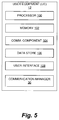
- UE 12 may include a specially programmed or configured computer device.
- UE 12 includes a processor 100 for carrying out processing functions associated with one or more of components and functions described herein.
- Processor 100 can include a single or multiple set of processors or multi-core processors.
- processor 100 can be implemented as an integrated processing system and/or a distributed processing system. Additionally, processor 100 may be configured to perform the functions described herein related to a limited tune away mode 42.
- UE 12 further includes a memory 102, such as for storing data used herein and/or local versions of applications being executed by processor 100.
- Memory 102 can include any type of memory usable by a computer, such as random access memory (RAM), read only memory (ROM), tapes, magnetic discs, optical discs, volatile memory, non-volatile memory, and any combination thereof. Additionally, memory 102 may be configured to store data and/or code or computer-readable instructions for performing the functions described herein related to a limited tune away mode 42.
- UE 12 includes a communications component 104 that provides for establishing and maintaining communications with one or more entities utilizing one or more of hardware, software, and services as described herein.
- Communications component 104 may carry communication signals between components on UE 12, as well as exchanging communication signals between UE 12 and external devices, such as devices located across a wired or wireless communications network and/or devices serially or locally connected to UE 12.
- communications component 104 may include one or more buses, and may further include transmit chain components and receive chain components associated with a transmitter and receiver, respectively, or a transceiver, operable for interfacing with external devices.
- communications component 104 may be configured to perform the functions described herein related to a limited tune away mode 42.
- UE 12 may further include a data store 106, which can be any suitable combination of hardware and/or software, that provides for mass storage of information, databases, and programs employed in connection with aspects described herein.
- data store 106 may be a data repository for applications and data not currently being executed by processor 100, such as those related to the aspect described herein.
- UE 12 may additionally include a user interface component 108 operable to receive inputs from a user of UE 12, and further operable to generate outputs for presentation to the user.
- User interface component 108 may include one or more input devices, including but not limited to a keyboard, a number pad, a mouse, a touch-sensitive display, a navigation key, a function key, a microphone, a voice recognition component, any other mechanism capable of receiving an input from a user, or any combination thereof.
- user interface component 108 may include one or more output devices, including but not limited to a display, a speaker, a haptic feedback mechanism, a printer, any other mechanism capable of presenting an output to a user, or any combination thereof.
- UE 12 may include communication manager component 30, as described with respect to Fig. 1 for enabling a limited tune away mode 42, such as in specially programmed computer readable instructions or code, firmware, hardware, one or more processor modules, or some combination thereof.
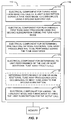
- a UE such as UE 12 ( Fig. 1 ) may perform one aspect of a method 200 for communicating with multiple subscriptions, including a limited tune away mode 42. While, for purposes of simplicity of explanation, the method is shown and described as a series of acts, it is to be understood and appreciated that the method is not limited by the order of acts, as some acts may, in accordance with one or more embodiments, occur in different orders and/or concurrently with other acts from that shown and described herein. For example, it is to be appreciated that a method could alternatively be represented as a series of interrelated states or events, such as in a state diagram. Moreover, not all illustrated acts may be required to implement a method in accordance with one or more features described herein.
- the method 200 includes tuning away from an active call of a first subscription during a tune away mode to communicate using a second subscription.
- communication manager 30 may execute tune away component 36 to tune away from an active call 34 of a first subscription 18 during a tune away mode 42.
- the method 200 includes performing a first tune away procedure using the second subscription during the tune away mode.
- communication manager 30 may execute first tune away procedure component 46 to perform first tune away procedure(s).
- the method 200 includes determining whether one or more additional tune away procedures are to be performed during the tune away mode using the second subscription subsequent to the performing of the first tune away procedure.
- the foregoing communication manager 30 may be configured to execute tune away limiter component 40 ( Figs. 1 & 2 ) to determine whether additional tune away procedures 48 are to be performed.
- the method 200 includes determining to limit performance of the one or more additional tune away procedures.
- the communication manager 30 may execute the tune away limiter component 40 to determine whether to limit additional tune away procedure 48 performance.
- the method 200 may include deferring performance of one or more additional tune away procedures until occurrence of a next tune away to the second subscription, based on a tune away periodicity of the tune away mode, in response to the determination to limit performance during the tune away mode.
- the communication manager 30 may execute the tune away limiter 40 ( Figs. 1 & 2 ), which in turn may execute the deferring component 58 to defer performance of the additional procedures 48 until occurrence of a next tune away (e.g., tune away mode 42).
- deferring may result as a result of additional determined conditions including, but not limited to, strictly detecting additional procedures 48, the tune away timer 44 expiring, at least one second subserving cell condition (e.g., out-of-service).
- deferring performance during the tune away mode further includes determining a serving cell parameter corresponding to communication using the second subscription in the tune away mode. Subsequently, a comparison may be made using the serving cell parameter to one or more of: a first threshold that represents a first set of values of the serving cell parameter that corresponds to an effective radio communication link; a second threshold that represents a second set of values of the serving cell parameter that corresponds to a substantially effective radio communication link; and a third threshold that represents a third set of values of the serving cell parameter that corresponds to a substantially ineffective radio communication link. Afterwards, a determination is made whether to perform the additional tune away procedures or to defer.
- the user equipment may perform the deferring when: the determined serving cell parameter meets the first threshold, or the determined serving cell parameter meets the first threshold and meets a relative-to-neighbor cell threshold that represents a set of relative values, of the serving cell parameter as compared to a corresponding neighbor cell parameter, wherein the relative-to-neighbor threshold indicates a relatively stronger serving cell.
- the user equipment may perform at least one of the one or more additional tune away procedures when the determined serving cell parameter meets the third threshold.
- the communication manager 30 ( Fig. 1 ), may be configured to execute the tune away limiter component 40 and various subcomponents thereof to carry out the foregoing functions.
- the method 200 includes ending the tune away mode and tuning back to using the first subscription for the active call based on the determination to limit the performance of the one or more additional tune away procedures.
- the communication manager 30 may execute the tune away limiter 40 ( Figs. 1 & 2 ) to end the tune away mode 42 and subsequently tune back component 68 ( Fig. 2 ) to tune back to using the first subscription 18 for the active call 34.
- UE 12 may switch RF communication resources between different subscriptions in a manner that limits a duration of the tune away mode 42.
- method 200 may be carried out by execution of communications manager 30, or one or more components thereof, such as tune away component 36 and tune away limiter component 40.
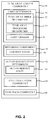
- a method 220 of operating RF communication resources in a second subscription configuration e.g. a GSM or GERAN configuration, to perform a limited tune away mode starts at block 222 with the second subscription configuration of the RF communication resources in a sleep mode.
- one or more first tune away procedures are performed, in this case respectively including a wake up procedure at block 224 and a page demodulation procedure at block 226.
- the communication manager 30 may execute the tune away component 36 to perform first tune away procedures 46.
- the communication manager 30 may execute the tune away limiter component 40 to determine whether the communication resources 32 are to complete one or more additional tune away procedures 48.
- additional tune away procedures may include, but are not limited to, a cell reselection procedure, a neighbor cell system information reading procedure, a registration procedure, a cell update procedure, a location update procedure, a routing update procedure, etc.
- the RF communication resources and any other corresponding or related resources are released at block 240 and the second subscription configuration is returned to a non-active state, such as a sleep state at block 242.
- the user equipment 12 may execute any one or more components or subcomponents to release communication resources 32 and return to a non-active state.
- a serving cell parameter is determined at block 230.
- the serving cell power of the second subscription 22 is evaluated to determine whether it is sufficient enough on its own, or relative to a neighbor cell, to be maintained as the serving cell or whether a reselection should be performed.
- the serving cell parameters can be a serving cell power level, such as a received signal strength.
- the communication manager 30 may execute tune away limiter component 40 to determine a serving cell parameter.
- the received serving cell parameter is then compared to a first threshold that represents an effective communication link being provided by the serving cell.
- a first threshold that represents an effective communication link being provided by the serving cell.
- the determined serving cell power level is compared to a threshold value, such as but not limited to -75 dBm in this example, to evaluate if the determined serving cell power level is greater than the first threshold.
- the communication manager 30 may execute the tune away limiter component 40, which in turn enables the various components thereof, such as the cell evaluation component to compare the received serving cell parameter to a first threshold.
- the RF communication resources and any other corresponding or related resources are released at block 240 and the second subscription configuration is returned to a non-active state, such as a sleep state at block 242.
- the determined serving cell power level is not greater than the first threshold, then at block 234, it is compared to a second set of thresholds that represents a moderately effective communication link being provided by the serving cell.
- the second set of thresholds may be a high and low threshold.
- the determined serving cell power level is compared to a set of threshold values, such as but not limited to being between -85 dBm and -75 dBm in this example, to evaluate if the determined serving cell power level is greater than the second threshold.
- the communication manager 30 ( Fig. 1 ) may execute the tune away limiter component 40, which in turn enables the various components thereof, such as the cell evaluation component to compare the received serving cell parameter to a second threshold(s).
- one or more additional tune away procedures may be performed at block 238.
- a cell reselection may be performed.
- the communication manager 30 ( Fig. 1 ) may execute the tune away component 36 to perform the additional tune away procedures 48.
- the RF communication resources and any other corresponding or related resources are released at block 240 and the second subscription configuration is returned to a non-active state, such as a sleep state at block 242.
- relative threshold can be a relative-to-neighbor cell threshold that represents a set of relative values of the serving cell parameter as compared to a corresponding neighbor cell parameter, wherein the relative-to-neighbor threshold indicates a relatively stronger serving cell.
- the relative threshold is a condition where the neighbor cell parameter, e.g. the power level, is 10 dBm greater than the serving cell power level.
- the additional tune away procedure is a neighbor cell system information reading, e.g.
- the relative threshold is a condition where the neighbor cell power level is 20 dB more than serving cell.
- the communication manager 30 may execute the tune away limiter component 40, which in turn enables the various components thereof, such as the cell evaluation component to compare the received serving cell parameter to a relative threshold.
- the relative threshold may be considered the same as the third threshold.
- the neighbor cell power level is 10 dBm greater than the serving cell power, in this example, then one or more additional procedures, such as cell reselection, are performed at block 238. Similarly, in another case, if the neighbor cell power level is 20 dB greater than the serving cell power, then one or more additional procedures, such as reading a cell broadcast common channel (CELL BCCH), are performed at block 238. As such, it is noted that different ones of the additional tune away procedures may correspond to different thresholds, including either the absolute thresholds or the relative thresholds. Then, the RF communication resources and any other corresponding or related resources are released at block 240 and the second subscription configuration is returned to a non-active state, such as a sleep state at block 242.
- a non-active state such as a sleep state at block 242.
- the tune away procedure can be deferred, and thus the RF communication resources and any other corresponding or related resources are released at block 240 and the second subscription configuration is returned to a non-active state, such as a sleep state at block 242.
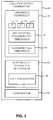
- a method 250 of operating RF communication resources in a second subscription configuration e.g. a GSM or GERAN configuration, to perform a limited tune away mode starts with the second subscription configuration of the RF communication resources in a sleep mode at block 252.
- a second subscription configuration e.g. a GSM or GERAN configuration
- one or more first tune away procedures are performed, in this case respectively including a wake up procedure at block 254 and a page demodulation procedure at block 254.
- the communication manager 30 may execute the tune away component 36 to perform first tune away procedures 46.
- the communication manager 30 may execute the tune away limiter component 40 to determine whether the communication resources 32 are to complete one or more additional tune away procedures 48.
- additional tune away procedures may include, but are not limited to, a cell reselection procedure, a neighbor cell system information reading procedure, a registration procedure, a cell update procedure, a location update procedure, a routing update procedure, etc.
- the tune away limiter component 40 may be configured to execute the out-of-service state determiner 62 to determine whether an out-of-service state exists. If not, then the RF communication resources and any other corresponding or related resources are released at block 266 and the second subscription configuration is returned to a non-active state, such as a sleep state at block 268.
- a tune away timer is started at block 258, wherein the tune away timer expires upon a defined length of time, which may correspond to a time remaining before an inactivity timer for active call 34 ( Fig. 1 ) of first subscription 18 ( Fig. 1 ) expires.
- the tune away component 36 Fig. 1
- the tune away timer 44 may be configured to execute the tune away timer 44 to provide a defined duration in which the tune away procedures may be performed.
- one or more additional tune away procedures may be performed.
- the communication manager 30 ( Fig. 1 ) may be configured to execute the tune away component 36 to perform additional tune away procedures.
- these procedures include performing one or more of out-of-service procedures, power scans, cell reselections, neighbor cell system information reads, etc.
- the tune away timer is monitored and it is determined whether or not the tune away timer has expired.
- the communication manager 30 may be configured to execute any one or more of the various subcomponents, such as the tune away limiter, to monitor and determine whether the tune away timer has expired.
- tune away timer If the tune away timer has not expired, then the performance of the one or more additional tune away procedures is continued.
- a task context e.g. a state of the current additional tune away procedure
- the tune away limiter component 30 may be configured to execute the deferring component 58 to save the task context.
- the saved task context may then be referenced as a starting point for continuing the additional tune away procedure, e.g. upon occurrence of the next tune away mode.
- the RF communication resources and any other corresponding or related resources arc released at block 266 and the second subscription configuration is returned to a non-active state, such as a sleep state at block 268.
- Figs. 5 and 6 may be performed separately, or in combination. Also, it should be noted that these flowcharts are exemplary, and that other flows and other values/ranges may be utilized to implement the present apparatus and methods. Moreover, it should be noted that methods 220 and 250 may be carried out by execution of communications manager 30, or one or more components thereof, such as tune away component 36 and tune away limiter component 40 ( Figs. 1 , 2 & 3 ).
- system 110 is displayed for improved tune away in a UE.
- system 110 can reside at least partially within a user equipment, such as UE 11 ( Fig. 1 ).
- system 110 is represented as including functional blocks, which can be functional blocks that represent functions implemented by a processor, software, or combination thereof ( e.g. , firmware).
- System 110 includes a logical grouping 112 of electrical components that can act in conjunction.
- logical grouping 112 can include an electrical component 114 for tuning away from an active call of a first subscription during a tune away mode to communicate using a second subscription.
- electrical component 114 may include communications manager component 30 or a component thereof ( Fig. 1 ).
- logical grouping 112 can include an electrical component 116 for performing a first tune away procedure using the second subscription during the tune away mode.
- electrical component 116 may include communications manager component 30 or a component thereof ( Fig. 1 ).
- logical grouping 112 can include an electrical component 118 for determining whether one or more additional tune away procedures are to be performed during the tune away mode using the second subscription subsequent to the performing of the first tune away procedure.
- electrical component 118 may include communications manager component 30 or a component thereof ( Fig. 1 ).
- logical grouping 112 can include an electrical component 120 for determining to limit performance of the one or more additional tune away procedures.
- electrical component 120 may include communications manager component 30 or a component thereof ( Fig. 1 ).
- logical grouping 112 may include an electrical component 122 for deferring performance of one or more additional tune away procedures until occurrence of a next tune away to the second subscription, based on a tune away periodicity of the tune away mode, in response to the determination to limit performance during the tune away mode. Furthermore, logical grouping 112 can include an electrical component 124 for ending the tune away mode and tuning back to using the first subscription for the active call based on the determination to limit the performance of the one or more additional tune away procedures. In an aspect, electrical component 124 may include communications manager component 30 or a component thereof ( Fig. 1 ).
- electrical components 114, 116, 118, 120 and 122 can comprise at least one processor, or each electrical component 114, 116, 118, 120 and 122 can be a corresponding module of at least one processor.
- electrical components 114, 116, 118, 120 and 122 can be a computer program product including a computer readable medium, where each electrical component 114, 116, 118, 120 and 122 can be corresponding code or instructions.
- system 110 can include a memory 124 that retains instructions for executing functions associated with the electrical components 114, 116, 118, 120 and 122, stores data used or obtained by the electrical components 114, 116, 118, 120 and 122, etc. While shown as being external to memory 124, it is to be understood that one or more of the electrical components 114, 116, 118, 120 and 122 can exist within memory 124.
- a component may be, but is not limited to being, a process running on a processor, a processor, an object, an executable, a thread of execution, a program, and/or a computer.
- an application running on a computing device and the computing device can be a component.
- One or more components can reside within a process and/or thread of execution and a component may be localized on one computer and/or distributed between two or more computers.
- these components can execute from various computer readable media having various data structures stored thereon.
- the components may communicate by way of local and/or remote processes such as in accordance with a signal having one or more data packets, such as data from one component interacting with another component in a local system, distributed system, and/or across a network such as the Internet with other systems by way of the signal.
- a terminal can be a wired terminal or a wireless terminal.
- a terminal can also be called a system, device, subscriber unit, subscriber station, mobile station, mobile, mobile device, remote station, remote terminal, access terminal, user terminal, terminal, communication device, user agent, user device, or user equipment (UE).
- a wireless terminal may be a cellular telephone, a satellite phone, a cordless telephone, a Session Initiation Protocol (SIP) phone, a wireless local loop (WLL) station, a personal digital assistant (PDA), a handheld device having wireless connection capability, a computing device, or other processing devices connected to a wireless modem.
- SIP Session Initiation Protocol
- WLL wireless local loop
- PDA personal digital assistant
- a base station may be utilized for communicating with wireless terminal(s) and may also be referred to as an access point, a Node B, or some other terminology.
- the term "or” is intended to mean an inclusive “or” rather than an exclusive “or.” That is, unless specified otherwise, or clear from the context, the phrase “X employs A or B” is intended to mean any of the natural inclusive permutations. That is, the phrase “X employs A or B” is satisfied by any of the following instances: X employs A; X employs B; or X employs both A and B.
- the articles “a” and “an” as used in this application and the appended claims should generally be construed to mean “one or more” unless specified otherwise or clear from the context to be directed to a singular form.
- a CDMA system may implement a radio technology such as Universal Terrestrial Radio Access (UTRA), cdma2000, etc.
- UTRA includes Wideband-CDMA (W-CDMA) and other variants of CDMA.
- W-CDMA Wideband-CDMA
- cdma2000 covers IS-2000, IS-95 and IS-856 standards.
- GSM Global System for Mobile Communications
- An OFDMA system may implement a radio technology such as Evolved UTRA (E-UTRA), Ultra Mobile Broadband (UMB), IEEE 802.11 (Wi-Fi), IEEE 802.16 (WiMAX), IEEE 802.20, Flash-OFDM , etc.
- E-UTRA Evolved UTRA
- UMB Ultra Mobile Broadband
- IEEE 802.11 Wi-Fi
- WiMAX IEEE 802.16
- Flash-OFDM Flash-OFDM
- UTRA and E-UTRA are part of Universal Mobile Telecommunication System (UMTS).
- 3GPP Long Term Evolution (LTE) is a release of UMTS that uses E-UTRA, which employs OFDMA on the downlink and SC-FDMA on the uplink.
- UTRA, E-UTRA, UMTS, LTE and GSM are described in documents from an organization named "3rd Generation Partnership Project" (3GPP).
- wireless communication systems may additionally include peer-to-peer (e.g., mobile-to-mobile) ad hoc network systems often using unpaired unlicensed spectrums, 802.xx wireless LAN, BLUETOOTH and any other short- or long- range, wireless communication techniques.
- peer-to-peer e.g., mobile-to-mobile
- DSP digital signal processor
- ASIC application specific integrated circuit
- FPGA field programmable gate array
- a general-purpose processor may be a microprocessor, but, in the alternative, the processor may be any conventional processor, controller, microcontroller, or state machine.
- a processor may also be implemented as a combination of computing devices, e.g., a combination of a DSP and a microprocessor, a plurality of microprocessors, one or more microprocessors in conjunction with a DSP core, or any other such configuration. Additionally, at least one processor may comprise one or more modules operable to perform one or more of the steps and/or actions described above.
- a software module may reside in RAM memory, flash memory, ROM memory, EPROM memory, EEPROM memory, registers, a hard disk, a removable disk, a CD-ROM, or any other form of storage medium known in the art.
- An exemplary storage medium may be coupled to the processor, such that the processor can read information from, and write information to, the storage medium.
- the storage medium may be integral to the processor.
- the processor and the storage medium may reside in an ASIC. Additionally, the ASIC may reside in a user terminal.
- processor and the storage medium may reside as discrete components in a user terminal. Additionally, in some aspects, the steps and/or actions of a method or algorithm may reside as one or any combination or set of codes and/or instructions on a machine readable medium and/or computer readable medium, which may be incorporated into a computer program product.
- the functions described may be implemented in hardware, software, firmware, or any combination thereof. If implemented in software, the functions may be stored or transmitted as one or more instructions or code on a computer-readable medium.
- Computer-readable media includes both computer storage media and communication media including any medium that facilitates transfer of a computer program from one place to another.
- a storage medium may be any available media that can be accessed by a computer.
- such computer-readable media can comprise RAM, ROM, EEPROM, CD-ROM or other optical disk storage, magnetic disk storage or other magnetic storage devices, or any other medium that can be used to carry or store desired program code in the form of instructions or data structures and that can be accessed by a computer.
- any connection may be termed a computer-readable medium.
- Disk and disc includes compact disc (CD), laser disc, optical disc, digital versatile disc (DVD), floppy disk and blu-ray disc where disks usually reproduce data magnetically, while discs usually reproduce data optically with lasers. Combinations of the above should also be included within the scope of computer-readable media.
Landscapes
- Engineering & Computer Science (AREA)
- Computer Networks & Wireless Communication (AREA)
- Signal Processing (AREA)
- Computer Security & Cryptography (AREA)
- Mobile Radio Communication Systems (AREA)
- Telephone Function (AREA)
Applications Claiming Priority (3)
| Application Number | Priority Date | Filing Date | Title |
|---|---|---|---|
| US201261641689P | 2012-05-02 | 2012-05-02 | |
| US13/831,765 US20130295920A1 (en) | 2012-05-02 | 2013-03-15 | Apparatus and methods of limited tune away |
| PCT/US2013/039023 WO2013166119A2 (en) | 2012-05-02 | 2013-05-01 | Apparatus and methods of limited tune away |
Publications (2)
| Publication Number | Publication Date |
|---|---|
| EP2845414A2 EP2845414A2 (en) | 2015-03-11 |
| EP2845414B1 true EP2845414B1 (en) | 2016-05-25 |
Family
ID=49512889
Family Applications (1)
| Application Number | Title | Priority Date | Filing Date |
|---|---|---|---|
| EP13726326.5A Not-in-force EP2845414B1 (en) | 2012-05-02 | 2013-05-01 | Apparatus and methods of limited tune away |
Country Status (5)
| Country | Link |
|---|---|
| US (1) | US20130295920A1 (enExample) |
| EP (1) | EP2845414B1 (enExample) |
| JP (1) | JP2015520978A (enExample) |
| CN (1) | CN104272803A (enExample) |
| WO (1) | WO2013166119A2 (enExample) |
Families Citing this family (40)
| Publication number | Priority date | Publication date | Assignee | Title |
|---|---|---|---|---|
| US8902905B2 (en) * | 2010-07-20 | 2014-12-02 | Qualcomm Incorporated | Area update procedures for a multiple USIM mobile terminal |
| US8583180B2 (en) * | 2011-12-22 | 2013-11-12 | Intel Mobile Communications GmbH | Communication terminal |
| KR101991761B1 (ko) * | 2012-10-05 | 2019-06-21 | 삼성전자주식회사 | 셀 정전 검출 및 송신 전력 조절 방법 및 장치 |
| EP2884809A1 (en) * | 2013-12-10 | 2015-06-17 | Gemalto M2M GmbH | Method of handling multiple wireless networks |
| US9210688B2 (en) * | 2014-02-18 | 2015-12-08 | Qualcomm Incorporated | Enhanced tune-away mechanism during signaling procedure in multiple subscription communications |
| US9480102B2 (en) * | 2014-03-05 | 2016-10-25 | Apple Inc. | Resolving cycle conflicts between multiple RATs sharing a radio of a UE |
| US9307457B2 (en) * | 2014-03-05 | 2016-04-05 | Apple Inc. | User equipment with selective neighbor cell detection |
| US9544937B2 (en) * | 2014-03-27 | 2017-01-10 | Apple Inc. | Performing data communication using a first RAT while performing a voice call using a second RAT |
| US9319977B2 (en) * | 2014-03-27 | 2016-04-19 | Qualcomm Incorporated | Wireless system selection factoring RF resource availability in dual access phones |
| US9344930B2 (en) * | 2014-04-01 | 2016-05-17 | Qualcomm Incorporated | Efficient WCDMA to GSM tune away pattern |
| US9681412B2 (en) | 2014-04-23 | 2017-06-13 | At&T Intellectual Property I, L.P. | Method and device for providing a mobile device with service continuity over multiple access networks |
| US9167592B1 (en) * | 2014-05-22 | 2015-10-20 | Qualcomm Incorporated | Signaling radio bearer timer for dual-sim dual-active user equipment transmitter sharing |
| US9264887B2 (en) * | 2014-06-20 | 2016-02-16 | Qualcomm Incorporated | Systems and methods for enhanced system information decoding |
| US9999024B2 (en) * | 2015-01-08 | 2018-06-12 | Qualcomm Incorporated | Evolved multimedia broadcast multicast service (eMBMS) streaming loss control in a radio sharing concurrent radio access technology (RAT) capable mobile device |
| US9642074B2 (en) * | 2015-01-30 | 2017-05-02 | Qualcomm Incorporated | Managing performance of a small cell search function in a multi-subscription multi-standby communication device |
| US9591527B2 (en) * | 2015-03-10 | 2017-03-07 | Qualcomm Incorporated | Enhanced mechanism to achieve better throughput in X+GSM MSMS devices |
| US9491276B2 (en) * | 2015-04-08 | 2016-11-08 | Qualcomm Incorporated | User equipment capability report management during caller ID extraction |
| KR20170137749A (ko) | 2015-04-14 | 2017-12-13 | 퀄컴 인코포레이티드 | 튠-어웨이 동작을 제어하기 위한 장치 및 방법 |
| WO2016167881A1 (en) * | 2015-04-16 | 2016-10-20 | Qualcomm Incorporated | Dynamic selection of a technology for cell broadcast reception in multi-sim communication devices |
| US20160330653A1 (en) * | 2015-05-06 | 2016-11-10 | Qualcomm Incorporated | Reduced call interruption during tune away in multi-subscriber identity module/multi-standby device |
| US9967808B2 (en) * | 2015-05-20 | 2018-05-08 | Apple Inc. | System selection for multi-SIM devices |
| US9386626B1 (en) * | 2015-05-26 | 2016-07-05 | Qualcomm Incorporated | Idle mode operations in multi-subscriber identity module (SIM) mobile communication devices during a voice call |
| US9402274B1 (en) | 2015-05-26 | 2016-07-26 | Qualcomm Incorporated | Idle mode operations in multi-subscriber identity module (SIM) mobile communication devices during data communications |
| WO2016191939A1 (en) * | 2015-05-29 | 2016-12-08 | Qualcomm Incorporated | Communication Link Management Following Tune Away |
| US20160366621A1 (en) * | 2015-06-11 | 2016-12-15 | Qualcomm Incorporated | Handling mobility events in a multi subscriber identity module multi standby mobile communication device |
| US20160381710A1 (en) * | 2015-06-29 | 2016-12-29 | Qualcomm Incorporated | System and Methods for Using a Radio Frequency Resource to Improve Performance on a Data Communication in a Multi-Subscriber Identity Module (SIM) Wireless Communication Device |
| US20170006604A1 (en) * | 2015-06-30 | 2017-01-05 | Qualcomm Incorporated | Broadcast channel reception in multi-subscription multi-standby communication devices |
| WO2017003575A1 (en) * | 2015-06-30 | 2017-01-05 | Qualcomm Incorporated | Managing performance of a small cell search function in a multi-subscription multi-standby communication device |
| US9877294B2 (en) * | 2015-08-31 | 2018-01-23 | Qualcomm Incorporated | Managing tune-aways in a multi-subscription multi-standby communication device |
| US20170078951A1 (en) * | 2015-09-14 | 2017-03-16 | Qualcomm Incorporated | Managing Access To Receive Chains Of A Multi-Subscription Multi-Standby Communication Device |
| US20170086100A1 (en) * | 2015-09-23 | 2017-03-23 | Qualcomm Incorporated | Managing Tune-Away Performance During An Ongoing Voice Communication Session |
| US20170094568A1 (en) * | 2015-09-25 | 2017-03-30 | Qualcomm Incorporated | Tune away adjustment procedure |
| US9913245B2 (en) | 2015-10-23 | 2018-03-06 | Qualcomm Incorporated | Multi-subscriber identity module (SIM) call setup |
| US9848369B2 (en) * | 2015-10-29 | 2017-12-19 | Qualcomm Incorporated | Managing tune-aways in a multi-subscription multi-standby communication device |
| US9860750B2 (en) * | 2015-11-11 | 2018-01-02 | Qualcomm Incorporated | Systems and methods of remote subscriber identity module (SIM) authentication |
| US9578584B1 (en) * | 2016-03-01 | 2017-02-21 | Sprint Spectrum L.P. | Controlling tune-away of user equipment devices |
| US10757667B2 (en) * | 2017-07-21 | 2020-08-25 | Samsung Electronics Co., Ltd. | Method and user equipment for managing synchronization with network |
| US11368937B2 (en) | 2019-04-12 | 2022-06-21 | Ofinno, Llc | Paging time adjustment in a wireless network |
| US12426114B2 (en) * | 2021-01-11 | 2025-09-23 | Qualcomm Incorporated | Techniques for configuring a transmission power parameter after tuning back to a subscription in a dual connectivity mode |
| EP4320893A4 (en) * | 2021-04-09 | 2025-04-23 | Nokia Technologies Oy | Non-connected state configuration in device having multiple user subscription entities |
Family Cites Families (13)
| Publication number | Priority date | Publication date | Assignee | Title |
|---|---|---|---|---|
| AU2003303425A1 (en) * | 2002-12-30 | 2004-07-22 | Sk Telecom Co., Ltd. | Method and system for preventing call drop by limiting search time of 1x system during 1xev-do traffic state |
| AU2003289543A1 (en) * | 2002-12-30 | 2004-07-22 | Sk Telecom Co., Ltd. | Method and system for preventing call drop by restricting overhead message updated in 1x system during 1xev-do traffic state |
| US7848305B2 (en) * | 2005-02-03 | 2010-12-07 | Qualcomm Incorporated | Techniques for accessing a wireless communication system with tune-away capability |
| JP4642622B2 (ja) * | 2005-09-29 | 2011-03-02 | 京セラ株式会社 | 無線通信方法、無線通信システム、無線通信端末及び基地局 |
| US9247467B2 (en) * | 2005-10-27 | 2016-01-26 | Qualcomm Incorporated | Resource allocation during tune-away |
| US7860063B2 (en) * | 2006-08-31 | 2010-12-28 | Via Telecom Co., Ltd. | Systems and methods for wireless access terminal command processing |
| CN101489264B (zh) * | 2008-01-18 | 2011-07-13 | 中兴通讯股份有限公司 | 一种双模终端在网络拥塞情况下业务保持的实现方法 |
| US8971955B2 (en) * | 2008-05-11 | 2015-03-03 | Qualcomm Incorporated | Systems and methods for multi-mode terminal operations in overlaid networks |
| US8880004B2 (en) * | 2009-05-14 | 2014-11-04 | Qualcomm Incorporated | System and method for resolving conflicts between air interfaces in a wireless communication system |
| US20110217969A1 (en) * | 2010-03-05 | 2011-09-08 | Qualcomm, Incorporated | Devices with multiple subscriptions that utilize a single baseband-radio frequency resource chain |
| US8738021B2 (en) * | 2011-06-20 | 2014-05-27 | Qualcomm Incorporated | Mobile device tune away periods |
| CN102421159B (zh) * | 2011-12-19 | 2014-07-09 | 华为终端有限公司 | 一种双模通信终端的切换方法及系统 |
| US20130260761A1 (en) * | 2012-03-30 | 2013-10-03 | Qualcomm Incorporated | Method and apparatus for supporting tune away in dual-sim dual standby mobile devices |
-
2013
- 2013-03-15 US US13/831,765 patent/US20130295920A1/en not_active Abandoned
- 2013-05-01 JP JP2015510416A patent/JP2015520978A/ja active Pending
- 2013-05-01 CN CN201380022745.1A patent/CN104272803A/zh active Pending
- 2013-05-01 WO PCT/US2013/039023 patent/WO2013166119A2/en not_active Ceased
- 2013-05-01 EP EP13726326.5A patent/EP2845414B1/en not_active Not-in-force
Also Published As
| Publication number | Publication date |
|---|---|
| WO2013166119A3 (en) | 2014-01-30 |
| WO2013166119A2 (en) | 2013-11-07 |
| CN104272803A (zh) | 2015-01-07 |
| EP2845414A2 (en) | 2015-03-11 |
| JP2015520978A (ja) | 2015-07-23 |
| US20130295920A1 (en) | 2013-11-07 |
Similar Documents
| Publication | Publication Date | Title |
|---|---|---|
| EP2845414B1 (en) | Apparatus and methods of limited tune away | |
| US8958847B2 (en) | Methods and apparatuses for optimization of multiple subscription device performance | |
| KR101591217B1 (ko) | 액세스 단말기들이 적은 이동도 또는 무 이동도를 나타낼 경우 변경된 셀 재선택 파라미터들 및 절차들을 용이하게 하는 방법들 및 디바이스들 | |
| KR101511484B1 (ko) | Gsm 채널들을 동시에 모니터링하는 방법 및 장치 | |
| US9468010B2 (en) | Apparatus and methods for facilitating tune-away operations in wireless communications systems | |
| US20180249349A1 (en) | Enhancing data performance in multi-subscriber identity module (sim) wireless communication devices | |
| US20160050590A1 (en) | System and Methods for Improving Intra-frequency Cell Reselection on a Wireless Communication Device in Connected Mode | |
| US20180070327A1 (en) | System and Methods for Performing an Early Radio Link Recovery Procedure on a Multi-Subscriber Identity Module Wireless Communication Device | |
| US20170280380A1 (en) | Method to dynamically switch data subscription in volte + gsm dual sim dual standby device | |
| US20170208611A1 (en) | Protecting Critical Communication Activity From A Tune-Away | |
| CN113924735B (zh) | 用于无线通信的系统和方法 | |
| US20150264603A1 (en) | Methods and apparatus for handling time-to-trigger during intra-rat cell reselection and handover | |
| EP2724567B1 (en) | Apparatus and methods for facilitating cell reselection for higher priority layers | |
| US20120155383A1 (en) | Method and apparatus for scanning for cells in a cellular network | |
| JP6250698B2 (ja) | 無線アクセス技術を探索するためのシステムおよび方法 | |
| EP2466946A1 (en) | Method and apparatus for scanning for cells in a cellular network | |
| CN104980984B (zh) | 异系统小区重选的方法及终端 | |
| CN120457716A (zh) | 优化多sim/esim无线设备进行的蜂窝无线网络搜索 | |
| KR20250166745A (ko) | 무선 통신 시스템에서의 완화된 측정 향상을 위한 사용자 장치 및 사용자 장치의 동작 방법 | |
| KR100864469B1 (ko) | 과잉 데이터 호출 차단을 이용하여 evdo와 cdma1x 시스템 사이에서 천이하기 위한 방법 및 장치 |
Legal Events
| Date | Code | Title | Description |
|---|---|---|---|
| PUAI | Public reference made under article 153(3) epc to a published international application that has entered the european phase |
Free format text: ORIGINAL CODE: 0009012 |
|
| 17P | Request for examination filed |
Effective date: 20141003 |
|
| AK | Designated contracting states |
Kind code of ref document: A2 Designated state(s): AL AT BE BG CH CY CZ DE DK EE ES FI FR GB GR HR HU IE IS IT LI LT LU LV MC MK MT NL NO PL PT RO RS SE SI SK SM TR |
|
| AX | Request for extension of the european patent |
Extension state: BA ME |
|
| DAX | Request for extension of the european patent (deleted) | ||
| GRAP | Despatch of communication of intention to grant a patent |
Free format text: ORIGINAL CODE: EPIDOSNIGR1 |
|
| INTG | Intention to grant announced |
Effective date: 20151208 |
|
| GRAS | Grant fee paid |
Free format text: ORIGINAL CODE: EPIDOSNIGR3 |
|
| GRAA | (expected) grant |
Free format text: ORIGINAL CODE: 0009210 |
|
| AK | Designated contracting states |
Kind code of ref document: B1 Designated state(s): AL AT BE BG CH CY CZ DE DK EE ES FI FR GB GR HR HU IE IS IT LI LT LU LV MC MK MT NL NO PL PT RO RS SE SI SK SM TR |
|
| REG | Reference to a national code |
Ref country code: GB Ref legal event code: FG4D |
|
| REG | Reference to a national code |
Ref country code: CH Ref legal event code: EP |
|
| REG | Reference to a national code |
Ref country code: IE Ref legal event code: FG4D Ref country code: AT Ref legal event code: REF Ref document number: 803214 Country of ref document: AT Kind code of ref document: T Effective date: 20160615 |
|
| REG | Reference to a national code |
Ref country code: DE Ref legal event code: R096 Ref document number: 602013007992 Country of ref document: DE |
|
| REG | Reference to a national code |
Ref country code: LT Ref legal event code: MG4D |
|
| REG | Reference to a national code |
Ref country code: NL Ref legal event code: MP Effective date: 20160525 |
|
| PG25 | Lapsed in a contracting state [announced via postgrant information from national office to epo] |
Ref country code: NL Free format text: LAPSE BECAUSE OF FAILURE TO SUBMIT A TRANSLATION OF THE DESCRIPTION OR TO PAY THE FEE WITHIN THE PRESCRIBED TIME-LIMIT Effective date: 20160525 Ref country code: LT Free format text: LAPSE BECAUSE OF FAILURE TO SUBMIT A TRANSLATION OF THE DESCRIPTION OR TO PAY THE FEE WITHIN THE PRESCRIBED TIME-LIMIT Effective date: 20160525 Ref country code: NO Free format text: LAPSE BECAUSE OF FAILURE TO SUBMIT A TRANSLATION OF THE DESCRIPTION OR TO PAY THE FEE WITHIN THE PRESCRIBED TIME-LIMIT Effective date: 20160825 Ref country code: FI Free format text: LAPSE BECAUSE OF FAILURE TO SUBMIT A TRANSLATION OF THE DESCRIPTION OR TO PAY THE FEE WITHIN THE PRESCRIBED TIME-LIMIT Effective date: 20160525 |
|
| REG | Reference to a national code |
Ref country code: AT Ref legal event code: MK05 Ref document number: 803214 Country of ref document: AT Kind code of ref document: T Effective date: 20160525 |
|
| PG25 | Lapsed in a contracting state [announced via postgrant information from national office to epo] |
Ref country code: LV Free format text: LAPSE BECAUSE OF FAILURE TO SUBMIT A TRANSLATION OF THE DESCRIPTION OR TO PAY THE FEE WITHIN THE PRESCRIBED TIME-LIMIT Effective date: 20160525 Ref country code: PT Free format text: LAPSE BECAUSE OF FAILURE TO SUBMIT A TRANSLATION OF THE DESCRIPTION OR TO PAY THE FEE WITHIN THE PRESCRIBED TIME-LIMIT Effective date: 20160926 Ref country code: SE Free format text: LAPSE BECAUSE OF FAILURE TO SUBMIT A TRANSLATION OF THE DESCRIPTION OR TO PAY THE FEE WITHIN THE PRESCRIBED TIME-LIMIT Effective date: 20160525 Ref country code: GR Free format text: LAPSE BECAUSE OF FAILURE TO SUBMIT A TRANSLATION OF THE DESCRIPTION OR TO PAY THE FEE WITHIN THE PRESCRIBED TIME-LIMIT Effective date: 20160826 Ref country code: RS Free format text: LAPSE BECAUSE OF FAILURE TO SUBMIT A TRANSLATION OF THE DESCRIPTION OR TO PAY THE FEE WITHIN THE PRESCRIBED TIME-LIMIT Effective date: 20160525 Ref country code: ES Free format text: LAPSE BECAUSE OF FAILURE TO SUBMIT A TRANSLATION OF THE DESCRIPTION OR TO PAY THE FEE WITHIN THE PRESCRIBED TIME-LIMIT Effective date: 20160525 |
|
| PG25 | Lapsed in a contracting state [announced via postgrant information from national office to epo] |
Ref country code: IT Free format text: LAPSE BECAUSE OF FAILURE TO SUBMIT A TRANSLATION OF THE DESCRIPTION OR TO PAY THE FEE WITHIN THE PRESCRIBED TIME-LIMIT Effective date: 20160525 |
|
| PG25 | Lapsed in a contracting state [announced via postgrant information from national office to epo] |
Ref country code: EE Free format text: LAPSE BECAUSE OF FAILURE TO SUBMIT A TRANSLATION OF THE DESCRIPTION OR TO PAY THE FEE WITHIN THE PRESCRIBED TIME-LIMIT Effective date: 20160525 Ref country code: CZ Free format text: LAPSE BECAUSE OF FAILURE TO SUBMIT A TRANSLATION OF THE DESCRIPTION OR TO PAY THE FEE WITHIN THE PRESCRIBED TIME-LIMIT Effective date: 20160525 Ref country code: SK Free format text: LAPSE BECAUSE OF FAILURE TO SUBMIT A TRANSLATION OF THE DESCRIPTION OR TO PAY THE FEE WITHIN THE PRESCRIBED TIME-LIMIT Effective date: 20160525 Ref country code: DK Free format text: LAPSE BECAUSE OF FAILURE TO SUBMIT A TRANSLATION OF THE DESCRIPTION OR TO PAY THE FEE WITHIN THE PRESCRIBED TIME-LIMIT Effective date: 20160525 Ref country code: RO Free format text: LAPSE BECAUSE OF FAILURE TO SUBMIT A TRANSLATION OF THE DESCRIPTION OR TO PAY THE FEE WITHIN THE PRESCRIBED TIME-LIMIT Effective date: 20160525 |
|
| PG25 | Lapsed in a contracting state [announced via postgrant information from national office to epo] |
Ref country code: SM Free format text: LAPSE BECAUSE OF FAILURE TO SUBMIT A TRANSLATION OF THE DESCRIPTION OR TO PAY THE FEE WITHIN THE PRESCRIBED TIME-LIMIT Effective date: 20160525 Ref country code: PL Free format text: LAPSE BECAUSE OF FAILURE TO SUBMIT A TRANSLATION OF THE DESCRIPTION OR TO PAY THE FEE WITHIN THE PRESCRIBED TIME-LIMIT Effective date: 20160525 Ref country code: AT Free format text: LAPSE BECAUSE OF FAILURE TO SUBMIT A TRANSLATION OF THE DESCRIPTION OR TO PAY THE FEE WITHIN THE PRESCRIBED TIME-LIMIT Effective date: 20160525 Ref country code: BE Free format text: LAPSE BECAUSE OF FAILURE TO SUBMIT A TRANSLATION OF THE DESCRIPTION OR TO PAY THE FEE WITHIN THE PRESCRIBED TIME-LIMIT Effective date: 20160525 |
|
| REG | Reference to a national code |
Ref country code: DE Ref legal event code: R097 Ref document number: 602013007992 Country of ref document: DE |
|
| PLBE | No opposition filed within time limit |
Free format text: ORIGINAL CODE: 0009261 |
|
| STAA | Information on the status of an ep patent application or granted ep patent |
Free format text: STATUS: NO OPPOSITION FILED WITHIN TIME LIMIT |
|
| REG | Reference to a national code |
Ref country code: FR Ref legal event code: PLFP Year of fee payment: 5 |
|
| 26N | No opposition filed |
Effective date: 20170228 |
|
| PG25 | Lapsed in a contracting state [announced via postgrant information from national office to epo] |
Ref country code: SI Free format text: LAPSE BECAUSE OF FAILURE TO SUBMIT A TRANSLATION OF THE DESCRIPTION OR TO PAY THE FEE WITHIN THE PRESCRIBED TIME-LIMIT Effective date: 20160525 |
|
| PG25 | Lapsed in a contracting state [announced via postgrant information from national office to epo] |
Ref country code: LU Free format text: LAPSE BECAUSE OF NON-PAYMENT OF DUE FEES Effective date: 20170531 |
|
| REG | Reference to a national code |
Ref country code: CH Ref legal event code: PL |
|
| PG25 | Lapsed in a contracting state [announced via postgrant information from national office to epo] |
Ref country code: MC Free format text: LAPSE BECAUSE OF FAILURE TO SUBMIT A TRANSLATION OF THE DESCRIPTION OR TO PAY THE FEE WITHIN THE PRESCRIBED TIME-LIMIT Effective date: 20160525 |
|
| REG | Reference to a national code |
Ref country code: IE Ref legal event code: MM4A |
|
| PG25 | Lapsed in a contracting state [announced via postgrant information from national office to epo] |
Ref country code: CH Free format text: LAPSE BECAUSE OF NON-PAYMENT OF DUE FEES Effective date: 20170531 Ref country code: LI Free format text: LAPSE BECAUSE OF NON-PAYMENT OF DUE FEES Effective date: 20170531 |
|
| PG25 | Lapsed in a contracting state [announced via postgrant information from national office to epo] |
Ref country code: LU Free format text: LAPSE BECAUSE OF NON-PAYMENT OF DUE FEES Effective date: 20170501 |
|
| REG | Reference to a national code |
Ref country code: FR Ref legal event code: PLFP Year of fee payment: 6 |
|
| PG25 | Lapsed in a contracting state [announced via postgrant information from national office to epo] |
Ref country code: IE Free format text: LAPSE BECAUSE OF NON-PAYMENT OF DUE FEES Effective date: 20170501 |
|
| PGFP | Annual fee paid to national office [announced via postgrant information from national office to epo] |
Ref country code: FR Payment date: 20180416 Year of fee payment: 6 |
|
| PG25 | Lapsed in a contracting state [announced via postgrant information from national office to epo] |
Ref country code: MT Free format text: LAPSE BECAUSE OF NON-PAYMENT OF DUE FEES Effective date: 20170501 |
|
| PG25 | Lapsed in a contracting state [announced via postgrant information from national office to epo] |
Ref country code: AL Free format text: LAPSE BECAUSE OF FAILURE TO SUBMIT A TRANSLATION OF THE DESCRIPTION OR TO PAY THE FEE WITHIN THE PRESCRIBED TIME-LIMIT Effective date: 20160525 |
|
| PG25 | Lapsed in a contracting state [announced via postgrant information from national office to epo] |
Ref country code: HU Free format text: LAPSE BECAUSE OF FAILURE TO SUBMIT A TRANSLATION OF THE DESCRIPTION OR TO PAY THE FEE WITHIN THE PRESCRIBED TIME-LIMIT; INVALID AB INITIO Effective date: 20130501 |
|
| PG25 | Lapsed in a contracting state [announced via postgrant information from national office to epo] |
Ref country code: BG Free format text: LAPSE BECAUSE OF FAILURE TO SUBMIT A TRANSLATION OF THE DESCRIPTION OR TO PAY THE FEE WITHIN THE PRESCRIBED TIME-LIMIT Effective date: 20160525 |
|
| PG25 | Lapsed in a contracting state [announced via postgrant information from national office to epo] |
Ref country code: CY Free format text: LAPSE BECAUSE OF FAILURE TO SUBMIT A TRANSLATION OF THE DESCRIPTION OR TO PAY THE FEE WITHIN THE PRESCRIBED TIME-LIMIT Effective date: 20160525 |
|
| PG25 | Lapsed in a contracting state [announced via postgrant information from national office to epo] |
Ref country code: MK Free format text: LAPSE BECAUSE OF FAILURE TO SUBMIT A TRANSLATION OF THE DESCRIPTION OR TO PAY THE FEE WITHIN THE PRESCRIBED TIME-LIMIT Effective date: 20160525 |
|
| PG25 | Lapsed in a contracting state [announced via postgrant information from national office to epo] |
Ref country code: TR Free format text: LAPSE BECAUSE OF FAILURE TO SUBMIT A TRANSLATION OF THE DESCRIPTION OR TO PAY THE FEE WITHIN THE PRESCRIBED TIME-LIMIT Effective date: 20160525 |
|
| PG25 | Lapsed in a contracting state [announced via postgrant information from national office to epo] |
Ref country code: HR Free format text: LAPSE BECAUSE OF FAILURE TO SUBMIT A TRANSLATION OF THE DESCRIPTION OR TO PAY THE FEE WITHIN THE PRESCRIBED TIME-LIMIT Effective date: 20160525 Ref country code: FR Free format text: LAPSE BECAUSE OF NON-PAYMENT OF DUE FEES Effective date: 20190531 |
|
| PG25 | Lapsed in a contracting state [announced via postgrant information from national office to epo] |
Ref country code: IS Free format text: LAPSE BECAUSE OF FAILURE TO SUBMIT A TRANSLATION OF THE DESCRIPTION OR TO PAY THE FEE WITHIN THE PRESCRIBED TIME-LIMIT Effective date: 20160925 |
|
| REG | Reference to a national code |
Ref country code: DE Ref legal event code: R082 Ref document number: 602013007992 Country of ref document: DE Representative=s name: MAUCHER JENKINS PATENTANWAELTE & RECHTSANWAELT, DE |
|
| PGFP | Annual fee paid to national office [announced via postgrant information from national office to epo] |
Ref country code: DE Payment date: 20210413 Year of fee payment: 9 |
|
| PGFP | Annual fee paid to national office [announced via postgrant information from national office to epo] |
Ref country code: GB Payment date: 20210428 Year of fee payment: 9 |
|
| REG | Reference to a national code |
Ref country code: DE Ref legal event code: R119 Ref document number: 602013007992 Country of ref document: DE |
|
| GBPC | Gb: european patent ceased through non-payment of renewal fee |
Effective date: 20220501 |
|
| PG25 | Lapsed in a contracting state [announced via postgrant information from national office to epo] |
Ref country code: GB Free format text: LAPSE BECAUSE OF NON-PAYMENT OF DUE FEES Effective date: 20220501 Ref country code: DE Free format text: LAPSE BECAUSE OF NON-PAYMENT OF DUE FEES Effective date: 20221201 |